Locked In and Ready to Fly: 41 Cheerleading Competition Hairstyles That Stay Put Through Every Stunt
Competition hair is a different sport from everyday hair. A cheerleading routine packs jumps, stunts, tumbling passes and sharp motions into two and a half minutes — and your hair has to survive all of it without falling into your face, coming loose mid-stunt, or distracting the judges. The best hairstyles for a cheerleading competition are built like the routine itself: planned, anchored, tested, and ready for anything.
That is the whole point of this guide. Every style here is chosen for hold first and looks second, because a beautiful style that falls apart on the first toe touch is not a competition style. You will find secure high ponytails, braids that lock the front back, buns that do not budge, and bows that stay exactly where you put them — plus the hold rating, the stunt-safe note and the quick fix for every single one.
This guide starts with eight short guides: why competition hair has to be stunt-safe, the 60-second shake test every style should pass, how a whole team can look uniform without identical hair, the hair rules you need to check before competition day, quick fixes between rounds, and what to pack in your competition-day hair kit. Then come 41 cheerleading competition hairstyles — ponytails, braids, buns, twists and short styles — each with how to build it, how well it holds, and what to do when it slips.
Read the guides first, test your style at a full practice — not just in the mirror — and pack your kit the night before. On competition day your hair should be the last thing on your mind, so you can focus on the routine, the team, and hitting every stunt clean.
Why Competition Hair Has to Be Stunt-Safe
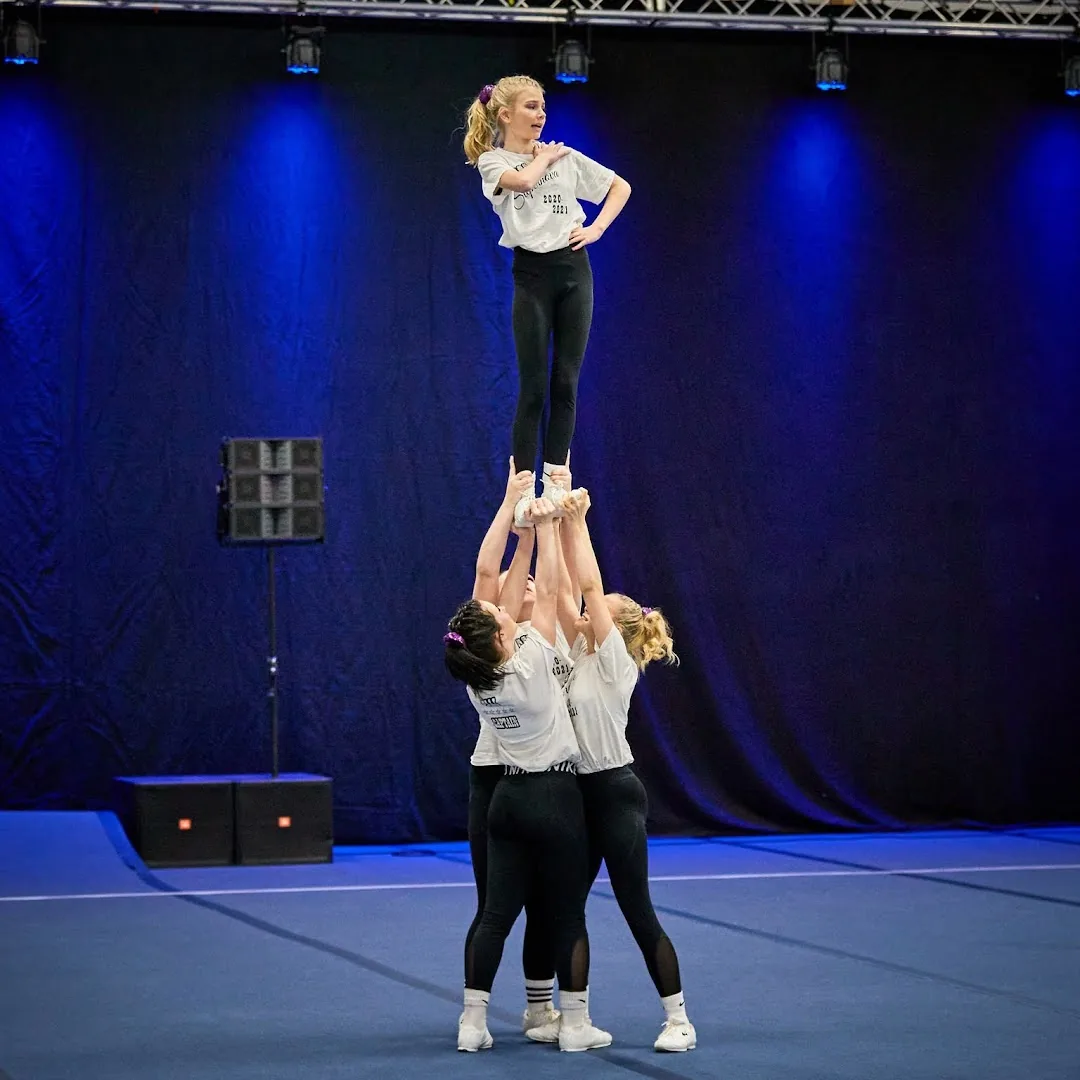
A cheerleading routine is one of the hardest things you can ask of a hairstyle. You will jump, twist, tumble, be lifted into the air and caught again, all while the judges watch every detail. Loose hair in your face is not just annoying — it can block your vision during a stunt, catch on a teammate’s hand, or cost your team points for a messy, unpolished look.
Stunt-safe hair does three jobs at once. It keeps every strand out of your face and off your neck, it stays exactly where it was built for the whole routine, and it looks sharp and uniform with the rest of the team. That means structure: braids that anchor the front, ponytails set high and tight, buns pinned in more than one place, and products that hold through sweat.
Quick verdict: if a style only works when you are standing still, it is not a competition style. Build for the hardest thirty seconds of your routine, not the easiest, and your hair will hold for all of it.
The 60-Second Shake Test Before You Compete
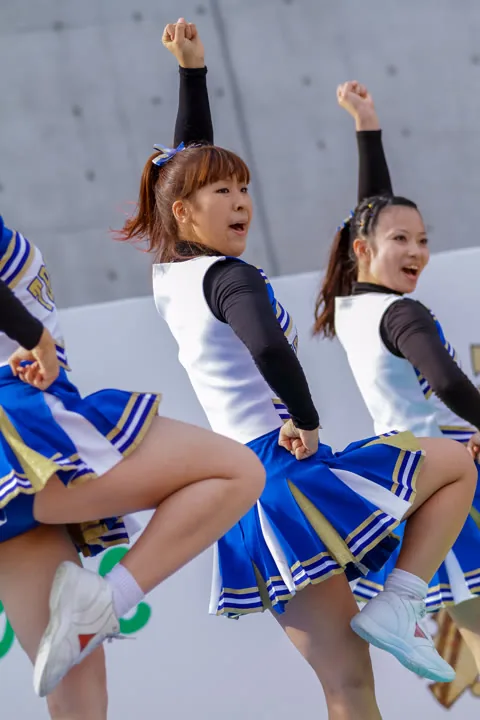
Every competition hairstyle in this guide should pass one simple test before it earns its place on the mat: the shake test. Build the style, then jump ten times, shake your head hard side to side, spin around twice, and do a forward roll if your routine includes tumbling. Then look in the mirror. If nothing moved, the style is ready. If anything slipped, it needs more pins, a stronger tie, or a different build.
Do the test at a full practice, in your uniform, with your bow on. Hair behaves differently when you are warm and moving than it does in a cool bathroom mirror, and the bow changes the balance of a ponytail. Test it the way you will wear it, on the day you will wear it, and you will never be surprised on the mat.
Quick verdict: a style that fails the shake test at practice will fail it at competition — only louder. Fix it now, when you have time and a mirror, not between rounds when you have ninety seconds.
Team Uniformity: Matching Styles Without Matching Hair
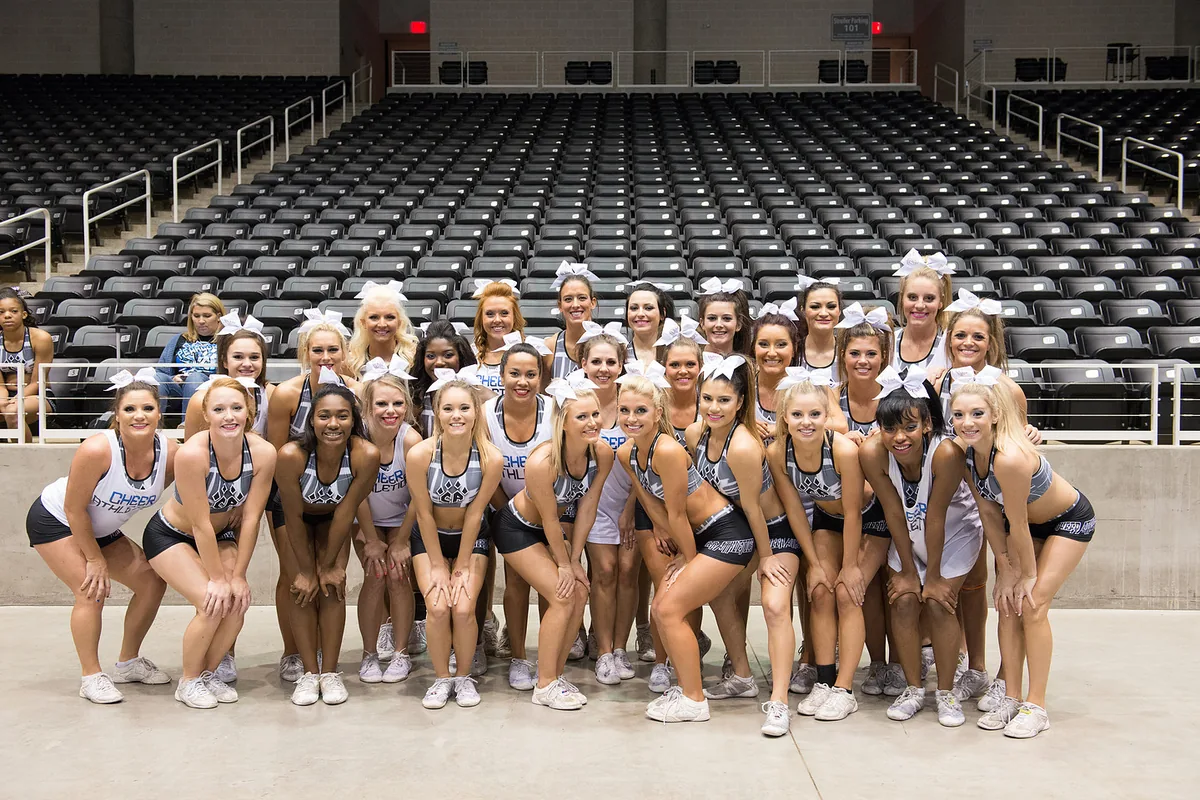
Judges notice a team that looks unified, and hair is a big part of that first impression. A whole squad in the same high ponytail with matching bows reads as sharp, disciplined and ready. But a team is made of different hair — different lengths, textures, thicknesses and curl patterns — and forcing one identical style on everyone can leave some athletes fighting their hair all day.
The smart approach is a shared base with room to adapt: the same ponytail height, the same part, the same bow, and the same finish, with the build adjusted to each person’s hair. Curly hair might need a braid at the front to control it; very thick hair might need an extra elastic; short hair might need a half-up version of the same look. From the judges’ seats, the team still reads as one — because the silhouette matches, even if the construction differs.
Common mistake: deciding the team style the week of competition. Agree on it at the start of the season, test it at practice, and let every athlete find the version of it that holds for them.
Hair Rules and Regulations You Need to Know
Before you fall in love with a style, check the rules. Most cheerleading competitions and school programs have hair rules, and they exist for safety: hair must be secured away from the face, accessories must be safe and firmly attached, and nothing loose can be worn that could fall onto the mat or catch during a stunt. Some programs ban certain clips, large accessories or loose bows, and some require all athletes to wear their hair the same way.
Check with your coach and read your competition’s rulebook before you build your look. The rules usually cover bow size and attachment, whether hair must be fully up, and whether any accessory is banned for flyers in particular. A style that breaks the rules can cost your team a deduction — or keep an athlete off the mat entirely.
Quick verdict: the safest style is the one that passes both the shake test and the rulebook. When in doubt, ask your coach before competition week, not the morning of the event.
1. The Classic High Competition Ponytail
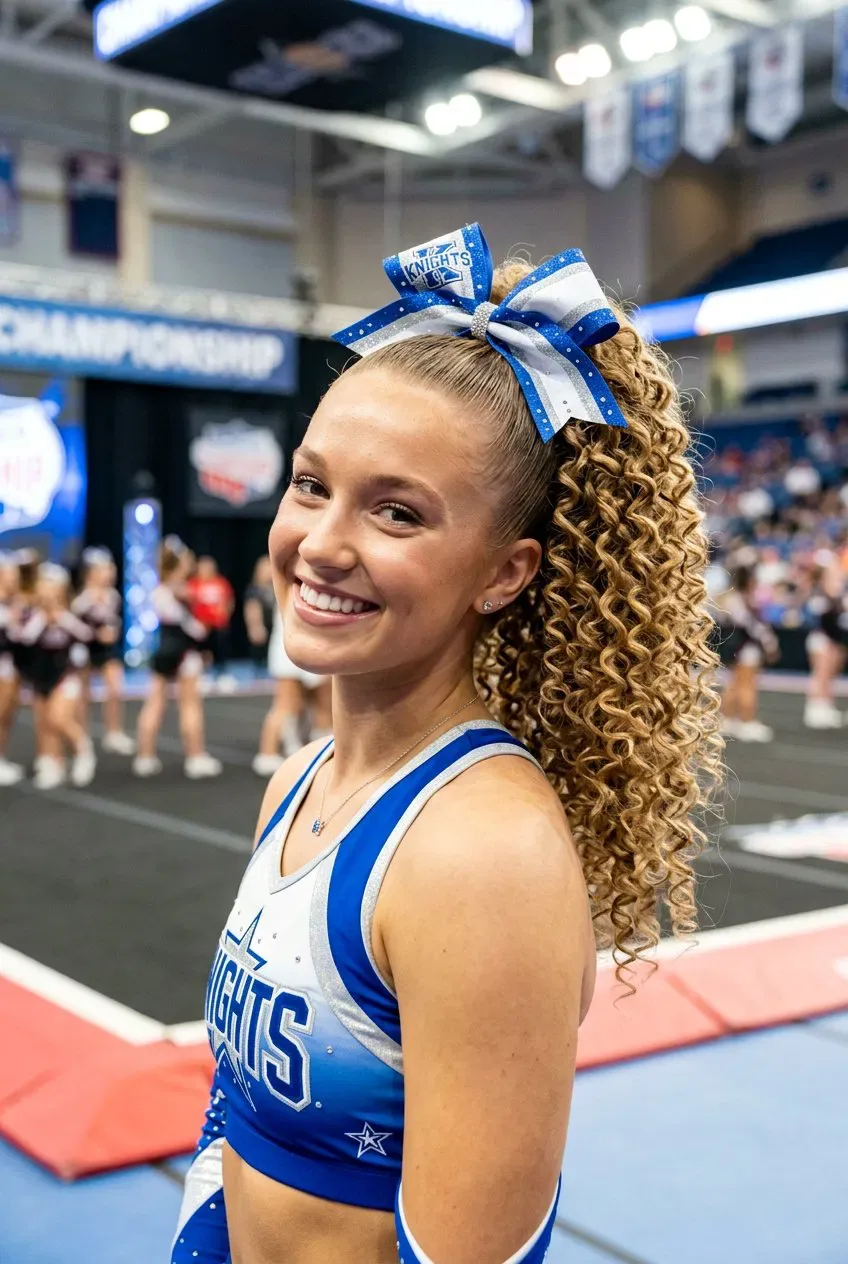
The high ponytail is the competition classic for a reason: it is the style every judge recognises, it keeps every strand off your face and neck, and it moves with you instead of against you. The hair is brushed smooth, gathered high at the crown, and secured with a strong elastic — then the bow goes on top. It suits every uniform and every routine, and it photographs with the sharp, energetic silhouette that defines cheerleading.
The height matters. A ponytail set at the crown, not the back of the head, stays clear of your shoulders during stunts and tumbling, and it swings in a clean arc when you jump instead of flopping into your face. Brush the hair up with a boar-bristle brush, smooth the surface with a little gel, and wrap a small section of hair around the elastic to hide it before you attach the bow.
Hold rating: 9/10 — the gold standard for a reason. Stunt-safe note: the high placement keeps hair clear of bases’ hands and flyers’ faces during lifts. Quick fix: if it loosens, split the ponytail in half and pull the two sides apart to re-tighten the base.
2. The Double French Braid Ponytail
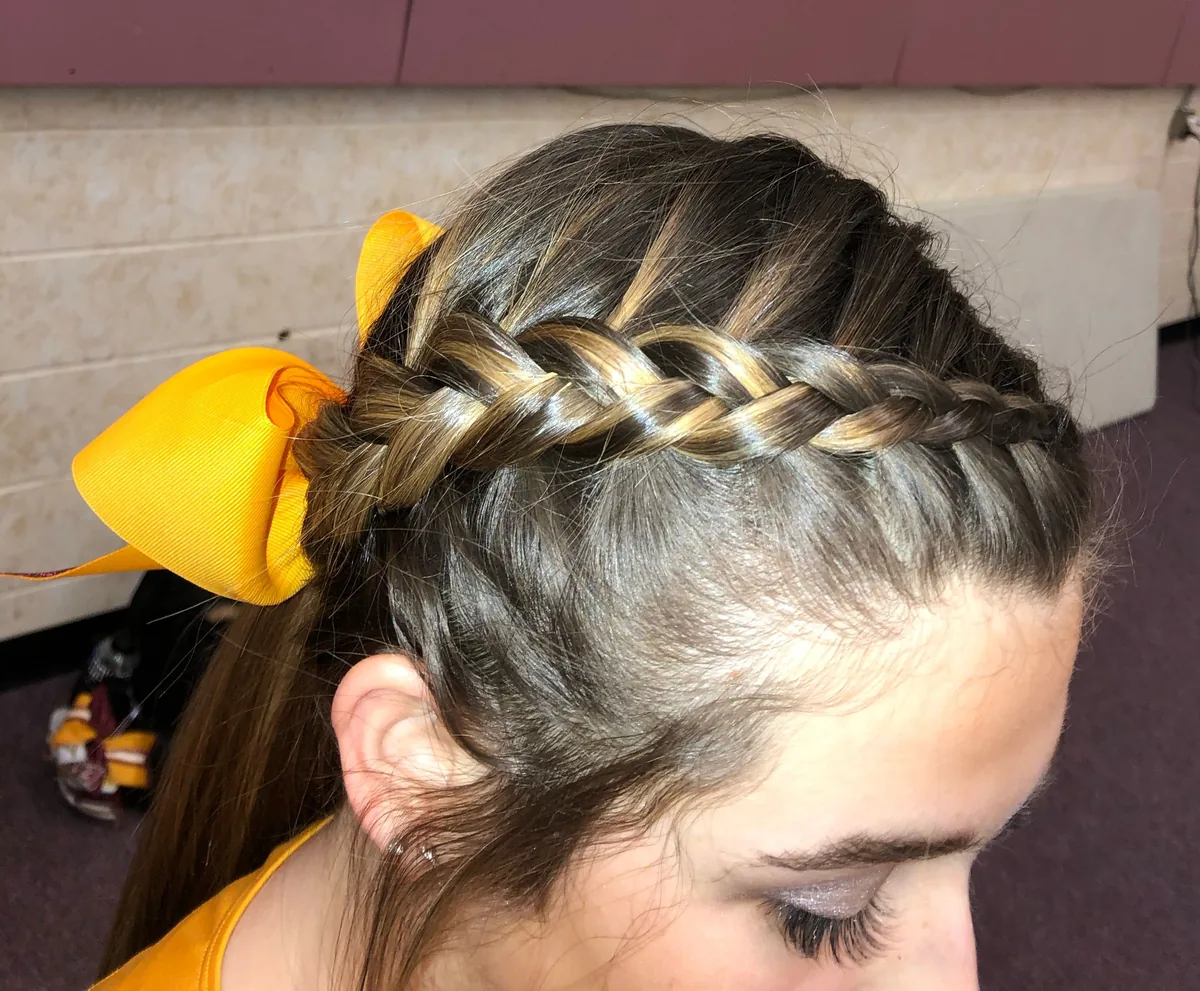
Two French braids running from the hairline into a high ponytail are one of the most secure styles in this guide. The braids lock the front and sides completely flat, so nothing can escape into your face during a routine, and the ponytail carries the length safely behind you. It looks sharp, it holds for hours, and it gives the whole team a polished, identical silhouette.
Start with two French braids from the front hairline, following the curve of the head and feeding in hair as you go, then gather both braids and the remaining hair into one high ponytail. The braids do the anchoring work, so the ponytail itself needs less tension — which means it is more comfortable to wear all day.
Hold rating: 10/10 — the most secure ponytail here. Stunt-safe note: braided fronts cannot fall into your eyes mid-tumble, which makes this a top pick for flyers. Quick fix: smooth any escaped wisps with gel on a toothbrush and pin the braid ends flat.
3. The Bubble Ponytail That Survives Tumbling
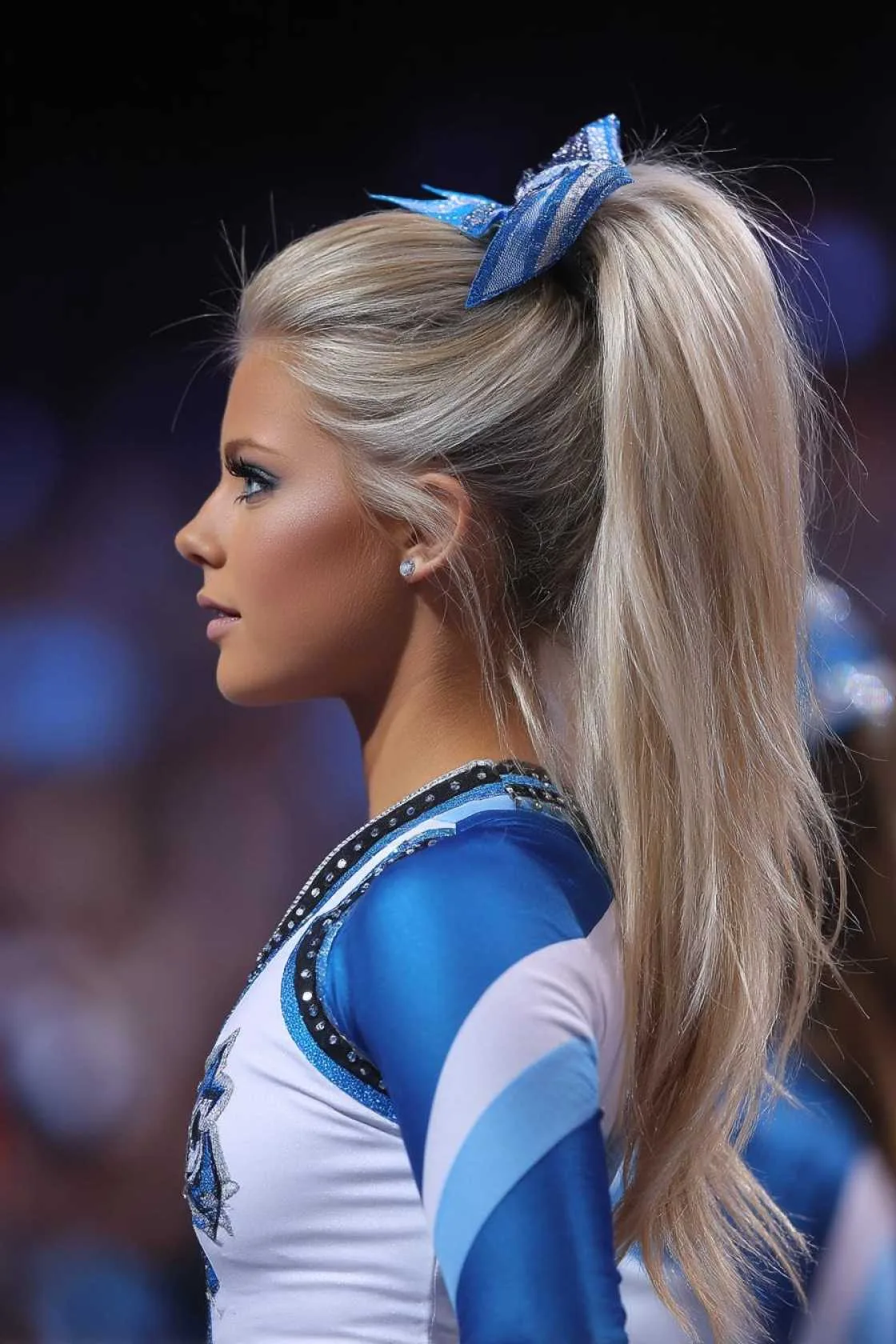
A bubble ponytail takes the classic high ponytail and adds evenly spaced elastics down its length, creating a series of rounded bubbles that look playful and stay put. It is a favourite for tumbling-heavy routines because the extra elastics stop the length from whipping around and tangling, and the shape reads clearly from the judges’ seats.
Build a high ponytail first, then add clear elastics every two to three inches down the length, gently pulling each section out to form the bubble. Keep the bubbles even and the elastics snug — a loose elastic will slide down during a routine and ruin the shape. This style works best on medium to long hair.
Hold rating: 8/10 — very secure once the elastics are snug. Stunt-safe note: the segmented length cannot tangle or whip into a teammate’s face during stunts. Quick fix: slide a slipped elastic back up and re-puff the bubble with your fingers.
4. The Slicked-Back Low Bun
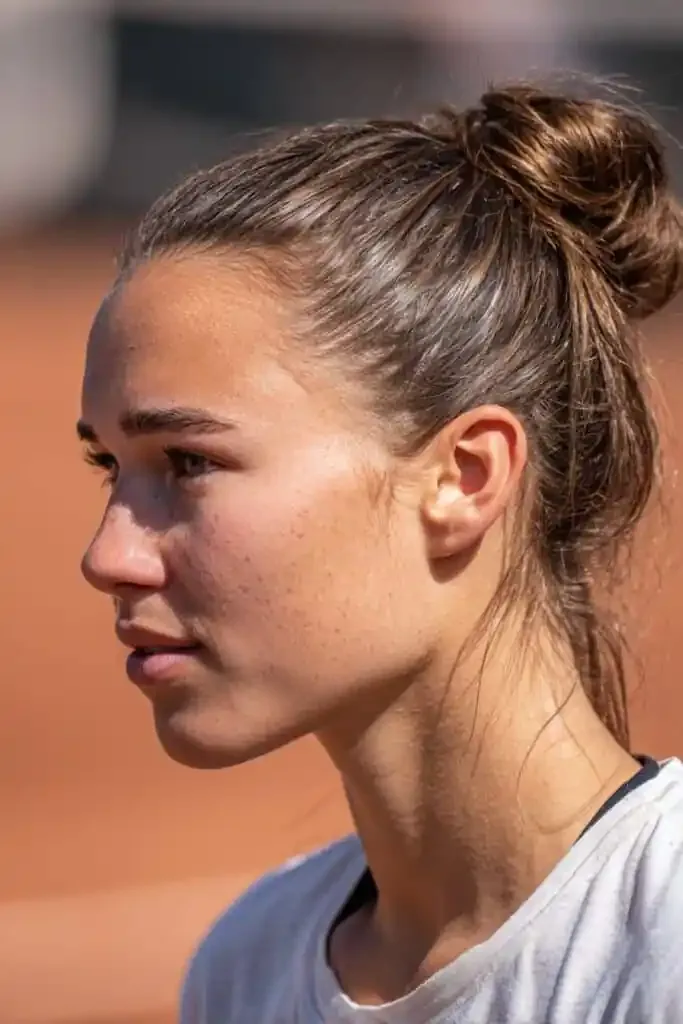
A slicked-back low bun is the most controlled style a cheerleader can wear: every strand is smoothed back, the hair is coiled low at the nape, and nothing moves. It is the right choice for athletes who hate the feeling of hair swinging, for routines with a lot of partner stunts, and for anyone whose hair is fine or slippery and refuses to stay in a ponytail.
Brush the hair back with gel and a fine-tooth comb, gather it low, twist it into a bun and pin it in at least three places. A hair net over the bun, matched to your hair colour, adds invisible insurance that keeps the shape perfect through the whole competition.
Hold rating: 10/10 — nothing moves, all day. Stunt-safe note: zero loose length means zero risk of hair catching during a lift or basket toss. Quick fix: smooth flyaways with gel on your palms and add one crossed pin if the bun shifts.
5. The Double Dutch Braids
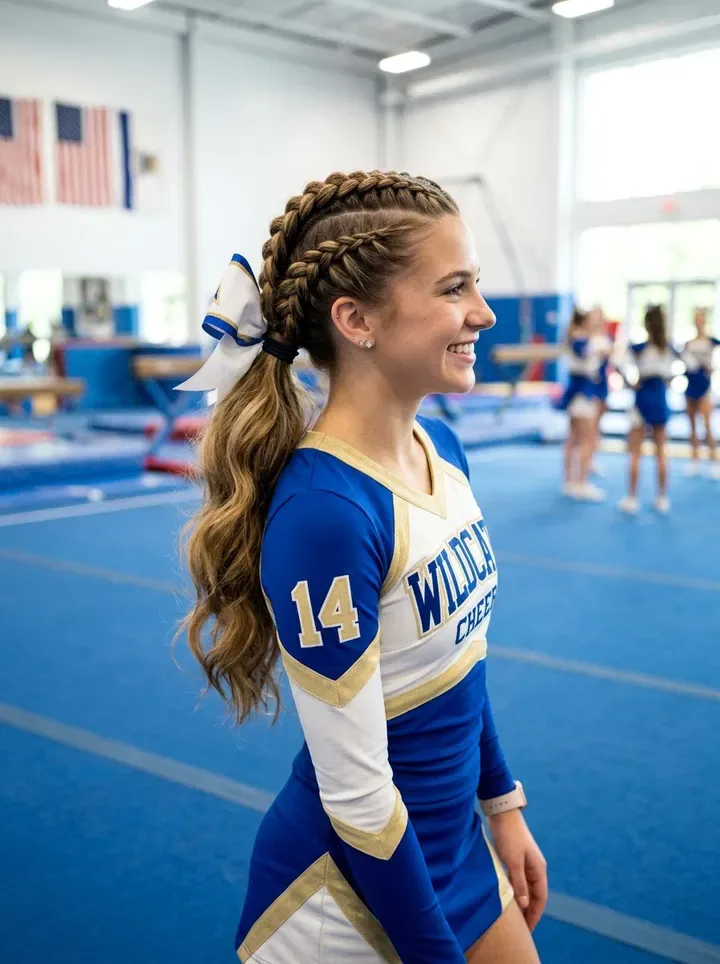
Double Dutch braids are a competition favourite because they are built to survive anything. Two raised braids run from the hairline to the nape, locking the entire head of hair flat against the scalp, and the ends can be left loose, tucked under, or tied into a low ponytail. Nothing hangs, nothing swings, and nothing can fall into your face.
Part the hair cleanly down the middle, braid each side with the Dutch technique — crossing the strands under instead of over, so the braid sits raised on the surface — and secure the ends tightly. The raised braid also photographs beautifully, giving the team a bold, athletic look from every angle.
Hold rating: 10/10 — the braids hold the hair to the head. Stunt-safe note: ideal for flyers and tumblers, because the hair cannot shift at all in the air. Quick fix: tuck any loose end under the braid and pin it flat.
6. The High Bun with a Wrapped Base
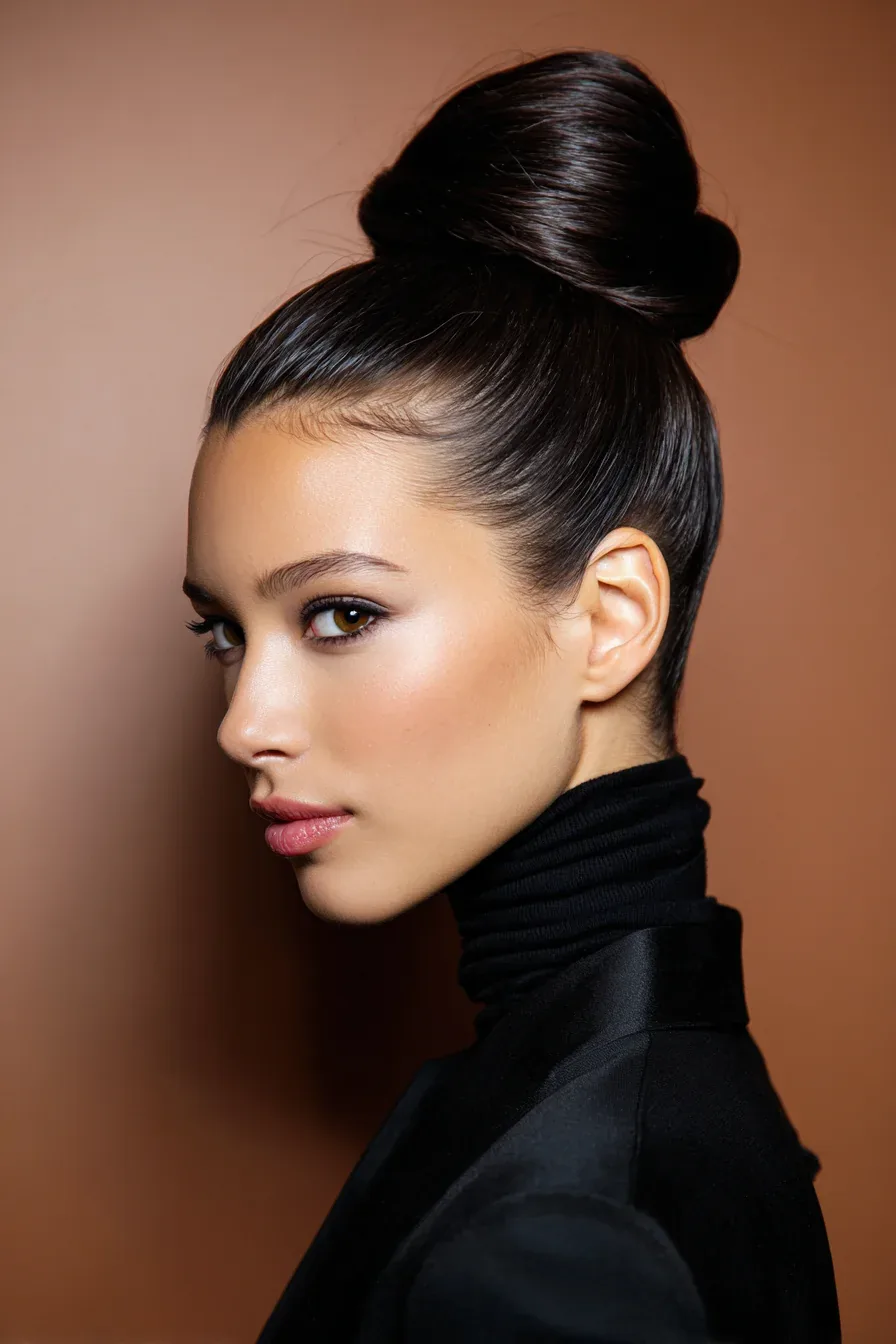
A high bun with a wrapped base is the most polished updo in this guide: the hair is swept up high, coiled into a neat bun, and a section of hair is wrapped around the base to hide the elastic and the pins. It looks elegant and professional, it never swings, and it keeps the neck and shoulders completely clear for stunts.
Build it on a high ponytail, twist the length around the base, pin it in four places, and wrap the final section around the bottom. A bun donut can add fullness for fine hair, but the style works just as well on thick hair without one — the key is pinning it in more than one place so it cannot rotate.
Hold rating: 9/10 — rock solid when pinned in four places. Stunt-safe note: the compact shape cannot be grabbed or pulled during partner stunts. Quick fix: add a crossed pin at the base if the bun starts to tilt.
7. The Braided High Ponytail
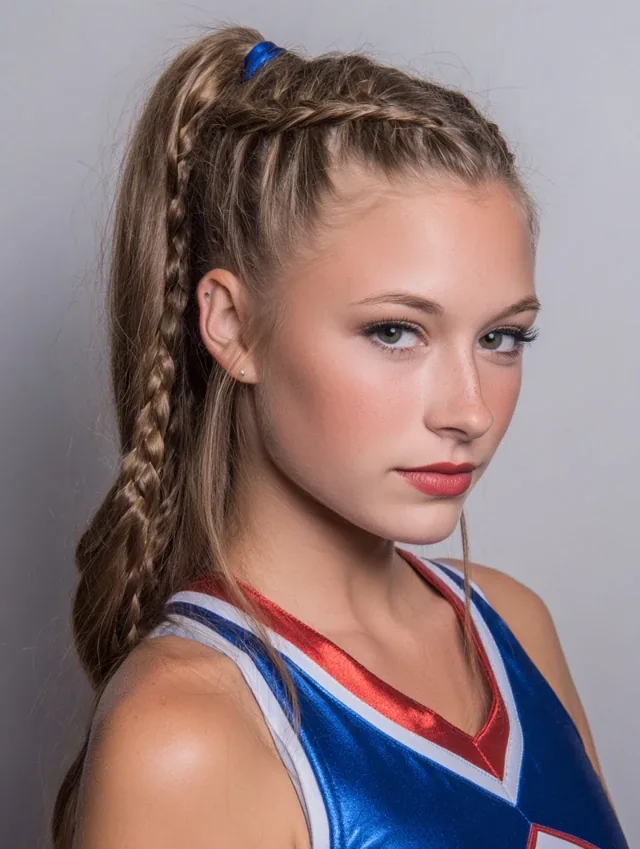
A braided high ponytail combines the energy of a ponytail with the security of a braid: the hair is gathered high, then the length is braided all the way down and secured at the end. The braid stops the ponytail from whipping and tangling during tumbling, and it gives the style a sharp, athletic finish that judges love.
Start with a tight high ponytail, braid the length in a simple three-strand braid, and secure the end with a clear elastic wrapped in a small section of hair. For extra hold, braid the front first — a small French braid from the hairline into the ponytail — so the front is locked down too.
Hold rating: 9/10 — the braid tames the length completely. Stunt-safe note: braided length will not fly into a spotter’s face during a tumbling pass. Quick fix: re-braid the last few inches if the end frays, and re-secure the elastic.
8. The Half-Up Crown Braid
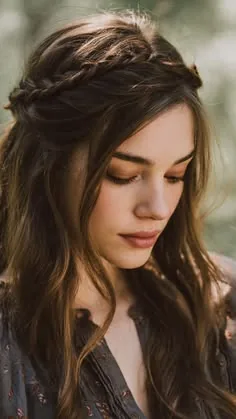
A half-up crown braid keeps the front of your hair locked back while letting the rest fall free — the best of both worlds for athletes who love their length but need their face clear. A braid runs along the hairline like a crown, the top section is gathered and pinned, and the rest of the hair flows behind, out of the way of stunts.
Braid a section from one temple across the crown to the other side, pin it securely, and gather the top half into a small ponytail or bun at the back. The braid is the anchor: as long as it holds, the front stays clear no matter how hard you move.
Hold rating: 7/10 — strong at the front, freer at the back. Stunt-safe note: best for routines with fewer inversions; add a low ponytail for tumbling-heavy routines. Quick fix: re-pin the crown braid and gather the loose length into a quick ponytail if needed.
9. The Curly High Ponytail with a Bow
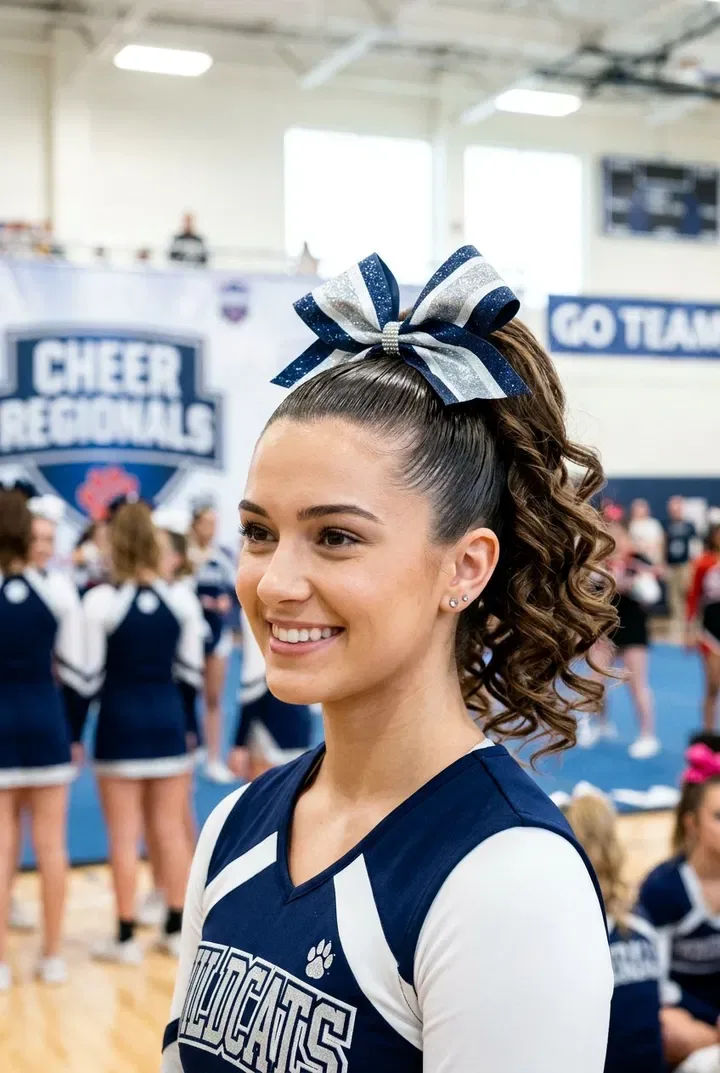
Curly hair makes one of the most striking competition ponytails there is: gathered high, the curls fall in a full, bouncy shape that moves beautifully and photographs with real energy. The trick is control — the front must be smoothed and the curls defined, so the style reads as deliberate and polished rather than wild.
Define the curls with a curl cream or light gel, brush the front smooth with edge control, and gather the hair high with a strong elastic. Pin the bow through the elastic and into the hair so it cannot slide, and finish with a firm-hold spray that keeps the curls defined without making them crunchy.
Hold rating: 8/10 — strong when the front is controlled. Stunt-safe note: the high placement keeps curls off the shoulders and out of the way during stunts. Quick fix: smooth the front with edge control on a toothbrush and re-scrunch the curls with a drop of cream.
10. The Sleek Middle-Part Ponytail
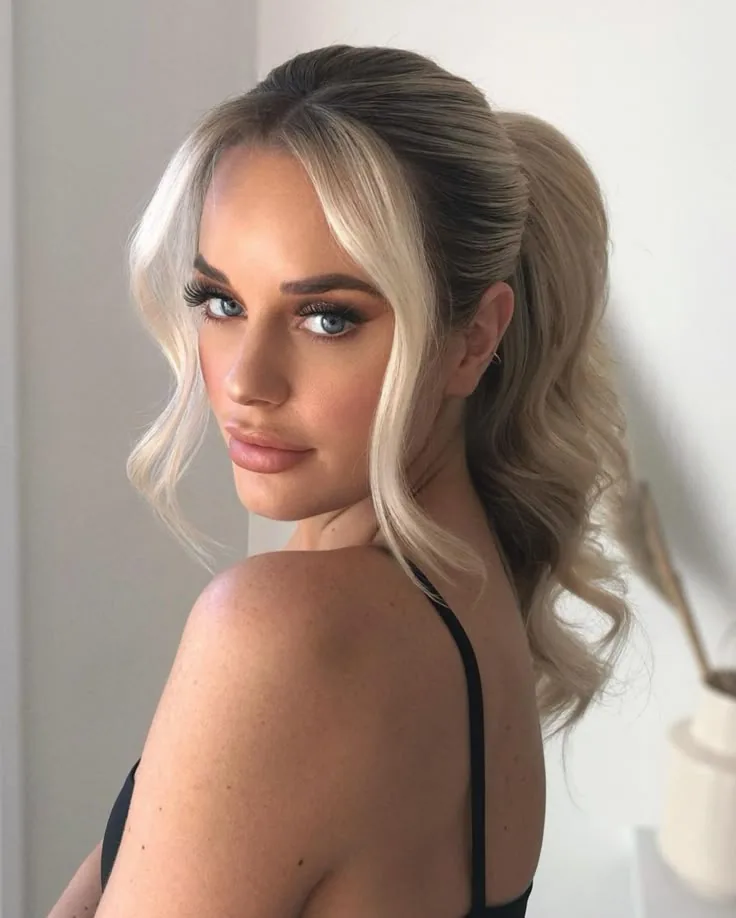
A sleek middle-part ponytail is the most polished, editorial competition style: a clean centre part, a glass-smooth surface, and a high ponytail that looks sharp from every seat in the arena. It suits athletes who want a clean, professional look and a style that photographs with magazine precision.
Part the hair with a tail comb, smooth each side back with gel and a boar-bristle brush, and gather it high. The part must be straight and the surface must be smooth — any bump shows under the gym lights. Finish with a strong-hold spray and a shine serum on the ponytail itself.
Hold rating: 9/10 — very secure when built tight. Stunt-safe note: the smooth surface cannot snag, and the high placement clears the shoulders. Quick fix: re-smooth the part with a tail comb and gel if it starts to blur.
11. The Side Braid into a Low Ponytail
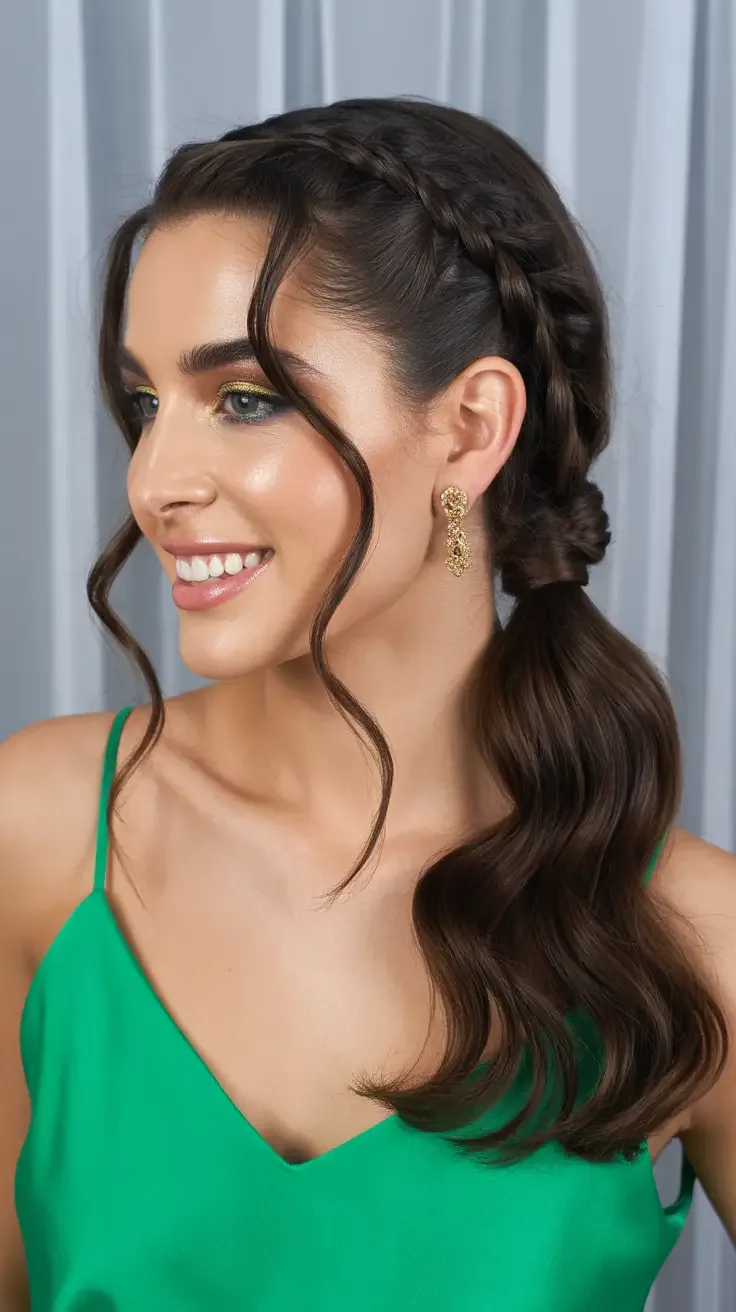
A side braid into a low ponytail is a smart choice for athletes who prefer their hair low: a braid runs from the temple along one side and gathers into a low ponytail at the nape, so the front is completely controlled while the length stays low and out of the way. It looks elegant and it holds beautifully.
Braid from the front hairline along the side, feeding in hair as you go, and gather everything into a low ponytail. The braid anchors the front, so the ponytail does not need to be pulled tight to stay put — which makes this one of the most comfortable styles to wear all day.
Hold rating: 8/10 — the braid does the heavy lifting. Stunt-safe note: the low length stays behind the shoulders and clear of bases’ hands. Quick fix: pin the braid flat at the temple if it loosens, and re-tighten the ponytail base.
12. The Double Bubble Braids
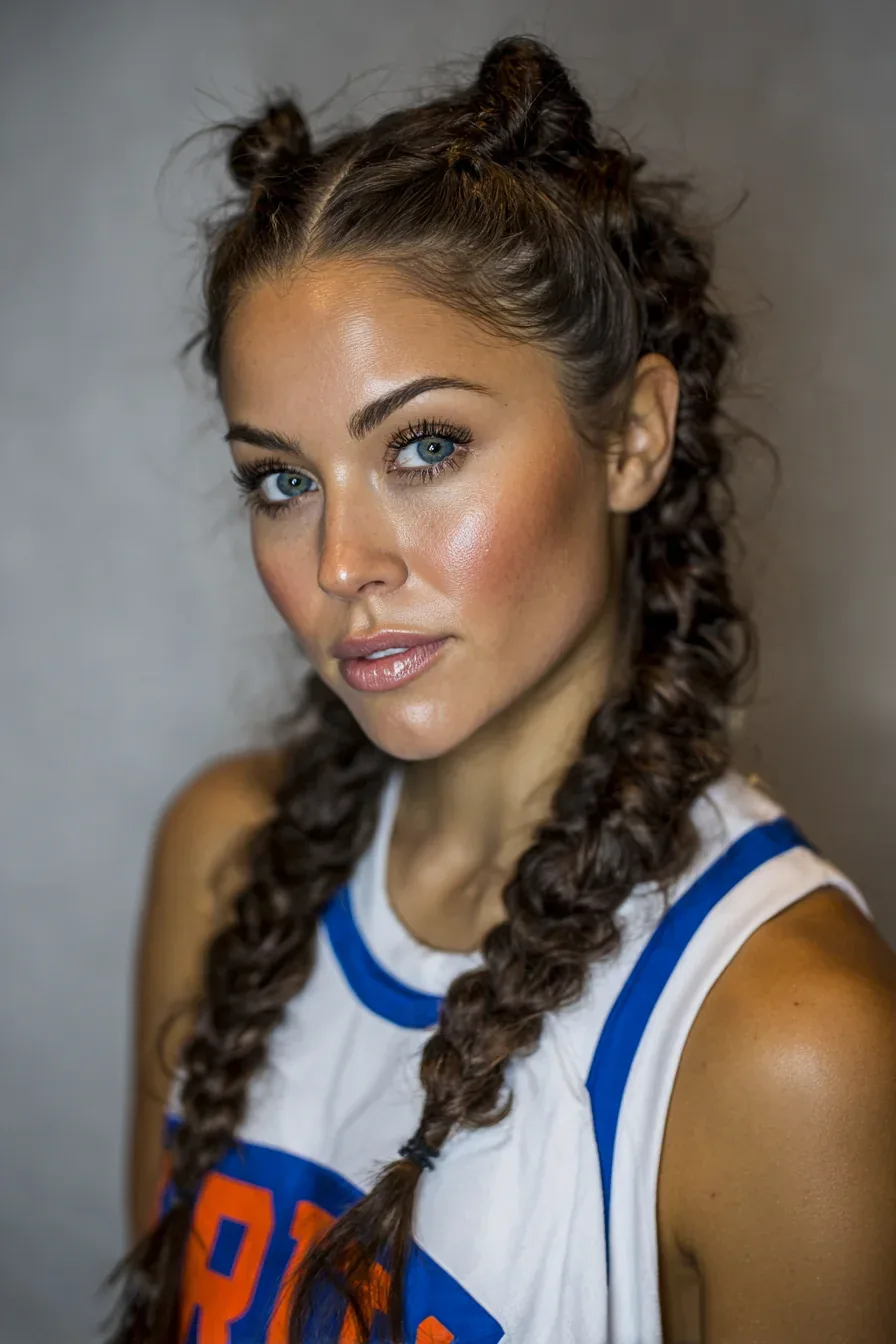
Double bubble braids are the most playful secure style in this guide: two high ponytails, each sectioned into bubbles with clear elastics, give the team a fun, high-energy look that still holds through every jump and tumble. The bubbles keep the length controlled and tangle-free, and the double ponytails balance the silhouette.
Part the hair down the middle, build two high ponytails, and add elastics every two inches down each length, puffing each section gently. Keep both sides even — check them in the mirror from the front and the back — because uneven bubbles are the first thing a judge will notice.
Hold rating: 8/10 — the elastics lock the length in place. Stunt-safe note: two short, controlled lengths are safer than one long swinging one for flyers. Quick fix: slide a slipped elastic back into place and re-puff the bubble.
13. The Fishtail Braid Ponytail
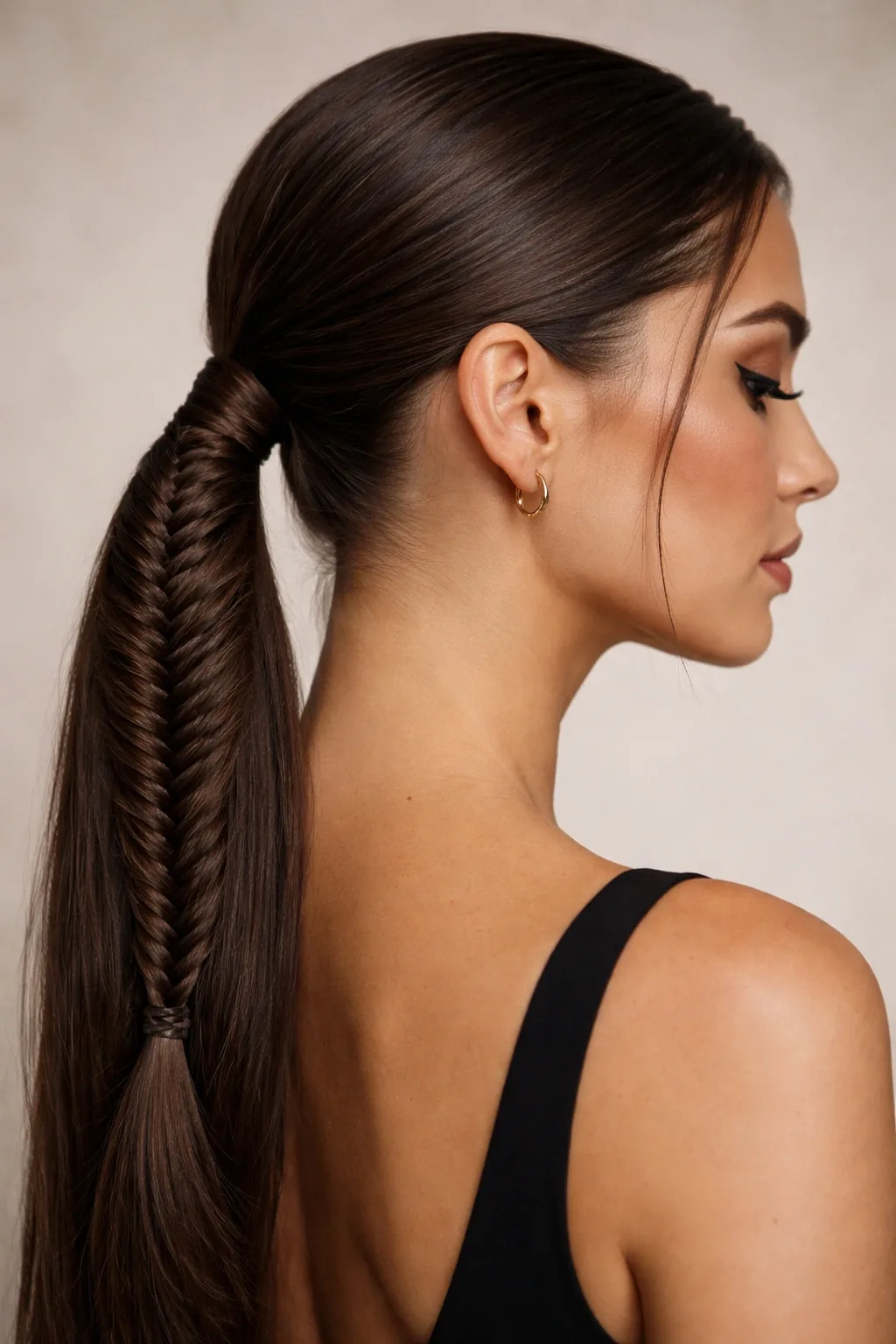
A fishtail braid ponytail is the most intricate-looking style that is actually simple to build: the hair is gathered high, then braided in the fishtail technique — two sections, small pieces crossed over — all the way down. The result is a detailed, textured braid that holds its shape and looks far more complicated than it is.
Build a tight high ponytail first, then fishtail the length, keeping the sections small and even. Secure the end with a clear elastic and gently pull the braid apart to add fullness. The fishtail’s fine weave grips itself, so it loosens far less than a regular braid during a routine.
Hold rating: 9/10 — the fine weave holds itself together. Stunt-safe note: the braided length cannot whip or tangle during tumbling. Quick fix: re-secure the end elastic and smooth the top of the braid with gel.
14. The Top Knot with Face-Framing Control
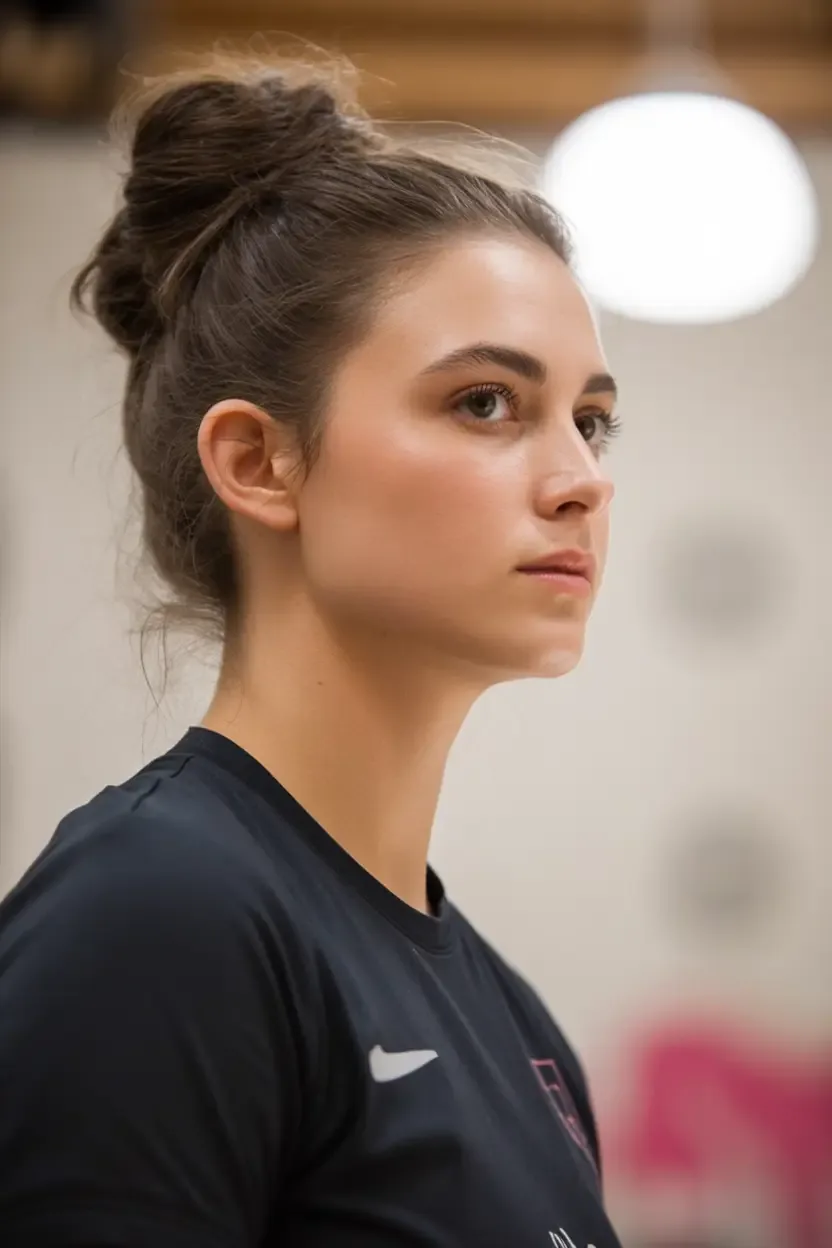
A top knot is the most compact competition style: the hair is swept up high and coiled into a neat knot, the face is completely open, and nothing can move. It is the right choice for hot gyms, for athletes with very long hair, and for anyone who wants to forget about their hair entirely for the whole day.
The secret is the front. Slick the hair back with gel, keep the surface smooth, and pin any face-framing pieces back firmly — a top knot with loose pieces falling forward defeats its own purpose. Build the knot high, pin it in four places, and finish with a firm-hold spray.
Hold rating: 10/10 — the most secure updo here. Stunt-safe note: nothing hangs, nothing swings, nothing can be grabbed. Quick fix: add a crossed pin at the base if the knot tilts, and smooth the front with gel.
15. The Low Ponytail with a Braided Wrap
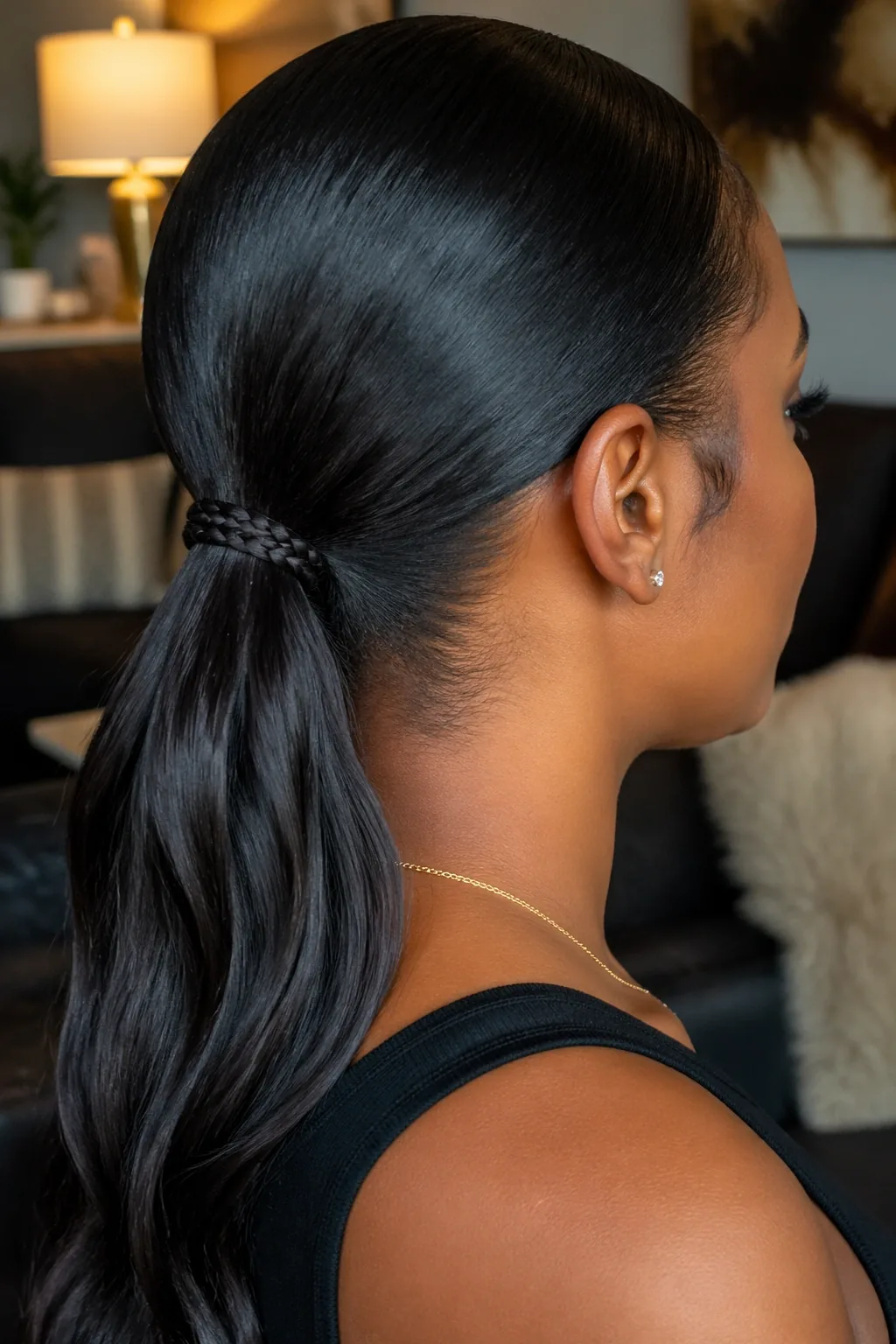
A low ponytail with a braided wrap is the most understated secure style in this guide: the hair is gathered low at the nape, and a small braid wraps around the base to hide the elastic and add a polished detail. It is comfortable, it holds, and it suits athletes who find high ponytails pull at their scalp.
Build the low ponytail, then take a small section from underneath, braid it, and wrap it around the base, pinning the end underneath. The wrap is both decoration and insurance — it holds the elastic in place and stops it from sliding down during a routine.
Hold rating: 8/10 — secure and comfortable all day. Stunt-safe note: the low length stays behind you and clear of stunts. Quick fix: re-pin the wrap underneath and re-tighten the base.
16. The Cornrow-Into-Ponytail
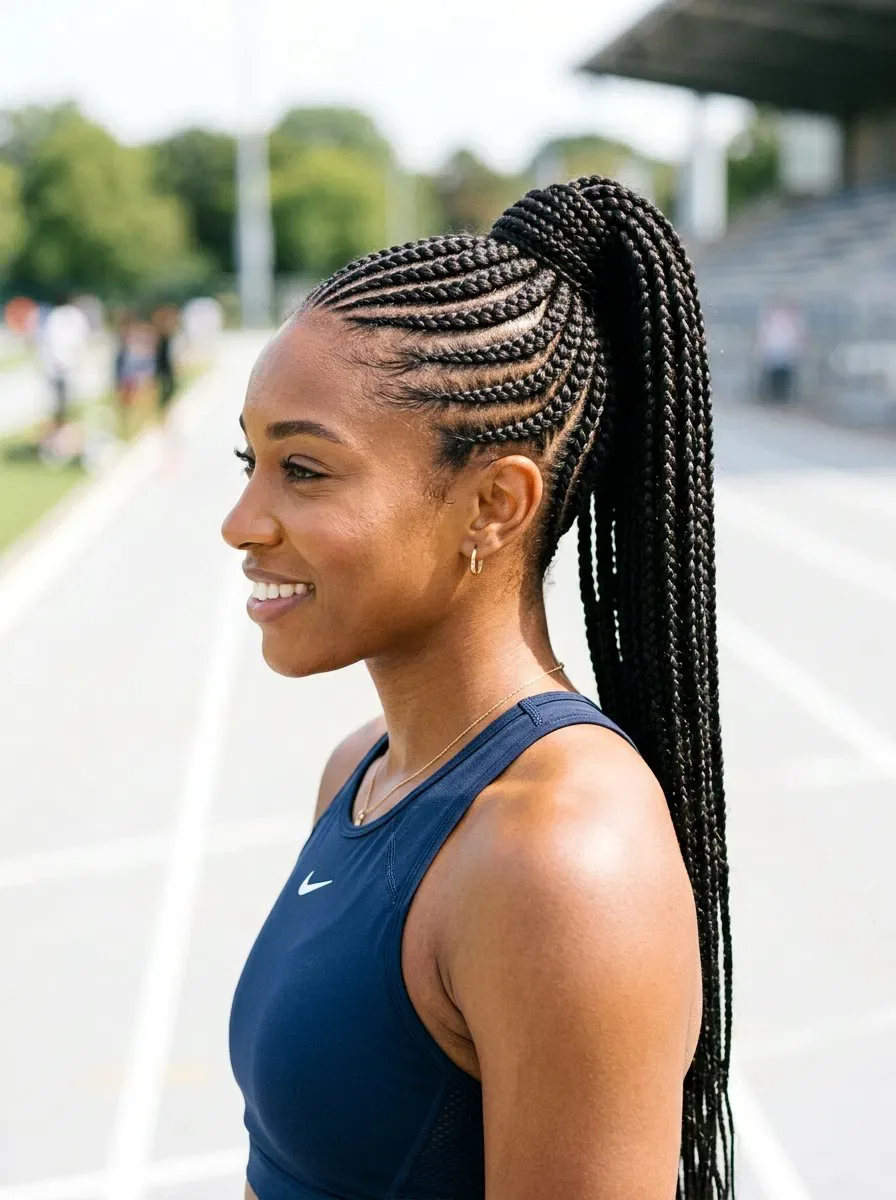
Cornrows into a ponytail are one of the most secure and striking competition styles: tight cornrows run from the hairline to the crown, locking the entire front of the head flat, and the remaining hair gathers into a high ponytail. The style holds for days, survives any routine, and looks sharp and intentional from every angle.
Part the hair into clean sections, cornrow each one toward the crown, and gather everything into a high ponytail. The cornrows do all the anchoring, so the ponytail itself can be looser and more comfortable. This is a style to build the day before competition — it takes time, and it holds beautifully overnight.
Hold rating: 10/10 — the most secure style in this guide. Stunt-safe note: the cornrowed front cannot move at all, which makes this ideal for flyers and tumblers. Quick fix: smooth the edges with edge control and re-secure the ponytail elastic.
17. The Voluminous Curly Ponytail
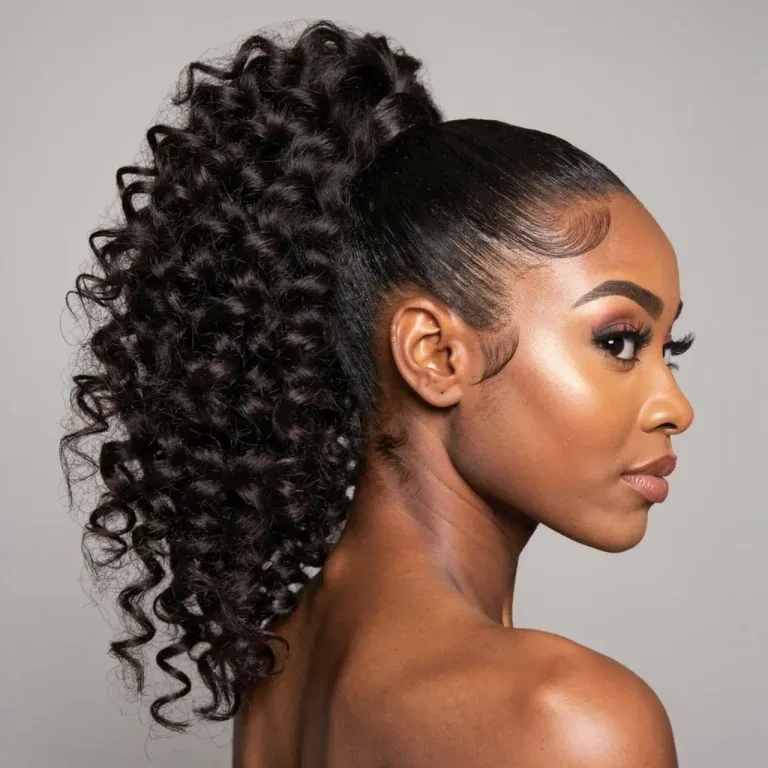
A voluminous curly ponytail is pure competition energy: gathered high, the curls fall in a full, bouncy shape that moves with every jump and catches the light under the gym lights. It is the style that makes a routine look bigger, and it photographs with real joy.
The volume needs a plan. Define the curls with cream, gather the hair high with a strong elastic, and use a second elastic an inch below the first for extra grip on thick, heavy curls. Smooth the front with edge control so the silhouette stays clean, and let the curls do the talking behind.
Hold rating: 8/10 — strong with a double elastic. Stunt-safe note: the high placement keeps the volume above the shoulders and clear of stunts. Quick fix: re-scrunch the curls with a drop of cream and smooth the front with edge control.
18. The Twisted Rope Ponytail
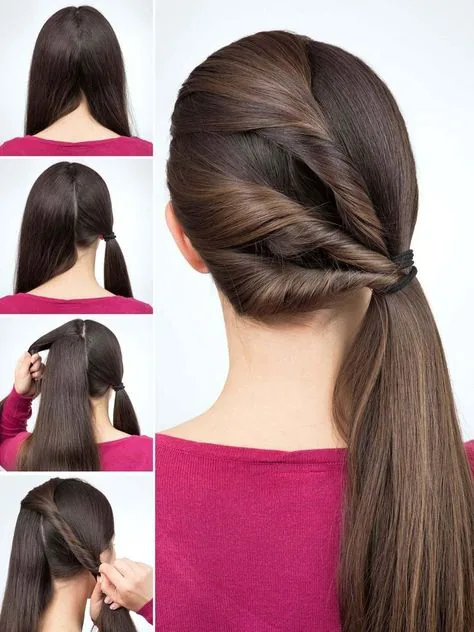
A twisted rope ponytail is a simple, elegant way to lock a ponytail’s length down: the hair is gathered high, split into two sections, and each section is twisted in the same direction before the two are twisted around each other. The rope holds its shape, resists tangling, and looks polished from the judges’ seats.
Twist each section tightly in the same direction, then wrap the two sections around each other in the opposite direction and secure the end. The opposing twists lock each other in place — that is what makes the rope so secure, and what keeps it from unravelling mid-routine.
Hold rating: 9/10 — the opposing twists lock the length. Stunt-safe note: the rope cannot whip or tangle during tumbling passes. Quick fix: re-twist the last few inches and re-secure the end elastic.
19. The Two-Strand Twist Updo
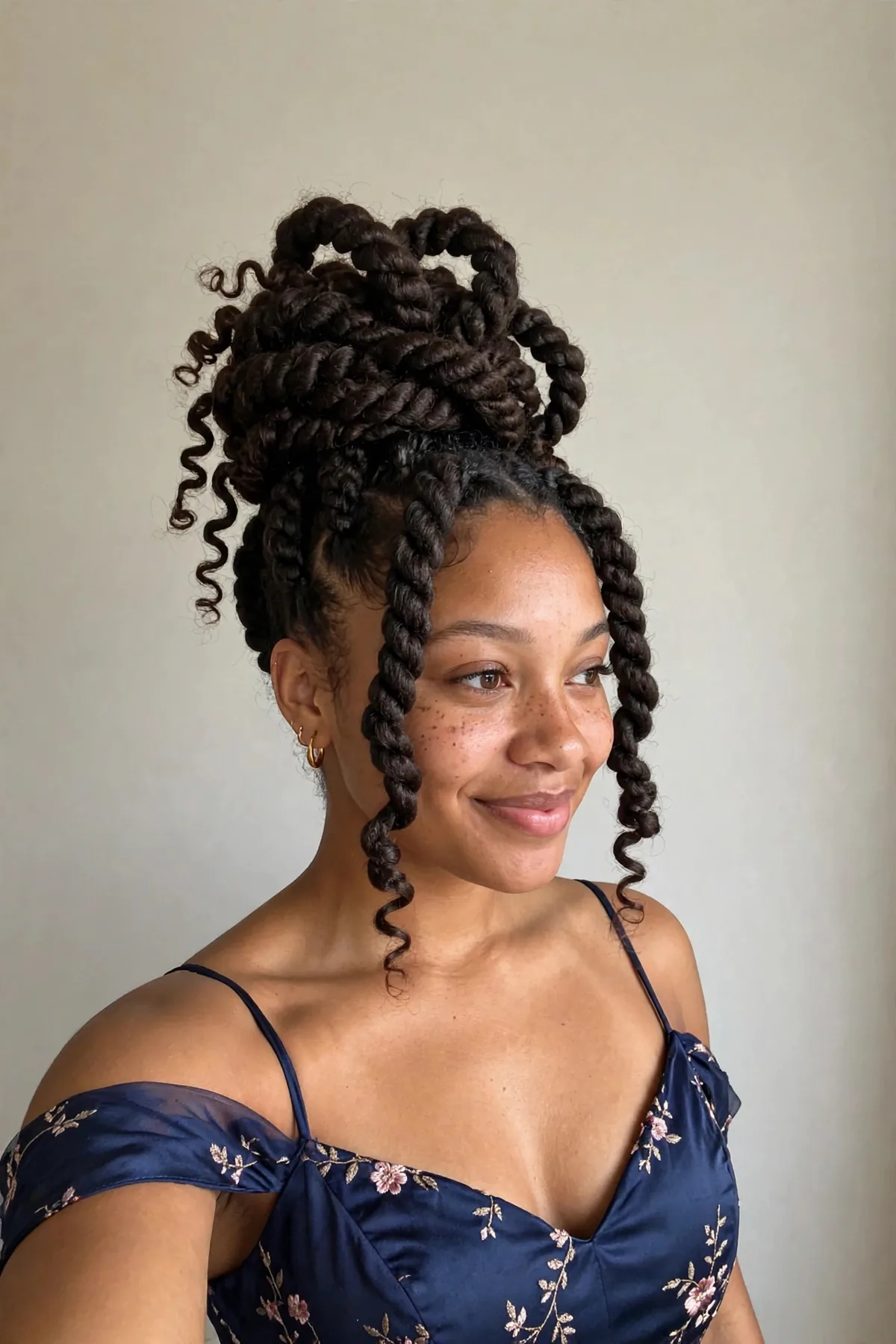
A two-strand twist updo is a beautiful, secure option for textured and natural hair: the hair is divided into sections, each twisted in two strands, and the twists are gathered and pinned into an updo. The twists hold their shape for hours, the updo keeps everything off the neck, and the style looks crafted and intentional.
Work on moisturised, stretched hair, twist each section evenly, and pin the twists into a low bun or a gathered updo at the back. The evenness of the twists is what makes the style look polished — take your time with the partings, and the result will hold through the whole competition.
Hold rating: 9/10 — twists hold their shape for hours. Stunt-safe note: the pinned-up length cannot catch or swing during stunts. Quick fix: re-pin any twist that slips and smooth the edges with edge control.
20. The Double Space Buns
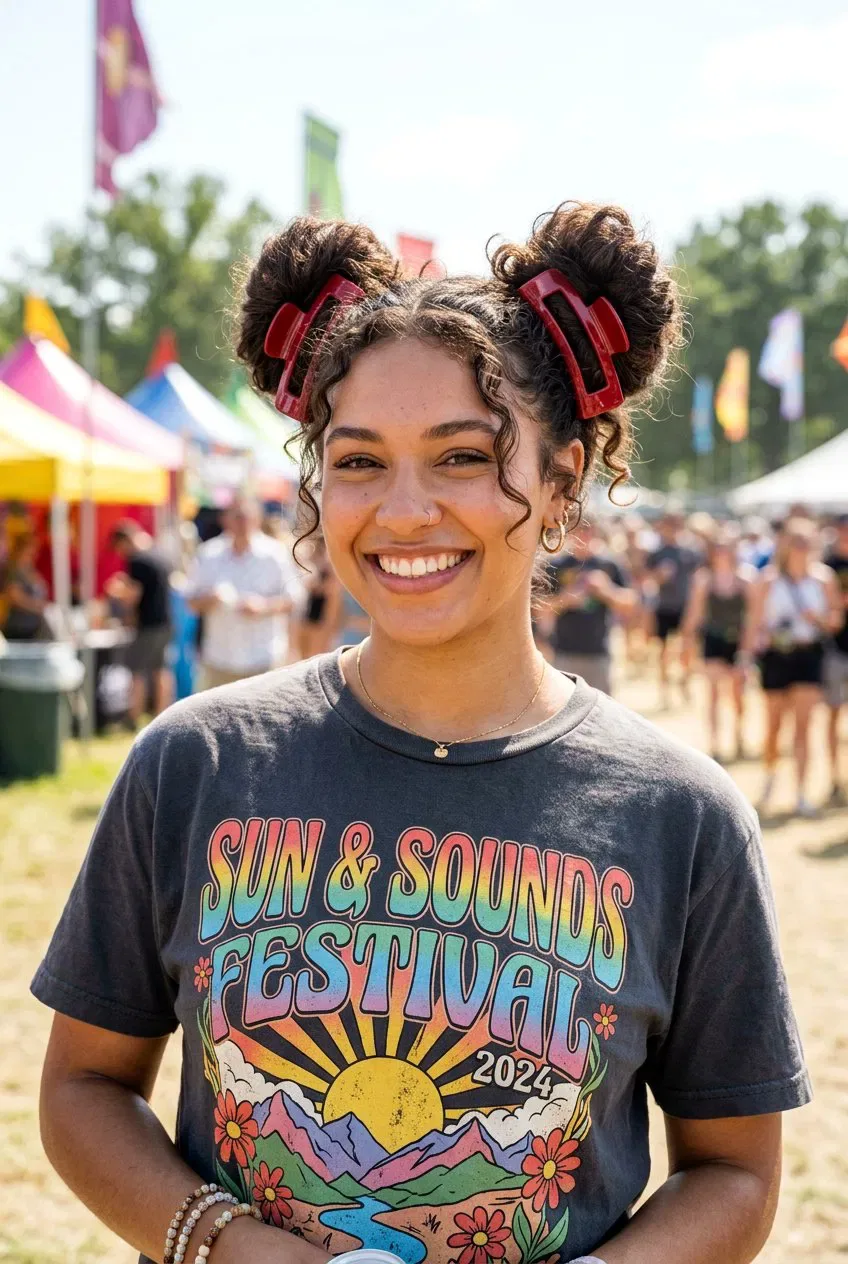
Double space buns are the most fun secure style in this guide: two high buns, one on each side, give the team a bold, symmetrical, high-energy look that holds through every jump. The compact buns cannot swing or tangle, and the symmetry reads clearly from the judges’ seats.
Part the hair cleanly down the middle, build two high ponytails, and coil each into a bun, pinning in at least three places per bun. Check the symmetry from the front and the back — uneven buns are the most common mistake with this style, and they show immediately in team photos.
Hold rating: 9/10 — compact buns barely move. Stunt-safe note: nothing hangs or swings, so nothing can be grabbed or caught. Quick fix: add a crossed pin to any bun that tilts, and smooth the part with gel.
21. The Braided Crown Updo
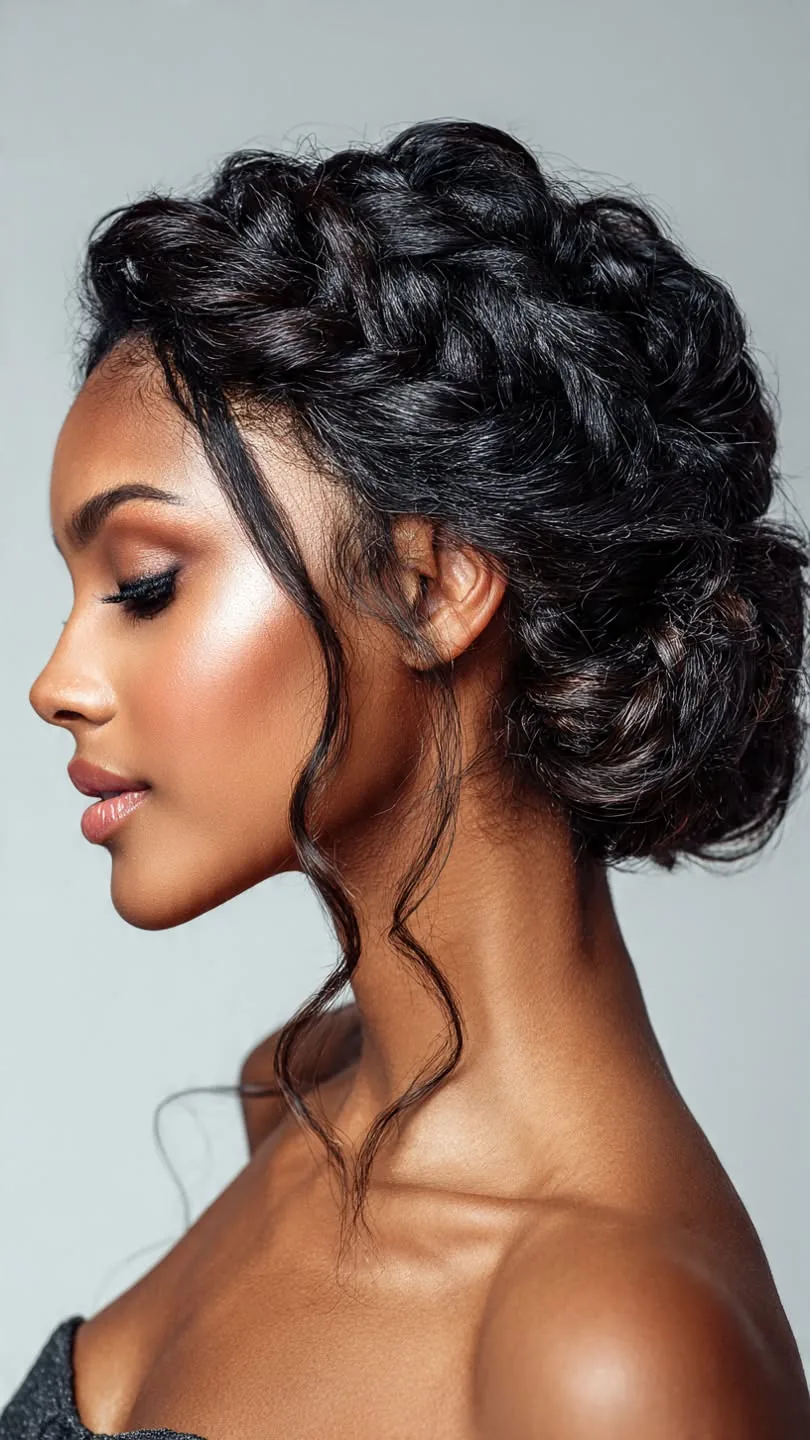
A braided crown updo wraps a braid around the head like a halo and gathers the rest of the hair into a low bun or a tucked finish. It is elegant, it is secure, and it keeps the front completely controlled while the back stays neat — the kind of style that looks beautiful in team photos and holds through the routine.
Braid along the hairline from one side to the other, pin the braid in place, and gather the remaining hair into a low bun. Loosen the braid gently after pinning so it looks soft and full rather than tight, and finish with a firm-hold spray.
Hold rating: 9/10 — the crown braid anchors everything. Stunt-safe note: the front cannot fall forward during inversions. Quick fix: re-pin the braid at the temple and smooth the bun with gel.
22. The Slicked Side-Part Low Bun
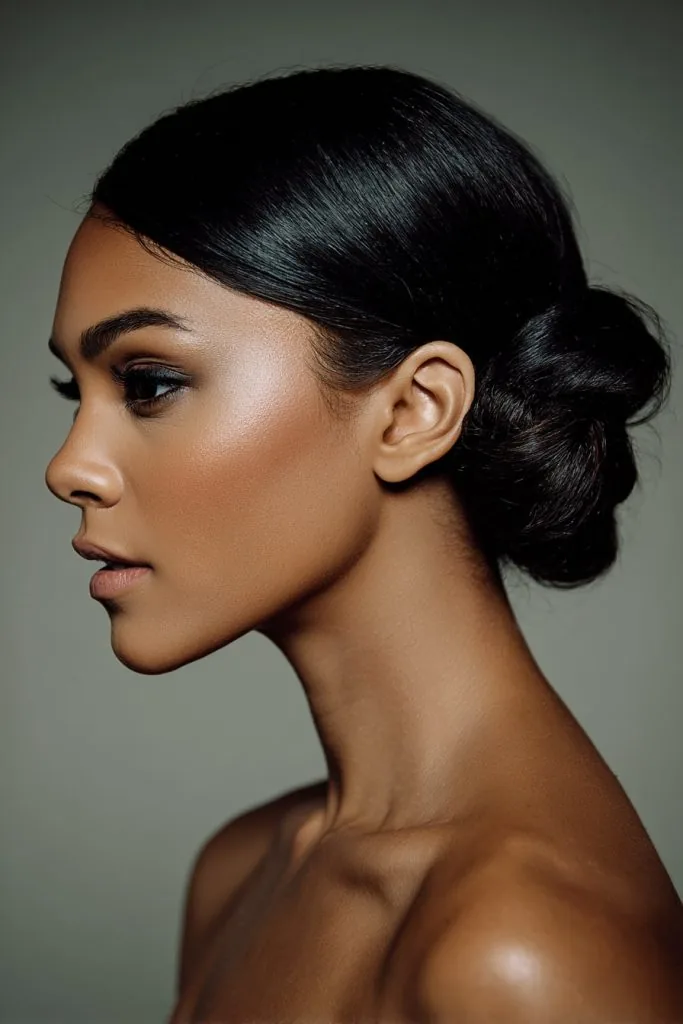
A slicked side-part low bun is the most refined competition updo: a deep side part, a glass-smooth surface, and a neat bun low at the nape. It looks professional and polished, it holds for hours, and it suits athletes who want a clean, grown-up look on the mat.
Part the hair deeply on one side with a tail comb, smooth the hair back with gel and a boar-bristle brush, and coil the length into a low bun, pinning it in three places. The part must be clean and the surface smooth — check both in the mirror before you leave, because the gym lights will show every bump.
Hold rating: 9/10 — very secure when pinned in three places. Stunt-safe note: the compact bun cannot be grabbed during partner stunts. Quick fix: re-smooth the part with a tail comb and add a crossed pin to the bun.
23. The High Ponytail with Curls Pinned Up
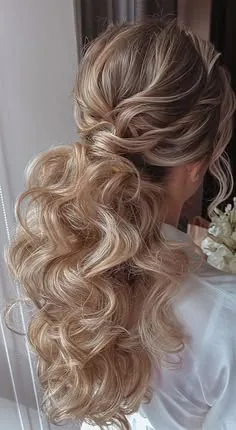
A high ponytail with the curls pinned up is the answer for athletes who love volume but need control: the hair is gathered high, the curls are set, and then the ends are pinned up and tucked so the length stays short and compact. You get the bounce and the energy without the swinging length.
Build a high ponytail, curl the length, then fold the ends up and pin them into the base so the ponytail sits short and full. The pinned curls read as volume from the front, and from the back the style looks neat and deliberate — the best of both worlds.
Hold rating: 8/10 — secure once the curls are pinned. Stunt-safe note: the shortened length cannot whip into a teammate’s face. Quick fix: re-pin any curl that drops, and re-scrunch the volume with a drop of cream.
24. The Triple Braid Ponytail
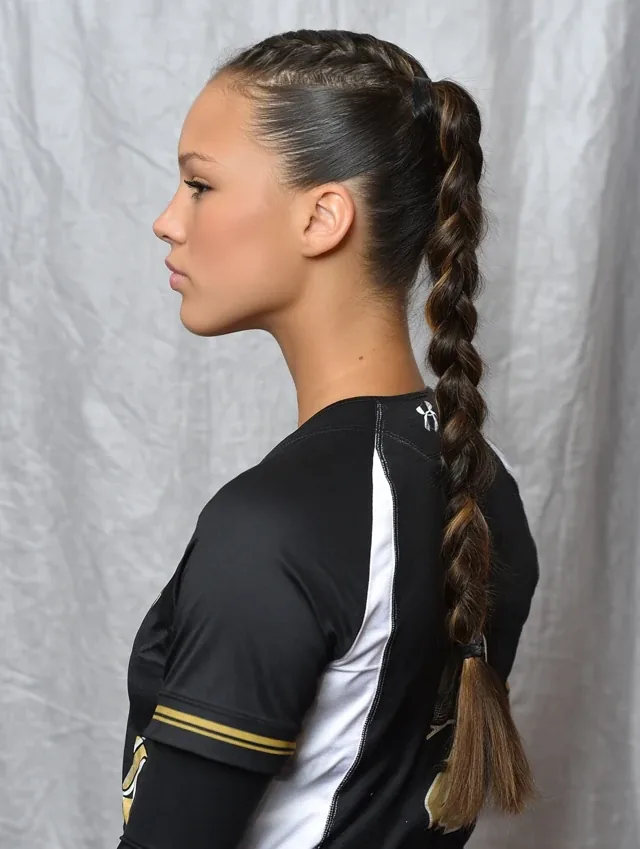
A triple braid ponytail is the most secure ponytail build in this guide: three braids — one from each side and one from the top — feed into a single high ponytail, so the entire head is anchored before the length even starts. It looks intricate, it holds for hours, and it is a favourite for all-star teams.
Braid three sections from the hairline toward the crown, then gather all three braids and the remaining hair into one high ponytail. The three braids share the tension, so no single point pulls — which makes this one of the most comfortable high ponytails to wear all day.
Hold rating: 10/10 — three anchors beat one. Stunt-safe note: the fully braided front cannot move during any stunt or tumble. Quick fix: smooth any escaped wisps with gel on a toothbrush.
25. The Slicked Pixie for Short Hair
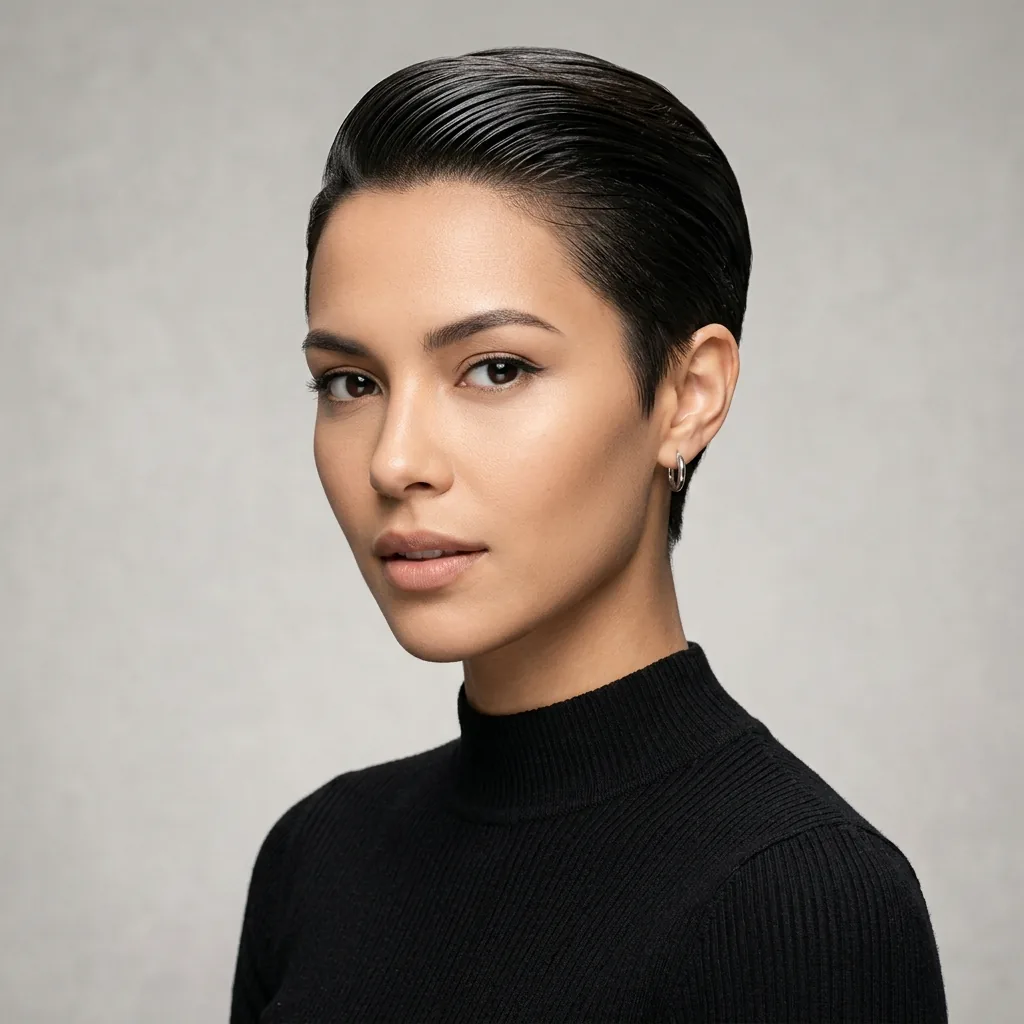
Short hair is a secret advantage in competition: there is nothing to fall into your face, nothing to swing, and nothing to come loose. A slicked pixie takes that advantage and makes it sharp — the hair is smoothed back with gel, the shape is clean, and the whole look reads as confident and athletic.
Work a strong-hold gel through damp hair, comb it back with a fine-tooth comb, and finish with a firm-hold spray. The style takes two minutes, it survives the whole day, and it looks fantastic with a bow clipped at the side or a headband for team uniformity.
Hold rating: 10/10 — short hair barely moves at all. Stunt-safe note: the safest style for flyers: nothing can fall into the eyes at height. Quick fix: re-smooth with a drop of gel on your palms.
26. The Bob with a Secure Headband Braid

A bob with a headband braid is the best competition style for shoulder-length hair: a small braid runs along the hairline like a headband, the rest of the bob falls neatly, and the front is completely controlled. It looks polished, it holds, and it keeps the hair out of your face without needing length you do not have.
Braid a section from one temple along the hairline to the other side, pin it securely, and smooth the rest of the bob with a little serum. The braid is the anchor — as long as it holds, the front stays clear — so pin it in at least two places and test it with the shake test.
Hold rating: 7/10 — strong at the front, natural at the back. Stunt-safe note: best for routines without heavy tumbling; add a clip at each end of the braid for extra security. Quick fix: re-pin the braid at both temples and smooth the bob with serum.
27. The Half-Up Top Knot
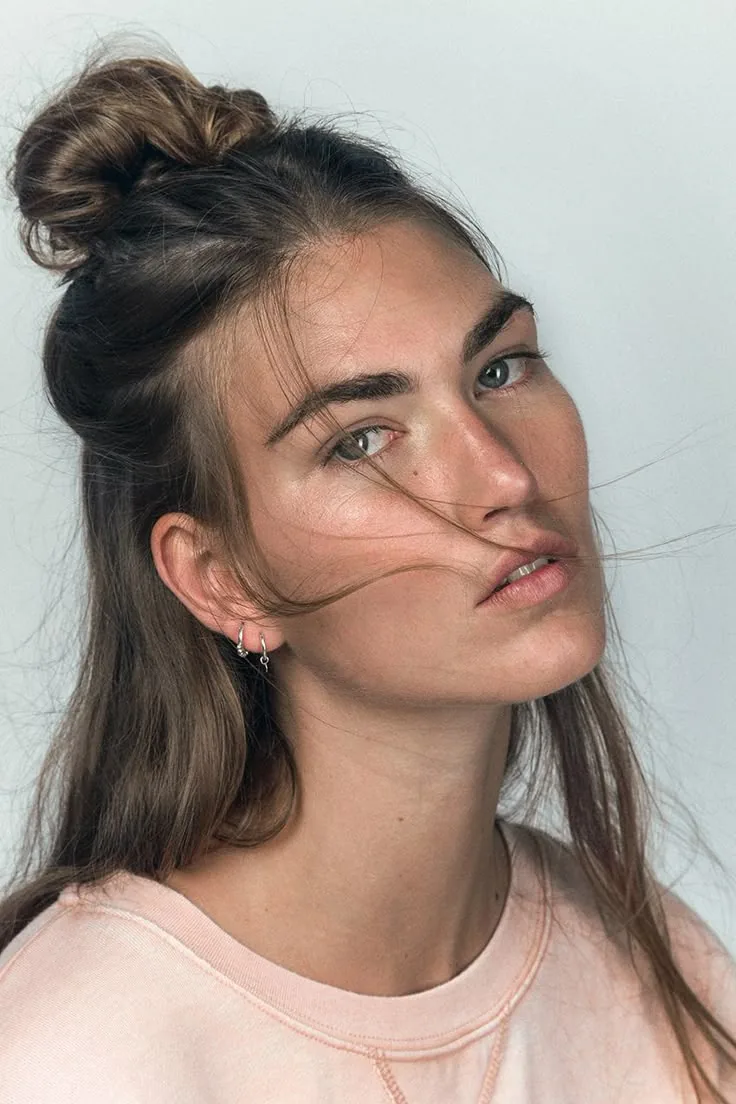
A half-up top knot gives you the control of an updo and the length of hair worn down: the top section is gathered and coiled into a small knot at the crown, the rest of the hair falls behind, and the front is completely clear. It is a great choice for athletes with long hair who want their face open without committing to a full ponytail.
Gather the top half of the hair at the crown, coil it into a small knot, and pin it securely. The knot must be tight and the front smooth — a loose half-up knot will slide during a routine. For tumbling-heavy routines, gather the remaining length into a low ponytail as well.
Hold rating: 7/10 — strong at the crown, freer below. Stunt-safe note: add a low ponytail for the loose length if your routine includes tumbling. Quick fix: re-pin the knot and gather the loose hair into a quick ponytail if it starts to fly.
28. The French Twist for Competition
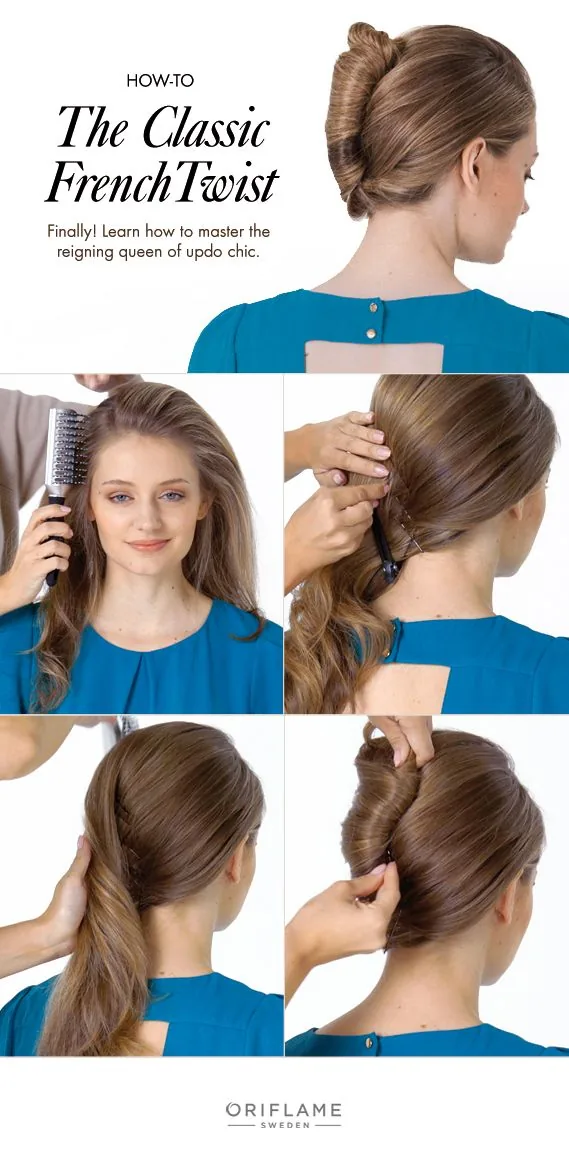
A French twist is the most elegant competition updo: the hair sweeps up and tucks into a smooth vertical roll, the neck looks long, and the whole style is completely contained. It is the right choice for formal competitions, for athletes with medium to long hair, and for anyone who wants a style that cannot possibly come loose.
It needs plenty of pins, so build it the night before if you can, or have a teammate help. Sweep the hair up, tuck it into the roll, and pin it in at least five places along the fold. Keep the front smooth with gel, and finish with a firm-hold spray.
Hold rating: 9/10 — the roll holds for hours when pinned well. Stunt-safe note: the fully contained shape cannot catch or swing during stunts. Quick fix: add a pin along the fold if the roll starts to loosen.
29. The Dutch Braid Crown with a Low Bun
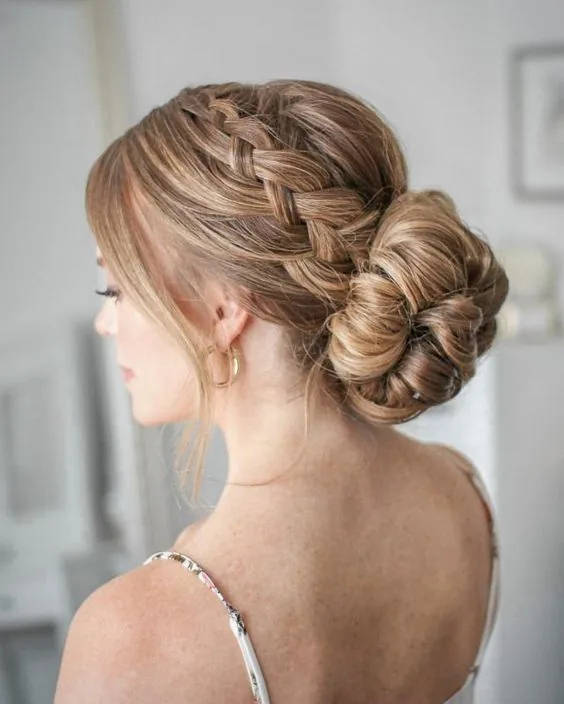
A Dutch braid crown with a low bun combines two of the most secure builds in this guide: a raised Dutch braid wraps around the head, and the remaining hair is gathered into a low bun. The braid locks the front, the bun contains the length, and the whole style holds through the longest competition day.
Braid a Dutch braid along the hairline from one side around to the other, pin it in place, and coil the rest into a low bun at the nape. Loosen the braid gently after pinning so it looks full and soft, and finish with a firm-hold spray.
Hold rating: 10/10 — two secure builds in one style. Stunt-safe note: the front cannot fall forward during inversions, and the bun cannot swing. Quick fix: re-pin the braid at the temple and add a crossed pin to the bun.
30. The Ribbon-Wrapped High Ponytail
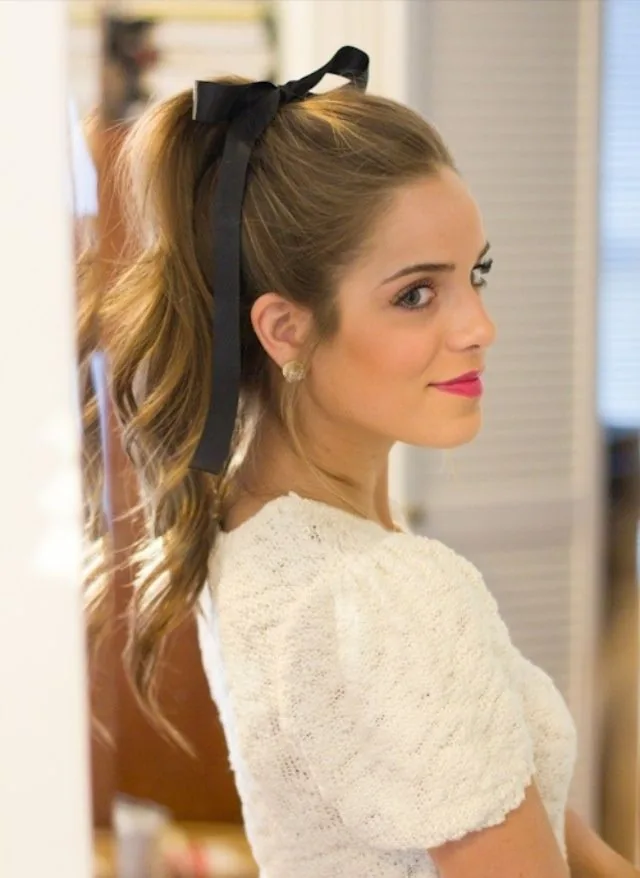
A ribbon-wrapped high ponytail takes the classic competition ponytail and adds a team-coloured ribbon wrapped around the base — a small detail that ties the whole team together and photographs beautifully. The ribbon is decoration, but the ponytail underneath is built to competition standard: tight, smooth and tested.
Build a tight high ponytail first, then wrap a ribbon around the base and tie it in a small bow, pinning the ribbon through the elastic so it cannot slide. Choose a ribbon in your team colours, and keep it short enough that it cannot flap into your face during a routine.
Hold rating: 9/10 — the ponytail does the work, the ribbon is the finish. Stunt-safe note: keep the ribbon short and pinned, so it cannot catch during stunts. Quick fix: re-pin the ribbon and re-tighten the ponytail base.
31. The Scrunchie-Secure High Ponytail
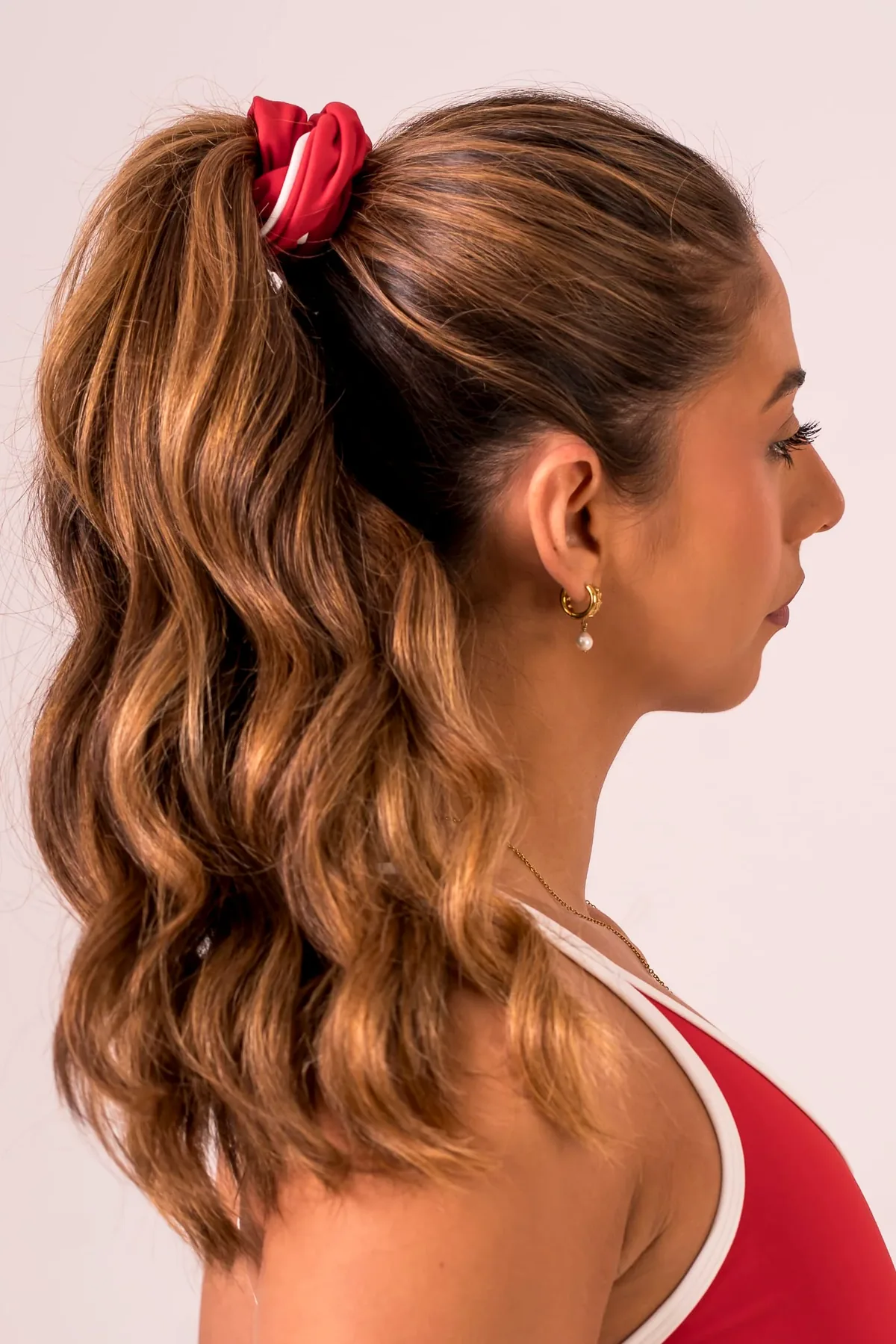
A scrunchie high ponytail is the most comfortable secure style in this guide: a fabric scrunchie grips the hair more gently than a bare elastic, so it holds without pulling, and it adds a pop of team colour at the base. It is a favourite for long competition days, when a tight elastic starts to ache.
Use a scrunchie over a strong elastic, not instead of one — the elastic does the holding, the scrunchie adds grip and comfort. Wrap the elastic twice, add the scrunchie on top, and smooth the front with gel. For extra hold, use two elastics stacked before the scrunchie goes on.
Hold rating: 8/10 — comfortable and secure with a double elastic. Stunt-safe note: the soft scrunchie cannot hurt a teammate if it brushes them during a stunt. Quick fix: re-tighten the elastic underneath and re-smooth the front.
32. The Braided Pigtails for Flyers
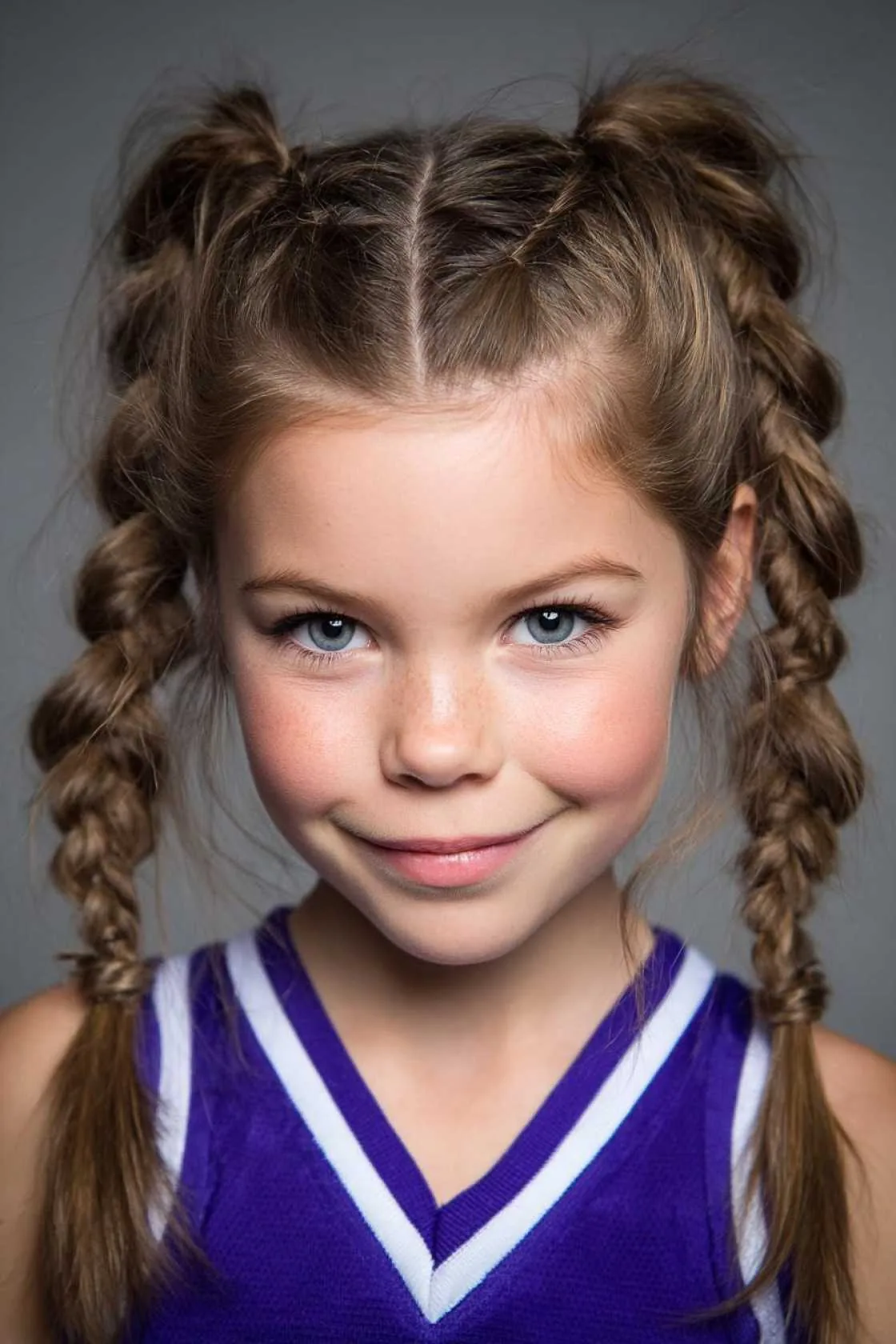
Braided pigtails are the smartest style for flyers: two braids, one on each side, keep the hair completely controlled and balanced, and the braided length cannot fly into your own face or a base’s hands while you are in the air. The symmetry also looks sharp from the judges’ seats.
Part the hair cleanly down the middle, braid each side from the hairline to the ends, and secure with clear elastics. Keep both braids even in thickness and length — check them from the front and the back — and pin the bow or ribbon at the top of each braid if your team wears them.
Hold rating: 9/10 — braids hold their own weight. Stunt-safe note: the top pick for flyers: nothing loose at height. Quick fix: re-braid the last few inches if an end frays, and re-secure the elastic.
33. The Low Chignon for Competition
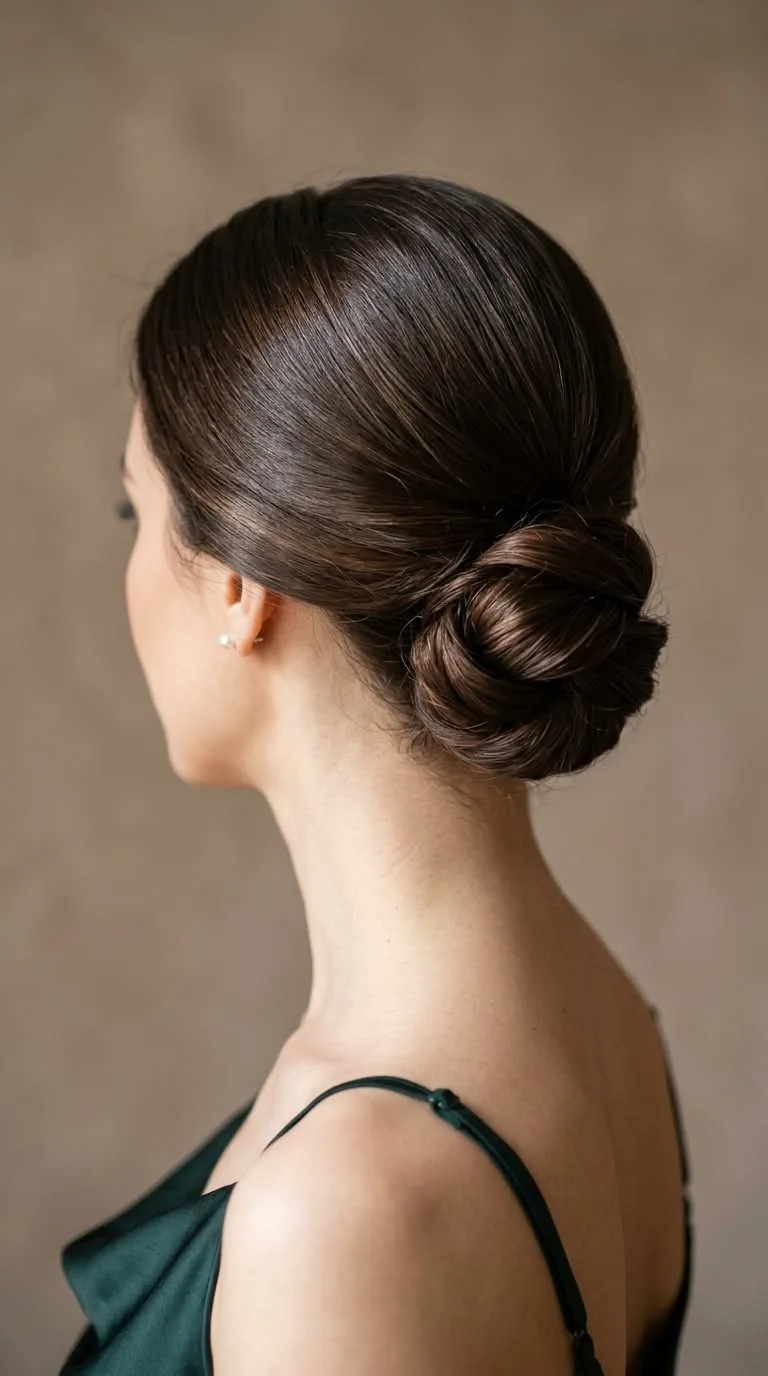
A low chignon is the most elegant contained style a cheerleader can wear: the hair is gathered low at the nape, twisted into a soft roll and pinned, with the front kept smooth and the face fully open. It suits formal competitions and athletes who prefer a quiet, polished look over a high-energy ponytail.
The low placement is the advantage — the chignon sits below the shoulders’ line of movement, so it never interferes with stunts, and it looks just as good from the back as from the front. Pin it in at least three places and finish with a firm-hold spray.
Hold rating: 9/10 — very secure when pinned in three places. Stunt-safe note: the low, compact shape cannot be grabbed or pulled during partner work. Quick fix: add a crossed pin at the base if the chignon starts to tilt.
34. The Slicked-Back Wet Look Ponytail
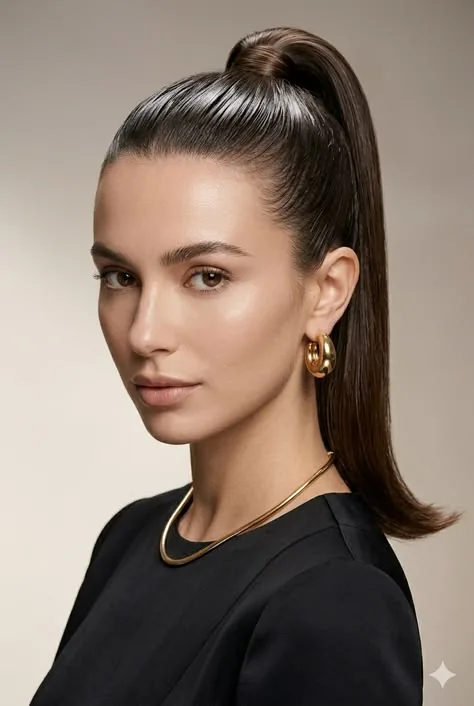
A slicked-back wet look ponytail is the most dramatic competition style: the hair is smoothed back with gel into a high ponytail with a glossy, wet finish that catches the gym lights and looks sharp from every seat. It is bold, it is polished, and it holds like nothing else — because the gel is the hold.
Work a strong-hold gel through damp hair, comb it back smooth, and gather it high. The gel must be worked in evenly, or the finish will look patchy under the lights. Finish with a shine spray on the ponytail itself, and keep a small amount of gel in your kit for touch-ups.
Hold rating: 9/10 — the gel locks the surface down. Stunt-safe note: the slicked surface cannot snag or catch during stunts. Quick fix: re-smooth with a drop of gel on your palms.
35. The Voluminous Blowout Ponytail (Pinned)
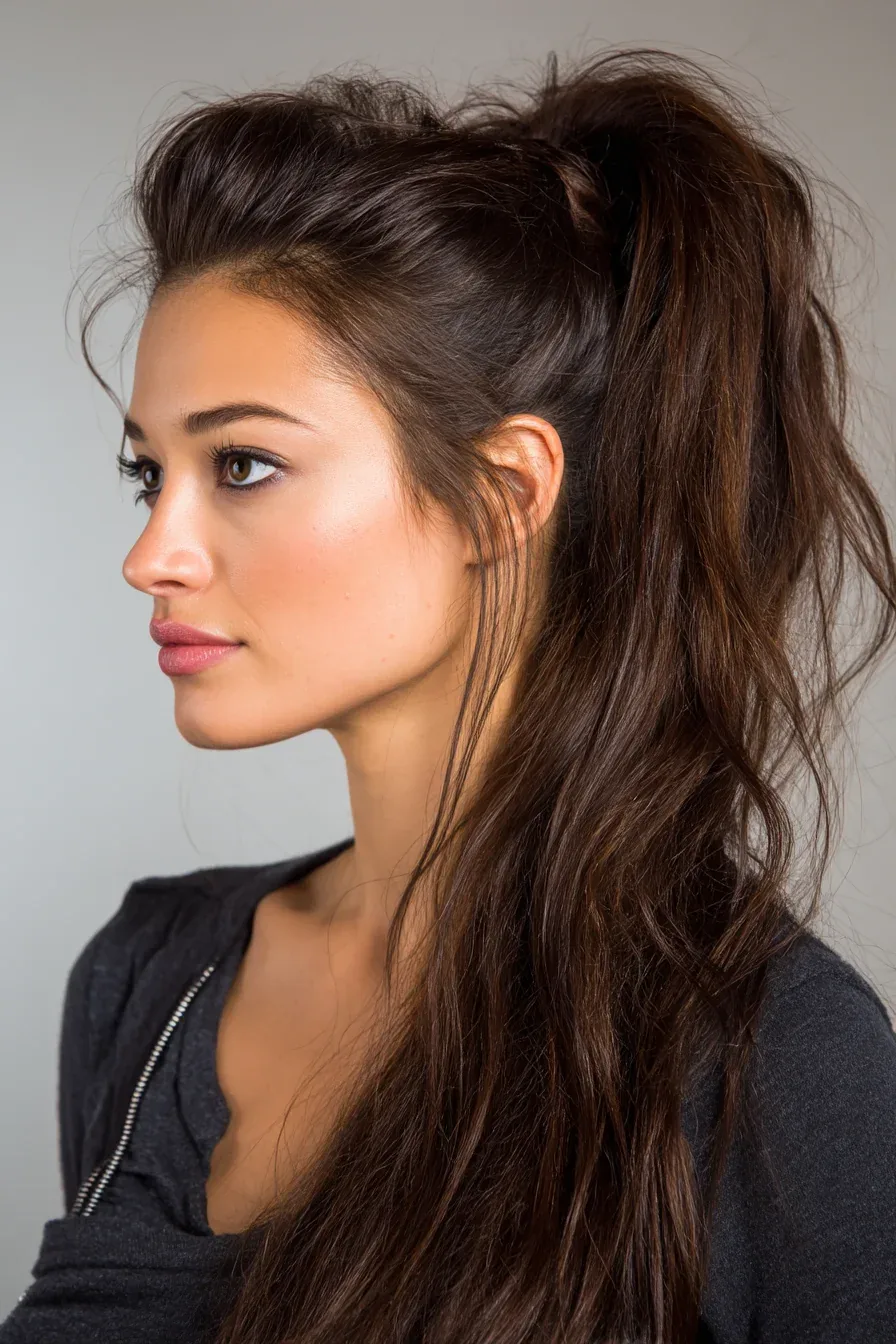
A voluminous blowout ponytail is the most glamorous competition style: the hair is blow-dried with volume, gathered high, and the length falls in big, bouncy waves that move with every jump. It is the style that makes a routine look bigger — as long as the volume is pinned and controlled, not left to fly free.
The control is the key. Blow-dry with a round brush for volume, gather the hair high, and pin the sides back so the volume sits above the shoulders. Use a firm-hold spray on the roots and a lighter one on the length, so the waves move without falling apart.
Hold rating: 7/10 — glamorous but needs pinning to survive tumbling. Stunt-safe note: pin the sides back firmly; unpinned volume can fall into your face mid-routine. Quick fix: re-pin the sides and re-spray the roots.
36. The Braid-and-Bun Combo
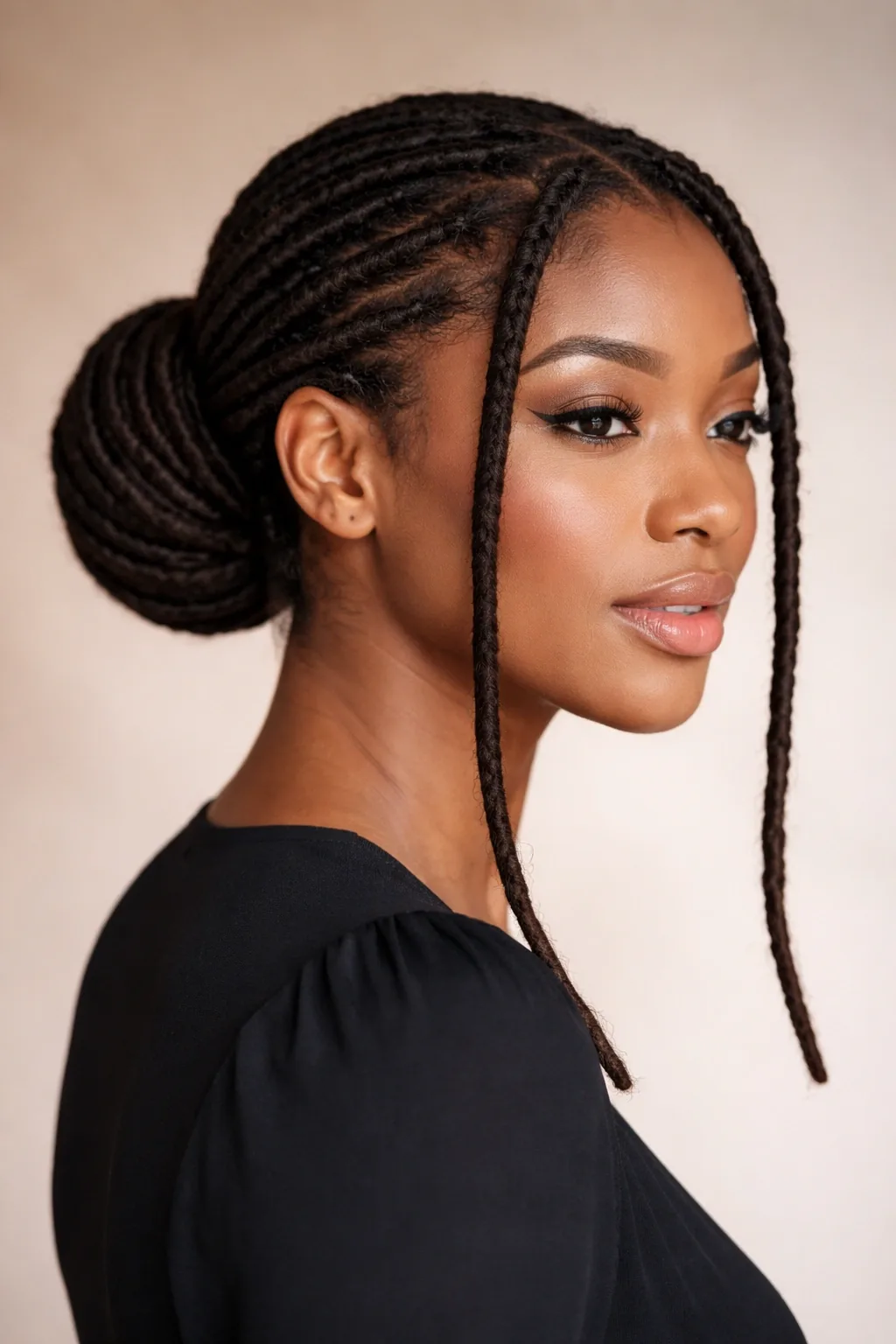
A braid-and-bun combo takes the best of both worlds: a braid runs from the hairline to the crown, locking the front flat, and the remaining hair is coiled into a bun that contains the length. It is secure, it is polished, and it looks crafted — the kind of style that earns compliments from other teams.
Braid from the front hairline toward the crown, then gather the braid and the rest of the hair into a high or low bun, pinning it in at least three places. The braid does the anchoring, so the bun can be softer and more comfortable than a bun built on its own.
Hold rating: 9/10 — the braid anchors, the bun contains. Stunt-safe note: the front cannot fall forward, and the bun cannot swing. Quick fix: re-pin the bun and smooth the braid with gel.
37. The Side-Swept Ponytail with an Anchor Braid
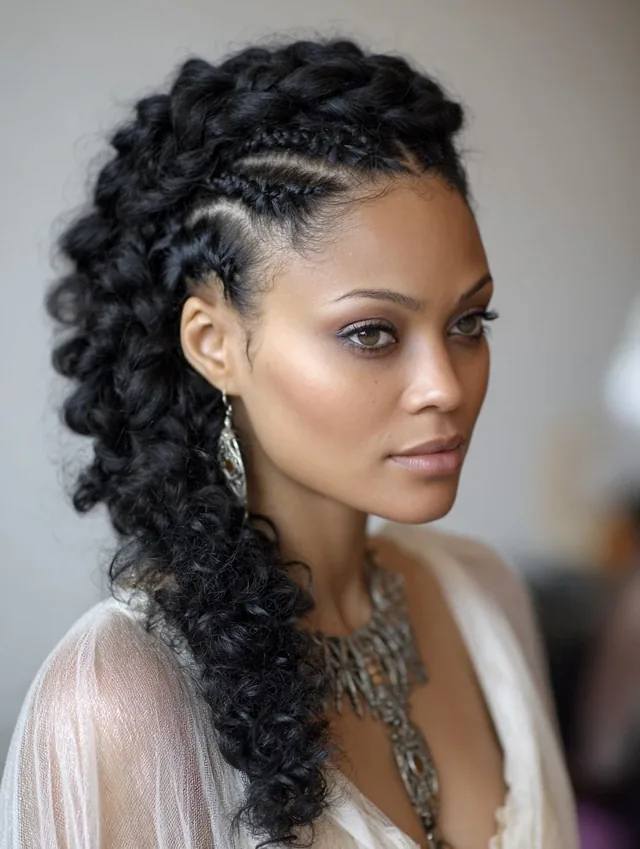
A side-swept ponytail with an anchor braid is the most elegant asymmetric competition style: the hair sweeps to one side in a ponytail, and a small braid on the opposite side anchors the front and keeps it from sliding forward. It looks sophisticated, and the braid is what makes it competition-safe.
Braid a small section from the opposite temple toward the ponytail, gather everything to one side, and secure the ponytail high on that side. The anchor braid is the whole trick — without it, a side ponytail slides forward during a routine; with it, the style holds.
Hold rating: 8/10 — secure thanks to the anchor braid. Stunt-safe note: keep the ponytail high on the side so it clears the shoulders during stunts. Quick fix: re-pin the anchor braid and re-tighten the ponytail base.
38. The Layered Ponytail with Hidden Pins
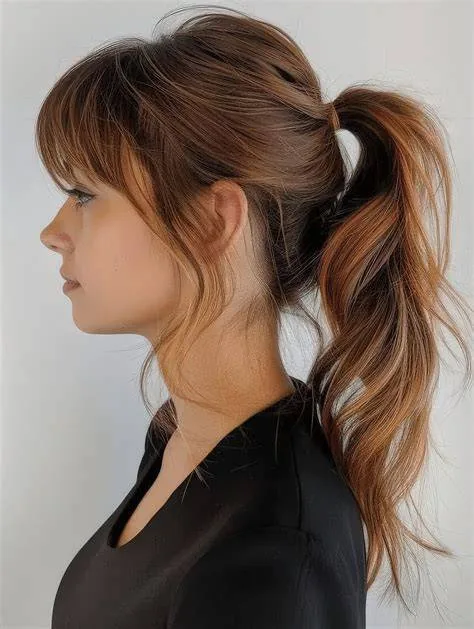
A layered ponytail with hidden pins is the smartest style for layered hair: the layers are gathered into a high ponytail, and the shorter layers that would normally escape are pinned in place with hidden bobby pins matched to your hair colour. The result looks like a clean, full ponytail — with no stray pieces.
Gather the hair high, then find every layer that escapes and pin it flat with a bobby pin pushed in against the direction of the hair. The pins must be hidden — slide them under the surface, not over it — and use enough of them: a layered ponytail can need six or eight pins to stay clean.
Hold rating: 8/10 — secure once every layer is pinned. Stunt-safe note: pinned layers cannot fall into your eyes mid-stunt. Quick fix: add a pin to any layer that escapes, and smooth the front with gel.
39. The Curly Low Bun with a Braid
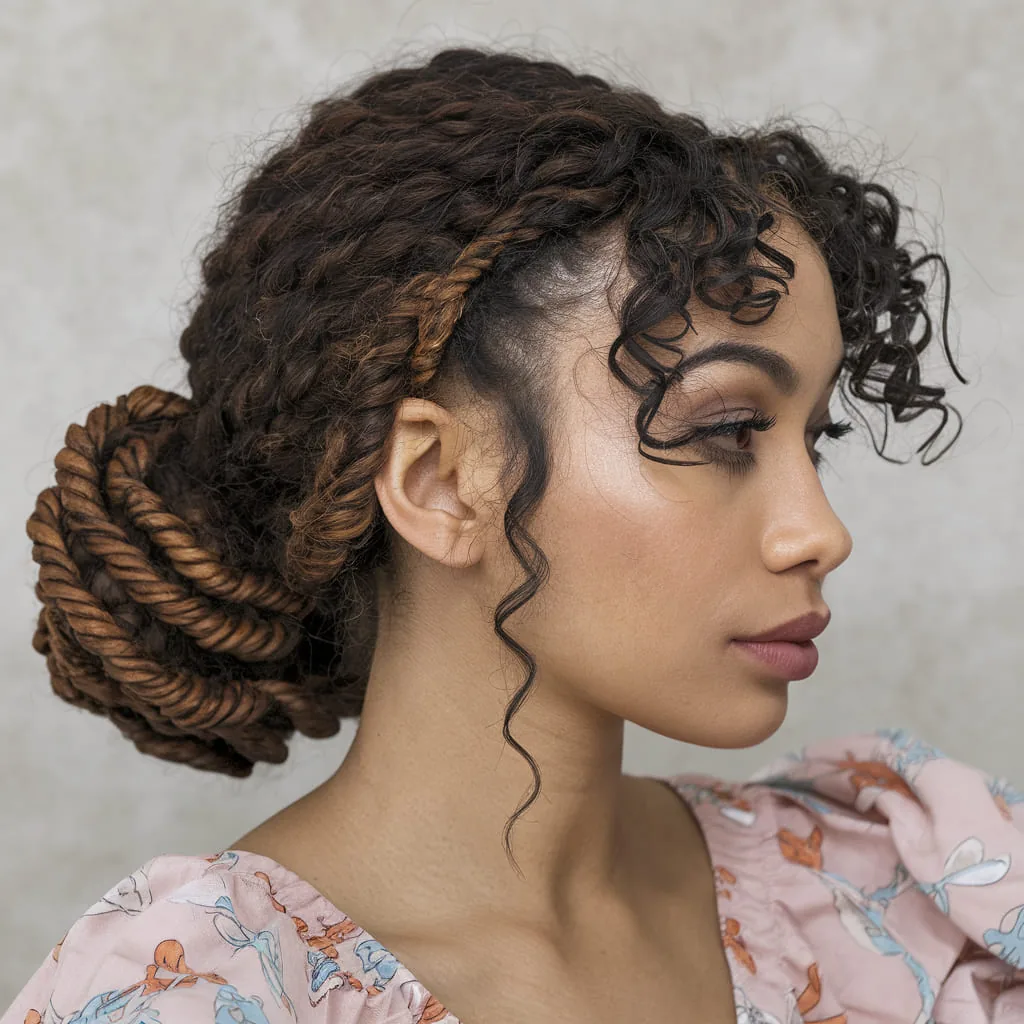
A curly low bun with a braid is the most beautiful secure style for curly hair: a braid runs along the hairline to control the front, and the curls are gathered into a low bun that keeps the shape soft and full. It is elegant, it holds, and it lets your natural texture be the star.
Define the curls with cream, braid a section from the temple along the hairline, and gather the curls into a low bun, pinning it in three places. Let a few curls soften the bun’s edge — the style should look full and natural, not scraped back — but keep the front firmly braided.
Hold rating: 9/10 — the braid controls the front, the bun contains the curls. Stunt-safe note: the low bun stays clear of stunts, and the braid keeps curls out of your face. Quick fix: re-scrunch the curls with a drop of cream and re-pin the braid.
40. The Competition Bow Ponytail
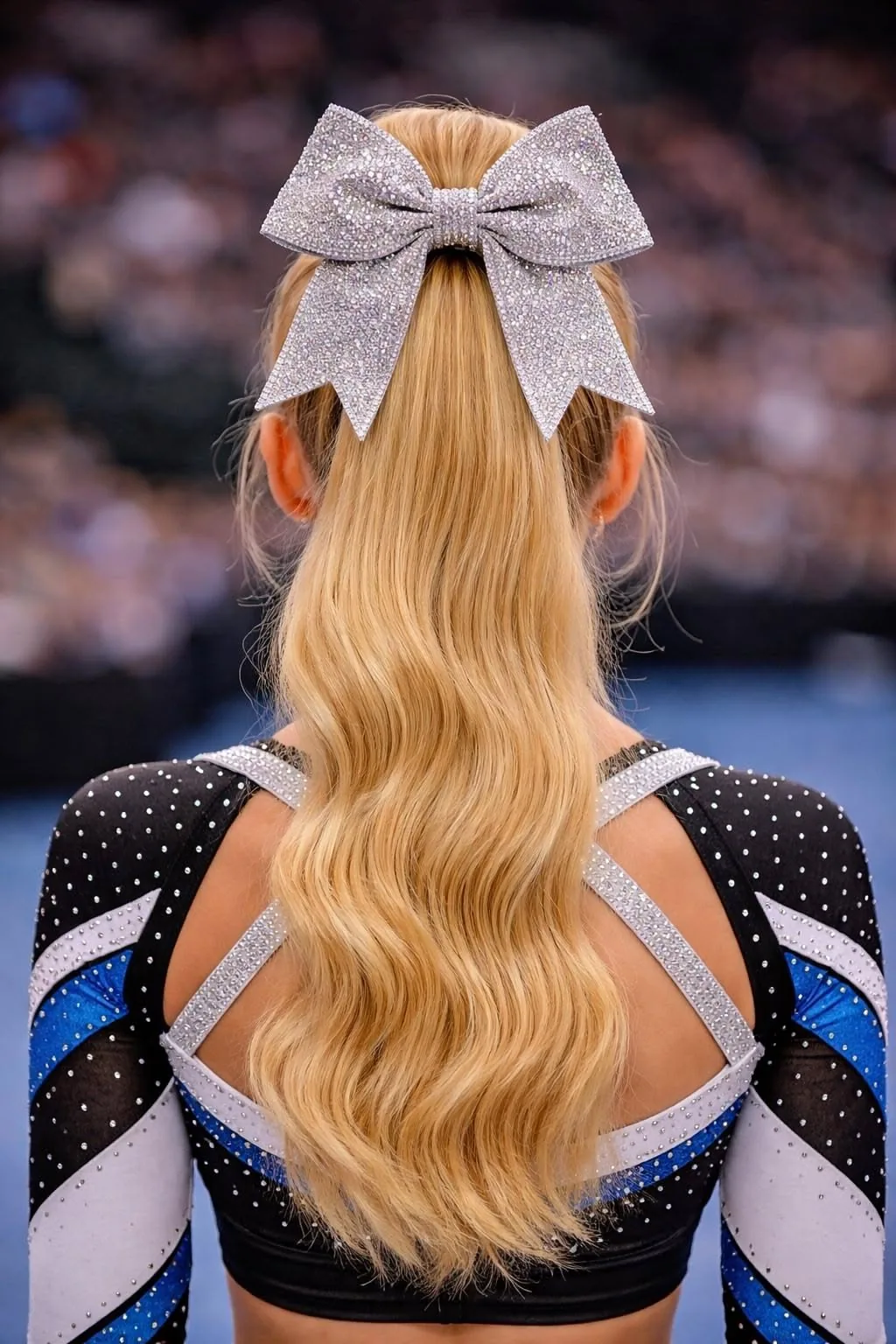
The competition bow ponytail is the signature look of cheerleading: a high, tight ponytail with a big team bow pinned firmly at the base, the bow sitting upright and proud. It is the style the crowd pictures when they think of cheerleading, and it is built to hold through the hardest routine of the season.
Build the tightest high ponytail you can, smooth the front with gel, and attach the bow with two bobby pins crossed underneath, pushed through the elastic and into the hair. The bow must sit upright — if it flops, it is too heavy for the ponytail, and you need a smaller bow or a tighter base.
Hold rating: 9/10 — the classic, done right. Stunt-safe note: a pinned bow cannot fall onto the mat or into a stunt. Quick fix: re-pin the bow with crossed pins and re-tighten the ponytail base.
41. Your Signature Look, Locked Down for Competition
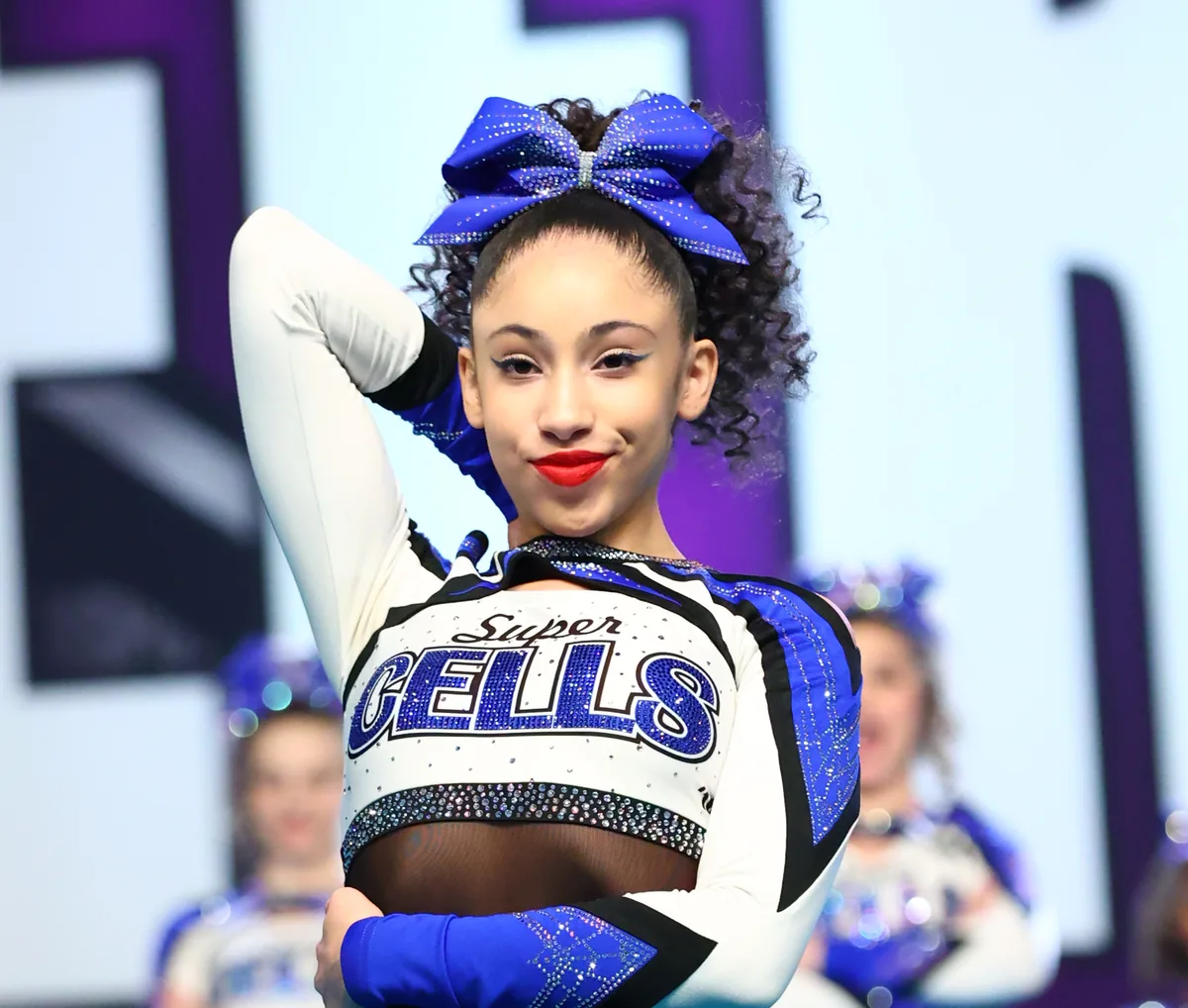
The last style in this guide is not a style at all — it is yours. The hair you wear on your best days, the part you always wear, the length you love, the wave or curl or straightness that is simply you, locked down for competition. Every other style in this guide is an idea; this one is the answer.
A competition is not a fashion shoot, and the routine that matters most will not be the one where your hair looked most dramatic — it will be the one where you hit every stunt, landed every tumble, and felt like yourself doing it. Wear the version of your hair that you recognise, build it to competition standard, and wear it with confidence.
Hold rating: depends on your build — test it with the shake test. Stunt-safe note: whatever your style, the front must be controlled and the length must be contained. Quick fix: if your signature style will not pass the shake test, add one braid, one extra elastic, or one more pin — and test it again.
Quick Fixes Between Rounds
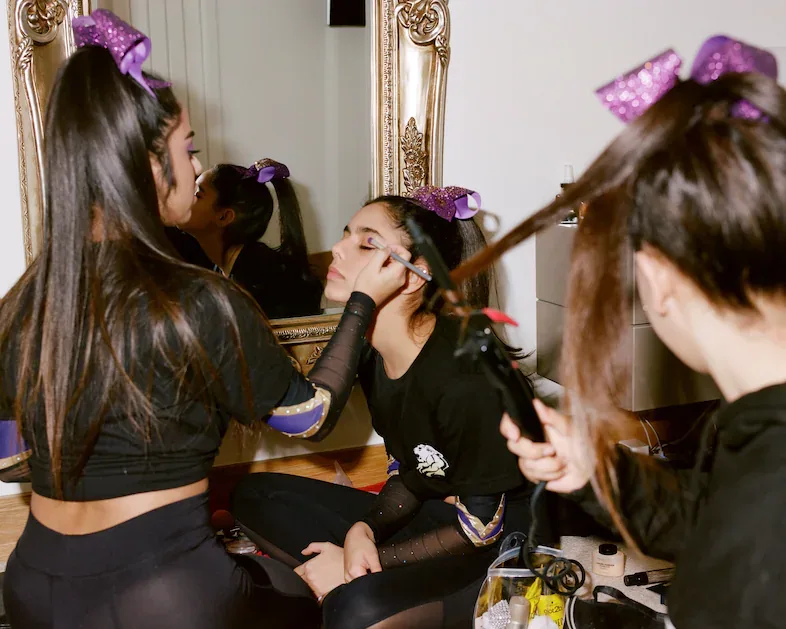
Between rounds you have minutes, not hours, and your hair has just survived a full routine. The fixes that work are the fast ones: smooth the front with a little water or serum on your palms, re-pin anything that slipped with a bobby pin that matches your hair colour, and re-tighten a ponytail by splitting it in half and pulling the two sides apart — it tightens the base without rebuilding the whole style.
Do not rebuild between rounds unless the style has truly failed. A full rebuild takes time you do not have and risks a worse result under pressure. A two-minute reset — smooth, pin, spray, check the back in a mirror or ask a teammate — is enough to look sharp for the next round.
Best for: every athlete, whatever the style. Assign a teammate as your second pair of eyes: she will spot a slipping pin or a stray piece long before you feel it.
Sweat, Humidity and Gym Lighting: Making Hair Last All Day
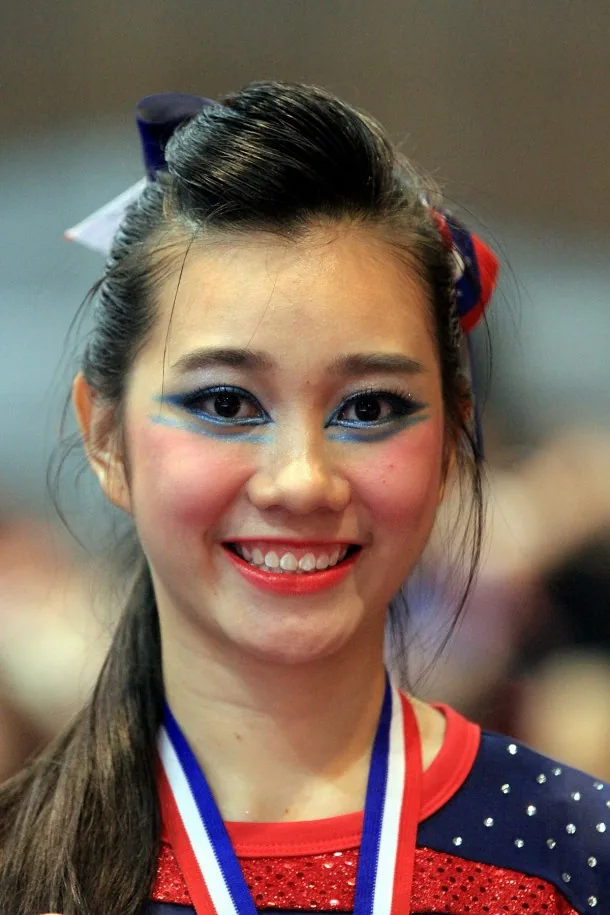
Competition days are long, hot and humid. Gyms are warm, the lights are bright, and you will sweat through warm-ups, routines and awards. Sweat is the enemy of hold: it softens gel, loosens pins and turns smooth hair into flyaways. The styles that survive are the ones built with sweat in mind — set on clean, dry hair, anchored with braids or twists, and finished with a strong-hold product that is made to resist moisture.
Start with day-old hair if you can, because freshly washed hair is slippery and refuses to grip. Use a little dry shampoo at the roots for texture, build the style tight, and finish with a firm-hold spray. Avoid heavy oils or serums on competition day — they make pins slide and hair fall flat under the lights.
Common mistake: building the style on freshly washed, conditioner-heavy hair and wondering why nothing holds. A little grit is your friend on competition day.
Bows, Ribbons and Accessories That Stay Put
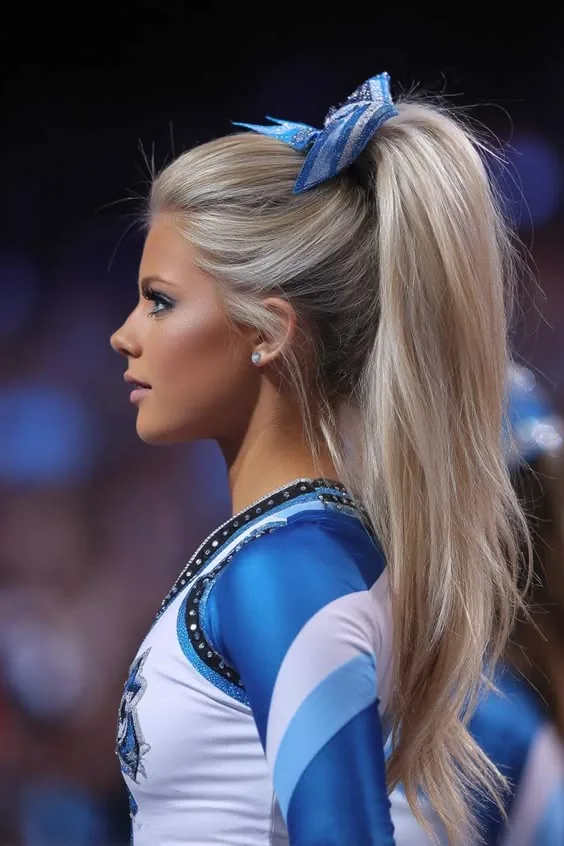
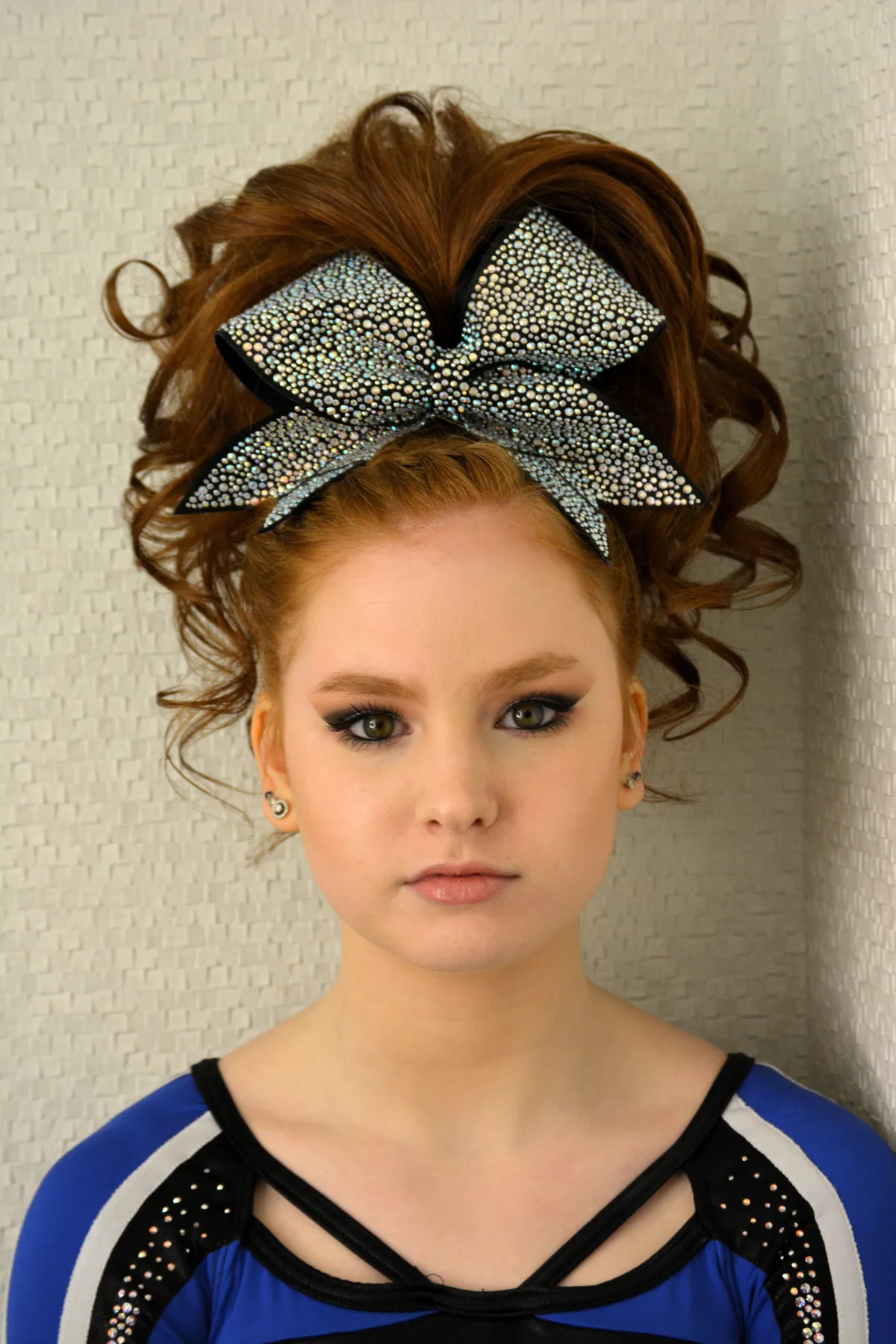
The bow is the signature of competition cheerleading, and it has to stay put through everything. A bow that slides, flops or falls off is a distraction for you and a deduction risk for the team. Attach it with more than hope: pin it through the elastic and into the hair with two bobby pins crossed underneath, and choose a bow sized to your ponytail — too big and it pulls the style down, too small and it disappears.
The same rule applies to ribbons, scrunchies and clips. Every accessory should be tested at practice, attached in at least two places, and checked after the shake test. Avoid hard, heavy or sharp accessories — they can hurt a teammate during a stunt and they are often against the rules.
Quick verdict: if an accessory moves when you shake your head, it will move on the mat. Pin it twice, test it hard, and forget about it.
The Competition-Day Hair Kit
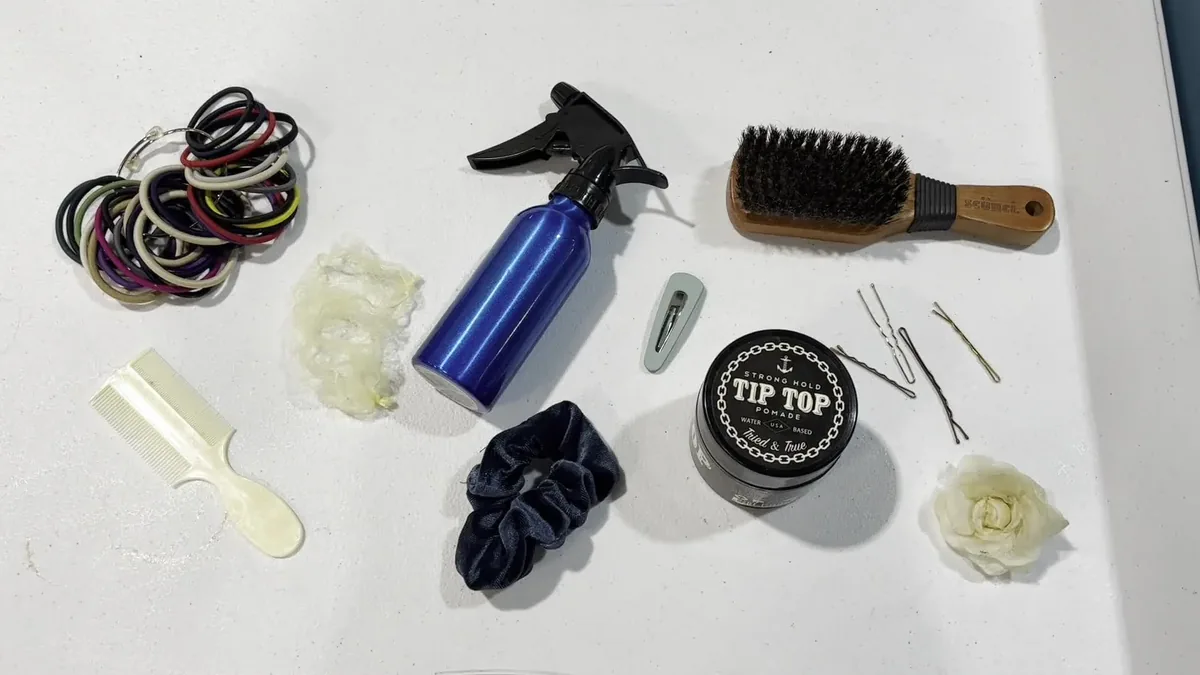
Every cheerleader needs a small competition-day hair kit, because nobody else will be carrying one for you. Pack it the night before in a small pouch: a travel brush, ten bobby pins that match your hair colour, five clear elastics, a mini strong-hold spray, a small amount of gel or edge control, a spare bow, and a spare hair tie in case the whole style needs a fast reset.
Add two things most people forget: a small mirror, so you can check the back of your head without finding a bathroom, and a few tissues to blot sweat and shine before photos. Keep the kit in your competition bag, not in a locker, so it is with you between rounds.
Best for: every athlete, whatever the style. Check the kit the night before — a kit with an empty spray can is just a pouch.
Can cheerleaders wear their hair down in a competition?
It depends on the rules and the routine. Most competitions and programs require hair to be secured away from the face, and hair worn fully down rarely passes the shake test — it falls into your eyes during stunts and tumbling. A half-up style with the front braided or pinned back is the closest safe option, and a low ponytail is safer still. Check your program’s rulebook before competition day.
What is the best hairstyle for a cheerleading flyer?
The best hairstyles for a flyer are the ones with nothing loose at all: double Dutch braids, cornrows into a ponytail, a slicked-back low bun, or a top knot. A flyer is lifted, tossed and caught, so any loose hair can fall into her own eyes or a base’s hands at the worst possible moment. Braided fronts are the safest choice, because they cannot move even in the air.
How do I stop flyaways during stunts?
Start with day-old hair, which grips better than freshly washed hair. Smooth the front with a strong-hold gel or edge control, use a boar-bristle brush to lay the surface flat, and finish with a firm-hold spray. For stubborn flyaways, smooth them with gel on a clean toothbrush, and carry a few bobby pins in your competition kit for a quick fix between rounds.
Can I wear a bow in a cheerleading competition?
Yes — bows are a signature part of competition cheerleading, but they must be attached safely and within your competition’s rules. Pin the bow through the elastic and into the hair with two crossed bobby pins, choose a bow sized to your ponytail, and check the rulebook for any size or attachment limits. A bow that falls off during a routine is a distraction and can cost your team points.
What hair products hold best through tumbling?
A strong-hold gel or edge control for the front, a firm-hold hairspray for the finish, and a texturising product or dry shampoo at the roots for grip. Avoid heavy oils, serums and conditioners on competition day — they make hair slippery and pins slide out. Test every product at a full practice before competition day, because sweat changes how products behave.
How should the whole team match hairstyles?
Agree on one team style — the same ponytail height, the same part, the same bow and the same finish — and let each athlete adapt the build to her own hair. Curly hair might need a braid at the front, thick hair might need an extra elastic, and short hair might need a half-up version of the same look. From the judges’ seats the team still reads as one, because the silhouette matches.
What hairstyle works best for short hair in cheerleading?
Short hair is an advantage in competition, because there is nothing to fall into your face. A slicked-back pixie, a bob with a headband braid, or a half-up top knot all work beautifully. The key is control at the front: smooth the hair back with gel, pin any pieces that fall forward, and add a bow or headband in team colours for uniformity.
How do I keep curly hair secure during a routine?
Define the curls with cream or light gel, smooth the front with edge control, and gather the hair high with a strong elastic — use two elastics for thick, heavy curls. A braid at the front adds extra security and keeps curls out of your eyes. Finish with a firm-hold spray, and carry a small amount of curl cream in your kit to re-scrunch the curls between rounds.
Should I wash my hair on competition day?
No — day-old hair holds a style far better than freshly washed hair, which is slippery and refuses to grip. Wash your hair the day before, use a little dry shampoo at the roots for texture, and build the style on clean, dry hair. If your hair must be washed on the day, blow-dry it completely and add a texturising product before you start styling.
What do I do if my hairstyle falls apart mid-competition?
Stay calm and finish the routine — safety comes first, and a loose style is not worth risking a stunt. Between rounds, do a fast reset: smooth the front with gel or water, re-pin anything that slipped, re-tighten the ponytail by splitting it and pulling the sides apart, and check the back with a teammate. Do not rebuild the whole style unless it has truly failed — a two-minute reset is usually enough.
Conclusion
The best hairstyles for a cheerleading competition are not the most dramatic ones. They are the ones that let you do your job — jump, stunt, tumble, and hit every count — without ever thinking about your hair. Whether you choose a classic high ponytail, double Dutch braids, a slicked-back bun, a braided crown or your own signature look locked down for competition, the goal is the same: to look sharp, to feel like yourself, and to let the routine be the star.
Start with the guides, pick the style that passes the shake test at a full practice, and pack your competition-day hair kit the night before. Then forget about your hair completely and enjoy the competition. Your team has worked all season for these two and a half minutes — your hair should be the last thing on your mind when the music starts.