Picture-Perfect: 36 Engagement Photoshoot Hairstyles That Shine in Every Frame
An engagement photoshoot is the one time your hair will be judged by a camera, not a mirror — and the two see very different things. A mirror shows you the front, in soft indoor light, at arm’s length. A camera sees you from every angle, in hard sunlight and soft golden hour, in close-ups where every strand counts and in wide shots where your whole silhouette has to read. The best hairstyles for an engagement photoshoot are chosen for the lens first and the mirror second: they catch the light, they hold their shape when the wind picks up, and they still look like you.
That is the angle of this whole guide. Instead of asking what looks pretty in the salon chair, we ask what photographs well — in flash, in golden hour, in a tight close-up of the ring, and in a windswept field at sunset. Some styles glow in warm evening light but wash out in bright midday sun. Some look flawless from the front and fall apart from the side, which is exactly where the photographer will be standing. And some simply refuse to stay put for a two-hour shoot across three locations, which is how most engagement sessions actually run.
This guide starts with eight camera-facing guides: how golden hour and flash change your hair, how to wind-proof a style, how to match your hair to your outfit neckline and the ring shot, why a trial run and test photos matter, what the camera sees in close-ups, what to pack for touch-ups between locations, how colour and shine behave on camera, and how to coordinate with your partner without matching. Then come 36 engagement photoshoot hairstyles — waves, updos, braids, buns, curls and short styles — each with who it suits best, how it photographs, and how well it holds.
Read the guides first, pick the style that photographs best for your locations, and book a trial run with test photos in the same kind of light your shoot will have. Your engagement photos will live on your walls, your invitations and your social media for years — your hair should be ready for every single frame.
Golden Hour vs Flash: How Light Changes Your Hair
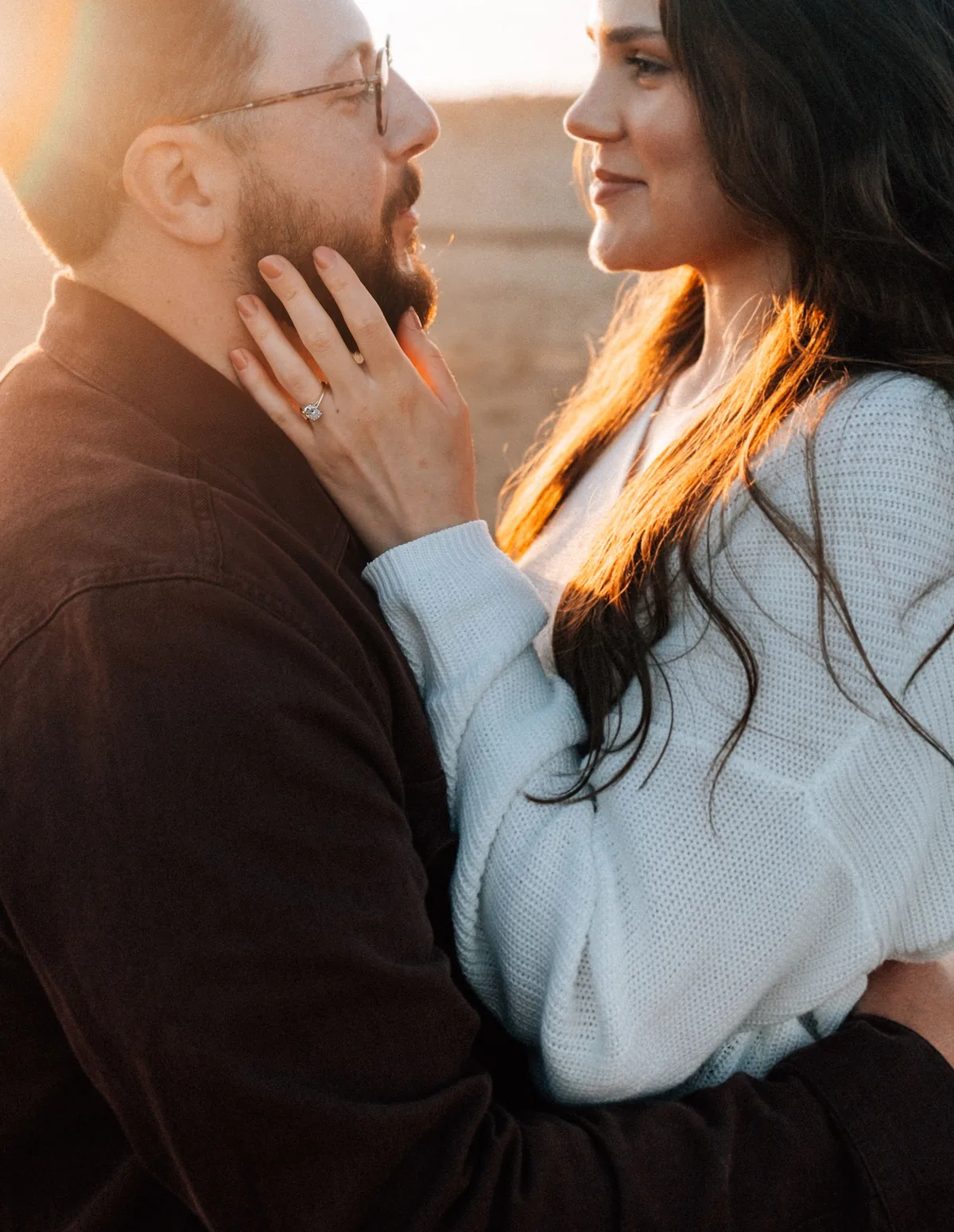
Golden hour — that warm, low light in the hour before sunset — is the most forgiving light a camera ever gives you, and it is why so many engagement shoots are scheduled for it. It wraps the hair in a soft glow, turns ordinary waves into ribbons of light, and hides small imperfections that harsh midday sun would expose. If your shoot is at golden hour, lean into texture: waves, curls and braids all catch the light in layers, while a very flat, sleek style can look a little dull in comparison.
Flash and bright midday sun are a different story. Direct flash flattens texture and picks out every flyaway, so a sleek, smooth style photographs far better under flash than a deliberately messy one. Midday sun is the harshest of all: it creates hard shadows under the chin and makes dark hair look almost black, while very blonde hair can blow out to pure white. If your shoot is at noon, choose a style with clean lines and a little shine, and ask your photographer where the shade is.
Quick verdict: match the style to the light, not the other way round. Textured waves and curls for golden hour, sleek and smooth for flash and midday sun — and always take a few test photos in the actual light before the shoot day.
Wind-Proofing Your Style for an Outdoor Shoot
Outdoor engagement shoots and wind go together, and the wind does not care how long you spent in the salon chair. A style worn fully down will blow across your face in the first gust, and in photos that reads as messy rather than romantic — unless the movement is deliberate. The styles that survive wind are the ones with an anchor: a half-up section, a braid, a low bun, or a ponytail that gathers the hair and keeps it under control.
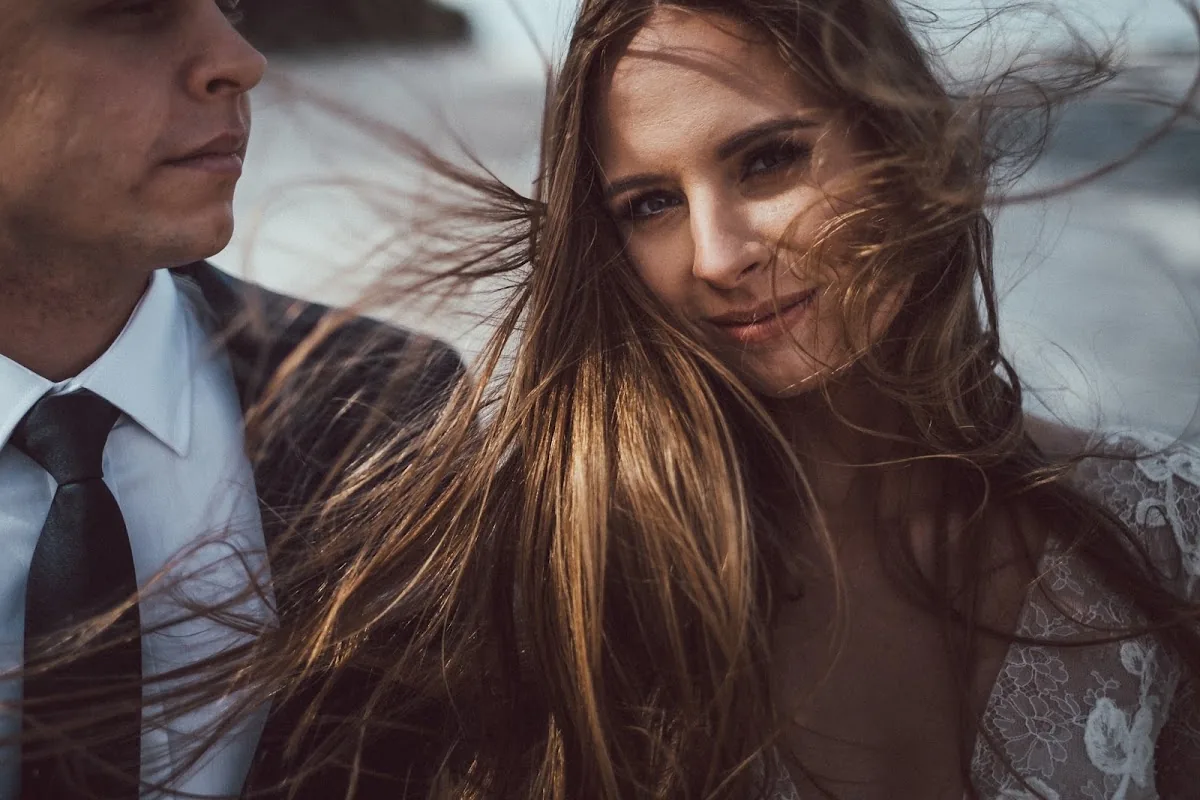
If your heart is set on wearing your hair down, there are two tricks that save it. First, ask your stylist to set the waves with more hold than usual, and to pin one side back discreetly so the front never crosses your face. Second, work with the wind instead of against it: stand so it blows your hair back, not forward, and let the photographer shoot the movement. A little motion in the hair looks alive and joyful in a photo — a face full of hair does not.
Common mistake: choosing a style that only works in still air and hoping the weather cooperates. Check the forecast, pick a style with an anchor, and pack extra pins — hope is not a hair plan.
Matching Your Hair to Your Outfit Neckline — and the Ring Shot
Your outfit neckline decides more about your engagement photoshoot hair than almost anything else, and the ring shot decides the rest. A strapless or sweetheart neckline leaves the shoulders bare, so hair worn down softens the frame beautifully, while an updo shows off the neckline itself. A high neckline or halter competes with hair worn down — an updo or a swept-back style keeps the whole portrait clean and lets the dress do the talking.
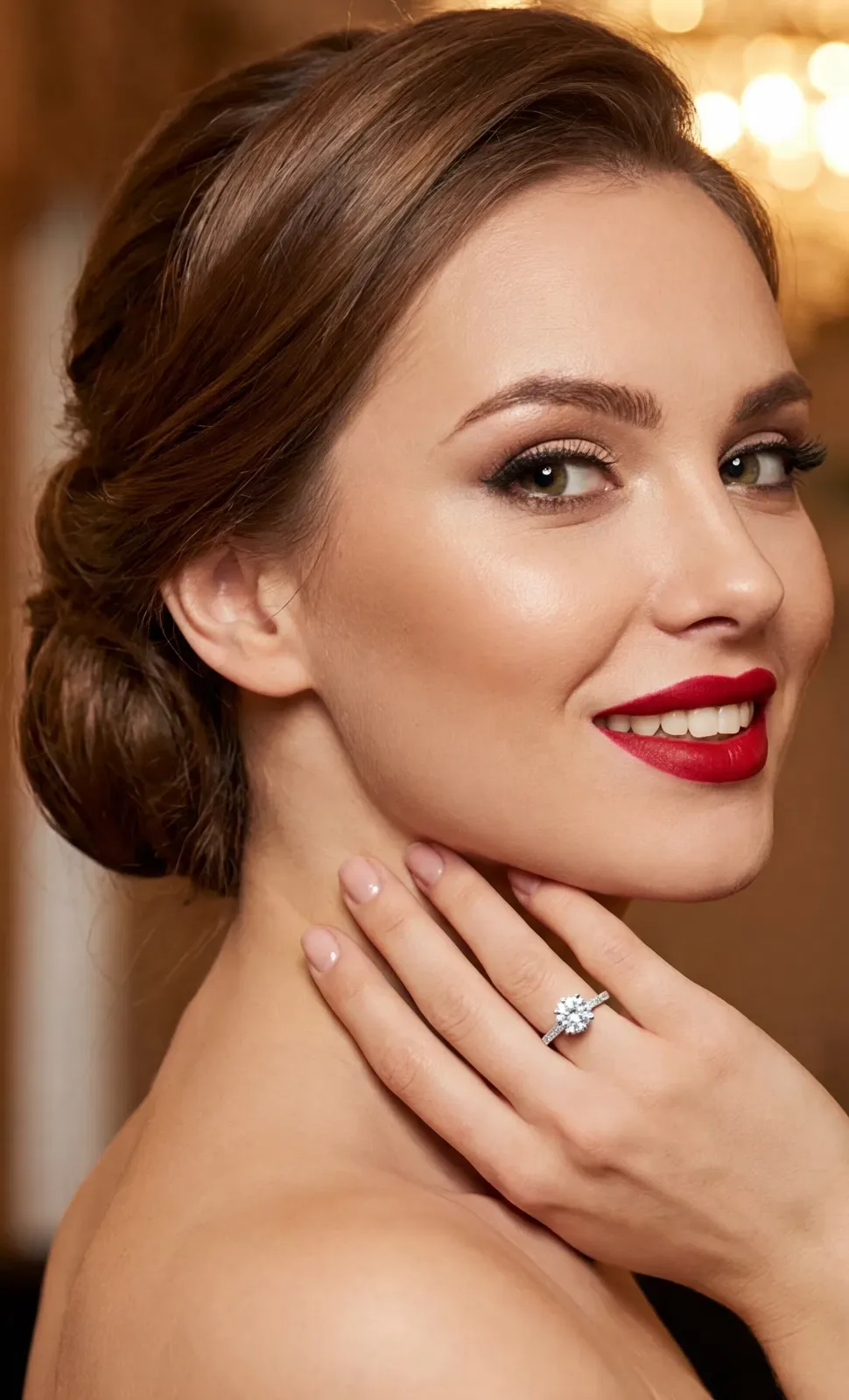
The ring shot is the one photo every couple wants, and it is the one most hairstyles ignore. The camera comes in close on your joined hands, and your hair will be in the frame — either framing the shot beautifully or falling across it. A style that keeps the front tidy, with the hair swept back from the face, makes the ring shot clean. If you wear your hair down, make sure one side is pinned or swept back so nothing drops into the frame when you lean in.
Quick verdict: try the outfit on with your hair both up and down, and take a practice ring shot with your phone. The right choice is usually obvious in the photo within seconds.
The Trial Run and Test Photos Before the Day
A trial run is not a luxury for an engagement photoshoot — it is the only rehearsal you get, and it is where most photo-day disasters are caught. Book it one to two weeks before the shoot, wear the outfit or a top with the same neckline, and bring the exact accessories you plan to wear. Style it, then photograph it outdoors in daylight, from the front, the side and the back, because the camera will see all three.
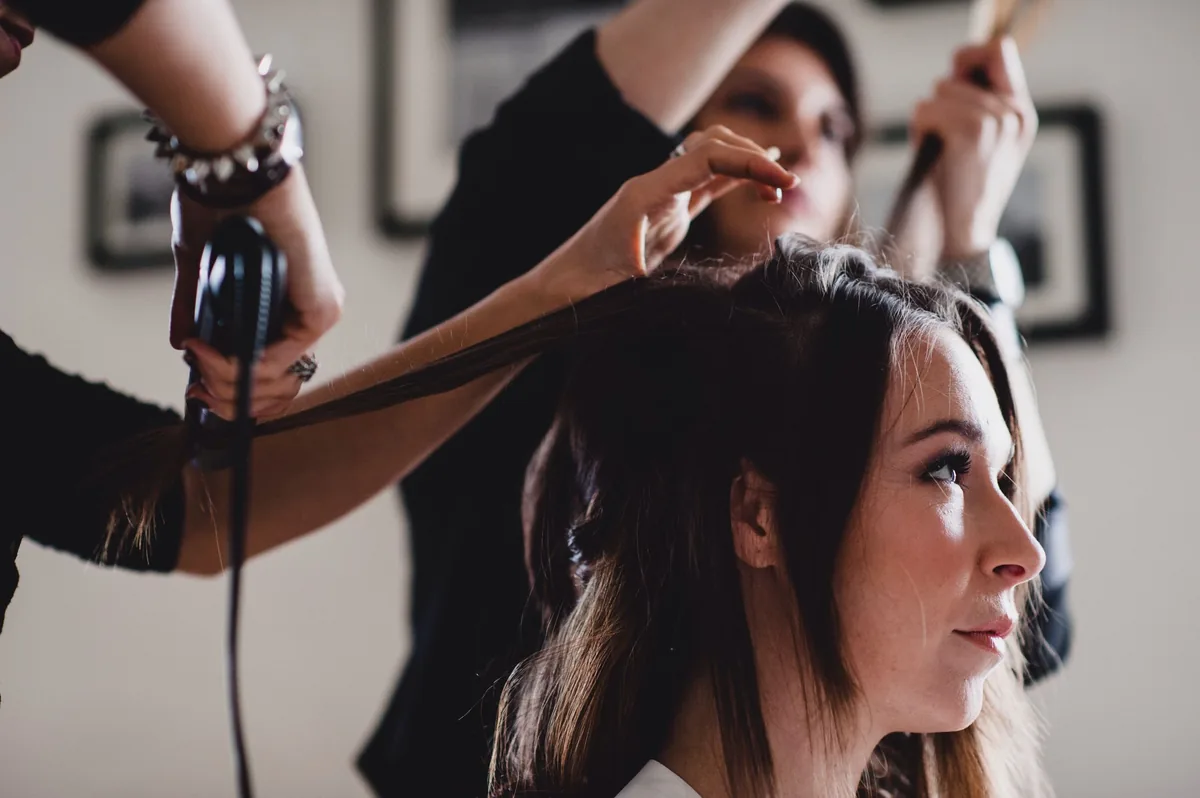
Pay attention to what only shows up in photos. Does the front fall into your eyes when you laugh? Does the bun look heavy from the side? Does the curl drop on one side before the other? Does the style wash out in bright light or disappear against a busy background? These are all fixable — a hidden pin, a different product, a slightly stronger set at the start — but only if you find them at the trial, not at the first location on shoot day.
What to ask your stylist: how the style will look after two hours outdoors, and what to bring for touch-ups. Take test photos in the same kind of light your shoot will have — golden hour if that is the plan — and share them with your photographer so they know what to expect.
1. Soft Romantic Waves
Soft romantic waves are the engagement photoshoot classic, and the camera loves them for a simple reason: they catch the light in layers. Each wave picks up a little sun, so the hair has depth and movement in every frame instead of reading as one flat shape. The waves fall past the shoulders, the front stays open, and the whole portrait feels warm, relaxed and completely natural.
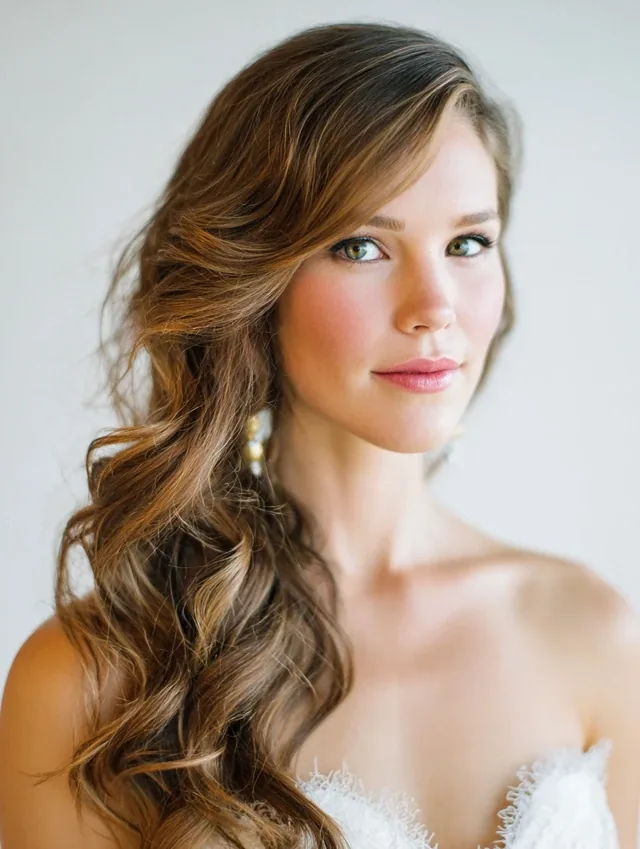
They suit almost every face shape and every location, from a golden-hour field to a city rooftop, because they never look overdressed and never look undone. The key is to keep the waves soft and uneven rather than uniform — perfect, identical curls look like a salon style, while loose, slightly varied waves look like you on your best day.
Best for: golden-hour shoots and couples who want a relaxed, romantic feel. How it photographs: layered light and movement in every frame. Hold factor: good — start with more curl than you think you need, since waves relax by about a third over two hours.
2. The Classic Low Chignon
The low chignon is the most elegant style in this guide, and it photographs with a clean, editorial quality that looks expensive in every frame. The hair is gathered low at the nape, twisted into a soft roll and pinned, with the front kept smooth and the face fully open to the camera. It suits every outfit neckline and every level of formality.
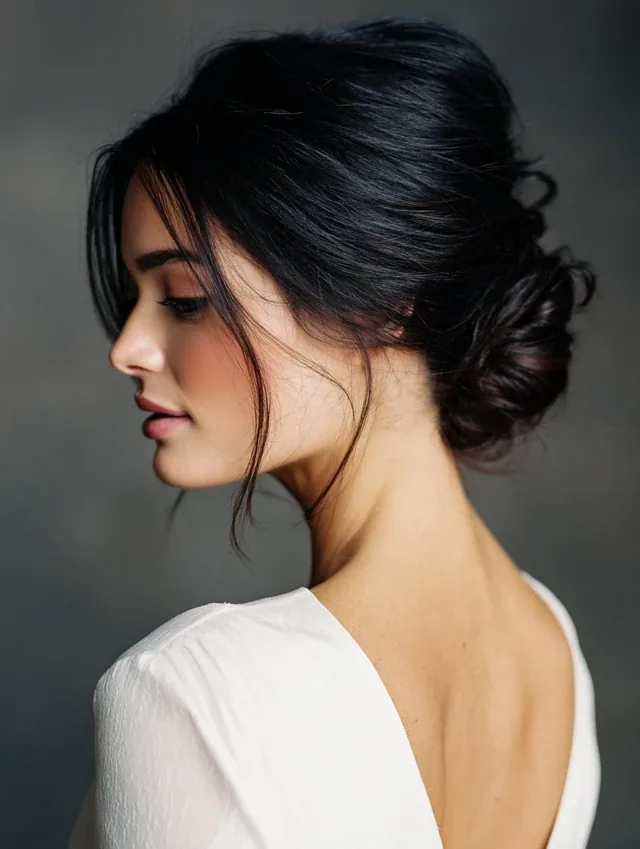
It also flatters almost every face shape, because the low placement lengthens the neck without adding height. A chignon looks just as good from the back as from the front, which matters — the photographer will shoot you walking away, laughing over your shoulder, and a neat chignon is a lovely sight in those frames.
Best for: formal shoots and brides-to-be who want a timeless portrait. How it photographs: clean lines, long neck, beautiful from every angle. Hold factor: excellent — pinned low at the nape, it survives wind, walking and two hours of shooting.
3. The Half-Up Twisted Crown
A half-up twisted crown is the most delicate style in this guide. Two sections of hair are twisted back from the face and joined at the crown, forming a soft twisted halo, while the rest of the hair falls loose. It is romantic, a little bit bohemian, and it photographs beautifully in outdoor light, especially at golden hour.
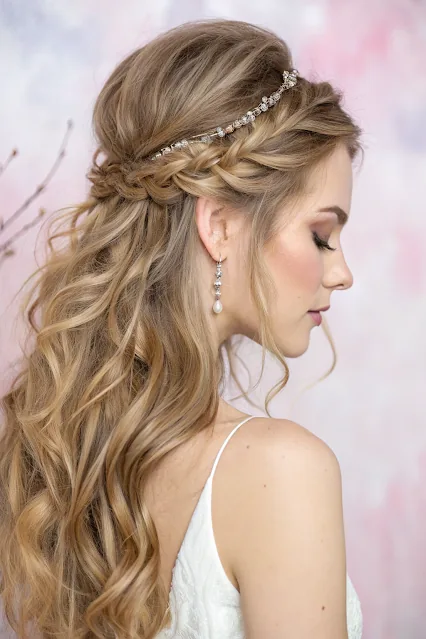
It is also very forgiving: the twists hold the front back in the wind, the loose hair moves freely behind, and the style works on almost any length past the shoulders. Add a small pearl clip where the twists meet for a personal touch, or leave it plain for a cleaner look that keeps all the attention on the two of you.
Best for: garden, park and sunset locations. How it photographs: soft halo detail from the front, flowing movement from the back. Hold factor: good — pin the twists with crossed bobby pins, not a single clip, so they cannot slide.
4. The Sleek Low Bun
A sleek low bun is the most refined style in this guide — smooth at the crown, neat at the nape, and completely unfussy. It puts your face, your earrings and your outfit neckline on full display, and it photographs with a clean, editorial quality that looks expensive in every frame. It is the right choice when the shoot is formal and the outfit is structured.
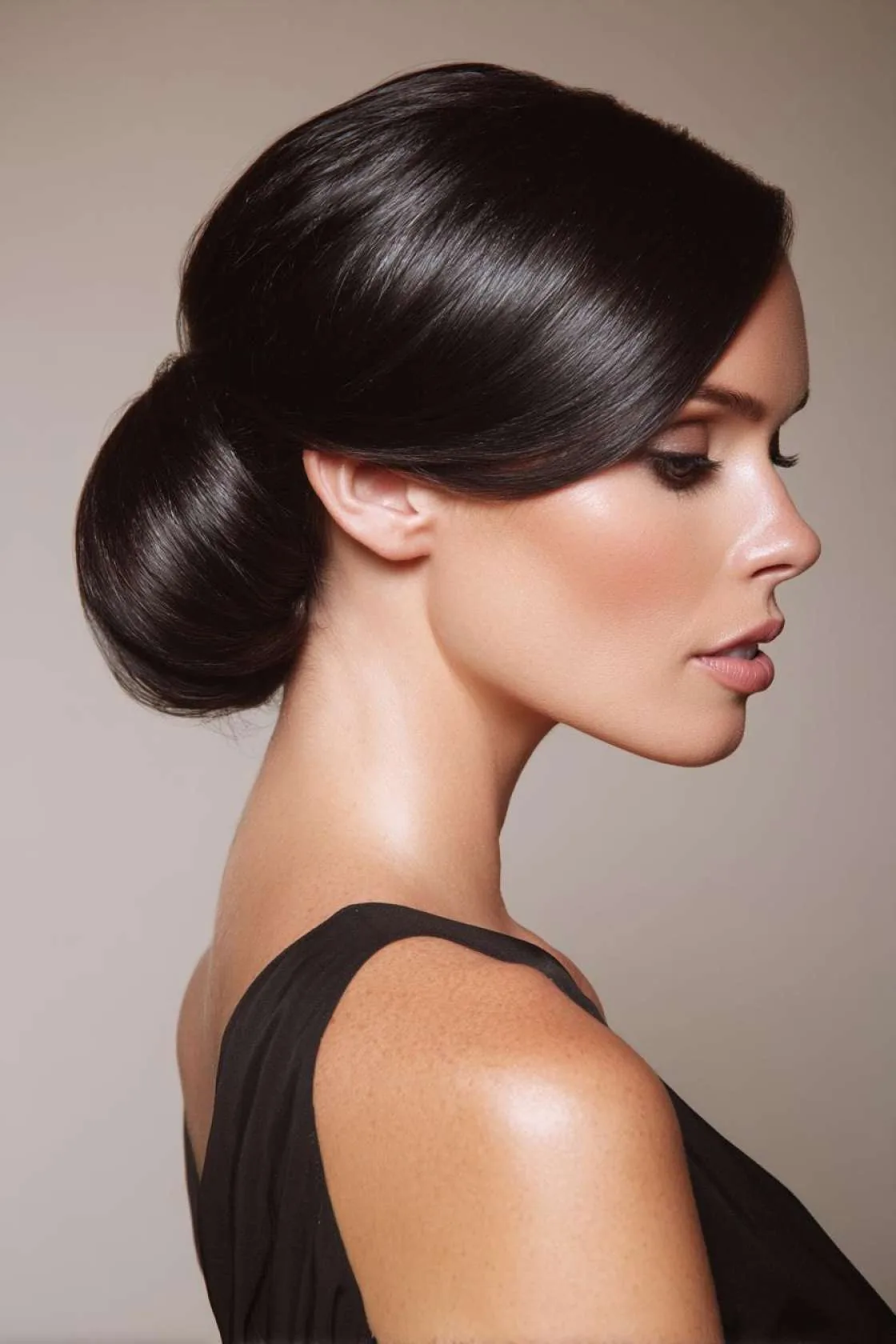
This style rewards good condition and a good blow-dry, because there is nowhere for frizz to hide. A drop of serum smoothed over the surface with your palms, a clean middle or side part, and pins that match your hair colour exactly are all it takes — but do not skip the trial, because a sleek bun that is slightly off-centre shows in every close-up.
Best for: formal shoots, city locations and flash photography. How it photographs: sharp, clean, editorial — the face is the whole picture. Hold factor: excellent — the smoothest styles are also the most wind-proof.
5. Side-Swept Hollywood Waves
Side-swept Hollywood waves are pure glamour, borrowed from the red carpet and perfectly at home in an engagement shoot. All the hair sweeps over one shoulder in deep, polished waves, creating a beautiful diagonal line across the portrait and leaving the other shoulder bare. It is the style that makes the getting-ready photos look like a magazine shoot.
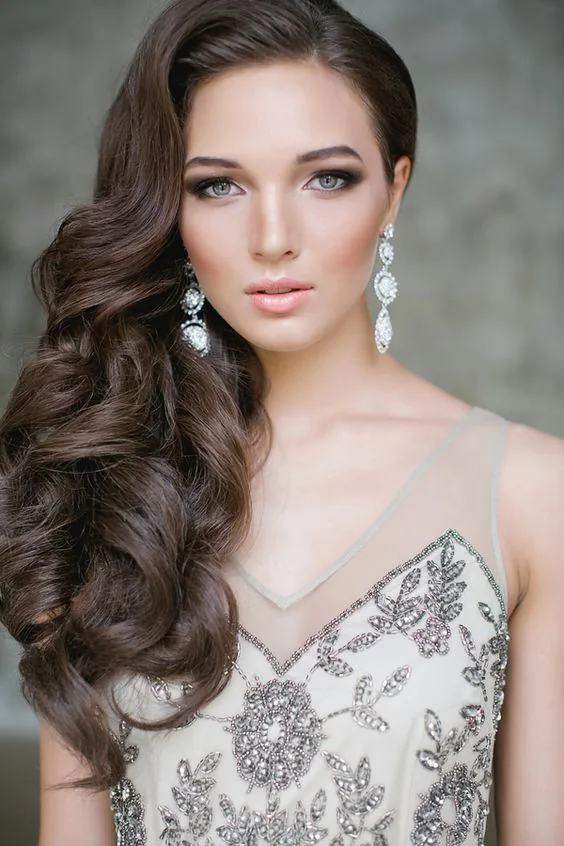
This one needs a stylist and a little time, because the waves have to be uniform and the sweep has to be anchored — a hidden pin at the back of the neck is what stops the whole sweep from sliding forward during the shoot. It suits long hair best, and it pairs beautifully with a one-shoulder or strapless outfit.
Best for: glamorous evening shoots and dramatic portraits. How it photographs: a sweeping diagonal line that flatters the face and shoulders. Hold factor: moderate — needs the anchor pin, and a touch-up between locations.
6. Loose Curls with Face-Framing Layers
Loose curls with face-framing layers are soft, generous and full of warmth — the curls fall in loose spirals, and a few face-framing pieces are left free to soften the whole portrait. It is a style that flatters almost everyone, because the curls add volume where you want it and the loose pieces keep the face from feeling hidden.
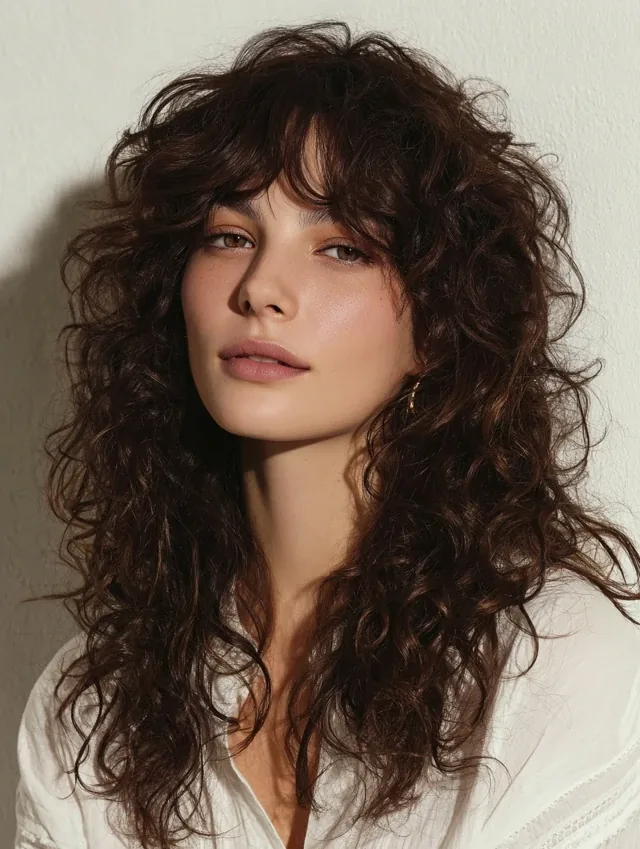
Curls photograph with wonderful texture and depth, especially in outdoor light, where each curl catches the sun a little differently. The key is to keep them soft rather than tight: tight curls can look formal and dated in photos, while loose, brushed-out curls look romantic and current — and they survive a long shoot far better.
Best for: outdoor and golden-hour shoots. How it photographs: rich texture and depth, glowing in warm light. Hold factor: good — set with a flexible-hold spray so the curls can move without falling flat.
7. The Textured Low Ponytail
A low ponytail sounds simple, and when it is done well it looks expensive: the hair is smooth at the crown, gathered low at the nape, wrapped with a strand of your own hair so no elastic shows, and given a little texture through the lengths so it moves instead of hanging flat. It is clean, modern and completely unfussy.
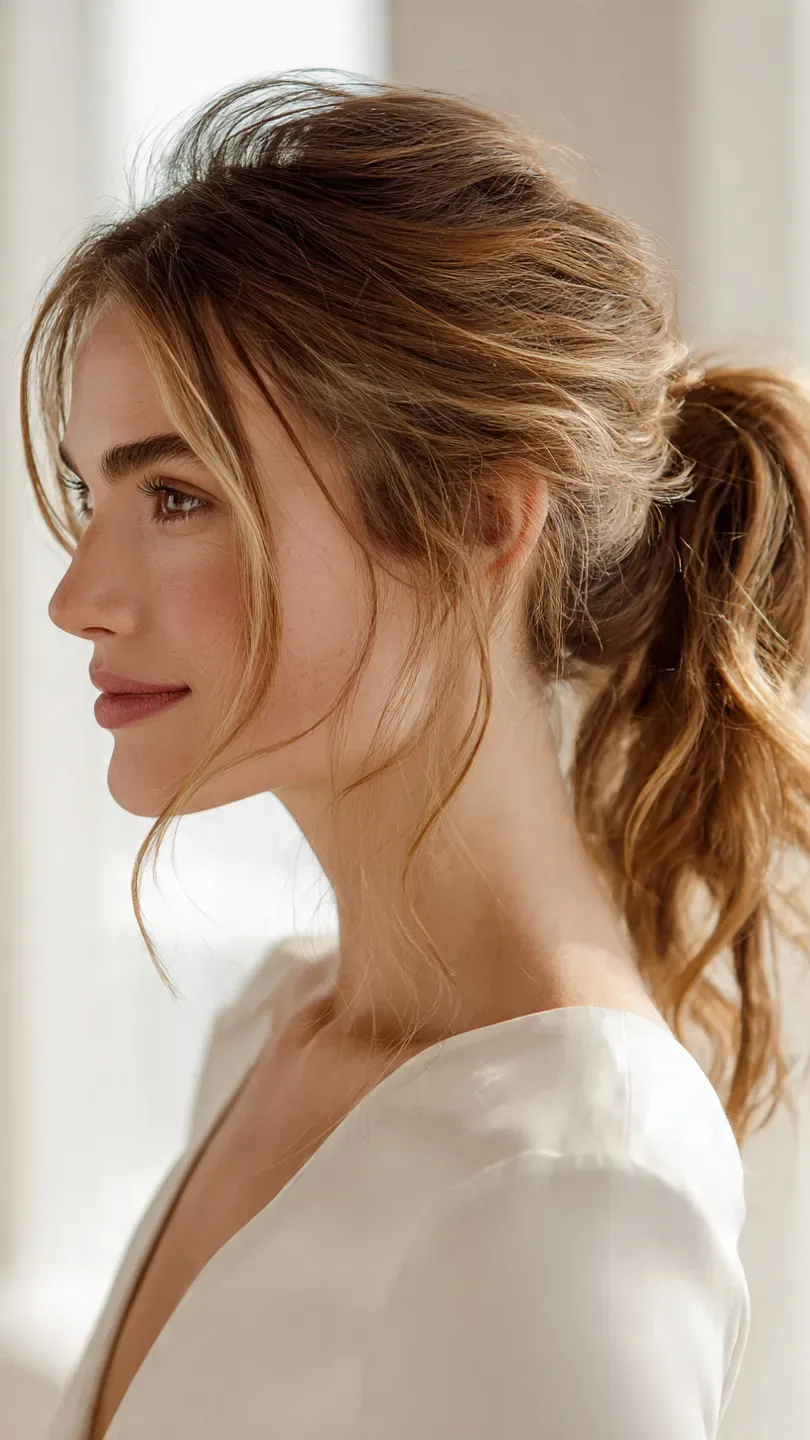
This is the style to choose if you want your face to be the focus, because with the hair pulled back your features, your smile and your eyes take centre stage. It also survives wind, heat and a long shoot better than almost any style here, and it takes five minutes to refresh between locations.
Best for: windy locations and active, walking shoots. How it photographs: clean and modern, with the face fully open to the lens. Hold factor: excellent — the most wind-proof loose style in this guide.
8. The Boho Braid Crown
A braid crown is the most romantic outdoor style in this guide. A braid wraps around the head like a halo, the rest of the hair falls loose beneath it, and the whole look feels soft, natural and a little bit storybook — which is exactly why it photographs so well in gardens, fields and golden light.
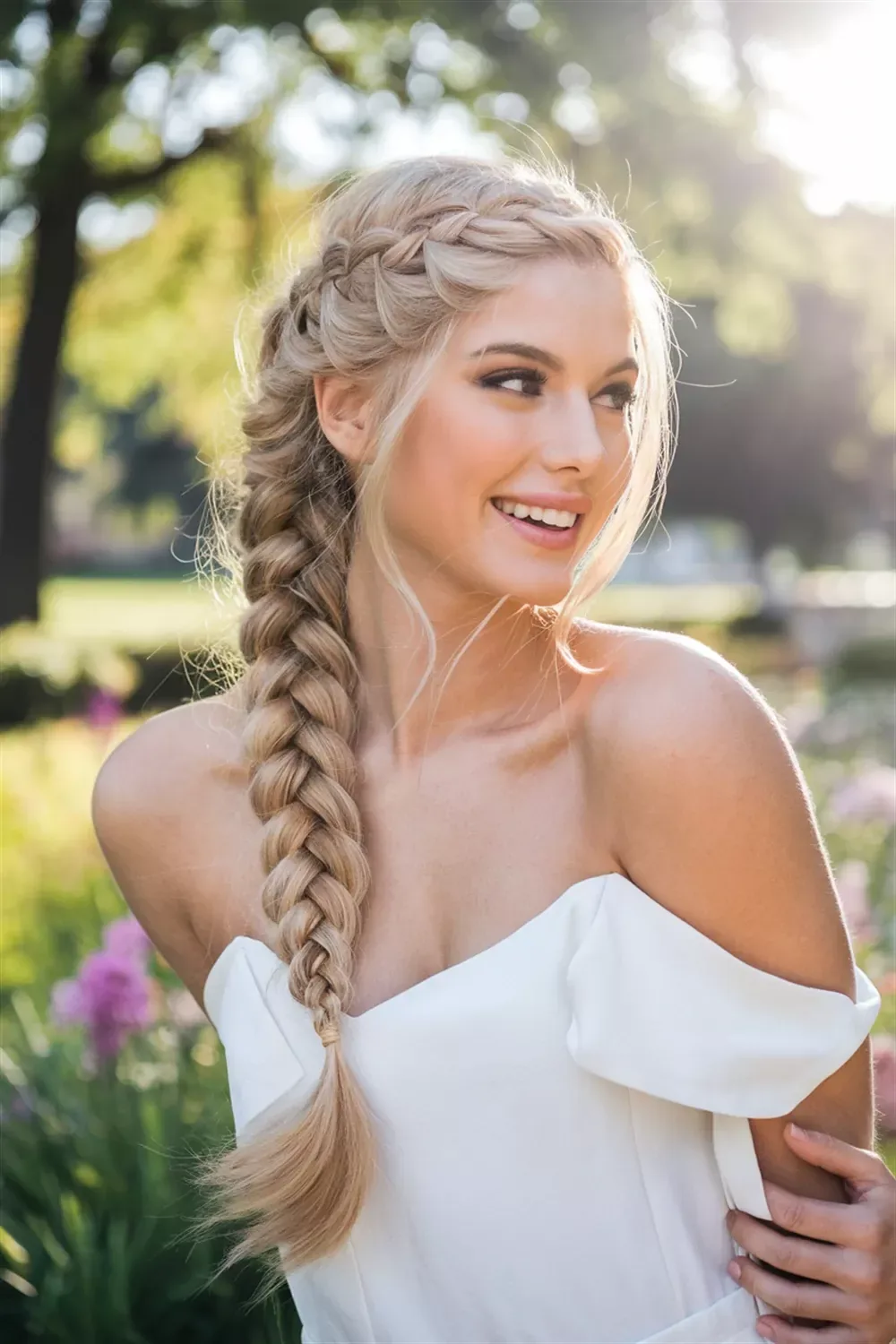
It is also one of the most practical outdoor styles. The braid anchors the front of your hair, so wind cannot push it across your face during the shoot, and it holds its shape for hours without a single touch-up. It suits medium to long hair, and a few small flowers or greenery woven in can echo your bouquet beautifully.
Best for: garden, field and boho-style shoots. How it photographs: storybook romance with a halo of braid catching the light. Hold factor: excellent — the braid is an anchor, and nothing moves.
9. A Polished French Twist
The French twist is the most elegant updo in this guide, and it has been for decades. The hair sweeps up and tucks into a smooth vertical roll, the neck looks long, the shoulders look graceful, and the whole portrait feels formal and timeless. It is the style for a black-tie shoot, a grand location, or any day where the word is elegant.
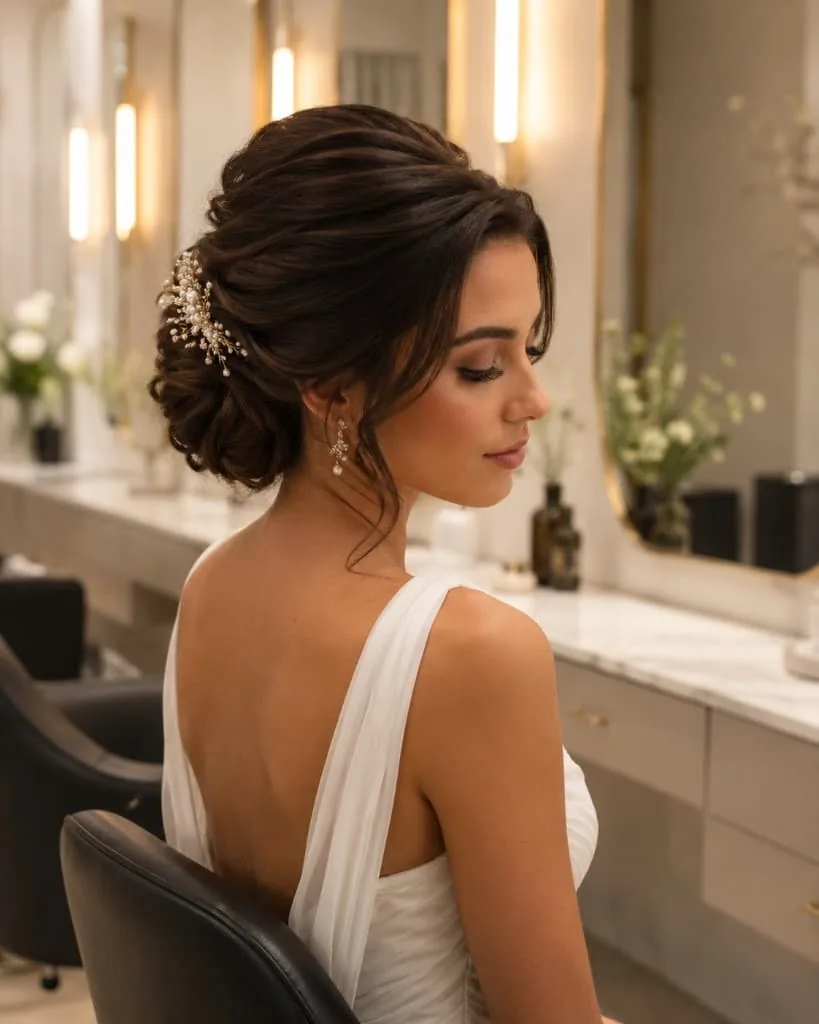
It works best on medium to long hair and needs plenty of pins, so have your stylist build it rather than doing it yourself. Keep the front soft with a few face-framing pieces, or go completely sleek for a sharper look — either way, the twist holds for hours and looks wonderful in profile shots as you walk together.
Best for: formal locations and timeless, editorial portraits. How it photographs: long neck, graceful shoulders, beautiful in profile. Hold factor: excellent — built on pins, it does not move.
10. Voluminous Blowout Curls
Voluminous blowout curls are big, bouncy and full of life — the hair has body at the roots, soft curls through the lengths, and a shine that catches the light from across the park. It is the style that makes an engagement portrait feel celebratory, like the hair itself is having a good time.
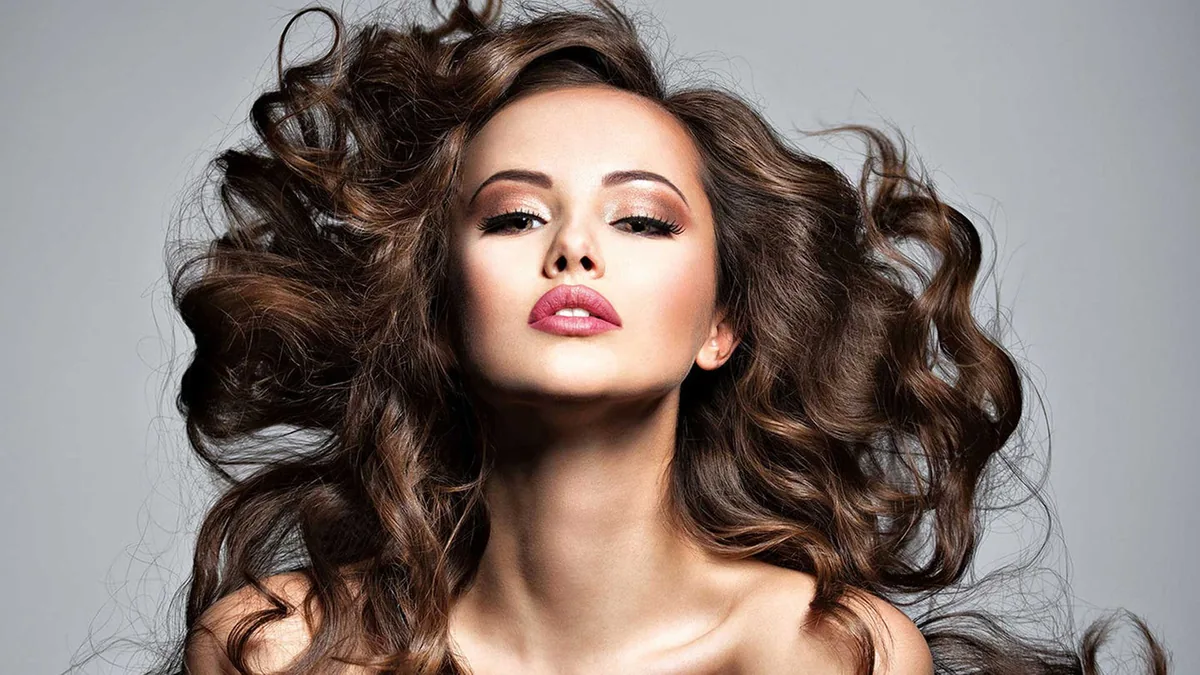
Volume photographs best when it is balanced: too much at the sides can widen the face in a photo, so ask your stylist to keep the volume at the crown and let the curls fall a little narrower at the cheeks. Start with more curl than you think you need, because blowout curls relax by about a third over the shoot — and that relaxed version is usually the prettiest one.
Best for: joyful, celebratory shoots and golden hour. How it photographs: big, bouncy and full of shine — pure celebration. Hold factor: moderate — softens in humidity, so ask for a humidity-resistant product.
11. The Half-Up Braided Crown
A half-up braided crown combines the romance of a braid with the softness of loose hair. A braid runs across the back of the head like a crown, the rest of the hair falls in waves beneath it, and the whole look feels crafted and effortless at the same time. It photographs beautifully from every angle, which is rare for a half-up style.
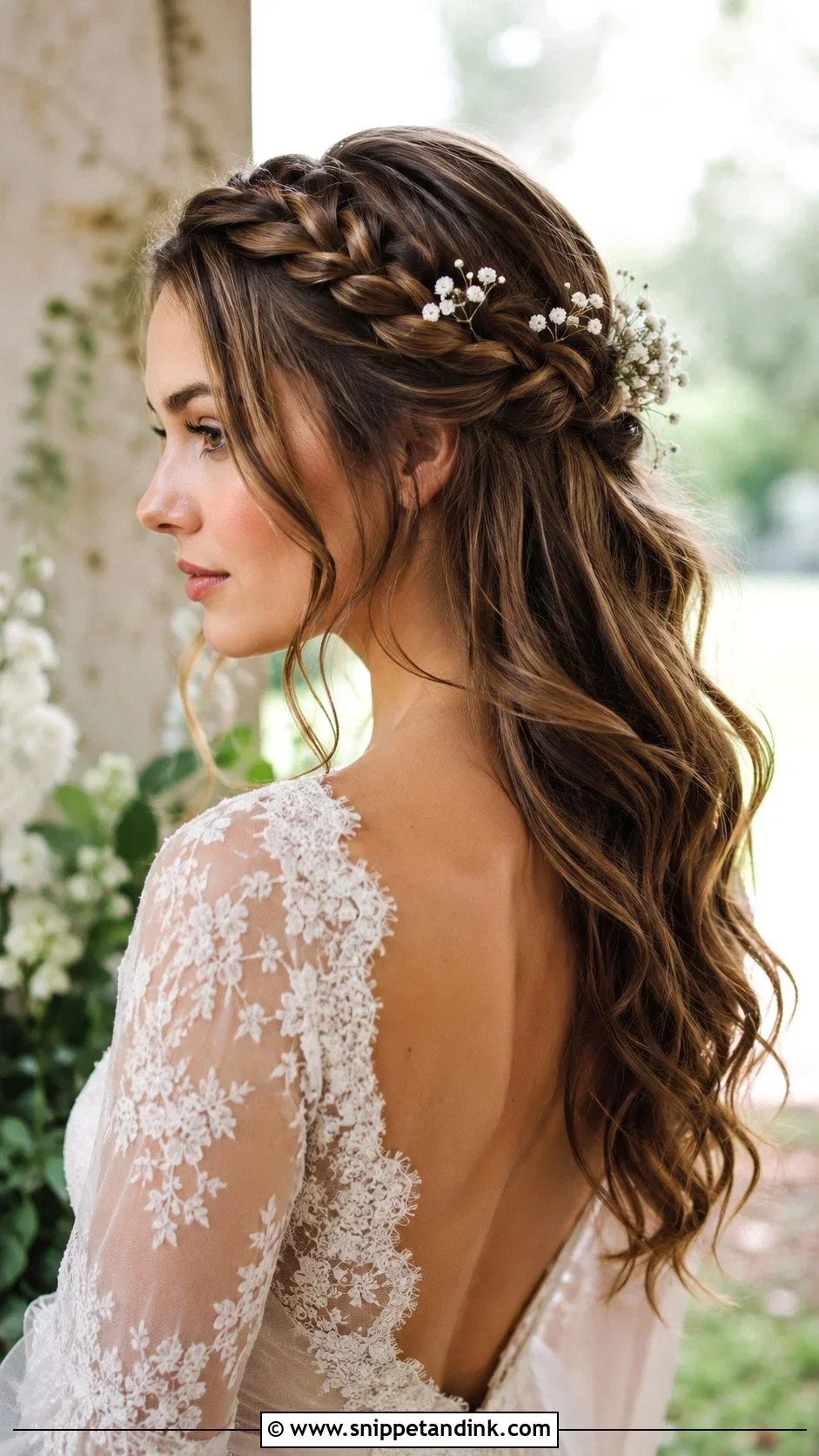
It is wonderfully practical for a shoot: the braid holds the front back in the wind, the loose hair moves freely behind, and the style works on almost any length past the shoulders. It suits garden, park and sunset locations best, and a few small flowers tucked into the braid can echo your outfit or your bouquet.
Best for: outdoor shoots where wind is a factor. How it photographs: detailed braid from the front, flowing waves from the back. Hold factor: very good — the braid anchors the front, the waves take care of themselves.
12. Glossy Straight Hair with a Centre Part
Glossy straight hair with a centre part is the most modern, minimal look in this guide, and it is strikingly photogenic. The symmetry of the centre part frames the face evenly, the straight lengths fall like a curtain, and the shine reads beautifully in both bright daylight and soft evening light. It is simple, but it is never boring in a photograph.
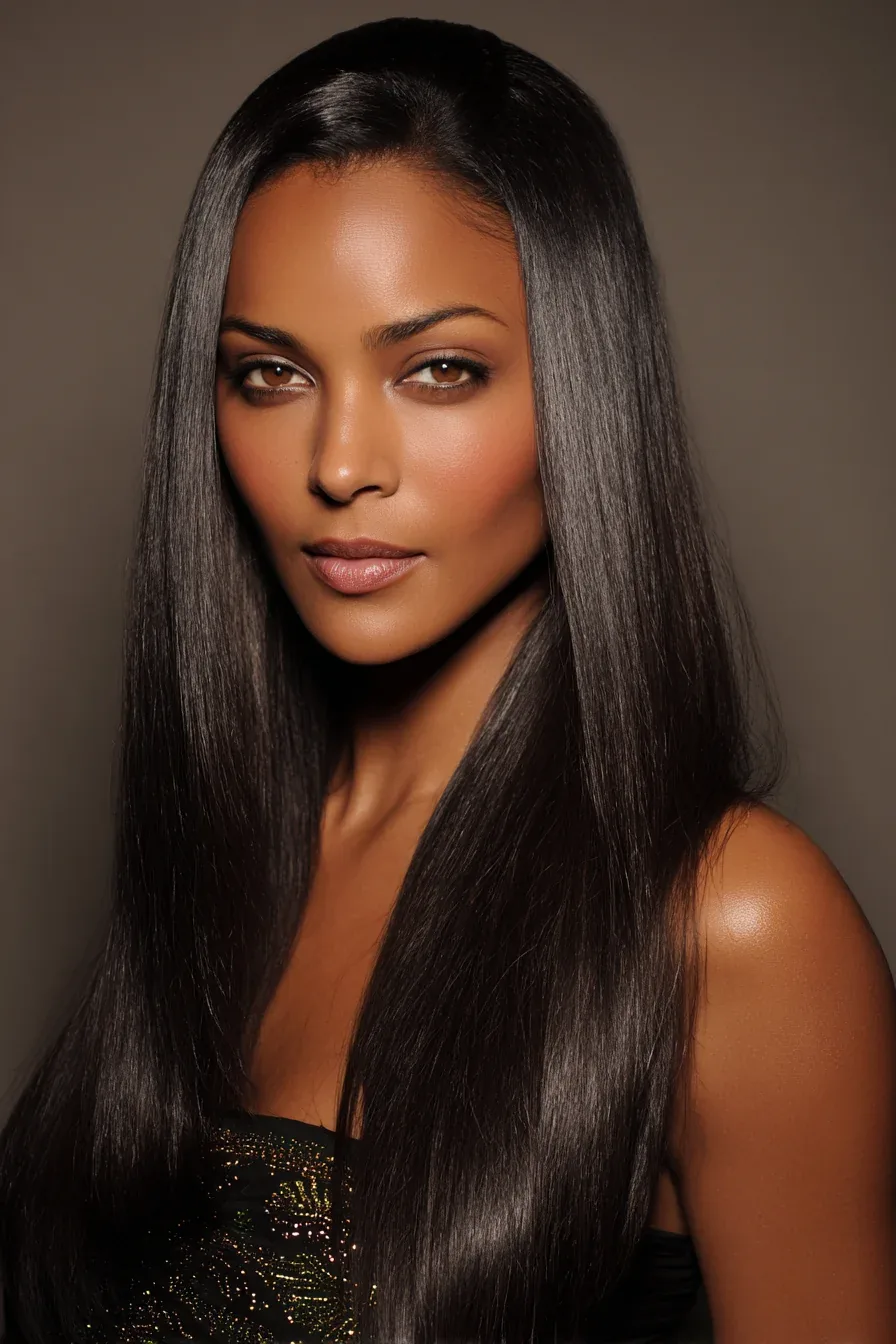
This style works best on hair that is naturally straight or easily straightened, and it rewards good condition — the smoother and healthier the hair, the better it looks. Keep the part clean, smooth flyaways with a drop of serum on your palms, and let the simplicity do the talking. It is a wonderful choice if your partner’s look is dramatic, because yours stays quietly beautiful beside it.
Best for: modern, minimal shoots and bright daylight. How it photographs: clean symmetry and a curtain of shine. Hold factor: good in still air, moderate in wind — pack a brush for between locations.
13. A Romantic Updo with Soft Tendrils
This is the chignon’s softer sister: the hair is swept up loosely, pinned in soft loops, and a few fine tendrils are left free to frame the face and soften the neck. It is romantic without being fussy, and it photographs with a gentle warmth that suits garden shoots, park portraits and golden-hour light especially well.
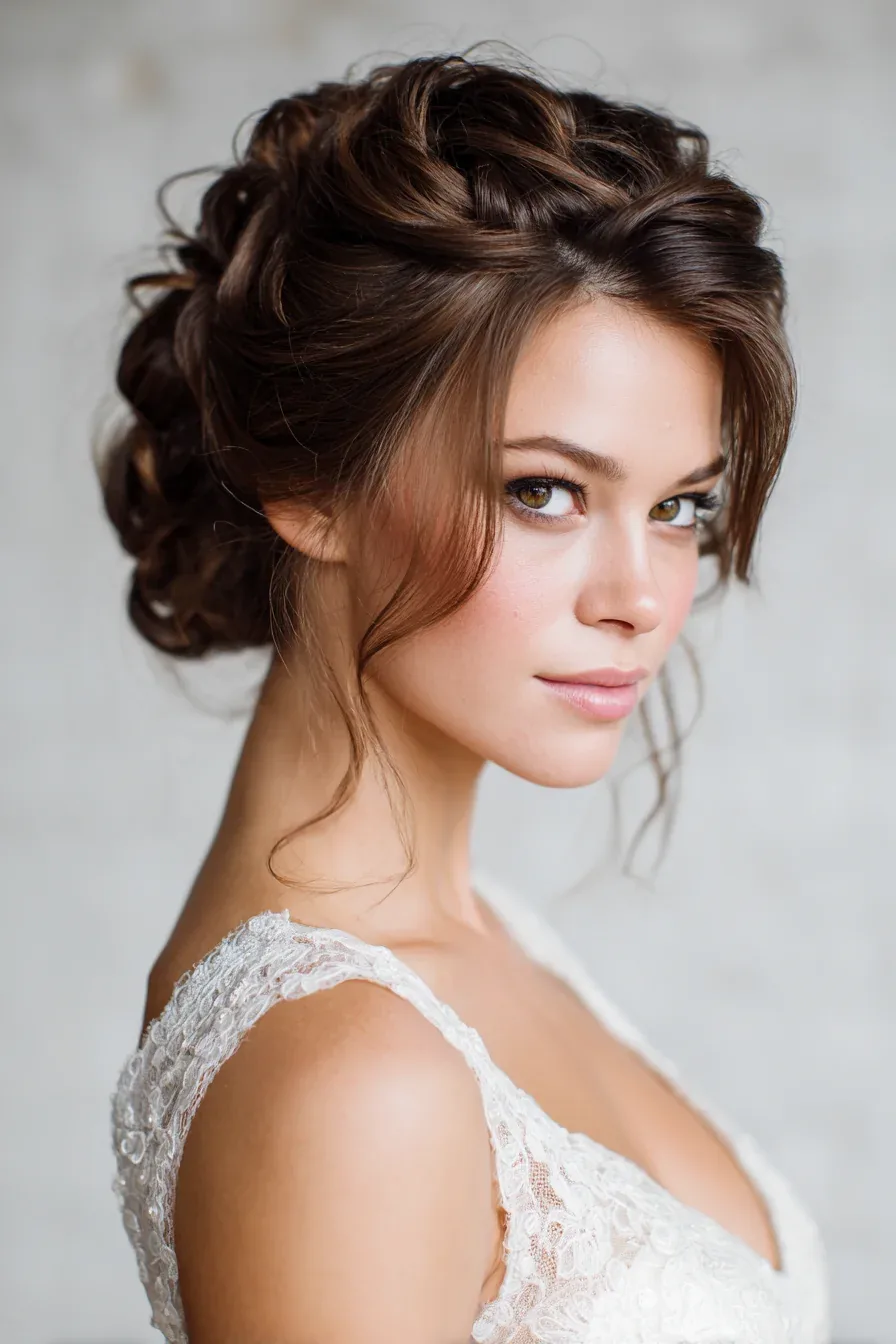
The tendrils are the whole secret, and they need to be deliberate. Ask your stylist to curl them lightly and set them with a flexible spray, so they move rather than hang limp — and to keep them fine. Thick, heavy tendrils look messy in photos; fine, curled ones look like they escaped on purpose.
Best for: garden and golden-hour shoots. How it photographs: soft, warm and romantic, with gentle movement around the face. Hold factor: good — the updo is anchored, the tendrils are set to move, not fall.
14. The Side Fishtail Braid
A side fishtail braid is the prettiest way to show off long hair from the front and the side at once. The fishtail pattern is finer and more intricate than a regular braid, which makes it look delicate and detailed in photos, and when it is loosened gently it looks soft and romantic rather than severe.
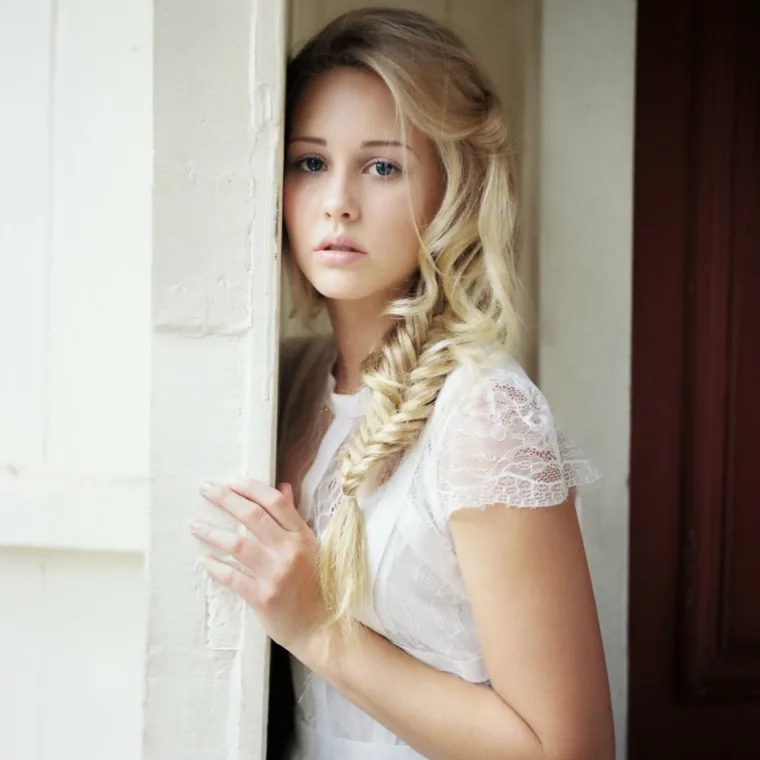
It is also wonderfully practical: the braid keeps long hair under control in wind, and it looks better as the shoot goes on, softening into a relaxed, lived-in shape. It works best on long hair with a little texture, and it looks lovely with a ribbon tied at the end in a colour that matches your outfit.
Best for: long hair and windy outdoor locations. How it photographs: intricate detail from the side, soft romance from the front. Hold factor: excellent — braids only get better as they loosen.
15. Soft Beach Waves
Soft beach waves are the relaxed, sun-kissed look that every engagement shoot wants at least one frame of. The waves are loose, uneven and textured, as if you spent the morning by the water — even if you spent it in a salon chair. They look carefree and young, and they photograph with a lovely, natural texture.
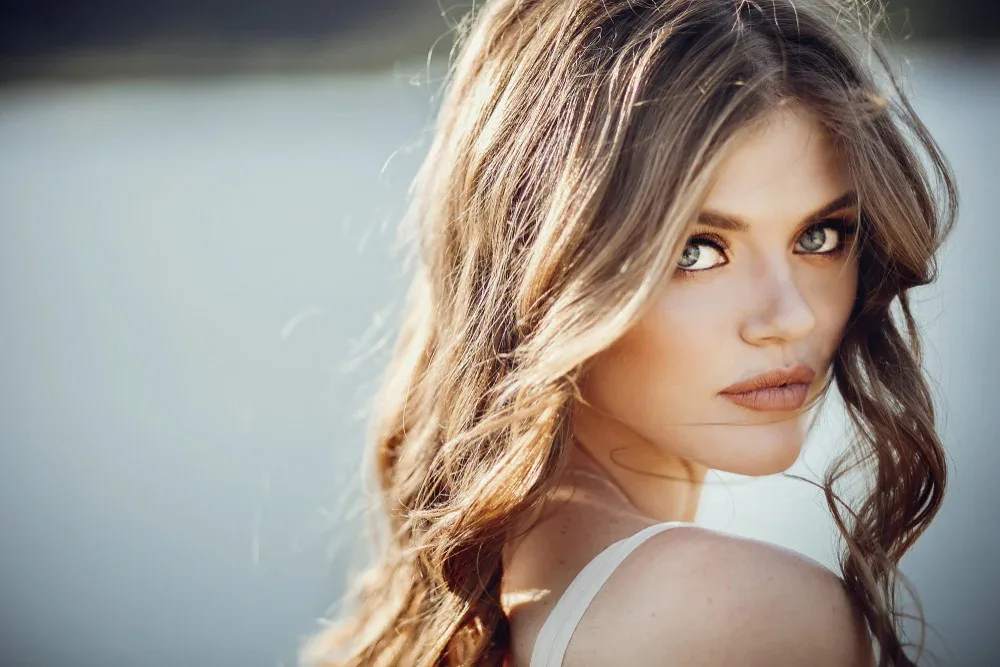
The trick is to keep the waves imperfect. Perfect, uniform curls look like a salon style; uneven, tousled waves look like a day at the beach. A salt spray or texture spray helps, but the real secret is to leave the ends straight and to break the waves up with your fingers once they cool.
Best for: beach, lakeside and relaxed outdoor shoots. How it photographs: sun-kissed, natural texture that looks effortless. Hold factor: moderate — can fall flat in humidity without a texture product.
16. The Elegant Top Knot
An elegant top knot is the most striking updo in this guide: the hair is swept up high and coiled into a neat, polished knot, which lengthens the neck, opens up the face, and gives the portrait a clean, sculptural quality. It shows off earrings beautifully and it never, ever falls down.
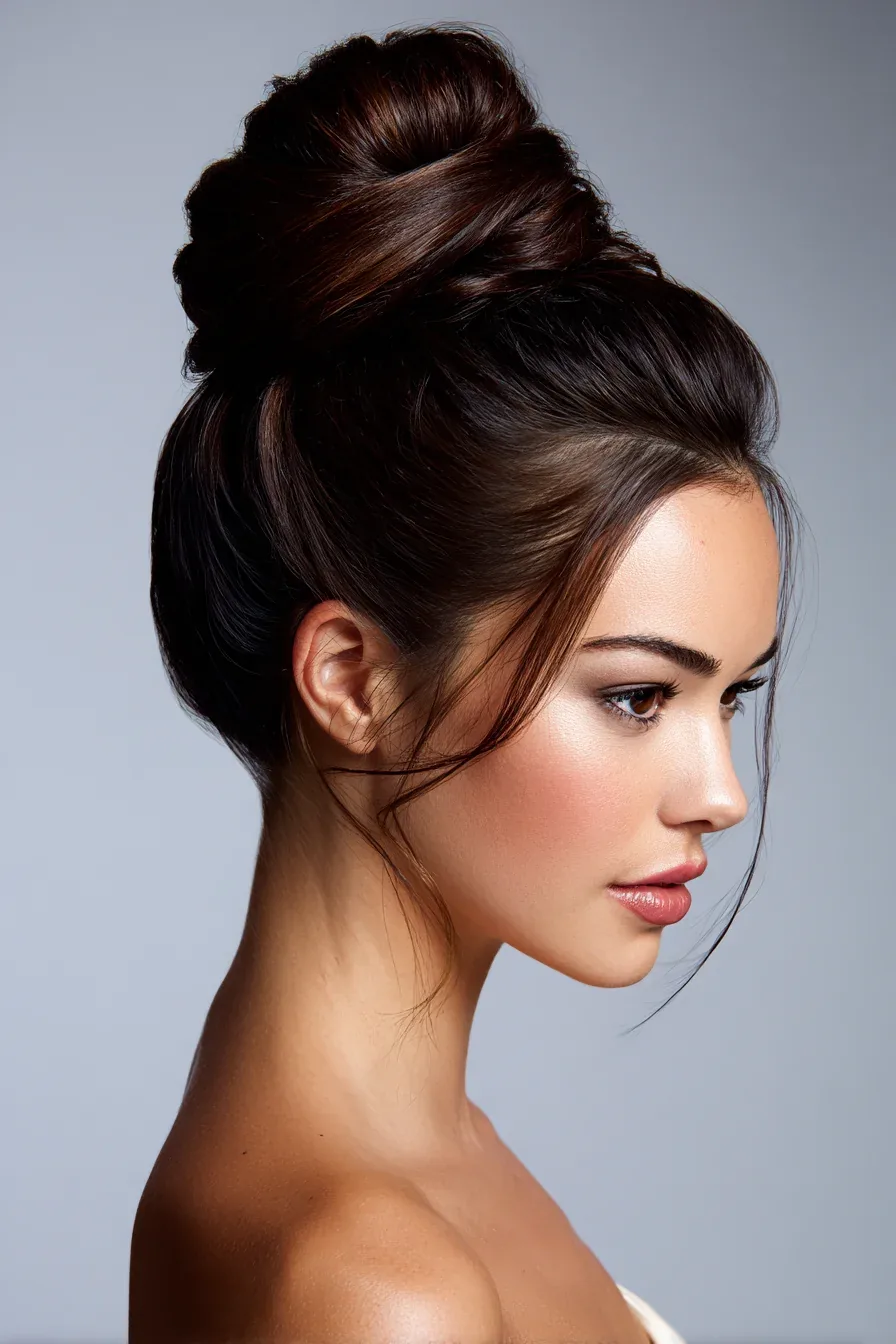
The trick is to keep it smooth and intentional. A messy knot belongs at the after-party, not the photoshoot — for the shoot itself, the knot should be neat, the surface smooth, and the front tidy. It suits medium to long hair and pairs beautifully with a high-neck or halter outfit, where the bare neck and shoulders do the talking.
Best for: bold, sculptural portraits and hot days. How it photographs: clean lines, long neck, striking from every angle. Hold factor: excellent — the most reliable style in this guide for a long, hot shoot.
17. The Wavy Lob
The wavy lob — a long bob that sits between chin and collarbone — is the freshest shorter style in this guide. It frames the face, moves when you laugh, and dries in minutes, which matters on a long shoot day. The waves keep it from looking blunt or severe, and it photographs with a lovely, modern edge.
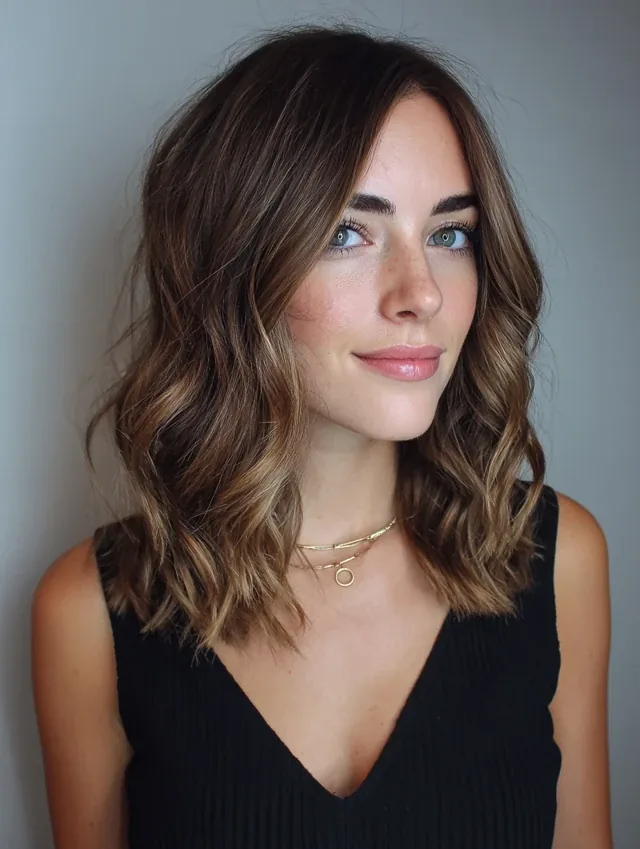
This cut is perfect if you have been thinking about going shorter, or if your long hair feels heavy and tired. It suits most face shapes, works with straight or wavy hair, and it looks just as good tucked behind one ear as it does worn loose and tousled — which gives you two looks in one shoot without a single re-style.
Best for: modern shoots and couples who want a fresh, current look. How it photographs: light, moving and modern, with a lovely face-framing shape. Hold factor: good — short hair holds its shape well, and a quick finger-tousle refreshes it.
18. Curtain Bangs and Soft Waves
Curtain bangs are the friendliest fringe an engagement shoot can have. They part in the middle and sweep to either side like curtains, opening up the face, softening the forehead, and adding instant shape to the whole portrait. Paired with soft waves through the lengths, they give you a finished look that still feels young and natural.
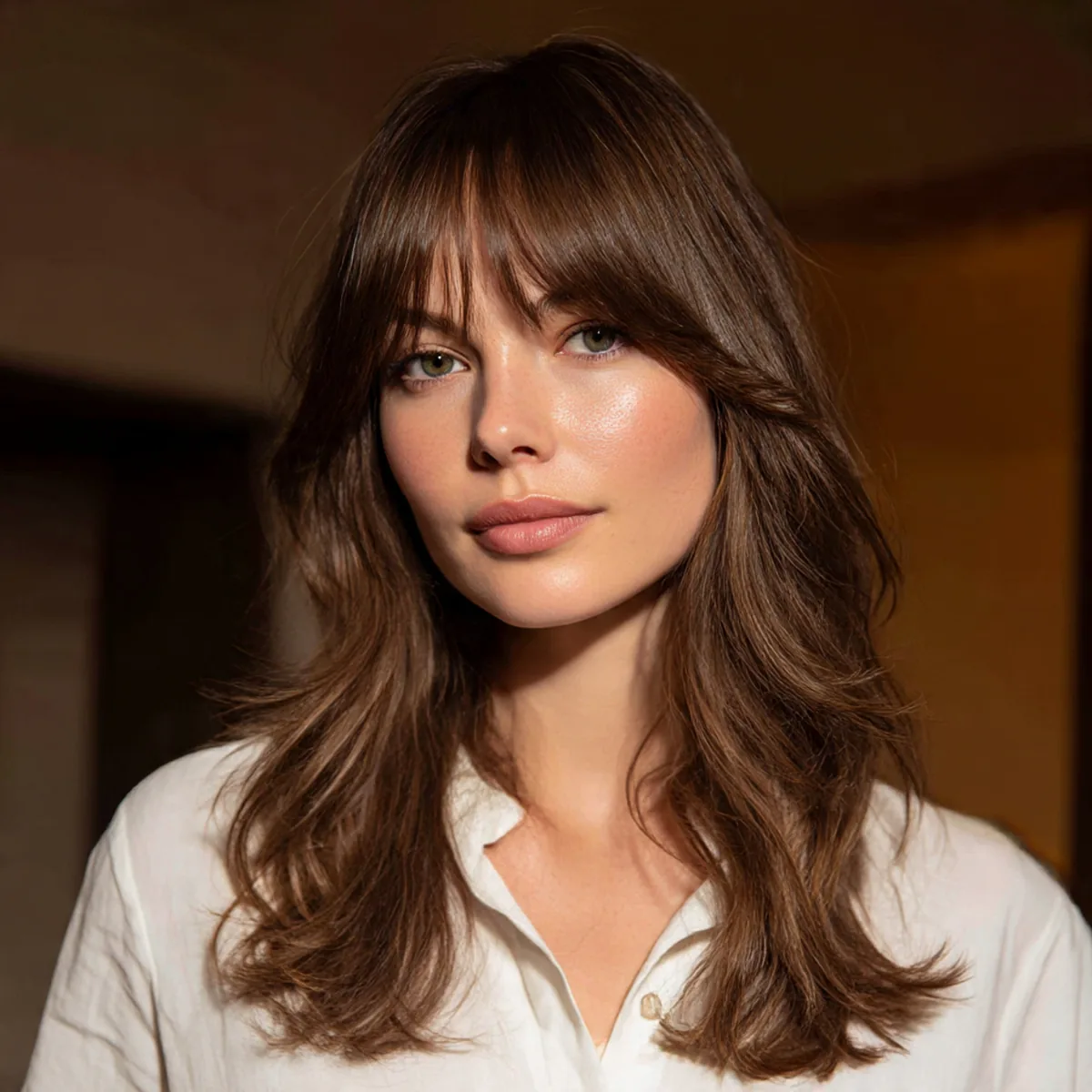
Bangs photograph best when they are fresh and intentional, so if you are growing them in for the shoot, give them time to reach curtain length — about cheekbone level — and get them trimmed a week before the day. On the morning, a quick blast with the dryer and a round brush revives them in two minutes.
Best for: close-ups, where the face is the whole picture. How it photographs: soft, face-framing shape that opens up the eyes. Hold factor: good — a quick brush and a little spray between locations keeps them perfect.
19. The Deep Side Part with Glam Waves
A deep side part changes everything about glam waves. It sweeps most of the hair to one side, which creates volume at the crown, a soft curtain across the forehead, and a dramatic, sweeping line that photographs with real glamour. It is the simplest way to make familiar waves look completely different.
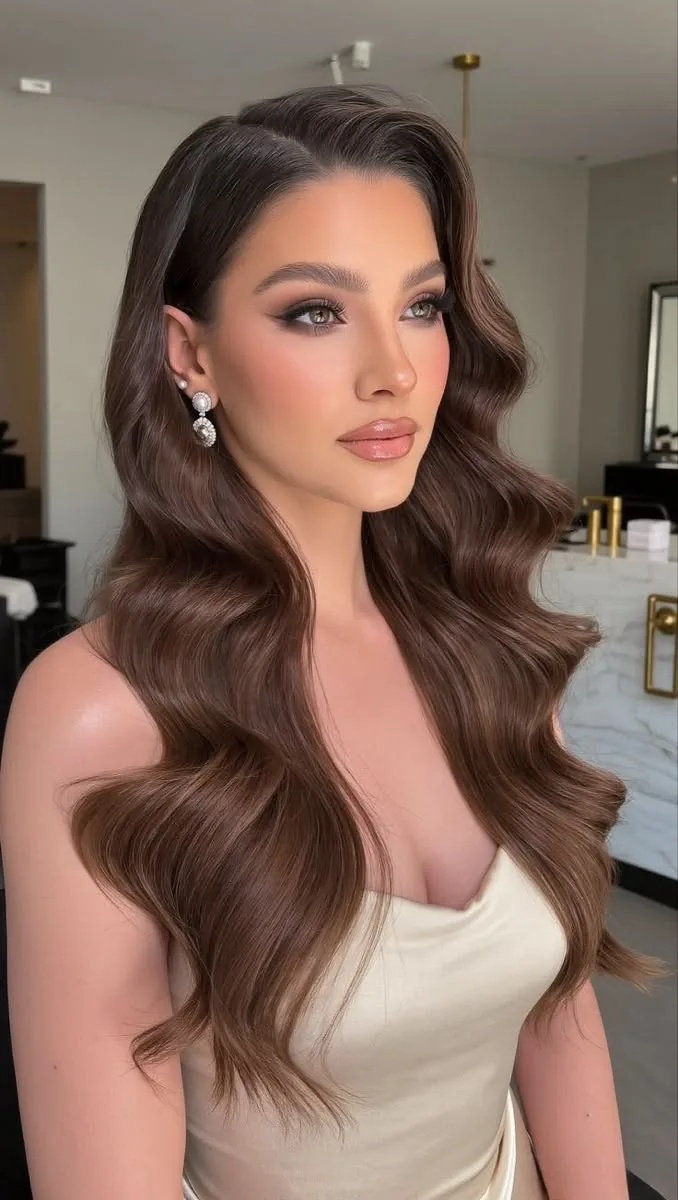
This style suits almost every face shape, and it is especially flattering if you have a strong jawline or high cheekbones, because the sweep softens the angles. Keep the part clean, let the waves fall naturally to the heavy side, and pin the lighter side back discreetly if it keeps falling forward during the shoot.
Best for: glamorous evening shoots and dramatic portraits. How it photographs: sweeping glamour with volume at the crown. Hold factor: good — pin the light side back and the sweep holds all shoot.
20. The Braided Low Bun
A braided low bun combines two of the most reliable photoshoot ideas in one style: the detail of a braid and the security of a bun. A braid runs along the side or around the crown and gathers into a low bun at the nape, so the style looks detailed from the front, interesting from the side, and neat from the back.
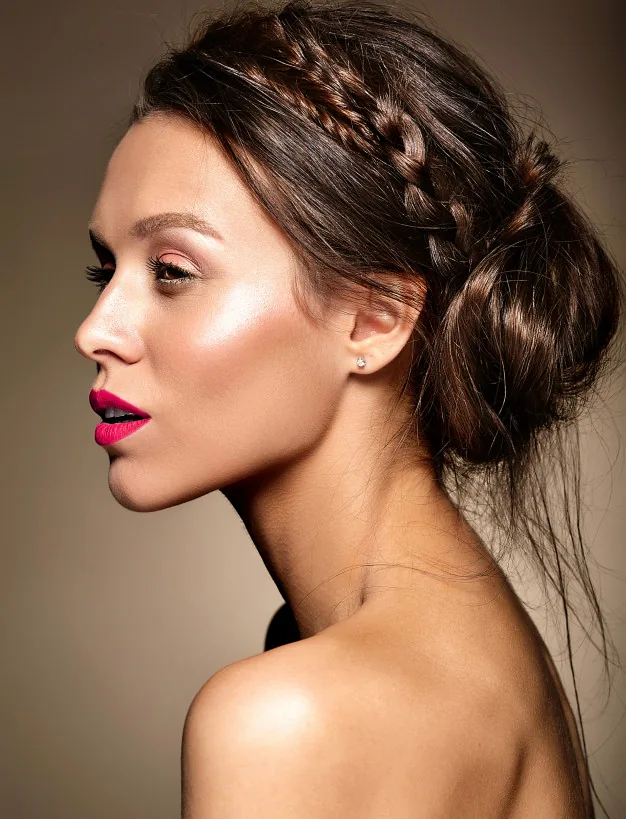
It holds better than a plain bun, because the braid itself is an anchor — and it photographs with a lovely, crafted quality that suits both formal and boho shoots. It works on medium to long hair, and a few small flowers or a pearl pin tucked into the braid can echo your outfit without copying it.
Best for: shoots that move between locations and light. How it photographs: crafted detail from every angle. Hold factor: excellent — the braid anchors the bun, and nothing slips.
21. The Low Ponytail, Swept to One Side
A low ponytail swept to one side is the softer, more romantic cousin of the classic low ponytail. The hair is gathered low, swept over one shoulder, and left in soft waves, which creates a beautiful diagonal line across the portrait and shows off the length and shine of your hair.
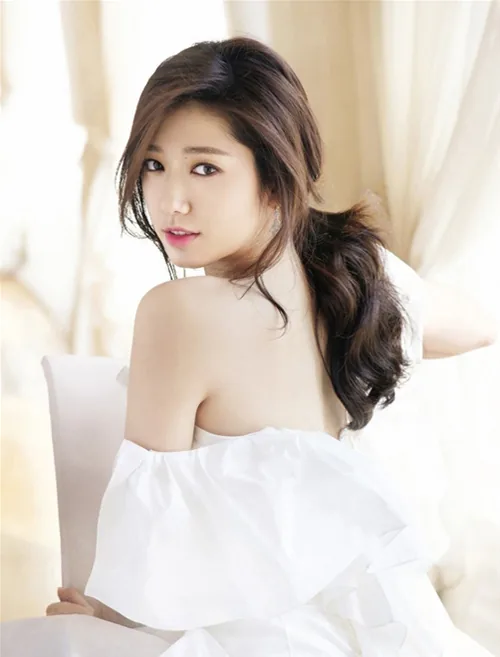
This style is especially good if you have a favourite side, or if your outfit has a one-shoulder or off-shoulder neckline — the hair and the bare shoulder balance each other perfectly. The waves need to hold their shape, so ask for a flexible-hold spray rather than a hard one, and keep a pin or two in your kit to re-anchor the sweep between locations.
Best for: one-shoulder outfits and romantic portraits. How it photographs: a diagonal line that flatters the shoulders and shows off length. Hold factor: good — needs one anchor pin to survive the whole shoot.
22. The Waterfall Braid
A waterfall braid is the most delicate braided style in this guide. The braid runs across the back of the head, dropping strands as it goes so the hair falls like water through it, while the rest of the hair flows loose beneath. It is romantic, intricate and quietly show-stopping in photographs.
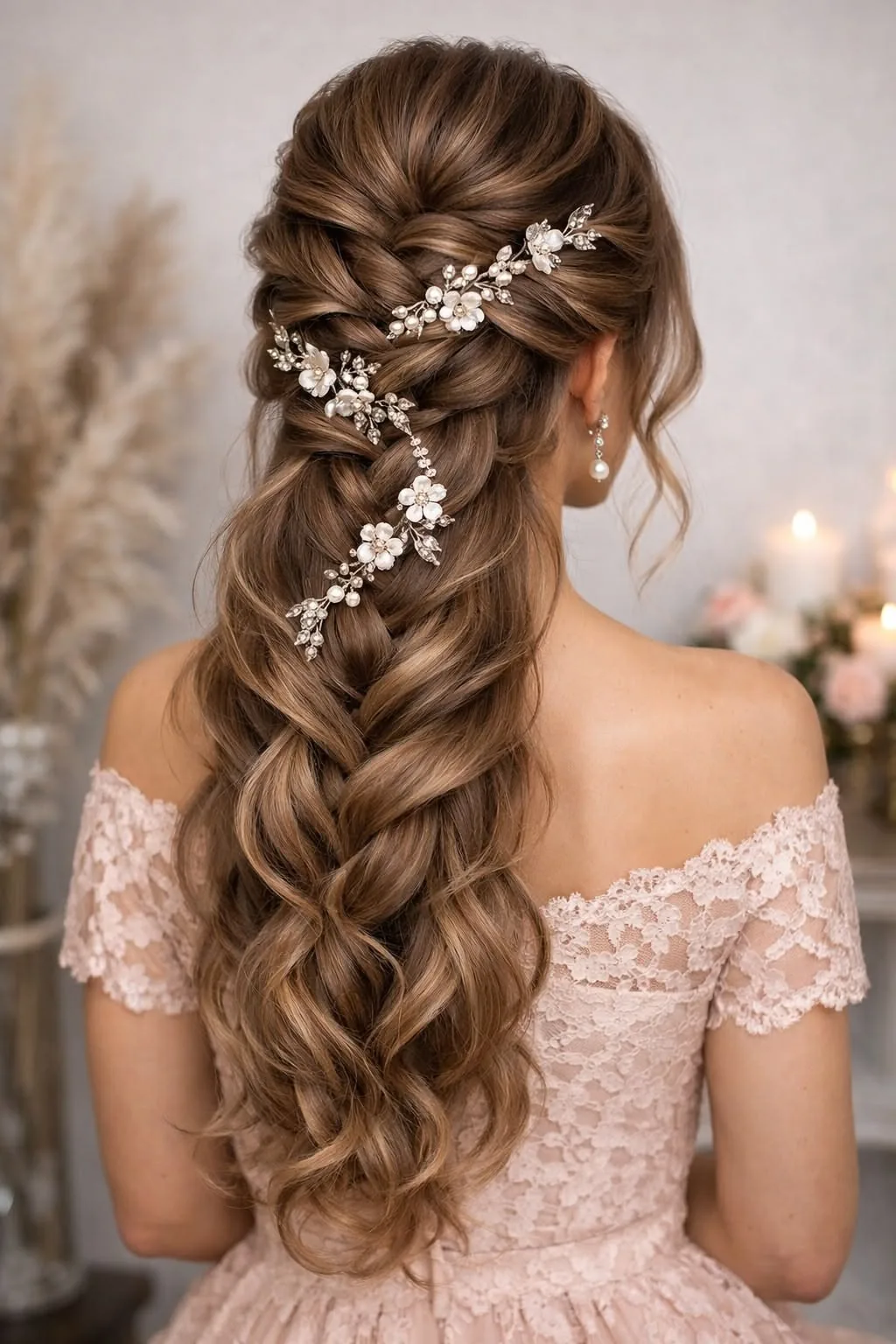
It works best on long hair with a little wave in it, because the dropped strands need something to do — straight, flat hair can make the effect disappear. Ask your stylist to curl the loose lengths lightly first, so every dropped strand has a soft wave to show off, and to anchor the braid ends securely so the whole thing cannot unravel during the shoot.
Best for: long hair and romantic, storybook locations. How it photographs: delicate, intricate detail that rewards a close look. Hold factor: good — anchor the ends well and it holds for the whole session.
23. Defined Natural Curls, Worn Free
Natural curls are one of the most beautiful things a camera can capture, and an engagement shoot is the perfect place to let them shine. Defined, free curls have shape, texture and volume that no iron can imitate, and in golden-hour light they glow — each curl catching the sun a little differently.
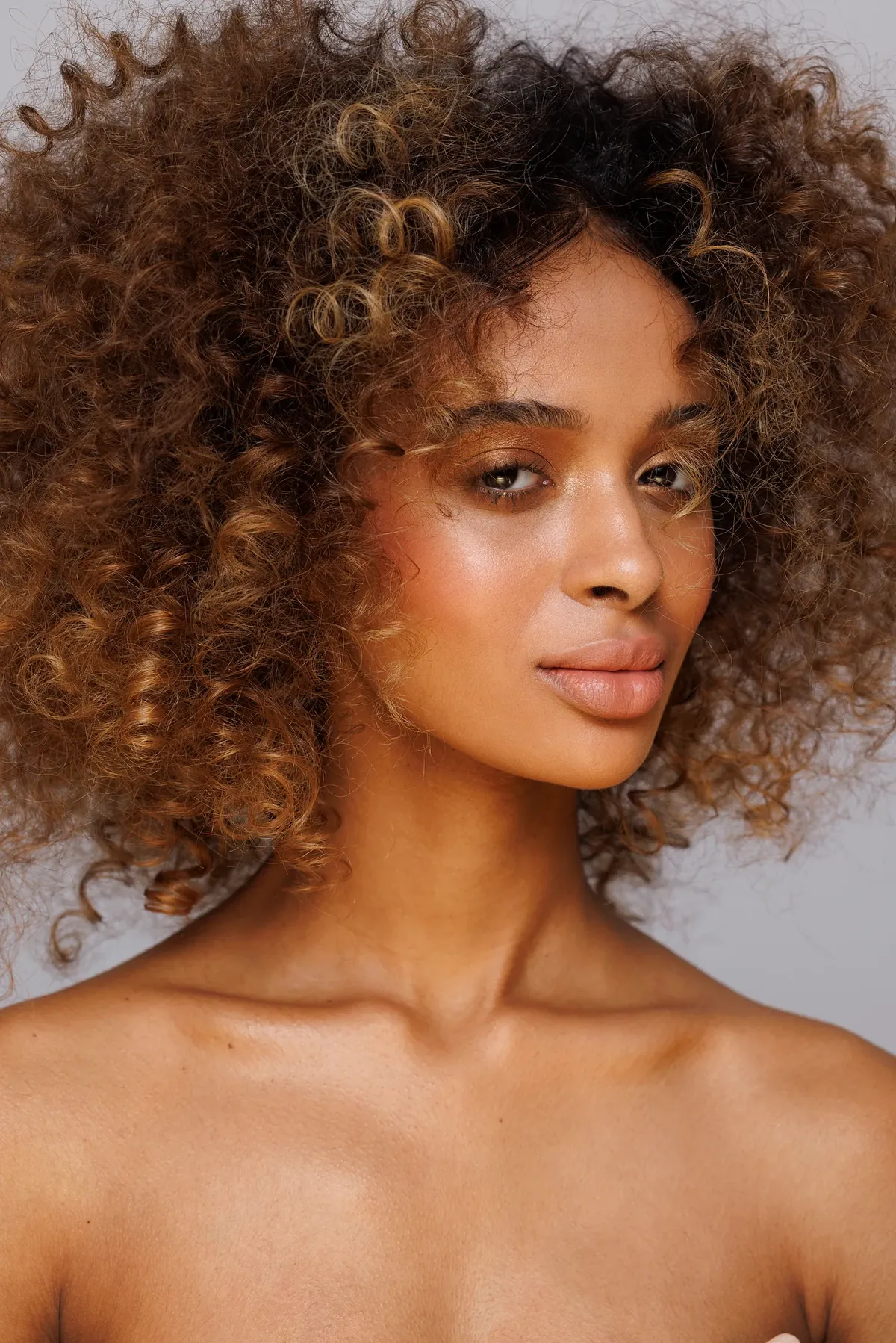
The key to photographing curls is definition without stiffness. Use a curl cream or a light gel on damp hair, let the curls dry naturally or diffuse gently, and never brush dry curls — that is what turns definition into frizz. A few curls pulled forward around the face soften the whole portrait, and a half-up pin or a small clip can keep the front tidy without hiding the curls.
Best for: golden hour and anyone whose curls are their signature. How it photographs: glowing texture and shape no iron can imitate. Hold factor: very good — curls hold their shape for hours with the right product.
24. The Chignon with Pearl Pins
A low chignon with pearl pins is the classic engagement look with one deliberate detail added. The chignon itself is soft and low, the pearls are small and scattered — three or four pins, no more — and together they catch the light in every photo without ever looking like a bridal headpiece.
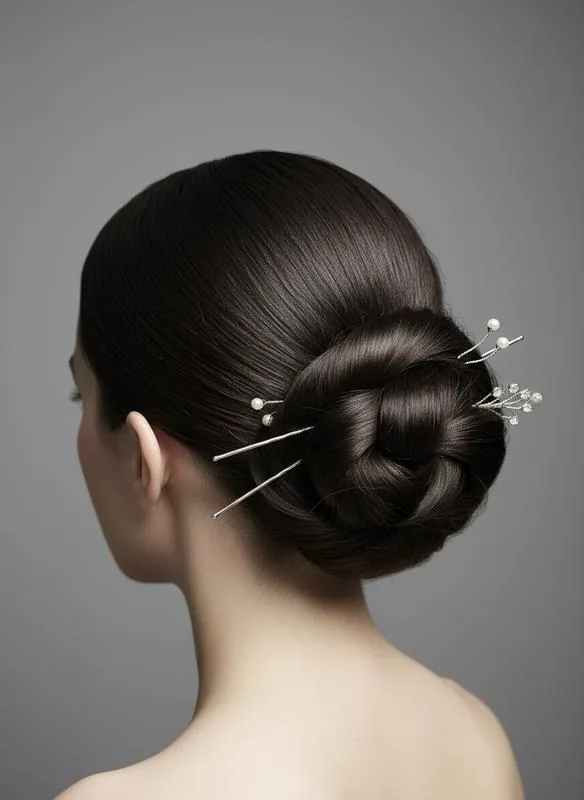
Pearls are the right accessory for this shoot precisely because they are quiet: they read as elegant and romantic, but they do not compete with your ring or your outfit. Keep them small and in scale with your hair — a tiny pin disappears in thick hair, and a large one overwhelms fine hair — and anchor each one with a bobby pin underneath so it cannot slide.
Best for: elegant shoots and close-ups where a detail shines. How it photographs: small points of light that catch the camera in every frame. Hold factor: excellent — the chignon holds, the pins are anchored underneath.
25. The Milkmaid Braid
A milkmaid braid wraps two braids across the crown like a headband, with the rest of the hair either tucked away or left loose beneath. It is romantic, a little bit vintage, and completely secure — once it is pinned, nothing moves, which is exactly what you want when you are on your feet for a two-hour shoot.
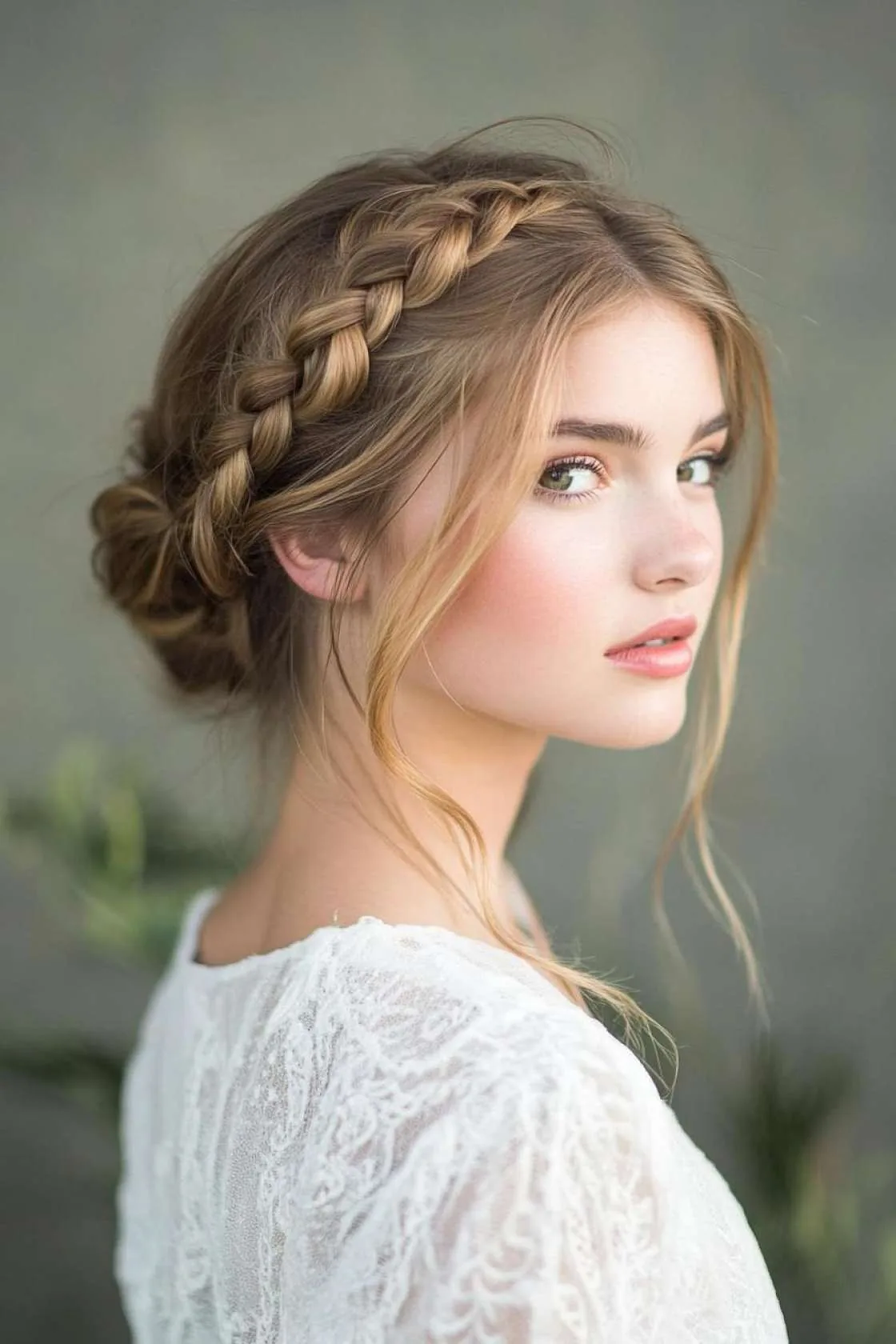
It suits medium to long hair and looks lovely with a few loose pieces pulled free around the face, or with small flowers tucked into the braid to echo your outfit. It is a wonderful choice for a garden, rustic or boho shoot, and it photographs beautifully from the front, where the braid frames the face like a crown.
Best for: garden, rustic and boho shoots. How it photographs: romantic crown framing the face from the front. Hold factor: excellent — one of the most secure styles in this guide.
26. Vintage Retro Waves
Vintage retro waves bring a touch of old-Hollywood glamour to an engagement shoot without looking like a costume. The waves are smooth and sculpted, with a deep side part and a polished finish — but the modern version keeps them looser and softer than the original, so they look romantic rather than dated.
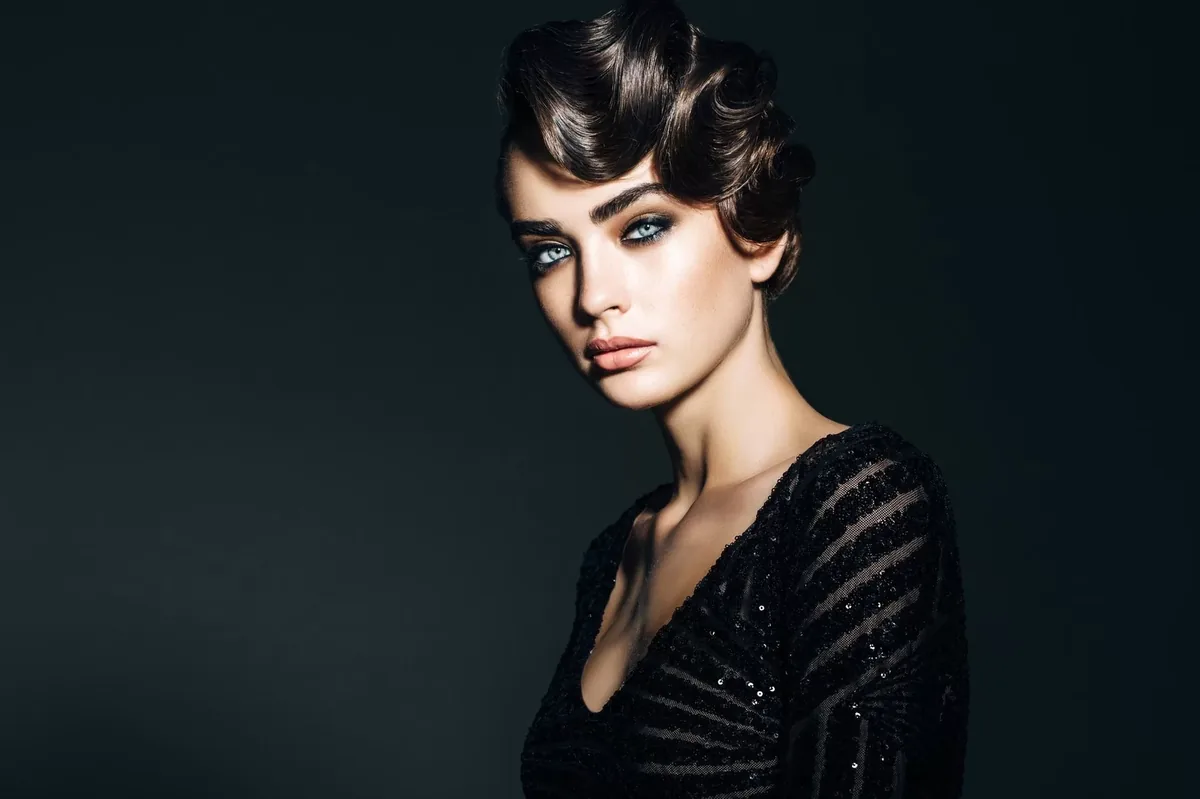
This is the style for a formal, vintage-inspired shoot, and it needs a skilled hand and a little time, so book it with your stylist. Start with more wave than you think you need, because the waves relax over the shoot, and finish with a shine spray rather than a hard hold so the hair can still move.
Best for: formal and vintage-inspired locations. How it photographs: sculpted glamour with a timeless, editorial feel. Hold factor: good — set firmly at the start and it relaxes into the right shape.
27. The Textured Pixie, Shoot-Ready
A textured pixie is the boldest short style in this guide, and it photographs with incredible personality. The texture on top gives it movement and edge, the short sides show off your face and your earrings, and the whole look says confidence — which is exactly what an engagement shoot should project.
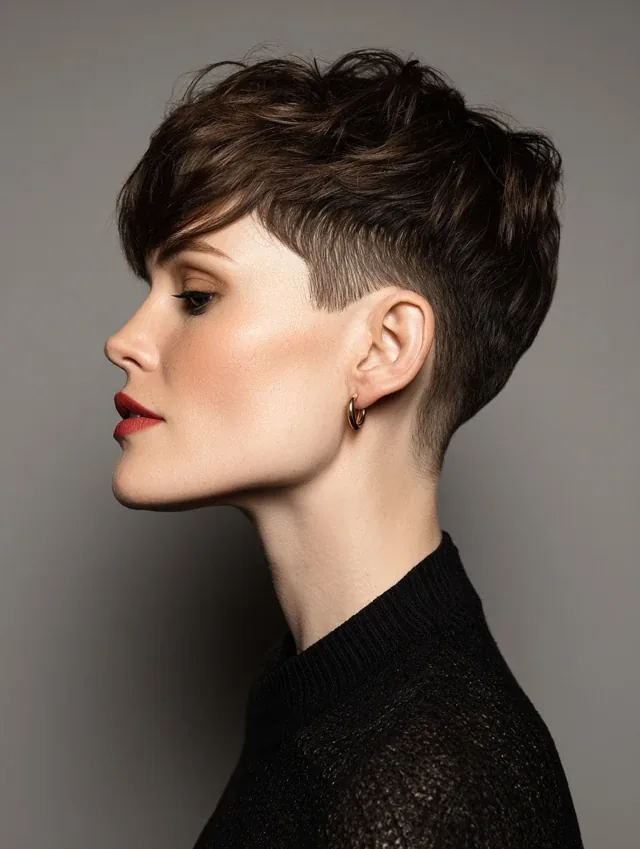
Pixies need texture to photograph well: a flat pixie can look severe in photos, while a tousled one looks alive. A little texture paste or wax, scrunched through the top, is all it takes, and the style holds through wind and long shoots better than almost any long style. Add a small pearl clip or a delicate headband if you want one romantic detail — just one.
Best for: confident, personality-led portraits. How it photographs: bold, alive and full of character in every frame. Hold factor: excellent — short hair barely moves, even in wind.
28. Long Layers with Face-Framing Pieces
Long layers with face-framing pieces are the safest beautiful choice for an engagement shoot, and that is exactly why they work. The layers stop long hair from hanging heavy and flat, and instead let it bounce and swing with every step, catching the light as it moves. It is the style that looks like you on a very good day.
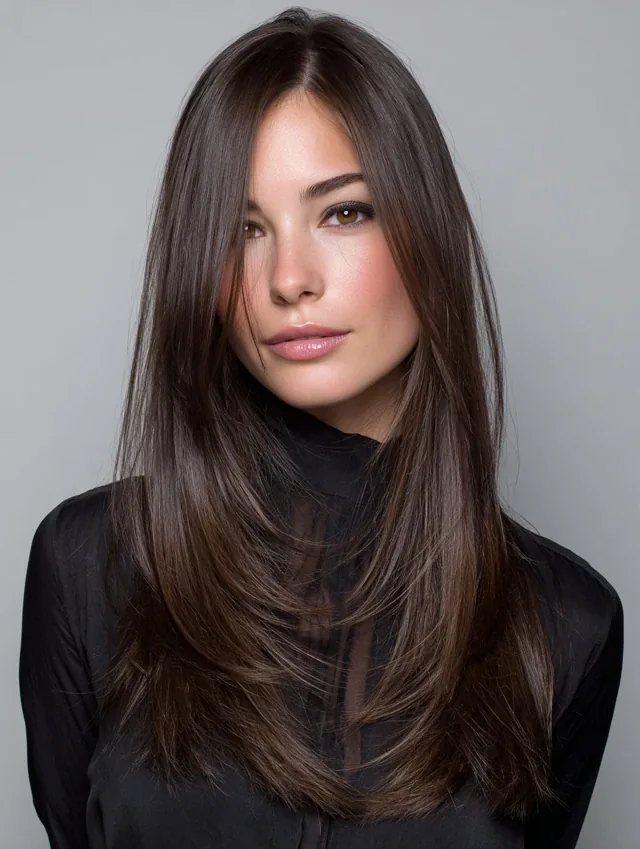
Layers also give the photographer something to work with. When you turn your head, the hair moves in pieces rather than one solid curtain, and that movement is what makes a portrait feel alive instead of posed. It suits almost every face shape, works with straight, wavy or curly hair, and only gets softer as the shoot goes on.
Best for: walking shots and candid, laughing portraits. How it photographs: movement and light in every turn of the head. Hold factor: good — add a little volume at the roots so it never falls flat.
29. The Updo with a Pearl Clip
A pearl clip is the smallest detail with the biggest payoff in engagement photography. One clip, placed where the hair sweeps back from the face, adds a touch of light and elegance to a simple updo — and it catches the camera’s eye in every portrait without ever competing with your face or your ring.
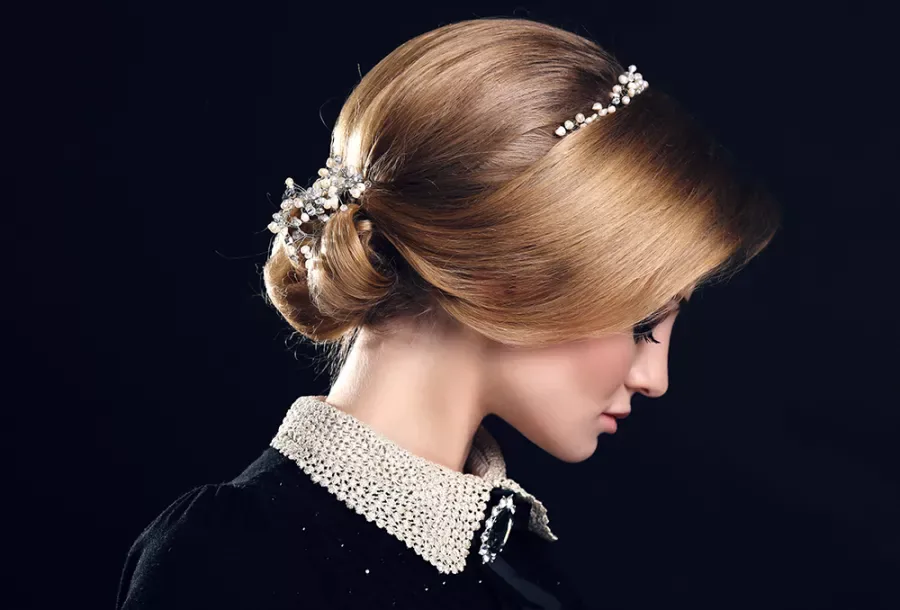
The clip works best on a low bun or a soft chignon, where it can anchor a small section and add a focal point. Keep it simple: one clip, one side, in scale with your hair. A tiny clip disappears in thick hair, and a huge one overwhelms fine hair, so try it on at your trial and check that it stays put when you turn your head.
Best for: close-ups and elegant portraits. How it photographs: a single point of light that draws the eye. Hold factor: excellent — anchor it with a bobby pin underneath.
30. A Soft Updo with Fresh Flower Pins
Fresh flowers in the hair are the most romantic accessory an engagement shoot can have, and the key word is fresh. A few small blooms — a sprig of baby’s breath, a tiny rose, a bit of greenery — tucked into a soft updo can echo your outfit and the location so the whole shoot feels connected.
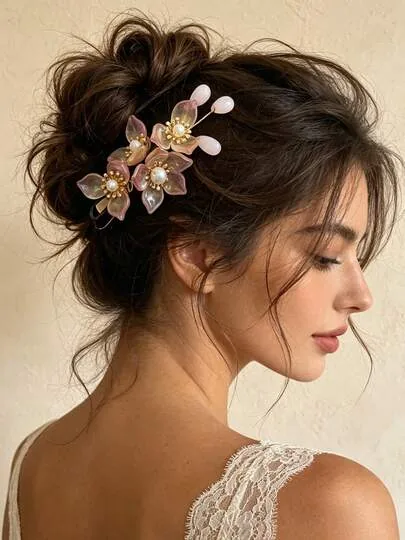
Ask the florist, not just the stylist, about this one: the flowers need to be wired or pinned so they survive the shoot, and they should be added at the last minute, after the hair is finished, so they do not wilt in the getting-ready heat. Keep them small and to one side, and choose flowers that match your outfit rather than competing with it.
Best for: garden and spring shoots. How it photographs: soft, romantic colour that ties the portrait together. Hold factor: good — add the flowers last and wire them in.
31. The Braided Headband
A braided headband is the simplest way to keep the front of your hair tidy all shoot long while still wearing it down. A small braid runs along the hairline like a headband, the rest of the hair falls loose in waves or curls, and the whole look is neat, romantic and completely secure.
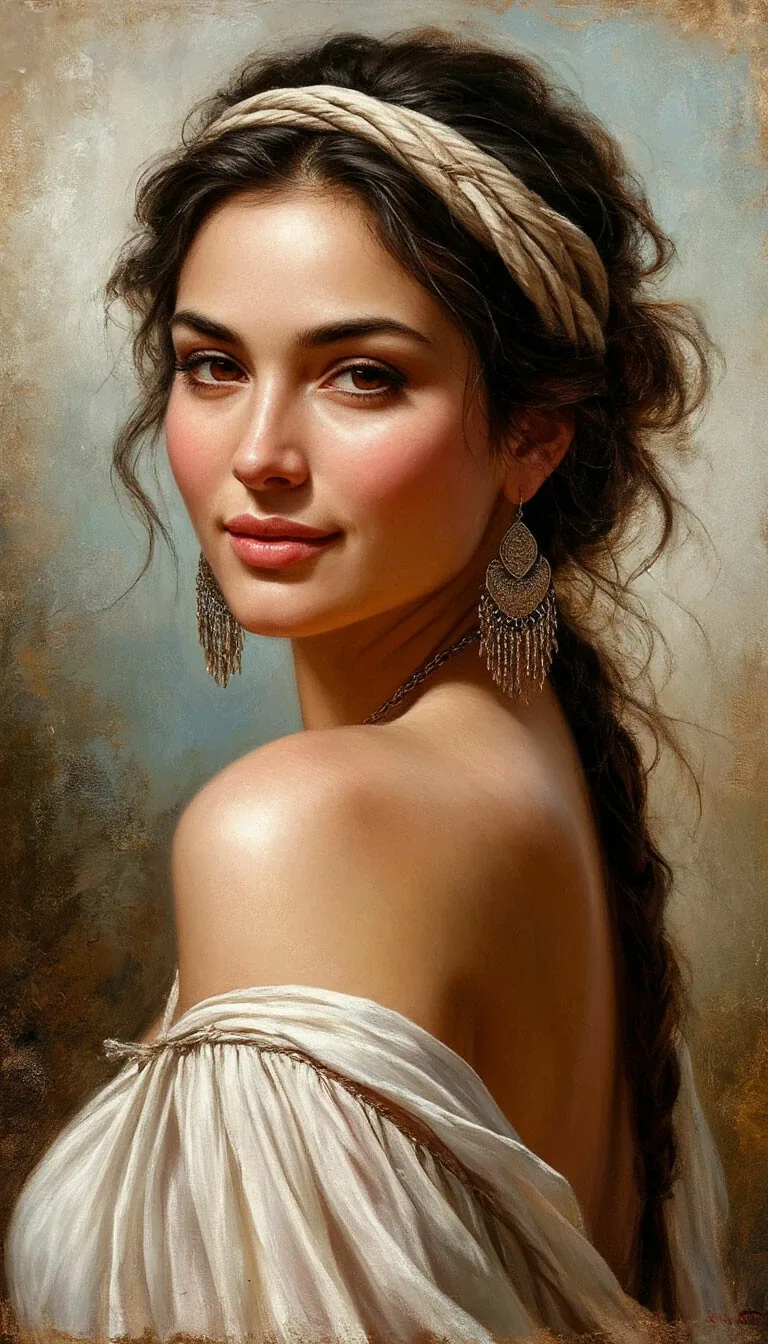
It suits almost any length past the shoulders, and it is one of the best styles for a windy day, because the braid holds the front back while the loose hair moves freely behind. It also works beautifully on hair that is still growing out, or on a day when you want the polish of a braid without committing to a full updo.
Best for: windy locations and wearing hair down safely. How it photographs: neat front, flowing back — the best of both. Hold factor: very good — the braid is a built-in anchor.
32. The Half-Up Bun with Loose Strands
A half-up bun is the most modern, effortless style in this guide — the top half of the hair is gathered into a small bun at the crown, the rest falls loose, and a few face-framing strands soften the whole look. It is relaxed, current and incredibly photogenic, and it suits almost everyone.
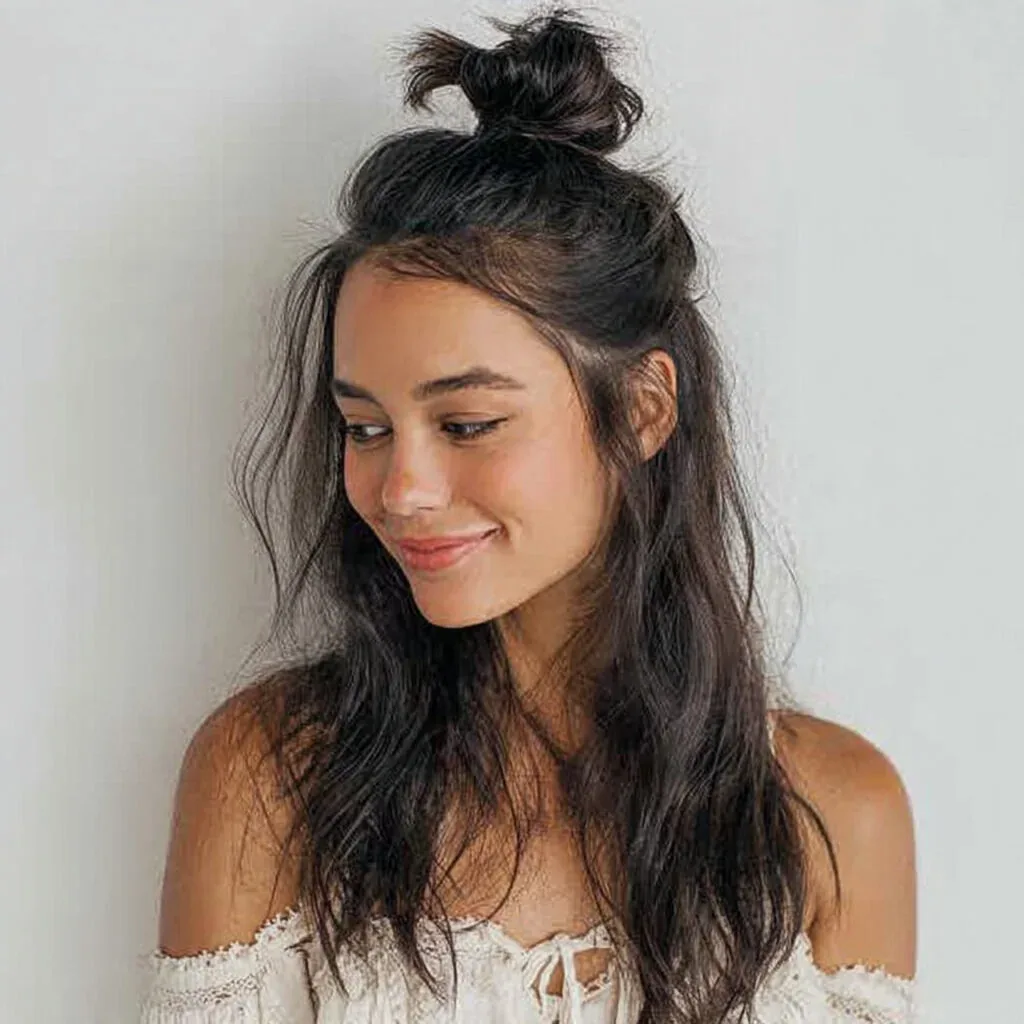
The bun keeps the front of your hair out of your face, which is wonderful for portraits, while the loose lengths keep the look soft and feminine. It works on medium to long hair, suits straight or wavy texture, and it is one of the easiest styles to refresh between locations — just re-pin and go.
Best for: modern, relaxed shoots. How it photographs: effortless and current, with a soft frame around the face. Hold factor: good — anchor the bun with two crossed pins so it cannot slide.
33. The Dutch Braid Updo
A Dutch braid updo is the most secure braided style in this guide. The braids run from the crown down either side — or across the back — and gather into a low bun, so the whole style is anchored from the very first inch. It holds perfectly in wind, through hugs, and across three shoot locations.
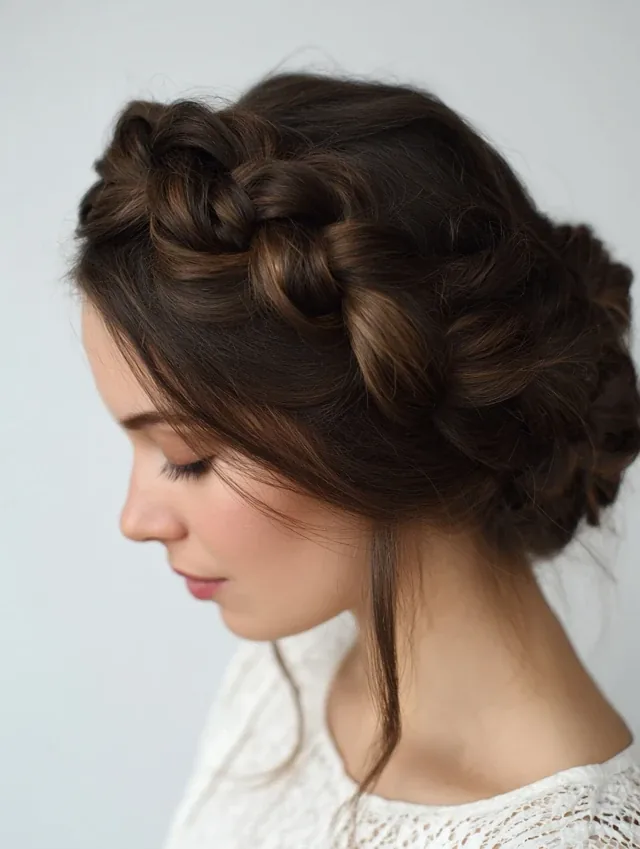
It is also strikingly photogenic: the raised braid pattern catches the light and gives the camera a detail to love from every angle. It suits medium to long hair, and it looks lovely with the braid loosened gently after pinning, so the style reads soft and romantic rather than tight and sporty.
Best for: outdoor and windy shoots. How it photographs: raised braid detail that catches the light from every angle. Hold factor: excellent — nothing in this guide holds better.
34. The Sleek Side Part
A sleek side part is the quietest statement in this guide, and sometimes the smartest. The hair is smooth, straight and shining, swept to one side with a clean, deep part that frames the face and shows off one earring beautifully. It is minimal, modern and completely unfussy — and it never, ever competes with your ring or your outfit.
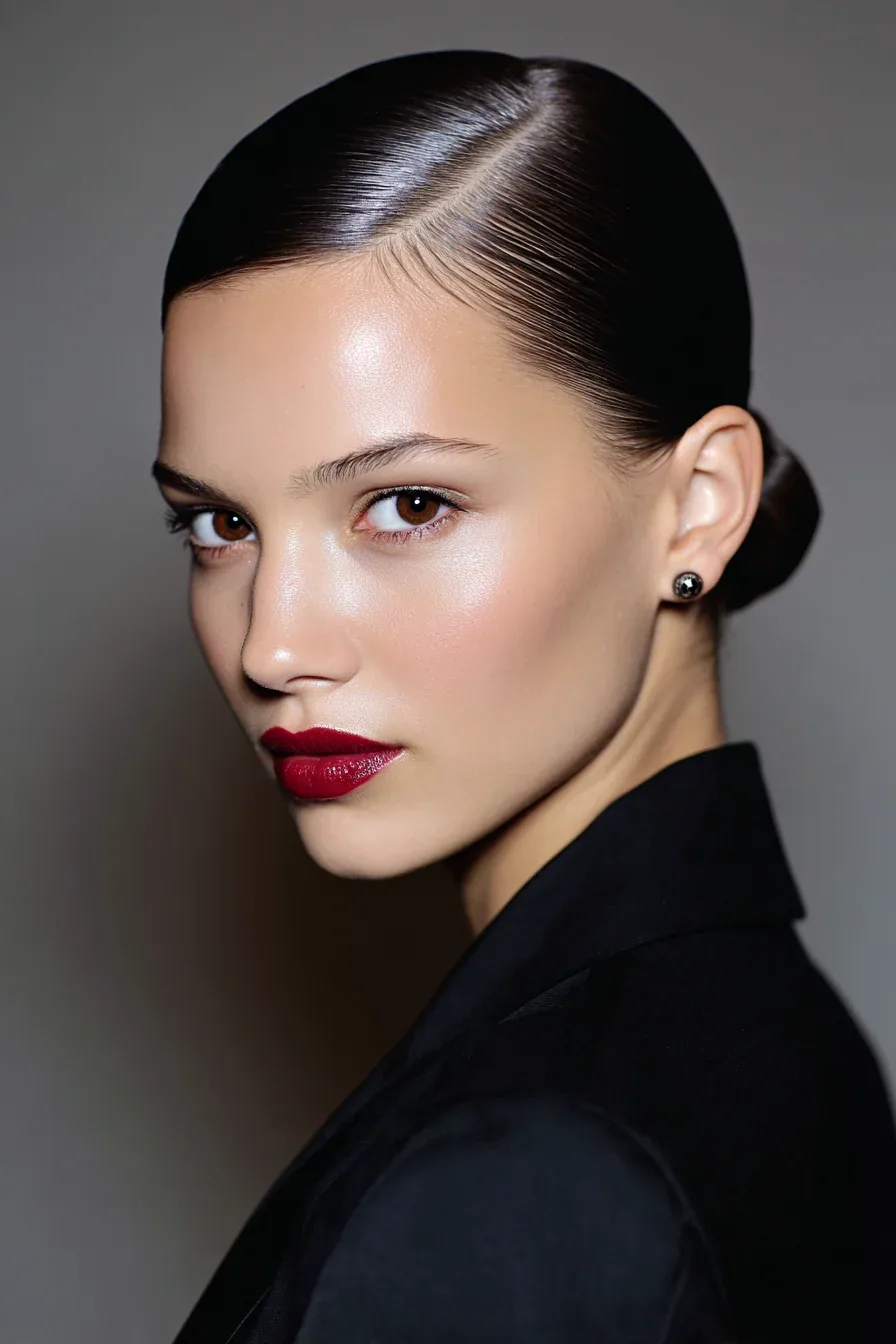
This style works best on hair that is naturally straight or easily straightened, and it rewards a gloss treatment the week before, because shine is everything here. Keep the part clean, smooth flyaways with serum on your palms, and let the simplicity speak. It is a wonderful partner for a bold outfit, because the hair stays quiet while the outfit does the talking.
Best for: minimal, modern shoots and bright daylight. How it photographs: clean, quiet elegance with a curtain of shine. Hold factor: good — smooth styles resist wind better than loose ones.
35. Romantic Loose Curls
Romantic loose curls are soft, generous and full of warmth — the curls fall in loose spirals, and a few face-framing pieces are left free to soften the whole portrait. It is a style that flatters almost everyone, because the curls add volume where you want it and the loose pieces keep the face from feeling hidden.
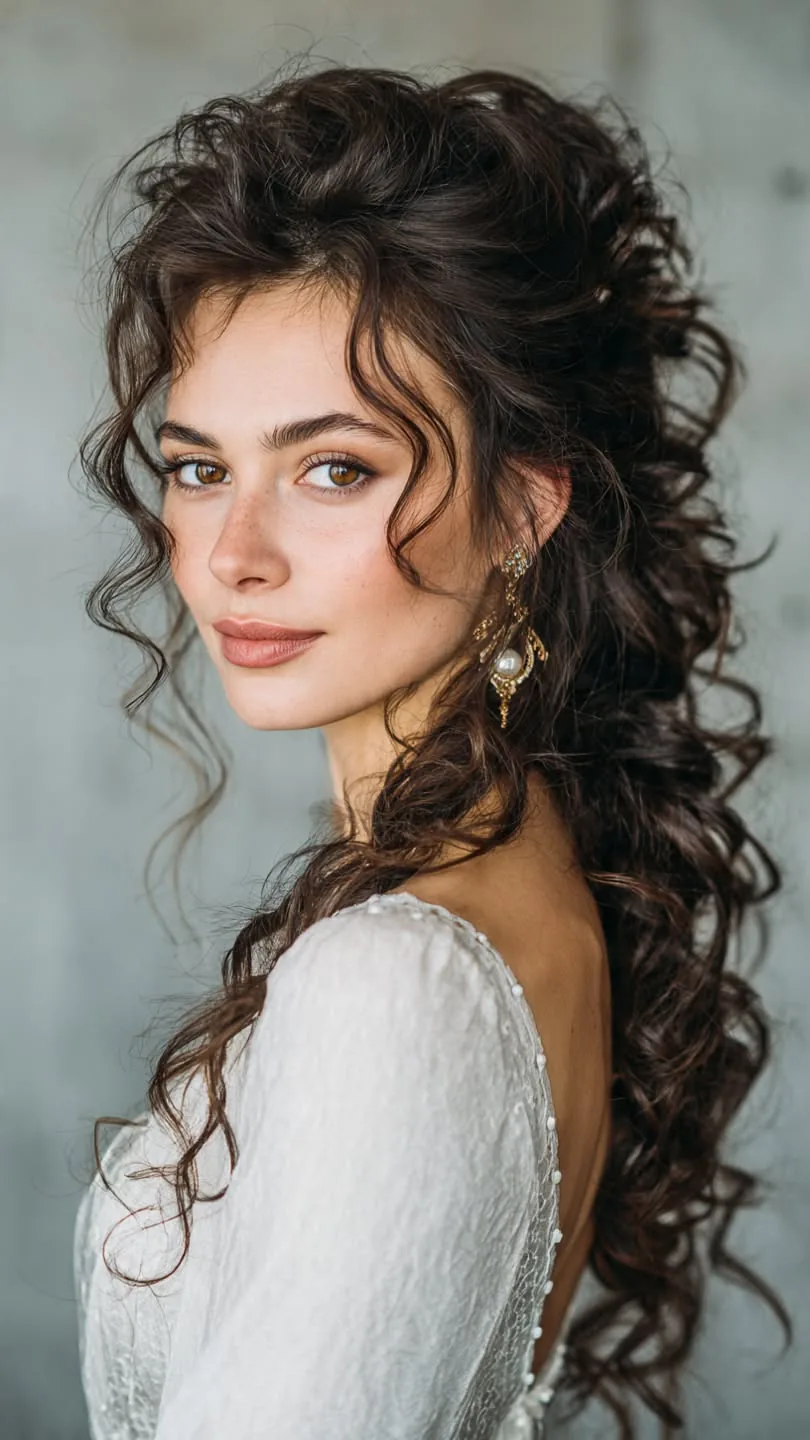
Curls photograph with wonderful texture and depth, especially in outdoor light, where each curl catches the sun a little differently. The key is to keep them soft rather than tight: tight curls can look formal and dated in photos, while loose, brushed-out curls look romantic and current — and they survive a long shoot far better.
Best for: romantic outdoor shoots and golden hour. How it photographs: warm, textured and glowing in outdoor light. Hold factor: good — set with a flexible-hold spray so the curls can move.
36. The Bubble Ponytail, Dressed Up
A bubble ponytail is the most playful style in this guide, and dressed up properly it is shoot-ready. The ponytail is sectioned with small elastics and gently pulled apart into soft bubbles, which gives it a fun, graphic shape that looks wonderful in candid and laughing shots — and the wrapped elastics keep it looking polished, not playful in the wrong way.
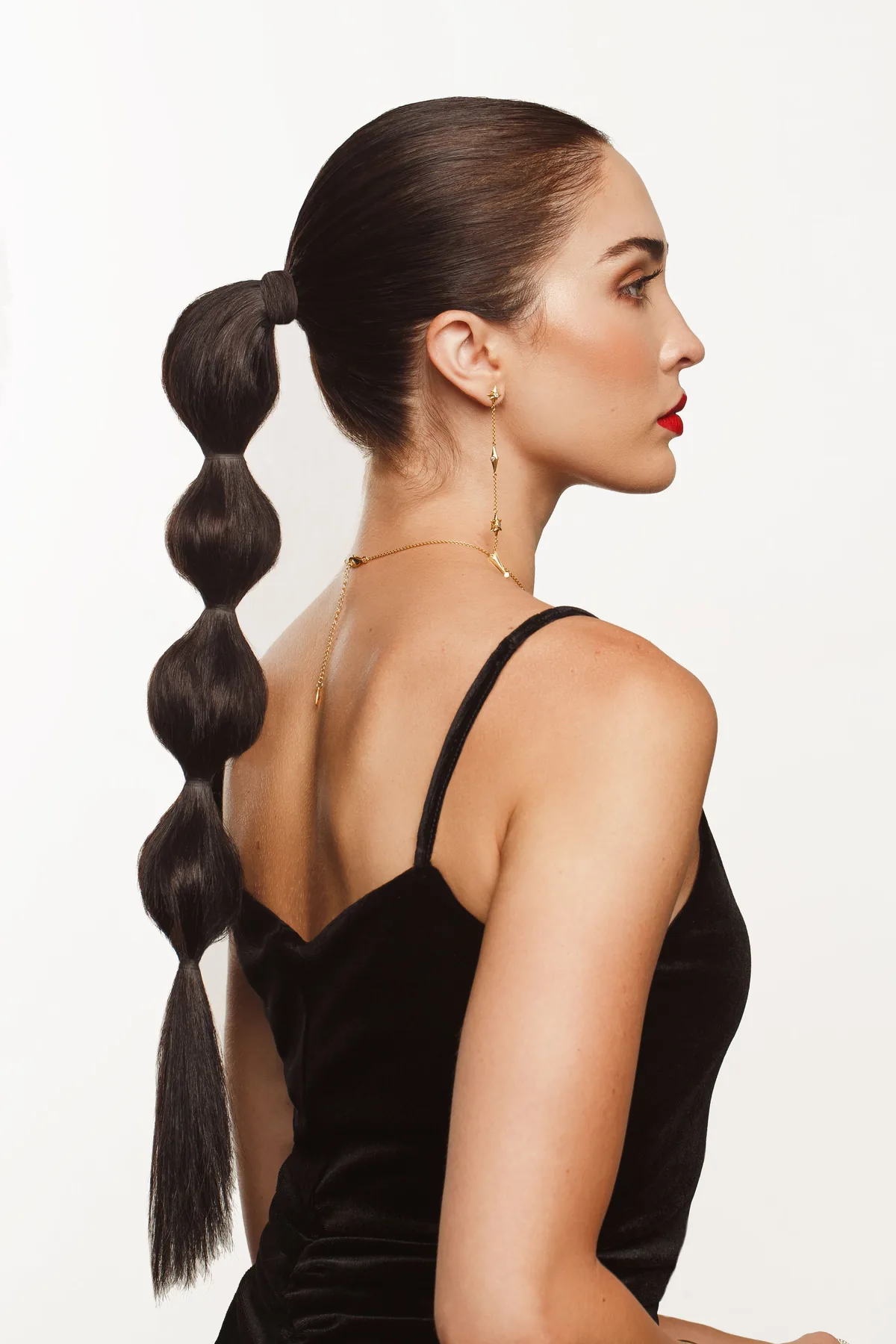
It suits long, thick hair best, and it is a lovely choice for a relaxed or modern shoot, or for the second half of a session after a formal updo. Keep the crown smooth, keep the bubbles even, and wrap each elastic with a small strand of hair so no elastic ever shows in a photo.
Best for: playful, candid shots and second looks. How it photographs: fun, graphic shape that shines in laughing portraits. Hold factor: very good — sectioned and wrapped, it holds its shape.
Close-Ups, Candid Shots and the Ring Photo — What the Camera Sees
An engagement shoot is not one kind of photo — it is close-ups, candids, walking shots, laughing shots and the ring photo, and your hair has to work in all of them. In a close-up, the camera sees everything: flyaways, a part that is slightly off-centre, a tendril that fell the wrong way. In a candid, it sees movement: hair that swings, lifts and catches the light. A good photoshoot style is built for both — tidy enough for the close-up, alive enough for the candid.
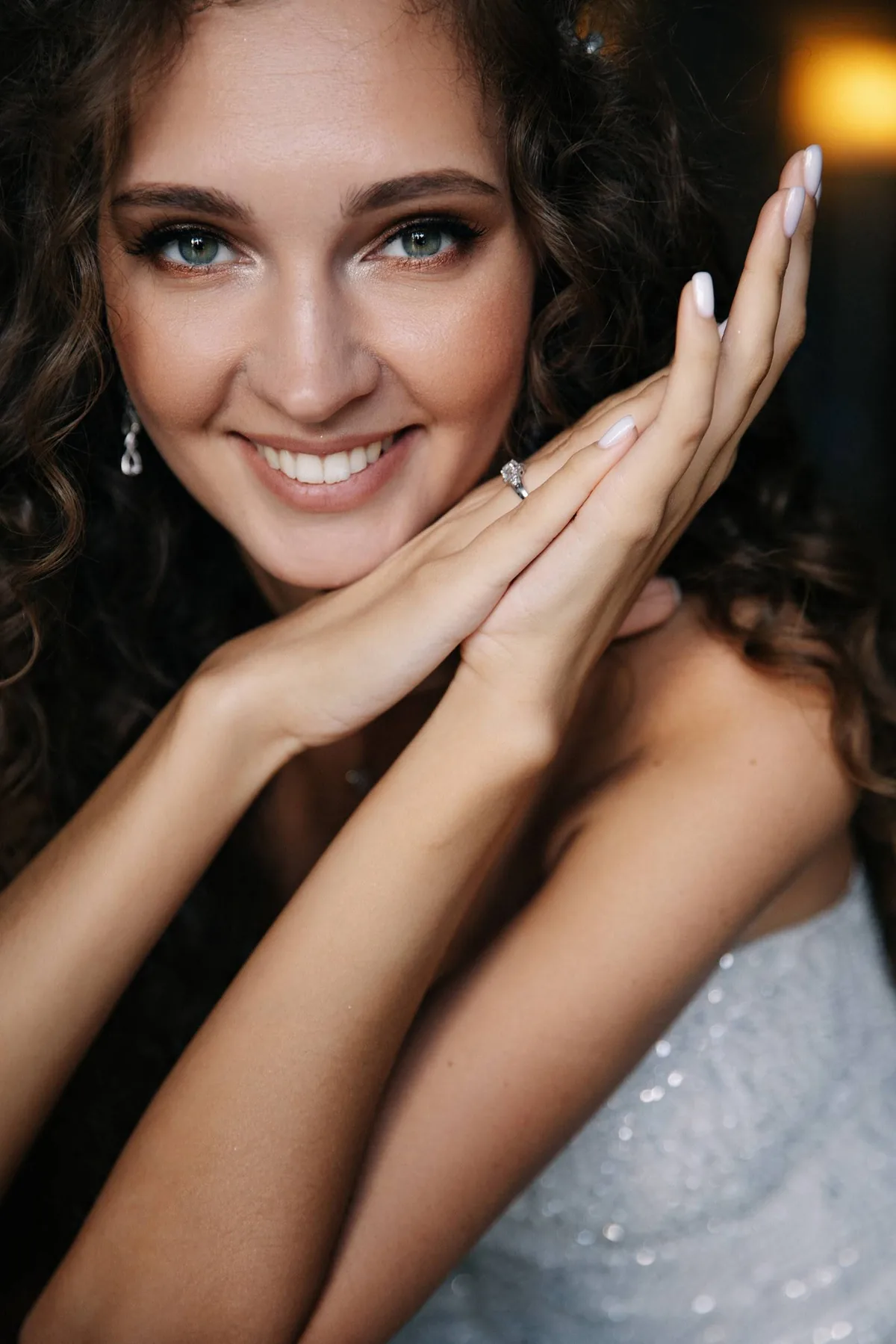
The secret is a style with a clean front and a little movement at the back. Keep the hairline smooth and the face fully open, because the close-up is all about your eyes and your smile, and hair across the forehead steals both. Let the back and the ends have texture and motion, because that is what makes the walking and laughing shots feel joyful rather than posed.
Quick verdict: at your trial, take one tight close-up and one laughing candid. If both look good, the style is ready for the shoot — if only one does, ask your stylist to fix the other.
Touch-Ups Between Locations: Your Five-Minute Kit
Most engagement shoots move between two or three locations, and the car ride between them is your only chance to reset. Pack a small kit the night before, in a pouch that fits in your bag: a travel brush, five or six bobby pins that match your hair colour, a mini flexible-hold spray, a few clear elastics, blotting paper for shine, and a little of the exact product your stylist used so a refresh behaves the same.
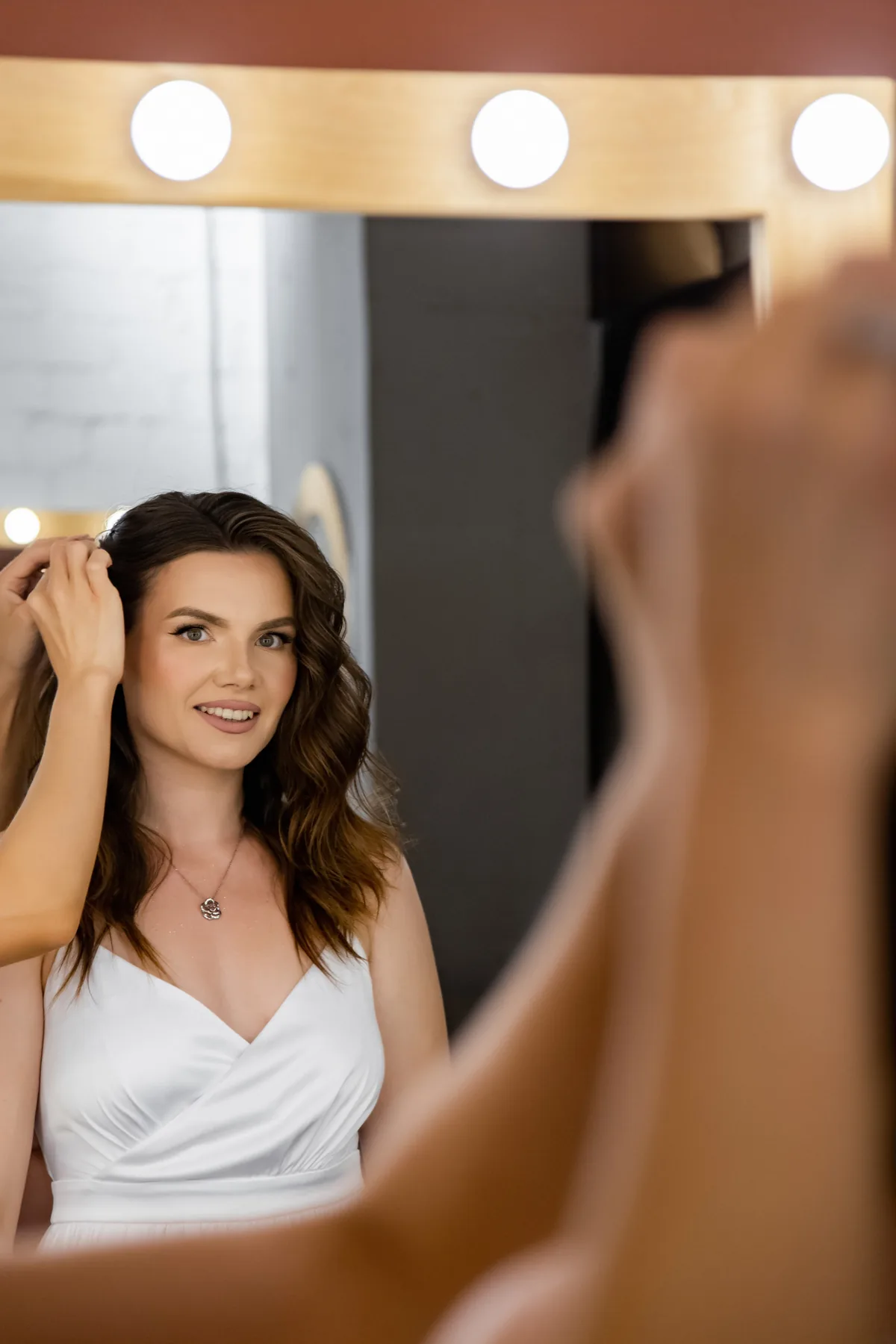
Use the time between locations wisely. Smooth the front, re-pin anything that slipped, check the back in a mirror or with your phone’s front camera, and smooth any frizz with a drop of serum on your palms. Two minutes of touch-ups between locations keeps the last photos looking as good as the first — and it is much easier than trying to fix a style that has been falling apart for an hour.
Best for: every engagement shoot, whatever the style. Ask your partner to be your second pair of eyes: they will spot a stray piece or a slipping pin long before you feel it.
Hair Colour and Shine on Camera: Avoiding Washout and Hot Spots
A camera reads hair colour differently from the human eye, and that is where most engagement photos go wrong. Very dark hair can turn into a solid black shape with no detail in bright sun, while very blonde hair can blow out to pure white and lose all its dimension. The fix is dimension: a little shine, a little variation in tone, and a style that lets the light move across the hair instead of hitting it flat.
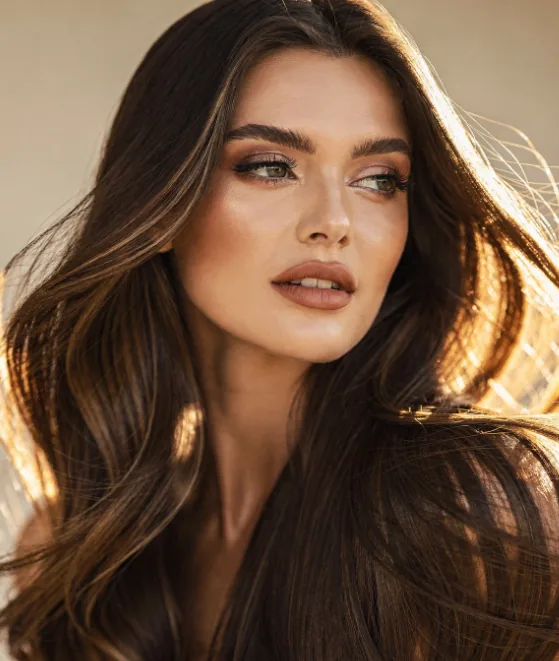
Shine is your best friend on camera, but too much of it creates hot spots — bright white reflections that the camera cannot recover. A light gloss treatment the week before the shoot gives the hair a healthy shine without the glare, and a drop of serum smoothed over the surface on the day tames flyaways without turning the hair into a mirror. Avoid heavy oils and anything glittery, which catch the flash and read as white specks in the photo.
Common mistake: colouring your hair the week of the shoot. Fresh colour can look harsh and flat on camera, and there is no time to fix it. Colour two to three weeks ahead, so it settles into a natural, dimensional finish.
Coordinating with Your Partner’s Look Without Matching
Your engagement photos are of both of you, so your hair should sit comfortably next to your partner’s look — not compete with it and not match it. If your partner is wearing something formal and polished, a sleek updo or smooth waves will feel right beside them. If they are casual and relaxed, soft waves or a loose braid will feel like the same day, not two different shoots.
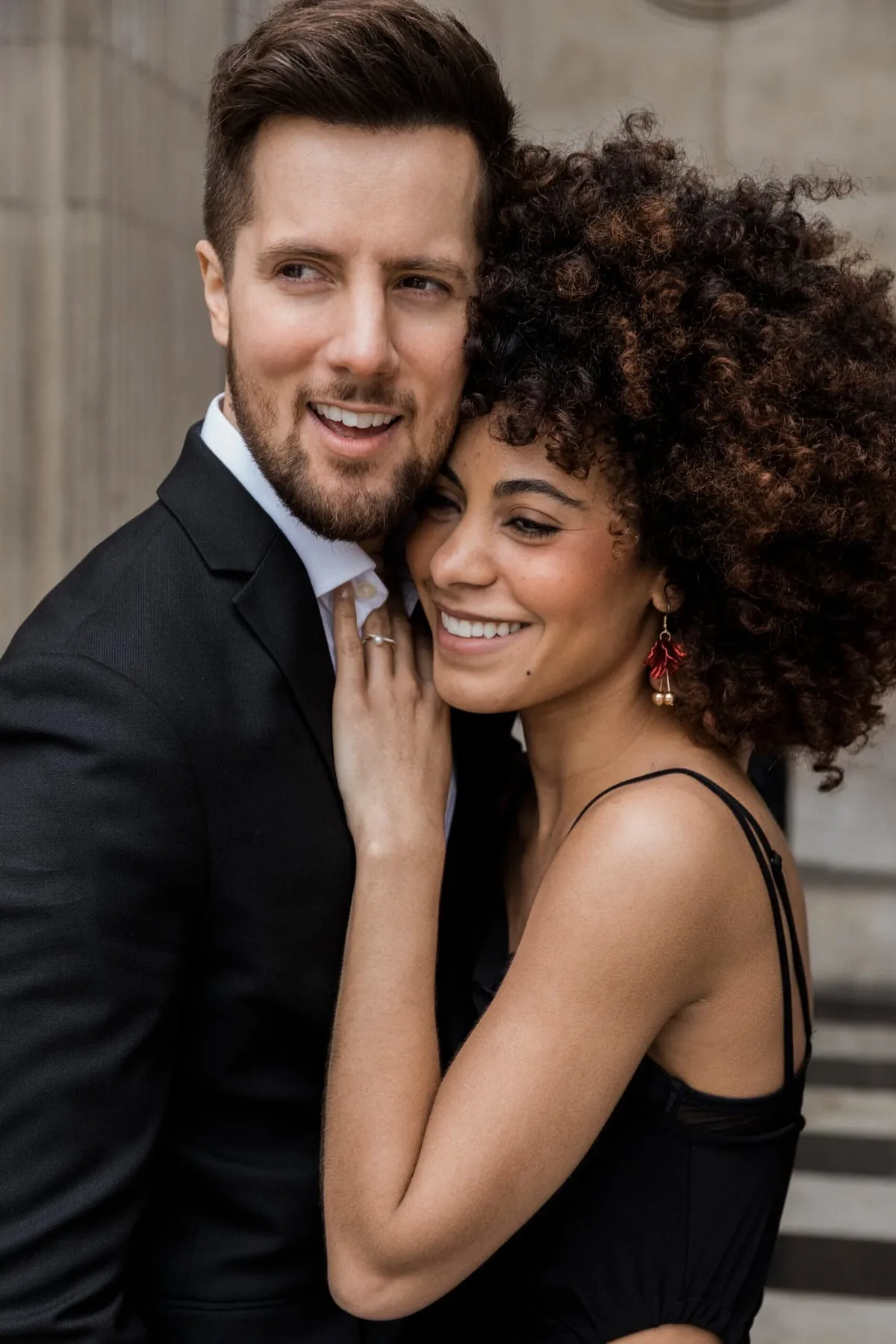
Talk about the overall feeling before the shoot, not just the outfits. Agree on a level of formality — polished, relaxed, or somewhere in between — and then choose your own style within it. The goal in couple photos is two looks that belong together: same mood, same polish, different personalities. A quick photo of both outfits side by side, with your hair in the trial style, tells you in seconds whether the pair works.
Quick verdict: if one of you looks ready for a ballroom and the other looks ready for a picnic, something is off. Match the mood, keep your own style, and the photos will feel like a couple, not two strangers.
What hairstyle photographs best for engagement photos?
Soft waves, half-up styles and low updos photograph best, because they catch the light, keep the face open and hold their shape outdoors. The single best choice depends on your light: textured waves and curls glow at golden hour, while sleek, smooth styles photograph better under flash and bright midday sun.
Should I wear my hair up or down for engagement photos?
Both work, and the right answer depends on your locations and your outfit. Hair down looks romantic and relaxed but needs an anchor — a half-up section or a braid — in wind. Hair up looks polished and timeless and survives wind and long shoots better. If you cannot decide, a half-up style gives you the best of both.
How do I keep my hair from blowing in my face outdoors?
Choose a style with an anchor: a half-up section, a braid, a low bun or a ponytail. Ask your stylist to pin one side back discreetly, use a flexible-hold spray, and stand so the wind blows your hair back rather than forward. A little movement looks alive in photos — a face full of hair does not.
Do I need a trial run before my engagement photoshoot?
Yes. Book a trial one to two weeks before the shoot, wear the outfit or a top with the same neckline, and take test photos outdoors in the same kind of light your shoot will have. The trial is where you discover what only shows up in photos — a part that sits off-centre, a curl that drops early, a style that washes out in bright light.
What hairstyles work best in golden hour light?
Textured styles — soft waves, loose curls, braids and half-up looks — work best at golden hour, because the low warm light catches each layer of texture and turns the hair into ribbons of light. Very flat, sleek styles can look a little dull in the same light, so save those for flash or midday shoots.
How can I make my hair look shiny in photos?
Book a light gloss treatment one week before the shoot, and smooth a single drop of serum over the surface on the day. Shine gives the camera something to catch, but too much creates hot spots — bright white reflections the camera cannot recover — so avoid heavy oils and anything glittery.
Should my hairstyle match my outfit?
It should match the mood of your outfit, not the outfit itself. A formal outfit pairs with a polished updo or smooth waves; a relaxed outfit pairs with soft waves or a loose braid. Check the neckline too: strapless and sweetheart necklines suit hair down, while high necklines and halters suit hair up.
What should I bring for touch-ups during the shoot?
A travel brush, five or six bobby pins in your hair colour, a mini flexible-hold spray, a few clear elastics, blotting paper for shine, and a little of the exact product your stylist used. Two minutes of touch-ups between locations — smooth the front, re-pin anything that slipped, check the back — keeps the last photos looking as good as the first.
Can I wear hair accessories in engagement photos?
Yes, if they are small and deliberate. A single pearl clip, three or four small pearl pins, or a few fresh flowers add a point of light the camera loves. Avoid large statement pieces, anything glittery that catches the flash, and more than one accessory at a time — one detail is elegant, a collection is a costume.
How far in advance should I book my hairstylist?
Book four to six weeks before the shoot, and schedule the trial run one to two weeks before the day. That leaves time to change the style if the trial photos reveal a problem, and time for a gloss treatment or a colour refresh two to three weeks ahead so it settles into a natural finish on camera.
Conclusion
Your engagement photos will outlive the shoot by decades — they will be on your walls, your invitations and your phone background long after the day itself is a memory. That is why the hair in them deserves the same thought as the location and the outfit. The styles in this guide were chosen for the camera first: for how they catch golden-hour light, how they hold in wind, how they look in a close-up of the ring, and how they still look good two hours and three locations later.
The single best piece of advice in this whole guide is the trial run. No amount of reading replaces a test photo in the actual light, with the actual outfit, on your actual hair. Book it, photograph it from the front, the side and the back, and share the photos with your photographer. If the style passes the trial, it will pass the shoot.
Pick the style that feels most like you, pack the little touch-up kit, and trust your photographer. Your job on the day is to laugh, hold hands and be yourselves — your hair should take care of itself.