La Dolce Bob: 38 Italian Bob Haircuts for Women That Are Chic, Effortless and Endlessly Elegant
The Italian bob is the haircut that made the whole world fall in love with short hair all over again. It sits somewhere between the chin and the neck, carries soft, airy volume through the crown, and finishes in ends that look lived-in rather than razor-sharp. It is the cut you see on the streets of Milan and Rome — polished without looking polished, expensive without trying too hard. These italian bob haircuts for women all share that same effortless DNA, and each one bends it toward a different hair type, face shape or age.
The secret of the Italian bob is that it is not really one haircut. It is a family of cuts built on the same idea: length that swings just below the chin, layers that are invisible rather than obvious, and movement that comes from the cut itself rather than an hour of styling. A good Italian bob should look good air-dried, better with a quick blow-dry, and still good on day three with a little dry shampoo.
This guide starts with eight short guides: how to talk to your stylist at the consultation, whether the cut suits your hair type, how to grow it out gracefully, which tools you actually need, and how salon and at-home upkeep work. Then come 38 Italian bob haircuts — classic, layered, curly, textured, coloured and age-defying — each with who it suits best, what to ask your stylist, and what the upkeep really costs in time and money.
Read the guides first, save the version that looks most like your hair, and book the cut with a stylist who has done bobs before. Bring photos, be honest about how much styling you will actually do each morning, and let the cut do the work — that is the whole point of an Italian bob.
The Consultation: What to Tell Your Stylist Before the Cut
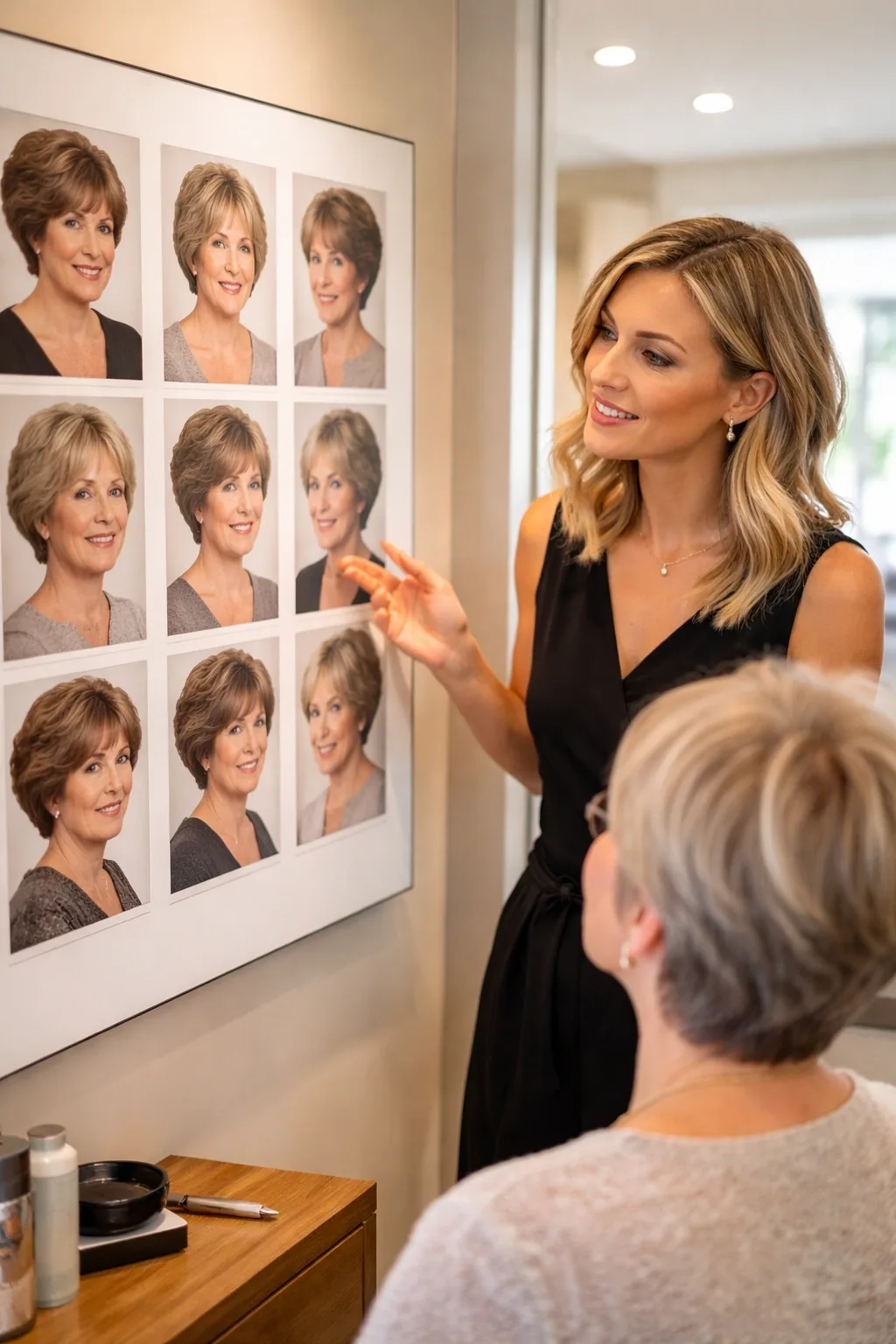
A great Italian bob starts before the scissors come out, and the consultation is where it is won or lost. Bring two or three photos of the exact length and volume you want, and one photo of what you do not want — that second photo is often more useful than the first. Tell your stylist how you actually style your hair on a normal morning, not on your best day, because a cut built for a 20-minute blow-dry will disappoint you if you only have five.
Talk about your hair’s real behaviour, too: where it flips, where it falls flat, whether it frizzes in humidity, and how it behaves on day two. A good stylist will feel your hair, check your natural part and your cowlicks, and adjust the length to suit them rather than fighting them. The Italian bob is a forgiving cut, but only when it is built around your hair rather than imposed on it.
What to ask your stylist: how this length will sit on your hair texture, and what the cut will look like air-dried. Maintenance + cost/time: a consultation is usually free or included in the cut; allow 10 extra minutes before the appointment.
Is the Italian Bob Right for Your Hair Type?

Almost every hair type can wear an Italian bob, but the cut changes to suit it. Fine hair gets invisible layers and a slightly shorter length so the ends look full rather than wispy. Thick hair gets weight removed from underneath so the bob swings instead of sitting like a triangle. Wavy and curly hair gets cut dry or with the curl pattern in mind, so the length lands right once it springs up.
The one hair type that needs a honest conversation is very tight, springy curls, because the bob will sit shorter and wider than it looks in the chair. That is not a reason to skip it — a curly Italian bob is one of the most beautiful versions — but your stylist should cut it longer than the finished length and shape the silhouette so the volume sits where you want it.
Best for: fine, thick, wavy, curly and straight hair, with the cut adjusted to each. What to ask your stylist: whether your hair should be cut wet or dry for this style.
Growing Out an Italian Bob Gracefully

Every bob eventually becomes a lob, and the grow-out is the part nobody plans for — but it can look good the whole way if you manage it. The awkward stage arrives at about eight to ten weeks, when the ends start flicking out at the jaw. A quick shaping appointment, where your stylist cleans up the neckline and softens the ends without taking length, carries you through it.
During the grow-out, styling matters more than cutting. A soft bend with a flat iron tames the flick, a little texture spray stops the length from looking limp, and tucking one side behind the ear instantly makes a mid-length bob look deliberate. Keep the part where it has always been, and resist the urge to cut layers in yourself — that is how grow-outs go wrong.
Maintenance + cost/time: one shaping trim every 6–8 weeks while growing out, about 20 minutes and a fraction of a full cut price. Quick verdict: a bob grows out beautifully if you trim the shape, not the length.
Styling Tools You Actually Need
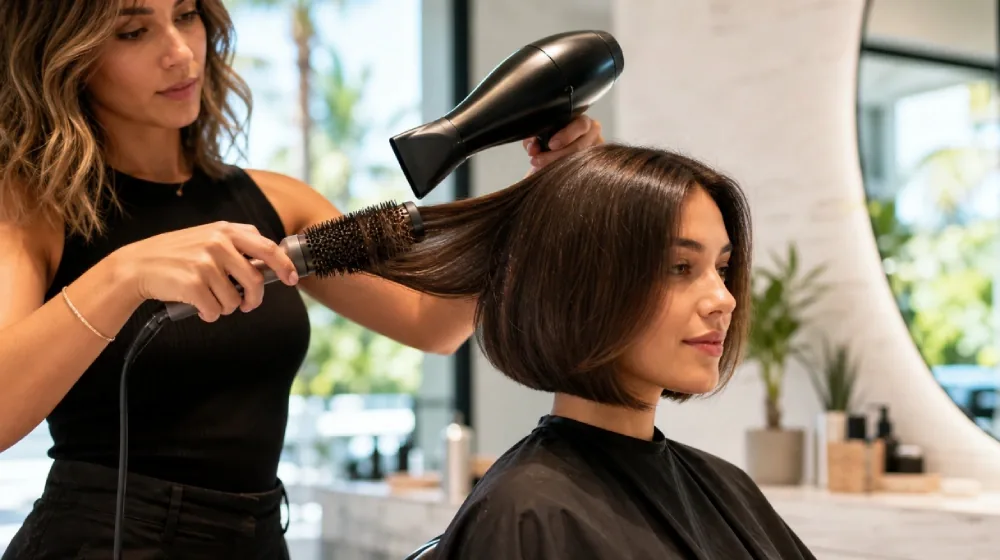
An Italian bob asks very little of your tool drawer, and that is part of its charm. The essentials are a good hairdryer with a nozzle, a medium round brush, and a flat iron for smoothing or bending the ends. A volumising mousse or a light texture spray does most of the styling work; a heavy wax or pomade will weigh the soft volume down and make the cut look greasy by lunchtime.
The technique matters more than the tools. Dry the roots first with your fingers, lifting as you go, then smooth the lengths with the round brush in big sections. Finish by bending the very ends under with the flat iron or the brush — just one soft bend, not a curl. A final blast of cool air sets the shape, and a pea-sized drop of serum on the ends adds the shine the Italian bob is known for.
Best for: anyone who wants a five-minute morning routine. Maintenance + cost/time: a decent dryer and round brush cost less than one salon visit and last for years.
1. The Classic Italian Bob
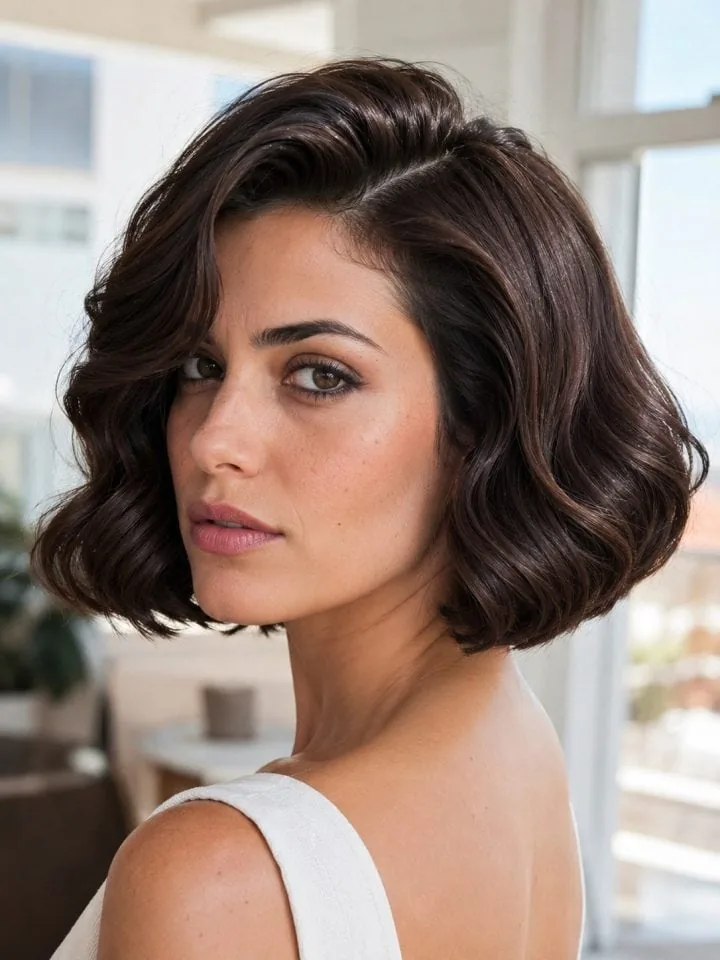
This is the cut that started it all: chin-length hair with soft, airy volume at the crown, ends that curve gently under, and not a harsh line anywhere. The classic Italian bob is cut with invisible layers so the hair moves when you do, and it is finished with a blow-dry that bends the ends under just enough to frame the jaw. It looks polished from every angle and never looks overdone.
What makes it Italian rather than just a bob is the softness. There is no blunt, graphic edge and no heavy graduation at the back — instead the weight sits evenly, the silhouette is rounded, and the whole cut has the relaxed confidence of a woman who never worries about her hair. It suits almost everyone, which is why stylists reach for it first.
Best for: every face shape and hair type, and anyone getting a bob for the first time. What to ask your stylist: for invisible layers and ends that bend under, not a blunt line. Maintenance + cost/time: a trim every 6–8 weeks; about five minutes of blow-drying each morning.
2. The Chin-Length Italian Bob with Soft Ends

A chin-length bob with soft ends is the most forgiving version of the cut, because the length sits exactly where it flatters the jaw and the ends are point-cut so they melt into the face instead of drawing a hard line. The result is a bob that looks expensive without looking severe, and it photographs beautifully because the soft ends catch the light.
This version is ideal if you are nervous about going short, because chin length still gives you enough hair to tuck behind an ear or pin back on a bad day. Ask your stylist to keep the front a fraction longer than the back, which creates a gentle forward swing and stops the cut from looking boxy from the side.
Best for: first-time bob wearers and anyone who wants a soft, wearable length. What to ask your stylist: for point-cut ends and a front that sits a touch longer. Maintenance + cost/time: trims every 6–8 weeks; two minutes with a flat iron to bend the ends under.
3. The Italian Bob with Curtain Bangs

Curtain bangs are the Italian bob’s best friend. They part in the middle, sweep to either side, and melt into the bob’s layers so the whole cut looks like one continuous shape rather than a fringe stuck on top. They soften the forehead, open up the eyes, and give the bob an instant Paris-meets-Milan romance.
The trick is length: curtain bangs for a bob should reach the cheekbone or just past it, so they blend rather than hang. They grow out gracefully, which means no awkward in-between stage, and they can be swept to one side on days you want a deeper part. If you have a high forehead or a long face, this is the version to ask for first.
Best for: long and oval faces, high foreheads, and anyone who wants softness around the eyes. What to ask your stylist: for cheekbone-length curtain bangs that blend into the layers. Maintenance + cost/time: a fringe trim every 3–4 weeks between bob trims, often free or very cheap.
4. The Italian Bob with a Deep Side Part
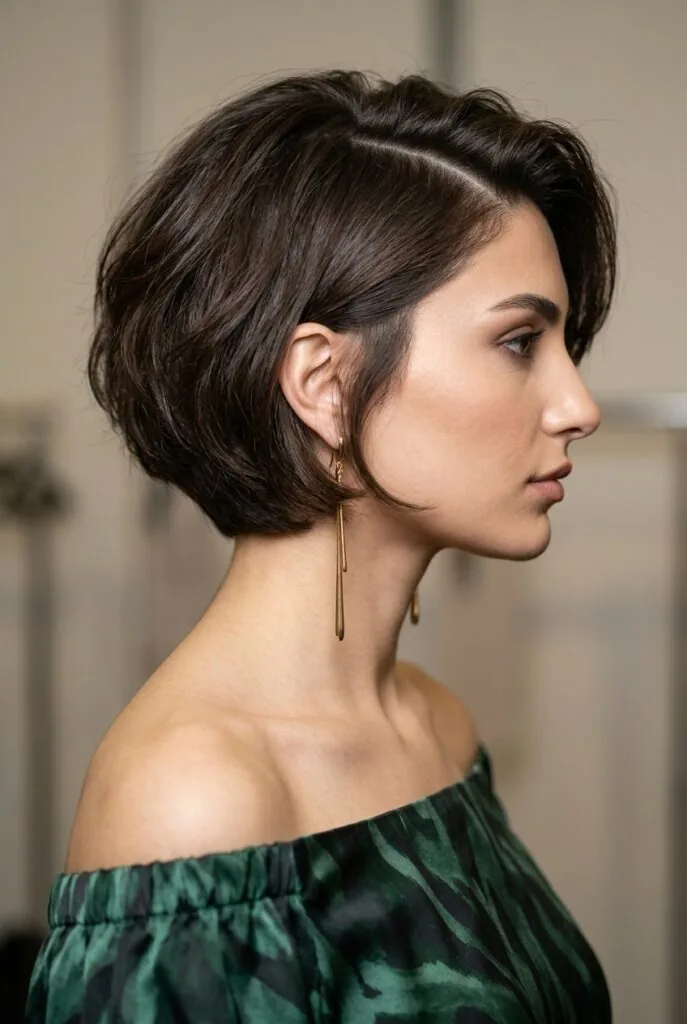
A deep side part turns the gentle Italian bob into something with real drama. Most of the hair sweeps to one side, which builds volume at the crown, creates a soft curtain across the forehead, and gives the portrait a sweeping, glamorous line. It is the simplest way to make a familiar cut look completely different without changing the length at all.
This version suits almost every face shape, and it is especially flattering on round and square faces, because the diagonal sweep breaks up symmetry and lengthens the face. Keep the part clean with a tail comb, let the heavy side fall naturally, and pin the lighter side back discreetly if it keeps falling forward.
Best for: round and square faces, and anyone who wants instant volume. What to ask your stylist: which side your hair naturally wants to part on. Maintenance + cost/time: no extra cost — just a comb and ten seconds each morning.
5. The Layered Italian Bob

Layers are what give the Italian bob its movement, but they should be invisible — you feel them in the swing, you never see them as steps. A layered Italian bob is cut so the weight falls evenly and the ends move independently, which stops the cut from looking like a helmet and gives it that airy, lived-in quality the style is famous for.
This is the version to choose if your hair is thick or heavy, because layers remove bulk from the inside while keeping the outline full. It is also the best choice if you like to shake your hair out and go, since the layers do the styling for you. Ask for long, soft layers rather than short choppy ones, which would push the cut toward a shag.
Best for: thick hair and anyone who wants movement without daily styling. What to ask your stylist: for long, invisible layers, not short choppy ones. Maintenance + cost/time: trims every 6–8 weeks; air-dries beautifully with a little mousse.
6. The Italian Bob for Fine Hair
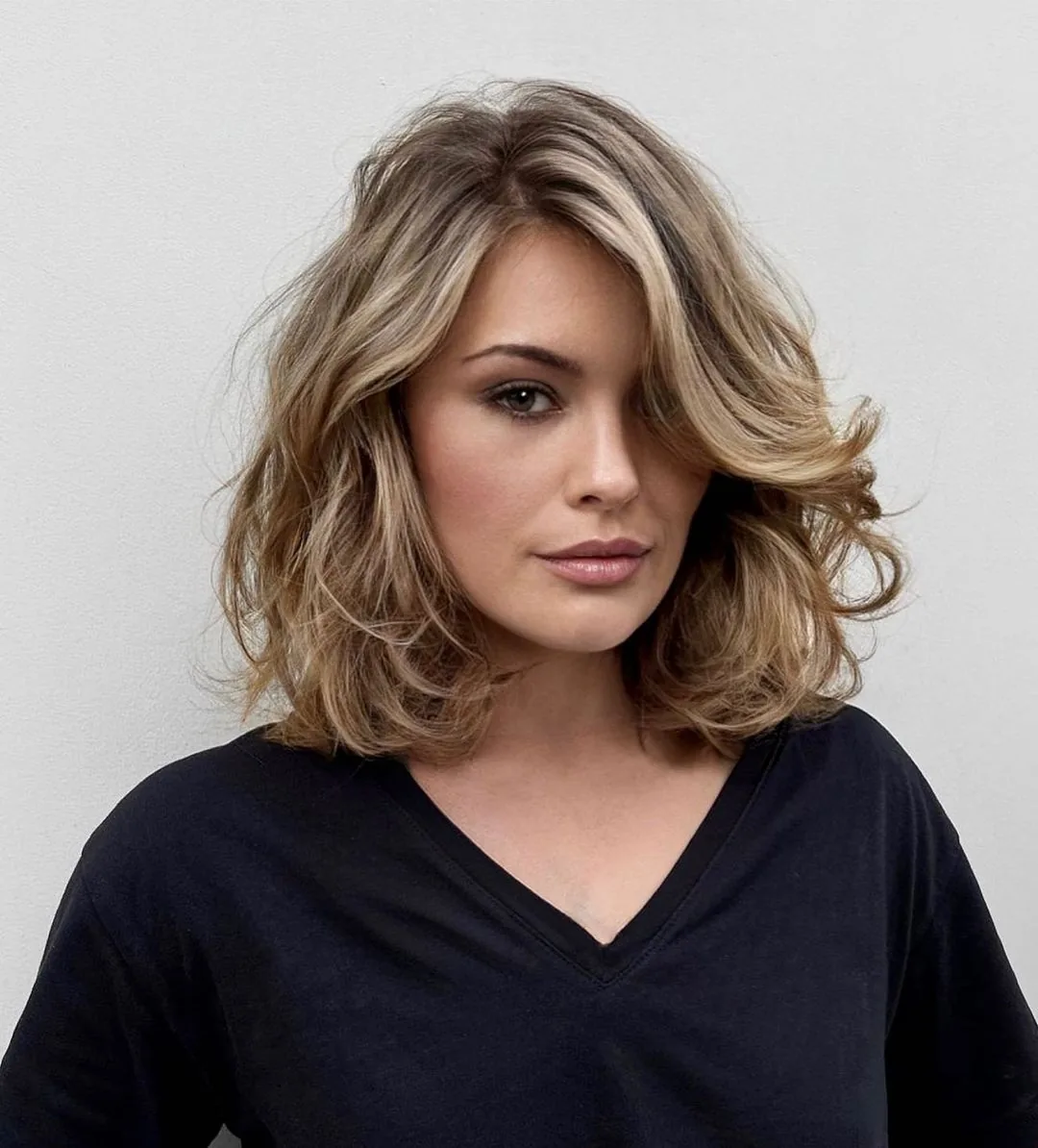
Fine hair and the Italian bob are a perfect match, because the cut is short enough that the ends look full instead of wispy. The secret is keeping the length at or just below the chin and cutting the ends bluntly, so the bottom edge looks thick, while the invisible layers above it create volume without removing weight where you need it.
Styling is where fine-hair bobs win or lose. Dry the roots with your fingers, lifting as you go, and use a volumising mousse on damp hair before you pick up the brush. A little dry shampoo on day two gives the roots grip, and a light texture spray through the ends stops the bob from falling flat by lunchtime.
Best for: fine and thin hair that goes limp at longer lengths. What to ask your stylist: for a blunt bottom edge with volume built at the crown. Maintenance + cost/time: mousse and dry shampoo cost little; trims every 6 weeks keep the ends looking thick.
7. The Italian Bob for Thick Hair
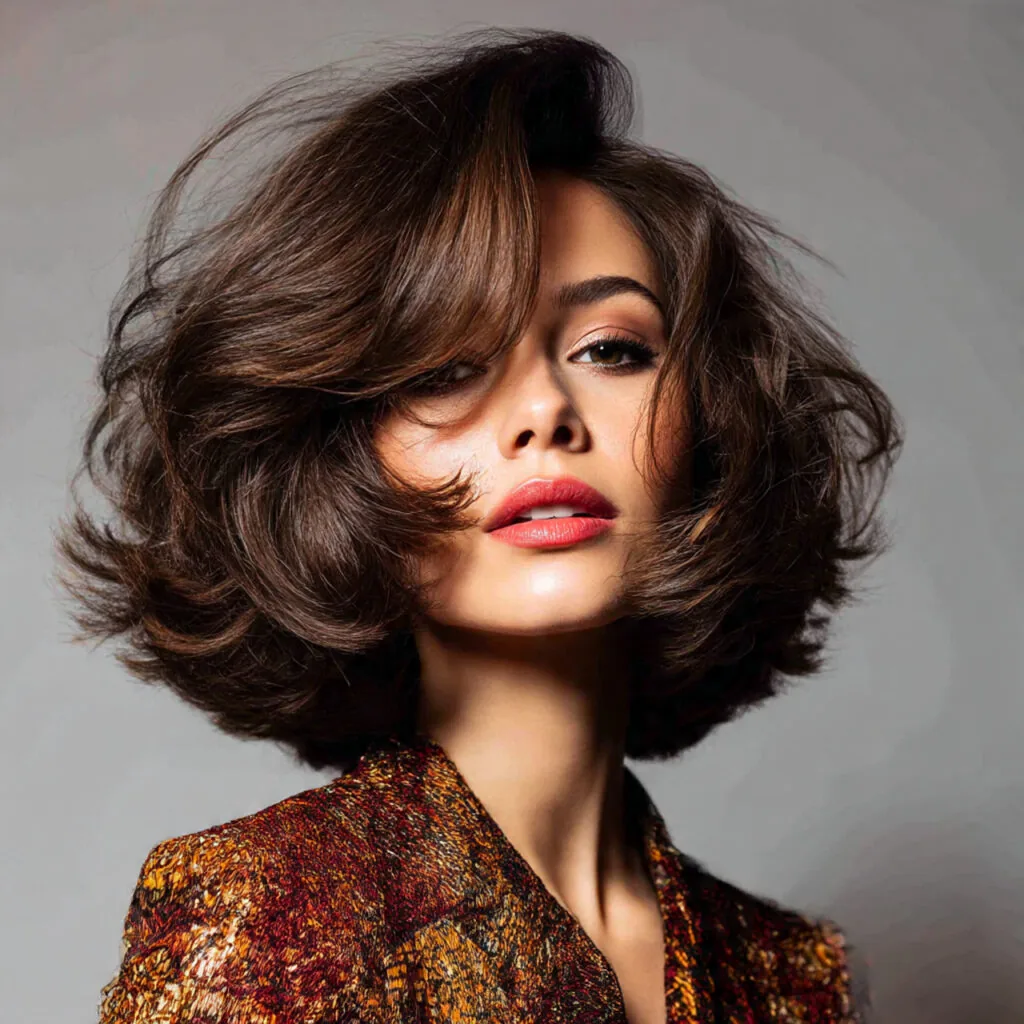
Thick hair can make a bob look triangular if it is cut straight across, so the Italian bob for thick hair is all about removing weight from underneath. Your stylist thins the interior layers and softens the ends, which lets the hair swing instead of sitting wide, and keeps the silhouette rounded rather than boxy.
The result is a bob with real presence — full, glossy and swinging — that still feels light on the head. It holds a blow-dry for days, which is the thick-haired woman’s secret advantage, and it looks just as good air-dried with a little smoothing cream. If your hair has always felt too heavy to wear short, this is the cut that proves you can.
Best for: thick, heavy hair that needs weight removed to move. What to ask your stylist: for interior thinning and softened ends, not a blunt triangle. Maintenance + cost/time: trims every 6–8 weeks; a smoothing cream tames the bulk between washes.
8. The Italian Bob for Curly Hair
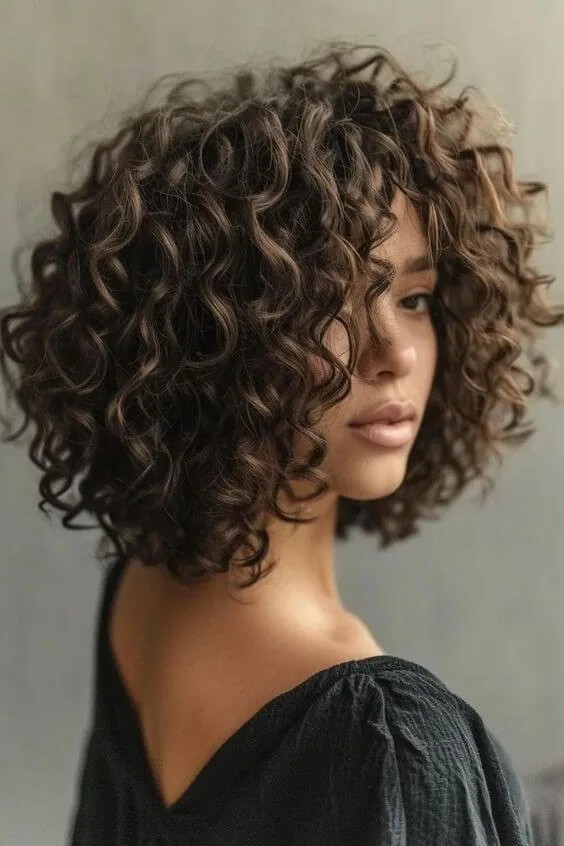
A curly Italian bob is one of the most joyful versions of the cut, because the curls give it volume and personality that straight hair has to work for. The key is cutting it dry, or at least with the curl pattern in mind, so the length lands right once the curls spring up — a curly bob cut wet will always end up shorter than you expected.
Shape matters more than length here. The silhouette should be rounded, with the volume balanced so the bob does not go wide at the sides, and the ends should be shaped curl by curl rather than cut in a straight line. A curl cream scrunched into damp hair and a diffuser on a low heat will define the curls without frizz.
Best for: wavy to curly hair that wants shape without length. What to ask your stylist: to cut it dry or curl by curl, and to leave it longer than the finished length. Maintenance + cost/time: trims every 8–10 weeks; curl cream and a diffuser are the only tools you need.
9. The Italian Bob for Wavy Hair

Wavy hair was practically invented for the Italian bob. The natural bend gives the cut its movement for free, the ends flick exactly where you want them, and the whole style looks like you spent an hour with a curling iron when you actually just let it dry. It is the lowest-effort version of the cut, and one of the prettiest.
A few long layers help the wave pattern sit evenly, and a sea-salt or texture spray scrunched into damp hair brings out the bend without making it crunchy. If your waves are uneven — straighter on top, curlier underneath — ask your stylist to cut the top slightly shorter so the pattern matches.
Best for: naturally wavy hair and wash-and-go mornings. What to ask your stylist: for long layers that even out your wave pattern. Maintenance + cost/time: almost no styling time; texture spray and trims every 8 weeks.
10. The Italian Bob for Straight Hair

On straight hair, the Italian bob looks sleek, glossy and quietly expensive — the Milan street-style version. The cut relies on a perfect outline, because there is no curl to hide behind, so the ends should be cut cleanly and the silhouette kept rounded rather than flat. A gloss treatment the week before the cut makes the shine almost unfair.
The styling is simple: a round brush blow-dry, ends bent under, and a drop of serum smoothed over the surface with your palms. The risk with straight hair is flatness at the crown, so dry the roots with your fingers first, lifting as you go, and finish with a cool blast of air to set the volume.
Best for: naturally straight hair and lovers of a polished, glossy finish. What to ask your stylist: for a clean outline and a gloss treatment before the cut. Maintenance + cost/time: trims every 6 weeks keep the line sharp; five minutes of blow-drying a day.
11. The Italian Bob with Face-Framing Layers

Face-framing layers are the shortest route to a bob that flatters you, because they are cut to follow your own bone structure. The layers start at the cheekbone and sweep down to meet the bob’s length, which opens up the face, softens a strong jaw, and draws the eye to your eyes and smile.
They also make the bob more versatile. Tuck the front pieces behind your ears for a clean look, or let them fall forward when you want softness. The layers grow out beautifully, too, since they simply become part of the bob’s length, so you never get an awkward stage between trims.
Best for: strong jawlines, square faces, and anyone who wants their features front and centre. What to ask your stylist: for layers that start at the cheekbone and follow your face shape. Maintenance + cost/time: trims every 6–8 weeks; no extra styling needed.
12. The Italian Bob with Blunt Ends
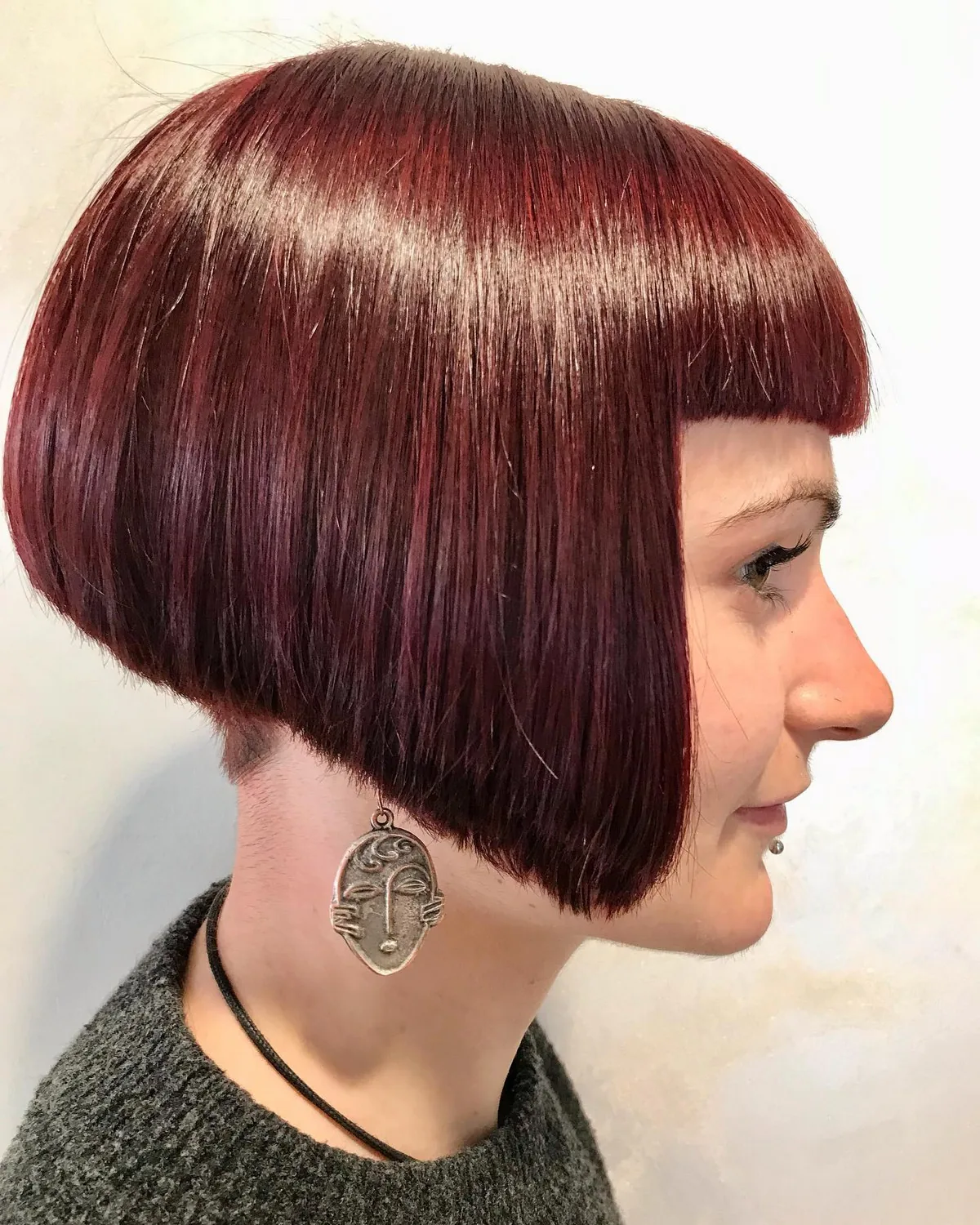
Blunt ends are the boldest version of the Italian bob, and the most modern. The bottom edge is cut in one clean line, which makes the hair look thicker, glossier and more deliberate — it is the version you see on runways and in fashion editorials, and it photographs with a sharp, graphic quality.
This version suits straight and fine hair best, because the blunt line needs smoothness to read properly. It is less forgiving on very curly hair, where the line disappears into the curl pattern, and it needs regular trims to keep the edge crisp. Pair it with a middle part for the full editorial effect, or a side part to soften it.
Best for: fine and straight hair that wants to look thicker. What to ask your stylist: for a clean, single-length bottom edge with no thinning at the ends. Maintenance + cost/time: trims every 5–6 weeks to keep the line sharp; a flat iron keeps it sleek.
13. The Textured Italian Bob
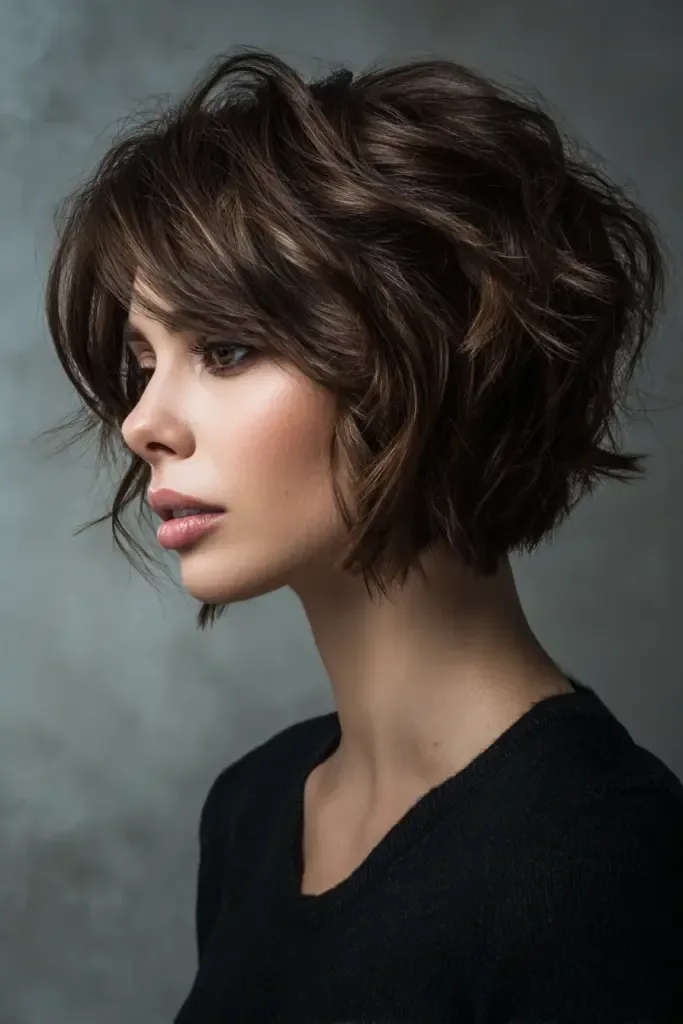
A textured Italian bob is the lived-in, tousled cousin of the classic — the one that looks like you just came back from the Amalfi coast. The ends are point-cut and the interior is lightly textured, so the hair has piece-y separation and movement instead of a smooth, solid curtain. It is relaxed, modern and very forgiving.
Texture is what makes this bob work on second- and third-day hair, because the piece-y finish hides oil and flatness beautifully. A little texture spray or sea-salt spray scrunched into dry hair is all the styling it needs, and a quick shake with your fingers at lunchtime brings it back to life.
Best for: anyone who hates fussing with their hair and loves an undone finish. What to ask your stylist: for point-cut ends and light interior texture, not heavy thinning. Maintenance + cost/time: trims every 8 weeks; texture spray is your main product.
14. The Italian Bob with a Hidden Undercut
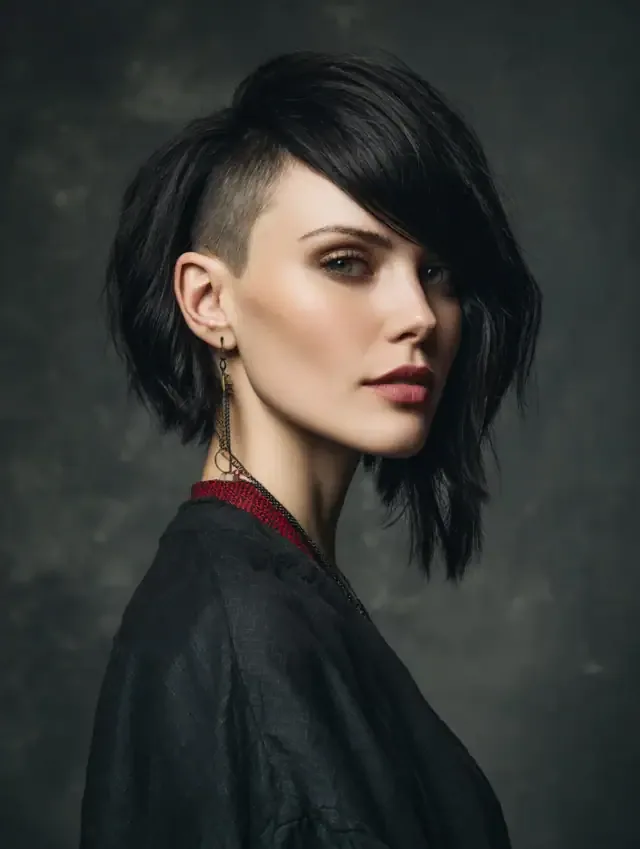
A hidden undercut is the Italian bob’s secret weapon for thick hair: a short section clipped underneath at the nape, completely invisible when the hair is down, that removes a surprising amount of bulk and weight. The bob looks exactly the same from the front and sides, but it sits flatter at the neck and swings more freely.
It also makes hot weather bearable, since the nape stays cooler, and it cuts blow-drying time noticeably. The undercut needs to be maintained every few weeks to stay short, but that is a five-minute job your stylist can do at the start of a trim appointment, and it grows out without any awkward stage.
Best for: thick hair, hot climates, and anyone whose bob puffs out at the nape. What to ask your stylist: for a hidden undercut just at the nape, not up the sides. Maintenance + cost/time: a quick clipper tidy every 3–4 weeks, usually included in a trim.
15. The Italian Bob for Round Faces

The right Italian bob is wonderful on a round face, because the length and the side part do the slimming work for you. Keep the bob a touch longer — just below the chin rather than above it — and wear it with a side part, which creates a diagonal line that lengthens the face instead of widening it.
Volume at the crown helps too, since height on top balances width at the cheeks, and long face-framing layers draw the eye downward. What to avoid is a bob that ends exactly at the widest part of the cheek with a centre part, which mirrors the roundness rather than softening it.
Best for: round faces that want length and definition. What to ask your stylist: for length below the chin, a side part and crown volume. Maintenance + cost/time: trims every 6–8 weeks; a round brush builds the crown lift.
16. The Italian Bob for Oval Faces

An oval face can wear almost any version of the Italian bob, which is both a blessing and a problem — the choice is yours, so pick the version you love rather than the one that flatters a face shape. The classic chin-length bob with a middle part is the most balanced choice, because it mirrors the face’s natural symmetry.
If you want to play, try curtain bangs, a blunt edge, or a deep side part — all of them sit beautifully on an oval face. The only thing to watch is length: a bob that is too long can drag an oval face down, so keep it at the chin or just below for the most lift.
Best for: oval faces — every version of this cut works. What to ask your stylist: to show you two or three lengths and let you choose. Maintenance + cost/time: trims every 6–8 weeks; styling time is minimal.
17. The Italian Bob for Square Faces

A square face has a strong, beautiful jawline, and the Italian bob’s job is to soften it rather than echo it. Soft, curved ends that bend under, face-framing layers that start at the cheekbone, and a side part all work together to round out the angles and give the portrait a gentler line.
What to avoid is a blunt, chin-length bob with a centre part, which can emphasise the jaw’s width. Instead, ask for length that sits just below the chin, layers that move, and ends with a soft bend. Waves and texture are your friends here — the more movement in the cut, the softer the jawline reads.
Best for: square faces and strong jawlines. What to ask your stylist: for soft, curved ends and layers that start at the cheekbone. Maintenance + cost/time: trims every 6–8 weeks; a round brush creates the soft bend.
18. The Italian Bob for Heart-Shaped Faces
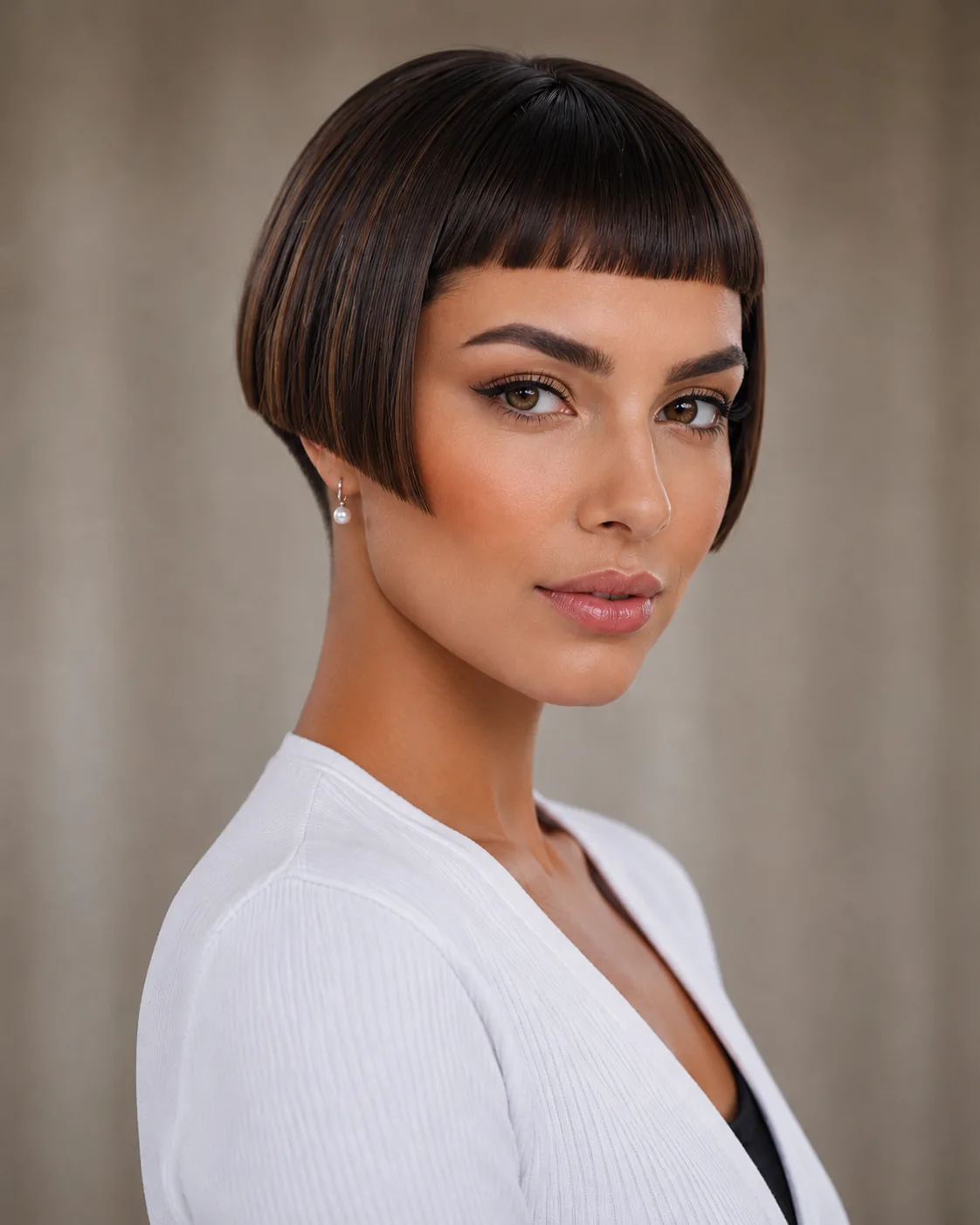
A heart-shaped face is wider at the forehead and narrower at the chin, so the Italian bob’s job is to add a little width where the face narrows. A bob that ends at or just below the chin with soft volume through the ends balances the face beautifully, and curtain bangs soften a wide forehead at the same time.
Volume at the bottom of the cut is the key detail — a slight outward flick or a soft curl at the ends fills in the space beside the chin and makes the whole face look balanced. Keep the crown fairly flat, since height on top would emphasise the forehead, and let the ends do the work.
Best for: heart-shaped faces and wide foreheads. What to ask your stylist: for volume through the ends and soft curtain bangs. Maintenance + cost/time: trims every 6–8 weeks; a flat iron flicks the ends out in seconds.
19. The Italian Bob for Long Faces

A long face needs width, not length, and the Italian bob delivers it. The chin-length cut adds fullness at the sides, which balances the face’s vertical line, and bangs — curtain bangs or a soft wispy fringe — shorten the forehead and make the whole face look more proportional.
Volume at the sides is your best friend here, so ask your stylist to keep the bob full rather than flat, and to avoid length that falls past the jaw. A textured, slightly tousled finish works better than a sleek one, because the width it creates is exactly what a long face needs.
Best for: long and oblong faces that want balance and width. What to ask your stylist: for side volume and bangs that shorten the forehead. Maintenance + cost/time: trims every 6–8 weeks; texture spray builds the side fullness.
20. The Italian Bob for Women Over 40

The Italian bob is one of the best cuts a woman over 40 can choose, because it lifts the face, shows off the jawline, and reads as confident rather than trying too hard. The length is sophisticated, the volume is flattering, and the cut works with the hair’s natural texture instead of fighting it.
At this age, softness is everything. Ask for ends that bend under, layers that move, and a colour with dimension — soft balayage or babylights — rather than a single flat shade. The combination of a chin-length bob and warm, dimensional colour takes years off without ever looking like you are trying to look younger.
Best for: women over 40 who want polish with personality. What to ask your stylist: for soft ends, movement, and dimensional colour. Maintenance + cost/time: trims every 6–8 weeks; a gloss refresh keeps the colour expensive-looking.
21. The Italian Bob for Women Over 50
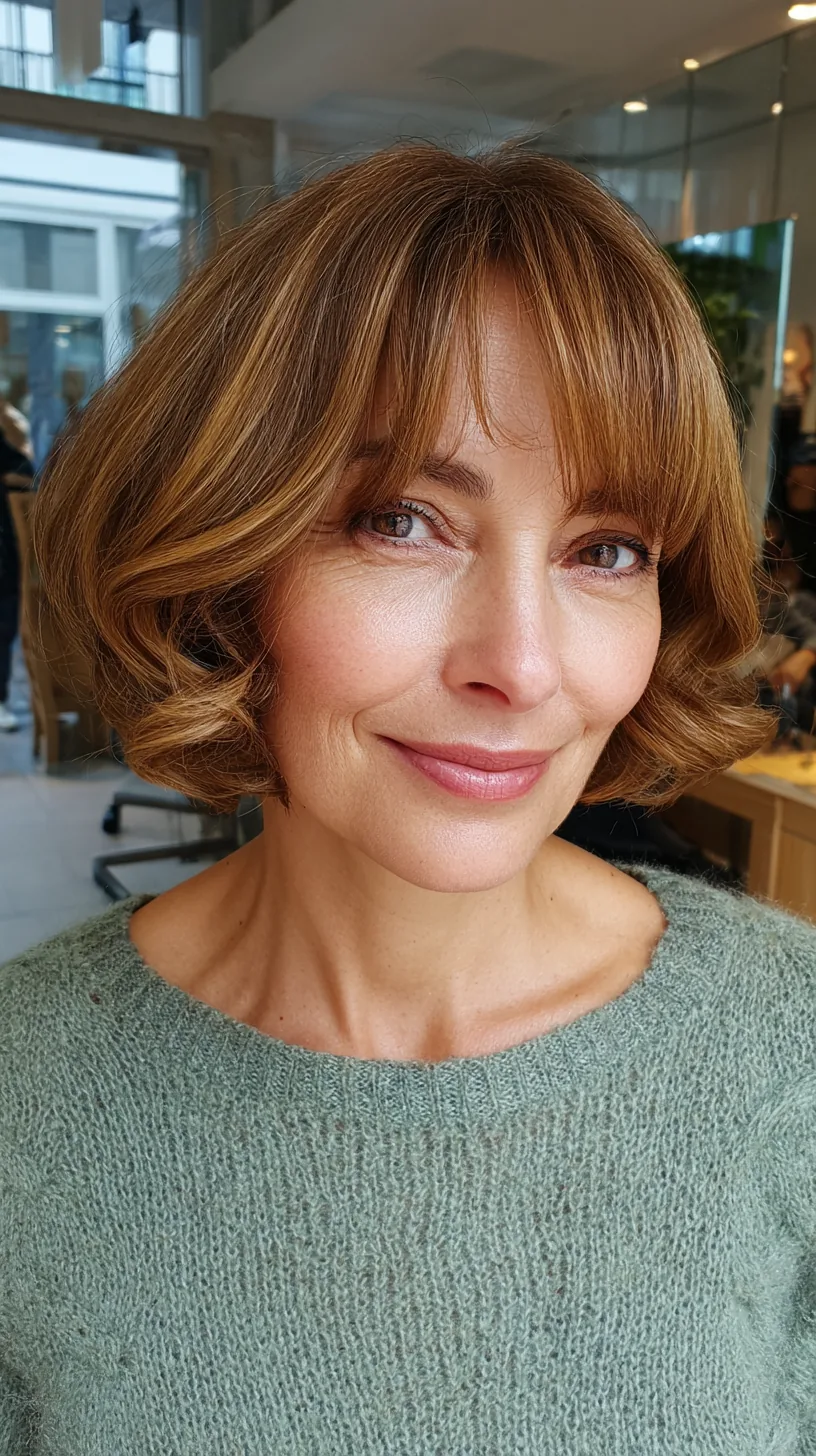
After 50, the Italian bob is less a haircut than a signature. It frames the face, lifts the cheekbones, and looks intentional in a way that longer hair sometimes stops doing as it thins. The chin-length cut also shows off earrings and necklines beautifully, which is a quiet style advantage most women discover only after the chop.
Keep the cut soft rather than severe: gentle layers, ends that curve under, and a part that suits your face. Colour matters more now, too — a soft, blended shade with dimension flatters the skin far better than a flat, dark colour, and grey blending can be woven in rather than fought.
Best for: women over 50 who want a confident, low-fuss signature cut. What to ask your stylist: for soft layers and a blended colour that flatters your skin tone. Maintenance + cost/time: trims every 6 weeks; colour refresh every 8–12 weeks.
22. The Italian Bob for Women Over 60
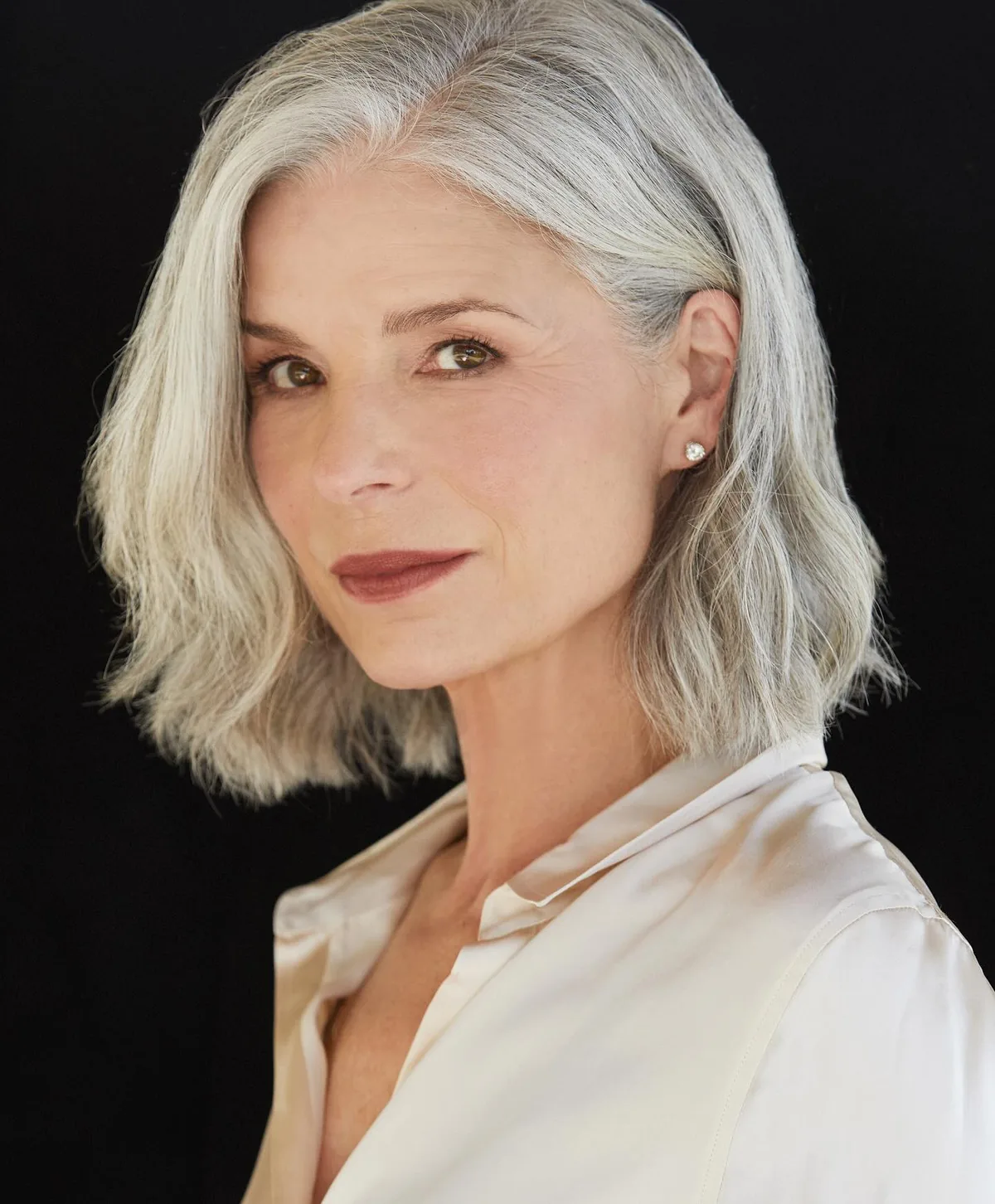
At 60 and beyond, the Italian bob is pure elegance. The short length is easy to manage, the shape lifts the face, and silver or white hair looks extraordinary in a bob — the cut shows off the colour’s natural shine and dimension in a way long hair never does. It is the haircut of women who know exactly who they are.
The details that matter are softness and shine. Ask for layers that move, ends that bend gently under, and a purple-toned shampoo once a week to keep silver bright rather than yellow. A bob at this age should never look severe, so keep the edges soft and the volume natural.
Best for: women over 60, especially with silver or white hair. What to ask your stylist: for soft edges and a cut that shows off your natural colour. Maintenance + cost/time: trims every 6 weeks; purple shampoo once a week keeps silver bright.
23. The Italian Bob with Balayage
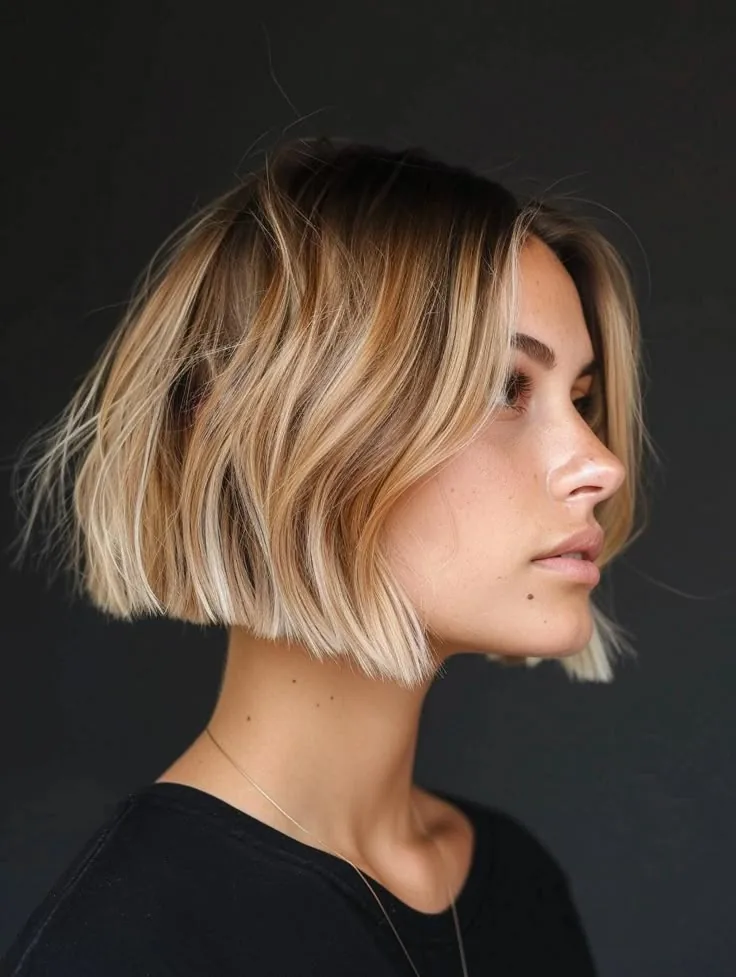
Balayage and the Italian bob are a perfect pairing, because the cut’s movement shows off the colour’s dimension from every angle. The highlights are painted on by hand, lighter toward the ends and softer at the roots, so the colour grows out gracefully and the bob never has a harsh regrowth line.
Keep the balayage soft and sun-kissed rather than stripy — the Italian bob’s mood is effortless, and chunky highlights fight it. A few face-framing pieces a shade lighter than the rest brighten the whole portrait, and a toner refresh at every second trim keeps the colour from going brassy.
Best for: brunettes who want dimension without high-maintenance roots. What to ask your stylist: for hand-painted balayage with soft, face-framing brightness. Maintenance + cost/time: balayage every 3–4 months; toner refresh every 8–12 weeks.
24. The Italian Bob with Babylights
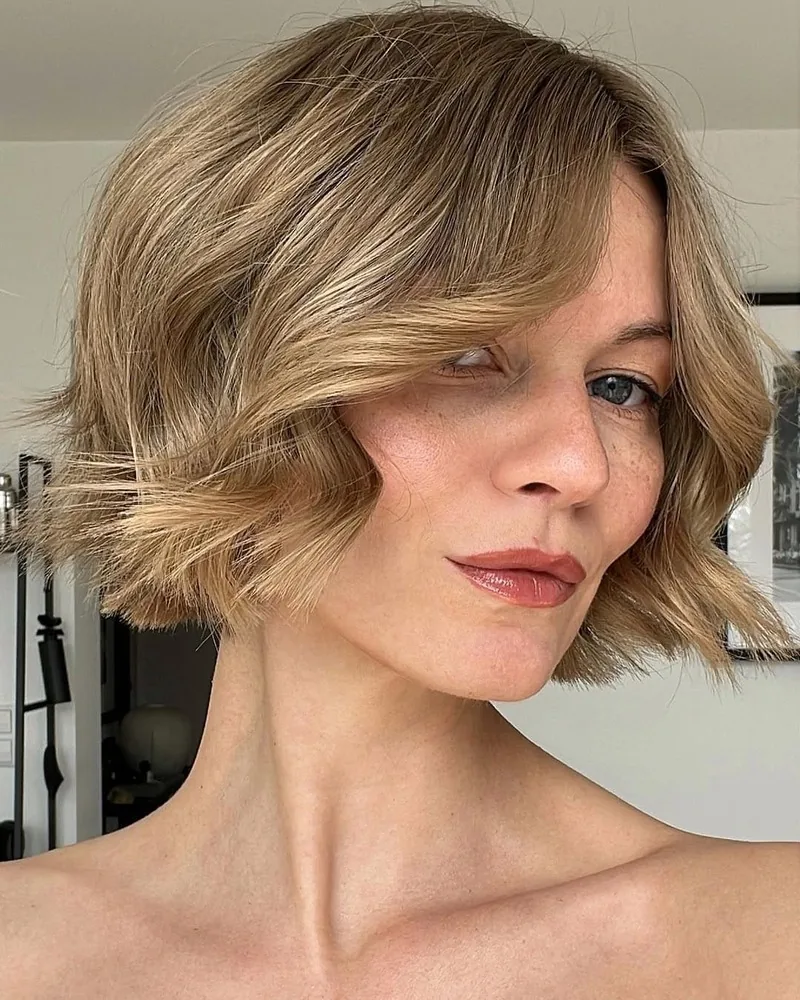
Babylights are the finest, softest highlights in hairdressing — tiny, delicate strands woven through the hair so the whole bob looks sunlit rather than coloured. On an Italian bob they are especially beautiful, because the short length puts every strand on display and the light catches the movement as the hair swings.
This is the colour to choose if you want your bob to look naturally lighter, as if you spent the summer in Italy rather than an afternoon in a salon. It grows out invisibly, needs almost no maintenance, and works on blonde, brunette and even greying hair.
Best for: anyone who wants a natural, sun-kissed lift. What to ask your stylist: for fine babylights concentrated around the face and ends. Maintenance + cost/time: babylights every 3–4 months; almost no root maintenance.
25. The Brunette Italian Bob

A brunette Italian bob is the most classic version of the cut — dark, glossy, and quietly luxurious. The deep colour shows off the bob’s shape and shine better than any other shade, and the contrast between the dark hair and the skin makes the jawline and cheekbones stand out in photographs.
The secret to a brunette bob is shine. A gloss treatment every few weeks keeps the colour rich and reflective, and a drop of serum on the ends stops the dark hair from looking dull. Add a few soft, caramel-toned pieces around the face if you want dimension, or keep it one deep shade for the full Milanese effect.
Best for: dark hair and lovers of a rich, glossy finish. What to ask your stylist: for a gloss treatment to keep the colour deep and shiny. Maintenance + cost/time: gloss every 6–8 weeks; colour-safe shampoo protects the depth.
26. The Blonde Italian Bob
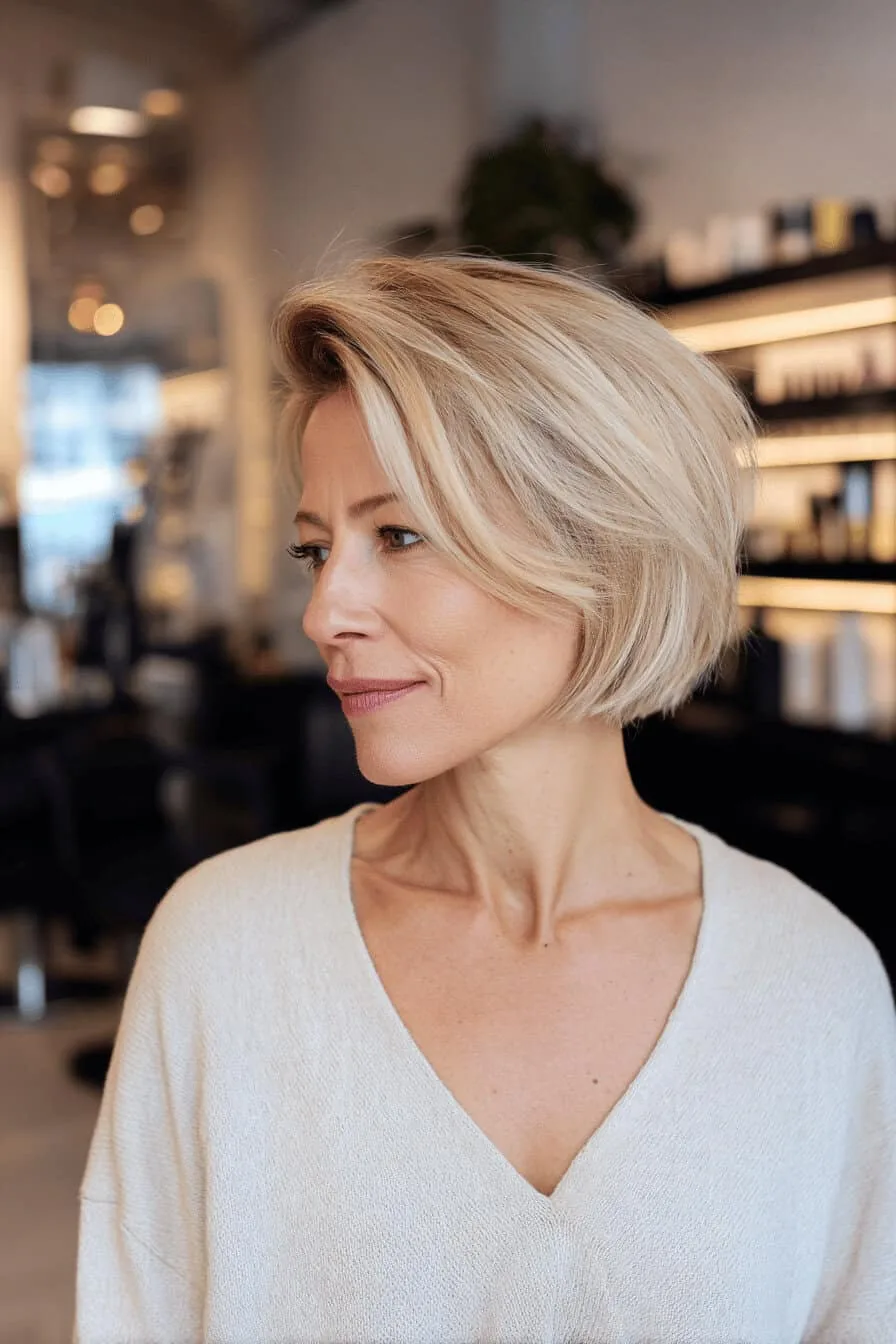
A blonde Italian bob is bright, chic and unmistakably European — the cut you see on the women having espresso on a Milan side street. The short length keeps blonde hair looking healthy rather than damaged, because the oldest, driest ends are cut away every few weeks, and the colour looks fresher on a bob than on long hair.
Tone is everything with blonde. A warm, honey blonde flatters most skin tones and grows out softly, while a cooler, ashier blonde needs a purple shampoo once a week to stay bright. Ask your stylist to keep the roots slightly deeper than the ends, which makes the regrowth look intentional and stretches the time between appointments.
Best for: blondes who want healthy-looking, high-shine short hair. What to ask your stylist: for a slightly deeper root and a tone that suits your skin. Maintenance + cost/time: colour every 8–10 weeks; purple shampoo weekly for cool blondes.
27. The Copper Italian Bob
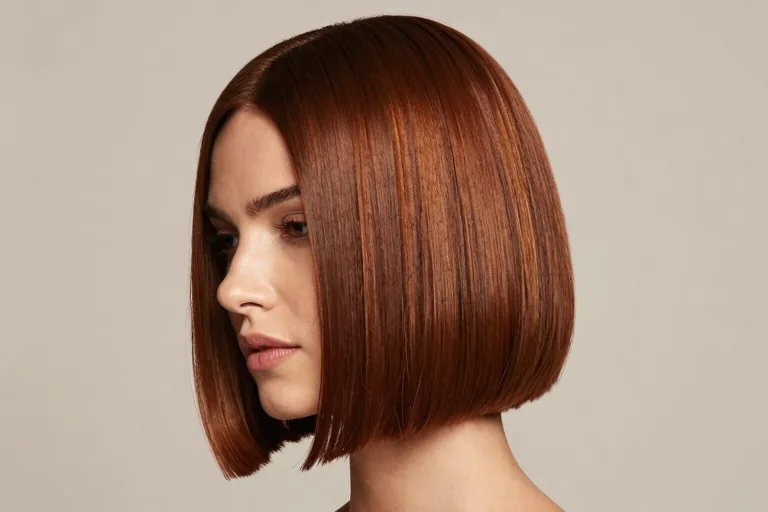
Copper is the most striking colour you can put on an Italian bob, and the cut’s short length makes it look even richer — the colour is concentrated, the shine is intense, and the whole look has a warmth that turns heads. A copper bob reads as confident and creative, and it flatters warm skin tones beautifully.
Copper fades faster than other colours, so it needs a little more care: a colour-safe shampoo, cool water, and a colour-depositing mask every couple of weeks to keep the tone vibrant. A gloss refresh at the salon every six weeks or so will keep it looking freshly coloured rather than washed out.
Best for: warm skin tones and anyone who wants a bold, head-turning colour. What to ask your stylist: for a copper tone matched to your skin and a colour mask for home. Maintenance + cost/time: colour refresh every 6–8 weeks; colour-safe products are essential.
28. The Italian Bob with Grey Blending
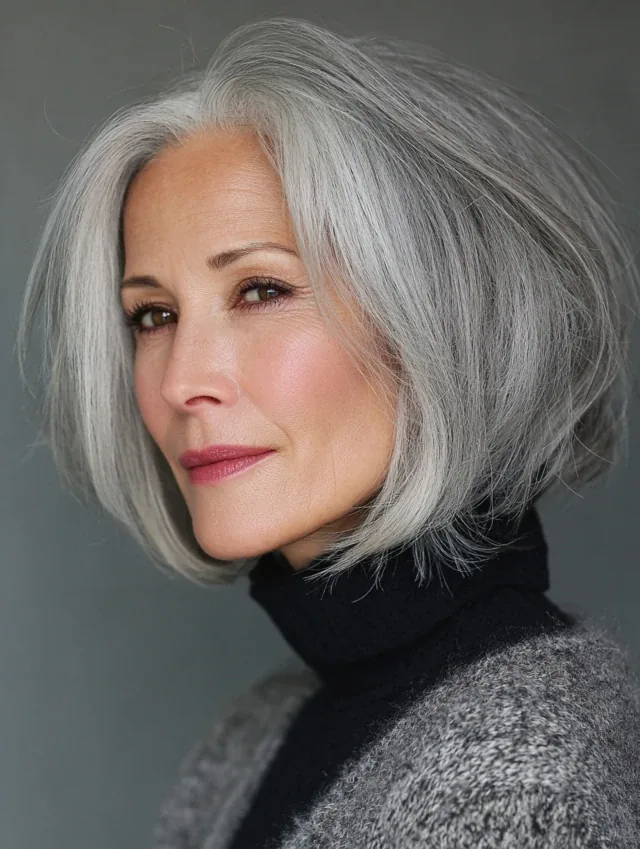
Grey blending is the smartest way to grow out grey hair, and the Italian bob is the perfect cut for it. Instead of covering the grey, your stylist weaves fine highlights and lowlights through the hair so the grey looks like an intentional part of the colour — and the short length means the transition happens in months, not years.
The result is a bob with beautiful, natural dimension: silver, ash and your own colour all woven together, with no harsh root line and no monthly dye appointment. It is the low-maintenance, high-style answer to going grey, and it looks more expensive every month as the grey grows in.
Best for: women embracing their grey who still want a polished look. What to ask your stylist: for fine highlights and lowlights that weave the grey in. Maintenance + cost/time: blending every 10–12 weeks; no monthly root colour needed.
29. The Italian Bob with a Middle Part

A middle part is the most symmetrical, editorial way to wear an Italian bob. The hair falls evenly on both sides, the face is framed identically, and the whole portrait has a clean, balanced quality that looks like it belongs in a magazine. It is the version for women who love minimalism and precision.
The middle part works best on oval and heart-shaped faces, and on hair that is naturally straight or easily smoothed. Keep the part razor-clean with a tail comb, and make sure the length is even on both sides — a middle part shows asymmetry faster than any other part, so it is worth checking in the mirror from both sides.
Best for: oval and heart-shaped faces and lovers of symmetry. What to ask your stylist: for an even length on both sides and a clean, centred part. Maintenance + cost/time: no extra cost; a tail comb keeps the part precise.
30. The Italian Bob with Wispy Bangs

Wispy bangs are the softest fringe you can pair with an Italian bob — fine, feathered pieces that skim the forehead rather than covering it. They add youthfulness and softness without the commitment of a full fringe, and they blend into the bob’s layers so the whole cut looks like one flowing shape.
They are also the easiest bangs to grow out, since they simply become face-framing layers, and the easiest to style, since a quick blow-dry with a round brush is all they need. If you have always wanted bangs but feared the maintenance, wispy bangs on a bob are the gentlest way in.
Best for: first-time fringe wearers and anyone who wants softness at the forehead. What to ask your stylist: for feathered, wispy bangs that blend into the layers. Maintenance + cost/time: a fringe trim every 3–4 weeks; two minutes of blow-drying a day.
31. The Italian Bob with Micro Bangs
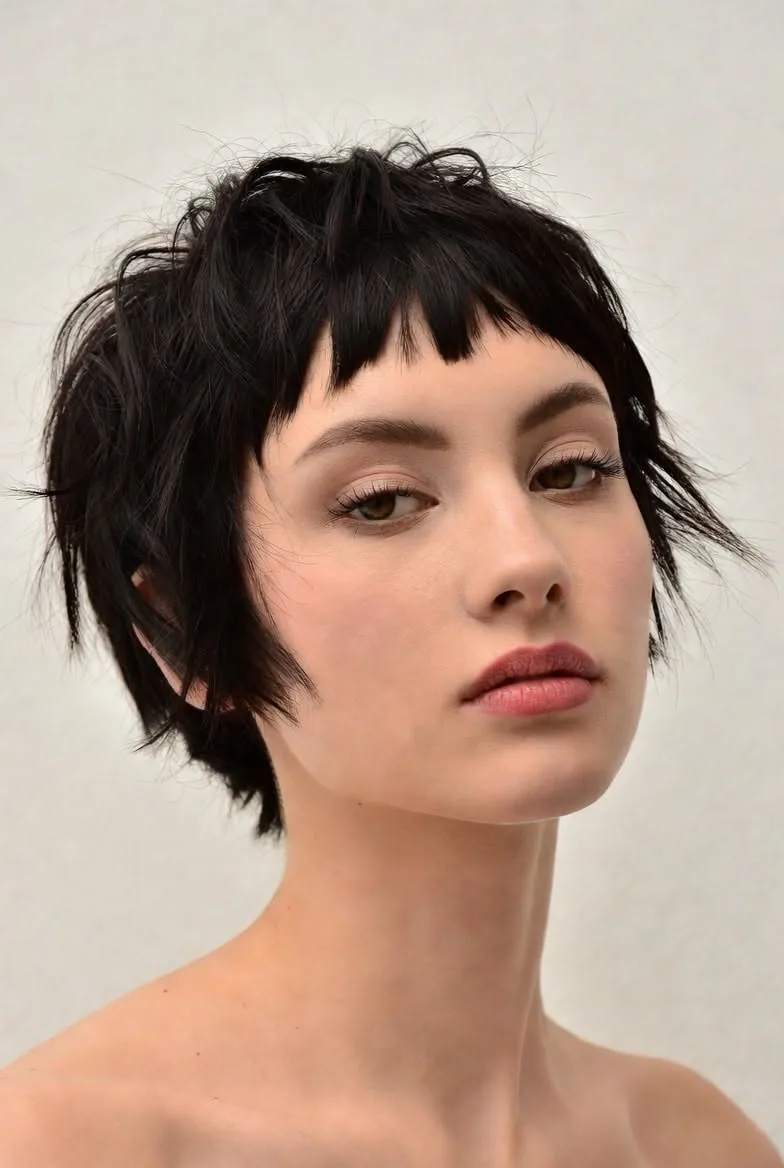
Micro bangs are the boldest fringe in this guide — short, straight, and sitting well above the eyebrows. Paired with an Italian bob they create a striking, fashion-forward look that is pure Milan runway: graphic, confident, and impossible to ignore. It is the version for women who love a strong style statement.
This fringe needs confidence and commitment, because it is the most visible part of the cut and it needs trimming every two to three weeks to stay short. It suits oval and heart-shaped faces best, and it pairs beautifully with a sleek, polished bob rather than a tousled one.
Best for: confident dressers and lovers of a graphic, editorial look. What to ask your stylist: for micro bangs cut above the brow, with a straight, clean edge. Maintenance + cost/time: fringe trims every 2–3 weeks; a flat iron keeps the line crisp.
32. The Italian Bob with an Asymmetric Edge
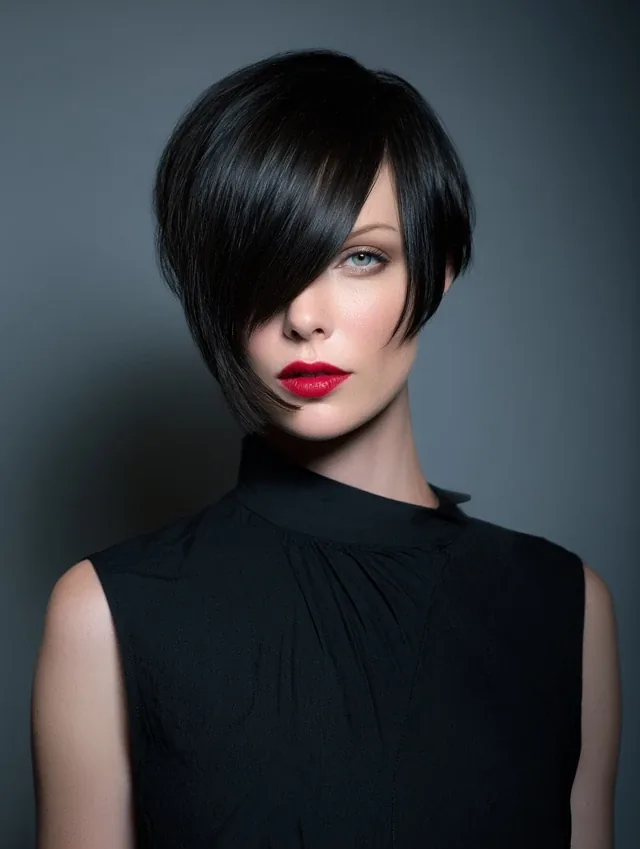
An asymmetric Italian bob keeps one side a touch longer than the other, which gives the classic cut a modern, architectural edge. The difference is subtle — usually just an inch or two — but it changes the whole silhouette, creating a diagonal line that draws the eye and makes the portrait feel dynamic rather than still.
This version is wonderful if you like to wear your hair tucked behind one ear, because the longer side becomes a feature rather than an accident. It also suits women who find a perfectly even bob a little boring, and it grows out gracefully, since the asymmetry simply softens over time.
Best for: anyone who wants a modern twist on the classic bob. What to ask your stylist: for one side an inch longer, with the difference kept subtle. Maintenance + cost/time: trims every 6–8 weeks to keep the asymmetry deliberate.
33. The Italian Bob with Soft Curls

Soft curls turn the Italian bob into the most romantic version of itself. The curls are loose and brushed out rather than tight and defined, so the bob has bounce and movement without looking done-up — it is the haircut equivalent of a silk dress, soft and fluid and quietly glamorous.
The easiest way to get them is a large-barrel curling iron or a round brush blow-dry, curling the hair away from the face in big sections and then brushing through the curls with your fingers. A light-hold spray keeps the shape without stiffness, and the curls relax into soft waves by the evening, which is half the charm.
Best for: date nights, weddings and anyone who loves romantic movement. What to ask your stylist: for layers that support a curl without making it poufy. Maintenance + cost/time: ten minutes with a curling iron; a light-hold spray is all you need.
34. The Italian Bob with a Sleek Blowout
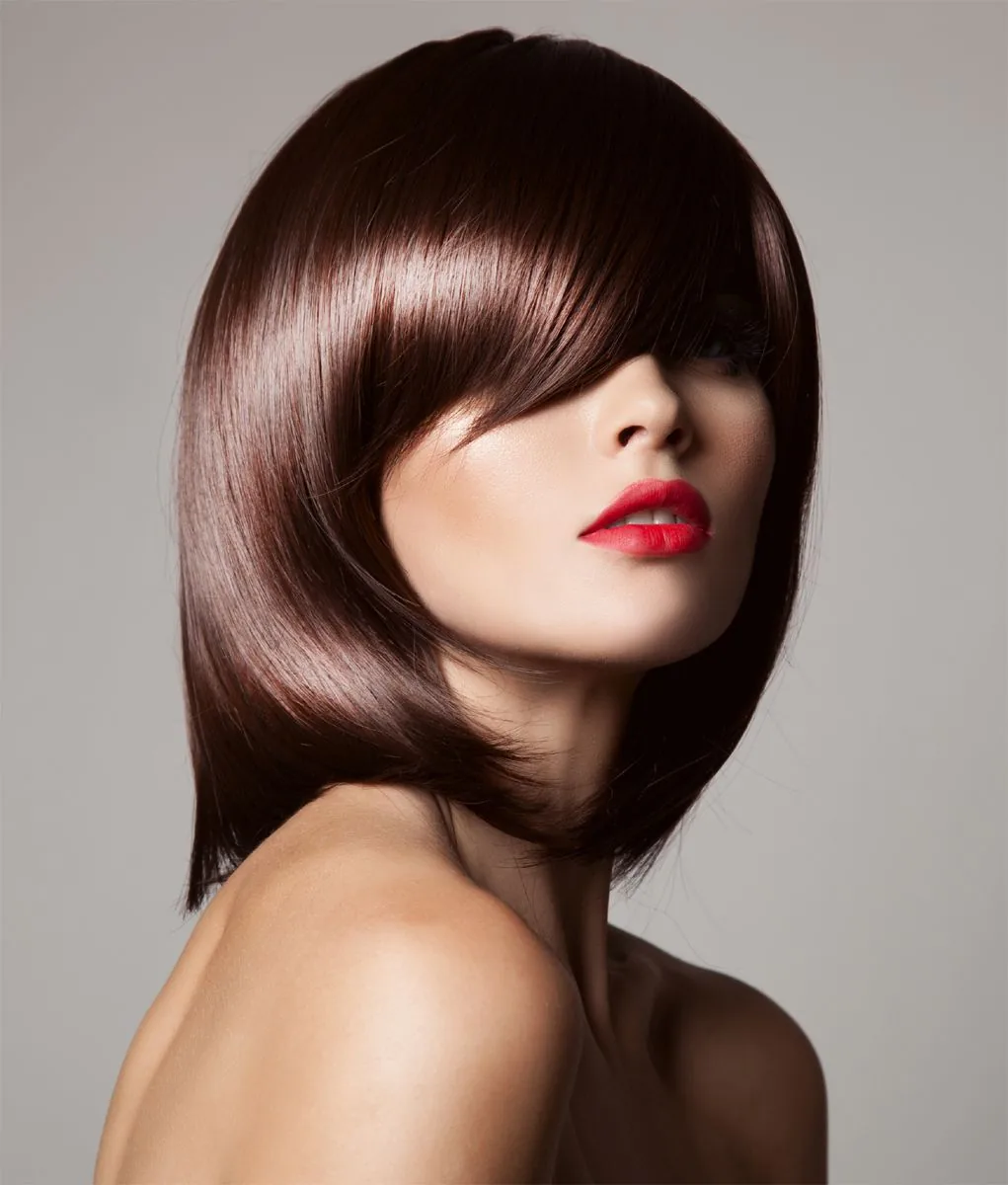
A sleek blowout is the Italian bob at its most polished — smooth, glossy and swinging, with not a flyaway in sight. It is the salon-fresh look, the one that makes people ask who does your hair, and it is surprisingly easy to recreate at home with a round brush and a good dryer.
The technique is simple: dry the hair in sections with the round brush, pulling each section smooth and bending the ends under, then finish with a cool blast of air and a drop of serum. The result lasts for days on most hair types, and a quick brush-through each morning brings it back to life.
Best for: work, events and anyone who loves a glossy, polished finish. What to ask your stylist: for a blow-dry lesson at your appointment — most stylists are happy to show you. Maintenance + cost/time: ten minutes of blow-drying; a round brush and serum are the only tools.
35. The Italian Bob with Lived-In Texture
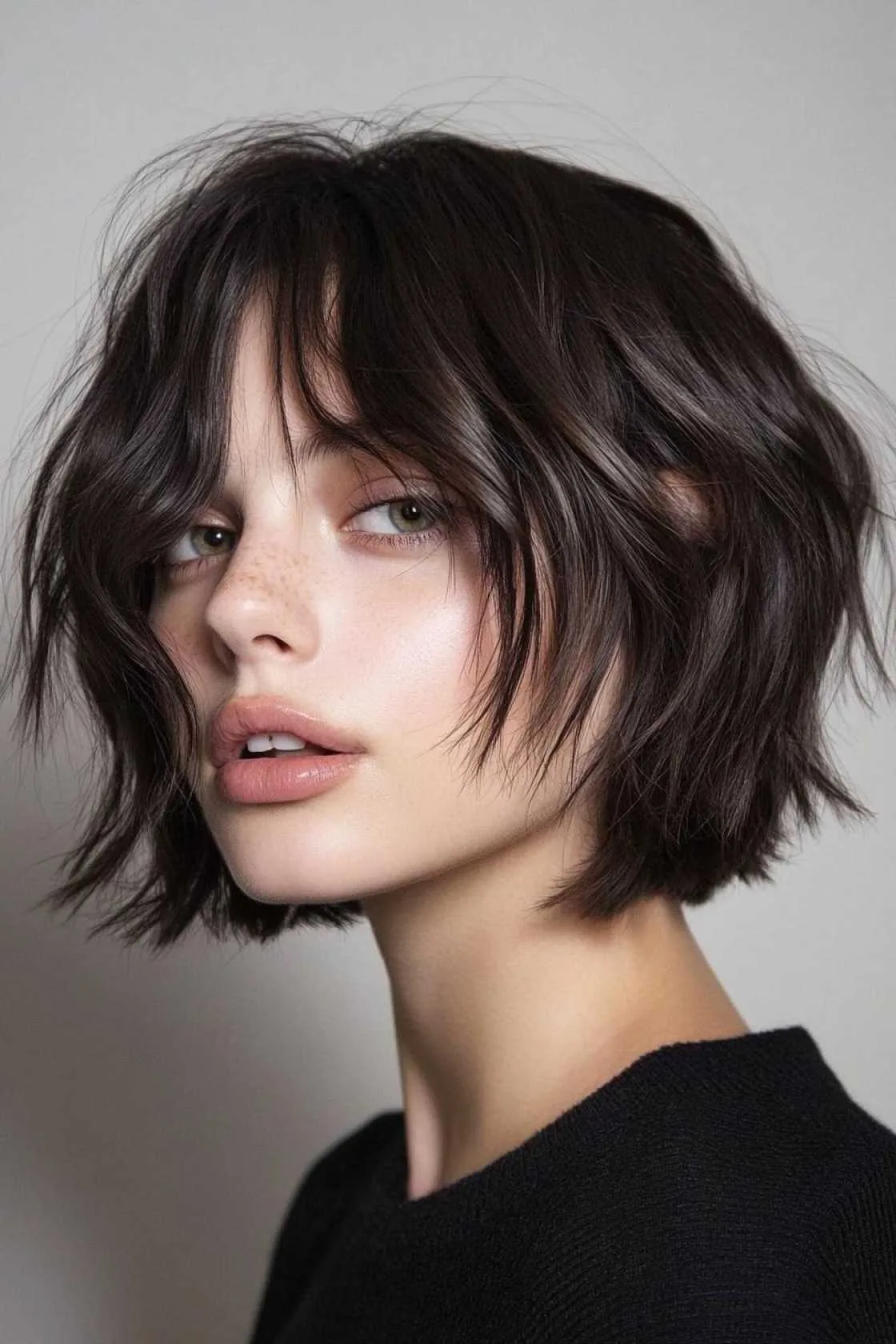
Lived-in texture is the whole philosophy of the Italian bob in one cut: hair that looks like it has been lived in, not styled. The ends are soft, the layers are invisible, and the finish is slightly undone — the opposite of a helmet bob. It is the version that looks best on day two, which tells you everything about its charm.
Styling is almost optional. A little texture spray scrunched into damp hair, a quick shake with your fingers, and you are done. If the ends need a nudge, bend a few random pieces with a flat iron rather than curling everything, which keeps the finish irregular and natural.
Best for: low-maintenance mornings and lovers of an undone finish. What to ask your stylist: for soft, point-cut ends and invisible layers. Maintenance + cost/time: trims every 8 weeks; texture spray is your only product.
36. The Italian Bob with Volume at the Crown
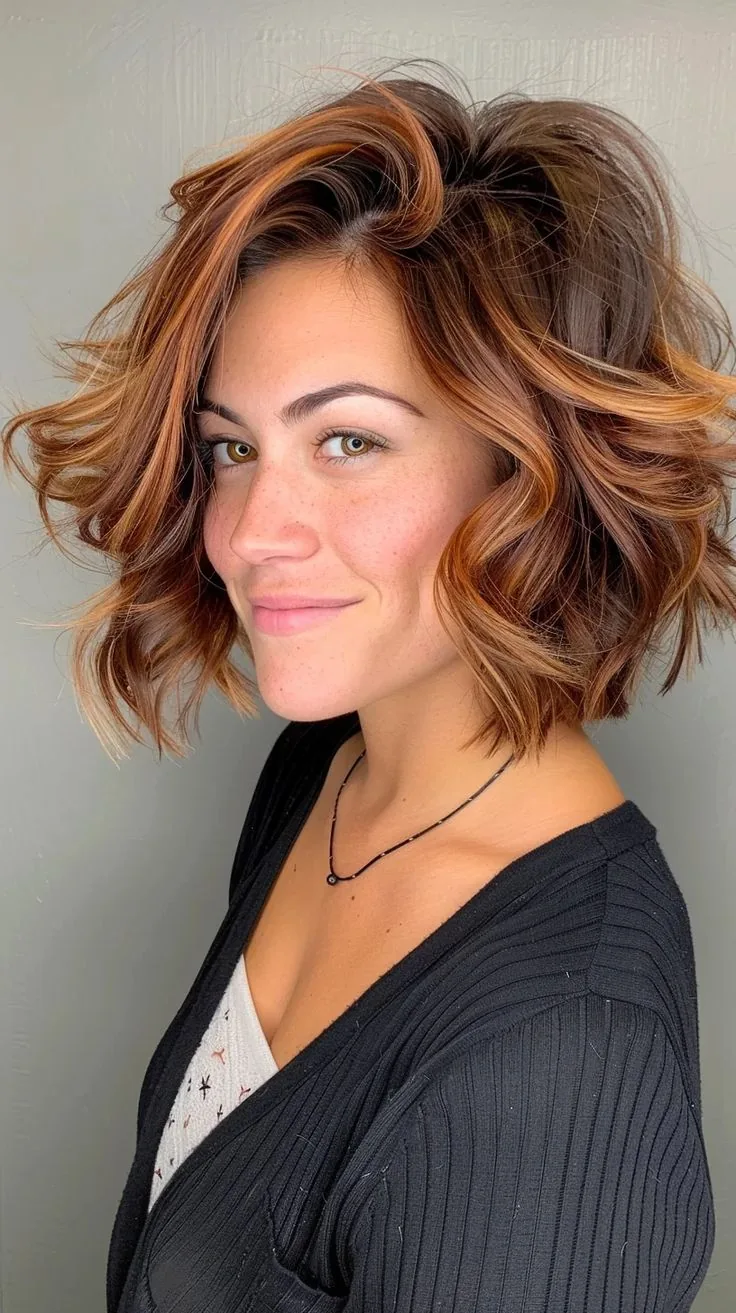
Volume at the crown is what gives the Italian bob its signature lift — the soft, airy fullness on top that makes the whole cut look expensive. It comes from the cut itself, with short layers at the crown that push the hair up, and from the blow-dry, where the roots are lifted with fingers or a round brush.
This version is especially flattering if your hair is fine or flat at the roots, because the crown volume creates height that balances the face and makes the bob look full rather than limp. A little volumising mousse at the roots before drying, and a light backcomb at the crown on special occasions, is all it takes.
Best for: fine and flat hair that needs lift at the roots. What to ask your stylist: for short crown layers that build volume without bulk. Maintenance + cost/time: five minutes of root-lifting while blow-drying; mousse and dry shampoo help.
37. The Italian Bob with Tucked-Behind-the-Ears Styling
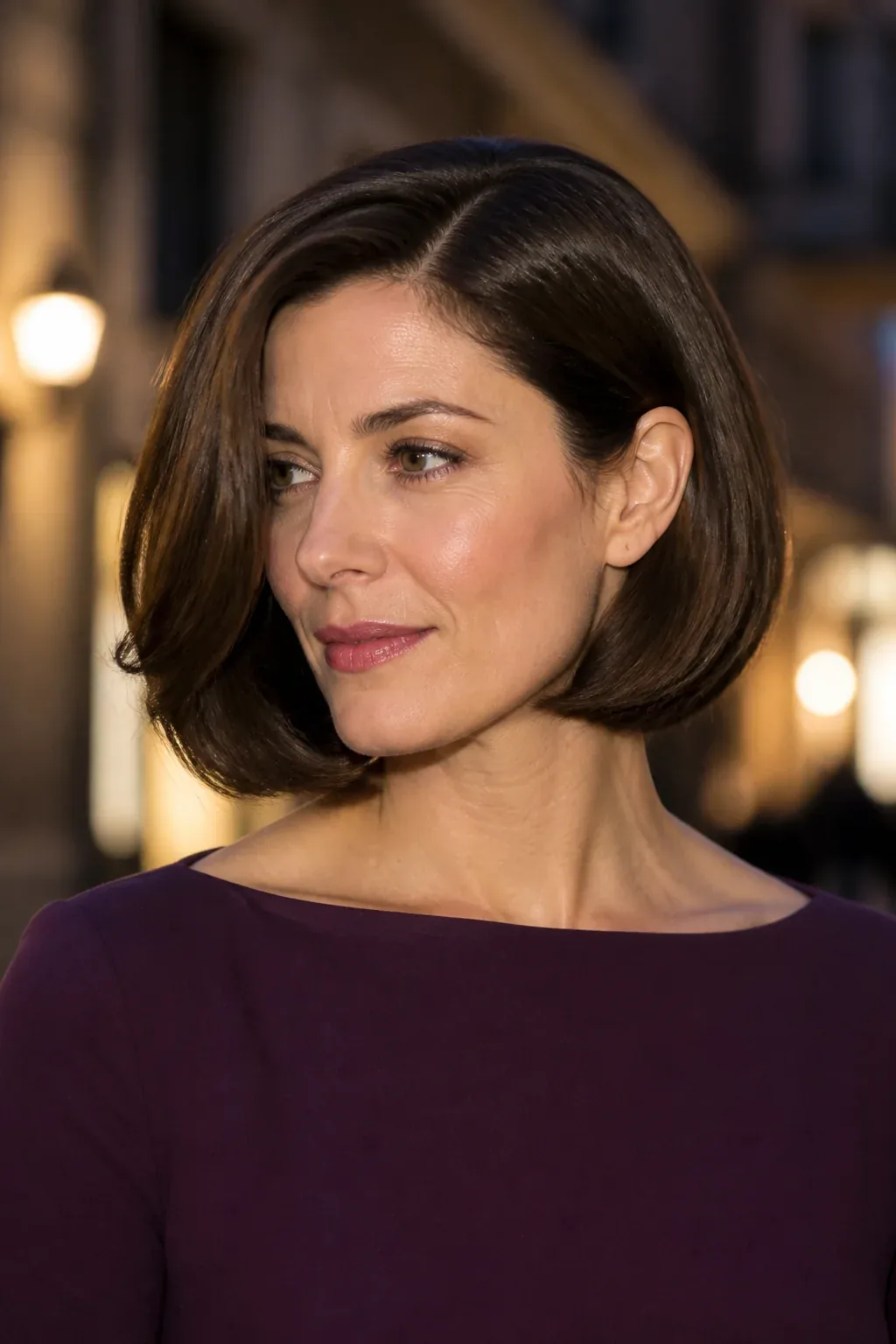
Tucking an Italian bob behind the ears is the simplest styling trick in this guide, and one of the chicest. It opens up the face, shows off earrings and cheekbones, and turns a soft bob into a clean, sculpted look in two seconds. It is the styling equivalent of rolling up your sleeves — effortless and confident.
It works best on a bob that is chin-length or just below, because there is enough hair to tuck securely without it springing out. A tiny bit of texture spray or a discreet pin behind the ear keeps it in place, and the front pieces can be left loose to frame the face if you want softness with the structure.
Best for: showing off earrings, cheekbones and a strong jawline. What to ask your stylist: for a length that tucks securely without springing out. Maintenance + cost/time: no cost at all — just your fingers and ten seconds.
38. The Italian Bob, Your Way

The last Italian bob in this guide is not a style at all — it is yours. The length you love, the part you always wear, the volume you like, the colour that feels like you, polished one careful step. Every other cut in this guide is an idea; this one is the answer, because the best Italian bob is the one that looks like you on your best day.
Take the version you loved most from this guide to your stylist, then make it yours: a little shorter here, a little more texture there, the part on your better side. Wear it for a week before you judge it, because a bob settles into itself over the first few days, and the version you love on day five is the one you will keep.
Best for: everyone — this is the bob that is unmistakably yours. What to ask your stylist: to make you look like you, only better, and to stop before the cut stops looking like you. Maintenance + cost/time: whatever you choose — the best bob is the one you will actually maintain.
Salon Upkeep: How Often to Trim
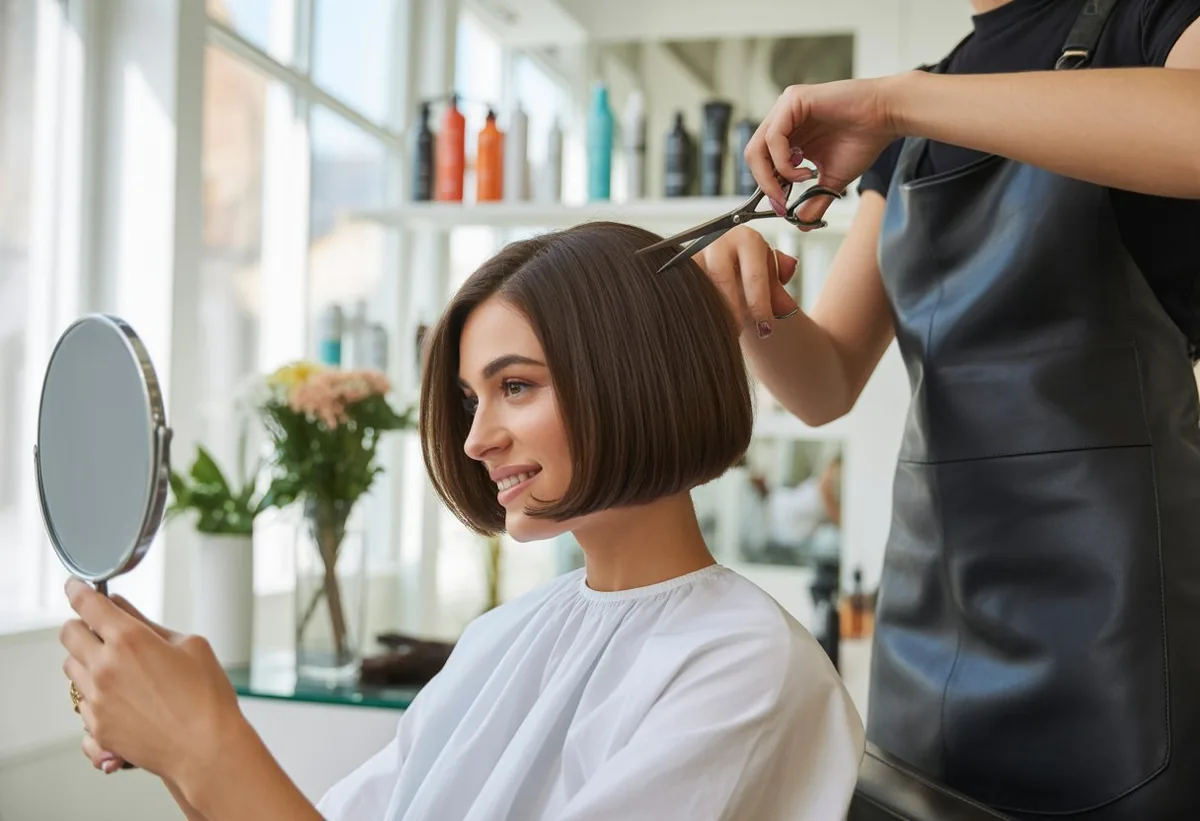
The Italian bob is low-maintenance to style but not low-maintenance to keep, because its shape lives in the length. Most women need a trim every six to eight weeks to keep the ends swinging at the chin and the neckline clean. Wait longer and the bob starts to look like a lob that lost its way; trim sooner and you never let it settle into its best, slightly grown-in shape.
Book the trim before you leave the salon, while the cut is fresh in your stylist’s mind and your diary is open. A bob trim is usually a shorter appointment than a full cut, and many salons price it lower, so it is worth asking. Between trims, a gloss or a toner refresh at the same visit keeps coloured bobs looking expensive for the full eight weeks.
Maintenance + cost/time: a trim every 6–8 weeks, usually 20–30 minutes. What to ask your stylist: whether a maintenance trim is priced below a full restyle.
At-Home Upkeep Between Appointments

Between salon visits, the Italian bob mostly looks after itself — if you wash it right. Shampoo the roots and condition the ends, never the other way round, and rinse with cooler water for shine. Wash every two to three days rather than daily if you can; the cut’s soft volume actually improves on day two, when your natural oils give the roots a little grip.
On non-wash days, dry shampoo at the roots and a quick re-bend of the ends with a flat iron is a two-minute refresh. Sleep on a silk or satin pillowcase to stop the bob flattening on one side, and keep a small bottle of texture spray in your bag for a midday lift. The biggest mistake is over-styling it — the Italian bob is supposed to look a little undone, so stop one step before you think it is finished.
Best for: busy mornings and second-day hair. Maintenance + cost/time: about five minutes a day, plus dry shampoo and texture spray.
Colour and the Italian Bob: Keeping It Fresh
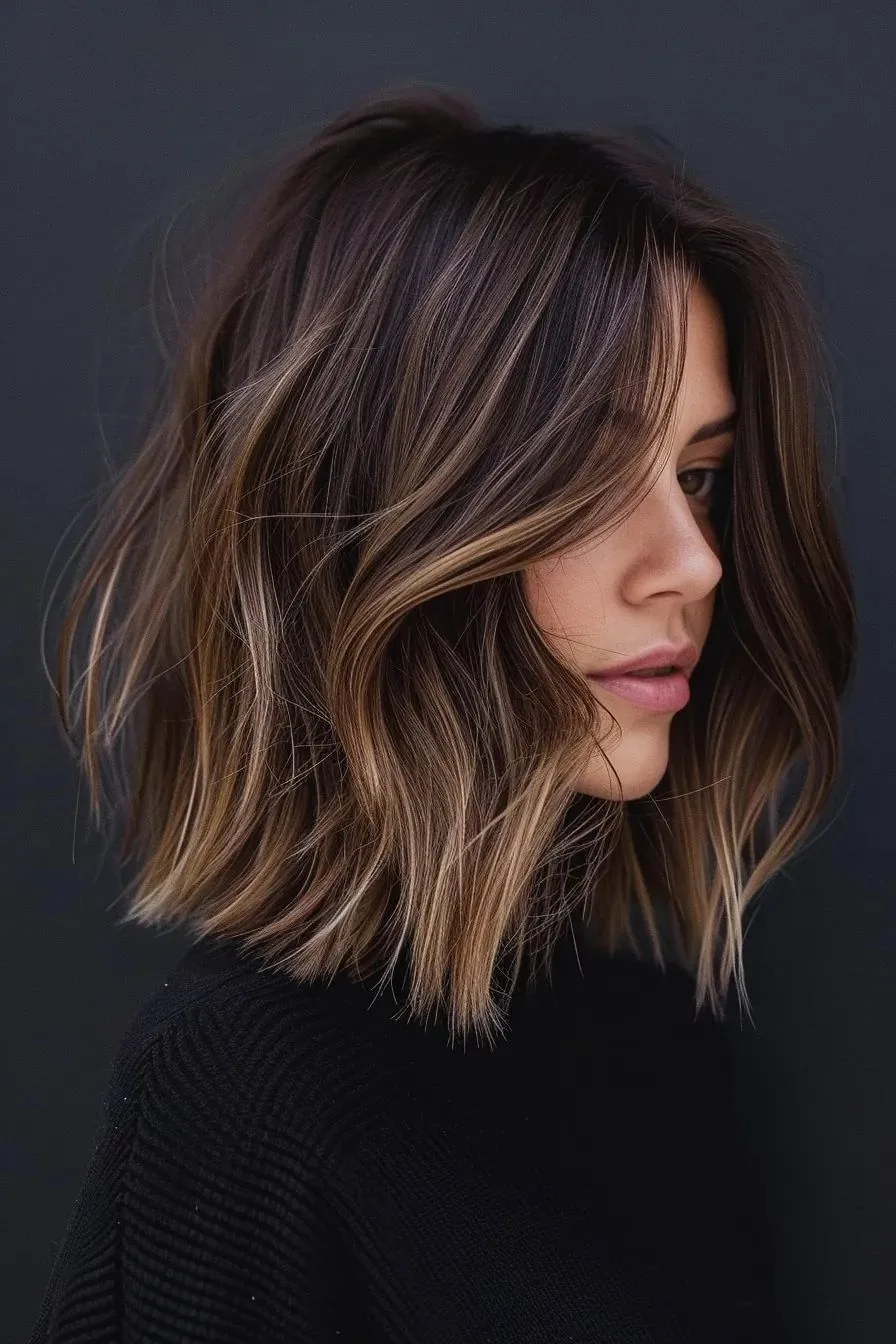
Colour and the Italian bob were made for each other, because the cut’s movement shows off dimension beautifully. Soft balayage, babylights and face-framing highlights all look more expensive on a bob than on long hair, since every strand is on display. The trick is to keep the colour soft and blended — harsh lines and heavy regrowth fight the cut’s effortless mood.
Plan the colour around the trim schedule, not against it. A toner refresh at every second trim keeps blonde and copper bobs from going dull, and a root smudge makes darker regrowth look intentional instead of neglected. Use a colour-safe shampoo and a weekly mask, and protect the ends from heat, because short hair shows damage faster than long hair does.
What to ask your stylist: for a low-maintenance colour placement that grows out softly. Maintenance + cost/time: a toner refresh every 8–12 weeks, usually added to a trim appointment.
From Bob to Lob: Transition Styles
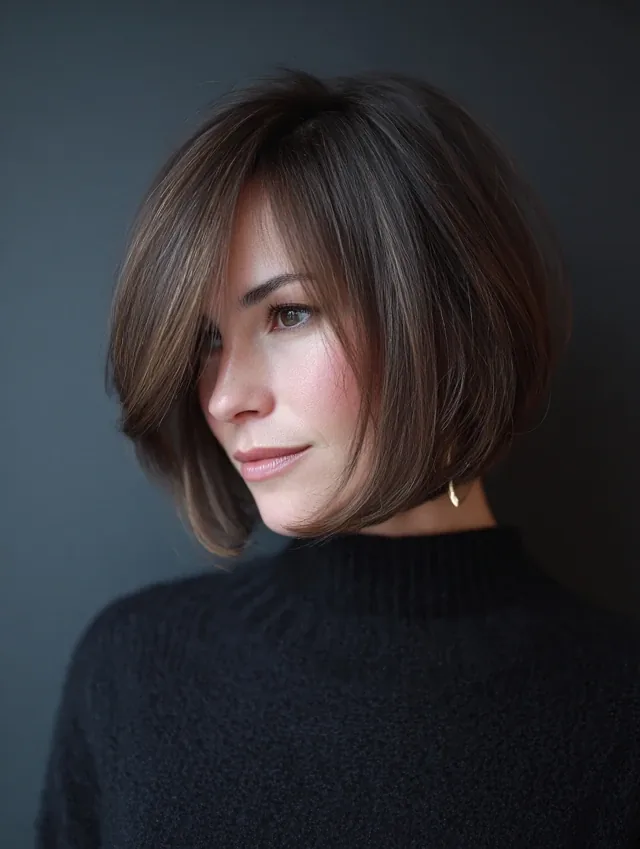
If you love your bob but want a change without growing your hair for a year, the lob is the natural next step — and the transition is the easiest grow-out in hairdressing. Let the bob grow for two to three months with shaping trims, then ask your stylist to even out the length at the collarbone and add soft layers. You keep the Italian bob’s volume and movement, just with more length to play with.
The in-between months are the most versatile your hair will ever be. The length is long enough to tuck behind the ears, pull into a low ponytail, or twist into a tiny knot, and short enough to keep its swing. Style it with the same round-brush technique as your bob, and enjoy the extra options — then decide whether to stay at lob length or grow it longer.
Best for: anyone who wants change without commitment. Maintenance + cost/time: two to three months of growing, then one shaping appointment.
What is an Italian bob haircut?
An Italian bob is a chin-to-neck-length haircut with soft volume at the crown, invisible layers and lived-in ends that bend gently under. Unlike a blunt bob it has no harsh lines, and unlike a French bob it is longer and fuller — the look is effortless, polished and very wearable.
What face shape suits an Italian bob?
Almost every face shape suits an Italian bob, because the cut is adjusted to the face. Round faces suit a slightly longer bob with a side part, square faces suit soft ends and face-framing layers, heart-shaped faces suit volume at the ends, and long faces suit bangs and side volume. Oval faces can wear every version.
How long is an Italian bob?
An Italian bob sits between the chin and the neck — usually at the chin or just below it, with the front a fraction longer than the back. It is longer than a French bob, which sits at the cheekbone, and shorter than a lob, which reaches the collarbone.
Is the Italian bob good for fine hair?
Yes — it is one of the best cuts for fine hair. The short length keeps the ends looking full instead of wispy, a blunt bottom edge makes the hair look thicker, and invisible layers at the crown build volume. Volumising mousse and dry shampoo help the style last all day.
How do I style an Italian bob at home?
Dry the roots first with your fingers, lifting as you go, then smooth the lengths with a medium round brush and bend the ends under. Finish with a cool blast of air and a drop of serum. The whole routine takes about five minutes, and on non-wash days a little dry shampoo and a quick re-bend of the ends is enough.
How often should I trim an Italian bob?
Every six to eight weeks for most women, to keep the ends swinging at the chin and the neckline clean. Fine and blunt-ended bobs need trims closer to every six weeks, while textured and curly bobs can stretch to eight or ten weeks between appointments.
Can I get an Italian bob with curly hair?
Yes — a curly Italian bob is one of the most beautiful versions. Ask your stylist to cut it dry or curl by curl, and to leave it longer than the finished length, since curls spring up as they dry. A curl cream and a diffuser are the only styling tools you need.
What is the difference between an Italian bob and a French bob?
The Italian bob is longer, fuller and softer, sitting at the chin or just below with volume through the crown and lived-in ends. The French bob is shorter, sitting at the cheekbone or jaw, often with a blunt edge and a fringe, and it has a sharper, more graphic silhouette.
Does an Italian bob work for women over 50?
Yes — it is one of the most flattering cuts after 50. The chin-length shape lifts the face and shows off the jawline, the volume flatters thinning hair, and the cut looks confident and intentional. Soft layers and dimensional colour keep it looking modern rather than severe.
How much does an Italian bob cost at a salon?
A cut and blow-dry typically costs the same as any other women’s cut at your salon, with trims every six to eight weeks. Colour such as balayage or babylights adds to the price, and a toner refresh every eight to twelve weeks keeps coloured bobs looking fresh. Ask your salon for a maintenance-trim price, which is often lower than a full restyle.
Conclusion
The Italian bob endures because it asks so little and gives so much: five minutes in the morning, a trim every six to eight weeks, and in return you get a haircut that looks polished without trying, expensive without fuss, and like you on your very best day. Whether you choose the classic, the curly, the copper or the grey-blended version, the principle is the same — soft volume, lived-in ends, and a cut built around your hair rather than against it.
Save the version you loved, book the consultation, and bring the photos. Tell your stylist how you really style your hair, let them adjust the length to your face and your texture, and give the cut a week to settle before you judge it. The Italian bob is not a haircut you wear for a season — it is the one you keep coming back to, because it simply works. Buona fortuna, and enjoy the swing.