The Cut That Refuses to Sit Still: Choppy Bob Haircuts for Women With Personality to Spare
Some haircuts behave. A choppy bob does not, and that is exactly the point. Where a blunt bob sits in one neat line and a layered bob falls in polite, predictable steps, the choppy bob is all movement: uneven ends, pieces that flick out where they please, texture you can see from across the room. It is the haircut equivalent of a woman who laughs too loudly at her own jokes and never apologises for it. If you have ever looked at your hair in the mirror and thought it looked a little too tidy, a little too safe, this is the cut that fixes that.
This guide is a proper tour of choppy bob haircuts for women — not a quick list, but 37 versions of the cut, from the soft and wearable to the deliberately wild. You will find choppy bobs with curtain bangs and micro fringes, choppy bobs for fine hair that needs volume and thick hair that needs taming, choppy bobs in copper and silver and dark brunette, and choppy bobs for round, oval, square and heart-shaped faces. Before the styles, there are eight short guides: what makes a bob choppy, how to pick your length, what to ask your stylist, and how to keep the texture looking intentional rather than accidental.
The best thing about this cut is how forgiving it is. A choppy bob does not demand a perfect blow-dry or a morning routine that eats half an hour. It looks better slightly undone, which means it looks better on the days you are running late. Read the guides, find the version that matches your hair and your life, and take a picture of it to your next appointment. Your hair is about to get a personality.
What Makes a Bob “Choppy” — and What Does Not
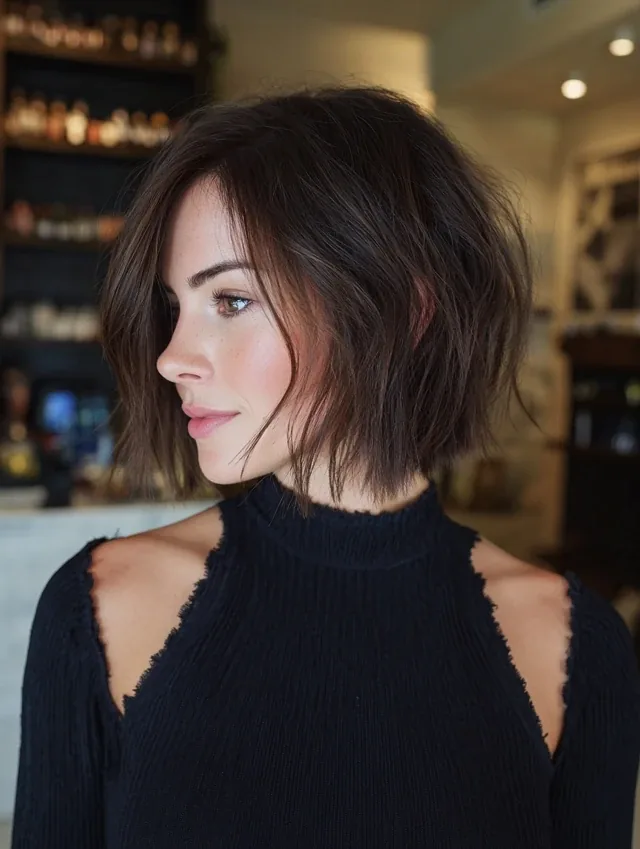
A bob becomes choppy when the ends are cut at different lengths on purpose, instead of in one clean line. The stylist uses point cutting — snipping into the ends vertically — or a razor to break up the edge, so the hair falls in pieces rather than a sheet. The result is visible texture: ends that flick, layers that separate, and movement every time you turn your head.
What does not count as choppy is a bob that is simply uneven by accident, or a layered bob where the layers are long and blended so smoothly you can barely see them. Choppy means you can see the texture. It should look deliberate, like the stylist meant every piece — even the piece that sticks out sideways.
The easiest way to tell the difference in a photograph is to look at the ends. If the outline of the cut looks like a straight ruler, it is blunt. If it looks like a zigzag, a feathered edge, or a coastline, it is choppy. Keep that image in mind when you are choosing a style below.
Choppy vs Blunt vs Layered: How to Tell Them Apart
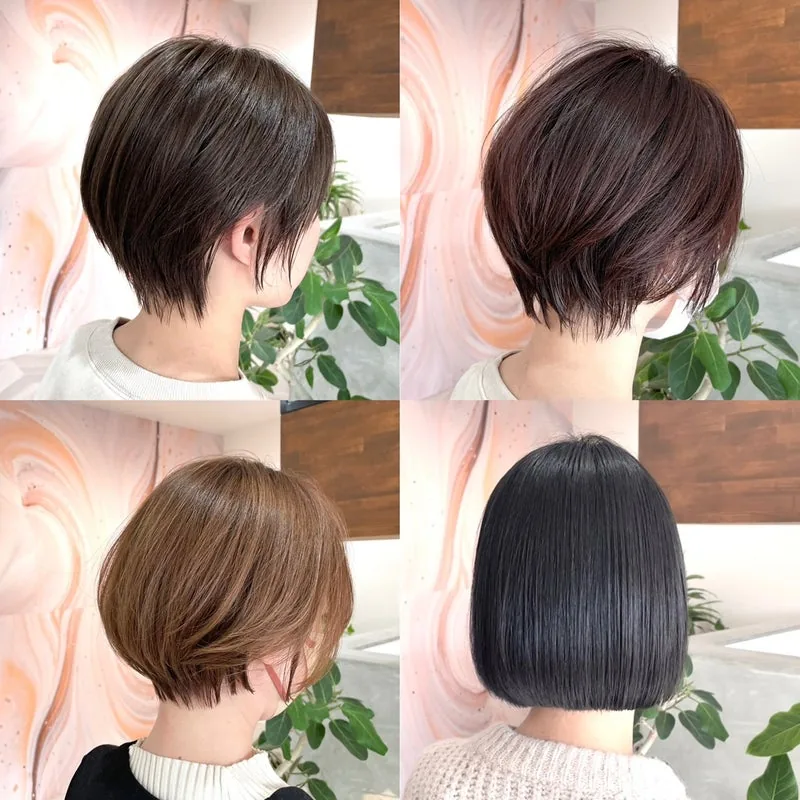
These three bobs get mixed up constantly, so here is the simple version. A blunt bob is cut to one length all round, with a sharp, even edge — sleek, polished, and very precise. A layered bob has layers cut through the interior to add shape and volume, but the ends are usually still fairly even. A choppy bob takes the layering further and breaks up the ends themselves, so the outline is deliberately irregular.
Which one suits you depends on what you want your hair to say. Blunt is the boardroom bob: sharp, confident, controlled. Layered is the reliable all-rounder: soft, flattering, easy. Choppy is the one with a sense of humour: textured, playful, a little bit rebellious. It is also the most forgiving of the three when your hair has a natural wave or a cowlick, because the uneven ends hide the quirks instead of fighting them.
If you are torn between two, ask your stylist for a choppy bob with a slightly blunter baseline — you get the texture on top and the tidy outline underneath, which is a good compromise for a first choppy cut.
Finding Your Length: Chin, Jaw or Collarbone
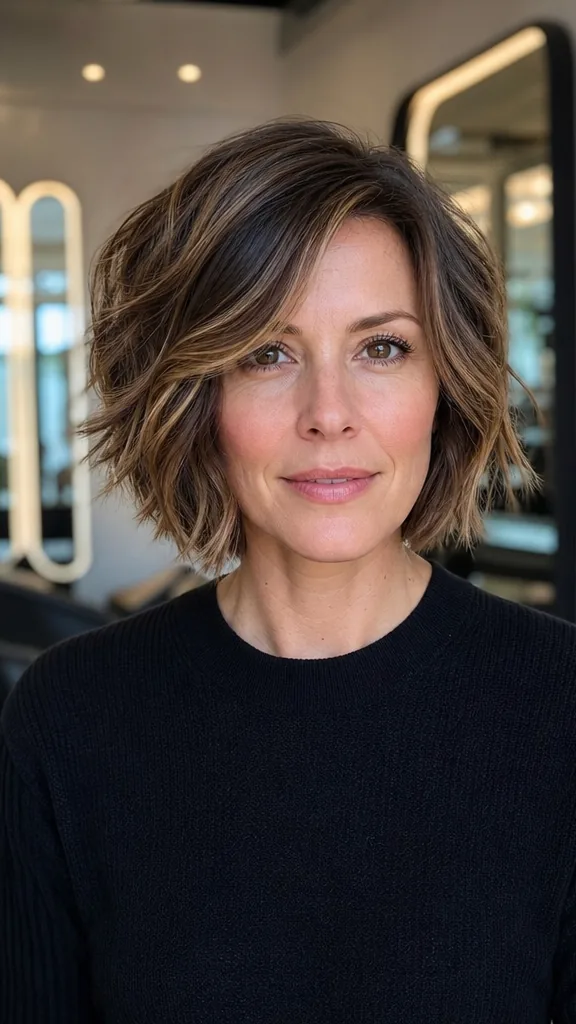
Length changes everything about a choppy bob. At chin length, the cut is bold and graphic: the choppy ends frame the mouth and jaw, and the whole style reads as a statement. It suits strong features and it suits women who like their hair completely out of the way. At jaw length, the classic bob length, the cut is the most versatile — it flatters most faces and it is long enough to tuck behind the ears.
At collarbone length, the choppy bob softens into a long bob, or lob, with texture. This is the safest starting point if you are nervous, because you keep most of your length and you can always go shorter at the next appointment. It is also the best length for thicker hair, which needs the extra weight to stop the choppy layers from puffing out.
A good rule: if your hair is fine, go shorter, because a chin- or jaw-length choppy bob looks fuller. If your hair is thick, go longer, because the extra length keeps the texture under control. And if you are unsure, start at jaw length — you can take more off, but you cannot put it back.
The Right Texture for Your Hair Type
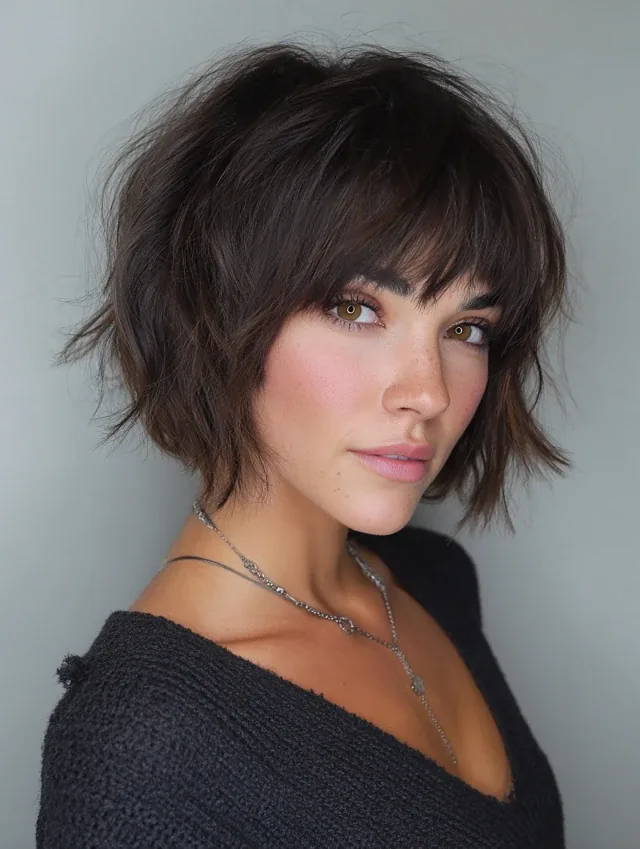
Choppy texture works on almost every hair type, but the technique changes. On straight hair, the choppy ends are the whole show — they create movement where there would otherwise be none, and a little texturising spray is usually all the styling you need. On wavy hair, the cut works with your natural bend, and the choppy layers stop the waves from clumping into one big triangle.
On curly hair, choppy cutting needs a lighter hand. The layers should be cut curl by curl, or at least with the natural curl pattern in mind, because a chop that looks subtle on wet hair can spring up dramatically once it dries. Done well, a choppy curly bob is one of the best cuts there is — bouncy, light and full of shape.
On fine hair, choppy ends are a gift: they make the hair look thicker because the broken edge catches the light in different directions. On thick hair, the stylist will usually thin the interior a little first, so the choppy ends sit neatly instead of flaring out. Tell your stylist your hair type honestly — including how it behaves on a humid day — and the cut will be built around it.
What to Ask Your Stylist (and What to Show Them)
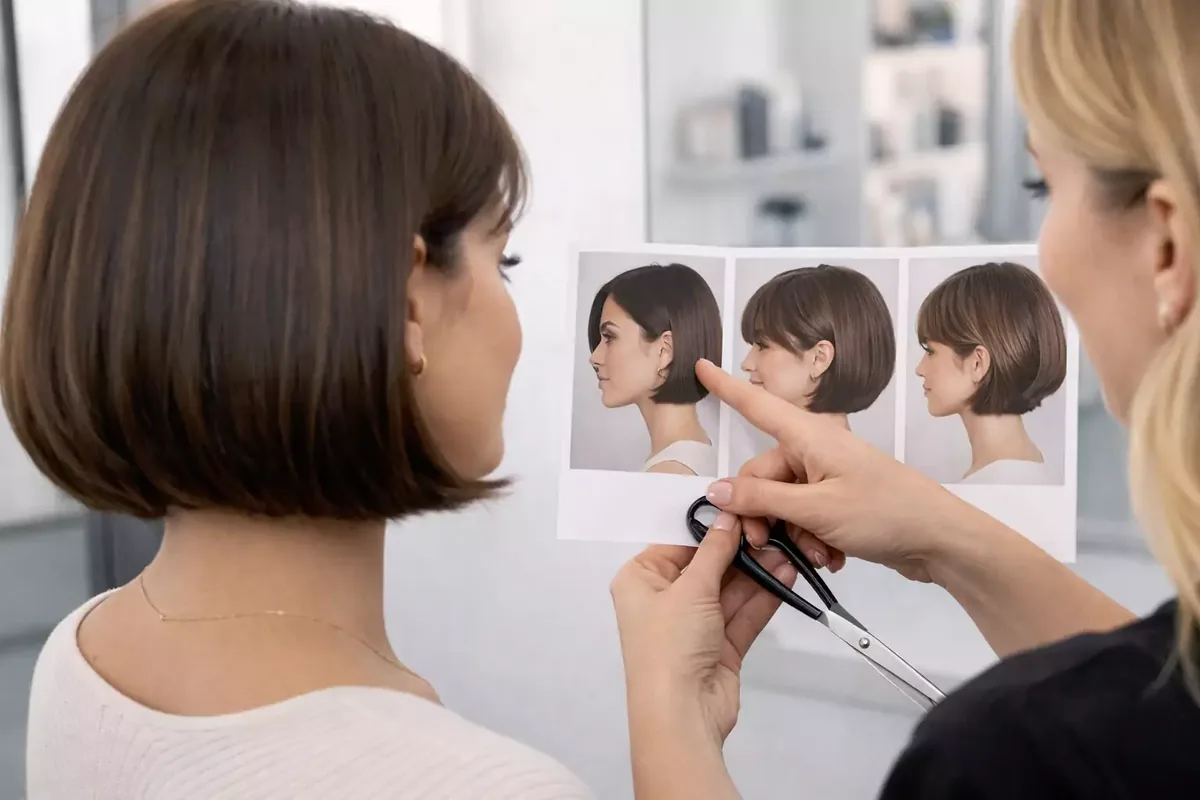
The single most useful thing you can bring to your appointment is a photograph of a choppy bob on someone with hair like yours — same texture, same thickness, roughly the same face shape. A picture of the cut on thick wavy hair will not tell your stylist much if your hair is fine and straight. Save two or three pictures you like and one you do not like, and say what puts you off about that one.
Ask these three questions before the scissors come out: how choppy will the ends be, and can we start softer? How much length will I lose at the shortest piece? And how will this grow out — will I need a trim every four weeks or every eight? The answers tell you whether you and your stylist are picturing the same haircut.
Also say the words “point cutting” and “texturising” out loud, and ask which one they plan to use. Point cutting gives a softer, more lived-in chop; a razor gives a sharper, edgier finish. Neither is wrong — but they look different, and you should know which one you are getting.
Styling a Choppy Bob at Home in Five Minutes
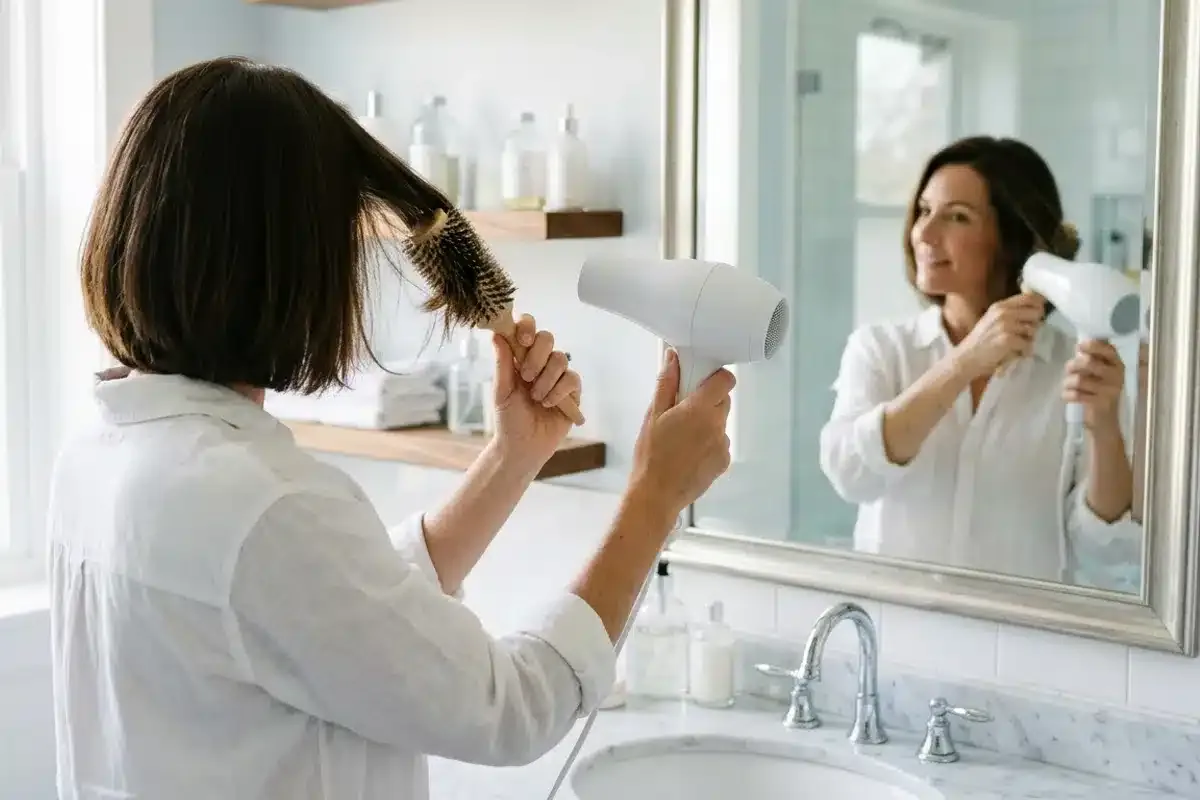
A choppy bob is one of the lowest-maintenance cuts you can own, and the styling routine should match. Wash, towel-dry until the hair is damp rather than wet, and work a pea-sized amount of texturising cream or sea-salt spray through the mid-lengths and ends. Then either let it air-dry, which gives the most natural texture, or rough-dry it with your fingers and a hair dryer, lifting the roots as you go.
The trick is to stop before you think you are finished. Over-styling a choppy bob — straightening every piece, smoothing every flyaway — kills the texture that makes the cut work. A few pieces sticking out is not a mistake; it is the style. If a piece is sticking out in a way you hate, twist it around your finger while it is still warm and let it cool in that shape.
On second-day hair, skip the wash and use dry shampoo at the roots, then scrunch the ends with a little cream. The cut actually looks better on day two, once your hair has relaxed into the layers. That is the whole appeal: this is a haircut that rewards you for doing less.
Keeping the Chop Fresh: Trims, Products and Upkeep
A choppy bob grows out more gracefully than a blunt bob, because the uneven ends hide new growth. Even so, the chop softens over time: after about six weeks the ends start to look less deliberate and more simply grown out. Most women book a trim every six to eight weeks to keep the texture crisp — a quick tidy-up of the ends, not a full re-cut.
Product-wise, you need very little. A light texturising spray or cream for definition, a heat protectant if you use hot tools, and a shampoo that suits your hair type. Heavy oils and serums are the enemy of a choppy bob: they weigh the pieces down and glue the texture together, which is the opposite of what you want. Use them sparingly, and only on the very ends.
Between appointments, watch for split ends — choppy ends show damage faster than blunt ones, because there are more of them. A tiny trim of the worst offenders keeps the cut looking intentional. And if the shape starts to feel heavy at the back, ask your stylist to re-texturise the interior at your next visit rather than taking length off.
Colour That Makes the Texture Pop
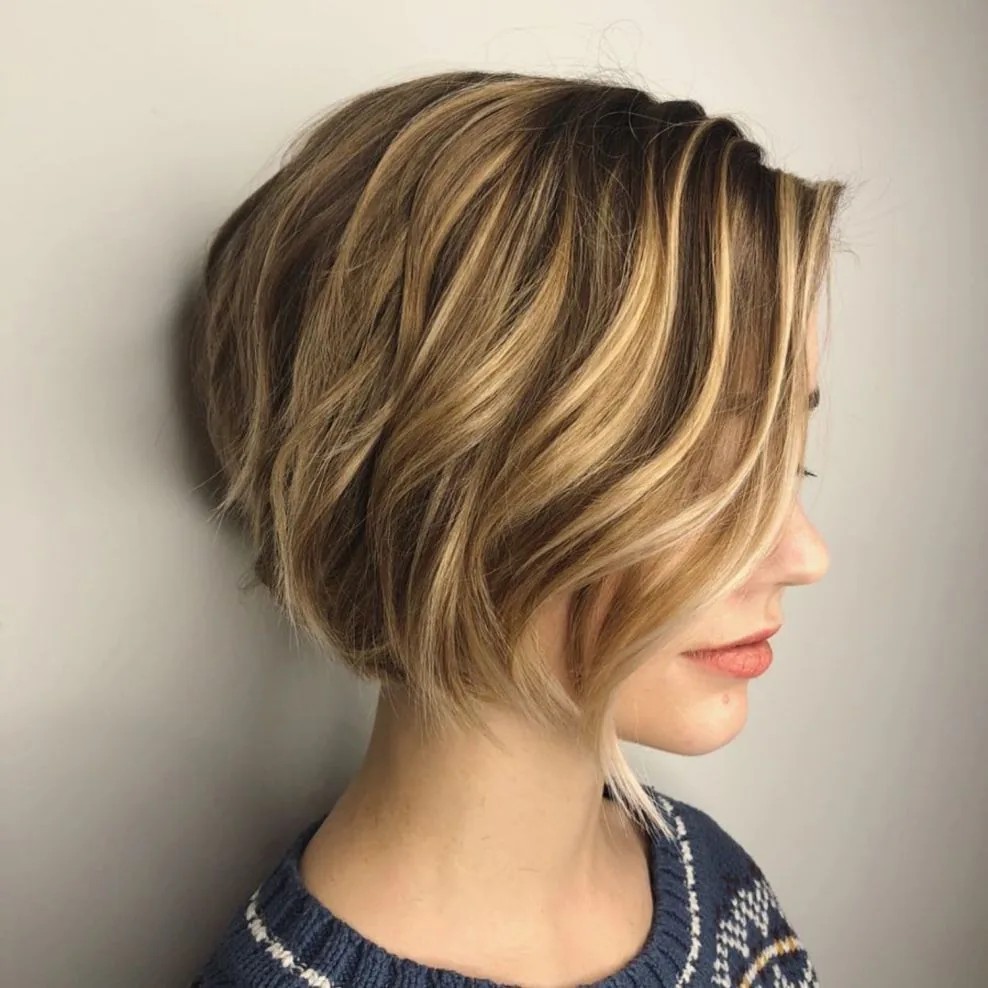
Colour and choppy texture are made for each other. Because the ends sit at different lengths, light catches each piece differently, and even a subtle colour difference suddenly becomes visible. Balayage is the classic pairing: the hand-painted lightness sits exactly on the pieces that move, so the texture reads from across the room.
Highlights through the ends work the same way, and they are a good choice if you want the chop to look even more piece-y. Low-lights — slightly darker strands woven through — do the opposite job: they add depth and make the hair look thicker, which is useful on fine hair. A solid, single-process colour can look lovely too, especially a rich brunette or a glossy black, because the shine shows off the shape of the cut.
One caution: very pale blonde all over can make choppy ends look dry or wispy if the hair is damaged, so keep the lightest pieces away from the very tips unless your hair is in good condition. And whatever colour you choose, tell your colourist you have — or are getting — a choppy bob, so the colour is placed to suit the texture, not against it.
The Classic Choppy Bob
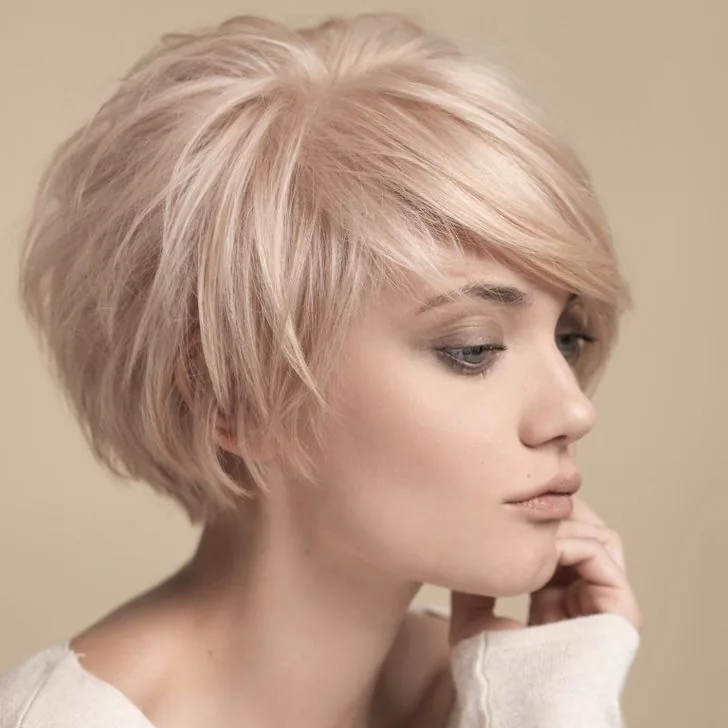
The classic choppy bob is where the whole idea starts: jaw-length hair, ends cut at deliberately uneven lengths, and enough texture through the interior that the cut moves when you do. It is not a wild look — it is a polished cut with a playful edge, and that is why it has stayed popular for so long. The silhouette is still unmistakably a bob, but the finish is softer and far more interesting than a blunt edge.
Pros: suits almost every face shape, easy to style, grows out gracefully, and works on straight, wavy and slightly curly hair. Cons: very thick hair can puff out at the ends unless the interior is thinned, and the texture needs a trim every six to eight weeks to stay crisp.
Who it suits: anyone trying a choppy bob for the first time. It is the safest version of the cut, the easiest to wear to work, and the best starting point if you are not sure how choppy you want to go.
The Choppy Bob With Curtain Bangs
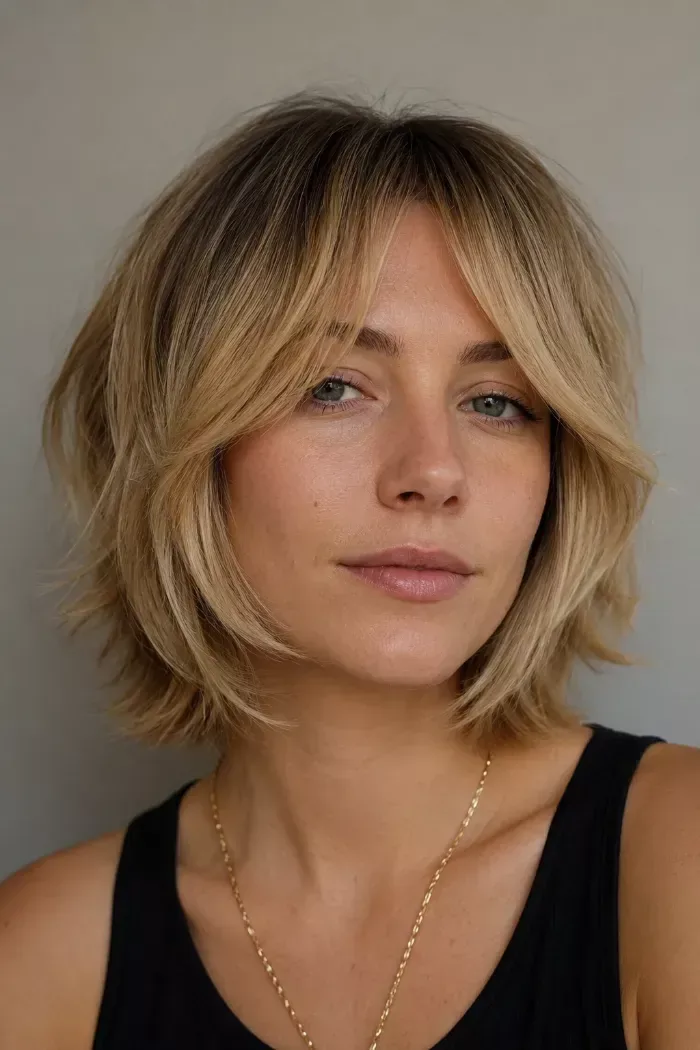
Curtain bangs are the choppy bob’s best friend. The long, parted fringe falls on either side of the face and blends straight into the choppy layers, so there is no hard line anywhere in the cut. The effect is soft, face-framing and a little bit romantic — the bob equivalent of a silk scarf worn loose.
Pros: softens a strong forehead and jawline, grows out beautifully, and makes the whole cut look more expensive. Cons: the bangs need a quick blow-dry or a twist around a round brush to sit properly, and they can go flat on very fine hair.
Who it suits: women with a high forehead, a long face, or strong cheekbones they want to show off. It also suits anyone who wants bangs without committing to a full fringe.
The Choppy French Bob
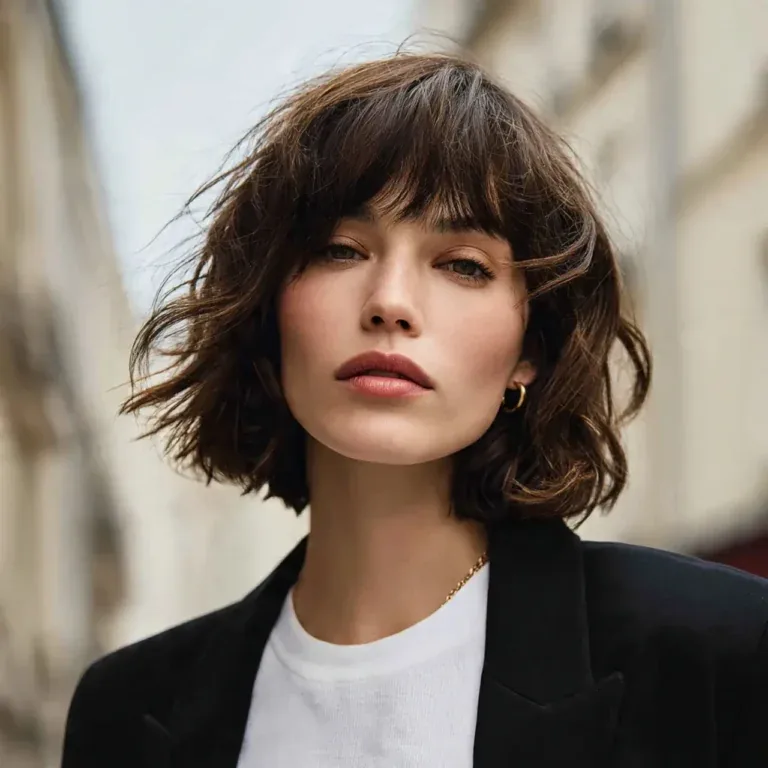
The French bob is short — usually chin length or just above — and the choppy version adds texture to its famous chic. Think Parisian: a little bit undone, a little bit defiant, and completely unbothered by whether every hair is in place. The choppy ends keep it from looking like a costume, and a short fringe or a side part finishes it.
Pros: incredibly chic, very light to wear, and it makes fine hair look fuller. Cons: it is a short commitment — growing it out takes patience — and it needs regular trims to hold its shape.
Who it suits: women with delicate features, a slim neck, or a strong sense of personal style. It is also wonderful on women over fifty who want a cut with real character.
The Choppy Bob With Micro Bangs
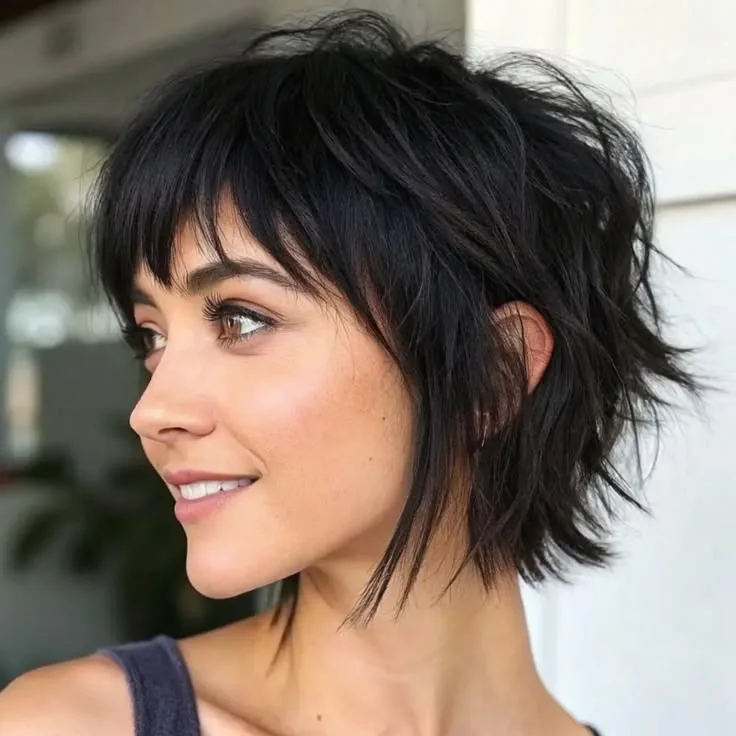
Micro bangs — a very short, straight fringe that sits well above the eyebrows — turn a choppy bob into a statement. The contrast between the tiny fringe and the textured, flicky ends is what makes it work: it is a cut with a point of view, and it photographs beautifully.
Pros: opens up the face, makes the eyes the focus, and looks striking with dark hair or bold colour. Cons: unforgiving if you hate it — there is nowhere to hide a micro fringe — and it needs trimming every three to four weeks.
Who it suits: confident dressers, women with small, regular features, and anyone who wants their haircut to be the first thing people notice. Not the best first step if you are cautious about short fringes.
The Choppy A-Line Bob
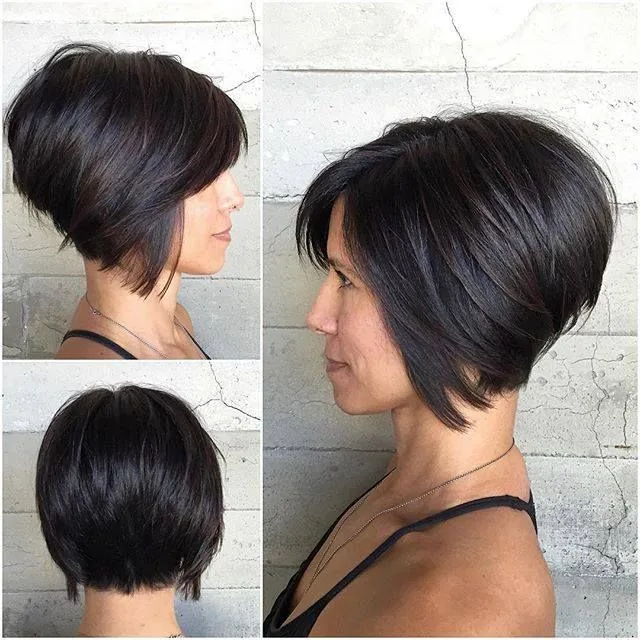
The A-line bob is shorter at the back and longer at the front, and the choppy version softens that sharp geometry with broken-up ends. The longer front pieces frame the face and give the cut movement, while the stacked back keeps it light and lifted. It is the most flattering version of the A-line for most women, because the texture stops it looking severe.
Pros: elongates the neck, slims the face, and the back stays neat without much effort. Cons: the angle needs a skilled cut to stay even as it grows, and the front pieces can fall forward into your face.
Who it suits: women with a round or full face who want length around the jaw, and anyone who likes a cut with a clear shape from the side.
The Choppy Inverted Bob
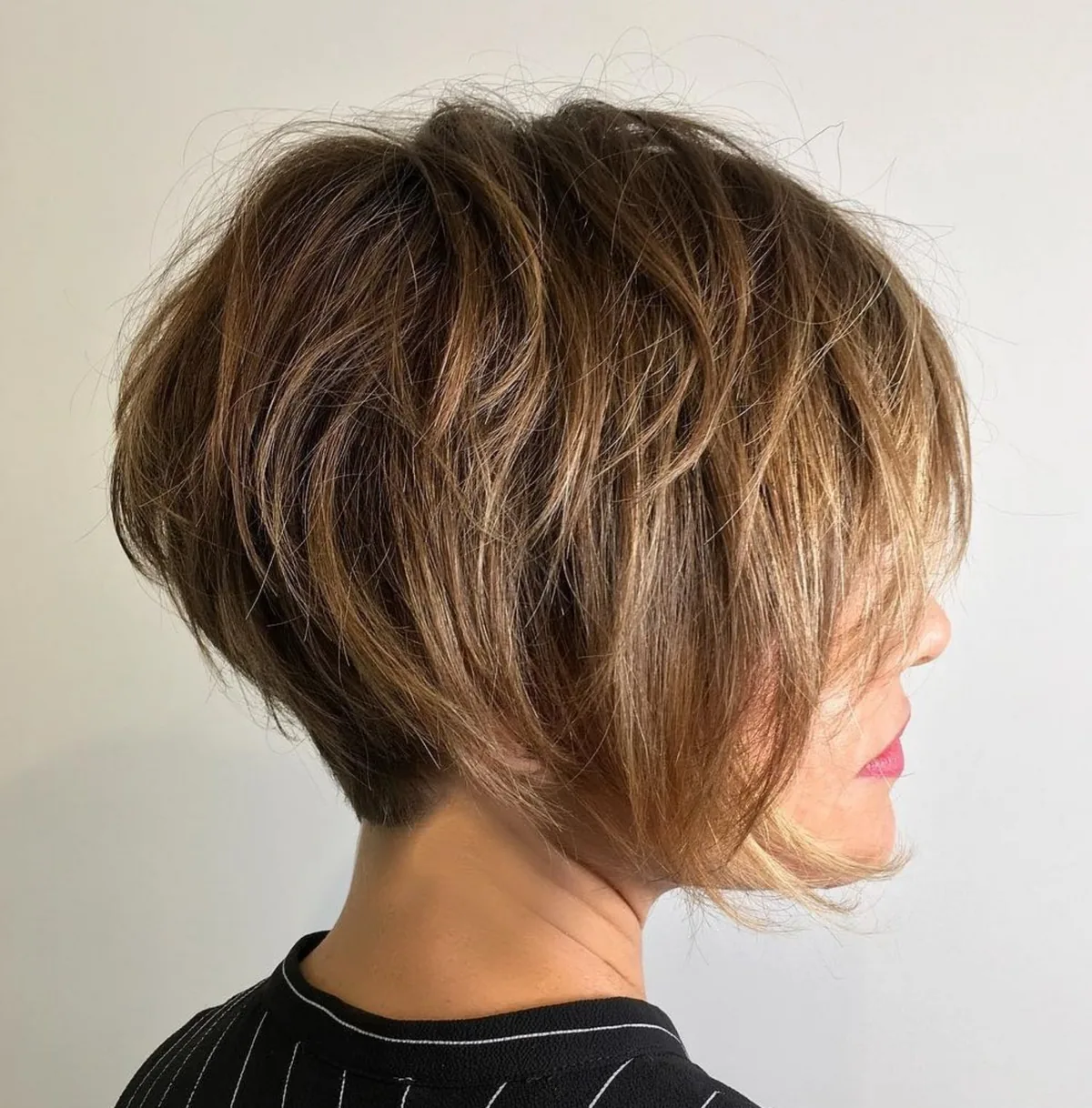
The inverted bob takes the A-line further: the back is stacked and graduated, building volume at the crown, while the front falls longer and choppier. The result is a cut with real architecture — full at the back, piece-y at the front, and full of movement from every angle.
Pros: great volume at the crown, a strong shape that holds all day, and it makes fine hair look much thicker. Cons: the stacked back needs a confident stylist and regular trims, and it can feel heavy if your hair is very thick.
Who it suits: women with fine or flat hair who want volume without teasing or backcombing, and anyone who likes a cut that looks styled even when it is not.
The Choppy Bob With Side-Swept Bangs
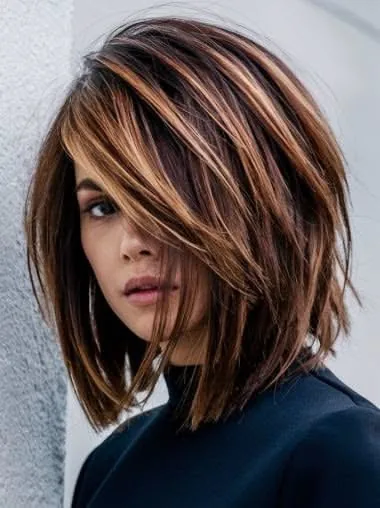
Side-swept bangs are the low-commitment fringe: long enough to tuck behind the ear, soft enough to blend into the choppy layers, and flattering on almost everyone. Swept across the forehead, they add asymmetry to the bob, which suits the choppy texture perfectly — the whole cut leans to one side and looks effortlessly styled.
Pros: softens the forehead, works on every face shape, and grows out without an awkward stage. Cons: needs a little styling to sit swept rather than falling straight, and can irritate if it keeps falling into your eyes.
Who it suits: anyone who wants a fringe without the upkeep of a full one, and women with a wide forehead or a strong jaw who want a diagonal line across the face.
The Choppy Wavy Bob
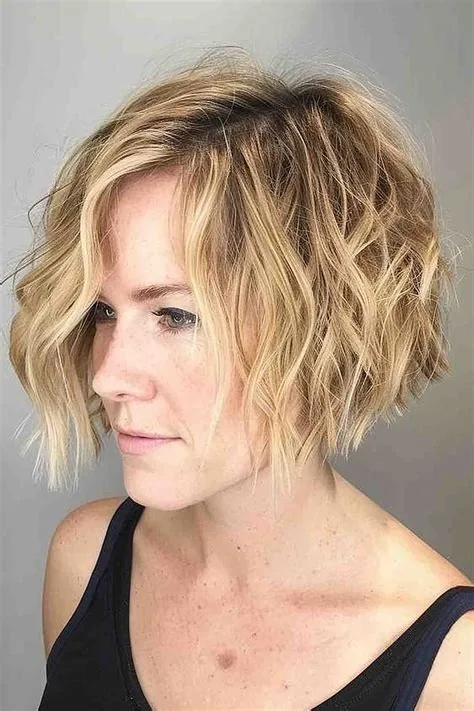
If your hair has a natural wave, the choppy bob was made for you. The cut works with the wave instead of against it: the uneven ends let each wave fall where it wants to, and the layers stop the hair from forming one heavy triangle. The result looks like you spent an hour with a curling iron, when all you did was let it dry.
Pros: almost no styling needed, looks better slightly messy, and the wave adds volume at exactly the right places. Cons: humidity can make the waves unpredictable, and the cut needs a stylist who understands wavy hair.
Who it suits: women with natural waves who are tired of fighting them, and anyone who wants a wash-and-go cut that still looks deliberate.
The Choppy Curly Bob
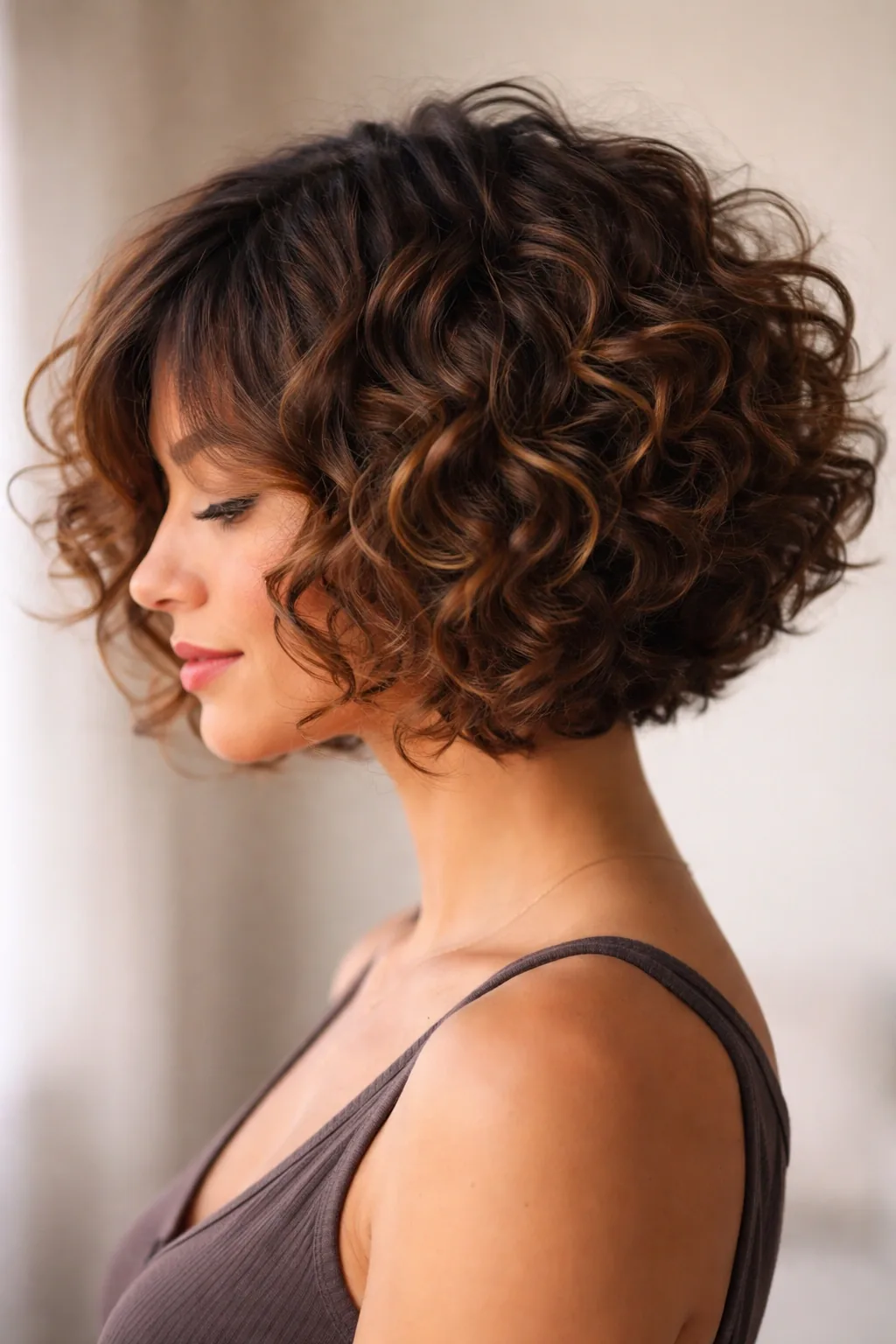
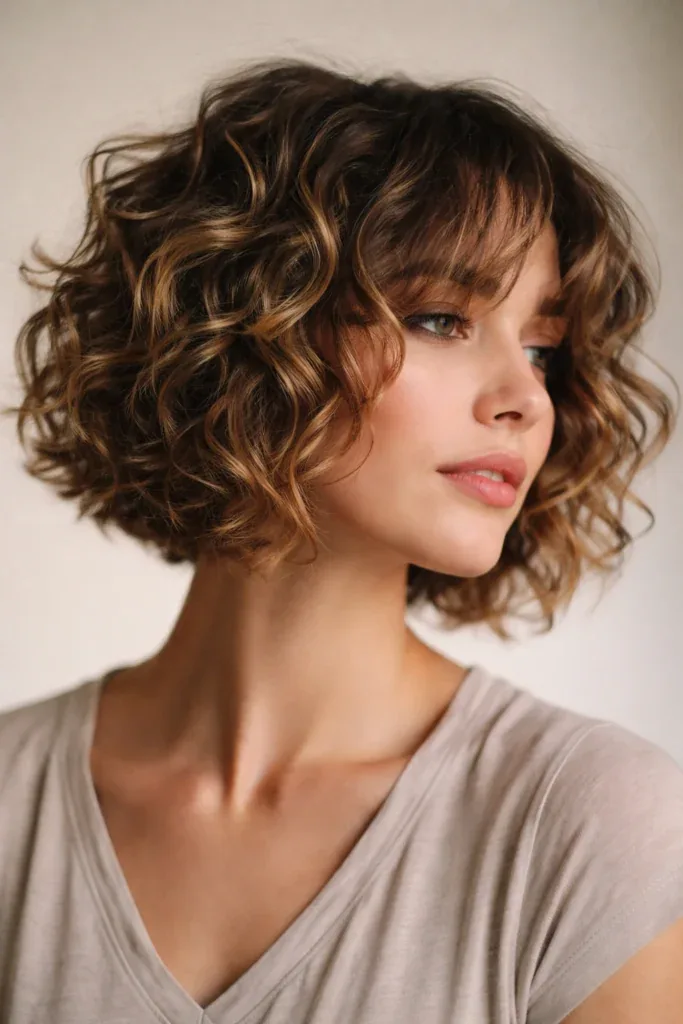
A choppy curly bob is cut to let the curls do the talking. The layers are placed to give each curl room to spring, and the ends are broken up so the shape stays light and bouncy instead of heavy and pyramidal. Done well, it is one of the most joyful haircuts there is — full of movement and personality.
Pros: light, bouncy, full of shape, and it celebrates natural texture. Cons: it must be cut with the curl pattern in mind — a straight-hair technique will not work — and the length can shrink dramatically as curls dry.
Who it suits: women with natural curls or coils who want a shorter cut without losing their volume, and anyone ready to let their texture lead. Ask for a curl-by-curl cut.
The Choppy Bob for Fine Hair
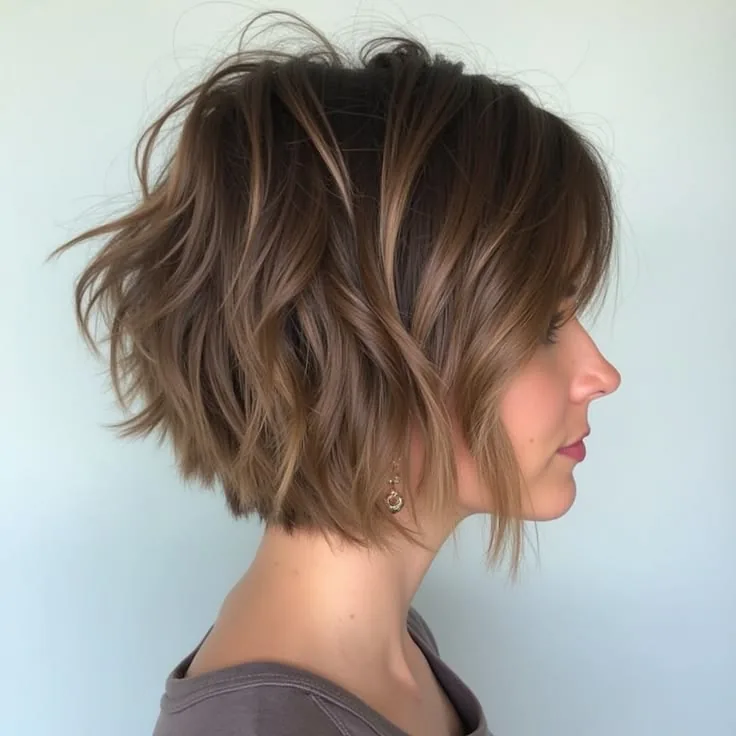
Fine hair and choppy bobs are a perfect match. The broken-up ends catch the light in different directions, which makes the hair look thicker than it is, and the texture creates volume that fine hair rarely manages on its own. Keep the cut at chin or jaw length, where the ends can stack up and look full.
Pros: instant illusion of thickness, light and easy to wear, and the texture holds a wave or bend well. Cons: very choppy ends can look wispy if the hair is extremely fine, so the chop should be moderate rather than extreme.
Who it suits: women with fine or thinning hair who want their bob to look fuller, and anyone whose hair goes flat by lunchtime. A little texturising spray at the roots finishes it.
The Choppy Bob for Thick Hair
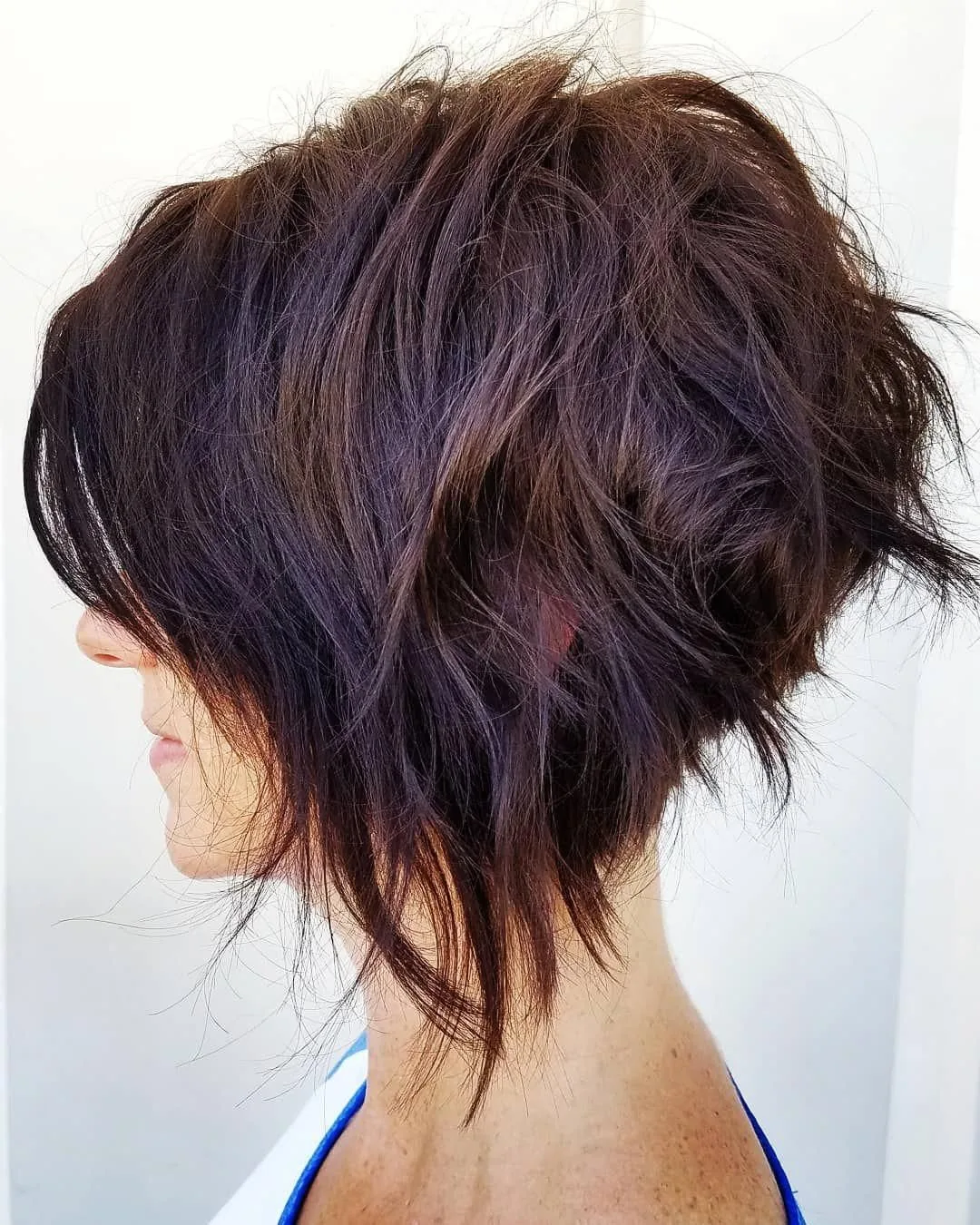
Thick hair can make a bob look heavy, but choppy texture is the fix. By removing weight from the interior and breaking up the ends, the stylist lets thick hair move instead of sitting like a helmet. The cut should be a little longer — jaw to collarbone — so the weight of the hair keeps the layers under control.
Pros: removes bulk without losing length, adds movement, and the cut holds its shape for weeks. Cons: it needs a stylist confident with thinning and texturising, and it can take longer to cut than a simple bob.
Who it suits: women with thick hair who love the bob shape but hate the bulk, and anyone whose bob has ever flared out into a triangle by the end of the day.
The Choppy Bob for Straight Hair
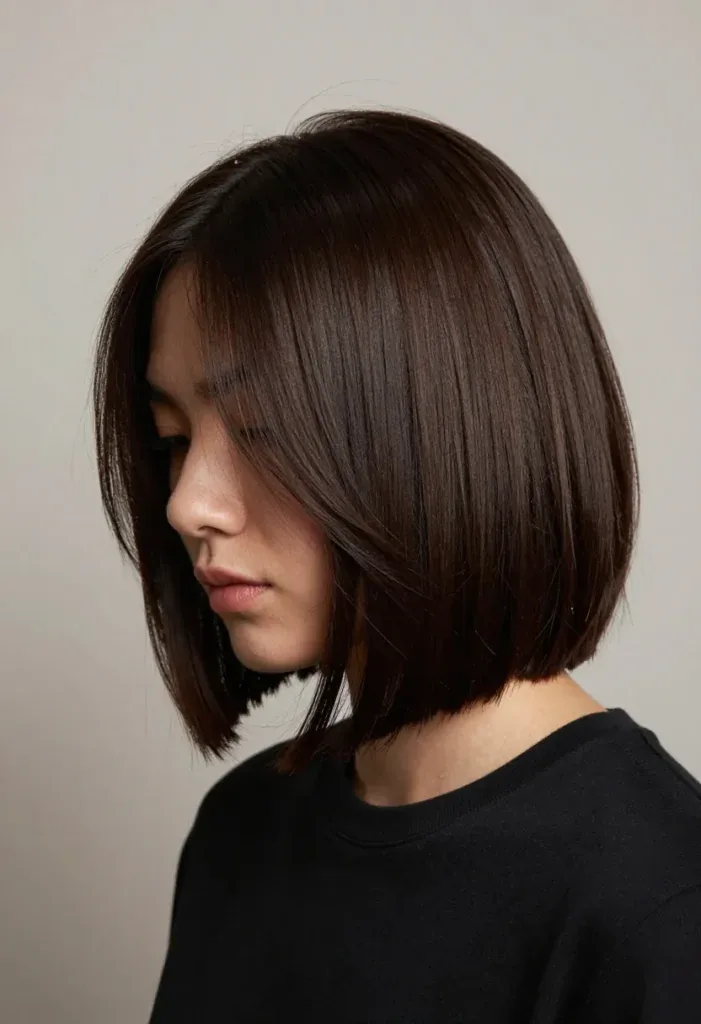
On straight hair, the choppy bob does the work that nature did not: it creates movement. The uneven ends give straight hair a flick and a separation it would never have on its own, and the layers stop it from hanging like a curtain. It is the cut that makes straight hair look styled without any styling.
Pros: creates movement and texture on the straightest hair, looks sharp and modern, and needs almost no product. Cons: the chop is very visible on straight hair, so a bad cut has nowhere to hide — choose your stylist carefully.
Who it suits: women with naturally straight hair who are bored of the same flat bob, and anyone who wants a cut that looks deliberate with minimal effort.
The Choppy Bob With Balayage
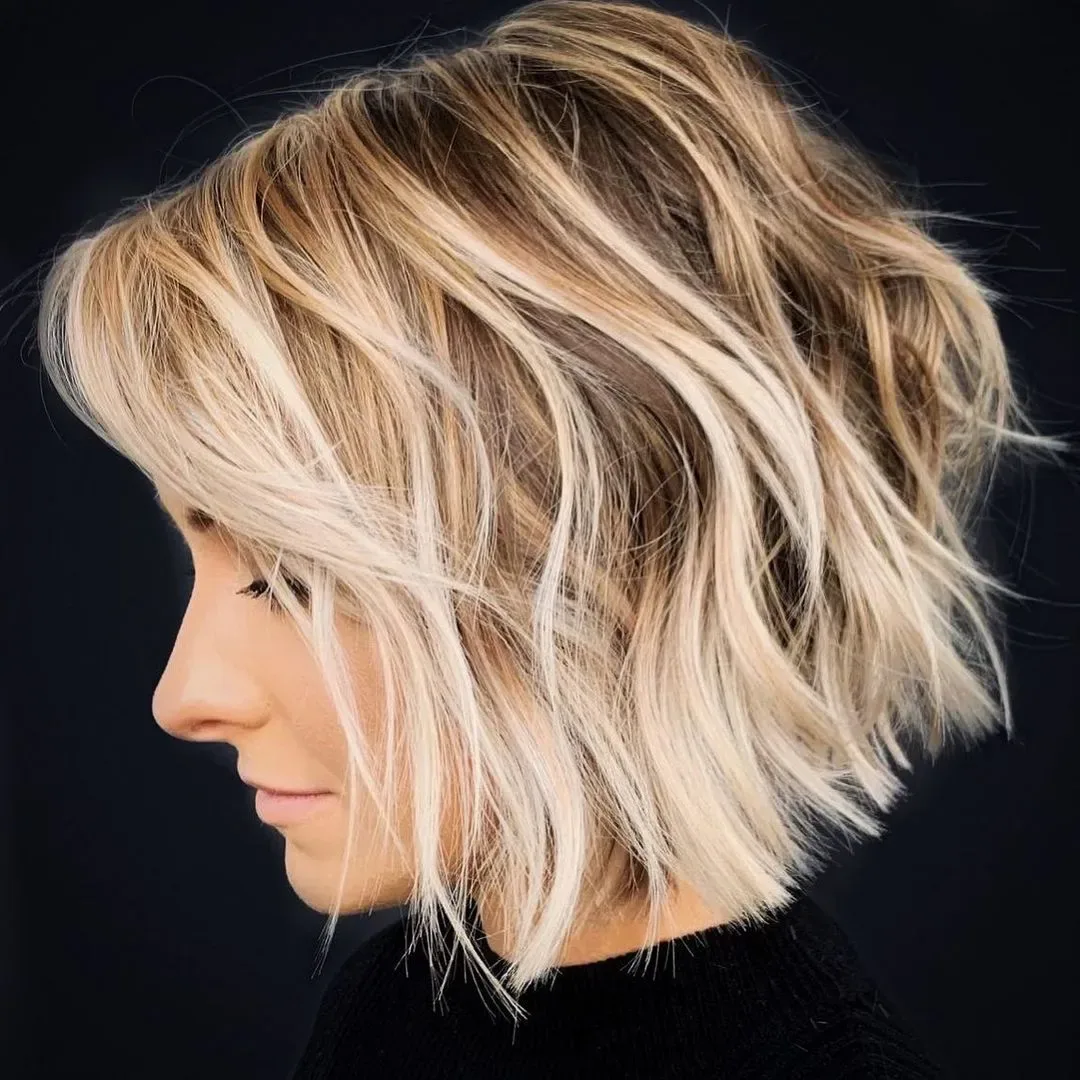
Balayage and a choppy bob are the dream pairing. The hand-painted lightness sits on the pieces that move, so every time you turn your head the colour catches the light differently. The choppy ends make the balayage look even more natural, because the colour breaks up exactly where the texture breaks up.
Pros: low-maintenance colour that grows out softly, makes the texture look three-dimensional, and suits almost every skin tone. Cons: costs more than a single-process colour, and the ends need care if they are lightened.
Who it suits: anyone who wants dimension without a high-maintenance colour routine, and women whose choppy bob needs a little extra something to show off the texture.
The Choppy Bob With Blonde Highlights
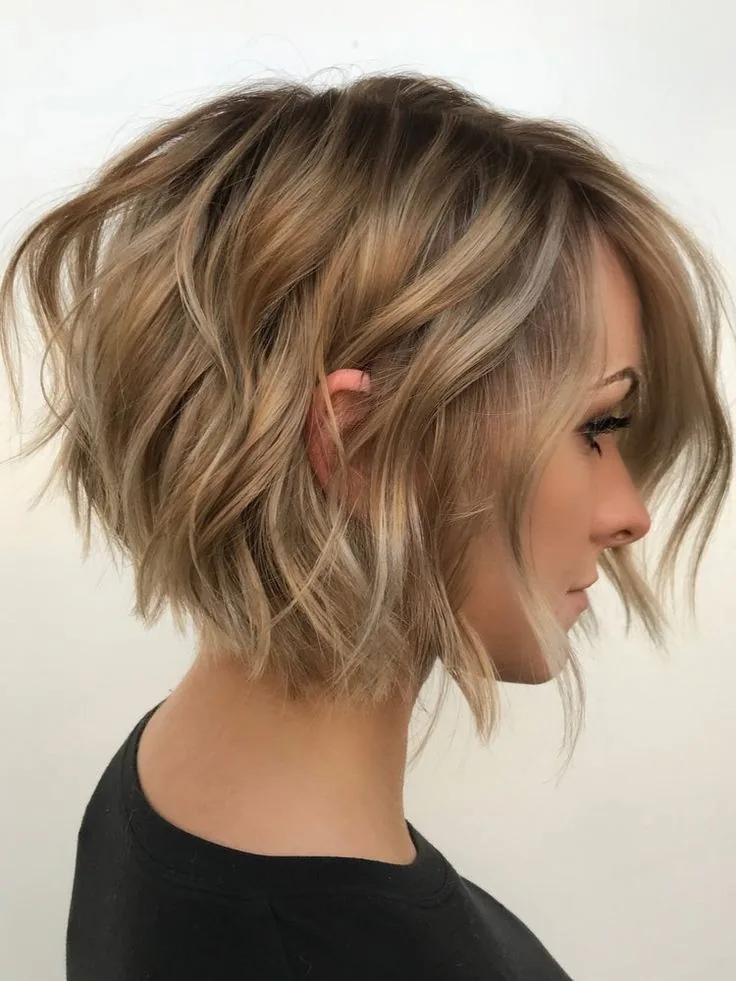
Blonde highlights woven through a choppy bob make every layer visible. The lighter strands sit on the ends and the pieces that flick out, so the cut reads as textured even from a distance. It is a bright, sunny version of the bob — the one that looks best in summer light.
Pros: brightens the face, shows off the texture, and works on light brown to dark blonde bases. Cons: blonde ends need regular toning and conditioning, and highlights need a touch-up every eight to ten weeks.
Who it suits: women who want their choppy bob to look lighter and brighter, and anyone whose hair is naturally light brown or dark blonde.
The Choppy Bob With Copper Colour
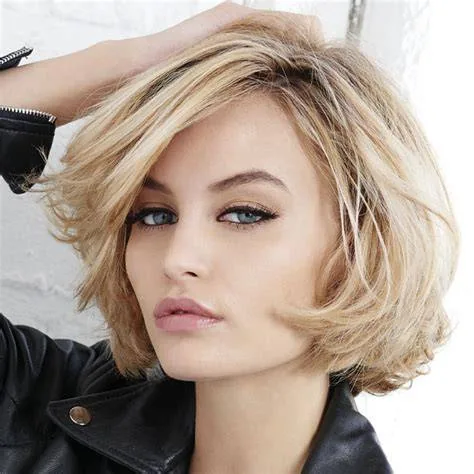
Copper is the colour that makes a choppy bob look like it has a personality. The warm, fiery tone catches the light on every textured piece, and the cut’s movement makes the colour look alive rather than flat. It is bold without being extreme — a colour with confidence.
Pros: gorgeous on fair and medium skin tones, makes the texture pop, and fades gracefully. Cons: copper fades faster than most colours, so it needs colour-safe shampoo and a gloss refresh every few weeks.
Who it suits: women who want a change with real impact, and anyone with warm undertones in their skin. If you have ever thought about going red, this is the cut to do it with.
The Choppy Bob With Dark Brunette Shine
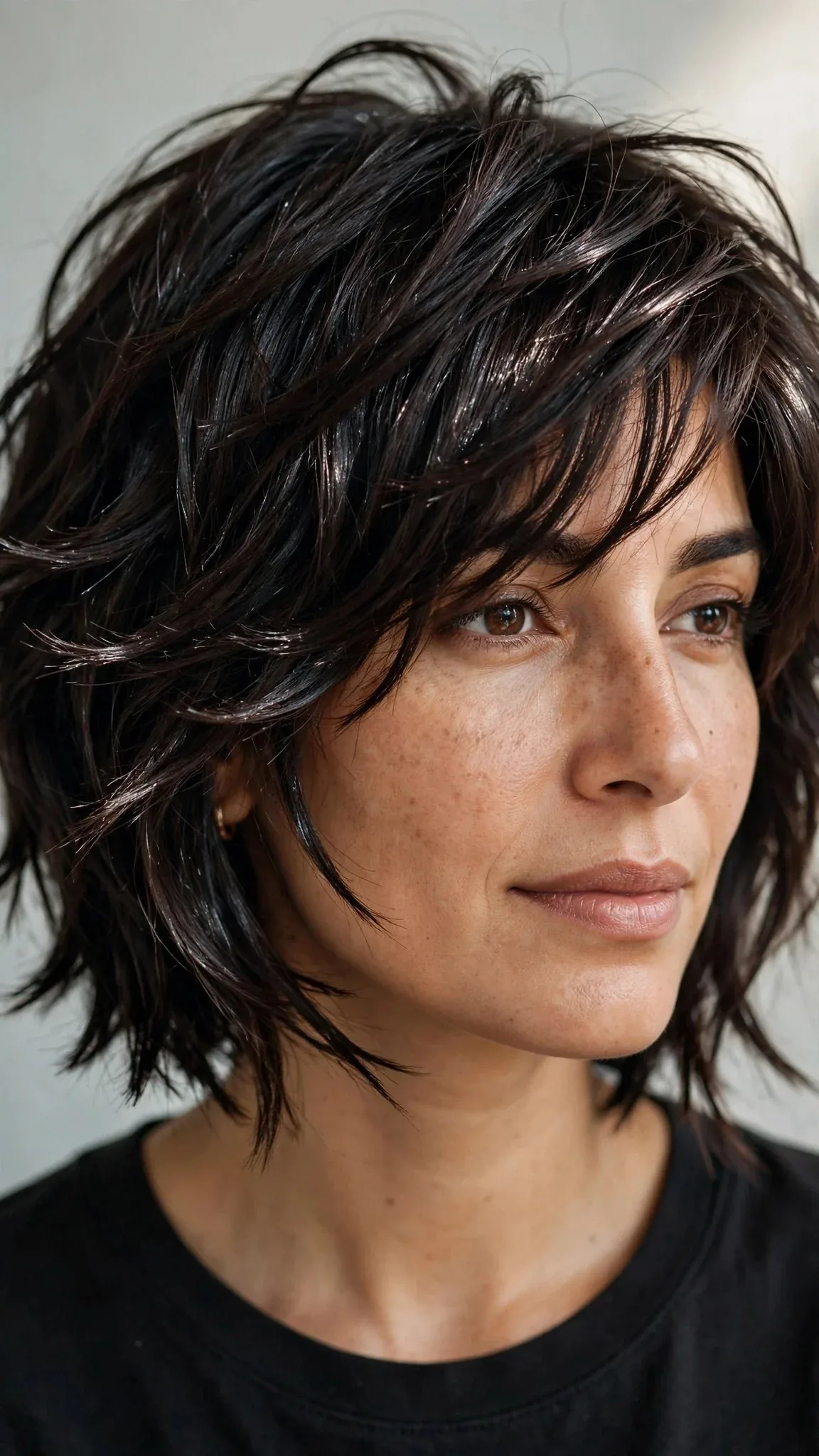
A dark brunette choppy bob is proof that the cut does not need colour tricks to look good. The deep, glossy shade shows off the shape of the cut — every layer, every flick, every piece — and the shine makes the texture look expensive. It is the most elegant version of the choppy bob.
Pros: low-maintenance colour, gorgeous shine, and it makes the cut look polished. Cons: dark hair shows split ends and damage more clearly, so the ends need regular trims.
Who it suits: women with naturally dark hair who want a cut with shape and shine, and anyone who prefers a rich, single colour over highlights.
The Choppy Bob With Silver Grey
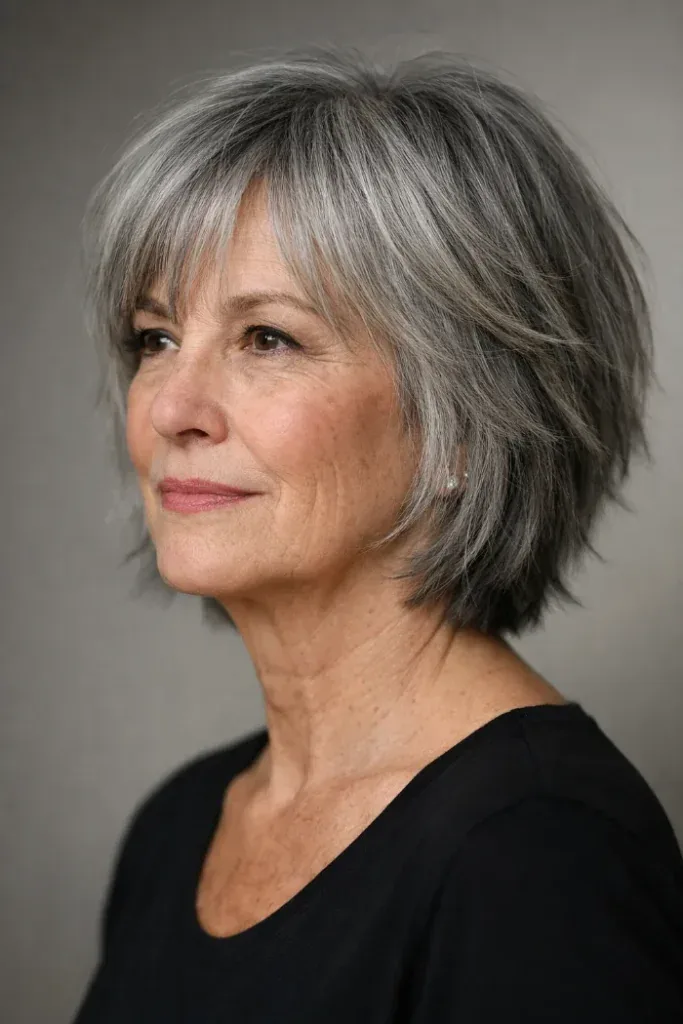
Silver grey and choppy texture are a wonderful combination, whether the grey is natural or chosen. The pale, luminous colour makes every layer visible, and the choppy ends keep the silver from looking flat or severe. It is a cut that wears its grey with pride — and looks all the better for it.
Pros: celebrates natural grey, looks modern and striking, and the texture keeps it soft. Cons: silver needs purple shampoo to stop it yellowing, and lightened grey ends need conditioning.
Who it suits: women embracing their natural grey, and anyone who wants a silver bob with movement rather than a severe, flat shape.
The Choppy Bob With a Deep Side Part
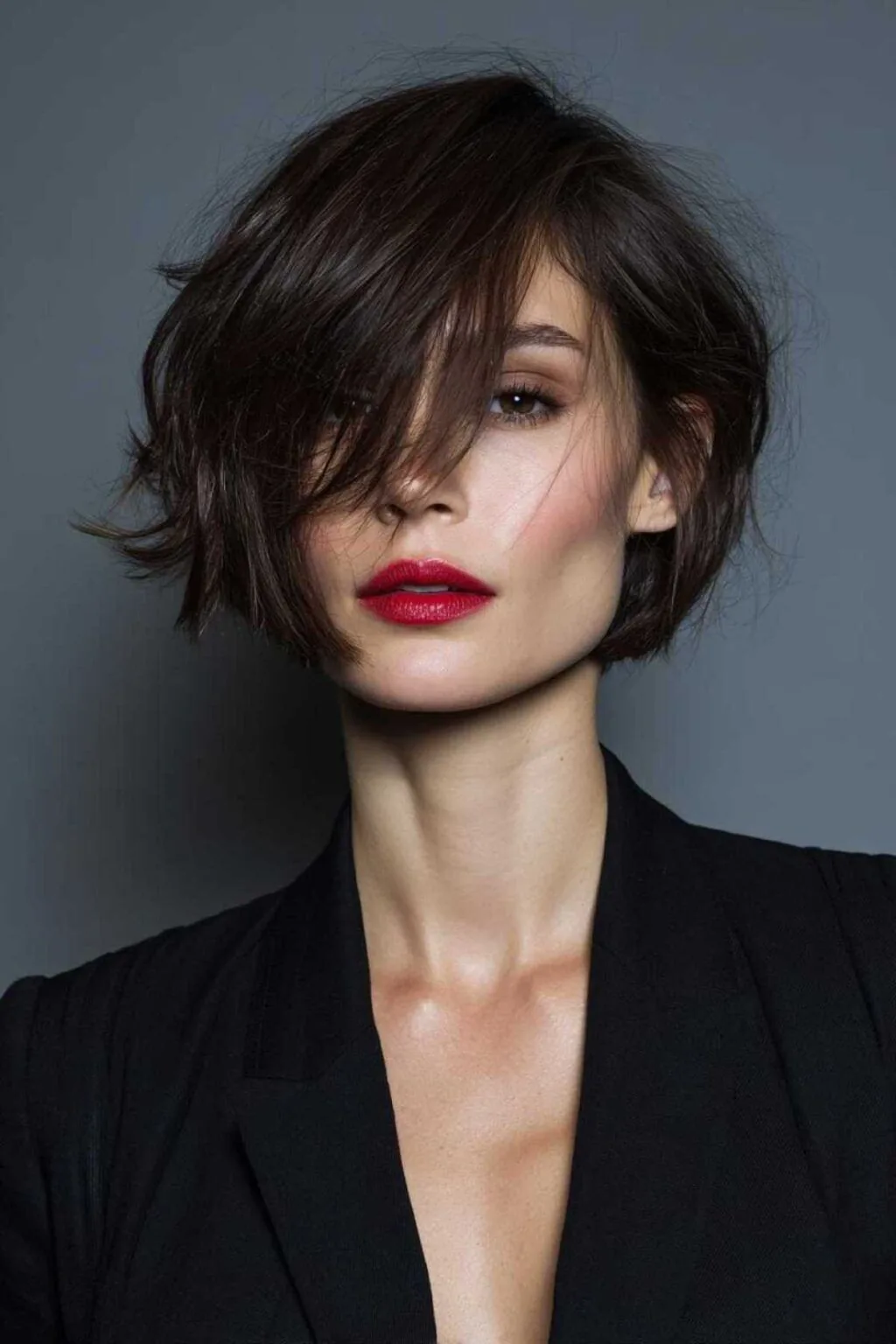
A deep side part changes a choppy bob completely. Sweeping the hair over to one side creates instant volume at the crown and a long, face-framing sweep across the forehead, while the choppy ends keep the whole thing from looking too formal. It is the glamorous version of the cut — the one for evenings out.
Pros: instant volume, very flattering, and it takes ten seconds to style. Cons: the part can collapse if your hair is very fine, and the heavy side can fall into your face.
Who it suits: women with a round or square face who want a diagonal line across it, and anyone who wants their everyday bob to feel a little more dressed up.
The Choppy Bob With a Middle Part
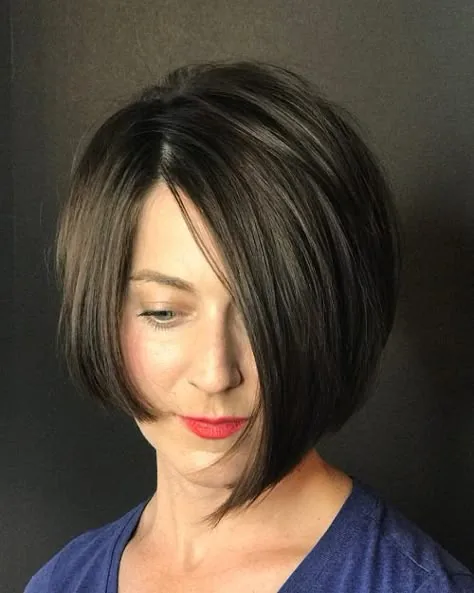
A middle part gives the choppy bob a calm, symmetrical frame — and the choppy ends stop it from looking too severe. The hair falls evenly on both sides, the texture keeps it soft, and the overall effect is modern and a little bit minimal. It is the version of the cut that looks best with the least effort.
Pros: suits symmetrical features, very easy to style, and it shows off the cut’s shape. Cons: a middle part can emphasise asymmetry in the face, and it can look flat at the roots without a little lift.
Who it suits: women with oval or heart-shaped faces, and anyone who likes a clean, balanced look with a textured edge.
The Choppy Bob With an Undercut Nape
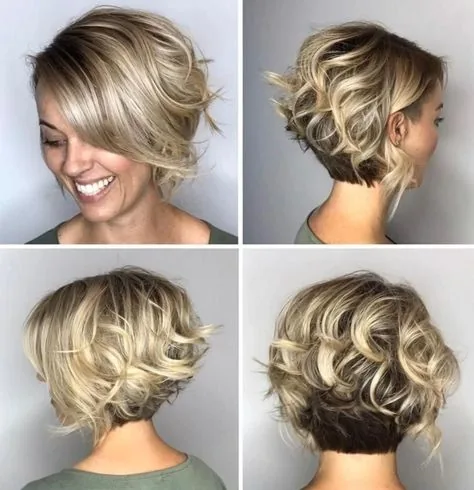
An undercut nape hides a secret under a choppy bob: the hair at the back of the neck is clipped short, which removes bulk and keeps the neck cool. From the front, the cut looks like a normal choppy bob; from behind, the undercut gives it an edge. It is the version for women who like a little rebellion they can hide at work.
Pros: removes weight and heat at the nape, keeps the bob light, and looks striking when the hair is put up. Cons: the undercut grows out quickly and needs a trim every three to four weeks to stay neat.
Who it suits: women with very thick hair, anyone who runs hot, and those who want an edgy detail without a fully shaved look.
The Choppy Bob With Shaggy Layers
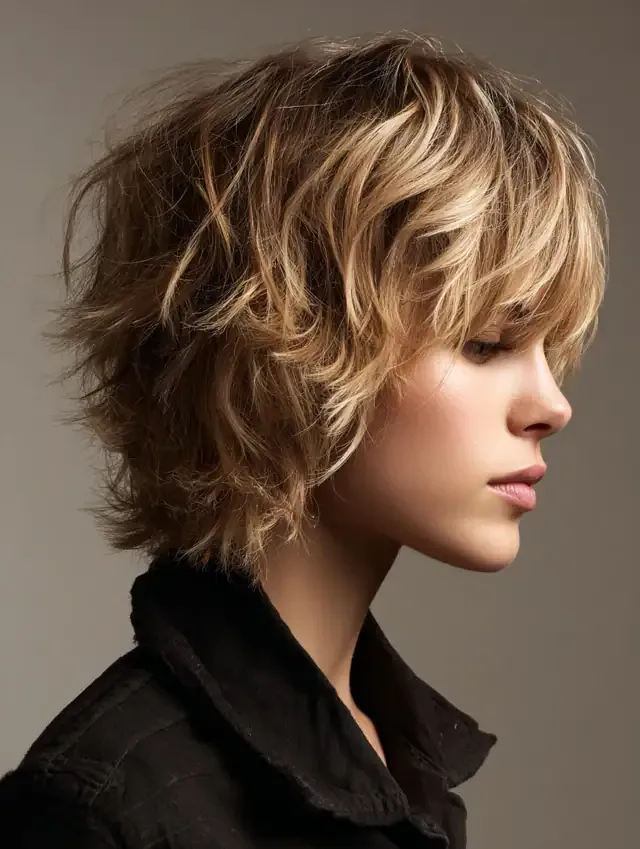
The shaggy choppy bob borrows from the seventies shag: lots of layers, lots of texture, and a deliberately undone finish. The layers are shorter on top and longer at the ends, which gives the cut volume at the crown and movement everywhere else. It is the rock-and-roll version of the bob.
Pros: tons of volume and movement, very forgiving as it grows, and it looks great with natural wave. Cons: can look messy rather than textured if the layers are cut too short, and it needs a stylist who understands shag cutting.
Who it suits: women with wavy or thick hair, and anyone who wants a bob with a relaxed, lived-in attitude rather than a polished finish.
The Choppy Bob With Wispy Ends
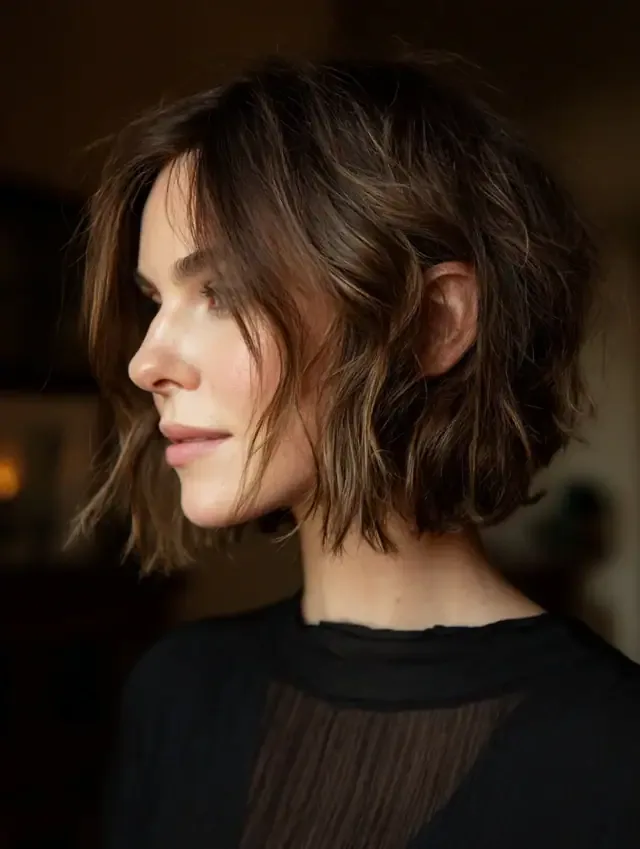
Wispy ends are the softest version of the chop: the ends are thinned and feathered so they fall lightly, almost transparently, instead of in a solid line. The cut looks airy and delicate, and it moves beautifully — the ends flutter rather than swing. It is the choppy bob for women who want texture without drama.
Pros: light, soft, and very flattering on fine hair. Cons: wispy ends can look thin if the hair is already very fine, and they show damage quickly.
Who it suits: women with fine hair who want a gentle version of the chop, and anyone who likes a soft, romantic finish rather than a sharp one.
The Choppy Bob With Blunt-Meets-Choppy Ends
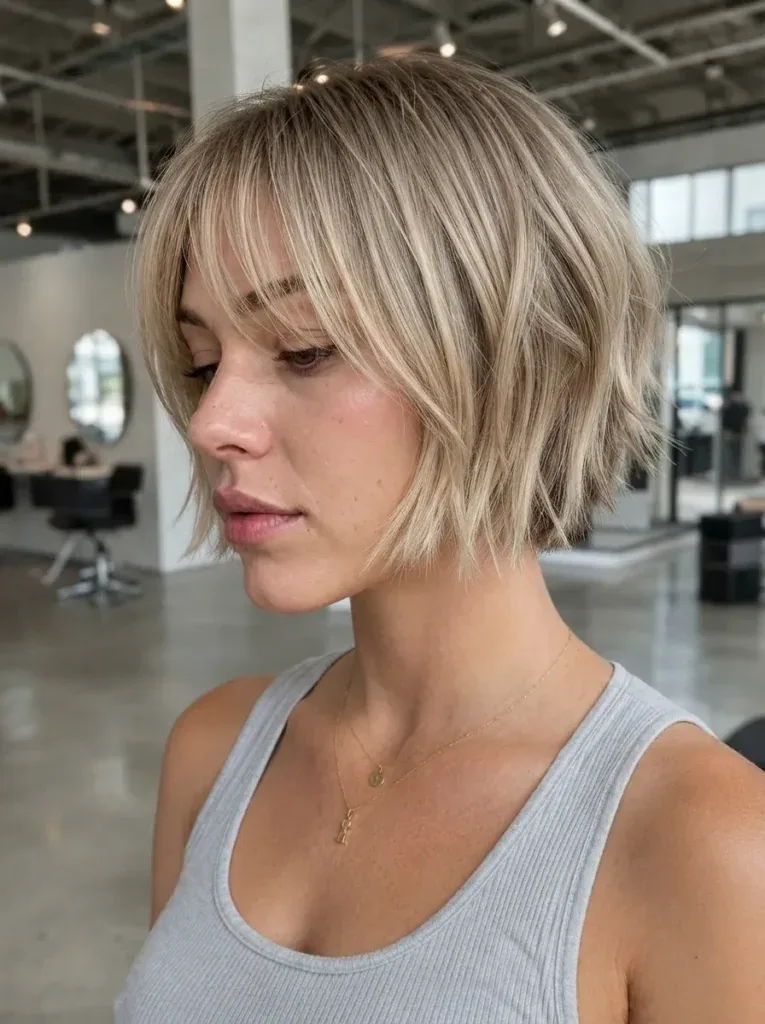
This is the compromise cut: a mostly blunt outline with choppy texture through the interior and the very ends. You get the sharp, polished line of a blunt bob from a distance, and the movement and texture of a choppy bob up close. It is the best of both worlds, and a good first step if a fully choppy bob feels too wild.
Pros: polished yet textured, versatile, and it grows out neatly. Cons: it needs a stylist who can balance the two techniques, and the blunt line needs trimming to stay sharp.
Who it suits: women torn between blunt and choppy, and anyone who needs a work-appropriate bob with a little personality.
The Choppy Bob for Round Faces
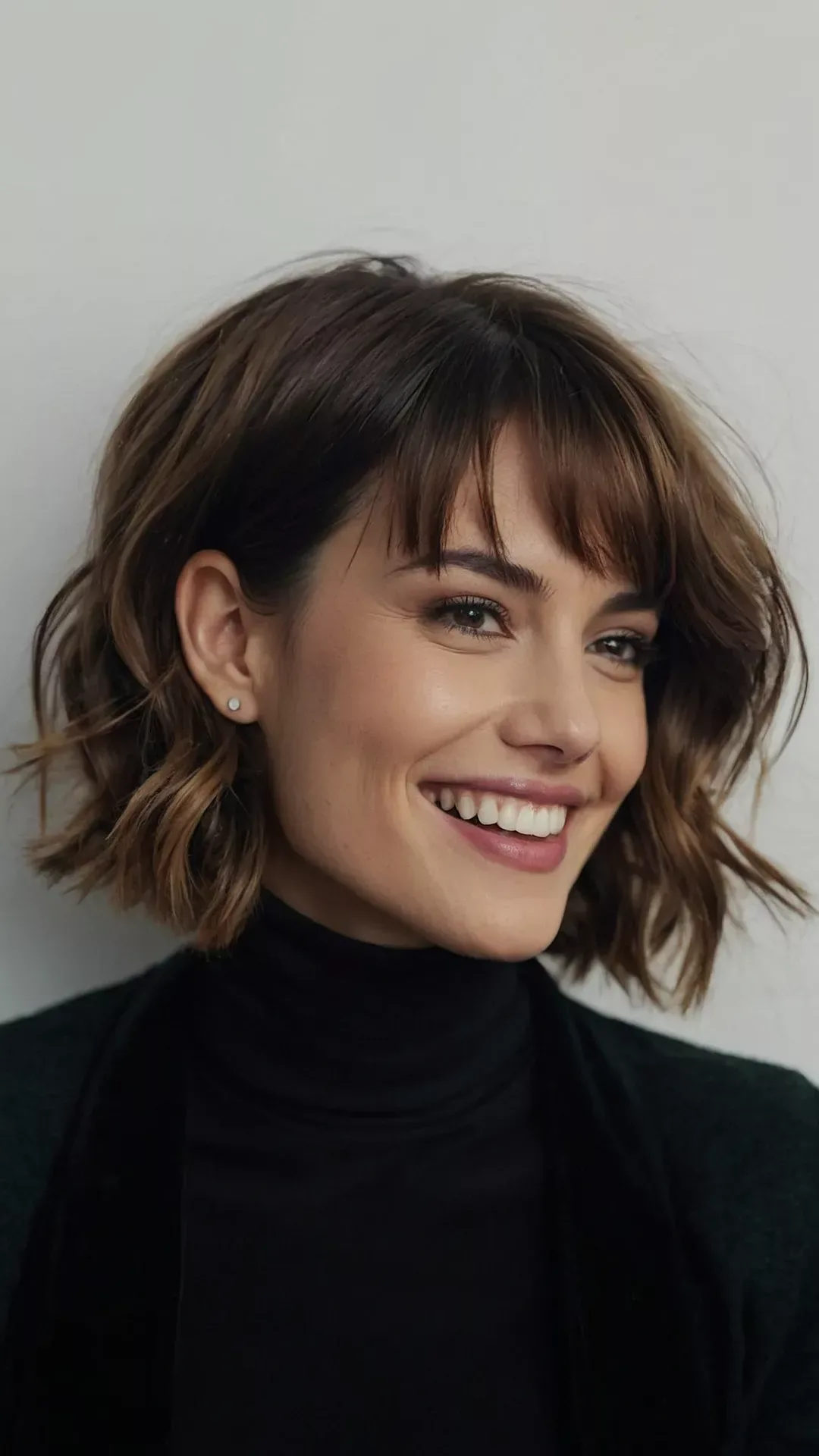
For a round face, the choppy bob works best with length: keep the front pieces at or below the jaw, and let the choppy layers create vertical lines that draw the eye down. A side part helps too, because it breaks up the symmetry of the face. Avoid a chin-length chop with a blunt fringe, which can make the face look wider.
Pros: lengthens the face, adds angles, and the texture stops the cut looking heavy. Cons: a too-short version can emphasise width, so the length matters more than the chop.
Who it suits: women with round or full faces who want a bob that slims rather than widens — ask for front pieces that fall below the chin.
The Choppy Bob for Oval Faces

Oval faces can wear almost any version of the choppy bob, which is both a blessing and a problem — where do you start? The answer is: anywhere. A chin-length chop shows off the cheekbones, a jaw-length chop is the classic, and a collarbone chop is soft and romantic. The only real rule is to pick the version you like looking at.
Pros: every length and fringe works, and the cut frames the face beautifully. Cons: almost none — the risk is choosing a version that bores you, not one that flatters you.
Who it suits: women with oval faces who have the freedom to choose purely on personality. Go bold: a micro fringe, a French length, or a copper colour.
The Choppy Bob for Square Faces
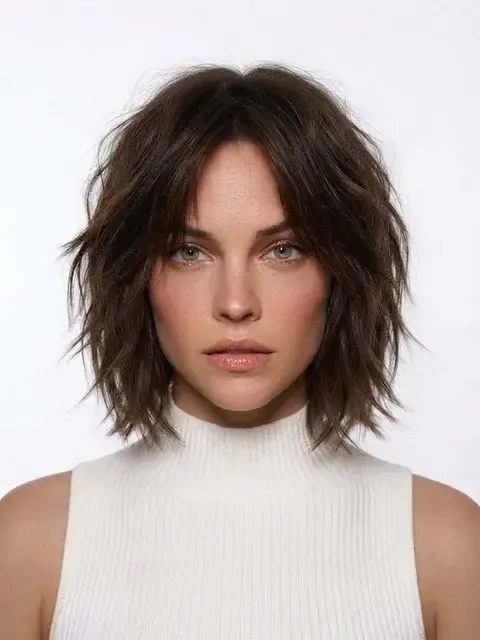
A square face has a strong jaw, and a choppy bob softens it beautifully — provided the cut is soft too. The key is texture around the jawline: choppy ends that break up the straight line of the jaw, and layers that fall forward rather than sitting flat. A side part and curtain bangs add to the softening effect.
Pros: softens a strong jaw, adds movement, and looks feminine without losing strength. Cons: a very blunt or very short chop can emphasise the jaw, so keep the ends textured and the length at or below the jaw.
Who it suits: women with a square or strong jaw who want a bob that softens rather than sharpens — ask for texture around the jawline.
The Choppy Bob for Heart Faces
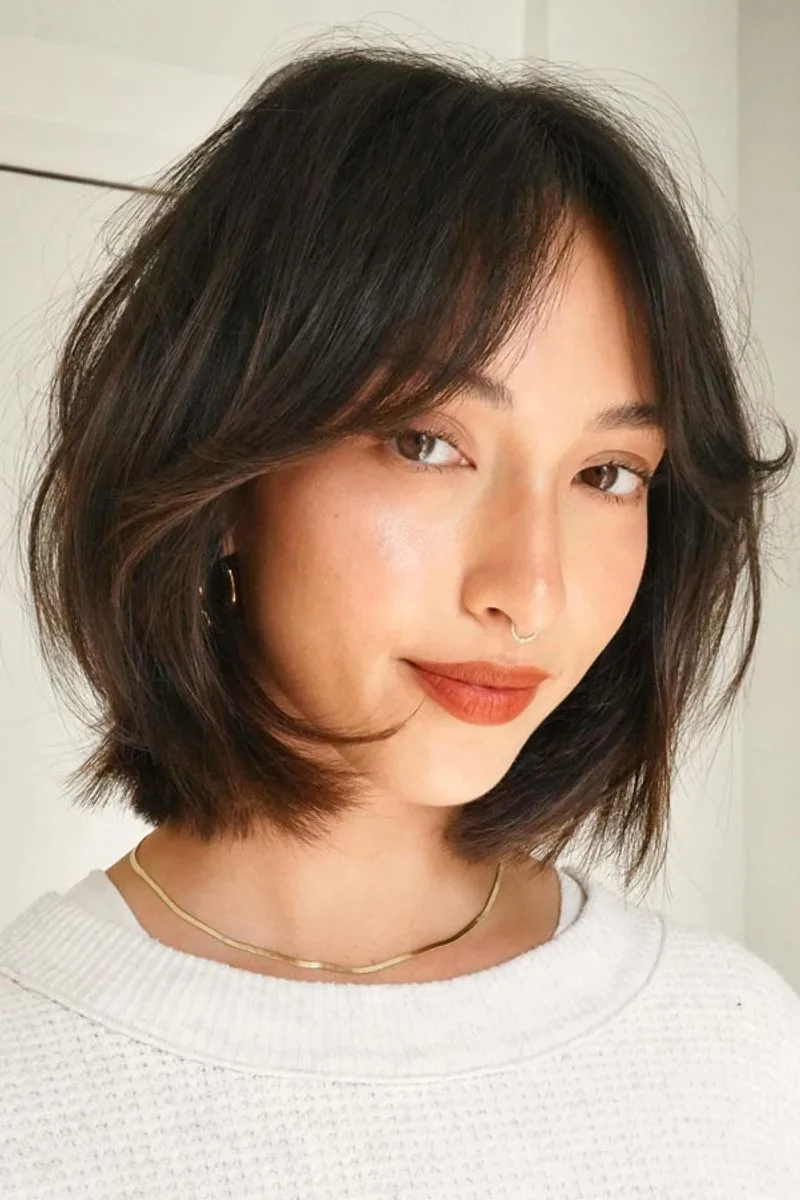
A heart-shaped face is wider at the forehead and narrower at the chin, and a choppy bob balances it by adding fullness where the face narrows. A chin-length chop with texture at the ends fills in around the jaw, while curtain bangs or a side part softens the forehead. The result is a face that looks balanced from every angle.
Pros: adds width at the jaw, softens the forehead, and looks balanced. Cons: a very short chop with volume at the top can make the forehead look wider, so keep the volume low.
Who it suits: women with heart-shaped faces, especially with a pointed chin — ask for a chin-length chop with fullness at the ends.
The Choppy Bob for Women Over 40
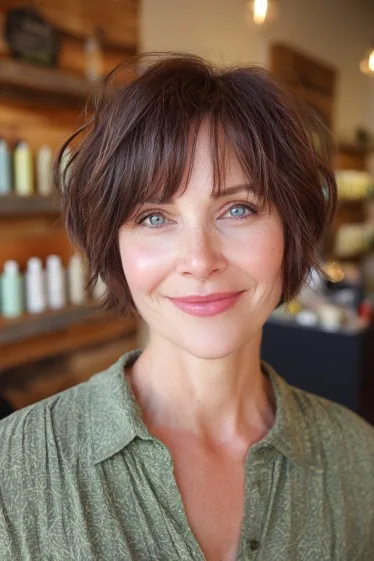
A choppy bob in your forties is a statement of intent: you are not fading into safe hair. The texture adds youth and energy without trying too hard, and the cut works with the changes that come with age — hair that is a little finer, a little lighter, a little less willing to hold a style. A jaw-length chop with soft layers is the sweet spot.
Pros: youthful without being young, adds volume to fine hair, and looks modern. Cons: very short or very wild versions can feel like too much change at once — start softer and go bolder later.
Who it suits: women over forty who want a cut with energy, and anyone whose hair is getting finer and needs the illusion of thickness.
The Choppy Bob for Women Over 50
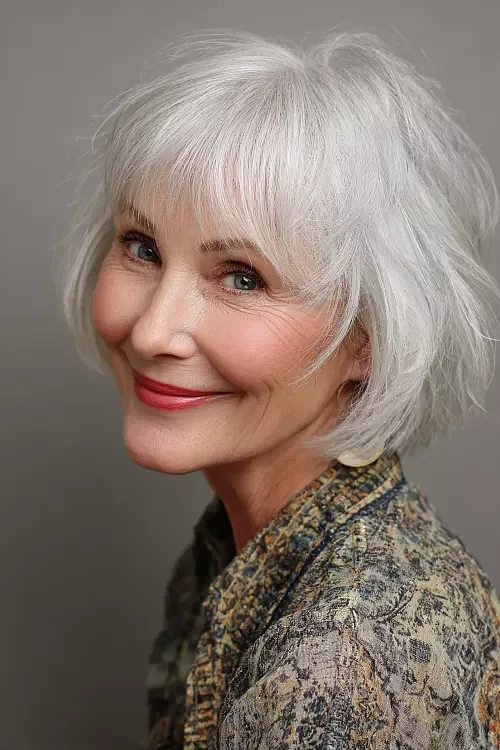
In your fifties, a choppy bob is one of the most flattering cuts you can choose. It lifts the face, adds volume where hair has thinned, and it looks intentional and stylish rather than simply short. Whether your hair is coloured or proudly grey, the texture gives it life.
Pros: lifts the face, adds volume, and looks chic at any age. Cons: needs regular trims to keep the shape, and very choppy ends can look thin on very fine hair.
Who it suits: women over fifty who want a cut with style and movement, and anyone embracing grey — the texture makes silver hair look luminous.
The Choppy Bob for Women Over 60
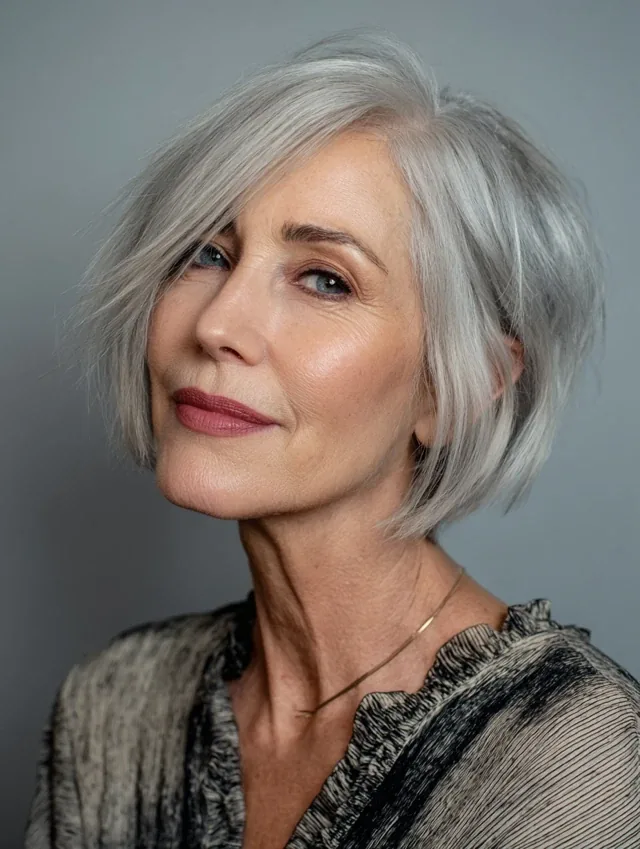
A choppy bob after sixty is pure confidence. The cut is light, easy to manage, and full of character — and it suits the hair most women have at this age, which is finer and often beautifully silver or white. Keep it at chin or jaw length, keep the texture soft, and let the cut do the work.
Pros: easy to manage, light to wear, and very flattering. Cons: the ends need regular trims, and a too-severe chop can look harsh on delicate features.
Who it suits: women over sixty who want a short cut with personality, and anyone who wants to spend five minutes on their hair, not fifty.
The Choppy Bob With Volume at the Crown
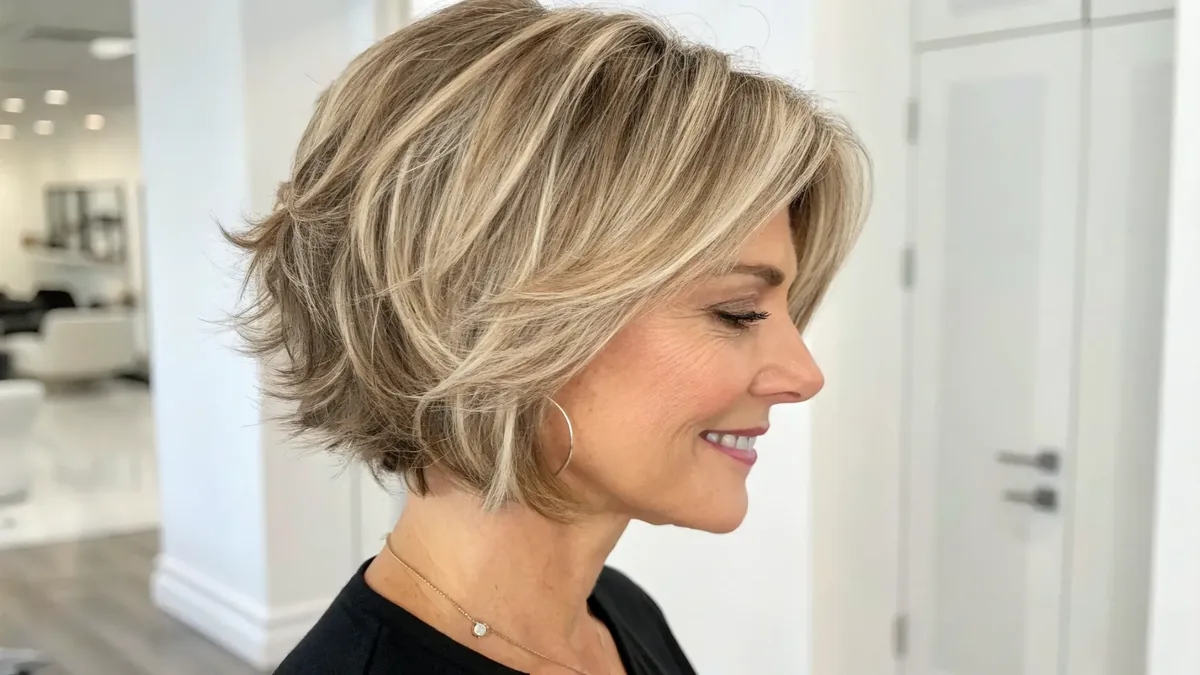
Some choppy bobs are all about the crown. Shorter layers on top create lift and height, while the choppy ends keep the cut from looking like a helmet. The volume balances a long face, adds presence to fine hair, and makes the whole cut look like it has energy.
Pros: great lift and height, flatters long faces, and holds its shape all day. Cons: needs a little root lift or dry shampoo to keep the volume, and the top layers can stick up on very straight hair.
Who it suits: women with long or narrow faces, and anyone with fine, flat hair that needs height at the top.
The Choppy Bob, Tucked Behind the Ear
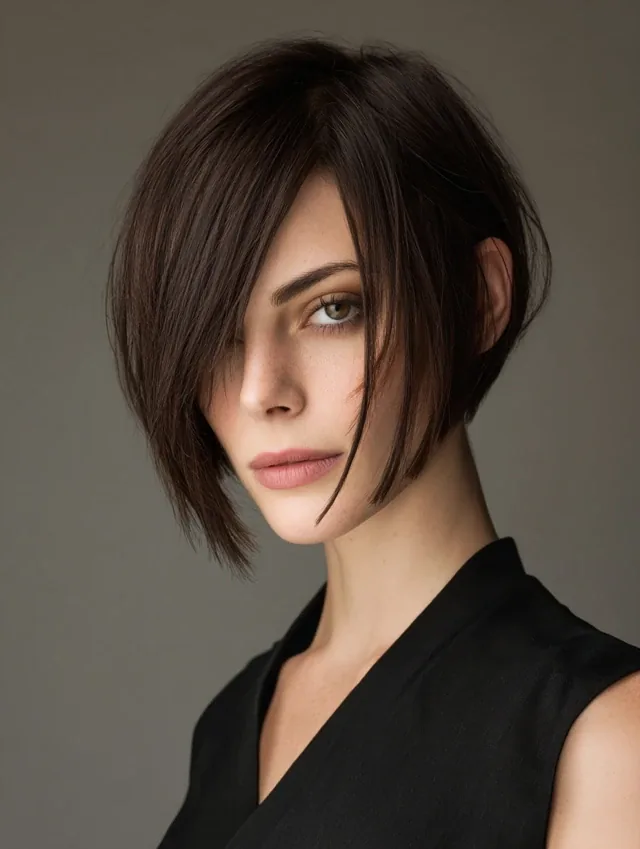
Tucking one side of a choppy bob behind the ear is the simplest styling trick there is, and it changes the whole cut. One side opens up the face and shows off an earring; the other side falls forward in choppy pieces. It is asymmetric, effortless, and it takes two seconds.
Pros: shows off the face and jewellery, creates asymmetry, and costs nothing. Cons: the tucked side can fall forward again, and it works best on jaw-length or longer bobs.
Who it suits: anyone who wants a quick way to change their bob’s mood, and women who like to show off earrings or a strong jawline.
The Choppy Bob With Beach Texture

Beach texture is the choppy bob’s natural habitat. Salt spray, a little scrunching, and the cut’s own uneven ends combine into that tousled, just-back-from-the-sea look — even if the nearest sea is a hundred miles away. It is the most relaxed version of the cut, and the easiest to achieve.
Pros: effortless, summery, and it looks better the less you do. Cons: salt spray can dry the ends out, so condition regularly, and the look can tip into messy if the cut is overgrown.
Who it suits: women with wavy hair, holiday lovers, and anyone who wants a bob that looks like a weekend.
The Choppy Bob With a Sleek Top and Choppy Ends
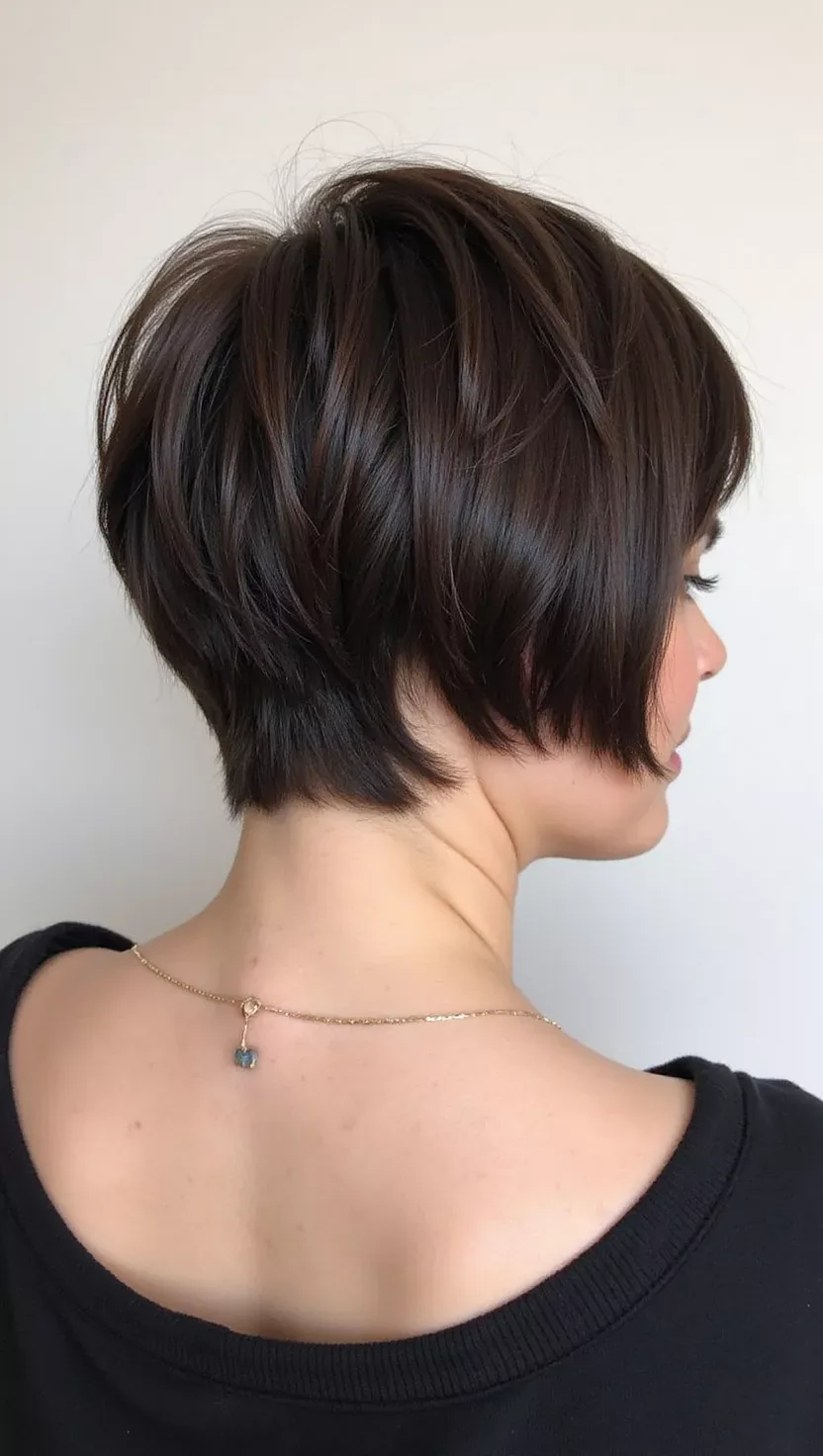
This version keeps the top smooth and polished, then lets the ends go choppy — a cut of two halves that somehow works perfectly. The sleek crown looks smart and controlled; the textured ends add movement and personality. It is the choppy bob for women who like a contrast.
Pros: polished yet playful, works well for work, and the contrast shows off the texture. Cons: needs a straightener or a smooth blow-dry on top, so it is not the lowest-maintenance version.
Who it suits: women who want a smart bob with a twist, and anyone with straight hair who likes a sleek finish with a textured edge.
The Choppy Bob With Face-Framing Layers
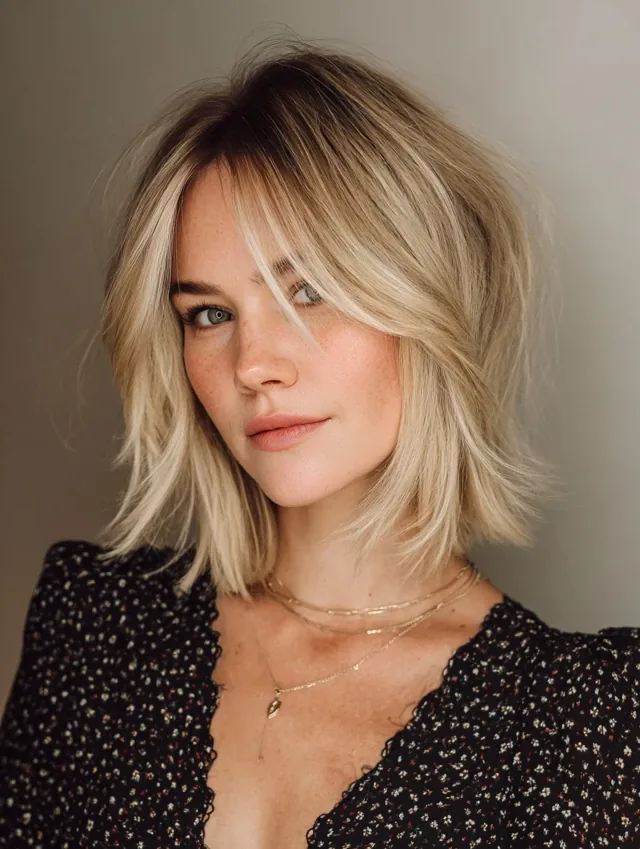
Face-framing layers are the choppy bob’s way of drawing attention to your best features. Shorter pieces around the face highlight the cheekbones and eyes, while the longer choppy layers behind give the cut its shape. It is a cut that is built around your face, not around a template.
Pros: highlights cheekbones and eyes, softens the face, and suits every face shape. Cons: the face-framing pieces need occasional trimming to stay at the right length.
Who it suits: everyone — this is the most universally flattering version of the choppy bob, and a good choice if you can only pick one.
The Choppy Bob With a Textured Fringe
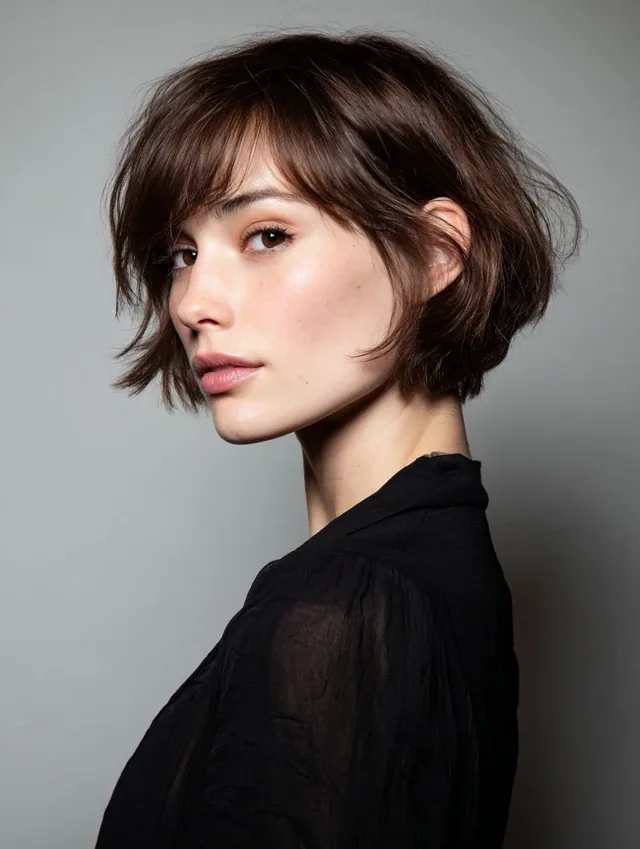
A textured fringe is a fringe cut the same way as the rest of the bob: broken up, piece-y, and deliberately uneven. It sits across the forehead in soft pieces rather than a solid line, which makes it much more forgiving than a blunt fringe — and much easier to grow out.
Pros: soft, forgiving, and it blends into the rest of the cut. Cons: needs a quick style in the morning, and it can go flat on oily hair.
Who it suits: women who want a fringe without the severity of a blunt one, and anyone with a high forehead who wants coverage without a heavy line.
The Choppy Bob, Grown Out Gracefully
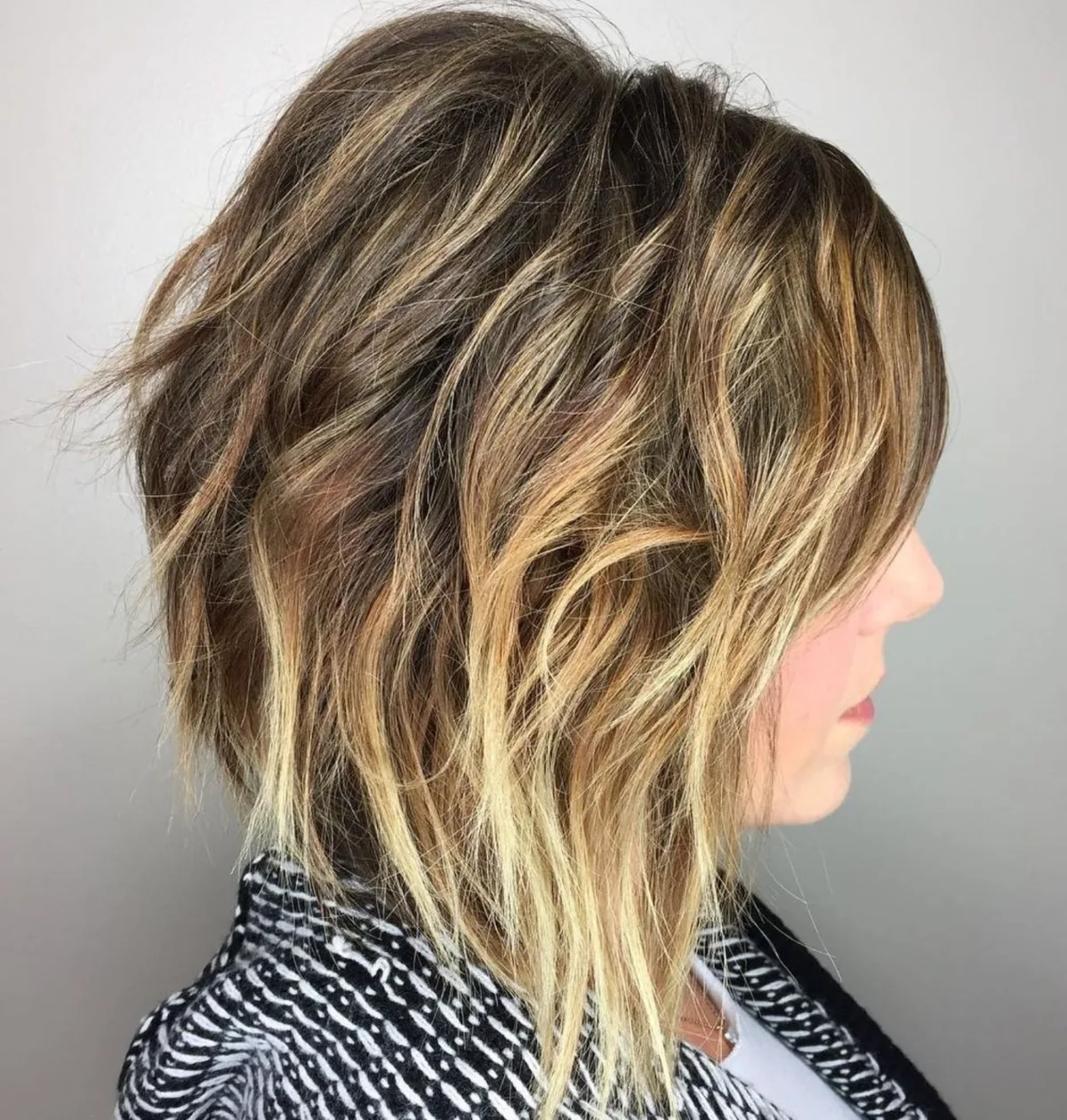
Every choppy bob eventually grows out, and the good news is that it grows out better than almost any other cut. The uneven ends mean there is no harsh line to grow through, and the layers simply get longer and softer. At collarbone length, the grown-out chop becomes a textured lob — a style in its own right.
Pros: no awkward growing-out stage, and the longer version is just as stylish. Cons: the shape eventually needs a re-cut to stay a bob, and the ends can look tired after three months.
Who it suits: anyone who hates the in-between stage of growing out a haircut, and women who want a bob they can keep for months without a trim.
Are choppy bob haircuts for women easy to maintain?
Yes. A choppy bob is one of the lowest-maintenance cuts you can own. It looks better slightly undone, so a quick rough-dry or air-dry is usually enough. Book a trim every six to eight weeks to keep the texture crisp, and use a light texturising spray rather than heavy products.
Do choppy bobs suit fine hair?
Yes, they are one of the best cuts for fine hair. The broken-up ends catch the light in different directions, which makes the hair look thicker, and the layers add volume that fine hair rarely manages on its own. Keep the cut at chin or jaw length for the fullest effect.
Do choppy bobs work on thick hair?
Yes, with the right technique. Your stylist should remove weight from the interior and break up the ends, so the hair moves instead of sitting heavy. A slightly longer length — jaw to collarbone — helps keep thick hair under control.
What is the difference between a choppy bob and a layered bob?
A layered bob has layers cut through the interior but fairly even ends. A choppy bob breaks up the ends themselves, so the outline is deliberately irregular and the texture is visible. The choppy version looks more playful and more textured.
How often should I get a choppy bob trimmed?
Every six to eight weeks is right for most women. The cut grows out gracefully, so you can stretch it longer if you need to, but after about six weeks the ends start to look grown out rather than deliberately choppy.
Can I have a choppy bob with curly hair?
Yes, and it can look wonderful — light, bouncy and full of shape. The layers should be cut with your curl pattern in mind, ideally curl by curl, because a chop that looks subtle on wet hair can spring up once it dries.
What should I ask my stylist for a choppy bob?
Bring a photo of the cut on someone with hair like yours, and ask how choppy the ends will be, how much length you will lose at the shortest piece, and how often you will need a trim. Ask whether they will use point cutting or a razor, and start softer than you think — you can always go choppier next time.
Are choppy bobs good for women over 50?
Yes. A choppy bob lifts the face, adds volume to hair that has thinned, and looks chic at any age. It works beautifully with natural grey or silver, because the texture makes the colour look luminous rather than flat.
How do I style a choppy bob at home?
Work a pea-sized amount of texturising cream or sea-salt spray through damp hair, then rough-dry with your fingers or let it air-dry. Stop before you think you are finished — over-styling kills the texture. A few pieces sticking out is the style, not a mistake.
Will a choppy bob suit my face shape?
Almost certainly yes, because there is a version for every face shape. Round faces suit longer front pieces, square faces suit soft texture around the jaw, heart faces suit fullness at the ends, and oval faces can wear almost any version. Show your stylist a photo and talk about your face shape before the cut.
Conclusion
A choppy bob is not just a haircut — it is a change of attitude. It is the cut for women who are done with hair that behaves, who want texture they can feel and movement they can see, and who would rather look interesting than look perfect. The thirty-seven versions in this guide prove that there is a choppy bob for every face, every hair type and every age, from the soft and wearable classic to the bold French bob and the fiery copper chop.
The best choppy bob haircuts for women are the ones that fit your life, not just your face. If you wash and go, pick a wavy or beach-textured version. If you like a polished finish, pick the sleek-top version. If your hair is fine, let the chop do the thickening for you; if it is thick, let it do the lightening. And if you are still unsure, start with the classic jaw-length chop and a photo on your phone — your stylist will take it from there.
Book the appointment. Bring a picture. Ask for the texture, not just the length. And when you leave the salon, do not smooth it down — let it move, let it flick, let it misbehave a little. That is the whole point of the cut, and it is why you will love it.