40 Hairstyles for a Track Meet That Survive Heats, Hurdles and the Photo Finish
Race day is the hardest test your hair will ever face. You are crouched in the starting blocks, exploding into a sprint, clearing hurdles, handing off a baton at full speed — and all the while sweat is running, wind is hitting you on the home straight, and every loose strand is trying to get into your eyes right when you need to see the finish line. That is why hairstyles for a track meet are not about looking pretty in the team photo; they are about keeping your vision clear and your hair locked down from the first heat to the final.
A good track hairstyle does three things at once. It keeps every strand away from your face and neck, it survives sweat, wind and full-speed movement without sliding loose, and it sits flat enough to work with a headband, a cap or a race bib pinned at your chest. Braids, tight buns and high ponytails do this best, because they anchor the hair at several points instead of asking one elastic to hold everything.
This guide starts with the race-day reality — how to pick a style for sprints, distance or field events, which sweat-proof products actually hold, and which headbands survive the home straight — and then gives you 40 styles to choose from, for short, medium and long hair, straight, wavy and curly textures, and every kind of meet, from a school sports day to a championship final. Pick one, practise it once at home, and walk onto the track knowing your hair is already sorted.
Race-Day Reality: Why Track Hair Fails
What it is: Track hair fails for a simple reason: running is the most violent thing you can ask a hairstyle to survive. Every stride shakes your head, sweat loosens elastics and pins within minutes, and the wind on the home straight pulls at anything left loose. A style that looks perfect in the mirror can fall apart before the first bend.
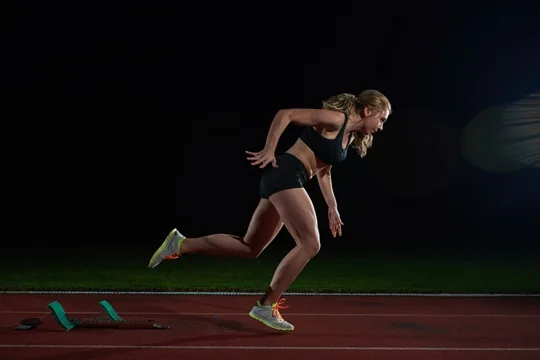
Common mistakes: The biggest mistake is testing a new style for the first time on race day. Another is using one thin elastic for thick, heavy hair, or leaving the front layers loose so they whip across your face in a headwind. Loose bobby pins are a third culprit — they slide out with sweat and end up on the track.
Maintenance: Do a full dress rehearsal: wear the style for a hard training run, including strides and a cool-down, and check it in the mirror afterwards. Keep two spare elastics and four pins in your kit bag. If anything moved during training, tighten it or pick a different style.
Quick verdict: If your hair survives a full training session without you touching it once, it is ready for race day. If you reach up to push it back even once, pick a tighter style.
Sprints, Distance and Field Events Need Different Hair
What it is: Sprinters need total lockdown for ten to sixty seconds of maximum effort, distance runners need a style that stays comfortable and cool for twenty minutes or more, and field-event athletes need hair that stays out of the way while they throw, jump or vault. One style rarely fits all three, so pick for your event, not for the photo.
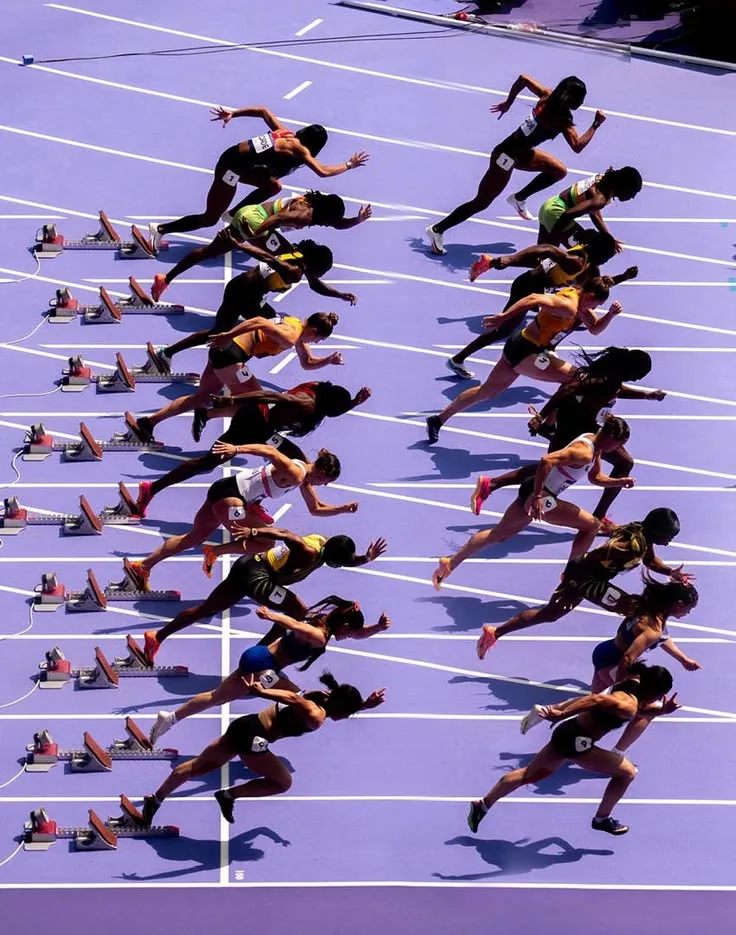
Common mistakes: The most common mistake is wearing a sprinter’s tight style for a long race, where it pulls and gives you a headache by the third lap — or wearing a loose, comfortable style for the 100 metres, where it bounces and blocks your vision out of the blocks. Jumpers also forget that hair hanging down changes how a landing feels.
Maintenance: Think about time and movement: short and violent means braid it flat and pin it hard; long and steady means choose something light that lets heat escape from your neck. Field athletes should test the style through the full motion — the run-up, the take-off and the landing.
Quick verdict: Match the style to the event and you stop thinking about your hair entirely, which is exactly the point on race day.
Sweat-Proof Products That Hold Through Heats
What it is: Sweat is the enemy of every track hairstyle, because it makes hair slippery, loosens elastics and turns flyaways into a damp fringe across your forehead. The right products — a strong-hold gel or pomade on the edges, a light hairspray over the finished style, and a sweat-wicking headband — buy you the extra grip that holds from heats to finals.
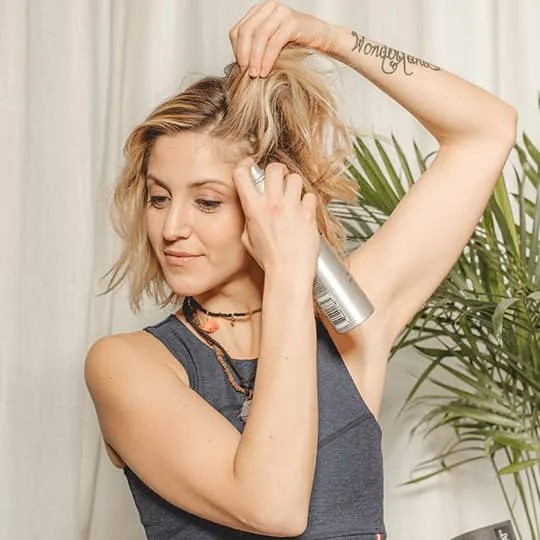
Common mistakes: The biggest mistake is overloading fine hair with heavy wax, which slides off once you start sweating, or using a regular hairspray that goes sticky and stiff in the heat. Another is applying product to soaking wet hair, where it dilutes and does nothing.
Maintenance: Apply gel or edge control to damp, towel-dried hair, then let it set for ten minutes before you run. Carry a travel-size edge brush and a few pins for touch-ups between heats. Wash the product out properly after the meet — sweat plus product left in overnight is a recipe for breakage.
Quick verdict: Use less product than you think, applied in the right places, and your style will hold longer than a heavy, sticky coat ever will.
Headbands, Caps and Pins That Survive the Home Straight
What it is: A headband is the cheapest insurance on race day: it catches sweat before it reaches your eyes, pins down flyaways, and holds the front layers back when the wind picks up on the home straight. The best ones are wide, grippy on the inside, and made to wick sweat rather than soak it up.

Common mistakes: The classic mistake is a silky or satin headband that slides back the moment you sweat, or a narrow band that rolls up into a string by the second lap. Cheap bobby pins are just as bad — they open up, slide out, and litter the track.
Maintenance: Choose a band with silicone grip or a velvet inner strip, and test it on a sweaty training run before race day. Pin the band in place with two crossed bobby pins behind each ear. Carry a spare band in your kit bag, because a soaked band is worse than no band at all.
Quick verdict: A good headband should feel invisible within a minute of putting it on. If you are still aware of it after the warm-up, it is the wrong one.
Hair by Length: Short, Medium and Long on Race Day
What it is: Length changes everything on race day. Short hair needs a headband and pins to control the front layers, medium hair suits a low ponytail or a single braid, and long hair needs to be braided or bunned so it does not whip across your face or your shoulders with every stride.
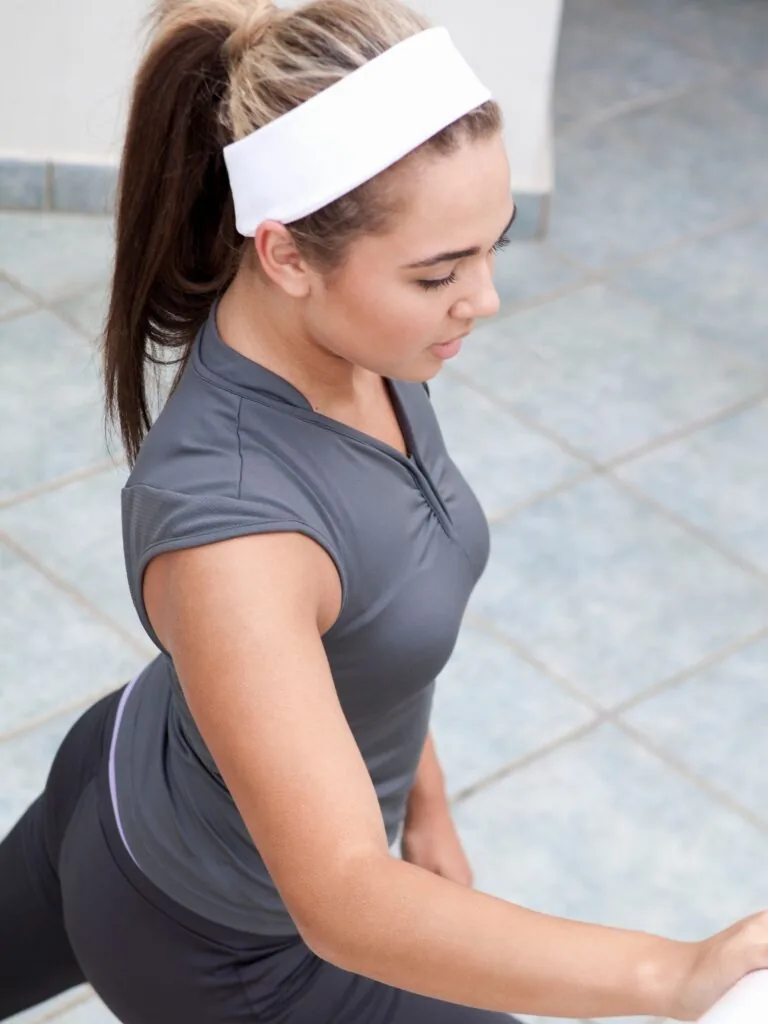
Common mistakes: Short-haired runners often assume they need nothing — then the fringe sticks to a sweaty forehead mid-race. Long-haired runners make the opposite mistake: a single high ponytail that swings like a rope and slaps the neck and shoulders for the whole race.
Maintenance: Short hair: pin the front back with two crossed pins and add a grippy headband. Medium hair: a low ponytail with the ends braided, or a single French braid. Long hair: double braids or a braided bun, so the weight is split and nothing swings free.
Quick verdict: Pick the style your length actually supports, not the one you wish you had, and race day gets much simpler.
Braids vs Buns vs Ponytails on the Track
What it is: Braids, buns and ponytails are the three families every track hairstyle comes from, and each wins in a different way. Braids distribute the hold along the whole head, buns remove the hair from the equation entirely, and ponytails are the fastest to do and the easiest to fix between heats.

Common mistakes: The mistake is choosing by looks alone. A ponytail looks great in the blocks but swings and loosens over 400 metres; a bun looks neat but can feel heavy and pull at the scalp in a long race; braids take the longest to do and are hard to redo in a hurry.
Maintenance: Braids suit heats and finals back to back, because they barely move. Buns suit field events and relays, where nothing can dangle or get caught. Ponytails suit warm-ups, short sprints and spectators, and they are the best fallback when you have five minutes before your call time.
Quick verdict: If you can only learn one race-day skill, learn a tight Dutch braid — it beats a ponytail for hold and a bun for comfort over distance.
Quick Fixes Between Heats and Before Finals
What it is: A track meet is a long day: heats in the morning, semi-finals after lunch, and the final when you are tired, sweaty and running on nerves. Hair that held perfectly at 9 a.m. can be half undone by 3 p.m., so a sixty-second fix between races is worth more than a perfect style at the start.
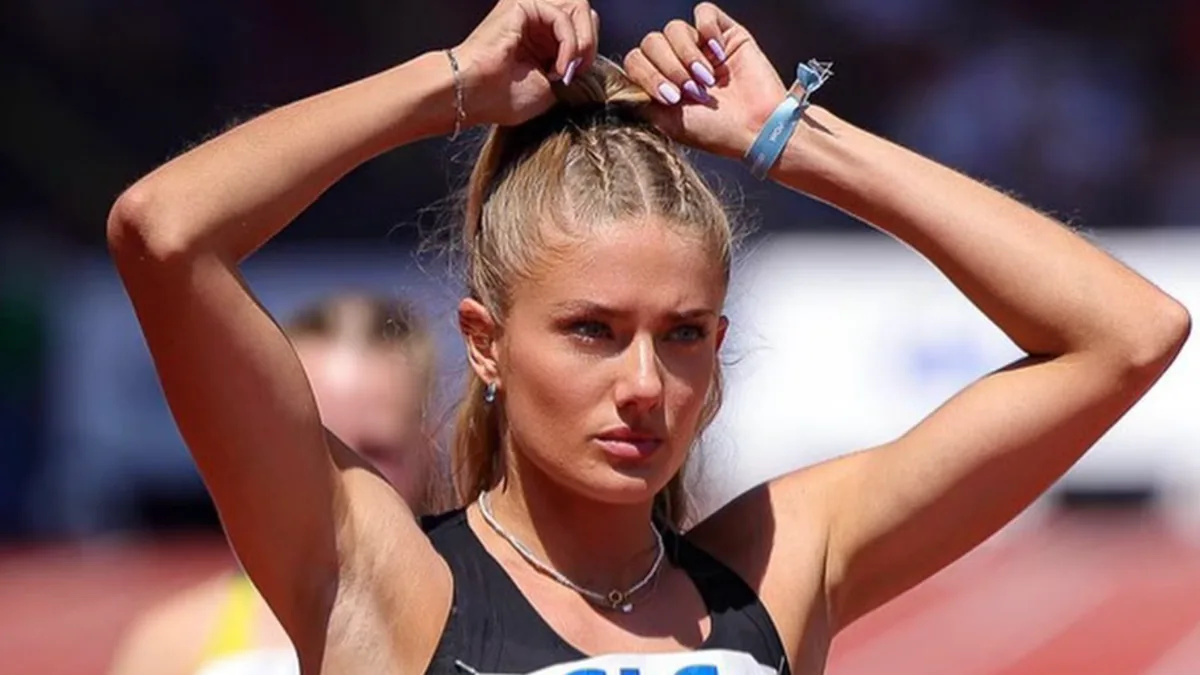
Common mistakes: The mistake is trying to redo the whole style between heats, which wastes energy and rarely holds as well as the first attempt. Another is pulling everything tighter and tighter until your scalp aches — pain is a distraction you do not need before a final.
Maintenance: Pack a small kit: two elastics, four bobby pins, a mini brush, edge gel and a dry shampoo or sweat-wicking towel. Between races, smooth the edges, re-pin the loose pieces, swap a soaked headband for a dry one, and leave the main style alone if it is still holding.
Quick verdict: Fix only what has actually come loose. A calm, quick tidy-up keeps you focused; a full restyle before a final just adds stress.
Post-Meet Hair Recovery
What it is: After a full day of sweat, sun, product and tight braids, your hair needs a proper reset. Salt and sweat dry the hair out, tight styles pull at the roots, and product left in overnight can clog the scalp and cause breakage the next time you braid it.
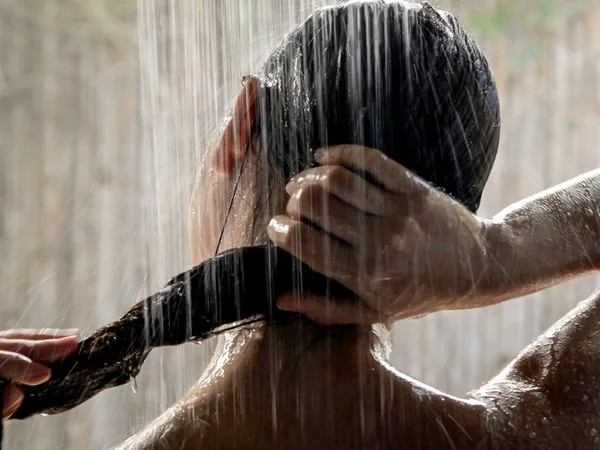
Common mistakes: The biggest mistake is going straight to bed with race-day product and sweat still in your hair, or ripping braids out roughly because you are tired. Another is washing with very hot water, which strips the hair further after a long day in the sun.
Maintenance: Undo braids gently, working from the ends up, and detangle with your fingers before a brush. Wash with a gentle shampoo, condition the lengths, and let your hair air-dry before the next training session. Give tight styles a rest day before the next meet.
Quick verdict: Treat recovery as part of race day, not an afterthought, and your hair will be ready to be braided tight again next weekend.
1. High Ponytail That Stays Put
What it is: The high ponytail is the classic track style for a reason: it lifts every strand off your neck, keeps your face clear, and takes two minutes to do. Done right, with a strong elastic and the base wrapped and pinned, it survives sprints, hurdles and relays without slipping.
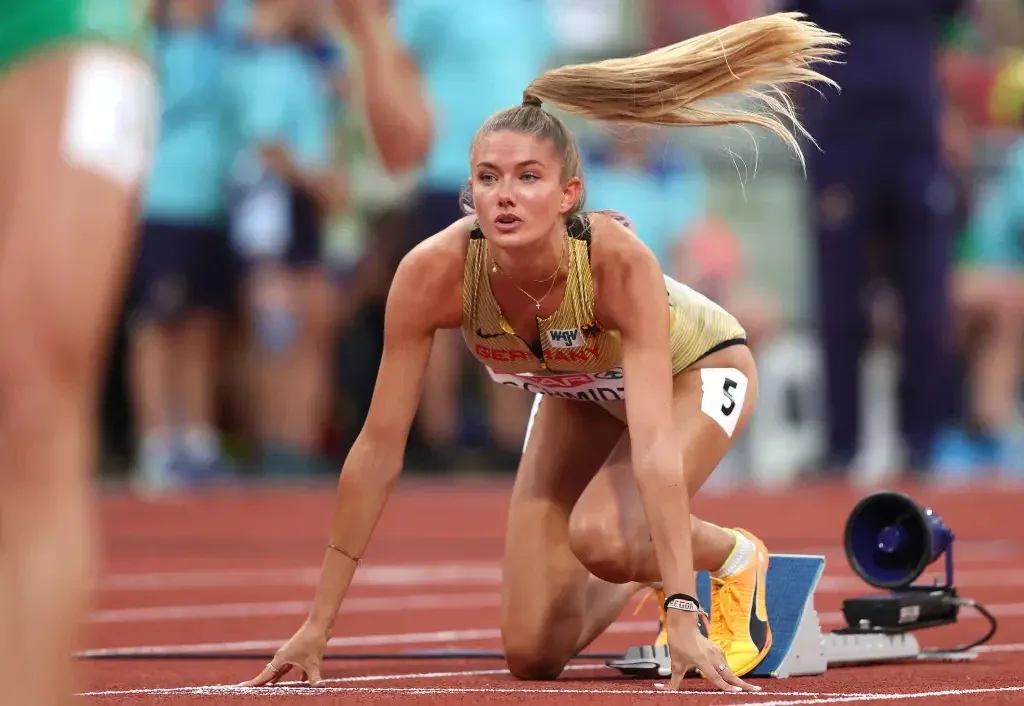
Common mistakes: Using a single thin elastic, or tying it too high so it pulls and bounces with every stride. Another mistake is leaving the front layers loose, so they whip across your face on the home straight.
Maintenance: Wrap a strand of hair around the elastic and pin it underneath, and add a second elastic a few centimetres down for long hair. Swap a stretched elastic for a fresh one before every race, and keep a spare in your kit bag.
Quick verdict: Fast, simple and reliable — the best fallback style when your call time is five minutes away.
2. Double Dutch Braids
What it is: Double Dutch braids are the gold standard for track day: two tight braids that anchor the hair from the hairline to the ends, split the weight evenly, and barely move no matter how hard you run. They survive heats, finals and a full day of waiting around between races.
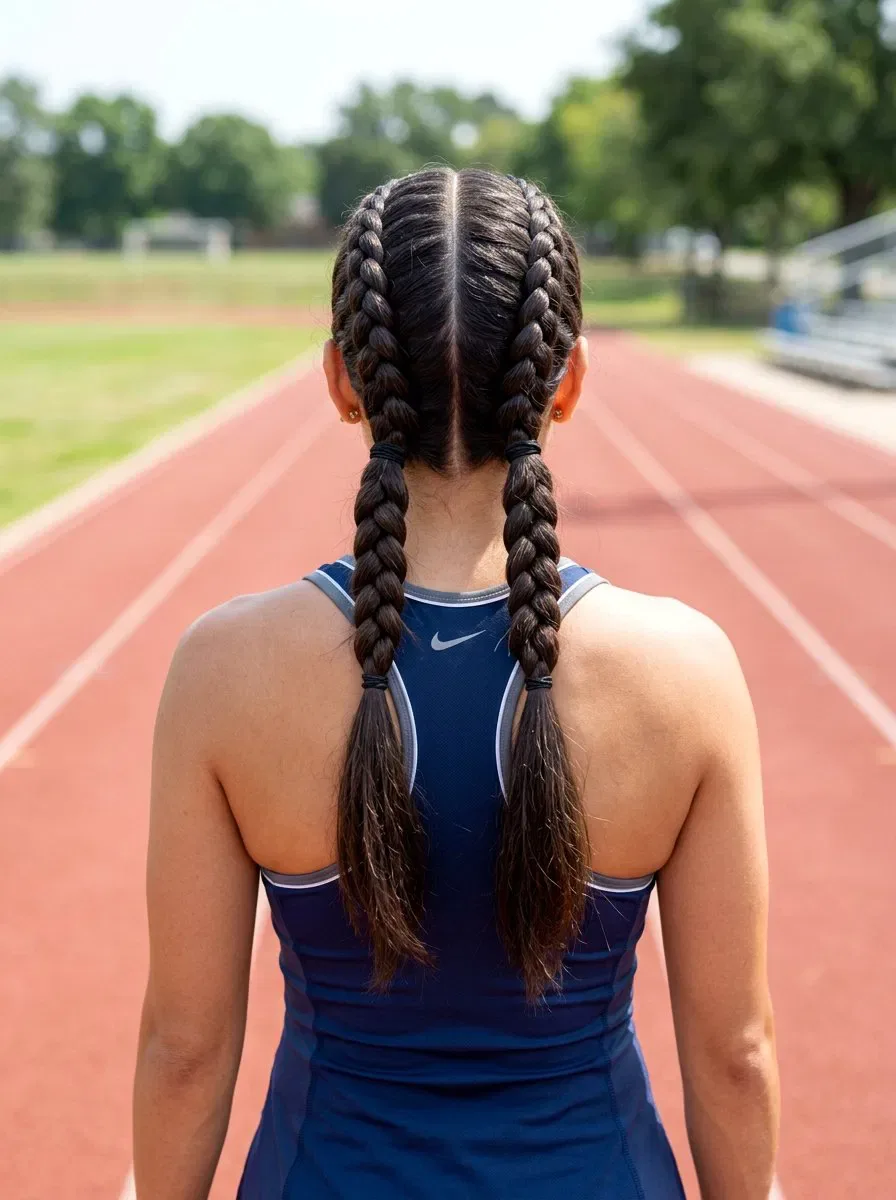
Common mistakes: Braiding too loosely at the hairline, so the front lifts and flyaways escape by the second lap. Starting the braids too far back is another common error — the front layers end up loose.
Maintenance: Braid on slightly damp hair with a little gel on the edges, and secure the ends with small snag-free elastics. A light mist of hairspray over the finished braids keeps flyaways down without stiffness.
Quick verdict: The single most reliable race-day style there is. If you can braid, this is your default.
3. Low Sleek Bun
What it is: A low sleek bun gathers everything at the nape, where it cannot swing, bounce or catch the wind. It is neat, flat and comfortable under a cap, and it suits sprinters and field-event athletes who need hair completely out of the way.
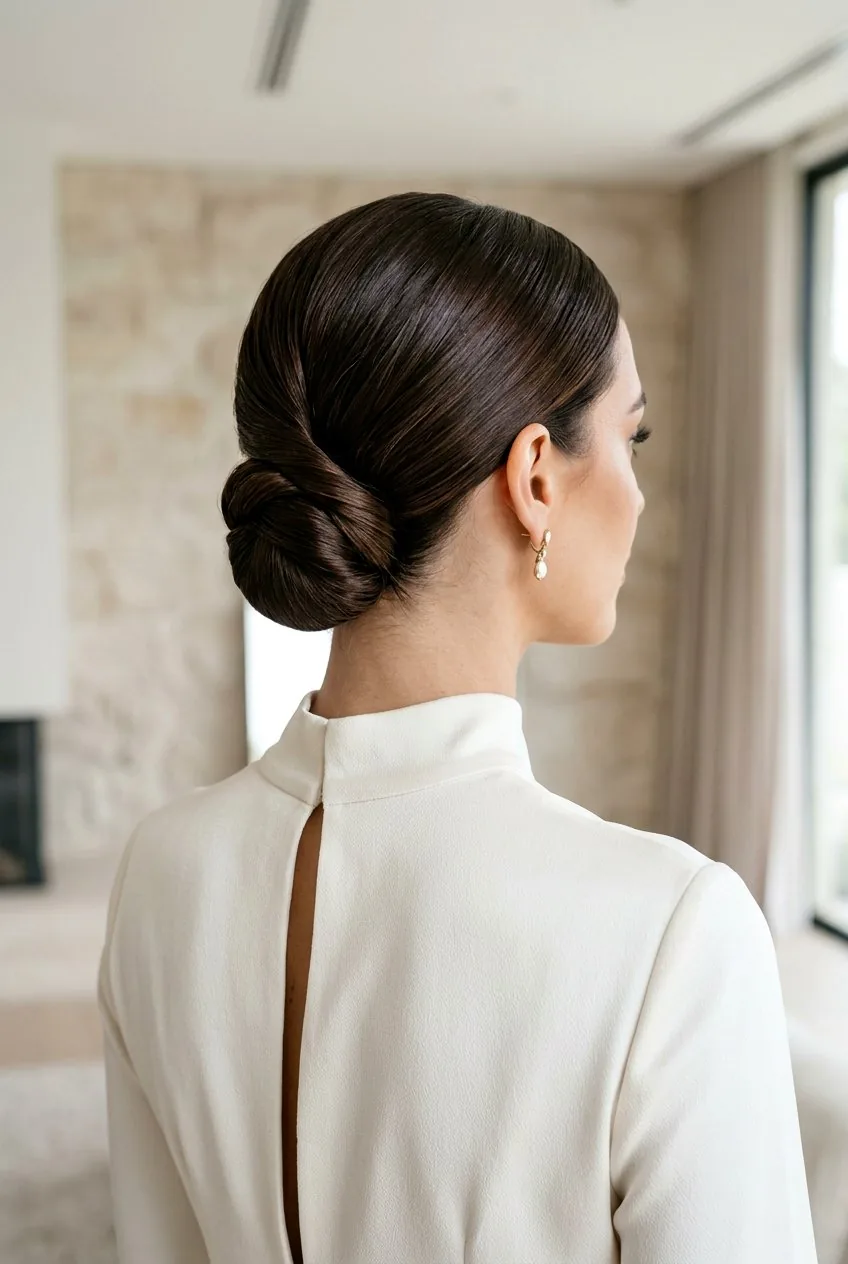
Common mistakes: Leaving the bun too loose, so it sags and pulls by the second race, or piling it too high, where it bounces with every stride. Skipping pins is the usual reason a bun fails mid-meet.
Maintenance: Smooth the hair back with gel, twist it tightly, and pin the bun in four places — top, bottom and both sides. A hair net over the bun adds invisible insurance for a long day.
Quick verdict: Elegant and completely out of the way — a strong choice for finals and field events.
4. Bubble Braid Ponytail
What it is: A bubble braid ponytail takes a normal ponytail and sections it with elastics into soft bubbles, which stops the length from swinging as one heavy rope. It looks fun and sporty, and it holds up far better than a plain ponytail over distance.
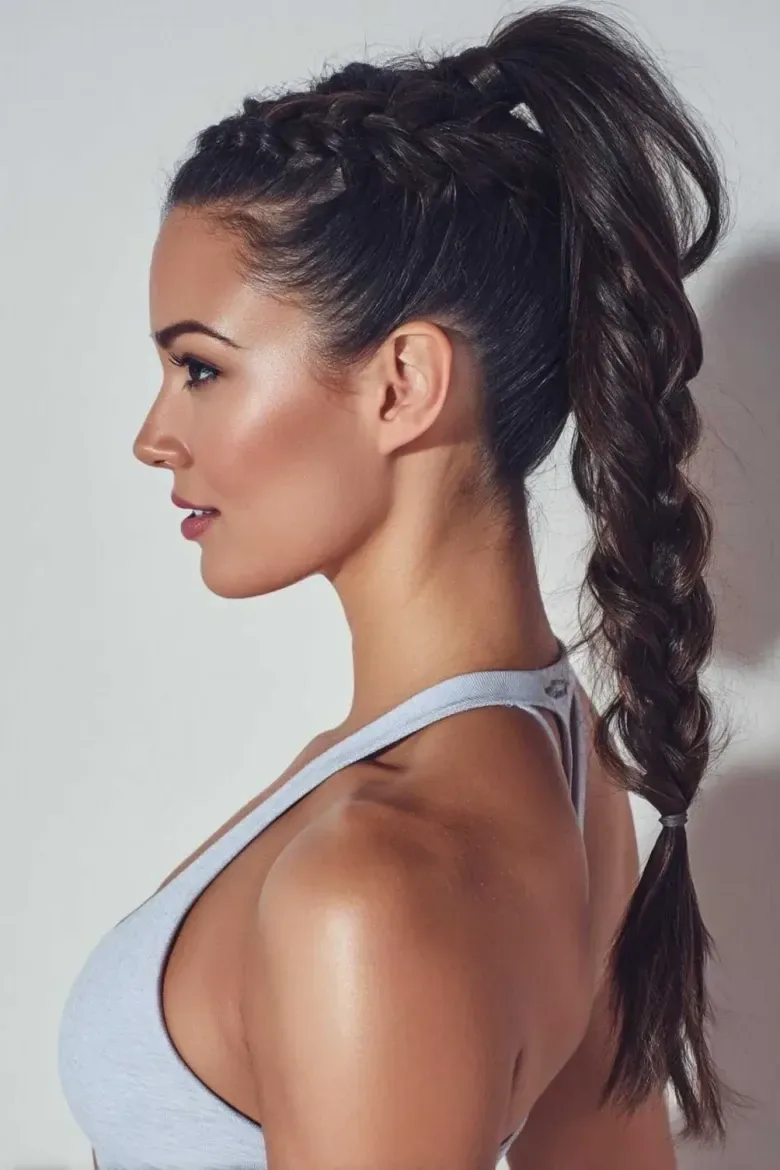
Common mistakes: Spacing the elastics too far apart, so the bubbles collapse into a lumpy ponytail, or pulling each bubble too tight, which puts strain on the hair. Using cheap elastics that snap mid-race is another risk.
Maintenance: Use snag-free elastics and keep the sections even — about a hand’s width apart. Gently pull each bubble out for volume, but not so much that the elastic slips. Carry spare elastics for a quick fix between heats.
Quick verdict: Playful, secure and easy to redo — great for school meets and fun runs.
5. French Braid into a High Bun
What it is: A French braid that runs up the back of the head and finishes in a high bun locks the hair down twice: the braid anchors the back, and the bun removes the ends entirely. It is one of the most secure styles you can wear on the track.
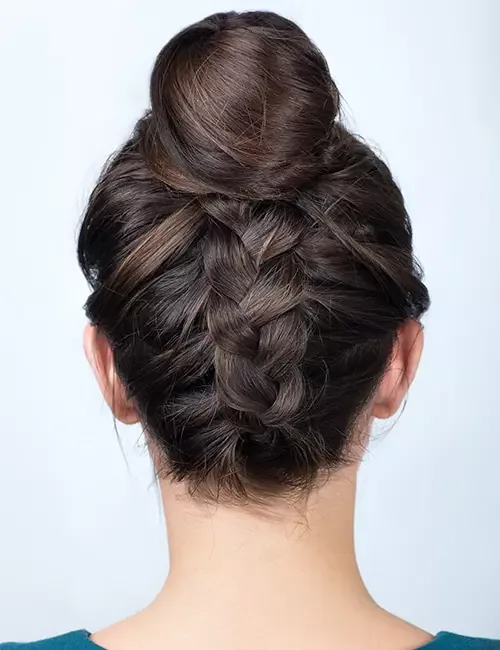
Common mistakes: Braiding too loosely at the nape, where sweat loosens it first, or making the bun too big and heavy so it pulls forward when you sprint. Both mistakes show up by the second lap.
Maintenance: Braid tightly from the nape upward, keeping the sections even, then twist the remaining length into a compact bun and pin it in four places. A little gel at the nape keeps the shortest hairs down.
Quick verdict: Maximum hold with a polished finish — ideal for championship finals and team photos.
6. Slicked-Back Low Ponytail
What it is: A slicked-back low ponytail is the minimalist race-day style: every strand smoothed back, no flyaways, no bounce, nothing to think about. It suits short and medium hair especially well, and it sits perfectly under a headband or cap.
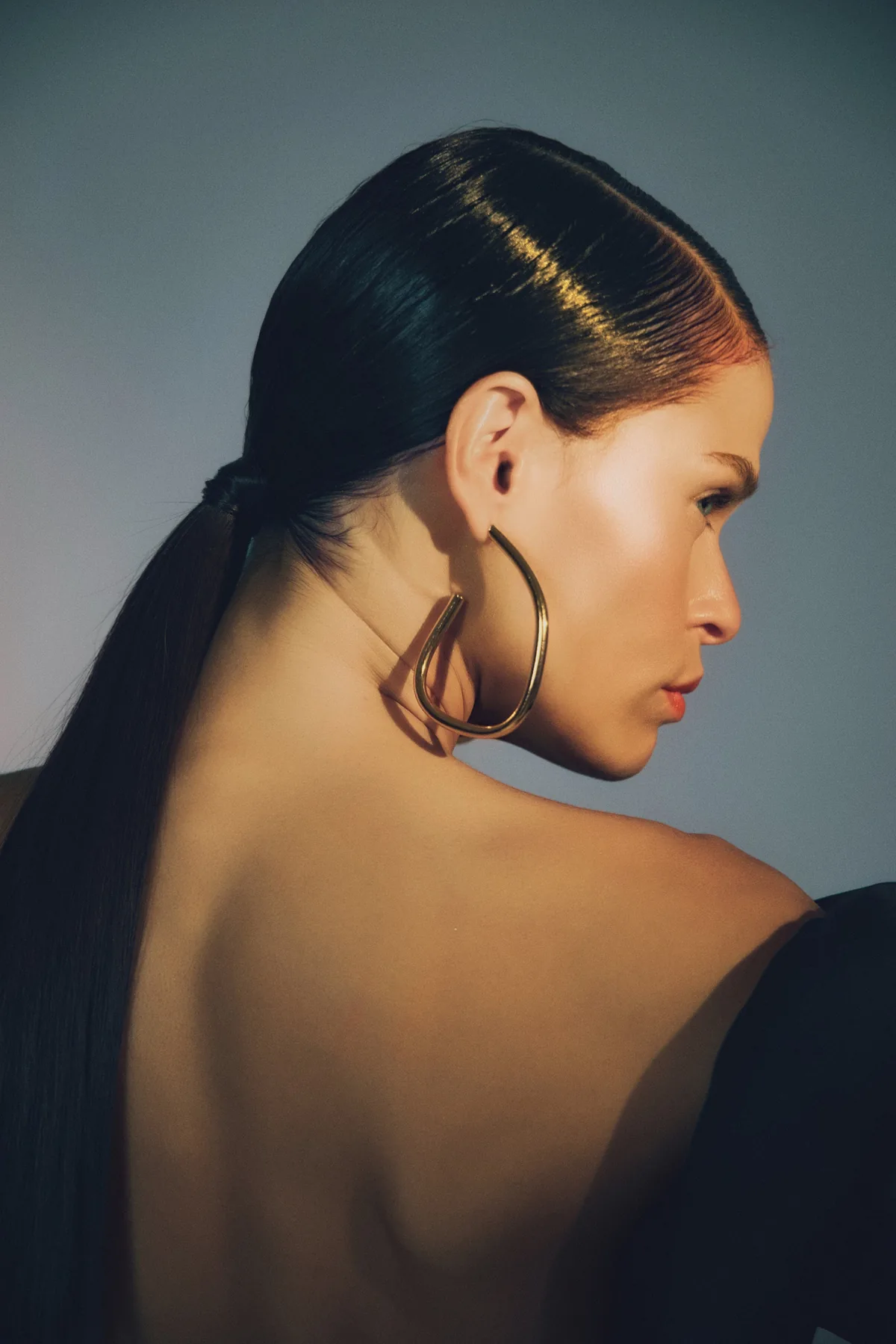
Common mistakes: Using too much gel, which goes sticky once you sweat, or tying the ponytail too low so it catches on your collar and race bib. Brushing it back dry is another error — it frizzes within minutes.
Maintenance: Work gel through damp hair with a fine-tooth comb, then tie the ponytail at the nape and smooth the edges with an edge brush. A light hairspray seals it without stiffness.
Quick verdict: Clean, fast and distraction-free — the best low-effort style for sprinters.
7. Cornrows
What it is: Cornrows are braided flat against the scalp in neat rows, so there is nothing to swing, bounce or come loose. They are one of the most durable styles for a full meet day, lasting from the first heat to the last final without a single touch-up.
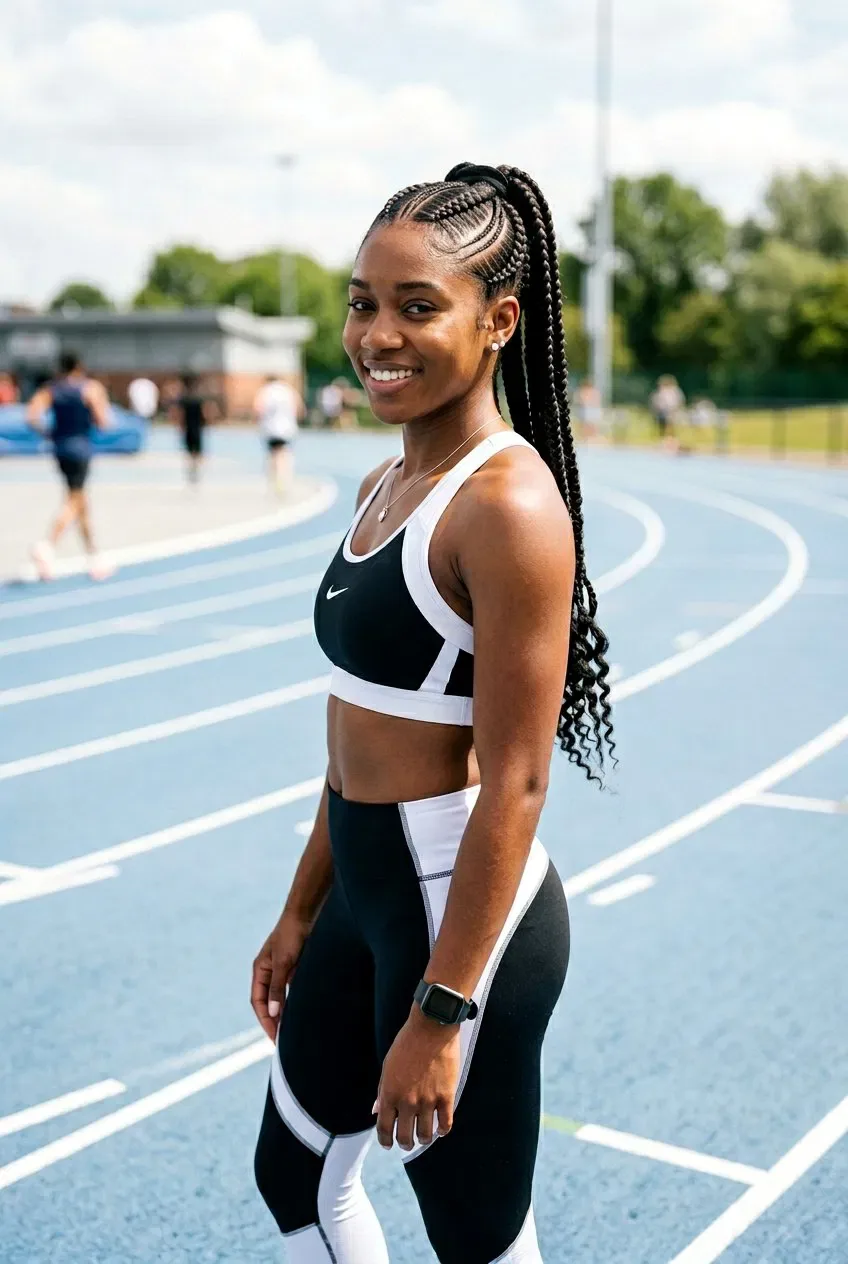
Common mistakes: Getting them done too tightly, which causes pain and headaches by the afternoon, or leaving the ends loose so they whip around during sprints. Sleeping on fresh cornrows without a scarf also loosens them before race day.
Maintenance: Have them done a day or two before the meet, not the morning of it, and keep the tension comfortable. Gather the ends into a low ponytail or bun for extra security, and moisturise the scalp the night before.
Quick verdict: The longest-lasting style on this list — unbeatable for multi-day meets.
8. Half-Up Top Knot
What it is: A half-up top knot lifts the front and crown hair into a small bun while the rest hangs free, which keeps hair out of your eyes without committing to a full updo. It works best for short races, warm-ups and spectating from the stands.
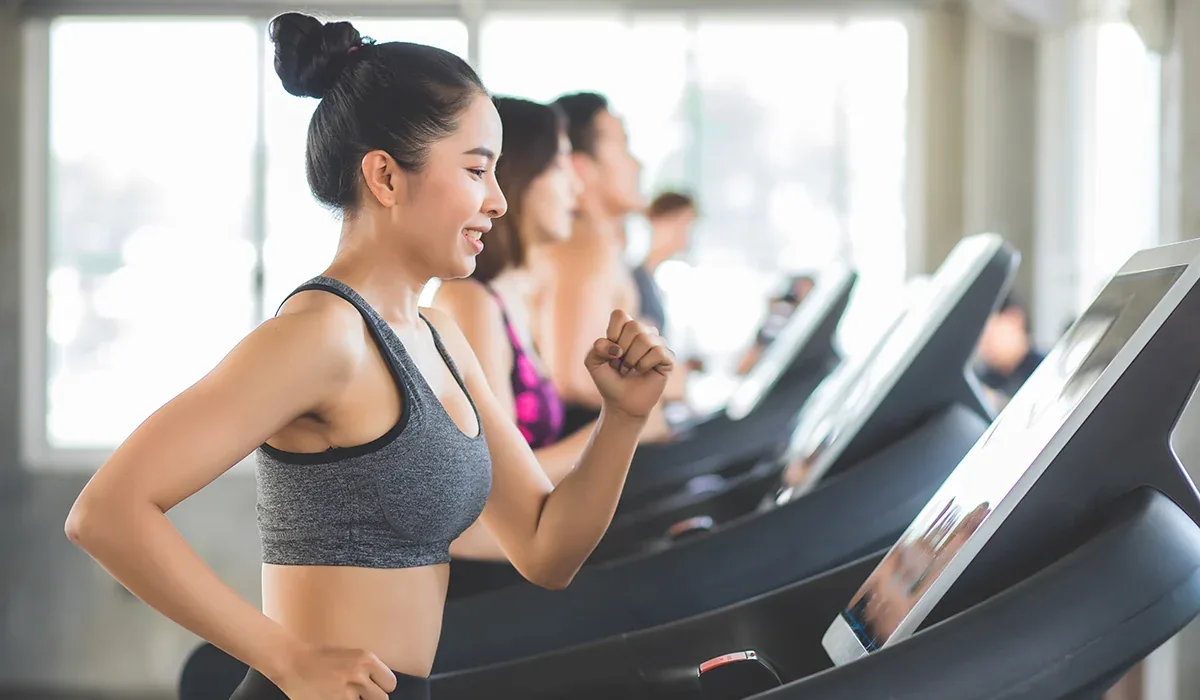
Common mistakes: Making the knot too small, so it slips out mid-race, or leaving too much hair down, which swings and sticks to a sweaty neck. It is not a full-lockdown style, and pretending it is leads to mid-race fixes.
Maintenance: Take a generous section from the crown, twist it tightly and pin it in three places. Add a headband to control the hair left down, and save this one for short events rather than long distance.
Quick verdict: Quick and cute, but a half measure on race day — best for the stands or a short sprint.
9. Double French Braids into Low Buns
What it is: Two French braids that finish in low buns give you the hold of braids with the neatness of buns: nothing swings, nothing dangles, and the weight is split evenly on both sides. It is a favourite for hurdlers and relay runners, where balance matters.
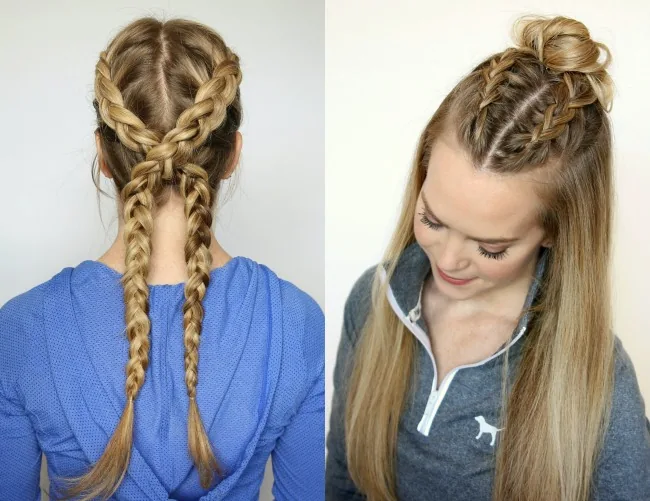
Common mistakes: Braiding unevenly, so one side pulls tighter than the other, or making the buns too bulky so they bounce against your neck. Loose ends poking out of the buns are another common sight by the final.
Maintenance: Keep the centre part straight and the sections even, braid tightly to the nape, then twist each end into a small bun and pin it flat. Tuck the ends underneath so nothing sticks out.
Quick verdict: Symmetrical, secure and balanced — a hurdler’s favourite for good reason.
10. Braided Crown
What it is: A braided crown wraps a single braid around the head like a halo, pinning every strand up and away from the face and neck. It is beautiful, it stays put, and it works brilliantly under a cap or headband on a windy track.
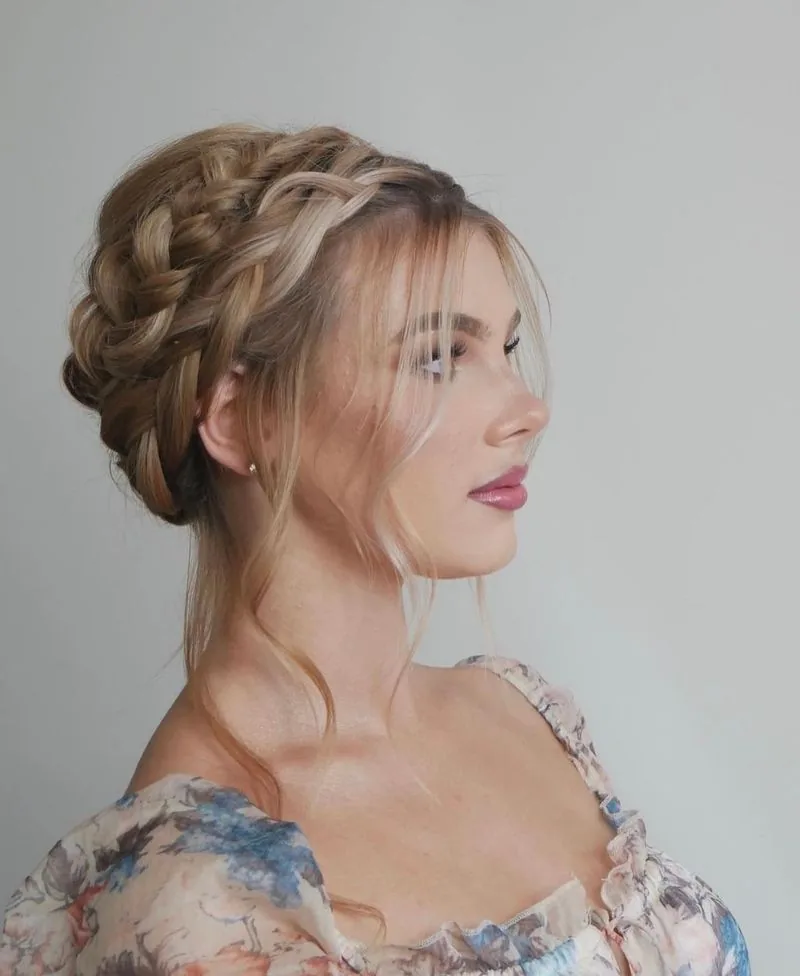
Common mistakes: Braiding too loosely so the crown sags by the second lap, or pinning it in only one or two places so the whole ring slides. A crown that is too tight, on the other hand, gives you a headache before the gun.
Maintenance: Braid with even tension all the way around, pin every few centimetres with bobby pins that match your hair colour, and finish with a light mist of hairspray. Practise it once before race day — it is not a five-minute style the first time.
Quick verdict: Gorgeous and surprisingly secure — worth the practice for a big final.
11. Fishtail Braid
What it is: A fishtail braid weaves the hair into a flat, intricate plait that lies close to the head and barely moves. It looks more detailed than a normal braid, but it holds just as well through sprints and distance races alike.
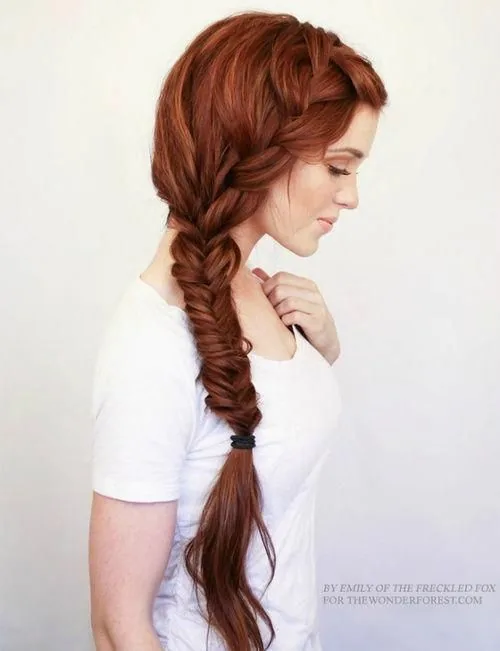
Common mistakes: Weaving it too loosely, so the fishtail unravels from the bottom up once you start sweating, or making it too thin, so it feels flimsy and pulls at the scalp. Starting with slippery, freshly washed hair makes it worse.
Maintenance: Braid on day-old hair or hair with a little texture spray, keep the sections small and even, and secure the end with two elastics. A quick tug test before the race tells you if it will hold.
Quick verdict: Detailed, flat and dependable — a step up from a plain braid that still survives the track.
12. High Top Knot
What it is: A high top knot piles all the hair into one compact bun on top of the head, where it cannot touch your neck, shoulders or face. It is fast to do, cool in hot weather, and it stays out of the way for every event from sprints to the long jump.
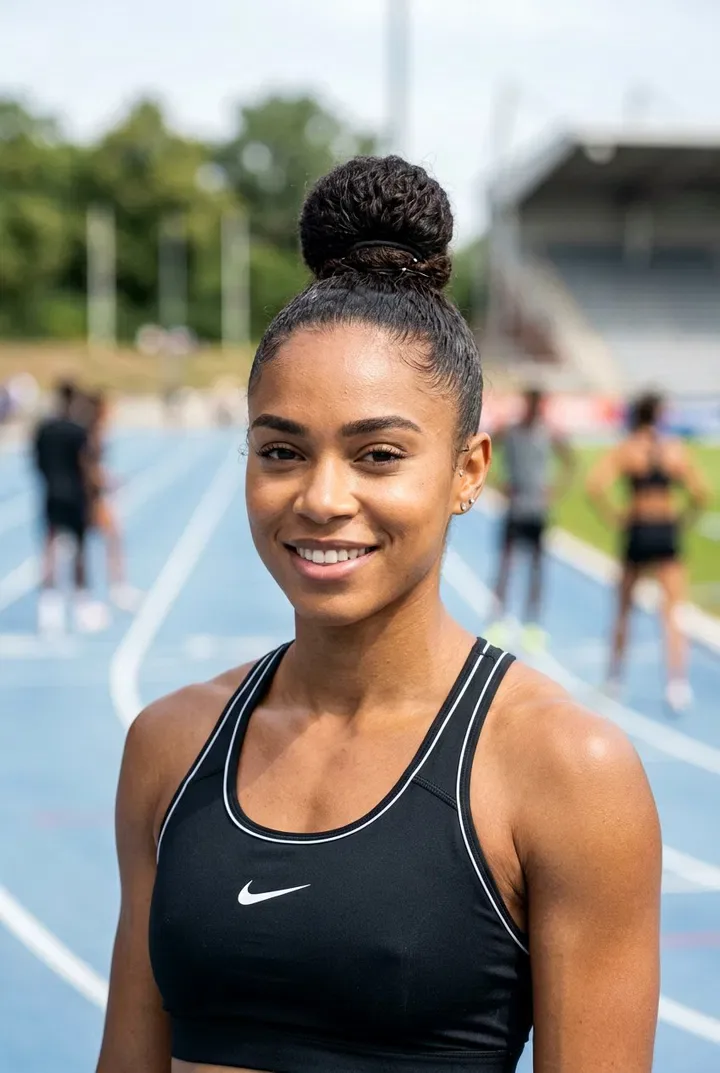
Common mistakes: Making the knot too loose so it flops forward when you sprint, or winding it too tight so it pulls and aches by the afternoon. A heavy knot on thick hair can also feel unbalanced in the blocks.
Maintenance: Twist the ponytail tightly before coiling it, pin the knot at four points, and use a bun maker or a second elastic for thick hair. Keep the knot compact — a small, tight bun beats a big, loose one.
Quick verdict: Simple, cool and fast — a solid choice for hot-weather meets.
13. Space Buns
What it is: Space buns split the hair into two high buns, one on each side, which keeps the weight balanced and stops a single heavy bun from pulling. They are fun, youthful and surprisingly practical — nothing hangs down, and nothing swings.
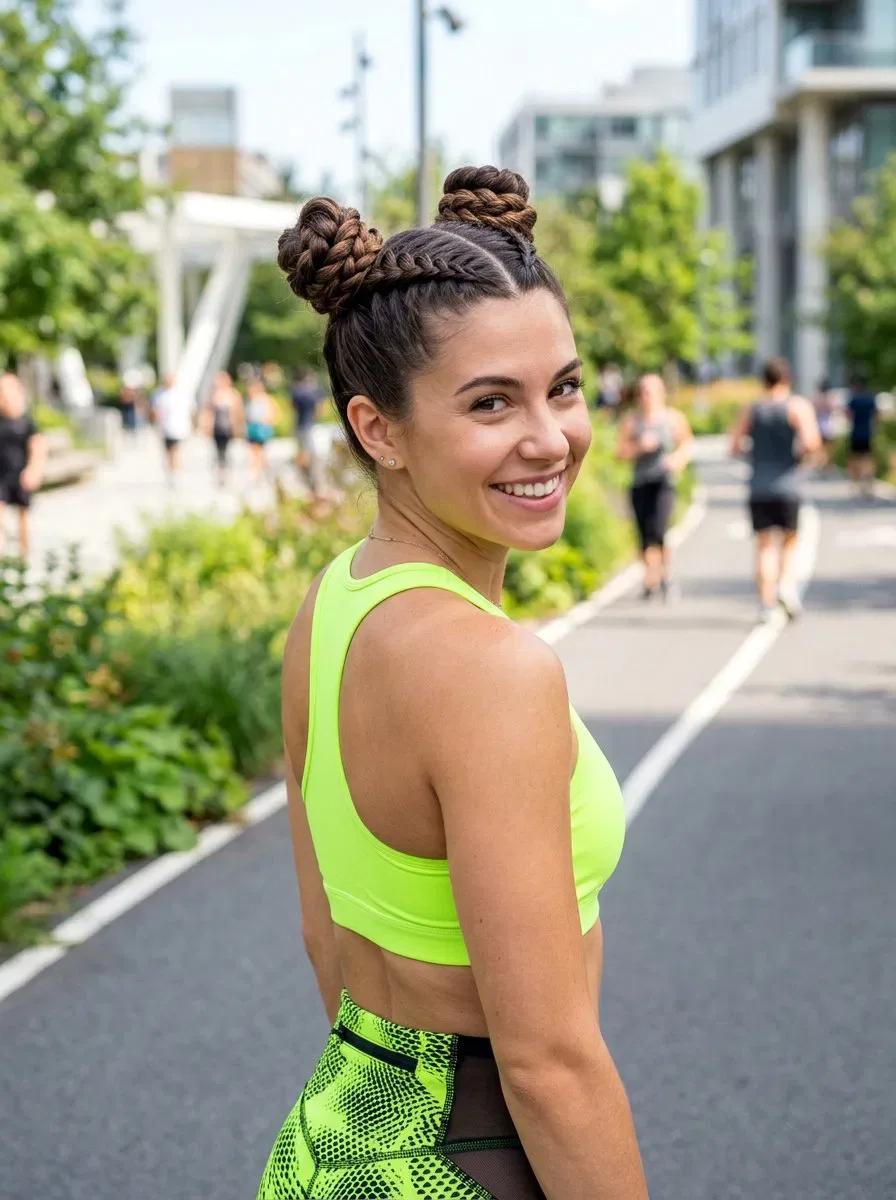
Common mistakes: Parting the hair unevenly, so one bun is bigger than the other, or making them too high and loose so they wobble with every stride. Leaving the front layers out defeats the purpose entirely.
Maintenance: Part the hair cleanly down the middle, twist each side tightly, and pin both buns at three points each. Smooth the edges with gel and add a headband if the front layers are short.
Quick verdict: Fun, balanced and secure — a crowd favourite at school and college meets.
14. Side Braid
What it is: A side braid sweeps all the hair over one shoulder into a single plait, keeping it out of your face while leaving it visible and relaxed. It suits distance runners who want comfort over a long race, and spectators who want a sporty look without a full updo.
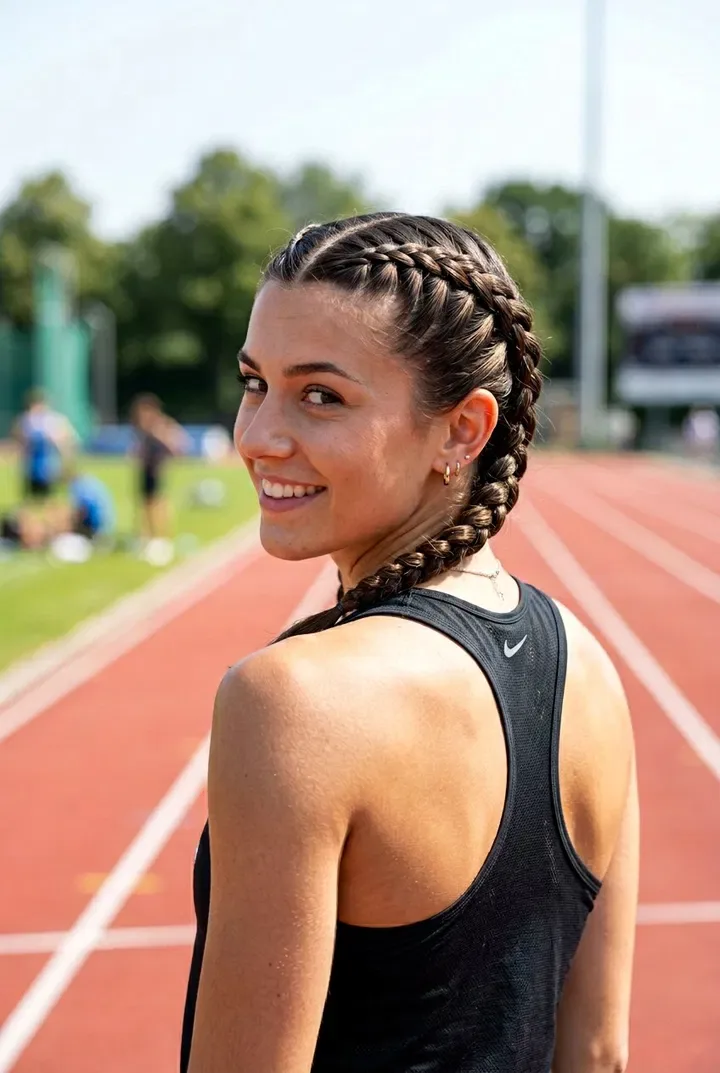
Common mistakes: Letting the braid hang loose and heavy, so it bounces against your chest and shoulder with every stride, or braiding too loosely at the front so strands escape into your eyes in a headwind.
Maintenance: Braid tightly from behind one ear, keep the plait sitting on the shoulder rather than in front of it, and pin the front layers back. For racing, tuck the end into your top or secure it with a second elastic.
Quick verdict: Relaxed and comfortable, but best for distance or the stands — not for sprint finals.
15. Rope Braid Ponytail
What it is: A rope braid ponytail twists two sections of hair around each other into a tight coil, which holds far better than a plain ponytail and takes only a minute longer to do. It is a great middle ground between a simple ponytail and a full braid.
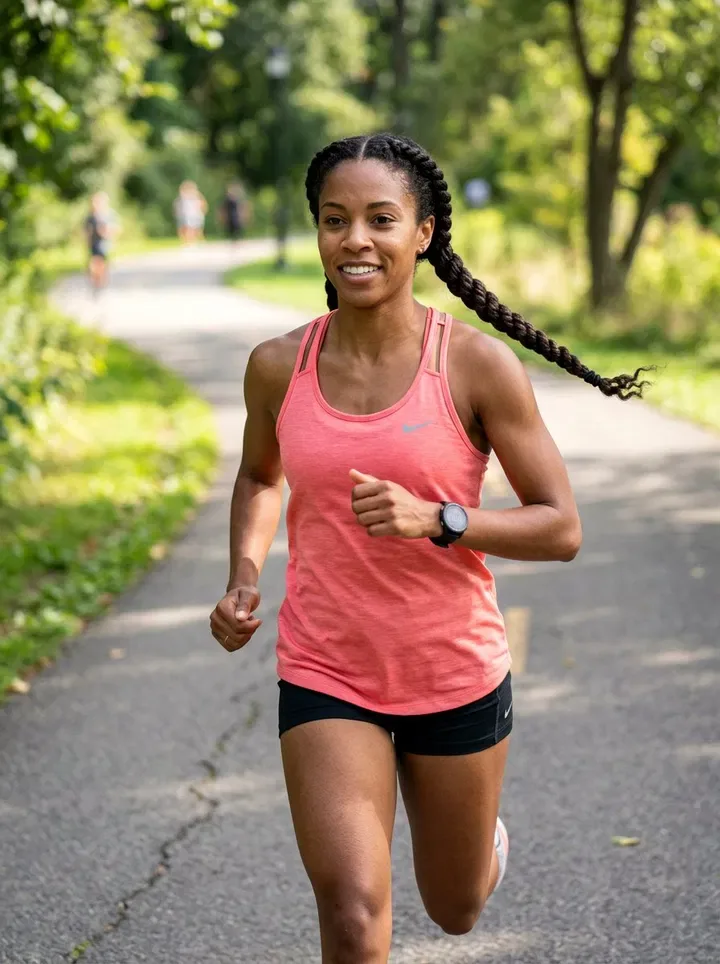
Common mistakes: Twisting in the wrong direction, so the rope unwinds as you run, or leaving the twist too loose so it unravels from the end. Forgetting to secure the end with two elastics is the usual failure point.
Maintenance: Twist each section in the same direction, then wrap them around each other in the opposite direction — that locks the rope in place. Secure the end with two small elastics and a pin.
Quick verdict: Quick to learn, hard to undo by accident — a smart upgrade from a plain ponytail.
16. Curly Pineapple Updo
What it is: The pineapple updo gathers curly hair into a high, loose puff on top of the head, protecting the curl pattern while keeping the curls off your face and neck. It is the go-to race-day style for curly hair, because it works with the texture instead of fighting it.
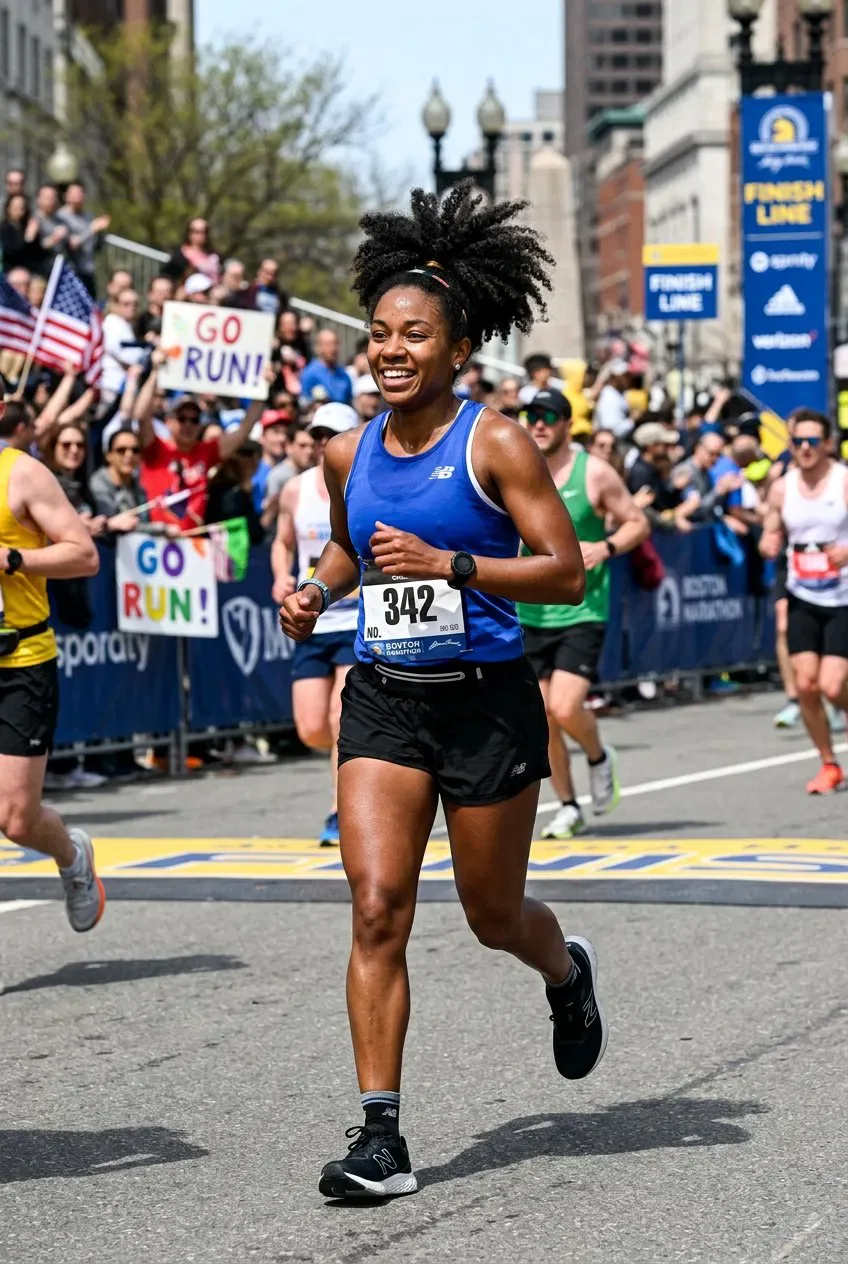
Common mistakes: Pulling the puff too tight, which flattens the curls and causes breakage at the hairline, or using a harsh elastic that snags and snaps curls. Skipping a satin scrunchie is a common mistake.
Maintenance: Use a wide satin scrunchie or a soft fabric band, gather the curls loosely at the crown, and let the puff sit high and free. A little curl cream on the edges keeps frizz down without flattening the shape.
Quick verdict: The kindest way to race with curly hair — protective, comfortable and quick.
17. Short Hair with a Headband
What it is: Short hair is already halfway to race-ready, and a good headband finishes the job: it pins the fringe back, catches sweat, and stops the front layers from sticking to your forehead mid-race. It is the simplest style on this list.
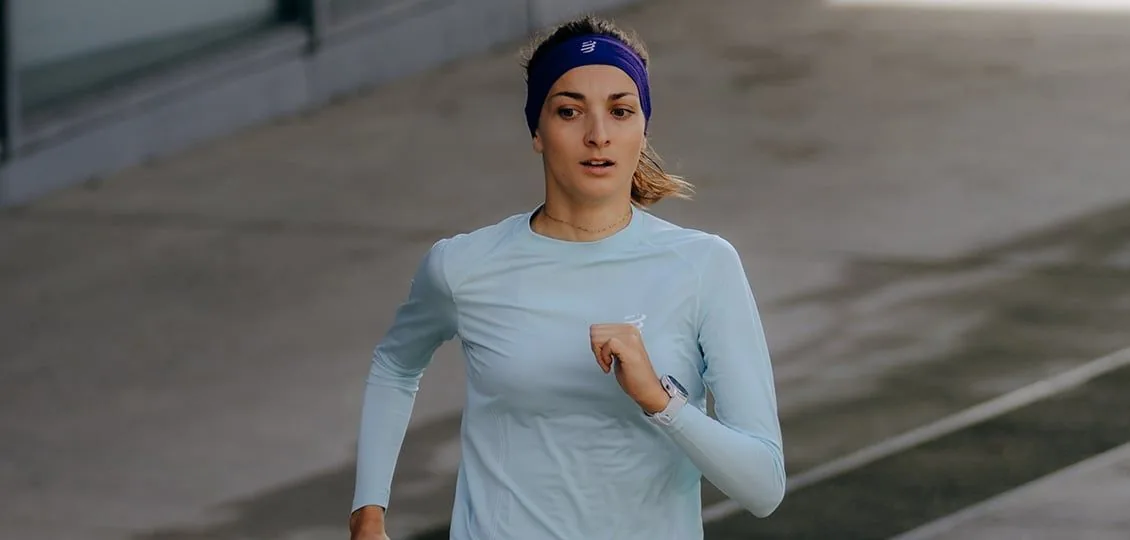
Common mistakes: Choosing a headband that slides, or assuming short hair needs no help at all and then spending the race pushing strands out of your eyes. A band that is too tight gives you a headache by the second event.
Maintenance: Pick a wide band with silicone grip, wear it a couple of centimetres back from the hairline, and pin it behind each ear. Keep a spare in your kit bag for the afternoon races.
Quick verdict: The easiest race-day fix there is — short hair plus a good band is hard to beat.
18. Low Twisted Ponytail
What it is: A low twisted ponytail twists the hair at the nape before tying it, which adds grip and stops the ponytail from sliding down as you run. It is neat, low-profile and comfortable under a cap, and it suits medium and long hair.
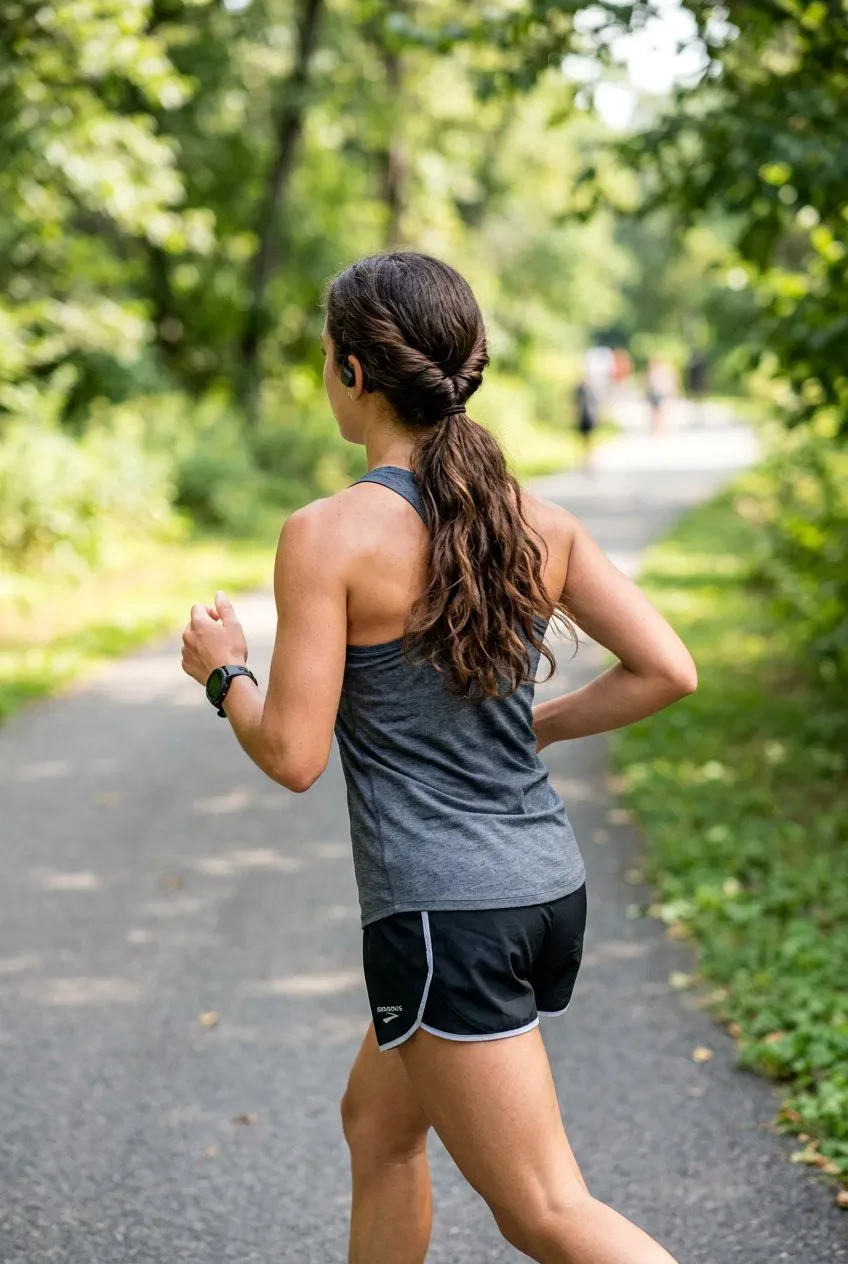
Common mistakes: Twisting too loosely, so the twist unwinds within minutes, or tying the ponytail too low so it catches on your collar. Using a single elastic for thick hair is another weak point.
Maintenance: Twist the hair firmly at the nape, secure it with a strong elastic, and wrap a strand around the base to hide the elastic and add hold. Two pins at the base stop it from drooping.
Quick verdict: Understated and dependable — a quiet workhorse for long meet days.
19. Chunky Single Braid
What it is: A chunky single braid is one thick, loose-looking plait down the back — simple, fast and surprisingly secure, because the weight of the braid itself keeps it in place. It is ideal for long hair and for runners who do not have time for intricate braiding.
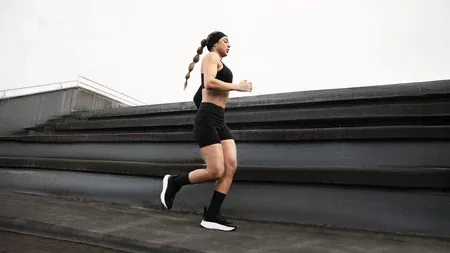
Common mistakes: Braiding too loosely at the top, so the front comes undone first, or leaving the end unsecured so it unravels on the home straight. A braid that is too thin for thick hair also pulls unevenly.
Maintenance: Start the braid high at the crown, keep the sections large and even, and secure the end with two elastics. A quick mist of hairspray over the crown keeps flyaways down.
Quick verdict: One braid, five minutes, all-day hold — the simplest secure style for long hair.
20. Braided Headband with a Low Ponytail
What it is: A braided headband uses a small braid across the front of the head as a built-in band, holding the fringe back, with the rest of the hair in a low ponytail. It looks polished, it needs no accessories, and it holds through heats and finals.
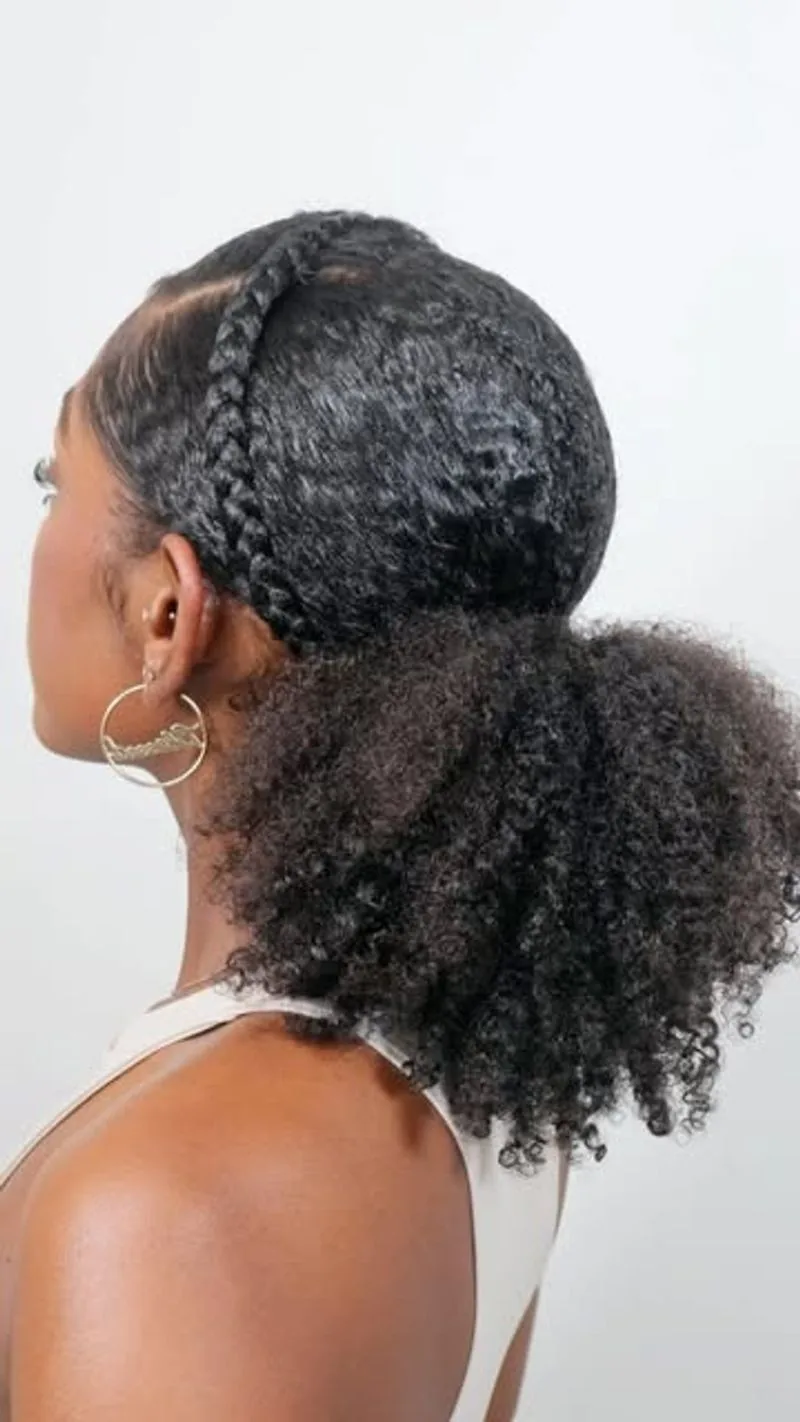
Common mistakes: Braiding the headband section too thin, so it snaps or slips, or leaving the ponytail too loose behind it. The headband braid also fails if it is pinned in only one place.
Maintenance: Take a section from behind one ear, braid it across the hairline, and pin it securely behind the other ear. Keep the ponytail snug at the nape, and smooth the edges with a little gel.
Quick verdict: Two styles in one, no accessories needed — elegant and race-proof.
21. Double Low Buns with a Middle Part
What it is: Two low buns with a clean middle part split the hair evenly and keep everything tucked at the nape, where it cannot swing or catch the wind. It is neat, symmetrical and comfortable for a full day of racing.

Common mistakes: Parting the hair crookedly, so the buns sit unevenly and one side pulls, or making the buns too large so they bounce against the neck. Skipping pins at the base is the usual reason they sag.
Maintenance: Part the hair straight down the middle with a tail comb, twist each side tightly into a small bun, and pin each one at three points. Smooth the part with a little gel for a clean finish.
Quick verdict: Neat, balanced and all-day secure — a tidy choice for team events.
22. Wrapped Low Ponytail
What it is: A wrapped low ponytail hides the elastic by winding a strand of hair around the base, which also adds friction and stops the ponytail from sliding down. It looks polished with almost no extra effort, and it holds better than a bare elastic.
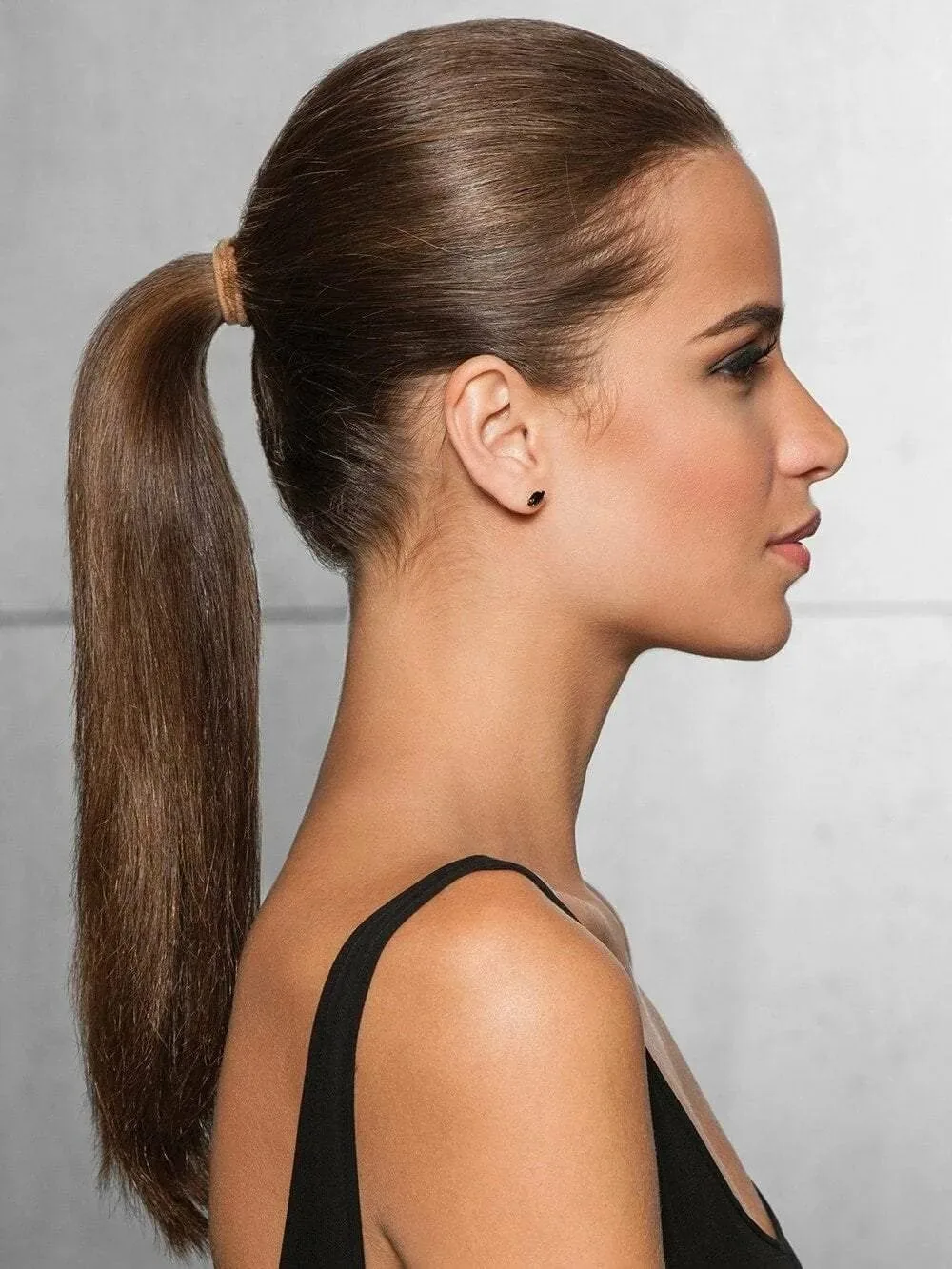
Common mistakes: Wrapping the strand too loosely, so it unwinds and dangles mid-race, or using a strand that is too thin to grip the elastic. Pinning it in the wrong place leaves the wrap hanging free.
Maintenance: Take a strand from underneath the ponytail, wrap it firmly around the base two or three times, and pin the end underneath with a bobby pin. A touch of hairspray on the wrap keeps it in place.
Quick verdict: A small detail that makes a big difference — polished and practical.
23. Two-Strand Twists
What it is: Two-strand twists are a protective style that divides the hair into twisted sections, keeping it secure, low-maintenance and free from tangling during a race. They hold their shape through sweat and wind, and they look great from the blocks to the podium.
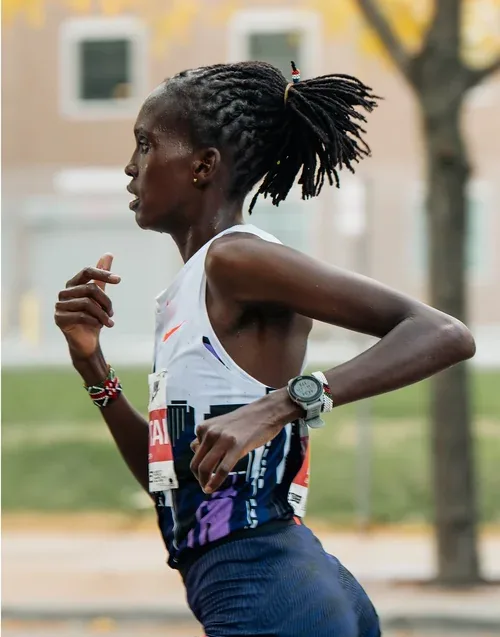
Common mistakes: Twisting too loosely at the roots, so the twists unravel from the top, or making them too thick, so they are heavy and pull at the scalp. Skipping a holding product on the ends is another common error.
Maintenance: Twist on moisturised hair with a little styling cream, keep the sections even, and secure the ends with small elastics or by tucking them under. Gather the twists into a low ponytail or bun for extra security on race day.
Quick verdict: Protective, durable and low-maintenance — excellent for a full meet weekend.
24. Messy Bun That Holds
What it is: A messy bun that actually holds is a high, textured bun pinned in several places, with the looseness on purpose and the security built in underneath. It looks relaxed, but it is anchored properly — the best of both worlds for a long meet day.
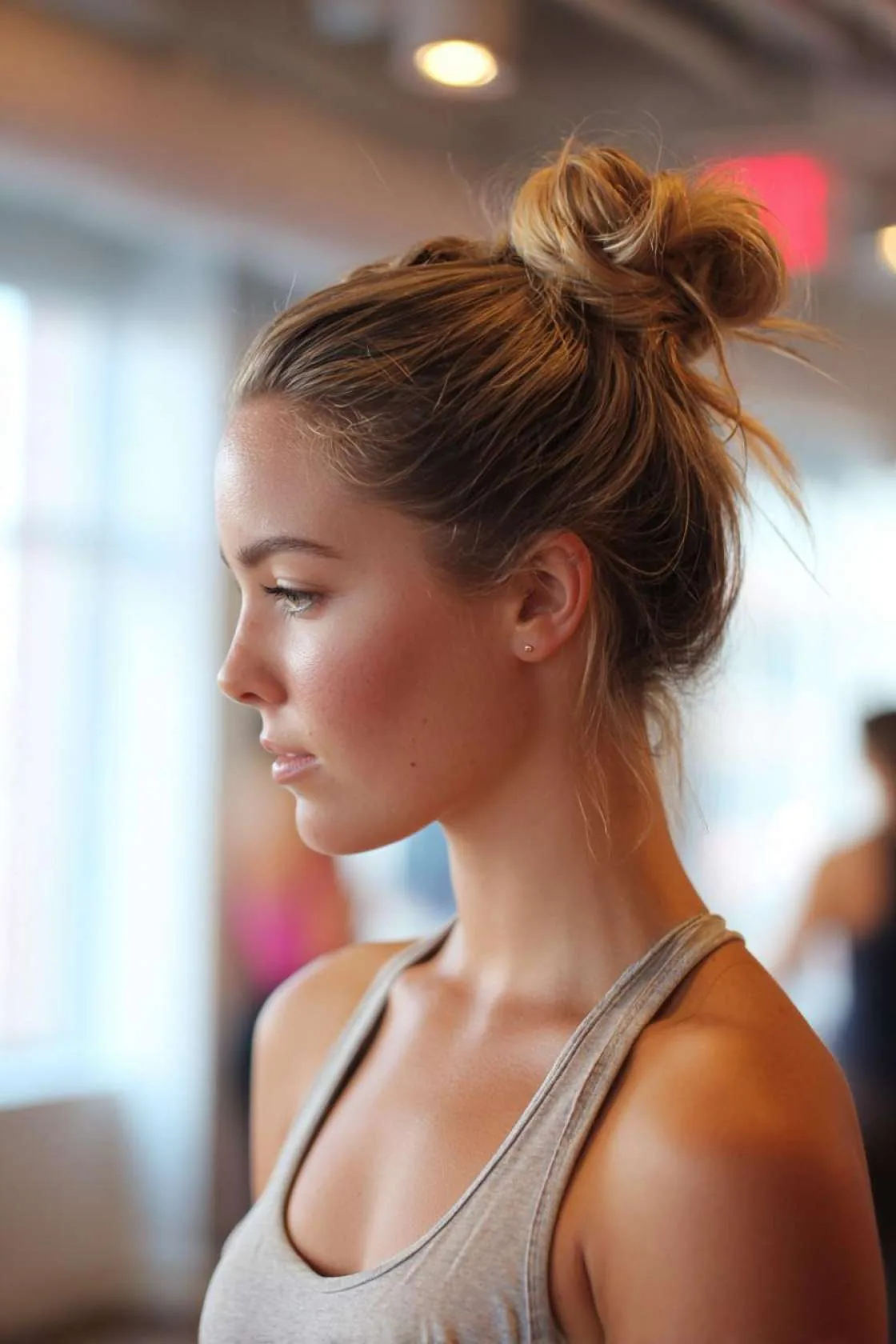
Common mistakes: Confusing messy with loose: a bun held by a single elastic will fall apart by the second race. The other mistake is over-teasing the hair, which makes it tangle badly once sweat gets in.
Maintenance: Build the bun on a secure ponytail base, pin it at four points, and only then pull out a few face-framing pieces. A light hairspray holds the texture without stiffness.
Quick verdict: Relaxed on the surface, anchored underneath — a good pick if you like a softer look.
25. High Puff
What it is: A high puff gathers natural hair into a full, rounded shape on top of the head, keeping it off the face and neck while showing off the texture. It is bold, comfortable and quick, and it survives sprints and jumps without flattening.
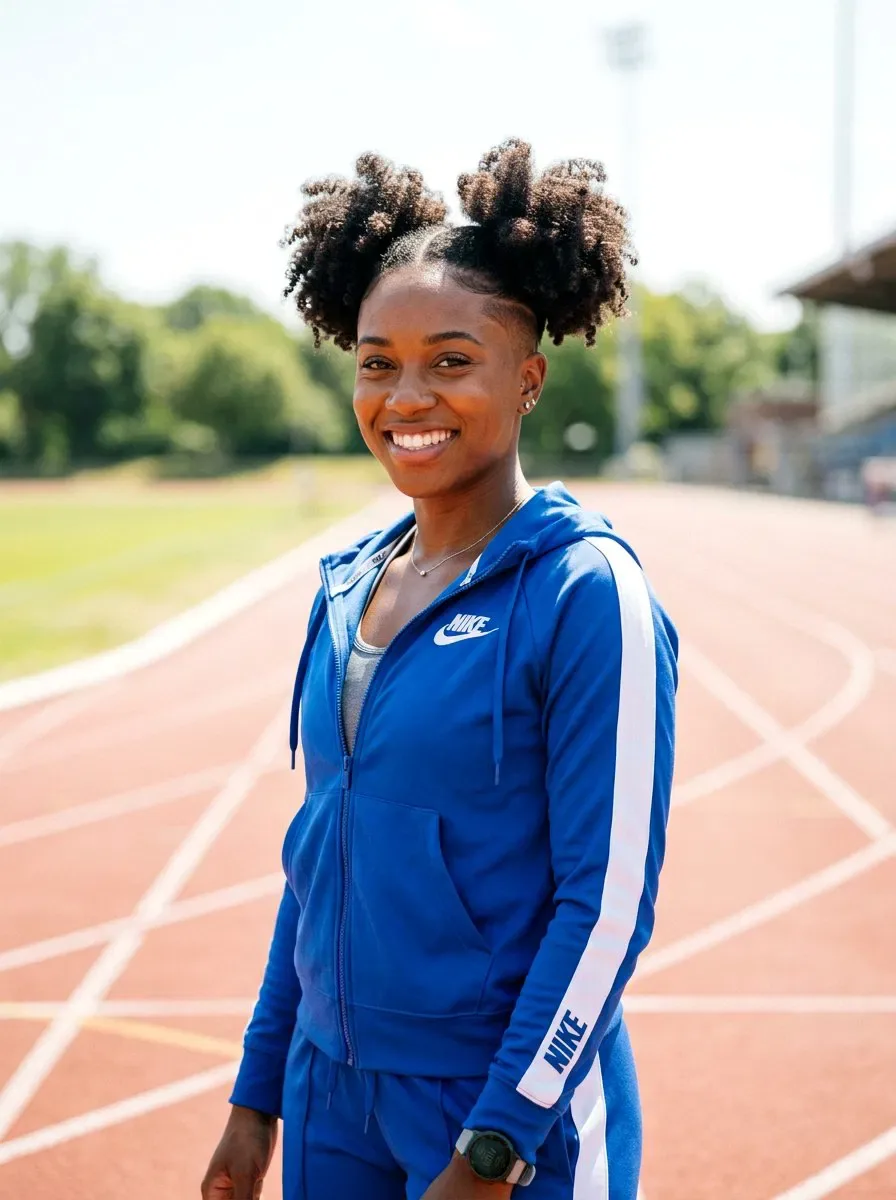
Common mistakes: Pulling the puff too tight at the hairline, which causes breakage and headaches, or using a harsh elastic that snaps curls. Skipping edge control leaves the hairline fuzzy by the first heat.
Maintenance: Use a wide, soft band or a satin scrunchie, gather the hair loosely at the crown, and smooth the edges with a little gel and a soft brush. Fluff the puff gently for shape, but do not over-handle it.
Quick verdict: Bold, protective and fast — a standout style that still races hard.
26. Dutch Braid into a Ponytail
What it is: A Dutch braid that runs down the centre of the head and finishes in a ponytail gives you the grip of a braid at the front and the freedom of a ponytail at the back. It is one of the most popular track styles, because it holds the hairline perfectly while keeping the length manageable.
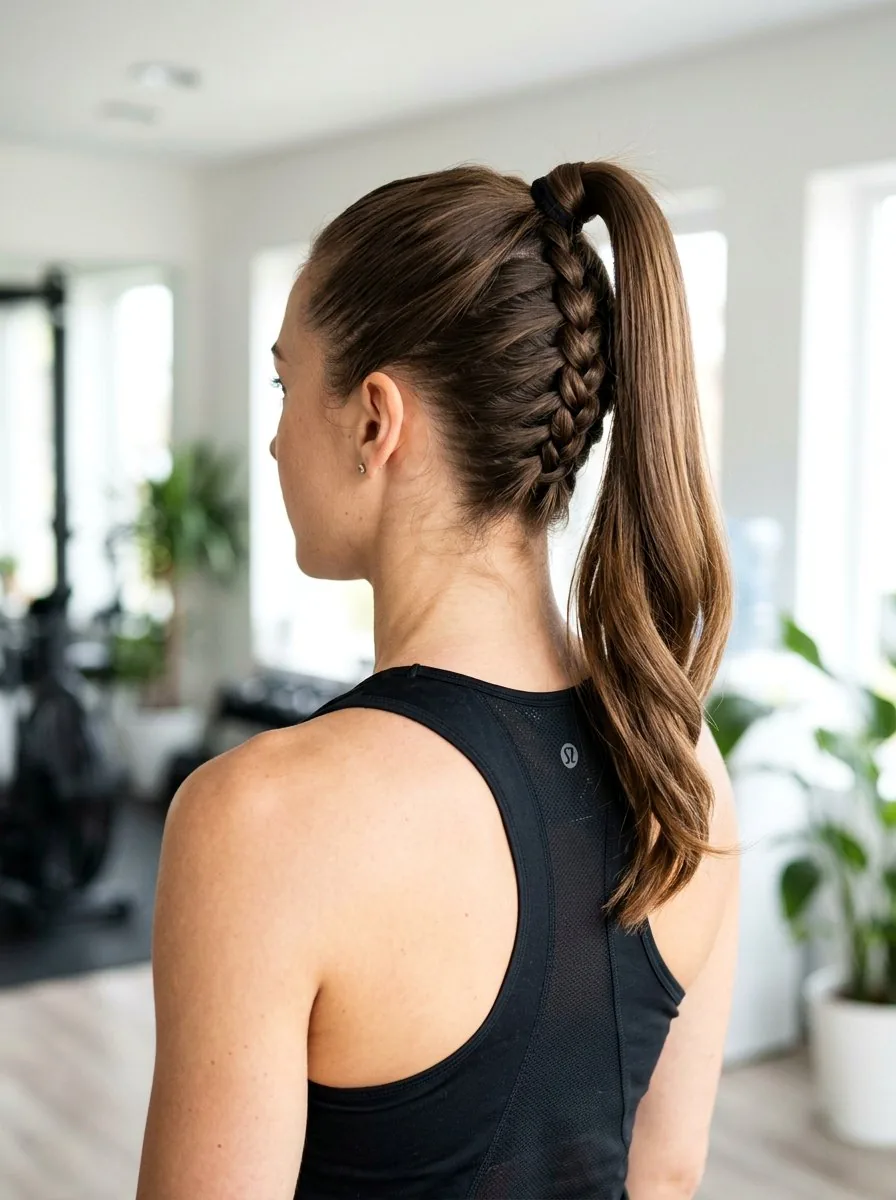
Common mistakes: Braiding too loosely at the hairline, so the front lifts in the wind, or leaving the ponytail too long and heavy so it swings. A single elastic at the end is not enough for thick hair.
Maintenance: Braid tightly from the hairline, keeping the Dutch braid raised and even, then secure the ponytail with two elastics. Wrap a strand around the base for extra grip and a clean finish.
Quick verdict: The best of braids and ponytails in one style — a track-day classic.
27. Sleek Middle-Part Low Bun
What it is: A sleek middle-part low bun is the most polished style on this list: a dead-straight centre part, every strand smoothed back, and a tight bun at the nape. It is flat, aerodynamic and completely distraction-free.
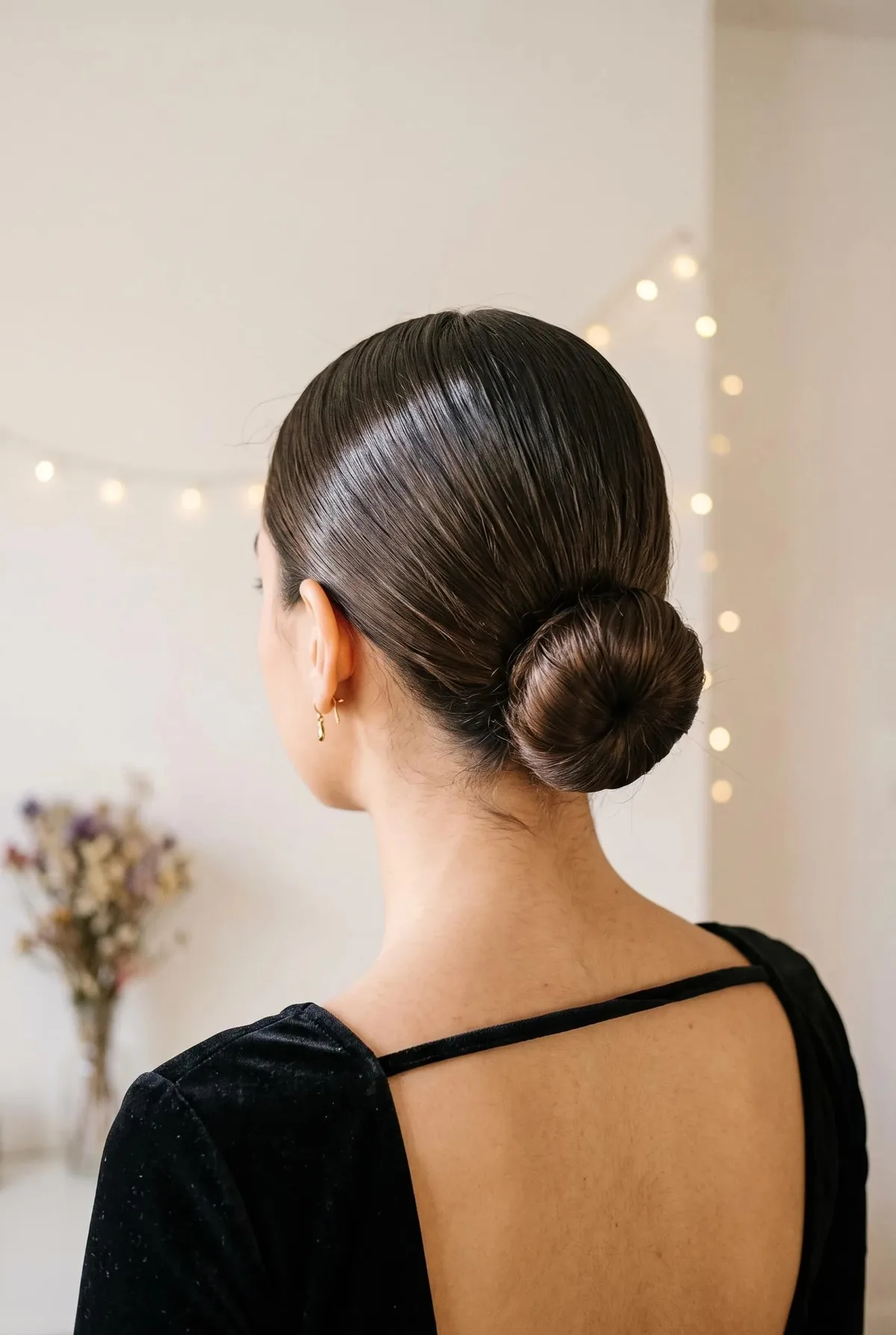
Common mistakes: Parting the hair unevenly, which ruins the symmetry, or skimping on gel so flyaways pop up once you sweat. A bun that is too loose at the nape will sag by the afternoon.
Maintenance: Part with a tail comb, smooth each side back with gel and a fine-tooth comb, and pin the bun flat at the nape. A silk scarf for ten minutes before the race sets the style beautifully.
Quick verdict: The sharpest-looking race-day style — perfect for finals and photos.
28. Braided Pigtails
What it is: Braided pigtails split the hair into two braids, one on each side, which keeps the weight balanced and stops a single heavy braid from swinging. They are playful, practical and very secure — a favourite at school meets and fun runs.
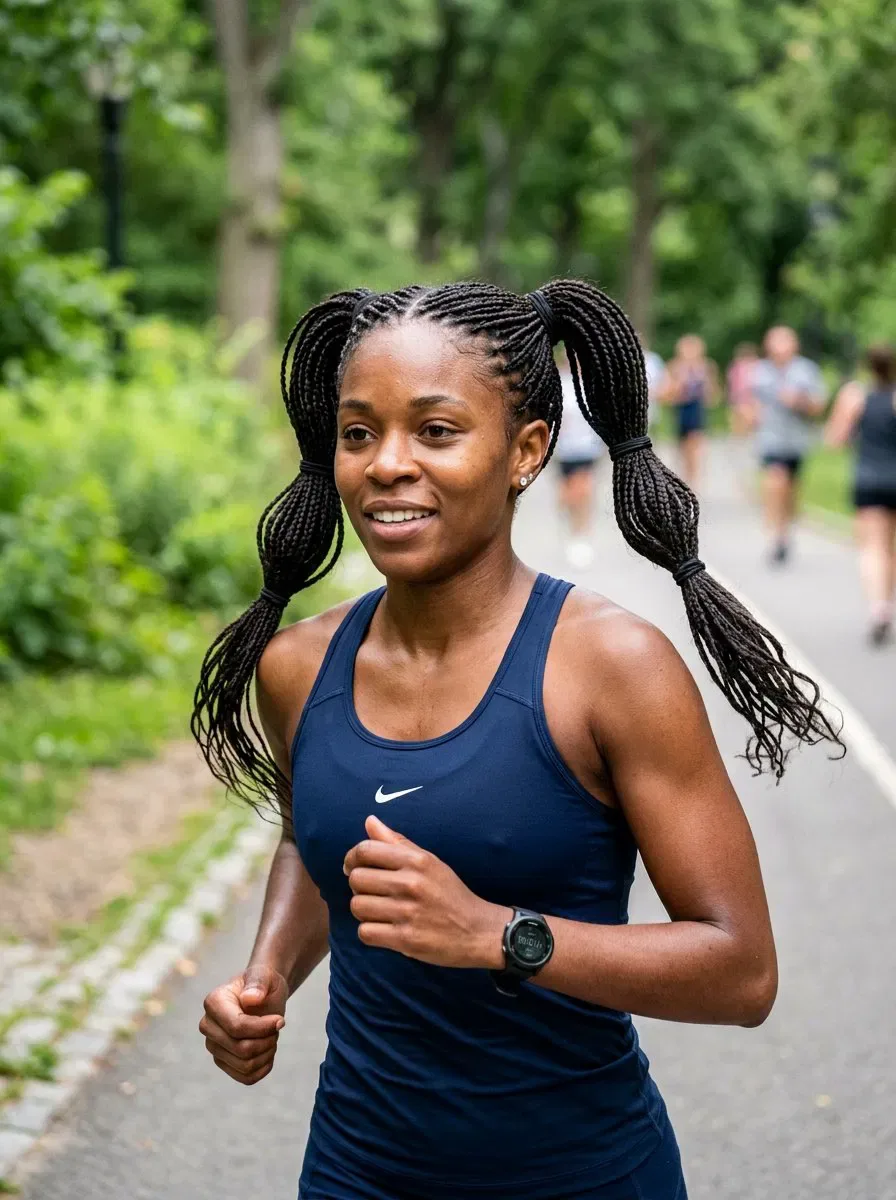
Common mistakes: Braiding one side tighter than the other, so the style pulls unevenly, or leaving the ends too long so they slap against the shoulders. Loose front layers escape quickly in a headwind.
Maintenance: Part the hair evenly, braid both sides with the same tension, and secure the ends with small elastics. Pin the front layers back and add a headband for windy days.
Quick verdict: Balanced, secure and fun — great for younger athletes and relay teams.
29. Twisted Low Bun
What it is: A twisted low bun winds the hair into a soft coil at the nape, which holds with less tension than a tight bun and feels more comfortable over a long day. It is elegant, low-profile and easy to redo between heats.
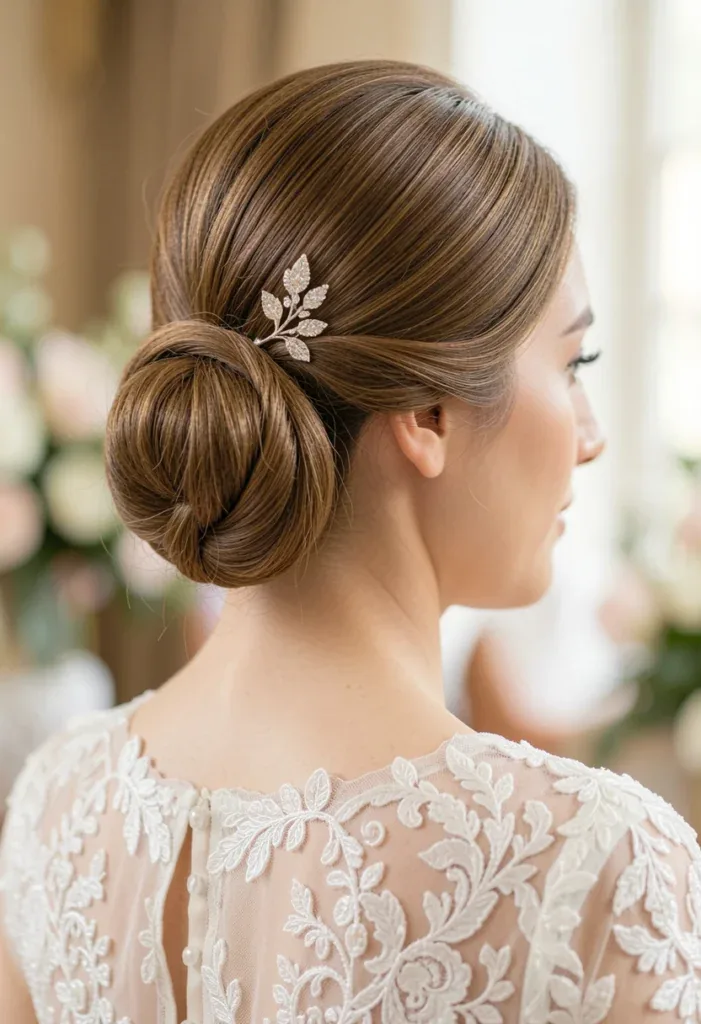
Common mistakes: Twisting too loosely, so the coil unwinds, or pinning it in only one place so the whole bun rotates. Using pins that are too short for thick hair is another weak point.
Maintenance: Twist the hair firmly, coil it flat against the nape, and pin it at four points with long bobby pins. A hair net over the bun adds invisible hold for a full meet.
Quick verdict: Soft, comfortable and secure — a good choice for distance runners.
30. Curly High Ponytail with a Headband
What it is: A curly high ponytail with a headband lifts the curls up and back, while the band controls the hairline and catches sweat before it reaches your eyes. It is the easiest way to race with curly hair without flattening the curls.
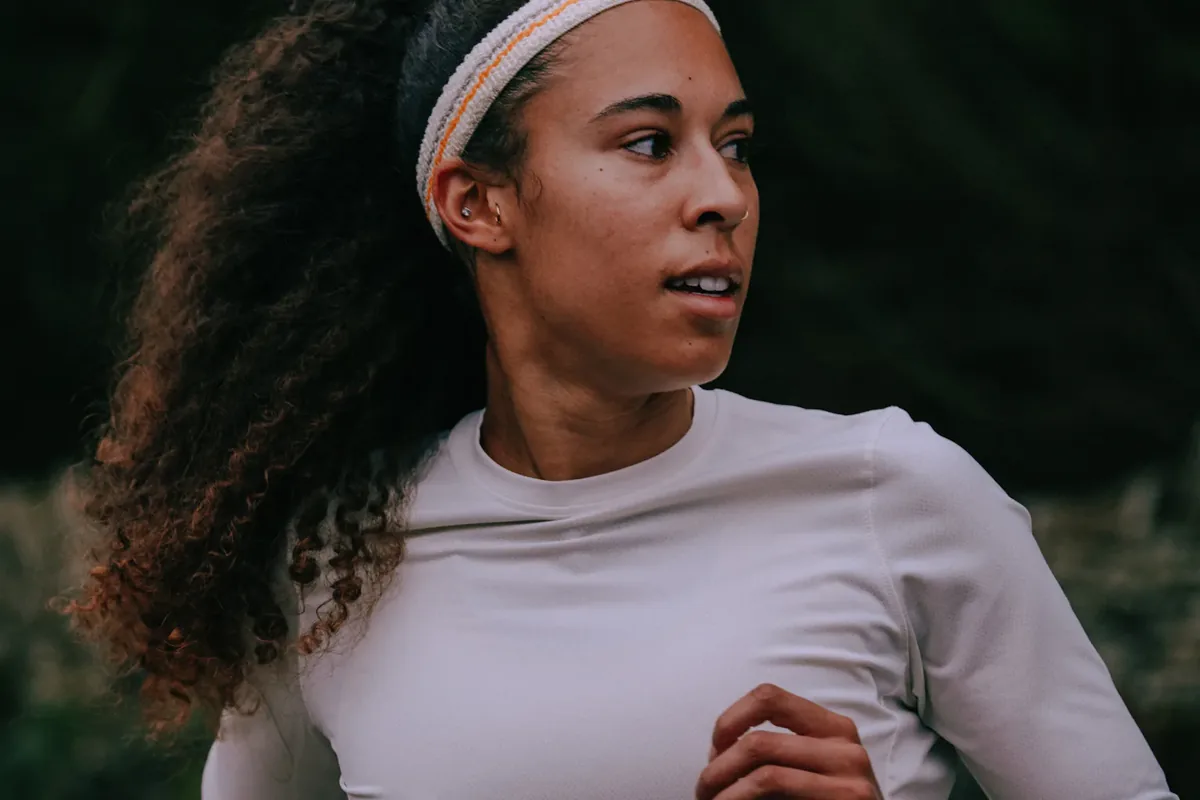
Common mistakes: Pulling the ponytail too tight, which stretches the curls and causes breakage, or choosing a headband that slides off curly hair. Skipping curl cream leaves the ponytail frizzy by the second race.
Maintenance: Gather the curls loosely with a satin scrunchie, place the headband a couple of centimetres back from the hairline, and define the curls with a little cream. Let the ponytail sit high and free.
Quick verdict: Curly-friendly, quick and effective — a reliable pick for any curly-haired runner.
31. Faux Hawk Braid
What it is: A faux hawk braid runs a single raised braid down the centre of the head, giving a bold, edgy look while keeping every strand locked down. It is the most eye-catching style on this list, and it holds as well as any braid.
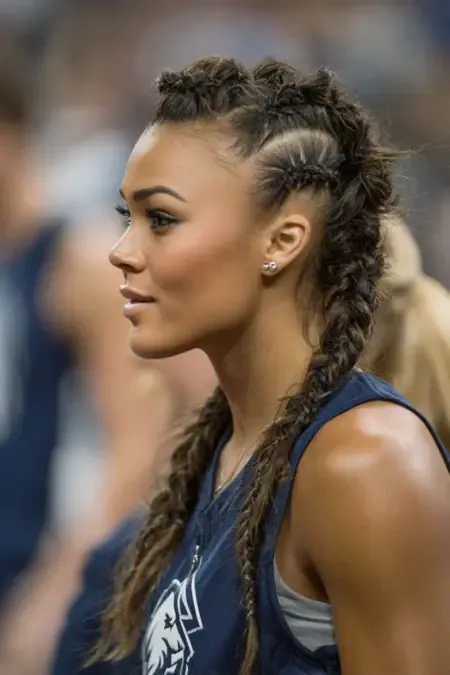
Common mistakes: Braiding too loosely in the middle, so the hawk collapses, or pulling the sides too tight, which hurts by the second event. It is a statement style, so a sloppy version looks worse than a simple one.
Maintenance: Braid tightly down the centre with even tension, pin the sides smooth, and secure the end firmly. Practise it once before race day — the shape takes a little getting used to.
Quick verdict: Bold and secure — the style to pick when you want to stand out at the final.
32. Low Braided Bun
What it is: A low braided bun braids the hair first, then coils the braid into a bun at the nape — double security in one style. The braid stops the hair from slipping, and the bun removes the ends entirely.
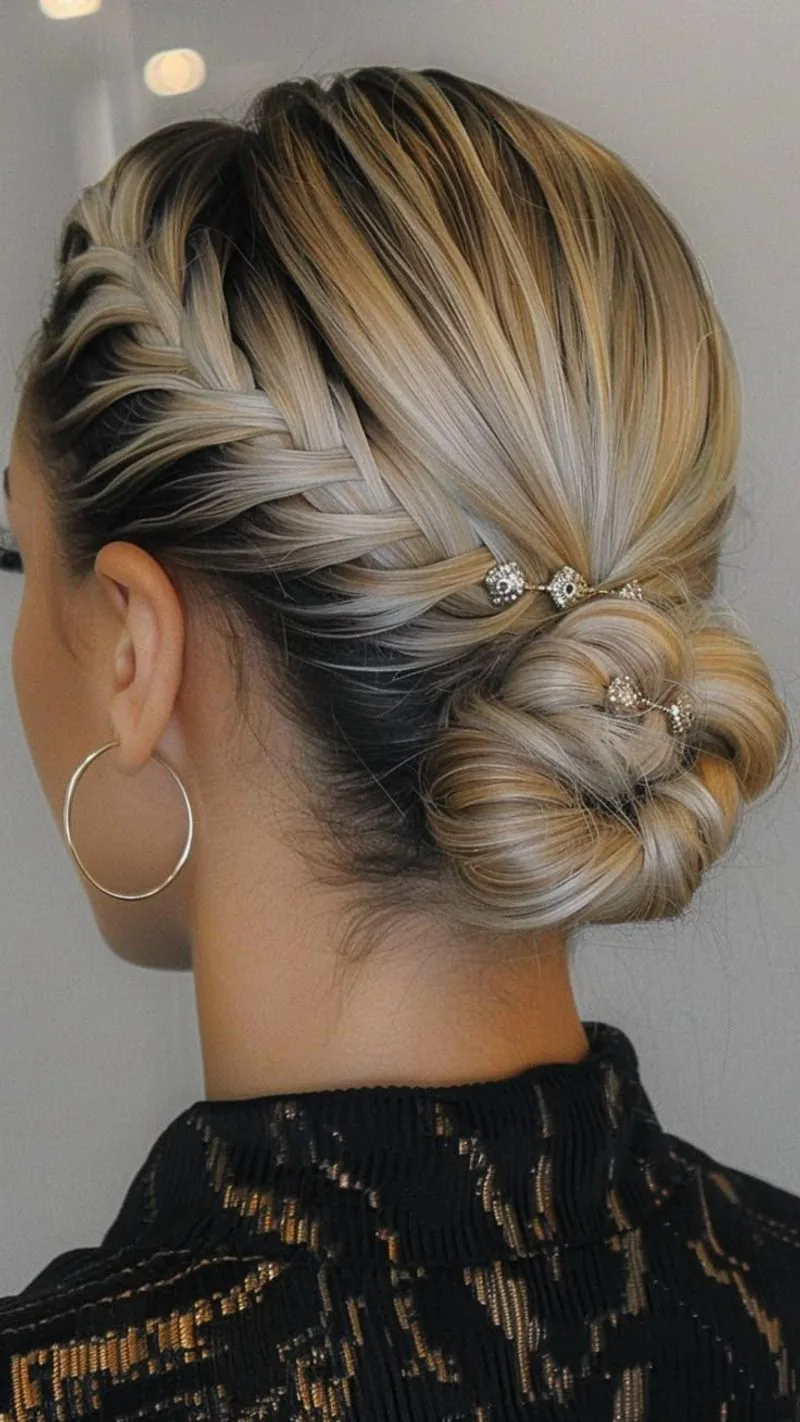
Common mistakes: Braiding loosely before coiling, so the bun unravels, or making the bun too bulky so it bounces. Pinning only the outside of the bun leaves the centre free to sag.
Maintenance: Braid tightly to the ends, coil the braid flat against the nape, and pin through the centre of the bun as well as the edges. A little gel on the braid keeps it neat all day.
Quick verdict: Double-locked and completely out of the way — one of the most secure styles here.
33. Half-Up Braided Ponytail
What it is: A half-up braided ponytail braids the top section of hair and ties it into a ponytail, leaving the rest down but controlled. It suits medium-length hair and shorter races, where a full updo feels like overkill.
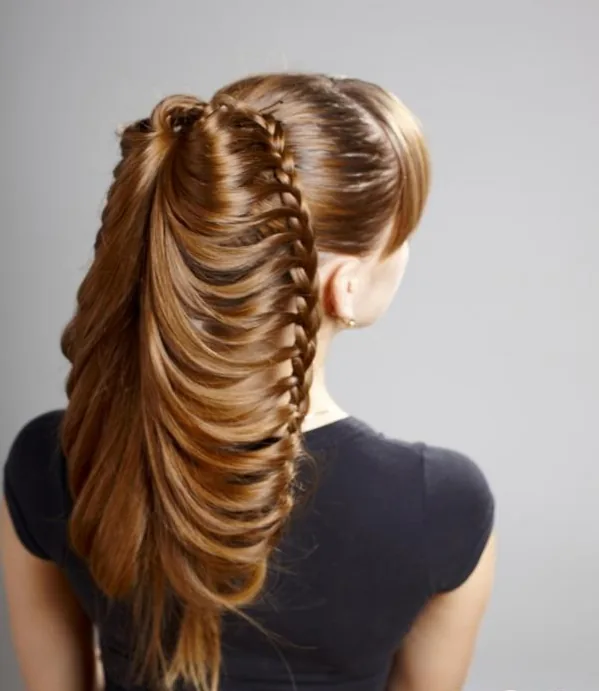
Common mistakes: Taking too small a top section, so the ponytail slips out, or leaving the hair underneath completely loose so it sticks to a sweaty neck. It is a half-up style, not a full lockdown, and it should be worn that way.
Maintenance: Take a generous section from the crown, braid it tightly, and secure it with a strong elastic. Smooth the hair underneath with a headband or a few pins, and save this one for short events.
Quick verdict: Pretty and practical in moderation — best for short sprints and the stands.
34. Hurdle-Proof Braided Ponytail
What it is: A hurdle-proof braided ponytail is a high ponytail with the length braided, so it cannot whip across your face when you snap upright after a hurdle or twist through the air. Hurdlers need hair that stays put through sudden, violent movement — and this delivers.
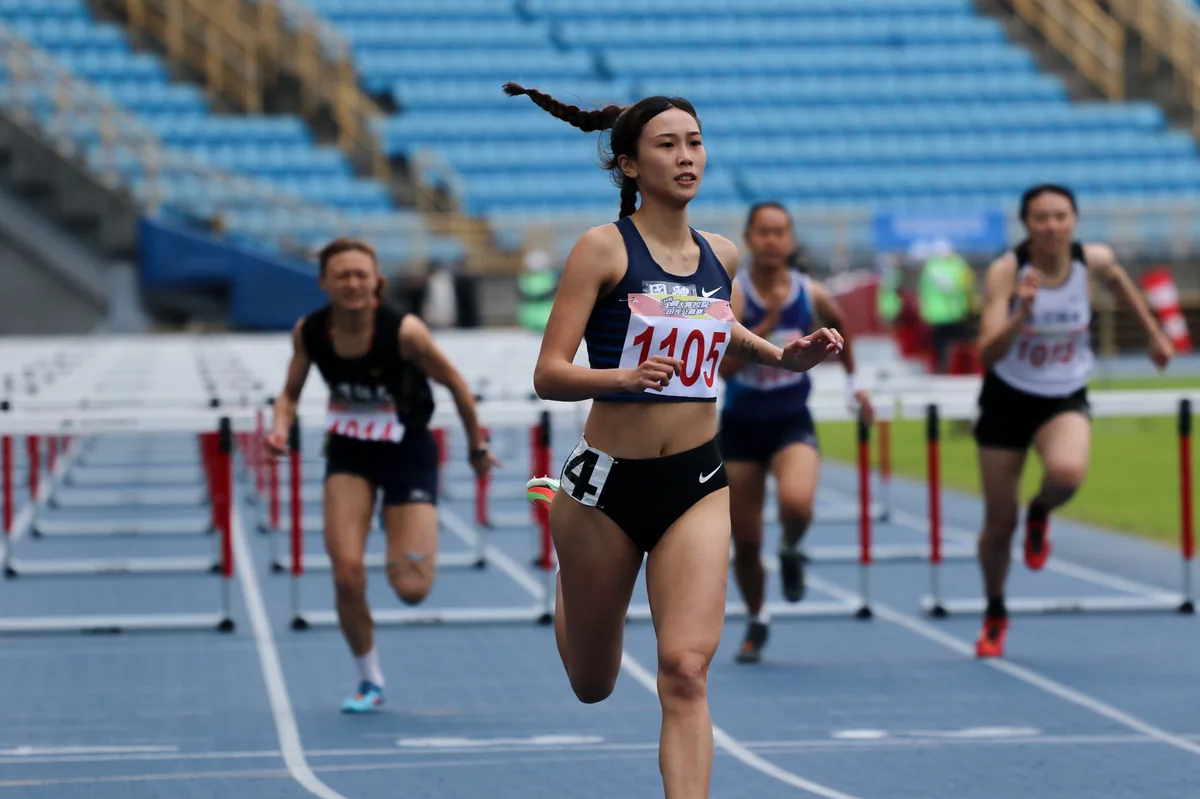
Common mistakes: Leaving the ponytail unbraided, so it flies up and hits your face over every hurdle, or braiding too loosely so the plait unravels by the third hurdle. A high ponytail that is too heavy also throws your balance off.
Maintenance: Braid the ponytail tightly from the base to the ends, secure it with two elastics, and keep the braid sitting down the centre of your back. Test it over practice hurdles before race day.
Quick verdict: Built for the most violent movement on the track — the hurdler’s essential.
35. Slicked-Back Braided Bun
What it is: A slicked-back braided bun combines the cleanest hairline with the most secure finish: every strand smoothed back, braided, then coiled into a bun. Nothing moves, nothing flies, and nothing distracts you from the race.
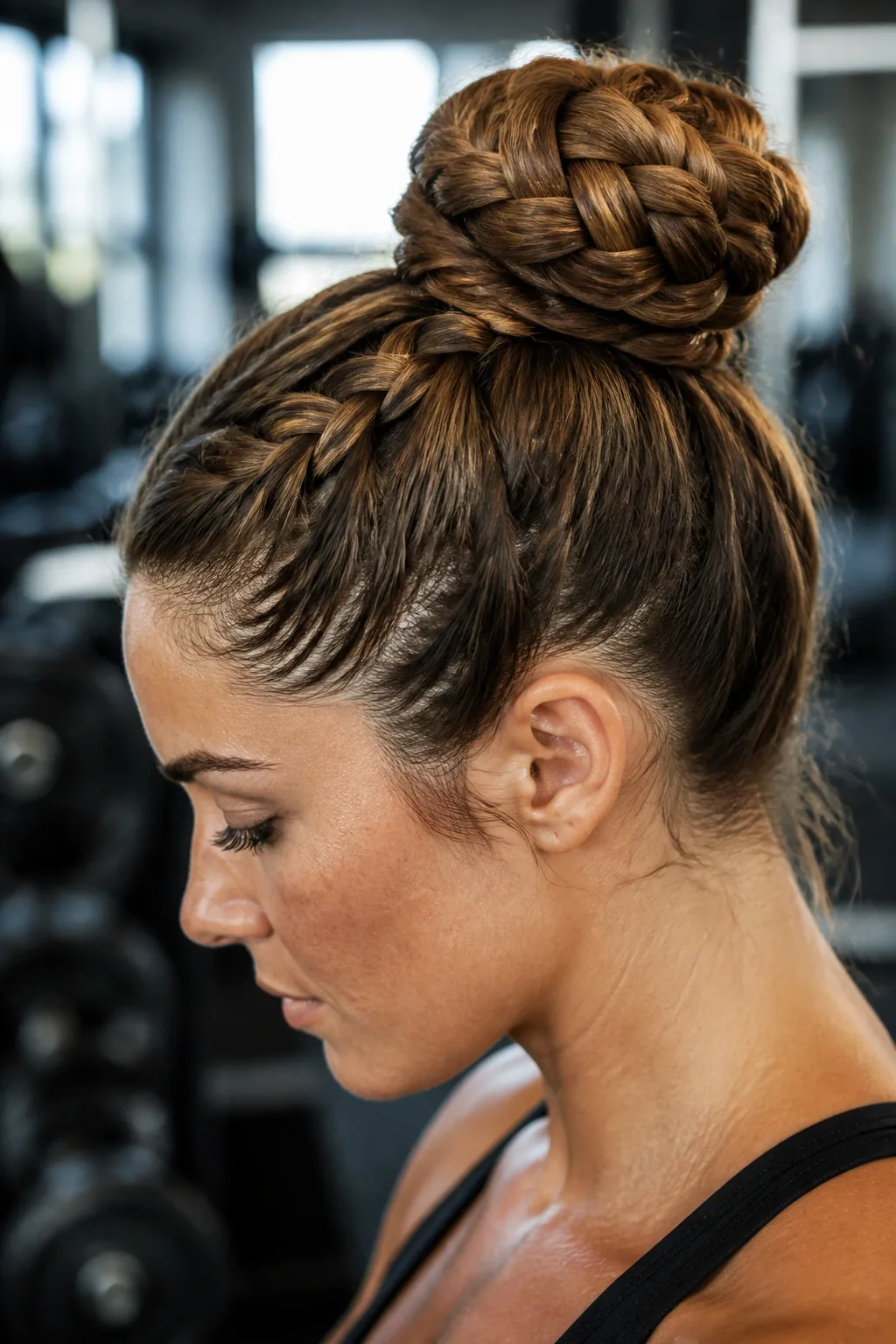
Common mistakes: Using too much product, which turns sticky in the heat, or braiding too loosely before coiling so the bun loosens. Rushing the slicked-back section leaves bumps that show up in photos.
Maintenance: Smooth the hair back with gel on damp hair, braid tightly, then coil the braid into a compact bun and pin it at four points. Let the gel set for ten minutes before you run.
Quick verdict: The cleanest, most locked-down style on this list — made for finals.
36. Double Bubble Braids
What it is: Double bubble braids split the hair into two bubble-braided pigtails, which keeps the weight balanced and stops the length from swinging as one heavy rope. They are fun, secure and easy to redo between heats.
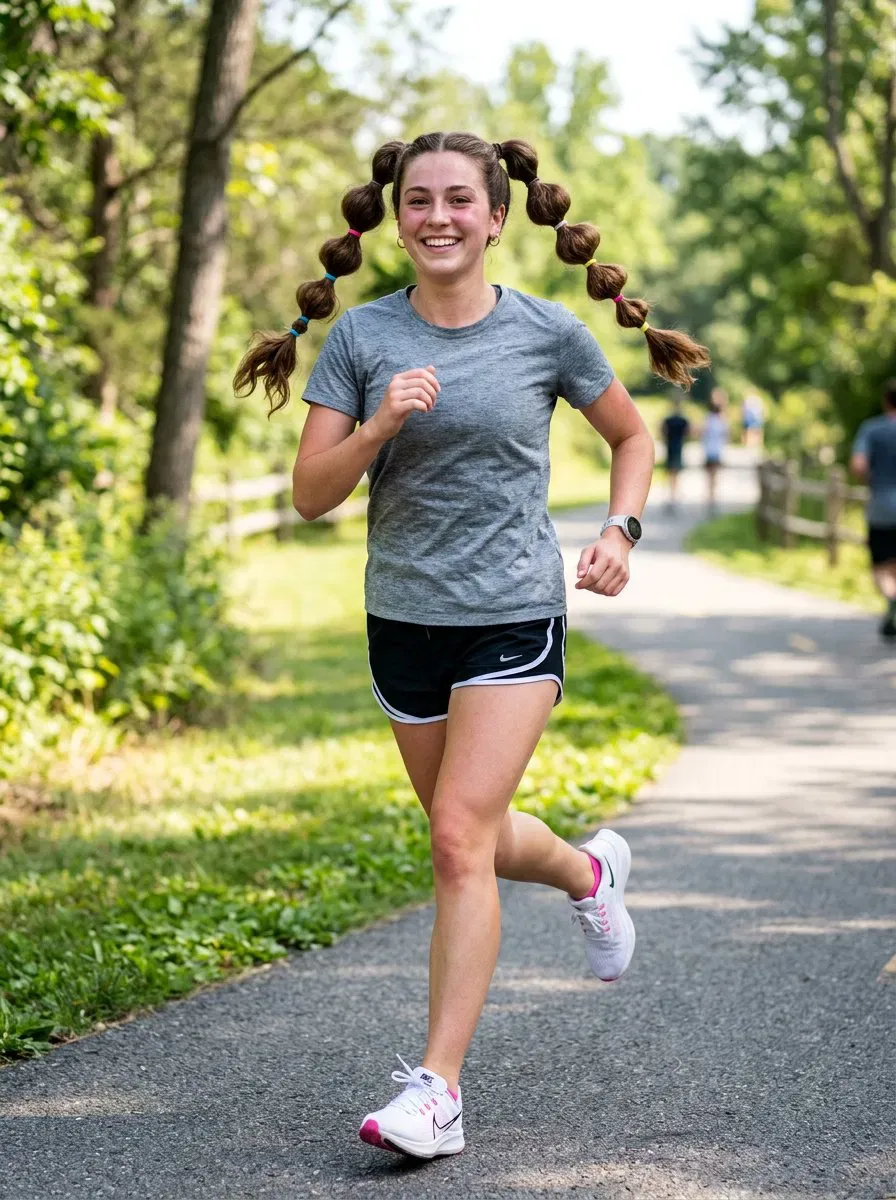
Common mistakes: Spacing the elastics unevenly, so one side looks bigger than the other, or pulling the bubbles too tight so the elastics slip. Cheap elastics that snap mid-race are the usual failure.
Maintenance: Part the hair evenly, use snag-free elastics spaced a hand’s width apart, and puff each bubble gently for volume. Carry spare elastics — this is the easiest style to fix on the fly.
Quick verdict: Playful, balanced and quick to fix — a great pick for school meets.
37. Low Ponytail with a Braided Wrap
What it is: A low ponytail with a braided wrap takes a small braid and winds it around the base of the ponytail, hiding the elastic and adding a second anchor point. It looks detailed and polished, and it holds better than a plain ponytail.
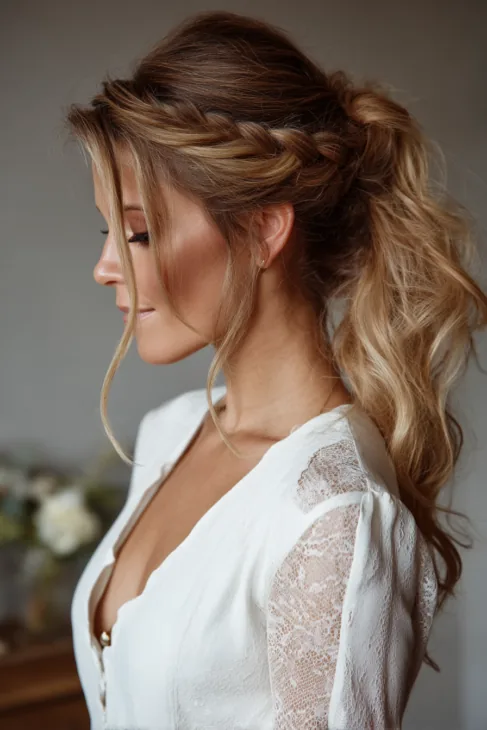
Common mistakes: Making the wrap braid too thin, so it snaps or slips off, or winding it too loosely so it unwinds mid-race. Forgetting to pin the end underneath leaves the wrap dangling.
Maintenance: Braid a small section from underneath the ponytail, wrap it firmly around the base two or three times, and pin the end underneath with a bobby pin. A touch of hairspray seals the wrap.
Quick verdict: A polished detail with real holding power — small effort, big payoff.
38. Curly Low Puff
What it is: A curly low puff gathers the curls at the nape into a soft, rounded shape, keeping them off the neck while protecting the curl pattern. It is comfortable for long races, where a high puff can feel heavy and pull at the scalp.
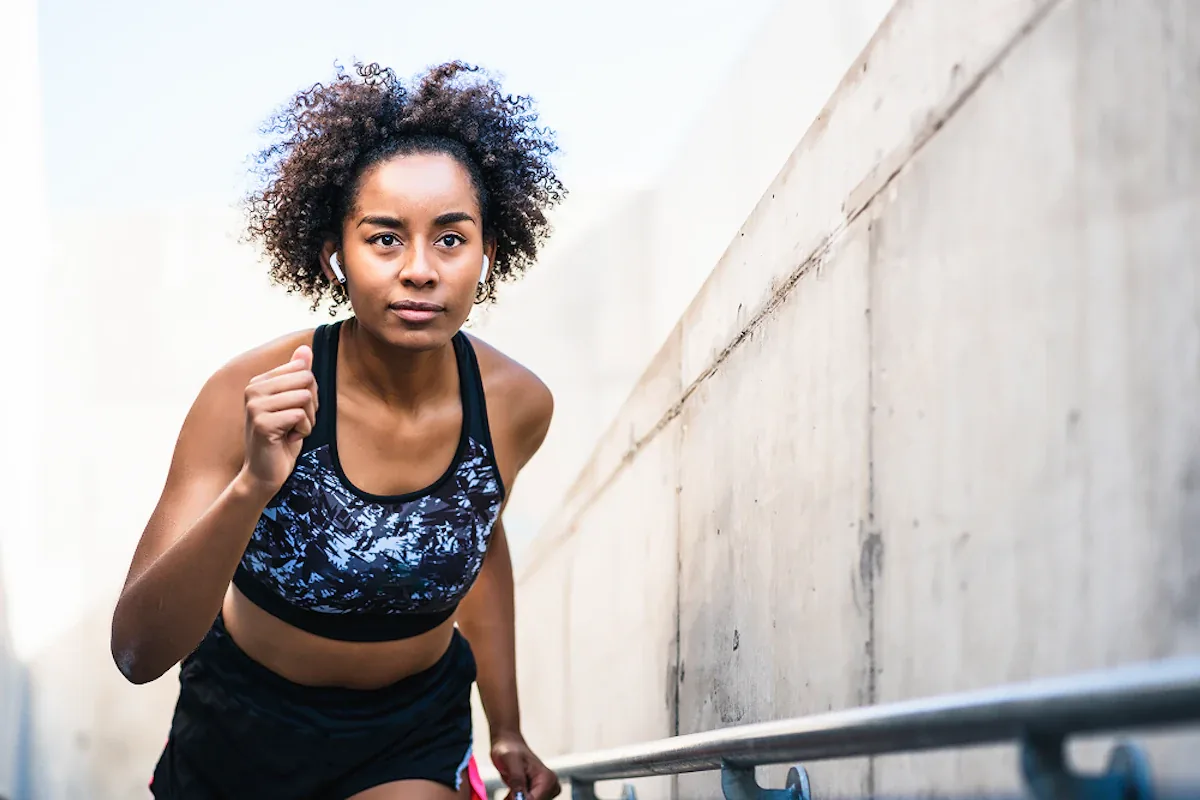
Common mistakes: Pulling the puff too tight, which flattens the curls and strains the hairline, or using a harsh elastic that snags. Skipping moisture before the race leaves the curls dry and frizzy by the finish.
Maintenance: Moisturise the curls, gather them loosely at the nape with a satin scrunchie, and smooth the edges with a little gel. Let the puff sit soft and free — tightness is not the goal here.
Quick verdict: Comfortable, protective and low-maintenance — ideal for distance races.
39. French Braid Pigtails
What it is: French braid pigtails run a French braid down each side of the head, anchoring the hair from the hairline to the ends on both sides. They are symmetrical, secure and comfortable, and they survive every event from sprints to relays.
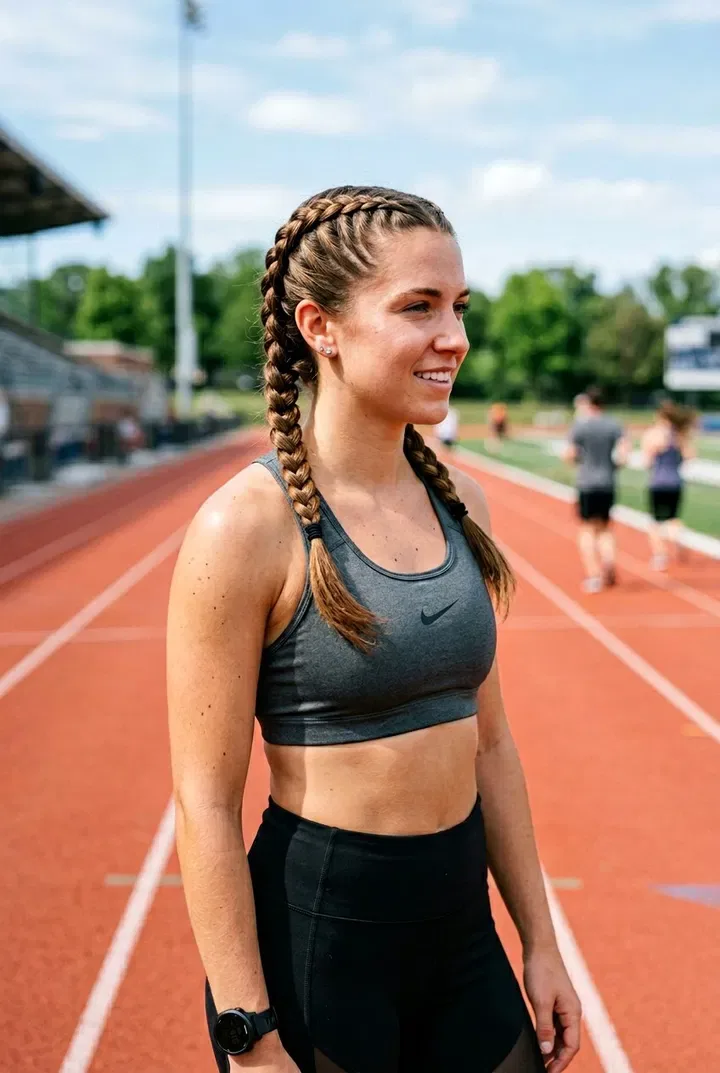
Common mistakes: Starting the braids too far back, so the front layers escape, or braiding one side tighter than the other. Uneven tension is the most common reason pigtails feel uncomfortable by the afternoon.
Maintenance: Part the hair straight down the middle, start each braid at the hairline, and keep the tension even on both sides. Secure the ends with small elastics and tuck them under if they are long.
Quick verdict: Symmetrical, secure and comfortable — a classic that never lets you down.
40. Photo-Finish Sleek Ponytail
What it is: The photo-finish sleek ponytail is the style for the biggest moment of the meet: every strand smoothed back, the ponytail high and tight, and not a flyaway in sight when the camera catches you crossing the line. It is built to look as good in the finish photo as it feels in the race.
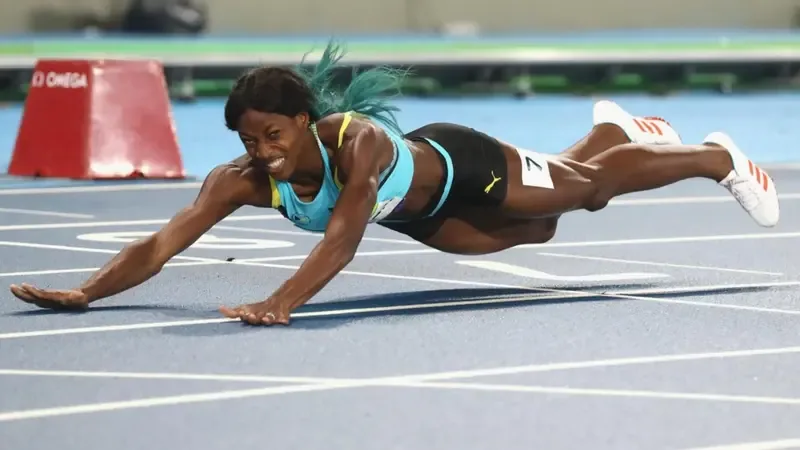
Common mistakes: Skimping on gel so flyaways pop up in the finish photo, or tying the ponytail so high it bounces and distracts you in the final metres. A style that only looks good standing still is not a race style.
Maintenance: Smooth the hair back with gel on damp hair, tie the ponytail high and secure it with two elastics, and wrap a strand around the base. Finish with a light hairspray and a headband for the hairline.
Quick verdict: Made for the moment that matters most — fast, sleek and photo-ready.
Can I wear my hair down for a track meet?
No — hair down is the worst option for a track meet. It whips across your face in the wind, sticks to a sweaty neck, and blocks your vision out of the blocks. Even shoulder-length hair should be tied back, braided or bunned for any race.
What is the best hairstyle for a 100m sprint?
Double Dutch braids or a slicked-back high ponytail are the best choices for a 100m sprint. Both lock the hairline down completely, nothing swings, and there is nothing to distract you during ten seconds of maximum effort.
How do I keep my hair from coming loose when I sweat?
Braid on slightly damp hair with a little gel on the edges, use strong snag-free elastics, and pin the style in at least four places. A sweat-wicking headband catches moisture before it reaches your hairline, and a light hairspray over the finished style adds extra grip.
Are braids better than a ponytail for running?
Yes, for most races braids hold better than a ponytail. A braid anchors the hair at many points along the head, while a ponytail relies on a single elastic. Ponytails are faster to do and easier to fix, so they suit short sprints and warm-ups, but braids win for heats and finals back to back.
What hairstyle works best for curly hair at a track meet?
A pineapple updo, a high puff or a curly high ponytail with a headband all work well for curly hair. Use a satin scrunchie rather than a harsh elastic, keep the style loose enough to protect the curl pattern, and smooth the edges with a little curl cream or gel.
Can I wear a headband during a race?
Yes, headbands are allowed in most track meets and are one of the best race-day accessories. Choose a wide band with silicone grip that wicks sweat, pin it behind each ear, and test it on a training run first so you know it will not slide.
How should I style short hair for a track meet?
Pin the front layers back with crossed bobby pins and add a wide, grippy headband. Short hair still needs help on race day — the fringe sticks to a sweaty forehead fast — but a headband and two pins are usually all it takes.
What do I do if my hair comes loose between heats?
Fix only what has actually come loose. Smooth the edges with a little gel, re-pin the loose pieces, swap a soaked headband for a dry one, and leave the main style alone. Do not redo the whole style between races — it wastes energy and rarely holds as well.
Should I try a new hairstyle on race day?
No — never try a new style for the first time on race day. Practise it at least once during a hard training run, including strides and a cool-down, and check it in the mirror afterwards. If anything moved during training, tighten it or pick a different style.
How do I look after my hair after a track meet?
Undo braids gently from the ends up, detangle with your fingers, and wash with a gentle shampoo and conditioner. Let your hair air-dry, and give tight styles a rest day before the next meet so your scalp and roots can recover.
Conclusion
The best hairstyles for a track meet are the ones you forget about the moment the gun goes off. Whether you pick double Dutch braids, a slicked-back bun or a simple high ponytail, the test is always the same: does it keep every strand out of your face, does it survive sweat and wind from heats to finals, and can you run your race without touching it once? If the answer is yes, you have found your style.
Practise your pick once at home, pack spare elastics and pins, and walk onto the track knowing your hair is already sorted. Then all that is left is the race — the blocks, the bend, the home straight, and the photo finish.