From the Blocks to the Podium: 35 Hairstyles for a Swim Meet That Stay Put Through Every Heat
Race day is not a pool day. You are up before dawn, warming up in a cold pool, waiting behind the blocks while your name is called, then diving in for a race that can be over in under a minute. Between heats you are wet, cold and rushed, your goggles are fogging, and your swim cap has to go back on again. That is why hairstyles for a swim meet have to work much harder than a hairstyle for a casual swim: they must stay locked down under a cap, survive chlorine and repeated dives, and still look tidy when you climb out for the next heat.
A good race-day style does three things. It keeps every strand flat under your swim cap so the cap seals properly, it stops hair from slipping into your goggles or across your eyes on the dive, and it holds through warm-up, heats, relays and the cool-down without a mid-race fix. Braids and low buns do this best, because they spread the hair flat and anchor it at several points instead of piling it into one lump that pushes the cap up.
This guide is built for competition day only. It starts with the race-day thinking — cap fit, chlorine between heats, goggles, and picking a style for your stroke and event — and then gives you 35 styles to choose from, for short, medium and long hair, straight, wavy and curly textures, and every part of the day, from the first warm-up to the relay final and the podium photo. Pick one, practise it with your cap on at home, and walk onto poolside knowing your hair is already sorted.
Why Race-Day Hair Is Different
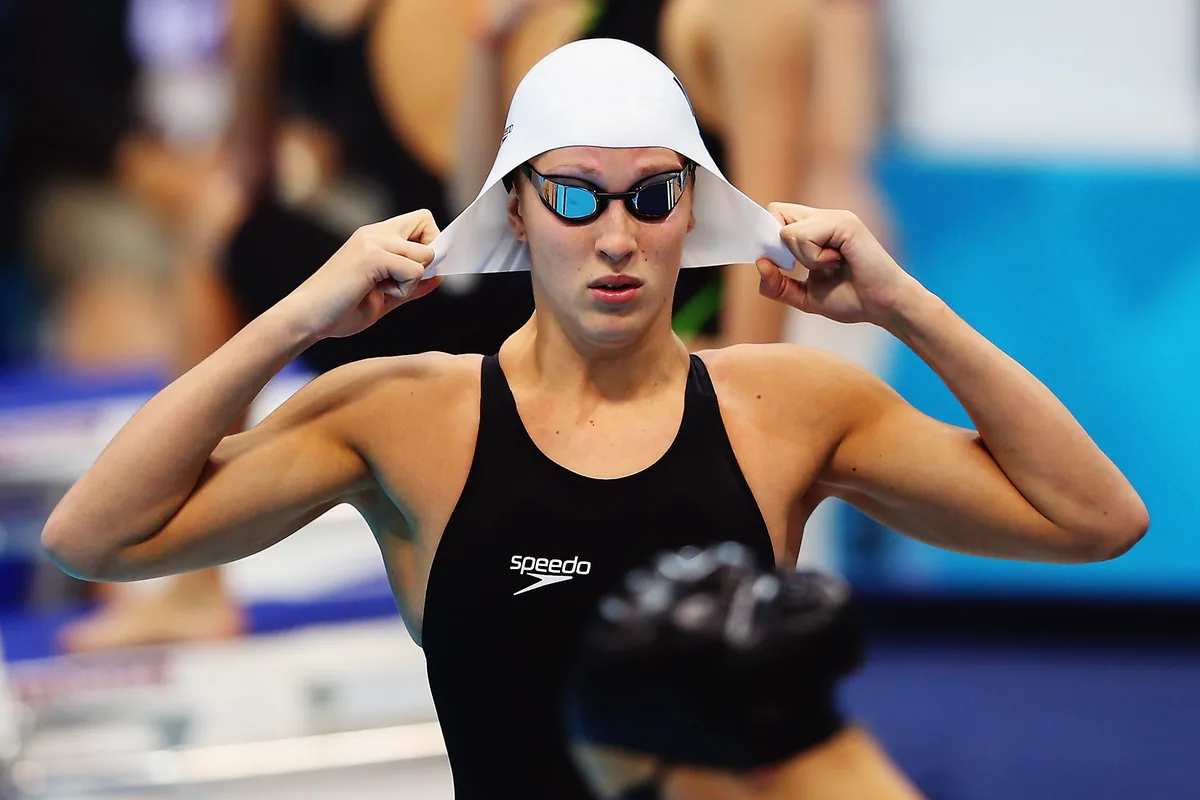
On race day your hair is not just getting wet once. It is wet for warm-up, wet again for every heat, and wet between races while you wait on poolside in a damp towel. A style that looks neat on dry land can loosen the moment you dive in, and a loose strand under a swim cap can break the cap seal, let water in and fog your goggles at the worst possible moment.
The dive is the real test. The impact of hitting the water at speed pulls at anything that sticks up, which is why flat, close-to-the-head styles beat tall buns and loose ponytails on the blocks. A braid lying flat against the scalp or a low bun at the nape slides under a cap without a bump, while a high knot can lift the cap edge and let it slip.
Quick verdict: if your style survives a practice dive, a full warm-up and a cap put on and taken off twice without a single strand escaping, it is ready for race day. If you have to tuck hair back in after one dive, pick a flatter, tighter style.
Getting Your Swim Cap Fit Right
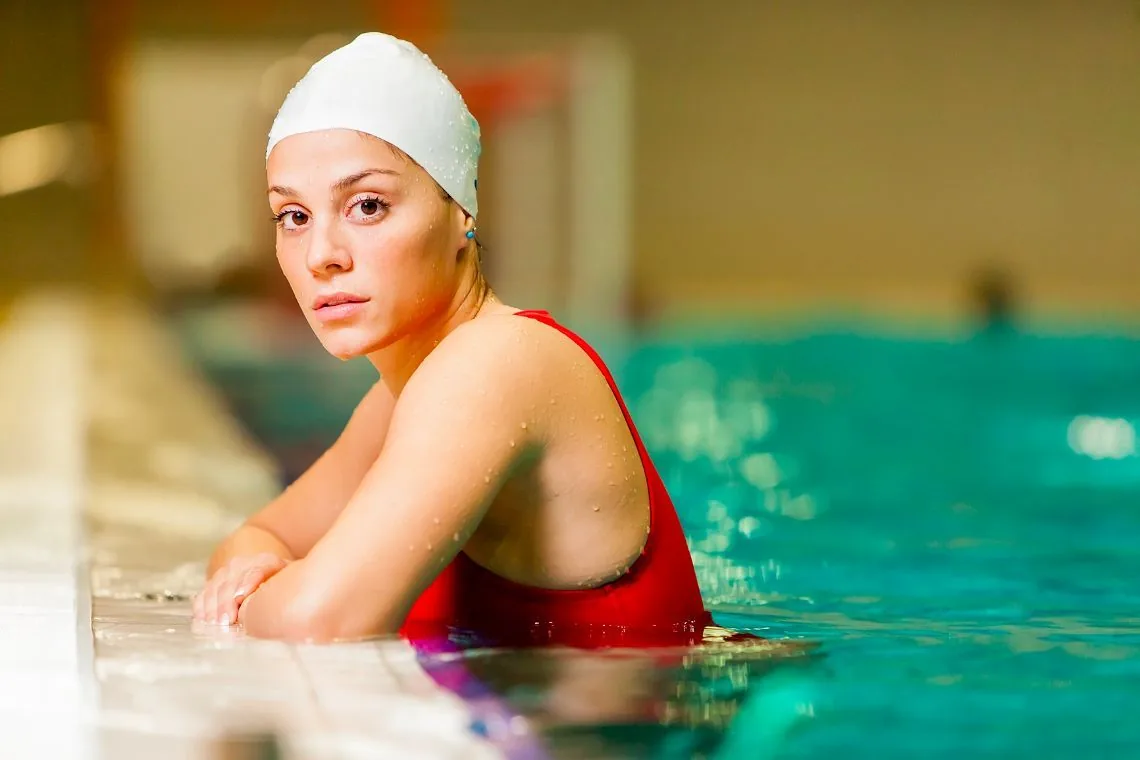
A swim cap only works when the hair underneath it is flat. Long hair should be braided or twisted first, then coiled flat against the head before the cap goes on — never stuffed in as a loose ball, which creates a bump the cap cannot seal around. Short hair just needs smoothing back with water before the cap goes on.
Put the cap on from the front hairline and roll it back over the crown, keeping the front edge low on the forehead so it does not creep up during the dive. Tuck any stray hairs in with wet fingers, then pull the cap edge down over the ears. If the cap keeps riding up, the hair underneath is too bulky, not the cap too small — flatten the style first before sizing up.
Silicone caps grip better and last longer for most racers, while latex caps are thinner and easier to pull on but can snag long hair. Whichever you use, practise with the exact cap you will race in, because a style that fits under one cap can bunch under another.
Chlorine Between Heats: What to Do (and Skip)
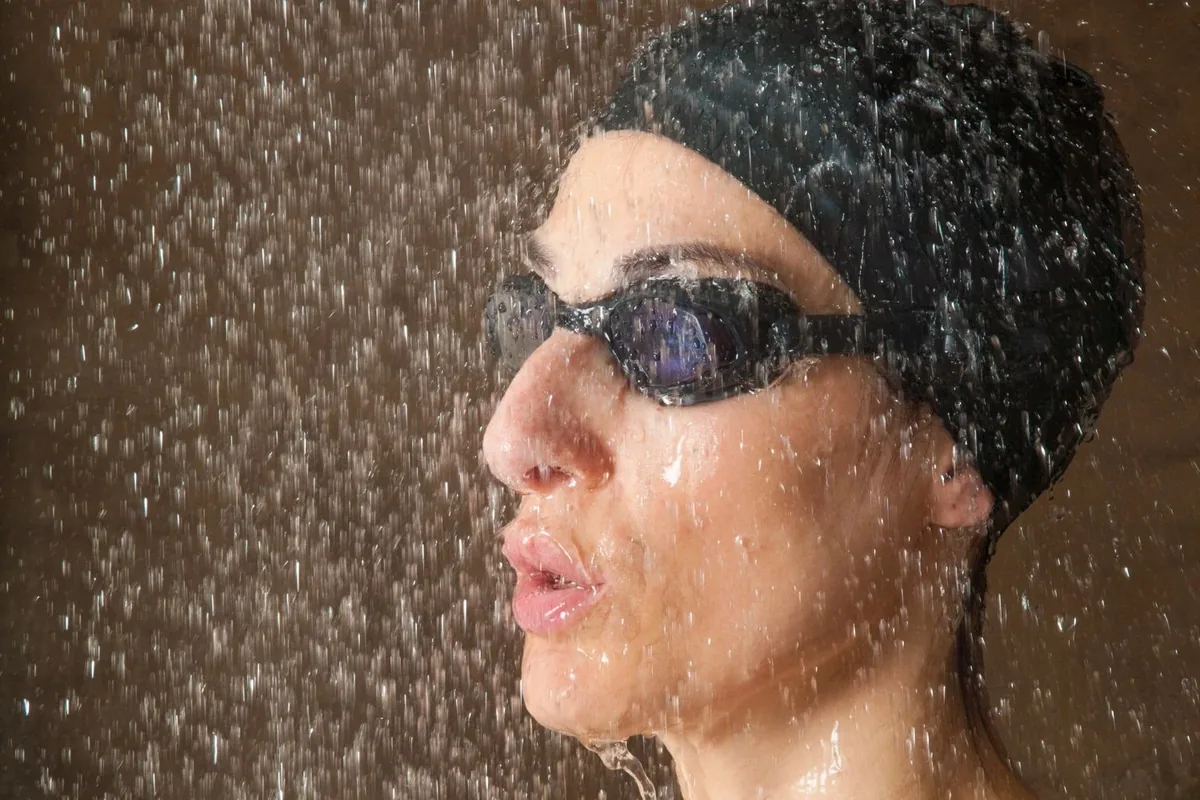
Chlorine dries hair out, and on a long meet day the damage adds up heat after heat. The simplest protection is a quick rinse with fresh water before you race, so your hair soaks up clean water instead of pool water, and another rinse between heats when you can get to a shower or a poolside tap.
Keep a small bottle of leave-in conditioner or a little hair oil in your poolside bag and smooth a pea-sized amount over the lengths before your next heat. It helps the cap slide on without snagging and makes detangling much easier later. Skip heavy styling creams on race day: they make hair slippery, loosen braids and can stop a cap from gripping.
Do not brush wet, chlorinated hair between heats. Wet hair stretches and snaps easily, so use your fingers or a wide-tooth comb, start at the ends and work up, and save the proper wash for after the meet. A quick rinse and a re-braid is all the hair needs between races.
Picking a Style by Stroke and Event
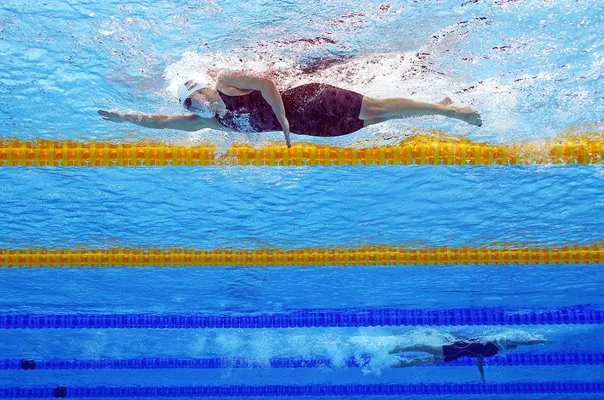
Your stroke changes what your hair has to do. Freestyle and butterfly drive water over the back of the head, so flat braids and low buns that sit close to the skull work best. Backstroke is the fussiest: anything at the nape catches on the water as you roll, so a low, flat bun or braids tucked right down are the safest choices.
Breaststroke keeps your head higher and your hair drier, so you have a little more freedom — a side braid or a braided ponytail works well here. For the individual medley, pick a style that survives all four strokes, which usually means double braids or a braided bun, and never a style you have only tested in freestyle.
Relays add one more demand: the takeover. You are standing on the blocks, leaning forward, waiting for your teammate’s touch, and your cap and goggles have to stay put through the dive. Practise your relay start in your race-day style at least once before the meet, because a style that is fine for a flat start can shift on a relay dive.
Race-Day Hair by Length
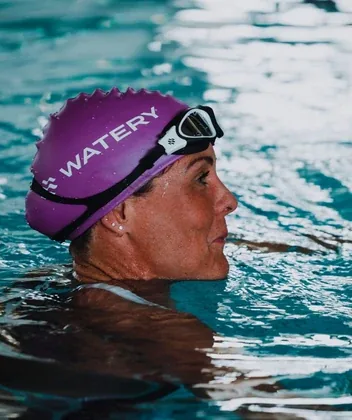
Short hair is the easiest on race day: smooth it back with water, add a little gel if your meet rules allow it, and the cap does the rest. The only job is keeping the front layers out of your goggles, so tuck them under the cap edge at the temples before you step up to the blocks.
Medium-length hair suits a single braid or a low ponytail folded into a small bun. The braid keeps the ends controlled, and the bun sits flat enough for the cap. Long hair needs two braids or a braided bun — one braid alone is heavy when wet and can pull the cap backwards during a dive.
Very long or thick hair should be split into two braids and crossed flat at the nape, or coiled into a low braided bun and pinned tight. Test the bulk under your cap at home: if you can feel a lump when you press the cap, flatten the style or split it into two sections.
Goggles, Cap and Hair: Stopping Leaks and Pulling
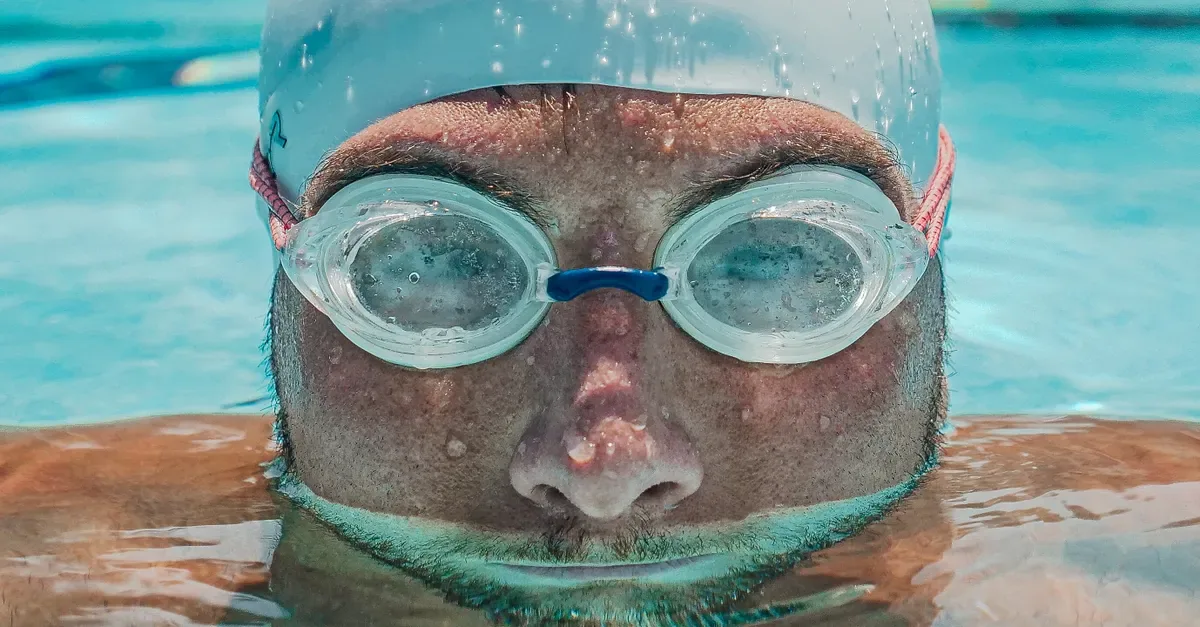
Goggle leaks on race day are often a hair problem, not a goggle problem. A strand caught under the goggle seal lets water in within a few strokes, so always put your cap on first, then your goggles, and run a wet finger around the seal to check no hair is trapped underneath before you dive.
The order matters: braid first, cap second, goggles last. Putting goggles on before the cap drags the strap across the hair and pulls strands loose. The goggle strap should sit over the cap, not under it, so it grips the cap instead of sliding on wet hair.
If your goggles fog between heats, rinse them in fresh water and leave them alone — wiping the inside of the lens with a towel damages the anti-fog coating. And never tighten the strap so much that it hurts: a strap that is too tight slips more, because it pulls the cap edge up with every head movement.
The Between-Heats Poolside Reset
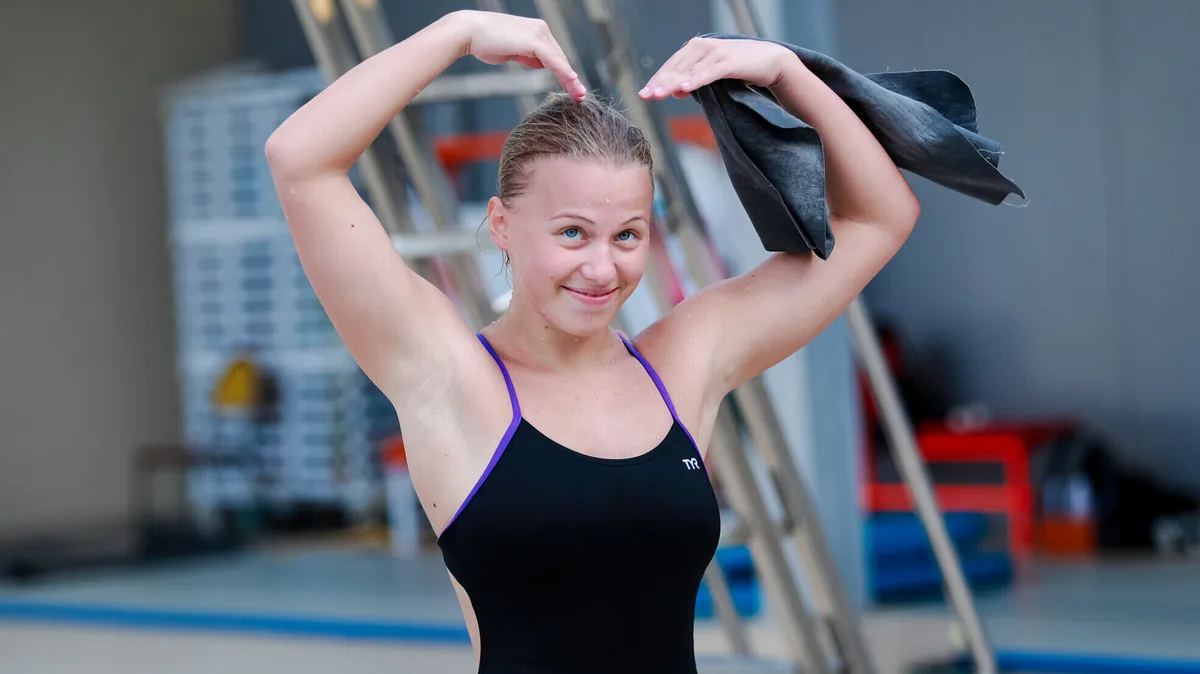
Between heats you usually have minutes, not a full rest. Keep a small reset kit in your bag: two spare hair ties, a few bobby pins, a wide-tooth comb, a small towel and a water bottle. That is everything you need to fix a race-day style without leaving poolside.
The five-minute reset is simple: rinse quickly if there is a shower nearby, squeeze the water out with your towel instead of rubbing, finger-comb the ends, re-tighten the braid or re-pin the bun, and put the cap back on. Check the goggle seal last, because that is the step most people forget when they are rushing.
If your next heat is soon, do not re-do the whole style. Fix only what has come loose — usually the front layers and the nape — and save the full re-braid for a longer break. A style that needs a complete rebuild between every heat is the wrong style for a meet.
After the Meet: Wash, Detangle and Podium Photos
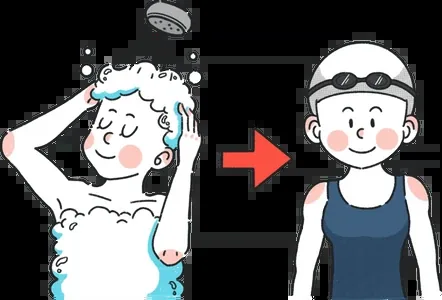
Once the last race is done, your hair needs a proper wash. Rinse with fresh water first, then shampoo twice: the first wash lifts the chlorine and pool chemicals, and the second actually cleans the hair. A swimmer’s shampoo or a gentle clarifying shampoo works well, followed by a deep conditioner left in for a few minutes.
Detangle before you dry. Work through the hair with a wide-tooth comb or your fingers, starting at the ends and moving up, while the conditioner is still in. Wet hair is fragile, so never drag a brush through it straight after a meet — that is how most race-day breakage happens.
For podium photos, take the cap off, shake the braid out gently and let the hair fall naturally, or re-do one quick style like a loose braid or a low ponytail. Team colours help here: a ribbon in your team colour, or a braid tied with a team-coloured tie, photographs well and marks the day without any extra effort.
1. Double Dutch Braids Under a Cap
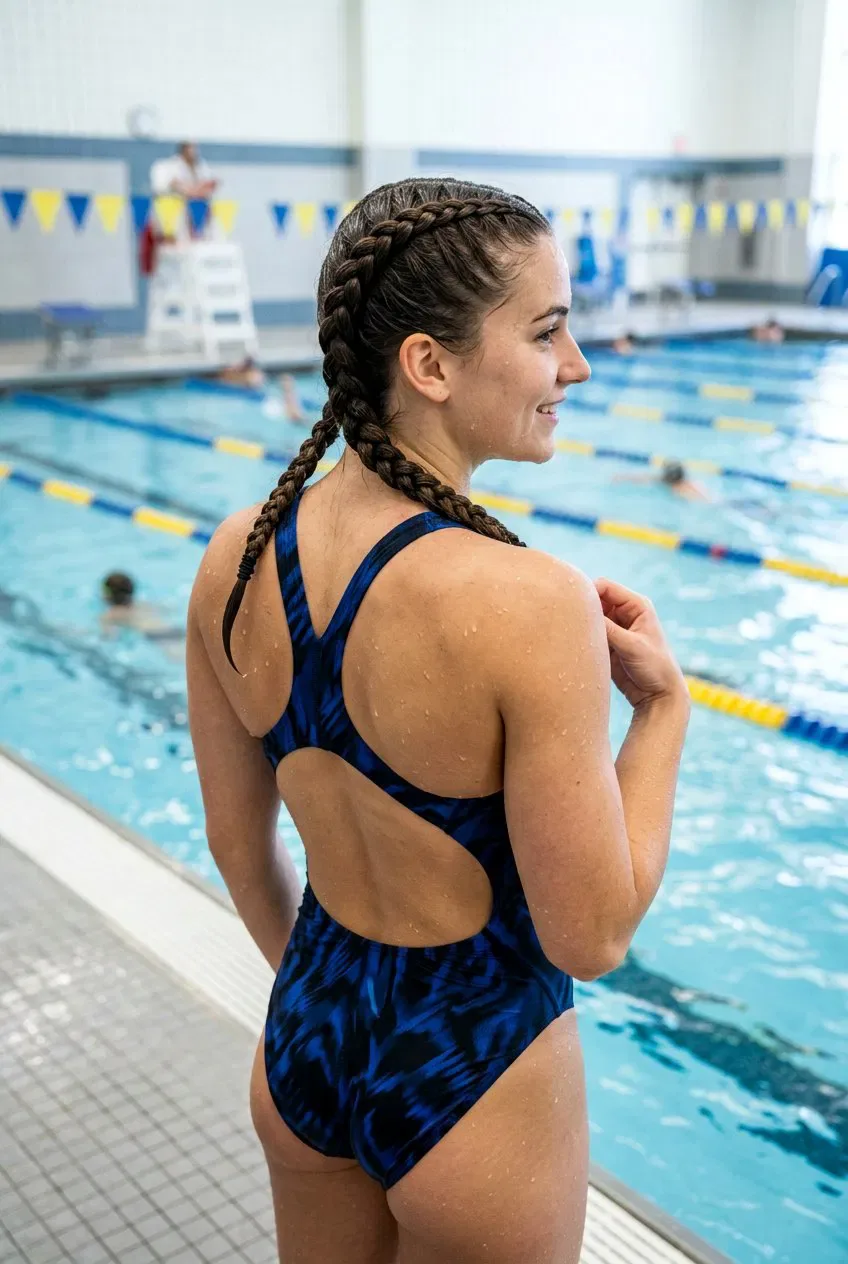
Best for: freestyle and butterfly heats, long hair, and anyone whose cap keeps slipping on the dive.
How to style: part the hair down the middle, Dutch-braid each side from the hairline to the nape, keeping the braids tight and flat against the scalp, then braid the lengths to the ends and tie off with small elastics. Cross the two ends flat at the nape and pin them, so nothing sticks up under the cap.
Time and cost: about 10 minutes once you have practised it; two hair ties, a few bobby pins, and no products needed.
Cap tip: because both braids lie flat, the cap slides on without a bump, and the seal stays even through a hard dive.
2. Low Braided Bun for Backstroke
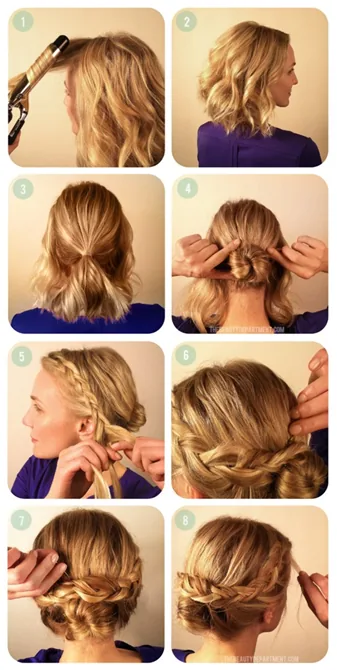
Best for: backstroke heats and the individual medley, where anything at the nape catches the water.
How to style: braid the hair into one low braid at the nape, then coil the braid flat into a bun and pin it in several places. Keep the bun low and wide rather than round and high, so it sits in the hollow at the back of the neck.
Time and cost: about 8 minutes; one hair tie and four to six bobby pins.
Cap tip: a wide, flat bun disappears under a cap, which is exactly what backstroke needs — test it by lying back in the water during warm-up.
3. High Braided Ponytail for Freestyle Sprints
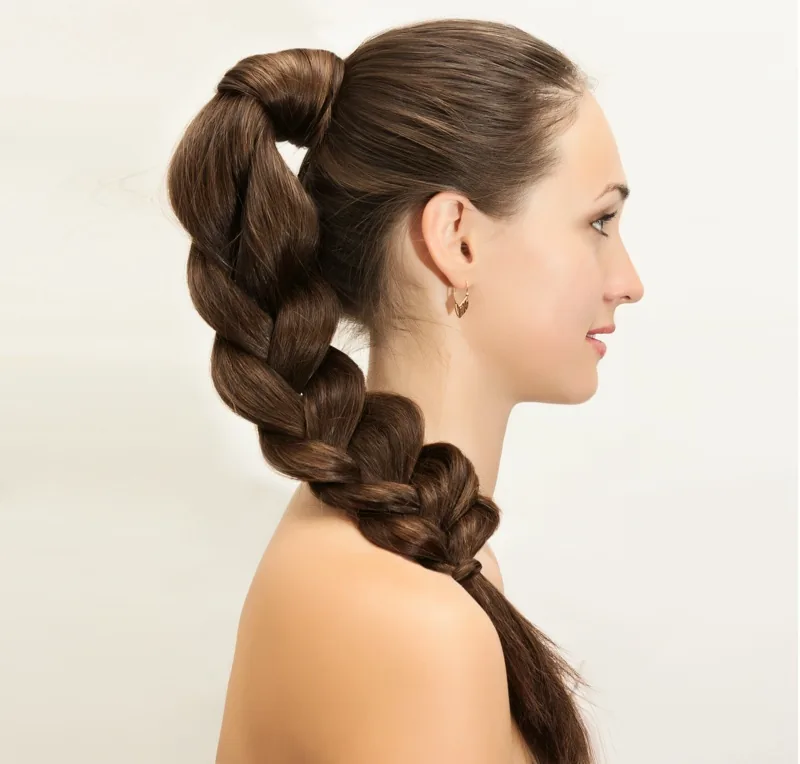
Best for: freestyle sprints and short heats where you want the hair completely off your neck.
How to style: gather the hair into a high ponytail, secure it tightly, then braid the ponytail to the ends and tie it off. Wrap a small strand around the elastic to hide it, and pin the braid so it lies flat down the back before the cap goes on.
Time and cost: about 5 minutes; one strong hair tie and one small elastic.
Cap tip: pull the cap on over the ponytail base carefully — if the ponytail sits too high, the cap edge lifts, so keep the base at crown height, not on top of the head.
4. Tight French Braid Crown
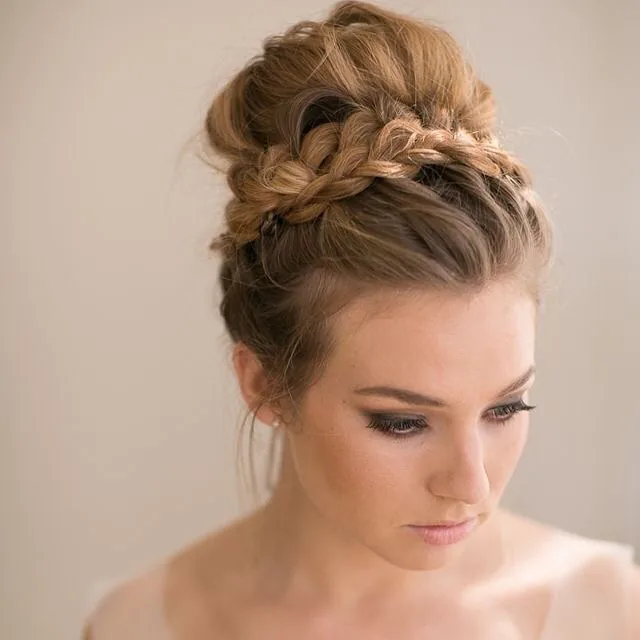
Best for: swimmers with layers that keep escaping, and for long meets where the style has to last all day.
How to style: start a French braid at one temple, work it around the hairline like a crown, picking up small sections as you go, and continue around to the other side. Braid the remaining tail to the end, tuck it under, and pin it flat.
Time and cost: about 12 minutes; a few bobby pins and a small elastic. Worth learning once — it is one of the most secure styles you can wear.
Cap tip: the crown braid locks the front layers in place, so nothing slips into your goggles mid-race.
5. Bubble Braid Ponytail
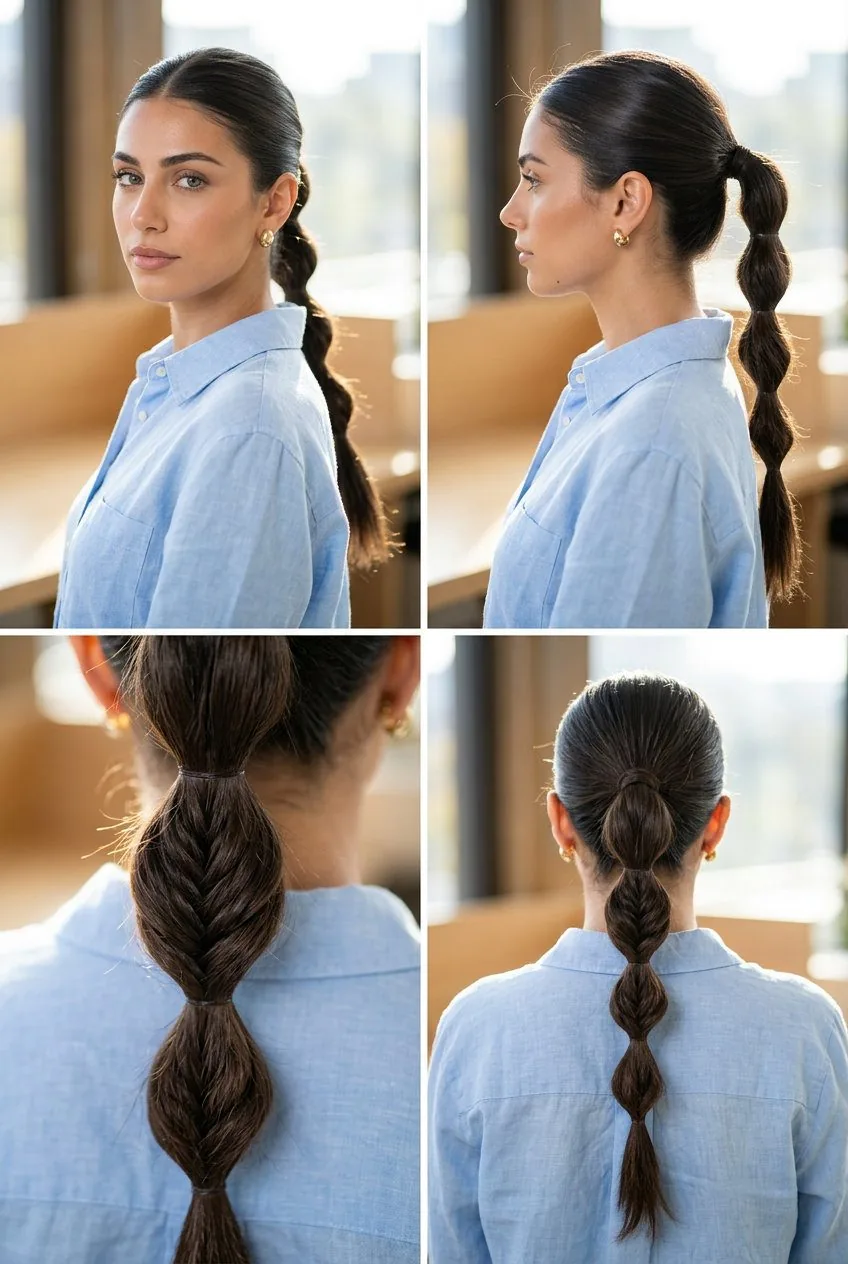
Best for: relay teams and team-photo days — it looks fun, holds well, and is easy to match in team colours.
How to style: make a high ponytail, then add small elastics down its length every few inches, gently pulling each section out into a bubble. Keep the bubbles small and tight for racing; big, loose bubbles catch water and pull the ponytail down.
Time and cost: about 7 minutes; five or six small elastics, ideally in your team colour.
Cap tip: flatten the ponytail down the back before the cap goes on, and check the top elastic after warm-up — it takes the most strain on the dive.
6. Cornrows for Race Day
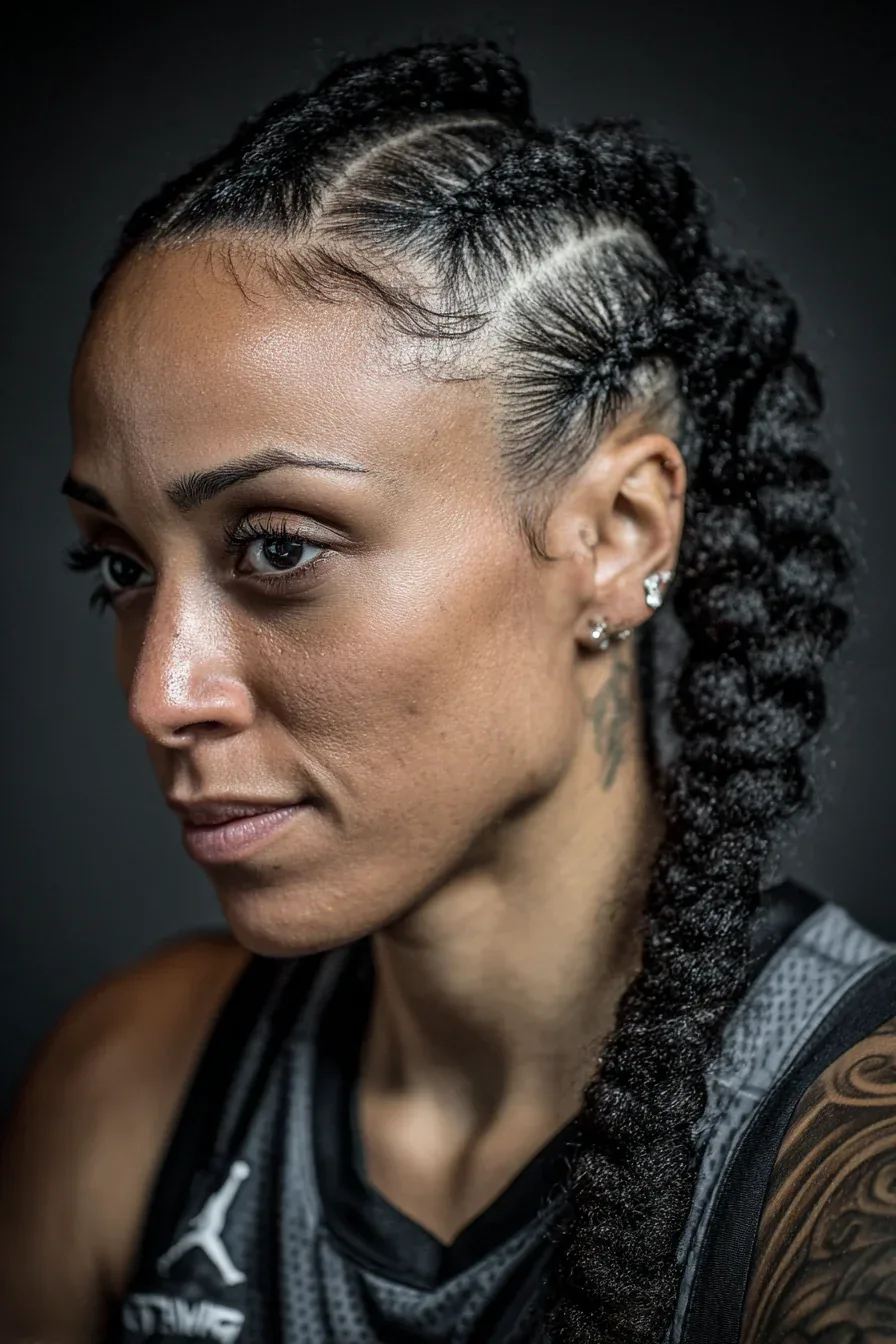
Best for: multi-day meets, very curly or coily hair, and swimmers who want a style that lasts from day one to the finals.
How to style: cornrow the hair in neat rows from the front hairline to the nape, keeping the rows close to the scalp. Gather the ends into one low ponytail or a small bun at the nape, and pin the ends flat.
Time and cost: 30 to 45 minutes to install, but it can last the whole meet with almost no daily work — just a quick check and re-pin between heats.
Cap tip: cornrows are the flattest style on this list, so the cap seals beautifully and barely moves, even through relay dives.
7. Slicked-Back Low Ponytail
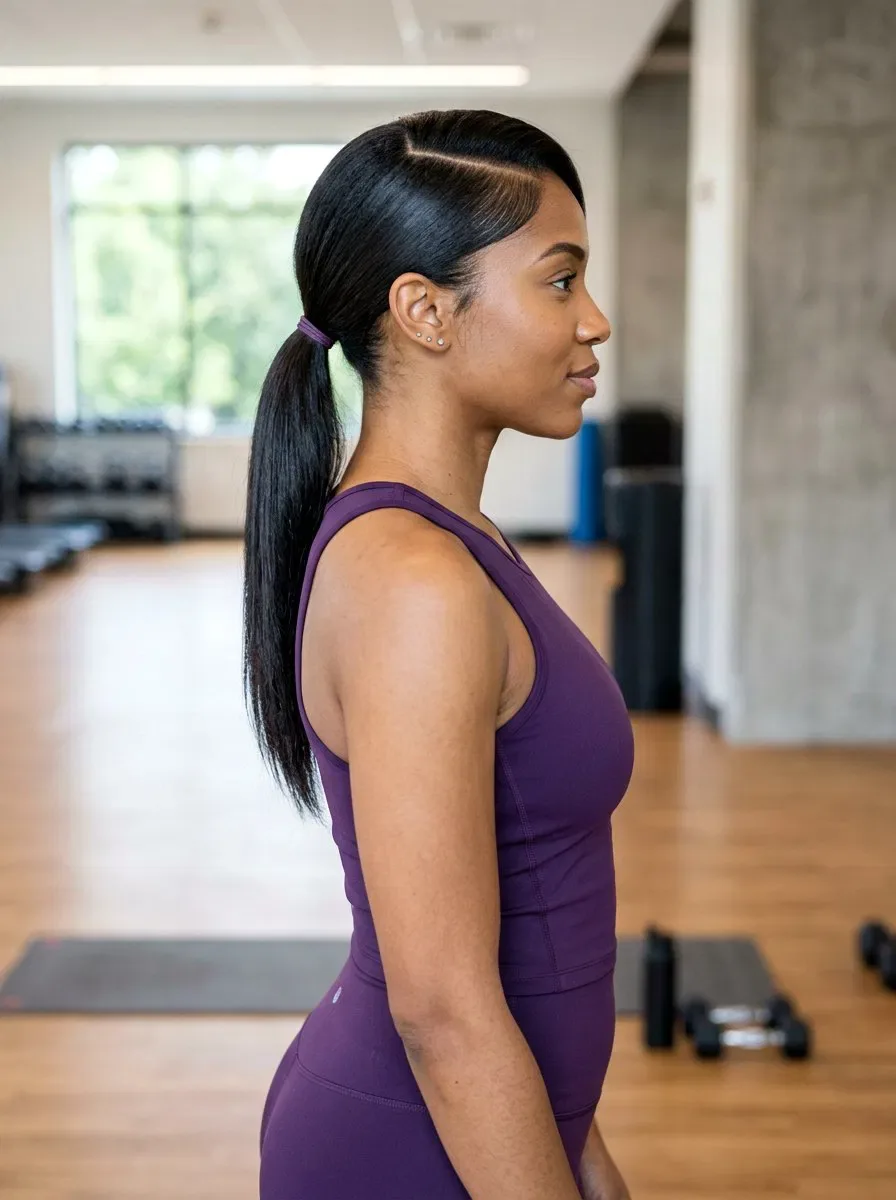
Best for: breaststroke heats and swimmers with straight, fine hair that slips out of braids.
How to style: wet the hair, smooth a little gel through the top and sides, and brush it all back into a low ponytail at the nape. Tie it tightly, wrap a strand around the elastic, and smooth any flyaways down with wet fingers.
Time and cost: about 3 minutes; gel and one strong hair tie. The fastest race-day style here.
Cap tip: the gel helps the cap grip instead of sliding, but use only a little — too much makes the hair slippery and loosens the ponytail.
8. Fishtail Braid into a Low Bun
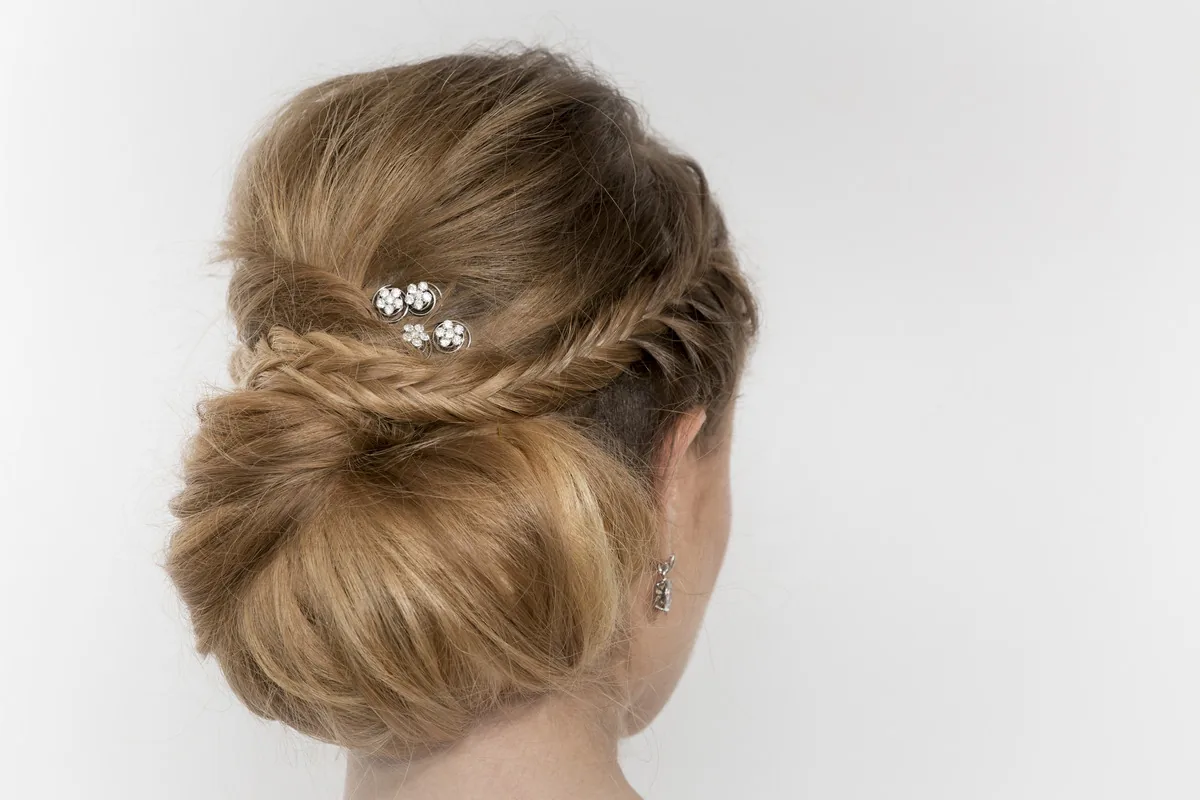
Best for: swimmers who want a braid that looks polished in podium photos as well as under a cap.
How to style: fishtail-braid the hair from the crown to the nape, keeping the braid tight and narrow, then coil the fishtail into a low bun and pin it. The fishtail’s fine pattern holds better than a regular braid when wet.
Time and cost: about 10 minutes; one hair tie and several bobby pins.
Cap tip: the narrow fishtail coils into a very flat bun, so the cap sits smoothly — ideal if your cap has slipped over a bulkier bun before.
9. Double Braided Pigtails for Relays
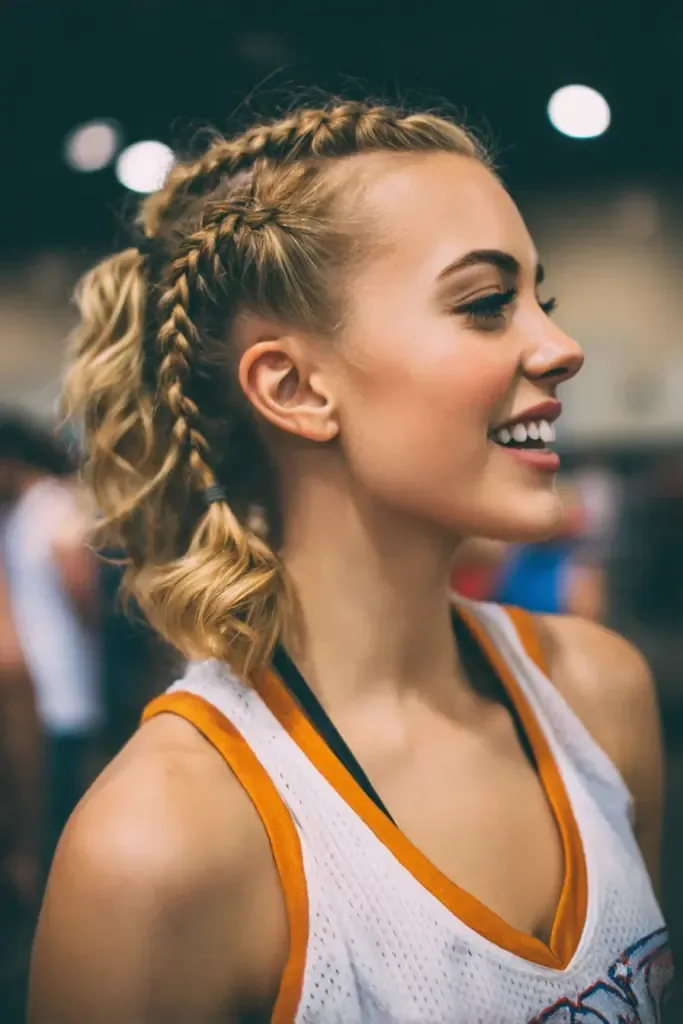
Best for: relay day, when every swimmer on the team wants the same secure style, and for younger swimmers.
How to style: part the hair down the middle and braid each side from the crown to the ends. Tie both braids with team-coloured elastics and pin the ends flat against the head so they do not swing on the dive.
Time and cost: about 8 minutes; two hair ties and a few pins.
Cap tip: two braids spread the bulk evenly, so the cap seals on both sides — a single heavy braid can pull the cap to one side.
10. Twisted Low Bun
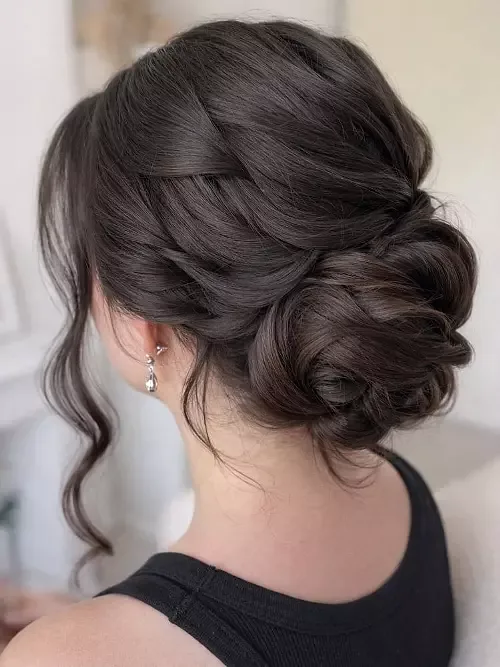
Best for: swimmers with thick hair, and for the 200-metre and longer events where comfort matters as much as hold.
How to style: split the hair into two sections, twist each one, then wrap the twists around each other into a low bun at the nape. Pin the bun in a circle, and tuck the ends underneath so nothing pokes out.
Time and cost: about 6 minutes; one hair tie and four to six bobby pins.
Cap tip: twists lie flatter than a coiled ponytail, so the bun stays comfortable under a cap for a long race.
11. Braided Headband with a Low Ponytail
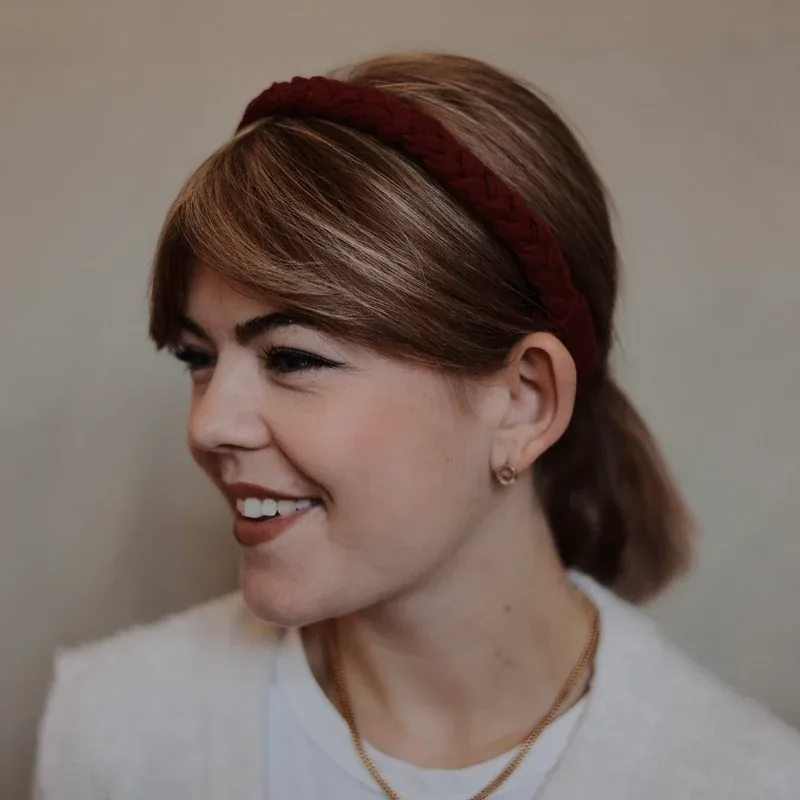
Best for: swimmers with a fringe or short front layers that will not stay in a braid.
How to style: braid a small section from one temple across the hairline to the other side, pin it behind the ear, then gather the rest of the hair into a low ponytail. The braid acts as a headband and locks the front layers back.
Time and cost: about 8 minutes; two hair ties and two bobby pins.
Cap tip: the braided headband keeps the cap edge from creeping up over the forehead, because the braid gives it something to grip.
12. High Top Knot Under a Cap
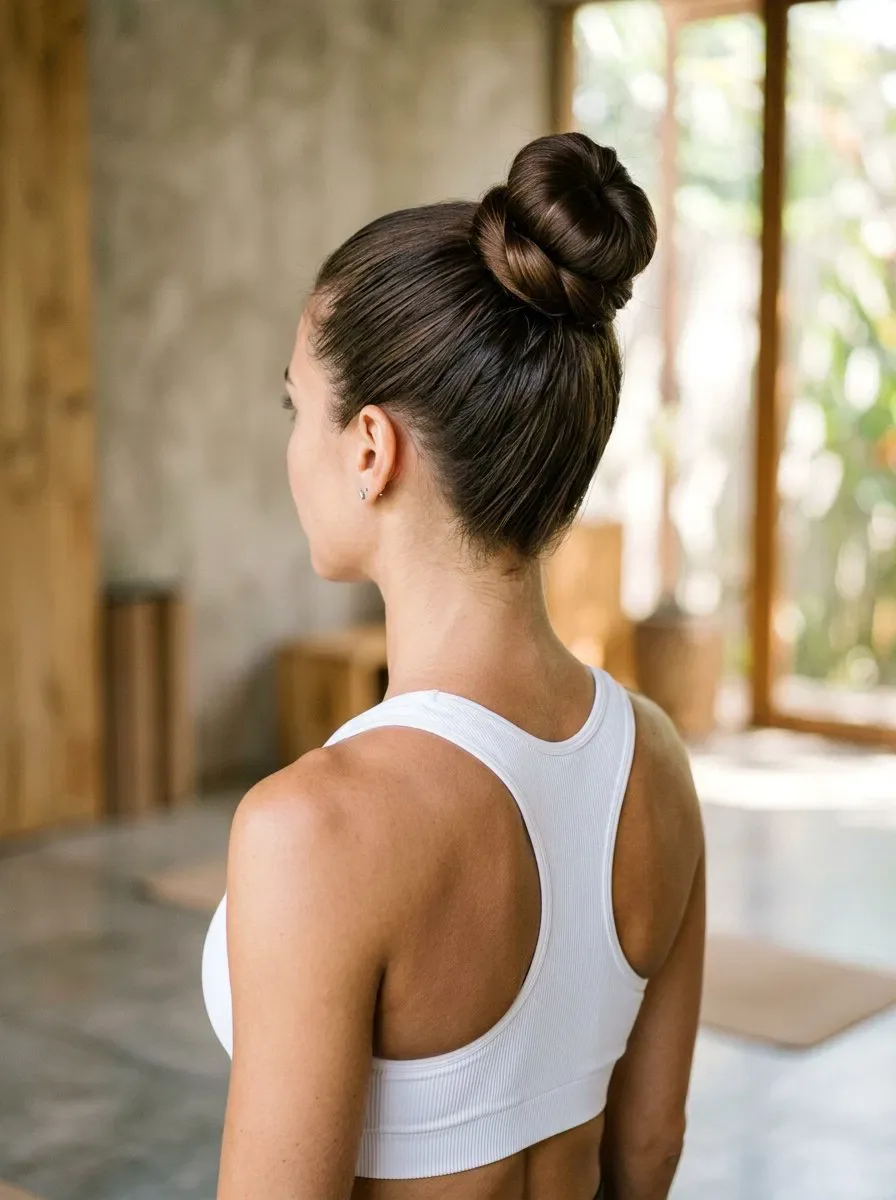
Best for: warm-up and cool-down, and for swimmers with medium hair who want the hair fully off the neck between heats.
How to style: gather the hair high, twist it into a knot and pin it tightly. Keep the knot small and tight rather than big and loose, and flatten it as much as you can before the cap goes on.
Time and cost: about 4 minutes; one hair tie and three or four bobby pins.
Cap tip: this is the one bun style to test carefully — a knot that is too tall lifts the cap, so only race in it if the cap still seals flat over it.
13. Space Buns in Team Colours
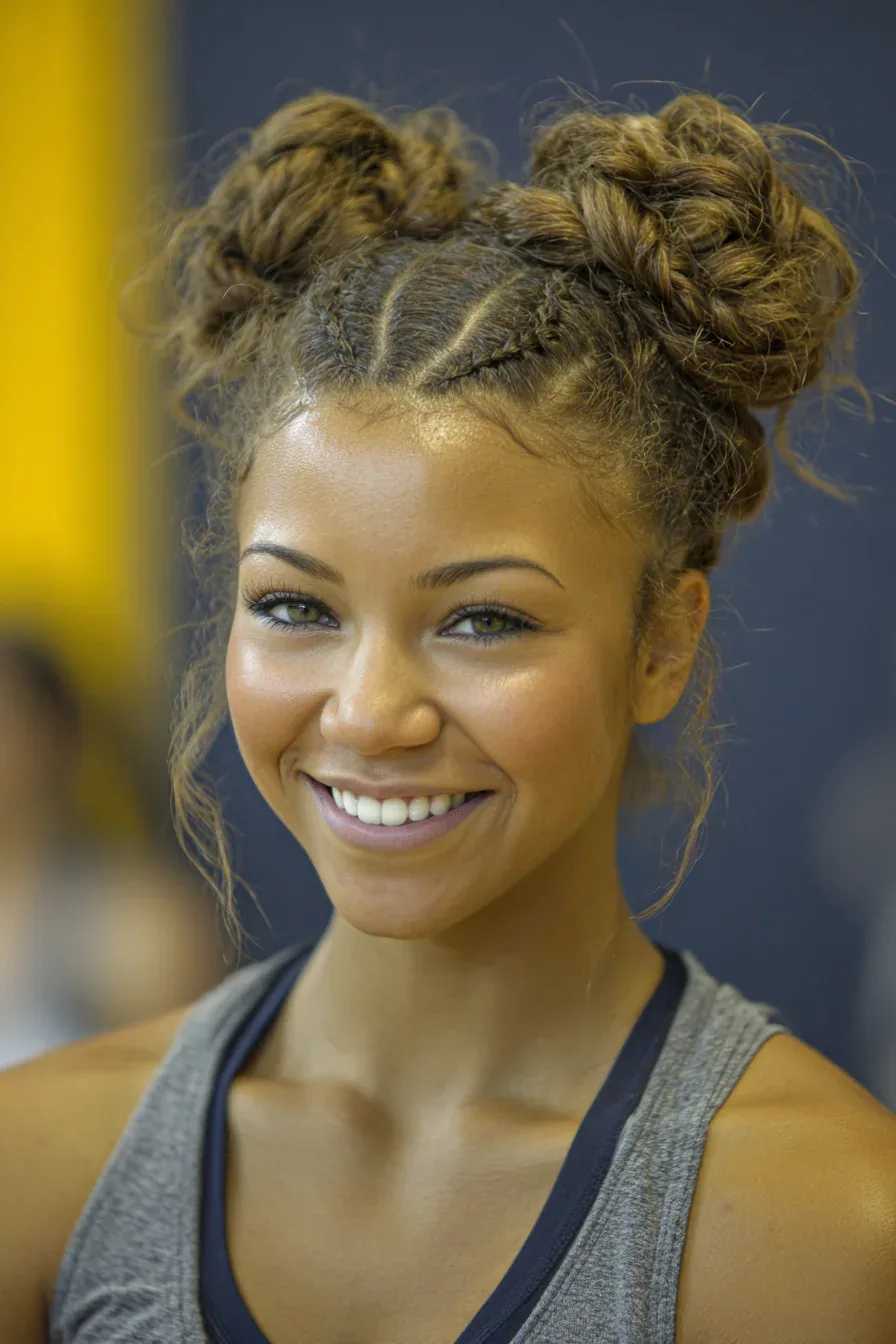
Best for: team spirit days, relay finals and podium photos — the most fun style on this list.
How to style: part the hair down the middle, make a small bun on each side of the crown, and tie a team-coloured ribbon or elastic around each bun. Keep the buns small and tight, and pin them flat.
Time and cost: about 8 minutes; two hair ties and ribbon in your team colour.
Cap tip: small space buns can fit under a cap if they sit low and flat, but practise first — large buns will lift the cap, so keep them tight for racing.
14. Rope Braid Ponytail
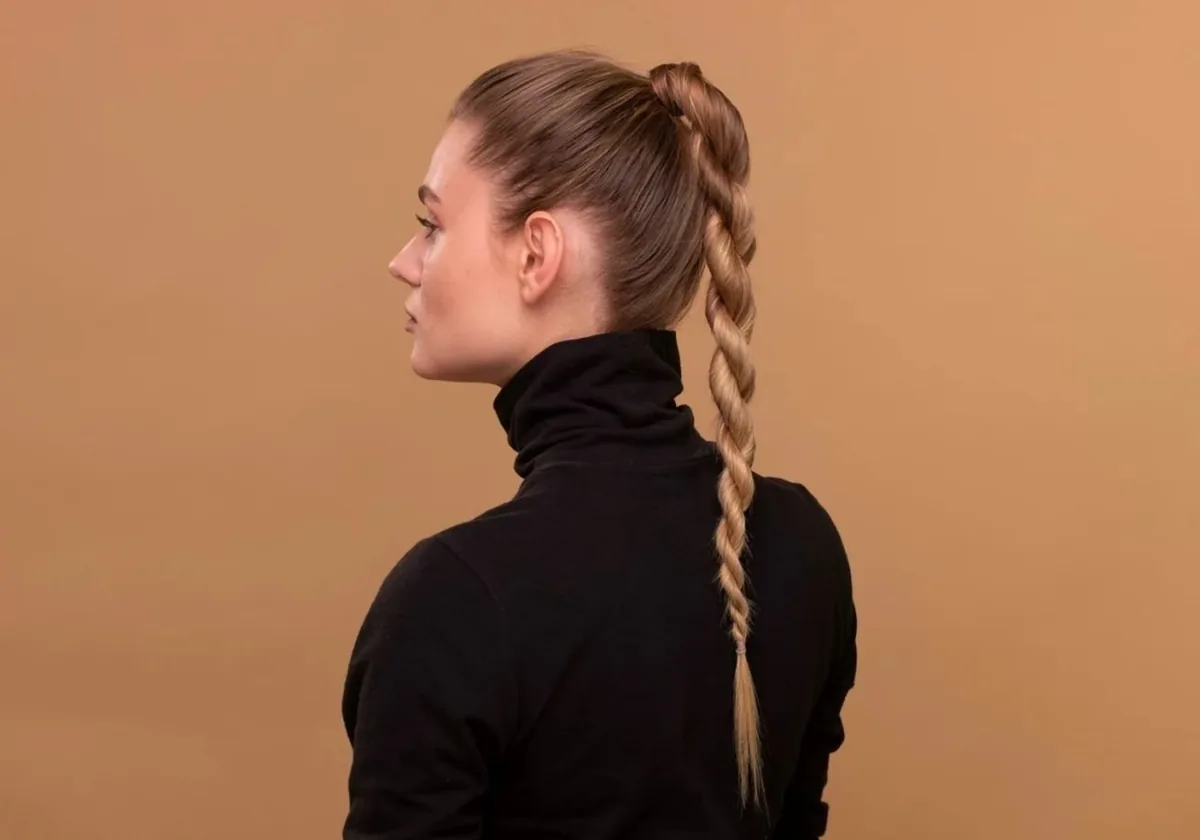
Best for: swimmers with long, straight hair that slips out of a normal braid when wet.
How to style: make a low ponytail, split it into two sections, twist each section in the same direction, then twist the two sections around each other in the opposite direction. Tie the end firmly — a rope braid tightens when it gets wet, which helps it hold.
Time and cost: about 5 minutes; one hair tie and one small elastic.
Cap tip: the rope braid lies in a single slim line down the back, so it slides under a cap without bunching.
15. Single Chunky Braid
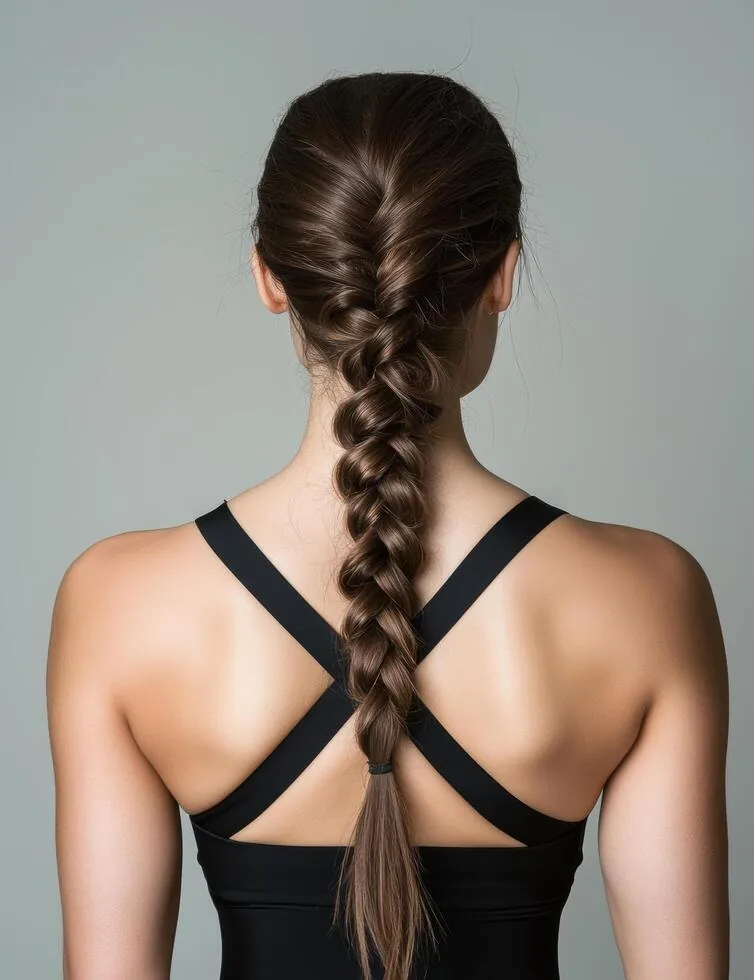
Best for: swimmers with thick hair, and for heats where you want one simple style you can re-do in two minutes.
How to style: brush the hair back, braid it loosely but evenly from the nape to the ends, and tie it off. Keep the braid low and centred so it lies flat down the back under the cap.
Time and cost: about 4 minutes; one hair tie. The simplest braid on this list.
Cap tip: a chunky braid is heavy when wet, so pin the end flat at the nape for racing — otherwise it swings and tugs the cap on the dive.
16. Low Sleek Bun for Butterfly
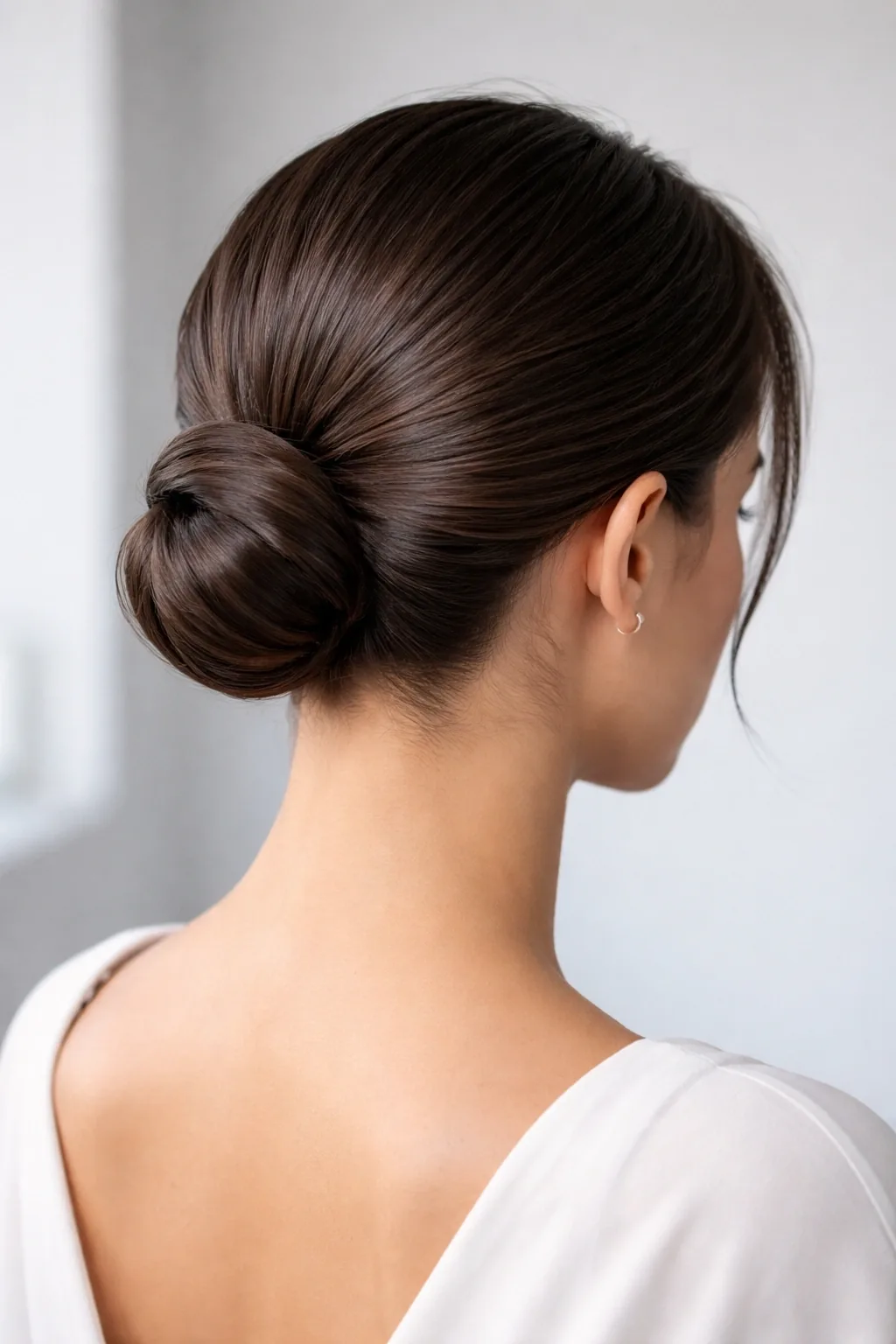
Best for: butterfly and long freestyle events, where the head drives forward through the water on every stroke.
How to style: smooth the hair back with water and a little gel, gather it low at the nape, twist it into a sleek bun and pin it flat. The bun should be wide and flat, not round, so it does not catch water.
Time and cost: about 6 minutes; gel, one hair tie and four bobby pins.
Cap tip: butterfly puts the most pressure on the cap, so this flat bun is worth the extra pinning — check it after warm-up before your heat.
17. Half-Up Braided Ponytail
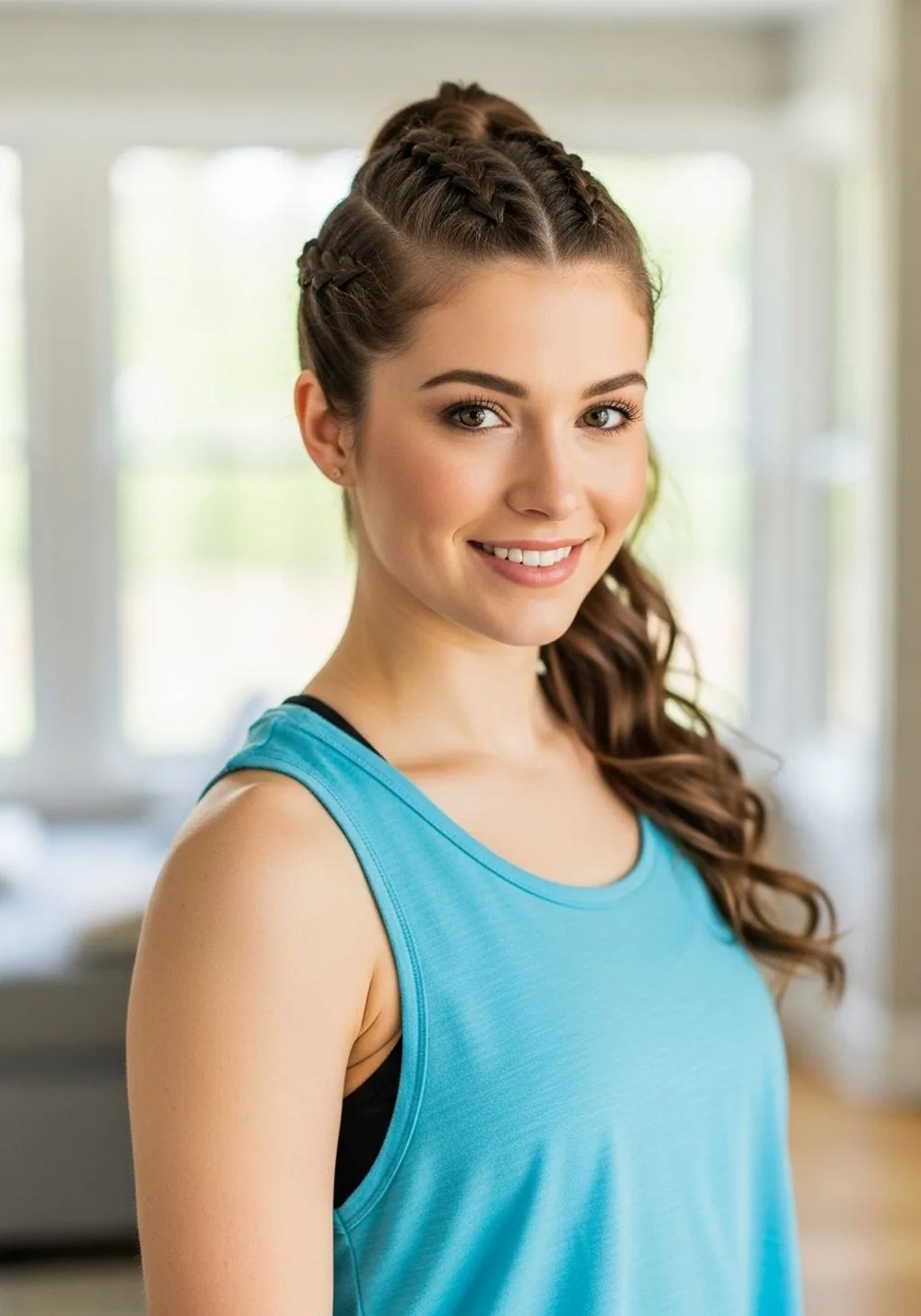
Best for: swimmers with layers, and for the walk from warm-up to the blocks when you want the front kept back.
How to style: braid the top half of the hair from the crown into a short braid, tie it, then gather it with the rest of the hair into a low ponytail. The top braid locks the front layers, while the ponytail keeps the length controlled.
Time and cost: about 7 minutes; two hair ties and a couple of pins.
Cap tip: keep the top braid tight — if it loosens, the front layers escape under the cap edge and into your goggles.
18. Curly Pineapple Under a Cap
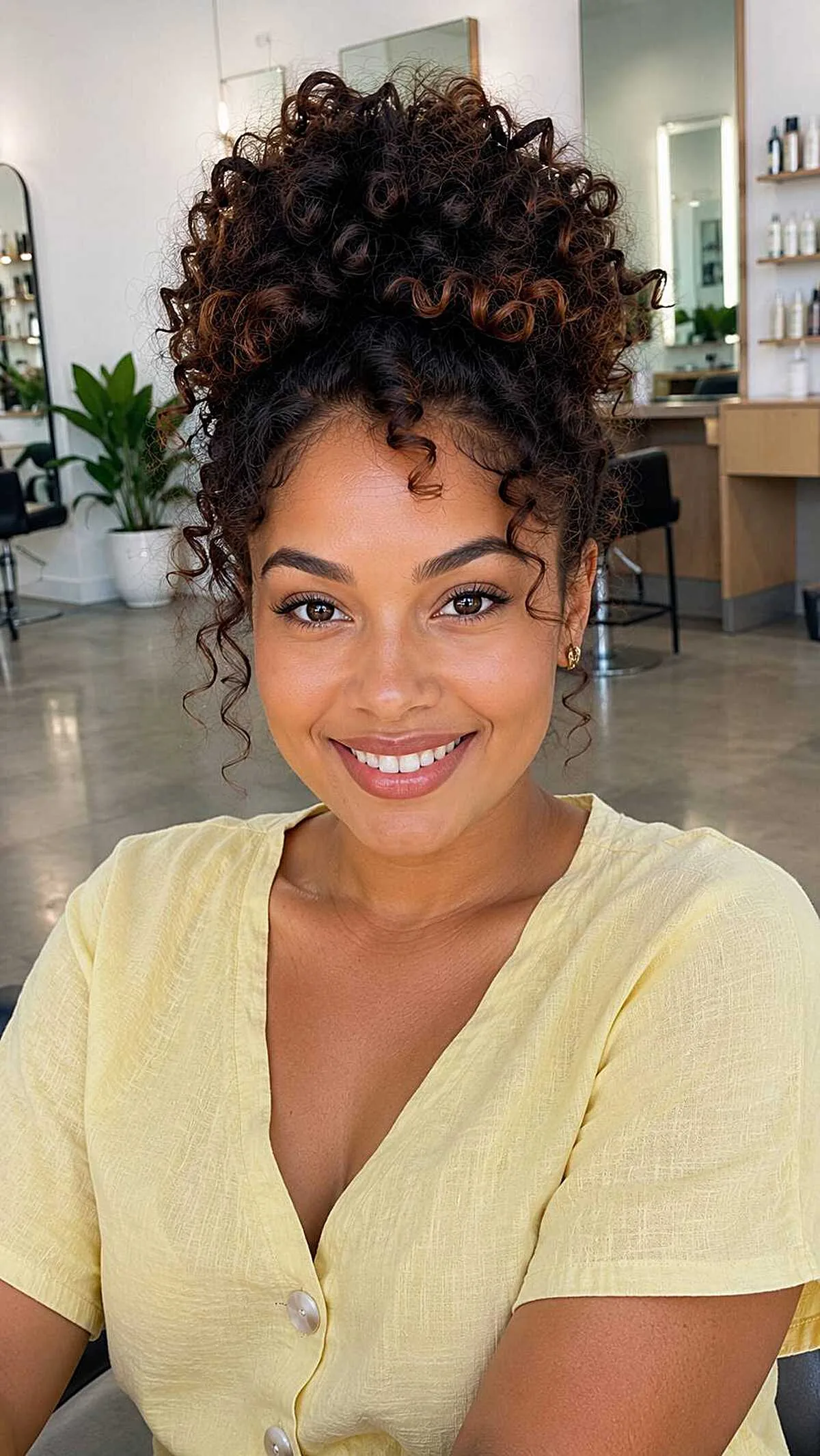
Best for: curly hair on race day, when you want to protect the curl pattern and still fit under a cap.
How to style: gather the curls loosely on top of the head with a soft scrunchie, then gently flatten the pineapple down and tuck the curls under the cap. Do not pull the curls tight — a loose gather protects the curl and still fits if the cap is roomy.
Time and cost: about 3 minutes; one soft scrunchie and a little leave-in conditioner.
Cap tip: try a larger silicone cap for this style, and smooth conditioner over the curls first so the cap slides on without snagging.
19. Short Hair Slicked for a Cap Fit
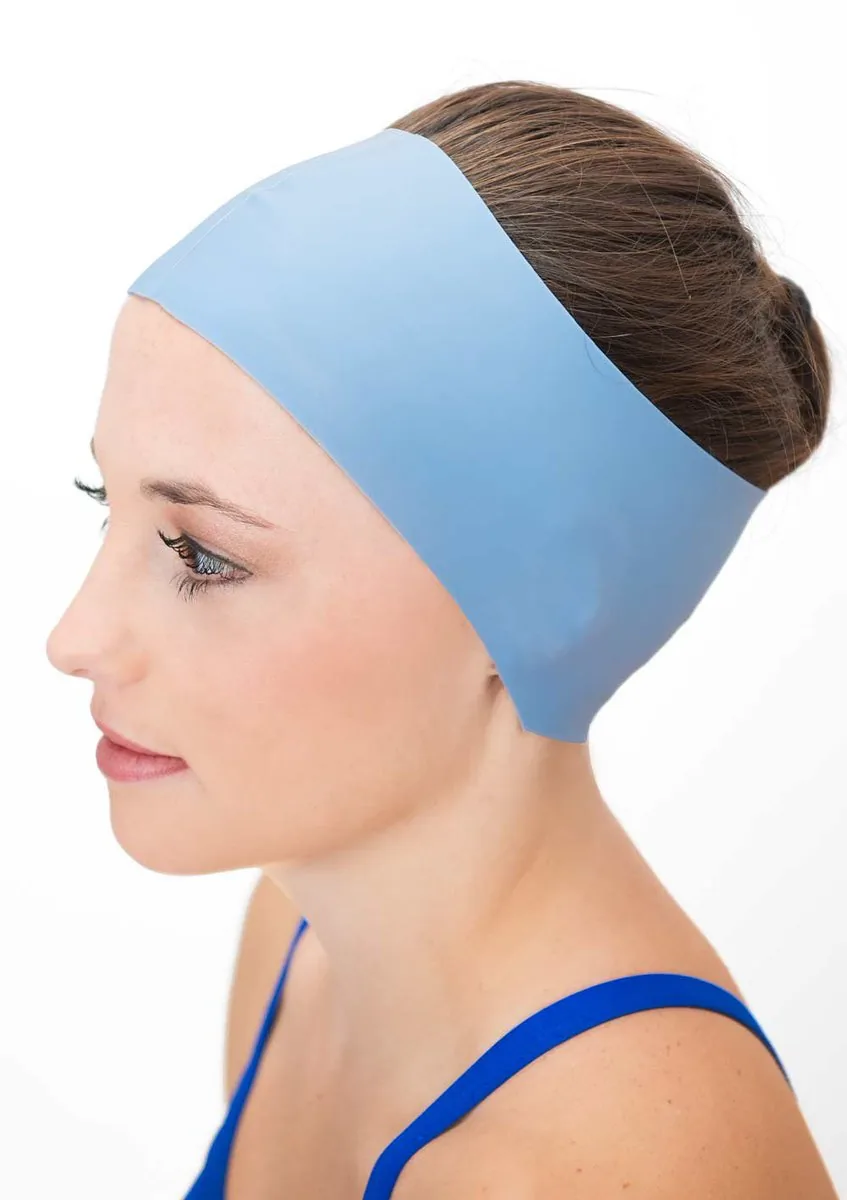
Best for: short hair, pixie cuts and bobs — the quickest race-day style of all.
How to style: wet the hair, smooth a little gel back from the forehead, and tuck the sides behind the ears. Put the cap on from the front and roll it back, checking the temples for stray layers.
Time and cost: about 2 minutes; gel only, no ties or pins needed.
Cap tip: short hair rarely lifts a cap, so your main job is the goggle seal — run a wet finger around it before every heat.
20. Two-Strand Twists
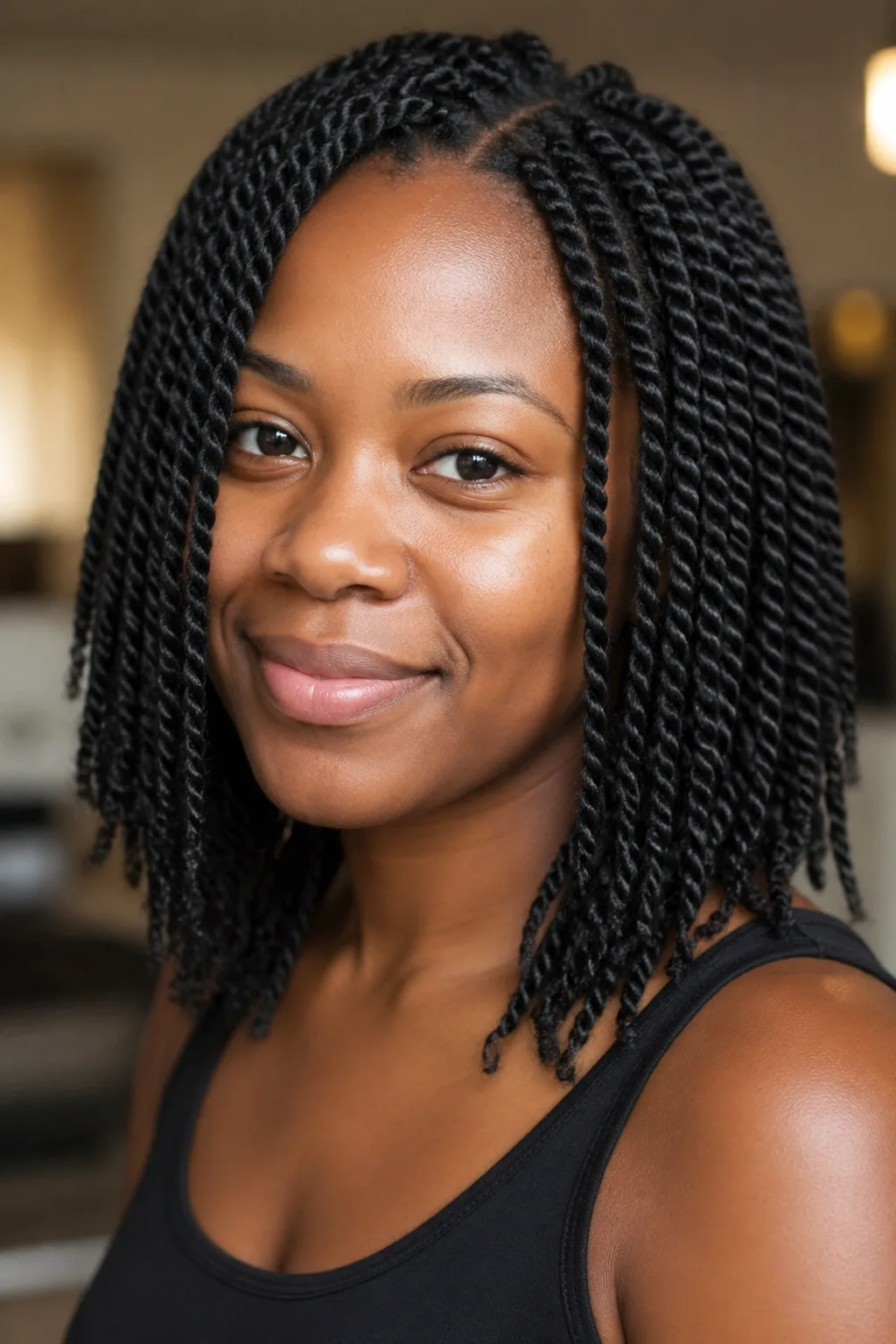
Best for: natural hair, multi-day meets, and swimmers who want a protective style that survives chlorine.
How to style: split the hair into sections and twist two strands around each other in each section, working from the front to the nape. Gather the twists into a low ponytail or a small bun and pin the ends flat.
Time and cost: 20 to 30 minutes to install, then almost no daily work — just a quick check between heats.
Cap tip: twists lie very flat, so the cap seals well, and the style protects the hair from chlorine all meet long.
21. Secure Messy Bun for Warm-Up
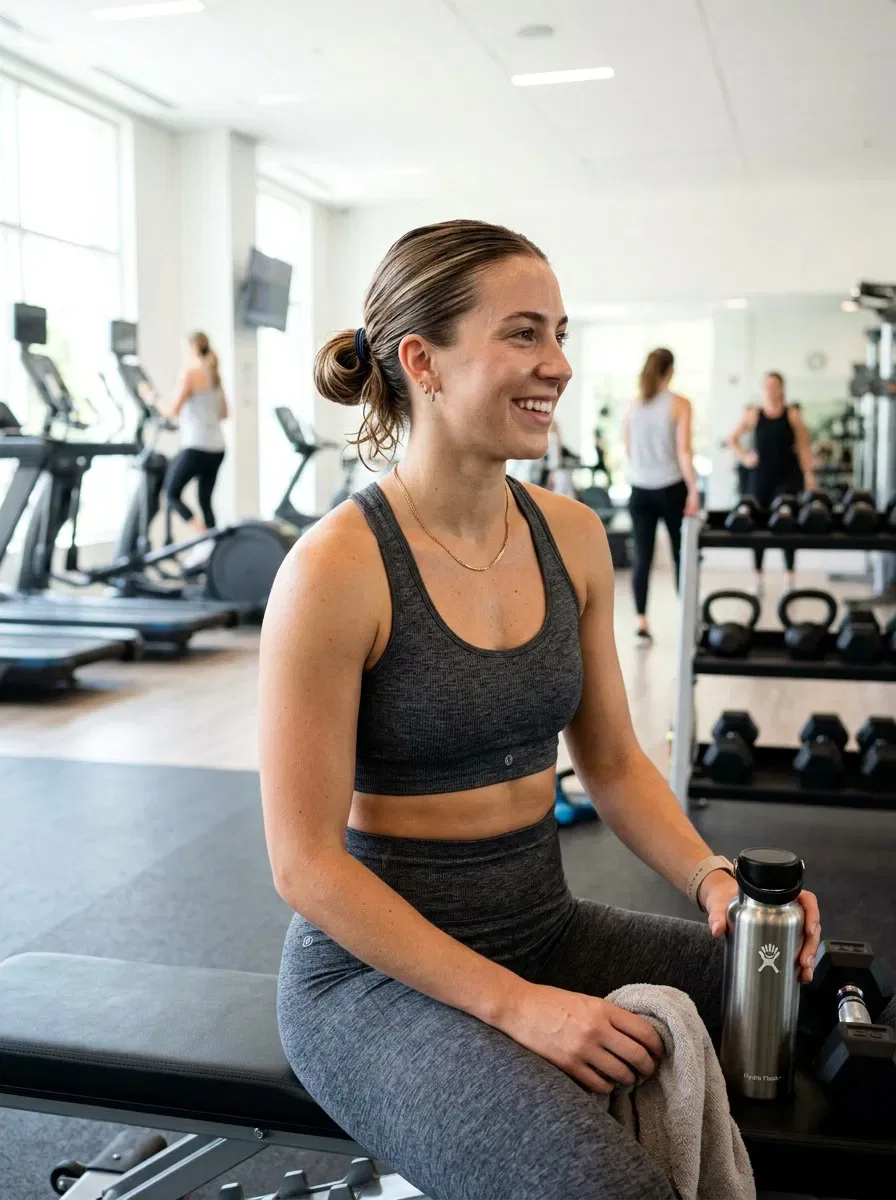
Best for: warm-up and the early heats, when you want the hair up fast and will re-do it before the final.
How to style: gather the hair into a loose bun, twist it once, pin it in three places and pull a few strands out at the front for comfort. It does not need to be perfect — it needs to hold for twenty minutes of warm-up.
Time and cost: about 3 minutes; one hair tie and three bobby pins.
Cap tip: treat this as a warm-up style, not a finals style — re-braid or re-pin properly before a race that matters.
22. Wrapped Low Ponytail
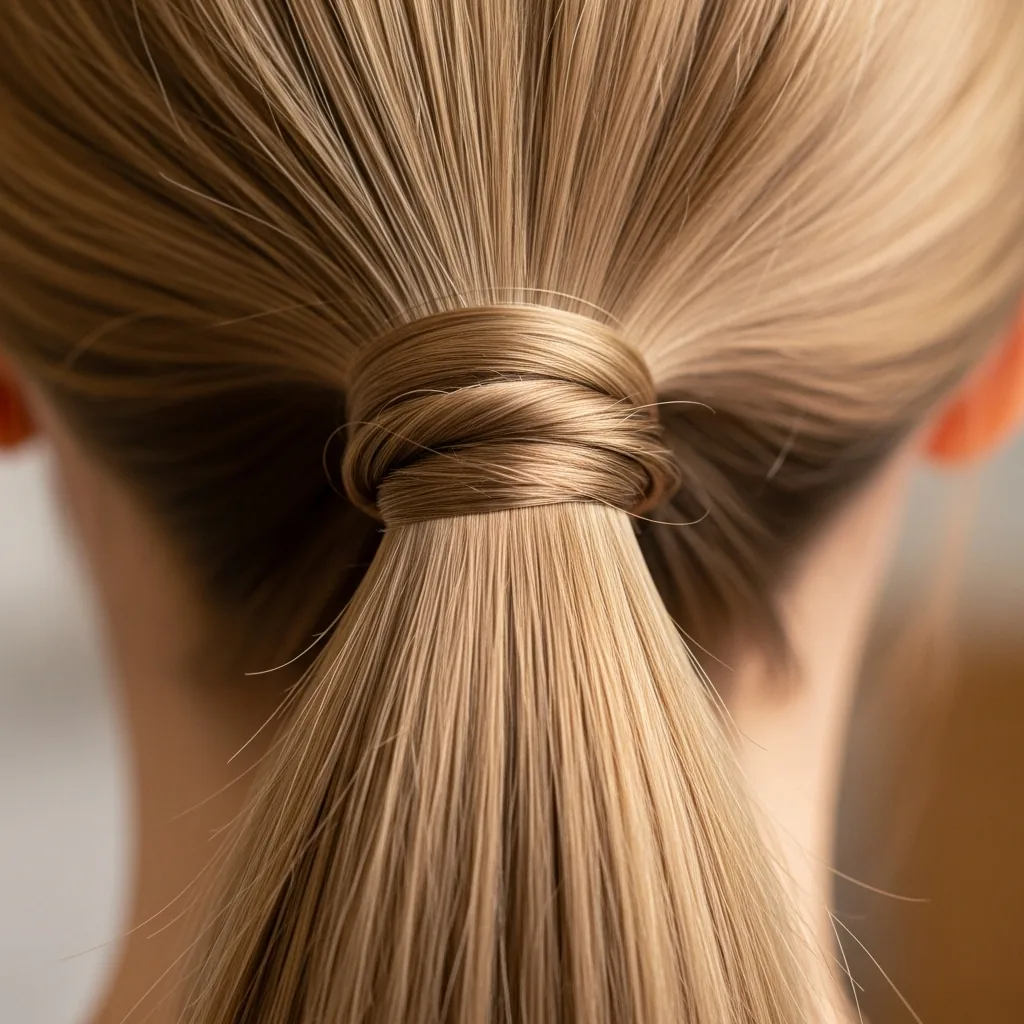
Best for: breaststroke and backstroke heats, and for podium photos after the race.
How to style: make a low ponytail at the nape, take a small strand from underneath, wrap it around the elastic several times and pin the end underneath. The wrap stops the elastic from slipping when the hair gets wet.
Time and cost: about 4 minutes; one hair tie and one bobby pin.
Cap tip: the wrapped elastic grips better under a cap than a bare elastic, which can slide on wet hair.
23. Braided Crown
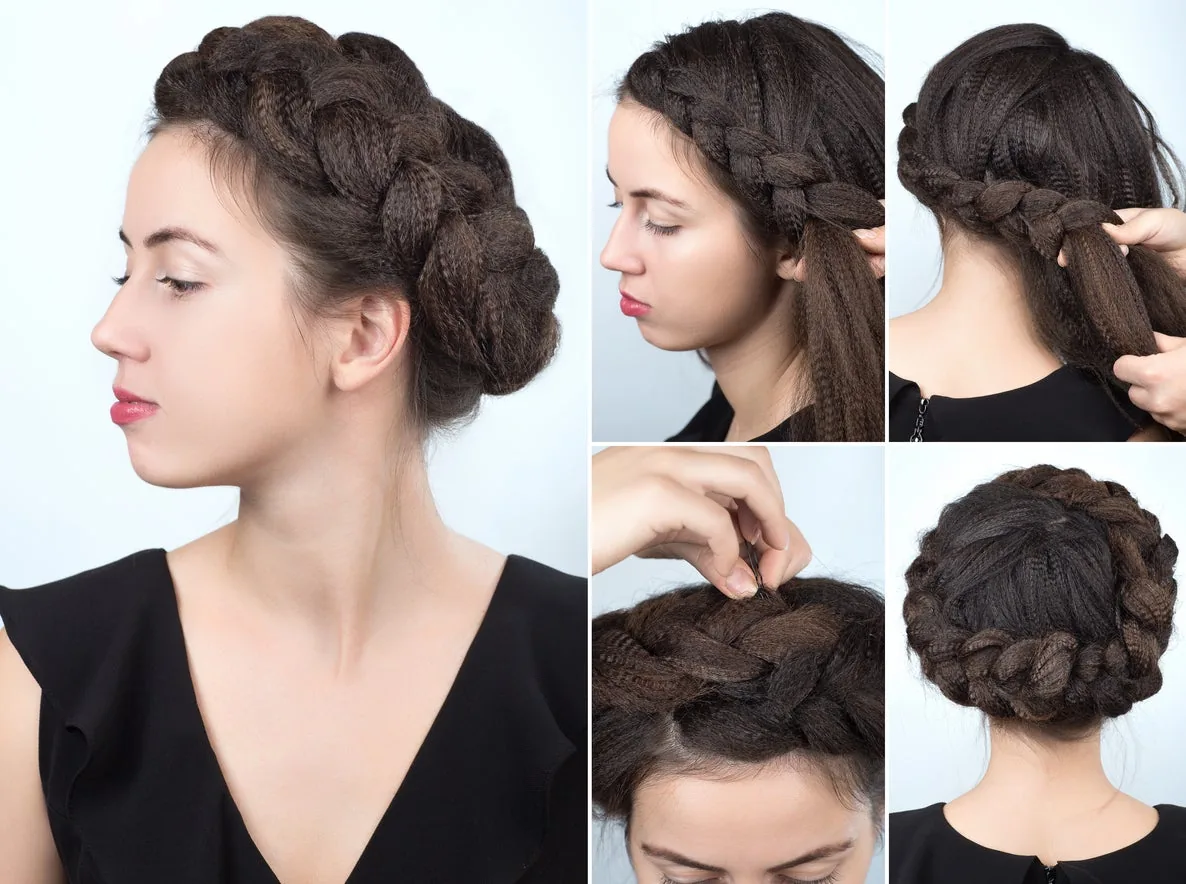
Best for: long meets and swimmers with a fringe that keeps falling into their goggles.
How to style: braid around the head from one ear to the other, picking up hair as you go, then continue the braid around and pin the tail underneath. The crown should sit close to the hairline all the way round.
Time and cost: about 12 minutes; a few bobby pins and a small elastic.
Cap tip: the crown braid is one of the most secure ways to lock a fringe back, and it keeps the cap edge sitting low on the forehead.
24. Side Braid for Breaststroke
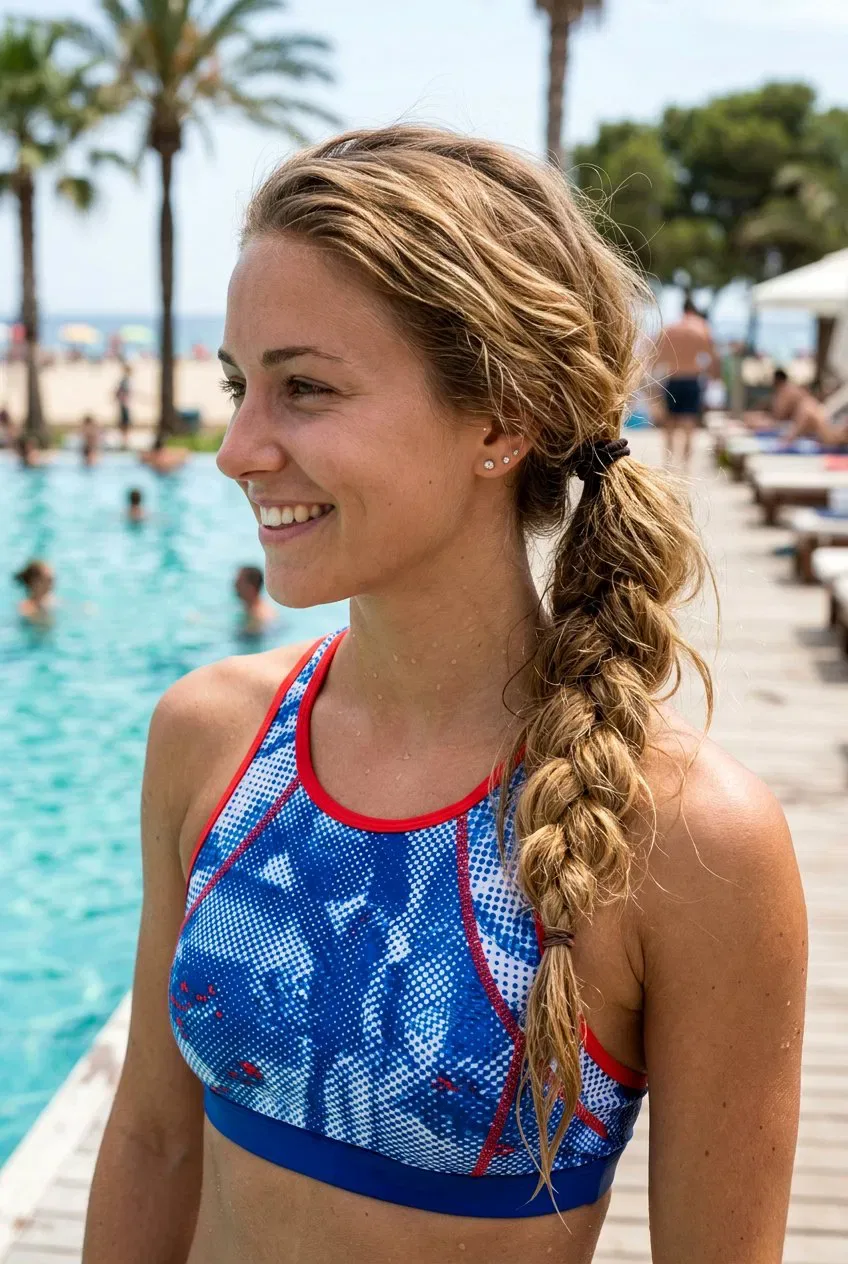
Best for: breaststroke heats, where the head stays higher and a side braid stays out of the way.
How to style: sweep all the hair to one side, braid it from behind the ear down over the shoulder, and tie it off. Keep the braid tight at the top so it does not loosen when you breathe.
Time and cost: about 5 minutes; one hair tie.
Cap tip: drape the braid over the shoulder before the cap goes on, and pin the end to your suit strap if it swings — a swinging braid can tug the cap during the dive.
25. Dutch Braid into a Ponytail
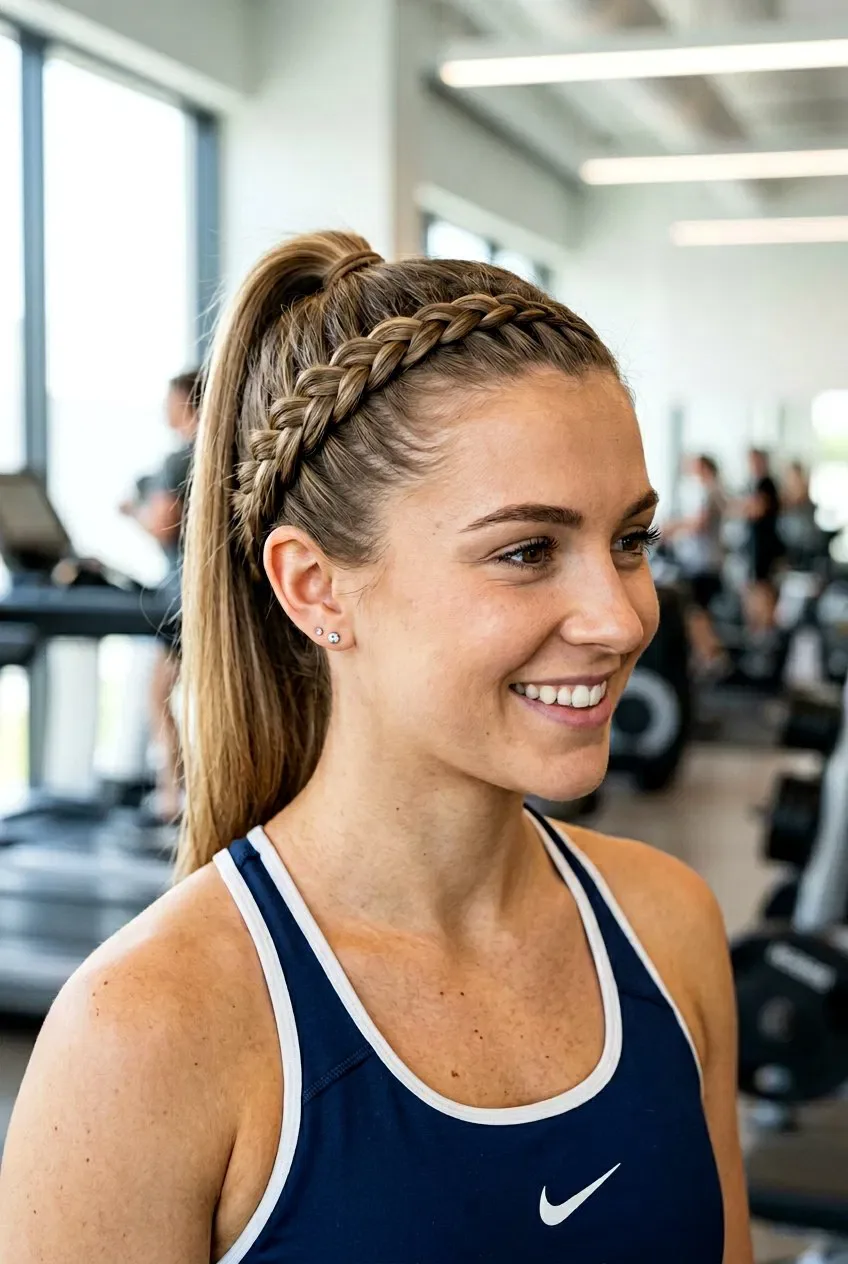
Best for: freestyle heats and swimmers whose front layers always escape a plain ponytail.
How to style: Dutch-braid from the hairline to the crown, picking up hair as you go, then gather everything into a ponytail at the crown and braid the tail to the ends. The braid locks the front, and the ponytail keeps the length controlled.
Time and cost: about 8 minutes; two hair ties and a couple of pins.
Cap tip: this is a great first race-day braid to learn — it is secure, quick, and the cap slides over it easily.
26. Nape Braided Bun for the Medley
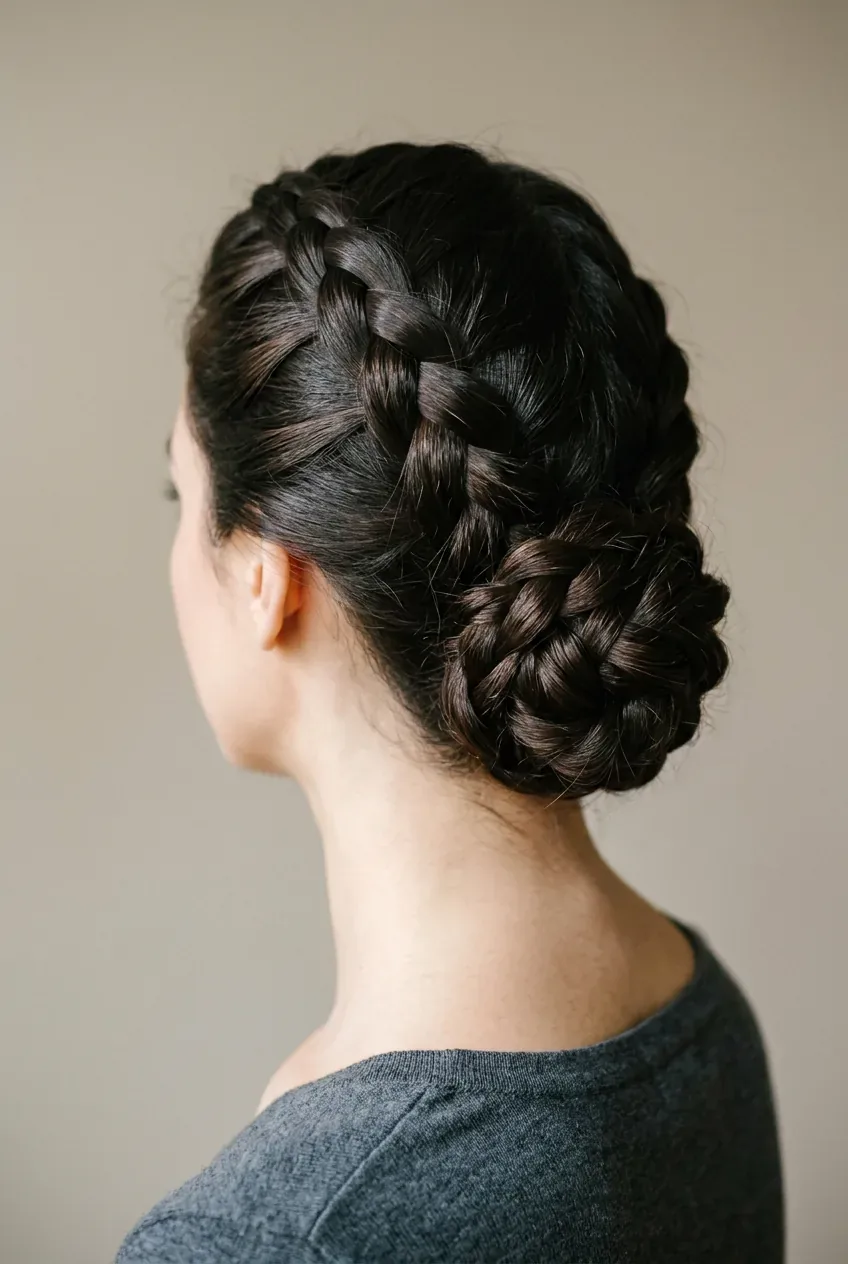
Best for: the individual medley, where the style has to survive butterfly, backstroke, breaststroke and freestyle in one race.
How to style: braid the hair into a low braid, coil it into a flat bun at the nape and pin it in a full circle. Test the bun by shaking your head hard — if it moves, add more pins before you race.
Time and cost: about 8 minutes; one hair tie and six bobby pins.
Cap tip: for the medley, flat and pinned beats pretty — this bun is built to survive four strokes without a single check.
27. Double Low Buns with a Middle Part
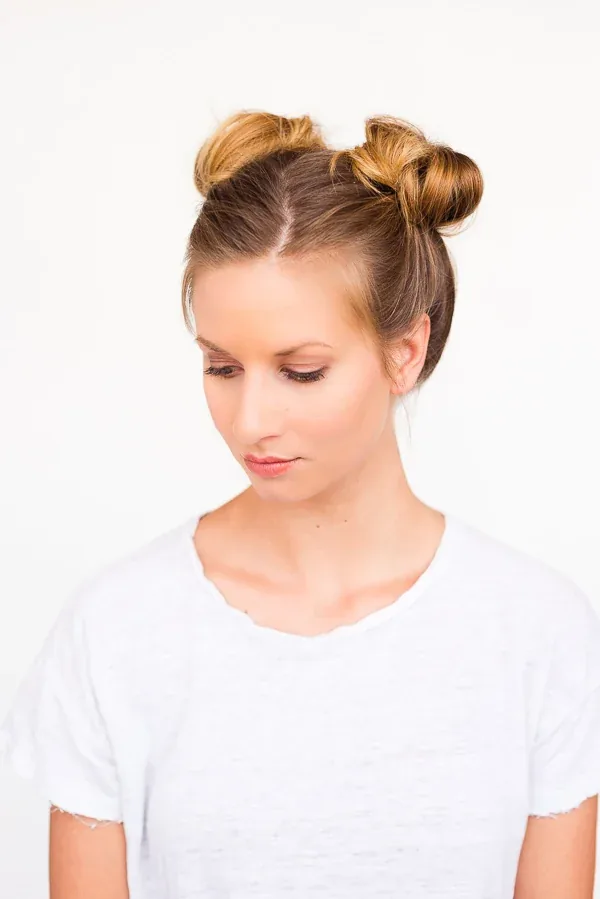
Best for: relay teams and younger swimmers, and for anyone whose single bun is too bulky for their cap.
How to style: part the hair down the middle, make a small low bun on each side of the nape, and pin both flat. Two small buns spread the bulk evenly, so the cap seals on both sides.
Time and cost: about 7 minutes; two hair ties and four bobby pins.
Cap tip: check the middle part under the cap — a part that is not straight can make the cap sit crooked, so part it carefully before you braid.
28. Braided Pigtails with Ribbons
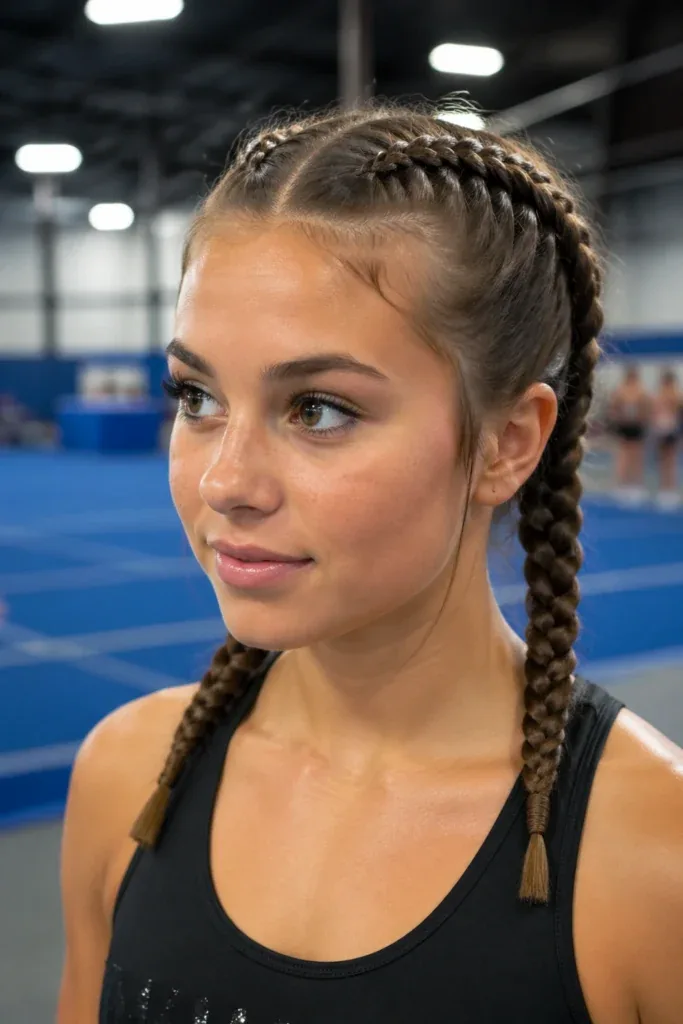
Best for: team relays, school meets and podium photos — the style that photographs best on this list.
How to style: part the hair down the middle, braid each side, and tie the ends with ribbons in your team colour. Keep the braids tight at the top and pin the ends flat so they do not swing on the dive.
Time and cost: about 9 minutes; two hair ties and two ribbons.
Cap tip: tie the ribbons after the cap goes on if they are bulky, or use thin ribbon that sits flat under the cap edge.
29. Faux-Hawk Braid
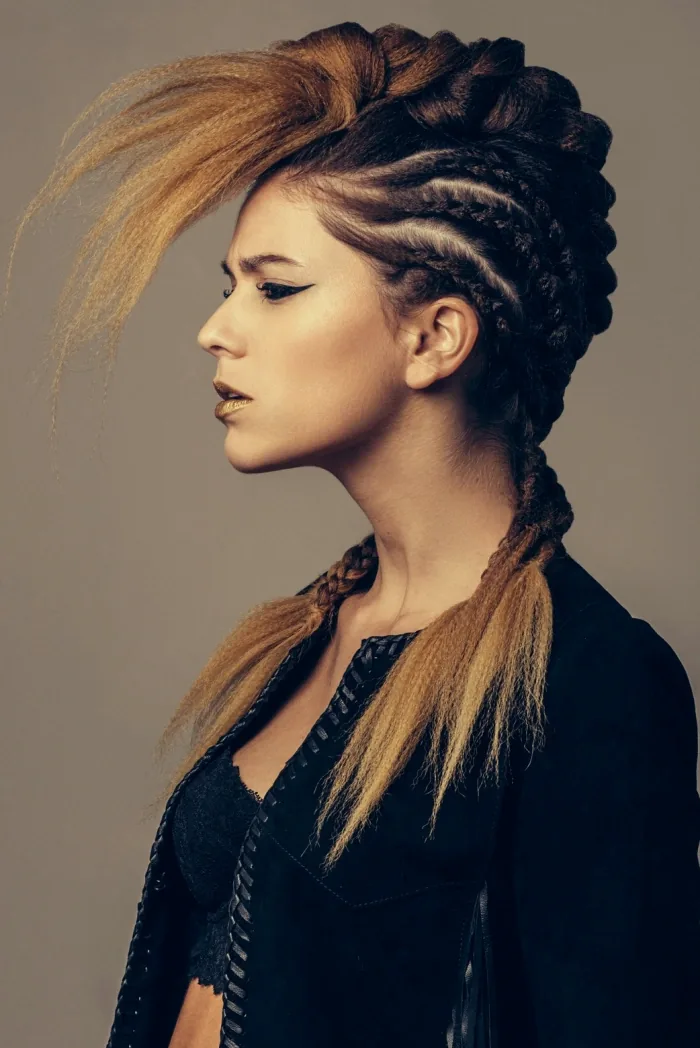
Best for: confident racers who want a bold look for finals, and for swimmers with thick hair.
How to style: braid a wide strip down the centre of the head from the hairline to the nape, pulling the side hair in as you go, then braid the tail to the ends. Keep the centre braid raised slightly for the look, but pin the tail flat for racing.
Time and cost: about 10 minutes; a few bobby pins and one hair tie.
Cap tip: the raised centre can lift a cap, so flatten it with your palm before the cap goes on and test the seal in warm-up.
30. Curly High Ponytail with a Headband
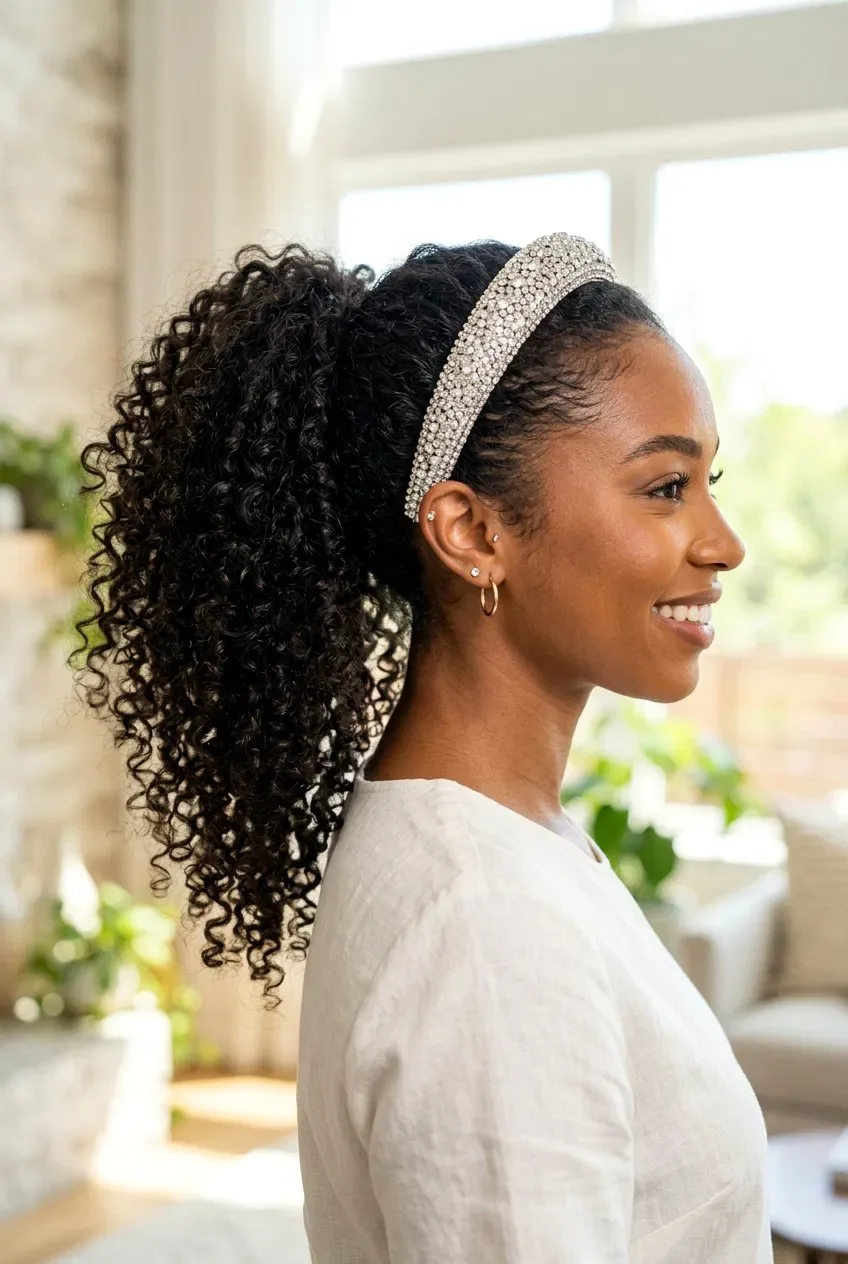
Best for: curly hair in breaststroke and freestyle heats, where the curls need controlling without being pulled straight.
How to style: gather the curls into a high ponytail with a soft scrunchie, smooth the front with a little gel, and add a wide fabric headband to keep the edges back. Keep the ponytail loose enough that the curls keep their shape.
Time and cost: about 5 minutes; a scrunchie, gel and a headband.
Cap tip: put the headband on under the cap, not over it — the cap holds the headband in place and stops it sliding into your goggles.
31. Slicked Middle-Part Low Bun
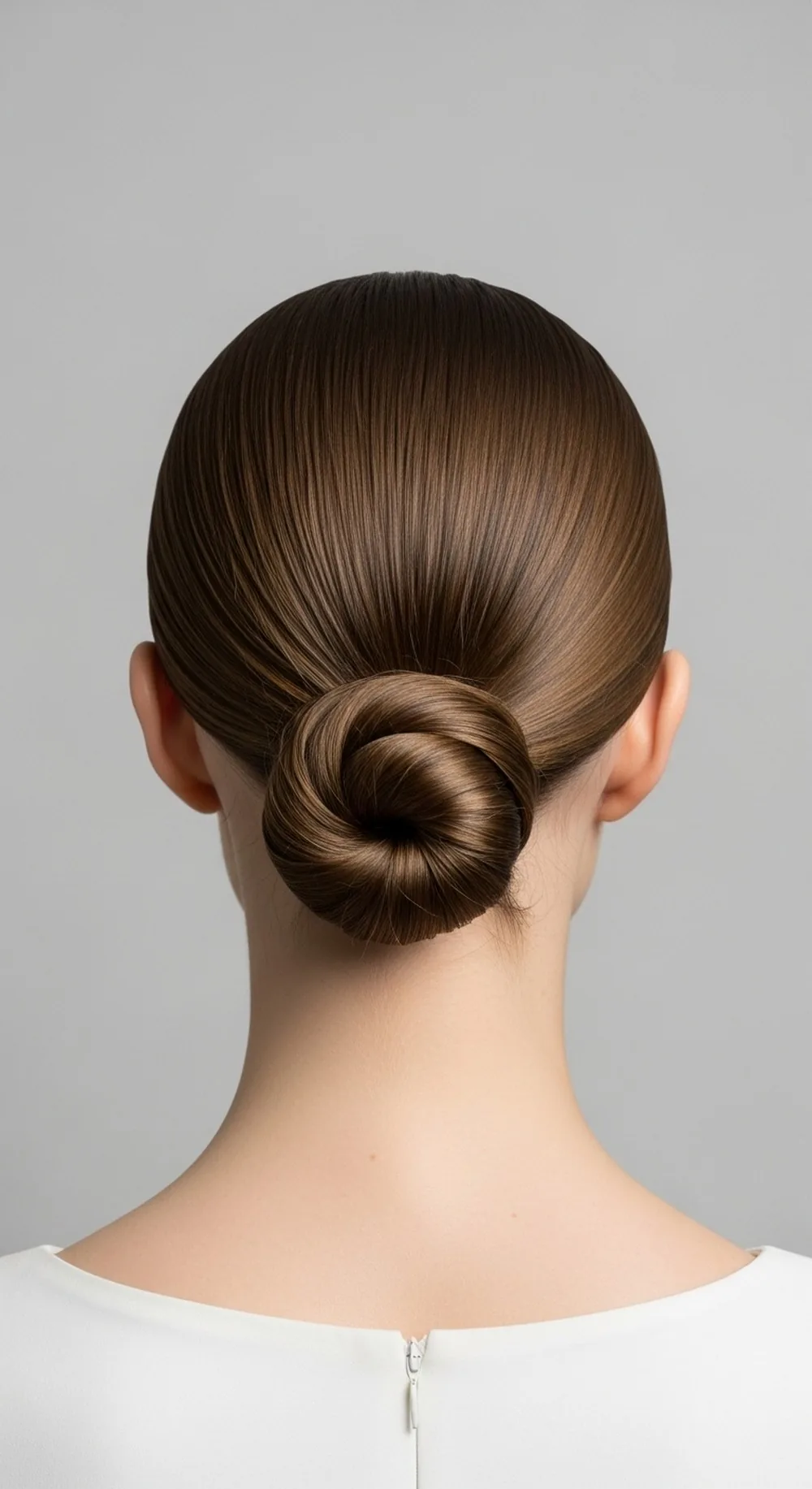
Best for: finals and podium photos, when you want a clean, sharp look that still races well.
How to style: part the hair exactly down the middle, smooth both sides back with gel, gather the hair low at the nape and twist it into a small, neat bun. Pin it flat and smooth any flyaways with wet fingers.
Time and cost: about 7 minutes; gel, one hair tie and four bobby pins.
Cap tip: the middle part gives the cap a straight line to sit on, which helps the seal — just make sure the part is straight before the cap goes on.
32. Twisted Crown Braid
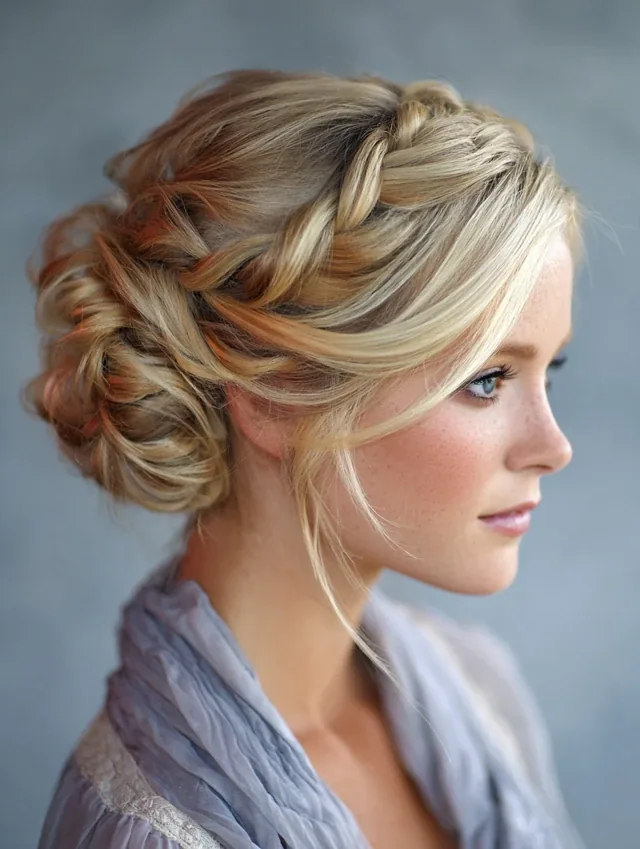
Best for: swimmers who find braiding hard — twists are easier to learn and almost as secure.
How to style: take a section at one temple, twist it, pick up more hair as you work around the hairline, and continue around the head. Pin the end underneath and tuck any loose strands in.
Time and cost: about 10 minutes; a few bobby pins and a small elastic.
Cap tip: twists lie flatter than braids, so the cap sits very smoothly — a good choice if your cap has slipped over a braided style before.
33. French Braid Pigtails
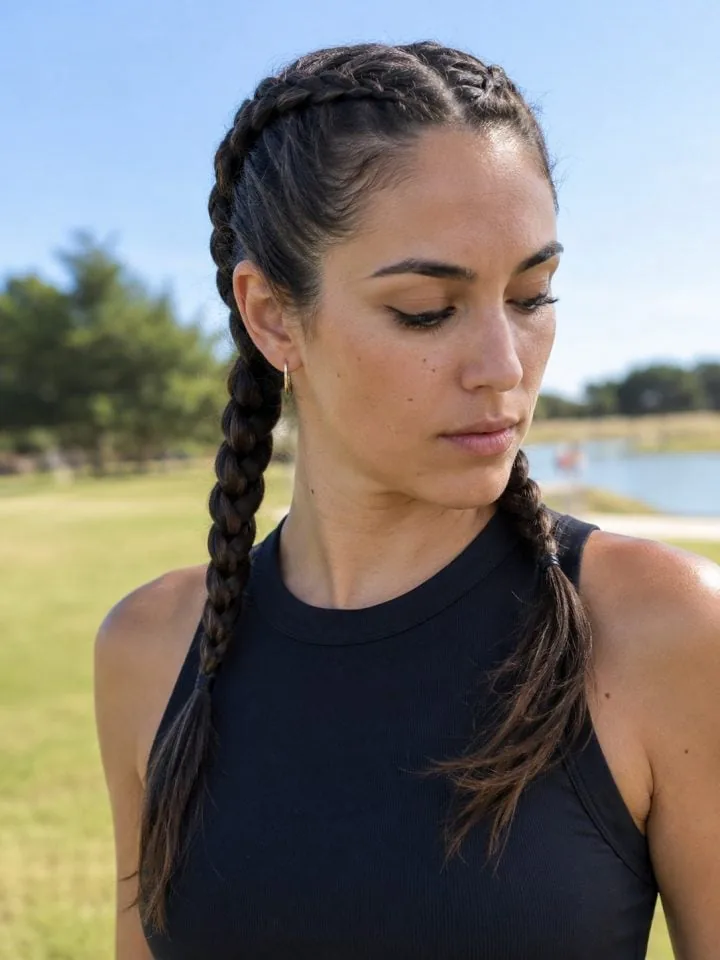
Best for: younger swimmers, relay day, and long meets where the style has to last from warm-up to finals.
How to style: part the hair down the middle and French-braid each side from the hairline to the nape, then braid the lengths to the ends. Tie both braids off and pin the ends flat against the head.
Time and cost: about 10 minutes; two hair ties and a few bobby pins.
Cap tip: French-braid pigtails spread the hair evenly under the cap, which is why they are a favourite for all-day meets.
34. High Puff for Natural Hair
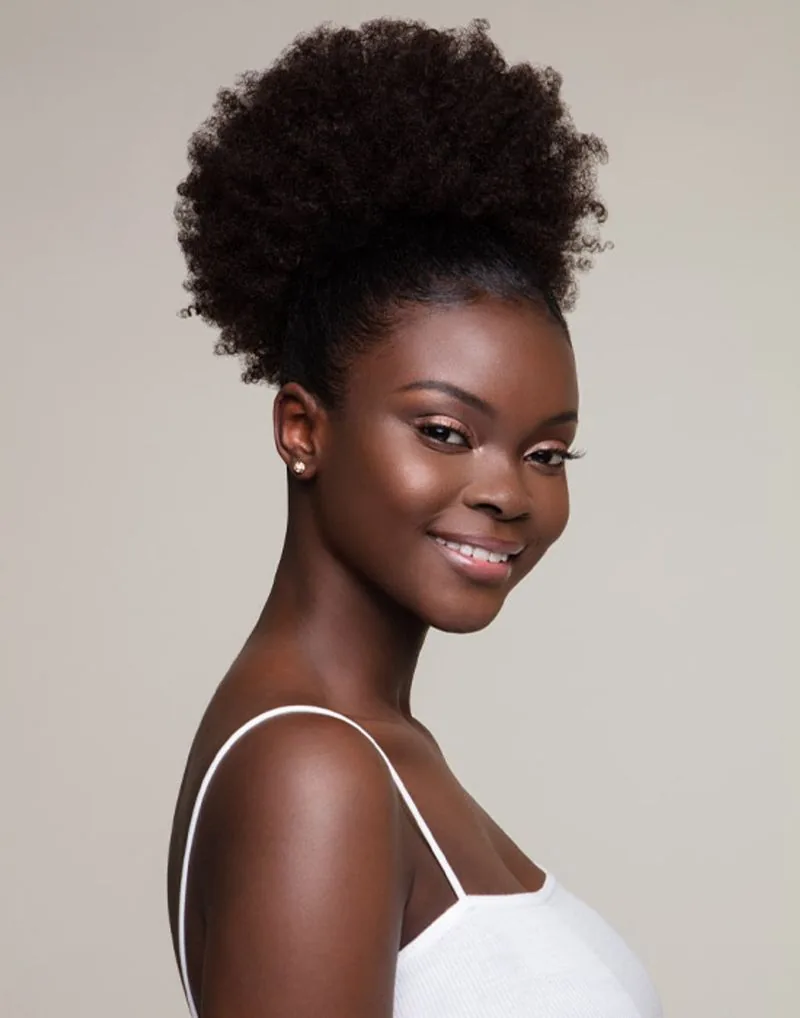
Best for: natural hair on race day, when you want the hair up, protected and comfortable under a cap.
How to style: gather the hair up with a soft scrunchie or a fabric band, leaving the puff loose and full. Smooth the edges with a little gel, and flatten the puff gently before the cap goes on.
Time and cost: about 4 minutes; a scrunchie and gel.
Cap tip: use a larger silicone cap for this style and check the seal in warm-up — a puff that is too tall will lift the cap, so keep it low and soft.
35. Podium-Ready Glam Ponytail
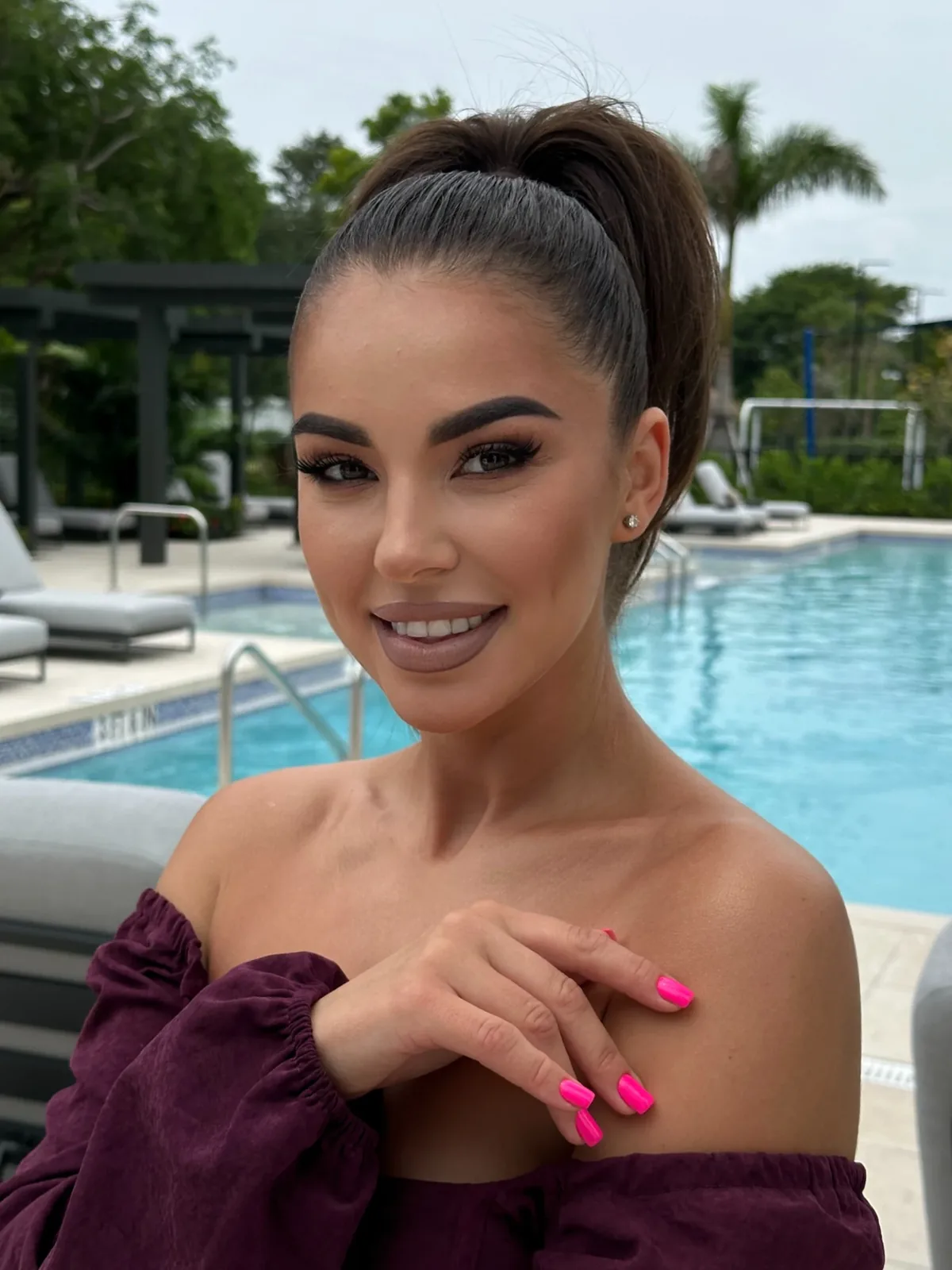
Best for: after your last race — the podium, the team photo and the journey home, not the blocks.
How to style: after the meet, wash and dry the hair, then make a high, smooth ponytail with a little shine serum. Wrap a strand around the elastic, curl the ends lightly if you like, and add a team-coloured ribbon.
Time and cost: about 10 minutes after the meet; serum, one hair tie and a ribbon.
Cap tip: this is the one style on this list you do not race in — save it for the photos, when the cap is finally off and the medals are on.
Can I wear my hair down for a swim meet?
No — hair down is not a race-day option. Loose hair slips into your goggles, breaks the cap seal and slows you down in the water. Even for a single heat, braid it, bun it or tie it back, and keep it flat under your swim cap.
What is the best hairstyle for a swim meet?
Double Dutch braids are the best all-round choice for a swim meet. They lie flat under a swim cap, lock the front layers out of your goggles, survive the dive and every stroke, and they work for freestyle, backstroke, breaststroke and relays alike.
How do I keep my swim cap from slipping?
Flatten the hair underneath first. Braid or twist the hair, coil it flat against the head, and put the cap on from the front hairline, rolling it back. If the cap still slips, the hair underneath is too bulky — split it into two braids instead of one, and check the goggle strap sits over the cap.
How do I stop my goggles from leaking during a race?
Check that no hair is trapped under the goggle seal. Put your cap on first, then your goggles, and run a wet finger around the seal before you dive. A strand under the seal is the most common cause of a leak, and it takes two seconds to fix on poolside.
Should I wash my hair between heats?
A quick rinse with fresh water between heats is enough. It washes out some chlorine and makes the hair easier to re-braid. Save the proper shampoo for after the meet, and do not brush wet, chlorinated hair — use your fingers or a wide-tooth comb instead.
What hairstyle is best for backstroke?
A low, flat braided bun is best for backstroke. Anything bulky at the nape catches the water as you roll, so keep the bun low and wide, pin it flat, and test it by lying back in the water during warm-up before your heat.
Can I wear a high bun under a swim cap?
Yes, but only if the bun is small, tight and flat. A tall bun lifts the cap and breaks the seal, so test it in warm-up with the exact cap you will race in. If the cap rides up, switch to a low bun or two braids instead.
How do I protect my hair from chlorine on meet day?
Rinse with fresh water before you race so your hair soaks up clean water first, smooth a little leave-in conditioner over the lengths, and wear your swim cap for every heat. After the meet, shampoo twice and use a deep conditioner to wash the chlorine out properly.
What should I pack in my poolside hair kit?
Pack two spare hair ties, a few bobby pins, a wide-tooth comb, a small towel, a water bottle and a little leave-in conditioner. That is everything you need for a five-minute reset between heats without leaving poolside.
What hairstyle looks best in swim meet photos?
A braided ponytail or a low braided bun photographs best after a race, especially with a ribbon in your team colour. Take the cap off, shake the braid out gently, and let the hair fall naturally for the podium photo.
Conclusion
Race day asks a lot of your hair, and the styles that win are the flat, tight, simple ones. Double braids, low buns and braided ponytails may not look dramatic on dry land, but they stay put through the dive, the heats and the relay, and they keep your goggles clear and your cap sealed when it matters most. The best hairstyles for a swim meet are the ones you have practised with your cap on, not the ones you try for the first time on the blocks.
So pick one style from this list, practise it at home with your race cap and goggles, and test it in warm-up before your first heat. Pack your poolside kit, rinse between heats, and save the glamorous ponytail for the podium. Your hair will be the last thing you need to think about — and that is exactly how it should be on race day.