
I Tried a Silk Pillowcase for a Month and My Frizz Disappeared
Okay, I’ll be honest: I thought the whole silk pillowcase thing was overhyped. I figured it was just another beauty trend that would come and go. But then my frizz got so bad that I was willing to try anything, so I gave it a full month. The results honestly surprised me.
I’m Hailey, and if you’ve been here a while, you know I keep my beauty routine simple and practical. I don’t chase trends unless they actually work. So when my hair started looking like a static electricity experiment every morning, I decided to do something about it.
This post covers my full 30-day experience with a silk pillowcase: what changed, what didn’t, and whether it’s worth your money.
If you’re tired of waking up to frizzy, tangled hair, this is for you.
Why I Finally Tried a Silk Pillowcase
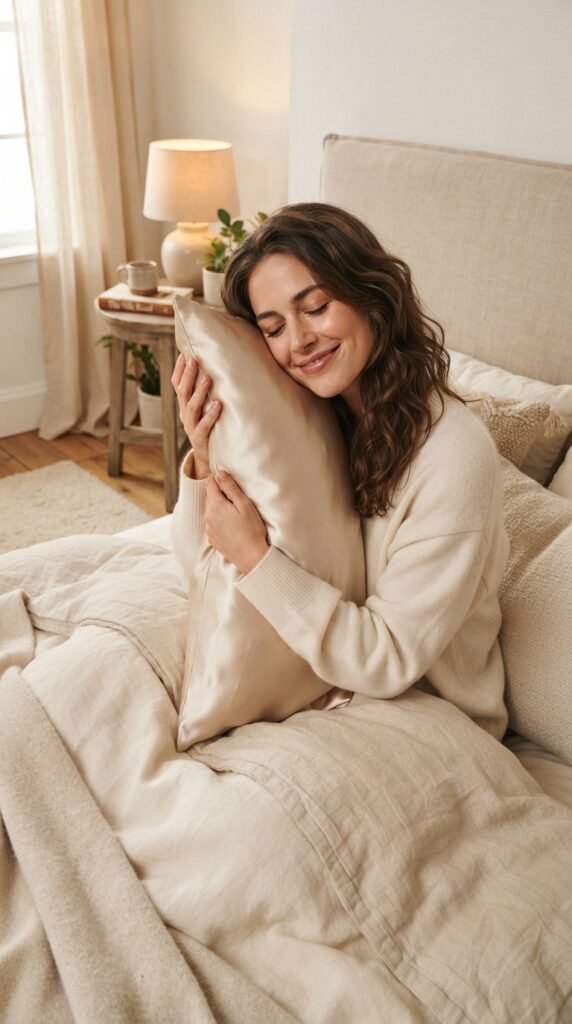
For months, I ignored every silk pillowcase video that popped up on my feed. It felt like a luxury item for people with more patience and budget than me. But after a hot summer that left my ends looking like straw, I caved and bought one.
I ordered a mulberry silk pillowcase from a small brand online and set a reminder to check in every week for 30 days. The rules were simple: sleep on it, wash it weekly, and actually pay attention to what changed.
Here’s what I tracked:
- Morning frizz level on a scale of 1 to 10
- How many tangles I had when I woke up
- How long it took to fix my hair
My Hair Before the Silk Pillowcase Experiment
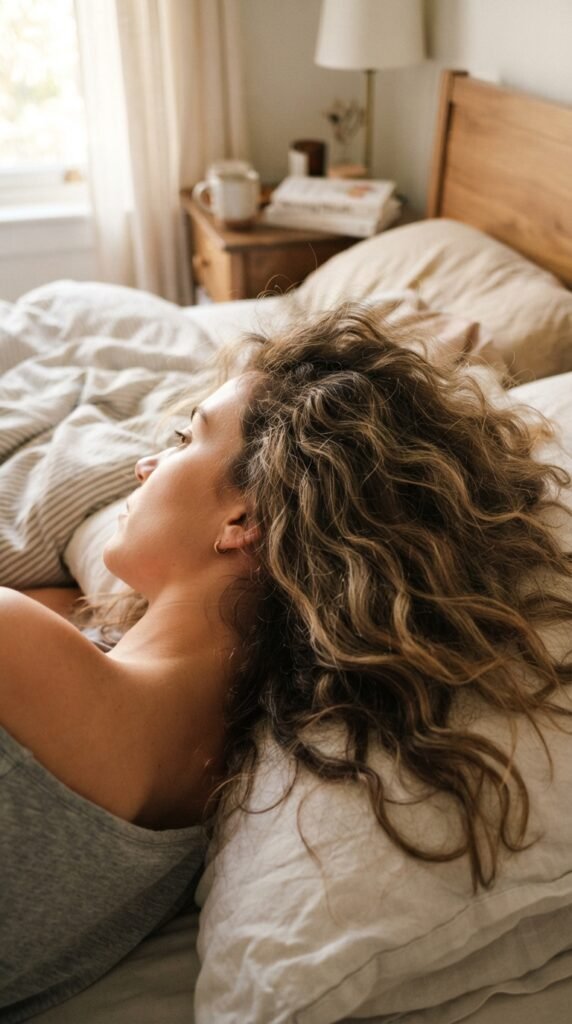
Let me paint you a picture. My hair is wavy, a little thick, and very prone to frizz. I wash it every other day with a sulfate-free shampoo, use a leave-in conditioner, and sleep on a cotton pillowcase I’ve owned since college.
Most mornings, I looked like I’d been in a wind tunnel. I would spray water, add product, and re-blow-dry the front pieces just to look presentable. It was exhausting, and I was tired of fighting with my own hair.
My worst hair habits:
- Air-drying and hoping for the best
- Sleeping with damp hair sometimes
- Rubbing my hair with a rough towel
What Makes Silk Different from Cotton

Cotton is absorbent. It soaks up the natural oils from your hair while you toss and turn. It also has a rougher surface that creates friction, and friction is basically frizz’s best friend.
Silk is smooth and much less absorbent. Your hair slides across it instead of snagging. That means less breakage, less friction, and your natural moisture stays in the strands where it belongs.
- Cotton: rough, absorbent, creates friction
- Silk: smooth, gentle, keeps moisture
The difference showed up in my hair within the first week. I was honestly shocked by how something so simple could change my morning.
How to Pick a Real Silk Pillowcase
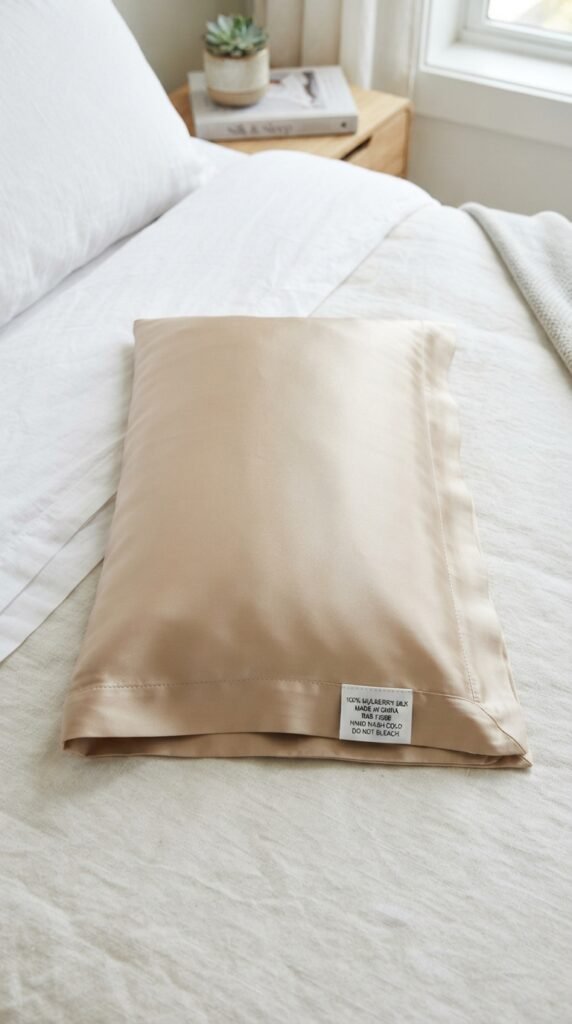
Not all silk is created equal. You want 100% mulberry silk with a momme weight of at least 19. Higher momme means thicker, stronger fabric that lasts longer. And you want a quality weave, not something thin and flimsy.
I also look for a zipper or an envelope closure so the pillowcase stays on the pillow all night. There’s nothing worse than waking up on a bare pillow.
How to check:
- Look for “100% mulberry silk” on the label
- Check momme weight, 19 or higher is good
- Feel the fabric, it should be cool and smooth
- Choose a hidden zipper or envelope style
Trust me, spending five minutes reading the description saves you a lot of disappointment.
Week One: The Adjustment Period

The first few nights felt strange. Silk is cool against your skin, which took some getting used to. I also worried I would slide off the pillow because everything felt so slippery.
By night three, I was used to it. And on the morning of day four, I noticed something small. My hair didn’t have that crinkled look on the side I slept on. It just looked normal.
Night-by-night notes:
- Night 1: weird but comfortable
- Night 2: still adjusting to the cool feel
- Night 3: no complaints
- Night 4: noticed smoother hair
The First Sign of Change

The real wow moment happened on day six. I woke up, ran my fingers through my hair, and my hand actually moved through the strands without hitting a knot. No tangles. No static. I checked to see if I was still asleep.
When you’ve dealt with frizzy hair for years, this feels like a huge deal. My hair looked like I had gotten a blowout the day before, not like I rolled around on cotton all night.
I actually texted my best friend a photo of my hair at seven in the morning, which I would never normally do. Consider me officially sold.
Why Frizz Happens at Night
Frizz happens when your hair is dry or damaged, and it gets worse with friction. Cotton fiber creates micro-tugs on your hair cuticle every time you move your head on the pillow. Over the night, that adds up to a lot of micro-damage.
Silk lets your hair glide instead. So if you wake up frizzy, your pillowcase might be a bigger part of the problem than your products. The right surface can make all the difference.
Signs your pillowcase is the problem:
- Frizz is worse on the side you sleep on
- You wake up with tangles
- Hair feels dry no matter what products you use
My Morning Routine Got Faster
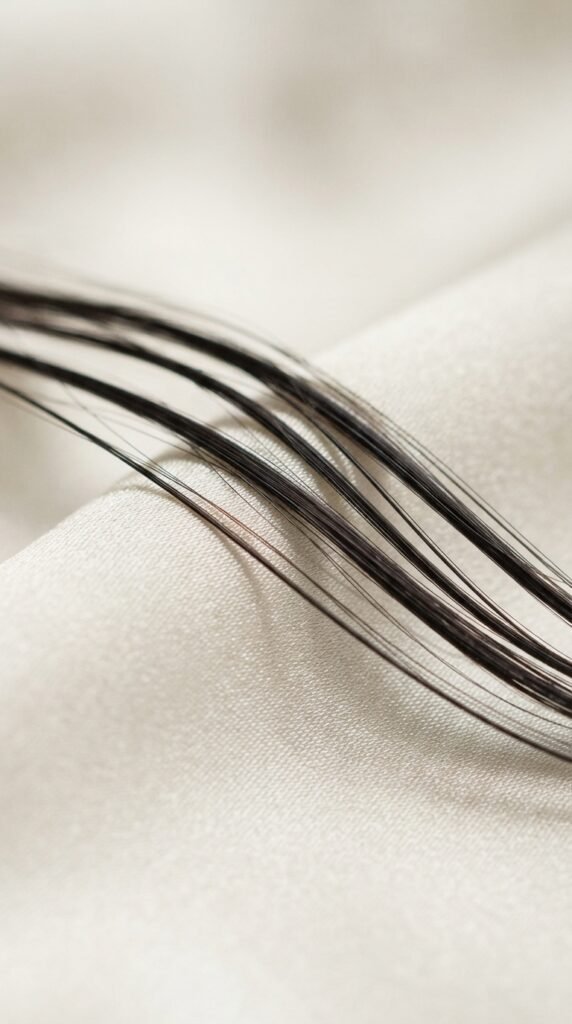
Before this experiment, my morning hair routine took about 20 minutes. I had to wet sections, apply cream, blow-dry, and sometimes use a straightener to fix the mess from the night before.
By the end of week two, I was down to about 10 minutes. I would brush my hair, add a little oil to the ends, and go. That extra 10 minutes every day really adds up over a month.
Here’s my new routine:
- Brush gently with a wide-tooth comb
- Add a drop of oil to the ends
- Done, that’s it
I honestly didn’t realize how much time I was wasting until it was gone.
The Difference in My Hair Texture

Here’s what actually changed. My waves became more defined and less puffy. My ends looked healthier. And the overall softness was noticeable enough that my roommate asked if I had gotten a new hair treatment.
I also noticed less breakage around my hairline. The small baby hairs that used to stick out everywhere started lying flat. That alone cut down on the frizzy halo I always had.
- More defined waves
- Less puffiness
- Healthier-looking ends
- Less breakage at the hairline
It was like my hair finally calmed down and behaved.
What About Skin? (Bonus Win)

I wasn’t expecting a skin benefit, but I got one anyway. Silk is less absorbent than cotton, so your skincare stays on your face instead of sinking into the pillowcase. I woke up with plumper, more hydrated skin.
I also had fewer crease marks on my face in the morning. You know those little sleep lines that stay for a few hours? Those disappeared. Silk doesn’t press into your skin the way cotton does.
Skin wins I noticed:
- Fewer morning crease lines
- Skin felt more hydrated
- Less irritation on my cheeks
It’s like the pillowcase does double duty for beauty.
Does It Work for Every Hair Type?

I asked a few friends with different hair types to try it for a couple of nights. My curly-haired friend noticed less frizz immediately. My straight-haired friend said her hair felt softer. My coily friend noticed less shrinkage in the morning.
So yes, it seems to help across the board. But the biggest change happens if your hair is dry, frizz-prone, or damaged. If you have very fine, oily hair, the effect might be less obvious.
Quick notes by hair type:
- Curly: less frizz
- Straight: softer feel
- Coily: less shrinkage
- Wavy: the biggest overall change
How It Measures Up to Other Anti-Frizz Tools
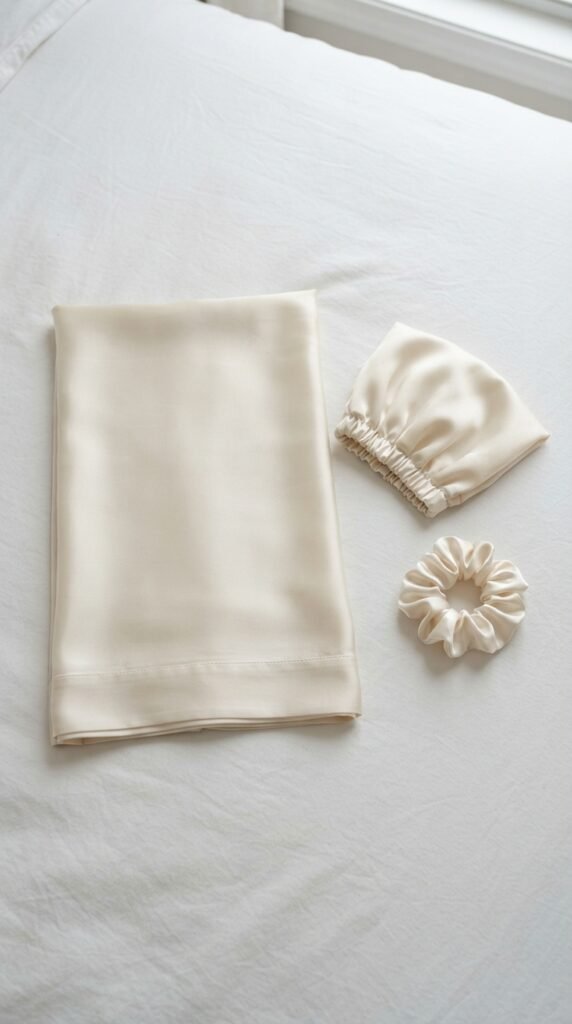
I have a silk bonnet, a satin scrunchie, and a humidifier in my bedroom. The silk pillowcase honestly worked better than the bonnet because I don’t have to remember to put it on. It’s just there.
The pillowcase is also cheaper than most hair treatments. A good one costs about the same as a single salon deep-conditioning session, and you get to use it every single night.
- Silk bonnet: works, but easy to forget
- Satin scrunchie: good for specific styles
- Pillowcase: zero extra effort
That’s hard to beat.
The Cost Question: Is It Worth It?
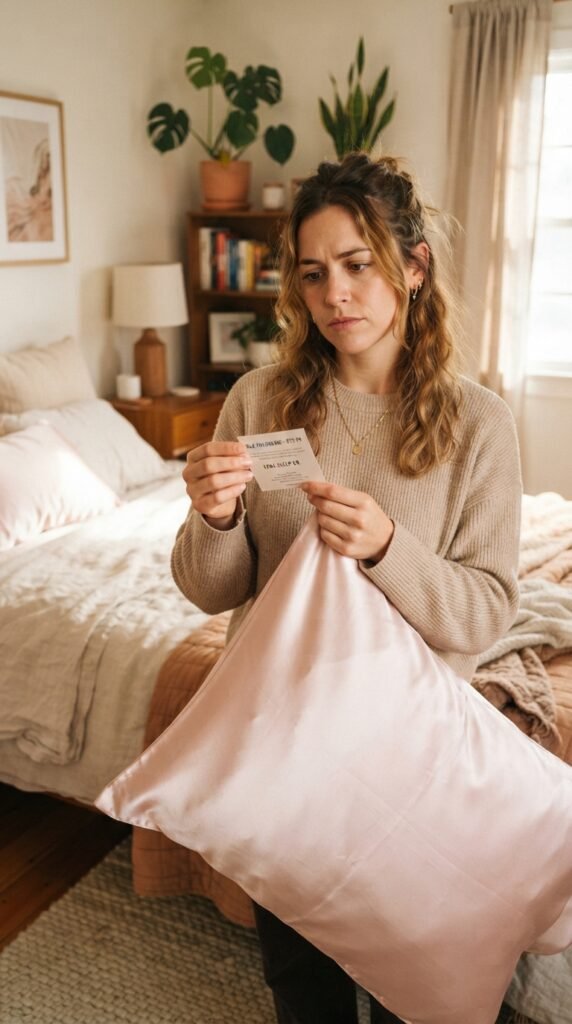
A quality silk pillowcase runs anywhere from $40 to $80 depending on the brand. I know that’s not nothing. But think of it as a one-time purchase that lasts for years if you take care of it.
Compare that to the money you would spend on extra hair products, anti-frizz sprays, or salon visits every few weeks. The pillowcase pays for itself pretty fast.
Fast math:
- Anti-frizz spray: $15 per bottle
- Salon treatment: $60 per visit
- One silk pillowcase: $50 once
For me, it was a no-brainer.
How to Care for Your Silk Pillowcase
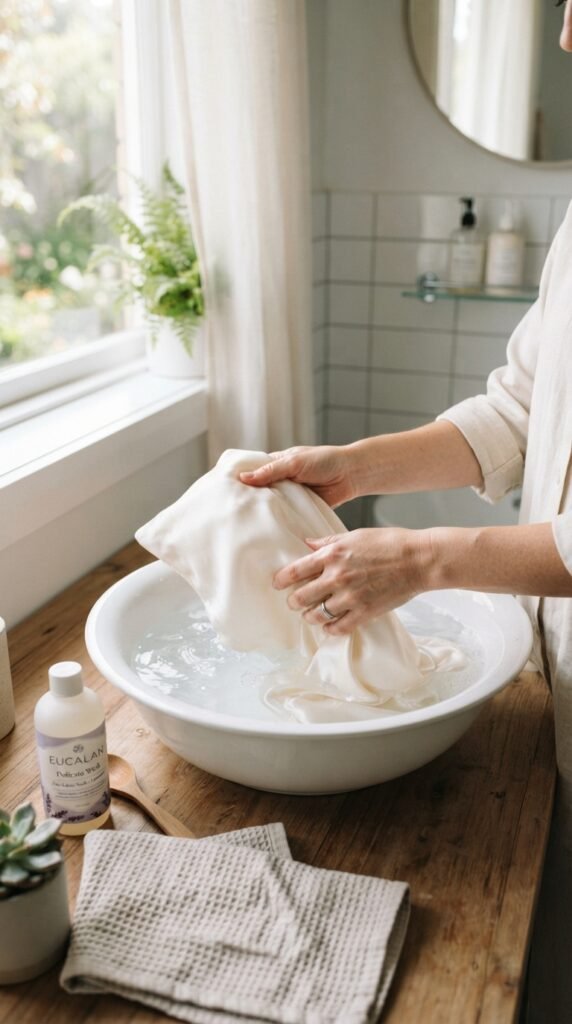
Silk needs to be washed carefully. I wash mine in cold water with a gentle detergent made for silk. I never use bleach, fabric softener, or the dryer. I just hang it to dry.
I wash it once a week. That might sound like a lot, but it keeps the fabric clean and prevents oil buildup. I rotate between two pillowcases so I always have one ready.
Washing steps:
- Fill a basin with cold water
- Add silk-safe detergent
- Soak and gently squeeze
- Rinse and hang to dry
It takes less than ten minutes of actual effort.
What I Wish I Knew Before Starting
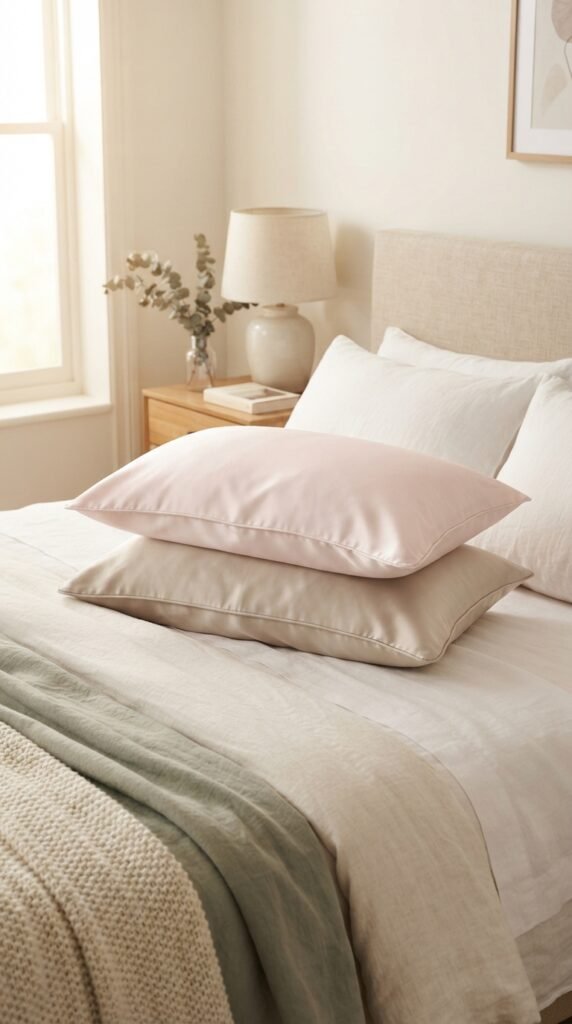
I wish I had bought a higher momme weight from the start. The first one I bought was a bit thin, and it worked fine, but the thicker one feels even smoother and lasts longer.
I also wish I had bought a second one right away. Waiting for it to dry after washing meant one night on cotton, and I could feel the difference. That one night was enough to remind me why I switched.
Lessons learned:
- Buy 22+ momme if you can
- Always buy two
- Start with a travel size to test
These small tweaks would have made the whole month smoother.
Does It Help With Hairstyles?

If you like to sleep with your hair styled, this matters even more. I tried it with a braid, with heatless curls, and even with a sleek blowout. The styles lasted longer and looked fresher in the morning.
This makes a big difference for everything from the classic hime cut to a sharp asymmetrical lob. Those styles depend on clean lines, and a flat, slept-on section can ruin the whole look.
Styles that benefit:
- Hime cut: keeps the blunt fringe sharp
- Asymmetrical lob: avoids overnight kinks
- Heatless curls: stays bouncy longer
I was impressed across the board.
Old Money Hair and the Silk Pillowcase Connection
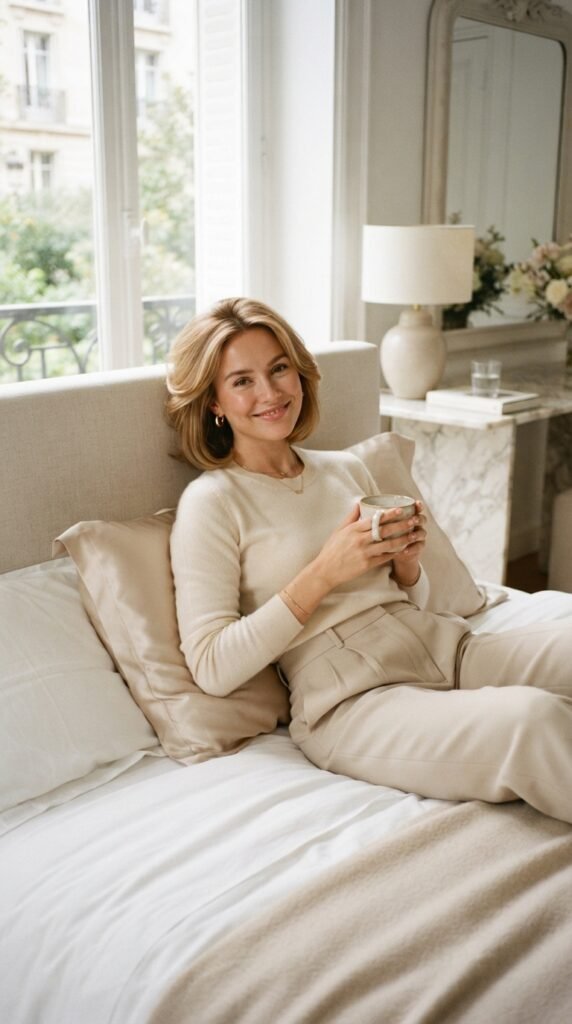
In 2026, one of the biggest 2026 hairstyles is old money hair. You know the look: expensive, effortless, and incredibly polished. It’s less about a specific cut and more about hair that looks naturally healthy.
A silk pillowcase fits right into that mindset. It’s basic maintenance that doesn’t require heat or product. If you want the quiet luxury bob look, your hair has to be in great condition, and sleeping on silk is one of the easiest ways to get there.
There’s nothing quiet or luxurious about waking up with frizzy hair. Silk just makes sense for that aesthetic.
Romantic Goth and Glitchy Glam: Does Silk Help?

I also experimented with romantic goth hairstyles, think loose dark waves and soft volume, and the silk pillowcase kept the waves intact overnight. That is huge because dark colors show frizz and dryness easily.
For the glitchy glam hair trend, that metallic, cyber-looking shine, smooth hair is the base. The less frizz you have, the more those glossy, reflective styles pop. Silk gives you a better starting canvas.
Both trends are big on polished texture, and honestly, silk made both easier to pull off. Two completely different looks, one simple fix.
My Hair in Different Styles

I have a friend who swears by her vampire haircut, that heavily layered shaggy cut that is everywhere in 2026. She borrowed my pillowcase for a weekend and said her layers looked way less wild in the morning.
My own hair is a long asymmetrical lob, and the silk pillowcase made my ends look smoother and more intentional. If you have a styled cut with sharp lines or face-framing layers, you’ll probably see the benefit too.
Other 2026 hairstyles that pair well with silk:
- Vampire haircut: layers stay defined
- Asymmetrical lob: ends stay smooth
- Hime cut: fringe stays crisp
The list goes on.
The Verdict After 30 Days

After a full month, my frizz is about 70% better. It’s not completely gone because heat and humidity still do their thing. But my baseline is so much smoother that I can’t imagine going back to cotton.
My hair is softer, shinier, and looks healthier overall. The silk pillowcase won’t fix damaged hair, but it will absolutely stop making your hair worse overnight.
- 70% less morning frizz
- Fewer tangles and knots
- Healthier-looking ends
- Faster styling routine
Those numbers say everything I need to say.
Will I Keep Using It?
Yes, without a doubt. I’ve already bought a second one and a travel version for when I stay at my parents’ house. I also gave one to my sister as a birthday gift, and she is officially hooked.
This is one of those tiny changes that gives you a lot back. It’s not a miracle product, but it’s a really smart, low-effort upgrade for anyone who wants healthier-looking hair in 2026.
Final rating:
- Ease of use: 10/10
- Frizz reduction: 8/10
- Value for money: 9/10
Highly recommend giving it a shot.
A month of using a silk pillowcase taught me that my morning frizz wasn’t just a hair problem. It was a pillowcase problem. If you’ve been blaming your products, your climate, or your hair type, the surface you sleep on might be the missing piece.
I’m not saying silk fixes everything. But if your hair is frizzy and you’re looking for one simple, sustainable change, this is a great place to start. You’ll wake up to softer hair and a faster morning routine.
Thank you so much for reading my little experiment. I hope it helps you wake up on the right side of the bed, and honestly, maybe that’s the whole point.
Save this post to Pinterest so you can find it when you’re ready to make the switch. And drop a comment below: are you team silk or team cotton? I’d love to hear your own experience.