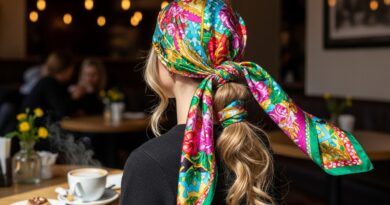
What Makes a Lob Haircut Flattering for Oval Face Shapes
Oval face shapes are the lucky ones, but that doesn’t mean every haircut automatically works. I learned that the hard way after a chop that left me looking… fine. Just fine. Not amazing.
Then I found the lob. Shoulder-grazing, a little imperfect, endlessly flattering. It became the cut I recommend to basically every friend who texts me at 11 p.m. asking what to do with their hair.
A lob works on an oval face because it adds weight exactly where you want it, near the jaw and collarbone, without hiding your natural symmetry. It’s forgiving, it grows out well, and it looks intentional even when you barely tried.
Below I’m breaking down 20+ ways to wear it, from quiet luxury bob energy to romantic goth hairstyles. Quick reads, real tips, zero fluff. Let’s find your version.
Why the Lob Works So Well for Oval Faces

Oval faces are balanced by nature. Your length is a little longer than your width, your jaw is soft, and your cheekbones do their thing without much help. That means your haircut gets to be the fun part.
A lob, which is simply a long bob landing between chin and collarbone, works because it doesn’t compete with your proportions. It adds width where you want it and length where it flatters.
- Softens a strong jawline
- Keeps your natural symmetry visible
- Plays well with almost any texture or part
It’s the rare cut that looks polished and relaxed at the same time.
The Magic Length: Where a Lob Should Land
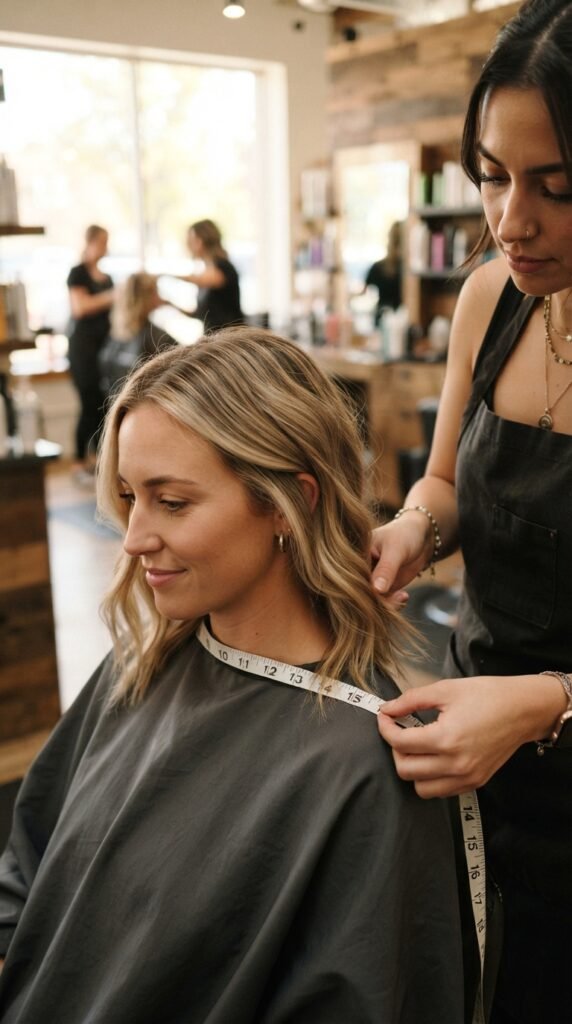
Here’s the rule I wish someone had told me years ago: your lob should end somewhere interesting, never at the widest part of your jaw.
For oval faces, the sweet spots are:
- Chin length: sharp and chic, very quiet luxury bob energy
- Jaw length: soft framing with movement
- Collarbone length: easy, breezy, and grows out gracefully
Ask your stylist to check the length while your hair is dry. Wet hair stretches, and half an inch changes everything.
Blunt Lob vs. Soft Layered Lob
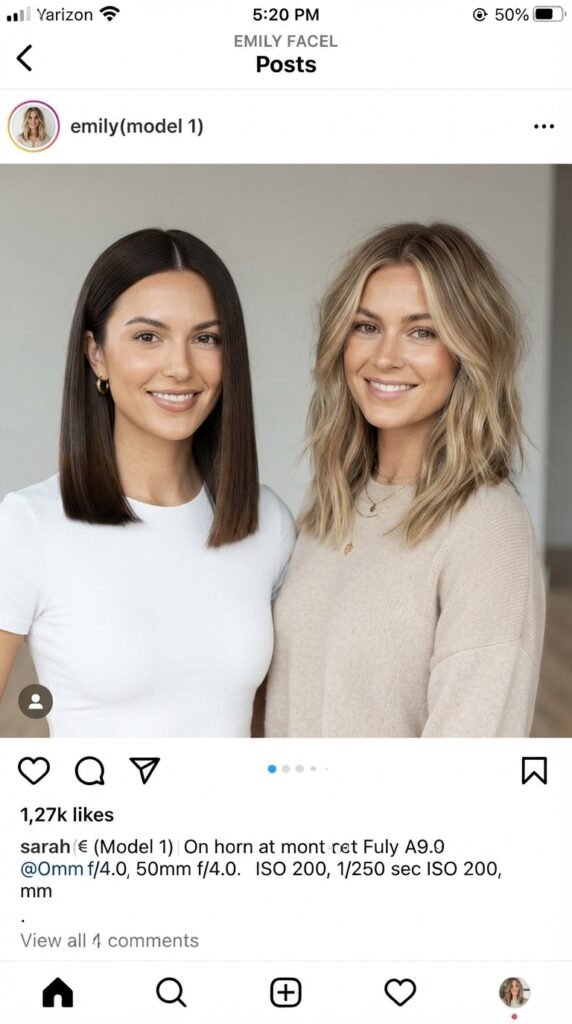
Both work on an oval face, but they send different messages.
A blunt lob is one clean line. It reads modern, expensive, and a little serious. It also makes fine hair look thicker because there are no wispy ends breaking things up.
A layered lob is softer. Layers add movement, take weight out of thick hair, and give you that lived-in 2026 hairstyles feel.
- Choose blunt if your hair is fine or straight
- Choose layers if your hair is thick, wavy, or curly
- Choose somewhere in between if you’re unsure
Honestly? Most people end up happiest with a blunt perimeter and light interior layers.
The Quiet Luxury Bob Upgrade
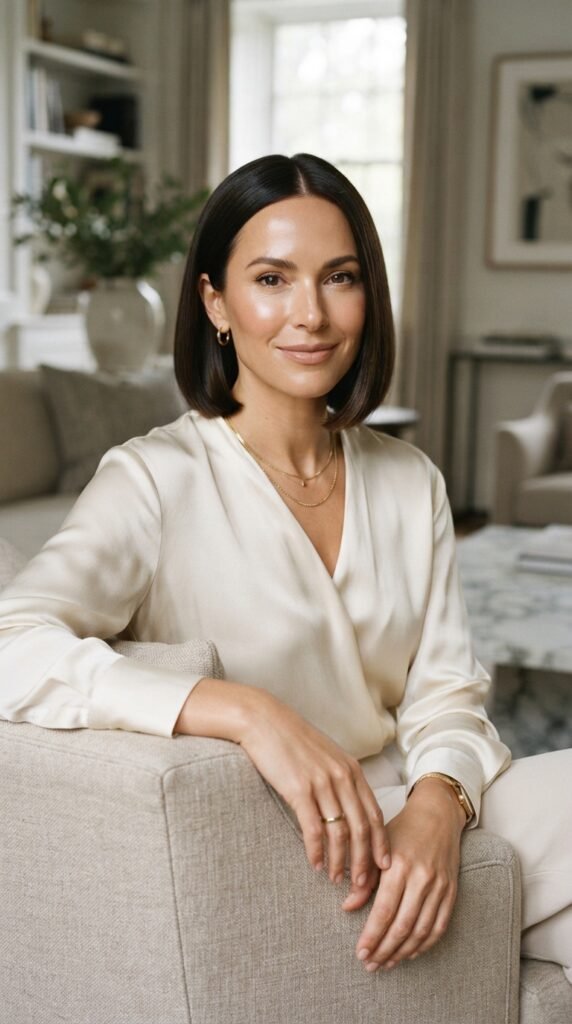
The quiet luxury bob is the polished cousin of the lob, and it’s everywhere right now. The idea is simple: fewer distractions, better execution.
To get the look, keep the cut clean and let the shine do the talking. No choppy layers, no heavy texturizing, no obvious product.
- Ask for a blunt or barely-tapered lob
- Keep ends smooth, not curled under
- Use a lightweight gloss or shine serum
- Blow dry with a round brush for a soft bend
It photographs beautifully and it makes everyday hair feel a little more expensive than it is.
Old Money Hair Details That Make a Lob Look Expensive
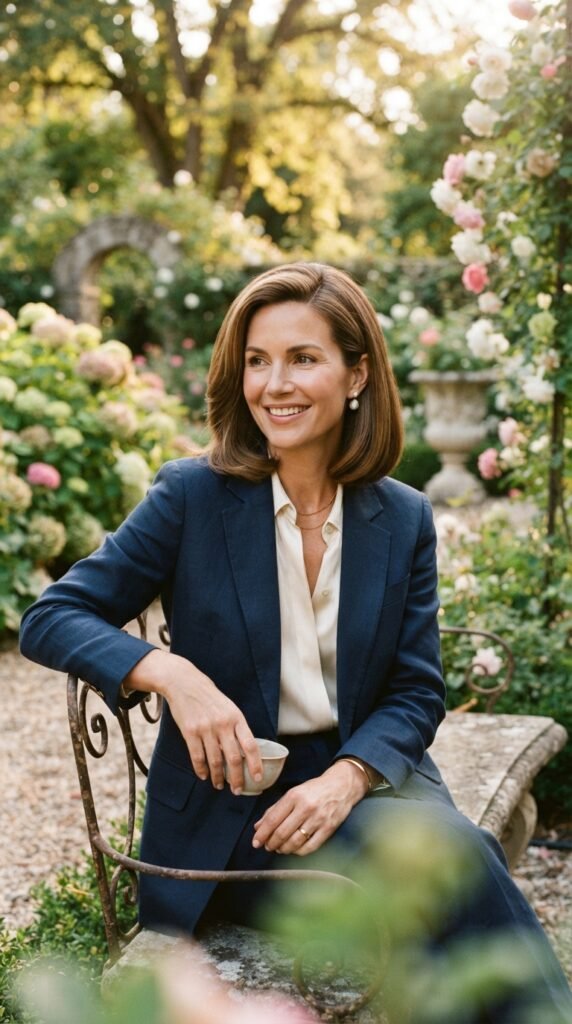
Old money hair isn’t about the cut, it’s about the finish. The lob just happens to be the perfect canvas for it.
Think healthy, quiet, and slightly undone, like you have somewhere better to be.
- A soft side part instead of a severe middle
- Root volume, never flat against the scalp
- Ends that bend gently, not flip
- Natural-looking color with subtle dimension
Skip the crunchy texture spray. A little air-dry cream and a boar bristle brush will get you further than anything loud.
The Asymmetrical Lob: Instant Edge
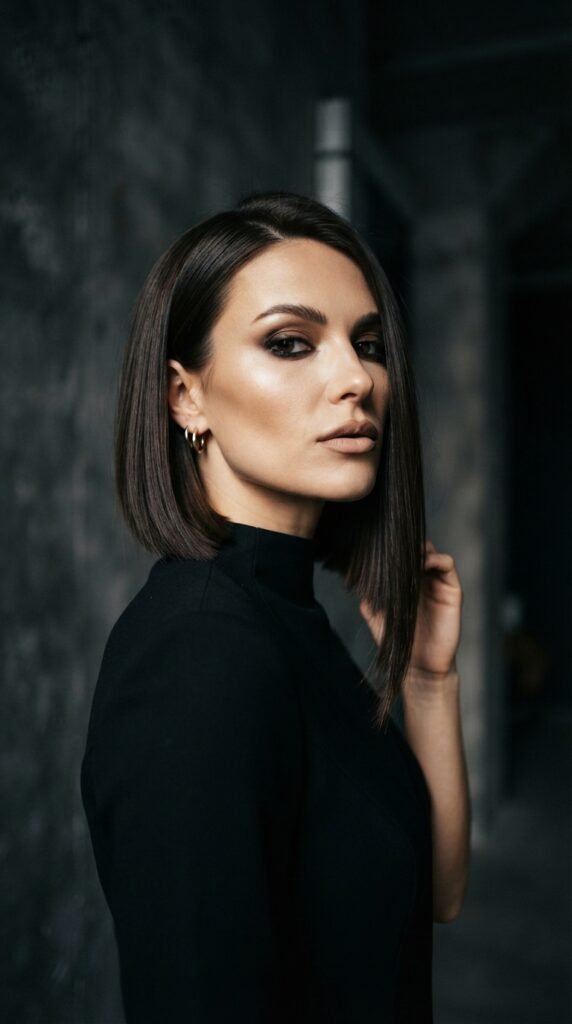
An asymmetrical lob is the easiest way to make a classic cut feel fresh. One side sits an inch or two longer, and suddenly your hair has personality.
Oval faces handle asymmetry better than any other shape because there’s no imbalance to correct. You’re just adding interest.
- Keep the difference subtle, one to two inches
- Pair it with a deep side part for drama
- Wear it straight for a graphic look
- Add soft waves to blur the line
It also grows out beautifully, which is more than I can say for most bold choices I’ve made.
Curtain Bangs Plus a Lob

Curtain bangs and a lob are one of those pairings that just work. The bangs frame your cheekbones while the lob keeps things from feeling heavy.
They’re also the easiest bangs to live with. You can pin them back, sweep them to the side, or let them fall where they want.
- Ask for bangs starting at the cheekbone
- Keep the center shorter, sides longer
- Blow dry them away from your face
- Trim every four to six weeks
If you’ve been scared of bangs since 2014, this is the version that won’t hurt you.
The Vampire Haircut, Softened Into a Lob
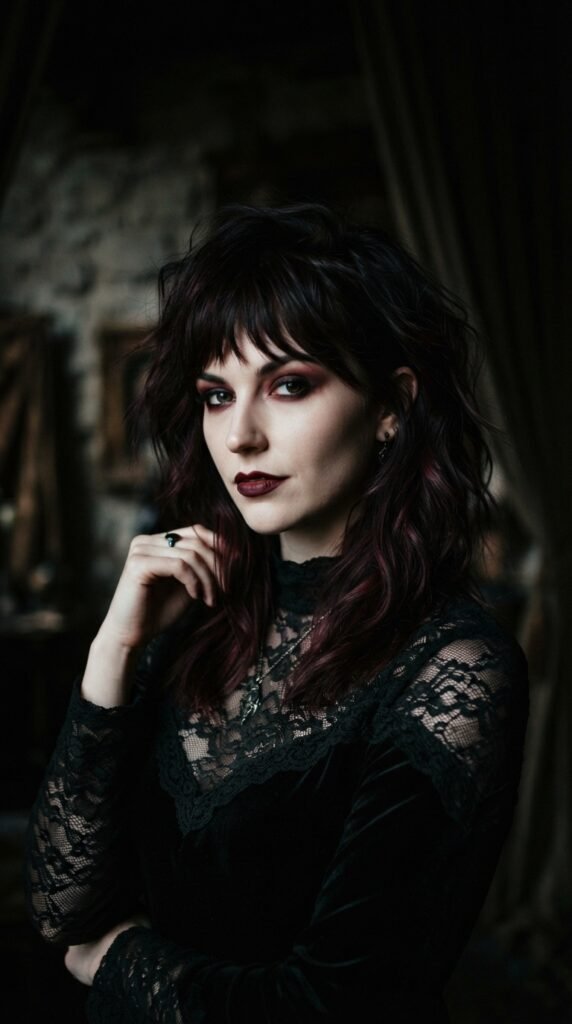
The vampire haircut is all about dark, layered, slightly undone hair with plenty of movement and a little mystery. You can absolutely wear it at lob length.
The key is keeping the face-framing pieces slightly uneven so nothing looks too tidy.
- Soft, choppy layers around the jaw
- A deep side part with volume at the root
- Muted shine rather than high gloss
- Cool-toned color, from espresso to black cherry
It’s dramatic without being costume-y, which is exactly the balance you want.
Romantic Goth Hairstyles With a Lob
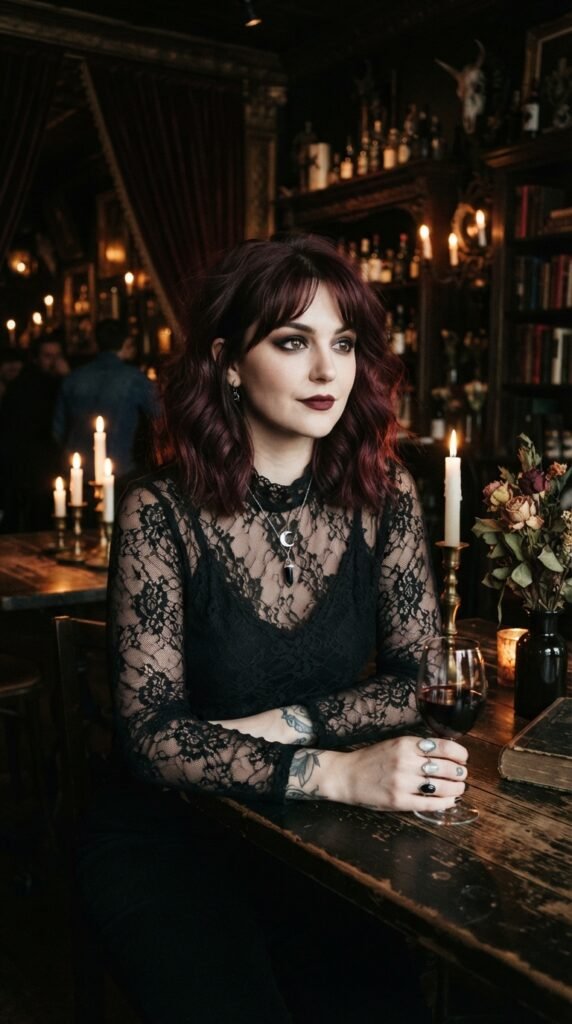
Romantic goth hairstyles lean soft and dark rather than spiky and harsh. A lob is a natural fit, especially with loose, undone waves.
Think velvet, candlelight, and hair that looks like it just fell into place.
- Loose waves made with a one-inch wand
- Brushed-out curls for a cloud effect
- A small braid or two tucked behind the ear
- Deep berry or inky black tones
Add a velvet ribbon or a single antique clip and you’re done. It’s romantic, a little moody, and very wearable on a Tuesday.
The Hime Cut Meets the Lob
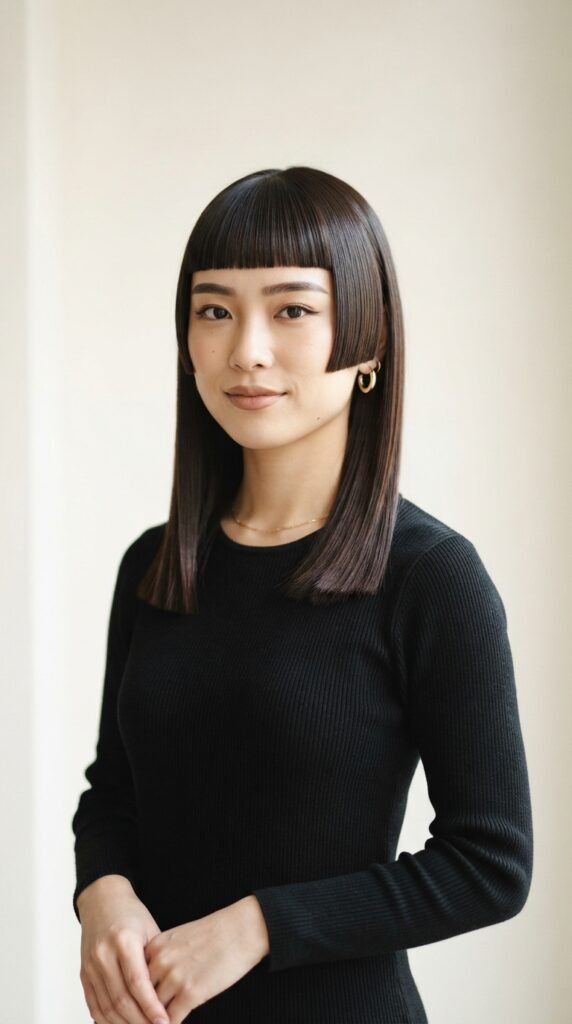
The hime cut is defined by blunt side pieces framing the face with the rest left long and straight. Shortening the back into a lob makes it far more modern and much easier to wear.
On an oval face it’s striking, because the blunt pieces hit right at the cheekbone, which you already have going for you.
- Keep the side pieces blunt and chin-length
- Leave the back at lob length
- Blow dry straight for a glassy finish
- Use a flat iron only on the front pieces
It’s graphic, elegant, and honestly a little bit editorial.
Glitchy Glam Hair: 2026’s Boldest Lob

Glitchy glam hair is the fun, slightly chaotic trend that mixes sharp lines with soft texture. A lob is the perfect base because it gives you enough length to play with.
The look is intentionally a little off, in the best way.
- Uneven, piecey layers
- A stark contrast between glossy and matte sections
- High-shine roots with textured ends
- Optional bold color pops, like silver or cool violet
Keep the shape classic and let the styling be the wild part. That way it still looks intentional, not accidental.
2026 Hairstyles: Why the Lob Keeps Winning
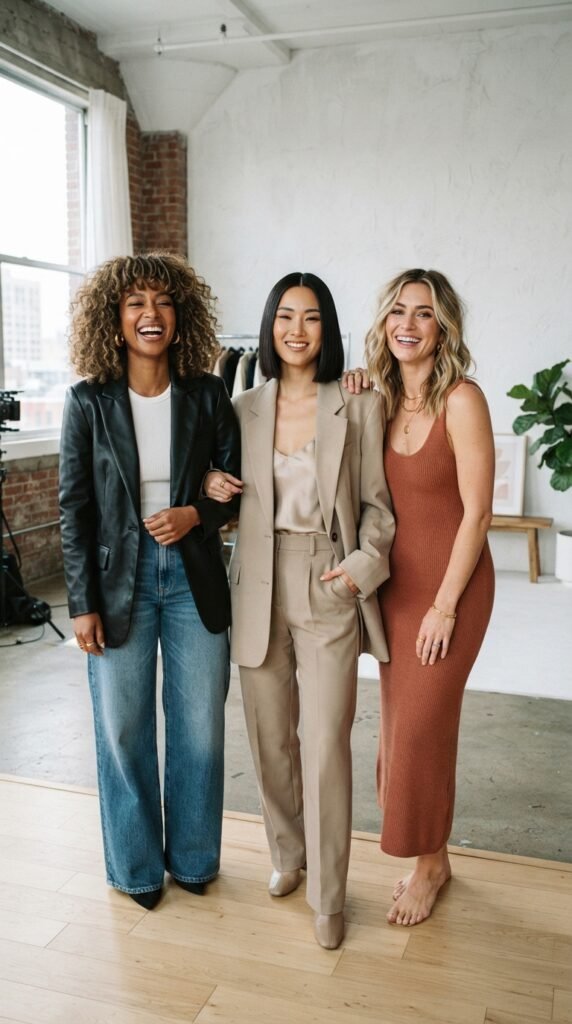
Every year I wonder if the lob is finally going to fade, and every year it doesn’t. There’s a reason for that.
It’s the rare cut that works on straight, wavy, curly, and coily hair. It’s low maintenance enough for real life but polished enough for a wedding. And it grows out into something you’d actually keep.
- Works with every hair texture
- Flattering with or without bangs
- Easy to style in five minutes
- Adapts to whatever trend is happening
Trends come and go. The lob just quietly absorbs them.
Parting Pointers for Oval Faces
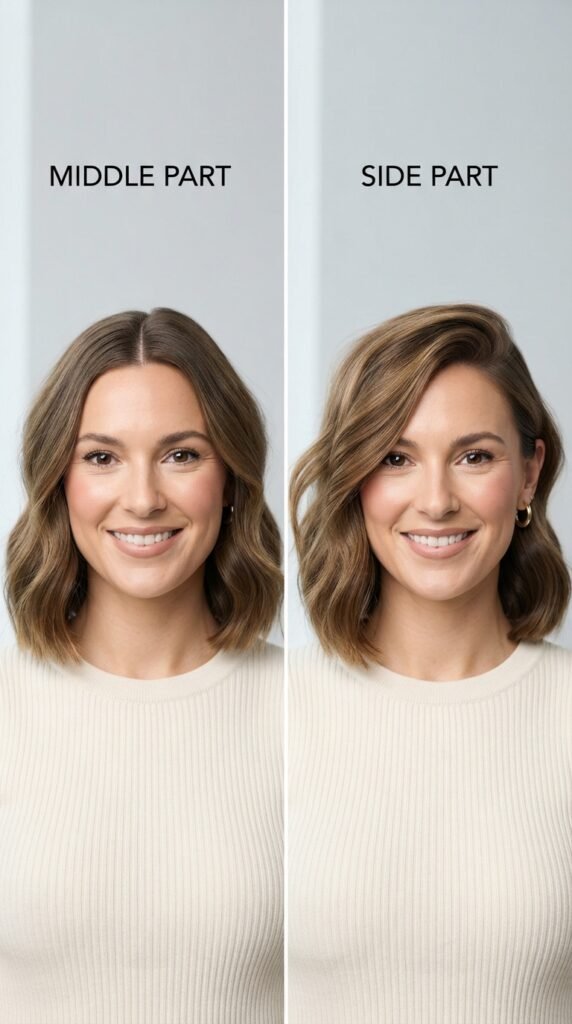
Your part changes the entire mood of your lob, and oval faces can wear almost all of them.
A middle part is sleek and symmetrical. It works best if you have some natural volume at the root, otherwise it can fall flat.
A side part adds instant lift and works on basically everyone.
- Middle part: modern, minimal, quiet luxury
- Side part: softer, more volume, very old money hair
- Deep side part: dramatic and glamorous
- Zigzag part: fun and adds texture
Try a different part each week. It’s the cheapest way to feel like you got a haircut.
Face-Framing Pieces Done Right
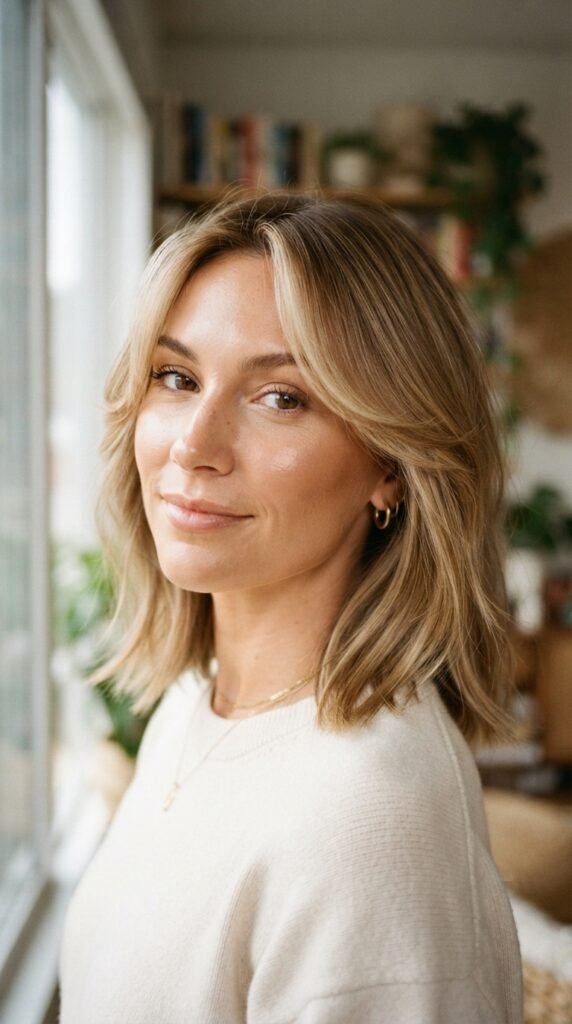
Face-framing pieces are the difference between a good lob and a great one. They’re the short strands that sit around your cheekbones and jaw, and they do a lot of quiet work.
On an oval face, the goal is to accent, not to hide.
- Start the shortest piece at your cheekbone
- Blend gradually into the rest of the cut
- Keep them soft rather than blunt
- Add a little bend with a round brush
Too many short pieces will make your lob look dated. Two or three well-placed ones are plenty.
Lob Lengths by Hair Texture
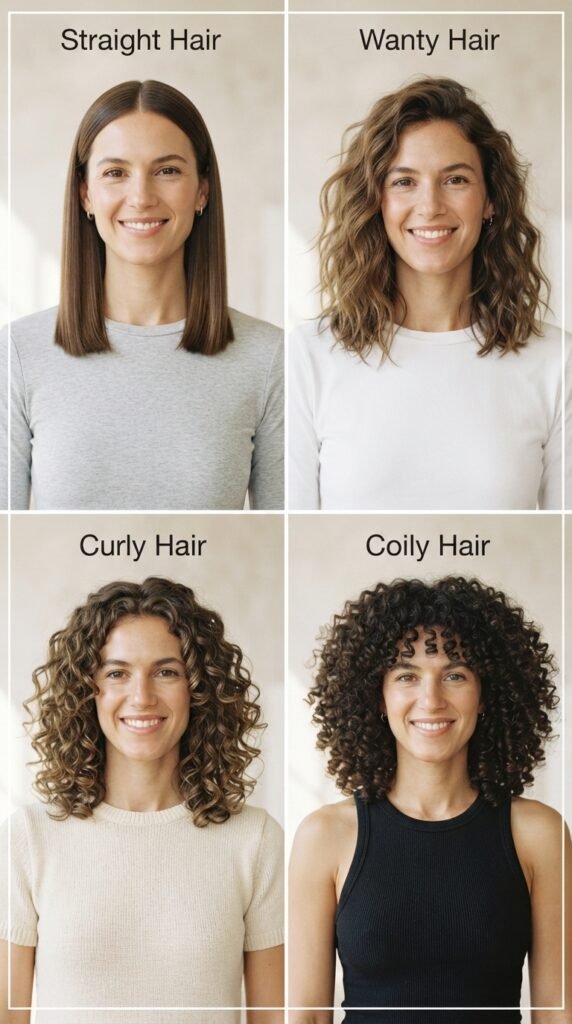
The same lob looks completely different depending on your texture, so length isn’t one-size-fits-all.
- Straight hair: chin to collarbone, blunt for fullness
- Wavy hair: collarbone length so shrinkage doesn’t shrink the cut
- Curly hair: add two inches to your goal length
- Coily hair: cut dry, shape first, then style
Always show your stylist photos of hair that matches your texture. A lob on curly hair and a lob on straight hair are basically two different haircuts.
Volume Tricks for Fine Hair
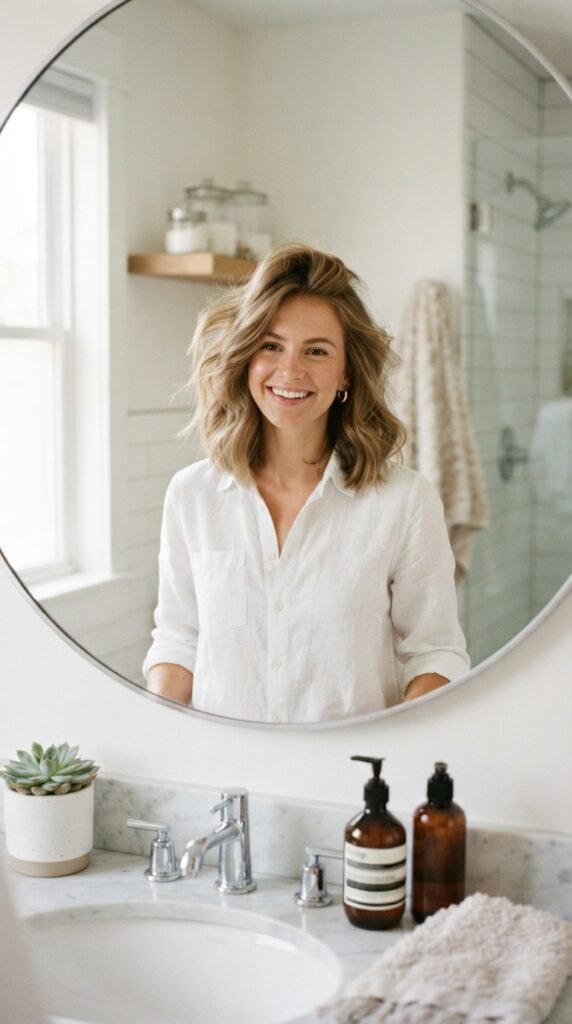
Fine hair plus a lob is a great combo, as long as you protect the volume. A few small habits make a big difference.
- Blow dry your roots upside down first
- Use a volumizing mousse at the roots only
- Skip heavy oils near the scalp
- Try velcro rollers on dry hair for ten minutes
A blunt lob also helps, because one clean line makes thin ends look denser. And dry shampoo at the roots is still the fastest lift I know.
Managing Thick, Wavy, or Curly Lob Hair
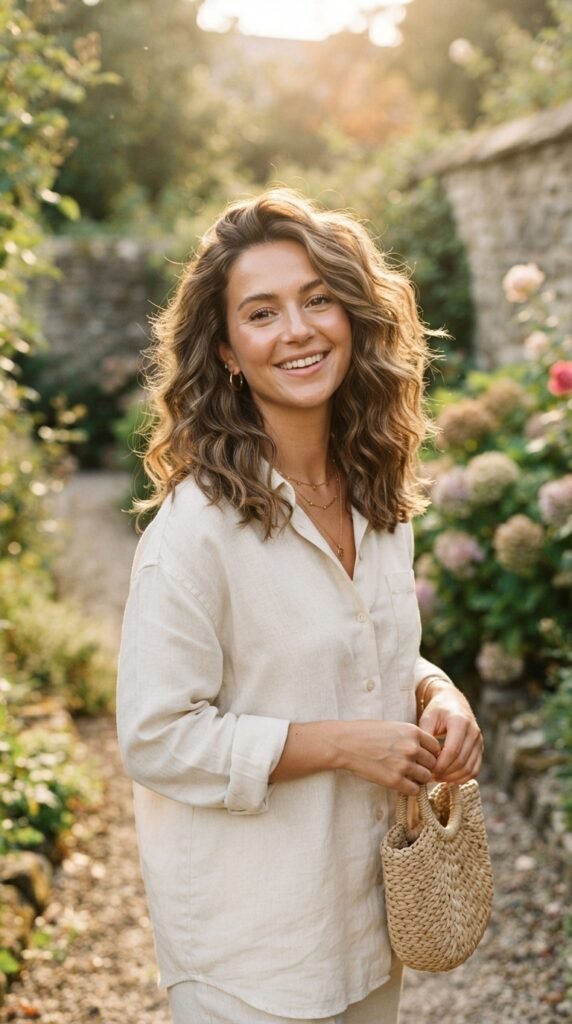
Thick hair in a lob can go one of two ways: beautiful and bouncy, or a triangle. The fix is almost always layers.
Ask for internal layers to remove bulk while keeping the perimeter intact. That way you keep the length you wanted and lose the weight you didn’t.
- Cut dry when possible, so shrinkage is visible
- Keep layers inside, not on the surface
- Use a light cream, not a heavy butter
- Diffuse instead of air drying if you want definition
Once it’s shaped right, thick lob hair is genuinely the easiest hair to wear.
Lob Color Ideas Worth Trying
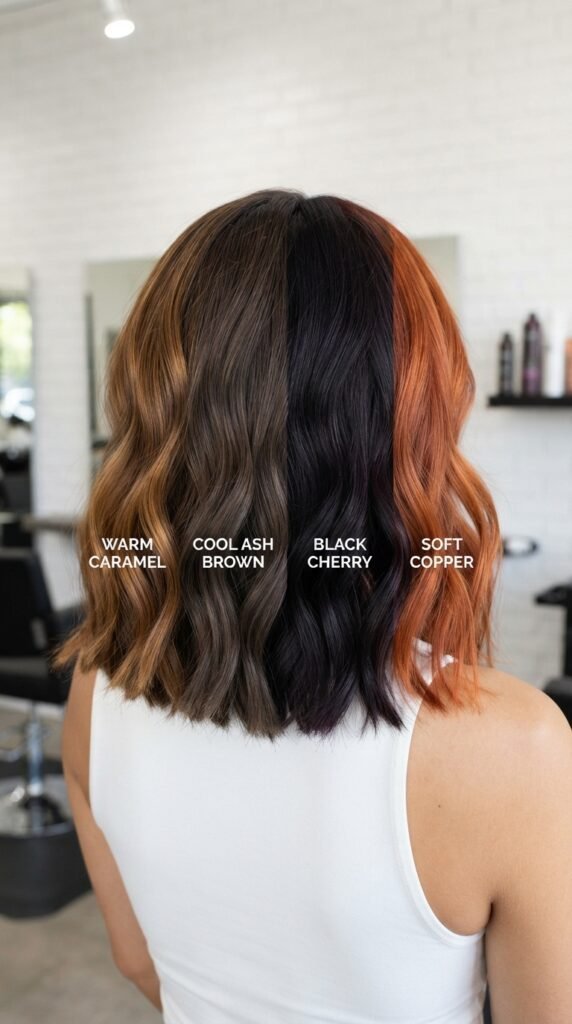
Color is the fastest way to make a lob feel brand new. Since the cut is simple, you can afford to have a little fun with the tone.
- Warm caramel balayage for a soft, sunny look
- Cool ash brown for quiet luxury bob vibes
- Black cherry for romantic goth hairstyles
- Soft copper for something warm and unexpected
- Face-framing money pieces for subtle brightness
Keep the color dimensional rather than one flat shade. It grows out softer and looks more natural in photos.
How to Ask Your Stylist for the Right Lob
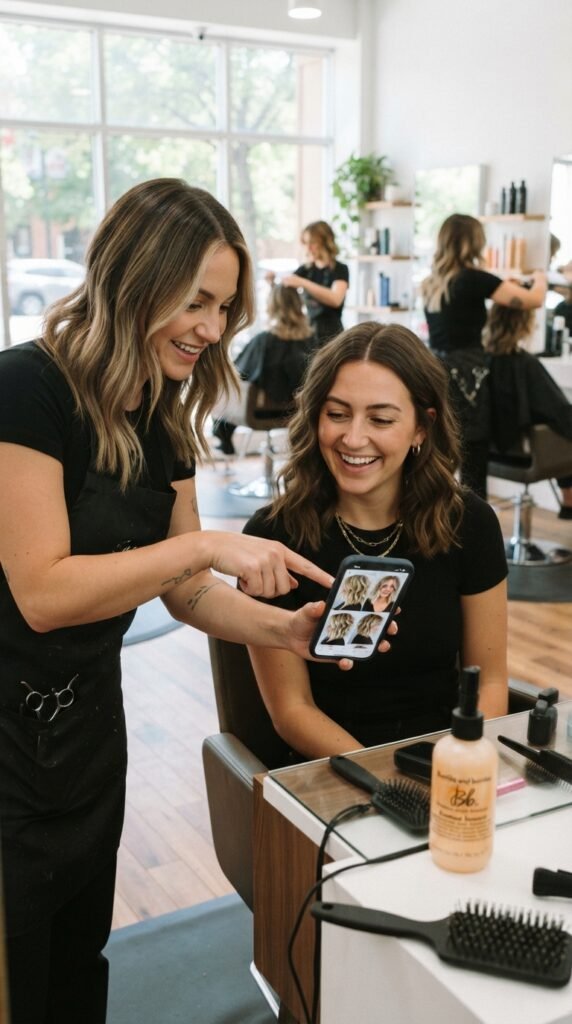
The consultation matters more than the cut. Vague requests are how people end up with haircuts they didn’t want.
Bring photos, but bring the right ones: your texture, your face shape, your vibe.
- Show two or three photos, not ten
- Point out exactly what you like in each
- Say your goal length out loud
- Mention how much time you’ll actually spend styling
- Ask them to check the length dry before finishing
If your stylist asks good questions, you’re in the right chair.
5-Minute Morning Lob Routines
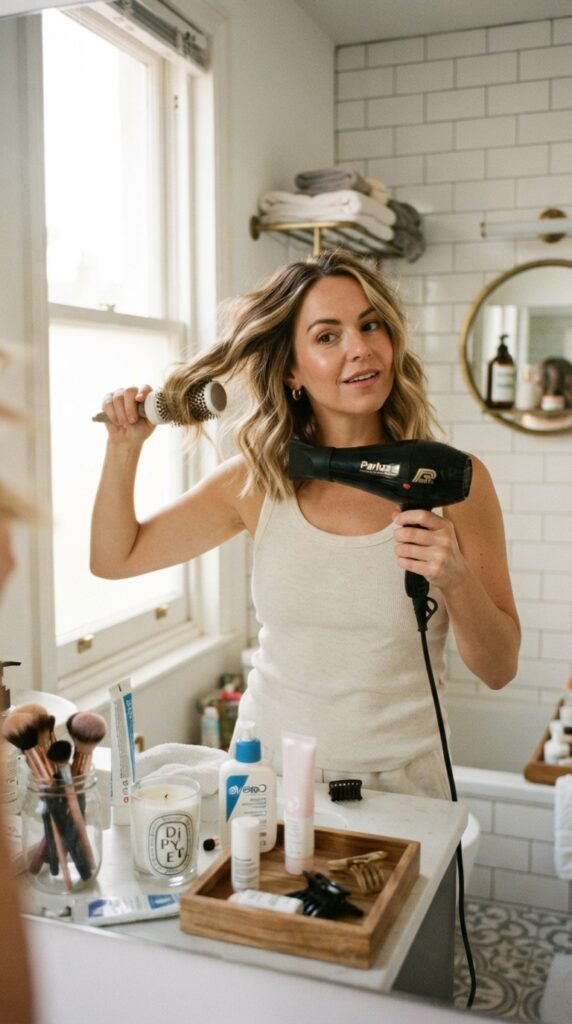
Nobody has thirty minutes on a weekday. Here’s the routine I actually use.
- Spray dry shampoo at the roots and massage in
- Blow dry just the front pieces with a round brush
- Twist the rest into two loose buns while you brush your teeth
- Shake out, add a drop of serum to the ends
That’s it. The bun trick gives you soft waves without heat, and the front pieces make it look like you tried. Total time: about five minutes, coffee included.
Accessories That Dress Up a Lob
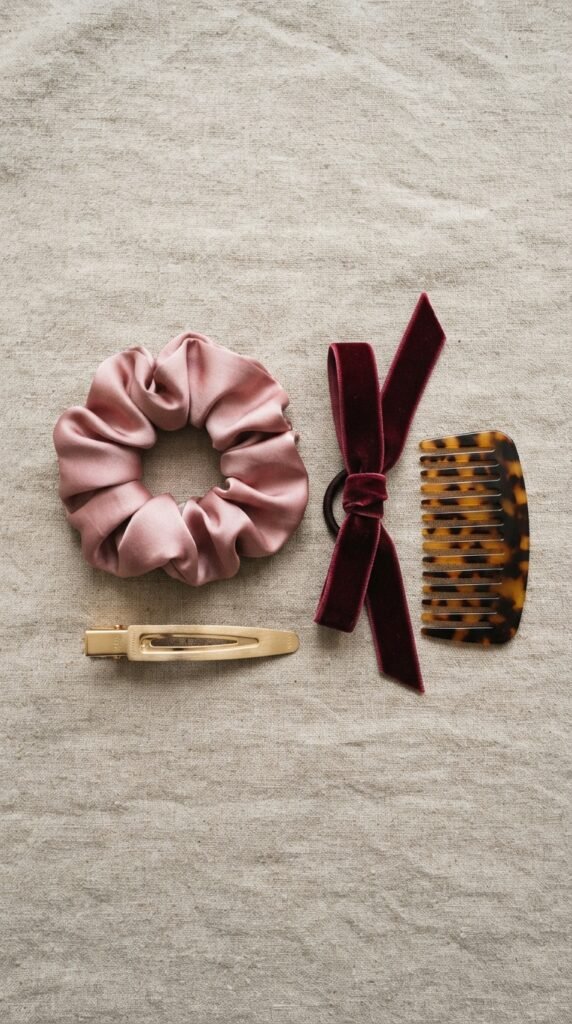
A lob is short enough to pin back and long enough to actually do something with. That’s the whole advantage.
- Silk scrunchies for a soft half-up
- Gold clips for a quick side tuck
- Velvet ribbons for something romantic
- Tortoiseshell combs for a polished finish
- Bobby pins for hiding grown-out bangs
One good accessory is enough. Two is a look. Three is a craft project.
Common Lob Mistakes to Avoid
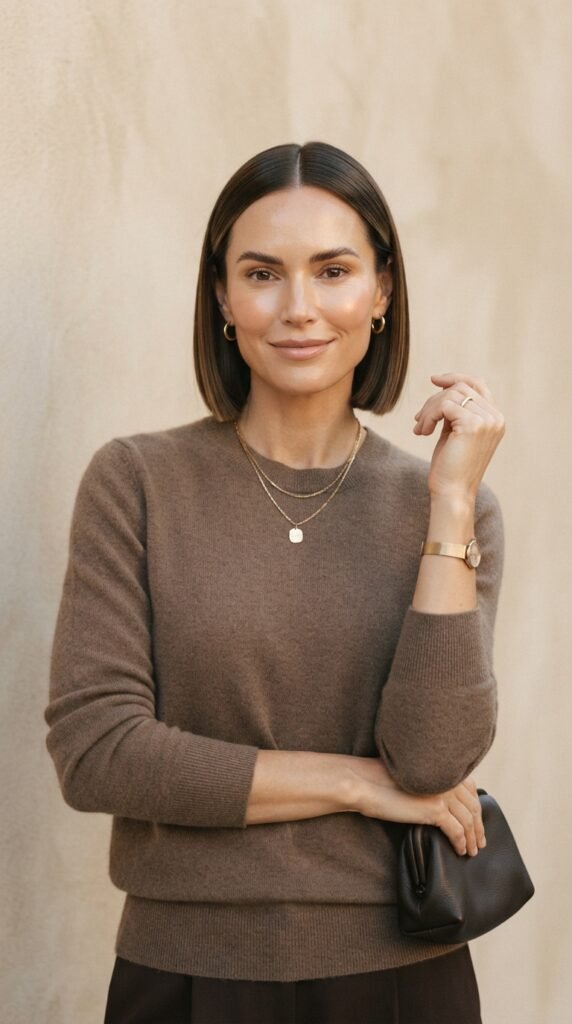
I’ve made most of these, so you don’t have to.
- Cutting it too short when you actually wanted collarbone length
- Adding too many layers until the ends look thin
- Landing the length right at the jaw’s widest point
- Skipping trims and losing the shape
- Copying a photo of hair with a totally different texture
Also, don’t let anyone talk you into heavy texturizing shears. They look great for a week and then the ends go see-through.
Keep it simple and you’ll be happy for months.
Keeping Your Lob Healthy Between Cuts

A lob lives or dies by its ends. Once they fray, the whole cut looks tired.
You don’t need a big routine, just a few consistent habits.
- Trim every eight to ten weeks
- Use a heat protectant every single time
- Sleep on a silk pillowcase
- Deep condition once a week
Small things, repeated. That’s how people end up with hair that always looks good in photos.
Is a Lob Right for You?

Quick gut check. If most of these sound like you, the answer is yes.
- You want a change without losing all your length
- You’d rather spend five minutes than thirty
- You like hair that grows out gracefully
- You want something that works for work and weekends
If you’re in a season where you need low effort and high payoff, a lob is it. It’s been my answer for years now.
One Last Thought
Oval faces have options, and that’s actually the tricky part. Too many choices can freeze you in place. The lob cuts through that noise.
It flatters your natural balance, it works with whatever texture you were born with, and it fits basically any mood you’re in, from quiet luxury to full romantic goth. Pick your length, pick your part, and let the rest be easy.
Hair should make your mornings simpler, not harder. A good lob does exactly that.
If you try one, tell me how it went. I read every comment, and yes, I will hype you up.
Save this post to Pinterest so you have it ready for your next salon appointment. And drop a comment below: are you team blunt lob, layered lob, or asymmetrical lob?