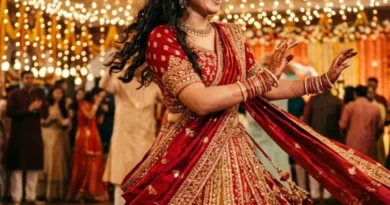
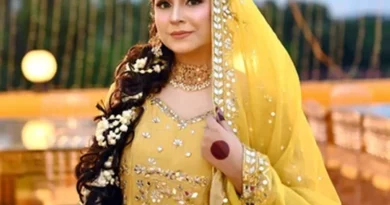
Diyas, Dazzle and Gorgeous Hair: 36 Hairstyles for a Diwali Party That Glow All Evening
Diwali is the one night of the year when the whole house glows. There are diyas lined along every windowsill, the smell of marigolds and sweets in the air, and a round of greetings, puja, photographs and fireworks that stretches from dusk until well past midnight. Your hair has to survive all of it: the warmth of the diyas, the smoke from the sparklers, hours of hugging relatives, and a dupatta that keeps sliding off your shoulder. That is why choosing the right hairstyles for a diwali party is about far more than looking pretty in the first photograph. A style that looks perfect in the mirror can still droop, frizz or come undone once the evening’s heat, smoke and dancing get to work, so it pays to plan for the whole night, not just the first hour.
This guide brings together 36 styles made for exactly that evening, from classic gajra braids and gold-jewellery updos to dupatta-safe buns, soft waves and short styles that sparkle under fairy lights. Whether you are hosting the party, attending a card night, dressing up for the main puja or heading out to a family dinner, you will find a style that fits your outfit, your hair length and how long you plan to stay out. Each idea comes with practical styling notes, so you can take it straight to your stylist or try it at home with confidence, and the guides below cover the Diwali-specific details — flame safety, smoke, jewellery and quick fixes — that other party guides simply skip.
What Makes Diwali-Party Hair Different
A Diwali-party hairstyle is not the same as an ordinary party hairstyle. The evening is long, warm and full of small hazards: open flames, incense smoke, sparklers and a dupatta that must stay in place through puja, dinner and photographs. Hair needs grip, staying power and a finish that can be refreshed in two minutes, rather than stiff formality that cracks the moment you move. Styles are built to hold fresh flowers, sit comfortably under a maang tikka or jhoomar, and still look soft and glossy in warm, golden light.
Think in layers when you plan: a secure base, one flower or jewel pinned properly, and a finish that survives heat. A braid, a low bun or a half-up style gives you that base, while loose curls alone often fall flat by the time the fireworks start. Choose a style you can sit, eat, greet and dance in comfortably, and you will enjoy the night instead of fussing with your hair every ten minutes.
Diyas, Candles and Fireworks Smoke: Staying Safe and Smudge-Free
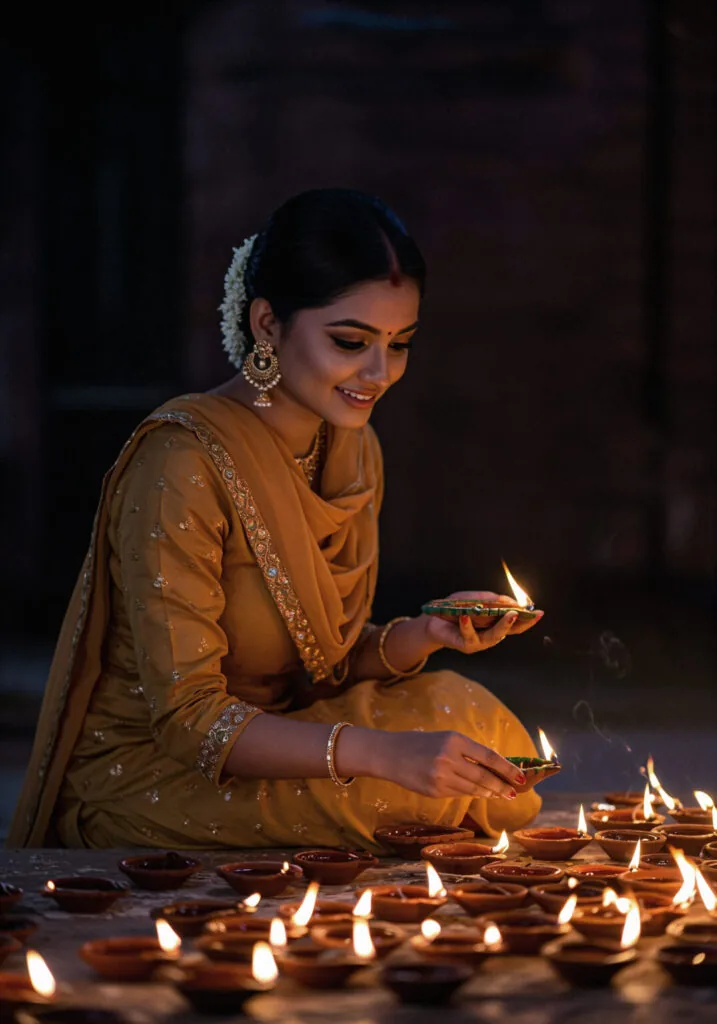
Open flames are the first thing to plan around on Diwali. Loose hair, long tendrils and flowing dupattas are the biggest risk near diyas and candles, so keep the front of your hair pinned back and the length secured in a braid or bun while you light lamps or stand near the aarti thali. If you love loose waves, wear them for the photographs and the card party, then pin them up before the puja and the fireworks. A quick spritz of hairspray also keeps flyaways from drifting toward a flame.
Fireworks smoke is the second problem: it leaves a faint smell in loose hair and can make curls droop in humid evening air. A light coat of anti-humidity spray before you style, and a silk scarf over your hair while you watch the fireworks outdoors, solves most of it. When you come back inside, shake your hair out gently, smooth the crown with a dab of serum, and you are ready for the next round of photographs. Never lean over a lit diya to check your reflection in a mirror — step back first.
Matching Your Hair to Lehengas, Saris and Anarkalis
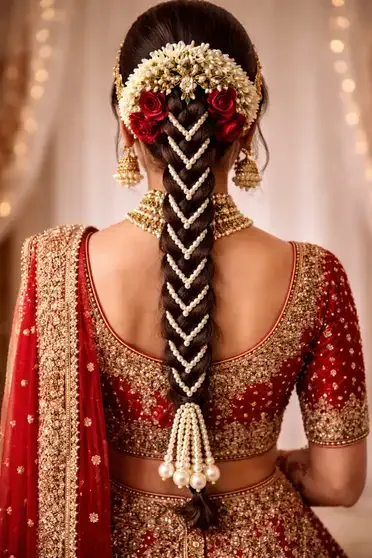
Your outfit should decide the scale of your hair. A heavily embroidered lehenga or a silk sari with a wide gold border already carries a lot of visual weight, so a sleek low bun, a neat side braid or a polished half-up style balances it best. A plainer anarkali or a simple kurta set, on the other hand, leaves room for a fuller braid, a voluminous blowout or a detailed updo with flowers. The rule is simple: if the outfit is loud, keep the hair calmer, and if the outfit is quiet, let the hair do more of the talking.
Colour matters too. With a deep red or maroon outfit, warm gold pins and white jasmine create a beautiful contrast, while a green or teal outfit pairs well with soft curls and small orange marigolds. Hold the dupatta and your flowers against your hair before the evening starts and check that nothing disappears into the same colour family. A quick mirror test in warm light — the kind of light Diwali evenings are full of — tells you more than any amount of guessing.
Flowers and Gold Jewellery in Your Hair
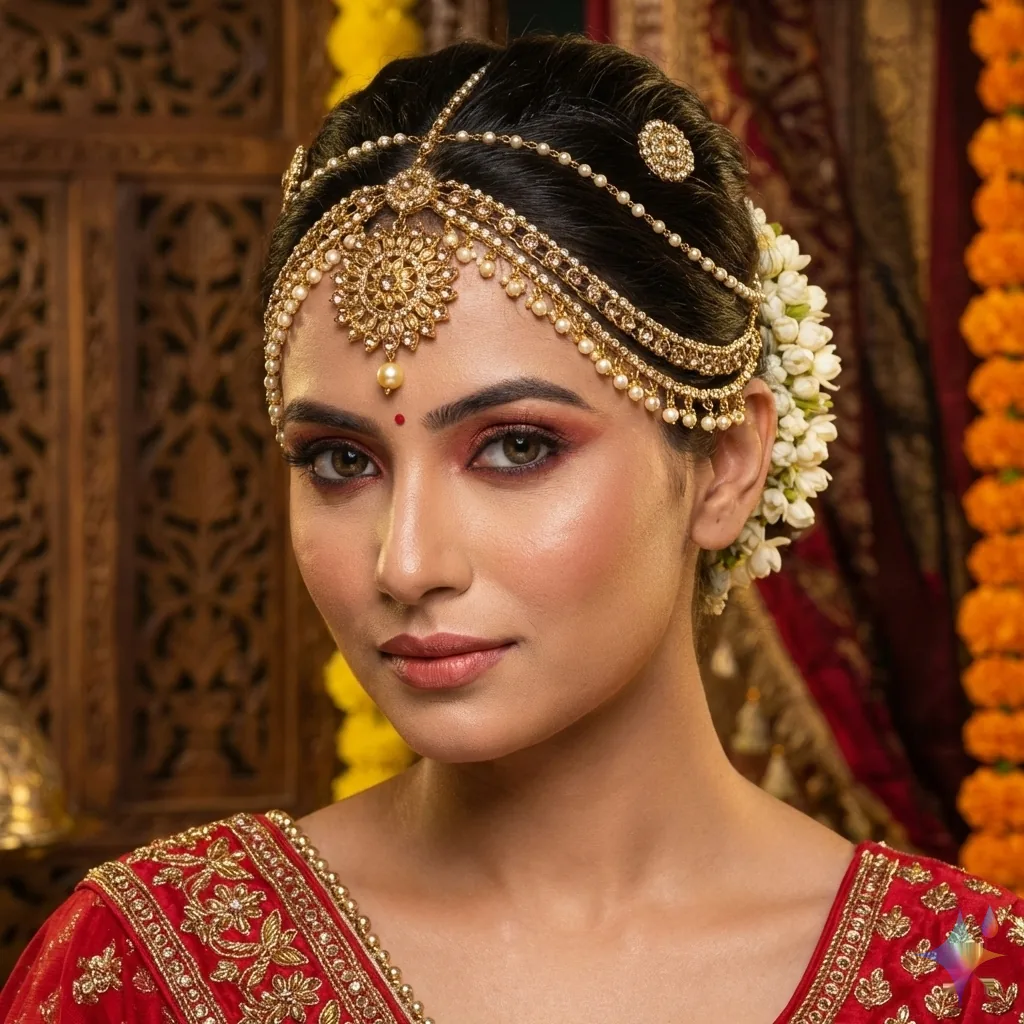
Fresh flowers and gold jewellery are what make Diwali hair feel festive rather than merely formal. Gajra looks dreamy for about ten minutes and then starts to slip if it is only tucked in, so pin through the gajra string itself with two or three U-shaped pins that cross over each other, anchoring them into a braid or bun rather than loose hair. Hide the pin ends under a flower so nothing shows in photographs, and carry one spare pin in your clutch.
A maang tikka or jhoomar needs a firm base to sit on. Pin it to a section of hair near the parting, with a small cushion of backcombing or a braid underneath to stop it sliding forward, and test it by tilting your head gently from side to side. If it moves, add one more hidden pin before the party, not after the dancing starts. Match the scale of the jewellery to the scale of the hair: a large jhoomar calls for calmer hair, while light gold pins let a detailed braid take centre stage.
Dupatta Safety Near Flames
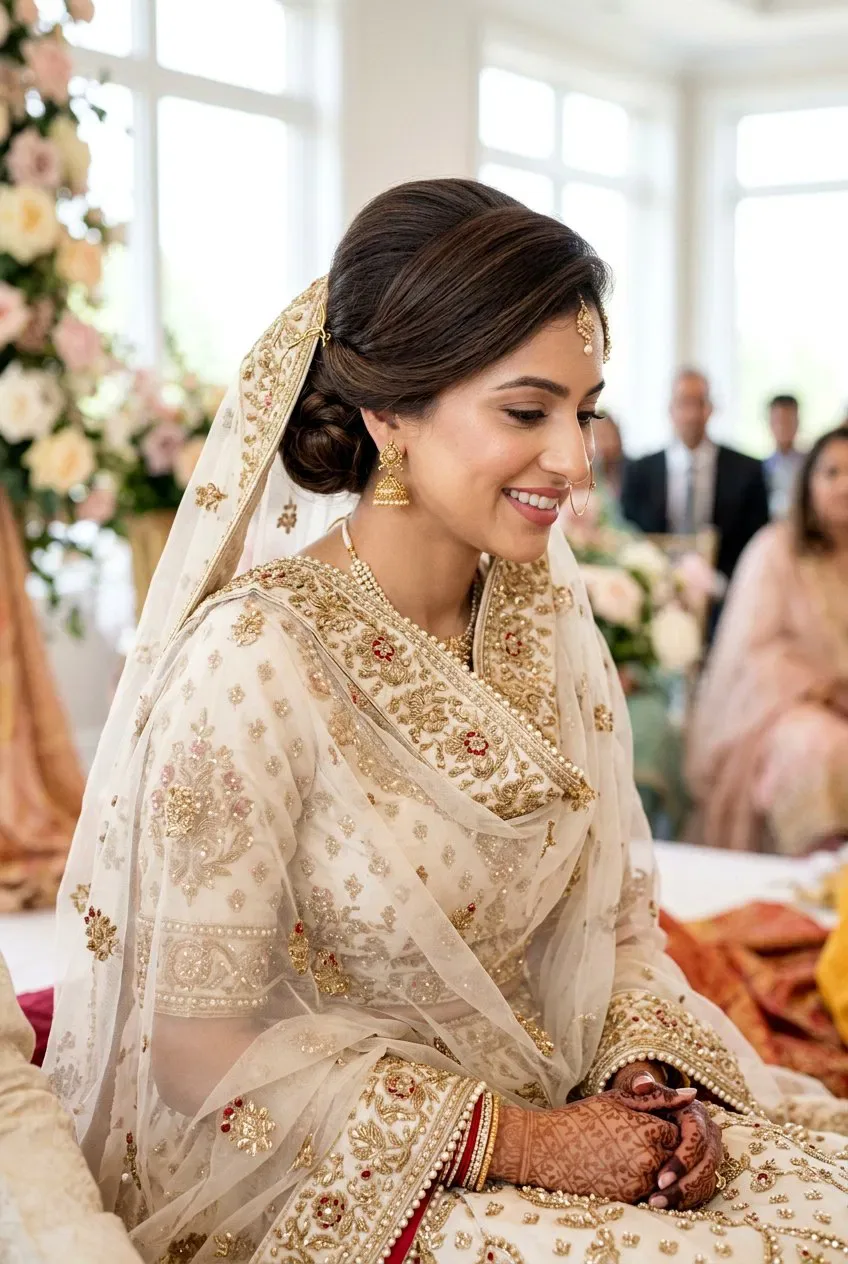
A dupatta changes everything about a hairstyle, and on Diwali it also changes the safety rules. High, wide buns push a dupatta forward, very loose waves get caught in its border, and anything too tall makes the dupatta sit awkwardly and slip toward a flame. Low buns, side braids, low ponytails and sleek half-up styles work best, because the dupatta can rest flat over the crown without crushing the shape underneath — and without dangling near a diya.
Pin the dupatta to your hair with two small safety pins at the sides, never to the flowers, and keep the loose end tucked or draped over one arm while you light diyas or serve food. If you plan to drape the dupatta over your head for the puja and take it off for the card party, choose a style that looks good both ways: a low chignon or a side braid does exactly that. Before you bend toward any flame, check where the dupatta’s end is — that one-second check is the whole safety rule.
Diwali Hair by Length: Short, Medium and Long
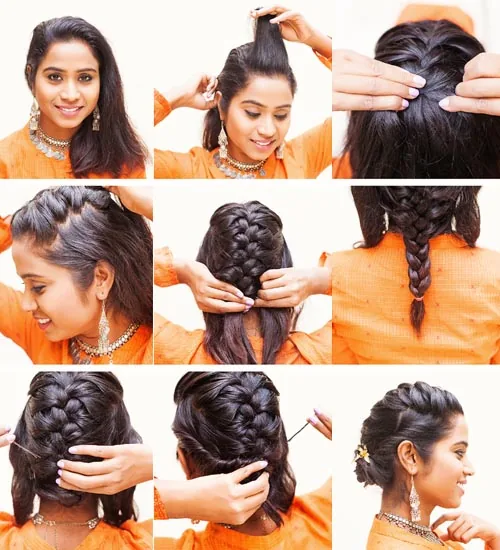
Short hair photographs beautifully on Diwali with the right accessories. A textured bob or a sleek pixie with gold clips, a small maang tikka or a single fresh flower looks deliberate and polished, and it never gets in the way of diyas or dupattas. Add volume at the crown with a little backcombing and a strong-hold spray, and the style will hold from the first diya to the last firework without a single pin slipping.
Medium hair is the most flexible length for a Diwali party: it holds a low bun, a half-up twist, a bubble braid or soft waves without needing extensions. Long hair has the most options — full gajra braids, braided crowns, fishtails and elaborate updos — but it also needs the most pins, because its own weight pulls styles down over a long evening. Whatever your length, choose a style that uses your hair’s natural weight and texture instead of fighting it, and you will spend the evening enjoying the party rather than rescuing your hair.
Quick Fixes Between Rituals
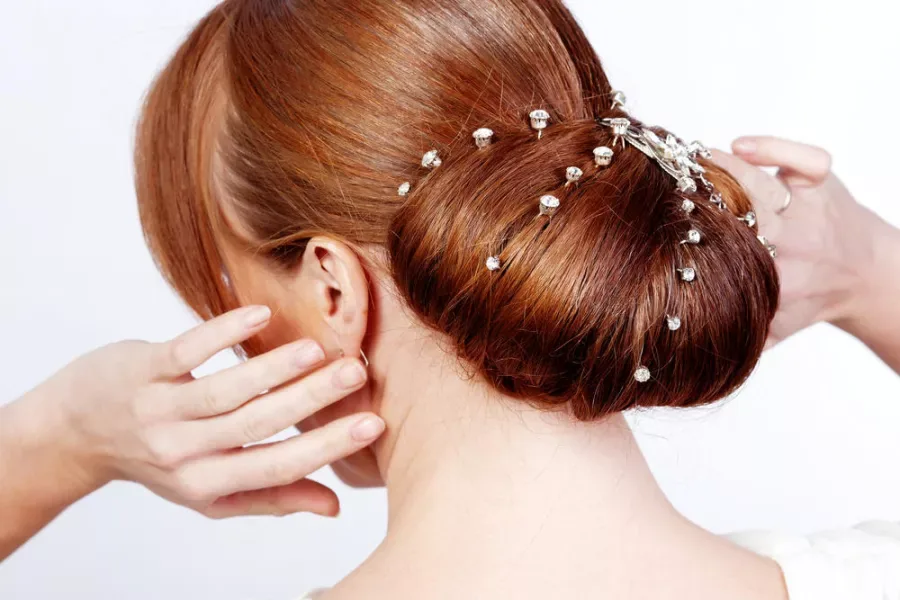
A Diwali evening has natural pauses — between the puja and dinner, between dinner and the card party — and each one is a two-minute chance to reset your hair. Keep a tiny kit in your clutch: two bobby pins, one U-pin, a small comb and a travel-size hairspray. Smooth the crown with the comb, re-pin any loose section at the nape, and give the style one light mist of spray. That is all it takes; do not rebuild the whole style, or you will be late for the next round.
The most common mid-evening problems are easy to fix. If curls have dropped, twist the front sections back and pin them — you get a fresh half-up look in thirty seconds. If a bun has loosened, push two U-pins in from opposite sides to lock it again. If smoke has dulled your shine, smooth a drop of serum over the top layer only. And if a flower has wilted, swap it for a gold pin rather than leaving a drooping bloom in place for the rest of the night.
Salon or DIY: What to Book and What to Do at Home
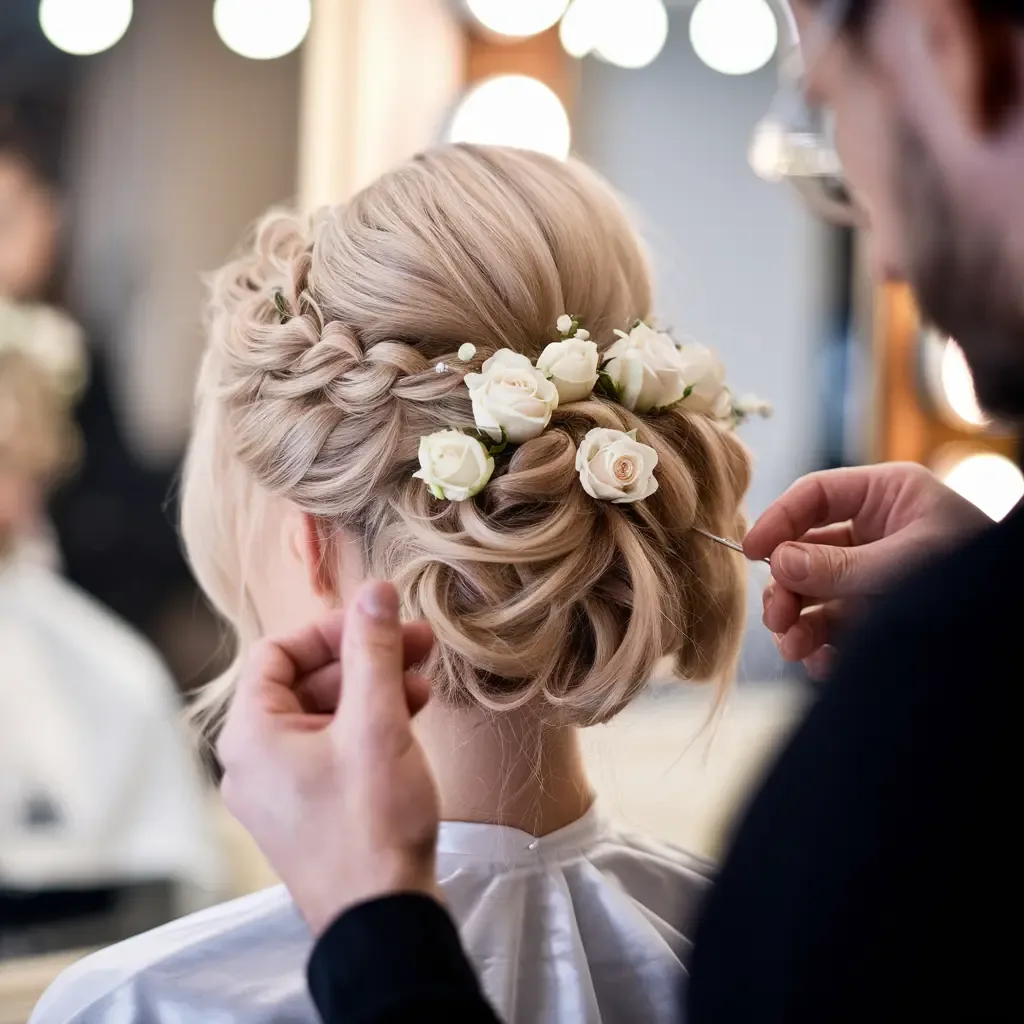
Book the salon for anything that needs a second pair of hands: elaborate braids, a smooth chignon, a full blowout or a style built around heavy jewellery. Salons get booked solid in the week before Diwali, so call at least a week ahead, take a photograph of the style you want, and tell the stylist about your outfit, dupatta and jewellery so the style is built around them. A trial run the week before is worth it if your look is complicated.
Do the simple things at home and save the salon money: soft waves with a curling wand, a sleek low ponytail, a bubble braid, a half-up twist or a gajra braid you have practised twice. Practise any DIY style once before the day itself, and time yourself — if it takes more than thirty minutes at home, it will take longer on the night when you are also doing makeup. The best Diwali plan is often a mix: salon for the main party, DIY for the smaller gatherings.
The Classic Gajra Braid
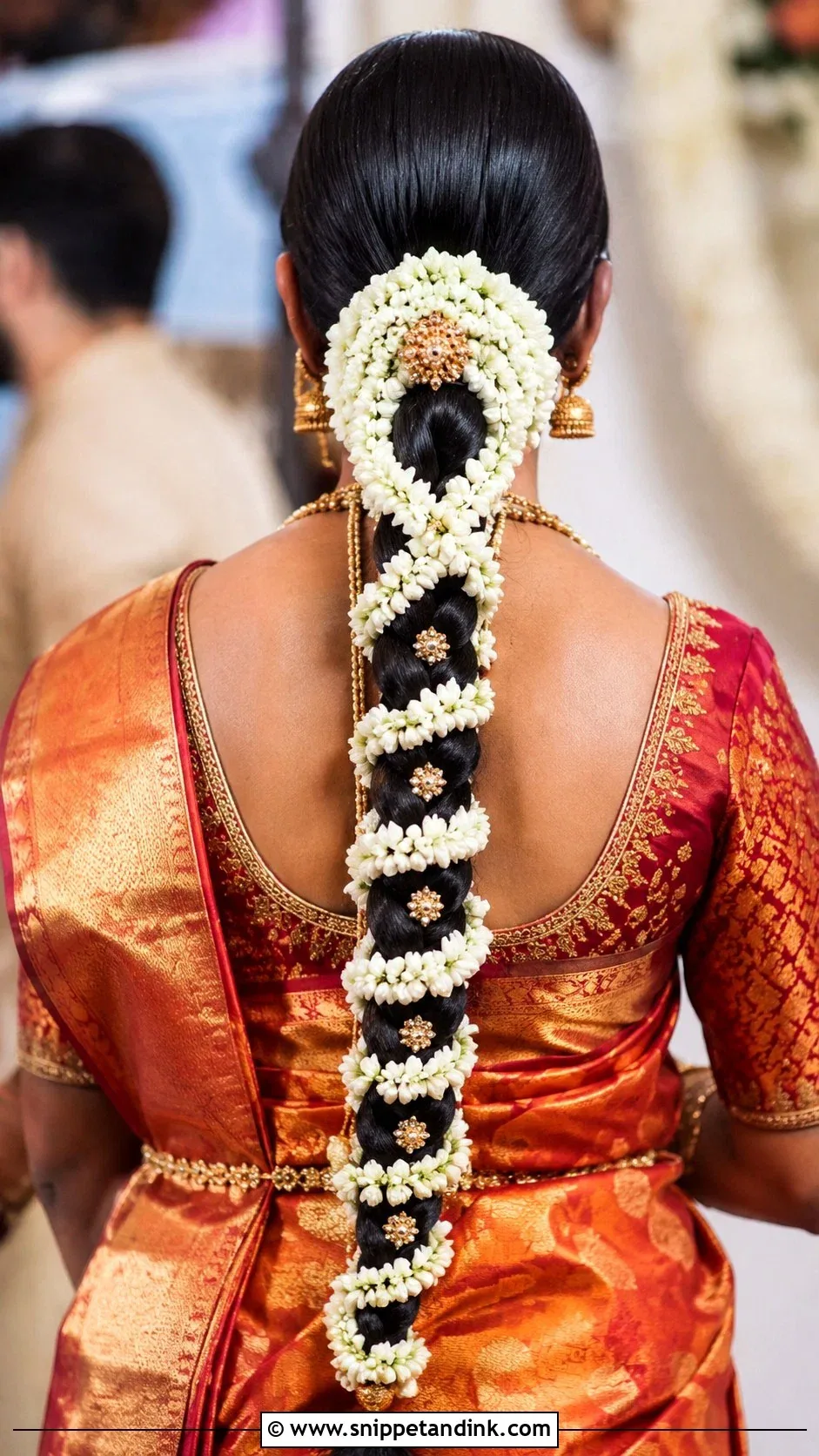
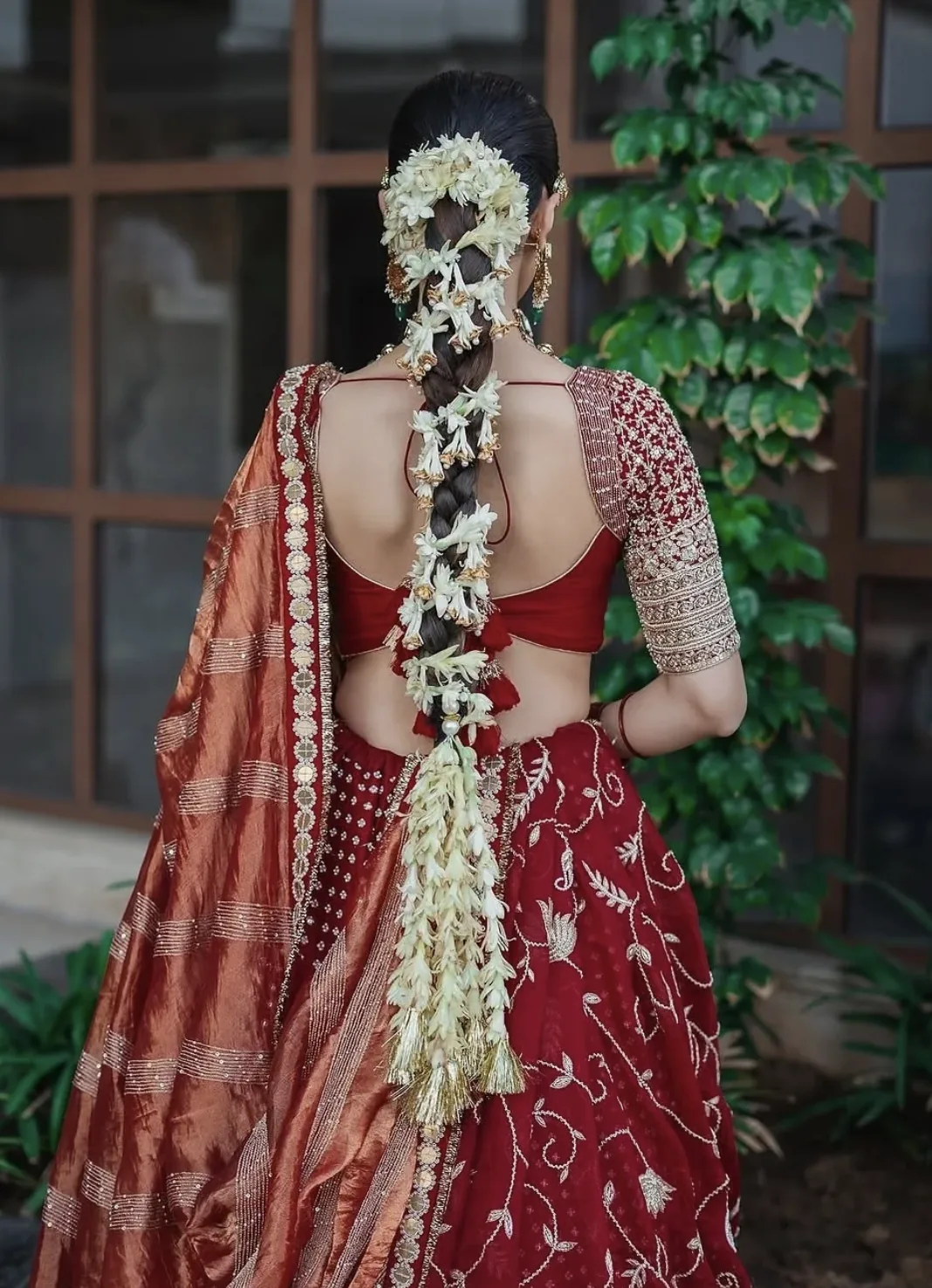
Best for: the main puja, family photographs and anyone in a lehenga or sari. The classic gajra braid is the most Diwali hairstyle there is: a long, neat three-strand braid wrapped in fresh jasmine gajra, glossy at the crown and soft at the edges. It photographs beautifully in diya light, it never gets near a flame, and it stays put through hours of greetings and dancing.
How to style it: start with a centre or side part, smooth the crown with serum, and braid firmly but not so tight that it pulls. Wrap the gajra around the braid in a spiral and pin it through the string at three points. What to ask your stylist for: a braid that sits over one shoulder or down the back, with the gajra pinned — not tucked — so it cannot slip. Quick verdict: the safest, prettiest choice for the whole evening.
Fishtail Braid with Marigolds
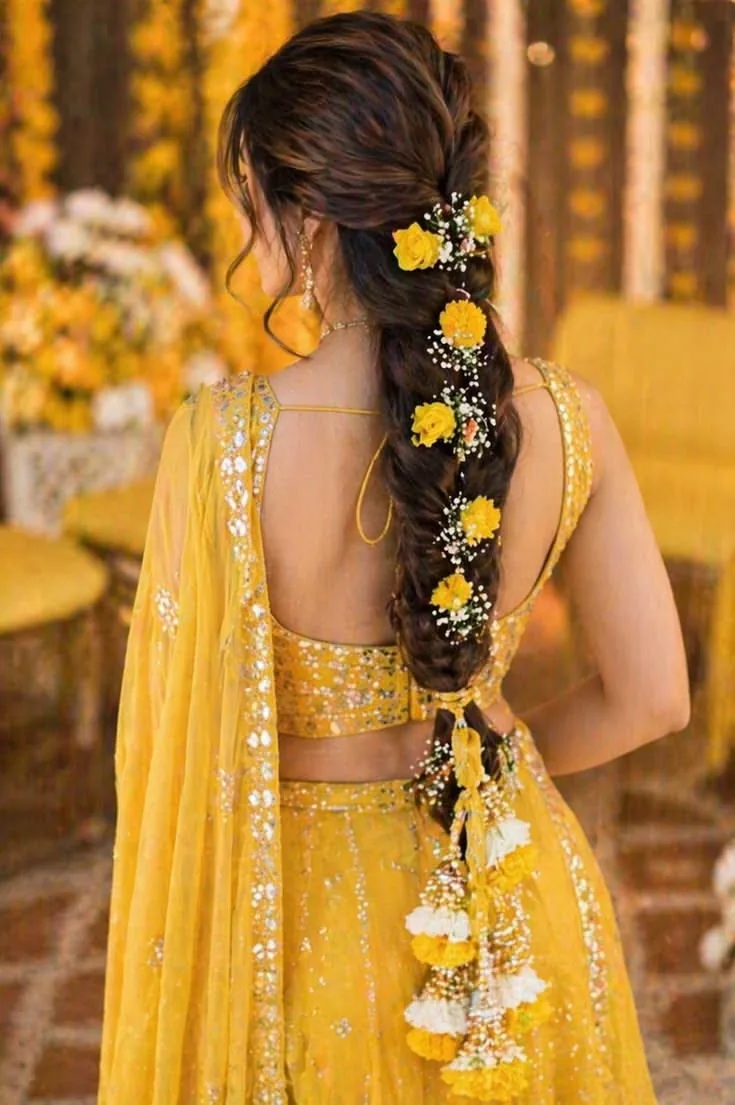
A fishtail braid looks far more intricate than it is, which is exactly why it works so well for a Diwali party. The fine, woven texture catches the light beautifully, and small orange marigolds tucked along its length pick up the colours of the diyas and the rangoli. It suits long and medium hair, and it holds up better than a loose style because the hair is locked into itself.
The pros: it stays neat for hours, suits almost every face shape, and looks expensive without needing extensions. The cons: it takes longer to braid than a classic braid, and it needs a second pair of hands for the back sections. Maintenance is minimal — a light mist of spray at the crown and one spare pin in your clutch. If you are short on time, ask for a side fishtail instead; it is faster to braid and shows off the marigolds in photographs.
Low Bun with Jasmine Gajra

The low bun with jasmine is the quiet luxury of Diwali hair: understated, elegant and completely practical. It sits low at the nape, so a dupatta drapes over it perfectly, and a ring of white gajra around the bun adds fragrance and festivity without a single loose strand near a flame. It suits silk saris and anarkalis, and it flatters every age.
Common mistakes: piling the bun too high, which pushes the dupatta forward, and using too little grip, so the bun slides by dinner. Fix both by backcombing the crown lightly, securing the bun with U-pins from four sides, and wrapping the gajra around the base rather than the top. Cost and time: about twenty minutes at home, or a quick salon appointment. Who should avoid it: nobody — this is the most forgiving style in the whole guide.
High Bun with a Gold Jhoomar

Best for: the host, the bride-to-be, or anyone whose outfit is the star of the evening and wants their hair to match. A high bun lifts the whole face, shows off earrings and a necklace, and gives a gold jhoomar a firm, visible place to sit. It is a statement style, and it photographs like one — especially from the side, where the bun and the jewellery frame each other.
How to style it: gather the hair high, smooth it with a brush and serum, and twist it into a firm bun secured with a hair donut for fullness. Pin the jhoomar to the hair just in front of the bun, not to the bun itself, so it cannot drag the style down. What to ask for: a bun that is smooth, not puffy, with the jhoomar tested by tilting your head. Keep the front sleek; loose tendrils and a high bun fight each other.
Side-Swept Curls with a Maang Tikka
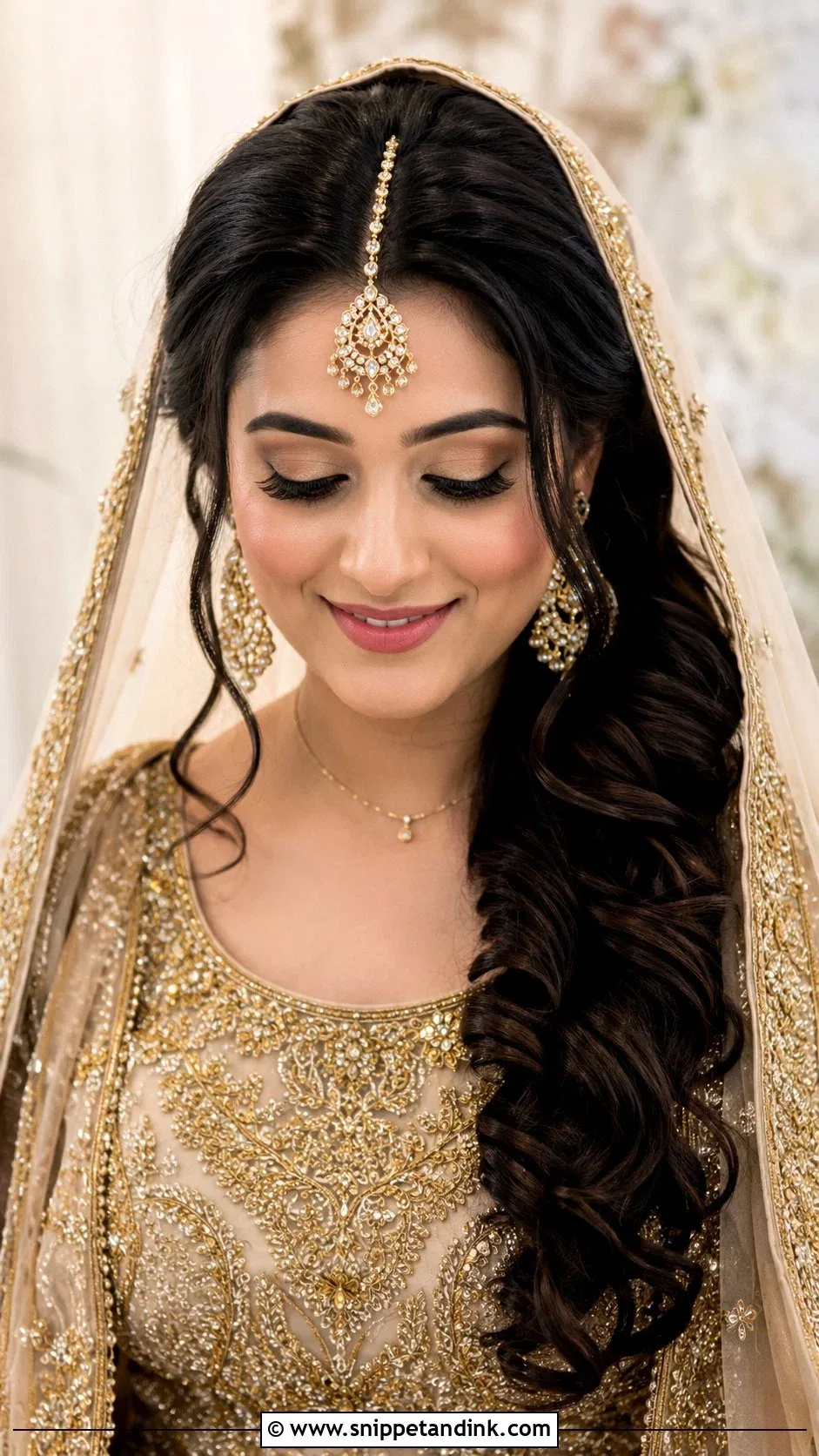
Side-swept curls are pure glamour for a Diwali card party: soft, bouncy curls swept over one shoulder, with a maang tikka drawing the eye to the parting. The style works best on medium and long hair, and it pairs beautifully with a one-shoulder drape or a lehenga with a light dupatta. It is also one of the most flattering styles for photographs, because the curls frame the face from every angle.
The pros: romantic, festive and easy to refresh — just re-curl two front sections. The cons: curls drop in humid evening air, and loose hair near diyas needs care, so pin the curls back before the puja and let them down for the party. Maintenance: a strong-hold spray in light layers, never one heavy coat. Quick verdict: choose this for the party, not the puja, and you will love it.
Half-Up, Half-Down with Gold Pins
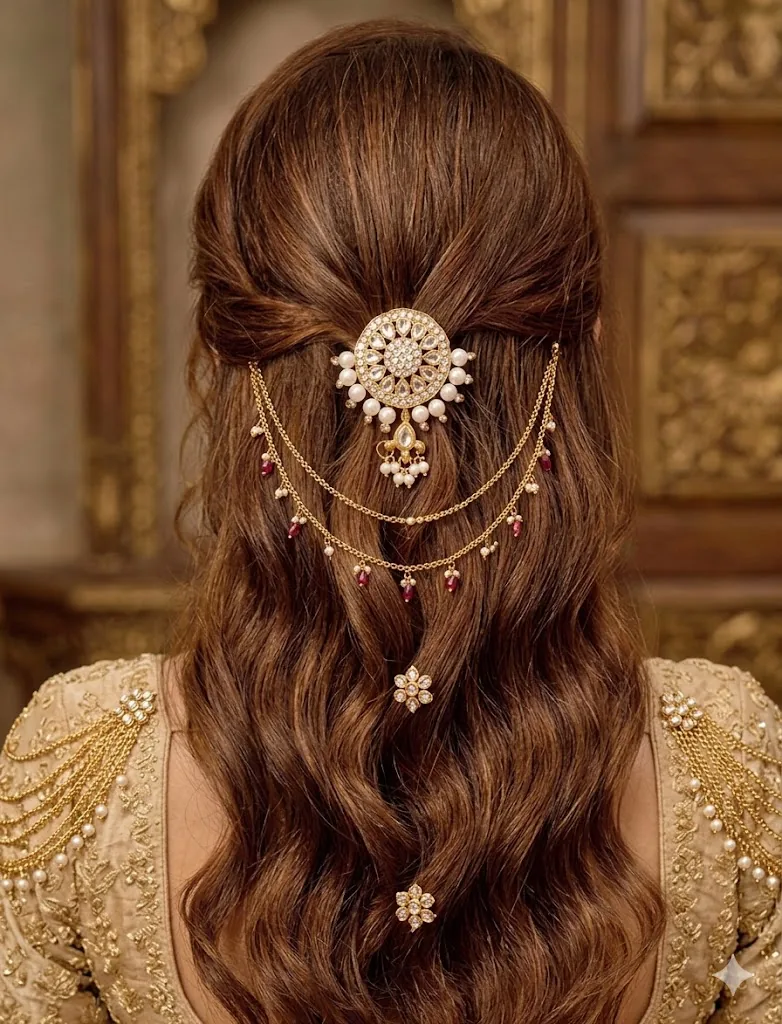
The half-up, half-down style is the best of both worlds for Diwali: the top half is pinned securely away from your face and the flames, while the bottom half flows free with curls or waves. Gold pins, small flowers or a delicate chain across the pinned section add the festive touch without any weight. It suits almost every outfit, from a sari to a sharara, and it is comfortable for a long evening.
How to style it: take the top section from temple to temple, twist or braid it lightly, and secure it with gold pins at the crown. Curl the loose ends softly and finish with a flexible spray so the style can move without cracking. Common mistake: pinning too little hair up, so the front sections fall forward by dinner. Take a generous section and pin it firmly — the style still looks soft, but it will actually stay.
Waterfall Braid for a Candlelit Evening
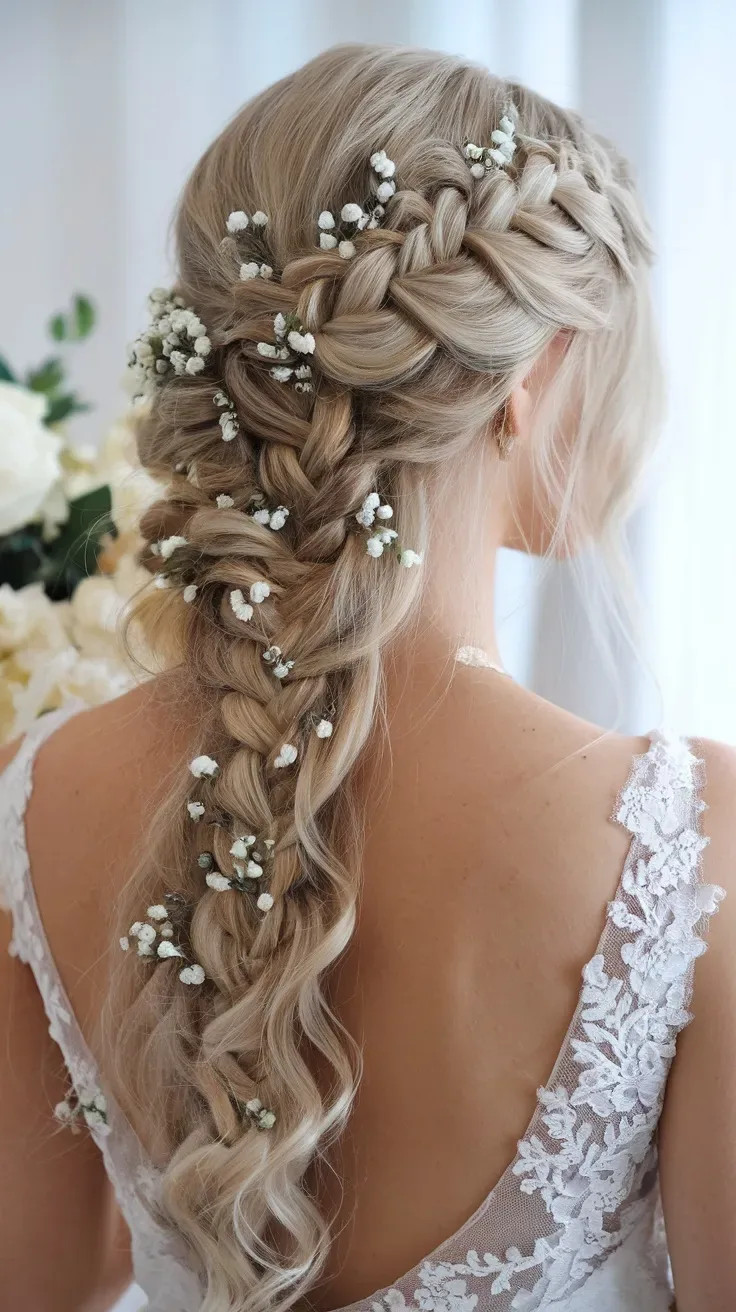
A waterfall braid is made for candlelight. Strands cascade through the braid like water, and the open, airy texture catches the glow of the diyas in a way no other braid does. It looks delicate and detailed, yet it holds the front of your hair back neatly — exactly what you want near open flames. It works best on long hair with a little natural wave.
The pros: romantic, unusual and wonderful in photographs. The cons: it loosens faster than a tight braid, so it suits the card party or dinner more than a long puja. Maintenance: keep a few pins handy and re-pin the ends after an hour. Cost and time: about twenty-five minutes with a stylist, longer at home the first time. Who should avoid it: anyone with very short or very fine hair — the braid needs length and grip to hold its shape.
Double French Braids with Fresh Flowers
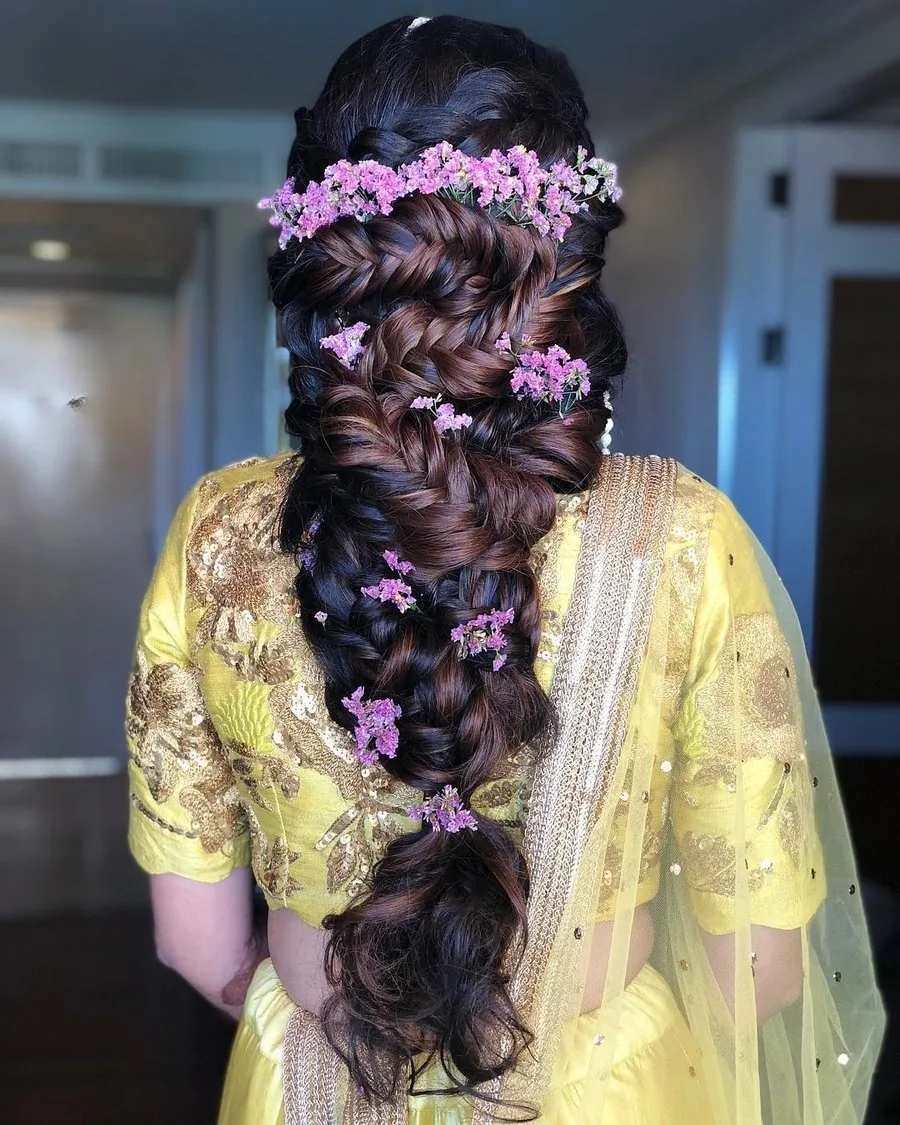
Double French braids are youthful, secure and completely Diwali-proof. Both braids sit close to the scalp, so nothing hangs loose near a diya, and fresh flowers or small gold beads woven along each braid add colour without adding weight. They suit younger guests, sisters and anyone who plans to dance, and they look just as good with a lehenga as with a kurta set.
Best for: dancing, outdoor fireworks and long evenings. How to style: part the hair down the middle, French-braid each side from the hairline to the nape, then continue as regular braids and tie them off. Tuck small flowers into the braid at intervals and pin them through the stems. What to ask for: braids that are firm at the hairline but soft at the ends, so they do not pull. Quick verdict: the most practical pretty style in this guide.
Braided Crown for the Main Puja
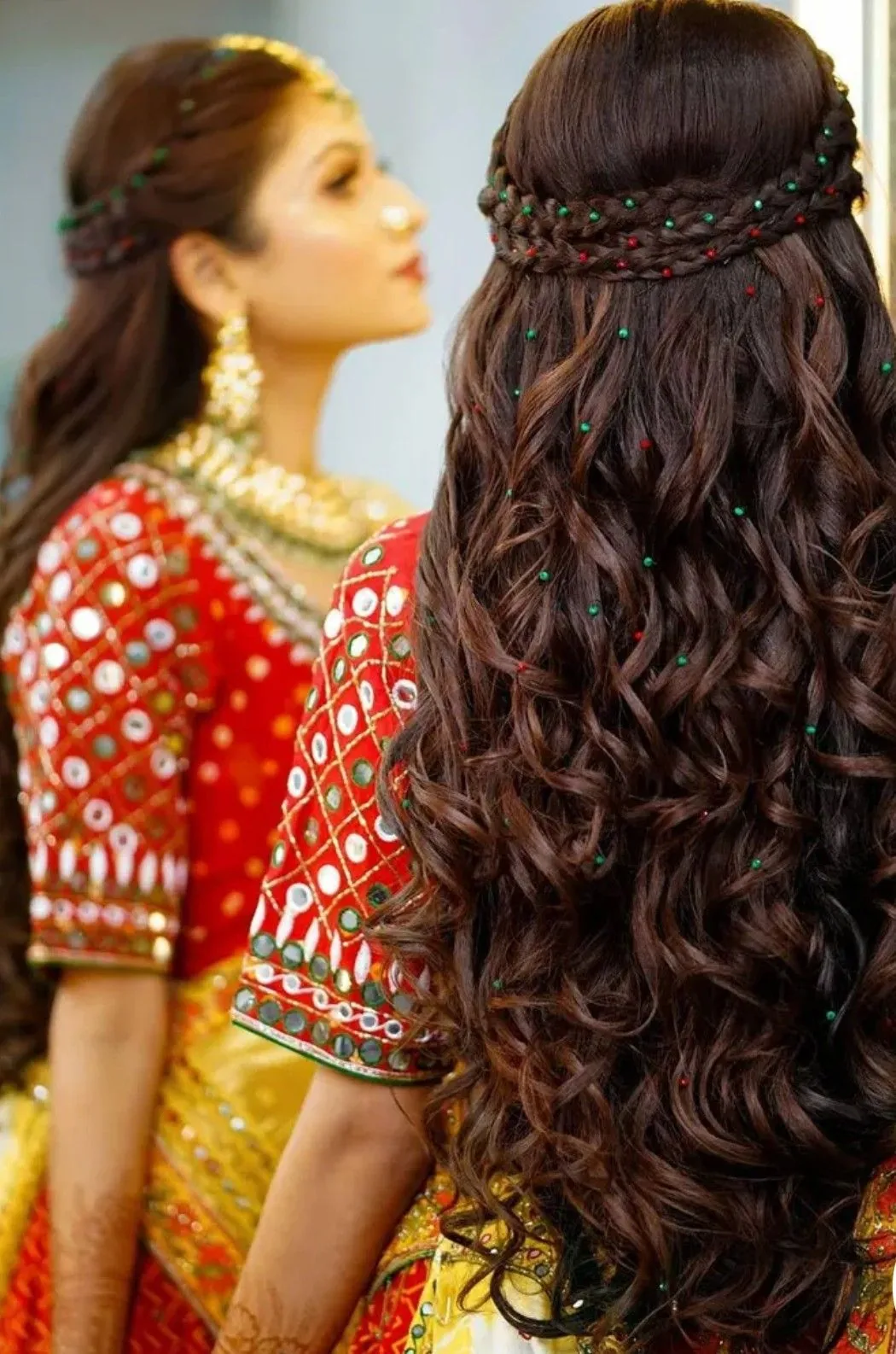
A braided crown wraps around the head like a halo, keeping every strand pinned up and away from the aarti thali while looking regal in photographs. It is the ideal puja style: secure, elegant and comfortable for sitting cross-legged through a long ceremony. Add a few fresh flowers or gold pins along the crown and it turns from practical to festive in seconds.
The pros: nothing hangs near a flame, it suits a dupatta draped over the head, and it stays neat for hours. The cons: it needs medium or long hair and a stylist’s hands for a truly smooth finish. Common mistake: braiding too loosely, so the crown slides forward during the puja — ask for it to be pinned at the temples and the nape. Maintenance: none, once it is pinned. If your hair is short, a half-crown across the front gives the same effect.
Loose Waves with a Red Lehenga
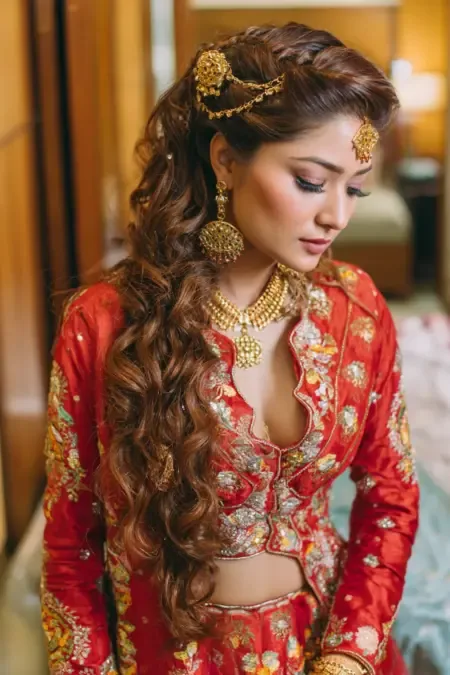
Loose waves and a red lehenga are a classic Diwali combination for a reason: the waves soften the richness of the outfit, the movement catches the light, and the whole look feels celebratory without trying too hard. This is a card-party and dinner style — wear it once the diyas are lit and the puja is done, when you can enjoy the glamour without worrying about flames.
How to style it: curl large sections away from the face with a wide-barrel wand, brush them out gently for soft waves, and finish with a light-hold spray. Common mistakes: curling sections too small, which looks fussy rather than relaxed, and skipping heat protectant, which leaves the ends dull by midnight. Cost and time: thirty minutes at home, or a blowout at the salon. Who should avoid it: anyone spending the evening lighting diyas — pin the waves up for that part.
Sleek Low Ponytail with a Silk Sari
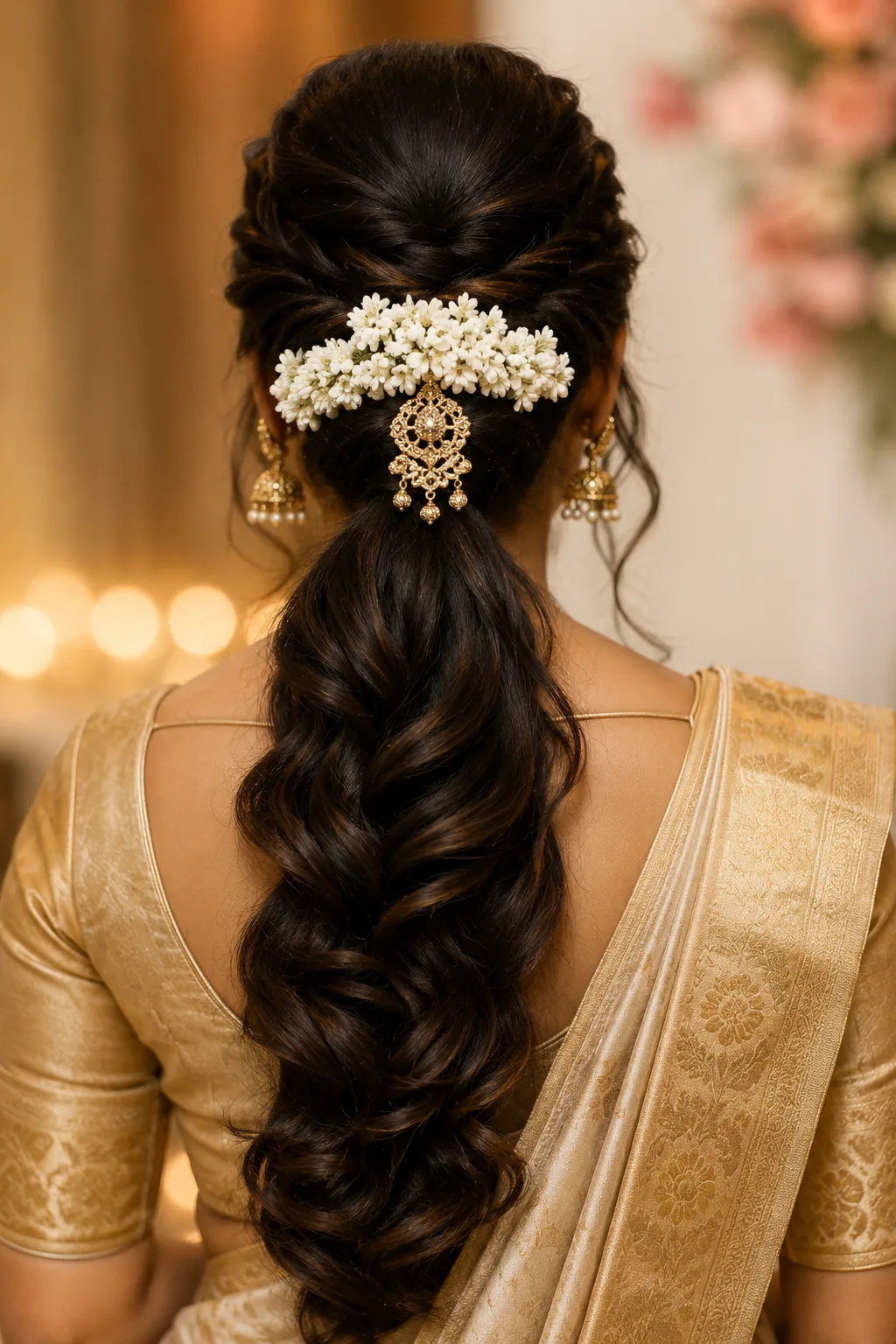
A sleek low ponytail is the most modern style in this guide, and it pairs perfectly with a silk sari. The smooth, glossy crown shows off the sari’s drape, the ponytail sits neatly under the pallu, and a wrap of hair around the base hides the elastic for a polished finish. Add gold jhumkas or a statement necklace and the look is complete — simple, sharp and very expensive-looking.
Best for: sari wearers, office Diwali parties and anyone who wants to look put-together with minimal effort. How to style: straighten the hair, smooth it back with serum, and secure the ponytail low at the nape. Wrap a thin strand around the base and pin it underneath. What to ask for: a ponytail that is smooth, not scraped back, with a little volume at the crown. Quick verdict: ten minutes, maximum impact, zero fuss near flames.
Side Braid with a Tasselled Dupatta
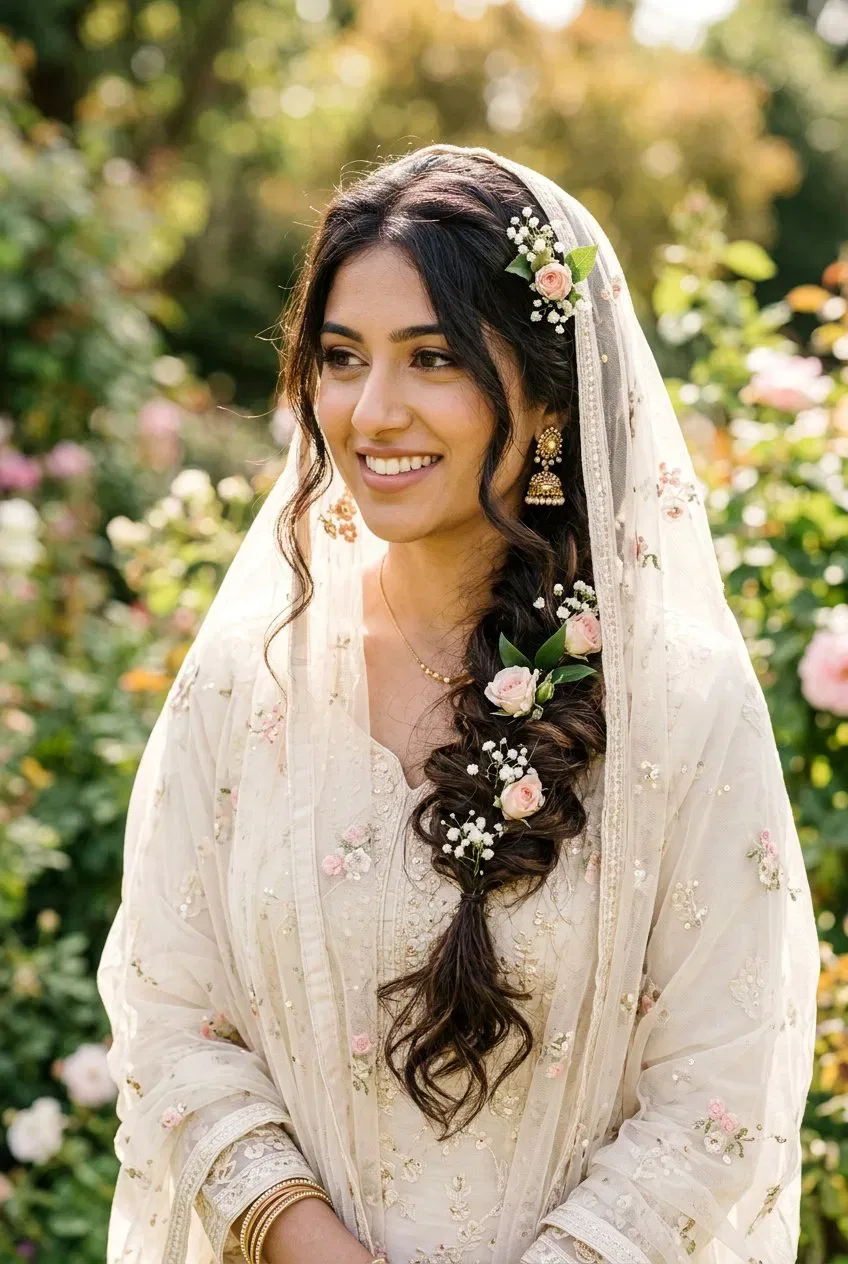
A side braid is the easiest way to wear a tasselled dupatta without tangles. The braid sits over one shoulder, the dupatta drapes over the other, and nothing fights for space at the back of your neck. It is comfortable, photogenic and practical, and it suits every age — from teenage guests to mothers and aunties who want a style that lasts the whole evening.
The pros: quick, secure and dupatta-friendly. The cons: a plain side braid can look too simple next to a heavily embroidered outfit, so dress it up with flowers, gold thread or a decorative pin at the tie. Maintenance: almost none — if a few strands escape, they only make it look softer. Cost and time: fifteen minutes at home. Who should avoid it: nobody, though very short hair will need a half-braid or a braided headband instead.
Bubble Braid with Gold Ribbons
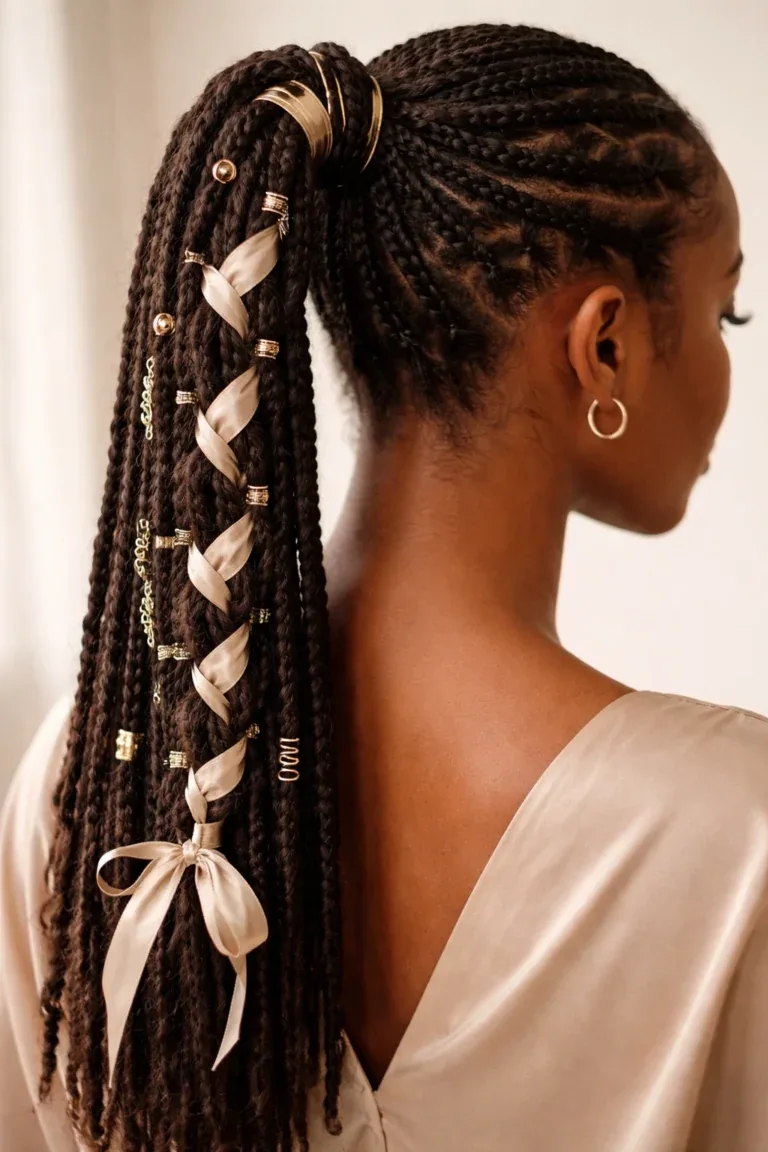
A bubble braid is playful, modern and surprisingly easy — and gold ribbons woven through it make it unmistakably Diwali. Each bubble is formed with a small elastic, gently pulled out for fullness, and the ribbons catch the light with every movement. It suits long hair best, and it is a wonderful choice for younger guests and anyone who wants a style that looks fun in photographs.
Best for: card parties, family gatherings and dancing. How to style: tie a low ponytail, add elastics every few inches, and puff each section between them. Thread a thin gold ribbon through the bubbles and tie it at the end. Common mistake: pulling the bubbles too hard, which makes them collapse — be gentle and use a light spray. Quick verdict: the most fun style in this guide, and one of the easiest to do at home.
Twisted Low Chignon with Pearl Pins
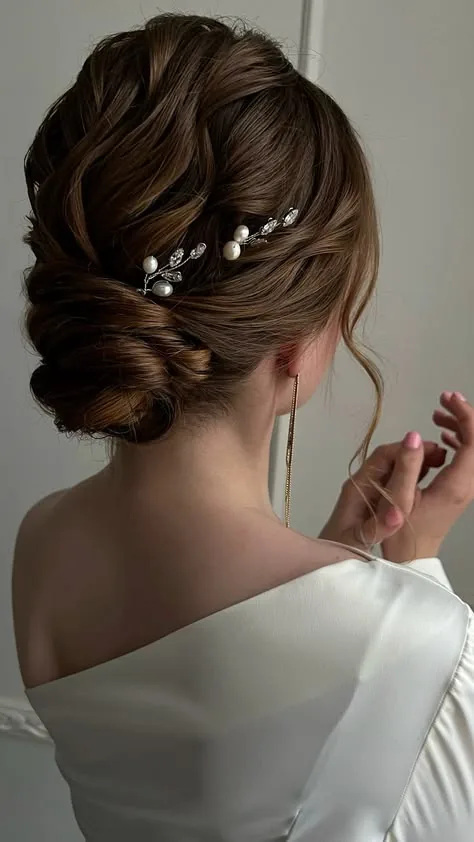
A twisted low chignon is quiet elegance: hair twisted and coiled at the nape, held with pearl pins that glow softly in diya light. It works with a sari, an anarkali or a lehenga, and it is one of the few styles that looks equally good with a dupatta over the head and without one. It is also wonderfully comfortable for a long evening of sitting, eating and greeting.
The pros: timeless, secure and flattering on every face shape. The cons: it needs a stylist’s touch for a truly smooth finish, and very thick hair may need extra pins. Maintenance: check the pins once after dinner and you are done. Cost and time: twenty minutes at the salon. Who should avoid it: anyone who wants big volume — this style is about polish, not height.
Voluminous Blowout for the Card Party

A voluminous blowout is the card-party classic: big, bouncy, glossy hair that moves when you do. It looks effortless in photographs and feels glamorous all evening, and it pairs with almost any outfit. Book it at the salon if you can — a professional blowout holds far longer than a home one, especially in humid evening air.
How to style it: blow-dry with a large round brush, lifting at the roots for volume, and finish with a cool shot and a light-hold spray. Common mistakes: too much product, which weighs the volume down, and touching the hair constantly, which flattens it. What to ask for: volume at the crown, soft ends, and a finish that can be refreshed with a quick shake. Quick verdict: glamorous, but save it for after the puja — loose hair and diyas do not mix.
Curly Half-Up with Flower Pins
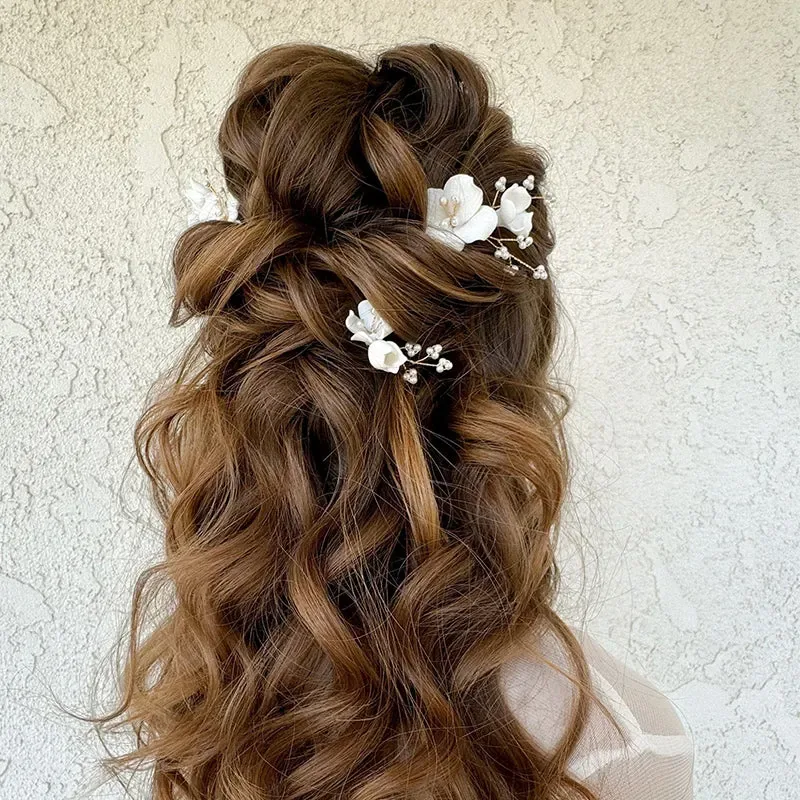
Curly hair is a gift on Diwali, and a half-up style shows it off while keeping the front safely pinned back. Gather the top half into a soft twist or small bun, secure it with flower pins, and let the curls fall free at the back. The flowers add festivity, the pinned top adds security, and the curls add all the drama.
Best for: naturally curly hair, of course — but wavy hair works too with a little curling. The pros: it uses your natural texture instead of fighting it, and it holds up well in humidity. The cons: curls can frizz in fireworks smoke, so use a little anti-frizz serum and avoid touching them. Maintenance: a quick scrunch with serum between rituals. Who should avoid it: nobody — just adjust the pinned section to your face shape.
Straight Hair, Centre Part and Gold Jewellery

Sometimes the simplest style is the most striking. Sleek, straight hair with a sharp centre part and a gold maang tikka is clean, modern and completely Diwali-appropriate. The centre part frames the jewellery perfectly, the straight lengths show off shine, and the whole look takes minutes. It suits silk saris and structured lehengas best.
How to style it: straighten in sections with heat protectant, create a precise centre part, and smooth flyaways with a drop of serum. Common mistake: a wobbly part line — use the tail of a comb and check it in the mirror from both sides. Cost and time: fifteen minutes at home. Quick verdict: minimal effort, maximum polish, and nothing loose near a flame.
Messy Low Bun Under a Dupatta
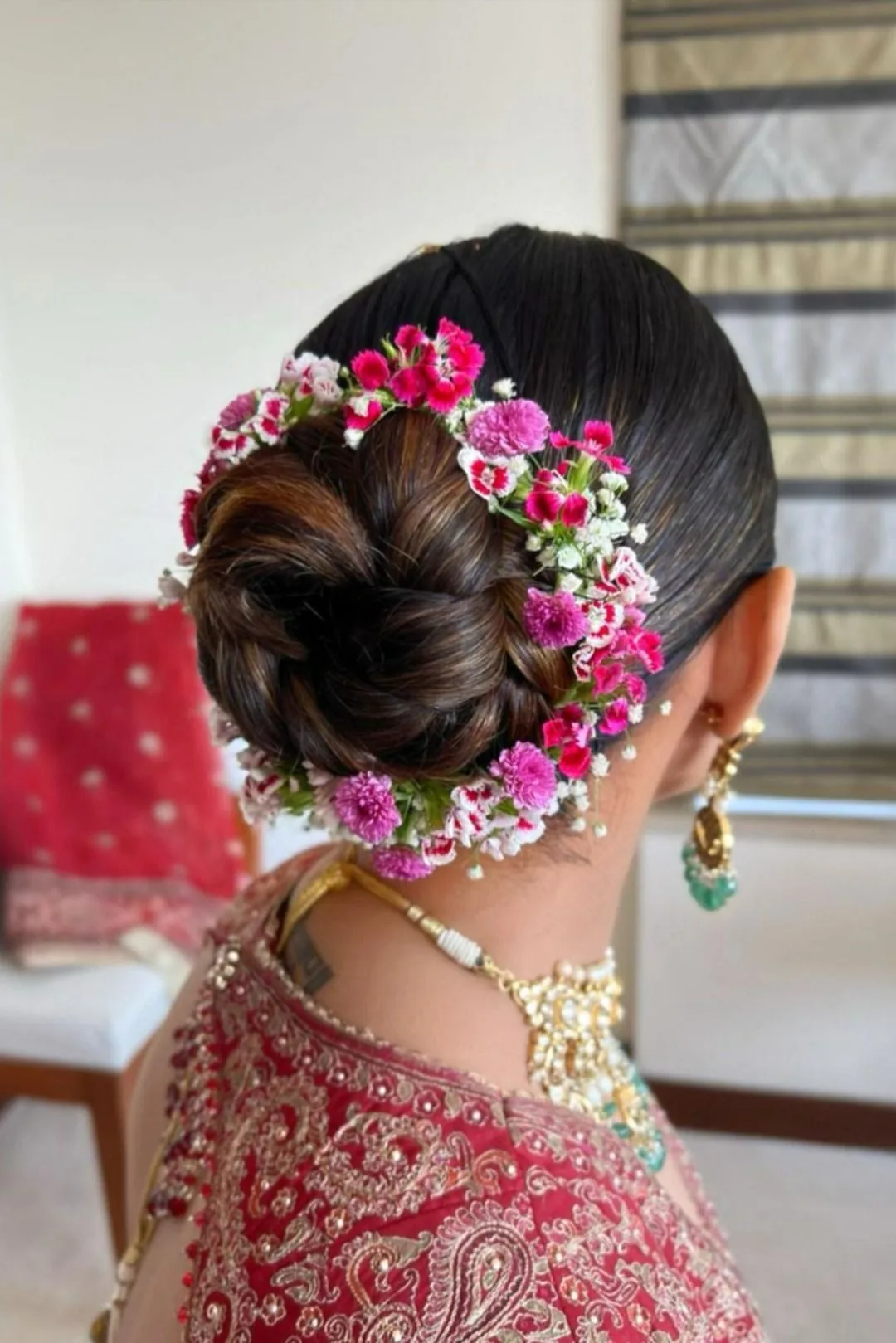
A messy low bun is the relaxed cousin of the polished chignon: soft, textured and deliberately undone, with a few face-framing strands left loose. It sits low enough for a dupatta to drape over it gracefully, and it looks better as the evening goes on — which is rare for a party hairstyle. It suits anarkalis and lehengas with lighter embroidery.
The pros: comfortable, forgiving and easy to fix — a loose strand just adds to the look. The cons: it can slide if it is not pinned well, so use U-pins from four sides and a light spray. Maintenance: one check after dinner. Who should avoid it: anyone in a very formal silk sari, where a sleeker bun matches the outfit better. What to ask for: a bun that is messy by design, not by accident — the difference is in the pinning.
Braid Woven with Fresh Jasmine
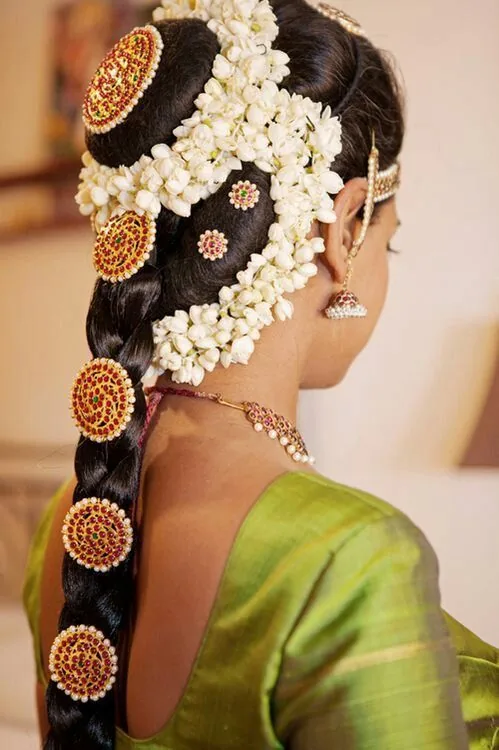
Best for: the main puja and the family photograph that will be framed. A braid woven with fresh jasmine is fragrant, traditional and beautiful — the white flowers stand out against dark hair and glow in warm light. It is the most classic Diwali braid after the gajra braid, and it suits long hair of any texture.
How to style it: braid loosely, then weave small jasmine sprigs through the braid as you go, pinning each one through its stem. Alternatively, braid first and tuck the flowers in afterwards, pinning through the stems. What to ask your stylist for: flowers pinned, not tucked, with the braid firm at the top and soft at the end. Quick verdict: traditional, fragrant and completely flame-safe.
Pinned-Back Curls with a Jhoomar
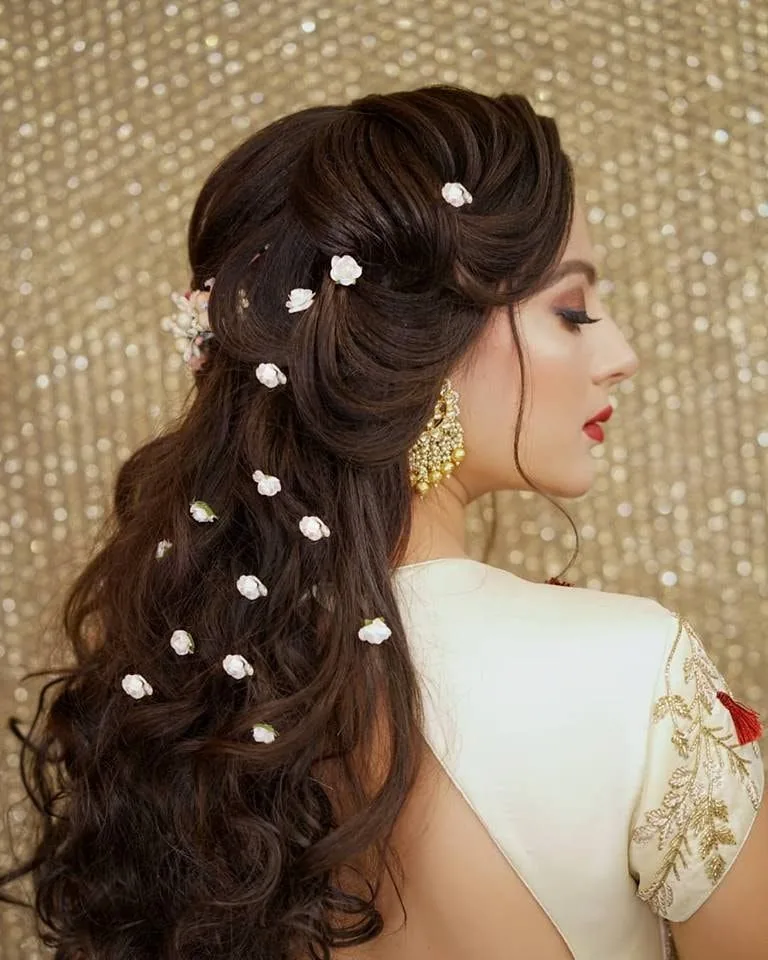
Pinned-back curls give you the romance of curls with the security of an updo. The front sections are swept back and pinned, the curls fall softly at the back, and a jhoomar sits proudly at the parting. It is a wonderful choice for the host or for anyone wearing a statement necklace, because the pinned-back front shows off the jewellery.
The pros: glamorous yet practical, and the pinned front keeps hair away from flames. The cons: the curls need a strong-hold spray to survive a long evening, and very fine hair may need a little backcombing for grip. Maintenance: re-pin one front section after dinner if needed. Cost and time: about thirty minutes at the salon. Who should avoid it: anyone with very short hair — the pinned-back effect needs some length to work.
High Ponytail with a Wrapped Braid
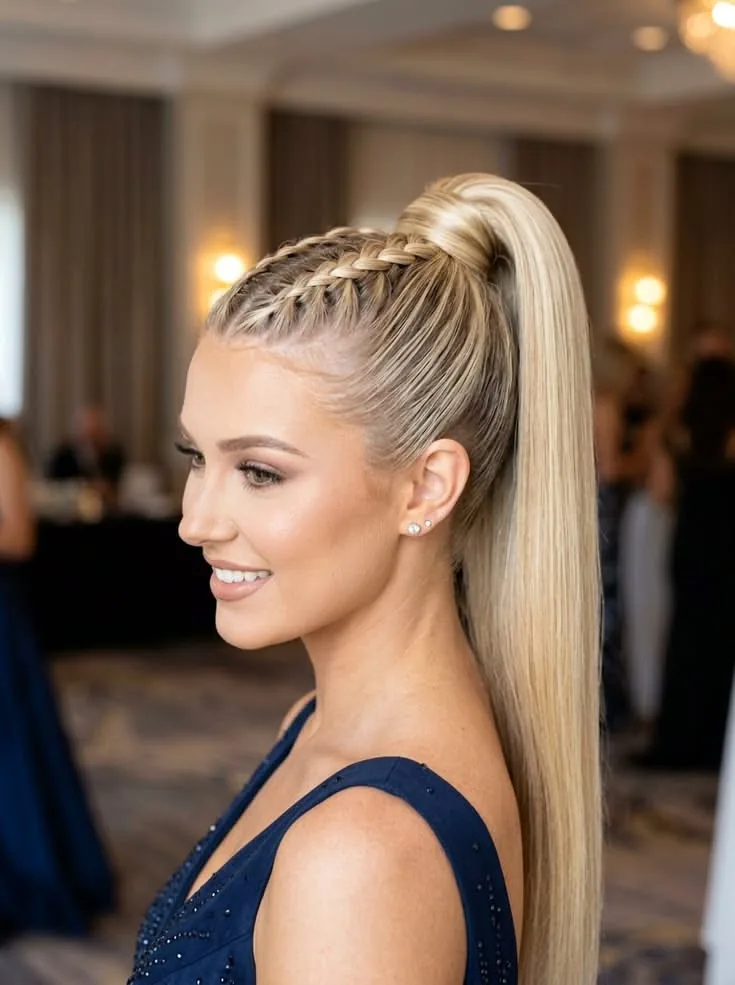
A high ponytail with a wrapped braid is the most energetic style in this guide — perfect for dancing, for the card party and for anyone who wants their hair completely out of the way. The ponytail is sleek and high, the base is wrapped with a thin braid instead of an elastic, and the whole look feels modern and confident.
How to style it: gather the hair high, smooth it with a brush, secure it firmly, then take a thin strand, braid it and wrap it around the base, pinning underneath. Common mistakes: placing the ponytail too low, which loses the lift, and wrapping the braid too loosely, so it slips. What to ask for: a ponytail that sits at the crown, with the wrap pinned securely. Quick verdict: bold, practical and dance-floor ready.
Romantic Updo with Loose Tendrils
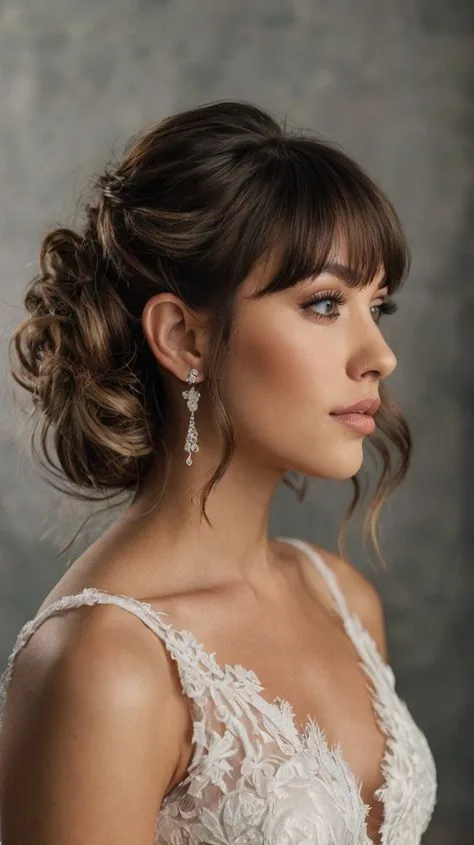
A romantic updo with loose tendrils is soft, dreamy and made for evening photographs. The bulk of the hair is swept up and pinned, while two or three curled tendrils frame the face. It suits lehengas and anarkalis, and it flatters round and square faces by softening the jawline. It is a salon favourite for a reason.
Best for: dinner parties and photographs. The pros: elegant and face-framing. The cons: the tendrils are the one loose part of the style, so pin them back before lighting diyas and release them afterwards. Maintenance: re-curl one tendril with a wand if it drops. Cost and time: thirty to forty minutes at the salon. Who should avoid it: anyone spending the whole evening near open flames — choose a fully pinned style instead.
Side-Part Sleek Bun with Pearls
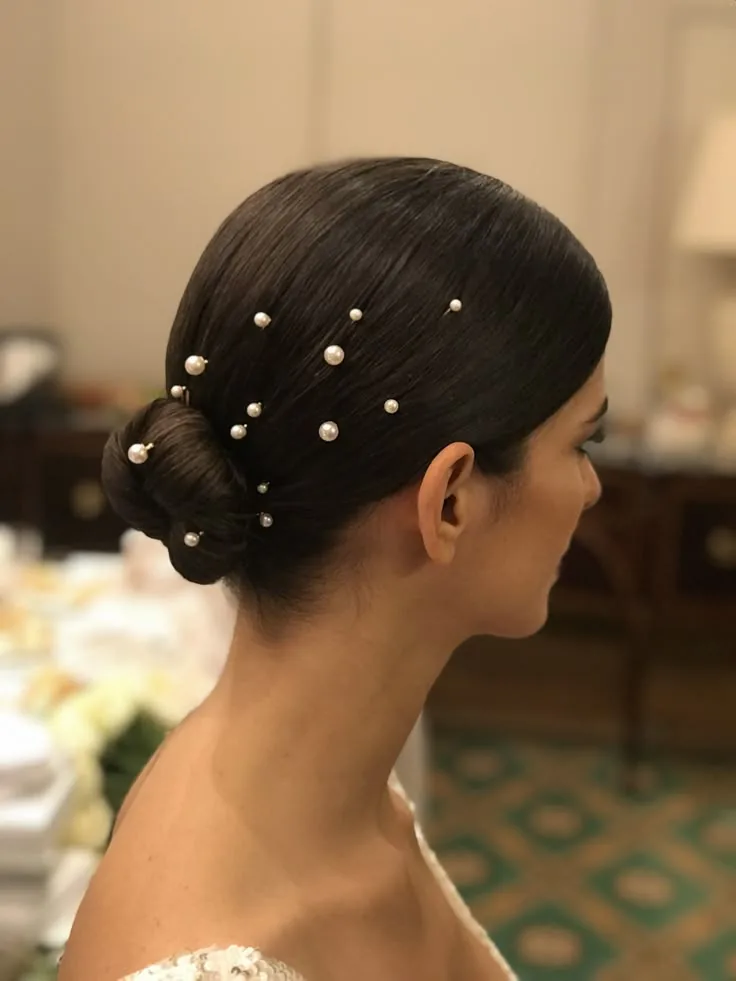
A side part changes the whole mood of a bun: it feels softer and more modern than a centre part, and it gives pearl pins a natural place to sit along the parting. The bun itself is sleek and low, the pearls add a gentle glow, and the style works beautifully with a sari or a pastel lehenga. It is understated, but nobody will call it boring.
How to style it: create a deep side part, smooth the hair back with serum, and coil it into a low bun. Place three or four pearl pins along the parting and one at the bun. Common mistake: too many pearls, which turns elegant into busy — four is plenty. Quick verdict: the quietest show-stopper in this guide.
Boho Braid with Colourful Threads
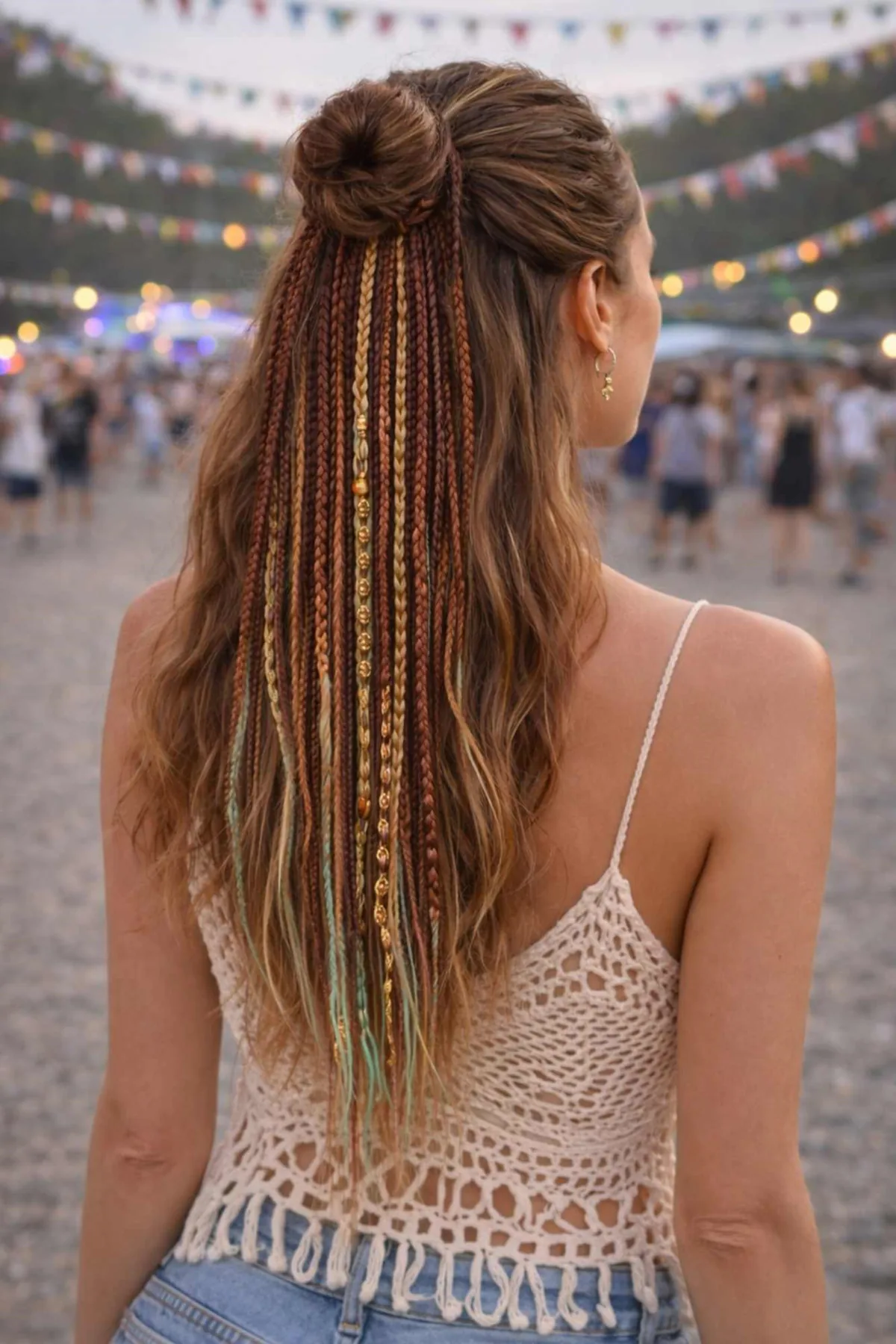
A boho braid with colourful threads is the free-spirited choice for a Diwali party — a loose, textured braid with strands of pink, gold and orange thread woven through it, echoing the colours of the rangoli. It suits younger guests, outdoor parties and anyone whose outfit is already colourful. It also photographs wonderfully against fairy lights.
The pros: fun, colourful and easy to do at home. The cons: it is a casual style, so it can look underdressed next to a heavily embroidered lehenga — pair it with a simpler outfit. Maintenance: none, once braided. Cost and time: twenty minutes at home, plus a few rupees of thread. Who should avoid it: anyone attending a very formal family puja — save it for the card party.
Textured Lob for the Party Guest
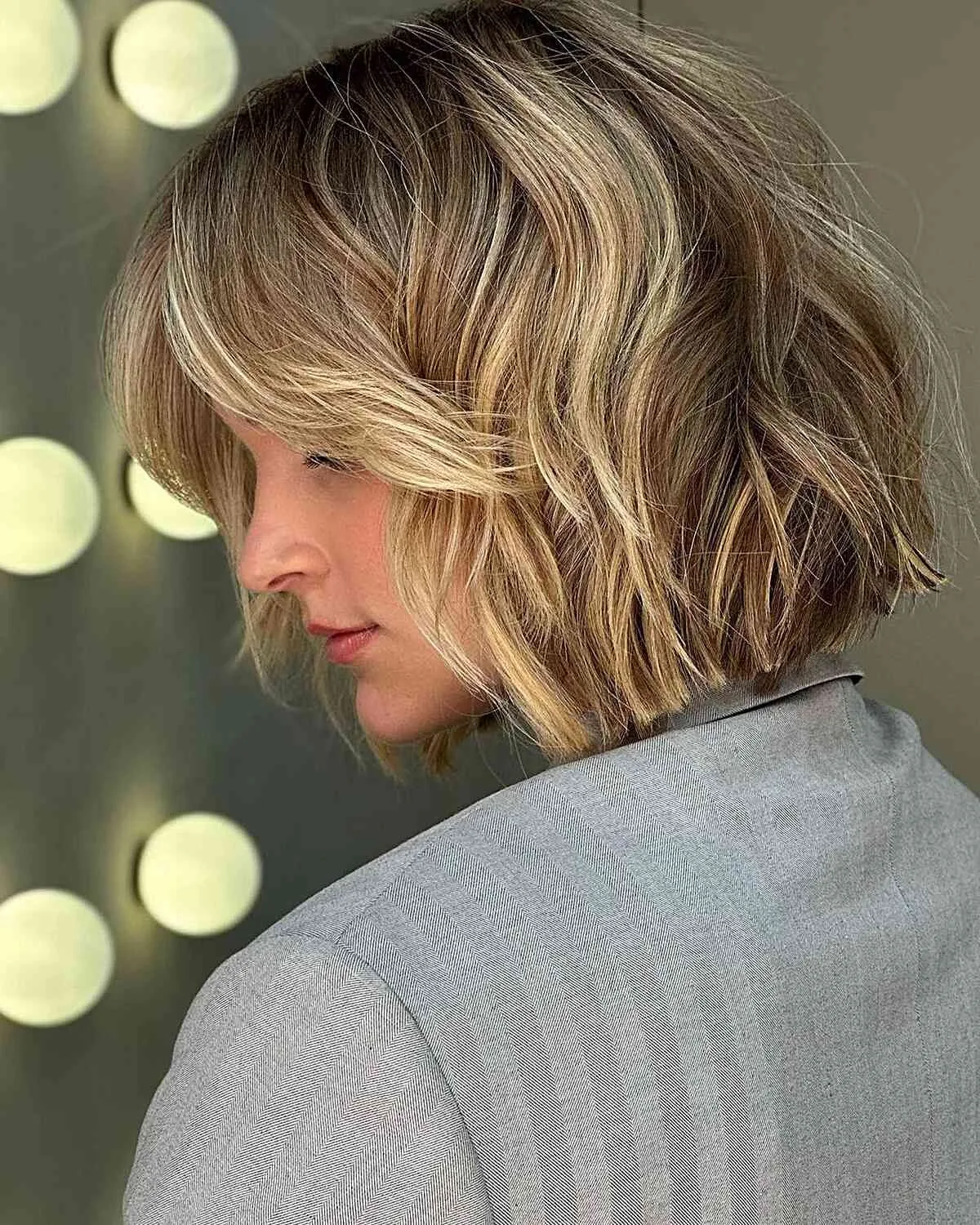
A textured lob is the best short-to-medium style for a Diwali party: it has movement, it frames the face, and it needs no pins at all. Add a little texture spray, a deep side part and one gold clip, and it looks deliberately festive rather than everyday. It is also the most comfortable style in this guide — nothing to pin, nothing to slip, nothing near a flame.
Best for: guests, office parties and anyone with shoulder-length hair. How to style: blow-dry with a round brush, add loose waves with a wand, and finish with texture spray. Common mistake: over-straightening a lob, which makes it look flat and severe — the texture is the point. Quick verdict: short hair, big impact, zero maintenance.
Long Layers with Soft Curls
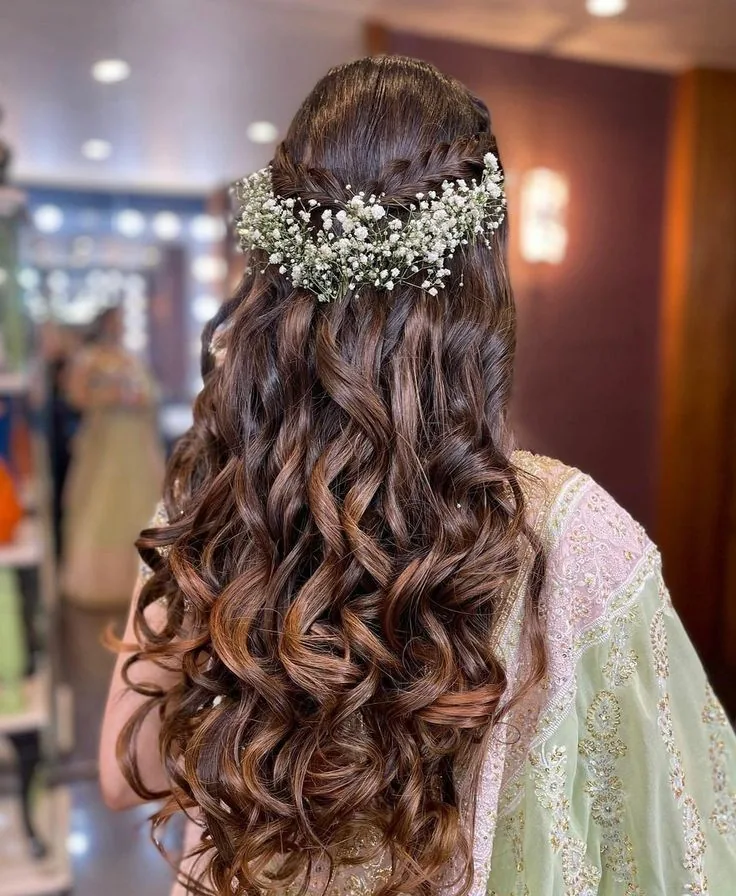
Long layers with soft curls are the most versatile party style there is: the layers give movement, the curls give shine, and the length shows off both. It suits almost every outfit and every face shape, and it looks wonderful in the warm, golden light of a Diwali evening. The only rule is to keep the front pinned back during the puja.
The pros: flattering, flexible and easy to refresh with a quick brush-through. The cons: curls drop in humidity, so use a strong-hold spray and avoid touching the hair. Maintenance: one re-curl of the front sections between rituals. Cost and time: thirty minutes at home with a wand, or a salon blowout. Who should avoid it: anyone who wants their hair fully secured — this is a loose style, and it behaves like one.
Braided Bun with Marigolds

A braided bun with marigolds combines two Diwali favourites into one style: the security of a bun and the colour of fresh flowers. The hair is braided first, then coiled into a bun, and marigolds are tucked around its base. The result is festive, fragrant and completely practical — the bun stays put, the flowers stay visible, and nothing hangs loose.
How to style it: braid the hair into a single plait, coil it into a bun and pin it from four sides. Tuck small marigolds around the base and pin them through their stems. What to ask for: a bun that is firm but not tight, with the flowers at the base rather than the top so they do not slide off. Quick verdict: the most festive bun in this guide, and one of the most secure.
Low Twisted Bun with a Green Anarkali
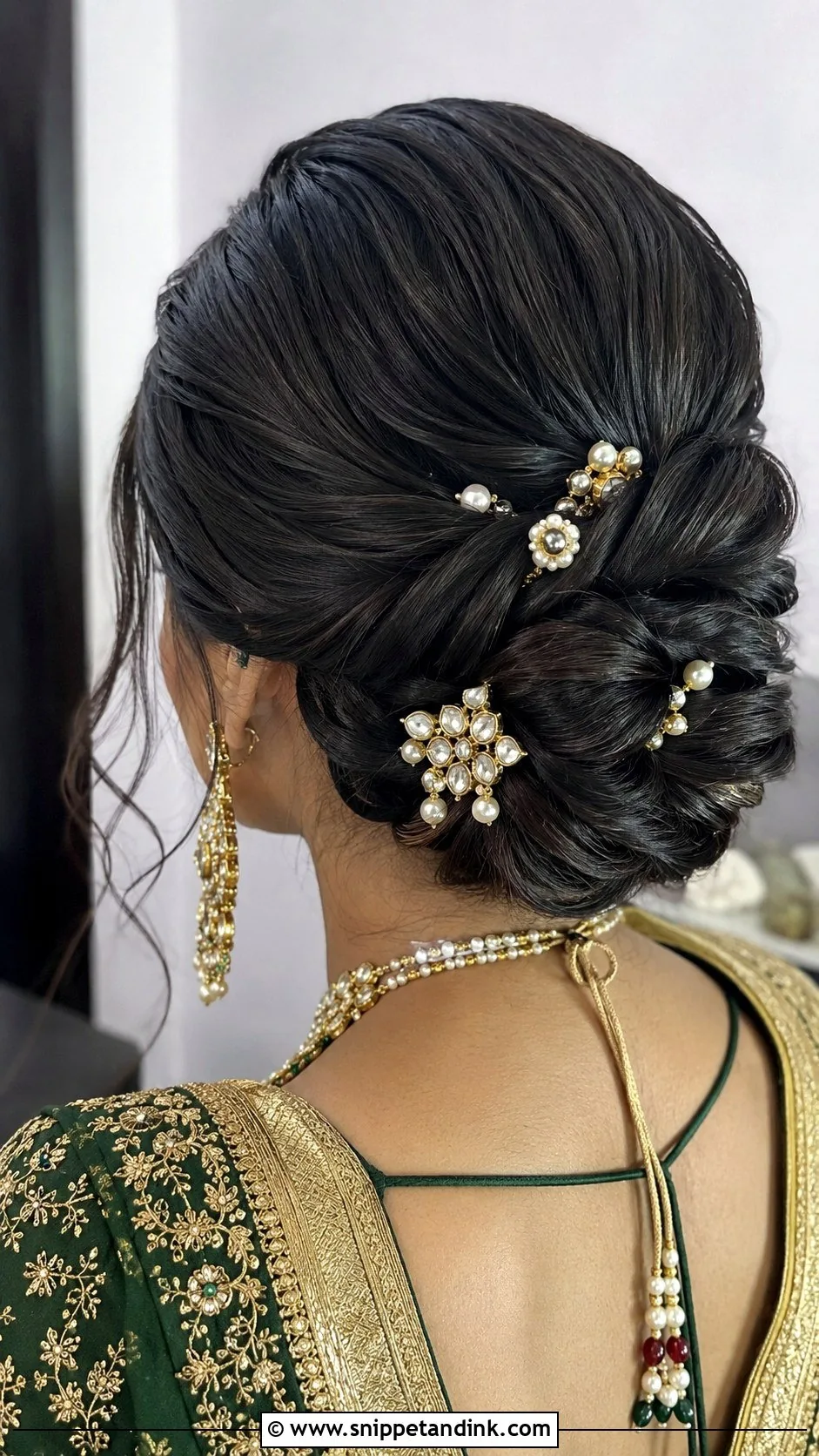
A low twisted bun is the perfect partner for a green anarkali: the twist adds texture, the low placement suits the outfit’s flowing lines, and a few gold pins pick up the embroidery. It is elegant without being formal, and it stays comfortable through a long evening of sitting and greeting. It also photographs beautifully from the side, where the twist is visible.
Best for: anarkali and sharara wearers. The pros: secure, elegant and dupatta-friendly. The cons: the twist needs a little practice at home, so try it once before the day. Maintenance: check the pins after dinner. Common mistake: twisting too tightly, which looks stiff — keep it soft and let a few strands escape at the nape.
Soft Waves with a Side Sweep

Soft waves with a side sweep are understated glamour: the waves are brushed out until they are soft rather than curly, and the whole mass is swept to one side so it frames the face and shows off an earring. It is a lovely choice for a dinner party or a card night, and it suits medium and long hair equally well.
How to style it: curl large sections, brush them out with a paddle brush, and sweep everything to one side, pinning discreetly at the nape. Common mistakes: curling too tightly, which looks formal rather than soft, and forgetting the spray, which lets the waves fall flat by midnight. Cost and time: twenty-five minutes at home. Quick verdict: soft, romantic and easy — save it for after the puja.
Double Braid into a Low Bun
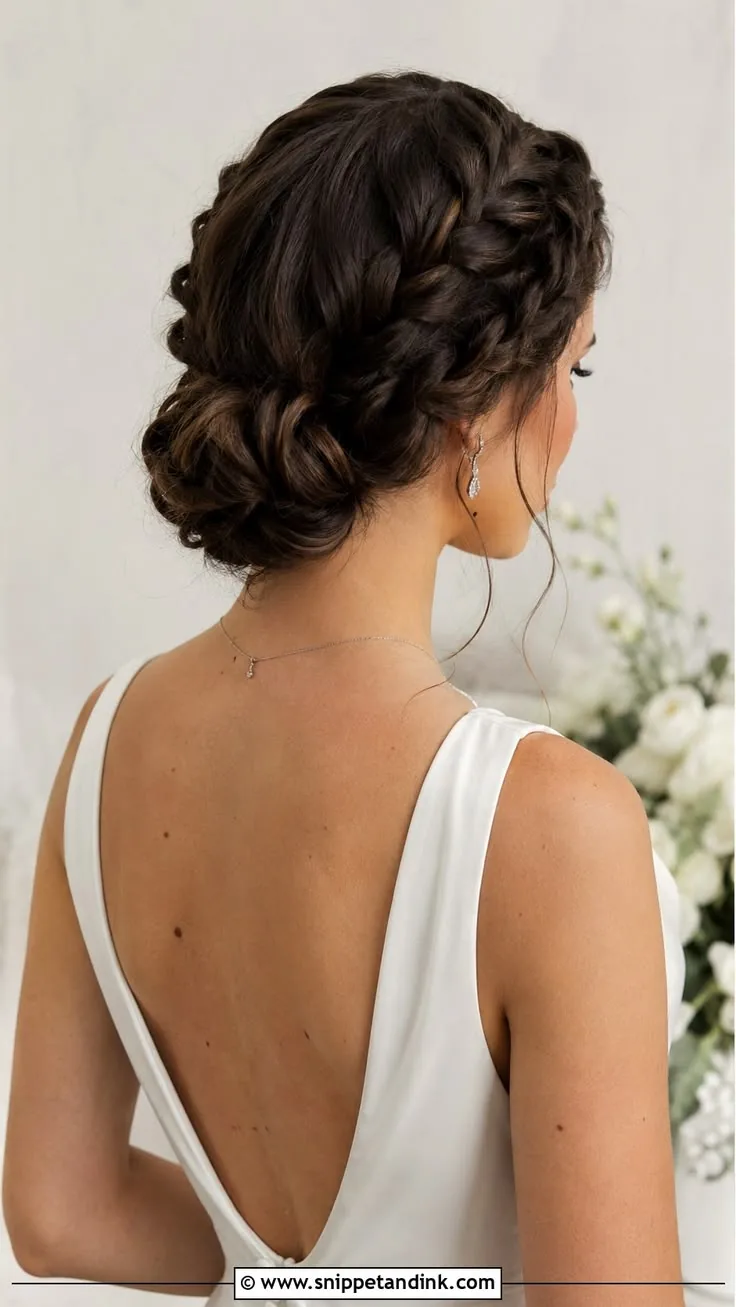
Two braids that meet in a low bun give you the best of both styles: the braids keep the front secure and add texture at the crown, while the bun keeps the length safely pinned up. It is one of the most secure styles in this guide, which makes it ideal for a long evening that includes puja, dinner, dancing and fireworks.
The pros: extremely secure, photogenic from every angle, and dupatta-friendly. The cons: it takes a little longer than a single braid, and it needs a second pair of hands for the back. Maintenance: none — once pinned, it stays. Who should avoid it: anyone with very short hair, though a half version with two front braids into a small bun works well. What to ask for: braids that are even on both sides, meeting neatly at the bun.
Sleek Centre-Part Braid with Gold
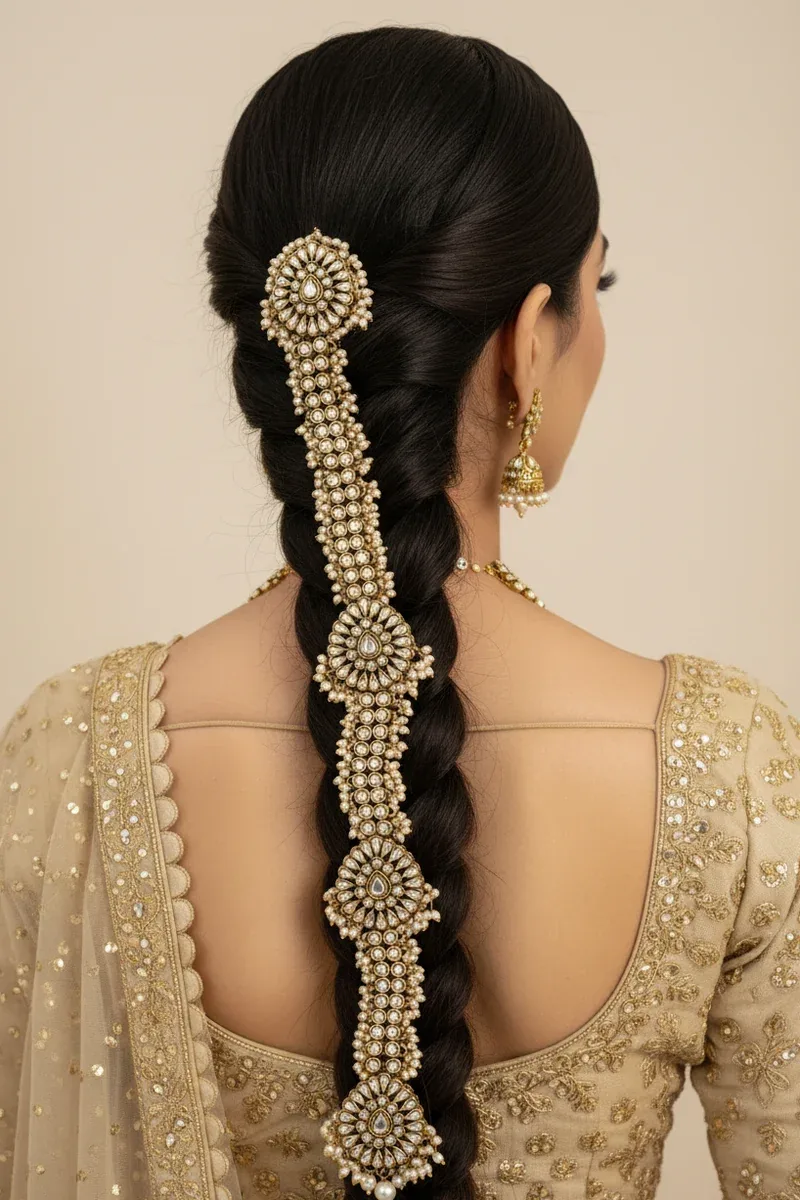
A sleek centre-part braid with gold thread or gold pins is minimal, modern and very Diwali. The centre part is sharp, the braid is smooth and tight, and the gold catches the light with every movement. It suits structured lehengas and silk saris, and it flatters oval and heart-shaped faces particularly well.
Best for: hosts and anyone who wants a polished, graphic look. How to style: create a precise centre part, smooth the hair with serum, and braid tightly down the back. Weave a thin gold thread through the braid or pin small gold beads along it. Common mistake: a wobbly part — use a comb tail and check both sides. Quick verdict: ten minutes of styling, all-evening polish.
Fishtail Side Braid for the Host
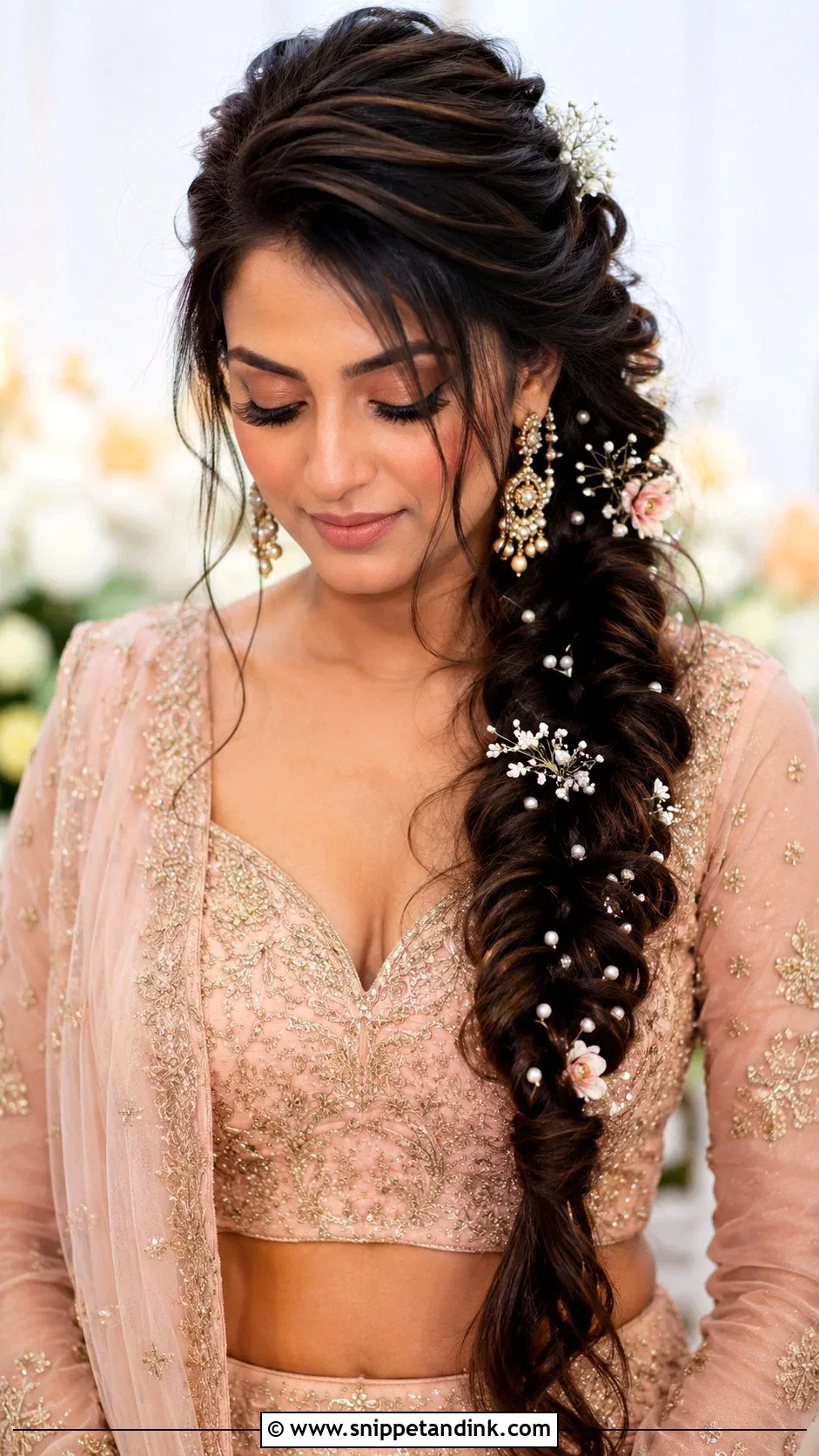
As the host, you need a style that looks impressive in every photograph and never needs attention while you are greeting guests, serving food and lighting diyas. A fishtail side braid does exactly that: it drapes over one shoulder where everyone can see it, it stays neat for hours, and it keeps your hair completely away from flames and food.
The pros: secure, photogenic and practical. The cons: it needs length, and it is easier with a stylist’s help for the back sections. Maintenance: a light spray at the crown and nothing else. Cost and time: twenty-five minutes. Who should avoid it: anyone with very fine hair — a classic braid holds better on fine hair than a fishtail does. Dress it up with marigolds or gold pins at the tie.
Curly Updo with a Jhoomar
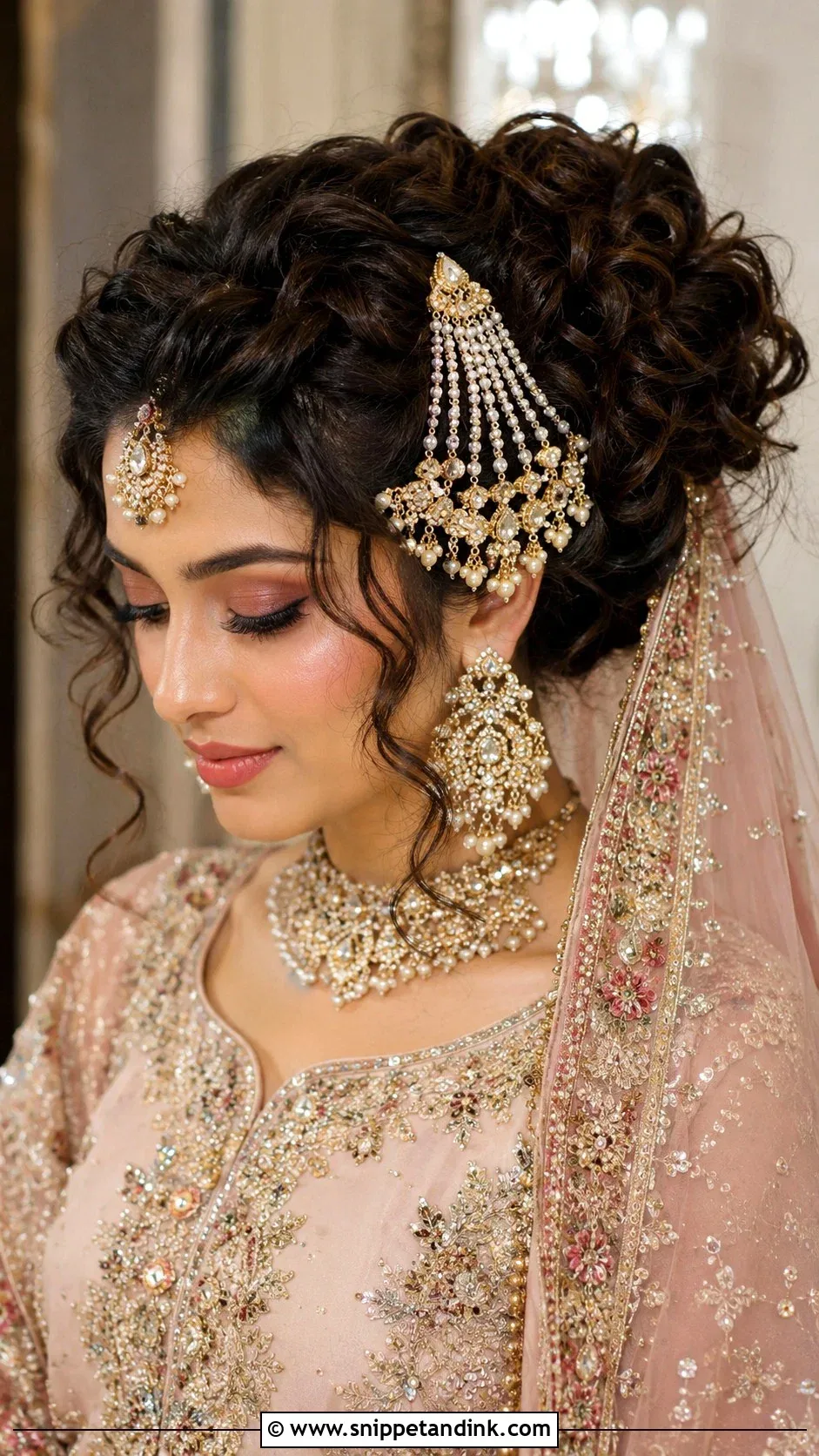
A curly updo with a jhoomar is drama done right: the curls are swept up and pinned into a full, textured updo, and the jhoomar sits at the front like the centrepiece it is. It suits naturally curly hair best, and it is a wonderful choice for the host or for anyone whose jewellery deserves to be the star of the look.
How to style it: gather the curls loosely, pin them up in sections so the texture stays visible, and secure the jhoomar to a firm section near the parting. Common mistakes: over-smoothing curly hair, which kills the texture, and pinning the jhoomar to loose curls, so it slides. What to ask for: an updo that keeps the curl pattern visible. Quick verdict: the most glamorous curly style in this guide.
Wavy Half-Up Twist
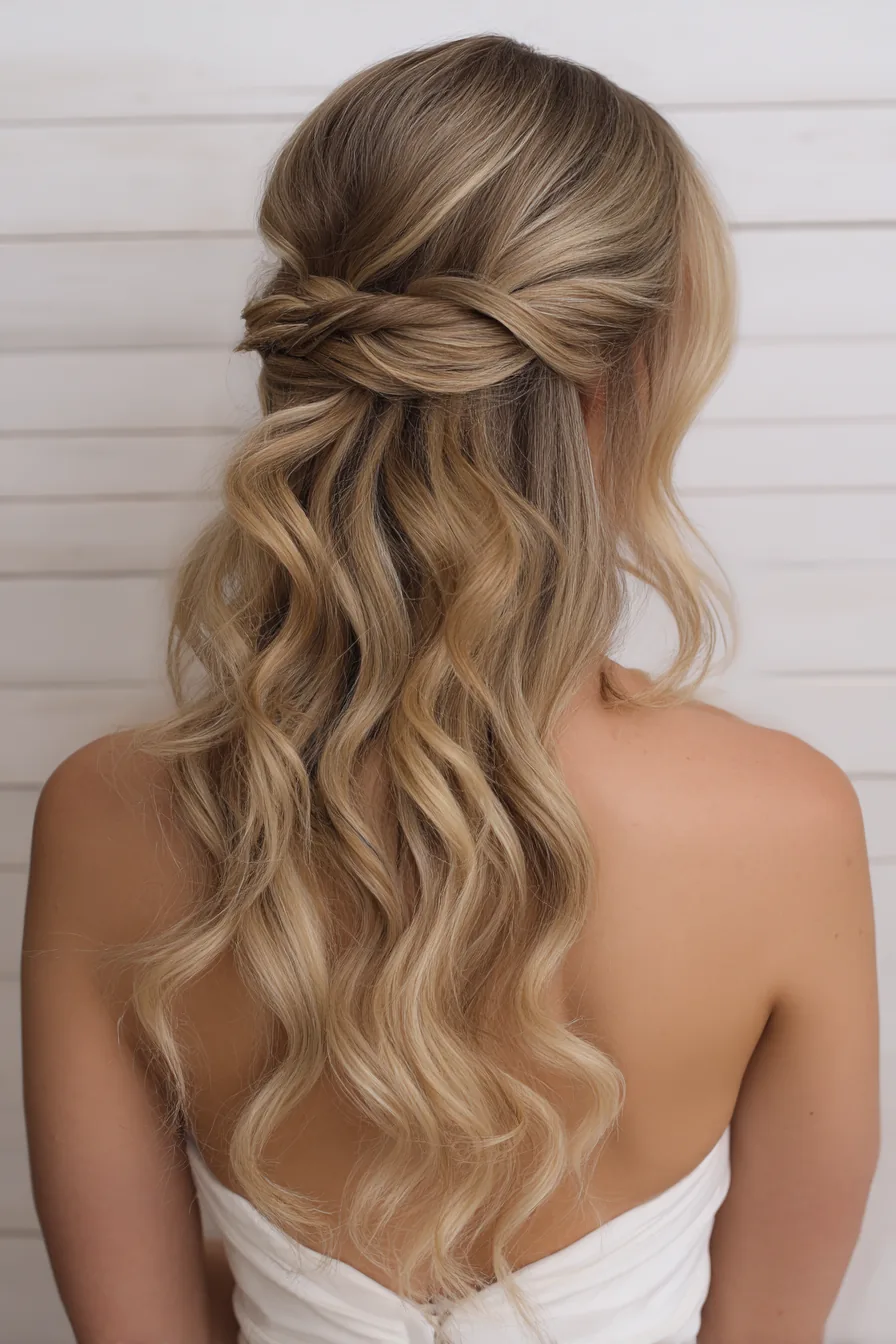
A wavy half-up twist is the easiest dressed-up style in this guide: two front sections twisted back and pinned at the crown, with soft waves falling free behind. It takes ten minutes, it keeps the front away from your face and the flames, and it looks polished enough for any Diwali party. It is the style to choose when you are short on time but still want to look festive.
Best for: last-minute parties and guests. The pros: fast, secure at the front and flattering on every face shape. The cons: the waves can drop in humidity, so use a light spray. Maintenance: re-twist one side if it loosens. Cost and time: ten minutes at home. Who should avoid it: nobody — if your hair is short, twist smaller sections and add a gold clip.
Classic Chignon with Fresh Flowers
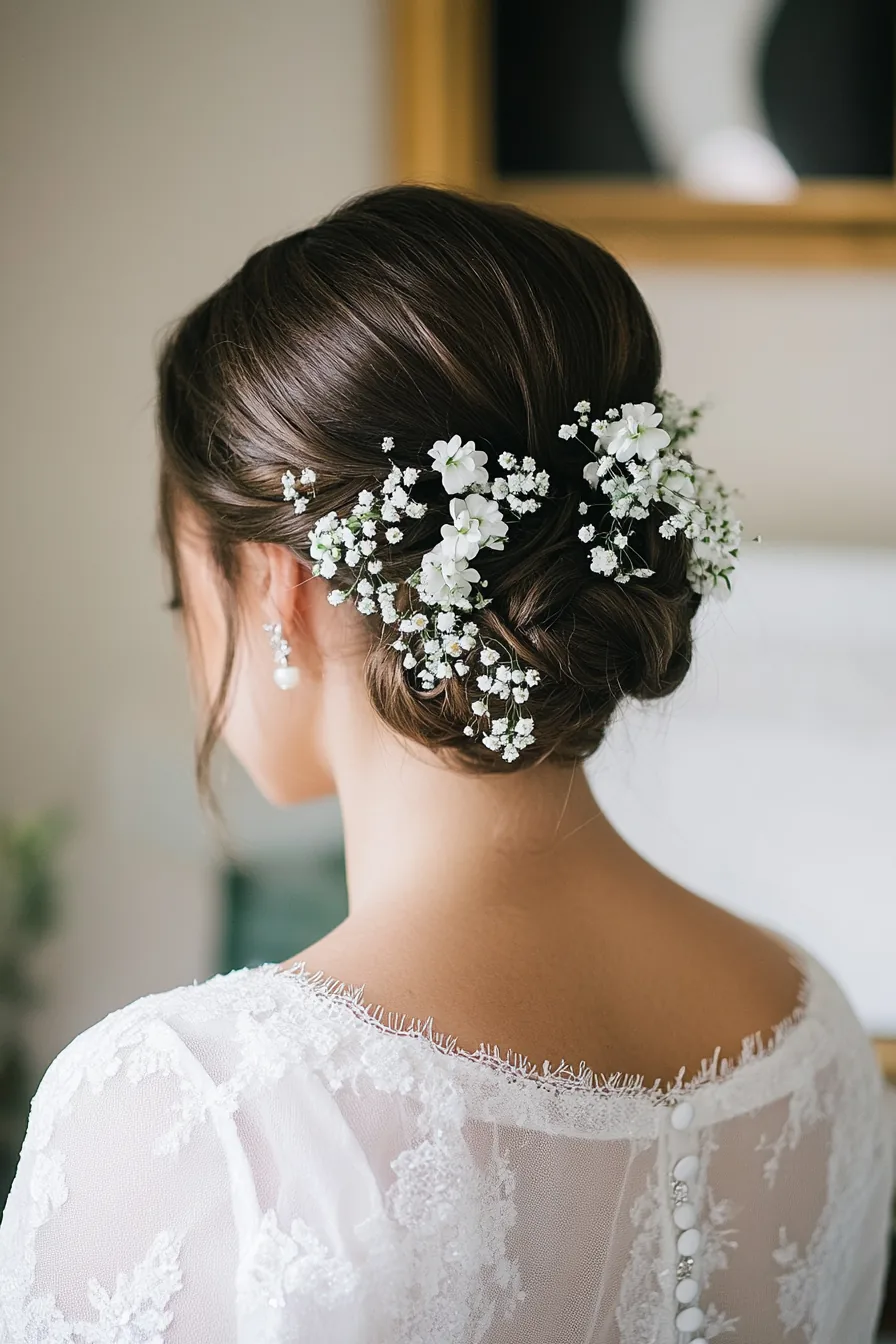
The classic chignon is the most timeless updo there is, and fresh flowers make it unmistakably Diwali. The hair is swept back smoothly, coiled low at the nape, and finished with white jasmine or small marigolds tucked around the coil. It suits silk saris, lehengas and anarkalis, and it flatters every age — from young guests to grandmothers.
The pros: elegant, secure and endlessly photogenic. The cons: it needs a stylist for a truly smooth finish, and very thick hair may need extra pins. Maintenance: one check after dinner. Common mistake: placing the chignon too high, which fights the dupatta — keep it low at the nape. What to ask for: a smooth crown, a firm coil and flowers pinned through their stems.
Short Bob with Gold Clips
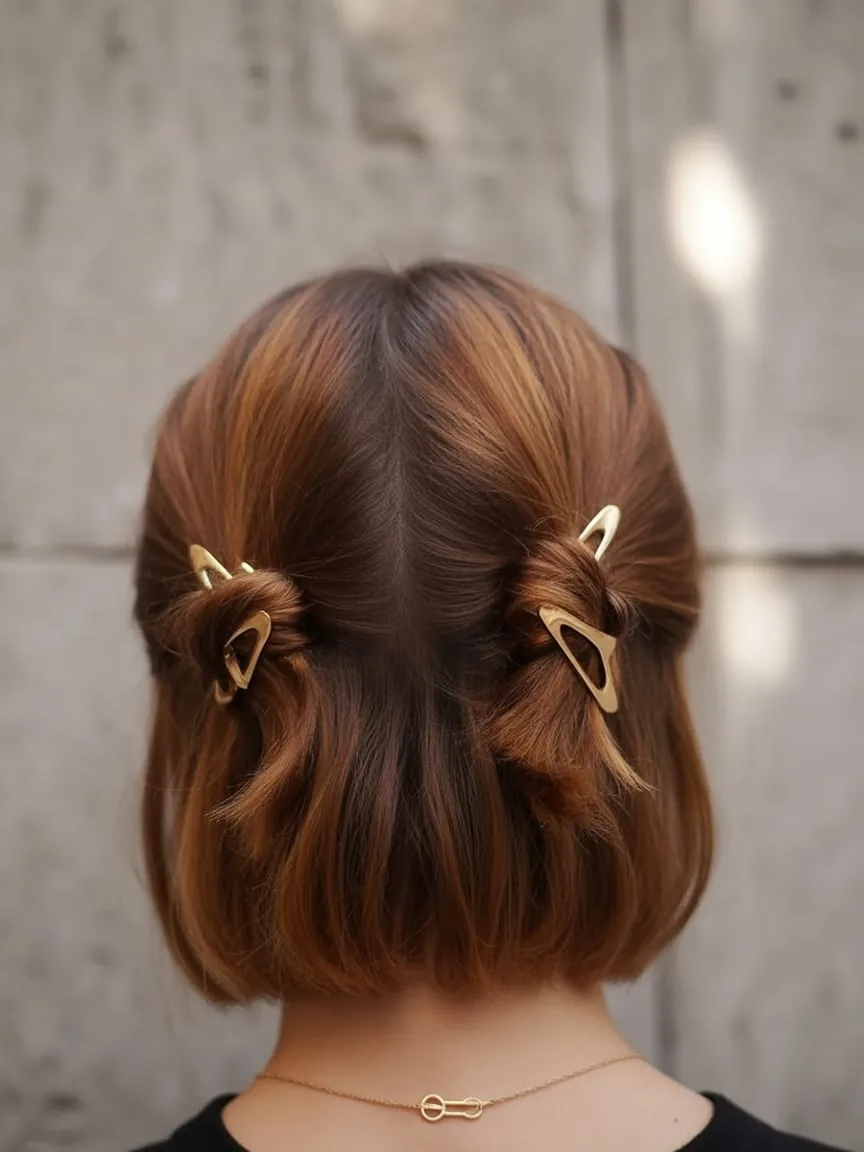
A short bob with gold clips proves that short hair can be the most festive hair at the party. The bob is sleek or softly waved, a deep side part adds drama, and two or three gold clips on one side catch the light and the eye. It is modern, confident and completely practical — nothing near a flame, nothing to pin, nothing to slip.
Best for: bob wearers, office parties and anyone who wants a low-maintenance look. How to style: blow-dry smooth or add soft waves, create a deep side part, and place the clips in a neat row above one ear. Common mistake: too many clips, which looks cluttered — three is the magic number. Quick verdict: short hair, maximum sparkle, zero fuss.
What is the best hairstyle for a Diwali party?
The best hairstyle for a Diwali party is a low bun with gajra or a classic gajra braid, because both stay secure for hours, keep hair away from diyas and flames, and suit lehengas, saris and anarkalis. If you prefer loose hair, save soft waves or curls for the card party after the puja, when the flames are out.
How do I keep my hair safe near diyas and candles?
Keep the front of your hair pinned back and the length in a braid or bun while you light diyas or stand near the aarti thali. Use hairspray to control flyaways, keep your dupatta’s loose end tucked away, and never lean over a lit diya. Pin loose curls up for the puja and let them down afterwards.
Which hairstyle suits a lehenga for Diwali?
A gajra braid, a low bun with jasmine, a braided crown or a half-up style with gold pins all suit a lehenga beautifully. Heavily embroidered lehengas pair best with sleeker hair, while plainer lehengas leave room for a fuller braid or a voluminous blowout.
Can I wear my hair open for a Diwali party?
Yes, you can wear your hair open for the card party or dinner, once the diyas are lit and the puja is finished. Loose waves, a blowout or side-swept curls all look wonderful then. For the puja itself, pin the front back or choose a braid or bun, and use anti-humidity spray so the style survives the evening.
How do I stop fireworks smoke ruining my hair?
Use an anti-humidity spray before styling, wear a silk scarf over your hair while watching fireworks outdoors, and smooth a drop of serum over the top layer when you come back inside. Avoid touching your hair while it smells of smoke, and wash it the next morning with a clarifying shampoo.
What hairstyle goes with a sari for Diwali?
A sleek low ponytail, a low bun with jasmine, a twisted chignon or a side braid all pair beautifully with a silk sari. The low placement suits the pallu drape, and gold pins or a maang tikka complete the look without competing with the sari’s border.
How can I make my Diwali hairstyle last all evening?
Start with a secure base — a braid, bun or pinned half-up style — use U-pins rather than bobby pins for heavy styles, and set everything with hairspray in light layers. Carry two pins and a travel-size spray in your clutch, and use the pauses between rituals for a two-minute reset.
Which hairstyles are best for short hair on Diwali?
A textured lob with a gold clip, a sleek bob with a deep side part, or a short bob with three gold clips all look festive and need no pins. Add a small maang tikka or a single fresh flower for the puja, and keep the style smooth with serum so it holds all evening.
How do I pin gajra so it does not fall out?
Pin through the gajra string itself with two or three U-shaped pins that cross over each other, anchoring them into a braid or bun rather than loose hair. Hide the pin ends under a flower, and carry one spare pin in your clutch for a quick fix during the evening.
Should I go to a salon or do my Diwali hair at home?
Book the salon for elaborate braids, chignons, blowouts and styles built around heavy jewellery, and book at least a week before Diwali. Do simpler styles at home — soft waves, a sleek ponytail, a bubble braid or a half-up twist — but practise once first and time yourself so the night itself stays stress-free.
Conclusion
Diwali only comes once a year, and your hair should be part of the celebration, not a worry running through it. The best hairstyles for a diwali party are the ones that fit your evening: secure enough for the puja, beautiful enough for the photographs, and comfortable enough to last from the first diya to the last firework. Whether you choose a classic gajra braid, a low bun with jasmine, a gold-jewellery updo or a short bob with gold clips, pin it well, keep it away from the flames, and carry two spare pins in your clutch. Pick the style that feels like you, practise it once if it is new, and then forget about your hair and enjoy the night. Happy Diwali — may your evening glow as brightly as your hair.