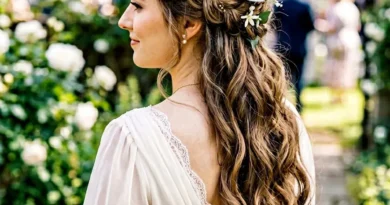
First Impressions Start at the Top: 43 Hairstyles for a First Day at Work That Look Polished, Not Overdone
Your first day at a new job is the one morning when every detail feels bigger than it is. The outfit you laid out the night before suddenly looks wrong. The route you mapped takes ten minutes longer than you planned. And your hair — the same hair you have styled a hundred times without thinking — refuses to cooperate. That is completely normal. A first day is a performance of sorts, and your hair is part of the first impression you make before you have said a single word in a meeting.
The trick is not to attempt something dramatic. Nobody on your first day is judging your hair for creativity; they are reading it for signals. Neat, intentional hair says you are prepared, detail-oriented and calm under pressure. Hair that keeps falling into your face or needs constant fixing says the opposite, even when it is not true. The best hairstyles for a first day at work sit in that sweet spot: polished enough to look deliberate, simple enough to survive a full day of introductions, and comfortable enough that you forget about them by lunchtime.
This guide gives you 43 of those styles, plus 8 practical guides that cover the things nobody tells you before day one — how to read a dress code, how to build a 15-minute morning routine, which styles suit corporate offices versus creative studios, and how to keep your hair looking fresh from the first handshake to the last email. Whether your hair is short, long, curly, straight or somewhere in between, you will find a style here that fits your hair, your industry and your morning.
Reading the Office Dress Code Before You Style

Before you pick a style, find out what kind of workplace you are walking into. A law firm, a bank or a government office usually expects conservative, contained hair — low buns, smooth ponytails, neat braids. A creative agency, a startup or a design studio is far more forgiving, and a polished messy bun or textured waves will fit right in. A hospital or laboratory has practical rules: hair tied back, away from the face, and nothing that dangles near patients or equipment. If you are not sure, look at the company’s social media photos or the team page on its website. The people in those photos are showing you the unwritten dress code.
The safe rule: on day one, style one notch more polished than you think the office requires. You can always relax your look in week two once you have seen what your colleagues actually wear. You cannot undo a first impression of looking sloppy. Choose a style that keeps hair off your face, shows your features, and stays put for eight hours without a mirror check every twenty minutes.
Common mistake: copying a hairstyle from a red-carpet photo or a wedding Pinterest board. Those styles are built for cameras and short evenings, not for sitting at a desk, leaning over a laptop and shaking hands all day. Save the glamour for the office party; day one calls for clean lines and staying power.
The 15-Minute Morning Routine That Actually Works
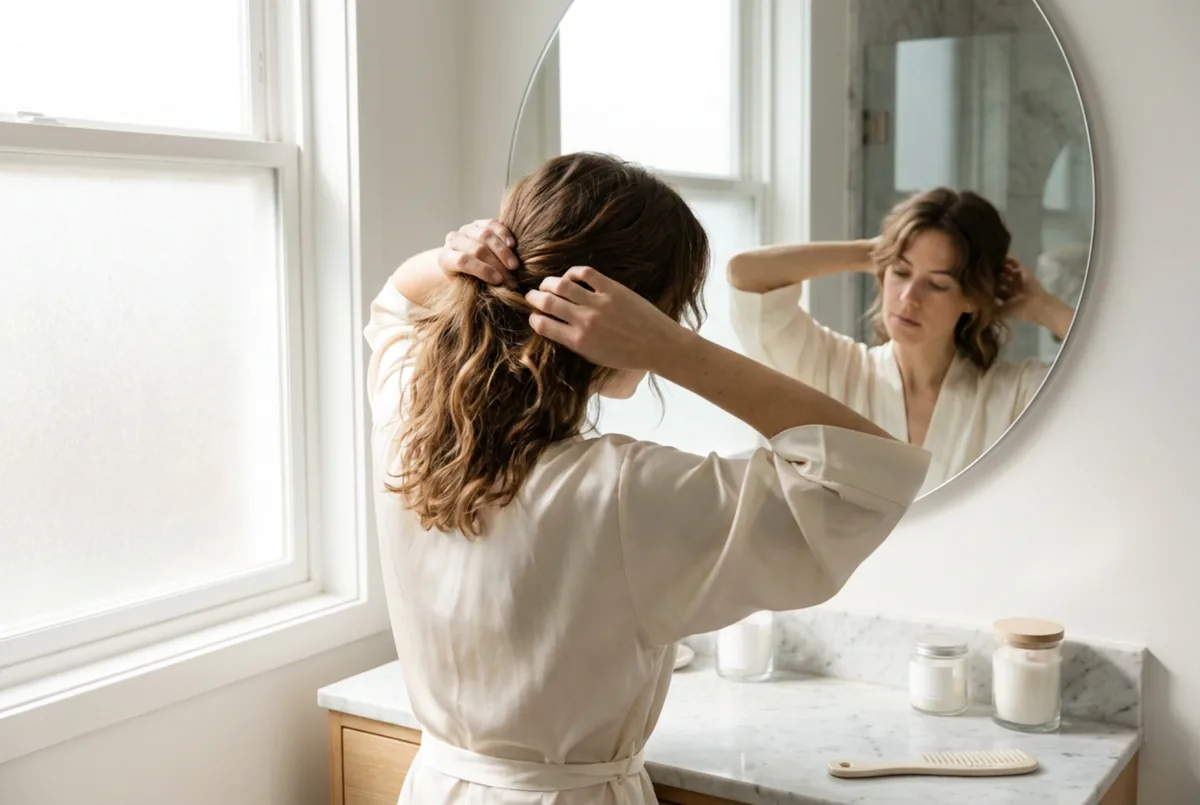
First-day nerves make everything take longer, so your hair routine needs a hard time limit. Fifteen minutes is enough for almost any style in this guide if you prepare the night before. Wash your hair the evening before day one, not the morning of it — day-old hair holds a style far better than freshly washed, slippery hair. Before bed, brush it out, apply a little leave-in conditioner to the ends, and sleep on a silk or satin pillowcase to cut down on frizz and bedhead.
In the morning, work in this order: detangle, apply a heat protectant or styling cream, dry the roots first (that is where volume and hold come from), then shape the lengths. Finish with a light mist of flexible-hold hairspray, not a stiff one — you want movement, not a helmet. Set a timer on your phone for the first few mornings until the routine becomes automatic. Time it takes: 15 minutes once practised, 25 the first time. What to ask your stylist: for a cut that air-dries well, so even a rushed morning still looks intentional.
Quick verdict: a routine you can do half-asleep is worth more than a perfect style you need forty minutes and three tools to achieve. Day one is not the morning to experiment.
Styles by Industry: Corporate, Creative, Healthcare and Remote

Different industries read hair differently, and matching your style to your sector is one of the easiest ways to look like you belong. In corporate, finance and law, go for structure: a sleek low ponytail, a classic low bun, a smooth blowout or a neat French twist. The message is precision. In creative fields — advertising, design, media, tech startups — texture is welcome: soft waves, a textured low bun, curtain bangs or a half-up twist all signal personality without looking messy.
In healthcare, education and food service, practicality rules. Hair must be fully secured, away from the face and off the collar: a low braided bun, a Dutch braid into a bun, or a sleek high ponytail that cannot fall forward. For remote workers, the camera only sees your head and shoulders, so the top half of your hair matters most — a polished front, neat parting and tidy ends will read perfectly on video, even if the back is in a simple low ponytail. Who should avoid what: anyone in a client-facing role should skip styles that need constant touching up, and anyone working with machinery or children should skip anything loose around the face.
Maintenance: industry-appropriate styles are usually low-maintenance by design. A bun or braid chosen for a hospital shift will also survive a long commute, a full day of meetings and an after-work dinner without falling apart.
Commute-Proofing Your Hair: Rain, Wind and Helmets
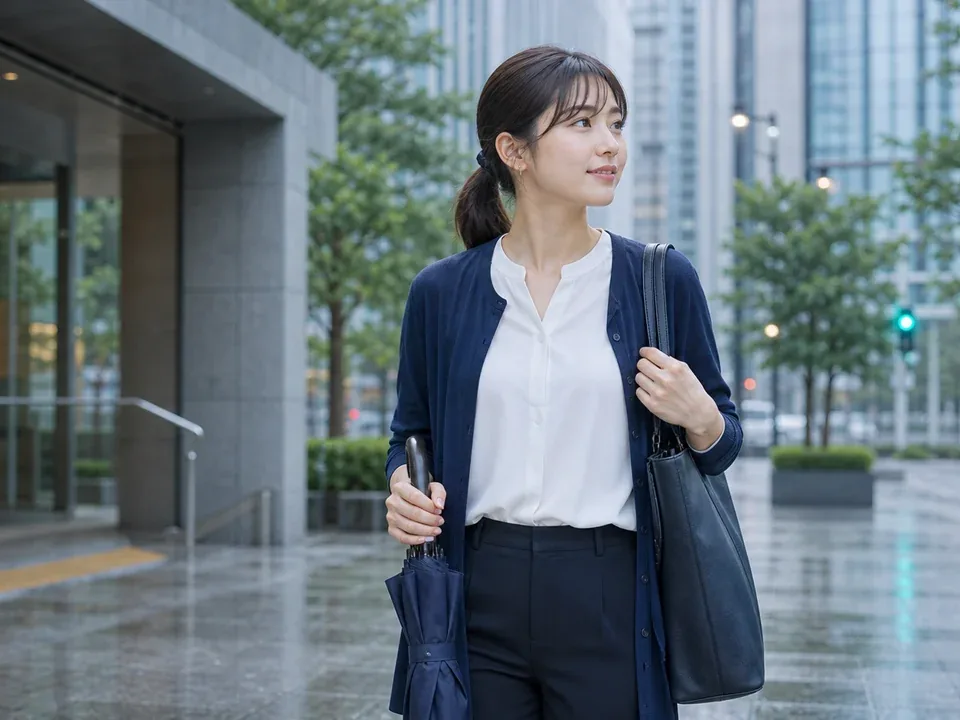
A style that looks perfect in your bathroom mirror and falls apart by the time you reach the office is not a first-day style. Rain, wind, humidity, a motorcycle helmet or a crowded bus can undo an hour of work in ten minutes. The fix is to choose a style with structure built in: braids, twists, buns and wrapped ponytails all have internal grip, while loose, freshly curled hair has almost none. If your commute is long or exposed, pick an updo or a braid for the journey and let it down — or loosen it — once you arrive.
Carry a small umbrella even when the forecast looks clear, and keep a travel-size anti-frizz serum in your bag for the last-minute fix at your desk. If you wear a helmet, braid your hair low and flat before putting it on, and carry a small brush and a spritz of dry shampoo for the helmet-hair rescue in the restroom. Pros: a commute-proof style saves you from arriving flustered and apologising for your hair. Cons: the most weather-proof styles are updos, so if you love wearing your hair down, you may need to accept a little movement and frizz as part of the look.
Common mistake: using a heavy-hold hairspray to fight the weather. It makes hair stiff, and once wind breaks the hold, the style collapses in chunks. A flexible spray plus pins and a braid will outlast a shell of hairspray every time.
Your Desk Touch-Up Kit: What to Keep in the Drawer
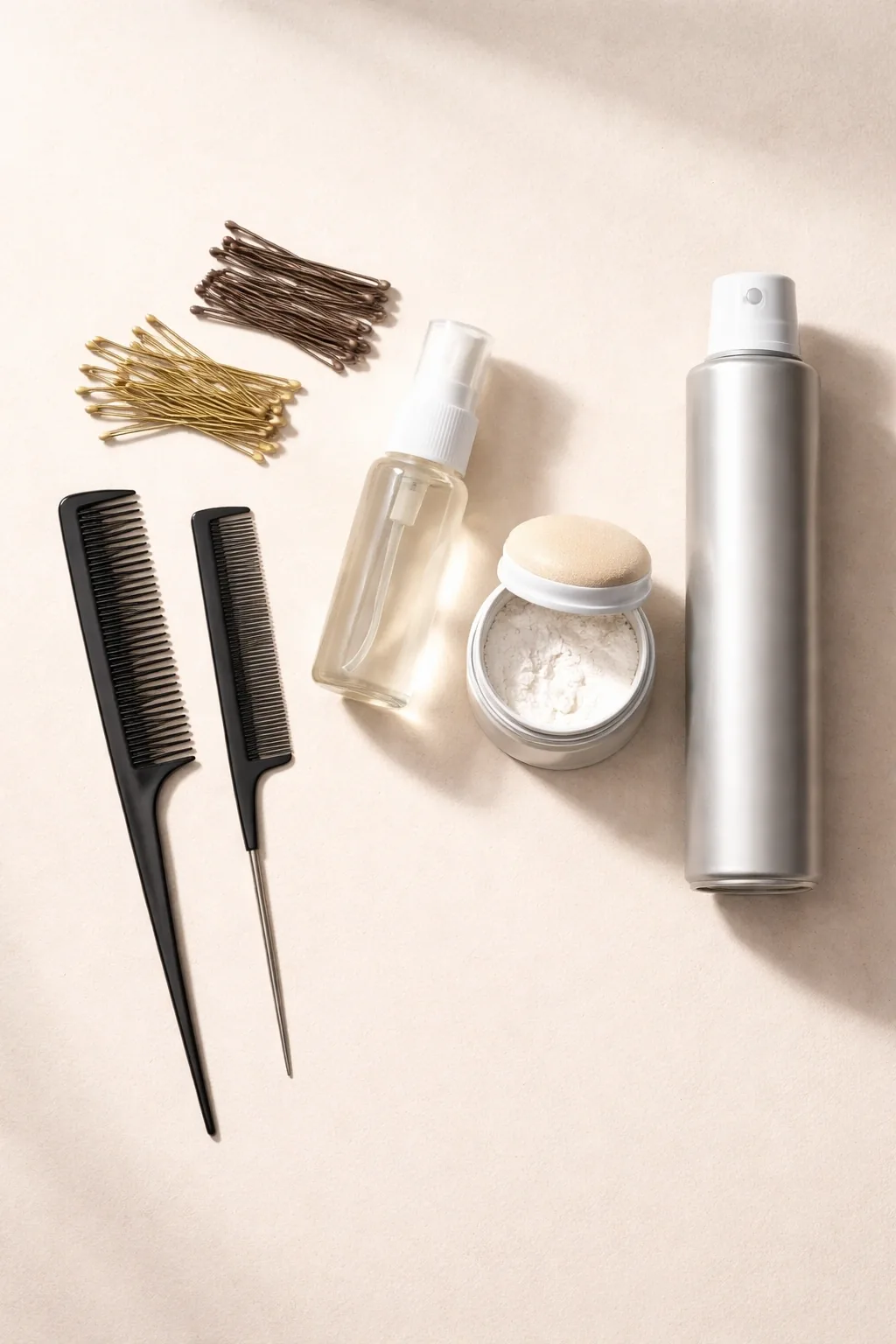
You do not need a full salon in your desk drawer — just five small things that fix 95 percent of first-day hair problems. A small brush or comb for smoothing flyaways after you take off a coat or scarf. Three or four bobby pins that match your hair colour for pinning back a section that has escaped. A mini dry shampoo for absorbing oil and adding grip around the roots by mid-afternoon. A travel-size hairspray or a smoothing serum for taming frizz before a meeting. And one spare hair tie, because the one in your hair will snap at the worst possible moment — it always does.
Keep the kit in a small pouch so it does not scatter across the drawer, and check it every Sunday night. A two-minute touch-up in the restroom before an afternoon meeting is the difference between looking polished all day and looking polished until lunch. Cost: under $15 for the whole kit, and most of it lasts months. Quick verdict: this tiny kit is the highest-return investment in your entire first-week wardrobe.
What to Avoid on Day One (and What to Save for Week Two)
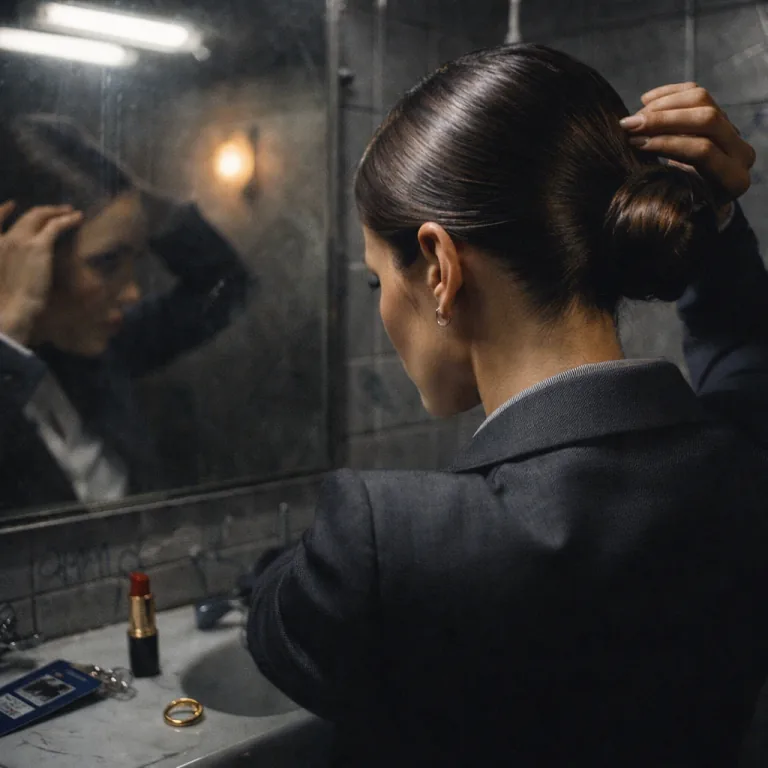
Day one is not the day for a brand-new haircut, a colour change, a style you have never tried, or a complicated updo you practised once from a video. Every one of those is a risk you do not need when you are already nervous. Avoid very high or very tight styles that pull at your scalp — they cause headaches by mid-afternoon. Avoid heavy gel, wet-look finishes and strong fragrances, which can feel overwhelming in a small office or meeting room. Avoid anything that covers one eye or needs you to keep pushing it back, and avoid accessories that jingle, flash or draw attention away from your face.
Save the experiments for week two, when you know the office culture and your colleagues know you. A bold colour, an edgy cut, a statement accessory — all of these land better once people have a first impression of your work, not just your hair. Who should avoid it: everyone, on day one. Even in the most relaxed creative office, a calm, polished first look earns you room to be expressive later. Common mistake: trying a new style on the morning itself instead of a trial run the weekend before. Always rehearse a first-day style at least once, in daylight, with the outfit you plan to wear.
Hair by Length: Short, Medium and Long First-Day Plans
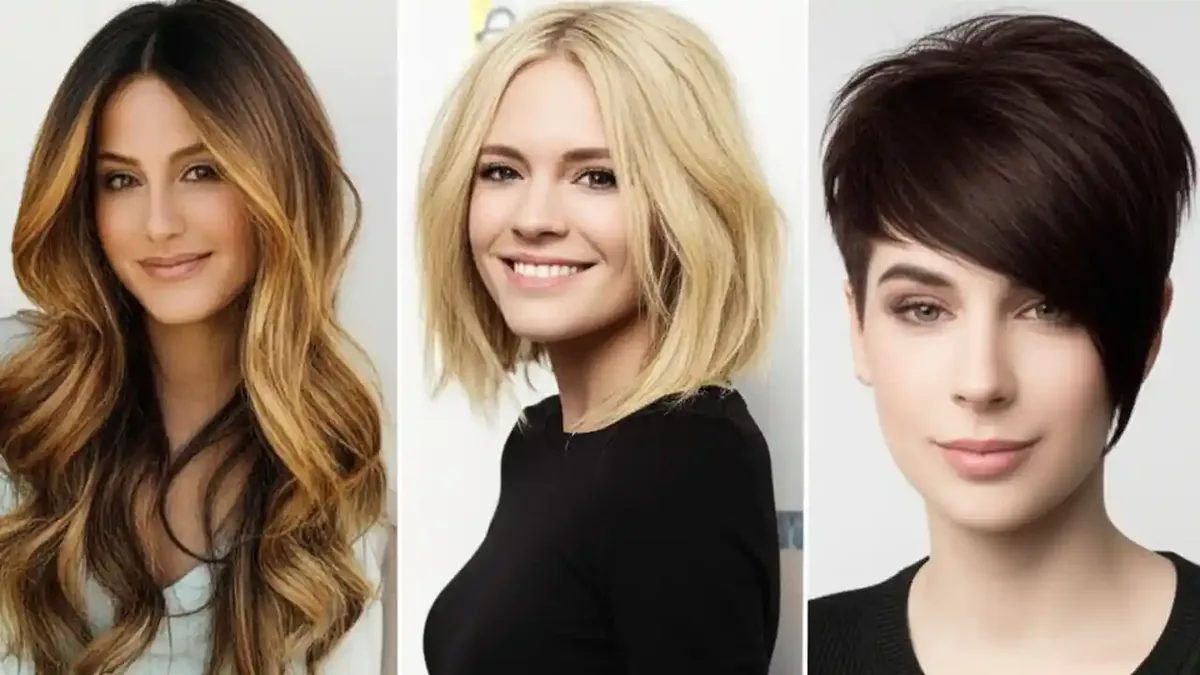
Your hair length decides your strategy. Short hair — pixies, crops and short bobs — is the fastest to style on day one, usually five minutes with a little product and a side sweep. Its challenge is control: short layers can stick up or fall flat, so a light styling cream and a quick finger-comb are your best friends. Medium hair — lobs, shoulder-length cuts — is the most versatile length for a first day. It goes up, half-up or down, and it holds a blowout beautifully. Its only weakness is the awkward in-between stage, which a good blowout or a low bun solves instantly.
Long hair has the most options and the most risk. It looks impressive down, but it also gets in the way, catches on bag straps and chair backs, and needs the most maintenance. On day one, long hair works best contained — a low ponytail, a braid, a chignon — or styled with a strong parting and smooth ends so it reads as deliberate rather than just long. Best for: matching the plan to your length instead of fighting it. What to ask your stylist: for a cut that works at your current length and grows out gracefully, so you are not fighting your hair between appointments.
From Morning Meeting to After-Work Drinks: One Style, Two Looks

Many first days end with an invitation — team drinks, a welcome dinner, a casual get-together. The smartest styles are the ones that transform in two minutes. A low bun becomes soft waves when you take it down and shake it out. A sleek ponytail becomes a textured one when you loosen the base and pull out a few face-framing pieces. A half-up twist becomes fully down with the removal of two pins. A braid becomes loose, romantic waves when unravelled after a day of setting.
Pack the transformation tools in your bag: two extra pins, a small bottle of texturising spray, and a lipstick that makes the same outfit feel evening-ready. In the restroom before drinks, take the style down, run your fingers through it, add texture spray, and you have a second look without a second routine. Pros: one style does double duty, and your colleagues see a relaxed, approachable side of you. Cons: not every style transforms well — very sleek looks need more work to loosen, so choose a style with a built-in second act if you know drinks are likely.
1. Sleek Low Ponytail
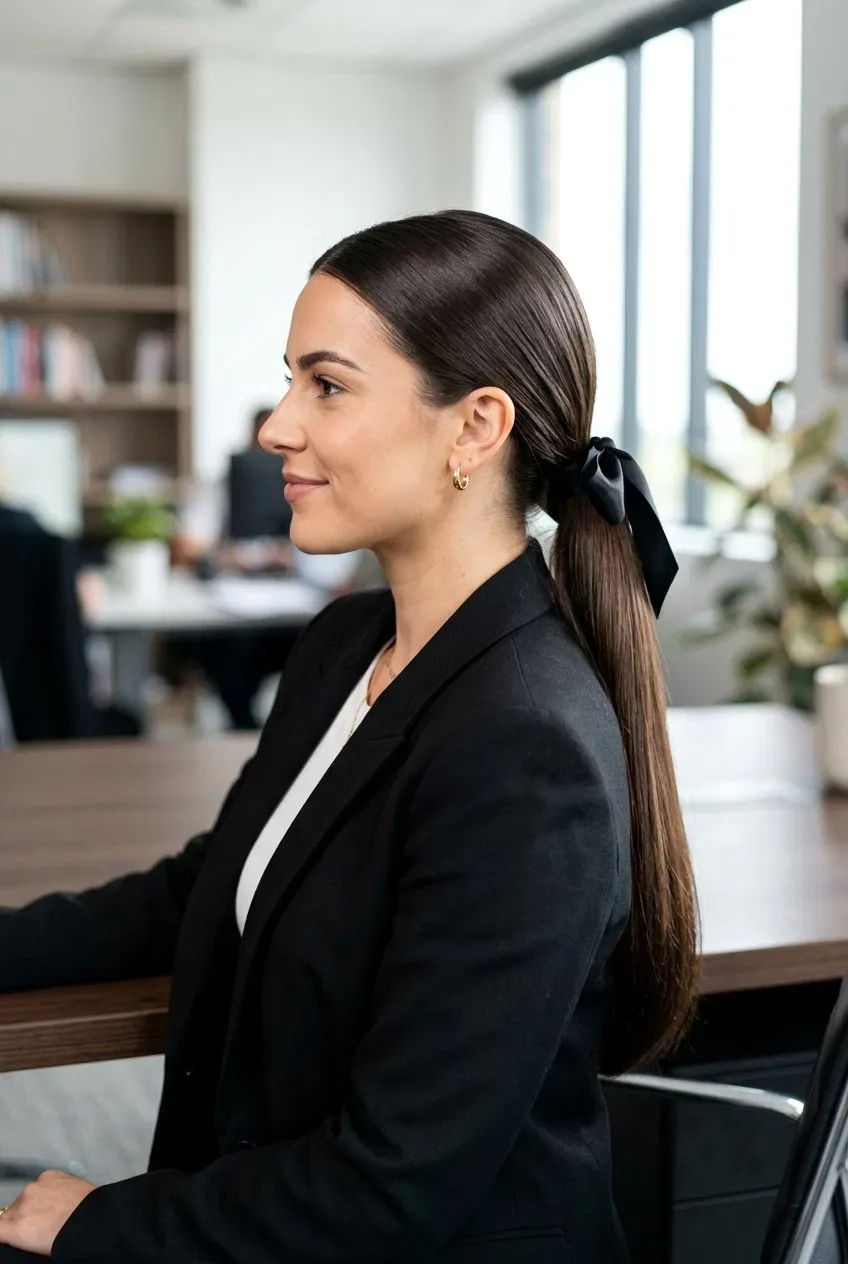
The sleek low ponytail is the first-day classic for a reason: it is neat, it takes five minutes, and it suits every face shape and almost every office. Brush your hair back smoothly, secure it at the nape of your neck with a strong elastic, then take a thin strand from underneath and wrap it around the elastic to hide it. A drop of serum on the surface tames flyaways, and a middle or side part keeps it from looking severe.
Best for: straight or slightly wavy hair, corporate and client-facing roles, and anyone who wants to look polished without spending half the morning on it. How to style: blow-dry the roots smooth, use a boar-bristle brush for the sleek finish, and keep the ponytail low — a high ponytail reads sporty, a low one reads professional. What to ask your stylist: for face-framing layers that soften the look without breaking the sleek line. This style also photographs well, which matters on a day when someone will almost certainly take a team photo.
2. Classic Low Bun
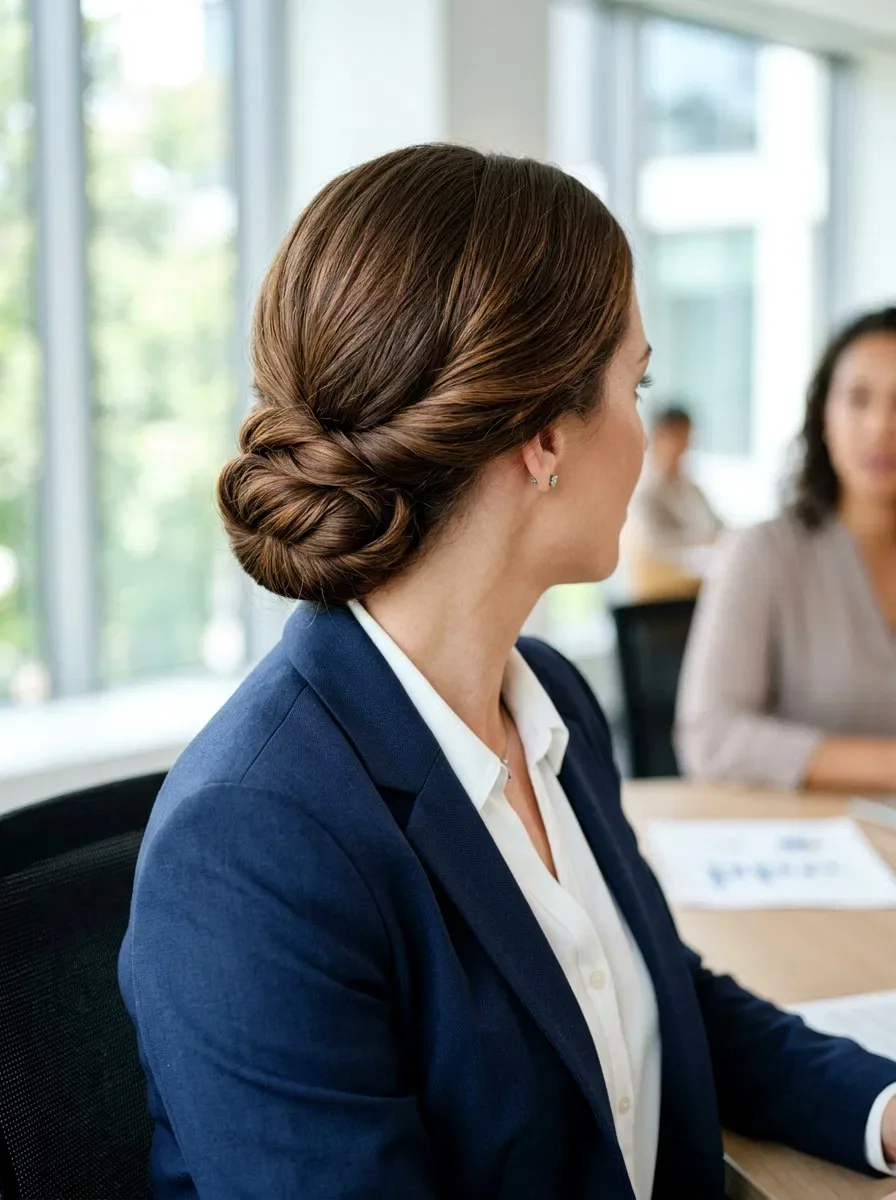
A classic low bun is the most reliable first-day style in existence. It keeps hair completely off your face and collar, it survives commutes, meetings and long lunches, and it looks intentional in every industry from banking to healthcare. Gather your hair at the nape, twist it into a bun, pin it securely, and smooth the surface with a brush and a light mist of spray.
Best for: medium to long hair, formal workplaces, and anyone who does not want to think about their hair again until they get home. Maintenance: almost none — carry two spare pins and you are covered for the whole day. Common mistake: placing the bun too high or too tight, which looks severe and causes a headache by 3 p.m. Keep it low, keep it slightly soft at the front, and let one or two small pieces frame your face if your office is on the relaxed side.
3. Polished Straight Lob
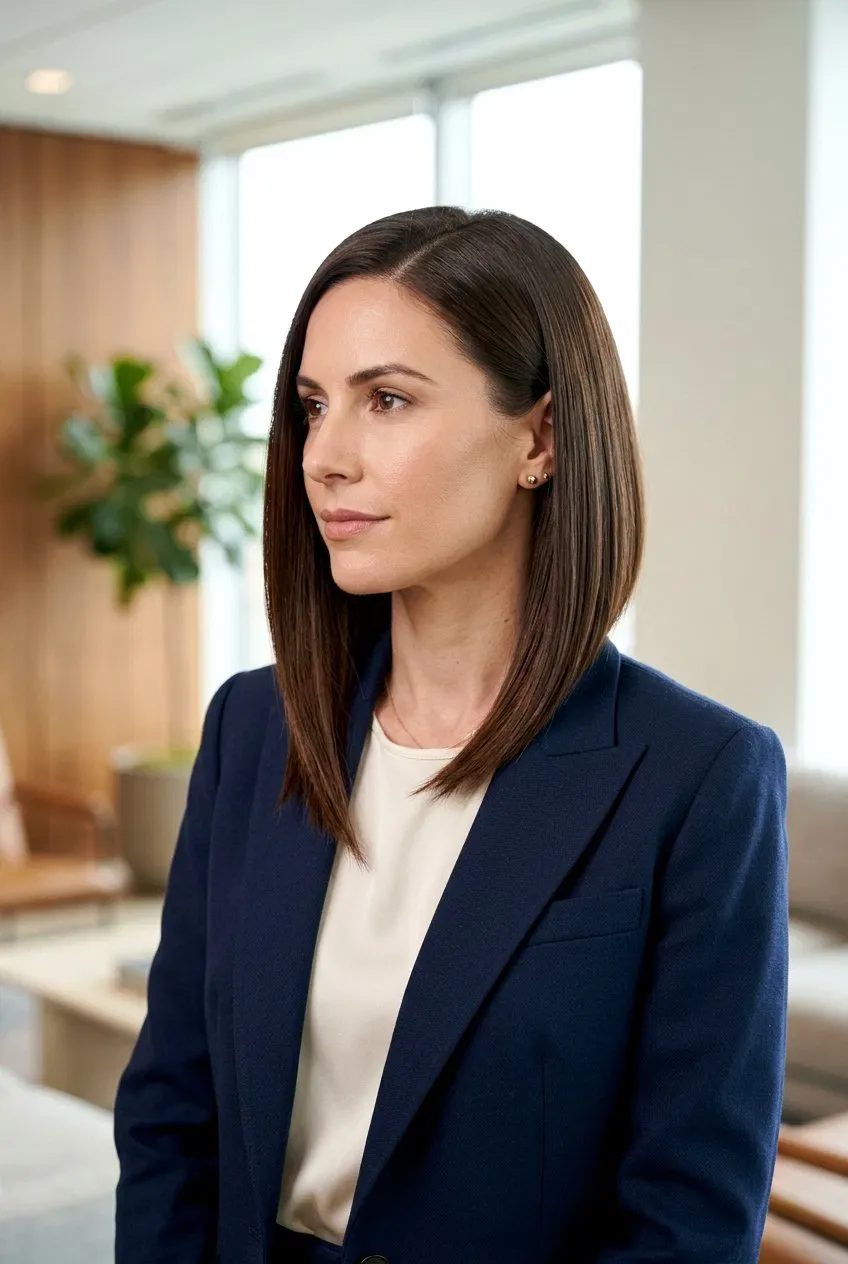
The lob — a long bob that sits around the collarbone — is one of the most popular professional cuts for a reason, and worn straight and polished it is a perfect first-day look. It frames the face, moves naturally, and needs no pins or ties to stay in place. Blow-dry it smooth with a round brush, tuck the ends under slightly, and finish with a shine serum.
Best for: straight or fine hair, women who want a cut that looks styled with minimal effort, and anyone growing out a shorter bob. Pros: no upkeep during the day, works on camera, suits blazers and blouses equally. Cons: it needs a fresh blow-dry to look its best, and humidity can add unwanted volume at the ends. A quick pass with a flat iron in the morning solves both problems in under five minutes.
4. Soft Curtain Bangs with a Blowout
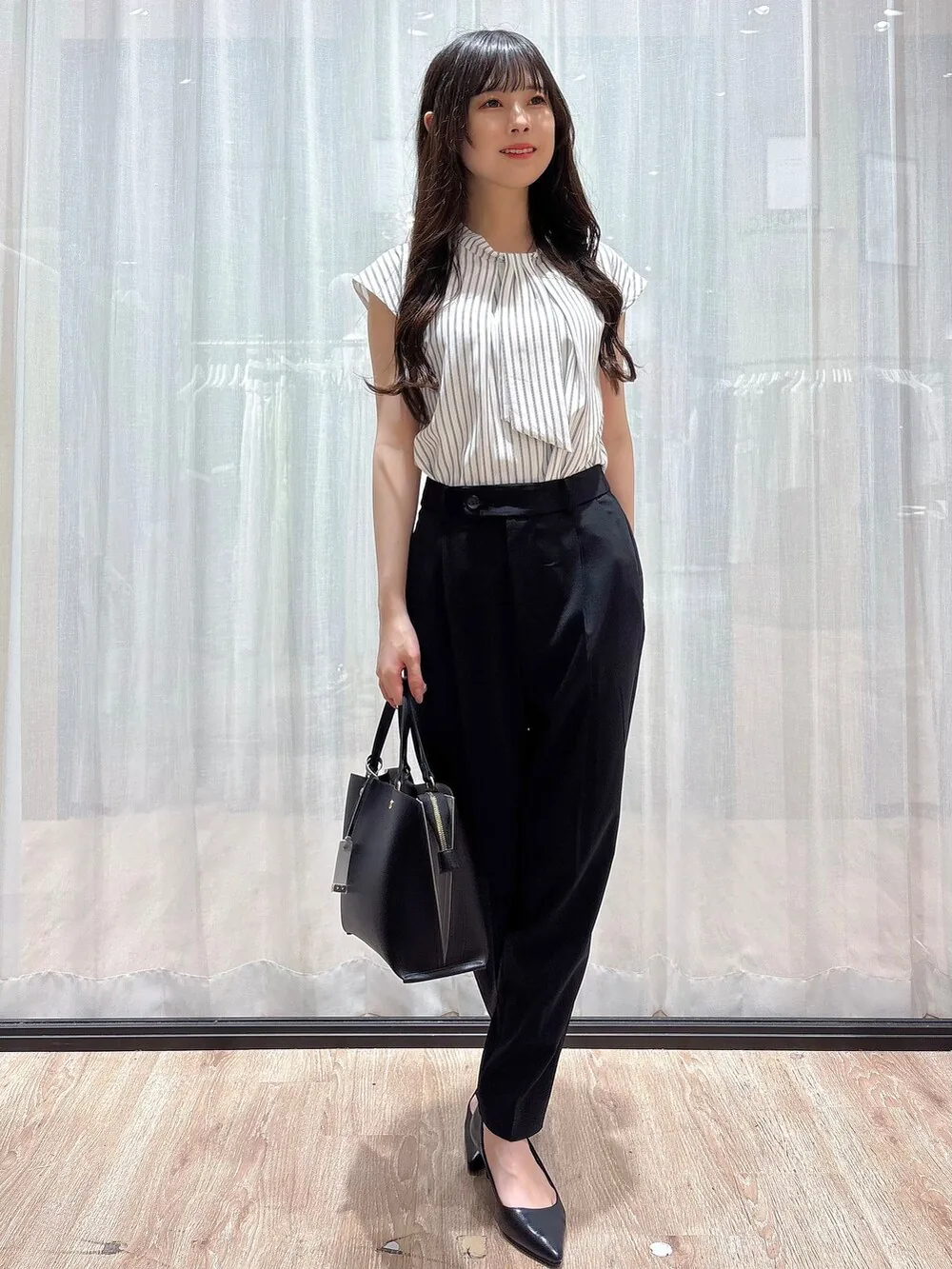
Curtain bangs are the friendliest way to wear a fringe at work: they part in the middle, sweep to either side, and frame your face instead of covering it. Paired with a soft blowout, they give you a polished look with movement and personality, without the high maintenance of a straight-across fringe that needs trimming every two weeks.
Best for: round, oval and heart-shaped faces, and anyone who wants to soften a strong jawline or a high forehead. How to style: blow-dry the bangs forward with a round brush, then flick them outward to each side. A little texturising spray at the roots stops them falling flat by midday. Who should avoid it: anyone with very curly hair who does not want to straighten the fringe daily — curtain bangs need a quick daily style to sit right, and skipping it looks untidy rather than effortless.
5. Neat French Twist
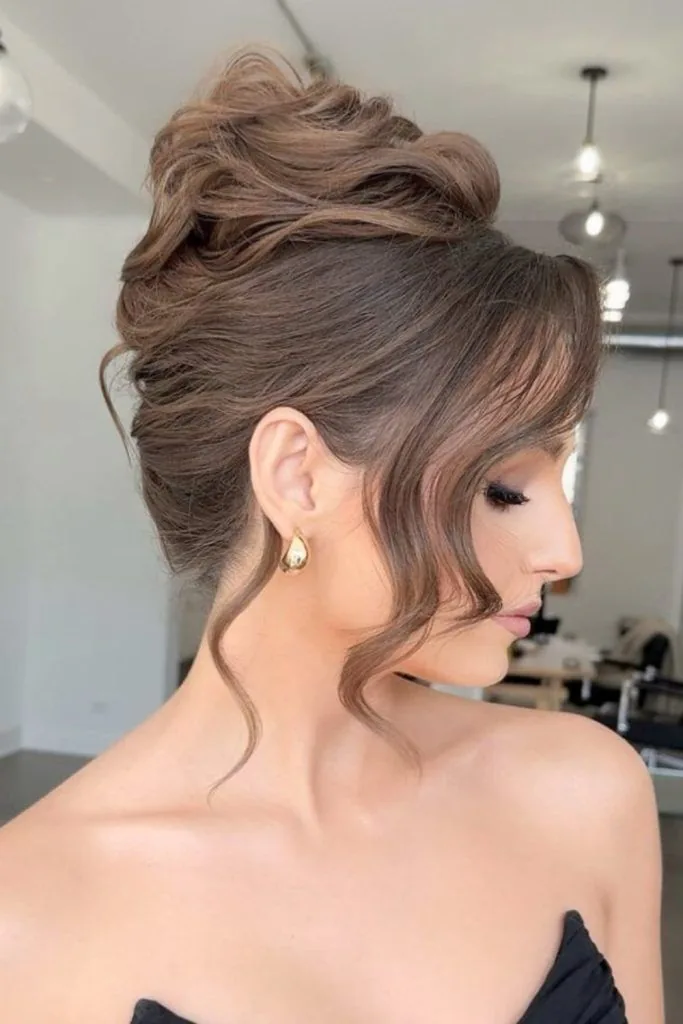
The French twist is the most elegant updo you can wear to an office, and it is simpler than it looks. Gather your hair to one side, twist it upward against the back of your head, tuck the ends in, and secure it with pins. The result is a smooth, vertical roll that looks expensive, holds all day, and works beautifully with a blazer or a high-necked blouse.
Best for: medium to long hair, formal industries, and anyone who wants a style that looks like it took an hour but took ten minutes. How to style: practise it twice before day one, use French pins or large U-pins rather than small bobby pins, and finish with a flexible-hold spray. Quick verdict: if you can do a French twist, it is the single most impressive first-day style for the least effort — but do not attempt it for the first time on the morning itself.
6. Low Chignon with Face-Framing Pieces
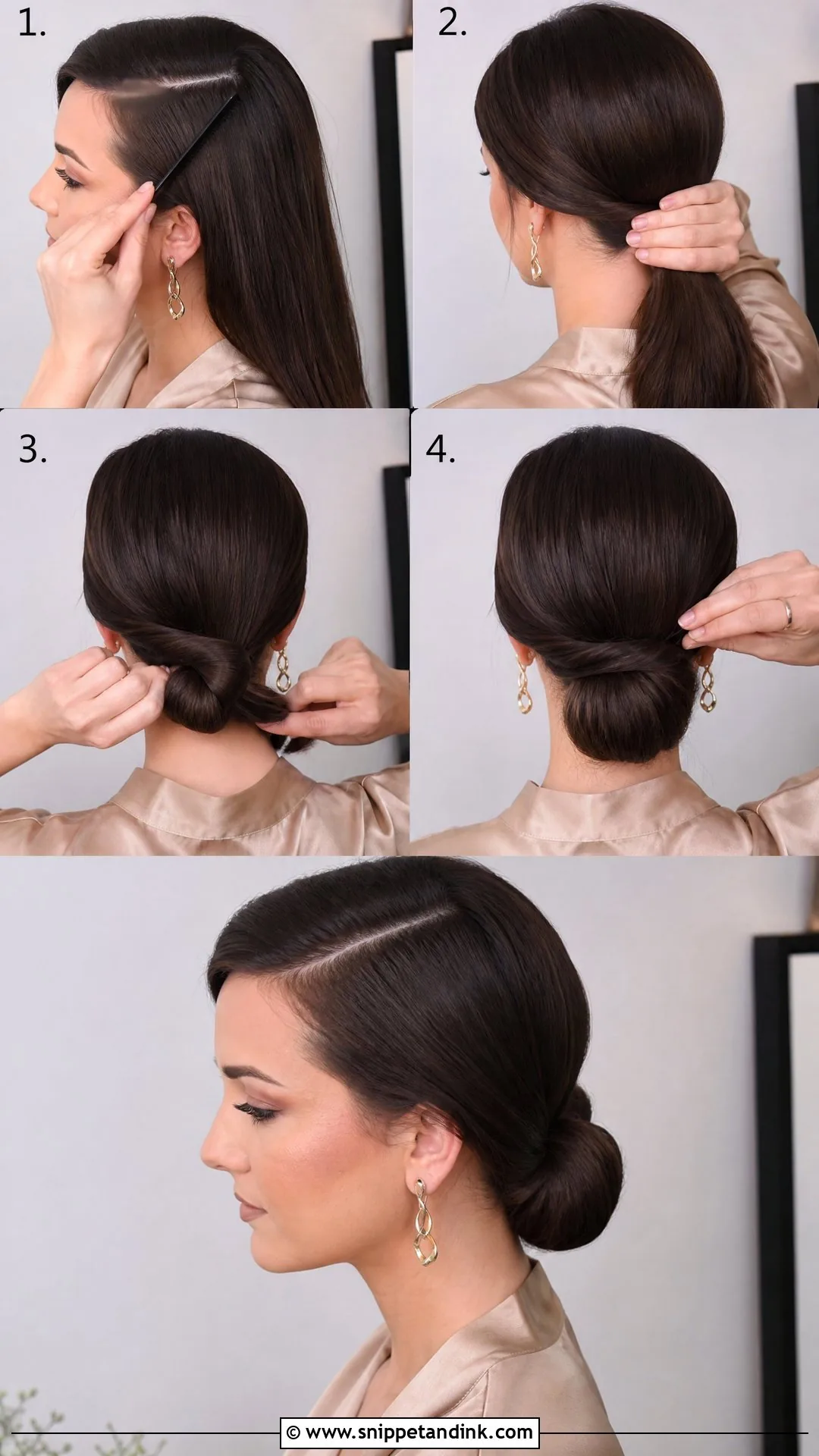
A low chignon is a bun with better manners: softer, lower, and a little more romantic than a tight classic bun, but just as professional. Pull two thin pieces of hair forward at the front, gather the rest into a low, loose knot at the nape, and let those front pieces soften your face. It is the style that looks equally right in a boardroom and at a welcome lunch.
Best for: long or thick hair, and anyone whose face looks too severe with all their hair pulled back. Pros: comfortable all day, photographs softly, and easy to refresh — just re-pin the knot and smooth the front pieces. Cons: the face-framing pieces can fall forward when you lean over a desk, so keep a pin handy if you spend the day at a laptop. A light spray on the front pieces keeps them in place without making them stiff.
7. Half-Up Twist
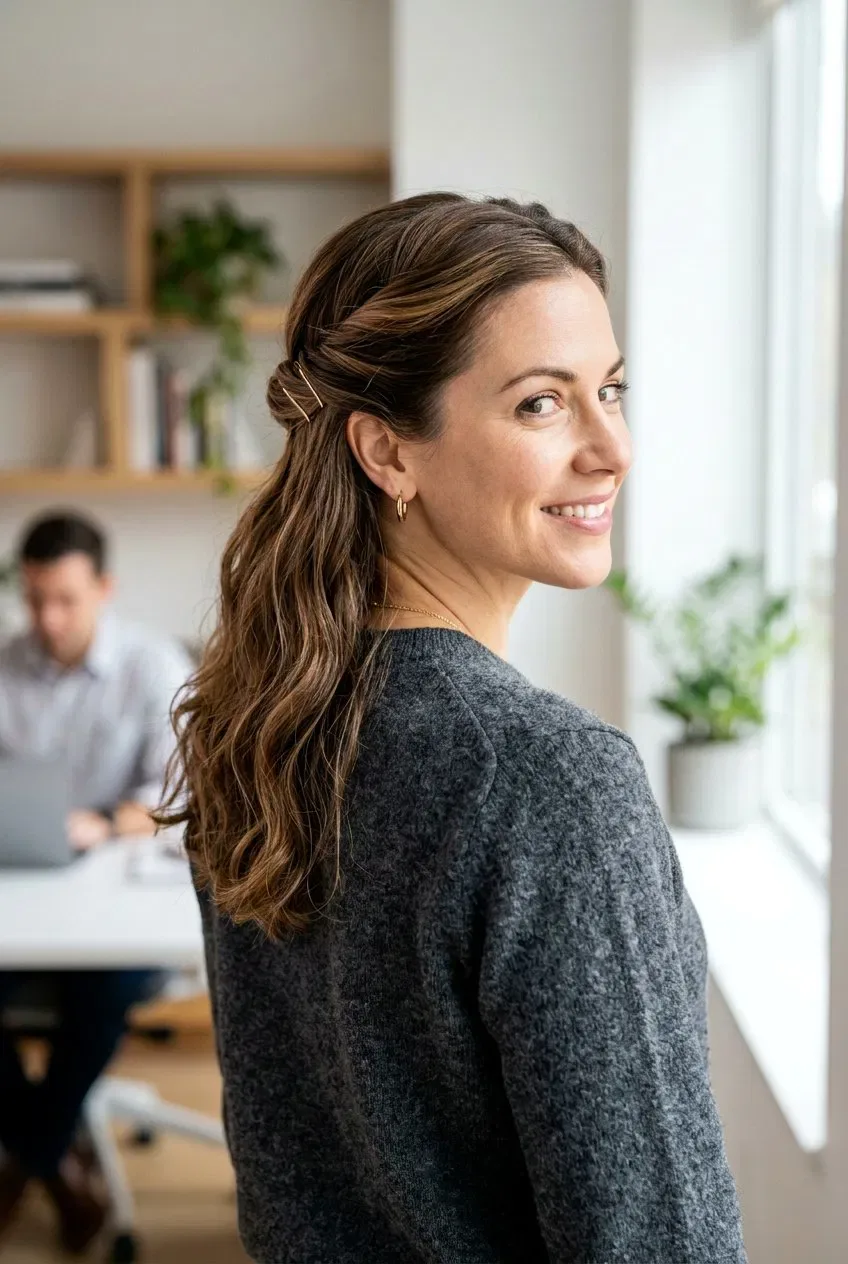
The half-up twist is the perfect compromise for women who love wearing their hair down but need it out of their face on day one. Take a section from each side, twist them toward the back, and pin them together. Your hair stays down and visible, but your face is clear, your fringe is controlled, and the style looks deliberate rather than accidental.
Best for: medium to long hair, creative and relaxed offices, and anyone with layers that keep falling forward. How to style: twist loosely for a soft look or tightly for a sleeker one, and secure with pins that match your hair colour so they disappear. Maintenance: check it once after lunch — the twist can loosen over a long day, but one pin puts it right again in seconds.
8. Smooth Side Part Bob
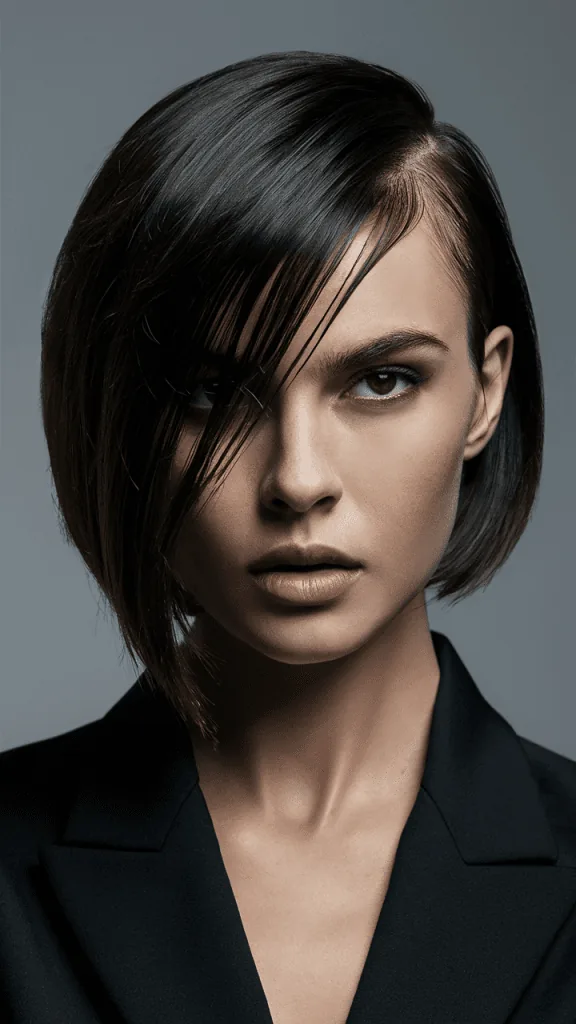
A smooth side part bob is sharp, confident and completely office-ready. The deep side part adds instant volume at the roots and gives the cut a sense of direction, while the smooth finish keeps it looking polished rather than casual. It is one of the best first-day choices for short to medium hair because it needs no accessories and no midday attention.
Best for: straight or slightly wavy hair, oval and heart-shaped faces, and anyone who wants a strong, memorable first impression. What to ask your stylist: for a parting that follows your natural hairline so the style falls into place without fighting it. Common mistake: forcing a side part on hair that naturally parts in the middle — it will drift back all day. Work with your growth pattern, not against it.
9. Classic French Braid
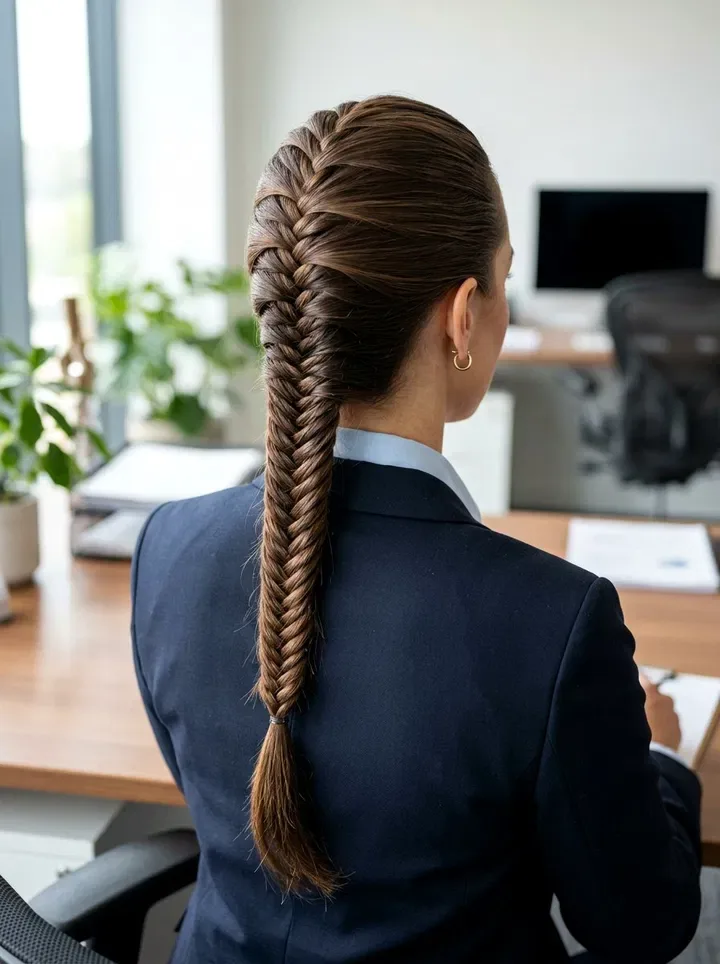
A classic French braid is neat, practical and quietly elegant — and it is one of the most commute-proof styles you can choose. Braided flat against the head, it cannot be blown about by wind, it cannot fall into your face, and it looks exactly the same at 5 p.m. as it did at 9 a.m. It also leaves beautiful waves when you take it out, which makes it a natural day-to-evening style.
Best for: long hair, rainy or windy commutes, and hands-on roles where loose hair is a hazard. Pros: zero maintenance, stays put through anything, and works in every industry. Cons: it takes a little practice to braid neatly on yourself, and a braid that is too tight can cause a headache. Braid firmly but not painfully, and pancake the braid slightly — gently pulling the edges wider — for a softer, fuller look.
10. Low Braided Ponytail
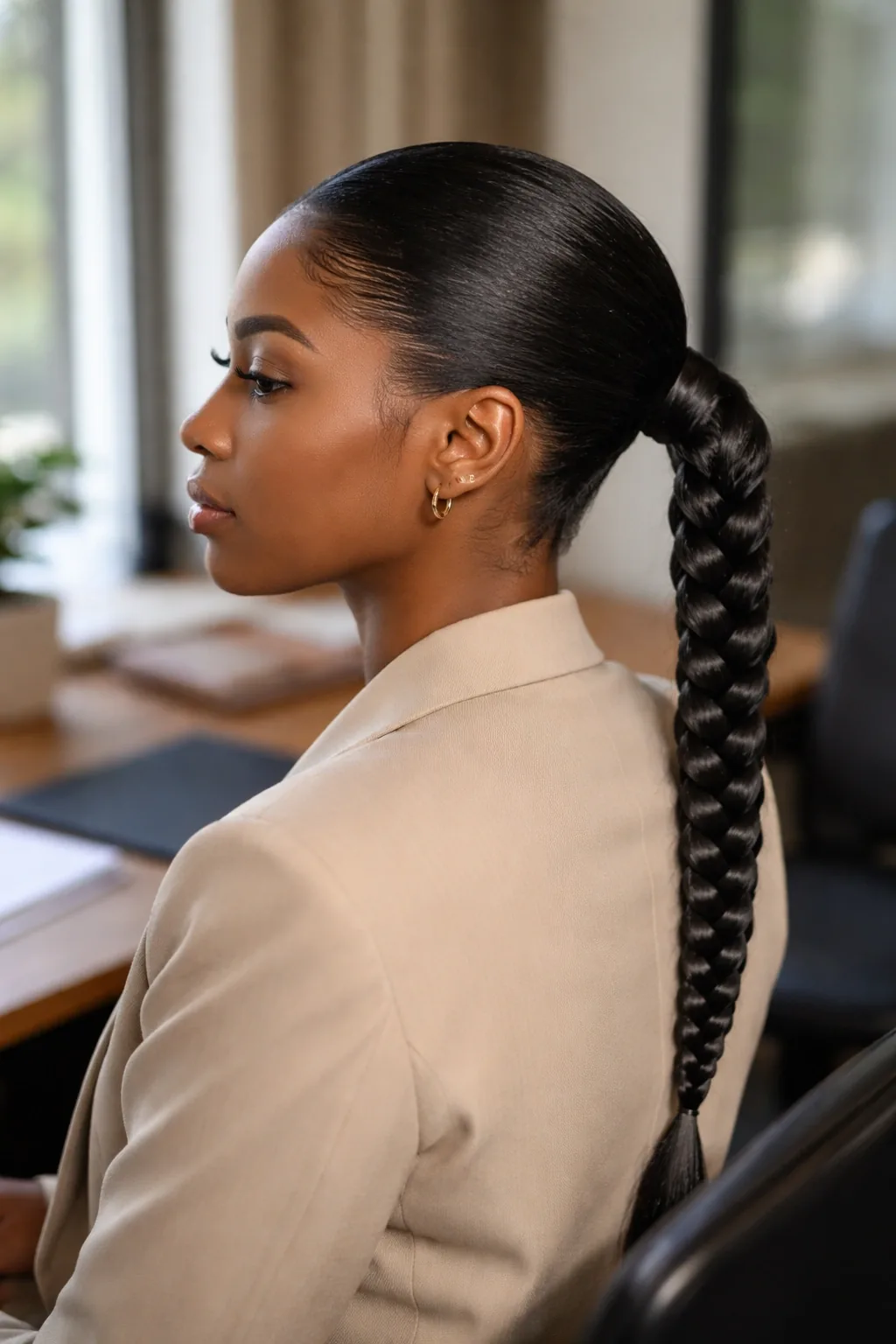
A low braided ponytail combines the polish of a ponytail with the staying power of a braid. Start with a low ponytail, braid the tail, and secure the end with a small elastic wrapped in a strand of hair. It looks more finished than a plain ponytail, keeps long hair completely controlled, and survives a full day of movement without a single flyaway escaping.
Best for: very long hair, active roles, and anyone whose plain ponytail always seems to loosen by lunchtime. How to style: use a texturising spray before braiding so the braid holds its shape, and keep the braid loose at the top so it does not pull at your scalp. Quick verdict: this is the style to choose when you want long hair to look intentional and stay out of your way at the same time.
11. Sleek High Ponytail
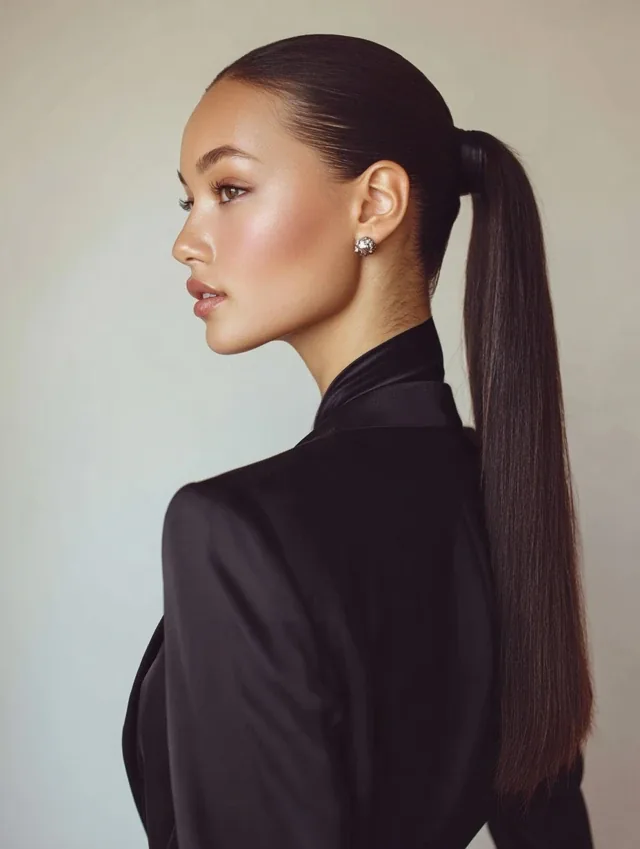
A sleek high ponytail can be perfectly professional — as long as it is smooth, high and deliberate, not casual and thrown up. Brush the hair back tightly, secure it at the crown, wrap a strand around the elastic, and smooth the surface until it shines. It lifts the face, shows off earrings and a collar beautifully, and keeps every strand off your neck on a warm day.
Best for: long, thick hair, warm offices, and women who want a confident, energetic first impression. Who should avoid it: anyone in a very conservative office, where a high ponytail can read as too youthful, and anyone prone to tension headaches — a high, tight ponytail pulls all day. Common mistake: letting the ponytail sag. If it drops by midday, it looks tired rather than sleek, so use a strong elastic and two pins crossed underneath the base for invisible support.
12. Textured Low Bun
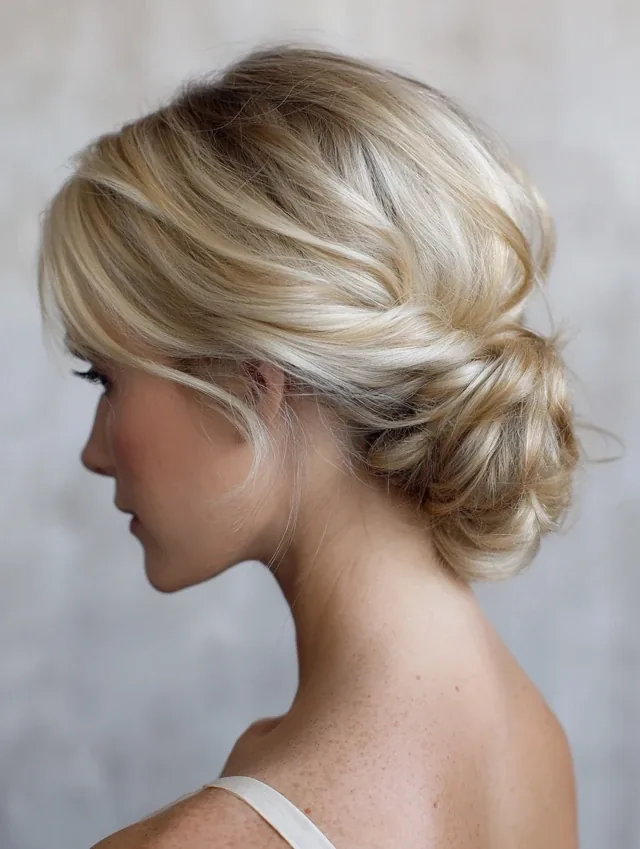
A textured low bun is the relaxed cousin of the classic bun: the same low placement and the same professionalism, but with soft texture, gentle volume and a slightly undone finish. It is ideal for wavy or curly hair, which naturally gives the bun texture without any extra work, and it is forgiving — a few loose pieces look intentional rather than messy.
Best for: wavy, curly or thick hair, creative offices, and anyone who finds a sleek bun too severe. How to style: add a little texturising spray, gather the hair loosely, twist it into a bun and pin it, then gently pull out a few pieces around the face. Maintenance: almost none, and it actually looks better as the day goes on and the texture softens. This is one of the best styles for a long first day that stretches into evening drinks.
13. Side-Swept Waves
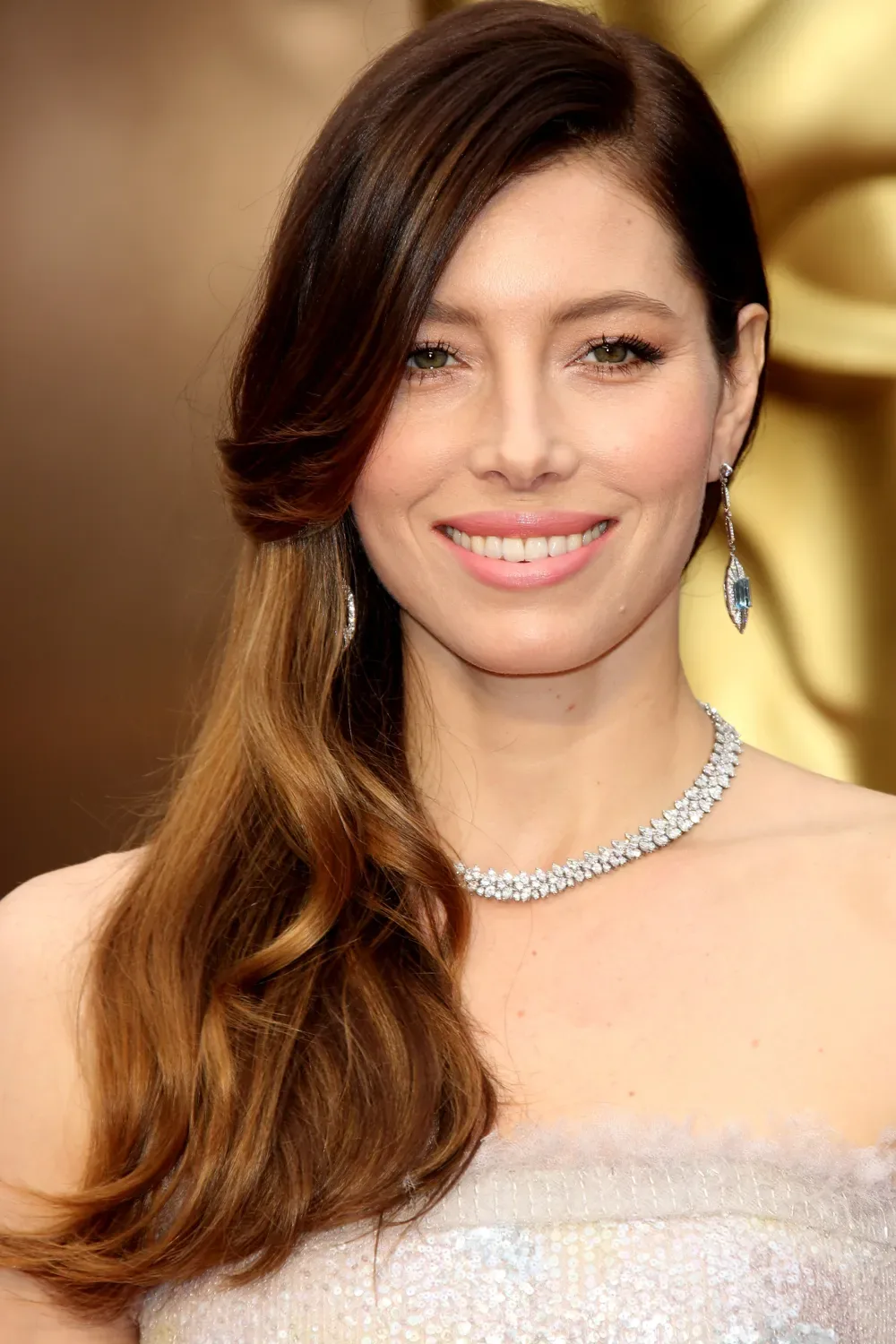
Side-swept waves are soft, feminine and polished without being formal. Sweep all your hair to one side, add loose waves with a large-barrel curling iron or a round brush, and pin the lighter side back so the style stays in place. The result frames your face beautifully, photographs well, and looks like you made a real effort — because you did, but only for about fifteen minutes.
Best for: medium to long hair, oval and square faces, and anyone who wants a down style that still looks styled. Pros: glamorous but office-appropriate, and the waves last well if you use a heat protectant and a flexible spray. Cons: wind and humidity are the enemies of this style, so it is a better choice for a car commute or a calm day than for a long walk in the rain. Carry a pin for the lighter side so it does not drift across your face during meetings.
14. Straight Blowout with a Middle Part
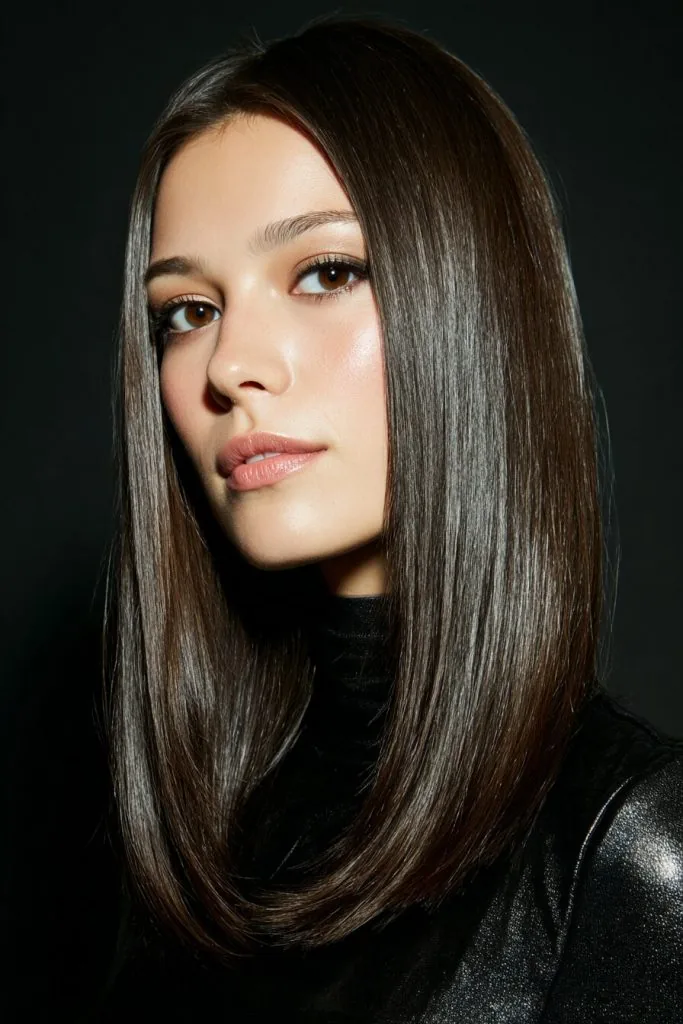
A straight blowout with a middle part is the cleanest down style you can wear to work. It is symmetrical, it shows off healthy, shiny hair, and it pairs perfectly with a blazer and a simple blouse. The key is the finish: smooth roots, sleek lengths, and ends that are neither too curled nor too flat — just polished.
Best for: straight or straightened hair, oval and heart-shaped faces, and anyone whose hair is in great condition and deserves to be shown off. How to style: blow-dry in sections with a round brush, finish with a flat iron only on the lengths if needed, and add a drop of shine serum. What to ask your stylist: for long layers that keep the style from looking flat and heavy around the face. Time it takes: 20 minutes for most lengths, which makes it a good choice if you have a slightly longer morning.
15. Low Messy Bun, Polished Version
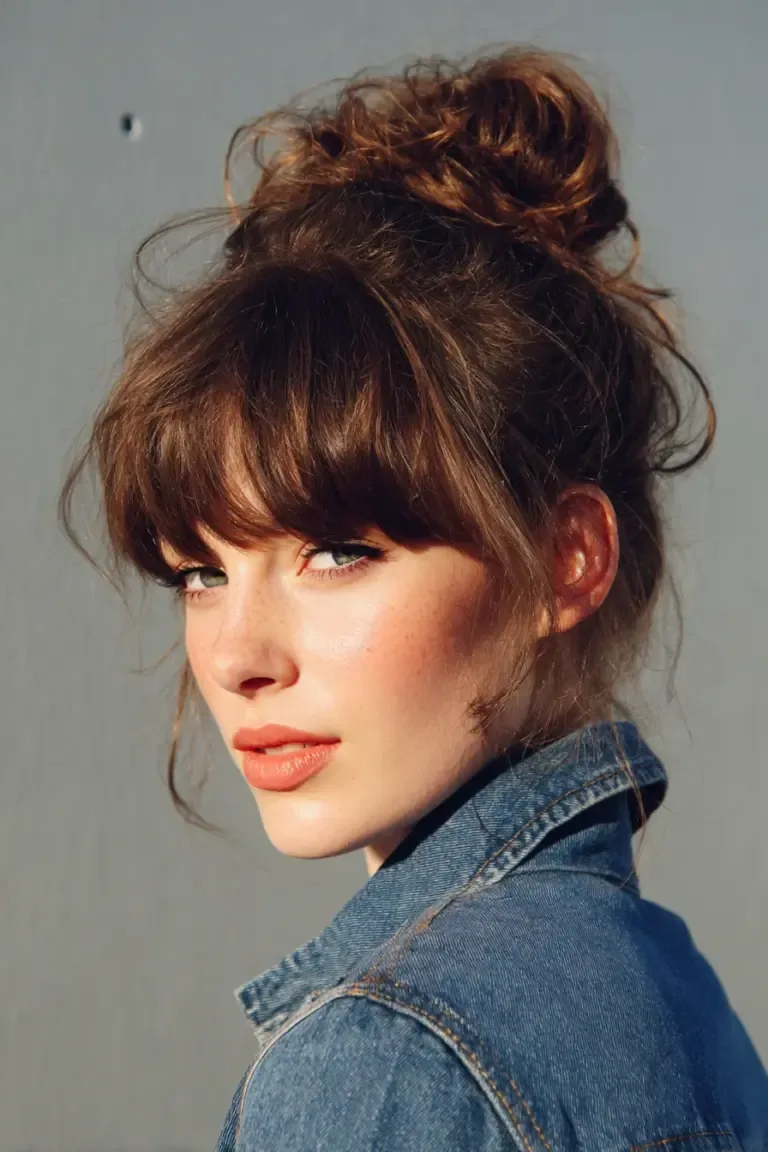
A messy bun can absolutely work on your first day — if it is the deliberate, polished kind, not the one you threw up while making coffee. The difference is in the details: smooth roots, a neat parting, a bun that is secure and shaped, and just a few soft pieces pulled out on purpose. It says relaxed and confident, not rushed and careless.
Best for: creative offices, casual workplaces, and anyone with textured or wavy hair that naturally looks better slightly undone. How to style: gather the hair low, twist it loosely, pin it in place, then gently tug at the crown for a little volume. Smooth the front with a brush and a touch of serum. Who should avoid it: anyone in a formal corporate or legal setting, where a sleek bun will always be the safer choice. When in doubt, go sleeker — you can loosen up tomorrow.
16. Braided Crown
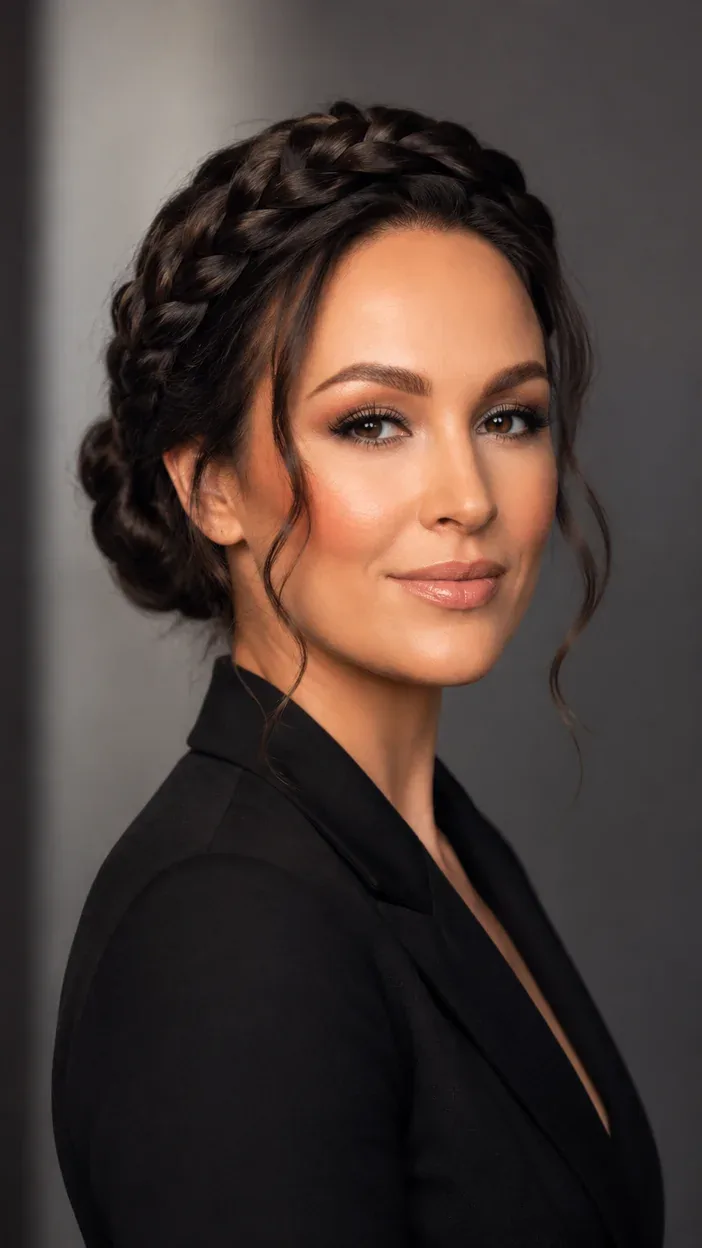
A braided crown — a braid wrapped around the head like a halo — looks intricate and impressive, but it is really just a long braid pinned into place. It keeps every strand off your face and neck, it cannot fall apart, and it photographs beautifully. It is also one of the most comfortable updos for a long day, because the weight of your hair is spread evenly around your head instead of pulling from one point.
Best for: long hair, warm weather, and anyone who wants an updo that is both practical and pretty. Pros: completely hands-free once pinned, survives heat and humidity, and works in both formal and creative settings. Cons: it needs length — at least shoulder-length hair — and it takes ten minutes of practice. Do a trial run the weekend before, and keep extra pins in your bag for any section that loosens.
17. Pinned-Back Sides
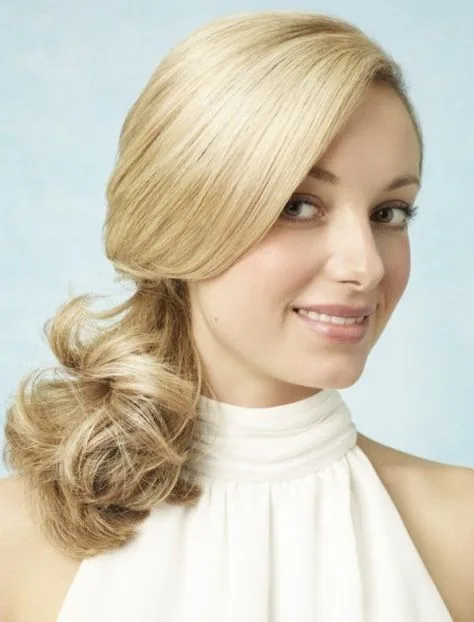
Sometimes the simplest style is the smartest. Pinning back both sides of your hair — just the front sections, secured behind your ears or at the back — clears your face, shows your features, and lets the rest of your hair fall naturally. It takes two minutes, needs nothing but two pins, and looks polished on every hair length from a bob to waist-length hair.
Best for: anyone who wants to wear their hair down without it getting in the way, and for first days when you are short on time. How to style: take a small section from each temple, twist it once, and pin it back flat so the pins disappear under the top layer of hair. Quick verdict: this is the emergency first-day style — the one to use when your planned style fails at 8 a.m. and you need to look presentable in two minutes flat.
18. Classic Pixie with a Side Sweep
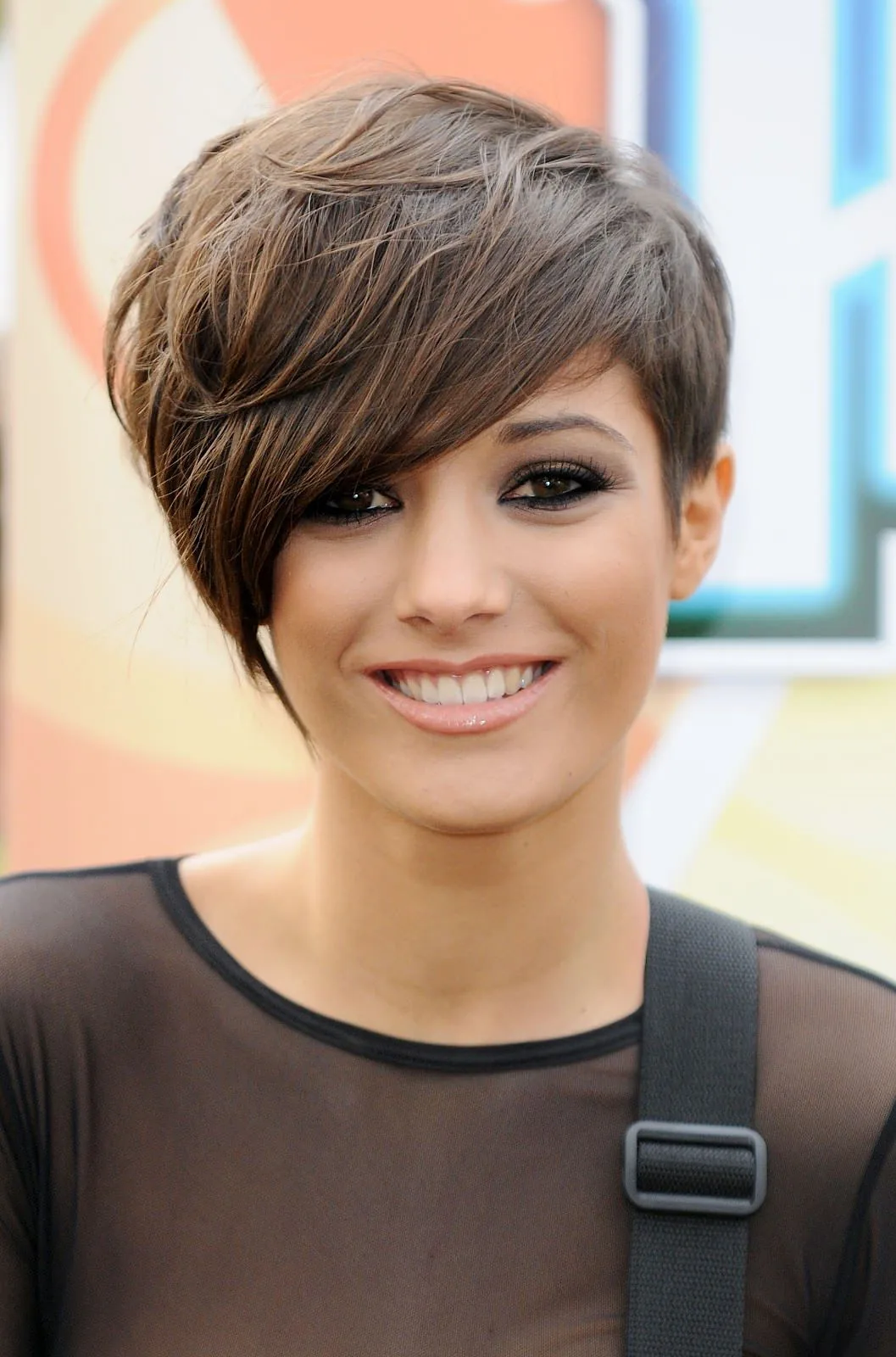
A classic pixie with a side sweep is bold, confident and incredibly easy to maintain — the perfect first-day cut for women who love short hair. The side sweep softens the cut, frames the eyes, and gives you a little styling flexibility: sweep it neatly for a formal look, or add texture for a creative office. It also dries in minutes, which makes the first-day morning almost stress-free.
Best for: oval, heart and square faces, fine hair that needs volume, and anyone who wants a memorable, polished look with minimal daily effort. Maintenance: a pea-sized amount of styling cream and a finger-comb is usually enough. What to ask your stylist: for a cut that grows out well, so you are not back in the chair every three weeks. A pixie is a commitment, but on day one it pays off in confidence.
19. Soft Layered Shoulder-Length Cut
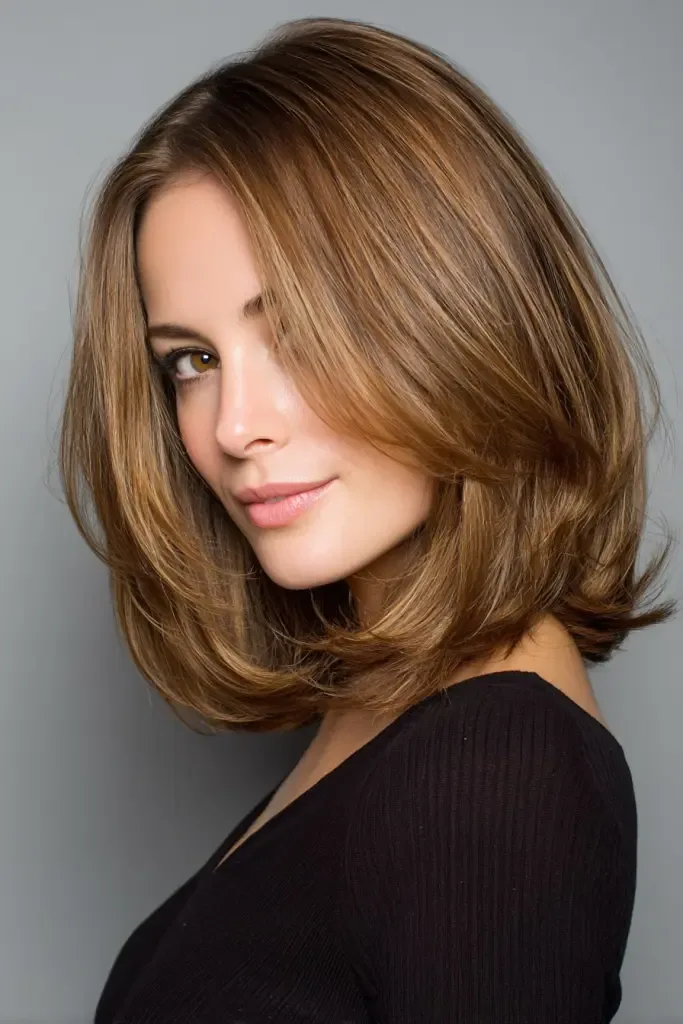
Soft layers at shoulder length are the most forgiving professional cut there is. The layers add movement and volume, the length is long enough to tie back and short enough to style quickly, and the cut looks good both straight and wavy. Worn with a smooth blowout on day one, it is polished, approachable and completely office-appropriate.
Best for: thick hair that needs weight removed, fine hair that needs the illusion of volume, and anyone who wants one cut that works for every occasion. Pros: versatile, easy to grow out, and looks styled even on a rushed morning. Cons: layers need a trim every six to eight weeks to keep their shape, and the shortest layers can escape from a ponytail — keep a pin handy if you tie it up later in the day.
20. Sleek Top Knot
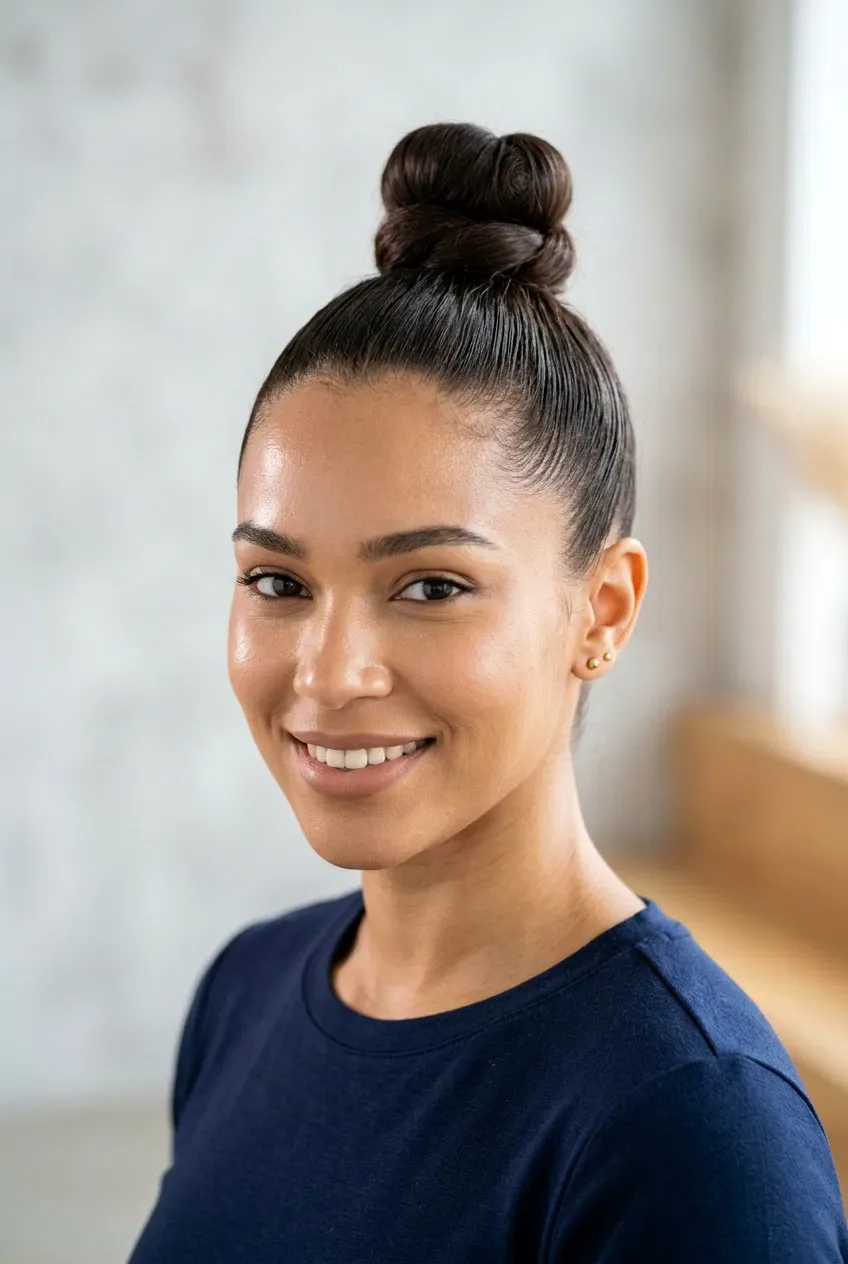
A sleek top knot is the ballerina bun of the office world: high, smooth, and completely out of the way. It is the best choice for a hot day, a long day, or a day when you simply do not want to think about your hair. Gather it high on the crown, twist it into a neat knot, pin it securely, and smooth every flyaway with a brush and a little gel or serum.
Best for: long hair, warm offices, and anyone who wants a style with real presence. Who should avoid it: anyone prone to headaches from tight styles, and anyone in a very conservative workplace where a high knot can look too fashion-forward — a low bun is the safer alternative there. Common mistake: placing the knot too far back, which makes it look like a ponytail that gave up. Keep it high on the crown, keep it smooth, and it will look deliberate all day.
21. Loose Low Ponytail with a Wrap
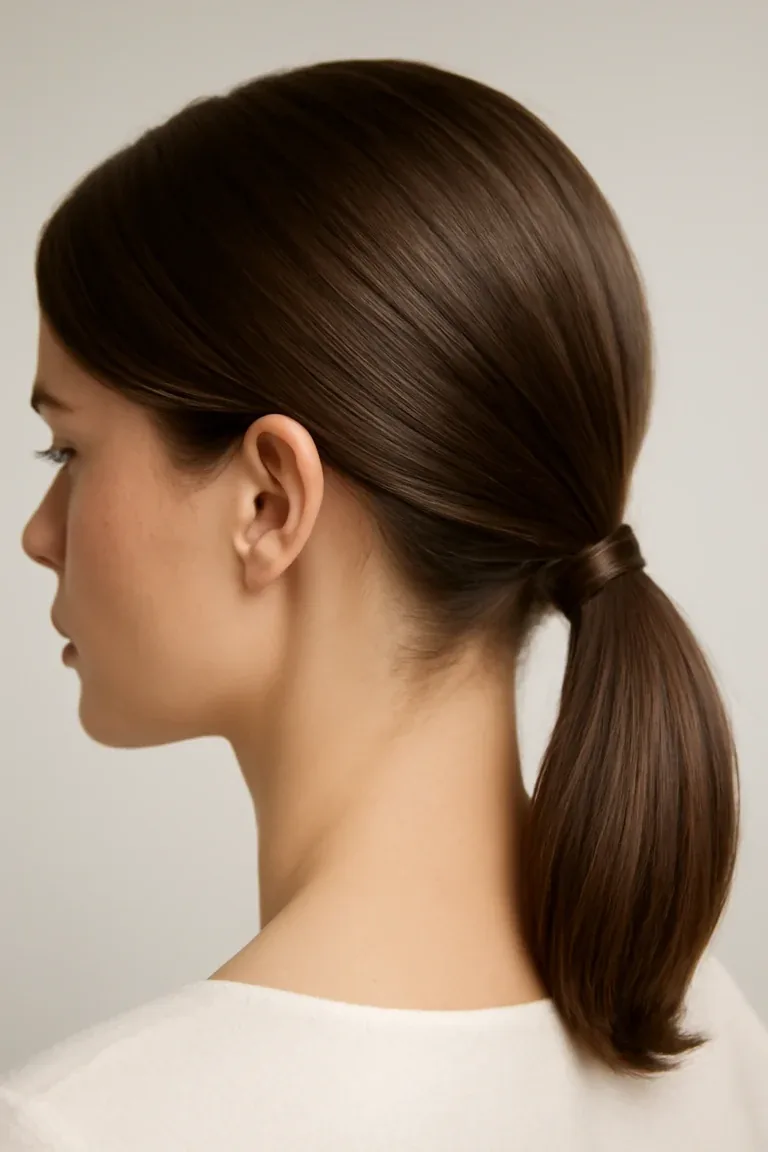
A loose low ponytail with a wrap is the softer sister of the sleek low ponytail. The ponytail sits low and relaxed, with a little volume at the crown and a strand of hair wrapped around the elastic to hide it. It looks effortless and expensive at the same time, and it is comfortable enough to wear for twelve hours without a headache.
Best for: medium to long hair, relaxed and creative offices, and anyone who finds a tight ponytail uncomfortable. How to style: leave the front soft, secure the ponytail loosely, and wrap a strand around the base. A little texturising spray gives the ponytail body without making it stiff. Maintenance: none to speak of — if it loosens, just re-secure it and re-wrap the strand in under a minute.
22. Dutch Braid into a Low Bun
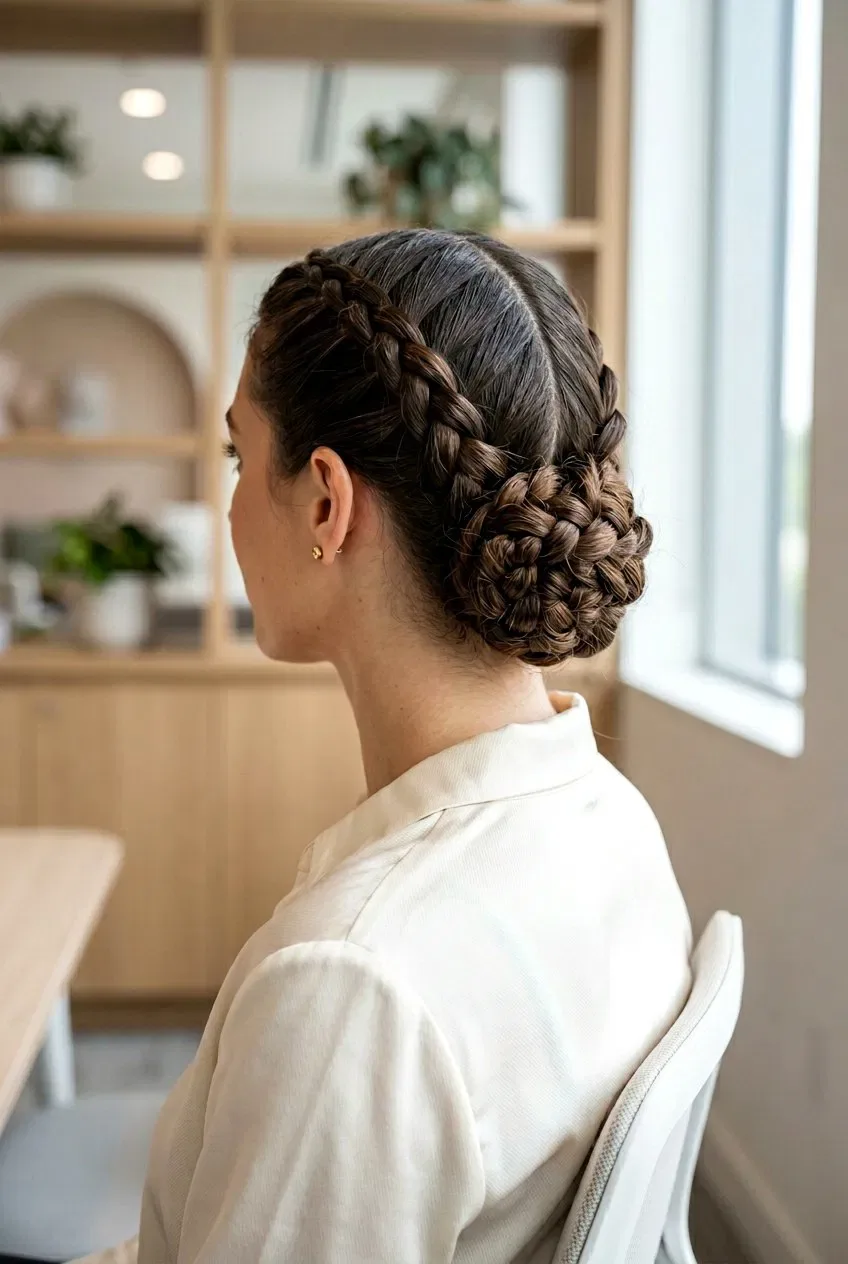
A Dutch braid that flows into a low bun is two styles in one: the braid keeps the front and crown completely secure, and the bun finishes it with elegance. It is one of the most secure styles in this guide — nothing moves, nothing falls, and it looks the same at the end of the day as it did at the start. It also suits almost every face shape, because the braid adds height and structure at the front.
Best for: long or thick hair, long commutes, and hands-on roles where hair must stay put. Pros: extremely secure, looks intricate and impressive, and leaves soft waves when taken out. Cons: it takes the longest of any style here — about fifteen minutes — so practise it before day one and give yourself extra time in the morning.
23. Voluminous Blowout Bob
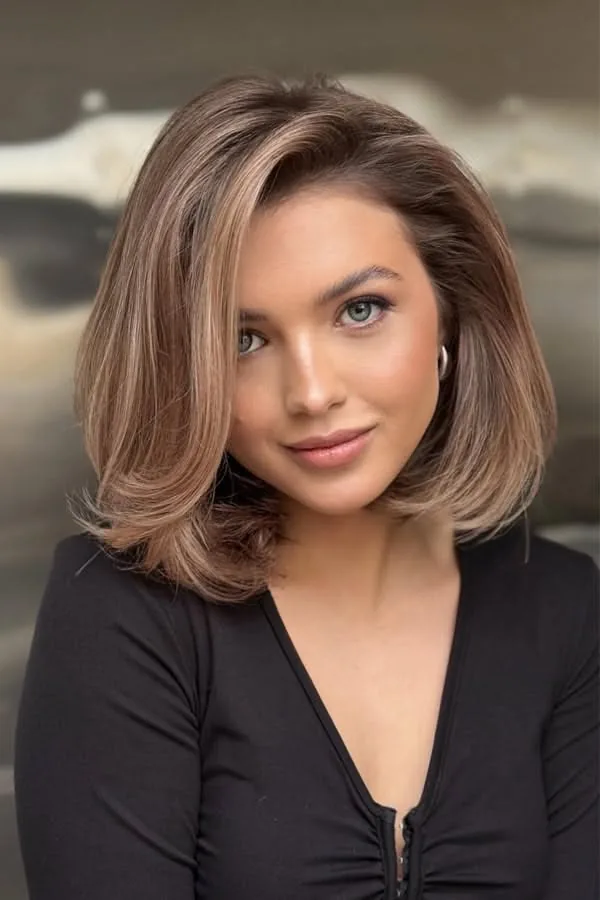
A voluminous blowout bob is pure confidence: bouncy, full, and full of movement, with ends that flick out or curl under depending on your mood. It is the style that makes a simple outfit look expensive, and it is a wonderful first-day choice if your hair holds a blowout well. Use a round brush and a volumising mousse at the roots, and finish with a cool shot from the dryer to lock the shape in.
Best for: fine to medium hair that needs volume, and anyone who wants a down style with real presence. Pros: glamorous, face-framing, and great on camera. Cons: humidity is its enemy, and it can fall flat by afternoon in a warm office. A travel-size volumising spray in your desk drawer brings it back to life in seconds — just lift the roots and mist lightly.
24. Half-Up Half-Down with a Claw Clip
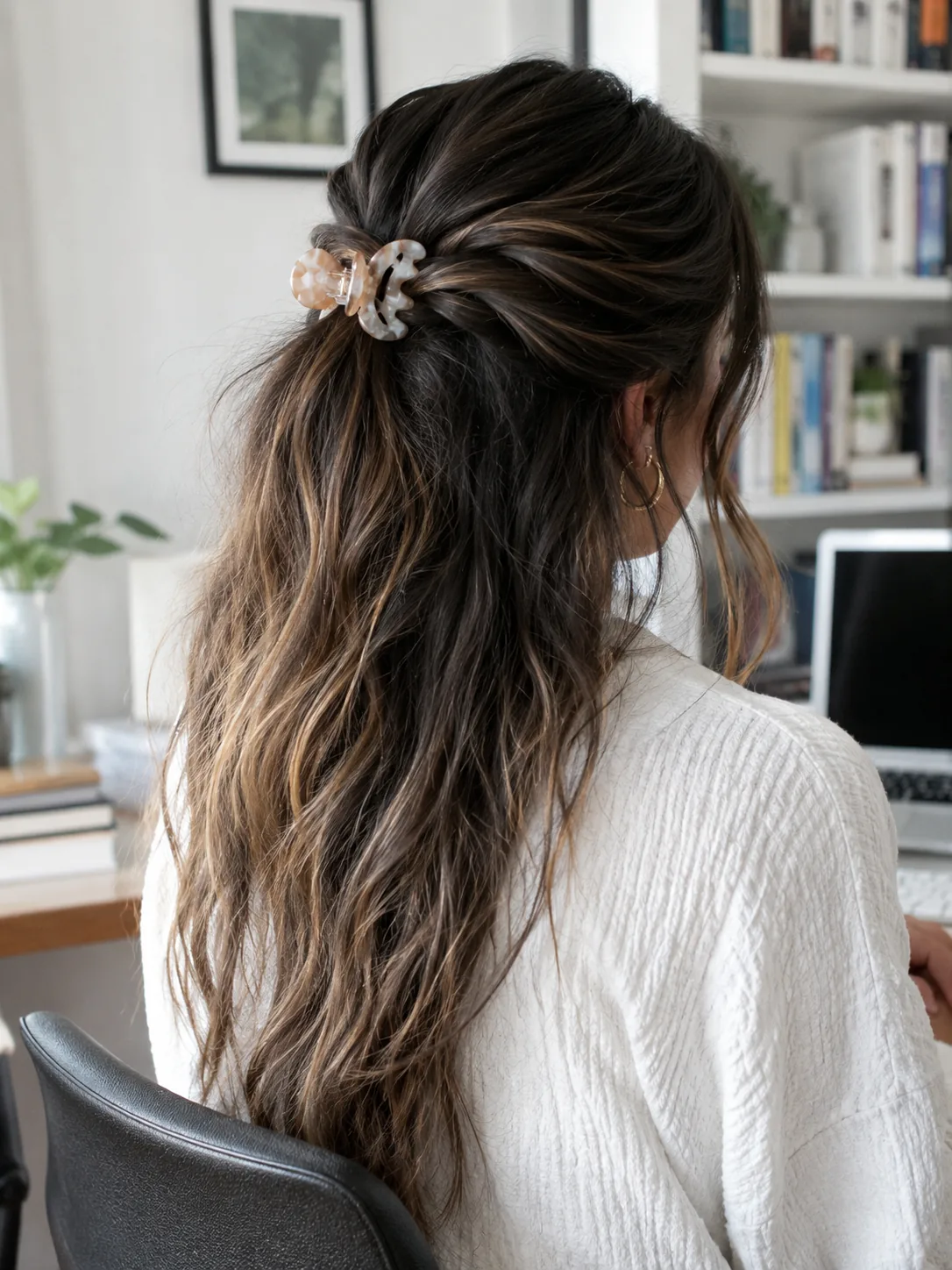
The claw clip has come back as a legitimate office accessory, and the half-up version is its most polished form. Gather the top half of your hair, twist it once, and secure it with a simple, matte claw clip in a neutral colour — black, tortoiseshell or brown. The rest of your hair falls naturally, your face is clear, and the whole style takes less than a minute.
Best for: medium to long hair, busy mornings, and anyone who wants a down style with a practical twist. How to style: keep the clip small and plain — a large or brightly coloured clip reads casual, while a small neutral one reads professional. Quick verdict: this is the fastest genuinely polished style in the guide, and the clip doubles as your emergency hair tie for the rest of the day.
25. Elegant Fishtail Braid
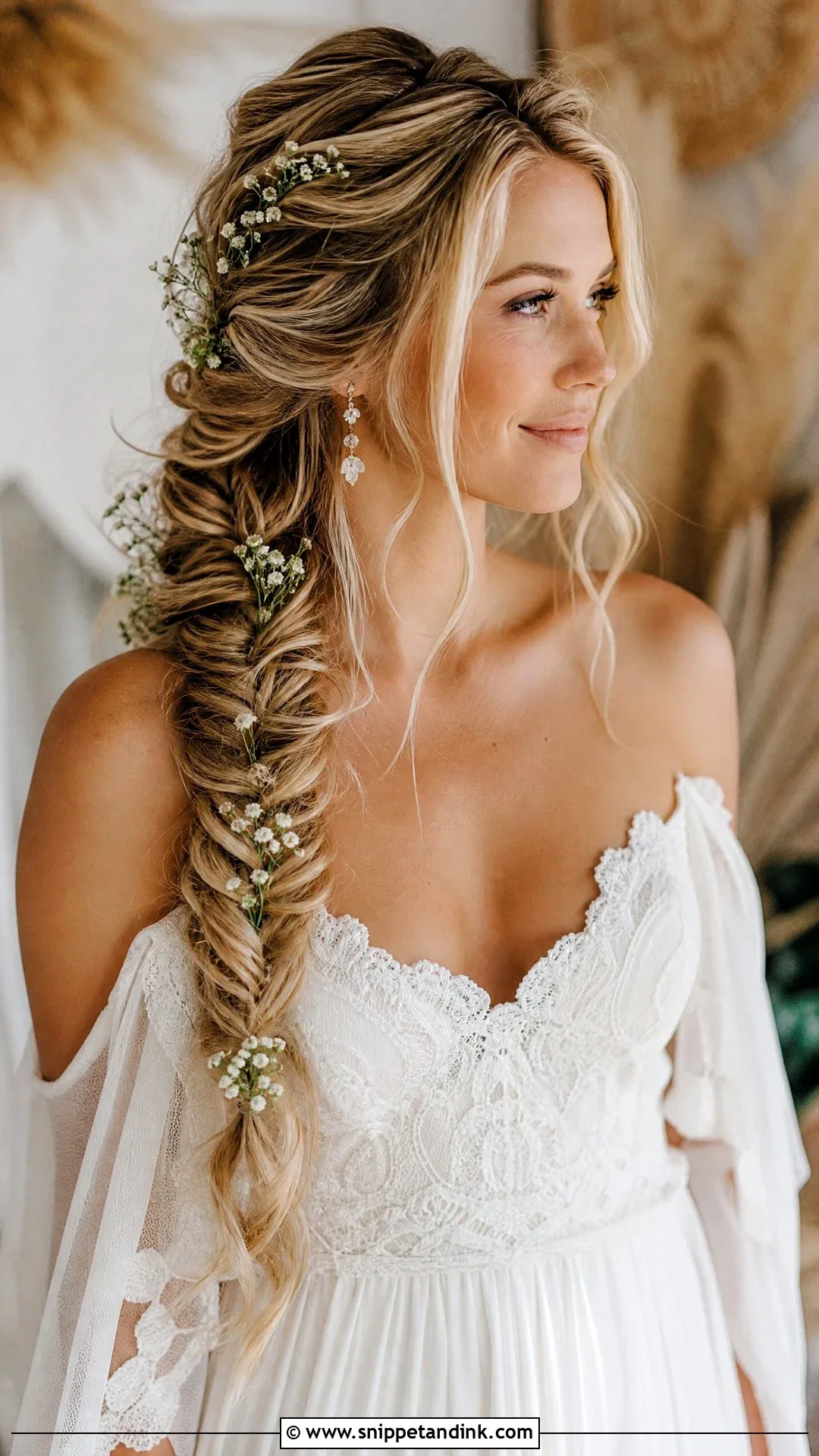
A fishtail braid looks far more complicated than it is — it uses only two sections instead of three — and the result is a beautiful, intricate braid that reads as elegant rather than casual. Worn low and to one side, or straight down the back, it keeps long hair completely controlled while looking like you spent real time on it.
Best for: long hair, and anyone who wants a braid that stands out from the usual French or Dutch braid. Pros: holds all day, looks impressive, and softens beautifully if you gently pull the edges wider. Cons: it takes a few minutes longer than a regular braid, and it works best on hair that is not freshly washed — day-old hair has the grip a fishtail needs. If your hair is very slippery, add a little texturising spray first.
26. Short Curly Crop
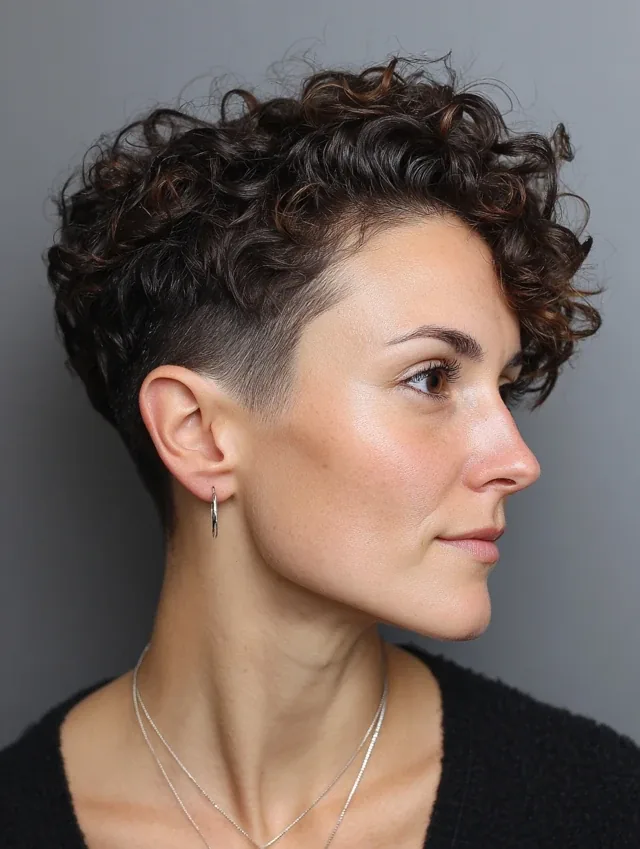
A short curly crop is one of the most joyful professional styles: your natural curls do all the work, the cut frames your face, and the morning routine is five minutes of curl cream and a scrunch. It is also a style that stands out in the best way — confident, individual and completely office-appropriate.
Best for: naturally curly or coily hair, and anyone who wants to stop fighting their texture and start working with it. How to style: apply curl cream to damp hair, scrunch upward, and let it air-dry or diffuse on low heat. Avoid brushing dry curls — it creates frizz instead of definition. What to ask your stylist: for a cut that follows your curl pattern, with layers that give the curls room to spring up rather than weighing them down.
27. Long Layers with Soft Curls

Long layers with soft curls are the classic polished down style for long hair. The layers stop the hair from looking heavy and flat, the soft curls add movement and shine, and the whole look says you take care of yourself without trying too hard. It is also a style that photographs beautifully, which is worth remembering on a day full of introductions and team photos.
Best for: long, thick hair that needs movement, and anyone who wants a down style that still looks styled after eight hours. Maintenance: the curls will relax during the day, which actually makes the style look softer and more natural by afternoon — that is a feature, not a flaw. Common mistake: curling every section in the same direction. Alternate the direction of your curls for a more natural, lived-in finish.
28. Low Side Bun
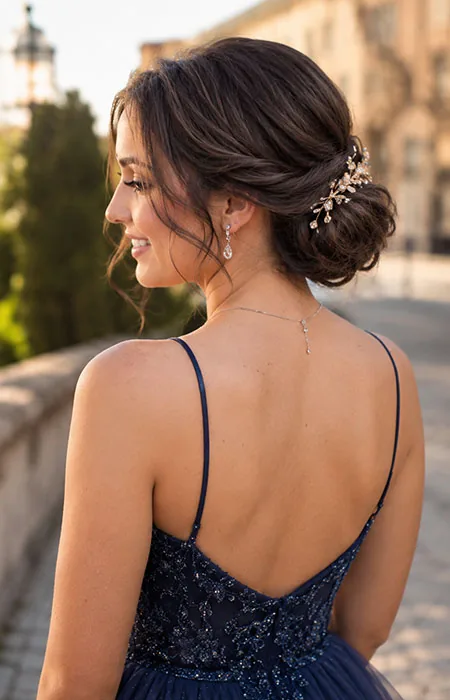
A low side bun is a small twist on the classic low bun, and it changes the whole feeling of the style. Placed just behind one ear, it is softer, more romantic and a little more interesting than a centred bun, while staying just as professional. It pairs beautifully with a side part and with earrings, and it is a lovely choice if you are wearing a blouse with an interesting neckline.
Best for: medium to long hair, and anyone who wants a bun that feels a little special without being formal. How to style: part your hair to the side, sweep it low to the opposite side, twist it into a bun and pin it. Keep the front soft with a few loose pieces. Quick verdict: if the classic low bun feels too plain for you, the side bun is the upgrade that costs no extra time.
29. Straight Hair with Tucked Sides
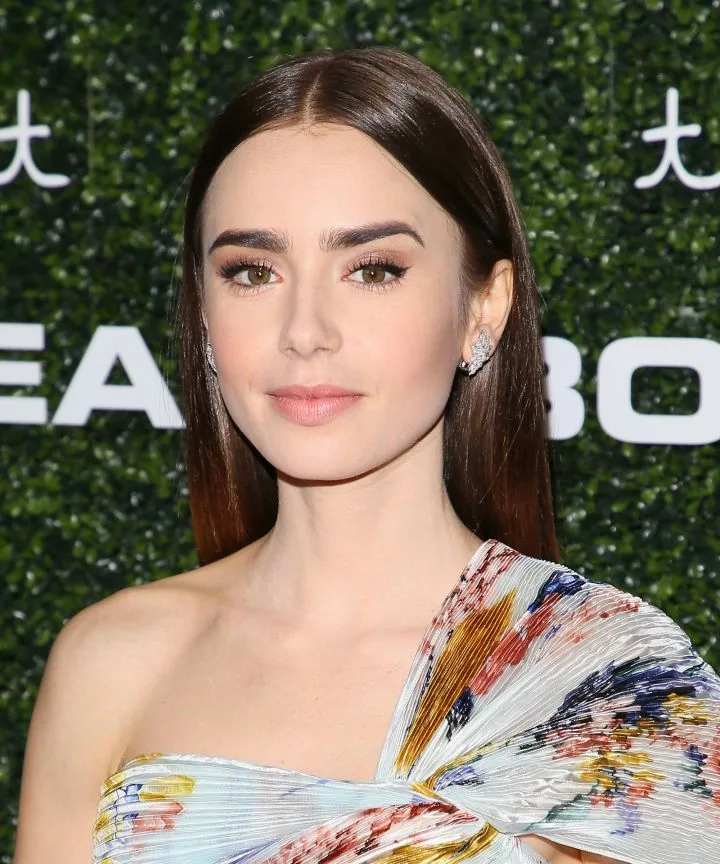
Tucking straight hair behind the ears is the simplest styling move in this guide, and it works. It opens up your face, shows your features, keeps hair out of your way, and makes even unstyled hair look deliberate. It is the perfect choice for a first day when your hair is behaving and you want to keep things simple — or for a second-day refresh when yesterday’s blowout still looks good.
Best for: straight hair of any length, and anyone with a good blowout from the day before. Pros: zero effort, instantly polished, and it shows off earrings beautifully. Cons: it only works if your hair is smooth — frizz or flyaways will show. A quick pass with a flat iron and a drop of serum is all it takes to make this style look intentional rather than accidental.
30. Bouncy Blowout for Medium Hair
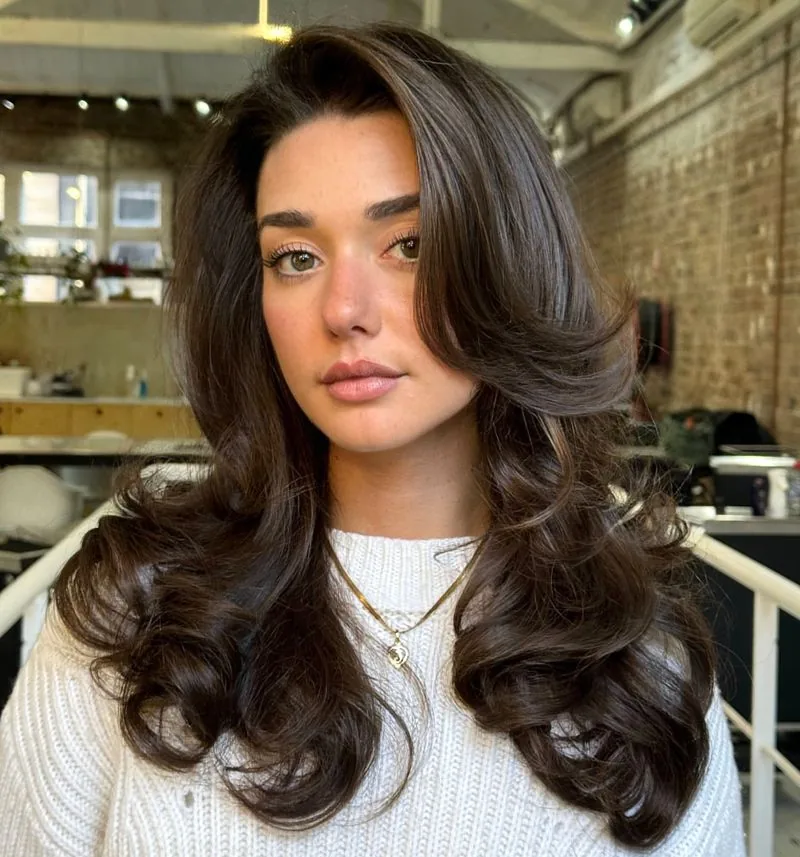
A bouncy blowout is the medium-hair sweet spot: enough length for movement and volume, short enough to blow-dry in fifteen minutes. Use a large round brush, lift the roots as you dry, and curl the ends under or out for a finish that looks salon-fresh. It is cheerful, confident and completely office-appropriate, and it is one of the best styles for making a strong first impression on camera.
Best for: medium-length hair, fine hair that needs volume, and anyone who loves the feeling of a fresh salon blowout. Time it takes: 15 to 20 minutes, which makes it a good weekend-practice style rather than a first-time experiment on the morning itself. Maintenance: a quick root lift with dry shampoo at lunchtime keeps the volume going into the afternoon.
31. Braided Headband with Loose Hair
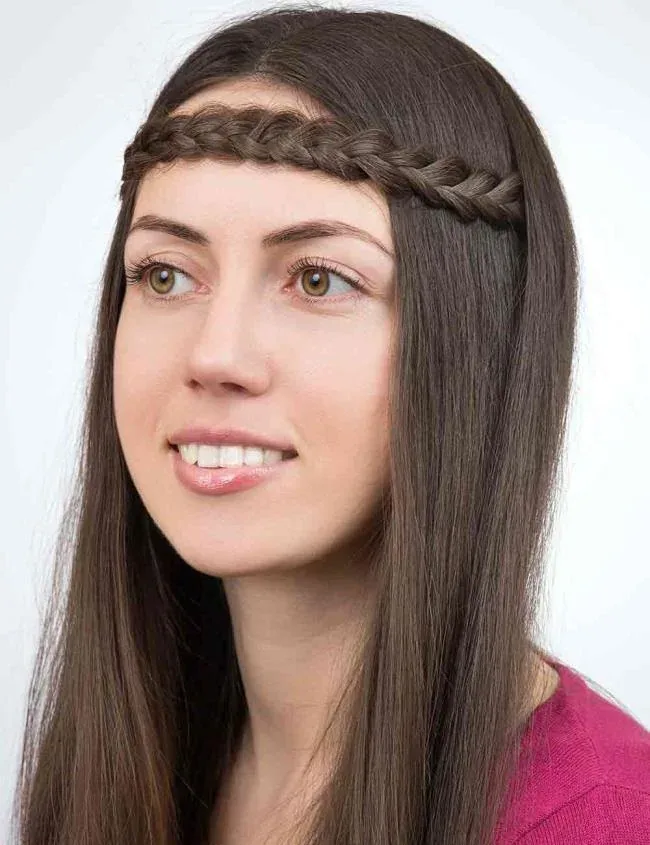
A braided headband — a thin braid worn across the front of your head like a headband, with the rest of your hair loose — is a pretty, practical way to keep hair off your face while still wearing it down. It works on straight, wavy and curly hair, it needs no accessories, and it stays put all day because it is made from your own hair.
Best for: medium to long hair, and anyone whose front layers keep falling into their eyes. How to style: braid a small section from behind one ear across the top of your head, and pin it behind the other ear. Keep the braid thin and neat for a professional look. Who should avoid it: anyone with very short hair, which does not have enough length for the braid — a slim fabric headband in a neutral colour is the short-hair alternative.
32. Modern Soft Beehive
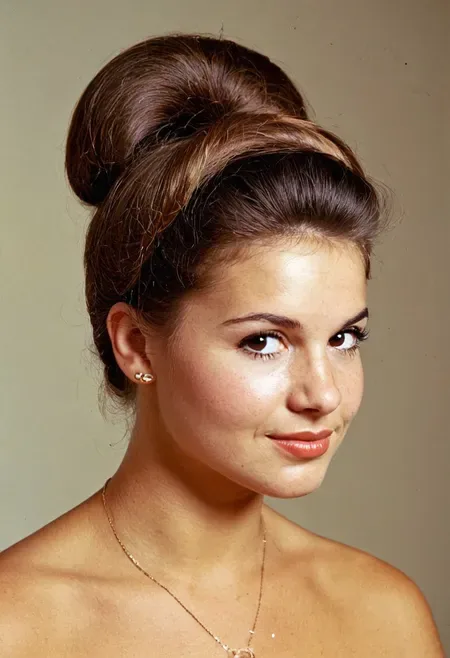
The beehive is back, but the modern version is softer, lower and much more wearable than the 1960s original. Think gentle volume at the crown, smooth sides, and a soft updo at the back — height without the helmet. It is a wonderful choice for a first day if you want a style with real presence, and it is surprisingly practical: the volume is built in, so it does not fall flat by lunchtime.
Best for: medium to long hair, formal offices, and anyone with fine hair that needs the illusion of volume. How to style: backcomb the crown gently, smooth the top layer over it, and pin the lengths into a soft bun. Finish with a flexible spray. Common mistake: going too high or too stiff. A modern beehive should look like volume, not architecture — keep it soft, keep it low, and let a few pieces move naturally.
33. Wavy Lob with a Deep Side Part
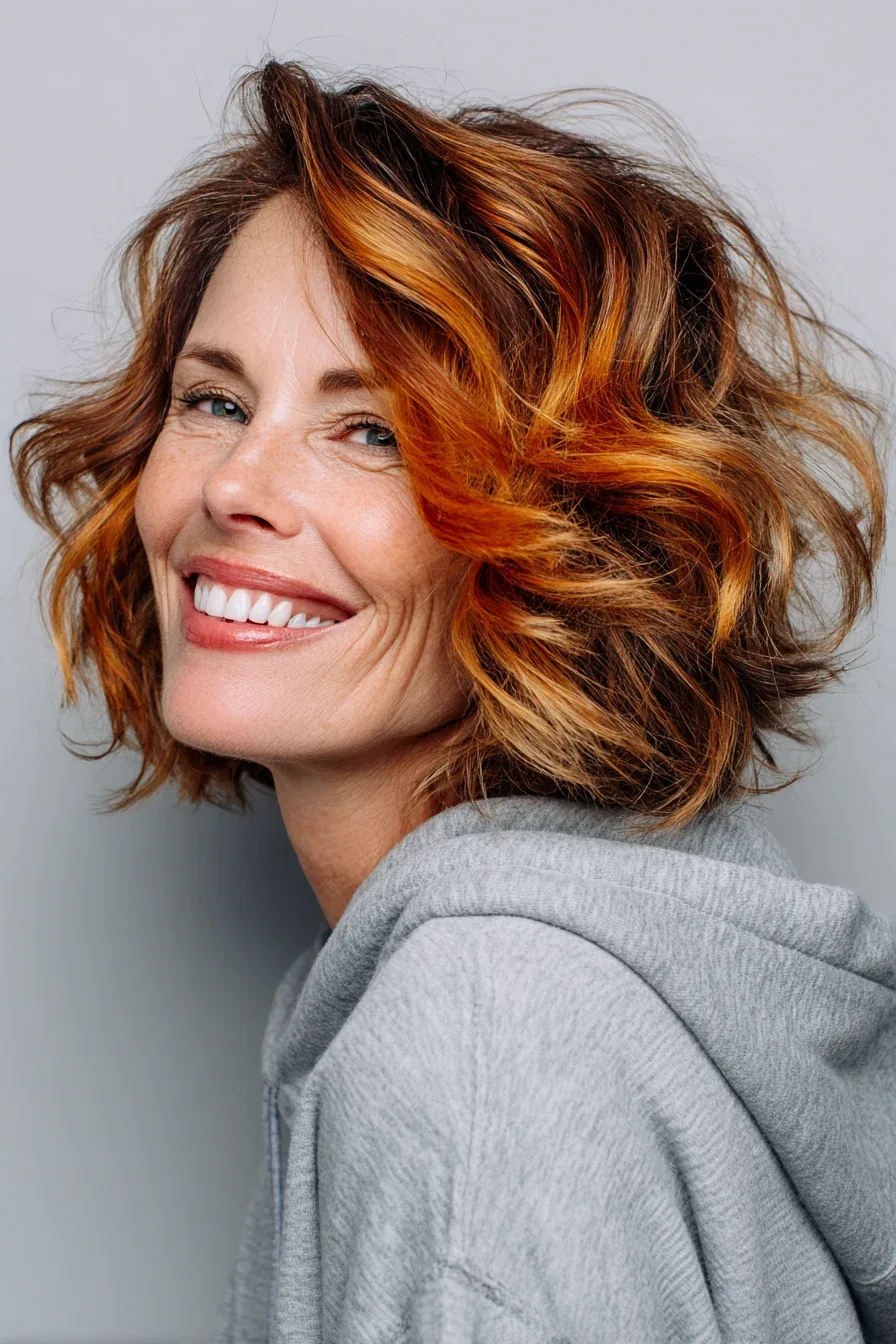
A wavy lob with a deep side part is one of the most flattering professional cuts you can wear. The deep part creates instant volume and asymmetry, the waves add texture and movement, and the collarbone length keeps it practical. It is the style that looks good on almost everyone, in almost every office, with almost no effort.
Best for: wavy or easily waved hair, round and square faces that benefit from asymmetry, and anyone who wants a down style with shape. How to style: create loose waves with a flat iron or a large curling iron, then set the deep part and let the heavier side fall forward. A little texturising spray keeps the waves defined without making them stiff. Maintenance: the waves relax during the day into a softer, more natural look — which is exactly what you want by afternoon.
34. Neat Bun with a Silk Scarf
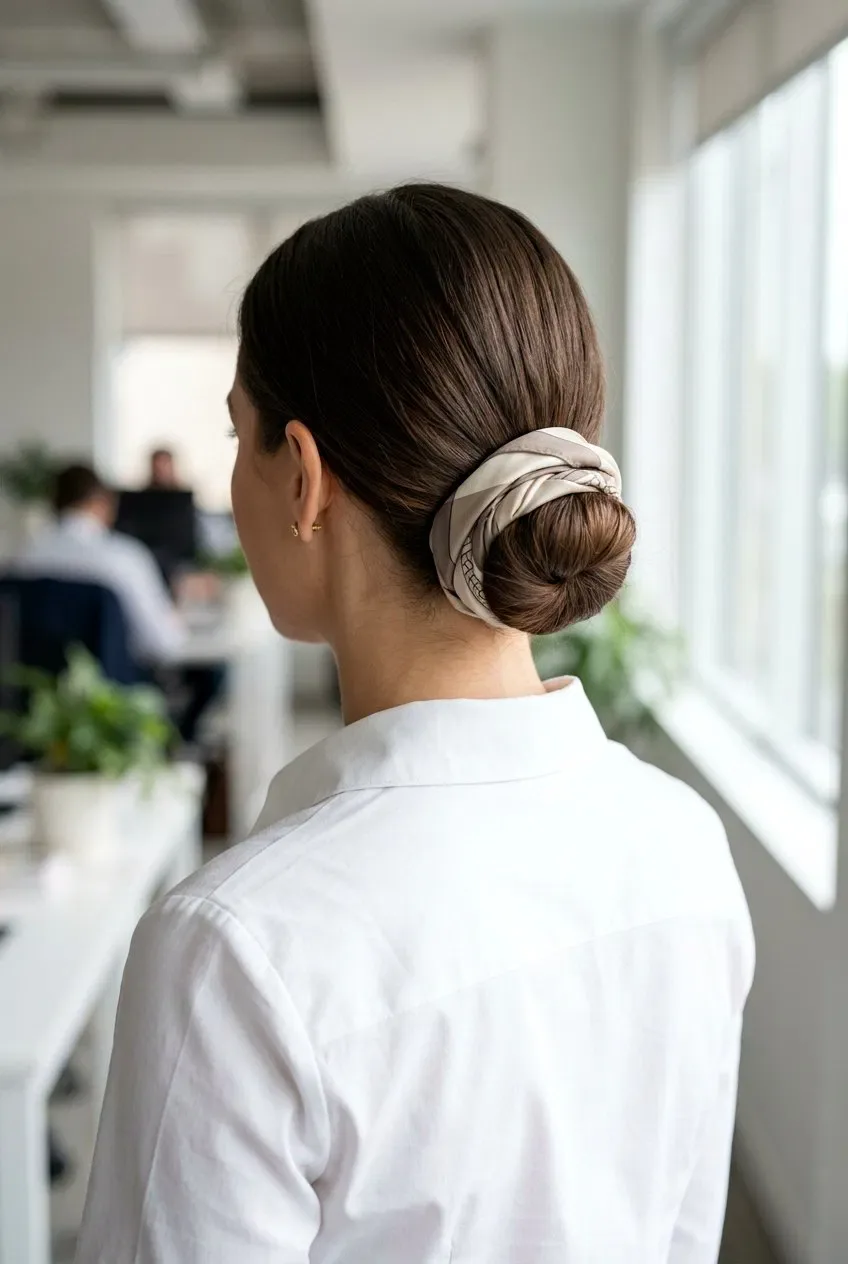
A silk scarf wrapped around a neat bun is the easiest way to make a simple style look considered. Choose a scarf in a neutral colour or a quiet pattern, wrap it around the base of the bun, and tie it in a small knot or bow. It adds colour and personality without breaking any dress code, and it keeps the bun secure at the same time.
Best for: anyone who wants a low bun with a little more character, and for creative offices where a small personal touch is welcome. Who should avoid it: anyone in a very strict corporate or healthcare setting, where accessories should stay minimal — a plain bun is the safer choice there. Quick verdict: this is the style to choose when your outfit is simple and you want your hair to do the talking.
35. Curly Low Puff
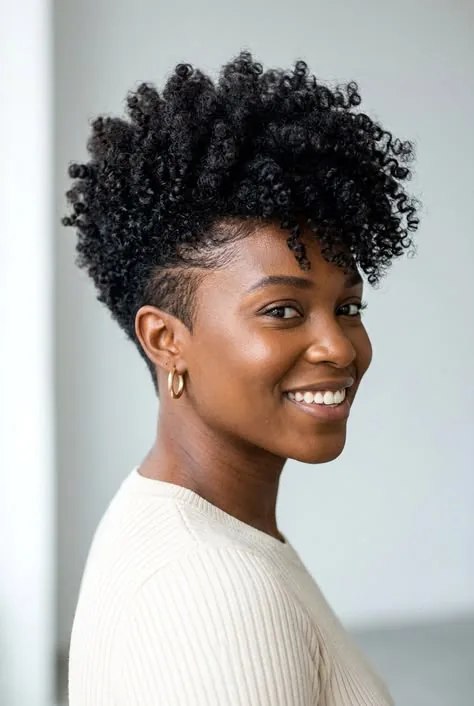
A curly low puff is a beautiful, practical style for naturally curly and coily hair: the curls are gathered into a full, low puff at the nape, the edges are smoothed, and the face is completely clear. It is comfortable, it holds all day, and it shows off your natural texture instead of hiding it.
Best for: curly, coily and natural hair, and anyone who wants a style that works with their texture rather than against it. How to style: gather the curls loosely with a wide band or a puff holder, smooth the edges with a little gel or edge control, and let the puff keep its natural fullness. Maintenance: almost none — carry a small bottle of curl refresher spray for a midday pick-me-up if the curls start to look dry.
36. Sleek Middle-Part Straight Hair
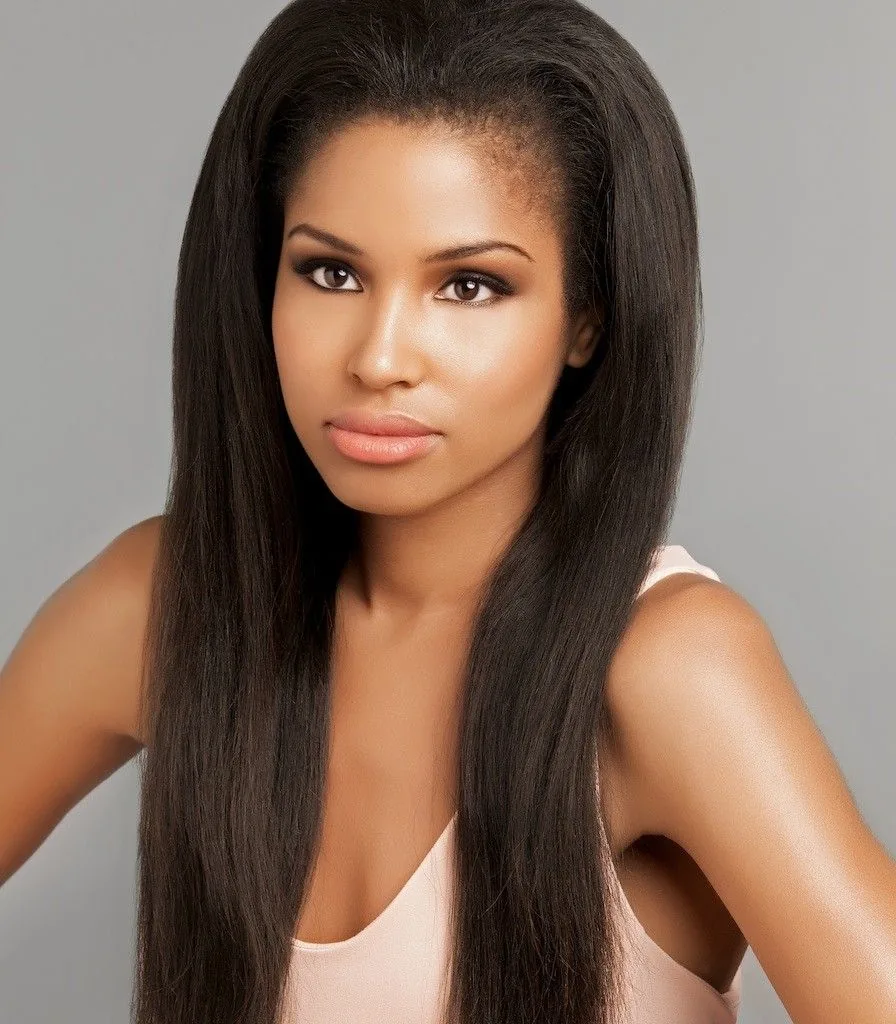
Sleek, straight hair with a middle part is the minimalist’s first-day style: no pins, no braids, no fuss — just healthy, shiny hair worn exactly as it is. It works best when your hair is in great condition, because there is nothing to hide behind. A good cut, a smooth blow-dry and a drop of shine serum are all it needs.
Best for: straight hair, oval and heart-shaped faces, and anyone whose hair is naturally smooth and well-conditioned. Pros: the fastest down style in the guide, and it looks expensive when the hair is healthy. Cons: it shows every flaw — split ends, uneven layers, frizz — so it is a style that rewards a fresh trim and a good conditioning routine in the weeks before day one.
37. Twisted Low Ponytail
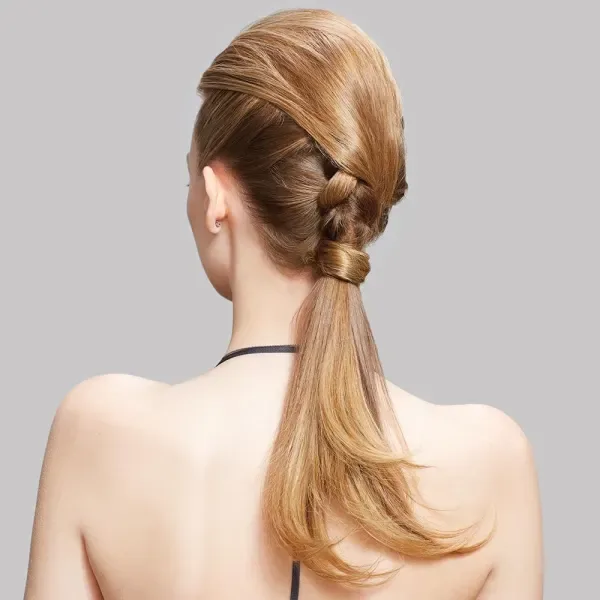
A twisted low ponytail is a small upgrade that makes a big difference. Instead of a plain ponytail, twist two sections of hair around each other before securing them low at the nape. The twist adds texture and visual interest, it holds better than a straight ponytail, and it takes about thirty seconds longer to do.
Best for: medium to long hair, and anyone who finds a plain ponytail a little boring but still wants the practicality. How to style: split the hair into two sections, twist them around each other, and secure with an elastic wrapped in a strand of hair. Quick verdict: this is the style to choose when you want to look like you tried — because you did, but only for an extra thirty seconds.
38. Short Bob with a Slight Wave
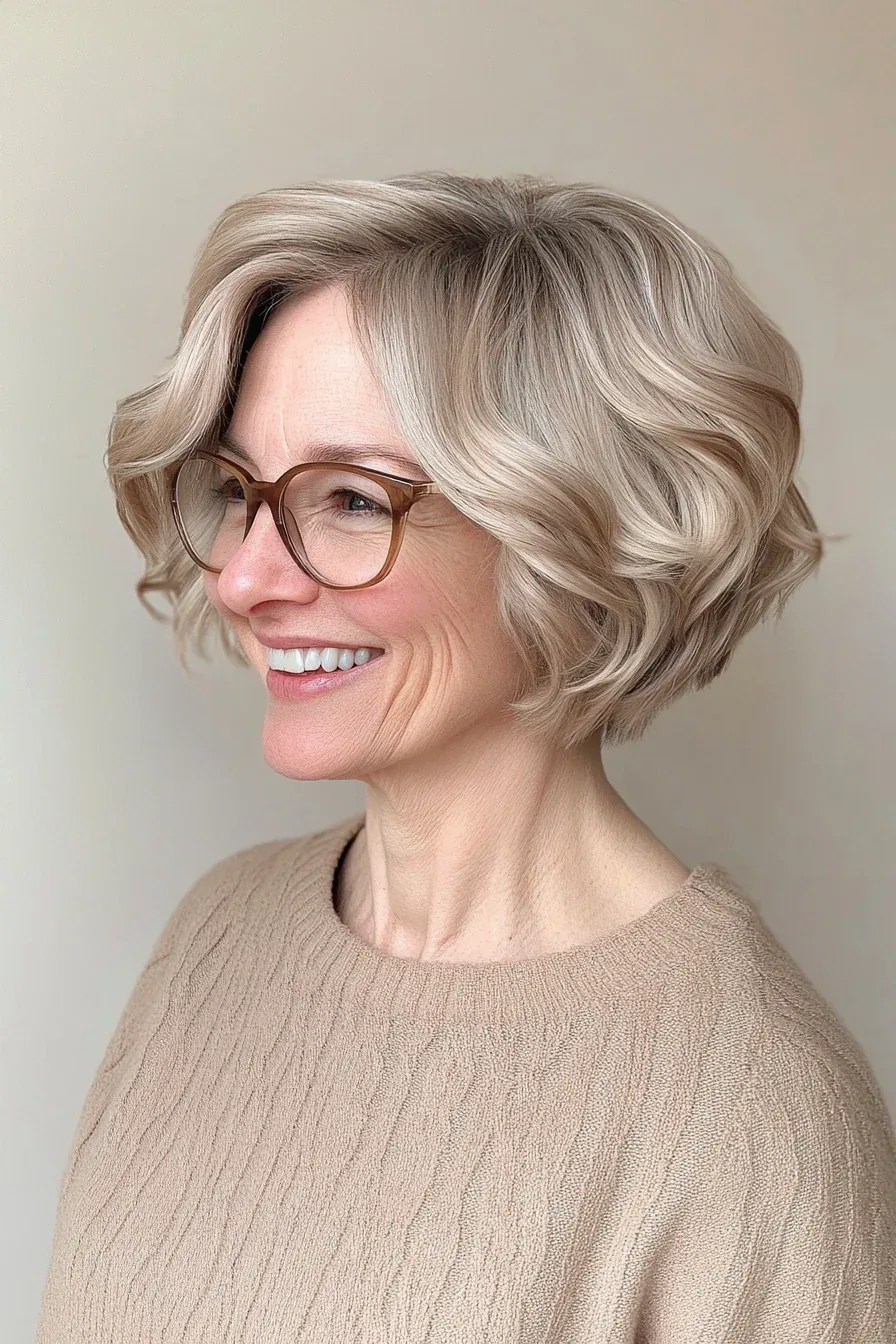
A short bob with a slight wave is the easiest short style to wear to work: it has the structure of a bob and the softness of a wave, and it needs almost no styling. A little texturising spray, a quick scrunch, and you are done. It frames the face, moves naturally, and looks polished without looking overdone.
Best for: wavy hair, fine hair that needs texture, and anyone who wants a short cut that does not need a daily blow-dry. Pros: five-minute styling, works in every industry, and grows out gracefully. Cons: the wave can fall flat in humidity, so keep a small bottle of texturising spray in your bag for a midday refresh.
39. High Bun with Loose Tendrils
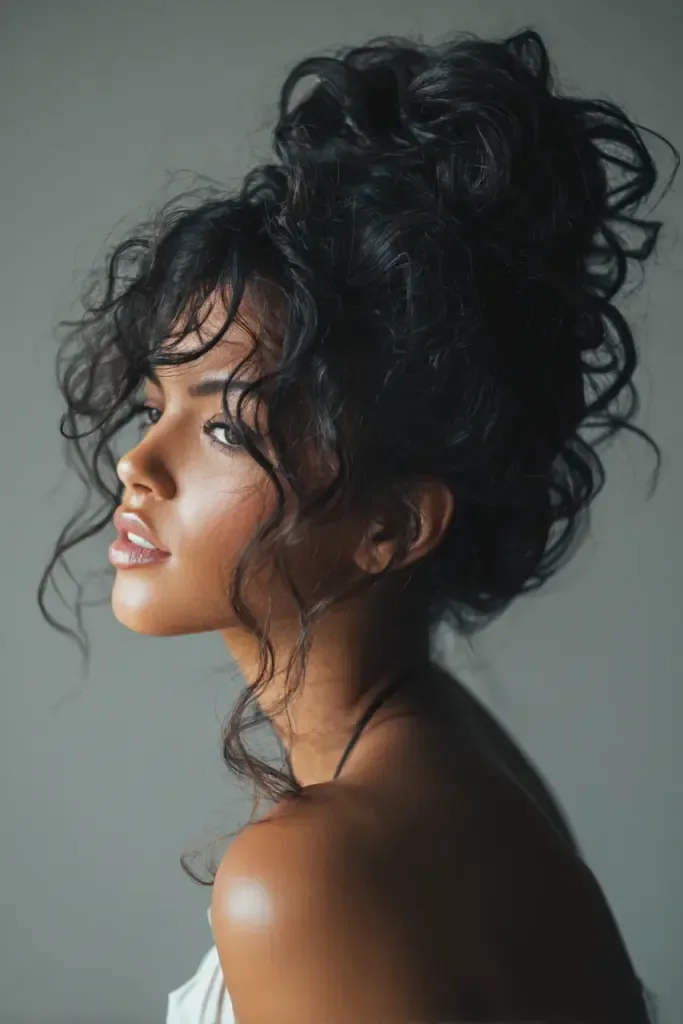
A high bun with loose tendrils is the softer version of the sleek top knot: the bun sits high and neat, but two thin tendrils are left loose at the front to frame the face. It is polished and practical, but it has a warmth that a fully scraped-back bun does not. It is also one of the best styles for a long day, because the tendrils can be re-curled or re-pinned in seconds.
Best for: long hair, and anyone who finds a high bun too severe on its own. How to style: leave the tendrils out before you gather the hair, curl them lightly, and pin the bun securely. Common mistake: pulling out too much hair at the front, which turns tendrils into a fringe that falls in your eyes. Keep them thin, keep them to the sides, and keep them out of your face.
40. Side Braid Over One Shoulder
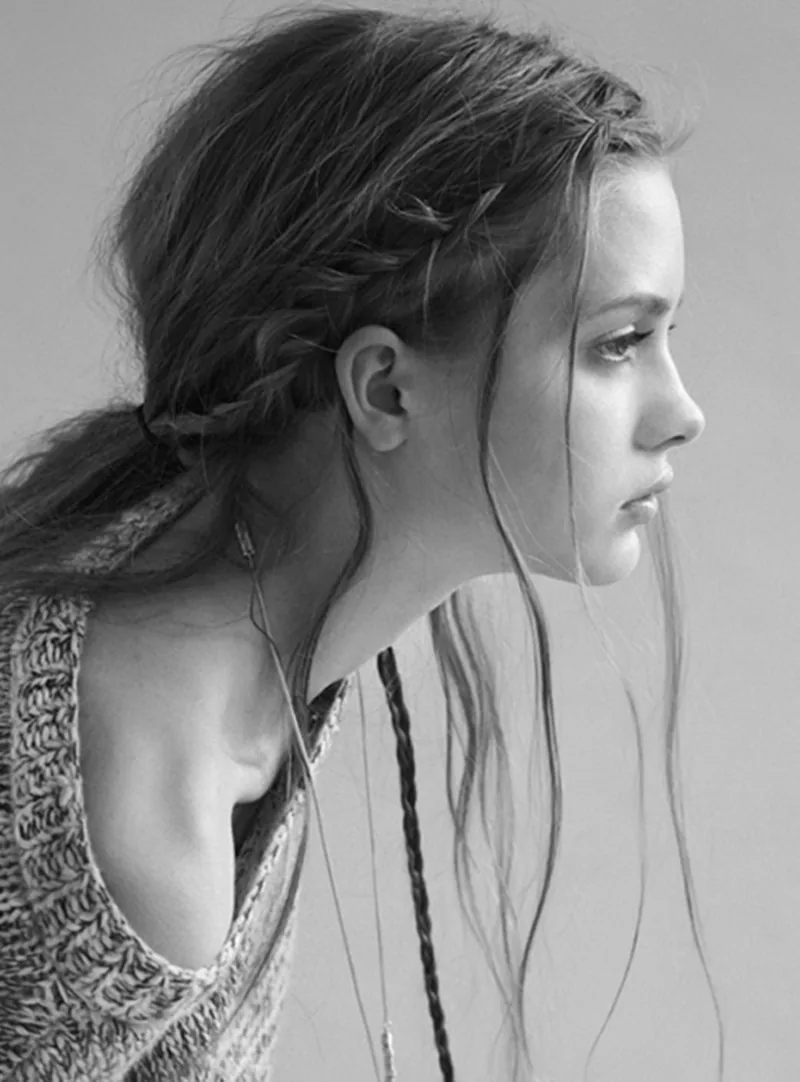
A side braid worn over one shoulder is relaxed, pretty and completely practical. It keeps long hair out of your way, it cannot be blown about, and it looks soft and approachable — a good match for a first day when you want to seem friendly as well as professional. A loose, slightly pancaked braid looks best; a very tight one can look severe.
Best for: long hair, creative and relaxed offices, and anyone with a long commute. Pros: zero maintenance, survives any weather, and leaves lovely waves when taken out. Cons: it can look too casual for a formal corporate setting, where a braid worn down the back or pinned up is the safer choice. If you are unsure about your office, wear the braid down the back for day one.
41. Half-Up Braided Crown
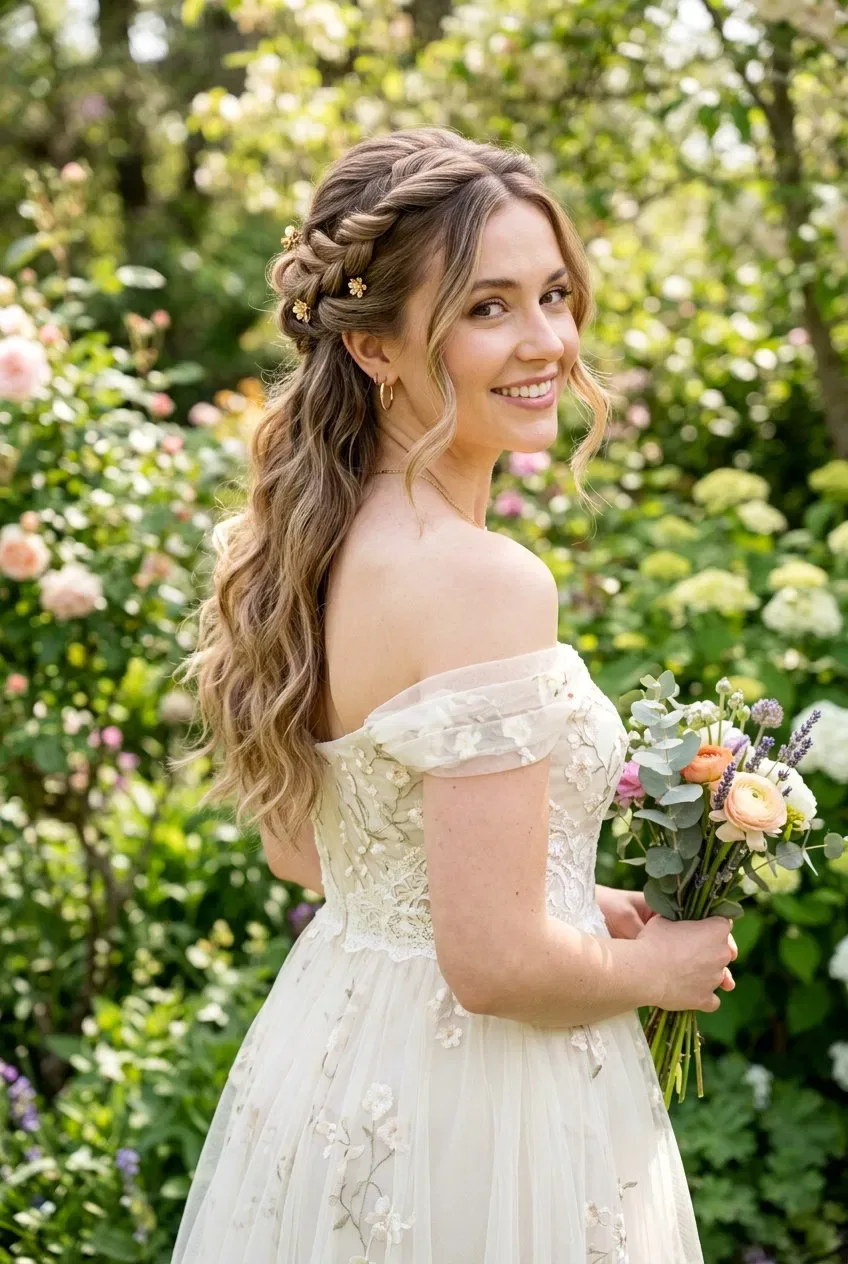
A half-up braided crown combines the prettiness of a braid with the ease of wearing your hair down. Two small braids from each side meet at the back of your head and are pinned together, while the rest of your hair falls loose. It keeps the front clear, adds a romantic detail, and works on straight, wavy and curly hair alike.
Best for: medium to long hair, and anyone who wants a down style with a built-in detail. How to style: braid two thin sections from the temples, bring them to the back, and pin them together under the top layer of hair so the join disappears. Maintenance: check the pins once after lunch. Otherwise, this style looks after itself all day.
42. Soft Curls Pinned to One Side
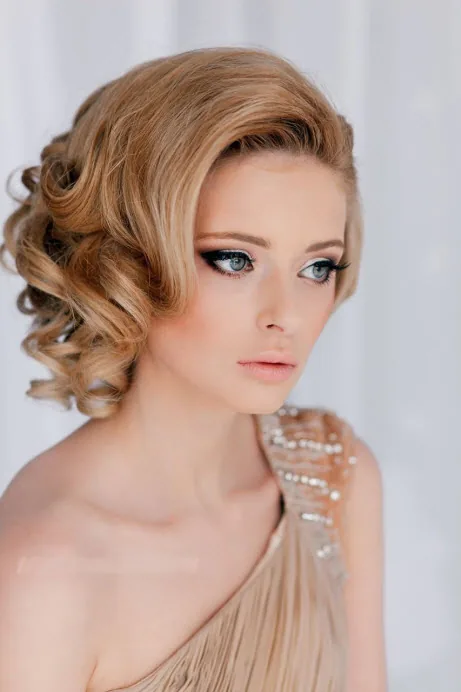
Soft curls pinned to one side are quietly glamorous: all the movement and shine of a curly blowout, with one side pinned back so your face is clear and the style stays in place. It is a wonderful choice for a first day that includes a presentation or a lot of face-to-face introductions, because your face is never hidden behind your hair.
Best for: medium to long hair, and anyone who wants a down style that still behaves. How to style: curl the hair in large sections, brush through the curls for softness, then pin one side back with two pins that match your hair colour. Quick verdict: this is the most camera-friendly style in the guide — it looks good from every angle, including the side your colleagues will see when you are working at your desk.
43. Polished Air-Dried Waves
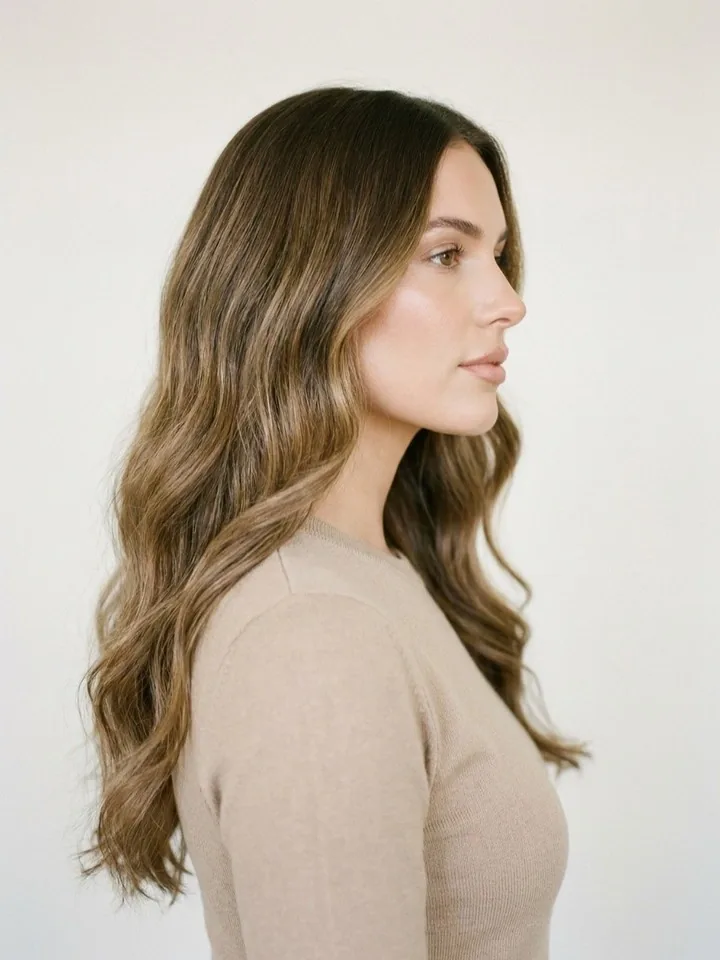
Polished air-dried waves are the lowest-effort style in this guide, and on the right hair they are also one of the best. If your hair has natural wave, a little leave-in conditioner and a scrunch is all you need: let it air-dry, part it neatly, and smooth the front pieces. The result looks effortless, natural and confident — like you woke up with great hair, even though you planned it the night before.
Best for: naturally wavy hair, and anyone whose mornings are too short for heat styling. Pros: no heat damage, five minutes of work, and a look that gets better as the day goes on. Cons: it only works if your hair has natural wave — straight hair will just look unstyled. What to ask your stylist: for long layers that encourage your natural wave to form evenly, instead of falling flat at the roots and frizzing at the ends.
What hairstyle is best for a first day at work?
A sleek low ponytail, a classic low bun or a polished lob are the safest choices. They look deliberate, keep hair off your face, and survive a full day without touch-ups. Pick the one that suits your hair length and your industry.
Should I wear my hair up or down on my first day?
Either works, as long as it stays out of your face. Hair up is more practical and more formal; hair down is fine if it is smooth, styled and does not need constant fixing. If you are unsure, choose up — it is the safer first impression.
Can I wear a messy bun on my first day at work?
Yes, if it is a polished messy bun with smooth roots, a neat parting and a secure shape. A thrown-together bun looks rushed. If your office is formal, choose a sleek bun instead and save the messy bun for week two.
How do I keep my hair looking good all day at work?
Choose a style with built-in hold, like a braid, a bun or a wrapped ponytail, and keep a small touch-up kit in your desk: a brush, a few pins, dry shampoo and a travel-size spray. A two-minute fix before afternoon meetings keeps you polished until home time.
What hairstyles should I avoid on a first day?
Avoid brand-new cuts or colours, very high or very tight styles, wet-look finishes, strong fragrances, and anything that covers your eyes or needs constant attention. Save experiments for week two, once you know the office culture.
What is the quickest professional hairstyle for a first day?
A sleek low ponytail or pinned-back sides take under five minutes and look completely professional. A half-up claw clip style takes under a minute. Practise your chosen style the weekend before so the morning itself is stress-free.
How should I style curly hair for a first day at work?
Work with your curls, not against them. A curly low puff, a short curly crop, or defined curls worn down with the front pinned back all look polished and professional. Use curl cream on damp hair and avoid brushing dry curls, which creates frizz.
Does my hairstyle need to match my industry?
Yes, it helps. Corporate, finance and law favour structured styles like low buns and smooth blowouts. Creative fields welcome texture and personality. Healthcare and hands-on roles need hair fully secured. When in doubt, style one notch more polished than you think the office requires.
Can I wear my hair down if I have long hair?
Yes, if it is styled and controlled — a smooth blowout, soft curls pinned to one side, or long layers with a neat parting all work. Avoid loose hair that falls forward when you lean over a desk, and consider a low ponytail or braid if your commute is long or the weather is bad.
What should I do with my hair if it rains on my first day?
Choose a braid or a bun, which rain cannot undo, and carry a small umbrella and a travel-size anti-frizz serum. At your desk, smooth the front with a brush, add a drop of serum, and re-pin anything that has loosened. Never rely on a loose blowout in the rain.
Conclusion
Your first day at work is a fresh start, and your hair is one small part of a much bigger picture — but it is the part people see first, before you have spoken a word. The 43 hairstyles for a first day at work in this guide all share the same idea: they are polished without being overdone, practical without being boring, and simple enough to style on a nervous morning. Whether you chose the sleek low ponytail, the classic low bun, the polished lob, or the soft waves that felt most like you, the best style is the one you do not have to think about once you walk through the door.
So practise your style the weekend before, lay out your outfit the night before, pack your little touch-up kit, and give yourself fifteen calm minutes in the morning. Then stop worrying about your hair and focus on the people, the work and the new beginning in front of you. First impressions start at the top — but they are made by the person underneath the hairstyle. Good luck on your first day.