Colour-Proof and Camera-Ready: 32 Hairstyles for a Holi Celebration That Survive the Gulal
Holi is the one festival where your hair is guaranteed to get messy. Gulal drifts into every strand, friends throw coloured water when you least expect it, and by midday even the neatest blow-dry looks like a rainbow. That is why hairstyles for a Holi celebration are planned differently from party hair — the best ones protect your hair first and look good second, because a style that keeps colour out will still look lovely in photos at sunset.
The winning formula is simple: oil the hair before you play, keep it braided or bunned so powder cannot settle deep inside, and choose a style you can wash out without a fight. Braids are the hero here — they keep the hair contained, stop gulal from reaching the scalp, and rinse clean far more easily than loose hair, which traps colour in every tangle.
This guide starts with the preparation that makes everything else work — oiling, keeping powder out, washing colour out afterwards, matching bright outfits and choosing between day play and an evening gathering — and then gives you 32 styles for every hair length and texture, from tight Dutch braids that survive a water fight to soft evening braids for the family dinner after the colours are washed off. Pick one for the day, and maybe a second, looser one for the evening.
Oiling Your Hair Before the Colours
Oiling is the single most important step before Holi, and it takes ten minutes the night before or an hour before you go out. Warm coconut or almond oil, worked from roots to ends, coats every strand so gulal and coloured water slide off instead of staining the hair shaft. Oiled hair also tangles far less, which matters when you wash the colour out later.
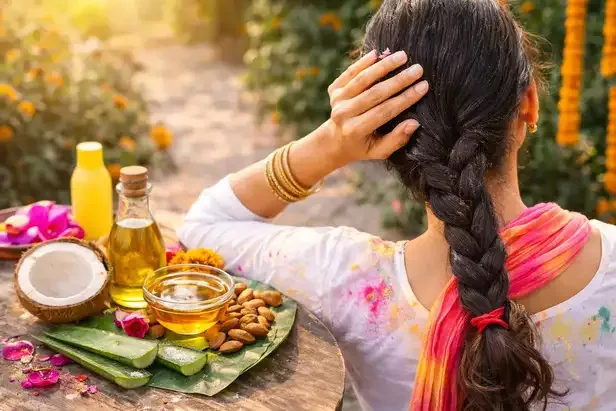
Common mistake: oiling only the ends and skipping the scalp. Colour settles on the scalp first, and dry scalp skin absorbs pigment fastest — a stained, itchy scalp is the most common Holi hair complaint. Massage oil into the scalp itself, not just the lengths, and cover the hairline and the nape too.
Maintenance: if your hair is very dry, oil it the night before and braid it loosely overnight so the oil soaks in. On the morning of Holi, add a light second layer on the lengths only. Too much oil makes braids slippery, so blot the excess with a towel before styling.
Quick verdict: never play Holi on dry, unoiled hair. Oil first, style second — everything else in this guide works better on top of it.
Keeping Gulal and Water Out of Your Hair
Gulal is a fine powder, and fine powder goes everywhere loose hair goes. The styles that keep it out share one idea: no loose hair, no gaps. A tight braid or a covered bun leaves almost no surface for powder to settle on, and a scarf or dupatta over the top adds a second barrier that catches most of the colour before it reaches your hair at all.
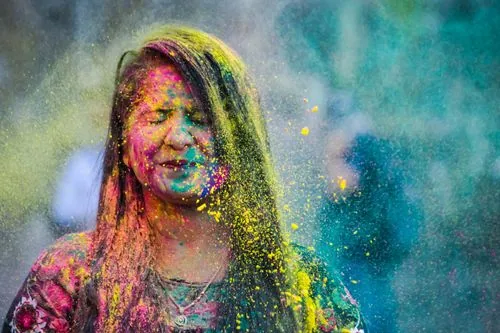
Common mistake: wearing your hair open for the photos and planning to tie it up later. The first handful of gulal lands within minutes of arriving, and by the time you tie it up the powder is already deep in the lengths. Arrive with your hair already secured, and loosen it only for evening photos after you have washed.
Maintenance: carry a light cotton scarf or dupatta in your bag. If the colour play gets heavy, drape it over your head and tuck the ends in — it takes ten seconds and saves an hour of washing later. A quick shake of the scarf now and then keeps the powder from building up.
Quick verdict: contained hair plus a cover beats any amount of washing afterwards. Prevention is the whole game on Holi morning.
Choosing a Style for Your Hair Length
Short, medium and long hair need different Holi styles, because powder behaves differently on each. Short hair needs gel and a headband or scarf, since there is not enough length to braid. Medium hair suits a single braid or a low bun. Long hair needs a braid — a loose ponytail on long hair becomes a rope that soaks up coloured water and tangles into knots.

Common mistake: copying a long-hair braid onto short hair. A braid that is too short unravels within minutes of colour play and leaves the ends free to catch powder. Short hair is better slicked back and covered than forced into a braid that will not hold.
Maintenance: pack for your length: short hair needs spare pins and a scarf, medium hair needs two elastics, long hair needs three elastics and a comb for the wash-out later. The longer the hair, the more spares you will use.
Quick verdict: match the style to the length you have today. The right style for your length feels light, stays put through water and powder, and washes out without a struggle.
Matching Your Hairstyle to Bright Holi Outfits
Holi outfits are usually white or bright — a white kurta that will end the day splashed with pink and yellow, or a vivid salwar kameez in orange, green or fuchsia. Your hairstyle should sit neatly against that colour, not compete with it. Clean braids and low buns frame bright outfits beautifully, while a scarf or dupatta in a contrasting colour can tie the whole look together.
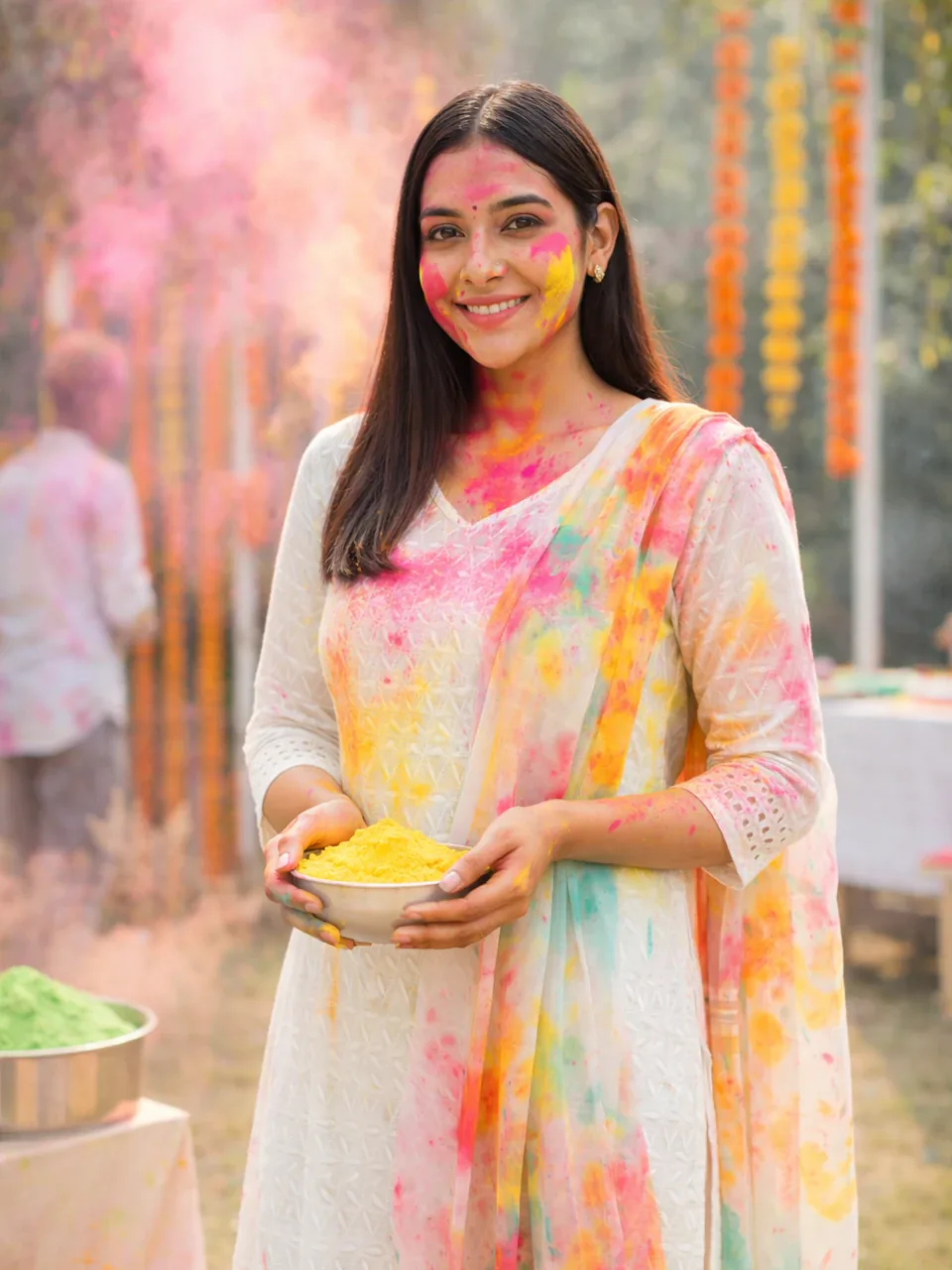
Common mistake: adding coloured hair accessories that clash with the gulal. Bright clips and ribbons disappear under pink powder and look messy once wet. Keep accessories simple — plain elastics, a neutral scarf — and save the decorative pieces for the evening gathering, after the colours are washed off.
Maintenance: white outfits stain, and so does hair left loose against them. A braid or bun keeps coloured, damp hair off a white kurta and stops the dye transferring onto the fabric. If your hair does drip colour, rinse the spot on the outfit with cold water as soon as you can.
Quick verdict: neat and simple wins against bright Holi colours. Let the outfit and the gulal be the colour — your hair should be the calm, tidy frame around them.
Day Celebration or Evening Gathering: Two Different Hairstyles
Holi has two halves: the daytime colour play, outdoors and messy, and the evening gathering, washed and dressed up again. Trying to use one hairstyle for both is the most common planning mistake. The daytime style should be tight, oiled and covered; the evening style can be softer, looser and prettier, because the powder is gone and the photos are the point.
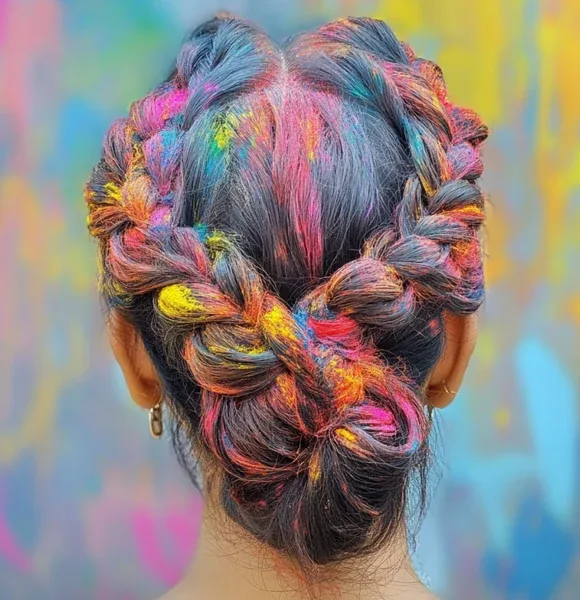
Common mistake: keeping the daytime braid in for the evening and just adding jewellery. A braid full of dried gulal looks dull and feels gritty, and no amount of decoration fixes it. Wash the hair properly, let it dry, and restyle — even a simple re-braid on clean hair looks ten times better.
Maintenance: plan a wash window between the two halves: rinse, shampoo, condition, and let the hair air-dry while you change. Keep a second, evening-ready style in mind — a soft side braid, a low bun with face-framing strands, or a waterfall braid — so you are not deciding with wet hair and a ticking clock.
Quick verdict: two styles, two moods. Tight and practical by day, soft and polished by evening — and the wash in between is what makes the second one work.
Dupattas, Scarves and Hair Covers That Work
A dupatta or light cotton scarf is the most underrated Holi hair tool there is. Draped over a braid or bun and tucked in at the sides, it catches most of the gulal before it reaches your hair, keeps the sun off your scalp, and looks completely natural with a kurta or salwar kameez. It is protection that doubles as part of the outfit.

Common mistake: choosing a heavy silk or chiffon dupatta for colour play. Heavy fabrics slide off oiled hair, and silk stains badly. Use a light, washable cotton scarf for the daytime, in a colour you do not mind staining, and save the good dupatta for the evening.
Maintenance: pin the scarf at two points — one above each ear — with small safety pins or bobby pins, so it cannot slide off when someone throws water. Shake it out every hour or so to stop powder building up in the folds.
Quick verdict: a cotton scarf over a braid is the cheapest, most effective Holi hair protection there is. Wear it for the colour play, take it off for the evening photos.
Washing Colour Out Afterwards: The Gentle Way
Washing Holi colour out is where most hair damage happens — not during the playing, but in the scrubbing afterwards. The gentle method works better and hurts less: rinse first with plain water until it runs mostly clear, then shampoo once with a mild shampoo, condition the lengths, and repeat only if colour remains. Never scrub the scalp hard or use hot water first.
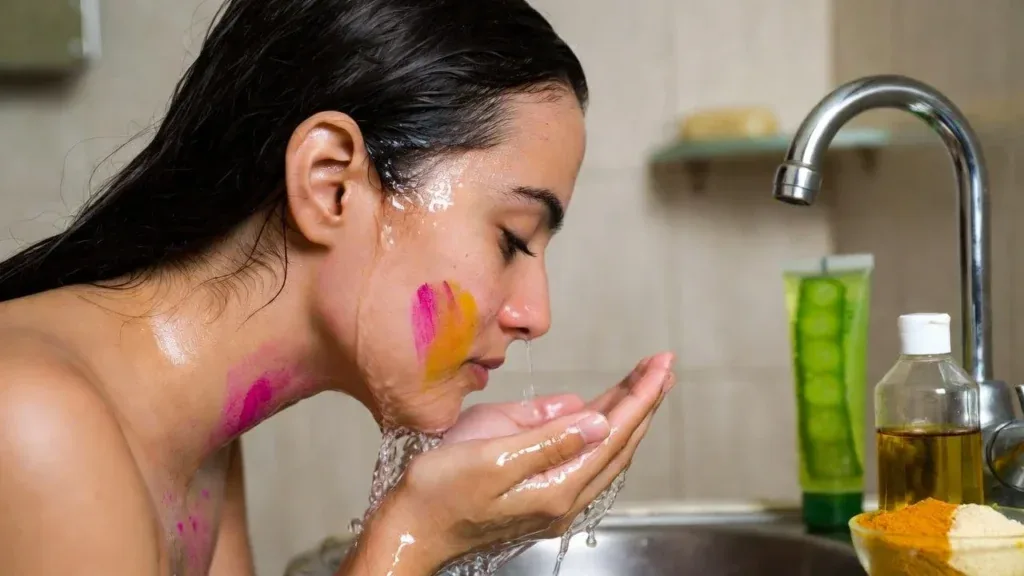
Common mistake: shampooing dry, colour-caked hair straight away. Dry shampoo on dry gulal turns into a paste that clings to the scalp and needs three washes to shift. Rinse with lukewarm water first, for several minutes, and let the water do the first round of work before any shampoo touches your hair.
Maintenance: if colour still stains after two washes, apply conditioner or a little oil to the stained lengths, leave it for twenty minutes, then wash again — the oil lifts pigment far more gently than a third round of shampoo. Curd or yoghurt on the scalp also helps lift stubborn colour without drying the hair.
Quick verdict: rinse, then wash gently, then oil and wash again if needed. Patience beats scrubbing every time, and your hair will feel the difference the next morning.
Photos That Survive the Colour (and Mistakes to Avoid)
Holi photos are the ones you will keep, so it is worth thinking about them before the first handful of colour flies. Styles that photograph well during colour play are the ones with shape — a thick braid down the back, a high bun, a scarf-draped crown — because shape survives powder. Loose hair just turns into a coloured blur, and wet, loose hair photographs flat and stringy.

Common mistake: posing for close-ups with your face tilted up while gulal is in the air. Powder in the eyes ruins the photo and stings for an hour. Keep your eyes closed for the colour-throw shot, or let the powder land on your hair and shoulders while you look at the camera, not up into the cloud.
Maintenance: take the group photos early, while the braids are still neat and the outfits are still mostly white. By late afternoon everyone is soaked and the styles have loosened — those are the fun candid shots, not the ones you will frame. Keep a comb and a spare elastic in your bag for a quick tidy-up before the evening photos.
Quick verdict: neat braid, scarf on, photos early. The best Holi pictures are taken before the colour wins — and the candid, messy ones afterwards are the ones you will laugh at for years.
1. Oiled Double Dutch Braids
Double Dutch braids are the number-one Holi hairstyle for a reason: two braids sit flat against the head, keep every strand contained, and leave almost no loose hair for gulal to settle into. Oil the hair first, part it down the middle, and braid each side tightly from the hairline to the nape so the powder stays on the surface of the braid, where it rinses off easily.
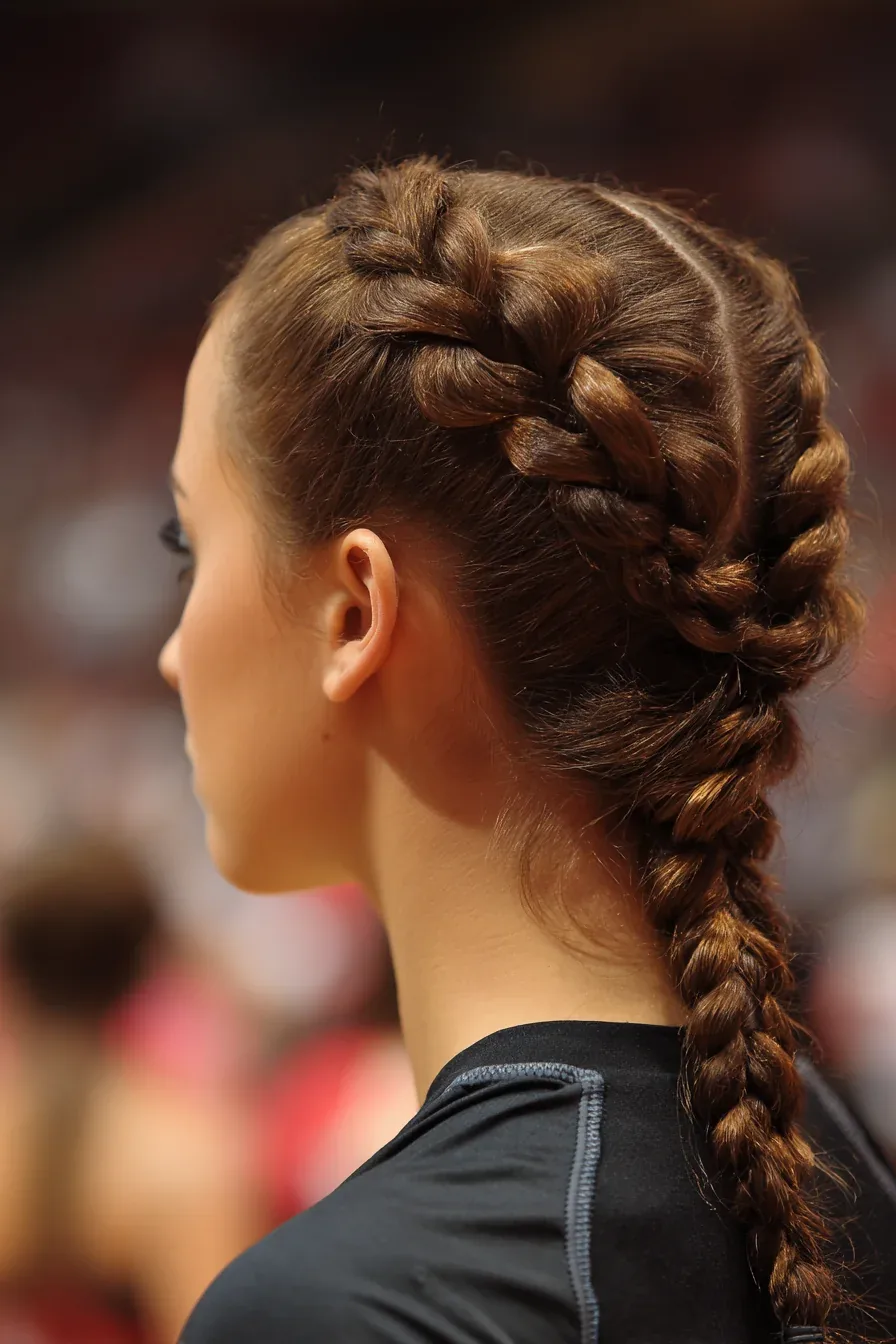
Common mistakes: braiding on dry, unoiled hair, which lets pigment stain the strands, or leaving the parting crooked so one braid takes more powder and tangles worse than the other. Take thirty seconds to oil and part properly — it saves an hour of washing later.
Maintenance: the braids hold so well you will not need to touch them during colour play. Afterwards, rinse each braid under running water before unravelling it, so most of the colour washes away while the hair is still contained and cannot tangle.
Quick verdict: the safest, most practical Holi style there is. If you pick only one style from this list, make it this one.
2. Low Braided Bun with a Dupatta Wrap
A low braided bun with a dupatta wrapped over it is the most protected style you can wear to Holi. Braid the hair, wrap the braid into a bun at the nape, pin it firmly, then drape a light cotton dupatta over the top and tuck the ends in. The bun keeps the hair contained and the dupatta catches the gulal before it reaches the hair at all.

Common mistakes: wrapping the dupatta too loosely so it slides off oiled hair, or pinning the bun with only one or two pins so it sags once wet. Pin the bun at four points and pin the dupatta above each ear.
Maintenance: shake the dupatta out every hour to stop powder building up in the folds. At the end of the day, remove the dupatta first and shake it outside — most of the colour comes off with it, and your bun underneath will be far cleaner than you expect.
Quick verdict: maximum protection with a traditional look. Perfect if you want to enjoy the colours without worrying about your hair at all.
3. High Braided Ponytail
A high braided ponytail lifts all the hair off the neck, which feels wonderful on a warm Holi afternoon, and the braid stops the tail swinging coloured water onto your outfit. Gather the oiled hair high on the crown, secure it firmly, then braid the tail to the ends and finish with a second elastic so the braid cannot unravel in a water fight.
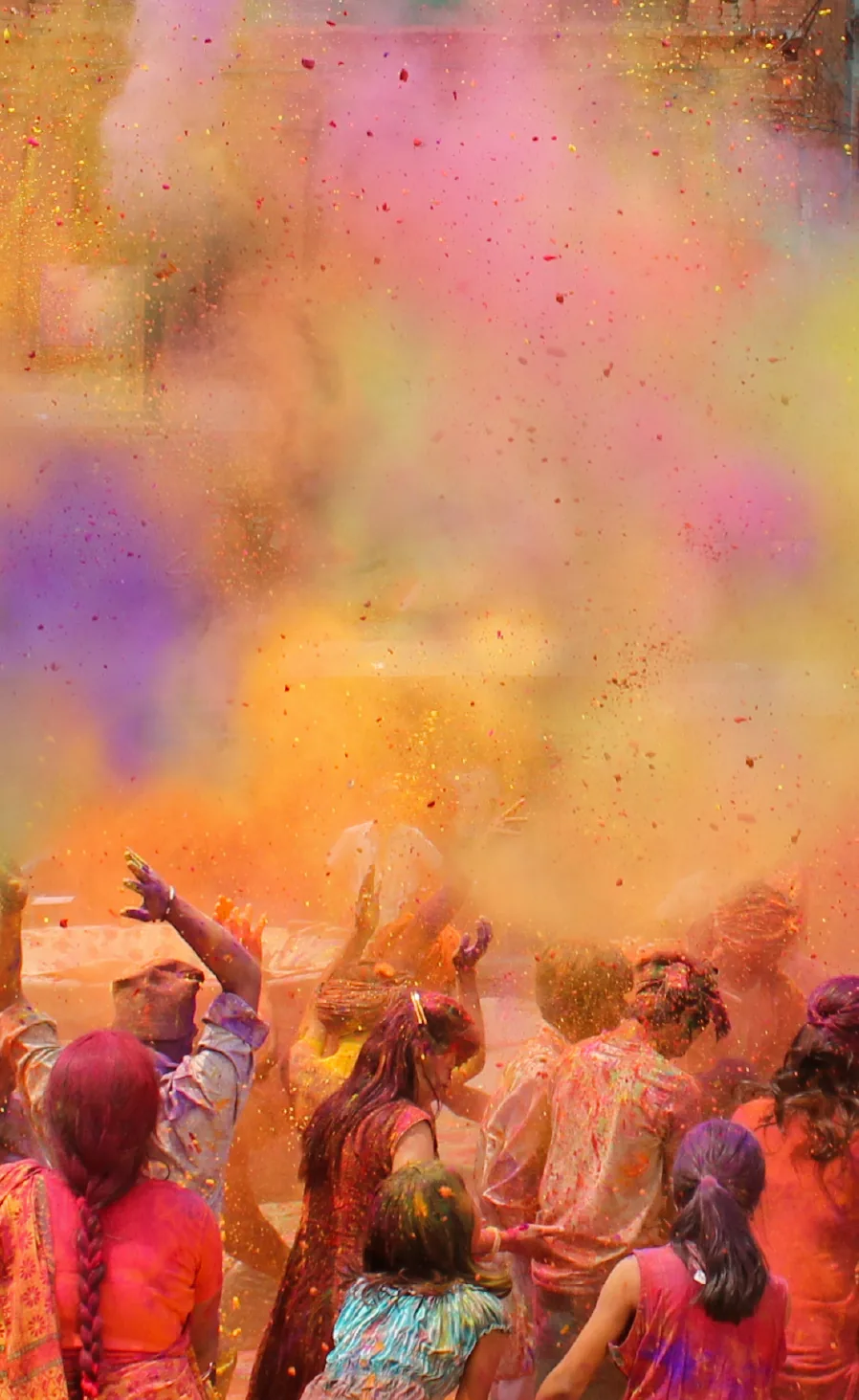
Common mistakes: placing the ponytail too far back so the braid thumps against your neck with every splash, or braiding too loosely so the tail opens up and traps powder inside. Keep the braid snug and the ponytail high enough that the tail clears your shoulders.
Maintenance: give the braid a gentle tug after the first round of water play to check the end elastic — it is the first thing to slip when wet. A quick spray of water from a bottle, not more product, is enough to smooth any escaping strands.
Quick verdict: cool, secure and photogenic. A great choice for daytime colour play, especially if you are dancing or moving around a lot.
4. French Braid Crown
A French braid crown wraps a braid around the head like a headband, pinning the front layers back and keeping powder away from the face and hairline. Braid from one side, sweep the braid across the forehead and pin it behind the opposite ear. It looks festive, keeps the forehead clear of colour, and photographs beautifully.
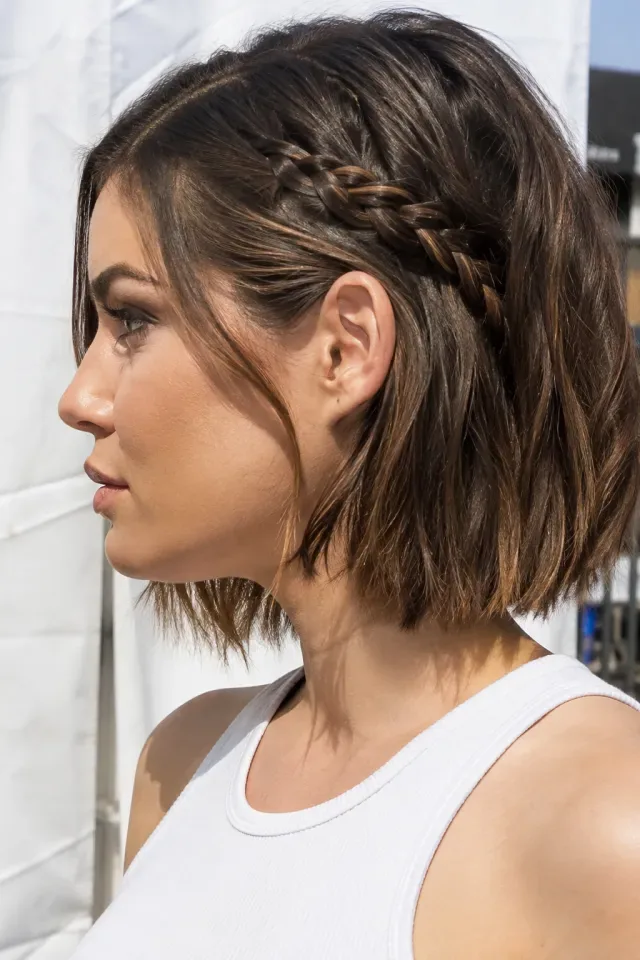
Common mistakes: braiding too loosely so the crown slides forward as the hair gets wet, or pinning it with too few pins. The crown needs a pin every few inches, hidden under the braid, to survive a full morning of colour play.
Maintenance: pair the crown with a low bun or a low ponytail at the back so no hair is left loose. Check the pins after the first water splash — the crown is the first part to shift if it is going to.
Quick verdict: elegant and practical at once, and it keeps colour off your face. Best for medium and long hair, and lovely under a light dupatta.
5. Fishtail Braid
A fishtail braid weaves the hair into a tight, flat plait that barely moves once finished, which makes it surprisingly good for Holi. The flat weave leaves few gaps for powder to hide in, and the braid rinses clean more easily than a loose three-strand braid. Take two sections, cross small pieces over alternately, and keep the tension even all the way down.
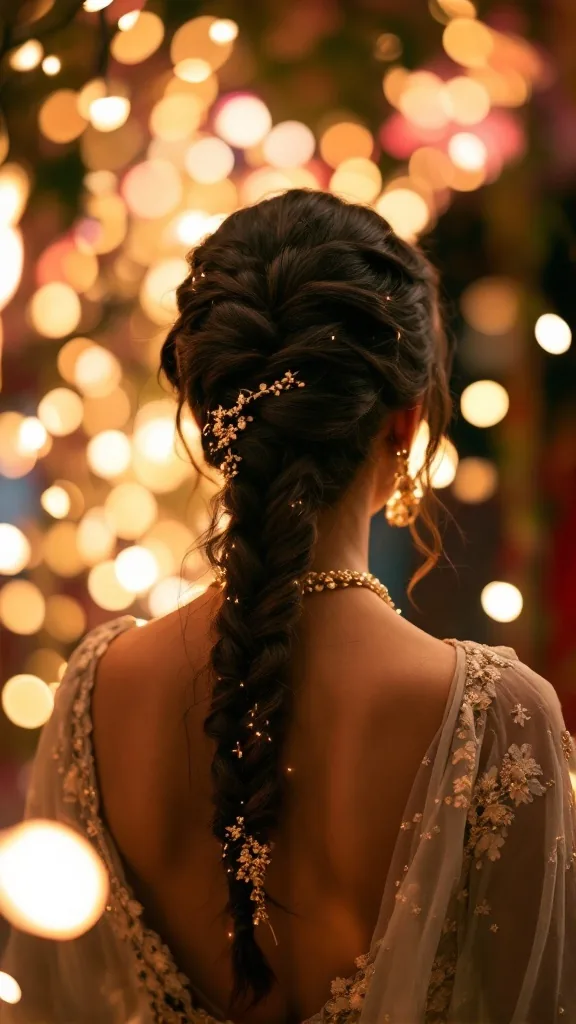
Common mistakes: taking pieces that are too big, which makes the braid loose and lumpy so gulal settles inside it, or braiding on dry hair so the braid frizzes once wet. Oil first, use small pieces, and keep the tension steady.
Maintenance: a fishtail loosens less than most braids, so it needs little attention during the day. Rinse it while it is still braided after the colours, and only unravel it once the water runs clear.
Quick verdict: beautiful, secure and easy to wash out. Worth the extra few minutes it takes to braid, especially if you want evening photos on the same braid.
6. Bubble Braid Ponytail
A bubble braid ponytail looks playful and holds up well to Holi because the elastics break the tail into short, controlled sections. Tie a high ponytail, add elastics every few inches down the tail, and gently pull each section out to form bubbles. Powder lands on the surface of each bubble instead of working deep into loose hair.
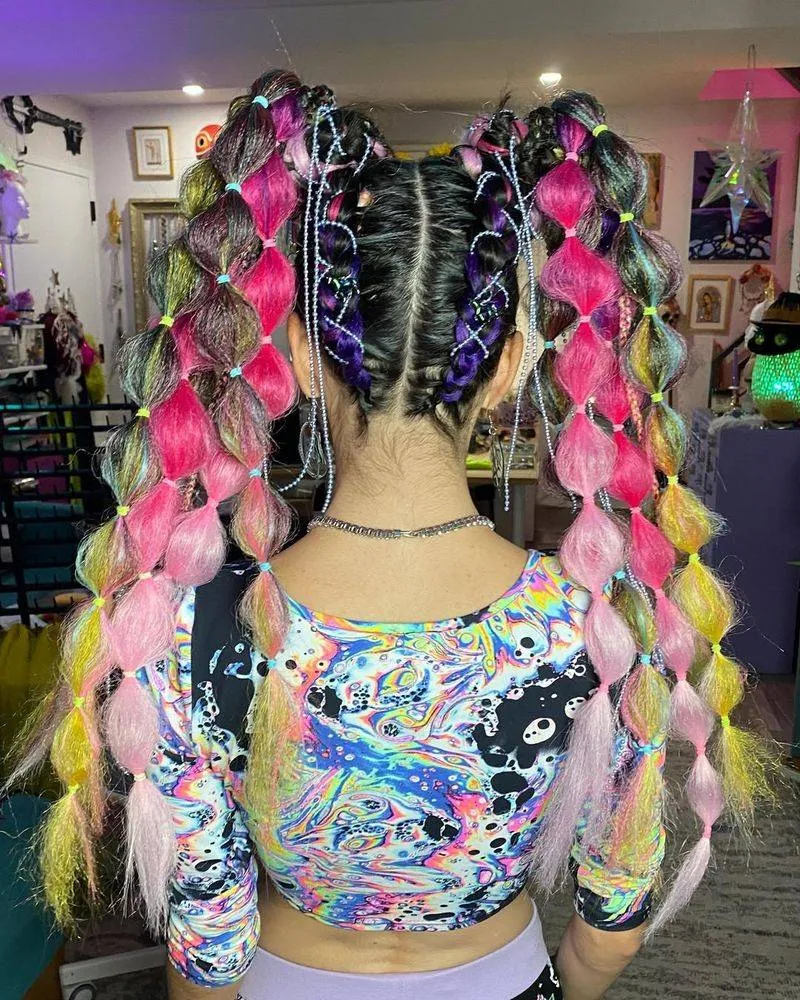
Common mistakes: spacing the elastics too far apart, which lets each bubble sag and soak up coloured water, or pulling the bubbles out too hard so the whole thing loosens. Keep the sections short and the tugging gentle.
Maintenance: this style is easy to repair mid-celebration — if one bubble collapses, just re-tighten that elastic. Carry two spare elastics in your pocket, and rinse the bubbles one section at a time afterwards.
Quick verdict: fun, secure and much tougher than it looks. A cheerful choice for daytime colour play with friends.
7. Messy Top Knot with a Scarf
A messy top knot with a scarf wrapped around its base gets every strand up and off your neck, and the scarf covers the most exposed part of the style. Gather the oiled hair at the crown, twist it into a knot, pin it firmly, then wrap a light cotton scarf around the base and knot it at the front. The scarf catches powder and adds a festive touch.
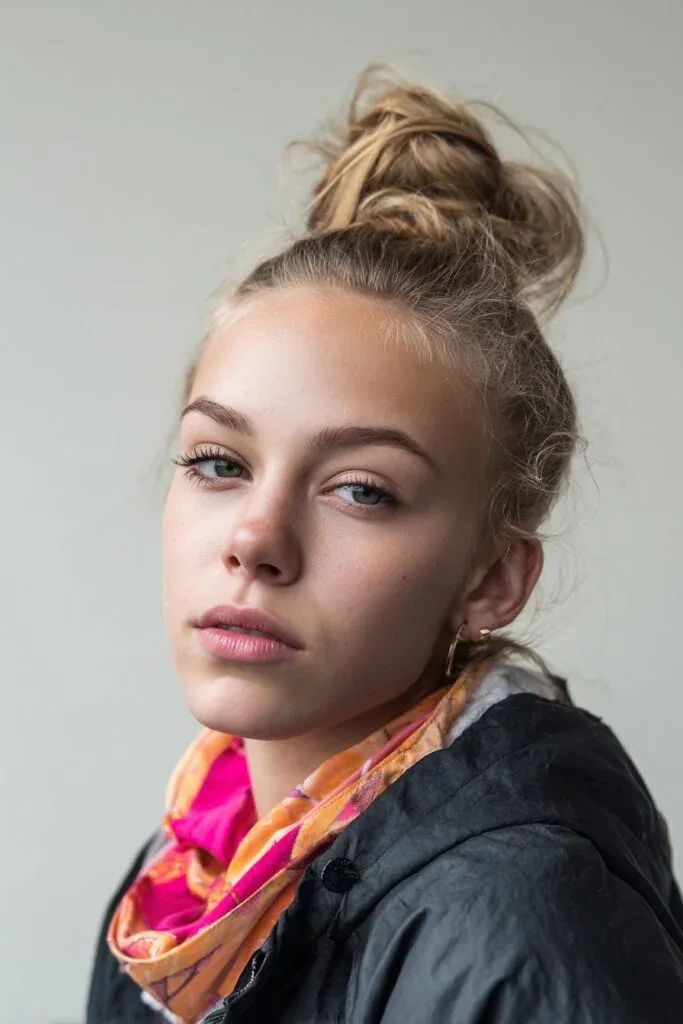
Common mistakes: building the knot too loosely so it wobbles when you dance, or using a slippery silk scarf that slides off oiled hair. On long hair, braid the ponytail first and then wrap it — the braid keeps the knot compact — and use cotton, not silk.
Maintenance: check the knot after the first round of water play, when the hair starts to get heavy. A knot that survives the first splash will usually survive the day, but one that has already shifted needs re-pinning before the next round.
Quick verdict: cool, festive and easy to fix. Best for daytime play; save the scarf-free version for the evening.
8. Side Swept Braid
A side swept braid gathers all the hair over one shoulder and braids it down, keeping it clear of your face and easy to protect with one hand when someone throws colour. It is comfortable, quick, and kinder on the neck than a high style, because the weight hangs to the side instead of pulling straight back.

Common mistakes: letting the braid fall forward over the chest, where it soaks up coloured water and stains a white kurta, or braiding so loosely that it unravels. Keep the finished braid behind the shoulder and the tension firm.
Maintenance: a side braid is easy to rinse one-handed under a tap afterwards, and easy to redo between rounds if it loosens. One elastic and thirty seconds is all a repair takes.
Quick verdict: relaxed, quick and easy to wash. Better for gentle colour play and family gatherings than for a full water fight.
9. Double Buns (Space Buns)
Double buns split the hair into two small buns, one on each side of the crown, keeping the weight balanced and the neck completely clear of coloured water. Each bun is small enough that it cannot wobble, and together they hold all the hair off the face — plus they look joyful in Holi photos.
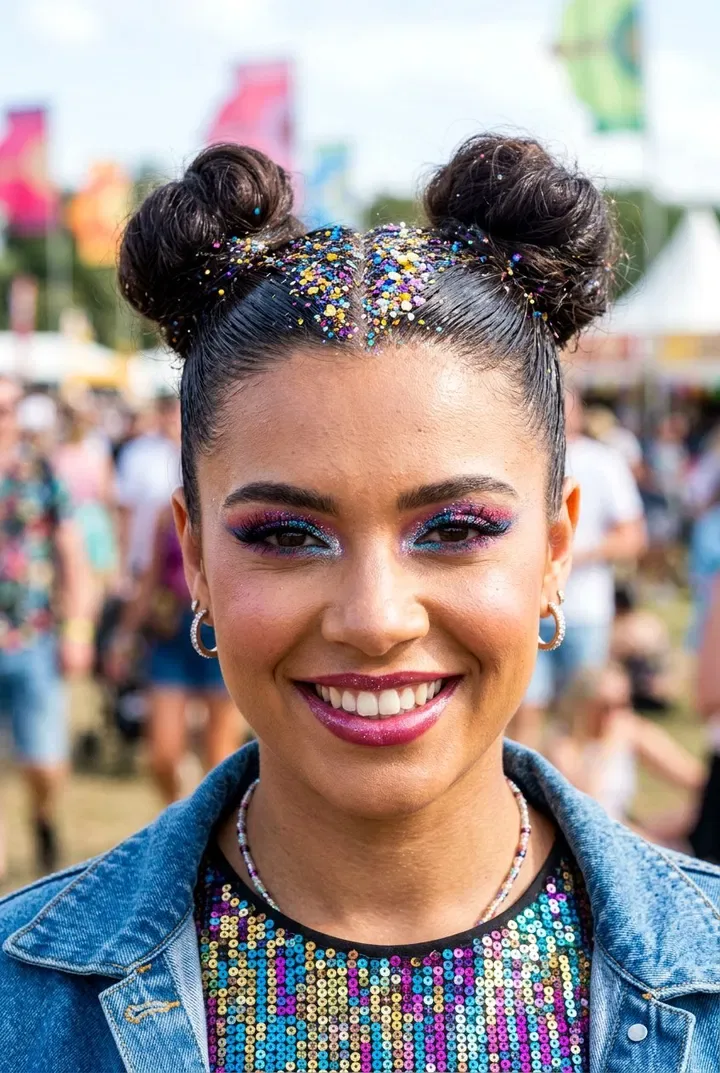
Common mistakes: making the buns uneven, or placing them too high so they catch every handful of gulal thrown from above. Keep them at mid-crown height and check the parting is straight before you start.
Maintenance: four pins per bun is the rule. If one bun loosens after a splash, re-pin just that side — the other will hold while you fix it. Rinse each bun separately afterwards so the colour does not spread.
Quick verdict: fun, balanced and very secure. A great choice for younger celebrants and for anyone who wants a playful look that still survives the colours.
10. Slicked-Back Low Ponytail
A slicked-back low ponytail is the minimalist Holi style: oil and gel the hair flat, gather it low at the nape and secure it tightly. Nothing sticks up for powder to land on, nothing swings, and the style sits perfectly flat under a dupatta or scarf. It takes two minutes and works on almost every hair length.
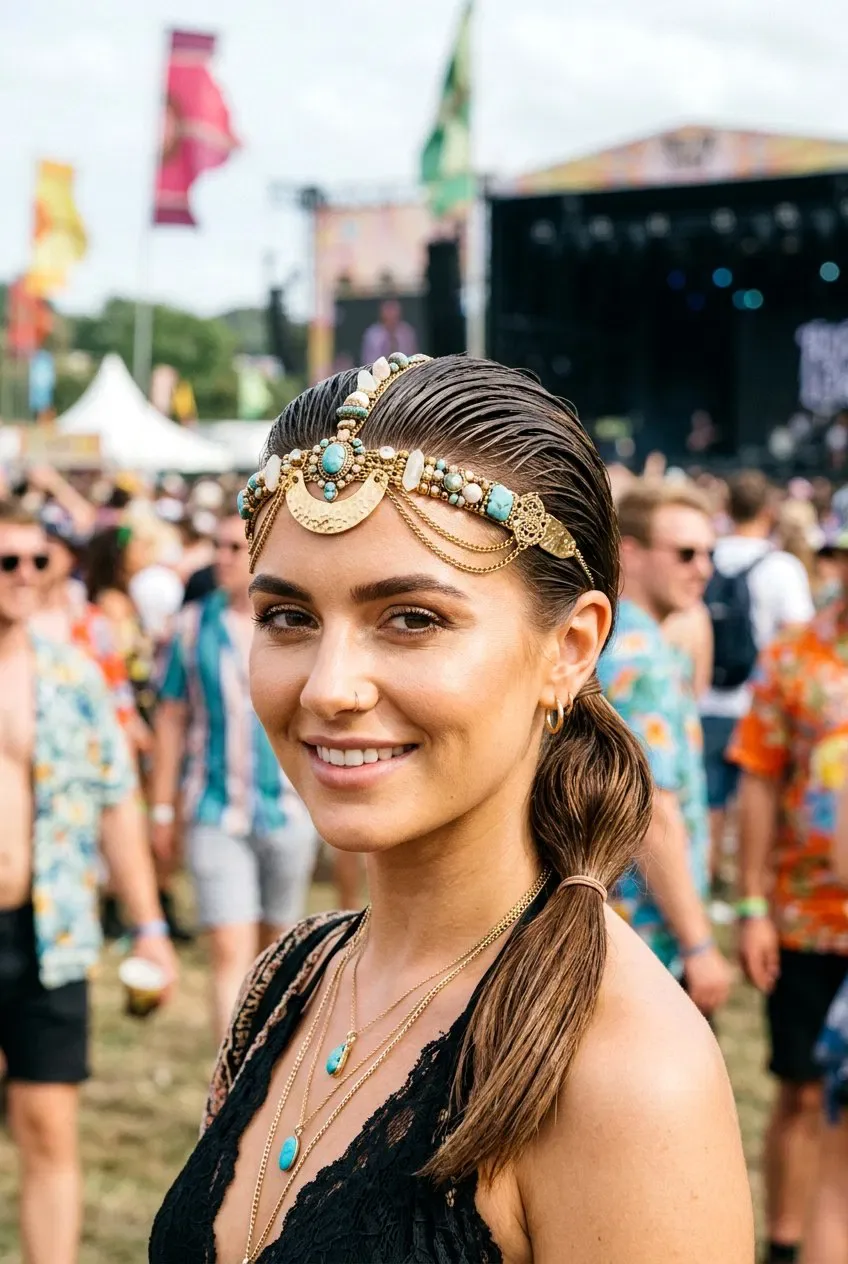
Common mistakes: using too little oil or gel so the sides puff out and catch powder as the hair dries, or tying the ponytail too loosely so it slides down once wet. Oil the hair while it is slightly damp, and wrap the elastic twice for a firm hold.
Maintenance: this is a one-check style — look in a mirror after the first splash and smooth any escaping strands with a wet hand. A tiny bit of oil in your bag handles the rest.
Quick verdict: clean, fast and scarf-friendly. The best low-effort option for short and medium hair on Holi morning.
11. Rope Braid Ponytail
A rope braid ponytail twists two sections of a ponytail around each other like a rope, which locks the tail into a tight, compact shape that powder cannot easily penetrate. It is faster than a three-strand braid, holds its shape when wet, and swings far less than a loose ponytail.
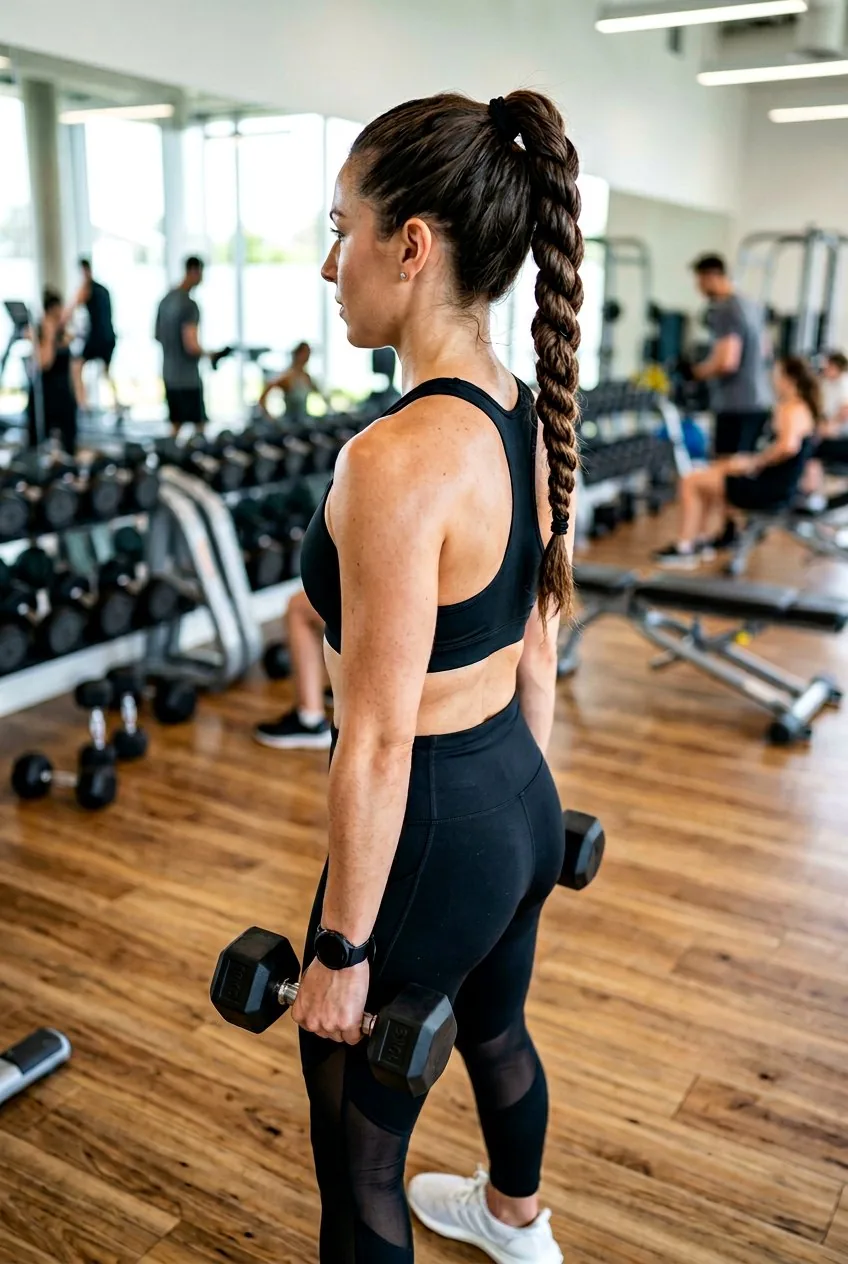
Common mistakes: twisting both sections in the same direction, which makes the rope unravel, or letting the ponytail base loosen while you twist. Twist the sections one way and wrap them the other way, and keep the base elastic tight.
Maintenance: the rope holds its shape with little help, but check the end elastic after the first water splash. If it has slipped, replace it and give the rope a quick re-twist.
Quick verdict: quick, tidy and tougher than a plain ponytail. A good backup style when you are short on time before heading out.
12. Braided Headband with Loose Waves for the Evening
This is an evening-only style, for after the colours are washed off and the gathering moves indoors. A thin braid across the hairline acts as a built-in headband, while the rest of the hair falls in soft, loose waves. It looks polished and festive, and the braid keeps the front layers off a freshly washed face.
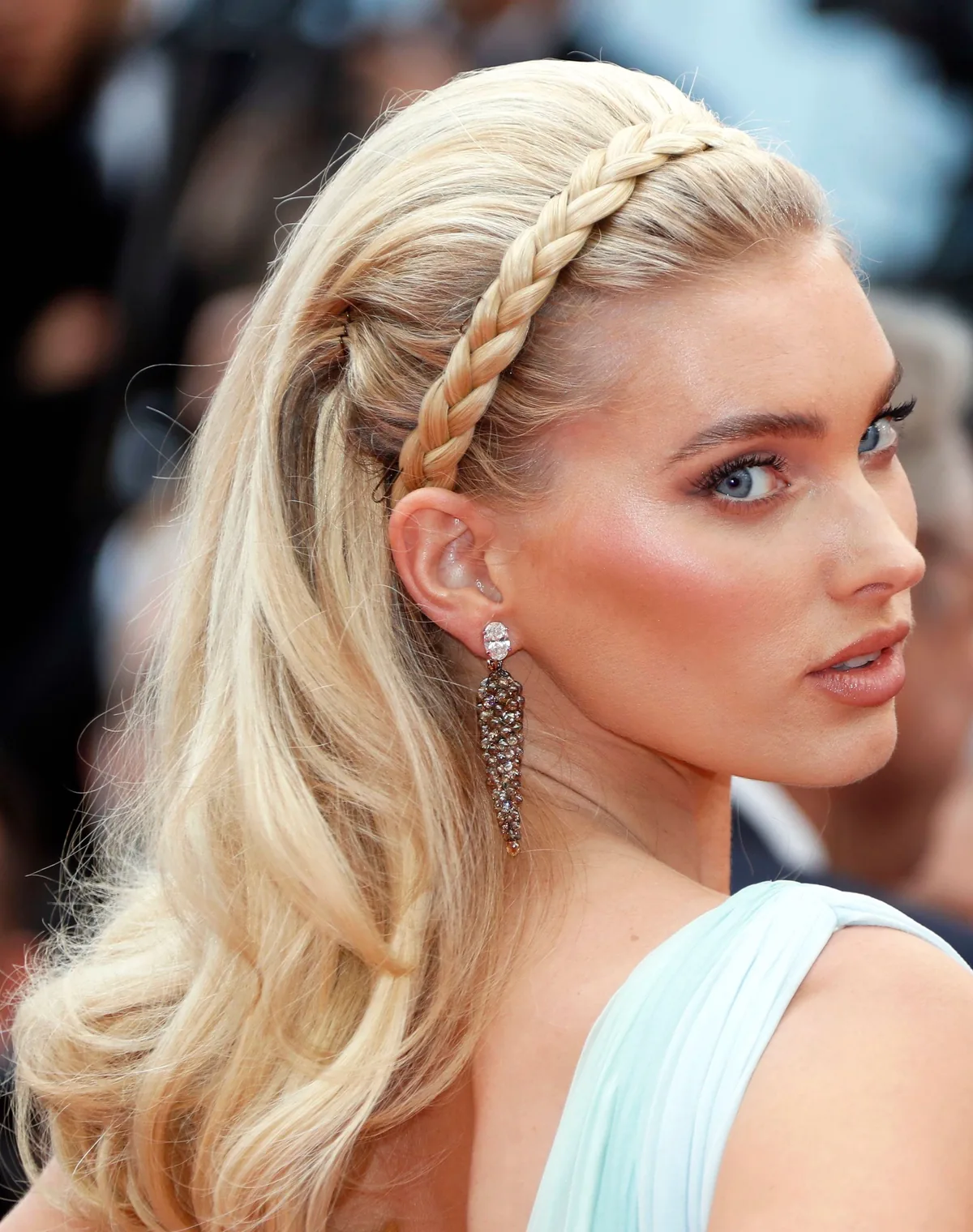
Common mistakes: wearing it during colour play. Loose waves are the worst possible daytime Holi hair — powder settles deep into every wave and takes three washes to remove. Save this one strictly for after the wash, and keep the daytime hair braided.
Maintenance: after washing out the colour, let the hair air-dry most of the way, then add loose waves with a curling iron or by braiding damp hair for an hour. A little shine serum on the ends finishes the look without weighing it down.
Quick verdict: lovely for the evening gathering, useless for the colour play. The contrast is the point — wash, restyle, and enjoy the second half of the day.
13. Chunky Single Braid
A chunky single braid uses big sections for a thick, bold plait that sits flat down the back and barely moves through a whole day of colour play. It is one of the fastest braids to do — three big sections, a few crosses, done — and the weight of the braid itself helps it stay put while powder slides off its smooth surface.
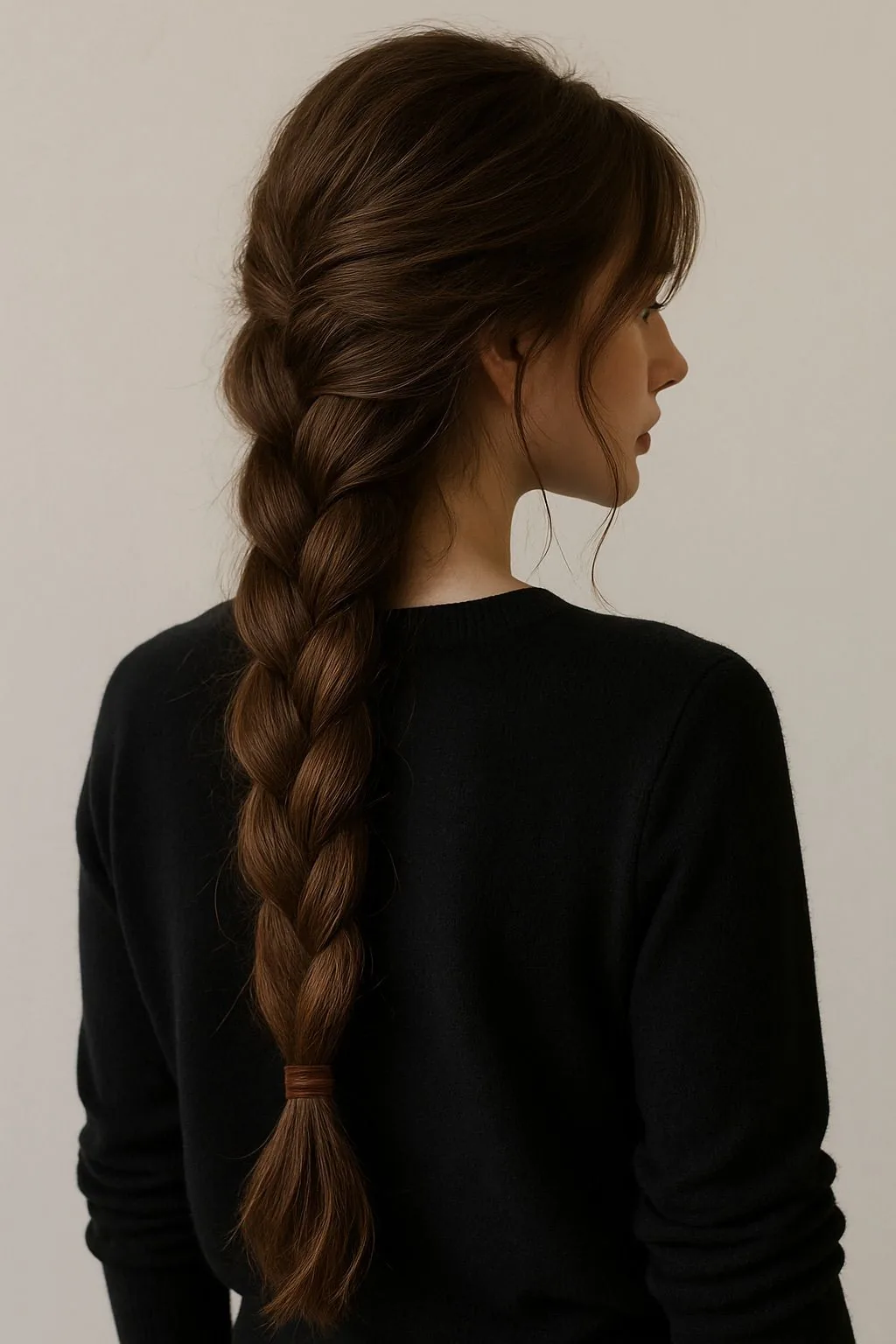
Common mistakes: making the sections uneven, which makes the braid lopsided and lets one side catch more colour, or leaving the end too long and unbraided so it frizzes and traps powder. Keep the sections equal and braid right to the tips.
Maintenance: a chunky braid needs almost no upkeep, but the end elastic is the weak point once wet. Double it up before you go out and you will not think about it again until the wash.
Quick verdict: bold, fast and very secure. The best braid for anyone who finds thin braids fiddly or slow.
14. Cornrows
Cornrows are the most secure hairstyle for Holi, full stop. Braided flat against the scalp in neat rows, they cannot swing, slip or fall into your face, and they keep gulal off the scalp itself — the hardest place to wash colour out of. They also protect natural hair through a long day of water and powder.
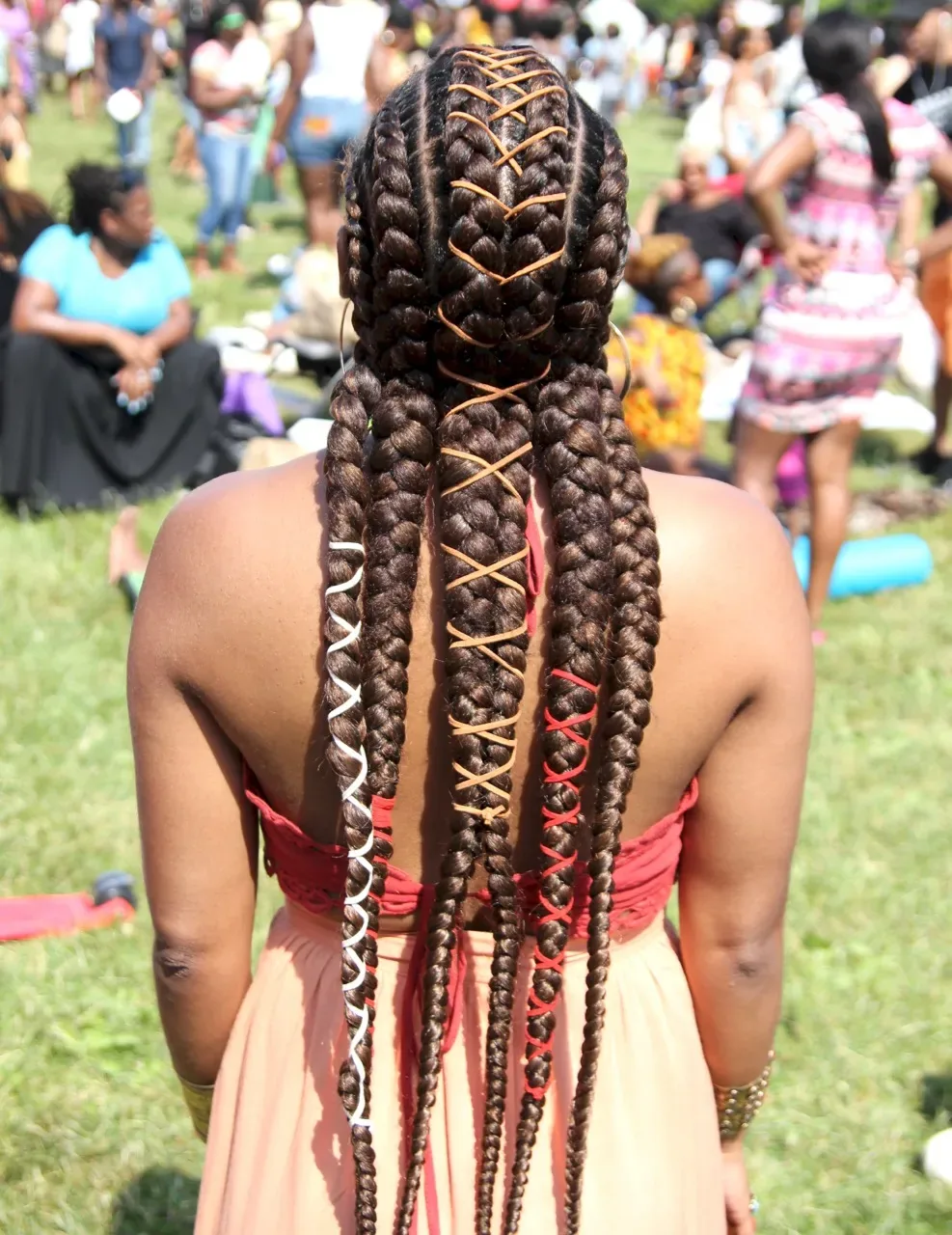
Common mistakes: braiding them too tight at the hairline, which causes pain and can damage the edges, or leaving them in too long after a day of colour play. Comfort matters more than neatness — if it hurts, it is too tight.
Maintenance: rinse the scalp gently after the celebration and use a light oil to lift any remaining colour. Cornrows can last one to two weeks, but wash them properly within a day of Holi, because dried gulal left in the rows makes the hair rough.
Quick verdict: the toughest, longest-lasting style here. If you celebrate Holi hard and wash your hair the next day, cornrows are the lowest-effort answer.
15. Half-Up Braided Crown
A half-up braided crown takes the top half of the hair into a braid across the crown and leaves the rest contained in a low braid or bun — but for Holi, the lower half must be braided too, or it will catch powder all day. Braid the crown, then gather the lower section into a single plait. You get the face-clearing lift of a crown with none of the loose hair.
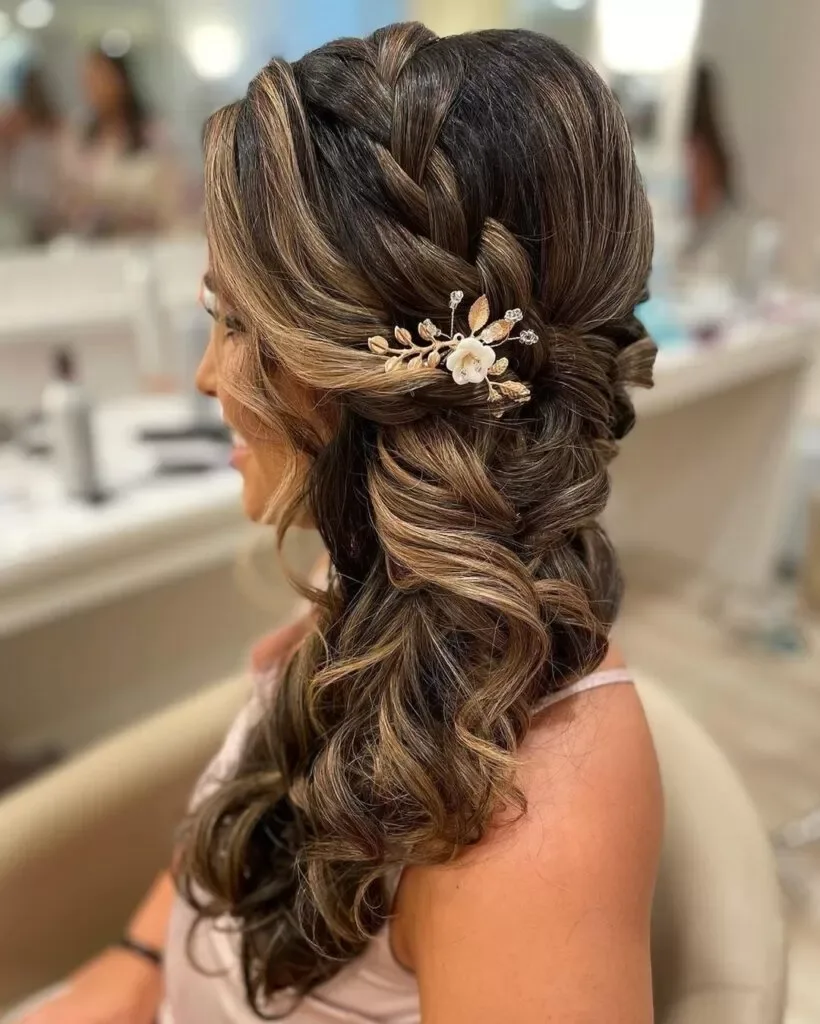
Common mistakes: leaving the bottom half completely loose, which defeats the whole purpose on Holi, or making the crown braid too big so it unbalances the style. Keep the crown neat and deal with the bottom half properly.
Maintenance: the crown is the part to watch — if it loosens after a splash, re-pin it between rounds. The braided lower half will look after itself.
Quick verdict: a good compromise for medium hair that wants a little softness. Just remember the rule: on Holi, no hair stays loose.
16. Low Twisted Bun
A low twisted bun splits the hair into two sections, twists each one and wraps them together into a bun at the nape. The twist adds grip, so the bun holds better than a plain wrapped bun when wet, and the style looks softer and more textured than a sleek bun — lovely under a dupatta.
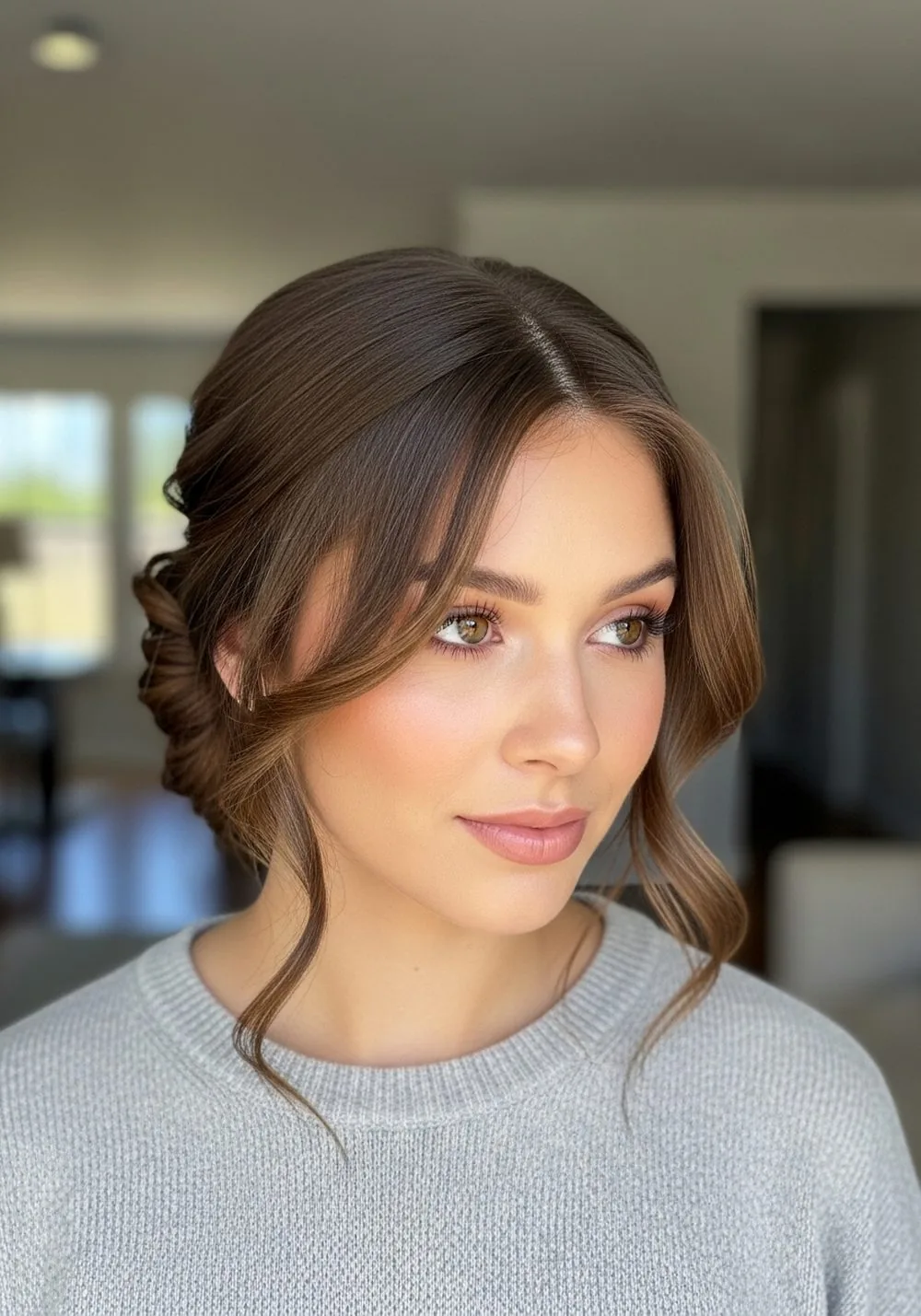
Common mistakes: twisting the sections in opposite directions, which makes the bun unravel once it gets wet, or wrapping too loosely so it sags. Twist both sections the same way and pin the bun firmly at four points.
Maintenance: this bun is forgiving — if it loosens slightly it still looks intentional. One extra pin at the base is usually all a repair needs, and it unwraps easily for the wash afterwards.
Quick verdict: soft, secure and easy to do. A lovely middle ground between a sleek bun and a braid, and it washes out without a fight.
17. Two-Strand Twists into a Low Bun
Two-strand twists are a gentle, protective style that works beautifully for natural and textured hair at Holi. Twist two sections of oiled hair around each other from root to tip, working across the head, then gather the twists into a low bun. They are lighter than braids, kinder on the scalp, and keep powder on the surface where it rinses off.
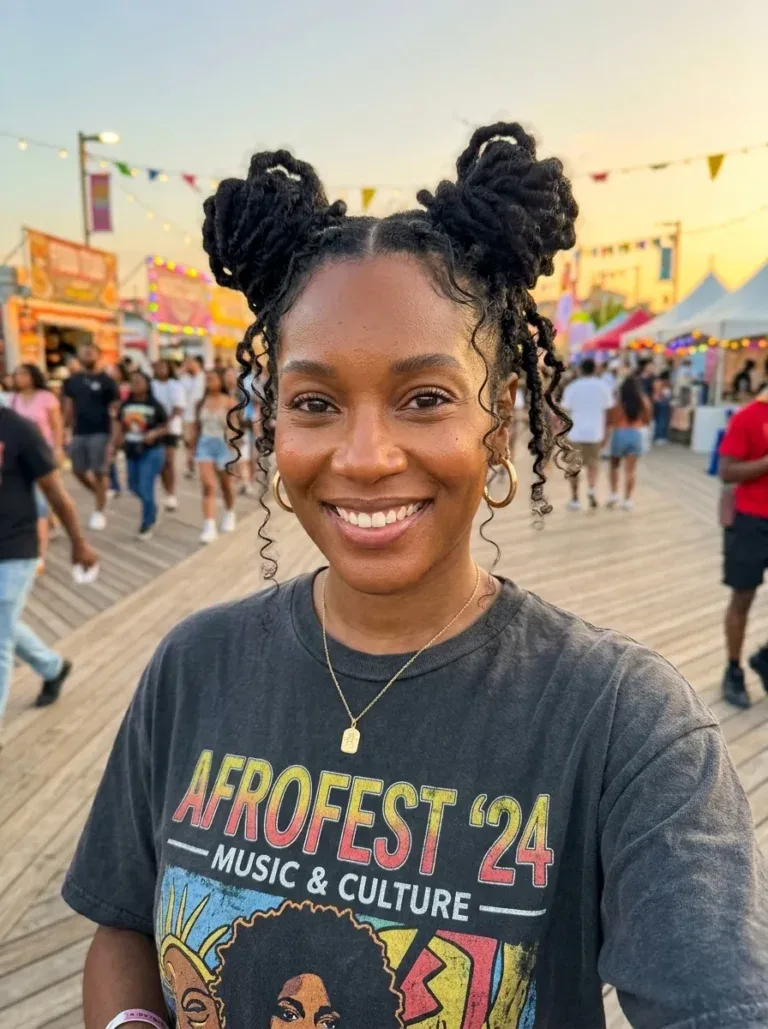
Common mistakes: twisting on dry hair, which makes the twists frizzy and loose so gulal works its way inside, or making the sections too large so they unravel when wet. Twist on damp, oiled hair with small, even sections.
Maintenance: twists hold for several days if you protect them at night, but rinse the scalp gently after Holi and use a light oil to lift any remaining colour. Never pull the twists apart to check for colour — rinse them whole first.
Quick verdict: gentle, protective and secure. A lovely option for textured hair that wants a break from tight braiding on a festival day.
18. Braided Pigtails
Braided pigtails split the hair into two braids, one on each side, keeping the weight balanced and the neck cool while the colours fly. They are playful, practical and very secure, because each braid is short and light enough that it cannot swing hard or pull loose — and they look joyful in Holi photos.
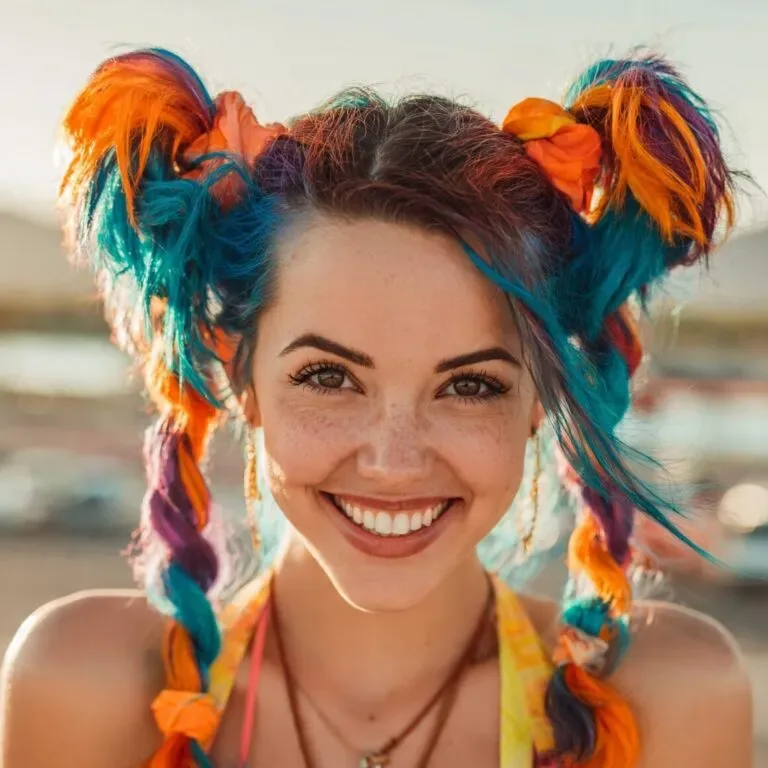
Common mistakes: parting the hair unevenly, or braiding the pigtails too low so they swing forward over the shoulders and soak up coloured water. Start the braids high enough that they sit behind the ears.
Maintenance: pigtails are easy to fix one side at a time between rounds. If one side loosens, re-braid just that side — the other will hold fine — and rinse each pigtail separately afterwards.
Quick verdict: fun, balanced and secure. A great choice for long hair and for anyone who finds a single braid too heavy after a few hours.
19. Dutch Braid into a High Bun
A Dutch braid that runs from the hairline to the crown and then wraps into a high bun gives you the best of both styles: the front is locked flat by the braid, and the bun keeps the rest of the hair up and out of the colour. It is secure, cool and far more reliable than a plain top knot.
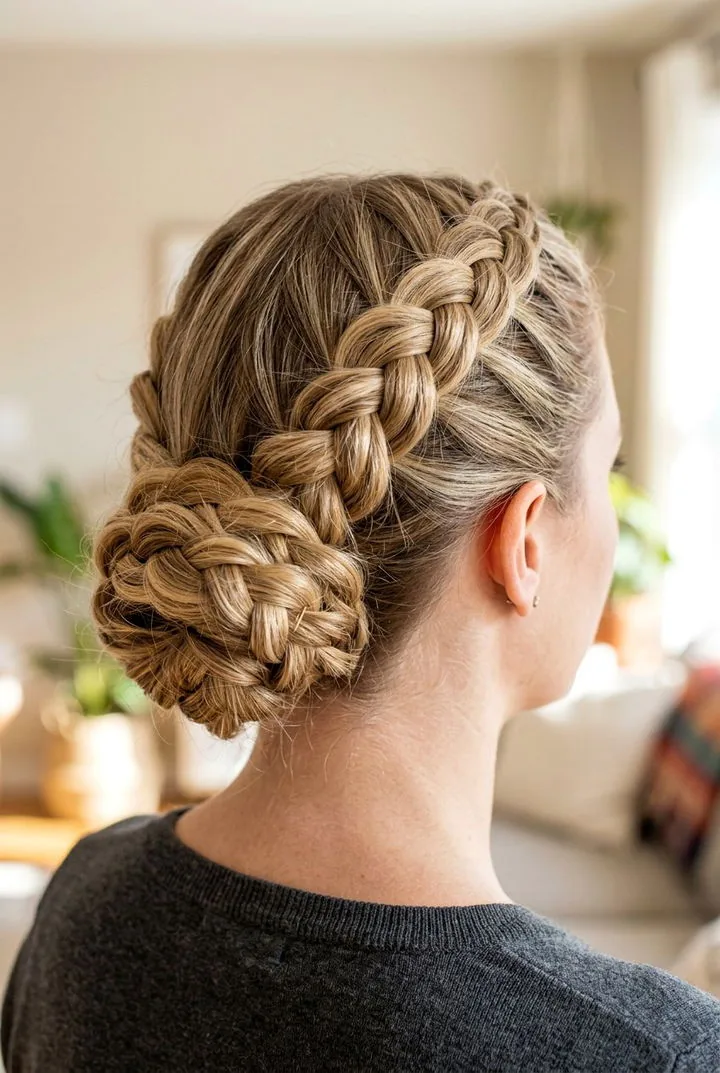
Common mistakes: ending the braid too early, which leaves the front layers loose to catch powder, or wrapping the bun too loosely so it sags once wet. Braid right to the crown before wrapping, and pin the bun at four points.
Maintenance: check the bun after the first water splash, when the hair starts to get heavy. If it has shifted at all, re-pin it before the next round — a bun that survives the first splash will survive the day.
Quick verdict: the top knot, fixed. All of the coolness, none of the wobble, and the braid anchors everything in place.
20. Sleek Middle-Part Low Bun
A sleek middle-part low bun is the polished cousin of the low bun: a dead-straight centre part, oiled sides and a neat bun at the nape. It looks intentional and elegant, sits flat under a dupatta, and keeps the hairline completely under control so powder cannot settle at the roots.
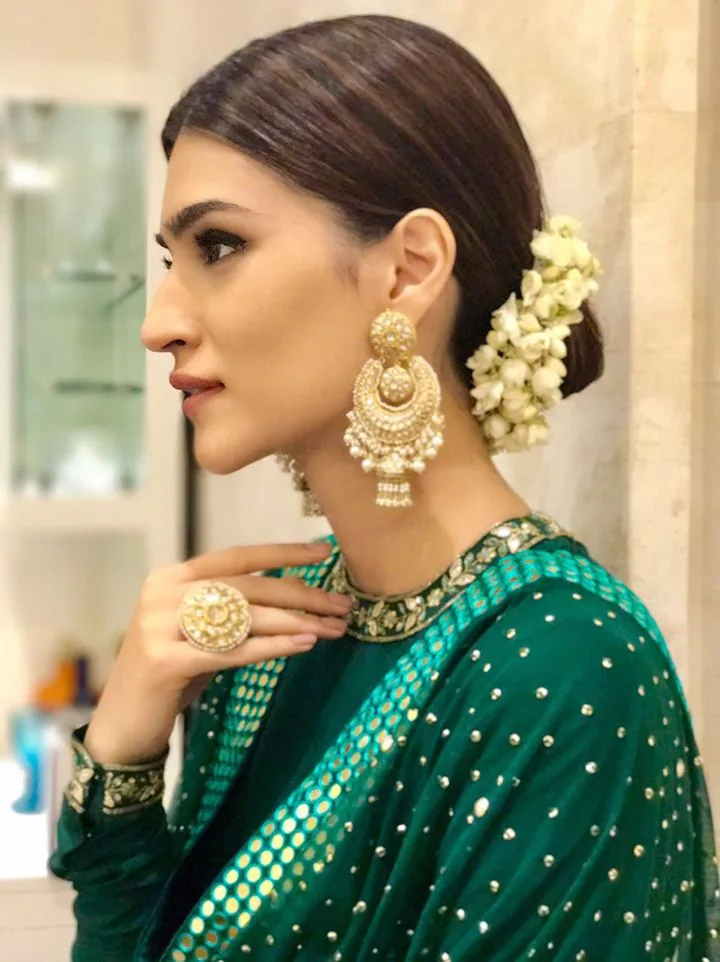
Common mistakes: a crooked part, which is very visible in a style this clean, or skimping on oil so the sides puff out and catch gulal. Take the time to part with a comb and oil the hair while it is damp.
Maintenance: smooth any flyaways with a wet hand or a touch of oil between rounds. The bun itself needs no attention if it is pinned properly, and it unwraps cleanly for the wash.
Quick verdict: the most polished daytime style here, and one of the most secure. Lovely for a family Holi gathering where you want to look smart as well as protected.
21. Short Hair Slicked Back with a Headband
Short hair cannot be braided or bunned, but it can still be locked down for Holi. Oil the front layers back, add a wide, non-slip headband, and pin any escaping pieces flat. The headband does the work a braid would do on longer hair, keeping the fringe out of your eyes and the powder off your forehead.
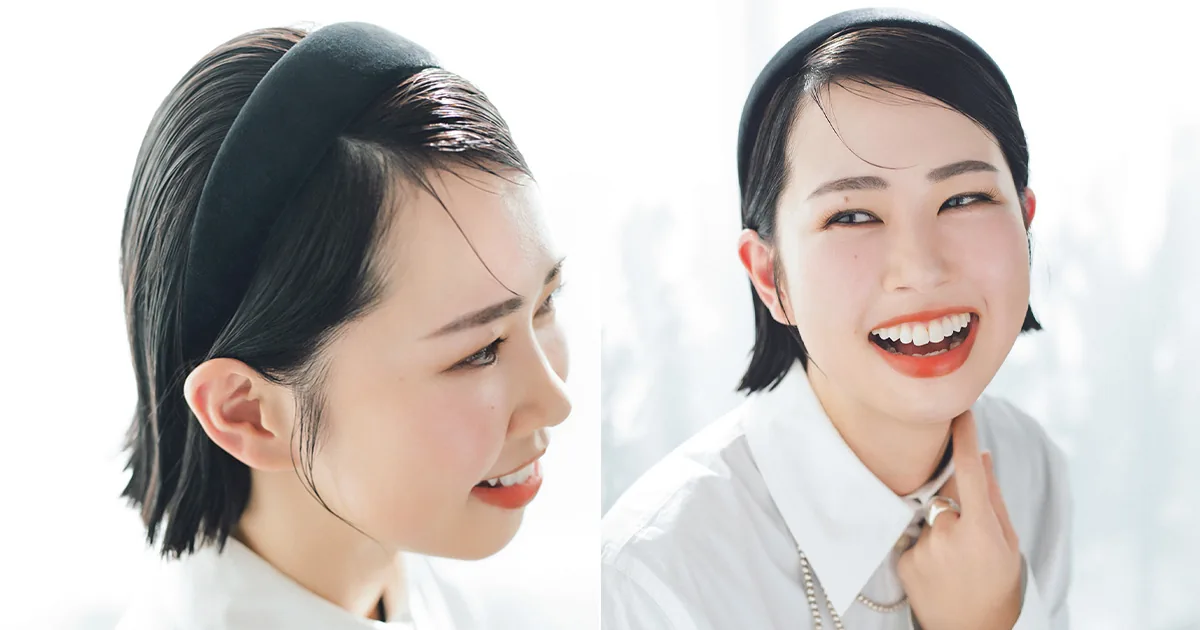
Common mistakes: choosing a headband that slides on oiled hair, or skipping the oil and relying on the headband alone. A headband on unoiled hair slips within minutes — oil the hairline first, then add the band, and pin it at both sides.
Maintenance: carry a spare headband in your bag. Headbands stretch with sweat and water, and a fresh one between rounds is a two-second fix. A scarf over the top adds a second layer of protection for the heaviest colour play.
Quick verdict: the best answer for short hair at Holi. Simple, cheap and completely effective when the oil and the band work together.
22. Curly Pineapple Updo
A pineapple updo gathers curly hair into a loose, high puff at the very top of the head, keeping the curls off the neck and out of the face while protecting their shape. For Holi, oil the curls first and cover the puff with a light scarf — the scarf stops gulal settling deep into the curls, where it is hardest to wash out.
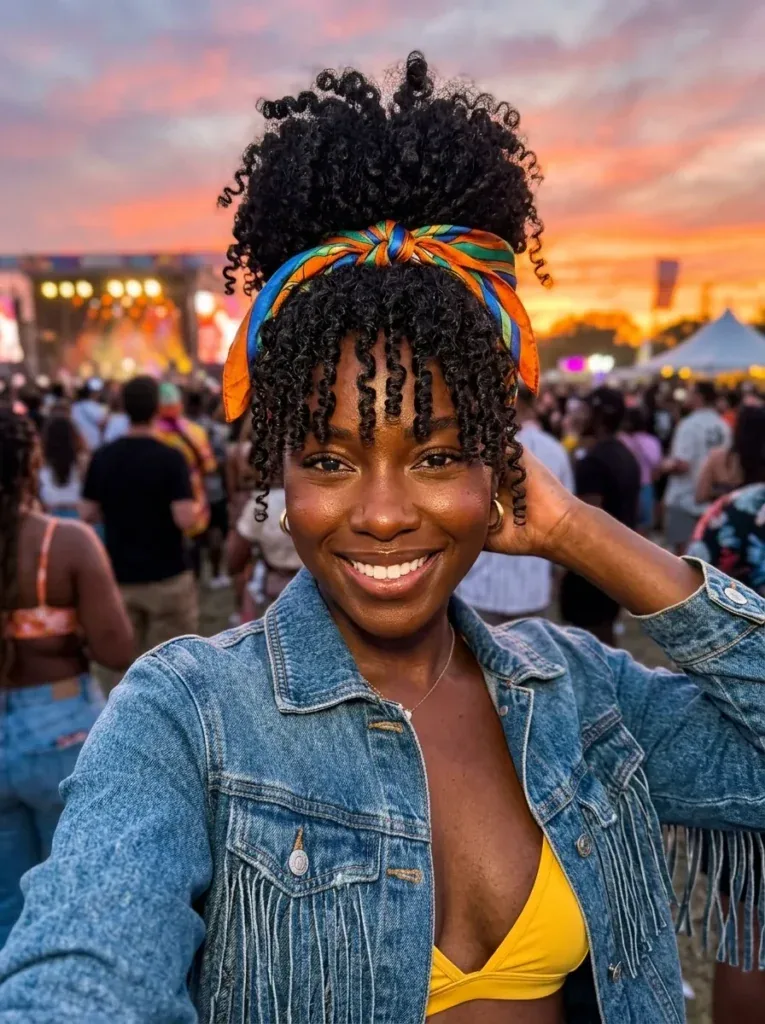
Common mistakes: pulling the pineapple too tight, which flattens the curls and strains the roots, or skipping the scarf so powder works into every curl. A loose, wide band keeps the curls intact, and the scarf does the protecting.
Maintenance: after the celebration, rinse the curls while the pineapple is still up, then let them down and scrunch with water or curl cream to revive the shape. Never brush dry, colour-dusted curls — it turns them into frizz and drives the powder in deeper.
Quick verdict: quick, gentle and curl-friendly. Perfect for curly hair on Holi, as long as the scarf stays on during the colour play.
23. Braid into a Scarf-Wrapped Bun
This style builds the scarf into the hairstyle itself: braid the oiled hair, wrap the braid into a bun, then wrap a light cotton scarf around the bun and knot it neatly. The scarf becomes both decoration and protection, catching gulal before it reaches the hair while looking like a deliberate part of the outfit.
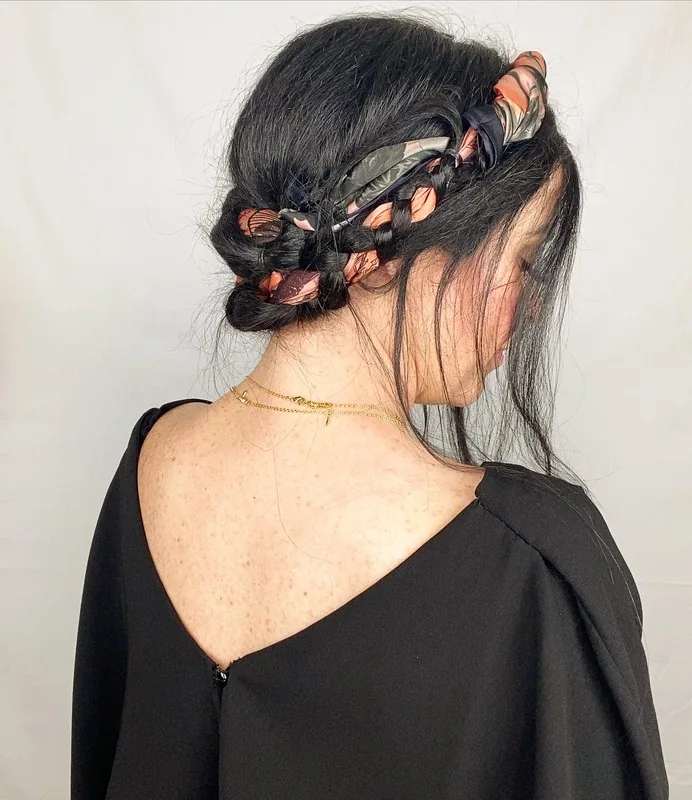
Common mistakes: wrapping the scarf too tightly around the bun so it pulls the pins out, or using a scarf so short it keeps coming undone. Use a scarf long enough to wrap twice and knot securely, and pin the knot so it cannot slip.
Maintenance: shake the scarf out every hour and re-tie it if it loosens. At the end of the day, unwrap the scarf first — most of the colour leaves with it — and then rinse the braid before unravelling it.
Quick verdict: the most festive protected style on this list. Decoration and defence in one, and it photographs beautifully.
24. Side French Braid
A side French braid starts at one temple, sweeps across the head and continues down over one shoulder, keeping the front layers flat and the length contained in a single plait. It is elegant, secure and easy to keep clean — when colour is thrown, you can shield the whole braid with one hand.
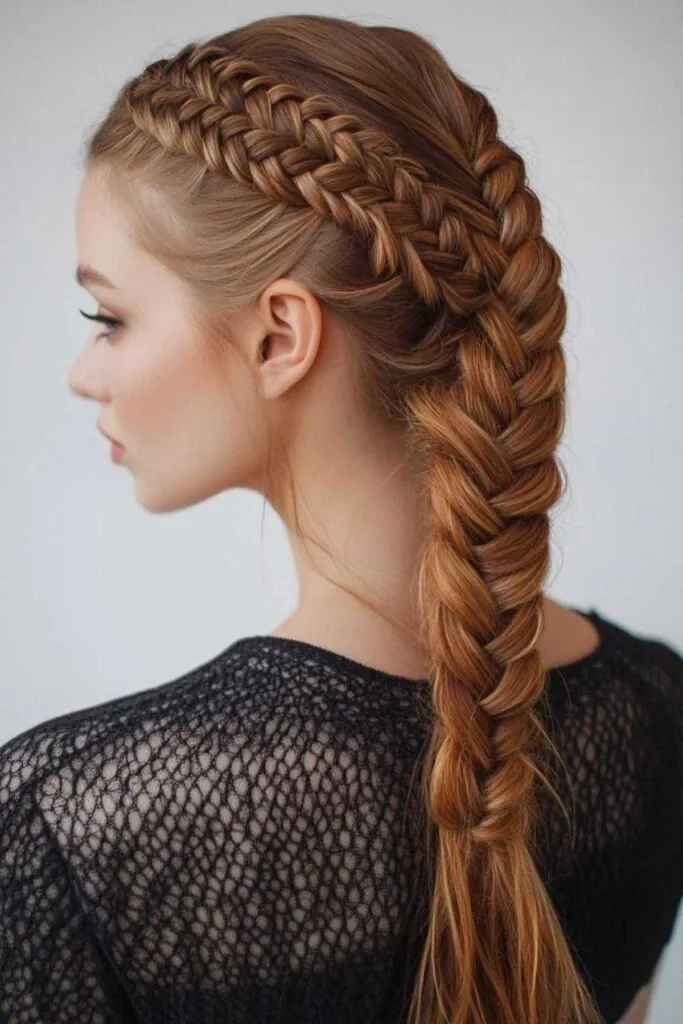
Common mistakes: starting the braid too far back, which leaves the front layers free to catch powder, or braiding with uneven tension so one side loosens first. Begin at the very front hairline and keep each section the same size.
Maintenance: a side braid is easy to redo between rounds if it loosens, and easy to rinse one-handed afterwards. Keep a spare elastic in your pocket for a quick repair.
Quick verdict: graceful and practical. A lovely choice for a family Holi gathering where you want something prettier than a plain plait.
25. Low Ponytail with a Wrap-Around Braid
A low ponytail with a wrap-around braid takes a small section of hair from the ponytail, braids it and wraps it around the elastic to hide it. The wrap adds grip at the base — the point where ponytails usually fail when wet — and turns a plain ponytail into something that looks finished, even after the colours.
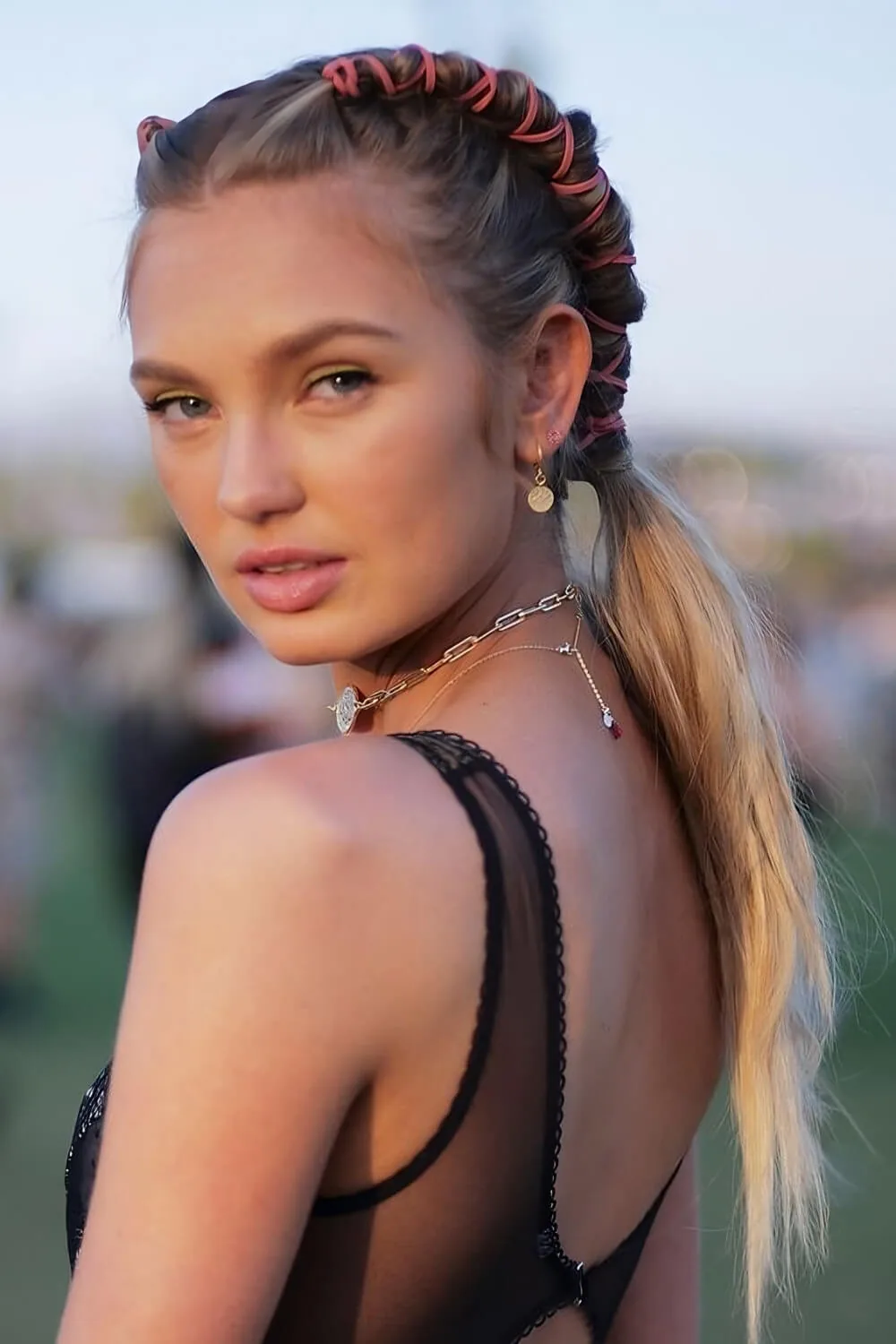
Common mistakes: wrapping the braid too loosely so it slides off the elastic once wet, or taking too much hair for the wrap so the ponytail thins out. A thin braid, wrapped tightly and pinned underneath, is all you need.
Maintenance: pin the end of the wrap underneath the ponytail with one bobby pin. If it comes loose, re-wrap it between rounds — it takes twenty seconds — and rinse the ponytail while it is still tied afterwards.
Quick verdict: the plain ponytail, upgraded. A small detail that adds real hold and a polished finish for daytime colour play.
26. Boho Braided Ponytail with Flowers for the Evening
This is an evening style, for after the wash, when the colours are off and the gathering turns to music and dinner. A loose boho braid runs down into a soft ponytail, with a few fresh flowers — marigolds are traditional and perfect for Holi — tucked into the braid. It looks romantic, festive and completely fresh, because the hair underneath is clean.
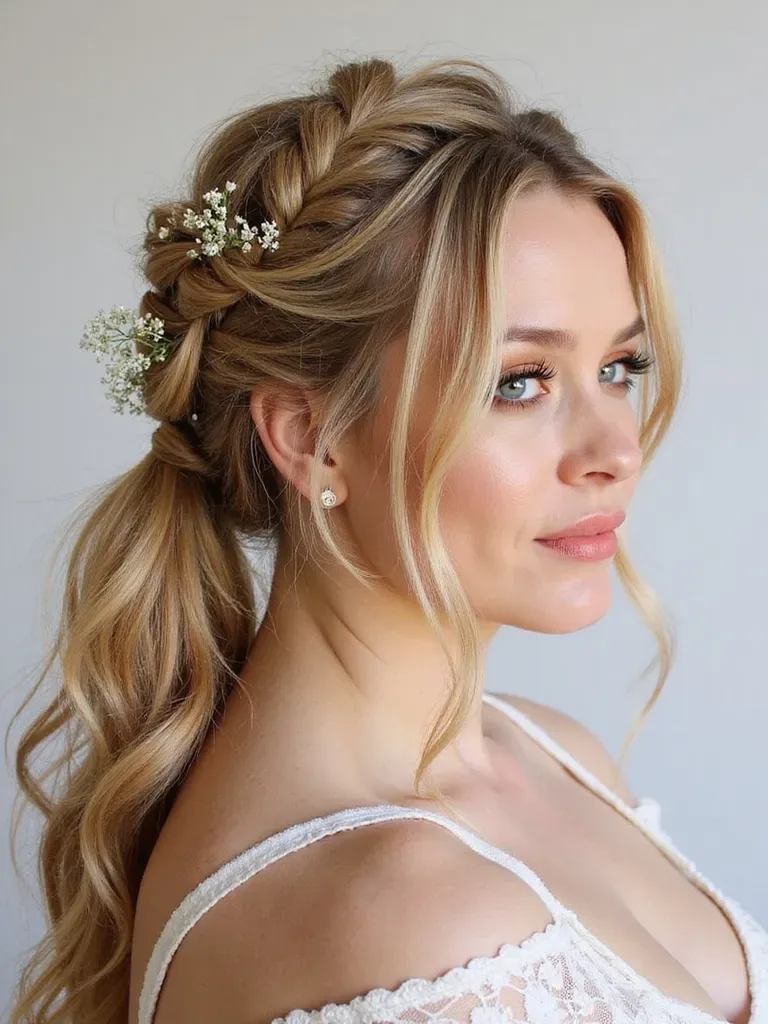
Common mistakes: wearing flowers during colour play. Fresh flowers wilt in minutes under coloured water and stain the hair, and gulal ground into petals is impossible to clean. Keep the flowers in a bag until after the wash, and add them last.
Maintenance: braid the hair loosely on clean, dry hair, and add the flowers just before the evening gathering. A light mist of hairspray holds the braid without making it stiff, and the flowers will last the whole evening indoors.
Quick verdict: the prettiest evening style on this list. Save it for after the wash — the flowers deserve clean hair, and so do you.
27. Twisted Crown Braid
A twisted crown braid twists two sections of hair around each other in a circle around the head, pinning the front layers back and keeping powder away from the face. It is softer than a braided crown and quicker to do, which makes it a good choice if you are styling in a hurry before heading out.
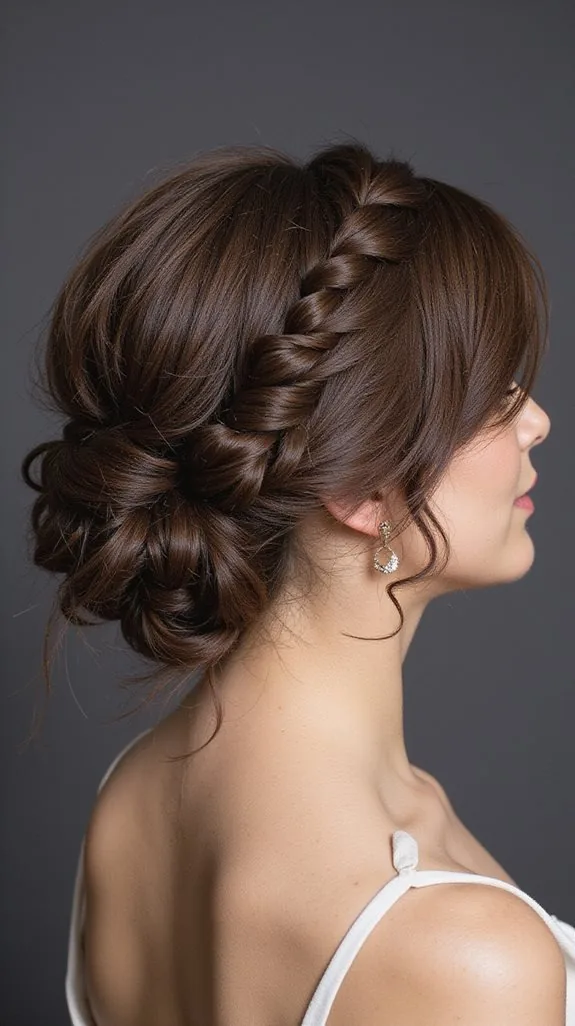
Common mistakes: twisting too loosely so the crown slides forward as the hair gets wet, or leaving the ends loose so they unravel. Twist firmly, pin every few inches, and tuck the ends into a small bun at the back.
Maintenance: pair the crown with a low bun or a low braid so no hair is left loose. Check the pins after the first splash — the crown is the first part to shift if it is going to.
Quick verdict: soft, quick and face-clearing. A lovely choice for medium hair, and it sits beautifully under a light dupatta.
28. High Puff for Natural Hair
A high puff gathers natural or coily hair into a soft, rounded shape at the crown, held by a wide band, keeping the curls up and out of the face while letting them keep their shape. For Holi, oil the hair first and drape a light scarf over the puff during the heaviest colour play — the scarf stops gulal settling into the coils.

Common mistakes: pulling the puff too tight, which flattens the curls and strains the edges, or using a narrow elastic that digs in and leaves a dent. A wide, soft band distributes the pressure and keeps the puff full.
Maintenance: a puff can loosen as the hair gets wet, so check the band after the first splash. After the celebration, rinse the puff while it is still up, then let the curls down and scrunch them with water or curl cream.
Quick verdict: joyful, light and perfect for natural hair. Best for daytime play with a scarf on top, and easy to refresh for the evening.
29. Waterfall Braid for the Evening Gathering
A waterfall braid is an evening-only style: a braid that runs across the back of the head, letting strands fall through it like a waterfall, worn on clean, washed hair after the colours are off. It looks intricate and romantic, and it shows off freshly washed hair at its best — shiny, soft and free of powder.
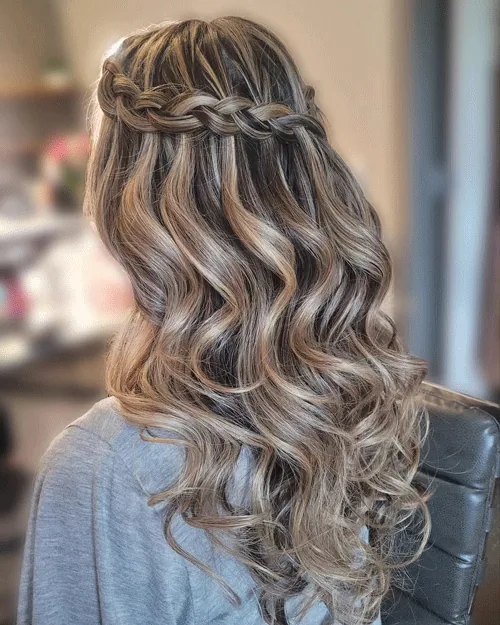
Common mistakes: attempting it before the wash, or on hair that still holds gulal. A waterfall braid on colour-dusted hair looks dull, tangles as you braid it, and traps pigment in every falling strand. Wash first, braid second — no exceptions.
Maintenance: after washing and drying, braid the waterfall slowly and evenly, letting each dropped strand fall cleanly. A little shine serum on the falling strands keeps them smooth, and the style holds for the whole evening indoors.
Quick verdict: the showpiece evening braid. It only works on clean hair, which is exactly why it feels so special after a day of colour.
30. Double French Braids into Low Buns
Two French braids that end in two small low buns give you the security of braids with the neatness of a bun. Braid each side from the hairline to the nape, then twist each tail into a small bun and pin it. Nothing hangs down to swing or soak up coloured water, and the weight is split evenly across both sides.
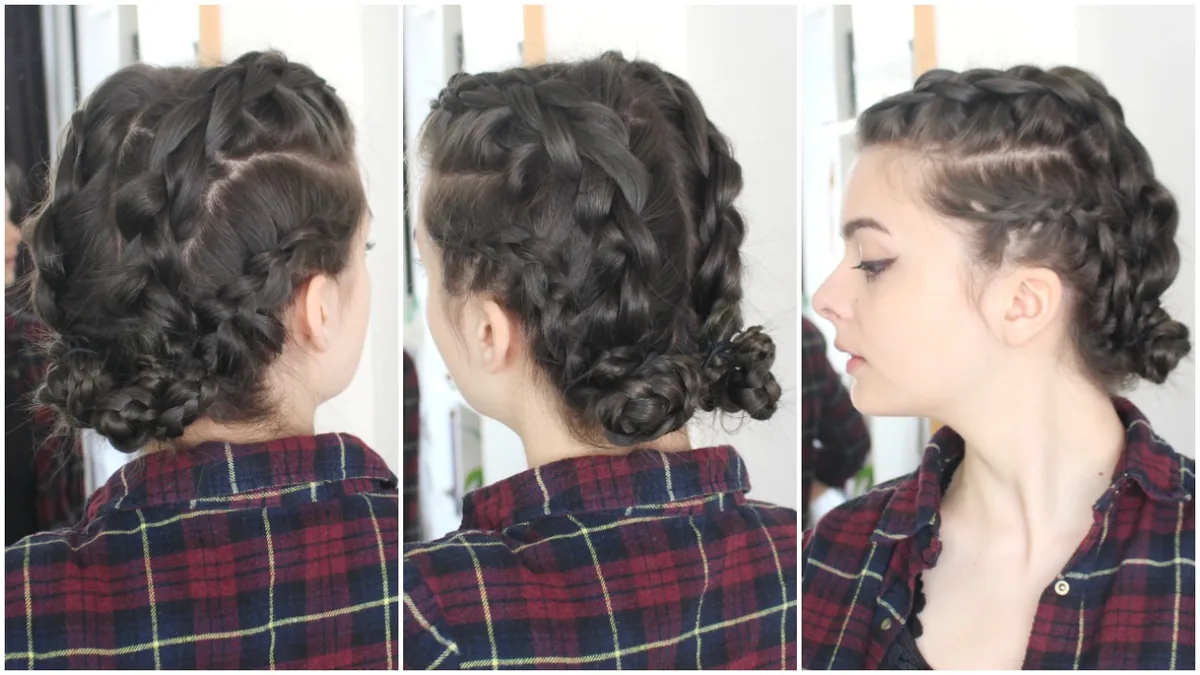
Common mistakes: making the buns too big, which makes them wobble once wet, or braiding the two sides at different heights. Keep the buns small and the parting straight, and the style will sit flat all day.
Maintenance: four pins per bun is the rule — two at the top, two at the bottom. If a bun starts to droop after a splash, one extra pin at the base usually saves it.
Quick verdict: one of the most secure styles here, and it looks great too. Ideal for a long day of colour play and an evening gathering afterwards.
31. Messy Low Bun with Face-Framing Strands for the Evening
A messy low bun with soft face-framing strands is the relaxed evening style: the hair is gathered loosely at the nape, the bun is left deliberately soft, and two thin strands are pulled out to frame the face. It looks effortless and romantic, and it is the perfect reward after a day of tight, practical braids.
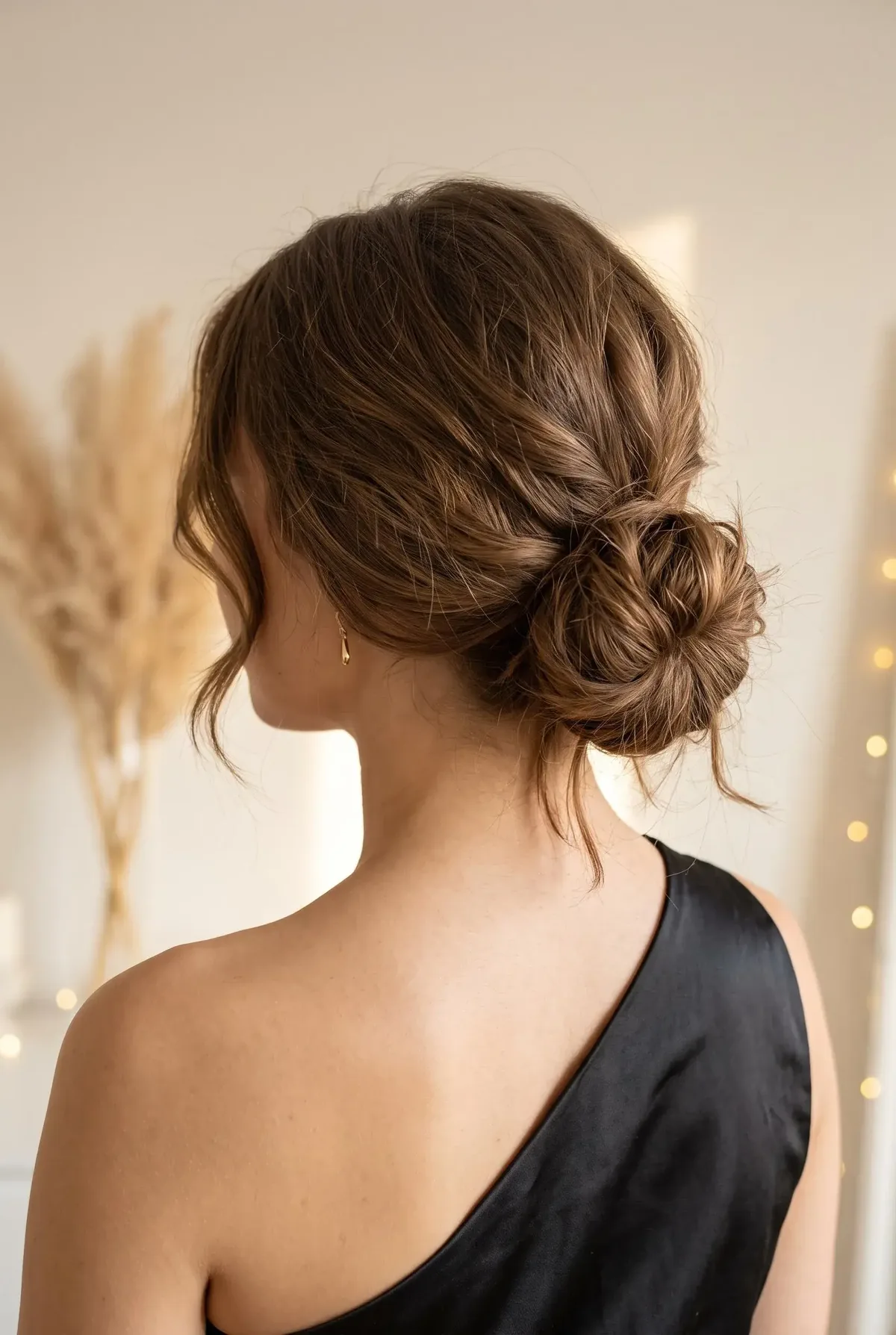
Common mistakes: wearing it during colour play. Loose face-framing strands are the first thing gulal lands on, and they stain fastest because they are the finest hair. This style only exists after the wash — daytime hair stays fully contained.
Maintenance: wash the colour out, let the hair air-dry until just damp, then gather it loosely and pin the bun with three or four pins. Pull the face strands out last, and add a little serum so they stay soft instead of frizzy.
Quick verdict: the unwind style. Tight braids by day, soft bun by evening — the contrast is what makes both halves of Holi feel special.
32. Classic Plait with a Ribbon
The classic plait — one simple three-strand braid down the back, tied with a ribbon — is the Holi style many of us grew up with, and it still works. Oil the hair, braid it firmly from the nape to the tips, and tie a plain cotton ribbon at the end. The ribbon adds a festive touch and doubles as an extra anchor so the braid cannot unravel.

Common mistakes: braiding on unoiled hair, which lets the plait absorb colour like a sponge, or using a silk ribbon that stains and slides off. Use oiled hair and a washable cotton ribbon in a colour you do not mind staining.
Maintenance: a classic plait needs almost no attention during the day. Rinse it while it is still braided afterwards, untie the ribbon, and wash the hair — the ribbon can be washed separately and used again next year.
Quick verdict: simple, traditional and dependable. Sometimes the style you grew up with is the right one — and it photographs beautifully against a white kurta.
Should I oil my hair before playing Holi?
Yes — always oil your hair before Holi. Warm coconut or almond oil, massaged into the scalp and worked through the lengths, coats the hair so gulal and coloured water slide off instead of staining it. Oiled hair also tangles far less, which makes washing the colour out afterwards much easier.
Which hairstyle keeps Holi colour out of my hair best?
Tight braids keep colour out best — double Dutch braids, a French braid, or a braided bun. Braids leave almost no loose hair for powder to settle into, and a dupatta or light cotton scarf worn over the top adds a second barrier that catches most of the gulal.
How do I wash Holi colour out of my hair?
Rinse first with lukewarm water until it runs mostly clear, then shampoo once with a mild shampoo and condition the lengths. Never shampoo dry, colour-caked hair — it turns into a paste that clings to the scalp. If colour remains, apply oil or conditioner to the stained lengths for twenty minutes, then wash again.
Can I leave my hair open for Holi?
It is best not to. Loose hair traps gulal deep in the lengths, soaks up coloured water, tangles badly and takes several washes to clean. Keep your hair braided or bunned during colour play, and save loose styles for the evening gathering after you have washed.
What hairstyle suits short hair for Holi?
Oil the hair, slick it back with gel, and add a wide non-slip headband, pinning any escaping pieces flat. A light cotton scarf over the top adds extra protection. Short hair cannot be braided, so the headband and scarf do the work a braid would do on longer hair.
How do I protect coloured or chemically treated hair during Holi?
Oil it generously the night before and again in the morning, keep it tightly braided or bunned, and cover it with a scarf — treated hair absorbs pigment faster than untreated hair. Wash it out gently afterwards with a sulphate-free shampoo, and deep-condition it the same evening to replace lost moisture.
What should I do if gulal gets stuck in my scalp?
Do not scratch or scrub it dry. Rinse the scalp with lukewarm water first, then massage in a little oil or curd and leave it for fifteen minutes — this lifts the pigment gently. Wash with a mild shampoo, and repeat the oil step once more if colour remains. See a doctor if the scalp stays red, itchy or sore.
Can I wear a dupatta or scarf over my hairstyle?
Yes — a light, washable cotton dupatta or scarf over a braid or bun is one of the best Holi hair protections there is. Pin it above each ear so it cannot slide off, shake it out every hour, and save your good silk dupatta for the evening, after the colours are washed off.
Which hairstyle is best for Holi photos?
Styles with clear shape photograph best during colour play — a thick braid down the back, double Dutch braids, a high bun, or a scarf-draped crown. Take the group photos early, while the braids are still neat, and keep your eyes closed for the colour-throw shot so powder does not sting.
How do I style my hair for an evening Holi gathering?
Wash the colour out properly first, let the hair air-dry, and then restyle — a soft side braid, a waterfall braid, a messy low bun with face-framing strands, or loose waves with a braided headband. The wash in between is what makes the evening style work, so do not skip it.
Conclusion
Holi is meant to be messy — that is the joy of it — but your hair does not have to pay for the fun. Oil it first, braid it or bun it tight, cover it with a light scarf, and the colours will stay on the surface where they belong, instead of staining deep into your hair. The 32 hairstyles for a Holi celebration in this guide all follow that same simple idea: protect the hair during the day, and let it shine in the evening, once the colours are washed away.
Start with double Dutch braids or a low braided bun for the colour play, and keep a second, softer style in mind for the evening gathering. Wash gently — rinse first, shampoo once, oil and repeat only if you need to — and your hair will feel normal again by the next morning. Enjoy the gulal, dance in the colours, take the photos early, and let your hair be the one thing you do not have to worry about this Holi.