Fast Rallies, Tidy Hair: 41 Hairstyles for Badminton That Survive Smashes, Lunges and Court Sweat
Badminton is one of the fastest racket sports in the world, and your hair feels every bit of that speed. A rally can flip from a gentle net drop to a full overhead smash in a single second, and your head turns, ducks and lunges with every shot. That is why hairstyles for badminton need to be built for movement first and looks second: a style that holds through quick head turns, stays out of your eyes at the net, and does not unravel into a sweaty knot by the second game is worth far more than one that only looks good in the car park.
The indoor hall adds its own problems. There is no wind to cool you down, the lights are bright and warm, and a long match leaves sweat running down the hairline and the nape. Loose hair sticks to a damp neck, whips across the face on a smash, and distracts you at exactly the moment the shuttlecock is coming at 300 kilometres an hour. The fix is not complicated: anchor the hair at several points, keep the front layers back, and choose a shape that survives sweat instead of fighting it.
This guide starts with the court-side thinking: what hall heat does to your hair, how to make a style survive lunges and smashes, which products hold through a long rally, and what works for each hair length. Then it gives you 41 styles for players and fans, for short, medium and long hair and every texture, from a fast singles match to a relaxed doubles evening with friends. Pick one, practise it once at home, and walk onto court knowing your hair is already sorted.
Court Heat and Sweat: What Badminton Does to Your Hair
What it is: the indoor hall problem. Badminton halls are warm, still and brightly lit, so sweat builds fast at the hairline, the temples and the nape. Damp hair goes limp, loses its grip on pins and elastics, and sticks to the neck and forehead, which is distracting during a rally and uncomfortable between games.
Common mistakes: styling on freshly washed, slippery hair with no grip product, so the style slides loose within ten minutes; and piling on heavy cream or oil before a match, which mixes with sweat and weighs the hair down flat.
Maintenance: start with day-old hair or a little dry shampoo at the roots for grip, keep the nape clear with a braid or a low bun, and carry a small towel and two spare elastics in your kit bag for the break between games.
Quick verdict: beat the heat by anchoring, not by adding product. A secure braid or bun with a dry, grippy base outlasts any amount of styling cream once the sweat starts.
Lunges, Smashes and Quick Head Turns: Making a Style Movement-Proof
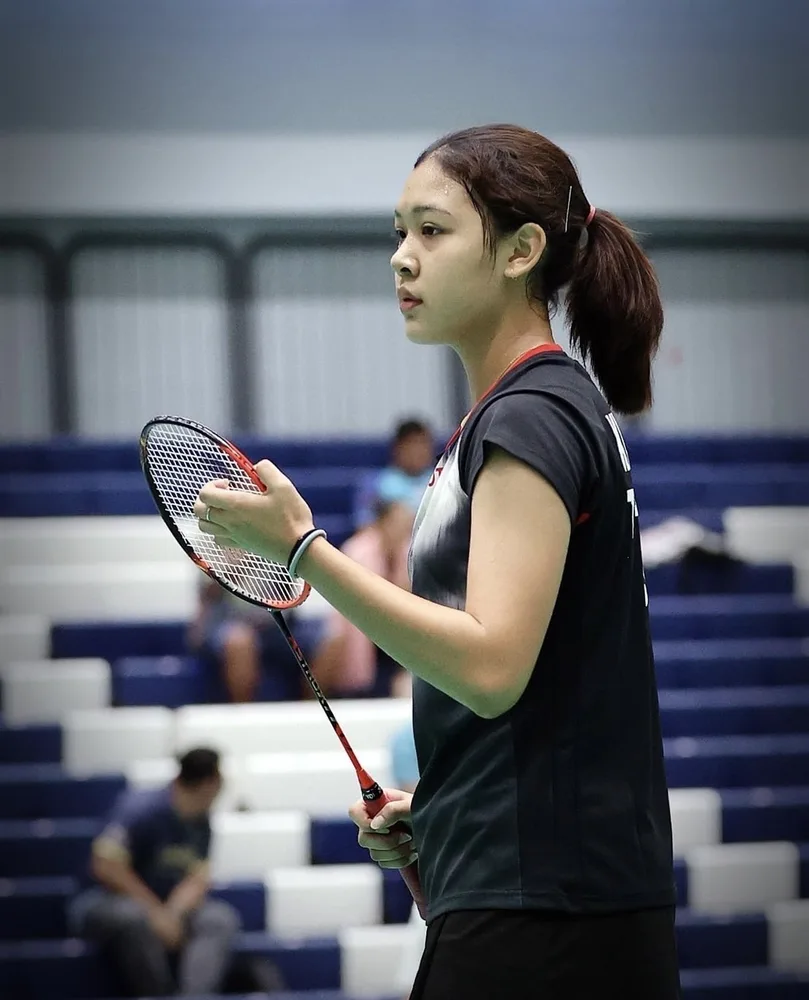
What it is: the movement test. Badminton asks your head to do things most sports never do: snap up for an overhead smash, whip sideways to track a cross-court shot, and duck low for a net kill. Any style that relies on a single elastic or a loose clip will shift, sag or fall apart under that kind of movement.
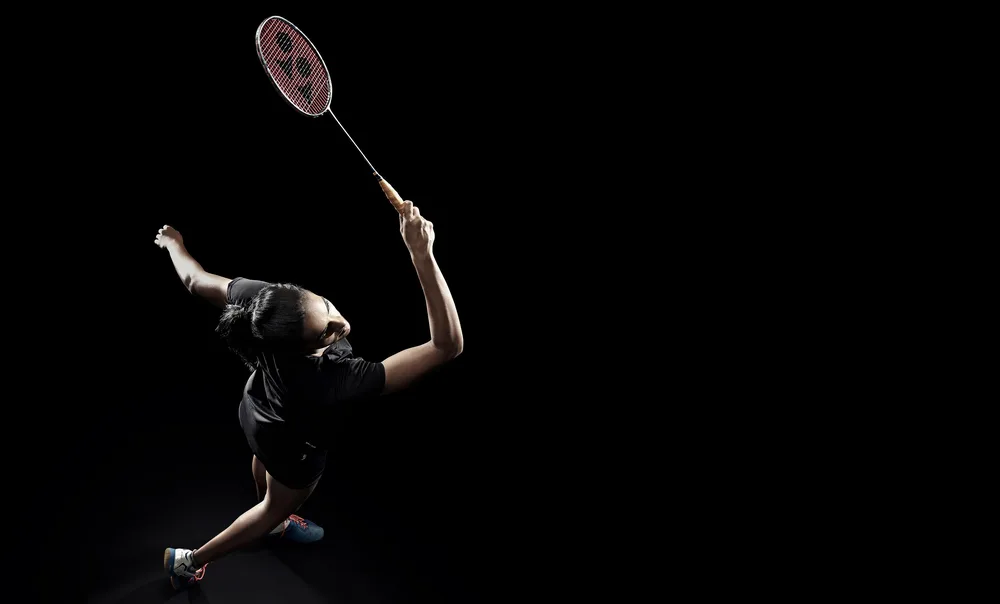
Common mistakes: a high ponytail held by one thin elastic, which bounces and loosens with every lunge; and a bun pinned with only two pins, which tilts sideways the first time you look up at a high clear.
Maintenance: use two elastics at the base, cross bobby pins in an X so they lock each other, and test the style at home with ten quick head turns and five jumps before you trust it on court.
Quick verdict: if a style cannot survive a minute of shadow badminton in your living room, it will not survive a real rally. Braids and double-anchored buns pass this test best.
Playing vs Watching: Picking the Right Style for the Court
What it is: the player-versus-fan split. A player needs a style that cannot move at all: nothing swinging, nothing in the eyes, nothing a headband can slide off. A fan or a doubles partner waiting courtside can wear something looser, with a little movement and a softer finish, because the only rally they are tracking is with their eyes.
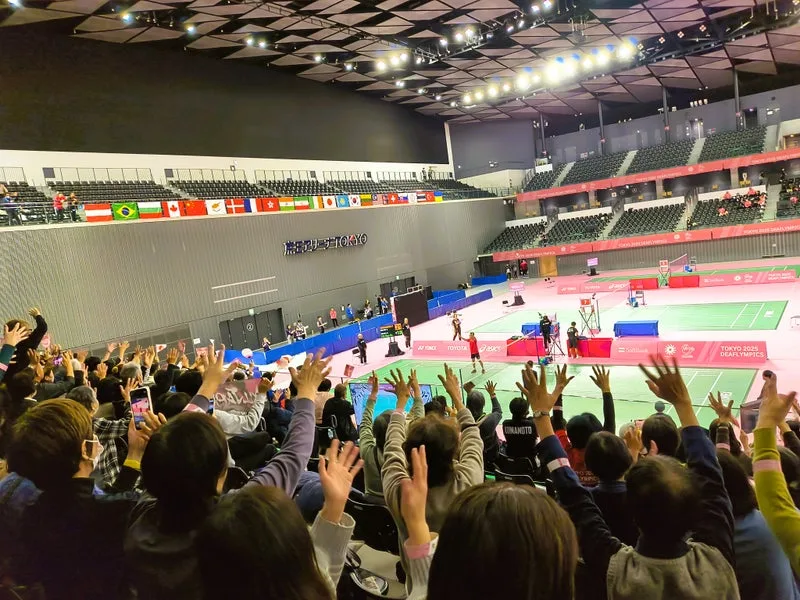
Common mistakes: players choosing a pretty half-up style that falls forward on every overhead shot; and fans over-engineering a match look with heavy gel, then sitting under hot hall lights for two hours while it goes stiff and itchy.
Maintenance: players should braid or bun everything and check it survives a practice rally; fans should pick a style with a headband or a low ponytail that can be re-tightened in seconds between games.
Quick verdict: pick for the job you are doing tonight. Locked-down braids for the court, softer half-up styles for the sidelines, and never the other way round.
Sweat-Proof Products That Hold Through Long Rallies
What it is: the small kit that keeps a style alive. The products that work on court are the ones that hold without stiffness: a strong-hold gel for the hairline, a light pomade for flyaways, a flexible hairspray to finish, and a dry shampoo for the roots before and after the match.
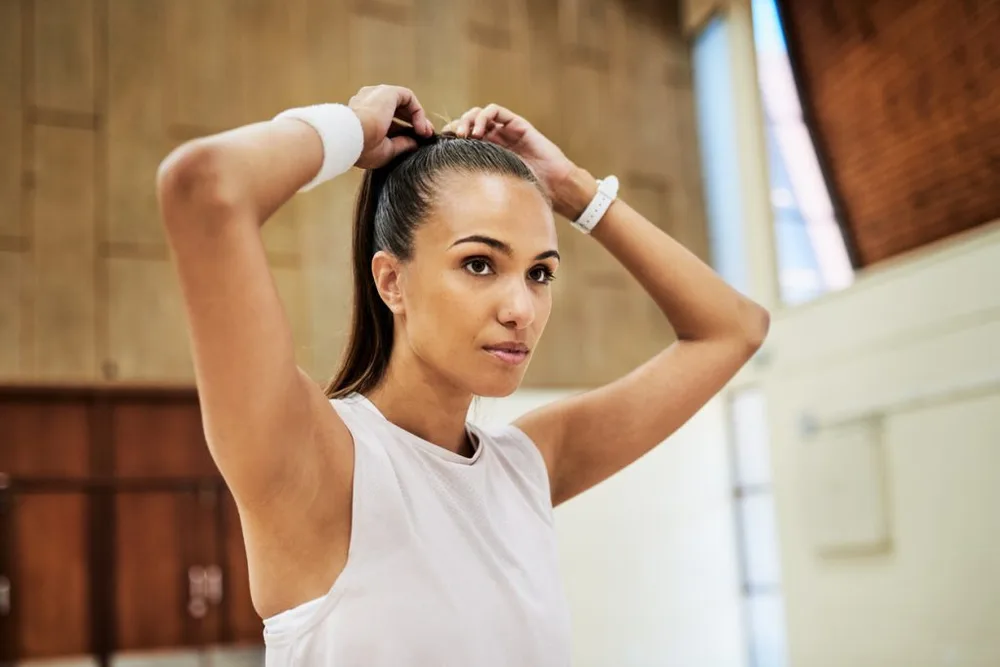
Common mistakes: using a heavy oil or a rich cream before playing, which turns slippery the moment you sweat; and spraying hairspray so close to the head that it goes crunchy and flakes onto your shoulders mid-game.
Maintenance: smooth gel along the hairline with a toothbrush, add a pea-sized amount of pomade to the ends, and mist hairspray from a handspan away. After the match, dry shampoo at the roots revives the style for the journey home.
Quick verdict: less is more on court. A little gel at the hairline and one light mist of spray will hold a rally; a heavy hand with product will not.
Hair by Length: Short, Medium and Long on Court
What it is: the length rule. Short hair is the easiest on court: it fits under any headband, needs almost no anchoring, and a little texture spray is usually enough. Medium hair needs a low ponytail or a braid to stop the ends flipping into the face on a smash. Long hair needs the most anchoring, because it swings, catches on a collar, and sticks to a sweaty neck.
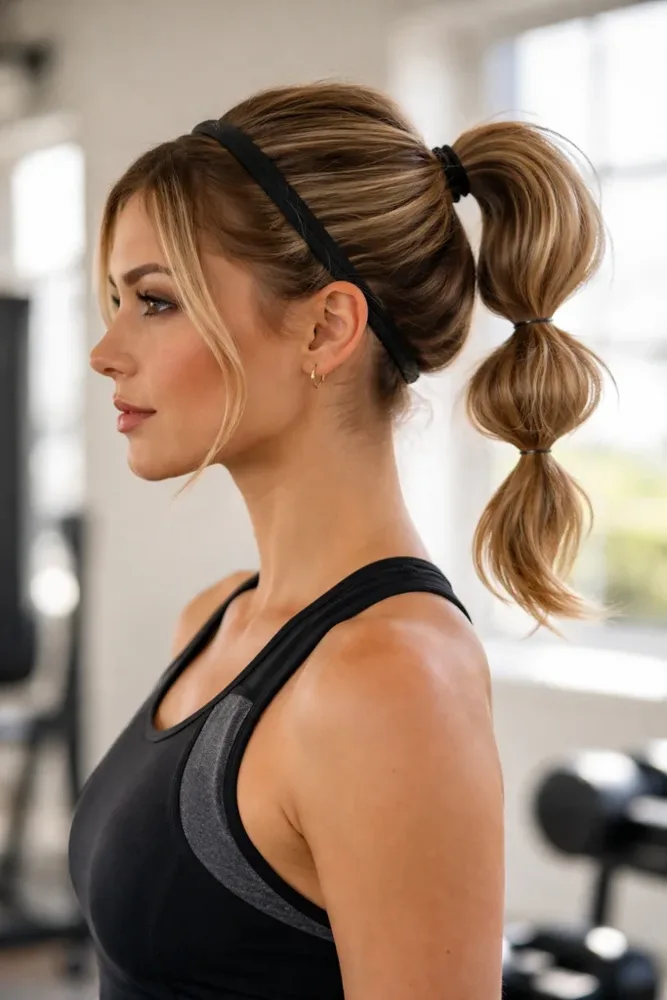
Common mistakes: leaving long hair in a single loose ponytail that whips across the face on every overhead; and ignoring short layers at the temples, which fall forward exactly when you look up for a high shot.
Maintenance: short hair: add a headband and smooth the sides. Medium hair: gather it low and pin the ends. Long hair: braid it first, then bun or ponytail the braid so nothing swings free.
Quick verdict: match the anchor to the length. A headband for a pixie, a low braid for a lob, and a full braid-and-bun for long hair will each hold a whole match.
Braids vs Buns vs Ponytails for Badminton
What it is: the three-way choice. Braids are the most secure: they lock the hair flat against the head and cannot swing loose, which makes them the first choice for long rallies. Buns are the neatest, because they sit low and flat and never touch the neck. Ponytails are the fastest, but they swing, so they work best when they sit low or when a braid runs into them.
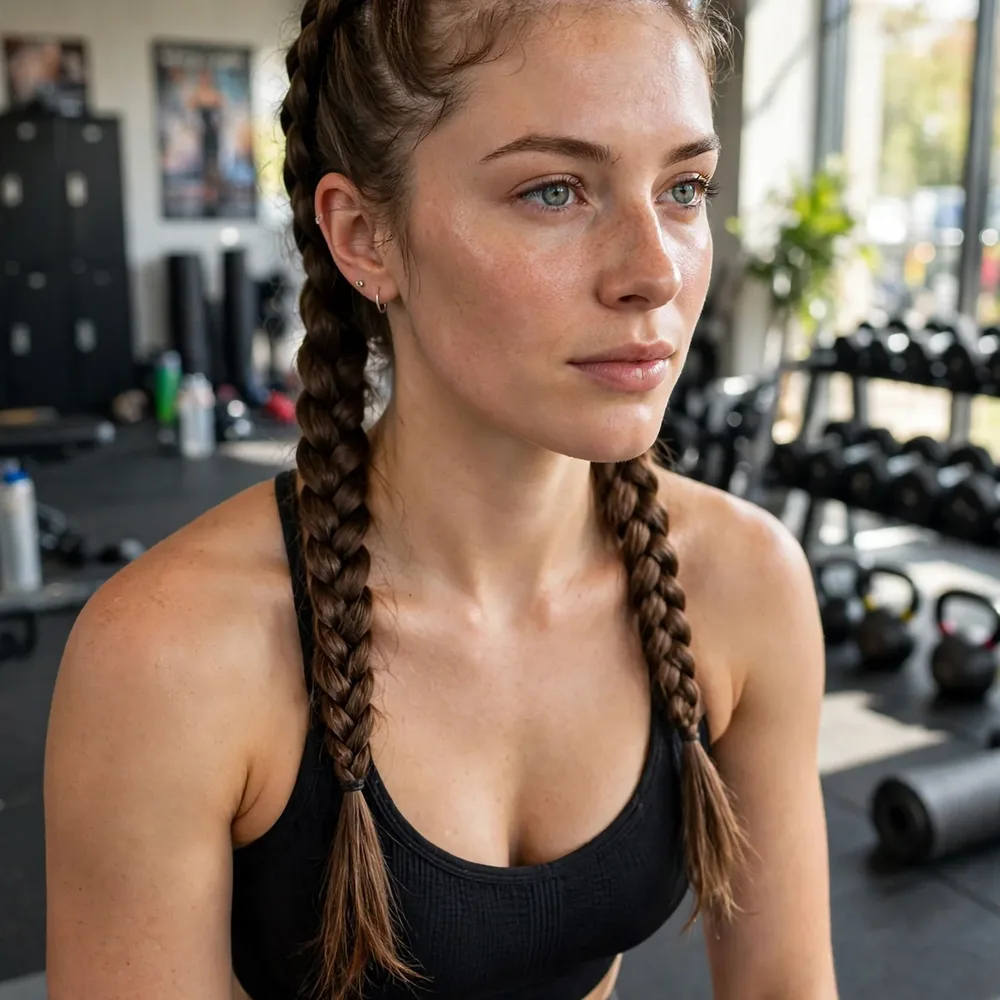
Common mistakes: choosing a ponytail for a fast singles match and spending the whole game pushing it out of the way; and choosing a high bun that sits where a headband needs to go, so both the bun and the band slide around.
Maintenance: choose a braid if you need all-match hold, a bun if you need a flat fit under a headband, and a ponytail if you need speed. For the best of both, braid into a ponytail or a bun.
Quick verdict: for badminton, braids win on security, buns win on neatness, and ponytails win on speed. Most of the best court styles combine two of the three.
Headbands, Grips and Court Accessories
What it is: the court kit. A good sports headband does two jobs: it holds back the front layers and soaks up sweat before it reaches your eyes. Add a couple of strong elastics, a few bobby pins, and a scrunchie in your kit bag, and you have everything you need to fix a style between games without leaving the hall.
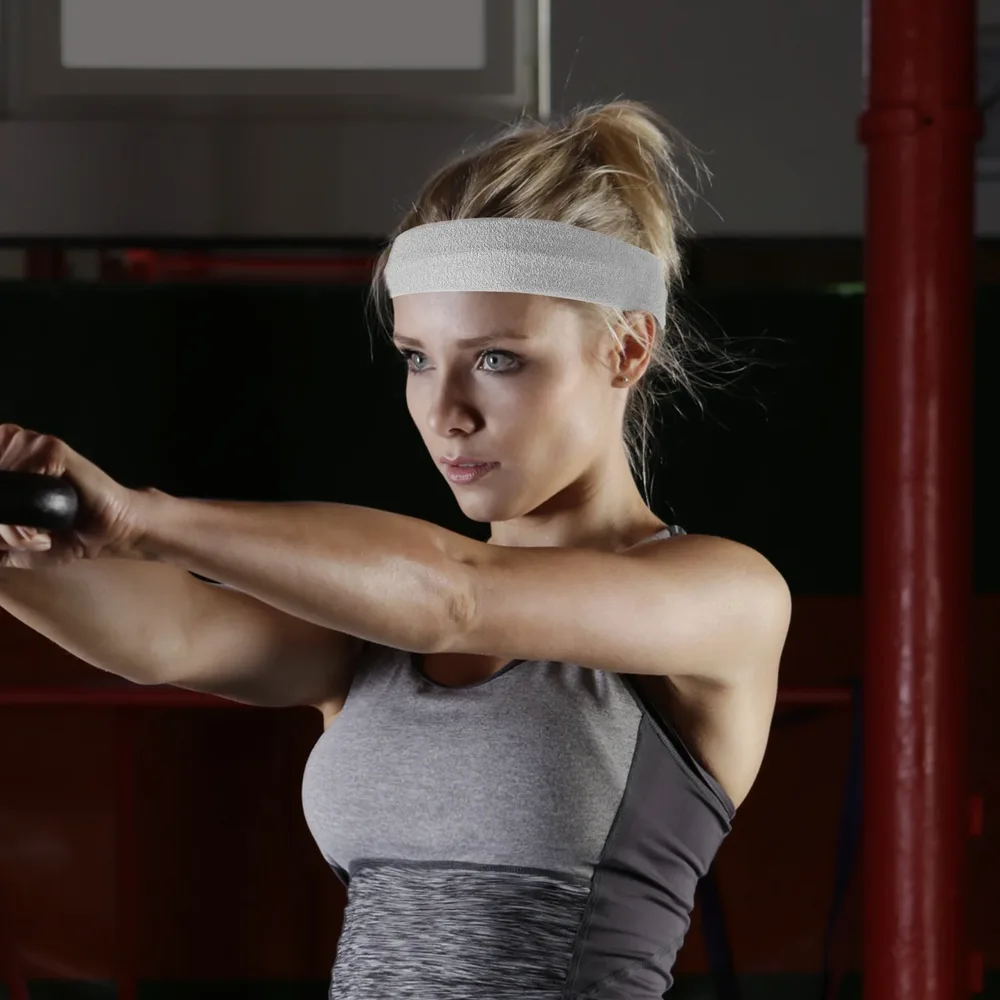
Common mistakes: a thin fashion headband that slides off the moment you sweat; and metal pins with no grip coating, which slide straight out of damp hair during a rally.
Maintenance: choose a wide, non-slip fabric headband, keep spare elastics on your wrist or in your bag, and swap a damp headband for a dry one between games if you have a spare.
Quick verdict: accessories are not decoration on court, they are equipment. One good non-slip headband is worth more than five pretty clips.
Between Games: Quick Fixes and the Post-Match Refresh
What it is: the two-minute rescue. Between games you get a short break, and that is all the time you need to save your hair. The usual problems are a loosened ponytail, a flattened headband dent, and flyaways where sweat has broken the gel. A small kit in your bag fixes all three: two spare elastics, three bobby pins, and a travel-size dry shampoo.
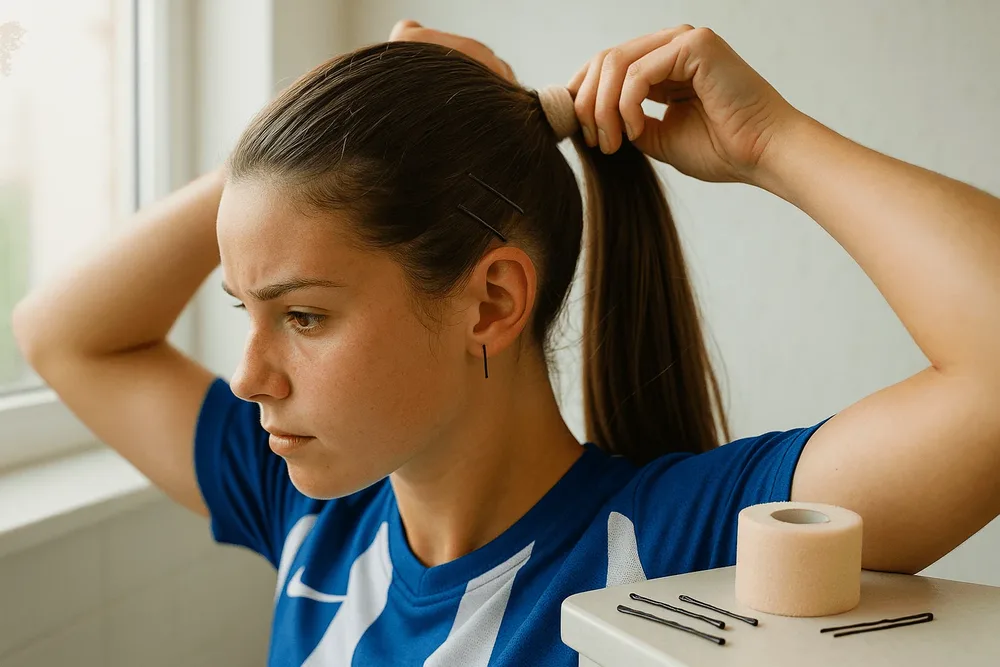
Common mistakes: re-tightening a ponytail without smoothing the hairline first, which traps bumps and flyaways under the elastic; and leaving a damp headband on for the whole evening, which flattens the roots and invites a headache.
Maintenance: between games, re-tighten the base, smooth the hairline with a little water or cream, and re-pin any loose strands. After the match, shake the hair out at the roots, add dry shampoo, and let it fall naturally.
Quick verdict: a style that survives a quick re-tighten is a good court style. Pack the mini kit, use the break, and your hair will still look good at the end of the night.
1. High Ponytail for Fast Rallies
What it is: the classic court ponytail, gathered high at the crown and secured tight. It keeps every length off the neck, lifts the hair clear of the collar, and lets you move your head freely through fast rallies without hair falling into your eyes.
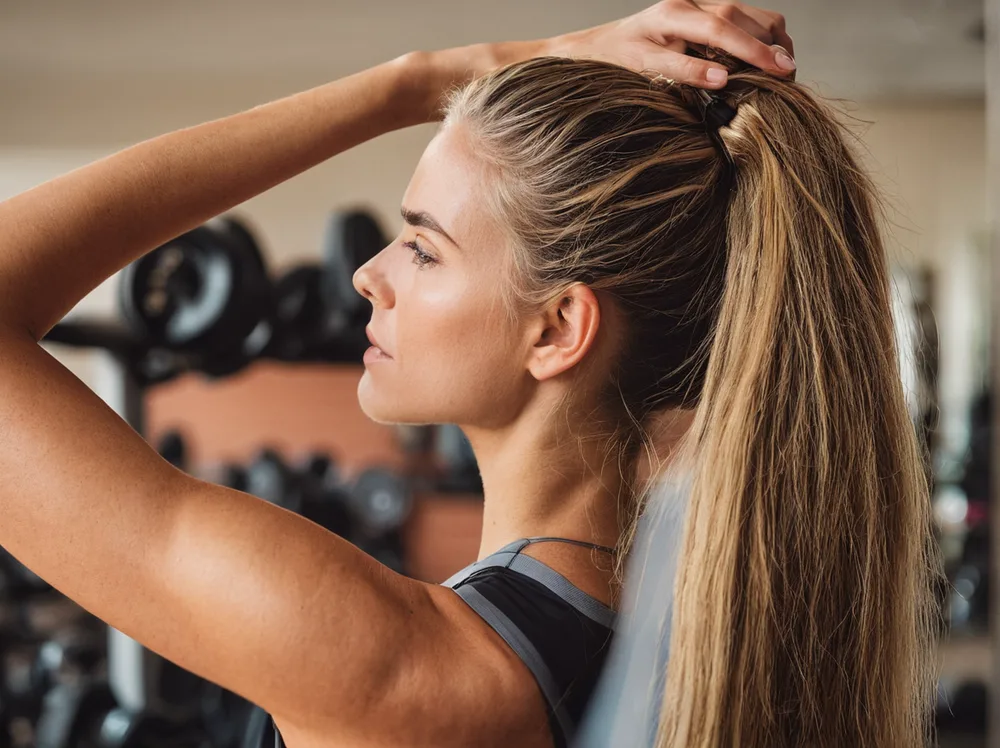
Common mistakes: using a single thin elastic, which stretches and loosens within a few rallies; and gathering the ponytail too far forward, so it pulls at the hairline and gives you a headache by the second game.
Maintenance: use two strong elastics, one over the other, and wrap a small strand of hair around the base to hide them. A quick re-tighten between games keeps it sitting high and neat.
Quick verdict: fast, simple and reliable. The best choice when you want your hair completely out of the way and you have two minutes to get ready.
2. Double Dutch Braids
What it is: two raised braids running from the hairline to the nape, one on each side of the head. They lock the hair flat against the skull, so nothing can swing, slip or fall forward, however fast the rally gets.
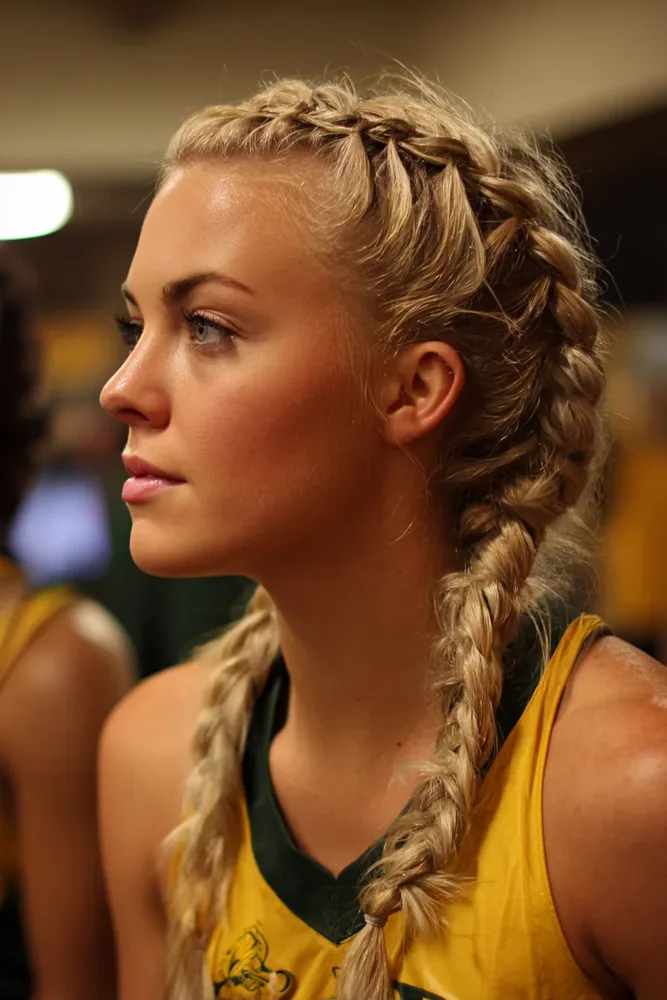
Common mistakes: braiding too loosely at the hairline, so the front sections work free on the first overhead smash; and finishing with tiny elastics that snap when the braids swing during a lunge.
Maintenance: braid on slightly damp hair with a little gel for grip, keep the sections even, and tuck the ends under or tie them together at the nape. They will hold a whole match and still look tidy afterwards.
Quick verdict: the most secure style on this list. If you play hard singles and hate touching your hair mid-game, this is the one to learn.
3. Low Sleek Bun
What it is: a smooth, polished bun sitting low at the nape. It keeps the hair completely contained, sits flat under a headband, and never touches the face, which makes it ideal for long matches and hot halls.
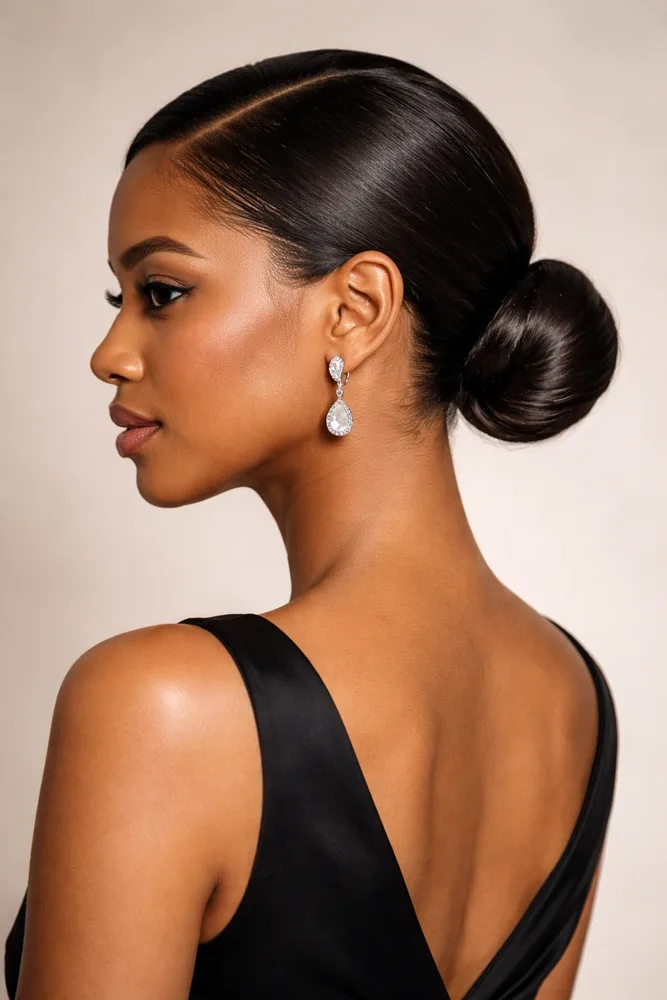
Common mistakes: placing the bun too high, where it bumps against a headband and slides around; and skipping the smoothing step, so flyaways escape at the temples the moment you start to sweat.
Maintenance: smooth the hair back with gel and a fine brush, twist into a low bun, and pin it in an X pattern. A light mist of hairspray keeps the surface sleek through every game.
Quick verdict: neat, cool and completely out of the way. A great choice for players who want a polished look that never needs attention mid-match.
4. Bubble Braid Ponytail
What it is: a high ponytail divided into puffed sections by elastics spaced down its length. It looks playful and sporty, and the extra elastics stop the ponytail from whipping around during fast rallies.
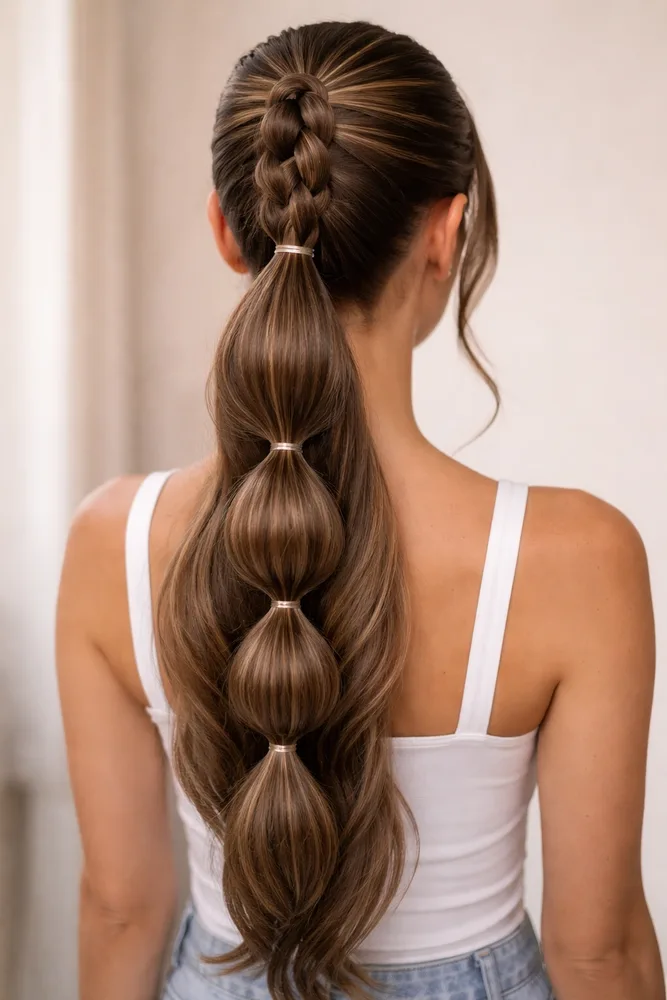
Common mistakes: spacing the elastics unevenly, so the bubbles look lopsided; and pulling the sections too tight, which puts strain on the base elastic and makes the whole style sag.
Maintenance: secure the base with two elastics, space the rest evenly, and gently pull each section outwards for volume. It takes five minutes and holds well for a full evening of doubles.
Quick verdict: sporty with personality. The bubbles keep the length controlled while giving you a fun, fan-favourite look courtside.
5. French Braid into High Bun
What it is: a French braid running from the hairline up and over the crown, ending in a high bun. The braid anchors the front, the bun holds the length, and nothing is left free to swing or stick to a sweaty neck.
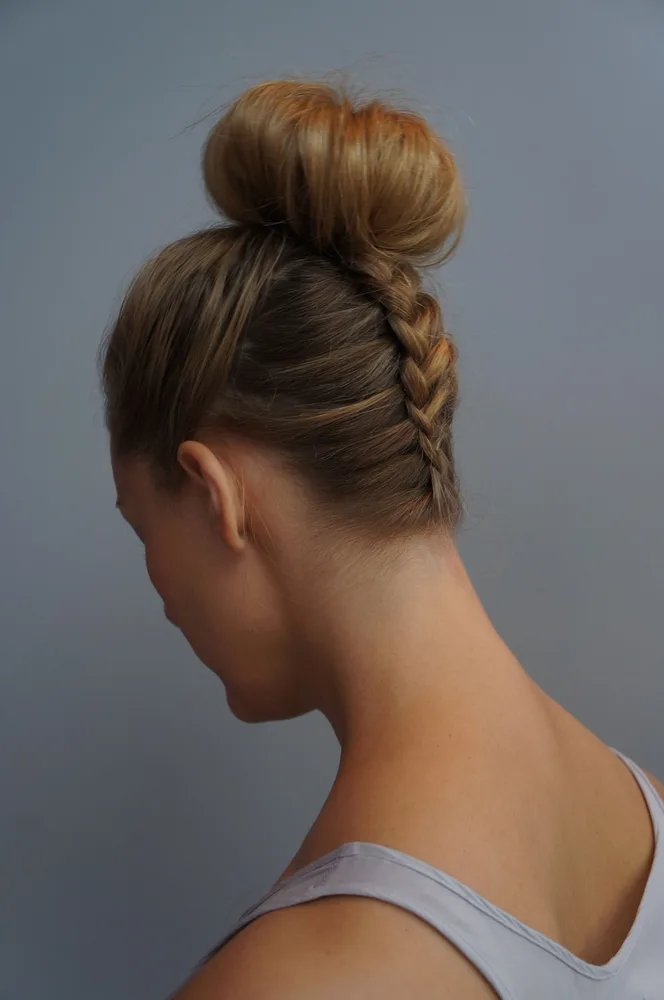
Common mistakes: starting the braid too far back, so the front layers escape on the first head turn; and wrapping the bun too loosely, so it wobbles when you jump for a smash.
Maintenance: braid tightly from the very front, gather the remaining hair into a firm bun, and pin the bun at four points. It is one of the longest-lasting styles for a tournament day.
Quick verdict: the best of both worlds: braid security with bun neatness. Worth the extra few minutes for a long match day.
6. Slicked-Back Low Ponytail
What it is: hair smoothed straight back with gel into a low ponytail at the nape. It is sleek, simple and completely flat at the front, so there is nothing to fall into your eyes when you look up for a high clear.
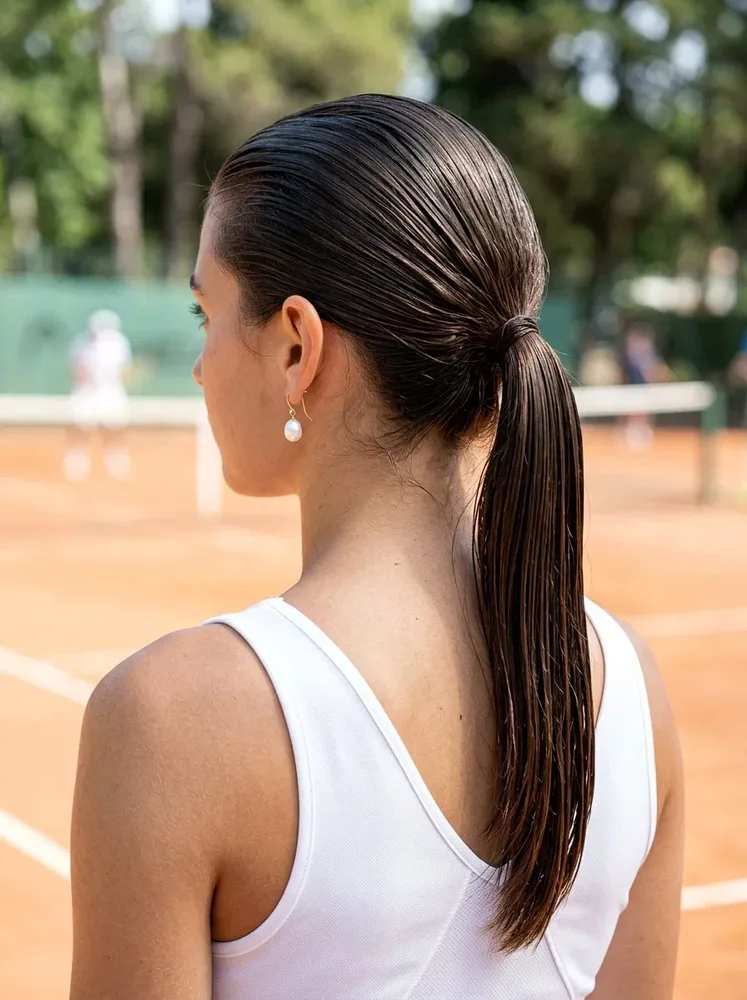
Common mistakes: using too much gel, which goes sticky and heavy once sweat mixes in; and tying the ponytail too low, so it catches on the collar during lunges.
Maintenance: work a small amount of gel through damp hair, brush it straight back, and secure with a strong elastic. Smooth any bumps with a fine-tooth comb before you tie it off.
Quick verdict: clean, fast and professional-looking. Ideal for players who want zero distraction and a style that photographs well too.
7. Cornrows
What it is: neat, tight braids woven close to the scalp in straight rows. They are one of the most durable court styles there are: they do not move, do not need re-tightening, and they keep every strand off the face and neck for days, not just one match.
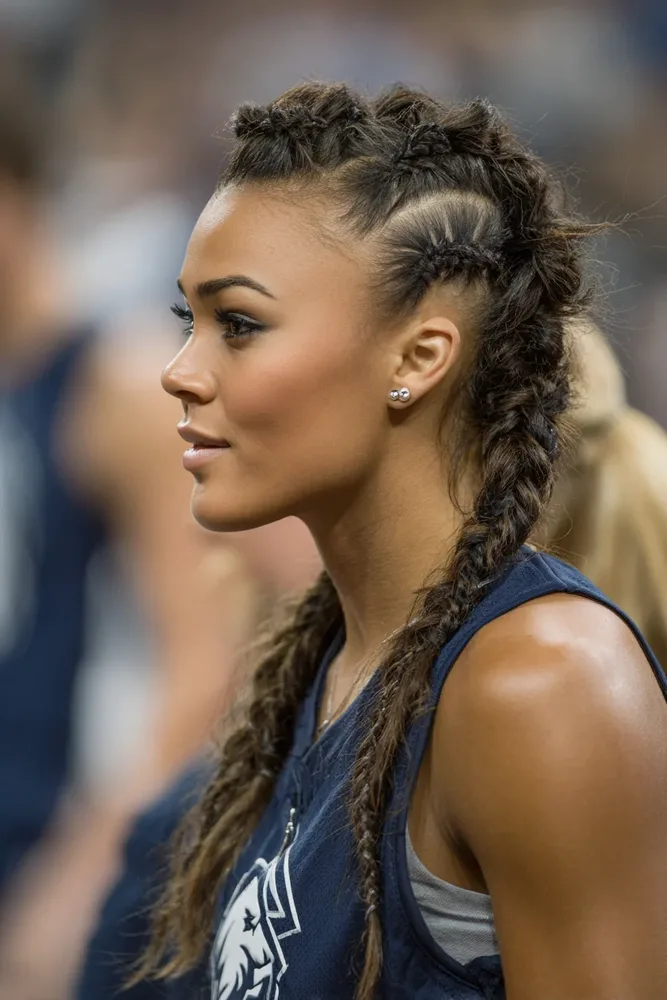
Common mistakes: braiding too tightly at the hairline, which pulls and hurts during a long session; and leaving the ends loose and unsecured, so they flick against the neck on every head turn.
Maintenance: keep the tension firm but comfortable, tie or pin the ends neatly, and cover the style with a silk scarf overnight to keep it fresh between match days.
Quick verdict: the lowest-maintenance style here. Put them in once and your hair is sorted for the whole week of games.
8. Half-Up Top Knot
What it is: the top half of the hair pulled into a small knot at the crown, with the rest left down. It keeps the front layers and the fringe out of the eyes while leaving the length free, which suits relaxed doubles and courtside watching.
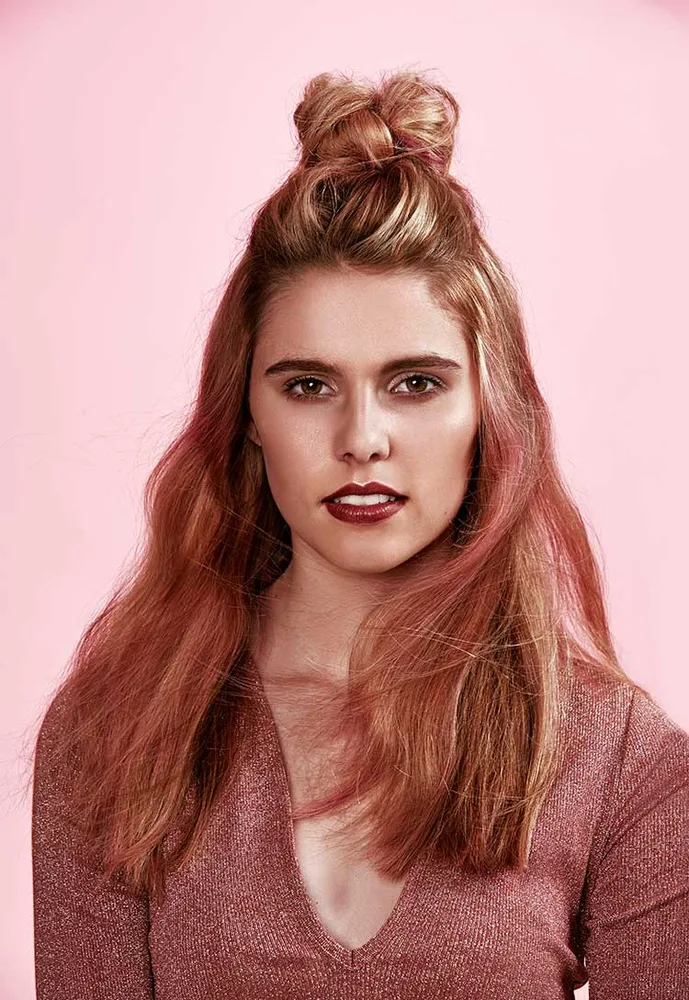
Common mistakes: taking too little hair into the knot, so the front layers still fall forward; and tying the knot too tightly, which pulls at the crown during a long evening.
Maintenance: gather from temple to temple, twist into a small knot, and pin it securely. Leave the lower layers loose and natural, and add a headband if you are playing rather than watching.
Quick verdict: relaxed and pretty, best for fans and casual games. For a hard singles match, pin the loose length up as well.
9. Braided Crown
What it is: a single braid wrapped around the head like a crown, pinning the hair in a circle. It holds the front and the sides at once, keeps the neck completely clear, and looks elegant enough for a club social after the match.
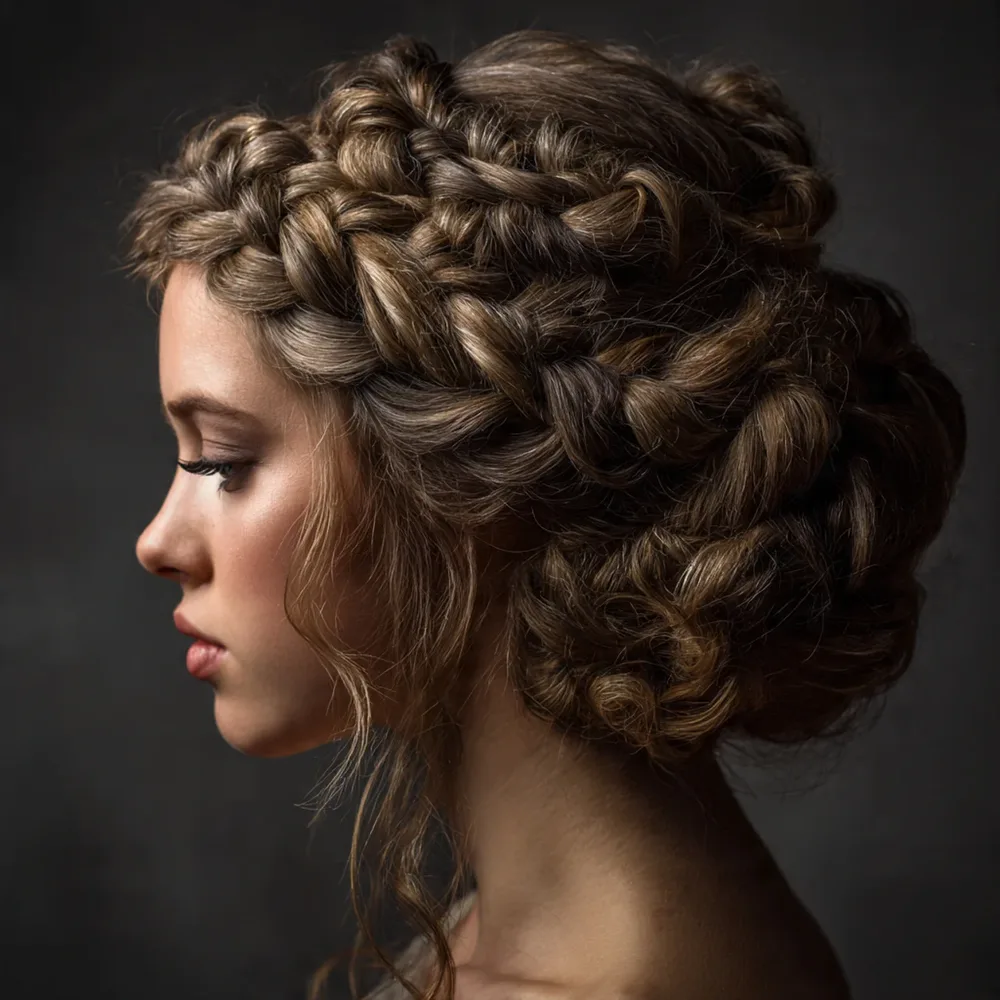
Common mistakes: braiding too loosely, so the crown slips down over the ears during play; and using too few pins, so one side works free on the first overhead smash.
Maintenance: braid firmly from one ear around to the other, pin every few centimetres with crossed bobby pins, and finish with a light spray. It holds well for a full evening.
Quick verdict: secure and beautiful. A great choice when you want a style that works on court and still looks dressed up afterwards.
10. Fishtail Braid
What it is: a slim, intricate braid made from two sections crossed over each other, worn over one shoulder or down the back. It keeps long hair in one controlled rope that cannot whip across the face during a rally.
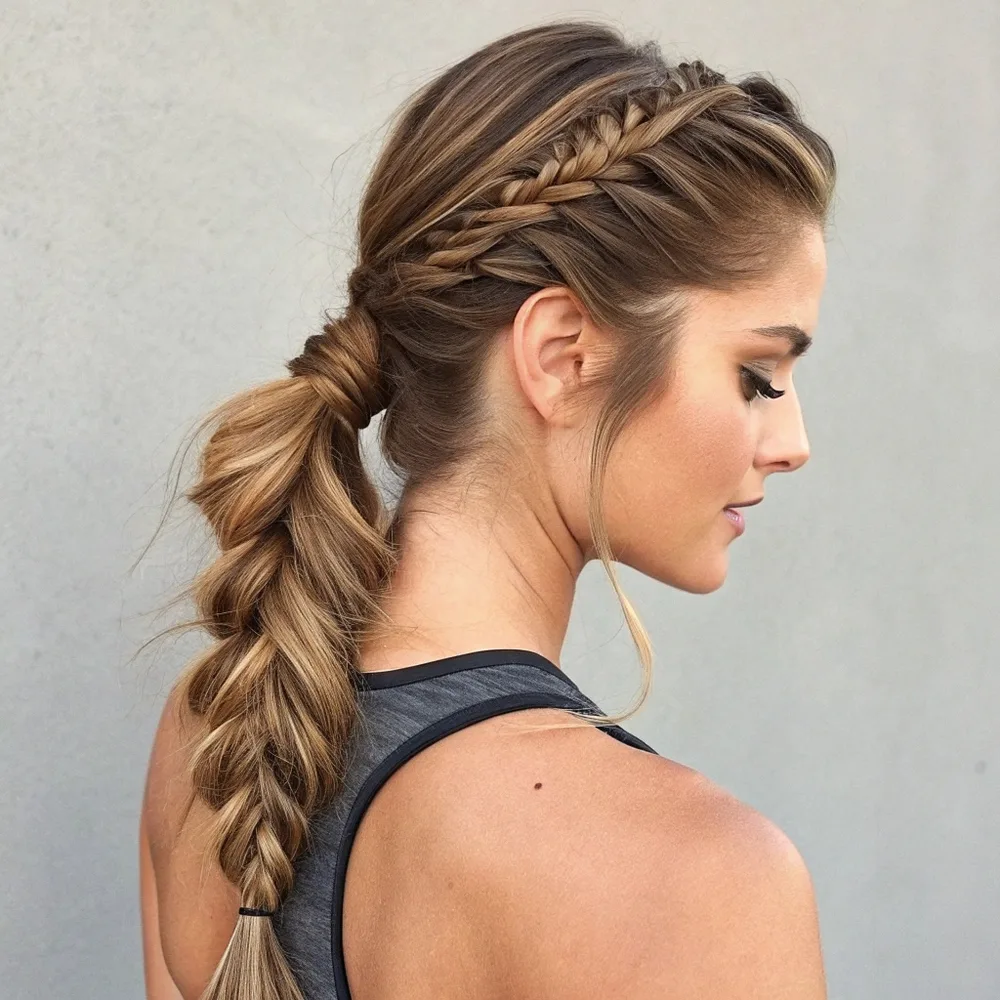
Common mistakes: starting the braid too high and loose, so it slides sideways during lunges; and pulling the sections unevenly, which makes the braid look messy instead of neat.
Maintenance: gather the hair low and to one side, keep the sections small and even, and tie the end with a strong elastic. A quick tug at the edges adds volume without loosening the hold.
Quick verdict: tidy, detailed and surprisingly secure. Best for medium and long hair on a relaxed match night.
11. High Top Knot
What it is: all the hair twisted into a firm knot on top of the head. It is the coolest style on court: the neck is completely free, sweat dries fast, and there is nothing at all to fall into the eyes.
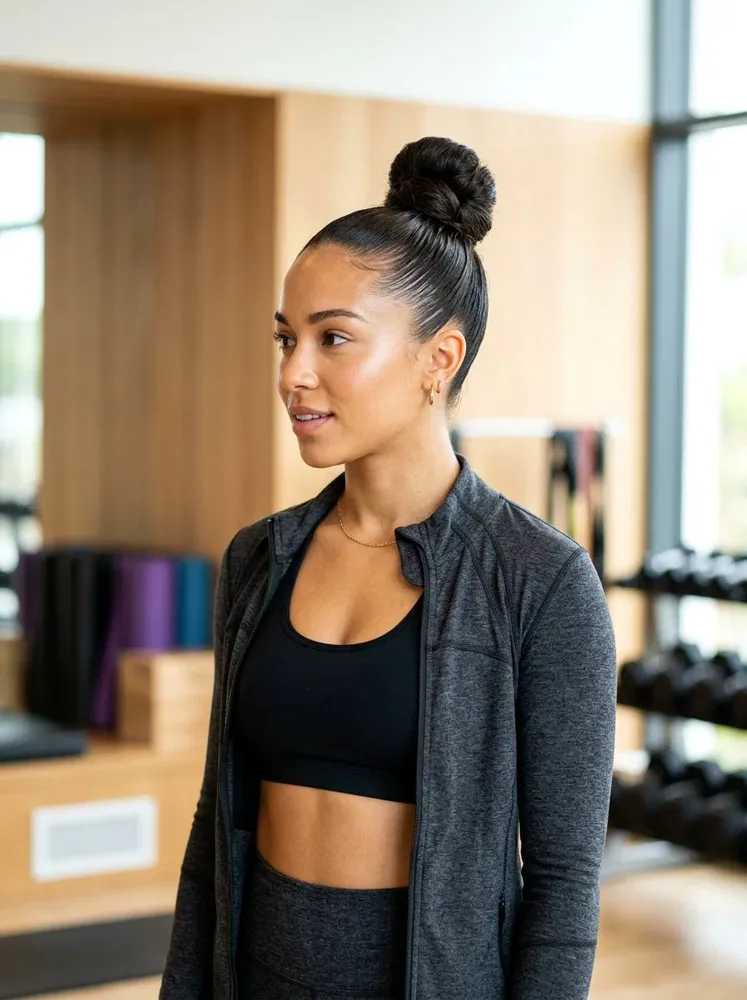
Common mistakes: building the knot too loosely, so it leans sideways when you jump; and piling it too high, where it interferes with a headband or feels top-heavy.
Maintenance: gather into a high ponytail first, twist tightly, wrap and pin at four points. Keep it compact rather than tall, and it will survive smashes, lunges and long rallies.
Quick verdict: the coolest and simplest court style. If you run hot in the hall, this is the one to reach for.
12. Space Buns
What it is: two small buns, one on each side of the crown. They keep the hair balanced and completely off the neck, hold well through quick head turns, and bring a fun, sporty energy to a doubles night.
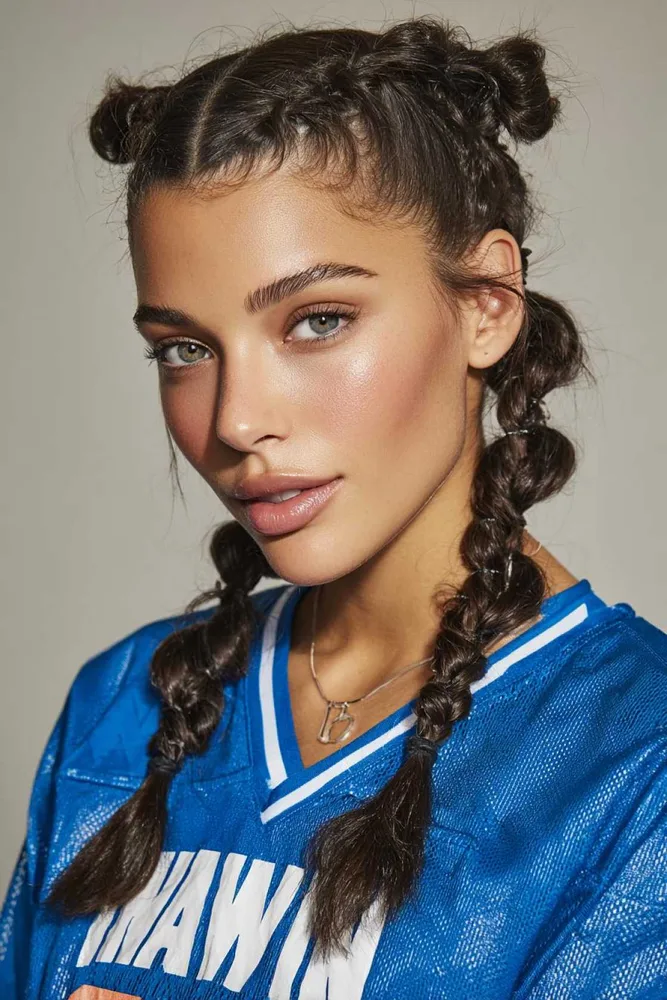
Common mistakes: placing the buns unevenly, which looks lopsided in photos; and making them too big for fine hair, so they sag and pull by the second game.
Maintenance: part the hair straight down the middle, make two high ponytails, twist each into a compact bun and pin securely. A centre part keeps them level and balanced.
Quick verdict: playful, balanced and secure. Great for fans, fun doubles and anyone who wants a look with personality.
13. Side Braid
What it is: a single braid swept over one shoulder, keeping the hair in one neat rope that stays out of the way of the racket arm. It is quick to do, comfortable for hours, and suits every hair length past the shoulders.
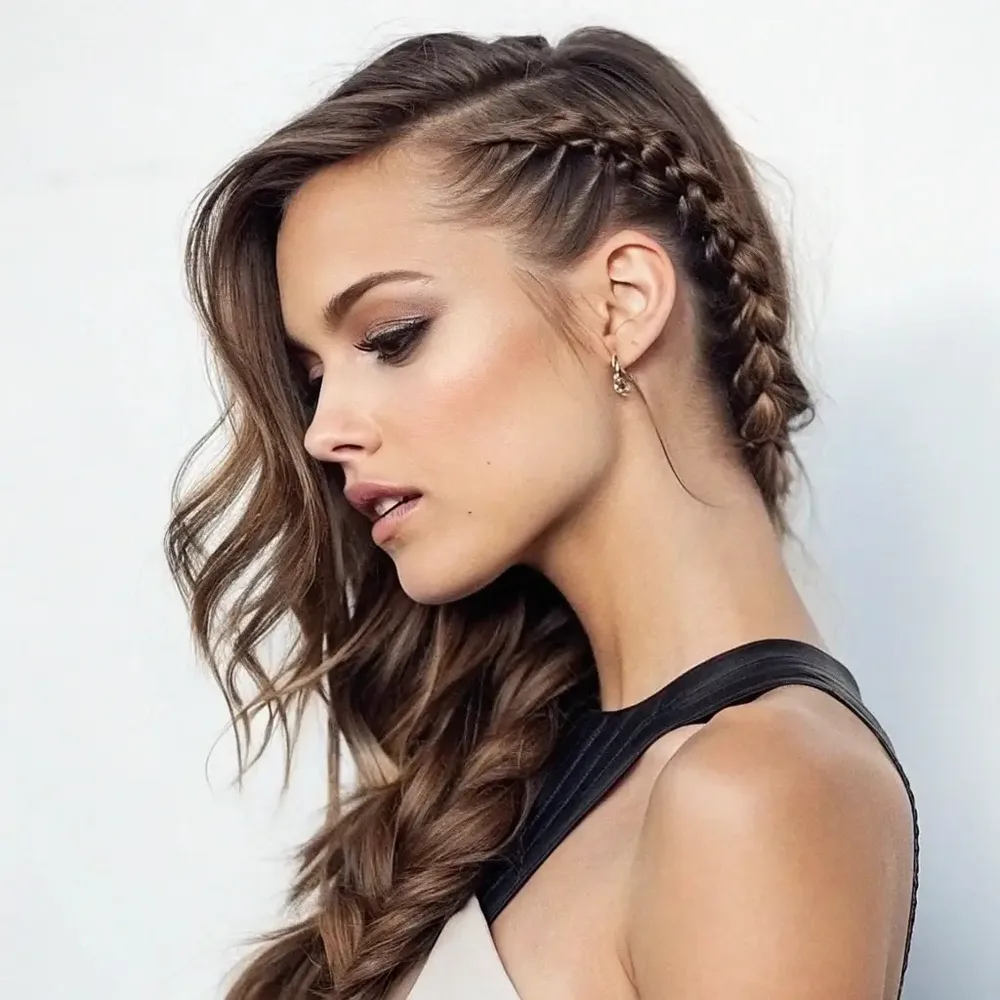
Common mistakes: braiding on the racket-arm side, where the braid can catch on the shoulder during a backhand; and tying the end too loosely, so the braid unravels mid-rally.
Maintenance: sweep the hair to the non-racket side, braid firmly, and secure with a strong elastic. Tuck the braid inside a top or pin it up if you are playing a fast singles match.
Quick verdict: easy, comfortable and pretty. Best for relaxed games and for fans cheering from the sidelines.
14. Rope Braid Ponytail
What it is: a ponytail twisted into a tight two-strand rope. The twist locks the length into a single cord that cannot tangle, cannot whip across the face, and holds its shape through the fastest rallies.
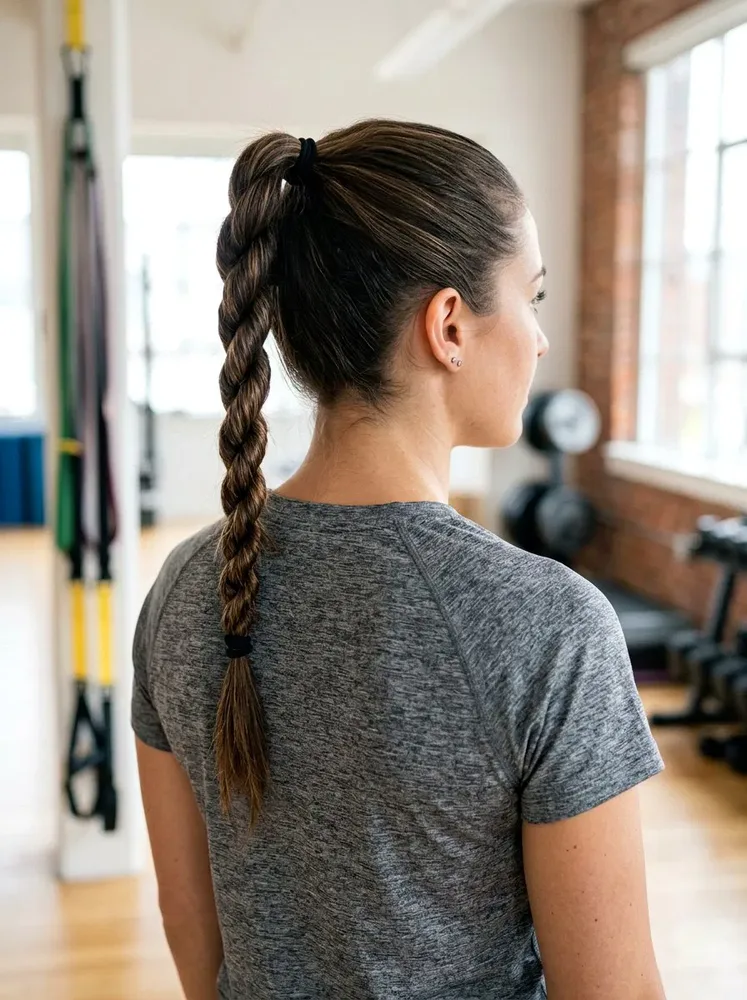
Common mistakes: twisting both strands in the same direction, which makes the rope unravel; and skipping the base elastic, so the twist loosens from the top down.
Maintenance: secure a high ponytail first, split it in two, twist each strand the same way, then wind them around each other the opposite way. Tie firmly and it will hold all evening.
Quick verdict: one of the most rally-proof ponytails. Quick to learn, hard to break, and neat from every angle.
15. Curly Pineapple Updo
What it is: curly hair gathered loosely at the very top of the head, like a pineapple, so the curls pile up and away from the neck. It keeps the curl pattern intact, stops the hair sticking to a sweaty neck, and dries fast after the match.
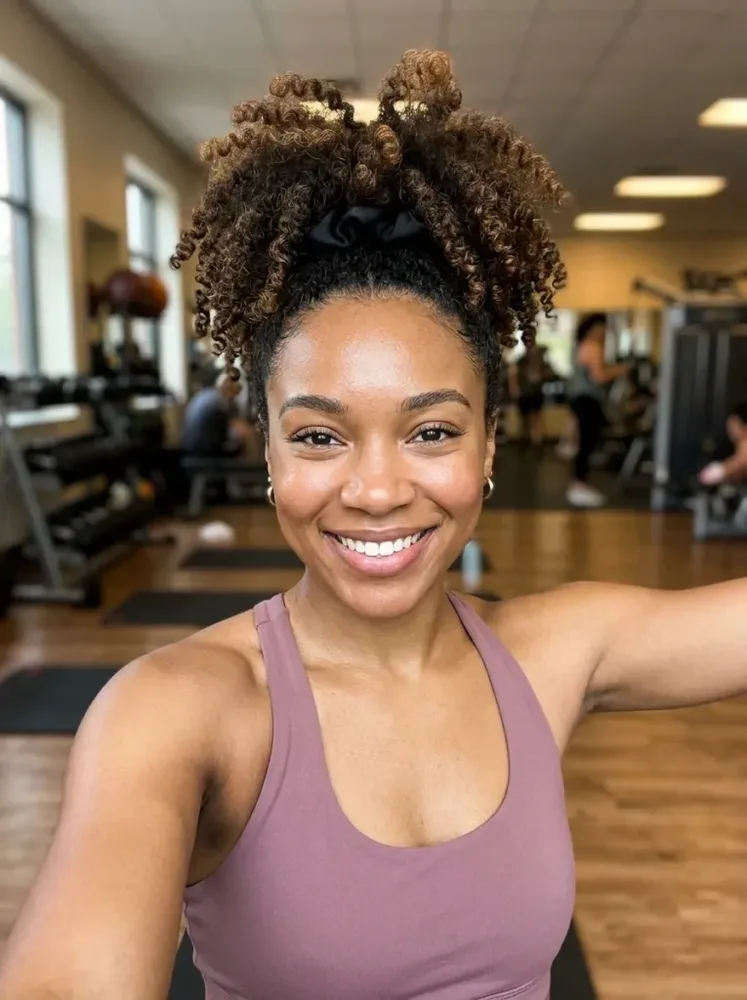
Common mistakes: pulling the curls too tight, which flattens the pattern and causes frizz; and using a thin elastic that snaps under the weight of thick curly hair.
Maintenance: gather loosely with a wide scrunchie or a fabric band, let the curls fall naturally, and refresh the front with a little water between games. Avoid brushing the curls out.
Quick verdict: the best court updo for curly hair. It protects the curls, keeps you cool, and takes about thirty seconds.
16. Short Hair with Headband
What it is: a short cut, pixie or bob, held back with a wide non-slip sports headband. It is the lowest-effort court style there is: the headband does all the work, the hair stays out of the eyes, and sweat never reaches the face.
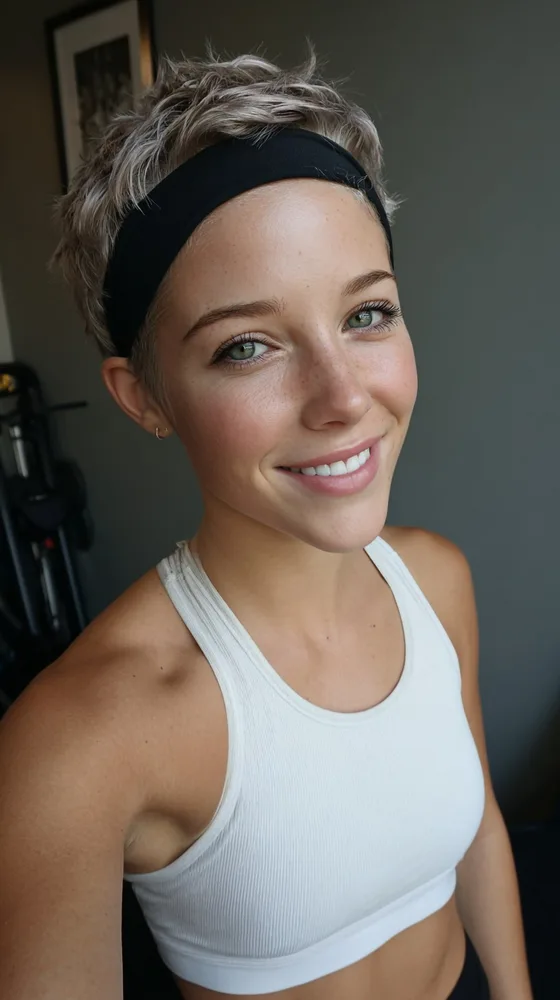
Common mistakes: a narrow fashion headband that slides off as soon as you sweat; and no product at all, so the front layers still fall forward when you look up for a high shot.
Maintenance: choose a wide, grippy fabric band, smooth the front with a little gel or wax, and keep a spare band in your kit bag for the break between games.
Quick verdict: effortless and effective. Short hair plus a good headband is one of the smartest combinations on court.
17. Low Twisted Ponytail
What it is: a low ponytail with the hair twisted once or twice before it is tied, which adds grip and stops the style sliding loose. It sits quietly at the nape, stays out of the collar, and looks more polished than a plain ponytail.
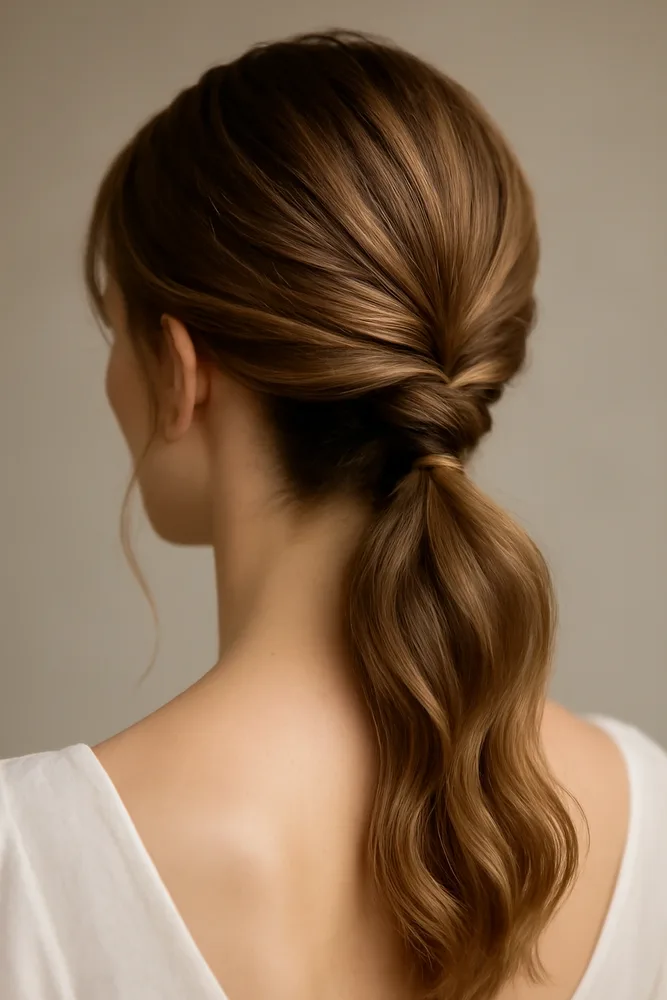
Common mistakes: twisting too loosely, so the twist unwinds within a few rallies; and tying the ponytail too high, where it swings into the face on every overhead.
Maintenance: twist two sections firmly towards the nape, join them into one ponytail, and secure with a strong elastic. A small pin at the twist keeps it locked all evening.
Quick verdict: simple with a smart twist. A good everyday court style that takes no extra time.
18. Chunky Single Braid
What it is: one thick, classic three-strand braid down the back. It gathers all the hair into a single heavy rope that stays put, does not tangle, and cannot whip into the eyes, however hard the rally gets.
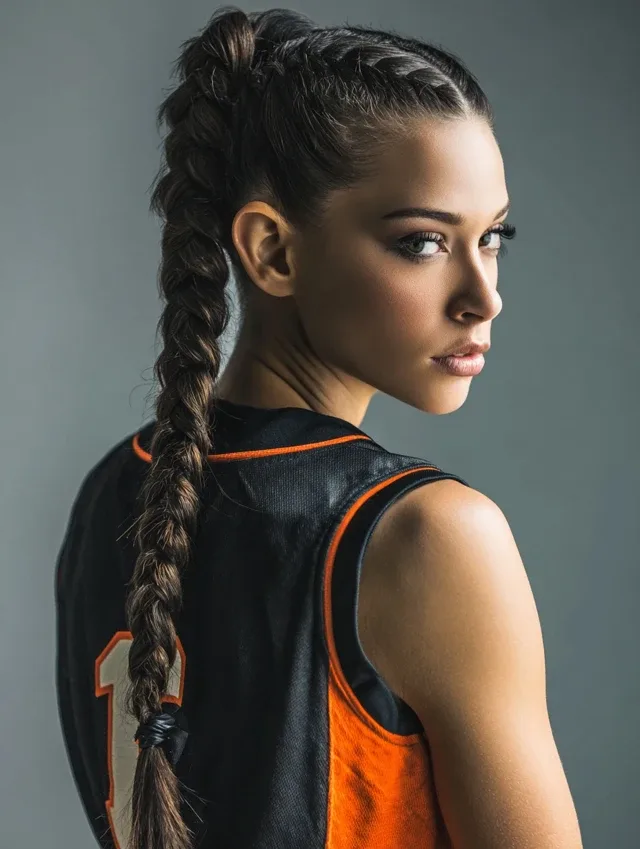
Common mistakes: braiding too loosely at the nape, so the braid slides to one side during lunges; and leaving the end too long and unsecured, so it flicks against the back on every jump.
Maintenance: start the braid low and tight at the nape, keep the sections even, and tie the end firmly. For a fast match, tuck the braid into the back of a top or pin it up.
Quick verdict: the simplest secure style for long hair. One braid, five minutes, and your hair is done for the night.
19. Braided Headband Low Ponytail
What it is: a thin braid running across the hairline like a headband, with the rest of the hair in a low ponytail. The braid holds the front back without a band, and the ponytail keeps the length controlled.
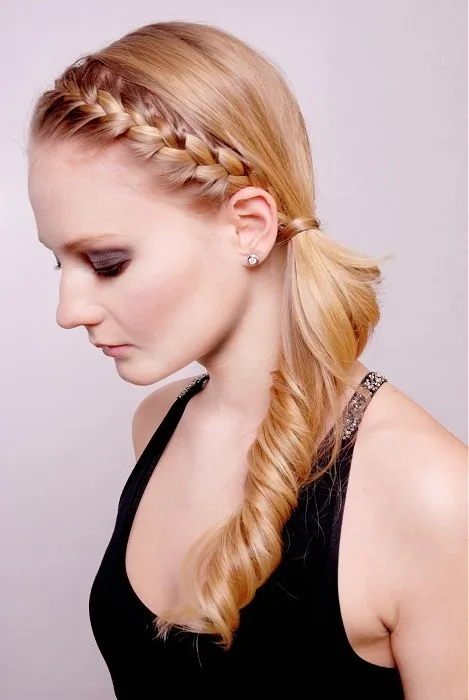
Common mistakes: making the headband braid too thin, so it pulls loose on the first head turn; and leaving the ponytail too high, where it swings during smashes.
Maintenance: braid a section from one temple across to the other, pin the end behind the ear, then gather everything low. It holds well and looks far more detailed than the effort it takes.
Quick verdict: pretty and practical. The braided band replaces a headband entirely, so there is nothing to slide off when you sweat.
20. Double Low Buns
What it is: two small buns sitting low at the nape, one on each side. They keep the hair balanced, flat and completely off the neck, and they sit neatly under a headband or a cap.
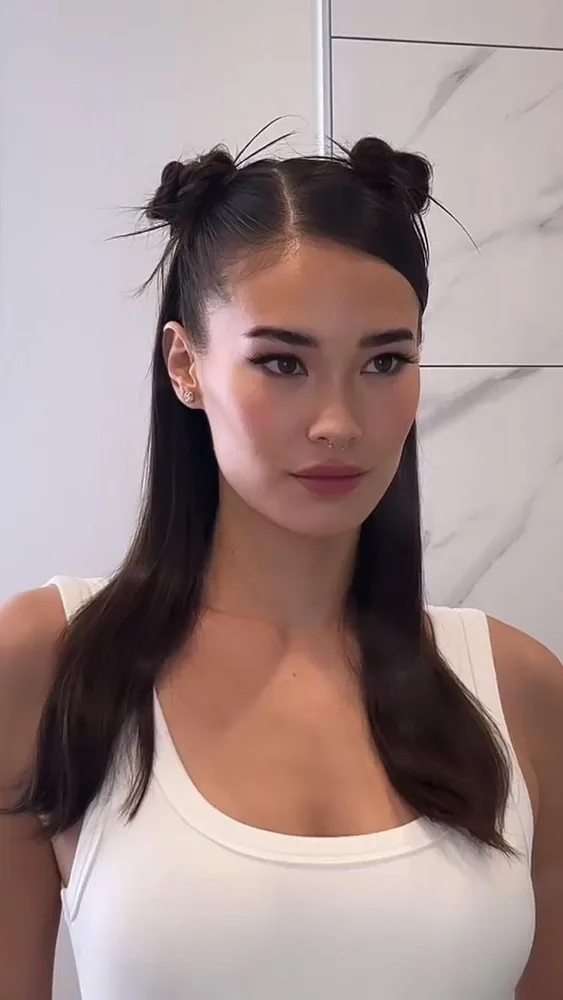
Common mistakes: placing the buns too high, where they bump into each other and pull; and making them uneven, which shows up immediately in photos.
Maintenance: part the hair straight down the middle, make two low ponytails, twist each into a small bun and pin securely. A centre part keeps them level and symmetrical.
Quick verdict: neat, balanced and cool. A strong choice for hot halls and long match nights.
21. Wrapped Low Ponytail
What it is: a low ponytail with a strand of hair wrapped around the base to hide the elastic. It looks polished and deliberate, stays flat at the nape, and never interferes with a headband or a collar.
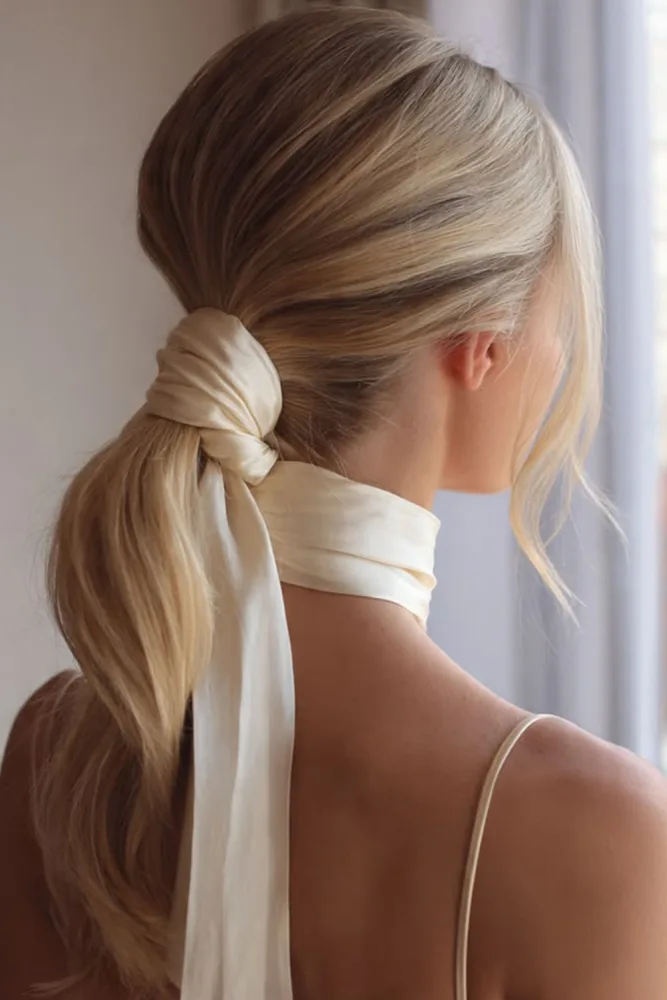
Common mistakes: wrapping the strand too loosely, so it unwinds mid-game; and using a strand that is too thin, which snaps under tension.
Maintenance: secure the ponytail firmly first, then wrap a thick strand around the base and pin it underneath with a bobby pin. It takes an extra minute and holds all evening.
Quick verdict: the most polished low ponytail on the list. Smart enough for a club night, secure enough for a real match.
22. Two-Strand Twists
What it is: sections of hair twisted in pairs, worn loose or gathered into a low ponytail or bun. The twists protect natural hair, keep it tangle-free through sweat and movement, and hold their shape for days.
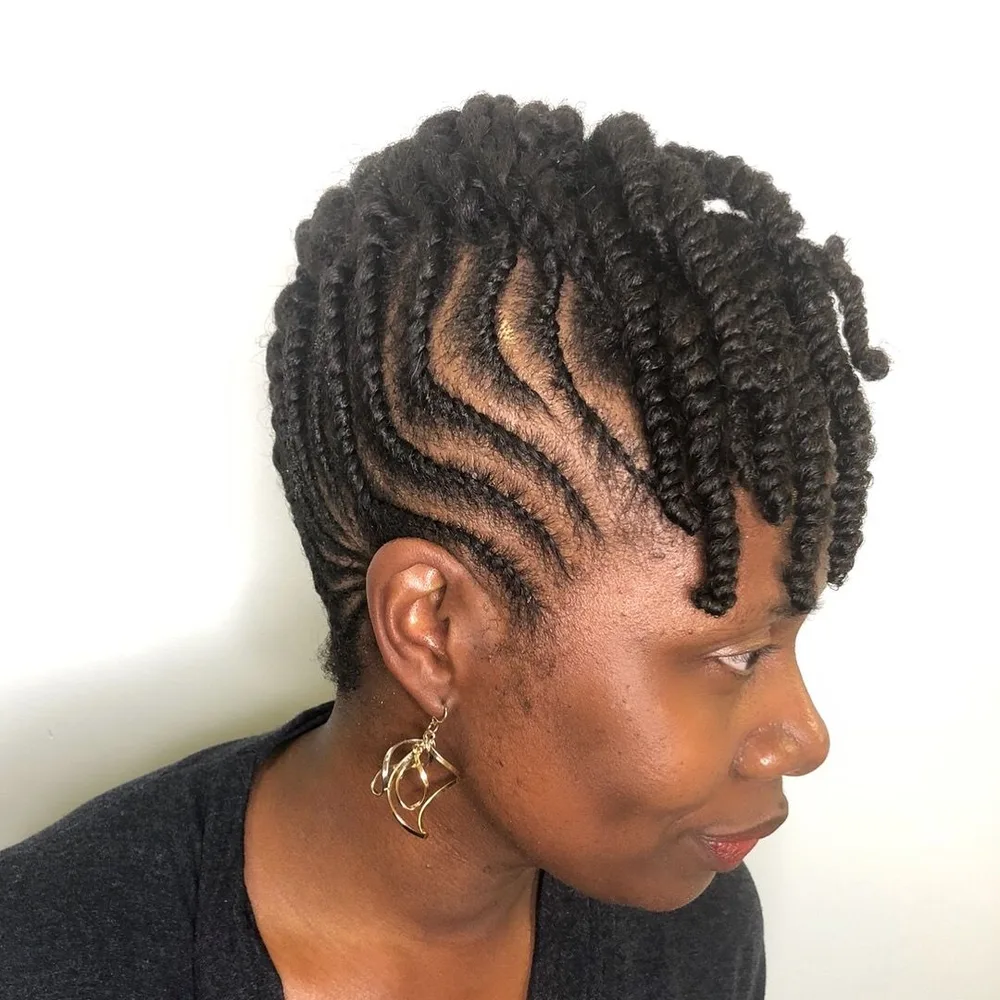
Common mistakes: twisting on dry hair with no product, so the twists unravel as soon as you sweat; and leaving the ends unsealed, so they frizz and catch on clothing.
Maintenance: twist on damp hair with a little cream or gel, seal the ends, and gather the twists into a low bun for the most secure court version. Refresh the edges with gel between games.
Quick verdict: protective, durable and versatile. A great multi-day option for players who train and play several times a week.
23. Messy Bun with Headband
What it is: a relaxed, textured bun paired with a wide sports headband. The headband holds the front and soaks up sweat, while the loose bun keeps the length up and out of the way without looking too formal.
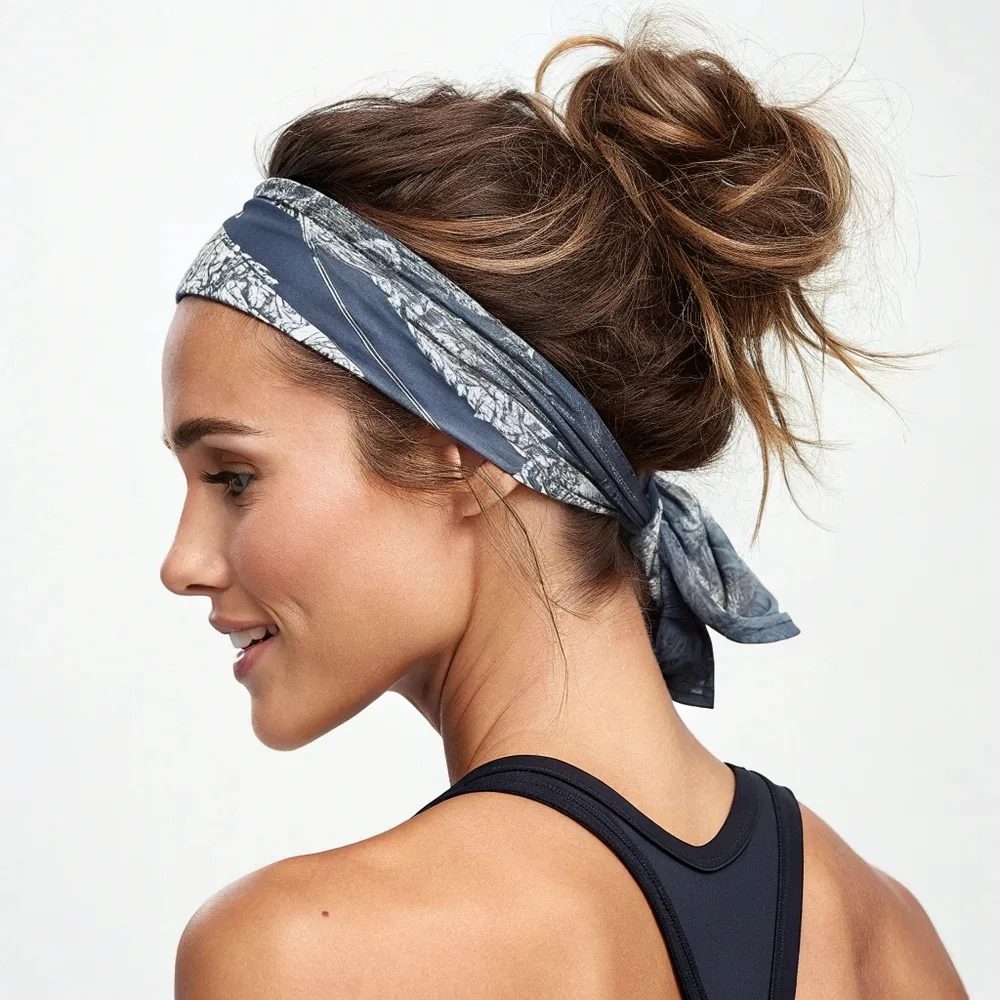
Common mistakes: a bun so loose it sags after the first rally; and a thin headband that slides up and off the moment you start to sweat.
Maintenance: make the bun firmer than a casual one, pin it at three points, and choose a wide non-slip band. The messy texture hides sweat and flyaways better than a sleek style.
Quick verdict: relaxed but ready. Ideal for social doubles and friendly club nights where you still want to play properly.
24. High Puff
What it is: natural hair gathered into a full, high puff at the crown. It lifts the hair completely off the neck, shows off the curl pattern, and keeps the face clear for every shot.
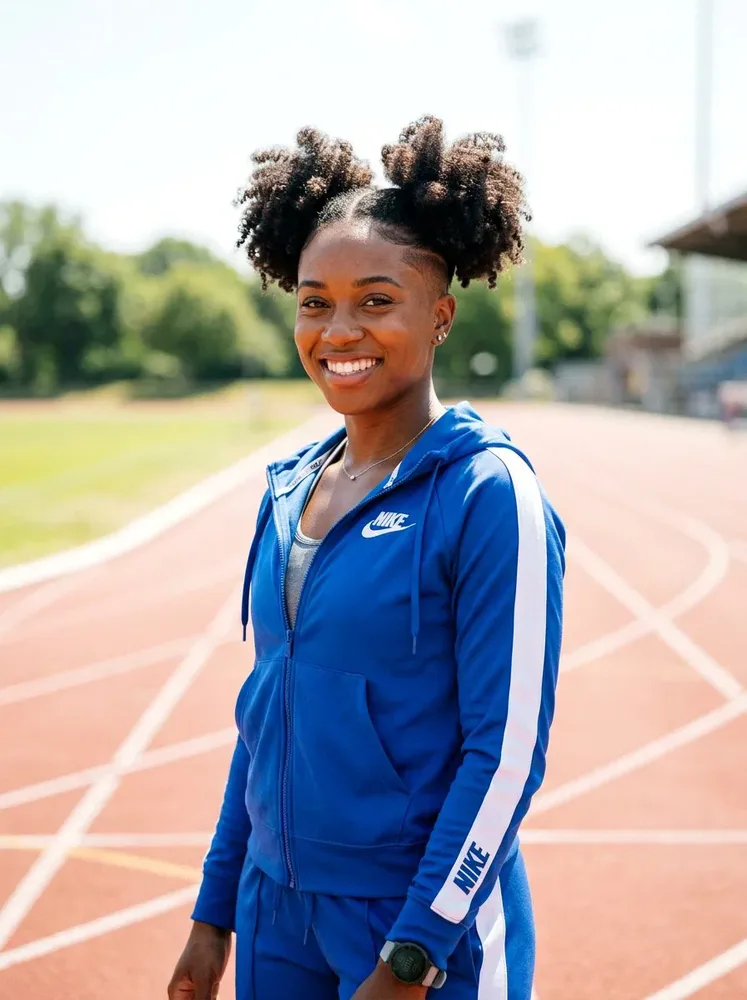
Common mistakes: using a thin elastic that snaps under thick hair; and pulling the puff too tight, which flattens the shape and strains the hairline.
Maintenance: gather with a wide fabric band or a puff cuff, keep the tension comfortable, and smooth the edges with a little gel. A satin scrunchie protects the hair overnight.
Quick verdict: bold, cool and quick. One of the best court styles for natural hair, and it takes under a minute.
25. Dutch Braid into Ponytail
What it is: a Dutch braid running from the hairline back into a ponytail. The braid anchors the front so nothing can fall forward, and the ponytail keeps the length in one controlled tail that swings far less than a plain ponytail.
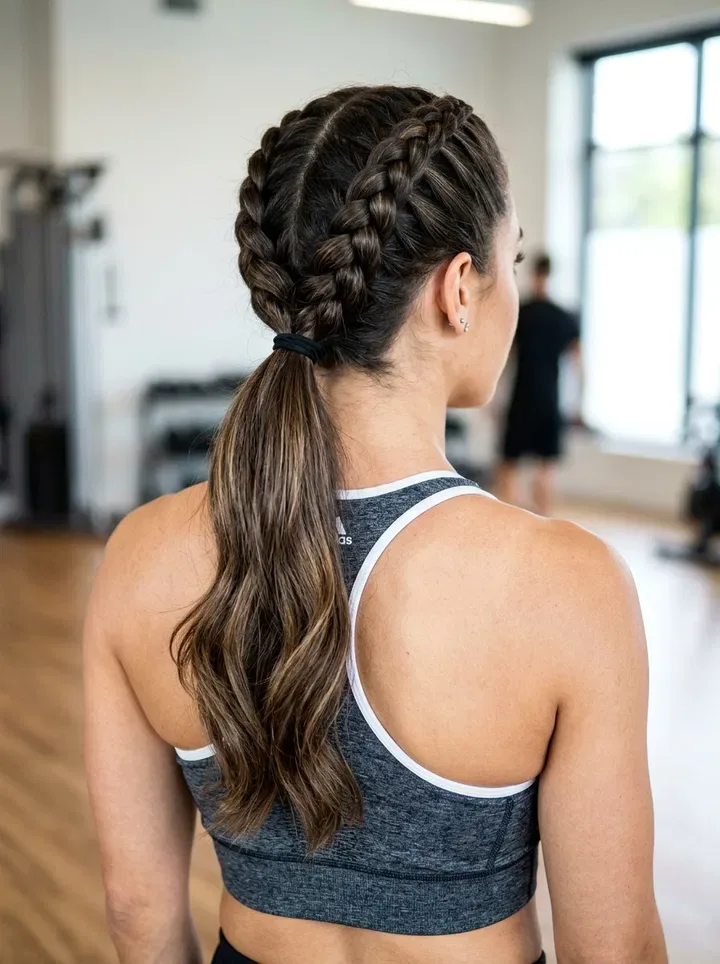
Common mistakes: braiding too loosely at the crown, so the braid lifts and wobbles during smashes; and tying the ponytail too high, where it bounces into the face.
Maintenance: braid firmly from the front, gather the tail at mid-height, and secure with two elastics. It is a tournament favourite because it survives hours of play.
Quick verdict: one of the best all-round court styles. Secure at the front, controlled at the back, and quick to redo between games.
26. Sleek Middle-Part Low Bun
What it is: hair parted cleanly down the middle, smoothed back, and gathered into a low bun at the nape. It is the tidiest style on this list: nothing moves, nothing sticks out, and it sits perfectly under a headband.
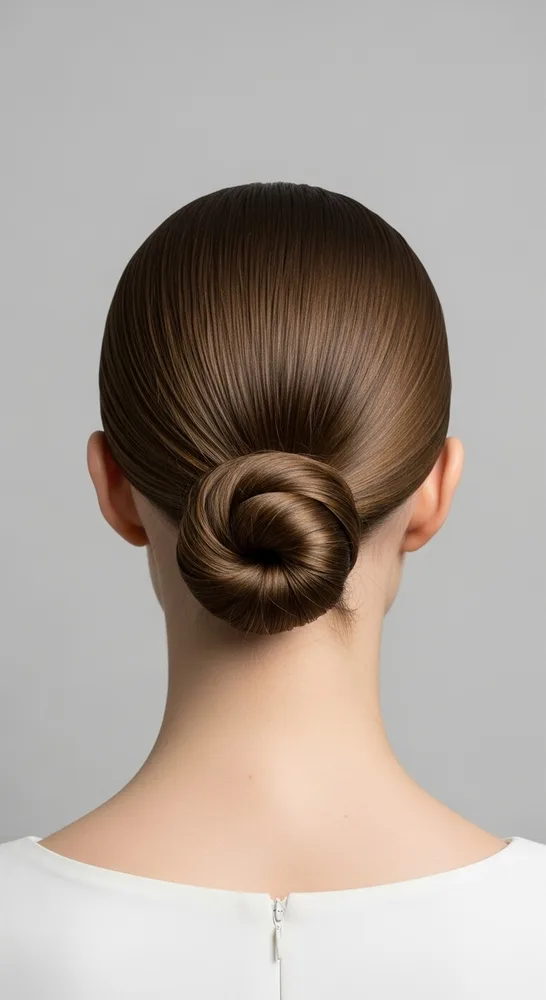
Common mistakes: a wobbly centre part, which makes the whole style look uneven; and skipping gel, so the part disappears and flyaways appear within minutes of playing.
Maintenance: part with the tail of a comb, smooth each side with gel, and twist into a low bun pinned in an X pattern. A fine mist of spray finishes it.
Quick verdict: immaculate and unmovable. The choice for players who want their hair to look the same at the end of the match as at the start.
27. Braided Pigtails
What it is: two braids, one on each side, hanging over the shoulders or tied back. They keep the hair evenly balanced, stop it swinging to one side, and hold well through quick head turns and lunges.
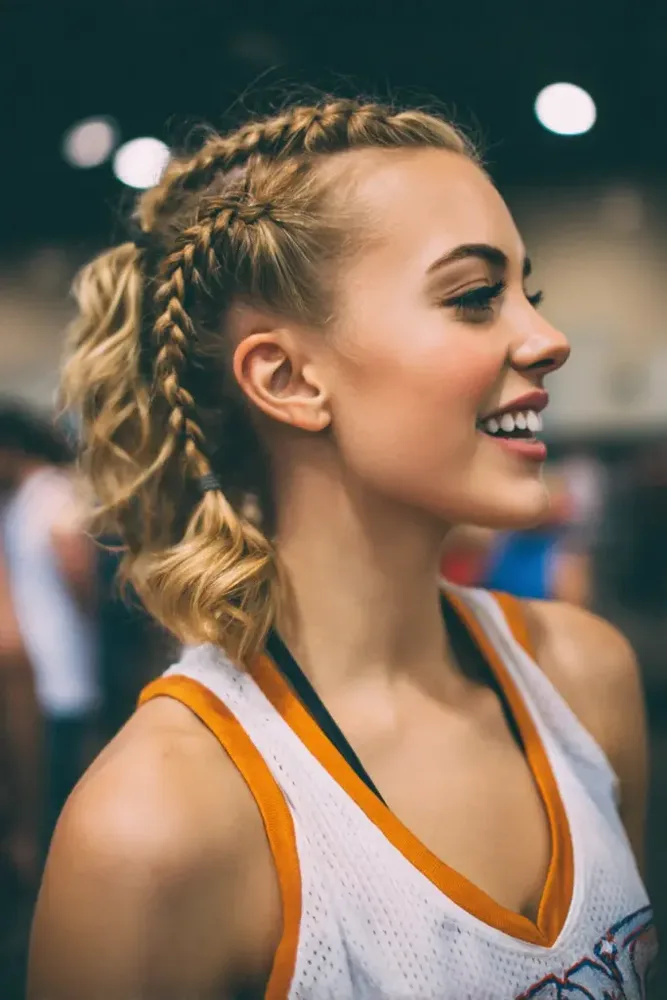
Common mistakes: braiding unevenly, so one pigtail is thicker than the other; and leaving the ends too long, so they flick against the shoulders on every shot.
Maintenance: part straight down the middle, braid each side firmly from the hairline, and tie the ends at the same length. Pin the braids back for a fast singles match.
Quick verdict: balanced, secure and fun. A classic sporty look that works as well on court as it does in the stands.
28. Twisted Low Bun
What it is: hair twisted into a soft, low chignon at the nape. It is elegant without being fussy, keeps the neck clear, and holds its shape through a long evening of doubles and conversation after the game.
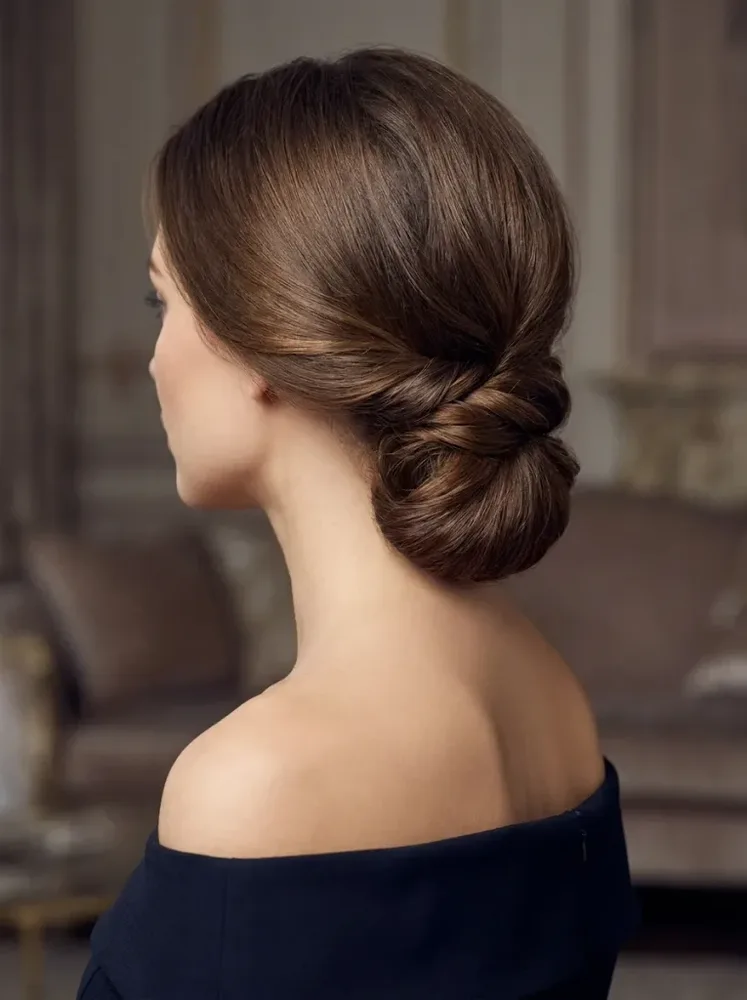
Common mistakes: twisting too loosely, so the bun unwinds during play; and using too few pins, so the whole bun tilts to one side by the second game.
Maintenance: twist the hair firmly, coil it low, and pin at four points in an X pattern. A little texture spray before twisting gives the bun extra grip.
Quick verdict: soft, elegant and surprisingly secure. A good pick for club nights and social matches.
29. Curly High Ponytail with Headband
What it is: curly hair pulled into a high ponytail with a wide sports headband holding the front back. The headband catches sweat before it reaches the eyes, and the high ponytail keeps the curls off the neck and out of the way of the racket.
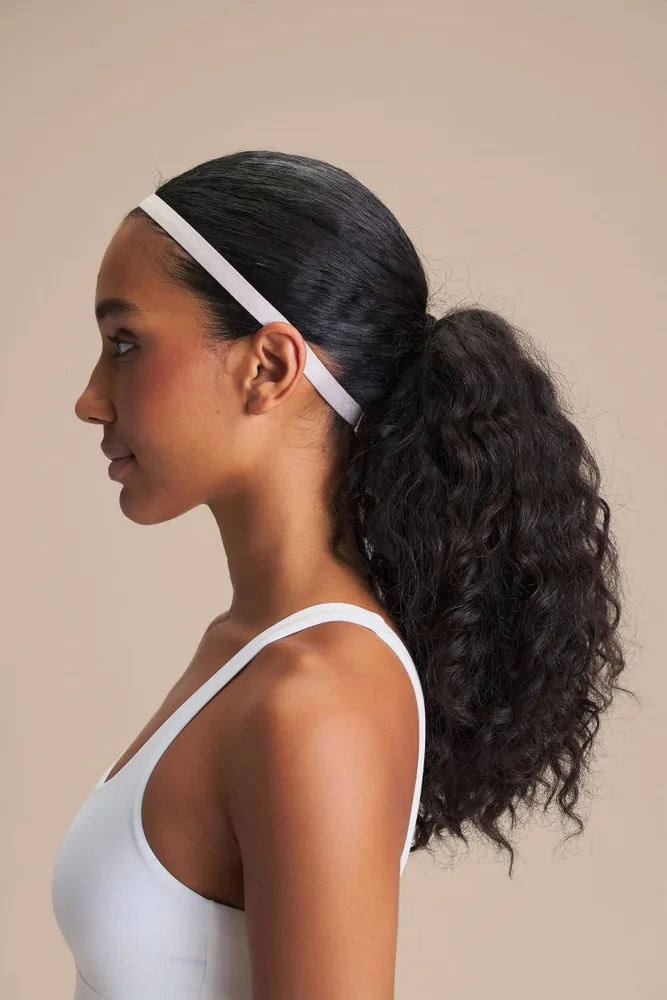
Common mistakes: a headband that is too tight, which flattens the curls and causes a headache; and brushing the curls before tying them up, which turns them into frizz.
Maintenance: gather the curls loosely with a scrunchie, settle the headband a couple of centimetres back from the hairline, and refresh the curls with a little water between games.
Quick verdict: the best combination for curly players. Headband for sweat, high ponytail for freedom, curls left to do their thing.
30. Faux-Hawk Braid
What it is: a raised braid running down the centre of the head, like a mohawk made of hair. It lifts everything off the face, looks bold and sporty, and holds firm through the fastest rallies.
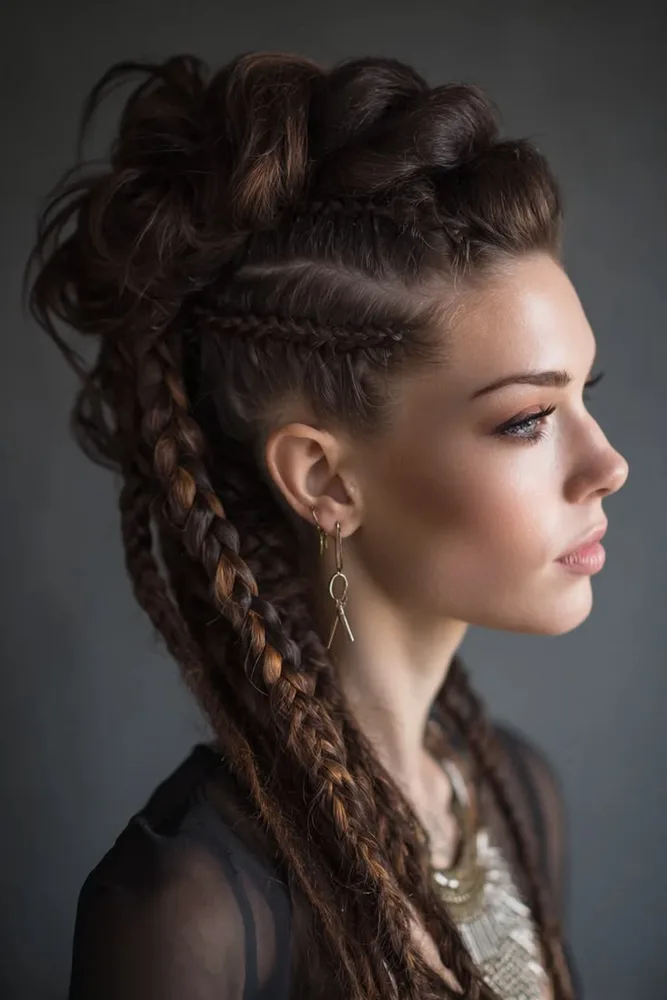
Common mistakes: braiding too loosely at the sides, so the hawk goes flat and wide; and stopping the braid too early, so the loose ends fall forward on every smash.
Maintenance: braid tightly down the centre, pin the sides flat as you go, and carry the braid all the way to the nape before tying it off. It holds a whole match without a touch-up.
Quick verdict: bold, secure and full of attitude. A great choice when you want to stand out on court.
31. Low Braided Bun
What it is: a braid coiled into a low bun at the nape. The braid gives the bun extra grip and texture, the low position keeps it flat under a headband, and nothing is left free to move.
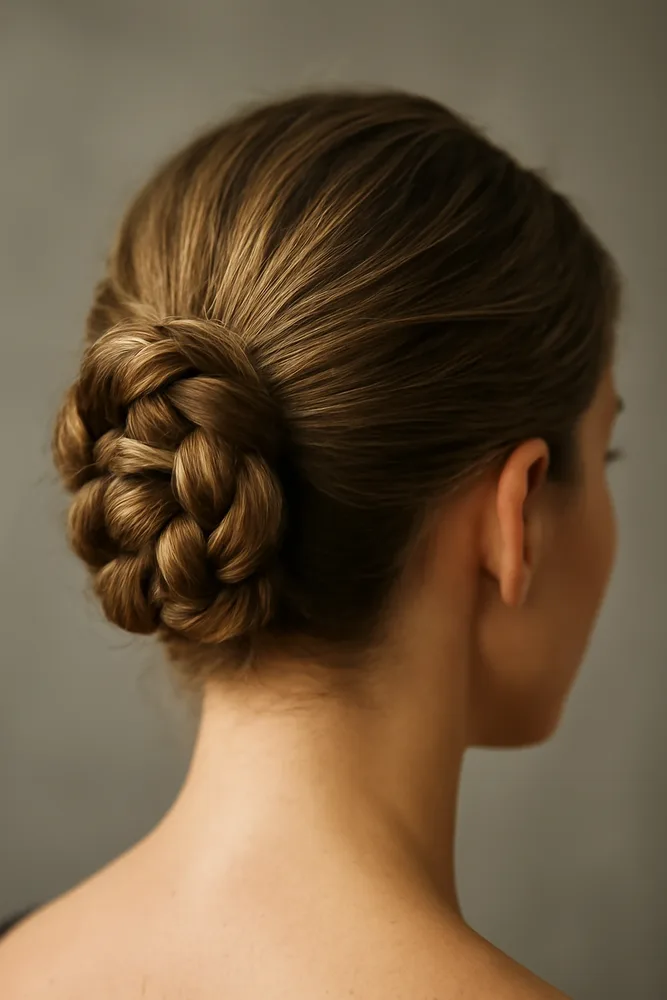
Common mistakes: coiling the braid too loosely, so the bun unravels during play; and pinning only the outside of the bun, so the centre sags.
Maintenance: braid the hair first, coil it tightly, and pin through the centre as well as the edges. It is one of the most reliable styles for a long tournament day.
Quick verdict: a braid and a bun in one, with double the hold. Perfect for players who want to set their hair once and forget it.
32. Half-Up Braided Ponytail
What it is: the top half of the hair braided back into a ponytail, with the lower half left loose. It keeps the front and the crown secure while leaving the length free, which suits relaxed doubles and watching from the sidelines.
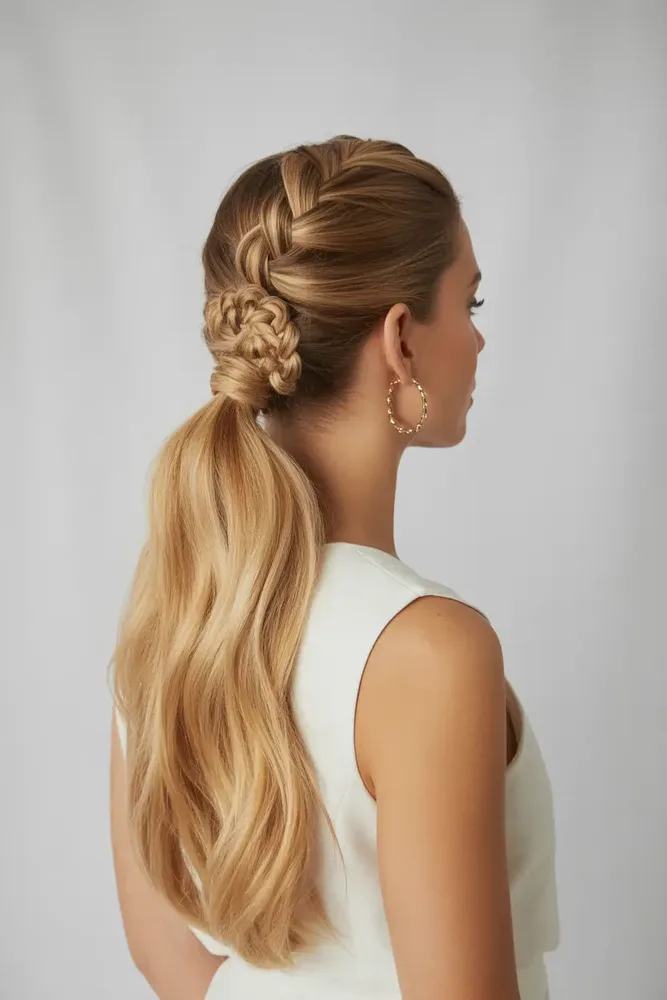
Common mistakes: taking too little hair into the braid, so the front still falls forward; and leaving the loose length completely unsecured during a fast match, where it whips across the face.
Maintenance: braid from temple to temple, gather into a ponytail at the crown, and pin the loose length up if you switch from watching to playing.
Quick verdict: pretty and practical for a social game. For competitive singles, gather the loose half up too.
33. Ribbon Ponytail in Team Colours
What it is: a high or low ponytail finished with a ribbon in your team or club colours. It turns a plain ponytail into a game-day look, costs almost nothing, and the ribbon doubles as a spare tie if an elastic snaps.
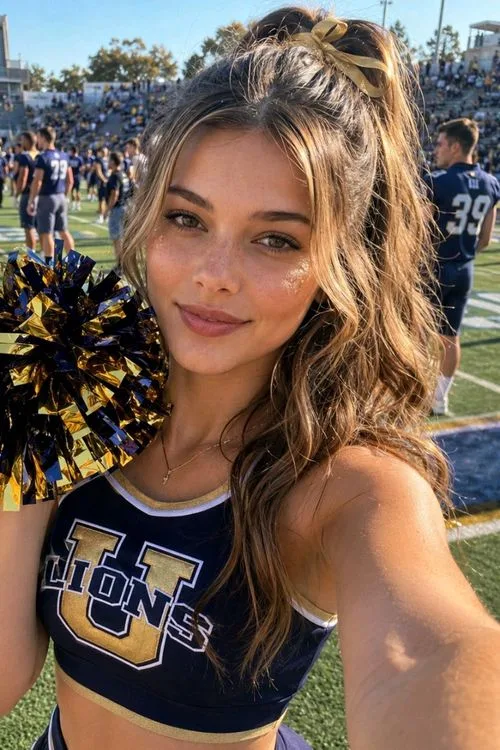
Common mistakes: a ribbon that is too long, so the ends fly into the face during a rally; and tying it in a bow that comes undone the first time you jump for a smash.
Maintenance: keep the ribbon short and tie it in a firm knot rather than a bow, or wrap it twice around the base. One colour accent is enough; more than that starts to look like a costume.
Quick verdict: team spirit in thirty seconds. A favourite for club matches, tournaments and team photos.
34. Low Side Ponytail
What it is: a ponytail swept low over one shoulder. It keeps the hair off the neck, stays clear of the racket arm, and looks softer and more relaxed than a ponytail pulled straight back.
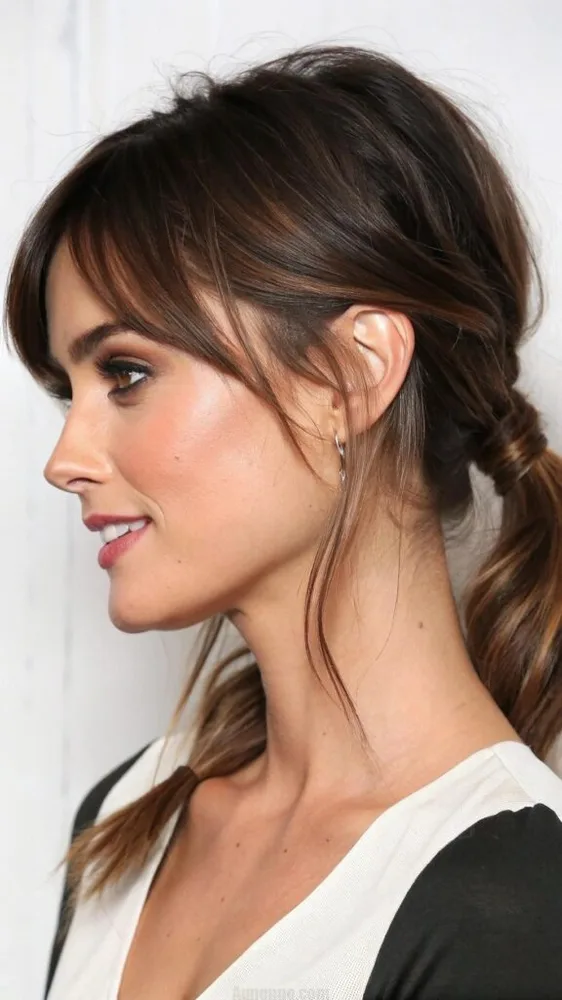
Common mistakes: placing it on the racket-arm side, where it can catch on the shoulder during a backhand; and tying it too loosely, so it slides down and unravels mid-game.
Maintenance: sweep to the non-racket side, secure firmly at the nape, and smooth the opposite side with gel. Pin the tail back for a fast singles match.
Quick verdict: soft, easy and comfortable. Best for relaxed games and for fans watching from the side of the court.
35. Slicked Bun with Headband
What it is: a smooth, slicked-back bun worn with a wide sports headband. The gel holds the front flat, the bun holds the length, and the headband catches sweat and adds a sporty finish.
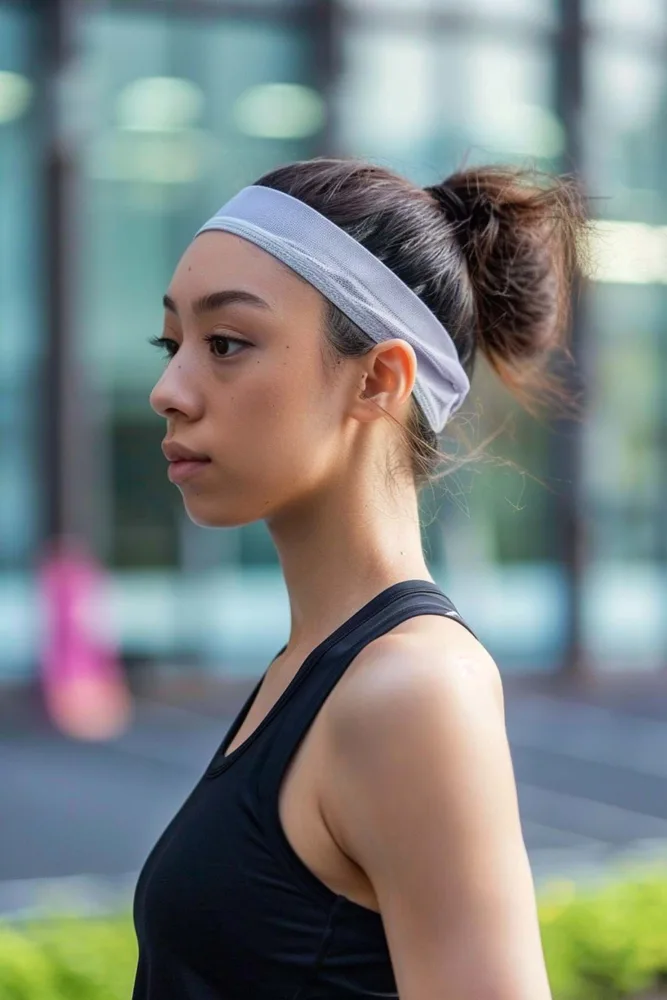
Common mistakes: too much gel, which goes sticky once sweat mixes in; and a headband worn too far forward, which slides down over the forehead during play.
Maintenance: smooth the hair back with a small amount of gel, form a low or mid bun, and settle the headband a couple of centimetres behind the hairline so it stays put.
Quick verdict: sleek, sporty and fully locked down. One of the most reliable combinations for a long, sweaty match.
36. Double French Braids into Low Buns
What it is: two French braids running from the hairline down to the nape, each ending in a small low bun. The braids anchor the front, the buns hold the ends, and the whole style sits flat and balanced.
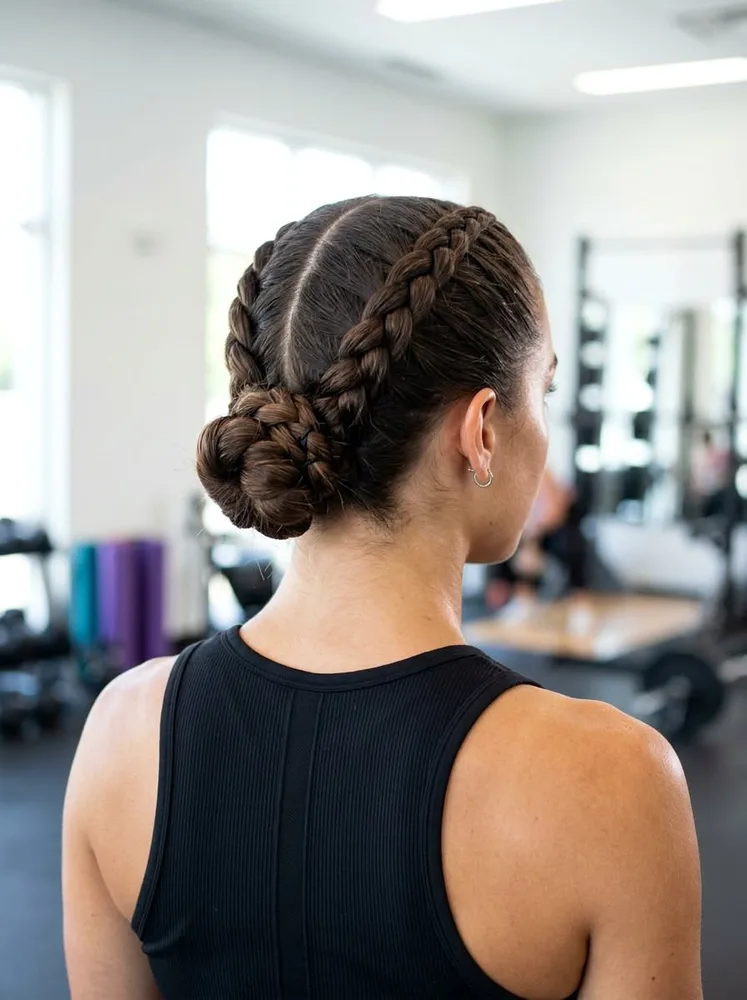
Common mistakes: braiding the two sides unevenly, so the buns sit at different heights; and leaving the bun ends loose, so they poke out during lunges.
Maintenance: keep the centre part straight, braid both sides with even tension, and pin each bun flat. It takes a little longer to build but holds a whole tournament day.
Quick verdict: maximum security with a neat finish. The style to learn if you play badminton several times a week.
37. Loose Waves with Sports Headband
What it is: natural loose waves worn down with a wide sports headband holding the front back. It is a fan-first style: comfortable, pretty and easy, with the headband doing the work of keeping hair out of the eyes while you watch.
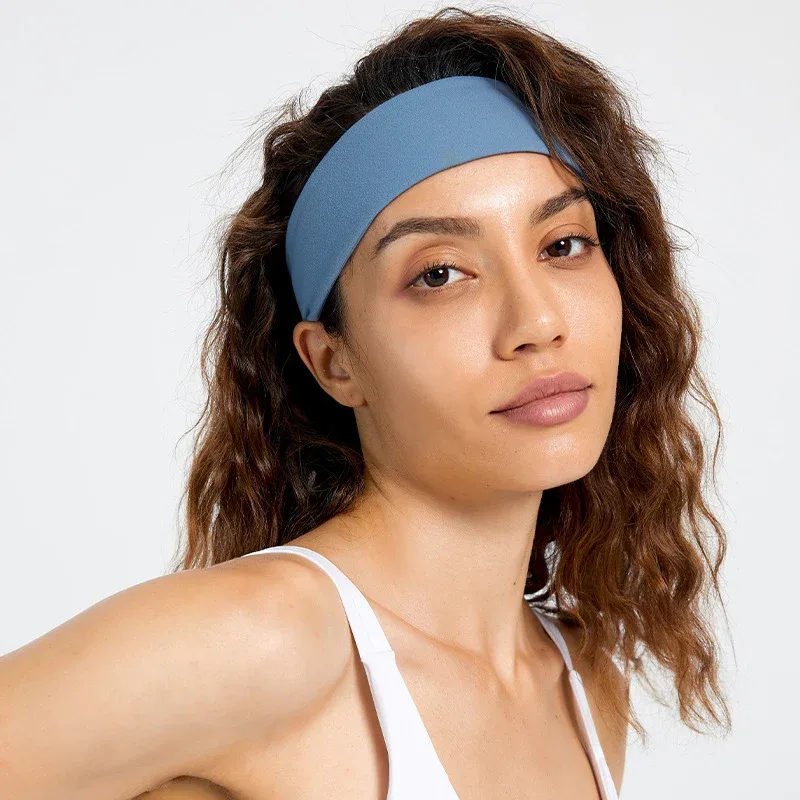
Common mistakes: wearing it to play a fast match, where the loose waves fall forward on every overhead; and a narrow headband that cannot hold wavy hair back once you start to sweat.
Maintenance: add a little texture spray for grip, choose a wide non-slip band, and keep a spare elastic handy so you can gather the waves into a ponytail if you join a game.
Quick verdict: the best courtside look for fans. Pretty, comfortable and one elastic away from being match-ready.
38. Bubble Braid Pigtails
What it is: two pigtails divided into puffed bubble sections by elastics. They are balanced, playful and surprisingly secure, because the extra elastics stop the hair swinging wildly during fast rallies.
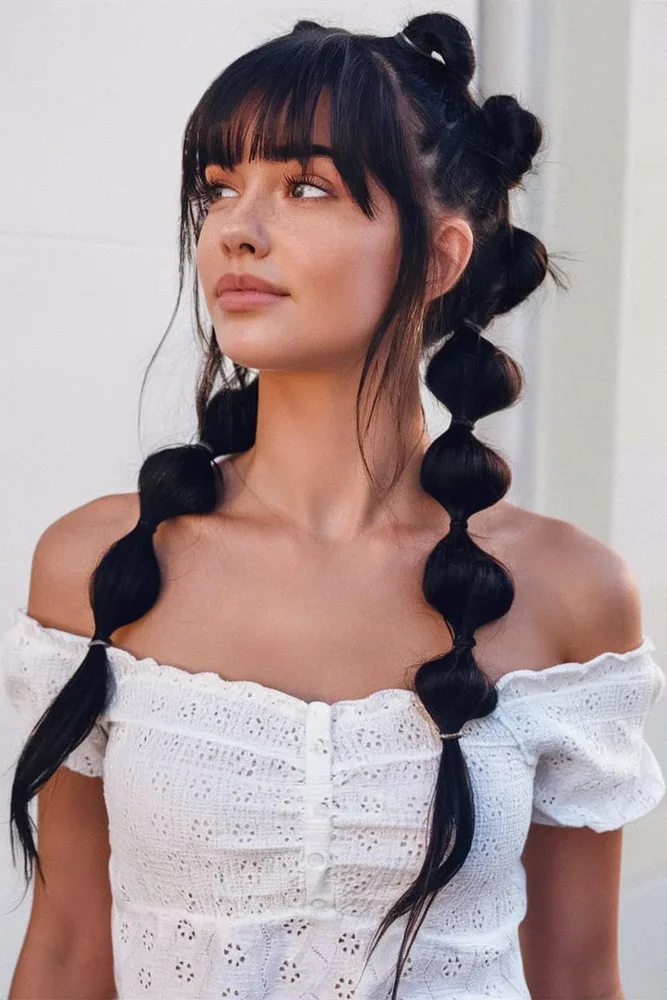
Common mistakes: uneven elastic spacing, which makes one side look longer than the other; and bubbles pulled too tight, which strain the base and make the pigtails sag.
Maintenance: part straight down the middle, space the elastics evenly on both sides, and gently pull each bubble out for volume. It holds well for a full evening of doubles.
Quick verdict: fun, balanced and secure. A great choice for social matches and team nights.
39. Low Ponytail with Braided Sides
What it is: two small braids running along the sides of the head into a low ponytail. The side braids hold the front layers back without a headband, and the low ponytail keeps the length quiet and controlled.
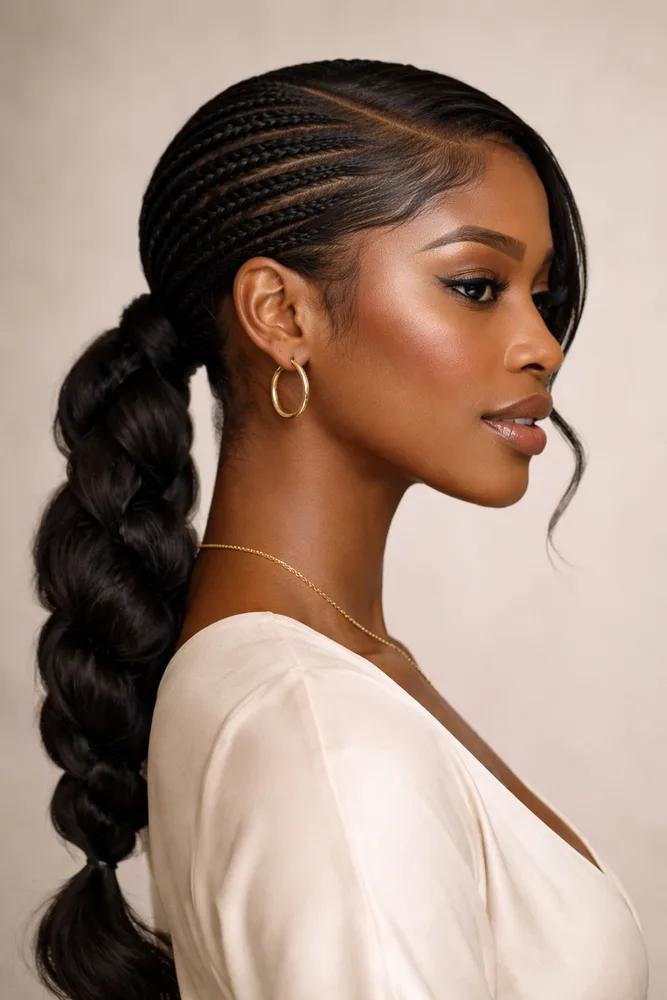
Common mistakes: braiding the sides too loosely, so they pull free on the first head turn; and gathering the ponytail too high, where it swings during smashes.
Maintenance: braid each side firmly from the temple to the nape, join them into a low ponytail, and secure with a strong elastic. It is quick, neat and holds a whole match.
Quick verdict: the braided sides do the job of a headband, with no band to slide off. Smart and secure.
40. Twisted Crown Bun
What it is: hair twisted around the crown and coiled into a bun at the back. It lifts the hair off the neck, keeps the front flat and tidy, and looks elegant enough for a club dinner after the match.
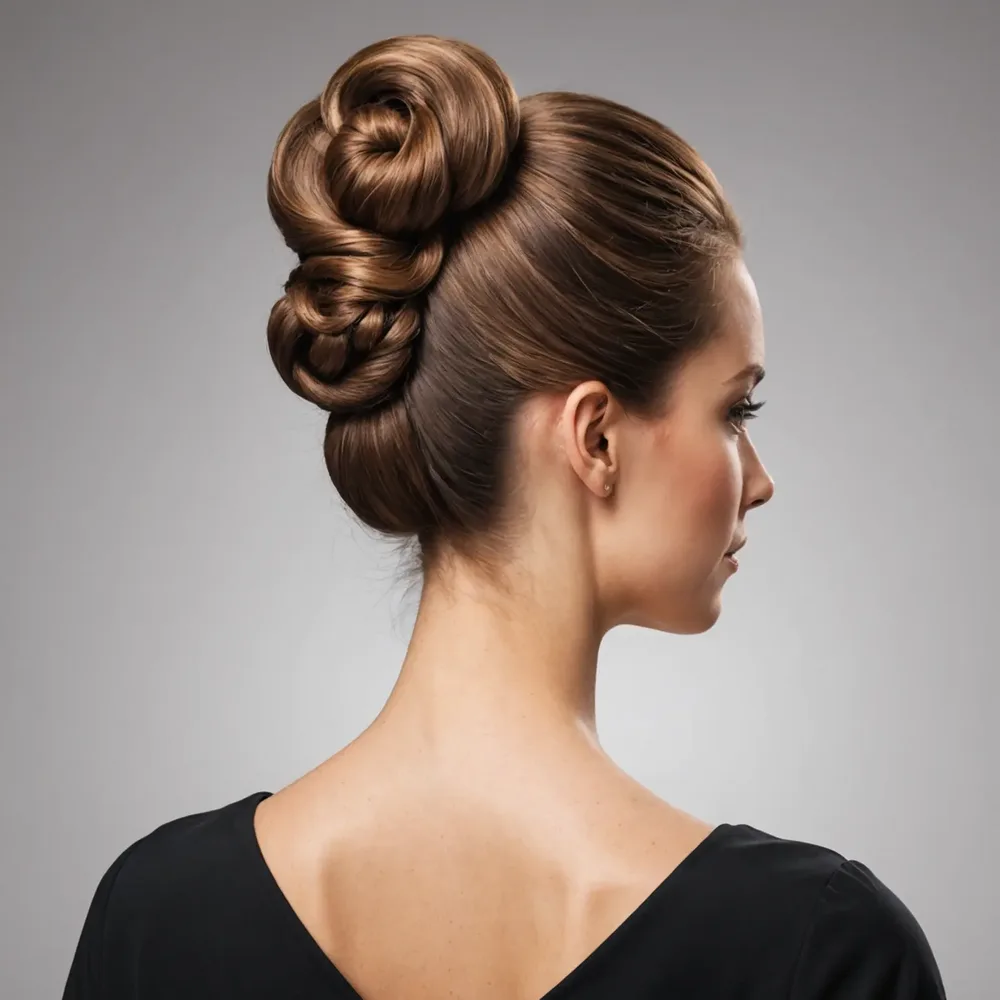
Common mistakes: twisting too loosely, so the crown unwinds during play; and pinning only the bun, so the twist at the front works loose.
Maintenance: twist firmly from the hairline around to the back, coil into a bun, and pin both the twist and the bun. A light spray keeps the surface smooth.
Quick verdict: elegant and secure. A lovely choice when the evening continues after the last game.
41. Wavy Half-Up Ponytail
What it is: the top half of wavy hair gathered into a ponytail at the crown, with the rest left to fall in soft waves. It keeps the front out of the eyes while showing off the natural wave, which makes it a favourite for fans and relaxed doubles.
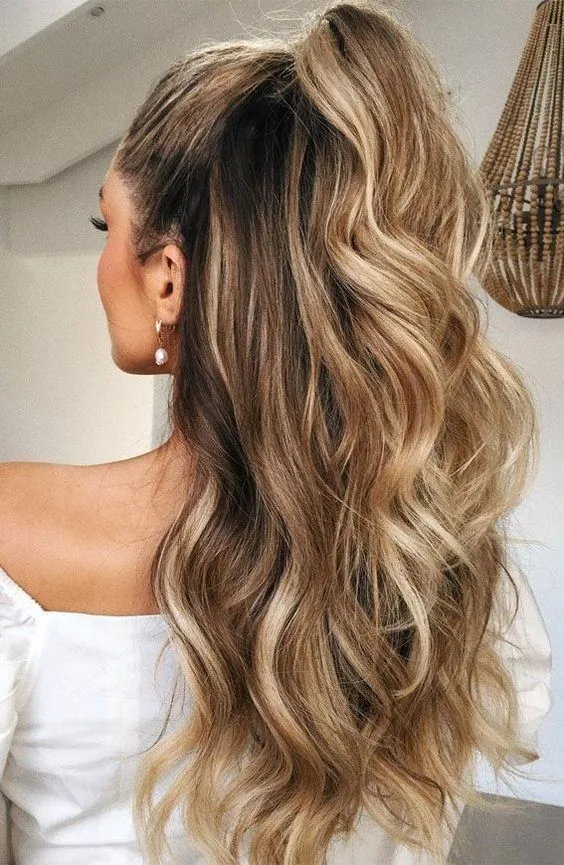
Common mistakes: taking too little hair into the ponytail, so the front layers still fall forward; and skipping grip product, so the ponytail slides down as the waves move.
Maintenance: gather from temple to temple, add a little texture spray for grip, and secure with a strong elastic. Pin the loose waves up if you switch from watching to playing.
Quick verdict: soft, pretty and easy. The perfect courtside style for wavy hair, with a quick upgrade to match-ready.
What is the best hairstyle for playing badminton?
Double Dutch braids, a French braid into a bun, or a low sleek bun are the best choices for playing badminton, because they anchor the hair at several points and cannot swing, slip or fall into your eyes during fast rallies, lunges and overhead smashes.
How do I stop my hair falling in my face during a badminton match?
Anchor the front layers with a braid, a wide non-slip headband, or gel smoothed along the hairline, and gather the length into a braid or a bun rather than a loose ponytail. Test the style at home with quick head turns and jumps before you trust it on court.
Can I wear my hair down for badminton?
You can wear it down if you are only watching, but for playing it is not a good idea. Loose hair whips across the face on smashes, sticks to a sweaty neck, and distracts you at the net. If you love the look of loose hair, a half-up style with a headband is the closest safe option.
What products hold hair through a sweaty badminton match?
A strong-hold gel for the hairline, a light pomade for flyaways, and a flexible hairspray to finish will hold through most matches. Add dry shampoo at the roots before playing for grip, and again afterwards to refresh the style.
How do I keep sweat out of my eyes while playing badminton?
Wear a wide, non-slip fabric headband a couple of centimetres behind the hairline, and keep a spare in your kit bag to swap in between games. A slicked-back style with gel also stops sweat running down from the hairline.
Which badminton hairstyles work for short hair?
Short hair with a wide sports headband is the easiest option, and a little gel or wax keeps the front layers in place. A pixie or a bob needs almost no anchoring, and a headband is usually all it takes to stay comfortable through a match.
Which badminton hairstyles work for curly hair?
A curly pineapple updo, a high puff, or a curly high ponytail with a headband all work well. Gather the curls loosely so the pattern stays intact, use a wide scrunchie rather than a thin elastic, and refresh the front with a little water between games.
How do I fix my hair quickly between badminton games?
Re-tighten the ponytail or bun at the base, smooth the hairline with a little water or cream, re-pin any loose strands, and swap a damp headband for a dry one. Two spare elastics, three bobby pins and a travel dry shampoo in your kit bag cover almost every fix.
Do I need a different hairstyle for singles and doubles?
Singles is faster and more physical, so it calls for the most secure styles, like double braids or a braided bun. Doubles is usually more relaxed, so a low ponytail, a half-up style or a messy bun with a headband is often enough.
Can I wear a headband and a bun together for badminton?
Yes, they work very well together, as long as the bun sits low or to the side so it does not push the headband up. A low sleek bun or a low braided bun with a wide non-slip headband is one of the most reliable combinations on court.
Conclusion
The best hairstyles for badminton are the ones you forget about once the first rally starts. A braid that holds through smashes, a low bun that never touches your neck, a headband that catches sweat before it reaches your eyes: these small choices add up to a match where you are thinking about the shuttlecock, not your hair. Pick one style from this guide, practise it once at home with a few jumps and head turns, and keep two spare elastics in your kit bag. Then walk onto court, play hard, and let your hair take care of itself.