Going Gray Gracefully: Hairstyles for Gray Hair That Look Polished, Not Washed Out
Going gray is one of the few beauty decisions that is also a life decision. It is not just a colour change — it is a decision about how much time, money and patience you are willing to spend on your hair, and what you want it to say about you. For years the advice was simple: cover it. But a growing number of women are discovering that silver hair, cut well and cared for properly, looks not just acceptable but genuinely striking.
This guide walks through 38 hairstyles for gray hair — silver pixies, bobs, shags, lobs and long layers — matched to different face shapes, hair textures and lifestyles. Eight short guides cover the transition to gray, keeping silver bright and yellow-free, cuts that add volume, gray hair care, colouring versus embracing, styling products, face shapes and the myths worth ignoring, so you can decide with confidence instead of impulse.
How to Transition to Gray Hair Without Hating the In-Between Stage
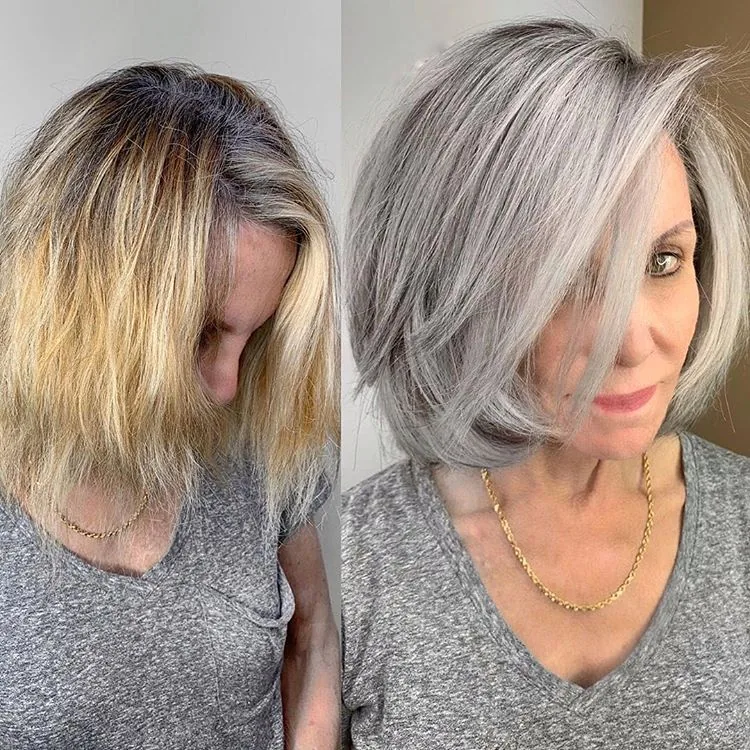
Going gray is rarely a single decision — it is a months-long process, and the in-between stage is where most people give up and reach for the dye again. The first thing to know is that the line of demarcation, that hard stripe where dyed hair meets silver roots, is the hardest part, and it fades fastest when you stop fighting it.
There are a few honest ways through it. A shorter cut removes dyed ends in one move. A blending technique — lowlights or a silver-toned gloss — softens the stripe while your natural gray grows in. None of these is wrong. What matters is choosing a plan you can live with for six to twelve months, because gray hair grows at the same speed as any other hair — about half an inch a month — and patience is the only shortcut that actually works.
Keeping Silver Bright: How to Stop Gray Hair Going Yellow
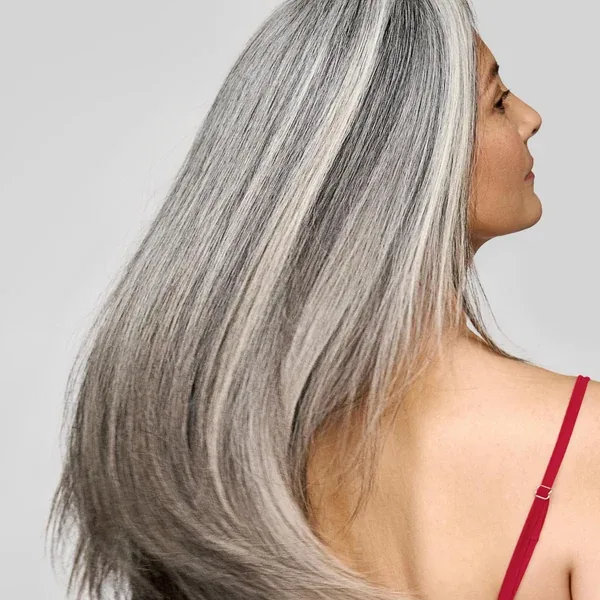
Gray hair turns yellow for reasons that have nothing to do with age. Sun, smoke, hard water, heat styling and even some shampoos leave a yellow cast on silver strands, because gray hair has no pigment left to mask the buildup. The fix is not a stronger dye — it is a purple shampoo used once or twice a week, which deposits a faint violet tone that cancels yellow the way a colour wheel predicts.
The rest of the defence is simpler than most people expect. A clarifying shampoo once a month strips mineral buildup from hard water. A heat protectant before any hot tool keeps the cuticle from scorching, which is a common cause of dullness on silver hair. And a hat or a UV-protective spray in strong sun does more for brightness than any product on the shelf.
Cuts That Add Volume to Gray Hair
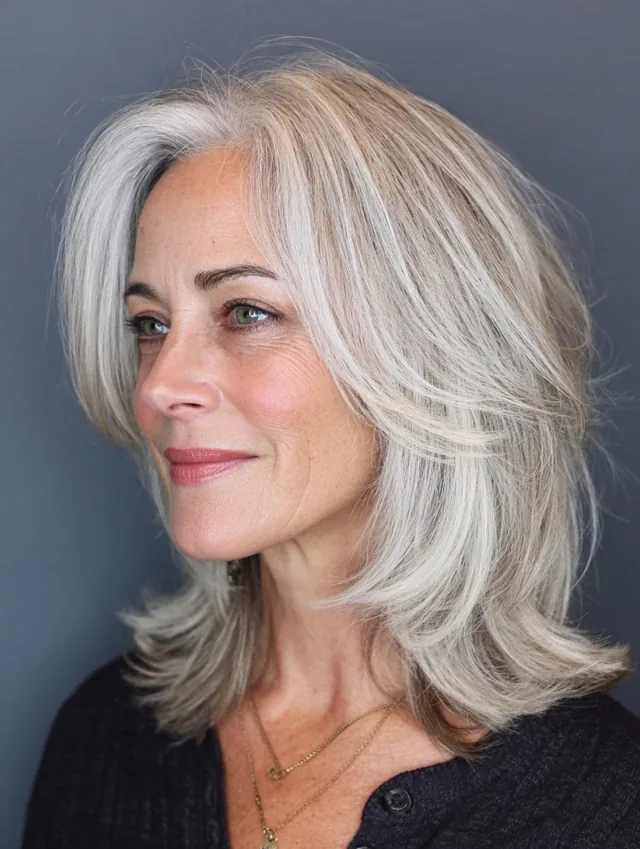
Gray hair often feels finer and lighter than the hair it replaces, and the reason is structural: as pigment cells stop working, the strand itself can become thinner and more wiry, with less natural weight to hold a style down. Layers are the main tool, because they remove weight from the ends and let the roots lift.
The best volume cuts share one trait: they are cut to move. A layered bob, a shag, or a textured pixie all create lift at the crown without needing a full blow-dry every morning. Ask your stylist to cut the layers shorter at the back and longer toward the face, which builds a natural wedge of volume. What to avoid: one-length cuts that hang flat, and heavy, blunt ends on very fine gray hair, which can make the hair look thinner rather than fuller.
Gray Hair Care: What Changes When the Pigment Goes
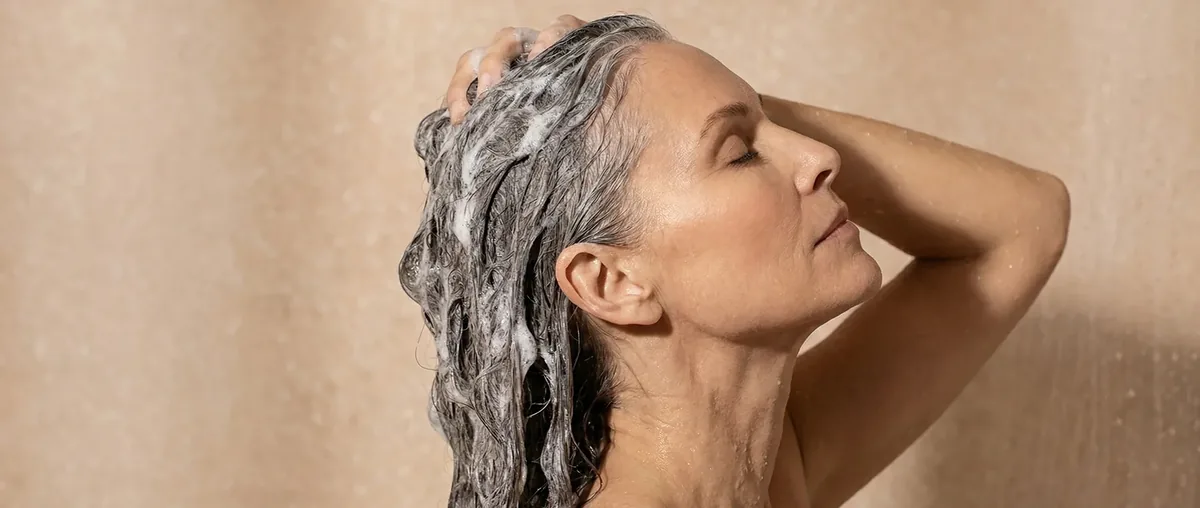
Gray hair is not damaged hair — it is different hair, and it asks for a different routine. Without pigment, the strand is more porous, which means it absorbs moisture and product more quickly and loses it just as fast. The practical answer is a routine built around moisture first and styling second: a hydrating shampoo, a conditioner you actually leave on for two or three minutes, and a weekly deep-conditioning mask.
There are two habits worth changing right away. First, wash less often if you can — every second or third day — because gray hair shows oil less and over-washing strips the moisture it needs. Second, treat heat as a cost, not a default: a hot iron on dry gray hair can turn it straw-like faster than on pigmented hair, so a heat protectant is non-negotiable and air-drying is a genuine option now.
1. The Silver Pixie
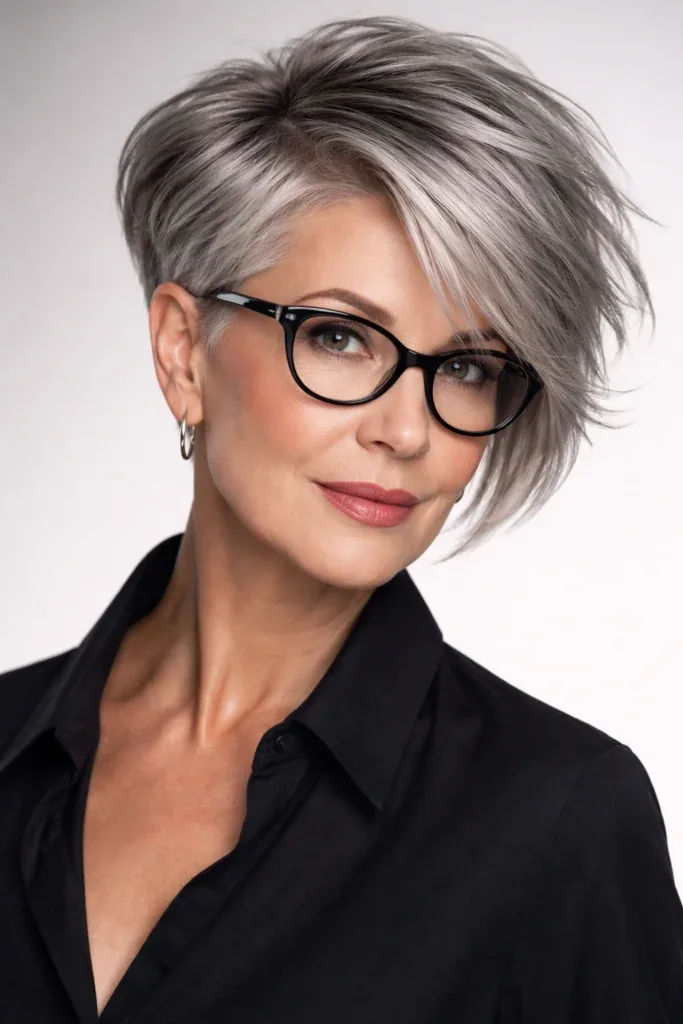
The silver pixie is the cut most women picture when they imagine going gray with confidence, and it earns that reputation. Short on the sides and back, longer on top, it turns silver hair into a feature instead of a concession — the pale colour catches light at every angle, and the shape keeps the focus on the eyes and cheekbones. It suits gray hair particularly well because the shorter length shows off the natural variation in silver, white and darker strands instead of hiding it.
Best for: oval and heart-shaped faces, and women who want a wash-and-go cut. How to style: a pea-sized amount of styling cream worked through damp hair, then finger-combed into place — two minutes, no brush needed. Maintenance is the trade-off: a trim every four to five weeks keeps the shape.
2. The Classic Silver Bob
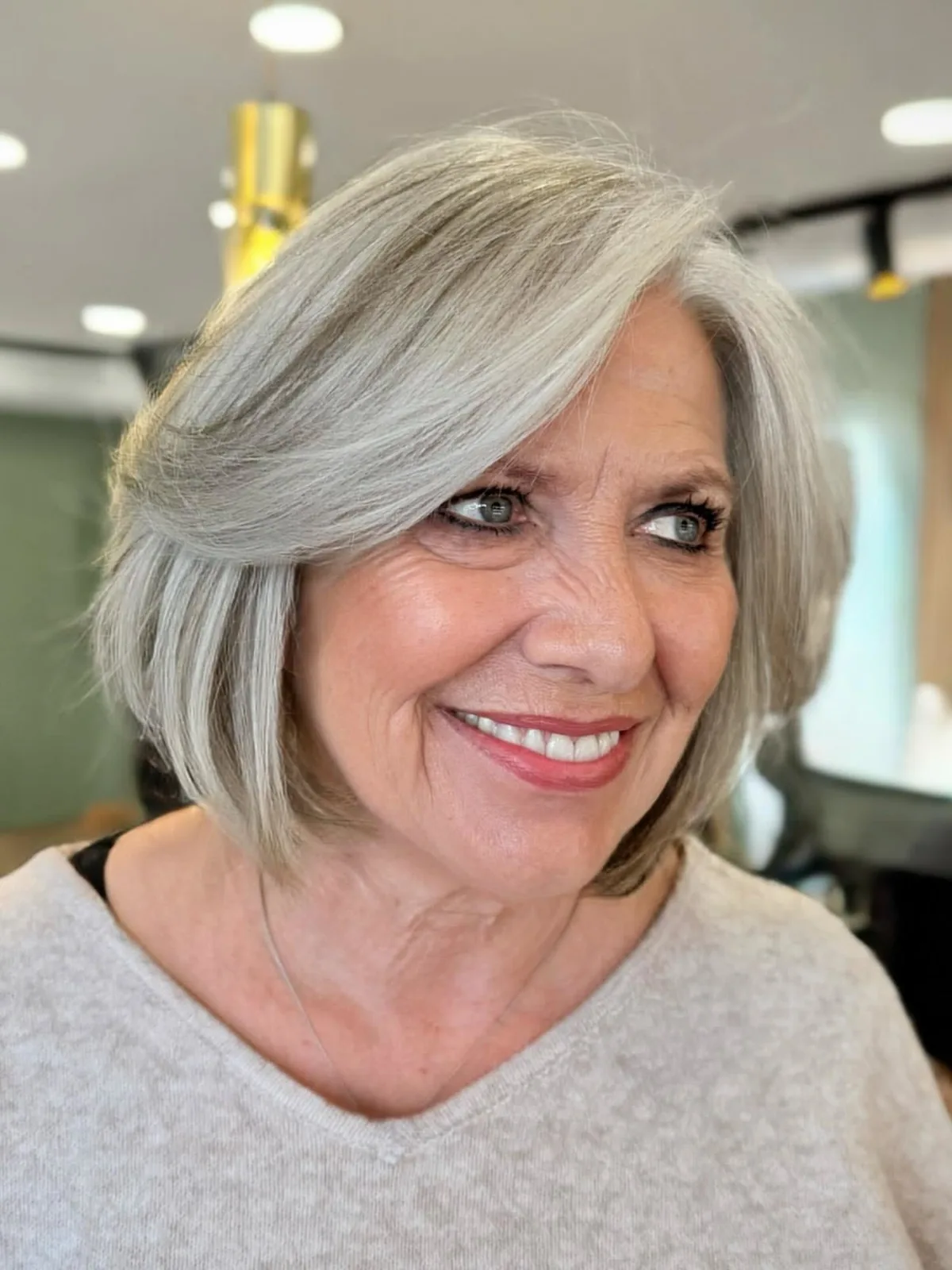
A classic bob cut to the jawline in full silver is one of the most flattering hairstyles for gray hair, because the clean line gives the pale colour structure. Without a defined shape, silver hair can drift into looking washed out; the bob’s sharp edge stops that happening. It works at every age and on most textures, and it is the cut stylists reach for when a client wants gray hair to look intentional rather than accidental.
Pros: enormous polish for a simple cut, and it grows out gracefully into a lob. Cons: the blunt ends need a trim every six weeks, and very fine hair can look flat at the back. What to ask your stylist for: a bob that ends just below the jaw, with the back cut slightly shorter than the front for natural lift.
3. The Layered Gray Lob
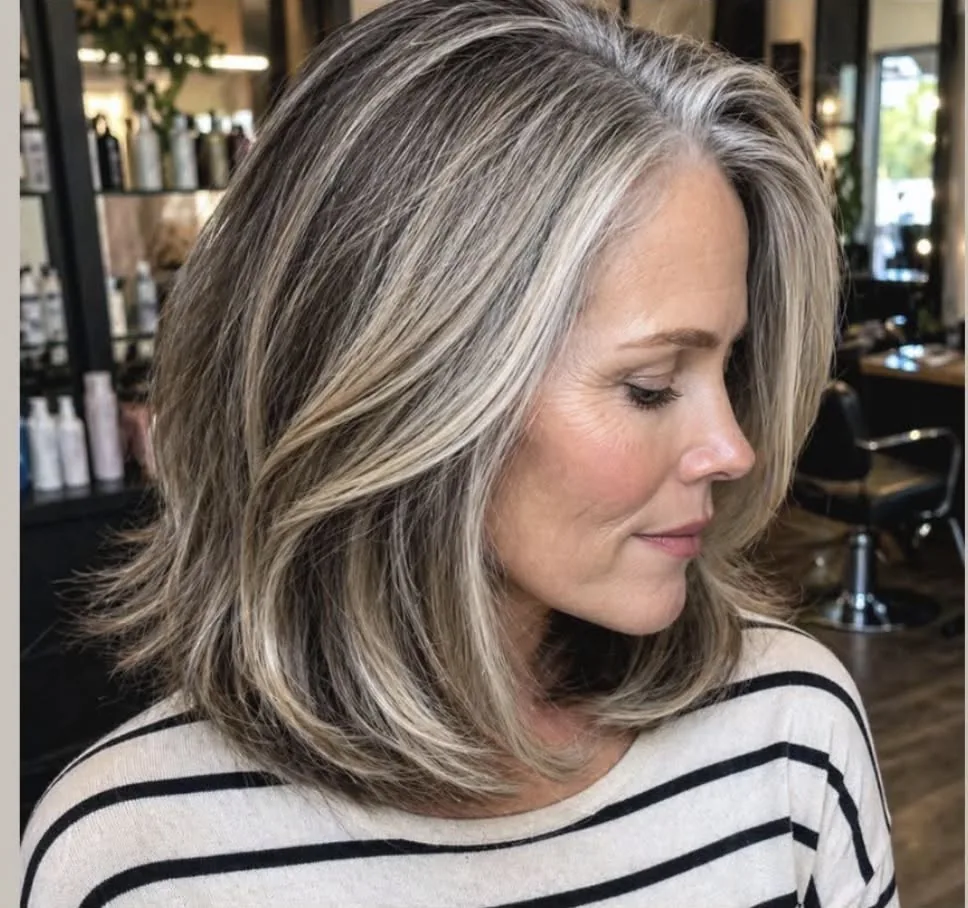
The layered lob — a long bob that falls between the chin and the shoulders — is the friendliest length for gray hair, because it is long enough to feel feminine and short enough to stay light. Layers through the mid-lengths give silver hair movement, and movement is what keeps gray from looking flat or dull. The cut works with a centre part, a side part, or no part at all, which makes it forgiving on mornings when you do not want to think.
How to style: blow-dry with a round brush for a smooth finish, or air-dry with a little mousse for soft waves. Maintenance is light — trims every eight weeks — and the grow-out is gentle, since layers hide the awkward stages. Ask for long, blended layers and the cut will behave.
4. Long Silver Waves
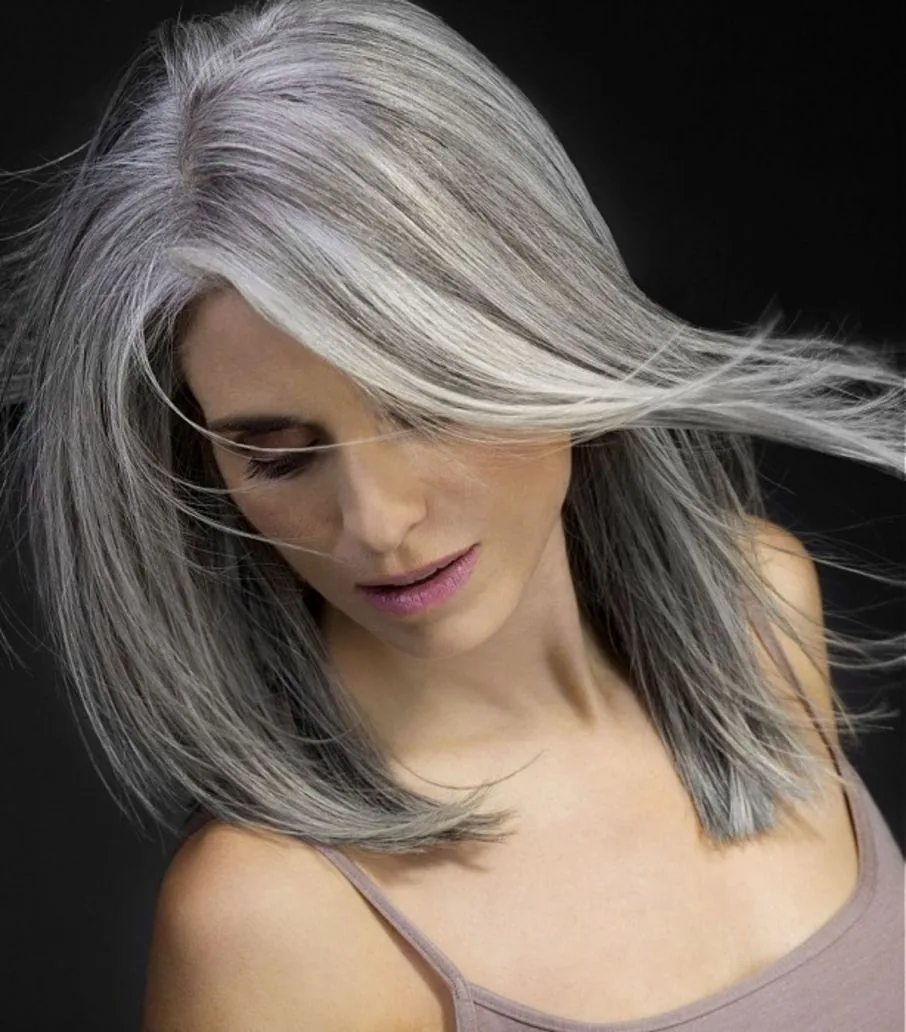
Long silver hair with soft waves is the look that surprises people most, because it breaks the old rule that gray hair must be short. Kept healthy and cut with long layers, silver hair past the shoulders can look luminous — the waves catch light along the length and the colour reads as deliberate and striking rather than tired. It suits women whose gray came in evenly and whose hair stayed thick enough to carry the length.
Maintenance is honest work: long gray hair needs regular trims to keep the ends from looking wispy, a weekly mask for moisture, and a purple shampoo to keep the tone bright. Who should avoid it: very fine gray hair, which can look thinner at long lengths, and anyone who dislikes detangling — long silver tangles easily.
5. The Salt-and-Pepper Shag
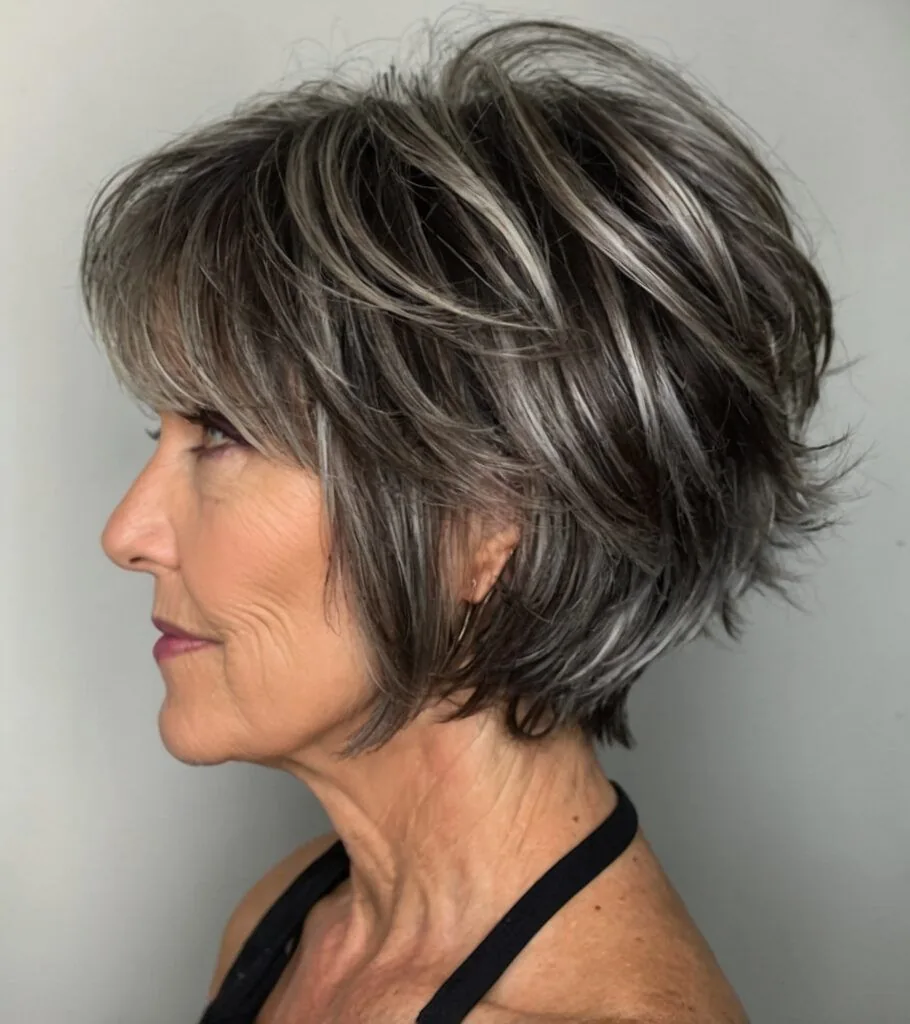
The salt-and-pepper shag is built for the transition years, when the hair is part silver, part its old colour, and neither is winning yet. A shag’s choppy layers and texture turn that mix into a feature: the darker pieces read as lowlights and the silver reads as highlights, and the whole cut looks like an expensive colour job rather than a grow-out. It is the cut for women who want to stop dyeing without announcing it.
Best for: wavy and straight hair with natural texture, and round or square faces that benefit from the shag’s height. Styling takes minutes — scrunch texturising spray into damp hair and let it air-dry.
6. Natural Gray Curls
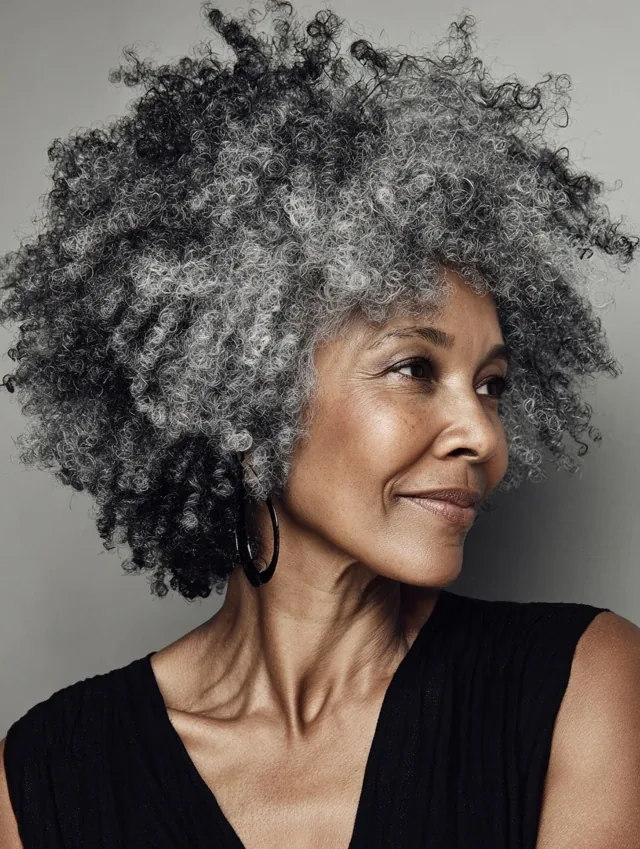
Gray curls have a presence that straight silver hair cannot match: the curl pattern gives the colour dimension, and the volume makes the silver look like a halo rather than a wash. The key is a cut that respects the curl — shaped dry, with length left in, so the curls spring up to their natural length instead of being cut short and then shrinking. A good curly cut makes the difference between gray curls that look sculpted and gray curls that look accidental.
How to care for them: curl cream or gel scrunched through soaking-wet hair, then hands off until it dries — touching gray curls while they dry creates frizz. Maintenance: a trim every eight to ten weeks, and a deep-conditioning mask weekly, because curly gray hair dries out faster than straight gray hair.
7. The Silver French Bob
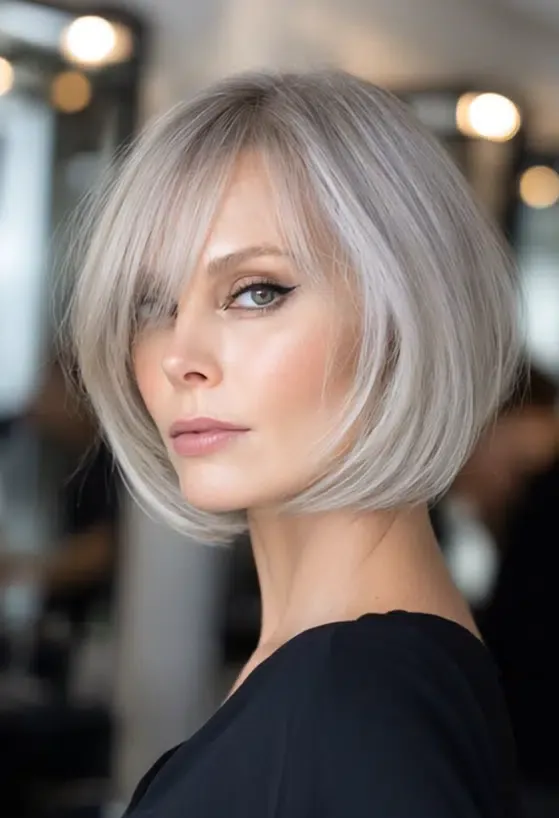
The French bob — chin-length, slightly curved under, with a soft fringe — is Paris in a haircut, and in silver it looks even better. The pale colour softens the bob’s geometry, and the curved-under ends give gray hair a polished, finished edge that needs almost no styling. It is a favourite for women who want their gray hair to look chic rather than practical, and it works beautifully with a bold lip or a pair of statement earrings.
Best for: straight or slightly wavy hair, oval and heart-shaped faces. How to style: blow-dry with a round brush, turning the ends under, and the cut does the rest. Cost and time: a trim every four to five weeks keeps the line sharp, but the daily routine is under five minutes.
8. The Gray Blunt Bob
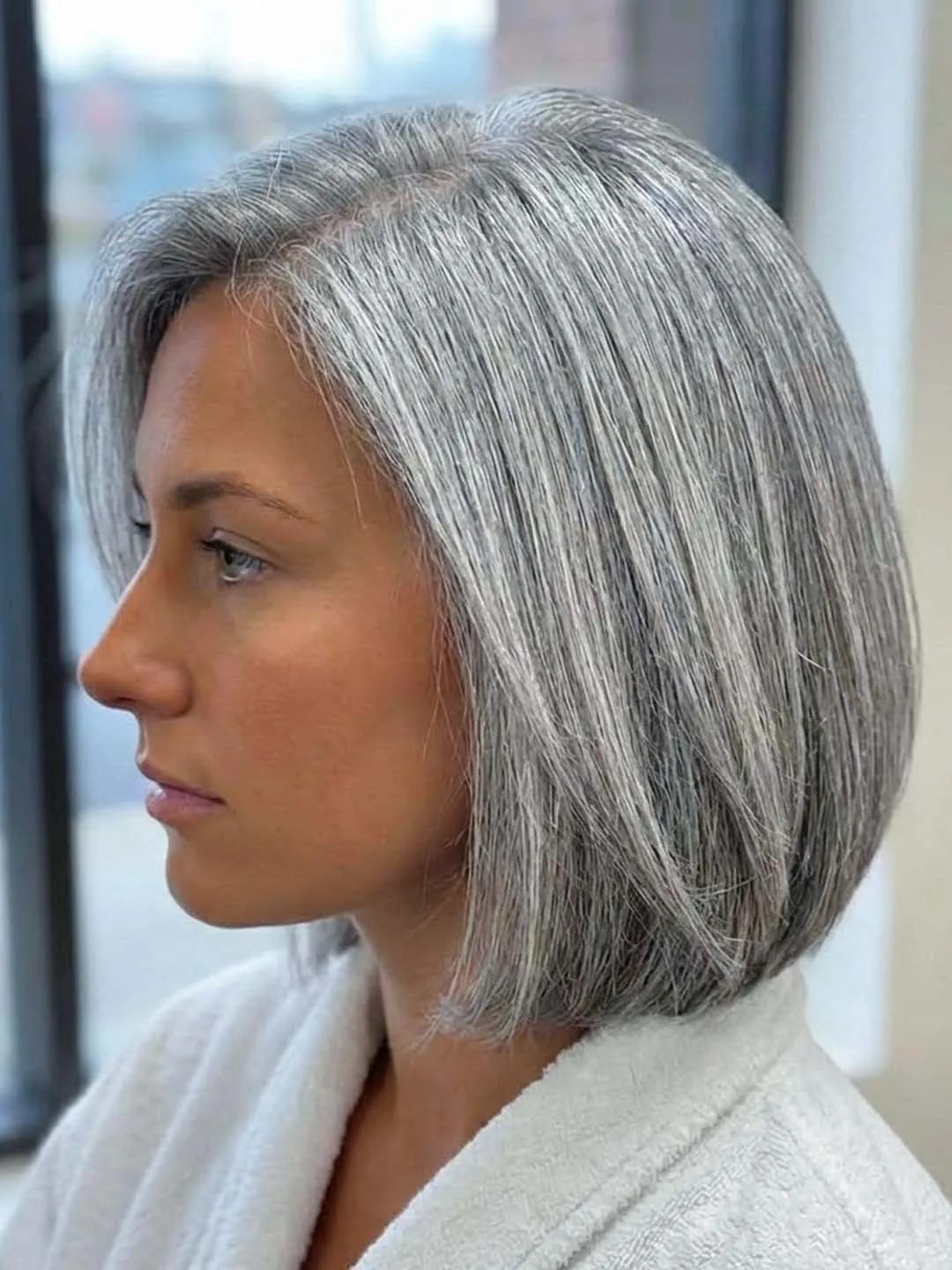
A blunt bob in gray is a statement cut: a single clean line at the jaw, no layers to soften it, and silver hair that reads as graphic and modern. The bluntness gives gray hair weight and presence, which matters because fine silver hair can otherwise look wispy. It is the cut for women who like their hair to look deliberate and who are willing to keep the edge sharp.
Pros: striking, modern, and it makes fine hair look thicker. Cons: it needs a trim every four weeks and a straightener on humid days, and it shows every uneven strand. What to ask for: a bob cut to one length with no thinning at the ends, so the line stays solid.
9. Soft Gray Layers for Fine Hair
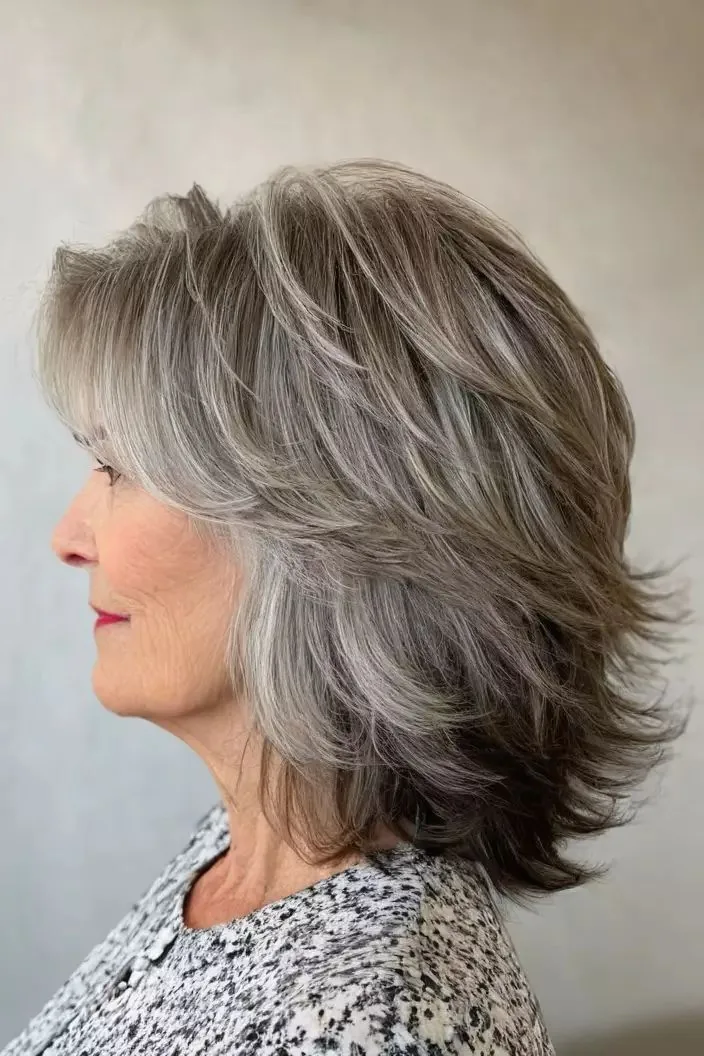
Fine gray hair needs a cut that creates the illusion of fullness, and soft, long layers are the most reliable way to do it. The layers are cut long and blended — never choppy on top — so the hair falls in overlapping sheets that look thicker than they are. A little root lift at the crown, and the whole style reads as full rather than fine, which is exactly what most women with fine gray hair are after.
Best for: fine to medium gray hair, and anyone whose hair thinned as it went gray. How to style: a root-lifting mousse at the crown, blow-dried with a round brush, or a velcro roller at the roots for five minutes. Maintenance is forgiving — trims every eight weeks. Ask for long layers only.
10. Gray Hair With Curtain Bangs
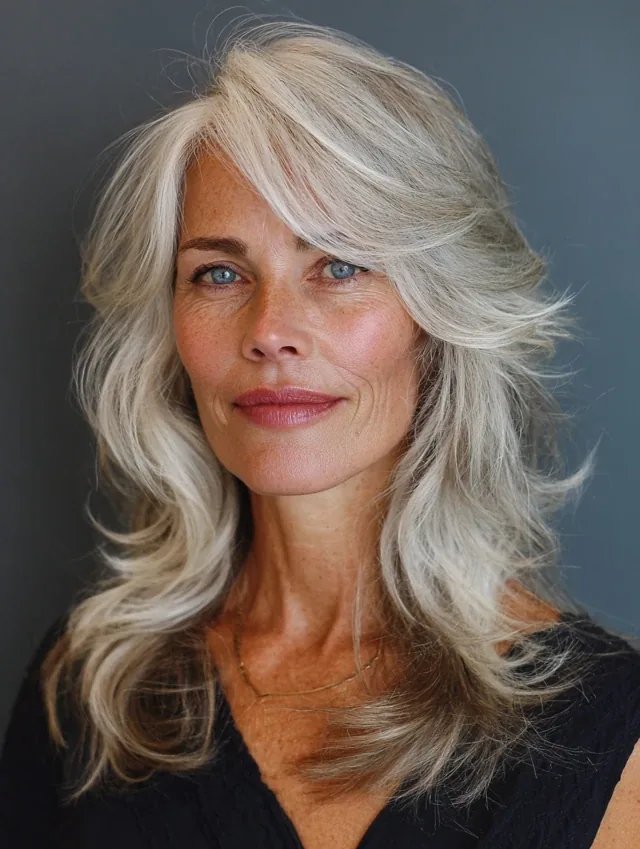
Curtain bangs parted in the middle are the softest way to frame a face in gray hair, and they solve a problem many women meet when they go silver: the forehead can look bare and the face a little washed out. The parted fringe adds a gentle frame, and because curtain bangs blend into face-framing layers, they never look like a hard line across the forehead. They suit almost every face shape and grow out more gracefully than any other fringe.
How to style: blow-dry the bangs away from the face with a round brush, or wrap each side around a velcro roller for five minutes. Maintenance is light — a trim every six to eight weeks. Who should avoid it: very curly gray hair, where the parted fringe can spring up unpredictably.
11. The Silver Stacked Bob
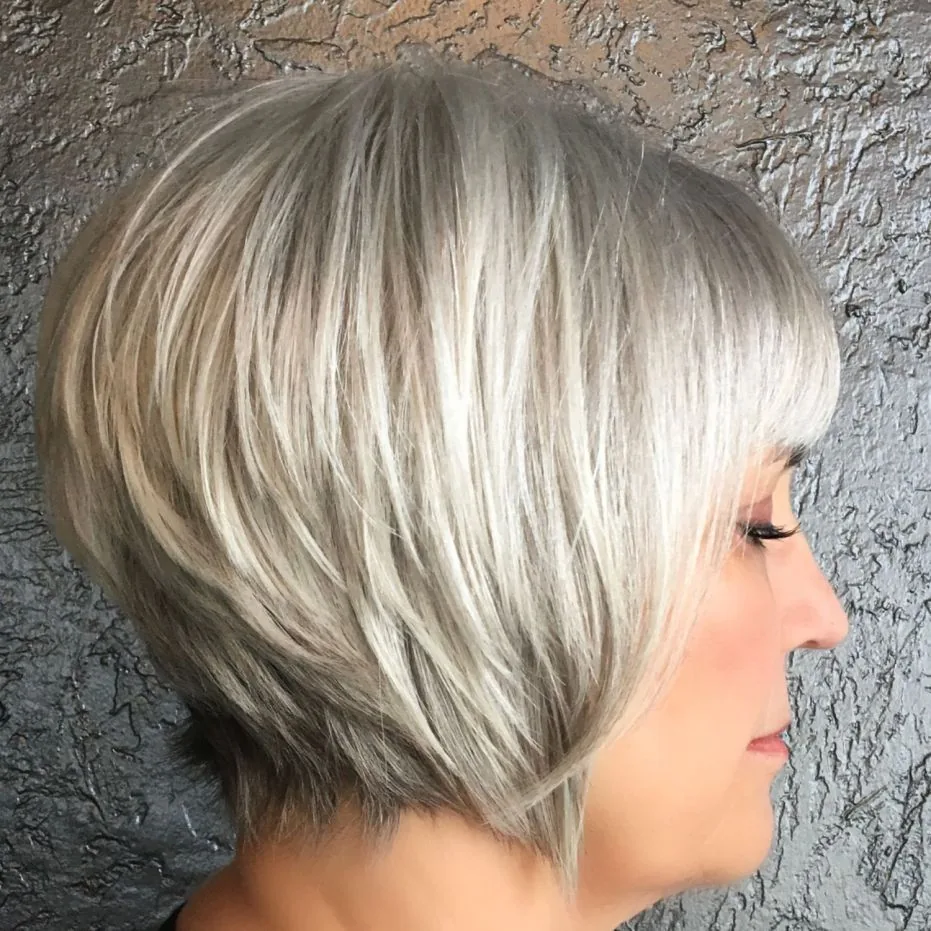
A stacked bob is cut shorter at the back and longer at the front, with layers stacked at the nape to build volume — and on gray hair, that built-in volume is the whole point. The stacked back lifts the crown, the longer front pieces frame the face, and the silver colour shows off the shape’s angles beautifully. It is one of the best cuts for women whose gray hair went flat and who want lift without a daily blow-dry.
Pros: real volume with almost no styling, and a shape that looks good from every angle. Cons: the stacked back needs a skilled cut — a bad stack looks dated rather than shaped — and trims every five to six weeks. What to ask for: stacked layers at the nape that graduate smoothly, with the front pieces reaching the jaw.
12. The Gray Braided Crown
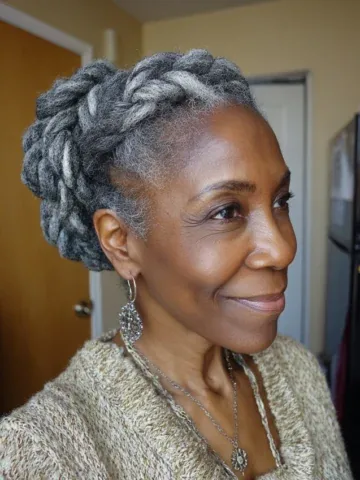
A braided crown in silver hair is quietly spectacular: the braid circles the head like a halo, and the pale strands catch the light along the braid’s ridges in a way darker hair never does. It keeps hair off the face, suits weddings and formal occasions, and works on medium to long gray hair with enough length to braid. It is also one of the few updos that looks better in gray than in any other colour.
How to style: braid two sections from behind each ear, bring them across the crown and pin them in place, then pull a few soft pieces loose around the face. Time needed: ten minutes with practice. Keep the braid loose and let the silver do the talking.
13. The Short Silver Crop
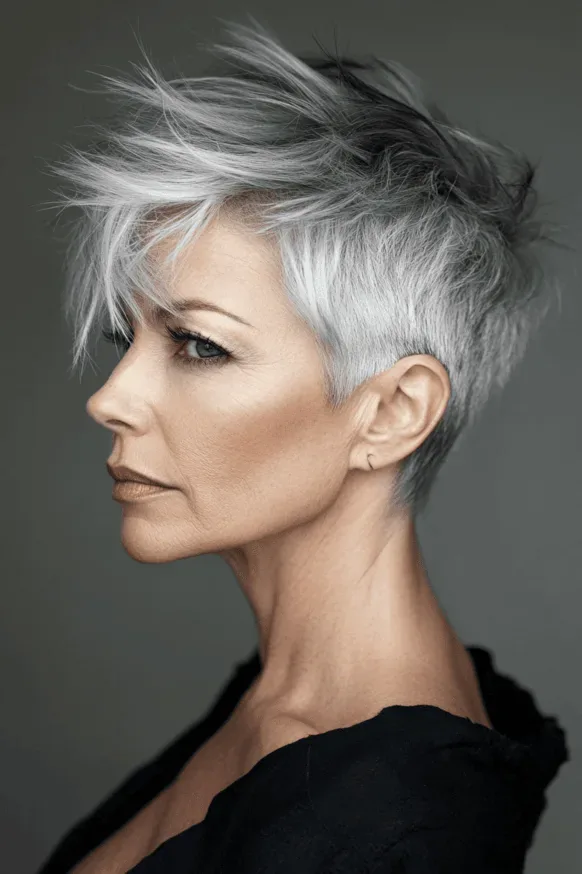
The short silver crop is shorter than a pixie and softer than a buzz cut — a close, textured cut that sits just above the ears and shows off the head’s shape. On gray hair it is strikingly modern, because the short length lets the natural variation in silver and white read clearly, and there is nowhere for dull or damaged ends to hide. It is a favourite for women who have stopped dyeing and want a clean break from the old colour in one appointment.
Best for: oval faces, strong bone structure, and women who love a wash-and-go routine. Styling takes one minute — a little wax or cream for texture. Maintenance: trims every three to four weeks to hold the shape. Who should avoid it: anyone who is not sure about very short hair, because this cut leaves little to hide behind.
14. The Gray A-Line Bob
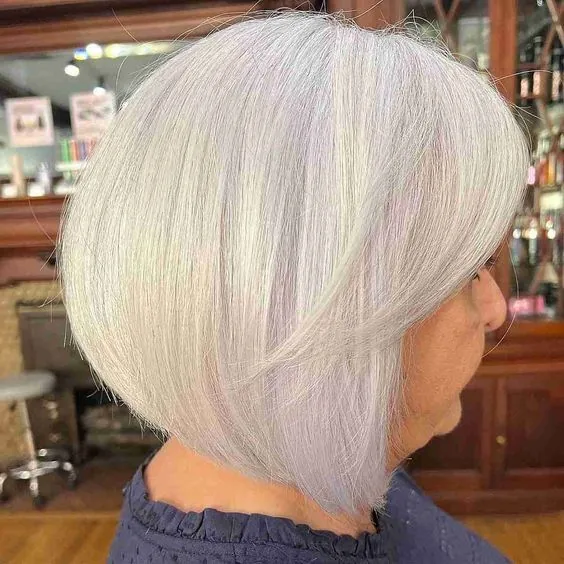
An A-line bob — shorter at the back, longer at the front — gives gray hair a shape that reads as modern and intentional. The diagonal line draws the eye forward along the jaw, which flatters most face shapes, and the longer front pieces frame the face in silver while the shorter back keeps the cut light. It is a brilliant choice for women whose gray hair is thick enough to hold a line but who find a one-length bob too heavy.
How to style: blow-dry smooth with a round brush, turning the front pieces slightly under. Maintenance: trims every five to six weeks to keep the diagonal crisp. Pros: striking and slimming, and it makes the neck look longer. Cons: the angle needs a confident cut — an uneven A-line is obvious.
15. The Silver Balayage Blend
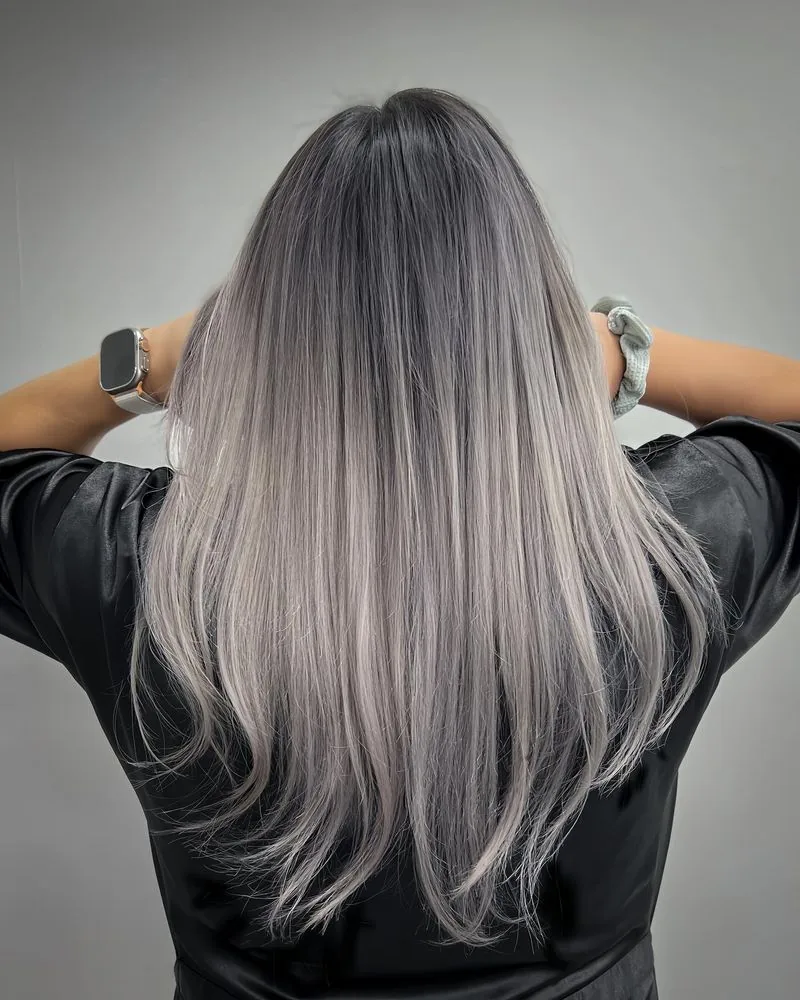
Not everyone who goes gray wants a single flat silver — and the silver balayage blend is the answer for women who like dimension. A stylist paints lighter silver and soft white through the mid-lengths and ends, leaving some deeper gray or salt-and-pepper at the roots, so the colour has movement instead of one uniform tone. It is a colour technique rather than a cut, and it works on bobs, lobs and long hair alike.
Best for: women in the middle of transitioning, or anyone whose gray came in patchy and uneven. Cost and time: a balayage session costs more than a cut, but the grow-out is gentle — there is no hard line to maintain, so you can go months between appointments. Maintenance: purple shampoo keeps the lighter pieces from turning yellow.
16. The Gray Low Chignon
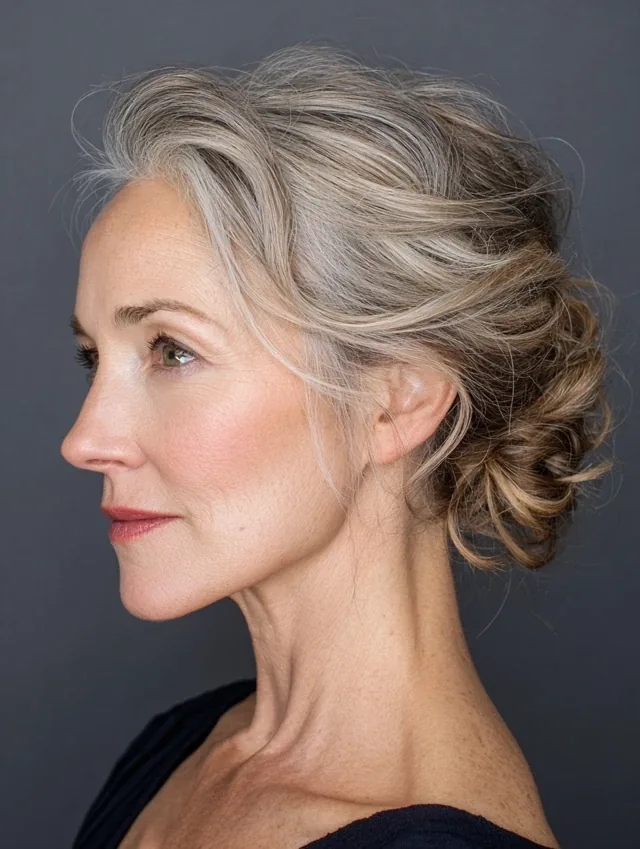
A low chignon — a soft knot at the nape — is the most elegant way to wear gray hair up, and silver makes it look even better. The pale colour gives the twist a sculpted, almost marble-like quality, and the low placement keeps the look understated rather than severe. It suits weddings, work events, and any day you need to look polished without trying hard.
Best for: medium to long gray hair, all face shapes. How to style: gather hair low, twist it into a soft knot and pin, then pull a few face-framing pieces loose. Time needed: five minutes. Keep it loose, and the silver will catch the light along the twist.
17. The Wavy Gray Bob
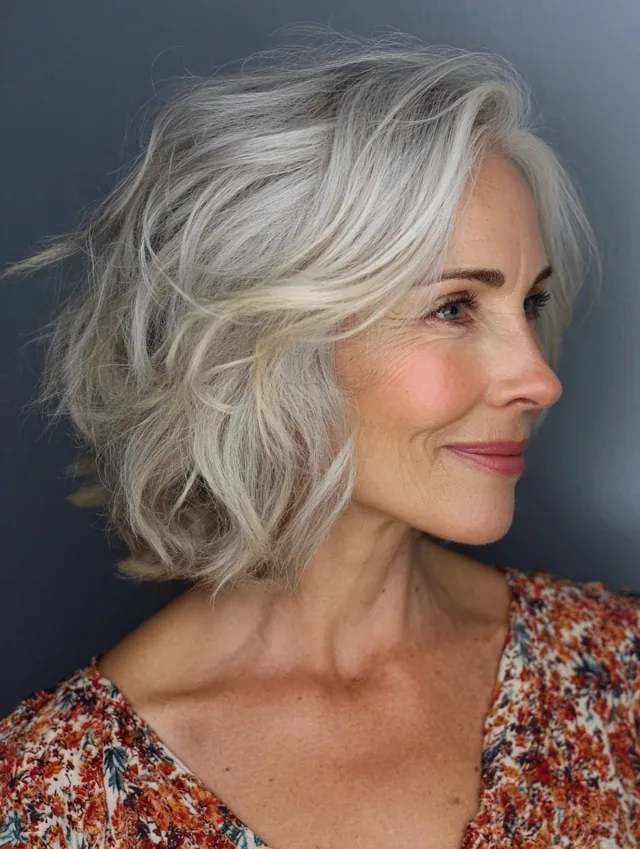
A wavy bob in gray hair is texture doing the styling for you. The waves give the bob movement and body, the silver gives the waves definition, and the combination looks effortless in a way a straight bob cannot match. It suits women whose gray hair kept its natural wave, and it is one of the most forgiving cuts on this list — the waves hide a growing fringe, a bad hair day, and a missed trim alike.
How to style: scrunch a little mousse or curl cream through damp hair and let it air-dry, or diffuse for more volume. Maintenance is minimal — trims every seven to eight weeks. Who should avoid it: very straight hair, where the waves need heat to exist.
18. The Gray Feathered Cut
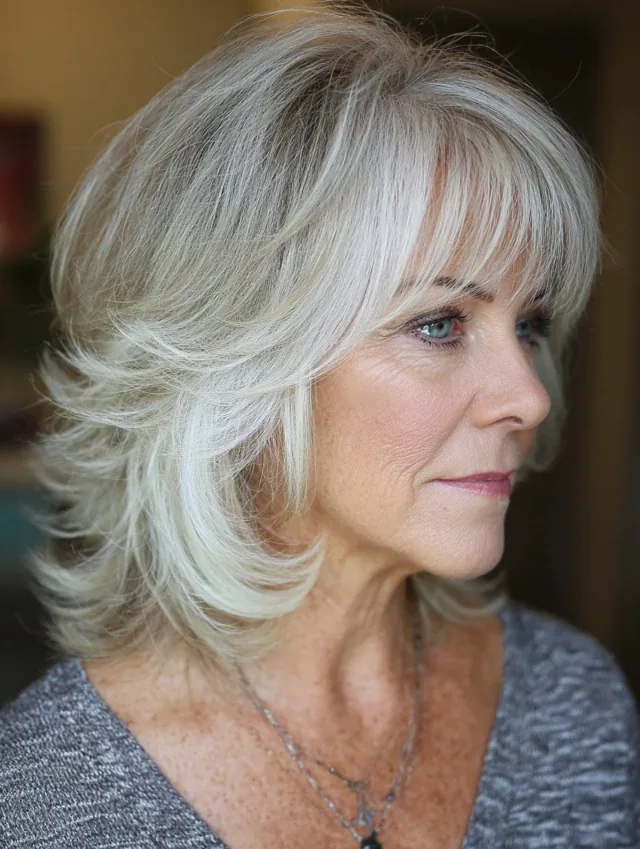
Feathered ends — cut with a razor or thinning shears so they taper into soft points — are kind to gray hair in a way blunt ends are not. The feathering removes weight from the ends, which lets the hair move, and the soft edge is more forgiving on a face that has also changed with the years. On medium-length gray hair, a feathered cut creates lightness and movement without sacrificing length.
Best for: women over fifty, fine to medium gray hair, and anyone who finds blunt cuts too harsh. Maintenance is forgiving — feathered ends grow out softly, so you can stretch trims to eight or ten weeks. What to ask for: a feathered cut that hits at the shoulders, with the ends thinned so they move.
19. The Silver High Ponytail
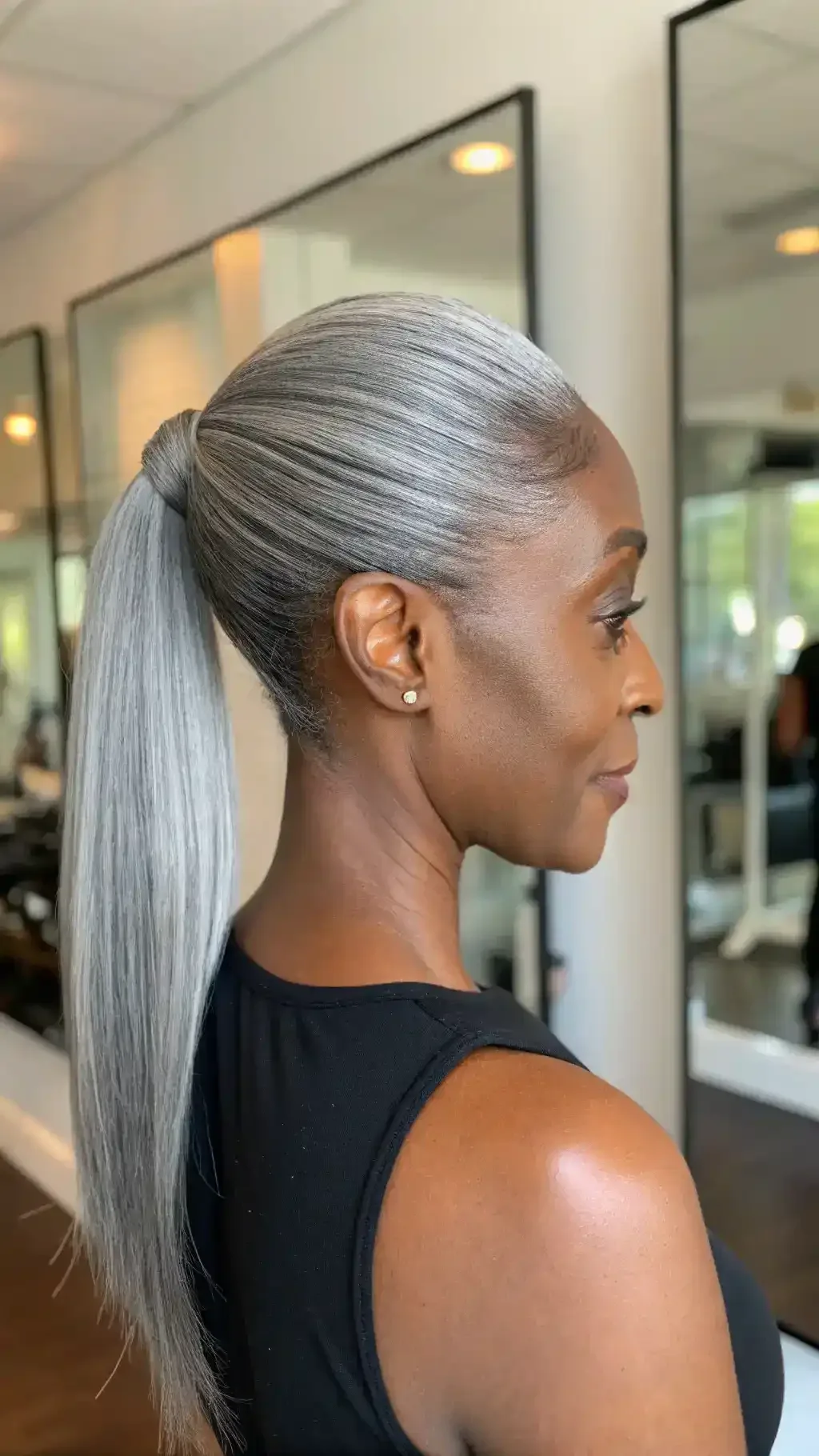
A high ponytail in silver hair is the perfect balance between pulled-back and polished: the ponytail lifts everything up and back, the silver catches the light along the tail, and the whole look takes two minutes. It works for workouts, busy mornings and evenings out alike, and it suits gray hair well because the lift at the crown counteracts the flatness that fine gray hair can have.
Best for: oval and heart-shaped faces, and straight or wavy gray hair. How to style: tie the ponytail high, smooth the front with a brush, and wrap a small strand around the elastic to hide it. The softness is the point — do not pull it drum-tight.
20. The Gray Messy Bun
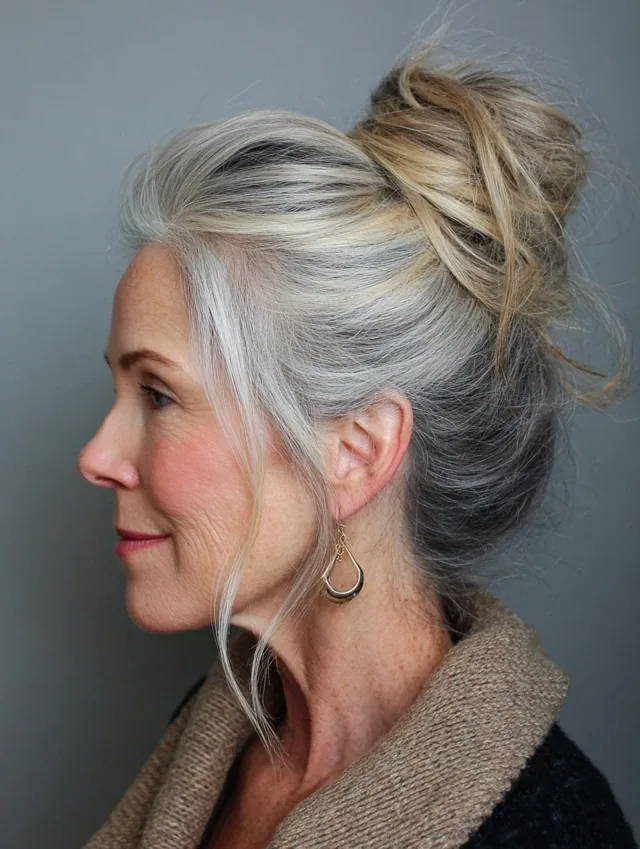
A messy bun in gray hair is the unofficial uniform of relaxed, put-together women everywhere — and silver makes it look even more deliberate. The bun does the heavy lifting — hair up, neck cool, zero effort — while a few loose silver pieces around the face keep the look soft. Without those pieces, a messy bun can look unfinished; with them, it looks like a choice.
Best for: busy mornings, work-from-home days, and second-day gray hair. How to style: gather hair into a loose bun, secure it, and pull out a few face-framing strands. Time needed: three minutes. Cost: nothing.
21. The Silver Side-Swept Lob
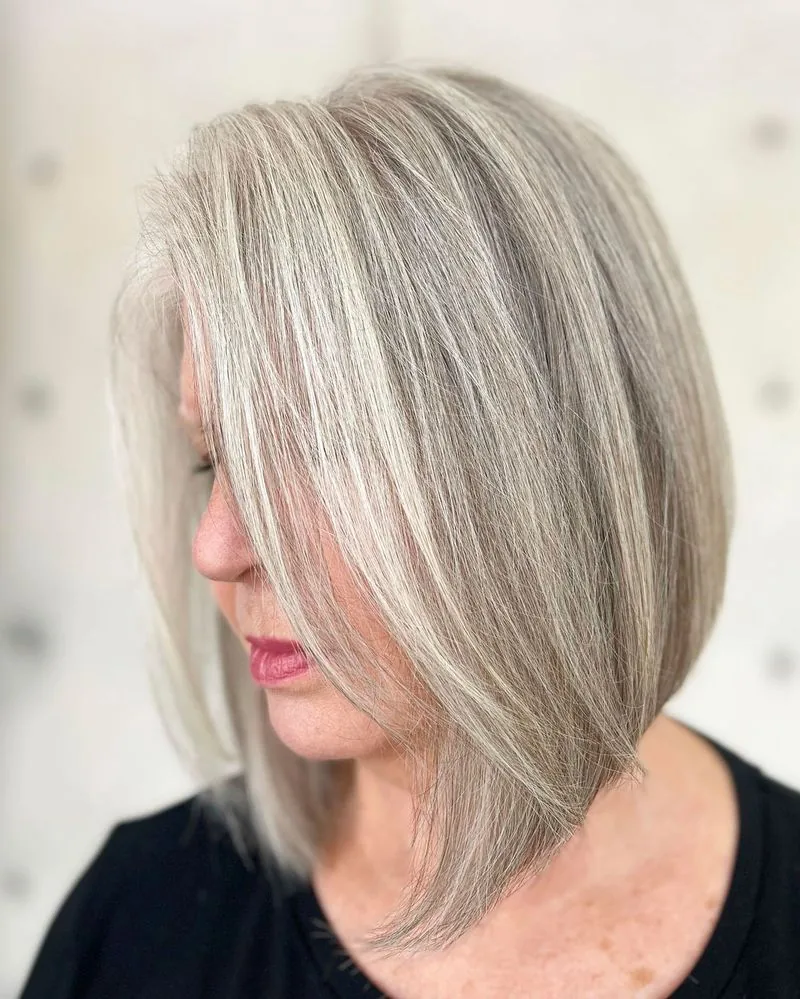
A side-swept lob in silver is the workhorse of this list: flattering, low-maintenance, and suited to nearly everyone. The deep side part creates a diagonal sweep across the forehead that adds movement and softens the face, while the lob underneath keeps the style from looking flat. It works on straight, wavy and slightly curly gray hair, and it survives a bad hair day better than any blunt cut.
Maintenance is minimal — trims every six to eight weeks, no special products, and it grows out gracefully. Common mistake: parting the hair in the same place every day, which can flatten the roots over time. Switch the part occasionally and the volume comes back.
22. The Gray Buzz Cut
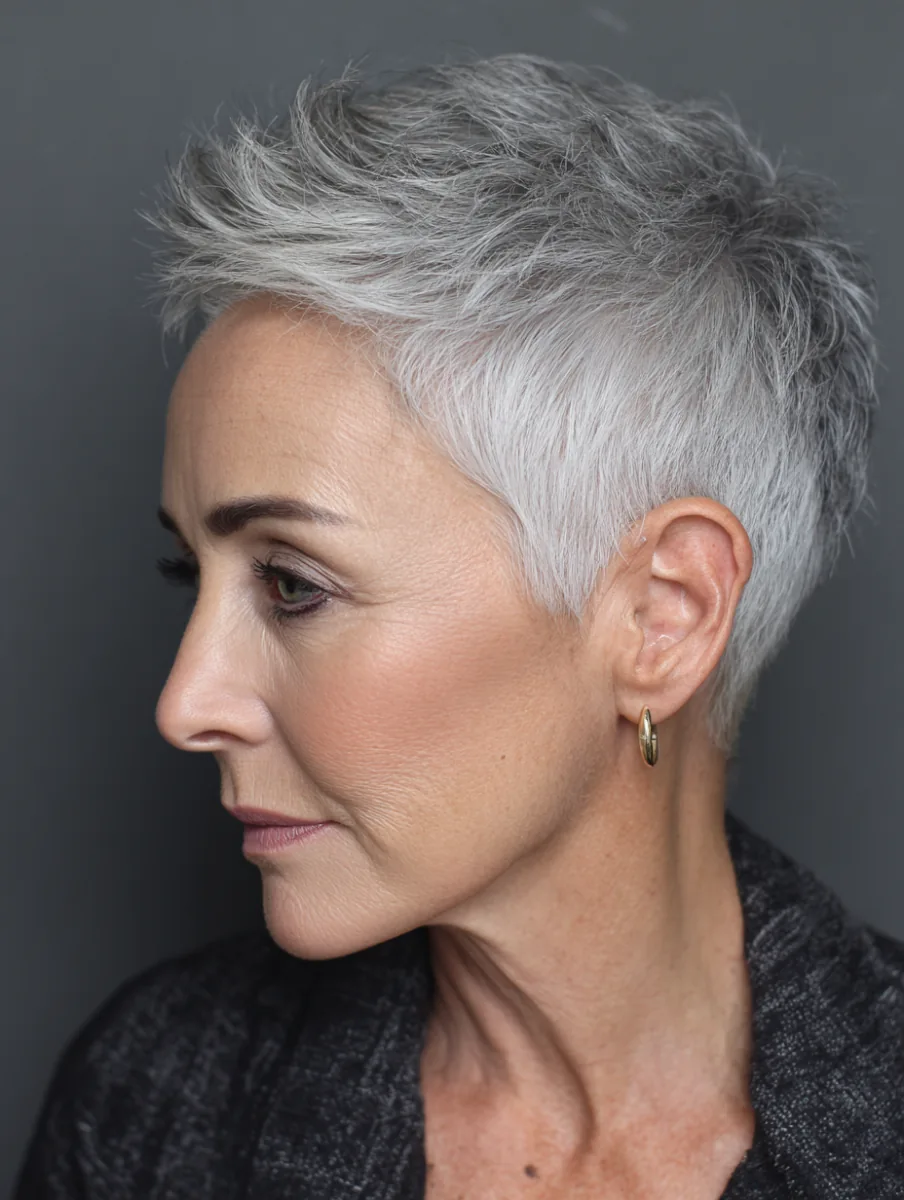
The gray buzz cut is the boldest choice on this list, and also the simplest: hair clipped close all over, silver showing in full, nothing to hide and nothing to maintain. It is a favourite for women who have stopped dyeing and want a clean break, for women with thinning hair who would rather own the shortness, and for anyone who finds the idea of a wash-and-go life genuinely appealing.
Pros: no styling, no products, no bad hair days, and the silver looks striking against the scalp. Cons: it exposes the head’s shape completely, and it grows out fast — a trim every two to three weeks keeps it neat. Who should avoid it: anyone who is not ready for very short hair, because there is no version of a buzz cut that is not a statement.
23. The Silver Half-Up Twist
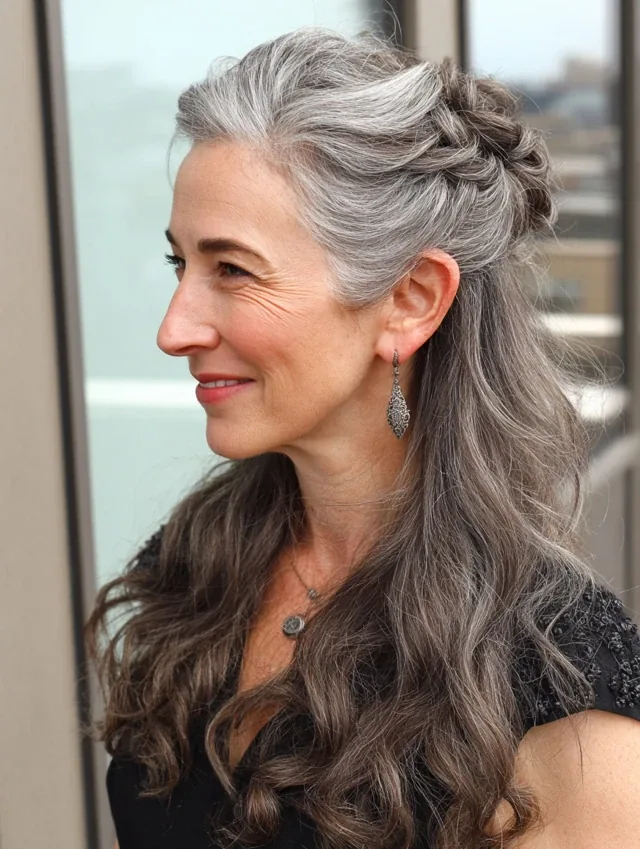
A half-up twist in silver hair gives you the best of both worlds: hair off your face, length still showing, and a soft, polished front that frames the face. It works for weddings, work and weekends, and it suits every length from a lob down. The silver colour makes the twist itself visible — the pale strands catch light along the fold in a way darker hair hides.
How to style: twist two front sections back and pin them where they meet, then let the rest of the hair fall loose. Two minutes, no heat required. Keep the twist loose and the front soft, and the style stays gentle.
24. The Gray Voluminous Blowout
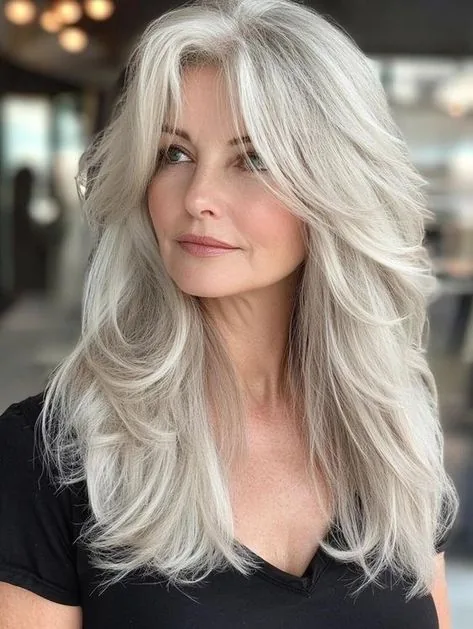
A voluminous blowout on gray hair is pure glamour: big, bouncy silver hair with a finish that looks like a salon visit. The volume balances the lightness of gray hair, so the overall look feels lush rather than thin, and the shine from a good blow-dry makes silver look expensive. It is the style for nights out, events, and any day you want maximum impact.
Best for: thick and medium gray hair, straight and wavy textures. Cost and time: a full blowout takes twenty to thirty minutes at home, so save this for occasions. Maintenance: a heat protectant is essential, because hot tools can dull silver hair faster than pigmented hair.
25. Gray Beach Waves
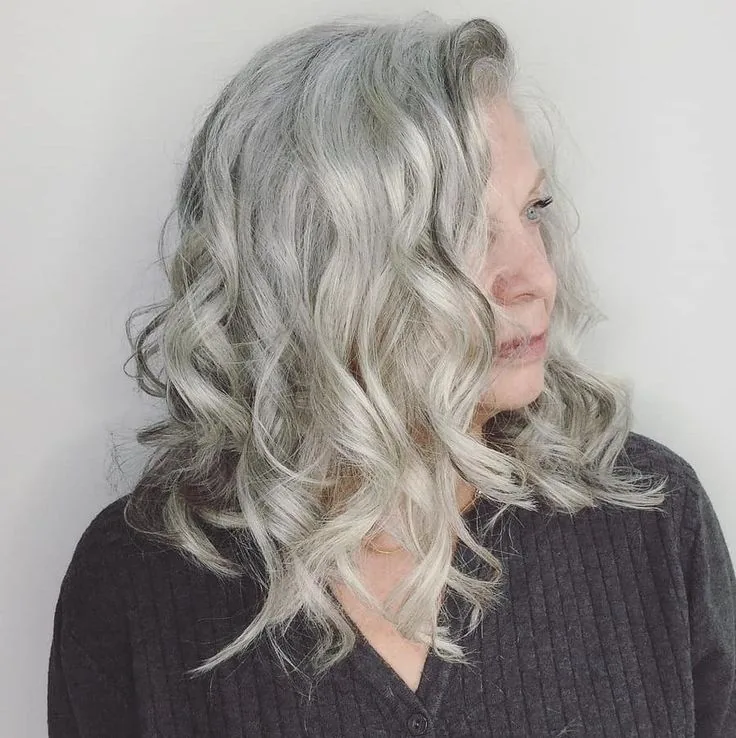
Beach waves in silver hair are summer in a hairstyle: relaxed, textured, and a little bit undone. The waves give gray hair body and movement, the salt-spray texture keeps it from looking flat, and the combination works on any length from a lob to long hair. It is also one of the most forgiving gray styles, because the whole look is built on imperfection.
Best for: wavy and straight gray hair, holidays, and anyone who wants silver hair that looks good slightly messy. How to style: scrunch salt spray through damp hair and let it air-dry, or twist sections around a curling wand for more definition. Maintenance is minimal — the waves hide a growing cut beautifully.
26. The Silver Top Knot
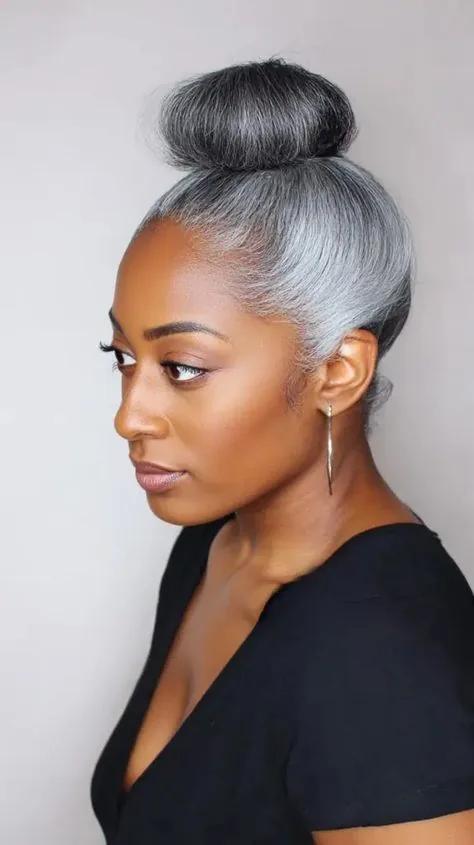
A top knot in silver hair turns the simplest updo into a style. The knot pulls everything up and back, which is practical and cooling, while the silver colour makes the knot itself a feature — pale, sculpted, and visible from across the room. It is the hairstyle equivalent of a good blazer: it makes an ordinary day look intentional.
Best for: long and medium gray hair, busy days, and anyone who lives in a top knot anyway. How to style: gather hair high, twist into a knot, and let a few silver pieces fall around the face. Time needed: two minutes.
27. The Gray Asymmetrical Bob
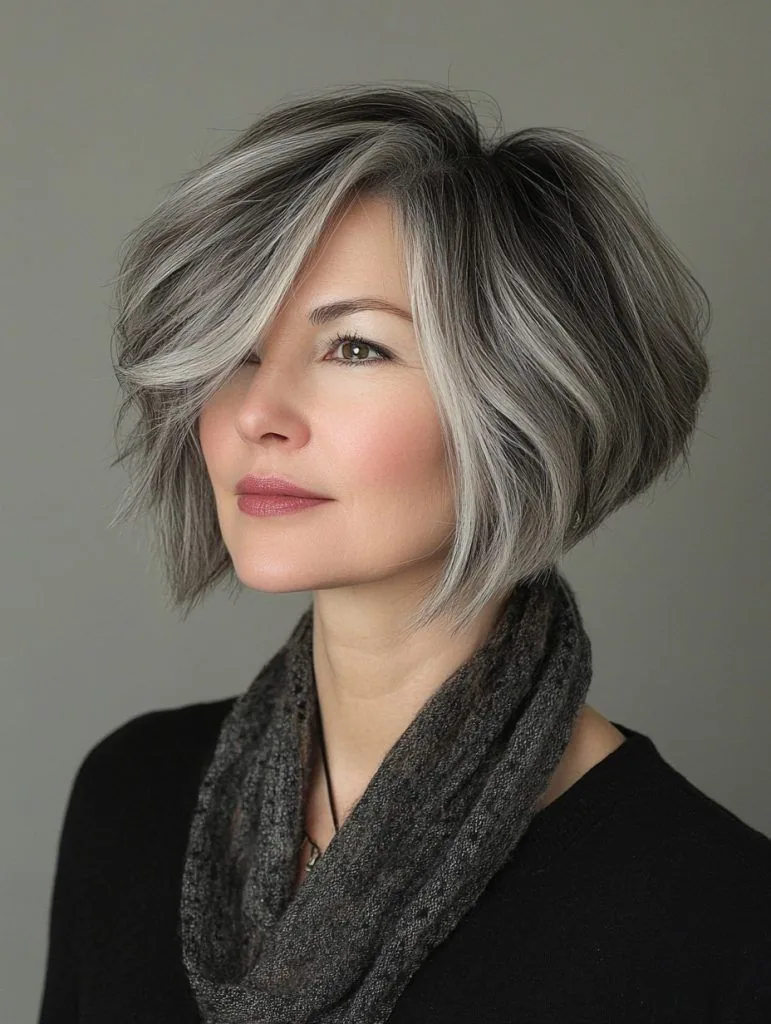
An asymmetrical bob — one side longer than the other — gives gray hair an edge that a symmetrical cut cannot. The longer side sweeps across the face in silver, the shorter side shows off the jaw, and the imbalance creates movement that keeps the pale colour from looking flat. It is a modern, confident cut for women who want their gray hair to look like a fashion choice rather than a default.
Pros: striking, modern, and it photographs beautifully. Cons: the asymmetry needs a confident cut and regular trims every five weeks to hold the line. Who should avoid it: anyone who prefers symmetrical, low-maintenance styles.
28. The Silver Braided Ponytail
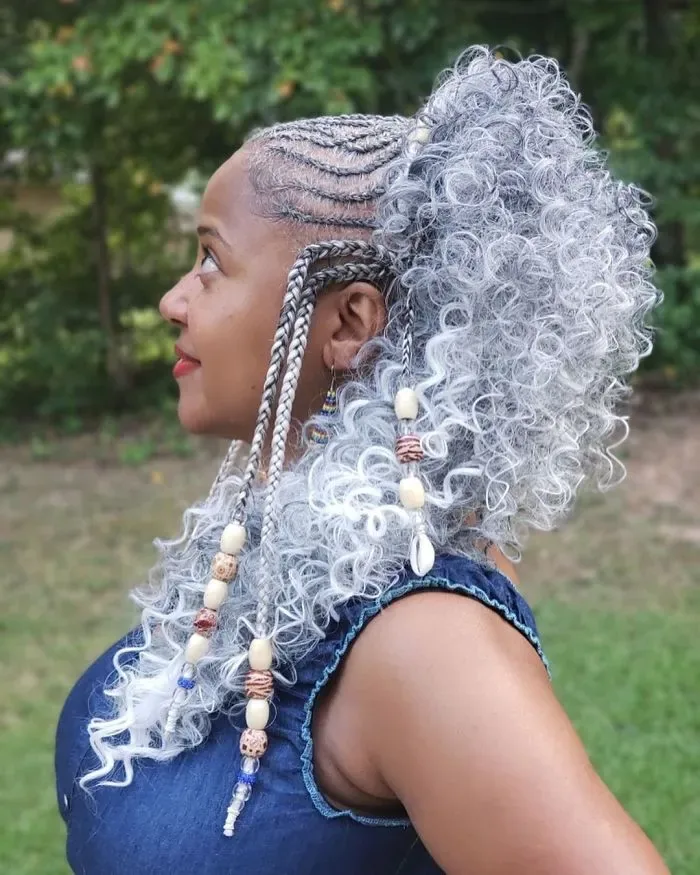
A braided ponytail in silver hair is practical and pretty at once: the braid keeps the length contained, the ponytail keeps it off the neck, and the silver strands make the braid’s pattern visible in a way darker hair never does. It suits workouts, travel days and long afternoons, and it works on any gray hair long enough to braid.
How to style: gather hair into a ponytail, braid the tail, and secure the end — five minutes, no heat. Maintenance is zero, and the style protects the hair from tangling and wind. Keep the braid loose and the ponytail comfortable, and this is the gray style that survives a whole day intact.
29. Gray Wispy Bangs With a Shag
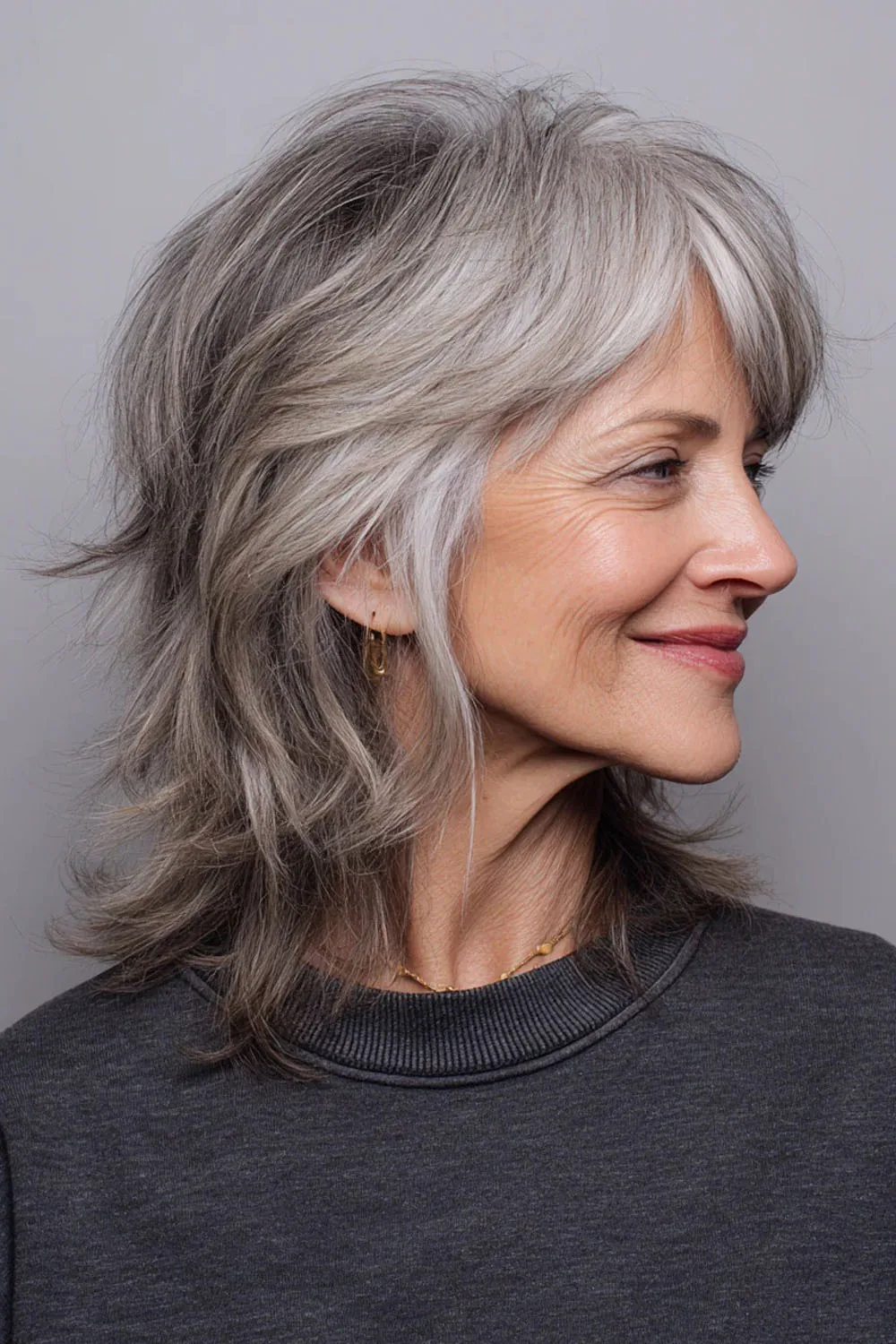
Wispy bangs on a gray shag are the soft answer to a hard fringe: thin, feathery pieces that let the forehead show through, paired with a shag’s choppy layers for texture. The combination suits gray hair beautifully, because the shag’s layers give the wispy bangs somewhere to disappear into, and the whole style reads as one textured shape rather than a fringe pasted on top.
Best for: fine to medium gray hair, square and round faces, and anyone who wants bangs without the commitment of a heavy fringe. Styling takes minutes — a little texturising spray scrunched through damp bangs is often enough.
30. Sleek Silver Straight Hair
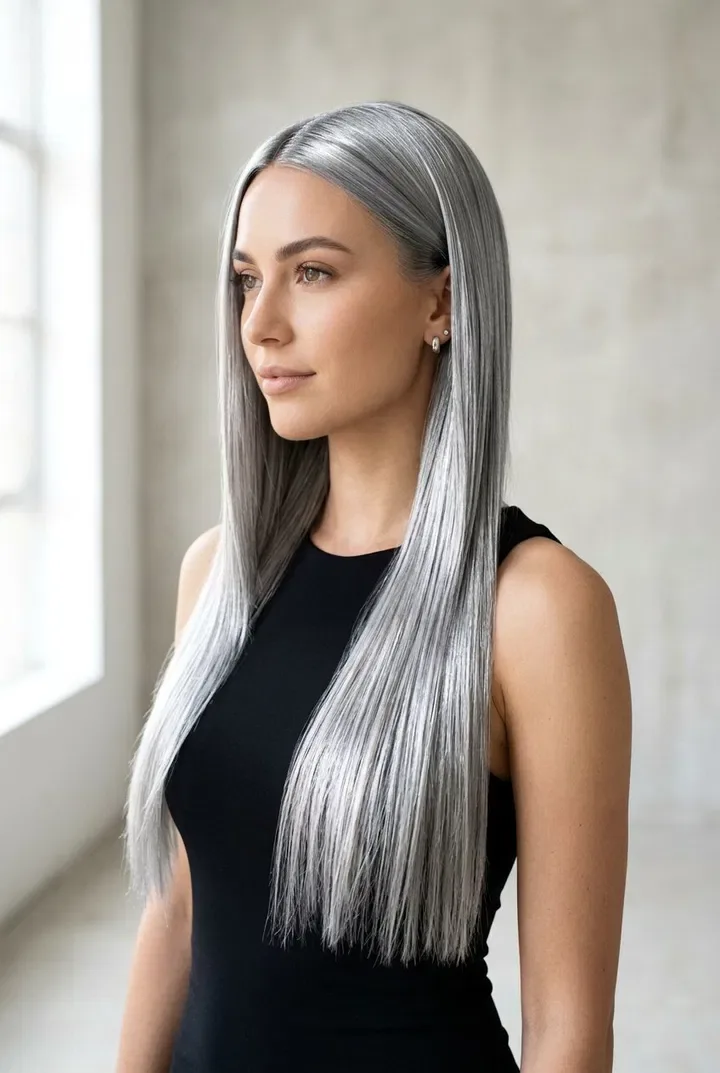
Sleek, straight silver hair is the most striking way to wear gray long: a smooth, shining fall of pale hair that looks almost metallic in good light. It demands healthy hair and a good straightener, but the payoff is a look that stops people in the street. The key is condition — straight silver shows every split end, so regular trims and a weekly mask are not optional.
Pros: enormous impact, and it makes silver look deliberate and luxurious. Cons: it needs a straightener most mornings, a heat protectant every time, and it shows oily roots quickly. Who should avoid it: very fine gray hair, which can look limp when straightened flat.
31. The Gray Textured Pixie
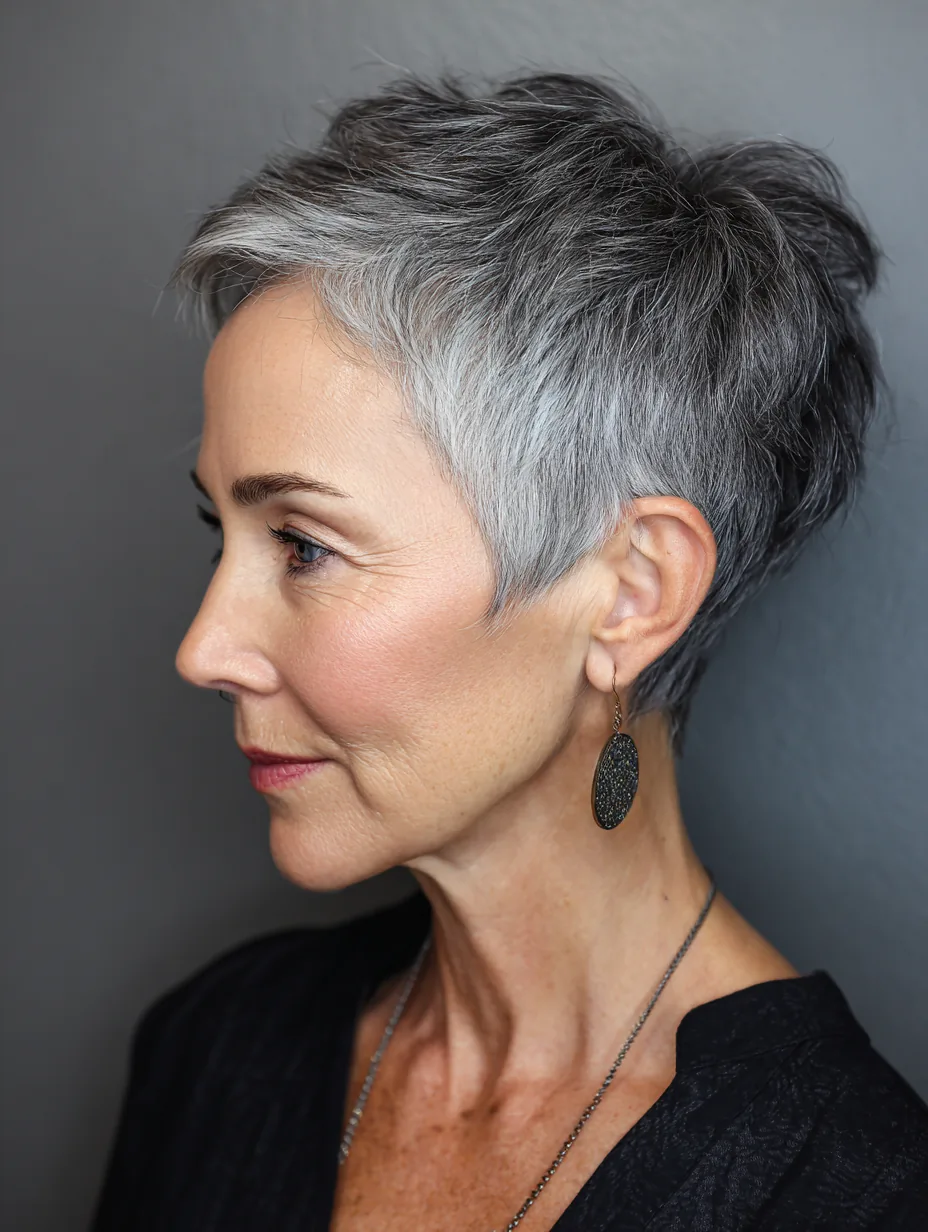
A textured pixie in gray is short hair with movement: choppy layers on top, a soft fringe, and silver that catches the light at every angle. It is the pixie for women who find a classic pixie too severe, because the texture softens the shortness and gives the cut a lived-in feel. It suits most face shapes and works on straight, wavy and slightly curly gray hair.
Pros: quick to style, flattering on most faces, and the texture hides a growing fringe. Cons: the layers need a trim every four to five weeks to hold their shape. Who should avoid it: nobody in particular — this is one of the most adaptable short gray cuts.
32. The Silver Low Ponytail
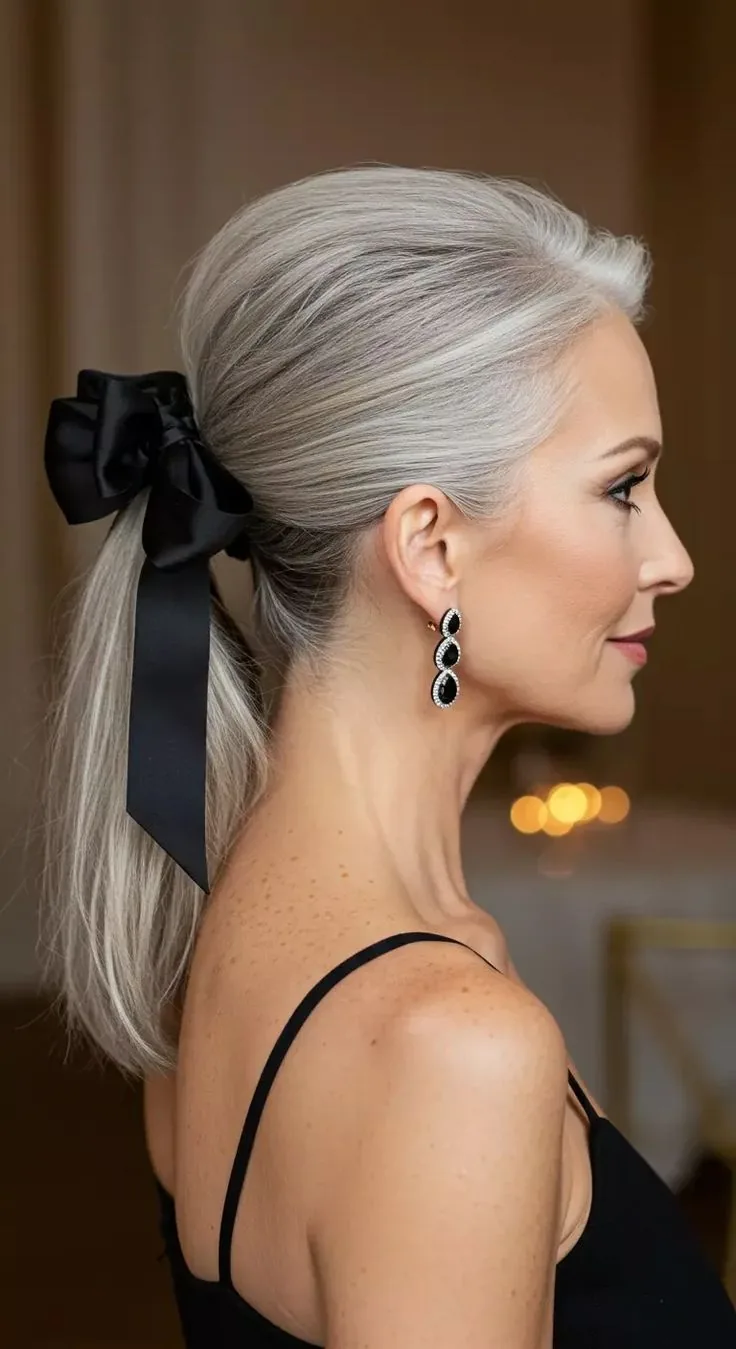
A low ponytail in silver hair is quiet luxury in hair form: understated, polished, and endlessly wearable. The low placement keeps everything neat, while the silver colour gives the simple style a luminous quality that a darker ponytail lacks. It is a favourite for offices, interviews, and any day you want to look put together without trying hard.
Best for: long and medium gray hair, straight and wavy textures. Styling takes three minutes: smooth the hair back, tie it low, and wrap a strand around the elastic.
33. The Gray Curly Bob
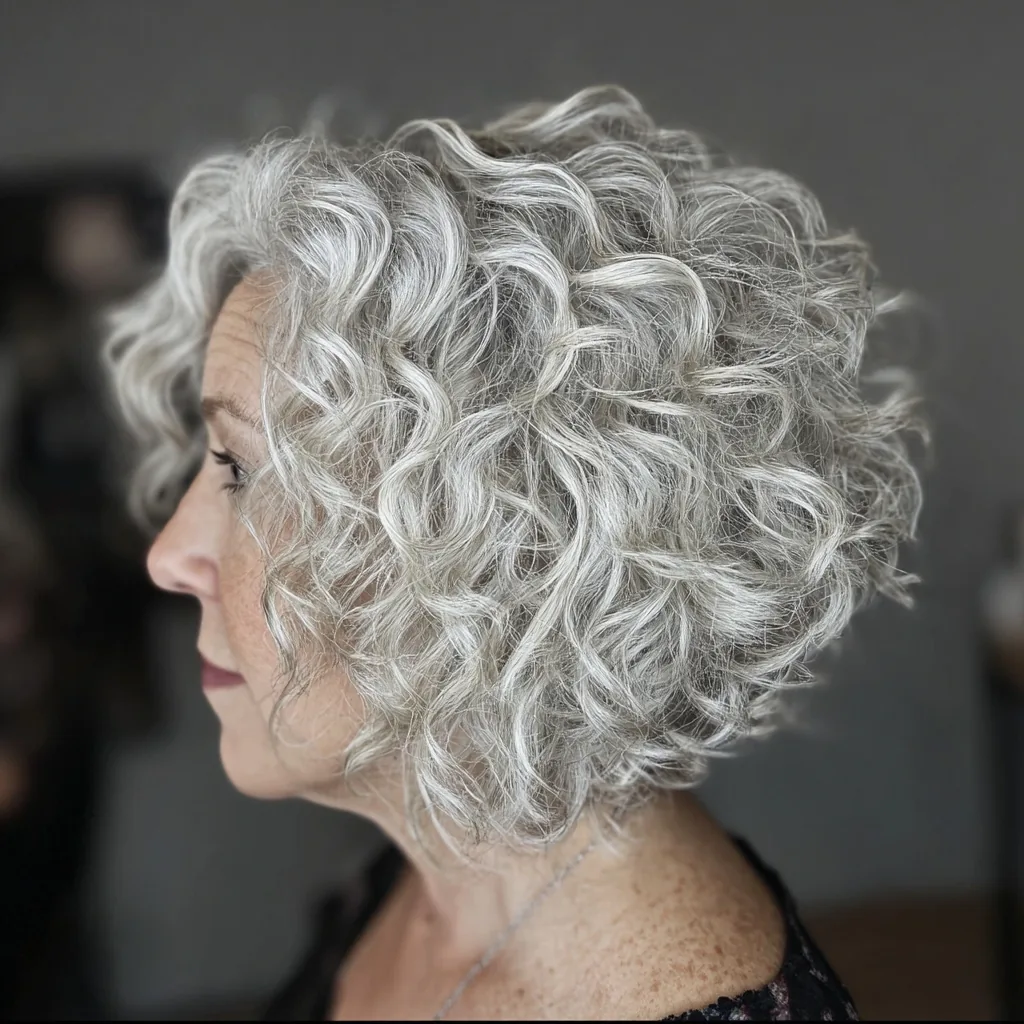
A curly bob in gray is joy in a haircut: curls bouncing at the jaw, silver catching the light, and a shape that looks sculpted without trying. The key is cutting the curls dry, curl by curl, so the bob keeps its shape as the curls dry and settle — a wet cut on curly gray hair always ends up shorter than planned. A good curly cut makes the difference between a bob that springs and a bob that sulks.
Best for: naturally curly and wavy gray hair, round and square faces that benefit from the bob’s height. Styling: scrunch curl cream through damp hair and let it air-dry or diffuse. Maintenance: trims every eight weeks, and a deep-conditioning mask weekly.
34. The Gray Event Updo
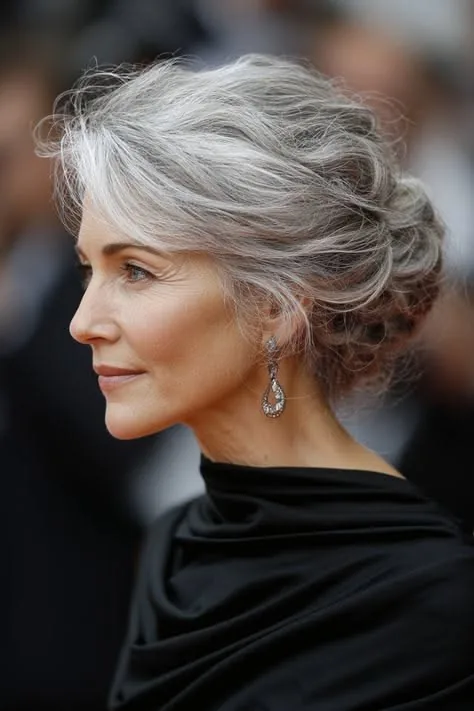
An event updo in silver hair is the formal option that photographs better in gray than in any other colour: pinned, twisted or rolled into a shape at the crown, the pale strands catch the light along every fold and pin. It suits weddings, galas and milestone birthdays, and it works on medium to long gray hair with enough length to pin up.
How to style: start with day-old hair for grip, pin the lengths into a soft roll or twist, and leave a few silver pieces loose around the face. Time needed: fifteen to twenty minutes, or a salon visit for a big occasion. Cost: a salon updo is a treat, not a routine.
35. The Gray Layered Midi
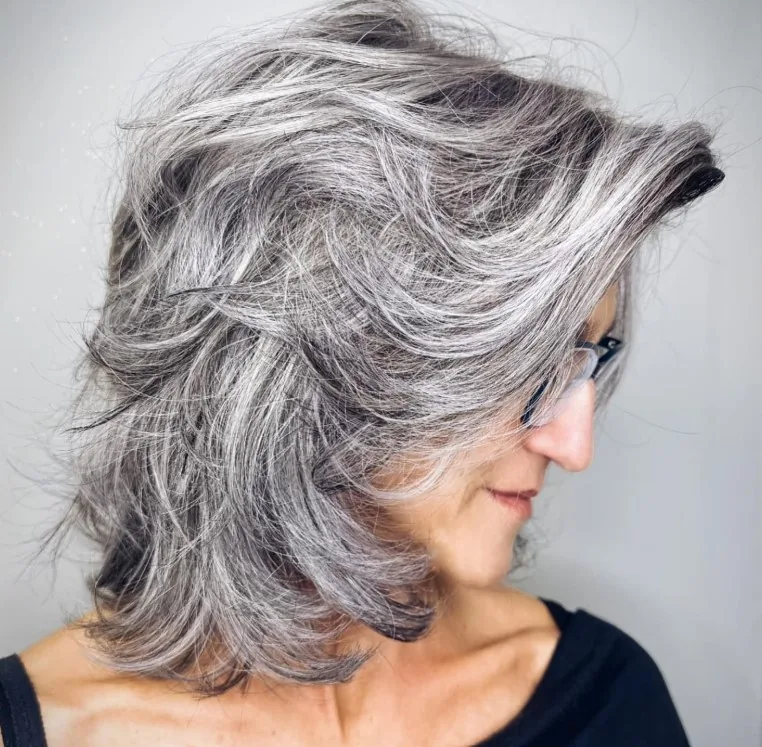
The layered midi — falling between the shoulders and the collarbone — is the most versatile length for gray hair, because it is long enough to tie back and short enough to stay light. Long layers through the mid-lengths give silver hair movement, and the midi length suits almost every face shape and hair texture. It is the cut for women who cannot decide between a bob and long hair, and do not have to.
How to style: blow-dry with a round brush for a smooth finish, or air-dry with mousse for soft waves. Maintenance is light — trims every eight weeks — and the grow-out is gentle.
36. The Silver Undercut Pixie
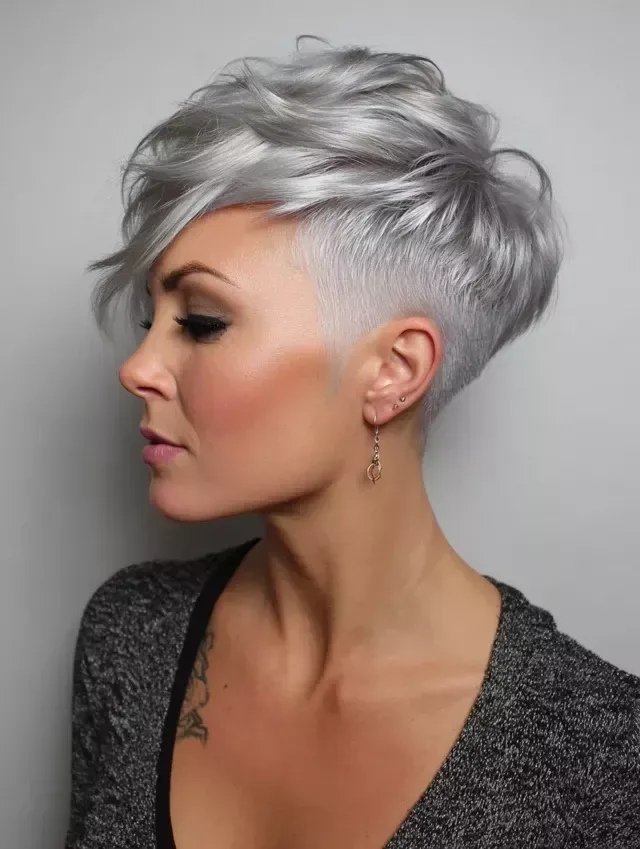
An undercut pixie — closely clipped at the sides and back, longer on top — is the edgiest cut on this list, and silver makes it look even sharper. The contrast between the short, pale undercut and the longer top creates a graphic shape that reads as deliberate and modern. It is a favourite for women who want their gray hair to look like a fashion statement rather than a concession to age.
Pros: unforgettable, and it makes the longer top look thicker. Cons: the undercut needs a trim every three weeks to stay sharp, and it exposes the head’s shape. Who should avoid it: anyone who wants a low-maintenance short cut, because the undercut is a commitment to the barber’s chair.
37. The Gray Side-Parted Bob
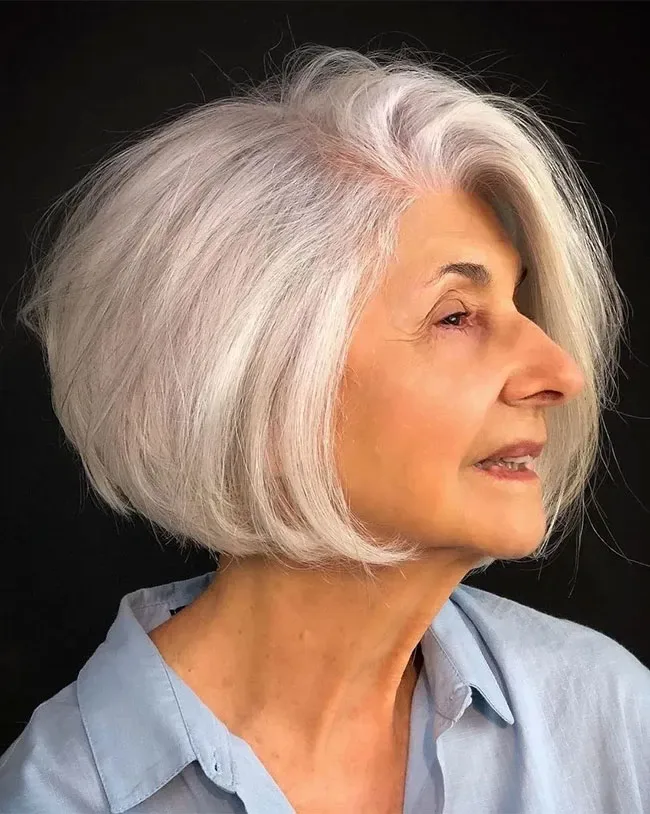
A side-parted bob in gray is the quiet, classic choice: a deep side part, a smooth sweep across the forehead, and a bob that ends at the jaw. The asymmetry of the part adds volume on one side and length on the other, which flatters round and square faces particularly well. It is a small change from a centre-parted bob that makes the same cut feel like a new style.
Best for: round and square faces, where the asymmetry adds length, and anyone whose middle part never quite sat right. How to style: part deeply to one side and blow-dry the sweep across. Maintenance: the same as any bob — trims every six weeks.
38. Long Gray Hair With Face-Framing Layers
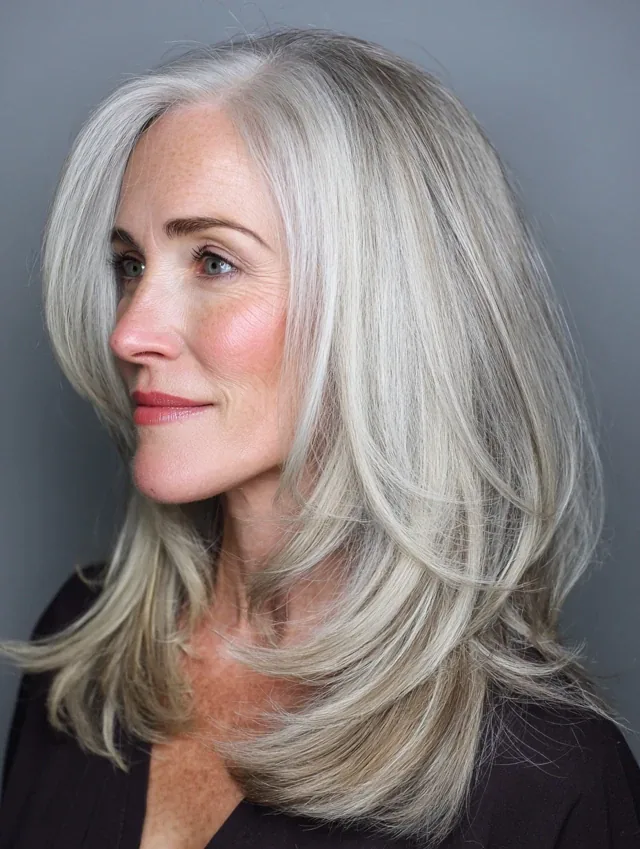
Long gray hair with face-framing layers is the style to end on, because it shows what silver hair does best: fall in soft, luminous sheets that frame the face and catch the light. The layers start at the cheekbones and melt into the lengths, so there is no hard line anywhere, and the face-framing pieces keep the long hair from dragging the face down. It suits women whose gray came in evenly and whose hair stayed thick enough to carry the length.
Maintenance is honest work: long gray hair needs trims every eight weeks, a weekly mask, and purple shampoo to keep the tone bright. Who should avoid it: very fine gray hair, which can look thinner at long lengths.
Colouring vs Embracing: The Honest Comparison
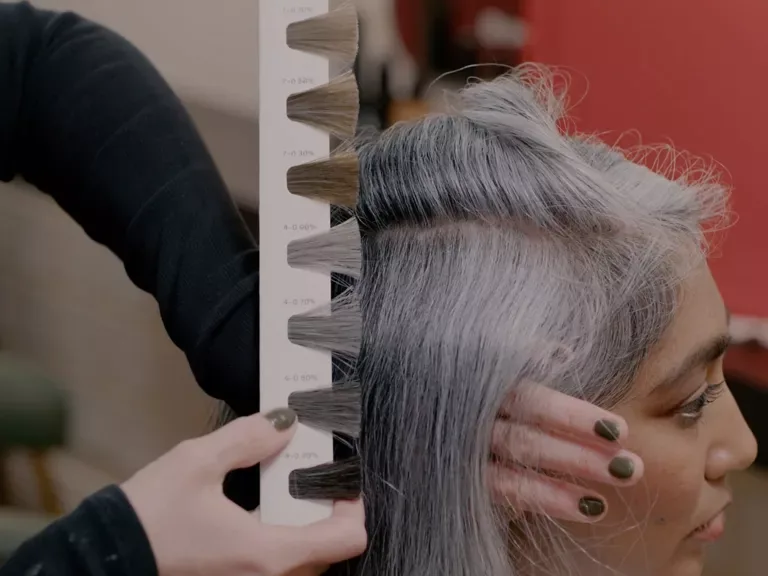
There is no wrong answer to the colour-or-embrace question, but there is a wrong way to decide it — by other people’s opinions. Colouring keeps the look you have had for years, at the cost of root touch-ups every three to five weeks, the expense of salon visits or box dye, and the slow damage that repeated colour does to hair that is already becoming more fragile. Embracing gray costs nothing in dye, but it costs patience: the transition takes months, and the first year is the hardest.
The honest comparison is about what you will actually do. If you love the salon ritual and you like your old colour, keep colouring — there is no prize for going gray. If you are tired of the roots, the expense and the upkeep, embracing gray is a genuine relief once the transition is over.
Styling Products That Actually Work on Gray Hair
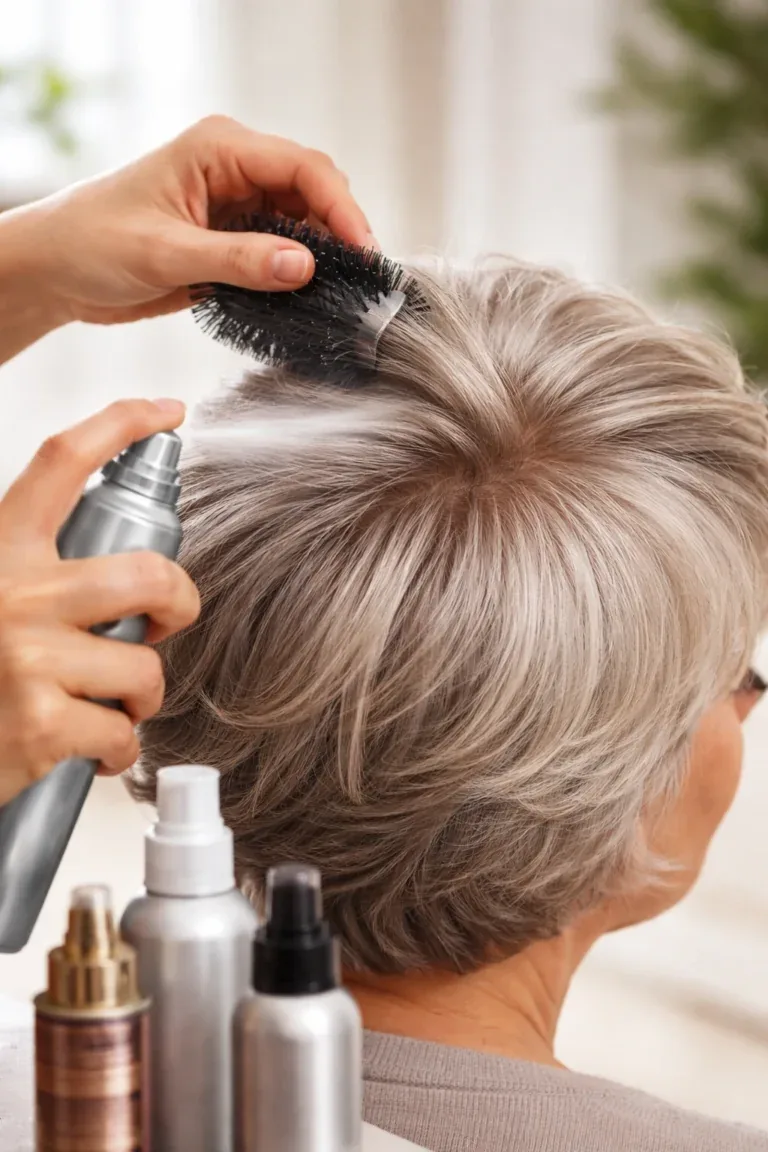
Gray hair does not need a shelf of products — it needs the right four. A purple shampoo, used once or twice a week, keeps the tone bright. A hydrating conditioner, left on for two or three minutes, deals with the dryness that makes gray hair feel wiry. A lightweight styling cream or mousse gives fine gray hair grip and volume without weighing it down. And a heat protectant stands between your silver and any hot tool you use.
The mistake most women make is using products built for coloured hair, which are often too heavy for fine gray strands and leave them limp or coated. Look for lightweight formulas, and use less than you think — gray hair shows buildup faster than pigmented hair, because there is no colour to hide it behind. A clarifying shampoo once a month resets everything.
Gray Hair by Face Shape: What Flatters Where
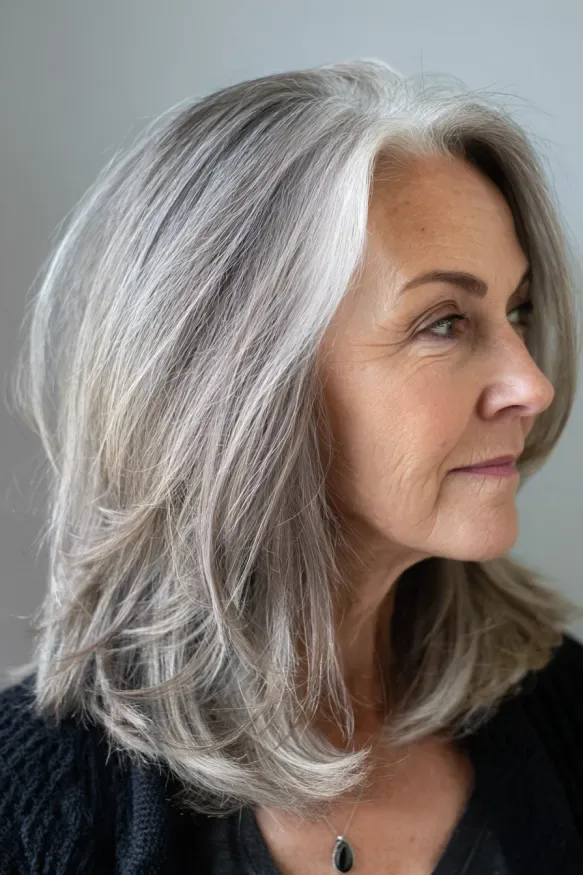
Face shape matters as much with gray hair as with any other colour, and the rules are the same — the silver just makes them more visible. Round faces look best with longer layers, side parts and volume at the crown, which add length. Square faces soften with wispy bangs, curtain bangs and layers around the jaw. Oval faces can wear almost anything, which is both a gift and a trap — the freedom makes it easy to pick a style that clashes with texture instead.
Heart-shaped faces suit curtain bangs and chin-length bobs that balance a wider forehead against a narrower chin, and long faces benefit from bobs, bangs and width at the sides, which visually shorten the face. If a style keeps drawing your eye to the same feature you dislike, it is the wrong one — no matter how good it looked on someone else.
Gray Hair Myths — and What Is Actually True
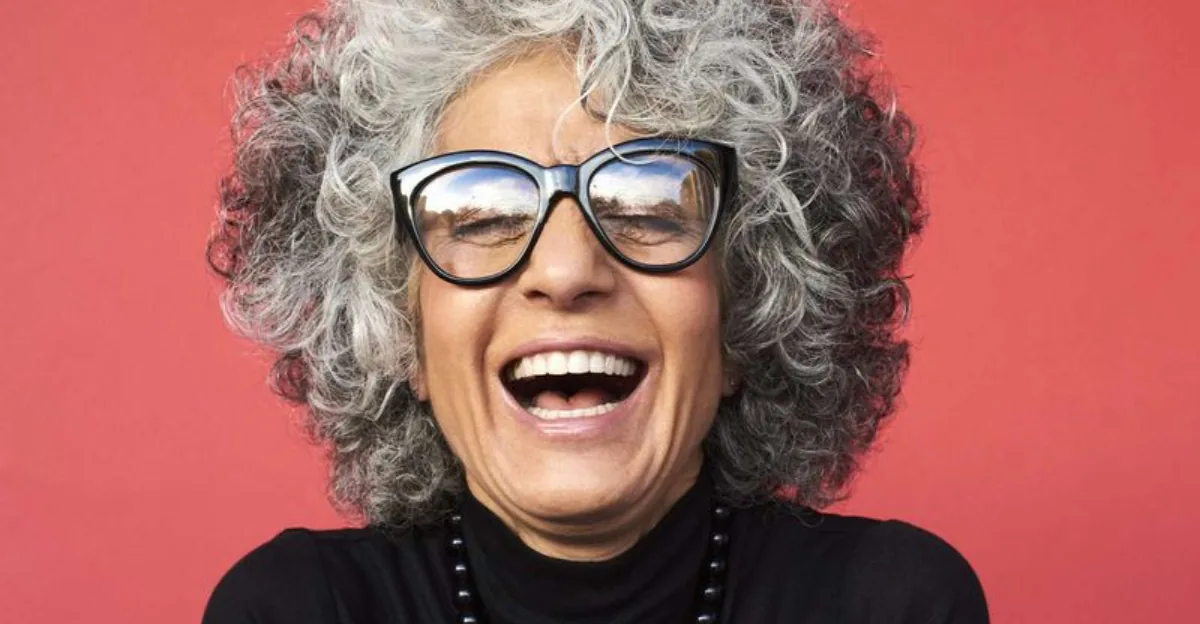
The most stubborn myth is that gray hair means looking old, and it is simply not true — gray hair looks old when it is neglected, not when it is silver. A good cut, a bright tone and a little care make silver hair look polished at any age, and plenty of women in their thirties and forties now choose gray deliberately. Another myth is that gray hair is always coarse and unmanageable: some gray hair is wiry, but much of it is fine and soft, and the texture varies as much as any other hair type.
Other myths are easier to dismiss. Plucking a gray hair does not make three grow back — it just damages the follicle. Gray hair does not stop growing — it grows at the same half-inch a month as always. And going gray does not mean giving up style: the women with the best silver hair are usually the ones who treat it like a colour choice, with a cut and a routine to match.
What is the best hairstyle for gray hair?
There is no single best hairstyle for gray hair — it depends on your face shape, hair texture and how much maintenance you want. The most universally flattering choices are a layered bob, a silver pixie, a layered lob and long layers, because they give gray hair shape and movement, which stops silver from looking flat or washed out.
How do I keep gray hair from turning yellow?
Use a purple shampoo once or twice a week and leave it on for three to five minutes, which cancels the yellow tone. A clarifying shampoo once a month removes mineral buildup from hard water, and a heat protectant plus sun protection stops further yellowing from heat and UV.
Does gray hair look better short or long?
Gray hair looks good at both lengths, but for different reasons. Short cuts like pixies and bobs show off the silver colour and are easier to keep bright and healthy, while long gray hair looks striking when it is thick and well conditioned. Fine gray hair usually looks fuller short; thick gray hair can carry long lengths beautifully.
How long does it take to transition to gray hair?
A full transition usually takes six to twelve months, depending on how long your hair is and whether you cut it shorter. Gray hair grows about half an inch a month, so a shorter cut removes the dyed length faster, while blending techniques like lowlights can soften the line of demarcation while you wait.
Is gray hair more difficult to manage?
Gray hair can feel different — often finer, drier or more wiry — but it is not necessarily harder to manage. A hydrating shampoo and conditioner, a weekly mask, and less heat usually solve most of the problems, and many women find gray hair easier once they stop fighting it with frequent colour.
Can I dye my gray hair and still go gray later?
Yes. Many women colour their gray hair for years and switch to silver later. When you are ready, a stylist can blend the grow-out with lowlights or a silver gloss, or you can cut the dyed length off in stages. There is no rule that says the decision is permanent either way.
What haircut adds volume to gray hair?
Layered cuts add the most volume to gray hair — a layered bob, a shag, a stacked bob or a textured pixie all build lift at the crown by removing weight from the ends. Ask your stylist for shorter layers at the back and longer layers toward the face, and finish with a root-lifting mousse.
Does gray hair need special shampoo?
Gray hair benefits from a purple shampoo once or twice a week to stop yellowing, and a hydrating shampoo for the rest of the week, because gray hair tends to be drier. Avoid heavy, silicone-loaded products, which can coat fine gray strands and make them look limp.
Will going gray make me look older?
Going gray does not automatically make you look older — neglected gray hair can, but a good cut, a bright silver tone and a little care make gray hair look polished at any age. Many women find that the right silver hairstyle actually makes them look fresher, because the colour suits their skin better than dye did.
How often should gray hair be trimmed?
Short gray cuts like pixies and buzz cuts need a trim every three to five weeks, bobs every four to six weeks, and longer layered cuts every eight weeks. Regular trims matter more for gray hair, because split ends and dull tips show more clearly on silver than on darker hair.
Conclusion
Going gray is not giving up on your hair — it is choosing a different kind of care for it. The styles that work best share one thing: they give silver hair shape and movement, so the colour reads as deliberate instead of accidental. A layered bob, a silver pixie, a shag or long layers will all do that, and the right one is the one that matches your face, your texture and the amount of time you honestly want to spend on your hair each morning.
Start with the cut that matches your life, not just your mood. Keep the silver bright with a purple shampoo, keep it soft with a hydrating routine, and give the transition the months it needs instead of judging it in week three.