One Side Shaved, All Attitude: 39 Side Shave Hairstyles for Women Who Like Their Hair With an Edge
A side shave is the most honest haircut there is: it does not hide behind softness or symmetry. One side stays long, flowing and feminine, while the other is clipped close to the scalp — and the contrast between the two is the whole point. Wear the long side down and the shave peeks out like a secret; sweep the hair over and it disappears entirely; tuck it behind your ear and suddenly the whole look changes. No other cut gives you two hairstyles in one, and no other cut says quite as much about the woman wearing it.
This guide gathers 39 side shave hairstyles for women, from the classic long-hair-and-shave pairing to pixie cuts, fades, braids, colour and grown-out transition styles. Eight guides cover the practical side first: how much to shave and where to place it, which face shapes it flatters, designs in the shave, growing it out, the upkeep schedule, pairing it with colour, wearing it at work and at formal events, and the myths that put women off trying it. Every style notes who it suits, how to style it, what the upkeep really looks like and what to ask your barber or stylist — so you can walk into the salon knowing exactly what you want, and walk out with a cut that feels like you.
How Much to Shave and Where to Place It
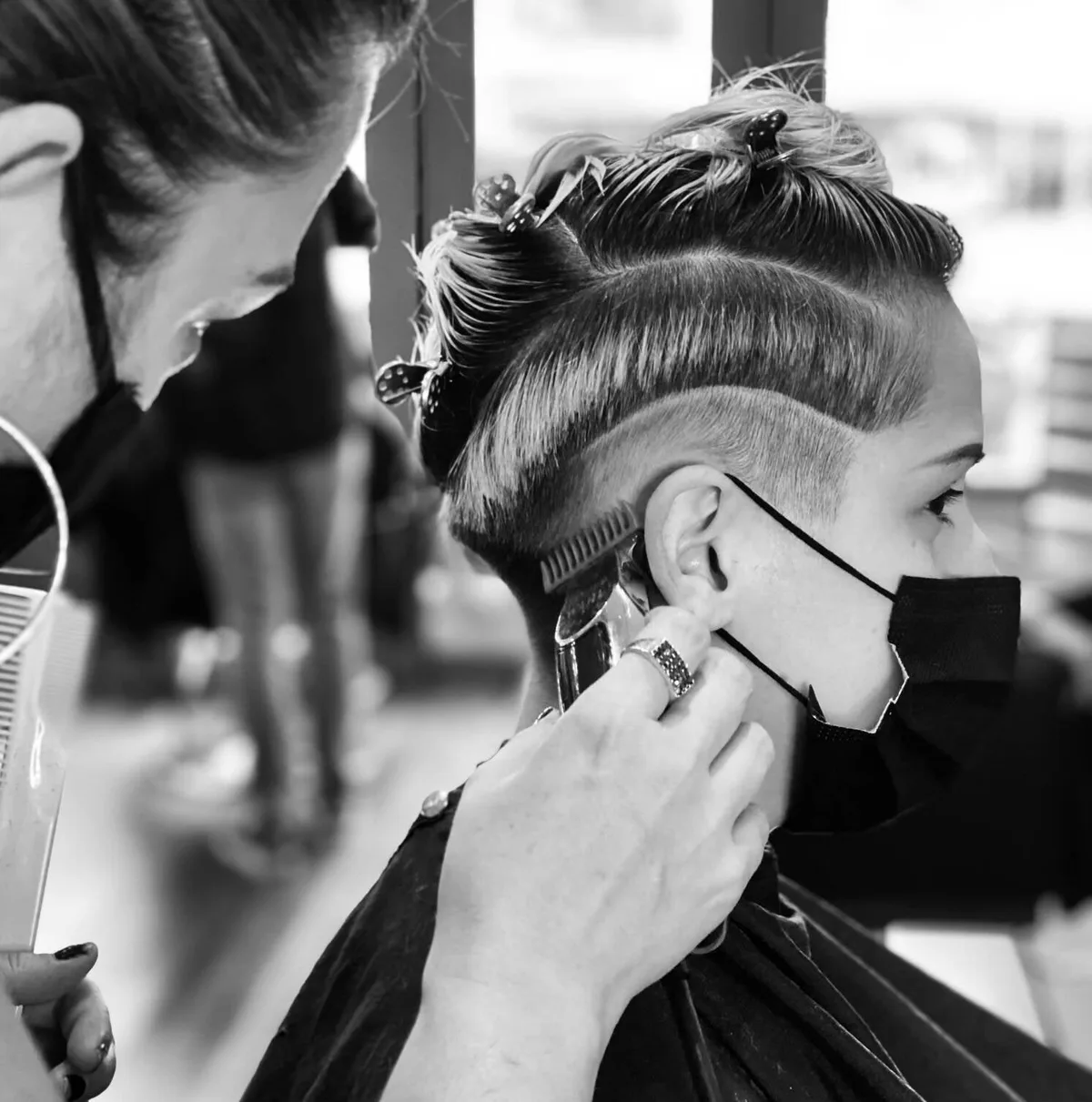
The first decision is not whether to shave, but how much. A narrow shave — about an inch wide, just above the ear — is the gentle introduction: it shows when you tuck your hair back and hides completely when you wear it down. A medium shave, roughly two to three inches wide, is the classic side shave and the one most women picture when they think of this cut. A wide or high shave, rising well above the ear toward the temple, is the boldest version, and it works best with a strong part or a sweep that shows it off rather than covering it. There is no right width, only the width that matches how much of a statement you want to make on an ordinary Tuesday.
Placement matters just as much as width. The shave usually starts just above the ear and runs back toward the crown, following the natural curve of the head — but it can also sit lower, behind the ear, for a version that only shows when the hair is up. Ask your barber to mark the line with a comb before any clippers come out, and look at it from the front, the side and the back before you agree. A good rule: start narrower and lower than you think you want, because you can always take more off in the same appointment, but you cannot put it back. Take a photo of the line you agree on, so the next trim matches the first.
Side Shave and Face Shape
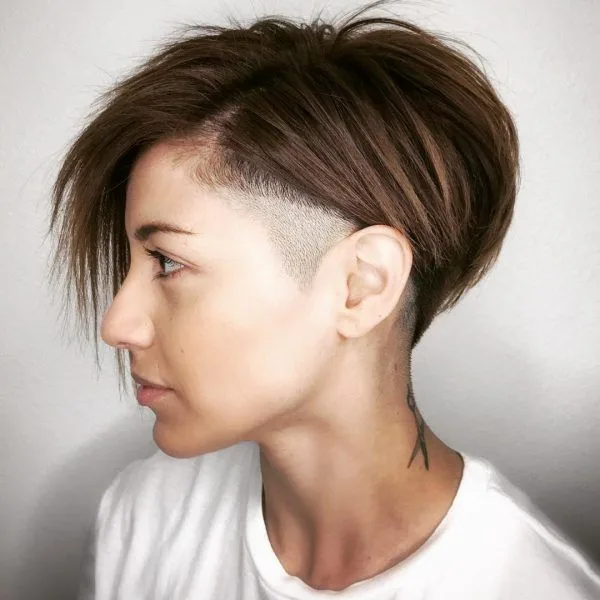
A side shave changes the shape of your face in a way no other cut does, because it removes volume from one side and leaves it on the other — and that asymmetry can be used to your advantage. Round faces benefit most, because the long side creates a vertical line that lengthens the face, while the shaved side stops the width from building up on both sides at once. Oval faces can wear almost any width of shave, since the balance is already there. Square faces look softer with a shave paired with waves or curls on the long side, which round off the jawline, while heart-shaped faces suit a lower, narrower shave that keeps volume around the chin.
The common mistake is assuming a side shave only suits one face shape — it does not, but the width and the styling on the long side need to be chosen for your face. Long faces should avoid a very high, wide shave with flat hair on the other side, which stretches the face further; waves, a side sweep or a fringe balance it beautifully. If you are unsure, ask your stylist to hold the long side back with a clip so you can see the shaved effect before anything is cut, and try the look with the hair swept both ways. The shave is permanent for a few weeks, but the styling is not — the long side is where the face-flattering work happens.
Designs and Patterns in the Shave
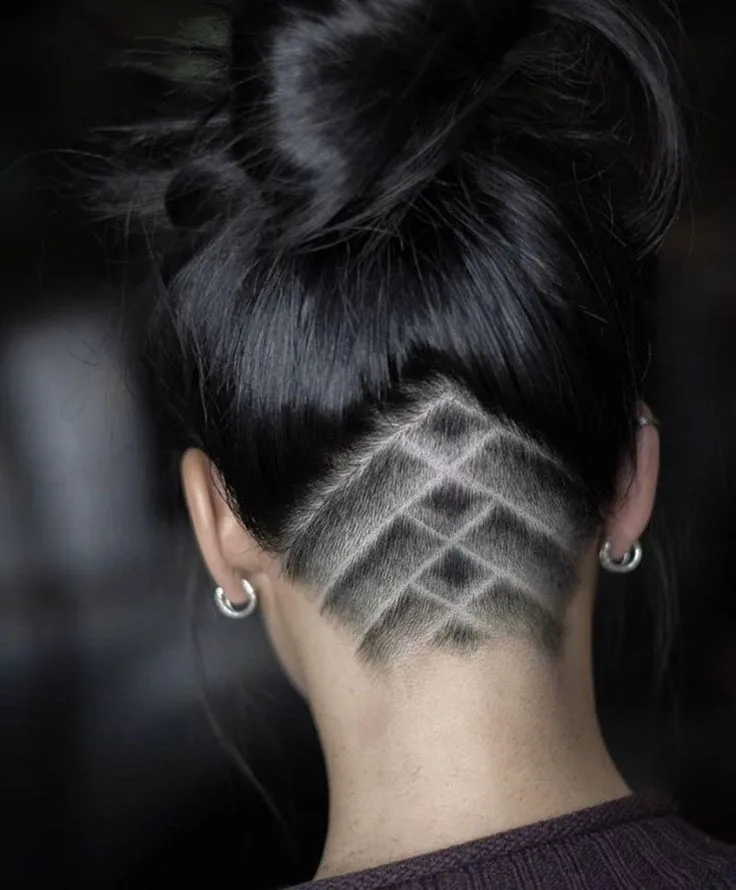
Once the side is shaved, it becomes a canvas — and a design carved into the stubble is the detail that turns a good side shave into a great one. The simplest designs are lines: one clean line, two parallel lines, or a curved line that follows the shape of the ear. From there you can go geometric — triangles, chevrons, a star — or organic, with a wave or a leaf shape. The design is usually done with a trimmer or a razor by the barber after the main shave, and it takes only a few extra minutes, but it needs a steady hand and a clear plan, so bring a photo rather than describing it in words.
Designs have a short life, which is both the drawback and the charm: as the hair grows, the lines blur within one to two weeks, so a design needs refreshing at every trim if you want it sharp. That makes it a low-commitment way to experiment — a star this month, plain next month, lines the month after. What to ask for: a design that works with your hair’s growth direction, not against it, and one that sits where it will actually be seen when you wear your hair the way you normally wear it. Avoid very detailed designs on the first try; simple, bold lines photograph better and grow out more gracefully than fiddly detail.
Growing a Side Shave Out
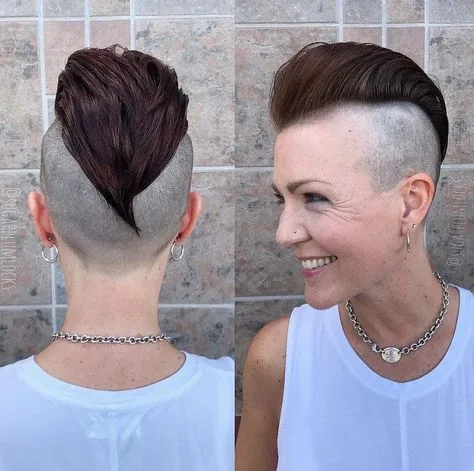
Every side shave eventually has to be grown out — or deliberately kept — and the grow-out is the part nobody talks about until they are in the middle of it. The awkward stage arrives at about four to six weeks, when the shaved side is long enough to stick out sideways but too short to tuck behind the ear. The fix is styling, not suffering: a little pomade or gel slicks the short side flat, a deep side part throws weight over it, and bobby pins in your hair colour can hold the awkward length down while it catches up. Headbands, scarves and hats are not cheating; they are the grow-out survival kit.
Expect the full grow-out to take three to six months, depending on how wide and short the shave was and how fast your hair grows. The smartest move is to trim the long side gradually so the two sides meet in the middle, rather than letting the long side keep growing while the shaved side chases it. Ask your stylist for a grow-out plan at the appointment when you decide to stop shaving: a series of small trims, a shape that blends the sides, and a style — a bob, a pixie, a layered cut — that the grow-out is heading toward. Growing a side shave out is not a failure of the cut; it is the next chapter of it.
Side Shave Upkeep Schedule
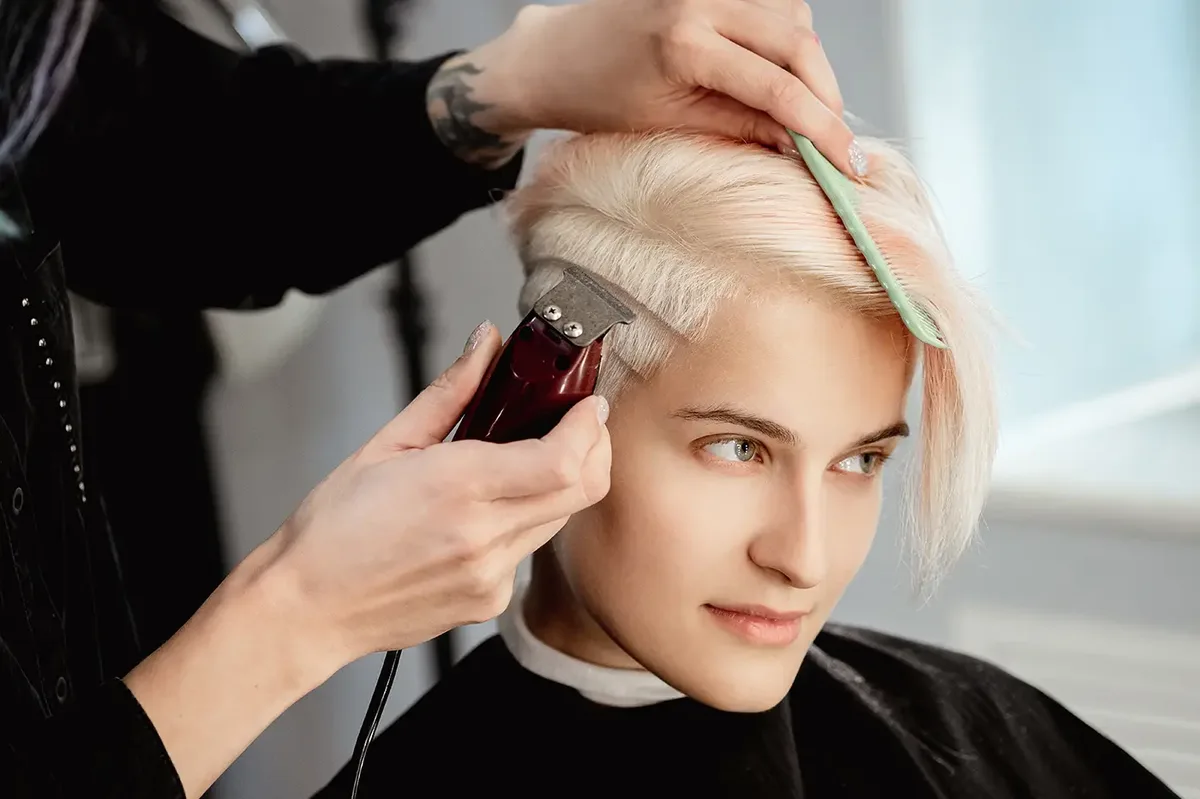
A side shave is a low-effort style day to day and a regular-commitment style week to week, and knowing that before you commit is half the battle. The shaved section needs a tidy-up every one to two weeks if you like it razor-sharp, or every three to four weeks if you are happy with a softer, slightly grown-in look. The good news is that a tidy-up is a ten-minute barber visit, not a full salon appointment, and many barbers will do it cheaply or even free between full cuts if you are a regular. Learning to do it yourself with clippers is possible, but the first few times are best left to a professional — the line at the back is very hard to see in a mirror.
Between trims, the daily routine is simple: the shaved side needs almost nothing, while the long side gets your normal routine. Keep the shaved area clean and moisturised, especially in the first days after a fresh shave, when the skin can feel sensitive; a light, fragrance-free moisturiser is enough. Watch for ingrown hairs if your hair is curly or coarse, and exfoliate gently once a week. The real cost of a side shave is not money or time in the morning — it is the fortnightly ten minutes at the barber. If that sounds like too much, a softer, slightly longer shave that grows out gracefully is the better choice.
Pairing a Side Shave with Colour
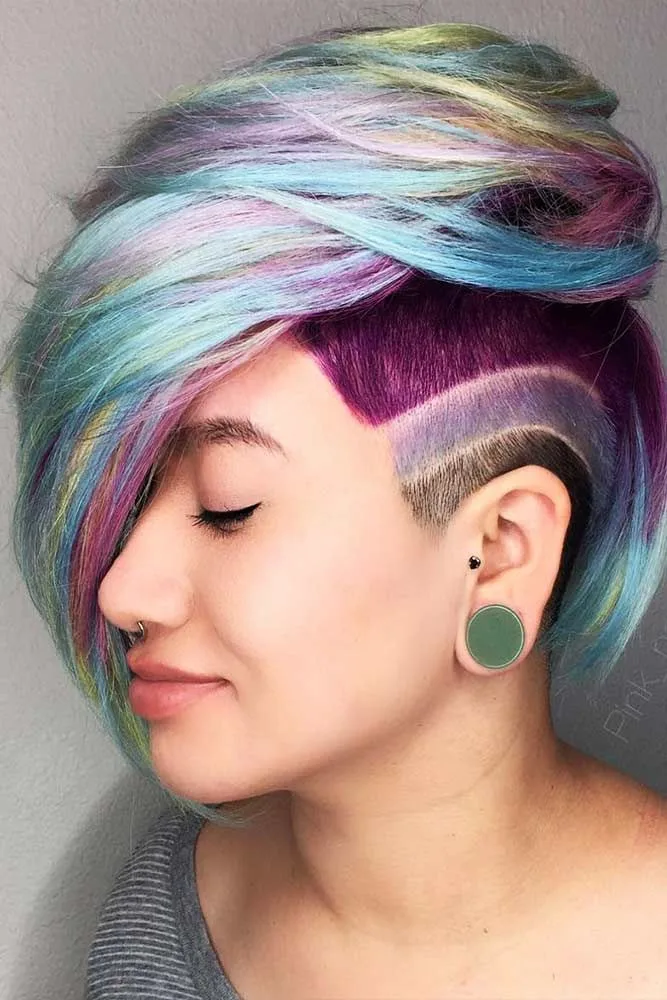
Colour and a side shave are made for each other, because the shaved section shows colour differently from the long hair: the short length makes the colour look denser, flatter and more intense, while the long side shows the same shade with movement and shine. The most popular pairing is a vivid colour on the shaved side only — pink, blue, purple or red — with the long side left natural, so the colour flashes when the hair moves and hides when it does not. The reverse works too: natural on the shaved side and colour on the long side, which is subtler and easier to grow out.
A few practical notes before you book the colour. Shaved hair takes colour fast and fades fast, because there is so little of it and it is trimmed away every couple of weeks — so a bright shaved section needs topping up often, and a pastel one needs a white-blonde base first. If your long hair is dark, bleaching the shaved section is quick and cheap compared with bleaching a whole head, which is one of the quiet advantages of this cut. What to ask your colourist: for a shade that flatters your skin tone in its faded state too, not just on day one, and for a colour-safe shampoo, because the shaved section will be washed just as often as the rest. Colour is the easiest way to make a side shave feel new again without cutting anything.
Side Shave for Work and Formal Settings

The question every woman asks before a side shave is whether she can still wear it to work — and the answer, for most jobs, is yes, because a side shave is the most hideable bold haircut there is. With the long side worn down and parted over the shave, it is invisible in a meeting; with the hair swept back, it is a statement at after-work drinks. That switch is the cut’s secret weapon, and it is why so many women in offices, classrooms, hospitals and customer-facing jobs choose it over a full undercut or a mohawk, which cannot be hidden at all.
For formal settings, the same trick applies in reverse: a sleek low bun or a smooth side sweep shows the shave off deliberately, while a soft wave worn over it keeps the look classic. The mistake to avoid is assuming the shave has to be either fully on show or fully hidden — the middle ground, a little peek of shave with the hair tucked behind one ear, is often the most elegant option of all. If your workplace has a written dress code, read it before you book; most codes say nothing about haircuts, but a few conservative industries still do. And if you are interviewing, the part-over version photographs and presents exactly like a normal side-parted style — the shave is your secret until you decide to share it.
Side Shave Myths and Realities

The myths around side shaves are stubborn, so let us clear them up. Myth one: a side shave means you have to shave your whole head eventually. Reality: a side shave is one section, and it grows out on its own schedule without affecting the rest of your hair. Myth two: it only suits young women. Reality: women in their forties, fifties and sixties wear side shaves beautifully, and on silver or grey hair the contrast can be striking. Myth three: it will ruin your hair or make it grow back thicker. Reality: shaving does not change the hair follicle; the regrowth feels stubbly because the ends are blunt, not because the hair is thicker.
Myth four is the one that matters most: that a side shave is a decision you cannot take back. The truth is that it is one of the most reversible bold cuts — a few months of growing out, a few clever styles in between, and it is gone. Compare that with a full bleach, a perm or a pixie, all of which take far longer to undo. Myth five: you need an edgy wardrobe to pull it off. Reality: a side shave looks just as good with a blazer and jeans as it does with leather, because the cut is the edge — the clothes can stay exactly as they are. If a myth is the only thing standing between you and this cut, it is worth questioning the myth, not the cut.
1. The Classic Long Hair Side Shave
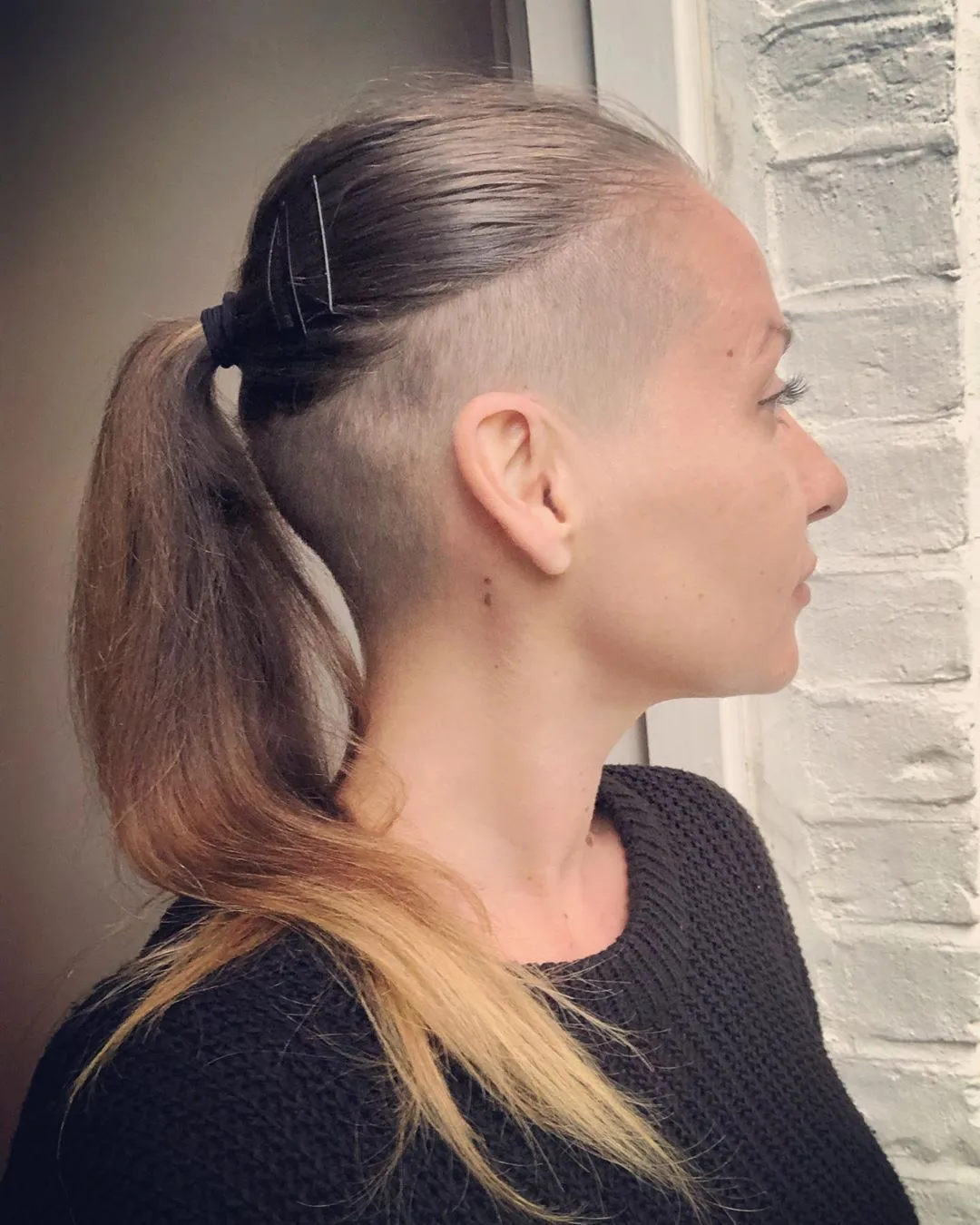
The classic long hair side shave is where most women start, and for good reason: it keeps everything you love about long hair — the length, the movement, the styling options — and adds one bold detail that changes the whole look. The shave sits above one ear, the long hair falls past the shoulders on the other side, and the contrast does all the talking. Worn down, it is a secret; swept to the shaved side, it is a statement. It is the side shave for women who want an edge without giving anything up.
Who it suits best: almost everyone, but especially women with thick, straight or wavy hair, where the long side has enough weight to balance the shave. How to style it: part the hair on the opposite side from the shave so the long side falls heavily, and tuck the shaved side back to show it off when you want to. Upkeep and regrowth: the long side needs its normal trims, the shaved side a tidy-up every two weeks, and the grow-out is the easiest of all the styles here because the long hair covers the awkward stage completely. What to ask your barber: for a medium-width shave that starts just above the ear, so it shows when you want it to and hides when you do not.
2. Side Shave with a Pixie Cut
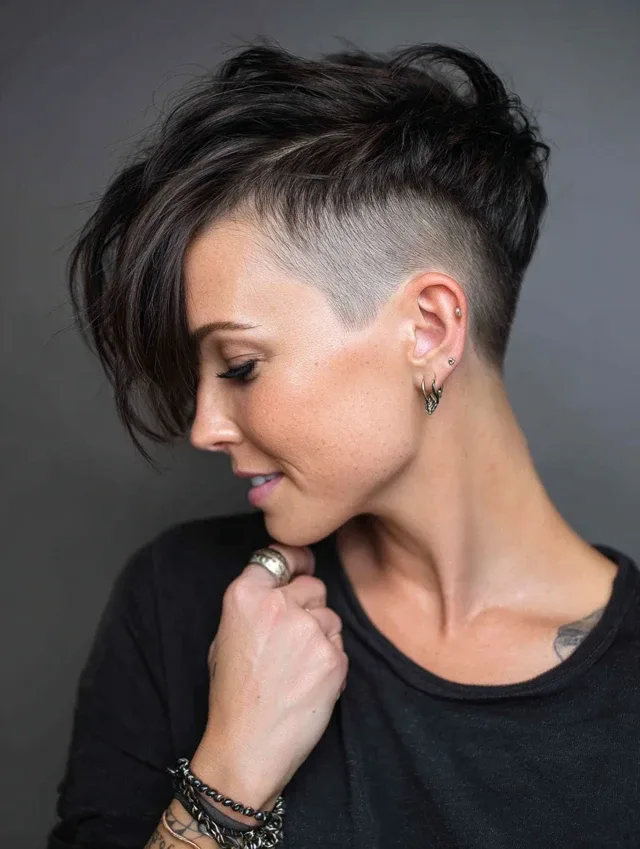
A pixie cut with a side shave is the boldest short style in this guide, and also one of the most flattering — the shave sharpens the pixie, the pixie softens the shave, and together they frame the face with clean, graphic lines. The top stays long enough to sweep, spike or tousle, while one side is clipped close, giving the cut an asymmetry that a plain pixie never has. It is a wash-and-go style with real attitude, and it photographs beautifully because every angle has something going on.
Who should think twice: women who like to change their part or sweep their hair both ways, because a pixie side shave commits you to one direction until it grows out. How to style it: a little texturising paste on the top, swept away from the shave, is all it needs most days; a flat iron can smooth it for a sleeker evening version. Common mistake: letting the top get too long between cuts, which makes the shave look like an accident rather than a choice — a pixie side shave needs a shape-up every three to four weeks. What to ask your stylist: for the top to stay long enough to cover the shave if you ever want to, and for the fade into the shave to be soft, not a hard line.
3. Side Shave Bob
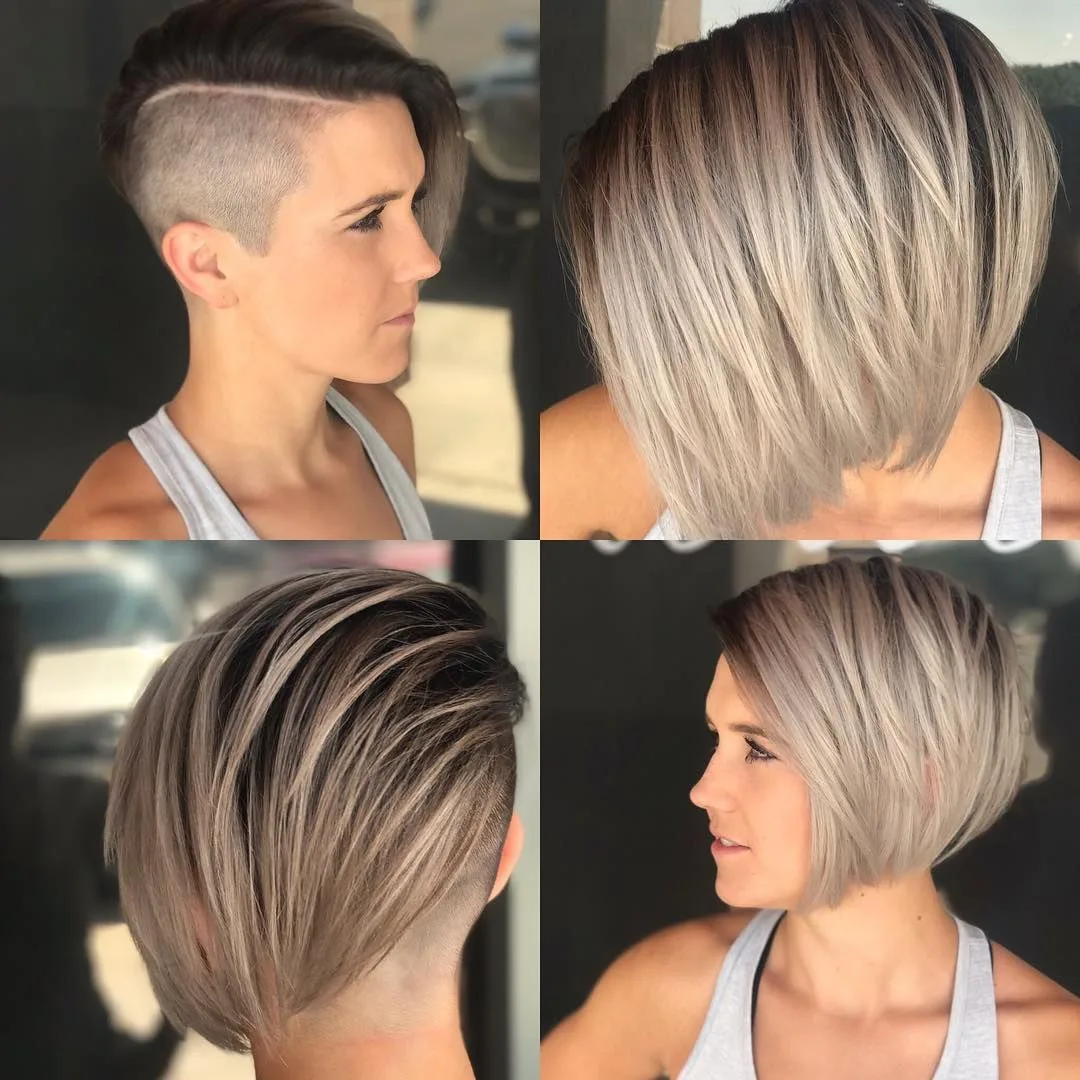
The side shave bob takes the most classic haircut in the world and gives it a twist: one side is a neat, chin-length bob, and the other side is shaved close. The result is a cut that looks polished from the front and surprising from the side, and it works on straight, wavy and curly bobs alike. It is the side shave for women who like structure, because the bob’s clean line makes the shave look deliberate rather than rebellious — a sharp, graphic pairing that feels modern rather than messy.
Who it suits best: women with straight or slightly wavy hair and a defined jawline, where the bob’s edge and the shave’s edge echo each other. How to style it: blow-dry the bob smooth with a round brush, and let the shaved side show by tucking the bob behind the ear on that side. Upkeep and regrowth: the bob needs its shape trimmed every four to six weeks, and the shave every two; growing it out means growing the shaved side into a longer bob section, which takes about three months and is easily hidden by the bob’s length. What to ask your stylist: for the bob to sit at chin length on the long side, with the shave no higher than the top of the ear.
4. Long Side Shave with Curls
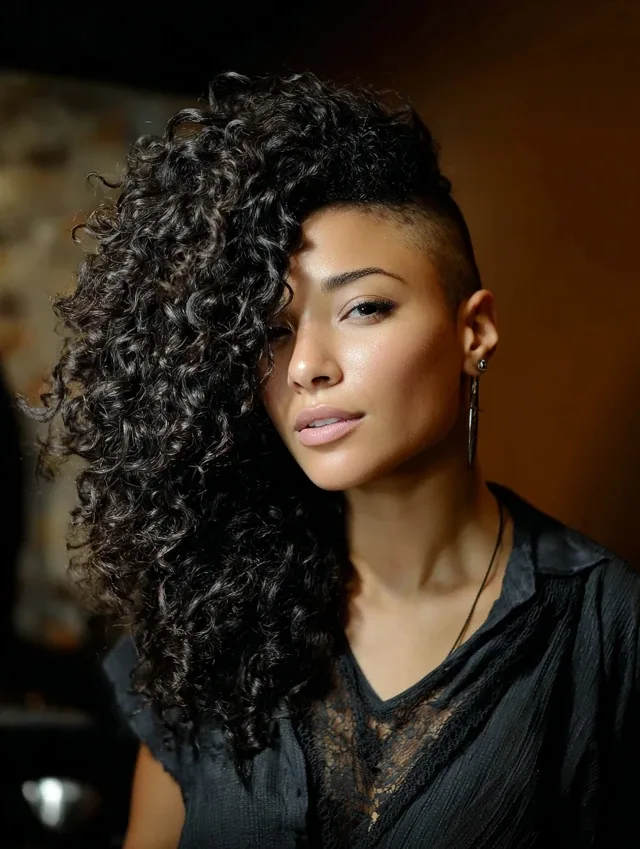
Curls and a side shave are a perfect match, because the curls give you volume, softness and movement on one side, while the shave gives you structure and edge on the other. The contrast is dramatic in the best way: a cascade of curls falling over one shoulder, and a clean-shaved section that shows off the shape of the head. It is also a practical pairing — the shave removes bulk from the side where curly hair can get heavy and triangular, so the curls sit better and the cut feels lighter.
How to style it: define the curls with a curl cream on damp hair, diffuse or air-dry, and part the hair away from the shave so the curls fall in one heavy sweep. Common mistake: cutting the shave too wide on curly hair, which can make the remaining curls look unbalanced — start narrow and widen it at the next appointment if you want more. Upkeep and regrowth: curly hair hides regrowth well, so you can stretch trims to three weeks, and the grow-out is forgiving because the curls cover the short side. Who should think twice: women with very tight curls who straighten their hair often, because the shave will show differently depending on how the hair is worn that day.
5. Side Shave with a High Ponytail
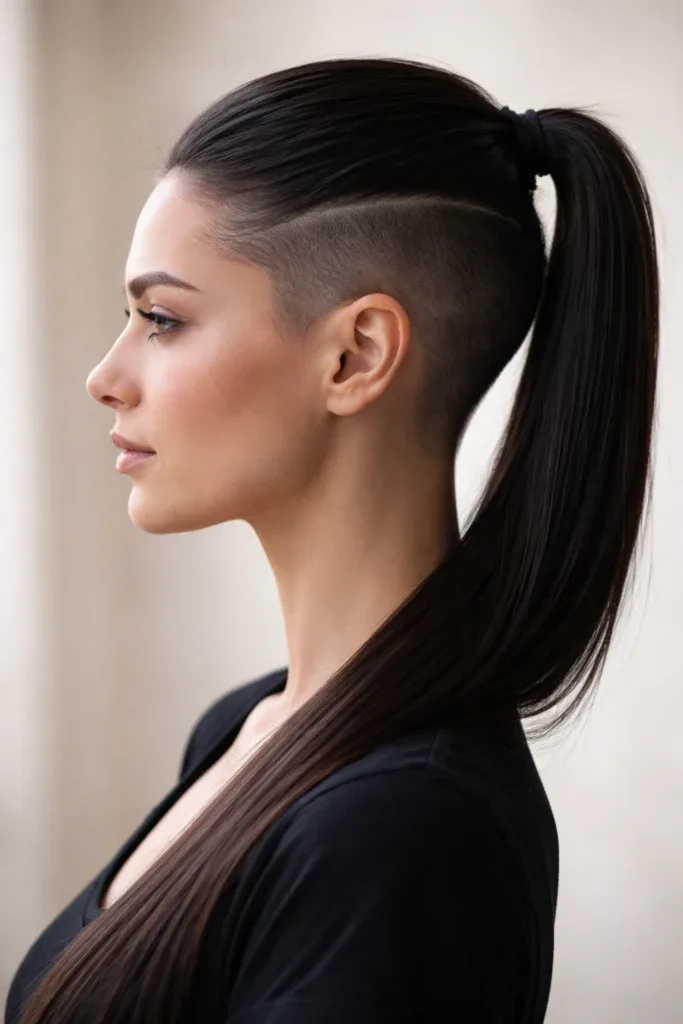
A high ponytail with a side shave is the style that shows the shave off most completely: with all the hair pulled up and back, there is nowhere for the shave to hide, and the clean line of it becomes part of the silhouette. It is sleek, sporty and confident — the kind of look that works for the gym, a night out and a photoshoot in equal measure. The ponytail itself adds height and drama, and wrapping a strand of hair around the elastic hides the tie and makes the whole style look finished.
Who it suits best: women with long hair and a good hairline, since a high ponytail puts the face fully on show. How to style it: brush the hair up smoothly, secure it high on the crown, and smooth the shaved side with a little gel so the line stays crisp. Upkeep and regrowth: this style is unforgiving of a grown-out shave, so keep the tidy-ups to every one to two weeks if you wear it like this often. What to ask your barber: for the shave to be clean and even all the way around the ear, because a high ponytail exposes the edges. Quick verdict: the most revealing way to wear a side shave — and the most striking.
6. Side Shave with a Top Knot
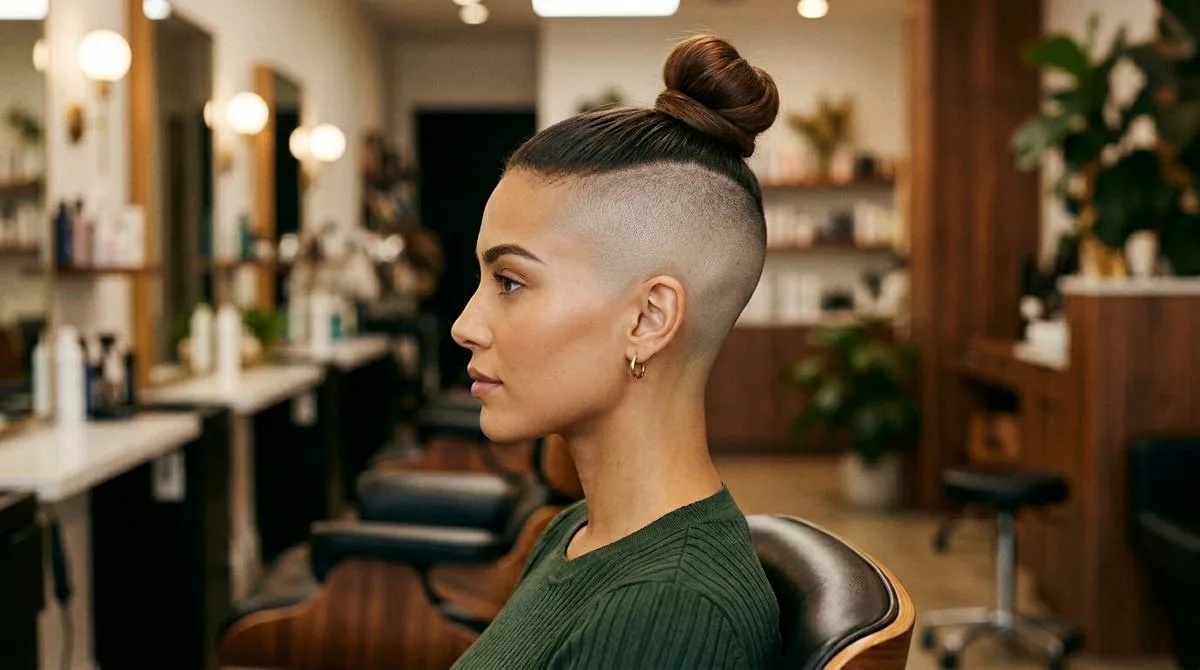
The top knot and the side shave were made for each other: the knot pulls everything up and out of the way, the shave frames the face from the side, and the combination looks intentional, cool and completely effortless. It is the ultimate off-duty style — five minutes in the morning, no heat, no fuss — and it works on second-day hair better than almost anything else in this guide. A messy knot keeps it casual; a sleek, twisted knot makes it evening-ready.
How to style it: gather the long hair high on the crown, twist it into a knot and pin it, leaving the shaved side fully visible. Common mistake: pulling the knot too tight, which drags at the shaved side and can make the line look uneven — keep the tension comfortable and let a few pieces fall free. Upkeep and regrowth: the knot hides a growing-out shave surprisingly well, since the short hairs blend into the swept-up style. Who should think twice: women with very fine hair, where a top knot can look small against a wide shave — a narrower shave balances it better. What to ask your stylist: for the shave to sit low enough that the knot does not pull the skin around it.
7. Undercut Side Shave with Long Layers
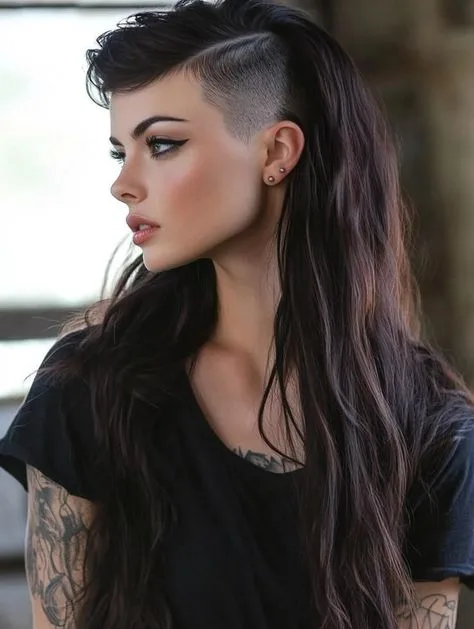
Long layers with an undercut side shave give you the best of both worlds: the layers add movement, bounce and shape to the long side, while the shave underneath removes weight and adds edge. It is a clever cut for thick hair in particular, because the shave thins the hair from underneath without touching the lengths — so the hair looks just as long, but feels half as heavy. The layers also mean the long side never looks flat or lifeless, even when the hair is worn straight.
Who it suits best: women with thick or heavy hair who want length without the weight, and anyone who likes to wear their hair down most days. How to style it: blow-dry the layers with a round brush for movement, or let them air-dry with a little salt spray for texture. Upkeep and regrowth: layers need a trim every eight to ten weeks, the shave every two — the two schedules are easy to combine into one salon visit. Common mistake: layering the long side too short, which exposes the shave even when you want it hidden; keep the shortest layer below chin length if coverage matters to you.
8. Side Shave with a Mohawk Strip
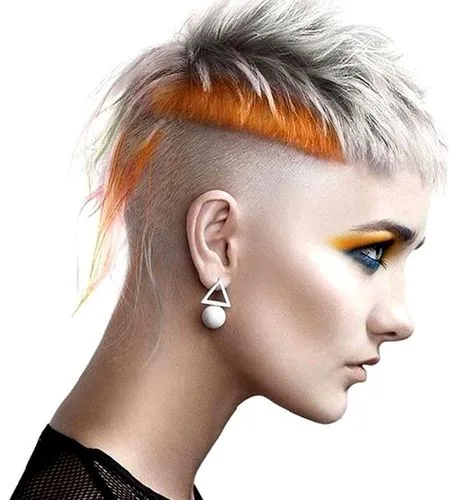
The mohawk strip is the side shave taken to its logical extreme: instead of shaving one side, you shave both sides and leave a strip of long hair running down the centre. Worn spiked up, it is a full mohawk; worn swept to one side, it becomes an exaggerated side shave with drama to spare. It is the most attention-grabbing style in this guide, and the one that gets the most compliments — and the most questions — from strangers. If a single side shave feels too subtle, this is the next step.
Who should think twice: anyone who needs to hide their cut at work, because a mohawk strip cannot be covered by parting the hair over it. How to style it: use a strong-hold wax or gel to spike the strip up, or sweep it to one side with a texturising spray for a softer, wearable version. Upkeep and regrowth: both sides need clipping every one to two weeks to keep the strip looking sharp, and growing it out means growing two shaved sides at once — plan on four to six months. What to ask your barber: for the strip to be wide enough to style both up and swept over, and for the edges to be clean and symmetrical.
9. Side Shave with a Fade
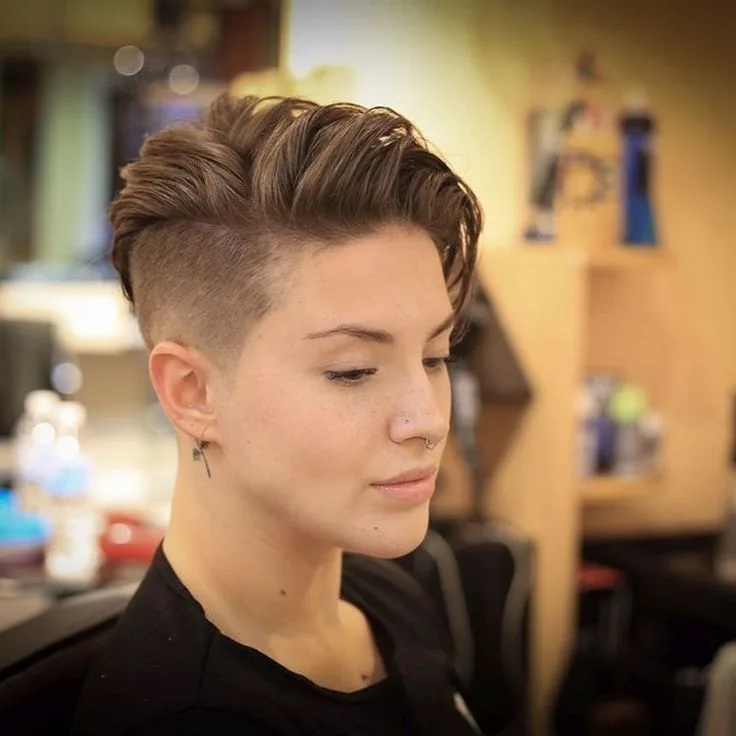
A faded side shave is the polished, barbershop version of this cut: instead of one uniform short length, the hair graduates from skin-close at the bottom to longer at the top, blending seamlessly into the long hair. The fade makes the shave look expensive and intentional, and it grows out more gracefully than a single-length shave, because the gradient softens as it grows. It is the version to ask for if you like the idea of a side shave but find the hard line of a single-length cut too stark.
Who it suits best: women who want a refined, professional-looking shave, and anyone with a strong jawline or cheekbones that a clean fade will show off. How to style it: the fade itself needs no styling — the long side is where the work happens, swept, waved or straightened as you like. Common mistake: asking for a very high fade on the first try; a low or mid fade is easier to live with and easier to grow out. Upkeep and regrowth: a fade loses its sharpness faster than a single-length shave, so book tidy-ups every ten days to two weeks if you want it crisp. What to ask your barber: to show you the fade from behind in a hand mirror before you leave the chair.
10. Side Shave with a Line Design
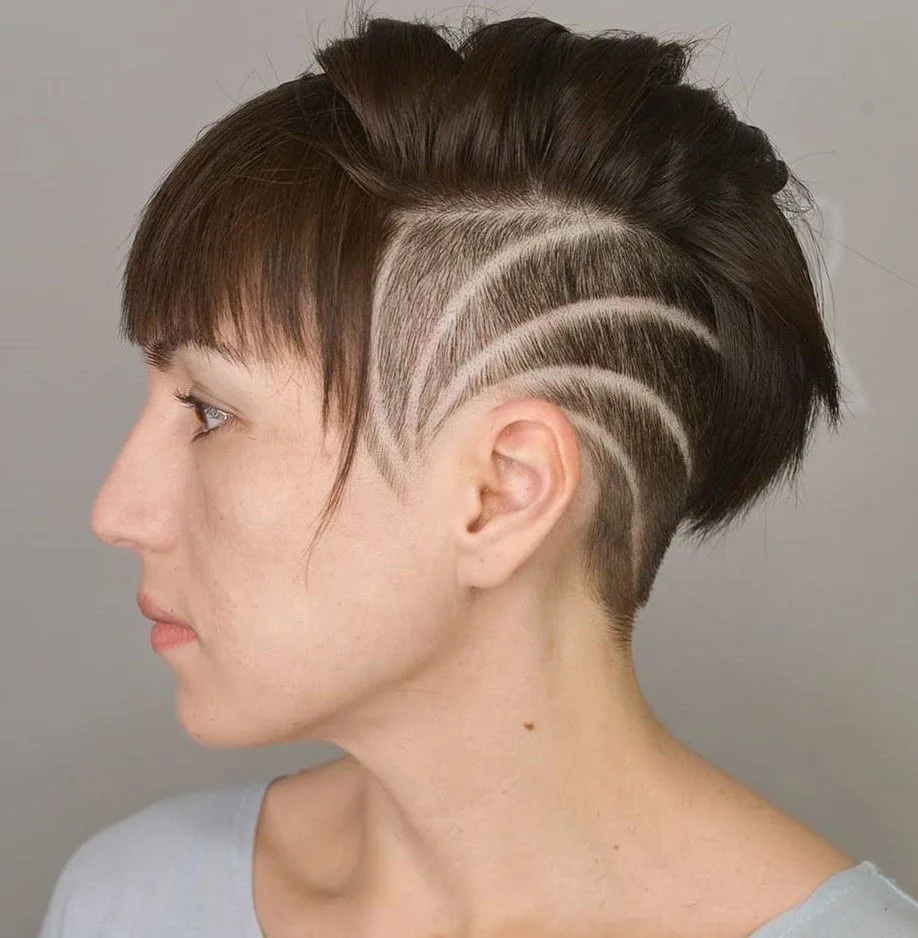
A single line carved into a side shave is the smallest change with the biggest impact: one clean, sharp line running through the stubble, and suddenly the whole cut looks designed rather than simply shaved. It is subtle enough for everyday wear and striking enough to be noticed, and it costs nothing but a steady hand and an extra two minutes at the barber. The line can run straight, curve around the ear, or angle upward toward the crown — and it can be changed at every trim.
How to style it: wear the hair swept away from the shave so the line is visible, and keep the long side smooth so nothing competes with it. Upkeep and regrowth: the line blurs within a week to ten days as the hair grows, so it needs refreshing at every tidy-up if you want it sharp — think of it as a temporary tattoo for your hair. Who should think twice: women who cannot get to the barber often, since a half-grown line looks like a mistake rather than a design. What to ask your barber: for the line to be cut with a trimmer, not a razor, on the first try, so it is clean but not harsh against the skin.
11. Side Shave with a Geometric Pattern
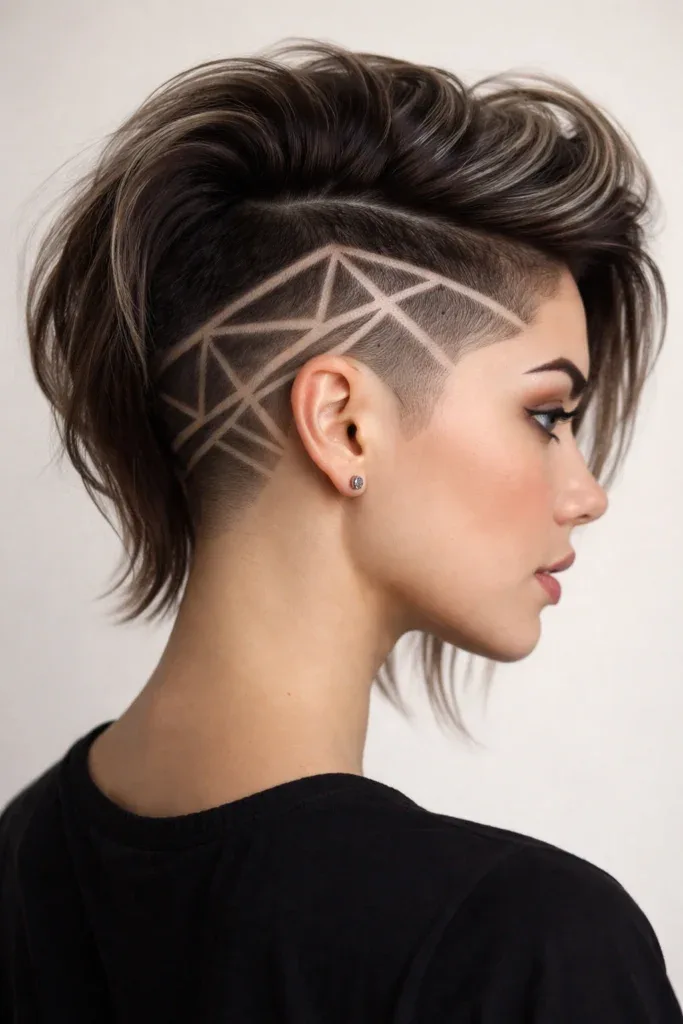
Geometric patterns — triangles, chevrons, diamonds — turn the shaved side into a piece of graphic art, and they suit the side shave better than any other haircut because the flat, short surface is the perfect canvas. The pattern is carved with a trimmer, often using a stencil or a freehand guide, and it works best on a slightly wider shave where there is room for the shapes to breathe. It is the style for women who treat their hair as self-expression and change their look as often as their mood.
Who it suits best: women with dark hair, where the contrast between the shaved skin and the stubble makes the pattern pop, and anyone who enjoys being asked about their hair. How to style it: keep the long side simple and smooth, so the pattern is the star, and wear the hair tucked behind the ear on the shaved side. Common mistake: choosing a pattern that is too detailed for the space — bold, simple shapes read far better than fiddly ones and survive a few days of growth. Upkeep and regrowth: patterns need a refresh every one to two weeks, and they grow out into a soft blur that is easy to shave clean again. Quick verdict: wearable art, with a two-week expiry date.
12. Side Shave with a Coloured Shaved Section
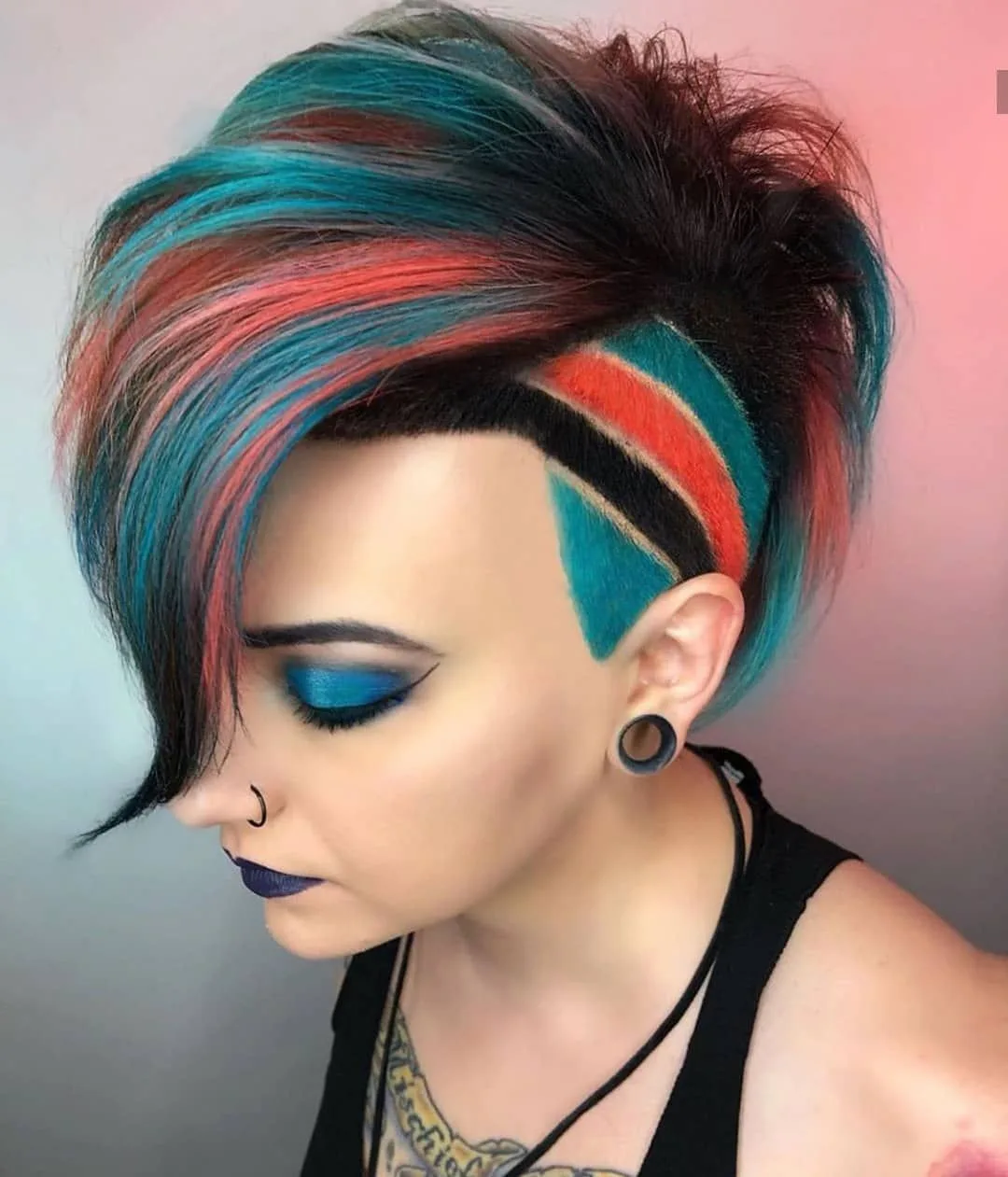
Colouring only the shaved section is the smartest way to try vivid hair colour: the area is small, so it is cheap and quick to do; it is easy to change; and it is completely hideable under the long side. A bright pink, electric blue or deep purple on the shaved side flashes when you move and disappears when you do not — which means you can have rainbow hair at the weekend and natural hair at work on Monday. It is also the best place to try a colour you are not sure about, because the commitment is tiny.
How to style it: sweep the long side away from the shave to show the colour, or wear a high ponytail for maximum impact. Upkeep and regrowth: the colour fades fast on short hair and is trimmed away every couple of weeks, so expect to top it up at every barber visit — semi-permanent dye is the sensible choice here. Common mistake: bleaching the shaved section at home without protecting the skin underneath; let a professional do the first bleach, then maintain it yourself. What to ask your colourist: for a shade that still looks good faded, since the shaved section will spend half its life between full colour and faded.
13. Pastel Pink Side Shave
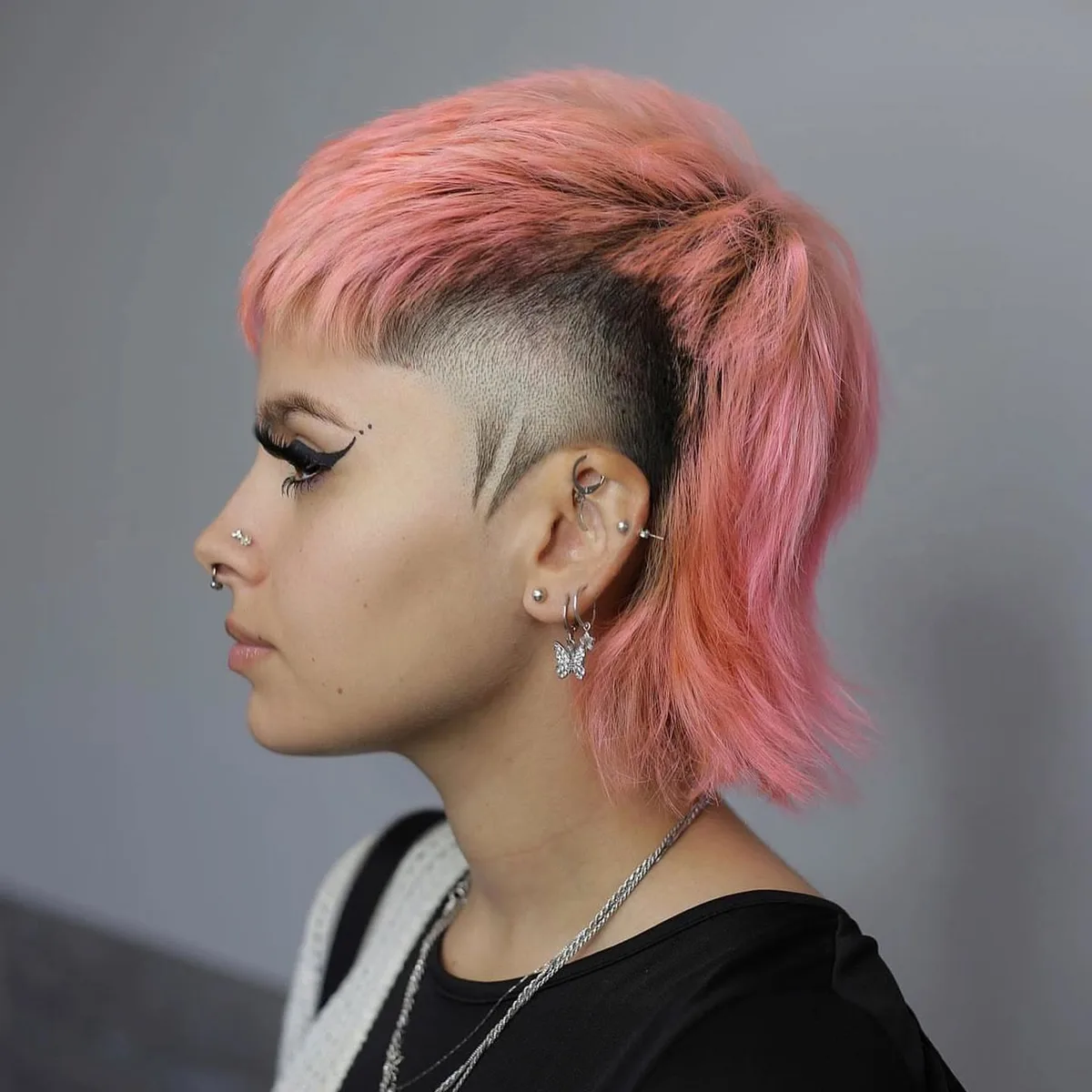
Pastel pink on a side shave is soft and edgy at the same time — the colour is gentle and romantic, the cut is bold and graphic, and the combination is far more wearable than either one on its own. The pink can live on the shaved side only, with the long side left natural, or it can wash through the whole head, with the shaved section showing the colour at its most intense. Either way, it is a look that photographs beautifully and suits spring and summer especially well.
Who it suits best: women with fair to medium skin tones, where pastel pink flatters without washing the face out, and anyone with naturally light hair, which takes pastel with far less bleaching. How to style it: keep the long side soft and wavy, so the whole look stays romantic rather than harsh. Upkeep and regrowth: pastel fades fastest of all hair colours — expect a week of true pastel, then a soft blush that still looks lovely — and the shaved section will need re-bleaching before it can be re-tinted. Who should think twice: women with very dark hair who do not want the bleach commitment, since pastel pink needs a near-white base to show up at all.
14. Platinum Blonde Side Shave
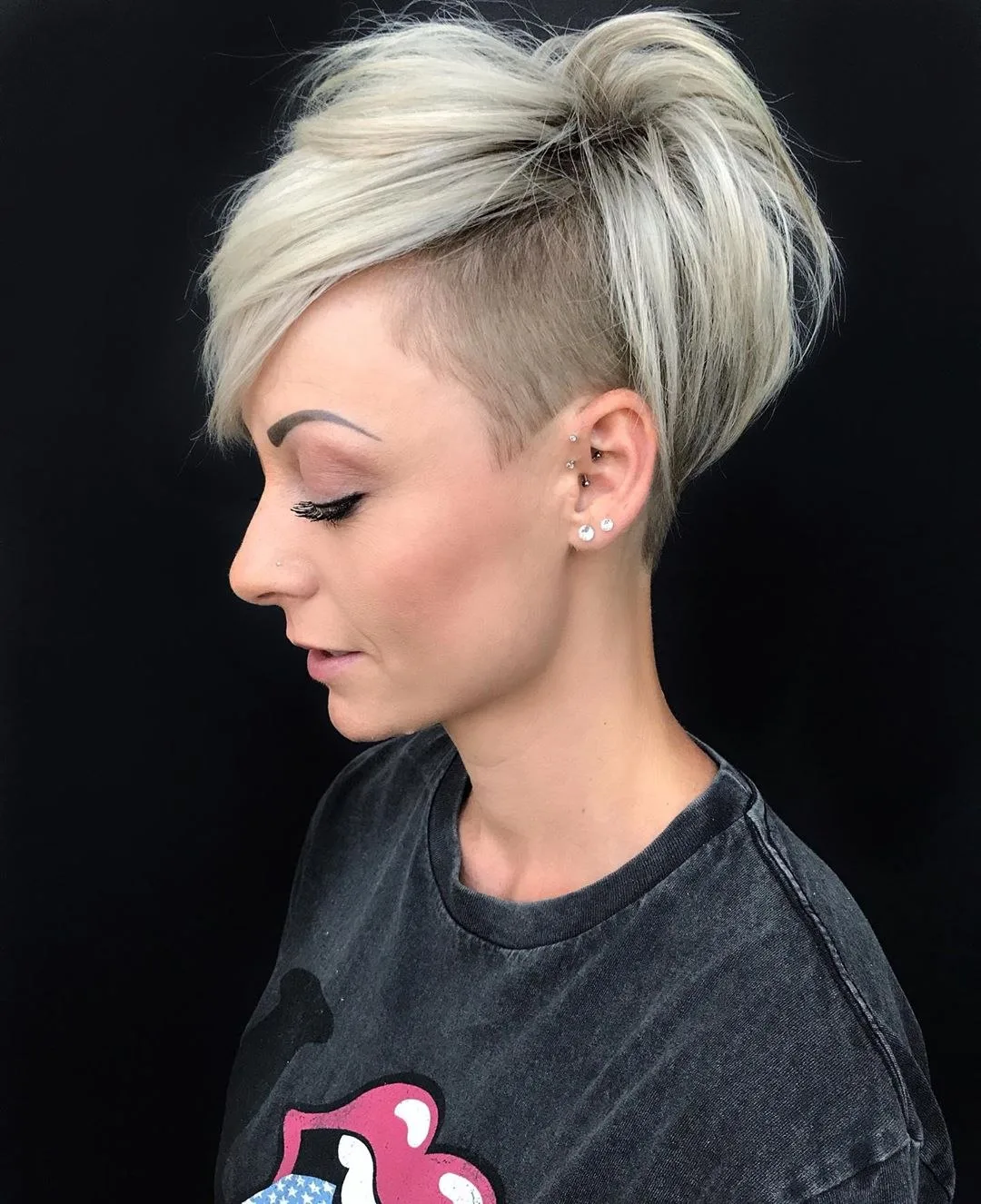
Platinum blonde on a side shave is pure contrast: the icy, almost-white shaved section against the long hair — whether the long side is dark, blonde or silver — creates a graphic, high-fashion look that needs no other styling to make an impression. The shaved section shows platinum at its brightest, because the short length catches the light evenly, and the effect is striking even from across a room. It is a favourite of women who like their hair to be the outfit.
Who should think twice: anyone with dark hair who is not prepared for the bleach routine, since platinum on the shaved section still needs lifting to pale yellow and toning, and the roots show within two weeks. How to style it: keep the long side sleek and straight to let the colour contrast do the work, and use a purple shampoo once a week to stop the platinum turning brassy. Upkeep and regrowth: the shaved section is trimmed away regularly, so the bleach commitment is small — but the long side, if it is also platinum, is a much bigger job. What to ask your colourist: for a toner that suits your skin tone, since platinum can wash out cool complexions if it is too ashy.
15. Side Shave with Braids on the Long Side
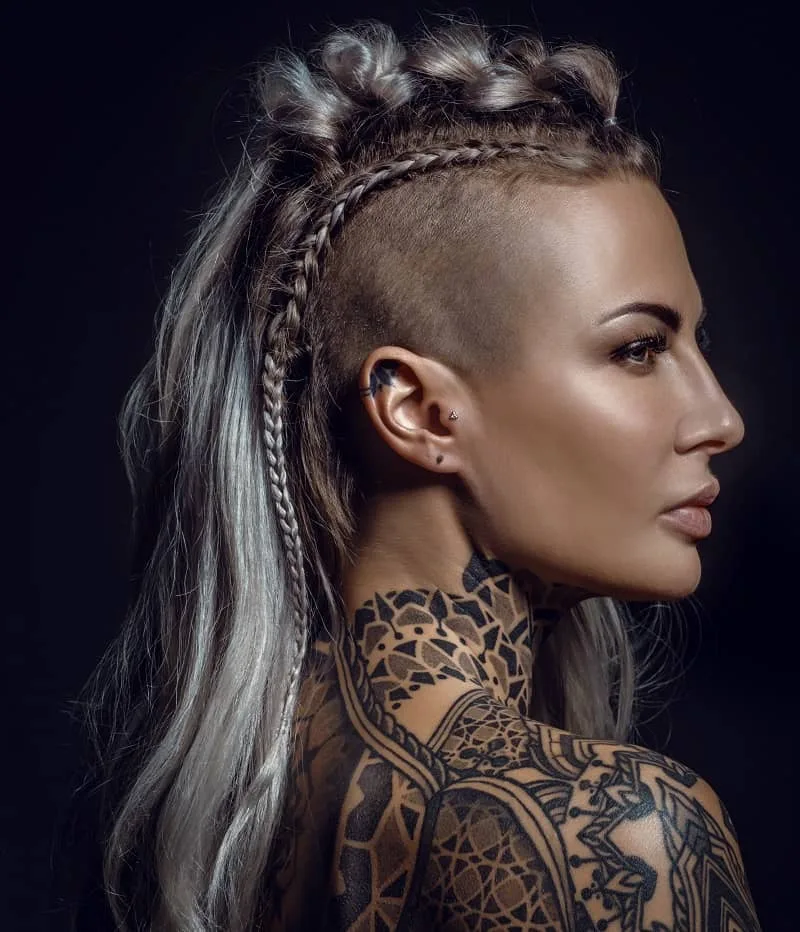
Braids on the long side of a side shave are a beautiful balancing act: the braids add texture, detail and craft to the long hair, while the shave keeps the whole look from feeling too sweet or too busy. A single loose braid over one shoulder, a crown braid, or a few small braids woven through the long side all work — and the braids can be as neat or as messy as you like. It is a style that suits festivals, holidays and long summer days, when you want the hair out of the way but still want it to look like you tried.
How to style it: braid the long side loosely and pull the braid apart gently for fullness, leaving the shaved side clean and visible. Who it suits best: women with long, thick hair, where braids hold well and the shave stops the style feeling heavy. Common mistake: braiding too tightly at the scalp on the shaved side, which pulls uncomfortably and can blur the shave line — keep the braids on the long side only. Upkeep and regrowth: braids are a protective style for the long side, and the shave keeps its normal two-week schedule. What to ask your stylist: for the braids to start below the shave line, so the two details do not compete.
16. Side Shave with a French Braid
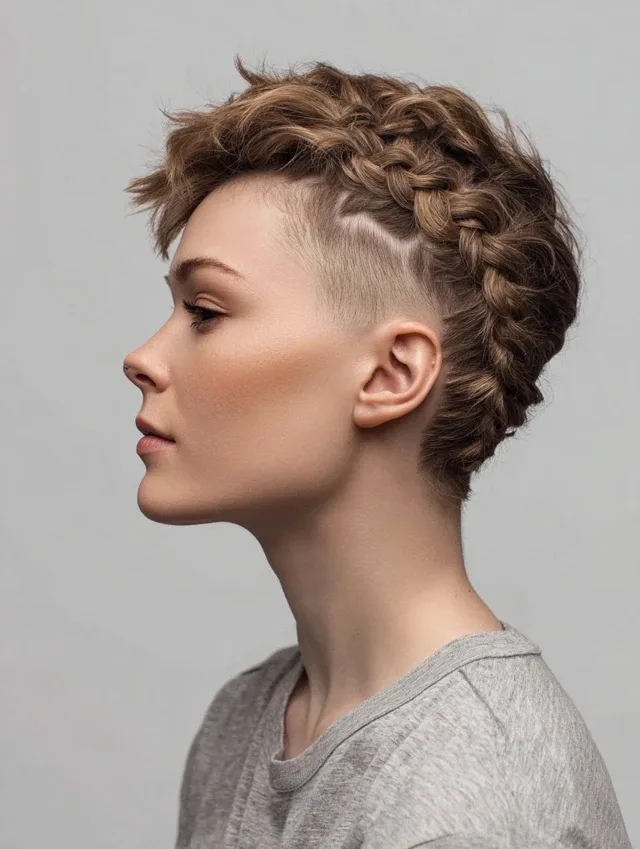
A French braid running along the long side of a side shave is one of the most elegant versions of this cut: the braid adds a sculpted, detailed line across the head, and the shave on the other side keeps it from looking too formal or too fussy. The braid can run from the hairline to the nape, or sweep across the crown and disappear into a low bun or ponytail. It is a style that looks complicated and takes ten minutes once you know the motion — and it holds all day without a single pin.
Who it suits best: women with medium to long hair who can French-braid their own hair, or who are happy to have it done. How to style it: braid on slightly damp hair with a little texturising spray for grip, and keep the braid soft by pulling it apart gently once it is secured. Upkeep and regrowth: the braid hides a growing-out shave well, since it pulls the long hair over the short side. Common mistake: starting the braid too close to the shave, which makes the parting look messy — leave a clean section of long hair between the braid and the shave. Quick verdict: the most polished braid-and-shave pairing, and a great wedding-guest option.
17. Side Shave with a Side Part
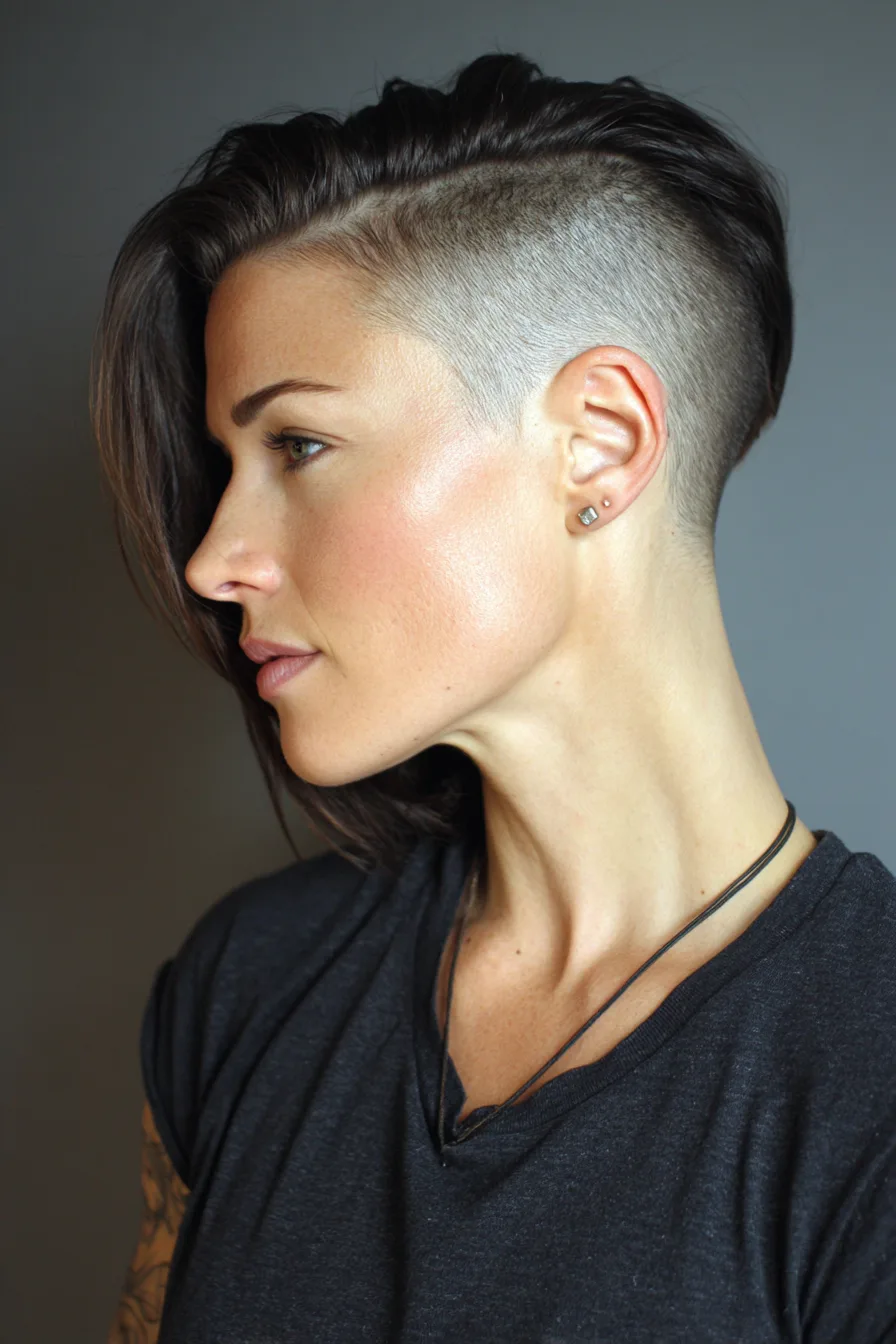
The side part is the side shave’s best friend, because the part decides which side the world sees: part the hair away from the shave and the long side falls in a heavy sweep that covers it; part it toward the shave and the cut is on full display. That single choice gives you two looks from one haircut, and it is the reason so many women choose a side shave over a symmetrical undercut. A deep side part also adds volume at the crown, which balances the shaved side beautifully.
How to style it: find your natural part first — the place where the hair falls without fighting you — and deepen it with a comb while the hair is damp. Who it suits best: women with straight or wavy hair, where a side part creates a clean, glossy sweep. Upkeep and regrowth: none beyond the normal shave schedule, since the part is styling, not cutting. Common mistake: forcing a part on the wrong side for your hair’s growth pattern, which means fighting cowlicks every morning — work with the growth, not against it. What to ask your stylist: for the shave to be placed so that your natural part shows it off when you want it shown, not by accident.
18. Side Shave with a Deep Side Sweep
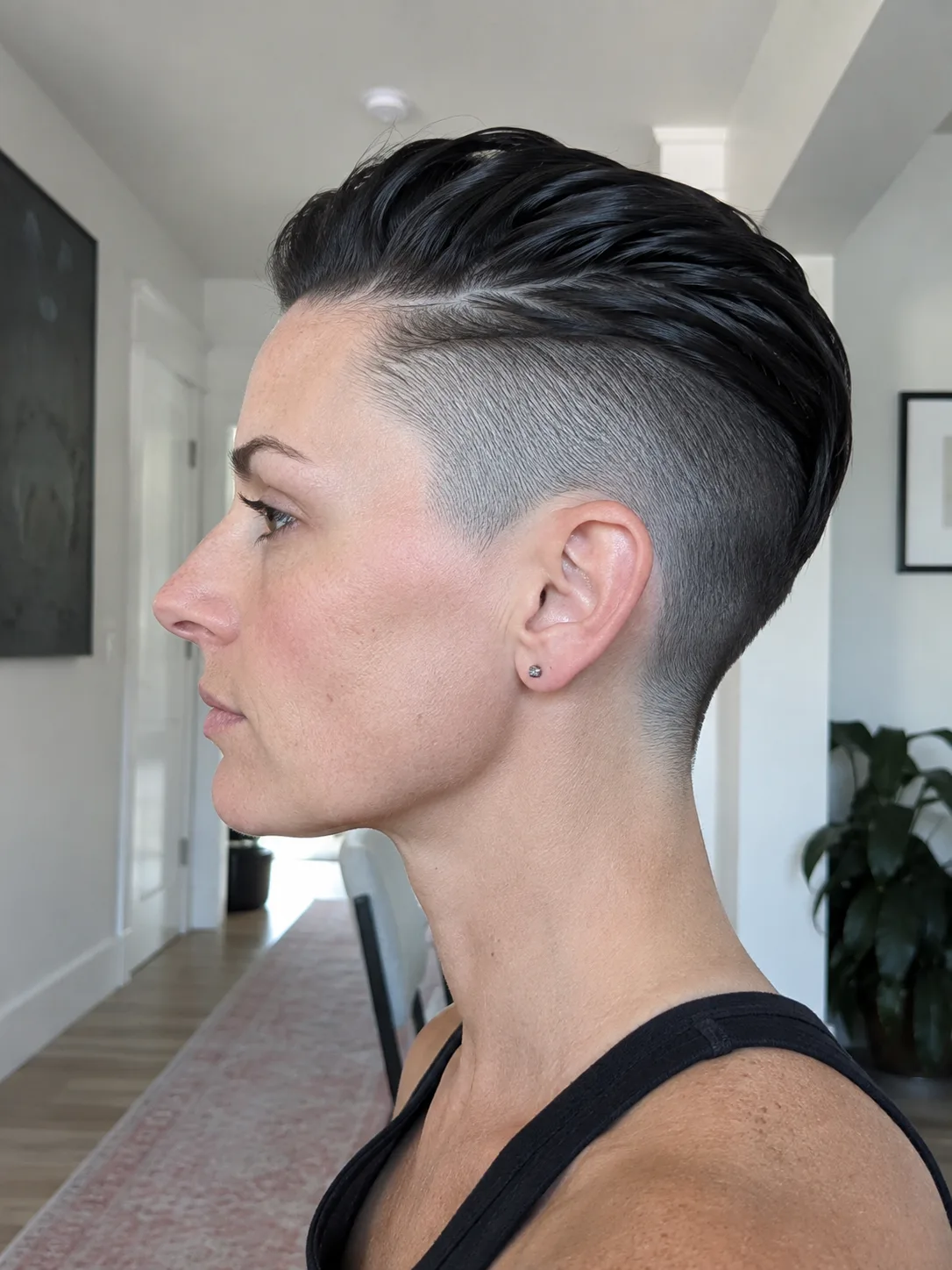
A deep side sweep takes the long side of a side shave and turns it into the star: the hair is swept across the forehead in a heavy, glossy wave, falling over one eye and down past the shoulder, while the shaved side stays clean and graphic underneath. It is old-Hollywood glamour with a modern edge, and it suits evening events, weddings and any night when you want to look like you made an effort. The sweep also softens the face, which makes this version flattering on square and round faces in particular.
Who it suits best: women with medium to long hair and a little natural wave, which holds a sweep far better than pin-straight hair. How to style it: blow-dry the front section over to the heavy side with a round brush, set it with a large roller or a clip while it cools, then release it for a soft, lasting curve. Upkeep and regrowth: the sweep needs a little hairspray and a pin or two to hold it through a long evening, but the cut itself needs nothing extra. Who should think twice: women who wear glasses, since a heavy sweep can compete with frames — a lighter sweep tucked behind the ear works better. What to ask your stylist: for the sweep to be cut with longer layers at the front, so it falls naturally rather than needing constant styling.
19. Side Shave with Curtain Bangs
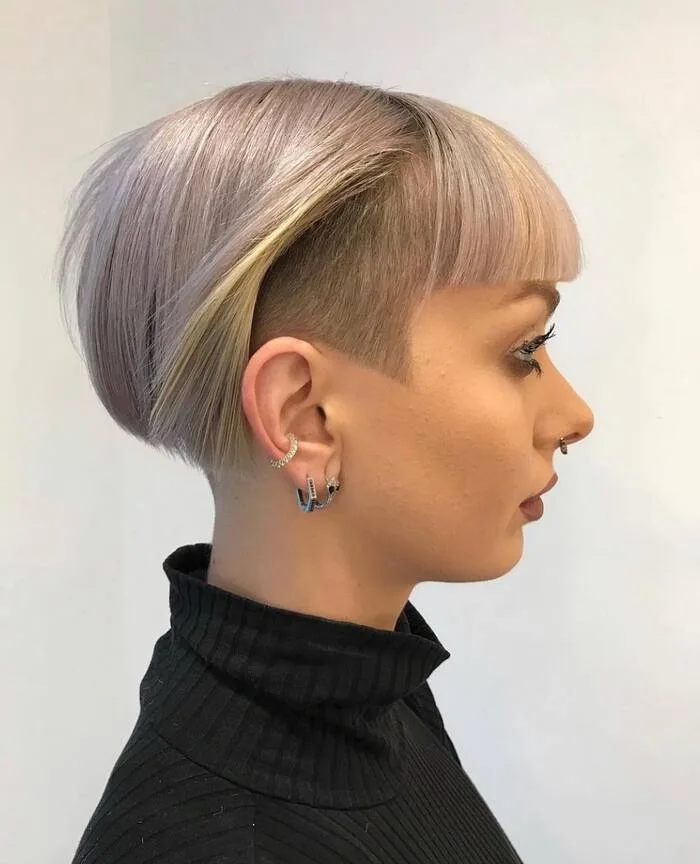
Curtain bangs soften a side shave in the loveliest way: the bangs frame the face in two soft, parted sweeps, while the shave adds edge at the side — so the front of the hairstyle feels gentle and the side feels bold. It is a combination that works on almost every face shape, because the bangs can be cut to flatter the forehead and cheekbones while the shave does its own thing. Curtain bangs also grow out gracefully, which makes this a forgiving pairing if you are trying bangs for the first time.
Who it suits best: women with a high forehead or a long face, where curtain bangs shorten the face visually and balance the shave. How to style it: blow-dry the bangs away from the face with a round brush, and let them fall naturally on either side of the part. Common mistake: cutting the bangs too short, which makes them look like a fringe rather than a curtain — they should reach at least the cheekbones. Upkeep and regrowth: bangs need a trim every three to four weeks, which lines up neatly with the shave schedule. What to ask your stylist: for the bangs to be cut dry, so you can see exactly where they will sit.
20. Side Shave with a Fringe
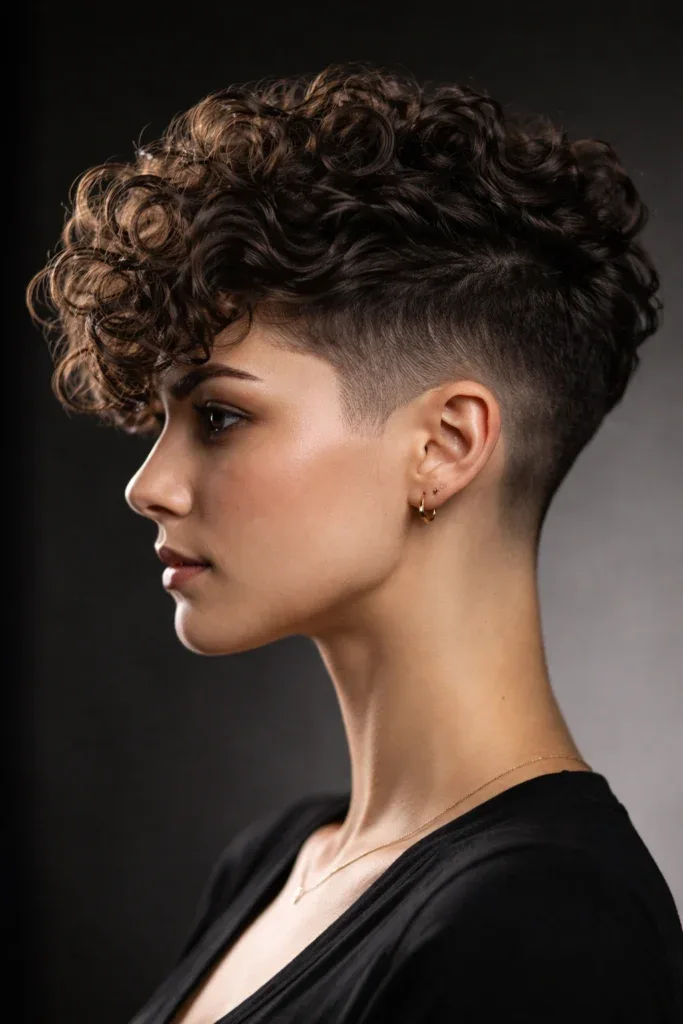
A fringe with a side shave is a bold pairing of two statement features: the straight, graphic line of the fringe across the forehead, and the clean shaved section at the side. Together they create a look that is sharp, modern and a little bit punk, and it suits women who like their hair to have a strong shape. The fringe can be blunt and straight, soft and choppy, or swept to one side — and each version changes the feeling of the whole cut.
Who should think twice: women with very curly hair, where a fringe needs daily straightening to sit right, and women with a low hairline, where a fringe can make the face look shorter. How to style it: blow-dry the fringe straight down with a small round brush, and keep the long side sleek so the two graphic lines — the fringe and the shave — echo each other. Upkeep and regrowth: a fringe needs trimming every two to three weeks, which is more often than most women expect; combine it with the shave tidy-up in one visit. Common mistake: cutting the fringe too wide, so it meets the shave and the two features merge into one — leave a clear section of long hair between them.
21. Side Shave with a Sleek Straight Finish
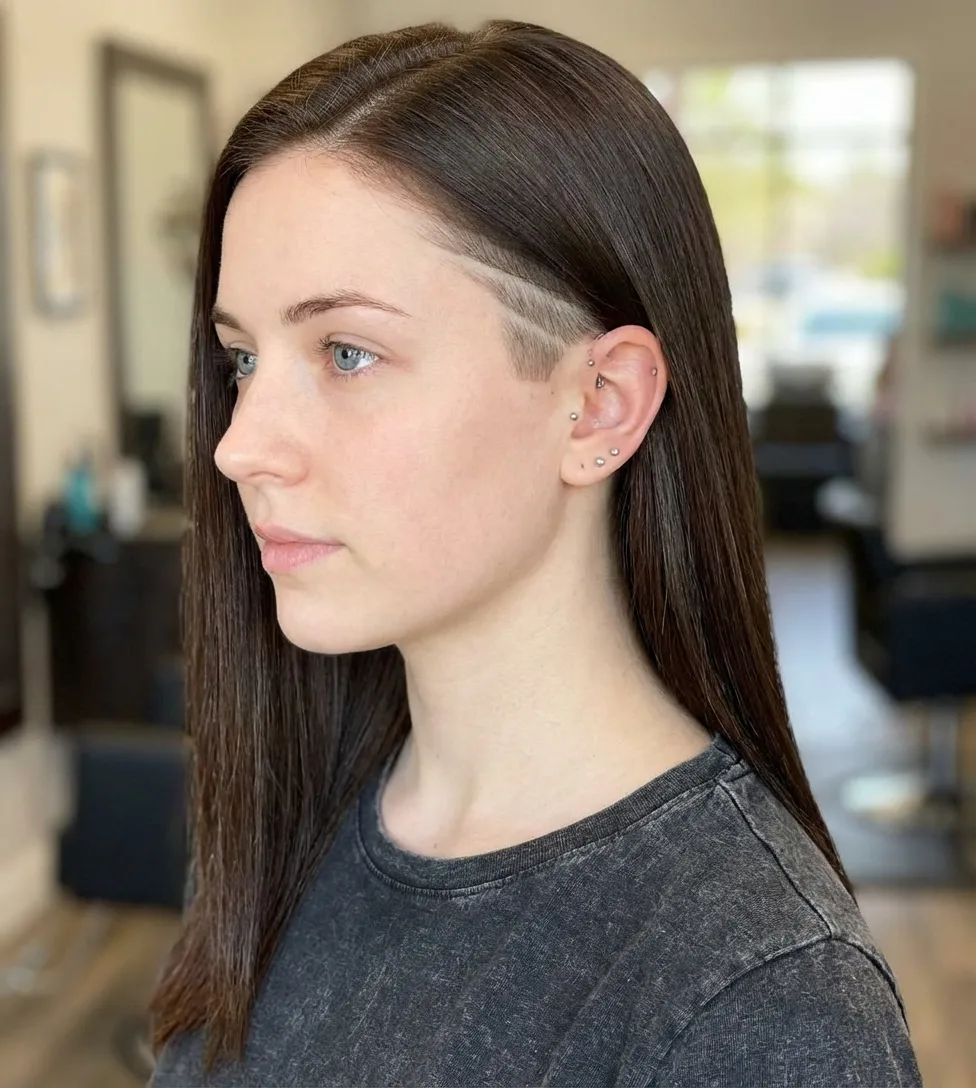
Sleek and straight is the most polished way to wear a side shave: the long side is flat-ironed to a glossy, glass-like finish, and the shaved side is crisp and clean, so the whole look is graphic, modern and expensive-looking. It is the version that suits formal events, work presentations and any day when you want your hair to look like it was done by a professional. The shine is the point — healthy, glossy hair makes the contrast with the shave look deliberate and luxurious.
Who it suits best: women with naturally straight hair, or hair that straightens easily and holds the style. How to style it: use a heat protectant, flat-iron in small sections, and finish with a drop of smoothing serum on the long side only — never on the shaved side, where it will look greasy. Upkeep and regrowth: a sleek finish shows regrowth on the shaved side more than any other style, so keep the trims to every one to two weeks. Common mistake: skipping the heat protectant, which leaves the long side dull and damaged next to the crisp shave. Quick verdict: the most high-maintenance look in this guide, and the most rewarding when it is done well.
22. Side Shave with Beach Waves
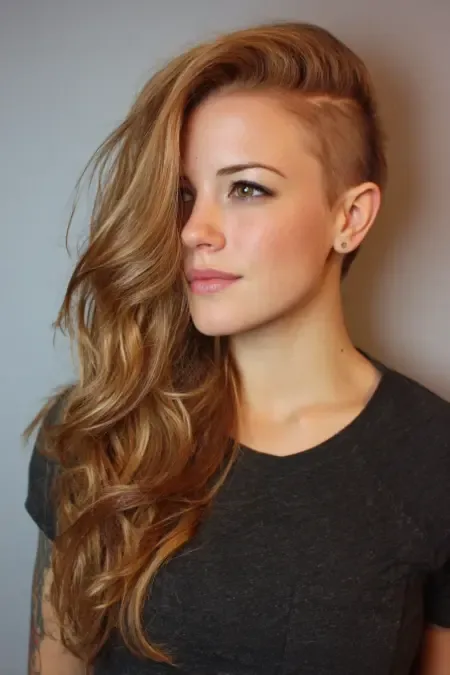
Beach waves take the edge off a side shave and make it feel like a holiday: the long side falls in loose, tousled waves, the shaved side stays sharp underneath, and the combination looks relaxed, sun-kissed and a little bit wild. It is the side shave for summer, for weekends and for women who do not want their hair to look too done. The waves also add volume, which balances a wide shave beautifully and stops the cut looking severe.
How to style it: twist sections of damp hair, let them dry, then shake them out with a little salt spray — or use a large-barrel curling iron and brush the curls out for softer waves. Who it suits best: women with naturally wavy hair, where the style is almost wash-and-go, and anyone with medium to long hair. Upkeep and regrowth: beach waves hide a growing-out shave well, so you can stretch the tidy-ups to three weeks without it showing. Who should think twice: women with very fine hair, where waves can drop by lunchtime — a texturising spray at the roots helps them last. What to ask your stylist: for long layers on the wavy side, which make the waves fall in a more natural pattern.
23. Side Shave with a Messy Bun
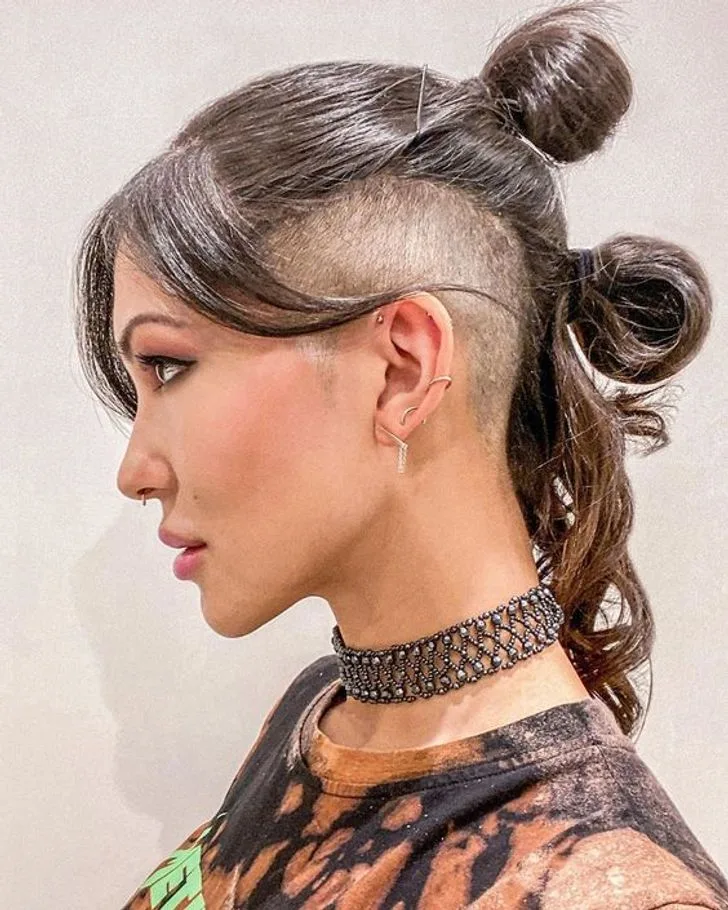
The messy bun is the side shave’s lazy-day soulmate: the hair is twisted up loosely, pieces fall free around the face, and the shaved side shows off without any effort at all. It is the style you wear to the school run, the gym and the coffee shop — and it still looks intentional, because the shave gives the messy bun a structure it would not have on its own. A messy bun with a side shave never looks like you gave up; it looks like you chose comfort and still have great taste.
How to style it: gather the long hair loosely, twist it into a bun and pin it, then pull a few pieces free around the face and at the nape. Common mistake: making the bun too neat, which fights the relaxed feeling of the style — the messier the bun, the better the shave looks beside it. Upkeep and regrowth: the messy bun is the best grow-out style in this guide, because the loose, undone shape hides short, sticking-out hairs completely. Who it suits best: women with medium to long hair and a little natural texture, which holds a messy bun without slipping. What to ask your stylist: nothing — this is a styling choice, not a cutting one, and it works with any width of shave.
24. Side Shave with a Low Bun
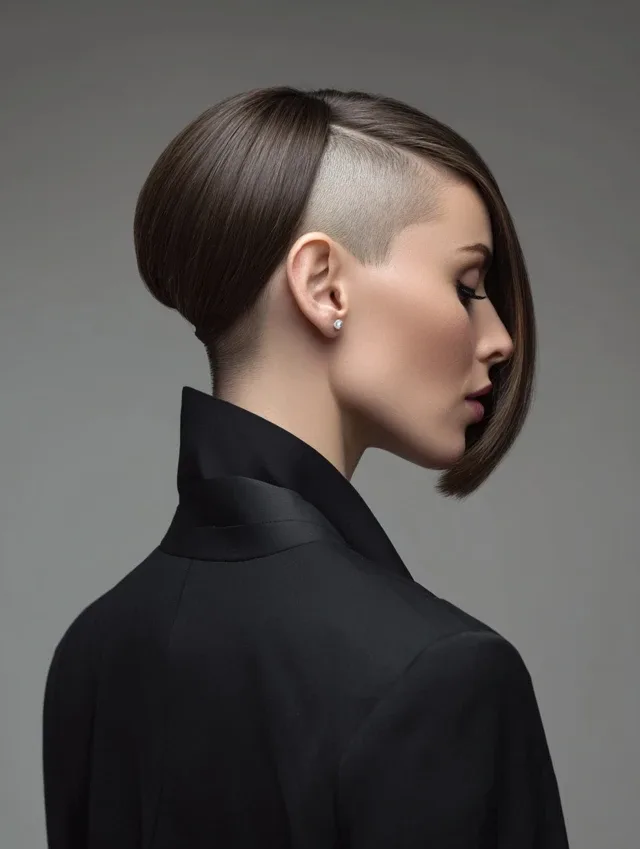
A low bun with a side shave is the elegant, grown-up version of the updo: the hair is gathered low at the nape, twisted into a soft bun, and the shaved side peeks out above it, adding a modern edge to a classic shape. It is a favourite for weddings, formal dinners and work events, because it looks polished from the front and interesting from the side — and it holds all day without needing a single touch-up. A few face-framing pieces keep it soft rather than severe.
Who it suits best: women with medium to long hair and an occasion that calls for polish. How to style it: part the hair on the opposite side from the shave, gather it low, twist it into a bun and pin it, then smooth the shaved side with a little gel. Upkeep and regrowth: the low bun shows the shave line clearly, so keep the tidy-ups regular if you wear this style often. Common mistake: pulling the bun too tight, which can make the shave look stretched and uncomfortable — keep the tension soft and the bun low. What to ask your stylist: for the bun to sit at the nape, not at the crown, so the shave and the bun do not compete for attention.
25. Side Shave with a Half-Up Style
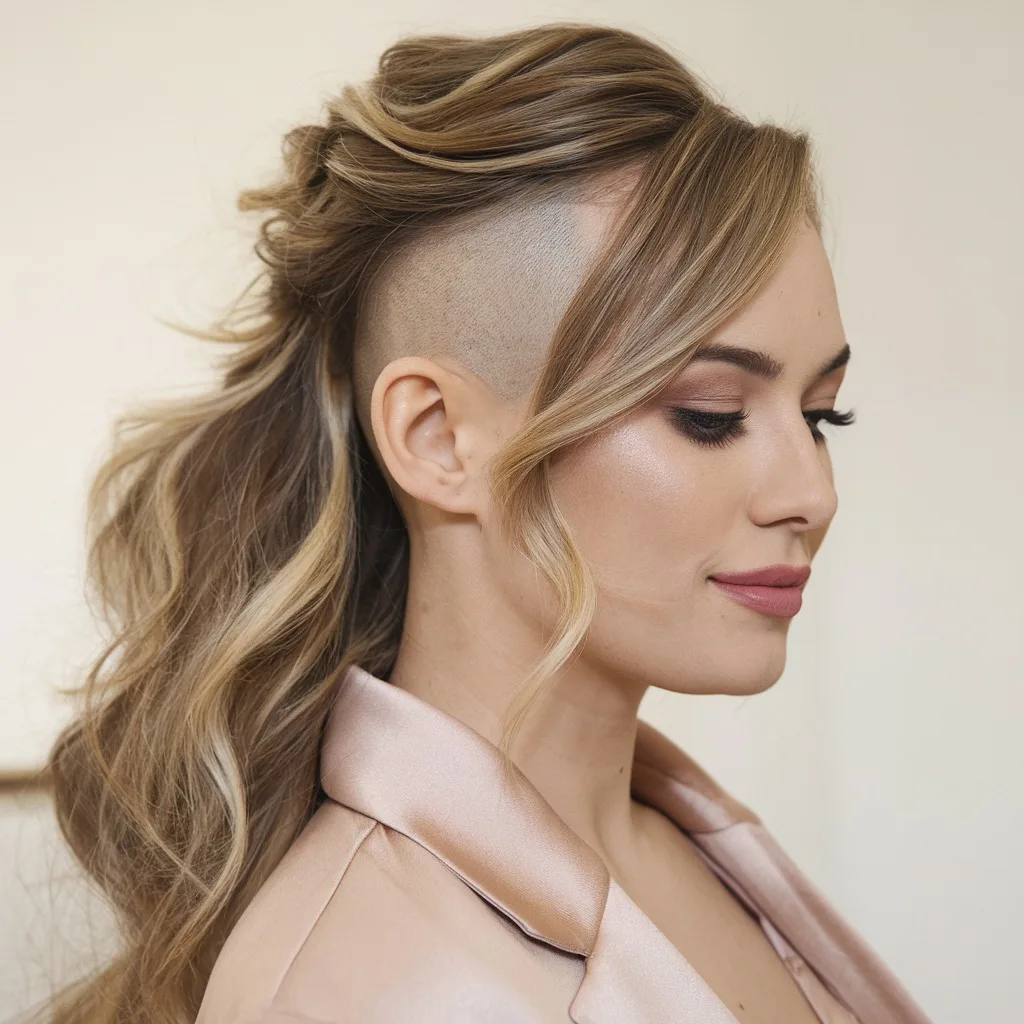
The half-up style is the side shave’s best compromise: the top half of the hair is pulled up and away from the face, showing off the shave, while the bottom half falls loose and soft down the back. You get the edge of the shave and the romance of long hair in one style, and it works for everything from a workday to a wedding. A half-up twist, a small bun or a simple clip all do the job — the point is that the top section lifts the hair off the shaved side so it can be seen.
How to style it: section off the top half, secure it with a clip or a small elastic, and leave the rest down in waves or straight. Who it suits best: women with long hair who love wearing it down but want the shave to be visible sometimes. Upkeep and regrowth: the half-up style is forgiving of regrowth, since the top section covers the awkward stage while the bottom half distracts from it. Who should think twice: women with very short hair, where there is not enough length for a convincing half-up section. Quick verdict: the most versatile styling option for a side shave — up, down and edgy all at once.
26. Side Shave with a Faux Hawk
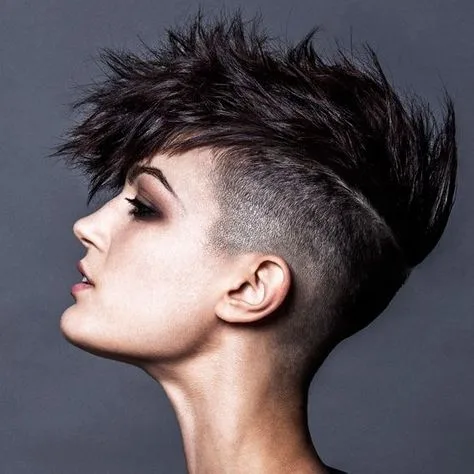
The faux hawk is the side shave’s playful cousin: the hair is swept up and toward the centre, creating the silhouette of a mohawk without shaving both sides or committing to the full look. With a side shave underneath, the faux hawk has even more impact, because the shaved side sharpens the shape while the long hair on top gives it height and movement. It is a style that works for a night out, a festival or a photoshoot — and it washes out the next morning.
Who it suits best: women with medium-length hair and a sense of humour about their hair. How to style it: use a strong-hold mousse or wax, push the hair up and toward the centre, and pin the sides in place if they will not stay. Common mistake: using too much product, which makes the faux hawk stiff and helmet-like — a little goes a long way, and texture is better than stiffness. Upkeep and regrowth: the faux hawk is a styling choice, so it needs no extra cutting beyond the normal shave schedule. Who should think twice: women who need a style that lasts all day without pins, since a faux hawk can flop by the afternoon. What to ask your stylist: for the top to be left long enough to push up into a hawk shape.
27. Side Shave with an Edgy Mullet
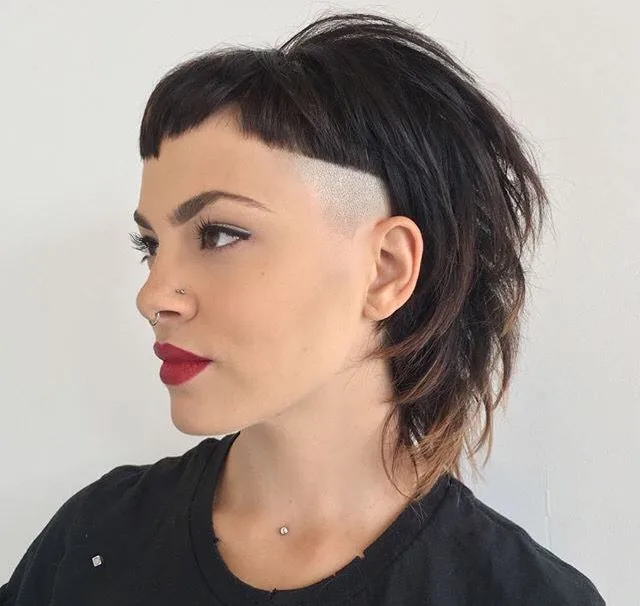
The mullet is back, and the side shave makes it even better: short at the front and sides, long at the back, with one side shaved close for extra edge. It is the most fashion-forward style in this guide, and the one most likely to get you stopped by strangers who want to know where you got it cut. The mullet’s shape — business at the front, party at the back — pairs naturally with a side shave, because both are about contrast and both refuse to be boring.
Who should think twice: anyone who needs a conservative look for work, because a mullet with a side shave cannot be hidden or toned down. How to style it: use a texturising spray and scrunch the back for movement, and keep the front piecey rather than smooth. Upkeep and regrowth: the mullet needs shaping every four to six weeks, and the shave every two — book them together. Common mistake: letting the back grow too long while the front stays short, which unbalances the shape; the mullet works best when the proportions are deliberate. What to ask your stylist: for the mullet to be cut with soft, textured ends rather than a blunt line, so it grows out gracefully.
28. Side Shave with a Wolf Cut
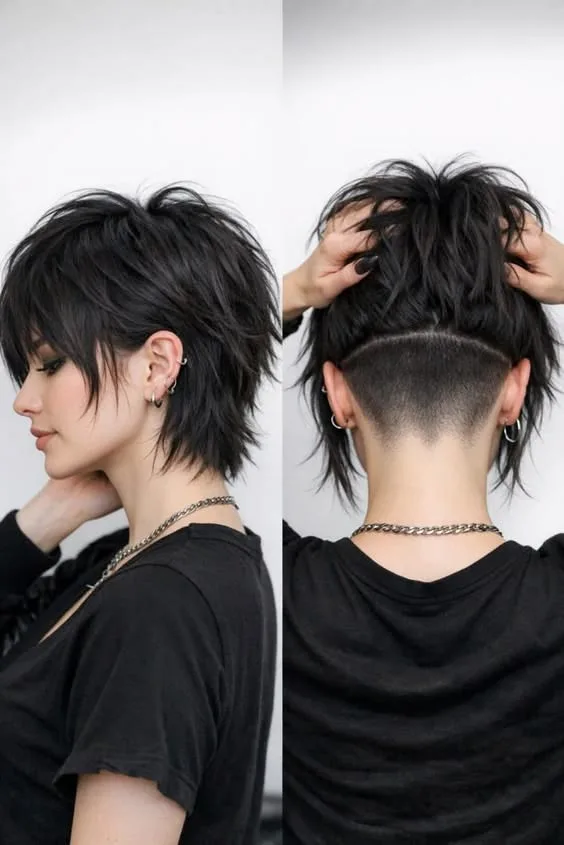
The wolf cut — a shaggy, layered mix of a mullet and a shag — is already one of the edgiest cuts around, and adding a side shave pushes it even further. The wolf cut’s choppy layers and volume on top contrast beautifully with the clean shaved side, and the whole look feels wild, textured and a little bit untamed. It is a style for women who like their hair to have movement and attitude, and who are not afraid of a cut that looks different from every angle.
Who it suits best: women with thick, wavy or curly hair, where the wolf cut’s layers have something to work with. How to style it: scrunch the layers with a texturising spray and let them air-dry, or diffuse for extra volume. Upkeep and regrowth: the wolf cut’s shaggy shape hides regrowth well, so the shave can go three weeks between tidy-ups without looking untidy. Common mistake: over-styling it — the wolf cut is supposed to look a little wild, and too much smoothing kills the point of it. Who should think twice: women with very fine, straight hair, where the wolf cut’s layers can look thin rather than shaggy.
29. Side Shave for Curly Hair
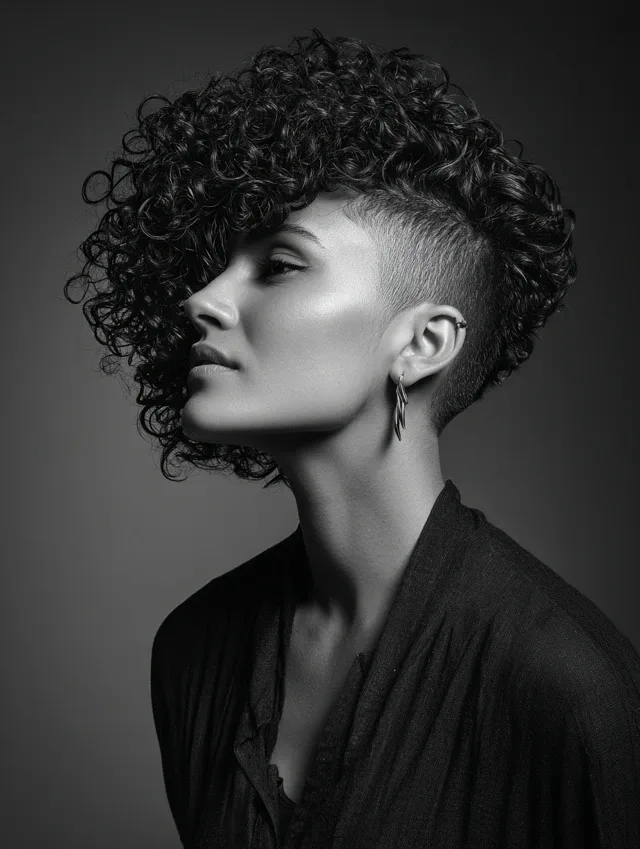
Curly hair and a side shave solve each other’s problems: the shave removes the bulk that makes curly hair heavy and triangular on one side, and the curls give the shave a soft, feminine frame that stops it looking harsh. The result is a cut that is lighter, easier to manage and more flattering than a full head of curls — and it shows off the curl pattern beautifully, because the shaved side makes the curls on the other side look even fuller by comparison.
Who it suits best: women with naturally curly or coily hair who find the weight of their curls hard to manage. How to style it: apply curl cream to damp hair, scrunch, and diffuse or air-dry — and resist the urge to brush the curls out, which creates frizz. Upkeep and regrowth: curly hair hides the shave’s regrowth better than straight hair, so tidy-ups can stretch to three weeks, but the curls themselves need regular trims to keep their shape. Common mistake: shaving the side while the hair is wet and stretched, which makes the shave wider than intended once the curls spring back — always cut curly hair dry, or ask for it to be cut in its natural state. What to ask your stylist: for a curl specialist if you can find one, because the shave placement matters more on curly hair.
30. Side Shave for Thick Hair
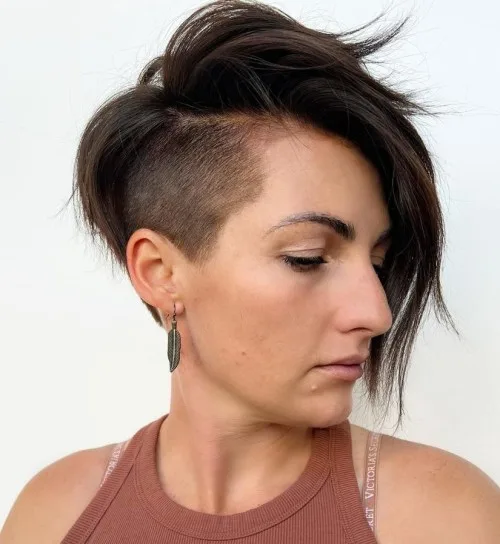
Thick hair is the side shave’s ideal customer, because the shave does real work: it removes a whole section of bulk from underneath, so the remaining hair feels lighter, dries faster and sits flatter where you want it to. Women with thick hair often say a side shave is the first cut that made their hair feel manageable — and the long side still looks just as thick and full as before, because the shave is hidden underneath it. It is a practical cut disguised as a bold one.
How to style it: blow-dry the long side smooth or wavy as usual, and enjoy the fact that it takes half the time it used to. Who it suits best: women with very thick, heavy hair who struggle with drying time and bulk. Upkeep and regrowth: thick hair grows fast, so the shave needs a tidy-up every one to two weeks to stay sharp — but the long side needs less thinning than before. Common mistake: shaving too narrow a section on very thick hair, which removes so little bulk that you barely notice the difference — go medium or wide if weight is the goal. What to ask your barber: for the shave to be wide enough to make a real difference to the weight, not just a decorative strip.
31. Side Shave for Fine Hair
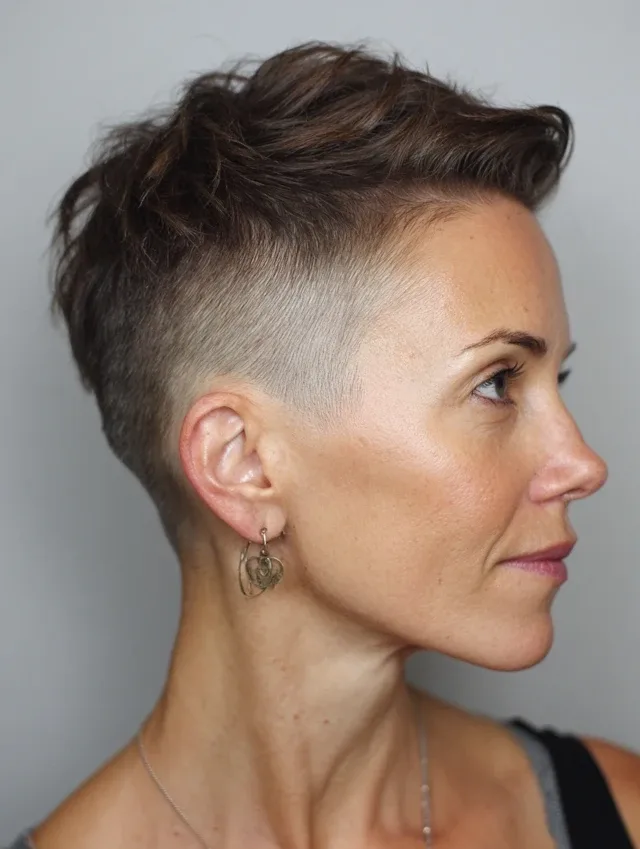
Fine hair and a side shave seem like an unlikely pairing, but they work surprisingly well — as long as the shave is kept narrow and the long side is styled for volume. The shave removes a small amount of hair, which sounds like the last thing fine hair needs, but it also creates a clean line that makes the remaining hair look thicker and more deliberate by contrast. The trick is proportion: a narrow shave and a voluminous long side, not a wide shave that leaves the long side looking thin.
Who should think twice: women with very fine, sparse hair who already worry about coverage, because a wide shave will make the long side look thinner. How to style it: add volume to the long side with a root-lifting spray and a round brush, and keep the shaved side narrow and low. Upkeep and regrowth: fine hair shows regrowth quickly, so tidy-ups every two weeks keep the line crisp. Common mistake: pairing a side shave with flat, straight fine hair, which makes the whole cut look sparse — waves, texture or a little backcombing at the crown make all the difference. What to ask your stylist: for the narrowest shave that still reads as a shave, and for layers on the long side that add fullness.
32. Side Shave for Short Hair
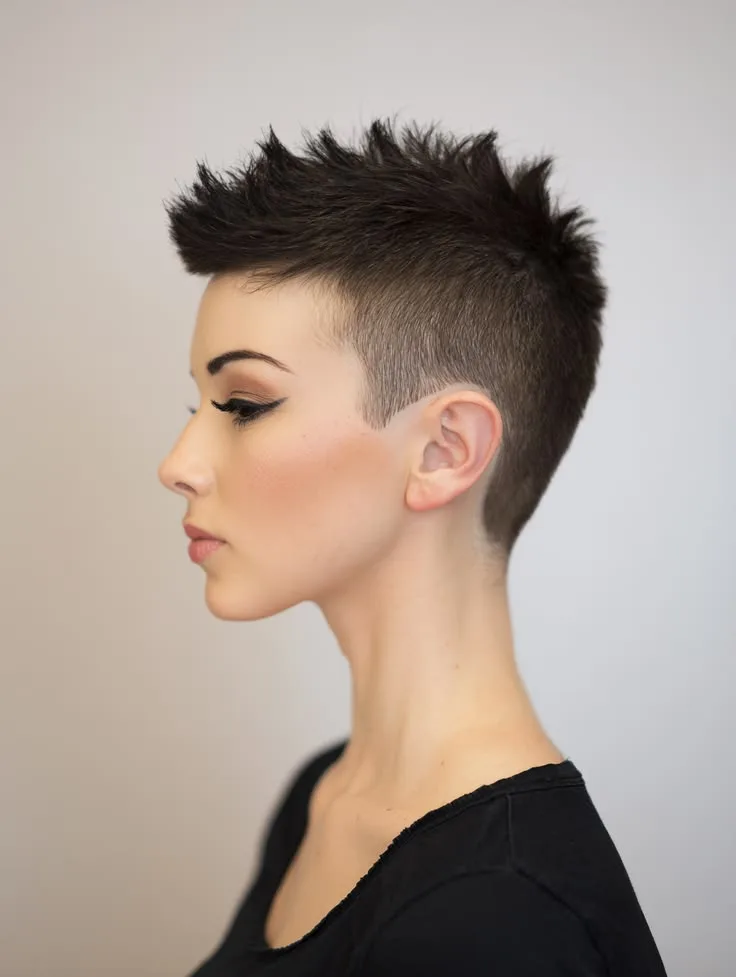
Short hair with a side shave is a complete look in itself: the short length on top, the shaved side, and the clean lines between them create a cut that is graphic, modern and incredibly easy to live with. It dries in minutes, needs almost no styling, and looks deliberate from every angle — which is why it is a favourite of women who have gone short and never looked back. The shave also gives a short cut a focal point, so it never looks plain or unfinished.
Who it suits best: women who already wear their hair short and want to add edge without growing it out. How to style it: a little wax or paste on the top, pushed in the direction away from the shave, is all it needs. Upkeep and regrowth: short hair with a shave needs the most frequent trims in this guide — every two to three weeks for the shape, every one to two for the shave — because short cuts lose their shape fast. Common mistake: letting the top grow too long, which turns a sharp short cut into a shapeless one; book the next appointment before you leave the salon. Quick verdict: the lowest-effort style to wear day to day, and the highest-maintenance to keep sharp.
33. Side Shave for a Wedding or Formal Event
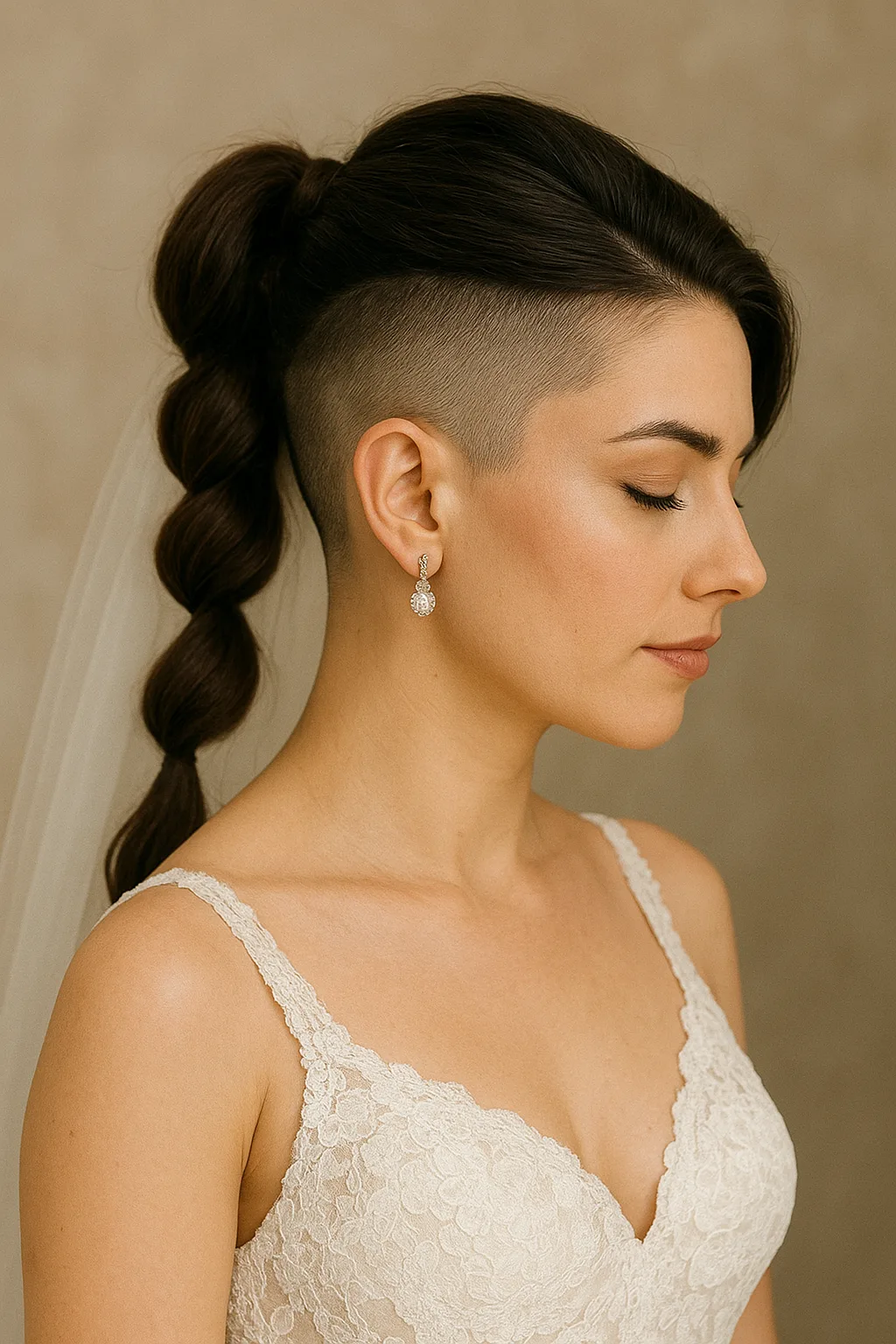
A side shave at a wedding is a statement of confidence: the bride, bridesmaid or guest who wears one is saying that elegance and edge are not opposites. The long side can be curled, braided or swept into an updo, while the shaved side adds a modern, unexpected detail that photographs beautifully and makes the whole look memorable. It is especially striking with a veil or a headpiece, which can be anchored on the long side while the shave stays visible.
How to style it: book a trial with your stylist, and try the long side in curls, a low bun and a side sweep to see which shows the shave off best. Who it suits best: brides who want a modern wedding look, and guests who want to stand out without upstaging anyone. Upkeep and regrowth: get the shave freshly tidied two to three days before the event, not the day before, so any skin sensitivity has time to settle. Common mistake: trying a side shave for the first time the week before a wedding — if you have never had one, try it at least two months earlier so you know you love it. What to ask your stylist: how the veil, headpiece or flowers will sit with the shave, and whether a design in the shave would suit the occasion.
34. Side Shave for Work and the Office

The office side shave is all about the cover-up: a narrow, low shave that disappears completely when the hair is worn down and parted over it, and appears only when you choose to show it. Worn with a sleek blow-dry, a low bun or a neat ponytail, it reads as a completely normal professional hairstyle — and at after-work drinks, a quick tuck behind the ear reveals the edge underneath. It is the side shave for women who want a secret, not a statement, during working hours.
Who it suits best: women in offices, schools, healthcare and customer-facing roles where a bold cut needs to be optional. How to style it: part the hair over the shave, keep the long side smooth and polished, and carry a couple of bobby pins for the days when the shave peeks out unexpectedly. Upkeep and regrowth: a narrow office shave grows out more discreetly than a wide one, and the tidy-ups can stretch to three weeks. Who should think twice: women in workplaces with a written policy against visible shaved hair — check the policy first, because a narrow shave is easy to hide but a wide one is not. What to ask your barber: for the narrowest, lowest shave that still feels like a side shave to you.
35. Side Shave Showing Off a Neck Tattoo
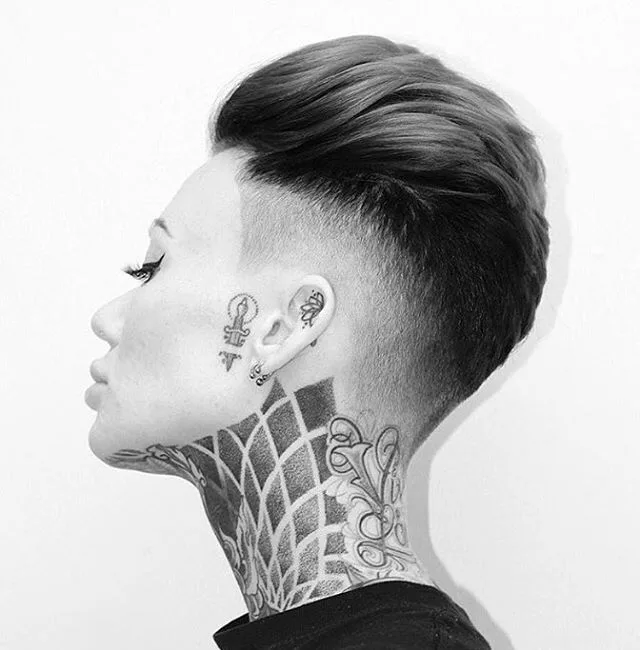
If you have a tattoo on the side of your neck or behind your ear, a side shave is the haircut that finally lets it be seen: the shaved section frames the tattoo instead of covering it, and the long hair on the other side keeps the look balanced. It is a pairing that feels intentional, like the haircut was designed around the ink — and for many women, the tattoo was the reason they got the shave in the first place. The shave can even be shaped to follow the tattoo’s outline, so the two work as one design.
Who it suits best: women with a neck, ear or nape tattoo they want to show off, at least some of the time. How to style it: wear the long side swept away from the tattoo, and keep the shaved side clean so nothing competes with the ink. Upkeep and regrowth: the shave needs regular tidy-ups to keep the tattoo visible, and the skin should be moisturised — freshly shaved skin and a tattoo both benefit from a light, fragrance-free moisturiser. Common mistake: shaving over a fresh tattoo, which can damage the ink; wait until the tattoo is fully healed, usually four to six weeks, before shaving near it. What to ask your barber: to shape the shave around the tattoo rather than through it.
36. Side Shave with a Single Long Side

The single long side is the purest form of the side shave: all of the length on one side, all of the edge on the other, with nothing in between to soften the contrast. The long side falls in one heavy, glossy sweep past the shoulder, and the shaved side is clean and graphic — and the asymmetry is so strong that the cut needs almost no styling to make an impact. It is a look that suits a deep side part and a confident attitude, and it is the version that most people picture when they hear the words “side shave”.
Who it suits best: women with long, straight or wavy hair who like a dramatic, graphic look. How to style it: part the hair deeply on the shaved side, sweep the long side over, and let it fall in one unbroken line. Upkeep and regrowth: the single long side is easy to maintain, since there is only one long section to care for, but the shave needs its regular tidy-ups to keep the contrast sharp. Who should think twice: women who like to change their part often, because this cut only works with the part on one side. Common mistake: letting the long side get too heavy, which can pull the part out of place — a few long layers keep it moving. Quick verdict: maximum contrast, minimum fuss.
37. Asymmetrical Side Shave
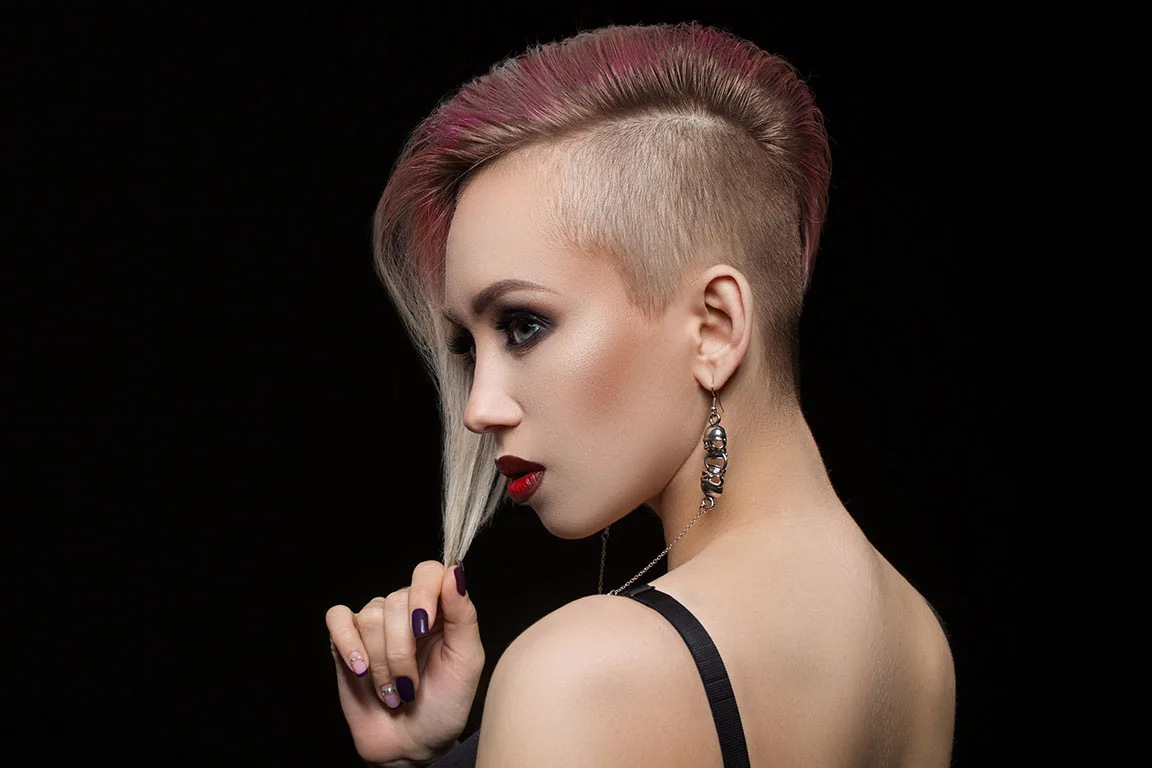
An asymmetrical side shave takes the basic idea and pushes the imbalance further: the long side is cut at an angle, longer at the front and shorter at the back, or longer on one side of the face than the other, so the whole cut is deliberately uneven. The asymmetry makes the style feel modern and fashion-forward, and it flatters the face by drawing the eye diagonally rather than straight across. It is a cut that looks different from every angle, which is exactly the point.
Who it suits best: women with straight hair, where the angled line reads clearly, and anyone who likes a cut with a strong shape. How to style it: blow-dry the long side smooth so the angle is visible, and keep the shaved side crisp. Upkeep and regrowth: asymmetrical cuts lose their shape faster than symmetrical ones, so book a trim every four to six weeks to keep the angle sharp. Common mistake: cutting the asymmetry too extreme on the first try — start with a gentle angle and go bolder at the next appointment if you love it. What to ask your stylist: to show you the angle from the front and the side before cutting, so you can agree on how dramatic it should be.
38. Grown-Out Side Shave Transition Style
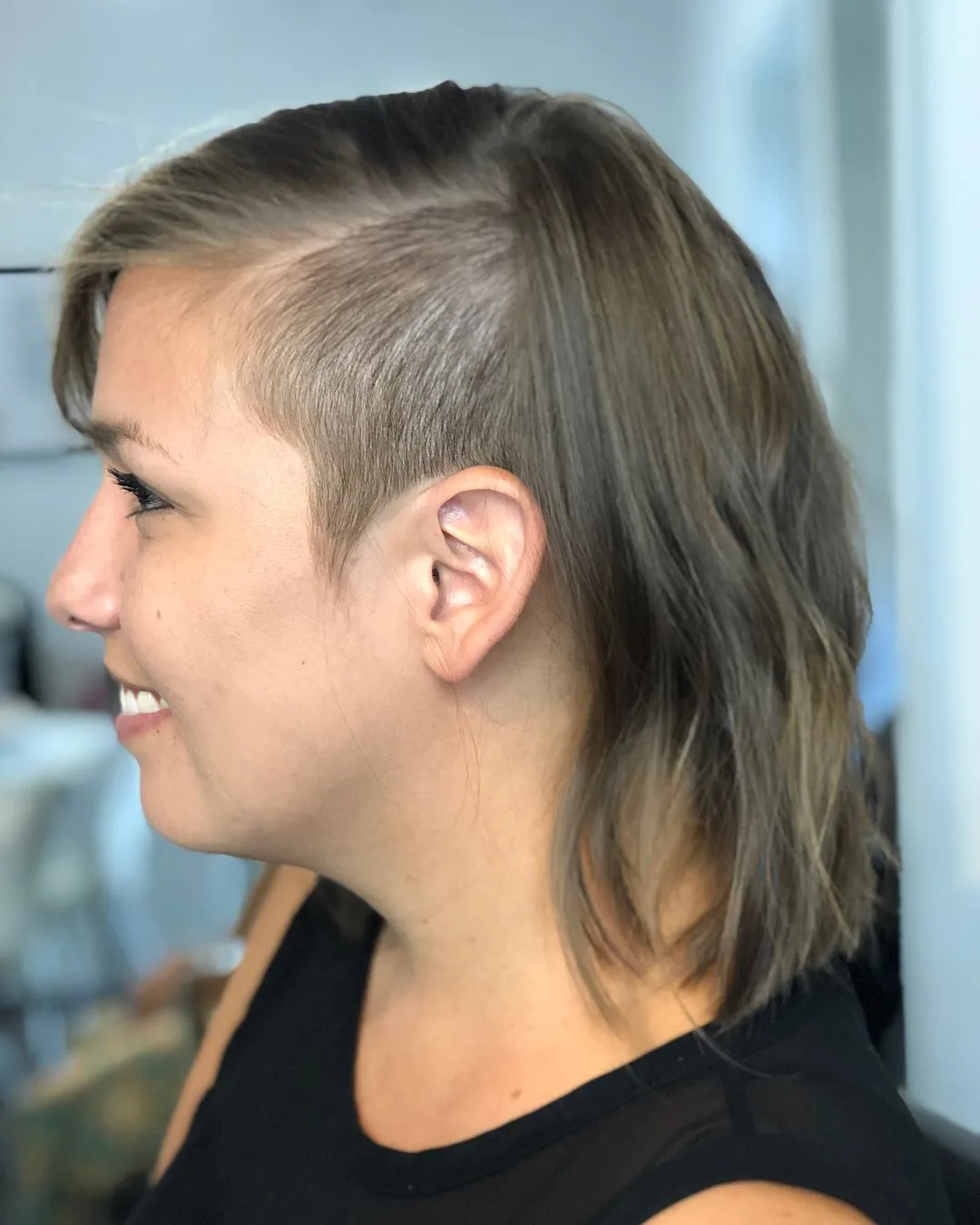
The grown-out transition style is the side shave’s second act: the shaved section is a few inches long, the long side is still long, and the cut is on its way to becoming something else — a bob, a pixie, a layered cut. It is a style in its own right, not just a waiting room, and it can look wonderful if it is shaped rather than simply left alone. A good stylist can blend the growing side into the long side with layers, so the transition looks like a choice rather than an accident.
How to style it: use pomade or gel to slick the growing side flat, or pin it back with bobby pins that match your hair colour. Who it suits best: women who loved their side shave but are ready for a change, and who want the change to look good at every stage. Upkeep and regrowth: this is the regrowth stage itself, so the work is in the blending — a trim every four to six weeks to shape the growing side as it catches up. Common mistake: giving up and shaving it all off again, or cutting the long side short in frustration — a few months of patience and a good stylist will get you to a whole new cut. What to ask your stylist: for a grow-out plan with a target style in mind, so every trim is moving toward something.
39. The Subtle Side Shave for First-Timers
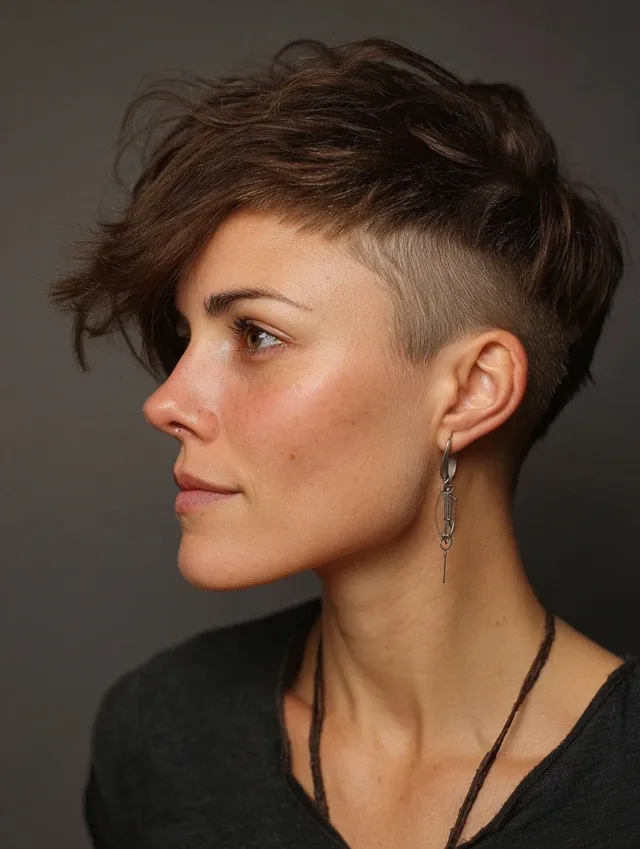
If you have never had a side shave, this is the one to start with: a narrow, low shave, hidden behind the ear, that only shows when you tuck your hair back or wear it up. It is the gentlest possible introduction — a whisper of a shave rather than a shout — and it lets you test how the cut feels, how the regrowth looks, and how you feel about the attention it gets, without committing to anything dramatic. Most women who start here either stay here, because the subtle version suits them perfectly, or go bolder at the next appointment, because they wish they had done it sooner.
Who it suits best: first-timers, the nervous, and anyone who wants to try the cut without telling the whole world. How to style it: wear your hair down as normal, and tuck it behind your ear when you want the shave to show. Upkeep and regrowth: a subtle shave is the easiest to maintain and the easiest to grow out — a few weeks and it is gone if you change your mind. Common mistake: going too subtle, so the shave is invisible even when you want it seen — if you want it to show sometimes, make sure it is wide enough to peek out when the hair is tucked back. What to ask your barber: for a narrow shave just above and behind the ear, with a soft edge rather than a hard line. Quick verdict: the side shave with training wheels — and the smartest place to start.
How long does a side shave take to grow out?
A side shave takes about three to six months to grow out fully, depending on how wide and short it was and how fast your hair grows. The awkward stage, when the hair sticks out sideways, lasts about four to six weeks; pomade, bobby pins and a deep side part will get you through it.
Can I hide a side shave for work?
Yes. Part your hair over the shaved side and wear it down, and the shave is completely invisible. A narrow, low shave is the easiest to hide; a wide, high shave is much harder to cover, so choose the width with your workplace in mind.
How often do I need to trim a side shave?
Every one to two weeks if you like it razor-sharp, or every three to four weeks if you are happy with a softer, grown-in look. A tidy-up is a ten-minute barber visit, not a full salon appointment.
Does a side shave suit round faces?
Yes — round faces often suit a side shave best. The long side creates a vertical line that lengthens the face, while the shaved side stops volume building up on both sides at once. Pair it with waves or a side sweep for the most flattering effect.
Will shaving one side damage my hair?
No. Shaving does not change the hair follicle, and the hair does not grow back thicker — it only feels stubbly because the cut ends are blunt. The long side of your hair is completely unaffected by the shave.
Can I get a side shave with curly hair?
Yes, and it often works beautifully. The shave removes bulk from one side, which stops curly hair looking triangular, and the curls on the long side look fuller by contrast. Ask for the shave to be cut on dry, natural curls, not wet and stretched.
What should I ask my barber before a side shave?
Ask how wide and how high the shave will be, and have the barber mark the line with a comb before any clippers come out. Bring a photo of the exact look you want, and agree on whether you want a fade, a single length, or a design in the shave.
Can I colour the shaved side a different colour?
Yes — colouring only the shaved section is one of the easiest ways to try vivid colour. It is cheap and quick, it hides under the long side when you want it to, and it can be changed at every trim. Bright colours fade fast on short hair, so expect to top them up often.
Is a side shave a good idea for women over 50?
Yes. A side shave has no age limit, and on silver or grey hair the contrast can be striking. A softer, narrower shave with a polished long side is the most flattering version for mature hair, and it is just as easy to hide for formal occasions.
What is the best side shave for a first-timer?
A narrow, low shave just above and behind the ear, hidden when the hair is down and visible when it is tucked back. It is the easiest to live with, the easiest to grow out, and the best way to find out whether you want to go bolder next time.
Conclusion
A side shave is a small cut with a big personality: one side soft and long, the other bold and close, and the contrast between them doing all the work. It is the most versatile bold haircut there is, because it can be a secret or a statement depending on how you wear your hair that day — hidden under a side part for work, on full display in a high ponytail at the weekend, and anything in between. It suits long hair and short hair, curls and straight hair, vivid colour and natural colour, and women of every age who like their hair with an edge.
If you are thinking about it, start subtle: a narrow, low shave, a photo for your barber, and a plan for the upkeep. Wear it for a month and see how it feels — most women who try a side shave either keep it for years or go bolder at the next appointment, and very few wish they had never tried it. The long side is still there, the shave will grow out if you change your mind, and the confidence that comes with it is the real reason to do it. One side shaved, all attitude — and all yours.