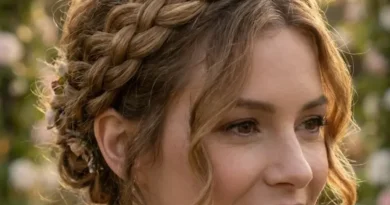
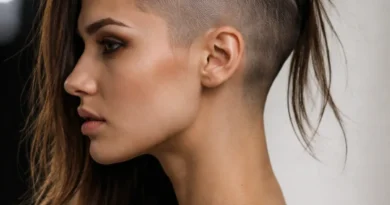
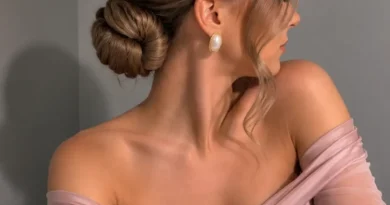
Silk Press Season: 36 Sleek, Shiny Styles That Show Off Your Smoothest Hair Ever
There is a particular feeling that comes with a fresh silk press — the first time you run your fingers through your hair and it falls straight through, the way the light catches it when you turn your head, the swing of it as you walk. It is the fresh-from-the-salon feeling, bottled: hair that looks healthy, feels soft, and moves like it has somewhere to be. A silk press does not just straighten hair. It changes how you carry yourself for a week or two, and that is why women book one before weddings, holidays, job interviews, and ordinary Tuesdays that deserve a little shine.
This guide is built around that feeling. You will find 36 silk press hairstyles for women — from the classic straight press to bobs, lobs, bangs, layers, ponytails, wedding styles and glass-hair shine — plus eight guides that cover what a silk press actually is, how long it lasts, how to keep it smooth in humidity, and how to protect your hair from heat damage. Every style notes what it costs, how long it takes, who should skip it, and how to keep it looking good, so you can choose the press that fits your hair, your week, and your life.
What a Silk Press Actually Is
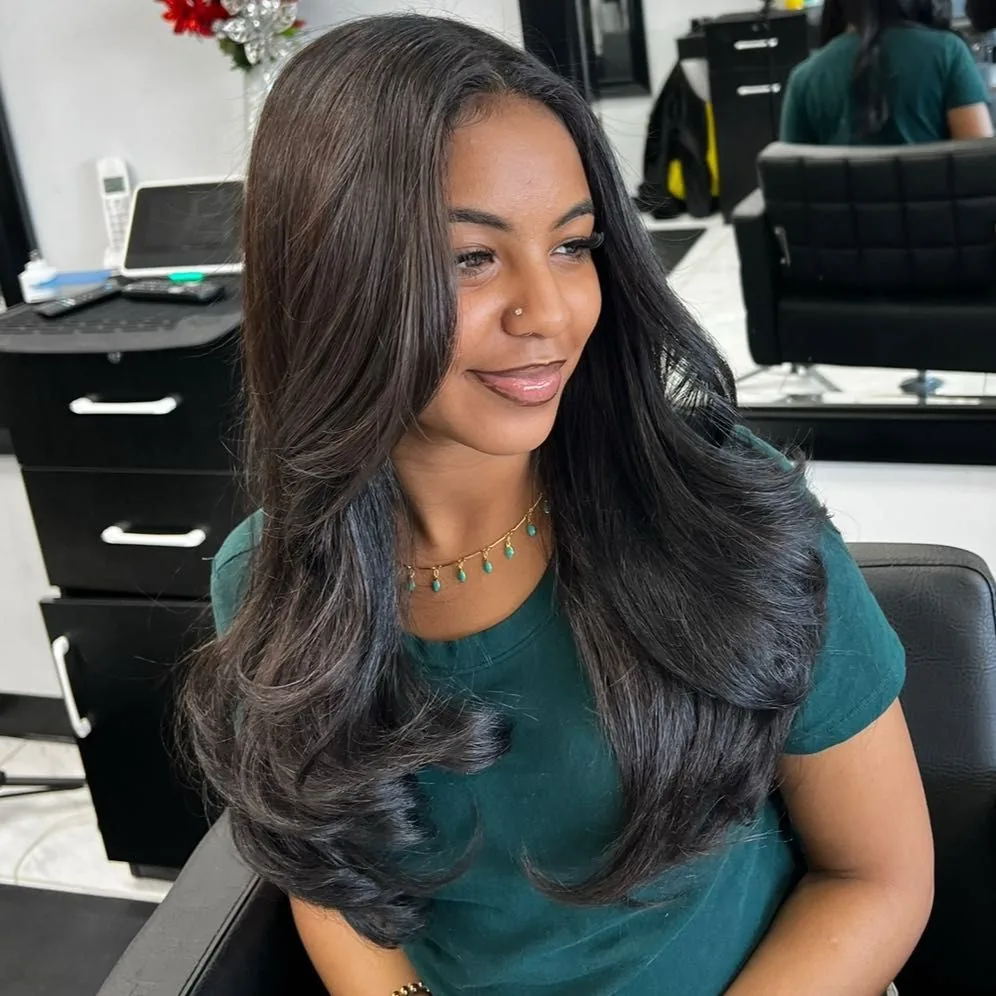
A silk press is a heat-styling technique that turns textured or curly hair into a smooth, straight, silky finish — without a chemical relaxer. A stylist washes and deep-conditions the hair, blow-dries it straight, then passes a flat iron through small sections at a controlled temperature, sealing the cuticle so the hair falls with movement and a glass-like shine. The name comes from the result: hair that looks and feels like silk, soft to the touch and light enough to swing.
Unlike a relaxer, a silk press is temporary. Your natural curl pattern is not changed permanently; wash the hair and the curls come back. That reversibility is the whole appeal. You get the sleek look for a week or two, then your texture returns, no grow-out line and no chemical commitment. It is a styling choice, not a chemical one, and that is why so many women with natural hair book one for a special occasion, a holiday, or simply a change of pace.
Silk Press vs a Regular Flat Iron — What Is the Difference?
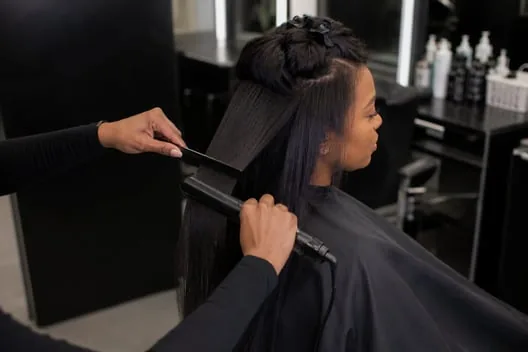
At first glance a silk press and a flat-iron session look identical — both end with straight hair. The difference is in the process and the finish. A silk press is a full service: a clarifying wash, a deep conditioning treatment, a careful blow-dry with tension, and then flat-ironing in thin sections with a heat protectant and a light serum. A quick at-home flat iron usually skips most of that, which is why it rarely looks as smooth or lasts as long.
The finish is the giveaway. A proper silk press has body, not just straightness — the hair moves, the ends have a soft bend or a clean blunt edge, and the shine comes from sealed cuticles rather than from a heavy oil sitting on top. A plain flat iron can leave hair flat, stiff, or frizzy by the next day. If you want one straightening session to last a week or more, the silk press process is what you are paying for.
How Long Does a Silk Press Last?
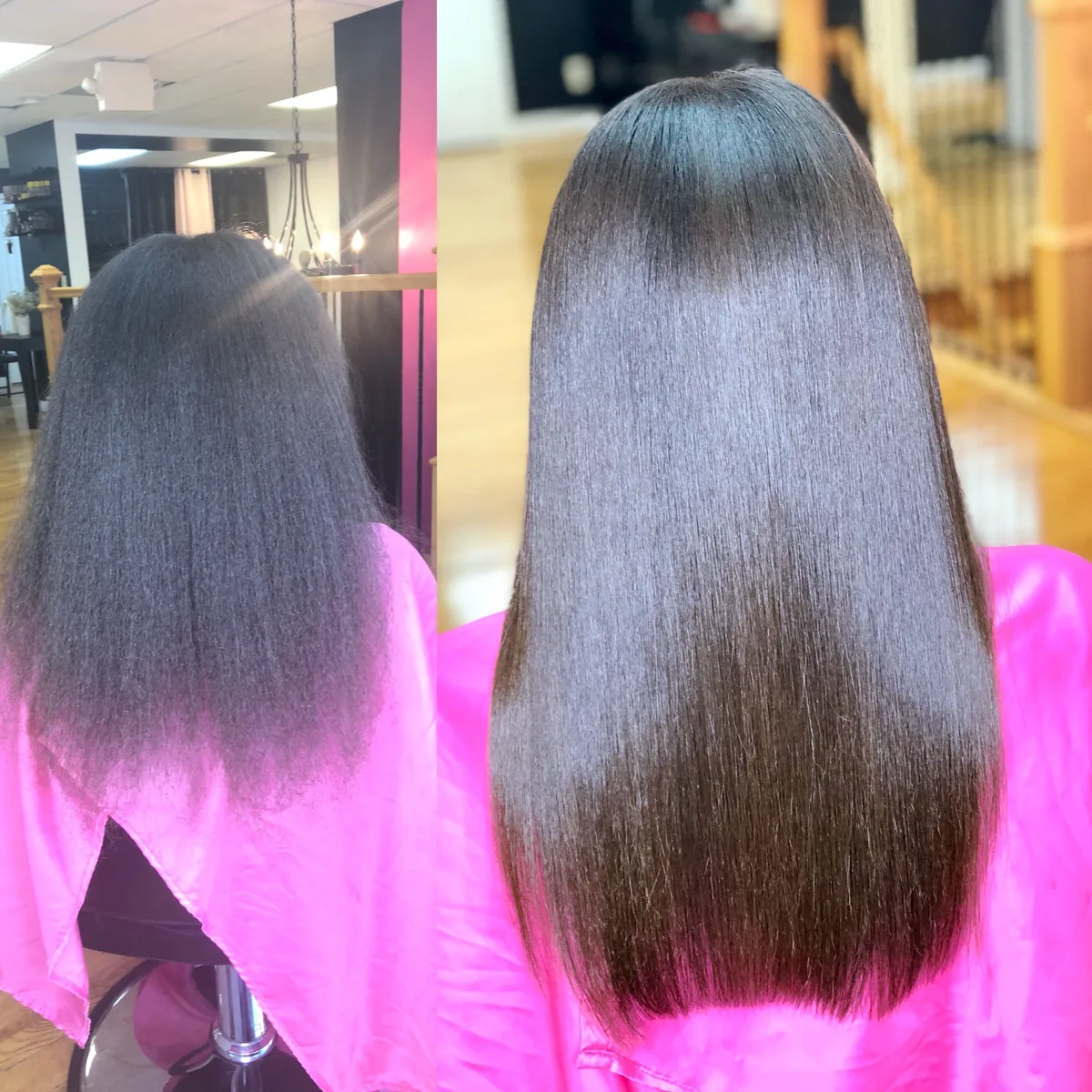
A silk press typically lasts one to two weeks, and the honest answer depends on your hair, the weather, and how you look after it. On fine to medium hair in dry weather, two weeks is realistic. On thick, coily hair or in a humid week, expect closer to seven to ten days before the roots start to puff and the ends lose their polish. Sweat, steam, rain and sleeping unprotected are the four things that shorten a press fastest.
You can stretch it by wrapping your hair at night, avoiding water on the hairline, and using a light anti-humidity spray rather than heavy oils. Dry shampoo at the roots buys an extra day or two. When the new growth starts to revert and the ends feel dry, it is time to wash and start again — pushing a press past its life usually means more heat to fix it, which defeats the purpose. Two weeks is a good press; anything beyond that is a bonus.
Humidity-Proofing Your Press — Keeping the Frizz Away

Humidity is the silk press’s natural enemy. Moisture in the air slips under the cuticle, the hair swells, and the smooth finish turns puffy — usually at the roots and the hairline first. The defence starts in the salon: a good stylist seals the cuticle with heat and finishes with an anti-humidity serum. Your job afterwards is to keep moisture out, which means a light silicone-based serum on the lengths, an edge control on the hairline, and no water near the hair unless you are ready to wash it.
On a humid day, a low bun or a silk scarf buys you hours. If you are caught in rain, do not try to re-flat-iron damp hair — let it dry completely first, then smooth only the sections that need it, with heat protectant. The biggest mistake is piling on oil: heavy oils attract dust and weigh the hair down without actually blocking humidity. A pea-sized amount of serum, a satin scarf, and realistic expectations will keep a press looking good through most weather.
Silk Press on Natural Hair vs Relaxed Hair
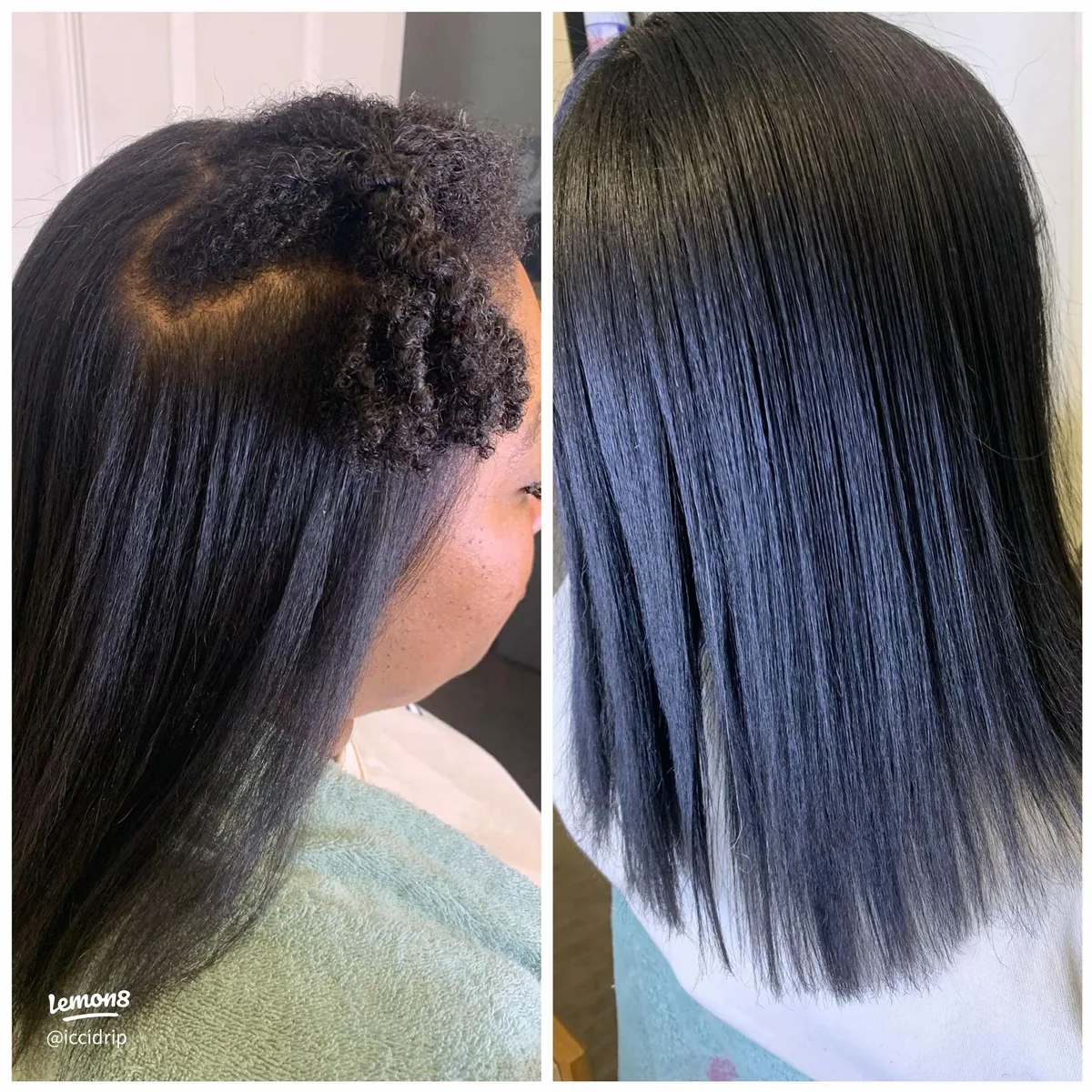
A silk press works on both natural and relaxed hair, but the starting point is different. On natural hair, the stylist is straightening a curl pattern with heat alone, so the press shows off the contrast between your texture and the sleek finish — and it is also where heat damage is the biggest risk, because the temperature has to be high enough to straighten coily hair. On relaxed hair, the hair is already chemically straightened, so the press is more of a polish: less heat, less time, and a finish that tends to last a little longer.
The care differs too. Natural hair needs the most protection — a heat protectant on every section, thin passes, and a stylist who checks the hair’s elasticity before turning the iron up. Relaxed hair needs the most moisture, because it is already processed and can go limp or dry if it is over-ironed. Either way, tell your stylist which you have and how often you press; a good stylist adjusts the temperature to the hair in front of them, not to a standard setting.
Heat Damage and How to Avoid It
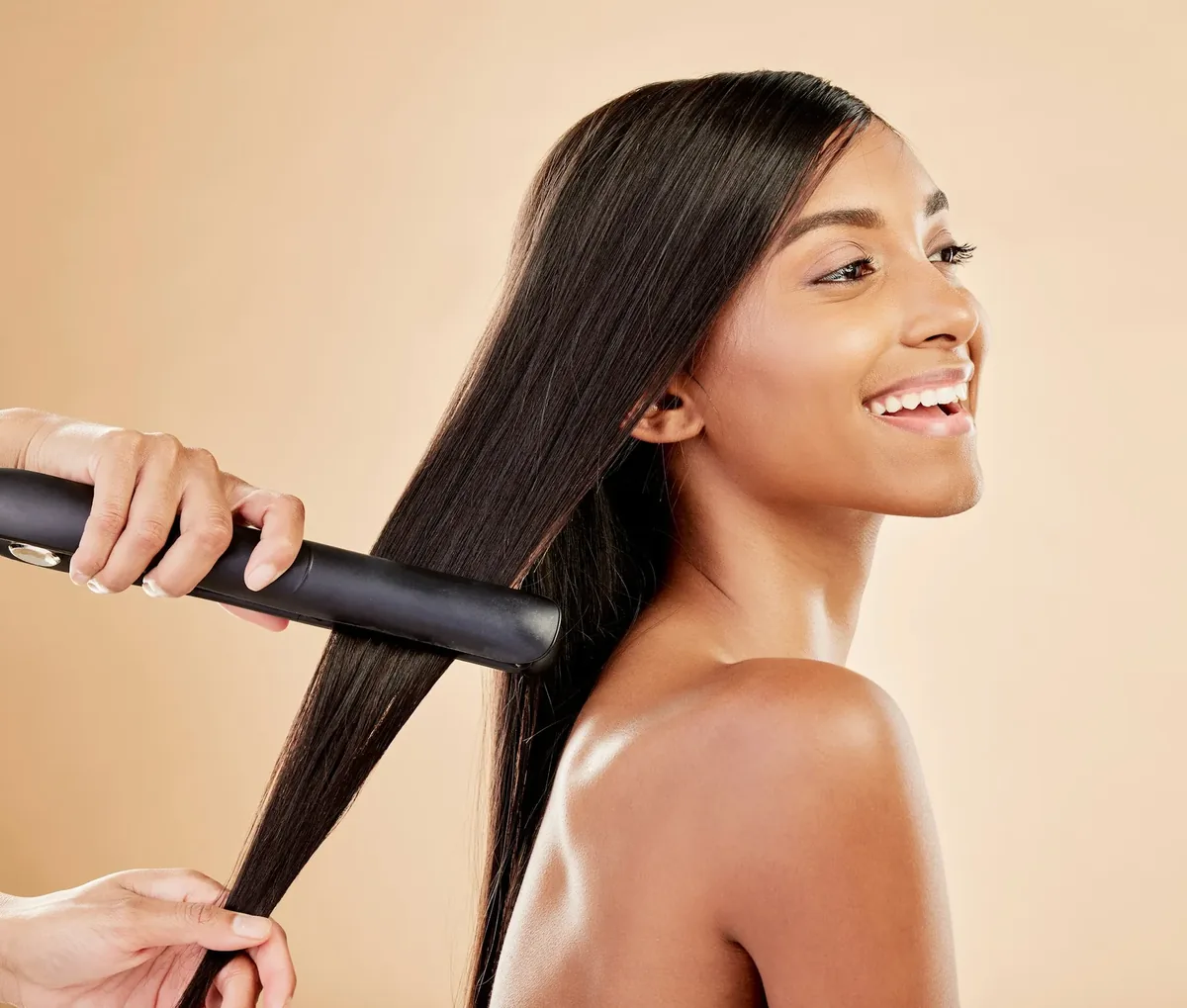
Heat damage is the real risk of a silk press, and it is worth understanding before you book. When hair is heated past its tolerance — usually above 400°F, or the same section passed over too many times — the protein structure changes and the curl pattern may not bounce back after washing. The warning signs are straight pieces that stay straight after a wash, hair that feels mushy when wet, and ends that split no matter how much you trim.
Avoiding it is mostly about limits. Press no more than once every two to three weeks, and give your hair a break between presses. Insist on heat protectant, ask the stylist to use the lowest temperature that works, and never let anyone flat-iron hair that is still damp. Between presses, deep-condition weekly and keep the ends trimmed. A silk press should leave your hair looking healthier than it did before — if it does not, the heat was too high or too frequent, and your curls are telling you to slow down.
At-Home Silk Press Basics — Can You Do It Yourself?
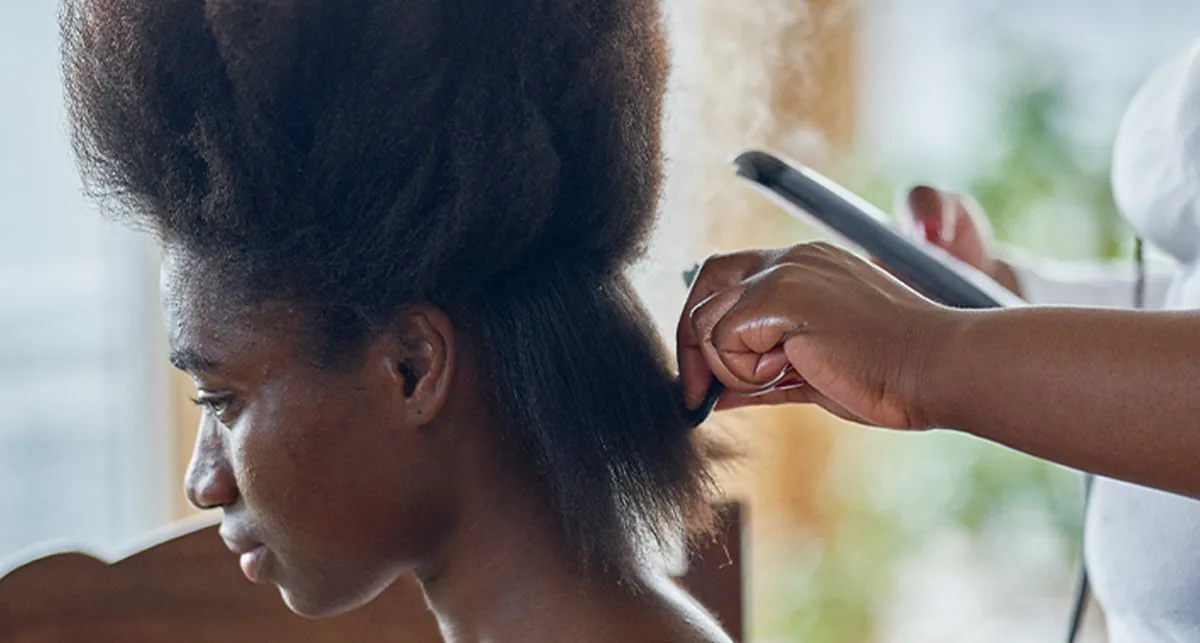
You can do a silk press at home, but be honest about the learning curve. The salon version looks better for a reason: a stylist can see the back of your head, work in thin sections, and keep the iron moving at a steady speed. At home you are working blind on the back sections, and the most common result is a press that looks great at the front and wavy at the back. If you do try it, set aside two to three hours and work in small sections — patience matters more than the iron you own.
The basics: start with freshly washed, deep-conditioned hair; blow-dry it straight with a paddle brush or a blow-dry brush; apply heat protectant to every section; and use a flat iron with adjustable temperature, one slow pass per section. A chasing comb — a fine-tooth comb held ahead of the iron — is the trick that makes home presses look professional. And know when to stop: if a section is not straight after two passes, it needs more tension or a slightly higher temperature, not a third pass at maximum heat.
Wrapping Your Hair at Night — The Press-Saver

Wrapping your hair at night is the single easiest way to make a silk press last, and it costs nothing. The wrap — hair smoothed around the head in a circular motion and held with a silk or satin scarf — keeps the hair flat, stops it from bending at the pillow, and protects the shine. Cotton pillowcases pull moisture out of the hair and create friction; silk and satin do neither, which is why the scarf matters as much as the wrap itself.
To wrap, brush the hair smooth, sweep it around your head in one direction, and pin or tuck the ends flat. Tie a silk scarf snugly over it, or use a satin bonnet if wrapping feels fiddly — a bonnet is less perfect but far better than nothing. In the morning, unwrap, brush through gently, and add a drop of serum if the ends look dry. Skip the wrap for one night and you will see the difference: creases at the back, puff at the roots, and a press that looks a day older than it is.
1. The Classic Silk Press
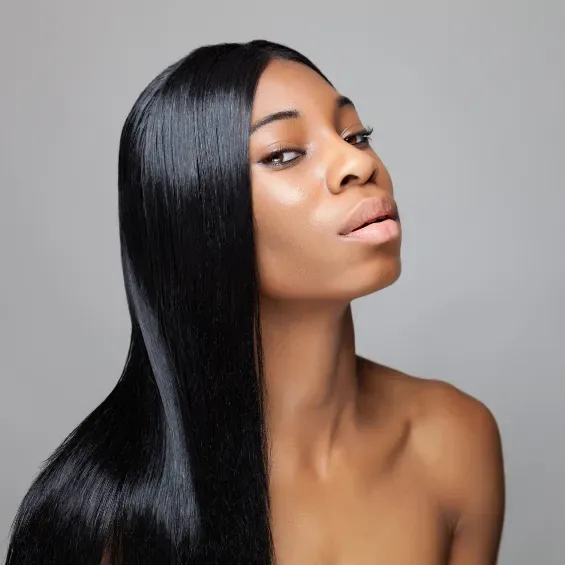
The classic silk press is the one that started it all: hair washed, blow-dried and flat-ironed into a smooth, straight fall with a soft bend at the ends and a shine you can see from across the room. There is no colour, no layers, no drama — just healthy-looking hair at its glossiest, parted in the middle or on the side and left to move. It is the silk press in its purest form, and it is still the most requested version in salons.
Quick verdict: if you are getting your first silk press, start here. It shows off the technique itself, it suits almost everyone, and it is the easiest version to maintain. Cost: roughly $60–$120 at a salon depending on length and thickness; time: 2–3 hours.
2. Silk Press with a Middle Part
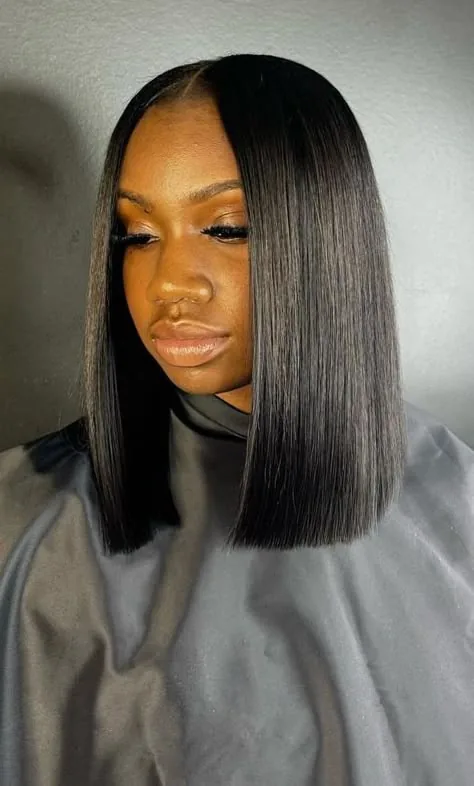
A middle part turns a classic silk press into something sharper and more modern. The hair falls in two equal, glossy curtains, the symmetry draws the eye to the face, and the whole look feels clean and deliberate. It works best on hair that is all one length, because the even fall shows off the shine, and it pairs beautifully with a bold lip or statement earrings, since nothing competes with the face.
Pros: striking symmetry, maximum shine on display, and a look that photographs beautifully. Cons: a centre part is unforgiving if your hair is thin at the crown, and it can emphasise a round face. Common mistake: parting the hair while it is still damp and then ironing over a crooked line — part it after the blow-dry, when you can see exactly where it falls.
3. Silk Press with a Deep Side Part
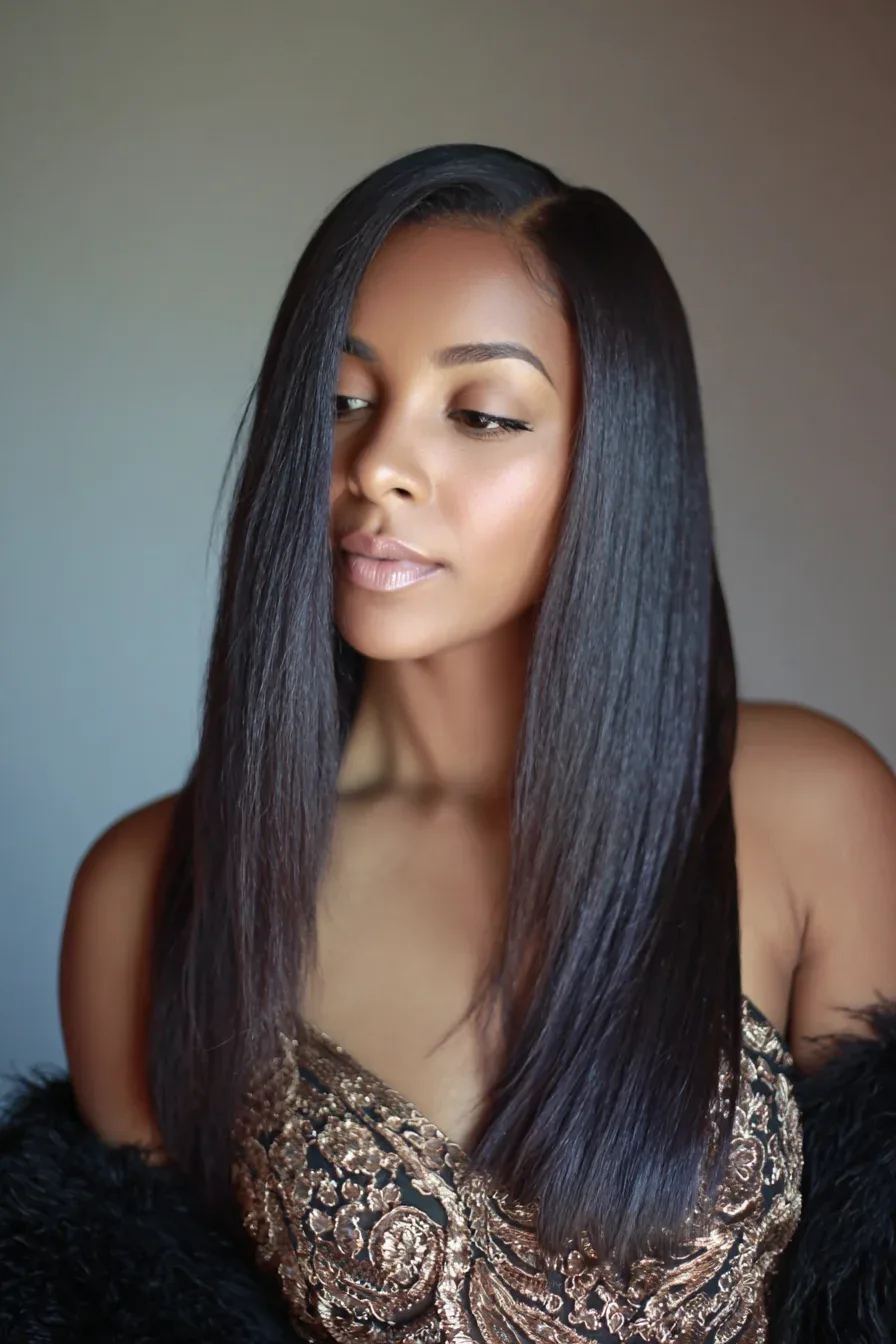
A deep side part gives a silk press instant glamour. One side sweeps heavily across the forehead, the other tucks neatly behind the ear, and the asymmetry adds volume and movement that a middle part cannot. It is the old-Hollywood version of the press, and it flatters round and square faces in particular, because the diagonal line breaks up the symmetry of the face.
How to style it: part the hair two or three inches off centre while it is damp, blow-dry the heavy side over in the direction you want it to fall, and iron the front section last so the sweep sets in place. Set the sweep with a clip while it cools. What to ask your stylist for: a part that sits far enough over to create real volume, and ends that curve under slightly so the sweep does not fall flat.
4. The Silk Press Bob
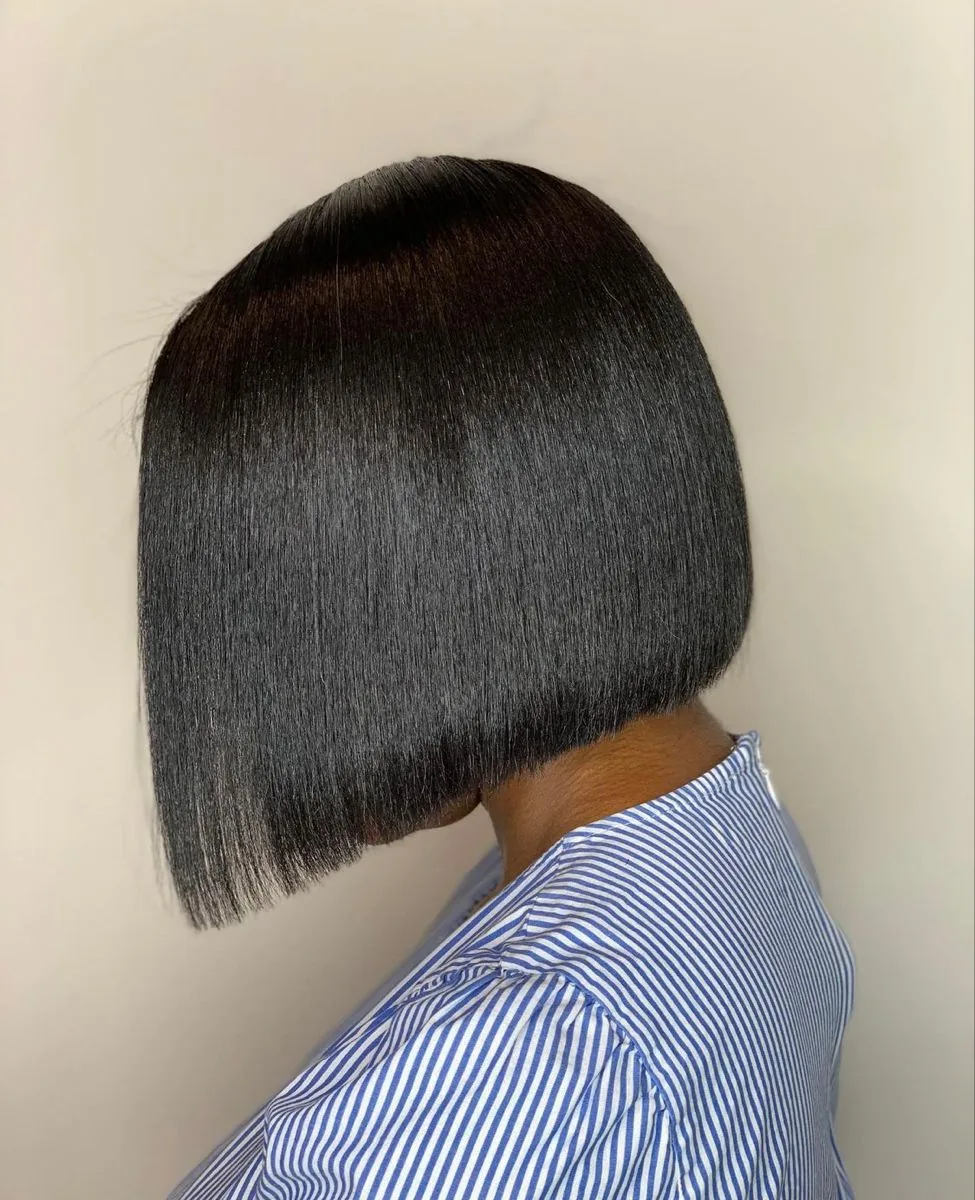
A silk press bob is pure polish: a chin- or jaw-length cut, pressed until every strand lies flat and glossy, with ends that curve under in one clean line. The short length makes the shine even more obvious, because there is nowhere for frizz to hide, and the style has a chic, put-together energy that longer hair cannot quite match. It is the bob for women who love a sharp silhouette.
Maintenance: a bob press shows regrowth fast, so plan a touch-up every 10–14 days, and wrap it every night — a single crease at the back is visible on short hair. Humidity tip: keep a travel-size anti-frizz serum in your bag, because short pressed hair puffs at the hairline first. Skip heavy oils; they make a bob look greasy rather than glossy.
5. The Silk Press Lob
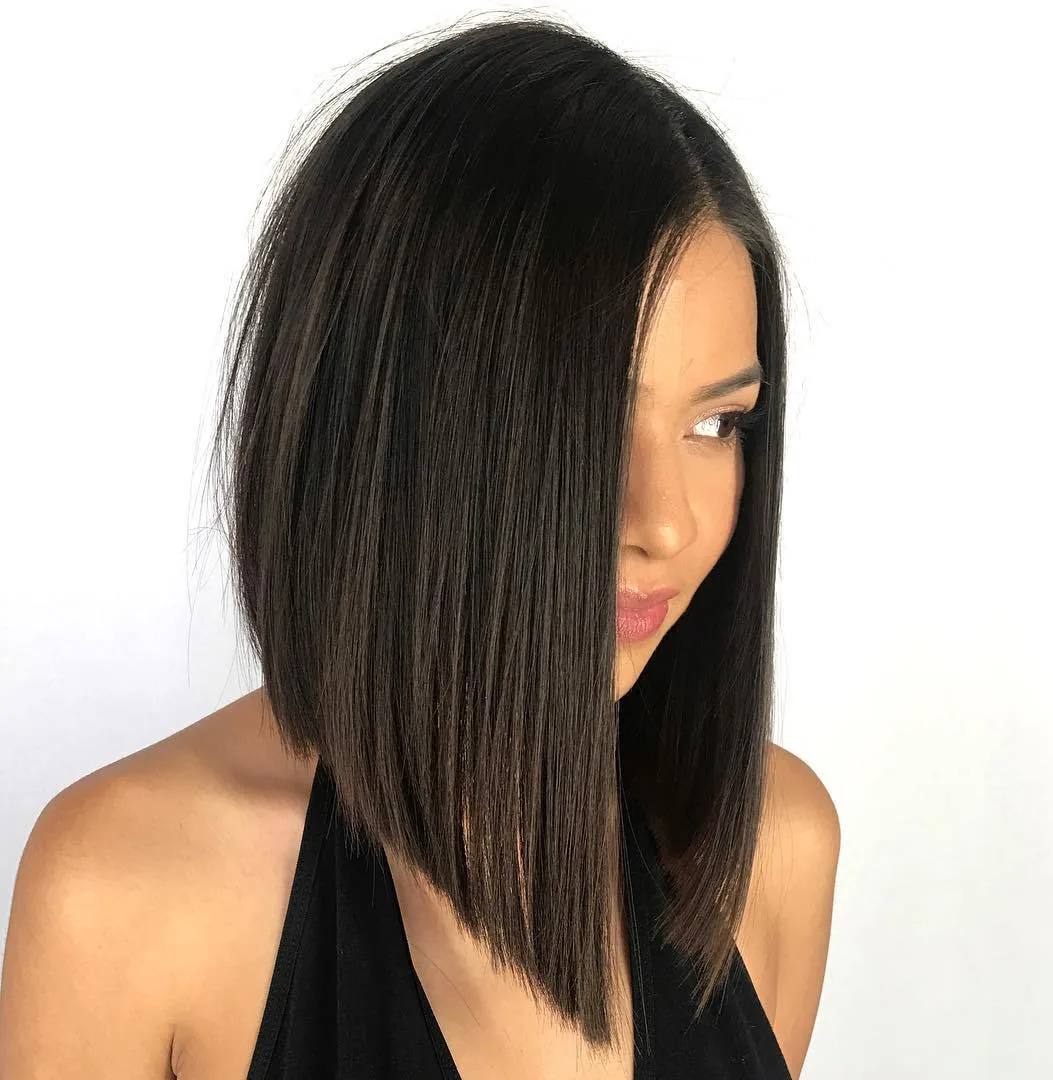
The silk press lob — the long bob that hits between the chin and the collarbone — is the sweet spot between short and long. It has the polish of a bob with the versatility of longer hair: you can tuck it behind your ears, pull it into a low ponytail, or wear it loose and let it swing. Pressed, the lob falls in one smooth sheet, and the length is long enough to show movement but short enough to keep the shine.
Cost and time: a lob press usually runs $70–$130 and takes about 2–2.5 hours, slightly less than a long-hair press because there is less hair to work through. It is also one of the cheapest styles to maintain, since it needs fewer products and dries faster. Quick verdict: the most versatile pressed length — short enough to feel fresh, long enough to style.
6. Silk Press with Curtain Bangs
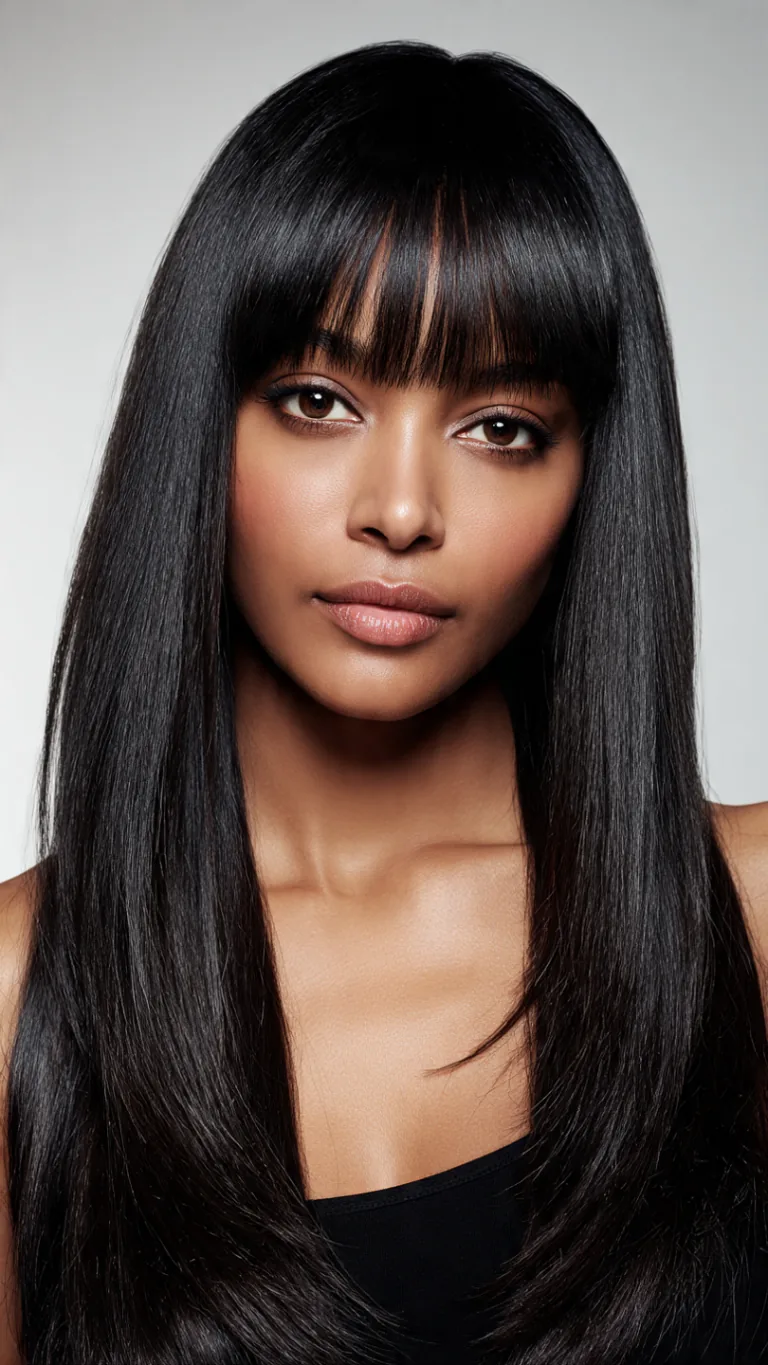
Curtain bangs and a silk press are a natural pair. The bangs are pressed with the same smooth finish, parted in the middle, and swept to either side of the face like curtains, softening the forehead while the rest of the hair falls straight and glossy. The combination feels romantic and modern at once, and it flatters almost every face shape because the bangs frame the face without hiding it.
Who should skip it: if your hairline frizzes at the first sign of sweat, curtain bangs will be the first thing to revert — they sit right where perspiration and humidity hit. Also skip them if you dislike styling your fringe every morning, because pressed bangs need a quick pass with the iron or a round brush to look right. Everyone else: they are a low-commitment way to change a press completely.
7. Silk Press with Face-Framing Layers
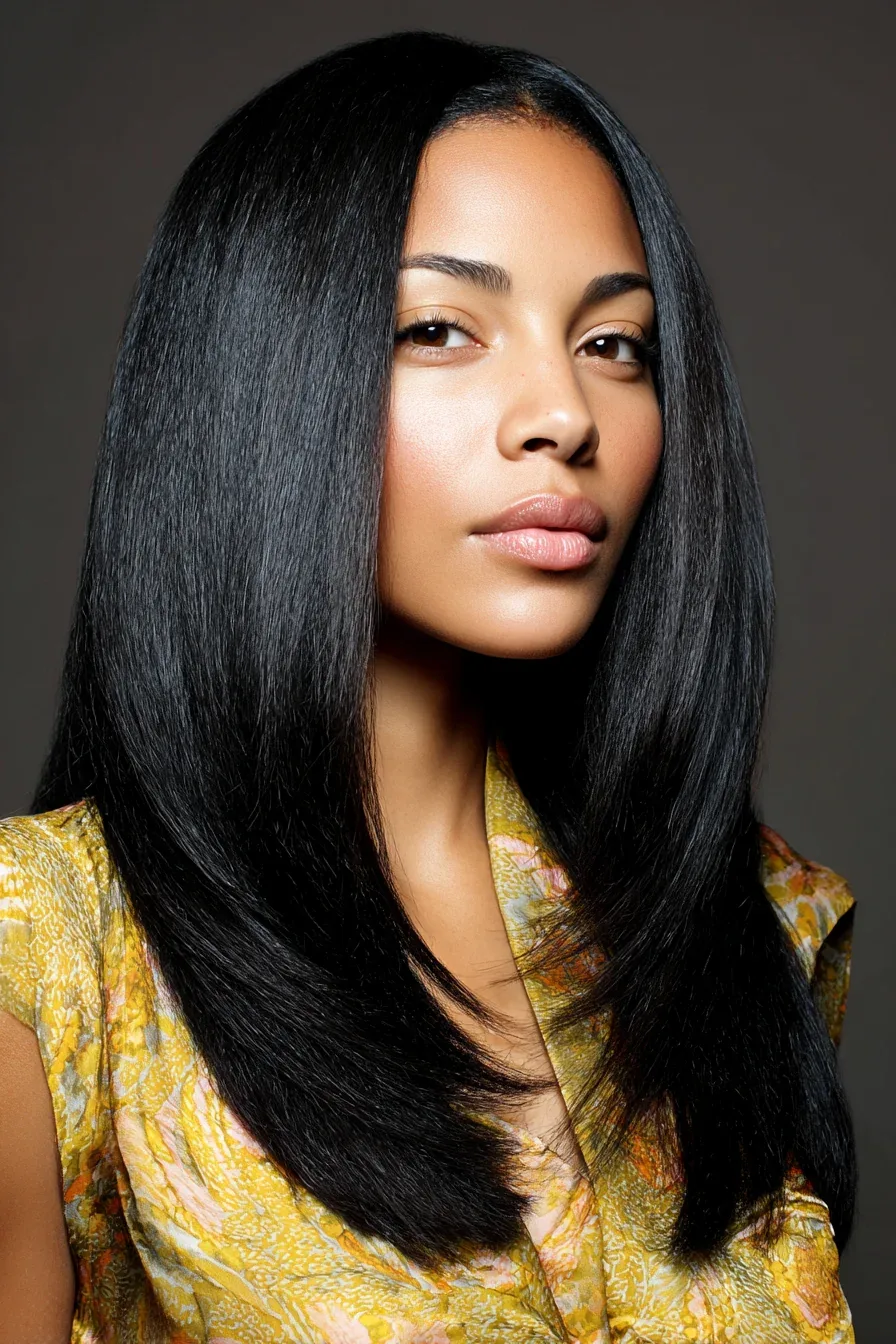
Face-framing layers turn a straight silk press into a style with shape. The front layers are cut shorter, starting at the cheekbone or jaw, and when they are pressed they curve gently toward the face, giving the hair movement and dimension instead of one flat sheet. It is the best pressed style for women who find a blunt, all-one-length press a little severe.
How to style it: blow-dry the front layers with a round brush, turning the ends under slightly, then iron them in the same direction so they fall toward the face. What to ask your stylist for: layers that start at the cheekbone, not the chin, so the framing is visible even when the hair is pulled back. Maintenance is easy — the layers hide regrowth better than a blunt cut.
8. Silk Press with Feathered Ends
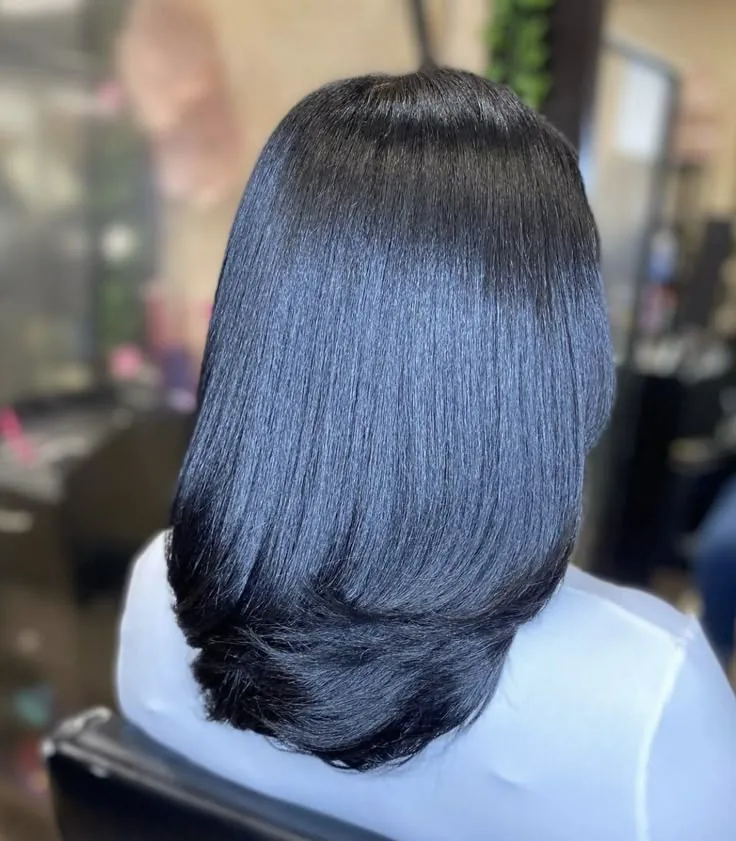
Feathered ends give a silk press a soft, airy finish. Instead of a blunt edge, the ends are thinned and flicked outward slightly, so the hair looks light and moves when you turn your head. It is a 1970s-inspired touch that works beautifully on medium to long hair, and it stops a long press from looking heavy or flat at the bottom.
Pros: movement, lightness, and a finish that looks expensive without much effort. Cons: feathered ends need trimming every 6–8 weeks or they start to look wispy and thin, and they are harder to keep smooth in humidity than blunt ends. Common mistake: over-thinning the ends at the cut — feathering should be subtle, or the press loses its weight and shine.
9. Silk Press with Flipped Ends
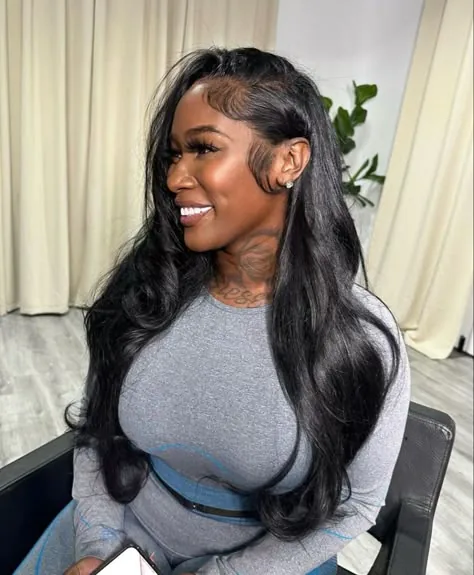
Flipped ends are the playful cousin of the classic press: the ends are turned outward with a flat iron or a round brush, giving the hair a retro, bouncy finish that feels fun rather than formal. It works best on shoulder-length to long hair, and it is the pressed style that suits a party or a night out, when you want the shine but not the seriousness.
Quick verdict: a small change with a big personality shift — the same press, flipped, reads completely differently. Time at the salon: add 15 minutes to a standard press for the flip. Cost: usually no extra charge beyond the press itself. Skip it for a job interview; save it for the weekend.
10. Silk Press with Body and Bounce
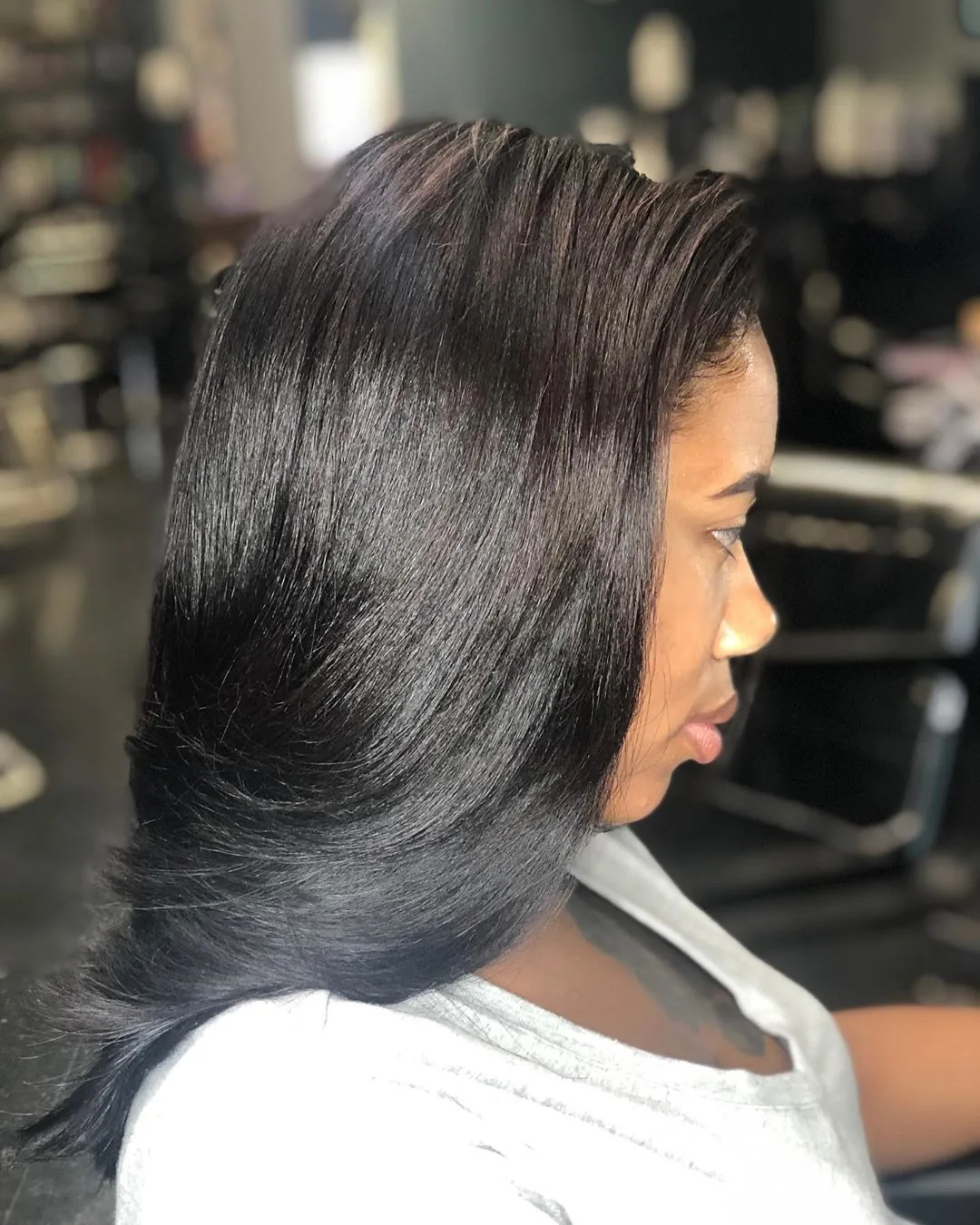
A silk press with body and bounce is the blowout version of the press: the hair is straight and smooth, but it is not flat. Large round-brush sections at the blow-dry stage give the roots lift and the lengths a soft curve, so the finished hair has volume, movement and a swing that a pin-straight press does not. It is the press for women who love shine but hate the feeling of hair plastered to the head.
Maintenance: body drops first, so refresh the roots with a round brush and a blast of cool air rather than re-ironing the whole head. Humidity tip: a volumising mousse at the roots before blow-drying helps the lift survive a damp day. Avoid heavy serums, which flatten the bounce you just paid for — use a pea-sized amount on the ends only.
11. Silk Press with Soft Curls at the Ends
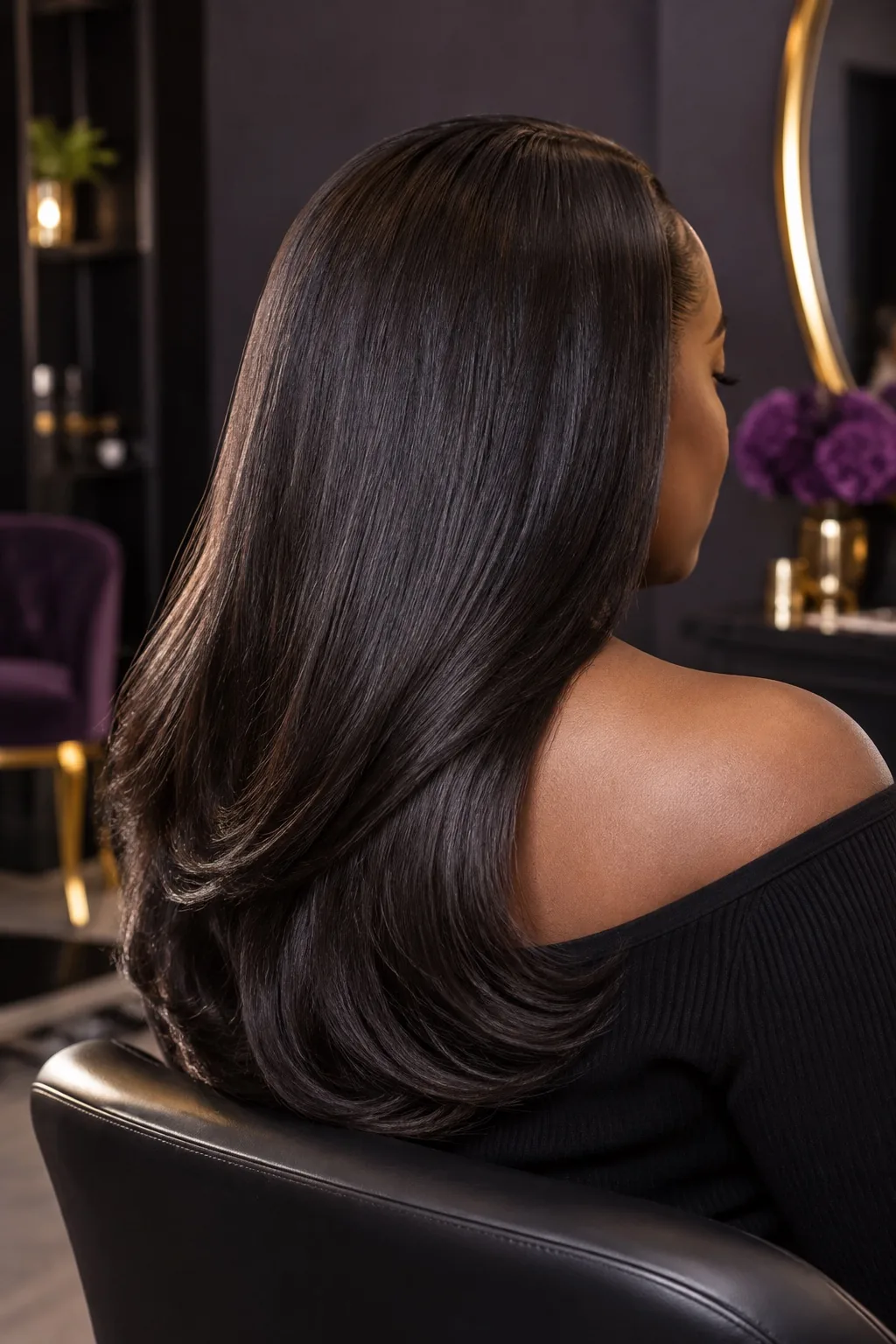
Soft curls at the ends are the romantic finish for a silk press: the top two-thirds of the hair stay sleek and straight, and the last few inches curl gently under or outward, adding shape and softness. It is the pressed style most often seen at weddings and formal events, because it has the polish of a press with the softness of a curl — and it photographs beautifully.
How to style it: press the hair straight first, then curl only the bottom 3–4 inches with a large-barrel iron, and let each curl cool in your hand before you let it drop. What to ask your stylist for: curls that start below the shoulder, so the top stays sleek. Time: add 20 minutes to a standard press. Quick verdict: the most elegant pressed finish for a special occasion.
12. Silk Press with Long Layers
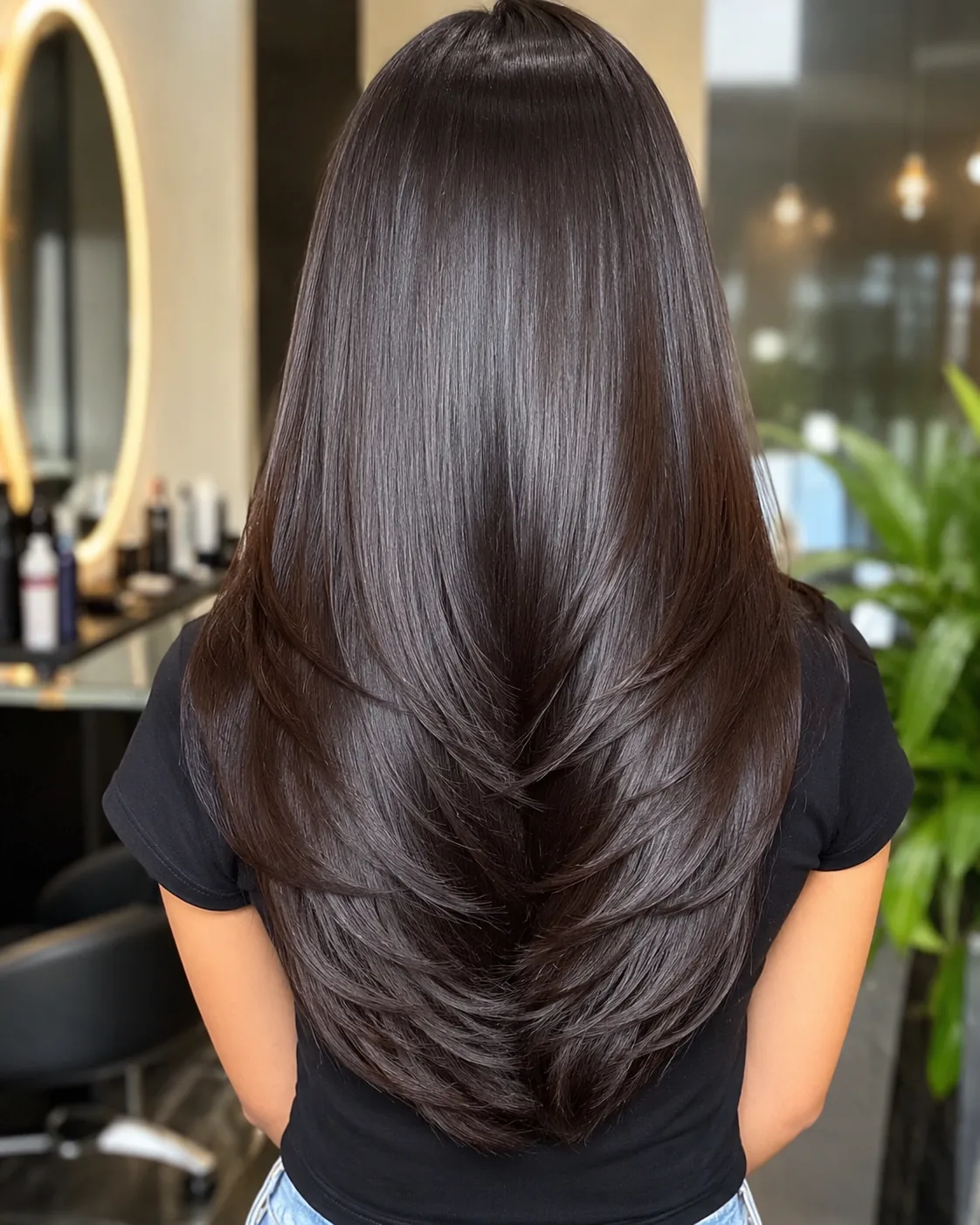
Long layers are what keep a long silk press from looking like a curtain. Cut through the lengths, they give the hair shape and movement, and when they are pressed they fall in soft, glossy tiers instead of one heavy sheet. It is the best pressed style for very long hair, because the layers take out weight without taking out length.
Cost and time: a long layered press is the priciest version — $100–$180 and 3–4 hours — because there is simply more hair to wash, dry and iron. It is worth it if your hair is long and thick; a blunt long press on thick hair can look heavy, while layers keep it light. Maintenance: trim the layers every 8–10 weeks so they keep their shape.
13. The Silk Press Pixie
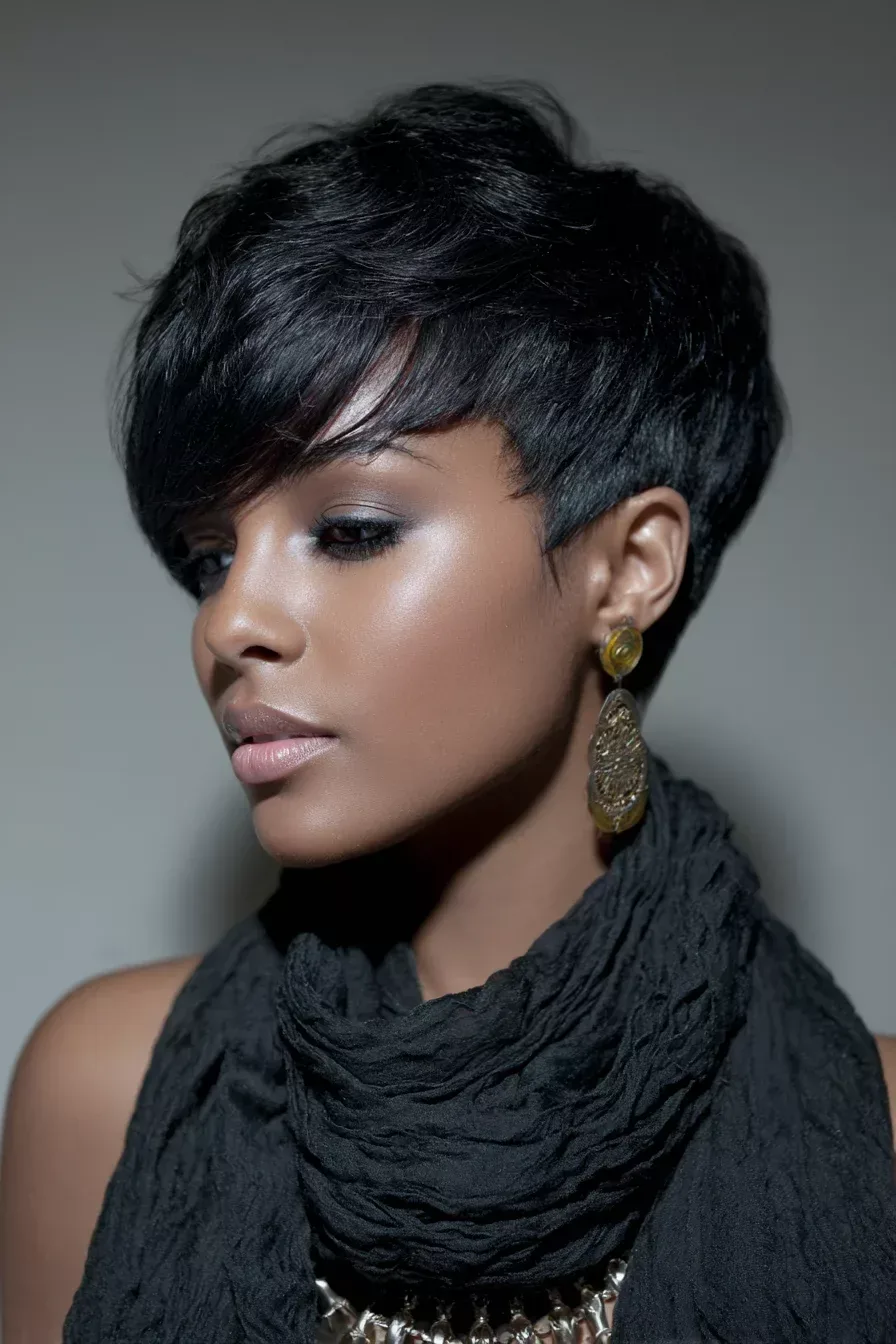
A silk press pixie is short, sleek and fearless: a pixie cut pressed until it lies smooth and glossy, with a side sweep or a textured top that shows off the shine. The short length means the press is quick, the shine is intense, and the style has a bold, confident energy. It is also the easiest press to maintain, because there is so little hair to wrap or protect.
Who should skip it: if you are not ready for a short cut, a press will not save you — the style is the cut, and growing out a pixie takes patience. Also skip it if your hair is very thick and coarse at the crown, where a pixie can puff up instead of lying flat. For everyone else, it is the lowest-maintenance press in this guide.
14. Silk Press with Blunt Ends
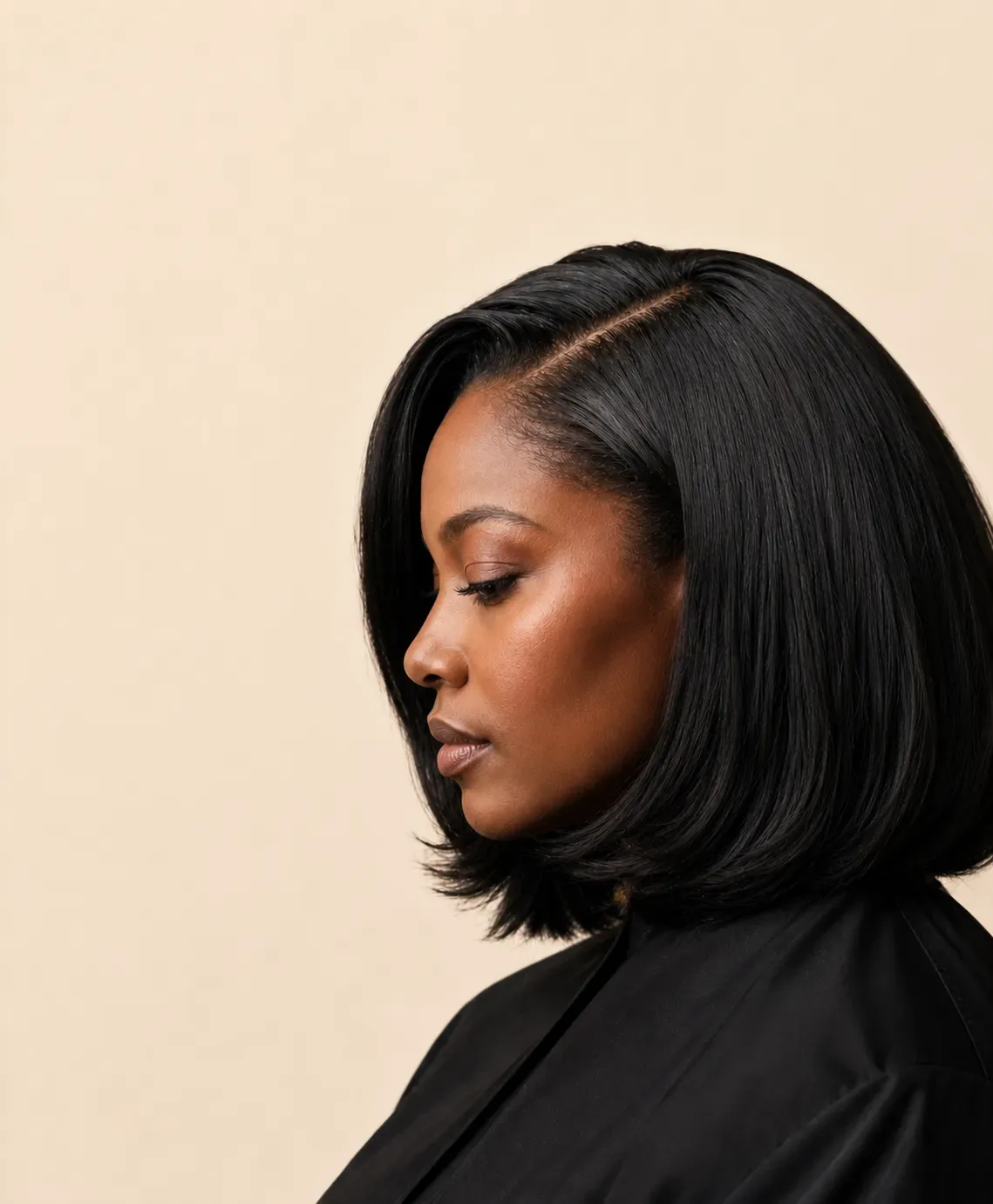
Blunt ends are the sharpest finish a silk press can have: the hair is cut straight across, pressed until the edge is one clean line, and the result is a bold, graphic silhouette. It looks expensive, it looks intentional, and it makes fine hair look thicker, because the blunt edge creates the illusion of density. It is the press for women who love a strong, modern look.
Pros: makes hair look thicker, a clean modern silhouette, and the easiest ends to keep smooth. Cons: blunt ends show damage fastest — one split end is visible — and they need a trim every 6 weeks to stay sharp. Common mistake: skipping the trim and pressing over split ends; the iron seals them in, but they still show. Quick verdict: bold, polished, and high-maintenance at the ends only.
15. Silk Press with Wispy Bangs
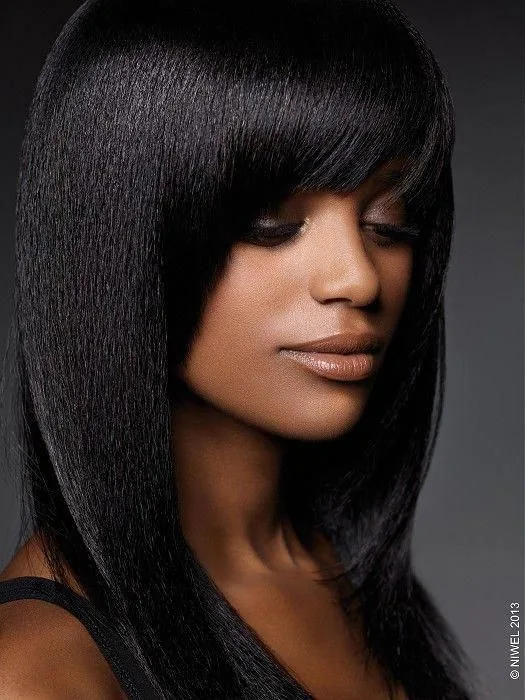
Wispy bangs soften a silk press without hiding the face. The fringe is cut light and feathery, pressed smooth, and left to fall softly across the forehead, while the rest of the hair stays sleek. It is a gentler alternative to a blunt fringe, and it suits women who want the face-framing effect of bangs without the commitment of a heavy cut.
Maintenance: wispy bangs are the first thing to revert in humidity, so keep a mini flat iron or a round brush handy for a 30-second morning fix. Humidity tip: a dab of edge control on the hairline keeps them in place. Skip them if you work out daily — sweat at the hairline and wispy bangs do not mix.
16. Silk Press for Short Hair
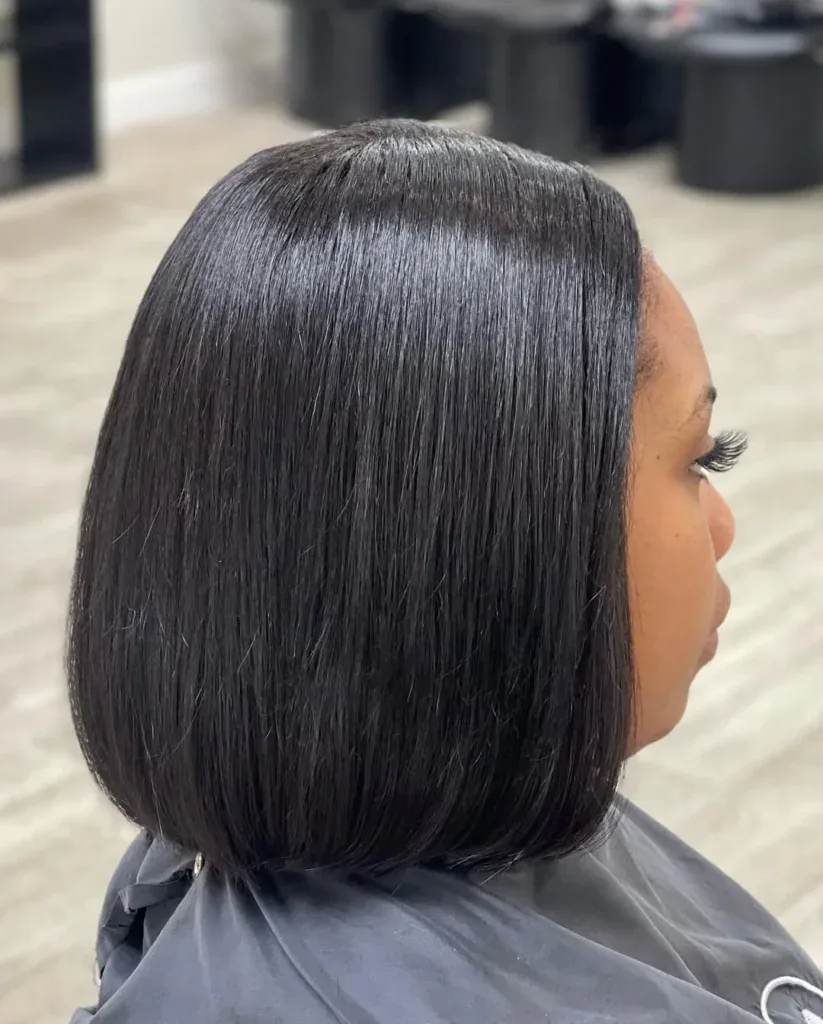
A silk press on short hair is a quick transformation with outsized impact. The press smooths the hair into a neat, glossy shape, shows off the cut, and gives short hair a polished finish that airdrying never achieves. It is also the fastest press in the salon — often under two hours — and one of the most affordable, because there is less hair to work through.
Quick verdict: the best value press — fast, affordable, and dramatic. Cost: roughly $50–$90. Time: 1.5–2 hours. Maintenance is minimal: wrap it at night, smooth the edges in the morning, and you are done. It is the ideal first press if you are nervous about heat on your hair.
17. Silk Press for Medium Hair
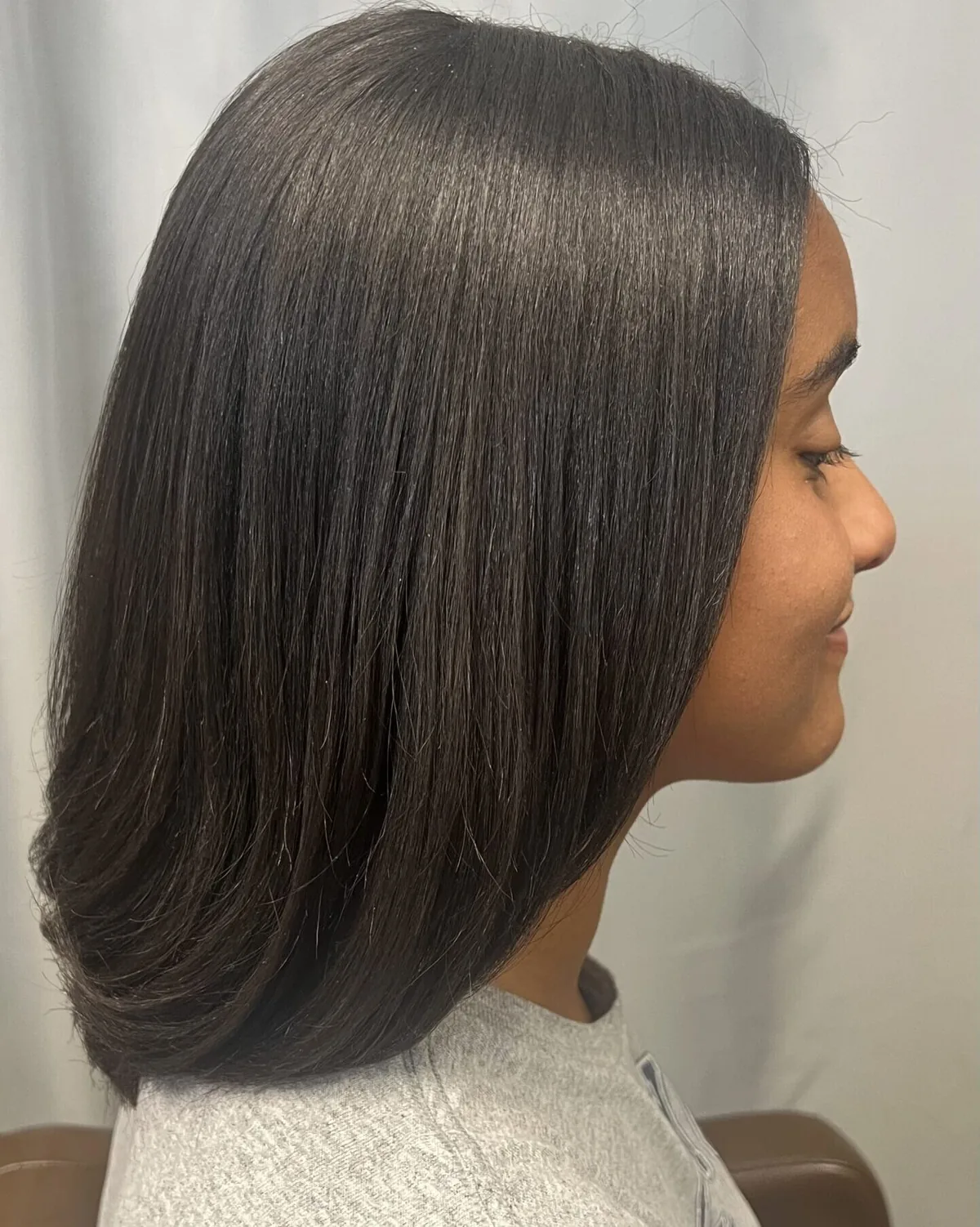
Medium-length hair is the easiest length to press well. It is long enough to show the shine and the movement, short enough to blow-dry and iron without an exhausting salon session, and versatile enough to wear loose, tucked, or pulled back. A medium press is the workhorse of the silk press world — the length most women come back to again and again.
How to style it at home between salon visits: blow-dry with a paddle brush, then smooth only the top layer with a flat iron — the underneath rarely needs it. What to ask your stylist for: ends that curve under slightly, which makes medium hair look thicker. Cost: $60–$120; time: about 2 hours. It is the most forgiving length for a first press.
18. Silk Press for Long Hair
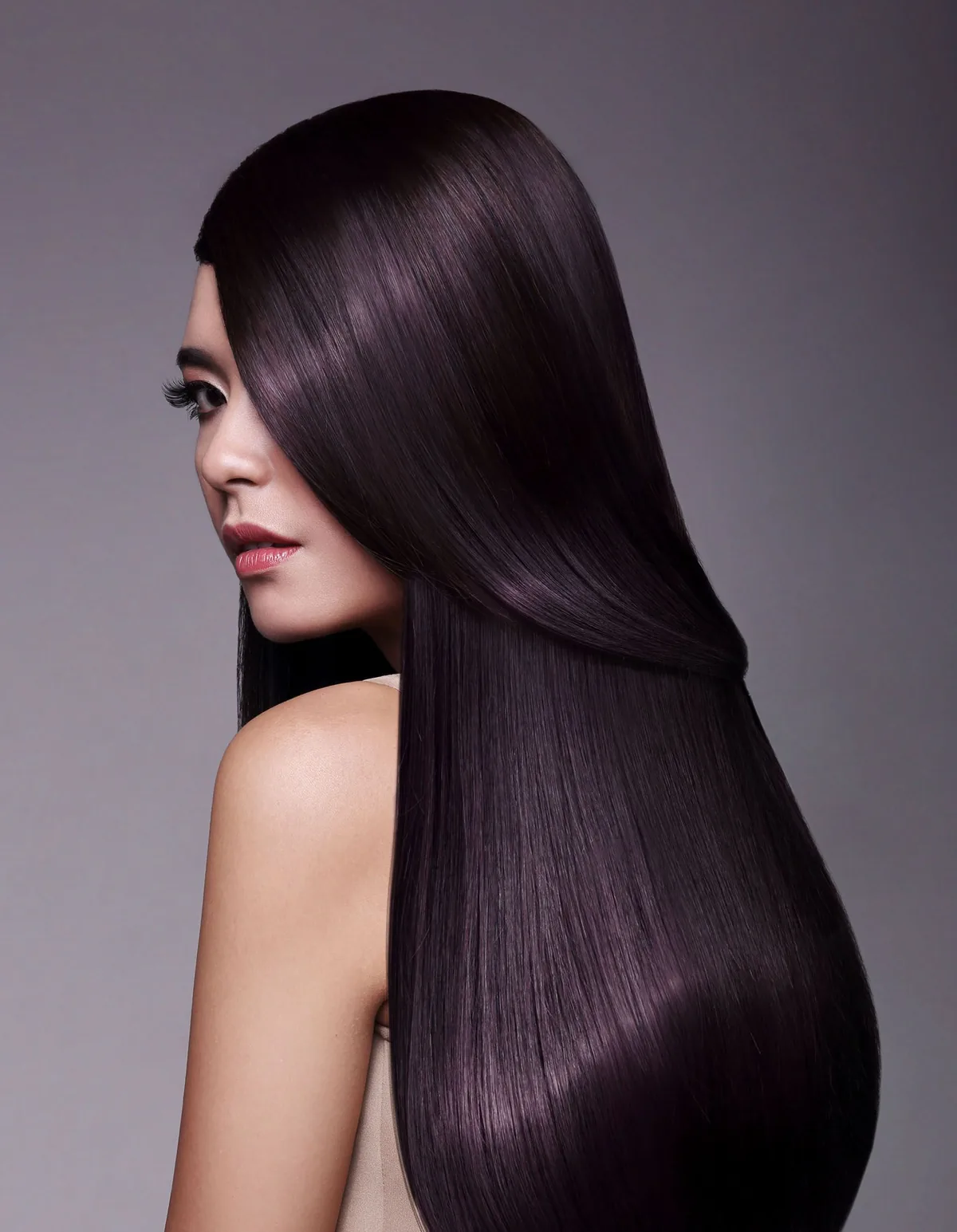
A silk press on long hair is the showstopper: a smooth, glossy fall that moves like water and catches the light with every step. It is also the biggest commitment — the longest salon session, the most heat, and the most care afterwards. But when it is done well, long pressed hair is unforgettable, and it is the style that makes people ask who does your hair.
Cost and time: expect $120–$200 and 3–4 hours for long, thick hair. Maintenance: wrap it every night without fail, use a silk pillowcase, and deep-condition weekly — long hair shows damage at the ends first. Who should skip it: if you cannot commit to the upkeep, a long press will look tired within days. Quick verdict: stunning, but only if you will maintain it.
19. Silk Press on Natural 4C Hair
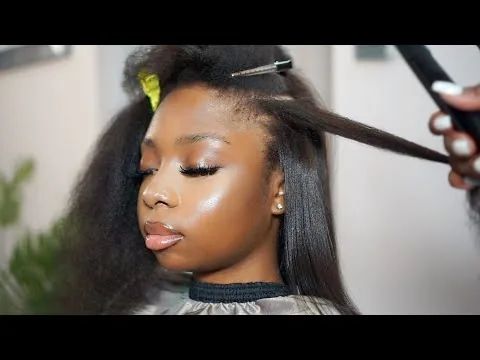
A silk press on 4C hair is the most dramatic transformation in this guide: tight coils pressed into a smooth, flowing finish, with a shine and swing that surprises everyone who sees it — including the woman wearing it. It shows off length that coils usually hide, and it is a favourite for special occasions, photoshoots and holidays. The key is a stylist who knows 4C hair and respects its limits.
Who should be careful: if your hair is already dry or damaged, a 4C press is the highest-heat press there is, and it carries the highest risk of heat damage. Get a trim and a deep-conditioning treatment first, and press no more than once a month. Ask the stylist to use the lowest temperature that straightens your hair, and to check a test section first. Done right, it is stunning; done carelessly, it costs you your curl pattern.
20. Silk Press on Relaxed Hair
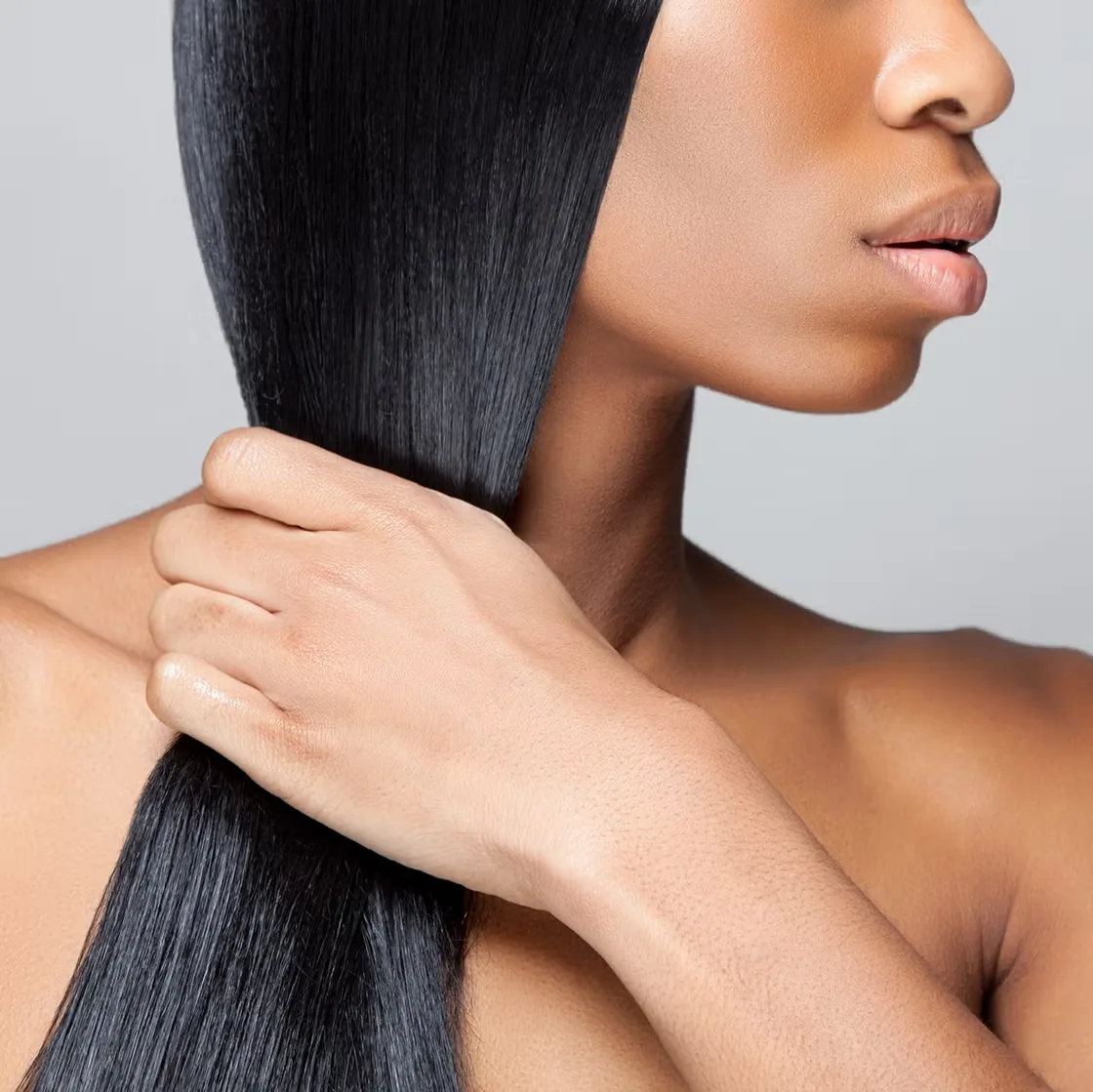
On relaxed hair, a silk press is less a transformation and more a polish. The hair is already chemically straight, so the press smooths, seals and adds shine, usually at a lower temperature and in less time than a natural-hair press. The result is a sleek, glossy finish that tends to last a little longer, because there is no curl pattern fighting to come back.
Maintenance: relaxed hair is already processed, so moisture is the priority — deep-condition weekly and do not over-iron, or the hair goes limp and dry. Humidity tip: relaxed hair reverts at the new growth first, so protect the roots with edge control and a scarf. Cost: usually $50–$100, and the session is often under two hours.
21. Silk Press with Highlights
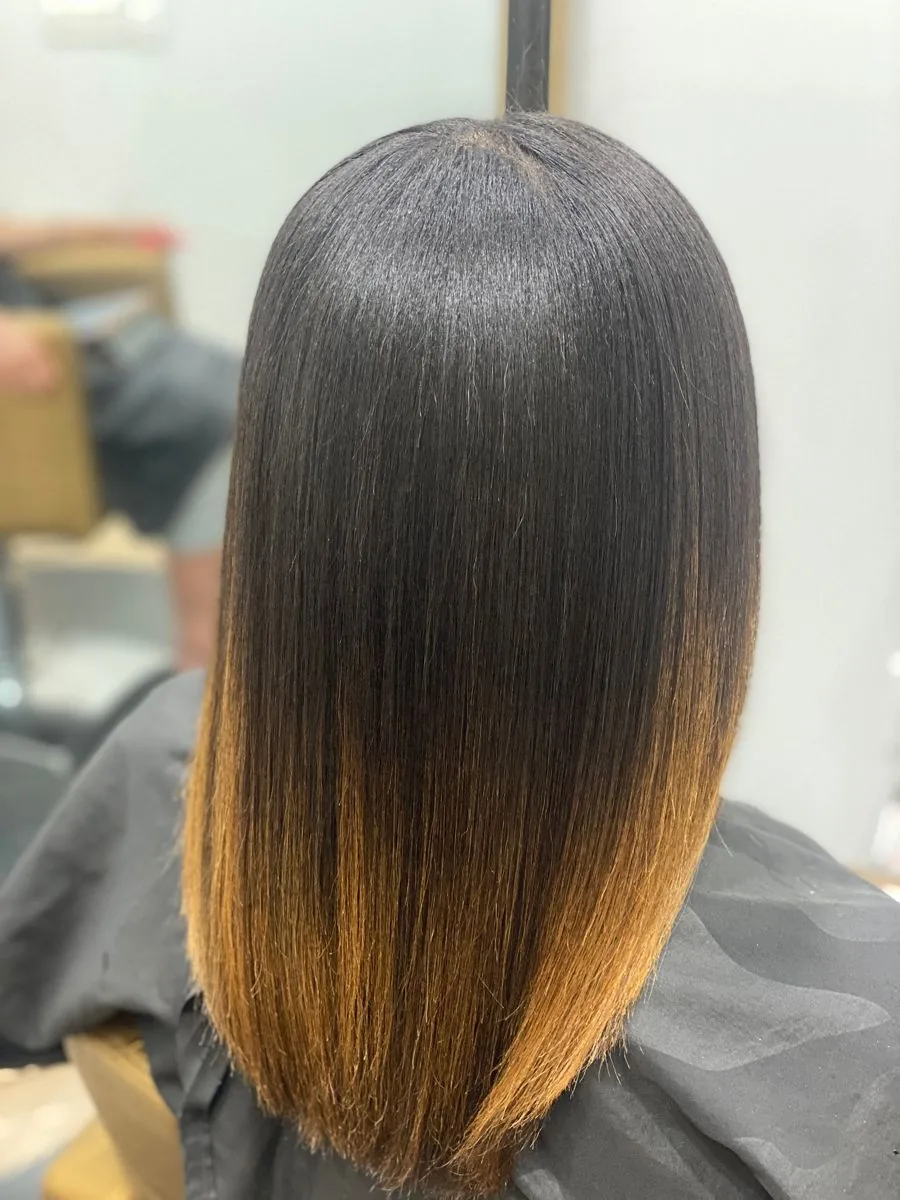
Highlights and a silk press are made for each other. The smooth, straight finish shows off every strand of colour, and the shine makes highlights look brighter and more dimensional than they do on curly hair. Face-framing highlights are the most popular choice, because they brighten the face while the press keeps everything sleek.
Pros: colour looks richer, dimension is visible, and the press makes highlights photograph beautifully. Cons: highlighted hair is more fragile, so it needs a lower iron temperature and extra heat protectant — and a press on freshly highlighted hair should wait at least a week after colouring. Common mistake: pressing the same day as highlights; the hair is too stressed. Quick verdict: gorgeous, but schedule colour and press a week apart.
22. Silk Press with Balayage
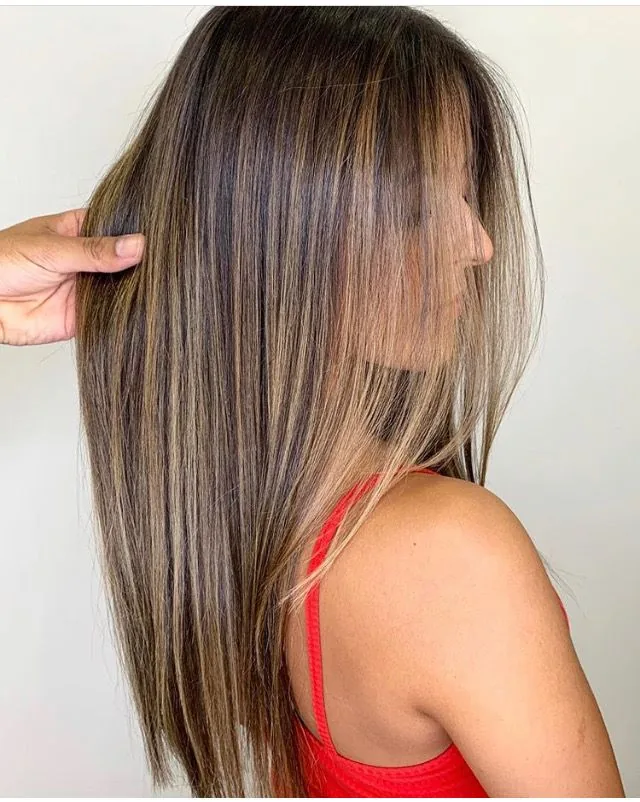
Balayage on pressed hair has a soft, sun-kissed effect that curly hair hides. The hand-painted colour melts from dark roots to lighter ends, and the straight finish shows the gradient in full — no curls breaking up the blend. It is the most low-maintenance colour to pair with a press, because the roots grow out softly and there is no harsh line.
Cost and time: balayage plus a press is a long salon day — budget $200–$350 and 4–5 hours if you are doing both at once. Most stylists recommend doing the balayage first, waiting a week, and then pressing. Maintenance: use a colour-safe shampoo and a purple shampoo if the balayage is blonde, to keep it from going brassy.
23. Silk Press with a Deep Side Sweep
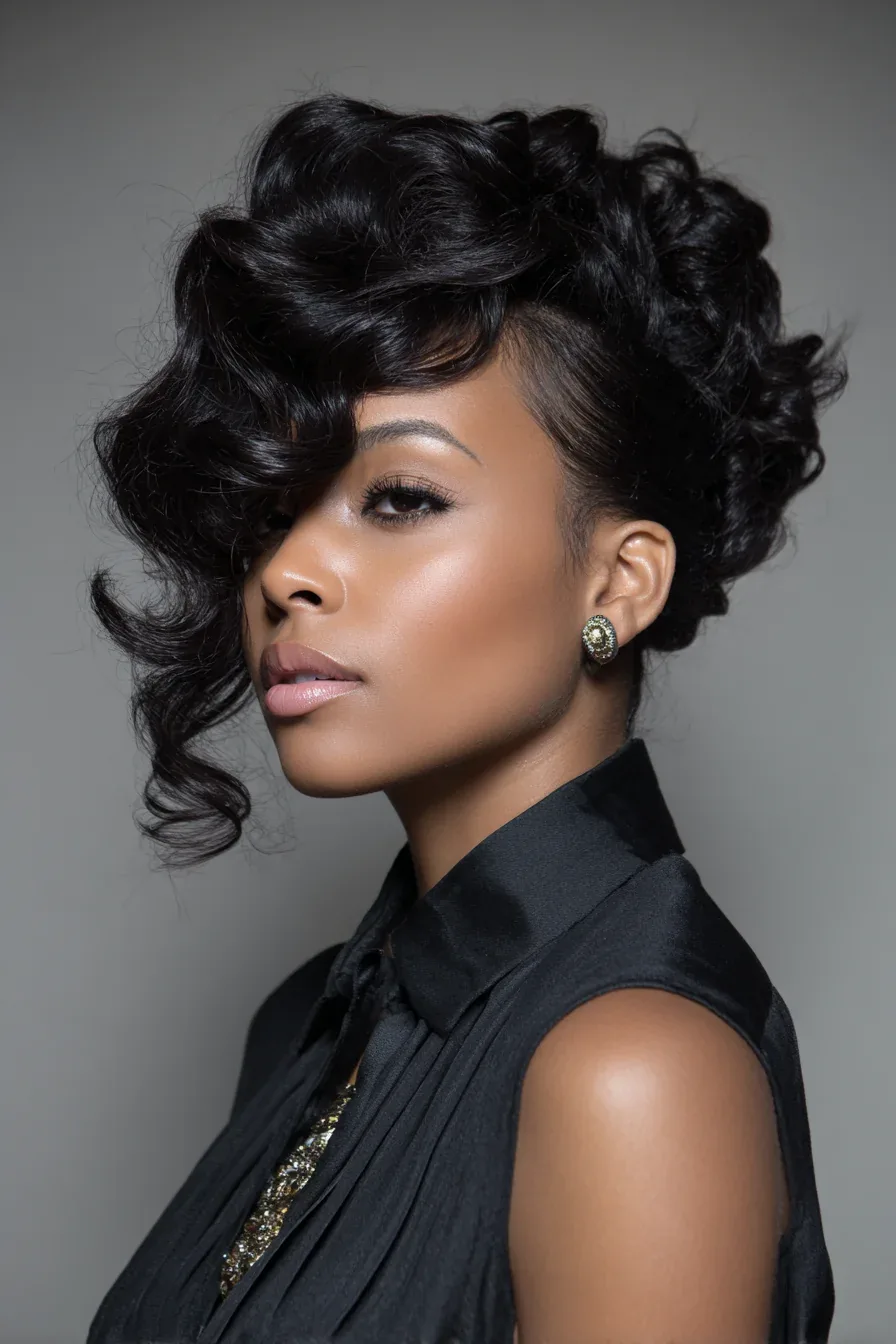
A deep side sweep is the red-carpet version of the press: the hair is parted far to one side, swept across the forehead in a heavy, glossy wave, and left to fall over one shoulder. It is dramatic, it is glamorous, and it is the pressed style that turns heads at a formal event. The sweep adds volume and movement, and the shine makes the whole look feel expensive.
How to style it: part the hair while damp, blow-dry the front section over to the heavy side, and set the sweep with a large clip while it cools so it holds its curve. What to ask your stylist for: a sweep that starts at the temple and falls past the cheekbone. Time: add 15 minutes to a standard press. Skip it if you hate hair on your face — the sweep sits on the forehead all evening.
24. Silk Press Half-Up, Half-Down
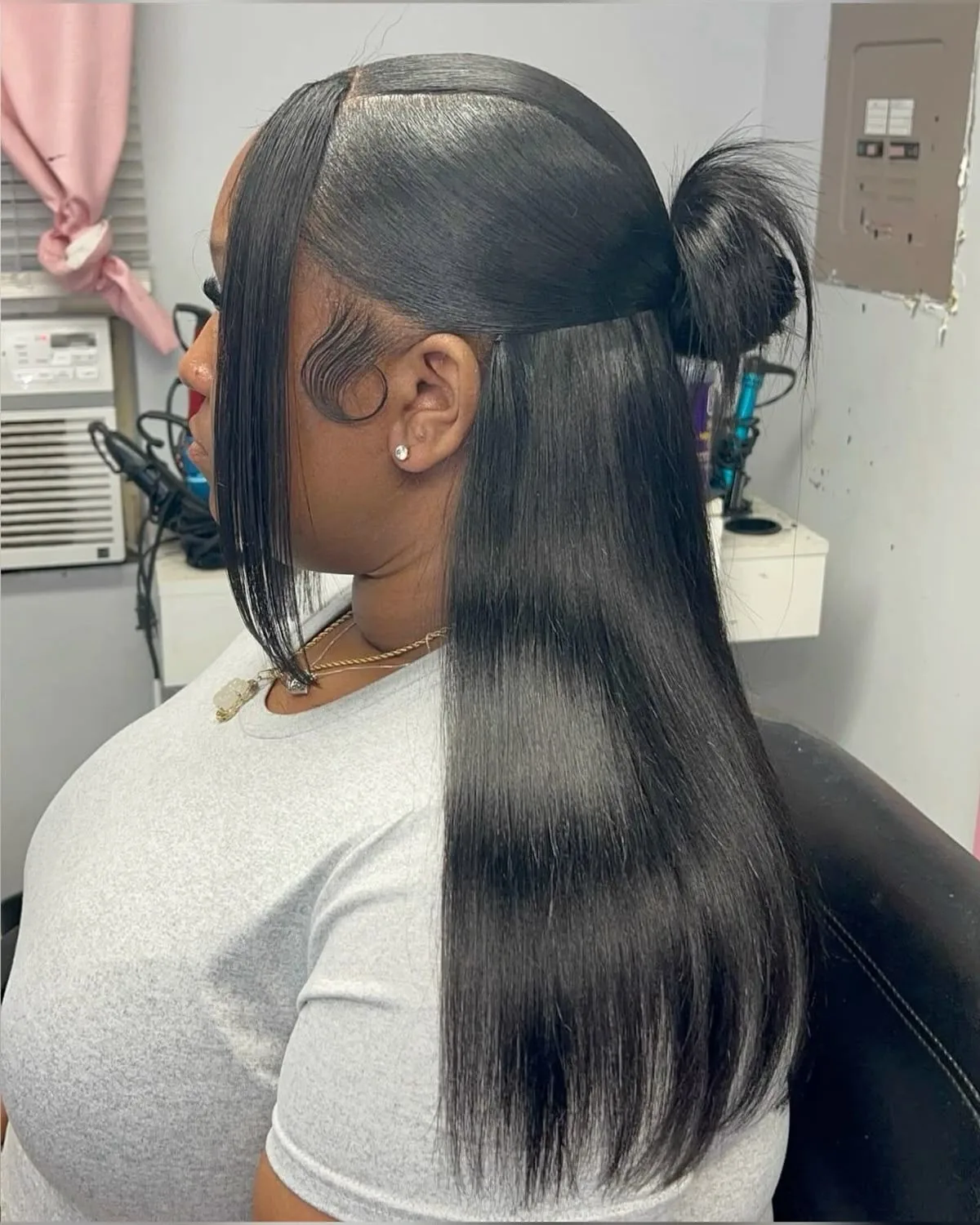
Half-up, half-down is the silk press for women who want the best of both worlds: the top half pulled back into a smooth twist or ponytail, the rest left loose and glossy down the back. It keeps the hair off your face, shows off your earrings, and still lets the press do its thing on the lengths. It is a favourite for weddings, parties and date nights.
Quick verdict: the most versatile way to wear a press after day one — it hides a slightly tired press better than wearing it all down. Cost: no extra charge beyond the press itself. Time: five minutes at home with a brush and an elastic. It also extends the life of a press, because the top section is pulled back and stays smooth longer.
25. Silk Press High Ponytail
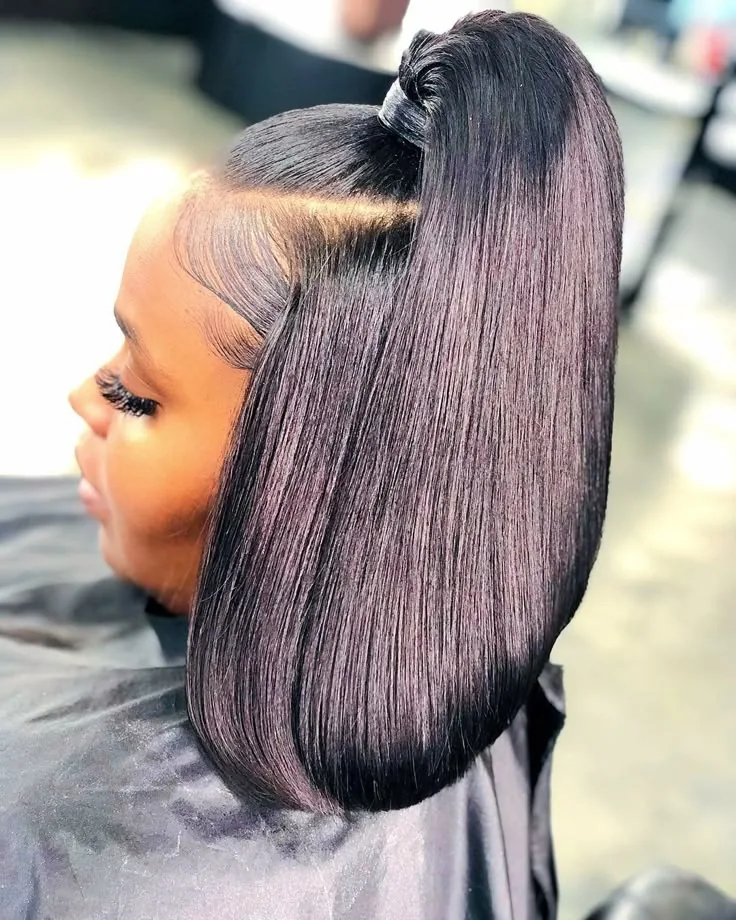
A high ponytail on pressed hair is sleek, lifted and full of energy. The hair is brushed smooth, gathered high at the crown, and the ponytail falls straight and glossy down the back — a style that looks polished enough for work and playful enough for a night out. The press is what makes it work: without the smooth finish, a high ponytail can look messy; with it, it looks deliberate.
Maintenance: use a snag-free elastic and wrap a small section of hair around the base to hide it. Humidity tip: smooth the hairline with edge control before you tie it up, or the baby hairs will puff. Avoid pulling it too tight every day — tension at the hairline causes breakage, and a press does not protect against that.
26. Silk Press Low Ponytail
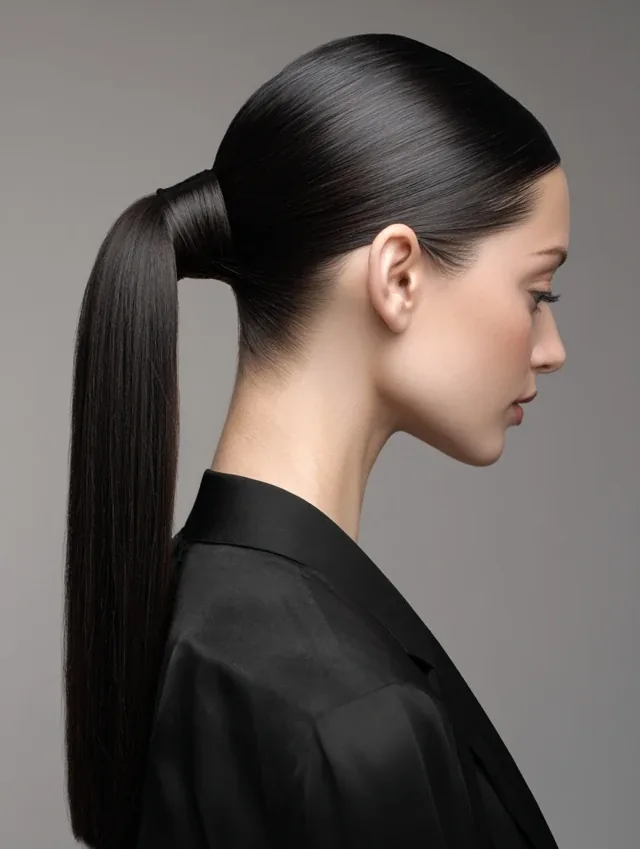
A low ponytail is the quiet, elegant way to wear a silk press. The hair is gathered at the nape, the ponytail falls straight and glossy, and the whole look feels understated and expensive — the kind of style that works at the office, at a wedding, or on a day when you want to look polished without trying. It is also the kindest way to wear a press up, because there is almost no tension on the hairline.
Pros: gentle on the hairline, elegant, and it protects the press from humidity by keeping the hair contained. Cons: it can look plain if the hair is all one length — add a middle part or a wrapped elastic for polish. Common mistake: tying it too loosely, so the ponytail sags by midday. Quick verdict: the easiest updo for a press, and the one you will wear most.
27. Silk Press Top Knot and Bun
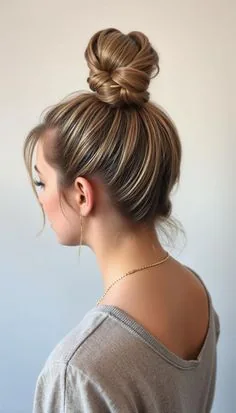
A top knot or a sleek bun is the press’s best friend on day three or four, when the fresh shine has softened but the hair is still smooth. Gathered up, pressed hair makes a bun that is neat, glossy and secure, with none of the flyaways you get from curly hair. It is the style that rescues a press that is past its freshest day.
How to style it: brush the hair smooth, gather it high, twist it into a knot and pin it — or use a hair doughnut for a perfectly round bun. What to ask your stylist for: nothing extra; this is a home style, not a salon one. Time: five minutes. Quick verdict: the press-saver — when the shine fades, put it up and it looks intentional all over again.
28. Silk Press with a Slicked-Back Finish
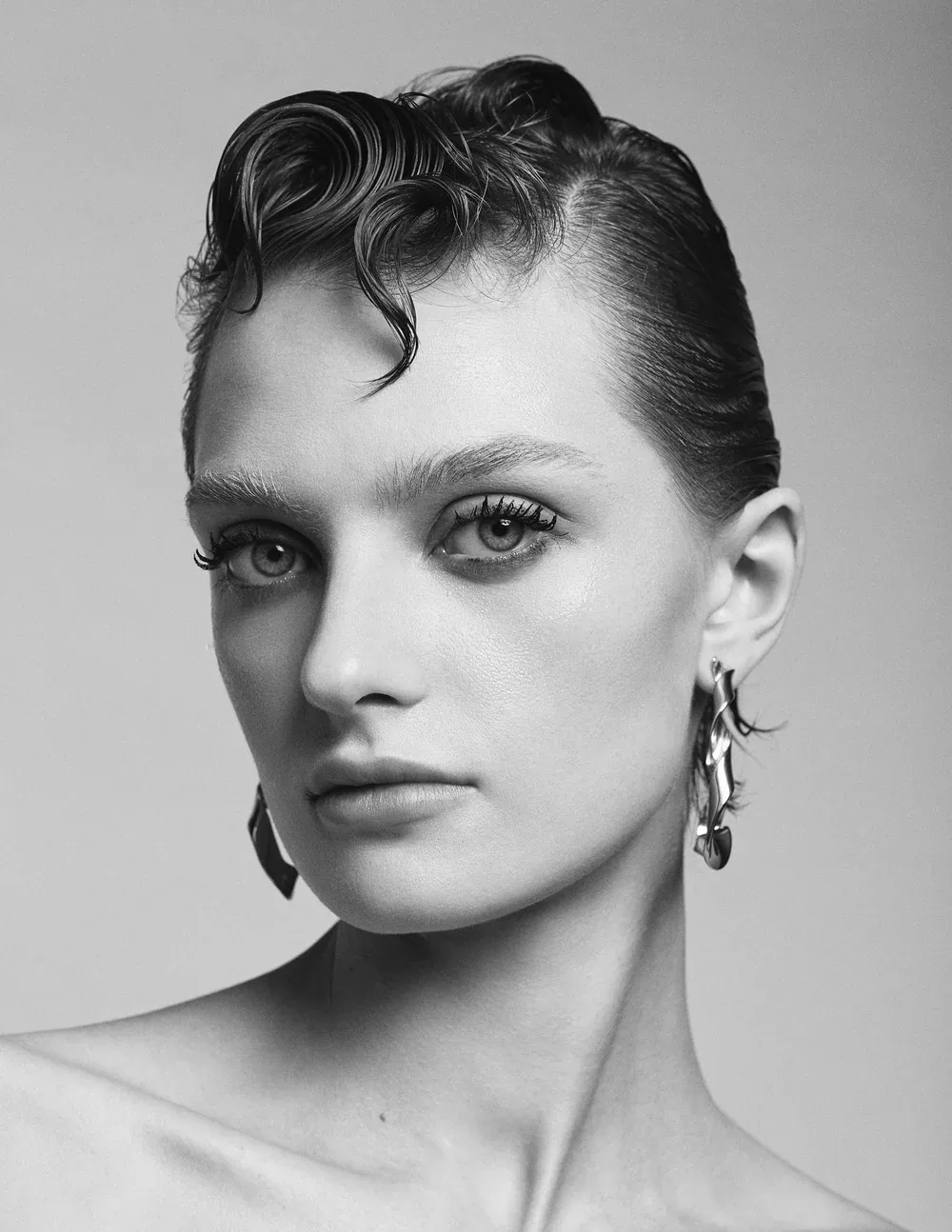
A slicked-back silk press is bold and editorial: the hair is brushed straight back from the forehead, smoothed with a light gel or serum, and left to fall sleek and glossy behind the shoulders. It shows off the face completely, and it has a confident, fashion-forward energy that a parted press does not. It is the pressed style for a photoshoot, a fashion event, or a night when you want to look striking.
Who should skip it: if you are self-conscious about your forehead or hairline, a slicked-back press will not hide them — it shows everything. Also skip it in high humidity, where the gel can go sticky and the hairline reverts first. For everyone else, it is a dramatic, low-effort look that takes five minutes with a brush and a pea-sized amount of gel.
29. Silk Press for a Wedding or Formal Event
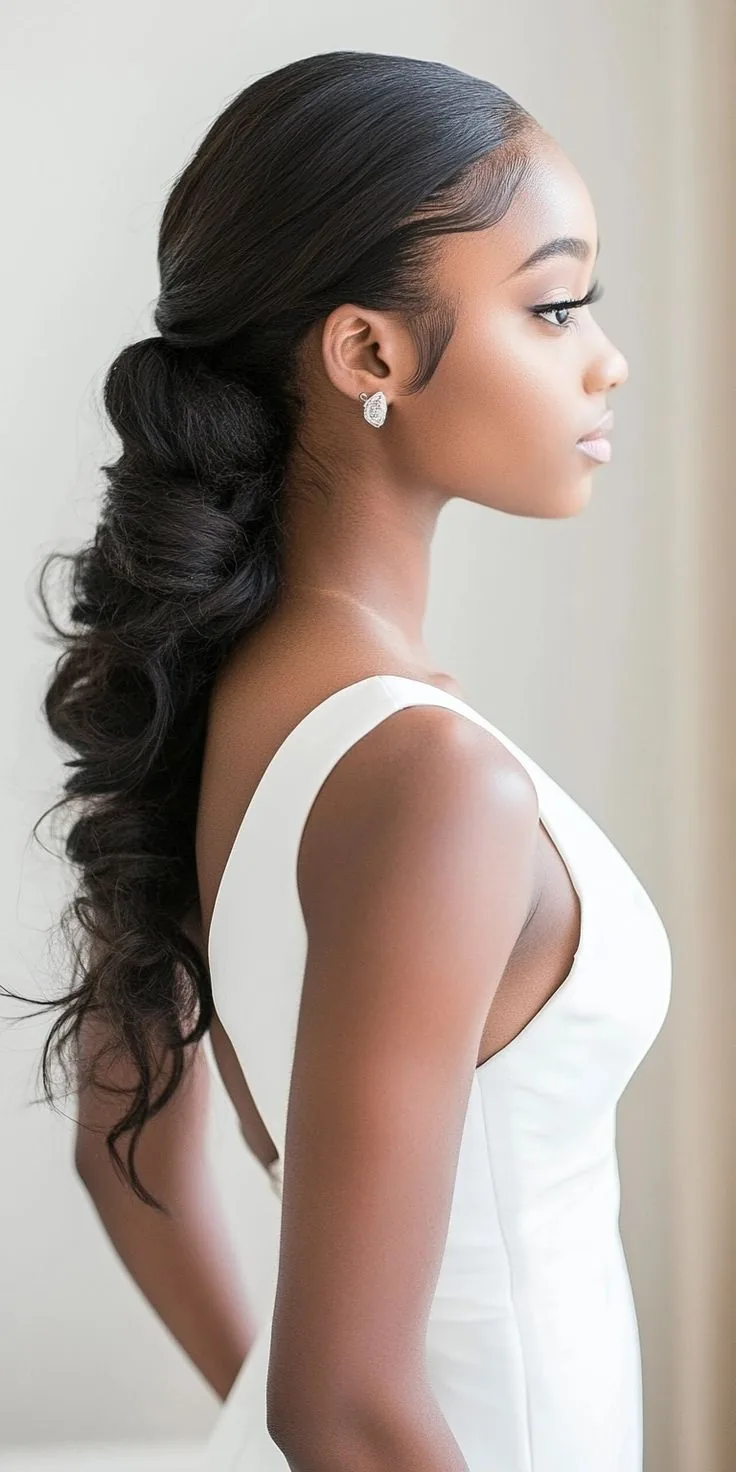
For a wedding or a formal event, a silk press is the reliable choice: it photographs beautifully, it holds through a long day, and it works with a veil, a headpiece, or statement jewellery. The most popular formal version is a press with soft curls at the ends or a half-up style, which gives the hair shape while keeping the sleek finish that makes a press special.
Cost and time: book a trial press at least two weeks before the event, and budget $100–$200 for the day-of press, plus extra if you want curls or an updo on top. Time: 3–4 hours including styling. Maintenance on the day: a silk scarf in the car, edge control in your clutch, and a stylist’s number in your phone. Quick verdict: the safest formal hair choice there is.
30. Silk Press for the Office

A silk press is one of the best office hairstyles there is: polished, professional, and completely out of your way. Worn loose with a middle part, pulled into a low ponytail, or pinned into a low bun, it reads as deliberate and put-together in a way that few other styles do. It also lasts a working week with nightly wrapping, so Monday’s press can still look good on Friday.
Quick verdict: the office press is the most practical press — it earns its keep five days a week. Cost: a standard press, $60–$120. Time: 2–3 hours on a Sunday, and five minutes each morning after that. Keep a small brush and a travel serum in your desk drawer for midday touch-ups.
31. Silk Press for Date Night
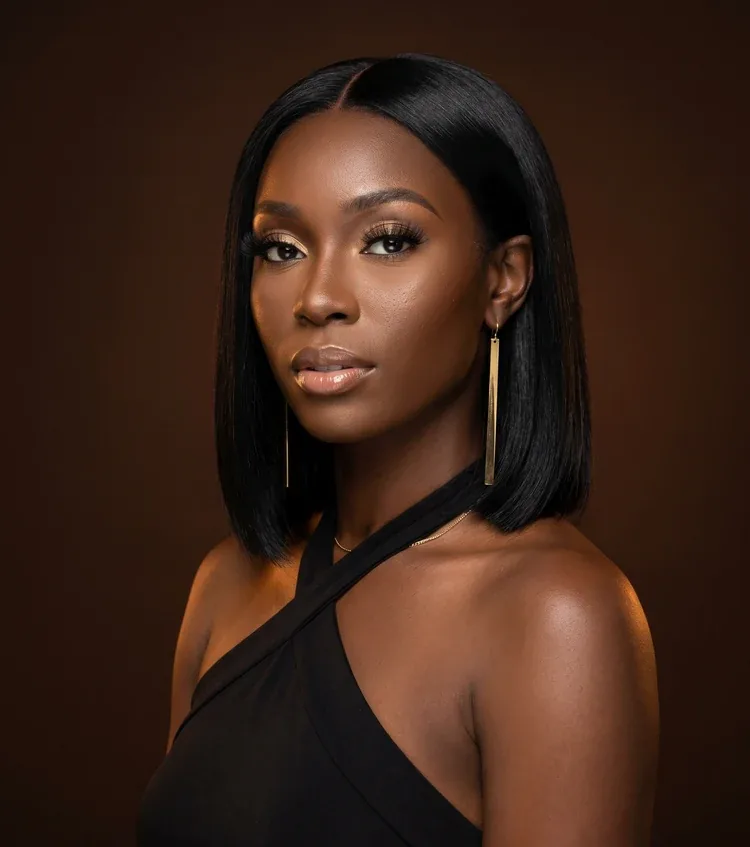
For date night, a silk press with soft curls at the ends or a deep side part is hard to beat: the shine catches the light, the hair moves when you do, and the whole look feels romantic without trying too hard. It is the pressed style that says you made an effort, but not so much effort that you cannot relax and enjoy the evening.
How to style it: press as usual, then curl just the ends with a large iron and run your fingers through them so they fall soft. What to ask your stylist for: a side part and curled ends, which photograph beautifully in low light. Time: add 20 minutes to a standard press. Quick verdict: the press that gets compliments — save it for the evenings that deserve one.
32. Silk Press for Curly Girls Going Straight for a Change
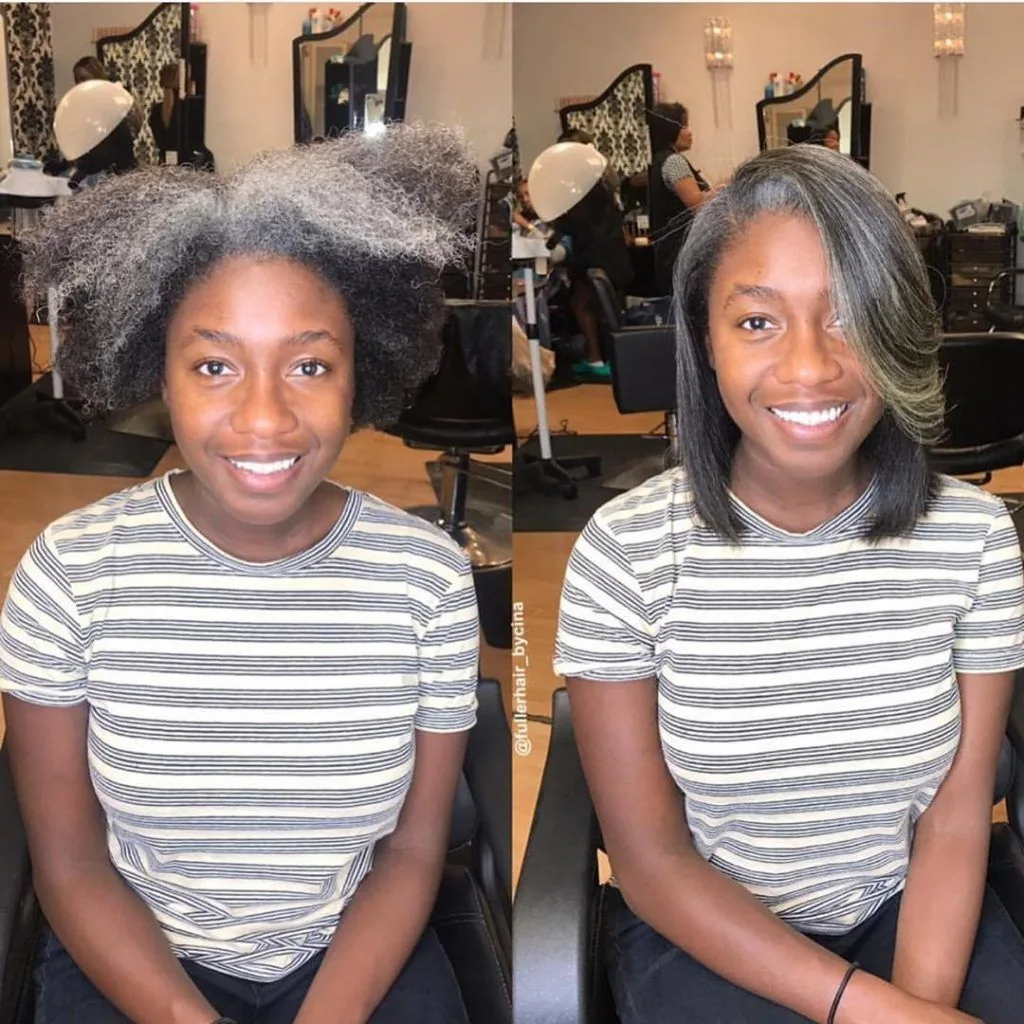
For women who wear their curls every day, an occasional silk press is a change of pace, not a change of identity. It shows off length, it shows off shine, and it lets you see your hair in a completely different way — and then, after a wash, your curls come back. That is the point: a press is a visit to straight hair, not a move there.
Maintenance: the first wash after a press is the test — if the curls bounce back, the press was done right. Use a clarifying shampoo, then a deep conditioner, and let the hair air-dry to see your true pattern. Humidity tip: do not book a press in the middle of a rainy week; pick a dry week so you get the full two weeks out of it. Press no more than once a month if you love your curls.
33. Silk Press with Glass-Hair Shine
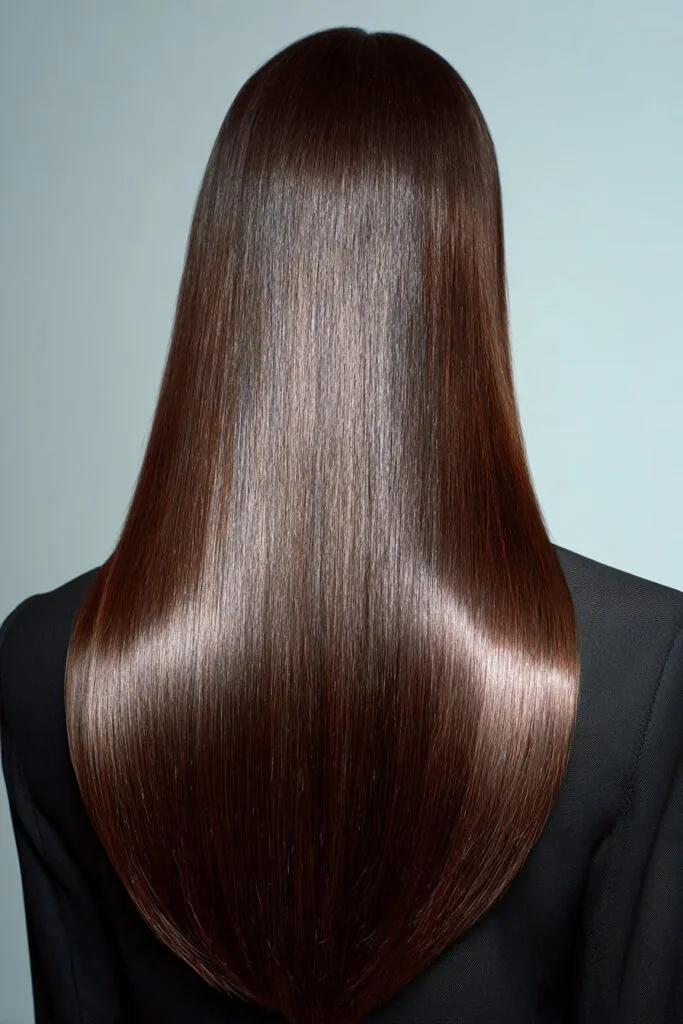
Glass hair is the extreme version of the silk press: hair so smooth, so straight and so reflective that it looks like a sheet of glass. It needs healthy hair, a precise cut, and a stylist who seals every section — but the result is the glossiest hair in this guide, a mirror-like finish that stops people in their tracks. It is the press for a photoshoot, a big event, or a day when you want your hair to be the outfit.
Pros: unmatched shine, a striking modern look, and hair that looks healthier than it is. Cons: it shows every flaw — split ends, uneven colour, a crooked part — and it needs a perfectly blunt cut to work. Common mistake: using too much serum to fake the shine; glass hair comes from sealed cuticles, not from oil sitting on top. Quick verdict: the glossiest press there is, and the most demanding.
34. Silk Press with Voluminous Roots
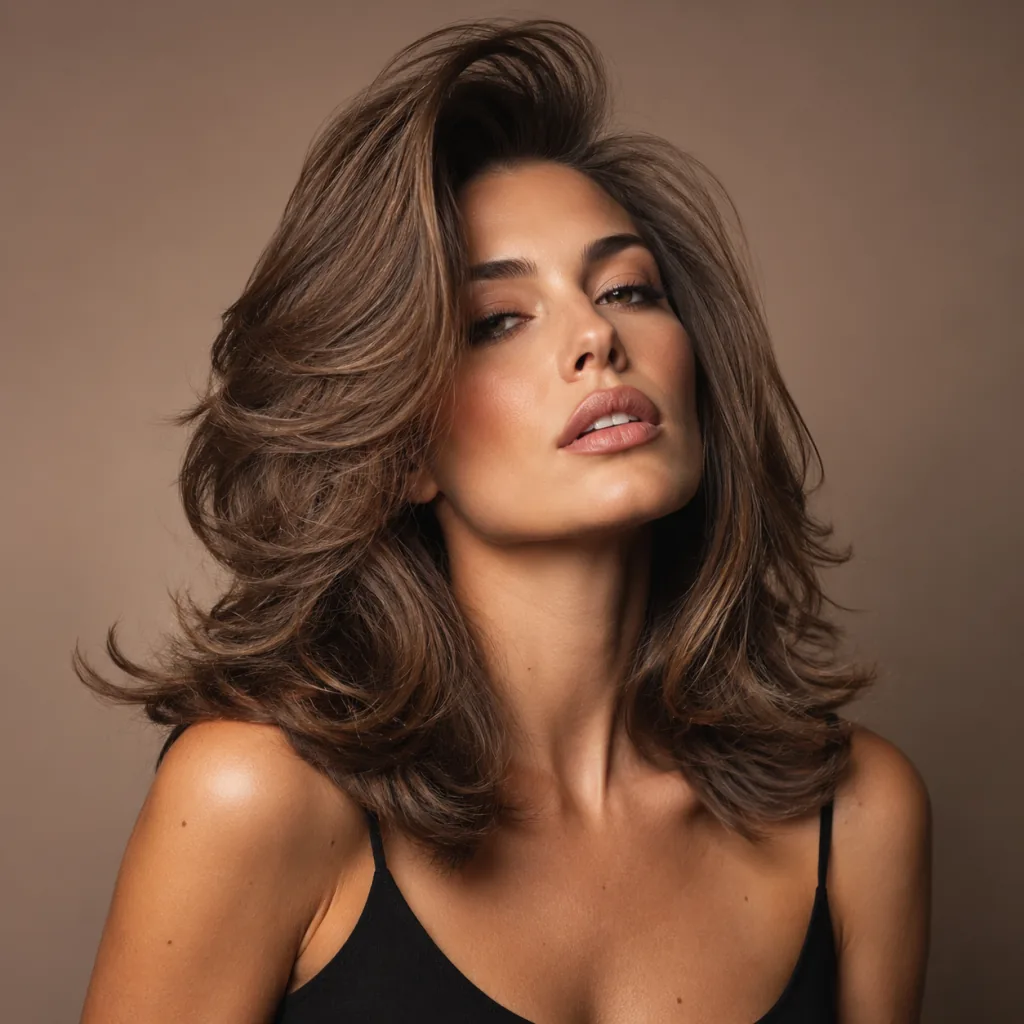
Voluminous roots give a silk press lift at the crown, so the hair does not lie flat against the head. The roots are blow-dried upward with a round brush, the lengths are pressed smooth, and the result is a press with height, shape and movement — the blowout-press hybrid that flatters round faces and fine hair in particular, because the lift makes the hair look thicker.
How to style it: blow-dry the roots upward with a round brush, then press the lengths, leaving the first inch at the root un-ironed so the lift survives. What to ask your stylist for: lift at the crown, not all over — volume at the sides makes the head look wide. Time: add 15 minutes to a standard press. Maintenance: refresh the roots with dry shampoo rather than re-ironing them.
35. Silk Press with a Vintage Blowout Finish
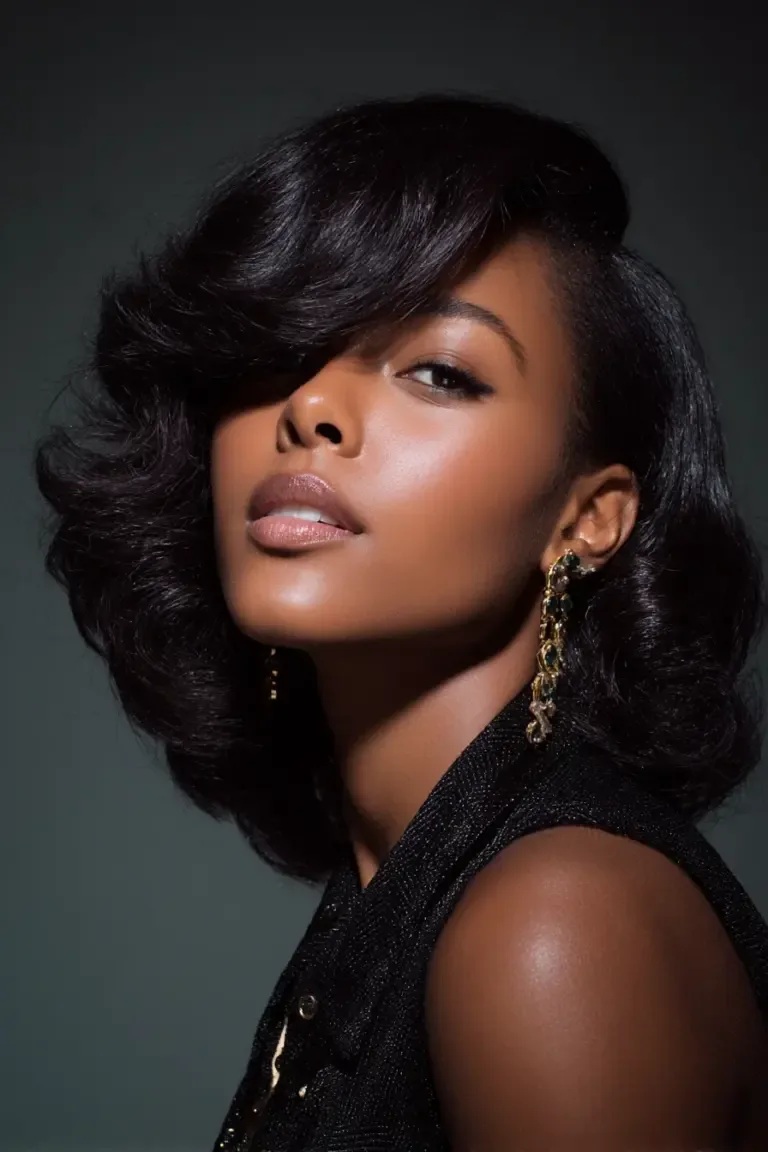
A vintage blowout finish takes a silk press back to the 1960s: big, bouncy, brushed-out volume, with the ends curled under and the whole shape full and soft. The hair is pressed smooth first, then set in large rollers or curled with a big iron and brushed out, so the finish is smooth but full — glamorous rather than pin-straight. It is the press for a retro outfit, a themed party, or anyone who loves old-Hollywood hair.
Cost and time: a vintage blowout press takes 3–4 hours and $100–$180, because the roller set adds a whole step. It is worth booking a stylist for — the brushed-out finish is hard to get right at home. Maintenance: sleep in a loose top knot and brush it out in the morning; the volume lasts two to three days before it needs a refresh.
36. Silk Press with a Braided Front Accent
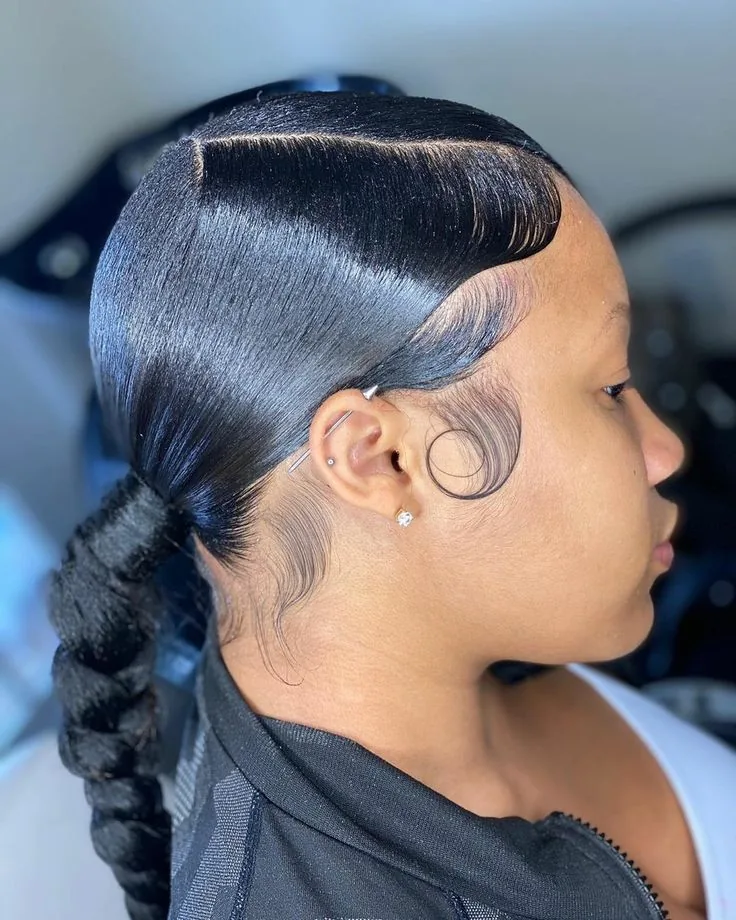
A braided front accent adds a handcrafted detail to a silk press: a thin braid worked along the hairline or across the crown, while the rest of the hair stays sleek and straight. The contrast is lovely — the smooth, glossy lengths against one neat, textured braid — and it turns a simple press into a style that looks considered and personal. It is a favourite for festivals, summer weddings and holidays.
Quick verdict: one small braid, one big upgrade — the accent makes a classic press feel made for you. Time: add 10–15 minutes to a standard press. Cost: usually no extra charge. Who should skip it: if your hair is very short at the front, the braid will not have enough length to sit neatly. Everyone else: it is the easiest way to make a press your own.
What is a silk press?
A silk press is a heat-styling service that straightens textured or curly hair into a smooth, shiny, straight finish using a blow-dryer and a flat iron, with no chemical relaxer. The result lasts one to two weeks and washes out, so your natural curl pattern returns.
How long does a silk press last?
A silk press usually lasts one to two weeks. Fine to medium hair in dry weather can reach two weeks; thick or coily hair, or a humid week, is closer to seven to ten days. Wrapping your hair at night and keeping it dry stretches it the longest.
Does a silk press damage your hair?
A silk press can cause heat damage if the iron is too hot, used on damp hair, or used too often. With heat protectant, the lowest effective temperature, and presses spaced two to three weeks apart, most hair handles it well. Straight pieces that stay straight after washing are the warning sign to stop and deep-condition.
Can I do a silk press at home?
Yes, but it takes practice. You need freshly washed and deep-conditioned hair, a blow-dryer, heat protectant, and a flat iron with adjustable temperature. Work in small sections, use a chasing comb ahead of the iron, and expect two to three hours. The back sections are the hardest part to get smooth on your own.
How much does a silk press cost?
A silk press typically costs $50–$200 at a salon, depending on hair length, thickness and location. Short hair is usually $50–$90, medium hair $60–$120, and long or thick hair $120–$200. Colour or extra styling on top adds to the price.
Can I wash my hair after a silk press?
You can wash it, but washing ends the press — water brings back your natural curl pattern. Most women wait until the press has run its course, usually after one to two weeks, then wash with a clarifying shampoo followed by a deep conditioner.
How do I keep a silk press from frizzing in humidity?
Use a light anti-humidity serum on the lengths, smooth the hairline with edge control, and keep the hair wrapped in a silk scarf at night. Avoid heavy oils, which weigh hair down without blocking humidity, and do not re-flat-iron damp hair — let it dry first.
Is a silk press the same as a relaxer?
No. A relaxer chemically changes the hair’s structure permanently, and the straightened hair stays straight until it grows out. A silk press uses heat only, lasts one to two weeks, and washes out, so your natural texture returns.
How often can I get a silk press?
Most stylists recommend every two to four weeks at most, with a break between presses for deep conditioning. Pressing more often than that, especially on natural or damaged hair, raises the risk of heat damage and curl-pattern loss.
Can I curl my hair after a silk press?
Yes. A silk press takes curls well — use a curling iron on the ends or throughout the lengths, and let each curl cool before you touch it. The curls will drop faster than on unpressed hair, so use a light-hold spray, and expect to re-curl the next day.
Conclusion
A silk press is one of the simplest pleasures in hair: two weeks of shine, movement and that fresh-from-the-salon feeling, with no chemical commitment and your curls waiting for you when you wash it out. The best press is the one that fits your hair — the right temperature, the right stylist, and a routine that protects it at night. Choose a style from this guide, book the appointment, wrap your hair when you get home, and enjoy the swing. Your smoothest hair ever is a salon visit away.