
How Face Framing Layers Instantly Soften a Rounder Face Shape
Round faces are gorgeous. Full cheeks, a soft jawline, that youthful thing that never seems to leave. But if you’ve ever felt like your hair makes your face look wider instead of softer, you’re not imagining it. It’s usually a layering thing, not a face thing.
Here’s the good news: face framing layers fix that in one appointment. They add angles where you want them, movement where you need it, and a little shadow that makes cheekbones show up.
In this post, I’m breaking down exactly where to place those layers, what to ask your stylist, and how to style them at home in five minutes. We’re also covering quiet luxury bobs, asymmetrical lobs, the hime cut, and other 2026 hairstyles that love a round face.
Let’s soften things up.
Why Face Framing Layers Soften a Round Face

A round face is all about soft curves — full cheeks, a gentle jawline, width and length that are pretty close together. That’s not a flaw. It just means the goal isn’t to hide anything. It’s to add angles.
Face framing layers do exactly that. They start around your cheekbone or jaw and flow forward, breaking up the width of your face with movement and shadow.
Instead of one solid curtain of hair, you get pieces that move. And movement is what reads as “softer” to the eye.
Quick win: even one set of face framing layers can change the whole shape of your look.
What Counts as a Face Framing Layer, Exactly
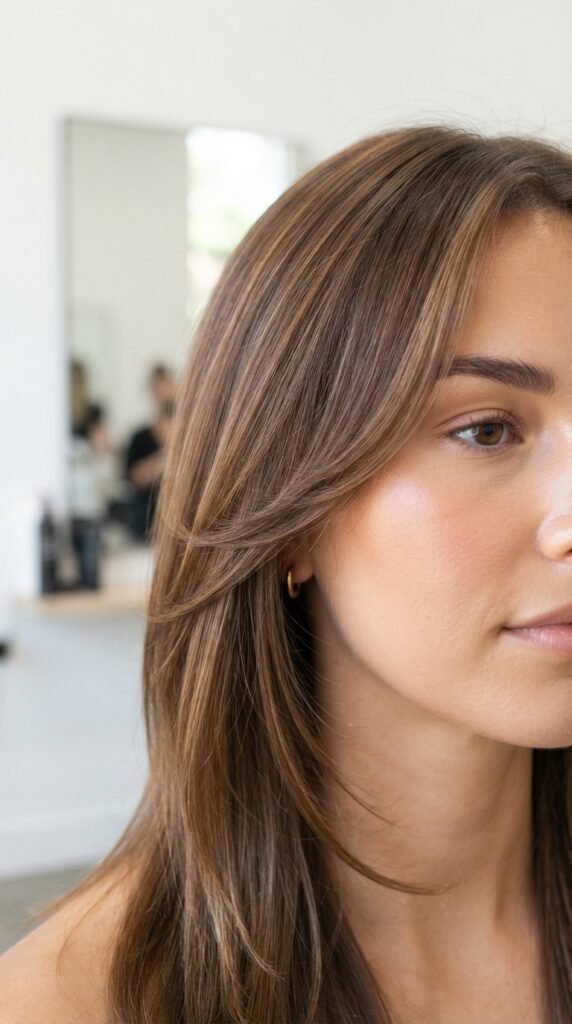
Face framing layers are the shorter pieces that sit around your face and blend back into the rest of your hair. They’re not full-head layers, and they’re not bangs.
- Curtain pieces: start near your part and sweep outward
- Cheekbone layers: hit at the cheekbone to add shape up top
- Jaw layers: skim the jawline to soften it
- Chin layers: the shortest option, great for short hair
The key is that they’re cut to fall forward and frame. Not to sit flat against your head.
The Real Reason It Works: Angles, Shadow, Movement
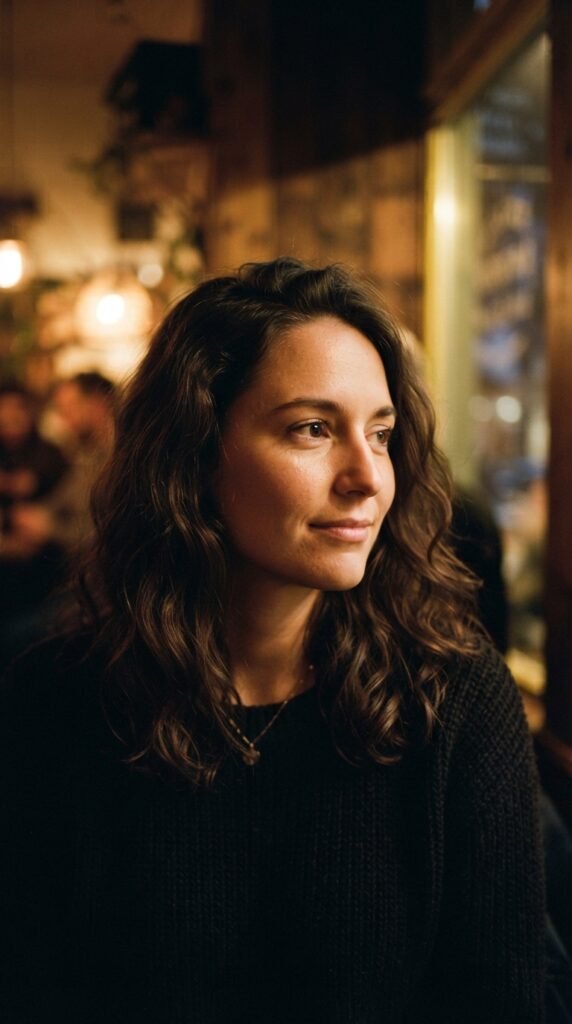
Three things happen when face framing layers are cut right.
- Angles: diagonal lines interrupt roundness.
- Shadow: layers cast soft shade along the sides of your face.
- Movement: your hair stops being one flat shape.
Your eye follows the layers downward instead of out to the sides. That’s the whole trick. It’s not about covering your face — it’s about giving it a frame with direction.
Where Your Layers Should Land (The Golden Rule)
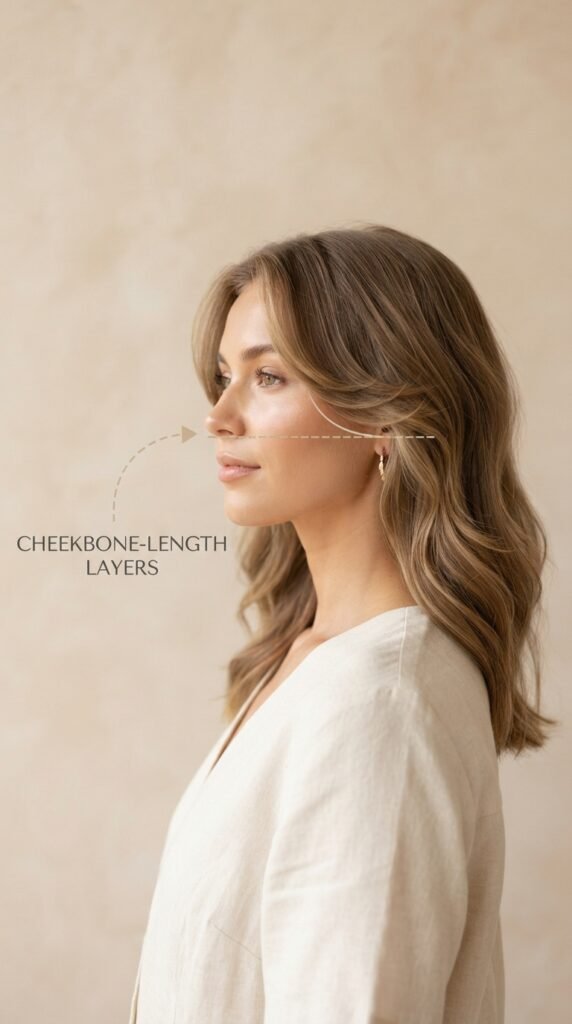
Placement is everything. A layer in the wrong spot can actually add width.
- Chin-length layers can create a horizontal line that widens your face.
- Layers that start at the cheekbone and flow past the chin are your sweet spot.
- Long, blended layers below the jaw are always safe.
Rule of thumb: keep the shortest point at your cheekbone or lower, and let everything angle down from there. Ask for blends, not steps. Blunt steps read boxy, and blended layers read soft.
The Quiet Luxury Bob With Face Framing Pieces

The quiet luxury bob is everywhere for 2026, and it happens to love a round face — when it’s cut smartly.
Ask for a collarbone or chin-length bob with soft face framing pieces that start at the cheekbone. Keep the ends slightly angled, not blunt. Think old money hair: polished, minimal, no choppy layers.
- Skip a blunt, one-length bob at chin height.
- Ask for a soft internal layer so it curves inward.
- Keep the front pieces longer than the back.
This one looks expensive and takes ten minutes to style.
The Asymmetrical Lob: The Easiest Angle Hack

An asymmetrical lob is a lob where one side is slightly longer than the other. On a rounder face, that imbalance is a gift. It creates a diagonal line instantly.
Ask for a length just past the collarbone, with one side about an inch or two longer. Add face framing layers on the shorter side so it sweeps.
- Great for growing out short hair
- Works with straight, wavy, or curly textures
- Looks intentional even on lazy hair days
Soft Curtain Bangs Beat Blunt Bangs Every Time

Blunt bangs cut straight across can box in a round face. Soft curtain bangs do the opposite.
Curtain bangs open in the middle and sweep out, which creates two diagonal lines pointing down. That’s exactly the shape you want.
- Ask for them to start at the brow and blend into the layers
- Keep the shortest point around your cheekbone
- Go longer rather than shorter — they’re easier to style
If you’ve been scared of bangs, this is the version to try. They’re forgiving and grow out gracefully.
The Hime Cut, Softened for Round Faces
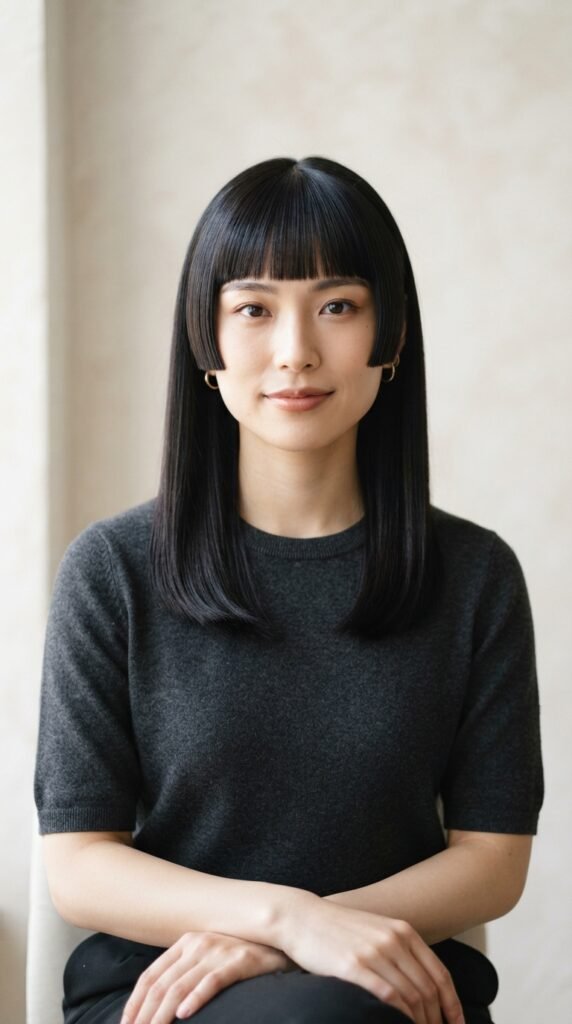
The hime cut — straight side pieces with longer hair behind — is having a moment. On a round face, the classic version can feel too heavy, so soften it.
Ask for the side pieces to be cut at a slight angle rather than blunt, and to start around the cheekbone.
- Keep the back section long and smooth
- Blend the side pieces a little instead of leaving hard steps
- Ask for light thinning at the ends if your hair is thick
You get the cool, editorial feel without the boxy shape.
Romantic Goth Hairstyles With Framing That Flatters

Romantic goth hairstyles are soft, dark, and dreamy — long waves, deep color, a little mystery. Face framing layers make them wearable.
Ask for long, blended layers with shorter pieces that start at the cheekbone and float forward.
- Soft undone waves work better than tight, uniform curls
- Curtain bangs or wispy fringe keep the mood
- Deep browns, black cherry, and cool black all work
The framing keeps all that length from swallowing your face.
The Vampire Haircut: Sleek, Sharp, Still Soft
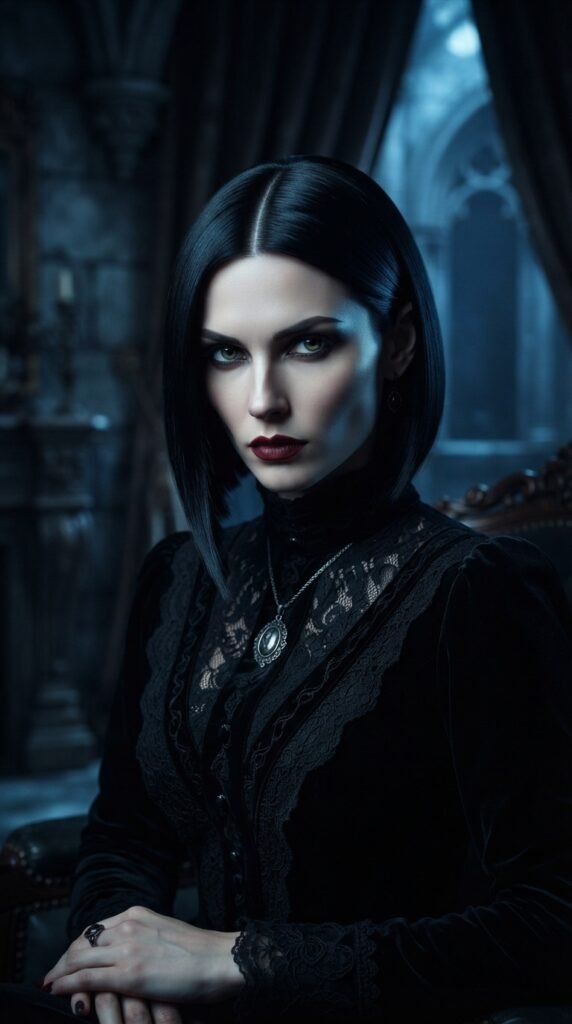
The vampire haircut — sleek, dark, slightly dramatic, often with a sharp middle part — can absolutely work on a round face. The trick is the framing.
Keep the length long and the layers subtle, and let one or two face framing pieces do the softening.
- Sleek and straight reads sharp and elongating
- Add a soft bend at the ends so it isn’t rigid
- Keep volume off the sides and add it at the crown
That contrast between sharp and soft is the whole point.
Glitchy Glam Hair With Face Framing Layers
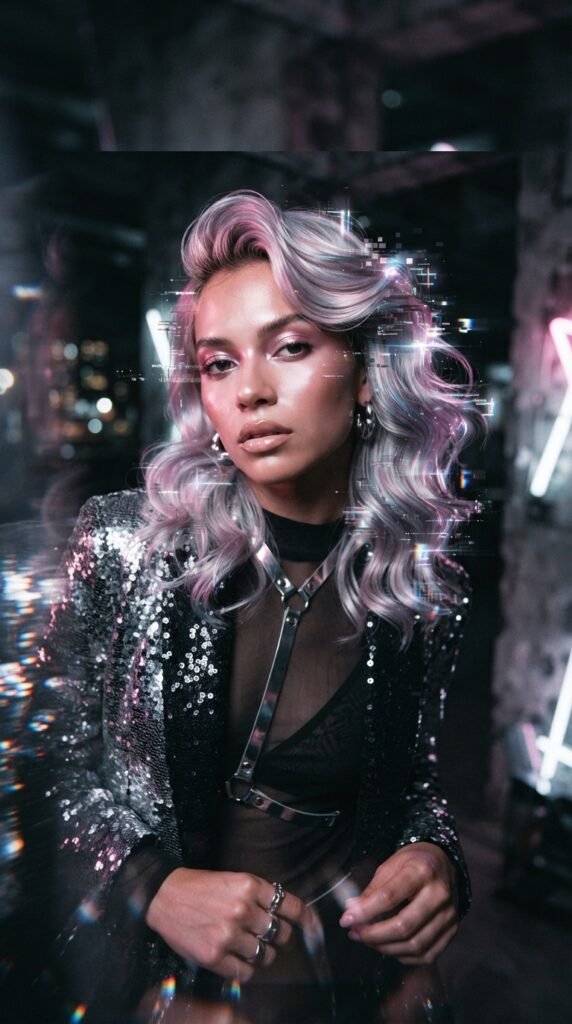
Glitchy glam hair is fun, modern, and a little bit weird in the best way — glossy textures, subtle color shifts, pieces that don’t all match.
Lucky for you, that slightly unfinished feel is perfect for face framing. Uneven pieces around the face naturally break up roundness.
- Ask for soft, slightly irregular face framing pieces
- Keep the shortest point at the cheekbone or lower
- Mix a sleek front with a textured back
It reads trendy and effortless at the same time.
Old Money Hair: Polished, Zero Fuss
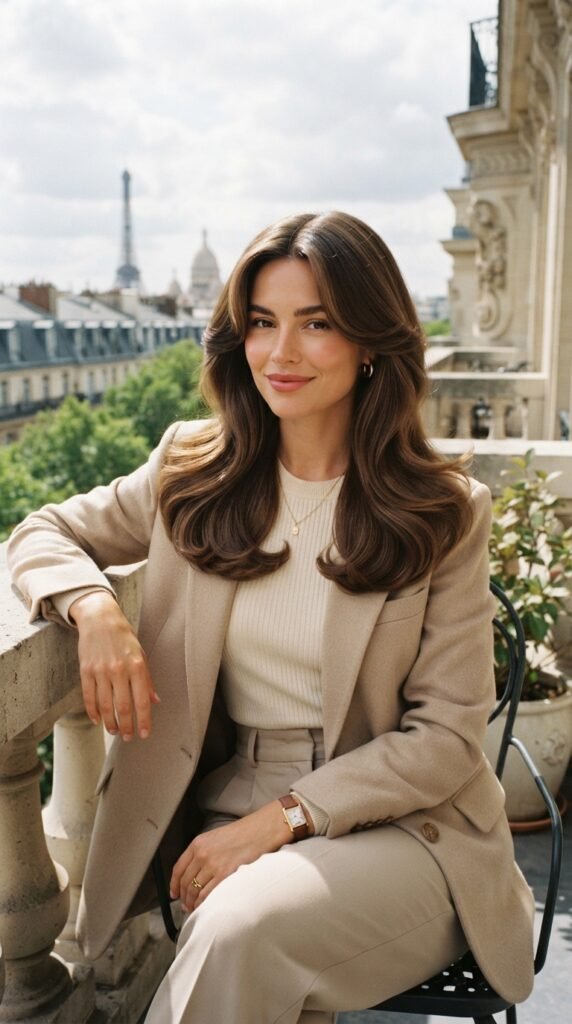
Old money hair is basically quiet luxury in strand form: smooth, healthy, expensive-looking, never trying too hard.
The version that flatters a round face? A smooth blowout with one long, soft face framing layer on each side.
- Keep it one length in the back
- Add a subtle bend at the collarbone
- Part it slightly off center
No choppy layers, no visible steps. Just a soft frame that moves when you do. It’s timeless, and it grows out beautifully.
2026 Hairstyles Built for Round Faces
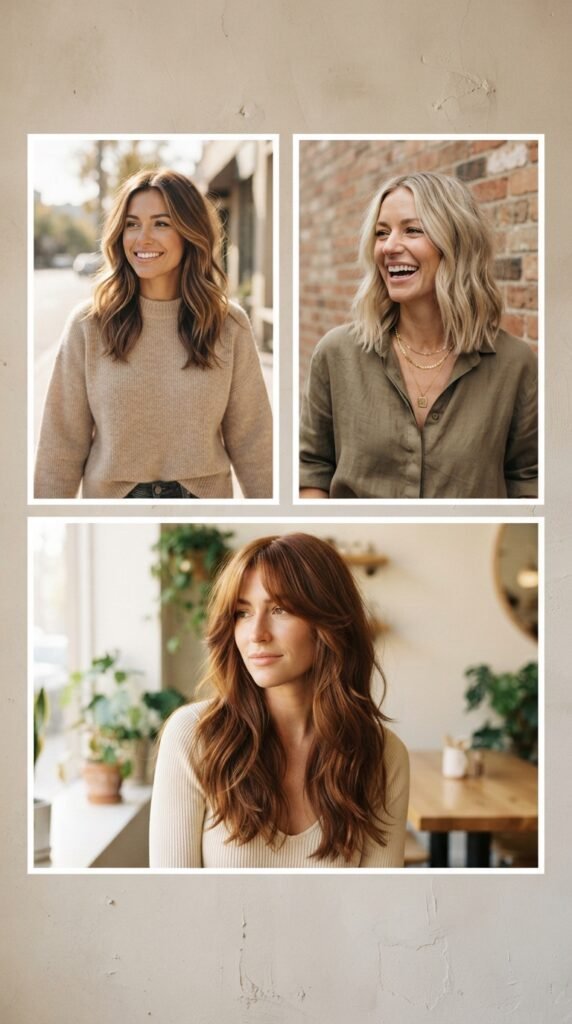
Here’s what’s trending for 2026 and actually works for you.
- Quiet luxury bob with soft face framing
- Asymmetrical lob with one longer side
- Hime cut with angled side pieces
- Romantic goth long waves with curtain bangs
- Vampire haircut sleek with a soft bend
- Glitchy glam textured face framing pieces
- Old money blowout with one framing layer each side
Pick the one that matches your daily effort level. That’s the real filter.
How to Ask Your Stylist (Word-for-Word)
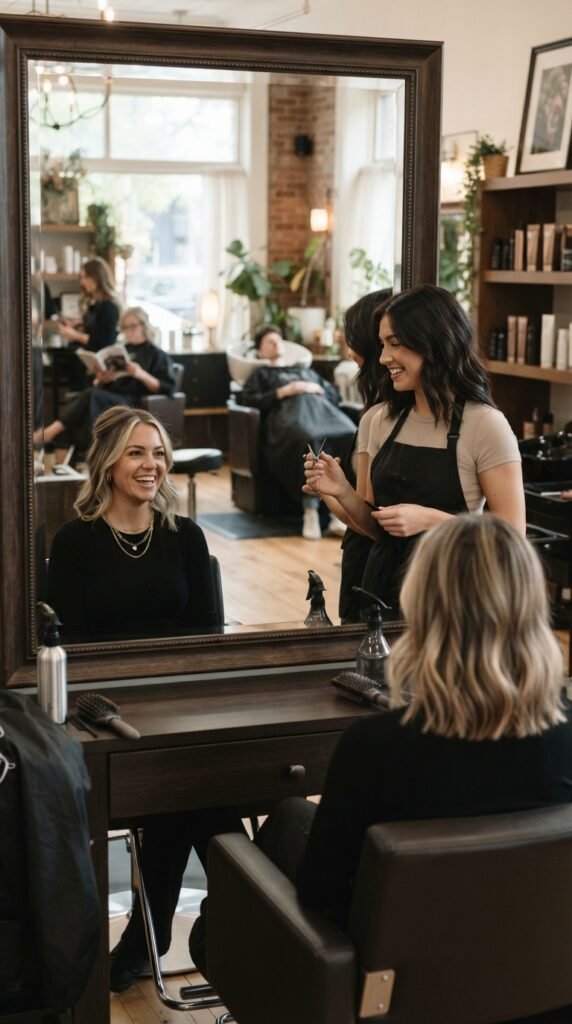
Bring photos, but also bring words. Stylists cut what they hear, so say it clearly.
- “I’d like soft face framing layers that start at my cheekbone and blend into the length.”
- “Please keep the ends angled, not blunt.”
- “I want movement around my face without adding width at the sides.”
- “Can we keep the shortest piece no higher than my cheekbone?”
Also tell them how much time you’ll actually spend styling. Five minutes or thirty changes the cut they should give you.
Layer Heights Cheat Sheet
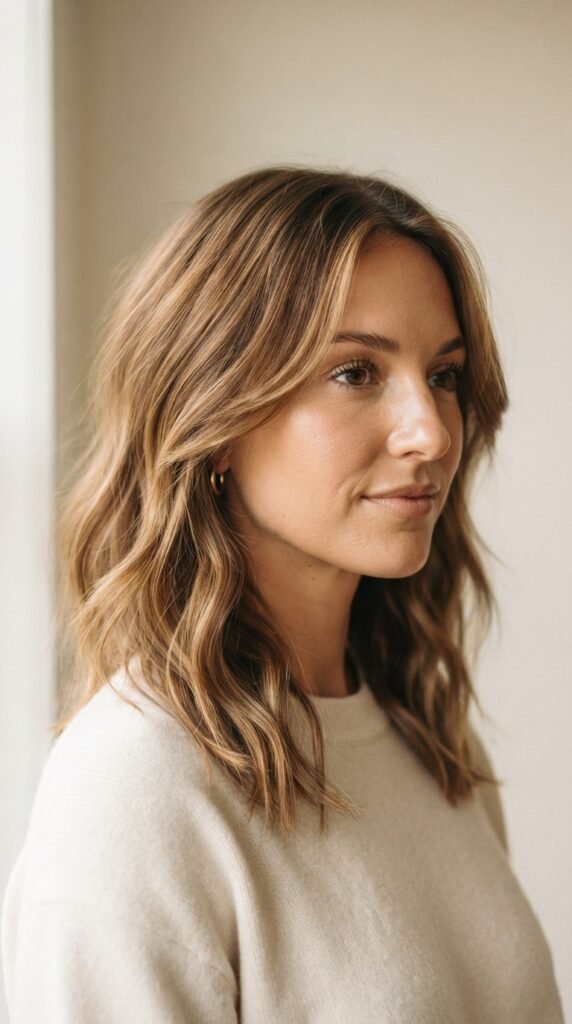
Not sure where you want them? Use this.
- Cheekbone layers: soften the widest part of your face. Best for most round shapes.
- Jaw layers: draw the eye down and lengthen.
- Chin layers: cute for short hair, but risky if they stop exactly at your chin.
- Collarbone layers: safe, elongating, and easy to grow out.
If you’re unsure, ask for cheekbone plus collarbone. That combo flatters almost everyone.
Best Partings for a Rounder Face

Your part changes your silhouette more than you think.
- Slight off-center part: the safest bet. Adds asymmetry instantly.
- Deep side part: dramatic, elongating, great with big waves.
- Center part: works, but only with strong face framing layers on both sides.
Skip a harsh center part with no layers. It can highlight the width of your cheeks. Switch sides every few weeks too, so your hair doesn’t train flat in one direction.
Short Hair? How to Make Layers Work

Short hair on a round face is completely doable. You just need strategic layers.
- Keep the back slightly shorter and the front longer
- Add soft framing pieces that skim the cheekbone
- Avoid volume at the sides — put it at the crown
- Ask for textured ends so it doesn’t sit like a helmet
A chin-length or jaw-length cut with angled front pieces gives you lift and shape without the roundness. Pixies work too, as long as the top has height and the sides stay close to your head.
Styling at Home: The 5-Minute Round Brush Routine

You don’t need an hour. Here’s the fast version.
- Spray a heat protectant on damp hair.
- Rough dry until it’s about 80 percent dry.
- Wrap your face framing pieces around a round brush and pull forward and down.
- Hit the roots at the crown with the dryer for lift.
- Cool shot, then a tiny bit of oil on the ends.
The forward-and-down motion is the part that matters. It trains your layers to fall softly around your face instead of puffing out.
Blow Dryer Tricks That Keep Width Down
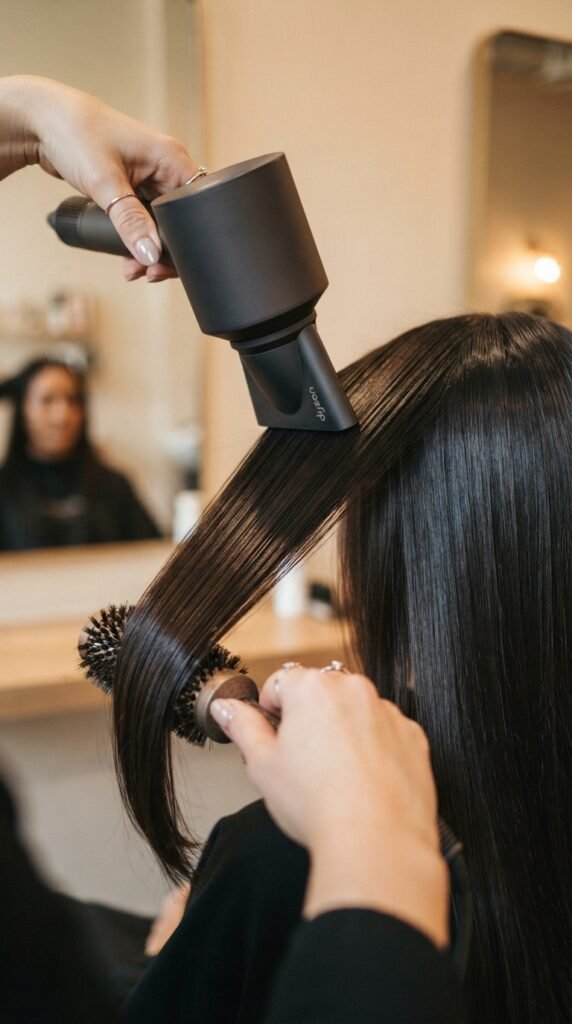
Round faces look wider when the sides of your hair are big. So keep volume where it helps.
- Point the nozzle down your hair shaft, never sideways.
- Dry the sides flat against your head with your hand.
- Add lift at the crown instead.
- Finish with a cool shot to lock the shape.
Also: don’t brush your layers straight out. Brush them forward and slightly inward. That small habit makes a big difference over time.
Products That Help (and Two to Skip)

Keep it simple.
- Lightweight heat protectant: always.
- Volume mousse at the roots only: yes.
- Texturizing spray on mid-lengths: yes.
- Heavy pomade on the sides: skip it. It flattens, then puffs.
- Lots of dry shampoo at the sides: skip it. This adds width.
If your hair is fine, stay away from thick creams near your face. They weigh framing layers down and kill the movement you just paid for.
Updos and Ponytails With Soft Face Framing

Pulling your hair back doesn’t have to mean losing the softness. Face framing layers actually shine in updos.
- Leave one or two pieces out on each side
- Pull them forward with a round brush or flat iron for a soft bend
- Keep the ponytail at mid-height, not too low
- Tease the crown slightly for height
This is the easiest way to look put together in two minutes. The loose pieces do all the work, and they soften your face the same way the layers do when your hair is down.
Trims, Grown-Out Layers, and Keeping the Shape
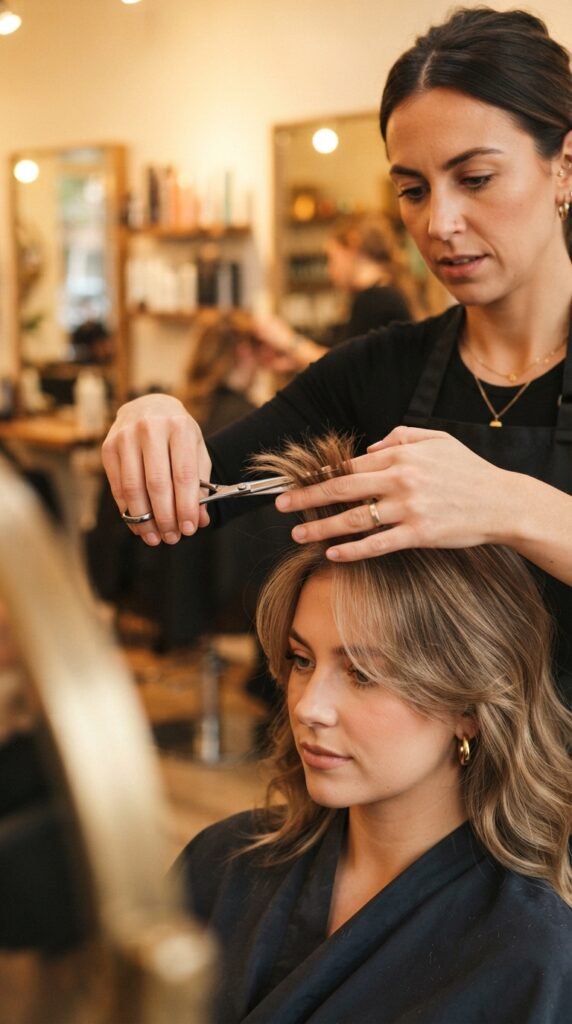
Face framing layers lose their magic when they grow out, usually around six to eight weeks.
- Book a trim every 8 to 10 weeks
- Ask for “just the face framing” if you’re growing the rest
- Skip trims and the shortest pieces turn into heavy chunks
You don’t need a full cut every time. A ten-minute clean-up around the face keeps the shape soft, and it’s an easy ask at any salon.
A Cozy Little Wrap-Up
You don’t need a whole new haircut to soften a round face. You need layers that start in the right place and move the right way.
Pick one look from this list, screenshot the section that fits you best, and bring it to your stylist. That’s genuinely it.
Save this post to Pinterest so you have it ready at your next appointment — and tell me in the comments: which face framing style are you trying first?