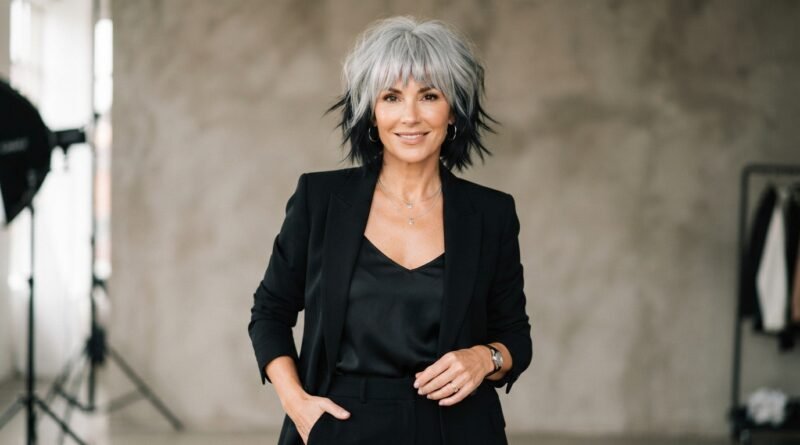
How to Transition to Gray Hair Without an Awkward Growing-Out Phase
You know that moment when you catch a glimpse of your roots and think, “Okay, that could actually be pretty… but I’m not ready to look like a badger for six months”? Yes, that’s the gray transition fear. But here’s the good news: growing out gray hair doesn’t have to feel like an awkward, patchy mistake.
With the right cut, styling tricks, and a little patience, you can move into silver hair looking intentional, elegant, and honestly kind of cool. Think of it as a style upgrade, not a waiting game. In this post, I’m sharing my favorite ways to skip the grow-out horrors and land somewhere chic, modern, and totally you.
Let’s make gray hair feel less like a phase and more like a statement.
Why Gray Transition Feels So Hard
I get it. Gray transition feels hard because it’s not just about color. It’s about texture, contrast, and a root line that seems to grow in fast enough to rival a time-lapse video. You’re used to seeing one hair color, and suddenly there are two — sometimes three. It can feel jarring.
But here’s the thing: every single person who’s ever gone gray has stood where you are. And the ones who came out looking amazing? They didn’t just let it happen — they made smart choices.
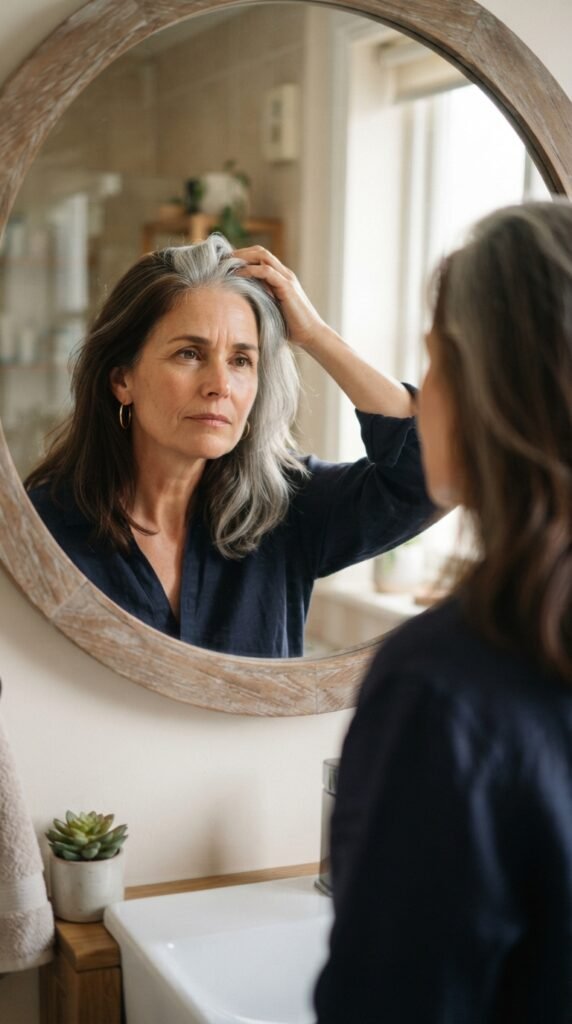
The Real Secret: Start With the Right Cut
Before you even think about color, get your hair cut into a shape that works with the growing-out process. A blunt one-length bob will show every bit of contrast, while a layered cut blends the old dye and new gray beautifully. The right shape makes the color transition feel like a deliberate texture play.
Ask your stylist for something that adds movement. Don’t be afraid to go shorter than you’re used to — less old color means less to grow out. Plus, a fresh cut instantly makes you feel more put together.

What About the “Old Money Hair” Route?
Old money hair is all about understated elegance. Think sleek, polished, and a little bit effortless. For gray transition, it’s a dream because it’s less about hiding and more about embracing a refined blend of tones. You can wear your gray with confidence because the cut and styling say “I choose this look.”
Try a smooth blowout with a center part or a low bun. The clean lines distract from any contrast and make the gray read as intentional.
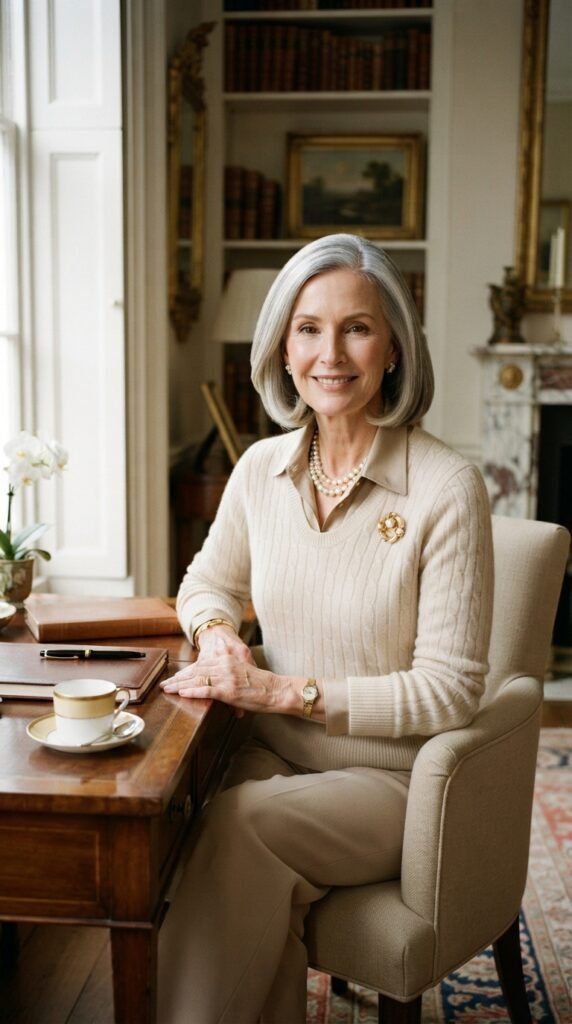
The Quiet Luxury Bob: Your Gray Transition BFF
If there’s one haircut that makes gray transition feel easy, it’s the quiet luxury bob. It’s chin-length, shaped, and looks expensive without trying. The best part? Because it’s so structured, any visible roots just look like texture and dimension, not a mistake.
This bob works especially well if your natural gray grows in around the temples first. Those streaks become a feature. Paired with a soft caramel or silver gloss, it feels like a 2026 hairstyle trend you were early to.

Will an Asymmetrical Lob Help?
Yes, and here’s why: the asymmetrical lob gives you a modern, angled shape that draws the eye down instead of to the roots. One side sits longer, which creates movement and camouflages the line between dyed hair and gray. It’s a favorite for a reason — low-maintenance, high-impact.
Style it with a little wave or bend. The uneven lengths make the color melting look completely deliberate. Plus, lobs are one of the best transitional haircuts and still one of the most flattering cuts for most face shapes.

The Vampire Haircut for Edgy Transition
Want to go bold? The vampire haircut is a structured, sharp look with fringed layers that feel dark and romantic. It’s not just for goths — it’s a fashion-forward way to flip the growing-out phase into a statement. The layers break up the contrast, and the fringe softens the root line.
If you’ve been feeling hesitant, this cut gives you confidence. It says you’re not waiting for gray to “catch up” — you’re designing around it.

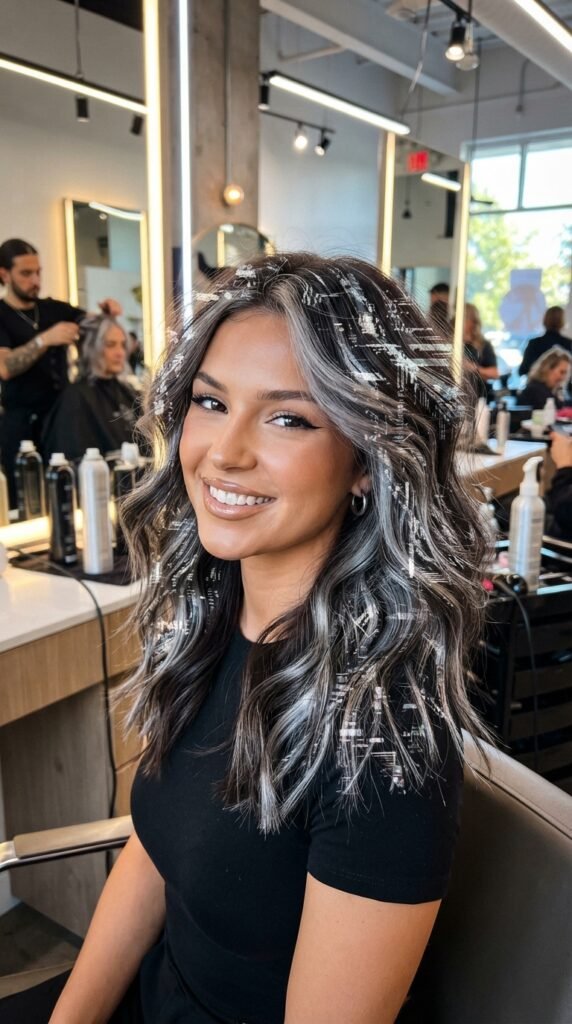
Glitchy Glam Hair: Blending Gray With Highlights
If you don’t want a full gray haircut yet, glitchy glam hair is your cheat code. This trend mixes chunky highlights with darker base tones, creating a digital-inspired, glitchy contrast that actually incorporates the gray instead of hiding it. It’s perfect for those growing out a few stubborn patches.
Your colorist can weave the new gray into existing highlights, making the whole head feel intentional. It looks like you planned every strand.
The Hime Cut: Unexpectedly Perfect for Gray Growth
Hear me out. The hime cut — with its straight across bangs and cheek-length face-framing pieces — is a genius gray transition haircut. The sharp lines distract from the root contrast, and the graphic shape feels trendy. In 2026, hime cut variations are popping up everywhere, and they work surprisingly well with silver.
Because the cut is so intentional, the color contrast becomes secondary. You can rock it with a few gray streaks near your face and it looks like a fashion choice.
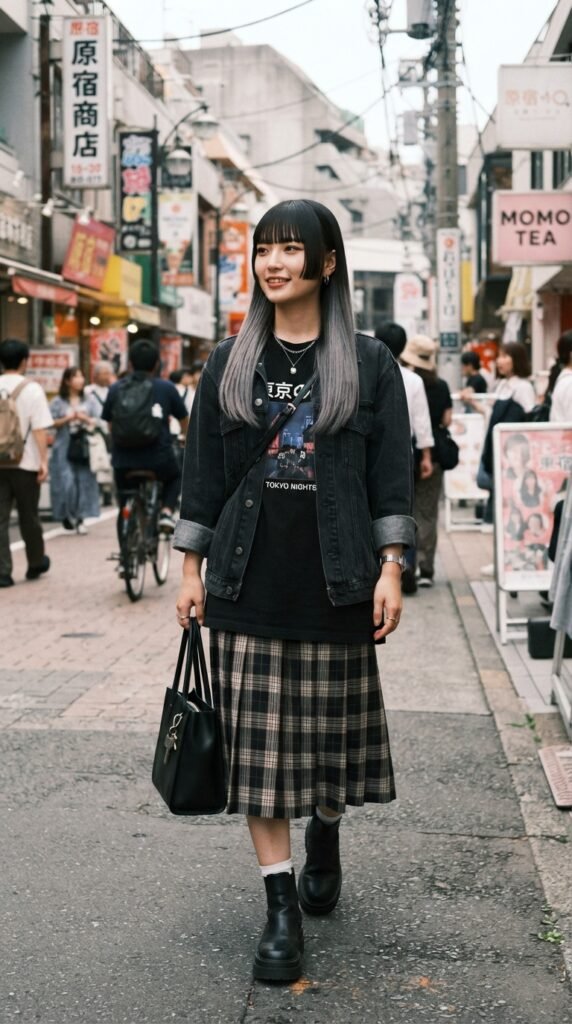
Romantic Goth Hairstyles for Dark-to-Gray Phases
Romantic goth hairstyles are all about dramatic length, soft waves, and dark, moody undertones. During your gray transition, this aesthetic actually works in your favor. The dark ends and natural silver roots can look like an intentional ghostly gradient. Add braids or ribbons and it feels editorial.
Think of your hair as a story — dark past, silver future, and right now it’s that lovely in-between chapter. Own it.

Use Root Smudging (Not Chalky Bleach)
Root smudging is a low-commitment coloring trick that softens the line between your natural gray and the old dye. Instead of bleaching or heavy dye, the colorist uses a translucent toner to blend the two tones. The result? A soft, shadowy root that grows out gracefully.
This is perfect if you’re not ready for a full gray head but want to stop dyeing. It buys you several months of blend time.
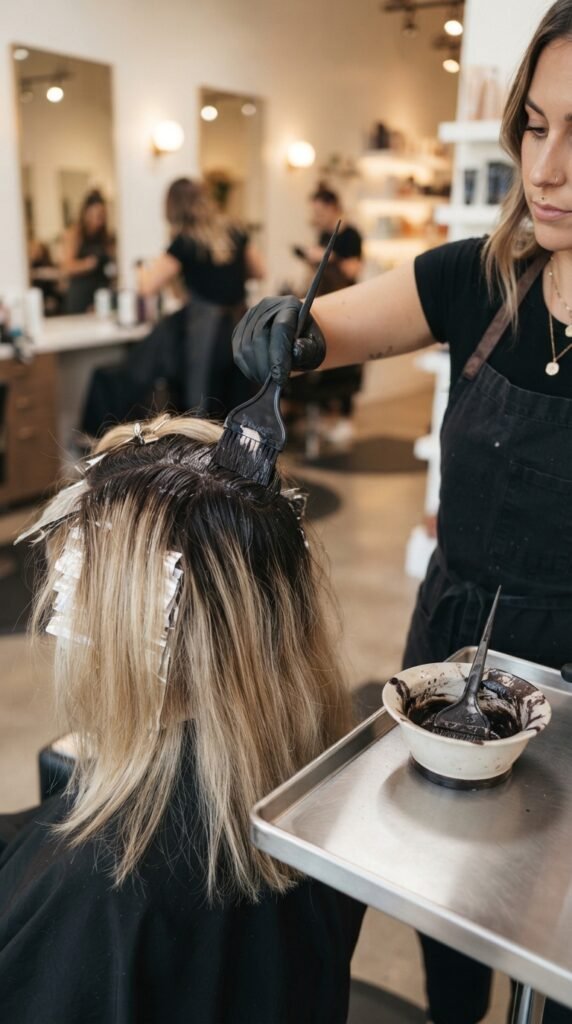
Gloss Treatments Are Game-Changers
A regular gloss treatment can make your existing hair color and the new gray both look better. Gloss is like a conditioning treatment that adds shine and tone without penetrating the hair shaft. It neutralizes brassy ends and enhances the cool sparkle in silver strands.
It’s one of the simplest ways to make the transition feel polished. Ask for a clear or pigmented gloss at your next salon visit.
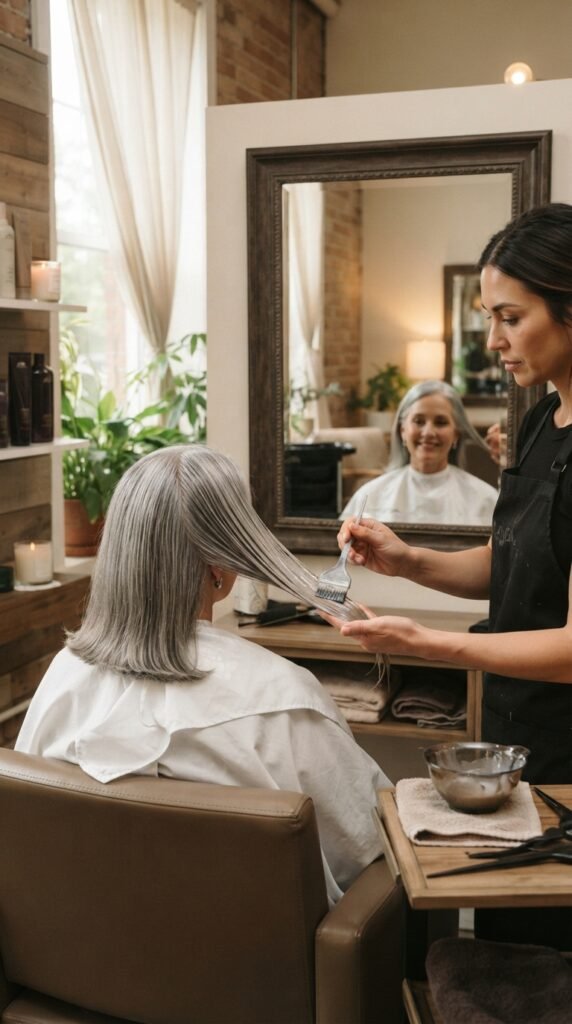
The 2026 Hairstyles That Already Embrace Gray
If you peek at 2026 hairstyles, gray is everywhere. From silver lobs to salt-and-pepper pixies, the runway and Instagram are full of women rocking natural gray with confidence. So you’re not stepping off-trend — you’re stepping on it.
There’s no rule that says gray equals “old.” It’s a color, and right now, it’s a cool one.
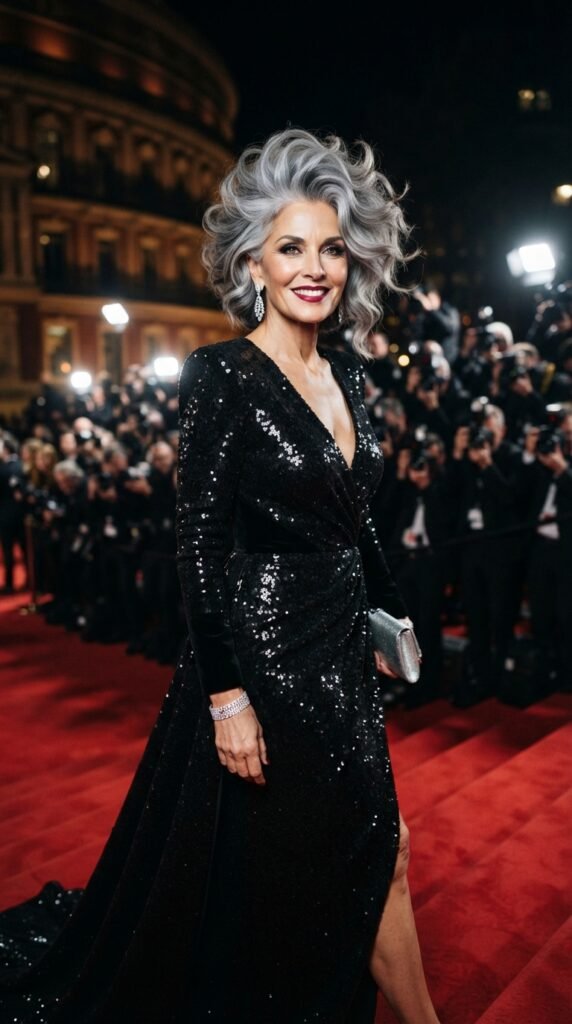
Transitioning With a Pixie (No Awkward Stage)
If you want the fastest escape from the awkward zone, go for a pixie. Cutting off most of the old color means the new gray is the star, with zero harsh lines. It’s bold, it’s light, and it’s liberating.
Pixies in 2026 are soft and textured, not crunchy. Add a little pomade or wax for a piecey, playful vibe. You’ll be surprised how much easier the transition feels when there’s simply less hair to worry about.

How to Style the “Skunk” Phase
Let’s be honest — the skunk phase (dark ends, light roots) is the one everyone fears. But you can style through it. Try braids, twists, or half-up looks that put the focus on your crown. A slicked-back bun also gives you that ballerina look and makes the color contrast look like an artistic choice.
The trick is to not hide it. Push the gray to the front, literally. Face-framing silver pieces can look like intentional highlights.
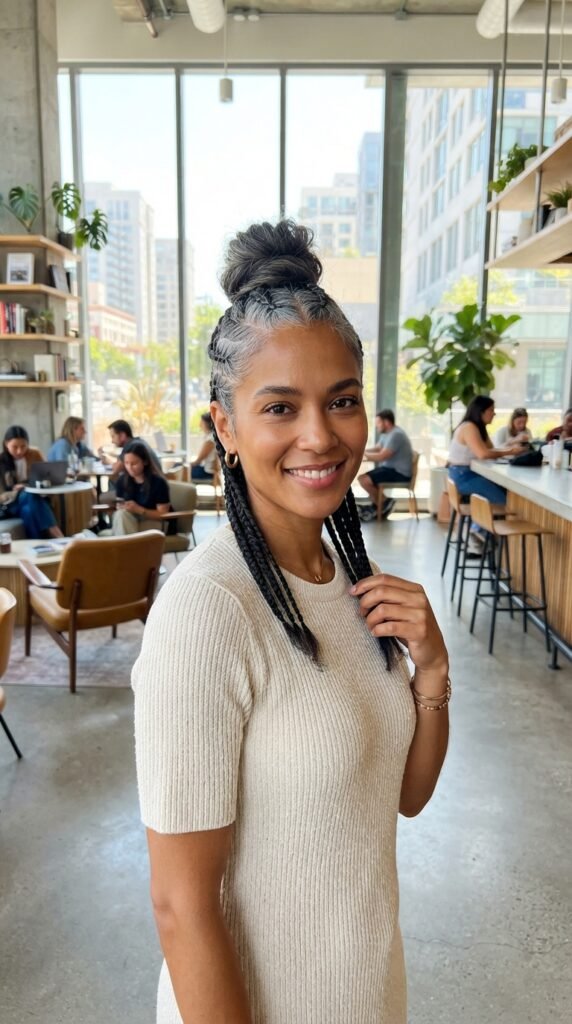
Braids and Accessories Save Everything
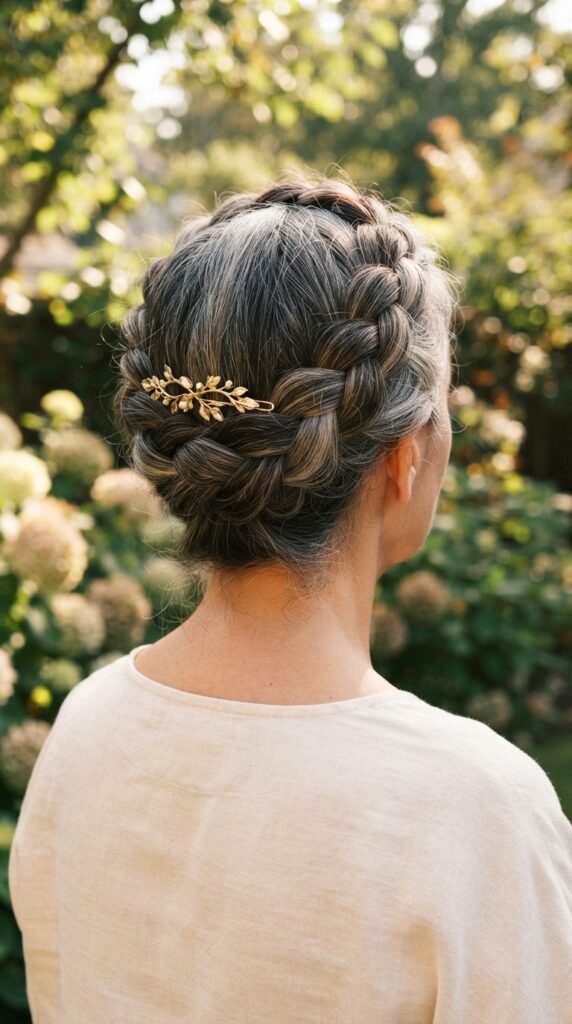
When the grow-out is driving you crazy, braids are your best friend. A crown braid or Dutch braid pulls the root line into the braid pattern, and suddenly you can’t see where one color starts and the other ends. Add a claw clip, silk scarf, or elegant barrette for extra charm.
Accessories are a transition hack that costs nothing and changes everything. They shift the attention from “awkward” to “fashionably styled.”
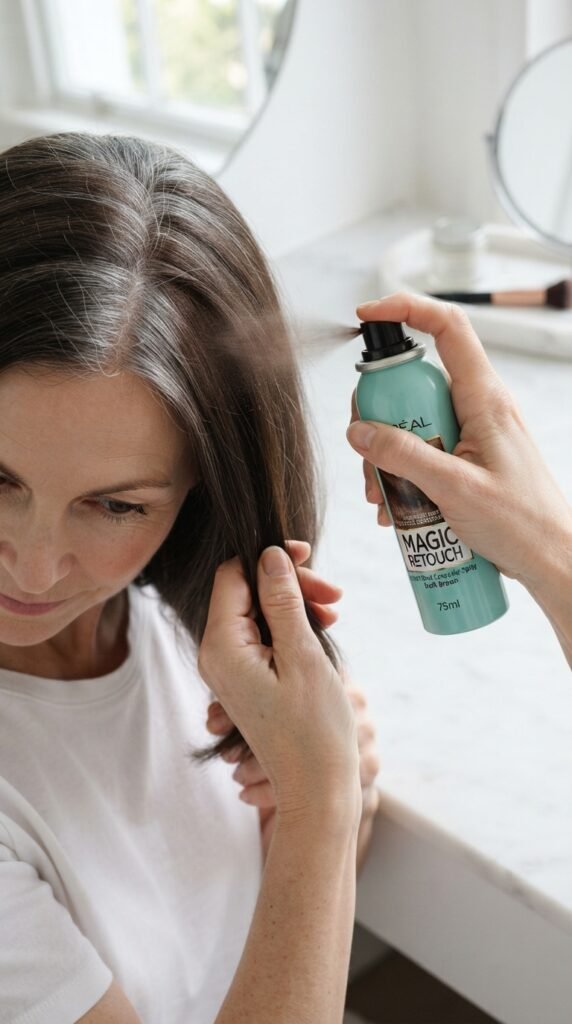
Temporary Root Concealers (Honest Review)
If you have a big event and just need one day of solid color, temporary root concealers are lifesavers. Sprays, powders, and touch-up sticks cover gray roots instantly and wash out with shampoo. They’re great for date nights, weddings, or those days you’re just over it.
My honest review? They work, but they don’t last through heavy rain or sweaty workouts. Keep one in your bag for emergency touch-ups.
Choose Your Shampoo Wisely
Gray hair tends to be coarser and more prone to yellowing. That’s why a purple shampoo or a silver-toning shampoo is non-negotiable during your transition. It keeps gray bright, silver, and fresh instead of dull and brassy.
But don’t overdo it — use it once or twice a week. Too much can leave a lavender tint. Also try a moisturizing shampoo to keep the new growth happy and soft.
Trim Schedule That Keeps Hair Healthy
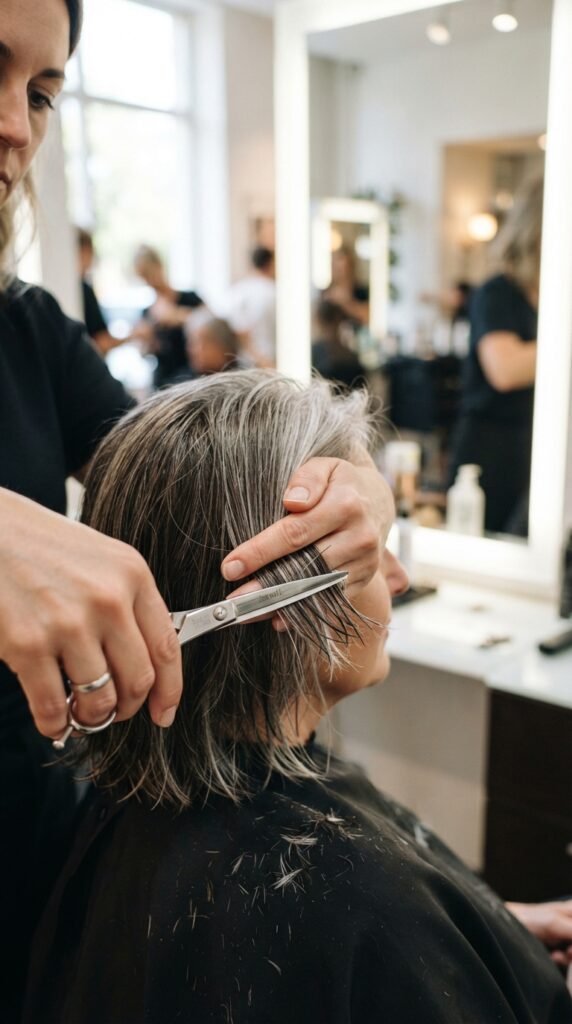
You might think you should skip trims to let the gray grow faster. But regular trims actually make the transition smoother. As the gray grows, you’re gradually trimming away the old color. That means less blunt split and a cleaner blend.
Book a trim every 8–10 weeks. It keeps the shape fresh and allows the cut to evolve as the gray takes over. This is especially important for bobs and pixies.

Mindset Shifts That Make It Easier
Here’s the truth: the awkward phase is mostly in your head. Other people don’t notice or care about your roots as much as you do. Once you stop treating gray like a flaw, it stops feeling like a problem. Think of it as your hair’s next chapter.
Journal about it, pick a favorite gray influencer, or just remind yourself daily: silver is stylish. It’s not about being old. It’s about being real.

Finding a Colorist Who Gets It
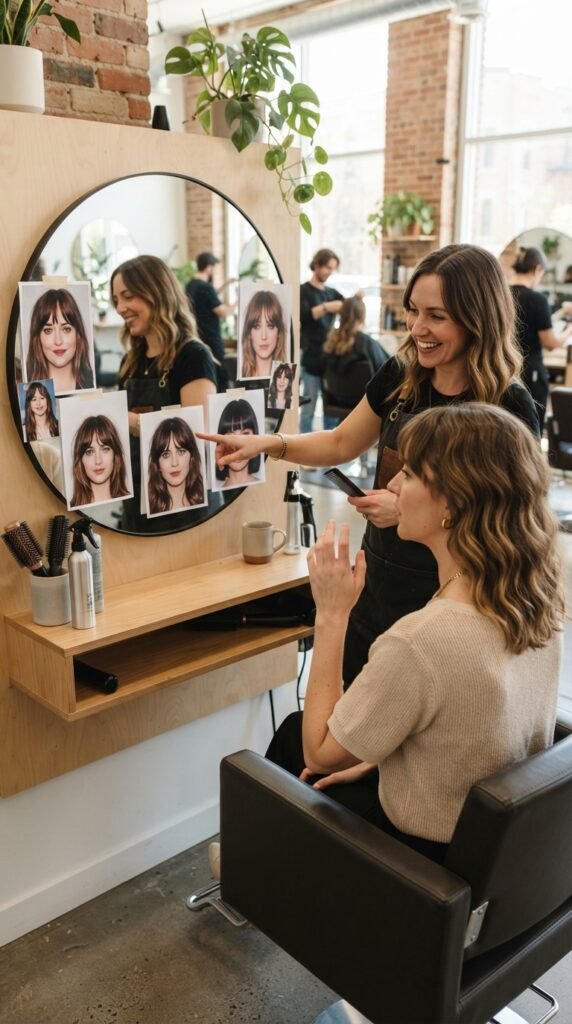
Not every stylist understands the art of gray blending. You want someone who listens, doesn’t pressure you into dyeing again, and knows modern transition techniques. Look for social proof — photos of other gray transition clients are a great sign.
Don’t be afraid to book a consultation first. You need a professional who sees the vision and can build a plan around your exact hair history.
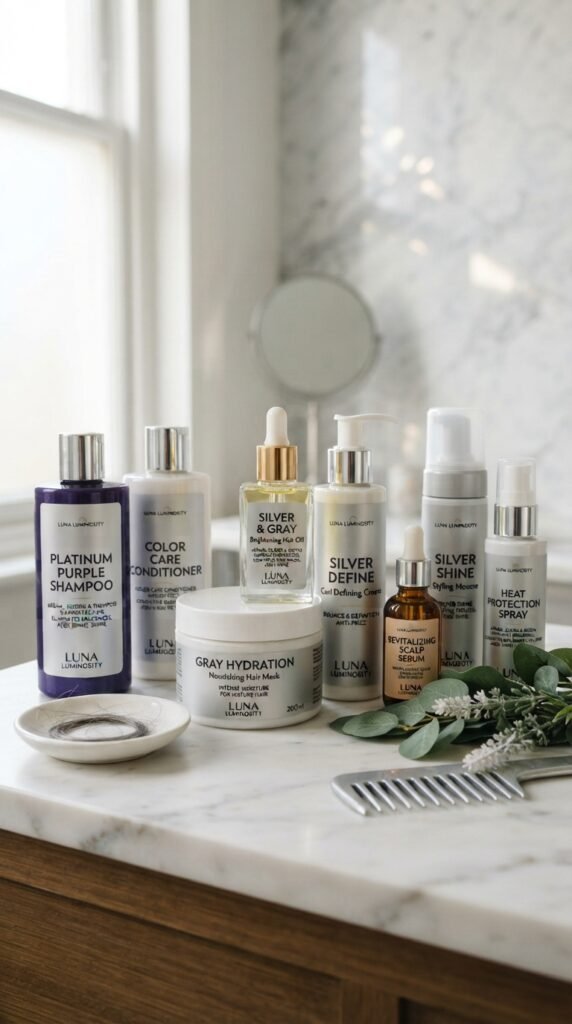
Products That Work for Gray Texture
Gray hair often feels dry and wiry. That’s because the cuticle can be rougher than pigmented hair. Use heavier conditioners, leave-in treatments, and hair oils to keep it pliable. Argan oil and shea butter products work wonders.
Also consider a heat protectant if you use hot tools. Healthy gray hair is shiny and bouncy, not brittle and dull.
Makeup Changes That Complement Silver Hair
When your hair changes, your makeup can too. Silvery gray hair can wash out your face if you wear pale tones. A little more blush, a bolder lip, or defined brows will bring warmth and contrast. You might find that a brown mascara works nicer than black.
Experiment. Gray hair is a fresh canvas, and playing with makeup is fun. It’s like a mini makeover along with the hair transition.
So here’s the thing — you’ve got this. The gray transition isn’t a punishment, it’s a process. With the right cut, the right products, and a little bit of styling courage, you can skip the awkward phase entirely. You might even love it more than your old color.
Remember, hair is just hair. It grows. It changes. And so do we. You’re allowed to let it be easy.
Save this post to Pinterest so you’ll have it next time you’re staring at your roots in a panic. And tell me — what’s the hardest part of gray transition for you? I’d love to hear your story in the comments.