Lock 28 Dutch Fishtail Hybrids Merging Techniques for Complexity
Okay, let’s talk about something that’s been blowing up my DMs lately: the Lock 28 Dutch Fishtail. If you’re into braids, you’ve probably seen it. It’s that gorgeous, intricate style that looks impossibly complex, like something out of a fantasy novel.
But here’s my secret: it’s actually a hybrid. It merges two classic techniques into one stunning look. And once you get the basic merge down, you can start playing with it to create your own signature style.
Think of this as your friendly, no-judgment guide to unlocking this braid. We’re going to break it down step-by-step. No fancy salon talk, just practical tips from my own trial and error.
By the end of this, you’ll not only master the hybrid but also get ideas for how to tweak it into everything from 2026 hairstyles to romantic goth hairstyles. Let’s get your hands moving!
What Exactly Is The Lock 28 Technique?
The name sounds high-tech, but it’s beautifully simple. It’s a braiding method where you “lock” a small section of hair from the top strand under the middle strand before crossing it over. This single move creates a flatter, more textured, and interwoven look than a standard braid.
It gives the braid incredible depth and detail. It’s the core technique that makes the Dutch Fishtail Hybrid so special. Once this move becomes muscle memory, the whole world of complex braids opens up.
And The Dutch Fishtail Braid?
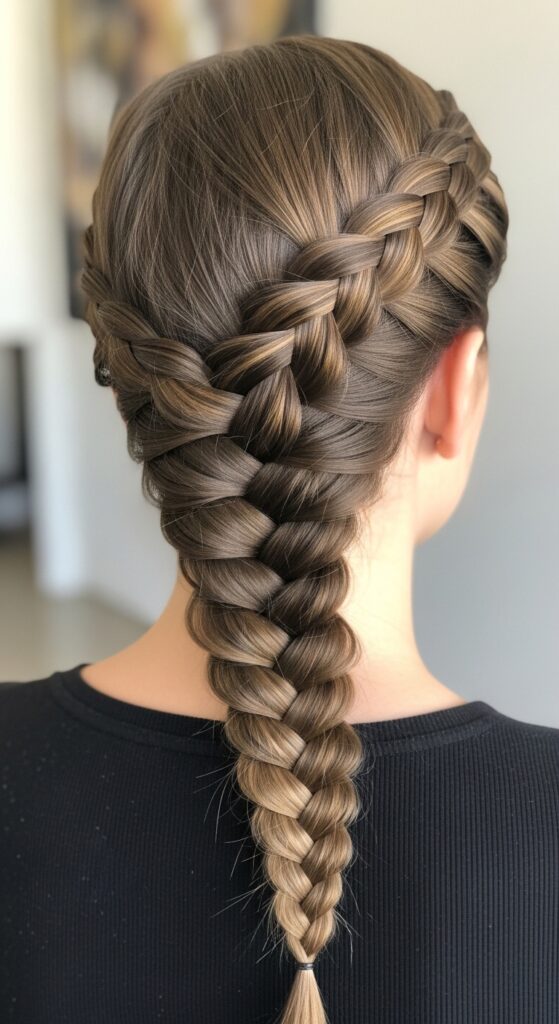
This is the other half of our power couple. A Dutch braid is an inverted French braid, where sections are crossed under, not over, making it pop out from the head. A fishtail braid uses just two sections, weaving small pieces from the outside of one to the inside of the other.
A Dutch Fishtail, then, is an inverted, popping-out braid made with a two-section fishtail method. It’s voluminous, elegant, and has a beautiful, woven texture. It’s a staple for that old money hair aesthetic—polished but interesting.
Why Merge Them? The Magic of Hybrids
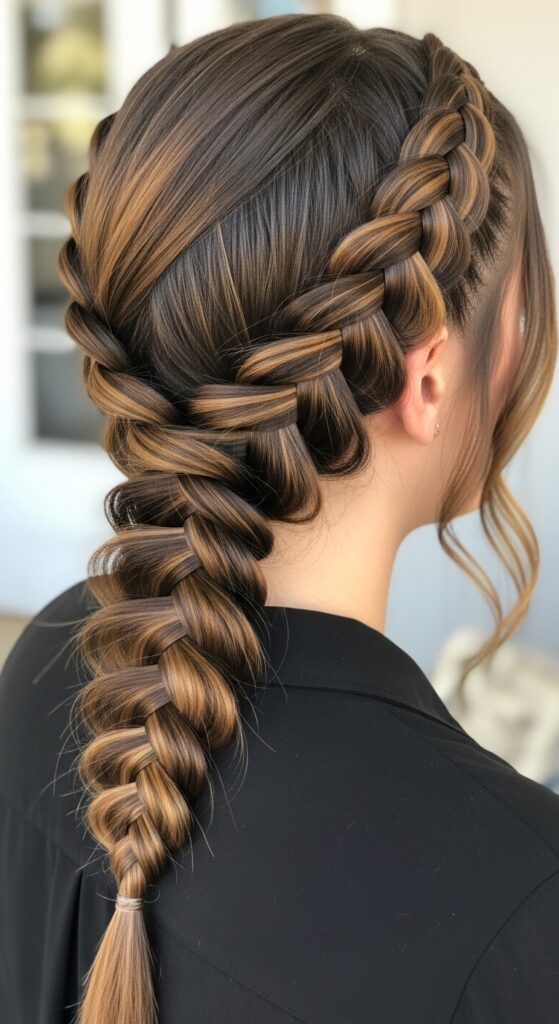
Merging techniques is how you create truly unique, personal hairstyles. The Lock 28 adds detailed, almost chain-like links, while the Dutch Fishtail provides a wide, elegant structure. Together, they create a braid that’s both intricate and substantial.
This hybrid is perfect for when you want a style that makes people say, “How did you DO that?” It’s for special events, or just when you want to feel exceptionally put-together. It’s complexity with a purpose.
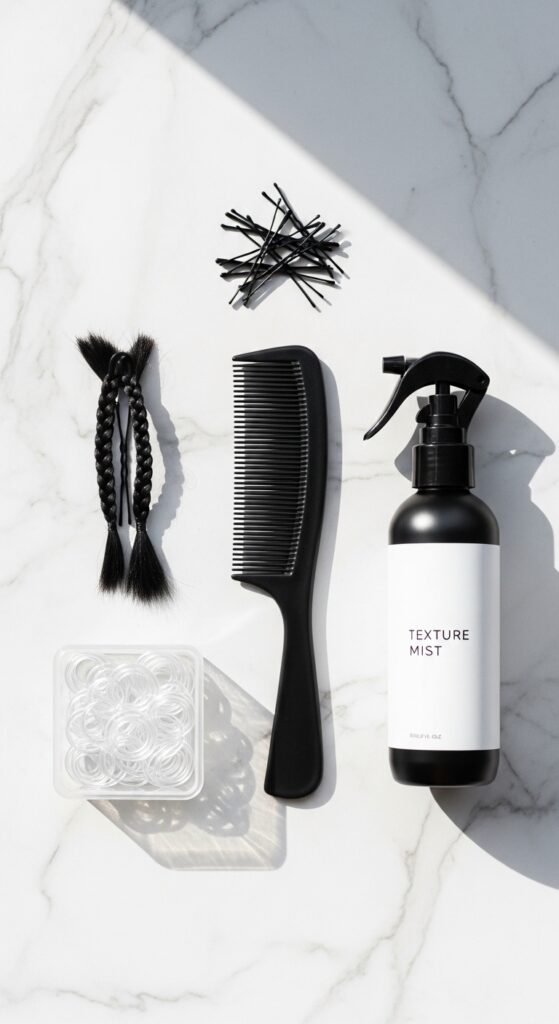
Tools You Absolutely Need
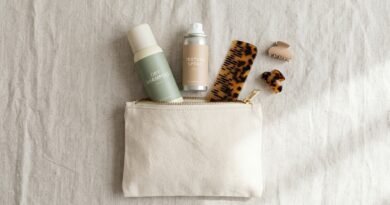
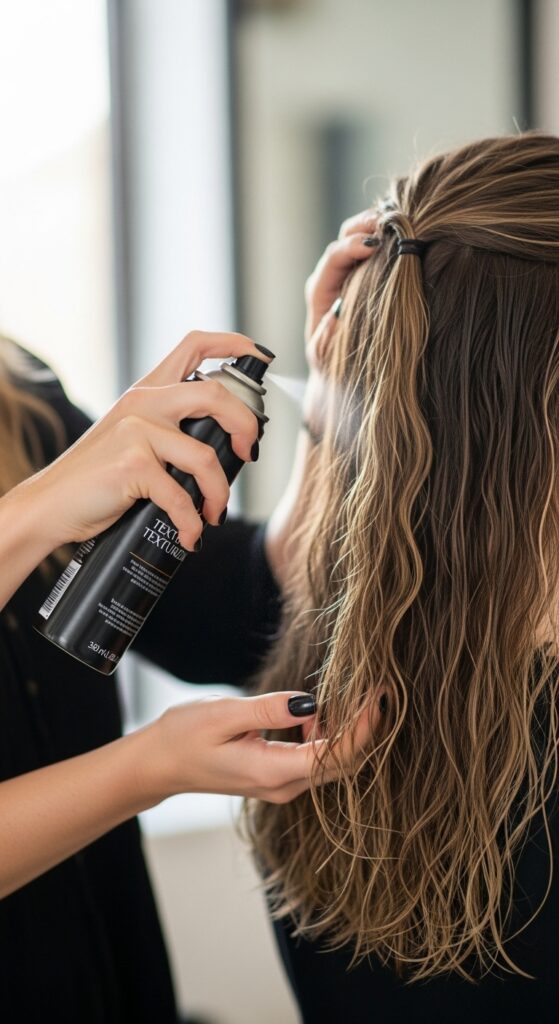
Don’t overcomplicate it. You only need a few things to get started. First, a fine-tooth comb for clean sections. Second, a strong-hold hairspray or texturizing spray. Slightly dirty or textured hair holds better.
Small, clear elastics are a must for securing ends. A few bobby pins can help tame flyaways. That’s it! You don’t need professional tools, just patience and these basics.
- Fine-tooth comb
- Texturizing spray
- Clear elastics
- Bobby pins
Prepping Your Hair For Success
Preparation is everything. Start with day-old hair or spray dry shampoo at the roots for grip. If your hair is slippery, a light texturizing spray on the mid-lengths will be your best friend.
Brush your hair thoroughly to remove any tangles. Then, give it a light mist with a heat protectant if you plan to use a straightener for sleeker sections. The goal is hair that’s manageable but not too soft or silky.
Step 1: Sectioning Is Key
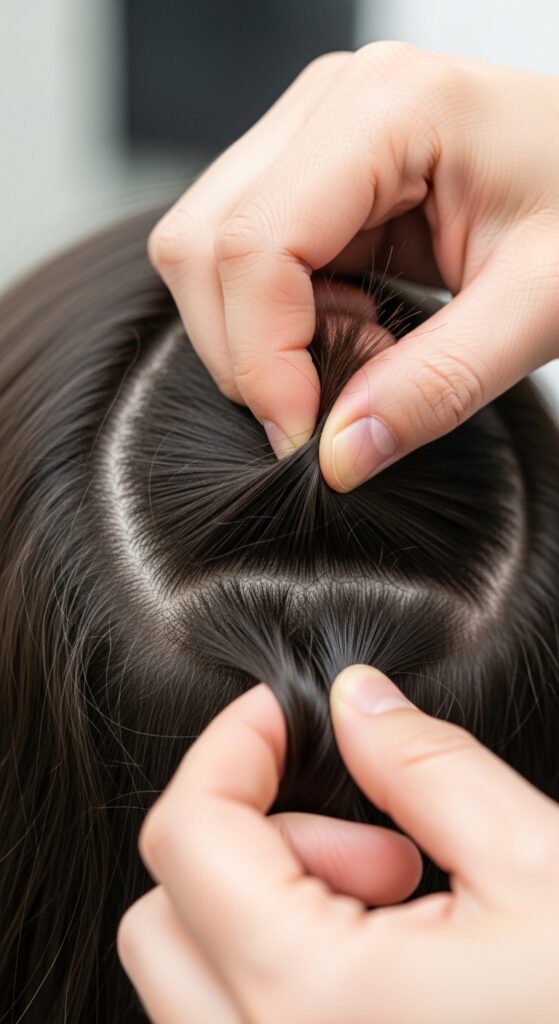
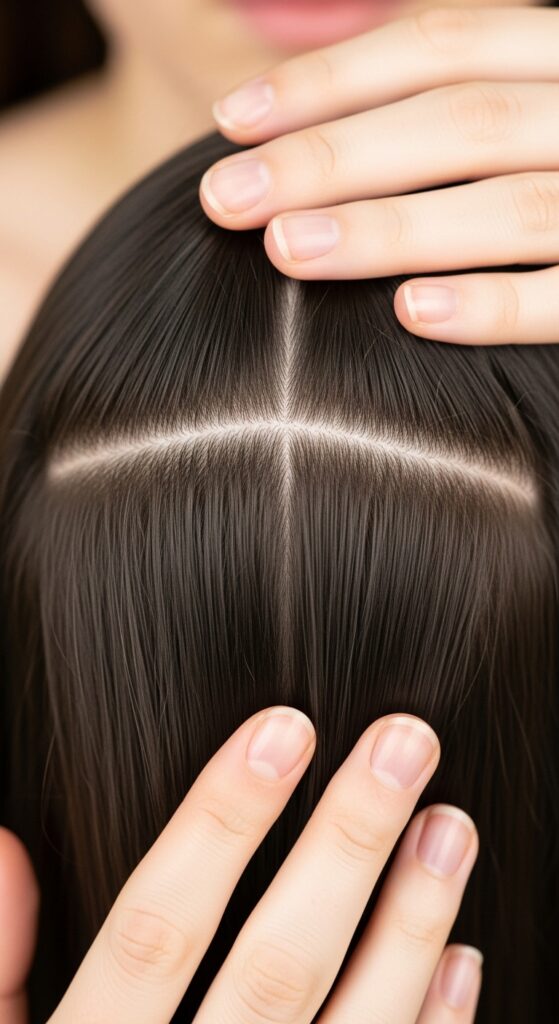
Begin with a deep side part or a middle part, whatever you prefer. Take a triangular section at the front of your hair, from the part down to your temple. This will be your starting point.
Divide this front section into two equal parts, not three. Remember, we’re building a fishtail base. Clip or hold the rest of your hair out of the way for now. Clean sections here make the whole process smoother.
Step 2: The First Lock 28 Move
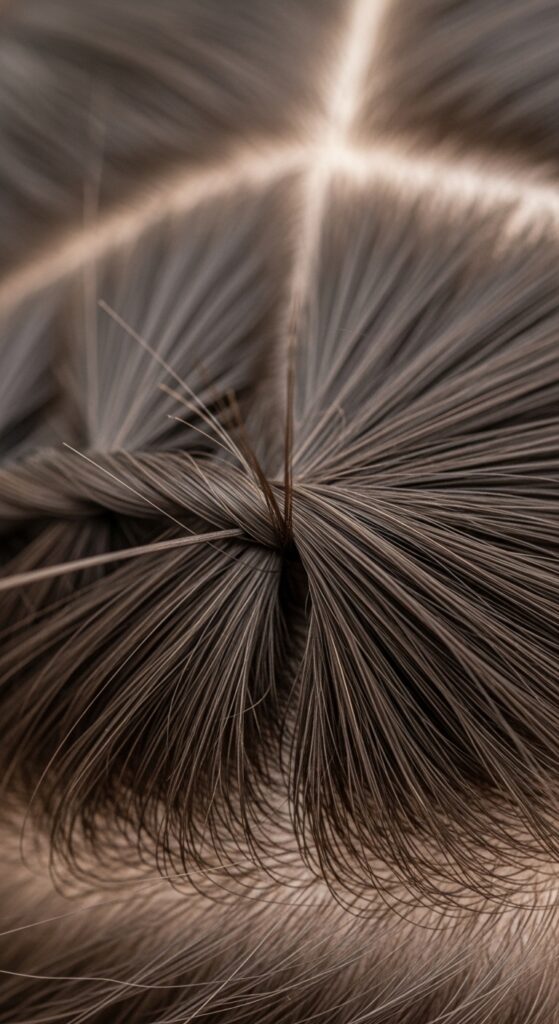
Here’s where they merge. Take a very thin strand from the outside of the left section. Instead of just crossing it over to the right, you’ll first loop it under the right section, then cross it over to join the inside of the right section.
That “lock under” motion is the Lock 28 technique. Pull it snug. You’ve just done the foundational move! The braid will already look different from a standard fishtail.
Step 3: Repeat on the Opposite Side
Now, mirror the move. Take a thin strand from the outside of the right section. Loop it under the left section, then cross it over to join the inside of the left section. Pull it snug to match the tension of the first side.
You are now officially braiding the hybrid! The pattern will start to show: a series of locked, X-like links running down the center of your braid. Keep your sections thin for maximum detail.
Step 4: Adding Hair (The Dutch Element)
On your next Lock 28 move on the left side, before you pick up that thin strand, gather a small section of hair from your loose hairline into the left section. Then, perform the Lock 28 move with the now-thicker left section.
This is what makes it a Dutch braid—you’re adding hair from the scalp as you go. It makes the braid sit on top of the head, incorporating all your hair. Repeat this adding process on every move.
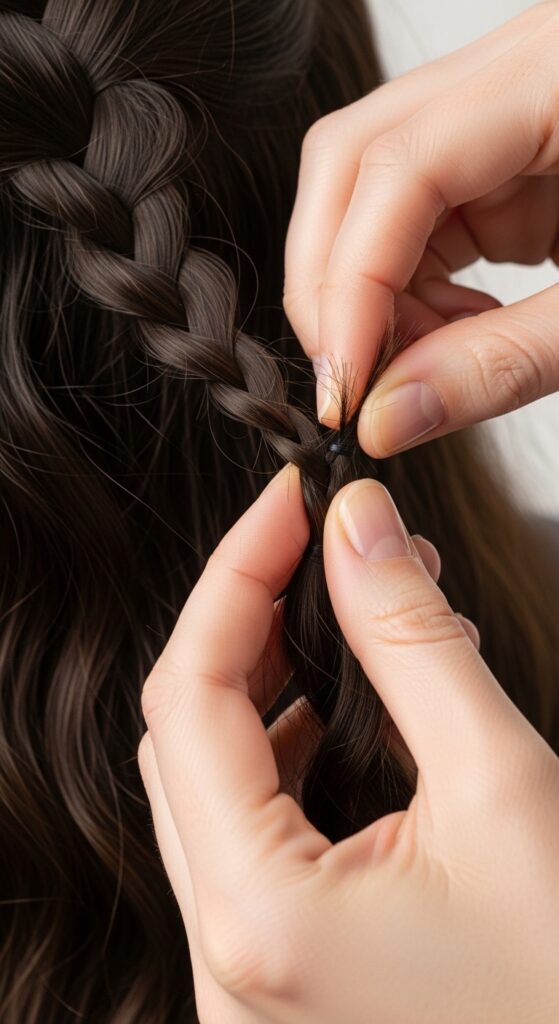
Step 5: Continuing Down The Head
Keep the pattern going: add hair, Lock 28 move. Add hair from the other side, Lock 28 move. Work your way down the side and back of your head, switching hands if you need to. The braid will start to curve with your head.
Focus on keeping the added sections even in size and the tension consistent. Don’t worry if it’s not perfect; the texture hides small mistakes beautifully.
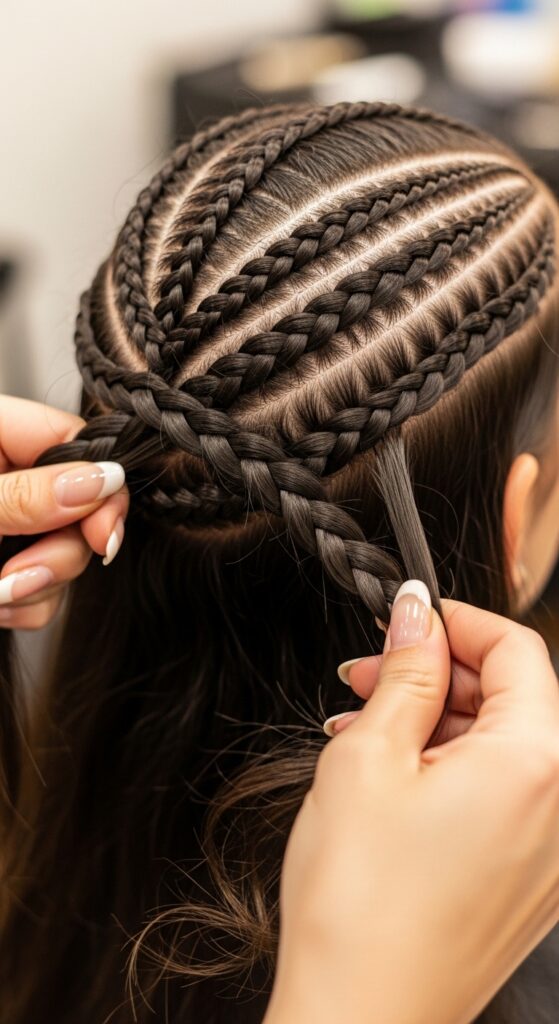
Step 6: Transitioning to a Pure Fishtail
Once you’ve added all the hair from your scalp (usually around the nape of your neck), you’ll stop incorporating new hair. You should now be holding two large sections of hair in your hands.
Continue the Lock 28 fishtail technique without adding more hair. This is now a pure Lock 28 fishtail braid. Keep the sections thin for a tight, intricate look all the way down.
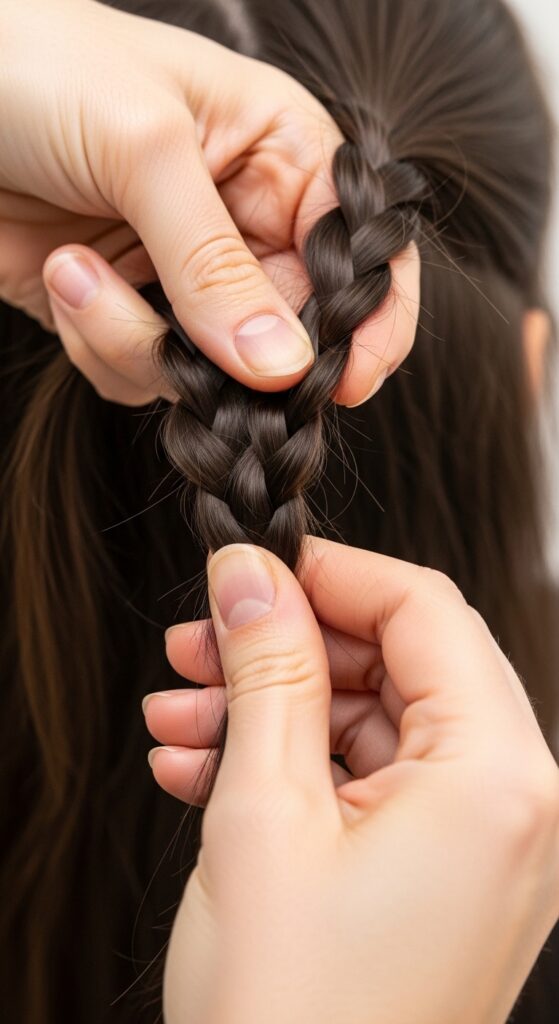
Step 7: Securing The End
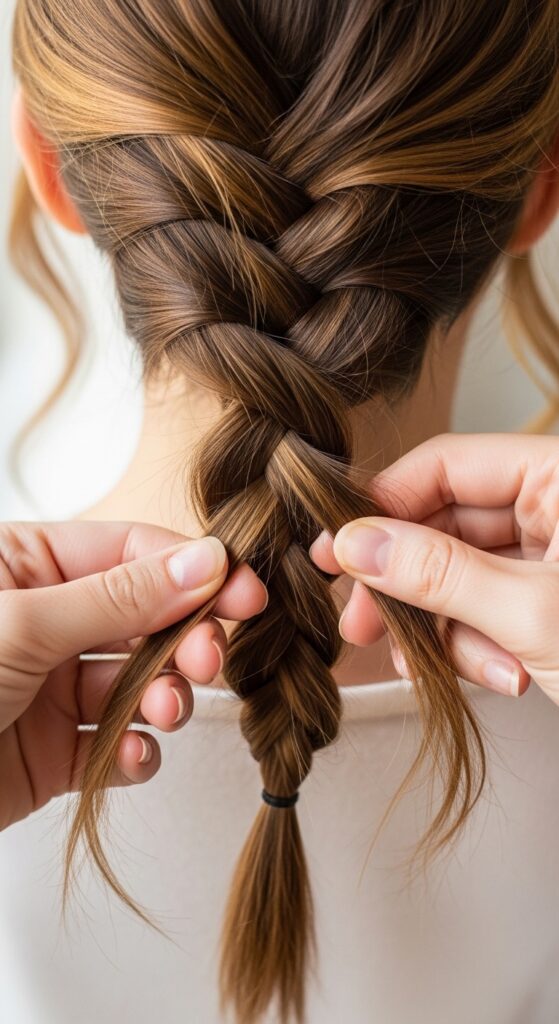
When you run out of hair length, secure the end with a clear elastic. Give the braid a very gentle tug along its length to “pancake” it—pulling the loops slightly outward to make the braid look fuller and more textured.
Be gentle! You don’t want to undo your hard work. This step really makes the Lock 28 details pop and gives it that effortless, voluminous finish.
Fixing Common Mistakes
If your braid feels loose or messy, it’s often a tension issue. Don’t be afraid to pull each move snug. If you drop a section, just smoothly incorporate it into the next pick-up. No one will notice.
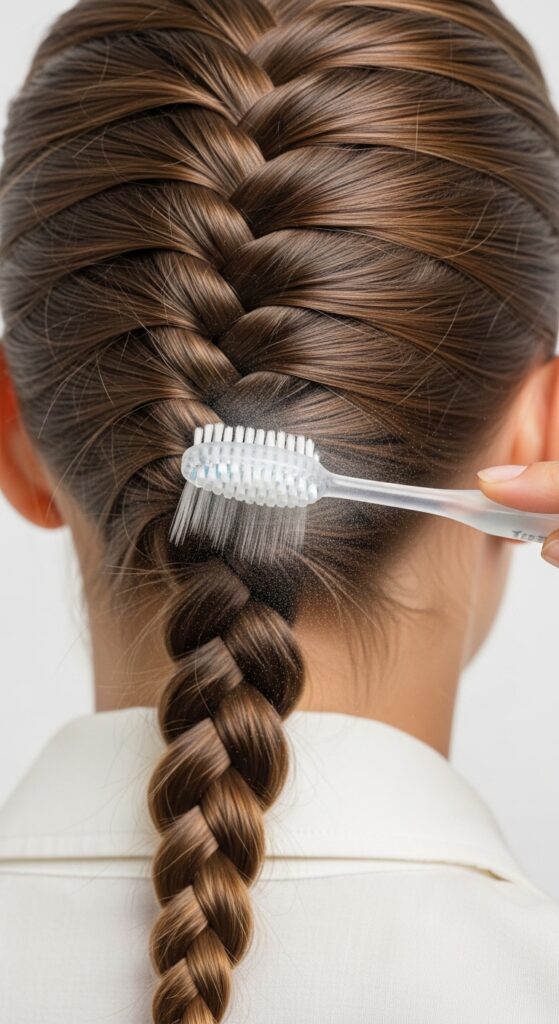
Flyaways? A tiny bit of hairspray on a toothbrush can slick them down. The beauty of this style is its textured nature, so it’s very forgiving. Imperfections add to the glitchy glam hair vibe.
Adapting It Into an Asymmetrical Lob
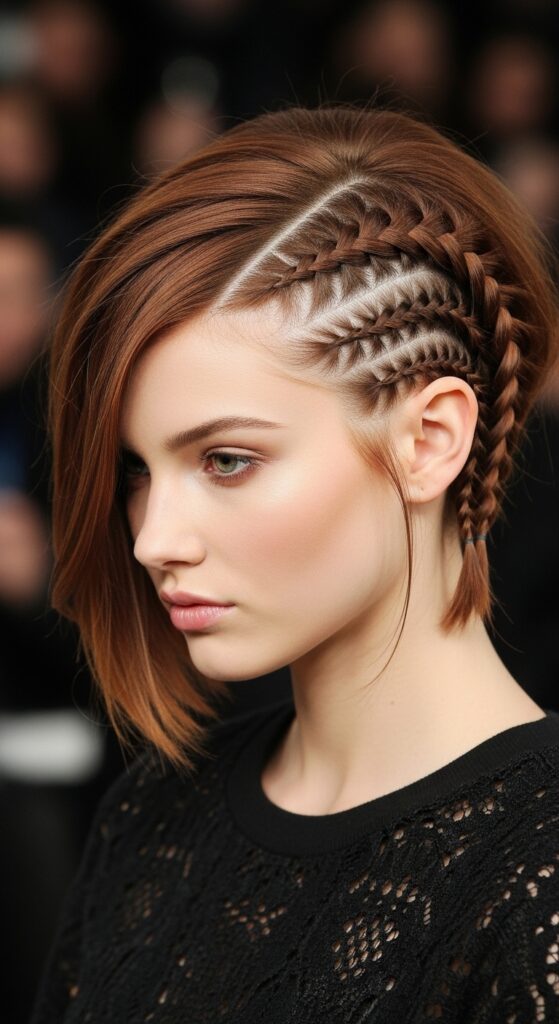
This hybrid isn’t just for long hair! If you have a lob, try it as a side braid. Start the braid high on one side, following your hairline back. Let the tail of the braid blend into your loose ends.
It creates an incredible, editorial look on shorter hair. It’s a perfect way to add detail to an asymmetrical lob or a quiet luxury bob. It looks intentional and chic.
For a Romantic Goth or Vampire Vibe
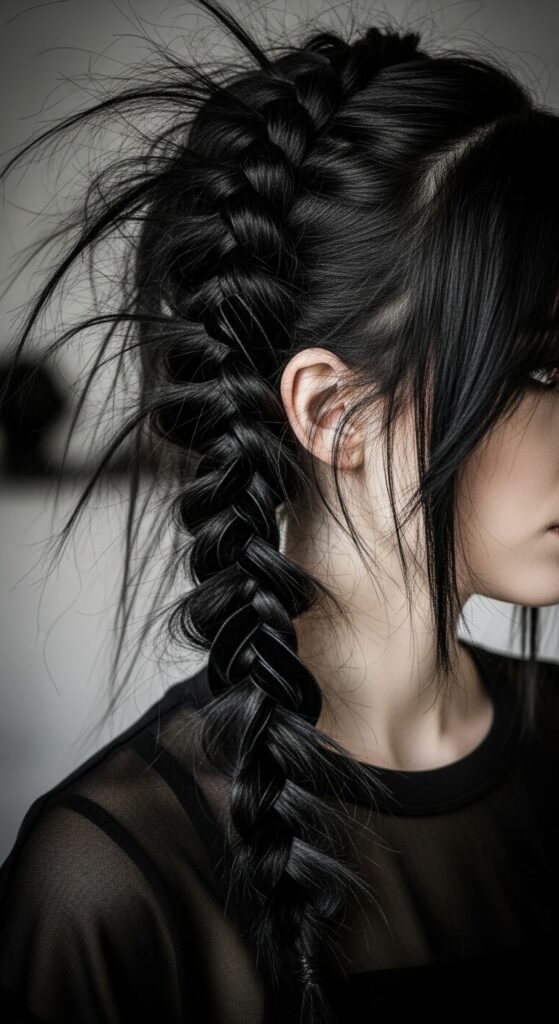
Lean into the dark romance. Braid the hybrid loosely, leaving out face-framing pieces. After securing, gently pull it apart to make it wider and messier. Add a few strategic, jeweled hair pins or a black velvet ribbon.
This is a gorgeous take on romantic goth hairstyles or the vampire haircut trend. It’s elegant but with a haunting, undone feel. Perfect for a night out or a moody photoshoot.
Pairing It With The Hime Cut
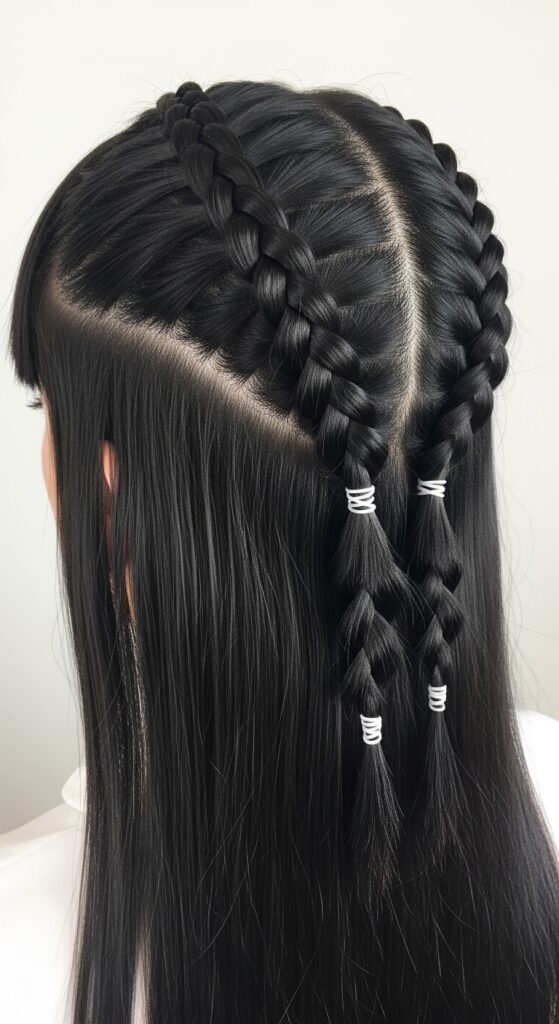
The hime cut, with its dramatic front locks, is a perfect match. Create two smaller Lock 28 Dutch Fishtail hybrids, one on each side, starting at your temples and braiding back. Leave the long front hime sections loose.
It frames the face beautifully and adds an element of structured fantasy to the cut. It’s a look that truly tells a story and feels very next-wave 2026 hairstyles.
Making It Glitchy and Glam
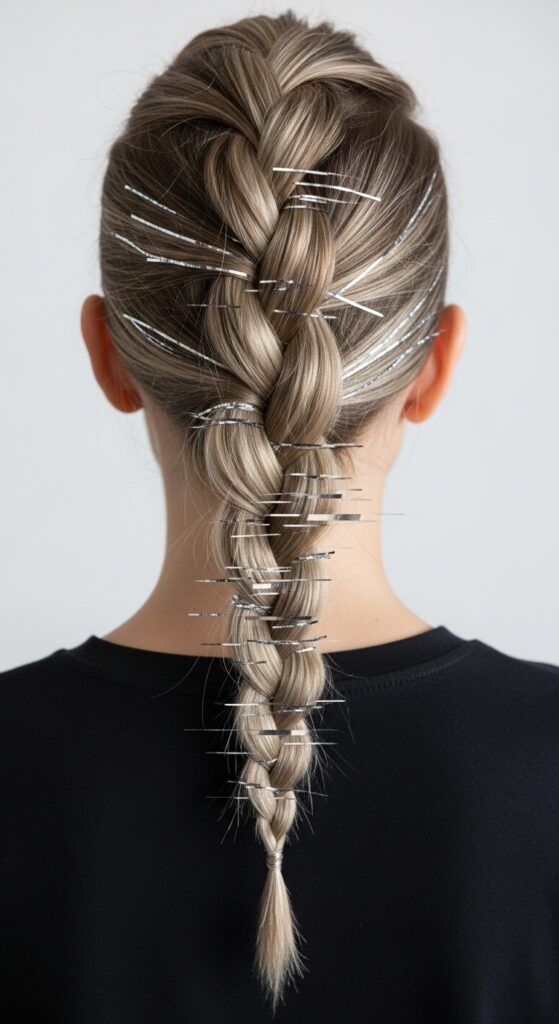
For a glitchy glam hair interpretation, introduce intentional “errors.” Braid in a few small, colored hair tinsels or micro extensions. Or, halfway down, switch the direction of your Lock 28 move for one section.
The goal is a braid that looks digitally manipulated or uniquely flawed. It’s high-fashion, conversation-starting, and so much fun to play with. It breaks the “perfect” braid rules in the best way.
For a Sleek, Old Money Finish
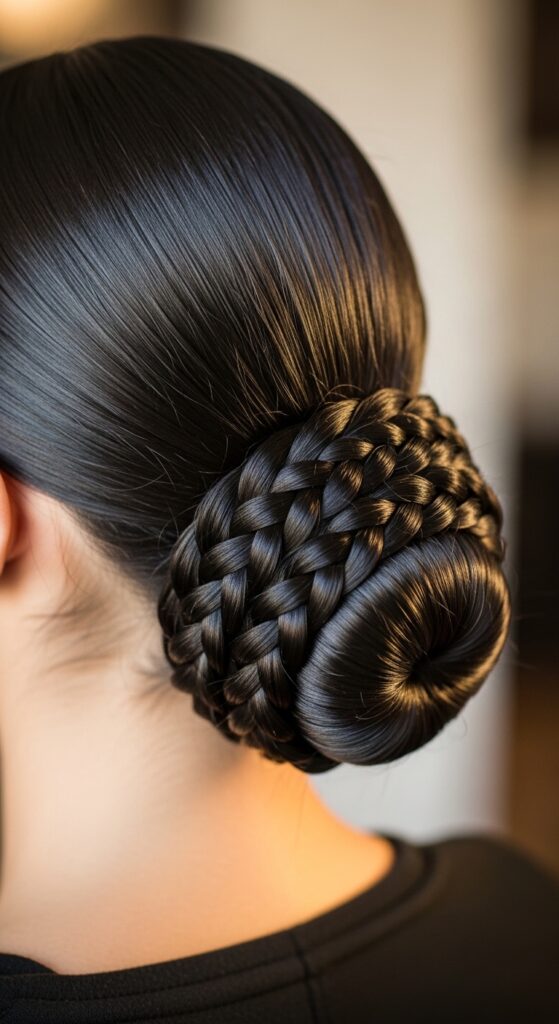
To achieve that polished old money hair aesthetic, start with perfectly straightened hair. Use a edge control gel on your hairline before you start. Braid tightly and cleanly, with no pancaking.
Secure the end neatly and tuck it under, pinning it into a low bun at your nape. The focus is on the intricate pattern along the scalp, exuding quiet, expensive sophistication.
Adding Ribbons or Thread
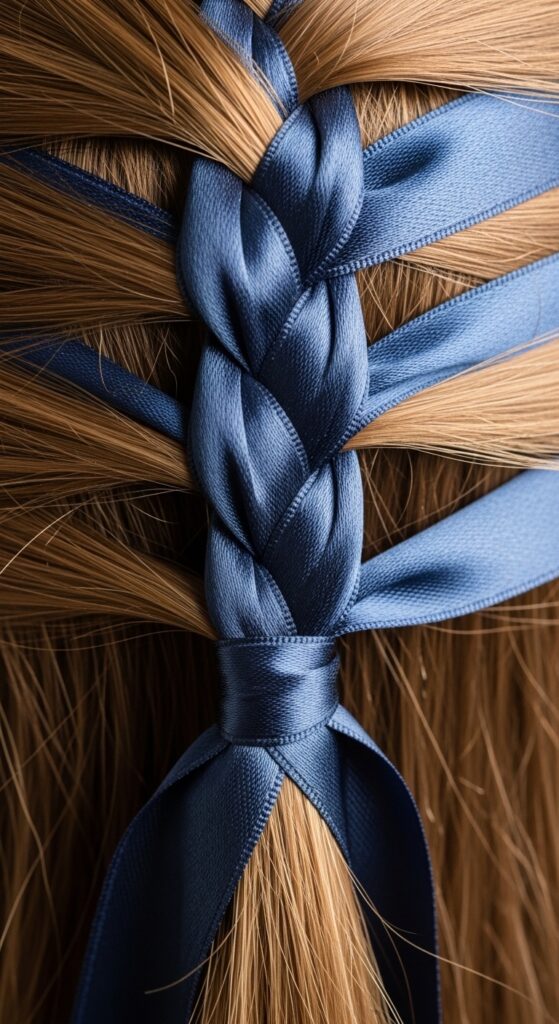
Weaving a ribbon in is easier than it looks. Choose a slim satin ribbon. As you start braiding, place the middle of the ribbon under your starting sections. Treat each side of the ribbon as part of the hair sections as you braid.
It gets woven in seamlessly. This adds a beautiful pop of color or a luxe touch. It’s a classic trick that feels fresh again, especially in velvet for fall.
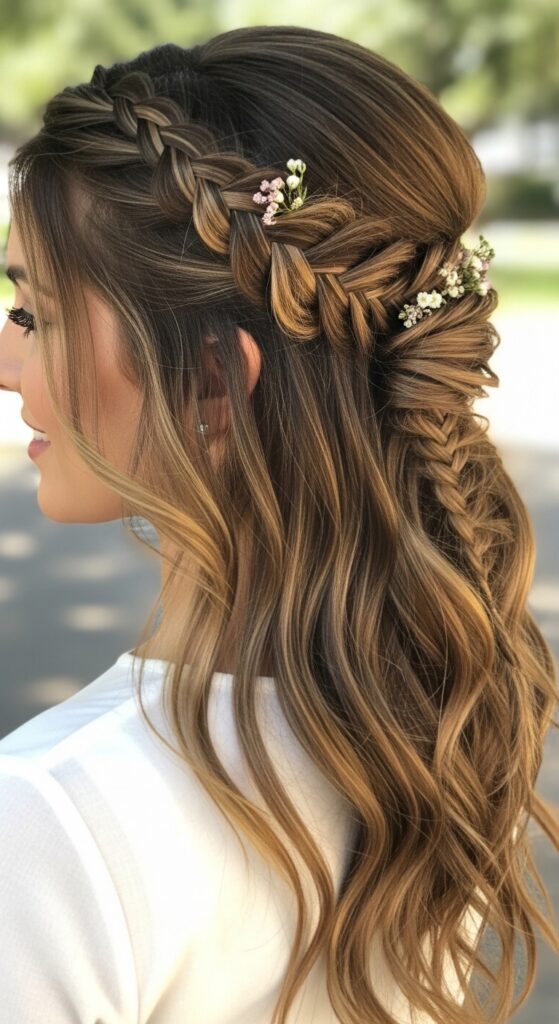
Creating a Half-Up Crown
This is a stunning wedding or event look. Create the hybrid braid along your hairline from one temple to the other, like a headband. Secure it at the opposite temple with bobby pins.
Leave the rest of your hair down in soft waves. It’s a regal, beautiful style that keeps hair off your face and shows off the braid’s complexity as a crown.
Practicing On A Friend (Or Mannequin)
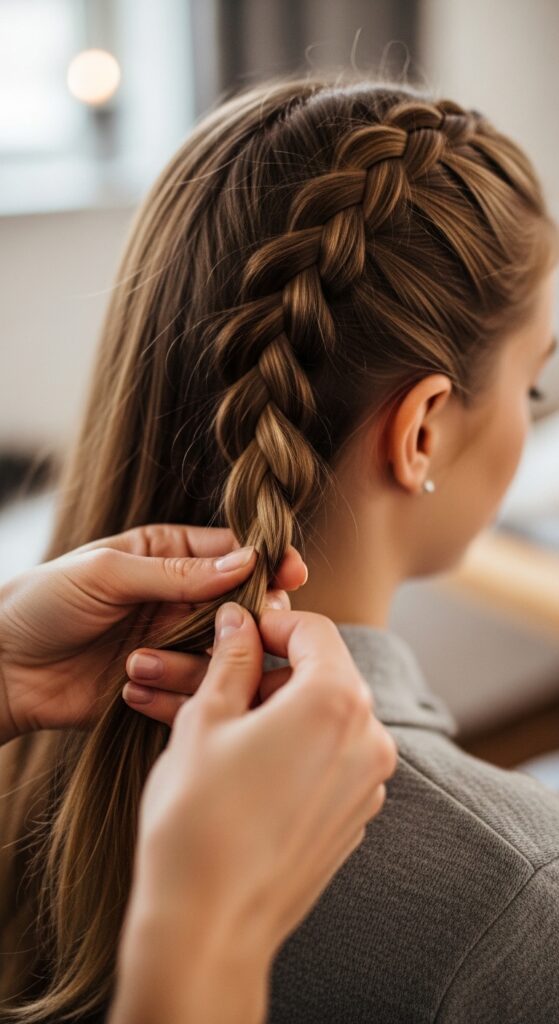
If you’re struggling with the back-of-your-head coordination, practice on someone else first. The muscle memory you build in your fingers is the same. A braiding mannequin head is also a great, patient investment.
Watching the technique from a third-person perspective can make the “lock under” motion click in your brain. Then, transitioning to doing it on yourself will feel much more natural.
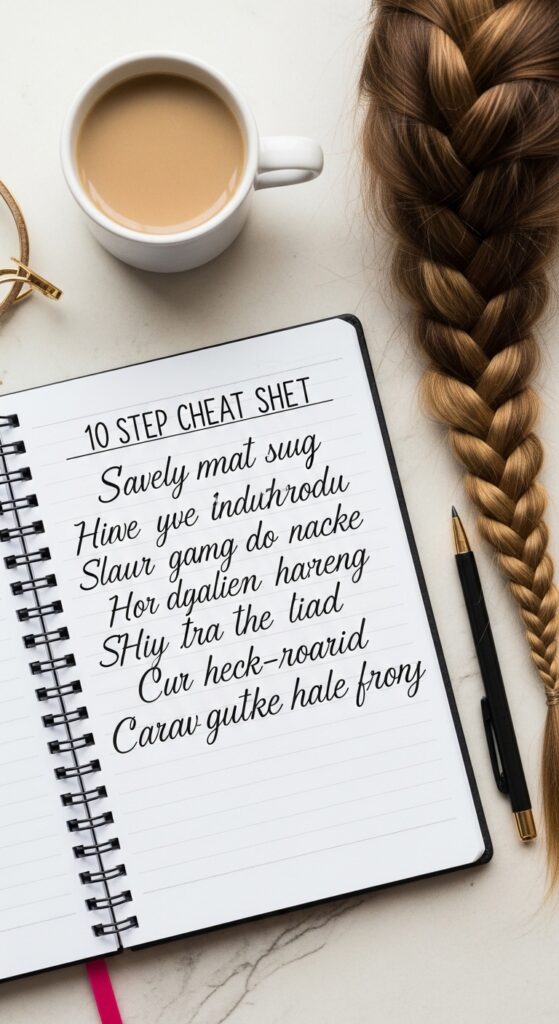
Your Quick Reference Cheat Sheet
- Prep with texture spray.
- Section two front pieces.
- Left side: Lock thin strand under right, cross over.
- Right side: Mirror the move.
- Each move: Add hair from scalp first.
- Continue adding and locking down head.
- Stop adding hair at nape.
- Finish with pure Lock 28 fishtail.
- Secure with elastic.
- Gently tug to pancake.
Remember, It’s Just Hair
The most important tip? Have fun. Your first attempt might be messy. Your tenth might be perfect. The goal is to enjoy the process of creating something with your own hands.
Each braid tells the story of the day you made it. So put on a podcast, grab your spray, and play. That’s how the best, most personal styles are born.
And just like that, you’ve got more than just a new braid in your arsenal—you’ve got a whole new way of thinking about styling. Merging techniques like this is how we keep our look fresh and personal, way beyond just following a single trend.
It might feel tricky at first, but I promise, once that locking motion clicks in your fingers, you’ll be looking for ways to add it to everything. It’s your secret tool for creating hairstyles that are genuinely unique to you.
I’d love to hear how it goes! Did you try the romantic goth version or the sleek old money look? Tag me in your pics or send me a DM—seeing your creations is my favorite part of this job.
Save this post to Pinterest so you always have the steps handy, and tell me in the comments: which hybrid style are you trying first?