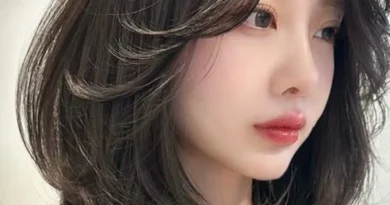
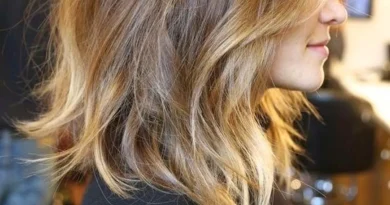
Long Layered Haircuts for Women: 32 Cuts That Add Movement Without Losing Length
Want long hair with movement, not just length? Long layered haircuts for women are the answer. They keep your length while adding shape, swing and volume, so your hair looks styled even on a lazy day. Whether your hair is thick, fine, curly, wavy or straight, there is a layered cut in this guide that will suit you.
In this list, you will find 32 long layered haircuts, from classic layers and face-framing cuts to butterfly layers, V-cuts, shags and grow-out friendly styles. Each one explains who it suits best, how to style it at home, and exactly what to ask your stylist, so you can walk into the salon with confidence.
Start with the guides below to understand how layers work, then pick your favourite cut from the list. Save a photo of it, note the stylist phrases, and enjoy long hair that finally moves.
What Long Layers Actually Do
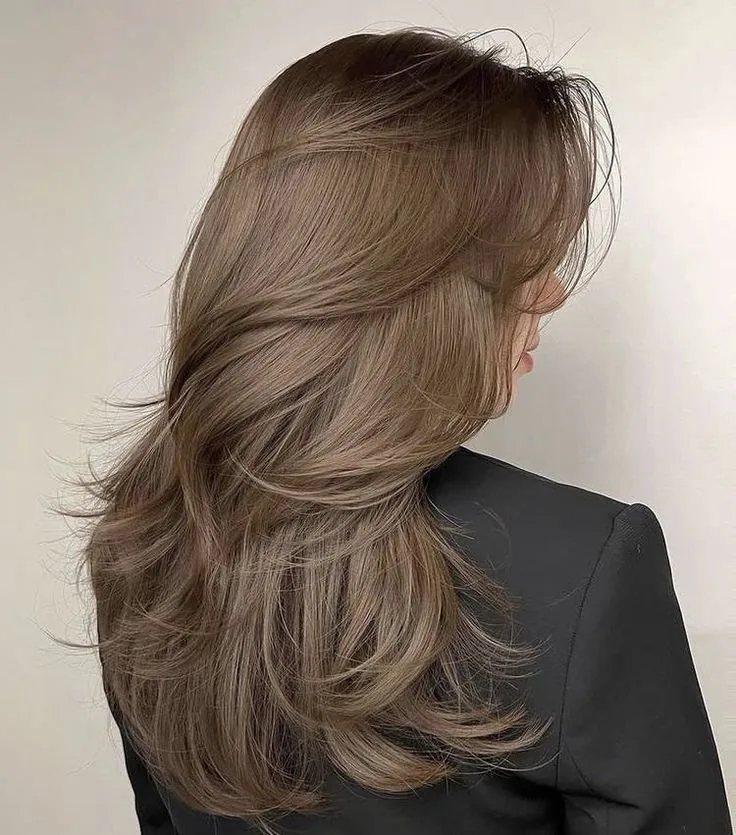
Long layers are not about cutting hair short. They are about removing weight and adding shape at different lengths, so long hair moves instead of hanging in one heavy sheet. The shortest layer usually starts around the chin or below, and each layer below it gets gradually longer. That staggered shape is what creates swing, volume and softness, even when you do nothing more than blow-dry. If your long hair feels flat, heavy or shapeless, layers are usually the fix, not a shorter cut.
Long layers also make styling easier. Waves form more evenly, blow-dries take less time, and updos look softer because face pieces fall naturally. The trade-off is small: very fine hair can look thinner if layers are cut too short, so the layers must match your thickness. Get that balance right, and long layers are the easiest upgrade a long cut can have.
Layer Placement: Face-Framing, Internal and Ends
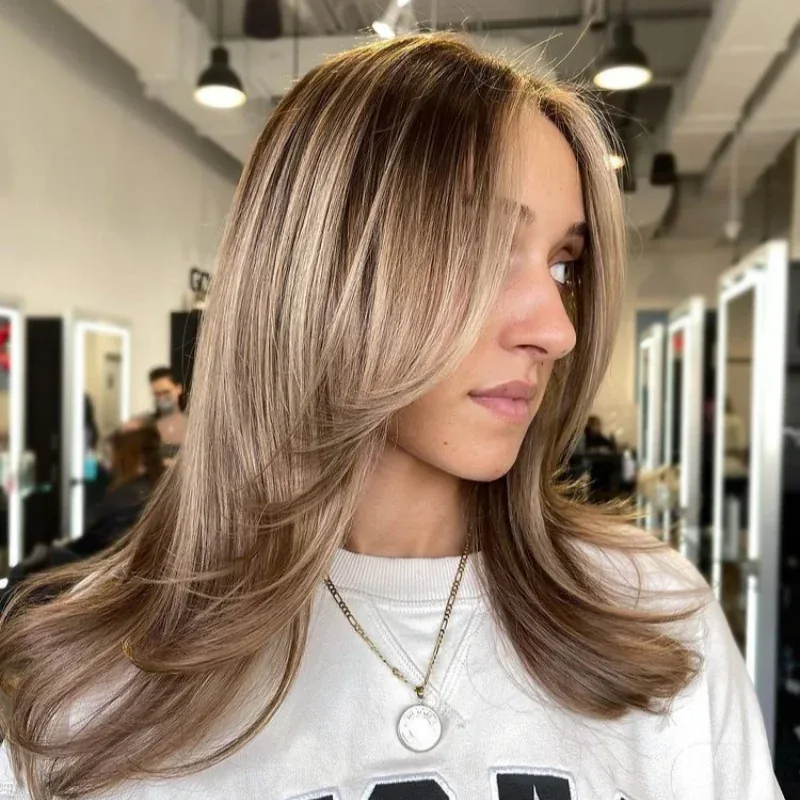
Where layers sit matters more than how many there are. Face-framing layers sit around the face and change how your features look. Internal layers are hidden inside the hair and remove bulk without changing the outline. Layers at the ends simply soften the perimeter and add movement. A good cut often uses all three in different amounts. Face pieces for framing, internal layers for thick hair, and soft ends for a polished finish.
Ask your stylist where your layers will sit, not just how long they will be. If you want your face to look brighter, ask for face-framing pieces. If your hair feels heavy, ask for internal layers. If you only want movement at the bottom, ask for layers through the ends. Naming the placement helps your stylist cut exactly what you pictured.
Long Layers by Hair Thickness
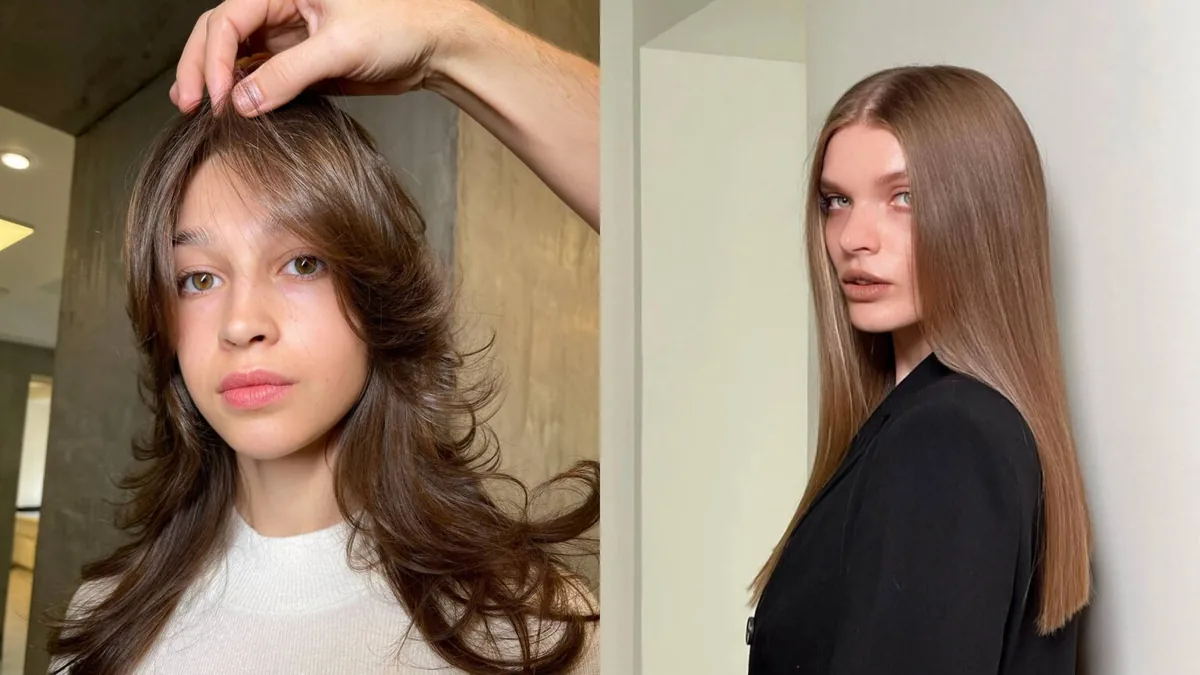
Thick hair loves layers. Internal and longer layers remove weight, stop the triangle shape, and make thick hair far easier to blow-dry. Medium hair is the easiest of all, and can handle face-framing, internal and end layers together. Fine hair needs restraint: a few long layers only, with a blunt perimeter, so the ends still look full. The same cut, cut the same way on all three thicknesses, would look completely different, which is why thickness should drive the layer plan.
A useful rule is this: the finer your hair, the longer and fewer your layers should be. The thicker your hair, the more internal layering it can handle. Tell your stylist honestly how thick your hair feels when wet and dry, and how much time you spend styling it, so the layers match your real hair, not an ideal version of it.
Long Layers by Curl Pattern
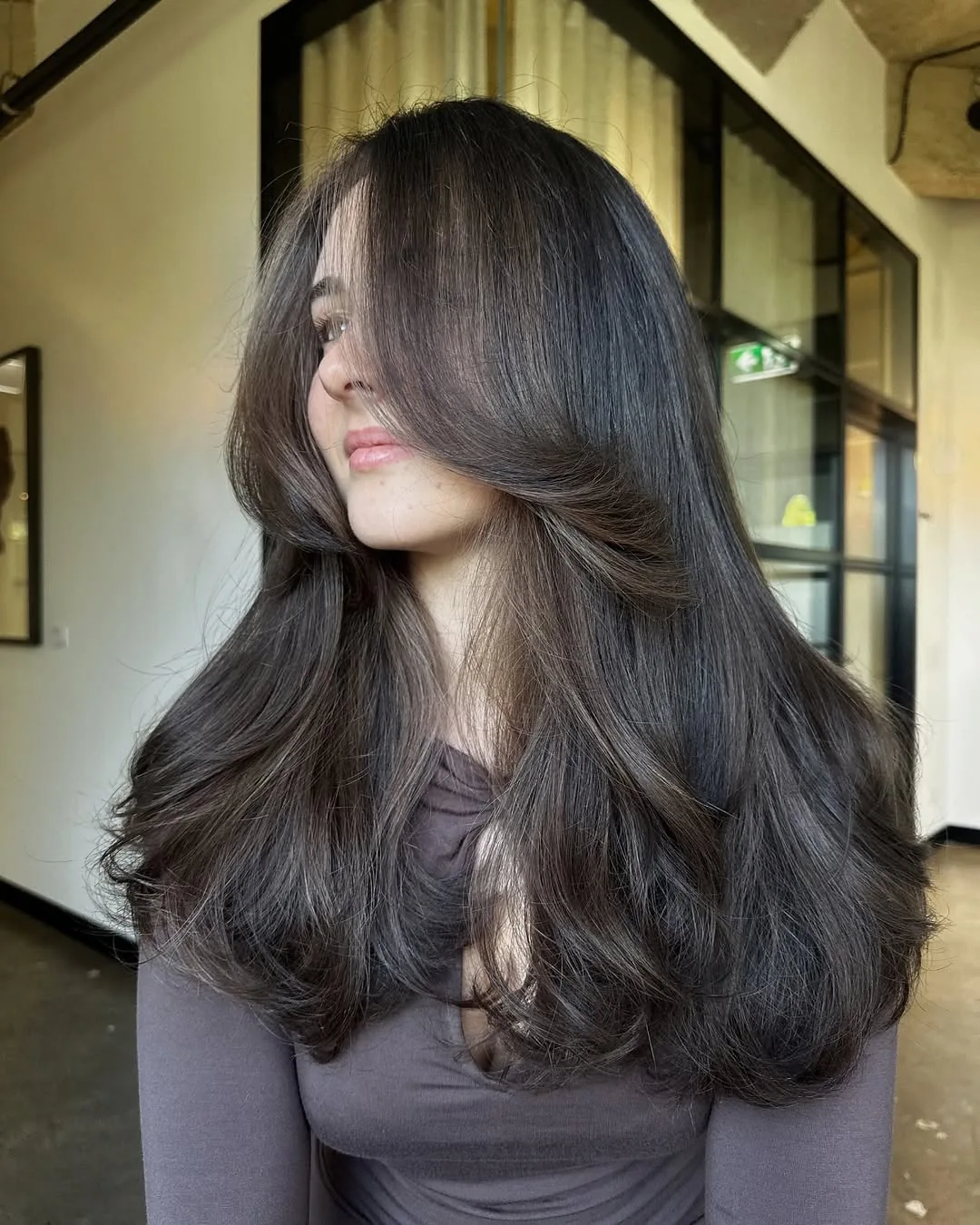
Straight hair shows layers most clearly, so blended, smooth layers work best, with no choppy steps. Wavy hair is the natural partner of long layers, as layers release the wave evenly and create effortless texture. Curly hair needs a dry, curl-by-curl cut, because curls shrink and spring differently when dry, and layers cut wet can end up far shorter than planned. Coily hair benefits from long, stretched layers that preserve length and shape.
Whatever your pattern, bring photos of hair with a similar texture to yours, not just a similar cut. A layer shape that looks perfect on straight hair may behave very differently on curls. Your stylist should cut with your natural pattern in mind, and show you how the layers will fall when your hair dries naturally.
Keeping Length While Adding Shape
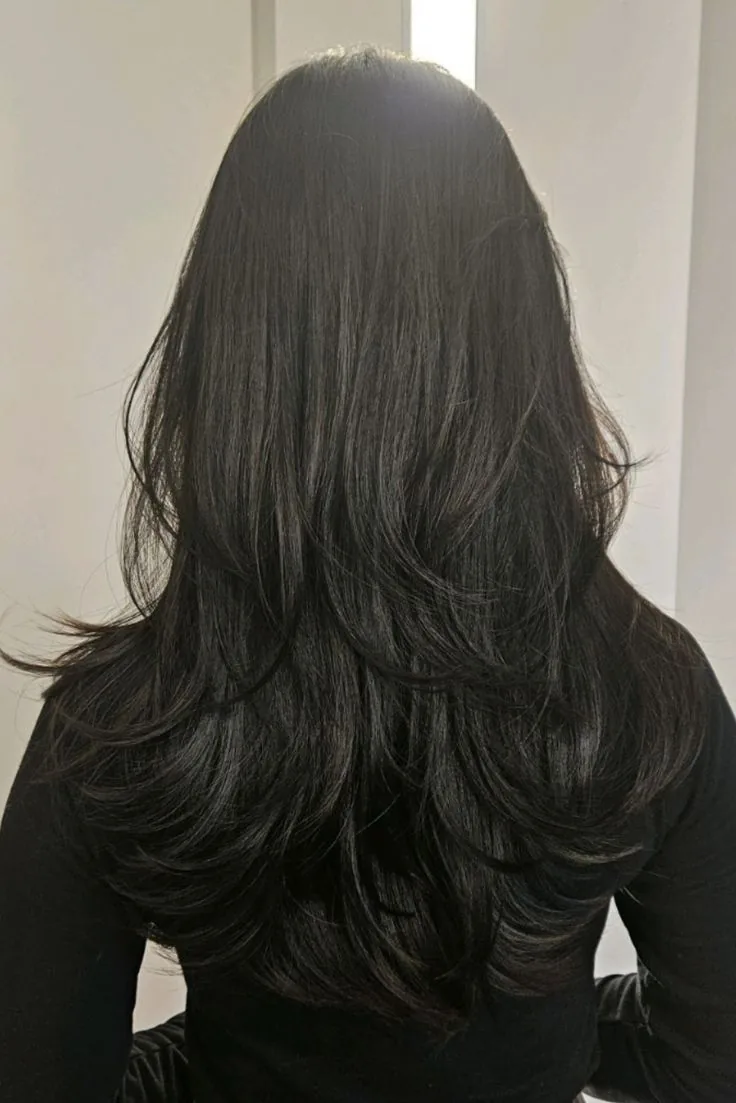
You do not have to sacrifice length to get shape. Long layers keep the overall length, the longest point at the back, while shorter layers sit on top of it. The trick is agreeing on the longest length first, then deciding where the shortest layer starts. If the shortest layer is too high, the cut will feel short even though the back is long. Keep the shortest layer at chin level or below, and the cut will still feel long.
Protect length between cuts too. Trim only the ends every 10 to 12 weeks, use a weekly mask, and avoid heat on the same sections every day. Healthy ends make layers look intentional, while split ends make them look straggly. Length and shape are not opposites, as long as the layers are long and blended.
Colour and Layers Together
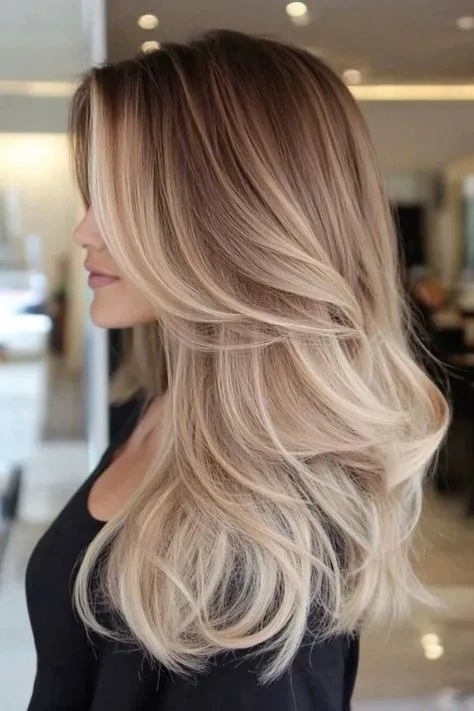
Colour makes layers visible. Balayage, highlights and face-framing colour all sit differently on each layer, so the cut looks deeper and more dimensional. The safest pairing is soft, blended colour with long layers, because harsh colour lines can expose layer steps. Face-framing highlights brighten the shortest layers, while balayage through the ends shows off the longest ones.
Plan colour and cut together, not separately. Tell your colourist where your shortest layers sit, so the lightest pieces land where they will be seen. Keep the root soft for easy grow-out, and use colour-safe care to stop the lighter layers from drying out. Done together, colour and layers enhance each other beautifully.
Daily Styling for Long Layers
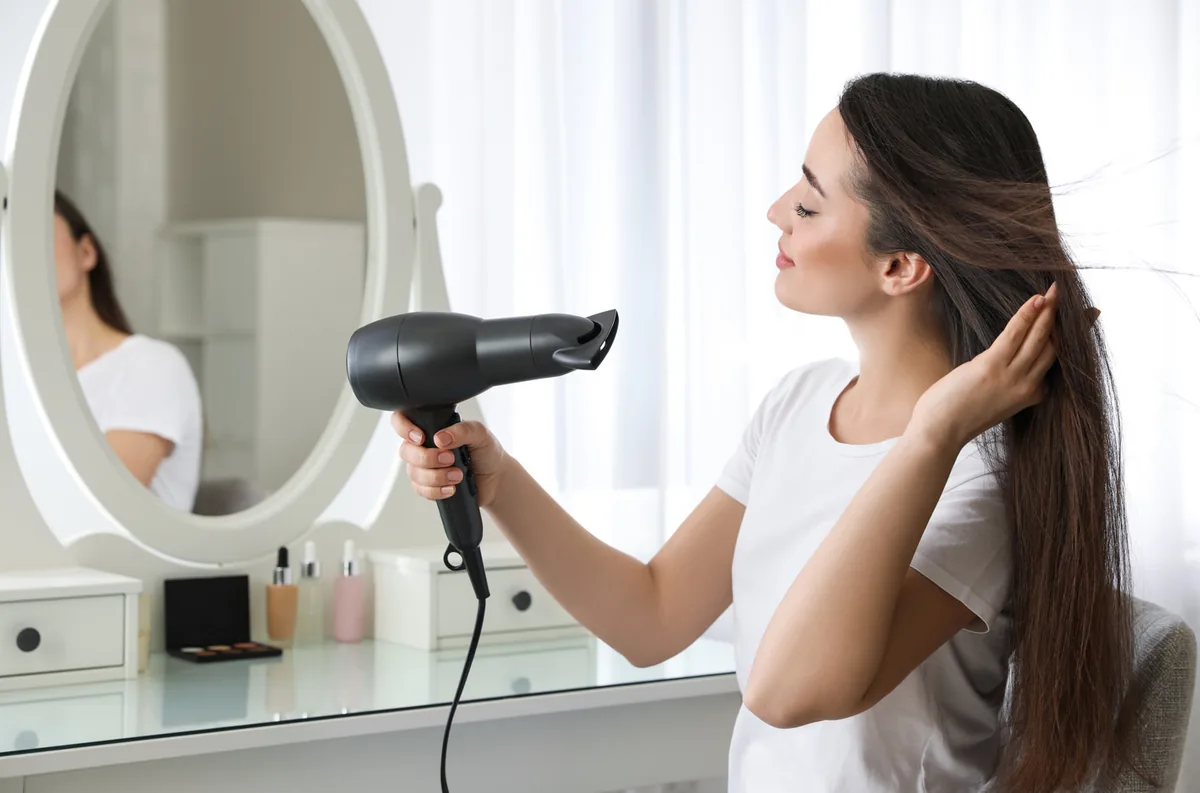
Long layers are designed to be easy. On most days, a quick blow-dry with a round brush, or a scrunch with wave spray, is enough. The layers do the work of creating shape, so you do not need to curl every section. For a polished day, blow-dry in sections and turn the ends under. For a relaxed day, air-dry with a little cream and let the layers fall naturally.
Keep your routine simple to protect the layers. Use heat protectant before any hot tool, avoid heavy products that flatten fine layers, and refresh second-day hair with dry shampoo at the roots only. A good layered cut should look good with minimal effort, and if it only looks good after an hour of styling, the layers may need adjusting.
What to Tell Your Stylist
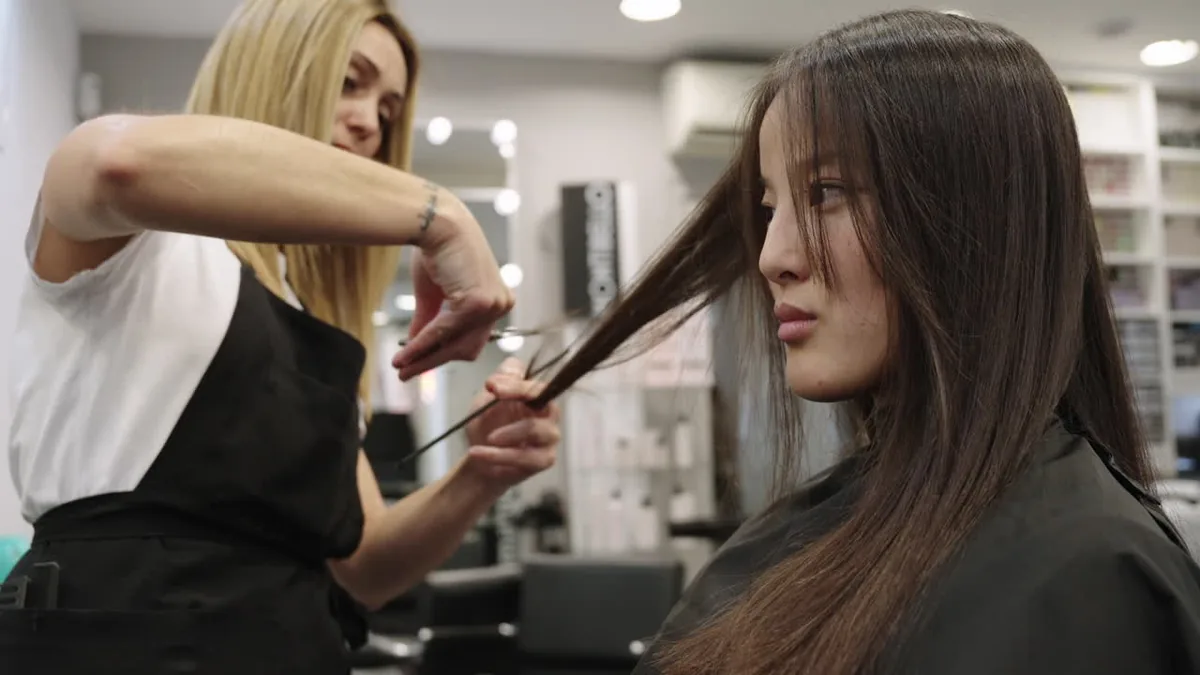
A great layered cut starts with a clear conversation. Bring two or three photos of hair like yours, and point to exactly what you like: the shortest layer, the face pieces, the back shape, and the finish. Say how much length you want to keep, in centimetres if you can, and how much time you spend styling each day. Mention your hair thickness, curl pattern and any parts of past cuts you hated.
Use the phrases in this guide at your appointment. Ask for long, blended layers, name the placement you want, and agree on the shortest layer before any cutting starts. Ask your stylist to show you the layers dry, not just wet, and to explain how the cut will grow out. A five-minute conversation at the start saves months of regret afterwards.
1. Classic Long Layers
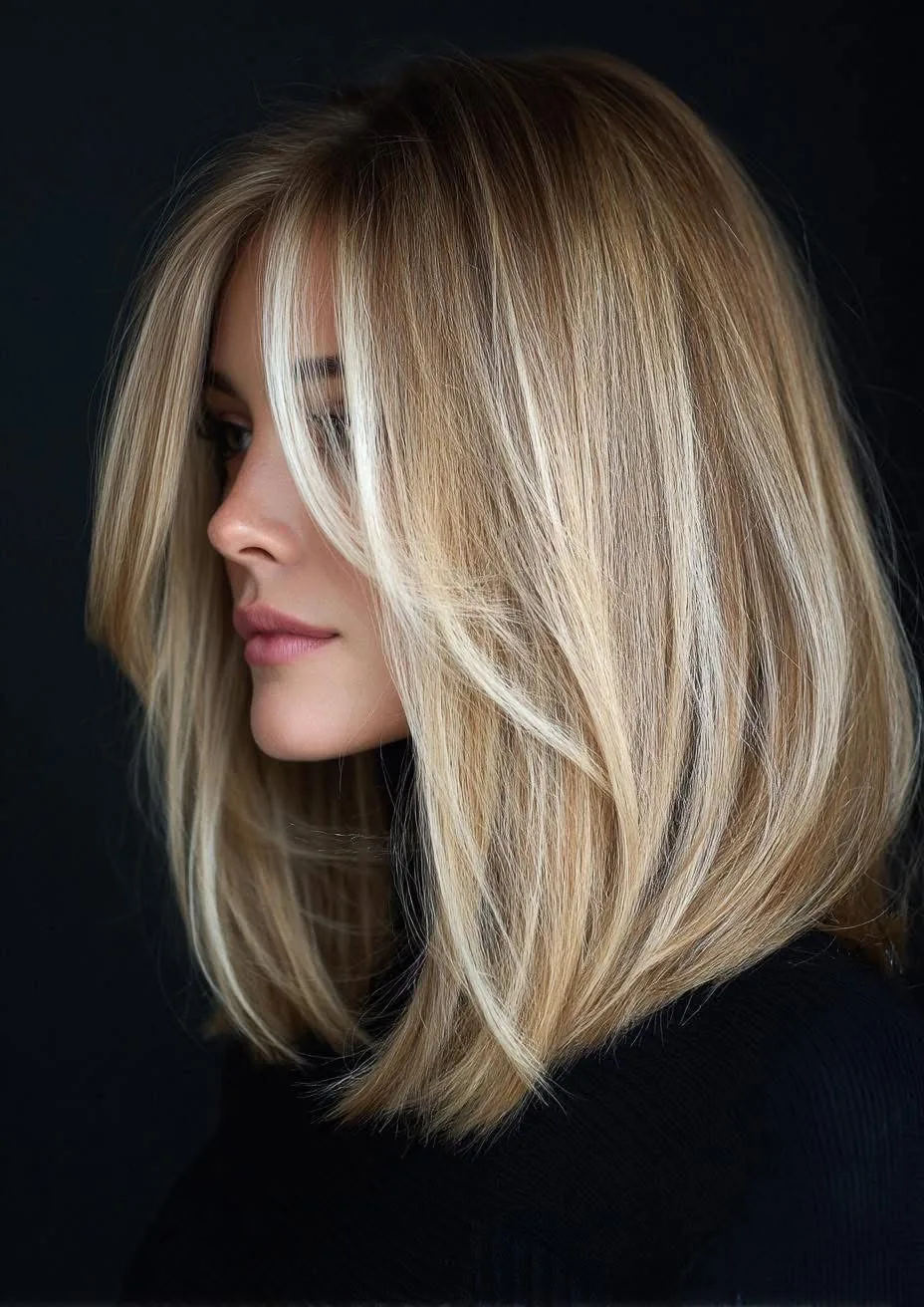
The classic is classic for a reason. Long layers are cut through the lengths, not near the roots, so your hair keeps its full length while the ends move freely instead of sitting in one heavy block. The result looks polished, soft and easy to wear every day.
Best for: Women who want movement without a dramatic change, and anyone growing their hair out.
How to style:
- Apply a light leave-in cream to damp hair.
- Blow-dry with a round brush, turning the ends under slightly.
- Add a drop of smoothing oil to the ends only.
What to ask your stylist: Ask for long layers starting below the chin, with the overall length kept intact and the ends point-cut for softness.
2. Face-Framing Long Layers
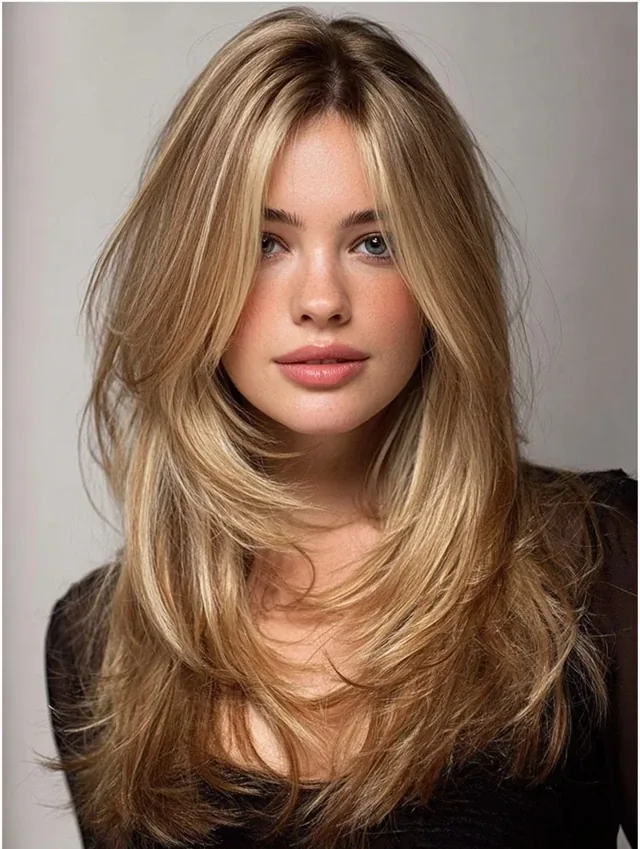
Face-framing layers are the shortest layers in this cut, and they sit around your face while the back stays long. They open up your features, soften the cheekbones and jaw, and make a ponytail look instantly more styled.
Best for: Women who want their face to look brighter and more open without cutting a fringe.
How to style:
- Blow-dry the front pieces forward and away from the face.
- Curl them outward with a large barrel for a soft sweep.
- Let the pieces fall naturally, not tucked behind the ears.
What to ask your stylist: Ask for face-framing pieces starting at the cheekbone or chin, blended into the long layers behind.
3. Long Layers with Curtain Bangs
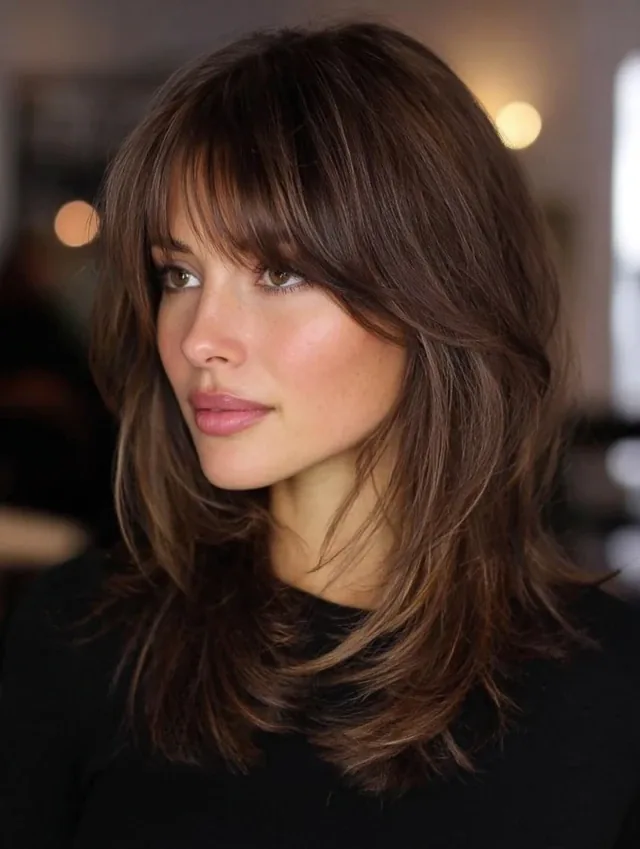
Curtain bangs part in the middle and sweep to each side, joining seamlessly into long layers. They frame the eyes and cheekbones, add a soft retro feel, and grow out far more gracefully than a blunt fringe.
Best for: Women who want a fringe that is low-commitment and easy to grow out.
How to style:
- Blow-dry the bangs forward, then sweep each side outward.
- Use a round brush for a gentle bend, not a tight curl.
- Keep the part soft and slightly off-centre if you prefer.
What to ask your stylist: Ask for curtain bangs starting at the cheekbone, cut to blend into your longest layers.
4. Feathered Long Layers
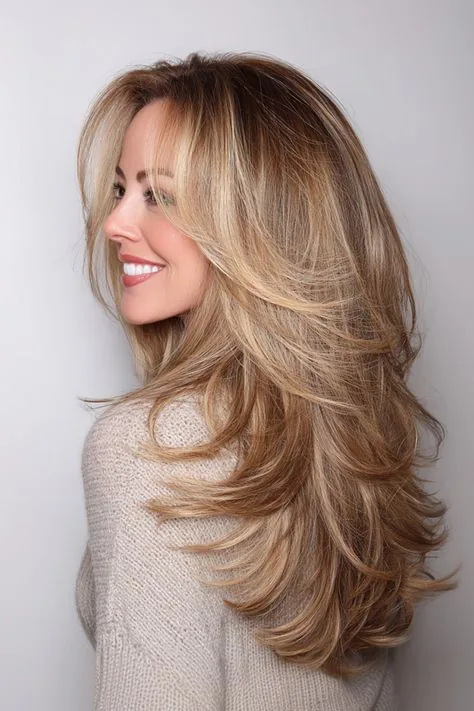
Feathered layers are cut with a razor or point-cut technique so the ends flick softly outward and inward. The effect is light, airy and full of movement, especially on straight or slightly wavy hair, without losing length.
Best for: Straight or fine-to-medium hair that can look flat in a one-length cut.
How to style:
- Blow-dry with a round brush, flicking alternate sections outward.
- Use a light texturising spray, not heavy wax.
- Shake the ends out for a feathered finish.
What to ask your stylist: Ask for feathered, point-cut ends through the lengths, with no harsh steps.
5. Long Layers for Thick Hair
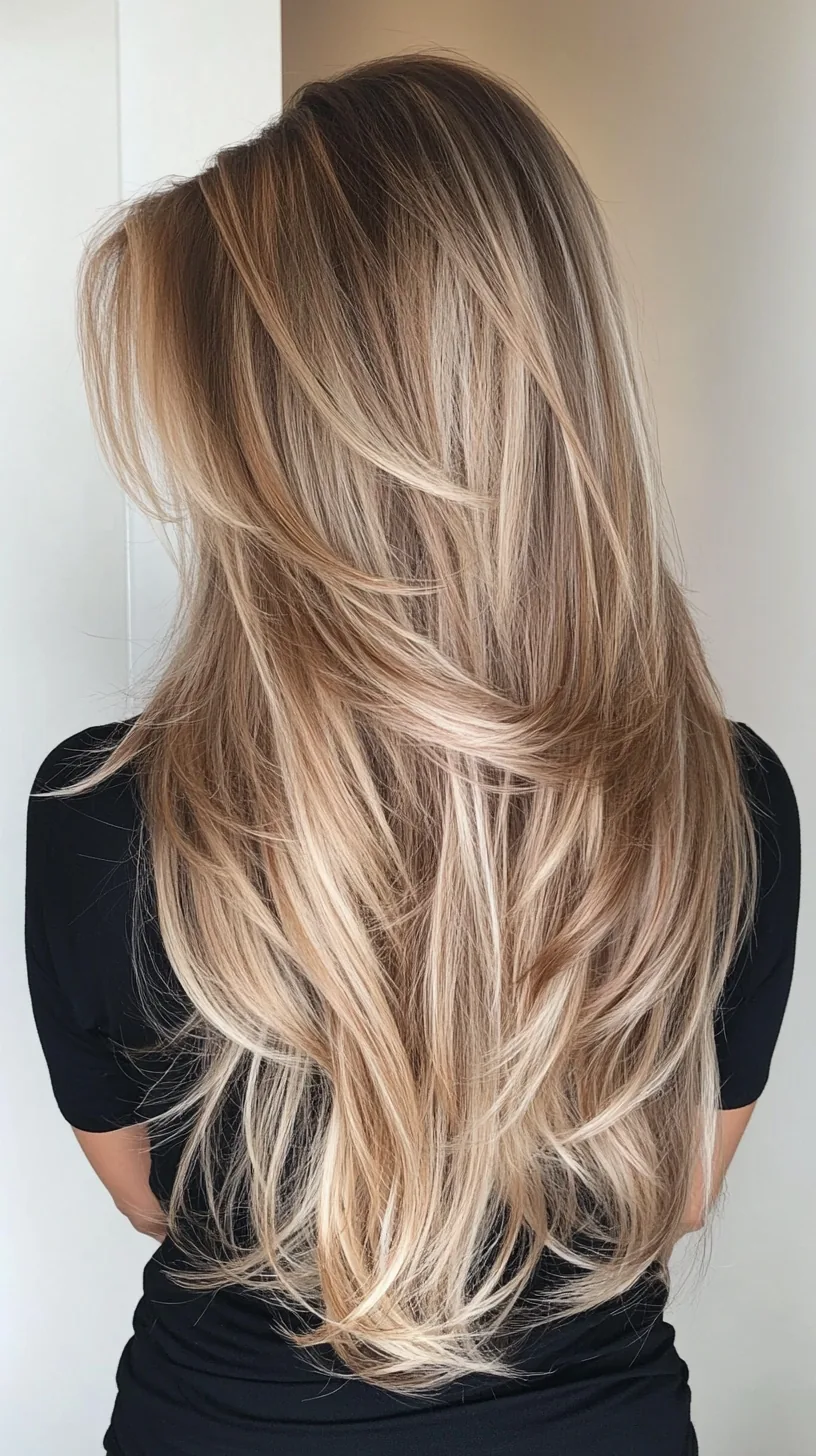
Thick hair needs layers that remove weight from inside, not just from the ends. Internal layers and longer face pieces take out bulk, stop the dreaded triangle shape, and let thick hair fall in a flattering, tapered shape.
Best for: Thick, dense or heavy hair that feels bulky or hard to style.
How to style:
- Use a smoothing cream before blow-drying to control volume.
- Dry in sections, smoothing the roots down.
- Finish with a light oil to seal the ends.
What to ask your stylist: Ask for internal layers to remove weight, keeping the outline long and full at the ends.
6. Long Layers for Fine Hair
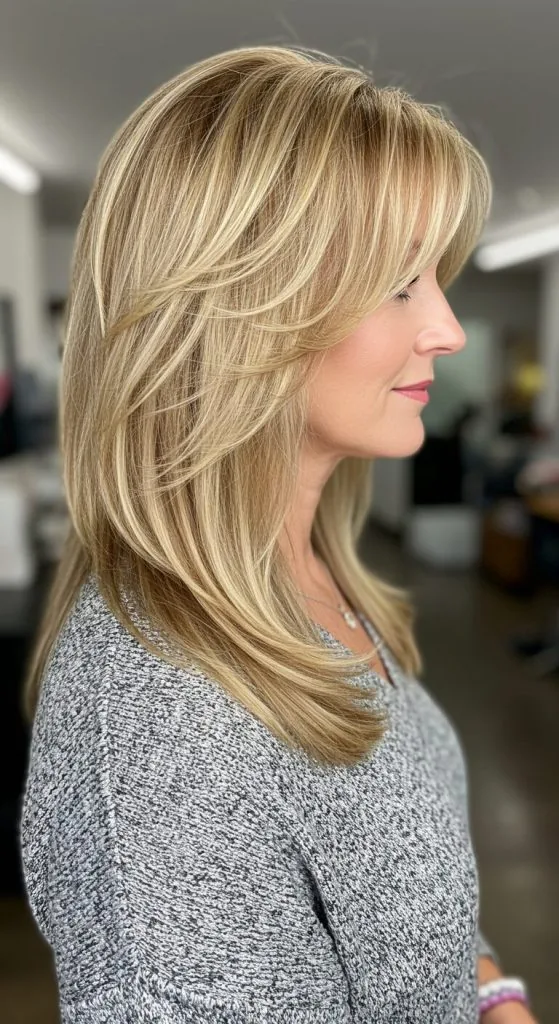
Fine hair needs a gentler hand. Just a few long layers, kept well below the chin, add movement without thinning the ends away. The key is keeping the perimeter fairly blunt, so the ends still look full.
Best for: Fine or thin hair that goes limp in heavily layered cuts.
How to style:
- Use a volumising mousse at the roots only.
- Blow-dry upside down for lift, then smooth the ends.
- Avoid heavy oils, which flatten fine layers.
What to ask your stylist: Ask for only two or three long layers, with a blunt perimeter so the ends stay thick.
7. Long Layers for Curly Hair
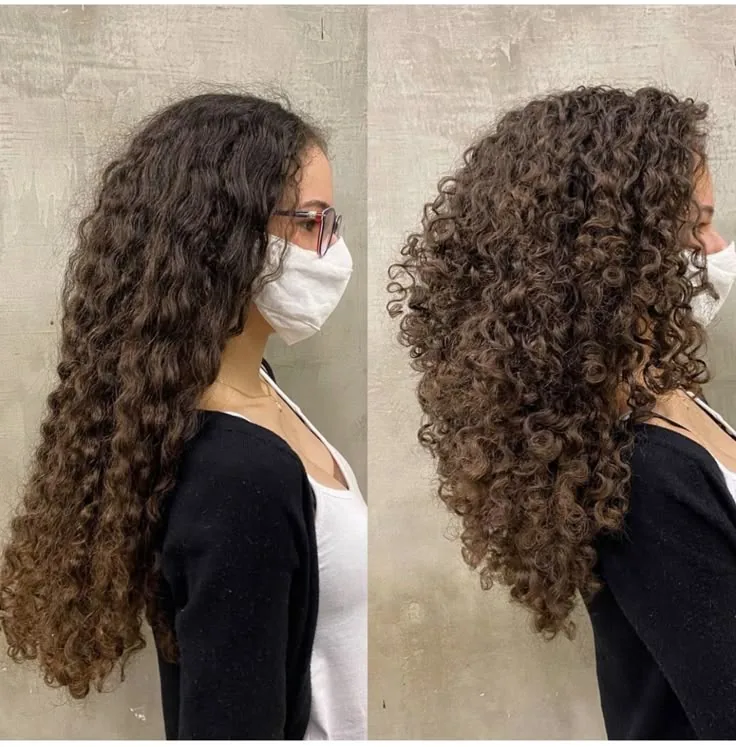
On curly hair, long layers stop curls from stacking into a pyramid. Layers cut curl by curl, when dry, let each curl spring at a different length, so the shape is rounded and balanced instead of bottom-heavy.
Best for: Curly hair that loses shape, or looks wide at the bottom and flat on top.
How to style:
- Apply curl cream to soaking-wet hair and scrunch upward.
- Diffuse on low heat until about 80 percent dry.
- Do not brush curls out once dry.
What to ask your stylist: Ask for a dry, curl-by-curl layered cut, with length kept and no wet-cut straight lines.
8. Long Layers for Wavy Hair
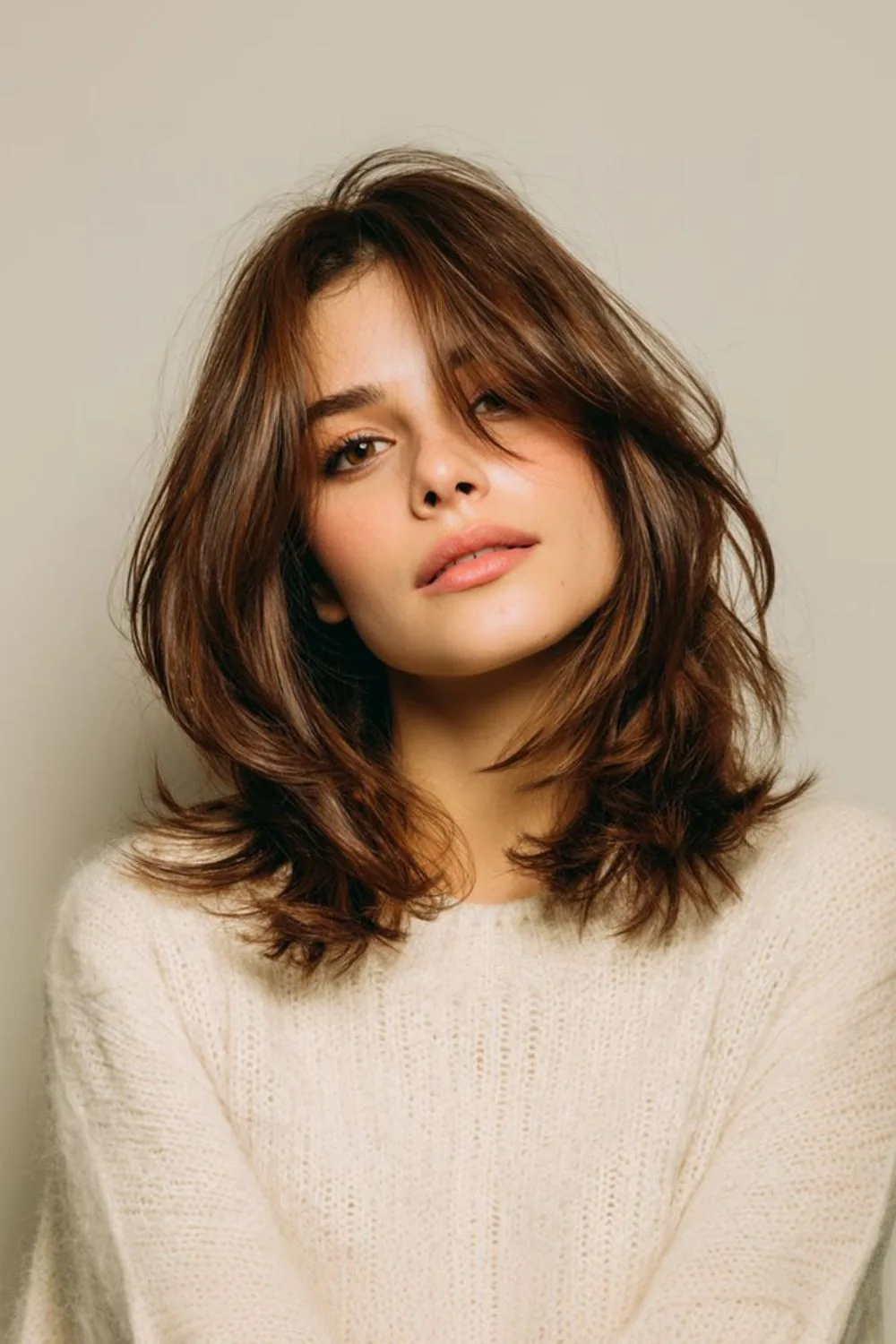
Wavy hair and long layers are a natural match. Layers release the wave, so it forms evenly from mid-length down instead of only at the ends, and the cut looks effortless even on days you barely style it.
Best for: Natural waves that fall flat on top or only curl at the ends.
How to style:
- Scrunch in a sea-salt or wave spray on damp hair.
- Diffuse briefly or air-dry, then shake out.
- Break up any crunchy sections with a little oil.
What to ask your stylist: Ask for long layers that follow your natural wave pattern, with face pieces that enhance the wave.
9. Long Layers for Straight Hair
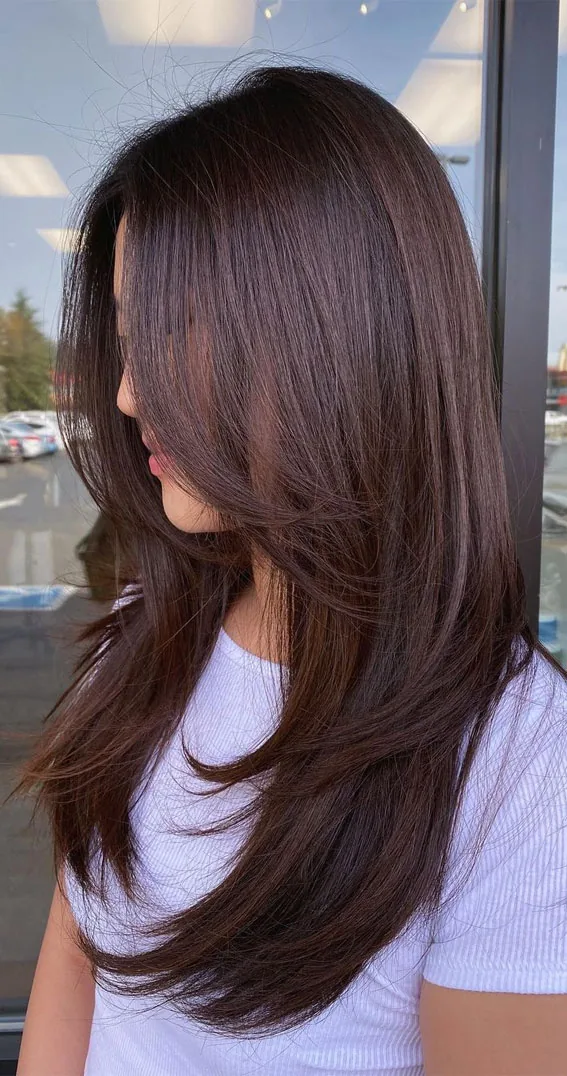
Straight hair shows every layer clearly, so long layers give it visible shape and swing. They stop straight hair from looking like a curtain, add a gentle curve at the ends, and make blow-drying faster because there is less bulk.
Best for: Straight hair that looks flat, heavy or shapeless when one-length.
How to style:
- Blow-dry with a round brush, turning the ends under.
- Add movement with a large-barrel curl through the mid-lengths.
- Finish with shine spray for a glossy, swinging look.
What to ask your stylist: Ask for long, blended layers with no short pieces on top, so the cut stays sleek.
10. V-Cut Long Layers
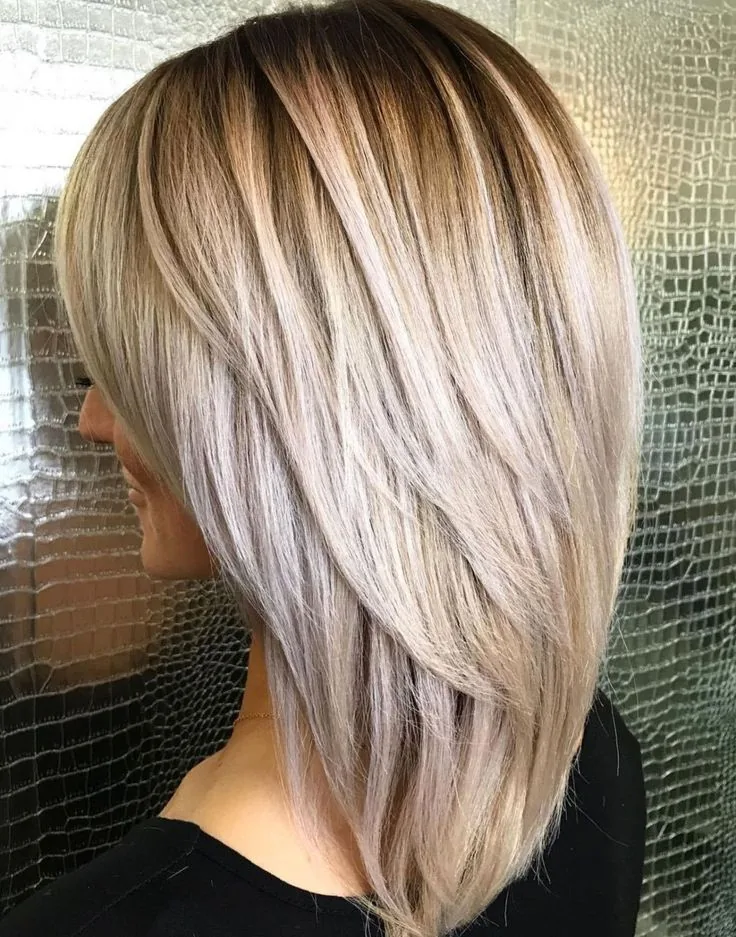
A V-cut takes the back of the hair into a pointed V shape, with the longest point in the centre. Combined with long layers, it shows off length from behind, looks dramatic in photos, and keeps the front soft and face-framing.
Best for: Women who love a dramatic back view and want to show off maximum length.
How to style:
- Blow-dry straight to show the V shape clearly.
- Curl the ends loosely for a soft, pointed finish.
- Wear it down or in a low ponytail to display the shape.
What to ask your stylist: Ask for a V-shaped perimeter with long layers through the back, and shorter face pieces in front.
11. U-Cut Long Layers
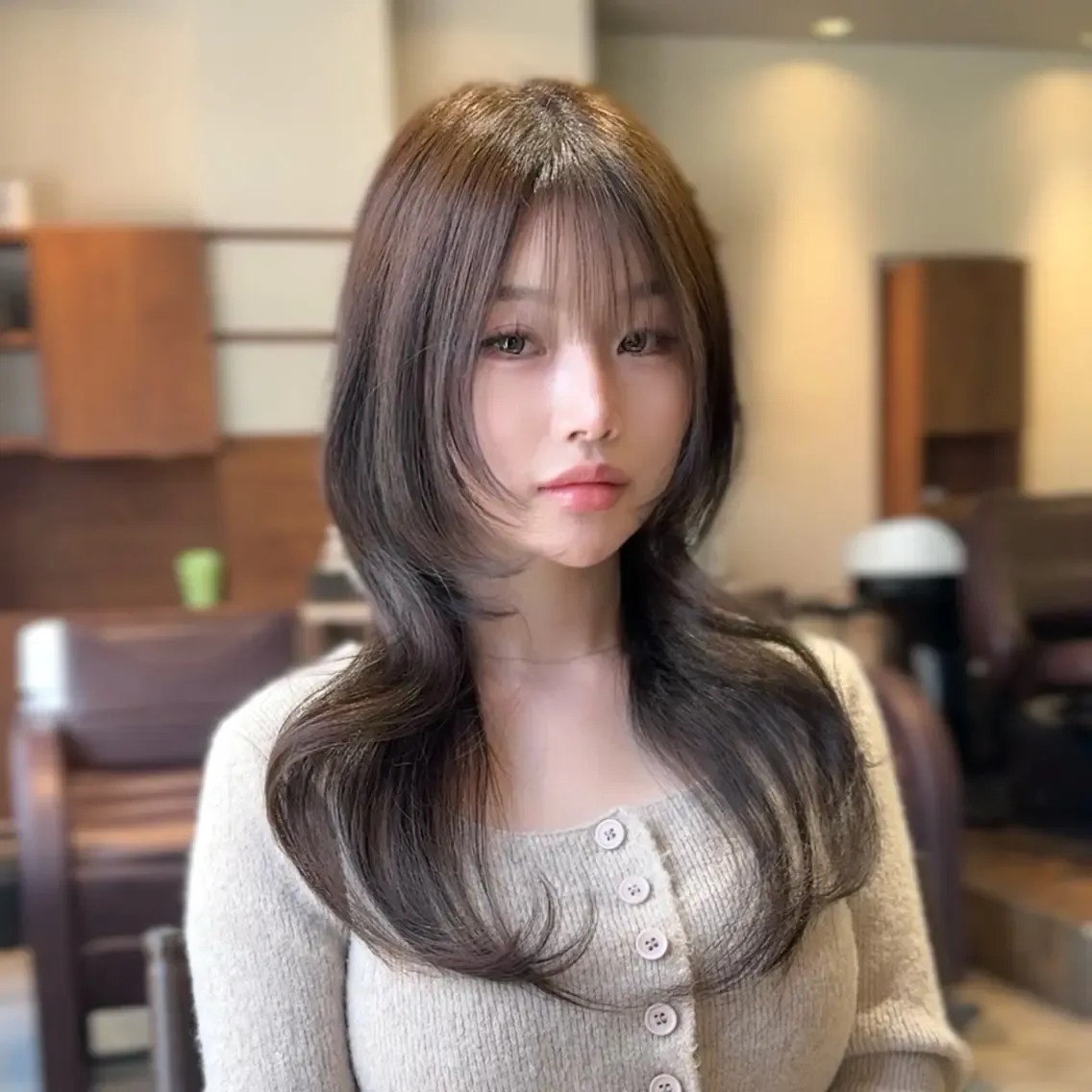
A U-cut rounds the back into a soft U, so the hair looks thick and even from behind. With long layers, it is the safest, most flattering long-layer shape, and it grows out beautifully.
Best for: Anyone who wants a soft, full-looking outline rather than a pointed finish.
How to style:
- Blow-dry with the ends turned under for a rounded shape.
- Add loose waves for extra fullness.
- Keep the centre back the longest point, gently rounded at the sides.
What to ask your stylist: Ask for a U-shaped perimeter with long, blended layers, and no sharp corners.
12. Long Shag Layers
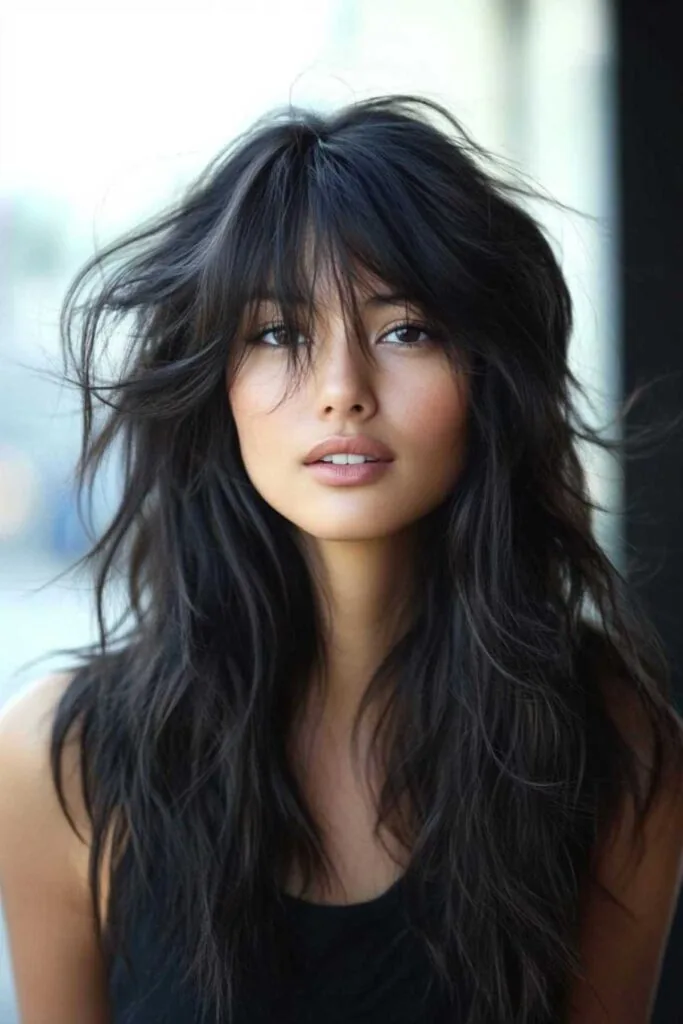
A long shag keeps the length but adds choppy, textured layers and plenty of movement on top. It is relaxed, a little rock-and-roll, and far easier to style than a short shag because the length weighs the texture down just enough.
Best for: Wavy or textured hair, and women who like an undone, lived-in look.
How to style:
- Apply texturising spray to damp hair and scrunch.
- Diffuse or air-dry for natural texture.
- Piece out the ends with a tiny amount of paste.
What to ask your stylist: Ask for a long shag with choppy layers, not a blunt cut, and texture through the ends.
13. Long Wolf Layers
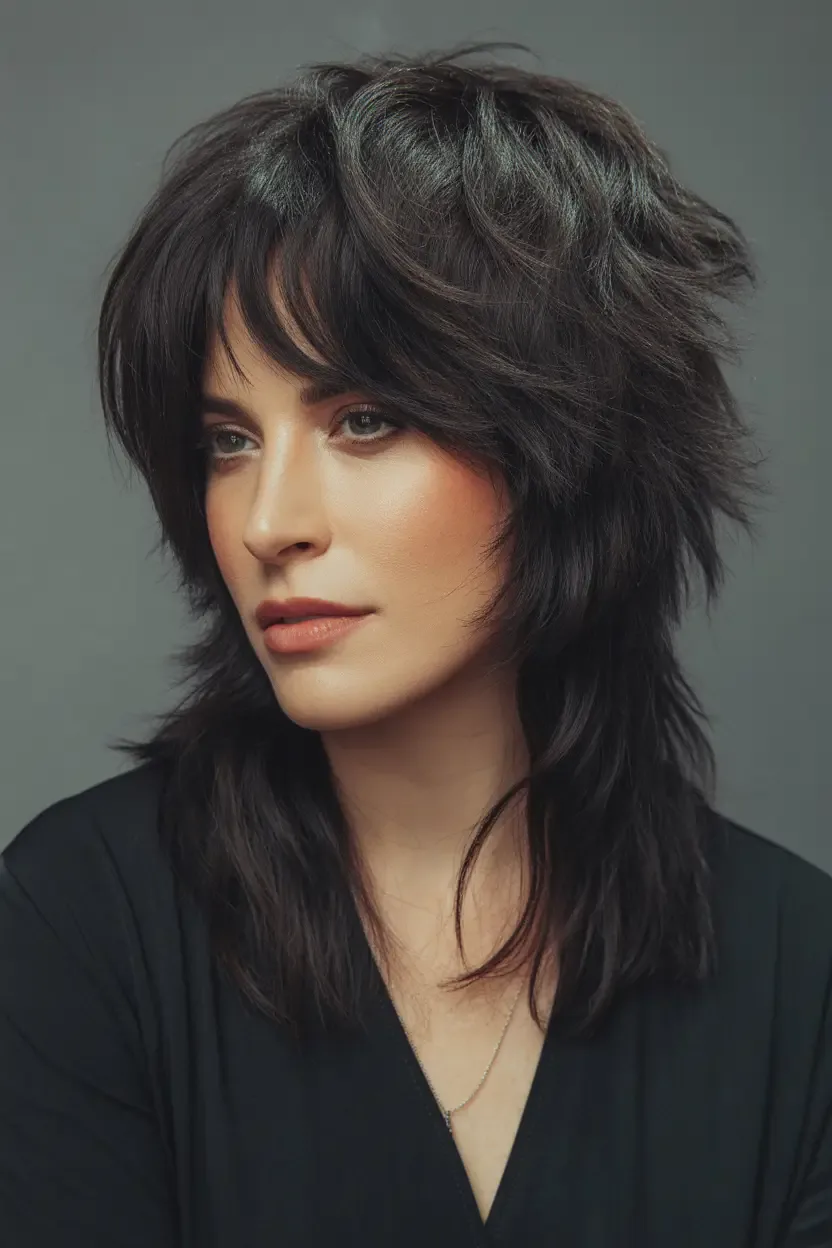
The long wolf cut blends a shag on top with long layers below. The crown has shorter, piecey layers for volume, while the lengths stay long and wispy. It is bold, but the long version is much more wearable than the short one.
Best for: Women who want volume on top and length below, with an edgy, modern feel.
How to style:
- Dry with volume at the roots using a round brush or diffuser.
- Use texturising spray to separate the top layers.
- Keep the ends wispy, not blunt.
What to ask your stylist: Ask for a wolf cut kept long, with shorter crown layers and long, wispy lengths.
14. Beach Wave Long Layers
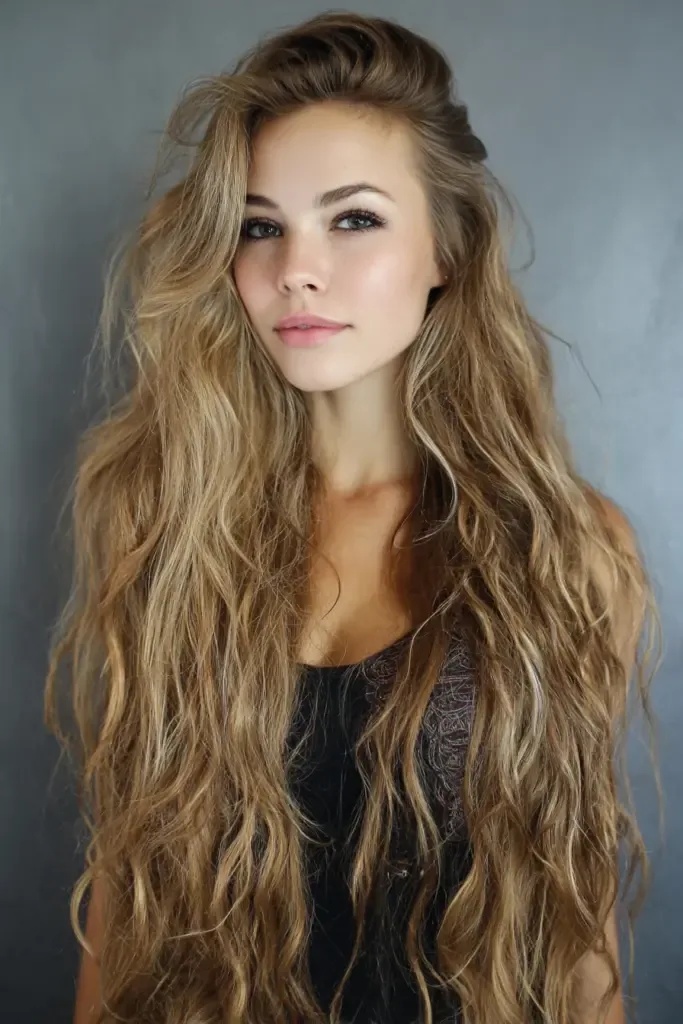
Beach waves and long layers were made for each other. The layers give the waves room to form at different lengths, so the style looks sun-kissed and relaxed rather than uniform, and it holds a wave far longer than one-length hair.
Best for: Wavy or straight hair that holds a loose wave, and summer or holiday styling.
How to style:
- Spray damp hair with sea-salt spray.
- Twist large sections and let them air-dry, or use a wand on alternate sections.
- Brush out gently and add texturising spray.
What to ask your stylist: Ask for long layers cut to enhance a loose wave, with the ends left soft and textured.
15. Glossy Blowout Long Layers
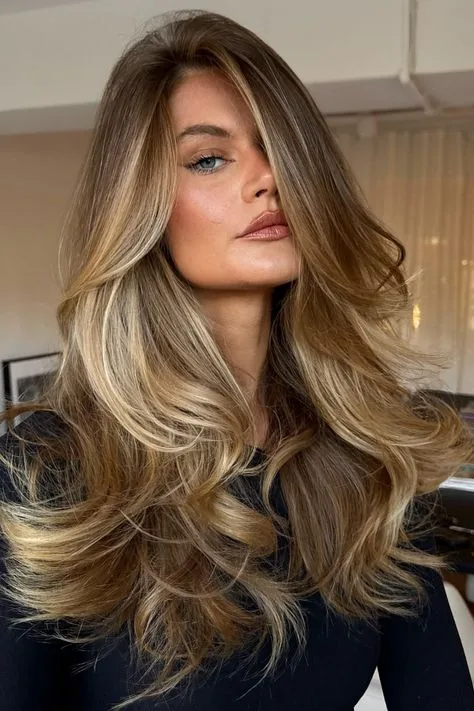
A glossy blowout shows long layers at their most polished. Each layer falls in a smooth, bouncy curve, the ends flip softly, and the whole cut looks expensive and healthy. It is the salon finish most women picture when they ask for layers.
Best for: Special occasions, work events, or anyone who loves a polished blow-dry.
How to style:
- Apply heat protectant and a smoothing cream.
- Blow-dry in sections with a large round brush.
- Turn the brush under at the ends for bounce.
What to ask your stylist: Ask for long, smooth layers with no choppy texture, so the blowout falls in clean curves.
16. Long Layers with Side-Swept Bangs
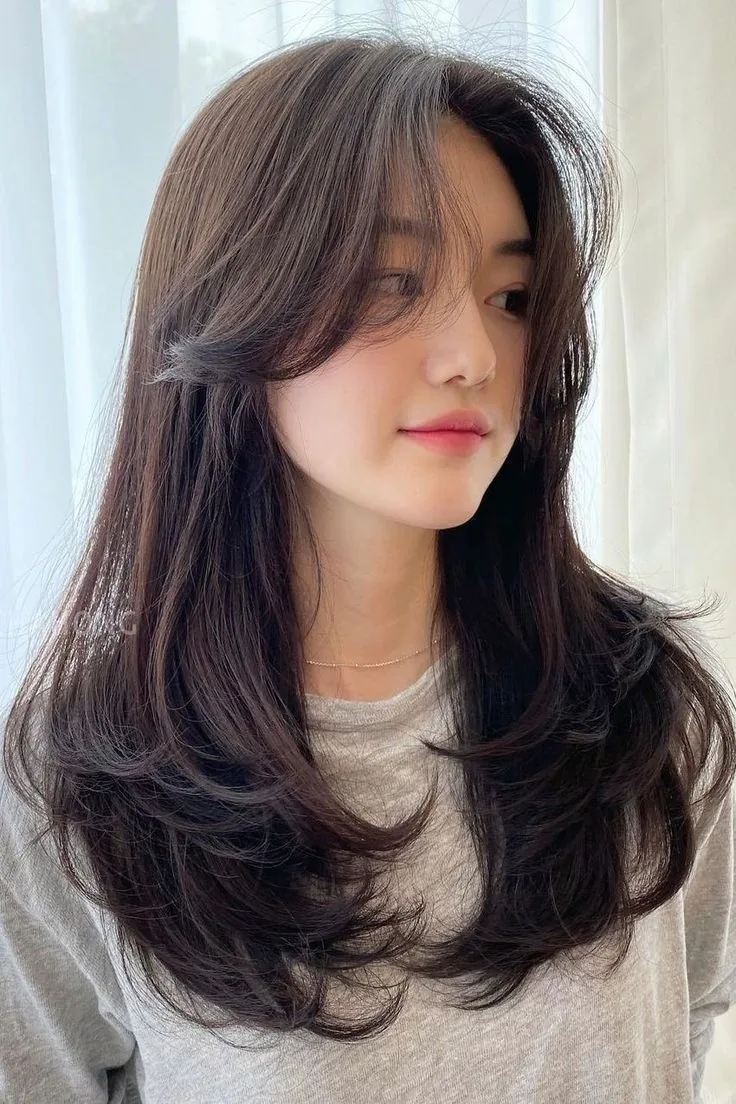
Side-swept bangs sweep diagonally across the forehead and blend into long layers. They soften a broad forehead, draw attention to the eyes, and suit almost every face shape because the diagonal line is so flattering.
Best for: Women who want a fringe without a centre part, or who want to soften the forehead.
How to style:
- Blow-dry the bangs to one side with a round brush.
- Sweep them across the forehead, not straight down.
- Set with a light spray so they stay in place.
What to ask your stylist: Ask for side-swept bangs that blend into the face-framing layers, starting at brow length.
17. Long Layers with Wispy Bangs
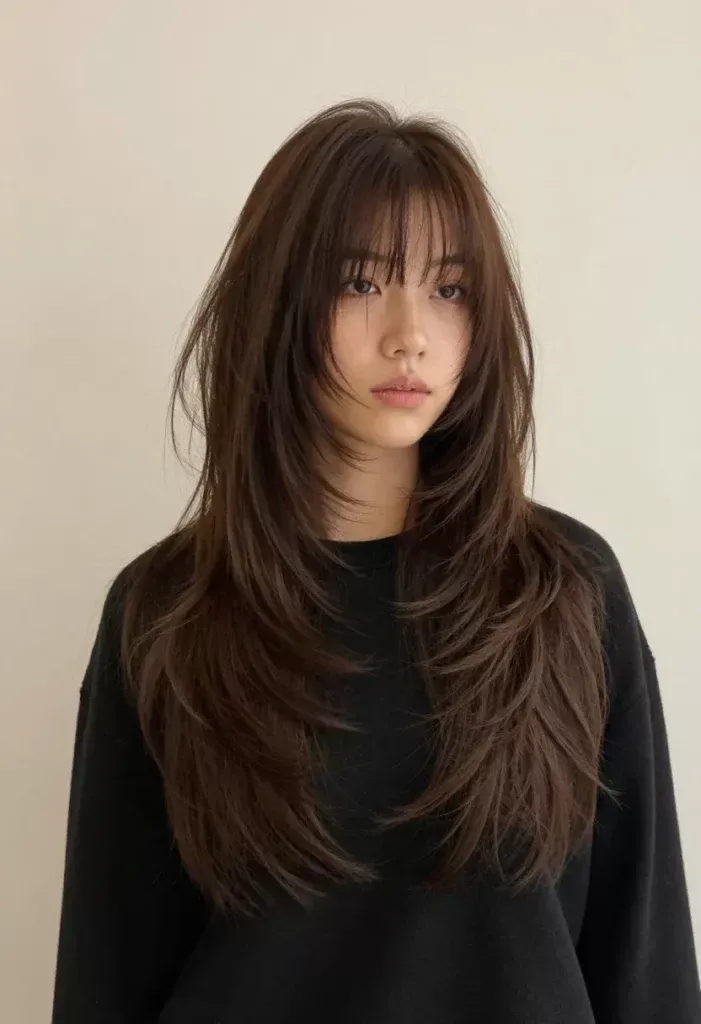
Wispy bangs are light, feathery and see-through at the ends, so they soften the face without hiding it. With long layers, they add a gentle, romantic frame that works beautifully on fine or medium hair.
Best for: Fine-to-medium hair, and women who want a soft fringe that is easy to wear.
How to style:
- Blow-dry wispy bangs forward with a small round brush.
- Keep them light and separated, not solid.
- Trim lightly between salon visits to keep the wispy ends.
What to ask your stylist: Ask for wispy, point-cut bangs that sit above the brows and blend into the layers.
18. Butterfly Long Layers
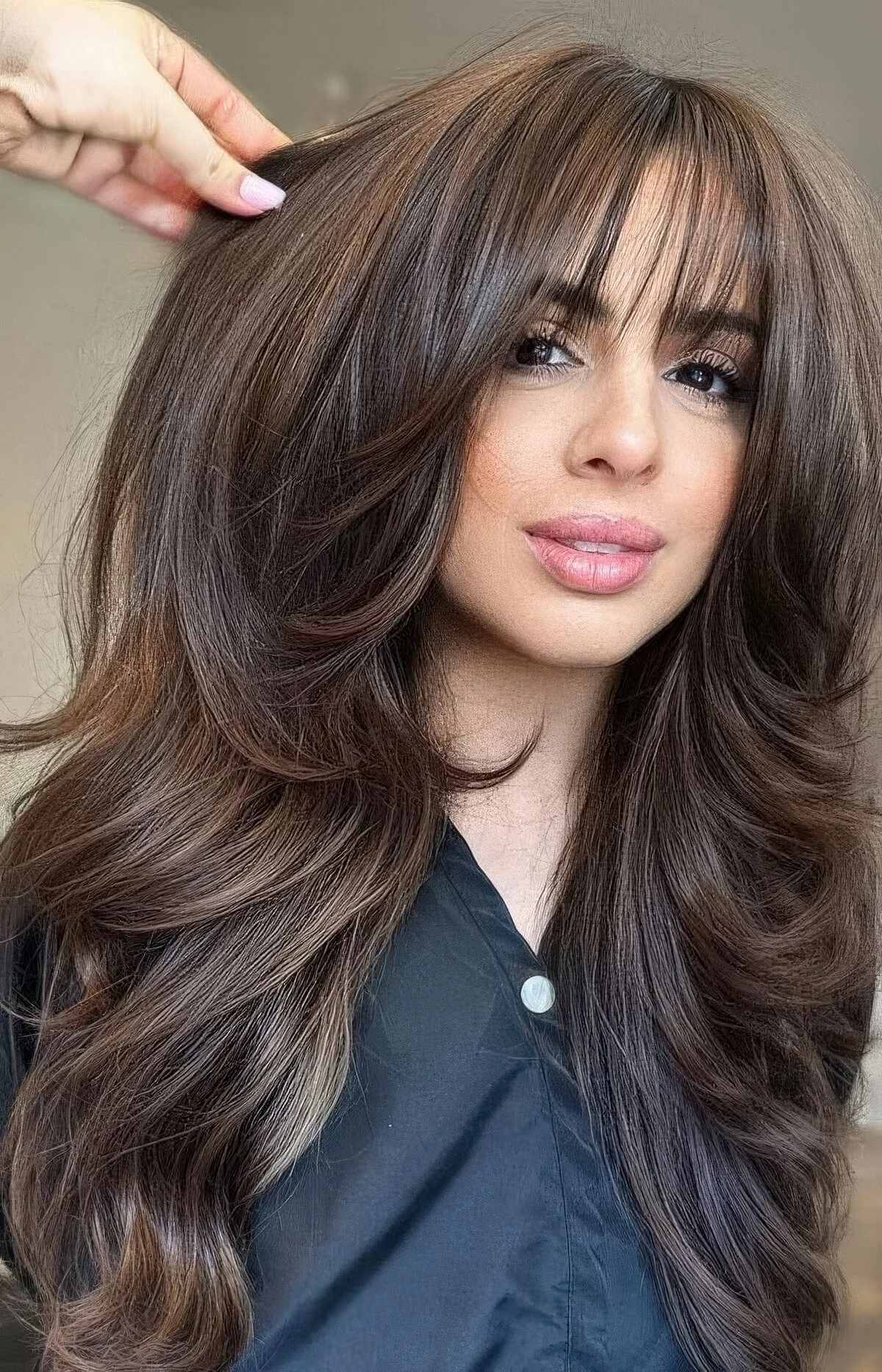
The butterfly cut has short, bouncy layers on top that frame the face like wings, with long layers underneath. It gives the volume of a shorter cut on top while keeping the length, and it looks stunning when the top layers are blow-dried with bounce.
Best for: Women who want short-cut volume on top without losing long hair below.
How to style:
- Blow-dry the top layers with a round brush for bounce.
- Let the long layers fall straight or loosely waved below.
- Use root spray for lift at the crown.
What to ask your stylist: Ask for butterfly layers: shorter, bouncy face layers on top, long layers underneath, with the length kept.
19. Long Layers with Balayage
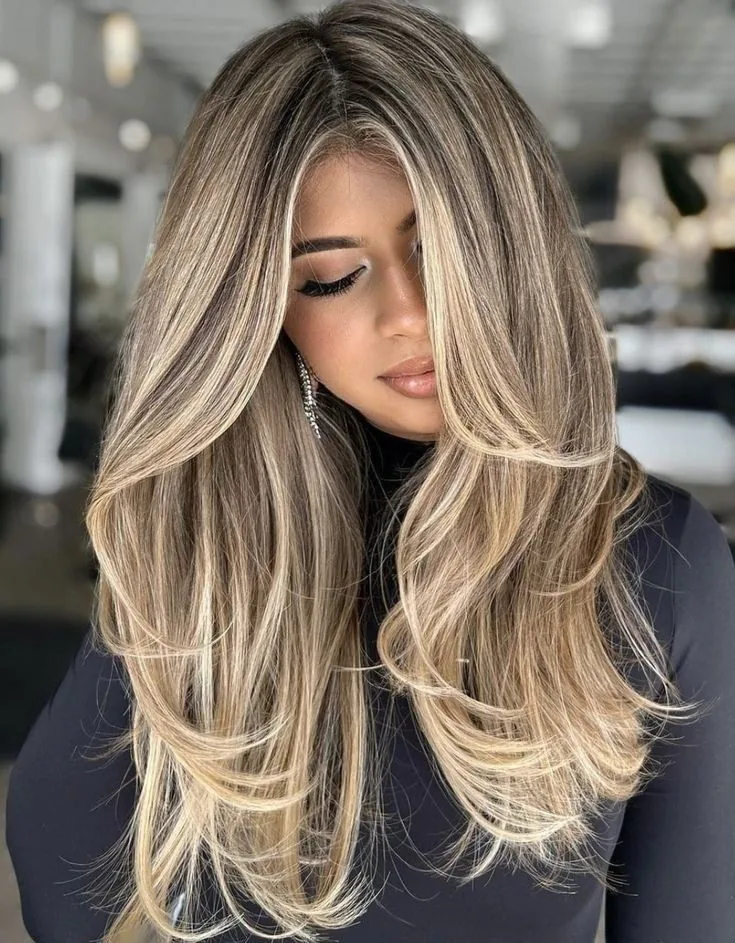
Balayage paints colour by hand through the layers, so each layer catches the light differently. The result is dimension that moves with the cut, making layers look deeper and more defined without a harsh colour line.
Best for: Women who want low-maintenance colour that grows out softly with layers.
How to style:
- Use colour-safe shampoo and a weekly mask.
- Style with loose waves to show the dimension.
- Refresh the toner every 8 to 12 weeks.
What to ask your stylist: Ask for balayage placed through the layers, lighter at the ends, with a soft root blend.
20. Long Layers with Face-Framing Highlights
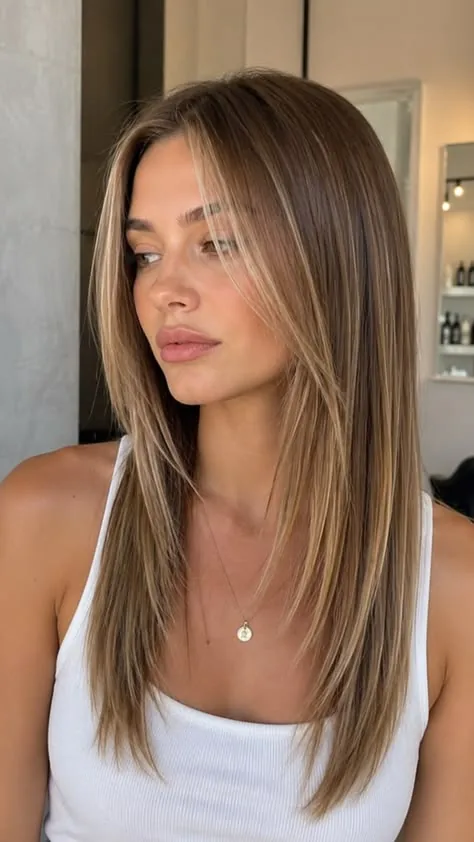
Face-framing highlights, sometimes called a money piece, lighten the strands around the face. On long layers, they brighten the eyes and cheekbones and make the face pieces stand out, even in a simple blow-dry.
Best for: Women who want brightness around the face without colouring all their hair.
How to style:
- Style the face pieces forward so the highlights are visible.
- Use a gloss or toner to keep the tone soft.
- Protect the lighter pieces with heat protectant.
What to ask your stylist: Ask for face-framing highlights a couple of shades lighter than your base, blended into the layers.
21. Long Layers with a Deep Side Part
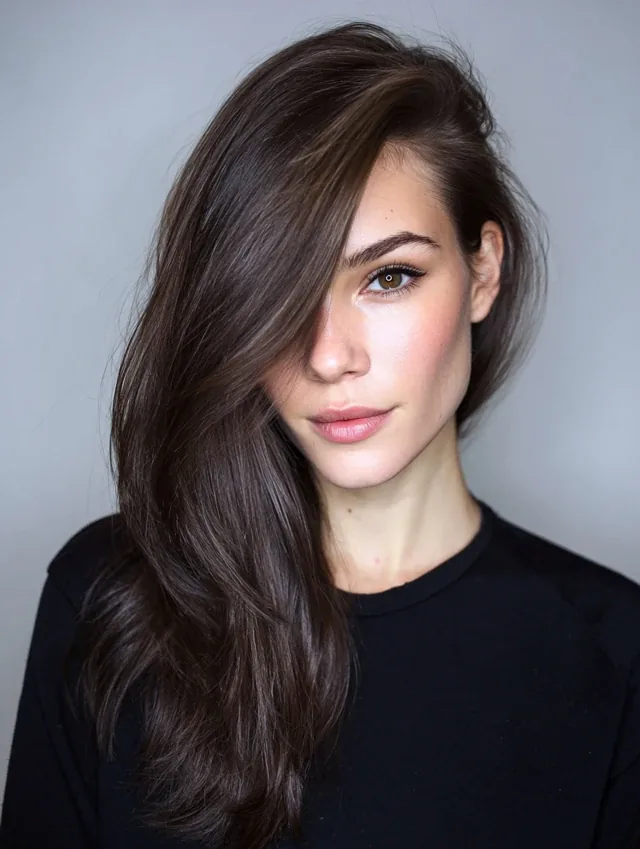
A deep side part instantly adds volume and drama to long layers. It lifts the roots on one side, sweeps the hair across the face, and gives a glamorous, old-Hollywood feel to an otherwise everyday cut.
Best for: Women who want instant volume, or a glamorous evening version of their layers.
How to style:
- Part deeply to one side while damp.
- Blow-dry the roots on the heavy side upward for lift.
- Sweep the lengths over one shoulder.
What to ask your stylist: Ask for layers that work with a deep side part, with face pieces long enough to sweep.
22. Long Layers with a Centre Part
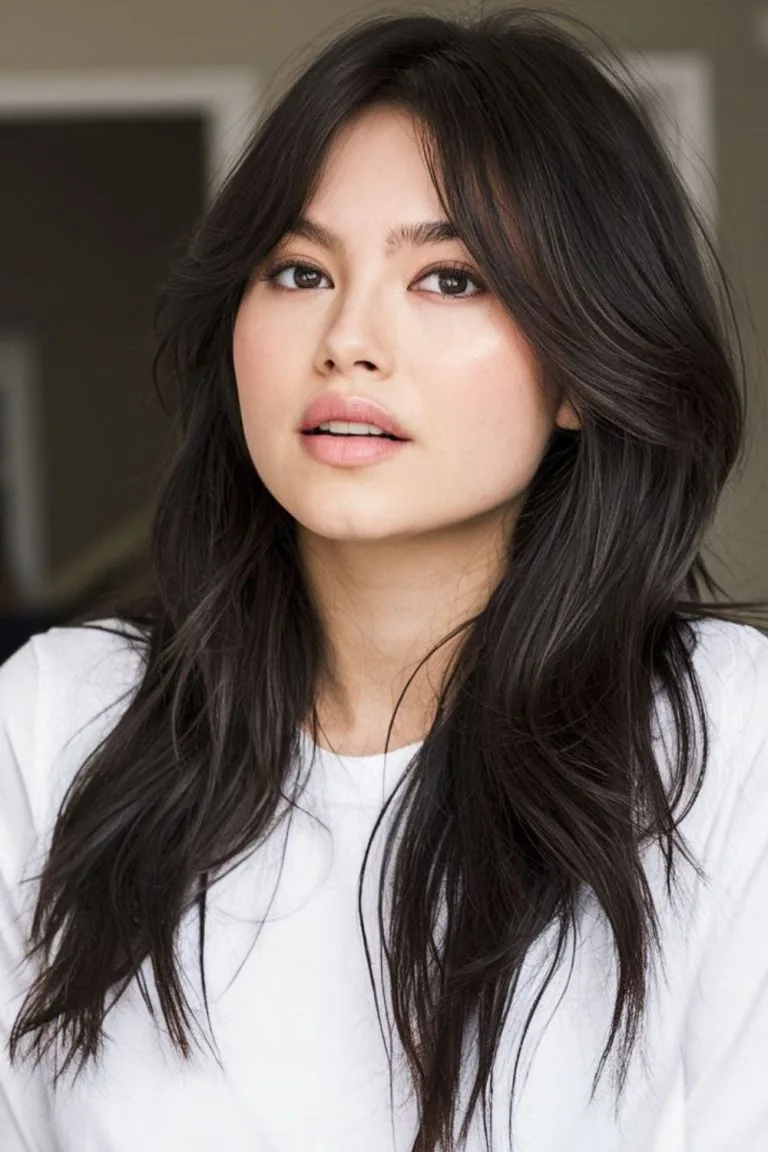
A centre part is clean, modern and symmetrical, and long layers stop it from looking severe. The layers add softness on each side, so the part frames the face evenly and the hair falls in balanced, swinging lengths.
Best for: Oval and heart faces especially, and anyone who likes a sleek, symmetrical style.
How to style:
- Part in the centre with a comb while damp.
- Blow-dry straight, smoothing each side evenly.
- Add a little shine spray for a polished finish.
What to ask your stylist: Ask for balanced layers on both sides, with face pieces that mirror each other.
23. Bouncy Long Layers
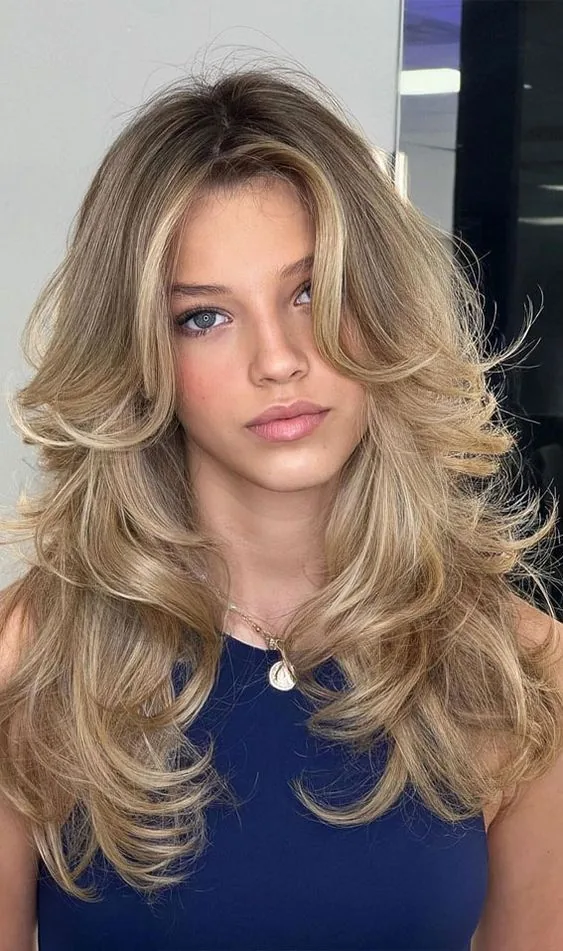
Bouncy layers are all about movement. Shorter layers through the mid-lengths, blow-dried with a round brush, spring back with every step. This is the cut for women who love volume and a healthy, full look.
Best for: Medium-to-thick hair that can hold a blow-dry, and anyone who wants volume.
How to style:
- Use volumising mousse at the roots.
- Blow-dry with a large round brush, rolling each section up.
- Set with a light-hold spray, then shake out.
What to ask your stylist: Ask for bouncy, rounded layers through the mid-lengths, with the ends turned under.
24. Sleek Long Layers
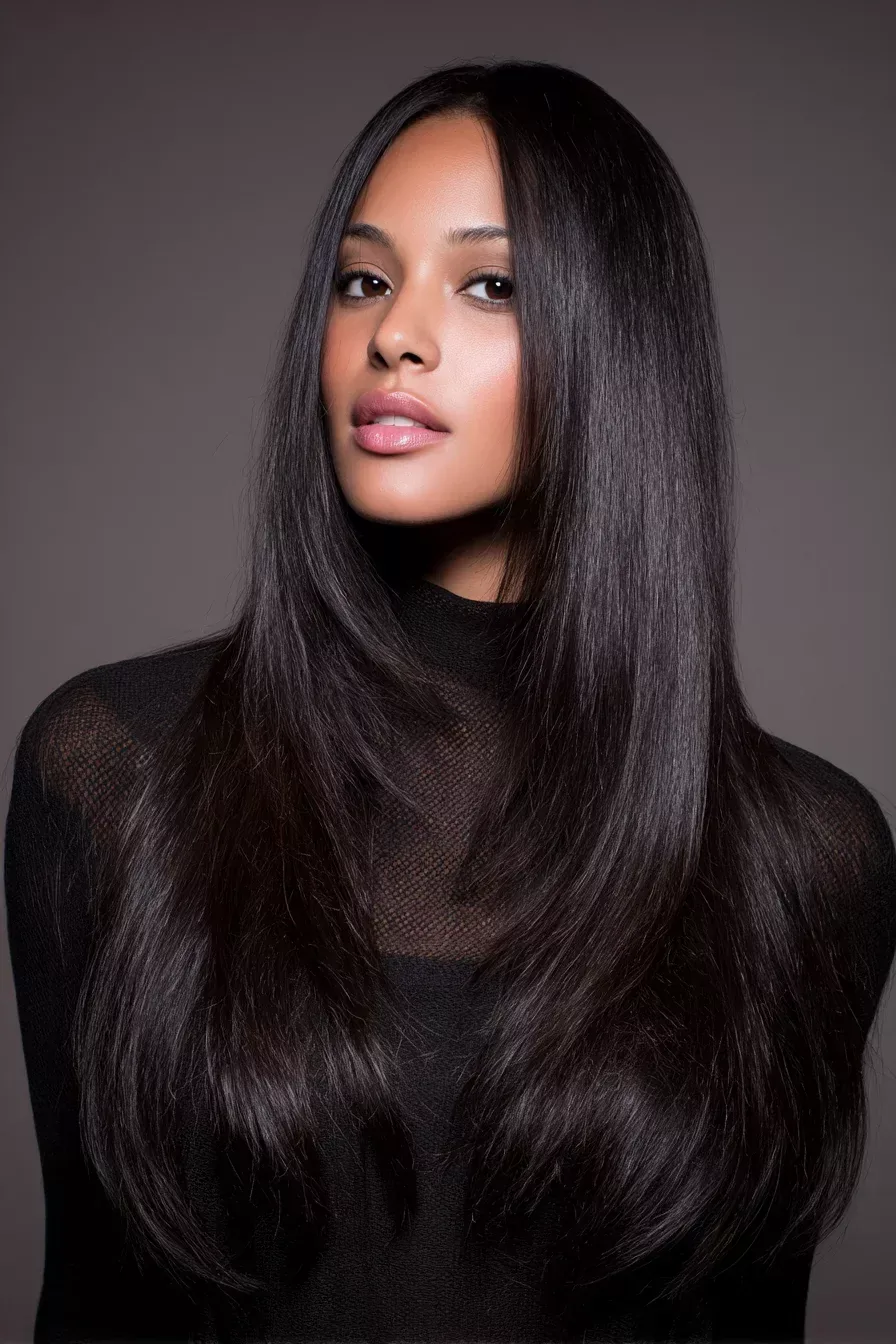
Sleek layers prove that layers do not have to mean texture. Cut smoothly and blow-dried straight, they give straight hair a swinging, glossy shape with a soft, tapered outline and no frizz or flyaways.
Best for: Straight hair, and women who prefer a polished, office-ready finish.
How to style:
- Apply smoothing serum before blow-drying.
- Dry in sections with a paddle brush, smoothing down.
- Finish with a flat iron on the ends only if needed.
What to ask your stylist: Ask for sleek, blended layers with no choppy ends, cut for a smooth blow-dry.
25. Textured Long Layers
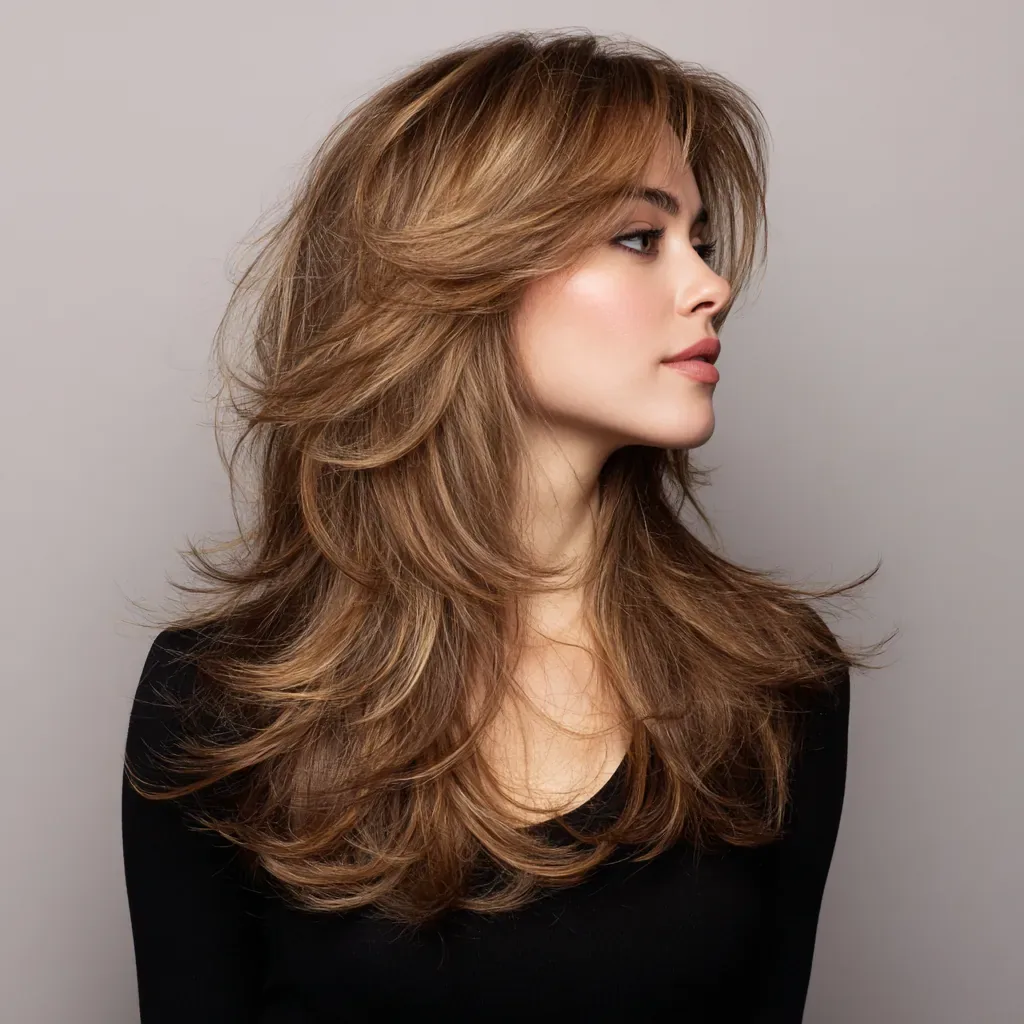
Textured layers are point-cut and slightly choppy, so the hair has built-in movement even without styling. They suit wavy and thick hair best, where the texture stops the cut from looking heavy or flat.
Best for: Thick or wavy hair that needs movement without daily heat styling.
How to style:
- Scrunch in texturising cream on damp hair.
- Air-dry or diffuse for natural texture.
- Piece out the ends with a tiny amount of wax.
What to ask your stylist: Ask for textured, point-cut layers through the ends, with the outline kept long.
26. Long Layers for a Round Face
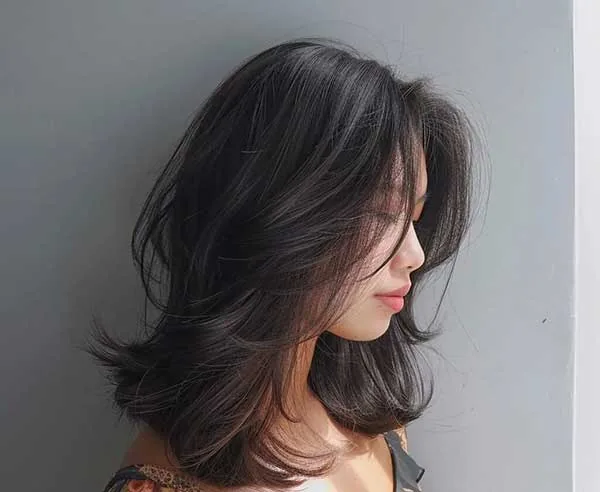
On a round face, long layers add length and vertical lines. Face pieces that start below the chin, plus layers that fall past the shoulders, draw the eye downward and slim the face visually, while a centre or off-centre part helps too.
Best for: Round faces that want a slimming, lengthening effect.
How to style:
- Keep face pieces long, starting below the chin.
- Avoid short layers that add width at the cheeks.
- Wear the hair longer than shoulder length where possible.
What to ask your stylist: Ask for long layers with face pieces below the chin, and no volume at cheek level.
27. Long Layers for an Oval Face
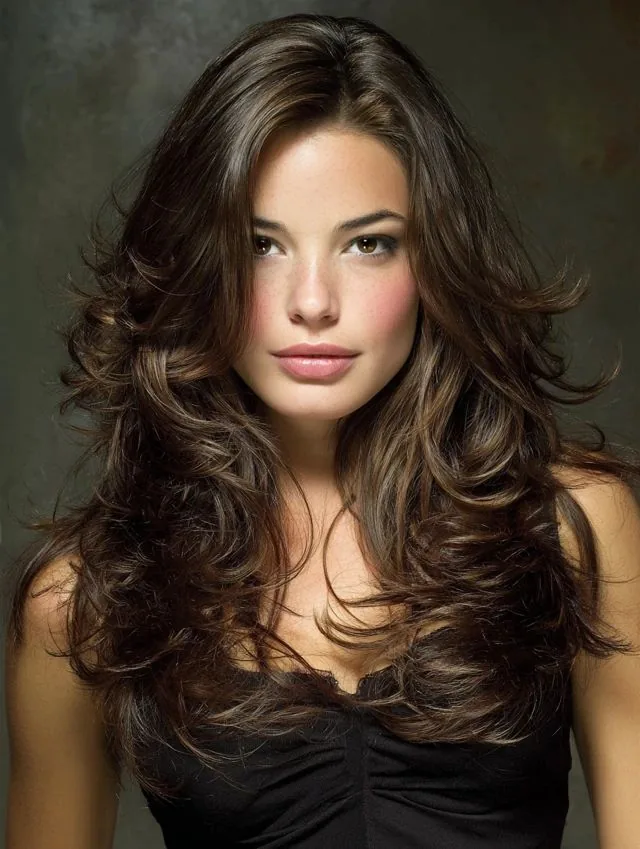
Oval faces can wear almost any layer placement, so the choice comes down to personal style. Long layers add movement without changing the balanced proportions, and bangs of any kind, from curtain to wispy, work beautifully.
Best for: Oval faces, and women who want freedom to try different layer styles.
How to style:
- Try curtain bangs or face-framing layers for extra style.
- Experiment with parts, as most parts suit an oval face.
- Keep the layers long if you want to preserve the balanced shape.
What to ask your stylist: Ask for long layers tailored to your hair texture, since face shape rarely limits an oval face.
28. Long Layers for a Square Face
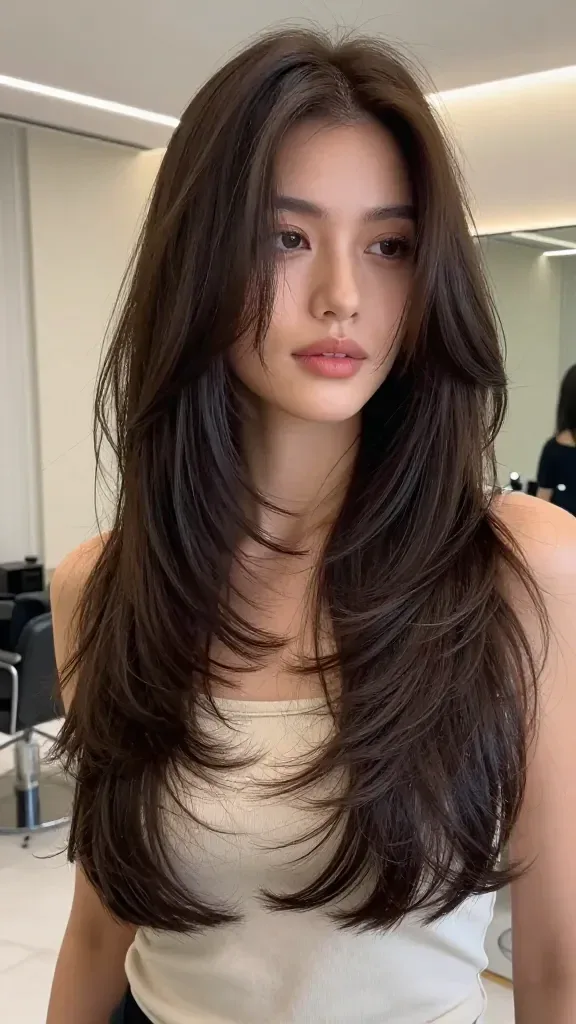
On a square face, soft, curved layers are the key. Face pieces that curve around the jaw, plus waves through the lengths, soften strong angles without hiding the jawline. Avoid blunt lines ending exactly at the jaw.
Best for: Square faces that want to soften angles while keeping length.
How to style:
- Curve the face pieces inward with a round brush.
- Add loose waves through the lengths.
- Keep the shortest face pieces at chin length or below.
What to ask your stylist: Ask for curved face-framing layers starting at the chin, with soft waves in the lengths.
29. Long Layers for a Heart Face
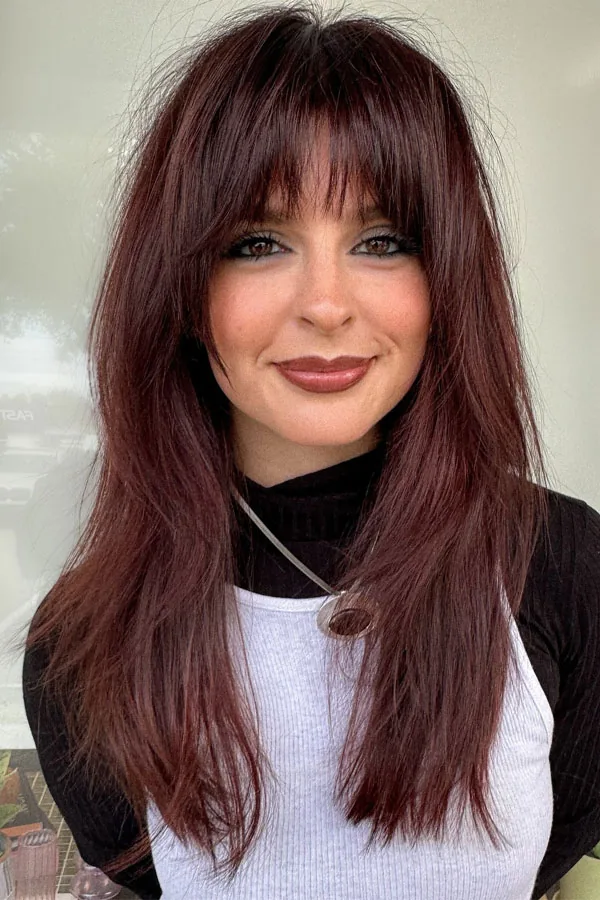
A heart face is wider at the forehead and narrower at the chin, so layers that add fullness from the chin down balance it beautifully. Long layers with volume at the ends, plus side-swept or curtain bangs, soften the forehead and fill out the lower face.
Best for: Heart faces that want balance between a wider forehead and a narrower chin.
How to style:
- Add waves or volume from chin level down.
- Try side-swept bangs to soften the forehead.
- Avoid too much volume only at the crown.
What to ask your stylist: Ask for layers that build fullness below the chin, with soft bangs to balance the forehead.
30. Half-Up Long Layered Style
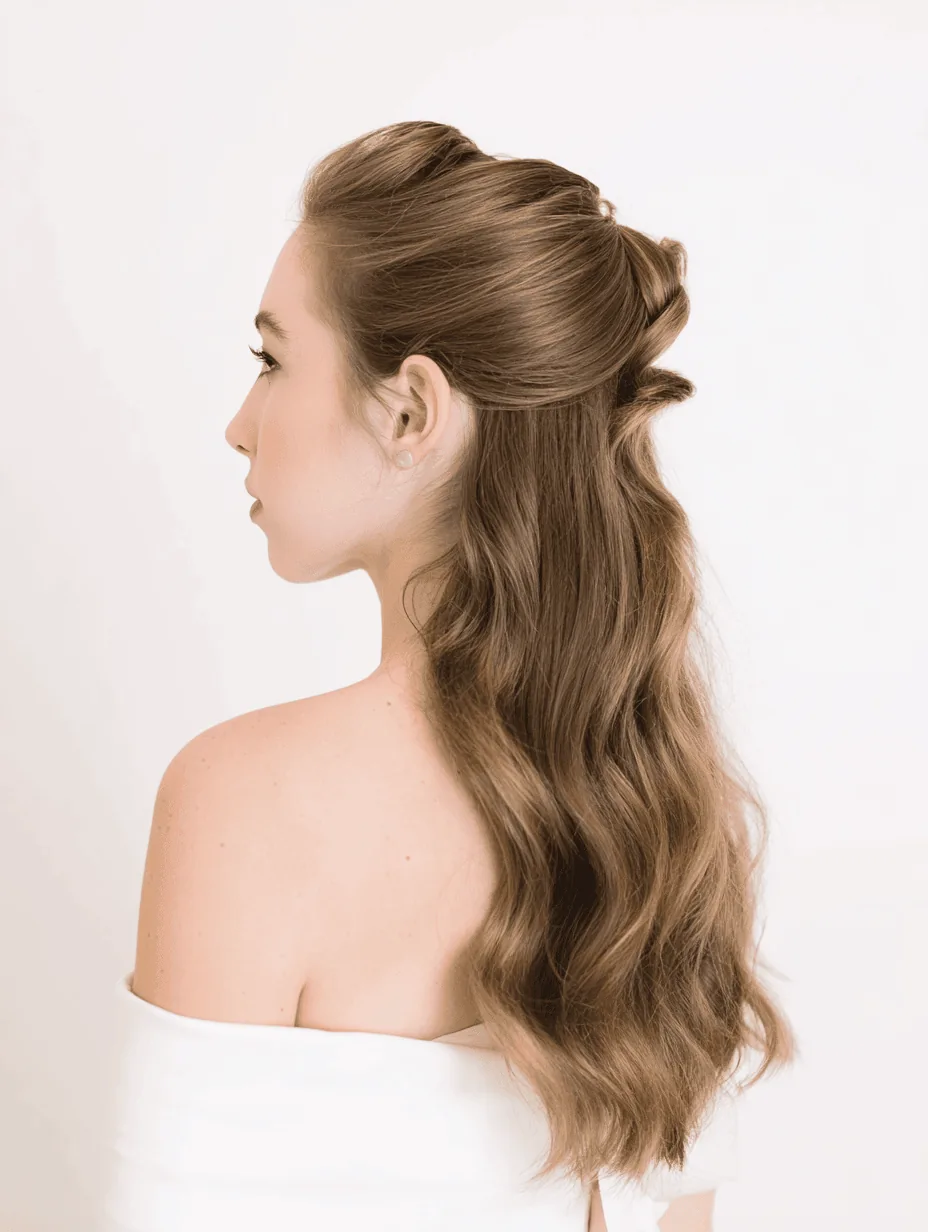
A half-up style shows off long layers perfectly. The top is pulled back, the face pieces fall free, and the long layers cascade below. It is quick, pretty, and works for work, weddings and everyday wear alike.
Best for: Anyone with long layers who wants a quick style that still shows the cut.
How to style:
- Pull the top half back loosely and secure it.
- Leave the face-framing pieces out.
- Curl the lengths loosely for extra movement.
What to ask your stylist: Ask for layers that frame the face when the hair is half-up, so the style works without extra styling.
31. Long Layers with Loose Curls
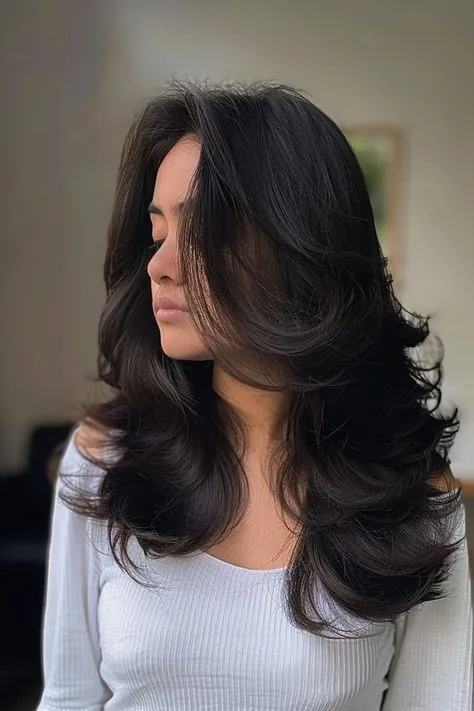
Loose curls through long layers look romantic and full. Each layer curls at a slightly different length, so the curls do not clump into one mass, and the style holds its shape far longer than curls in one-length hair.
Best for: Straight-to-wavy hair that holds a curl, and special occasions.
How to style:
- Curl large sections with a large barrel, alternating directions.
- Brush out gently for soft, loose curls.
- Set with flexible-hold spray.
What to ask your stylist: Ask for long layers cut for curling, with the ends soft enough to curl without flicking out.
32. Grow-Out Friendly Long Layers
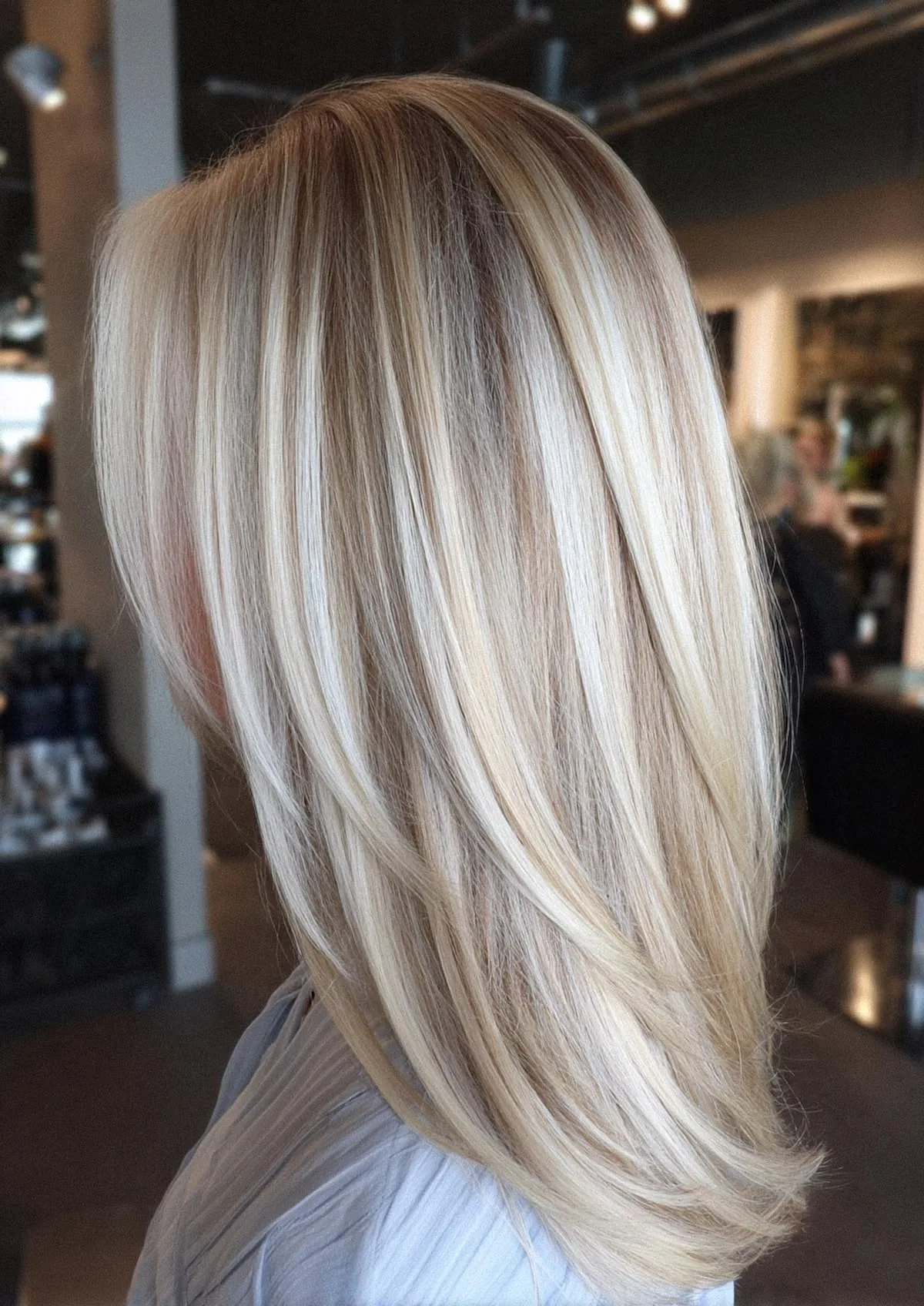
The best thing about long layers is how well they grow out. Because the layers are long and blended, there is no harsh line as they grow, and a trim every 10 to 12 weeks keeps the shape without losing length. This is the lowest-maintenance layered cut.
Best for: Women growing their hair out, or who cannot visit the salon often.
How to style:
- Trim every 10 to 12 weeks, taking only the ends.
- Use a mask weekly to keep the ends healthy.
- Style with loose waves to hide any uneven growth.
What to ask your stylist: Ask for long, blended layers with a soft outline, designed to grow out without a harsh step.
Here are the questions women ask most often about long layered haircuts, answered directly.
Do long layers make hair look thinner?
No, not if they are cut correctly. Long, blended layers keep the ends fairly full, so hair looks thicker and more shapely, not thinner. Very short or choppy layers can thin fine hair, which is why fine hair should stick to just a few long layers with a blunt perimeter.
How often should long layers be trimmed?
Every 10 to 12 weeks is ideal for most women. That is often enough to remove split ends and keep the shape, without losing length. If your ends split easily, go every 8 weeks and ask for a dusting, which takes off only the damaged tips.
Can long layers work on fine hair?
Yes, with restraint. Fine hair suits two or three long layers, starting below the chin, with a blunt outline so the ends stay thick. Avoid short layers on top, which can make fine hair look wispy and sparse.
Are long layers good for curly hair?
Yes, when cut dry and curl by curl. Long layers stop curls from forming a pyramid shape and let each curl spring at a different length. Avoid a wet, straight cut for curly layers, as shrinkage can make the layers much shorter than planned.
What is the difference between long layers and a butterfly cut?
A butterfly cut is a type of long layering with short, bouncy layers on top and long layers below, like wings. Classic long layers are more even and blended throughout. The butterfly gives more volume on top, while classic layers give a smoother, more even shape.
Do long layers suit a round face?
Yes. Long layers with face pieces starting below the chin add vertical lines that lengthen a round face. Avoid short layers that add width at the cheeks, and keep the overall length past the shoulders for the most flattering effect.
Will long layers help thick hair?
Yes, a great deal. Internal layers remove bulk from inside thick hair without shortening the outline, so it falls in a tapered shape instead of a triangle. Thick hair is often the hair type that benefits most from layering.
How do I style long layers without heat?
Scrunch a wave or curl cream into damp hair and air-dry, or braid damp hair loosely overnight for soft waves. The layers will create shape on their own, so you do not need heat to see the movement. Finish with a little oil on the ends.
What should I ask for at the salon?
Ask for long, blended layers, and name the shortest layer length, the face-framing pieces you want, and the back shape, U-cut or V-cut. Bring photos of similar hair texture, and agree on the length to keep before cutting starts.
Do long layers grow out well?
Yes, better than most cuts. Because the layers are long and blended, there is no harsh line as they grow, and the shape softens gradually. Regular small trims keep the outline tidy without losing the length you have grown.
Conclusion
Long layered haircuts for women prove you do not have to choose between length and shape. With the right layer placement for your thickness and curl pattern, long hair can move, bounce and frame your face beautifully, while keeping every centimetre you have grown. Pick a cut from this list that matches your hair and your lifestyle, save the photo, and use the stylist phrases in its section at your next appointment.
Start with long, blended layers if you are new to layering, and try bolder options like the butterfly cut, long shag or wolf layers once you know how layers behave in your hair. Whichever you choose, trim regularly, protect your ends, and let your layers do the styling work for you.