A Tiny Fringe, a Big Change: Micro Bangs Hairstyles for Women That Reshape Your Whole Look
A micro bang is the boldest fringe you can wear — a strip of hair barely an inch or two long, sitting high on the forehead, well above the eyebrows. It is a small change with an outsized effect: it opens up the face, sharpens the cheekbones, makes the eyes look bigger and gives even the simplest bob or ponytail a deliberate, editorial edge. These micro bangs hairstyles for women are for anyone who wants their haircut to say something before they do.
The look is not for everyone, and that is part of its charm. Micro bangs flatter oval and heart-shaped faces most easily, suit straight and slightly wavy hair best, and demand a little daily attention — a quick blow-dry, a dab of styling cream, a trim every two or three weeks. They also grow out awkwardly if you change your mind, so the decision deserves an honest look in the mirror first.
This guide starts with the practical questions — what micro bangs actually are, which face shapes they flatter, the commitment and the grow-out, how they are cut, and how to style a fringe this short — and then walks through 32 styles, from a classic straight micro bang to a shaggy wolf cut, a French bob and a bold coloured fringe. Find the version that fits your hair, your face and your patience, and take it to your stylist with confidence.
What Micro Bangs Actually Are
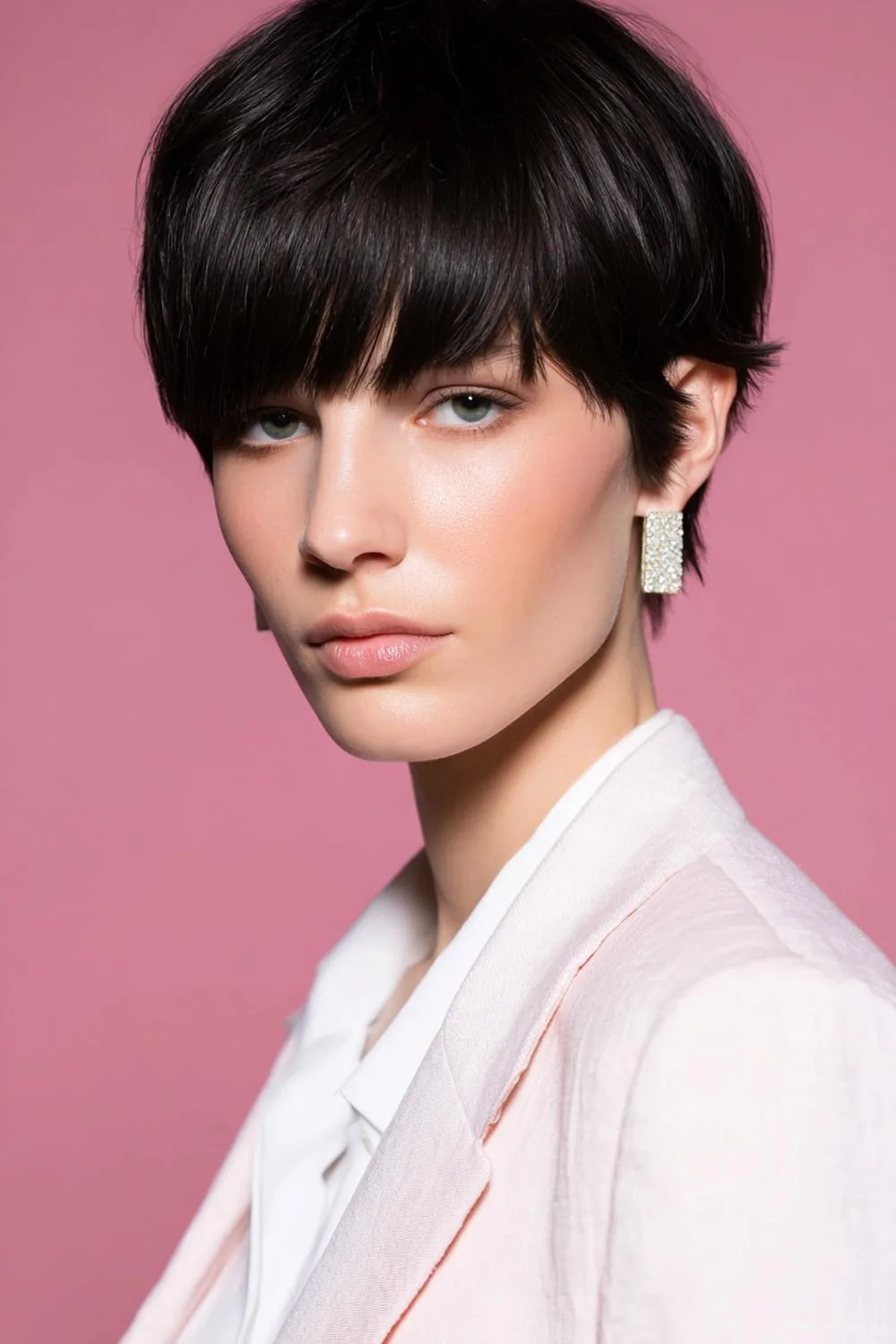
Micro bangs, sometimes called baby bangs, are a fringe cut far shorter than a classic bang — usually ending an inch or more above the eyebrows, sometimes halfway up the forehead. Unlike curtain bangs or a side-swept fringe, they do not soften into the rest of the hair; they sit apart as a deliberate, graphic line across the forehead.
The cut works because it changes the proportions of the face. By showing more forehead, micro bangs lengthen the face visually and draw the eye straight to the eyes and cheekbones. That is why they look so striking with a sharp bob or a pixie, and why they can feel severe on a very long face if the rest of the cut does not balance them.
They are also the most honest fringe there is: there is nowhere for a cowlick or a kink to hide. If your hairline is uneven or your front hair grows in a strong swirl, your stylist will need to work with that texture rather than against it, and you will need a minute or two each morning to set the fringe in place.
Micro Bangs and Face Shapes: Who They Flatter Most
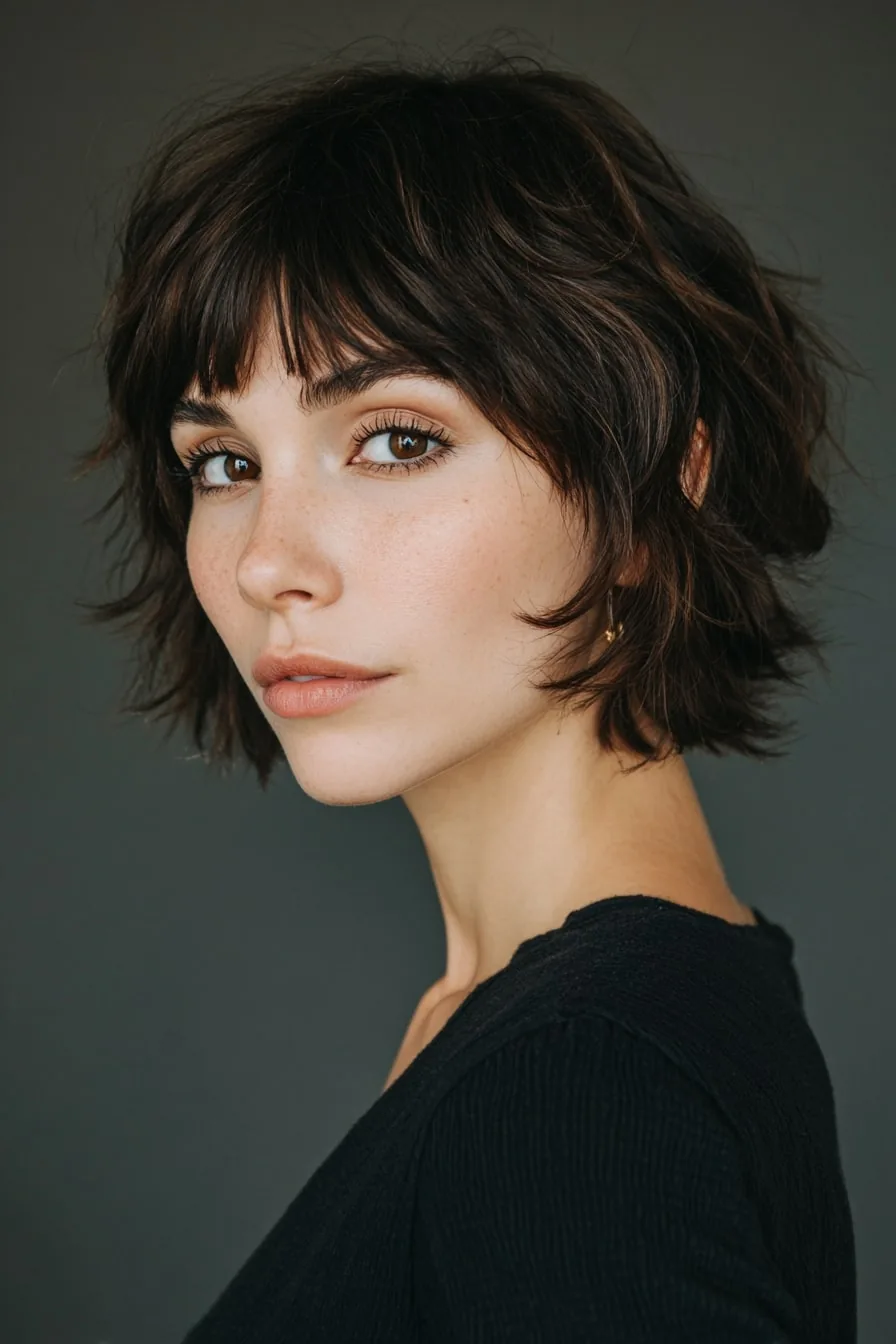
Oval faces are the easiest match for micro bangs, because the balanced proportions can take the extra forehead on show without looking longer or wider. Heart-shaped faces come a close second: a short fringe softens a wide forehead and balances a narrower chin, especially when the rest of the hair has some width at the jaw.
Round faces can wear micro bangs too, but the pairing needs care. A blunt, straight-across micro bang can make a round face look rounder, so ask for a slightly textured or arched edge and keep some length or volume at the sides. Square faces benefit from the same trick — a softened, piecey edge takes the sharpness off a strong jawline.
Long faces should think twice, or pair the fringe with width: a bob, curls or a shag that adds volume at the sides stops the extra forehead from stretching the face further. Whatever your shape, the test is simple — hold your hair up off your forehead in the mirror and see whether you like your face with that much forehead showing.
The Commitment: Growing Out Micro Bangs
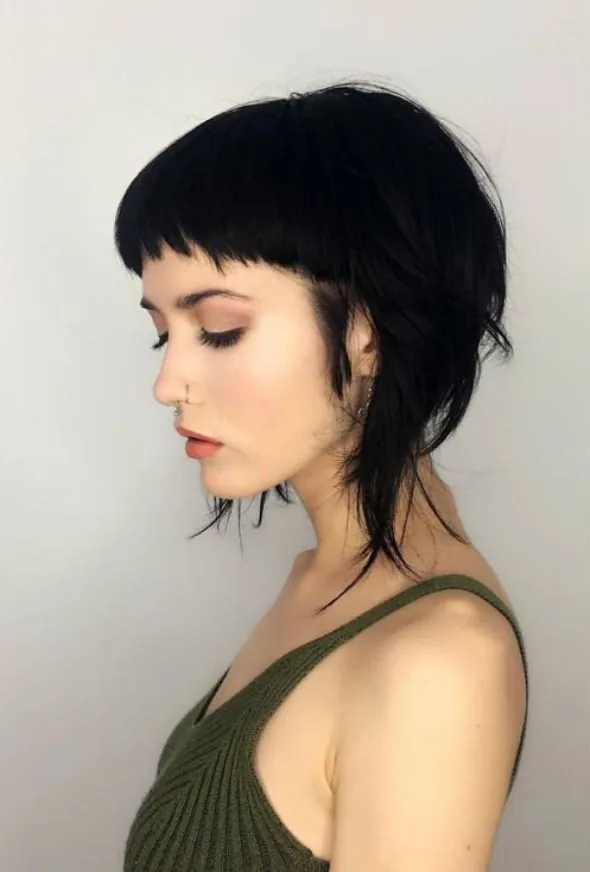
The commitment is real, and it is the part most people underestimate. Micro bangs need a trim every two to three weeks to keep their line, and the grow-out takes months: the fringe passes through an awkward stage where it is too long to be a micro bang and too short to tuck behind the ears or blend into the rest of the hair.
That in-between stage is manageable, but it needs a plan. A deep side part, a little texture spray, a couple of bobby pins or a headband will carry you through the worst weeks. Curtain bangs are the natural landing place — once the fringe reaches eyebrow length, your stylist can start blending it outwards into face-framing layers.
Before you cut, ask yourself one honest question: will you enjoy the daily two minutes? If the answer is yes, the commitment is a small price for a look that feels completely yours. If you suspect you will resent the upkeep, a longer, softer fringe that grows out gracefully is the wiser choice.
Salon Cut vs DIY: How Micro Bangs Are Cut
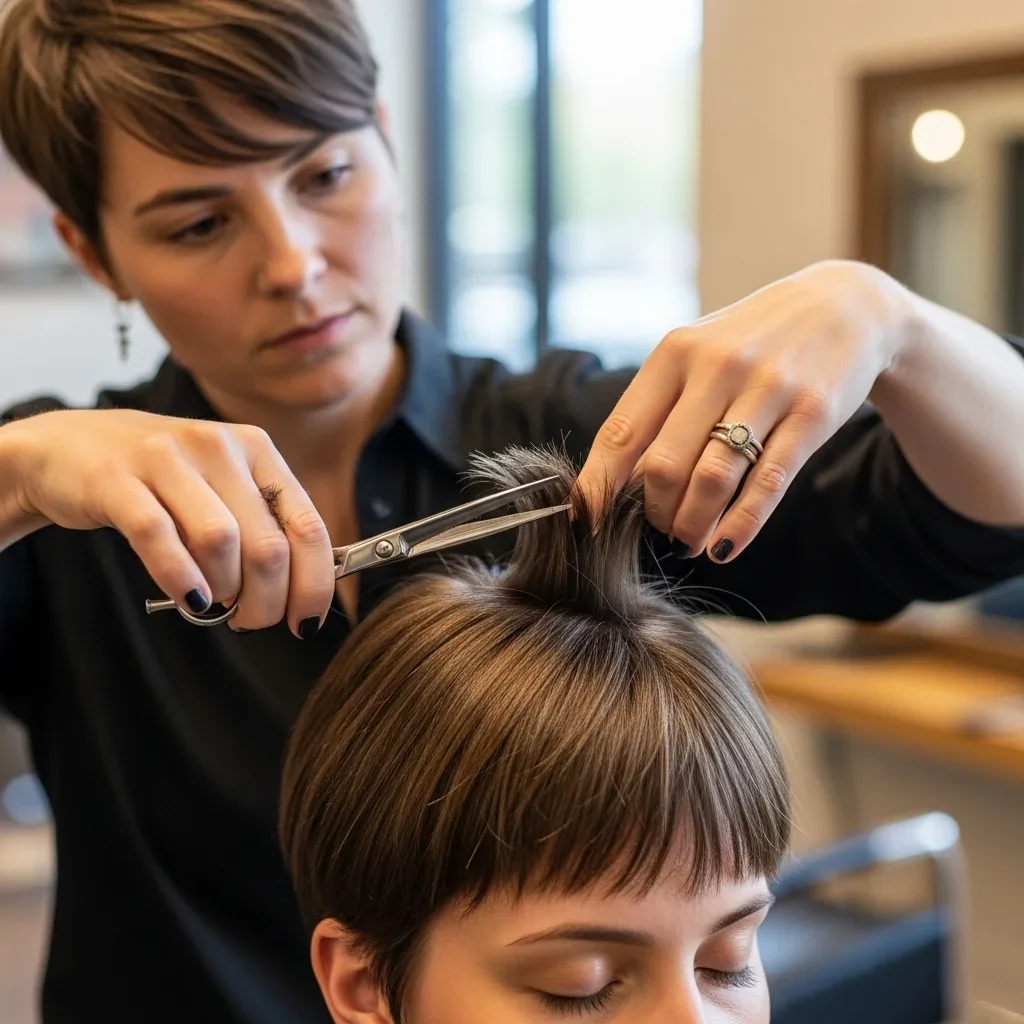
Micro bangs are one of the few cuts where a salon visit genuinely matters the first time. The fringe is so short that a millimetre of error shows, and a stylist will cut it dry, on clean hair, watching how your hair falls naturally — wet hair shrinks as it dries, which is how home cuts end up a centimetre shorter than planned.
A good stylist will also read your hairline: a cowlick at the centre, a widow’s peak or an uneven growth pattern all change where the fringe should start and how it should be textured. They will cut less than you think you want, then refine, because you can always take more off but you cannot put it back.
Once the shape exists, DIY maintenance is realistic. Trim only when the hair is dry and styled as you normally wear it, cut vertically into the ends rather than straight across, and take off less than you think you need. If the fringe starts to look uneven or the line drifts, book the salon rather than chasing it with the scissors at home.
Styling a Very Short Fringe Every Morning
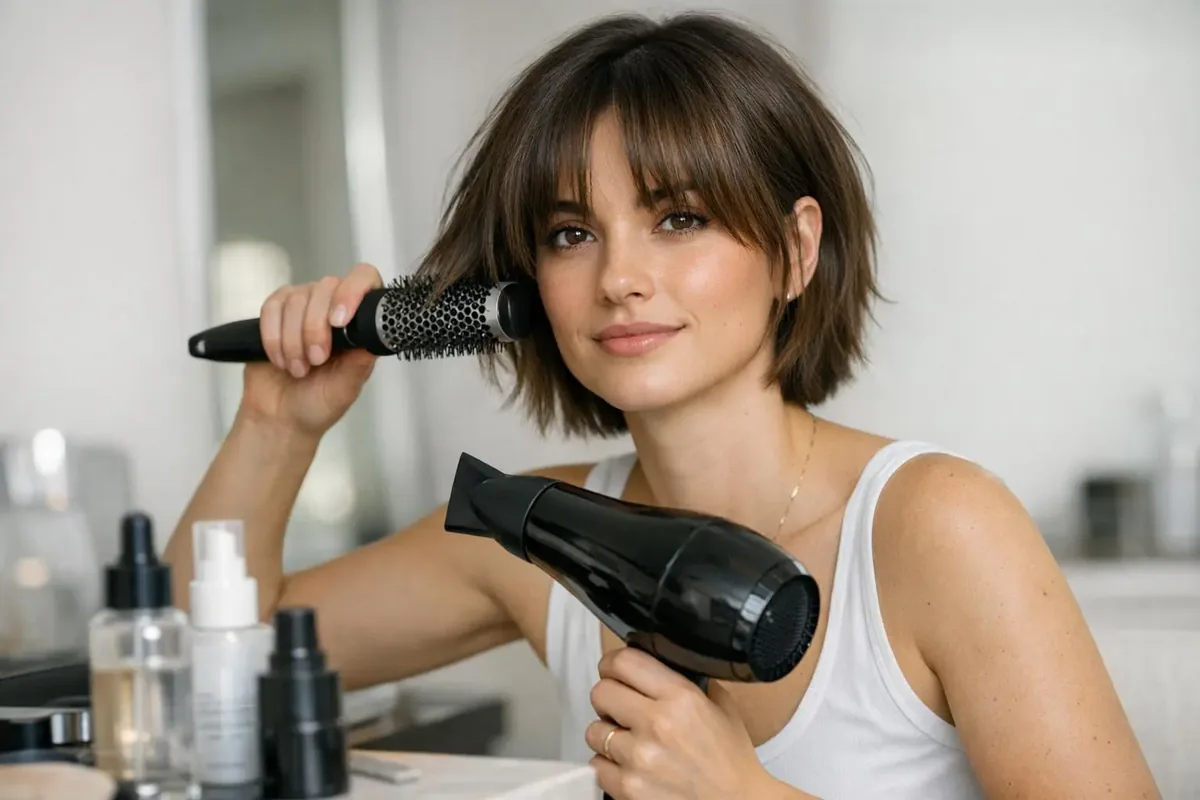
A micro bang takes about two minutes in the morning, and skipping those two minutes shows. Start with the fringe slightly damp — a spritz of water is enough on day two — and blow-dry it downwards with a small round brush or just your fingers, directing the air from root to tip so the hair lies flat against the forehead.
A pea-sized amount of lightweight styling cream or pomade, warmed between your palms and pressed through the ends, stops flyaways without making the fringe greasy. Avoid heavy oils and anything you would put on the lengths; the fringe sits on skin, so it picks up oil faster than the rest of your hair.
On humid days, a light mist of flexible-hold hairspray from a distance keeps the line in place without stiffness. And keep dry shampoo in the bathroom: a quick puff at the roots on the second day lifts the fringe and absorbs the oil that builds up where hair meets forehead overnight.
Pairing Micro Bangs With Bobs, Pixies and Long Hair
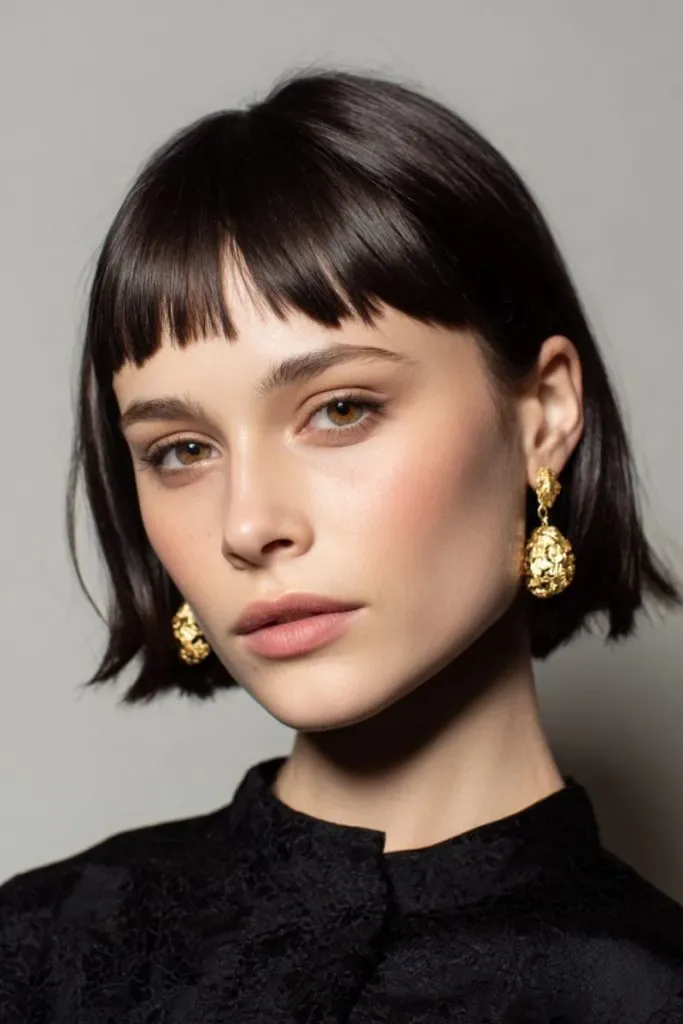
The bob is micro bangs’ natural partner. A chin-length or jaw-length bob with a short fringe is the classic pairing — graphic, balanced and easy to wear — and it works with straight, wavy or curly bobs as long as the fringe edge echoes the texture of the rest of the cut.
With a pixie, micro bangs turn a short cut into a statement: the fringe becomes the focal point, so keep the rest of the pixie textured and soft rather than competing with it. With long hair, the contrast is the point — a tiny fringe against long, flowing lengths looks deliberate and modern, especially with a middle part and a sleek finish.
The pairing to avoid is a fringe that fights the rest of the hair. If your lengths are heavily layered and piecey, a blunt micro bang can look pasted on; ask for a textured edge instead. And if your hair is very curly, remember the fringe will spring up shorter than it is cut — your stylist should cut it longer than the target length to allow for the curl.
Makeup and Brows: Finishing the Look
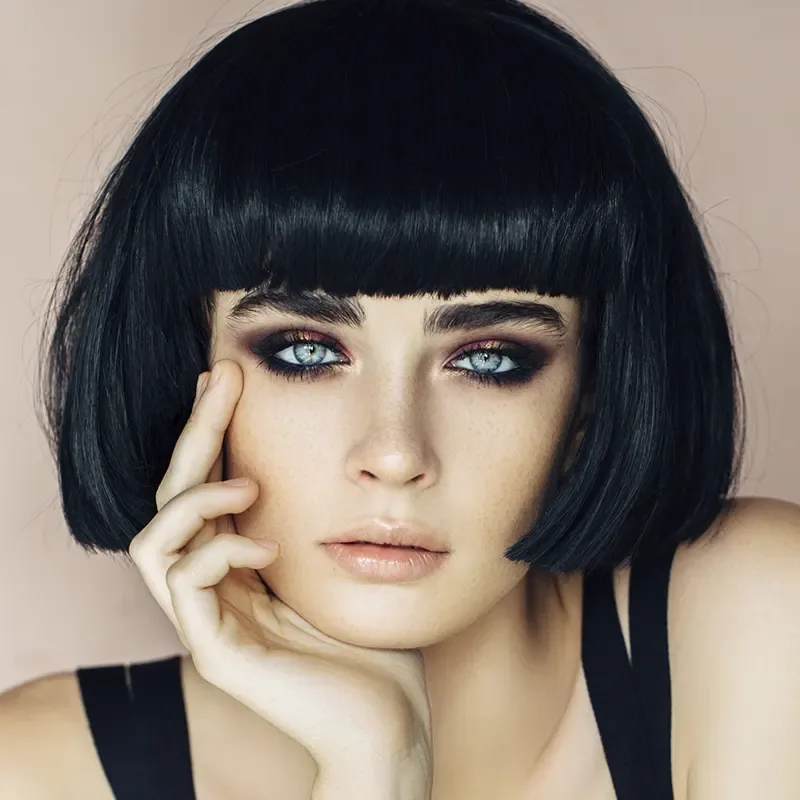
Micro bangs put your eyebrows on display, so they become part of the hairstyle. You do not need bold, drawn-on brows, but a little definition — a brow pencil or powder that fills sparse patches and a clear gel to hold the shape — stops the face from looking unfinished above the fringe.
The rest of the makeup can stay simple, because the fringe is already doing the talking. A clean base, a little mascara and a lip colour you love are enough for most days. If you want drama, a strong lip or a winged liner pairs beautifully with the graphic line of the fringe; heavy eye shadow and a heavy fringe together can crowd the upper face.
One practical note: keep foundation and moisturiser off the fringe. Product transferred from the forehead makes short bangs look greasy by midday, so apply skincare first, let it sink in, and blot the forehead before you style the fringe.
Cowlicks, Texture and Maintenance: Trims and Upkeep
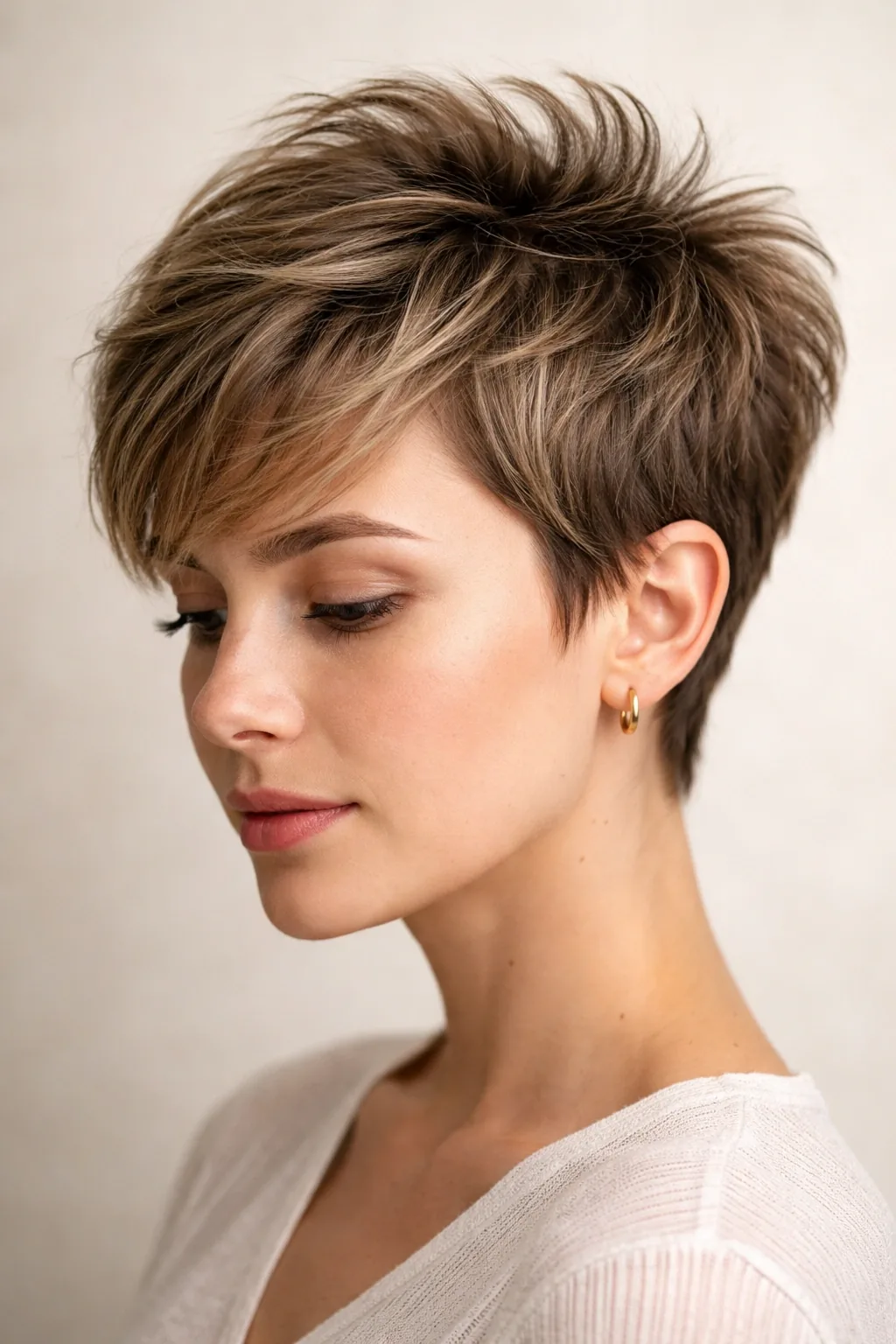
A cowlick in the front hairline is the biggest obstacle to micro bangs, but it is not always a dealbreaker. A strong central cowlick will push the fringe to one side, so your stylist may cut the fringe slightly longer on that side, or suggest a textured, piecey edge that lets the cowlick look intentional rather than fighting it.
Texture changes everything about the fringe. Straight hair holds a clean, blunt line with the least effort. Wavy hair gives a softer, choppier micro bang that needs less precision. Curly and coily hair can wear micro bangs beautifully, but the fringe must be cut dry, at its natural curl pattern, and left longer than the finished length so it does not spring up too short.
Maintenance is the ongoing cost: a trim every two to three weeks, a quick morning style, and a bottle of dry shampoo in the cupboard. Book the trim before the fringe starts poking your eyes or losing its line — a five-minute tidy-up at the salon is cheaper and kinder than letting it grow out and starting over.
Classic Straight Micro Bangs
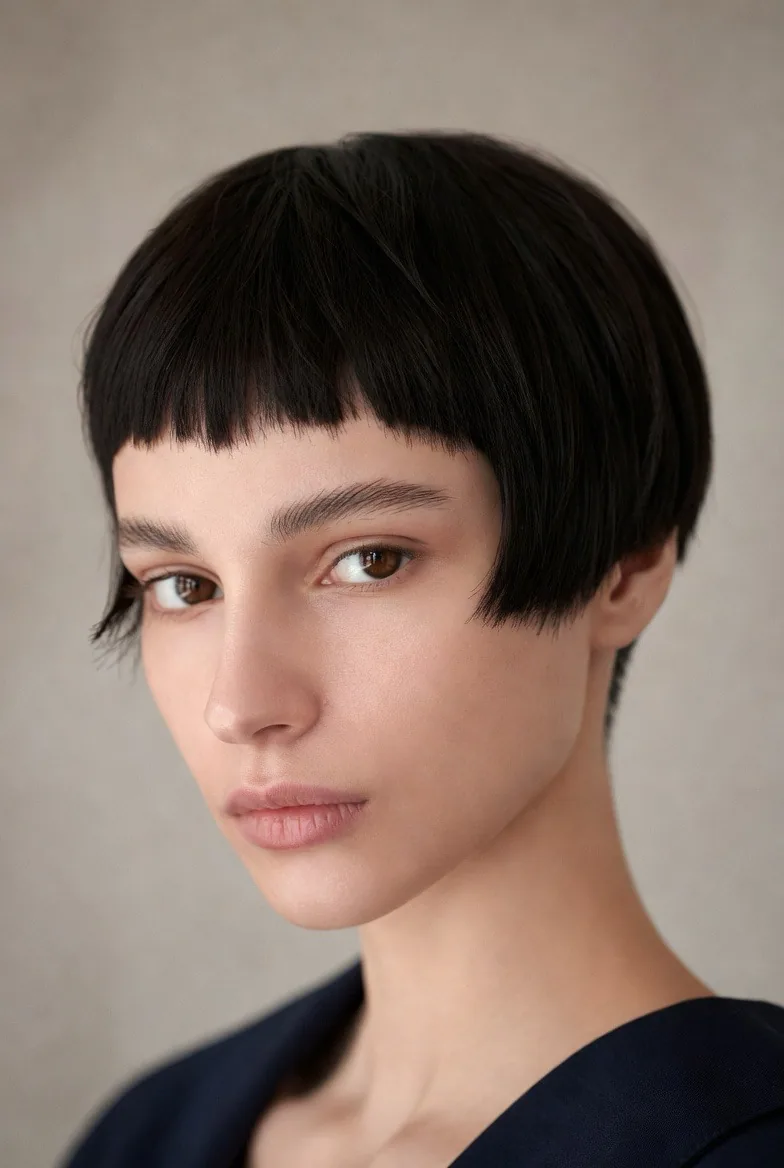
The original micro bang: a clean, straight-across fringe ending well above the eyebrows, cut with a sharp line and no texture. It is the most graphic version of the look, and it suits straight hair best, where the line stays crisp all day with almost no styling.
Best for: oval and heart-shaped faces, straight hair, and anyone who wants a bold, editorial look with minimal daily effort — the shape does most of the work.
How to style: blow-dry the fringe downwards with a small round brush, then press a tiny amount of smoothing cream through the ends. A flat iron pass on low heat keeps the line razor-sharp on humid days.
What to ask: ask your stylist for a straight-across micro bang cut dry, ending about an inch above the brows, with the corners left just a touch longer so the line does not look harsh.
Micro Bangs With a Sleek Bob
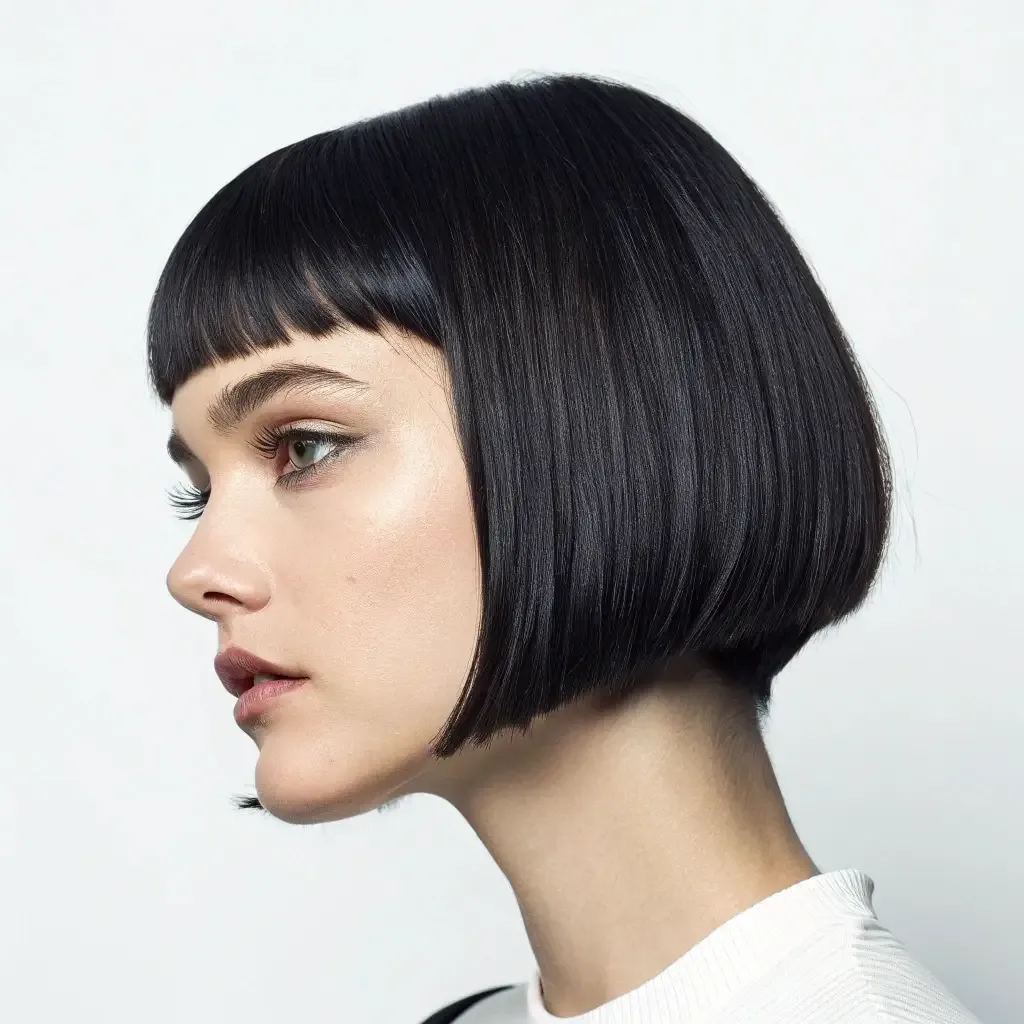
This is the pairing most people picture when they think of micro bangs: a chin-length bob with a short fringe, both cut with the same clean geometry. The bob frames the jaw while the fringe opens up the face, and the two lines balance each other beautifully.
Best for: straight to slightly wavy hair, oval and square faces, and anyone who wants a polished, put-together look that still feels modern and a little daring.
How to style: blow-dry the bob smooth with a round brush, tucking the ends under slightly, and dry the fringe separately downwards so it sits flat. A shine spray over the top finishes the sleek effect.
What to ask: ask for a bob that ends at the jaw or chin with the micro bang cut to match its bluntness — the two edges should look like they belong to the same haircut.
Micro Bangs With a Pixie Cut
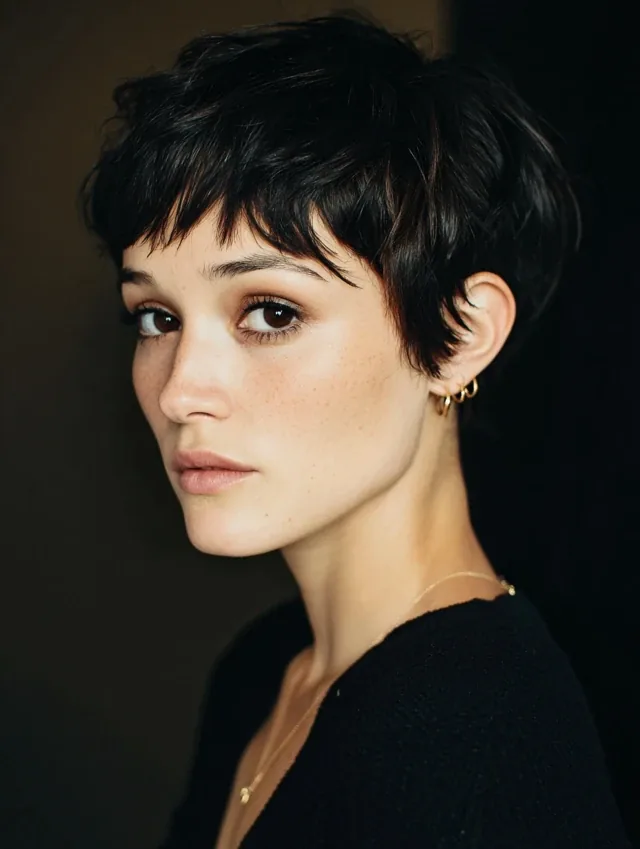
A pixie with micro bangs is the shortest, boldest version of the look, and it works because the fringe becomes the star of a cut that is already confident. The short fringe shows off the eyes and cheekbones, while the textured pixie keeps the whole style soft enough to wear every day.
Best for: oval, heart-shaped and petite faces, fine to medium hair, and anyone ready for a genuinely short cut that grows out in a controlled, wearable shape.
How to style: work a pea-sized amount of matte paste through the top with your fingers, pushing the fringe forward and slightly to one side. The pixie should look piecey, not plastered down.
What to ask: ask for a textured pixie with a micro bang that follows your hairline, not a hard straight line — the fringe should look like part of the pixie, not stuck on top of it.
Micro Bangs With Long Straight Hair
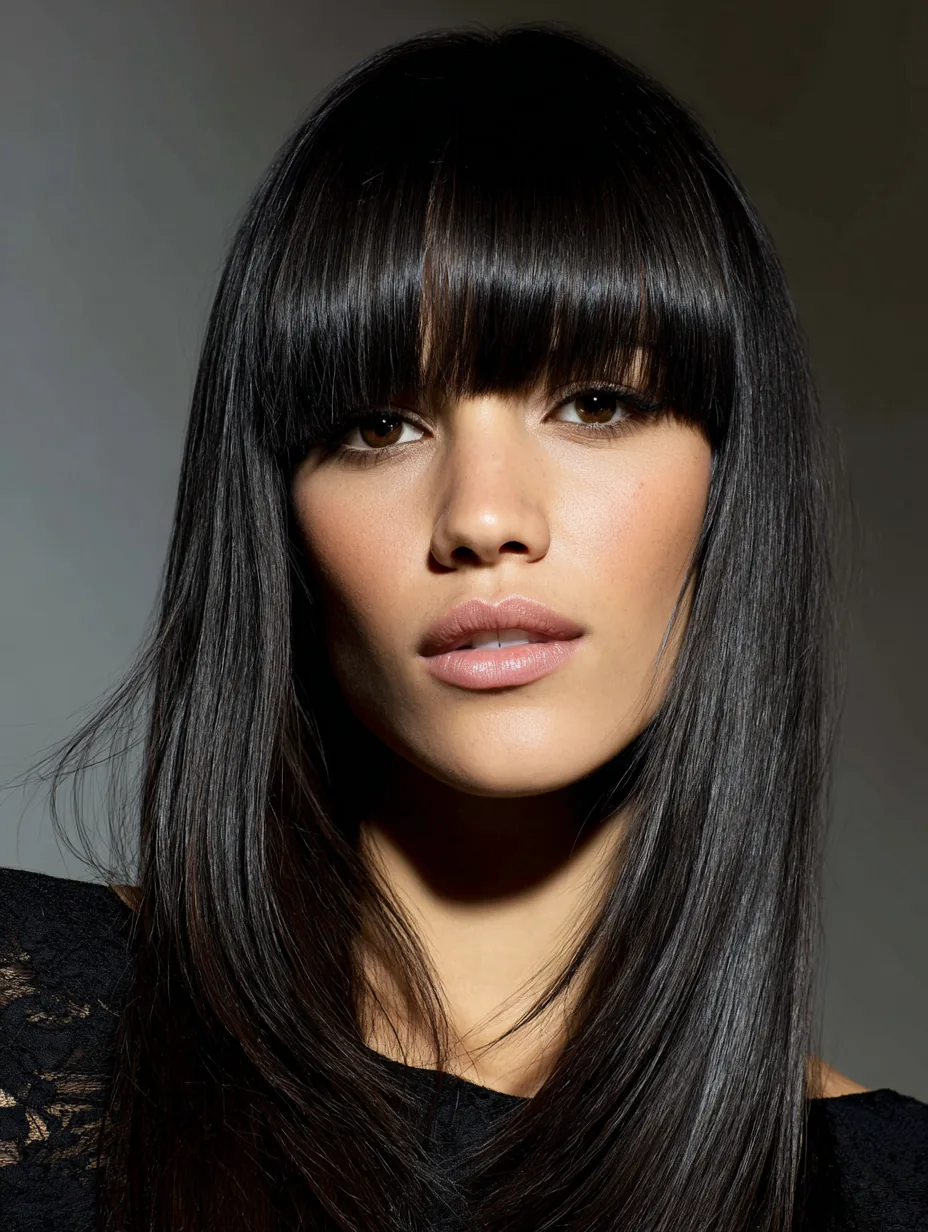
Long hair with a tiny fringe is all about contrast: the shortest possible bang against the longest possible lengths. The combination looks deliberate and fashion-forward, and it stops long straight hair from looking flat or shapeless.
Best for: long, straight hair, oval faces, and anyone who loves their length but wants a change that does not involve cutting it off.
How to style: keep the lengths sleek with a flat iron and a shine serum, and dry the fringe separately so it stays short and flat. A middle part keeps the look balanced and symmetrical.
What to ask: ask your stylist to cut the fringe first, before touching the lengths, so the balance between the tiny bang and the long hair is judged on its own.
Wispy Micro Bangs
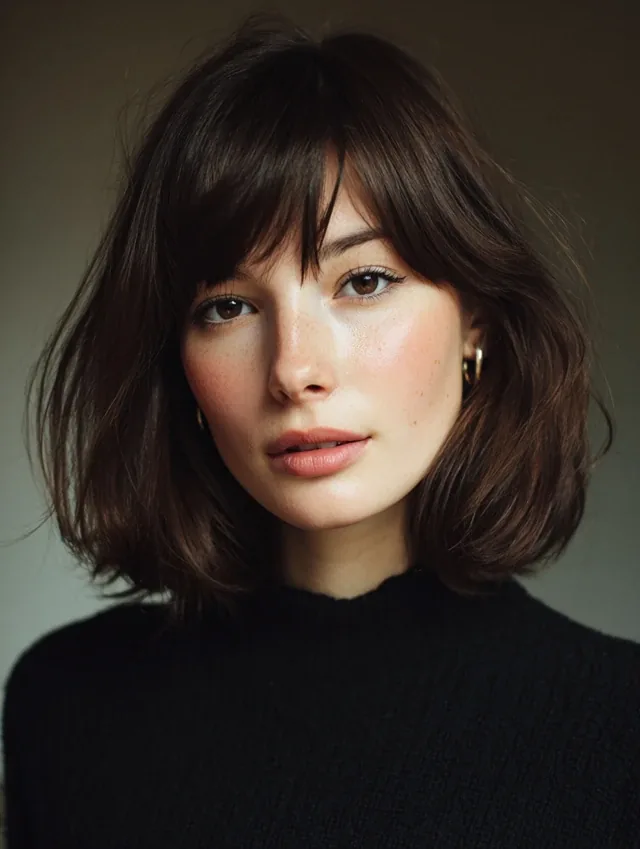
Wispy micro bangs are the gentle entry point: the fringe is still short, but it is cut with a feathered, see-through texture so the forehead shows through in places. The effect is softer and more forgiving than a blunt micro bang, and it grows out far more gracefully.
Best for: first-timers, round and square faces that need softening, fine hair, and anyone nervous about the commitment of a blunt fringe.
How to style: blow-dry with your fingers, scrunching the fringe lightly, and finish with a texturising spray rather than a cream. The goal is airy and piecey, not flat.
What to ask: ask for a wispy, point-cut micro bang with varied lengths — the stylist should cut into the ends vertically so the fringe looks feathered rather than solid.
Choppy Textured Micro Bangs
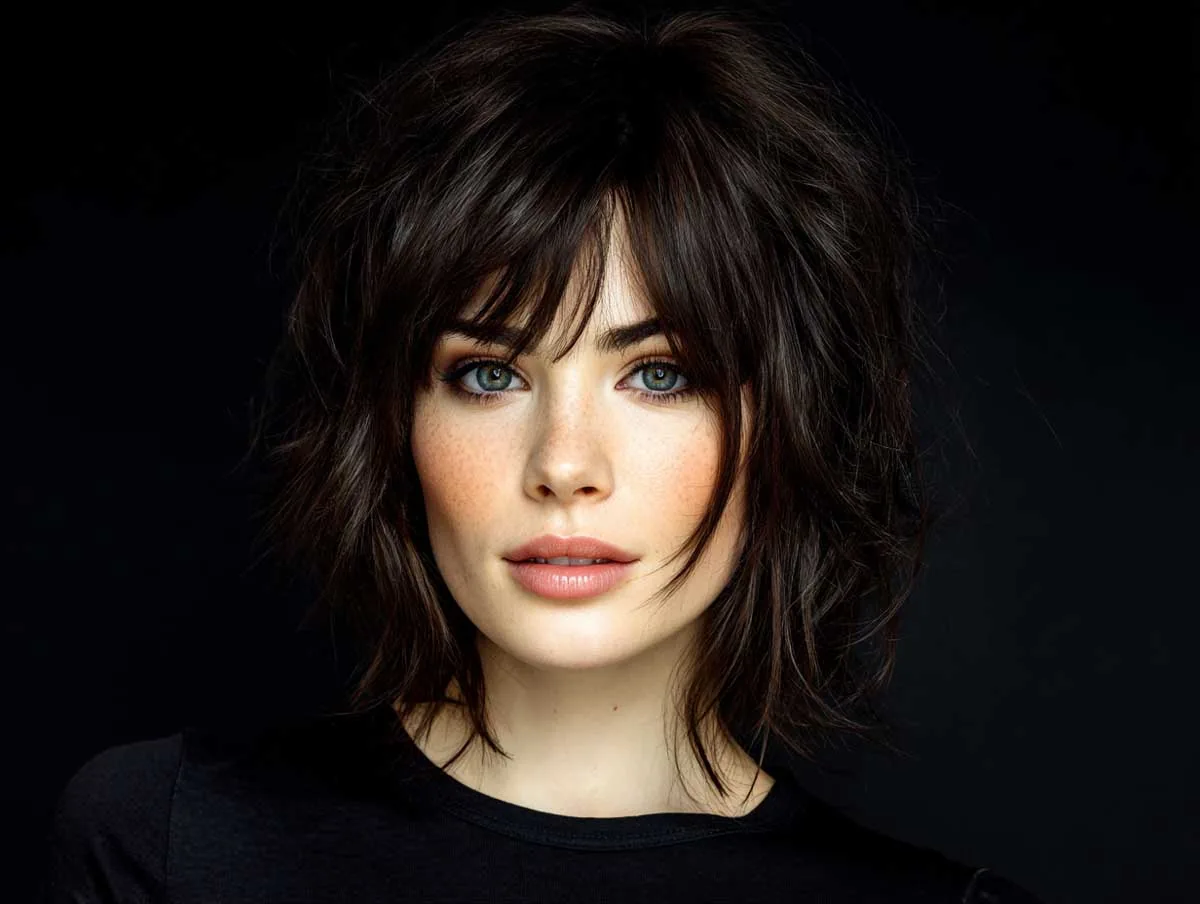
Choppy micro bangs take the graphic line and break it up: uneven lengths, point-cut ends and a deliberately rough edge. The result is edgy and modern, and it hides a cowlick or an uneven hairline far better than a blunt fringe ever could.
Best for: wavy and thick hair, anyone with a cowlick at the front, and people who want the micro-bang look without the precision a blunt line demands.
How to style: a little texture paste, worked through the fringe with your fingertips, is all it needs. Let the pieces fall where they want to — the unevenness is the style.
What to ask: ask for a point-cut micro bang with the shortest pieces in the centre and slightly longer pieces at the corners, so the shape stays flattering as it grows.
Micro Bangs With Curly Hair
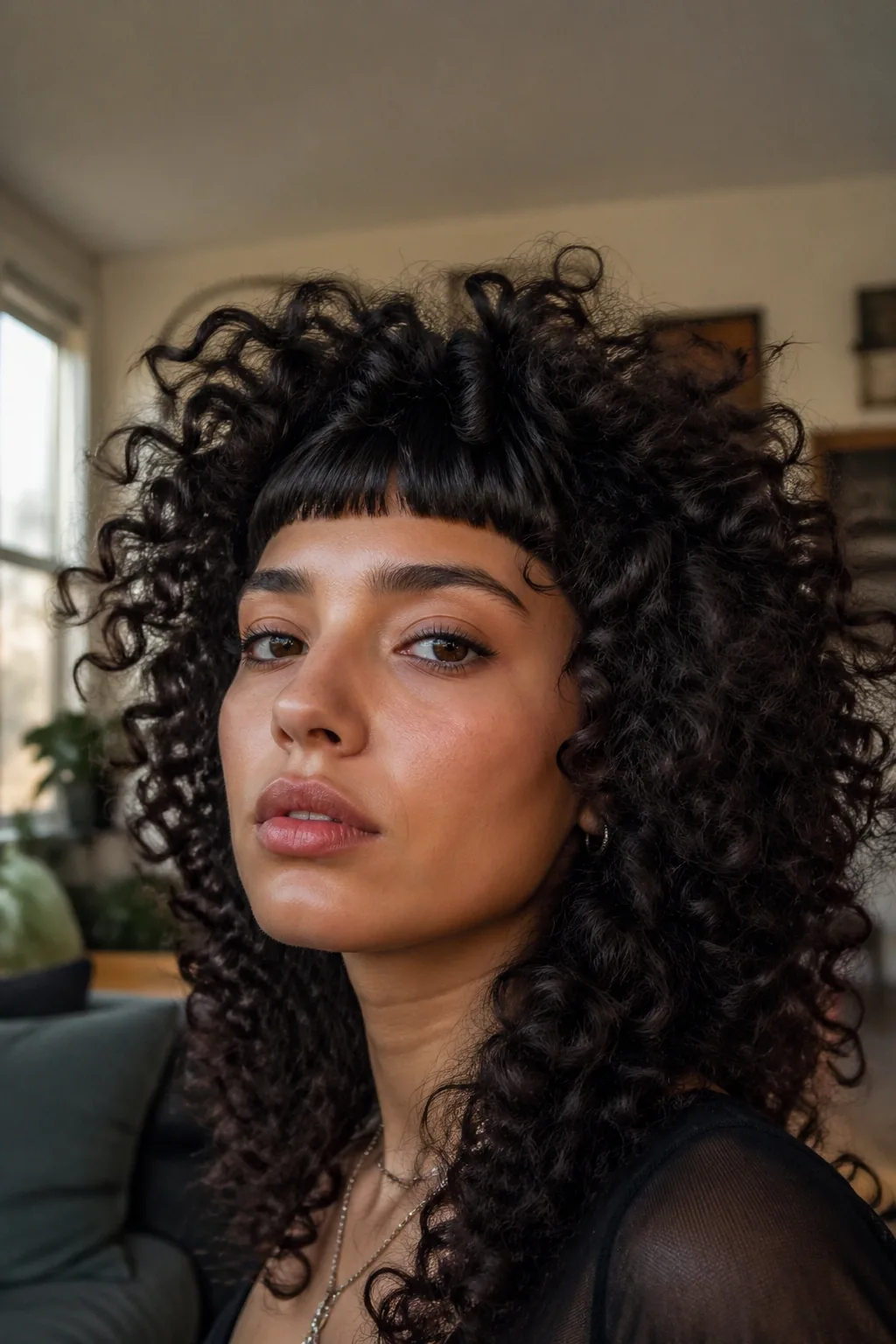
Curly micro bangs are one of the prettiest versions of the look, but they need a stylist who understands curls. The fringe is cut dry, curl by curl, and left longer than the finished length, because every curl springs up as it dries — cut it to the target length while wet and it will end up far shorter than you wanted.
Best for: naturally curly and wavy hair, round and oval faces, and anyone who wants a fringe that moves and has its own personality.
How to style: scrunch a curl cream into the damp fringe and let it air-dry, or diffuse on low heat. Do not brush it out — brushing turns defined curls into frizz.
What to ask: ask for a dry cut, curl by curl, and tell your stylist exactly how short you are comfortable with once the curls spring up.
Micro Bangs With Wavy Hair
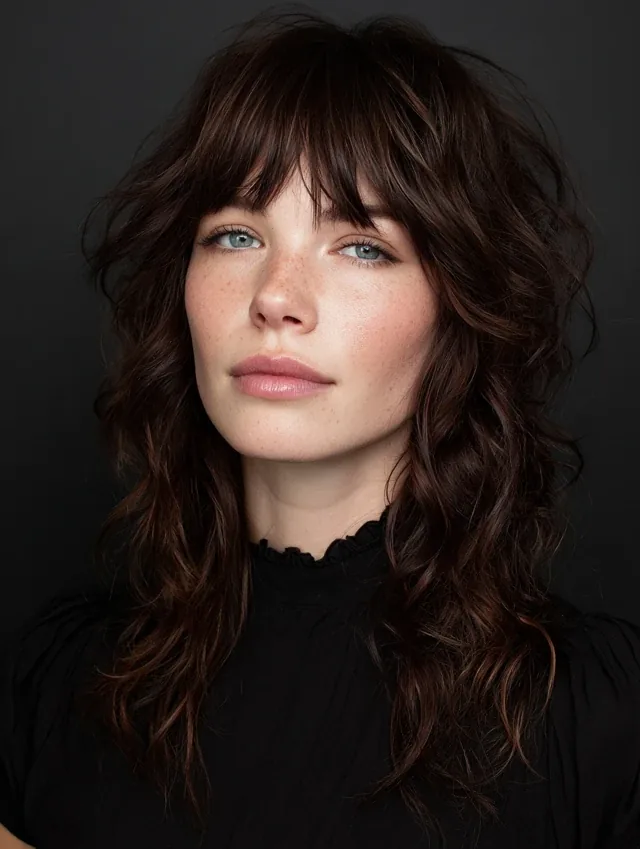
Wavy hair gives micro bangs a relaxed, lived-in feel that straight hair cannot match. The fringe falls with a gentle bend rather than a hard line, so the look is softer, easier to grow out, and forgiving on mornings when you skip the blow-dry.
Best for: naturally wavy hair, heart-shaped and oval faces, and anyone who wants the micro-bang look with the lowest daily maintenance.
How to style: let the fringe air-dry with a little sea-salt spray scrunched in, or blow-dry it quickly with your fingers. A single pass of a flat iron through the very ends tames any piece that flips the wrong way.
What to ask: ask for a slightly longer micro bang than you think you want — wavy hair lifts as it dries, so the fringe will sit shorter than it is cut.
Blunt Micro Bangs With a Lob
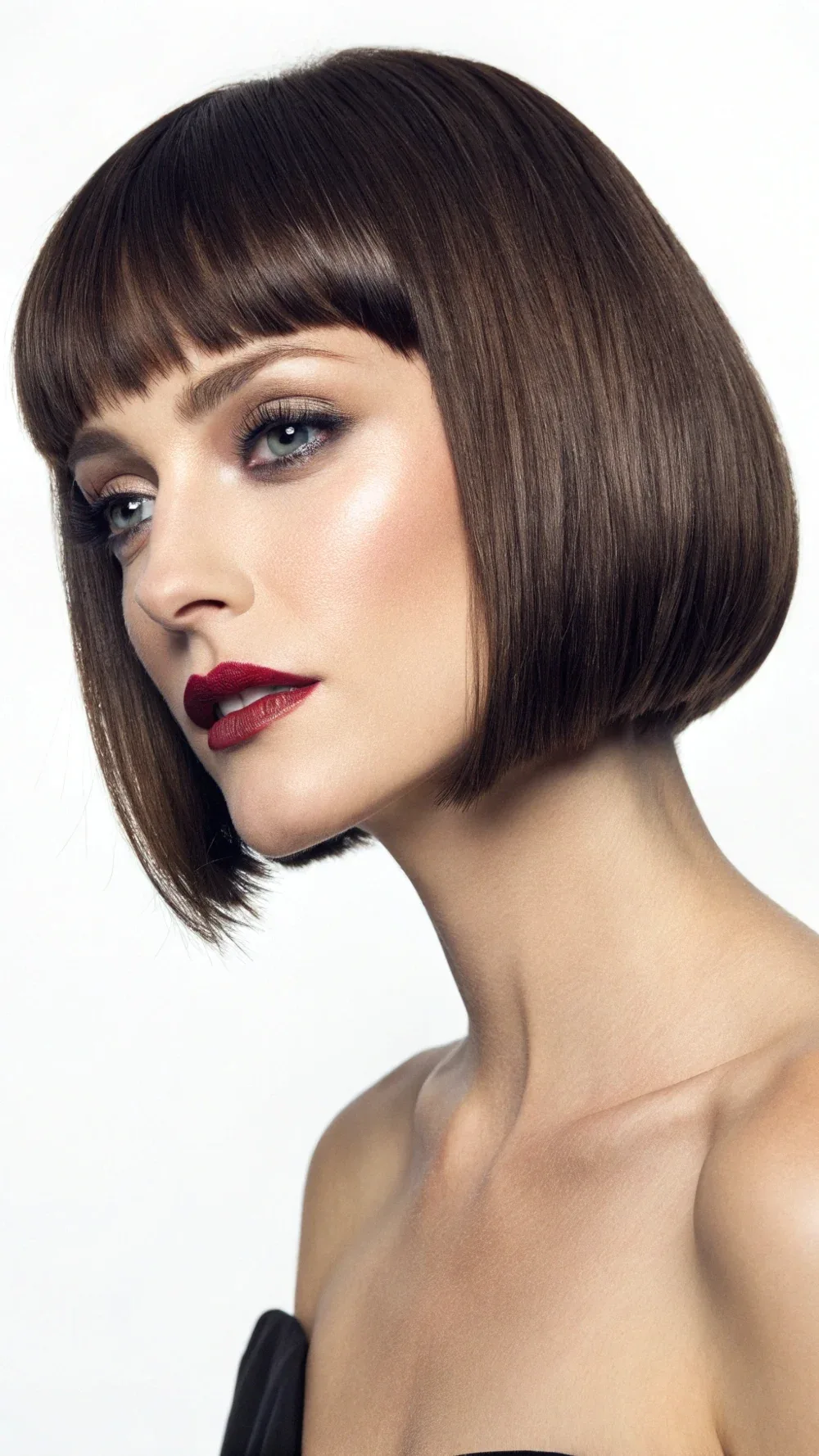
A lob with blunt micro bangs is the wearable version of the graphic look: the shoulder-length cut softens the severity of the short fringe, while the fringe stops the lob from looking ordinary. It is a strong choice for work and for evenings out alike.
Best for: straight and slightly wavy hair, oval and long faces that need width at the sides, and anyone who wants a bold fringe without a very short cut.
How to style: blow-dry the lob with a large round brush for a gentle bend at the ends, and keep the fringe flat and straight. The contrast between the curved ends and the straight fringe is what makes it work.
What to ask: ask for a lob that ends just above the shoulders with a blunt micro bang cut to sit about an inch above the brows.
Micro Bangs With a Shag Cut
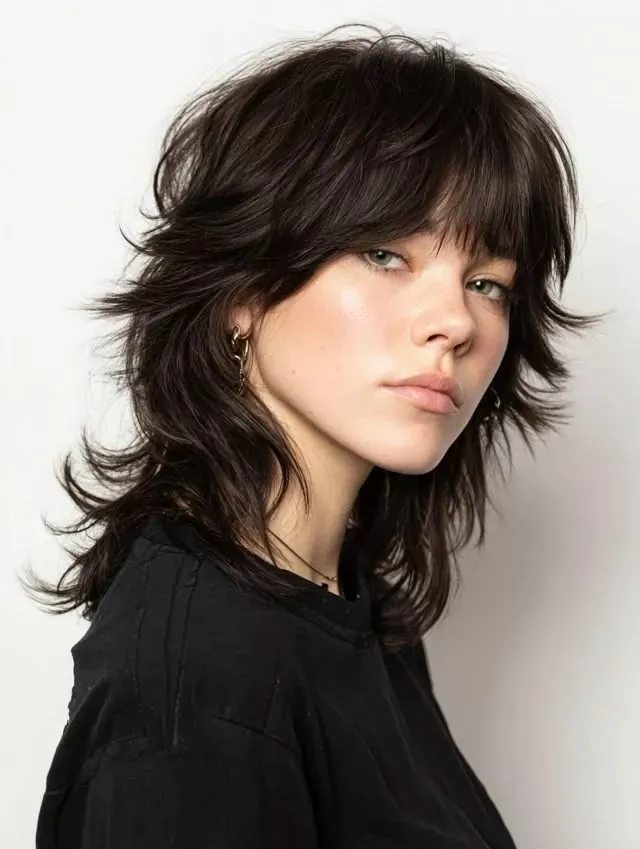
The shag and the micro bang were made for each other: both are textured, piecey and a little undone. The short fringe sits naturally at the top of the shag’s layers, and the whole cut grows out in a soft, shaggy shape rather than a hard line.
Best for: thick and wavy hair, anyone who likes a rock-and-roll edge, and people who want a micro bang that does not need a perfect blow-dry every morning.
How to style: a texturising spray and a rough blow-dry with your fingers is enough. The shag should look lived-in, so do not over-style it.
What to ask: ask for a shag with lots of layers through the crown and a micro bang that blends into the shortest layers at the sides.
Micro Bangs and a High Ponytail
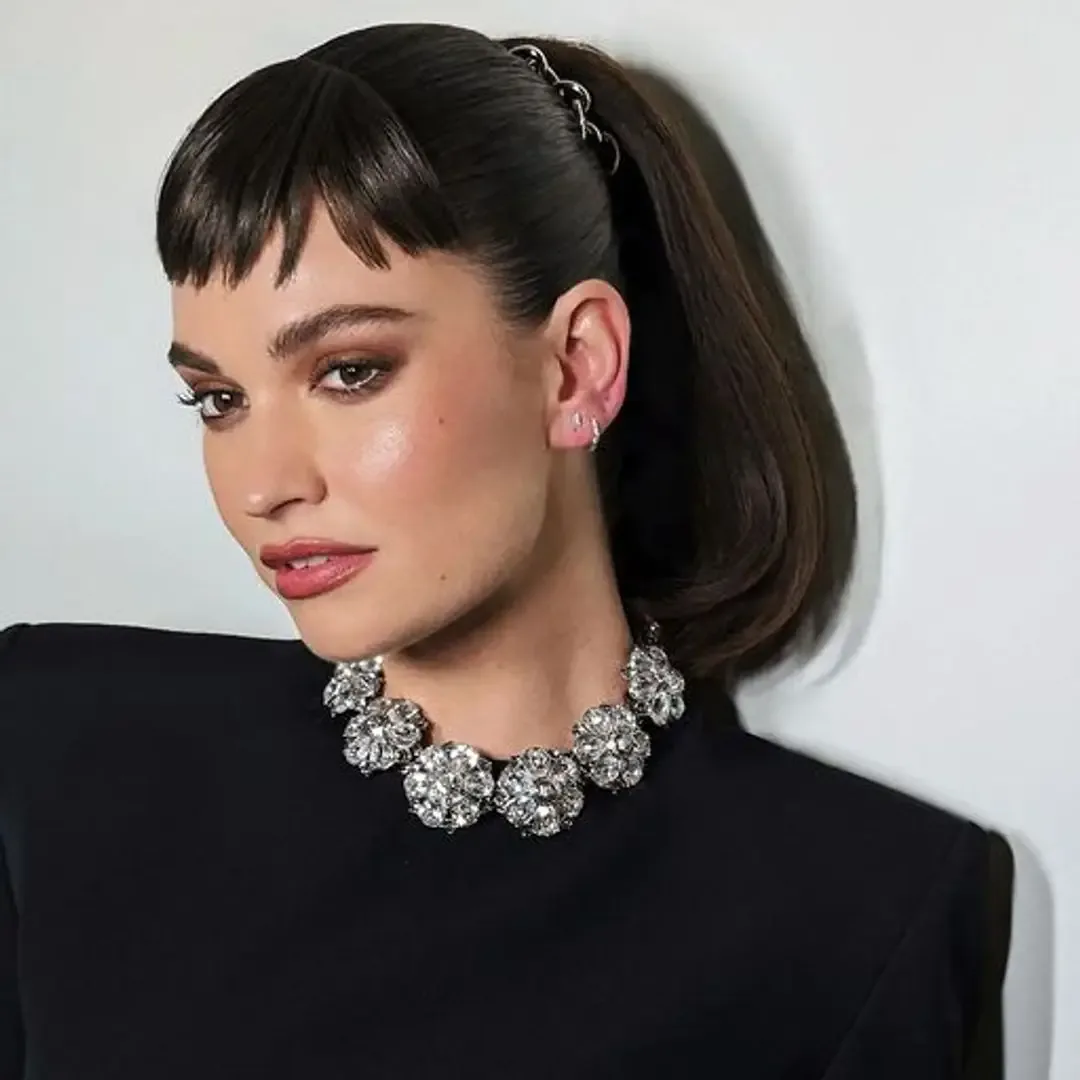
A high ponytail with micro bangs is a striking, sculptural look: the hair is pulled up and back, the face is fully on show, and the tiny fringe is the only softness at the front. It is a favourite for evenings out and for anyone who wants their cheekbones to do the talking.
Best for: oval and heart-shaped faces, straight and wavy hair, and special occasions when you want a polished, pulled-together look.
How to style: brush the hair up smoothly, secure it high on the crown, and wrap a small section around the elastic. Dry the fringe flat and finish with a light hairspray.
What to ask: ask your stylist to check the fringe length against the ponytail height — a fringe that is too long will fight the clean lines of the updo.
Micro Bangs With a Messy Bun
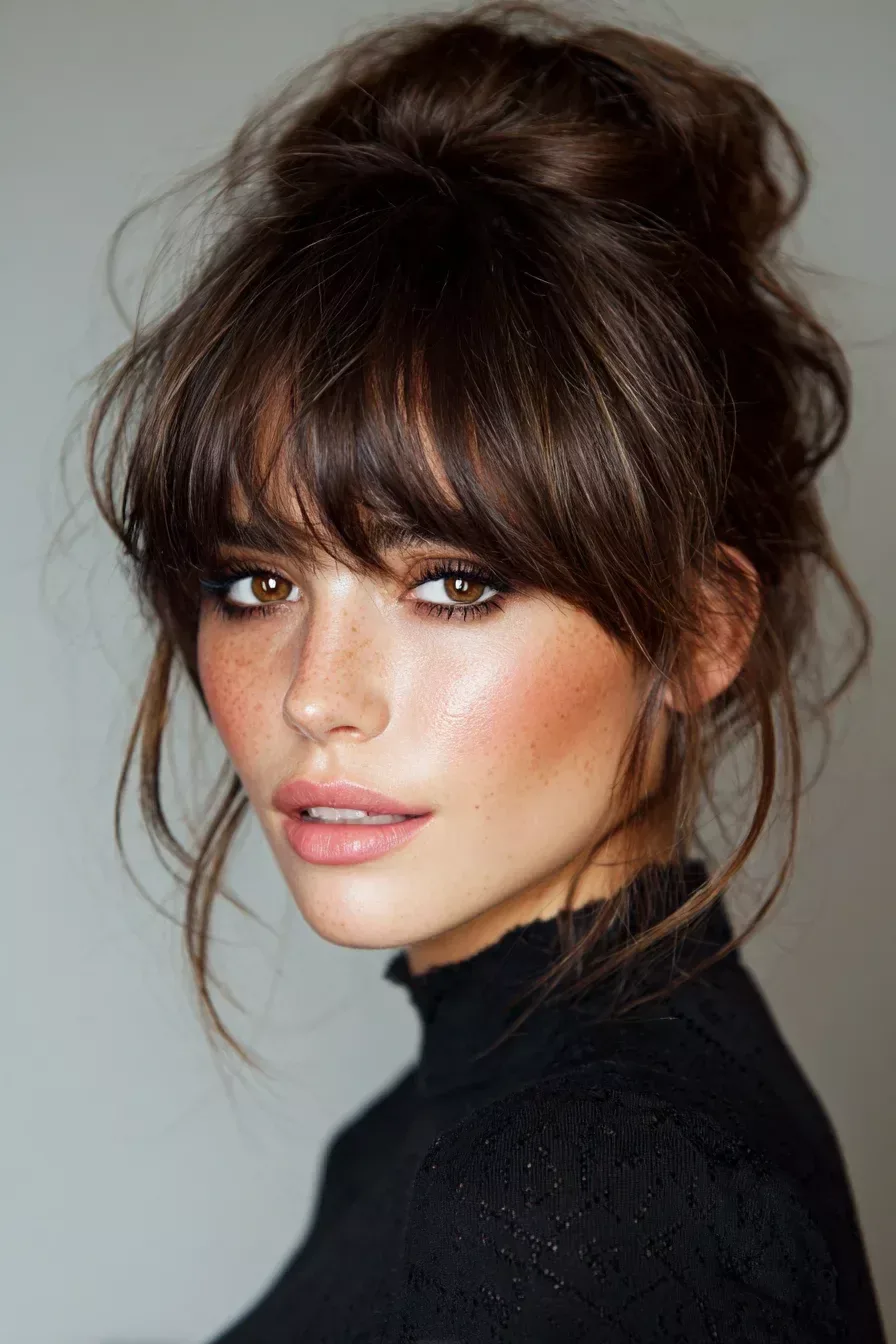
A messy bun with micro bangs is the everyday version of the look: the bun is loose and undone, the fringe is short and graphic, and the contrast makes a five-minute style look intentional. It is the easiest way to wear micro bangs on a busy morning.
Best for: medium to long hair, casual days, second-day hair, and anyone who wants the fringe to carry the style while the rest of the hair stays relaxed.
How to style: gather the hair into a loose bun at the crown or nape, pull out a few face-framing pieces, and dry the fringe flat with your fingers. A little dry shampoo at the roots adds grip.
What to ask: ask for a fringe that works with your hair up as well as down — it should look right with the bun and with the hair worn loose.
Side-Parted Micro Bangs
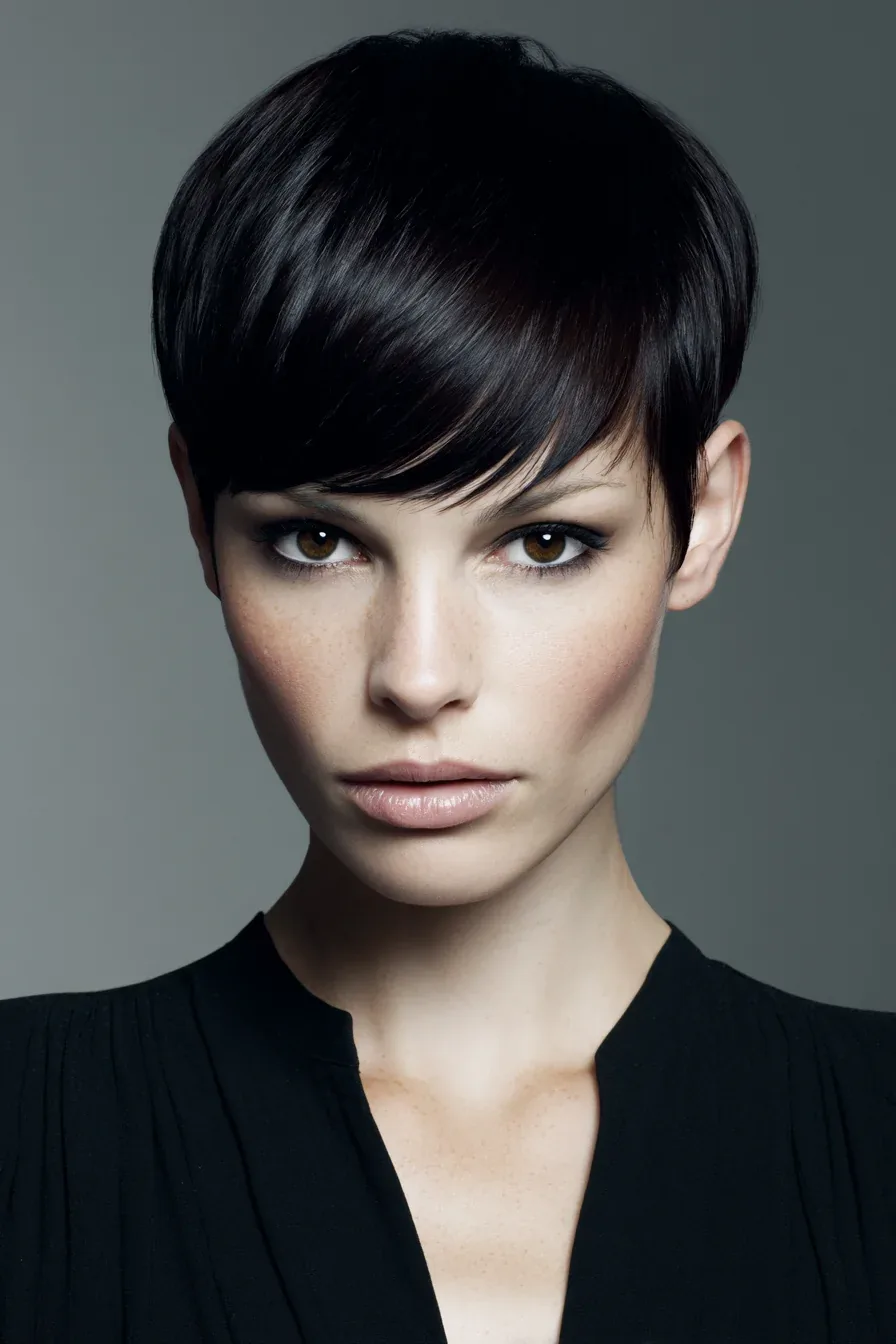
A deep side part changes the whole character of a micro bang: instead of a straight line across the forehead, the fringe sweeps slightly to one side, which softens the look and makes it easier to wear on rounder or squarer faces.
Best for: round and square faces, anyone with a strong cowlick, and people who find a straight-across fringe too severe.
How to style: part the hair deeply to one side while it is damp, blow-dry the fringe across the forehead in the direction of the part, and press the ends down with a little cream.
What to ask: ask your stylist to cut the fringe with the side part in place, so the shortest point sits where the part begins and the length increases towards the other side.
Micro Bangs With a Middle Part
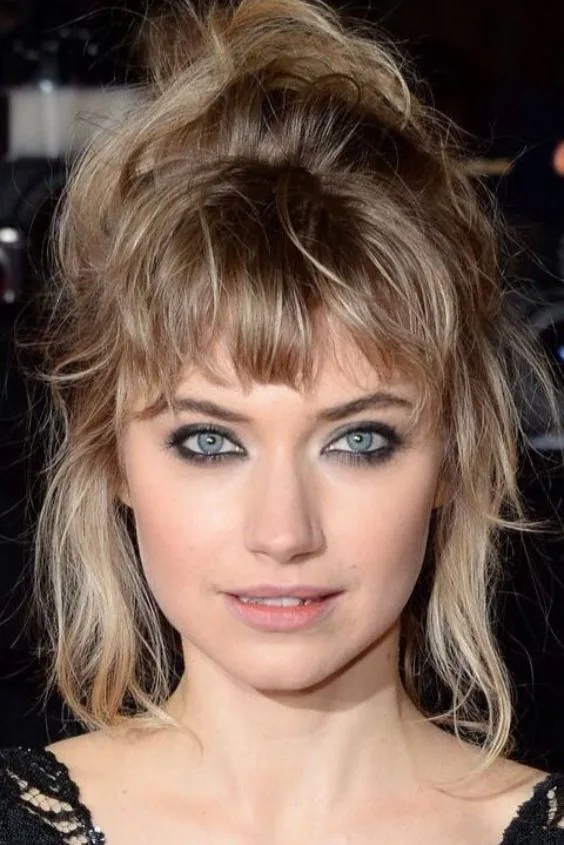
A middle part with micro bangs is the most symmetrical version of the look, and it suits faces that are already balanced. The fringe sits dead centre, the hair falls evenly on both sides, and the whole style has a clean, almost architectural feel.
Best for: oval and symmetrical faces, straight hair, and anyone who likes a precise, polished finish.
How to style: part the hair in the middle while damp, blow-dry the fringe straight down, and keep the lengths sleek. A centre part shows unevenness, so the fringe line needs to be even.
What to ask: ask for a micro bang cut with the middle part in place, and check the line in the mirror from straight on before you leave the chair.
Micro Bangs for Round Faces
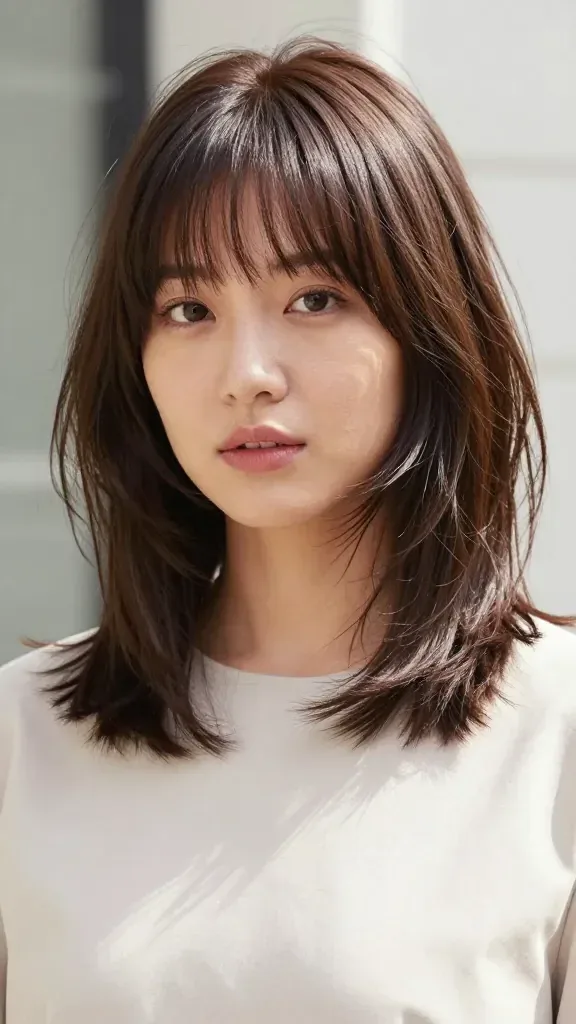
Round faces can wear micro bangs beautifully, but the fringe needs the right shape: a slightly arched or textured edge, rather than a hard straight line, keeps the face from looking wider. Pairing the fringe with volume at the crown and length at the sides also helps to lengthen the face visually.
Best for: round faces with a little length through the sides, and anyone who wants to try the look without emphasising width.
How to style: add volume at the crown with a round brush, keep the sides smooth and close to the face, and let the fringe sit slightly piecey rather than solid.
What to ask: ask for an arched micro bang — shorter in the centre, slightly longer at the corners — with a textured edge rather than a blunt line.
Micro Bangs for Oval Faces
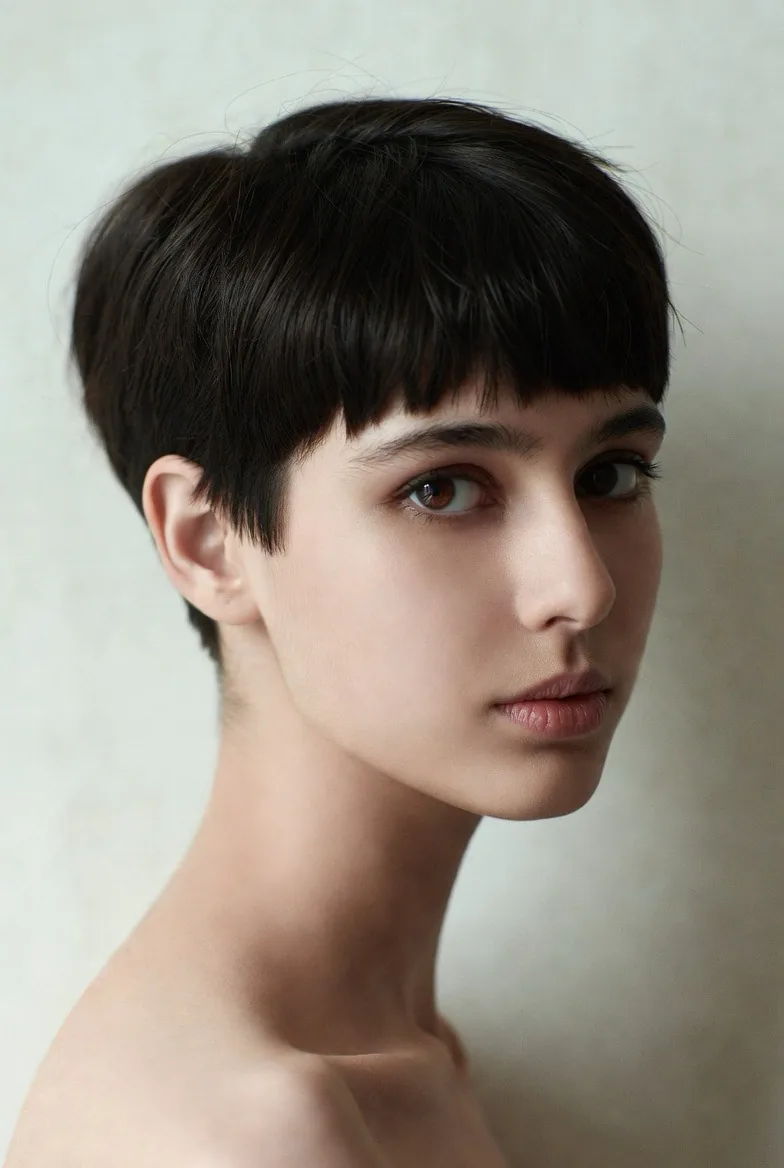
Oval faces are the easiest canvas for micro bangs, because the balanced proportions can take almost any version of the fringe — blunt, wispy, choppy or arched. If you have an oval face and you have been thinking about micro bangs, this is your sign to try them.
Best for: oval faces, all hair textures, and first-timers who want the lowest risk of the fringe not suiting them.
How to style: almost any styling works, so choose by hair type: sleek and straight for a graphic look, or textured and piecey for something softer. The fringe will behave either way.
What to ask: ask your stylist which version suits your hair texture best, and be honest about how much morning styling you will actually do — that decides between blunt and textured.
Micro Bangs for Heart-Shaped Faces
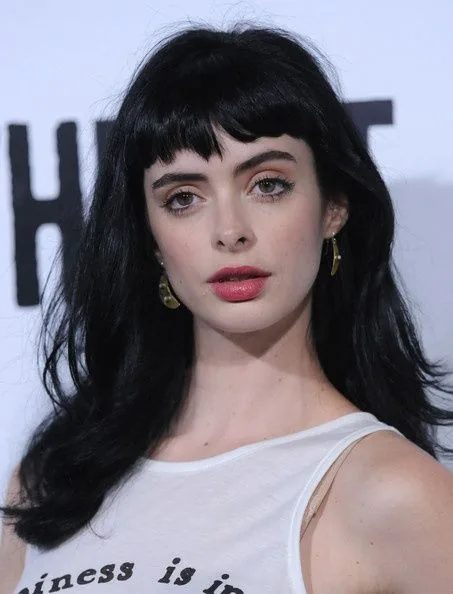
Heart-shaped faces and micro bangs are a natural match: the short fringe softens a wide forehead, and the rest of the hair can add width at the jaw to balance a narrower chin. A bob or lob with a micro bang is the classic combination for this face shape.
Best for: heart-shaped faces, straight and wavy hair, and anyone whose forehead feels too wide for a longer fringe.
How to style: keep the fringe flat and straight, and add a little volume or a gentle wave at jaw level. Avoid too much volume at the crown, which can emphasise the forehead.
What to ask: ask for a micro bang that ends just above the brows, paired with a cut that has some width at the jaw — a bob, a lob or soft layers.
Micro Bangs for Square Faces
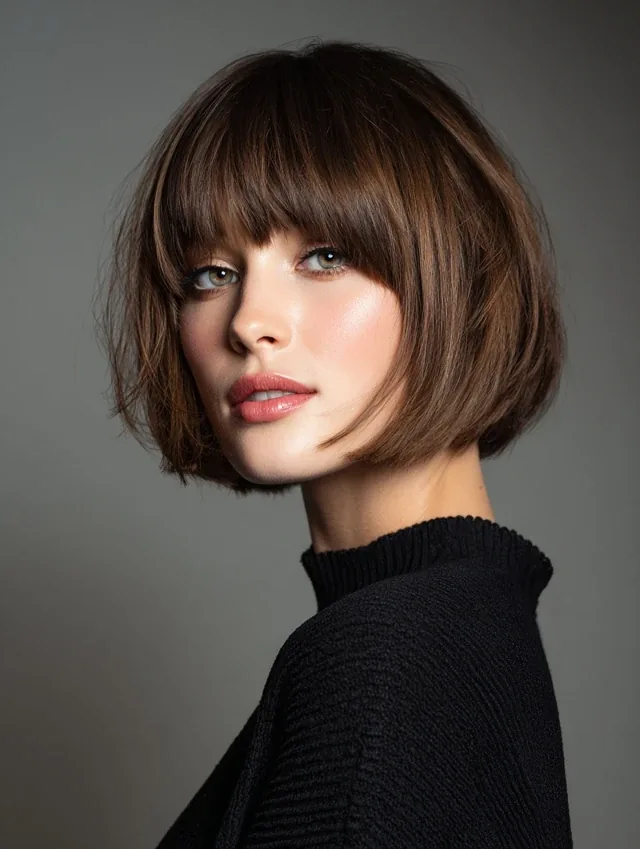
Square faces suit micro bangs when the fringe is softened: a textured or slightly arched edge takes the sharpness off a strong jawline, while a hard blunt line can make the face look more angular. The rest of the cut should have movement — waves, layers or a soft bob — rather than another hard line.
Best for: square faces with wavy or textured hair, and anyone who wants to soften a strong jaw without hiding it.
How to style: blow-dry the fringe with a little bend, not poker-straight, and add soft waves through the lengths. A side part also helps to break up the symmetry.
What to ask: ask for a textured micro bang with a soft, piecey edge, and tell your stylist you want the overall shape to soften, not sharpen, your jawline.
Micro Bangs With a French Bob
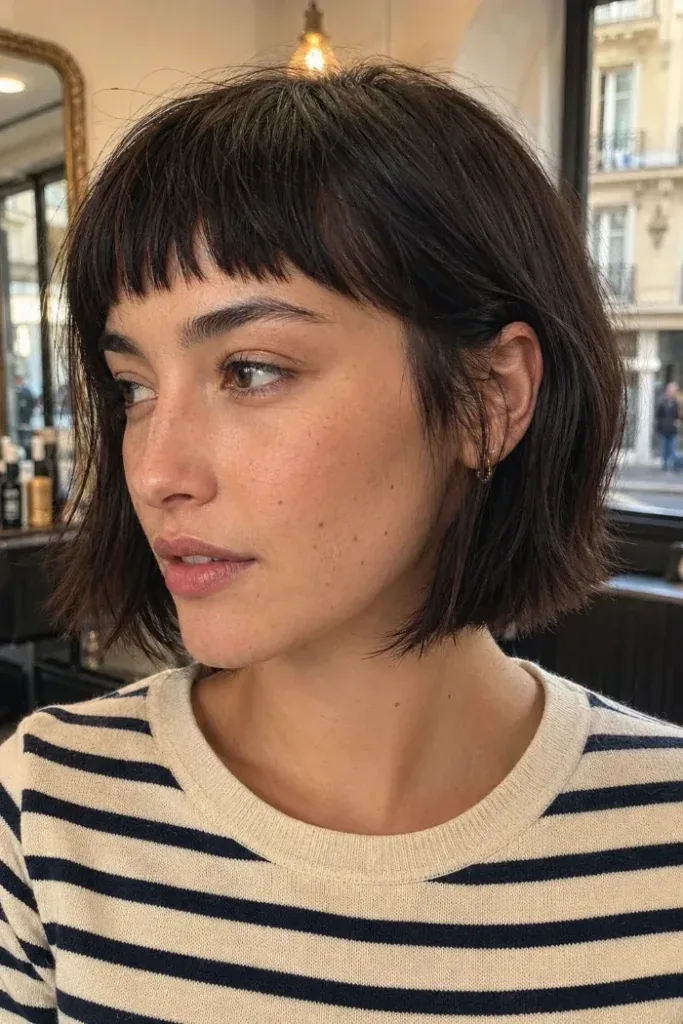
The French bob with micro bangs is pure Parisian chic: a jaw-length bob, a short fringe, and an effortless, slightly undone finish. It is the look that made micro bangs famous, and it still turns heads because it looks both classic and completely modern.
Best for: straight and wavy hair, oval and heart-shaped faces, and anyone who wants a short cut with a strong sense of style.
How to style: air-dry or rough-dry the bob, then smooth the fringe with a flat iron on low heat. The French bob should never look over-styled — a little imperfection is the point.
What to ask: ask for a French bob that ends at the jaw with a micro bang cut to match, and a finish that is textured rather than sleek.
Micro Bangs With a Wolf Cut
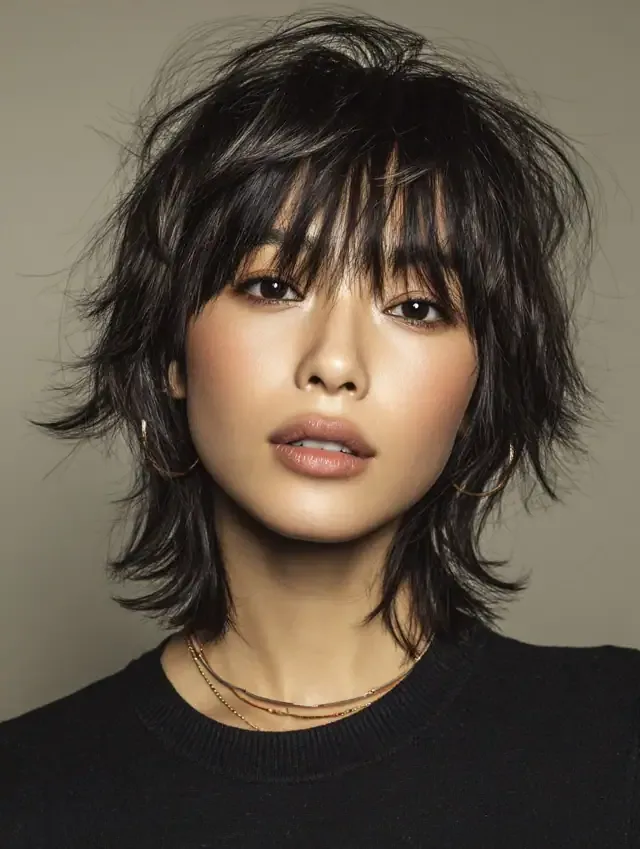
The wolf cut’s wild layers and the micro bang’s sharp line sound like a contradiction, but together they are one of the most exciting combinations in this guide. The fringe anchors the cut, while the shaggy layers keep it from looking too neat.
Best for: thick and wavy hair, younger faces and anyone who loves an edgy, lived-in look that does not need a perfect blow-dry.
How to style: scrunch in a texturising spray and let the cut air-dry, or diffuse on low heat. The wolf cut should look a little wild — that is the whole idea.
What to ask: ask for heavy layers through the crown and sides, with a choppy micro bang that blends into the shortest layers at the front.
Micro Bangs With a Mullet
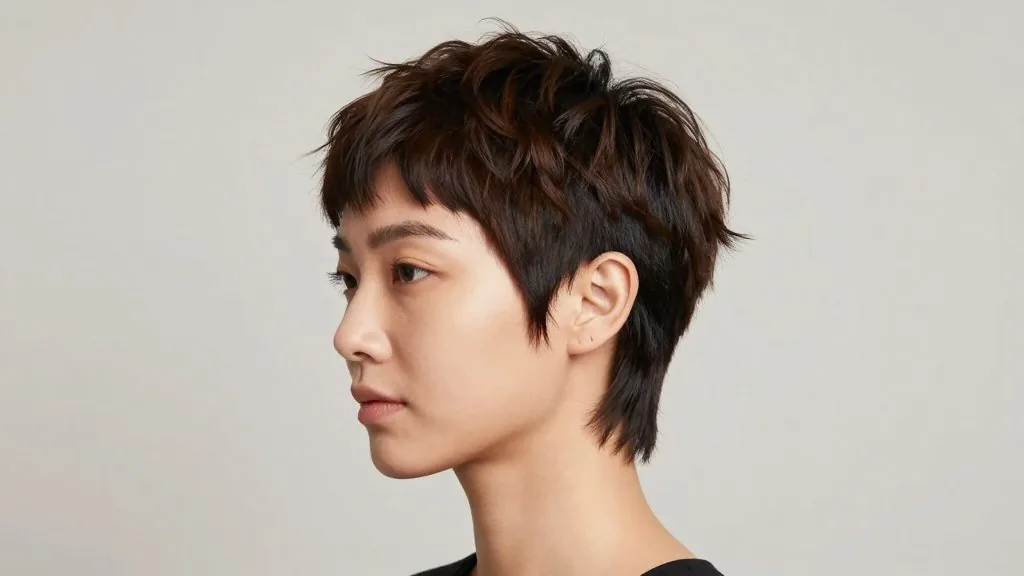
A modern mullet with micro bangs is the boldest cut in this guide, and it works best when the fringe is short and the back is kept soft rather than severe. The contrast between the tiny fringe, the short top and the longer back is what gives the cut its energy.
Best for: confident dressers, thick hair, and anyone who wants a haircut that is unmistakably a statement.
How to style: a little texture paste through the top and fringe, and a rough blow-dry. The mullet should look deliberate, not accidental, so keep the fringe line clean.
What to ask: ask for a soft modern mullet — not a harsh 1980s version — with a micro bang that matches the texture of the top layers.
Micro Bangs and a Top Knot
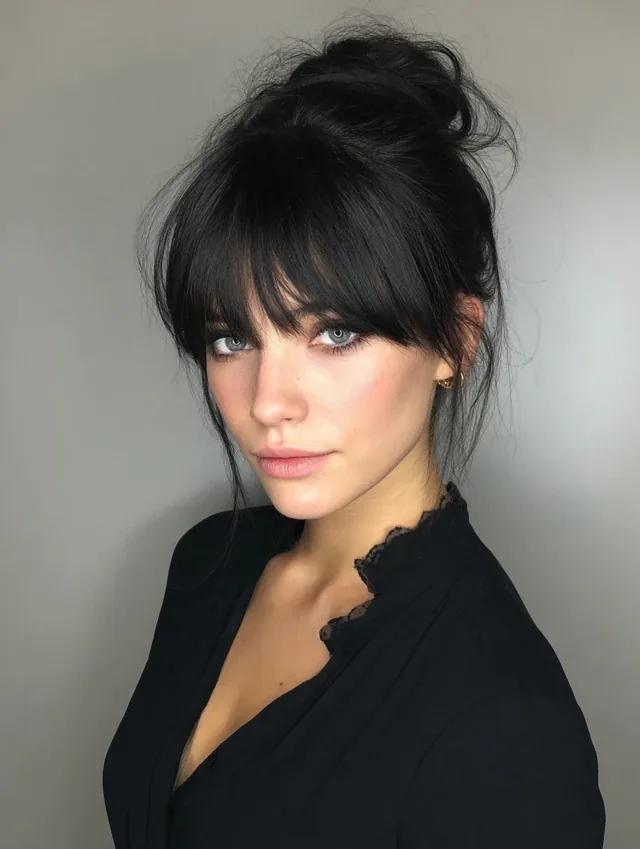
A top knot with micro bangs is a clean, sculptural style for days when you want your hair completely out of the way but still want to look styled. The knot sits high on the crown, the face is fully open, and the tiny fringe is the finishing touch.
Best for: oval and heart-shaped faces, medium to long hair, hot days, workouts and anyone who wants a polished updo in under five minutes.
How to style: brush the hair up smoothly, twist it into a knot and pin it securely, then dry the fringe flat. A little hairspray keeps flyaways in check.
What to ask: ask your stylist to make sure the fringe sits well with the hair pulled up — it should frame the forehead, not disappear under the tension of the knot.
Micro Bangs With a Low Chignon
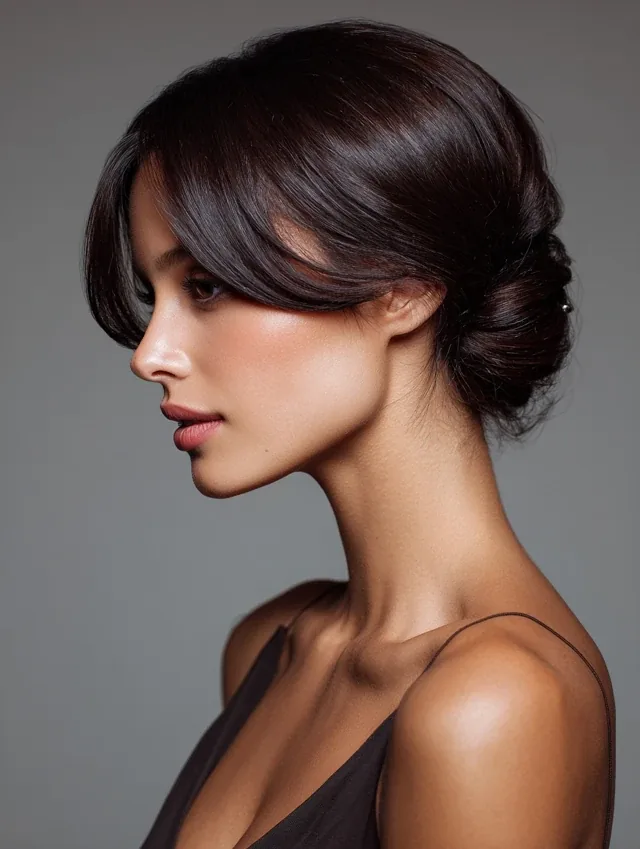
A low chignon with micro bangs is the elegant end of the spectrum: the hair is swept into a low bun at the nape, the neck is bare, and the short fringe adds a modern edge to a classic updo. It is a beautiful choice for weddings, formal evenings and work events.
Best for: formal occasions, medium to long hair, and anyone who wants an updo that feels classic but not old-fashioned.
How to style: smooth the hair back into a low bun, leaving the fringe free, and dry the fringe flat. A pair of simple earrings and a clean neckline complete the look.
What to ask: ask for a fringe that is cut to work with updos — short enough to stay out of the chignon, with a clean line that reads well from the front.
Micro Bangs With a Braided Crown
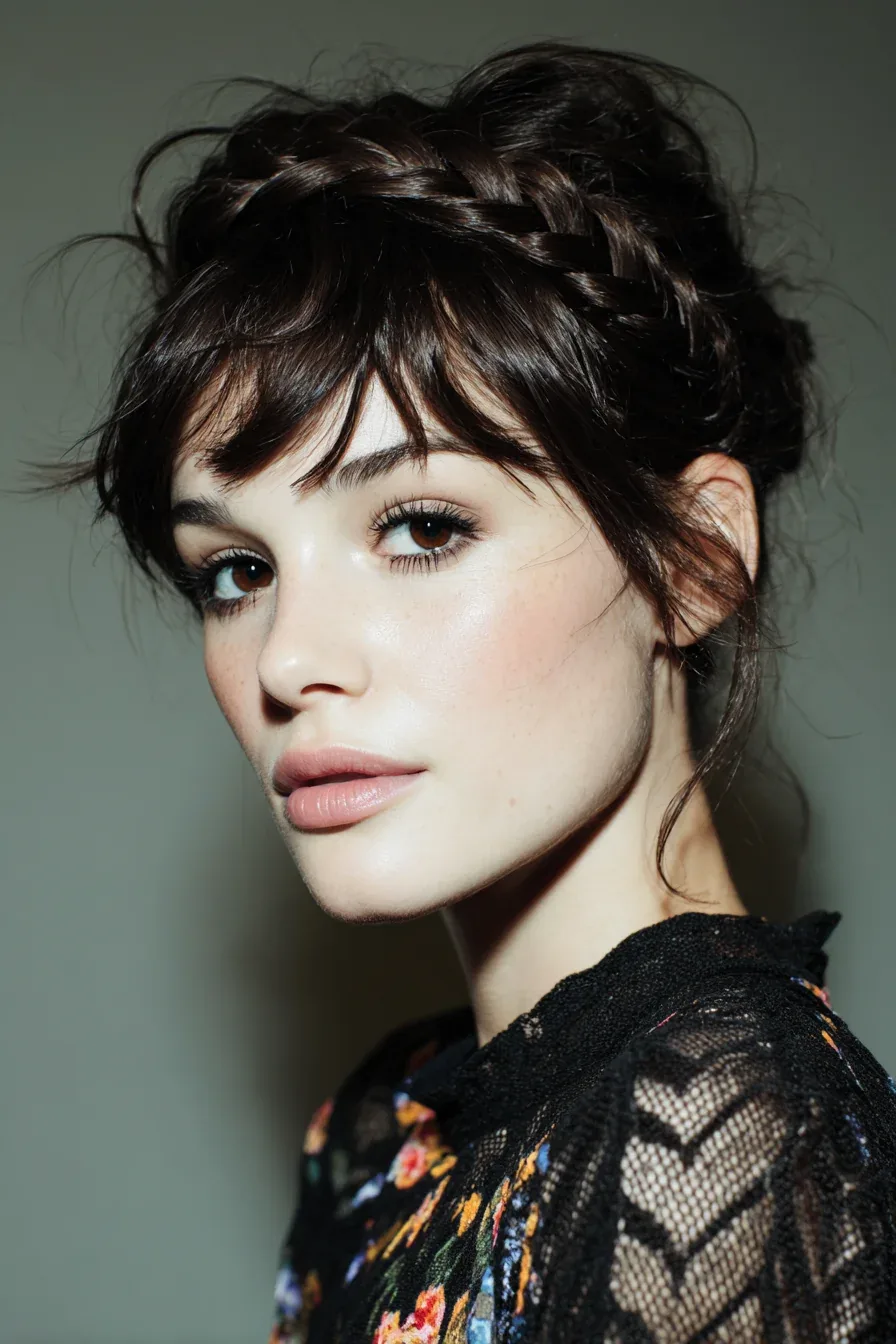
A braided crown with micro bangs mixes romance and edge: the braid circles the head like a halo, while the short fringe keeps the look from feeling too sweet. It is a lovely choice for festivals, weddings and summer evenings.
Best for: medium to long hair, wavy and straight hair, and occasions when you want a hairstyle that photographs beautifully.
How to style: braid the hair around the crown and pin it in place, pulling a few pieces loose for softness. Keep the fringe flat and neat — it is the contrast to the soft braid that makes the style work.
What to ask: ask your stylist to show you how to braid the crown yourself, or book the style for the occasion — a braided crown is hard to do well on your own hair.
Micro Bangs for Fine Hair
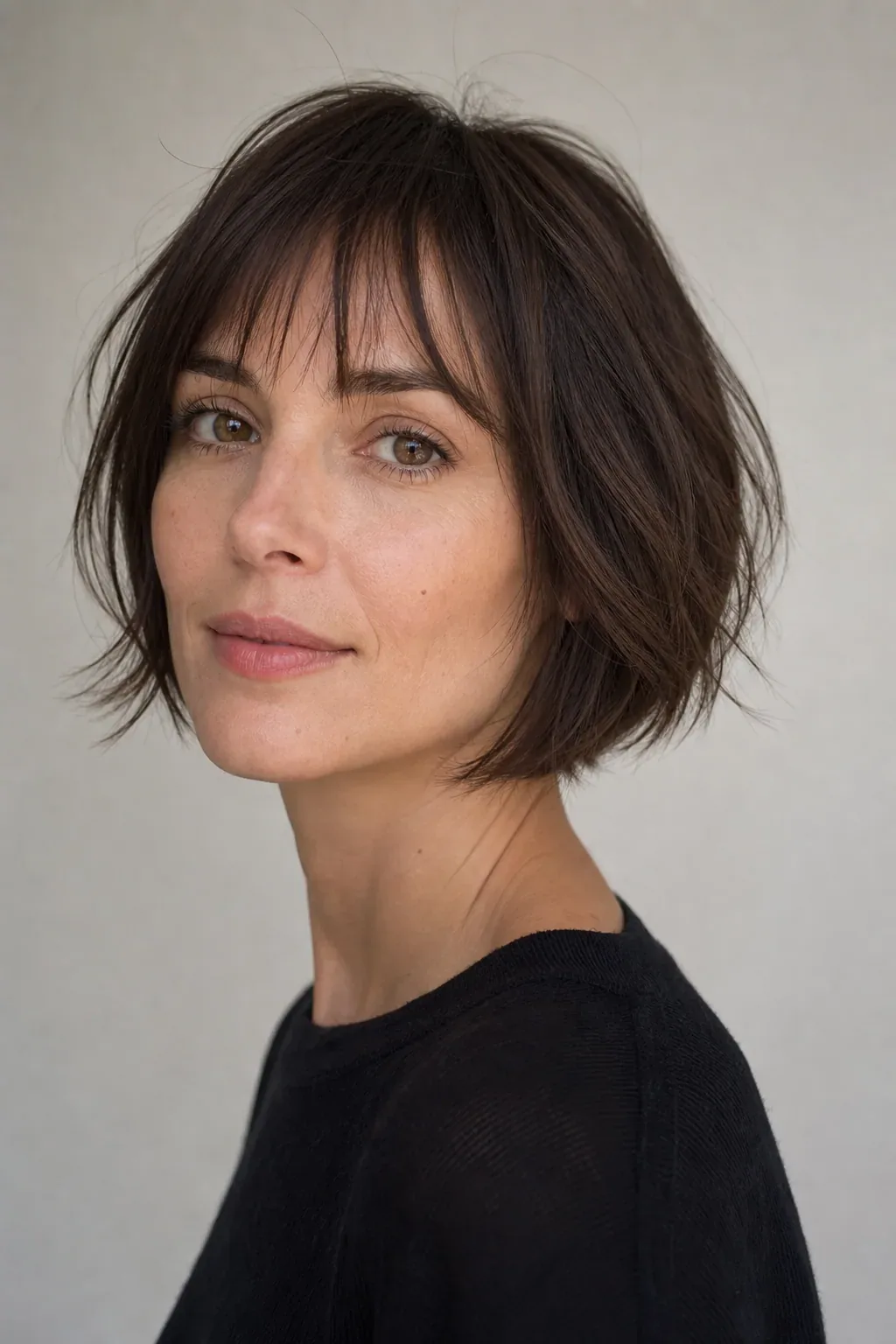
Fine hair and micro bangs are a good match, because the fringe is so small that it does not need much hair to look full. A short fringe on fine hair can actually make the rest of the hair look thicker, since the eye is drawn to the bold line at the front.
Best for: fine and thin hair, oval and heart-shaped faces, and anyone who wants a fringe that does not eat up half their hair.
How to style: use a volumising mousse at the roots and blow-dry the fringe with a small round brush. Avoid heavy creams, which weigh fine hair down.
What to ask: ask for a micro bang cut from a shallow section — taking too much hair into the fringe will leave the rest of your hair looking thin.
Micro Bangs for Thick Hair
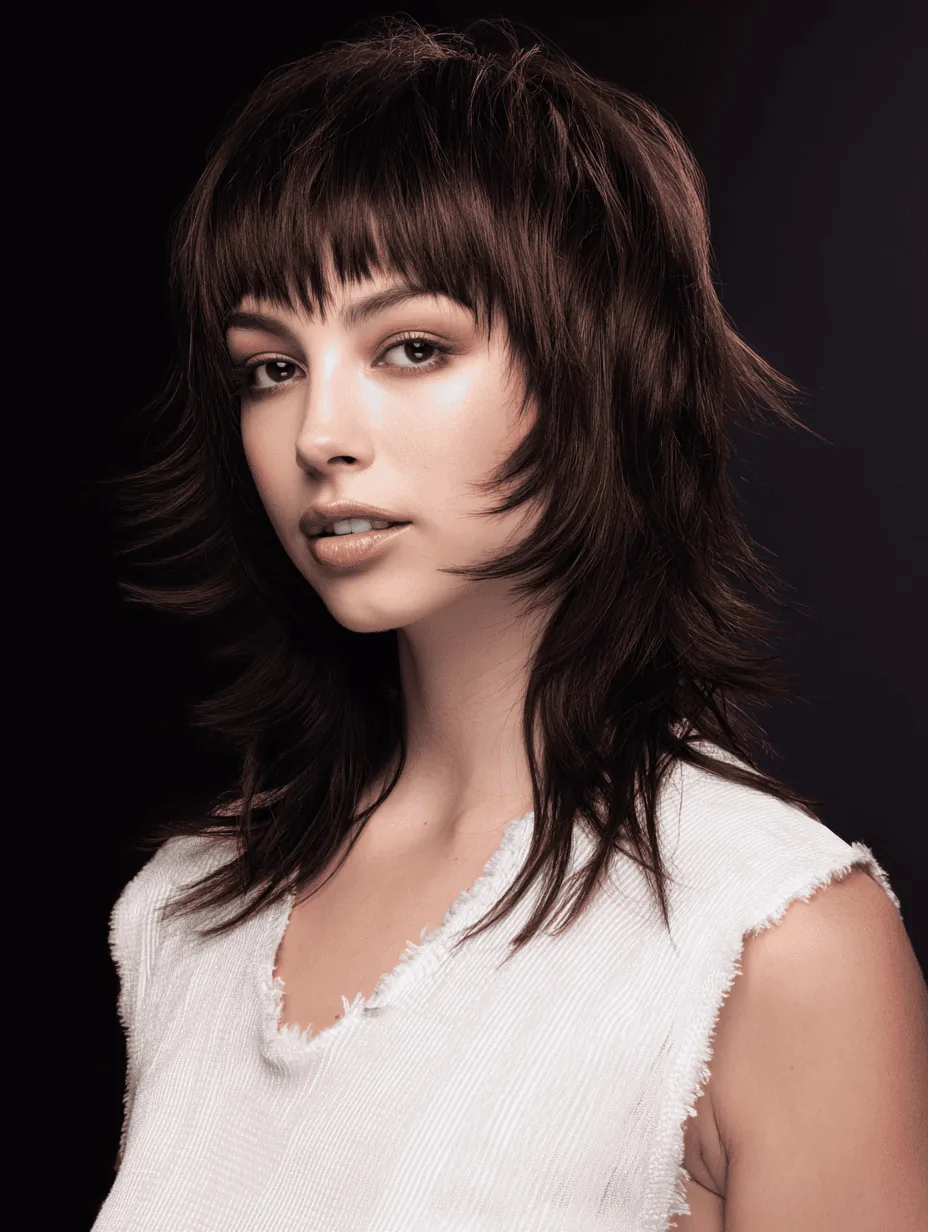
Thick hair gives micro bangs a lovely fullness, but the fringe needs thinning or texturising or it can look heavy and sit like a shelf on the forehead. A good stylist will remove weight from inside the fringe so it moves and falls naturally.
Best for: thick and coarse hair, anyone who wants a fringe with real presence, and people whose hair holds a style all day.
How to style: blow-dry the fringe with a round brush, directing it downwards, and use a light smoothing cream. A flat iron pass keeps the ends from flipping out.
What to ask: ask for the fringe to be texturised from underneath, so it keeps its fullness at the surface but does not look bulky.
Micro Bangs for Women Over 40
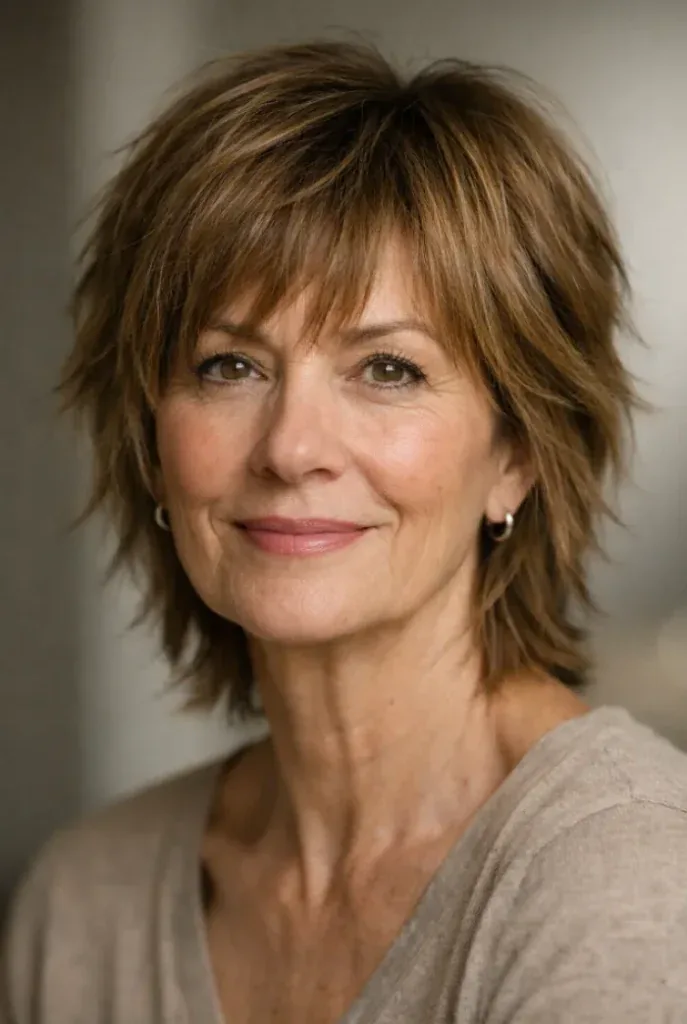
Micro bangs after 40 are a confident, modern choice, and they can be very flattering: the short fringe opens up the face, shows off good skin and bone structure, and gives a classic bob or lob a contemporary edge. The key is keeping the rest of the cut soft and polished.
Best for: women over 40 with good skin and a defined jawline, straight and wavy hair, and anyone who wants a haircut that feels current rather than safe.
How to style: keep the fringe neat and the rest of the hair smooth, with a little volume at the crown. A good blow-dry matters more than any product here.
What to ask: ask for a micro bang paired with a cut that has softness at the sides — a lob or a bob with a gentle bend — so the overall look stays elegant.
Micro Bangs for Women Over 50
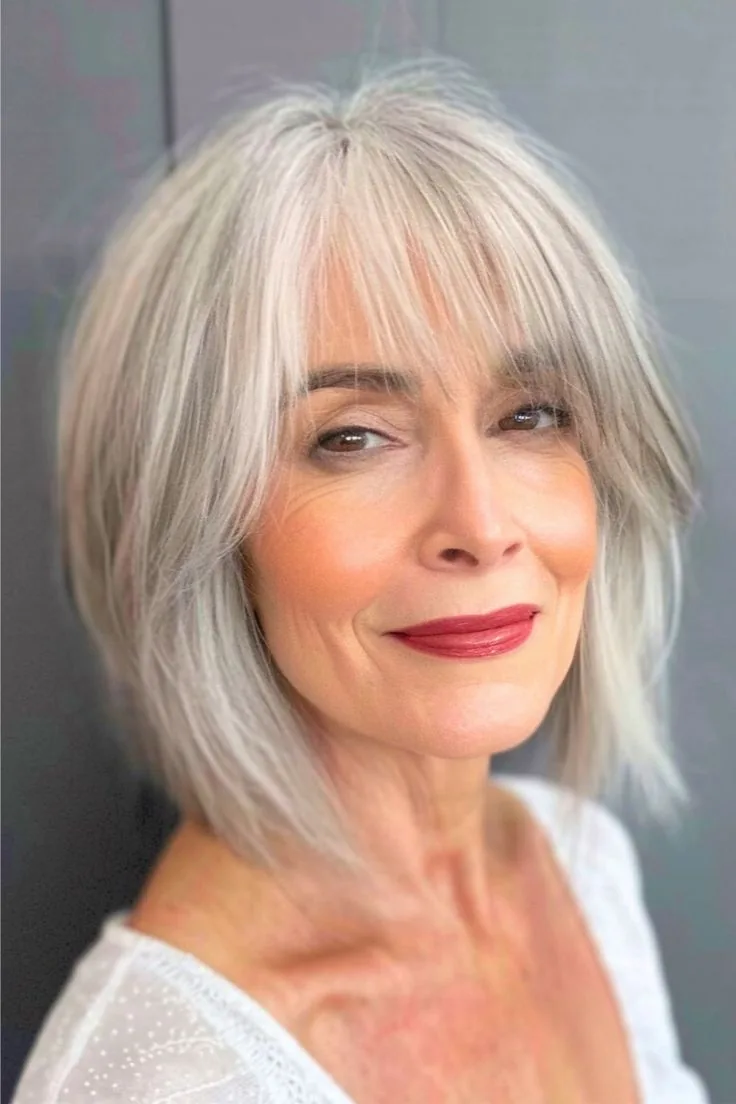
Micro bangs after 50 work best with a softer hand: a slightly wispy or textured edge, rather than a hard blunt line, flatters mature skin and looks modern without trying too hard. Silver and grey hair with a short fringe is a particularly striking combination.
Best for: women over 50 who like a bold look, silver and grey hair, and short to medium cuts like a bob or a pixie.
How to style: keep the fringe soft with a little texturising spray, and use a purple shampoo on silver hair to keep the colour bright. A neat fringe and healthy, shiny hair are the whole look.
What to ask: ask for a textured micro bang with a soft edge, and talk about how the fringe will work with your hair colour and any grey regrowth.
Micro Bangs With a Bold Hair Colour
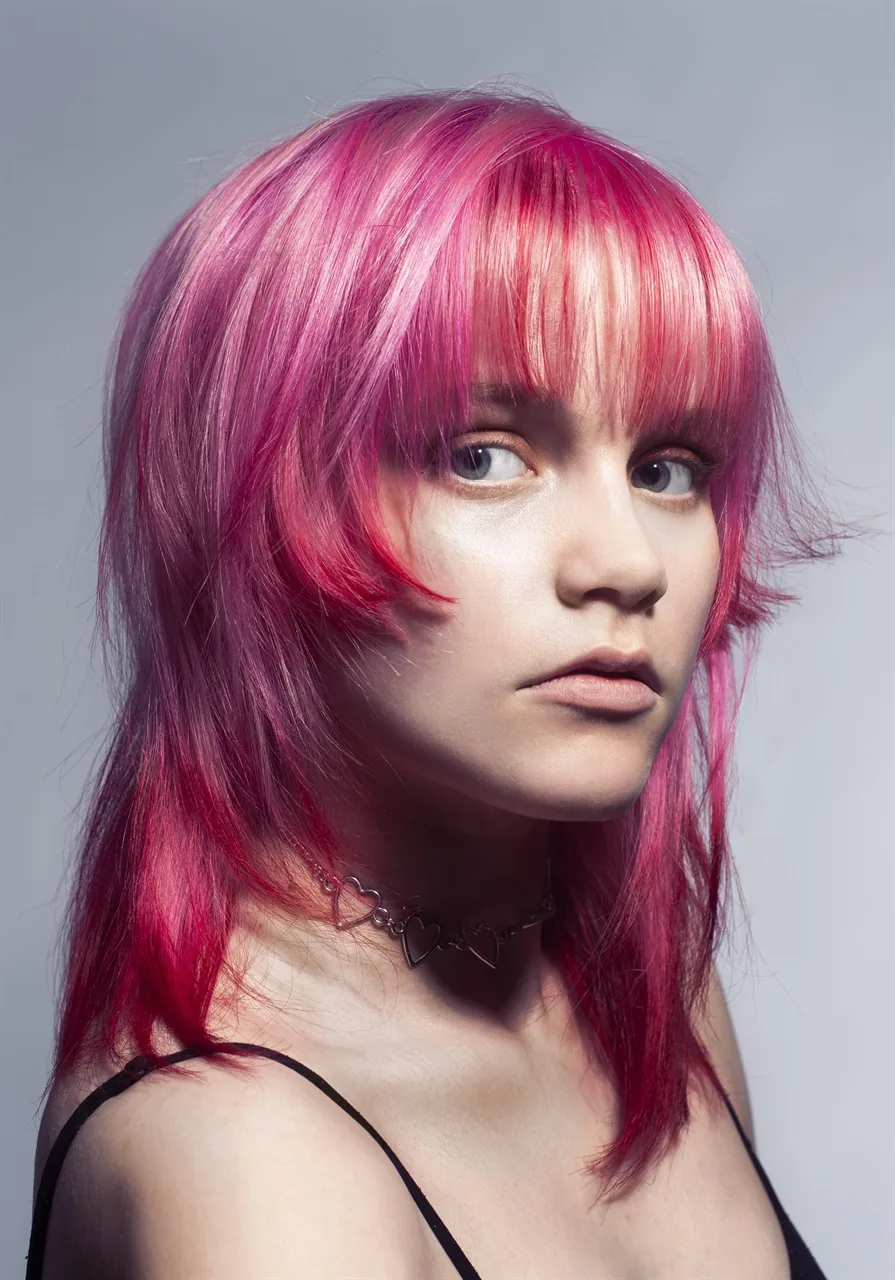
A bold colour takes micro bangs from a haircut to a statement: platinum blonde, copper red, jet black or a fashion shade like pink or blue all make the short fringe impossible to miss. The fringe becomes the focal point, so the colour should be one you love seeing in every mirror.
Best for: anyone who already colours their hair, creative dressers, and people who want their fringe to be the first thing anyone notices.
How to style: colour-treated hair needs moisture, so use a hydrating mask weekly and a heat protectant before any hot styling. Keep the fringe neat — a bold colour with a ragged fringe looks unfinished.
What to ask: ask your colourist how the fringe will be coloured — a solid colour reads bolder, while a slightly softer root keeps the grow-out kinder.
Micro Bangs With a Half-Up Hairstyle
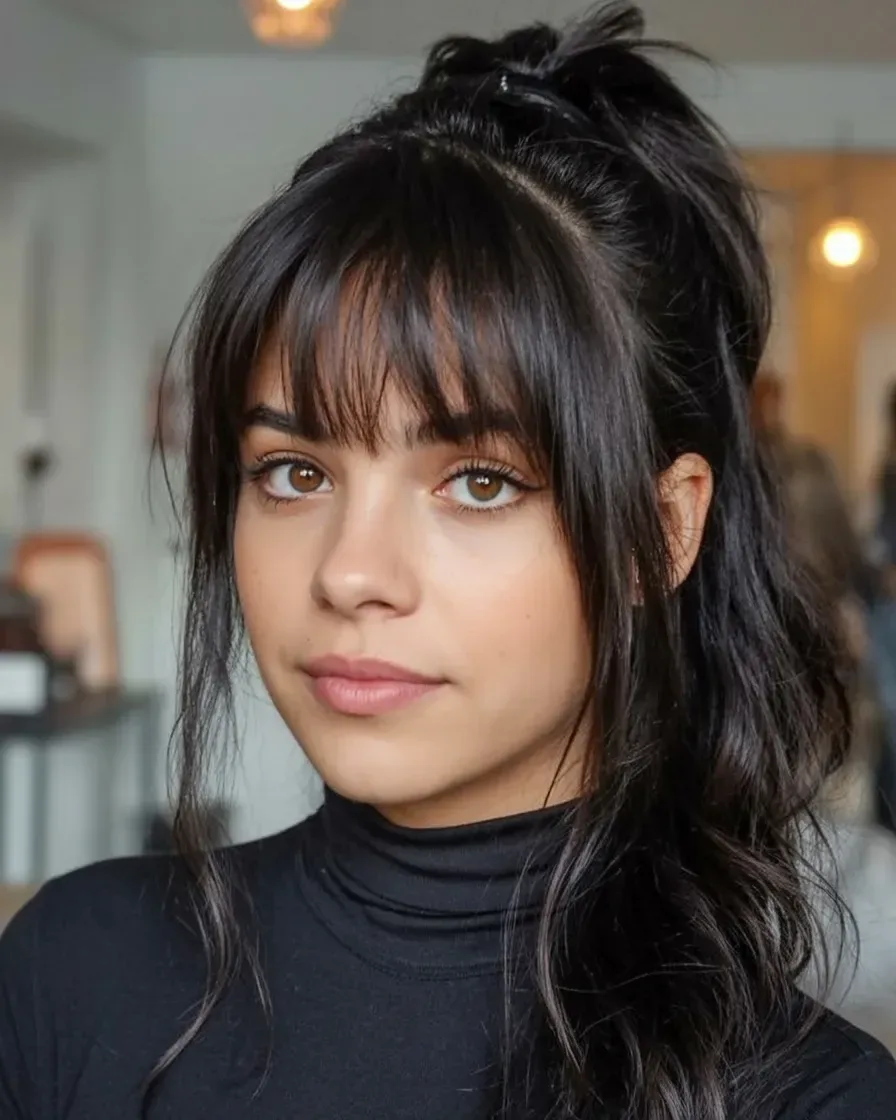
A half-up style with micro bangs is the best of both worlds: the top half is pulled back and out of the face, the bottom half falls loose, and the short fringe ties the two halves together. It is an easy, pretty style for days when you cannot decide between up and down.
Best for: medium to long hair, casual and semi-formal occasions, and anyone who wants the fringe to be visible while the rest of the hair stays relaxed.
How to style: gather the top section and secure it with a small elastic or clip, leaving the fringe free. A gentle wave through the loose lengths adds movement.
What to ask: ask for a fringe that looks right with the hair half-up — it should sit flat and not get pulled back with the top section.
Micro Bangs With Vintage Finger Waves
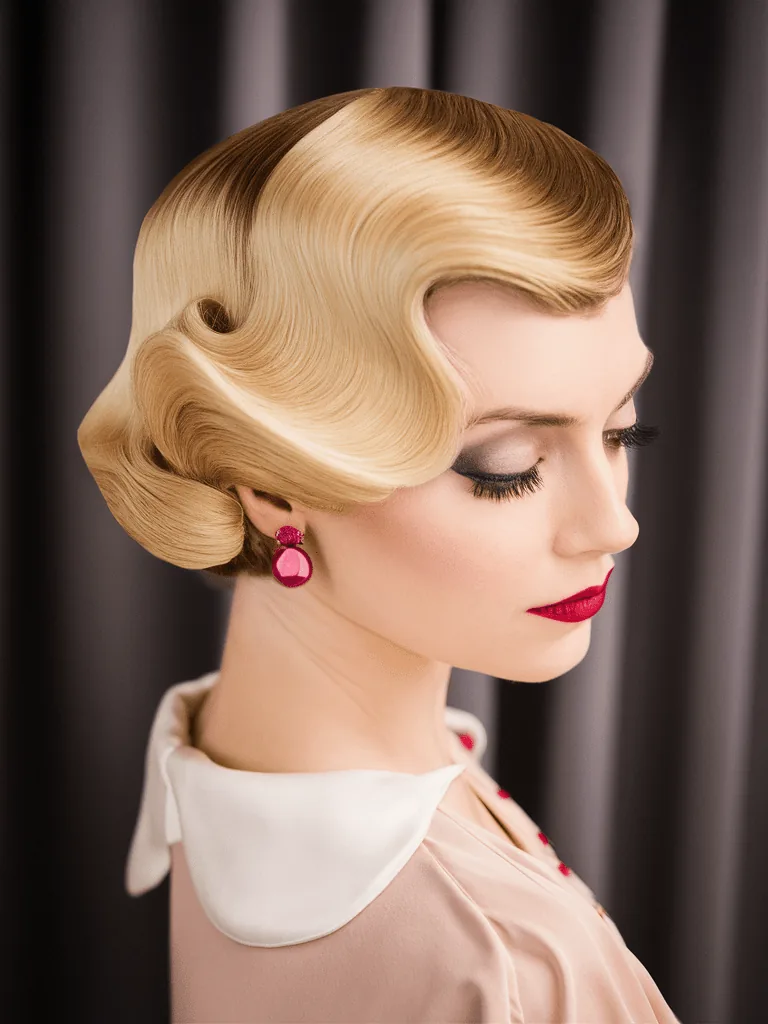
Vintage finger waves with micro bangs are a nod to the 1920s, when short fringes and sculpted waves were the height of fashion. The waves give the style glamour and movement, while the short fringe keeps it sharp and modern rather than a costume.
Best for: special occasions, vintage lovers, and anyone with straight or wavy hair that holds a wave well.
How to style: set the waves with a strong-hold gel and a comb while the hair is damp, then let them dry completely before breaking them up gently. Keep the fringe straight and flat for contrast.
What to ask: ask your stylist whether finger waves will hold in your hair type — very fine or very heavy hair may need a different vintage approach, like pin curls.
Soft Micro Bangs for Everyday Wear
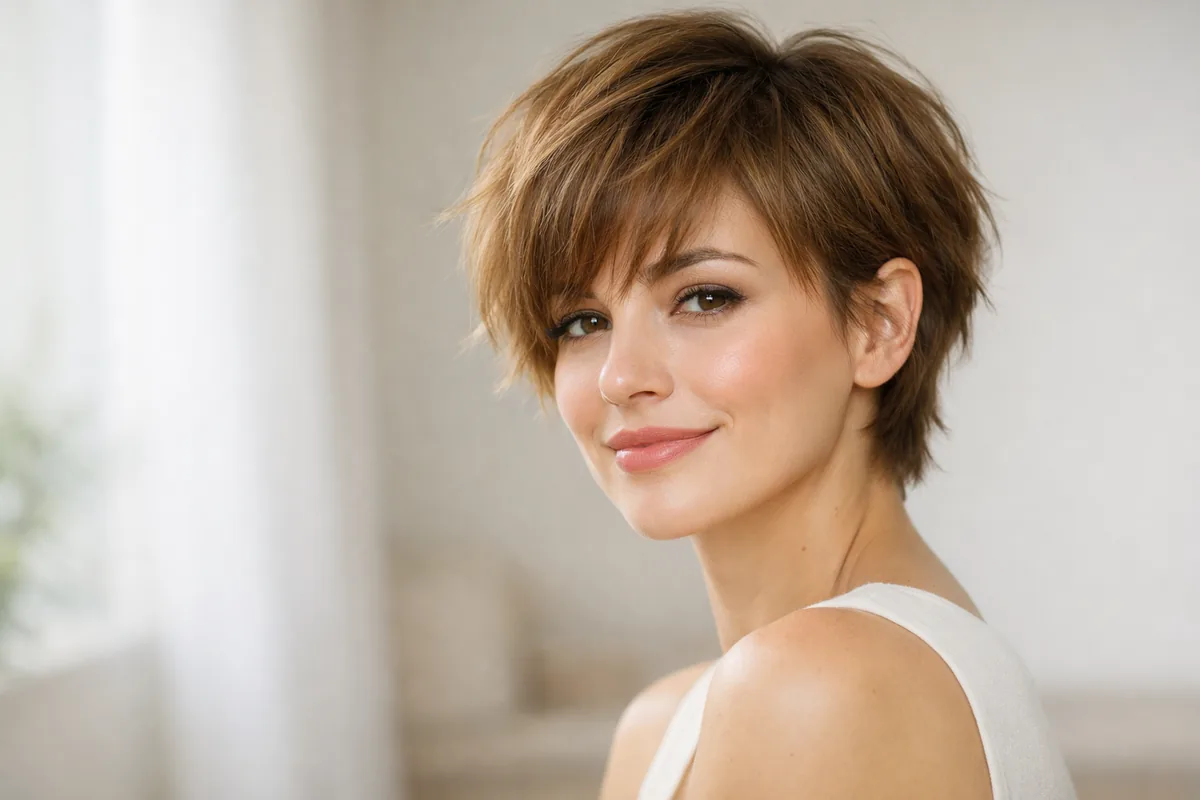
Soft micro bangs are the everyday version of the look: a short fringe with a feathered, broken-up edge that you can wear to work, to school or to the shops without feeling dressed up. It is the micro bang for people who want the style, not the statement.
Best for: everyday wear, first-timers, all face shapes, and anyone who wants a low-maintenance fringe that still looks intentional.
How to style: a quick finger blow-dry and a dab of styling cream is all it takes. On lazy mornings, the fringe can be left to air-dry and still looks fine — the soft edge forgives a lot.
What to ask: ask for a soft, textured micro bang with the shortest pieces in the centre, and a cut that will still look good two weeks after your appointment.
What are micro bangs?
Micro bangs, also called baby bangs, are a very short fringe cut well above the eyebrows — usually an inch or more above them, sometimes halfway up the forehead. Unlike classic bangs, they do not blend into the rest of the hair; they sit as a short, deliberate line across the forehead.
Do micro bangs suit everyone?
No. Micro bangs flatter oval and heart-shaped faces most easily, and suit straight or slightly wavy hair best. Round and square faces can wear them with a textured or arched edge, while very long faces should pair them with a cut that adds width at the sides, like a bob or a shag.
How often do micro bangs need trimming?
Every two to three weeks. The fringe is so short that even a few millimetres of growth changes the line, so a quick trim keeps the shape sharp. Many salons offer a free or low-cost fringe trim between full appointments.
Can I cut micro bangs myself?
You can maintain them yourself once a stylist has set the shape, but the first cut should be done in a salon. If you trim at home, cut the hair dry, cut vertically into the ends rather than straight across, and take off less than you think you need.
How do you grow out micro bangs?
Growing out micro bangs takes several months. A deep side part, bobby pins, a headband or a little texture spray will carry you through the awkward stage. Once the fringe reaches eyebrow length, your stylist can start blending it into curtain bangs or face-framing layers.
Do micro bangs work with curly hair?
Yes, but they must be cut dry, curl by curl, and left longer than the finished length so they do not spring up too short as they dry. A curly micro bang looks softer and more textured than a straight one, and it needs curl cream rather than a flat iron.
Are micro bangs high maintenance?
They need about two minutes of styling each morning and a trim every two to three weeks, which is more upkeep than a longer fringe. They are not hard to style — a quick blow-dry and a dab of cream is usually enough — but they do not look good skipped.
What should I ask my stylist for?
Ask for a micro bang cut dry, on clean, styled hair, and be specific about the length — show a photo and point to where you want the fringe to end. Mention any cowlick, your face shape, and how much morning styling you are willing to do.
Can older women wear micro bangs?
Yes. Micro bangs can look striking at any age, especially with a bob, a pixie or silver hair. A slightly wispy or textured edge tends to flatter mature skin more than a hard blunt line, and the rest of the cut should stay soft and polished.
Do micro bangs make your forehead look bigger?
Yes, they show more forehead than any other fringe, which is part of the look — it lengthens the face and draws attention to the eyes and cheekbones. If you are self-conscious about your forehead, a slightly longer micro bang or a wispy texture will show less of it.
Conclusion
Micro bangs are a small cut with a big personality. A strip of hair barely an inch long can open up your face, sharpen your cheekbones, and turn an ordinary bob, pixie or ponytail into a look people remember. These micro bangs hairstyles for women show just how many ways there are to wear the shortest fringe — blunt and graphic, wispy and soft, curly, choppy, vintage or boldly coloured.
The honest truth is that the cut asks something of you: a trim every few weeks, two minutes each morning, and a grow-out plan if you change your mind. If you are willing to give it that, the reward is a hairstyle that feels completely yours — confident, modern and unmistakably you. Take your favourite style from this guide, show it to your stylist, and enjoy the boldest little fringe there is.