
Silk Press Styling Routines Preserving Moisture In Coily Hair Textures
I used to think a silk press and moisturized hair couldn’t live in the same house. One was sleek, bouncy, and camera-ready. The other felt like a full-time job. Then I stopped fighting them against each other and built a routine where both win.
If you have coily or kinky textures, you already know the fear: you press it smooth, and two days later it’s dry and crunchy. Or worse, it reverts the second you step outside in July.
So today I’m sharing the exact silk press routine my team and I swear by — how to prep, how to press, and how to keep moisture in without losing that silky swing.
It’s simple, realistic, and you can start tonight.
What a Silk Press Really Is (And Isn’t)
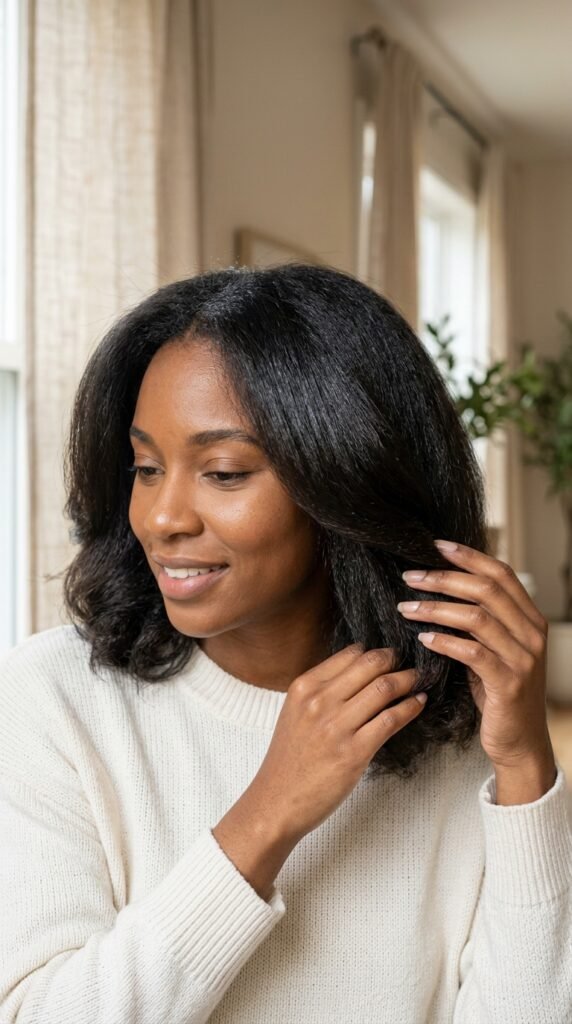
A silk press isn’t a relaxer, and it’s not a permanent texture change. It’s temporary straightening using heat — usually a blow dryer plus flat iron on clean, conditioned hair. The “silk” part comes from the finish: smooth, shiny, swishy.
Here’s what it isn’t:
- It isn’t a shortcut around moisture
- It isn’t a weekly habit for most coils
- It isn’t safe on hair that’s already brittle
And here’s what it is: a styling choice that should leave your curl pattern fully intact underneath. Once you get that, the whole routine makes more sense.
Why Moisture Is Everything for Coily Hair
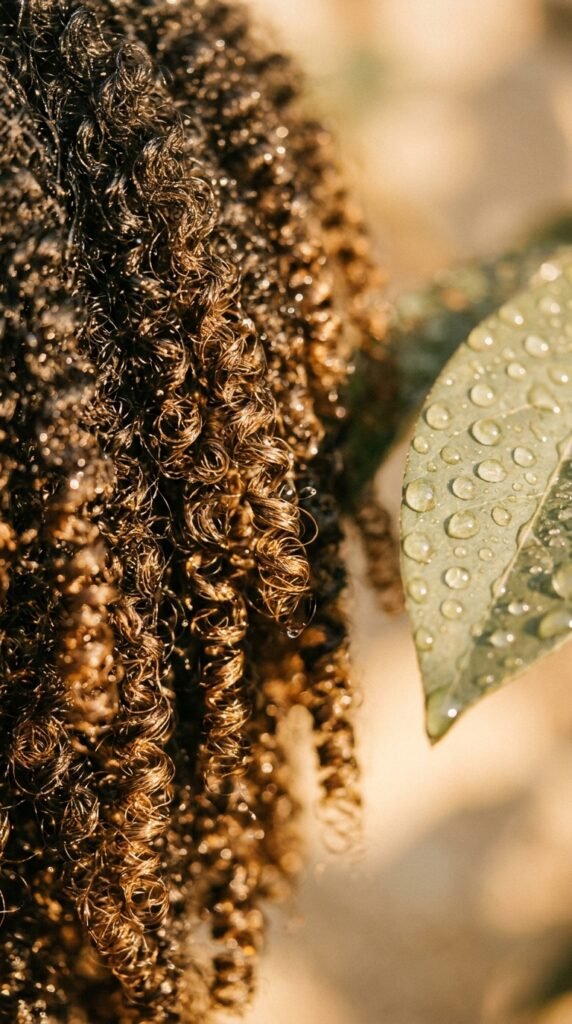
Your scalp’s natural oils take a long time to travel down a tight coil, so the ends are almost always thirsty. Add heat on top of that and you’re pulling water out fast.
That’s why moisture preservation isn’t a buzzword — it’s the difference between a press that lasts a week and one that snaps off.
The order matters: water first, oil second. Water hydrates. Oil seals. Skip the water and you’re just greasing dry hair, which never ends well.
Start With a Clean, Clarified Slate
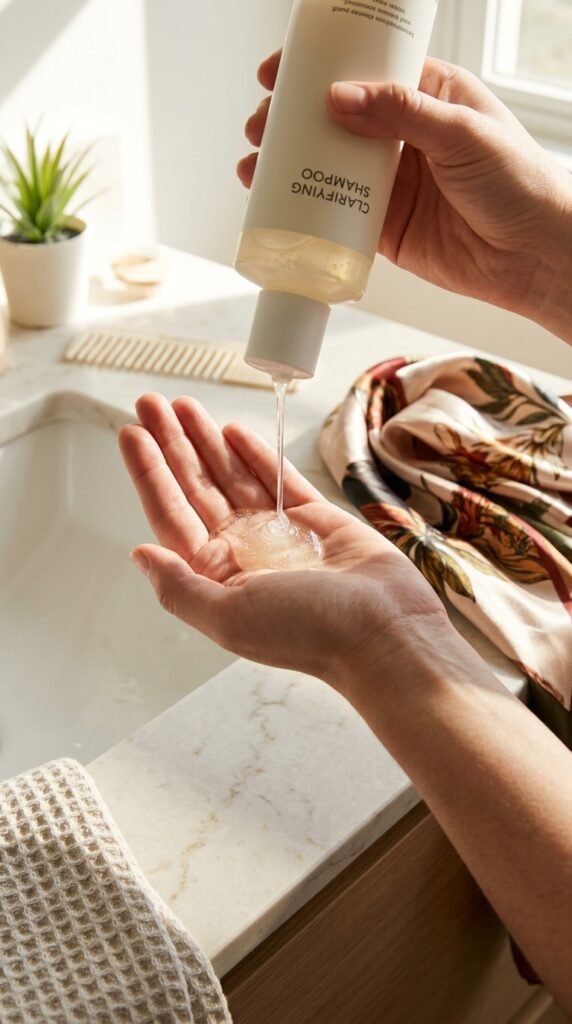
Product buildup blocks moisture from getting in and makes a silk press look dull and coated. So wash day starts with a clarifying shampoo — just once, not every wash.
Quick steps:
- Rinse with warm water for a full minute
- Clarify roots to ends
- Follow with a moisturizing shampoo
- Rinse cool to seal the cuticle
That cool rinse is a small thing that makes a huge difference. It’s basically a free shine boost.
Deep Condition Like It’s Your Job
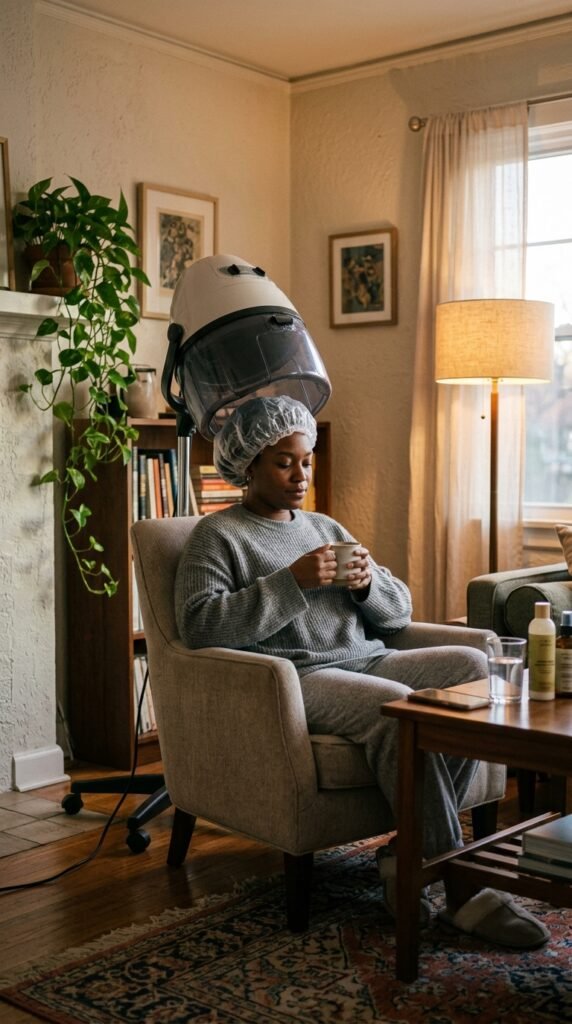
If there’s one step you never skip, it’s this one. Coily hair needs a deep conditioner with real slip — think shea, glycerin, or amino acids.
Apply to damp hair in sections, then:
- Cover with a plastic cap
- Add heat for 20 to 30 minutes
- Let it cool 5 minutes before rinsing
Heat opens the cuticle so moisture actually gets inside instead of sitting on top. Rinse cool and feel the difference — that squishy, soft, hydrated feeling is your foundation.
The Moisture Sandwich Method
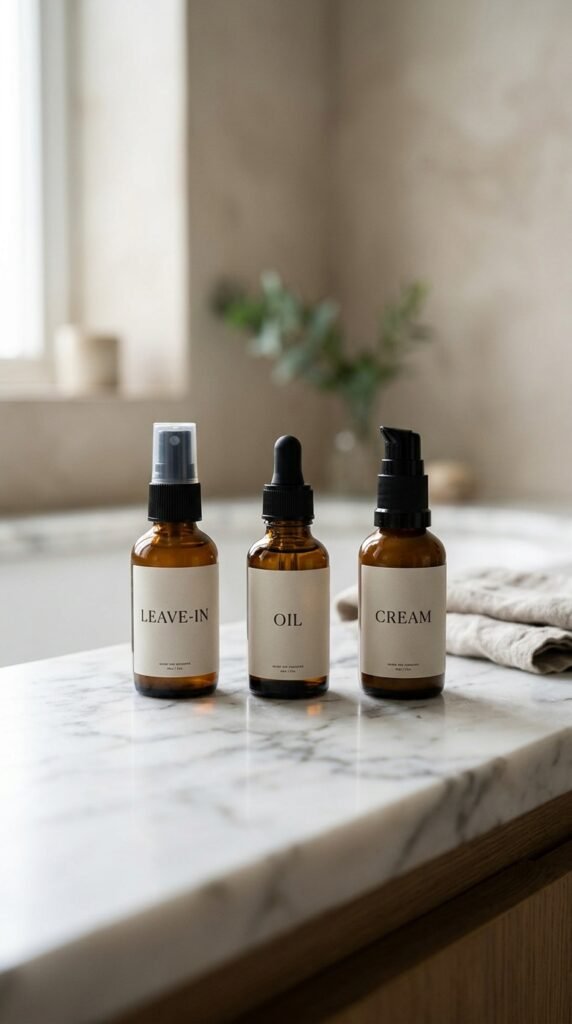
This is the game changer. Layering is how you keep water in without weighing hair down.
How it works:
- Leave-in conditioner on damp hair
- Lightweight oil to seal it
- A touch of cream on the ends only
That’s the sandwich: water, oil, cream. You’re not drenching your hair — you’re sealing in what’s already there. Too much product and your press will look greasy and drop flat within a day. Start small and add as you go.
Why Heat Protectant Is Non-Negotiable
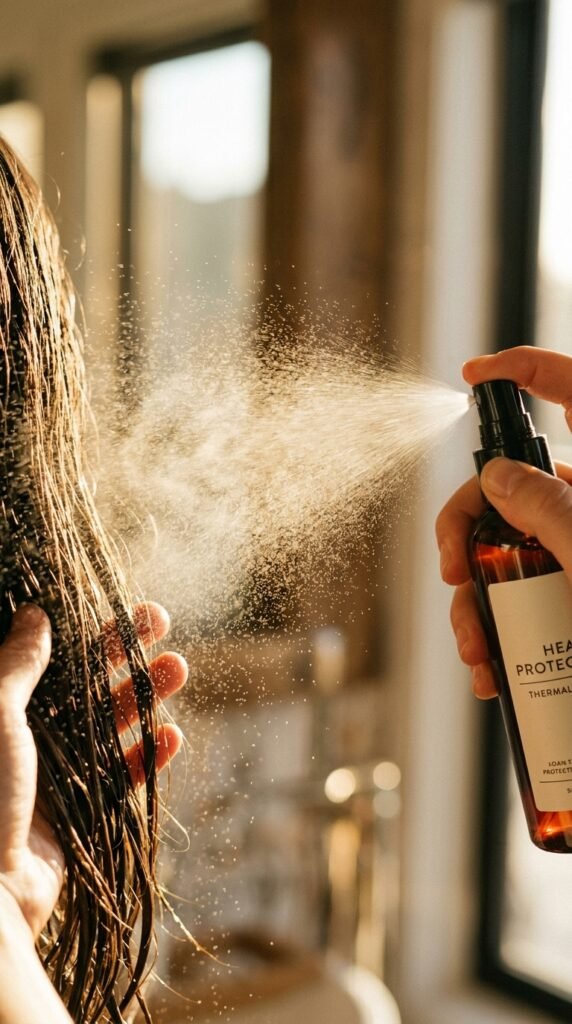
I know it feels like one extra step. Do it anyway. Heat protectant creates a barrier between your strands and the flat iron.
Without it, you’re essentially baking out moisture and weakening the bonds that keep hair strong. Look for one with:
- Silicones (yes, they protect)
- Hydrolyzed protein
- A lightweight, non-sticky finish
Apply on damp hair before blow drying, and a small amount again before flat ironing. That double layer matters. Skip it once and you might not notice. Skip it monthly and your ends will tell on you.
Get Hair 100% Dry Before Your Flat Iron
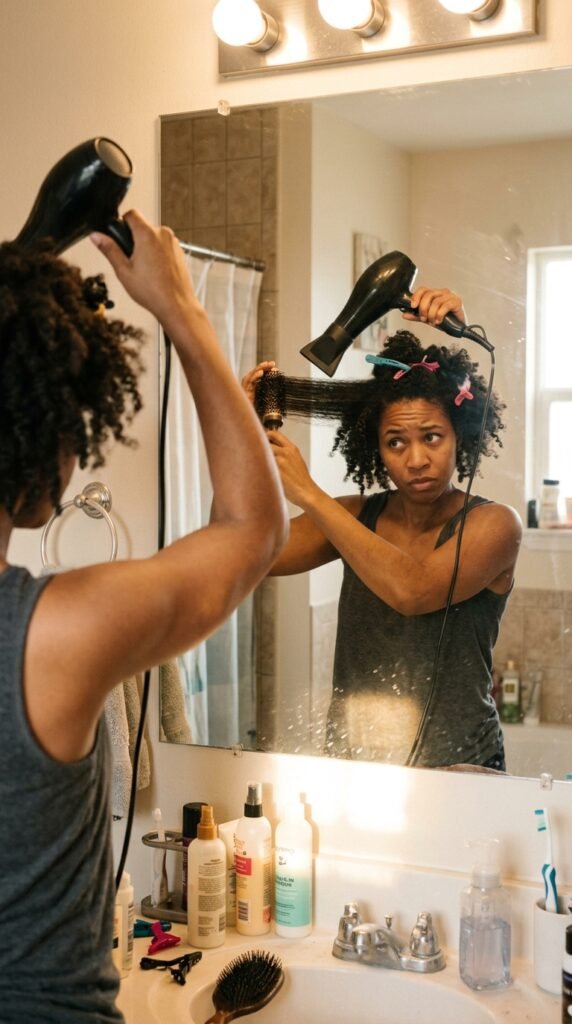
Pressing damp hair is how you get that sizzle sound — and that sound is water boiling inside your strand. So blow dry until it’s fully dry. Not almost. Fully.
Tips that help:
- Section hair into 4 to 6 parts
- Use tension with a round or paddle brush
- Point the nozzle down the strand
- Check the back of your head twice
If you feel cool moisture near your scalp, keep going. A proper blowout is basically 80% of a great press. The flat iron just polishes it.
Find Your Flat Iron Temperature
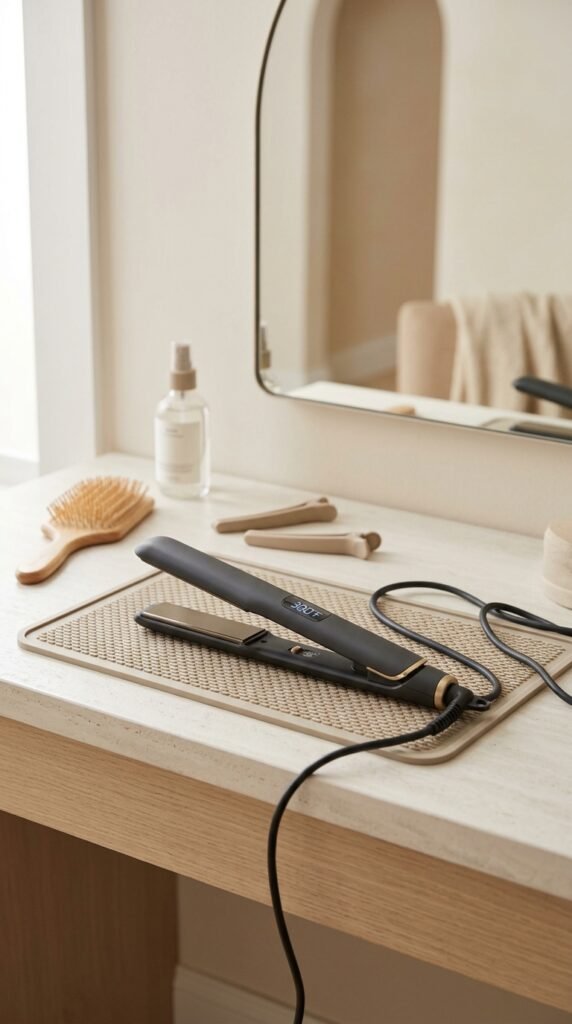
There’s no one magic number, but most coily textures do great between 350 and 400 degrees Fahrenheit. Fine or damaged hair should stay lower, around 300 to 350.
How to choose:
- Start low and test one small section
- If it takes more than two passes, go up slightly
- If you smell anything burning, stop immediately
Thin, damaged strands need gentle heat. Dense, healthy coils can handle a bit more. And always use a tool with even heat plates — hot spots cause damage in one spot while the rest of your hair is fine.
The One-Pass Rule
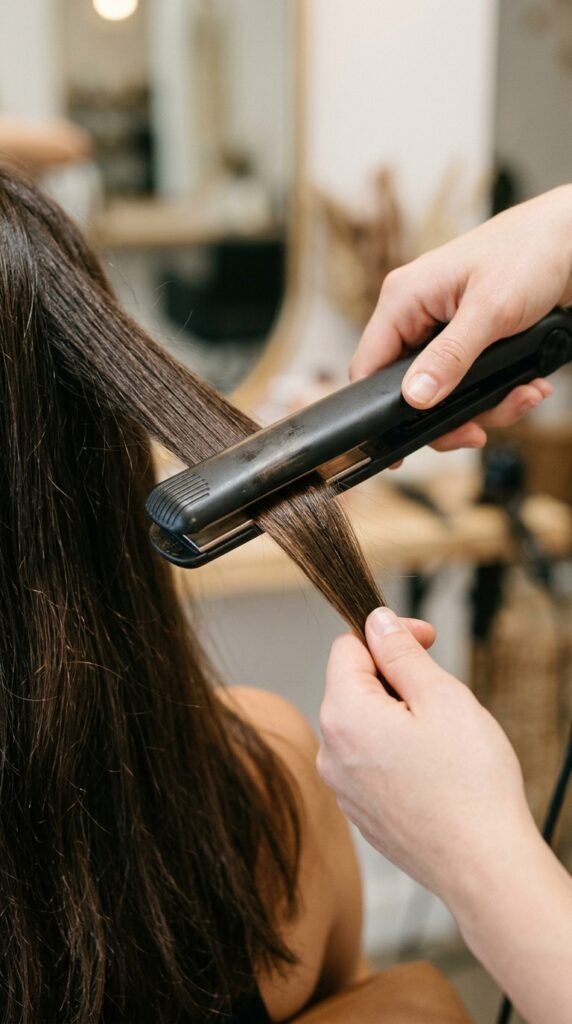
This one rule saves more hair than any product I’ve ever bought. Take a small section. Comb it through. Then glide the iron down once, slowly and steadily.
If it’s not smooth, don’t just press it four more times. Figure out why. Usually it’s because:
- The hair wasn’t fully dry
- The section was too thick
- The temperature was too low
Repeated passes equal heat damage, and heat damage is permanent. Fight the urge. Small sections, one slow pass, done.
How to Wrap Your Hair at Night

The press is only half the story. What you do at night decides how long it lasts.
The classic wrap:
- Brush hair around your head in a circular motion
- Cover with a silk scarf or satin bonnet
- Secure gently — never tight on your edges
In the morning, unwrap, shake, and you’re basically done. If wrapping feels awkward at first, try two loose pin curls instead. Either way, the point is keeping your strands from rubbing against cotton all night. That friction is what dries hair out.
Silk vs Satin vs Cotton
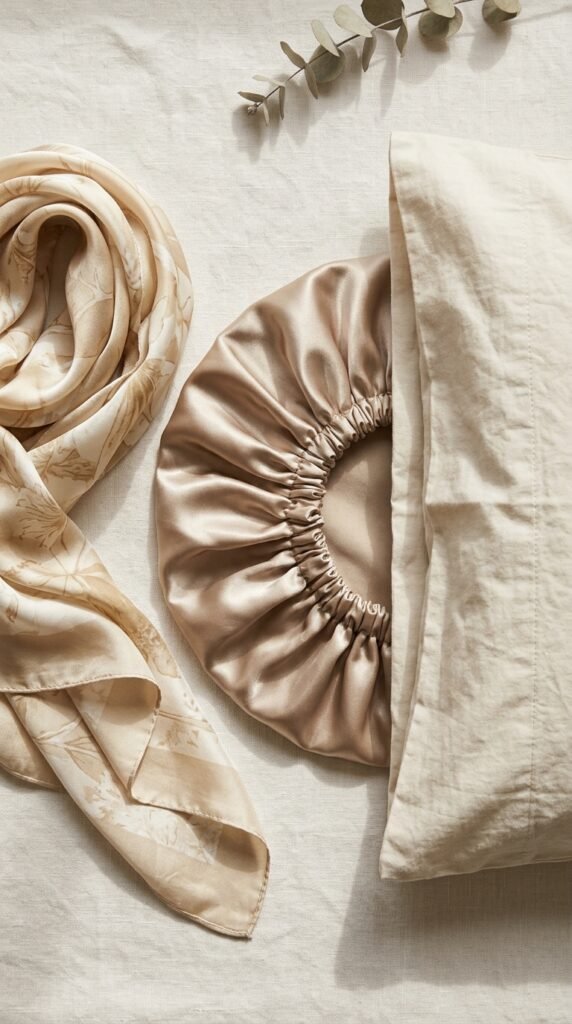
Let’s clear this up, because it genuinely matters.
- Cotton: absorbs moisture and creates friction. Skip it.
- Satin: smooth, affordable, great for bonnets and pillowcases.
- Silk: protein-based, gentler on hair and skin, usually pricier.
Honestly, satin works beautifully for most people. Silk is a lovely upgrade if you want it. What really matters is consistency — a cheap satin pillowcase you actually use beats an expensive silk one sitting in a drawer. Make the swap tonight.
Moisturizing Without Reverting Your Press
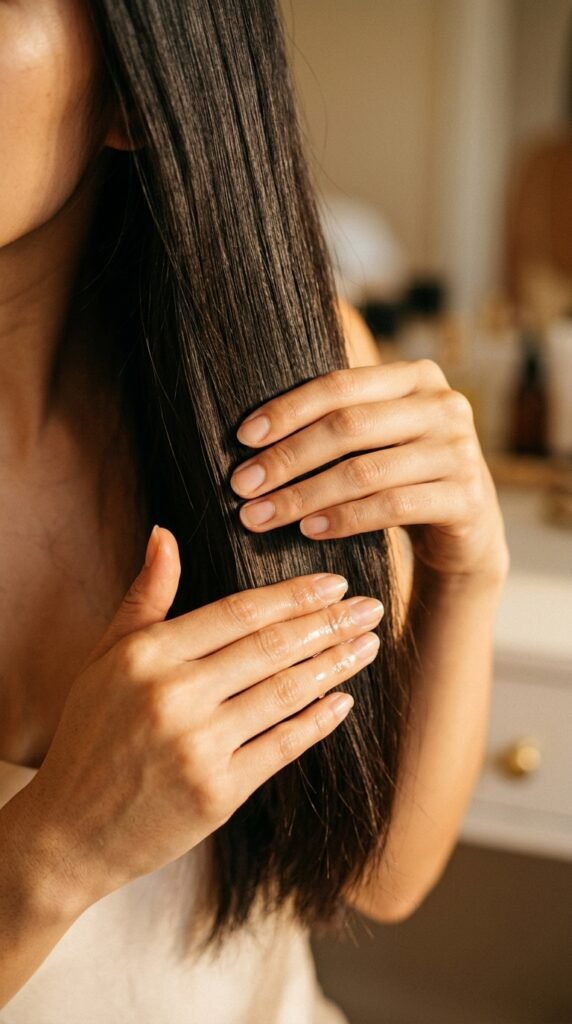
Here’s the tricky part: how do you add moisture without your press curling back up? The secret is avoiding water-based products mid-week.
Instead:
- Use a light oil on your hands and smooth from mid-length to ends
- Focus on the ends, not the roots
- Never spray water directly on pressed hair
Serums and oils add shine and softness without activating your curl pattern. If your hair feels dry by day three, that’s usually a sign your wash-day moisture wasn’t deep enough — not that you need to spritz it.
Heavy Butters Are Not Your Friend Here
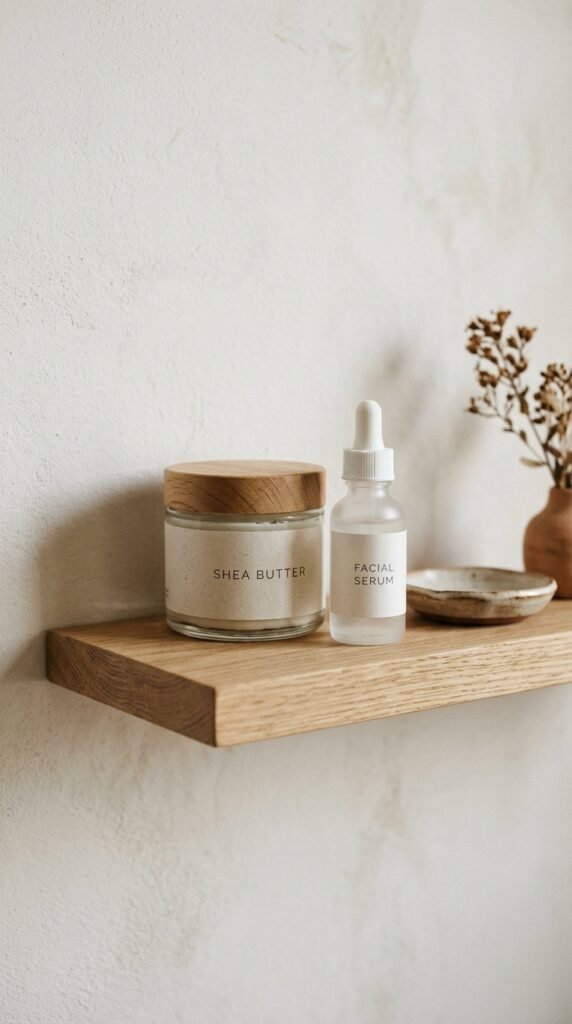
I love a rich butter as much as anyone. Just not during a silk press week.
Heavy butters and thick creams sit on top of pressed hair, weigh it down, and attract dust. You lose the swing and gain the greasy look. Save the shea butter for twist-outs and wash day. During press week:
- Use oils
- Use lightweight serums
- Keep product off your scalp
If your hair feels dry but looks oily, you’ve overdone it. Clarify next wash and start lighter.
Mid-Week Steam Refresh

Around day four or five, a gentle steam can bring moisture back without reverting your press.
How to do it:
- Boil water in a bowl or use a facial steamer
- Sit with a towel over your head for 5 minutes
- Don’t touch your hair while it’s damp
- Let it air dry, then smooth with a light oil
Your hair will absorb that moisture and soften up nicely. Just be careful — too much steam and you’ll pull your curls back. Five minutes, max.
Protect Your Edges Always
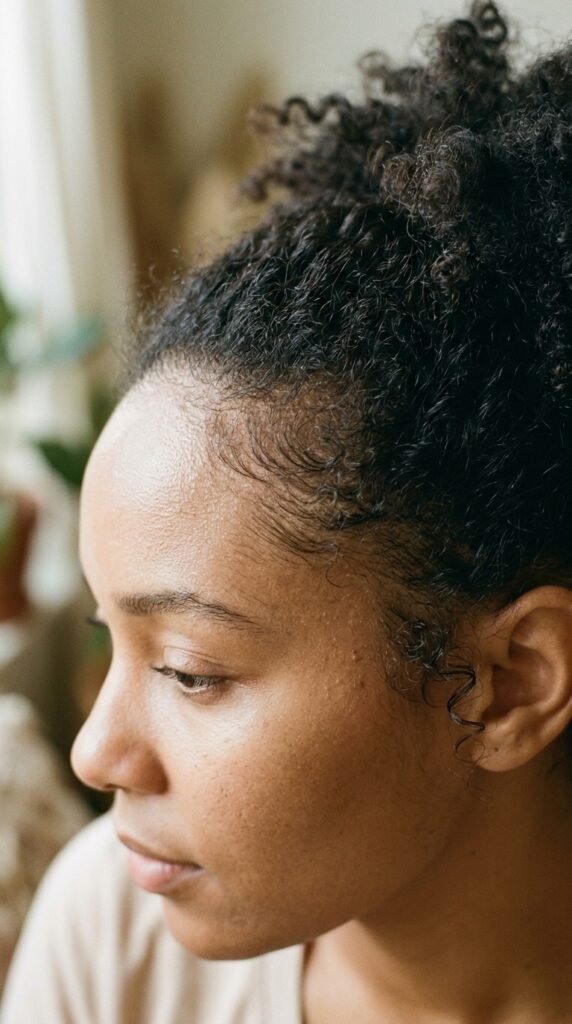
Edges are the most fragile part of your hair, and they’re also the first thing people see. Tight wraps, tight ponytails, and constant tension will thin them out fast.
Rules I follow:
- Never wrap the scarf tight
- No slicked-back styles on repeat
- No glue or heavy gel near the hairline
- Give them a break between presses
If you’re going for that quiet luxury bob look, let the sides be soft rather than glued down. Future you will be so grateful.
Humidity-Proofing Your Silk Press

Summer is the real test. Humidity sneaks in, hair swells, and the press starts waving.
What actually helps:
- A humidity-resistant finishing serum
- Keeping hair up loosely in humid weather
- Avoiding glycerin-heavy products on press day
- Not walking into steam with unprotected hair
A little planning goes a long way. If I know it’s going to rain, I pin my hair up before I leave the house, not after. You can’t beat weather, but you can absolutely outsmart it.
Why Your Press Reverts So Fast
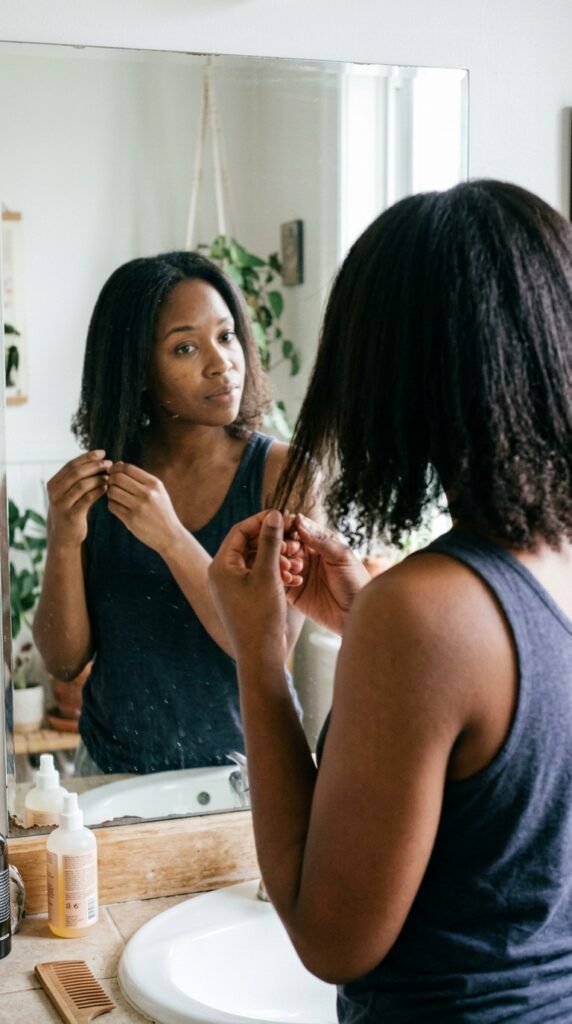
Sometimes it’s not the weather. It’s the prep.
Common culprits:
- Hair wasn’t fully dry before flat ironing
- You used water-based leave-in right before pressing
- The flat iron temperature was too low
- You skipped heat protectant
Low heat actually causes more damage sometimes, because people keep pressing the same section over and over to get it smooth. Fix the prep and the press lasts. It really is that direct.
Workouts and Silk Press Survival

You can absolutely work out with a silk press. You just have to be smart about it.
My approach:
- Pull hair into a loose, high bun or pineapple
- Use a satin scrunchie, never a tight elastic
- Let hair cool and dry completely before unwrapping
- Refresh with a light oil on the ends
Avoid intense sweat sessions right after a fresh press if you can. Give it a day or two to settle. And don’t stress if the roots get a little textured — roots are allowed to live.
Knowing When to Refresh vs Reset
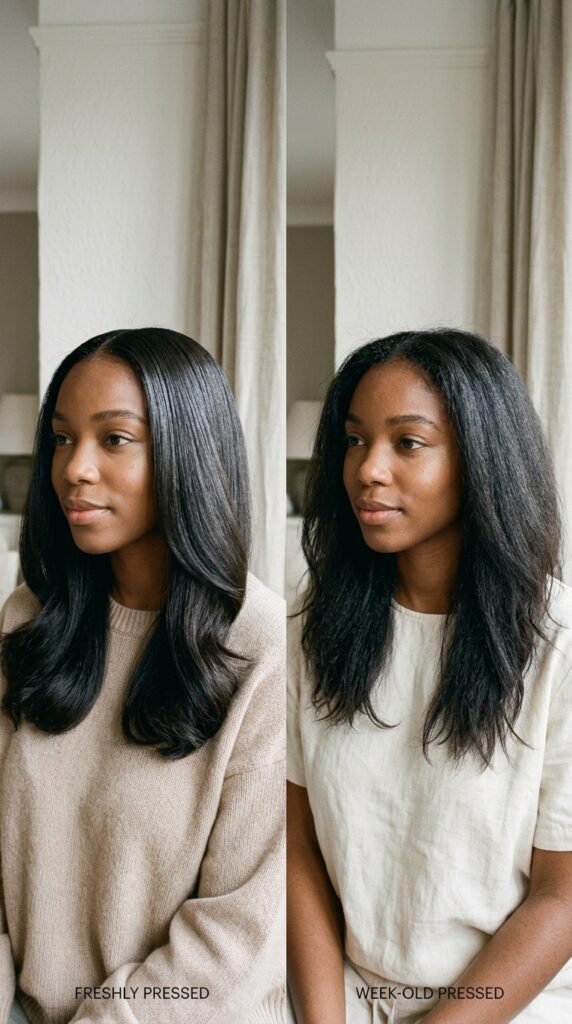
Day two? Refreshing is enough. Day eight with an itchy scalp and fuzzy ends? Time to wash.
Here’s my rough gauge:
- Days 1 to 3: smooth with oil, wrap nightly
- Days 4 to 6: steam refresh, light serum
- Day 7 and beyond: plan a wash day
Never press on top of a week-old press. Layering heat on old product and oil is exactly how damage happens. One press, one wash, one fresh start. That’s the rhythm.
How Often Is Too Often?

For most coily textures, every 4 to 6 weeks is a sweet spot. Some people can go longer, some prefer once a month. It depends on your hair’s strength and your lifestyle.
Signs you’re pressing too often:
- Ends feel crunchy
- Breakage when you comb
- Curls don’t bounce back after washing
- Your scalp is tender
If your curl pattern stops springing back, that’s your hair asking for a break. Healthy hair first. Sleek hair second. Always in that order.
A Quiet Luxury Bob Moment

Now the fun part — styling. There is something so timeless about a smooth, chin-length bob with a soft bend at the ends. It reads old money hair without trying too hard, and it works beautifully on a fresh silk press.
To get it:
- Wrap hair around a medium barrel for 5 seconds per section
- Bend the ends inward or outward, pick one
- Finish with a light oil for shine
Keep the part clean and the finish soft. That’s the whole vibe in 2026 hairstyles — polished but effortless.
Switch It Up: Hime Cut, Asymmetrical Lob, and More

A silk press is a great blank canvas. You can wear so many looks without changing your actual hair.
Try these:
- Hime cut: blunt sides with a longer back, very striking
- Asymmetrical lob: longer in front, shorter in back
- Vampire haircut: sharp, dramatic, glossy
- Romantic goth hairstyles: soft waves with a dark, moody finish
- Glitchy glam hair: sleek with an unexpected texture moment
All of these are trending hard, and all of them start with a smooth press and healthy ends. Play around. It’s just hair, and it grows back.
Products Worth Keeping in Rotation
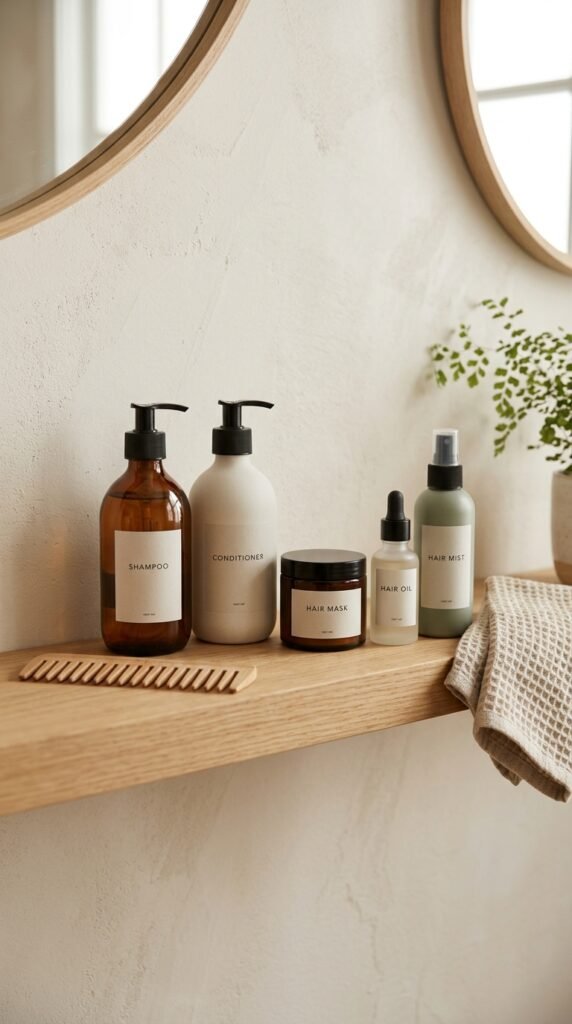
I keep it simple. Here’s what actually earns shelf space:
- Clarifying shampoo (once a month)
- Moisturizing shampoo
- Deep conditioner with real slip
- Leave-in conditioner
- Lightweight sealing oil
- Heat protectant spray
- Satin scarf and bonnet
That’s it. You don’t need fifteen products — you need the right five or six and consistency. Spend your money on the deep conditioner and the heat protectant. Those two do the heavy lifting.
Mistakes That Dry Out Coily Hair

A quick list to check yourself against:
- Skipping deep conditioning
- Using too much heat, too often
- Wrapping with cotton
- Adding oil without water first
- Tight ponytails and wraps
- Pressing dirty hair
- Ignoring your ends
Any of these sound familiar? Pick one to fix this month. Just one. Small changes stack up faster than a whole new routine you’ll abandon in two weeks.
The Takeaway, With Love
Here’s the truth: a silk press and moisturized coily hair can absolutely coexist. It just takes water first, oil second, gentle heat, and a satin scarf you actually use every night.
You don’t need a perfect routine. You need a repeatable one. Start with deep conditioning and a good heat protectant, then build from there.
Your hair is not a problem to solve. It’s just asking you to listen a little closer.
Save this post to Pinterest so you have it handy on your next wash day — and tell me in the comments: what’s the one silk press step you always skip? I’ll help you fix it.