Big Hair, Bigger Energy: 44 80s Hairstyles for Women That Still Steal the Show
The 1980s did not do quiet hair. It did big hair — hair that walked into the room a second before you did, hair with height, texture, attitude and a can of hairspray standing guard. Feathered layers, crimped waves, perms the size of weather systems, side ponytails tied with scrunchies the colour of a highlighter pen: the decade treated hair as a statement, not an afterthought. And now it is back. Runways, red carpets and TikTok are full of blown-out volume, mall bangs and banana clips, worn by women who were not even born the first time around. The 80s never really left — they were just waiting for the right moment to be big again.
This guide gathers 44 80s hairstyles for women, from the feathered layers and the classic perm to the side ponytail, the mullet, the crimped mane and the prom updo — each one with the 80s original explained honestly, a modern twist that keeps it wearable today, and a note on who it flatters most and who might want to skip it. Eight guides cover what defined 80s hair, how to update the look without looking like a costume, which styles suit short, medium and long hair, the truth about perms, crimps and teasing, and how to get the volume without damaging your hair. Big hair is back — here is how to wear it like you mean it.
What Defined 80s Hair — Volume, Texture and Attitude
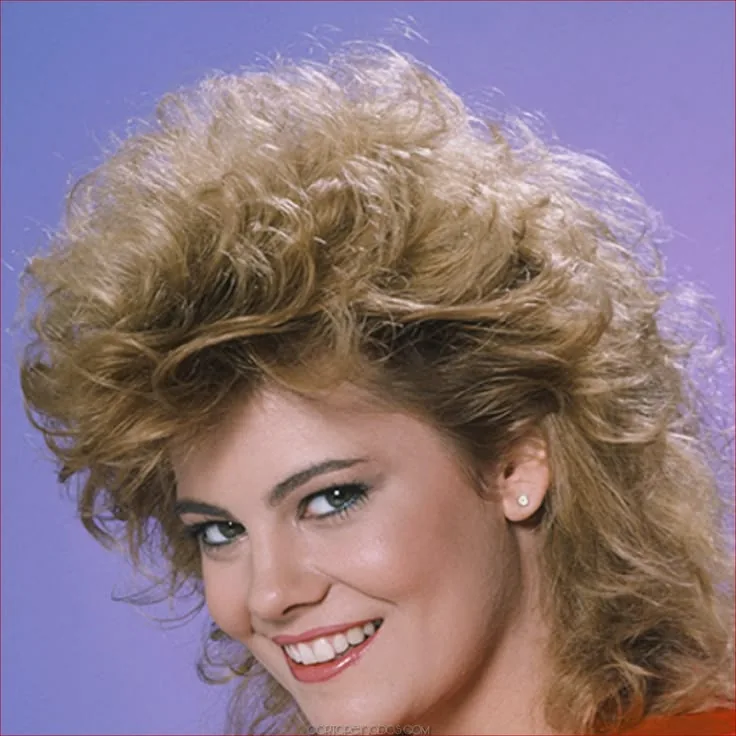
If you had to sum up 80s hair in one word, it would be volume. Everything in the decade pointed upward and outward: blow-dried layers flipped away from the face, perms that doubled the size of the head, teased crowns that added inches at the top, and fringes so tall they had their own weather. The second defining quality was texture — crimps, waves, curls and frizz were not flaws to be smoothed away, they were the point. And the third was attitude. 80s hair was not shy. It was worn by pop stars, soap-opera heroines, aerobics instructors and office workers alike, and it said the same thing in every setting: I am here, and I did my hair for this.
What made the look work was not just the size, it was the silhouette. Hair was shaped — layered, feathered and flipped so the outline was as important as the length. The face was framed by wings of hair that curled outward, the crown was lifted, and the ends were rarely left to hang straight. Products were the decade’s other signature: mousse, gel, hairspray and hot rollers were everyday tools, not special-occasion ones. Understanding that silhouette is the key to wearing 80s hair today. You do not need to copy the exact height of 1986 — you need the shape, the movement and the confidence, scaled to a modern day.
The 80s Look, Updated for Today — What to Keep and What to Leave Behind
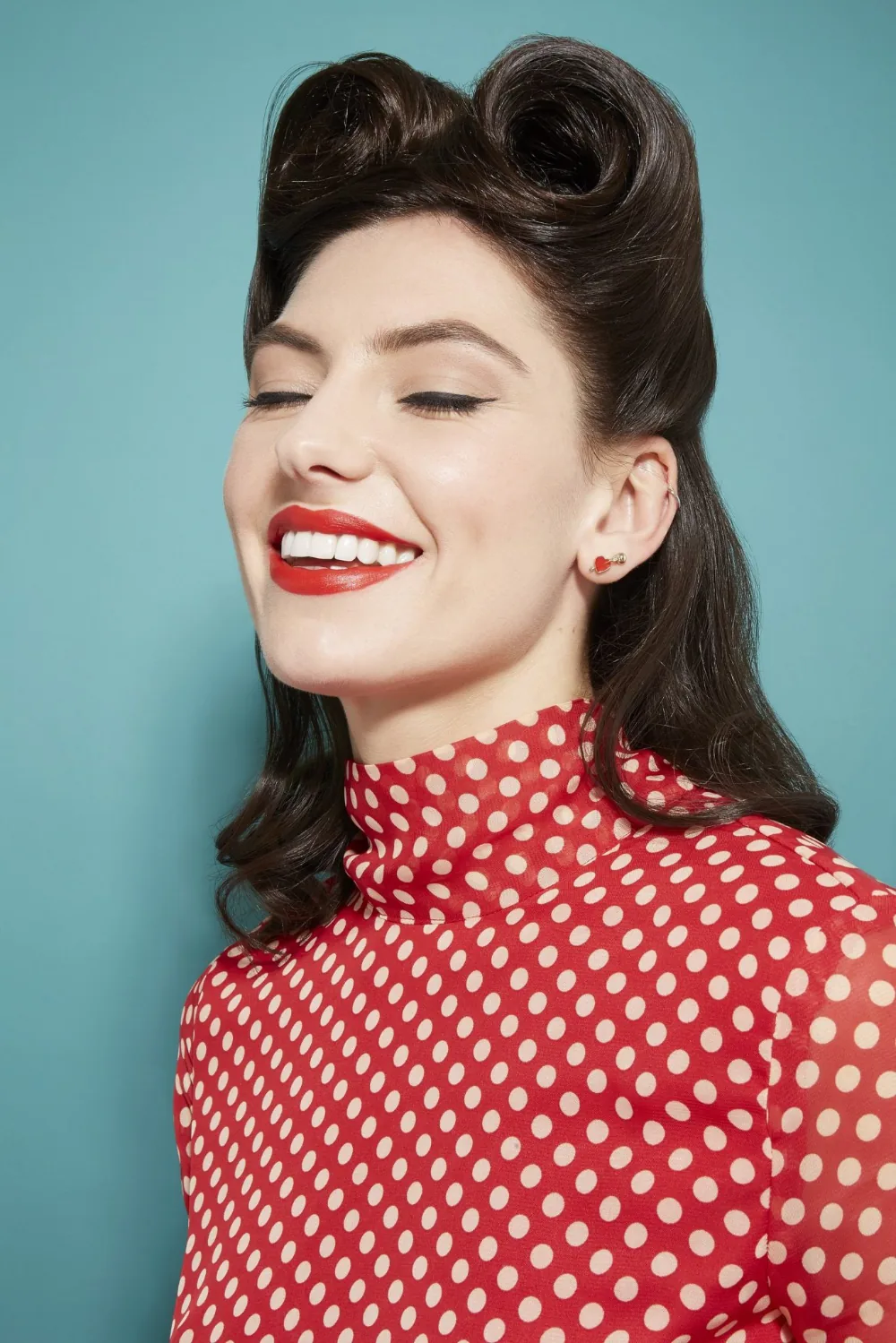
The good news is that most of 80s hair translates beautifully to today, as long as you keep the shape and soften the extremes. Keep the volume, the layers, the movement and the face-framing — those are the parts that make the look flattering and fun. Keep the scrunchie, the headband and the side ponytail, which now read as playful rather than dated. And keep the idea that hair can be a statement: a big, bouncy blowout with feathered ends will turn heads in 2026 for exactly the same reasons it did in 1986. The silhouette is timeless; only the styling has moved on.
What to leave behind is the excess. The original mall bangs were stiff enough to survive a storm, and the original perms were often fried at the ends — modern versions use softer products, lower heat and better conditioning, and they look better for it. Skip the crunchy, helmet-like hairspray finish and the over-teased frizz that made 80s hair a punchline. The modern rule is simple: take one 80s element per look — the volume, or the crimp, or the side ponytail — and let the rest of the outfit stay current. One statement, worn with confidence, reads as a tribute. Three statements at once reads as a costume.
80s Hair for Short, Medium and Long Lengths
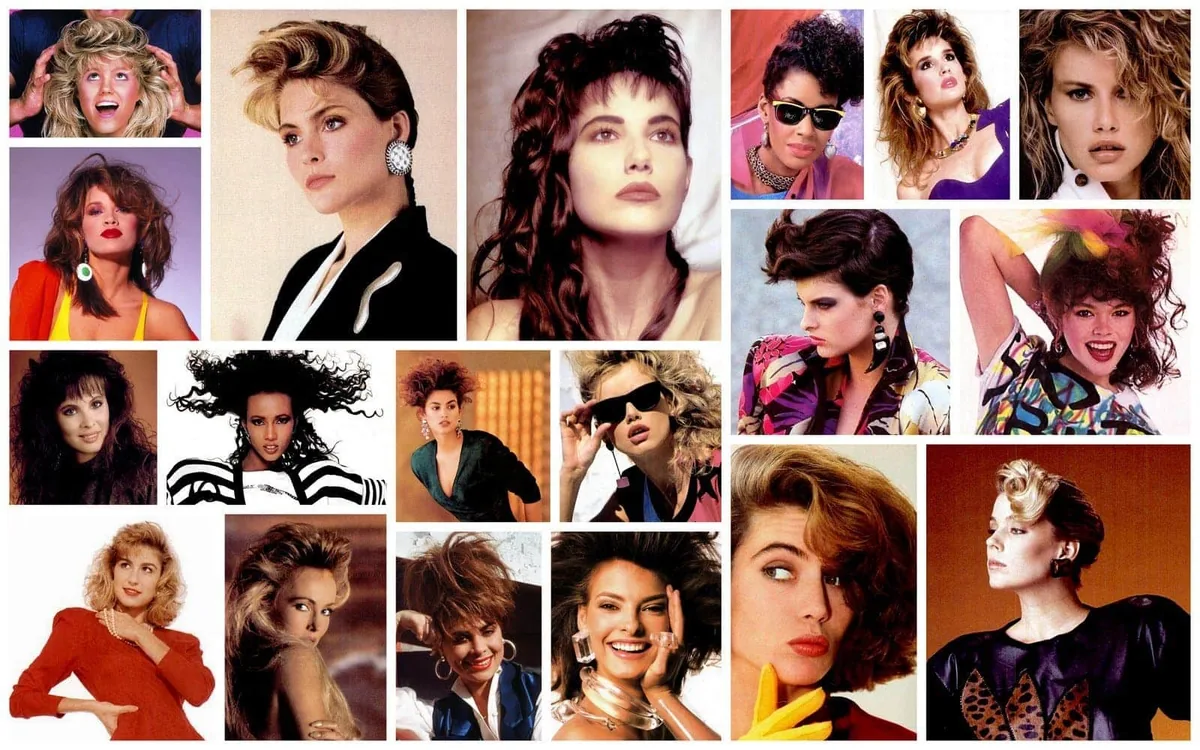
Short hair in the 80s was anything but boring. The pixie with volume, the wedge cut and the stacked bob all used layers and lift to create height where length could not, and the result was sharp, graphic and full of personality. Short 80s hair suits women who like a strong silhouette and a quick routine, because the volume comes from cutting and styling rather than from growing length. The modern version keeps the shape but softens the stiffness — a textured pixie with a little root lift, or a wedge with soft, piecey ends, reads as fashion-forward rather than retro. Short hair is also the easiest length to make look intentional, because every layer is visible.
Medium hair is the sweet spot for most 80s styles: long enough for feathered layers, a side ponytail or a crimped mane, light enough to hold volume without collapsing under its own weight. Long hair is where the decade went biggest — the Farrah feathered look, the long layered mane and the full perm all needed length to show their full drama, and they delivered it. The trade-off is weight: very long, very voluminous hair can pull flat by midday, so long-haired women should lean on layers, root-lifting products and the occasional half-up style to keep the height where it belongs. Whatever your length, there is an 80s style built for it — the decade was generous that way.
Perms, Crimps and Teasing — The Techniques, Honestly
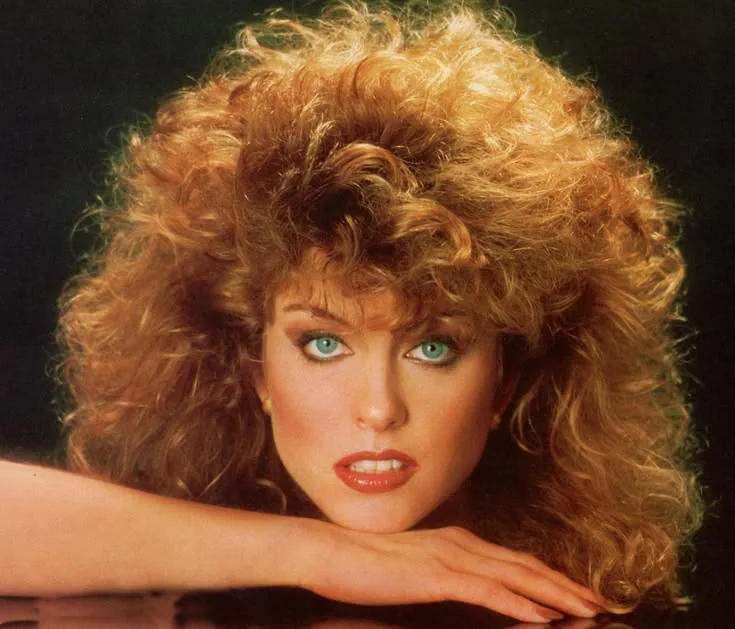
Three techniques built the 80s: the perm, the crimp and the tease. The perm used chemicals to set lasting curls into the hair, and it was the decade’s most committed choice — months of curls in exchange for one long salon appointment and a fair amount of damage. The crimp used a heated zigzag iron to press texture into straight hair, giving instant volume and a distinctive ridged pattern that caught the light. Teasing, or backcombing, used a fine-tooth comb to push hair toward the roots, building height and grip that hairspray then locked in place. Each one worked, and each one had a cost — the perm in damage, the crimp in heat, the tease in tangles.
The honest modern advice is that you can get almost all of the look with far less damage. A modern soft perm or a digital perm gives looser, healthier curls than the tight 80s version. A crimping iron used on heat-protected hair, on a low setting, and only on selected sections, gives the texture without frying the whole head. And teasing works best in small amounts — a little backcombing at the crown, smoothed over on top, holds better and brushes out more easily than the aggressive all-over teasing of the 80s. The techniques are not the enemy; overdoing them is. Use them sparingly, protect the hair first, and the 80s look arrives without the 80s damage.
80s Hair by Hair Type — Straight, Wavy, Curly, Fine and Thick
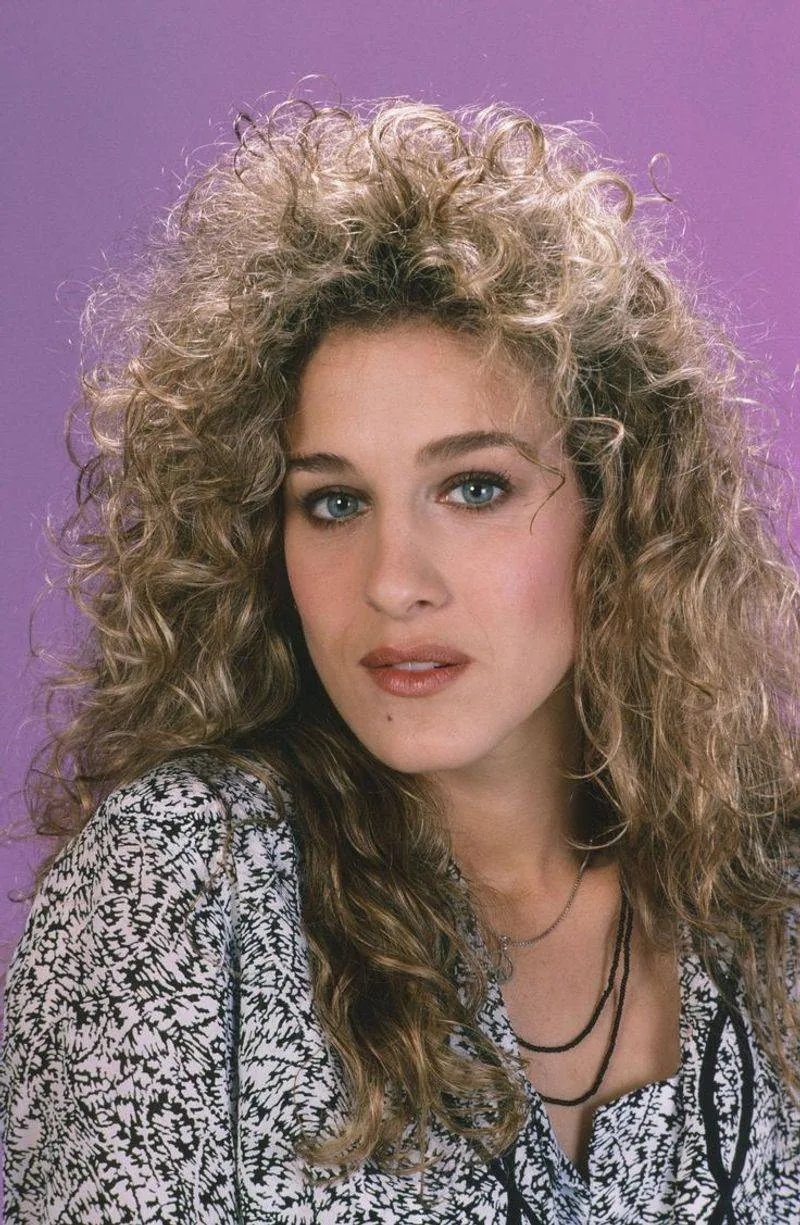
Straight hair was the 80s blank canvas: it took feathering, flipping and perming beautifully, and it showed off layers better than any other texture. The challenge for straight hair was holding the volume — it needed mousse, rollers and hairspray to keep the shape, and the look could fall flat by evening. Wavy hair had a head start, because the natural wave gave the blowout something to build on, and feathered layers on wavy hair looked effortlessly 80s with very little work. Curly hair was the decade’s secret weapon: a perm on already-curly hair, or natural curls shaped with layers, gave the biggest, boldest silhouette of all — the big curly mane that defined so many 80s icons.
Fine hair needed the most help and got the most reward: teasing, crimping and mousse could make fine hair look twice as thick, and layered cuts gave it the structure it lacked. The mistake to avoid is overloading fine hair with heavy products, which collapse it. Thick hair, on the other hand, made the big 80s styles easily — the volume was already there — but it needed thinning and layering at the ends, or the shape turned into a triangle. The rule for every hair type is the same: work with what you have, not against it. The 80s look is a shape, not a hair type, and every texture has its own route to it.
Accessories of the Decade — Scrunchies, Banana Clips and Headbands
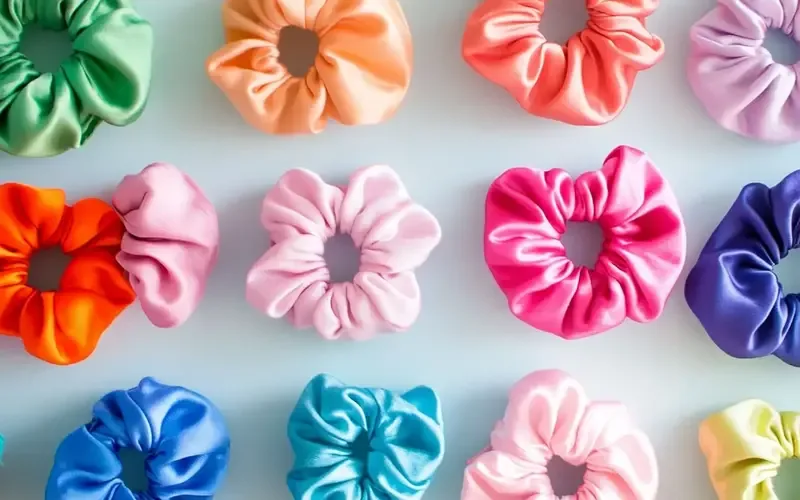
No decade accessorised hair like the 80s. The scrunchie was the hero: a fabric-covered elastic in every colour, worn on ponytails, top knots and wrists, gentle on the hair and loud on the outfit. The banana clip was the engineering marvel — a long, curved clip that gathered the hair into a vertical twist, creating height and a waterfall of hair down the back. Headbands came in every form: thick padded velvet bands, thin plastic zigzag bands, and the wide fabric bands worn with aerobics gear. Add in bows, barrettes, ribbon and the occasional rhinestone clip, and 80s hair was as much about what was in it as what it was.
The modern revival has kept the best of it. Scrunchies are back in silk, velvet and satin, and they are genuinely good for the hair — no creases, no breakage, no tugging. Banana clips have returned in tortoiseshell and matte finishes, and they are still the fastest way to get an 80s updo. Headbands are back too, but the modern versions are softer and less rigid than the originals. The styling rule is restraint: one accessory at a time, chosen to match the mood — a velvet scrunchie for a ponytail, a banana clip for a twist, a headband for a puff. The accessories are the easiest way into the 80s look, and the cheapest, too — you can change the whole decade of your outfit with one clip.
80s Hair for Work vs Party vs Everyday Now
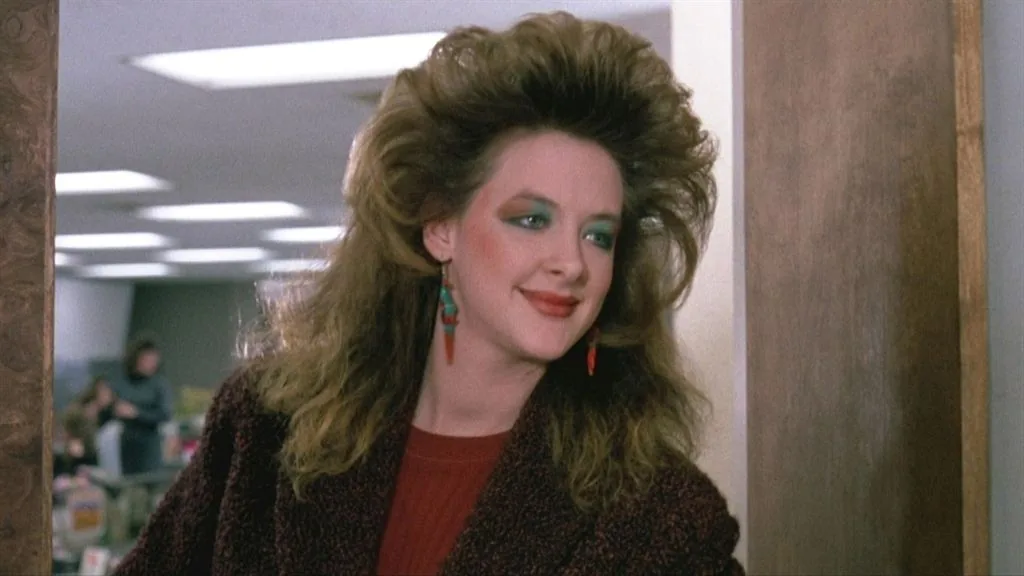
At work, the 80s look needs to be the quiet version. A feathered blowout, a soft layered lob or a sleek side ponytail all carry the decade’s DNA without shouting about it — volume and movement, but controlled, polished and office-appropriate. The key is finish: smooth the surface, keep the height moderate, and let the shape do the talking. A banana clip twist or a low side ponytail with a velvet scrunchie reads as deliberate and professional, while a full crimped mane or mall bangs in a boardroom would read as a theme party. Save the drama for after hours, and let work be the soft-focus version of the decade.
For a party, the opposite applies: go big. A crimped mane, a high side ponytail, a teased crown or a full perm look is exactly what a night out is for, and the 80s knew it — the decade’s party hair was built to be seen across a dance floor. For everyday, the sweet spot is in between: tousled waves, a scrunchie top knot, a half-up style with a bow, or a feathered shag that looks good with no effort at all. The 80s gave us a style for every setting, and the modern trick is matching the volume to the occasion — a little for Monday, a lot for Saturday night, and something in between for the days that are neither.
How to Get the Volume Without Damaging Your Hair
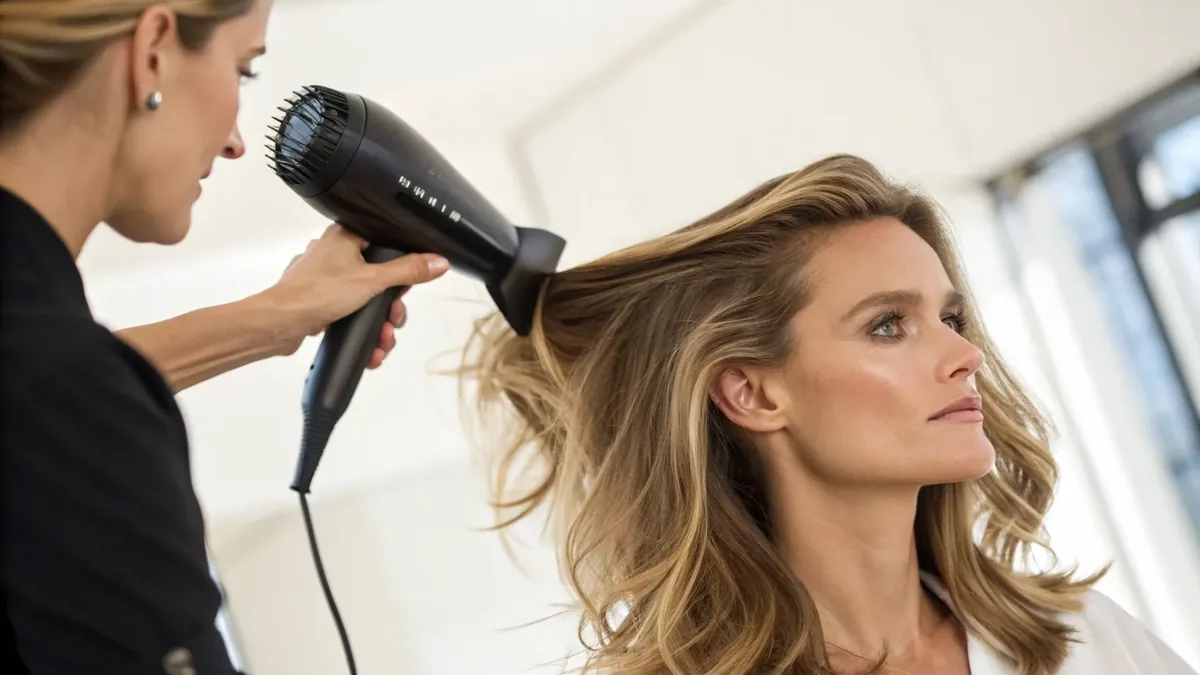
The 80s got volume by any means necessary, and the hair paid for it. The modern version gets the same lift with far less damage, and it starts before the styling does: healthy hair holds volume better than damaged hair, so a regular trim, a weekly deep-conditioning mask and a break from daily heat will do more for your volume than any product. When you do style, always use a heat protectant — it is the single most important product in the modern 80s toolkit — and keep hot tools on a medium setting rather than the maximum. Blow-dry with a round brush, lifting at the roots, and set the shape with rollers or a cool blast from the dryer rather than a blast of hairspray.
Teasing should be gentle and local: backcomb only the crown, in small sections, and smooth the top layer over it so the hair looks lifted, not tangled. Crimping should be occasional, not daily, and only on heat-protected hair. Perms, if you want them, should be the modern soft or digital kind, done by a stylist who understands the difference from the tight 80s perm. And always give the hair a rest: one big-volume day, then a gentle day with the hair down and natural. Volume is a styling choice, not a permanent state — and the hair that gets a break is the hair that keeps its volume for years.
1. Classic Feathered Layers
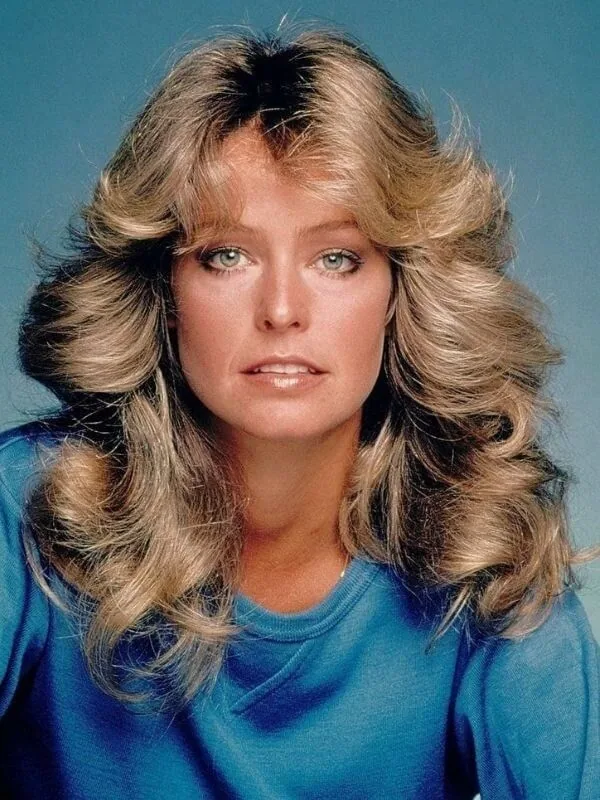
Feathered layers were the signature 80s cut: long layers cut so the ends flip outward, away from the face, like the feathers of a wing. The look was made famous by the late-70s icons who carried it into the 80s, and it stayed the decade’s most-worn style because it flattered almost everyone. The layers start around the cheekbones and fan out, giving movement, width and bounce to hair that would otherwise hang flat. It is the cut that made the blowout matter — the whole point was the shape the layers made when the hair moved.
The modern twist keeps the layers but softens the flip: a round brush and a cool setting, rather than a stiff curl outward, gives the same winged silhouette with a softer finish. This is the style to choose if you want the 80s feeling without committing to a costume. Quick verdict: the most wearable 80s style in this guide — feathered layers suit long and medium hair, oval and heart-shaped faces especially, and they look good with almost no styling at all. Who should avoid it: very fine hair, where the layers can make the ends look thin — ask for fewer, longer layers instead.
2. The Big 80s Blowout
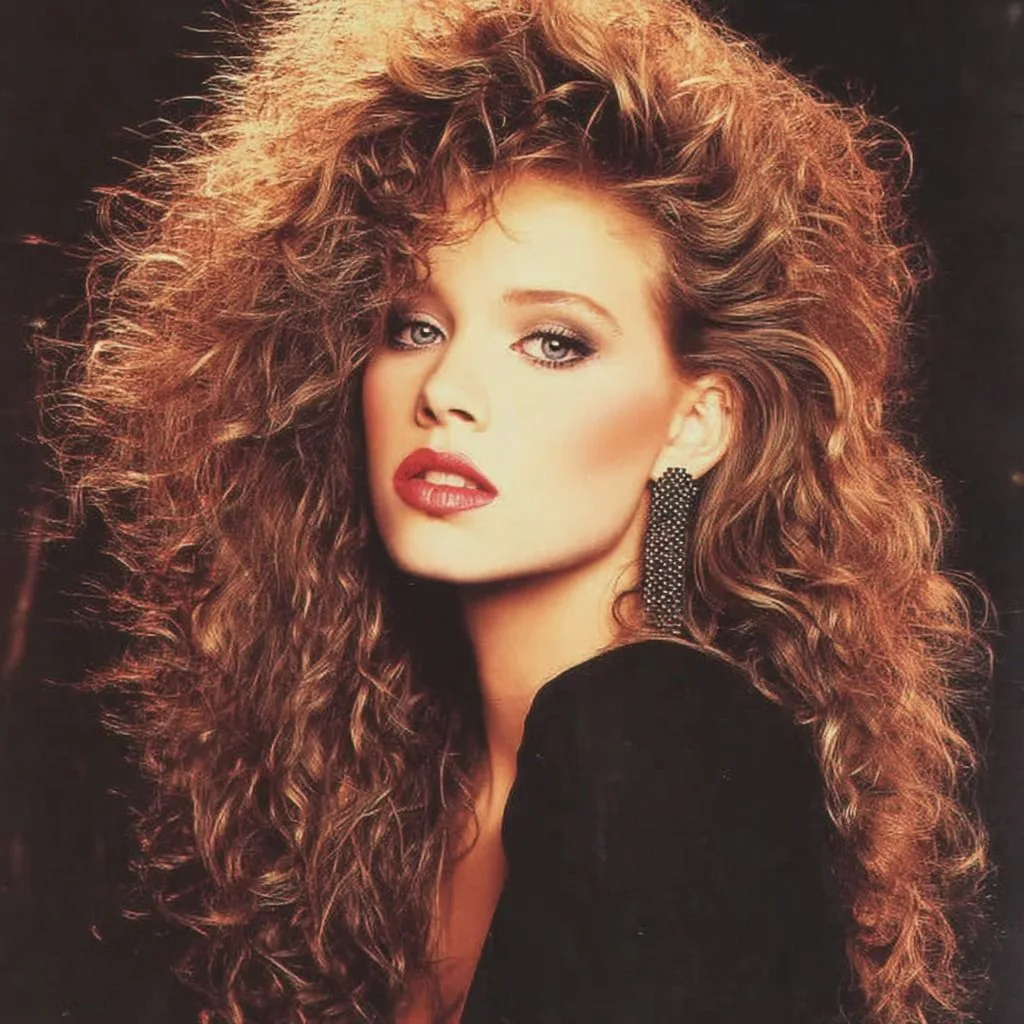
The big blowout was the 80s everyday glamour look: hair blow-dried with a large round brush, lifted at the roots, curled under or flipped out at the ends, and finished with enough hairspray to hold the shape through a working day and a night out. It was the look of television heroines, newsreaders and pop stars, and it worked because the volume was built in layers — root lift, then bend, then spray — rather than pasted on top. The result was hair that moved, bounced and caught the light, with a silhouette that framed the face in a wide, soft shape.
Today the blowout is back, and it is better than the original because modern tools do the work the 80s did with brute force. A round brush, a good dryer and a light volumising mousse will get you the same lift with a fraction of the damage. Who it flatters most: medium to long hair, and anyone with a round or square face, because the height on top lengthens the face. Who should skip it: nobody, really — but if your hair is very short, the blowout becomes a different style entirely, closer to the wedge or the pixie. Quick verdict: the 80s look that never stopped being glamorous, and the easiest place to start.
3. Crimped Hair
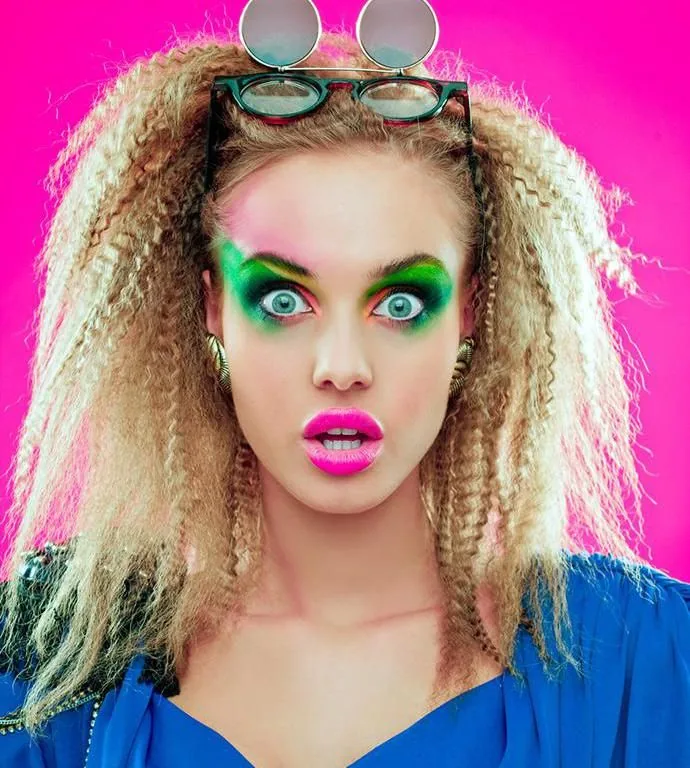
Crimped hair is the most unmistakable 80s texture there is: fine zigzag ridges pressed into the hair with a heated crimping iron, giving instant volume, grip and a pattern that caught the light like a wave. In the 80s it was worn all over — full-head crimps on long hair, crimped ponytails, crimped fringes — and it was the decade’s favourite shortcut to big hair, because the texture alone made the hair look twice as thick. The original version was often overdone, with every strand crimped from root to tip, which is why it became a punchline. Done right, though, it is a beautiful texture.
The modern twist is to crimp selectively: a few hidden sections underneath for volume, or the lengths only, with the top layer left smooth. That gives the lift and the texture without the full 80s effect. Who it flatters most: straight, fine hair that needs texture and body, and long hair that can carry the pattern. Who should avoid it: very curly hair, where the crimp fights the natural curl, and anyone who crimps daily — the heat adds up fast. Quick verdict: the most fun 80s texture, best worn as an accent today, and a guaranteed conversation starter when you wear it full.
4. The High Side Ponytail
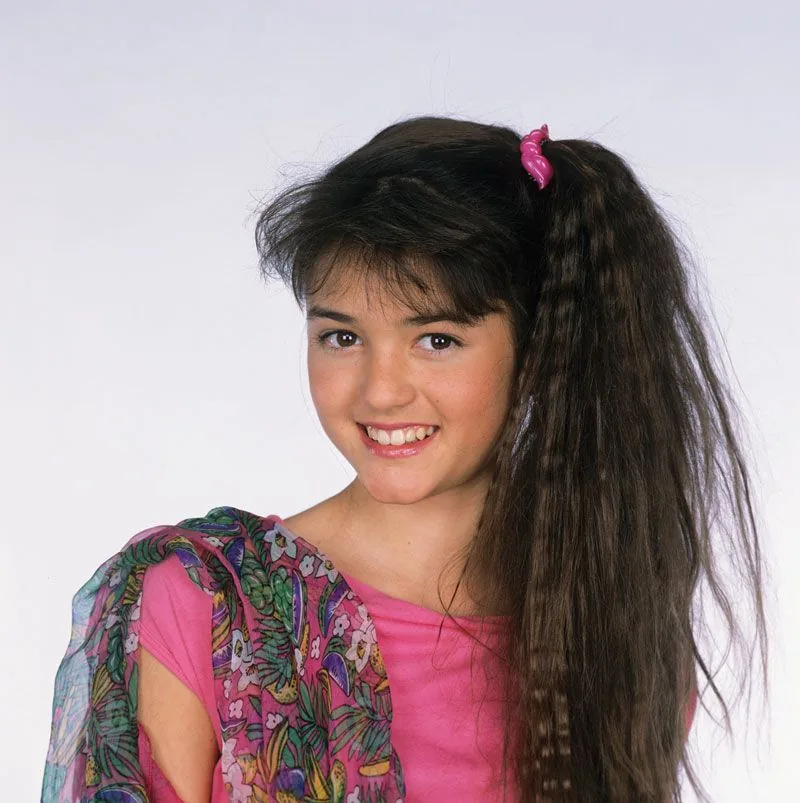
The high side ponytail is the 80s in one hairstyle: all the hair swept to one side, tied high near the temple, and finished with a scrunchie in a colour you could see from across the street. It was sporty, playful and unmistakably young — the look of aerobics videos, pop videos and school corridors — and it worked because it was both easy and dramatic. The ponytail itself was often teased or crimped for extra volume, and the fringe was swept to the opposite side, creating a bold diagonal line across the face.
Wear it today by keeping the height but softening the finish: a silk or velvet scrunchie, a smooth sweep, and a few face-framing pieces left out. It suits oval and heart-shaped faces best, and it is wonderful for showing off earrings and a strong jawline. Who should avoid it: anyone with a very round face who does not want extra width on one side — a lower side ponytail is the kinder version. Quick verdict: the most fun 80s style to wear to a party, and the one that photographs best. One scrunchie, one sweep, instant 1986.
5. The Low Side Ponytail with a Scrunchie
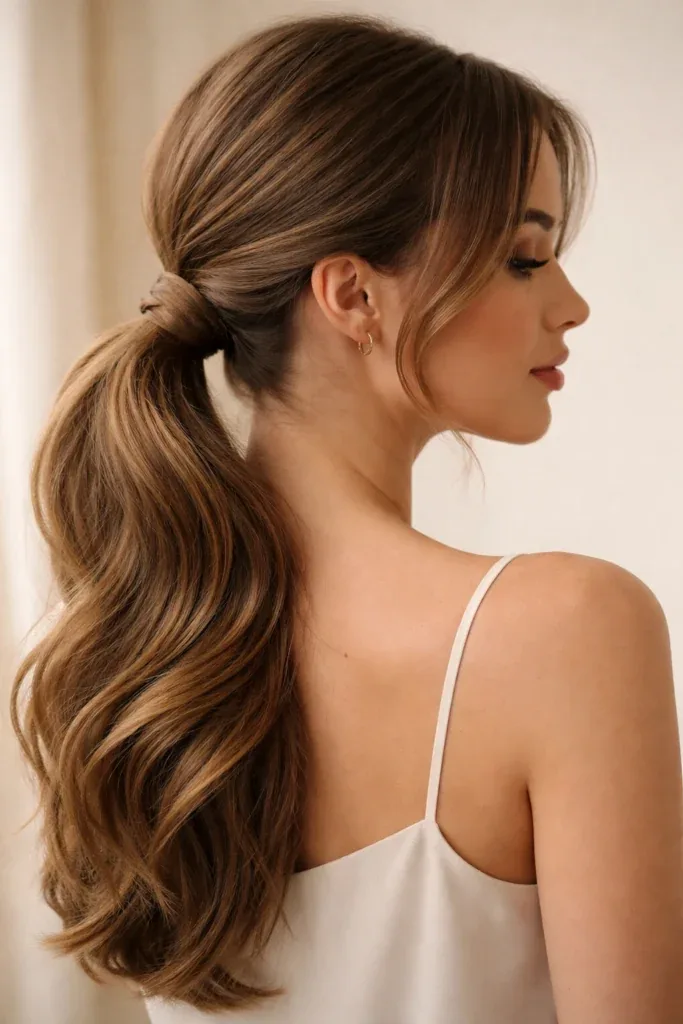
The low side ponytail was the high side ponytail’s calmer sister: the hair swept to one side and tied low, near the shoulder, with a scrunchie, a ribbon or a velvet bow. It was the 80s version of an everyday hairstyle — soft, romantic and easy — worn to school, to work and to the shops, and it flattered almost everyone because the low placement kept the look gentle rather than dramatic. The lengths were often curled or crimped, so the ponytail fell over one shoulder in a soft, textured wave.
The modern version is one of the easiest 80s styles to wear right now: a low sweep, a velvet scrunchie, and loose waves in the lengths. It flatters every face shape, suits every hair type, and works for work, for a date and for a wedding guest. Who should avoid it: nobody — this is the most forgiving style in the guide. Quick verdict: the 80s style you will actually wear every week. It takes two minutes, it looks deliberate, and it carries just enough of the decade to feel special without feeling like a costume.
6. The Classic 80s Perm
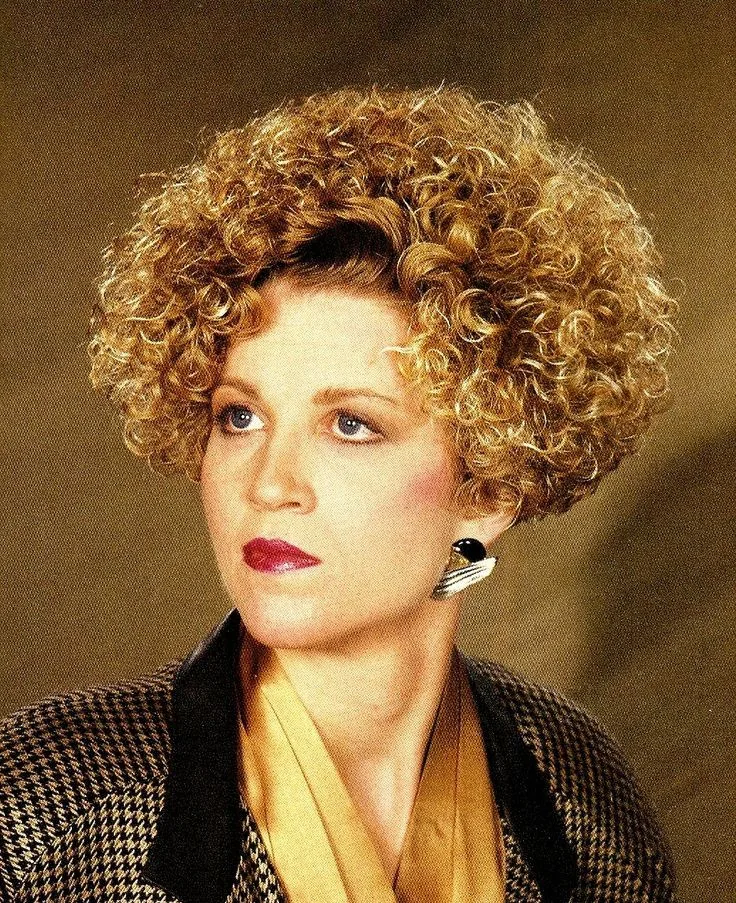
The classic 80s perm was the decade’s biggest commitment: a chemical treatment that set tight, lasting curls into the hair, worn by millions of women who wanted volume that survived sleep, rain and a working week. The perm gave the hair a uniform curl from root to tip, and with the right cut it created the big, round, bouncy silhouette that defined the decade. It was the look of soap-opera stars and office workers alike, and for many women it was the first time their hair had real, reliable body. The cost was damage — 80s perms were notoriously hard on the hair, and the ends often paid the price.
Today’s version is the soft perm or the digital perm: looser curls, healthier hair, and a result that looks like natural texture rather than a chemical set. If you want the 80s perm feeling without the 80s damage, ask a stylist for large rollers and a gentle solution, and expect a softer, more modern curl. Who it flatters most: straight, fine hair that needs lasting body, and medium to long lengths. Who should avoid it: already-damaged or very fine hair, and anyone who wants to change their look often — a perm is a months-long commitment. Quick verdict: the most 80s choice of all, and the one that has improved the most since the decade ended.
7. Spiral Perm Curls
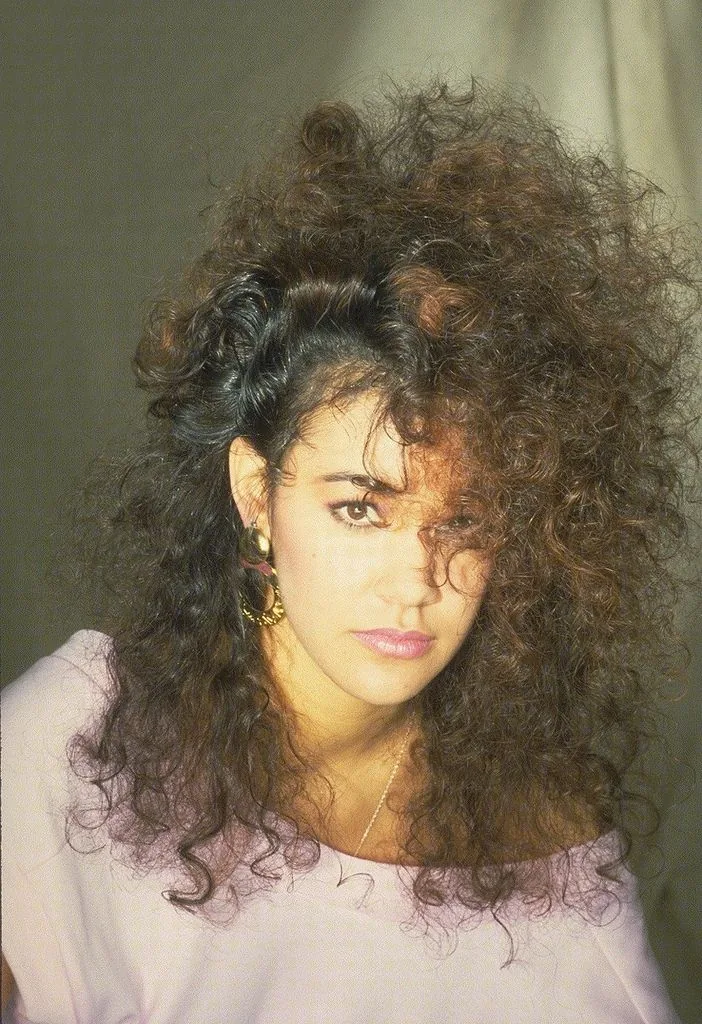
Spiral perm curls were the 80s perm taken to its most glamorous extreme: long, tight, springy curls that fell in defined spirals down the back, giving the hair enormous volume and a dramatic, almost sculptural shape. The curls were wound vertically around long rods, so they fell in corkscrews rather than waves, and the result was hair that moved like a curtain and caught the light at every turn. It was the look of pop stars and prom queens, and it needed length — the longer the hair, the more spectacular the spirals.
The modern twist uses larger rods and a gentler solution, giving looser spirals that read as natural curls rather than a perm. It suits long hair best, and it is especially flattering on oval and heart-shaped faces, where the curls frame the face in a wide, soft shape. Who should avoid it: short hair, where spirals turn into a tight afro shape, and fine hair, which can look overwhelmed by the volume. Quick verdict: the most dramatic perm in this guide — if you have the length and the patience, it is unforgettable. Book a stylist, bring a photo, and enjoy the curls for months.
8. Mall Bangs
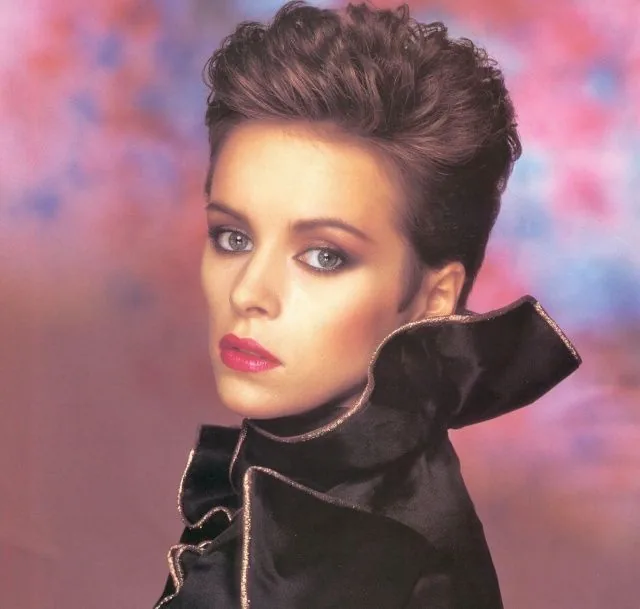
Mall bangs are the most famous 80s fringe there ever was: a tall, teased, hairsprayed wall of fringe, standing up and out from the forehead like a wave frozen mid-crest. They were named for the shopping malls where they were worn by teenagers across America, and they were the decade’s most visible rebellion against flat, sensible hair. The fringe was teased from underneath, sprayed into place, and often curled at the ends so it arched over the forehead. It was high-maintenance, high-drama, and completely unmistakable.
Wear mall bangs today by taking the height down by half: a soft, lifted fringe with a little root volume, styled with a round brush and a light spray, gives the same retro energy without the helmet. It flatters oval and long faces best, because the height shortens the forehead, and it suits thick hair that can hold the lift. Who should avoid it: anyone with a very short forehead, or fine hair that will not hold the height — the modern version will fall flat by lunchtime. Quick verdict: the most iconic 80s fringe, best worn as a nod rather than a replica. Half the height, twice the charm.
9. The Teased Crown
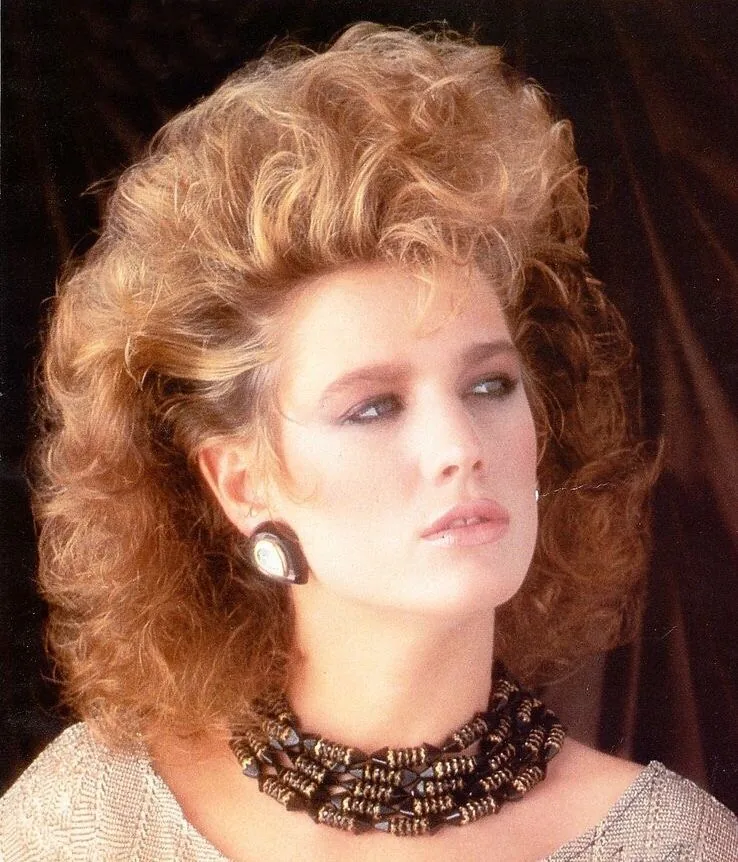
The teased crown was the 80s answer to flat hair: the crown backcombed into a soft, lifted mound, smoothed over on top, and locked in place with hairspray. It added inches of height, gave the whole hairstyle its shape, and was the foundation under almost every other 80s style — the blowout, the perm, the updo, the side ponytail all sat on a teased crown. It was the decade’s most practical technique, because it worked on every hair type and every length, and it was the one skill every 80s woman learned, whether she wanted to or not.
The modern version is gentler and smaller: backcomb only the crown, in small sections, and smooth the top layer carefully so the lift looks like volume, not a nest. It flatters round faces especially, because the height lengthens the face, and it is the single best trick for adding presence to a ponytail or an updo. Who should avoid it: anyone who teases daily — the tangles and breakage add up, and the hair needs rest days. Quick verdict: the 80s technique that still matters most. Learn it gently, use it sparingly, and every other style in this guide gets easier.
10. The Women’s Mullet
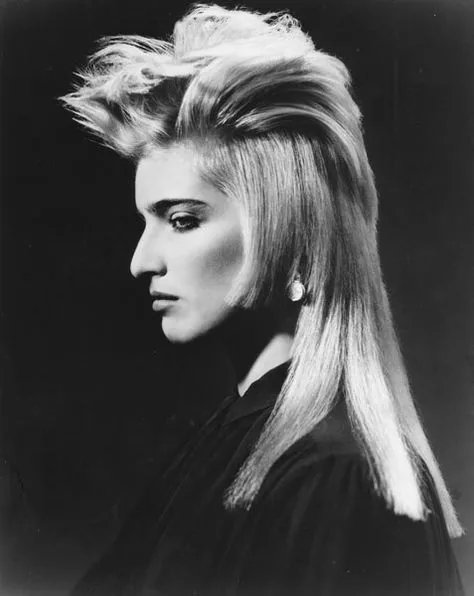
The women’s mullet was the 80s most divisive cut: short at the front and sides, long at the back, worn by rock stars, rebels and women who simply liked the shape. It was business at the front and party at the back long before the phrase existed, and it worked because the short front framed the face while the long back gave movement and drama. In the 80s it was often worn with feathered layers on top and a straight, longer back, and it was the cut for women who wanted their hair to say something before they did.
The modern mullet — the shaggy mullet, the wolf cut’s cousin — is softer, more layered and far more wearable, and it is one of the most fashionable cuts of the moment. It flatters oval and heart-shaped faces, and it suits wavy and curly hair best, where the texture does the work. Who should avoid it: anyone who wants a conservative cut, or very fine hair, where the short front can look thin. Quick verdict: the 80s cut that came back first and loudest. If you want the decade’s attitude in one haircut, this is it — just ask your stylist for the soft, modern version.
11. The 80s Shag
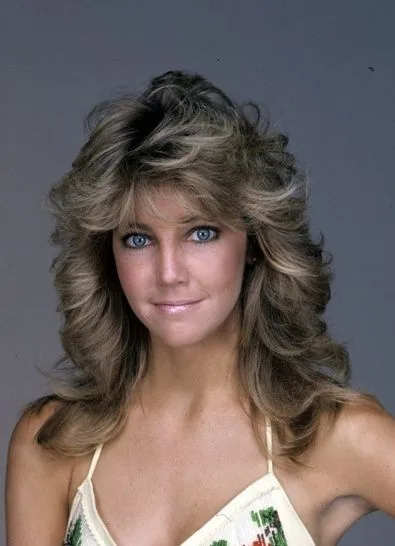
The 80s shag was the decade’s cool-girl cut: layers cut at different lengths all over the head, giving a messy, textured, lived-in shape that looked good with almost no styling. It was the hair of rock musicians and artists, and it worked because the layers did the work — the hair fell into place on its own, with volume at the crown, texture at the ends, and a fringe that could be swept anywhere. The 80s version was often worn with feathered ends and a little height at the top, and it was the cut for women who wanted to look like they had not tried very hard, even when they had.
Today the shag is back as the modern shag and the wolf cut, and it is one of the easiest 80s styles to wear. It flatters almost every face shape, suits wavy and curly hair especially well, and it grows out gracefully — the layers just get longer and softer. Who should avoid it: very fine, straight hair, where the layers can make the ends look wispy. Quick verdict: the 80s cut for women who hate styling. Wash it, scrunch it, go — the shag does the rest, and it looks better slightly messy than it ever does perfect.
12. The Feathered Shag
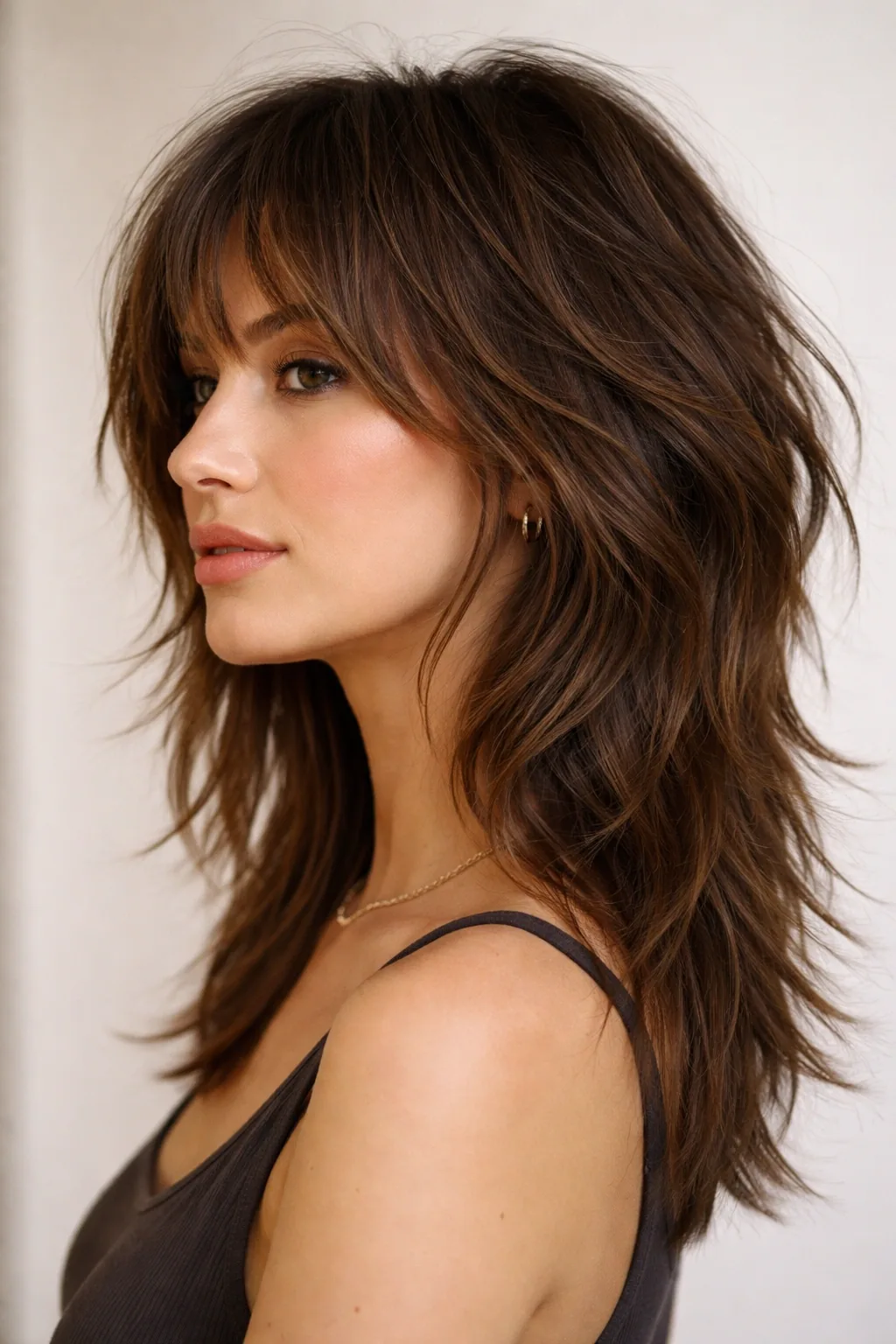
The feathered shag combined the two biggest 80s ideas — the shag’s choppy layers and the feathered cut’s outward flip — into one hairstyle that was messy, textured and full of movement. The layers were cut to flip outward at the ends, so the hair had a winged, feathery silhouette, and the fringe was feathered too, sweeping across the forehead in soft pieces. It was the cut for women who wanted the shag’s attitude with the feathered look’s polish, and it worked on medium and long hair alike.
The modern version keeps the flip but softens it: a round brush on the ends, a little texture spray, and the layers left to fall where they want. It flatters oval, heart and square faces, and it is especially good for thick hair, where the layers remove weight and add movement. Who should avoid it: very fine hair, where the feathering can make the ends disappear. Quick verdict: the shag, but make it feathered — the 80s cut that looks like it was made for today, and the one that photographs best in motion.
13. The Bubble Perm
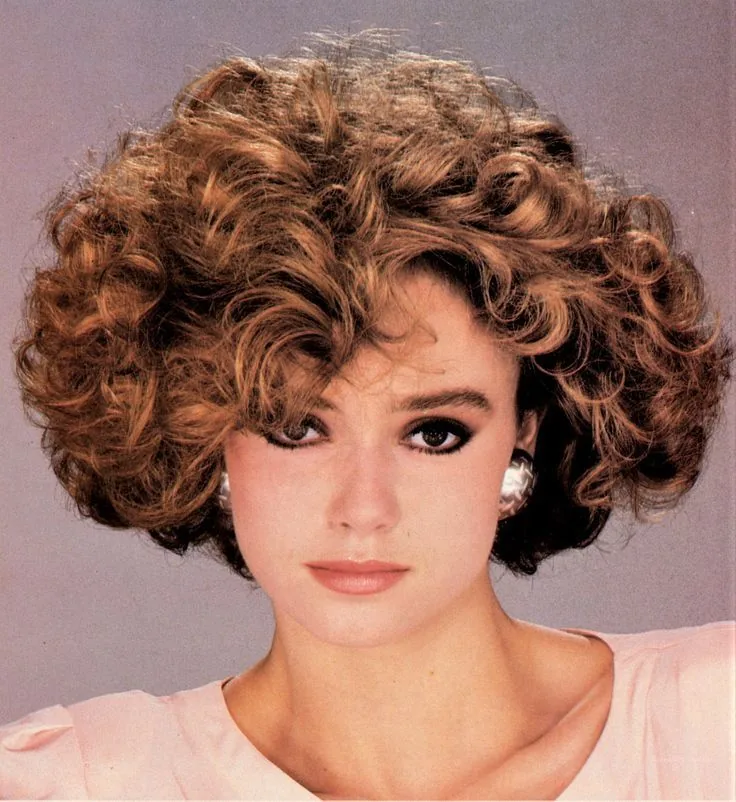
The bubble perm was the 80s perm at its roundest: tight curls set close to the head, creating a big, round, bubble-like silhouette that framed the face in a halo of curls. It was the perm for women who wanted maximum volume and maximum curl, and it was worn with a short to medium cut so the curls held their shape. The look was bold, bouncy and unmistakable — the hair was the outfit, and everything else was secondary. It was also the perm that needed the most maintenance, because the curls had to be shaped and the ends kept healthy.
Wear it today by asking for a modern soft perm with smaller sections at the crown and looser curls at the ends, which gives the bubble shape without the 80s stiffness. It flatters oval and long faces best, and it suits medium hair that can hold the round shape. Who should avoid it: very long hair, where the bubble turns into a heavy curtain, and anyone who wants a low-maintenance style — a perm is a commitment. Quick verdict: the roundest, bounciest perm of the decade, and a wonderful choice if you want your hair to be the main event.
14. The Half-Up Bow
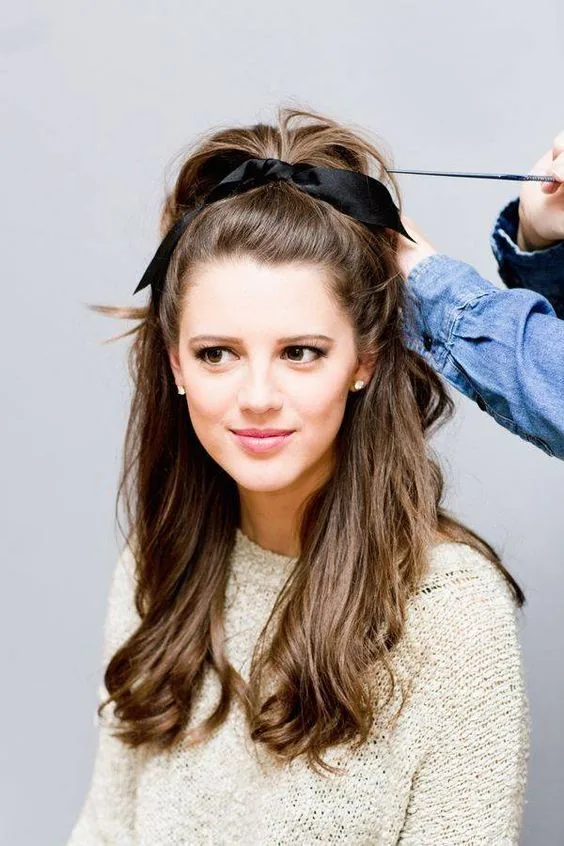
The half-up bow was the 80s prettiest party trick: the top half of the hair gathered up and tied with a big bow — velvet, satin or grosgrain — while the rest fell loose in waves or curls down the back. It was sweet, romantic and a little bit dramatic, and it was worn to proms, parties and weddings, where the bow added a finishing touch that a plain half-up style never had. The hair itself was often permed or crimped, so the loose lengths had volume and texture to match the bow’s statement.
The modern version uses a smaller, softer bow — velvet or silk, in a muted colour — and looser waves in the lengths, which keeps the romance without the costume. It flatters every face shape, suits medium to long hair, and is wonderful for a wedding guest or a date night. Who should avoid it: anyone who wants a strictly professional look — the bow is a party detail. Quick verdict: the 80s style that feels most like a gift. One bow, half the hair up, and the whole look turns romantic.
15. The Banana Clip Twist
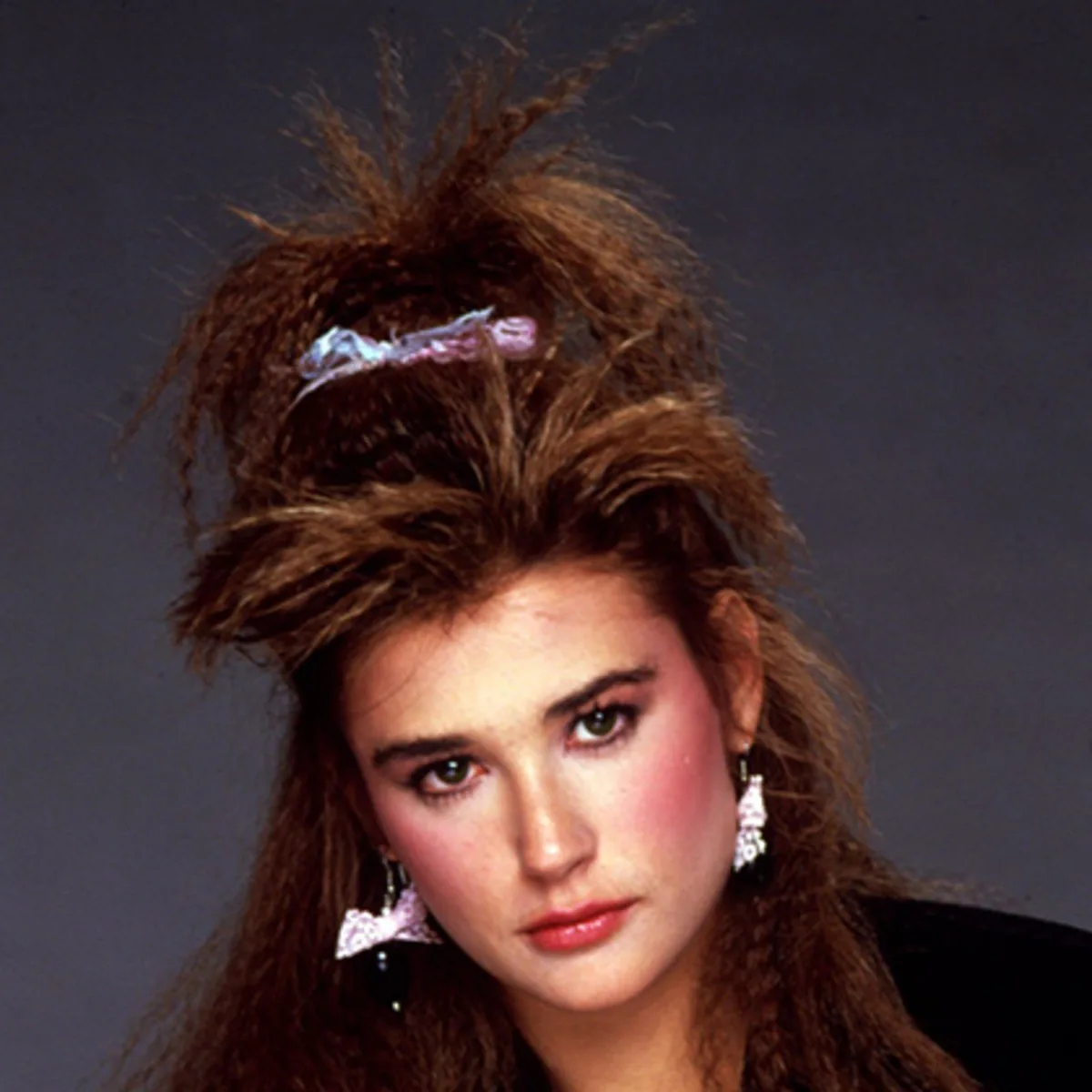
The banana clip twist was the 80s cleverest updo: a long, curved clip that gathered the hair into a vertical twist down the back of the head, creating height at the crown and a waterfall of hair below. It was fast — faster than a bun, easier than a French twist — and it worked on medium and long hair, giving an updo that looked far more complicated than it was. The clip came in every colour, from tortoiseshell to neon, and it was the updo for women who wanted their hair up without the formality of a bun.
Banana clips are back, and the modern versions in tortoiseshell and matte black are genuinely elegant. The twist works best on medium to long hair, and it flatters oval and heart-shaped faces, because the vertical line lengthens the neck. Who should avoid it: very short hair, which will not reach the clip, and very thick hair, which needs a strong clip to hold it. Quick verdict: the fastest 80s updo there is. One clip, one twist, and your hair is up, elegant and unmistakably 80s.
16. The Scrunchie Top Knot
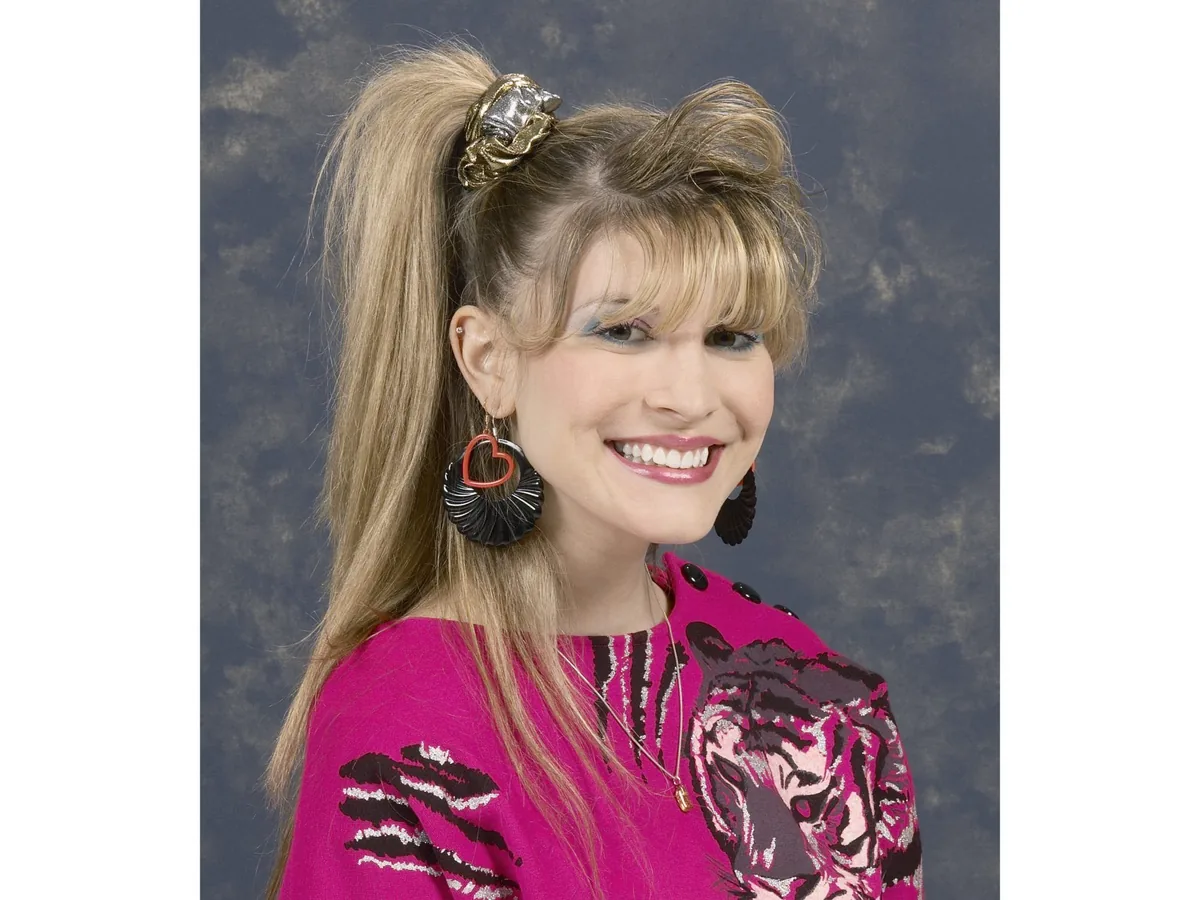
The scrunchie top knot was the 80s answer to the messy bun: the hair gathered high on top of the head, twisted into a knot, and secured with a scrunchie — often in a bright colour or a bold print. It was the hairstyle of aerobics classes, dance studios and lazy Sundays, and it worked because it was fast, comfortable and fun. The top knot kept the hair completely out of the way, showed off the face, and added height that made the whole silhouette taller. The scrunchie was the point: a plain elastic would have done the job, but the scrunchie made it a style.
Today the scrunchie top knot is a staple, worn with silk or velvet scrunchies and a softer, looser knot. It flatters oval and heart-shaped faces, suits every hair type, and works for the gym, for work and for a night out — the same knot, dressed up or down with the scrunchie. Who should avoid it: anyone with a very long face, where the extra height can lengthen it further — wear the knot lower, at the crown rather than the very top. Quick verdict: the 80s style that never left. One scrunchie, one knot, and you are done in thirty seconds.
17. The Stacked 80s Bob
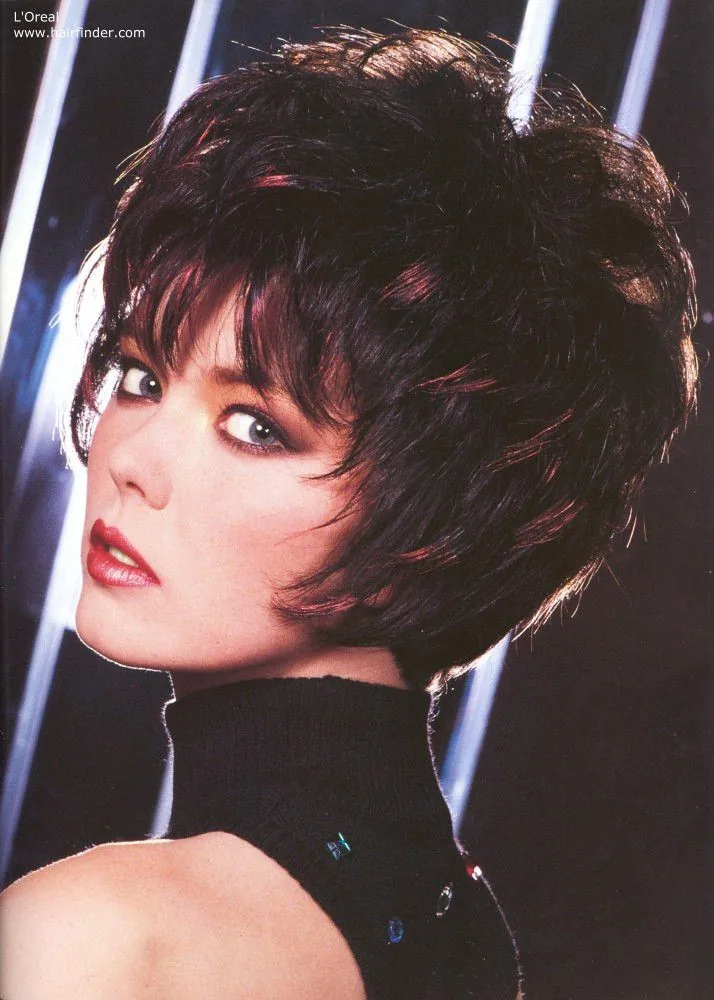
The stacked bob was the 80s bob with ambition: short, layered and stacked at the back, so the hair built up into a rounded, voluminous shape with real height. The back was cut shorter than the front, creating a wedge of volume that made the bob look sculpted rather than flat, and the front was left longer, framing the face in a sharp, graphic line. It was the bob for women who wanted structure and polish, and it was worn by office workers, newsreaders and anyone who liked a cut that looked deliberate from every angle.
The modern stacked bob is softer, with more texture and less stiffness, and it is one of the most flattering short cuts of the moment. It suits oval, round and heart-shaped faces, and it is especially good for fine hair, where the stacking creates volume that the hair could not make on its own. Who should avoid it: very thick hair, where the stacking can turn into a triangle without careful thinning. Quick verdict: the bob with a backbone. If you want short hair with real shape, the stacked bob is the 80s cut to ask for.
18. The Wedge Cut
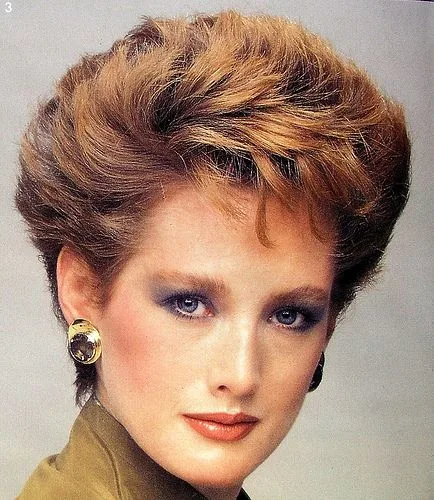
The wedge cut was the 80s most architectural short cut: a triangular, layered shape, short at the nape and longer at the front, with the hair angled so it curved around the head like a wedge. It was sharp, graphic and modern, and it was the cut for women who wanted short hair with a strong silhouette. The wedge needed a skilled cut and a little styling — a round brush and a dryer — but once it was in, it held its shape beautifully, and it was the short cut that looked most like a statement.
Wear it today with softer, more textured ends, which keeps the wedge’s shape without the 80s stiffness. It flatters oval and heart-shaped faces best, and it suits straight hair especially well, where the angles show. Who should avoid it: very curly hair, where the wedge’s angles fight the curl, and anyone who wants a wash-and-go cut — the wedge needs a little styling to hold its shape. Quick verdict: the 80s short cut for women who like clean lines. Sharp, sculpted and surprisingly wearable, once the edges are softened.
19. The Asymmetric Bob
The asymmetric bob was the 80s edgy bob: one side longer than the other, creating a bold, diagonal line across the face that made the whole cut feel modern and a little bit dangerous. It was the bob for women who wanted to stand out — artists, musicians, and anyone who liked their hair to make a point. The longer side was often worn swept across the forehead, and the shorter side tucked behind the ear, so the asymmetry was visible from the front and the back. It was the decade’s most fashion-forward short cut, and it still feels modern today.
The modern version keeps the asymmetry but softens it: a smaller difference between the sides, textured ends, and a little volume at the crown. It flatters oval and round faces, because the diagonal line breaks up the symmetry, and it suits straight and wavy hair best. Who should avoid it: anyone who wants a symmetrical, conservative cut, or very curly hair, where the asymmetry gets lost in the curl. Quick verdict: the 80s bob for women with opinions. One side longer, one side shorter, and a haircut that does the talking.
20. The Side-Swept Fringe
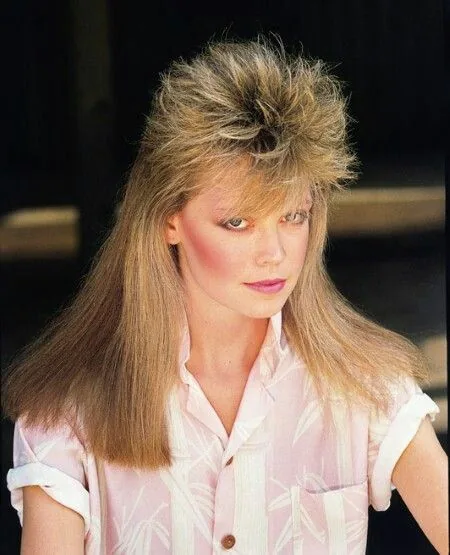
The side-swept fringe was the 80s softest fringe: a long fringe swept across the forehead to one side, blending into the layers and framing one eye. It was romantic, glamorous and flattering, and it was worn with almost every 80s style — the blowout, the perm, the feathered layers, the side ponytail all looked better with a side-swept fringe. The fringe was often curled or feathered, so it had movement and height, and it gave the face a soft, diagonal line that suited almost everyone.
Today the side-swept fringe is a classic, and it is the easiest 80s element to add to any haircut. It flatters every face shape, suits every hair type, and it is the fringe to choose if you want the 80s feeling without committing to a full style. Who should avoid it: nobody, really — but if your hair is very curly, the fringe will need straightening to sweep properly. Quick verdict: the 80s fringe that never went away. One sweep across the forehead, and any haircut looks a little more 1986.
21. The Big Curly Perm Bob
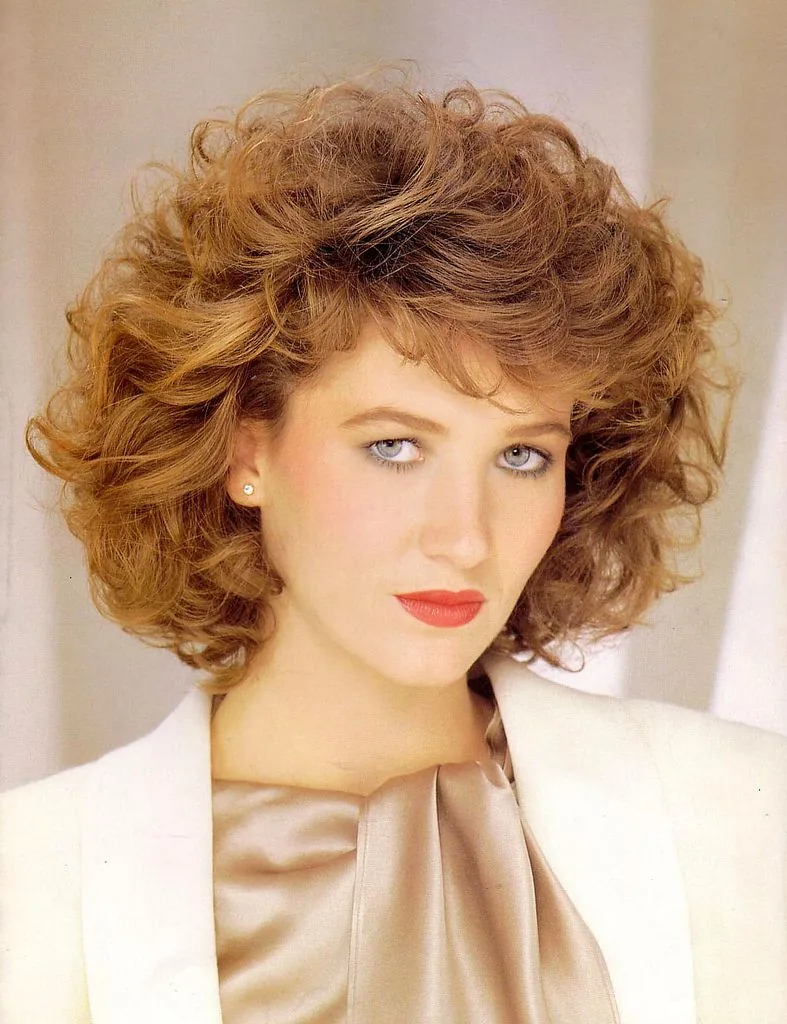
The big curly perm bob was the 80s perm at its most joyful: a short bob, permed into tight, bouncy curls, worn big and round and full of life. It was the look of women who wanted curls without the length — the bob kept the shape compact, and the perm gave it the volume and the bounce. The curls framed the face in a wide, soft shape, and the style was fun, flattering and full of personality. It was also one of the easiest perms to maintain, because the short length meant the curls held their shape with very little work.
The modern version uses a softer perm with larger curls, giving the same bounce with a healthier finish. It flatters oval and heart-shaped faces, and it suits fine hair especially well, where the perm creates volume the hair could not make alone. Who should avoid it: anyone who wants to change their look often, or very thick hair, where the perm can turn into a heavy mass. Quick verdict: the perm for women who want big hair in a small package. Short, curly, bouncy and completely joyful.
22. The 80s Pixie with Volume
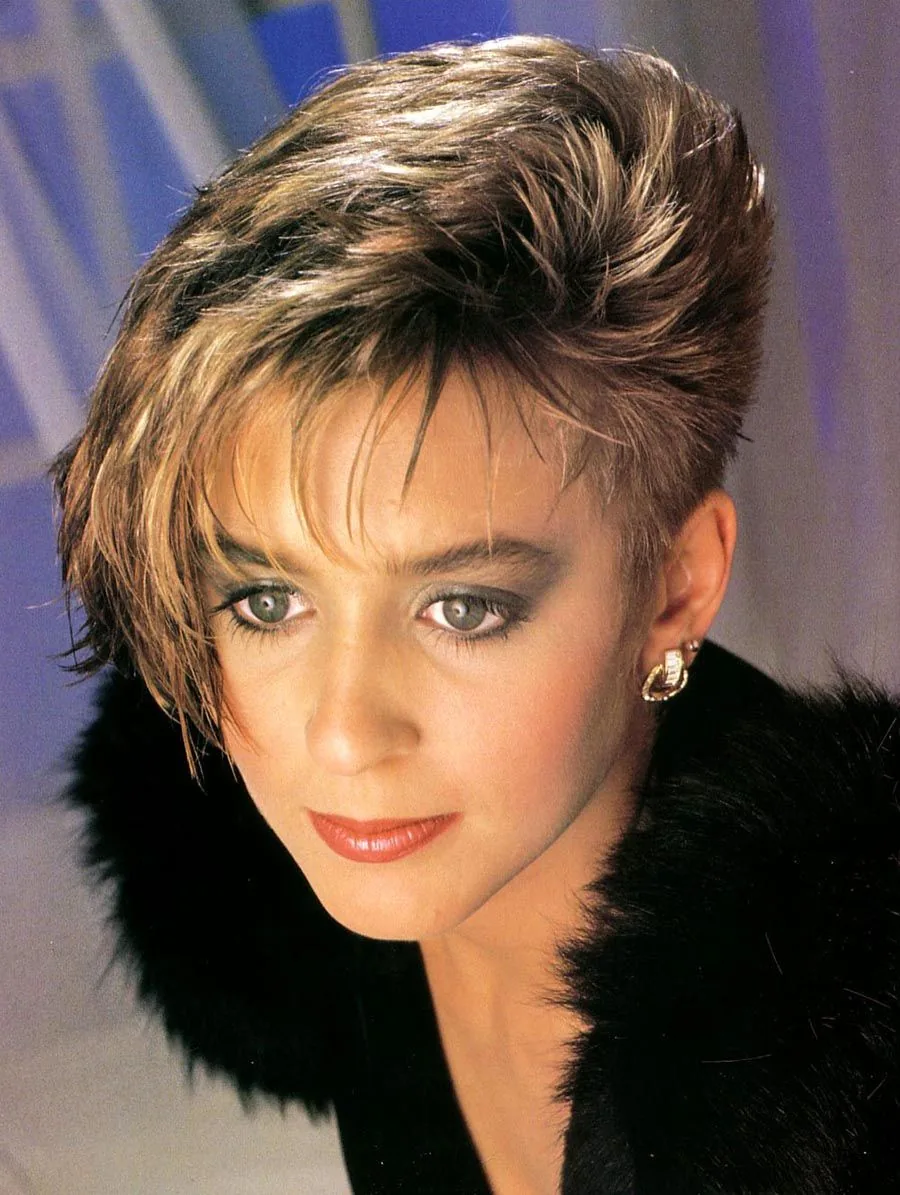
The 80s pixie was the decade’s boldest short cut: a pixie with height, texture and attitude, worn with the top left long and lifted, the sides short, and the fringe swept or spiked. It was the cut of pop stars and rebels, and it worked because it was both feminine and fierce — the volume on top gave it softness, and the short sides gave it edge. The 80s pixie was styled with mousse and a dryer, and it was the short cut that needed the most confidence, because there was nowhere to hide.
Wear it today with a softer, more textured top — a little root lift, a piecey fringe, and the sides kept neat but not severe. It flatters oval, heart and square faces, and it suits thick hair best, where the volume comes naturally. Who should avoid it: anyone who wants a low-maintenance cut, or very fine hair, where the lift is hard to hold. Quick verdict: the 80s short cut with the most personality. If you want short hair that makes a statement, the pixie with volume is the one to ask for.
23. Flipped Ends
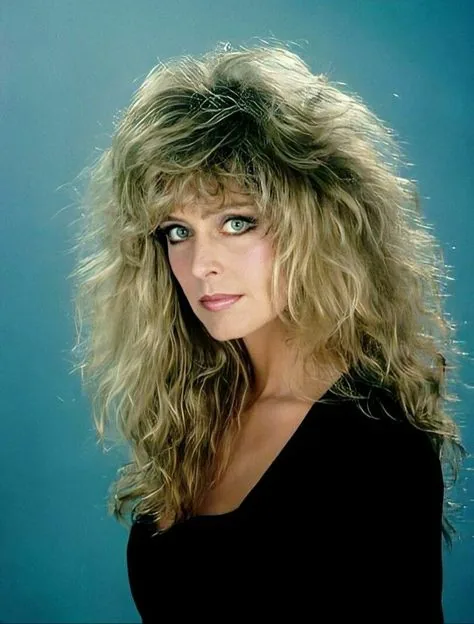
Flipped ends were the 80s finishing touch: the ends of the hair curled outward, away from the face, giving every layer a little wing and every haircut a little movement. The flip was done with a round brush and a dryer, or with hot rollers, and it was the detail that made the feathered layers and the blowout look finished. It was a small thing — just the last inch of the hair — but it changed the whole silhouette, turning a straight cut into a shaped one, and a simple blowout into a style.
The modern version is the same flip, done softer: a large round brush, a cool setting, and a light spray, so the ends turn outward without looking stiff. It flatters every face shape and every length from medium to long, and it is the easiest 80s detail to add to a haircut you already have. Who should avoid it: nobody — the flip is a styling choice, not a cut, and it washes out. Quick verdict: the smallest 80s detail with the biggest effect. Flip the ends, and any haircut looks a little more 1986.
24. The Crimped Side Ponytail
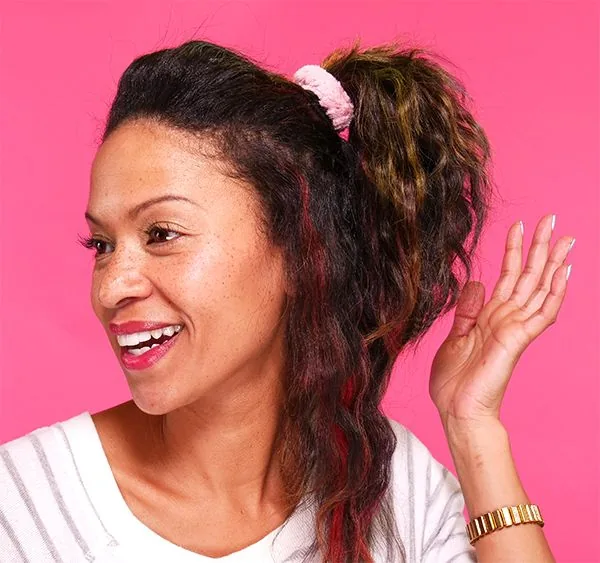
The crimped side ponytail combined the decade’s two most playful ideas: the crimp, for texture and volume, and the side ponytail, for fun and drama. The hair was crimped all over, then swept to one side and tied high or low with a scrunchie, so the ponytail fell over one shoulder in a thick, textured wave. It was the hairstyle of pop videos and dance floors, and it was worn by women who wanted their hair to be as loud as their outfit. The crimp gave the ponytail a weight and a presence that a smooth ponytail never had.
Wear it today by crimping only the ponytail itself, not the whole head, and tying it with a velvet scrunchie. It flatters oval and heart-shaped faces, and it suits medium to long hair that can carry the texture. Who should avoid it: anyone with very fine hair, where the crimp can look frizzy, and anyone who crimps often — the heat adds up. Quick verdict: the 80s party ponytail, and the most fun style in this guide. Crimp it, sweep it, tie it, and go dance.
25. The 80s Pigtails
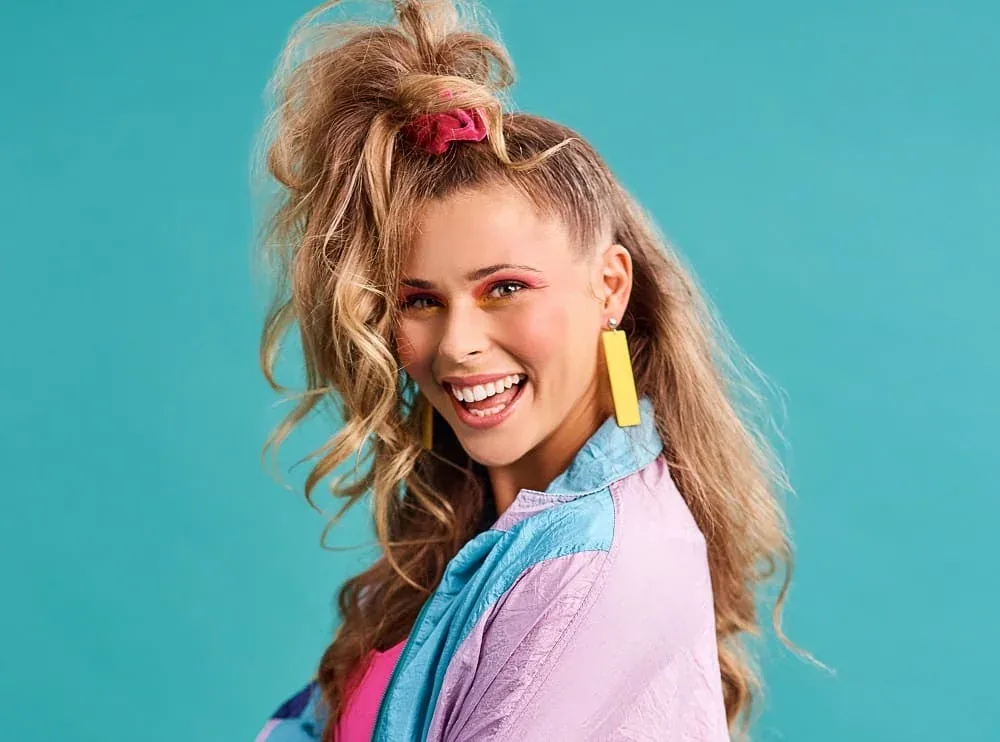
The 80s pigtails were the decade’s most playful style: two high ponytails, one on each side, tied with scrunchies and often crimped or curled for extra volume. They were worn by pop stars, dancers and teenagers, and they were the hairstyle for women who wanted to look young, fun and a little bit rebellious. The pigtails were usually worn high and full, with the fringe swept or teased, and they were the style that said the wearer did not take herself too seriously — which, in the 80s, was the point.
The modern version wears them lower and softer: two low pigtails, or two loose braids, with a velvet scrunchie and a few face-framing pieces. It flatters oval and heart-shaped faces, and it suits medium to long hair. Who should avoid it: anyone who wants a professional or formal look — pigtails are a party and festival style, and they read as playful, not polished. Quick verdict: the most joyful 80s style, best saved for a party, a festival or a day when you want to feel young. Two scrunchies, two ponytails, instant fun.
26. The Headband Puff
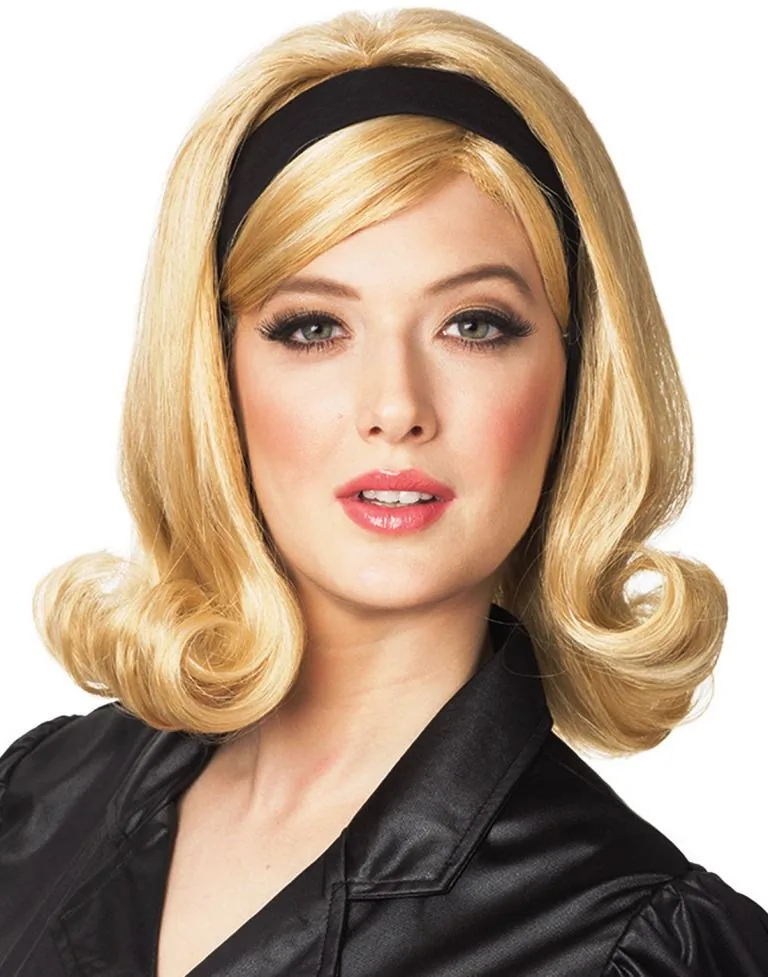
The headband puff was the 80s easiest volume trick: a thick headband pushed back from the forehead, lifting the fringe into a soft, rounded puff, while the rest of the hair fell loose or was tied back. It was the hairstyle of aerobics videos and school corridors, and it worked because it was instant — one headband, one push, and the hair had height, shape and a finished look. The puff itself was often teased underneath, so it held its shape, and the headband came in every colour, from velvet to neon.
Today the headband puff is back as the padded headband look, and it is one of the easiest 80s styles to wear. It flatters every face shape, suits every hair type, and works for work, for a party and for a bad-hair day — the headband does the work. Who should avoid it: anyone with a very short forehead, where the puff can overwhelm the face — push the band back less far. Quick verdict: the fastest 80s style there is. One headband, one push, and your hair has height, shape and attitude.
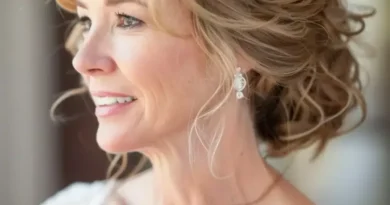
27. The 80s Prom Updo
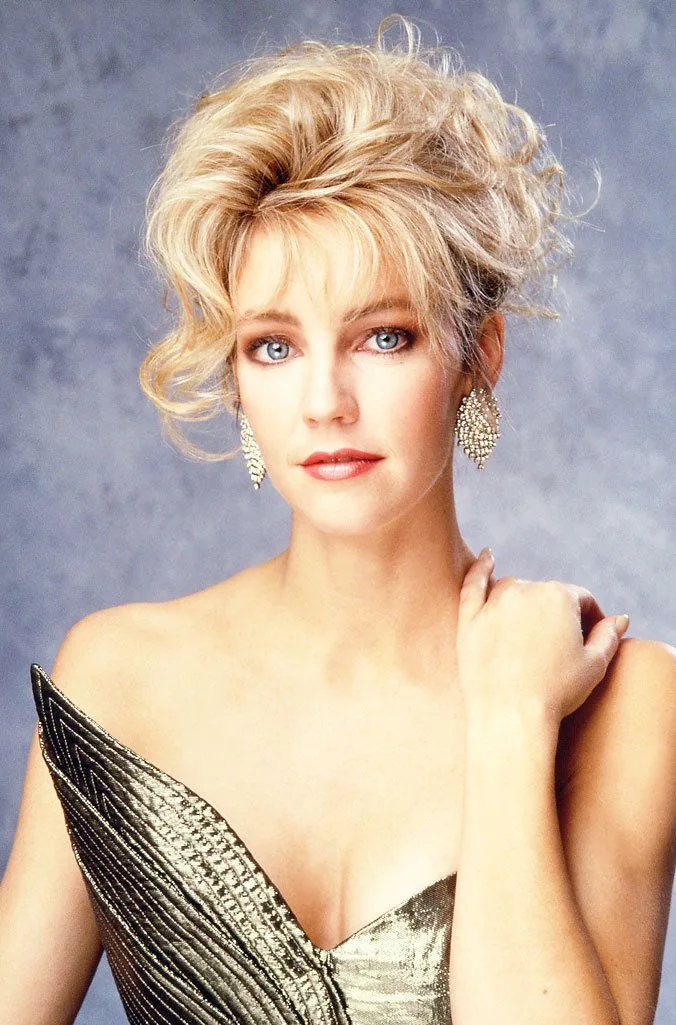
The 80s prom updo was the decade’s most glamorous occasion style: the hair piled high, curled, teased and pinned into a tall, sculpted shape, often with curls falling at the face and a few rhinestone pins for sparkle. It was the updo for the biggest night of the year, and it was built to be seen — from the front, from the back, and across a crowded dance floor. The updo was often paired with a big dress and bigger earrings, and the hair had to keep up. It did, with height, curls and a lot of hairspray.
The modern version keeps the height and the curls but softens the stiffness: a looser, more textured updo, with soft curls at the face and a few pins, rather than a rigid sculpture. It flatters oval and heart-shaped faces, and it suits medium to long hair that can be piled high. Who should avoid it: anyone who wants a low-key look — the prom updo is a statement, and it should be worn like one. Quick verdict: the 80s updo for the biggest nights. Tall, curled, pinned and sparkling — and worth every bobby pin.
28. Tousled 80s Waves
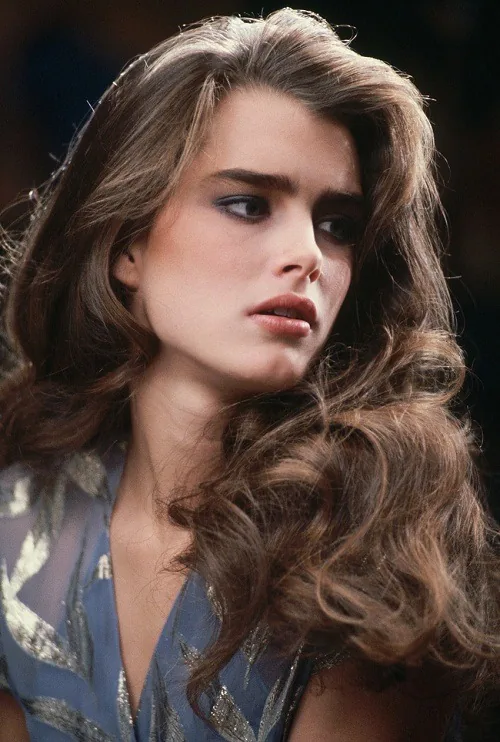
Tousled 80s waves were the decade’s most natural-looking style: loose, textured waves, scrunched and tousled into a soft, lived-in shape, with volume at the roots and movement at the ends. They were the waves of rock stars and beach holidays, and they worked because they looked effortless — the hair had been styled, but it did not look styled. The waves were often created with a perm, a crimping iron or a scrunching technique, and they were finished with mousse rather than hairspray, so the hair stayed soft and touchable.
Today the tousled wave is a staple, and it is the easiest 80s style to wear every day. It flatters every face shape, suits every hair type, and it is the wave to choose if you want the 80s feeling without the 80s effort. Who should avoid it: nobody — the tousled wave is a styling choice, and it washes out. Quick verdict: the 80s style for women who hate styling. Scrunch it, tousle it, go — the waves do the rest, and they look better slightly messy than they ever do perfect.
29. The Farrah Fawcett Feathered Look
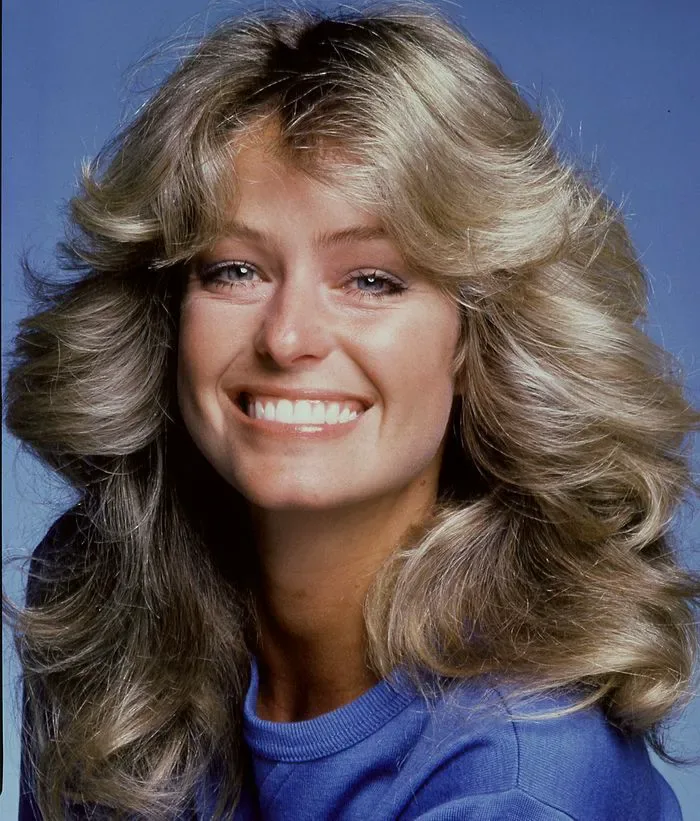
The Farrah Fawcett feathered look was the hairstyle that defined the turn of the decade: long, feathered layers that flipped away from the face in soft wings, with a centre part and a fringe that swept to each side. It was the look of the most famous hair in the world, and it carried into the 80s as the decade’s most-worn long style. The layers were cut to fall in a wide, soft shape, and the hair was blow-dried with a round brush so the ends flipped outward. It was glamorous, flattering and completely unmistakable — the hair that launched a thousand imitations.
The modern version keeps the wings but softens the flip, using a large round brush and a cool setting. It flatters oval, heart and square faces, and it suits long hair best, where the layers have room to fan out. Who should avoid it: very fine hair, where the layers can make the ends look thin — ask for longer, fewer layers. Quick verdict: the most famous feathered look ever, and still the most flattering long 80s style. If you want one long look from this guide, this is the one.
30. The Long, Layered 80s Mane
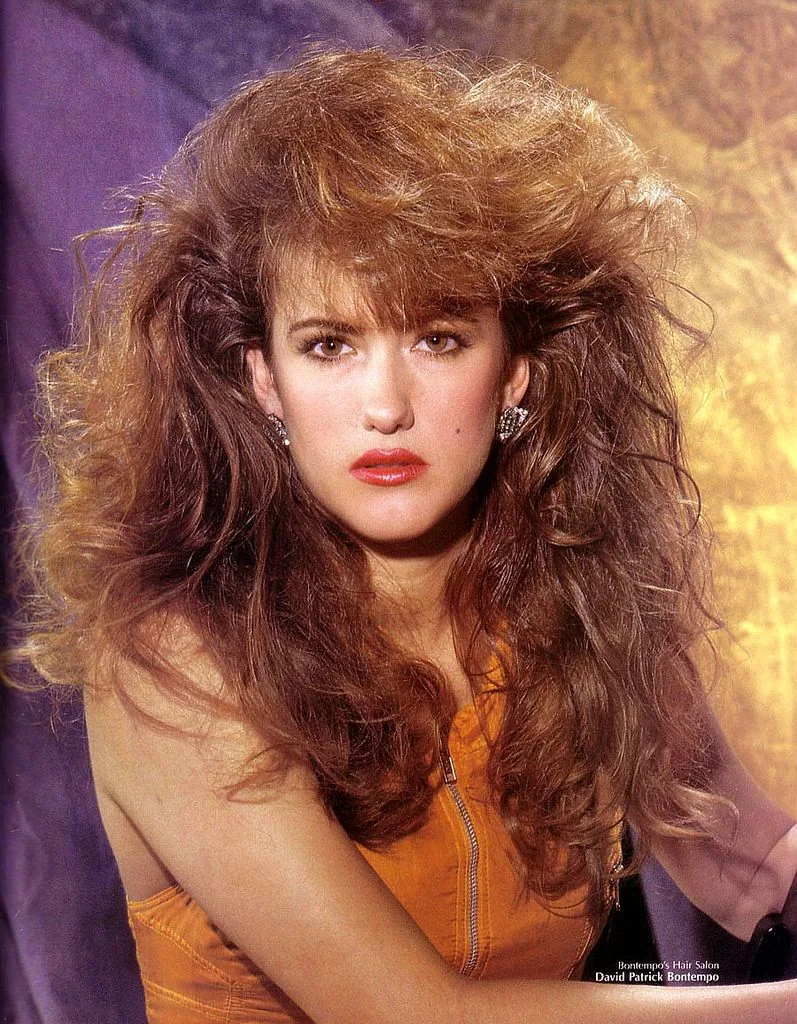
The long, layered 80s mane was the decade’s most dramatic long style: very long hair, cut in long layers, worn straight and glossy, with the layers giving movement and shape to hair that would otherwise hang flat. It was the look of rock stars and supermodels, and it worked because the length was the statement — the hair fell past the shoulders, past the waist, and it moved like a curtain. The layers kept it from looking heavy, and the shine kept it from looking dull. It was the 80s long hair, worn with confidence and a lot of conditioner.
Wear it today by keeping the length but adding more movement: long layers, a soft blowout, and a little volume at the roots, so the mane has shape as well as length. It flatters oval and long faces, and it suits straight and wavy hair best. Who should avoid it: anyone with very fine hair, where the length can pull the volume out — a shorter cut will look fuller. Quick verdict: the 80s mane for women who love long hair. Keep the length, add the layers, and let the hair do the talking.
31. Madonna-Inspired Teased Layers
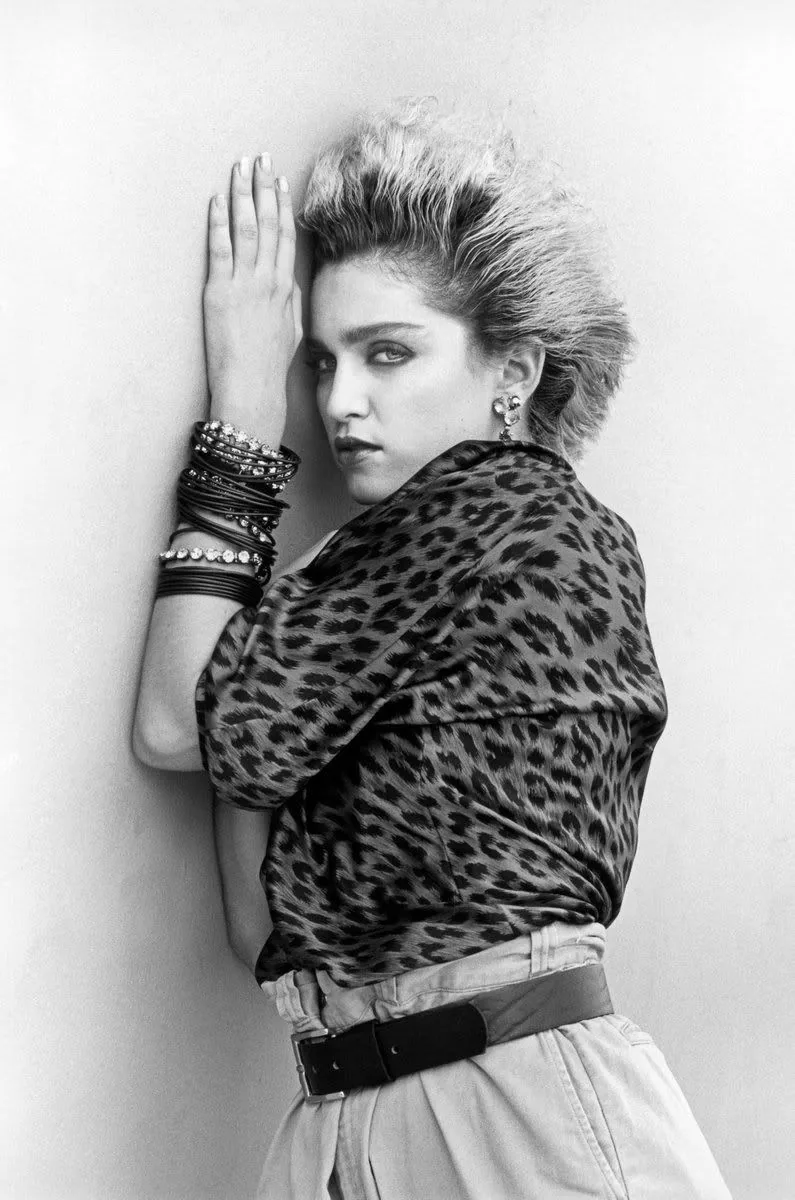
Madonna-inspired teased layers were the 80s pop-star look: blonde, teased, tousled layers, worn big and messy, with dark roots, a headband or a bow, and an attitude that said the hair was part of the performance. The layers were cut choppy and uneven, the crown was teased for height, and the ends were left to flip and curl where they wanted. It was the look of the early 80s pop explosion, and it was worn by women who wanted their hair to be as bold as their music. It was messy, it was fun, and it was completely unapologetic.
The modern version keeps the tousled layers but softens the teasing: a little root lift, a texture spray, and the layers left to fall where they want. It flatters oval and heart-shaped faces, and it suits medium hair best, where the layers have room to move. Who should avoid it: anyone who wants a polished, professional look — this is a party style. Quick verdict: the 80s pop-star look, and the most fun way to wear blonde layers. Tease it, tousle it, and wear it like you mean it.
32. The Rock Chick Layers
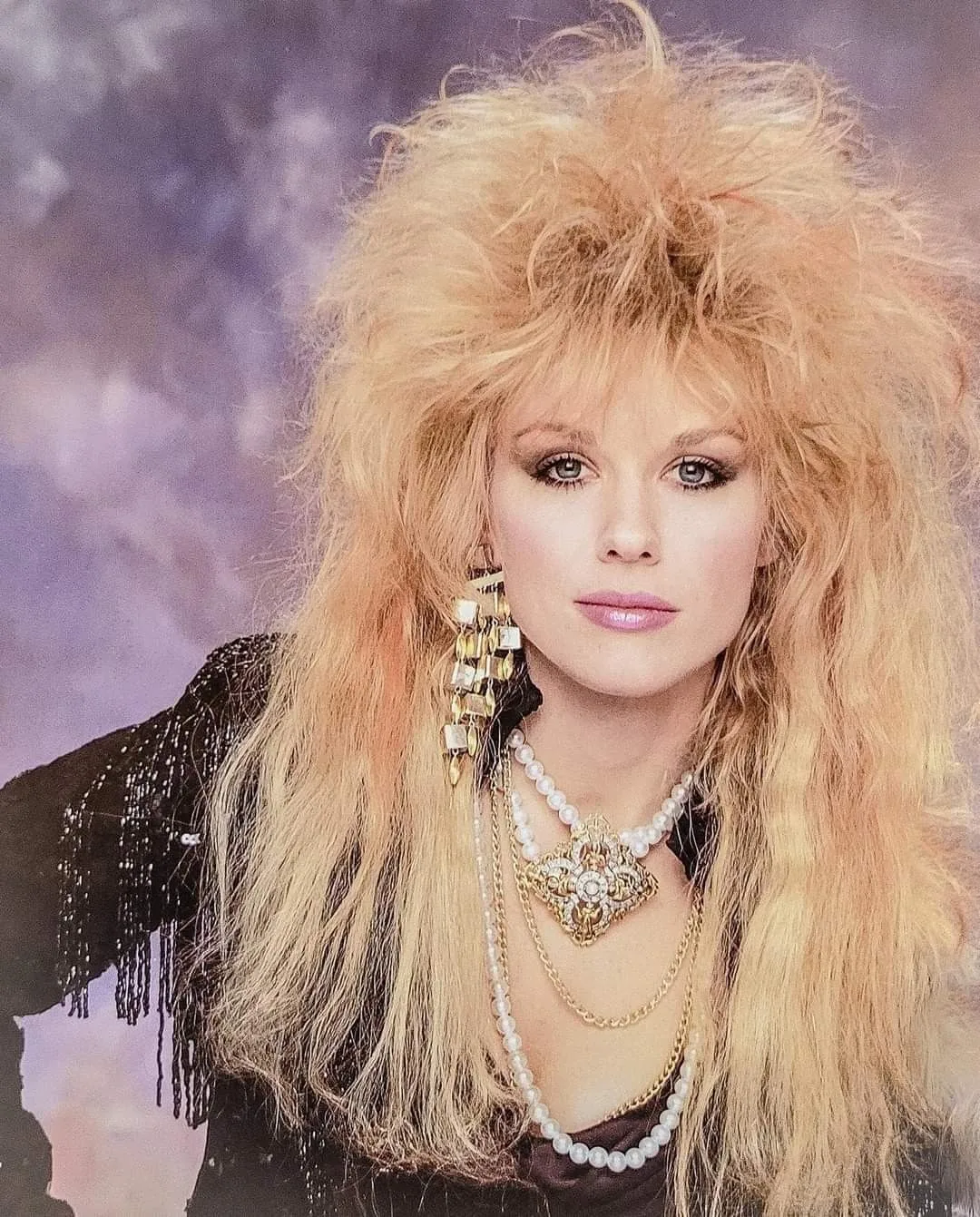
The rock chick layers were the 80s hardest look: dark, choppy, layered hair, worn with volume at the crown, texture at the ends, and a fringe that could be swept, spiked or left to fall where it wanted. It was the hair of rock musicians and their fans, and it worked because it was both tough and feminine — the layers gave it movement, the volume gave it presence, and the dark colour gave it drama. The rock chick cut was often worn with a perm or a crimp, so the texture matched the attitude, and it was the style for women who wanted their hair to say they were not to be messed with.
Wear it today by keeping the choppy layers and the volume, but softening the colour and the finish: a softer black or a deep brown, textured ends, and a little root lift. It flatters oval, heart and square faces, and it suits thick hair best, where the layers remove weight and add movement. Who should avoid it: anyone who wants a soft, romantic look — the rock chick is a statement. Quick verdict: the 80s cut with the most attitude. Choppy, dark, voluminous and completely unafraid.
33. The Princess Diana Feathered Cut
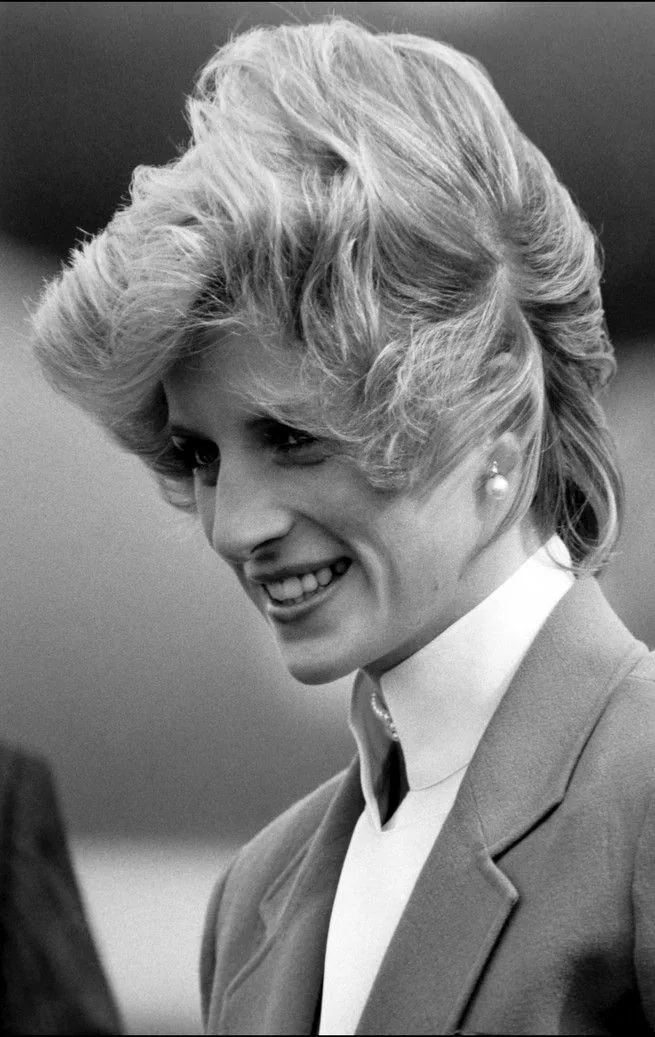
The Princess Diana feathered cut was the 80s most elegant short style: a soft, feathered crop, with layers that flipped and curled around the face, a side part, and a fringe that swept across the forehead. It was the cut of the decade’s most photographed woman, and it was worn by millions of women who wanted short hair that was soft, feminine and flattering. The layers gave it movement, the feathering gave it softness, and the shape gave it a polish that the decade’s wilder styles never had. It was the 80s short cut for women who wanted to look like a princess, not a pop star.
The modern version keeps the feathering but adds more texture: a piecey fringe, soft layers, and a little root lift, so the cut looks current rather than retro. It flatters oval, heart and round faces, and it suits fine hair especially well, where the layers create volume. Who should avoid it: anyone who wants a very short, edgy cut — the Diana cut is soft, not sharp. Quick verdict: the most elegant 80s short cut, and the one that has aged best. Soft, feathered, flattering — and still the cut to ask for if you want short hair with grace.
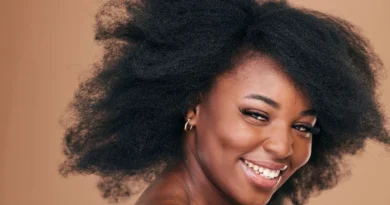
34. Big 80s Afro Volume
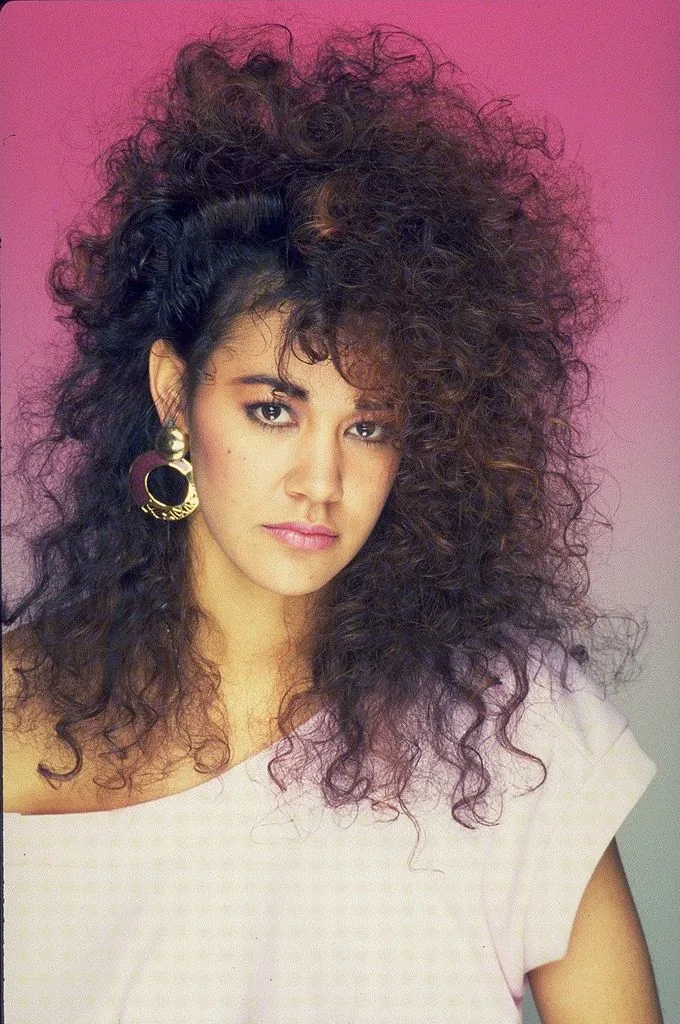
Big 80s afro volume was the decade’s boldest curly style: natural curls shaped into a big, round, voluminous silhouette, worn proud and high, with the curls picked out to their fullest. It was the look of women who celebrated their natural texture, and it was the 80s at its most joyful — the hair was the statement, and it needed nothing else. The shape was round, the curls were defined, and the volume was enormous. It was also the style that needed the most care, because the curls had to be moisturised and shaped to hold their roundness.
The modern version keeps the volume but adds more definition: a curl cream, a diffuser, and a pick at the roots, so the curls are shaped rather than just big. It flatters oval and heart-shaped faces, and it suits naturally curly and coily hair best — the texture does the work. Who should avoid it: nobody with curly hair — this is your style, and the 80s knew it. Quick verdict: the biggest, boldest curly style of the decade, and the one that celebrates natural hair most. Pick it out, wear it high, and let the volume speak.
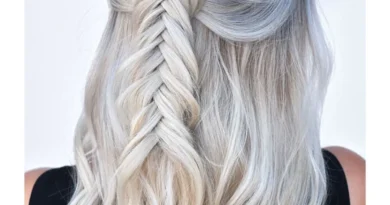
35. The Braided Side Ponytail
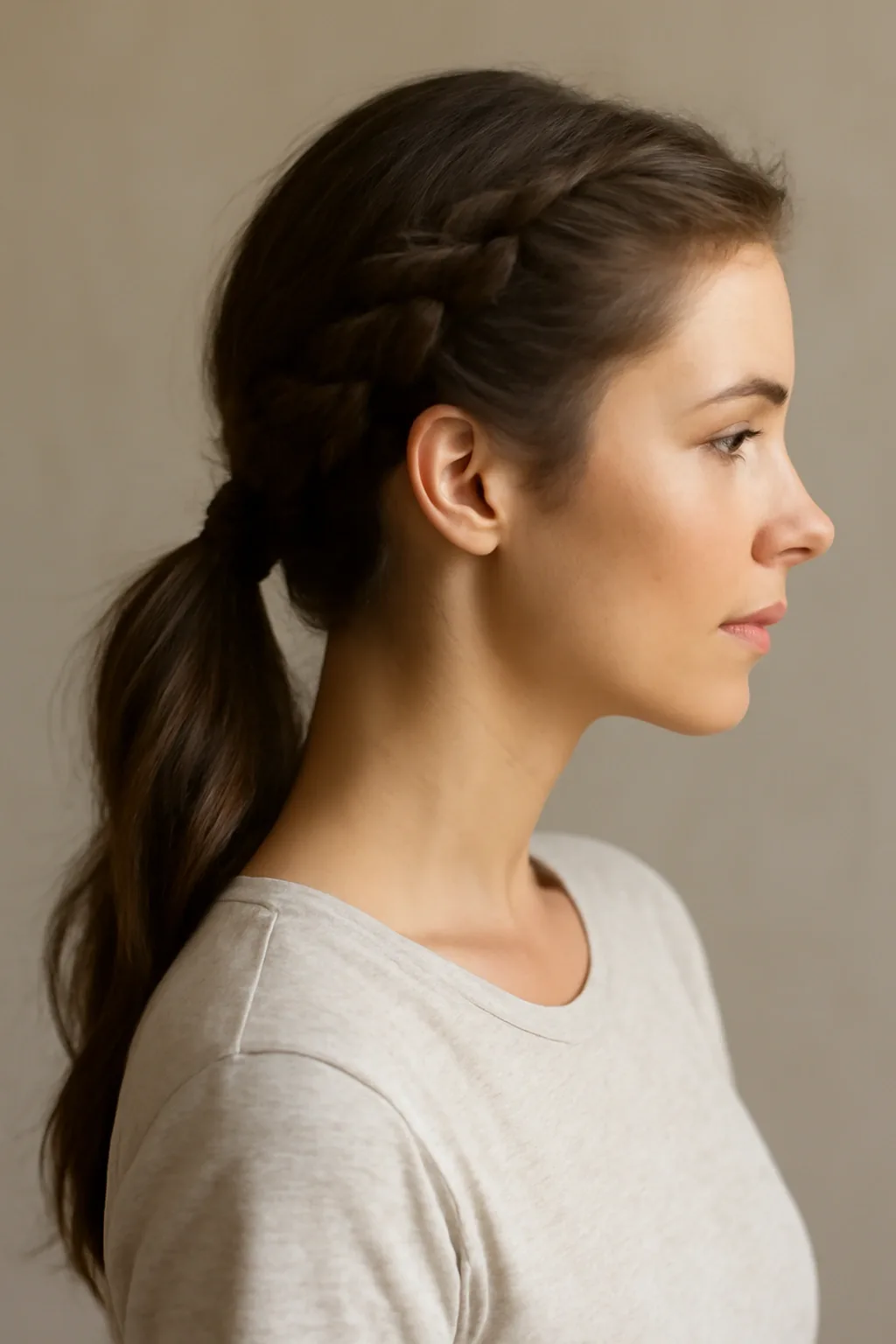
The braided side ponytail was the 80s side ponytail with a twist: the hair braided first, then swept to one side and tied with a scrunchie, so the ponytail had texture, detail and a little bit of romance. It was the side ponytail for women who wanted something more interesting than a plain sweep, and it was worn to parties, to school and to the shops. The braid gave the ponytail weight and presence, and the side placement gave it drama. It was also practical — the braid kept the hair tidy, and the scrunchie kept it secure.
Wear it today by braiding loosely and tying it with a velvet scrunchie, with a few face-framing pieces left out. It flatters oval and heart-shaped faces, and it suits medium to long hair that can be braided and swept. Who should avoid it: very short hair, which will not reach the braid, and anyone who wants a strictly formal look — the braided side ponytail is playful. Quick verdict: the side ponytail, but make it braided. One braid, one sweep, one scrunchie — and a style that looks far more complicated than it is.
36. Scrunched 80s Curls
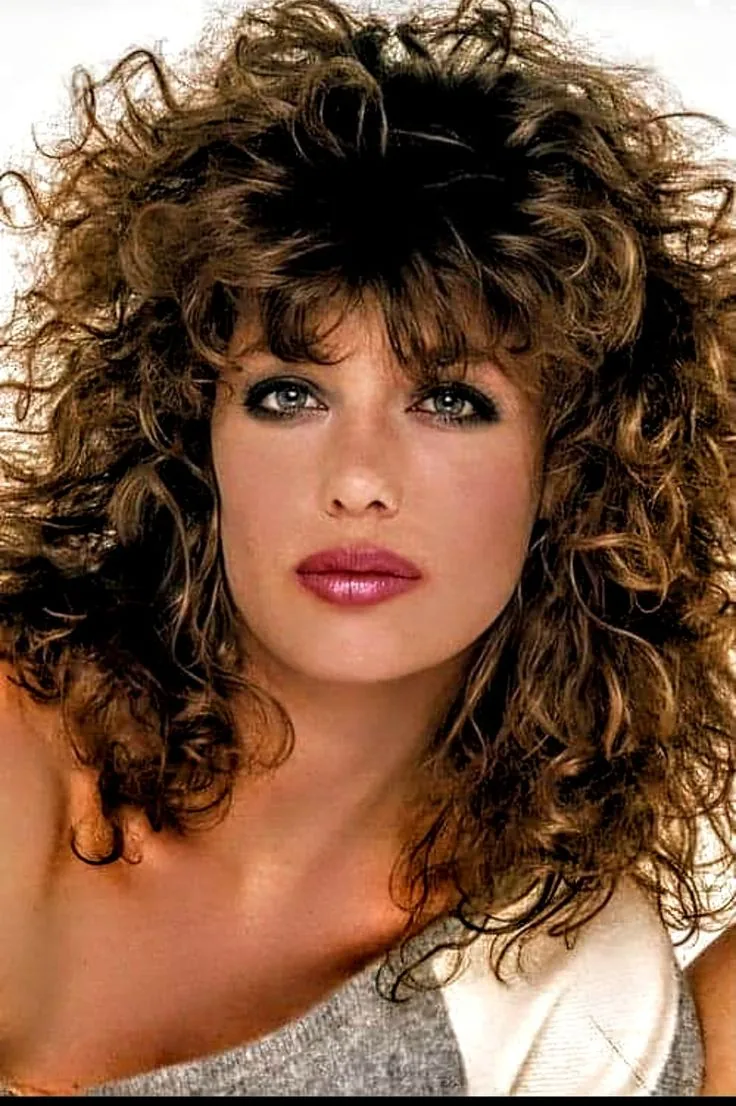
Scrunched 80s curls were the decade’s most casual texture: the hair scrunched with mousse while it dried, creating soft, tousled curls that looked natural and lived-in. It was the curl for women who did not want a perm or a curling iron — just mousse, a scrunch, and a little patience. The curls were loose and uneven, which was the point: they looked like the hair had dried that way on its own, after a swim or a walk in the wind. It was the 80s curl for everyday, and it was worn by women who wanted texture without effort.
Today the scrunched curl is a staple, and it is the easiest 80s texture to get: mousse, a scrunch, and a diffuser or air-dry. It flatters every face shape, suits wavy and curly hair best, and it is the curl to choose if you want the 80s feeling without the 80s damage. Who should avoid it: very straight hair, where the scrunch will fall out by lunchtime — a curling iron will hold better. Quick verdict: the 80s curl for women who hate curling irons. Scrunch it, leave it, and let the mousse do the work.
37. The 80s French Twist with Volume
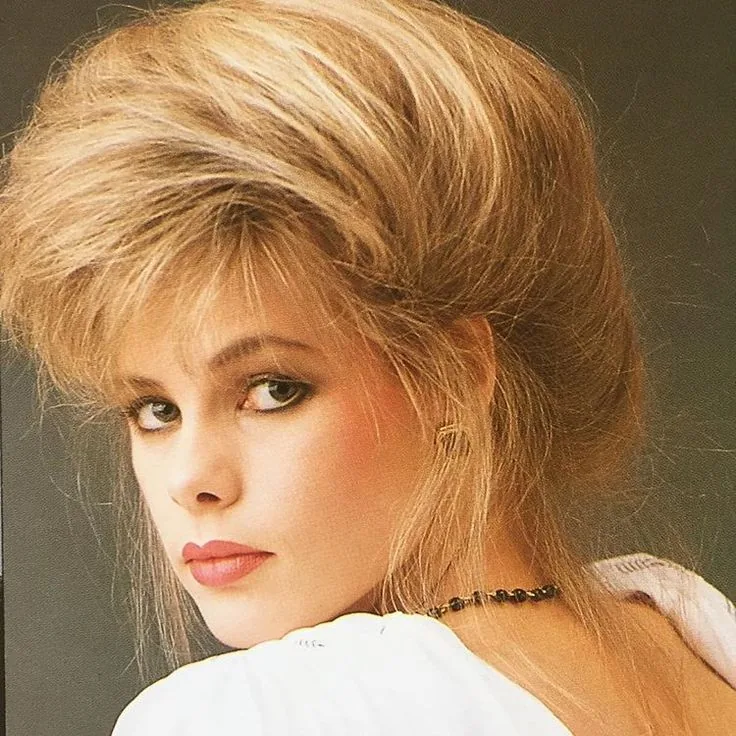
The 80s French twist with volume was the decade’s most elegant updo: the classic French twist, but bigger — the hair teased at the crown, twisted into a tall, sculpted shape, and pinned so it stood proud from the head. It was the updo for formal evenings, weddings and black-tie events, and it was worn by women who wanted their hair to look like it had been done by a professional, because it usually had. The volume gave the twist a presence that the classic version never had, and the height gave the whole silhouette a regal, almost architectural quality.
Wear it today by keeping the height but softening the finish: a looser twist, soft curls at the face, and a few pins rather than a rigid shell. It flatters oval and long faces, and it suits medium to long hair that can be twisted and pinned. Who should avoid it: anyone who wants a casual look — the French twist is a formal style. Quick verdict: the 80s updo for the most formal nights. Tall, sculpted and elegant — and the updo that makes any outfit look more expensive.
38. The Poodle Perm
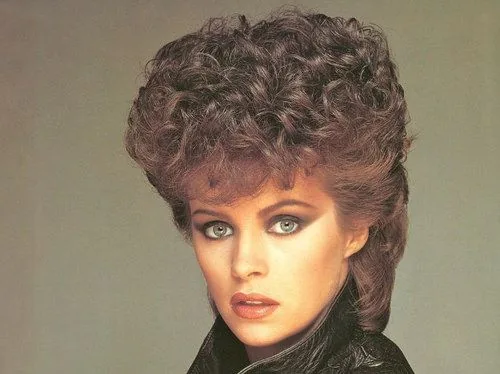
The poodle perm was the 80s perm at its tightest: small, tight curls set close to the head, creating a dense, bouncy, poodle-like texture that framed the face in a cloud of curls. It was the perm for women who wanted maximum curl and maximum volume, and it was worn with a short to medium cut so the curls held their shape. The look was fun, bold and unmistakable — the hair was the outfit, and it was worn with confidence. It was also the perm that needed the most care, because the tight curls could dry out and frizz if they were not moisturised.
The modern version uses larger rods and a gentler solution, giving looser curls that read as natural texture rather than a tight perm. It flatters oval and round faces, and it suits fine hair especially well, where the perm creates volume. Who should avoid it: anyone who wants a low-maintenance style, or very long hair, where the tight curls turn into a heavy mass. Quick verdict: the tightest, bounciest perm of the decade, and a wonderful choice if you want your hair to be a cloud of curls. Book a stylist, and enjoy the bounce.
39. The Glamorous 80s Finger Wave
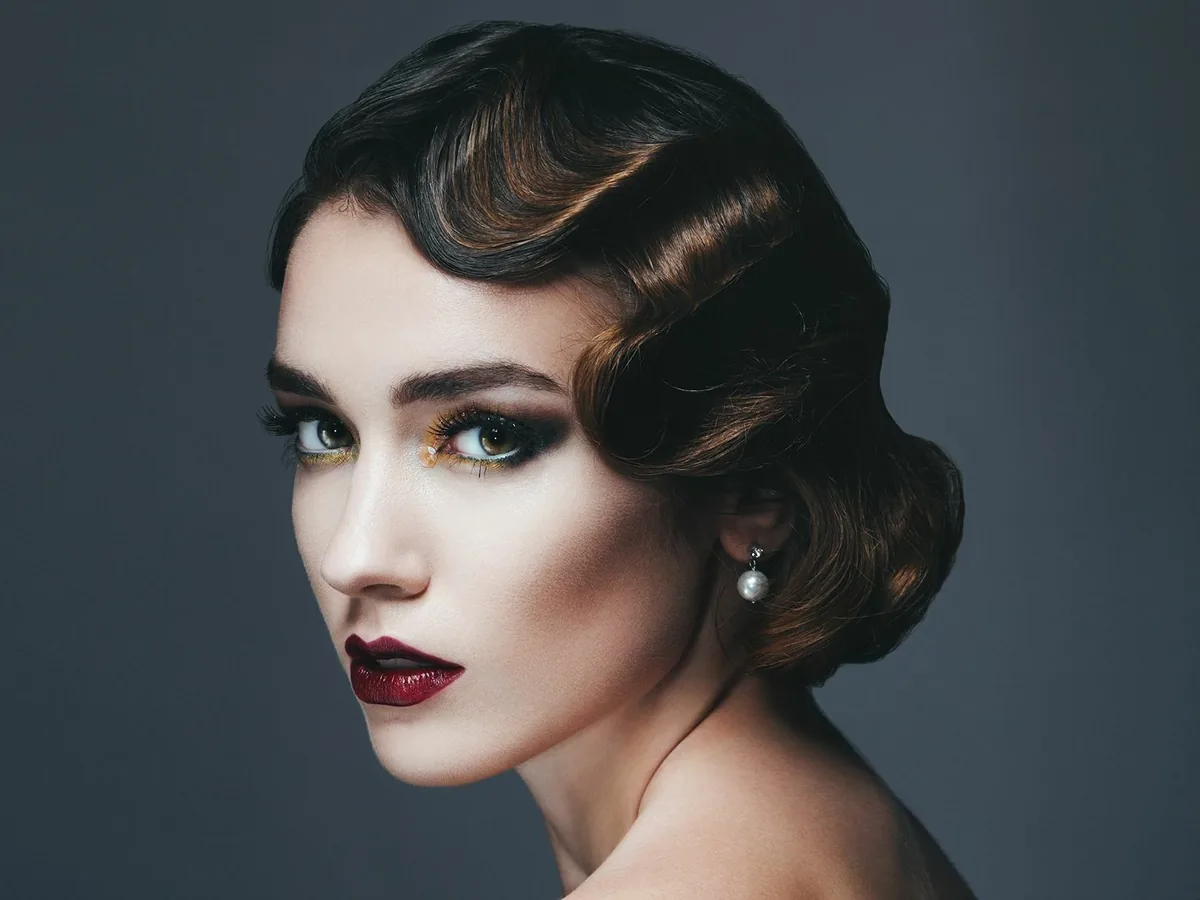
The glamorous 80s finger wave was the decade’s most elegant wave: deep, sculpted waves pressed into the hair with fingers and a comb, creating a smooth, rippling pattern that caught the light like water. It was the wave of old Hollywood, revived for the 80s, and it was worn to formal evenings, weddings and red carpets, where the hair had to look like it had been sculpted, not just styled. The waves were smooth, glossy and precise, and they gave the hair a finish that no other 80s style had — a liquid, almost architectural quality.
Wear it today with a modern curling iron and a little pomade, which gives the same sculpted wave with far less effort. It flatters oval and heart-shaped faces, and it suits medium to long hair that can hold the wave. Who should avoid it: anyone who wants a casual look — the finger wave is a formal style, and it should be worn like one. Quick verdict: the most glamorous wave of the decade, and the one that looks most expensive. Sculpt it, shine it, and wear it to the fanciest night you have.
40. The High Ponytail with Volume
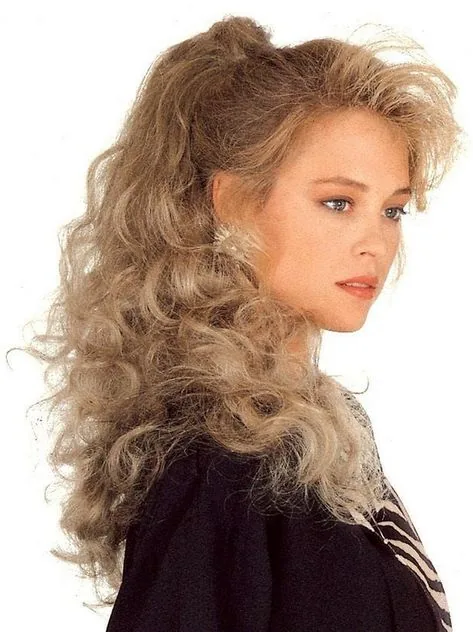
The high ponytail with volume was the 80s sporty glamour look: the hair swept high on top of the head, teased at the crown, and tied with a scrunchie, so the ponytail fell in a thick, bouncy cascade down the back. It was the ponytail of aerobics videos, pop stars and cheerleaders, and it worked because it was both practical and dramatic — the hair was out of the way, and the height made the whole silhouette taller. The ponytail itself was often curled or crimped, so it had movement and texture, and the fringe was swept to one side.
Wear it today by keeping the height but softening the finish: a silk scrunchie, a smooth sweep, and loose waves in the ponytail. It flatters oval and heart-shaped faces, and it suits medium to long hair that can be swept high. Who should avoid it: anyone with a very long face, where the extra height can lengthen it further — wear the ponytail lower. Quick verdict: the 80s ponytail for women who want height and drama. One sweep, one scrunchie, and your hair is up, bouncy and unmistakably 80s.
41. The 80s Layered Lob
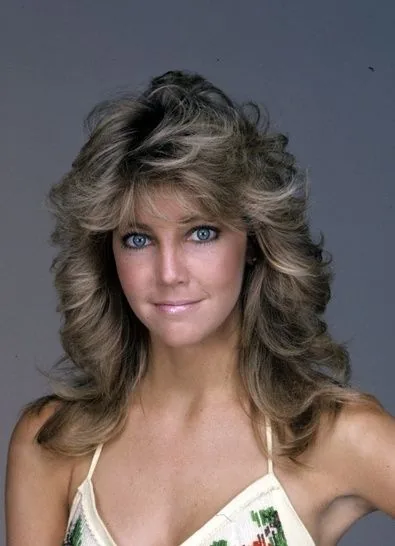
The 80s layered lob was the decade’s most practical medium cut: a long bob, cut in layers, worn with volume at the crown and movement at the ends. It was the cut for women who wanted the 80s shape without the 80s length — the lob gave them the feathered layers, the flipped ends and the face-framing, in a length that was easy to wash, easy to style and easy to wear. It was the cut of office workers, mothers and anyone who wanted to look polished without spending an hour on their hair.
Today the layered lob is a classic, and it is the easiest 80s cut to wear every day. It flatters every face shape, suits every hair type, and it grows out gracefully — the layers just get longer and softer. Who should avoid it: nobody — the lob is the most forgiving cut in this guide. Quick verdict: the 80s cut for real life. Medium length, layered, voluminous and easy — the lob does the work, and you get the credit.
42. The Boyish 80s Crop with Texture
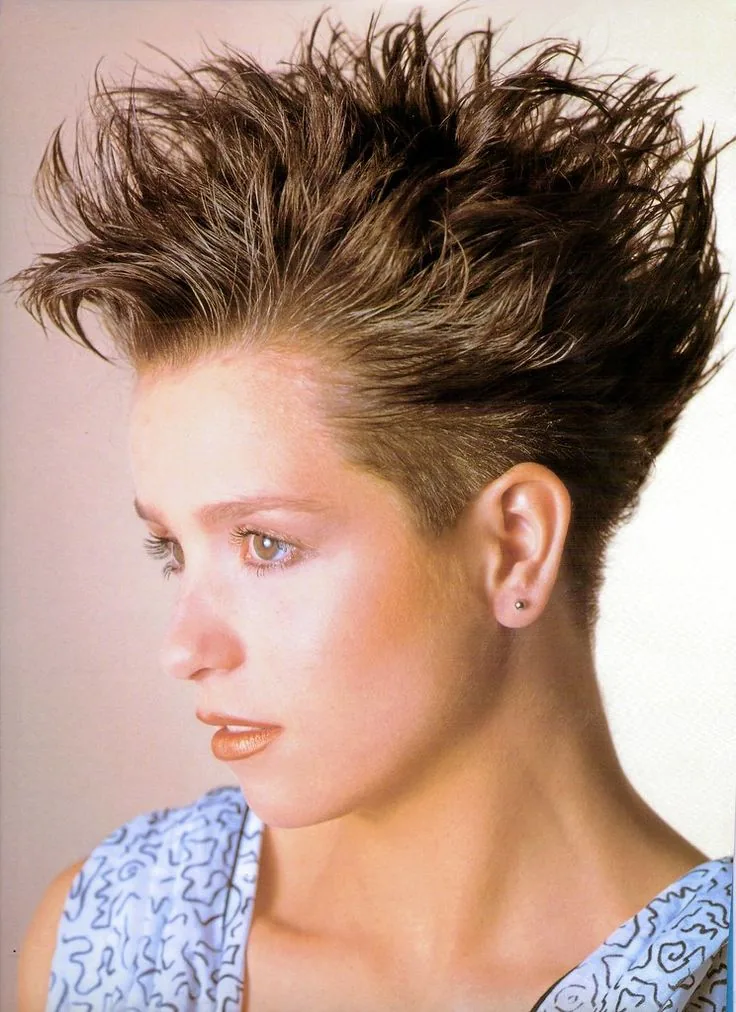
The boyish 80s crop with texture was the decade’s most daring short cut: a short, textured crop, with the top left long enough to spike or sweep, the sides short, and the whole cut full of choppy, piecey layers. It was the cut of artists, musicians and women who wanted their hair to say they were not interested in being conventional. The texture gave it softness, the short length gave it edge, and the styling gave it personality — it could be spiked, swept, tousled or smoothed, and it looked different every time.
Wear it today with a softer, more textured finish: a piecey top, a little root lift, and the sides kept neat but not severe. It flatters oval, heart and square faces, and it suits thick hair best, where the texture comes naturally. Who should avoid it: anyone who wants a long, romantic look — the crop is short, and it commits to that. Quick verdict: the 80s short cut with the most freedom. Short, textured, spiky or swept — the crop is whatever you make it, and it is always a statement.
43. Big Hair Half-Up, Half-Down
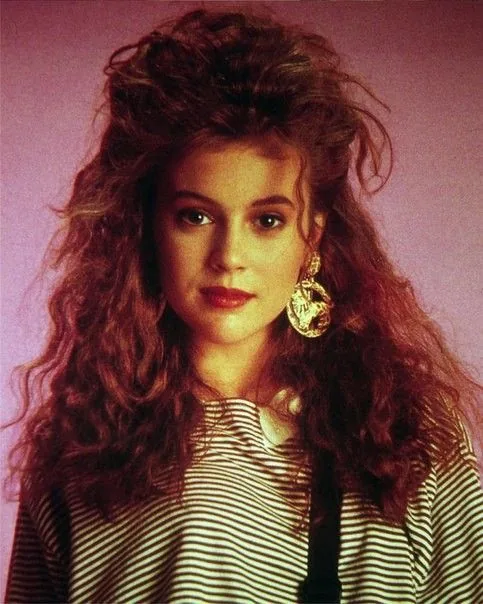
Big hair half-up, half-down was the 80s best of both worlds: the top half of the hair gathered up and teased for height, while the rest fell loose in waves or curls down the back. It gave you the volume and the drama of an updo, and the softness and the romance of wearing your hair down, and it was the style for proms, parties and weddings, where the hair had to look special from every angle. The top half was often tied with a bow or a scrunchie, and the loose lengths were curled or crimped, so the whole look had texture and movement.
The modern version keeps the height but softens the finish: a looser half-up, soft waves in the lengths, and a velvet scrunchie or a small bow. It flatters every face shape, suits medium to long hair, and is wonderful for a wedding guest or a date night. Who should avoid it: nobody — this is one of the most forgiving styles in the guide. Quick verdict: the 80s style for women who cannot decide between up and down. You do not have to choose — take the height, keep the length, and wear both.
44. The Modern 80s Revival Blowout
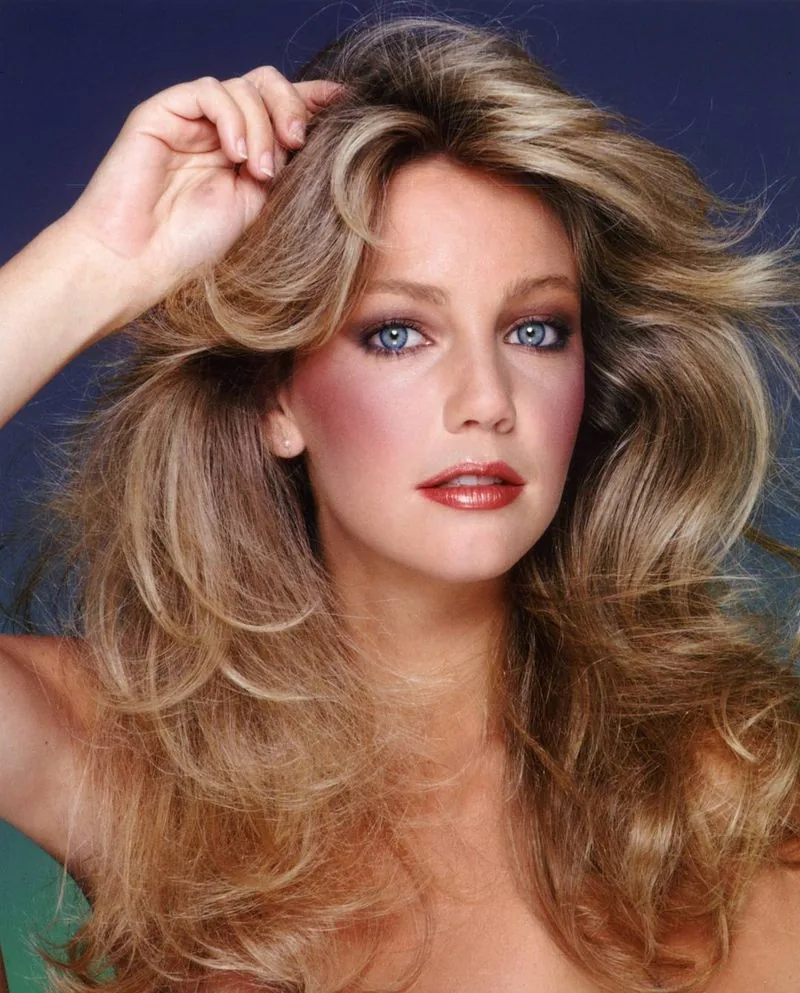
The modern 80s revival blowout is the look that brings this guide full circle: a big, bouncy blowout, with feathered layers, flipped ends, volume at the roots and movement at the ends — the 80s silhouette, made with modern tools and modern products. It is the blowout you see on runways and red carpets right now, worn by women who were not born in the 80s and do not care — they just know it looks good. The volume is built with a round brush and a dryer, the ends are flipped with a cool setting, and the finish is soft and touchable, not crunchy and stiff.
This is the style to choose if you want the 80s feeling with a 2026 finish: the shape is pure 1986, and the softness is pure today. It flatters every face shape, suits medium to long hair, and it works for work, for a party and for a wedding guest — the same blowout, dressed up or down with the outfit. Who should avoid it: nobody — the revival blowout is the most wearable style in this guide. Quick verdict: the 80s, updated. Big hair, bigger energy, and a blowout that proves the decade never really left — it was just waiting for its moment to come back.
What are the most iconic 80s hairstyles for women?
The most iconic 80s hairstyles for women are feathered layers, the big blowout, crimped hair, the side ponytail, the classic perm, mall bangs, the mullet and the Farrah Fawcett feathered look. They all share the decade’s signature: volume, texture and a bold silhouette. The feathered layers and the blowout are the easiest to wear today, while the side ponytail and crimped hair are the most fun for a party.
How do I get 80s volume without a perm?
To get 80s volume without a perm, blow-dry with a round brush, lifting at the roots, and use a volumising mousse on damp hair before you dry. Tease the crown gently in small sections, set the shape with large rollers or a cool blast from the dryer, and finish with a light hairspray. Layered cuts, crimped sections underneath and a little dry shampoo at the roots all add volume without chemicals or lasting damage.
What is crimped hair and how do I do it?
Crimped hair is hair pressed with a heated zigzag iron, creating fine ridged waves that add instant volume and texture. To do it, apply heat protectant, take small sections, and press the crimping iron from root to tip on a low to medium setting. For a modern look, crimp only hidden sections underneath or the lengths, and leave the top layer smooth, so you get the volume without the full 80s effect.
How do I style an 80s side ponytail today?
To style an 80s side ponytail today, sweep the hair to one side, tease the crown lightly for height, and tie the ponytail high or low with a velvet or silk scrunchie. Leave a few face-framing pieces out, curl the ponytail loosely, and finish with a light spray. Keep the rest of the outfit current, and the side ponytail reads as playful and retro rather than a costume.
Are 80s hairstyles coming back?
Yes, 80s hairstyles are coming back. Feathered layers, big blowouts, mall bangs, scrunchies, banana clips and the mullet are all appearing on runways, red carpets and social media, worn by women who were not born in the 80s. The modern versions are softer and healthier than the originals, with less hairspray, lower heat and better products, but the silhouette — volume, layers and movement — is the same.
What face shapes suit 80s hairstyles?
80s hairstyles suit almost every face shape, because the volume and the layers can be adjusted to flatter each one. Height on top lengthens a round face, feathered layers soften a square face, and a side-swept fringe flatters an oval face. The key is to match the volume to the face: more height for a round face, more width at the sides for a long face, and softer layers for a heart-shaped face.
How do I do mall bangs without looking like a costume?
To do mall bangs without looking like a costume, take the height down by half. Blow-dry the fringe with a round brush, lifting at the roots, and use a light spray rather than a stiff hold. Keep the rest of the hair soft and modern — loose waves or a smooth blowout — and let the fringe be the one retro element. One 80s detail, worn with a current outfit, reads as a tribute, not a costume.
Can I wear 80s hair to work?
Yes, you can wear 80s hair to work, as long as you choose the quiet version. A feathered blowout, a soft layered lob, a low side ponytail with a velvet scrunchie, or a banana clip twist all carry the decade’s volume and movement in a polished, office-appropriate way. Save the full crimped mane, the mall bangs and the high side ponytail for after hours, and let work be the soft-focus version of the decade.
How do I protect my hair from teasing and crimping damage?
To protect your hair from teasing and crimping damage, always use a heat protectant before hot tools, keep the tools on a medium setting, and tease only the crown in small sections rather than the whole head. Crimp occasionally, not daily, and only on heat-protected hair. Use a weekly deep-conditioning mask, get regular trims, and give the hair rest days with no heat or teasing, so it can recover.
What accessories do I need for an 80s hairstyle?
For an 80s hairstyle you need a scrunchie, a banana clip and a headband — the decade’s three essential accessories. A velvet or silk scrunchie is best for ponytails and top knots, a banana clip creates the vertical twist updo, and a padded headband gives instant height and a finished look. Add a bow or a ribbon for a party, and a few bobby pins for any updo, and you have everything the decade requires.
Conclusion
The 80s did not do quiet hair, and neither should you — at least not all the time. Behind the volume, the crimps and the perms was a simple idea: hair is a statement, and it should be worn like one. The feathered layers, the big blowout, the side ponytail, the mullet and the perm all shared the same silhouette — height, texture, movement and attitude — and that silhouette is back, softer and healthier than it was, but just as bold. The 80s look is not a costume. It is a shape, and it is yours to wear however you like.
Start with one style from this guide — the feathered layers, the big blowout, or the low side ponytail with a scrunchie — and wear it for a day. See how the volume feels, how the layers move, and how the mirror looks back at you. Then try another, and another, until you find the 80s style that fits your hair, your day and the way you want to feel. Big hair is back. The decade is yours. Wear it big, wear it bold, and wear it like you mean it.