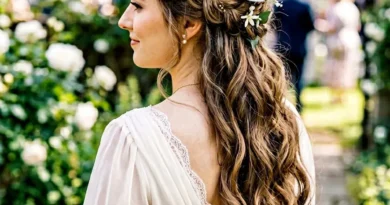
Dance, Dhol and Dazzling Hair: 38 Hairstyles for a Sangeet Night That Last Till the Last Song
A sangeet is the loudest, happiest night of a South Asian wedding, and your hair has to keep up with every part of it. The dhol is playing, the dance floor is full, the dupatta keeps slipping, and the night does not slow down until the last song ends. That is why hairstyles for a sangeet night need a different kind of planning from wedding-day hair. They have to look glamorous in photos, stay secure through hours of dancing, and still feel comfortable when you are spinning, clapping, and singing along with everyone else. The best sangeet looks are not just pretty, they are practical, and they are built to survive movement, heat, and a very long evening.
This guide walks you through everything that makes sangeet hair work, from hold and pinning to matching your look with your lehenga, sari, or sharara. You will learn how to keep gajra and jewellery in place, how to choose a style that works with a dupatta, and how to fix your hair quickly between performances without starting again. Whether you are the bride, a sister, a cousin, or a guest who plans to dance all night, these ideas will help you pick a style that looks stunning at the first song and still looks fresh at the last one.
What Makes Sangeet Hair Different From Wedding-Day Hair

Wedding-day hair is built for ceremony and photographs, with slow, graceful movement and long stretches of sitting still. Sangeet hair is built for dancing. You will be jumping, spinning, and moving your arms for hours, so a style that looks perfect in the mirror can fall apart after the first song. The focus shifts from delicate detail to strong structure, secure pinning, and a finish that can handle sweat and heat.
That does not mean sangeet hair has to look plain. Braids, buns, and half-up styles can all be dressed up with gajra, jhoomar pins, and soft curls. The difference is in the foundation. A good sangeet style starts with texture, grip, and anchoring, and then adds the glamour on top. If the base is strong, the pretty parts stay exactly where you put them.
Dancing-Proof Hold: Keeping Your Hair Up Through Hours of Dance
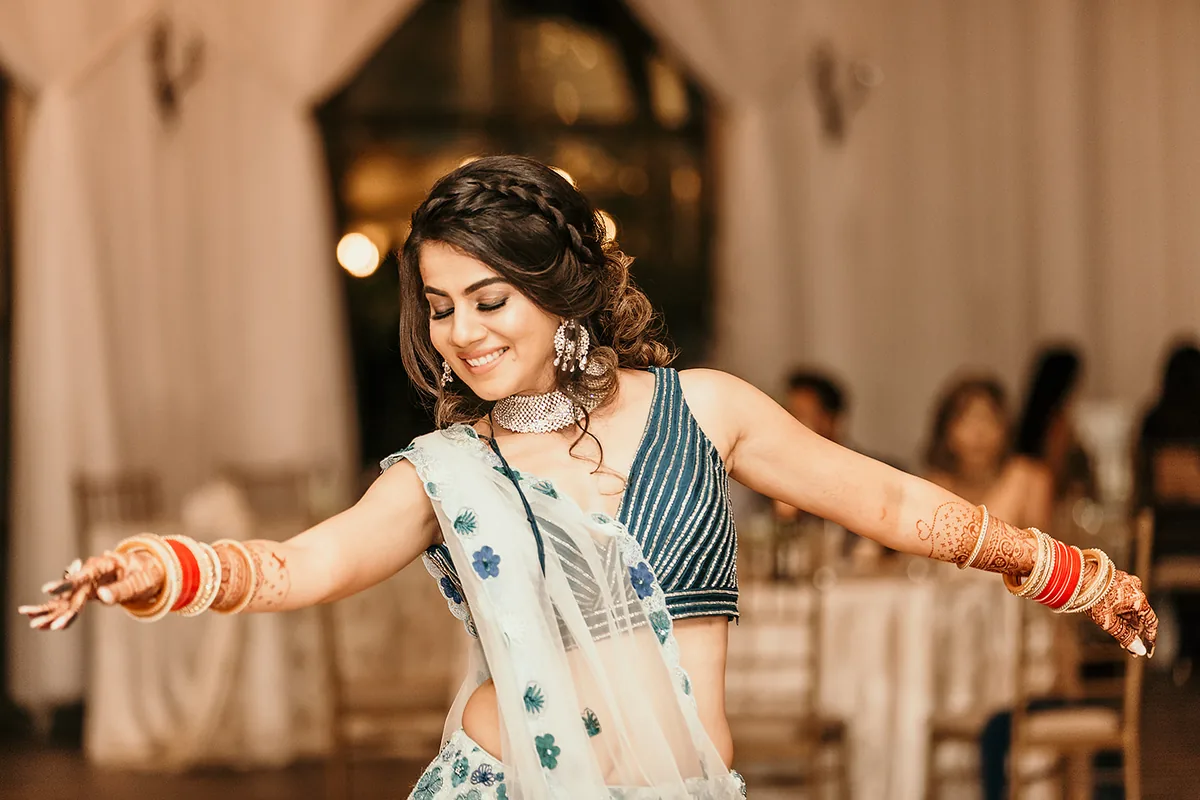
The secret to dancing-proof hair is preparation, not just hairspray. Start with hair that is not freshly washed and silky, because clean hair slips. A little texture spray or dry shampoo gives pins something to grip. Work in sections, pin each section separately, and cross your bobby pins in an X shape so they lock instead of sliding out.
A common mistake is relying on one heavy clip or a single tight elastic to hold everything. Spread the weight across several pins and anchor the style to a braid or a small hidden bun at the base. Finish with a flexible-hold spray, then shake your head gently to test it before you leave. If anything wobbles now, it will fall during the first dance, so fix it while you still have time.
Matching Your Hair to Lehengas, Saris and Shararas
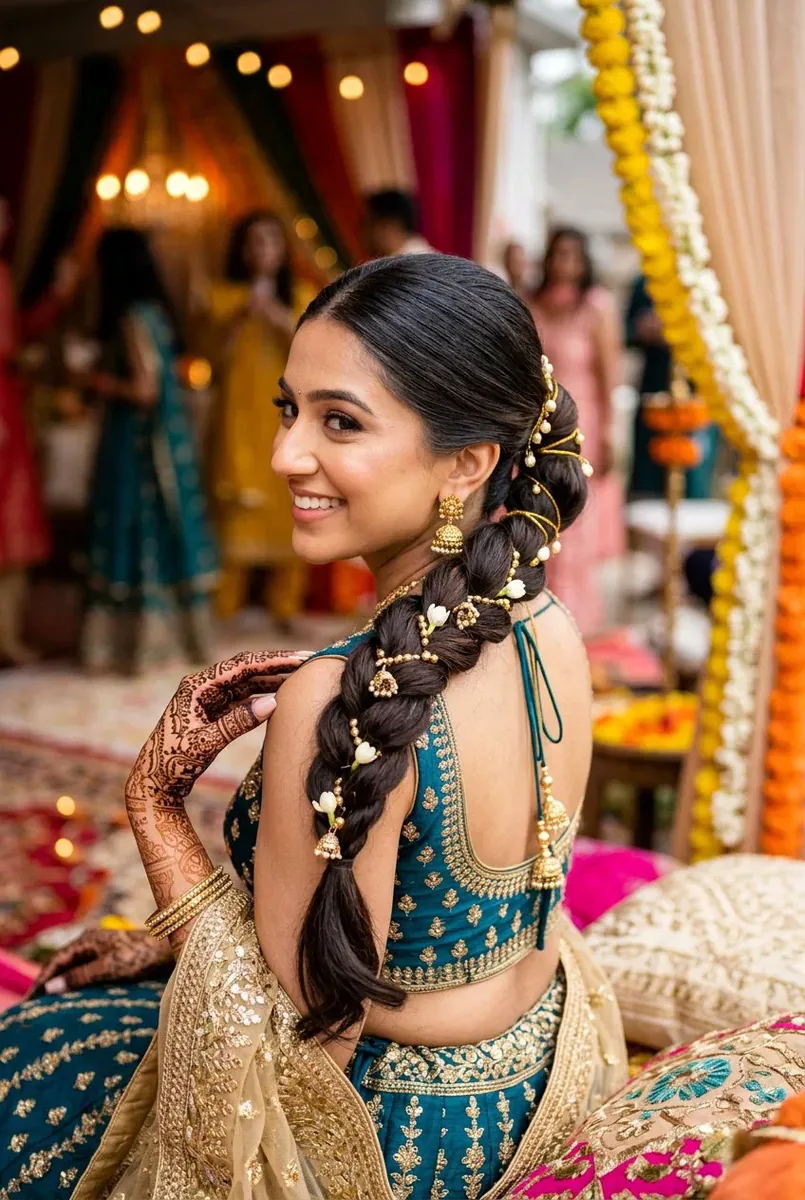
Your outfit should guide your hairstyle, not fight it. A heavy, embellished lehenga pairs beautifully with a sleek bun or a polished braid, because the hair stays out of the way and lets the embroidery shine. A lighter lehenga or a flowy sharara gives you more freedom, so soft waves, a half-up style, or a side braid can add movement without competing with the outfit.
With a sari, think about where the pallu falls. A low bun or a side-swept style keeps the neckline clean and stops hair from tangling with the drape. A sharara, with its wide legs and constant twirling, suits styles that are pinned close to the head. When in doubt, try the full outfit on with the hairstyle before the night, and dance a little in it to see how they move together.
Gajra, Fresh Flowers and Jewellery: Pinning It So It Stays
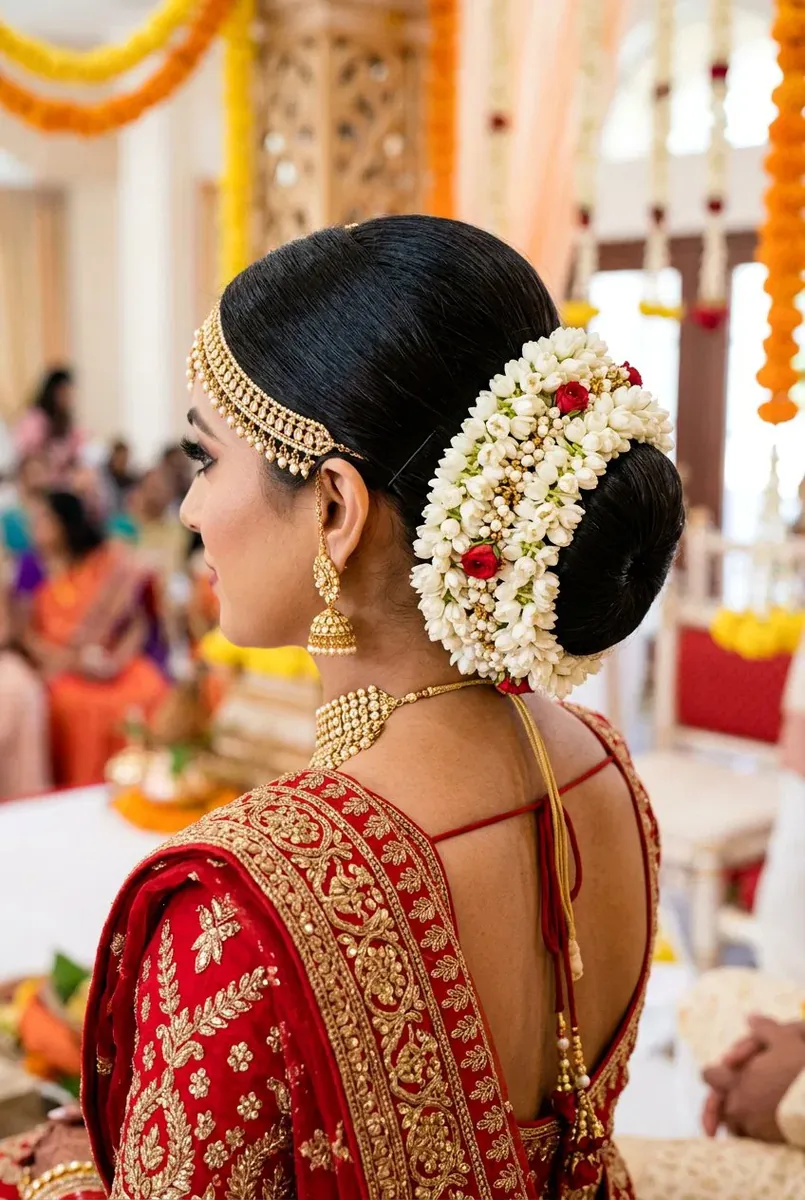
Gajra looks magical at a sangeet, but it only works if it is pinned properly. Never just rest it on top of your hair and hope for the best. Wrap it around a bun or braid and secure it with U-pins pushed through the flowers into the hair underneath. Place at least three pins, spaced evenly, so the weight is shared and one loose pin cannot bring the whole thing down.
Fresh flowers wilt faster in a warm, crowded hall, so keep them in the fridge until you are ready to leave, and mist them lightly before pinning. For a maang tikka or jhoomar, anchor the chain with a small hidden pin at the back of the head, not just at the front. That extra anchor stops the jewellery from sliding forward when you dance, and it keeps the piece sitting exactly where it should in every photo.
Dupatta Safety: Styles That Survive the Dupatta Drape

The dupatta is the biggest threat to sangeet hair. It pulls, catches, and slides, and a high, loose bun will not survive it. Low buns, low braids, and side styles work best, because the dupatta can sit over them without dragging the hair down. If you love volume, keep it at the front and sides, and keep the back smooth and pinned flat.
Pin the dupatta to your outfit, not just to your hair. A small safety pin at the shoulder takes the weight off your hairstyle and stops the fabric from tugging every time you move. Avoid pinning the dupatta directly into a soft curl or a loose twist, because the pin will pull the curl out. Test the drape with a few spins before the night begins, and carry an extra pin in your clutch, just in case.
Sangeet Hair by Length: Short, Medium and Long

Short hair can be a real advantage at a sangeet, because there is less weight to fall down. A textured pixie or a sleek bob with a jewelled clip, a small braid, or a twisted front section looks polished and stays put all night. Add a little volume at the crown and a strong-hold spray, and you can dance without worrying about pins slipping out.
Medium hair suits half-up styles, low buns, and braided crowns, which give you glamour without too much weight. Long hair has the most options, from thick braids to full buns, but it also needs the most anchoring, so split it into sections and pin each one separately. Whatever your length, choose a style that uses your hair’s natural strengths instead of fighting them, and you will spend the night dancing, not fixing.
Quick Fixes Between Performances
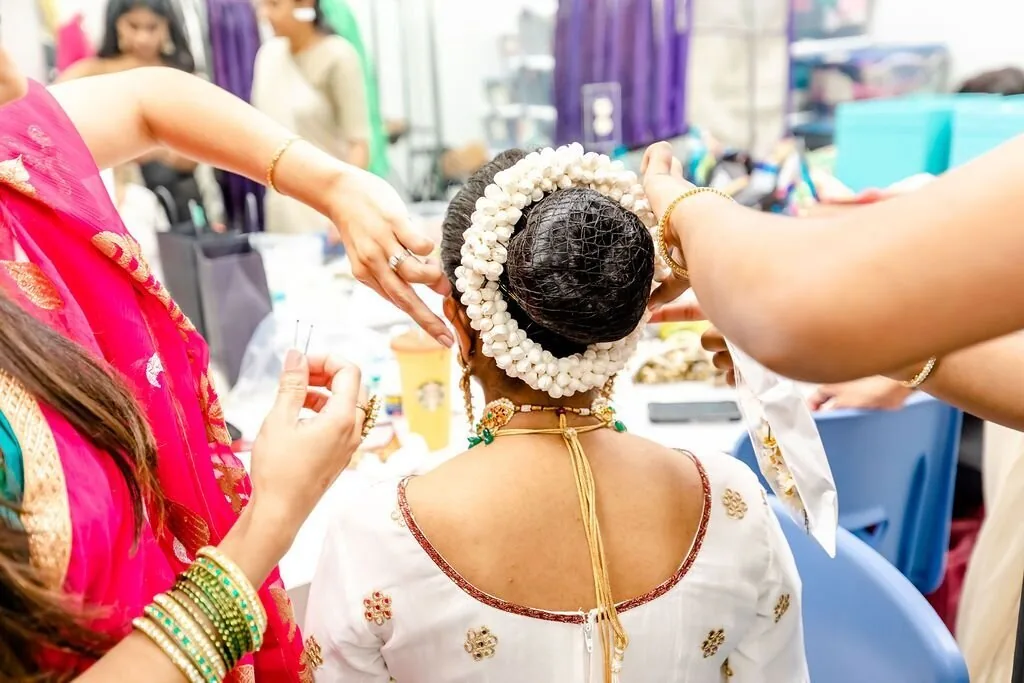
Between performances, you usually have two or three minutes, not twenty, so pack a tiny fix kit and keep it nearby. A few bobby pins, two small elastics, a mini hairspray, blotting paper, and a small comb are enough. Slip the kit into a clutch or hand it to a sister or friend who stays near the stage, so you are not running back to your room.
When you get a break, check the back first, because that is where styles loosen. Smooth any flyaways with a tiny bit of spray on your palms, re-pin any loose section, and tuck a stray curl back into place. Do not try to rebuild the whole style. A quick tidy, a fresh pin, and a dab of lipstick are all you need to walk back on stage looking as fresh as you did at the start.
Salon or DIY: What to Book and What to Do at Home

A salon is worth booking if you want an intricate braid, a structured bun, or a style with lots of jewellery and gajra. A professional can build a strong base, hide the pins, and make the style last for hours. Book a trial a few days before the sangeet, bring your outfit and jewellery, and take photos from every angle so you know exactly what you are getting.
DIY works well for simpler styles, especially if you practise once beforehand. A low bun, a side braid, or soft waves with a few pins can look stunning and cost nothing. Expect a salon sangeet style to take 45 to 90 minutes and cost more than a simple blow-dry, while a DIY style takes 20 to 40 minutes at home. Choose the option that matches your style, your budget, and how much dancing you plan to do.
1. The Classic Gajra Braid That Never Misses a Beat
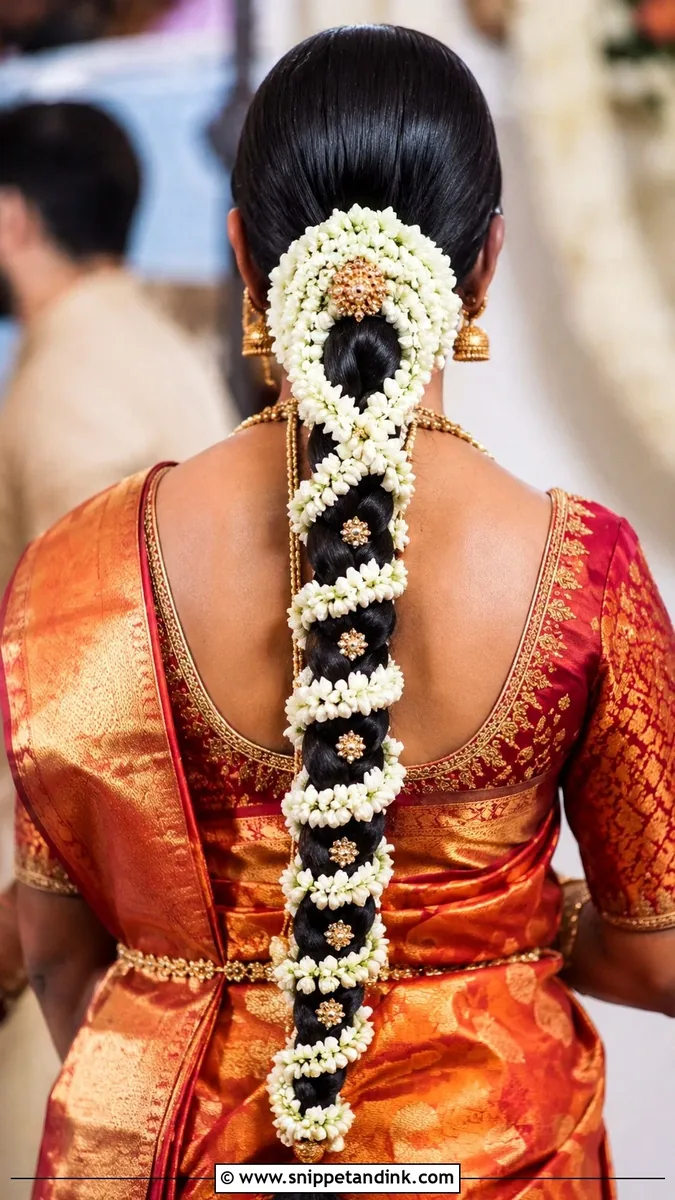
Some sangeet hairstyles come and go, but the classic gajra braid stays. A neat three-strand braid wrapped with fresh jasmine smells beautiful, photographs beautifully, and holds up through hours of dancing. It suits almost every lehenga, sharara, and anarkali, from bright pinks to deep maroons, and it frames a jhoomar or maang tikka without competing with it. The fragrance alone makes it feel festive before the music even starts.
Best for: long hair, traditional outfits, and anyone who wants a secure style that will not need fixing between dance numbers. How to style it: braid slightly loose so the gajra sits in the gaps, secure the ends with a fabric band, and pin the flowers at intervals rather than wrapping one long strand. A light mist of hairspray keeps flyaways down without making the braid stiff.
What to ask your stylist: ask for a braid that is firm at the nape but soft at the crown, so it stays comfortable for five or six hours. Fresh gajra lasts longer than artificial flowers, but keep a spare strand in your clutch. If your hair is fine, add a little texturizing powder at the roots first so the braid looks fuller.
2. Fishtail Braid with Jasmine Strings
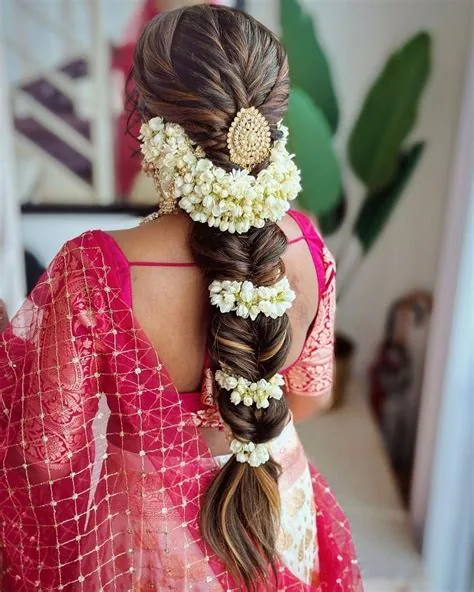
A fishtail braid has a finer, more detailed finish than a regular braid, which makes it a lovely choice for a sangeet night. Thin strings of jasmine woven through the plaits catch the light as you move, and the style looks delicate from the front and intricate from the back. It pairs especially well with pastel lehengas, net dupattas, and lighter jewellery, where a heavy braid might feel too much.
The trick is balance. Pull the fishtail slightly apart once it is finished to give it width, but do not tug too hard or the jasmine will slip out. Pros: it looks expensive and detailed, stays tidy while dancing, and suits medium to long hair. Cons: it takes longer to create than a simple braid, and it is harder to redo quickly if it loosens.
Avoid starting this style on freshly washed, slippery hair. Second-day hair, or a little dry shampoo at the roots, gives the fishtail something to grip. Finish with small pins hidden under the flowers, and carry two or three extra bobby pins for the end of the night.
3. Dutch Braid Crown with Marigolds
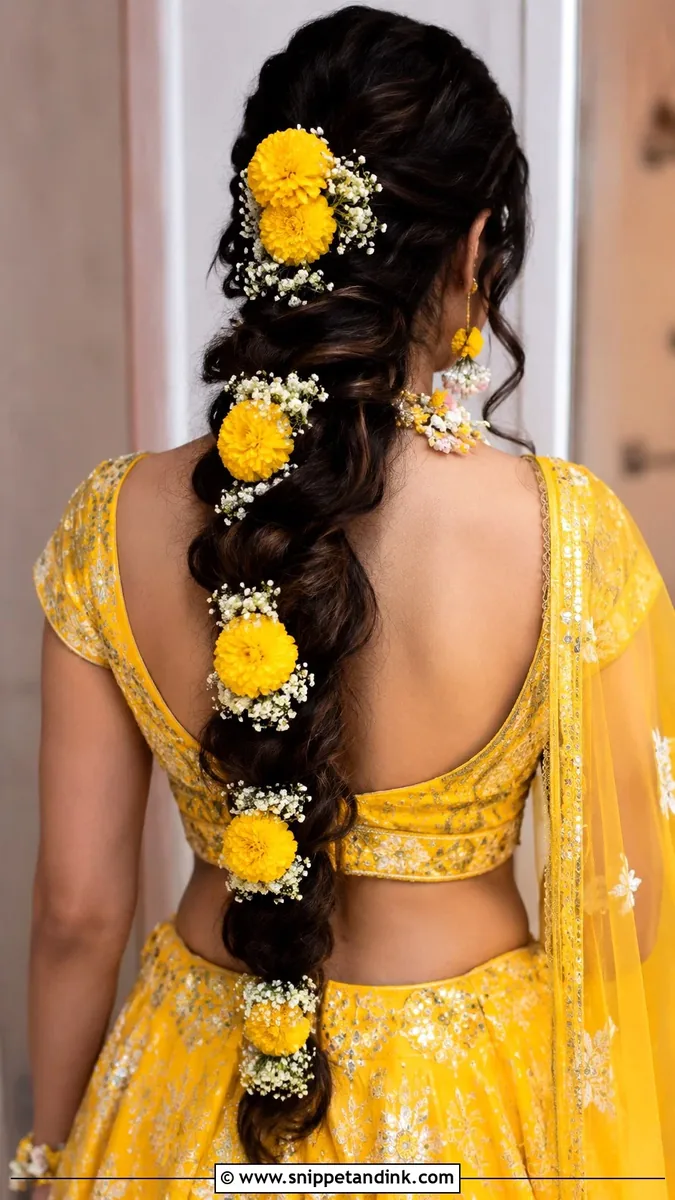
A Dutch braid crown wraps around the head like a halo, which makes it perfect for a sangeet. It keeps every strand off your face and neck while you dance, and the raised braid gives marigolds a natural place to sit. Orange and yellow marigolds pop beautifully against dark hair and rich jewel-toned outfits, and they also smell wonderfully festive.
Best for: dancers, bridesmaids, and anyone performing on stage. How to style it: part your hair in the middle, Dutch braid from one ear around to the other, and tuck small marigold blooms into the braid at intervals. Keep the flowers small so the crown does not feel heavy.
One common mistake is braiding too tightly. A crown that pulls will give you a headache by the second song. Ask your stylist to keep the tension even and comfortable, and to pin the braid in several places rather than relying on one anchor point. If you have short hair, a few clip-in extensions at the back can help complete the circle.
4. Low Bun Ringed with Gajra
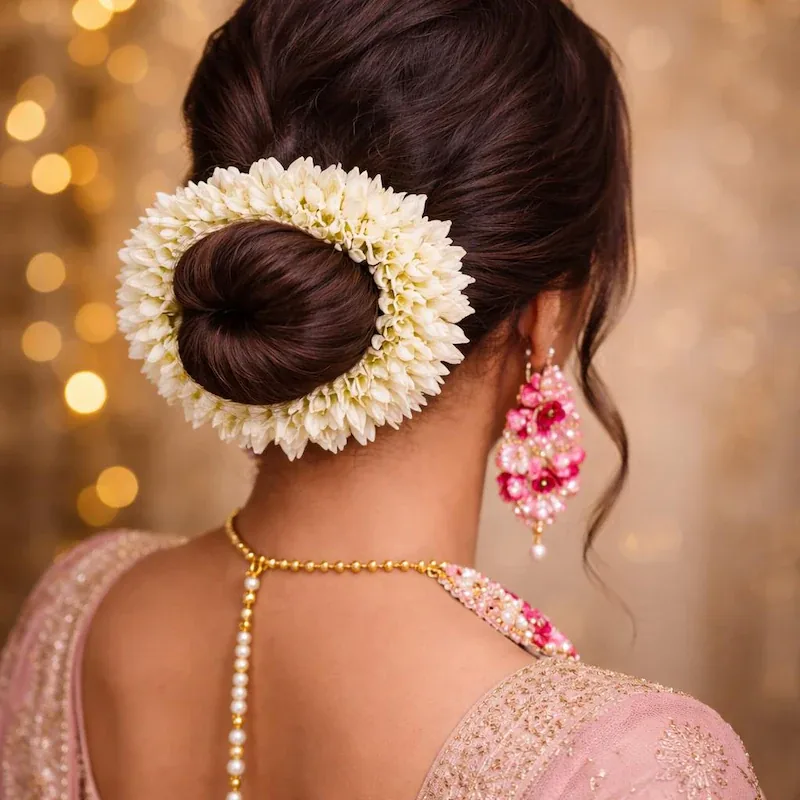
A low bun ringed with gajra is the quiet star of sangeet night. It sits at the nape, stays out of the way of a heavy dupatta, and looks graceful from every angle. The ring of jasmine turns a simple bun into something ceremonial, and it works just as well with a silk lehenga as it does with a lighter chiffon sharara. It is also one of the most comfortable styles for a long evening.
For a fuller bun, twist the hair loosely before coiling it, and use a small donut form if your hair is thin. The gajra should sit around the outer edge of the bun, not on top of it, so it reads as a frame rather than a pile. A few soft face-framing strands keep the look from feeling too severe.
This style usually takes 15 to 20 minutes and costs little beyond the flowers themselves. It suits most face shapes and most hair lengths past the shoulders. Skip it only if you love wearing your hair down, because a bun is a committed updo. Otherwise, it is a safe, elegant choice that rarely needs a touch-up.
5. A High Bun That Survives a Bhangra Number

Bhangra is joyful, fast, and bouncy, and your hairstyle needs to keep up. A high bun does exactly that. Piled on top of the head and pinned firmly, it stays put through jumps, spins, and shoulder shakes, and it keeps your neck cool under stage lights. Add a small gajra ring or a pair of decorative pins, and it goes from practical to party-ready in seconds.
What to ask your stylist: ask for a bun anchored with at least four pins in different directions, plus a strong elastic underneath. A bun that relies on one pin will slide by the second song. A little backcombing at the crown gives height and grip without needing a huge amount of product.
Maintenance is minimal. Check the pins once after your first dance, and you should be set for the night. The high bun also lengthens the neck and shows off earrings and a necklace beautifully. Avoid it if you have a very round face and prefer softer framing, or if a high bun gives you a headache. Otherwise, it is the most dance-proof style on this list.
6. Side-Swept Curls for Your Slow-Dance Moment
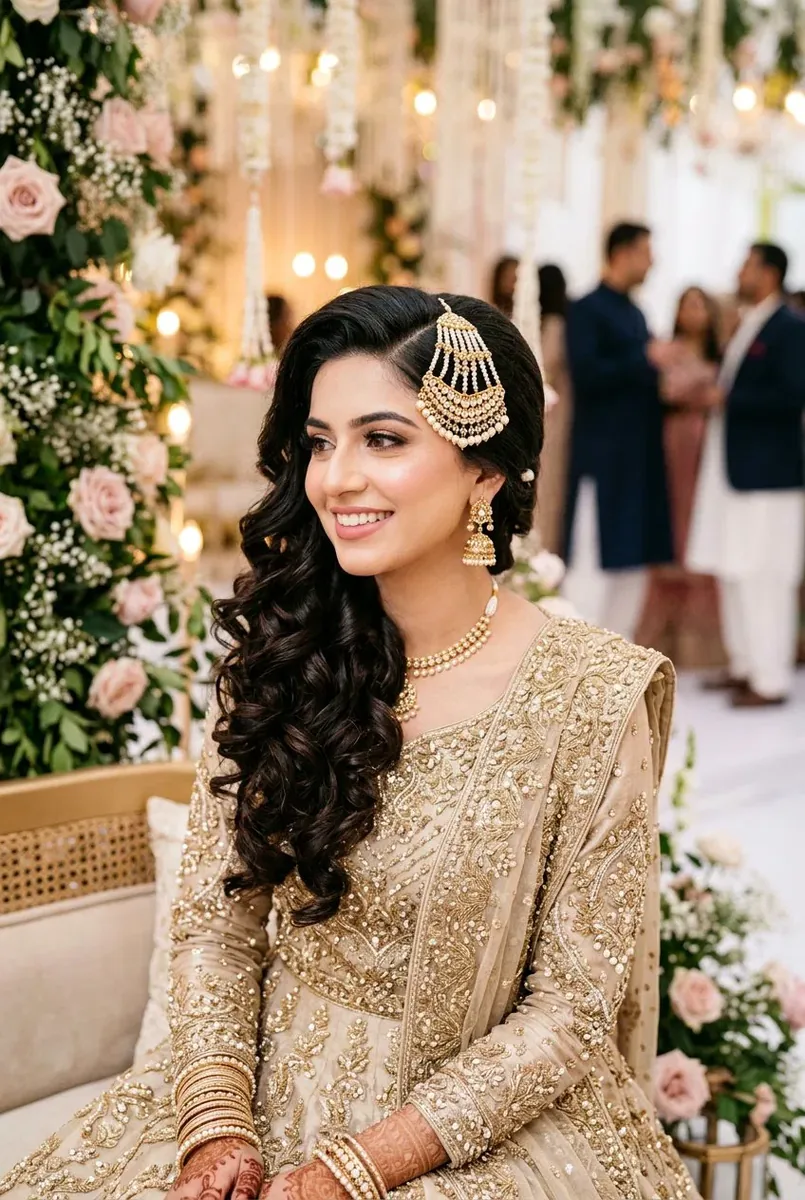
Not every sangeet moment is fast. Between the dhol beats there are slow songs, couple dances, and quiet photo moments, and side-swept curls were made for them. All the curls fall over one shoulder, giving you a soft, romantic profile that looks lovely in pictures and feels glamorous without trying too hard. It suits off-shoulder blouses, deep necklines, and statement earrings.
The key is curl direction. Curl every section away from the face on the swept side, then brush through gently for soft waves rather than tight ringlets. Pin the hair behind the opposite ear with a decorative clip so the sweep holds. A light-hold spray is better than a strong one, because stiff curls lose their movement.
Quick verdict: beautiful, romantic, and easy to love, but not the best pick if you plan to dance hard all night. Curls on the swept side can fall forward and need a quick fix after energetic numbers. If you choose this style, keep a small comb and two pins in your bag, and enjoy the slower songs most of all.
7. Half-Up, Half-Down with a Maang Tikka
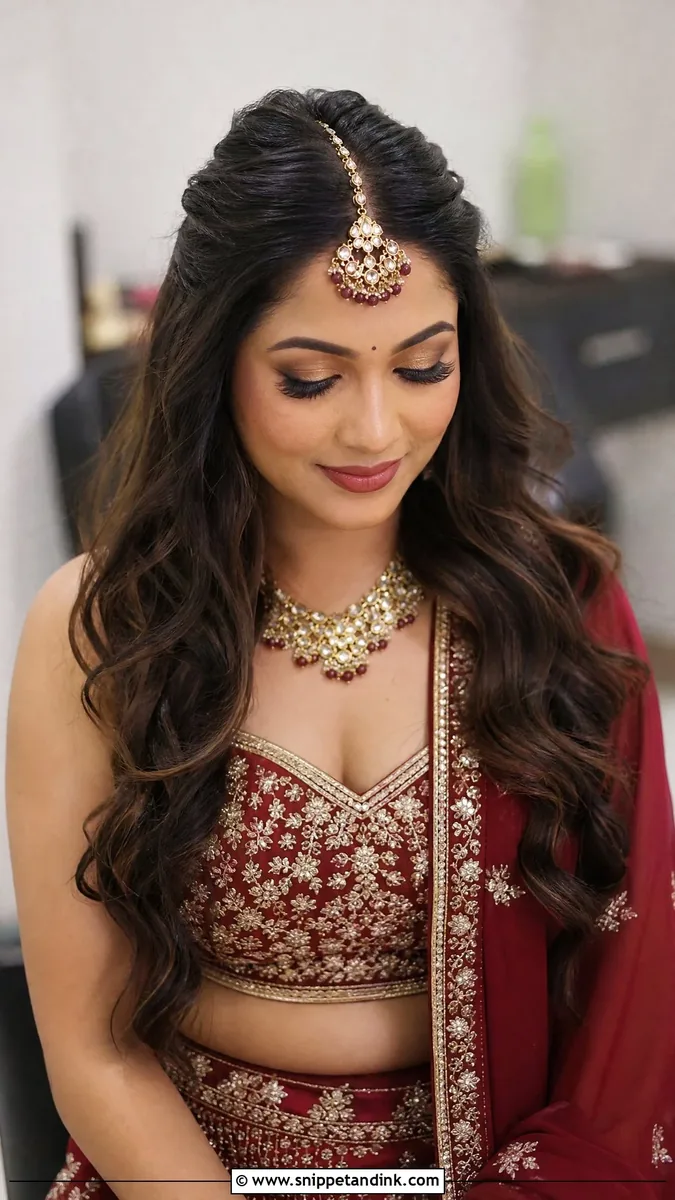
Half-up, half-down is the best of both worlds for a sangeet night. The top section is pulled back and pinned, which keeps hair out of your face while you dance, while the rest falls loose over your shoulders. A maang tikka sits perfectly on the centre part, and the style works with curls, waves, or straight hair. It feels festive but relaxed, which suits a music night beautifully.
Best for: medium to long hair, first-time maang tikka wearers, and anyone who wants a tikka without a full updo. How to style it: take a section from each temple, twist or braid it back, and secure it at the crown with hidden pins. Let the tikka chain rest on the part line, and pin it lightly so it does not slide forward.
One thing to watch is weight. A heavy tikka can pull the pinned section loose, so choose a lighter piece or ask your stylist to anchor it with a small pin. This style also photographs well from the front and the back, which matters when the whole family wants pictures.
8. Waterfall Braid Scattered with Fresh Flowers
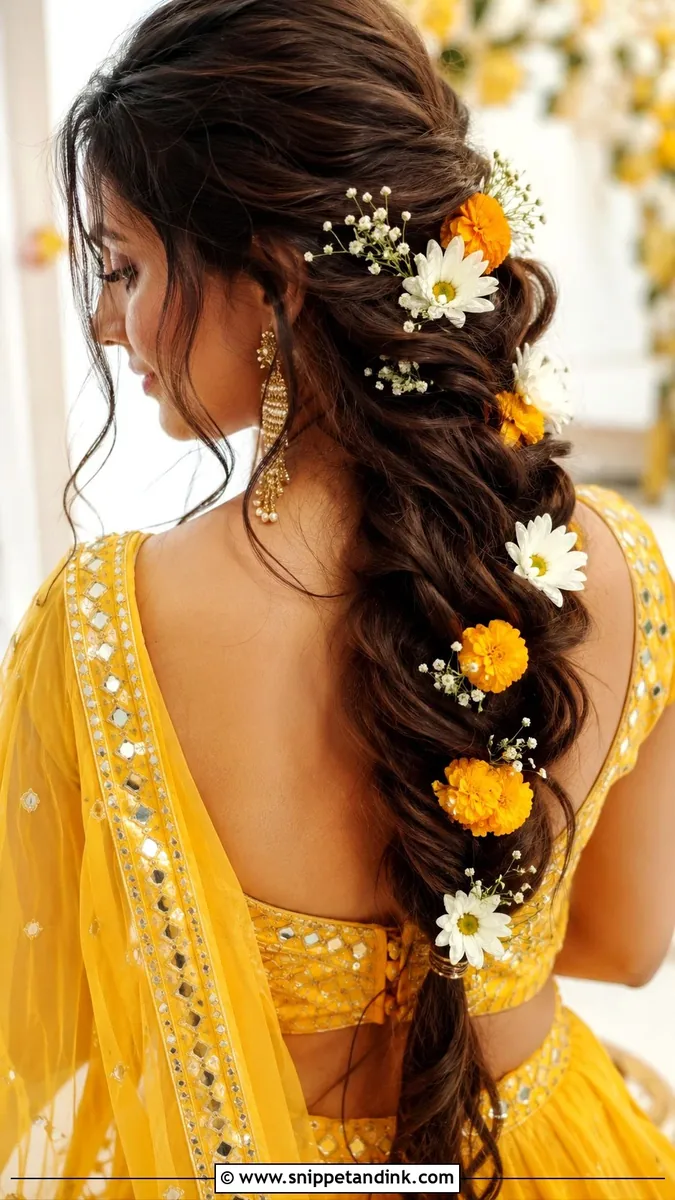
A waterfall braid is one of the prettiest ways to wear your hair down at a sangeet. The braid runs across the back of the head, dropping strands through it like a waterfall, and small fresh flowers tucked into the braid make it look like something from a garden party. It is soft, feminine, and full of movement, which suits twirling in a lehenga.
Pros: it keeps the front of your hair tidy while letting the length flow free, and it looks detailed without much effort. Cons: it can loosen faster than a full braid, especially if your hair is fine or freshly washed, and the flowers need pinning or they may slip out during dancing.
For the best result, ask your stylist to braid on second-day hair with a little texturizing spray, and to pin each flower individually rather than relying on the braid to hold them. Choose small blooms in colours that match your outfit, and keep the rest of the hair in loose waves so the waterfall stands out.
9. Double French Braids for the Group Dance
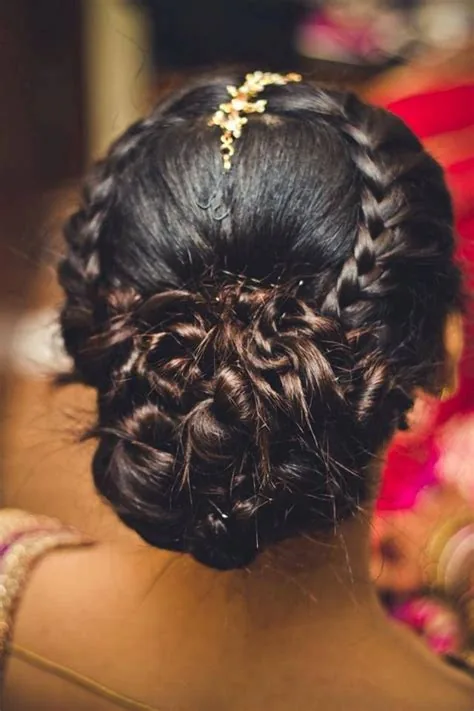
Group dances are the heart of a sangeet, and double French braids are built for them. Two neat braids running from the hairline to the nape keep every strand secure, no matter how many spins, jumps, or synchronised steps are involved. The style looks youthful and energetic, and it works brilliantly for sisters, cousins, and friends dancing together in matching outfits.
How to style it: part the hair cleanly down the middle, French braid each side close to the scalp, and finish with small elastics hidden under a ribbon or a flower. Pull the braids gently apart for fullness, and add tiny jasmine buds along the part for a festive finish. The whole look usually takes 20 to 30 minutes.
Double braids suit almost everyone, but they are especially good for thick hair, which can feel heavy worn down while dancing. They also last well into the late night, which means less time in front of the mirror and more time on the dance floor. Add matching ribbons for a coordinated group look.
10. Braided Crown for the Bride’s Sister
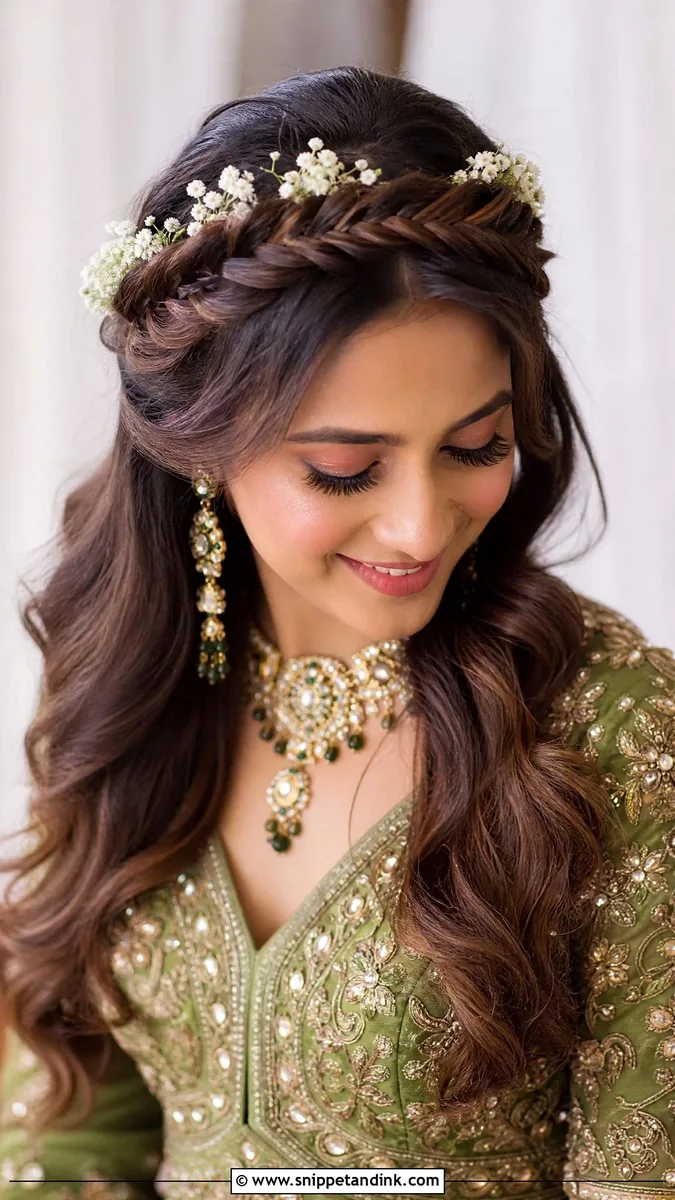
The bride’s sister has a special role at a sangeet. She is often on stage, in photos, and at the centre of the teasing and the dancing, so her hairstyle needs to look special without upstaging the bride. A braided crown does that perfectly. It is elegant and detailed, it frames the face beautifully, and it leaves the rest of the hair free to fall in soft waves or curls.
What to ask your stylist: ask for a crown braid that starts above one ear and sweeps across the forehead, with the remaining hair curled loosely. A few small flowers or pearl pins tucked into the braid add a celebratory touch without making the style heavy. Make sure the braid is pinned in at least three places so it survives the dancing.
This style flatters most face shapes and works well with lehengas, gowns, and shararas. It also pairs beautifully with a maang tikka worn just behind the braid. Keep the crown slightly loose and soft, because a very tight braid can look severe in photos and feel uncomfortable by the end of the night.
11. Loose Waves That Move with the Music

Loose waves are the easiest way to look like you belong at a sangeet without overthinking your hair. The waves move as you dance, catch the light, and soften any outfit, from a heavily embroidered lehenga to a simple chiffon one. They suit almost every hair length past the shoulders, and they look just as good in candid dance photos as they do in posed portraits.
For waves that last, curl in alternating directions and let each curl cool before brushing through. A centre part gives a classic, balanced look, while a deep side part adds drama. Add a little shine spray at the ends, and pin one side back with a jewelled clip if you want the waves to stay out of your face while dancing.
Maintenance is simple, but waves do relax over a long evening, especially in humid weather. Carry a small travel-size texturizing spray for a quick refresh. Avoid this style if your hair refuses to hold a curl, because flat waves by midnight can feel disappointing. Otherwise, it is relaxed, romantic, and reliably pretty.
12. Sleek Low Ponytail Under a Dupatta
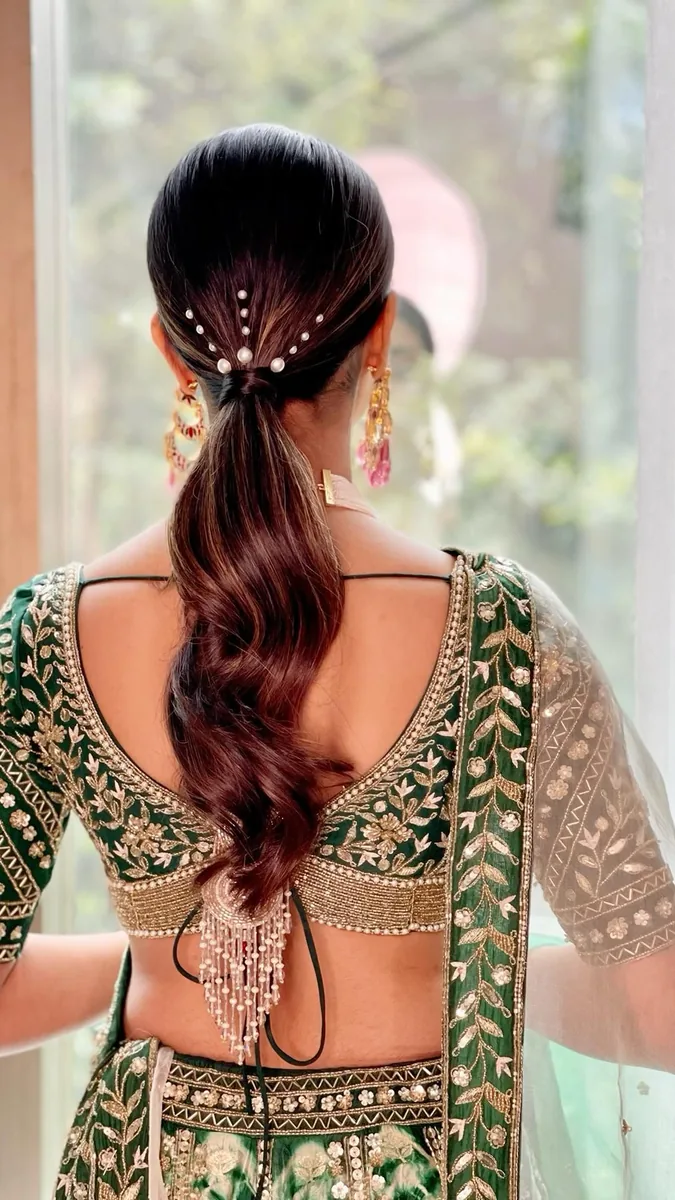
A sleek low ponytail is a modern, polished choice for a sangeet night, and it works beautifully under a dupatta. The smooth, straight finish looks chic with contemporary lehengas and shararas, and the low placement means the dupatta can drape naturally over the head or shoulders without bunching. It is also wonderfully practical, keeping hair completely out of the way while you dance.
Best for: straight or straightened hair, minimal jewellery looks, and anyone who wants a clean, elegant finish. How to style it: straighten the hair first, smooth it back with a light serum, and secure the ponytail at the nape. Wrap a small section of hair around the elastic to hide it, and pin the dupatta just above the ponytail so it stays in place.
Who should avoid it: anyone with very fine hair may find the ponytail looks thin, and anyone who dislikes a scraped-back feeling may prefer a softer style. For everyone else, this is a low-effort, high-impact look that takes about 10 minutes and stays neat all night.
13. Side Braid with Tassels and Tiny Coins
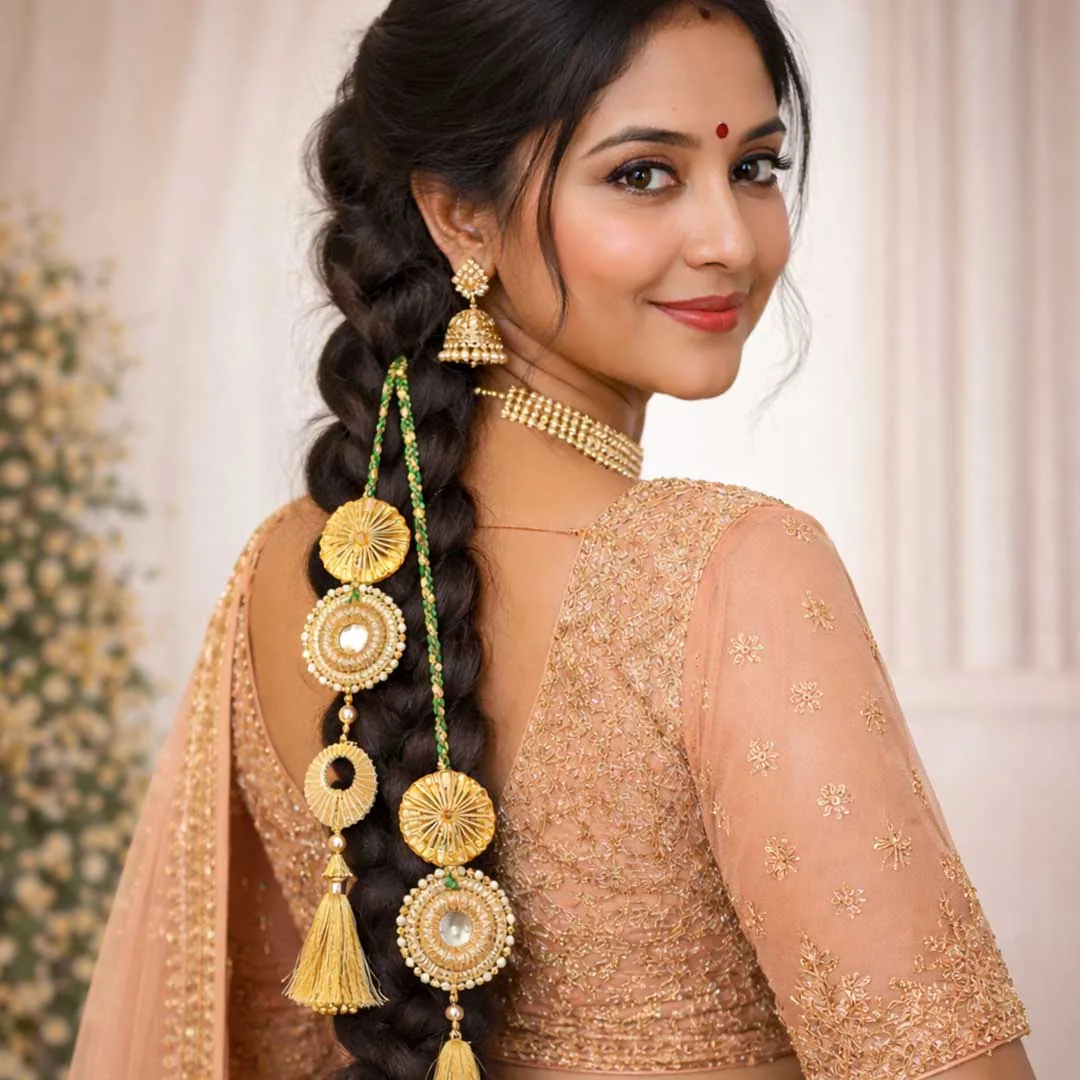
A side braid with tassels and tiny coins is pure sangeet fun. The braid falls over one shoulder, and the tassels and coins catch the light and jingle softly as you move, echoing the dhol and the dancing. It is playful, festive, and full of personality, which makes it a great choice for a music night where the mood is joyful rather than formal.
The trick is to keep the decorations light. Choose small coins and short tassels, and attach them at intervals along the braid rather than clustering them at the end. A loose, slightly messy braid suits this style better than a very neat one, because it lets the tassels show. Finish with a fabric band or a small flower at the tip.
Quick verdict: charming and memorable, and perfect for photos and dance videos. The only downside is that heavy coins can pull on the braid, so keep them small and check that they are tied securely. If you love colour, match the tassels to your lehenga for a coordinated, celebratory finish.
14. Bubble Braid with Colourful Ribbons
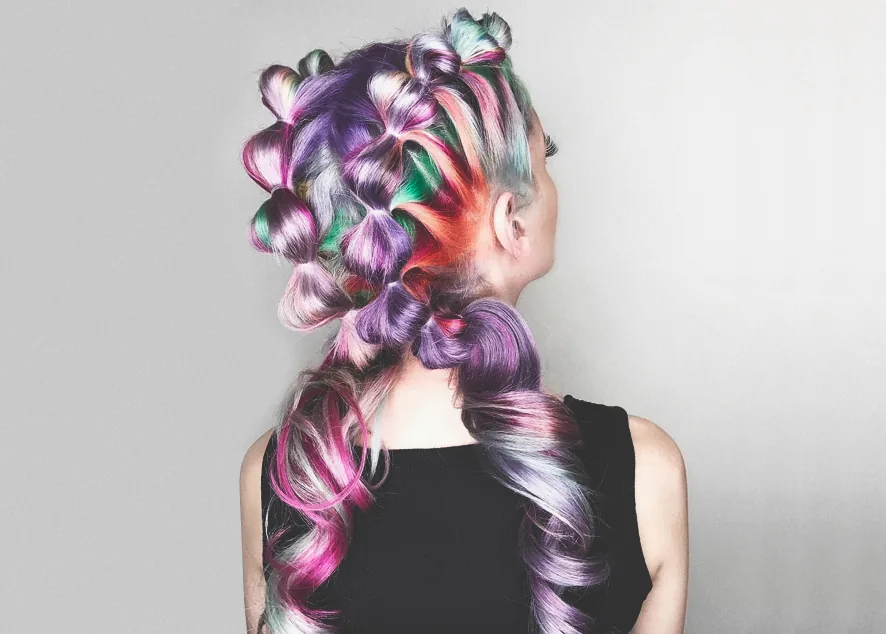
A bubble braid is made for a sangeet. It looks playful in photos, holds its shape through hours of dancing, and moves beautifully when the dhol starts. Start with a high or low ponytail, then tie small elastics at equal intervals and gently pull each section out to create soft, rounded bubbles. Weave thin ribbons in pink, orange, gold or green through the elastics so the braid picks up the colours of your lehenga.
Best for: long hair, younger guests, bridesmaids and anyone who wants a fun, youthful look that still feels festive. It works especially well with a sleeveless or short-sleeve blouse, because the braid sits neatly down the back without catching on embroidery.
Keep the bubbles even and do not pull them too wide, or the braid can look messy by the second hour. A light texturising spray helps the sections hold, and a few bobby pins at the base stop the ponytail from slipping while you dance. If your hair is fine, add a little backcombing before you start for extra fullness.
15. Twisted Low Chignon with Pearl Pins

A twisted low chignon is quiet, elegant and perfect for a sangeet that leans classic rather than loud. The hair is swept back, twisted into soft sections and pinned into a low bun at the nape, then finished with pearl pins that catch the light every time you turn. It pairs beautifully with a maang tikka, a jhoomar or a delicate dupatta draped over one shoulder.
How to style it: work on slightly wavy hair for grip, twist two side sections towards the back, and secure them before rolling the rest into the chignon. Place three to five pearl pins in a loose curve rather than a straight line, so the finish looks soft and intentional instead of stiff.
The main mistake is making it too tight. A chignon pulled flat against the head can look severe under stage lights, so leave a little softness around the face. This style lasts all evening with minimal touch-ups, which makes it a strong choice if you are on the dance floor for most of the night.
16. Stage-Ready Voluminous Blowout

If you are performing at the sangeet, your hair needs to look good from the stage and from the back row. A voluminous blowout does exactly that. Big, bouncy layers with a soft bend at the ends give movement with every step, spin and hand gesture, and the shine reads beautifully in photos and videos.
Ask for long layers, a round-brush blow dry and a light-hold spray rather than heavy serum, which can weigh the volume down. A centre or deep side part both work, so choose the one that suits your face and your outfit. If your lehenga has a heavy neckline, keep the front sections tucked behind your shoulders so they do not hide the embroidery.
What to ask your stylist: volume at the crown, soft curls that brush out into waves, and a finish that survives humidity. Bring a small comb and a travel-size hairspray in your clutch for a quick refresh between performances. The downside is that very fine hair may drop by late evening, so a few hidden pins at the crown can help it last longer.
17. Curly Half-Up with Flower Pins
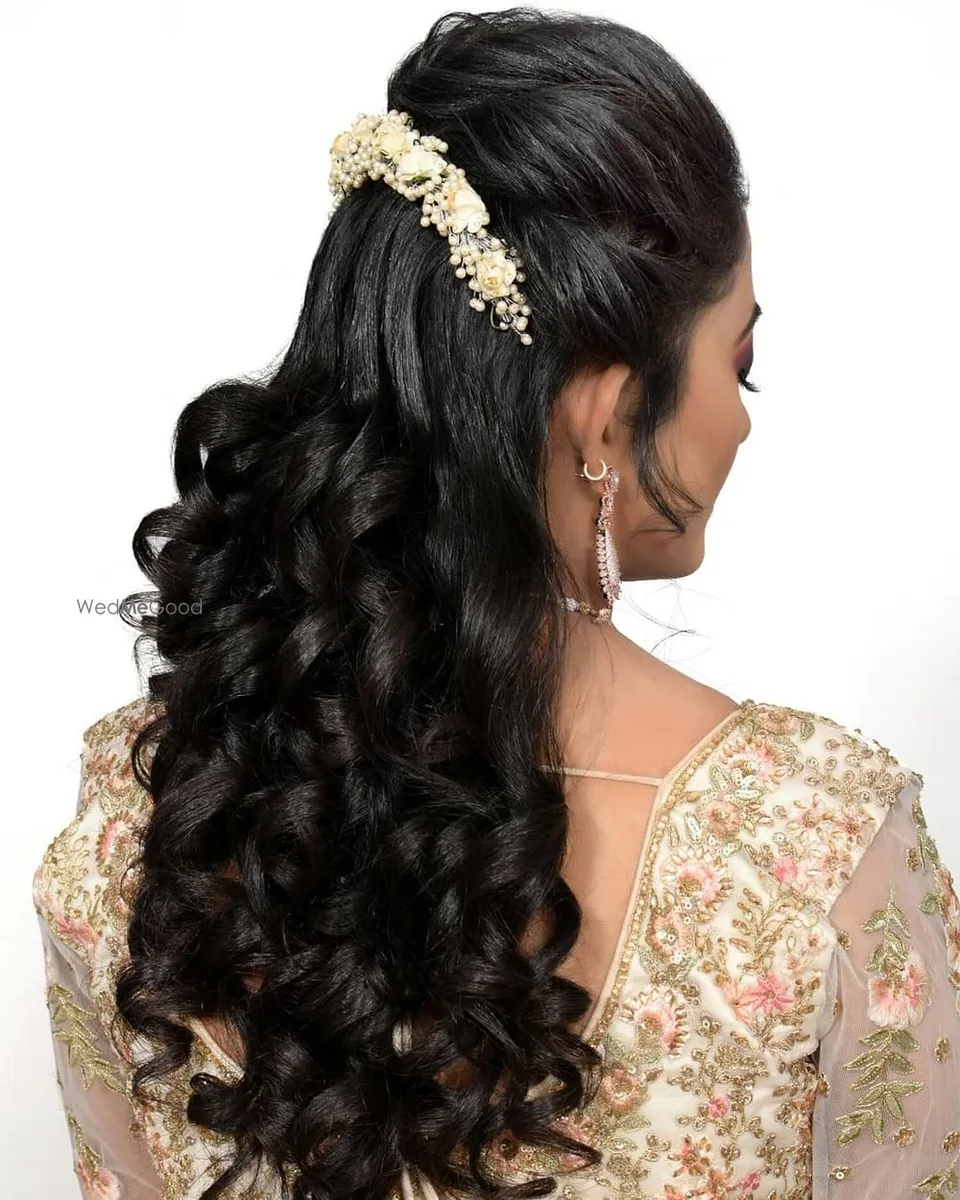
Curly hair and a sangeet are a natural match. A half-up style keeps the curls free and bouncy while pulling the front sections back, so your face stays clear while you dance. Add small fresh or fabric flower pins in white, pink or orange, and the look instantly feels festive without needing heavy jewellery.
This style is wonderfully low maintenance. Define your curls with a curl cream, gather the top half loosely, and pin it with two or three flower pins rather than one tight clip. Let a few curls fall naturally around your face for softness. It suits lehengas, shararas and anarkalis, and it looks just as good in candid dance photos as it does in posed portraits.
One thing to avoid is over-brushing the curls before pinning, which can turn them frizzy under hot lights. If your curls tend to drop, use a light mousse at the roots and pin the half-up section a little higher for extra lift. It is also a great option for guests who want to look dressed up without spending an hour in the chair.
18. Pin-Straight Hair with a Centre Part and Jhoomar
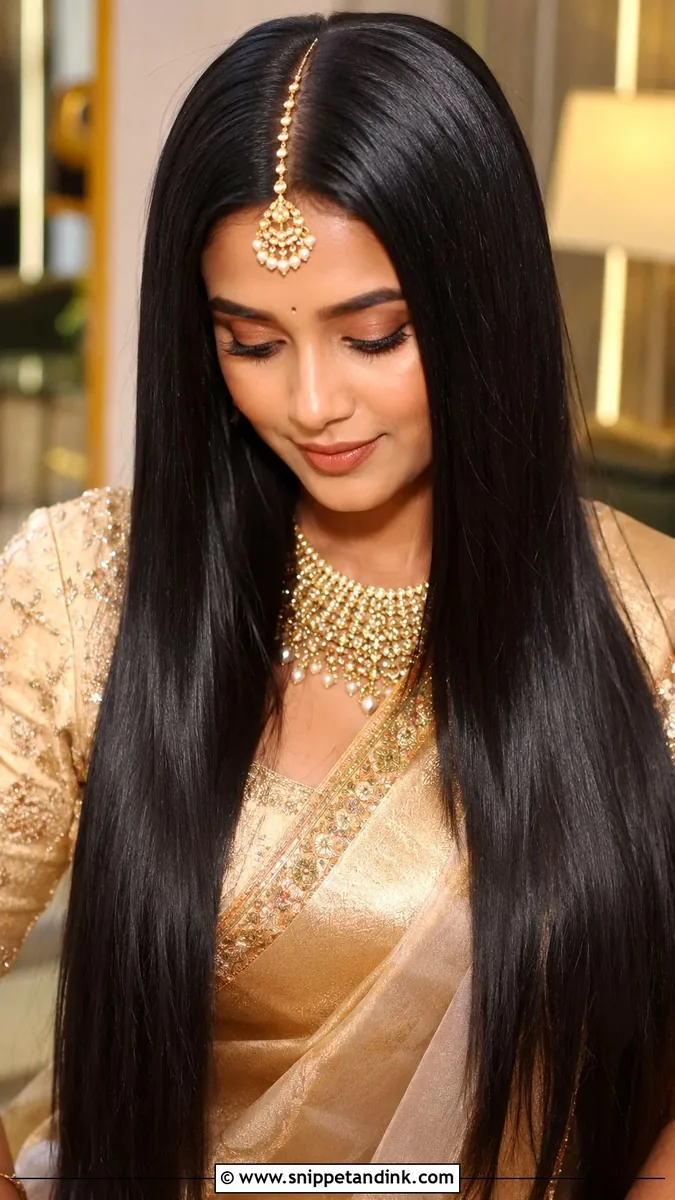
Pin-straight hair with a sharp centre part is sleek, modern and striking next to a traditional jhoomar. The contrast is what makes it work: the clean, glossy lines of the hair let the jhoomar do the talking, while the centre part frames the face in a balanced, symmetrical way. It is a favourite for brides and close family who want a polished, camera-ready look.
Pros: it photographs beautifully, suits heavy embroidery and statement jewellery, and stays neat through a long evening. Cons: it needs a good straightener and heat protectant, and it can fall flat in humidity if you skip a smoothing serum or anti-frizz spray.
For the best finish, straighten in small sections, add a drop of shine serum only at the ends, and place the jhoomar so it sits just above the part line. Keep the hair tucked behind your ears on one side if you want to show off earrings, or leave it loose on both sides for a softer frame. This is not the best choice if you plan to dance hard for hours, as sweat and movement can break the sleek finish.
19. Messy Low Bun with a Draped Dupatta
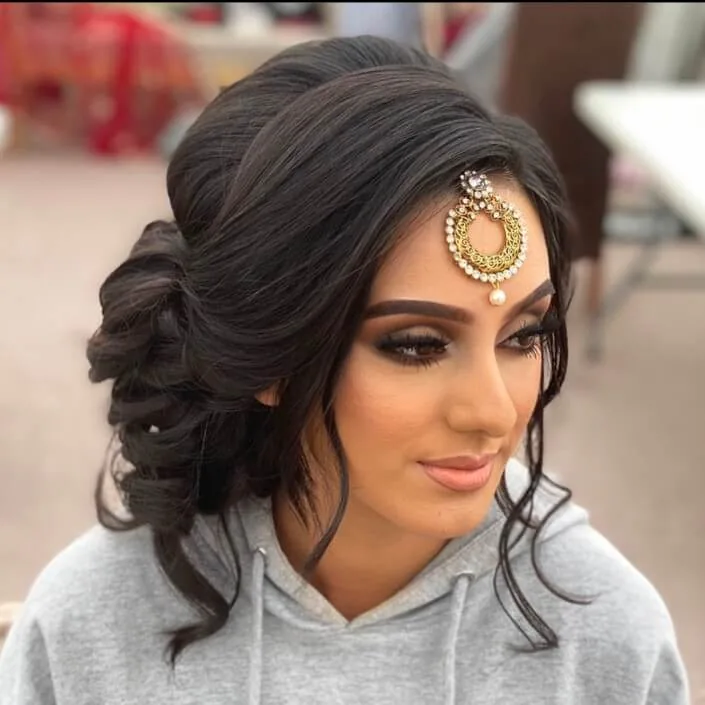
A messy low bun is the relaxed cousin of the classic chignon, and it works perfectly with a draped dupatta. The bun sits low and loose, with soft pieces pulled out around the face, while the dupatta falls over one shoulder or is pinned lightly at the back. It feels comfortable, looks effortless, and stays out of your way while you dance.
This is a smart pick if your outfit is heavy or heavily embellished. The low bun balances the weight of the dupatta and stops the fabric from pulling your hair loose. Use a donut or a little padding if your hair is fine, and secure the bun with U-pins rather than a single elastic so it holds through spins and bhangra steps.
Common mistake: making the bun too messy. A few loose tendrils look romantic, but too many can look unfinished in photos. Keep the front neat, the bun soft, and the dupatta pinned in two places so it does not slide. A quick spritz of flexible-hold spray at the end keeps everything in place without making it stiff.
20. A Braid Woven with Fresh Jasmine and Roses
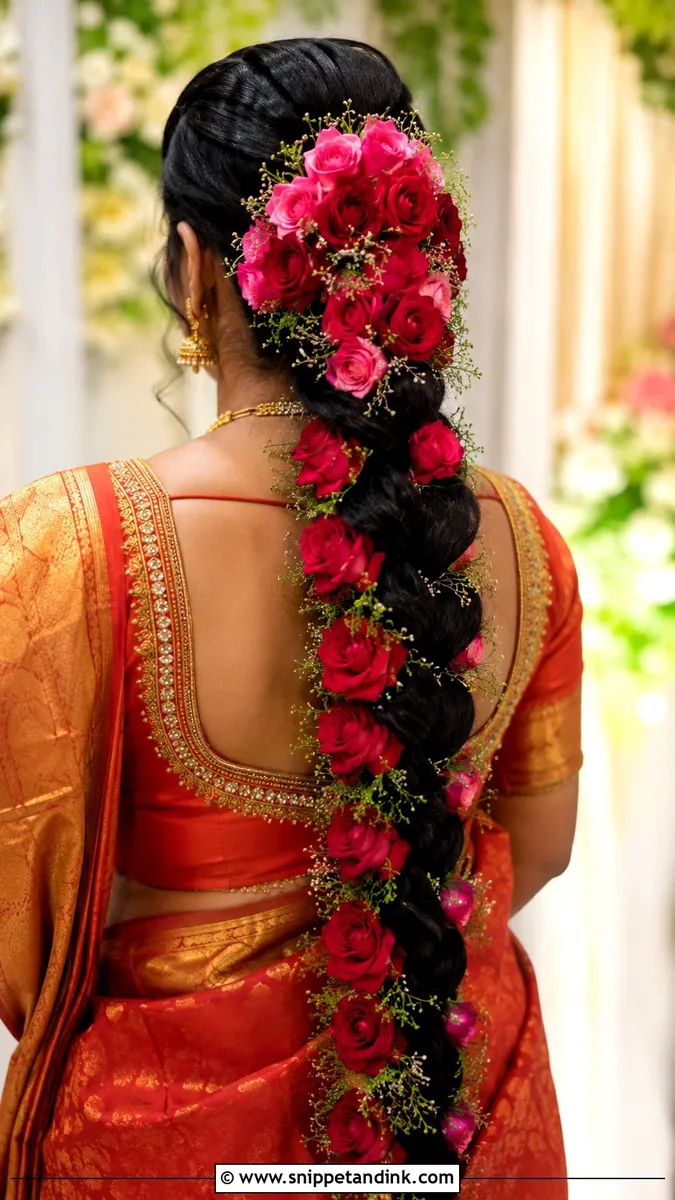
Few sangeet hairstyles smell as lovely as they look. A long braid woven with fresh jasmine and small roses is traditional, romantic and made for an evening of music. The white jasmine adds a soft fragrance and a delicate contrast against dark hair, while a few pink or red roses tucked along the braid pick up the colours of your outfit.
How to style it: braid the hair loosely so there is room to weave the flowers in, then thread a thin gajra through the braid or pin small flower clusters at intervals. Finish with a ribbon or a small tassel at the end. This works best on long, thick hair, but extensions or a braided hairpiece can add length if needed.
Fresh flowers wilt in heat, so ask your florist for flowers prepared the same evening and keep the braid lightly misted. Avoid heavy hairspray directly on the flowers, as it can dull them. If you are dancing a lot, pin the flowers in with extra bobby pins so they do not slip out mid-performance.
21. Pinned-Back Curls with a Maang Tikka
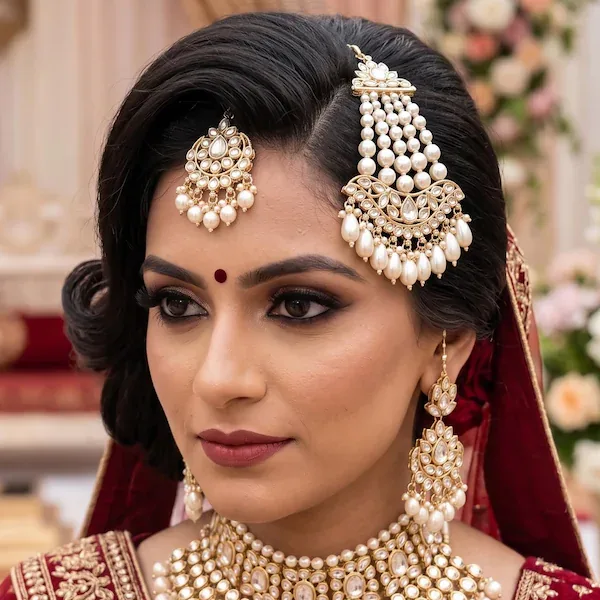
Pinned-back curls with a maang tikka give you the best of both worlds: the volume and movement of loose curls, with the front neatly held back so the tikka sits perfectly on your forehead. It is a classic sangeet look that suits almost every face shape and works with lehengas, ghararas and sarees alike.
Start with soft, brushed-out curls rather than tight ringlets, then pin the two front sections back just above the ears. Place the maang tikka at the centre part so it hangs in line with your nose. A small chain or a side tikka can add extra detail if your outfit is simpler.
Quick verdict: elegant, comfortable and very photogenic, especially in close-up portraits. It needs a little more time than a simple half-up, usually 30 to 45 minutes with curling, but it holds well and needs almost no touch-ups. If your hair is very straight, use a strong-hold mousse and let the curls cool fully before pinning, or they will drop before the first dance.
22. High Ponytail Wrapped in Its Own Braid
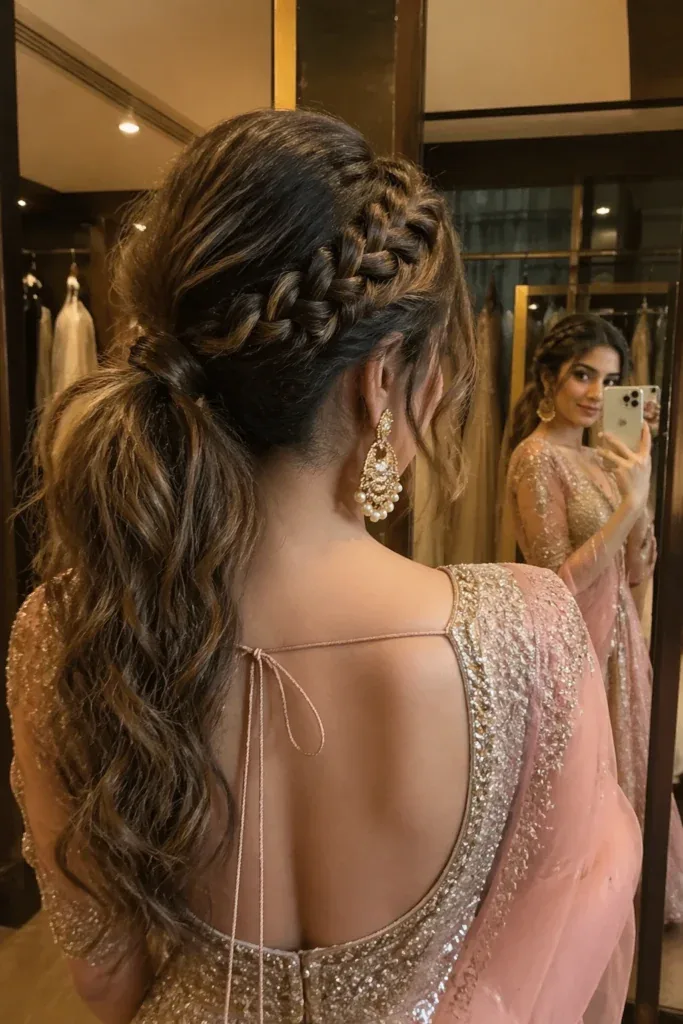
A high ponytail wrapped in its own braid is bold, practical and built for dancing. The height gives instant lift and drama, while the braid wrapped around the base hides the elastic and adds a polished, detailed finish. The ponytail swings with every move, which looks fantastic in dance videos and on stage.
Best for: performers, bridesmaids and guests who want to dance without worrying about their hair falling in their face. It also suits outfits with a high neckline or a detailed back, because the hair is lifted completely clear.
To keep it comfortable, do not pull the ponytail too tight at the front, or it can give you a headache by midnight. Wrap a thin section of hair around the base, pin it underneath, and add a little texture spray to the ponytail for grip. This style needs medium to long hair, and it works best with a bit of natural wave or curl so the ponytail does not look flat.
23. Romantic Updo with Loose Tendrils

A romantic updo with loose tendrils is soft, dreamy and perfect for a sangeet that feels more like a celebration than a formal ceremony. The hair is gathered up loosely, with gentle twists and volume at the crown, while a few fine tendrils are left free to frame the face and move as you dance. It looks beautiful from every angle and pairs well with fresh flowers or pearl pins.
Maintenance is simple, which is part of its charm. If a tendril falls loose, it only adds to the softness, so you do not need to keep checking a mirror. Use a flexible-hold spray rather than a strong one, and avoid over-pinning the updo, or it will lose its airy feel.
Who should avoid it: anyone with very short hair will struggle to get enough length for the tendrils, and anyone performing a high-energy dance may prefer a firmer bun or braid. For most guests and family members, though, this is a lovely middle ground between a formal updo and loose hair. Expect to spend 30 to 40 minutes at the salon, and budget for a few decorative pins if you want extra sparkle.
24. Side-Part Sleek Bun with Pearls

A side-part sleek bun with pearls is polished, modern and quietly glamorous. The deep side part adds asymmetry and softness, while the smooth bun keeps everything neat and secure. Small pearl pins or a pearl-studded hair accessory scattered through the bun catch the light without competing with your jewellery.
How to style it: smooth the hair back with a light gel or serum, create a clean side part, and gather the hair into a low or mid bun. Wrap the bun neatly, pin it firmly, and place pearls in a small cluster on one side for a balanced finish. This style works beautifully with a saree or a lehenga with a statement blouse.
It is one of the longest-lasting sangeet hairstyles, making it ideal if you are hosting, performing or dancing all night. The only watch-out is flyaways, especially in humidity, so finish with a smoothing spray and carry a few extra pins. It also suits most hair lengths from shoulder-length upwards, as long as the bun can be pinned securely.
25. Boho Braid with Colourful Threads
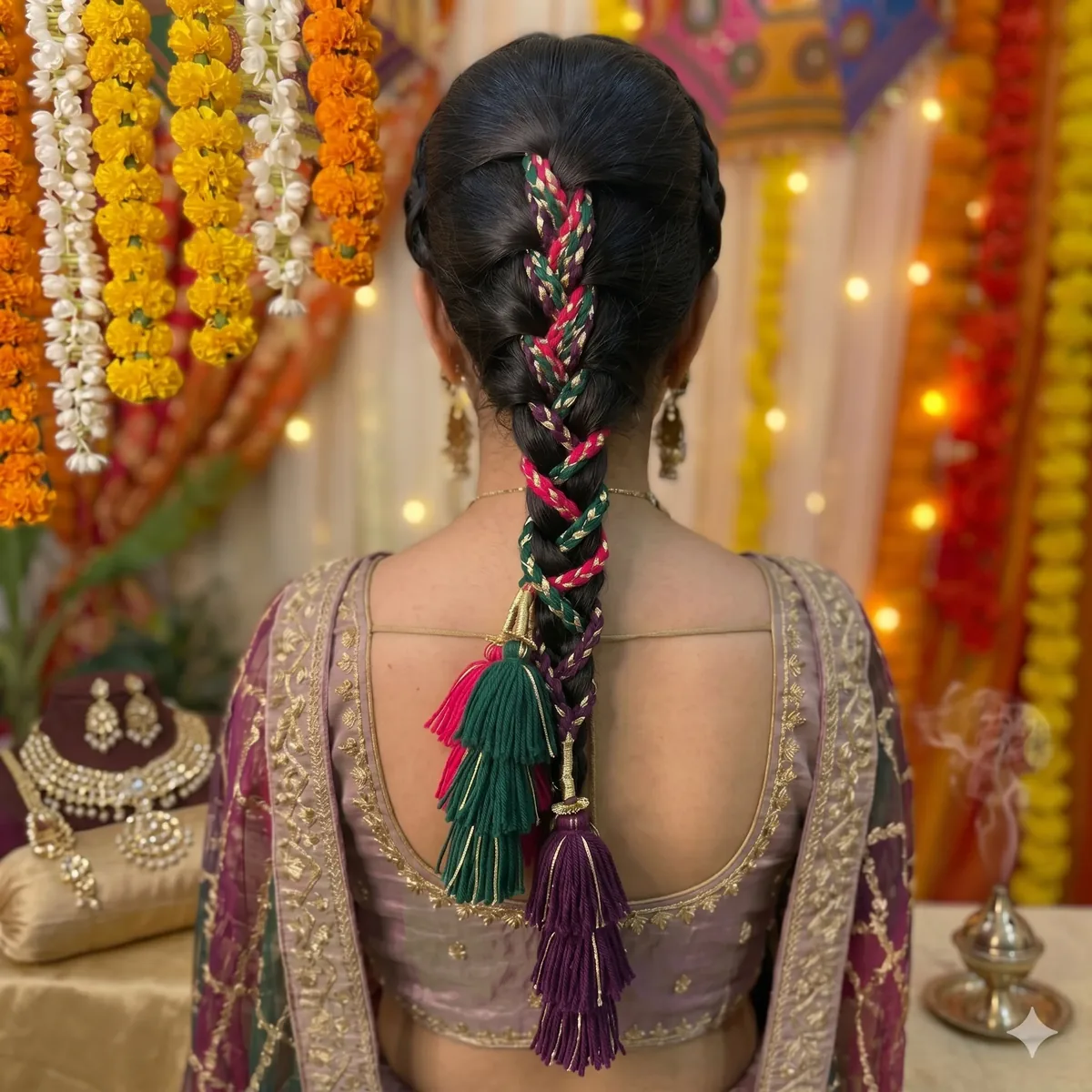
A boho braid with colourful threads is free-spirited, fun and full of sangeet energy. Thin threads in gold, pink, orange and green are woven through a loose side braid, along with a few tiny beads or charms if you like. The result is relaxed but festive, and it moves beautifully when you dance.
This style suits guests who want something different from the usual bun or curls, and it works especially well with lighter fabrics, floral lehengas or a boho-inspired outfit. It is also kind to your hair, because the braid is loose and the threads add colour without heat or heavy products. You can do it at home in 15 to 20 minutes, which makes it a good last-minute option.
Pros: quick, affordable, comfortable and very photogenic. Cons: it can loosen during vigorous dancing, so pin the top of the braid and tie the end securely. Keep the threads short enough that they do not tangle in your dupatta, and choose colours that match at least one shade in your outfit so the look feels intentional rather than random.
26. Textured Lob for Sangeet Guests Who Want to Dance
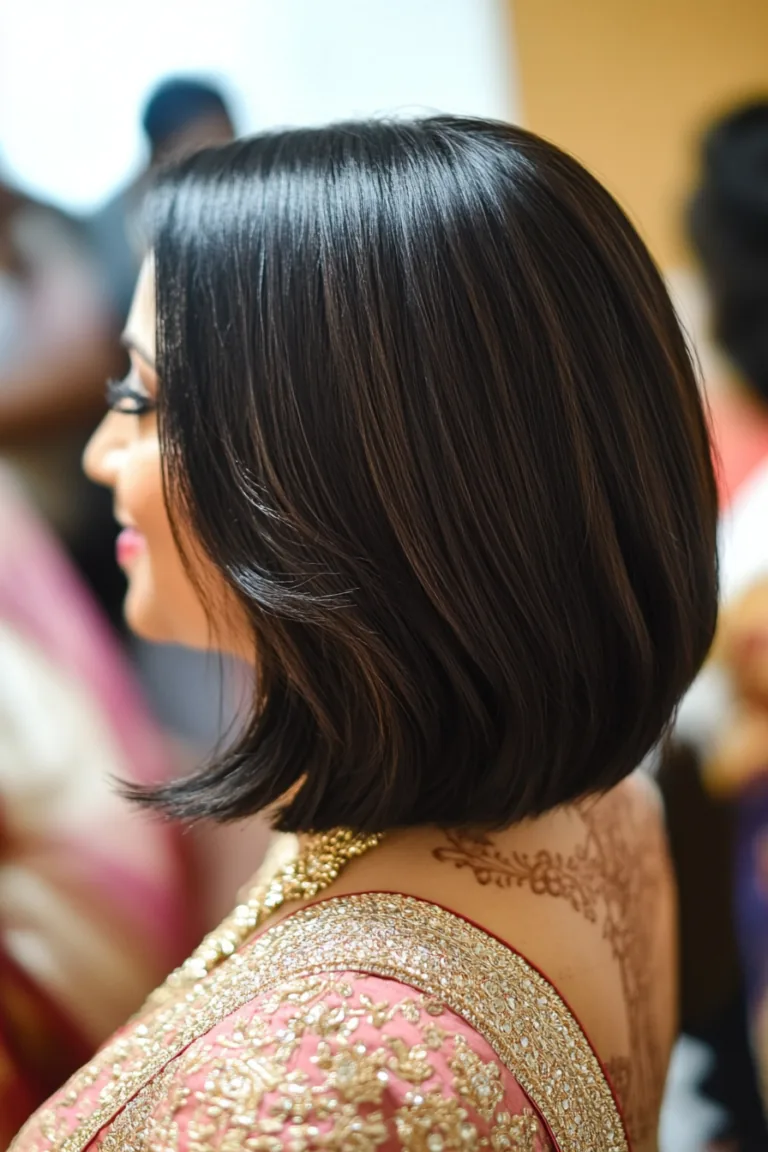
Not every sangeet guest wants an updo, and a textured lob proves you do not need one. This shoulder-length cut with soft, choppy layers and a tousled finish is light, bouncy and made for dancing. It stays off your neck, does not get tangled in a dupatta, and looks fresh in photos from the first song to the last.
Add texture with a sea-salt spray or a light mousse, then scrunch the ends for a lived-in wave. A side part gives extra volume, while a centre part feels more modern and sleek. Small accessories work well here too: a pair of statement earrings, a delicate maang tikka or a single flower pin is enough, because the cut itself does the styling.
Quick verdict: the easiest dance-friendly option in this list. It needs almost no maintenance during the night, suits most face shapes, and works with every sangeet outfit from a lehenga to a sharara. If your lob is very straight, ask your stylist for soft layers and a little texturising at the ends so it does not fall flat once the dancing starts.
27. Long Layers with Soft, Bouncy Curls
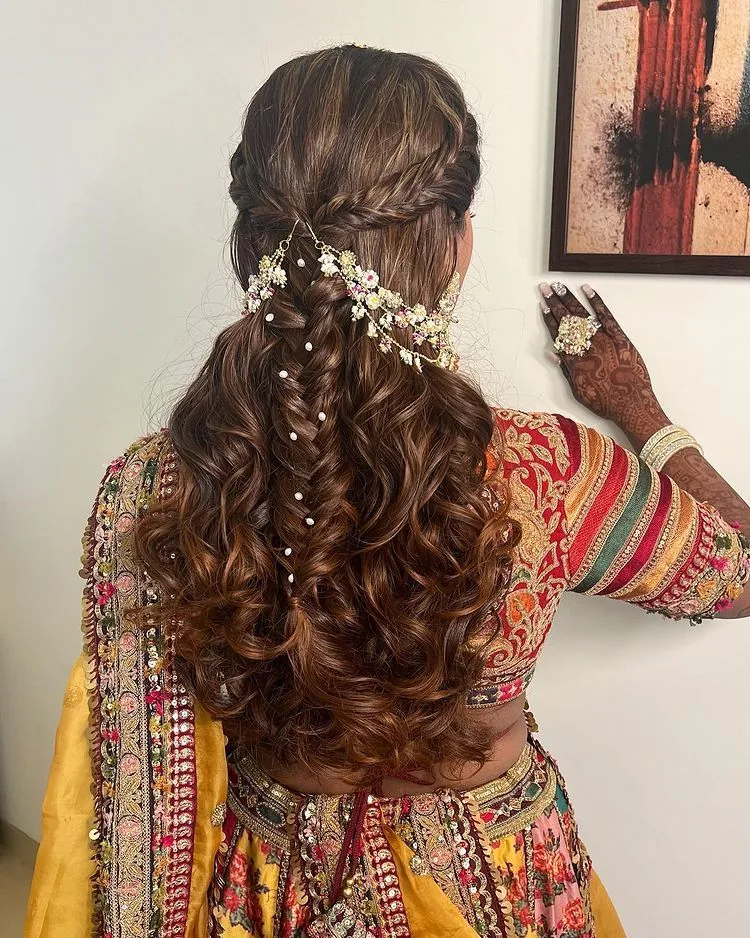
Long layers with soft, bouncy curls are made for a sangeet night. The layers keep thick hair light enough to move, while the curls catch the light every time you turn on the dance floor. It looks glamorous without feeling stiff, and it works beautifully with a lehenga, a sharara, or a long anarkali. Add a little volume at the crown and the style frames your face from every angle.
Best for: medium to long hair, round and oval faces, and anyone who wants a loose, romantic look that still photographs well. It suits both brides and guests, and it pairs well with a maang tikka or a small jhoomar. If your hair is very fine, ask for a volumising mousse before curling so the bounce lasts past the first few dances.
How to style it: curl large sections away from the face with a wide barrel iron, then brush them out gently for softness. Finish with a light-hold spray, not a heavy one, so the curls can still move. Pin one side back if you want your earrings to show, and keep a few face-framing pieces loose for a softer finish.
28. Braided Bun Dressed with Marigolds

A braided bun dressed with marigolds brings colour, tradition, and staying power to a sangeet night. The braid adds texture and grip, the bun keeps every strand off your neck while you dance, and the marigolds add a bright, festive pop against dark hair. It is a lovely choice for a bride, a sister of the bride, or a close family member who wants a traditional look with a joyful twist.
What to ask your stylist: ask for a secure braided base with plenty of pins, and for the marigolds to be tucked in with small U-pins rather than just placed on top. Fresh flowers are best, but good-quality artificial marigolds work well if the night will be long or warm. Ask your stylist to check the bun from the back before you leave, since that is the view most guests will see.
For maintenance, carry two or three spare pins and a small spritz bottle if you are using fresh flowers. A light mist keeps the petals looking fresh, and a quick pin check between dances stops any slipping. This style holds up well for hours, and it looks just as pretty in photos at the end of the night as it did at the start.
29. Low Twisted Bun with a Green Dupatta
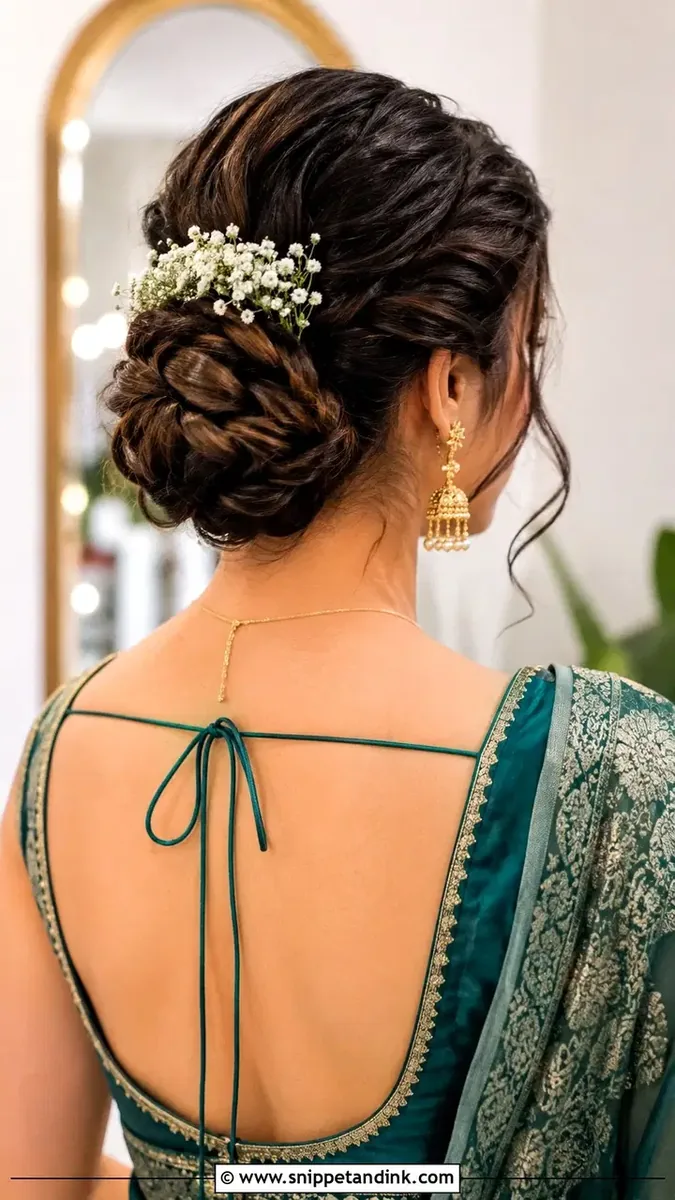
A low twisted bun with a green dupatta is elegant, practical, and perfect for dancing. The twist gives the bun a soft, polished shape, while the low placement keeps it comfortable and stops it from pulling at your scalp. Draping a green dupatta over the bun adds colour and tradition, and it looks stunning with gold jewellery, a pink lehenga, or a deep red outfit.
The pros are clear: it stays put, it keeps hair off your shoulders, and it suits almost every face shape. The main con is that a heavy dupatta can slide if it is not pinned well, so use flat, strong pins at the crown and at the sides. A little texture spray before twisting also helps the bun grip better and stops flyaways from escaping during fast songs.
This look works best when the dupatta is lightweight and the bun is not pulled too tight. Leave a few soft strands around your face for a relaxed finish, and choose a green that matches your outfit or your mehndi. It is a graceful, fuss-free choice for a long night of music, dancing, and family photos.
30. Soft Waves with a Deep Side Sweep
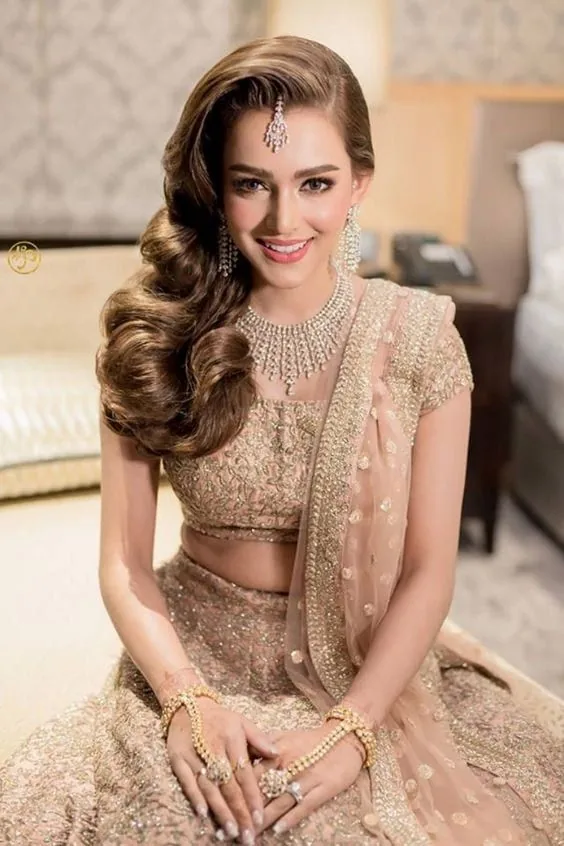
Soft waves with a deep side sweep give you old-Hollywood glamour with a sangeet twist. The sweep adds drama and shows off your earrings and neckline, while the waves move beautifully when you dance. It is simple from the front and striking in photos, which makes it a great pick for guests who want to look polished without a heavy updo.
One common mistake is curling the waves too tight and then leaving them stiff. For this look, the curls need to be brushed out until they fall into soft, flowing waves. Another mistake is skipping heat protectant or using too much serum, which can make the hair look flat by the end of the night. Use a light mousse for hold, then a pea-sized amount of shine serum only on the ends.
Pin the sweep discreetly behind one ear so it stays in place while you move. A couple of hidden bobby pins and a flexible-hold spray are enough. This style suits medium and long hair best, and it pairs beautifully with a side-draped dupatta, a statement jhumka, or a delicate maang tikka.
31. Double Braid Flowing into a Low Bun
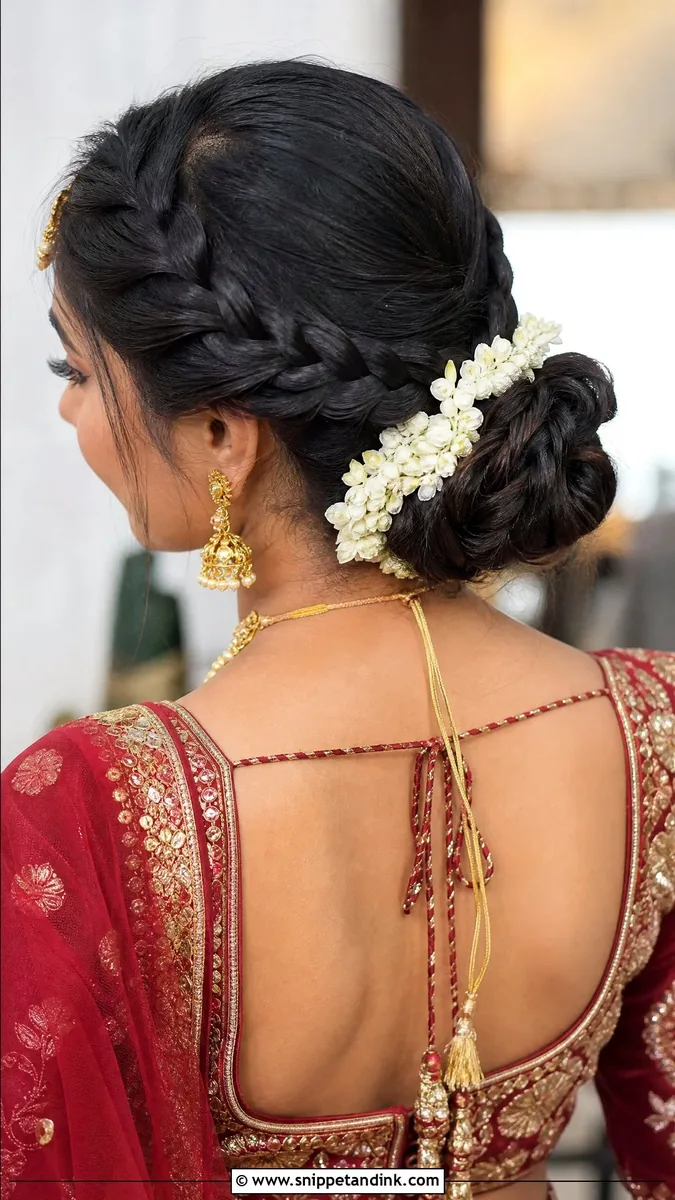
A double braid flowing into a low bun is pretty, secure, and made for a night of dancing. The two braids frame the head and add detail, while the low bun anchors everything in place. It keeps your hair tidy through dhol beats and group dances, yet it still looks soft and romantic from the front. It is a lovely option for bridesmaids, cousins, and the bride herself.
Expect this style to take around 30 to 45 minutes at the salon, depending on your hair length and thickness. It is a mid-range style for cost, since it needs braiding skill and careful pinning, but it is worth it for the hold. Bring a photo of the exact braid width you want, because a chunky braid looks very different from a fine, delicate one.
For a softer finish, gently pull a few strands loose around the face and add small flowers or pearl pins along the braids. Keep the bun low and centred so it feels balanced, and ask your stylist to finish with a strong-hold spray at the roots. You will be able to dance freely without worrying about your hair coming undone.
32. Sleek Centre-Part Braid Finished with Gajra
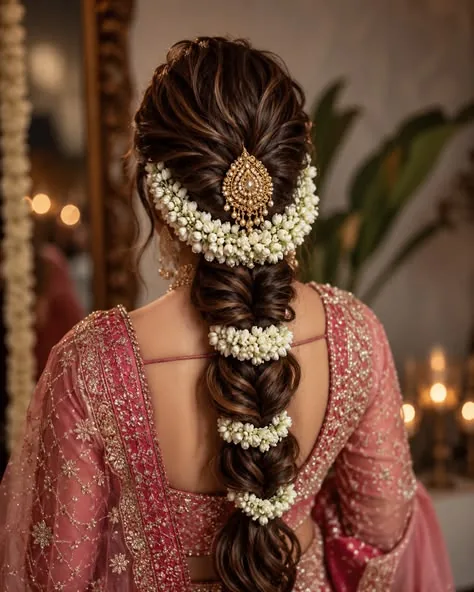
A sleek centre-part braid finished with gajra is clean, classic, and timeless for a sangeet. The centre part gives the look symmetry, the smooth braid keeps everything neat, and the white gajra adds fragrance and a beautiful contrast against dark hair. It suits a traditional lehenga, a silk sari, or a simple yet elegant sharara, and it looks stunning in close-up photos.
This style is not for everyone. If you have very short layers, a lot of baby hairs, or hair that slips easily, a sleek braid can loosen quickly and need frequent fixing. It also suits a neat, polished outfit more than a very boho or messy look. If you love volume and movement, a softer wavy style may suit you better than this smooth, structured braid.
Quick verdict: choose this if you want a graceful, traditional, low-fuss look that stays neat all night. Use a smoothing serum, a fine-tooth comb for the part, and fresh gajra wrapped securely around the braid. Add a small maang tikka at the centre part for a complete, bridal-ready finish that feels both festive and refined.
33. Fishtail Side Braid for the Bride
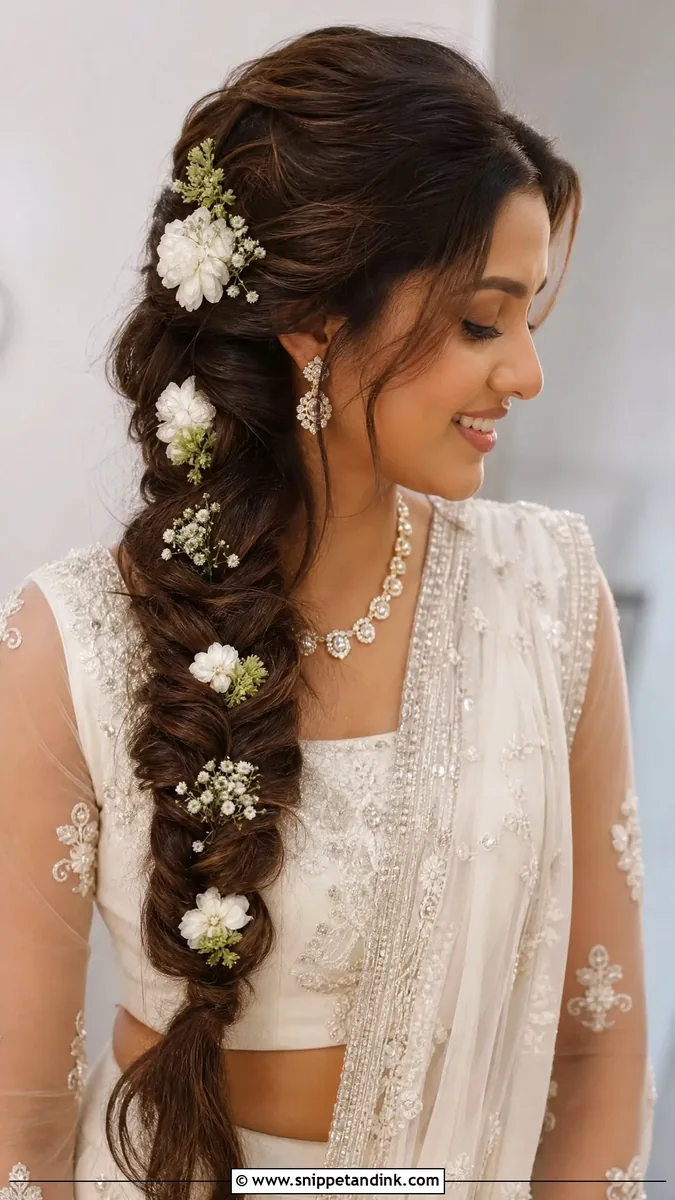
A fishtail side braid is a dreamy choice for a sangeet bride. Draped over one shoulder, it shows off the intricate weave, frames your jewellery, and moves gently as you dance. The fishtail pattern looks detailed and luxurious, yet it feels light and comfortable. It pairs beautifully with a lehenga blouse, a deep neckline, and a jhoomar or maang tikka.
Best for: long, thick hair and brides who want a romantic look that is still secure. If your hair is fine, your stylist can add extensions or gently pull the braid apart to make it look fuller. A fishtail also works well with a dupatta draped on the opposite shoulder, so the braid stays visible in photos.
How to style it: start with a little texture spray so the hair grips, then braid loosely from behind one ear down over the shoulder. Pancake the edges gently for fullness, and secure the end with a clear band hidden under a small flower or gold accessory. Finish with a light spray and leave a few soft curls at the front for a gentle, bridal glow.
34. Curly Updo Crowned with a Jhoomar
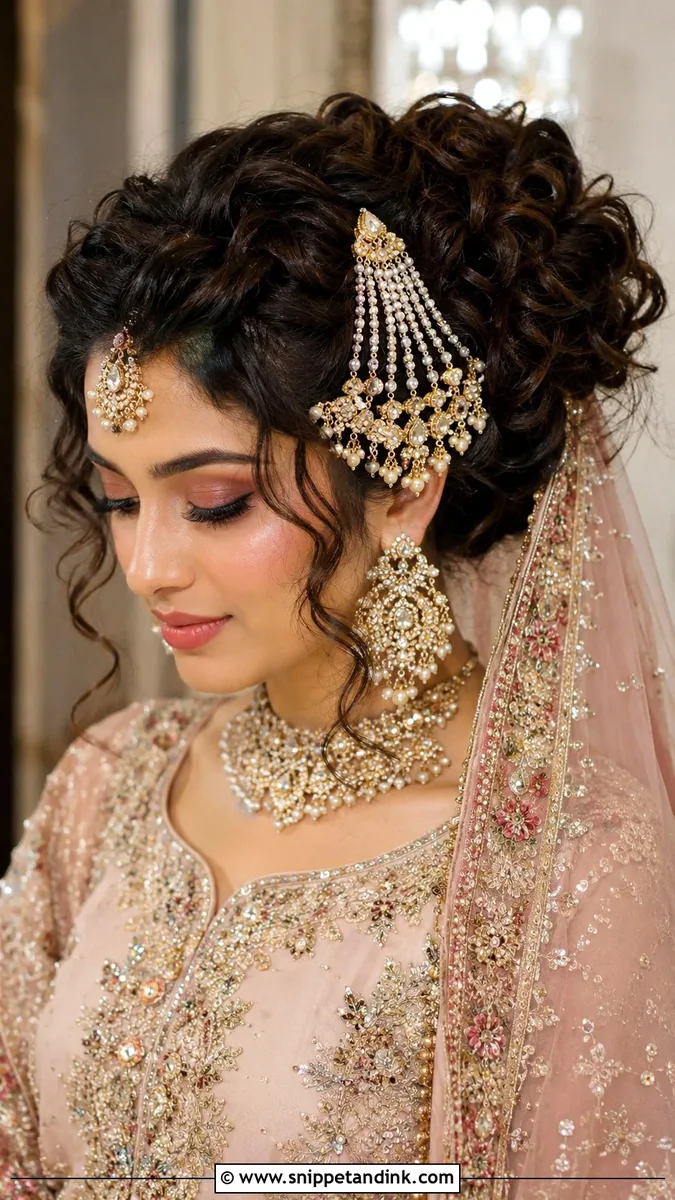
A curly updo crowned with a jhoomar turns natural texture into a show-stopping sangeet look. The curls add height and softness, the updo keeps hair off your neck while you dance, and the jhoomar adds sparkle and tradition at the front. It is bold, beautiful, and perfect for a bride or a guest who wants to stand out without a heavy, over-styled finish.
To keep curls looking fresh, do not over-brush them before pinning. Define them with a curl cream, let them set, then pin sections loosely into the updo so the natural shape stays visible. Place the jhoomar slightly to one side of the centre part and pin it firmly, since its weight can pull if it is only clipped in. A few pins hidden under the curls will hold it steady.
This style loves a little imperfection, so do not aim for a perfectly smooth finish. A few loose curls at the nape and temples make it look softer and more romantic. Carry a small bottle of curl-refresh spray for a quick touch-up, and enjoy a look that feels festive, glamorous, and true to your natural hair.
35. Wavy Half-Up Twist for the Dance Floor

A wavy half-up twist is one of the easiest ways to look polished and still dance freely at a sangeet. The top section is twisted back and pinned, which keeps hair out of your face, while the rest falls in soft waves over your shoulders. It gives you the best of both worlds: an updo feel at the front and flowing movement at the back.
The pros include comfort, speed, and versatility. It suits most hair lengths from shoulder-length upwards, it works with a dupatta, and it is easy to refresh between songs. The main con is that very silky hair can slip out of the twist, so use texture spray and criss-crossed pins for extra grip. If your hair is very thick, ask for two smaller twists instead of one large one.
Add a small decorative pin or fresh flower where the twist meets at the back for a festive touch. This style also pairs well with a maang tikka, since the front stays neat and open. It is fun, flattering, and practical, and it photographs beautifully from both the front and the back.
36. Classic Chignon with Fresh Flowers

A classic chignon with fresh flowers is timeless, graceful, and ideal for a sangeet night. The low, smooth bun sits neatly at the nape, which keeps it comfortable through hours of dancing and photos. Fresh flowers tucked around the bun add colour and a soft, romantic scent. It suits a silk lehenga, a chiffon sari, or an embroidered anarkali.
How to style it: smooth the hair back with a light serum, twist it into a low bun, and pin it securely at the nape. Keep the finish soft rather than scraped back, with a little volume at the crown. Tuck small roses, jasmine, or marigolds around the edges of the bun, and finish with a flexible-hold spray so the style can move without falling apart.
This look takes about 25 to 35 minutes and is a good choice if you want elegance without a long salon appointment. It also holds a dupatta well, since the low bun gives the fabric something to rest against. Choose flowers that match your outfit, and you will have a polished, photo-ready style that lasts the whole night.
37. Braid Crown Finished with a Maang Tikka
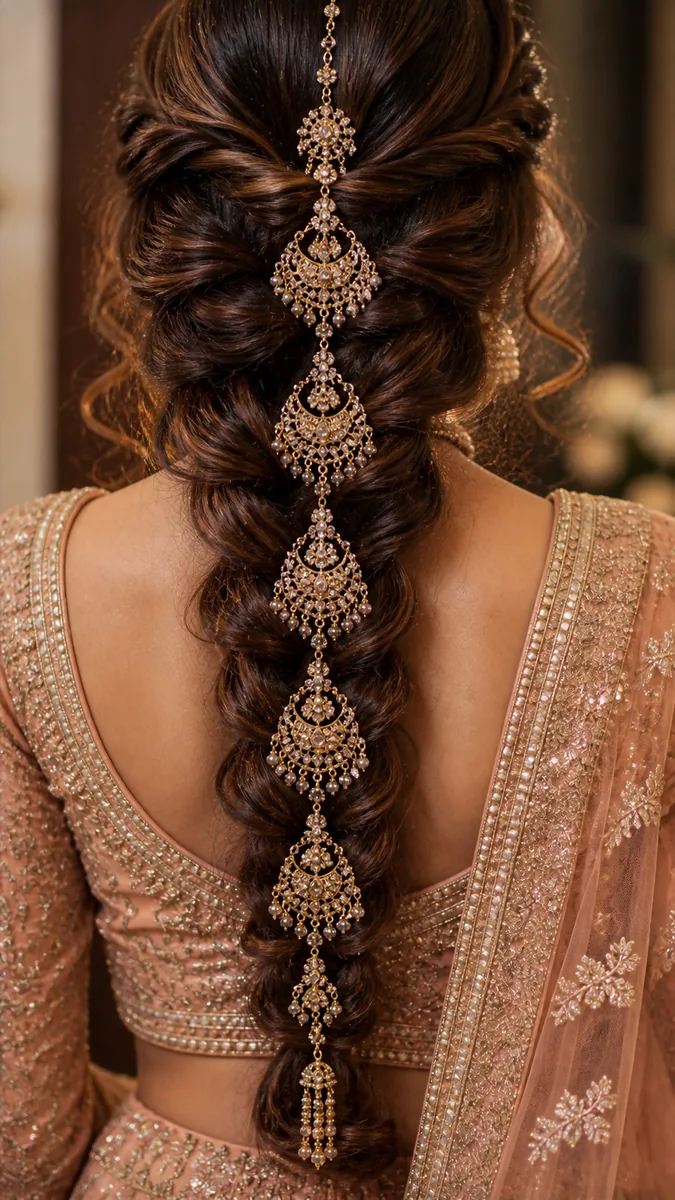
A braid crown finished with a maang tikka feels regal, romantic, and perfect for a sangeet. The braid wraps around the head like a crown, keeping hair secure and off your face, while the maang tikka hangs gracefully at the centre. It is a beautiful choice for a bride, and it also works wonderfully for a sister or close friend who wants a standout festive look.
What to ask your stylist: ask for a Dutch or French braid worked around the head, with the ends tucked in neatly at the back. Ask them to place the maang tikka after the braid is finished, so it sits in the right spot and does not pull the braid loose. If your hair is fine, ask for a little backcombing at the crown first to give the braid more fullness and grip.
Leave the rest of your hair in soft waves or a low bun, depending on how formal you want the look to be. A few loose tendrils at the front soften the crown and frame your face. This style holds well for dancing, looks stunning in photos, and pairs beautifully with jhumkas and a heavily embroidered dupatta.
38. Low Ponytail with Soft, Swinging Curls

A low ponytail with soft, swinging curls is simple, chic, and surprisingly perfect for a sangeet. It keeps your hair controlled while you dance, yet the curls add movement and bounce with every step. It suits a modern lehenga, a jumpsuit-style outfit, or a sleek sari drape, and it lets your jewellery and outfit take centre stage.
This is one of the quickest sangeet styles to create, usually taking 15 to 25 minutes. It is also budget-friendly, since it needs no extensions or complex pinning. Wrap a small section of hair around the elastic to hide it, and add a decorative cuff or a few pearl pins for a festive finish. A light-hold spray will keep the curls bouncy without making them stiff.
Quick verdict: choose this if you want comfort, movement, and a modern look that will not need constant fixing. It works best on medium to long hair, and it is ideal if you plan to dance all night. Keep the ponytail low and loose at the nape for a relaxed feel, and you will stay cool, comfortable, and photo-ready until the last song.
What is the best hairstyle for dancing all night at a sangeet?
A secure updo, a low bun, or a braided style is best for dancing all night at a sangeet. These styles keep hair off your neck and shoulders, stay in place through fast songs, and need very little fixing. Choose a low bun, a braided bun, or a fishtail braid with strong pins and a good setting spray.
How do I keep gajra fresh through a whole sangeet night?
Keep gajra fresh by choosing fresh flowers on the day, storing them in the fridge until styling, and misting them lightly with water. Pin the gajra securely so it does not rub or crush, and avoid heavy hairspray directly on the flowers. Carry a spare string in case a few blooms wilt during dancing.
How can I stop my dupatta from slipping off my hairstyle?
Stop your dupatta from slipping by pinning it to your hairstyle with strong, flat pins at the crown and sides. Use a little texture spray or a non-slip grip under the fabric, and choose a bun or braid that gives the pins something to hold. Test the drape by moving and dancing before the event starts.
What are good sangeet hairstyles for short hair?
Good sangeet hairstyles for short hair include soft waves with a side sweep, a half-up twist with pins, a sleek bob with a maang tikka, and a curled pixie with a small jhoomar. Add volume at the crown, use decorative pins or fresh flowers, and finish with a flexible spray so the style moves naturally while you dance.
How far in advance should I book a hairstylist for a sangeet?
Book your hairstylist for a sangeet at least four to six weeks in advance, especially during peak wedding season. Popular stylists fill up quickly for weekends, so early booking gives you your preferred time and a trial if needed. Confirm the style, timing, and location again one week before the event.
Hairspray or pins — which holds a sangeet hairstyle better?
Pins hold a sangeet hairstyle better than hairspray alone, because they anchor the style in place while you dance. Hairspray helps with flyaways and light hold, but it cannot stop a heavy bun or dupatta from slipping. Use plenty of strong pins first, then finish with a flexible-hold spray for a secure, natural result.
What sangeet hairstyles work best for curly hair?
Curly hair works best in a curly updo, a half-up twist, loose defined curls, or a side braid that shows off the texture. Define curls with cream before styling, pin sections loosely so the shape stays soft, and avoid over-brushing. A jhoomar, fresh flowers, or a maang tikka adds a festive finish without weighing curls down.
Can I do a sangeet hairstyle myself at home?
Yes, you can do a sangeet hairstyle yourself at home if you choose a simple style like soft waves, a low bun, a side braid, or a half-up twist. Practise once before the night, use texture spray and strong pins, and keep accessories ready. For a bridal look or a complex updo, a professional stylist is a safer choice.
What if it is hot or humid on sangeet night?
If it is hot or humid on sangeet night, choose an updo, a braided bun, or a low ponytail to keep hair off your neck. Use an anti-frizz serum, a humidity-resistant spray, and strong pins for extra hold. Avoid heavy creams that can weigh hair down, and carry blotting paper and a few spare pins for quick touch-ups.
Can I reuse my sangeet hairstyle the next day?
Yes, you can often reuse your sangeet hairstyle the next day if it is a bun, braid, or soft waves. Sleep with a silk scarf or loose braid to protect it, then refresh it in the morning with dry shampoo and a light spray. Replace wilted flowers and re-pin any loose sections for a fresh, wedding-ready look.
Your Sangeet Night Hair, Sorted
From soft curls and flowing braids to elegant buns crowned with gajra, flowers, and a jhoomar, the best hairstyles for a sangeet night are the ones that let you dance, laugh, and enjoy every song without worry. Choose a style that suits your hair type, your outfit, and how much you plan to move, then secure it well with pins, texture, and a light finishing spray.
Do a quick trial before the big night, keep a few spare pins and a small spray in your bag, and pick accessories that match your jewellery and dupatta. With the right style in place, you can focus on the music, the dhol, and the celebration, knowing your hair will look beautiful from the first dance to the last photo.