Hairstyles for a Tennis Match That Stay Put From First Serve to Match Point
Tennis asks more of your hair than almost any other sport. You are out in the sun for an hour or three, sweat is running down your neck by the second game, a visor or cap is pressing on your hairline, and every sprint, serve and overhead smash shakes loose whatever is not properly secured. The wrong style comes undone by the first changeover. The right one lets you forget about your hair completely and just play.
That is why hairstyles for a tennis match are really two different jobs in one. On court, the style has to be tight, sweat-proof and visor-friendly, with nothing flapping into your eyes at the exact moment the ball comes over the net. Off court, in the stands, the same day calls for something softer — a style that looks polished in photos, survives the sun, and still looks good at lunch after the final point.
This guide covers both sides of the net. You will find eight short guides first, covering how to choose between playing and watching looks, how to wear hair under a visor or cap, sun and sweat protection, styles for every hair length, the post-match refresh, accessories that actually stay put, what to ask your stylist, and a match-day timeline. Then come 34 styles, from the classic high ponytail to the courtside blowout, each with who it suits, how to style it, and how long it takes.
Playing vs Watching: Pick the Right Style
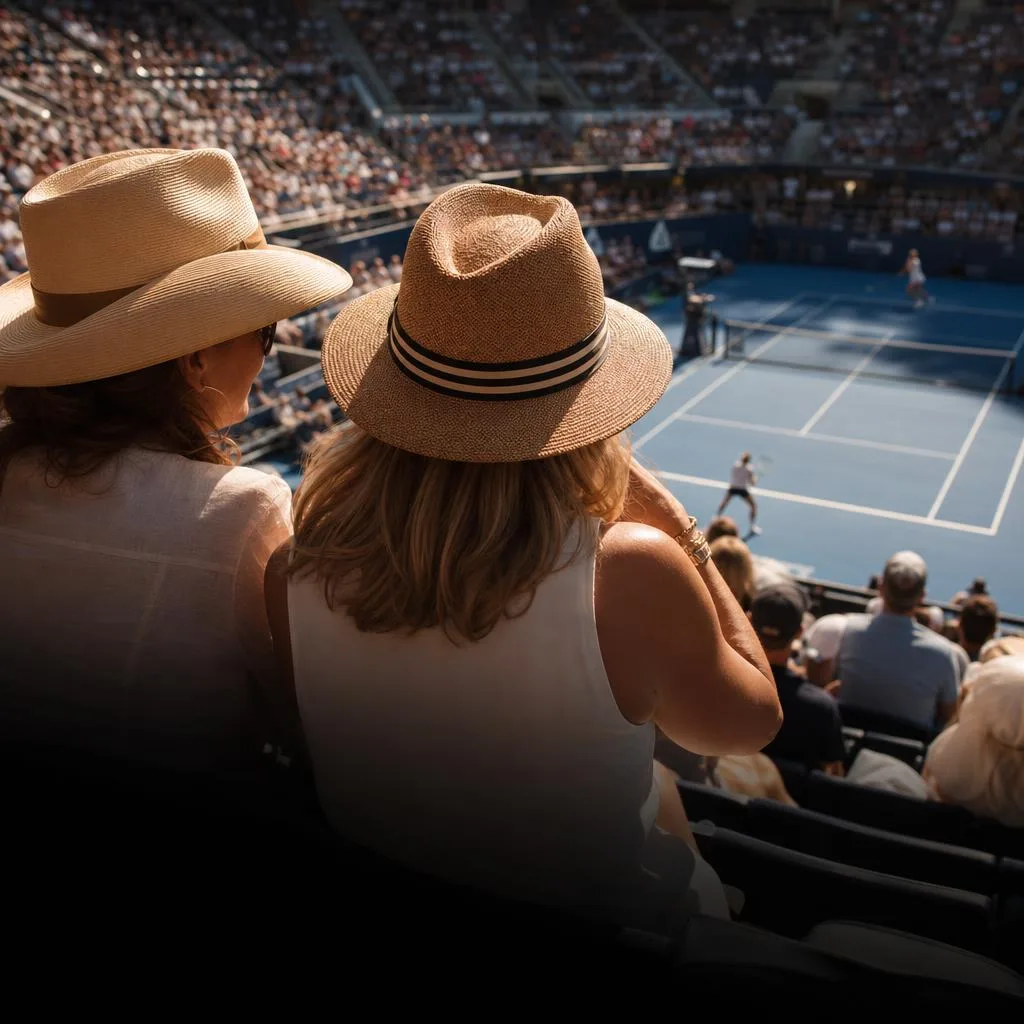
The first decision is the simplest one, and it changes everything: are you playing, or are you watching? A style built for rallies has to survive movement, sweat and a visor, so it will be pulled back tight and anchored in several places. A style built for the stands has a much easier job, because the only thing it has to survive is the sun, the cameras and a long afternoon in a seat.
If you are playing, choose a style that keeps every strand off your face and neck, and test it before match day with a practice hit. Jump, sprint and serve in it, because a ponytail that feels fine standing still can start slapping your shoulders or sliding loose after ten minutes of rallies. If you are watching, you can let the hair down, add soft waves, or wear a half-up style, and the only real test is whether it still looks good after three hours in the sun.
Many tennis days are both. You might play a morning doubles match and then stay to watch the afternoon singles. For those days, pick a style that can change roles: a braid that looks sporty on court and polished once you take off the visor, or a low ponytail that you can loosen and shake out into soft waves when the match is over.
Hair Under a Visor or Cap
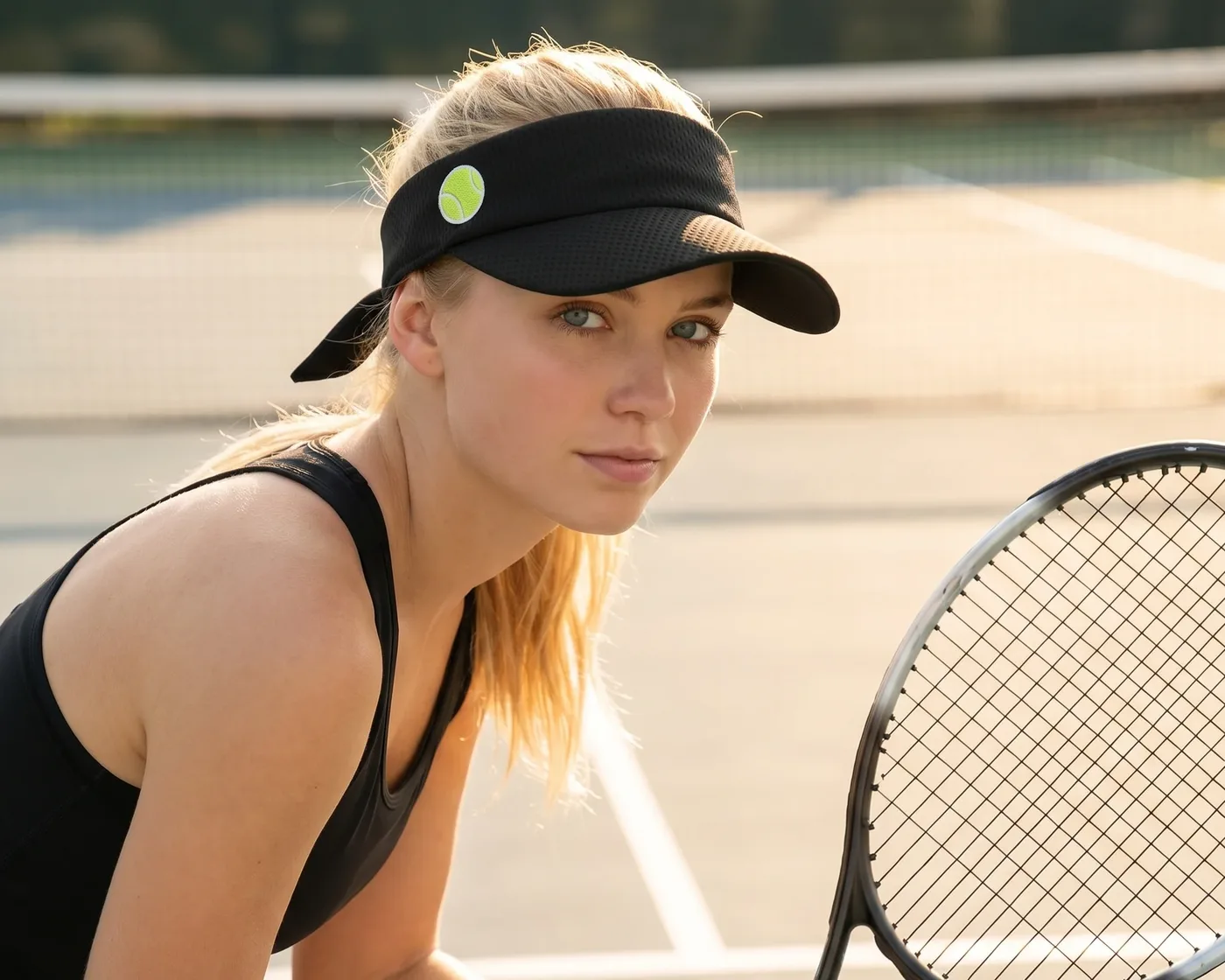
A visor is the classic tennis accessory, and it is also the biggest cause of hair frustration on court. The band sits right across the hairline, so any style with volume at the front gets flattened, and a ponytail worn too high bumps against the back strap. The fix is placement: wear the ponytail or braid at the height of the visor opening, or just below it, so the hair flows out cleanly instead of bunching underneath.
Caps need a different trick. A full cap covers the crown, so a high bun or a top knot will push the cap up and make it sit oddly. Low ponytails, low buns and braids that start at the nape work best, because they leave the crown smooth. If your cap has an adjustable back strap, thread a low ponytail through the gap, which keeps the cap snug and the hair secure at the same time.
Whichever you choose, do a dress rehearsal. Put the visor or cap on with the finished style, shake your head, and look in the mirror from the side. If the band is digging in or the ponytail is kinked where it exits, move the style half an inch up or down. Half an inch is often the whole difference between a style that lasts three sets and one that you keep fixing between points.
Sun and Sweat Protection for Tennis Hair
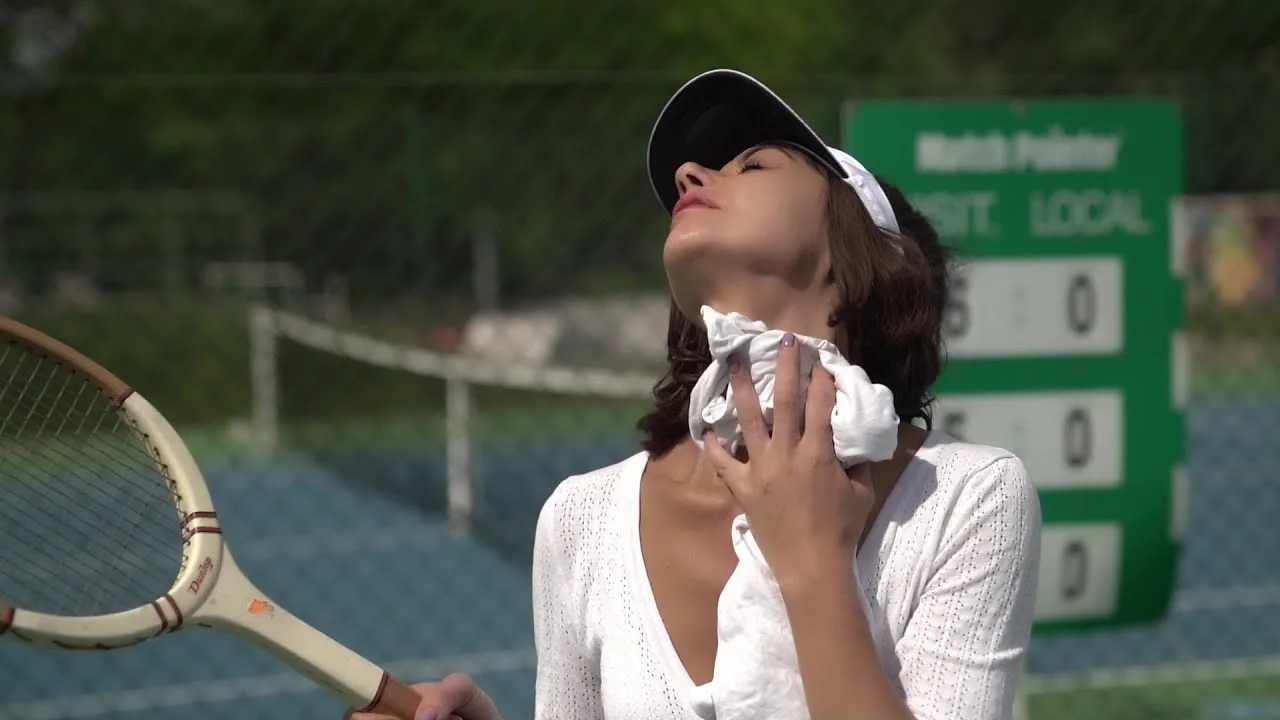
Three hours of sun does to hair what it does to skin, only you notice it later. UV light dries out the ends, fades colour, and makes fine hair brittle, while sweat leaves salt on the scalp that can make roots feel gritty and flat by the third set. A little preparation before you walk on court saves a lot of repair afterwards.
Before a match, work a pea-sized amount of leave-in conditioner or hair oil through the mid-lengths and ends, and add a UV-protectant spray if you colour your hair. The oil seals the hair shaft so sweat and sun cannot dry it out as fast, and it also makes the hair easier to brush out later. On the scalp, a light dusting of dry shampoo applied before you play absorbs sweat as it forms, instead of trying to rescue flat roots afterwards.
Between games, use the changeover wisely. A quick towel blot at the hairline, a sip of water, and a re-tightening of the elastic are all you need. After the match, rinse with lukewarm water before you shampoo, because salt and sunscreen rinse out far more easily when the hair is wet first. Finish with conditioner on the ends only, and let the hair air-dry if you can.
Styles by Hair Length
Every hair length can work on a tennis court, but each length has its own best style. Short hair, from a pixie to a chin-length bob, is the easiest of all, because there is so little to come loose. A headband or sweatband is usually the whole plan, keeping the front pieces out of your eyes while the back takes care of itself.
Medium hair, around shoulder length, is the trickiest length on court, because it is long enough to flap into your face but too short to braid securely. Ponytails and low buns work well here, especially with a headband or a few bobby pins at the temples. A half-up style is fine for watching, but for playing, get all of it up, because shoulder-length layers escape faster than any other length.
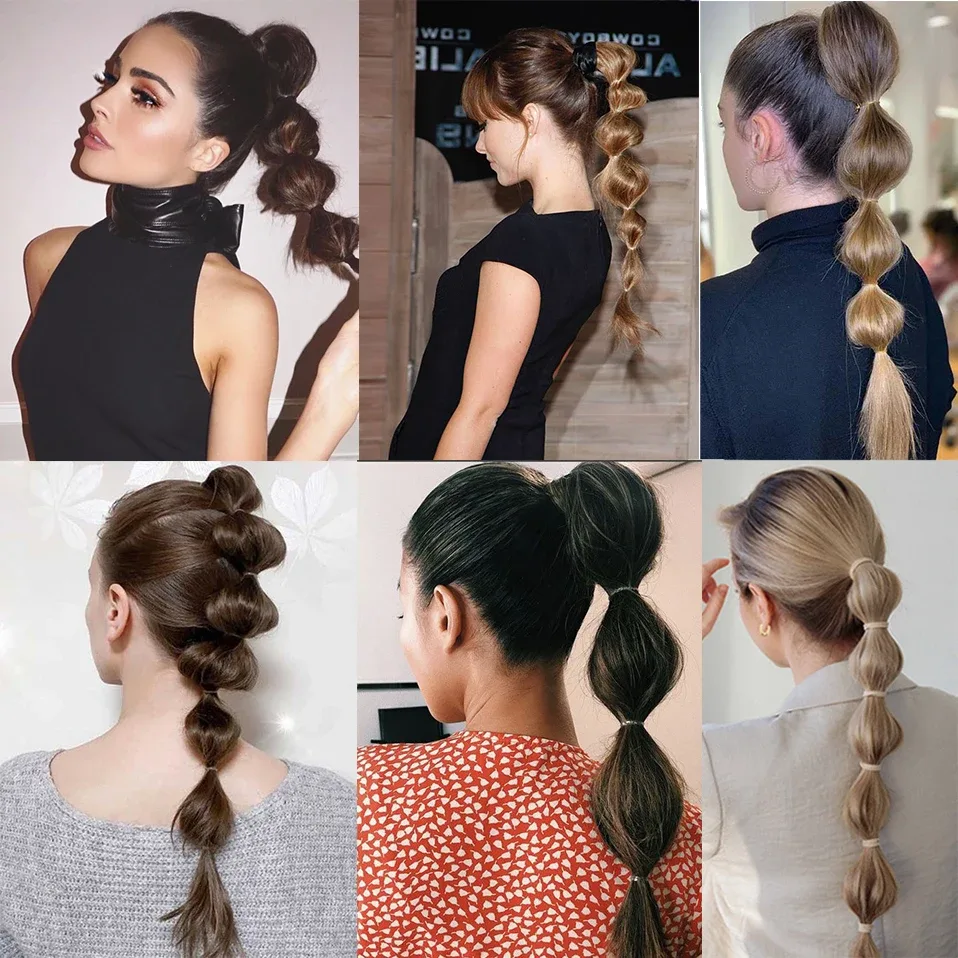
Long hair has the most options and the most weight. A braid is your best friend, because it turns all that length into one compact, heavy rope that stays behind you instead of whipping around. If you prefer a ponytail, braid the tail itself or wrap it into a bubble braid, which stops the ends from tangling in the wind. Whatever your length, the rule is the same: the style that uses your length instead of fighting it will last the longest.
The Post-Match Refresh
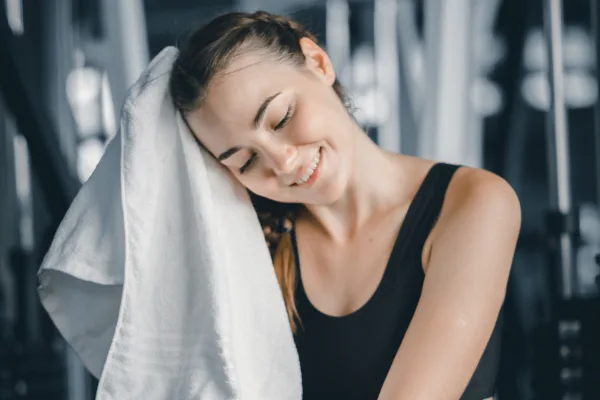
The match is over, your hair is damp with sweat, and lunch is in twenty minutes. You do not need a full wash, you need a five-minute refresh that takes you from the court to the cafe without looking like you just walked off the court. Start by taking the style down completely and shaking the roots out with your fingers, which lets air back in and breaks up the sweat-flattened sections.
Next, use dry shampoo at the roots, holding the can about eight inches away and letting it sit for a minute before you brush it through. That pause matters, because the powder needs time to absorb the oil and sweat. If the ends look dry or frizzy, smooth a drop of hair oil over them, and if the hair still smells of the court, a light mist of a scented hair spray or a scented dry shampoo will cover it.
Finish with a style that suits the new texture. Sweat and dry shampoo give the hair grip, so a loose low bun, a soft side braid or tousled waves will hold better now than they would on freshly washed hair. Twist it up, add a claw clip or a scarf, and you have a second look from the same match-day hair.
Accessories That Stay Put Through Rallies
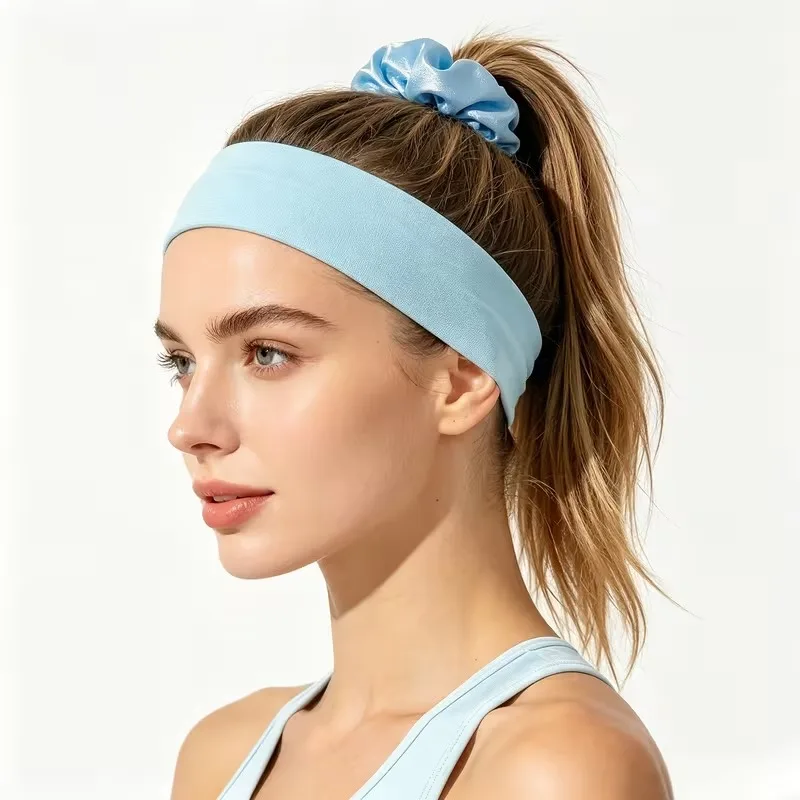
The difference between a style that survives a match and one that falls apart is usually the accessories, not the style itself. A single thin elastic will not hold a thick ponytail through a three-set match. Use a thick, snag-free elastic, and wrap it three times rather than two, then add a second elastic an inch below the first for heavy or long hair, which shares the weight and stops the ponytail from sliding down.
Headbands need grip. Look for a wide, non-slip sports headband with a silicone strip on the inside, and wear it behind the ears rather than across the forehead, which is where it slips. Bobby pins work best when you slide them in with the wavy side down and cross two of them over each other, which locks them in place. Claw clips are wonderful off court, but on court they can pop open on an overhead smash, so save them for watching.
Pack spares. Put two extra elastics, four bobby pins and a spare headband in your tennis bag, because the one time you need a spare is the one time you will not have one. A small zip bag keeps them together, and it weighs nothing. The best accessory for a tennis match is always the one you already have with you.
What to Ask Your Stylist Before Match Day
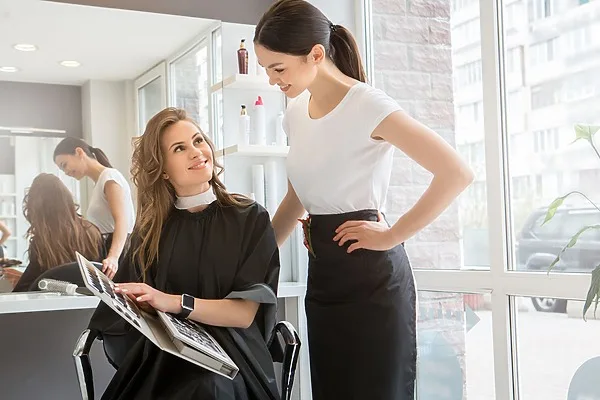
If you have a match, a tournament or a tennis holiday coming up, a quick chat with your stylist a week or two before is worth more than any product. Tell them you play tennis, how often, and whether you wear a visor, because that changes the cut. Layers that look beautiful loose can turn into flyaways on court, and a fringe that falls perfectly in the salon can fall straight into your eyes on the first serve.
Ask for a cut that works pulled back as well as worn down. That usually means keeping the front layers long enough to tuck behind the ears or braid back, and avoiding very short layers around the face. If you colour your hair, ask about a gloss or a UV-protectant treatment before a sunny tournament, and ask whether your colour will fade faster with sweat and sun, so you can plan the timing.
Finally, ask them to show you one or two match-day styles on your own hair. A five-minute lesson in the chair, with your own hands doing the braiding while they watch, is worth ten video tutorials. Ask which products they used, in what order, and how much, then take a photo of the finished style so you can copy it at home.
The Match-Day Timeline

A calm match day starts the night before. Wash your hair the evening before the match, not the morning of it, because day-old hair has more grip and holds a braid or ponytail far better than freshly washed, slippery hair. Before bed, braid it loosely or put it in a soft top knot, which gives you gentle waves and no tangles by morning.
On the morning of the match, give yourself twenty minutes for hair, not five. Brush it out, apply leave-in conditioner to the ends, and build the style slowly, checking it from the side and the back. Put your visor or cap on, do a few practice swings, and fix anything that moves. Pack your spares, a small towel, dry shampoo and a hair tie on your wrist, and you are ready.
After the match, the timeline is simple: rinse, refresh, and restyle for whatever comes next. If you have another match the same day, keep the refresh light and re-braid rather than washing, because wet hair takes too long to dry between matches. Save the full wash for the evening, when you can let the hair dry naturally and wake up ready for the next day.
1. The High Ponytail
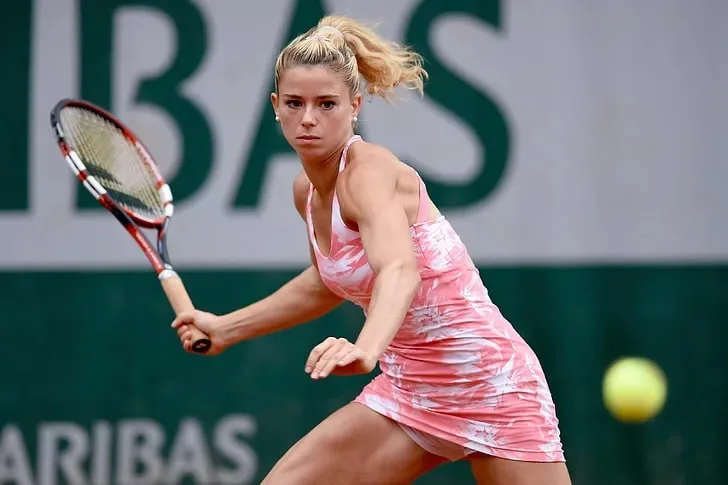
Best for: players with medium to long hair who want the classic tennis look, and anyone whose hair is heavy enough to need height and lift to stay off the neck. It suits straight, wavy and curly hair, and it is the first style most players learn.
How to style: brush all the hair up to the crown and gather it high, then secure it with a thick elastic wrapped three times. Smooth the front with a brush and a little gel or pomade, and wrap a small strand of hair around the elastic to hide it. For extra security, braid the tail itself or add a second elastic halfway down.
Time and cost: five minutes, plus the cost of two good elastics and a brush you already own. A no-heat style, so there is nothing else to buy.
2. The Low Ponytail
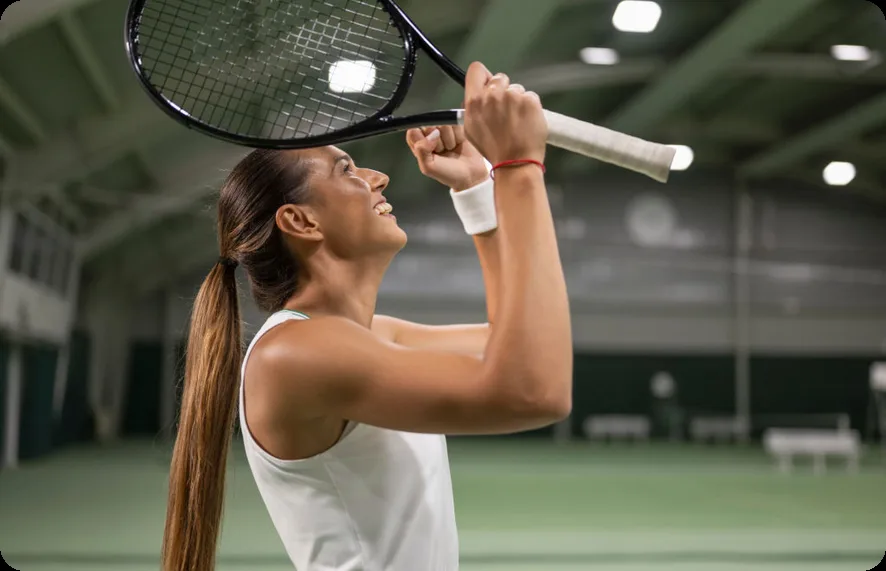
Best for: players who wear a cap, anyone with fine hair that slips out of a high ponytail, and spectators who want a neat, polished look without trying too hard. It is also kind to the hairline, because it pulls less.
How to style: brush the hair back and gather it at the nape, keeping the parting wherever it naturally falls. Secure it with a covered elastic, then gently pull the hair above the elastic to add a little volume at the crown. Tuck the front pieces behind the ears, and add a ribbon or a silk scrunchie for a courtside finish.
Time and cost: three minutes, and nothing to buy beyond an elastic. Add a silk scrunchie for a softer hold if your hair creases easily.
3. The French Braid
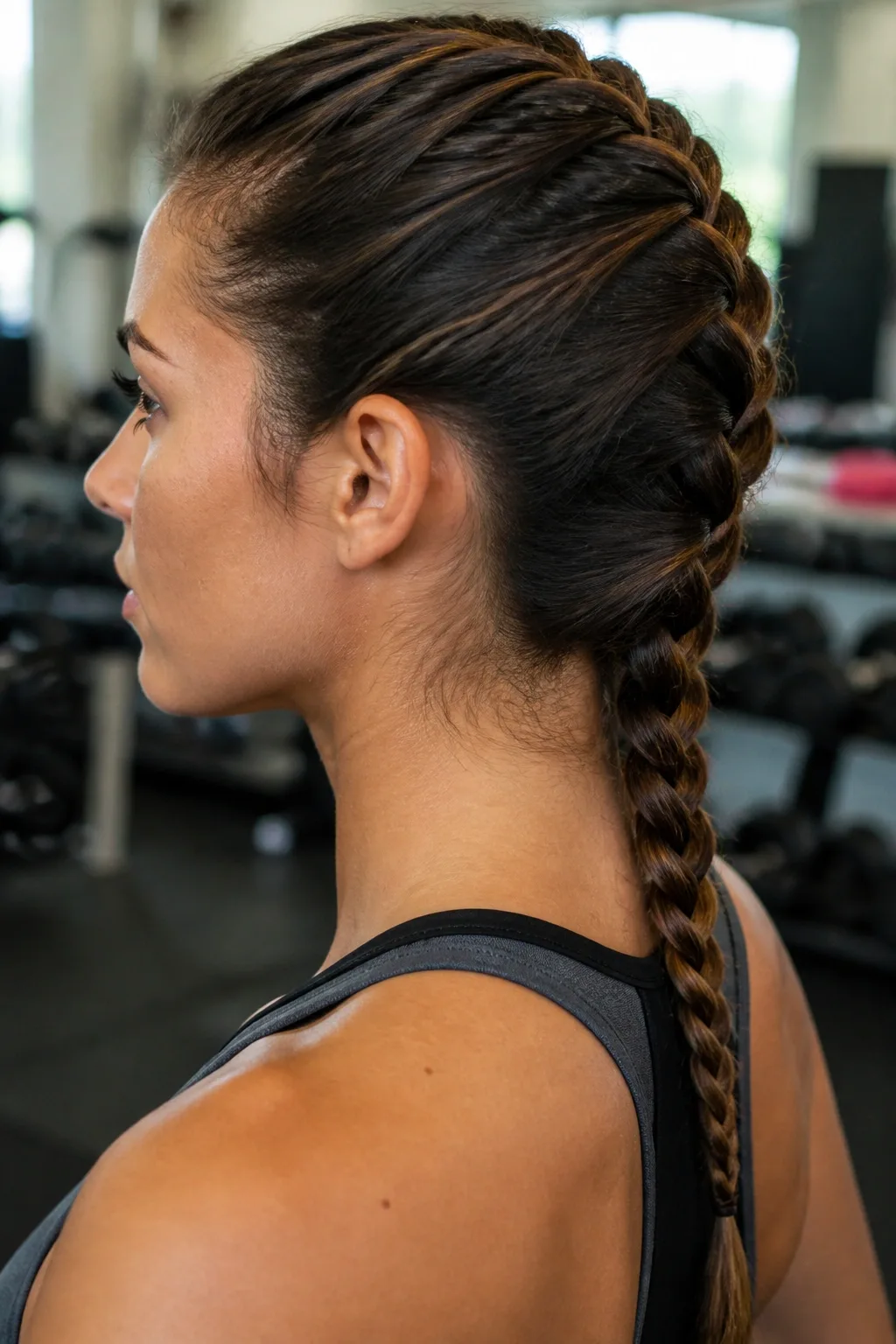
Best for: long and medium hair, hot days, and matches that go to three sets. The French braid is the most secure braid there is, because it anchors the hair to the head from the hairline all the way down.
How to style: start at the front hairline and pick up small sections as you braid down the centre of the head, keeping the tension even on both sides. Braid the tail to the ends and secure it with a small elastic, then gently pull the braid wider for a softer look. For a match, keep it tight; for watching, loosen it a little.
Time and cost: eight to ten minutes once you have practised it, and no products are needed beyond an elastic and a brush.
4. The Dutch Braid
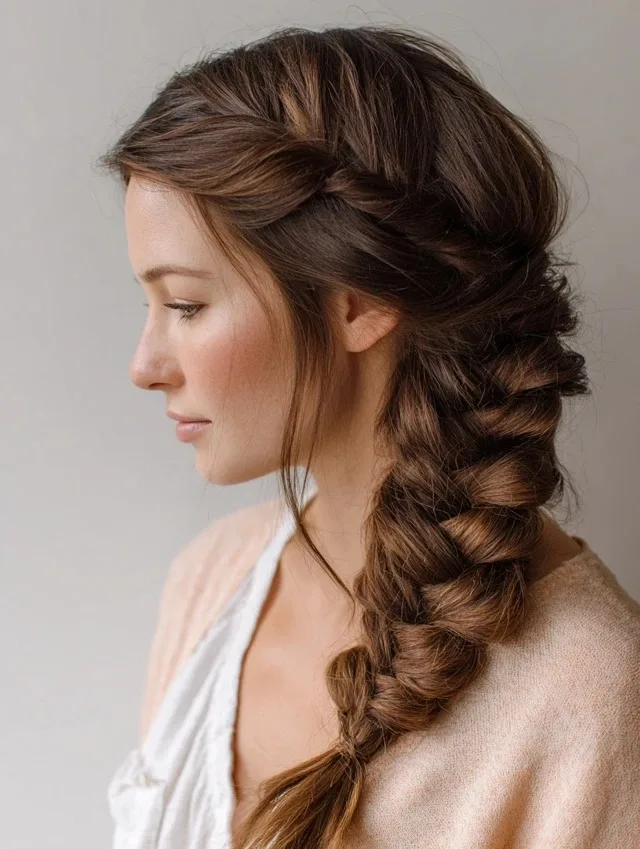
Best for: thick hair that needs a braid with real grip, and players who want the braid to stand out rather than sit flat. The Dutch braid pops off the head, so it reads beautifully in photos and holds its shape all day.
How to style: braid underhand instead of overhand, crossing each section underneath the middle strand as you pick up hair from the sides. Keep the sections small and even, and braid all the way to the ends. Secure with an elastic, then tug gently at the edges of the braid to make it look fuller.
Time and cost: ten minutes, and a little longer than a French braid if you are new to it. An elastic and a mirror are all you need.
5. The Bubble Braid
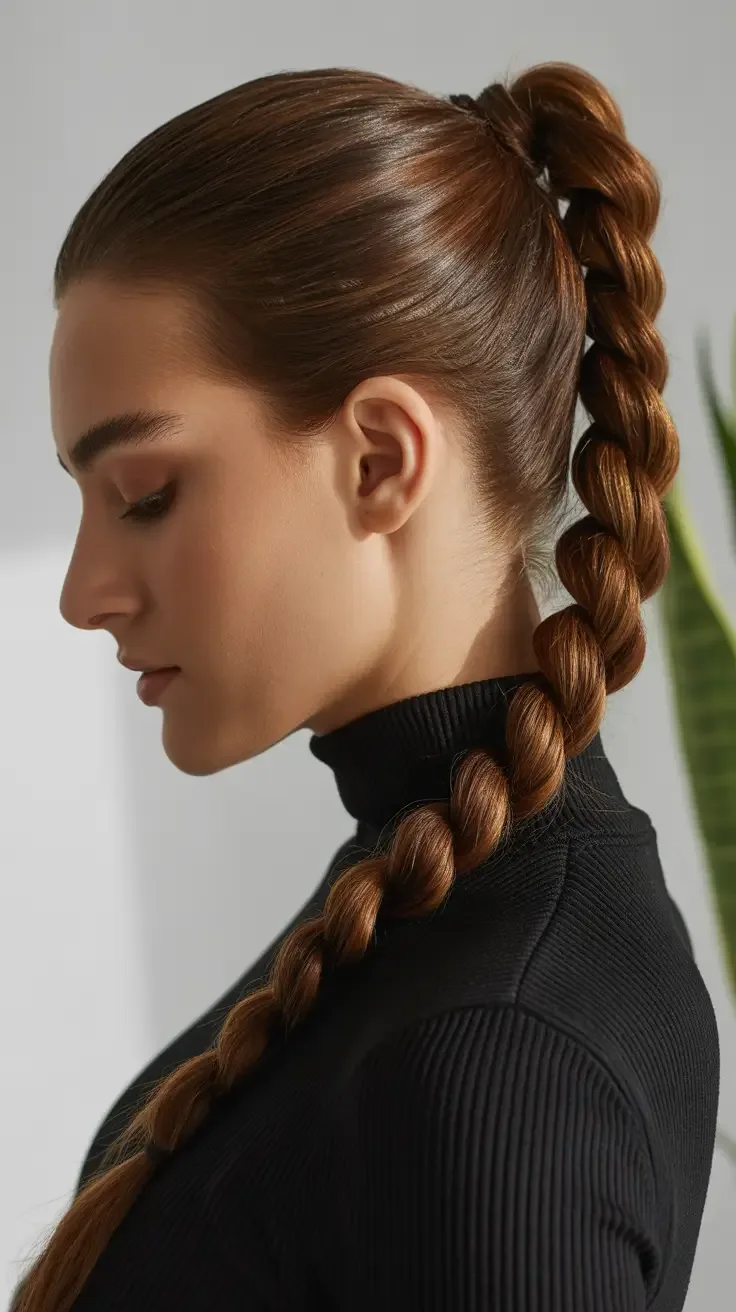
Best for: long hair that tangles in the wind, younger players, and anyone who wants a playful style that still survives a match. The bubbles break the ponytail into sections, so it cannot whip around or knot itself.
How to style: make a high or mid ponytail, then place small clear elastics every two inches down the tail. Gently pull each section outwards to puff it into a bubble, keeping the bubbles even in size. Finish with a spritz of flexible hairspray so the bubbles keep their shape.
Time and cost: seven minutes, plus a pack of small clear elastics, which costs very little and lasts for months.
6. The Fishtail Braid
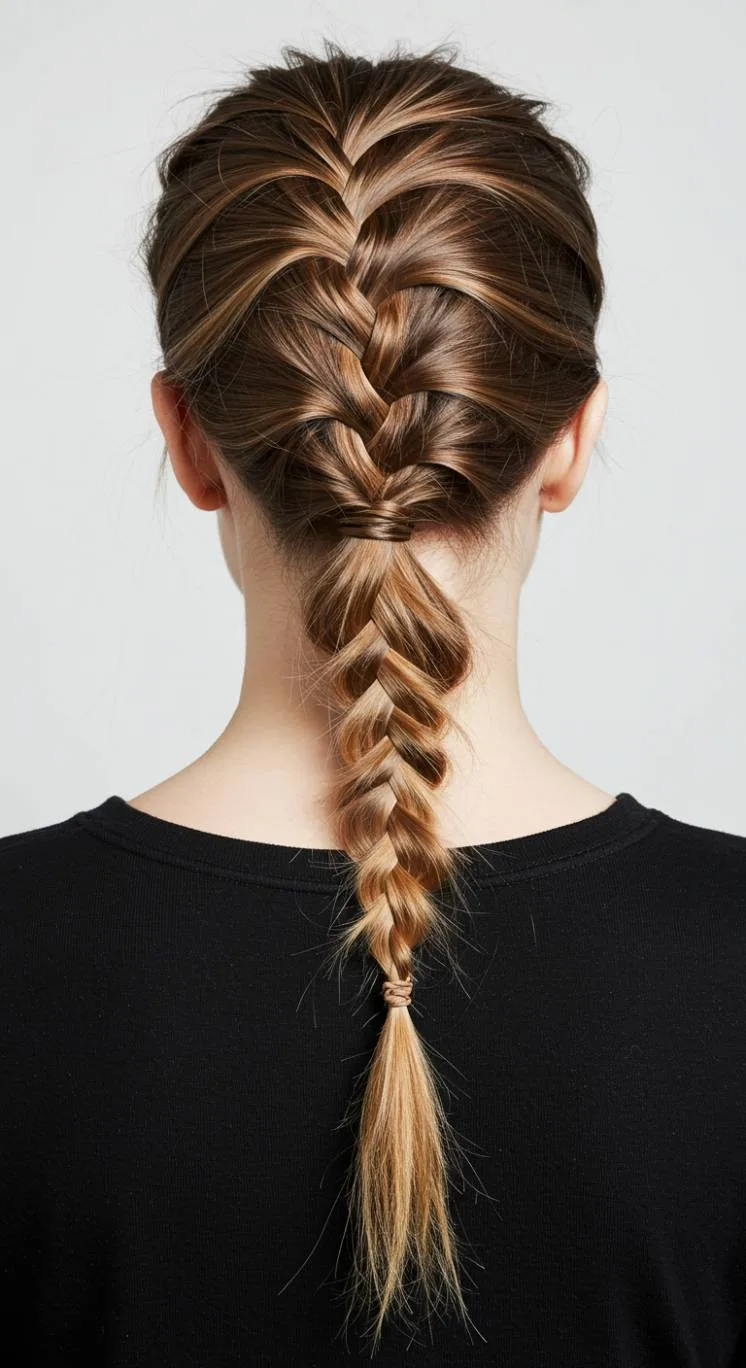
Best for: medium to long hair, doubles matches where you want something a little dressier, and post-match drinks, because the fishtail looks intricate while being surprisingly secure once it is done.
How to style: split the hair into two sections and pass a thin piece from the outside of one section to the inside of the other, alternating sides all the way down. Keep the pieces small for a neat fishtail, or larger for a looser, beachy one. Secure the end and gently pull the braid apart for volume.
Time and cost: ten to twelve minutes, and it gets faster with practice. You need only an elastic, though a little texturising spray helps the pieces grip.
7. The Double Dutch Braids
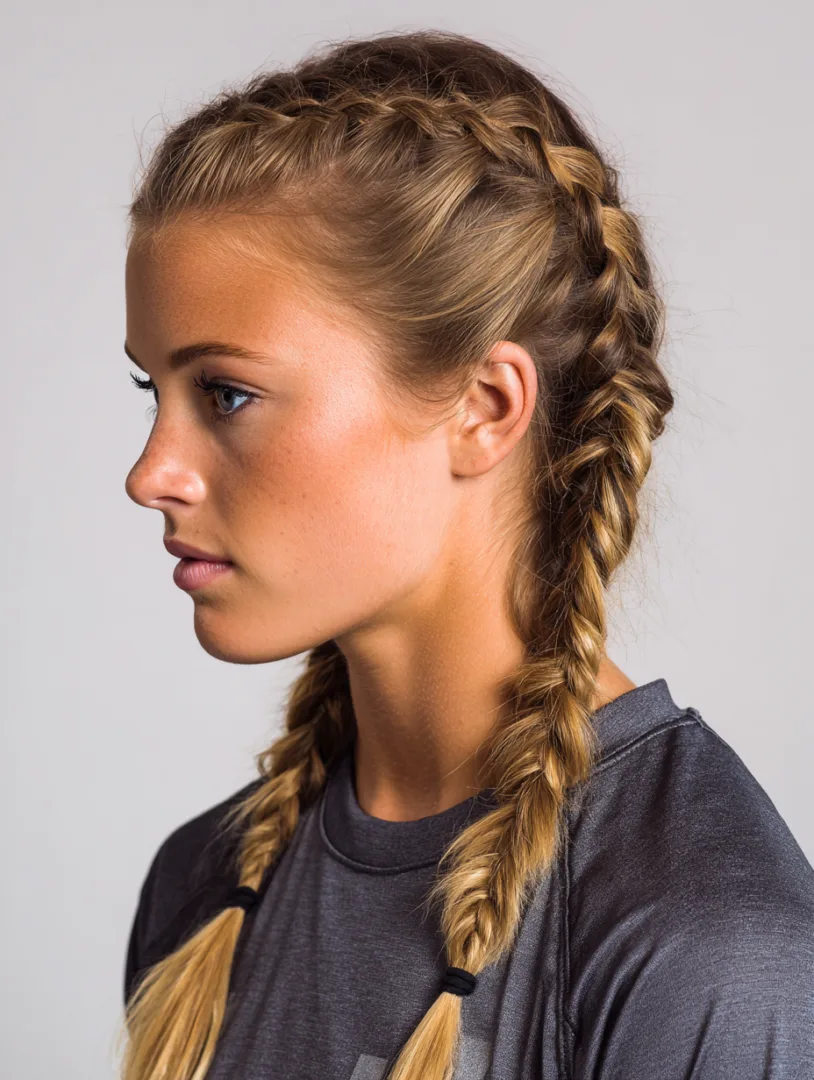
Best for: very long or very thick hair, hot and humid match days, and anyone who has had a single braid flop to one side mid-rally. Two braids share the weight and keep the hair perfectly balanced.
How to style: part the hair straight down the middle from forehead to nape, clip one side away, and Dutch braid the other side from the hairline to the ends. Repeat on the second side, keeping both braids the same size and tension. Secure each with a small elastic, and tuck the ends under if you like.
Time and cost: fifteen minutes for both braids, and it is worth learning the parting first, because a straight centre part is what makes the style look neat.
8. The Braided Crown
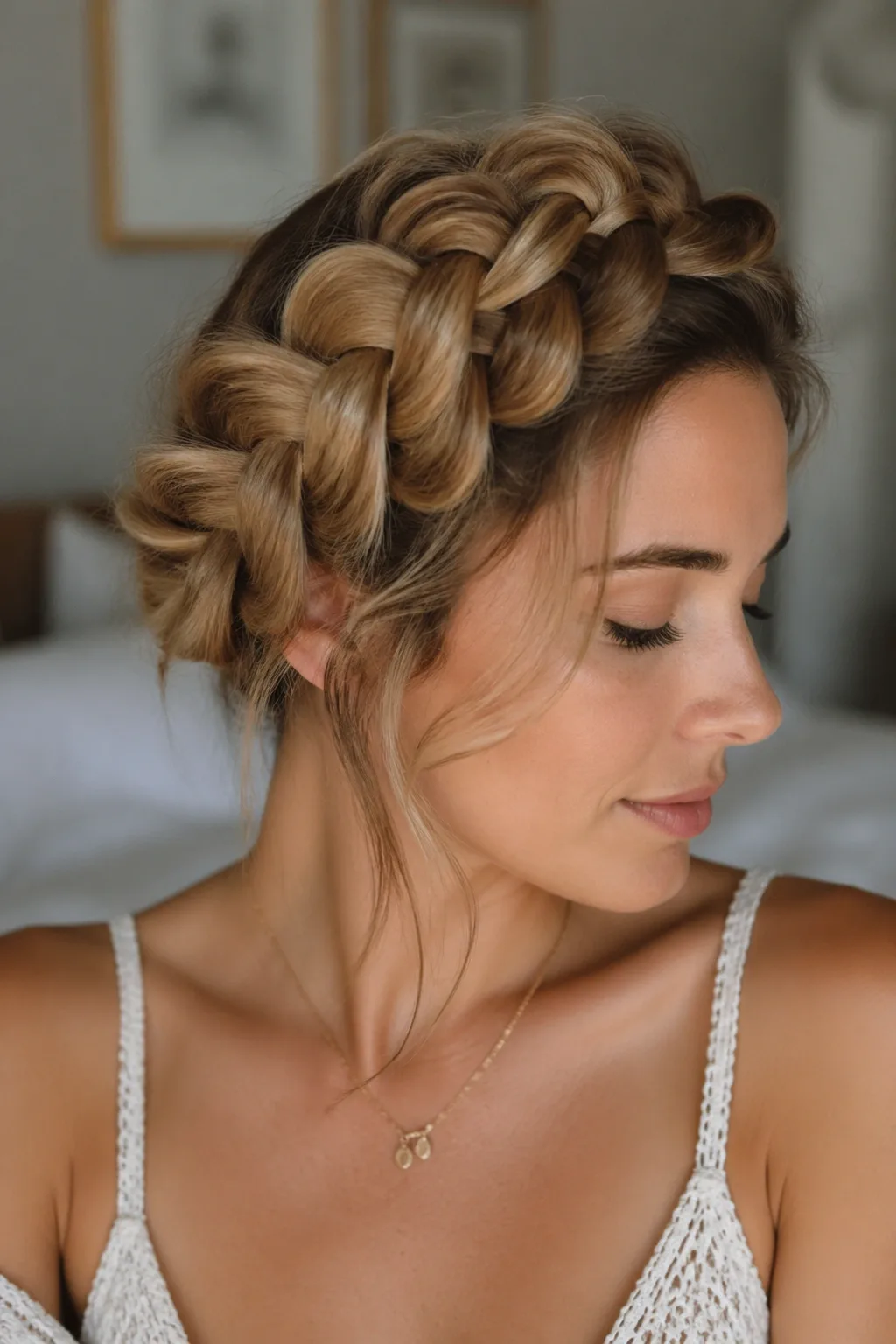
Best for: spectators and club socials, weddings on the court lawn, and anyone who wants an elegant style that still keeps the hair completely off the face. It is a watching style first, and a light rally style second.
How to style: make two braids, one on each side of the head, then cross them over the top and pin them in place to form a crown. Tuck the ends underneath and secure them with bobby pins, crossing the pins for grip. Leave a few soft pieces at the front for a romantic finish.
Time and cost: fifteen minutes and a handful of bobby pins. A little hairspray keeps the crown in place through a long afternoon.
9. The Messy Bun
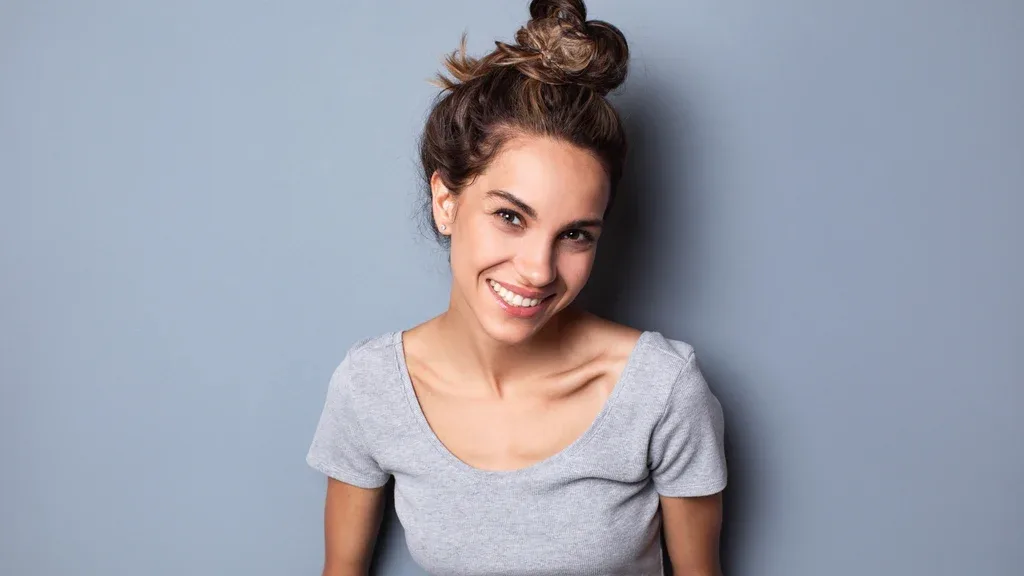
Best for: casual hitting sessions, watching from the stands on a warm day, and the hour after a match when you want the hair up and out of the way without looking like you tried too hard.
How to style: gather the hair into a high ponytail, twist it loosely, and wrap it around the base, securing it with a second elastic or a few pins. Pull out a few strands at the front and at the nape to keep it soft, and do not aim for perfection, because the looseness is the point.
Time and cost: two minutes, and nothing beyond an elastic and two or three bobby pins. The fastest style in this whole guide.
10. The High Bun
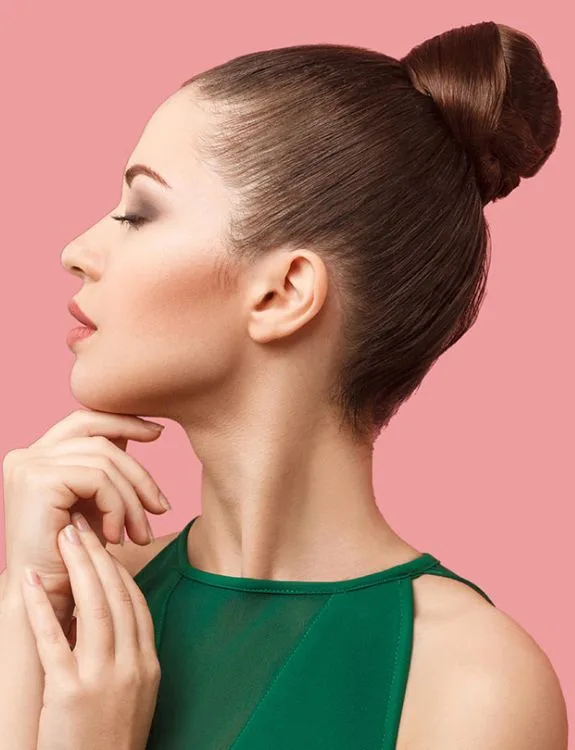
Best for: hot days, players with thick hair, and anyone who wants zero hair touching the neck. A high bun is the coolest style on this list, literally, because it lifts everything up and away from the skin.
How to style: brush the hair into a high ponytail and smooth the sides with gel, then twist the tail tightly and wrap it around the base. Pin it securely and smooth any bumps with a brush. For a fuller bun, use a donut form or a sock bun, which also helps the bun keep its shape through a match.
Time and cost: five minutes, plus pins and an elastic. A bun form costs very little and makes the style far more secure.
11. The Low Bun
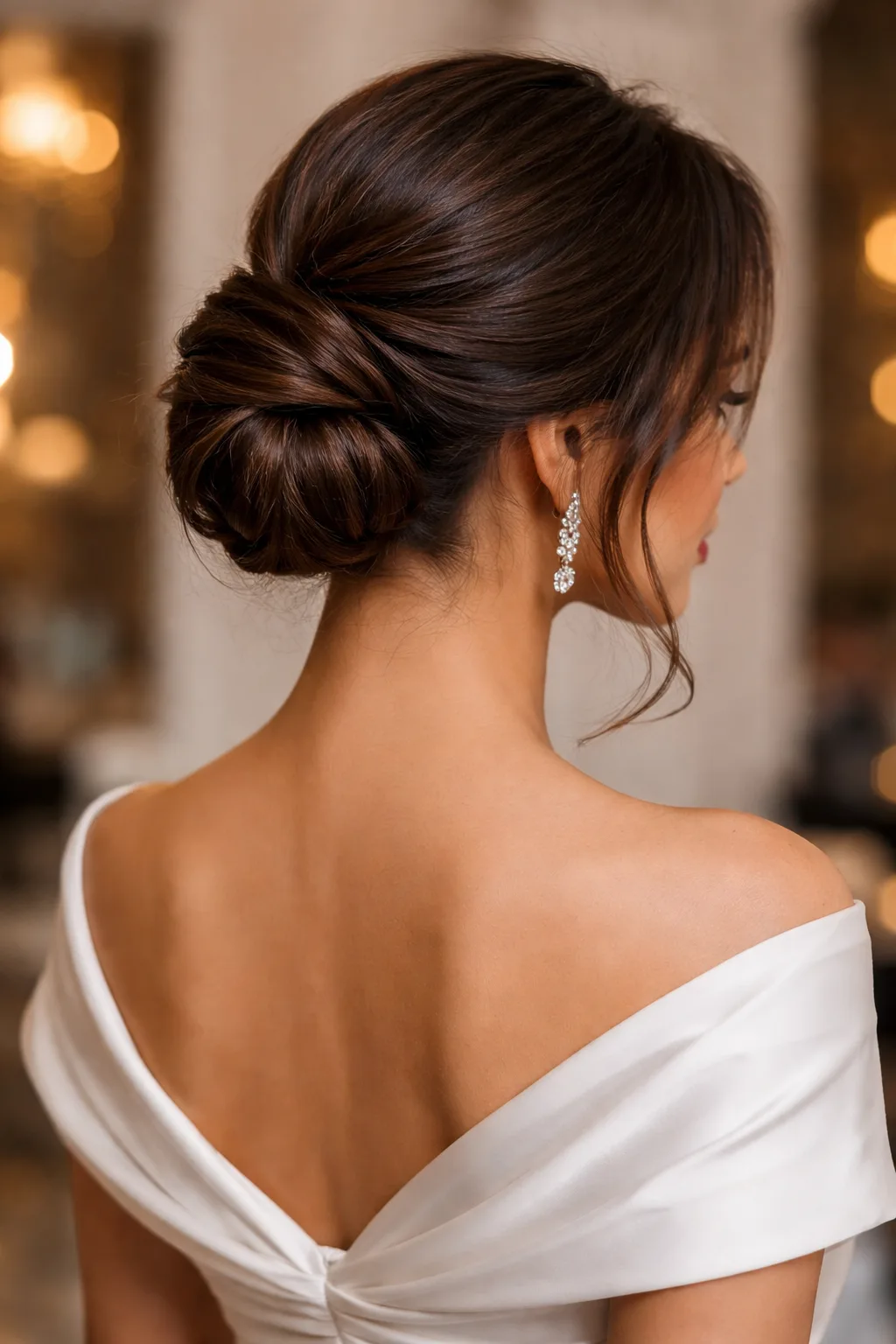
Best for: watching a match in style, club lunches, and players who wear a cap. The low bun sits at the nape, so it never fights with headwear, and it looks polished with almost no effort.
How to style: gather the hair at the nape and twist it into a bun, pinning it flat against the head. Keep the parting neat and the sides smooth, and add a decorative pin or a silk scarf for a courtside look. If you want it softer, pull out a few face-framing strands before you pin it.
Time and cost: four minutes, and only an elastic and a few pins. One of the cheapest and quickest elegant styles you can wear.
12. The Braided Bun
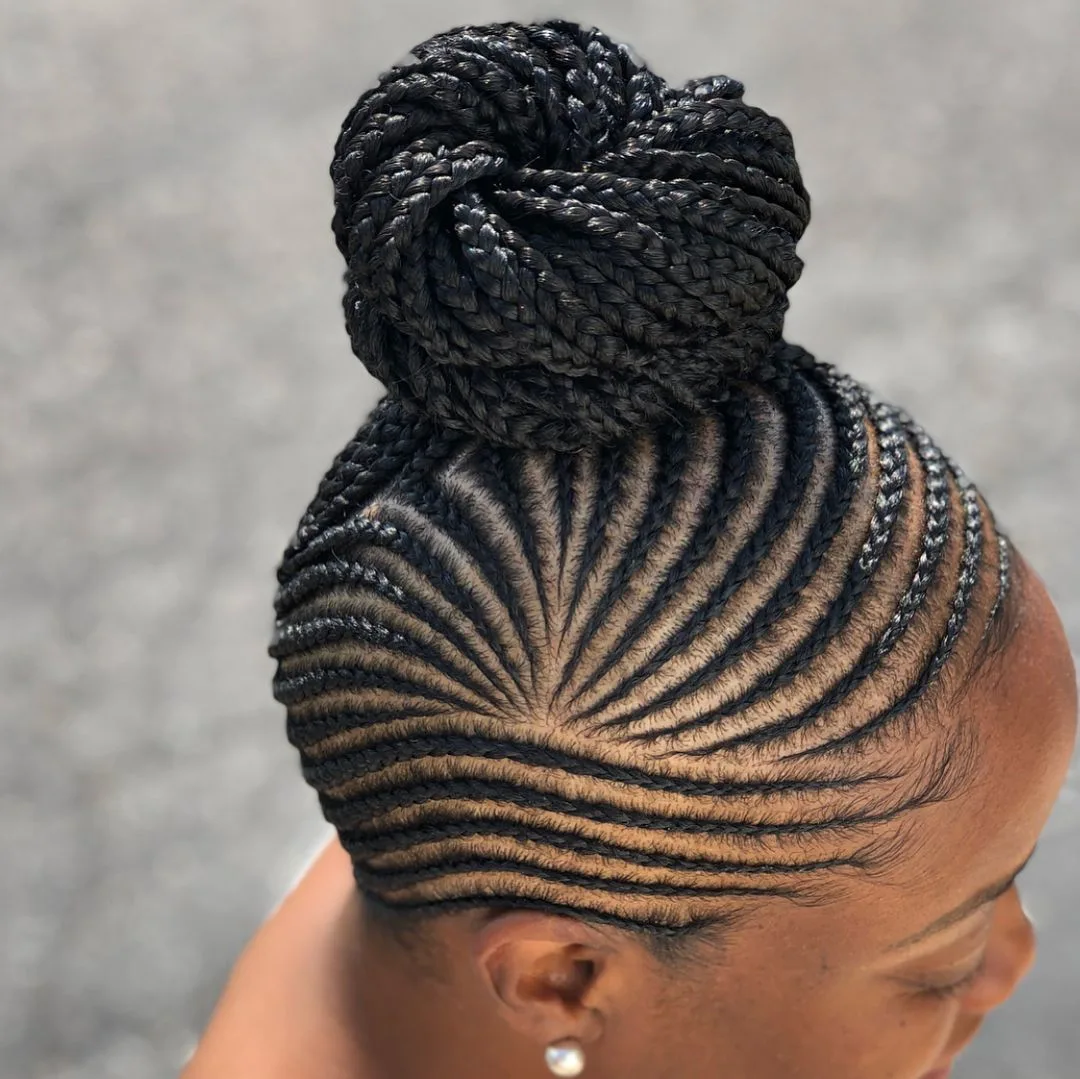
Best for: textured and curly hair, long matches in the heat, and anyone who wants a style that will not move a millimetre no matter how hard they play. Cornrows into a bun are the most secure updo in this guide.
How to style: braid the hair into cornrows towards the crown, then gather the braided ends into a bun and pin it firmly. Keep the parts neat and the tension even, and finish with a light oil on the scalp and the edges. If you are not confident braiding cornrows, ask your stylist to do the braids and you can re-do the bun yourself.
Time and cost: thirty to forty-five minutes for the cornrows, so this is a salon or night-before style. The bun itself takes two minutes each morning after that.
13. The Half-Up Ponytail
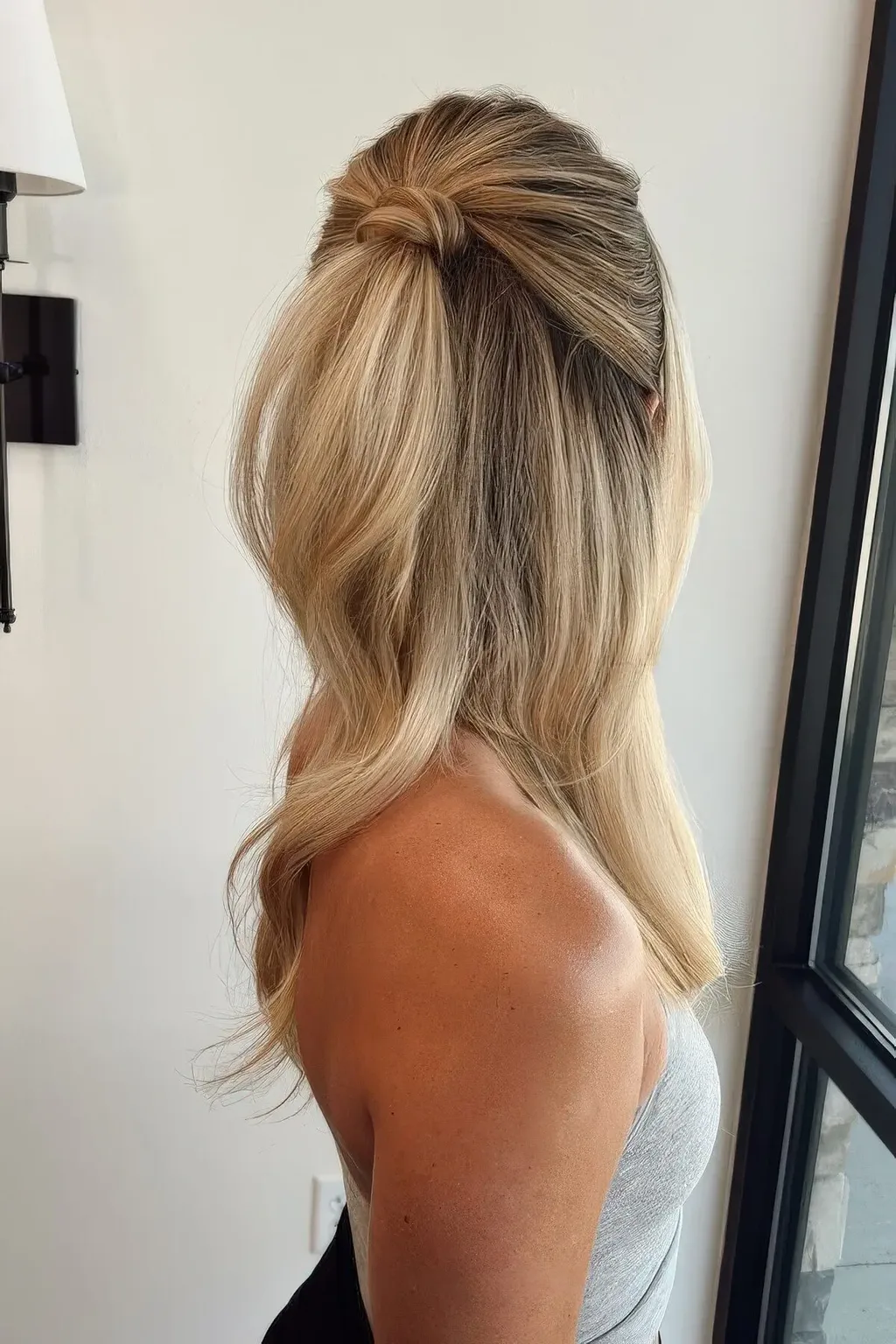
Best for: watching a match, garden parties at the club, and anyone with medium to long hair who wants the hair off the face but still wants length showing. Save it for the stands, not for playing.
How to style: take the top half of the hair from above the ears and gather it into a small ponytail at the back of the crown. Secure it with an elastic, then wrap a strand around the base. Leave the rest down, and add soft waves with a curling iron if you have time.
Time and cost: five minutes, plus an elastic. Add a curling iron for the waves, or skip it and wear the length straight.
14. The Half-Up Claw Clip

Best for: spectators who want a relaxed, modern look, and for the post-match hour, when a claw clip turns sweaty match hair into a soft half-up style in seconds.
How to style: gather the top half of the hair, twist it once, and clip it up with a medium claw clip, letting the ends fall over the clip. Pull out a few strands at the front for softness, and choose a clip that matches your outfit or your visor for a pulled-together look.
Time and cost: one minute, and the cost of a claw clip, which is a few dollars and lasts for years.
15. The Claw Clip Twist
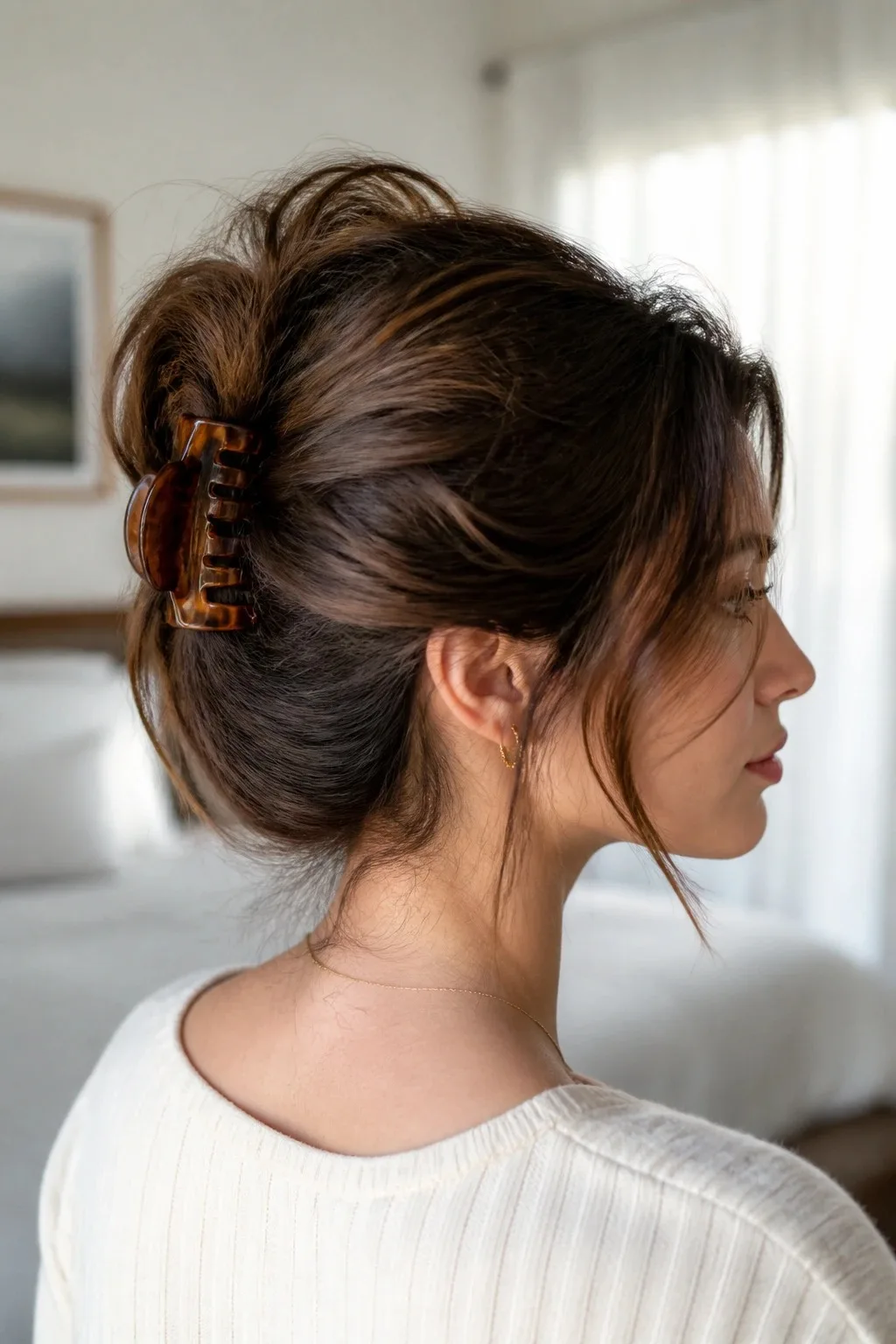
Best for: medium to long hair, warm afternoons in the stands, and anyone who wants all the hair up without a single elastic. The twist is elegant, fast, and gentle on the hair.
How to style: gather all the hair at the back, twist it upwards, and fold the ends over before clipping it in place with a large claw clip. Let the twist sit a little loose for a soft look, or pull it tight for a sleeker finish. Anchor it with two bobby pins if you will be moving around a lot.
Time and cost: two minutes, and a large claw clip. It is one of the best styles for hair health, because there is no elastic pulling at the roots.
16. Sleek Straight Hair Under a Visor
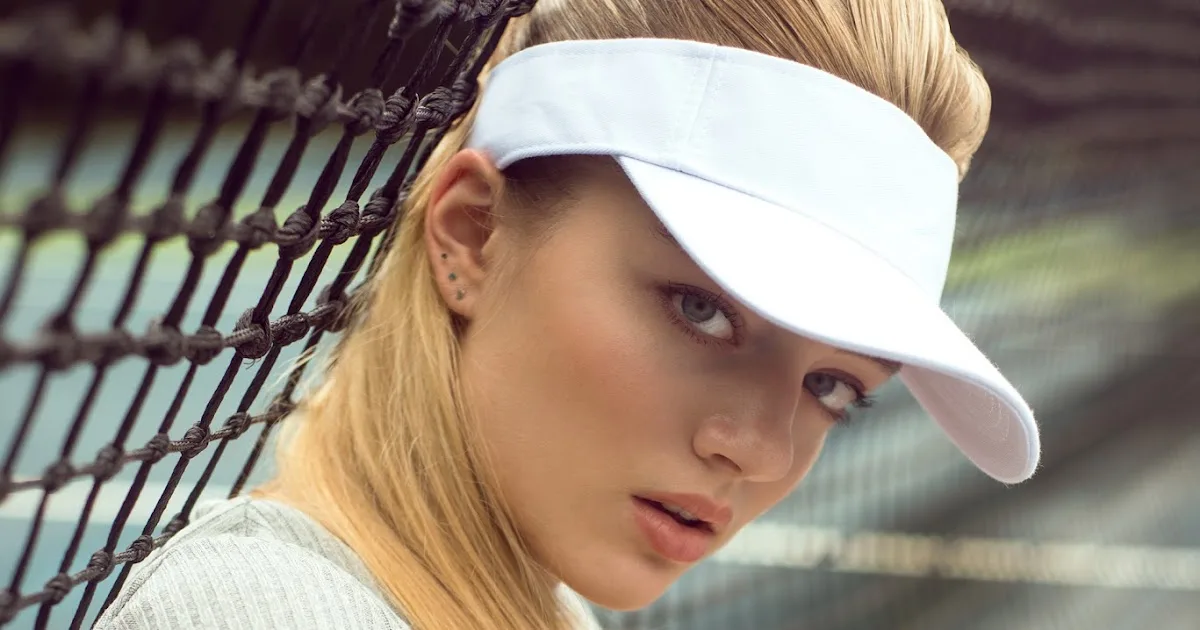
Best for: watching a match, players with naturally straight hair, and short practice sessions where the hair is short enough not to fly into the eyes. The visor keeps the sun off while the sleek hair does the talking.
How to style: straighten the hair with a flat iron, add a drop of serum to the ends, and put the visor on last so it does not dent the hair. Tuck the front pieces behind the ears, and carry a small brush in your bag for a quick smooth-down between sets.
Time and cost: fifteen minutes with a flat iron, plus the cost of a heat protectant and serum you probably already own.
17. The Curly Ponytail

Best for: naturally curly hair, because a ponytail lets the curls do what they do best while keeping them off the face. It is one of the prettiest and most practical tennis styles for curly hair.
How to style: gather the curls into a mid or high ponytail without brushing them out, using your fingers to keep the curl pattern intact. Secure with a fabric-covered elastic or a spiral hair tie, which grips without breaking the curls, and let the tail fall in its natural shape. Smooth the edges with a little gel on a toothbrush.
Time and cost: four minutes, and a curl-friendly elastic. A little leave-in conditioner before you tie it up keeps the curls defined through the match.
18. Wavy Half-Up Hair
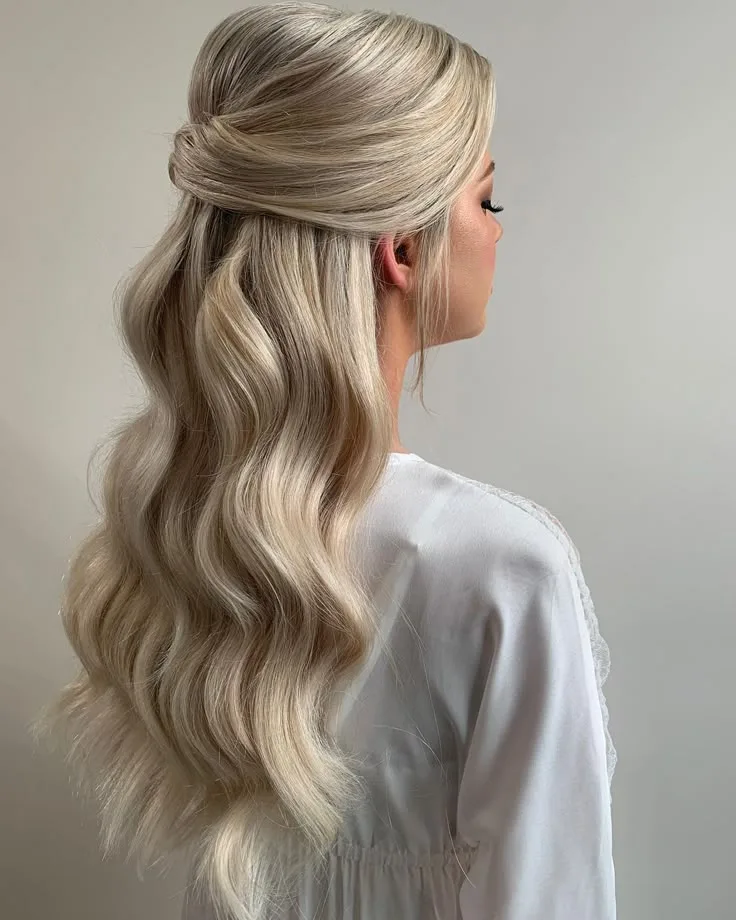
Best for: spectators, evening matches, and anyone with natural waves who wants a soft, romantic courtside look. The waves catch the light beautifully in outdoor photos.
How to style: add loose waves with a large-barrel curling iron, then take the top sections from each side and pin them back at the crown, letting the waves fall over the pins. Keep the parting soft and the front pieces loose around the face.
Time and cost: twenty minutes with a curling iron, plus a few bobby pins. It is a watching style, so save it for the stands.
19. The Side Braid
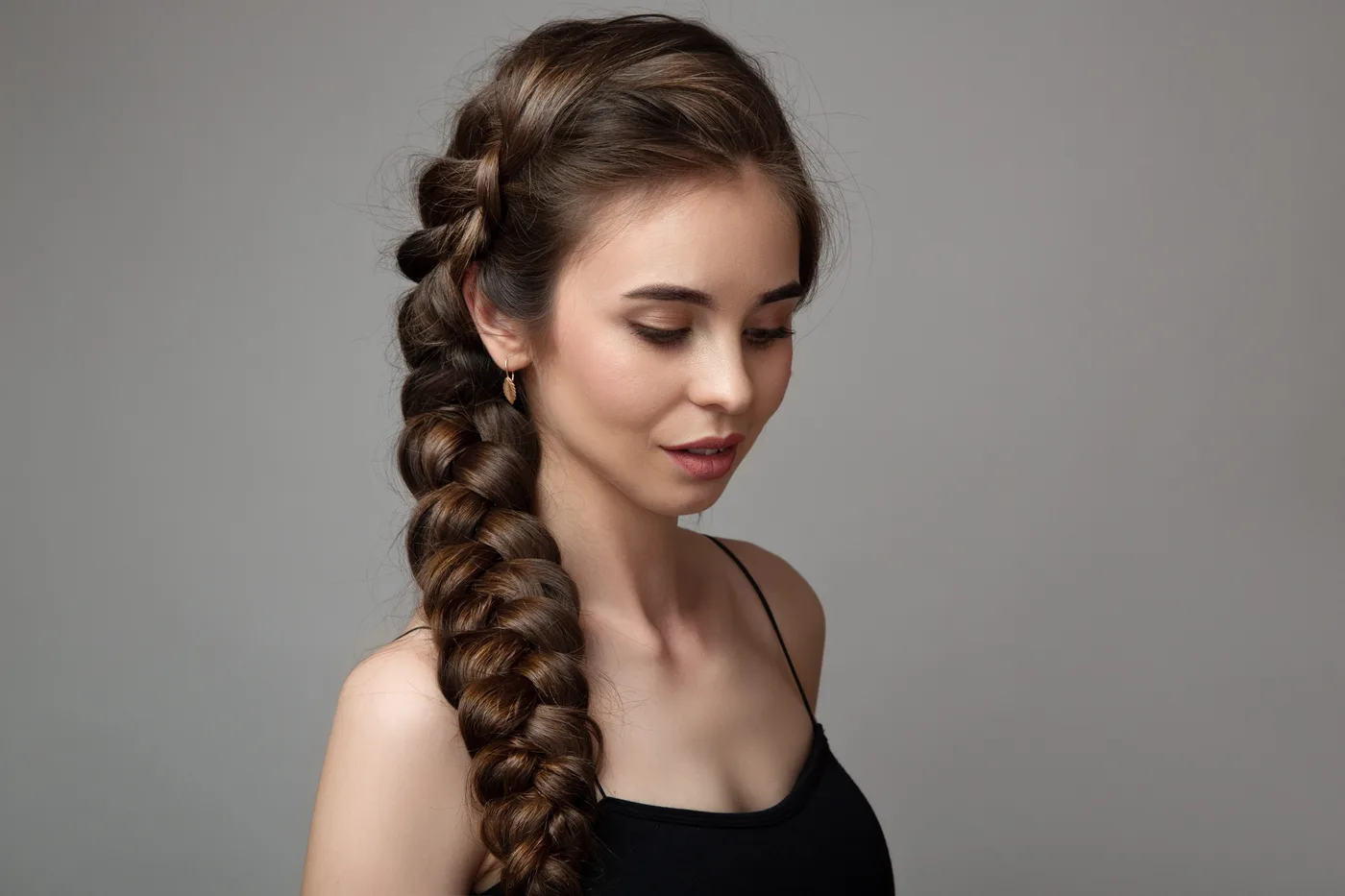
Best for: medium to long hair, players who find a centre braid uncomfortable under a cap, and spectators who want a soft, feminine look. The braid sits over one shoulder, so it never interferes with a serve.
How to style: sweep all the hair to one side and French braid from the temple down over the shoulder, picking up hair as you go. Secure the end with an elastic, and gently pull the braid wider for a fuller look. Drape it over the shoulder opposite your racket arm so it stays clear of your swing.
Time and cost: eight minutes, and an elastic. A little texturising spray helps the braid grip if your hair is fine or freshly washed.
20. The Side Ponytail
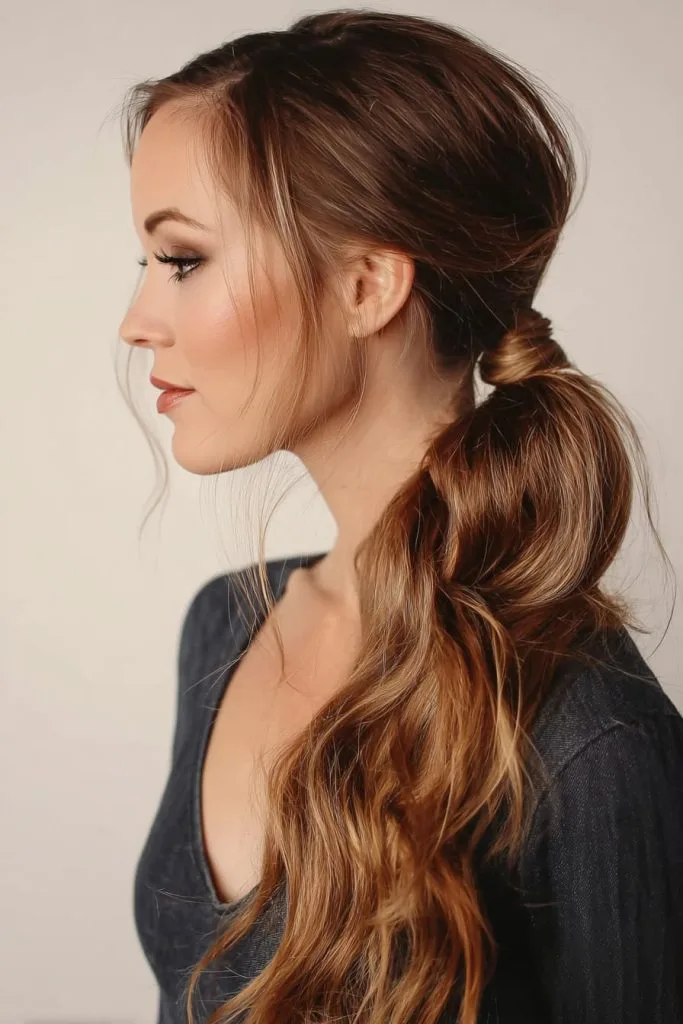
Best for: watching a match, casual club days, and anyone who wants a retro, playful look. It is a fun change from the usual centre ponytail, and it photographs beautifully from the side.
How to style: sweep the hair to one side, just behind the ear, and secure it with an elastic. Curl the tail lightly for movement, or leave it straight for a sleeker line. Add a ribbon or a scrunchie at the base to finish it.
Time and cost: four minutes, plus an elastic. A curling iron is optional if you want waves in the tail.
21. The Sporty Pigtails
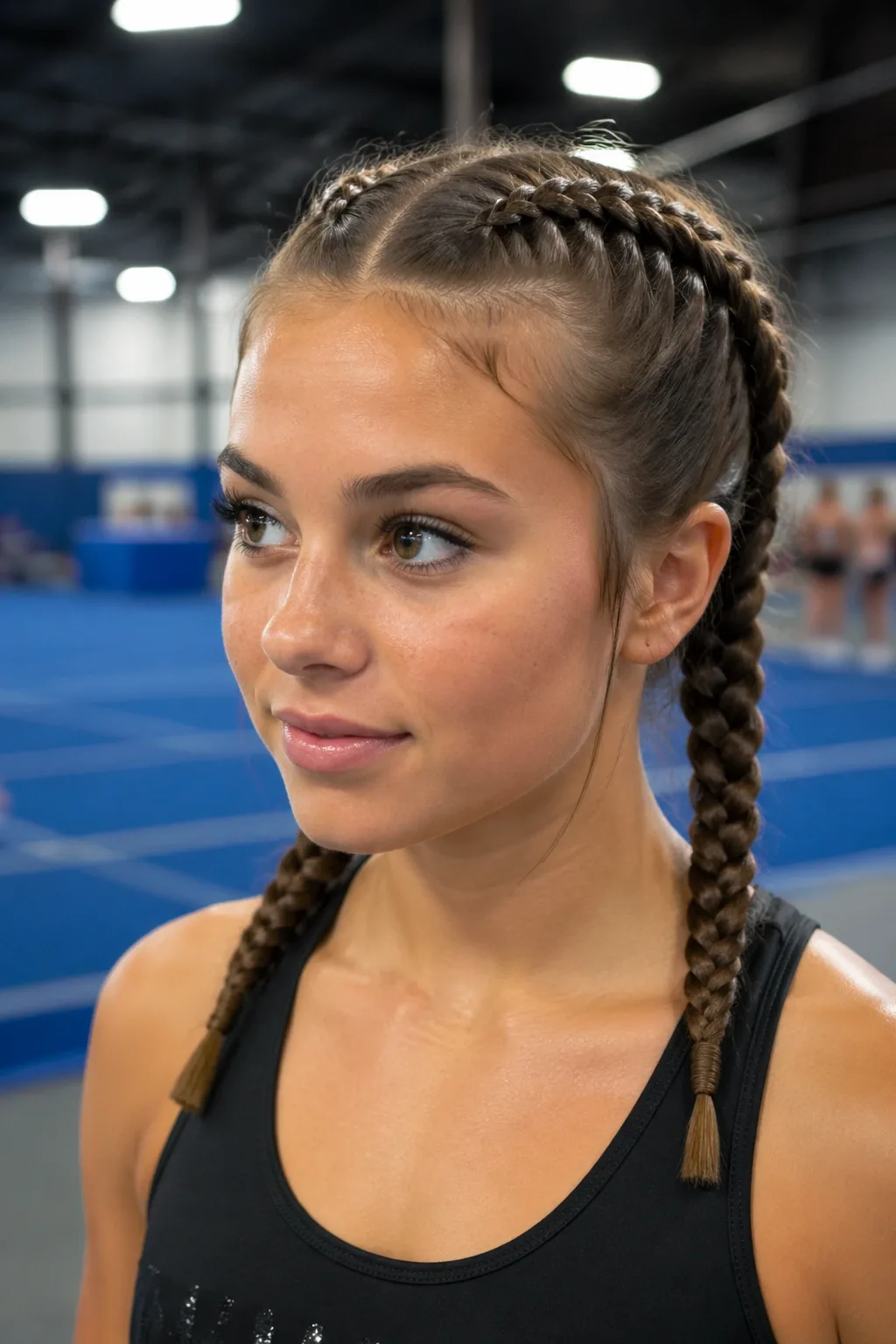
Best for: younger players, doubles partners who want matching styles, and anyone with thick hair that is easier to manage in two sections than one. Pigtails split the weight evenly across the head.
How to style: part the hair down the middle and make a ponytail or a braid on each side, keeping them at the same height. Braid each side for the sportiest version, or leave them as ponytails for a quicker one. Secure each with a strong elastic, and add matching scrunchies or ribbons.
Time and cost: ten minutes for two ponytails, fifteen for two braids. You need two elastics and a comb for the centre part.
22. The Headband Ponytail

Best for: players with flyaways, anyone whose fringe falls into their eyes, and hot days when sweat makes the front pieces stick to the forehead. The headband is doing two jobs at once: style and sweat control.
How to style: put the headband on first, then make a high or mid ponytail, pulling the front pieces back into it. Choose a wide, non-slip sports headband and wear it behind the ears so it stays put. Match the headband to your outfit for a coordinated court look.
Time and cost: five minutes, plus a sports headband, which costs very little and lasts all season.
23. The Bandana Ponytail
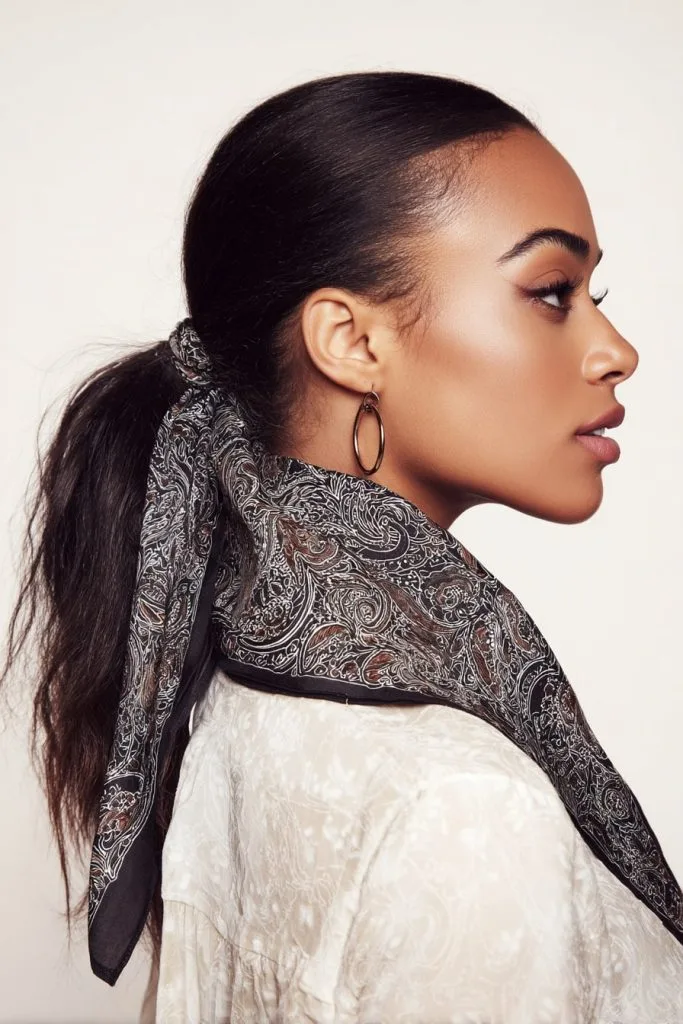
Best for: sunny days, players who want extra sun protection for the scalp, and spectators who want a pop of colour. A bandana covers the parting, which is the first place sunburn shows up on the scalp.
How to style: fold a bandana into a triangle, place it over the crown, and tie it under the ponytail at the nape, or tie it around the base of the ponytail itself. Make a ponytail first and then add the bandana, so the style underneath is already secure.
Time and cost: six minutes, plus a bandana or a silk scarf. It is also the easiest way to add colour to a plain white tennis outfit.
24. The Cap-Friendly Low Ponytail
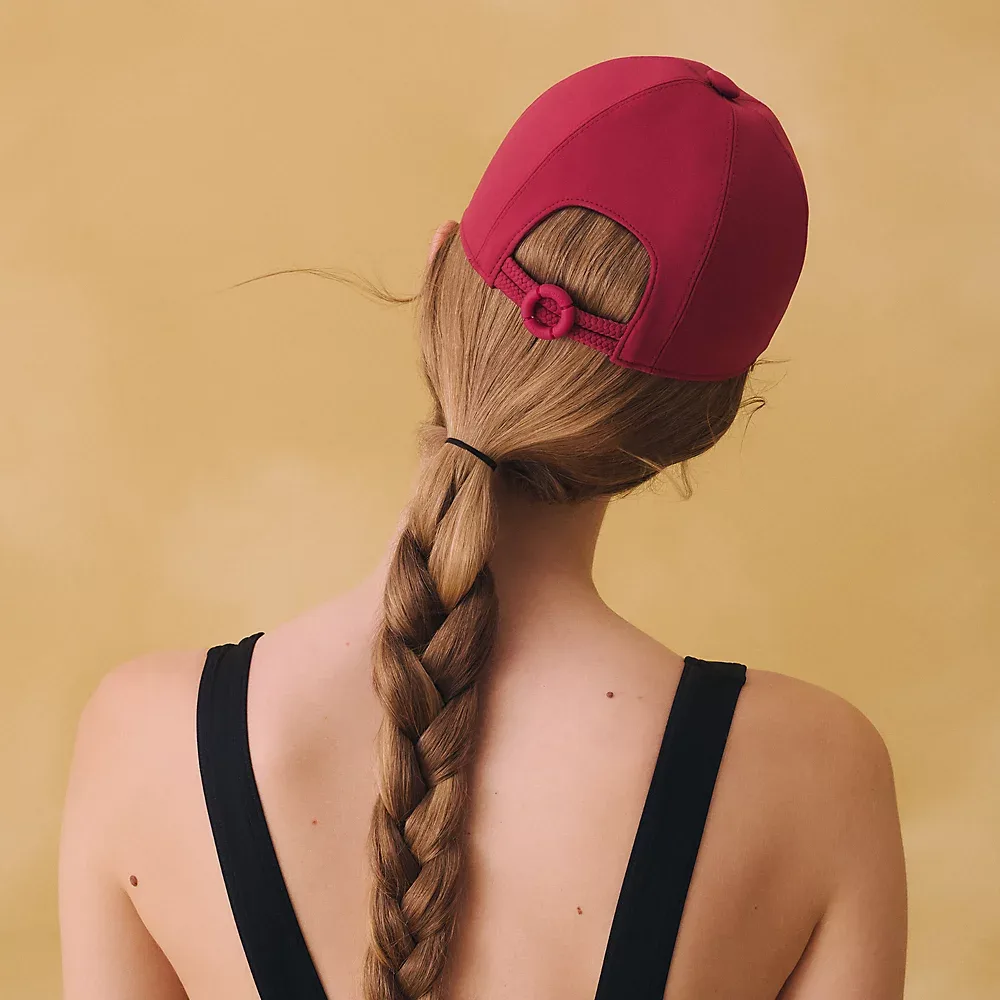
Best for: players who prefer a cap to a visor, and anyone playing in strong sun who wants full coverage for the scalp. The low ponytail threads neatly through the back of the cap.
How to style: put the cap on first, then gather the hair at the nape and pull it through the gap at the back of the cap. Secure it with an elastic, and adjust the cap strap so it sits snugly without pulling. Keep the front smooth by tucking the sides behind the ears before you put the cap on.
Time and cost: three minutes, plus a cap. If your cap has no gap at the back, wear the ponytail just below the strap instead.
25. The Visor-Friendly High Ponytail
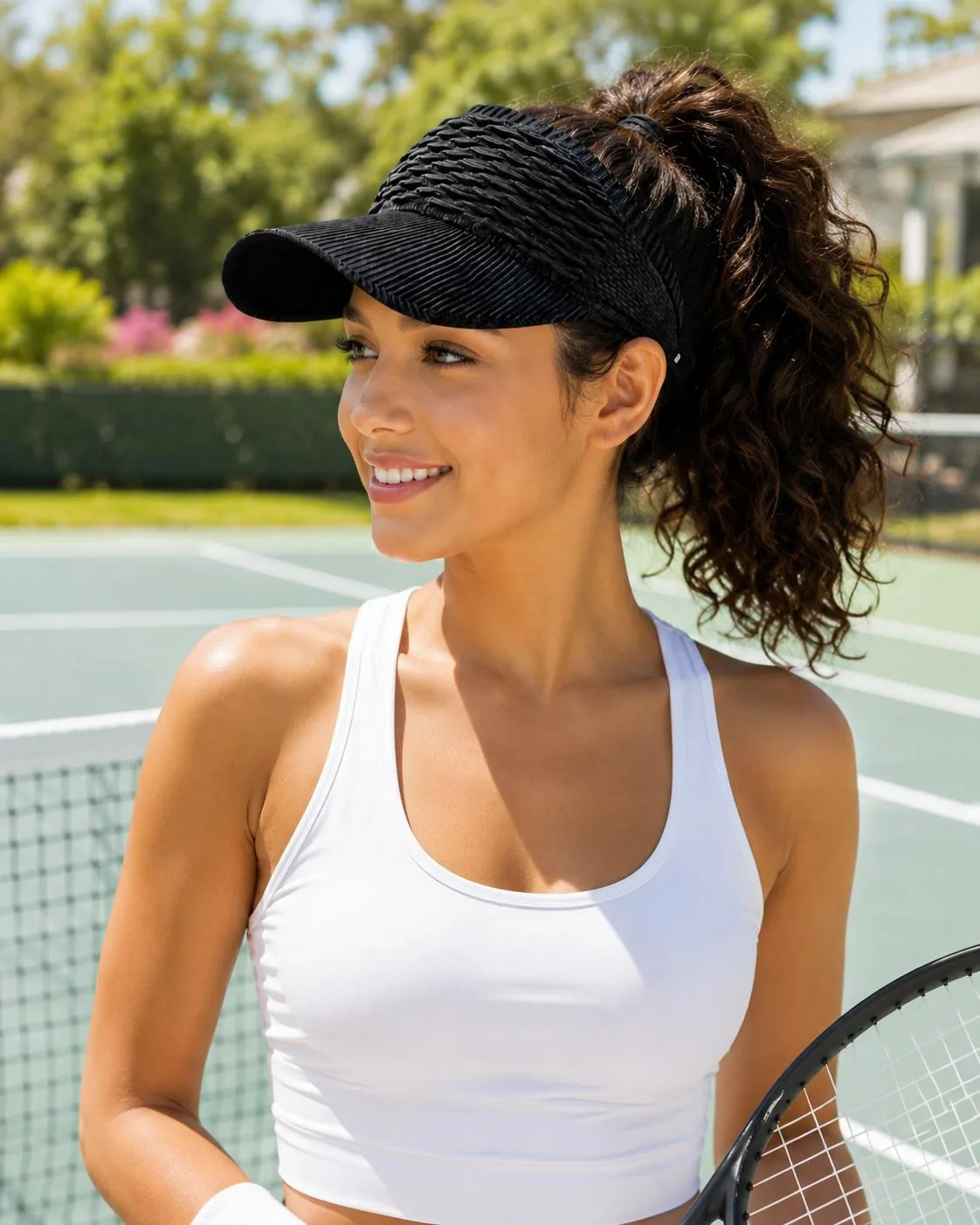
Best for: visor wearers with medium to long hair, because this is the ponytail that was designed for the visor. It sits high enough to clear the strap and keeps the hair off the neck in the heat.
How to style: gather the hair at the crown, slightly above where the visor band will sit, and secure it firmly with a thick elastic. Put the visor on and check that the ponytail clears the back strap, then smooth the front with a brush. Curl the ends lightly if you want a softer finish.
Time and cost: five minutes, plus a visor and a thick elastic. Do the dress rehearsal at home, because half an inch of height makes all the difference.
26. The Pixie Cut With a Headband
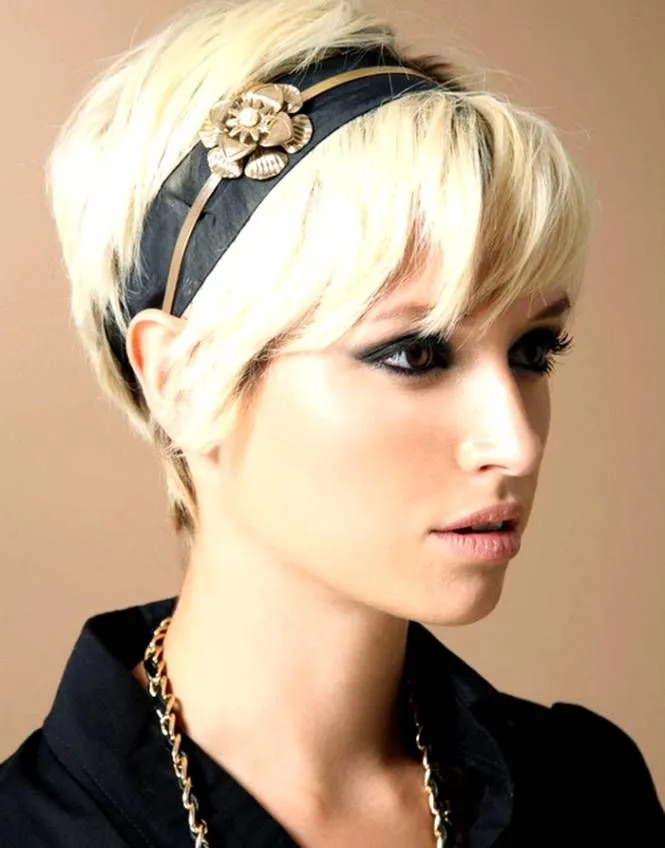
Best for: short hair, players who want to forget about their hair entirely, and hot days when every other style feels too heavy. A pixie is the lowest-maintenance tennis haircut there is.
How to style: add a little texturising paste to the top for definition, then slide a thin sports headband on to keep the front pieces out of your eyes. That is the whole style. If the back is long enough to tickle the neck, a quick tuck behind the ears sorts it out.
Time and cost: one minute, plus a headband and a little styling paste. The haircut itself is the investment, and it pays off every single match day.
27. The Short Bob With a Sweatband
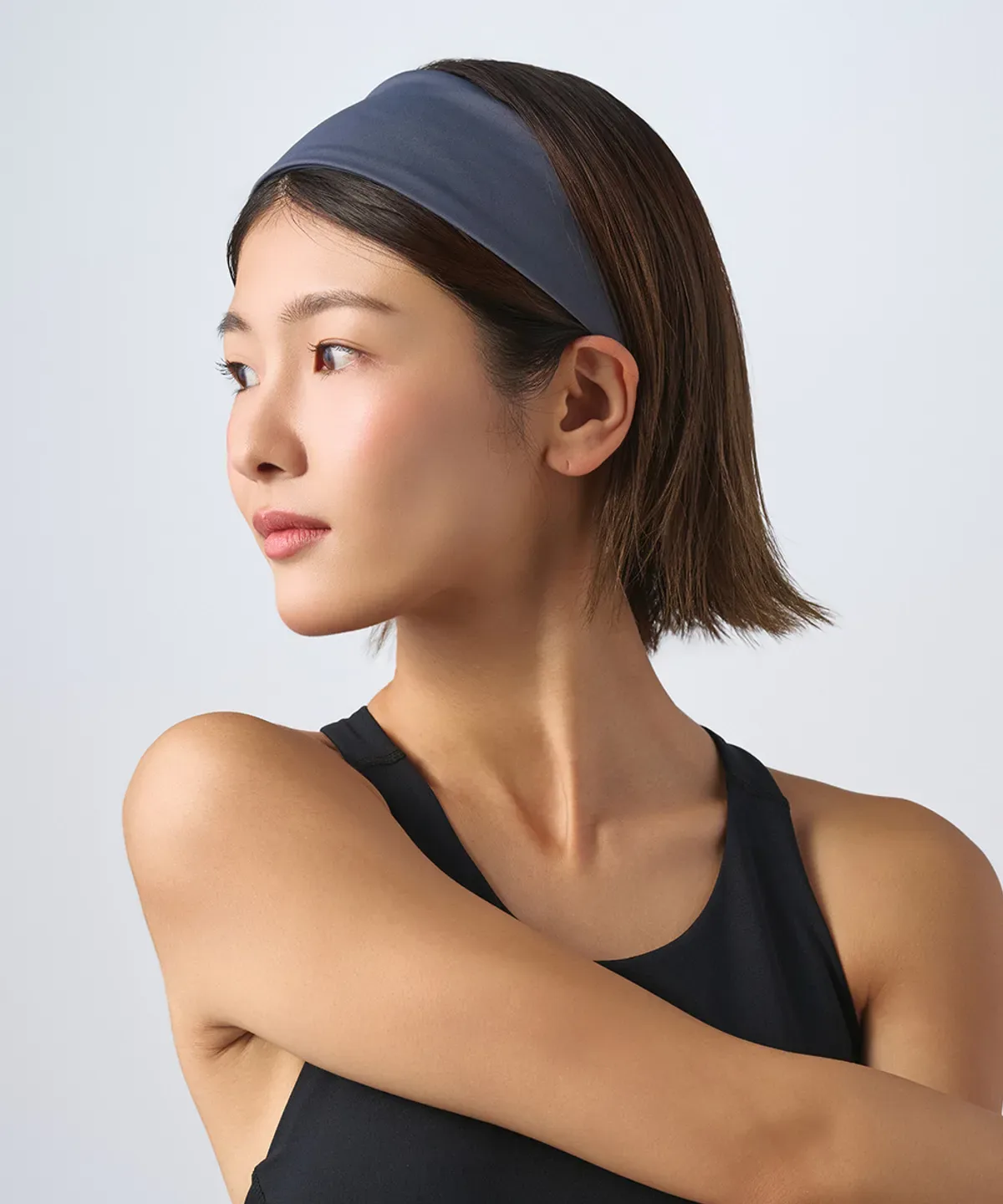
Best for: bob-length hair that is too short to tie up but long enough to fall into the eyes, and players who sweat a lot. The sweatband keeps the hair back and the sweat out of the eyes at the same time.
How to style: brush the bob smooth, then slide a wide terry or fabric sweatband on, sitting it just behind the hairline. Tuck the front pieces behind the band, and let the back fall naturally. Choose a sweatband in a colour that matches your outfit, or go bold with a bright one.
Time and cost: one minute, plus a sweatband. It is the simplest solution in this guide, and one of the most effective.
28. The Curly Puff
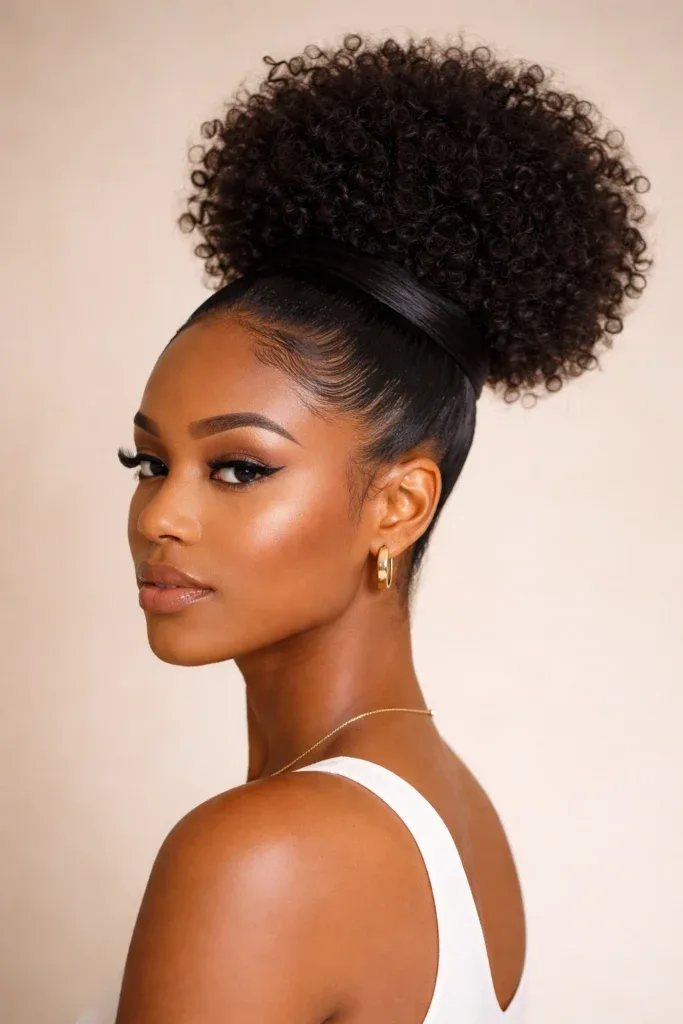
Best for: naturally curly and coily hair, because the puff gathers the curls into one soft, high shape that stays off the face and neck. It is protective, pretty, and very quick.
How to style: gather the curls up with a wide fabric band or a puff cuff, rather than a tight elastic, which protects the curl pattern. Position the puff high on the crown, smooth the edges with gel, and let the curls fall naturally. A satin-lined headband underneath adds grip without breakage.
Time and cost: three minutes, and a puff cuff or a wide fabric band. A little edge control gel finishes the hairline neatly.
29. The Space Buns
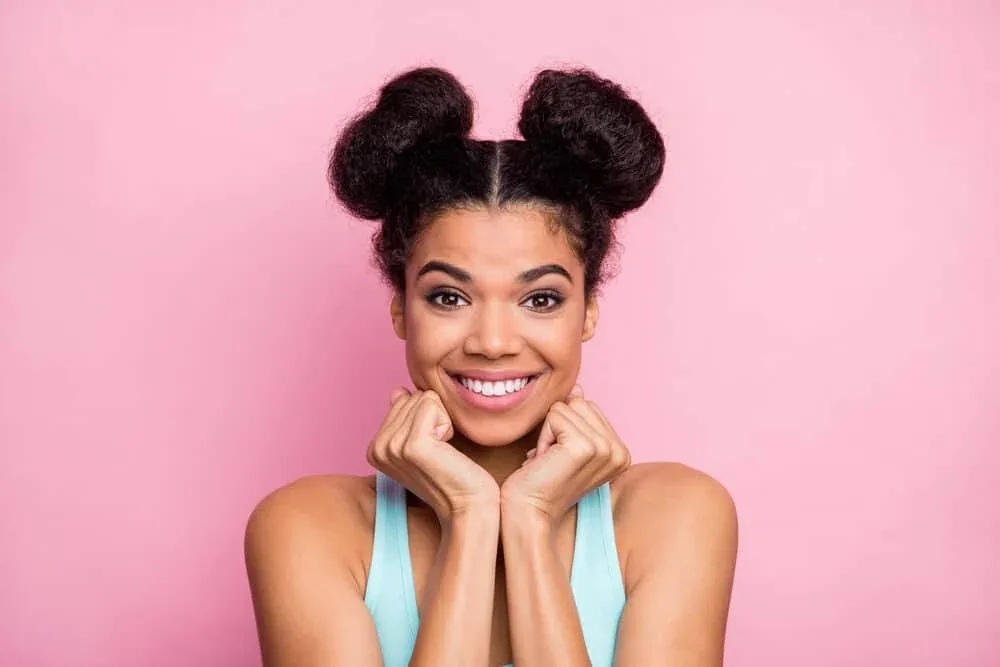
Best for: fun practice sessions, junior players, and doubles days when you want a style with personality. Two buns share the weight, keep the neck cool, and will not budge through a long rally.
How to style: part the hair down the middle, make a high ponytail on each side, and twist each one into a bun, pinning it securely. Keep the buns the same size and height, and pull out a few strands at the front for softness. Add glitter or coloured elastics for a tournament day.
Time and cost: ten minutes and a handful of pins. It is more playful than practical for a serious match, but it is perfect for practice.
30. The Braided Pigtails

Best for: long hair on hot days, players who want the most secure style possible, and anyone whose single braid keeps sliding to one side. Two braids stay balanced and out of the way.
How to style: part the hair down the middle and braid each side from the hairline to the ends, keeping the tension even. Secure each braid with a small elastic, and tug the braids gently to make them look fuller. Wear them over the shoulders or let them fall down the back.
Time and cost: fifteen minutes for both braids, and a little longer if you are braiding your own hair without a mirror. It is worth the effort on the hottest days.
31. The Rope Braid Ponytail
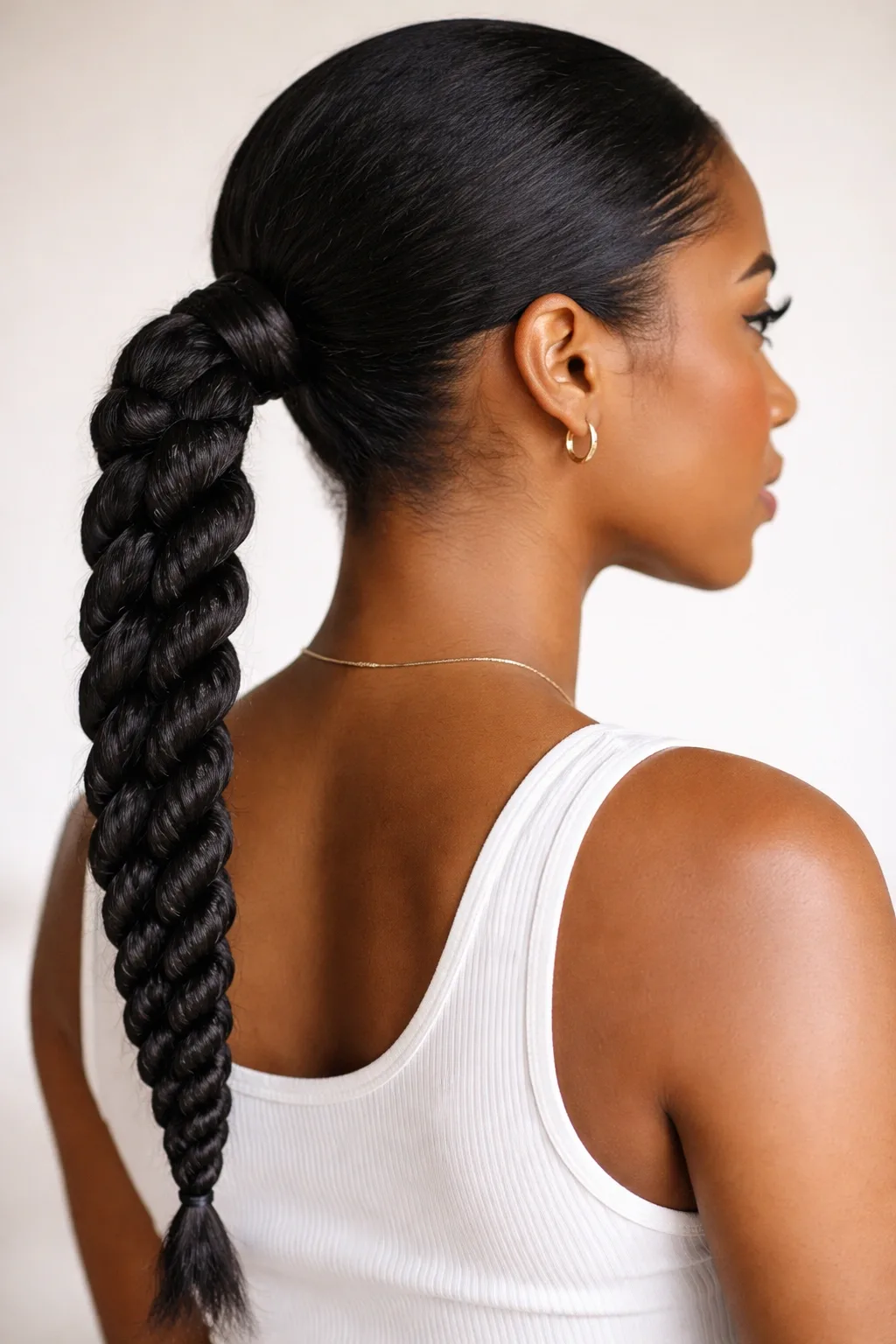
Best for: medium to long hair, players who find a regular braid too fiddly, and anyone who wants a ponytail that will not tangle in the wind. The rope twist is simpler than a braid and just as secure.
How to style: make a high ponytail, split the tail into two sections, and twist each section in the same direction, then twist the two sections around each other in the opposite direction. Secure the end with an elastic, and the twist will lock itself in place. Add a little hairspray to keep the ends smooth.
Time and cost: six minutes, and an elastic. It is the easiest braided look in this guide, and a great first braid to learn.
32. The Slicked-Back Wet Look
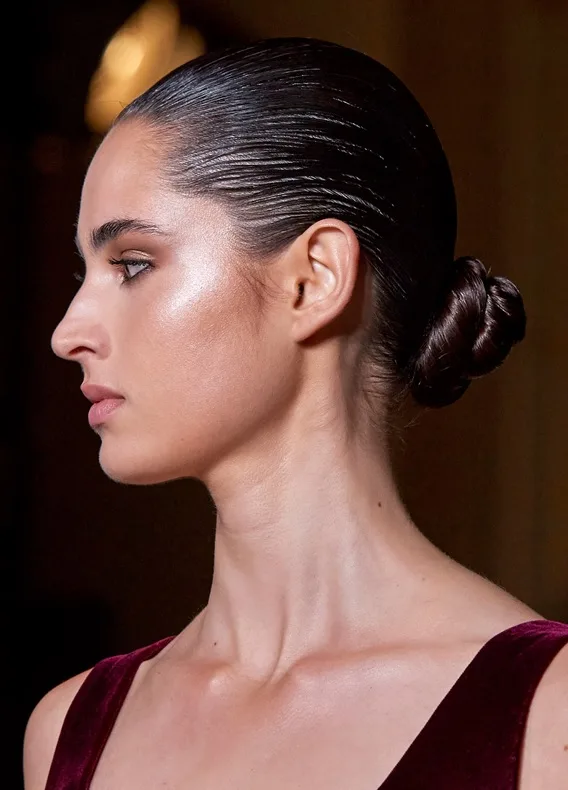
Best for: evening matches, players with fine hair that will not hold a style, and the post-match hour, when damp hair is already halfway to this look. It is sleek, modern, and completely sweat-proof.
How to style: work gel through damp hair from the hairline backwards, combing it smooth and flat against the head. Gather it into a low ponytail or a low bun, and add more gel to the sides to keep them flat. Let it dry naturally, and do not touch it while it sets.
Time and cost: five minutes, plus a strong-hold gel. It works best on hair that is already damp, so it is a natural post-match style.
33. The Courtside Blowout
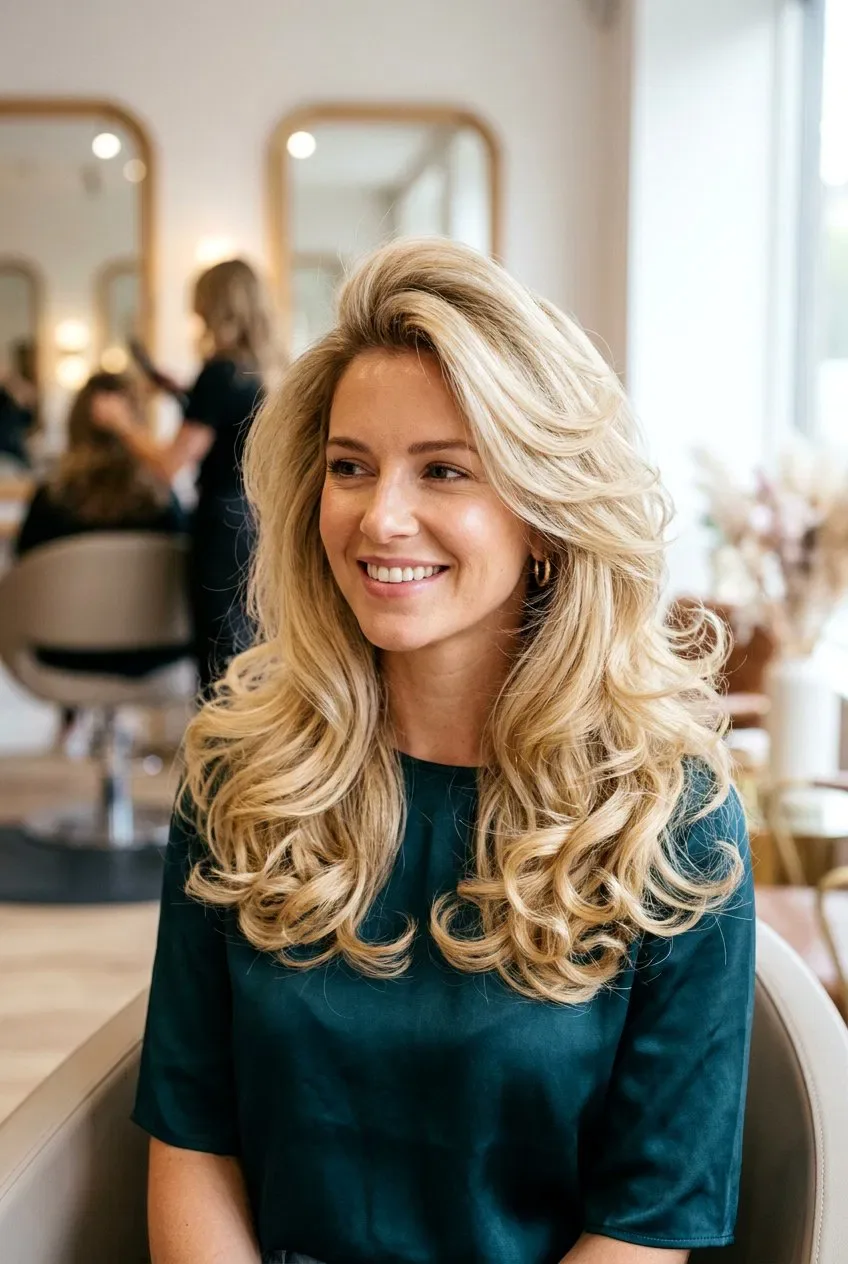
Best for: watching a big match, club finals day, and any tennis event where you will be photographed. The blowout is the most glamorous style in this guide, and it belongs in the stands.
How to style: blow-dry the hair with a large round brush, lifting the roots for volume and curling the ends under. Add a little volumising spray at the roots and a shine serum on the ends, then brush it out gently for a soft, bouncy finish. Keep a small brush in your bag, because humidity and a long afternoon will flatten the volume.
Time and cost: thirty minutes with a blow dryer and a round brush, or the cost of a salon blowout. Save it for the days that deserve it.
34. Post-Match Loose Waves
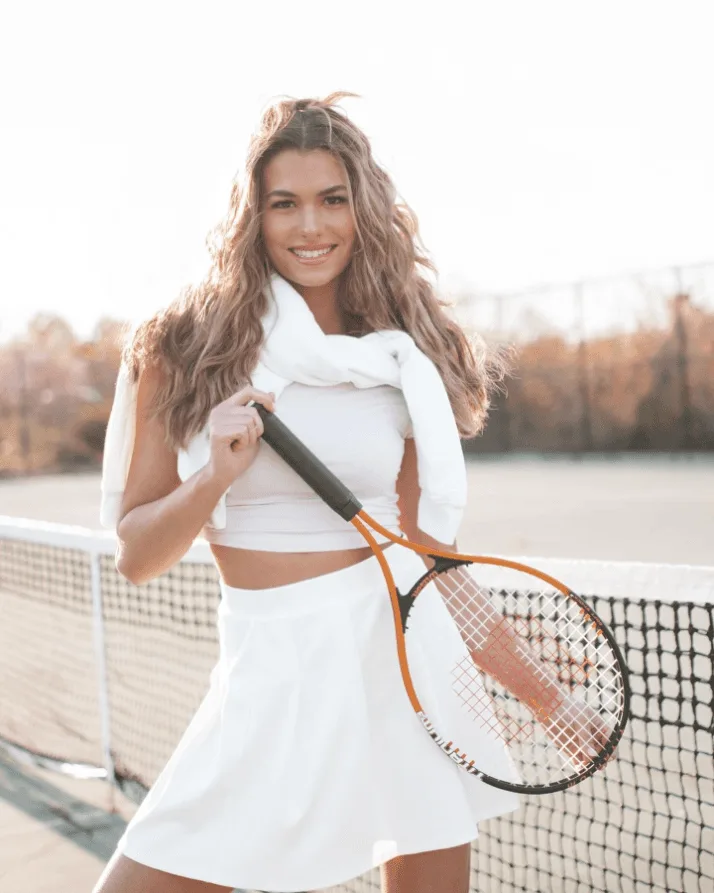
Best for: the hours after a match, lunch with your doubles partner, and anyone whose hair holds a wave well. It turns the texture a match gives your hair into a style instead of a problem.
How to style: take the match-day braid or ponytail down and shake the roots out, then add loose waves with a large-barrel curling iron only where the hair needs it. A spritz of sea salt spray adds texture, and a drop of oil on the ends keeps the waves soft rather than frizzy.
Time and cost: ten minutes with a curling iron, or five if you are just refreshing the waves the braid left behind. It is the perfect second look from one day of tennis.
What is the best hairstyle for playing tennis?
A high ponytail or a French braid is the best hairstyle for playing tennis, because both keep the hair completely off your face and neck and survive sweat, sun and three sets. If your hair is very long or thick, double Dutch braids are even more secure, because they share the weight across both sides of the head.
How do I keep my ponytail from falling out during a tennis match?
Use a thick, snag-free elastic wrapped three times, and add a second elastic an inch below the first to share the weight. Start with day-old hair rather than freshly washed hair, because it has more grip, and smooth the front with a little gel so flyaways cannot loosen the base.
Can I wear my hair down to a tennis match?
You can wear your hair down if you are watching a tennis match, but it is not a good idea if you are playing. Loose hair falls into your eyes during serves, sticks to a sweaty neck, and tangles in the wind. For playing, tie it all up; for watching, loose waves or a half-up style look wonderful.
What hairstyle works best under a tennis visor?
A high ponytail worn just above the visor strap works best under a tennis visor, because the hair clears the band instead of bunching underneath it. A French braid is another good choice, because it lies flat against the head and the visor sits neatly over it.
How do I stop sweat from ruining my hair during tennis?
Apply dry shampoo to the roots before you play so it absorbs sweat as it forms, and use a wide sports headband to keep sweat off your hairline. After the match, rinse with lukewarm water before shampooing, because salt and sunscreen rinse out far more easily from wet hair.
What should I wear in my hair to watch a tennis match?
For watching a tennis match, a half-up style, soft waves, a low bun or a claw clip twist all look polished and survive a long afternoon in the stands. Add a straw hat or a wide headband for sun protection, and choose a style you can refresh with a quick brush and a spritz of dry shampoo.
Are braids better than a ponytail for tennis?
Braids are usually better than a ponytail for tennis, because a braid locks the whole length of the hair into one compact shape that cannot whip around or tangle. A ponytail is quicker and looks more classic, but on a long or windy match day, a braid will outlast it.
How do I fix my hair after a tennis match?
Take the style down, shake the roots out with your fingers, and use dry shampoo at the roots, letting it sit for a minute before brushing it through. Smooth a drop of hair oil over the ends, then restyle into a loose low bun, a soft side braid or tousled waves, which all hold better on post-match hair than on freshly washed hair.
What hair accessories stay put during tennis?
Thick snag-free elastics, wide non-slip sports headbands with a silicone grip strip, and bobby pins crossed over each other stay put during tennis. Avoid claw clips on court, because they can pop open on an overhead smash, and always pack spare elastics and pins in your tennis bag.
Can short hair work for a tennis match?
Yes, short hair works very well for a tennis match, and it is the easiest length to manage on court. A pixie cut needs only a headband, and a short bob needs only a wide sweatband to keep the front pieces out of your eyes. Short hair never tangles, never whips into your face, and dries in minutes after a match.
Conclusion
The best hairstyles for a tennis match are the ones you forget about once the first ball is hit. Whether you choose a high ponytail, a French braid, double braids or a low bun, the test is always the same: does it stay put through the sun, the sweat and the third set, and does it still look good when the match is over? If the answer is yes, you have found your style.
Start with the guides at the top of this post, pick one playing style and one watching style, and practise them before match day. Pack your spares, protect your hair from the sun, and give yourself a proper post-match refresh. Then stop thinking about your hair, and enjoy the tennis. That is the whole point of getting the style right in the first place.