Hairstyles for Jury Duty: Neat, Respectful Looks That Last All Day in Court
Jury duty is one of the few places where your hair should be noticed as little as possible, and that is exactly the point. When you walk into a courtroom, the judge, the lawyers and the other jurors form a first impression in seconds, and neat, quiet hair tells them you take the room seriously. The best hairstyles for jury duty are not the most fashionable ones. They are the tidy, conservative styles that stay in place from the security line in the morning to the last hour of testimony in the afternoon.
Court days are long and mostly spent sitting still. You will walk through a metal detector, sit in a hard chair for hours, lean forward to hear a witness, and stand up whenever the judge enters or leaves. A style that needs constant fixing will distract you, and hair that falls across your face will distract everyone else. The goal is a look that is respectful, comfortable and completely forgettable in the best possible way.
This guide starts with what the courtroom actually expects, then walks through thirty-three styles that work, from low buns and French twists to polished bobs and neat braids. Every style here is chosen for the same three reasons: it looks serious, it holds all day, and it lets you forget about your hair and focus on the case in front of you.
What the Courtroom Expects From Your Hair
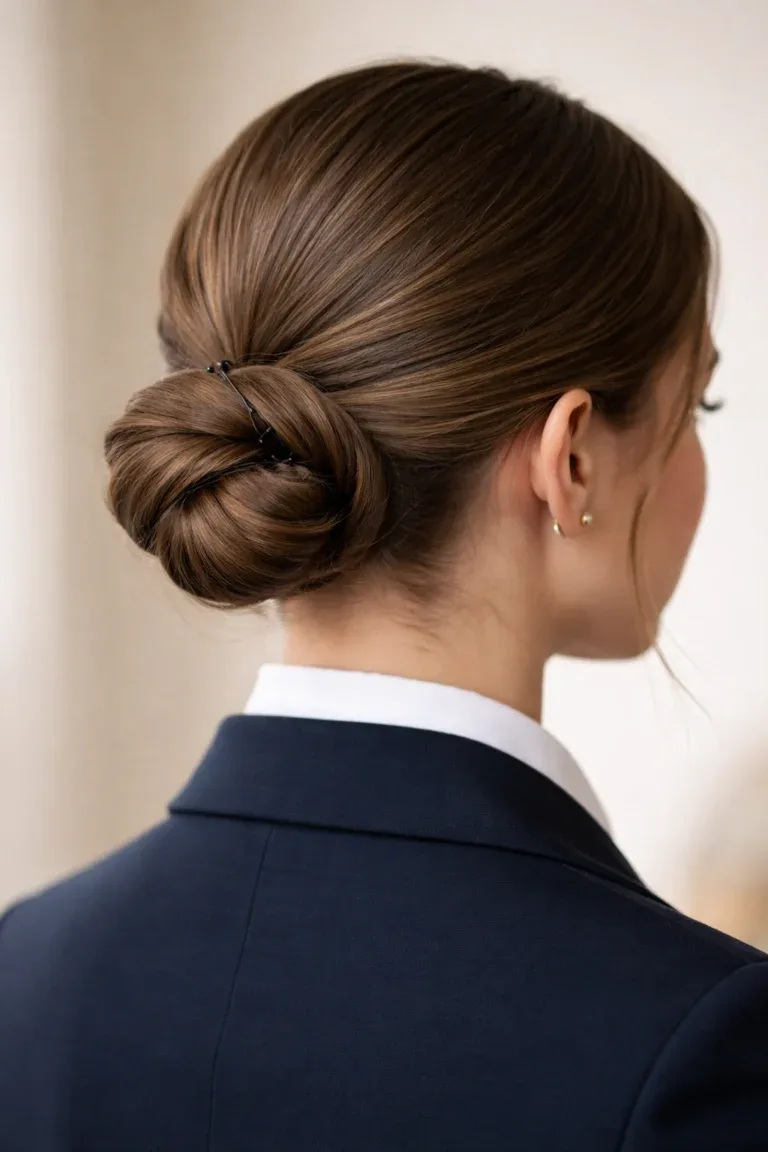
A courtroom is a formal room with formal rules, written and unwritten. Judges expect jurors to look clean, tidy and respectful, and hair is part of that picture. Nothing in most jury instructions mentions hairstyles directly, but the general expectation is clear: look like someone who is ready to listen carefully and take the job seriously.
In practice that means smooth, controlled hair with no drama. Avoid tall volume, spiky texture, bright colours, glitter, feathers and anything that jingles, shines or moves a lot. Keep your hair off your face so the judge and the lawyers can see you clearly, and keep it off your shoulders if it tends to fall forward when you lean down to read documents.
Think of the standard as the same one you would use for a job interview at a law firm or a visit to a place of worship. If a style would feel at home in either of those rooms, it will feel at home in a jury box. When in doubt, choose the plainer option. Nobody has ever been judged badly for hair that was simply neat.
Hair and Security Screening at the Courthouse
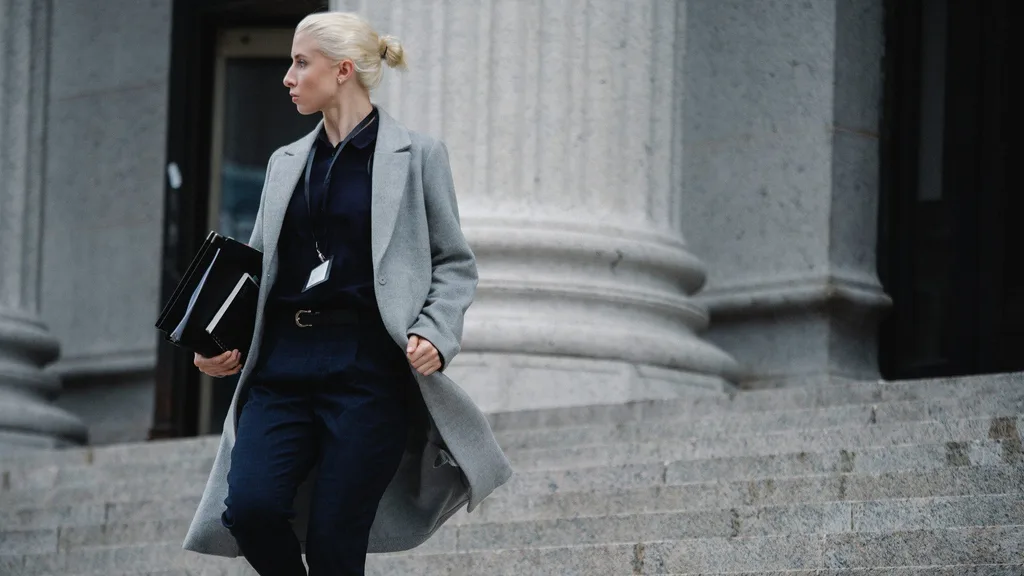
Almost every courthouse runs jurors through a metal detector or a security scanner before they reach the courtroom, so your hairstyle needs to survive that first checkpoint without a fuss. Large metal clips, thick metal barrettes, metal combs and heavy decorative pins can set off a detector, and a security officer may ask you to remove them and walk through again.
The safest choice is to style your hair with as little metal as possible on jury days. Use plain elastic bands, fabric-covered ties, plastic pins and small, flat bobby pins. If your usual style depends on a big metal claw clip, swap it for a fabric scrunchie in a dark colour or a couple of hidden pins instead.
Arrive a few minutes early so a second trip through the scanner never makes you late. Keep a spare elastic and two bobby pins in your bag, not in your hair, so you can fix anything quickly in the restroom after screening. A style that passes security the first time sets a calm tone for the whole day.
All-Day Comfort in the Jury Box

Jury service means sitting, and sitting, and then sitting some more. A style that feels fine for an hour can turn into a headache by the third hour, especially if it pulls at your scalp or presses against the back of a hard chair. High buns and tight topknots are the usual culprits, because they rest exactly where your head meets the chair back.
Low styles are far more comfortable for long sitting. A low bun, a low knot or a low ponytail sits at the nape of your neck, below the point where your head touches the chair back. Loosen the style slightly at the roots so it does not pull, and use a soft elastic rather than a thin rubber band that digs in.
Test any new style by wearing it for a full afternoon at home before your jury day. Sit, read, lean forward and stand up a few times. If you find yourself touching it, tightening it or shaking it loose, it is not the right style for court. Comfort is not a luxury here. It is what lets you pay attention.
Court-Ready Styles by Hair Length
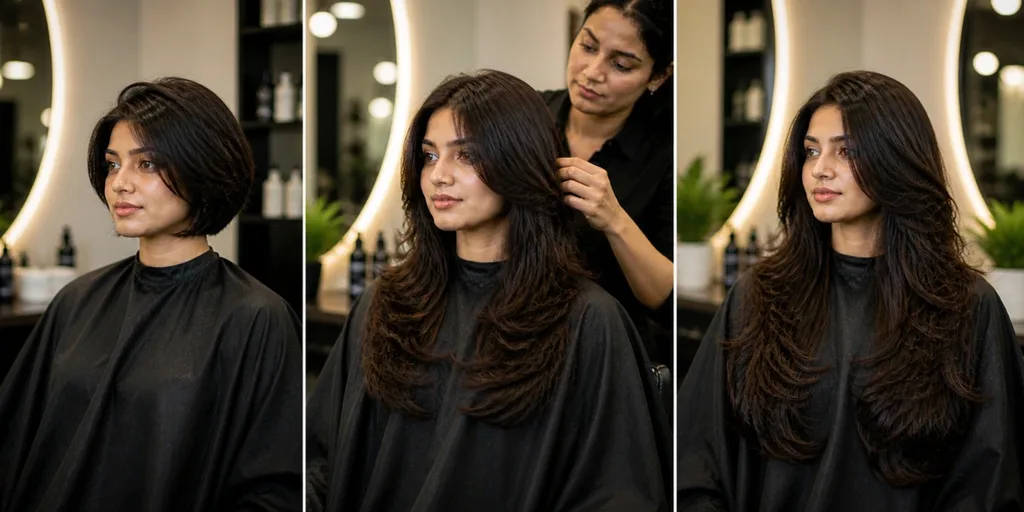
Short hair has the easiest job in a courtroom, because a polished pixie, a smooth crop or a neat bob already looks tidy with very little work. The main task is keeping the shape clean: smooth the sides, define the part, and use a light product so nothing sticks up by mid-afternoon. A short cut that is freshly trimmed reads as deliberate and respectful.
Medium hair is the most flexible length for jury duty. It is long enough for a low bun, a French twist or a Gibson tuck, and short enough that a ponytail will not swing or tangle. If your hair sits between your chin and your shoulders, a low knot or a tucked-under blowout is usually the quickest court-ready option.
Long hair needs the most planning, because loose long hair falls forward, catches on chair backs and needs constant pushing back. Pull it into a low bun, a braid or a low ponytail, and pin back any layers that frame your face. The length can stay, but the courtroom should never see it loose and unmanaged.
Hair Accessories to Avoid in Court

Accessories are where a courtroom look most often goes wrong, because the things that feel fun at a party feel loud in front of a judge. Leave the oversized bows, glittery clips, feather extensions, bright scarves and jingling charms at home. Anything that catches the light, makes a sound or draws the eye to your hair instead of your face is working against you.
The safest accessories are the ones nobody notices: plain dark elastics, small matte bobby pins, a slim fabric headband in black or navy, and a single discreet clip in a neutral colour. If an accessory is wider than two fingers, shinier than your shoes or brighter than your outfit, it is too much for court.
Religious and cultural head coverings are a different matter entirely and are always appropriate in court. A neatly worn headscarf, hijab, turban or other covering is respectful by definition. The advice here is only about decorative fashion accessories, and it never applies to coverings worn for faith or culture.
A Calm Morning Routine for Jury Days
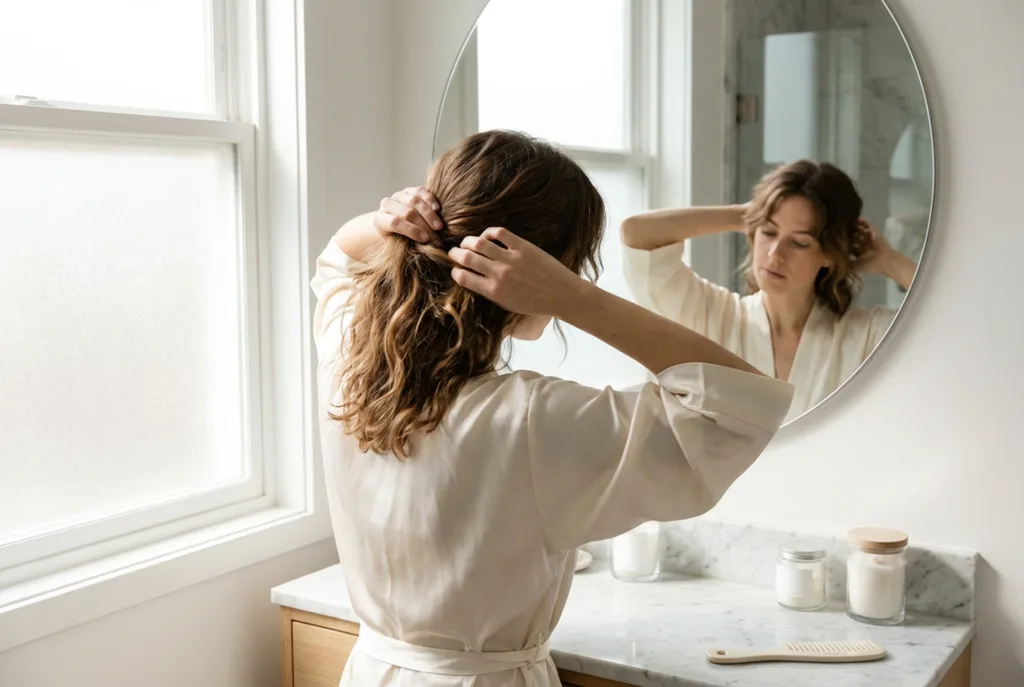
Jury mornings are stressful enough without a hairstyle that needs forty minutes and a prayer. Pick your style the night before and practise it once, so the morning is a repeat performance rather than an experiment. Wash your hair the evening before if it behaves better on day-old hair, or wash it early and let it dry fully before you style it.
On the morning itself, keep the routine short: brush through, smooth the part, apply a small amount of serum or light hold spray, and secure the style. Check the back with a hand mirror or your phone camera, because the back of your head is what the people behind you will see all day. Then stop. The more you fiddle, the more flyaways you create.
Pack a small rescue kit in your bag: two bobby pins, one spare elastic, a travel-size smoothing spray and a pocket comb. That kit weighs almost nothing and quietly saves the day if a pin slips during a long afternoon of testimony.
What to Ask Your Stylist Before Jury Duty

If you have a salon appointment before your jury service, tell your stylist exactly why you are there. Say the words jury duty, and ask for a cut that looks neat for at least two weeks without daily styling. A good stylist will take length off the layers that fall into your face and shape the back so it sits smoothly in a low bun or a ponytail.
Ask specifically for a style that holds with one elastic and two pins, because that is all you will want to manage in a courthouse restroom. Ask them to show you the style from the back, and to teach you the fastest version of it, not the salon version with hot tools and three products.
Avoid a dramatic new cut or colour the day before jury duty. A fresh style you have never worn is a risk, and a colour that is brighter than you expected is impossible to undo. If you want a trim, book it at least three or four days ahead so the cut has time to settle and you have time to practise living in it.
The Night-Before Checklist
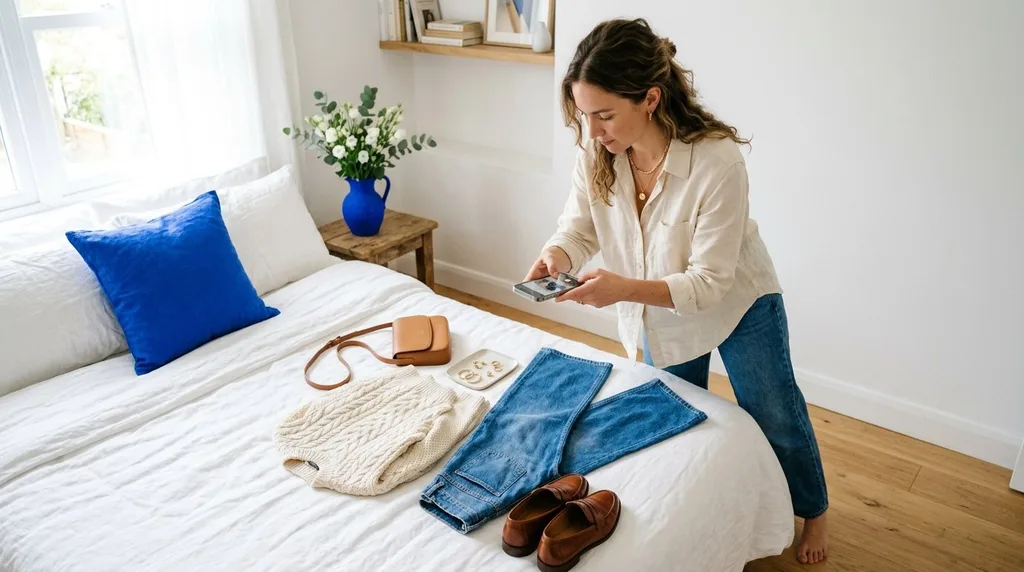
The night before jury duty is when the whole day gets decided, and hair is part of the checklist. Wash and fully dry your hair if that is your plan, or brush it out and braid it loosely for the night so you wake up with smooth, manageable hair instead of a tangle. Lay out your outfit, including shoes, so the morning is about your hair, not your wardrobe.
Set out everything your style needs in one place: brush, comb, elastics, pins, smoothing product and a small mirror. Put your spare pins and elastic in your bag now, not in the morning rush. Charge your phone so you can check the back of your hair, and set your alarm fifteen minutes earlier than you think you need.
Then go to bed on time. Tired jurors fidget, and fidgeting ruins neat hair faster than anything else. A calm night, a practised style and a bag that is already packed will make the morning feel ordinary, and ordinary is exactly how a jury morning should feel.
The Low Sleek Bun
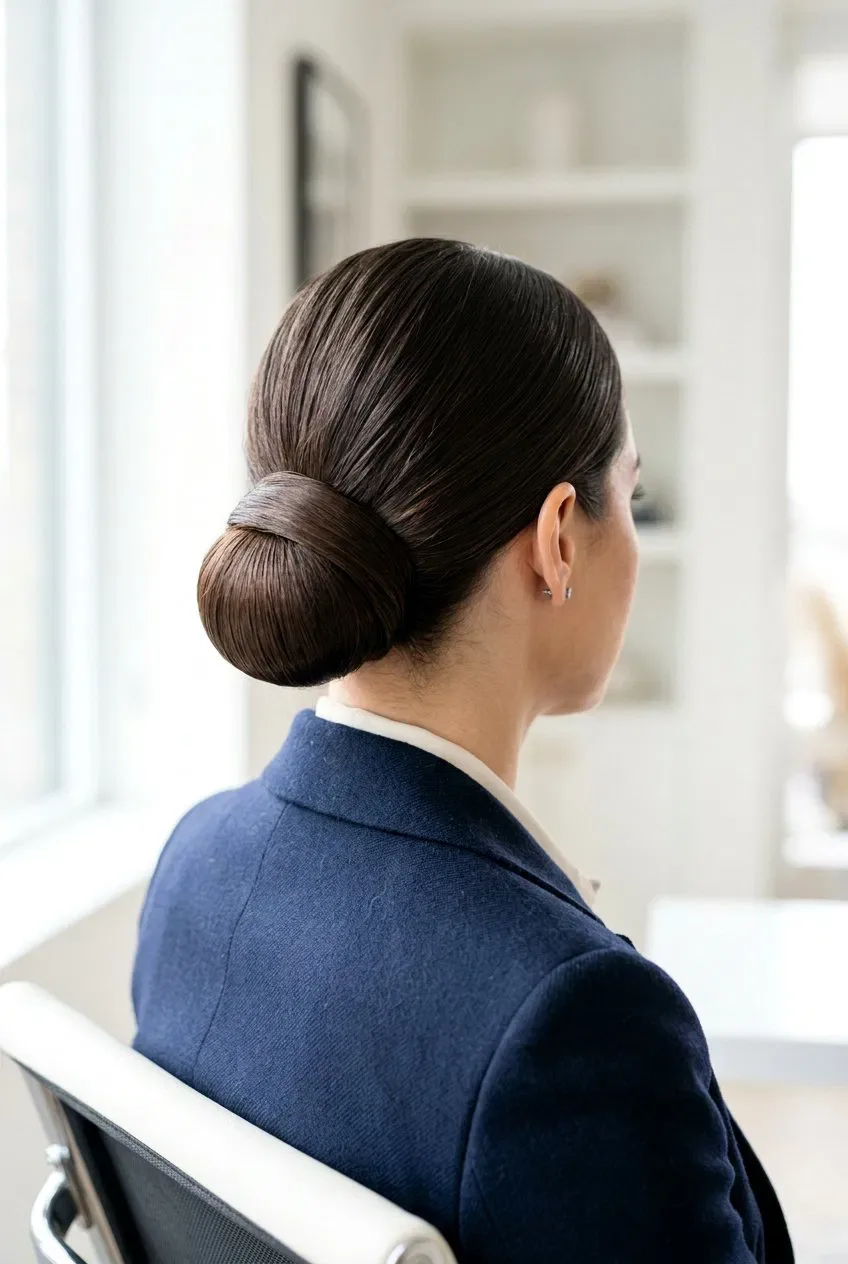
Best for: almost everyone, and the single safest choice for a first day in court. It works on straight, wavy and thick hair, it suits every face shape, and it looks equally right with a blazer, a blouse or a simple dress.
How to style: brush your hair back smoothly, gather it at the nape of your neck, and twist it into a small, flat bun. Secure it with a dark elastic and two crossed bobby pins, then smooth the crown with a little serum. Keep the bun low and close to the head so it never touches the chair back.
What to ask: ask your stylist to thin the bulk at the nape if your hair is very thick, so the bun sits flat instead of sticking out. Ask for a centre or side part that flatters your face, and have them show you how to hide the elastic with a wrapped strand.
The Classic French Twist
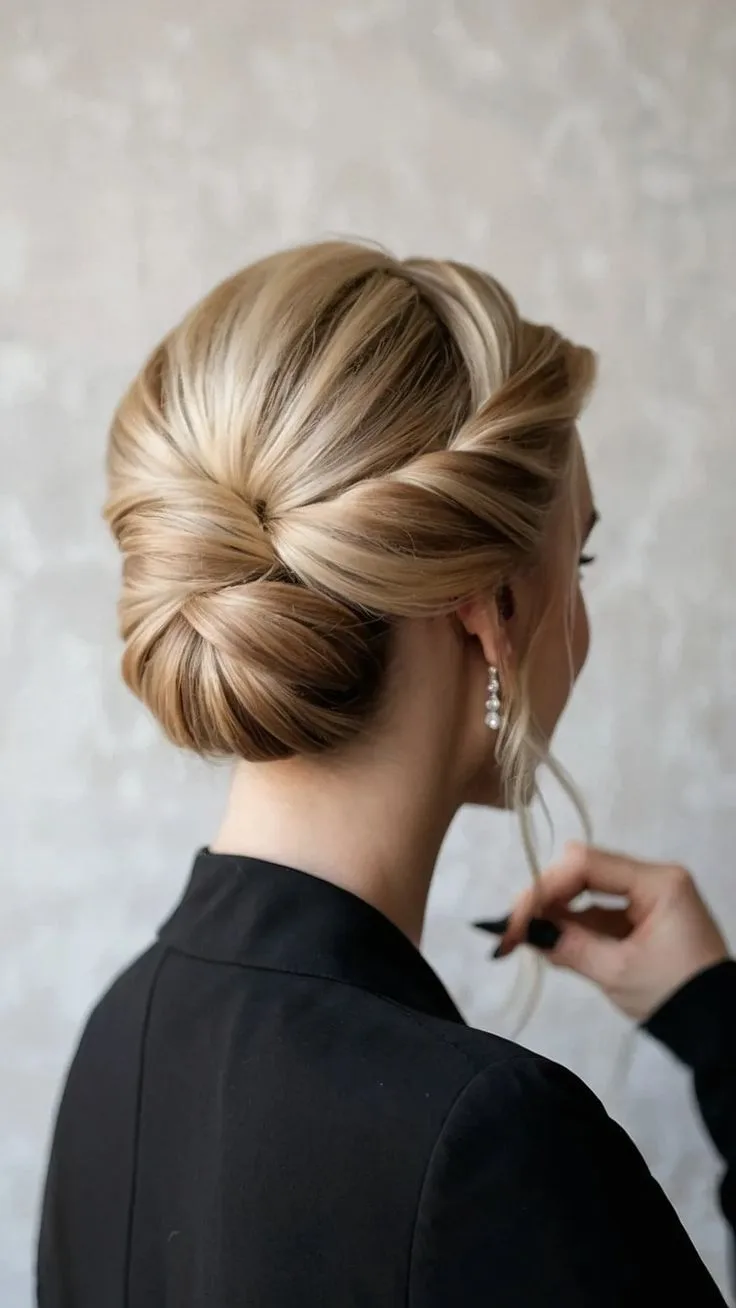
Best for: medium to long hair and anyone who wants a formal, old-fashioned sense of occasion. It is the most courtroom-like of all updos, and it reads as serious and polished from every angle.
How to style: sweep your hair to one side, twist it upward against the back of your head, and tuck the ends inside the fold. Pin along the twist with long bobby pins, smooth the top with a brush, and finish with a light mist of hairspray. Keep the twist tight and vertical rather than loose and romantic.
What to ask: ask your stylist for a twist that holds without a full can of hairspray, and ask them to show you the pin placement. If your hair is fine, ask for a little backcombing at the crown so the twist has something to grip.
The Neat Low Ponytail

Best for: long hair, busy mornings and anyone who worries about a bun coming undone. It is simple, honest and completely appropriate, as long as it is smooth and sits low.
How to style: part your hair neatly, brush it back without bumps, and secure it low at the nape with a fabric-covered elastic. Wrap a small strand of hair around the elastic and pin it underneath, then smooth the tail with a drop of serum so it hangs straight and quiet.
What to ask: ask your stylist to cut the ends bluntly so the tail looks tidy rather than wispy. If your hair is layered, ask how to pin the shorter pieces back so they do not escape by lunchtime.
The Polished Chignon
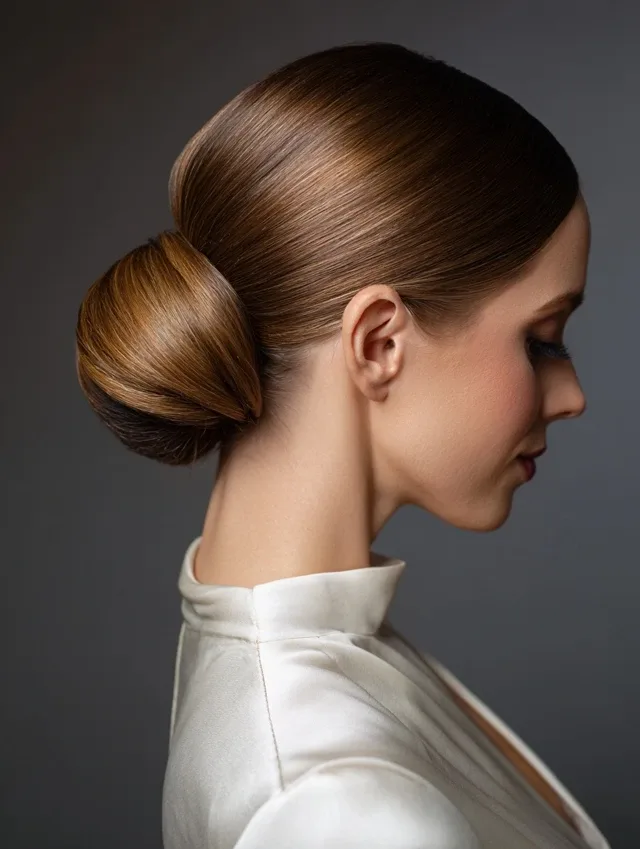
Best for: formal court days, longer trials and anyone who wants a soft, elegant finish without looking dressed up. A chignon is a bun with manners, and it suits mature hair beautifully.
How to style: gather your hair low, twist it loosely, and coil it into a soft roll at the nape. Pin it in a circle with bobby pins, leaving the surface smooth and the shape slightly rounded. Pull out nothing at the front, and keep the part clean and straight.
What to ask: ask your stylist for a chignon that can be pinned rather than sewn, so you can redo it yourself. Ask them to show you the difference between a soft chignon and a messy bun, because the courtroom wants the first one.
The Smooth Side-Part Bob
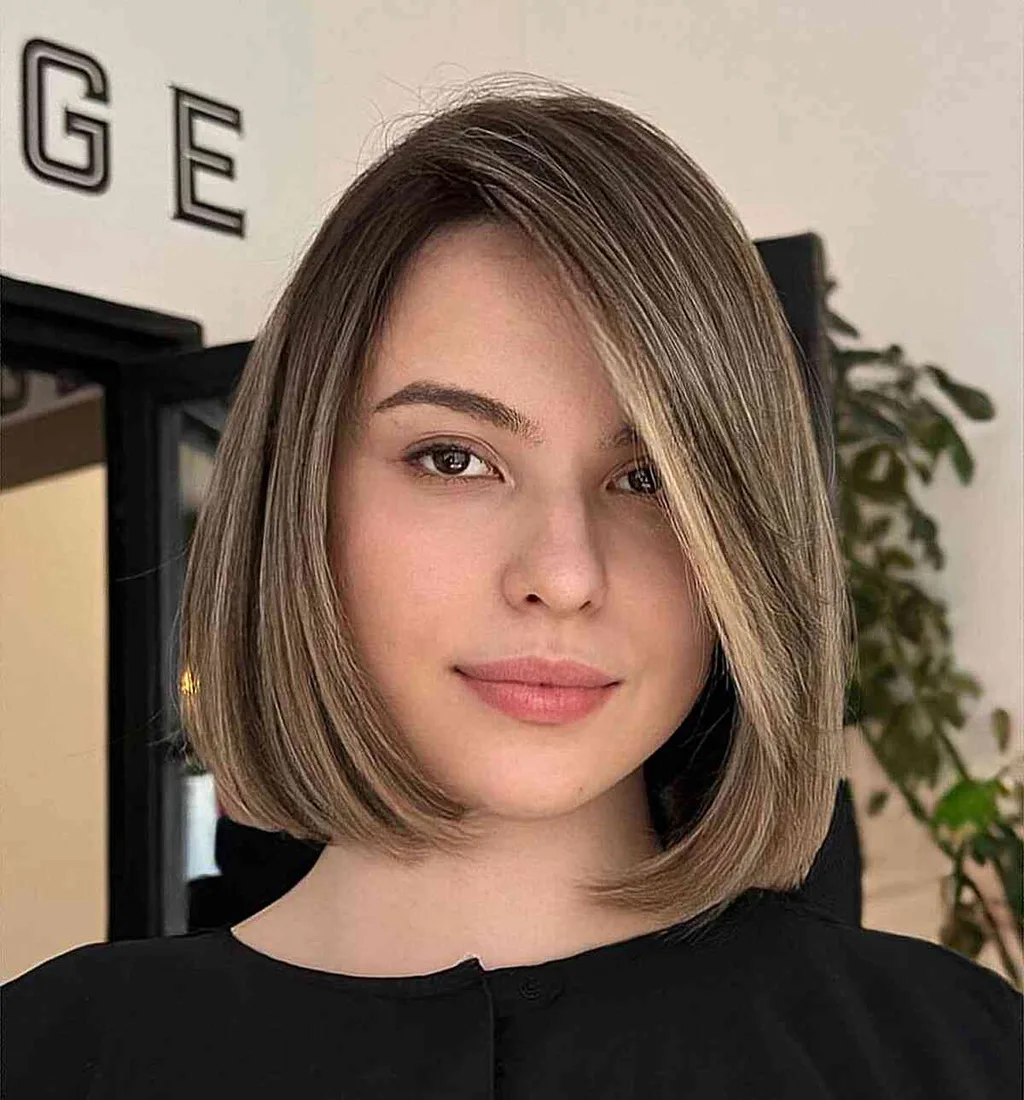
Best for: short to medium hair and anyone who wants a style that needs no pins at all. A smooth bob frames the face, stays off the shoulders and looks finished from the moment you leave the house.
How to style: blow-dry your bob with a round brush, turning the ends under, and set a deep side part. Smooth the top with a flat iron on a low heat if needed, and finish with a pea-sized amount of smoothing cream. Tuck the longer side behind your ear on one side only.
What to ask: ask your stylist for a bob that falls just above the shoulders so it never brushes your collar. Ask for the ends to be cut bluntly, which keeps the shape sharp for weeks without daily styling.
The Tidy Shoulder-Length Blowout
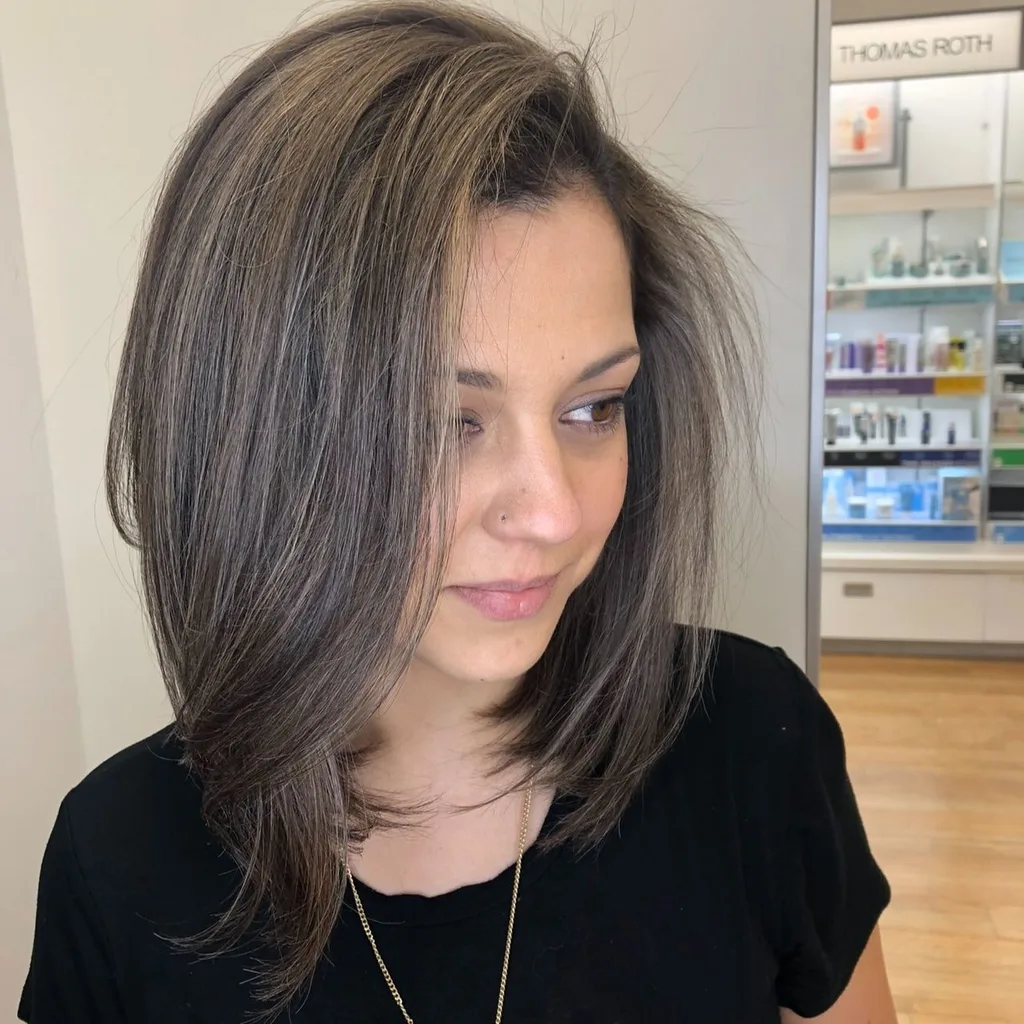
Best for: medium hair that is too short for a bun and too long to leave completely alone. A tidy blowout looks professional and healthy, and it holds its shape through a long day of sitting.
How to style: blow-dry your hair in sections with a round brush, rolling the ends under and lifting the roots slightly. Keep the volume modest and the part neat, and set the style with a cool shot from the dryer. A light spray holds it without stiffness.
What to ask: ask your stylist for a blowout cut with long layers that turn under naturally. Ask which brush size suits your length, and whether a smoothing serum or a light mousse will hold better in your hair type.
The Low Braided Bun
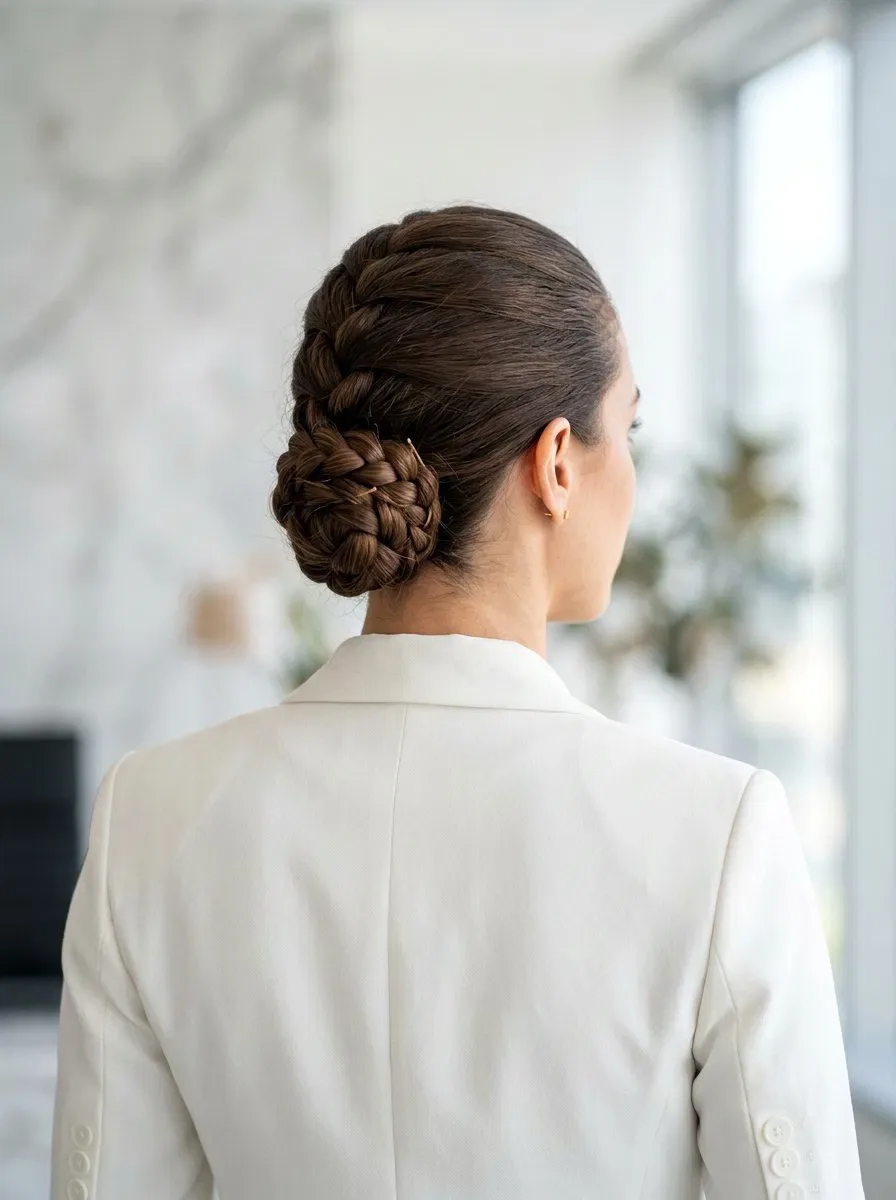
Best for: thick hair that escapes from ordinary buns, and for long days when you need a style that truly will not move. The braid locks the hair down before the bun even begins.
How to style: braid your hair low into a simple three-strand braid, secure the end, then coil the braid into a flat bun at the nape. Pin around the coil and smooth the crown. The braid texture keeps the bun compact and stops layers from poking out.
What to ask: ask your stylist to show you a braid that starts low, not high, and to check that the bun sits flat against your head. If your hair is very long, ask whether a double coil or a folded braid will sit more comfortably.
Sleek Straight Hair Tucked Behind the Ears
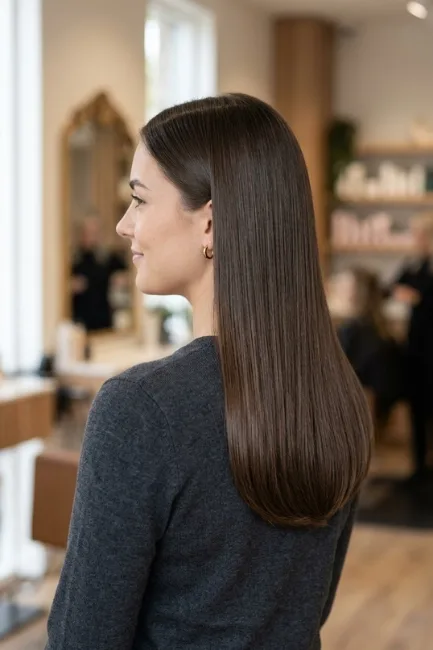
Best for: straight hair of medium length, and anyone who wants to wear their hair down without it falling into their face. Tucking both sides behind the ears keeps the look open and tidy.
How to style: straighten your hair on a low heat or blow-dry it smooth, part it in the middle or slightly to one side, and tuck both sides neatly behind your ears. Pin each side with a small flat bobby pin hidden behind the ear, and smooth the top with serum.
What to ask: ask your stylist for a cut with the front pieces long enough to tuck securely. If your hair slips out of tucks easily, ask about a light texturising spray at the roots for grip.
The Soft Low Knot
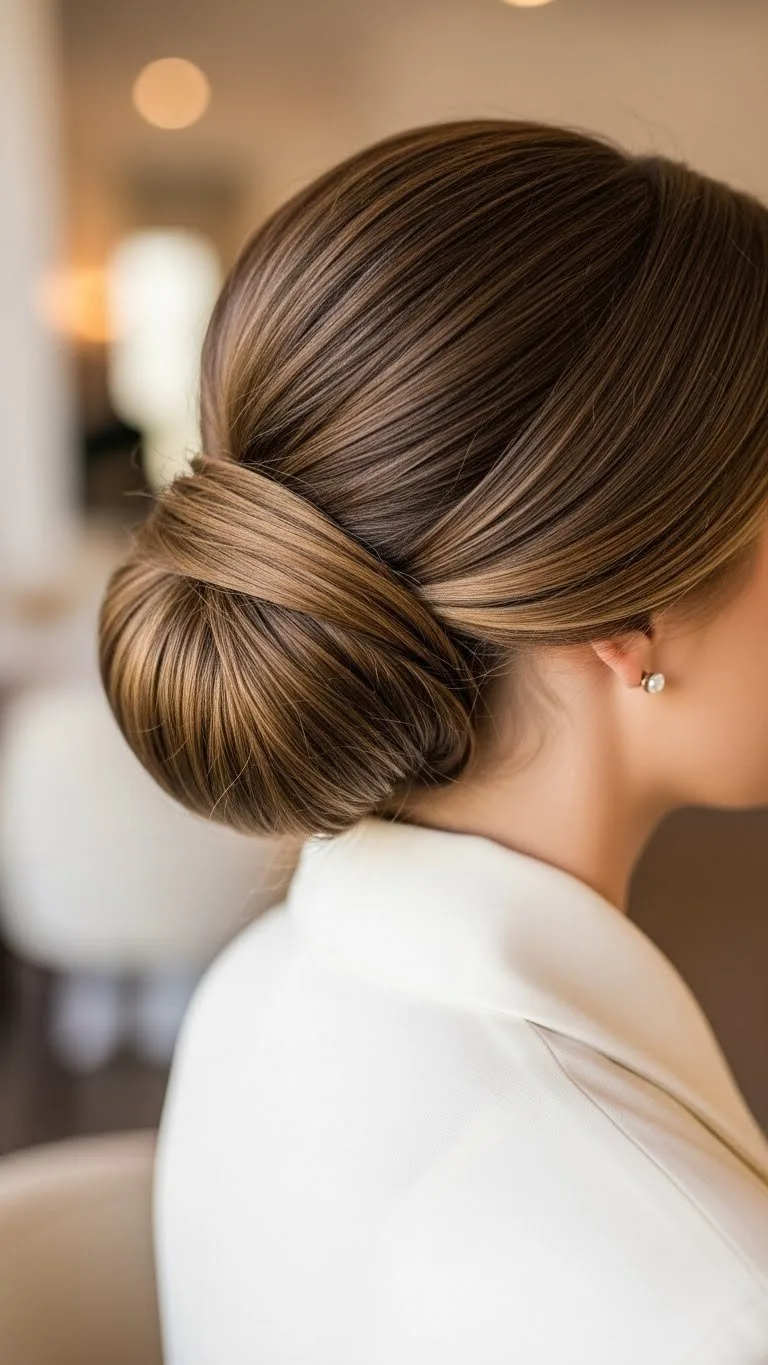
Best for: wavy or slightly textured hair, and for anyone who finds a tight bun uncomfortable. A soft knot looks gentle and calm, and it is far kinder to your scalp over a long day.
How to style: gather your hair loosely at the nape, twist it once, and fold it into a soft knot. Pin it with two or three bobby pins and let the surface stay slightly soft rather than scraped flat. Keep the part neat and the front smooth, even if the knot itself is relaxed.
What to ask: ask your stylist how loose is too loose, and have them show you the pin placement that holds a soft knot without pulling. If your hair is fine, ask for a little texture spray before styling so the knot grips.
The Classic Pageboy
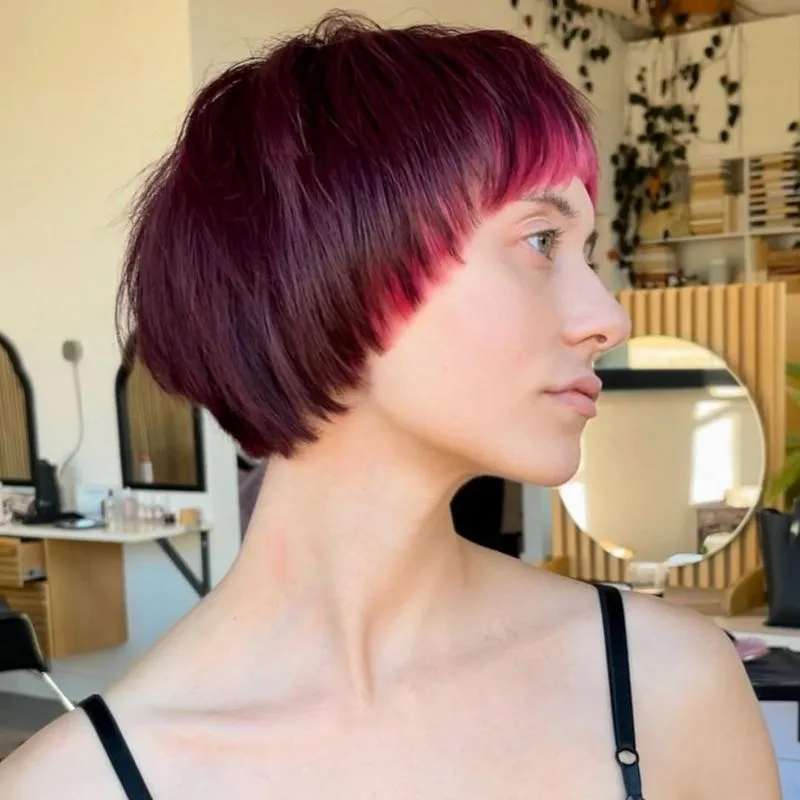
Best for: short hair with a vintage, deliberate shape. A pageboy is neat by design, and it frames the face in a way that looks careful and put-together without any fuss.
How to style: blow-dry the pageboy with the ends turned under all the way around, using a round brush. Keep the fringe, if you have one, smooth and just above the brows. A small amount of smoothing cream keeps the curved shape intact all day.
What to ask: ask your stylist for a pageboy that turns under on its own, without daily hot tools. Ask how often it needs trimming to keep the curved edge, and whether your hair texture will hold the shape.
The Neat Half-Up Twist

Best for: medium to long hair when a full updo feels too formal but loose hair feels too casual. It keeps the front out of your face while the back stays soft and natural.
How to style: take the top section of hair from each temple, twist each side gently toward the back, and join them with a small dark elastic or two crossed pins. Smooth the crown, leave the rest of the hair down and tidy, and make sure nothing hangs over your eyes.
What to ask: ask your stylist to cut the front layers so they reach the twist comfortably. Ask for the twist to sit at the crown, not high on top, so the whole look stays low and quiet.
The Low Twisted Bun
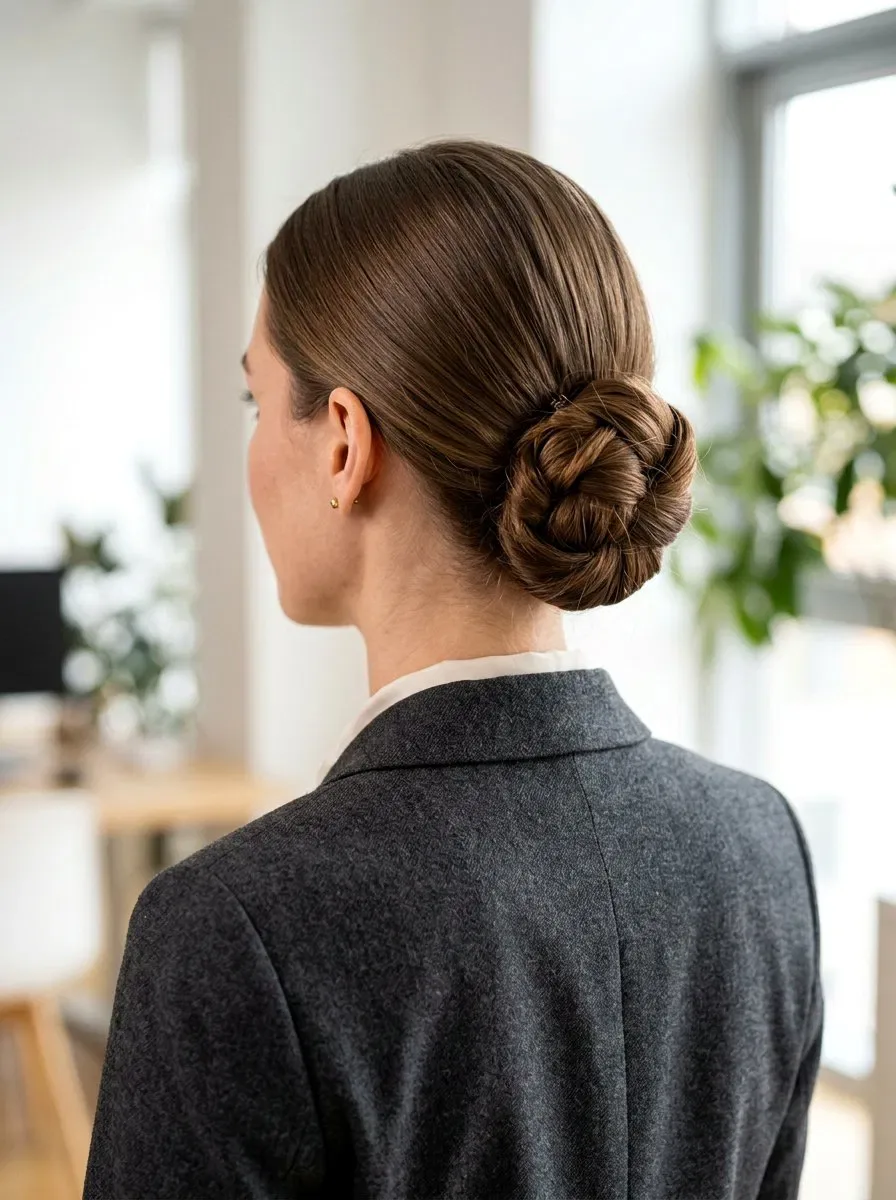
Best for: hair that will not hold a smooth bun on its own. The twist gives fine or slippery hair something to grip, and the result looks more finished than a plain bun.
How to style: divide your hair into two low sections, twist each one toward the centre, and wrap them together into a bun at the nape. Pin through the twists, smooth the top, and finish with a light spray. The crossed twists hold the shape for hours.
What to ask: ask your stylist to show you the two-section twist slowly, because the direction of each twist matters. Ask whether your hair needs a little dry shampoo at the roots for grip before you twist.
The Polished Pixie Cut
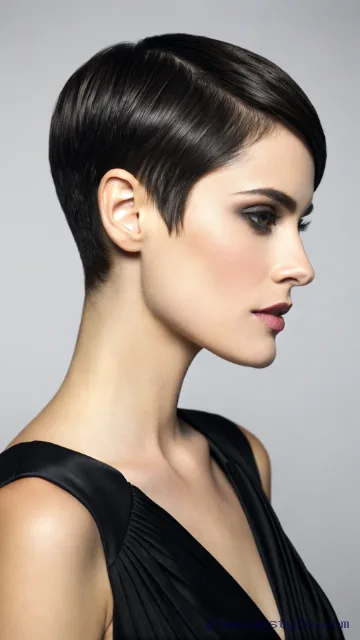
Best for: short hair and anyone who wants the lowest-maintenance courtroom look of all. A polished pixie needs almost no styling in the morning and nothing to fix during the day.
How to style: smooth the pixie with a small amount of pomade or cream, define the part, and press the sides flat with your palms. Keep the top neat and the neckline clean. The whole routine takes about two minutes.
What to ask: ask your stylist for a pixie with a clean neckline and enough length on top to smooth to one side. Ask how often to trim it, because a pixie loses its polish faster than a longer cut when it grows out.
The Smooth Lob With Tucked Ends
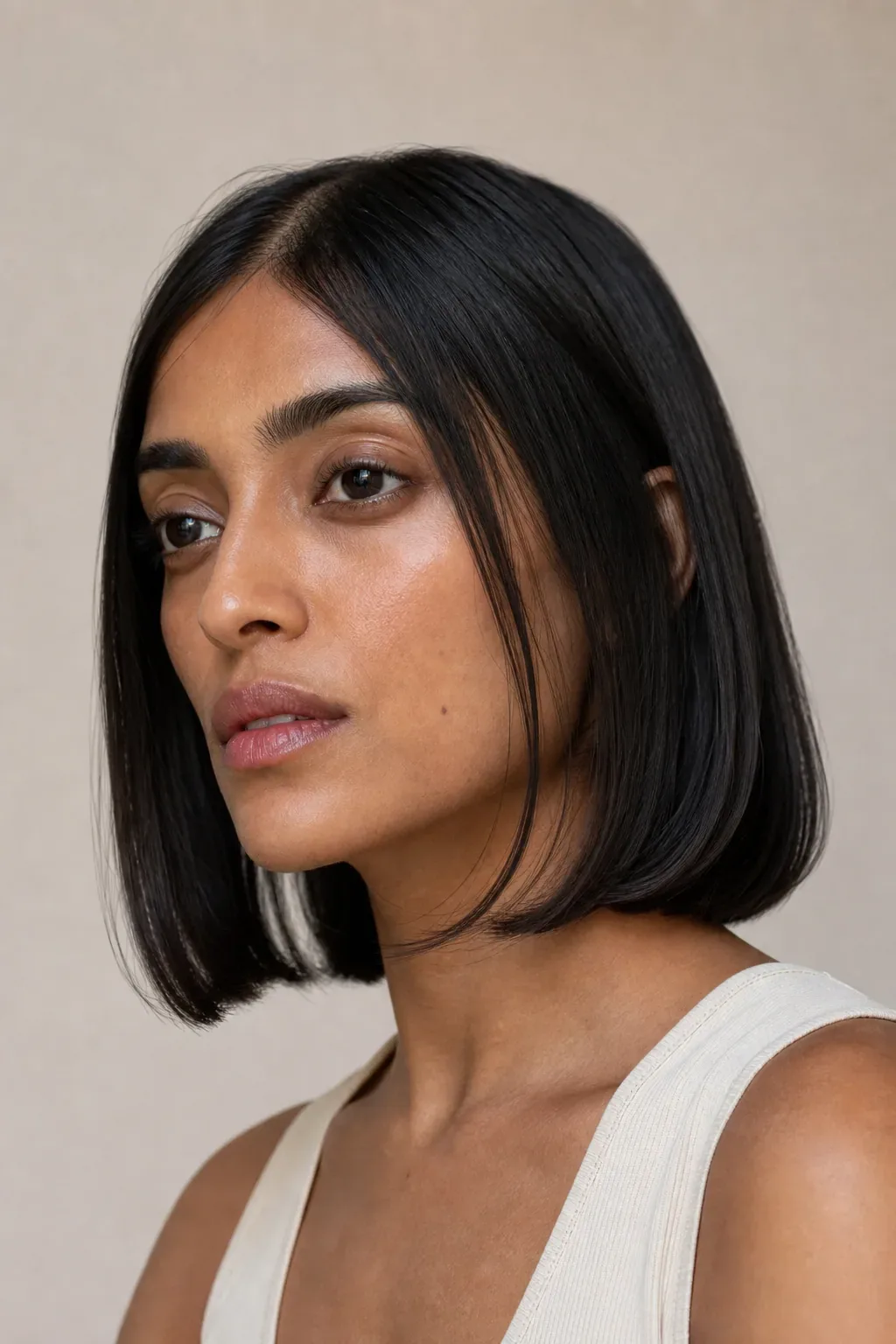
Best for: the in-between length that is too long for a bob and too short for a bun. A lob with tucked ends looks deliberate and professional, and it never needs a single pin.
How to style: blow-dry the lob with a round brush, turning the ends under, and set a neat centre or side part. Smooth the top layer with a flat iron on low heat if needed, and finish with a light serum so the ends stay tucked all day.
What to ask: ask your stylist for a lob that ends just above the collarbone, so the ends turn under instead of flicking out. Ask for long layers only at the front, which keeps the shape clean from behind.
The Classic Gibson Tuck
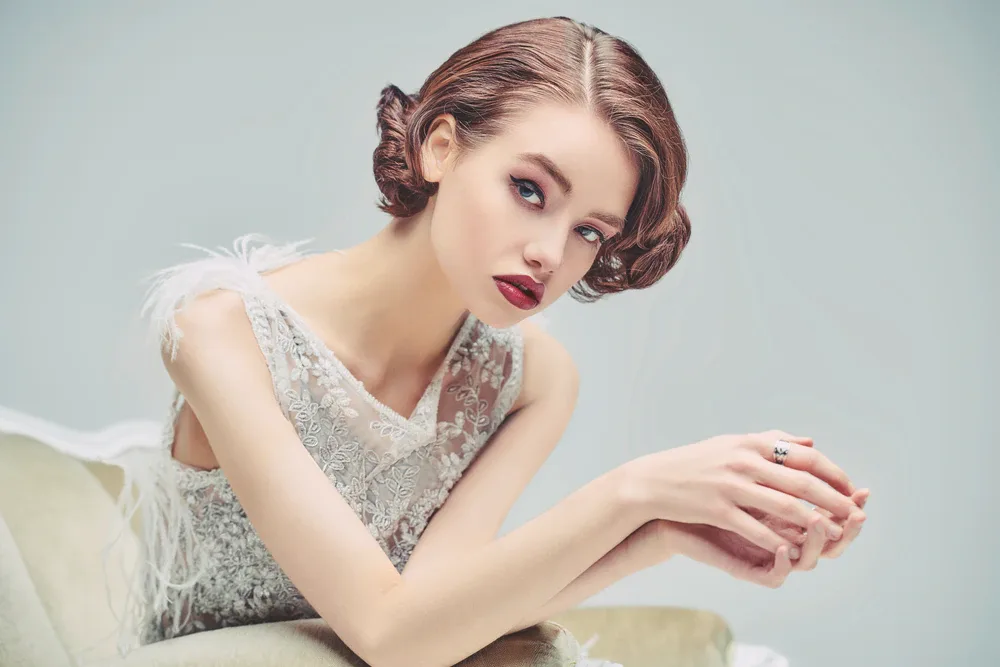
Best for: medium-length hair and anyone who loves vintage styles. The Gibson tuck rolls the hair up and away, leaving a smooth, elegant shape that looks made for a formal room.
How to style: pull your hair into a low ponytail, then roll it upward and tuck it into a pocket made by loosening the hair above the elastic. Pin the roll in place and smooth the top. The result looks like a soft, rolled chignon.
What to ask: ask your stylist to show you the tuck on your own hair, because the trick is in how loose you make the pocket. Ask for a version that uses pins rather than a hair tie, so the roll sits flat.
The Neat French Braid

Best for: long hair, active mornings and days when you cannot risk a single strand escaping. A French braid keeps every layer locked down from the crown to the ends.
How to style: braid from the crown downward, adding small sections as you go, and keep the braid tight and straight down the centre of your head. Secure the end low with a dark elastic, and smooth the top with a brush. Tuck the tail under or leave it short and neat.
What to ask: ask your stylist to show you a braid that starts at the crown rather than the forehead, so the front stays smooth. If your hair is layered, ask how to catch the short pieces so they do not stick out along the braid.
The Low Side Bun
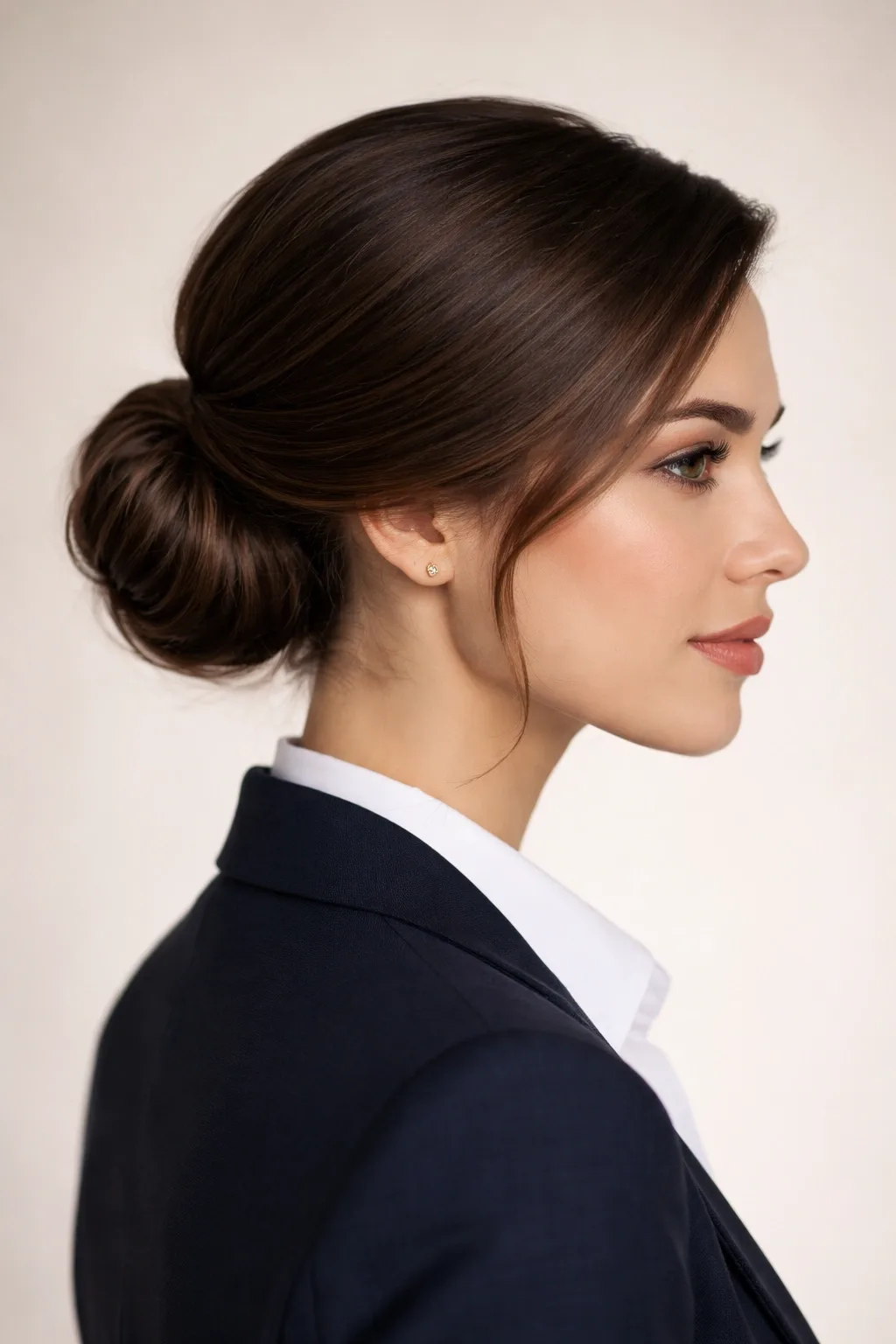
Best for: anyone who wants a bun with a little softness, and for people whose faces suit an off-centre style. A low side bun is elegant without being stiff, and it photographs well from the front.
How to style: part your hair to one side, sweep it low to the opposite side of the nape, and coil it into a small bun just behind the ear. Pin it securely, smooth the crown, and keep the shape compact rather than wide.
What to ask: ask your stylist which side suits your face and your part, because a side bun should follow your natural part. Ask them to check that the bun does not press against your ear when you sit back.
The Tidy Curly Bob

Best for: naturally curly hair at bob length, and anyone who wants their curls to look defined rather than wild. A tidy curly bob is professional because the shape is deliberate, not because the curls are hidden.
How to style: apply a curl cream to damp hair, scrunch gently, and let the curls dry naturally or with a diffuser on low heat. Once dry, shape the outline with your fingers and pin back any curl that falls over your eyes. Avoid brushing, which turns defined curls into frizz.
What to ask: ask your stylist for a curly cut that is shaped dry, curl by curl, so the bob keeps its shape as it grows. Ask which cream or gel defines your curl pattern without making it crunchy.
The Sleek Low Topknot
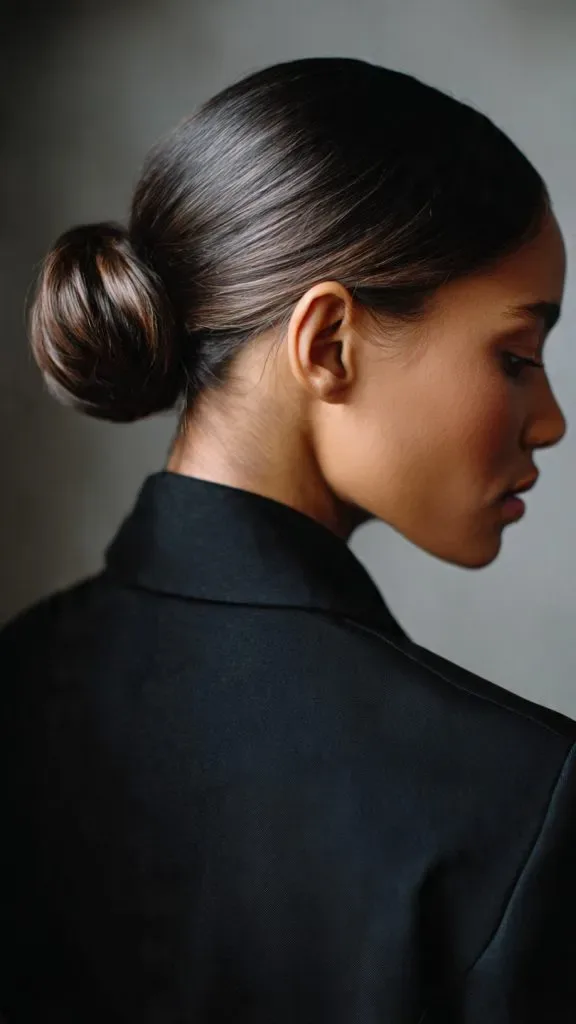
Best for: thick hair that needs to be completely out of the way, and for long days when comfort matters more than softness. Kept low, a topknot is neat rather than severe.
How to style: gather your hair at the nape, twist it into a tight coil, and wrap it into a small, flat knot. Pin through the centre of the knot and smooth the crown with serum. Keep the knot low and small, never high on the crown, so it clears the chair back.
What to ask: ask your stylist whether your hair is thick enough for a knot that holds without pins slipping. Ask for the bulk at the nape to be thinned slightly if the knot sticks out too far.
Sleek Middle-Part Straight Hair
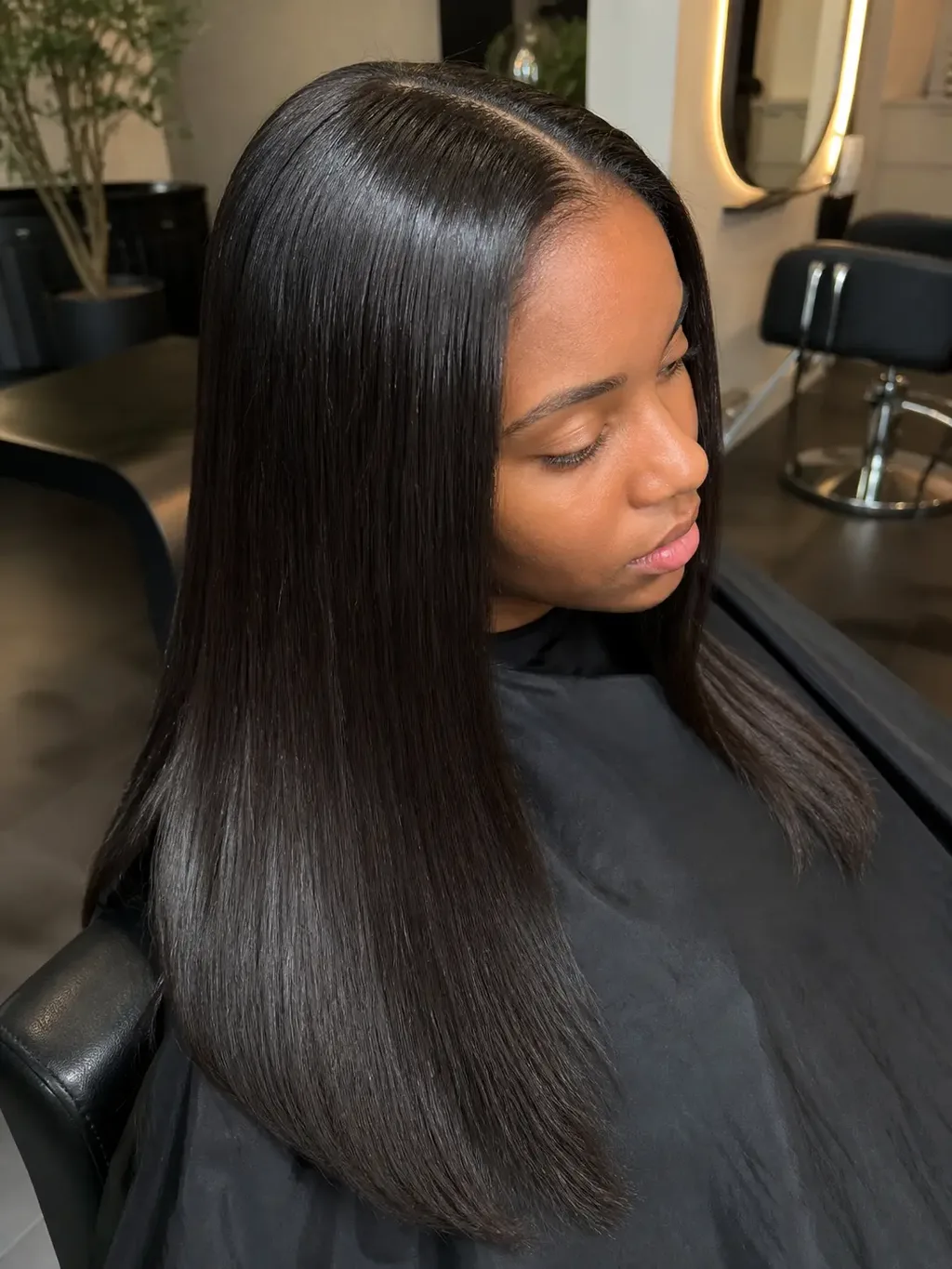
Best for: long, straight hair and anyone who wants to wear their hair down in the calmest possible way. A middle part with sleek, tucked sides looks serious and symmetrical.
How to style: straighten your hair smoothly, set a clean centre part, and tuck both sides behind your ears. Smooth the lengths with serum and pin the sides flat behind the ears so the hair stays put when you turn your head to listen.
What to ask: ask your stylist for a blunt cut with no short layers at the front, because short pieces will not stay tucked. Ask whether a keratin-style smoothing treatment would help if your hair frizzes in courthouse air conditioning.
The Subdued Classic Beehive
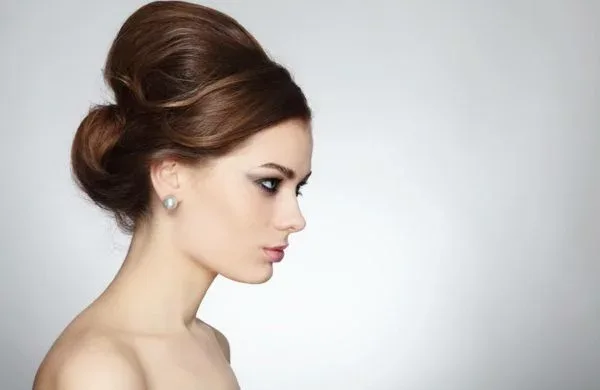
Best for: formal occasions and anyone with a vintage sense of style. A beehive only works in court when it is kept low, smooth and modest, more of a gentle lift than a tower.
How to style: backcomb lightly at the crown, smooth the top layer over it, and gather the rest into a low roll or bun. Keep the height to a finger or two above your natural head shape, and pin everything securely. Finish with a light spray, not a helmet of hairspray.
What to ask: ask your stylist for a modern, low beehive rather than a retro one, and ask them to show you how much backcombing your hair actually needs. Too much height is the fastest way to look out of place in a jury box.
The Neat Dutch Braid Bun
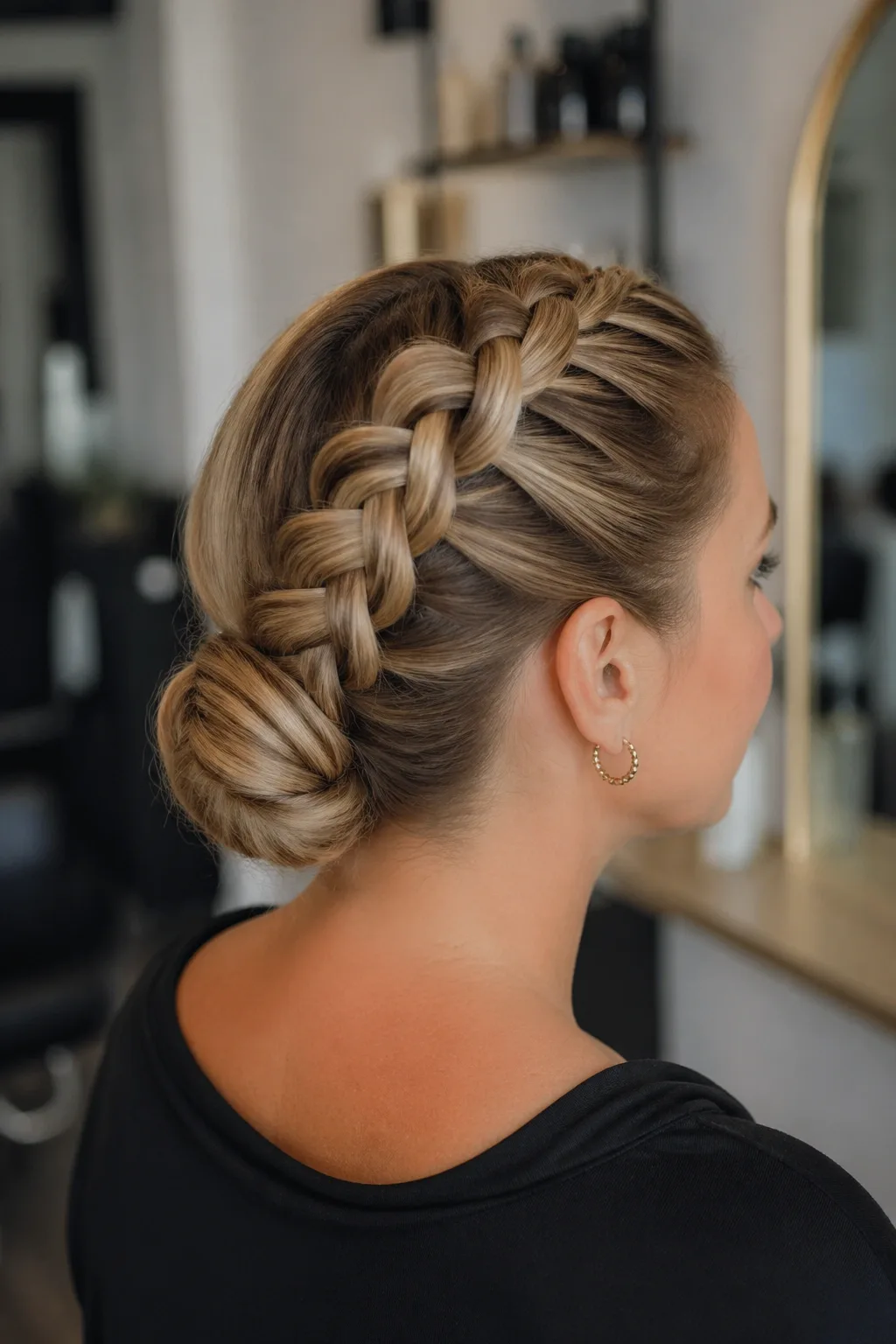
Best for: thick or wavy hair that escapes from a French braid, and for very long days. A Dutch braid sits on top of the hair and grips tightly, so it holds even better than a standard braid.
How to style: braid from the crown using the underhand method, crossing each section underneath instead of over, and keep the braid straight down the centre. Coil the end into a low bun and pin it flat. Smooth the top and keep the braid snug but not painful.
What to ask: ask your stylist to show you the underhand technique slowly, because it feels backwards the first time. Ask whether one braid or two smaller braids will hold your hair better through a full day.
The Low Rolled Chignon
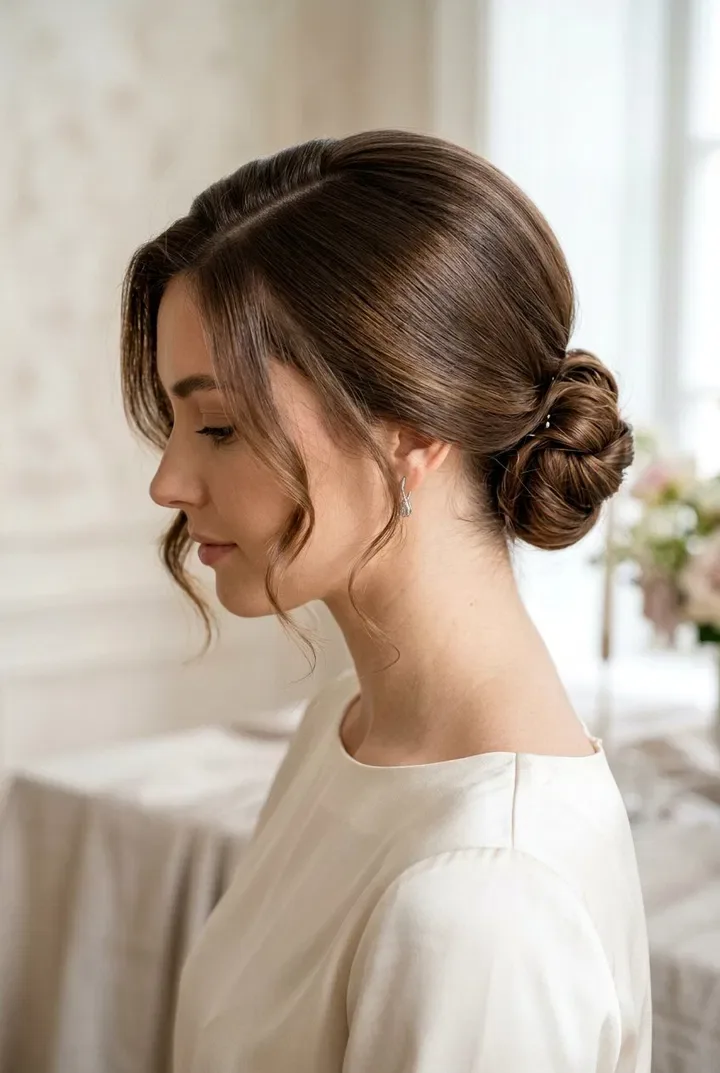
Best for: medium to long hair and anyone who wants a soft, rolled finish instead of a twisted one. A rolled chignon looks gentle and old-fashioned in the best way, and it sits very comfortably against a chair.
How to style: gather your hair low, roll it upward in a smooth fold, and pin the roll along its length at the nape. Tuck the ends inside the roll and smooth the crown with a brush. Keep the roll compact and close to the head.
What to ask: ask your stylist for a rolled chignon that can be pinned with ordinary bobby pins, and ask them to show you how to hide the pins inside the roll. If your hair is fine, ask for a little backcombing inside the roll for fullness.
The Polished Short Crop
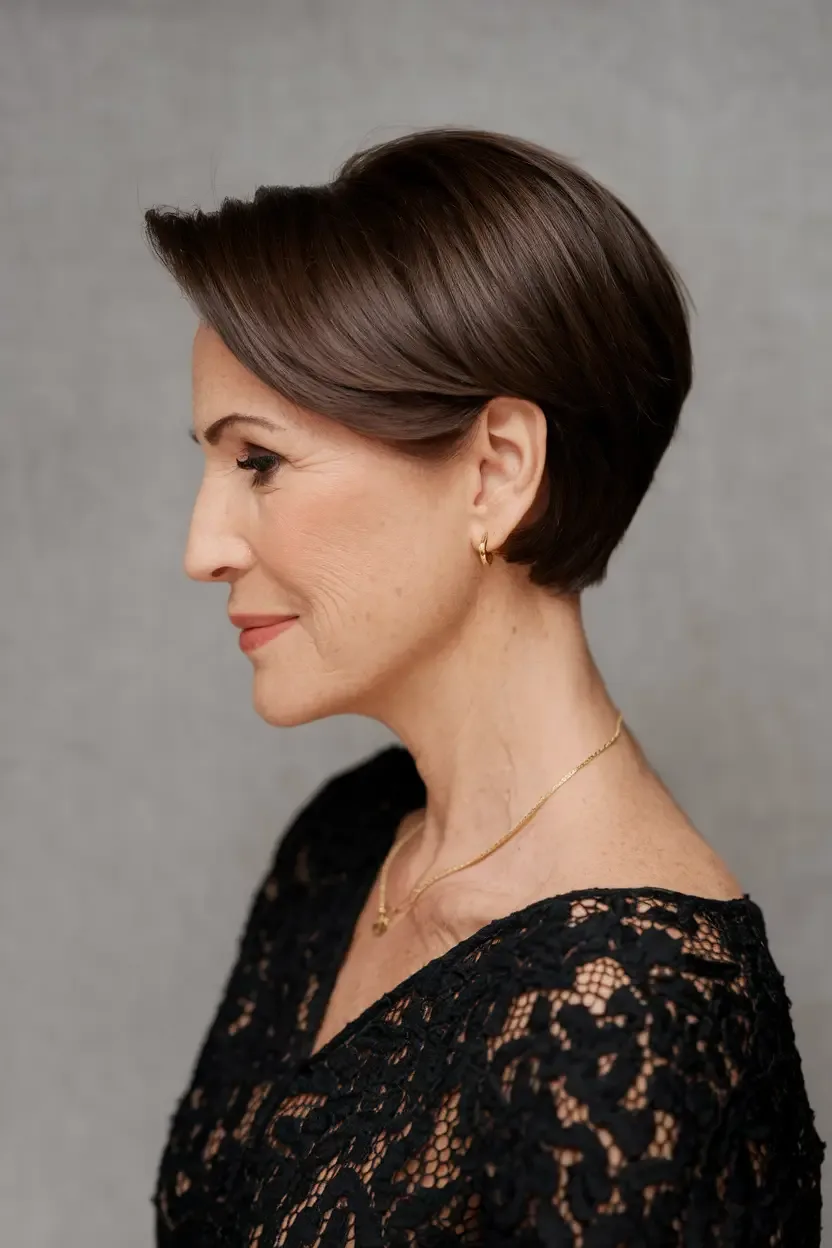
Best for: short hair of any texture and anyone who wants a wash-and-go courtroom look. A polished crop is tidy by definition, and it never needs adjusting during the day.
How to style: apply a small amount of styling cream to damp hair, smooth it into place with your fingers, and define the part. Let it dry naturally or use a dryer on low heat. The cut does the work, so keep the styling minimal.
What to ask: ask your stylist for a crop with a clean outline around the ears and neckline. Ask how often it needs a trim to stay sharp, and whether a little texture on top will suit your face shape.
Soft Waves Pinned Back
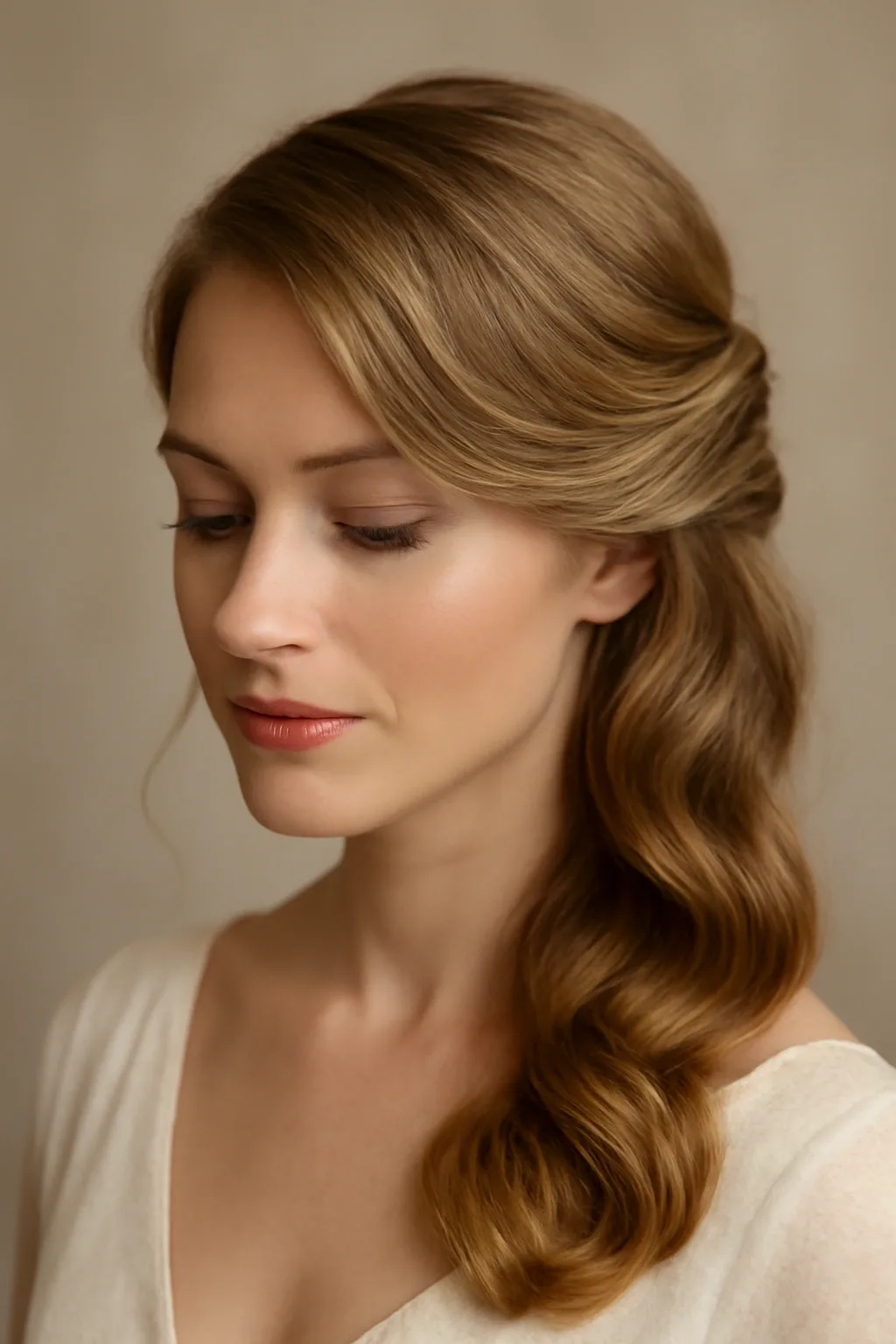
Best for: wavy hair that looks better with some movement, and for anyone who finds pin-straight hair too severe. Soft waves are court-appropriate as long as the front is pinned back and the waves stay controlled.
How to style: create loose waves with a large-barrel iron or by braiding damp hair overnight, then brush them out gently so they fall in soft, wide waves. Pin the front sections back behind your ears with flat pins, and keep the waves below shoulder level.
What to ask: ask your stylist for long layers that help waves fall in one direction. Ask which wave size suits your face, because tight curls read as casual while wide, soft waves read as polished.
The Tidy Low Fishtail Braid
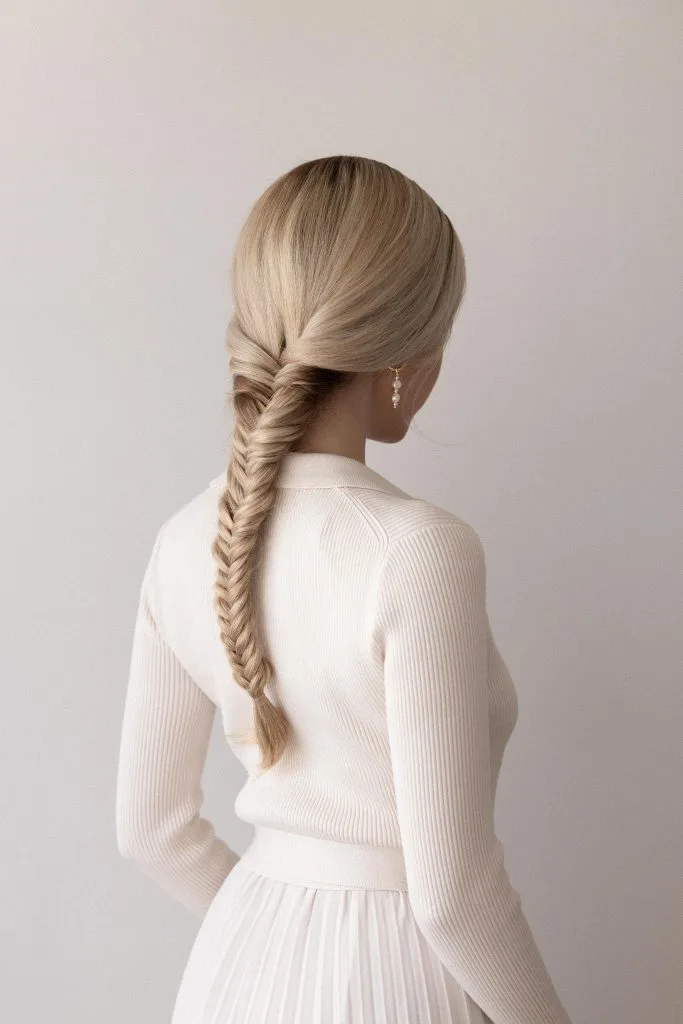
Best for: long hair with layers, because a fishtail catches short pieces better than a regular braid. It looks intricate without looking decorative, which is exactly the right balance for court.
How to style: gather your hair low, divide it into two sections, and cross small pieces from each side to the other, working downward. Keep the braid loose enough to look soft but tight enough to hold, and secure the end with a dark elastic. Smooth the top with a brush.
What to ask: ask your stylist to show you the fishtail on your own hair, because the rhythm takes a few tries to learn. Ask whether a fishtail or a French braid will hold your layers better through a long day.
The Classic Centre-Part Bun
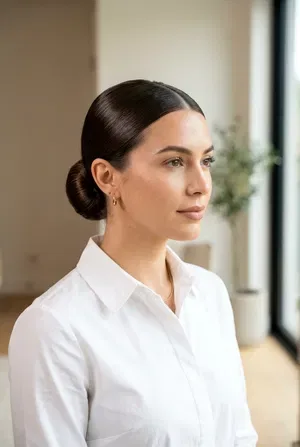
Best for: anyone who wants the most symmetrical, serious look possible. A centre part with a low bun is the hairstyle equivalent of a plain dark suit: nothing to argue with.
How to style: set a straight centre part with a tail comb, brush both sides back smoothly, and gather the hair into a low bun at the nape. Pin it flat, smooth the crown with serum, and check in a mirror that the part is truly straight.
What to ask: ask your stylist whether a centre part suits your face shape, because it is unforgiving on some faces. Ask for the bun to be kept small and flat, so the symmetry of the part stays the focus.
The Neat Low Sock Bun
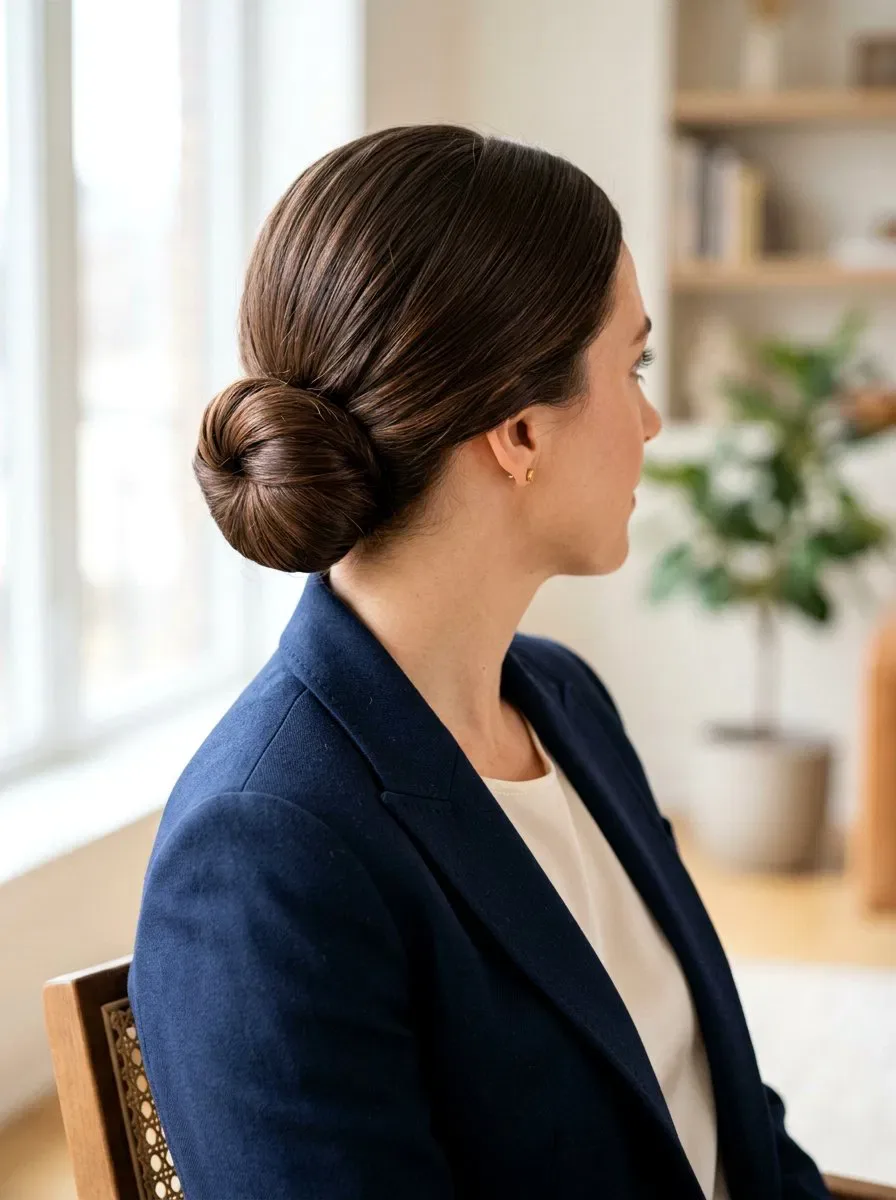
Best for: fine or thin hair that needs help looking full. A sock bun gives a small bun a round, even shape without backcombing or a lot of product.
How to style: pull your hair into a low ponytail, slide a small foam bun ring over it, and spread the hair evenly around the ring. Tuck the ends underneath and pin them in place. Smooth the crown and keep the bun at the nape, not high on the head.
What to ask: ask your stylist for a bun ring in your hair colour and the right size for your length. Ask them to show you how to spread the hair evenly, because a lopsided sock bun is worse than no bun at all.
The Smooth Bob With a Side Sweep
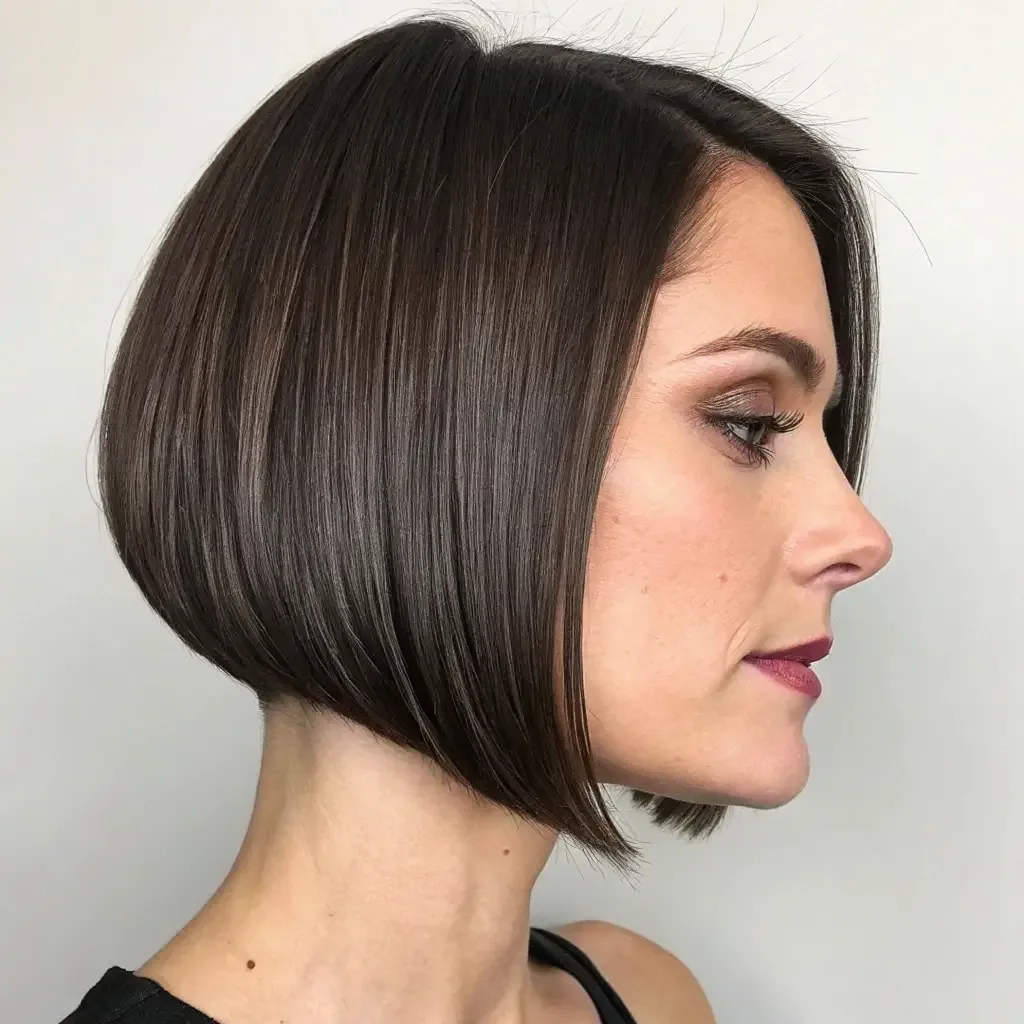
Best for: bobs with a fringe or a longer front section. Sweeping the front to one side keeps it out of your eyes and gives the bob a polished, intentional shape.
How to style: blow-dry the bob smooth with the ends turned under, then sweep the front section across your forehead to one side. Pin it flat behind your ear on that side, and smooth the rest with a little serum. Keep the sweep low and close to the head.
What to ask: ask your stylist for a side sweep that stays put without a heavy clip. Ask whether your fringe should be cut slightly longer so it sweeps cleanly instead of springing back.
The Subtle Low Braided Crown
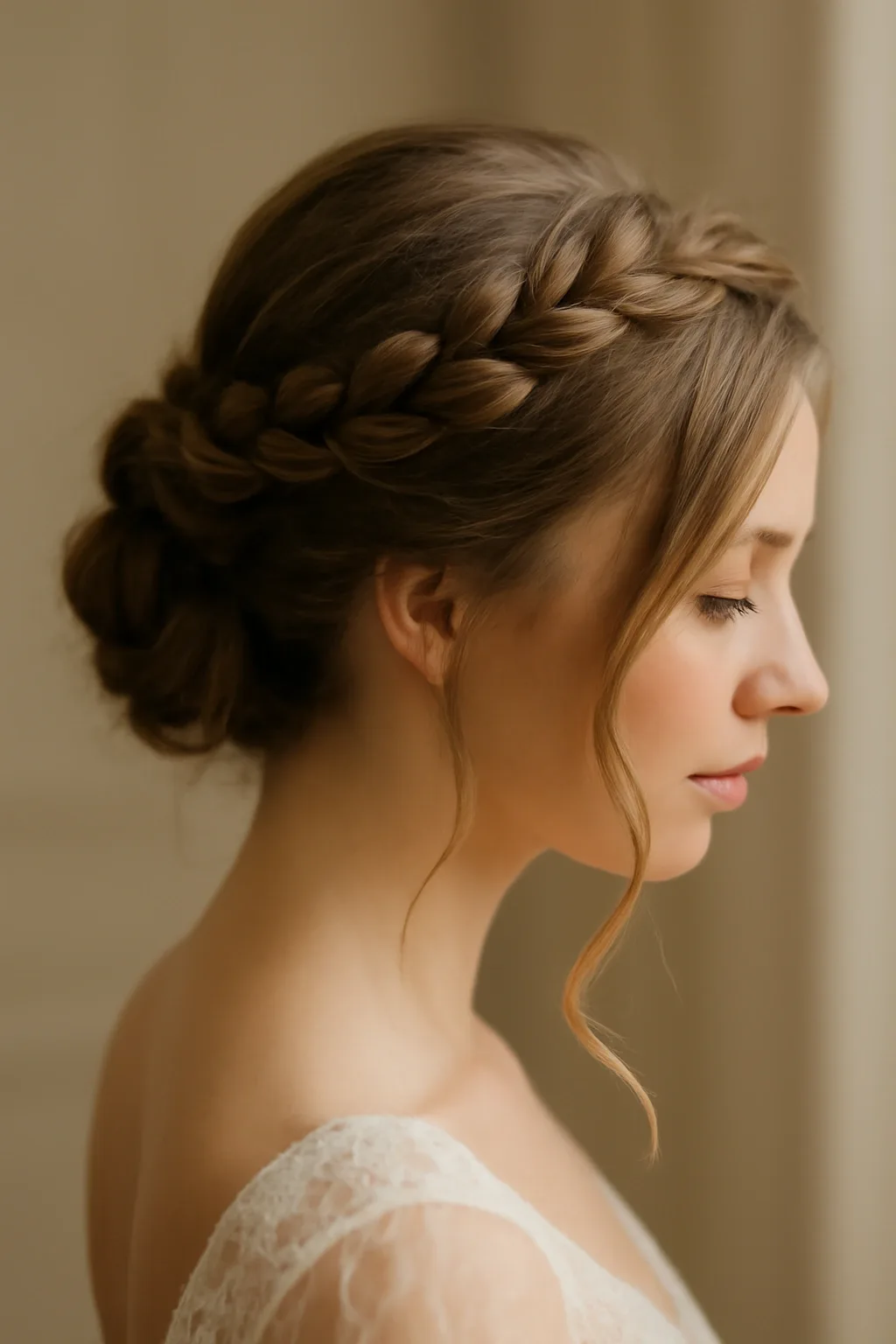
Best for: long hair and anyone who wants a braid that stays completely out of the way. Kept low and thin, a braided crown is a quiet detail rather than a statement.
How to style: braid two small sections from behind each ear, bring them around the back of your head, and pin them low across the nape. Keep the braids thin, flat and close to the head, and smooth the crown over them. The effect should be barely noticeable.
What to ask: ask your stylist to show you a crown braid that sits low, because a high crown braid looks festive rather than formal. Ask for the braids to be thin enough to hide under the rest of your hair.
The Polished Layered Cut
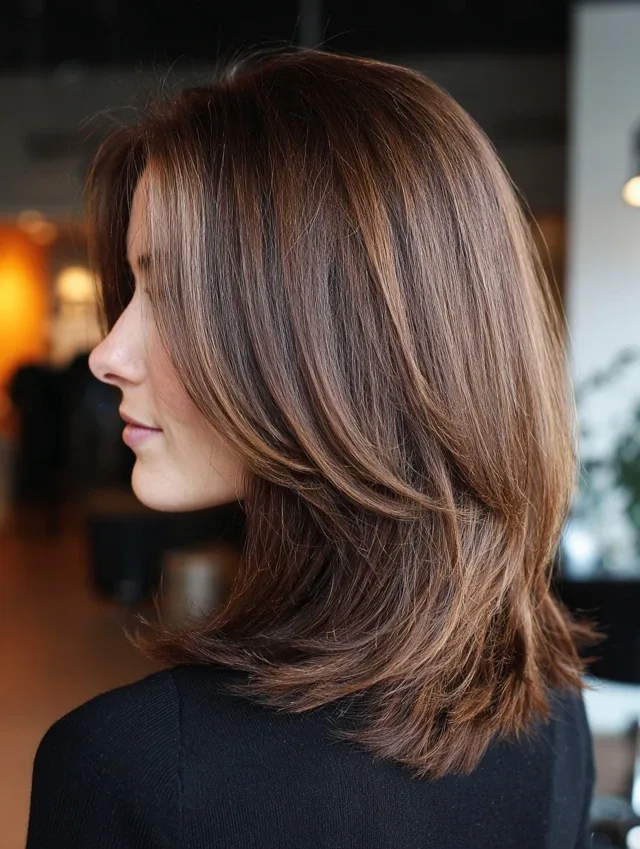
Best for: medium to long hair that needs movement without mess. Long layers give the hair shape and swing, while a polished finish keeps it court-ready.
How to style: blow-dry the layers with a round brush, turning the ends under, and set a neat part. Smooth the top layer with a flat iron on low heat if needed, and finish with a light serum. Tuck the front layers behind your ears if they fall forward.
What to ask: ask your stylist for long layers that start below the chin, so nothing short falls into your face. Ask how to blow-dry the layers so they turn under on their own, without daily hot tools.
The Tidy Ponytail With a Wrapped Base
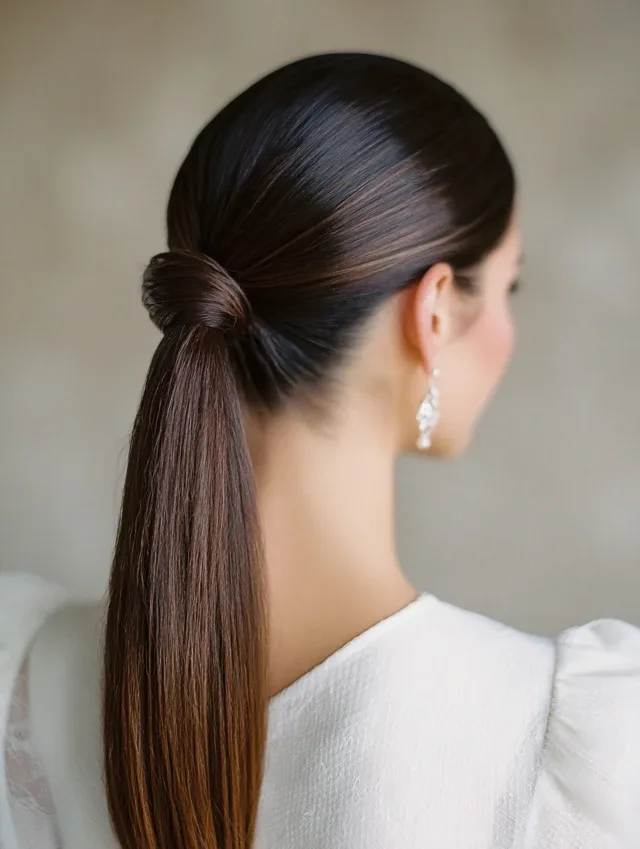
Best for: anyone who loves a ponytail but wants it to look finished rather than rushed. Wrapping the base hides the elastic and turns a simple style into a polished one.
How to style: secure a low ponytail with a dark elastic, take a thin strand from underneath the tail, and wrap it around the base until the elastic is hidden. Pin the end of the strand underneath with a bobby pin, and smooth the tail with serum.
What to ask: ask your stylist for a blunt cut at the ends so the tail looks neat. Ask them to show you the wrap on your own hair, because the strand needs to be thin enough to lie flat.
The Discreet Claw-Clip Twist
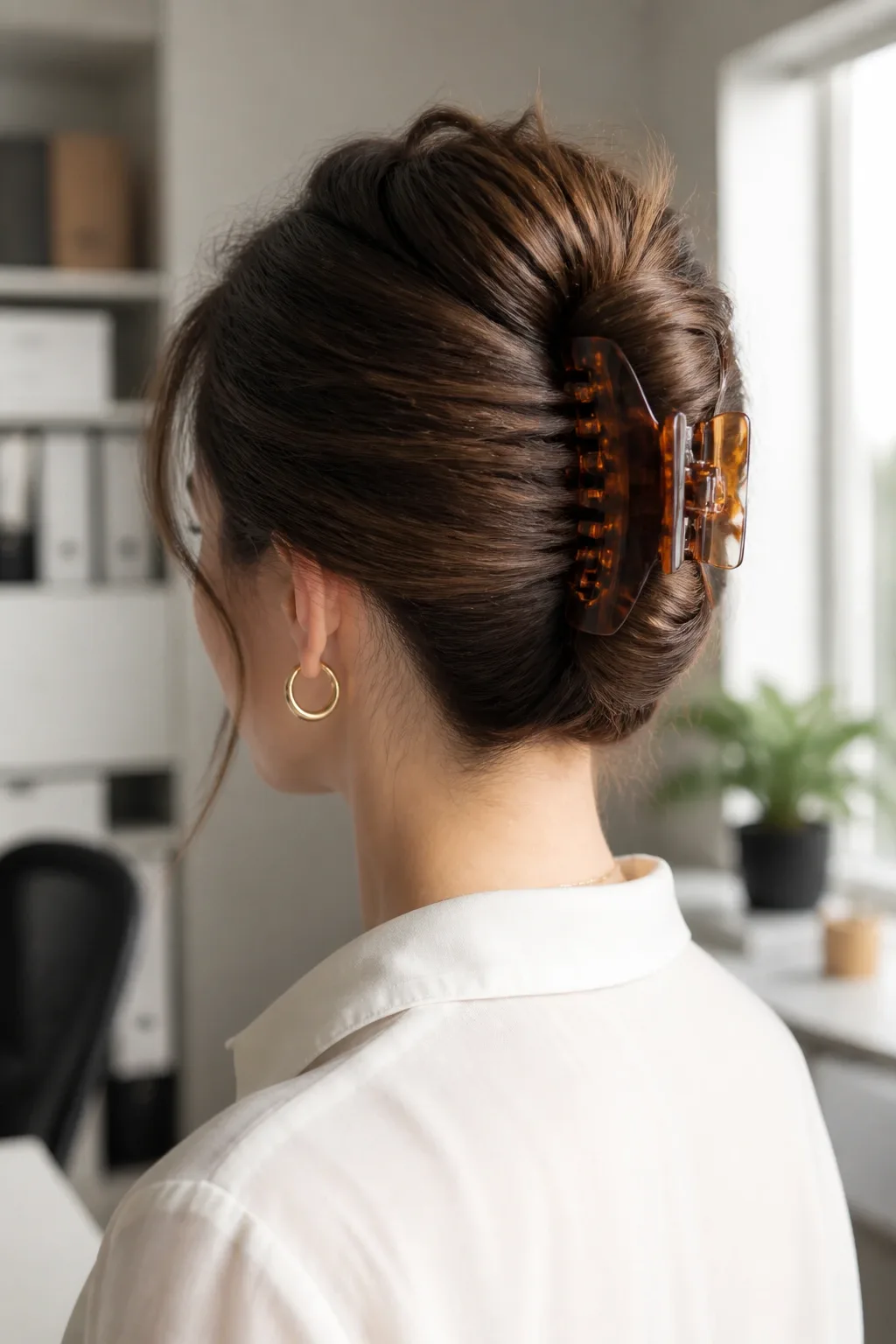
Best for: medium to long hair on days when pins and elastics feel like too much fuss. A small, dark claw clip holds a twist securely and comes off easily at the security desk if needed.
How to style: twist your hair upward at the back of your head, fold it once, and secure the fold with a small matte claw clip in black, brown or tortoiseshell. Keep the clip small and flat, tuck in any loose ends, and smooth the crown. The clip should look like a tool, not a decoration.
What to ask: ask your stylist whether your hair is thick enough for a clip alone, or whether you should add two hidden pins for backup. Ask for the smallest clip that holds your hair, because a large clip is the first thing a security officer will notice.
Can I wear my hair down for jury duty?
Yes, you can wear your hair down for jury duty, as long as it is neat, smooth and kept out of your face. Tuck the front sections behind your ears, pin back any layers that fall forward, and choose a smooth blowout or sleek straight style rather than loose, wild waves. If your hair keeps falling into your eyes, pull it back instead.
Is a ponytail acceptable in court?
Yes, a low ponytail is completely acceptable in court. Keep it smooth, low at the nape and free of bumps, and wrap the base with a strand of hair for a more polished finish. A high, swingy ponytail looks casual, so keep it low and tidy for the courtroom.
Can I wear a hat or head covering to jury duty?
Religious and cultural head coverings are always welcome in court, and you do not need special permission to wear one. Fashion hats, caps and beanies are different, and most judges will ask you to remove them inside the courtroom. If you wear a covering for faith or culture, wear it neatly and confidently.
Are braids allowed in the courtroom?
Yes, braids are allowed in the courtroom and they are one of the most practical choices for jury duty. A neat French braid, Dutch braid or fishtail braid keeps every strand in place for hours. Keep the braid low, tight and free of beads, bright thread or jingling decorations.
Does my hair colour matter for jury duty?
Natural hair colours are never a problem, and neither is a well-kept colour that looks intentional. Very bright colours, neon streaks and glitter can draw attention in a formal room, so if you have a bold colour, wear your hair in a neat, pulled-back style that keeps the focus on your face. Nobody will question a tidy style in any colour.
What should I do if my hair keeps falling into my face?
Pin it back. Two flat bobby pins crossed behind each ear will hold most layers, and a small, dark clip works for thicker sections. If your layers are too short to pin, consider a low bun or a braid that catches them. Hair in your face is distracting for you and for everyone watching you listen.
Can I wear a claw clip in court?
Yes, as long as the clip is small, flat and in a plain dark colour. A discreet claw clip holding a low twist is perfectly appropriate. Avoid large, shiny or decorative clips, and remember that a metal clip may set off the security scanner, so keep a spare elastic in your bag just in case.
Should I get a haircut before jury duty?
A trim is a good idea if your ends are split or your layers keep falling into your face, but do not get a dramatic new cut the day before. Book a trim three or four days ahead, tell your stylist it is for jury duty, and ask for a shape that stays neat without daily styling. Arrive at court with a cut you have already lived in for a few days.
What if my hair is curly or frizzy?
Curly and frizzy hair is completely fine for jury duty once it is defined and controlled. Use a curl cream or a light gel to define the curls, pin back any pieces that fall over your eyes, and avoid brushing dry curls, which creates frizz. A tidy curly bob, a low curly bun or a defined braid all look professional.
Are decorative hair accessories allowed in court?
Small, plain accessories are fine, but decorative ones are best left at home. Avoid oversized bows, glittery clips, feathers, bright scarves and anything that shines or makes a sound. Plain dark elastics, matte pins and a slim neutral headband are all you need, and they keep the attention where it belongs.
Conclusion
The best hairstyles for jury duty all share the same quiet qualities: they are neat, they are comfortable, and they stay out of the way. A low bun, a French twist, a polished bob or a tidy braid will carry you through security, through hours of sitting and through a full day of listening without a single moment of fuss. Choose the style you can wear for eight hours without touching it, practise it once the night before, and pack two spare pins in your bag.
Jury duty is a serious job, and your hair should say so without saying anything at all. Keep it smooth, keep it low, keep it simple, and let your attention do the talking. The courtroom will notice that you are present, prepared and respectful, and that is exactly the impression worth making.