Hairstyles for a Bridal Fitting: Try Your Wedding-Day Hair With the Real Dress, Veil and Accessories
A bridal fitting is the one appointment where the dress, the veil, the shoes and the hair finally meet, and that is exactly why it works so well as a hair rehearsal. The right hairstyles for a bridal fitting are the ones you can test honestly against the real neckline, the real fabric and the real weight of a veil, instead of guessing from a screenshot saved months ago. Bring your accessories, wear the undergarments you plan to marry in, and give yourself time to sit, stand, turn and walk in each look before you decide anything.
Most brides arrive at a fitting with a favourite photo and leave with a different favourite, because a style that looked perfect on a model can sit oddly against their own dress. A high bun can fight a high neckline, loose hair can hide beautiful back detailing, and a heavy veil can pull a soft half-up style flat within an hour. Testing styles at the fitting catches all of that while there is still time to change the plan, book a second trial, or buy a different pin.
This guide starts with the practical side of the appointment, then walks through forty styles you can try on with the dress itself. For every style you will find the honest pros and cons, who it suits, who should skip it, and what it takes to keep it looking fresh from the first photograph to the last dance. Take photos from every angle, note what your stylist does differently from your inspiration picture, and trust what you see in the mirror over what you hoped to see.
What a Bridal Fitting Is and What to Bring
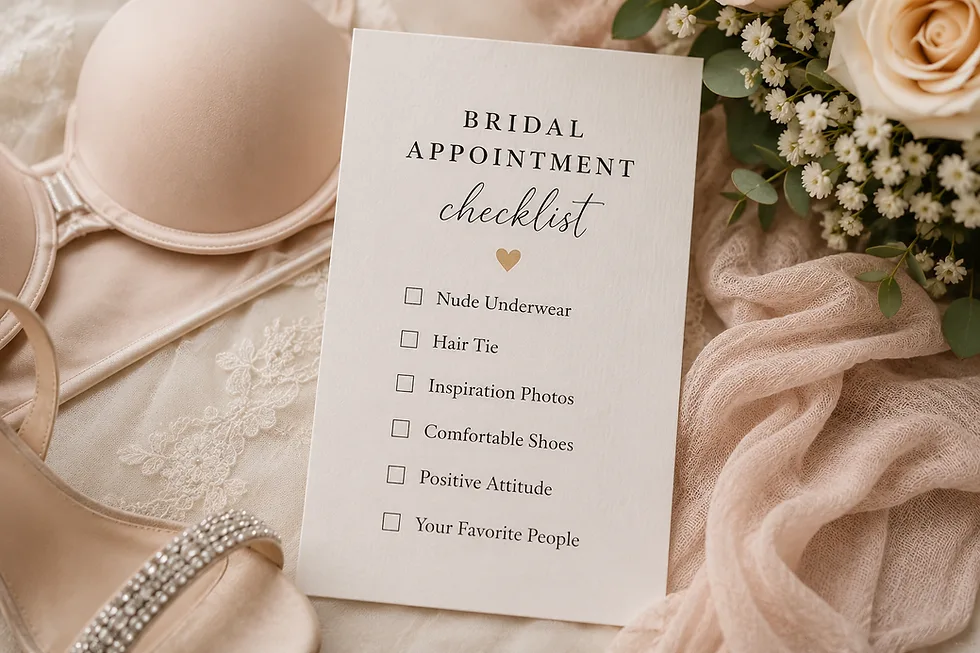
A bridal fitting is a dress appointment first, but it doubles as the best hair trial you will ever get, because the dress is actually on your body. Arrive with clean, dry hair that has been washed the night before, since freshly washed hair is too slippery to pin and second-day hair holds a style far better. Bring the veil, headpiece, hairpins and earrings you plan to wear, plus the shoes and the exact undergarments for the day, because each one changes how a hairstyle sits and how the dress falls.
Pack a small kit and keep it in your bag rather than in the car. Hairpins in your hair colour, a soft brush, a few clear elastics, blotting paper and a travel-size hairspray cover most fitting-day fixes. Add your inspiration photos on your phone, saved offline, and a short list of the two or three styles you most want to try, so the appointment stays focused instead of drifting through a dozen half-finished looks.
Bring one honest friend or your mum, not a whole crowd. You need someone who will tell you the back view looks heavy, not someone who loves every version. Ask the boutique if your stylist can come to the fitting, or at least ask the consultant to pin a rough version of your favourite style so you can judge it with the dress on. Take notes on what worked, because by the third fitting you will not remember which pins held and which ones slipped.
Hair Trials Versus the Real Dress
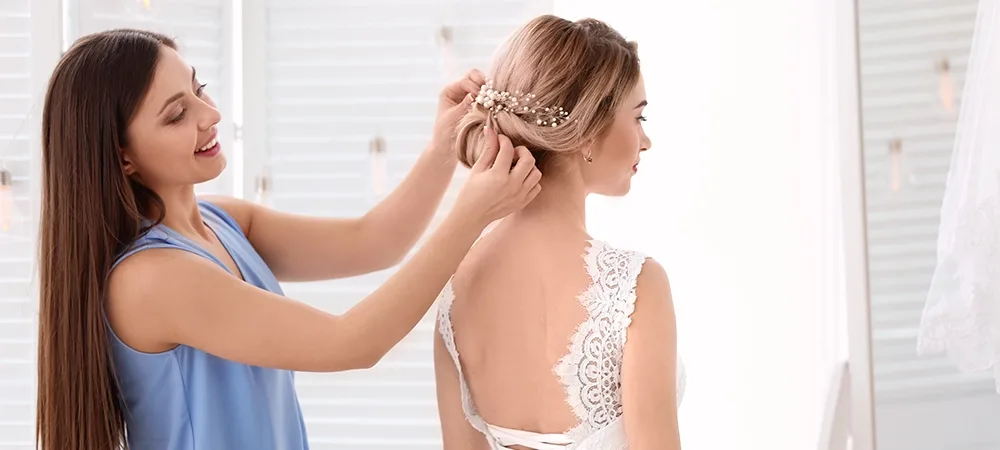
A hair trial and a dress fitting answer different questions, and you need both. The trial tells you whether a style suits your face, your hair and your patience, while the fitting tells you whether it suits the dress. A style can pass the trial in a salon chair and fail at the fitting because the dress has a sheer back, a high collar, or a train that catches on loose curls every time you turn.
Try the trial first, ideally two to three months before the wedding, then wear that exact style to a fitting. That order matters, because the trial gives your stylist time to adjust the height, the texture and the pinning, and the fitting shows you the finished combination. If the style fights the dress, you still have time to change one of them instead of discovering the clash on the morning of the wedding.
At the fitting, test the style the way you will actually wear it. Sit down, hug someone, dance a little in the boutique, and look at the back in a hand mirror. Ask the consultant to help you put the veil in and take it out, because a style that looks lovely with a veil can look unfinished once the veil comes off for the evening. Photograph both versions, because the evening look matters just as much as the ceremony look.
Veil and Accessory Pairings to Test at the Fitting
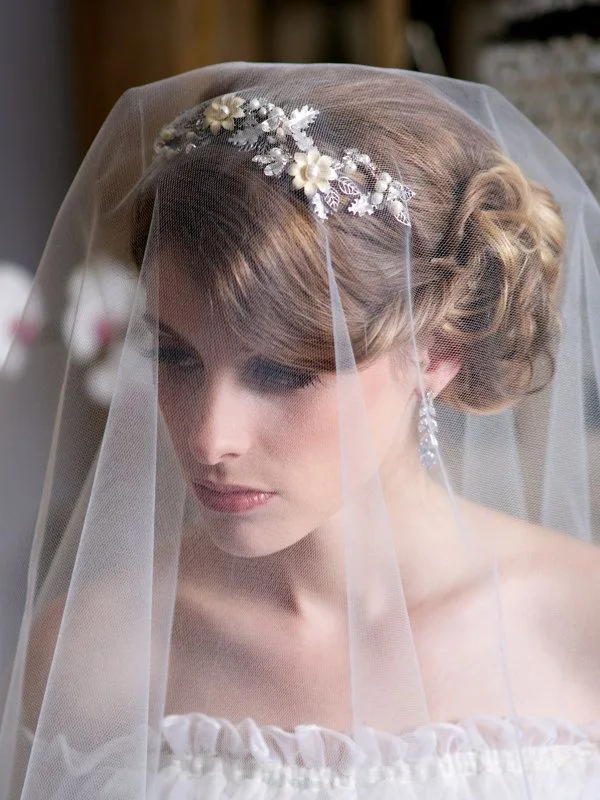
The veil is not an afterthought, and the fitting is the moment to find out where it belongs. A blusher veil needs height at the crown, a cathedral veil needs a secure anchor low on the head, and a mantilla veil sits best over a smooth, low style. Try each veil with the hairstyle you love, not just held against your head, and walk a few steps to see whether it pulls, tilts or drags the style down.
Accessories change the balance of a style more than most brides expect. A heavy crystal comb can drag a fine-haired updo to one side, a flower crown can flatten soft waves, and pearl pins can disappear completely into dark hair. Bring every piece you own to the fitting, try them one at a time, and photograph each combination from the front, the side and the back before you add the next one.
Keep the metal and the dress in the same family. Silver pins suit cool white dresses, gold suits warm ivory, and pearls suit almost everything but look best against lace. If your dress has heavy beading at the back, keep the hairpiece small and high so the two do not compete. And decide at the fitting whether the headpiece comes off with the veil or stays on for the party, because that decision changes how firmly it needs to be pinned.
Photographing Your Look From Every Angle
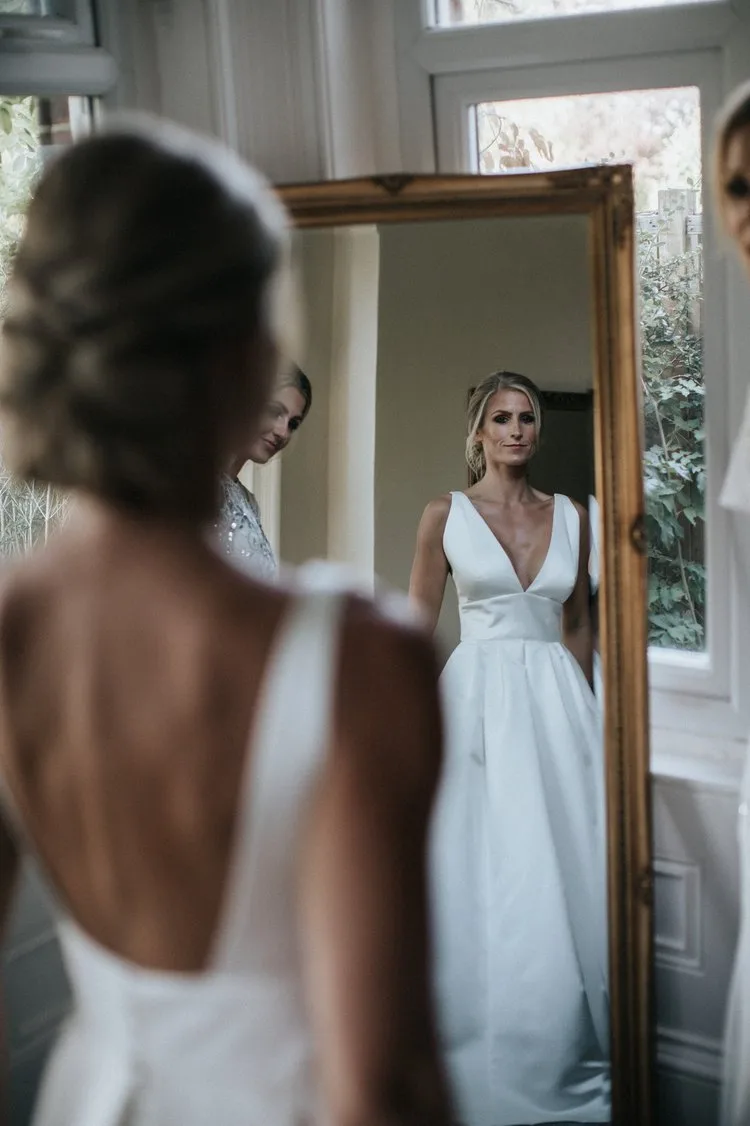
Your mirror lies to you at a fitting, because you mostly see the front. The photographs are what you will actually judge later, so treat them like part of the appointment. Ask your friend to take a straight front shot, a side shot, and a full back shot of every style, standing at the same distance each time so the pictures are easy to compare. Add one close-up of the pinning and one full-length shot that shows the dress and the hair together.
Use the boutique’s big mirror for the back view as well as the camera. Stand with your back to the main mirror and hold a hand mirror in front of you, then check how the style reads from behind, where your guests will see it during the ceremony. Look for gaps, loose pins, a parting that wanders, or a bun that sits lower on one side, because the camera catches all of it even when the mirror is kind.
Take a short video too, walking towards the camera and turning slowly. Hair moves, veils catch the light, and a style that looks stiff in a still photograph can look lovely in motion, while a style that looks perfect standing still can fall apart after three steps. Save the photos in a folder with the style name and the date, and send the best ones to your stylist so the wedding-day version matches the one you loved at the fitting.
Choosing a Style by Your Dress Neckline
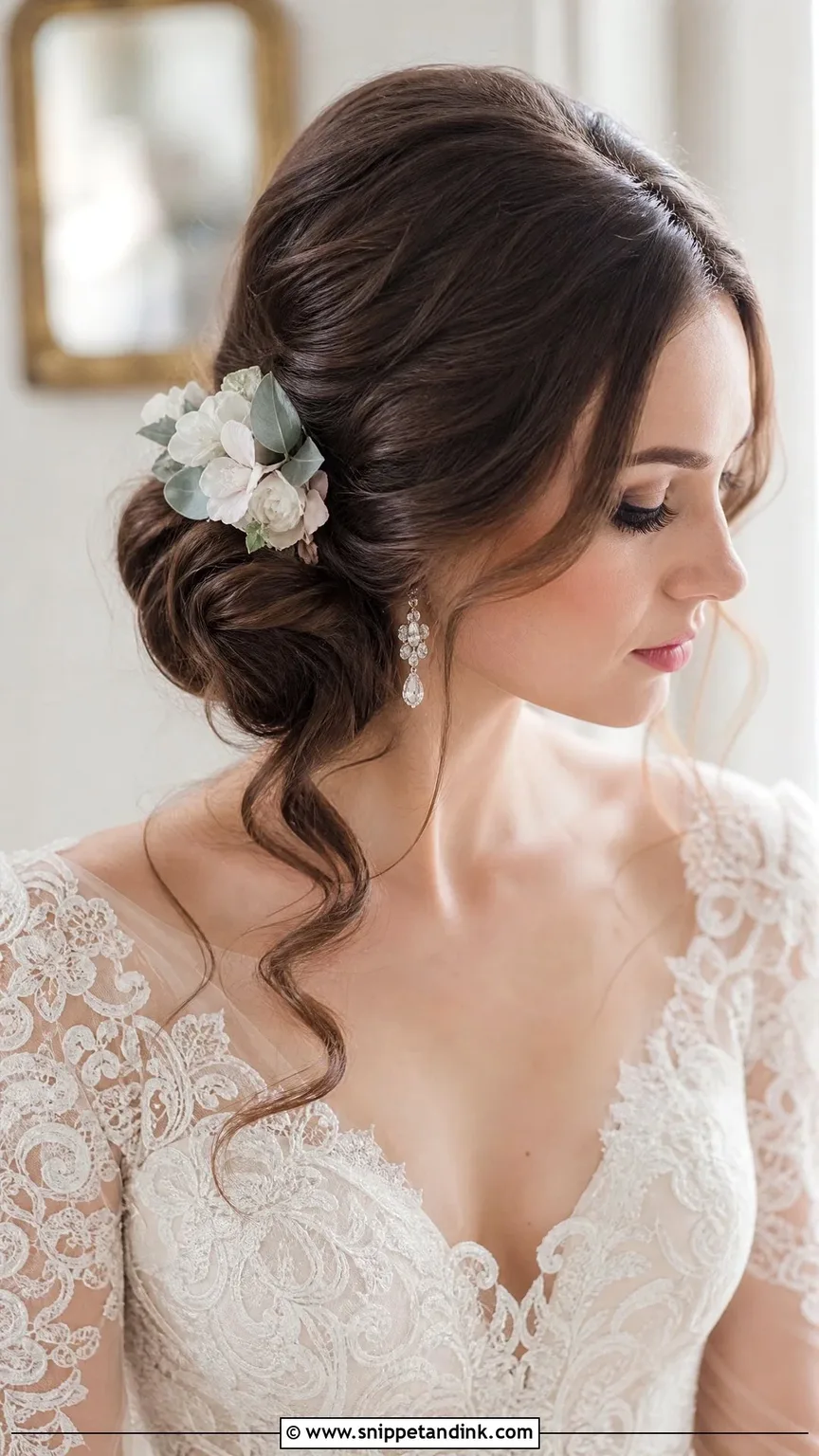
The neckline decides more about your hairstyle than your face shape does. A strapless or sweetheart dress leaves the shoulders bare, so hair down softens the line and an updo shows off the neckline itself. A high neck or halter dress already covers a lot of skin, so hair up keeps the look from feeling heavy, while hair down can make the whole top half look crowded.
A V-neck dress pairs beautifully with a low bun or a side-swept style, because the long line of the neckline is echoed by the hair falling to one side. An off-the-shoulder dress suits a soft updo with face-framing pieces, since the shoulders stay visible and the hair does not hide the dress detail. A boat neck or illusion neckline needs a clean, smooth style, because texture around the neck competes with the lace or beading already there.
At the fitting, test the neckline rule with the actual dress on. Put your hair up, look in the mirror, then let it down and compare the two photographs side by side. Pay attention to the back neckline as well as the front, because a low back deserves an updo that shows it off, while a high back with buttons looks best with hair swept to one side. If you cannot decide, ask the consultant which version makes the dress look more expensive, because they have seen that dress on dozens of brides.
Choosing a Style by Your Hair Length
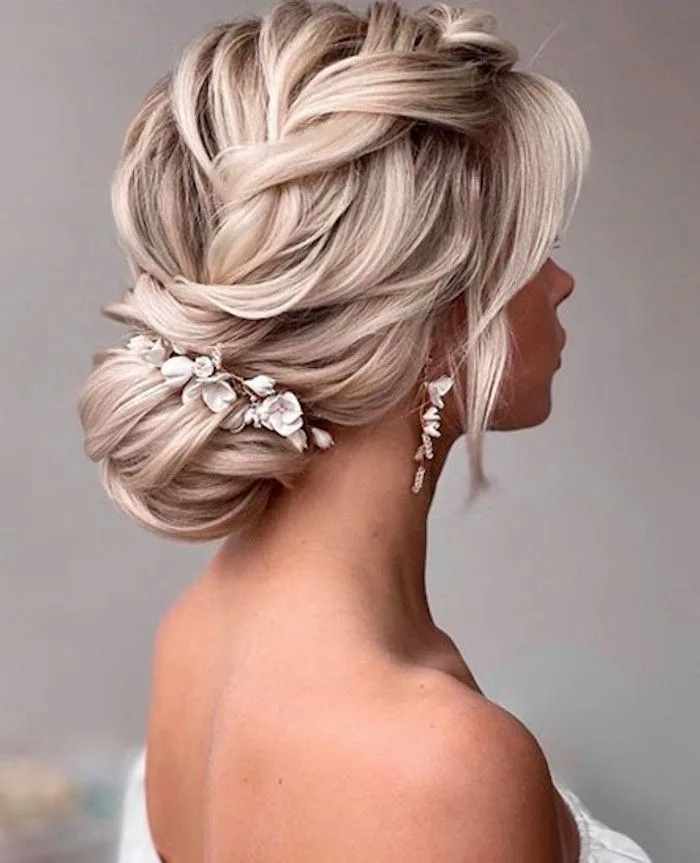
Hair length sets the honest limits of a fitting, and it is better to learn them at the appointment than on the wedding morning. Shoulder-length hair can hold a low chignon, a textured bun or a half-up style, but it will not make a long waterfall braid without extensions, and the fitting is the time to try clip-in pieces if you want extra length. Long hair can do almost anything, but it is heavier, so test whether an updo stays comfortable for an hour before you commit to it.
Short hair has its own strengths at a fitting. A pixie or a bob takes a headpiece, a veil comb and a flower crown beautifully, and it never fights the dress or gets caught in the zip. Try a sleek side part, soft finger waves, or a small twist pinned at the back, and ask your stylist about a hairpiece or a few clip-in strands if you want a little more volume for the photographs.
Medium-length hair is the most flexible length of all, which is why so many bridal styles are designed for it. It holds curls, it pins into a bun without a forest of pins, and it falls nicely in a half-up style. Whatever your length, bring your own hair to the fitting as it will be on the day, with no extensions hidden and no length faked, because your stylist can only plan for the hair that is actually there.
What to Ask Your Stylist at the Fitting
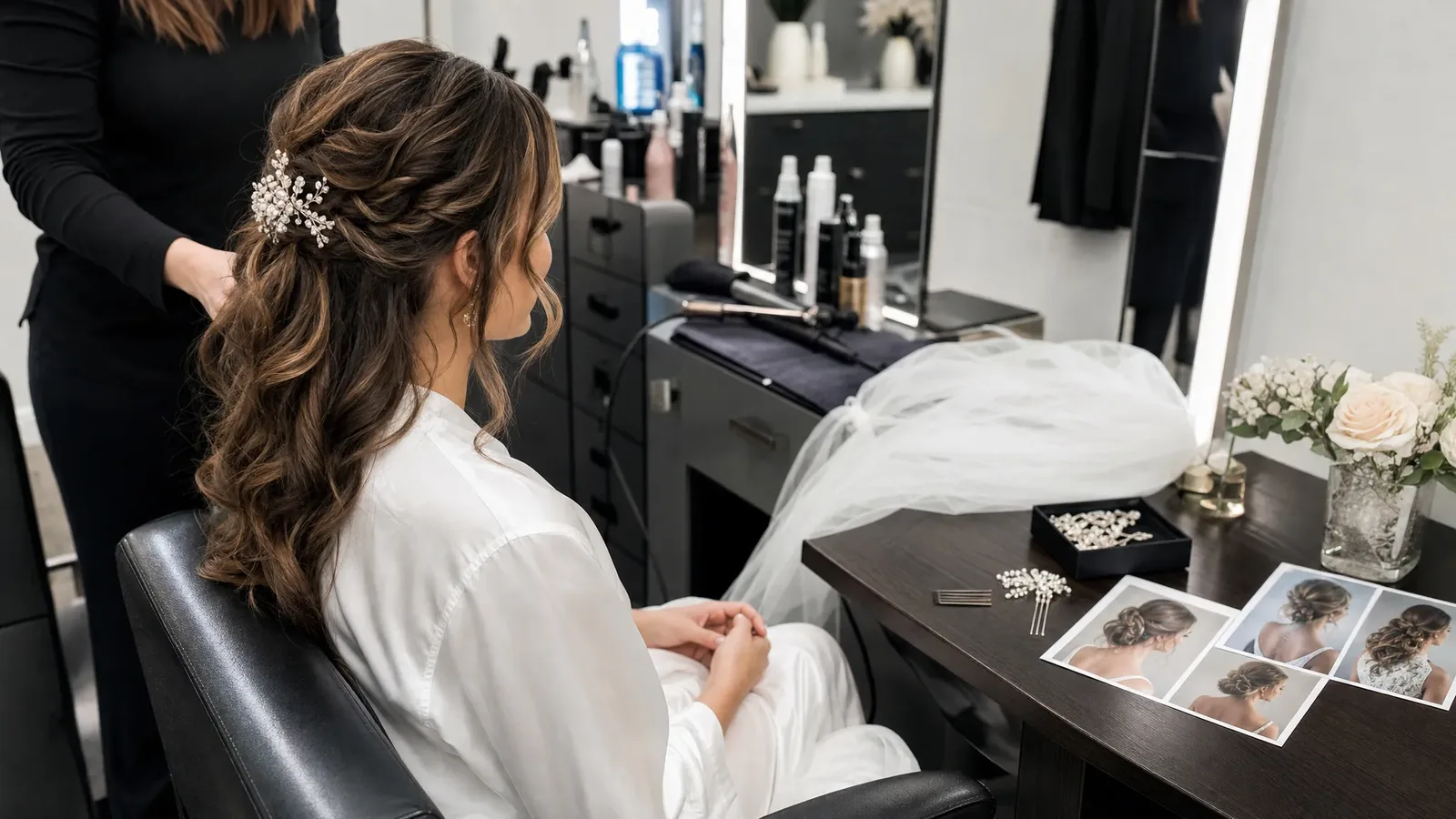
Your stylist can only help you if you ask the right questions, and the fitting is the best place to ask them. Start with the practical ones: how long will this style take on the morning, how many pins does it need, and will it survive dancing, hugging and a windy photograph session. Ask whether your hair needs to be washed the night before or left unwashed, and whether you should arrive with it straight, wavy or completely natural.
Ask about the weather plan too. Humidity, heat and wind undo more wedding hairstyles than any other cause, so ask what your stylist will do differently if the day is hot or damp. Ask how the veil attaches to this style, whether the headpiece stays on after the veil comes off, and what you should do if a pin slips during the reception. A good stylist will have a clear answer for all of it, and a vague answer is a warning sign.
Finally, ask for the honest version of the inspiration photo. Show your stylist the picture you love and ask what is different about your hair, your dress and your face. The best stylists will tell you which part of the picture to keep and which part to change, and they will show you the change at the fitting instead of just describing it. Write down what they say, because the wedding morning is the worst time to rely on memory.
A Fitting-Day Timeline That Actually Works
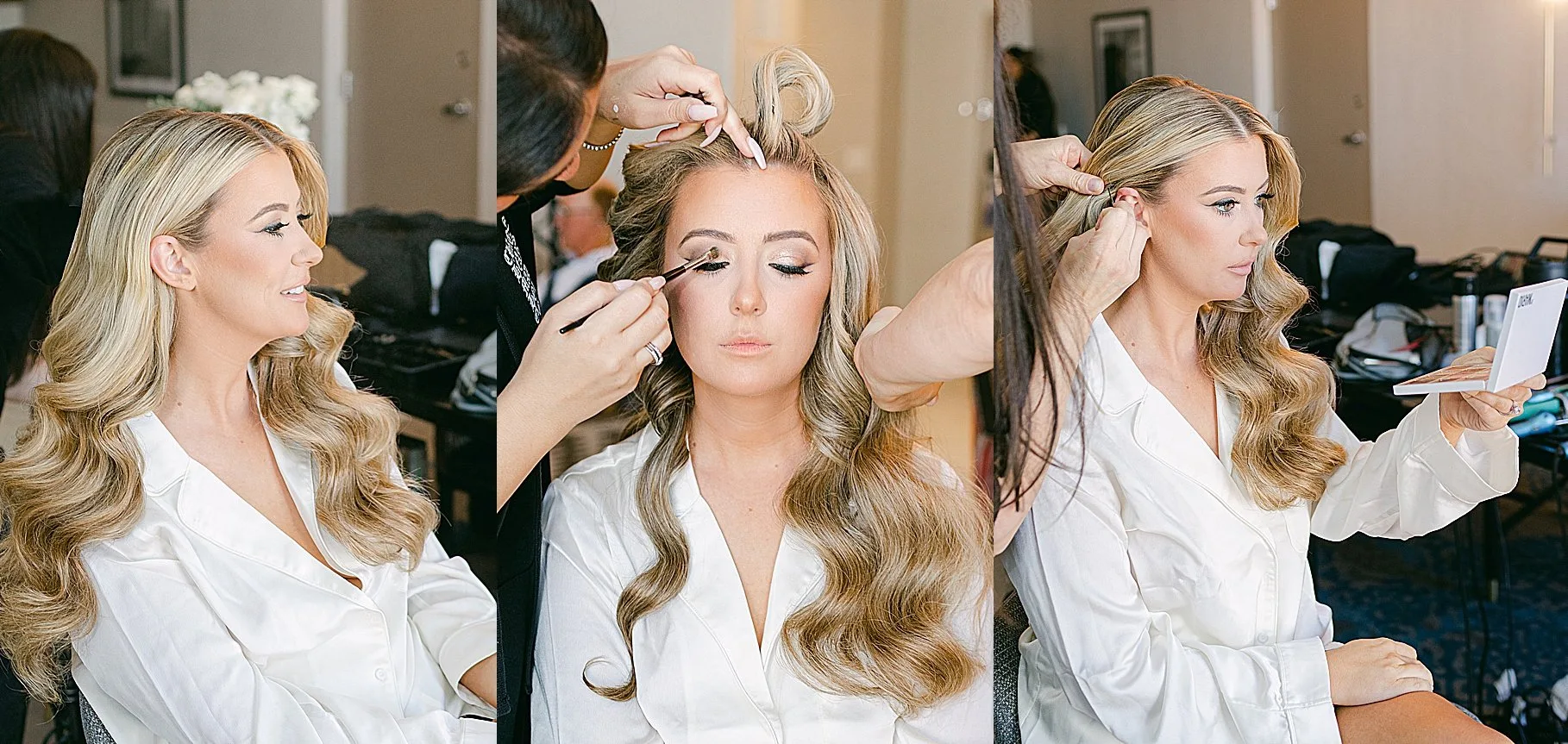
A fitting runs smoothly when the day has a shape, so plan the timeline before you arrive. Book the hair trial for the same week as the fitting if you can, and arrive at the boutique with your hair already styled the way you plan to wear it, or at least roughly pinned so the consultant can see the idea. Allow ninety minutes for the appointment, even if the boutique says an hour, because trying two hairstyles with one dress takes longer than anyone expects.
Start with the dress first, then the hair. Get the dress on, the shoes on and the undergarments right, and only then pin the hair up and add the veil. That order stops you from redoing the hair every time the dress is adjusted, and it lets you see the finished look instead of a half-dressed guess. Try the ceremony look first, then the evening look with the veil off, and photograph both before you change anything.
End the appointment with decisions, not just photographs. Confirm the hairstyle, the veil position, the headpiece and the order your stylist will work in on the morning. Ask the boutique to note the style on your file if they will, and send the chosen photographs to your stylist the same day while the details are fresh. A fitting that ends with a decision is worth twice as much as one that ends with a maybe.
1. The Low Chignon
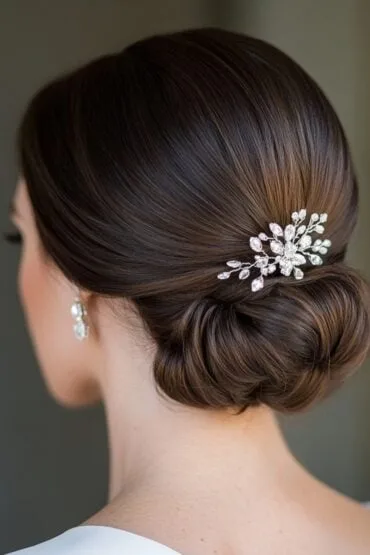
The low chignon is the style most brides test first at a fitting, because it sits neatly at the nape and leaves the dress to speak. It works with almost every neckline, it holds a veil beautifully, and it photographs cleanly from the back, which is the view your guests will see for most of the ceremony.
Pros: it is secure, elegant and comfortable for hours, and it shows off a low back or detailed bodice without competing with it.
Cons: it can look severe if it is pulled too tight, and it needs enough length to form a proper roll, so very short hair will need padding or extensions.
Who it suits: brides with medium to long hair, a classic or formal dress, and anyone who wants a timeless look that will not date in photographs.
Who should avoid it: brides who want volume at the crown or a relaxed boho feel, since the chignon is a polished, structured style by nature.
Maintenance: a few pins, a light mist of flexible hairspray, and a quick check after the ceremony are usually enough to keep it neat all day.
2. The Soft French Twist
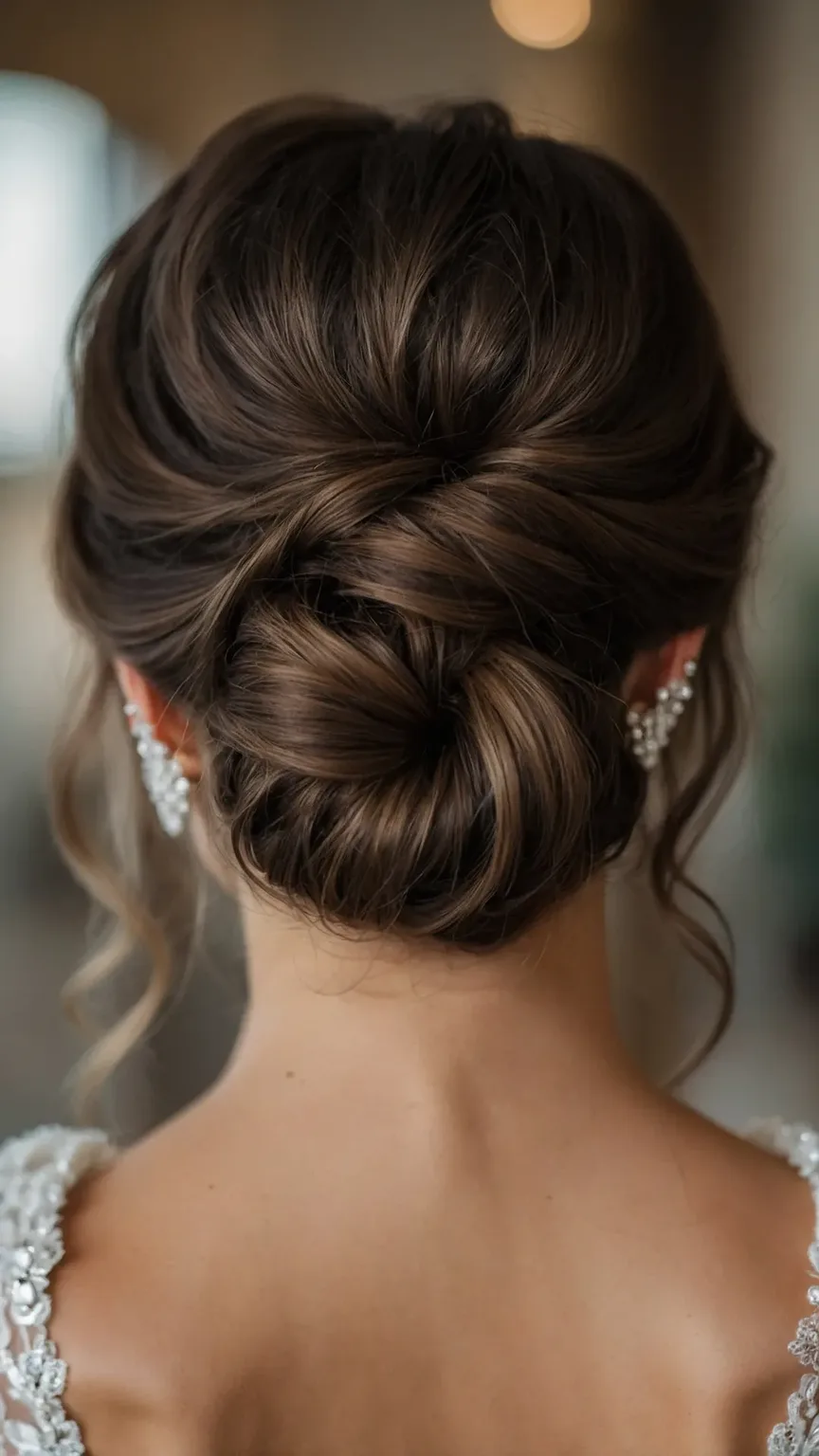
The soft French twist is a fitting-room favourite because it looks formal from the front and interesting from the back. The hair is swept up and folded into a vertical roll, with soft pieces left loose around the face so the style never looks stiff or dated.
Pros: it adds height without a high bun, it suits veils pinned at the crown or low at the back, and it holds well on fine hair with the right pins.
Cons: it takes a skilled stylist to get the roll even, and it can loosen if it is not pinned in sections rather than in one go.
Who it suits: brides with medium-length hair, an elegant or vintage dress, and anyone who wants a polished look with a little softness at the front.
Who should avoid it: brides with very thick, heavy hair, since the twist can feel heavy by the evening, and anyone who dislikes having hair pinned close to the head.
Maintenance: ask your stylist for criss-crossed pins and a strong-hold spray at the base, and carry two spare pins for the reception.
3. The Classic Bridal Bun
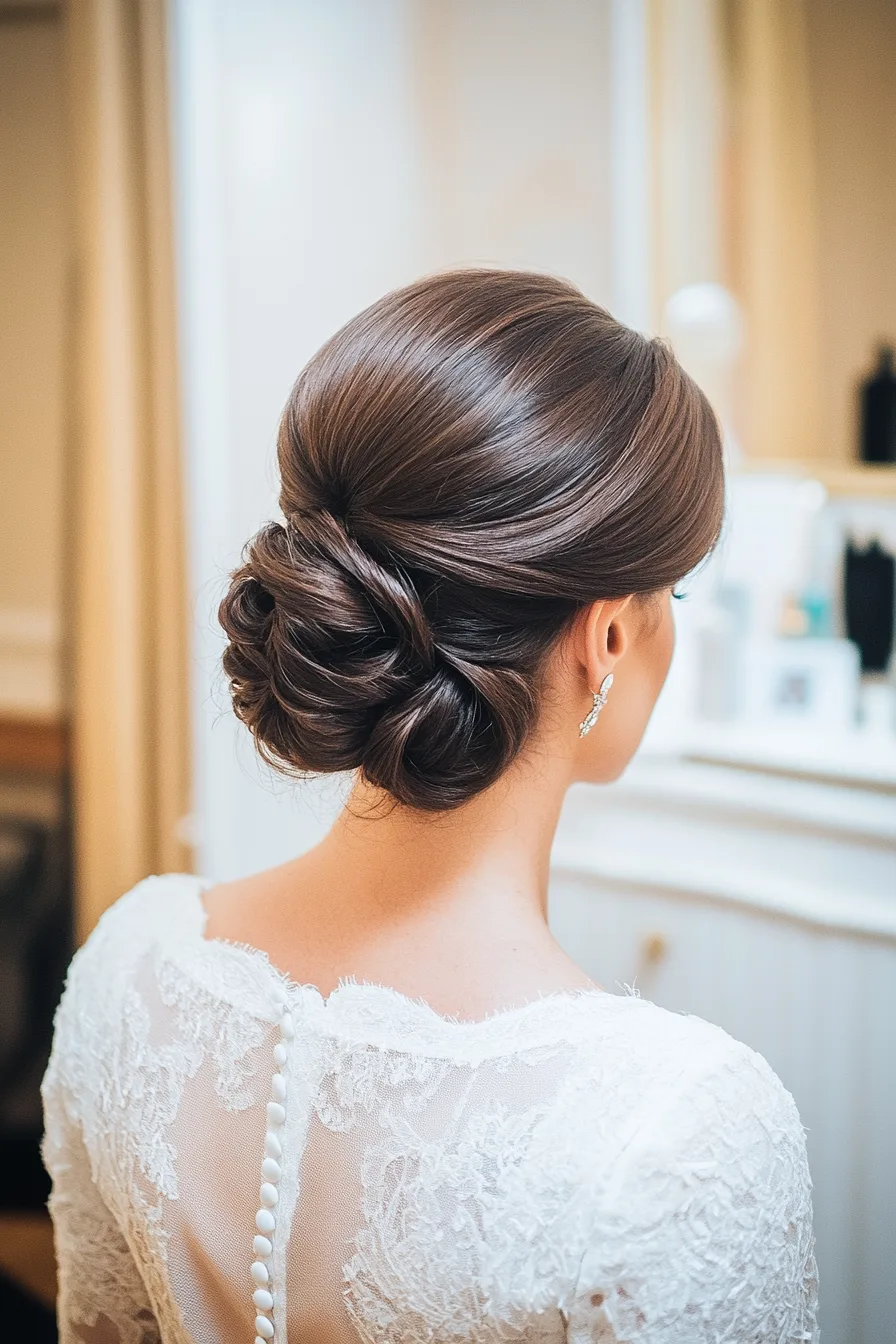
The classic bridal bun is the safest test at a fitting, and that is a compliment, because it lets the dress and the veil take the attention. It is smooth, centred and symmetrical, with no loose pieces to distract from a detailed bodice or a statement necklace.
Pros: it is the most secure bridal style, it suits every veil length, and it looks equally good in photographs and in person.
Cons: it can feel plain next to a very simple dress, and it shows every bump if the hair is not smoothed carefully before pinning.
Who it suits: brides with a detailed or embellished dress, a cathedral veil, or a formal venue where a polished look fits the day.
Who should avoid it: brides who want a relaxed or bohemian feel, since this bun is deliberately neat and formal.
Maintenance: almost none, which is the point; a quick smoothing with a brush and a mist of spray after the photographs is plenty.
4. Romantic Loose Waves
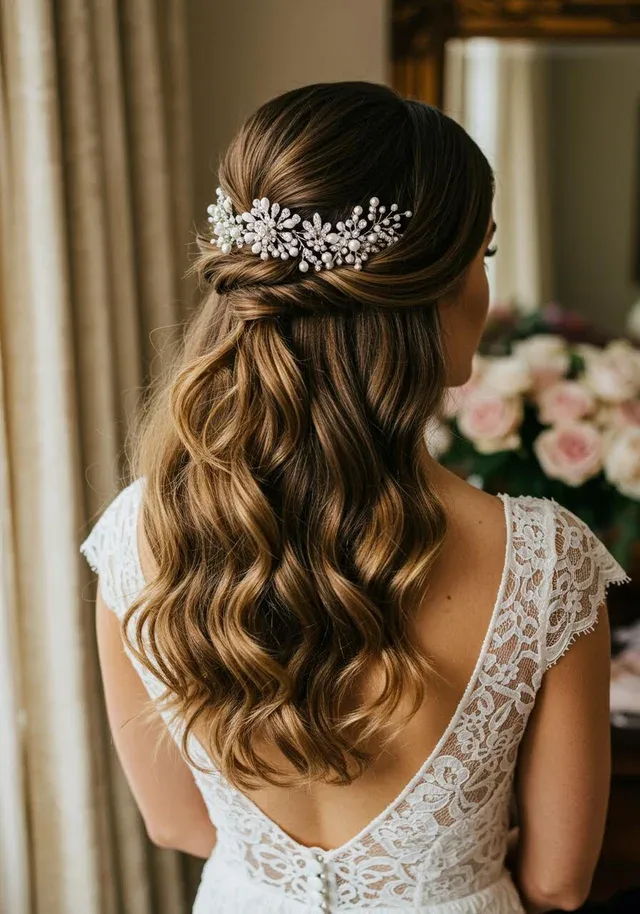
Romantic loose waves are the style to test if you are dreaming of hair down, because the fitting shows you exactly how much of the dress they will cover. Soft, brushed-out waves fall over the shoulders and frame the face, giving a gentle, romantic finish that suits most dresses.
Pros: it is soft, flattering and easy to restyle for the evening, and it looks wonderful in outdoor and golden-hour photographs.
Cons: waves drop in humidity and can tangle in a veil or a beaded back, so test the combination at the fitting rather than hoping for the best.
Who it suits: brides with long hair, a simple or flowing dress, and an outdoor or garden wedding where a relaxed look fits.
Who should avoid it: brides with a heavily detailed back, since the waves will hide it, and anyone whose hair refuses to hold a curl.
Maintenance: a curling wand touch-up, a wide-tooth comb and a flexible spray will keep the waves soft without turning them stiff.
5. The Half-Up Hairstyle With a Veil
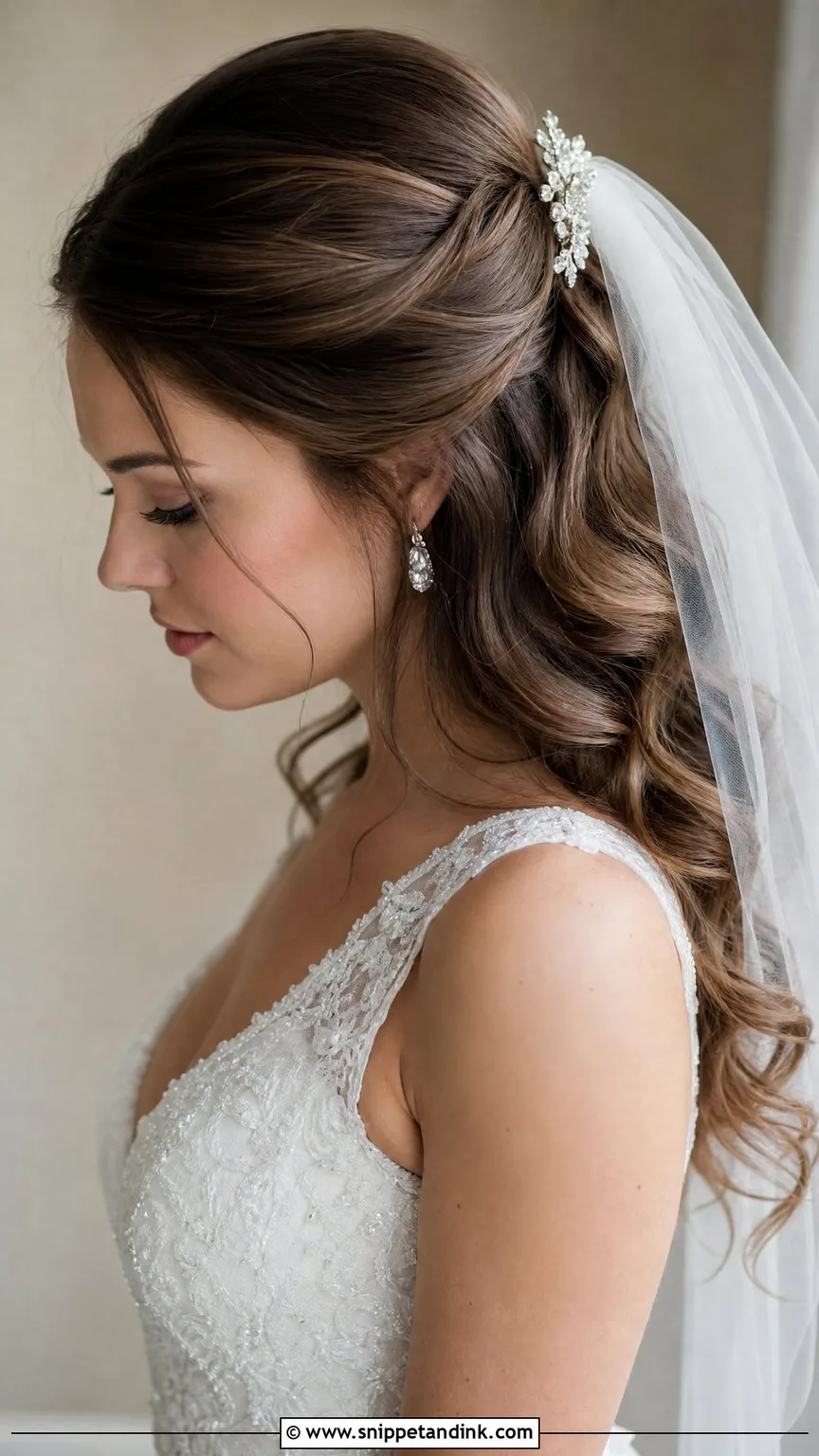
The half-up style with a veil is the compromise most brides end up loving, because it gives the softness of hair down with the security of hair up. The top section is pinned back, the rest falls loose, and the veil sits neatly under the pinned section.
Pros: it suits almost every face shape, it holds a veil securely, and it photographs beautifully from the front and the back.
Cons: the loose length can catch on a beaded bodice, and the pinned section can slip if it is not anchored with enough pins.
Who it suits: brides who cannot decide between up and down, anyone with long hair, and dresses with a pretty back that deserves a glimpse.
Who should avoid it: brides with very fine hair, since the pinned section can look thin, and anyone with a high neckline that crowds the shoulders.
Maintenance: a small brush, a few spare pins and a light spray will keep the top section neat while the loose hair moves freely.
6. The Sleek Low Ponytail
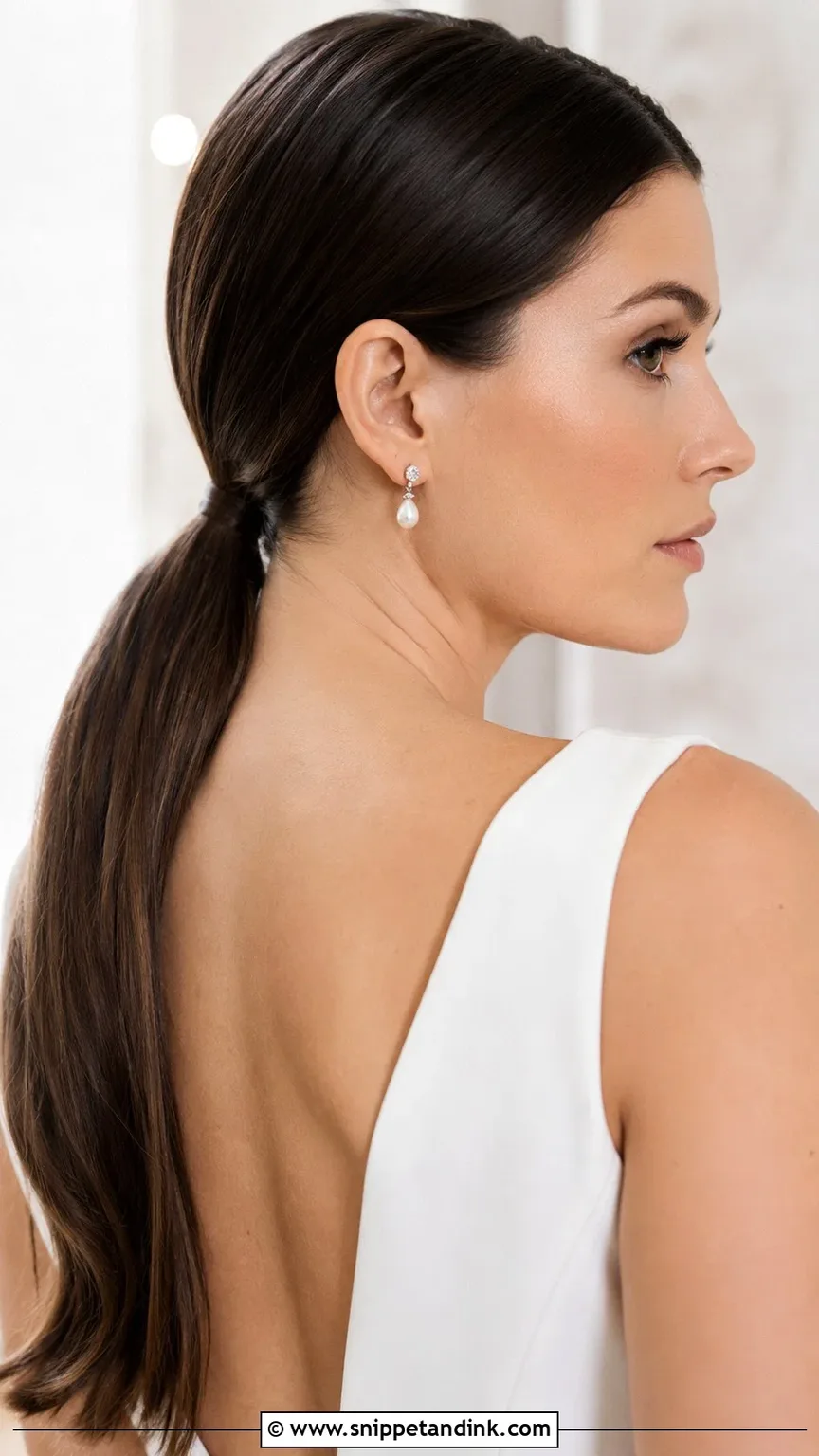
The sleek low ponytail is the modern bride’s answer to a fitting, because it looks effortless and photographs like a fashion editorial. The hair is smoothed back, gathered low at the nape, and wrapped with a strand of hair so no elastic shows.
Pros: it is comfortable, it shows off earrings and a neckline, and it stays neat through dancing and a long evening.
Cons: it shows every imperfection in the smoothing, and it can look too simple with a very plain dress unless an accessory is added.
Who it suits: brides with straight or slightly wavy hair, a minimalist or modern dress, and anyone who loves clean lines.
Who should avoid it: brides who want volume or romance, since this style is deliberately smooth and restrained.
Maintenance: a smoothing serum, a fine comb and a strong elastic hidden under the wrap will keep it sleek for hours.
7. The Braided Crown
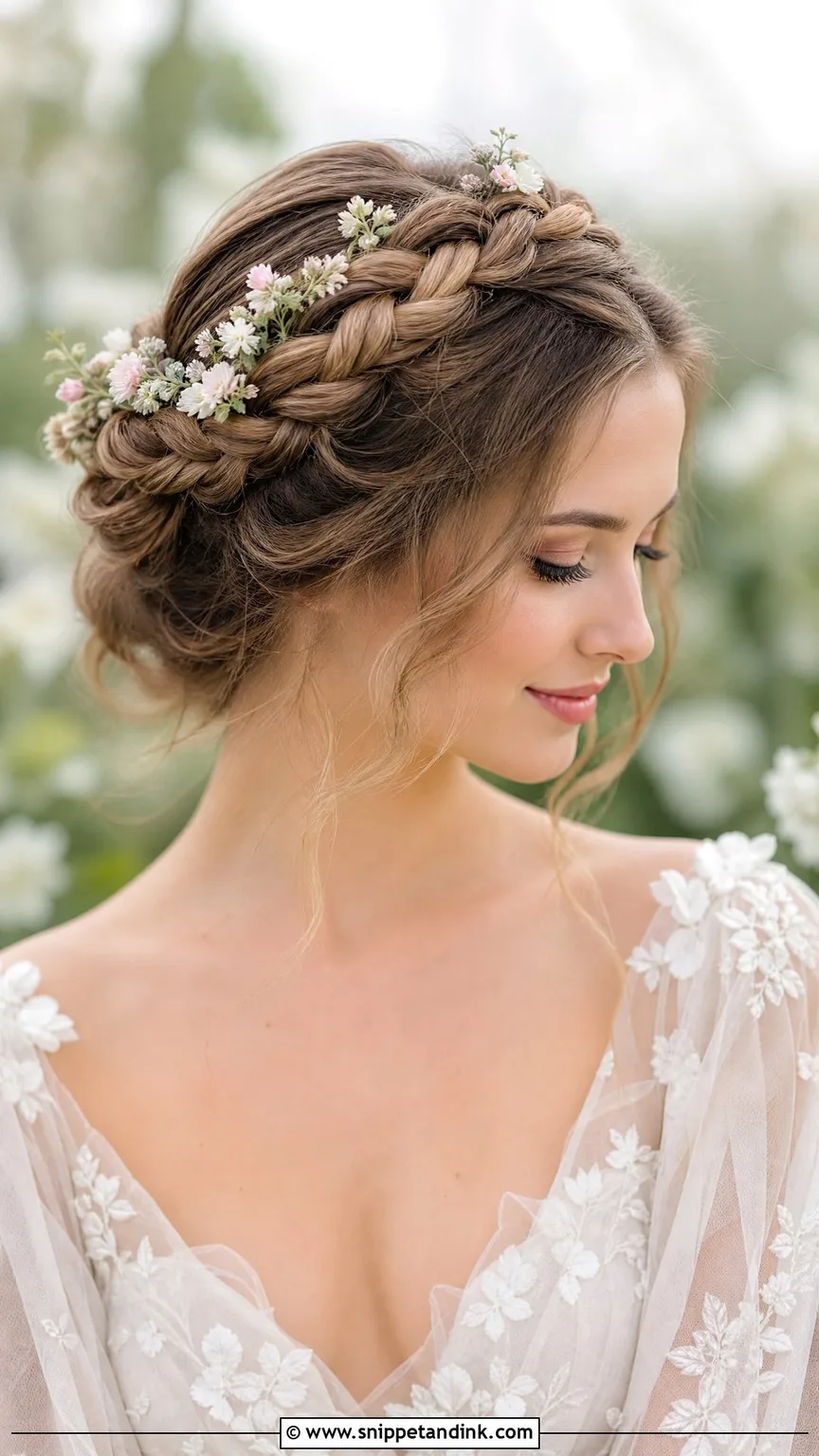
The braided crown wraps a braid around the head like a halo, and it is one of the most flattering styles to test with a veil, because the braid itself anchors the veil comb. It looks intricate in photographs but feels light and secure to wear.
Pros: it keeps hair completely off the face, it suits flower crowns and veils, and it holds up well in heat and humidity.
Cons: it needs enough length to wrap around the head, and it can look messy if the braid is not kept even on both sides.
Who it suits: brides with long hair, a boho or garden wedding, and anyone who wants a romantic style that will not move all day.
Who should avoid it: brides with short hair, unless extensions are planned, and anyone who prefers a sleek, polished finish.
Maintenance: a few pins at the ends of the braid and a light spray are usually all it needs, even after hours of dancing.
8. Side-Swept Curls
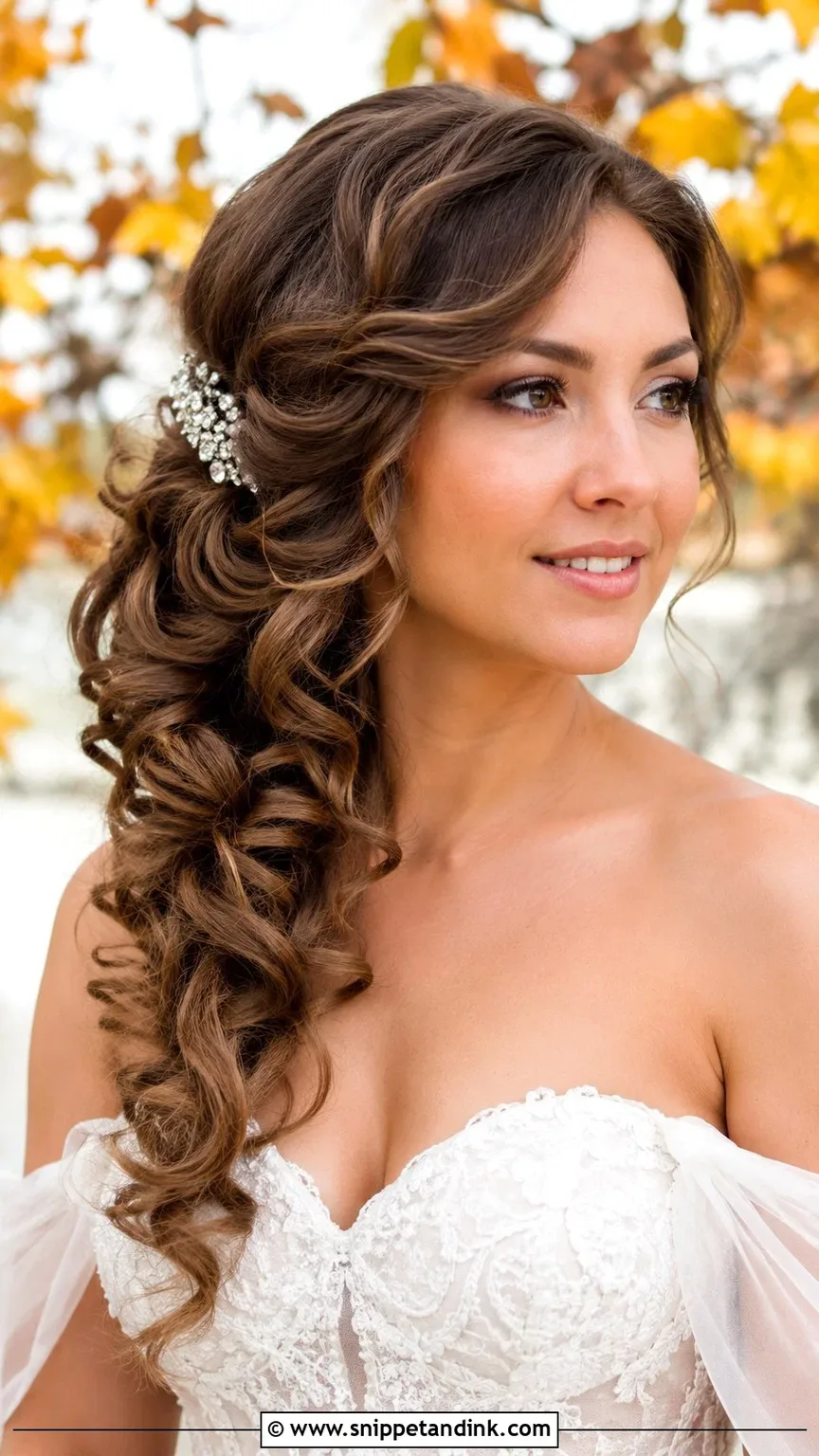
Side-swept curls are a fitting favourite for brides who want glamour without an updo. All the curls are swept over one shoulder, leaving the other side smooth and bare, which shows off the neckline and any statement earring.
Pros: it is glamorous and flattering, it photographs beautifully in profile, and it works with a veil pinned on the opposite side.
Cons: the curls can fall flat on one side by the evening, and they can tangle in a necklace or a beaded strap if they are not placed carefully.
Who it suits: brides with long hair, an off-the-shoulder or one-shoulder dress, and anyone who wants a red-carpet feel.
Who should avoid it: brides with a high back or heavy back detailing, since the curls will cover it, and anyone who dislikes hair on their face.
Maintenance: pin the curls loosely at the shoulder, carry a small comb, and ask your stylist for a flexible spray that holds without stiffness.
9. The Textured Updo
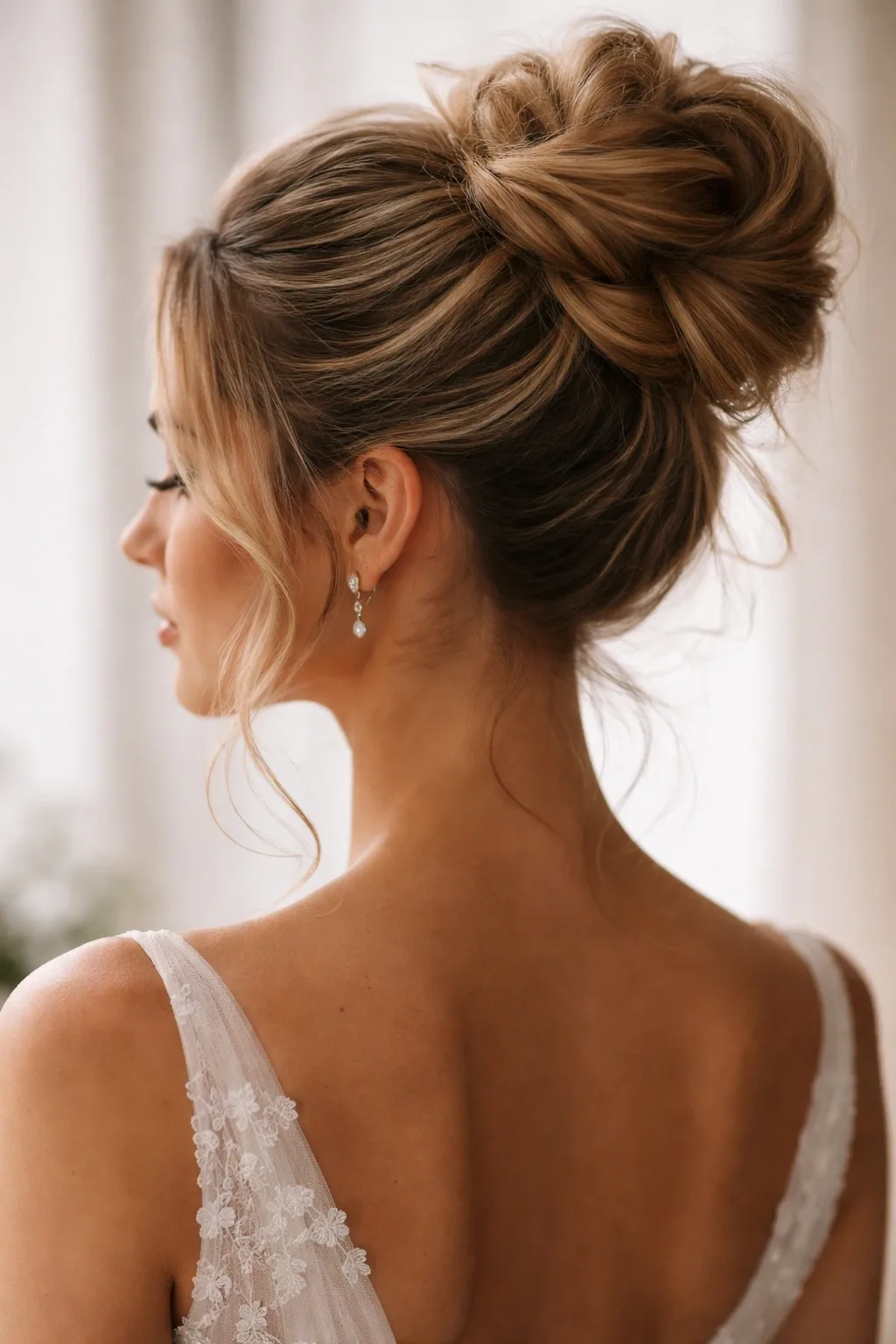
The textured updo is a softer, more modern take on the classic updo, with volume, movement and pieces that look intentionally undone. It is a good style to test at a fitting because it suits dresses that are too romantic for a sleek bun but too formal for hair down.
Pros: it adds volume to fine hair, it looks good from every angle, and it is forgiving if a piece comes loose during the day.
Cons: it needs texture spray and backcombing to hold, and it can look messy rather than romantic if the texture is overdone.
Who it suits: brides with fine or medium hair, a romantic or lace dress, and anyone who wants an updo that does not look severe.
Who should avoid it: brides who want a clean, polished finish, since texture is the whole point of this style.
Maintenance: a texture spray, a few pins and a gentle shake at the roots will revive it after the ceremony photographs.
10. Vintage Hollywood Waves
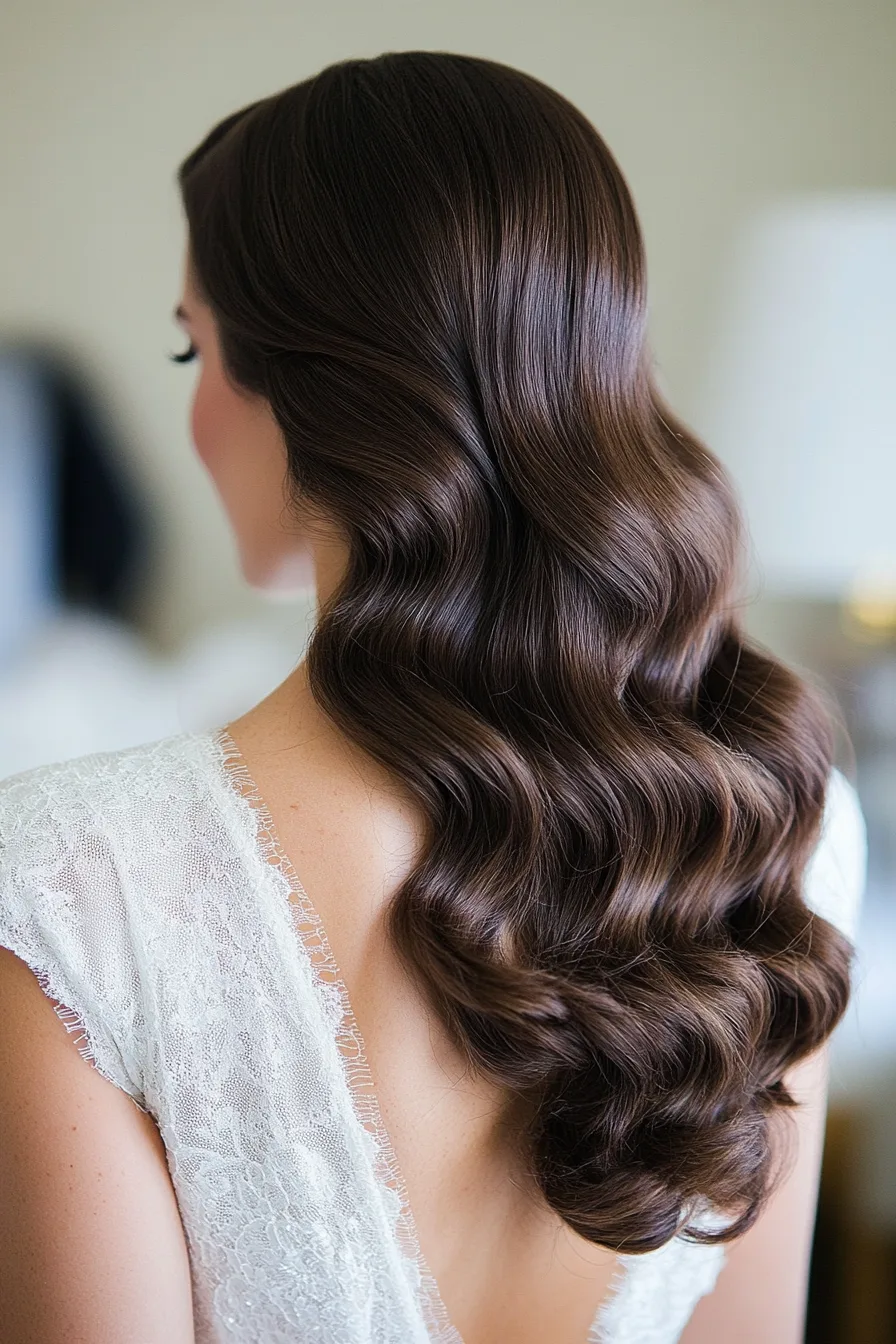
Vintage Hollywood waves are the most glamorous style you can test at a fitting, with deep, sculpted waves that fall in one direction. They suit a fitted dress and a formal venue, and they look extraordinary in black-and-white photographs.
Pros: it is timeless, it photographs beautifully, and it suits a side part and a statement lip like no other style.
Cons: it takes the longest to create, it needs setting and brushing out, and it can drop in humidity if it is not set properly.
Who it suits: brides with medium to long hair, a vintage or glamorous dress, and a formal evening wedding.
Who should avoid it: brides with very short hair, since the waves need length, and anyone getting married outdoors in summer humidity.
Maintenance: a setting spray, a soft brush and a silk scarf for the car ride will protect the waves until the photographs begin.
11. The Messy Low Bun
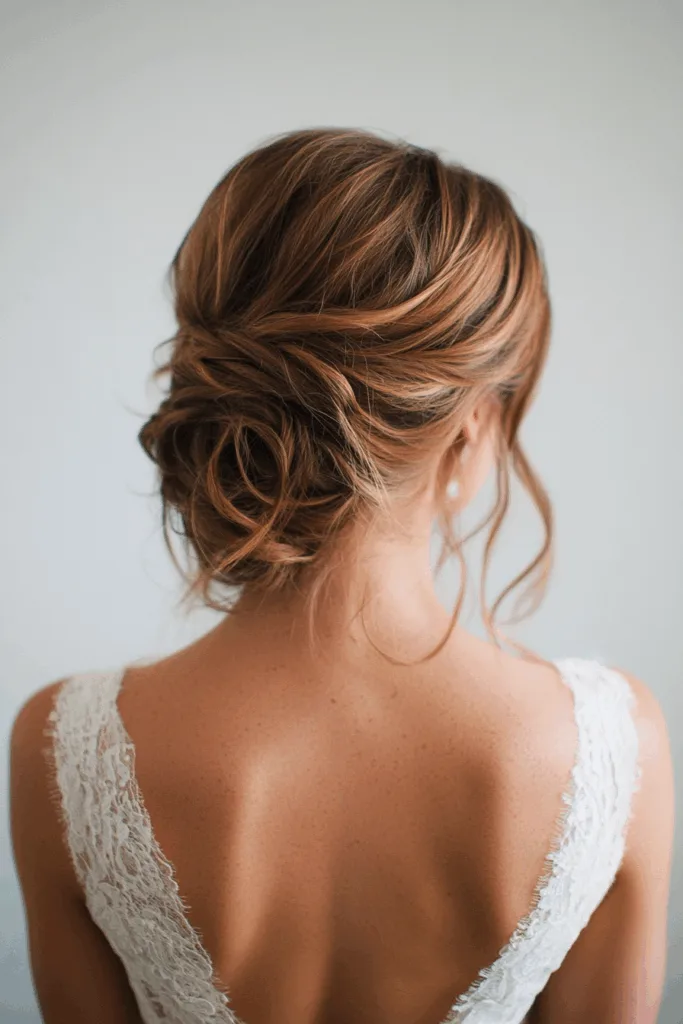
The messy low bun is the relaxed cousin of the chignon, gathered low and pinned loosely so soft pieces escape around the face and neck. It is a good fitting test because it shows whether a relaxed style still looks bridal with your particular dress.
Pros: it is comfortable, it suits a veil and a flower crown, and it looks better as the day goes on rather than worse.
Cons: it can tip from relaxed into unfinished if the looseness is not controlled, so it needs a stylist who understands the difference.
Who it suits: brides with a relaxed or boho dress, an outdoor wedding, and anyone who hates feeling over-styled.
Who should avoid it: brides with a very formal dress or venue, since the looseness can clash with a structured gown.
Maintenance: almost none; pull out a face-framing piece or two after the ceremony if you want it even softer for the evening.
12. The Fishtail Braid Updo
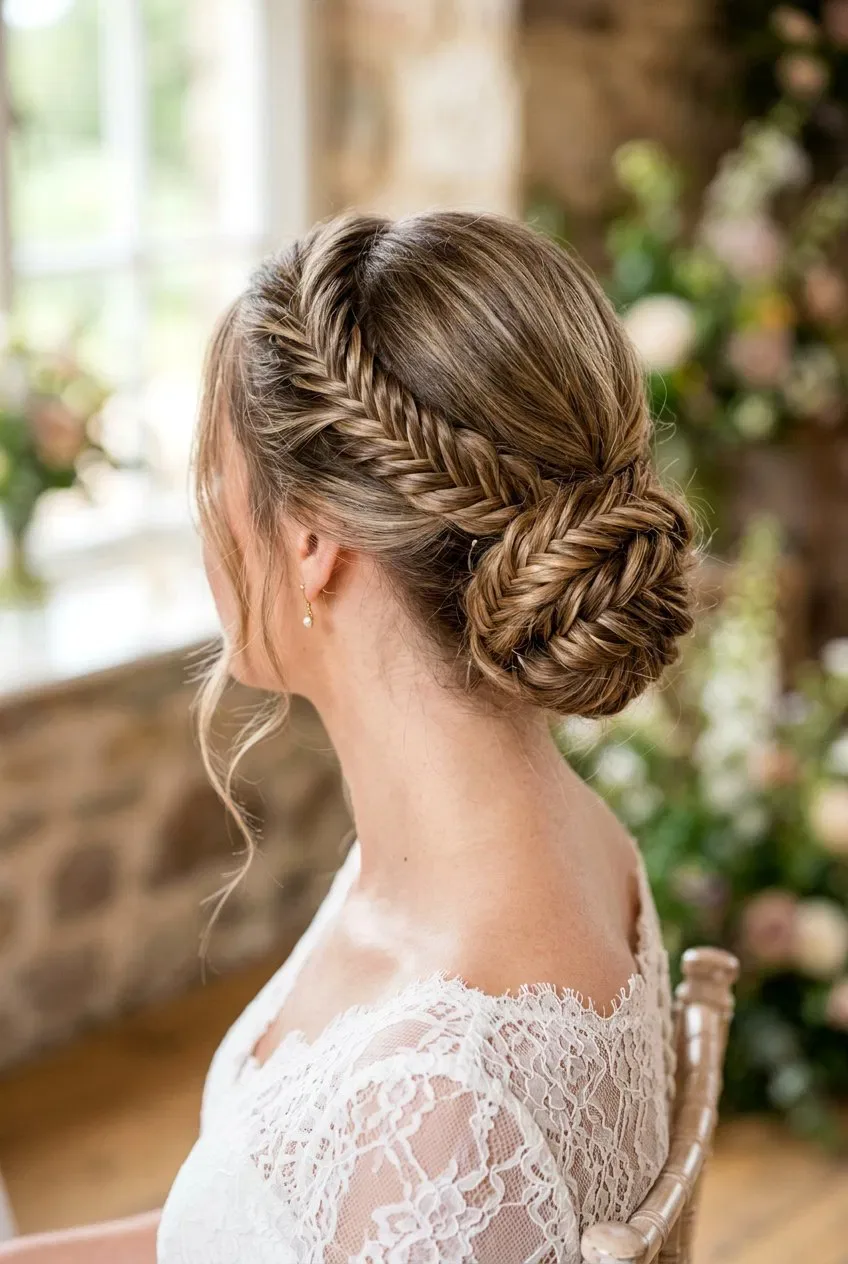
The fishtail braid updo turns a detailed braid into an elegant updo, wrapping the braid into a bun or coiling it low at the nape. It is one of the most interesting styles to photograph from the back, because the braid pattern itself becomes the decoration.
Pros: it is secure, it shows off the braid detail, and it holds a veil or a hairpiece without extra pins.
Cons: it takes time and a skilled braider, and it needs length, so short hair will need extensions to achieve the full effect.
Who it suits: brides with long hair, a simple dress that lets the hair shine, and anyone who loves detailed, craft-led styles.
Who should avoid it: brides who want a quick, simple style, since this one is a morning-long commitment.
Maintenance: a few pins at the coil and a light spray will hold it, and the braid itself keeps the style from unravelling.
13. The High Bun With a Veil
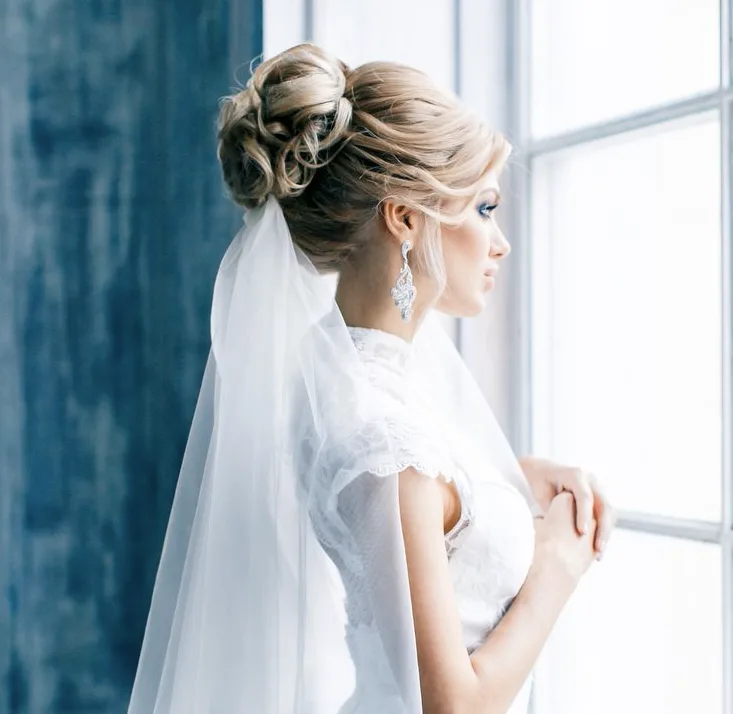
The high bun with a veil is the most dramatic silhouette you can test at a fitting, lifting the hair high and letting the veil fall from underneath it. It lengthens the neck, shows off the shoulders, and gives a veil a beautiful frame to fall from.
Pros: it is striking in photographs, it keeps hair completely off the neck, and it suits a long veil better than almost any other style.
Cons: it can feel heavy by the evening, and it needs strong pinning, so test the comfort at the fitting, not just the look.
Who it suits: brides with long, thick hair, a ballgown or a dramatic dress, and anyone who wants a regal, polished finish.
Who should avoid it: brides with fine hair, since the bun can look small, and anyone with a high neckline that crowds the crown.
Maintenance: a strong elastic, crossed pins and a firm spray at the base will keep it high and secure all day.
14. The Boho Braided Half-Up
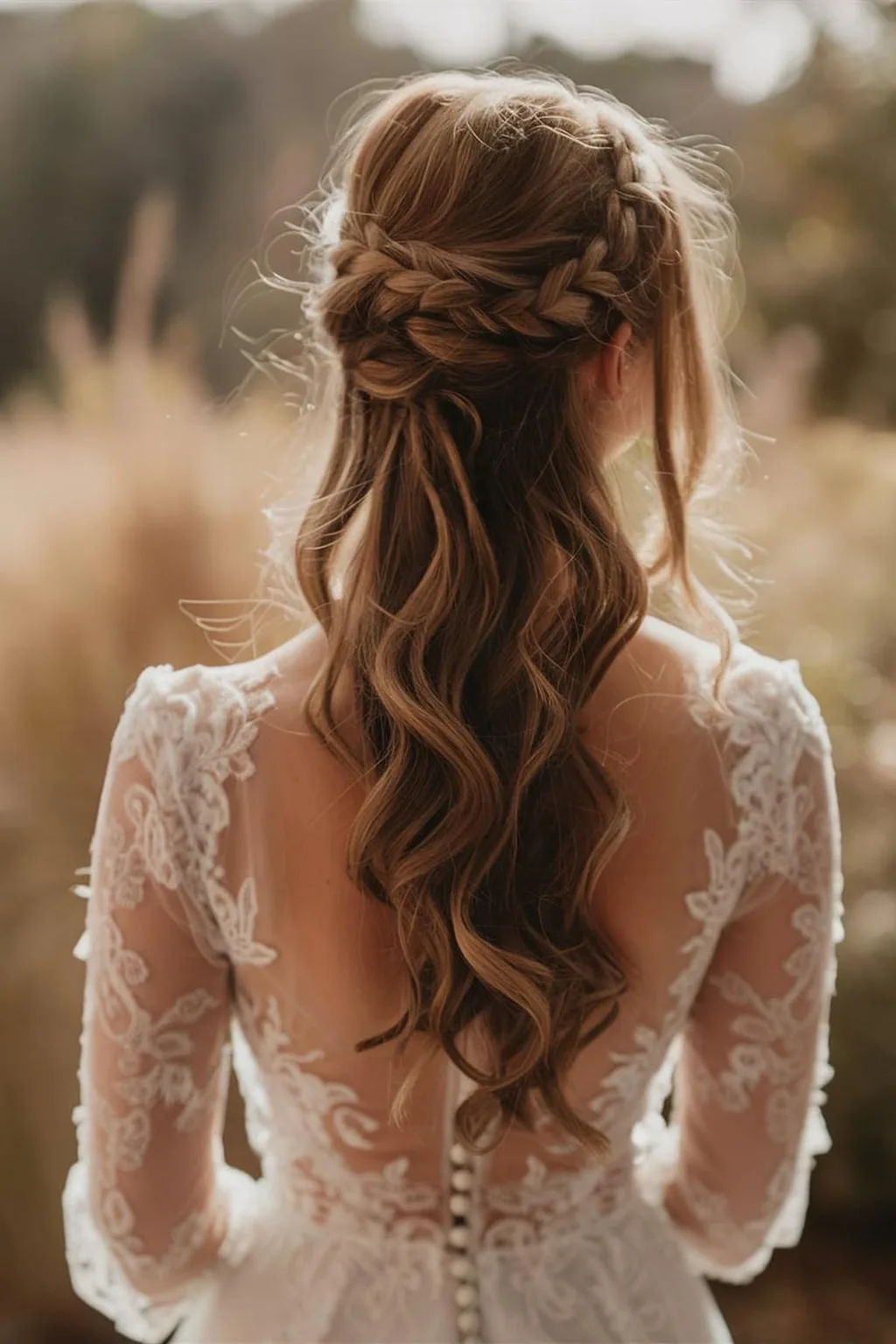
The boho braided half-up is a gentle, romantic style that pairs two small braids with loose, wavy length. It is a fitting favourite for garden and outdoor weddings, because it looks effortless while still holding the hair back from the face.
Pros: it is soft and romantic, it suits flower crowns and small hairpieces, and it photographs beautifully in natural light.
Cons: the braids can loosen in wind, and the loose length can tangle in a veil if the two are not pinned separately.
Who it suits: brides with long hair, a flowing or boho dress, and an outdoor or festival-style wedding.
Who should avoid it: brides with a formal dress or venue, since the relaxed braids can look too casual next to a structured gown.
Maintenance: a texture spray, a few clear elastics and a quick re-braid of one side are all it usually needs.
15. The Elegant Top Knot
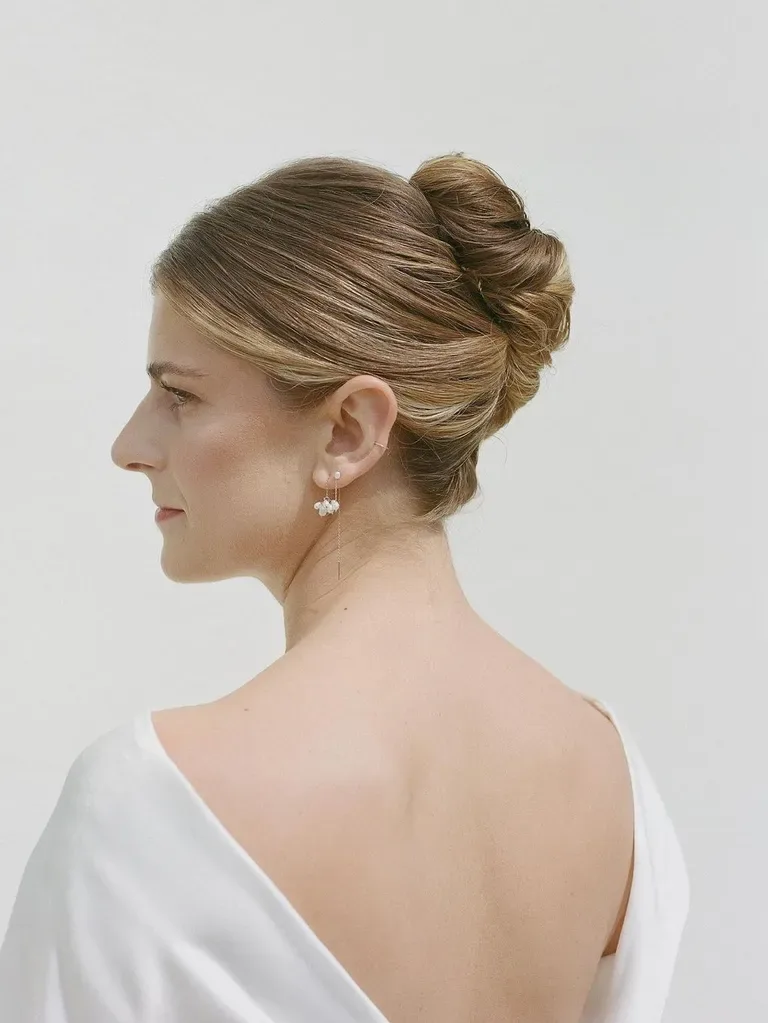
The elegant top knot is a polished, modern choice that sits high on the crown and gives the whole look a clean, lifted feel. It is a good style to test at a fitting because it changes the proportions of the dress, making the neck look longer and the shoulders look broader.
Pros: it is neat, it shows off earrings and a neckline, and it stays secure through a long day of photographs and dancing.
Cons: it can feel severe if it is pulled too tight, and it needs enough hair to form a full knot without looking small.
Who it suits: brides with medium to long hair, a modern or minimalist dress, and anyone who loves a clean, editorial look.
Who should avoid it: brides who want softness around the face, since this style pulls everything back and up.
Maintenance: a smoothing brush, a strong elastic and a firm spray will keep the knot neat from morning to midnight.
16. Soft Curls With a Flower Crown
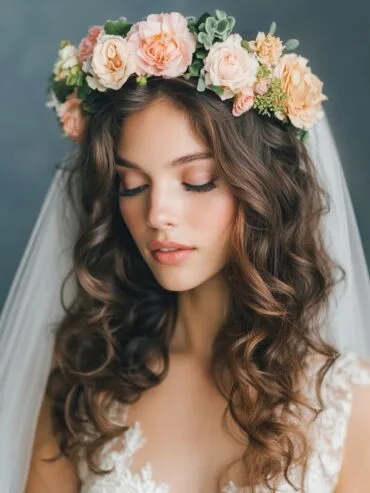
Soft curls with a flower crown are the most romantic combination you can try at a fitting, and the appointment is the time to get the crown size right. The curls fall loosely over the shoulders while the crown sits across the forehead or at the crown, framing the face.
Pros: it is joyful and photogenic, it suits outdoor weddings, and the crown adds colour that photographs beautifully against a white dress.
Cons: a heavy crown can flatten the curls, and fresh flowers wilt, so test the real crown at the fitting rather than a stand-in.
Who it suits: brides with long hair, a garden or boho wedding, and anyone who wants a soft, natural feel.
Who should avoid it: brides with a formal dress or a cathedral veil, since the crown can clash with both.
Maintenance: a light spray, a few pins to anchor the crown, and a spare flower or two in your bag will cover most problems.
17. The Gibson Tuck
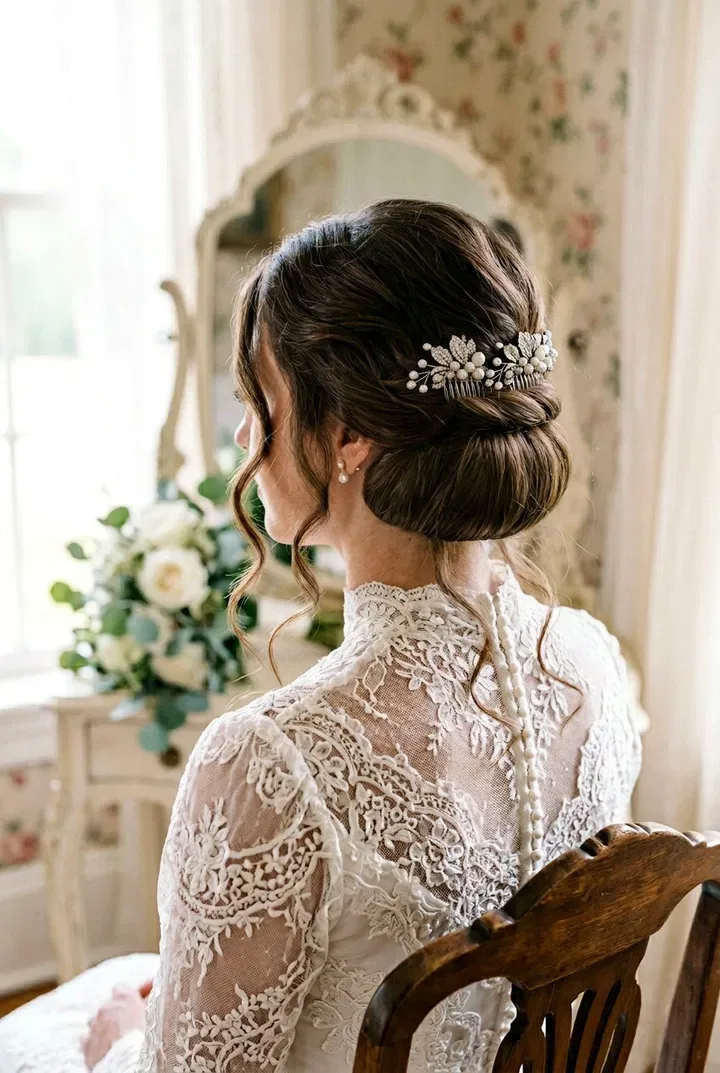
The Gibson tuck is a vintage style where the hair is rolled and tucked into itself at the nape, forming a soft, low roll. It is a lovely fitting test for brides who love vintage looks but do not want a full beehive or a severe twist.
Pros: it is soft and romantic, it suits a pearl comb or a small headpiece, and it photographs beautifully from the back.
Cons: it needs length and a little texture to hold, and it can come undone if it is not pinned in sections.
Who it suits: brides with medium to long hair, a vintage or lace dress, and anyone who wants a soft updo with history.
Who should avoid it: brides with very short or very slippery hair, since the tuck needs grip to stay in place.
Maintenance: a texture spray before styling, crossed pins inside the roll, and a light mist of spray will hold it all day.
18. The Waterfall Braid
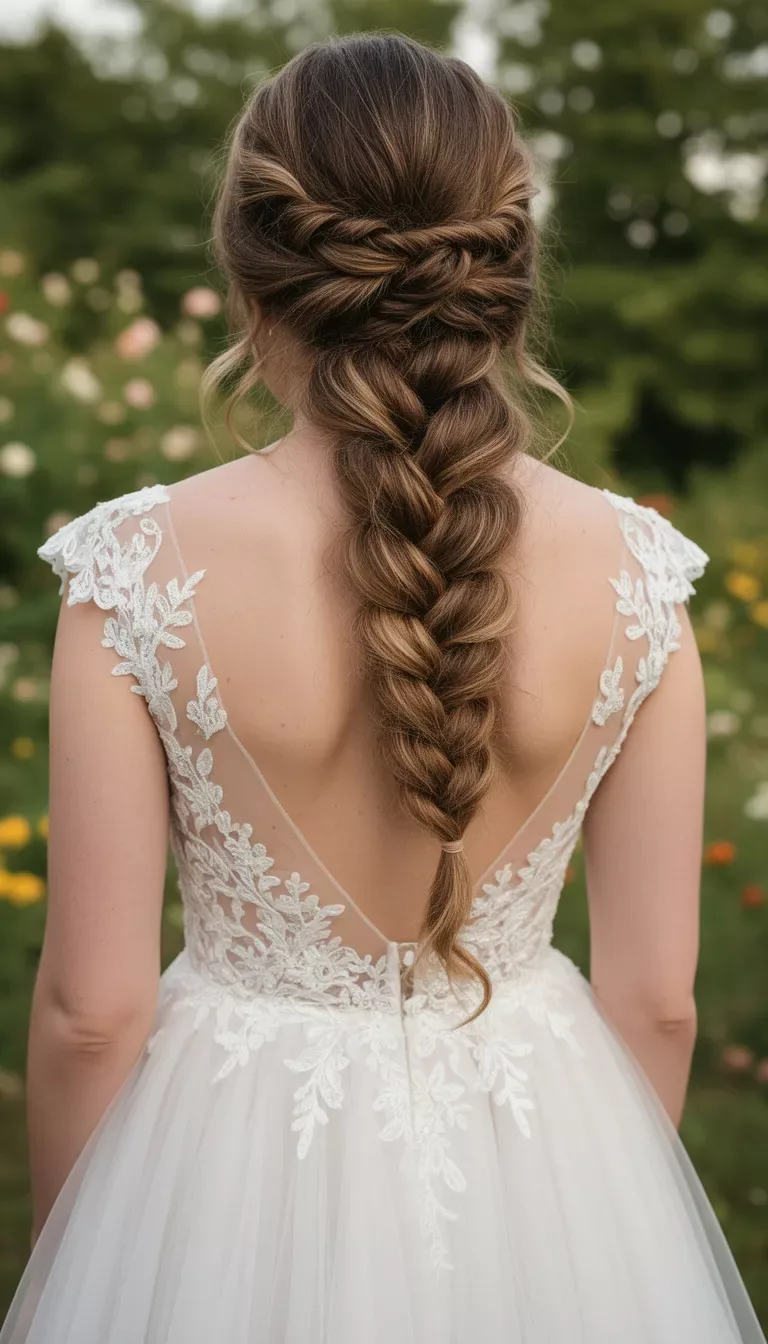
The waterfall braid lets strands fall through the braid like water, creating a soft, cascading effect that is perfect for a fitting test with a veil. It looks detailed from the back and soft from the front, and it suits dresses with a pretty back that deserves a glimpse.
Pros: it is romantic and detailed, it suits half-up styles, and it photographs beautifully from behind.
Cons: it is a delicate style that can loosen, and it needs length, so it is not a natural choice for short hair.
Who it suits: brides with long hair, a romantic or boho dress, and anyone who wants a braid that still shows off loose length.
Who should avoid it: brides who need a style that will survive wind and dancing without attention, since this braid is best kept gentle.
Maintenance: a few pins at the ends, a light spray, and a quick check after the photographs will keep the cascade intact.
19. Sleek Straight Hair With a Centre Part
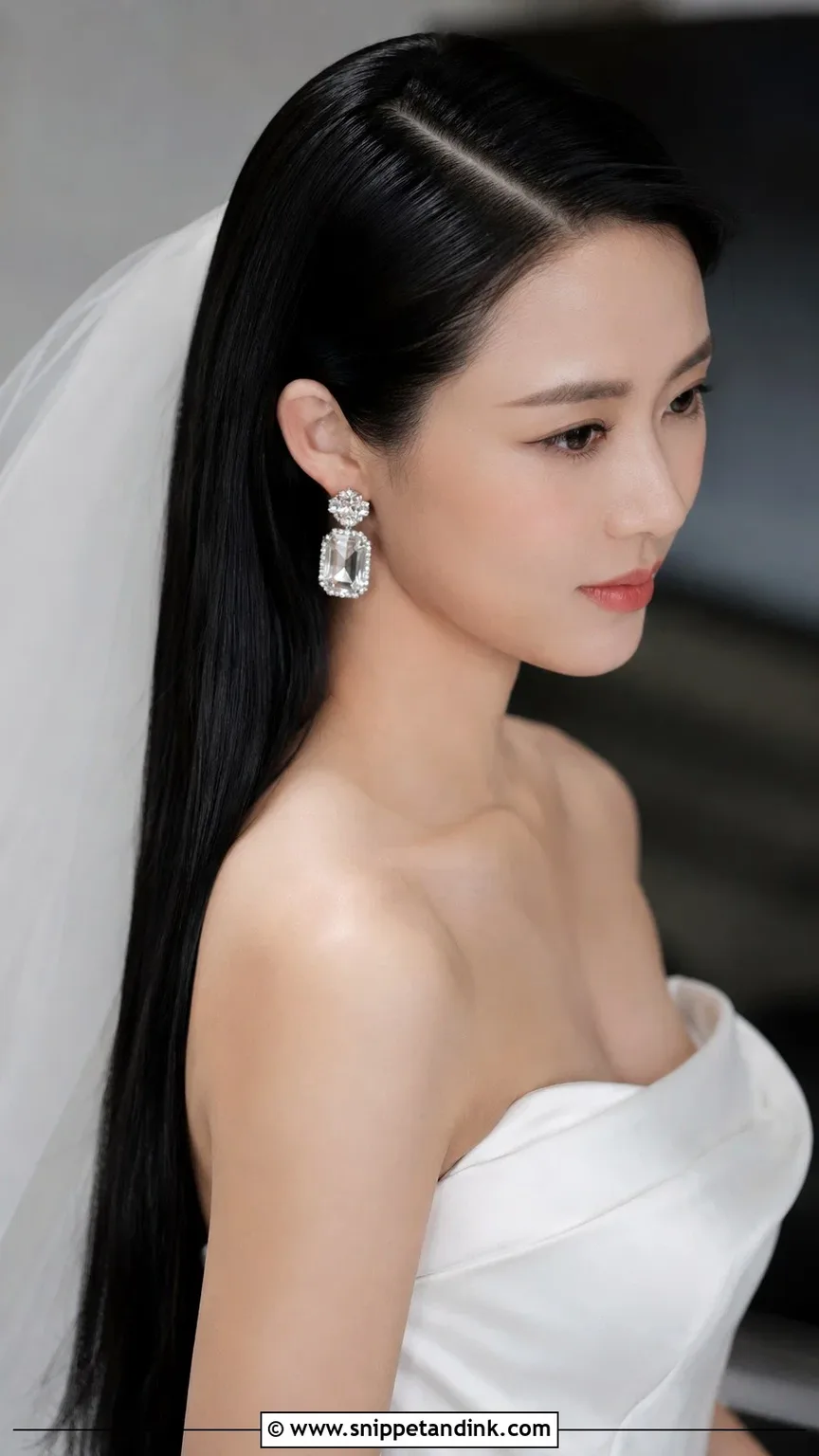
Sleek straight hair with a centre part is the simplest style on this list, and the fitting is the perfect place to see whether simple is enough. The hair is smoothed straight, parted in the middle, and left to fall evenly over both shoulders.
Pros: it is modern and elegant, it shows off a neckline and earrings, and it takes the least time on the wedding morning.
Cons: it can look plain next to a detailed dress, and it shows any frizz or uneven ends, so the cut must be perfect.
Who it suits: brides with naturally straight hair, a minimalist dress, and anyone who loves clean, confident styling.
Who should avoid it: brides who want volume or romance, since this style is deliberately flat and straight.
Maintenance: a flat iron touch-up, a smoothing serum and a fine comb will keep it sleek, even in humidity.
20. The Romantic Side Bun
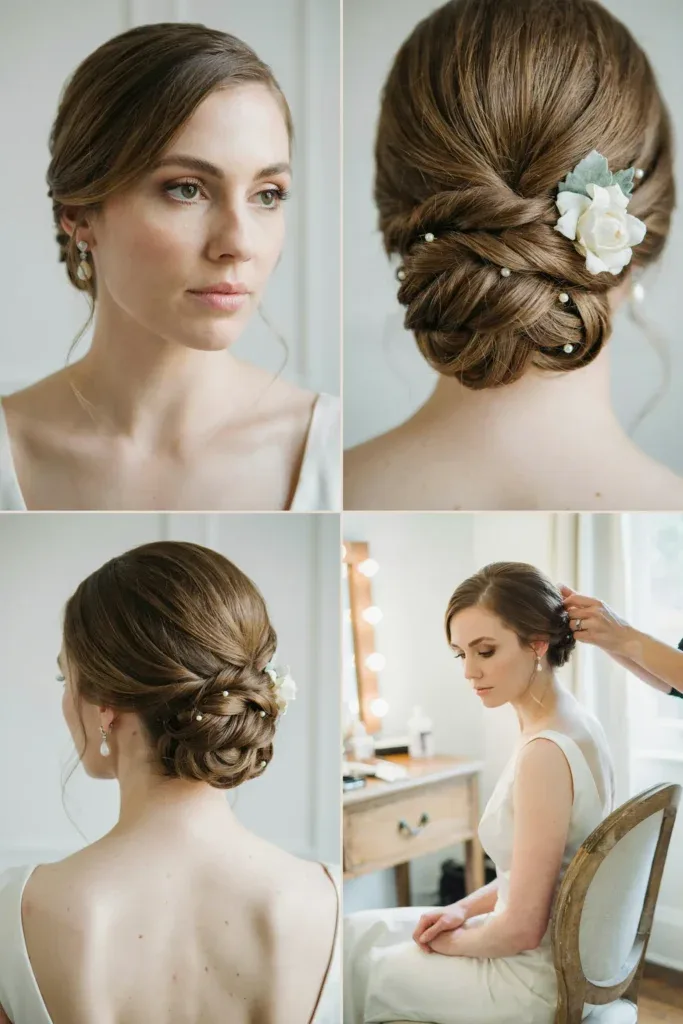
The romantic side bun gathers the hair low and to one side, giving an asymmetrical, soft finish that suits a one-shoulder dress or a dress with a detailed side. It is a good fitting test because it changes the whole balance of the look with one simple move.
Pros: it is flattering and romantic, it shows off one shoulder, and it suits a veil pinned on the opposite side.
Cons: it can feel unbalanced if it is too heavy on one side, and it needs careful pinning to stay put through dancing.
Who it suits: brides with medium to long hair, an asymmetrical dress, and anyone who wants a soft, romantic updo.
Who should avoid it: brides who want perfect symmetry, since this style is deliberately off-centre.
Maintenance: a strong anchor of pins on the heavy side and a light spray will keep it balanced all day.
21. The Twisted Low Updo
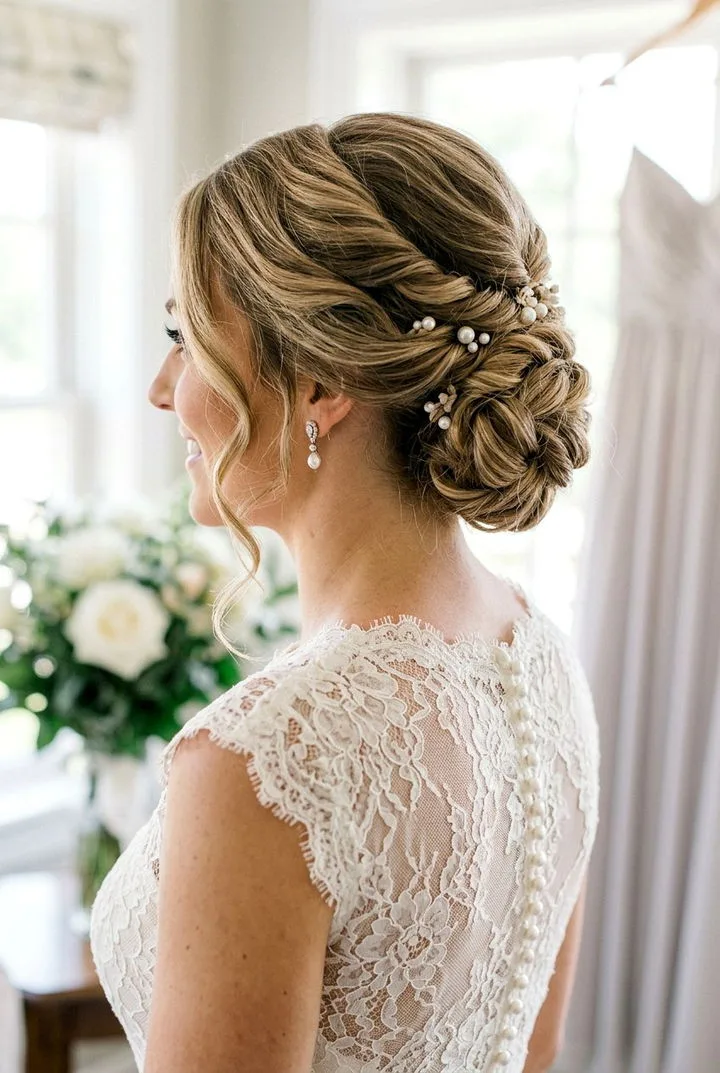
The twisted low updo is made from sections of hair twisted and pinned low at the nape, giving a soft, rope-like texture that looks intricate without being fussy. It is a wonderful fitting test for brides who want an updo with visible detail.
Pros: it is secure and textured, it suits a veil pinned low, and it looks good from every angle in photographs.
Cons: it takes time to twist each section evenly, and it needs enough length to form proper twists.
Who it suits: brides with medium to long hair, a romantic or textured dress, and anyone who loves detailed, hand-finished styles.
Who should avoid it: brides who want a smooth, sleek finish, since the twists are deliberately visible.
Maintenance: a few pins at the ends of each twist and a flexible spray will hold the texture without stiffness.
22. The Curly Updo With Volume
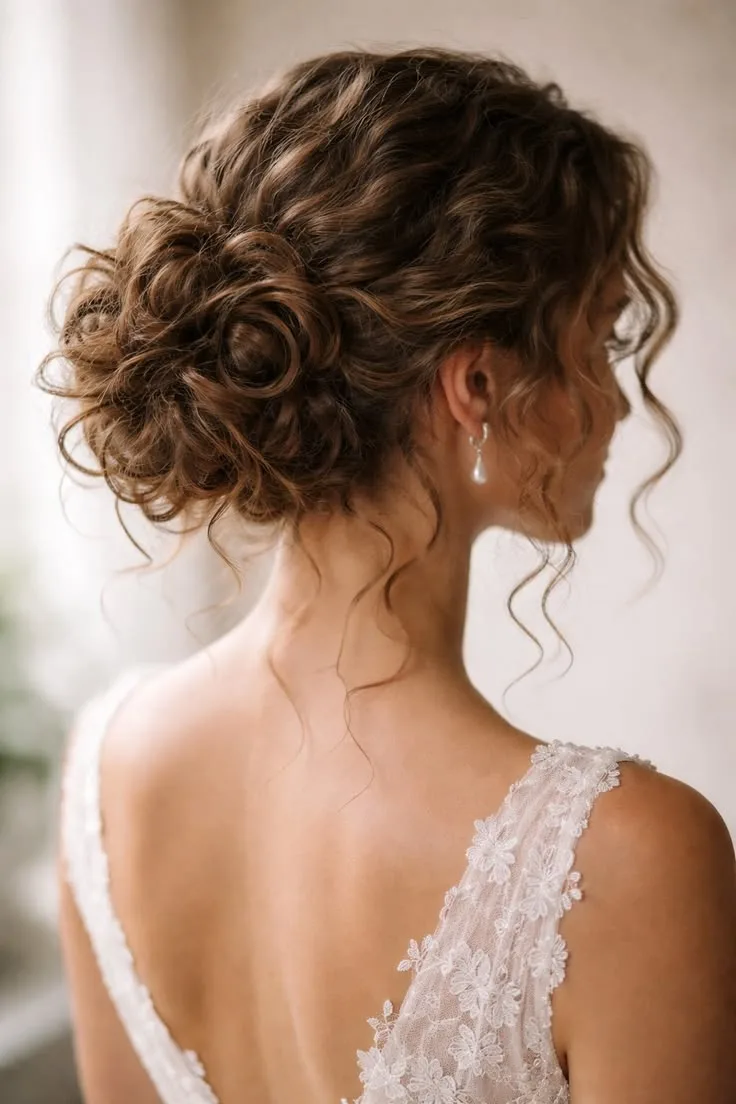
The curly updo with volume celebrates natural curls, gathering them high or low while keeping the curl pattern visible. It is an important style to test at a fitting, because it shows how your own curls behave with the dress, the veil and the heat of the day.
Pros: it is full of volume and personality, it suits a veil pinned underneath, and it looks joyful in photographs.
Cons: curls can expand in humidity, so test the style in conditions as close to the wedding day as you can.
Who it suits: brides with naturally curly hair, a romantic or boho dress, and anyone who wants their real texture on show.
Who should avoid it: brides who want a smooth, controlled finish, since this style is all about the curls.
Maintenance: a curl cream, a few pins to shape the silhouette, and a light spray will keep the curls defined without crunch.
23. The Milkmaid Braid
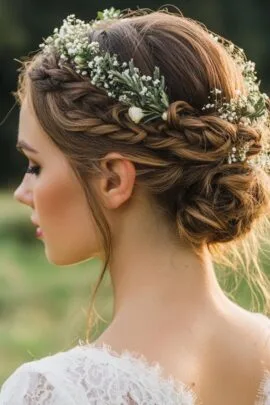
The milkmaid braid wraps two braids over the top of the head like a crown, giving a sweet, folk-inspired finish. It is a charming fitting test for a rustic or garden wedding, and it keeps every strand of hair off the face and neck.
Pros: it is secure and comfortable, it suits flower crowns, and it holds up in heat and wind better than almost any other style.
Cons: it needs long hair to wrap fully, and it can look too young or too casual with a formal dress.
Who it suits: brides with long hair, a rustic or garden wedding, and anyone who wants a romantic, storybook feel.
Who should avoid it: brides with a formal dress or venue, since the style is deliberately relaxed and folk-inspired.
Maintenance: a few pins where the braids meet and a light spray are all it needs, even after a long day outdoors.
24. Old Hollywood Glam With a Side Part
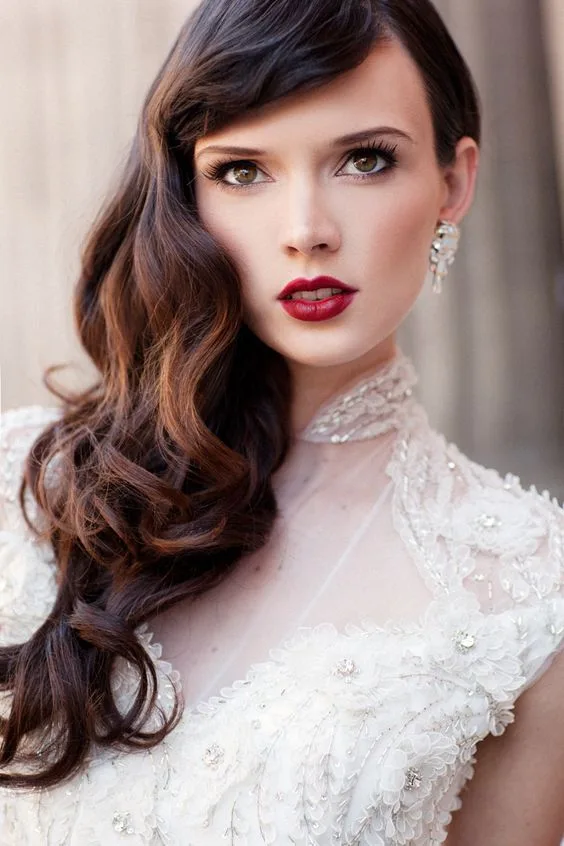
Old Hollywood glam with a side part is all about deep waves, a clean parting and a polished finish. It is a fitting favourite for brides who want glamour with structure, because the side part gives the waves a direction and the whole look a sense of occasion.
Pros: it is glamorous and timeless, it photographs beautifully, and it suits a statement earring on the bare side.
Cons: it needs setting and patience, and the waves can drop if the hair is not properly prepared before styling.
Who it suits: brides with medium to long hair, a glamorous or vintage dress, and a formal evening wedding.
Who should avoid it: brides with very short hair, since the waves need length to fall properly, and anyone marrying outdoors in high humidity.
Maintenance: a setting spray, a soft brush and a silk scarf for the journey will protect the waves until the ceremony.
25. The Loose Braid With a Ribbon
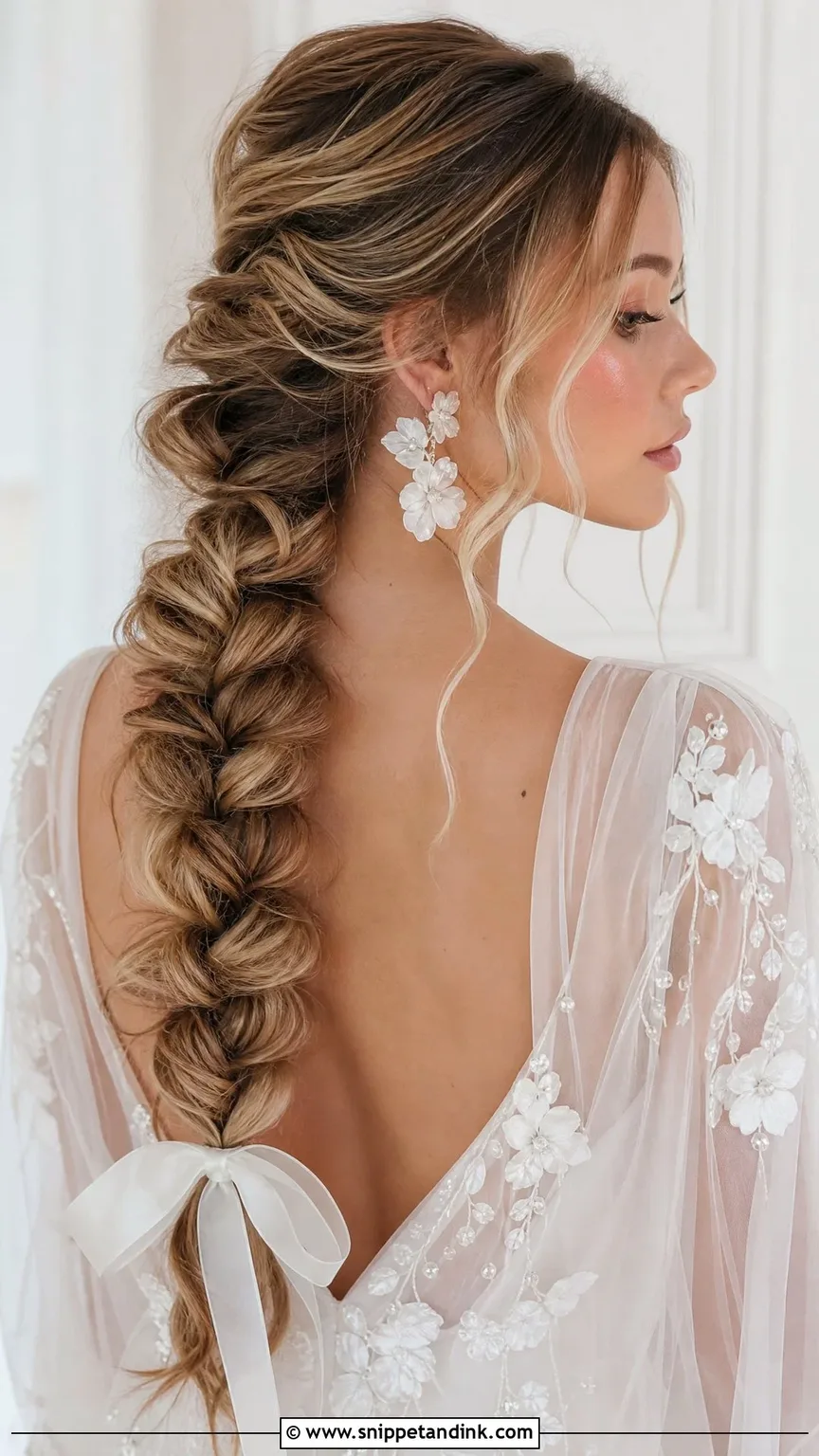
The loose braid with a ribbon is a soft, romantic style that weaves a ribbon through a relaxed braid, tying it off with a small bow. It is a lovely fitting test if you want a touch of colour or a nod to your wedding palette in your hair.
Pros: it is gentle and romantic, it adds a personal touch, and the ribbon can match the wedding colours or the bouquet.
Cons: the ribbon can slip if it is not secured, and the braid can loosen over a long day if it is not pinned at the ends.
Who it suits: brides with long hair, a romantic or garden wedding, and anyone who wants a small, personal detail in their hair.
Who should avoid it: brides with a formal dress, since the ribbon can look too casual, and anyone who dislikes braids.
Maintenance: a clear elastic, a pin through the bow, and a light spray will keep the ribbon and the braid in place.
26. The Chignon With Pearl Pins
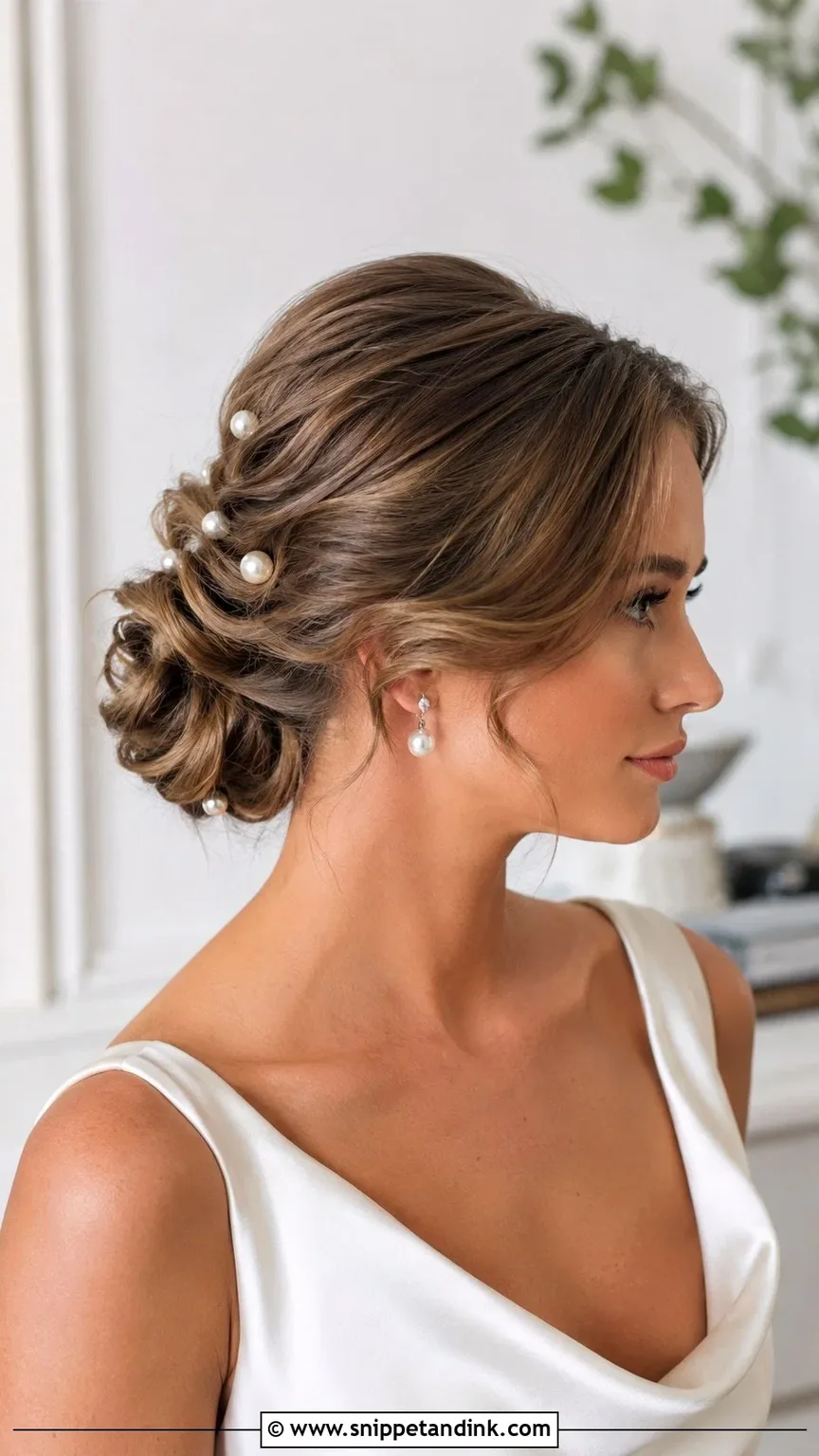
The chignon with pearl pins takes the classic low chignon and adds small pearl pins scattered through the roll, giving it a soft, luminous finish. It is a beautiful fitting test, because the pins catch the light in photographs and add detail without overwhelming the dress.
Pros: it is elegant and timeless, it suits a veil, and the pearls add interest to a simple, clean style.
Cons: the pins can slip out of fine hair, and too many pins can look cluttered, so placement matters more than quantity.
Who it suits: brides with medium to long hair, a classic or lace dress, and anyone who loves pearl details.
Who should avoid it: brides with a heavily beaded dress, since the pearls can compete with the beading.
Maintenance: a few extra pins in your bag and a quick check after the ceremony will keep the pearls exactly where they belong.
27. The Wavy Lob
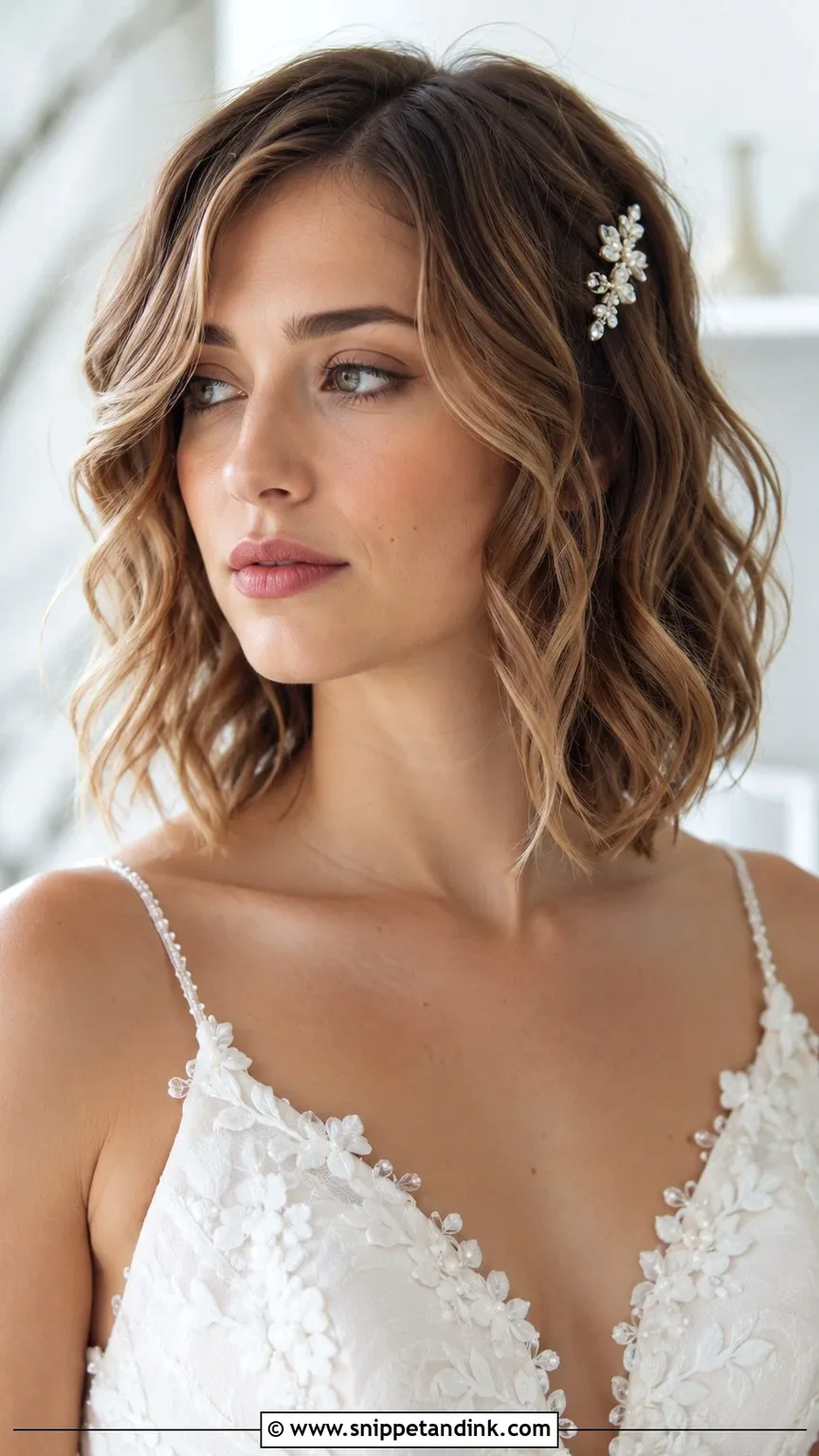
The wavy lob is the shoulder-length bride’s best friend at a fitting, because it proves that short hair can be every bit as bridal as long hair. Soft waves give the lob movement and volume, and the length sits neatly above the shoulders without touching the dress.
Pros: it is modern and fresh, it suits a veil comb and a headpiece, and it never tangles in a beaded back.
Cons: it can fall flat by the evening if it is not set with texture spray, and it offers fewer updo options than longer hair.
Who it suits: brides with shoulder-length hair, a modern or minimalist dress, and anyone who loves their natural length.
Who should avoid it: brides who dream of a long, flowing style, unless they are willing to try clip-in extensions at the fitting.
Maintenance: a texture spray, a quick curling wand touch-up and a wide-tooth comb will keep the waves lively all day.
28. The Dutch Braid Crown
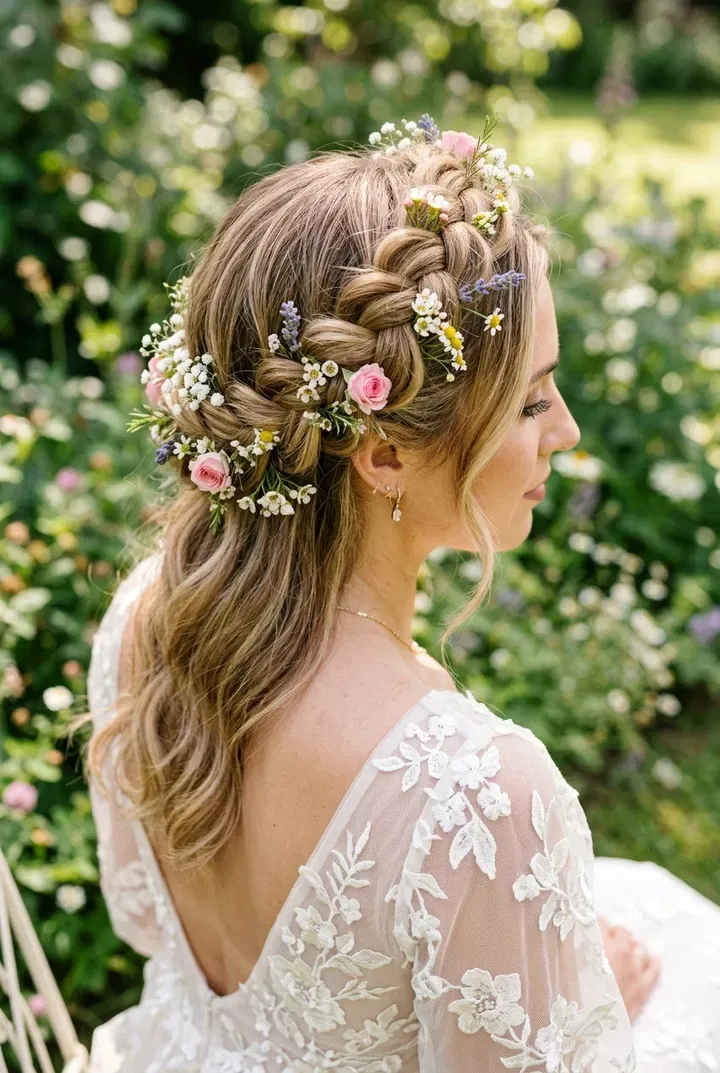
The Dutch braid crown is a bold, raised braid that sits on top of the hair like a halo, giving a striking, sculptural finish. It is a wonderful fitting test for brides who want a braid that is visible from the front as well as the back.
Pros: it is secure and dramatic, it suits a flower crown or a veil, and it holds its shape through heat and dancing.
Cons: it needs length and a confident braider, and it can feel tight if it is braided too firmly against the head.
Who it suits: brides with long, thick hair, a boho or romantic wedding, and anyone who wants a braid as the main feature.
Who should avoid it: brides with short or fine hair, since the braid needs volume to look its best.
Maintenance: a few pins at the ends and a light spray will hold the crown, even after hours of wear.
29. The Low Ponytail With Wrapped Hair
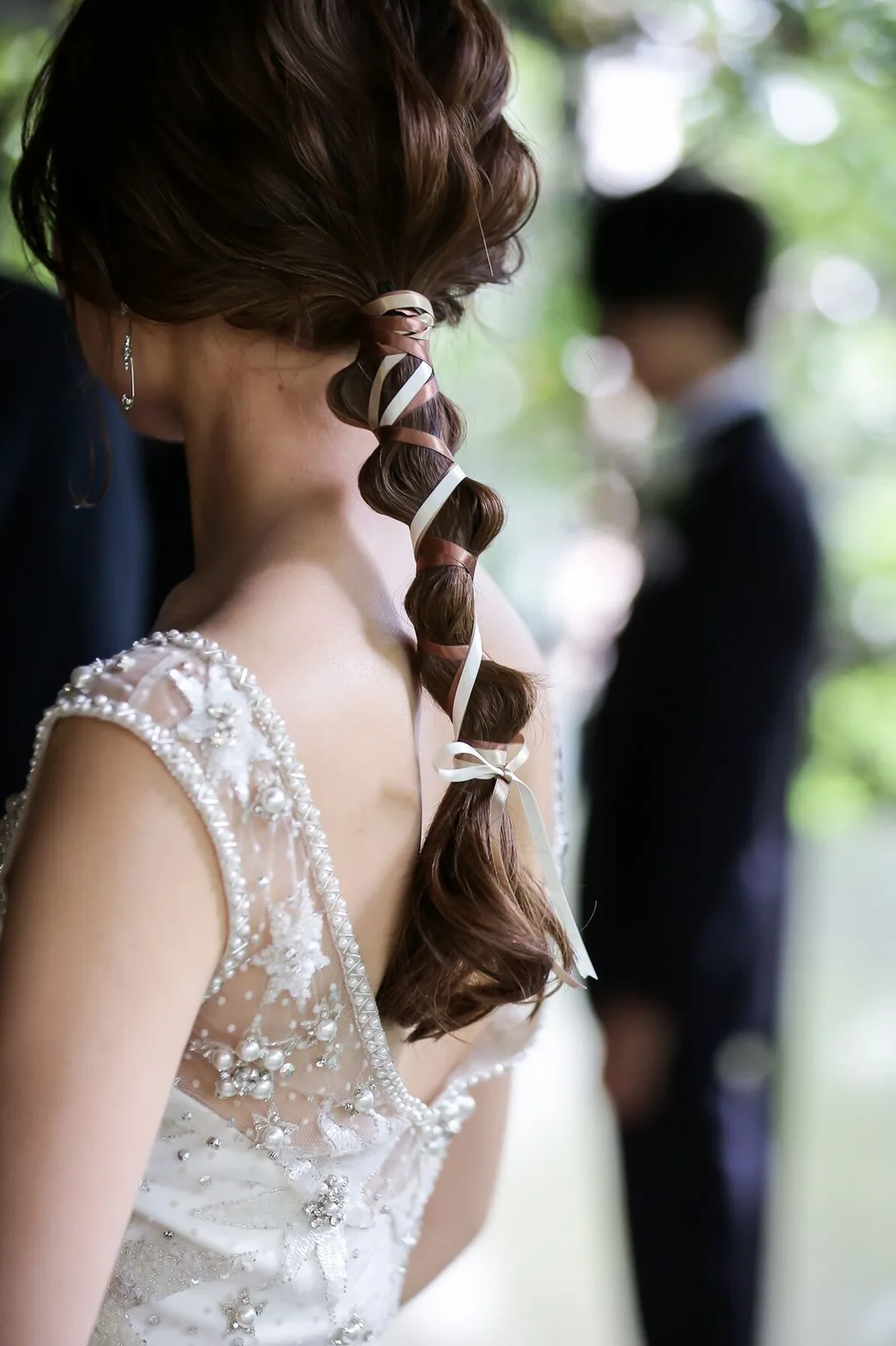
The low ponytail with wrapped hair takes a simple ponytail and wraps a strand of hair around the elastic, hiding it completely. It is a chic, modern style to test at a fitting, because it looks polished without trying too hard.
Pros: it is comfortable and secure, it shows off the neckline, and it suits a ribbon or a small accessory wrapped with the hair.
Cons: it can look too simple with a plain dress, and it needs smoothing to avoid bumps at the crown.
Who it suits: brides with medium to long hair, a modern or minimalist dress, and anyone who loves understated elegance.
Who should avoid it: brides who want volume or drama, since this style is deliberately clean and quiet.
Maintenance: a smoothing serum, a hidden elastic and a pin through the wrap will keep it neat all day.
30. The Updo With Face-Framing Pieces
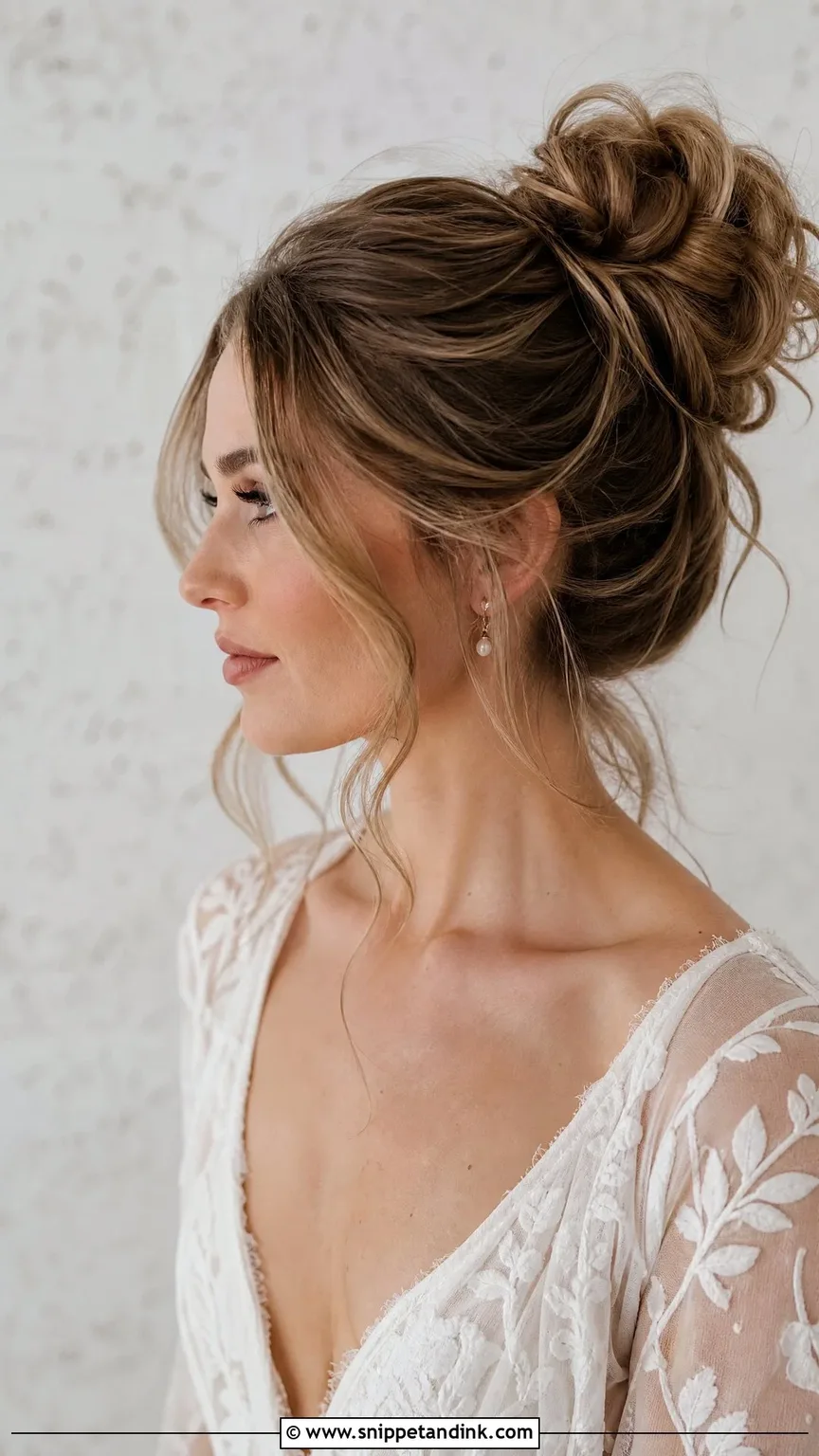
The updo with face-framing pieces is the style that flatters almost everyone at a fitting, because the soft pieces around the face soften the updo and keep it from looking severe. The hair is pinned up, but two gentle strands are left loose at the front.
Pros: it is flattering and romantic, it suits every face shape, and it photographs beautifully from the front.
Cons: the loose pieces can fall into the eyes or get caught in a veil, so they need a light curl and a touch of spray to behave.
Who it suits: brides with any hair length that can be pinned up, a romantic dress, and anyone who wants an updo that still feels soft.
Who should avoid it: brides who want a completely clean, pulled-back look, since the loose pieces are the point of this style.
Maintenance: a curling wand touch-up and a flexible spray will keep the face-framing pieces soft without letting them fall flat.
31. The Modern Beehive
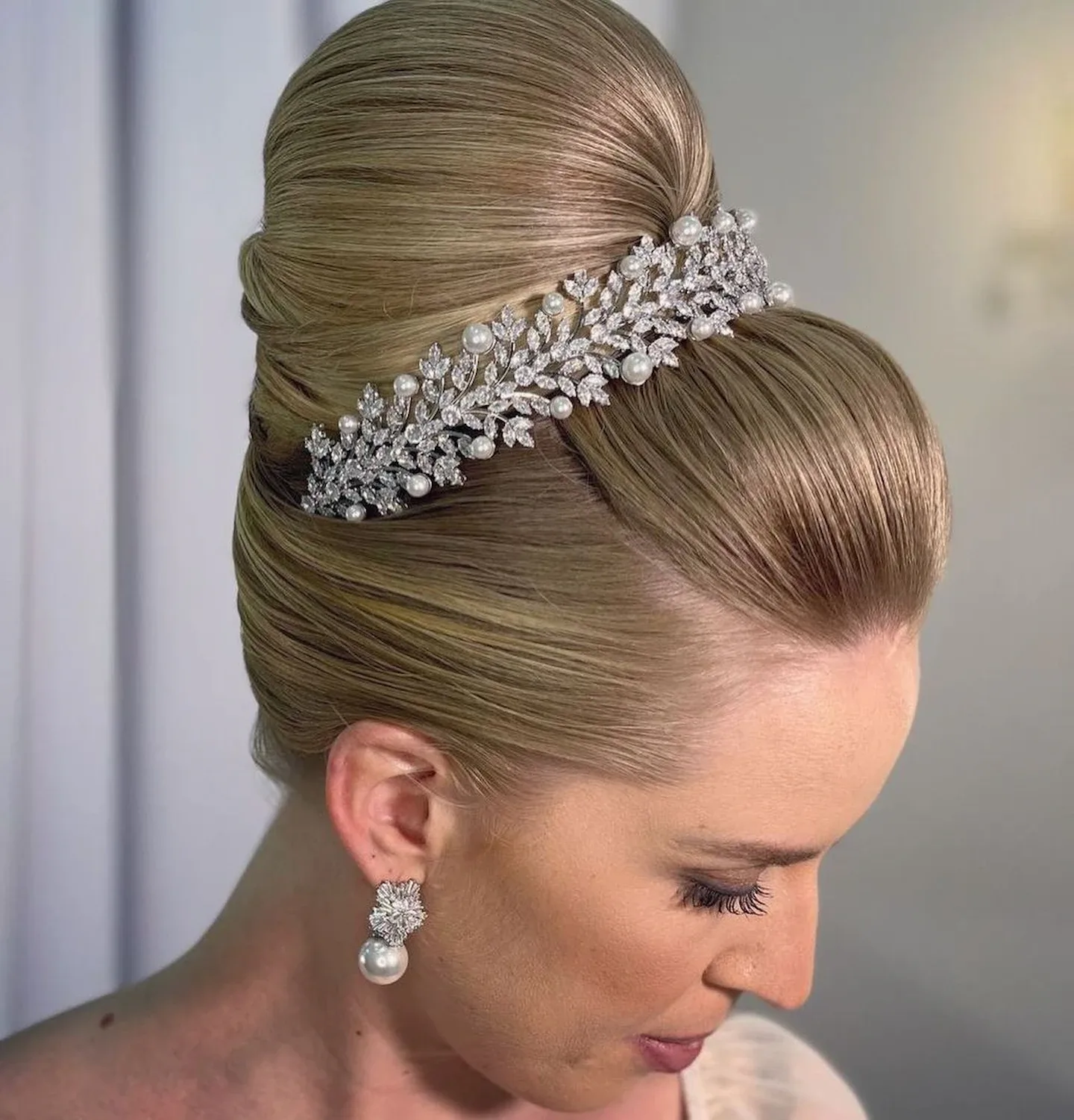
The modern beehive is a softer, updated version of the sixties classic, with height at the crown and smooth, polished sides. It is a fun style to test at a fitting, because it changes the whole silhouette of the dress and gives the look a sense of occasion.
Pros: it adds height and drama, it suits a veil pinned low, and it photographs beautifully in profile.
Cons: it needs backcombing and strong spray to hold, and it can feel heavy by the evening if it is built too high.
Who it suits: brides with medium to long hair, a vintage or glamorous dress, and anyone who loves a bold, retro finish.
Who should avoid it: brides with fine hair, since the height needs volume to look intentional, and anyone who dislikes backcombing.
Maintenance: a strong-hold spray, a few pins at the base, and a gentle hand with the brush will keep the height all day.
32. The Braided Low Bun
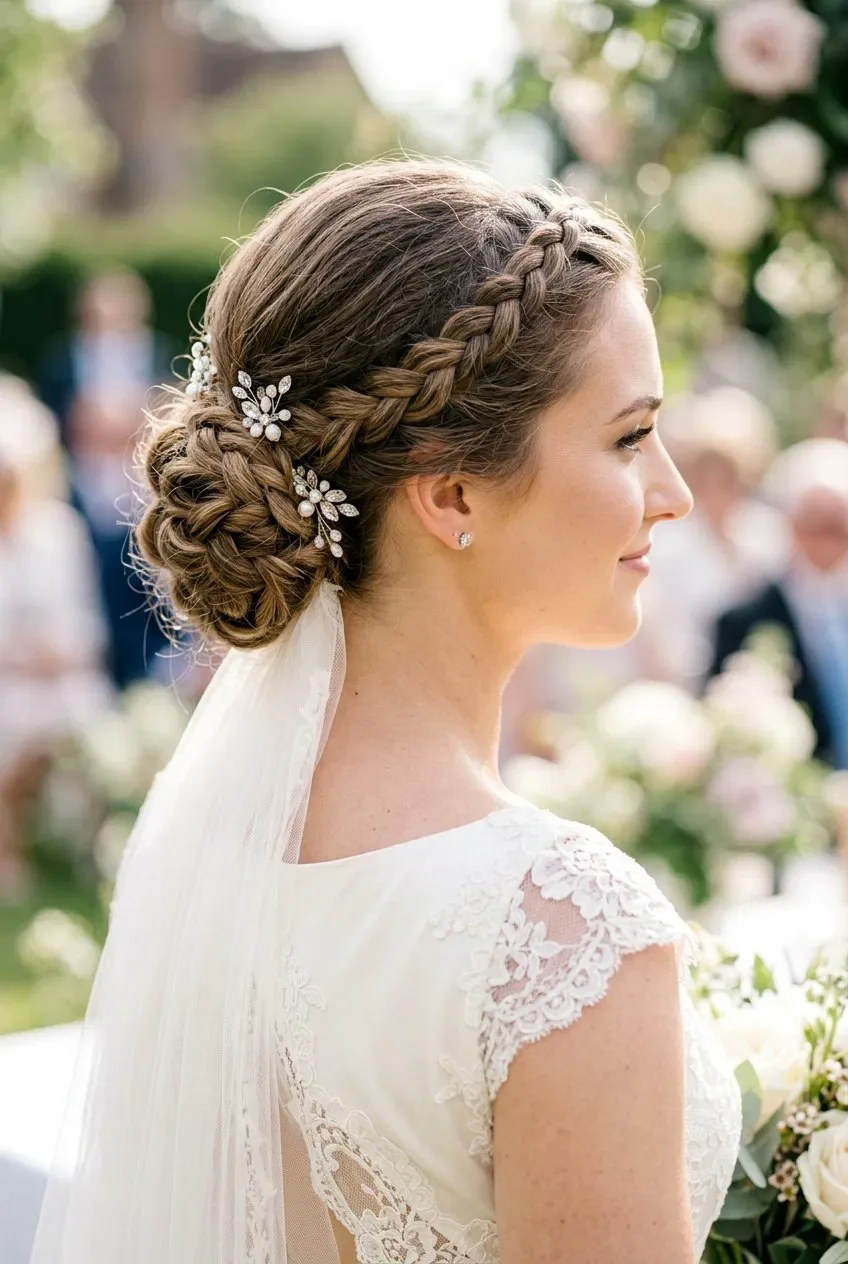
The braided low bun combines a braid with a low bun, wrapping the braid around the bun or feeding it into the base. It is a detailed, elegant style that photographs beautifully from the back, where the braid pattern becomes the decoration.
Pros: it is secure and detailed, it suits a veil, and it holds its shape through a long day.
Cons: it takes time and a skilled braider, and it needs length to form both the braid and the bun.
Who it suits: brides with long hair, a classic or romantic dress, and anyone who loves intricate, hand-finished styles.
Who should avoid it: brides who want a quick, simple style, since this one is a proper morning project.
Maintenance: a few pins where the braid meets the bun and a light spray will hold it from the ceremony to the last dance.
33. Glamorous Curls
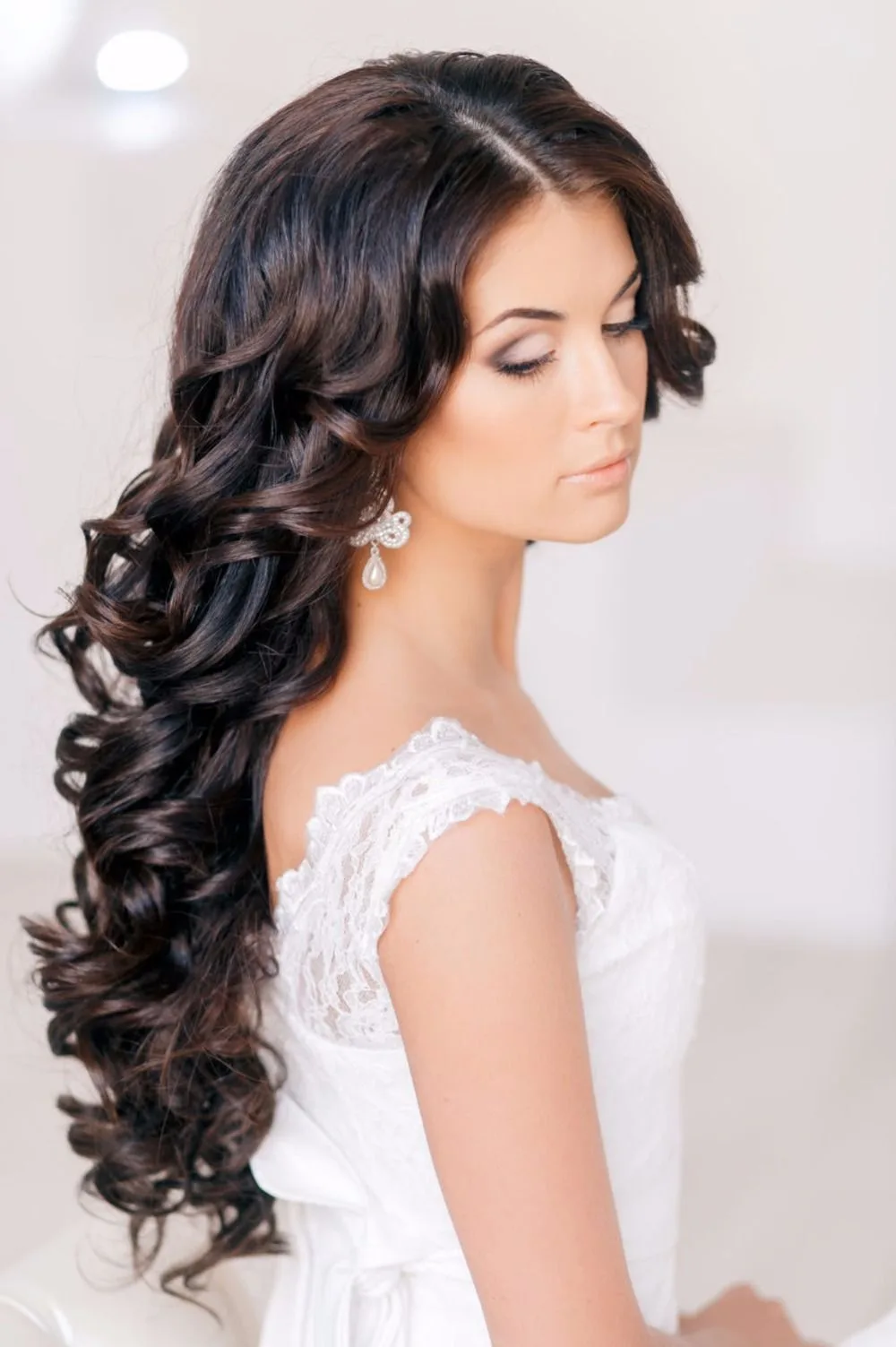
Glamorous curls are big, bouncy and full of shine, falling over the shoulders in soft, defined waves. They are a joyful style to test at a fitting, because they change the whole mood of the dress, making even a simple gown feel celebratory.
Pros: they are full of volume and movement, they photograph beautifully, and they suit a veil pinned high or low.
Cons: they can drop in humidity and tangle in a beaded dress, so test the combination at the fitting before you commit.
Who it suits: brides with long hair, a glamorous or romantic dress, and anyone who wants volume and drama.
Who should avoid it: brides with a heavily detailed back, since the curls will hide it, and anyone whose hair will not hold a curl.
Maintenance: a curling wand touch-up, a wide-tooth comb and a flexible spray will keep the curls bouncy without stiffness.
34. The Textured Half-Up Twist
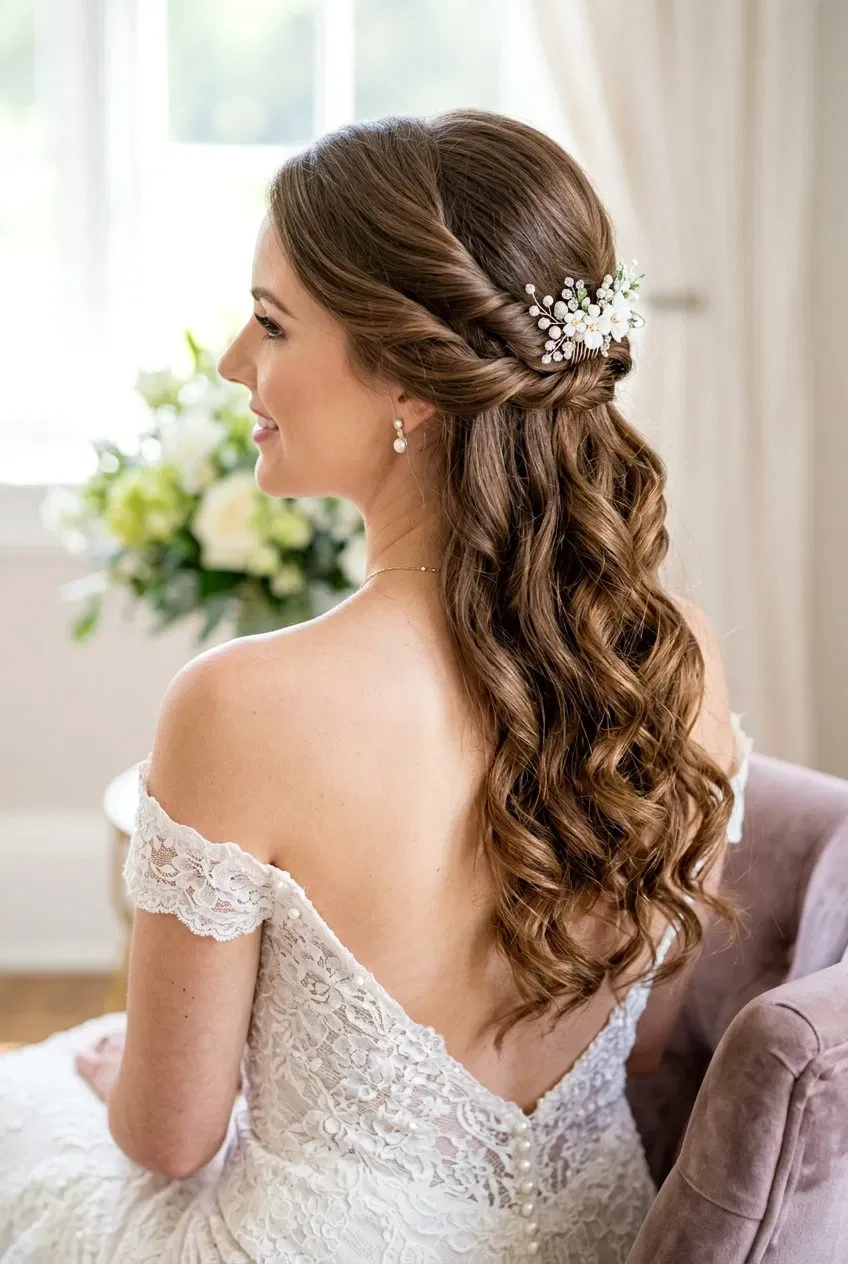
The textured half-up twist takes the top section of hair, twists it back and pins it loosely, leaving the rest to fall in soft waves. It is a relaxed, modern style that is easy to test at a fitting, because it takes minutes to pin and seconds to change.
Pros: it is soft and romantic, it suits a veil and a headpiece, and it is easy to restyle for the evening.
Cons: the twist can loosen if it is not pinned well, and the loose length can tangle in a veil or a beaded bodice.
Who it suits: brides with medium to long hair, a romantic or boho dress, and anyone who wants a relaxed half-up look.
Who should avoid it: brides who need a style that will not move at all, since this twist is designed to look soft and a little undone.
Maintenance: a few pins, a texture spray and a quick re-twist after the ceremony will keep it looking fresh.
35. The Classic French Roll
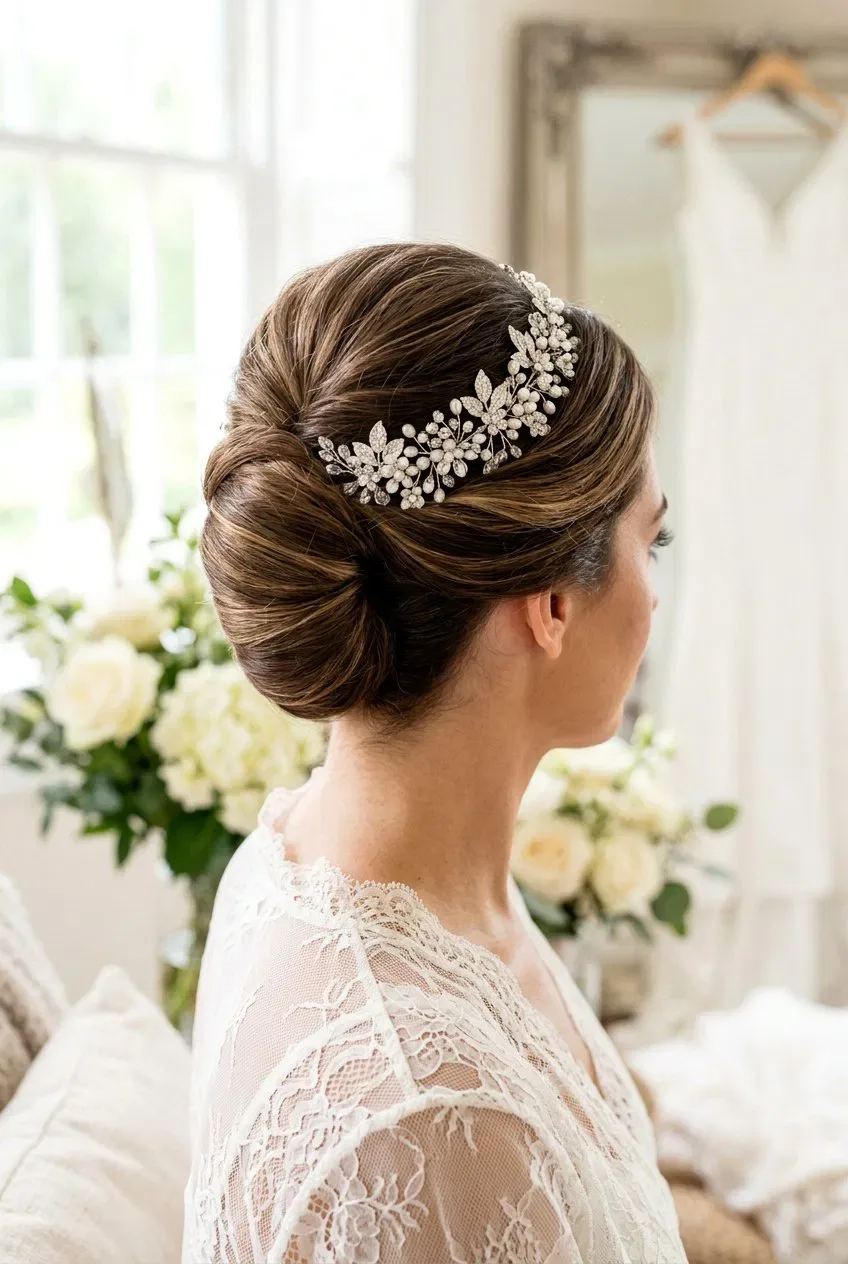
The classic French roll is the most elegant style on this list, with the hair swept up and folded into a smooth, vertical roll. It is a fitting favourite for formal weddings, because it looks polished from every angle and holds a veil beautifully.
Pros: it is timeless and sophisticated, it adds height, and it suits a statement earring and a formal dress.
Cons: it takes a skilled stylist to get the roll smooth and even, and it can feel tight if it is pinned too firmly.
Who it suits: brides with medium to long hair, a formal or classic dress, and anyone who wants a truly polished finish.
Who should avoid it: brides who want a relaxed or boho feel, since this style is deliberately formal and structured.
Maintenance: a strong-hold spray, crossed pins and a quick smoothing with a brush will keep the roll neat all day.
36. Soft Waves With a Headband
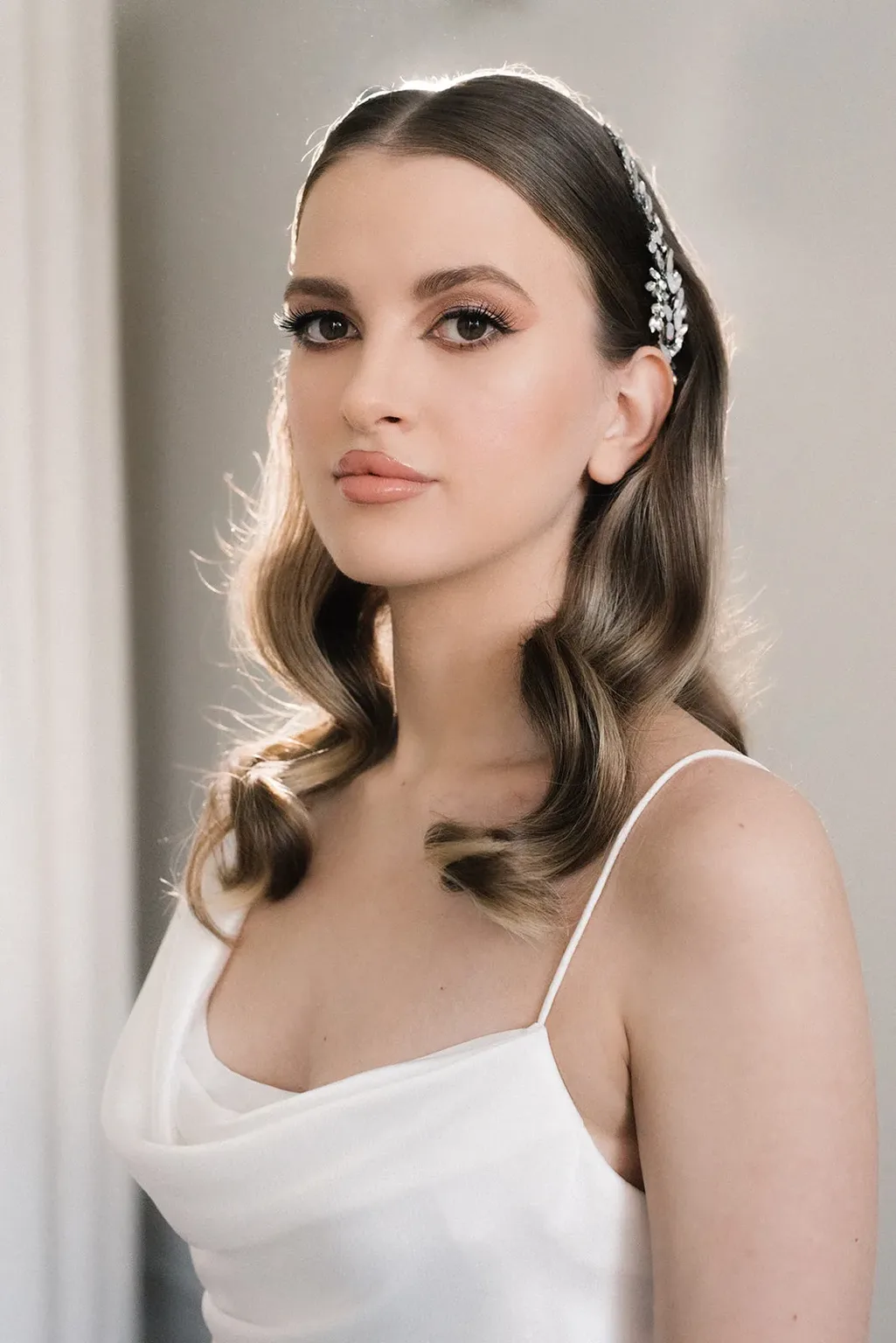
Soft waves with a headband are a gentle, pretty style that is easy to test at a fitting, because the headband does most of the work. The waves fall loosely over the shoulders while the headband keeps the hair back from the face and adds a little sparkle.
Pros: it is soft and flattering, it suits a veil worn low, and the headband adds polish without the weight of a tiara.
Cons: the headband can slip or press uncomfortably after hours of wear, so test it at the fitting for a full hour if you can.
Who it suits: brides with medium to long hair, a romantic or classic dress, and anyone who loves a simple, pretty finish.
Who should avoid it: brides with a very formal dress, since the headband can look too casual, and anyone who dislikes pressure on the head.
Maintenance: a few pins behind the ears to anchor the headband and a light spray will keep everything comfortable and in place.
37. The Romantic Updo With Tendrils
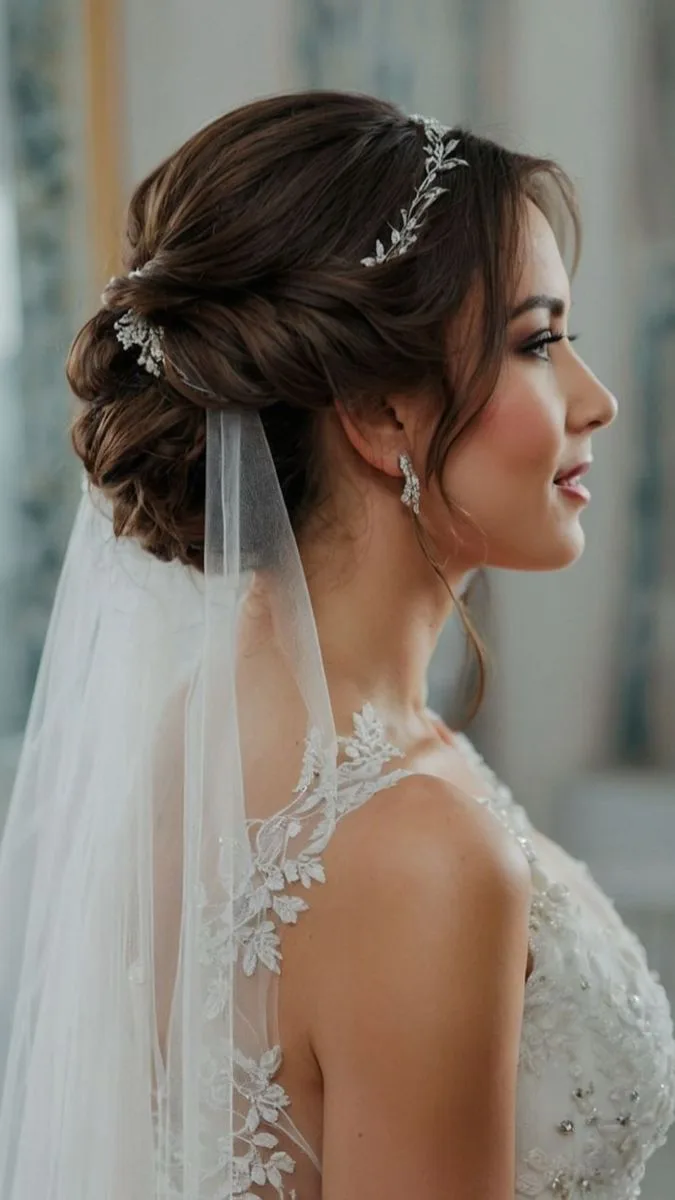
The romantic updo with tendrils is a soft, lived-in updo with loose, curled tendrils escaping around the face and neck. It is one of the most forgiving styles to test at a fitting, because it looks better slightly undone than perfectly neat.
Pros: it is romantic and flattering, it suits a veil and a flower crown, and it looks lovely as the day goes on.
Cons: the tendrils can fall flat in humidity, and they need a curling wand to revive them after the ceremony.
Who it suits: brides with medium to long hair, a romantic or lace dress, and anyone who wants an updo that feels soft rather than severe.
Who should avoid it: brides who want a clean, polished finish, since the tendrils are deliberately loose.
Maintenance: a curling wand touch-up, a flexible spray and a gentle finger-comb will keep the tendrils soft and defined.
38. The Sleek Bun With a Middle Part
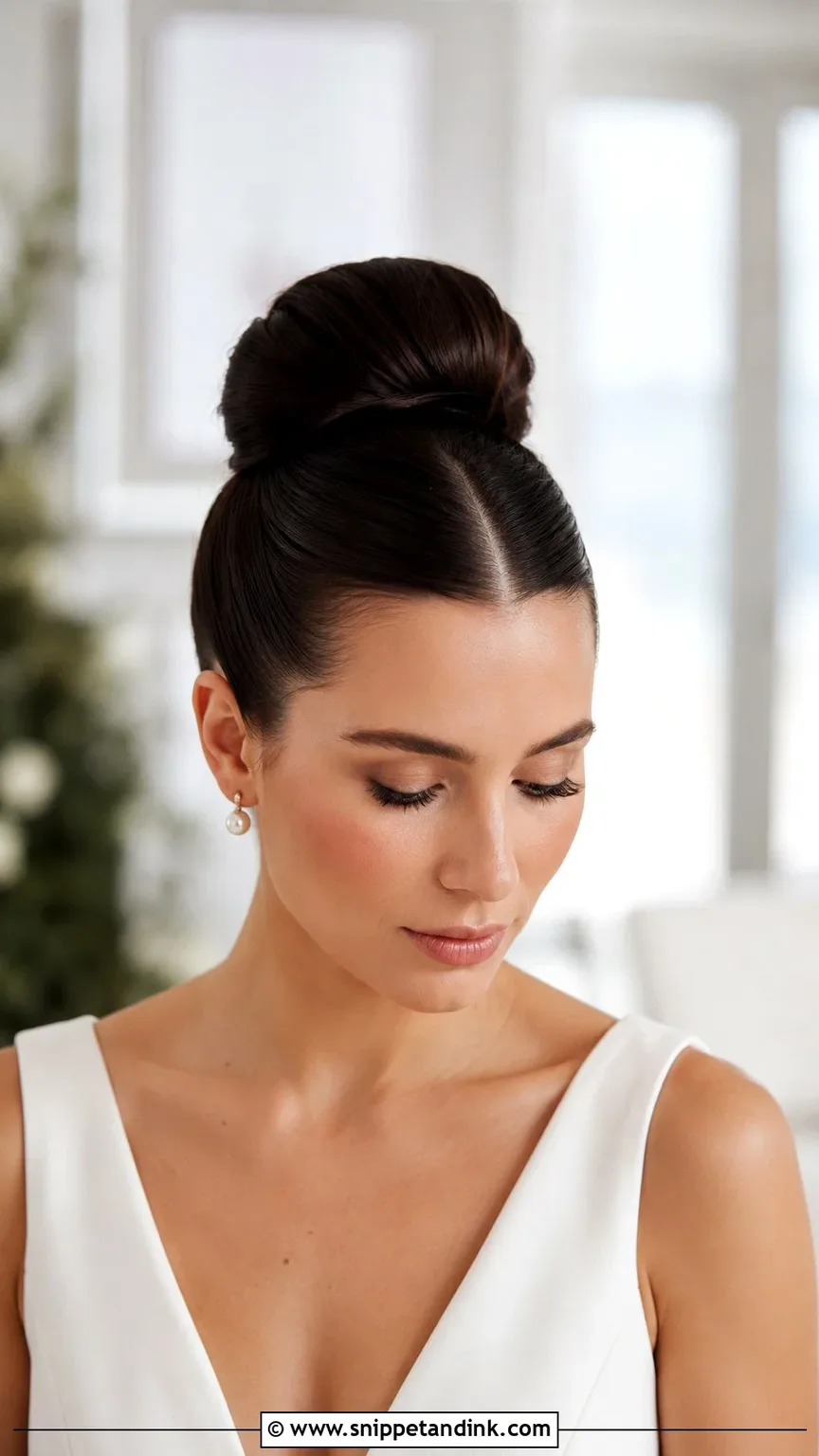
The sleek bun with a middle part is a clean, modern classic that parts the hair precisely in the centre and gathers it into a smooth bun. It is a strong fitting test, because it shows whether a severe, polished style suits your face and your dress.
Pros: it is neat and symmetrical, it shows off earrings and a neckline, and it stays secure through a long day.
Cons: it can look harsh if the parting is too sharp or the bun too tight, so it needs a stylist with a light hand.
Who it suits: brides with straight hair, a modern or minimalist dress, and anyone who loves clean, architectural styling.
Who should avoid it: brides who want softness around the face, since this style pulls everything back and away.
Maintenance: a smoothing serum, a fine comb and a firm spray will keep the parting sharp and the bun sleek.
39. The Boho Messy Braid
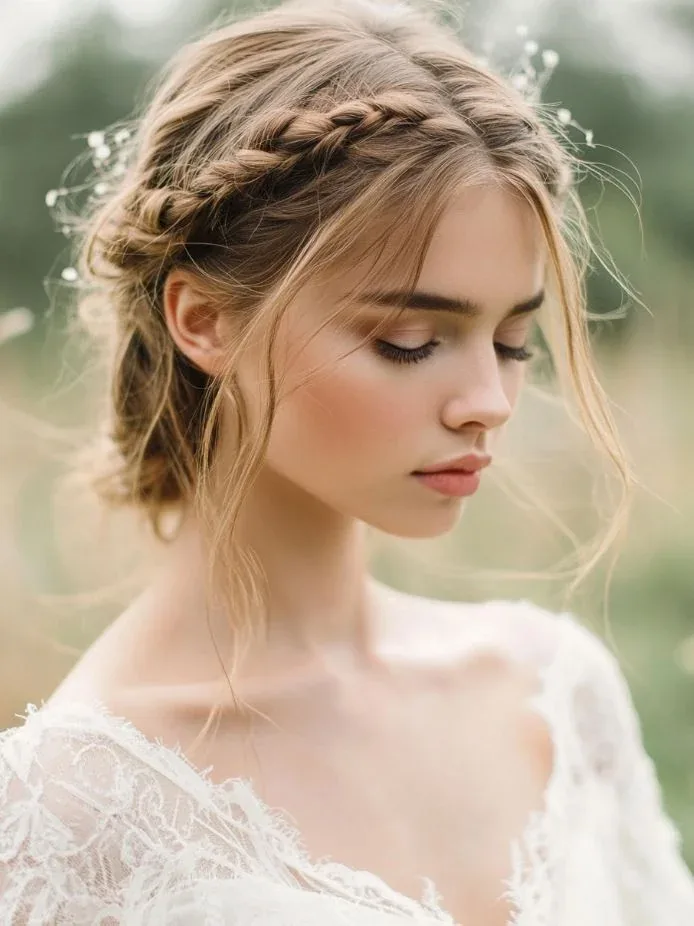
The boho messy braid is a loose, textured braid that falls over one shoulder, with pieces pulled out for softness and volume. It is a relaxed, joyful style to test at a fitting, especially for an outdoor or festival wedding.
Pros: it is romantic and relaxed, it suits a flower crown, and it looks better as the day goes on.
Cons: it can unravel in wind, and it needs length, so short hair will need extensions to achieve the full, messy effect.
Who it suits: brides with long hair, a boho or garden wedding, and anyone who wants a relaxed, carefree feel.
Who should avoid it: brides with a formal dress or venue, since the looseness can clash with a structured gown.
Maintenance: a texture spray, a few pins at the ends, and a gentle pull at the braid edges will keep it full and soft.
40. The Timeless Ballerina Bun
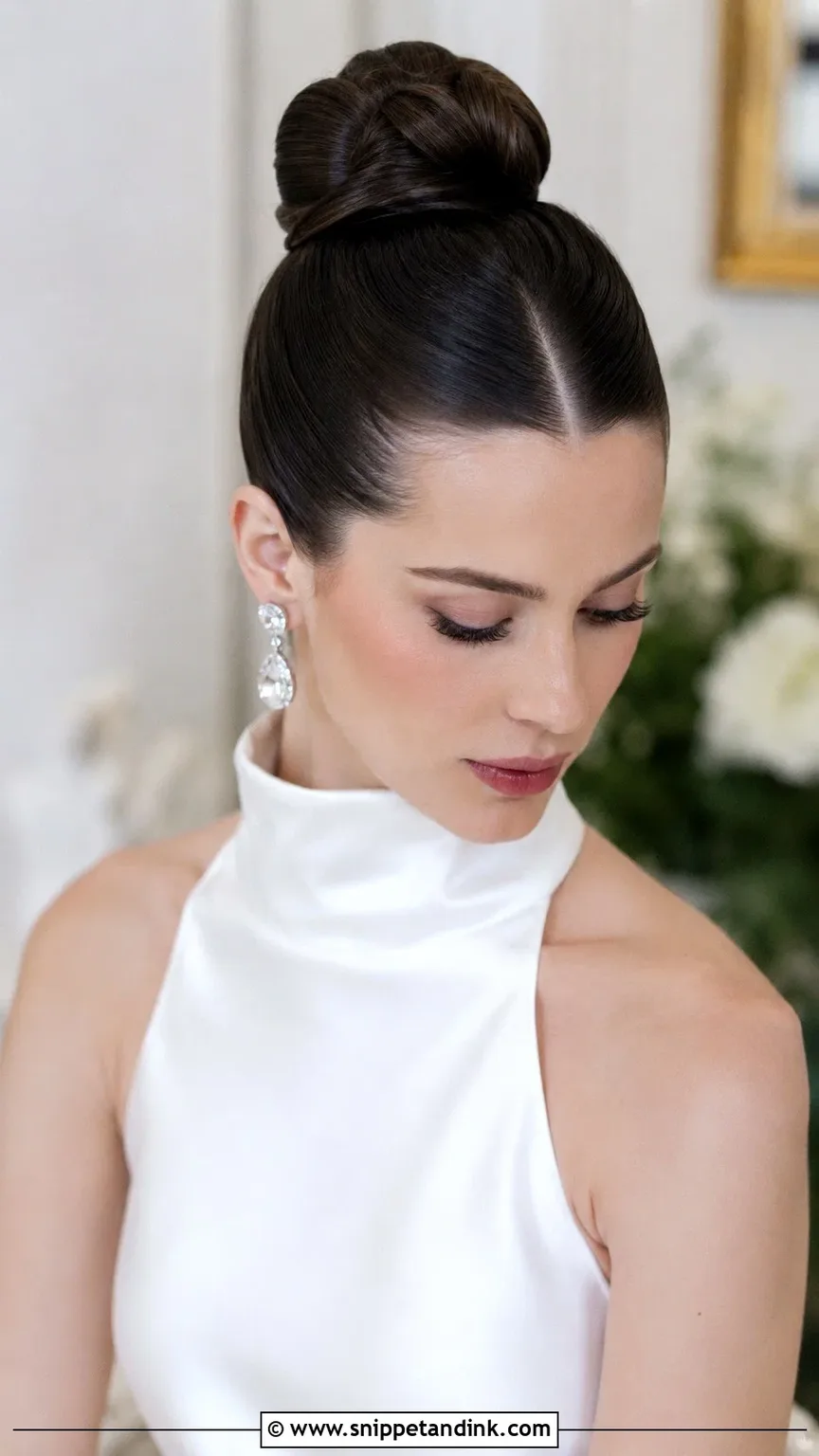
The timeless ballerina bun sits high and neat on the crown, smooth and perfectly round, giving the whole look a graceful, lifted feel. It is a classic fitting test for brides who want a clean silhouette that lets the dress and the veil take centre stage.
Pros: it is elegant and secure, it lengthens the neck, and it suits every veil length from a blusher to a cathedral.
Cons: it can feel severe if it is pulled too tight, and it needs enough hair to form a full, round bun.
Who it suits: brides with medium to long hair, a classic or formal dress, and anyone who loves a clean, timeless finish.
Who should avoid it: brides who want softness or volume around the face, since this bun is deliberately smooth and neat.
Maintenance: a strong elastic, a smoothing brush and a firm spray will keep it perfectly round from the first photograph to the last dance.
Should I wear my hair up or down to a bridal fitting?
Wear it the way you plan to wear it on the wedding day, or as close as you can get. If you are torn between up and down, arrive with it down, try the dress, then pin it up roughly and compare the two looks in photographs. The fitting is for deciding, not for guessing, so test both versions with the real dress on.
Do I need a hair trial before my first dress fitting?
You do not need one, but having one makes the fitting far more useful. A trial gives you a finished style to test against the dress, while arriving without one means you are judging a rough pin-up. If your first fitting is early, go with a loose idea and book the trial before the second fitting.
What should I bring to a bridal fitting for my hair?
Bring your veil, headpiece, hairpins and earrings, plus clean, dry hair washed the night before. Add your inspiration photos saved offline, the shoes and undergarments for the day, and a small kit with pins, a brush and hairspray. Your stylist can only plan for the accessories that are actually in the room.
Can I try a veil at the fitting if I have not bought one yet?
Yes, and you should. Most boutiques have sample veils in different lengths, and trying them with your hairstyle shows you whether you want a blusher, a fingertip or a cathedral length. Tell the consultant you are still deciding, try each length with your hair up and down, and photograph them all before you buy.
How do I know if a hairstyle suits my dress?
Judge it in photographs, not just in the mirror. Take a front, side and back shot of each style with the dress on, then compare them side by side. A style suits the dress when it shows off the neckline and back detail instead of hiding them, and when the whole look feels balanced rather than top-heavy or bare.
Should I wash my hair before a bridal fitting?
Wash it the night before, not the morning of the fitting. Freshly washed hair is slippery and refuses to hold pins, while hair washed the night before has enough grip for a stylist to pin a realistic version of your wedding style. Arrive with it dry, and skip heavy oils or leave-in treatments that day.
What if I love two different hairstyles at the fitting?
That is a good problem, and the fitting is the place to solve it. Photograph both with the dress on, then ask your stylist which one holds better, which one suits the veil, and which one you can change into later. Many brides wear an updo for the ceremony and let it down for the evening, so ask whether your two favourites can be one style in two stages.
Do I need my wedding shoes and undergarments for the hair fitting?
Yes, because both change your posture and the way the dress sits, which changes how the hairstyle reads. The right shoes set your height and the line of your shoulders, and the right undergarments set the shape of the dress. A hairstyle judged without them is judged against a dress that is not sitting the way it will on the day.
How long does a hairstyle take to test at a fitting?
Allow twenty to thirty minutes per style on top of the dress fitting itself. A rough pin-up takes ten minutes, but a proper test with the veil, the headpiece and photographs takes longer. Tell the boutique in advance that you want to try hair, so they can allow extra time instead of rushing you.
Can I change my wedding hairstyle after the final fitting?
Yes, you can change it right up to the wedding morning, but it is better to decide at the final fitting if you can. Your stylist needs to know the plan to prepare the right pins, products and timing, and a late change can mean a second trial. If you do change your mind, tell your stylist immediately and send the new photographs.
Conclusion
The fitting appointment is your dress rehearsal in every sense, and the hairstyles for a bridal fitting that work best are the ones you have actually seen with the dress, the veil and the accessories together. You do not need to decide everything in one visit, but you do need to leave each fitting knowing more than when you arrived: which styles flatter the neckline, which ones survive an hour of sitting and turning, and which one makes you feel like yourself in the mirror.
Take the photographs, keep the notes, and trust the evidence in front of you over the picture you saved months ago. When a style looks good from the front, the side and the back, holds comfortably, and lets the dress do its work, you have found your wedding-day hair. Book the trial, confirm the plan with your stylist, and walk into the next fitting knowing exactly what you are testing.