Curly Bob Magic: How to Style Your Natural Texture
The curly bob is more than just a haircut; it’s a statement. It’s a declaration of confidence, a celebration of natural texture, and a masterclass in chic, low-maintenance style. Sitting perfectly between a playful pixie and flowing long locks, the curly bob frames the face, highlights your features, and lets your natural curls take center stage. But how do you go from a fresh cut to a head-turning, perfectly defined mane? The magic lies in understanding how to work with your curls, not against them.
Understanding Your Curl Pattern and Porosity
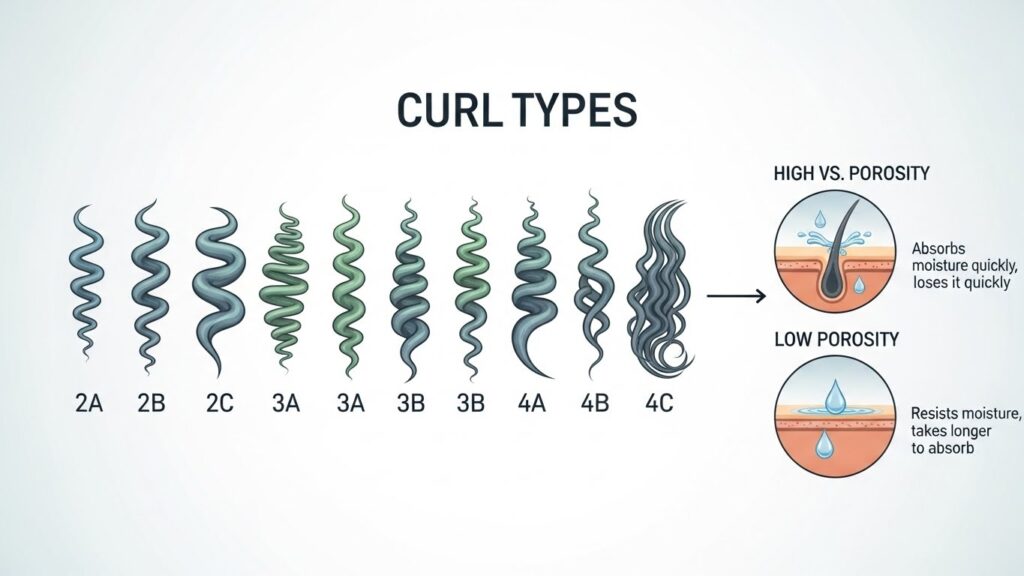
Before you even pick up a styling product, the most crucial step is to understand the hair on your head. Not all curls are created equal, and what works for a type 2 wavy bob might drown a type 4 coily bob. The first key is identifying your curl type using the general spectrum from 2 (wavy) to 4 (coily). This gives you a starting point for the kind of hold and moisture your hair might crave.
Perhaps even more important than curl type is hair porosity—your hair’s ability to absorb and retain moisture. Low porosity hair has a tightly bound cuticle, making it resistant to moisture but prone to product buildup. High porosity hair has a more open cuticle, so it absorbs moisture quickly but loses it just as fast, often leading to frizz. Knowing your porosity will dictate the entire product selection process. A simple test? Place a single strand of clean hair in a glass of water. If it floats, you likely have low porosity. If it sinks quickly, you have high porosity.

The Holy Grail: Your Wash-and-Go Routine
The wash-and-go is the cornerstone of curly hair styling, especially for a bob where every curl is on display. This isn’t about just washing and leaving the house; it’s a deliberate process of cleansing, conditioning, and styling that sets the foundation for your curls.
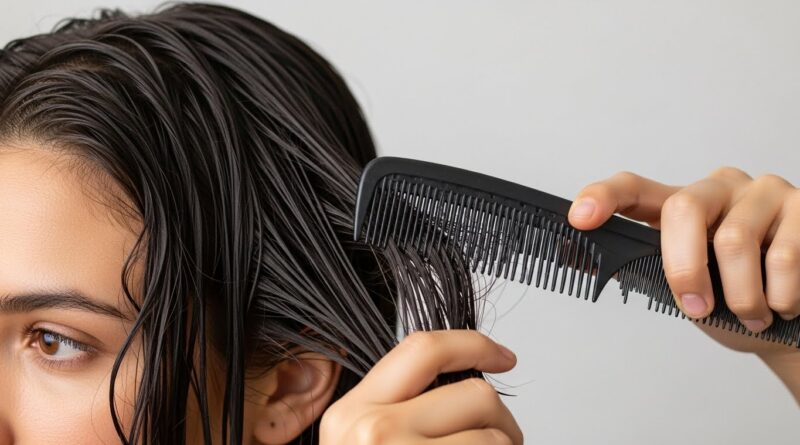
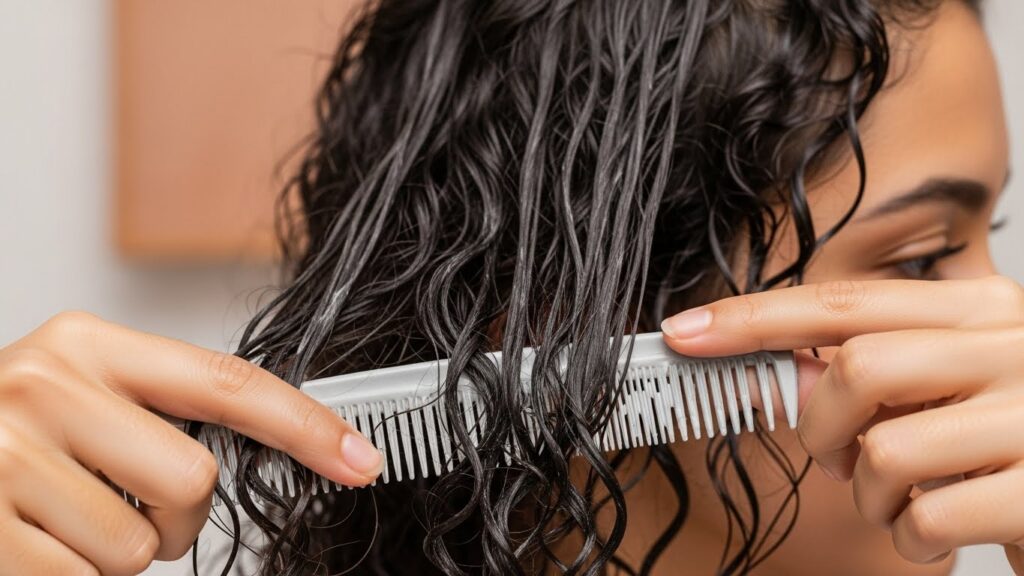
Start with a gentle, sulfate-free shampoo that cleanses without stripping your hair of its natural oils. Follow with a generous amount of a moisturizing conditioner, focusing on the mid-lengths and ends. This is where you should detangle your hair using your fingers or a wide-tooth comb, working from the ends up to the roots to prevent breakage. For an extra moisture boost, consider a deep conditioning treatment once a week.
Now, for the styling. The golden rule? Style on soaking wet hair. After rinsing out your conditioner, apply your leave-in conditioner or curl cream to drenched hair. This helps to lock in an immense amount of water, which is the true hydrator for your curls. Follow this with your styler—a gel for defined hold or a mousse for softer volume. Use a prayer-hand method to apply products, gliding them over your hair sections to encourage clumping and minimize disruption.
Techniques for Maximum Definition and Minimal Frizz
Application technique is where the real magic happens. How you put product in your hair can be the difference between a frizzy mess and perfectly defined ringlets.
The “Squish to Condish” Method: While applying your conditioner or styler, cup sections of your hair in your hands and squish upward towards your scalp. You’ll hear a satisfying squishing sound. This technique helps to encourage curl formation and ensures the product is evenly distributed from root to tip.
Scrunching: This is a classic for a reason. After applying your gel or mousse, gently scrunch sections of your hair with your hands (or a microfiber towel) to encourage your natural curl pattern and remove excess water and product. This builds volume at the roots and helps form bouncy curls.
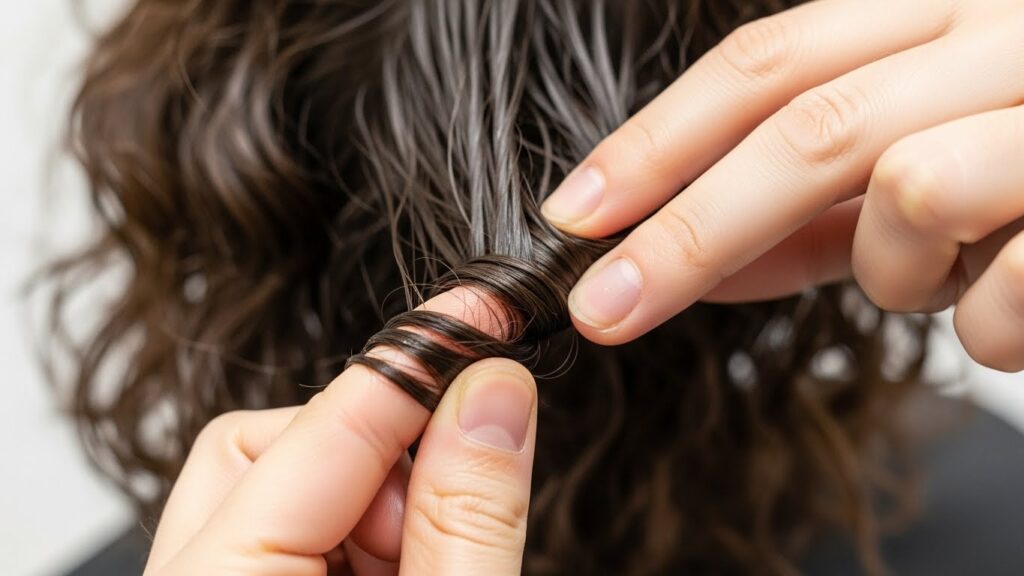
Finger Coiling or Denman Brushing: For those seeking ultimate definition, these techniques are game-changers. Finger coiling involves taking small sections of hair and twisting them around your finger from root to end. Using a Denman brush involves brushing sections of hair under tension, which smooths the cuticle and encourages curls to form uniform clumps. Both methods require a bit more time but deliver stunning, salon-quality results.
Drying: The Make-or-Break Moment
How you dry your hair is just as important as how you style it. Rubbing your hair vigorously with a regular towel is a recipe for frizz, as the rough texture roughs up the hair cuticle.
Instead, always use a microfiber towel or a soft cotton t-shirt to gently scrunch out the excess water. The goal is to blot, not rub. From here, you have two main paths: air-drying or diffusing.
Air-Drying: This is the most gentle method. Simply let your hair dry naturally. The downside? It can take a long time, and for some, it can lead to less volume at the root. To combat this, use alligator clips at the roots while your hair dries to lift them away from your scalp.
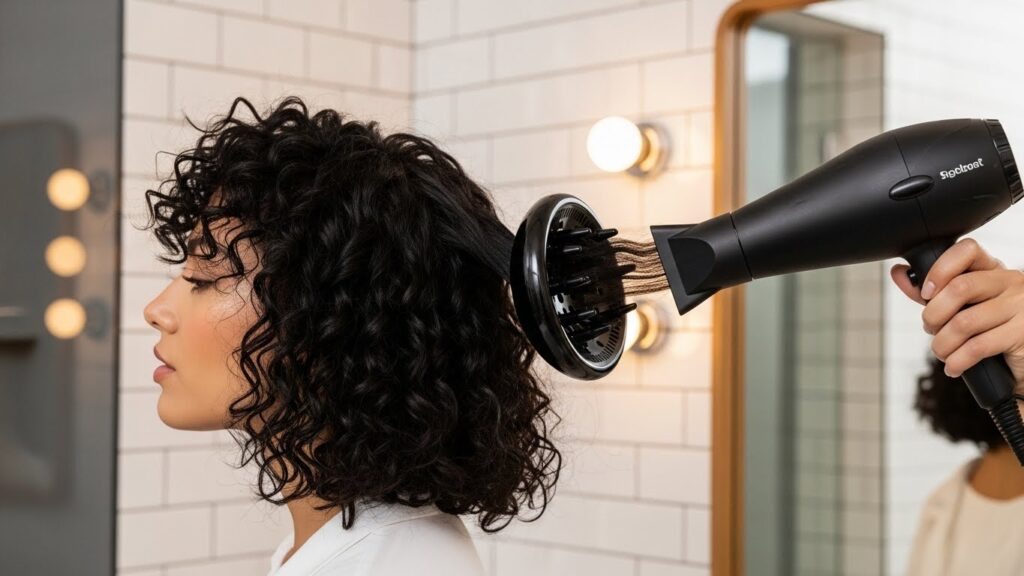
Diffusing: A diffuser is a curly girl’s best friend. It attaches to your hairdryer and disperses the air flow, drying your curls without blowing them apart. Use a low heat and low speed setting. To dry, cup sections of your hair in the diffuser bowl, lift it to your scalp, and hold it there for a few minutes before moving to the next section. Don’t move the diffuser around constantly—this creates frizz. The “hover” technique, where you hover the diffuser around your head without touching the curls, is also great for setting the cast without disturbing the pattern.
The Final Act: SOTC and Next-Day Revivals
If you’ve used a gel, you’ll likely end up with a “cast”—a crunchy layer over your curls once they’re completely dry. Do not fear the crunch! This is your ticket to long-lasting, frizz-free definition. Once your hair is 100% dry, it’s time for the “Scrunch Out The Crunch.” Take a small amount of a lightweight oil or serum in your palms, rub them together, and gently scrunch your hair. You will feel and hear the cast breaking, leaving you with soft, touchable, yet perfectly defined curls.
Waking up on day two or three, your bob might look a little flat or misshapen. The key to revival is moisture and gentle handling. Avoid brushing dry curls. Instead, use a water-based refresher spray or simply steam your hair in the bathroom while you take a hot shower. Gently scrunch your curls back to life with damp hands, adding a tiny bit of leave-in conditioner or curl cream to any particularly frizzy sections. For a quick volume boost, flip your head over and fluff your roots with your fingers.
Accessorizing Your Curly Bob
A curly bob is a fantastic canvas for accessories. A simple, elegant headscarf or a silk bandana can add a pop of color and keep hair out of your face. Pretty clips and bobby pins are not just functional; they can be used to pin back the front sections for an elegant look or to add a touch of sparkle. Don’t be afraid to play and make your curly bob uniquely yours.
Embracing a curly bob is a journey of love and acceptance for your natural texture. It might take a few tries to find the perfect product cocktail and technique for you, but the result—a confident, easy, and stunning hairstyle—is absolutely worth it. Your curly bob is a crown you never take off. Now go forth and work your magic.