
Best Transition Haircuts Moving From Summer Lengths To Winter Layers
Every year around this time, my hair goes through a little identity crisis. Summer hair was all about air-drying, salt spray, and letting it do whatever it wanted. Then the cold shows up, the air gets dry, and suddenly my lengths feel flat and my ends look tired.
The fix is not a drastic chop. It is a transition cut, a shape that keeps your summer length while adding winter layers, movement, and a little polish.
I rounded up the cuts my team and I keep seeing everywhere in 2026 hairstyles, from the quiet luxury bob to romantic goth hairstyles. Every single one works as a smooth bridge between seasons.
Pick your favorite, screenshot it, and bring it to your stylist. Let’s get you a cut that feels good now and still looks great in February.
Why a Transition Cut Beats a Full Chop

Here’s the thing nobody tells you. You almost never need to cut off all your summer length. You need a shape.
Transition cuts take weight out of your ends, add movement through the middle, and give your face a frame. You keep the length you grew all summer, but it stops looking stringy and starts looking intentional.
It also buys you time. Cold air plus hot tools equal brittle ends, so a fresh shape keeps your hair looking healthy while it adjusts to the season.
My personal rule: if you can still tie it up and feel cute, you picked the right cut.
Signs You’re Ready for a Transition Cut

Not sure if it is time? Check for these signs.
- Your ends look see-through when light hits them
- The top feels flat but the bottom feels heavy
- Your usual style falls flat within an hour
- You’re using more product just to fake volume
- Your hair dries into a triangle shape
Two or more of those? You don’t need inches off. You need layers, movement, and a slightly stronger shape around your face.
Book a trim and ask for shape, not length.
The Asymmetrical Lob Is the Easiest Swap
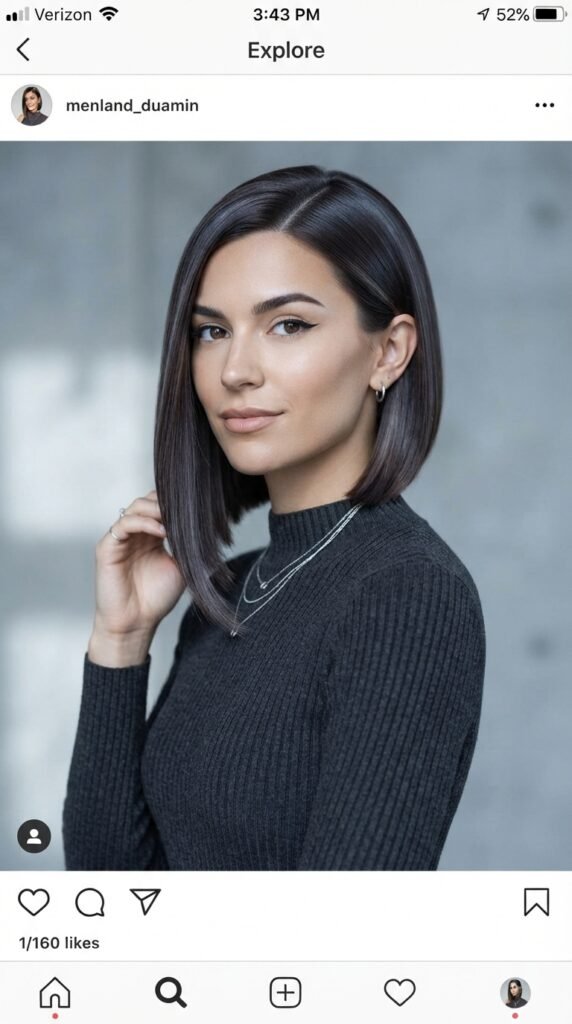
The asymmetrical lob is my number one pick for this exact season. It sits between a bob and shoulder length, with one side slightly longer than the other.
Why it works: the angle removes bulk from your ends, so hair moves instead of hanging. It also reads expensive with zero effort, which is pure old money hair energy.
Ask for:
- Collarbone length on the short side
- Two extra inches on the long side
- Soft point-cutting at the ends
It grows out beautifully too, which matters if you want length back by spring.
Quiet Luxury Bob for Old Money Hair

The quiet luxury bob is the quietest flex in 2026 hairstyles. It is blunt, glossy, and sits right around the jaw or chin with barely any visible layering.
This is the cut that reads old money hair instantly. Nothing fussy, nothing choppy. Just a clean line and serious shine.
It transitions perfectly because blunt ends hold their shape as the air dries out and static creeps in.
Best for medium to thick hair, straight or gently wavy. Ask for a blunt line with a tiny bit of softness at the corners so it doesn’t look like a helmet.
The Vampire Haircut, But Make It Wearable

Yes, the vampire haircut is having a moment and I am not mad about it. It is dramatic, layered, and slightly theatrical, with a deep side part and long pieces that swoop across the face.
It is the centerpiece of romantic goth hairstyles, but you can absolutely wear a softer version. Think long layers, a heavy face frame, and lots of shine.
It suits cooler months because the shape gets better with a little texture. A rough blow-dry plus a light serum and you’re done.
Ask for long invisible layers with a strong face frame and a slightly tapered end.
The Hime Cut Is Back and Sharper Than Ever

The hime cut is having a serious resurgence. It is blunt side pieces at cheek or jaw length paired with long straight hair in the back. Sharp, graphic, and honestly stunning.
It is a bigger commitment than a lob, so test it first. Pin your front pieces up and see if you like that framing before you commit to the scissors.
It works best on straight, thick hair. If yours is fine or curly, ask for a softer version with the same idea: strong face frame, long back.
Glitchy Glam Hair for the Trend Lovers

Glitchy glam hair is the playful trend of the season. It is layered in a slightly uneven, off-balance way on purpose, with pieces that flick out instead of curling under.
The trick is keeping it glossy. Messy texture plus dull hair just equals messy. Messy texture plus shine equals editorial.
It is a great transition option if you’re bored of your summer shape but don’t want a big length change. Ask for:
- Choppy interior layers
- Slightly disconnected face framing
- Point-cut ends, not blunt
Long Layers With Face-Framing Pieces

If you love your length, this is your cut. Long layers through the back plus two face-framing pieces at the front. That’s the whole thing.
It removes weight without touching your overall length, which is exactly what you want when dry winter air is already making your ends fragile.
Ask for your shortest layer to start around your collarbone so it doesn’t create a shelf, and keep your face-framing pieces starting at cheekbone level.
It works on almost every hair type and grows out gracefully. Hard to beat.
Soft Wolf Cut, All the Movement, None of the Mullet

The full-on wolf cut can feel aggressive. The soft version is perfect for fall and winter. Same idea, way more wearable.
You get shorter layers around the crown for volume, longer pieces toward the bottom for softness, and a face frame that blends instead of stands out.
Ask for the shortest layer to sit just below your cheekbone and tell your stylist you want movement, not a mullet.
It looks best with a little grit. A texturizing spray plus a quick scrunch and you’re out the door.
Curtain Bangs With a Little Winter Weight

Curtain bangs are the easiest way to make an old haircut feel brand new. They frame your face, they hide the awkward growing-out stage, and they’re low commitment if you keep them long.
For winter, ask for a slightly heavier version. Thinner wispy bangs go see-through when the air is dry, so a bit more density holds better.
Style them with a round brush or a quick pass with a flat iron, curling outward. That’s the whole routine.
Pair them with an asymmetrical lob or long layers and you’re set.
The Italian Bob, Volume and Gloss

The Italian bob sits right at the shoulders and it is all about volume and gloss. Full, bouncy, a little glamorous. Like the quiet luxury bob’s louder cousin.
It’s a great middle ground when you’re not ready for chin length but want a real change from your summer shape.
Ask for a blunt-ish line with a small amount of layering underneath to lift the root area, and keep the ends thick.
It works on fine hair too, as long as your stylist doesn’t over-layer it. Say the words keep my ends heavy and you’re good.
Butterfly Cut Refresh
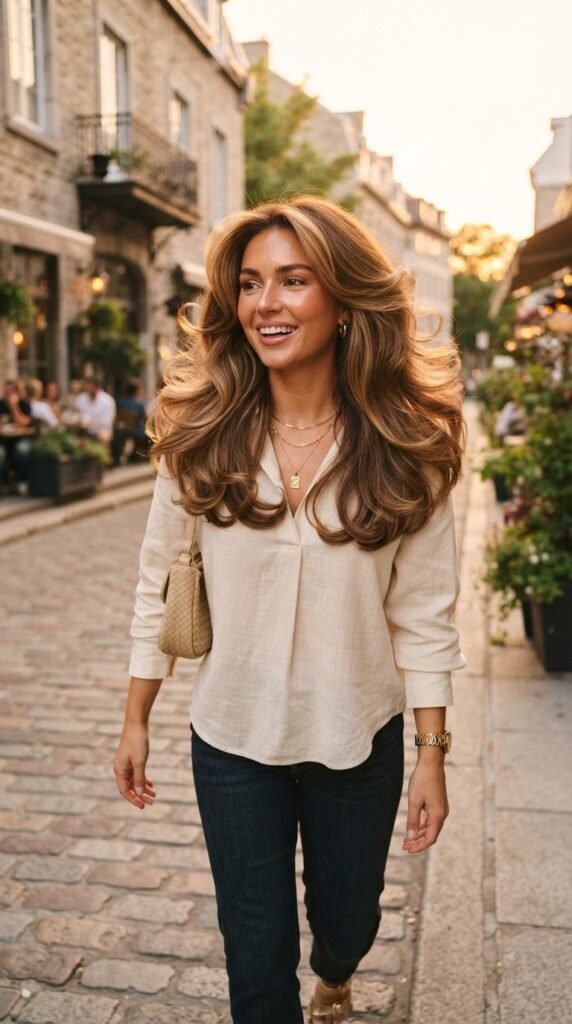
The butterfly cut is still going strong. Short layers around the face, long layers in the back, big bouncy finish. Think 90s supermodel but modernized.
For fall and winter, ask your stylist to soften the transition so it doesn’t look like two different haircuts stacked on top of each other.
It is gorgeous on thick, wavy hair. On fine hair, ask for fewer layers and more of a long-layered shape instead.
It is the cut that makes people ask if you got extensions. Take the compliment.
Blunt Collarbone Cut for Zero Fuss

If you want zero fuss, go blunt at the collarbone. It is clean, it is modern, and it makes even fine hair look thicker because every end sits at the same line.
It is the opposite of a layered cut, and that’s the point. Sometimes you need less shape, not more.
Ask for a one-length cut with the tiniest bit of softness at the very corners so it falls nicely instead of flaring out.
Style it straight, add a middle part, and you’ve got an effortless old money hair look in about five minutes.
Hidden Layers for Fine Hair
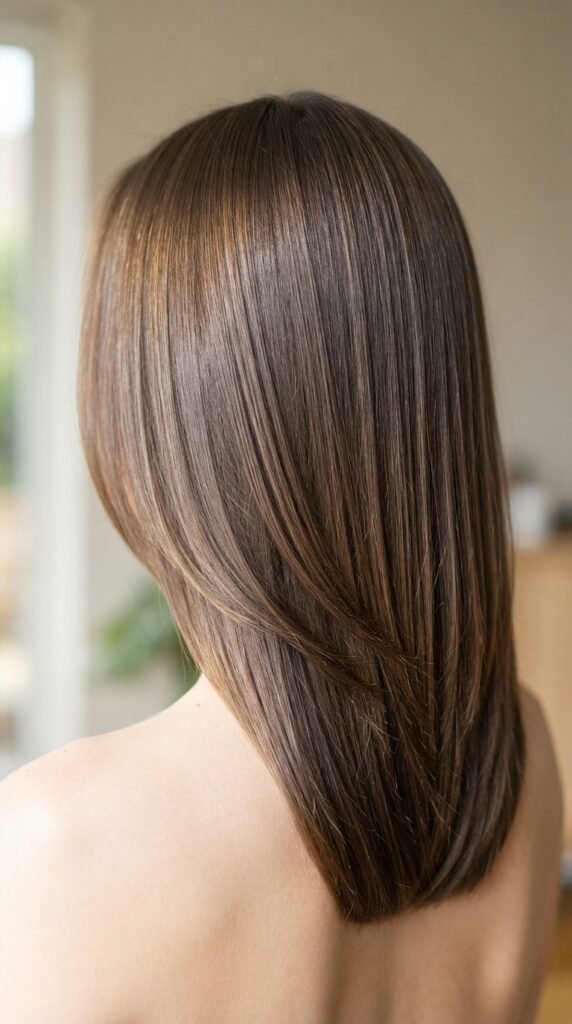
Fine hair and layers can be a bad match. Too much layering makes fine hair look thinner at the ends, which is the opposite of what you want going into winter.
The fix is hidden layers. Your stylist removes weight from the inside of your hair while keeping the outside line intact. You get movement without losing density.
Ask for:
- Invisible or internal layers
- No visible choppiness
- Blunt ends kept intact
It is one of the most underrated techniques out there. If your stylist knows it, you’re in good hands.
Curly and Coily Transition Cuts

Curly hair needs its own plan. Straight-hair layering rules don’t apply, because curls shrink and spring back differently.
For transition season, ask for a shape that follows your curl pattern. Rounded layers, a little more length in the back, and a face frame that works when dry.
Crucial: get it cut dry, curl by curl, if you can. Wet cuts on curly hair hide how much length you’re actually losing.
Go lighter on the layering than you think. You can always take more off, but you can’t put it back.
How to Ask Your Stylist for a Transition Cut

The consultation is everything. Here’s how to walk in prepared.
- Bring three photos, not one. Three gives your stylist a range.
- Say what you love about your current hair, so they know what to protect.
- Say what’s bugging you. Flat roots, heavy ends, whatever it is.
- Use words like movement, softness, and shape instead of just inches.
- Confirm the shortest layer before they start cutting.
Also tell them your styling routine. If you don’t blow-dry, they shouldn’t give you a cut that needs one.
Face Shape Cheat Sheet
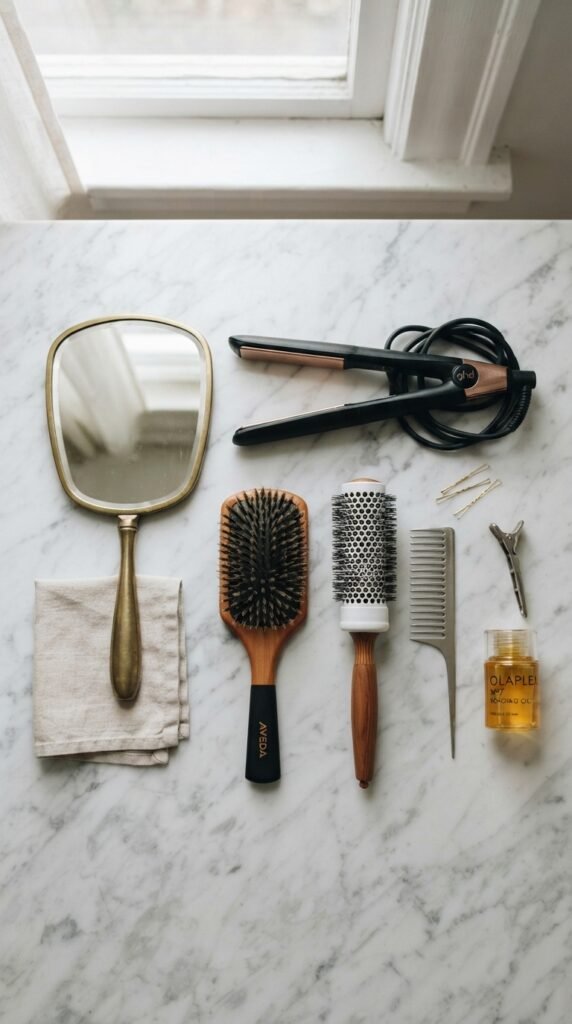
Here’s a quick and dirty guide.
- Round: longer layers and face framing that falls below the chin
- Oval: almost anything, lucky you
- Square: soft curved layers and curtain bangs
- Heart: chin-length face framing and volume at the jaw
- Long: blunt lines and bangs to add width
These aren’t rules, just starting points. Your hair texture and density matter just as much as your face shape.
Color Ideas That Pair With Your New Cut

A new cut hits different with the right color. You don’t need a full transformation, just something that makes the shape pop.
- Quiet luxury bob: single-process glossy brunette or rich chocolate
- Asymmetrical lob: soft money pieces around the face
- Vampire haircut: deep black-cherry or espresso
- Hime cut: jet black or cool ash tones
- Glitchy glam: subtle contrast panels or a shadow root
Keep it low-maintenance for winter. Roots that blend are your best friend.
Styling Your New Cut for Cold Weather

Cold weather changes how your hair behaves. Static, dryness, and hat hair are all real.
- Start with a heat protectant every single time.
- Blow-dry your roots first. That’s where volume lives.
- Use a round brush only on your face-framing pieces.
- Finish with a light oil on your ends, never your roots.
- Keep a silk scarf or lined beanie handy for commutes.
Honestly, five minutes of deliberate styling beats thirty minutes of fighting your hair.
Products That Actually Help
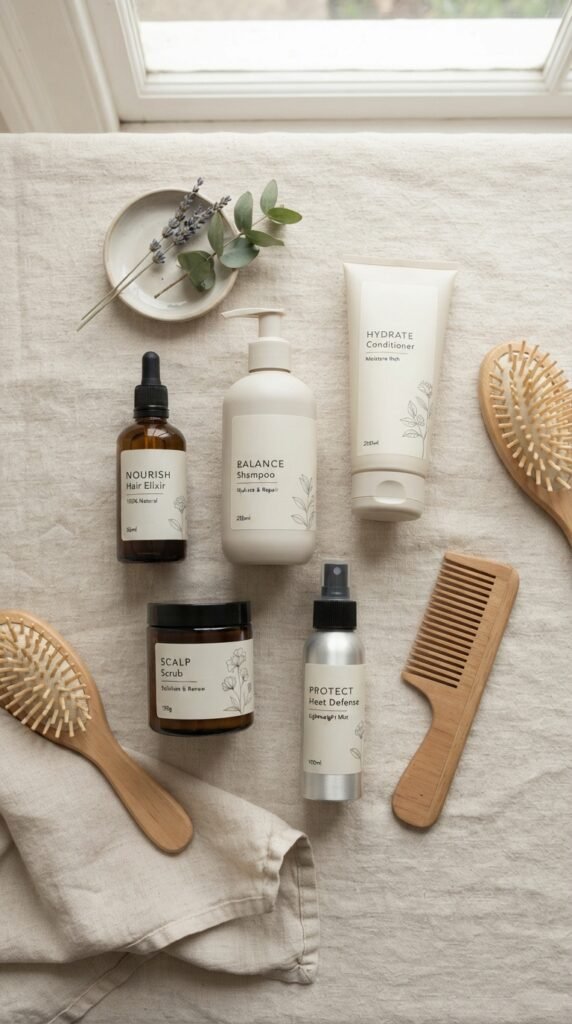
You don’t need twelve products. You need four that work.
- Heat protectant spray: non-negotiable
- Lightweight oil or serum: for ends only
- Texturizing spray: for layers and movement
- Dry shampoo: for root volume between washes
One bonus if your hair is dry or color-treated: a leave-in conditioner. Winter air pulls moisture out fast.
Skip heavy creams on fine hair. They flatten layers and make everything look greasy by noon. Light layers of product always beat one big application.
Keeping Your Ends Healthy Through the Season
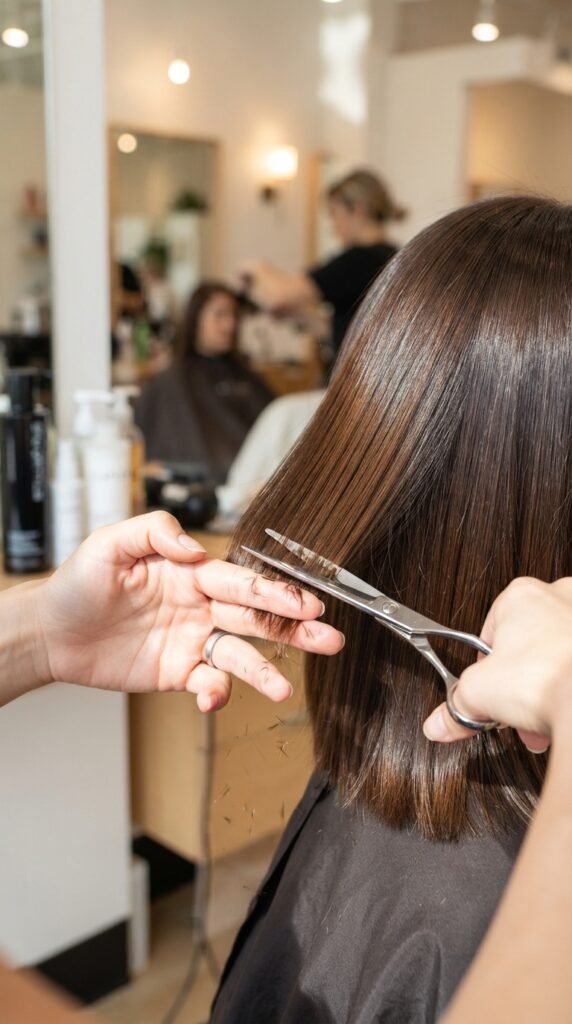
Layers only look good if your ends are healthy. Otherwise you’re just creating more places for split ends to hide.
- Trim every 8 to 10 weeks
- Sleep on a silk pillowcase
- Lower your hot tool temperature
- Deep condition once a week
- Never brush wet hair from the roots down
That last one matters more than people realize. Start at the ends and work your way up with a wide-tooth comb.
Growing It Out Without Losing the Shape

Want length back by spring? You can have both. You just have to be strategic.
- Trim only the longest layer to keep the shape clean.
- Refresh your face frame every other appointment.
- Skip heavy layering while it grows.
- Take progress photos so you can actually see the growth.
Growth is slow and boring, so having a shape you like makes the wait way more bearable. A good transition cut isn’t a setback. It is what keeps you from chopping everything off in frustration.
Salon Timing and Budget Savvy
Two practical tips before you book.
Timing: book your transition cut in early fall if you can. Salons get slammed right before the holidays, and rushed appointments create rushed decisions.
Budget: a good cut costs more than a trim, and it is worth it. You’re paying for shape, consultation, and technique. If money is tight, skip the color this round and put it toward the cut instead.
Also ask your stylist what the cut will look like in eight weeks. The best cuts age well.
Your Five-Minute Morning Routine

Great cuts should make your mornings easier, not harder. Here’s the routine I swear by.
- Spray heat protectant and texturizer together.
- Rough-dry your roots upside down for 60 seconds.
- Smooth your face-framing pieces with a brush.
- Add a drop of oil to your ends.
- Shake it out and go.
If your cut needs more than five minutes to look good, tell your stylist next time. The shape should do the work for you.
Which Transition Cut Is Right for You?

Quick match-up time.
- Want low effort? Blunt collarbone cut
- Want a fresh look without losing length? Long layers
- Want a real change? Asymmetrical lob
- Want drama? Vampire haircut or hime cut
- Want soft and romantic? Curtain bangs with soft layers
- Want trendy? Glitchy glam hair
Pick one, screenshot two inspiration photos, and book it. You’ll thank yourself in January.
Common Mistakes to Avoid

I’ve made most of these, so learn from me.
- Getting too many layers all at once
- Cutting bangs impulsively before a big event
- Asking for just a trim when you actually want a change
- Not mentioning your styling habits
- Waiting until your ends are fried to book
The biggest one: not speaking up during the consultation. Your stylist wants you to love it. Say what you’re nervous about before the scissors come out.
One Last Thing Before You Book
You don’t have to choose between keeping your summer length and having a cut that works for winter. A good transition cut gives you both.
Start with one thing. Pick the shape that fits your routine, not just the one that looks good on Pinterest. The right cut should make your life easier, not add twenty minutes to your morning.
And remember, hair grows. Nothing about this is permanent.
Save this post to Pinterest so you have your inspiration ready when you book. Then drop a comment and tell me which cut you’re trying first. I read every single one, and I love knowing what you picked.