Curly Bobs That Actually Behave: 34 Cuts for Curls That Spring, Not Frizz
A curly bob is not a straight bob cut shorter. Curls spring up as they dry, sometimes by several centimetres, so a cut that looks chin-length when wet can end up sitting well above the jaw once it is dry. That shrinkage is also why so many curly bobs go wrong in the salon: they are cut wet, cut blunt with no internal shape, and then sent home with no plan for wash day. This guide starts where a good curly cut should start, with dry hair, real curl pattern, and a length measured after the spring, not before it.
Here are 34 bob haircuts for curly hair, from a classic chin-length bob and a collarbone lob to shaggy, layered, French, asymmetrical and tapered versions, plus bobs for fine curls, thick curls, loose waves and tight coils. Eight practical guides cover shrinkage, dry cutting, wash day, curl types, diffusing, trims, colour and the mistakes that turn a bob into a triangle, so you can choose a cut and keep it behaving between appointments.
Curl Shrinkage, Explained: Why Your Bob Ends Up Shorter Than You Asked For
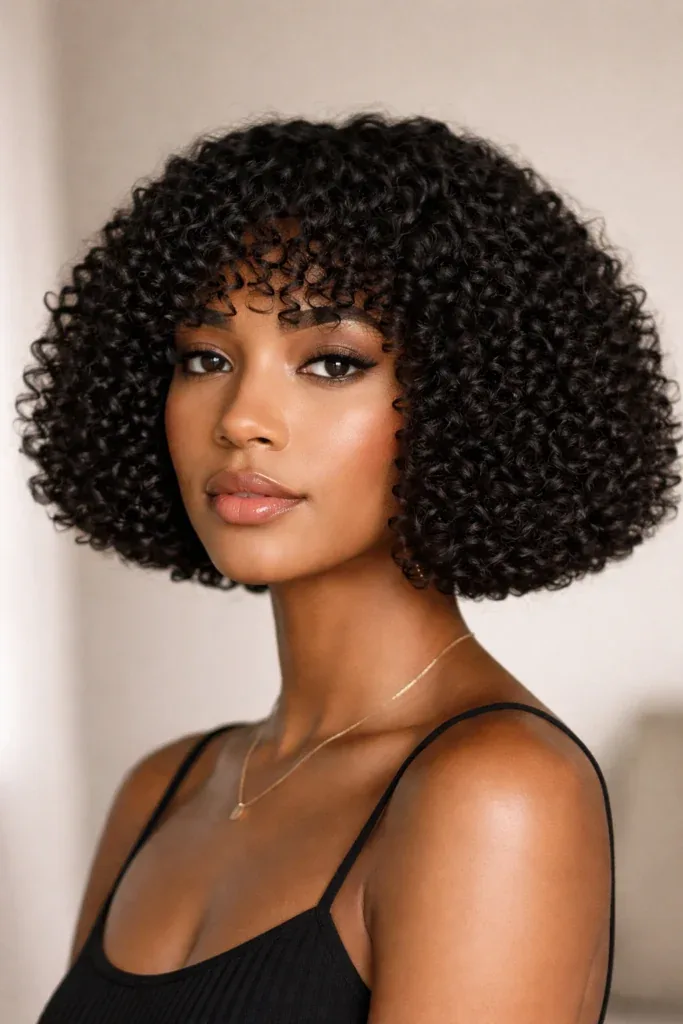
Shrinkage is the difference between your hair’s stretched length and its dry, sprung length. Loose curls may spring up by a few centimetres, while tighter coils can spring up by a third of their length or more. That is why two people can ask for the same bob and leave with very different-looking results, and why a curly bob should always be judged dry.
Before your appointment, look at your hair fully dry and unstyled, and note where it actually sits. Bring a photo of that dry length, not just a photo of a styled bob, and agree a dry target length with your stylist first. If in doubt, cut longer: you can always take more off at a dry check, but you cannot put sprung length back.
Dry Cutting: The Curly Bob Method That Avoids Surprises
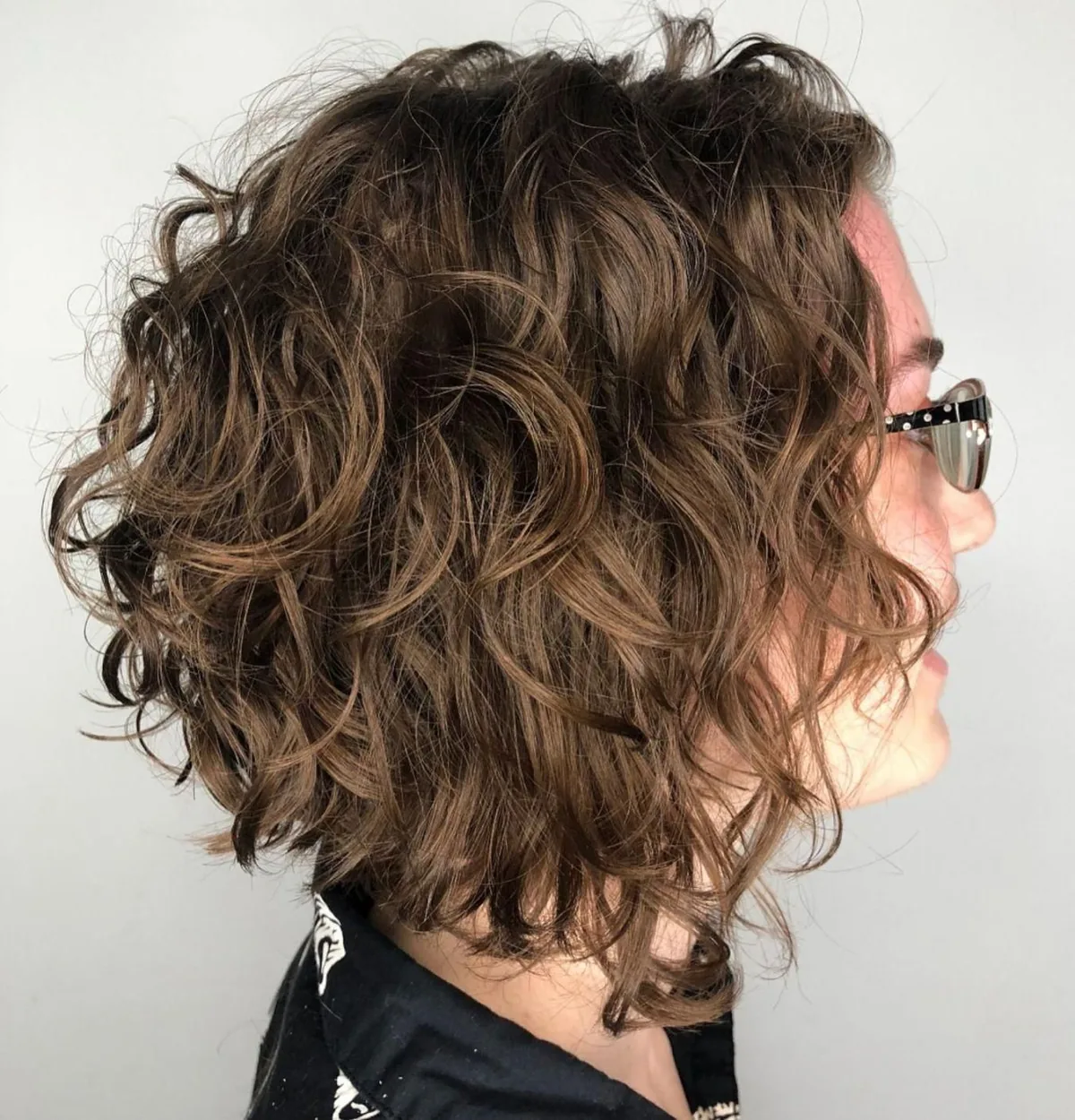
Dry cutting means the stylist cuts curls in their natural, dry state, curl by curl, so they can see exactly where each curl will fall. For a bob, that matters more than for long hair, because a small error is far more visible at chin length. Many curl specialists cut dry first and only tidy up wet afterwards, if at all.
Arrive with your hair styled the way you normally wear it, not freshly straightened or soaking wet, so the stylist sees your real pattern. Ask whether they offer a dry cut or a dry check at the end of a wet cut. If they insist on cutting everything wet and tight, that is a sign to find a curl specialist instead.
Wash Day for a Curly Bob: A Simple Routine That Holds the Shape
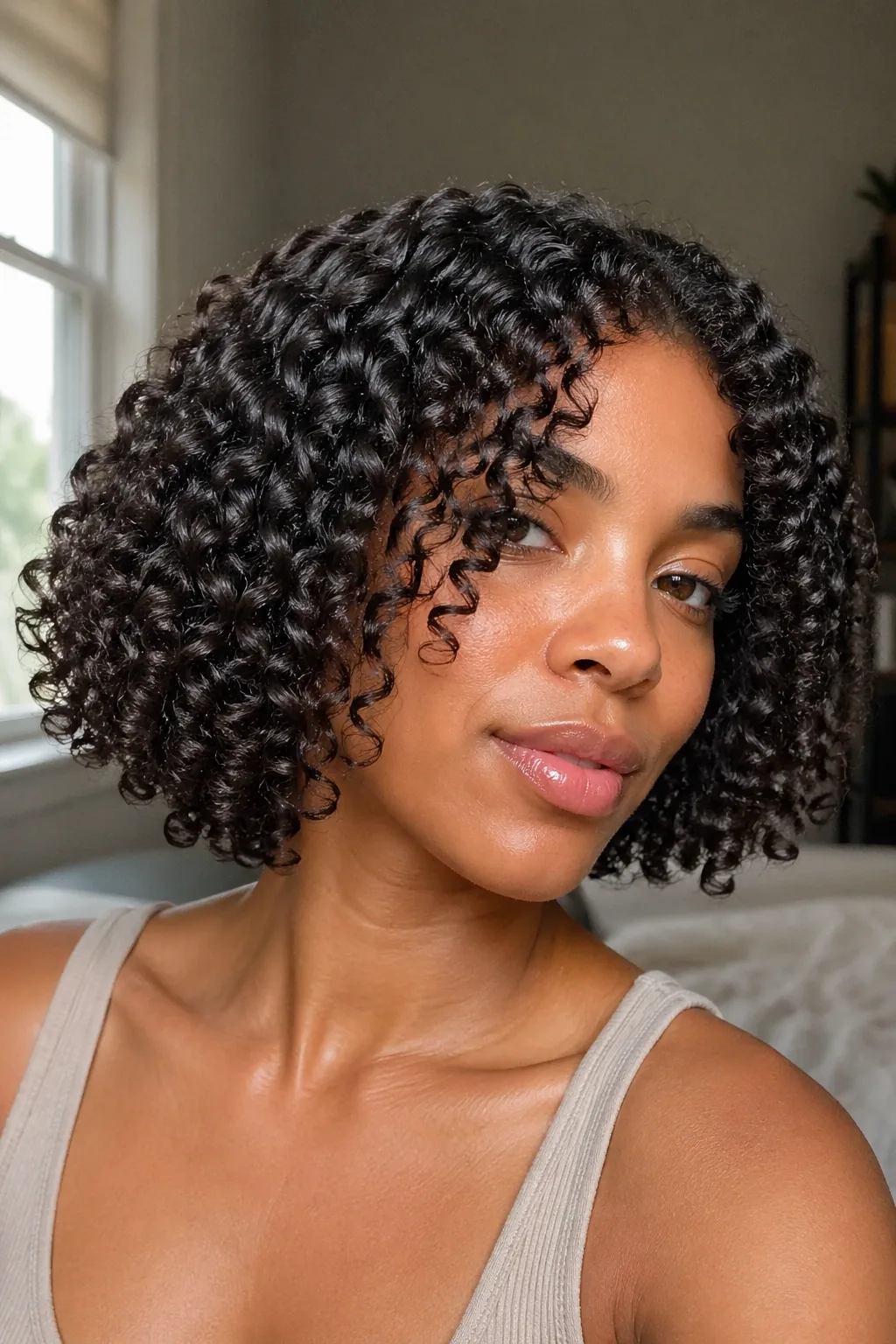
A curly bob needs less product than long curly hair, but it needs the right order. Wash and condition, detangle gently while the conditioner is in, then apply leave-in and styling cream or gel to soaking-wet hair, in sections, before you scrunch. Working on soaking-wet hair locks each curl into its shape as it dries.
Do not towel-dry roughly or brush the bob dry. Plop briefly with a cotton T-shirt or microfibre towel if you like, then diffuse on low heat or air-dry without touching the curls until they are fully dry. Once dry, scrunch out any crunch with a drop of oil on your hands, and the bob will fall soft instead of stiff.
Curl Types and Bob Length: 2C, 3A, 3B and 3C at Short Length
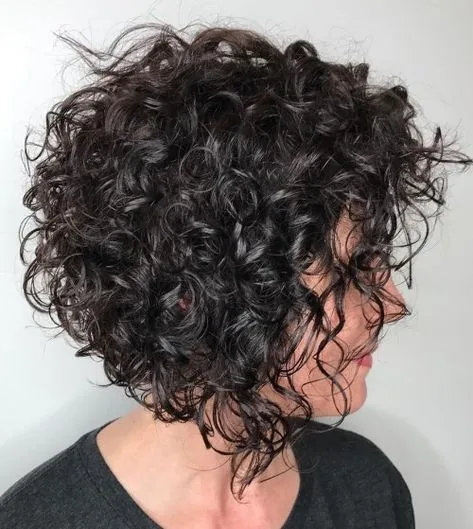
Loose 2C and 3A curls keep more of their length and can wear a bob close to the length you see in the mirror when wet. Tighter 3B and 3C curls spring up much more, so the same bob needs to be cut longer wet to land at the same dry length. Volume also changes: looser curls may need layers for lift, while tighter curls often need shaping to control width.
Most heads carry more than one curl type, often looser underneath and tighter on top. A good curly bob respects that mix rather than cutting every section to the same wet length. Tell your stylist which part of your hair is tightest, and check the dry length at the crown and at the nape, not just at the front.
1. Classic Chin-Length Curly Bob
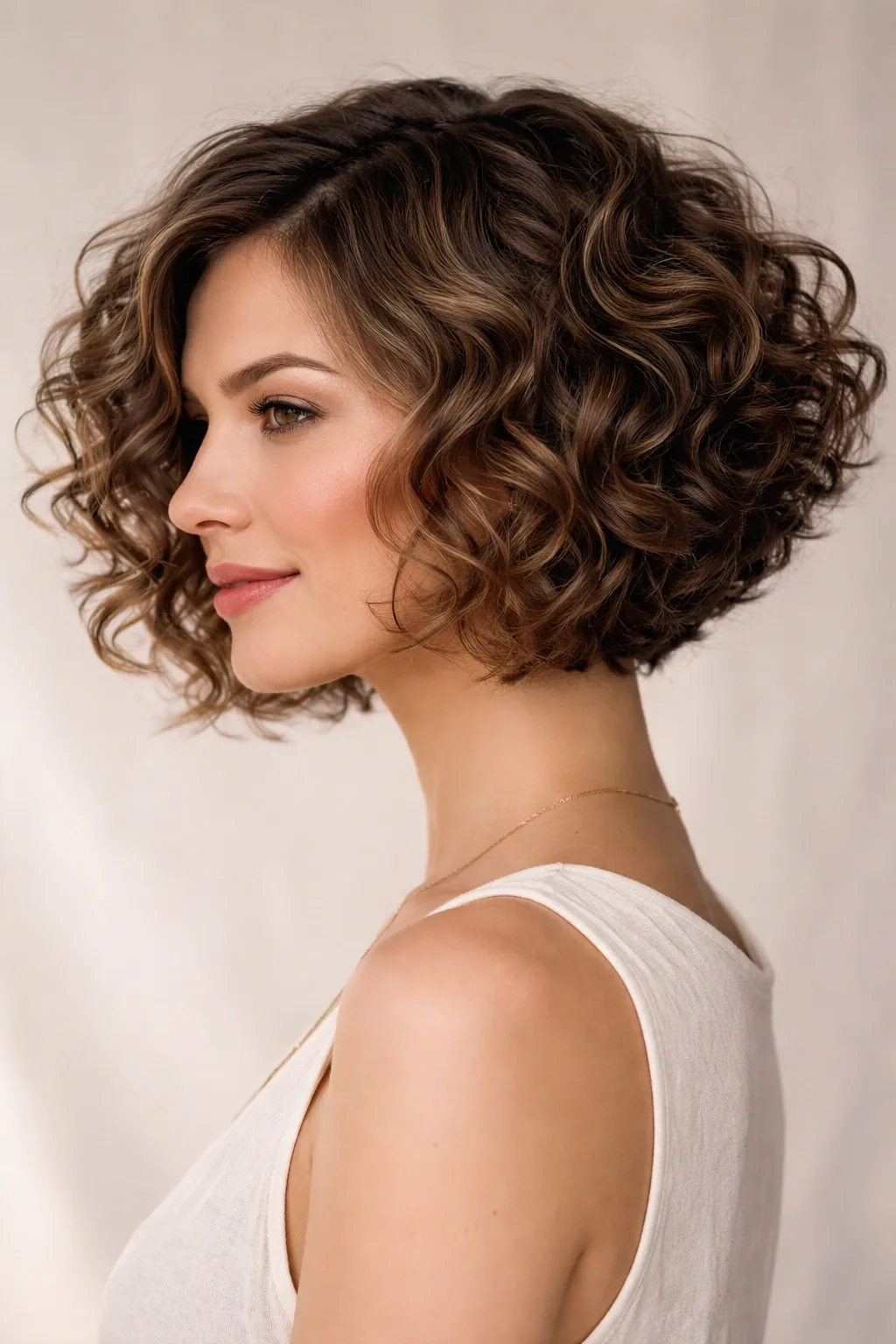
The classic curly bob sits around the chin when dry, with soft ends and just enough shaping inside to stop it flaring out. It is the baseline every other curly bob is measured against, and it suits almost every curl type when the dry length is agreed first.
Best for: 2C to 3B curls that want a tidy, everyday short cut without a dramatic style statement.
How to style: Scrunch cream or gel into soaking-wet curls, diffuse or air-dry, and scrunch out the crunch once fully dry.
What to ask: A chin-length dry finish with soft, point-cut ends and light internal shaping — and a dry check before you leave.
2. Curly Lob at the Collarbone
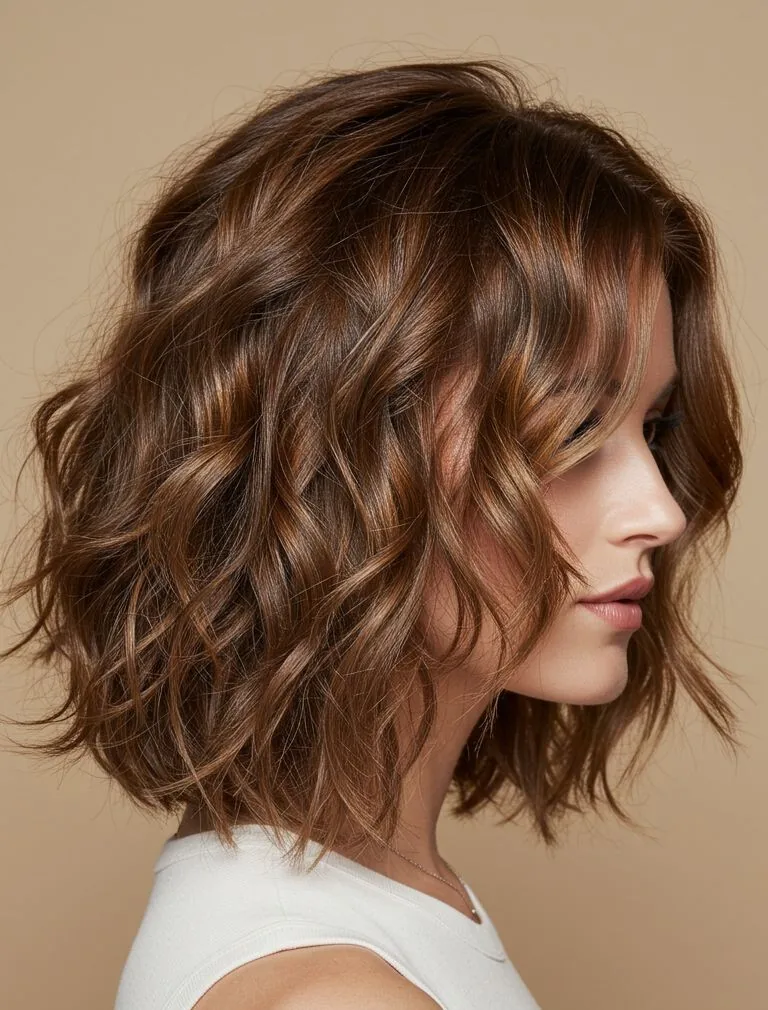
A curly lob is a long bob that lands around the collarbone dry, giving you bob shape with lob freedom: you can still tie it back, and the extra length gives tighter curls room to spring without ending up too short.
Pros and cons: Pros: easiest curly bob to grow out, tie-back friendly, forgiving on shrinkage. Cons: it needs layers or it can look heavy at the shoulders.
Quick verdict: If shrinkage worries you, start here. It is the safest first curly bob, and it still reads as a bob.
3. Curly French Bob
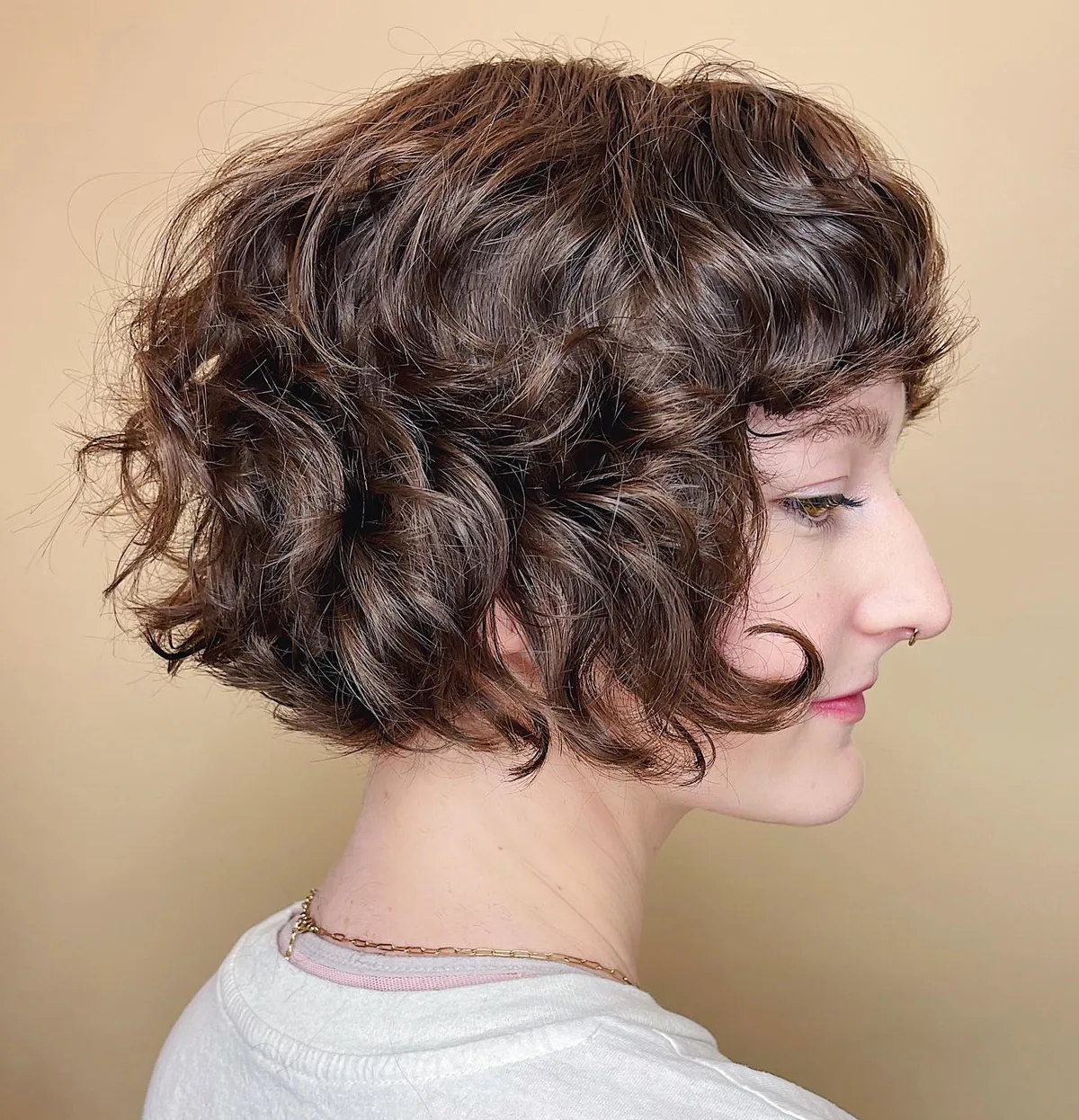
A French bob is short, chic and slightly undone, usually ending around the jaw or just below the cheekbone, with a soft fringe option. On curls it looks effortlessly Parisian rather than severe, because the texture softens every line.
Best for: Confident short-hair lovers with 3A to 3B curls who like a bold, face-framing shape.
Common mistake: Cutting it wet to jaw length, where it springs up to ear length. Agree the dry jaw length and cut longer wet.
4. Curly Shag Bob
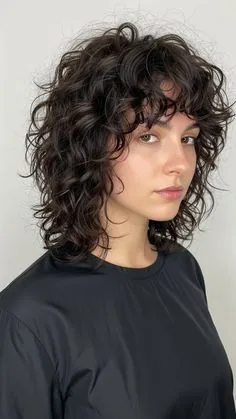
A shag bob layers texture through the crown and ends, so curls fall piecey and lived-in instead of in one solid block. It is the curly bob for people who hate neat, polished hair and love movement.
How to style: Diffuse with mousse for lift, scrunch the ends, and keep the top piecey with a little texture cream.
Maintenance: Trims every 8 weeks keep the layers from growing out unevenly, especially at the crown.
5. Layered Curly Bob
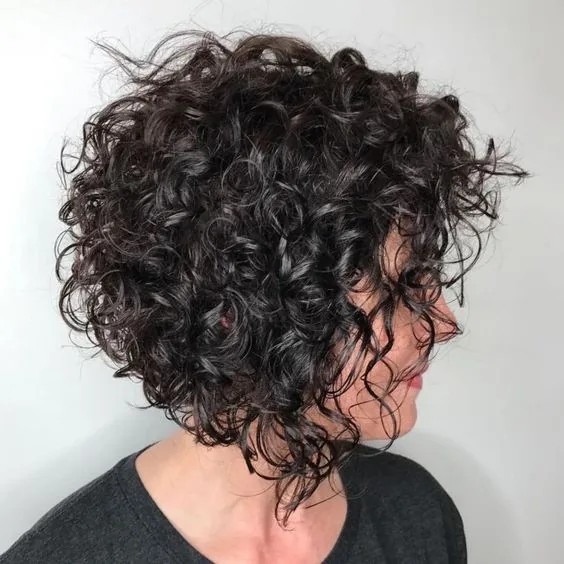
Layers are what stop a curly bob turning into a triangle. Shorter layers on top give lift, longer layers underneath keep the weight, and the bob narrows gently towards the ends instead of flaring wide.
Pros and cons: Pros: shape, lift and movement in one cut. Cons: layers cut too short on top can puff out — keep the crown layers moderate.
What to ask: Long, blended layers through the mid-lengths, cut dry curl by curl, not a stepped, choppy finish.
6. Curly Bob With Curtain Bangs
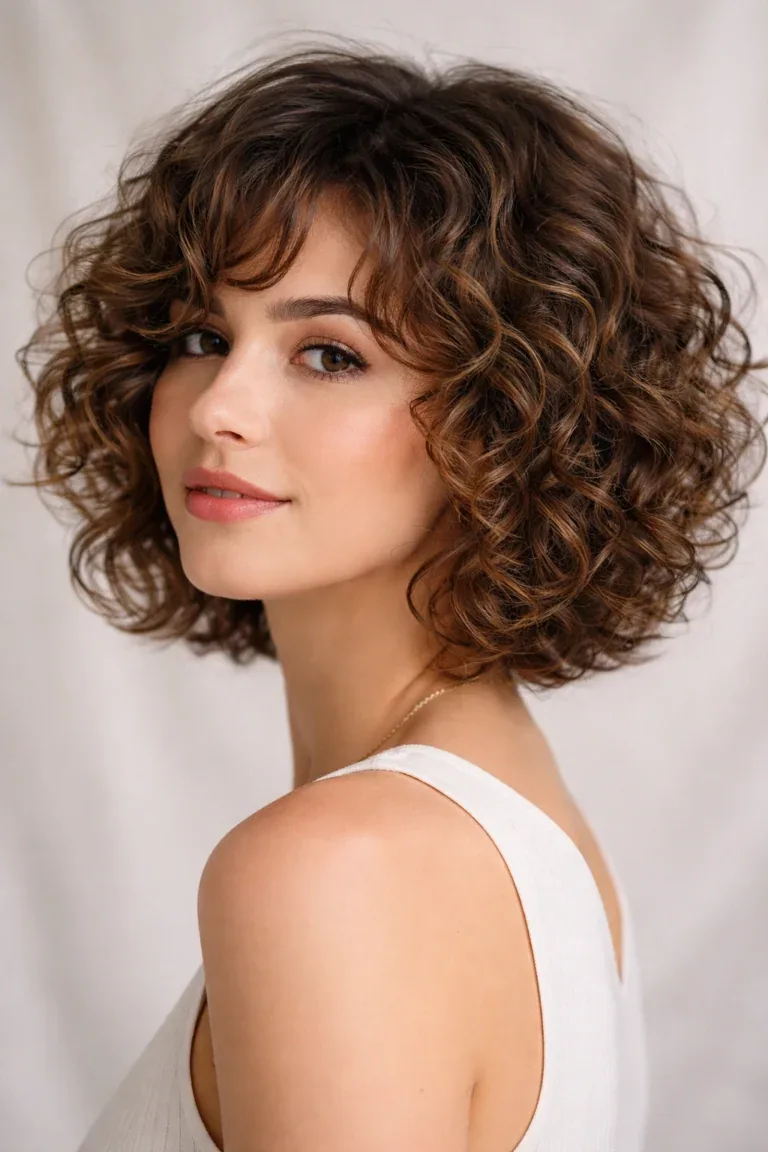
Curtain bangs part in the middle and sweep to each side, framing the eyes on a curly bob without a heavy fringe line. On curls they blend in naturally, because the bang curls match the rest of the bob.
Best for: Anyone who wants a fringe effect without committing to a full, straight-across bang.
Quick verdict: A small addition with a big framing payoff, and it grows out into face-framing layers gracefully.
7. Curly Bob With a Full Fringe

A full curly fringe, cut longer than a straight fringe and allowed to curl naturally, gives a curly bob a bold, fashion-forward finish. The key is length: curly bangs must be cut well below the brow wet, so they spring up to brow level dry.
How to style: Style the fringe first while soaking wet, scrunch it gently, and let it dry untouched so the curls form cleanly.
Common mistake: Cutting curly bangs to brow length when wet. They will spring up far shorter, and a too-short curly fringe is hard to fix.
8. Asymmetrical Curly Bob
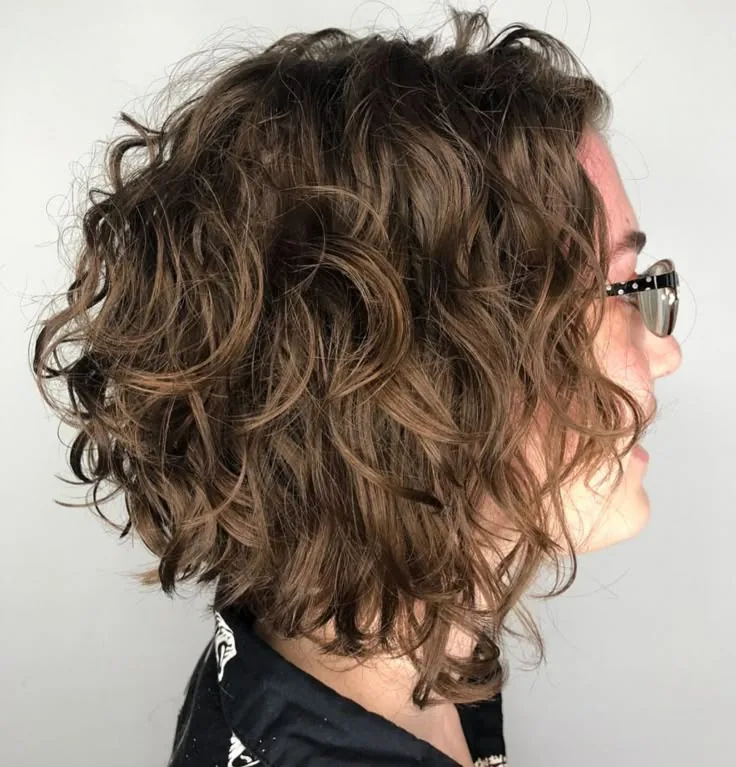
An asymmetrical bob is longer on one side than the other, adding a modern edge that curls soften beautifully. The asymmetry looks stylish rather than stark, because the curl pattern breaks up the line.
Pros and cons: Pros: distinctive, face-framing, photographs well. Cons: it needs regular trims to keep the uneven lengths looking intentional.
How to style: Scrunch and diffuse, then smooth the longer side forward so the asymmetry is clearly visible.
9. Curly Inverted Bob
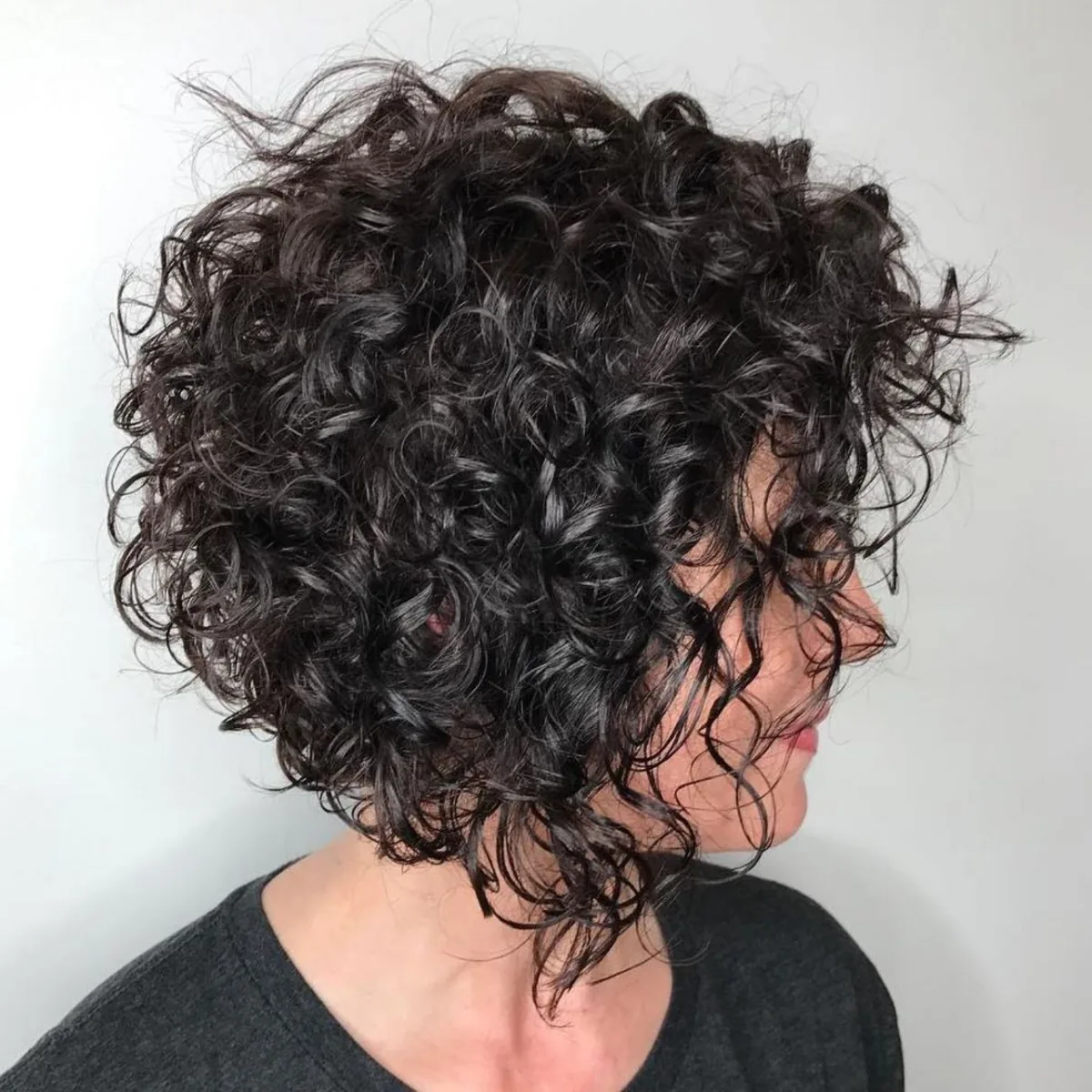
An inverted bob is shorter at the nape and longer at the front, giving a curly bob lift at the back and length around the face. On curls, the graduation must be gentle, or the back can spring up much shorter than planned.
Best for: Thick curls that need the back kept tidy, and anyone who likes a bob with a clear shape from the side.
Common mistake: Graduating the back too steeply on wet hair. Ask for a soft, dry-checked graduation instead.
10. Rounded Curly Bob
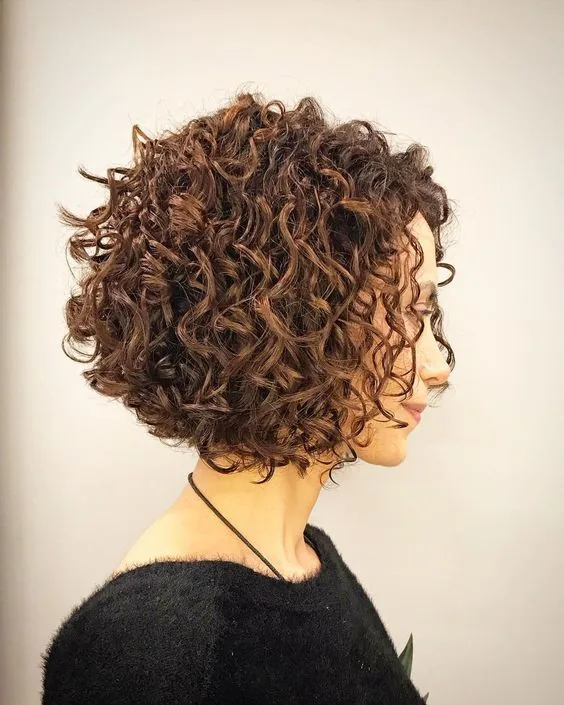
A rounded bob follows the shape of the head, curving under gently at the ends to make a soft, halo-like silhouette. It is flattering and forgiving, especially for curls that naturally want to form a round shape anyway.
How to style: Scrunch with curl cream, diffuse with the diffuser cupped under the ends, and avoid brushing the bob out dry.
Maintenance: Trims every 8 to 10 weeks keep the round outline from going wide and shapeless.
11. Deep Side Part Curly Bob
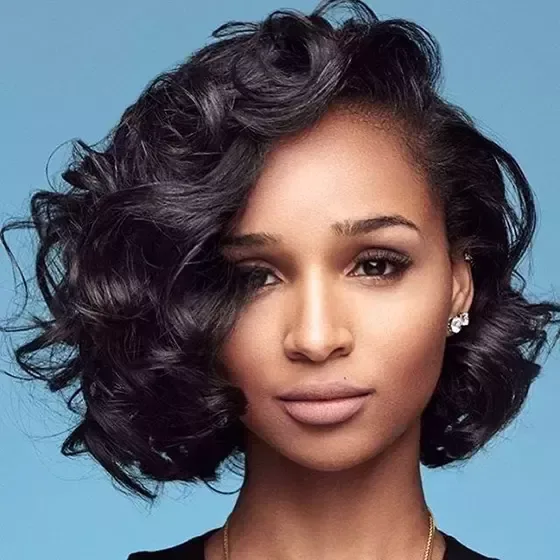
A deep side part turns a simple curly bob into an occasion style, with a sweep across the forehead and extra volume on the heavy side. The part alone can change how full the bob looks.
Pros and cons: Pros: instant volume and drama with no cut change. Cons: a part trained the other way may need a few wet washes to settle.
What to ask: Long layers, so the heavy side has enough weight to sweep smoothly rather than puffing up at the part.
12. Centre Part Curly Bob
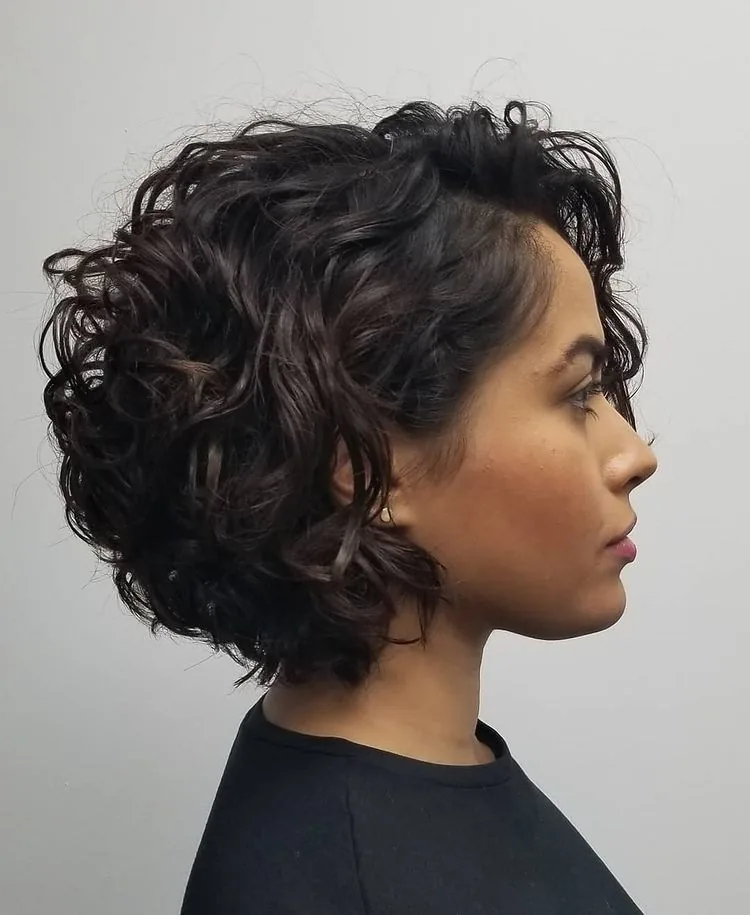
A centre part gives a curly bob a clean, symmetrical frame, with curls falling evenly on both sides of the face. It suits looser curls especially well, where the symmetry can actually be seen.
Best for: 2C and 3A curls that want a tidy, balanced everyday bob.
How to style: Part in the centre while soaking wet, scrunch each side separately, and let the curls dry without swapping the part.
13. Tapered Nape Curly Bob
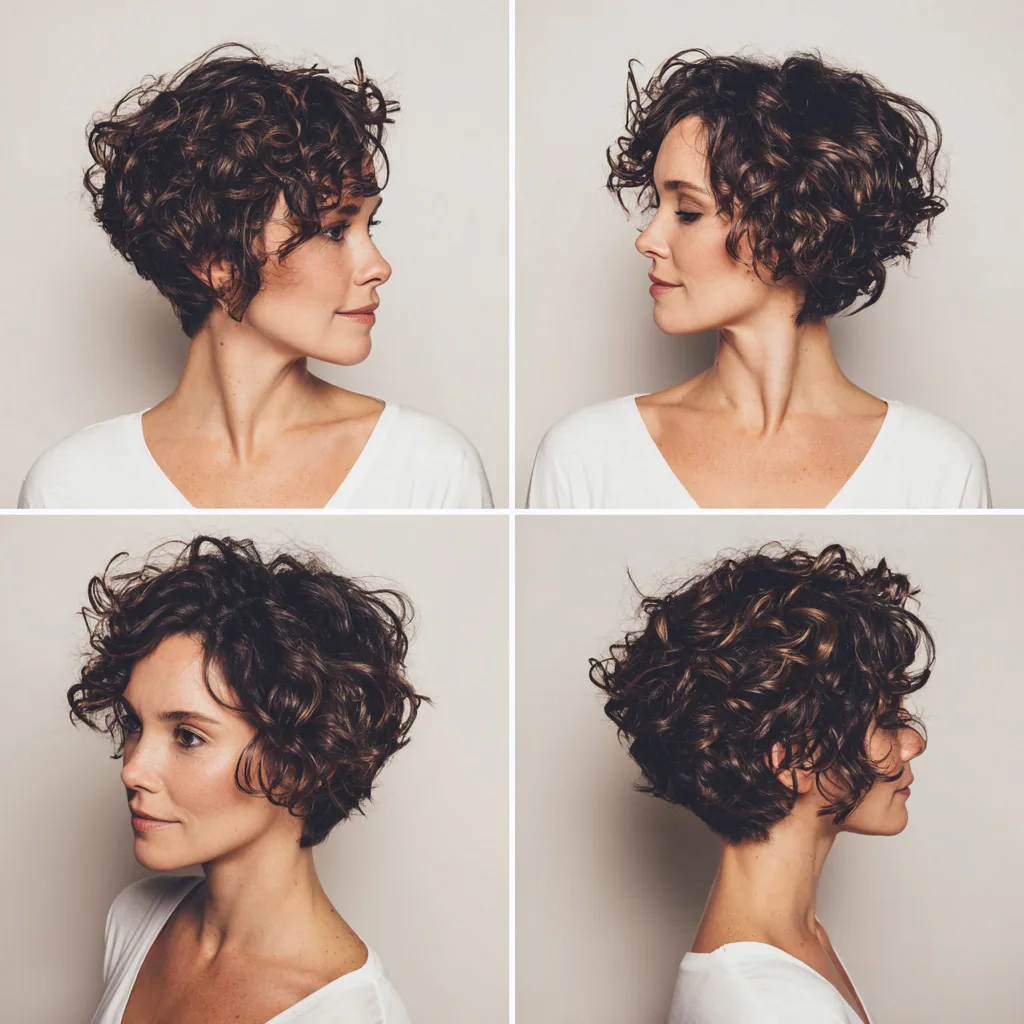
A tapered nape keeps the back of a curly bob neat and close at the neckline while the top stays full and curly. It is the tidy finish that stops a short bob looking bulky from behind.
How to style: Keep the nape smooth with a little gel on wash day, and let the top curls do the volume work.
Common mistake: Tapering too high into the crown, which can leave a visible step. The taper should stay low, near the neckline only.
14. Voluminous Afro Curly Bob
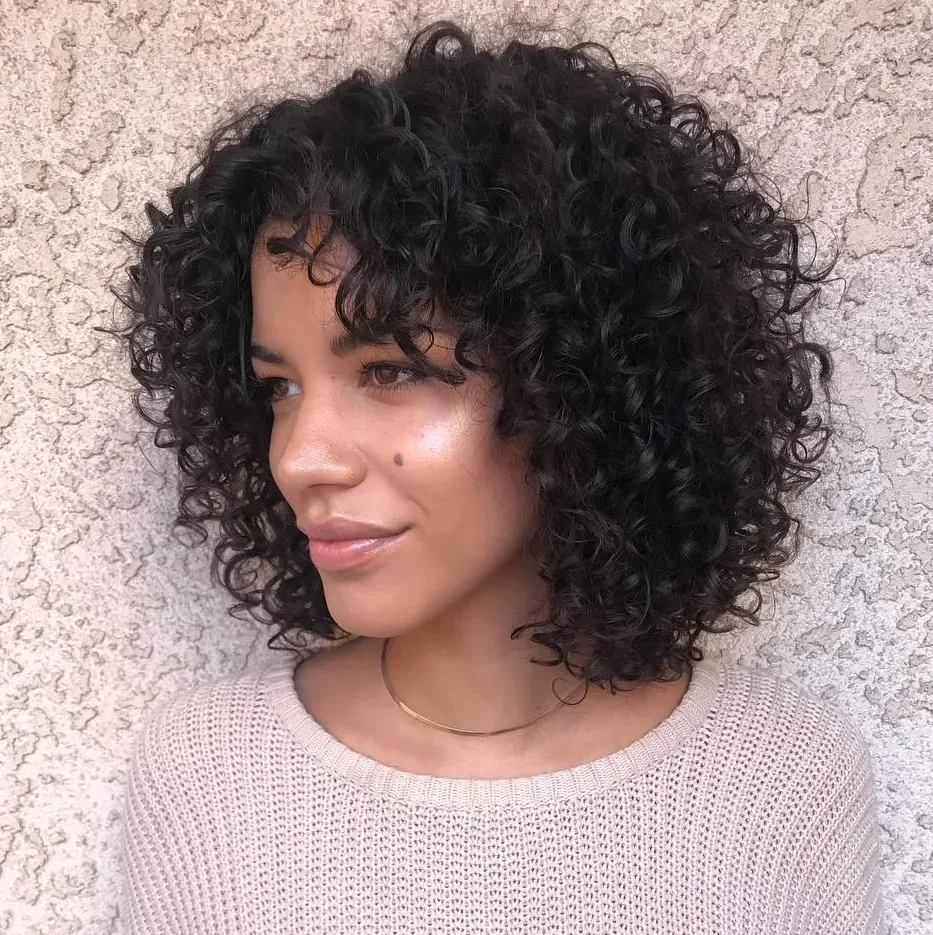
A voluminous afro bob celebrates fullness: a rounded, generous shape cut to let tight curls and coils expand into a soft halo. Shaping, not thinning, is what keeps it beautiful.
Pros and cons: Pros: stunning shape, maximum curl celebration, no straightening needed. Cons: it needs a stylist experienced with afro-textured hair and dry shaping.
Quick verdict: Do not ask for this bob to be thinned out. Ask for it to be shaped, curl by curl, into the round silhouette you want.
15. Defined 3A Ringlet Bob
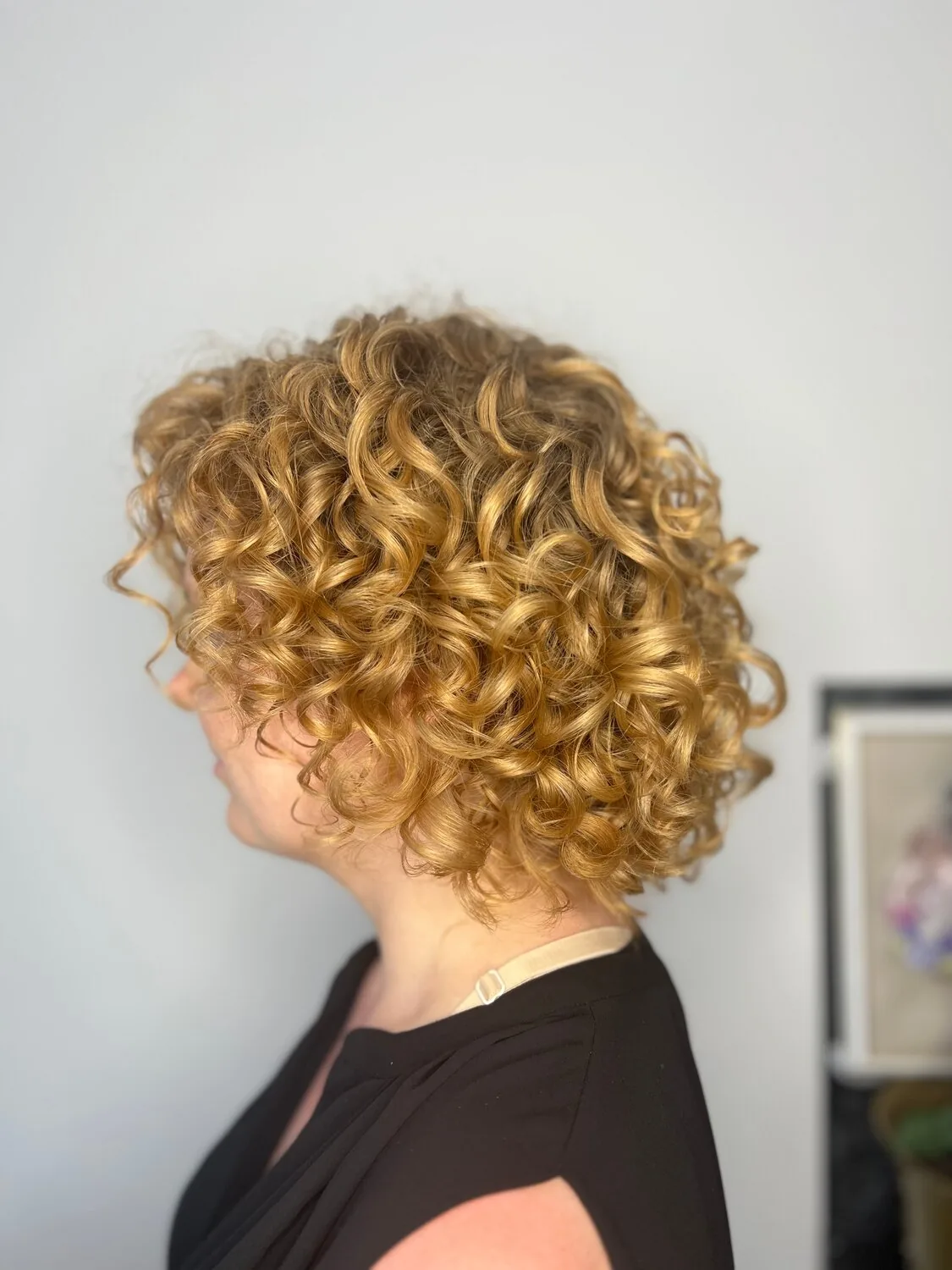
3A ringlets are loose, springy spirals, and at bob length they bounce beautifully without much styling. The cut should protect each ringlet’s length, because ringlets shorten dramatically if cut too short.
Best for: 3A curls that want defined, bouncy spirals at chin to jaw length.
What to ask: A dry cut that follows each ringlet, with layers only where ringlets clump together and need separation.
16. Tight-Coil 3B Curly Bob
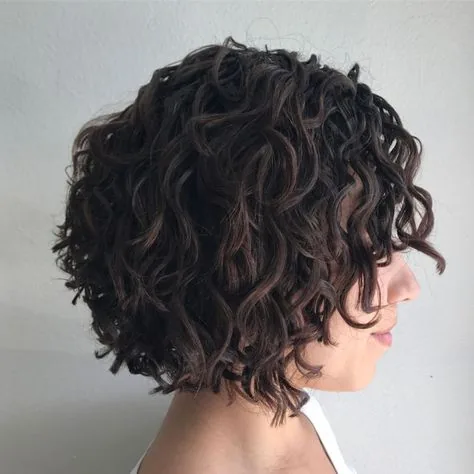
3B curls are tight, springy coils with lots of volume, and a bob for 3B hair needs extra wet length to land at the right dry length. With the right shaping, the result is a compact, beautifully defined bob.
How to style: Apply cream and gel to soaking-wet coils in small sections, finger-coil any frizzy pieces, and diffuse on low without touching.
Maintenance: Deep condition weekly and refresh with water and a little cream between washes, rather than re-wetting the whole bob daily.
17. Loose Wavy-Curly Bob
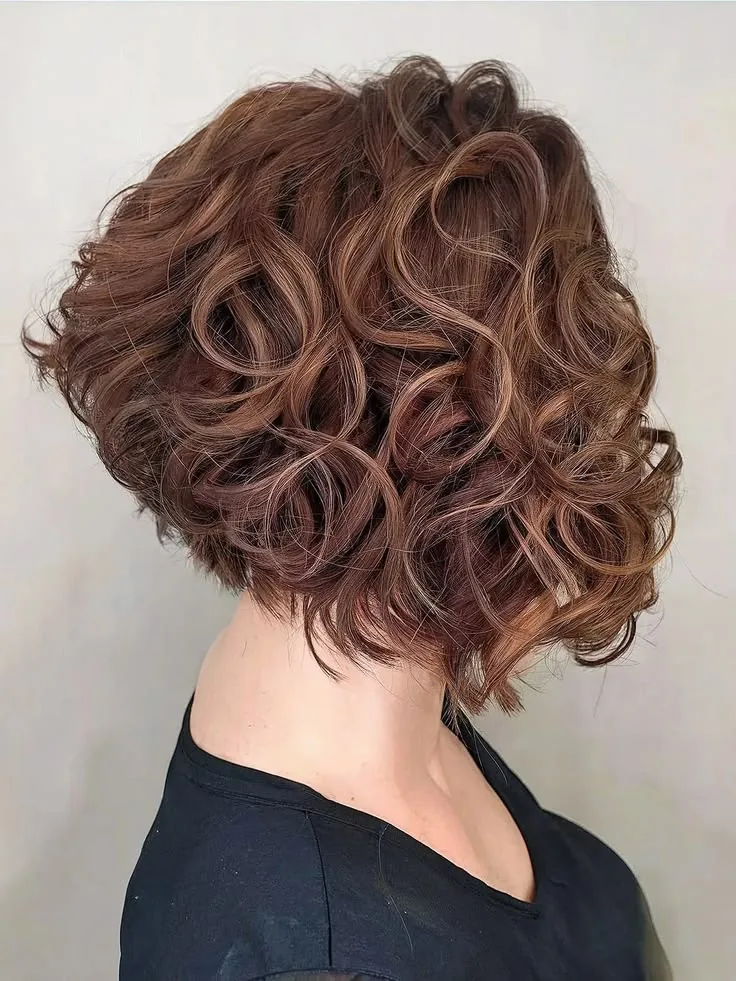
A loose wavy-curly bob sits between waves and curls, with gentle S-shapes that need light layering to spring up. It is the easiest curly bob to style, because the pattern is forgiving and dries quickly.
Pros and cons: Pros: fast drying, low frizz risk, easy to refresh. Cons: definition fades by day two without a refresh spray or light scrunch.
Common mistake: Using heavy curl creams meant for tight coils, which drag loose curls straight. Keep products light.
18. Balayage Curly Bob

Balayage on a curly bob paints lightness through the mid-lengths and ends, so each curl catches the light differently and the bob looks dimensional rather than flat. It is colour that works with the curl, not against it.
Best for: Anyone who wants dimension without a full colour commitment or harsh regrowth lines.
Quick verdict: Ask for soft, hand-painted pieces, not foils in stripes — stripes show up sharply on short curls.
19. Copper and Auburn Curly Bob
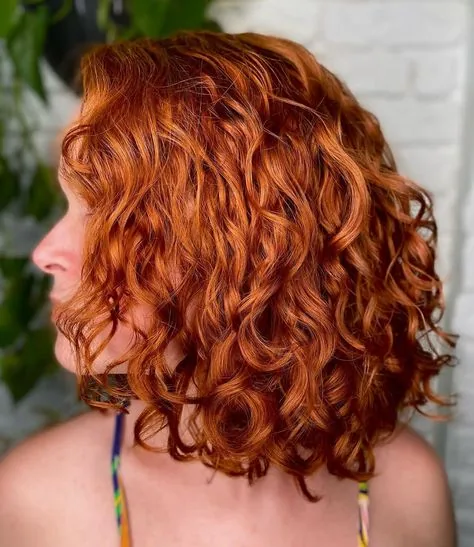
Copper and auburn tones make curly bobs glow, because warm colour catches light at every curl bend. The shade suits a wide range of skin tones when it is kept rich rather than brassy.
How to style: Style as usual, and use colour-safe shampoo to keep the copper from fading to dull orange between appointments.
Maintenance: A gloss or toner every 6 to 8 weeks keeps copper fresh, especially on a short bob where regrowth shows quickly.
20. Blonde Highlighted Curly Bob
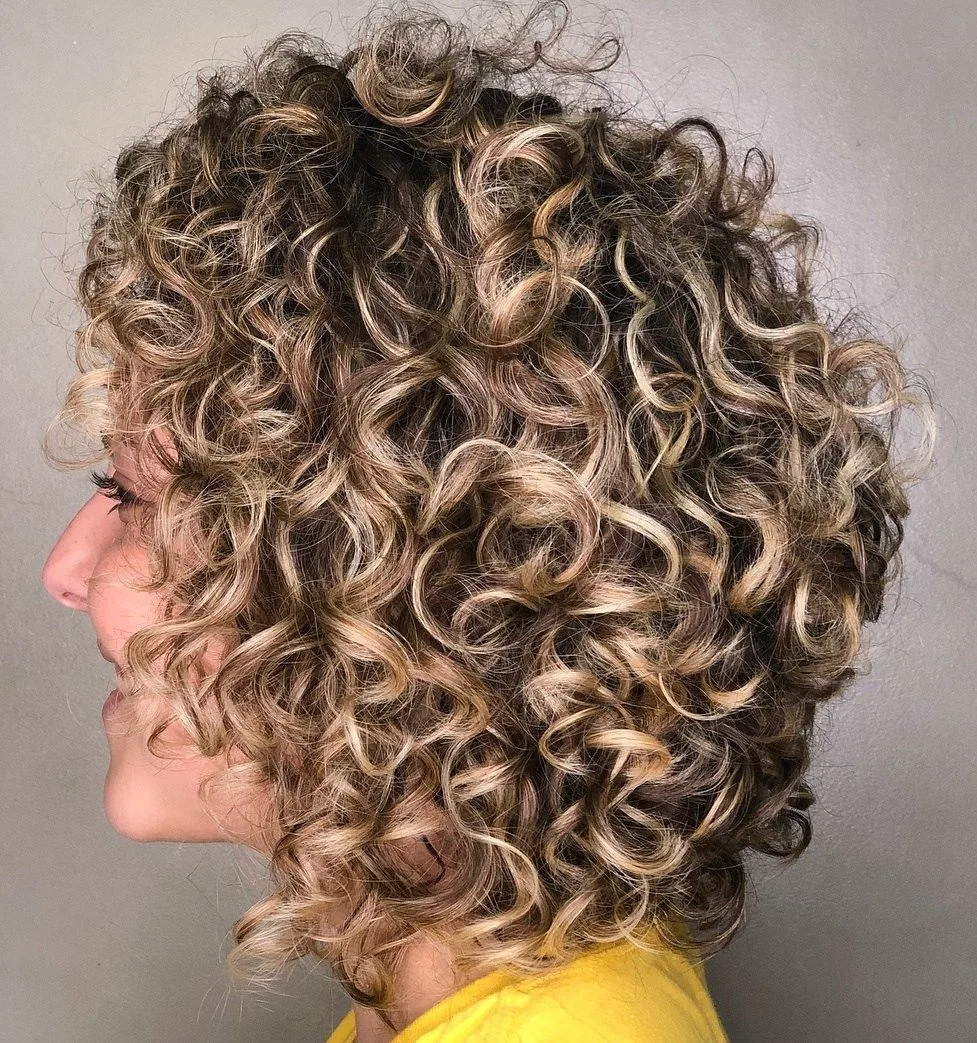
Blonde highlights on a curly bob lift the top curls and frame the face, giving the bob brightness without going fully blonde. The highlights should be fine and blended, so they move with the curls.
Pros and cons: Pros: bright, dimensional, face-framing. Cons: blonde can dry curls out, so moisture care becomes non-negotiable.
What to ask: Fine, blended highlights through the top layers only, with a moisturising mask routine agreed at the same appointment.
21. Curly Bixie Bob
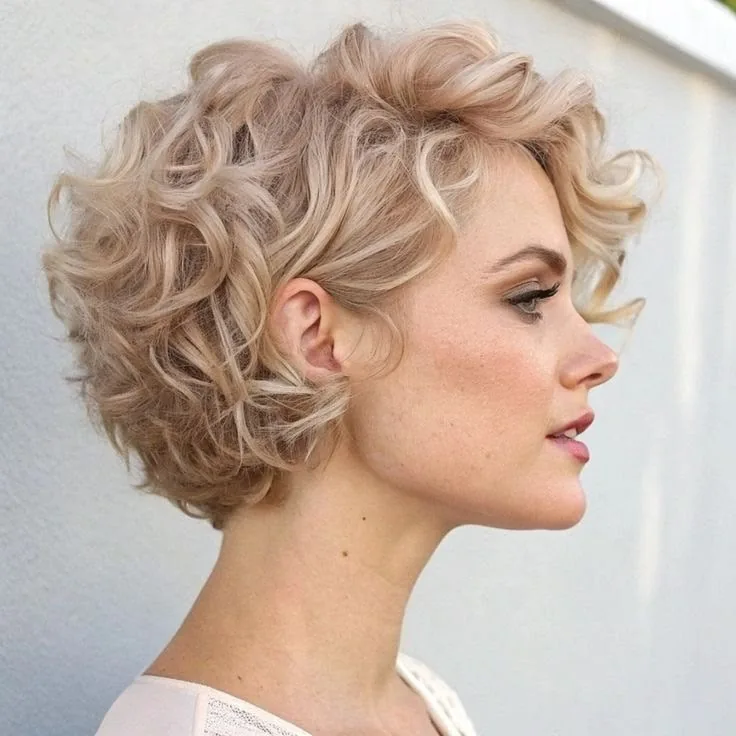
A bixie is a bob-pixie hybrid: shorter than a bob at the back, longer and softer at the front, with plenty of curl texture on top. On curls it is playful and low-effort, because the curl does the styling.
Best for: Bold short-hair lovers who want pixie ease with bob softness around the face.
Common mistake: Cutting the top too short, so curls stand up instead of falling. Keep the top layers long enough to curl and drop.
22. Curly Bob for Fine Curls
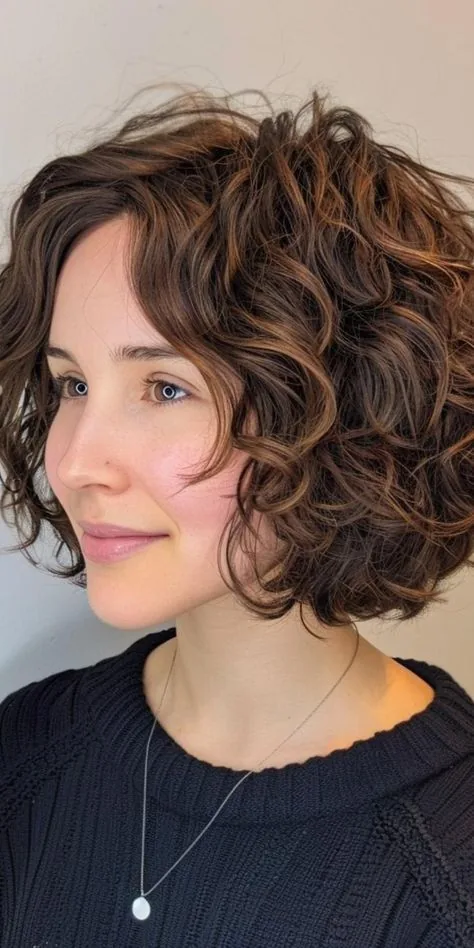
Fine curls can look thin in a long cut, but a bob gives them instant fullness, because shorter lengths spring up more and stack into a fuller shape. Light layers and root lift do the rest.
How to style: Apply mousse at the roots, diffuse upside down briefly for lift, then scrunch the lengths with a light cream.
Quick verdict: If your curls feel fine or flat, a bob is not a risk — it is often the cut that finally gives them body.
23. Curly Bob for Thick Hair
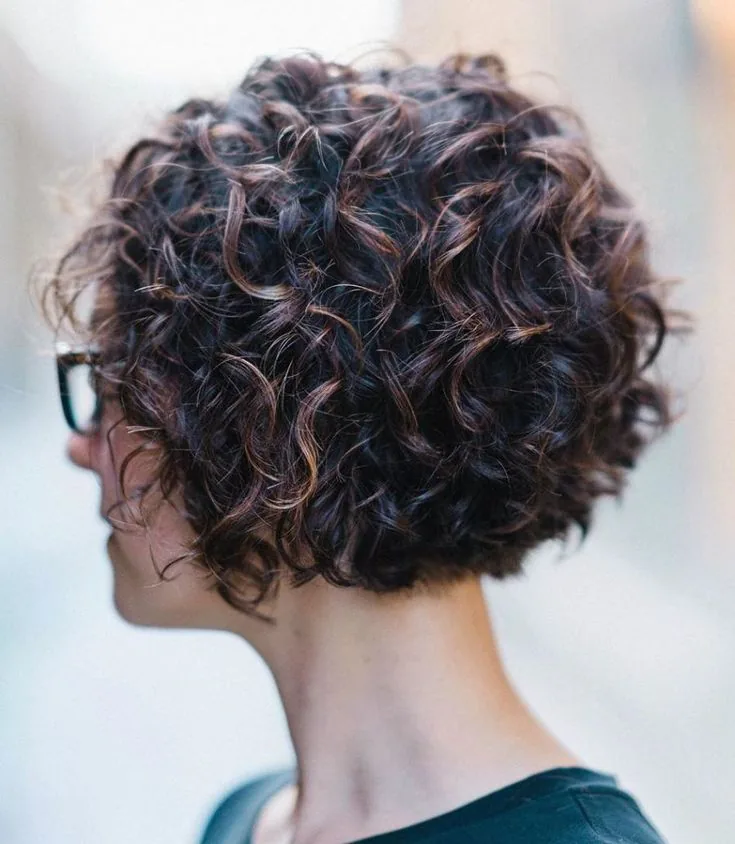
Thick curly hair in a bob needs internal shaping to remove bulk without removing length. Done well, the bob looks lighter and narrower; done badly, with blunt thinning, it can frizz and puff.
Pros and cons: Pros: lighter, cooler, easier to dry. Cons: aggressive thinning can create frizz — shaping and layering are safer than razoring.
What to ask: Internal layers and dry shaping to reduce bulk, not a razor or thinning shears through the ends.
24. Face-Framing Curly Bob
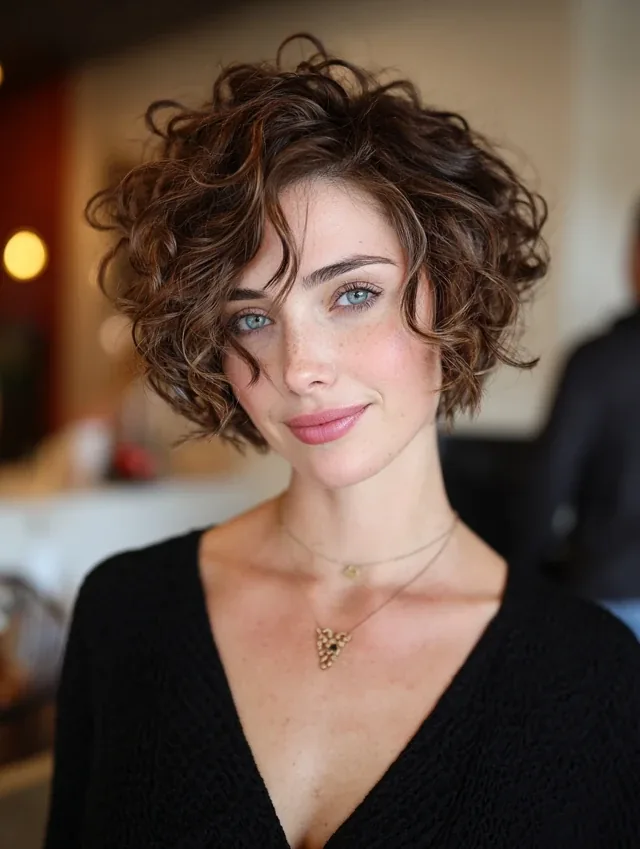
Face-framing layers are the gentlest way to shape a curly bob: shorter curls around the face open it up, while the rest of the bob keeps its length and fullness. It is a small change with a big payoff.
Best for: Anyone who loves their bob length but wants the front to feel less heavy or closed-in.
How to style: Scrunch the framing pieces separately while wet, so they curl cleanly around the cheekbones instead of clumping together.
25. Wet-Look Defined Curly Bob
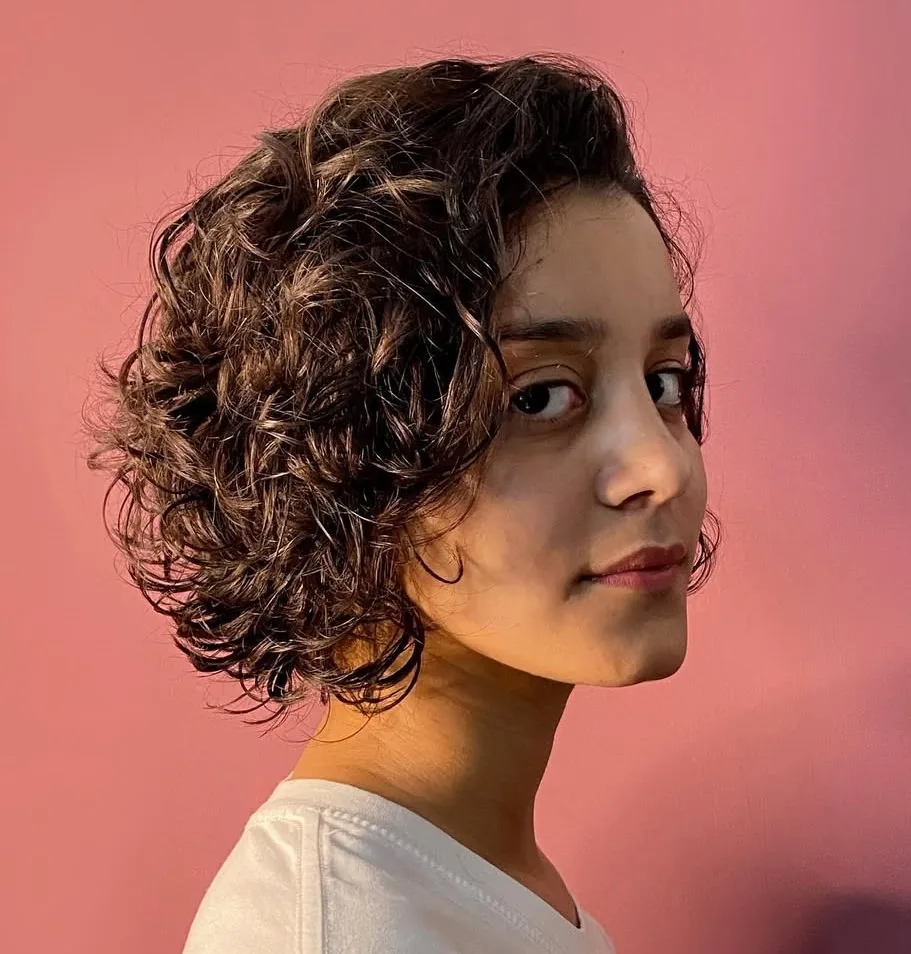
A wet-look bob uses gel to define curls into glossy, sculpted shapes, giving a short bob a striking evening finish. It works beautifully on natural curls, because the pattern is already there to sculpt.
How to style: Apply gel to soaking-wet curls, define curls with your fingers, and let the bob dry fully without touching it.
Common mistake: Touching the bob while the gel is setting, which breaks the cast and turns definition into frizz. Wait until it is dry, then scrunch out the crunch.
26. Air-Dried Natural Curly Bob
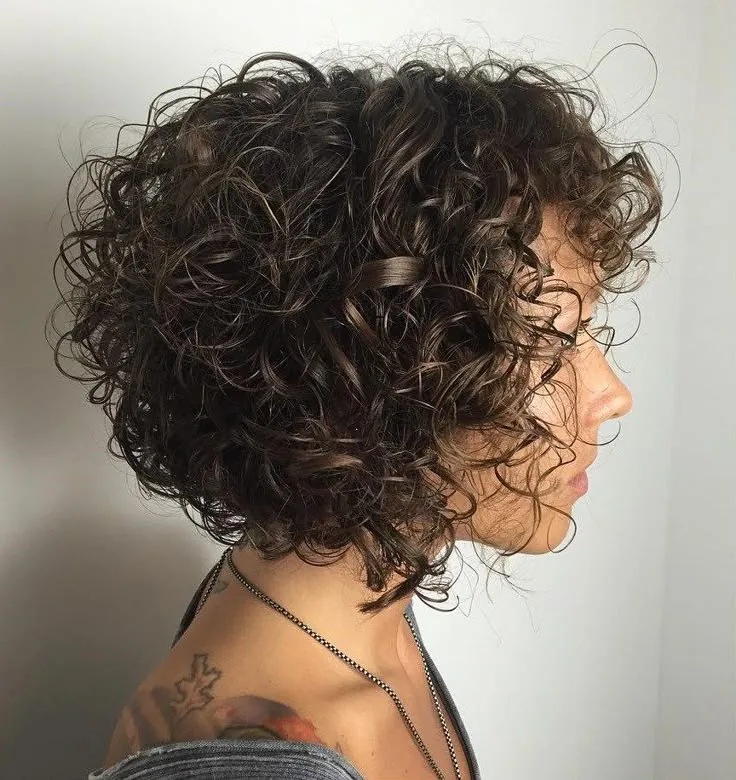
Air-drying is the purest curly bob style: wash, scrunch, and leave it alone. No heat, no diffuser, just your natural pattern falling into a bob shape.
Pros and cons: Pros: healthiest option, zero heat damage, simplest routine. Cons: slower drying, and the bob may need a quick refresh spray on day two.
How to style: Apply light cream to wet curls, scrunch, micro-plop briefly with a T-shirt, then do not touch until dry.
27. Half-Up Curly Bob
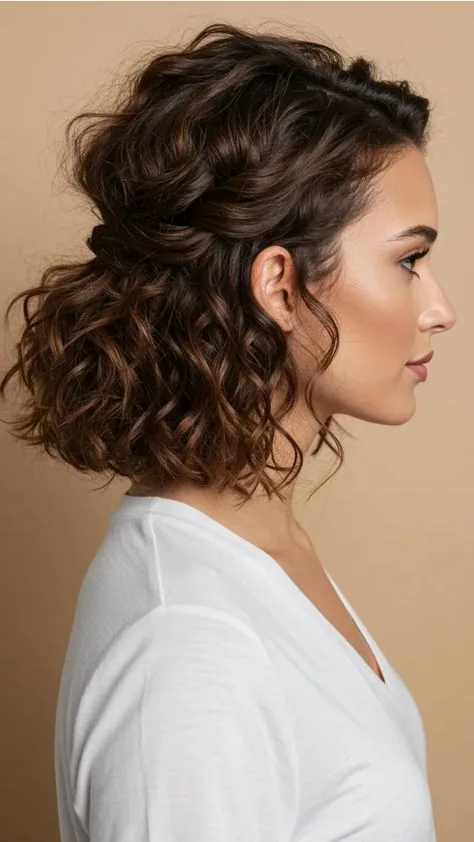
A half-up style on a curly bob pulls the top section back and leaves the rest curly and free, giving a tidy front with bob texture behind. It is the quickest way to change a bob without cutting it.
Best for: Days when you want curls off your face but still want the bob’s shape showing at the back.
Quick verdict: Use a small clip or pins, not a tight band, so the top section stays soft and the curls are not dented.
28. Soft Occasion Curly Bob
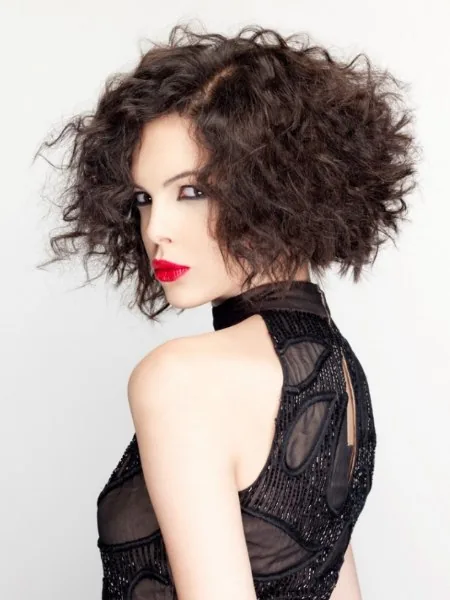
For weddings, parties and special occasions, a curly bob can be pinned softly at the sides or swept back with a clip, leaving curls out around the face. Tightness is the enemy: soft and loose photographs far better.
How to style: Define curls first, then pin loosely at the sides, pull out soft face pieces, and finish with flexible spray.
Maintenance: No special maintenance — this is a styling variation, not a different cut, so it works on any bob in this guide.
29. A-Line Curly Bob, Longer at the Front
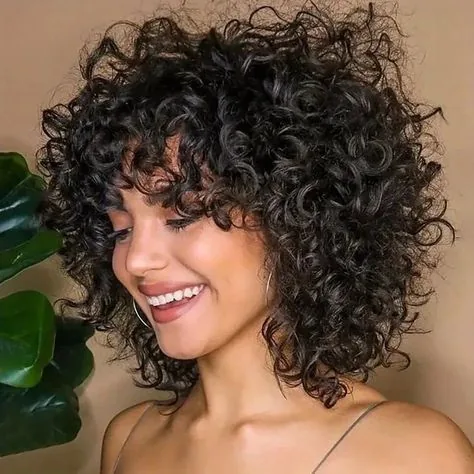
An A-line bob is longer at the front than at the back, framing the face with longer curls while keeping the nape tidy. On curls, the front length must account for spring, or the A-line disappears as the front curls lift.
Pros and cons: Pros: elegant, face-framing, shows off the curl shape from the side. Cons: the front pieces need a dry check, because they spring up more than the back.
What to ask: A gentle A-line, cut dry, with the front agreed at its dry length, not its wet length.
30. Soft Blunt Curly Bob
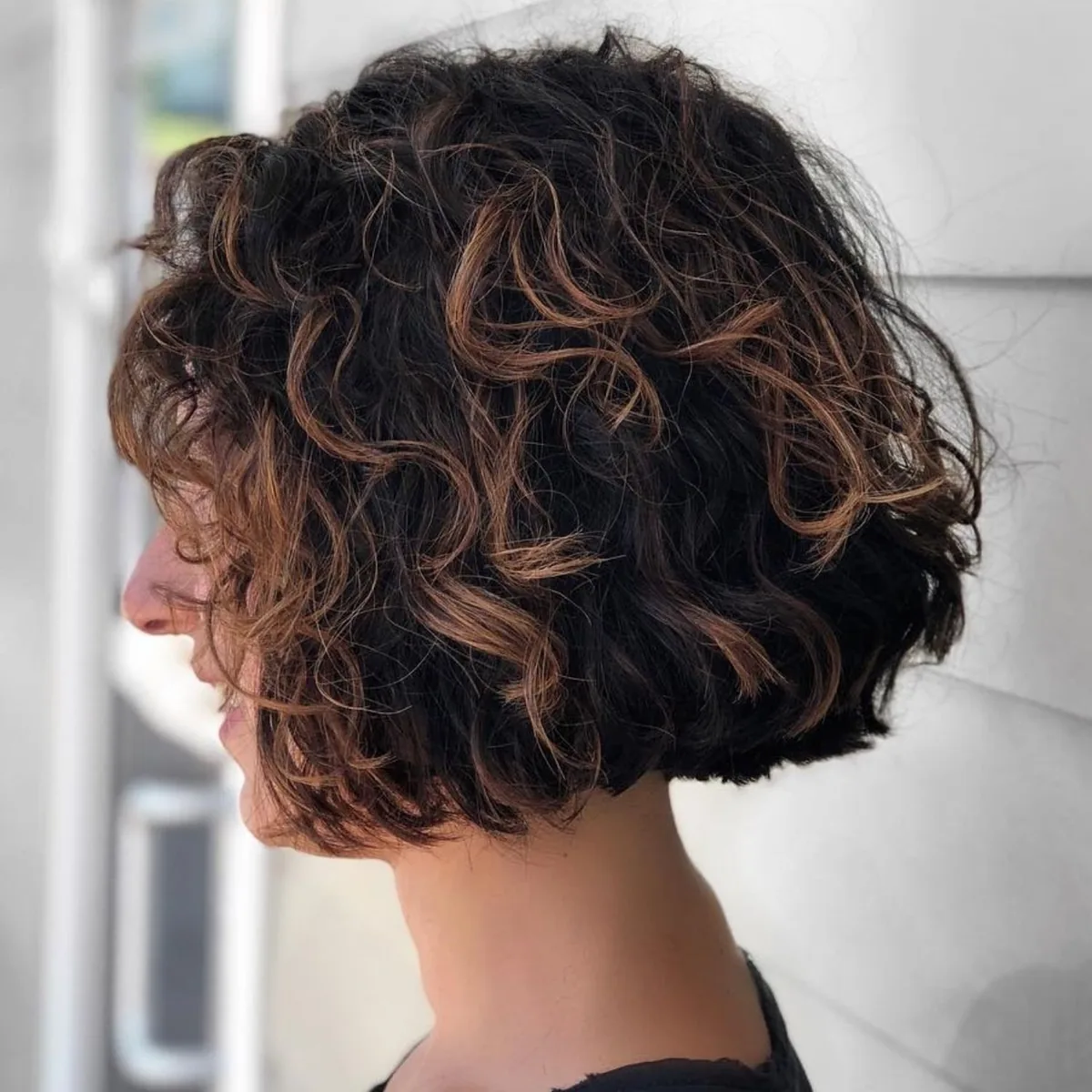
A soft blunt bob has a clean, even outline, but with point-cut ends so curls do not sit in a hard line. It gives curly hair a polished finish without the triangle risk of a truly blunt cut.
Best for: Looser curls that want a neat, graphic bob outline with soft, touchable ends.
Common mistake: Cutting it truly blunt with no point-cutting or shaping. On curls, that hard line quickly becomes a wide, flat base.
31. Curly Bob With Wispy Bangs
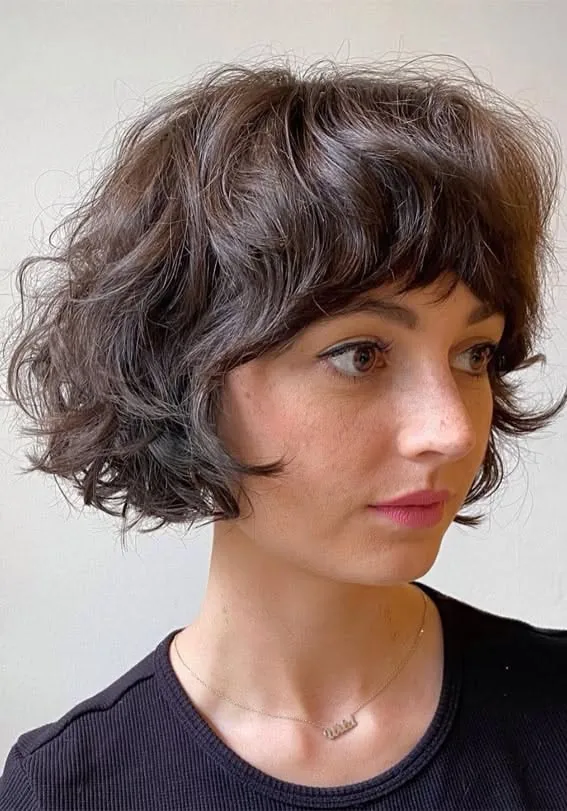
Wispy bangs are light, see-through curls across the forehead that soften a curly bob and draw attention to the eyes, without the weight of a full fringe. On curls they blend in softly.
How to style: Scrunch the wispy pieces separately while wet, and let them dry naturally rather than blow-drying them straight.
Quick verdict: Ideal if you want a fringe but worry about a heavy, straight-across look on curly hair.
32. Curly Bob With a Side-Swept Fringe
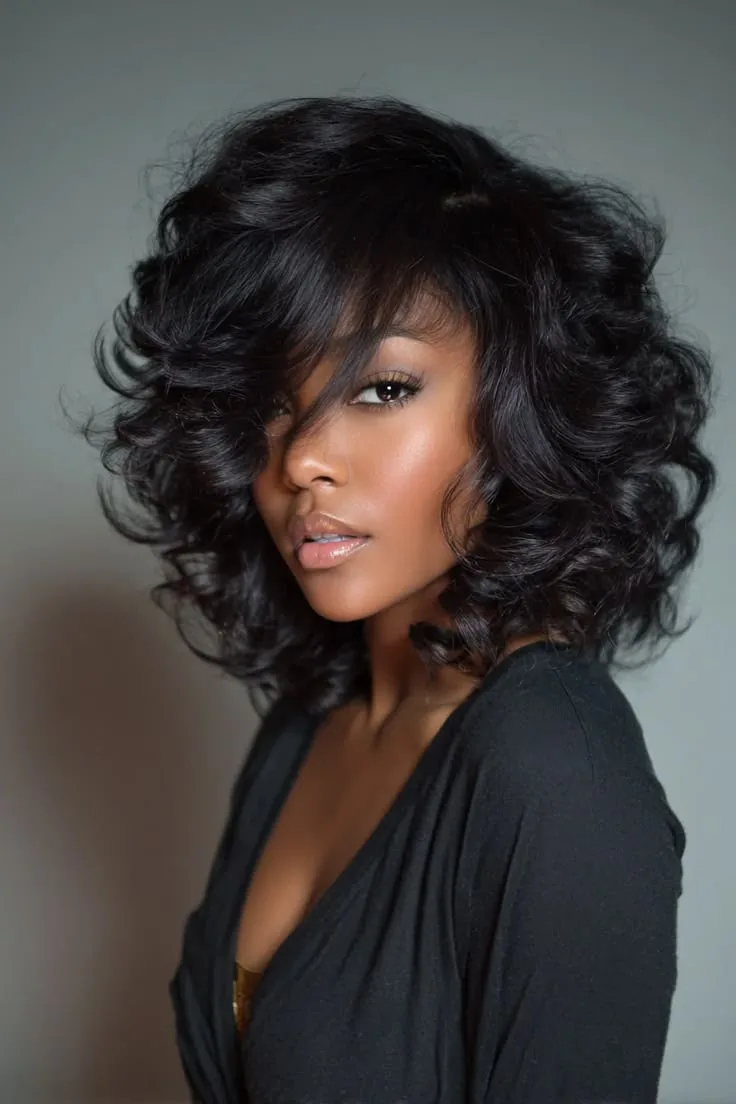
A side-swept fringe adds a soft diagonal across the forehead and pairs beautifully with a curly bob, because the sweep follows the curls’ own direction. It is less commitment than a full fringe and grows out gracefully.
Pros and cons: Pros: soft, flattering, easy to grow out. Cons: it needs a trim every 3 to 4 weeks, or it grows into longer face-framing layers.
Maintenance: Trim the fringe separately between bob appointments, or let it grow into curtain layers if you prefer a lower-maintenance route.
33. Graduated Stacked Curly Bob
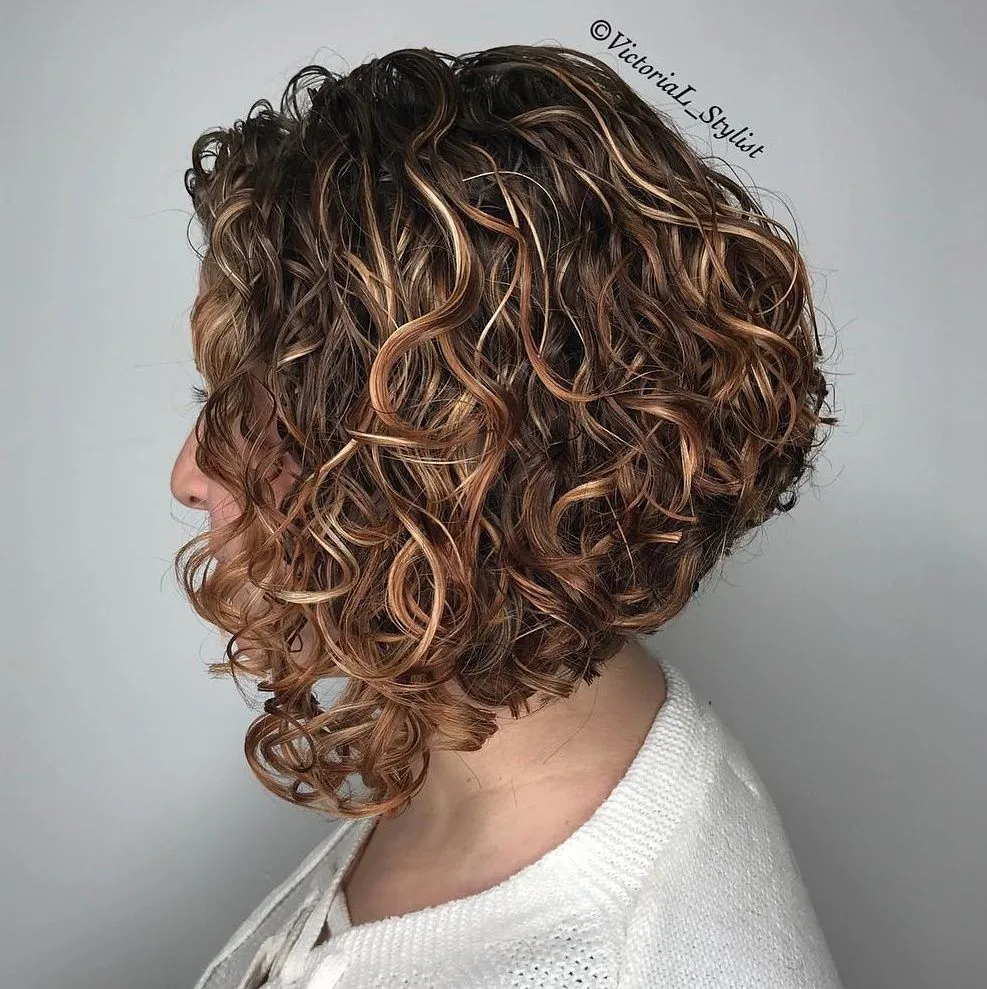
A stacked bob builds graduated layers at the back, stacking curls into a rounded, lifted shape that looks full from behind. On curls, the stacking must be gentle and dry-checked, or the back can puff out.
Best for: Fine to medium curls that want lift and fullness at the back without a lot of styling.
What to ask: Soft graduation, not a steep stack, with the back shaped dry so the lift lands where you want it.
34. Wash-and-Go Low-Maintenance Curly Bob
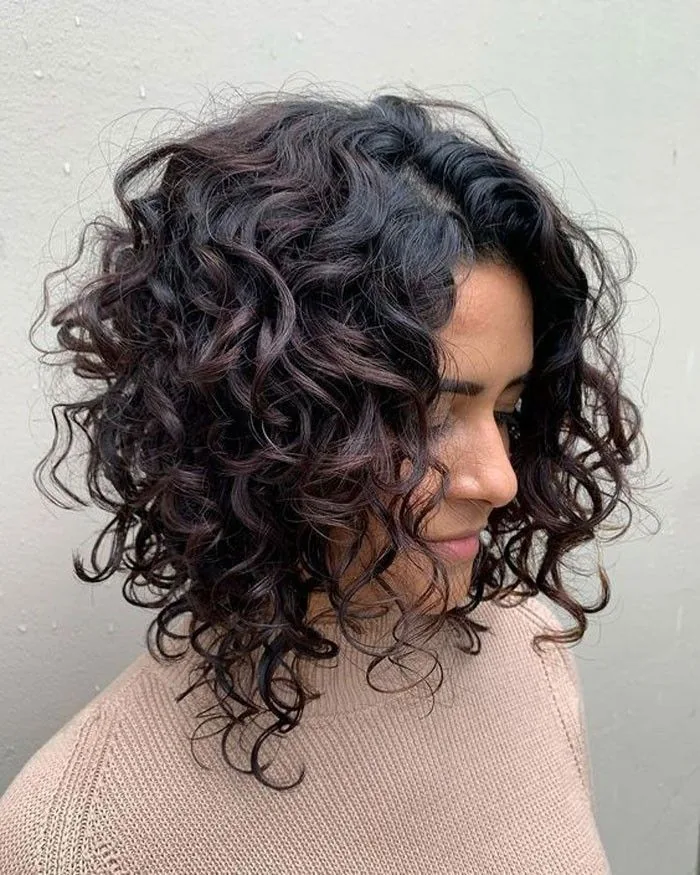
A wash-and-go bob is designed for minimal styling: a cut that falls into shape after washing and scrunching, with no diffuser, no iron and no long routine. It is the curly bob for busy mornings and low-maintenance lives.
How to style: Wash, apply leave-in and gel to soaking-wet curls, scrunch, air-dry untouched, and refresh with water and cream on day two.
Quick verdict: Choose this bob if you will realistically style for five minutes, not thirty. The right dry cut makes wash-and-go possible.
Diffusing a Curly Bob Without Creating Frizz
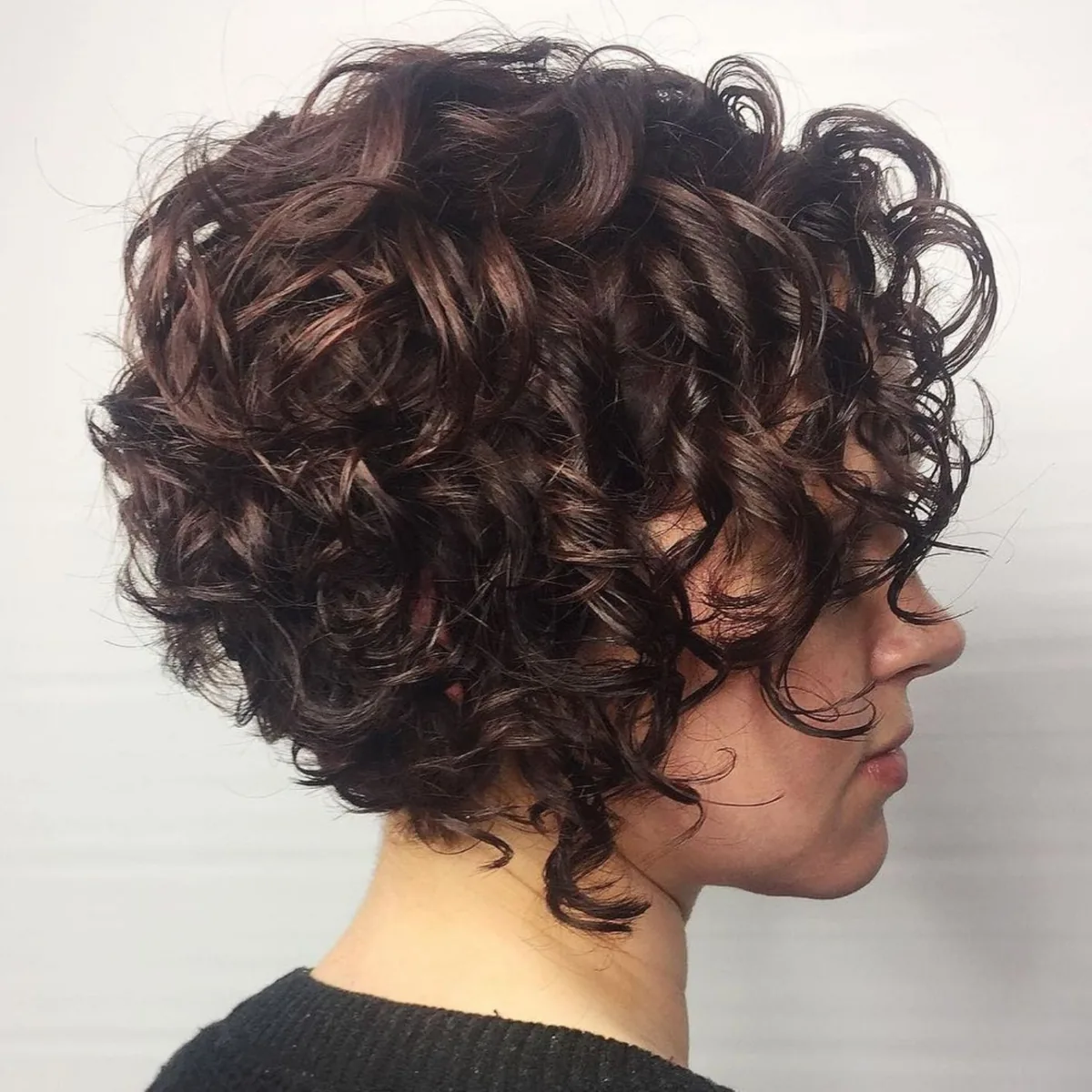
Diffusing works best when the diffuser does the moving, not your hands. Cup a section of curls into the diffuser bowl, hold it still against the scalp for a few seconds on low heat and low speed, then move to the next section. Hover-diffusing from a distance first, then cupping, gives lift at the roots without blowing curls apart.
Stop at about 80 percent dry and let the rest air-dry, rather than diffusing until the bob is bone dry and fluffy. Do not touch the curls while they are damp, and do not flip your head upside down and shake the bob out mid-dry unless you want maximum volume. For a neat bob, keep the diffuser still and the curls undisturbed.
Trims, Grow-Out and Keeping a Curly Bob in Shape
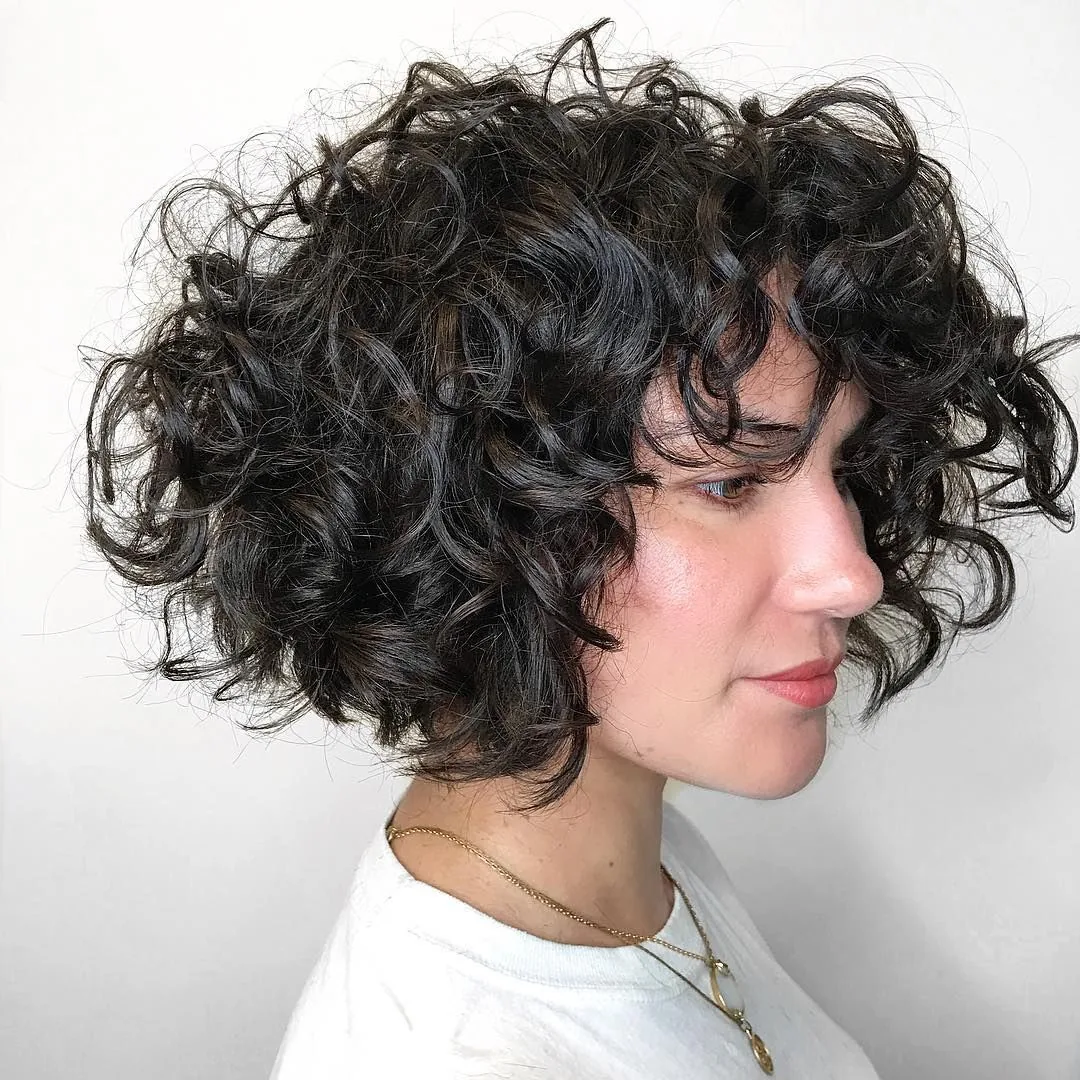
A curly bob grows out differently from a straight bob: instead of simply getting longer, it often gets wider first as the curls gain weight and drop. Trims every 8 to 10 weeks usually keep the shape, with a small dry tidy-up in between if one side springs up faster than the other. Shorter, tighter bobs may need a trim every 6 to 8 weeks.
When growing a curly bob out, keep the nape tidy and the front layers shaped, so the grow-out looks intentional rather than shapeless. A lob is the natural next stage: it lets you keep the bob’s shape while the curls gain length, and it is much easier to tie back on wash days you do not want to style.
Colour on a Curly Bob: Highlights That Show the Curl, Not the Damage
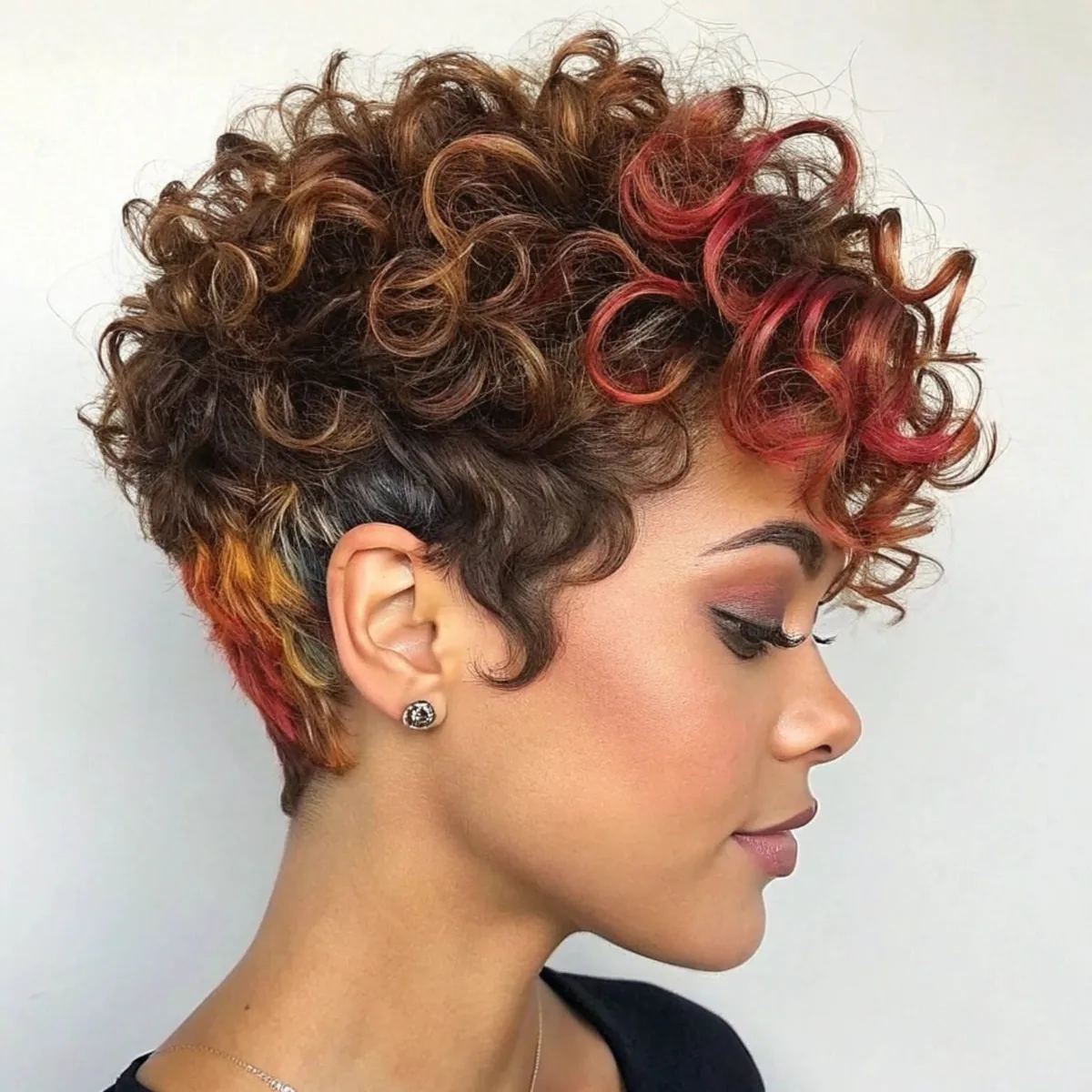
Colour shows beautifully on a curly bob because every curl catches light at a different angle. Soft balayage, face-framing highlights and gentle dimension make the curl pattern more visible, with lighter pieces sitting on top of the curls and darker pieces in the shadows between them. On short curls, keep the colour blended rather than striped.
Protect curls after colouring with a moisturising mask once a week and a little less heat. Dry, over-processed curls lose definition and spring, so colour that keeps the hair healthy will always show a bob better than colour that leaves it brittle. Build lightness gradually if you are going blonde.
Mistakes That Turn a Curly Bob Into a Triangle
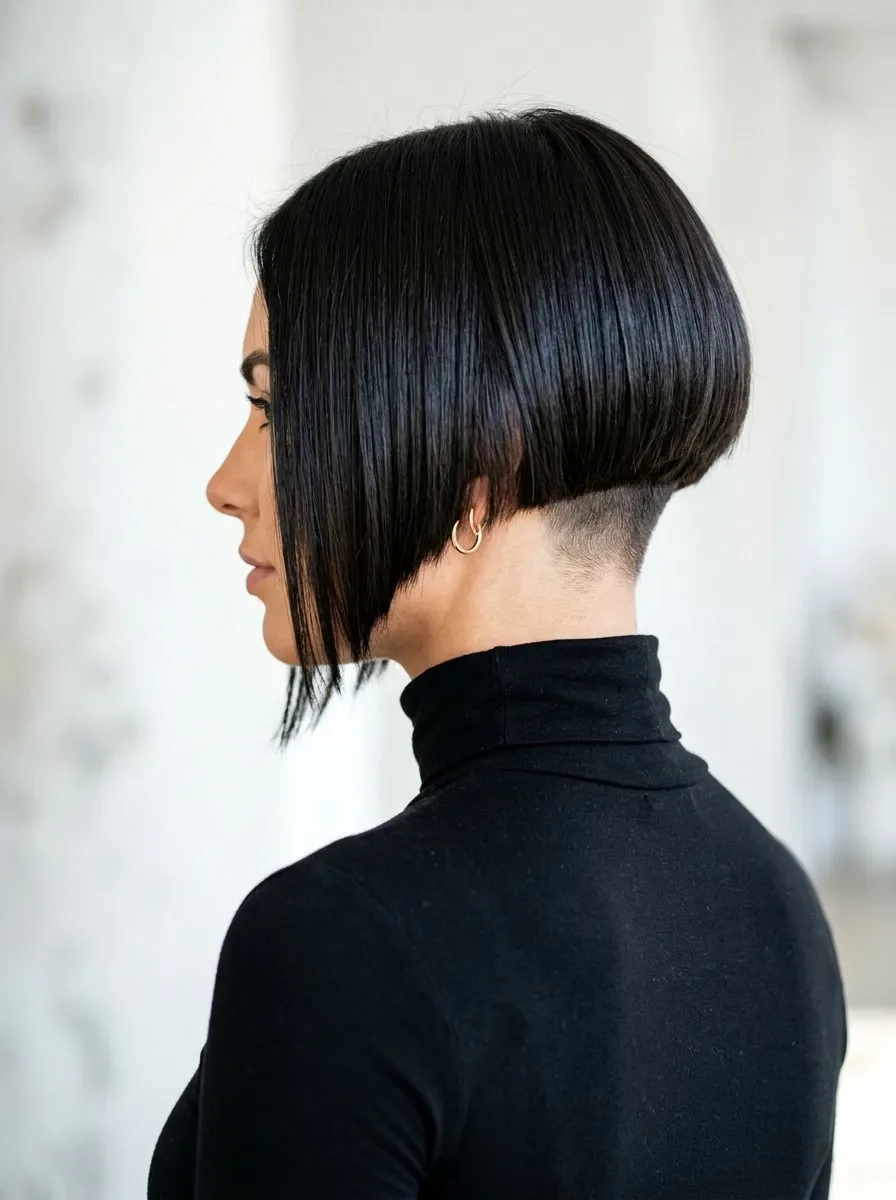
The dreaded curly triangle happens when a bob is cut blunt and one-length, with no layers or shaping inside. The top stays flat, the ends flare out wide, and the whole cut looks like a pyramid. The fix is internal layering and shaping through the mid-lengths, so the bob narrows slightly towards the ends instead of widening.
Other bob-ruiners include cutting wet to the exact dry length you want, brushing curls out dry, using heavy butters that drag curls down, and straightening the bob every day. Swap those for a dry cut, scrunching, light products and a loose dry, and most curly bobs will sit narrower and softer within a couple of washes.
What is the best bob haircut for curly hair?
The best bob haircut for curly hair is usually a layered or shaped bob cut dry, at a dry length agreed before cutting. Layers stop the bob turning into a triangle, and a dry cut accounts for shrinkage, so the bob lands at the length you actually want when dry.
Should curly hair be cut wet or dry for a bob?
Curly hair should ideally be cut dry, or at least checked dry, for a bob. Wet curls stretch longer than they will dry, so a wet cut can spring up several centimetres shorter. A dry cut lets the stylist see exactly where each curl will fall.
How short will a curly bob shrink?
Shrinkage depends on curl tightness: loose curls may spring up a few centimetres, while tight coils can spring up by a third of their length or more. Always agree a dry target length with your stylist, and cut longer wet if you are unsure.
How do I stop my curly bob looking like a triangle?
Ask for layers and internal shaping through the mid-lengths, so the bob narrows slightly towards the ends instead of flaring wide. Avoid blunt, one-length cuts, and do not brush the bob out dry, which also widens it.
Can I have bangs with a curly bob?
Yes, you can have bangs with a curly bob, but they must be cut longer wet than you want them dry, because curly bangs spring up as they dry. Curtain bangs and wispy bangs are the most forgiving options, and a full curly fringe needs a stylist experienced with curls.
How often should a curly bob be trimmed?
Trim a curly bob every 8 to 10 weeks in most cases, or every 6 to 8 weeks for shorter, tighter bobs. Regular trims keep the shape from growing wide first, which is how curly bobs usually grow out.
What products should I use on a curly bob?
Use light products in the right order: leave-in conditioner, then curl cream or gel, applied to soaking-wet hair. Heavy butters and oils can drag short curls down, while mousse at the roots gives lift without weight.
How do I diffuse a curly bob without frizz?
Cup sections into the diffuser on low heat and low speed, hold still, and do not touch the curls until they are fully dry. Stop at about 80 percent dry and let the rest air-dry, rather than diffusing until the bob is fluffy.
Can a curly bob be tied back?
A chin-length curly bob is hard to tie back fully, but a curly lob at collarbone length usually can be, and a half-up style works on almost any bob length. If tie-back matters to you, choose a lob rather than a chin-length bob.
How do I refresh a curly bob on day two?
Spray lightly with water, scrunch a small amount of curl cream through the lengths, and let it air-dry. A half-up clip hides any flat sections, and sleeping in a loose pineapple or on a silk pillowcase helps the bob hold its shape overnight.
Conclusion
A curly bob works when it is cut for curls, not in spite of them. Dry cutting, a dry length agreed in advance, layers that shape rather than bulk, and a wash-day routine that leaves curls alone until they are dry — those four things matter more than any single style name in this guide.
Pick the bob that matches your curl type and your real routine, whether that is a classic chin-length cut, a shaggy bob, a French bob or a wash-and-go lob. Then give it a few washes to settle. Curls that spring, rather than frizz, are not luck. They are what happens when the cut respects the curl.