Chignon Hairstyles for Women: The Low Bun, Elevated — From Sleek Workdays to Bridal Nights
There is a reason the chignon has outlasted every trend: it is the rare updo that is both elegant and easy. Low at the nape, rolled or twisted into a smooth shape, it lengthens the neck, opens up the face and makes even a simple outfit look intentional — all in a style that takes ten minutes to build. The trick is not the idea, which is simple, but the details: how low it sits, how smooth or textured it is, and whether you leave soft pieces around the face. Get those three decisions right and the chignon does the rest.
This guide walks through 36 chignon hairstyles for women — classic low, sleek, messy, braided, twisted and side chignons, plus bridal, work, date-night and everyday versions — and eight short guides on the questions women actually ask: what a chignon is, how to choose your placement, how much hair you need, how to ask your stylist, how to finish the style three different ways, how to make it last all day, how to match it to your dress, and how to take it down without breakage. Each style comes with an honest verdict on styling time, maintenance and who should think twice, so you can choose with confidence.
What Exactly Is a Chignon — and How Is It Different From a Low Bun?

A chignon is a low bun worn at the nape of the neck, and the word itself comes from the French for the nape — which already tells you where it lives. The difference from an ordinary low bun is mostly in the finish: a chignon is rolled, twisted or folded into a smooth, sculpted shape, often tucked under itself, while a low bun can be any knot at the back of the head. In practice the two overlap a lot, and most women use the words interchangeably, but a chignon carries an expectation of polish — the kind of updo that looks deliberate from behind, not just gathered.
That polish is also why the chignon has survived every trend cycle, from ballet studios to royal weddings. It suits almost every hair length past the shoulders, works on straight, wavy and curly hair, and flatters most face shapes because the low placement lengthens the neck and leaves the face open. Quick verdict: if you want an updo that reads as elegant rather than casual, ask for a chignon rather than a bun — the name alone tells your stylist to aim for smooth, rolled and finished.
Choosing Your Placement: Low, Mid or to the Side?
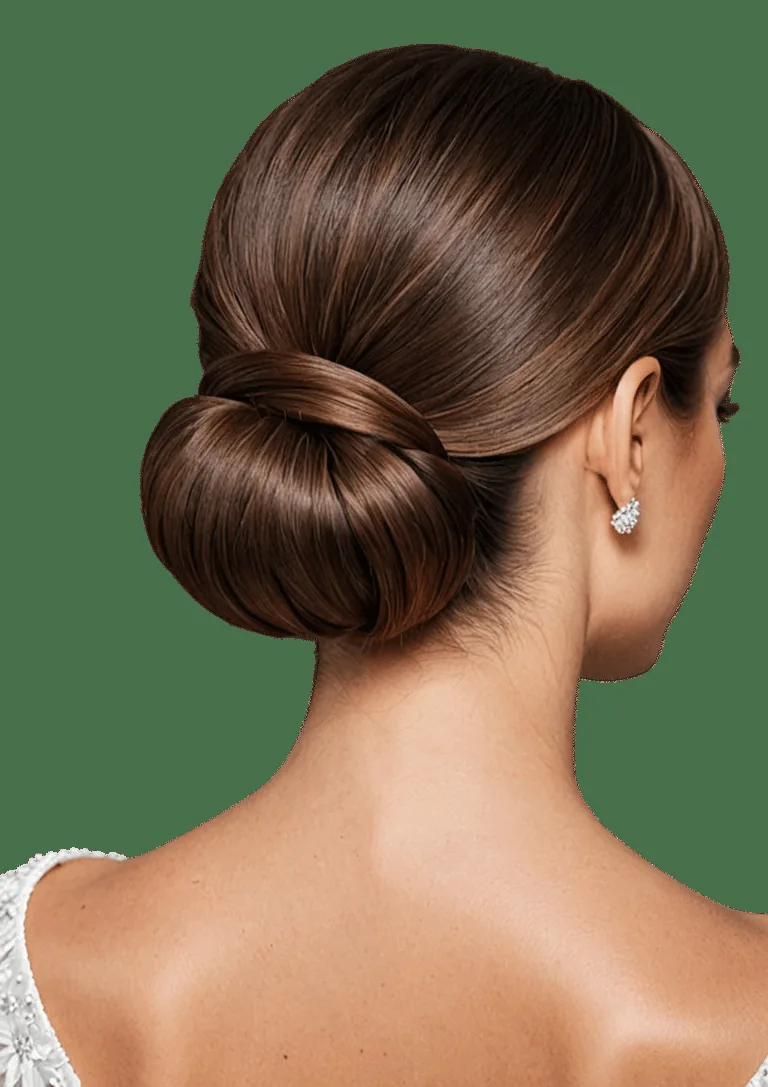
Placement is the first decision in a chignon, and it changes the whole feeling of the style. A low chignon sits at the nape, just above the collar, and is the classic — elegant, understated and the best choice for weddings, work and formal evenings, because it never competes with your outfit or your earrings. A mid-height chignon sits at the back of the head, around ear level, and feels a little more modern and a little less formal; it is easier to build volume into, and it suits women who find a very low bun uncomfortable or hard to see in the mirror.
A side chignon, swept to one side of the nape, is the romantic option: it photographs beautifully, shows off one earring, and works wonderfully with one-shoulder dresses. The common mistake is choosing placement by the photo alone without thinking about the neckline — a low chignon pairs with high necklines and statement earrings, a side chignon with an off-shoulder or one-shoulder dress, and a mid chignon with a simple crew or V-neck. Ask your stylist to try the placement against your outfit, not just in the mirror on its own.
How Much Hair Do You Need? Length, Thickness and the Faux Chignon
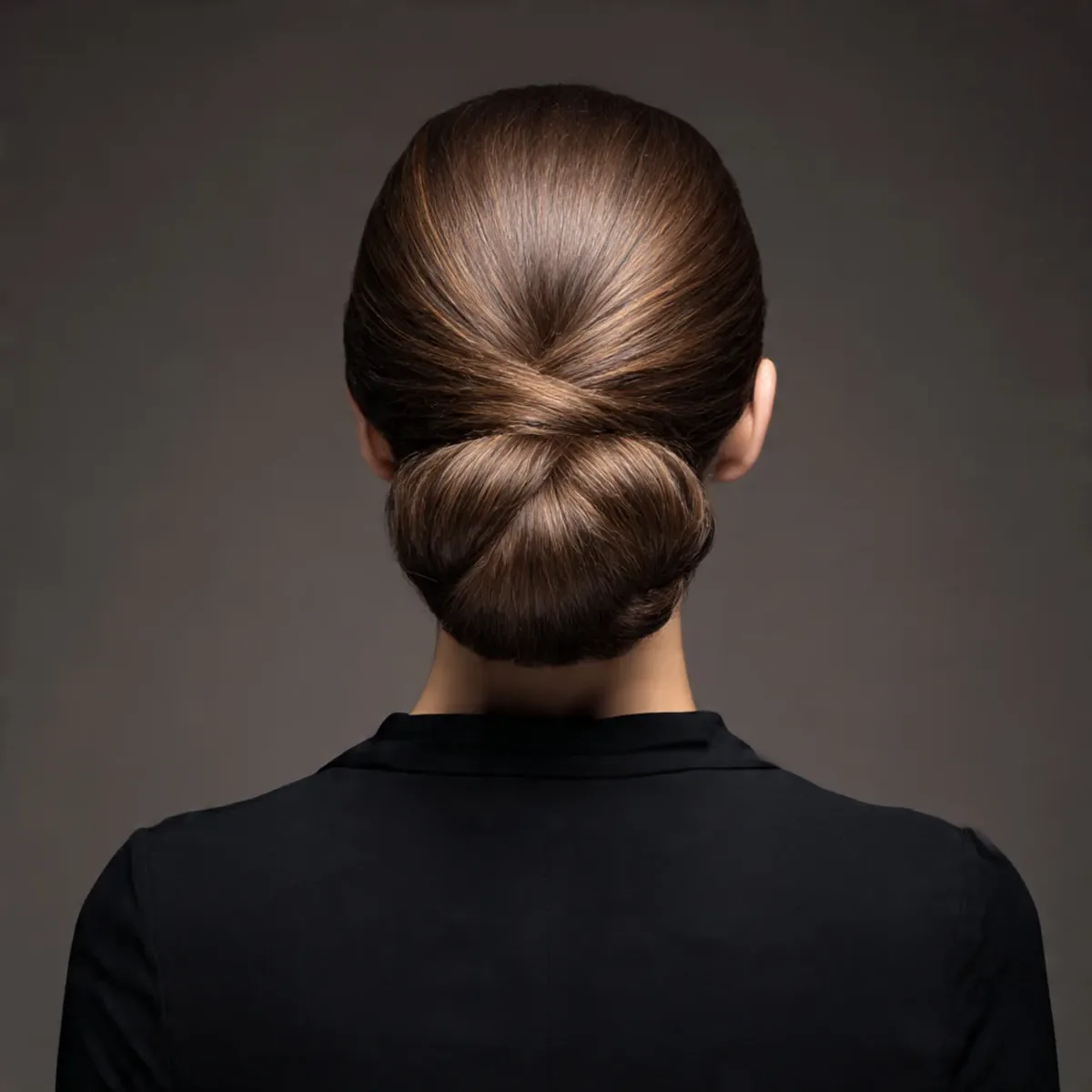
Most chignons need hair that reaches at least the shoulders — long enough to twist, fold and pin without the ends springing out. Shoulder-length hair makes a neat, compact chignon; longer hair makes a fuller one, and very long hair can be folded twice for a bigger, softer shape. Thickness matters too: thick hair gives a chignon natural volume, while fine hair needs a little backcombing, a texture spray or a small hair donut hidden inside to look full rather than flat.
If your hair is shorter than shoulder length, do not write the style off — a faux chignon is made by pinning the ends under and adding a clip-in piece or a small padding form, and it fools almost everyone. Who should avoid a tight chignon: women with very fine, slippery hair that will not hold a pin, unless they are willing to use texture spray and plenty of pins, and anyone with a sensitive scalp, because a pulled-tight chignon can ache by evening. For everyone else, the rule is simple: a little texture in the hair before you start makes every chignon easier and longer-lasting.
How to Ask Your Stylist — or Do It Yourself — Without the Guesswork
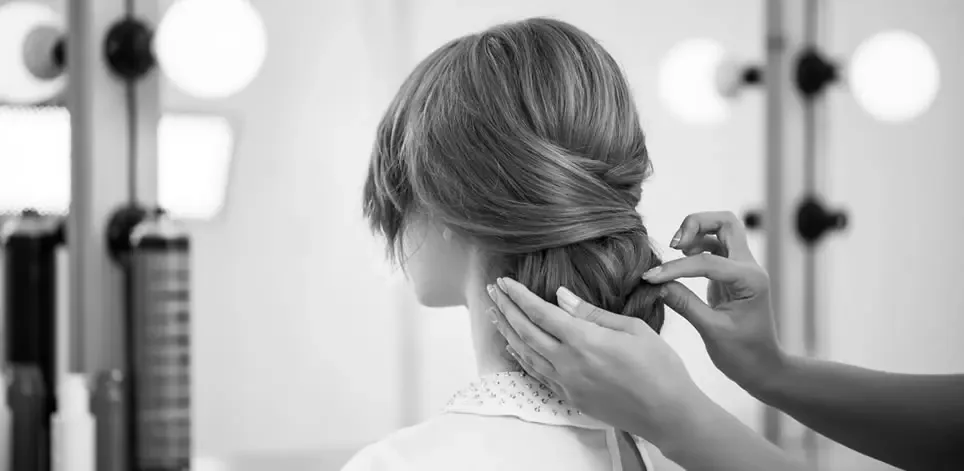
The words that cause chignon regret are vague ones. Saying just “a low bun, please” leaves the placement, the tightness and the finish entirely open, and one stylist’s sleek chignon is another’s messy one. Go in with two or three photos that show the back of the head, not just the front, and point at the exact things you like: how low it sits, how smooth or textured it is, and whether you want face-framing pieces left out. Then say what you do not want — “not pulled tight across my forehead” is as useful as any photo.
Ask three questions before the pins come out: how low will it sit, how will you make it stay, and what should I do if a piece falls out? A good stylist will also ask about your day, because a bridal chignon that must last twelve hours is built differently from a work chignon that only needs to survive until six. Doing it yourself? Start with day-old hair, add texture spray, and practise once before the event — a chignon is a forgiving style to learn, but not one to attempt for the first time an hour before you leave.
1. The Classic Low Chignon

The classic low chignon is the version most women picture when they hear the word: hair swept smoothly back, twisted or rolled at the nape, and pinned into a neat, rounded shape. There are no loose pieces, no visible pins and no texture — just a clean, sculpted bun that looks like it took an hour, even though a stylist can build one in fifteen minutes. It is the chignon for weddings, interviews, formal dinners and any day you want to look unmistakably polished.
Quick verdict: if you want one chignon that works everywhere, this is it. Styling takes ten to fifteen minutes — brush the hair smooth, gather it low, twist and pin. Pros: timeless, suits every face shape, and photographs beautifully from behind. Cons: it can feel severe if your hair is pulled too tight, so ask for a little softness around the hairline. Who should avoid it: nobody, really — this is the baseline every other chignon on this list is measured against.
2. The Sleek Polished Chignon
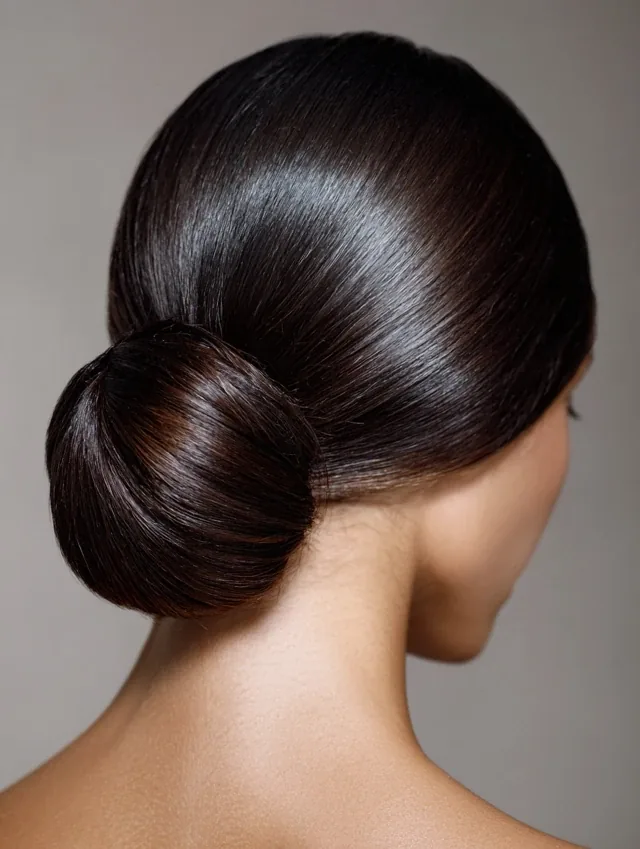
A sleek polished chignon takes the classic and turns the shine up: every strand is smoothed with serum, the parting is crisp, and the bun itself is glass-smooth with no flyaways. It is the chignon of red carpets and boardrooms, and it works best on straight or straightened hair, where the smooth finish shows. The effect is quietly expensive — the kind of hair that makes a simple outfit look intentional.
Styling time: fifteen to twenty minutes, including a quick pass with a straightener on the lengths first. The products it needs are simple: a heat protectant, a smoothing serum and a strong-hold hairspray. Maintenance is easy — it holds all day — but it shows every uneven strand, so it needs a careful hand. Who should avoid it: women who want a wash-and-go style, and naturally curly hair, which would need straightening every time to get this finish.
3. The Messy Low Chignon
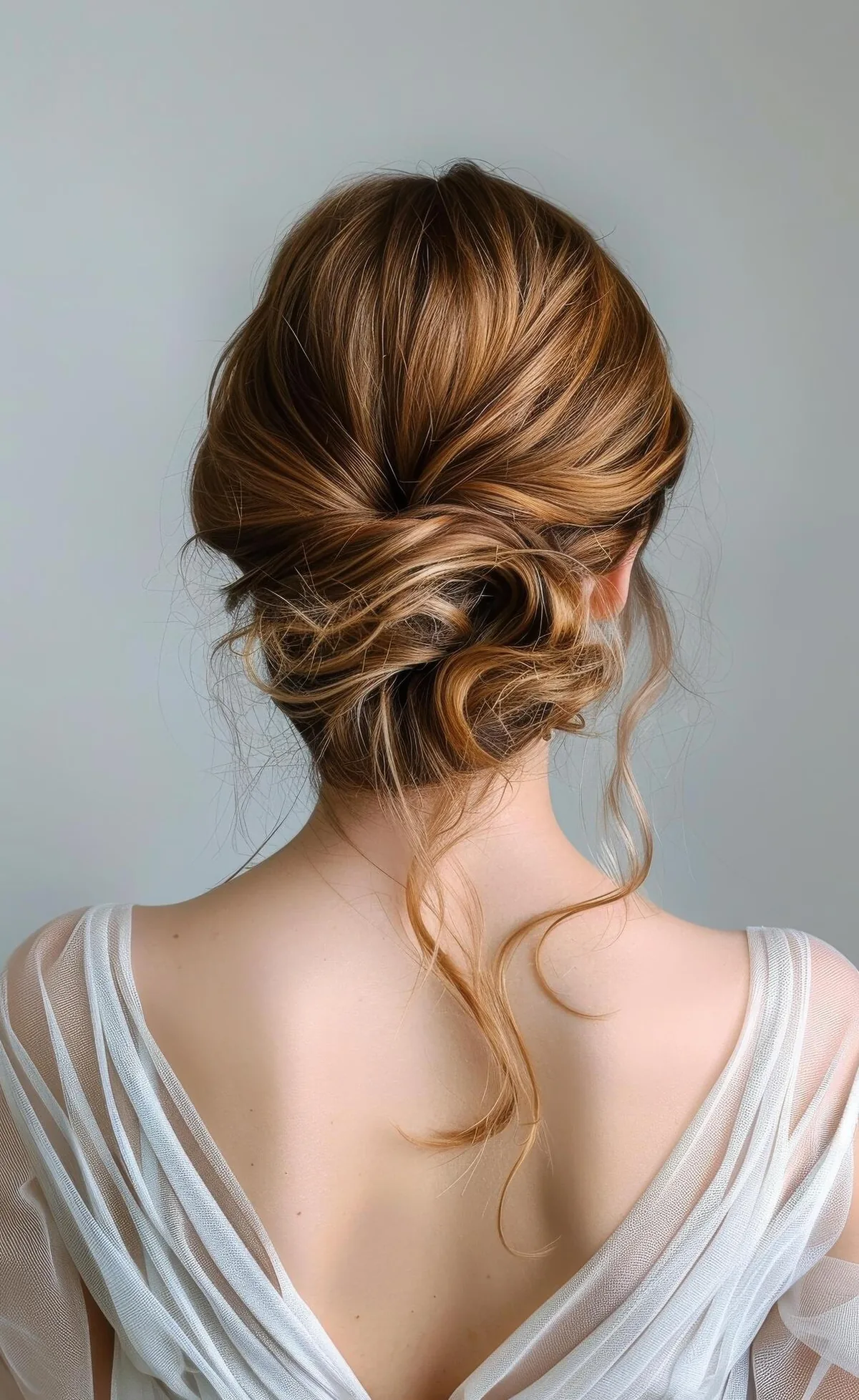
The messy low chignon is the relaxed cousin of the classic: the same low placement, but with texture, softness and a few pieces pulled loose around the face. It is built by backcombing lightly, twisting loosely and pinning without pulling everything smooth, so the bun looks soft and lived-in rather than sculpted. It is the chignon for weekends, date nights and weddings where the dress code says romantic rather than formal.
Quick verdict: pick this if you like hair that looks good slightly undone. Styling takes about ten minutes — texture spray on damp or dry hair, a loose twist, and pins placed loosely. Pros: forgiving, hides bad hair days, and suits wavy and curly hair beautifully. Cons: it can loosen by evening, so carry two spare pins. Who should avoid it: women who want a sharp, formal finish, because this one refuses to look neat.
4. The Braided Chignon

A braided chignon weaves a braid into the low bun — sometimes a single braid wrapped around the base, sometimes two braids crossed over the top, sometimes a French braid that feeds into the bun itself. The braid adds texture and detail that a plain chignon never has, and it also helps the style hold: a braid is a structure, and it grips the hair far better than a smooth twist alone. It is one of the most popular chignons for weddings and festivals.
Styling time: twenty to thirty minutes, depending on how many braids you add. Cost and time at the salon are higher too, because braiding is skilled work. Pros: beautiful detail, excellent hold, and it suits long and thick hair especially well. Cons: it is hard to do on yourself from behind, so this one is best left to a stylist or a patient friend. Who should avoid it: very short hair, which cannot braid far enough to reach the bun.
5. The Twisted Chignon
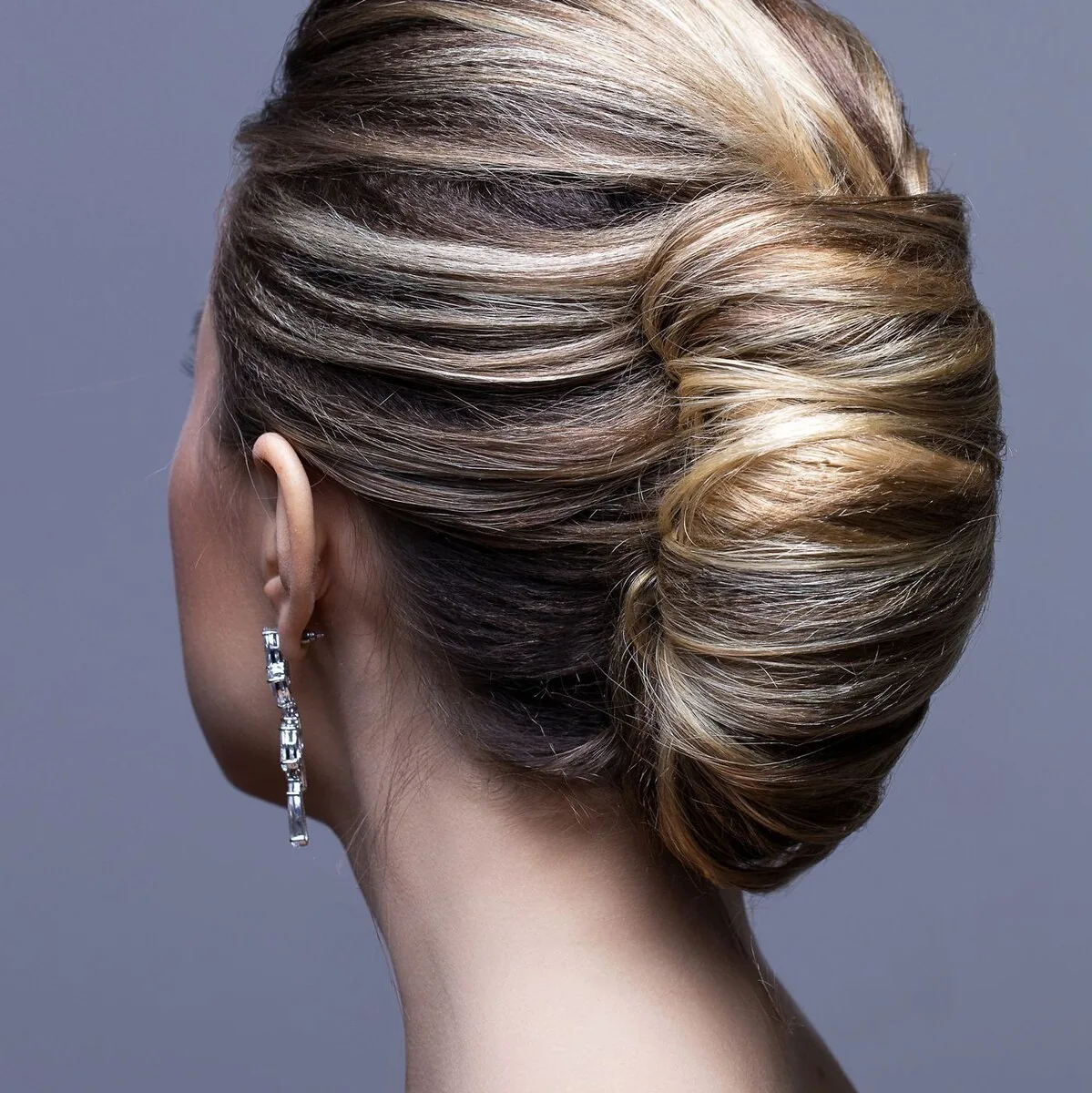
The twisted chignon is built the old-fashioned way: the hair is divided, twisted in opposite directions, and coiled into a bun, so the surface of the chignon shows soft, rope-like twists instead of a smooth dome. It looks more interesting than a plain bun from behind, and the twists give the style a grip that keeps it in place for hours. It is a lovely middle ground — more detailed than the classic, less fussy than a braided chignon.
How to style it: divide the low ponytail into two sections, twist each one, then wrap them around each other and pin. Styling time is about fifteen minutes once you have practised it twice. Common mistake: twisting both sections in the same direction, which makes them unravel — twist them away from each other and they will lock together. Who should avoid it: very fine, slippery hair, unless you add texture spray first, because smooth fine hair can slip out of a twist.
6. The Side Chignon
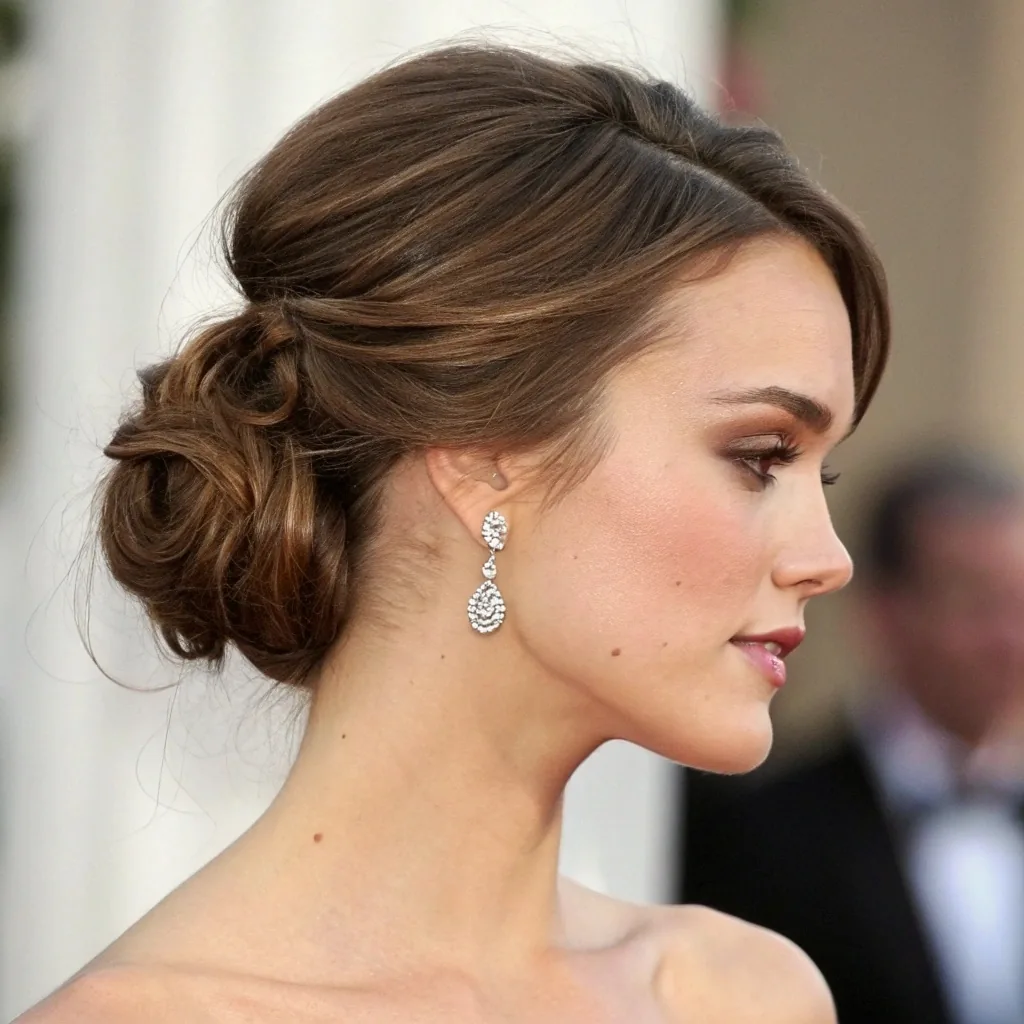
A side chignon sweeps the low bun to one side of the nape, and the change in placement changes everything: the style becomes romantic, a little vintage, and wonderfully photogenic. It shows off one earring, suits one-shoulder and off-shoulder dresses, and flatters round faces, because the diagonal line draws the eye across rather than straight down. Brides love it, and so do wedding guests who want an updo that is not the same as everyone else’s.
Styling time: fifteen minutes — sweep the hair to one side, twist it low, and pin it just behind the ear on the opposite side. Pros: distinctive, elegant, and it works on medium and long hair. Cons: it can feel unbalanced if you are not used to it, and it needs a few extra pins to stay put on the heavy side. Who should avoid it: women who wear their hair centre-parted and hate asymmetry — this one is deliberately off-centre.
7. A Low Chignon With Curtain Bangs

Curtain bangs parted in the middle are the softest way to wear a chignon, and they solve the one problem some women have with the style: a swept-back chignon can feel severe. The parted fringe frames the face in two soft pieces, the chignon stays neat at the back, and the whole look is balanced — polished behind, gentle in front. It suits almost every face shape and grows out more gracefully than any other fringe.
Quick verdict: the most forgiving fringe you can pair with a chignon. Styling takes five extra minutes — blow-dry each side away from the face with a round brush, or wrap each side around a velcro roller while you do your makeup. Pros: softens the style, hides a high forehead, and needs no daily precision. Cons: it needs a centre part, so it will fight hair with a strong natural side part. Who should avoid it: women who hate styling a fringe at all — even this easy one needs a quick blow-dry most mornings.
8. A Chignon With Face-Framing Layers
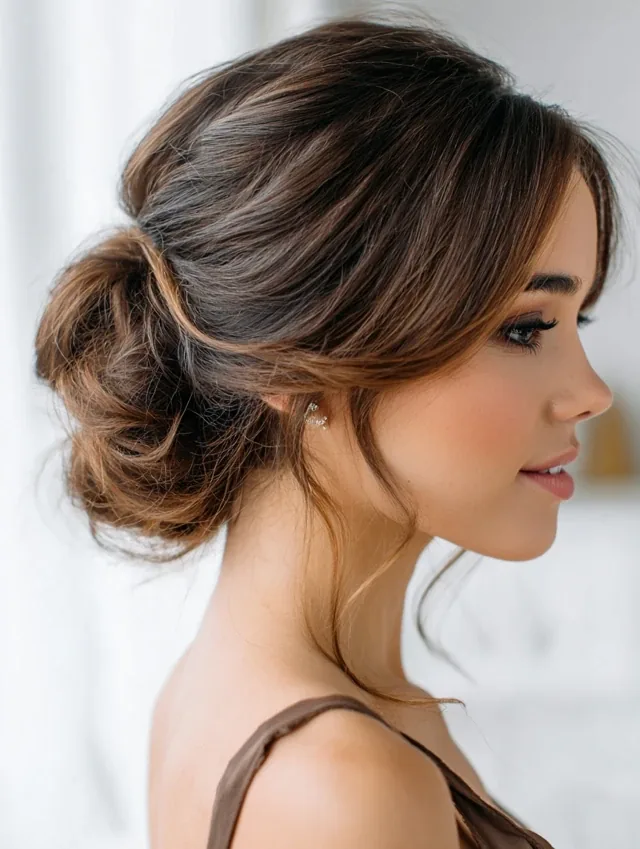
Face-framing layers are the easiest way to make a chignon feel modern: instead of pulling every strand back, you leave two soft pieces at the front to fall beside the cheeks. The layers soften the hairline, flatter the face, and stop the style from looking like a schoolteacher’s bun. They work with a sleek chignon, a messy chignon and a bridal chignon alike, and they are the detail that turns a plain updo into a hairstyle.
Styling time: two extra minutes — pull the pieces out after pinning the bun, curl them lightly away from the face, and set with a little hairspray. Maintenance is light: the layers are already there, so you do not need a trim to get the effect. Who should avoid it: women with very short layers that will not stay in place, and anyone who wants a completely clean, pulled-back finish. Common mistake: pulling out too much — two thin pieces are romantic, a whole handful is just a bun coming undone.
9. The French Twist Chignon
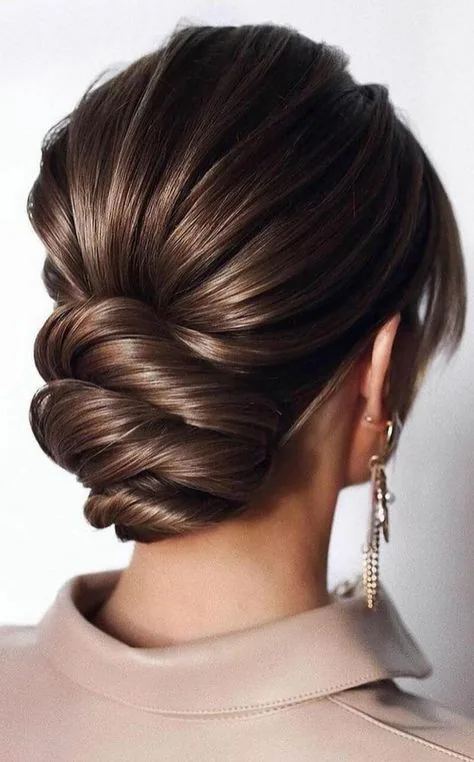
The French twist chignon is the most old-Hollywood version of the style: the hair is swept up, folded over itself and tucked into a vertical roll, with the ends hidden inside. It is the chignon for black-tie evenings, and it suits straight and fine hair beautifully, because the smooth roll shows no texture at all. It looks complicated, but a stylist builds it in about twenty minutes, and it holds for hours without a single visible pin.
Pros: deeply elegant, makes the neck look long, and works with statement earrings. Cons: it is one of the hardest chignons to do on yourself, and it needs a lot of pins and strong hairspray. Who should avoid it: very thick or very curly hair, which can be too bulky to fold neatly into a twist, and anyone who wants a relaxed finish — this one is formal by nature. Cost and time: book a stylist for this one, and allow extra time in the chair.
10. The Knotted Chignon
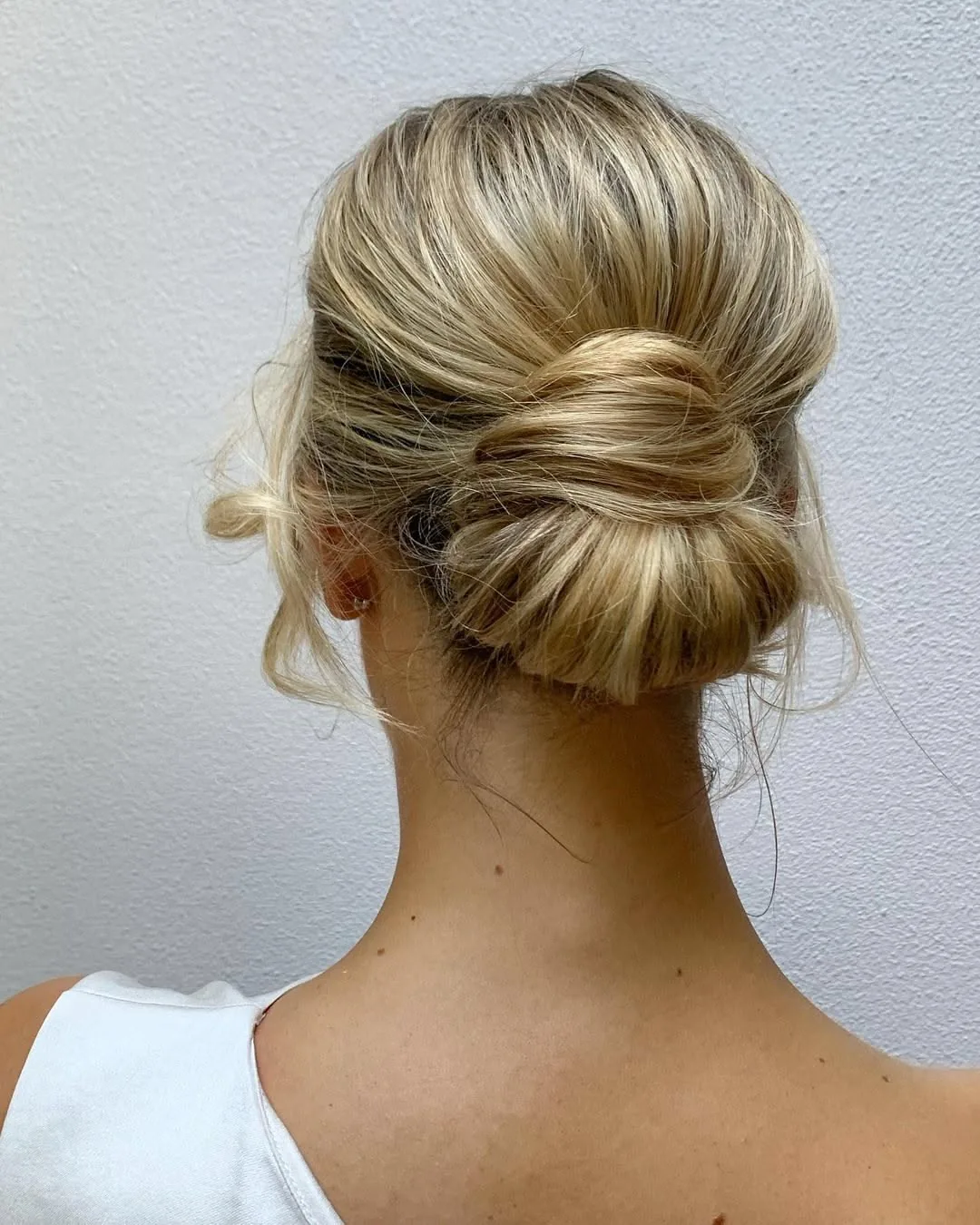
A knotted chignon is made by literally tying the hair in a loose knot — or two — and pinning the ends underneath. The result is a bun with a visible knot at its centre, a little more modern and a little more textured than a smooth chignon, and surprisingly secure: a knot grips itself. It is a lovely choice for medium-length hair, because a knot uses the length efficiently and looks full even when the hair is not very long.
How to style it: gather the hair low, split it in two, tie the sections in a single knot, then wrap the ends around and pin. Styling time is about ten minutes, and it is one of the easier chignons to do on yourself. Pros: modern, secure, and great for medium hair. Cons: the knot can look small on very fine hair, so add a little backcombing first. Who should avoid it: nobody — this is one of the most forgiving chignons to try at home.
11. A Low Chignon With a Middle Part

A middle part gives a chignon symmetry and a clean, editorial feel: the hair falls evenly on both sides, the bun sits dead centre at the nape, and the whole style looks balanced from the front and the back. It suits oval and heart-shaped faces best, and it works particularly well with curtain bangs, which are designed to part in the middle. It is also the parting that shows the chignon’s shape most honestly, so a good, smooth finish matters here.
Styling time: three minutes for the part itself — the part does most of the work, and a little serum finishes it. Maintenance: none beyond the usual pins and spray. Who should avoid it: women with a strong cowlick at the front, which can make a middle part sit unevenly, and round faces, where a centre part can emphasise width unless the front pieces are long and soft. Quick verdict: the most polished parting, and the easiest to style — if your hair agrees with it.
12. The Chignon for Long Hair
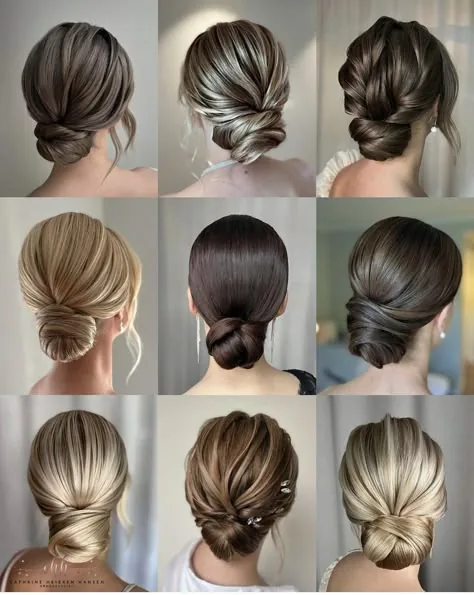
Long hair makes the fullest chignon, because there is enough length to fold the hair twice, wrap it around the base, and still have ends to tuck away. A long-hair chignon can be big and soft, with a visible roll and a lot of presence at the back, or it can be twisted into a compact, sculpted shape that looks surprisingly neat for so much hair. Either way, the length is an advantage — the bun has real weight and volume without any padding.
Styling time: fifteen to twenty minutes, mostly spent smoothing and wrapping the length. The products it needs are simple: a brush, pins and hairspray. Pros: the most voluminous chignon, excellent hold, and it looks impressive from behind. Cons: it can feel heavy by evening, so use strong pins and distribute the weight evenly. Who should avoid it: nobody with long hair — this is the style long hair was made for.
13. The Chignon for Medium Hair
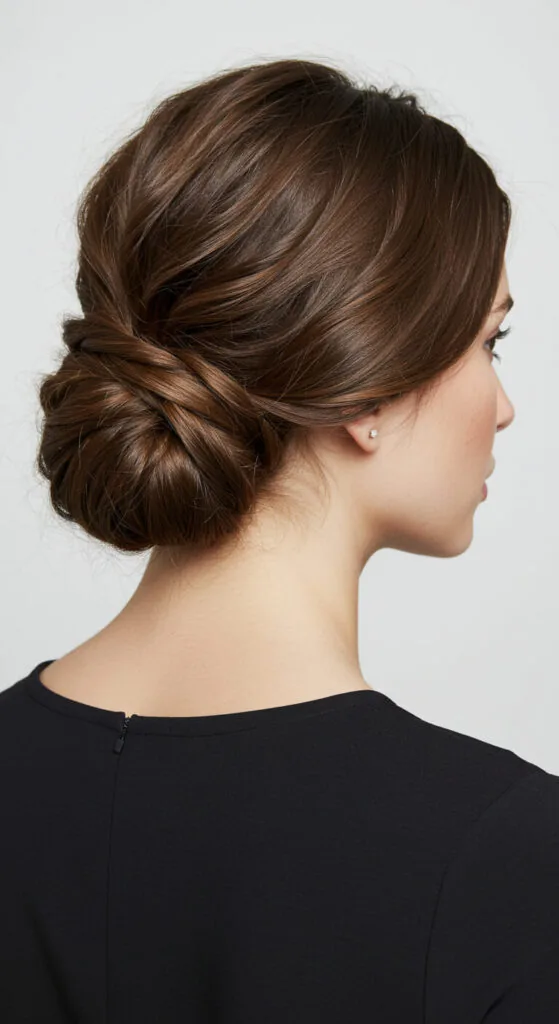
Medium hair — around shoulder length — makes a neat, compact chignon that sits close to the head and looks wonderfully tidy. The trick is to add a little texture before you start, because medium hair has less length to wrap and can look small without it. A light backcomb at the crown, a texture spray through the lengths, and a low twist will give you a chignon that looks full rather than flat.
Quick verdict: the easiest length to learn a chignon on. Styling takes about ten minutes, and the style holds well because there is less weight pulling it down. Pros: light, comfortable, and quick to build. Cons: the bun will be smaller than a long-hair chignon, so do not expect a big, dramatic shape. Who should avoid it: nobody — medium hair is the sweet spot for a first chignon.
14. The Chignon for Fine Hair
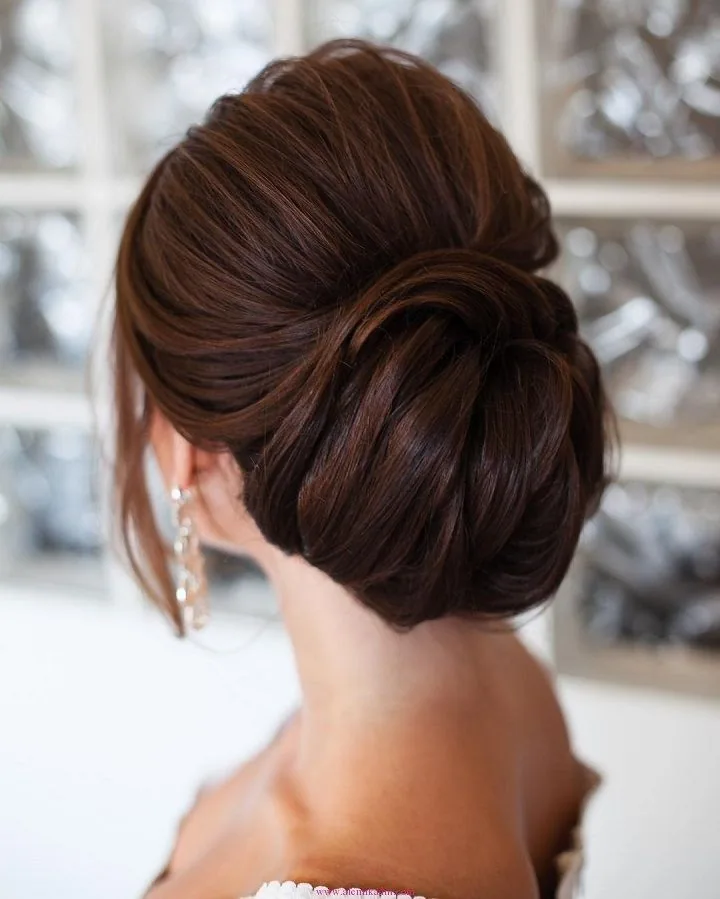
Fine hair and a chignon are a good match, as long as you build in volume first — because the chignon creates the illusion of fullness exactly where fine hair needs it. A small hair donut or padding form hidden inside the bun, a little backcombing at the crown, and a texture spray through the lengths will make a fine-hair chignon look twice as full as it is. The trick is restraint: too much backcombing can make fine hair look frizzy, so keep it gentle.
Styling time: about fifteen minutes, including the volume prep. The products it needs are light: a volumising mousse, a texture spray and a light-hold hairspray, never a heavy cream. Pros: looks fuller instantly, and the style holds well because fine hair is light. Cons: it needs the prep — a fine-hair chignon built on clean, slippery hair will slide out. Who should avoid it: women who want a heavily textured, messy chignon, because too much texture can make fine hair disappear.
15. The Chignon for Thick Hair
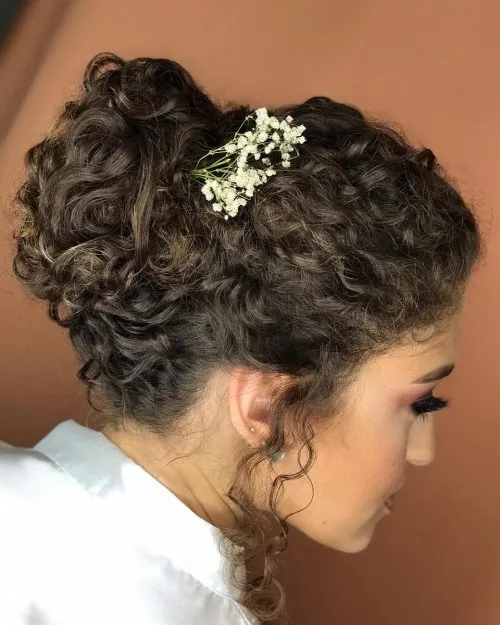
Thick hair makes a naturally full chignon, and the challenge is not volume but weight: a thick-hair chignon can feel heavy and pull by evening if it is pinned in one place. The answer is to distribute the pins — use several strong pins around the base rather than one or two — and to keep the bun compact rather than huge, so the weight sits close to the head. Thinning the ends slightly before the event also helps the bun fold neatly.
Styling time: fifteen to twenty minutes, mostly spent smoothing the length. Maintenance is easy: thick hair holds a chignon beautifully. Common mistake: using ordinary bobby pins on very thick hair — they will bend and slip. Use heavy-duty pins or spin pins, which grip thick hair properly. Who should avoid it: nobody with thick hair, as long as the pins are up to the job.
16. The Chignon for Curly Hair
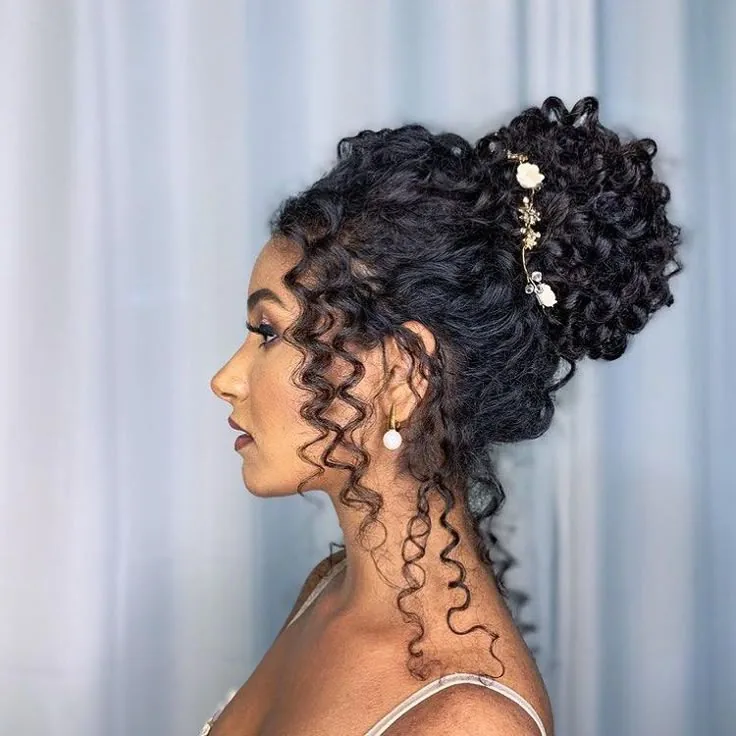
A curly chignon is one of the most beautiful versions of the style, because the curls give the bun natural texture and volume while the low placement keeps it elegant. The key is to work with the curl pattern, not against it: gather the curls loosely, twist them gently, and pin them into a soft, rounded shape rather than pulling them smooth. The curls will do the rest, and the result looks romantic without any extra effort.
Quick verdict: beautiful, but do not straighten first. Styling takes about fifteen minutes on wash day — a little curl cream, then gather and pin — and almost nothing on the days after. Maintenance: a silk scrunchie at night protects the curls. Who should avoid it: nobody with curly hair, as long as the chignon is built loosely; a tight, pulled-back chignon can fight curly hair all evening.
17. The Chignon for Wavy Hair
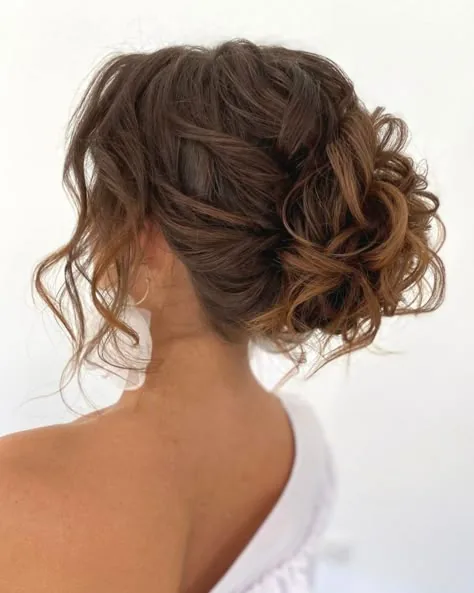
Wavy hair is the easiest hair for a chignon, because the waves give the bun texture and grip without any extra product. A wavy chignon looks soft and lived-in from the moment it is pinned, and the waves hide a growing fringe beautifully. It is the version that photographs best on holiday and on second-day hair, because the whole look is built on movement rather than precision.
Styling time: ten minutes — a little texture spray, a loose twist, and pins. If your waves need help, twist a few sections around a curling wand and leave the ends out before gathering. Maintenance is minimal: it holds all day. Who should avoid it: very straight hair, where the waves have to be created with heat first — in that case, a sleek chignon will save you time.
18. The Bridal Chignon
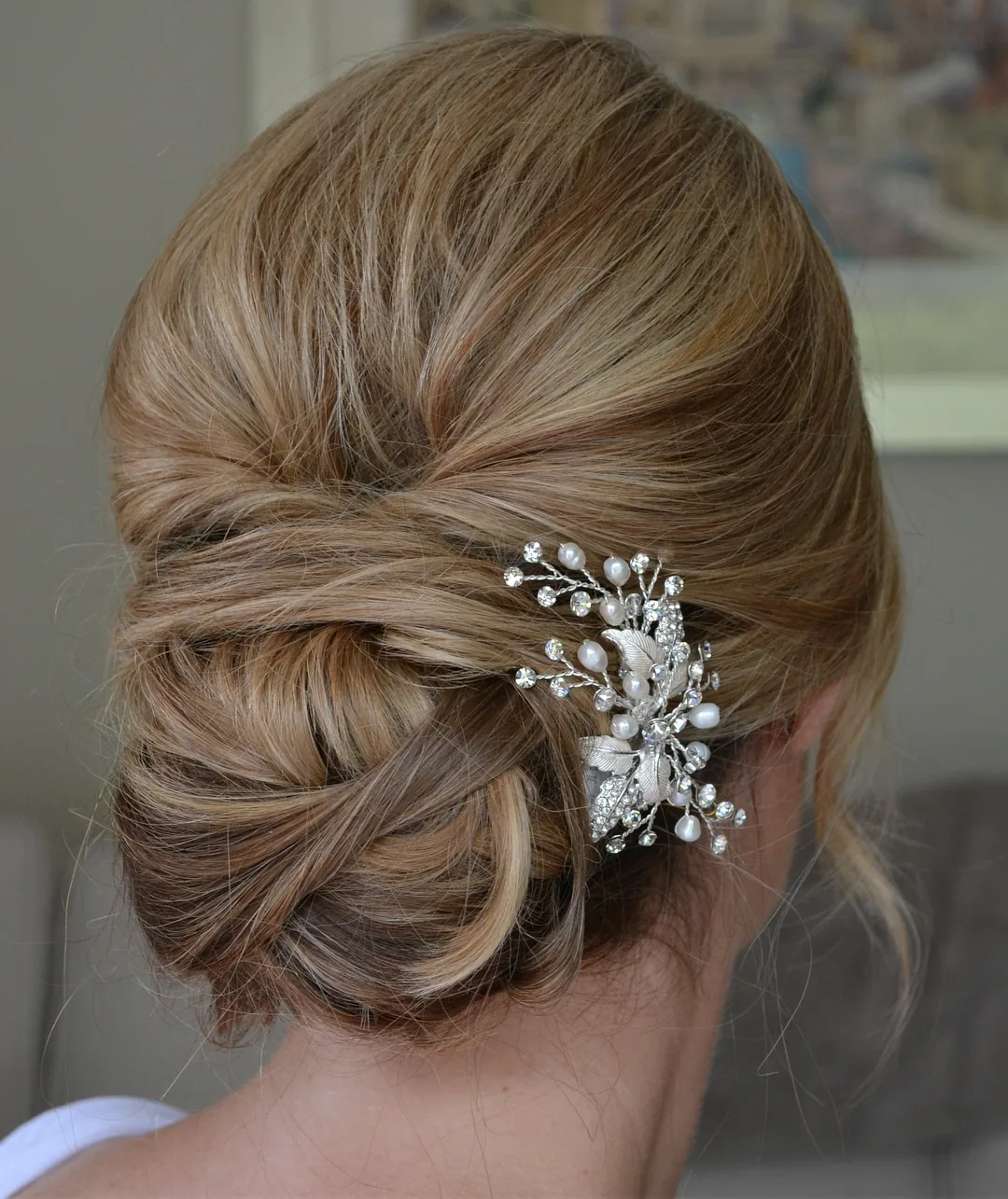
The bridal chignon is the classic wedding updo for a reason: it is elegant, it photographs beautifully, it keeps the hair out of the face for the whole day, and it works with a veil, a tiara or fresh flowers. Most brides choose a low, soft chignon with a few face-framing pieces, built to last twelve hours, with a trial run weeks before the wedding so there are no surprises on the day.
Cost and time: a bridal chignon is usually part of a bridal hair package, and the trial is essential — book it with the same stylist who will do the day itself. Pros: timeless, secure, and suits almost every dress. Cons: it must be built to last, so it uses more pins and stronger spray than an everyday chignon. Who should avoid it: brides who want to wear their hair down — a chignon is a commitment to an updo, and it should feel like you, not like a costume.
19. The Bridesmaid Chignon

A bridesmaid chignon is the bridal chignon’s softer sister: the same low, elegant shape, but a little looser, a little more relaxed, and designed to look good next to the bride without outshining her. Most bridesmaids choose a messy or twisted low chignon with soft pieces around the face, often with a small hair accessory that matches the wedding colours.
Styling time: twenty minutes per bridesmaid, so allow extra time if several women are getting ready together. Pros: photographs beautifully as a group, holds through dancing, and suits every dress. Cons: if all the bridesmaids have identical chignons, the group can look a little uniform — vary the texture or the accessory slightly for each person. Who should avoid it: nobody — this is one of the safest wedding-guest and bridesmaid styles there is.
20. A Chignon for a Wedding Guest

As a wedding guest, a chignon is the perfect balance: it looks dressed up without looking like you are trying to be the bride. A soft, messy low chignon with a few loose pieces is the safest choice, and it works with almost every dress code, from a garden wedding to a formal evening. Add a small accessory — a pearl pin or a slim gold comb — and the style goes from pretty to polished.
Quick verdict: the wedding-guest updo to choose when you do not want to think about your hair all day. Styling takes fifteen minutes, and it holds through the ceremony, the photographs and the dancing. Pros: elegant, comfortable, and it keeps hair out of the way in summer heat. Cons: a very sleek chignon can look a little formal for a daytime wedding — choose the messy version for day, the sleek version for evening.
21. The Chignon for Work and the Office
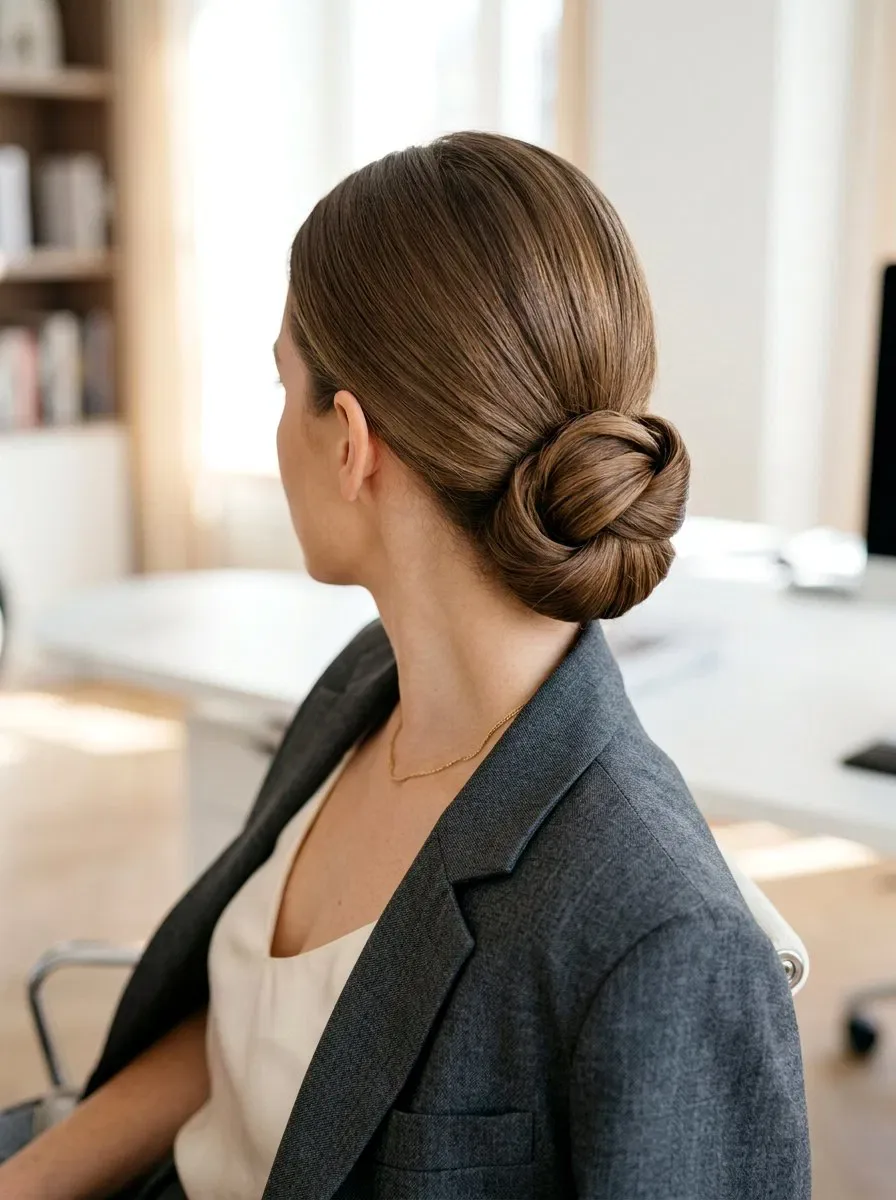
A chignon is one of the best work hairstyles, because it is polished, practical and takes ten minutes: it keeps hair out of the face, looks intentional in a meeting, and survives a full day at a desk. The office version is usually a sleek or classic low chignon, with no loose pieces and no sparkly accessories — just a neat, smooth bun that says you are organised.
Styling time: ten minutes in the morning, and it needs no touch-ups. The products it needs are minimal: a brush, pins and a light hairspray. Pros: professional, comfortable, and it works with a suit, a dress or a uniform. Cons: a very tight chignon can ache by late afternoon, so keep it firm but not pulled. Who should avoid it: nobody — this is the work updo that never goes wrong.
22. The Chignon for Date Night
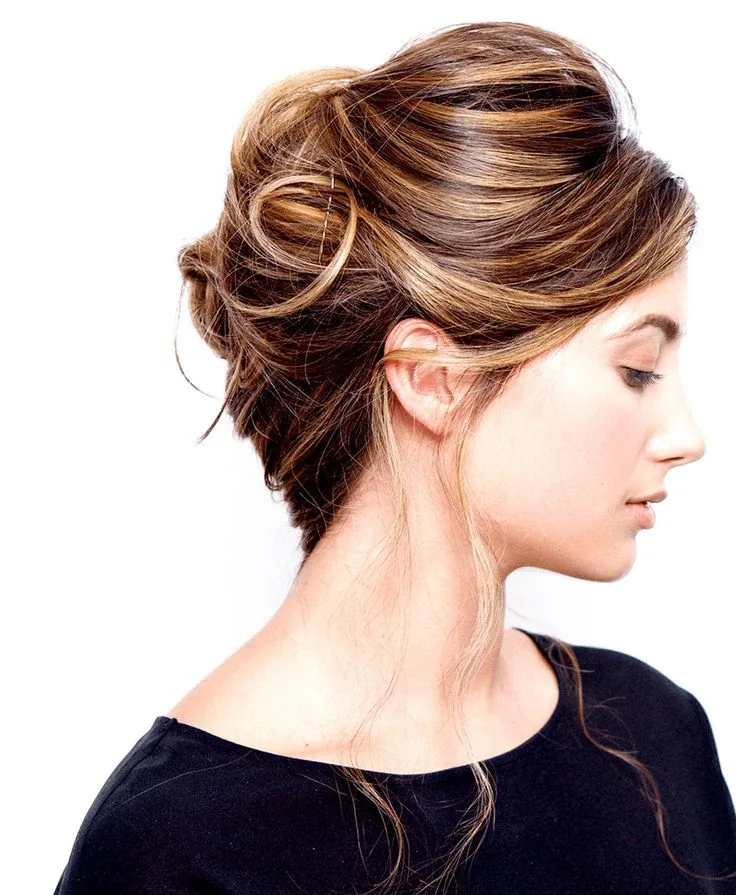
A date-night chignon is soft, romantic and a little undone: a messy low chignon with face-framing pieces, a side part, and maybe a single pearl pin. It looks effortless, which is exactly the point — it should look like you spent five minutes on your hair, even if you spent fifteen. The softness around the face is what makes it romantic, so do not pull everything back.
Styling time: fifteen minutes, including curling the front pieces lightly. Pros: romantic, flattering, and it keeps hair out of the way over dinner. Cons: it can loosen by the end of the evening, so use a few extra pins at the base. Who should avoid it: women who want a sharp, formal finish — this one is deliberately soft.
23. The Chignon for Prom
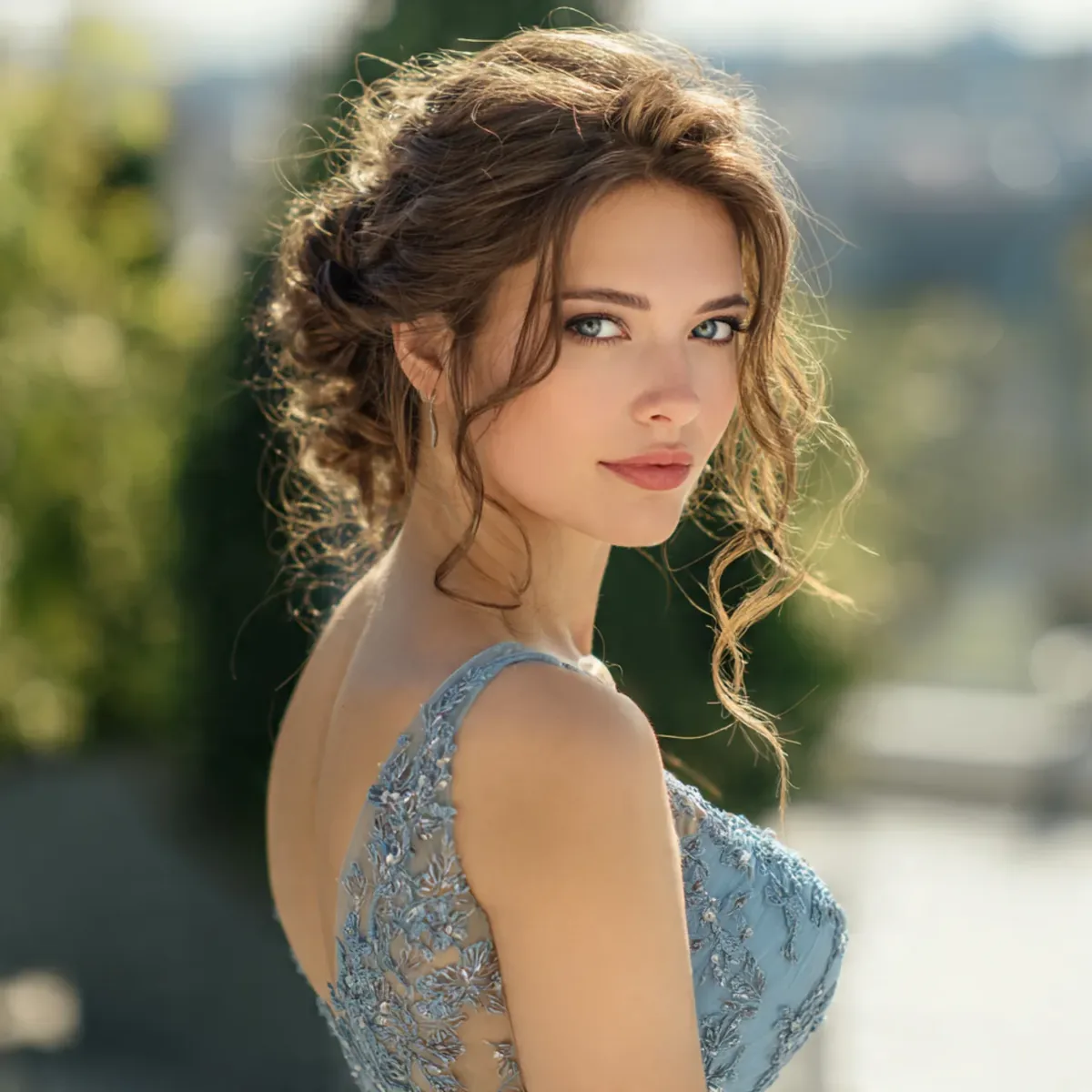
A prom chignon is the bridal chignon’s younger cousin: low, elegant and built to last a whole evening of photographs and dancing. Most prom looks choose a twisted or braided chignon with a few soft pieces around the face, often with a sparkly pin or a small flower, and the style is chosen to match the dress — a side chignon for a one-shoulder dress, a low chignon for a high neckline.
Cost and time: book a stylist for prom, and allow forty-five minutes to an hour in the chair, including a trial if you can. Pros: photographs beautifully, holds all night, and suits almost every prom dress. Cons: it is not a DIY style for most teenagers — the back of the head is hard to see. Who should avoid it: nobody going to prom — a chignon is one of the safest and most flattering prom updos.
24. The Chignon for Women Over 50
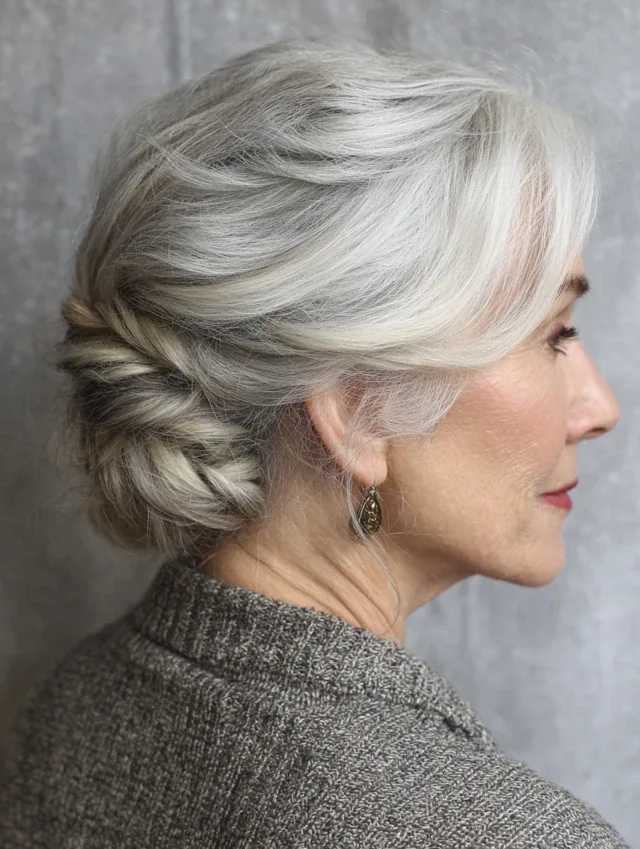
A chignon is one of the best updos for women over 50, because it does three things at once: it lifts the face, it looks polished without looking severe, and it works beautifully with grey, silver and coloured hair. A soft low chignon with a little volume at the crown and face-framing pieces is the most flattering version — it frames the face, softens the jawline, and the low placement draws the eye down rather than up to the hairline.
Styling time: fifteen minutes with a little backcombing at the crown for lift. Maintenance: none beyond pins and spray, and a gloss every couple of months keeps grey-blended or coloured hair shiny. Pros: youthful without trying too hard, easy to style, and it works on straight, wavy and curly hair. Cons: a very tight, very sleek chignon can look harsh on mature skin — keep the finish soft and the pieces loose.
25. A Chignon With Pearl Pins and Hair Accessories
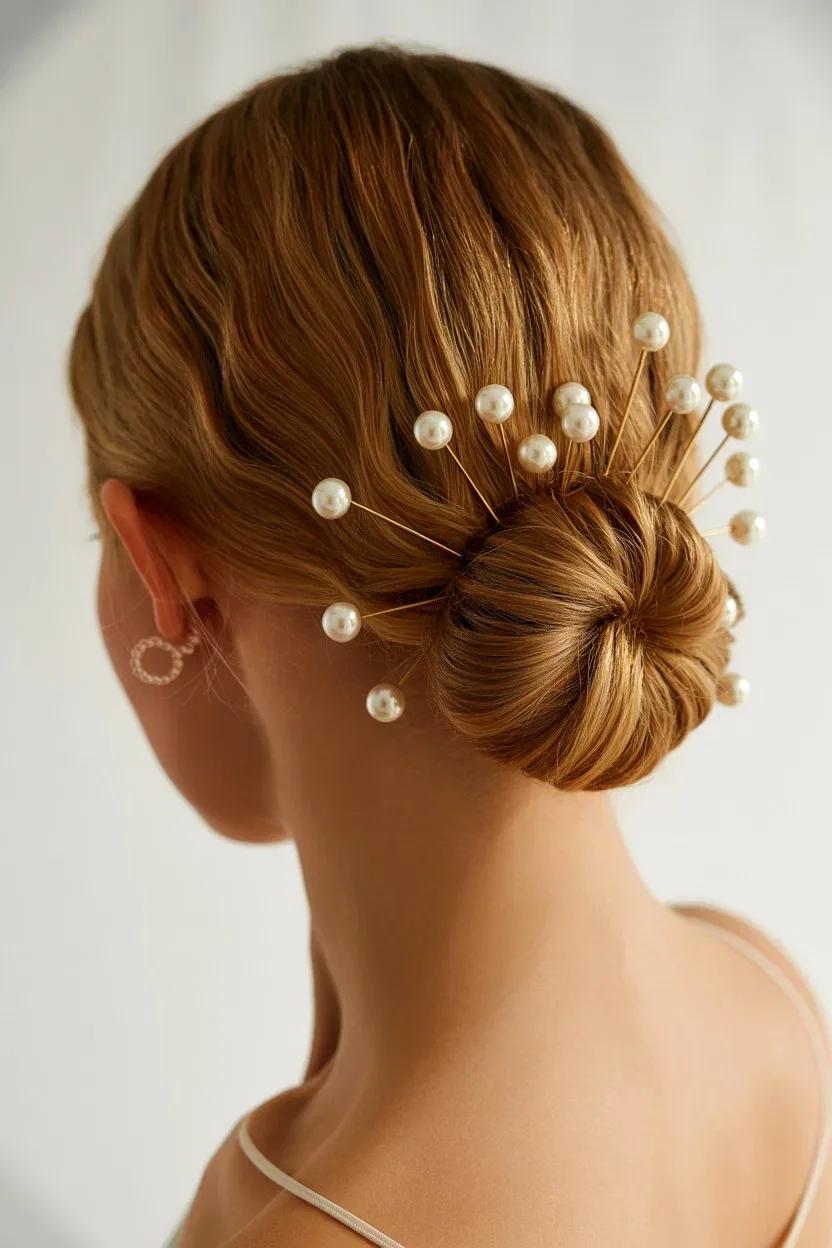
Pearl pins are the quickest way to turn a plain chignon into an occasion hairstyle: three small pearl pins pushed into the bun, a single pearl comb above it, or a scattering of tiny pearls through a messy chignon. The accessory does the decorating, so the chignon itself can stay simple — which is why this version is so popular for weddings, where the pins often match the bride’s jewellery.
Styling time: five extra minutes, and the pins themselves are inexpensive. Pros: instant elegance, easy to remove, and you can change the look by changing the pins. Cons: pins can slip out of a smooth chignon, so push them into the twist rather than the surface. Who should avoid it: women who want a completely plain, everyday chignon — accessories are for occasions, and a work chignon is usually better without them.
26. A Chignon With a Veil
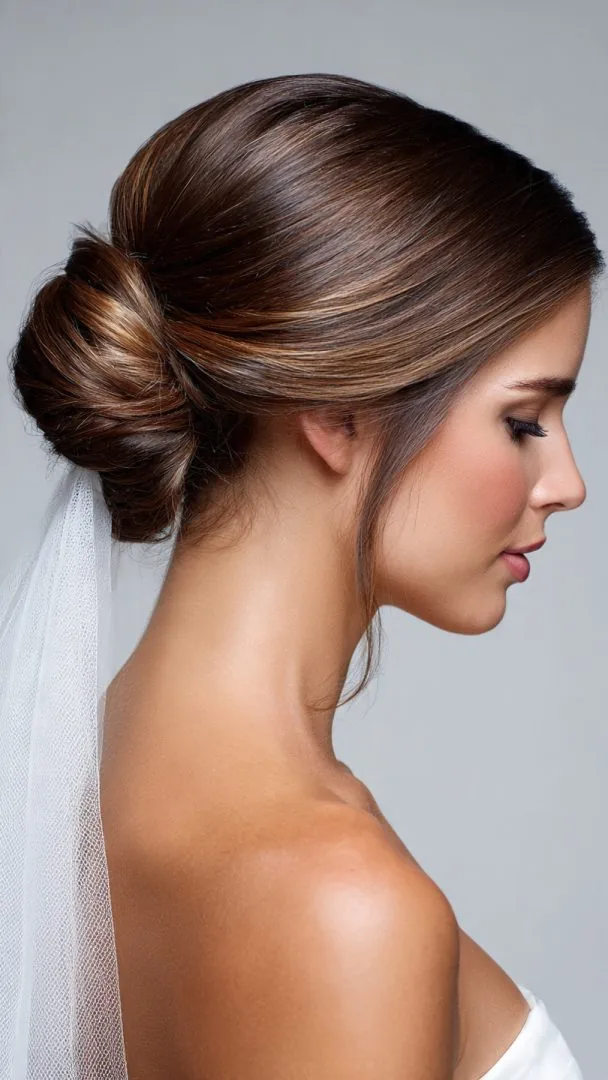
A chignon with a veil is the traditional bridal look, and the low placement is what makes it work: the veil is pinned just above the chignon, so it falls over the bun and frames the face without hiding the hairstyle. A low, smooth chignon is the best base for a veil, because the veil needs a secure anchor, and the bun provides one — the comb is pushed into the top of the chignon, where the hair is thickest.
How to make it work: build the chignon first, then pin the veil above it, and check in the mirror from behind that the veil falls evenly. Cost and time: the veil is usually fitted at the same appointment as the hair trial. Pros: classic, romantic, and the veil hides nothing. Cons: a heavy veil can pull on the chignon, so use strong pins and tell your stylist the veil’s weight. Who should avoid it: brides who want to wear their hair down — a veil needs an updo to anchor it.
27. The Textured Voluminous Chignon
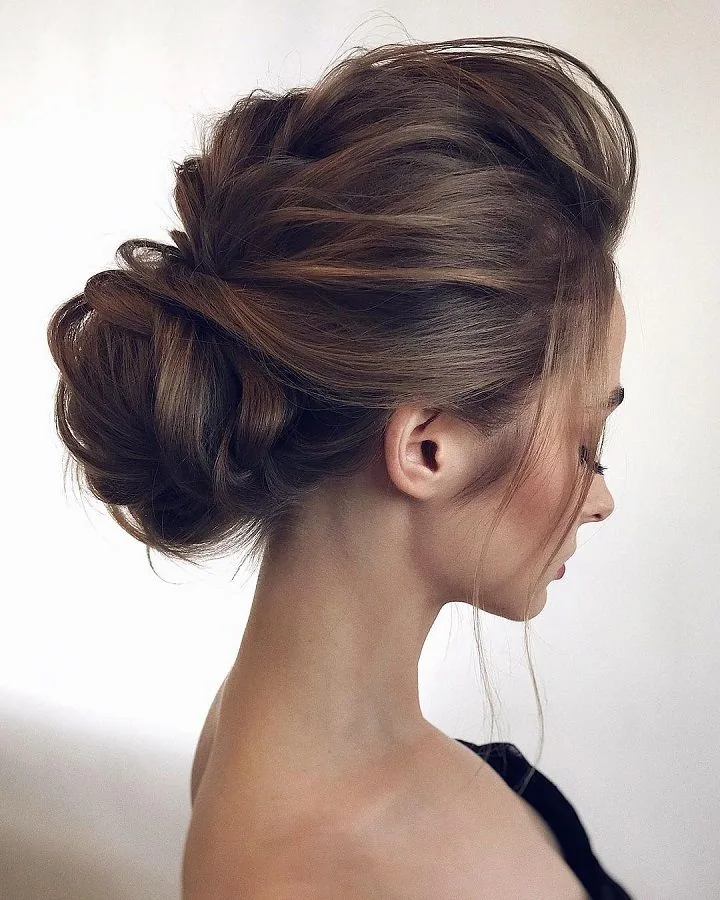
A textured voluminous chignon is built for women who want their updo to look big and soft, not small and neat. The hair is backcombed at the crown, the lengths are given texture with spray or a curling wand, and the bun is pinned loosely so it looks full and airy. It is the chignon for occasions where you want your hair to be noticed, and it suits thick and wavy hair best, because the texture is already there.
Styling time: twenty minutes, including the volume prep. The products it needs are a volumising mousse, a texture spray and a strong-hold hairspray. Pros: dramatic, flattering, and it photographs beautifully. Cons: it uses more product than a sleek chignon, and it can feel heavy. Who should avoid it: very fine hair, which can struggle to hold this much volume without a padding form inside.
28. A Low Chignon With a Braid Crown
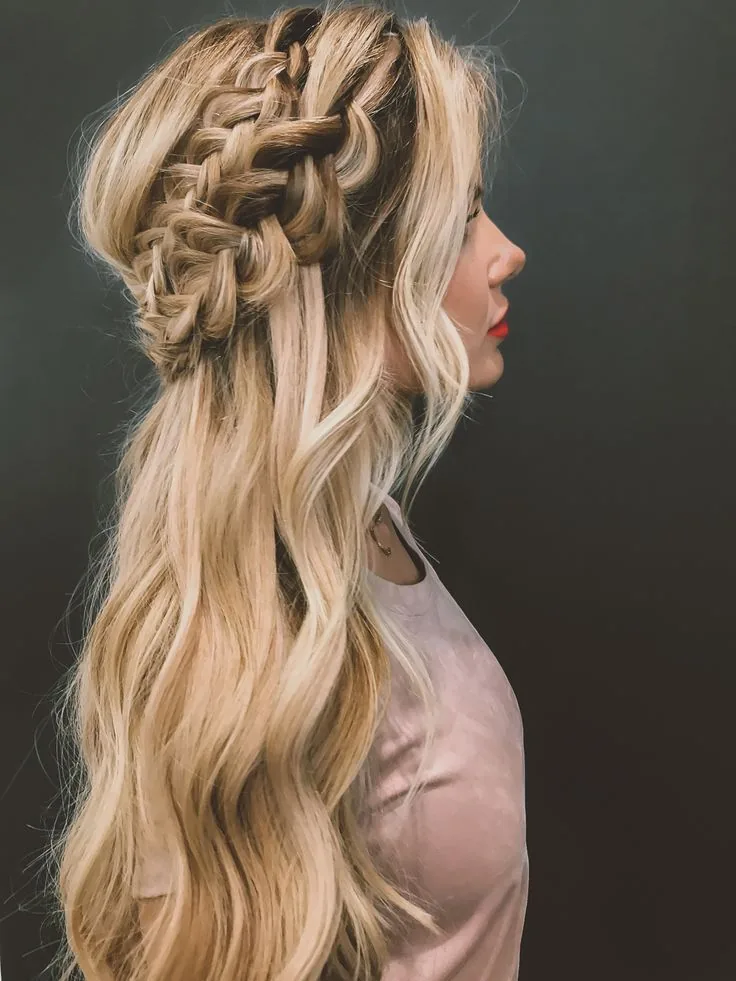
A braid crown feeding into a low chignon is one of the most romantic updos there is: a French or Dutch braid runs along the hairline, across the crown, and then down into the chignon itself, so the whole style is connected in one flowing line. It looks intricate, but it is really two styles joined together — a braid at the front, a chignon at the back — and it suits weddings, festivals and summer evenings beautifully.
Styling time: thirty minutes, and this one is best left to a stylist, because braiding your own crown from behind is hard. Pros: beautiful detail, excellent hold, and it keeps every strand out of the face. Cons: it is the most time-consuming chignon on this list. Who should avoid it: women with very short hair, which cannot braid far enough to reach the bun, and anyone in a hurry.
29. The Half-Up Chignon
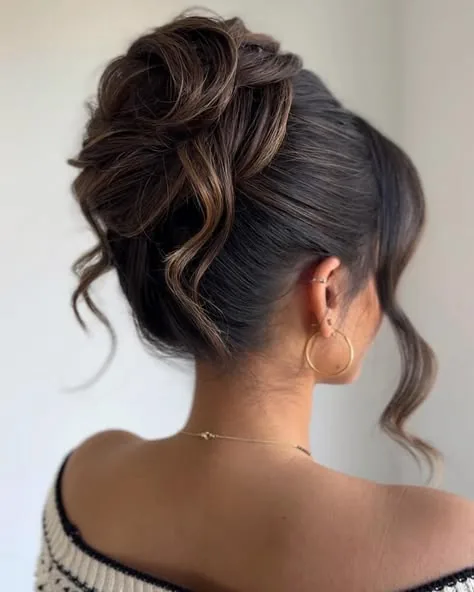
A half-up chignon takes the top half of the hair into a small chignon at the back of the head, while the rest falls loose over the shoulders. It is the chignon for women who cannot bear to put all their hair up — you get the polish of an updo and the softness of hair down, in one style. It works best on long and medium hair, and it is a lovely choice for a wedding guest or a date night when a full updo feels too formal.
Quick verdict: the best of both worlds. Styling takes fifteen minutes — gather the top section, twist it into a small bun, and pin it, leaving the rest loose. Pros: romantic, flattering, and it suits almost every face shape. Cons: it is less secure than a full chignon, so it needs a few extra pins if you are dancing. Who should avoid it: women who want their hair completely out of the way — this one leaves half of it down.
30. A Chignon for a Round Face
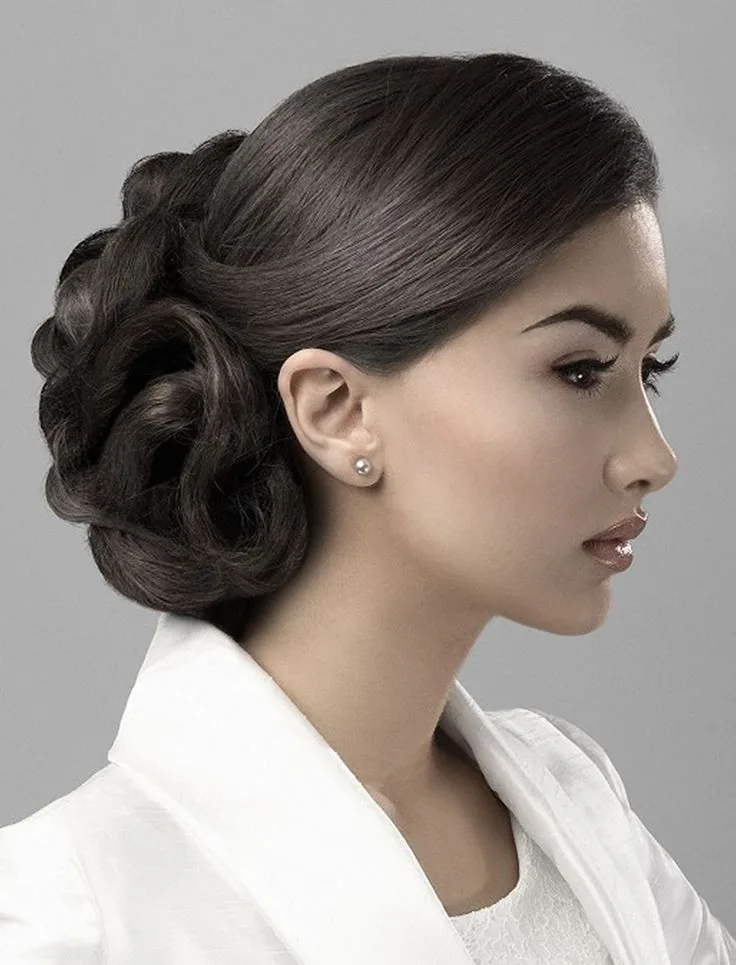
A chignon is genuinely flattering on a round face, because the style does exactly what a round face needs: it adds height at the crown, leaves soft pieces around the face, and draws the eye up and down rather than across. The trick is to keep the top a little lifted — a small backcomb at the crown — and to leave face-framing pieces out, so the face looks longer rather than wider.
Quick verdict: one of the best updos for a round face, if the height is right. Styling takes fifteen minutes — a little volume at the roots, and the front pieces left soft. Pros: slims the face, adds height, and works on straight, wavy and curly hair. Cons: a flat, tight chignon with no height can make a round face look rounder, so volume matters more than smoothness here. Who should avoid it: nobody with a round face, as long as the stylist avoids a severe, pulled-back finish.
31. A Chignon for an Oval Face
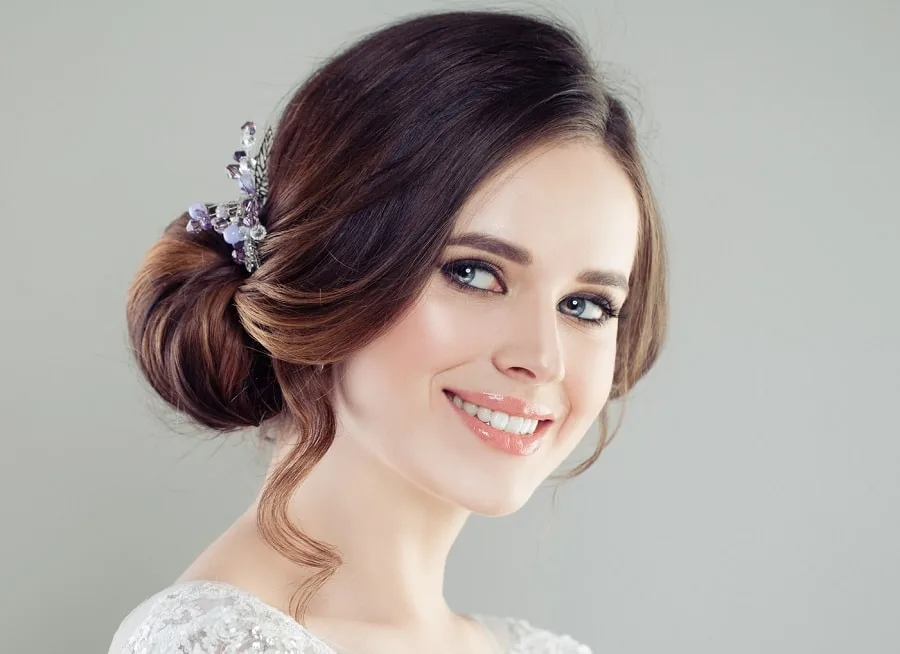
Oval faces can wear almost any chignon, which is both a gift and a trap — the freedom makes it easy to pick a version that clashes with your texture instead of your face shape. A classic low chignon with a soft fringe is the safest choice, because it shows off the balanced proportions of an oval face without hiding them. A side chignon also works beautifully here, because there is no width or length to correct.
Styling time: ten to fifteen minutes, depending on the version you choose. Maintenance: none beyond pins and spray. Who should avoid it: nobody — the question for an oval face is not whether a chignon suits you, but which chignon suits your hair texture and your occasion. Choose on those, not on face shape, and try the side chignon if you have ever wanted a romantic updo.
32. A Chignon With Bangs

Bangs and a chignon are a natural pair: the fringe frames the face in front, the chignon keeps the back neat, and the whole style looks balanced. A straight fringe gives the chignon a chic, French feeling; a side-swept fringe softens it; curtain bangs make it romantic. The version to choose depends on your fringe — work with the one you already have, rather than cutting a new one for a single occasion.
Styling time: five extra minutes to blow-dry the fringe into place. Pros: flattering, polished, and the fringe hides a high forehead. Cons: a fringe needs styling every time, so this is not a wash-and-go chignon. Who should avoid it: women who are growing out a fringe — the in-between length can fight the chignon. Common mistake: pulling the fringe back into the chignon — leave it out, that is the point.
33. The Loose Romantic Chignon
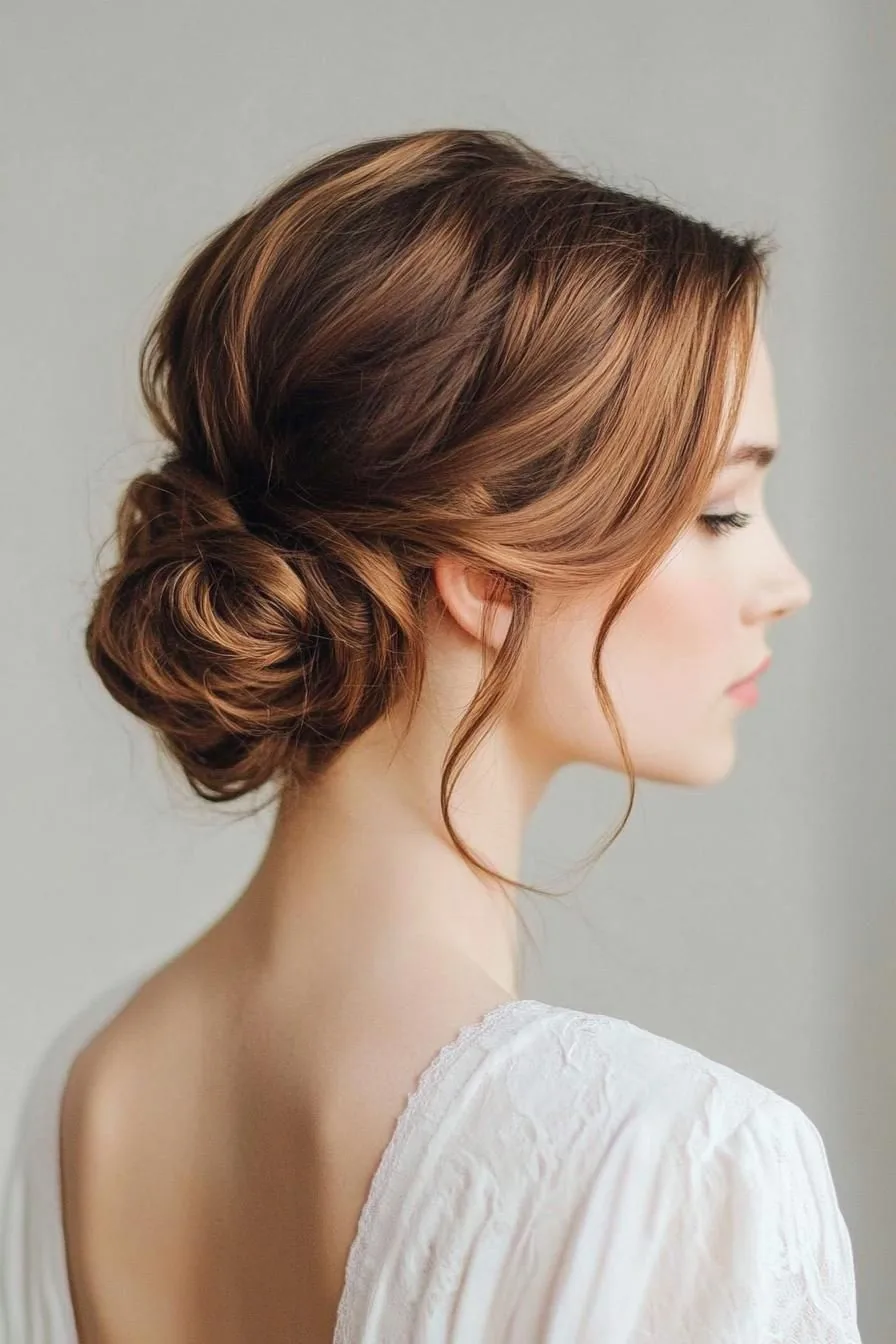
The loose romantic chignon is the softest chignon on this list: the hair is gathered loosely, twisted without pulling tight, and pinned so that soft pieces fall around the face and the nape. It is the chignon for garden weddings, summer evenings and photographs in golden light, and it suits wavy and curly hair best, because the texture does the romantic work for you.
Styling time: fifteen minutes, and it is forgiving — if a piece falls out, it looks intentional. Pros: romantic, comfortable, and it suits almost every face shape. Cons: it will loosen over the evening, so carry spare pins and a small can of hairspray. Who should avoid it: women who want a sharp, formal finish, and anyone who will be dancing hard — a loose chignon needs checking now and then.
34. The Faux Chignon for Short Hair
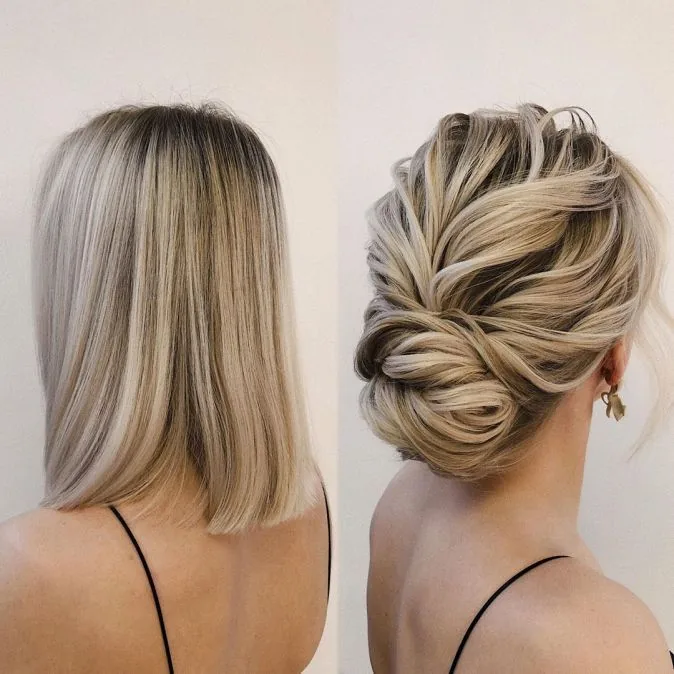
Short hair does not have to miss out on a chignon: a faux chignon is made by curling the ends under, pinning them at the nape, and adding a small clip-in piece or a padding form to give the bun its shape. From the front, it looks like a low chignon; from behind, the pins and the padding are hidden under the curled ends. It fools almost everyone, and it is the only way to get a chignon from a bob or a lob.
How to make it work: curl the hair first for grip, pin the ends under at the nape, and use a clip-in piece that matches your colour. Styling time is about twenty minutes, including the curling. Pros: a chignon from short hair, with no waiting for it to grow. Cons: it needs the clip-in piece to look full, and it is less secure than a real chignon. Who should avoid it: nobody with short hair who wants an updo — this is the workaround that works.
35. A Chignon With Balayage and Highlights
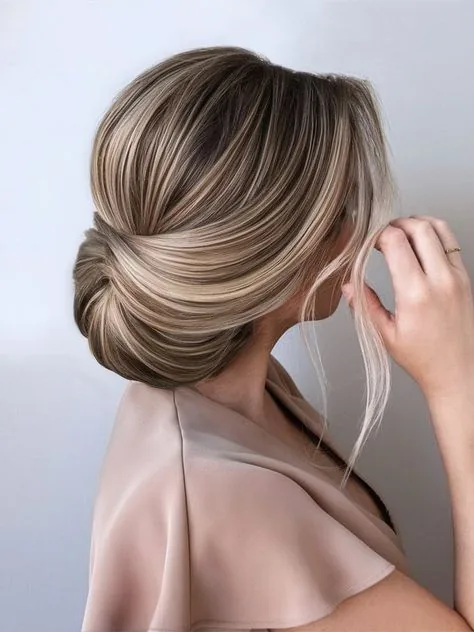
Balayage on a chignon is a clever combination, because the hand-painted colour follows the twist: lighter pieces through the bun, softer depth underneath. The colour makes the shape of the chignon visible in a way a single colour never does, and the grow-out is gentle, because balayage has no hard line at the roots. It is the colour to choose if you want your chignon to look more expensive without a high-maintenance routine.
Styling time: fifteen minutes, the same as any chignon, but the colour adds a weekly job: a purple shampoo once a week keeps blonde balayage from turning yellow. Cost and time: a balayage session costs more than a cut, but you can go months between colour appointments. Who should avoid it: women who do not want any colour maintenance at all, because even low-maintenance blonde needs that purple shampoo.
36. The Five-Minute Everyday Chignon
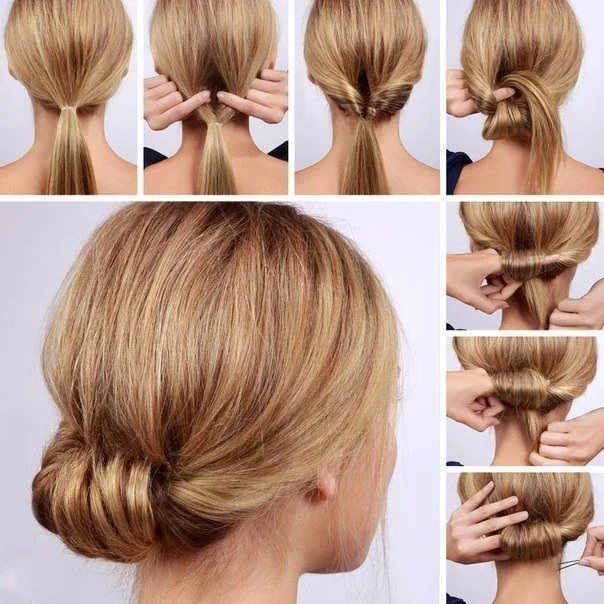
The five-minute everyday chignon is the one you will actually wear: a low, loose twist, pinned with two or three pins, done in front of the bathroom mirror without a brush. It is not the chignon for a wedding — it is the chignon for a school run, a video call, a hot day, or a bad hair day that needs to look like a choice. The secret is to do it on second-day hair, which has more grip than freshly washed hair.
Quick verdict: the chignon you will keep. Styling takes five minutes — gather the hair low, twist it, wrap it around itself and pin. Pros: fast, comfortable, and it grows out gracefully. Cons: it will never look as sharp as a salon chignon, and on very straight hair it can fall flat without a little texture spray. Who should avoid it: nobody — this is the everyday version, and every woman should know how to do it.
Styling the Finish: Sleek, Tousled and Textured Chignons

The same chignon can look like three different hairstyles, depending on how you finish it. Sleek is the polished version: brush the hair smooth, use serum, and tuck every strand in — the bun shows cleanly and the style looks expensive. Tousled is the everyday version: texture spray, a loose twist, and a few pieces pulled loose — the chignon softens into movement. Textured is the occasion version: curl the lengths first, then twist, so the bun has visible waves and depth.
The common mistake is finishing every chignon the same way. A steep, formal chignon looks best sleek, because the shape is the point. A low, everyday chignon looks best tousled, because there is no sharp shape to show off. And a bridal chignon looks best textured, because the curls give the photographs something to catch. Match the finish to the occasion, and the chignon will always look intentional — even on a rushed morning, a quick tousled finish beats a half-hearted sleek one.
Making It Last All Day: Pins, Spray and the Right Base
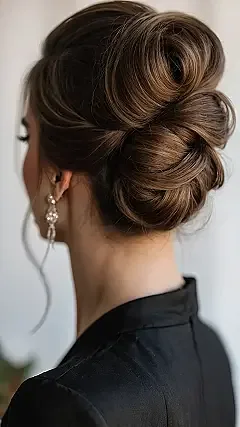
A chignon that falls out by lunchtime was usually built on the wrong base. Start with day-old hair, or add texture spray to clean hair — clean, slippery hair is the enemy of an updo. Use enough pins, and use them properly: push a pin in, then turn it and push it back the other way, so it grips the hair rather than sliding through it. Spin pins grip better than ordinary bobby pins on thick hair, and a light mist of hairspray before you start gives the hair something to hold on to.
The routine for a long day is simple: build the chignon, spray it lightly, then leave it alone — touching it every ten minutes is what loosens it. Carry two spare pins and a travel hairspray in your bag, and if a piece falls out, pin it back loosely rather than rebuilding the whole style. A chignon built on textured hair, with the pins crossed and the spray set, will last twelve hours; a chignon built on clean, smooth hair will last about two.
Matching the Chignon to the Occasion and the Dress
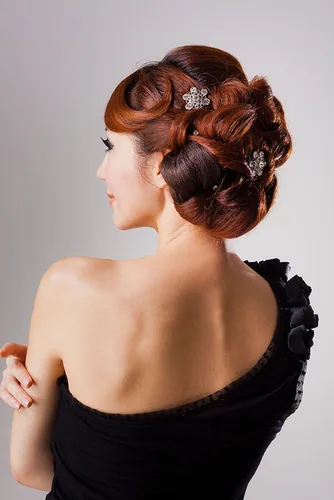
The chignon you choose should match the dress, not just the mood. A low, sleek chignon suits a high neckline and statement earrings, because nothing competes with the neckline. A side chignon suits a one-shoulder or off-shoulder dress, because the asymmetry echoes the dress. A loose, romantic chignon suits a flowing dress and a garden setting, because the softness matches the fabric. And a textured, voluminous chignon suits a structured gown, because the volume balances the dress.
The rule is to try the chignon with the dress on, not just in the mirror on its own. Check the back view — that is the view most people will see at a wedding — and check that the chignon does not fight the neckline or the veil. If you are the bride, do this at the trial, with the actual dress and veil. If you are a guest, a quick check in the mirror with the dress on is enough, and a small accessory can tie the hair to the outfit.
Taking It Down: Removing a Chignon Without Breakage
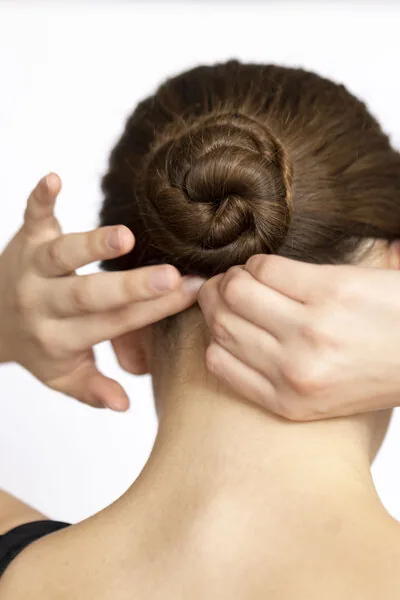
Taking a chignon down badly can do more damage than wearing one, because pins pulled out in a hurry snag and snap the hair. The rule is to remove the pins in the reverse order you put them in, one at a time, gently — never pull a pin straight out through the twist. Once the pins are out, let the hair fall, then brush it gently from the ends upward, and wash it if it is full of hairspray rather than leaving the product in overnight.
Between chignons, the upkeep is simple: a weekly deep-conditioning mask keeps the ends healthy, a silk pillowcase reduces breakage from updos, and a break from tight styles — a day with the hair down — gives the scalp a rest. A chignon is a gentle updo as updos go, because the weight sits low, but any style worn tight every day can cause breakage at the hairline. Vary your styles, keep the chignon loose when you can, and your hair will thank you.
What is a chignon hairstyle?
A chignon is a low bun worn at the nape of the neck, usually rolled, twisted or folded into a smooth, sculpted shape and pinned in place. The word comes from the French for the nape of the neck. Unlike an ordinary low bun, a chignon is expected to look polished and deliberate, with a clean shape from behind — which is why it is the classic choice for weddings, formal evenings and work.
How do you do a chignon at home?
Start with day-old hair or add texture spray to clean hair. Brush the hair smooth, gather it low at the nape, and twist it — then wrap the twist around itself into a bun and pin it in place, tucking the ends underneath. Leave two soft pieces around the face if you want a romantic finish, and set the style with hairspray. The whole thing takes ten to fifteen minutes once you have practised it twice.
What is the difference between a chignon and a low bun?
A low bun is any knot worn low at the back of the head, while a chignon is a specific kind of low bun — rolled, twisted or folded into a smooth, sculpted shape at the nape, with a polished finish. In practice the words overlap a lot, and most women use them interchangeably, but asking for a chignon tells a stylist to aim for smooth, rolled and finished, rather than just gathered.
Can you do a chignon with short hair?
Yes — a faux chignon works on short hair, including a bob or a lob. Curl the ends under for grip, pin them at the nape, and add a small clip-in piece or a padding form to give the bun its shape. From the front it looks like a low chignon, and the pins are hidden under the curled ends. It takes about twenty minutes, including curling, and it is the only way to get a chignon without waiting for your hair to grow.
How long does a chignon last?
A chignon built on textured or day-old hair, with crossed pins and hairspray, will last twelve hours or more. A chignon built on clean, slippery hair may loosen within two hours. The keys are texture in the hair before you start, enough pins used properly, and leaving the style alone once it is set — touching it every few minutes is what loosens it.
Is a chignon suitable for a wedding?
Yes — a chignon is one of the most popular bridal hairstyles, because it is elegant, photographs beautifully, keeps the hair out of the face all day, and works with a veil, a tiara or fresh flowers. Most brides choose a low, soft chignon with face-framing pieces, and they book a trial run weeks before the wedding so the style is settled in advance.
What face shape suits a chignon best?
A chignon suits most face shapes, because the placement and the front pieces can be tuned to each one. Round faces suit a chignon with height at the crown and soft pieces around the face. Oval faces can wear almost any version. Square faces suit soft front pieces that fall past the jaw. Long faces suit a chignon with a fringe or waves to add width. The key is the front pieces, not the bun itself.
How do I make my chignon look fuller?
Add volume before you build the bun: backcomb lightly at the crown, use a volumising mousse or texture spray, and consider a small hair donut or padding form hidden inside the chignon. Thick hair gives a chignon natural volume, while fine hair needs the prep — a fine-hair chignon built on flat hair will look small. Curling the lengths before twisting also makes the bun look fuller.
Can I wear a chignon to work?
Yes — a chignon is one of the best work hairstyles. A sleek or classic low chignon is polished, keeps hair out of the face, and survives a full day at a desk. It takes about ten minutes in the morning and needs no touch-ups. Keep it firm but not pulled tight, so it does not ache by late afternoon, and skip sparkly accessories for the office.
How do you keep a chignon from falling out?
Use day-old or textured hair, cross the pins so they grip, use spin pins on thick hair, and set the style with hairspray. Push each pin in, turn it, and push it back the other way so it locks into the hair. Carry two spare pins in your bag, and if a piece falls out, pin it back loosely rather than rebuilding the whole chignon.
Conclusion
The chignon works because it is not one hairstyle — it is a shape you can tune to your hair, your face and your day. A sleek low chignon is the polished choice. A messy chignon is the romantic one. A braided or twisted chignon is the detailed one. A five-minute chignon is the one you will actually wear on a Tuesday. Whichever version you choose, the rules are the same: start with textured hair, pick the placement before you pick the finish, and leave a little softness around the face.
Start simple if you are unsure — a classic low chignon can always be made messier, braided or dressed up with pins at your next attempt, and a good stylist will tell you honestly whether your length suits the version you have in mind. Keep the pins crossed, keep the spray light, and let the chignon do what it does best: give you an updo that looks elegant, without asking for a lot of effort in return.