35 Best Hairstyles for Curly Hair That Define Curls Without Frizz
Looking for hairstyles for curly hair? You are in the right place. Curly hair has its own rules: it shrinks when it dries, it frizzes when it is brushed dry or touched too much while drying, and it defines best when product goes onto soaking-wet hair. Once you work with those rules, curls are easy, bouncy, and beautiful.
In this guide, you will find 35 hairstyles for curly hair, organised by what actually helps: layered cuts for definition, curls by pattern from 2C to 4C, bangs that work with curls, wash-and-go and diffused routines, twist-outs and braid-outs, updos that keep texture, and colour that follows the curl pattern. Each style is easy to read and easy to try.
Key Takeaways
- Product goes on soaking-wet hair: Leave-in, cream, then gel, in that order, helps curls clump and stay defined.
- Do not brush dry curls: Brushing dry curls breaks clumps and causes frizz. Separate gently with oiled fingers once dry, if at all.
- Layers prevent the triangle: Long and internal layers let curls spring in stages, instead of forming one heavy, wide shape.
- Allow for shrinkage: Curls spring up when dry, so cuts and bangs should be cut longer than the dry length you want.
- Diffuse on low heat, holding still: Cup curls into the diffuser and hold still, rather than moving the dryer around.
Why These Hairstyles Suit Curly Hair
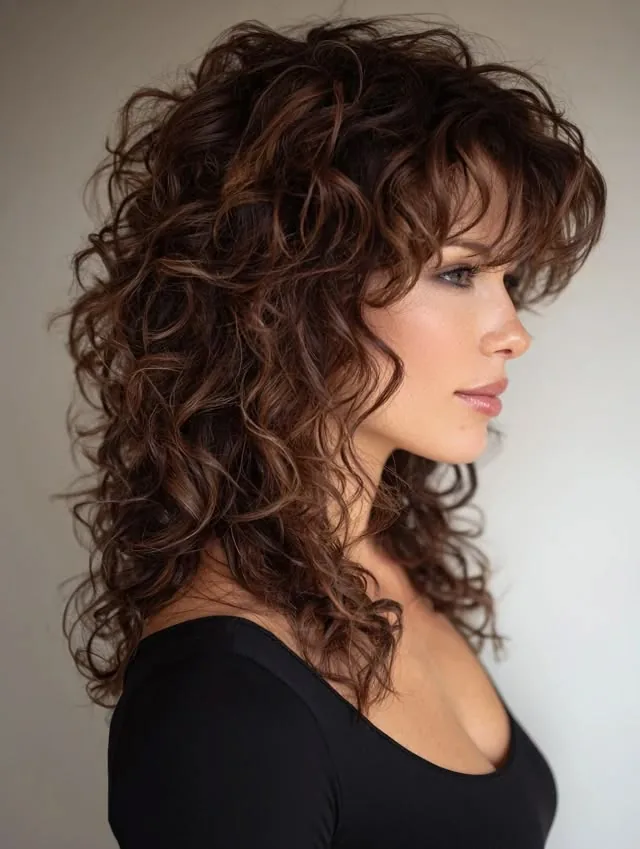
Curly hair is not straight hair with a wave added. It has a curl pattern, shrinkage, and a need for moisture that changes how it should be cut and styled. The styles in this guide are built around those facts, not against them.
That is the whole idea. You are not straightening your curls into submission. You are choosing a cut and a routine that lets each curl form, spring, and hold its shape, with frizz kept low by gentle handling.
The Golden Rule for Curly Hair
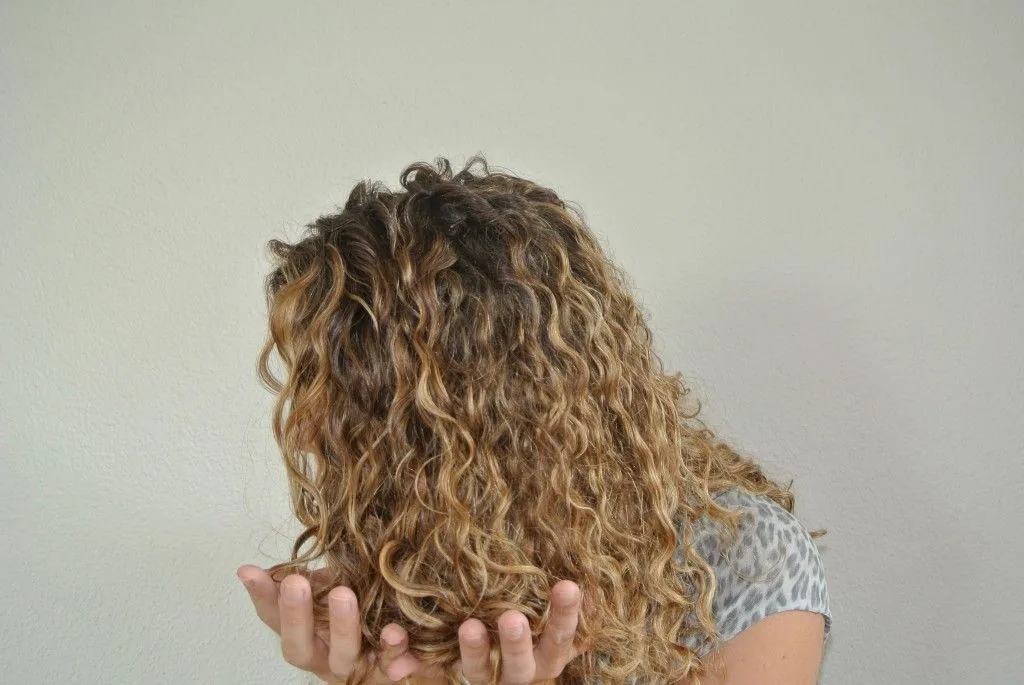
Wet, clump, dry without touching, then separate once. Apply product to soaking-wet hair so curls clump, scrunch to encourage the pattern, dry with a diffuser or air without touching, and only separate curls once they are fully dry. Most frizz comes from breaking that rule.
Two habits break the rule. First, brushing or combing dry curls, which breaks every clump at once. Second, touching curls again and again while they dry, which pulls them apart before they set. Leave them alone while they dry, and definition follows.
Quick Picks by Curl Type and by Goal
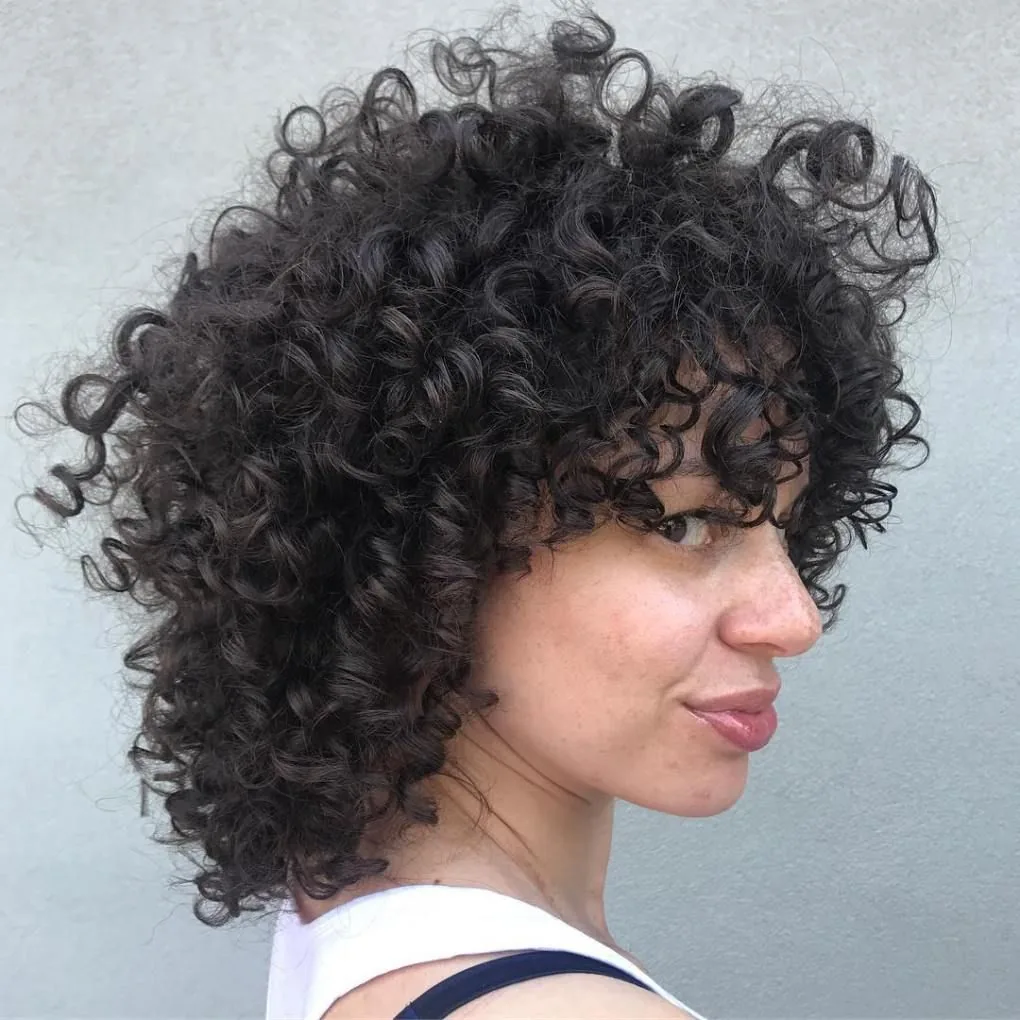
- Long curls: Long layers for defined curls, soft curly mullet with long back curls, side-swept curly cut.
- Medium curls: Curly lob, shoulder-length curly cut with face framing, curly cut with a side part.
- Short curls: Curly bob with rounded volume, curly pixie with a long top, tapered curly cut.
- Definition: Wash-and-go defined curls, finger-coiled defined curls, diffused bouncy curls.
- Stretched curls: Twist-out curls, braid-out waves and curls.
- Fine curls: Layered curls for fine curly hair, curly lob.
- Thick curls: Layers to remove bulk for thick curly hair, curly shag with crown layers.
- Bangs: Curly bangs with long curls, curly cut with curtain bangs.
- Updos: High curly ponytail, curly puff, low curly bun, occasion curly updo.
- Colour: Balayage on curly hair, face-framing highlights on curls.
1. Long Layers for Defined Curls
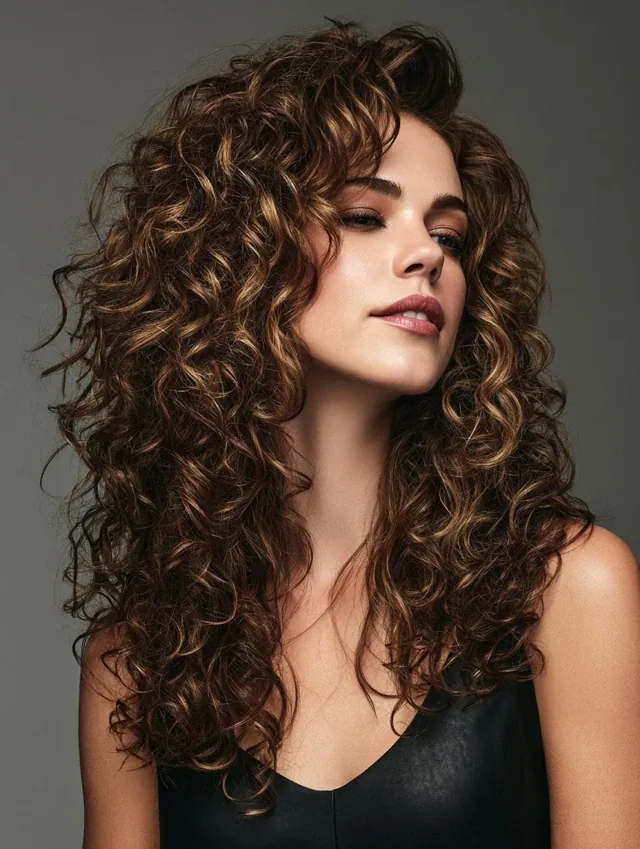
Long layers are the foundation of most good curly cuts. They let curls spring up in stages instead of forming one heavy, triangular shape, and each layer can clump and dry on its own. Keep the shortest layers below the chin, so curls do not stack wide at the cheeks, and the long fall stays defined, not frizzy.
Best for: Most curl types, especially wavy-curly and loose curly hair that wants length.
How to style:
- Apply curl cream to soaking-wet hair.
- Scrunch upward to encourage clumps.
- Diffuse on low heat until 80 percent dry.
- Scrunch out the crunch once fully dry.
What to ask your stylist: Ask for long layers cut for curls, with the shortest layer below the chin.
2. Curly Shag with Crown Layers
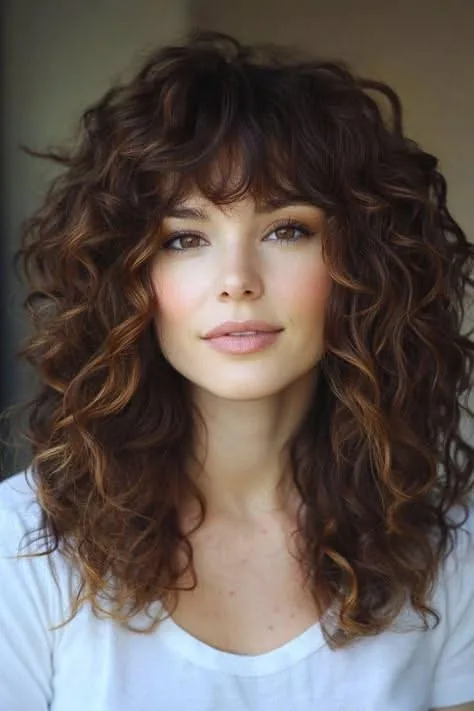
A curly shag uses shorter layers on top for height and longer layers underneath for a soft fall. The crown layers give lift without a flat top, while the long lengths keep the shape from turning into a triangle. It is relaxed, textured, and very forgiving on wash day.
Best for: Curly hair that wants volume on top and movement through the lengths.
How to style:
- Apply curl cream and a little gel to wet hair.
- Diffuse, lifting the crown.
- Scrunch lengths gently.
- Shake out once dry, do not brush.
What to ask your stylist: Ask for a curly shag with crown height and long layers underneath.
3. Curly Lob
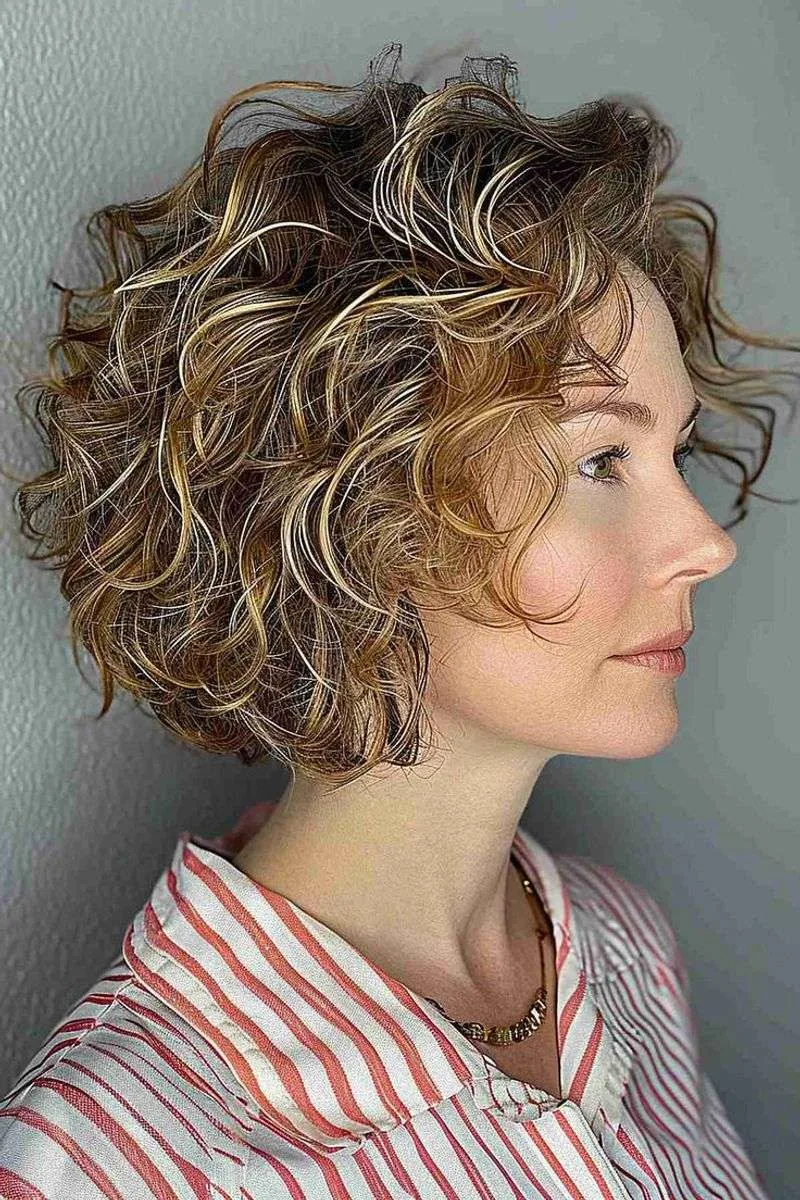
A curly lob sits around the collarbone and gives curls room to spring without losing a clear shape. It is short enough to dry faster and hold definition, but long enough to tie back loosely. Ask for a dry or curl-by-curl cut if your stylist offers it, so shrinkage is already accounted for.
Best for: Curly hair that wants a medium, manageable length with bounce.
How to style:
- Apply leave-in and curl cream to wet hair.
- Scrunch and diffuse on low heat.
- Leave the ends untouched while drying.
- Add oil to the ends once dry.
What to ask your stylist: Ask for a curly lob cut with curls in mind, allowing for shrinkage.
4. Curly Bob with Rounded Volume
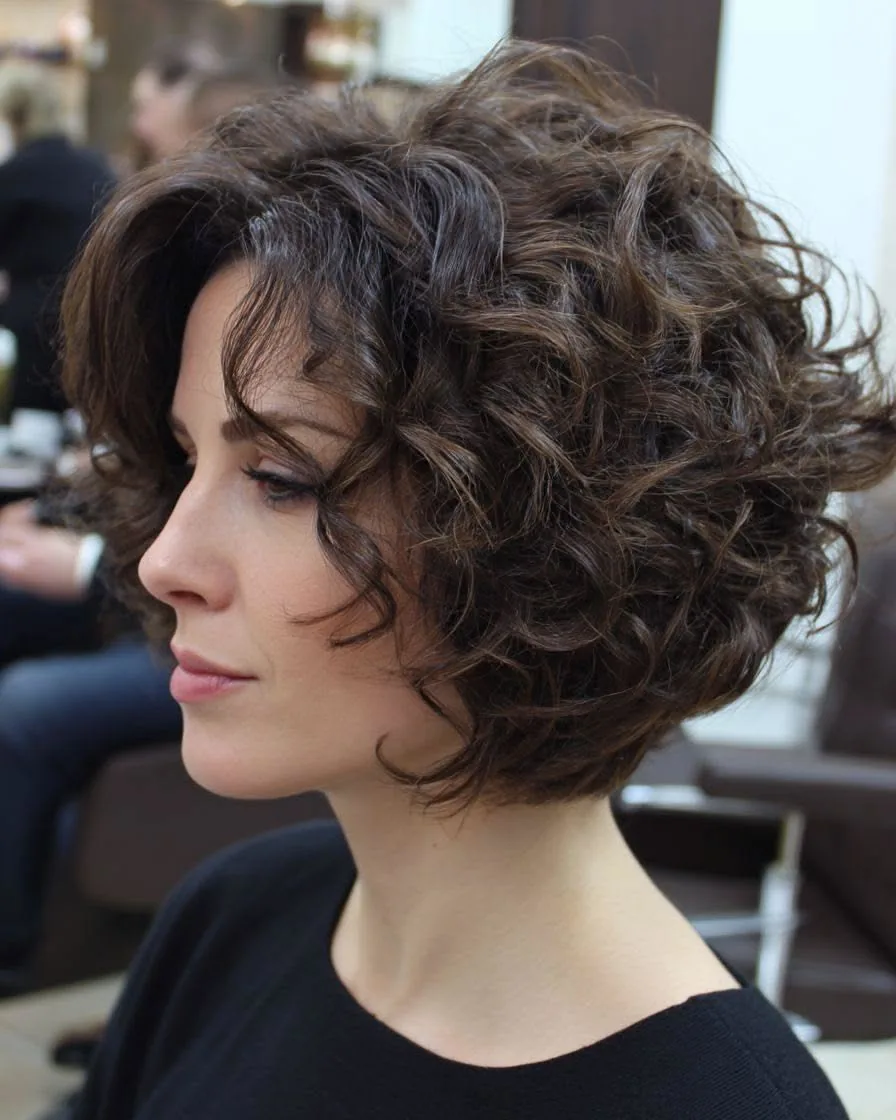
A curly bob is bold and joyful, with curls forming a soft, rounded shape around the head. The key is a balanced shape: enough layers for definition, but not so many that the bob turns into a wide triangle. A good curly bob springs up beautifully and frames the face.
Best for: Curly hair that wants a short, full, statement cut.
How to style:
- Apply curl cream to wet hair.
- Scrunch well and diffuse.
- Pick the roots lightly once dry for shape.
- Do not brush dry curls.
What to ask your stylist: Ask for a curly bob with a balanced, rounded shape and layers for definition.
5. Curly Pixie with a Long Top
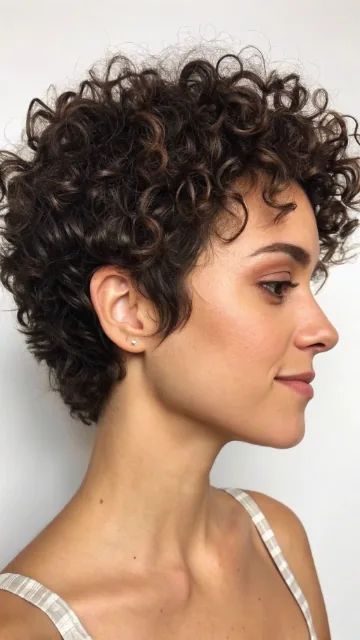
A curly pixie keeps the sides neat and lets the curls on top do the talking. The longer top can be scrunched for definition or swept to one side, and it dries quickly. It is a confident short cut that shows off natural texture instead of fighting it.
Best for: Curly hair that wants a short, low-maintenance cut with texture on top.
How to style:
- Apply curl cream to damp hair.
- Scrunch the top well.
- Diffuse or air-dry.
- Piece out curls with a little cream.
What to ask your stylist: Ask for a curly pixie with a long, textured top and tapered sides.
6. Shoulder-Length Curly Cut with Face Framing

A shoulder-length curly cut with face-framing curls opens the face and keeps the shape soft. Shorter curls near the face spring up a little higher, which gives a natural frame, while the back stays longer for balance. It grows out gracefully between cuts.
Best for: Curly hair that wants the face open and a medium length.
How to style:
- Apply curl cream to wet hair.
- Scrunch face curls upward.
- Diffuse on low heat.
- Shake out gently once dry.
What to ask your stylist: Ask for a shoulder-length curly cut with shorter, face-framing curls at the front.
7. Curly Bangs with Long Curls
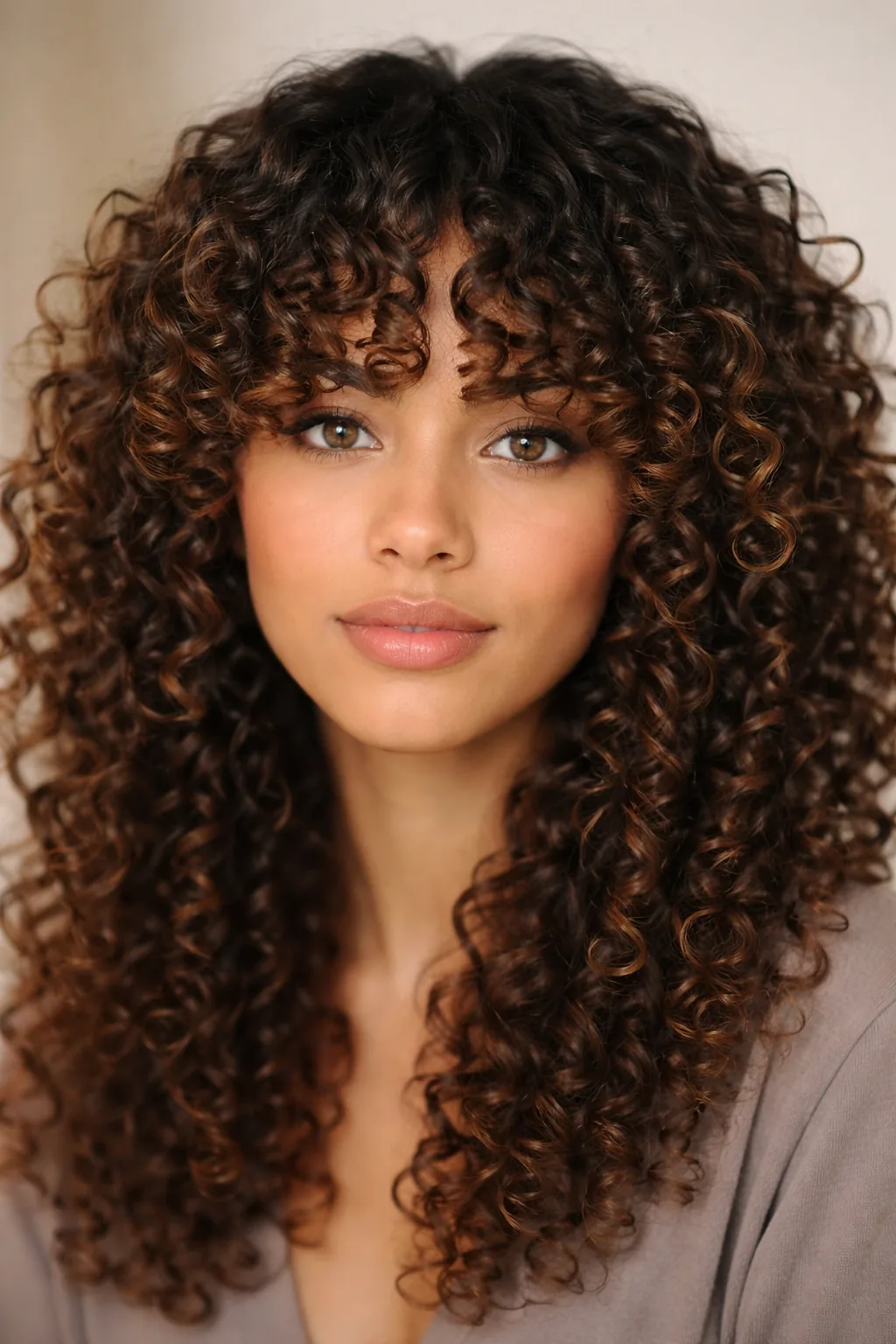
Curly bangs are back, and they work best when they are cut long and allowed to spring up naturally. A curly fringe softens the forehead and adds personality, while long curls underneath keep the overall length. Expect the fringe to spring shorter than it looks wet, so cut it longer than you think.
Best for: Curly hair that wants a fringe without straightening it.
How to style:
- Apply a little curl cream to the fringe.
- Scrunch the fringe curls.
- Diffuse gently or air-dry.
- Do not pull the fringe straight while drying.
What to ask your stylist: Ask for curly bangs cut long and dry, allowing for spring and shrinkage.
8. Wash-and-Go Defined Curls
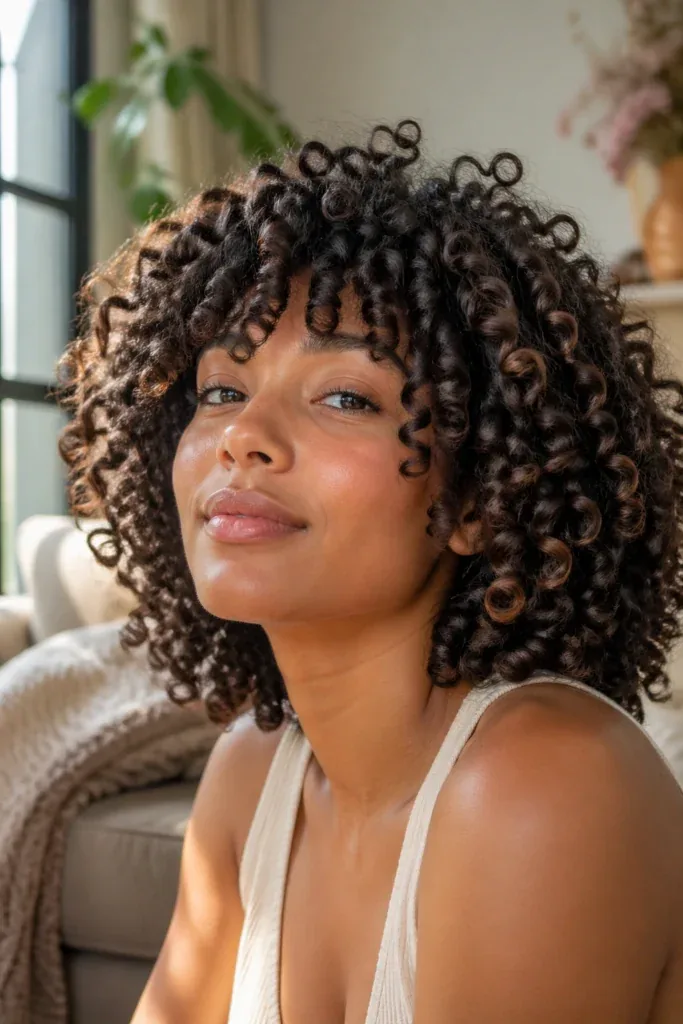
Wash-and-go is the simplest curly routine: wash, apply product to wet hair, scrunch, diffuse or air-dry, and go. It works best on a cut with good layers, because layers let each curl clump form cleanly. The result is soft, defined, everyday curls with no heat styling beyond a diffuser.
Best for: Curly hair that wants a quick, everyday defined look.
How to style:
- Wash and condition, then leave hair soaking wet.
- Apply leave-in, then curl cream or gel.
- Scrunch upward.
- Diffuse or air-dry, then scrunch out the crunch.
What to ask your stylist: Ask for layers that clump well for a wash-and-go, and how much product your curl type needs.
9. Diffused Bouncy Curls

Diffusing gives curls lift, volume, and faster drying than air-drying alone. Use low heat and low speed, cup curls into the diffuser bowl, and hold still rather than moving the dryer around, which causes frizz. The result is bouncy, full curls with a defined shape.
Best for: Curly hair that wants volume and faster drying without frizz.
How to style:
- Apply curl cream and gel to wet hair.
- Cup sections into the diffuser.
- Dry on low heat, holding still.
- Stop at 80 percent dry, then air-dry the rest.
What to ask your stylist: Ask for a cut with crown layers, so diffused curls have lift on top.
10. Finger-Coiled Defined Curls
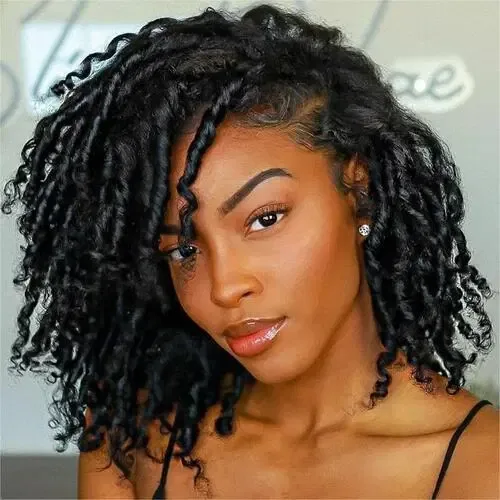
Finger coiling means wrapping small sections of wet hair around your finger to form neat, individual curls. It takes longer than scrunching, but it gives the most defined, uniform curl pattern, especially on looser curls or on sections that tend to frizz. Use it on the front sections for the biggest payoff.
Best for: Curly hair that wants maximum definition, especially at the front.
How to style:
- Apply curl cream to wet hair in sections.
- Wrap each small section around a finger.
- Release gently and let it set.
- Diffuse or air-dry, then separate lightly.
What to ask your stylist: Ask for layers that finger-coil well, and whether your curl type needs gel for hold.
11. Twist-Out Curls
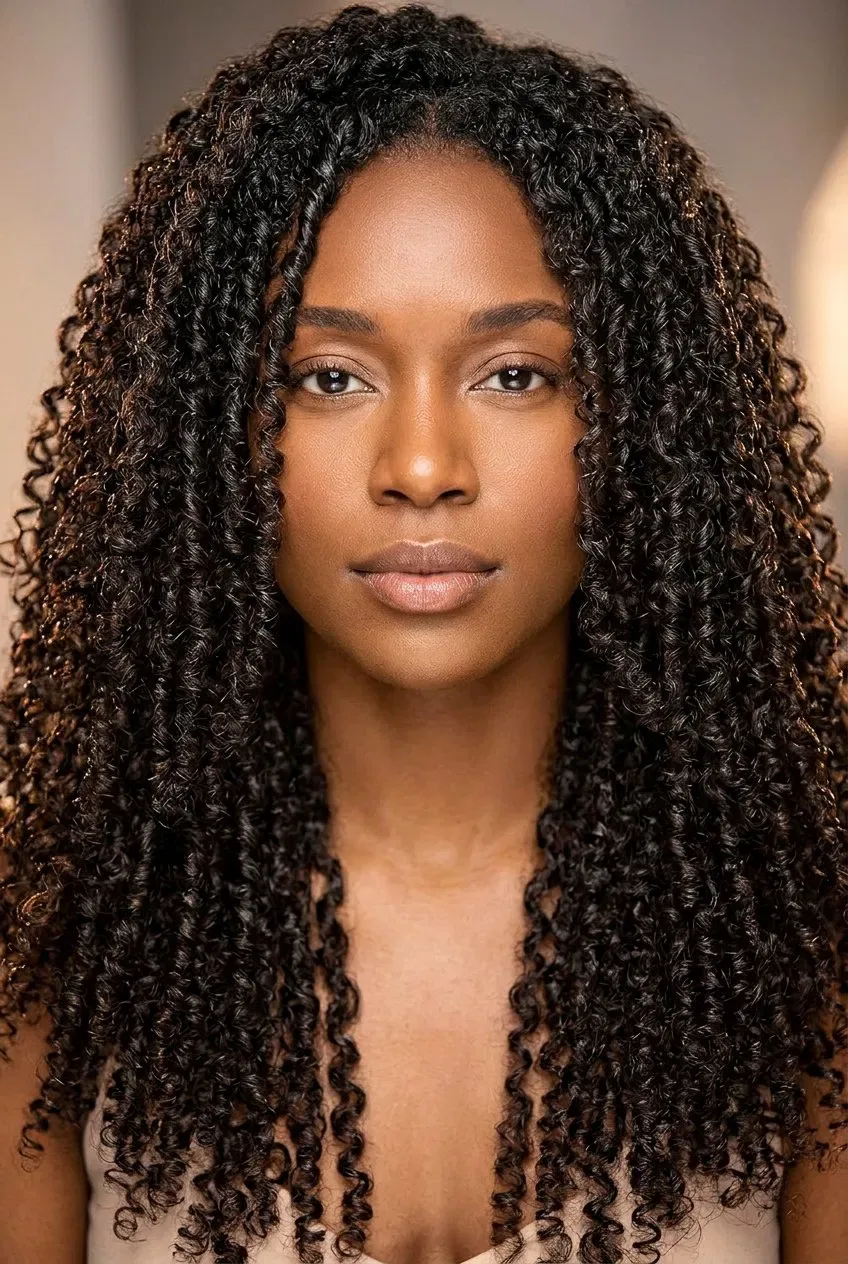
A twist-out starts with two-strand twists on damp hair, left to dry overnight or under a dryer, then unravelled into stretched, defined curls. It gives looser, more elongated curls than a wash-and-go, with less shrinkage and a soft, full finish. It is a great second-day style too.
Best for: Curly and coily hair that wants stretched, defined curls with less shrinkage.
How to style:
- Apply leave-in and cream to damp hair.
- Twist small sections in two strands.
- Dry fully before unravelling.
- Unravel gently and separate with oiled fingers.
What to ask your stylist: Ask for a cut that twists out evenly, with layers that do not unravel into uneven lengths.
12. Braid-Out Waves and Curls
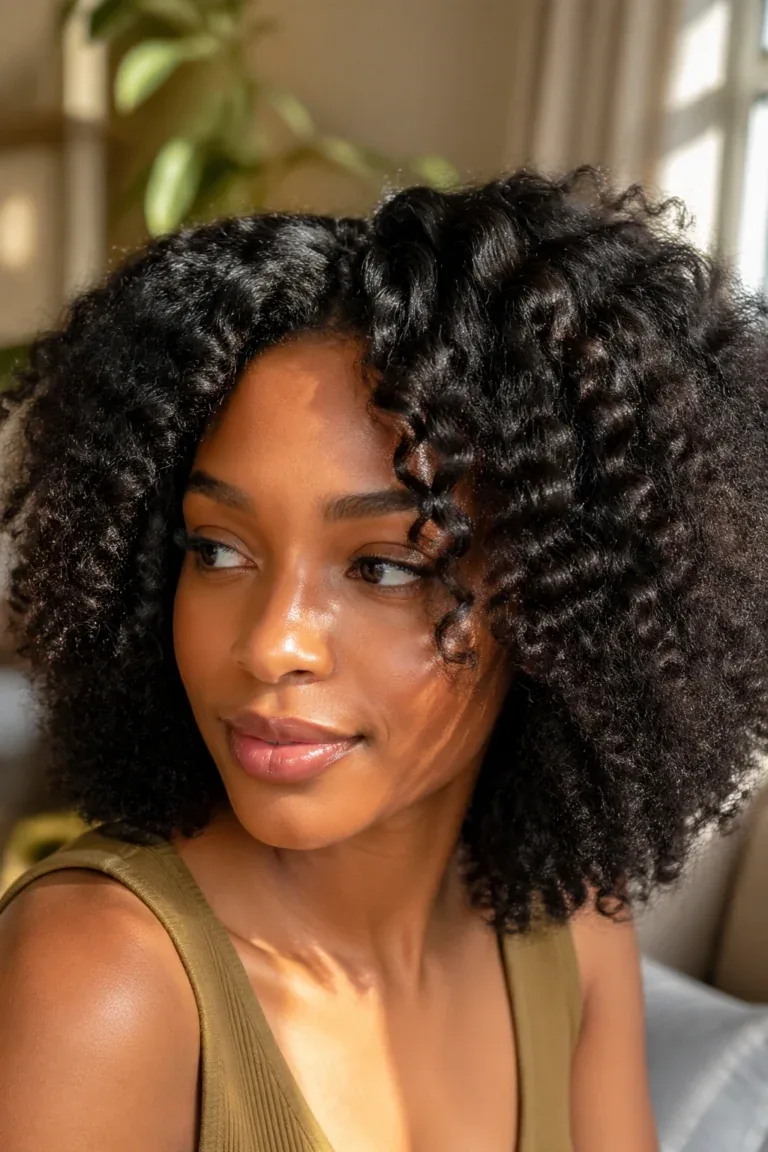
A braid-out uses braids on damp hair, dried fully, then unravelled into soft waves and stretched curls. Larger braids give looser waves, smaller braids give tighter, more defined curls. It is a heat-free way to stretch curls, reduce shrinkage, and get a fuller, softer finish.
Best for: Curly hair that wants a heat-free, stretched, wavy finish.
How to style:
- Apply leave-in and cream to damp hair.
- Braid in even sections.
- Dry fully before unravelling.
- Separate gently with oiled fingers, do not brush.
What to ask your stylist: Ask for layers that braid out evenly, so the waves fall at a balanced length.
13. Half-Up Curly Style
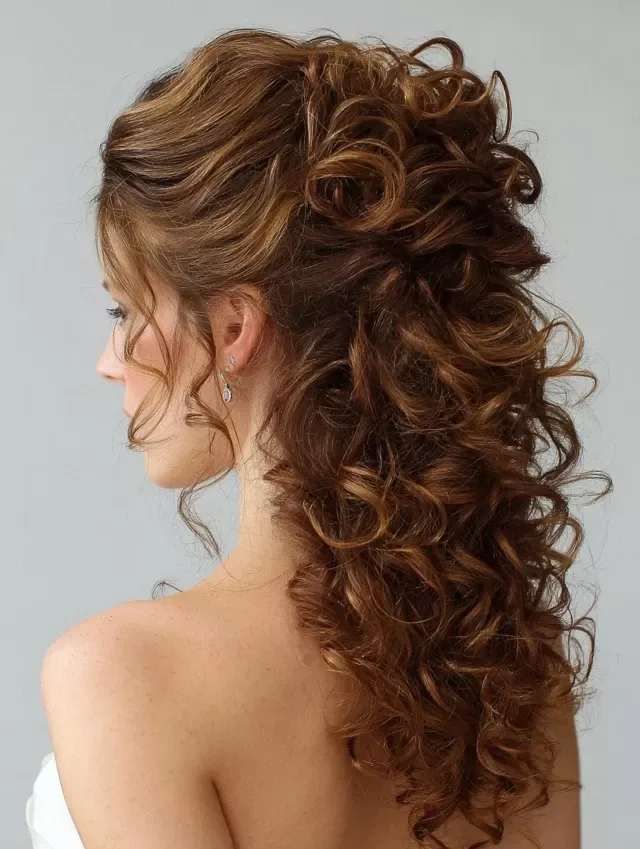
A half-up curly style lifts the top section and leaves the rest of the curls down, so you get height and an open face without hiding your curls. Keep the top section loose, so curls do not get pulled flat, and leave face-framing curls out for softness.
Best for: Curly hair that wants the face open while keeping curls down.
How to style:
- Apply curl cream and diffuse as usual.
- Gather the top half loosely.
- Leave face curls out.
- Secure with a soft tie or clip.
What to ask your stylist: Ask for layers that stay in a half-up style, with face curls long enough to leave out.
14. High Curly Ponytail (Pineapple Updo)
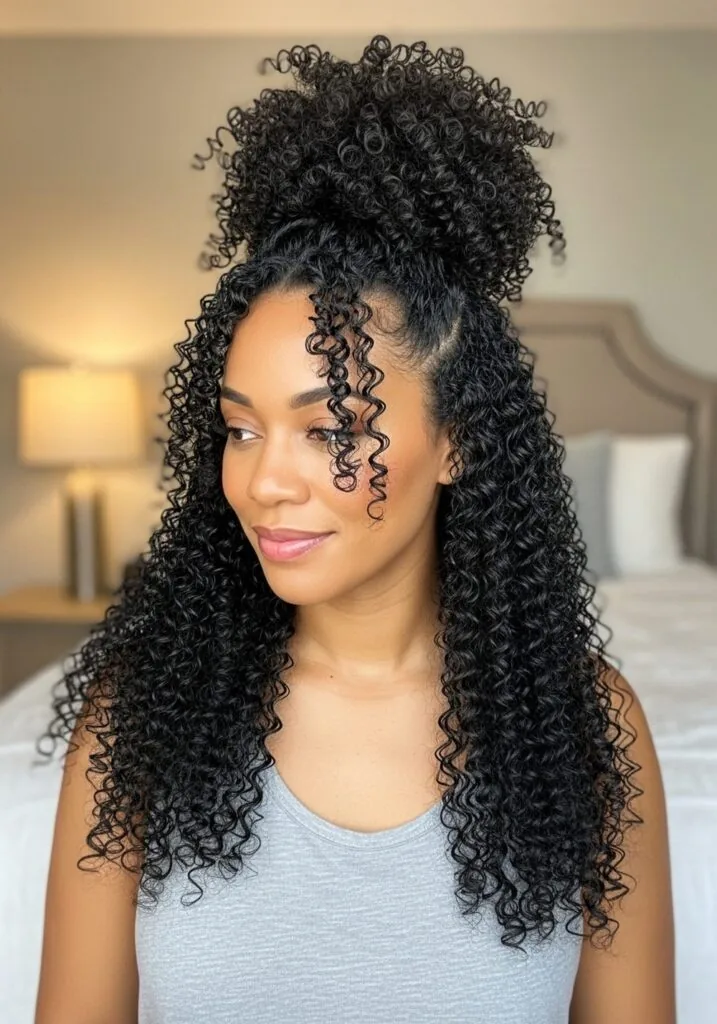
A high curly ponytail, often called a pineapple, gathers curls high on the head so they fall forward and keep their shape. It is both a daytime style and a night-time trick to protect curls while sleeping. Keep the tie loose, so curls are not dented or pulled flat.
Best for: Curly hair that wants curls up and protected, day or night.
How to style:
- Flip hair forward and gather loosely high on the head.
- Secure with a satin scrunchie.
- Let curls fall forward naturally.
- Leave face curls out.
What to ask your stylist: Ask for layers that gather high without short pieces falling out everywhere.
15. Curly Puff
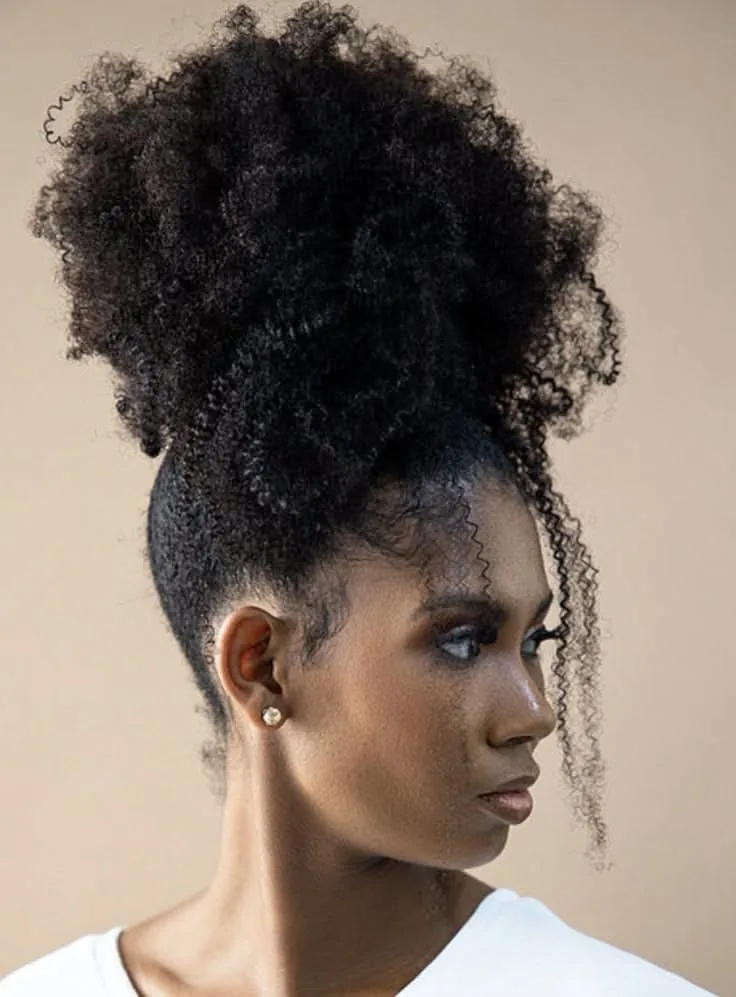
A curly puff gathers all the curls into one full, rounded puff on top or at the crown. It shows off volume and texture in one simple style, and it works on many curl lengths. Use a loose band and pick the puff gently for a full, even shape.
Best for: Curly and coily hair that wants a quick, full, statement updo.
How to style:
- Moisturise curls lightly.
- Gather hair loosely with a wide band.
- Pick the puff gently for fullness.
- Smooth edges lightly if you like.
What to ask your stylist: Ask for a cut that puffs evenly, with enough length on top for a full puff.
16. Low Curly Bun
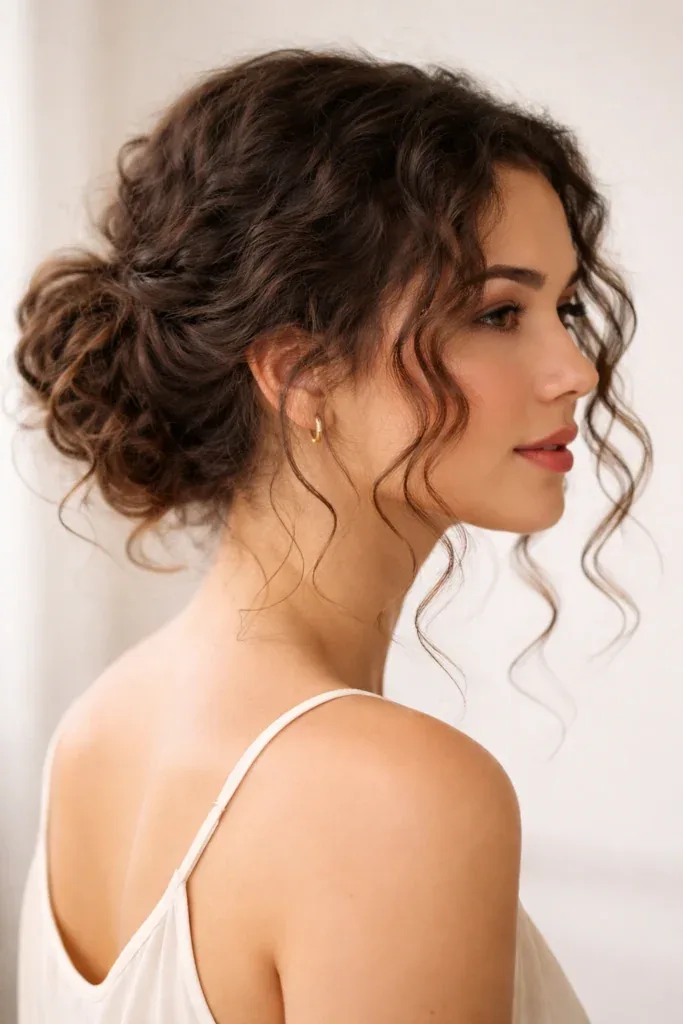
A low curly bun is elegant and practical: gather curls low at the nape, twist loosely, and pin, leaving texture and a few curls out. Do not pull curls tight and smooth, or you lose the texture that makes it beautiful. It is perfect for work, weddings, and second-day curls.
Best for: Curly hair that wants an elegant, easy updo.
How to style:
- Gather curls low and loosely.
- Twist and pin, leaving texture.
- Pull out a few soft curls at the face.
- Set lightly with spray.
What to ask your stylist: Ask for layers with long face curls, so a low bun keeps soft pieces out.
17. Side-Swept Curly Cut
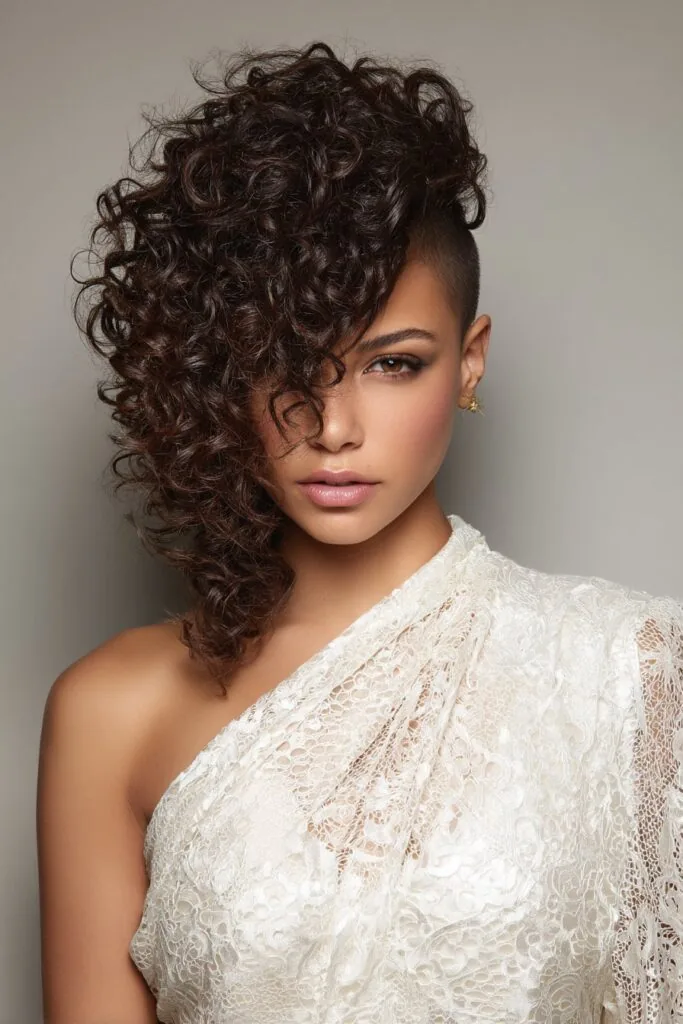
A side-swept curly cut parts curls deeply to one side, so a large sweep of curls falls across the forehead and to one side. It adds instant glamour and volume on one side, and it suits curls that naturally fall to one side. Keep the part soft, not a hard line.
Best for: Curly hair that wants a glamorous, swept-over look.
How to style:
- Part deeply to one side while wet.
- Apply curl cream and scrunch.
- Diffuse, keeping the sweep in place.
- Shake out gently once dry.
What to ask your stylist: Ask for layers that sweep to one side, with the front long enough to fall across.
18. Curly Cut with a Side Part
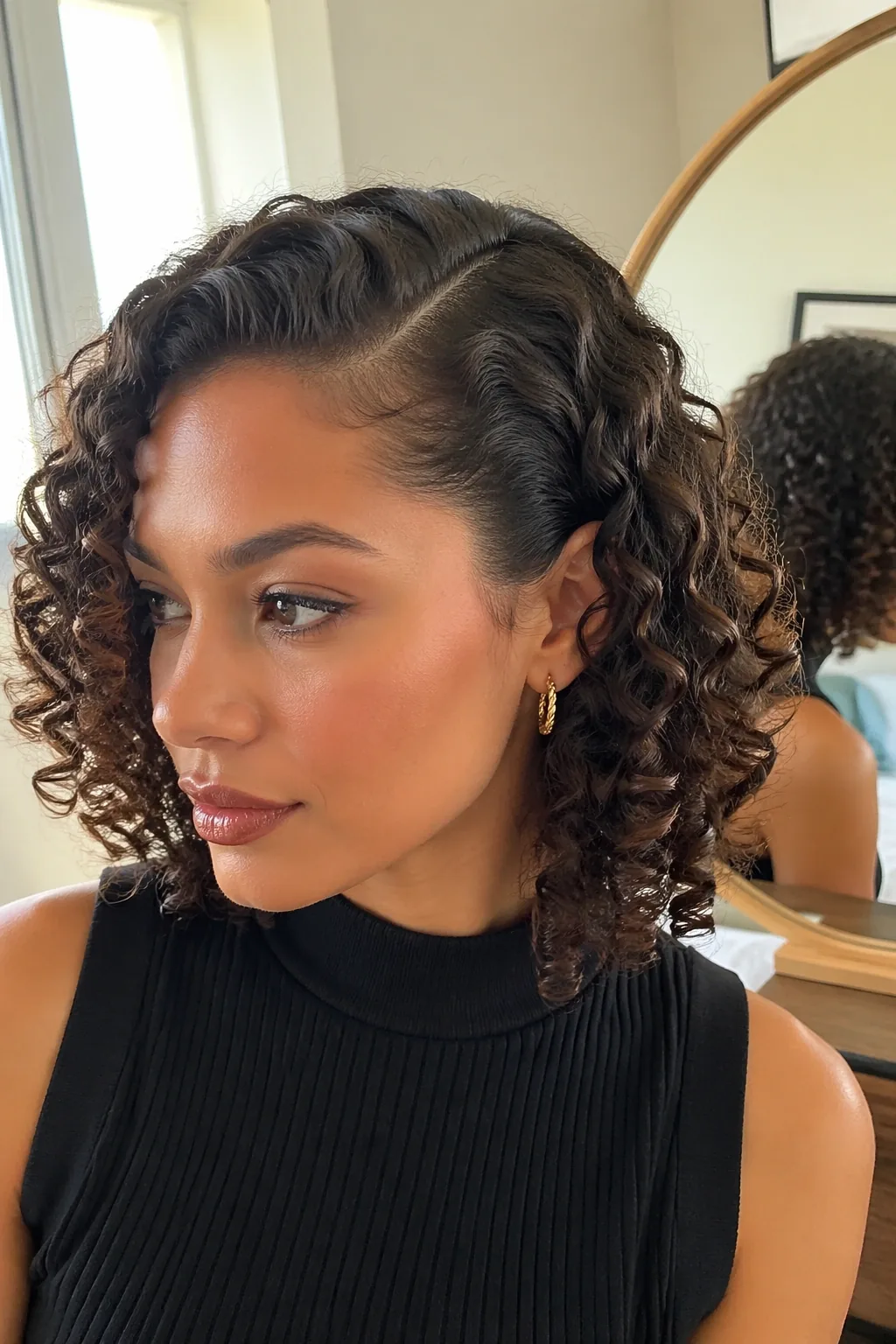
A side part on curly hair creates a natural diagonal and lifts the roots on one side, which adds height without teasing. It also helps curls fall in a more interesting shape than a straight centre part. Set the part while hair is wet, so curls dry in that direction.
Best for: Curly hair that wants height and a flattering, everyday parting.
How to style:
- Part to one side while soaking wet.
- Apply curl cream and scrunch.
- Diffuse, lifting roots at the part.
- Do not re-part once dry.
What to ask your stylist: Ask for a curly cut that works with a side part, with layers that fall naturally to one side.
19. Voluminous Rounded Afro Curls
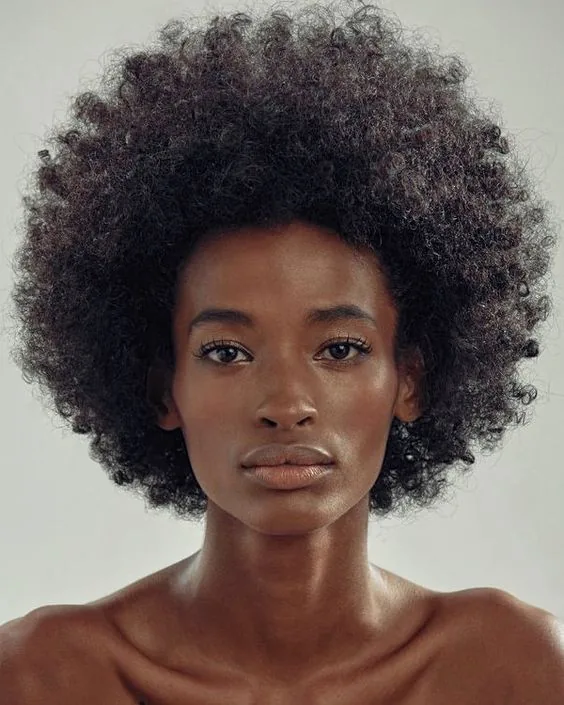
Voluminous rounded curls celebrate fullness, with a soft, rounded shape and plenty of height. The shape is built with layers, not with brushing dry curls, which causes frizz. Pick the roots lightly once dry for lift, and keep the ends moisturised for definition.
Best for: Curly and coily hair that wants a full, rounded, voluminous shape.
How to style:
- Apply leave-in and cream to wet hair.
- Scrunch and diffuse, lifting the crown.
- Pick roots lightly once dry.
- Add oil to the ends.
What to ask your stylist: Ask for a rounded curly shape with layers for volume, not a flat top.
20. Tapered Curly Cut
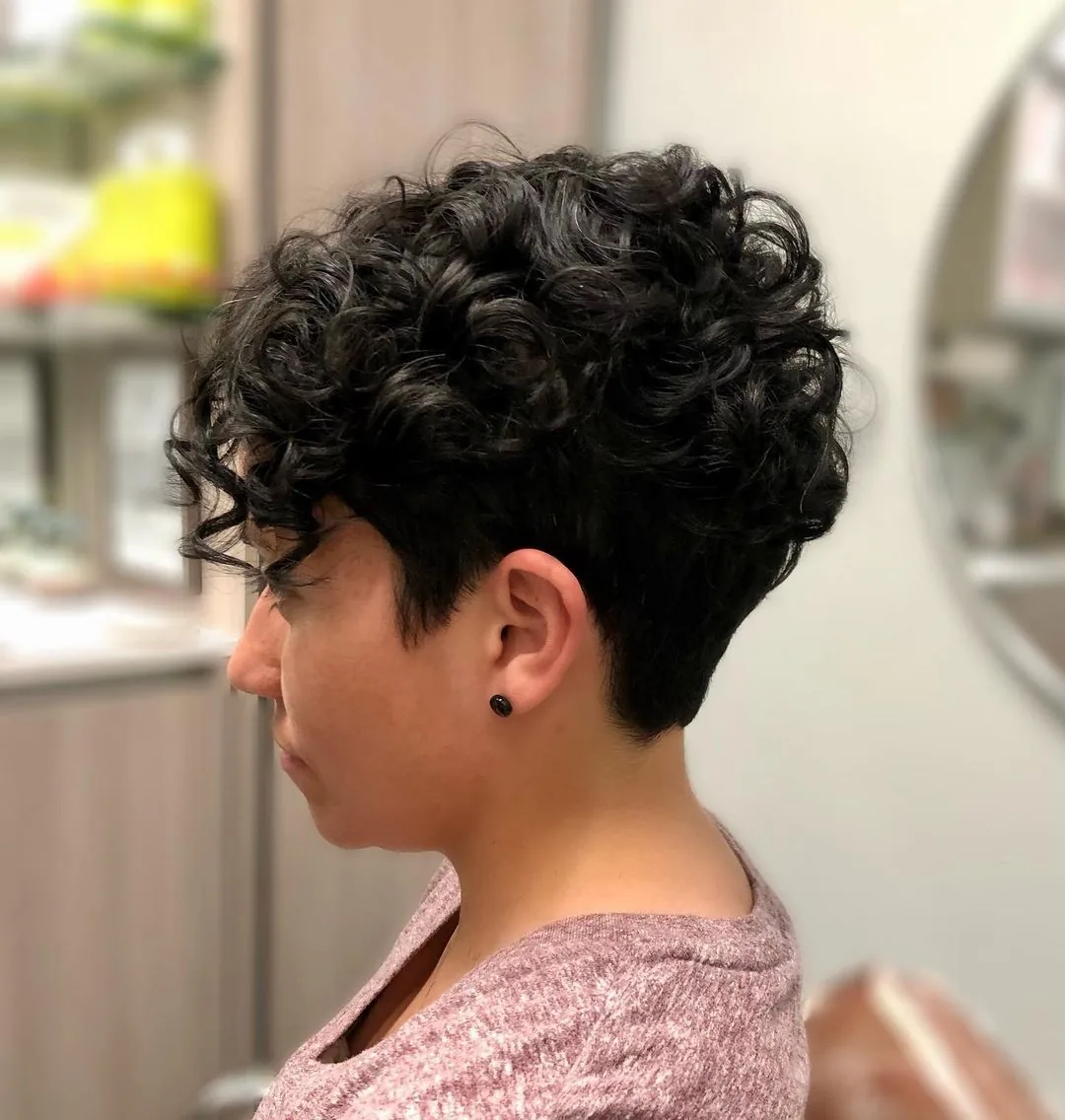
A tapered curly cut keeps the sides and back shorter and gradually longer toward the top, so the top curls have room to spring and show their pattern. It is neat at the edges and full on top, and it grows out with a clear shape. It suits tighter curls especially well.
Best for: Curly and coily hair that wants neat sides and full curls on top.
How to style:
- Apply curl cream to damp top curls.
- Scrunch the top well.
- Diffuse or air-dry.
- Keep the tapered sides smooth with a little cream.
What to ask your stylist: Ask for a tapered curly cut with a gradual taper, not a harsh undercut, unless you want one.
21. Curly Wolf Cut
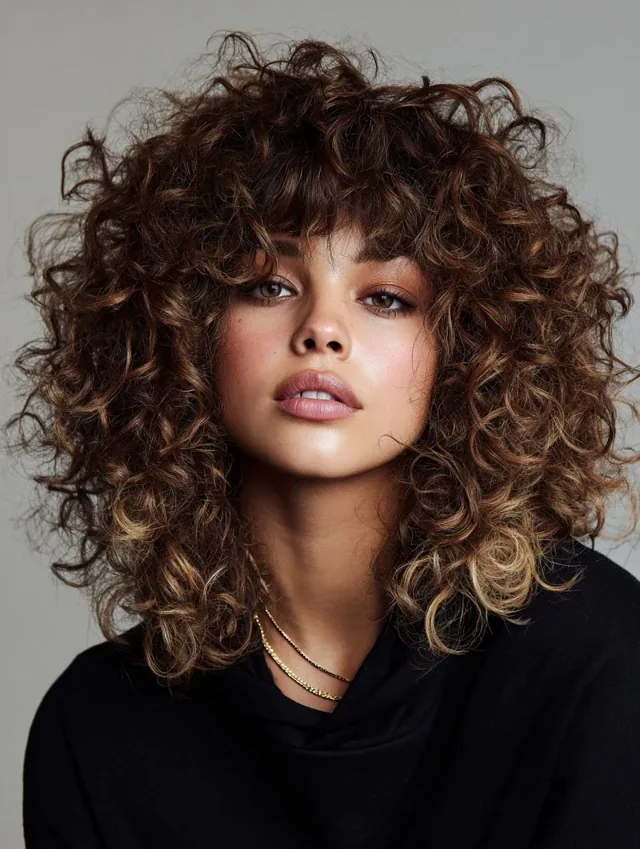
A curly wolf cut mixes shaggy layers on top with longer curls underneath, giving a wild, textured, modern shape. The top layers add height and movement, while the long lengths keep the cut from looking too short. It is a great choice if you love texture and do not want a neat, polished curl.
Best for: Curly hair that wants a trendy, textured, edgy cut.
How to style:
- Apply curl cream and gel to wet hair.
- Diffuse, lifting the crown.
- Scrunch lengths lightly.
- Piece out curls with a little cream.
What to ask your stylist: Ask for a curly wolf cut with soft face layers and height on top.
22. Soft Curly Mullet with Long Back Curls
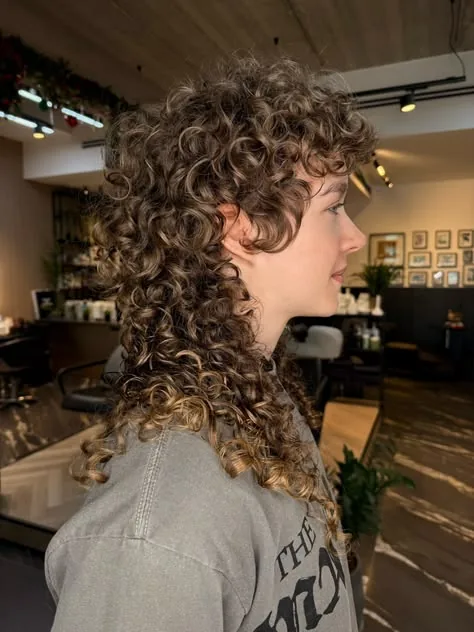
A soft curly mullet keeps the front and top shorter and the back curls long, in a gentle, modern version of the classic shape. It gives curls movement and personality, and the long back keeps length. Keep the transition soft, so it looks intentional, not choppy.
Best for: Curly hair that wants a bold, modern shape with long back curls.
How to style:
- Apply curl cream to wet hair.
- Scrunch the top and back separately.
- Diffuse on low heat.
- Shake out once dry.
What to ask your stylist: Ask for a soft curly mullet with a gradual transition, not a sharp step.
23. Layered Curls for Fine Curly Hair
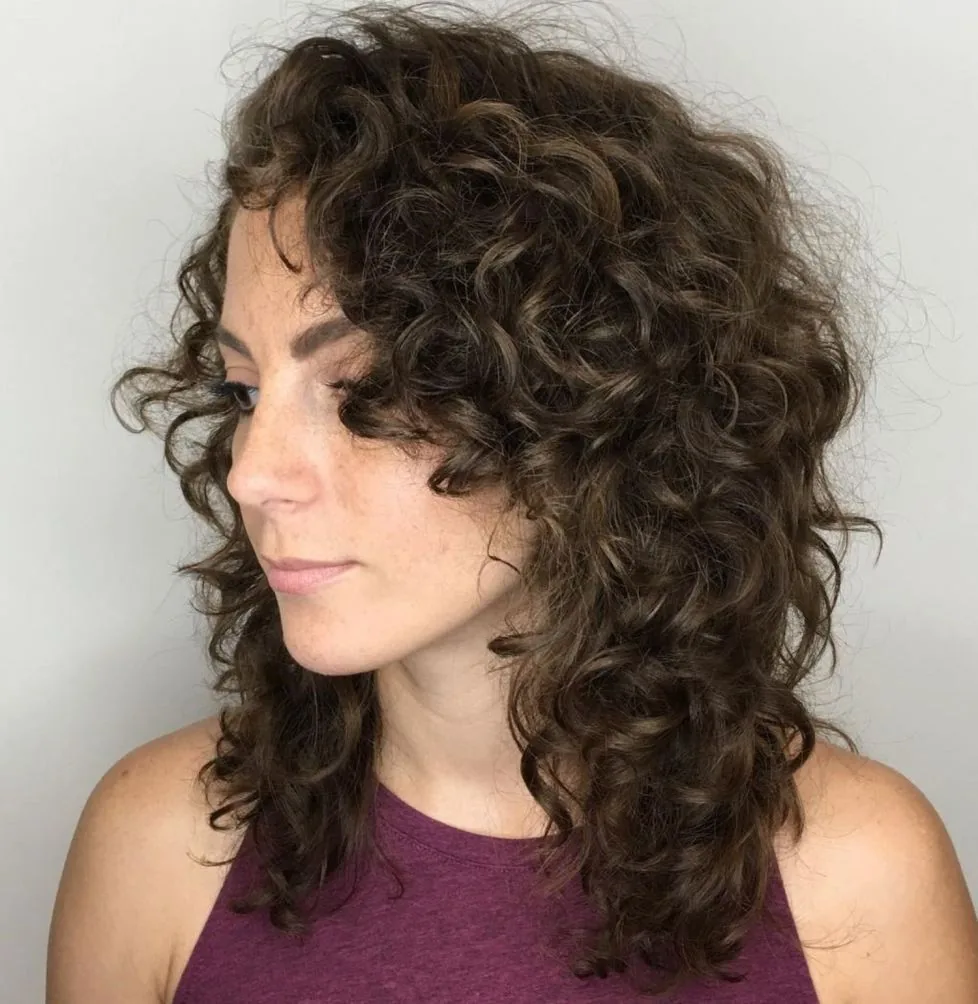
Fine curly hair needs layers that add body without thinning the ends. Light, long layers give movement and help curls clump, while a fairly full perimeter keeps the ends looking thick. Avoid heavy thinning, which makes fine curls look wispy and frizzy.
Best for: Fine curly hair that wants fuller-looking curls.
How to style:
- Apply a light leave-in and mousse to wet hair.
- Scrunch gently.
- Diffuse on low heat for lift.
- Add a tiny amount of oil to the ends.
What to ask your stylist: Ask for light, long layers for fine curls, keeping the perimeter fairly full.
24. Layers to Remove Bulk for Thick Curly Hair
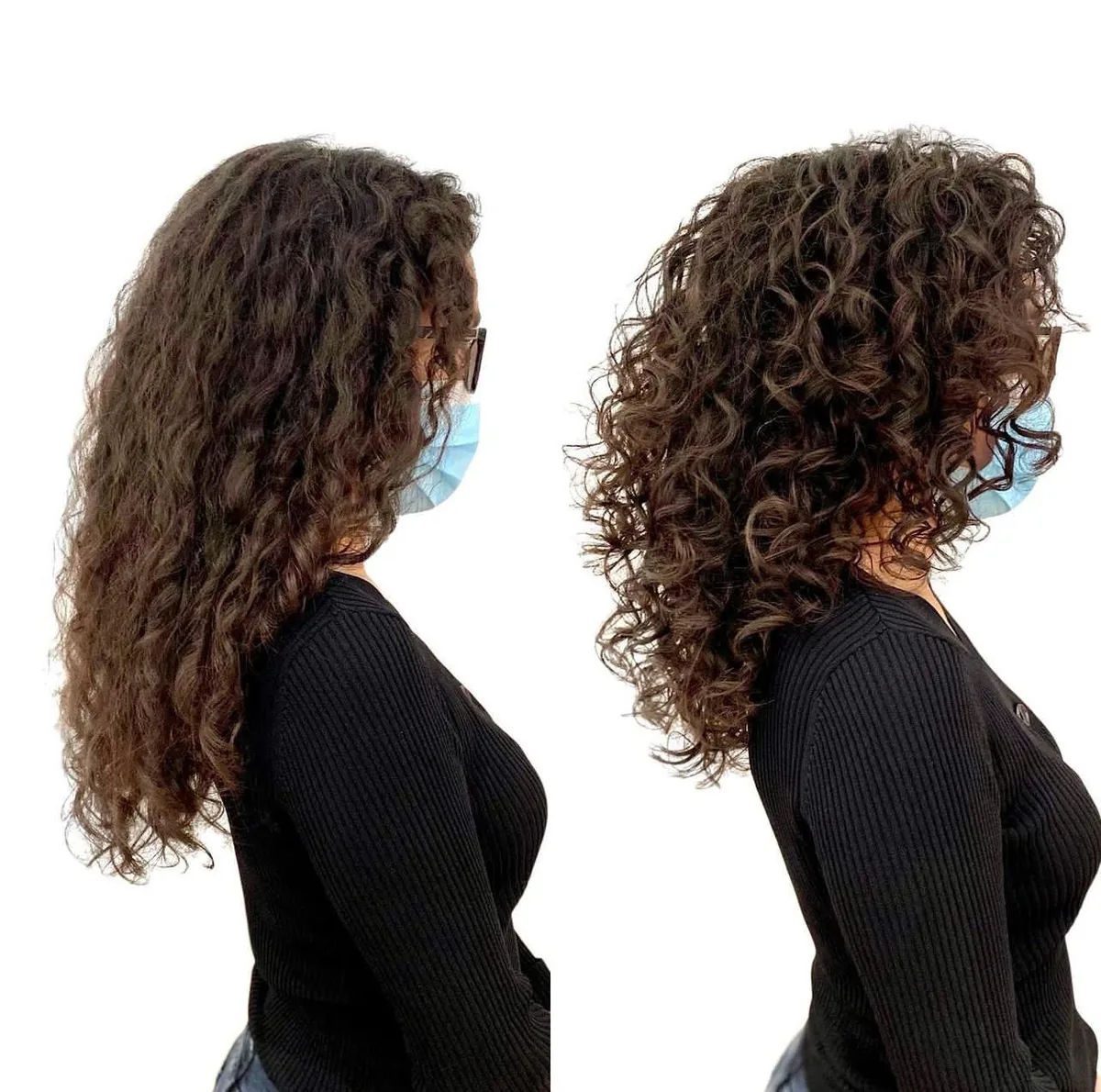
Thick curly hair can feel heavy and take a long time to dry. Layers through the inside remove bulk and let curls spring separately, so the shape is lighter and dries faster. The outside shape stays full, but the inside weight is gone, which also cuts frizz from over-handling.
Best for: Thick curly hair that feels heavy or takes very long to dry.
How to style:
- Apply leave-in and cream to wet hair in sections.
- Scrunch section by section.
- Diffuse in sections on low heat.
- Shake out once dry.
What to ask your stylist: Ask for internal layers to remove bulk, cut for your curl pattern, not thinned all over.
25. Curly Cut for 2C Wavy-Curly Hair
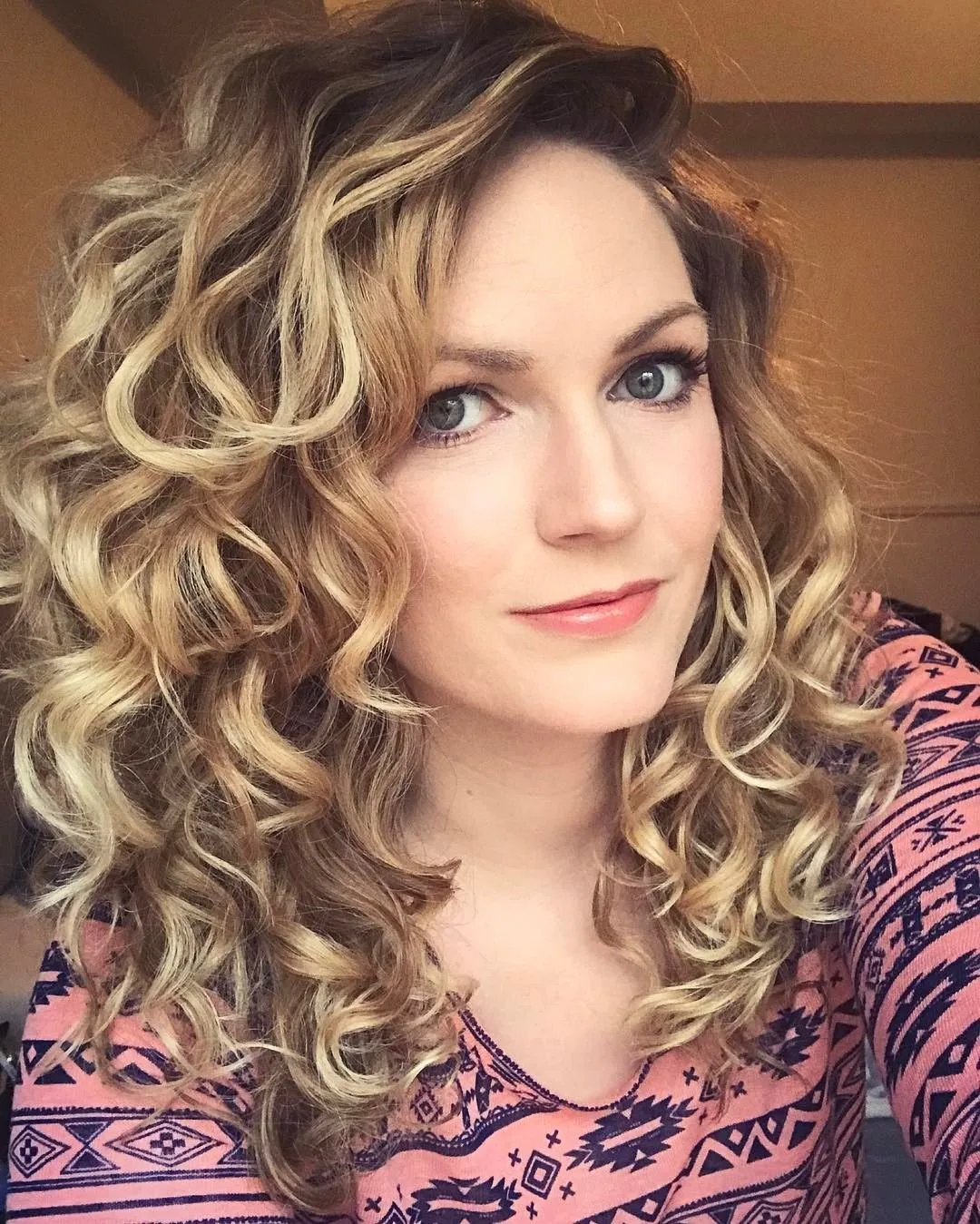
Type 2C hair has strong S-waves with some curls, and it can fall flat at the roots or frizz at the ends. Long layers give it movement without losing wave, and a light gel helps waves clump into defined curls. Scrunching, not brushing, is the key to keeping the wave pattern.
Best for: Wavy-curly (2C) hair that wants defined waves, not frizz.
How to style:
- Apply leave-in and light gel to wet hair.
- Scrunch upward well.
- Diffuse or air-dry.
- Scrunch out the crunch once dry.
What to ask your stylist: Ask for long layers for 2C hair, and whether gel or cream suits your waves better.
26. Curly Cut for 3A Loose Curls
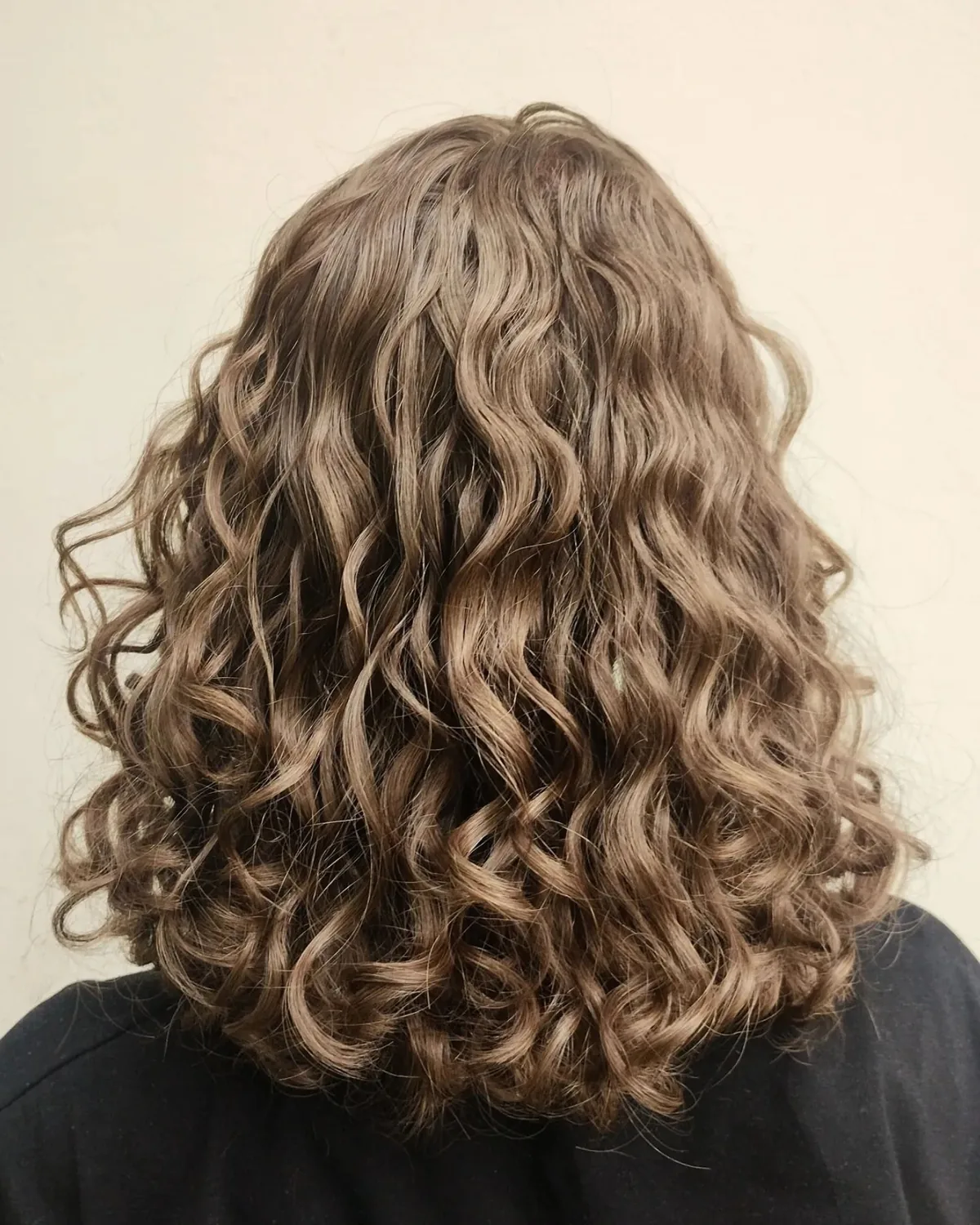
Type 3A curls are large, loose, springy curls, about the width of a piece of chalk. They define easily with cream and a little gel, but they can lose shape if layers are too short. Long to medium layers keep the curls bouncy and full, with a soft, romantic fall.
Best for: Loose curly (3A) hair that wants bouncy, defined curls.
How to style:
- Apply curl cream to wet hair.
- Scrunch and diffuse on low heat.
- Do not touch curls while drying.
- Add oil to the ends once dry.
What to ask your stylist: Ask for medium to long layers for 3A curls, keeping the ends full.
27. Curly Cut for 3B Springy Curls
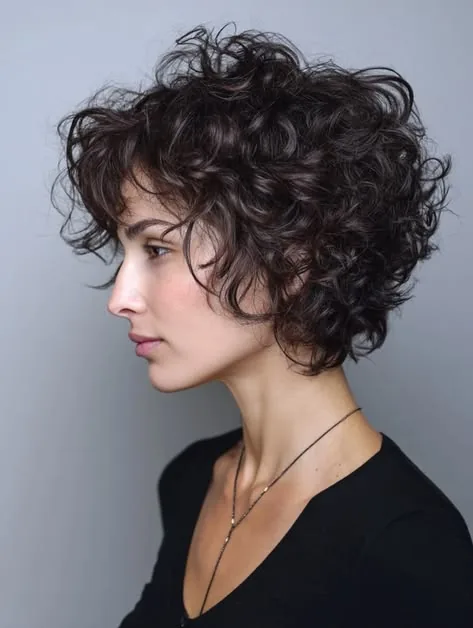
Type 3B curls are springy, tighter curls, about the width of a marker pen. They have great natural volume, but they shrink a lot when dry, so a cut must allow for that spring. Layers help each curl form cleanly, and gel gives hold without crunch if scrunched out once dry.
Best for: Springy curly (3B) hair that wants defined, voluminous curls.
How to style:
- Apply leave-in, cream, then gel to wet hair.
- Scrunch well.
- Diffuse on low heat.
- Scrunch out the crunch once fully dry.
What to ask your stylist: Ask for a curly cut that allows for 3B shrinkage, preferably cut dry or curl by curl.
28. Curly Cut for 3C Tight Curls
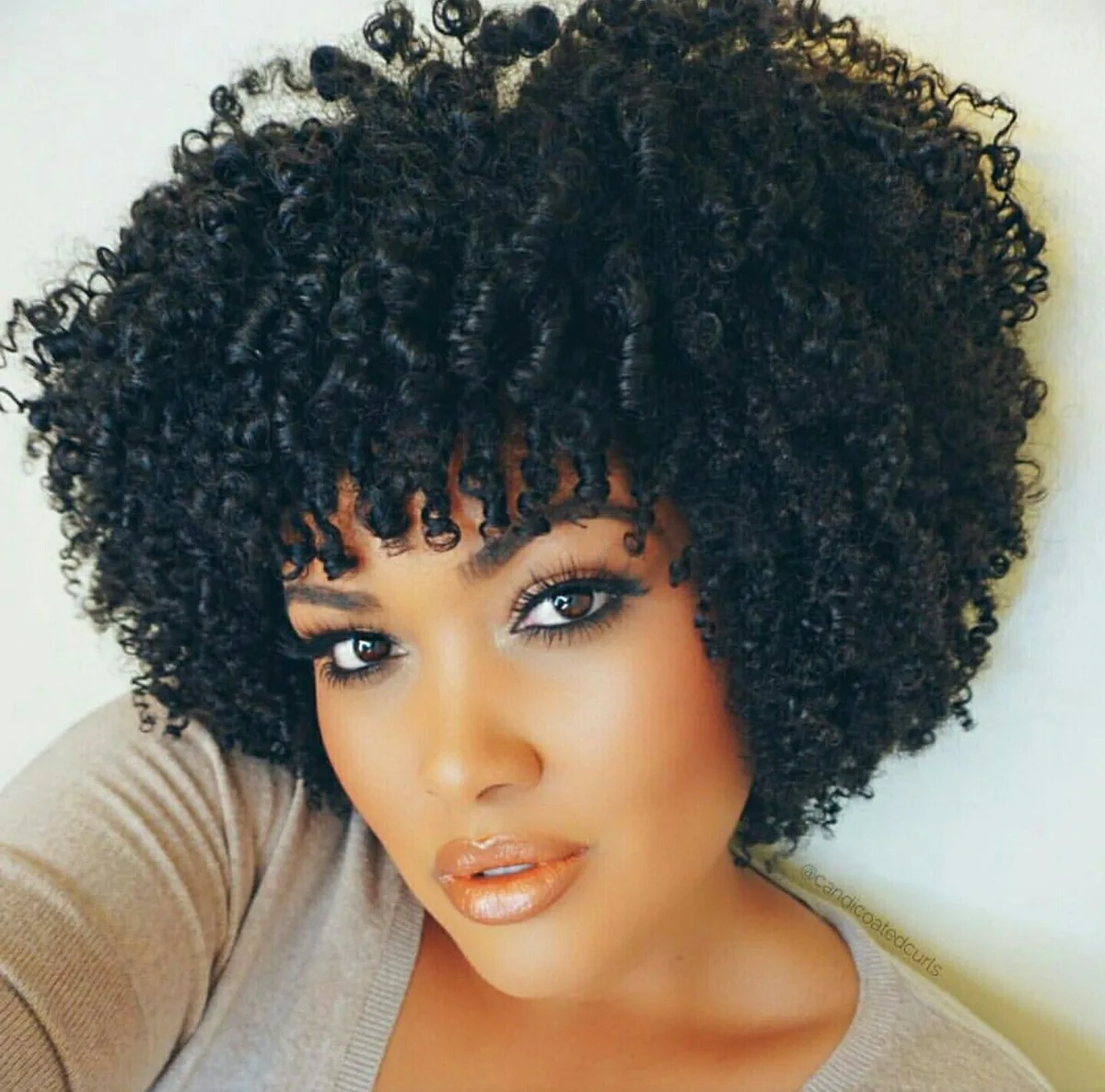
Type 3C curls are tight, dense, springy curls, about the width of a pencil. They need moisture first: leave-in, cream, and gel in that order, applied to soaking-wet hair, help curls clump and stay defined. Layers prevent a heavy triangle and let each curl spring freely.
Best for: Tight curly (3C) hair that wants defined, moisturised curls.
How to style:
- Apply leave-in, cream, then gel to soaking-wet hair.
- Scrunch in sections.
- Diffuse on low heat.
- Separate gently with oiled fingers once dry.
What to ask your stylist: Ask for layers for 3C curls, cut dry if possible, to see the true spring.
29. Curly Cut for 4A Coily Curls
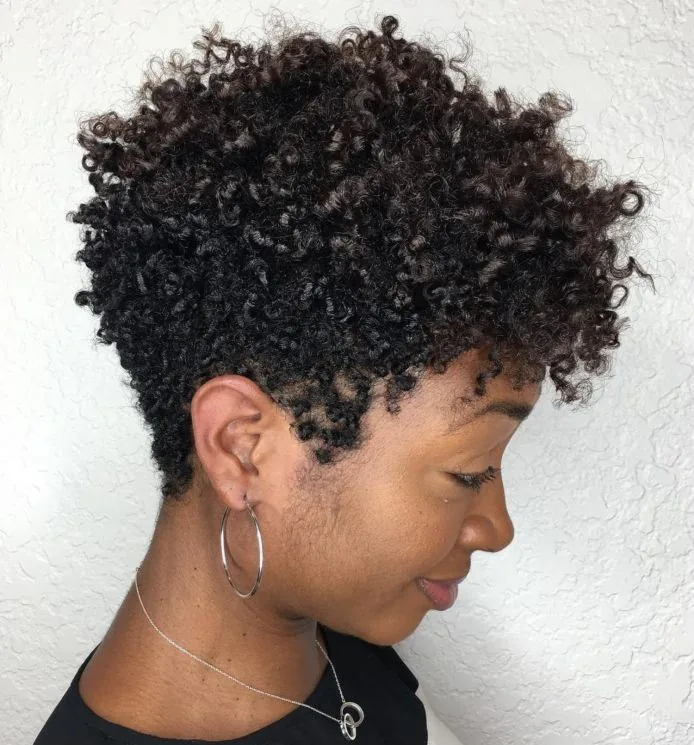
Type 4A hair has tight, well-defined S-shaped coils. It needs plenty of moisture and gentle handling, and it shrinks a lot, so length looks much shorter dry than wet. A shaped cut with layers gives coils room to spring and form a balanced shape, rather than a heavy, shapeless mass.
Best for: Coily (4A) hair that wants a shaped, defined cut.
How to style:
- Apply leave-in and cream to damp hair in sections.
- Twist or scrunch sections gently.
- Dry fully before separating.
- Separate with oiled fingers, do not brush dry.
What to ask your stylist: Ask for a shaped cut for 4A coils, with shrinkage in mind and layers for balance.
30. Curly Cut for 4B and 4C Coils
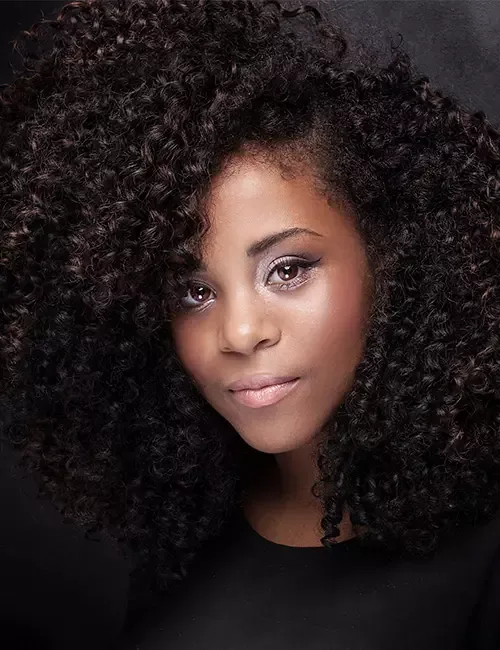
Types 4B and 4C have tight, zig-zag coils with the most shrinkage and the most need for moisture. A good cut focuses on shape, not on straight length, and on keeping the hair healthy with regular trims. Twist-outs, braid-outs, and shaped afros all show off this texture beautifully.
Best for: Coily (4B/4C) hair that wants a healthy, shaped cut.
How to style:
- Moisturise in sections with leave-in and cream.
- Style in twists or braids, or as a shaped afro.
- Dry fully before taking styles down.
- Protect at night with satin.
What to ask your stylist: Ask for a shape-focused cut for 4B/4C coils, and a trim schedule that keeps ends healthy.
31. Balayage on Curly Hair

Balayage on curly hair paints colour by hand through the curls, so lighter pieces fall naturally with the curl pattern. Because curls spring up, colour looks softer and more blended than on straight hair. Keep curls moisturised after colour, as coloured curls dry out faster.
Best for: Curly hair that wants low-maintenance, sun-kissed colour.
How to style:
- Use colour-safe, moisturising shampoo.
- Apply leave-in and cream to wet curls.
- Scrunch and diffuse.
- Deep-condition weekly.
What to ask your stylist: Ask for balayage painted on dry or stretched curls, so the colour placement matches your curl pattern.
32. Face-Framing Highlights on Curls
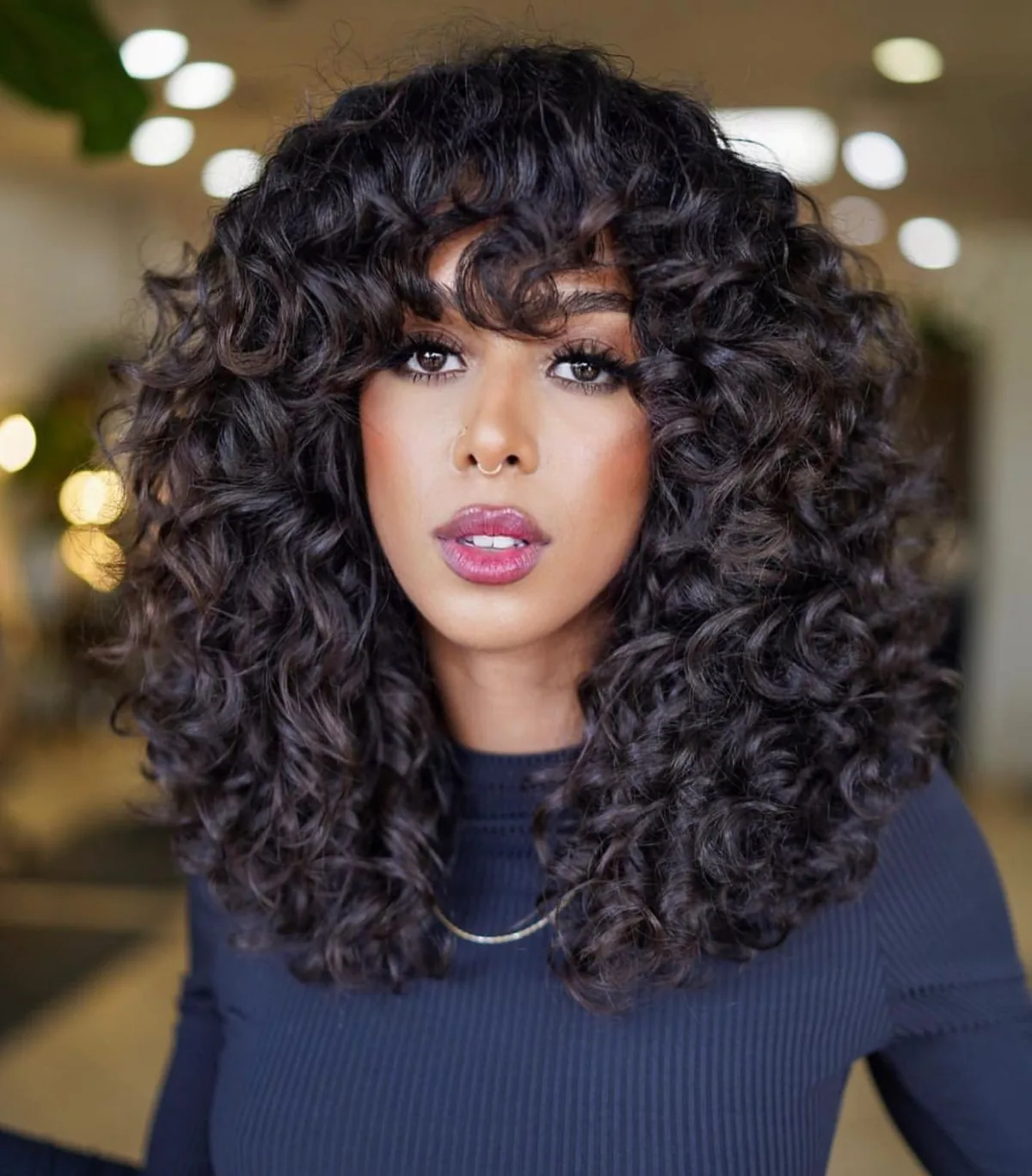
Face-framing highlights brighten the curls around the face in one step, without colouring all of the hair. On curly hair, the lighter curls catch the light as they move, which adds dimension and makes the face look brighter. Keep them soft and blended, not a thick block.
Best for: Curly hair that wants a brighter face without full colour.
How to style:
- Use colour-safe shampoo.
- Apply leave-in and cream to wet curls.
- Scrunch face curls upward.
- Diffuse on low heat.
What to ask your stylist: Ask for soft, blended face-framing highlights that follow your curl pattern.
33. Curly Cut with Curtain Bangs
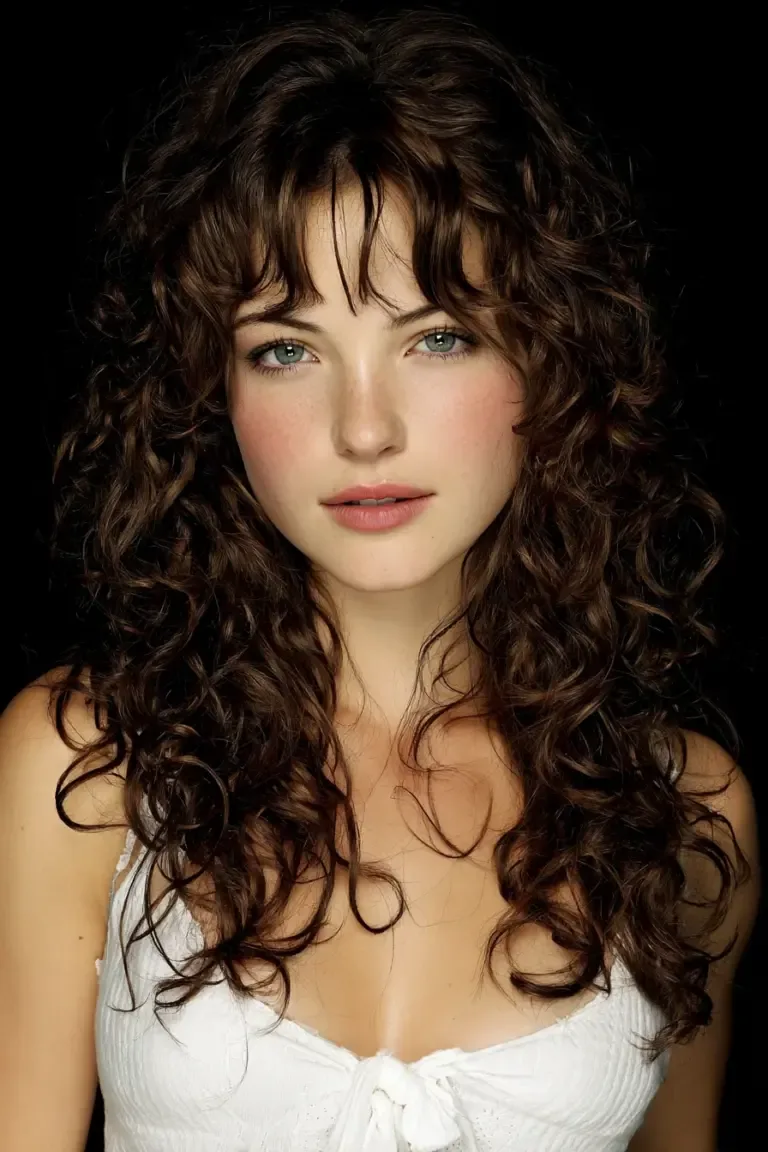
Curly curtain bangs part in the middle and curve to each side, with curls springing softly around the face. They need to be cut long, because curls spring up, and they grow out gracefully into face-framing layers. They are a softer alternative to a straight-across curly fringe.
Best for: Curly hair that wants a fringe that grows out easily.
How to style:
- Apply a little curl cream to the bangs.
- Scrunch bangs to each side.
- Diffuse gently or air-dry.
- Do not pull bangs straight.
What to ask your stylist: Ask for long, curly curtain bangs cut dry, allowing for spring.
34. Wet-Look Defined Curls for Occasions

Wet-look curls use gel to keep curls shiny, defined, and in place all evening, with a sleek, polished finish. It is a great occasion look because it holds its shape, photographs beautifully, and does not need touching up. Use a strong gel, but scrunch lightly at the end if you want softness.
Best for: Curly hair that wants a polished, long-lasting occasion look.
How to style:
- Apply leave-in, then a generous amount of gel to wet hair.
- Scrunch or finger-coil for definition.
- Diffuse gently or air-dry.
- Do not scrunch out all the gel if you want the wet look.
What to ask your stylist: Ask for layers that hold gel definition well, and a gel that suits your curl type.
35. Occasion Curly Updo with Loose Curls
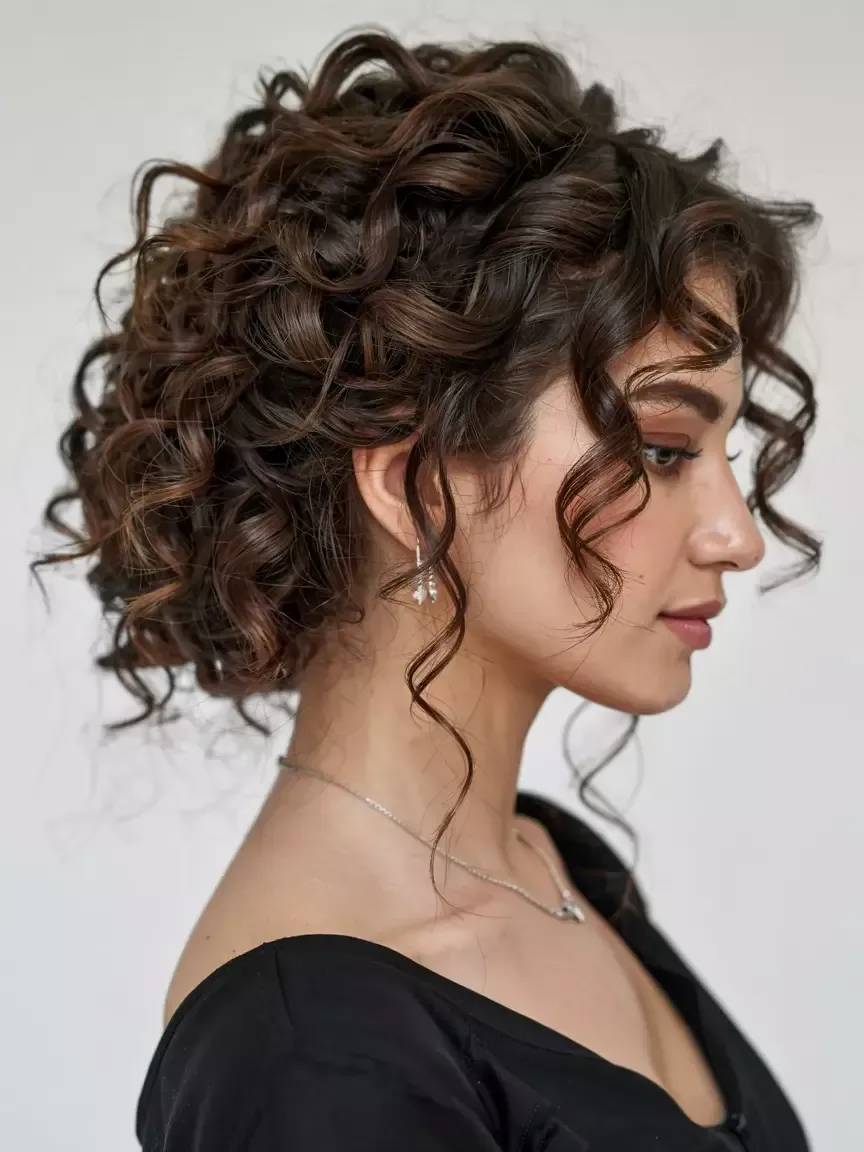
An occasion curly updo pins curls up loosely, leaving soft curls out around the face and at the nape. The key is not to smooth curls away: let their texture be the decoration. Pin loosely, leave curls out, and set lightly, so the updo looks romantic, not stiff.
Best for: Curly hair that wants an updo for weddings and special events.
How to style:
- Diffuse curls as usual for definition.
- Gather curls loosely and pin, leaving texture.
- Pull out soft face curls.
- Set with light spray.
What to ask your stylist: Ask for layers that pin up well, with long face curls for an occasion updo.
Hairstyles to Be Careful With (and How to Soften Them)
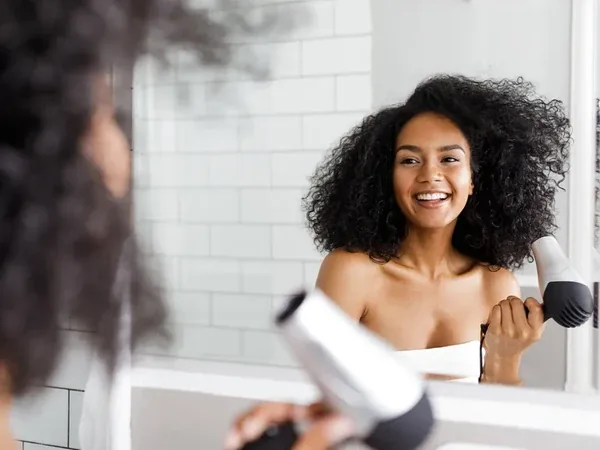
There are no banned hairstyles for curly hair, only versions that need softening. If you love one of these, the tweak usually makes it work.
- One-length cut with no layers: Curls can form a heavy triangle. Tweak: add long layers so curls spring in stages.
- Brushing dry curls for volume: Brushing breaks clumps and causes frizz. Tweak: pick roots lightly once dry, instead of brushing.
- Short bangs cut wet: Curls spring up much shorter dry. Tweak: cut curly bangs long and dry, allowing for shrinkage.
- Very tight, smoothed-back updo: Pulling curls tight loses texture. Tweak: gather loosely and leave curls out around the face.
- Heavy thinning all over: Thinning can make curls wispy and frizzy. Tweak: use internal layers for bulk, not thinning shears all over.
Best Picks by Goal
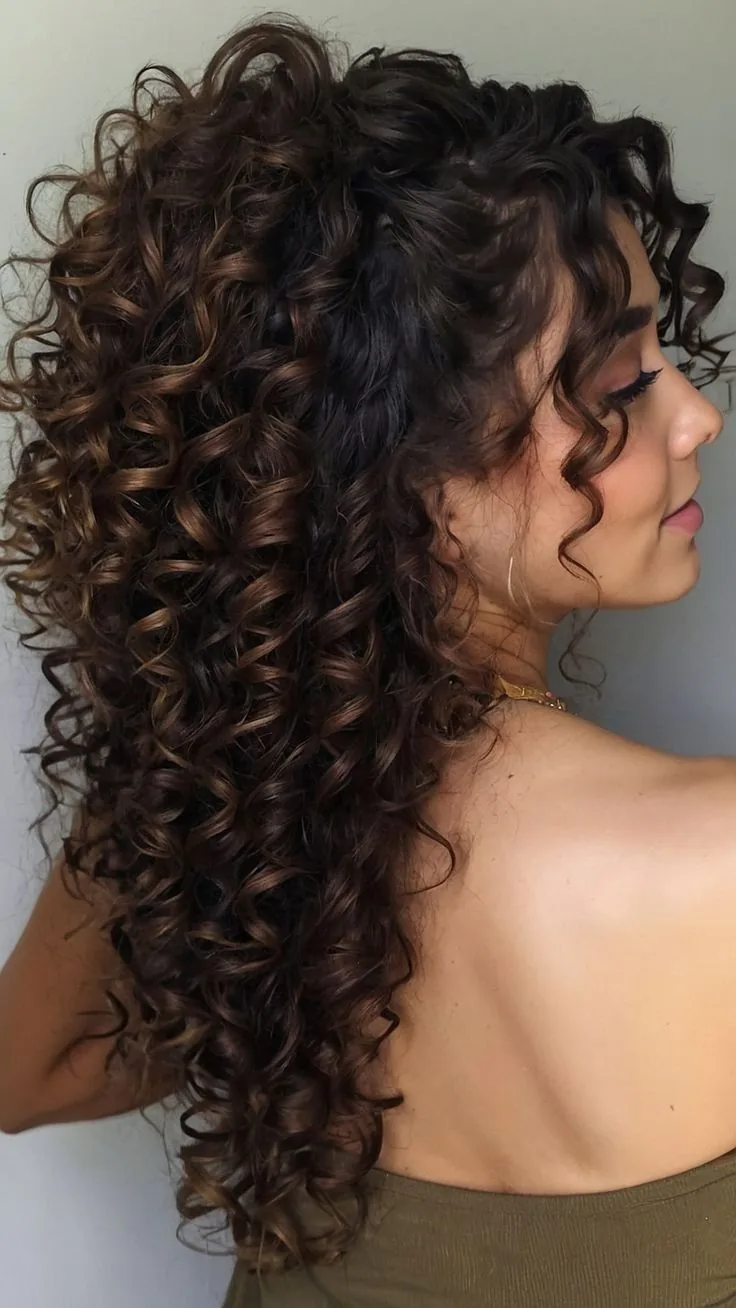
- Most versatile: Long layers for defined curls, curly lob, shoulder-length curly cut with face framing.
- Most defined: Finger-coiled defined curls, wash-and-go defined curls, diffused bouncy curls.
- Short and confident: Curly bob with rounded volume, curly pixie with a long top, tapered curly cut.
- Low maintenance: Wash-and-go defined curls, curly shag with crown layers, high curly ponytail.
- Stretched, less shrinkage: Twist-out curls, braid-out waves and curls.
- Fine curls: Layered curls for fine curly hair, curly lob.
- Occasions: Occasion curly updo with loose curls, wet-look defined curls, low curly bun.
Styling Routine
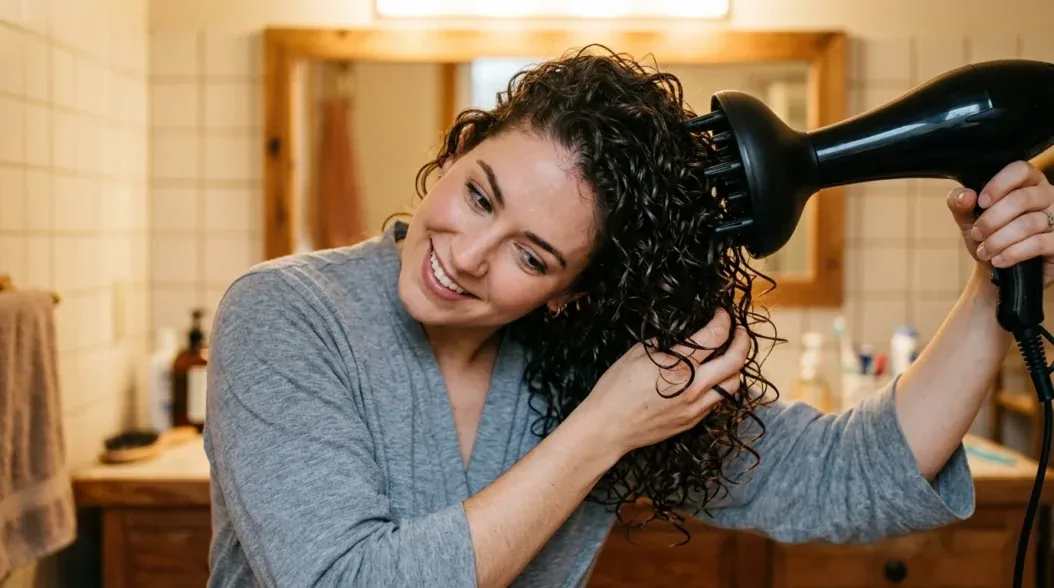
Start soaking wet: Wash, condition, and keep hair soaking wet. Apply leave-in, then cream, then gel, raking or scrunching each product through in sections.
Scrunch to clump: Scrunch upward to encourage curl clumps. If a section is frizzy, finger-coil just that section, rather than reworking all of your hair.
Dry without touching: Diffuse on low heat, holding still, or air-dry. Do not touch curls while they dry, or clumps will break apart into frizz.
Separate once dry: Once hair is fully dry, scrunch out any gel crunch, then separate curls gently with oiled fingers if you want more volume. Protect curls at night with a satin bonnet or pineapple.
What to Ask Your Stylist: Checklist
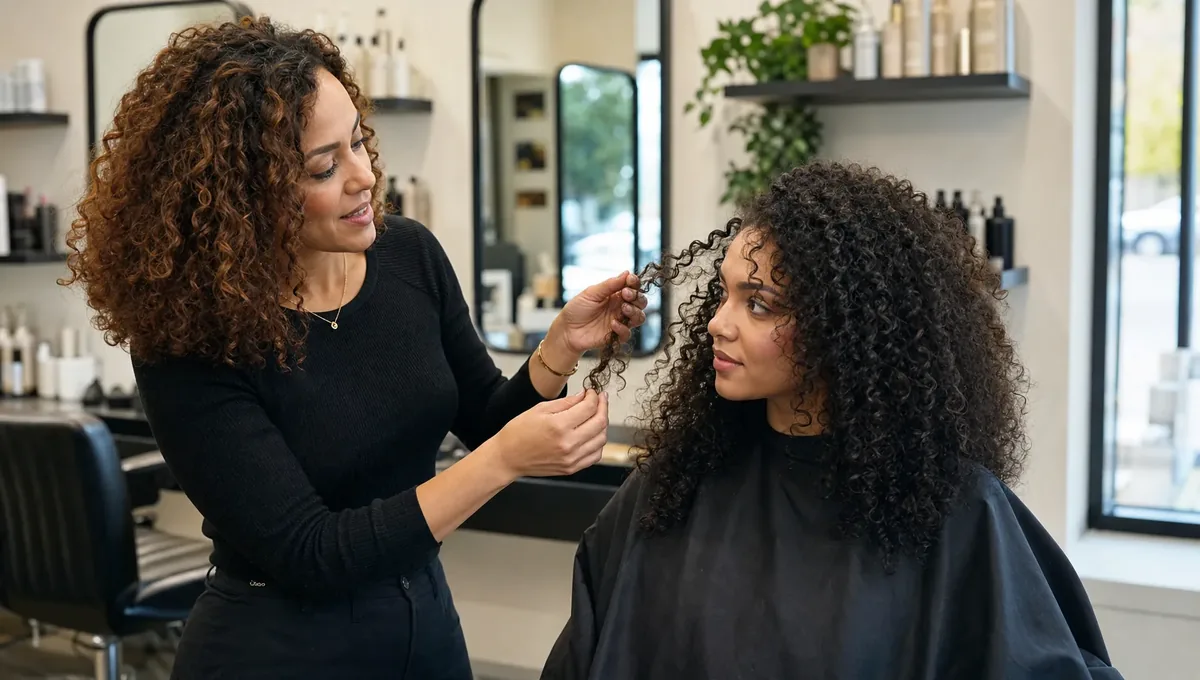
- Show 2 to 3 photos of the exact curl pattern and length you want, on curly hair like yours if possible.
- Say your curl type if you know it, from 2C to 4C, and how much shrinkage you usually get.
- Ask whether the cut will be dry, curl by curl, or wet, and how shrinkage is accounted for.
- Ask about layers for your curl type, especially if your hair is fine, thick, or very coily.
- Ask about bangs: cut long and dry, rather than cut wet to the length you want dry.
- Ask how the cut will look on wash day, second day, and tied up, not just freshly styled.
- Ask how often to trim to keep the shape, usually every 8 to 12 weeks for curly cuts, and 4 to 6 weeks for pixies.
- Ask what products suit your curl type: cream, gel, mousse, or a combination, and how much to use.
Frequently Asked Questions (FAQs)
What is the best hairstyle for curly hair?
Long layers for defined curls are the safest best choice for curly hair. Layers let each curl spring and clump on its own, instead of forming a heavy triangle, and they suit most curl types from wavy-curly to coily.
How do I reduce frizz in curly hair?
Apply product to soaking-wet hair, scrunch to clump curls, and do not touch curls while they dry. Do not brush dry curls. Diffuse on low heat, holding still, and scrunch out any gel crunch only once hair is fully dry.
Should curly hair be cut wet or dry?
Many stylists prefer a dry or curl-by-curl cut for curly hair, because it shows the true spring and shrinkage of each curl. A wet cut can work too, if the stylist allows generously for shrinkage, especially for bangs.
Can curly hair have bangs?
Yes, curly hair can have bangs, and they look wonderful when cut long and dry. Curly bangs and curly curtain bangs both work, because they are allowed to spring up naturally. Avoid cutting curly bangs wet to the exact dry length you want.
What is the best routine for wash-and-go curls?
Wash, keep hair soaking wet, apply leave-in, then curl cream or gel, scrunch upward, then diffuse on low heat or air-dry without touching. Once fully dry, scrunch out the crunch. That routine gives defined, everyday curls with no extra heat.
How often should I wash curly hair?
Most curly hair does well washed 1 to 3 times a week, depending on curl type, scalp, and lifestyle. Between washes, refresh curls with water and a little leave-in, rather than washing again, which can dry curls out.
What is the difference between a twist-out and a braid-out?
A twist-out uses two-strand twists and gives stretched, defined curls. A braid-out uses braids and gives softer, wavier, more stretched curls. Larger sections give looser results in both, and smaller sections give tighter, more defined results.
How do I protect curly hair at night?
Gather curls loosely high on the head in a pineapple, or wear a satin bonnet or scarf, and sleep on a satin pillowcase. That reduces friction, frizz, and flattened curls, so second-day curls need only a light refresh.
What hairstyle suits fine curly hair?
Layered curls for fine curly hair suit fine curls best. Light, long layers add body without thinning the ends, and a fairly full perimeter keeps curls looking thick. Use light products, so fine curls are not weighed down.
How often should I trim curly hair?
Every 8 to 12 weeks is a good rhythm for most curly cuts, to keep the shape and remove split ends. Pixies and tapered cuts need a trim every 4 to 6 weeks. If ends feel dry or tangly, a trim is usually overdue.
Conclusion
A hairstyle for curly hair is not about fighting your curls. It is about choosing layers, a routine, and a cut that lets each curl form, spring, and hold its shape, with frizz kept low by gentle handling.
Pick the style from this list that fits your curl type, your daily routine, and how much styling time you have each morning. Save a photo, take the what-to-ask line for that style to your stylist, and enjoy curls that feel like you every day, not just on wash day.
Which of these 35 hairstyles for curly hair will you try next? Tell us in the comments, and share this guide with a friend who has curly hair and is thinking about a new cut.