Spins, Jumps and Rink Lights: 33 Hairstyles for Figure Skating That Stay Flawless Through Every Programme
Figure skating asks more of a hairstyle than almost any other sport. One programme holds fast spins, high jumps, deep edges and a landing that has to look effortless, all under bright rink lights and in front of judges who notice every detail. A loose strand across the face is not just untidy, it can cost a skater focus at the worst possible moment. That is why hairstyles for figure skating are built for hold first and beauty second, and why the best ones manage to deliver both.
A good skating hairstyle does three things at once. It locks the hair flat so nothing moves through a spin or a jump, it keeps the front layers clear of the eyes so the skater can spot landings, and it finishes the costume instead of fighting it. Buns, braids and slicked ponytails do this best, because they anchor the hair at several points and sit close to the head, where they cannot catch the wind of a fast glide.
This guide starts with the rink-side thinking: how cold rink air affects hair, how to build a style that survives spins and jumps, how to match hair to a costume, and what works for each hair length. Then it gives you 33 styles for competition and practice, for short, medium and long hair and every texture, from a classic competition bun to a ribbon-tied ponytail that catches the light. Pick one, practise it once at home, and step onto the ice knowing your hair is already sorted.
Cold Rink Air: What It Does to Your Hair
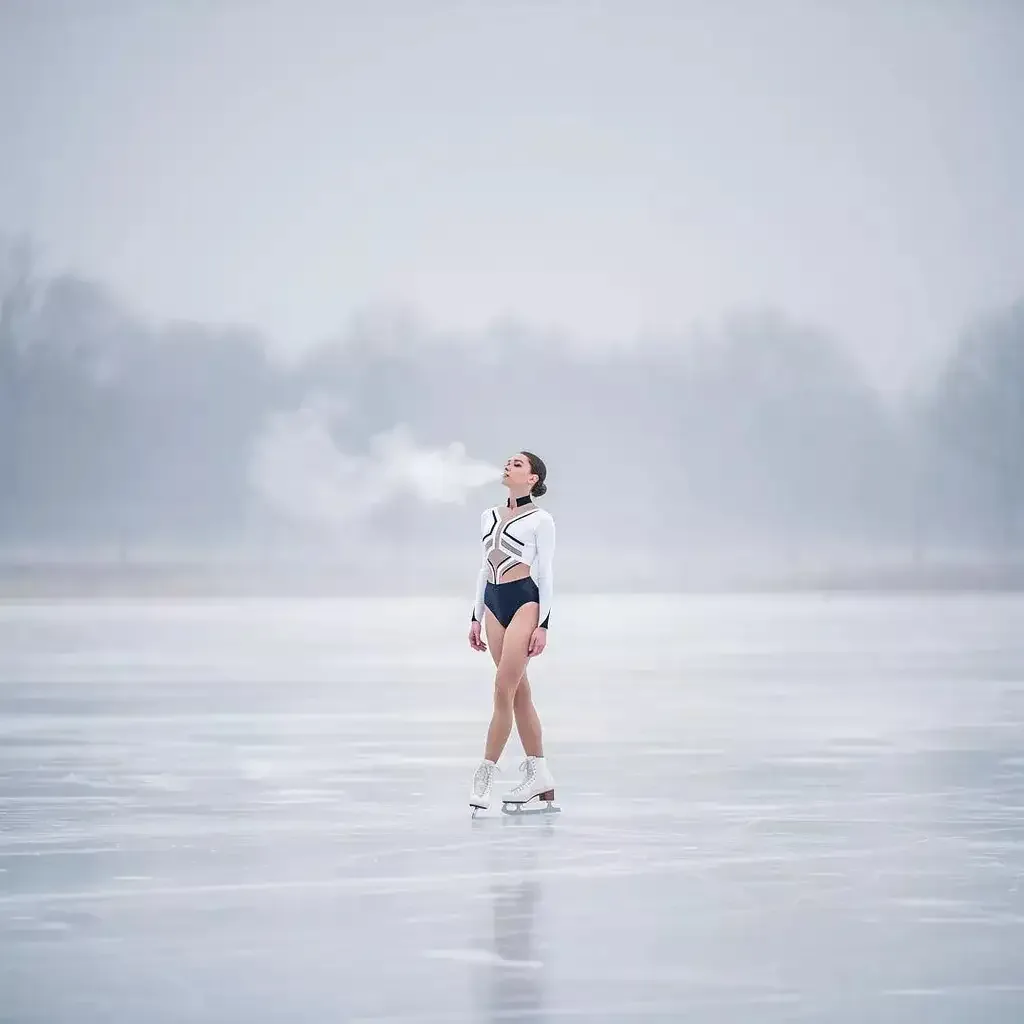
Cold, dry rink air pulls moisture out of hair, which is why skating hair often feels rough and full of static by the end of a programme. Add a warm-up jacket and a wool hat on the way in, and friction lifts the cuticle further, so hair that looked smooth at home can look fuzzy and flat by the time the music starts.
Best for: everyone heading to a rink, especially fine or dry hair, and anyone who warms up in a hat before skating. If your hair goes static the moment a hat comes off, this is your starting point.
How to style: start with a light leave-in conditioner or a drop of hair oil on the lengths before you style, and keep the roots clean so the style grips. A little smoothing cream on the hairline tames flyaways without weighing the hair down.
What to ask: ask your stylist for a cut that holds its shape under a hat, with layers that tuck behind the ears, so the cold air and the warm-up jacket do not undo the style before you skate.
Spins and Jumps: Building Hold That Survives Rotation
A spin turns a loose style into a mess in seconds, and a jump landing shakes anything that is only half pinned. The styles that survive both are the ones anchored at several points: a braid that starts at the hairline, a bun pinned from four sides, or a ponytail with a braid running into it. Test every competition style with a few fast turns at home before you trust it on the ice.
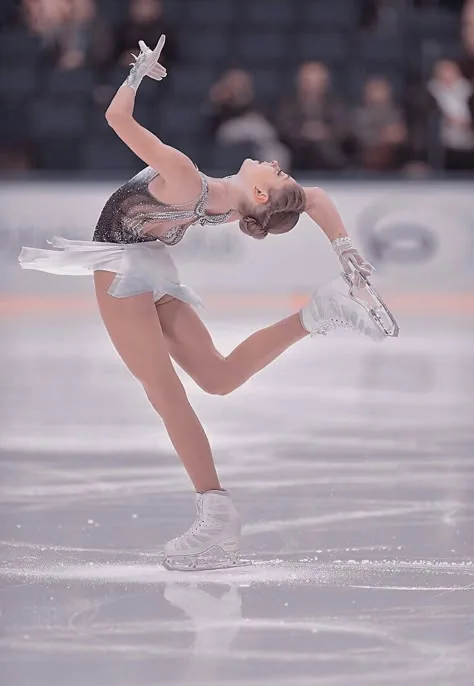
Best for: competition skaters, especially anyone skating a programme with fast spins, a combination jump or a flying spin. If your hair has ever come loose mid-spin, the fix is anchoring, not more hairspray.
How to style: braid the hair first, then gather it into a bun or ponytail, so the braid does the holding and the bun does the finishing. Pin the bun from four sides with bobby pins crossed in an X, and finish with a firm-hold spray.
What to ask: ask your stylist for a style that is pinned at the hairline, the crown and the nape, so a spin cannot pull it loose from any one direction.
Costumes and Hairpieces: Matching Hair to the Dress
A figure skating costume is part of the performance, and the hair has to finish it. A sparkly dress calls for a clean, polished bun that lets the costume shine, while a soft, romantic programme suits a softer style with a few face-framing pieces. Hairpieces, ribbons and crystals should match the costume colours, never fight them, and every accessory must be pinned so securely that a jump cannot shake it free.
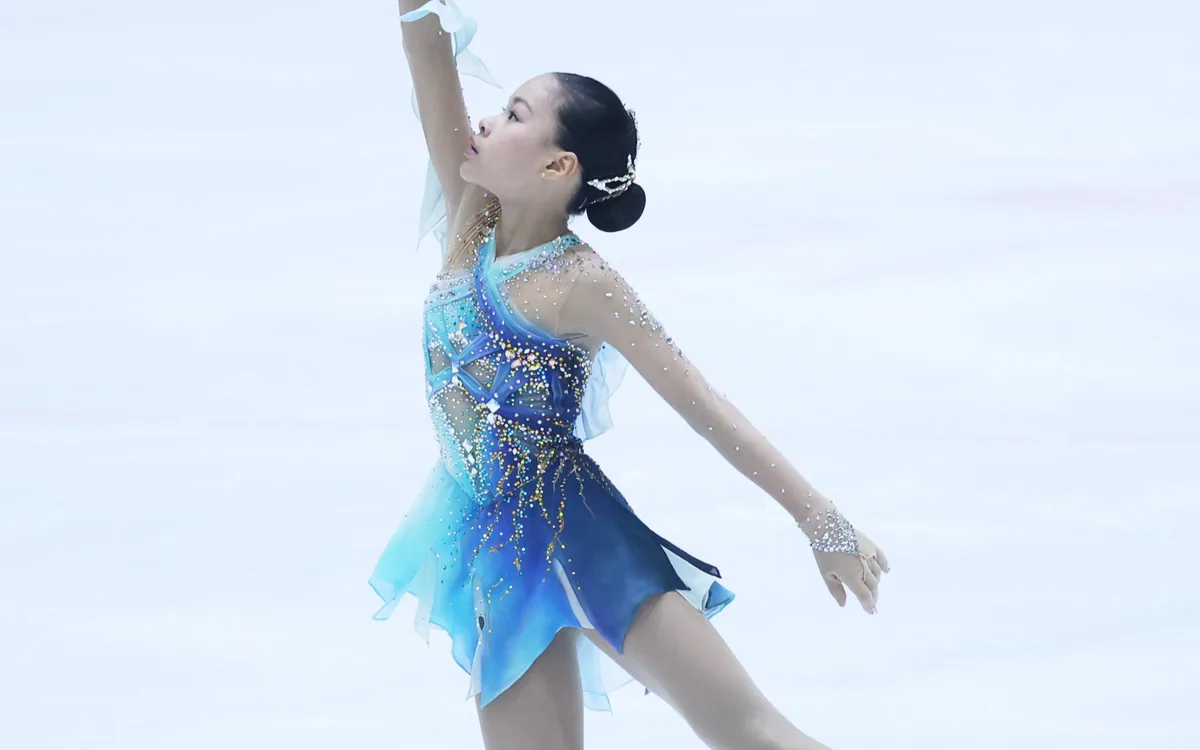
Best for: competition skaters and anyone skating a showcase or a test, especially when the costume has crystals, sequins or a strong colour. One matching accessory beats five clashing ones.
How to style: choose the accessory after the costume, not before, and pin it into the bun or braid itself, never just onto loose hair. Test it with a few jumps at home so you know it will not move.
What to ask: ask your stylist which accessory suits your costume: a crystal comb for a glittering dress, a ribbon for a classic programme, or nothing at all for a clean, modern look.
Hair by Length: Short, Medium and Long on the Ice
Hair length decides what the ice will do to your style. Short hair is the easiest: it cannot fall into your eyes, needs almost no anchoring, and a headband or a little gel is usually all it takes. Medium hair needs a low ponytail or a braid to stop the ends flipping out under a collar. Long hair needs the most anchoring, because it swings, catches on costume straps and can fly across the face in a spin.
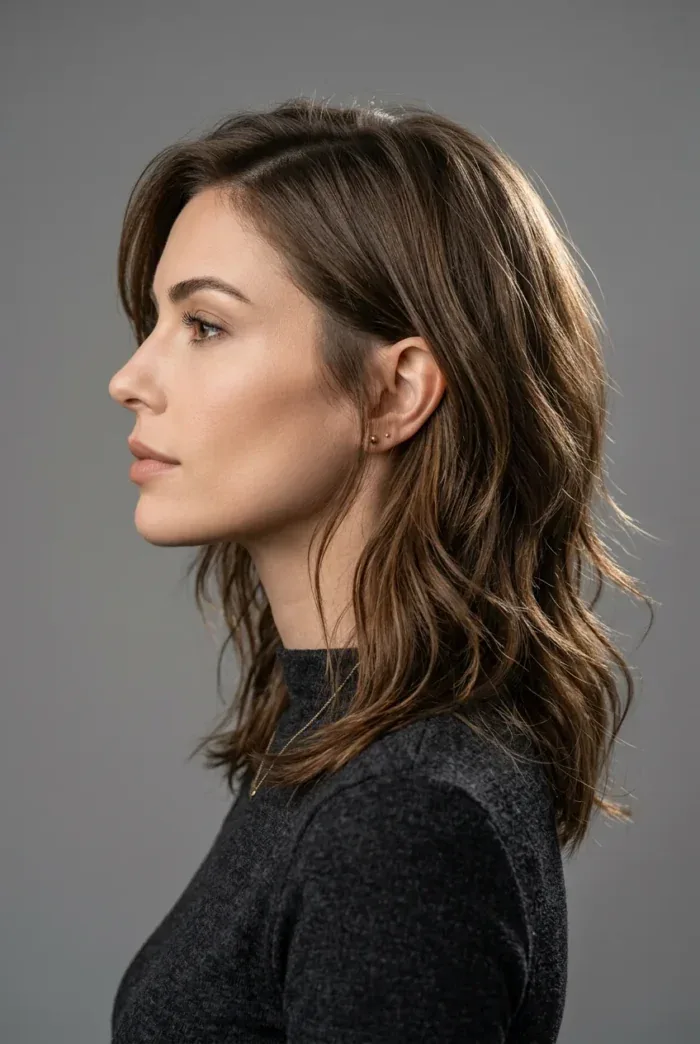
Best for: short hair, which suits a headband and a little texture spray; medium hair, which suits low ponytails and braids; and long hair, which suits braids and buns that keep every length contained.
How to style: short hair: add a headband and smooth the sides. Medium hair: gather it low and pin the ends. Long hair: braid it first, then bun or ponytail the braid so nothing swings free.
What to ask: ask your stylist for a length-appropriate plan: a headband trick for a pixie, a low braid for a lob, or a full braid-and-bun for long hair.
Braids vs Buns vs Ponytails on the Ice
Braids, buns and ponytails each solve a different skating problem. Braids are the most secure: they lock the hair flat and cannot swing loose in a spin. Buns are the neatest and most classic for competition, because they sit low and flat and never move. Ponytails are the fastest and show the most movement, but they swing, so they work best when they sit low or when a braid runs into them.
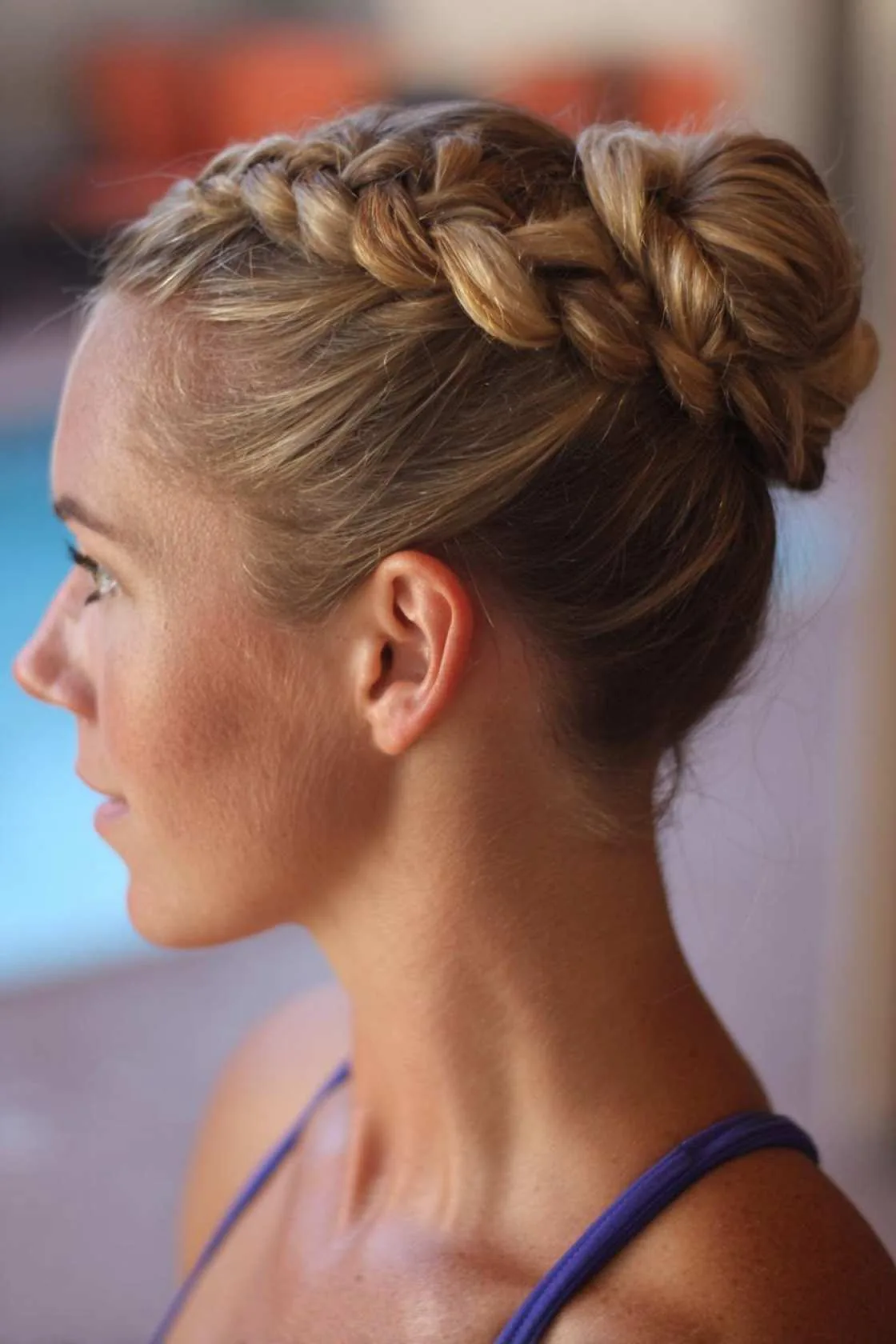
Best for: braids for competition and long programmes, buns for a polished, judge-ready look, and ponytails for practice and softer, lyrical programmes. Many of the best skating styles combine two of them.
How to style: choose a braid if you need all-programme hold, a bun if you need a classic competition finish, and a ponytail if you need movement. For the best of both, braid into a ponytail or a bun.
What to ask: ask your stylist which anchor suits your hair type: braids for thick hair that slips out of elastics, buns for fine hair that needs pinning, ponytails for a fast, flowing look.
Practice vs Competition: Picking the Right Style
Practice and competition need different things from your hair. In practice you need a style that is quick, comfortable and easy to redo between run-throughs, because you will be stopping, starting and trying the same jump ten times. In competition you need a style that cannot move at all, that photographs beautifully under the lights and that you have already tested through the whole programme.
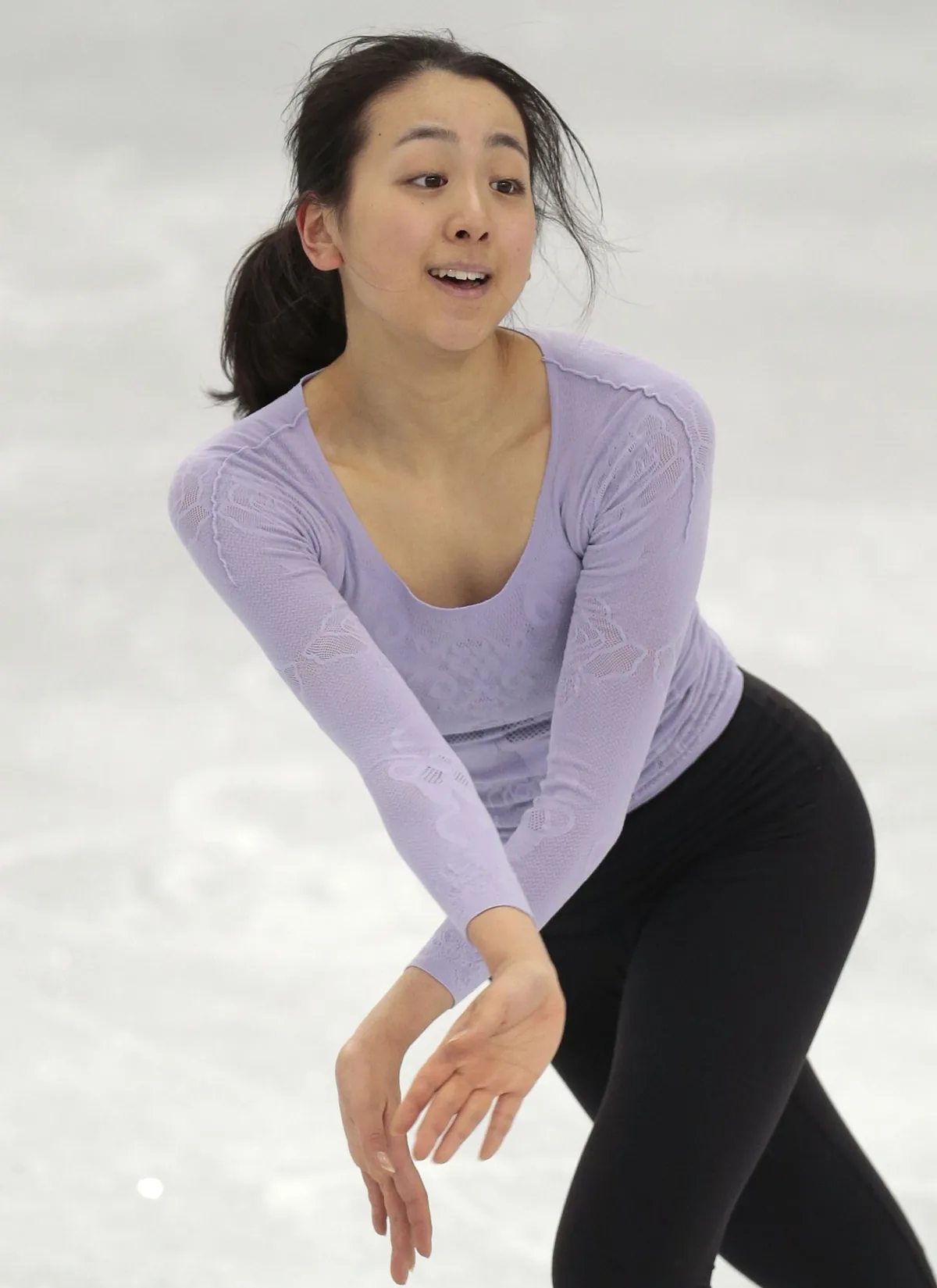
Best for: practice skaters, who should choose quick braids, low ponytails and messy buns, and competition skaters, who should choose locked-down buns and braids tested through the full programme. Pick for the session you are actually skating.
How to style: if you are practising, braid or ponytail everything and keep spare elastics in your pocket. If you are competing, use your practised style, pin it from four sides, and do a full run-through before you leave the house.
What to ask: ask your stylist which version suits your day: a quick braid for practice, or a polished bun for competition.
Judges’ Polish: Clean Lines That Read From the Stands
Judges watch from a distance, and from the stands the details that read are the clean ones: a smooth hairline, a neat part, a bun that sits exactly where it should. Flyaways, a crooked part or a bun sliding to one side are visible from rows away, even if they feel tiny up close. The polish is not vanity, it is part of the performance, and it tells the judges the skater is in control.
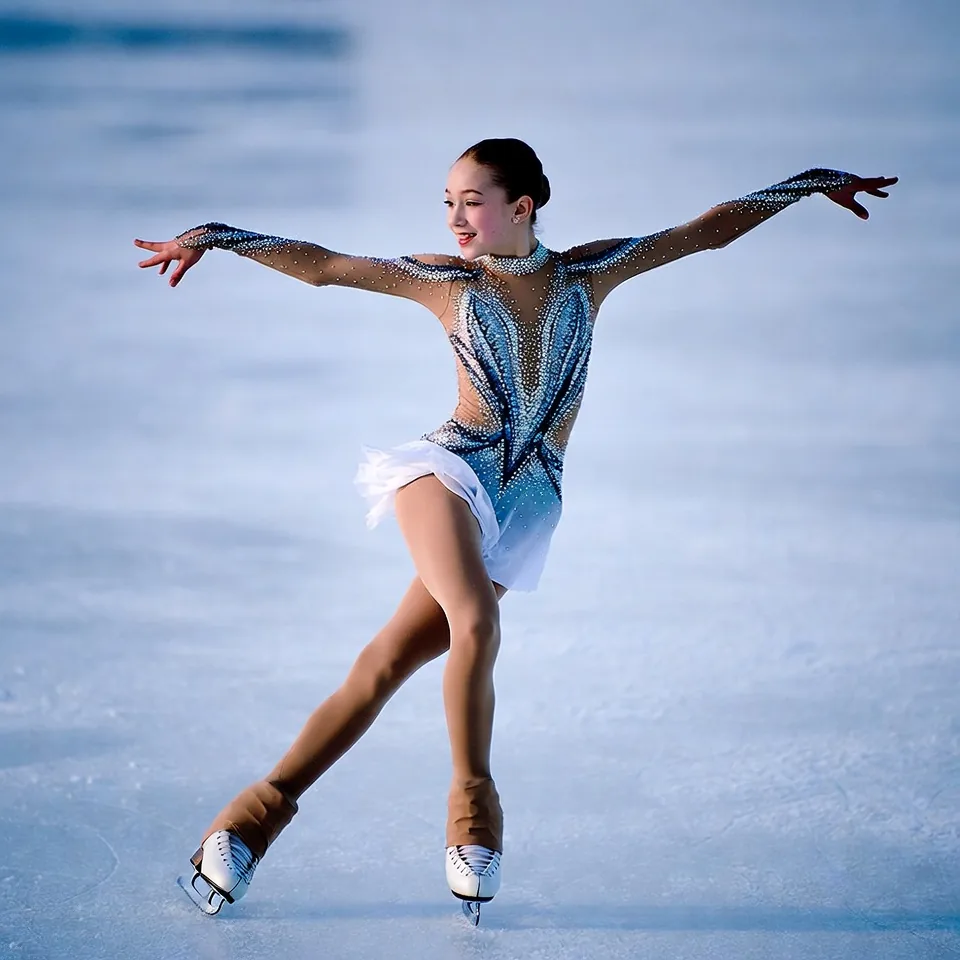
Best for: competition skaters and anyone taking a test or skating a showcase, especially under bright rink lights. If your programme is polished, your hair should be too.
How to style: smooth gel along the hairline with a toothbrush or a small brush, check the part in a mirror from the back, and pin every flyaway before you step on the ice. A light mist of spray from a handspan away sets it without stiffness.
What to ask: ask your stylist for a gel finish that holds through a whole programme but brushes out easily, so you are not fighting residue the next morning.
Between Programmes: Quick Fixes and the Post-Skate Refresh
You get a short break between programmes, and that is all the time you need to rescue your hair. The most common problems are a loosened bun, a flat hat dent from the warm-up and flyaways from static. A small kit in your skate bag fixes all three: two spare elastics, three bobby pins and a travel-size smoothing cream.
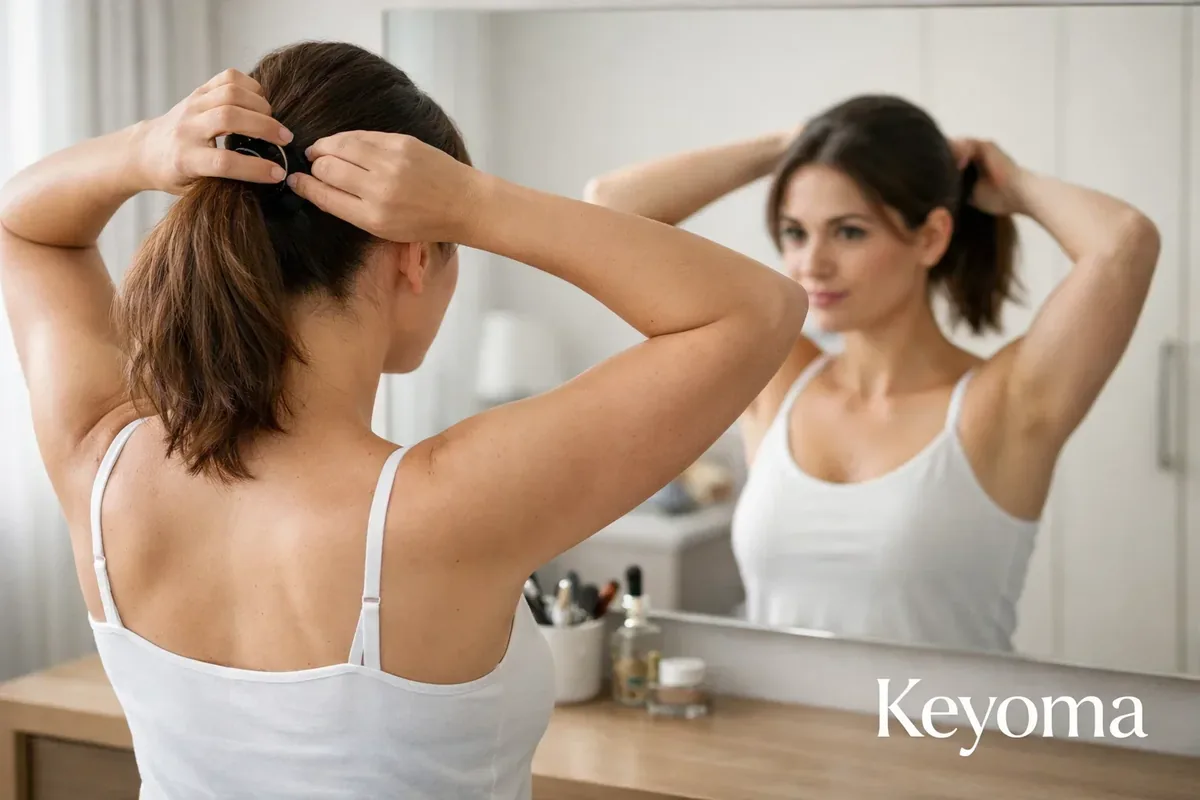
Best for: everyone at a competition or a long practice session, especially skaters who warm up in a hat. Keep the kit in a skate-bag pocket so you are not digging through a bag in the dark.
How to style: between programmes, re-tighten the bun at the base, smooth the hairline with a little cream, and re-pin any loose strands. After skating, shake the hair out at the roots, add a little dry shampoo, and let it fall naturally.
What to ask: ask your stylist for a style that survives a quick re-tighten, with no pins hidden where they will dig in under a headband.
Classic Competition Bun
The classic competition bun is the style judges expect and skaters trust. Every strand is smoothed back, the bun sits low and neat at the crown or nape, and nothing moves through spins, jumps or a fast footwork sequence. It is simple, elegant and completely reliable, which is why it has been the competition standard for generations.
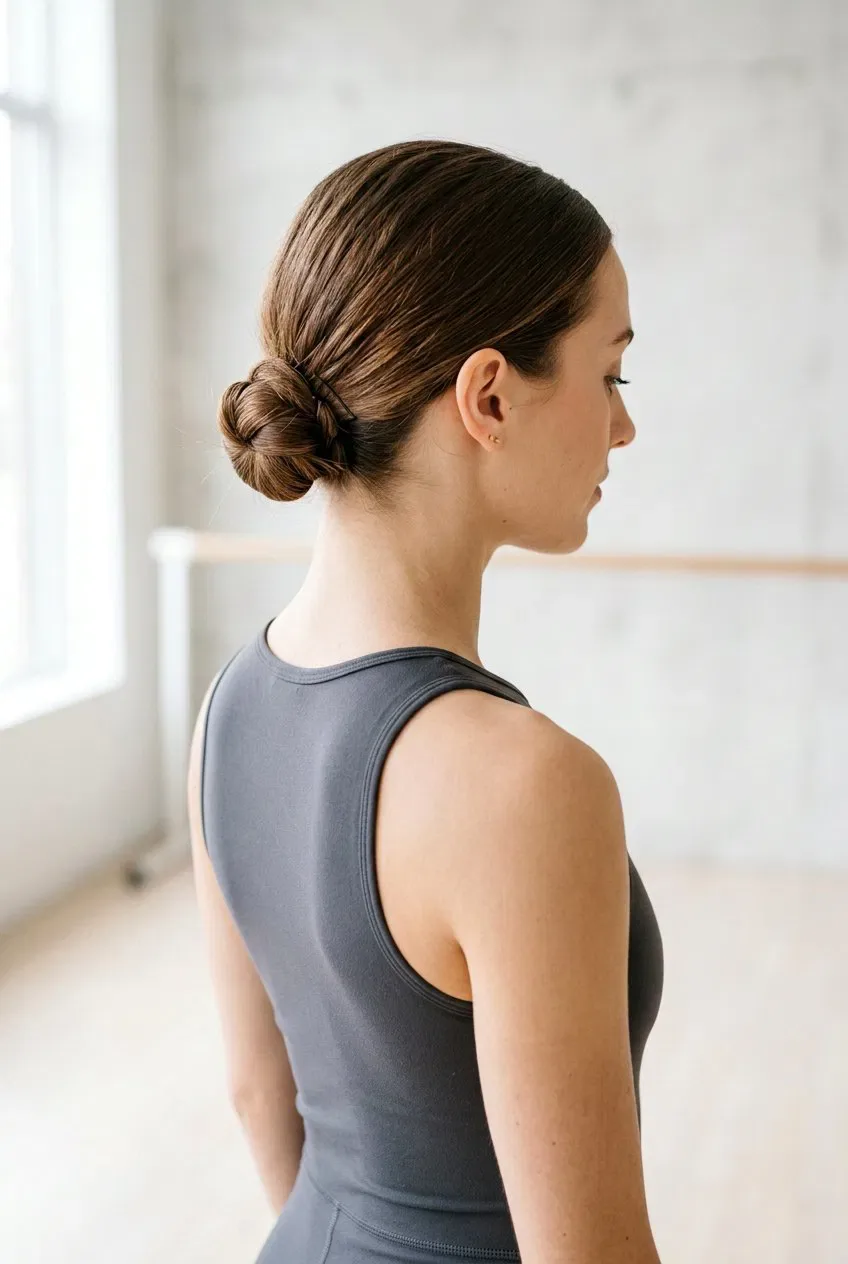
Best for: competition skaters of every level, and anyone who wants a clean, judge-ready finish. It suits medium to long hair best.
How to style: brush the hair back smoothly, gather it into a low ponytail, twist it into a bun and pin it from four sides. Smooth the hairline with gel and finish with a firm spray.
Time and cost: 5 minutes, plus a hairnet, bobby pins and gel you probably already own.
Braided Bun
A braided bun gives you the hold of a braid and the polish of a bun in one style. The braid locks the front flat, the bun keeps the ends away, and everything sits close to the head so a spin cannot pull it loose. It photographs beautifully from the back, where the braid detail shows.
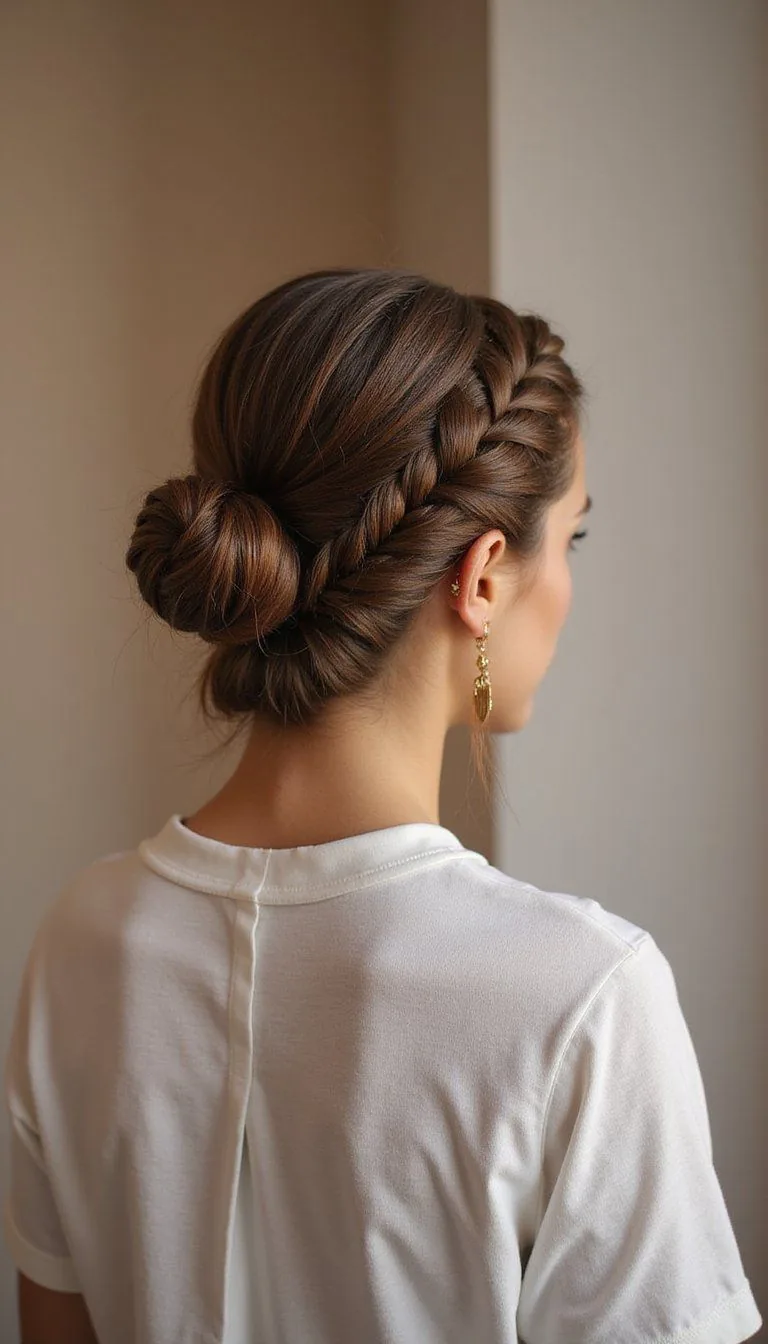
Best for: competition skaters with long hair, and anyone whose bun usually slips. It is one of the most secure styles in this guide.
How to style: braid the hair from the hairline to the nape, then coil the braid into a bun and pin it flat. Smooth the hairline with gel.
Time and cost: 10 minutes, plus elastics, pins and a little gel.
French Braid Into a Low Bun
A French braid into a low bun starts tight at the hairline and ends in a neat bun at the nape, so the whole style is anchored from the very first strand. It keeps the front perfectly flat through spins and looks graceful from every angle, which makes it a favourite for lyrical programmes.
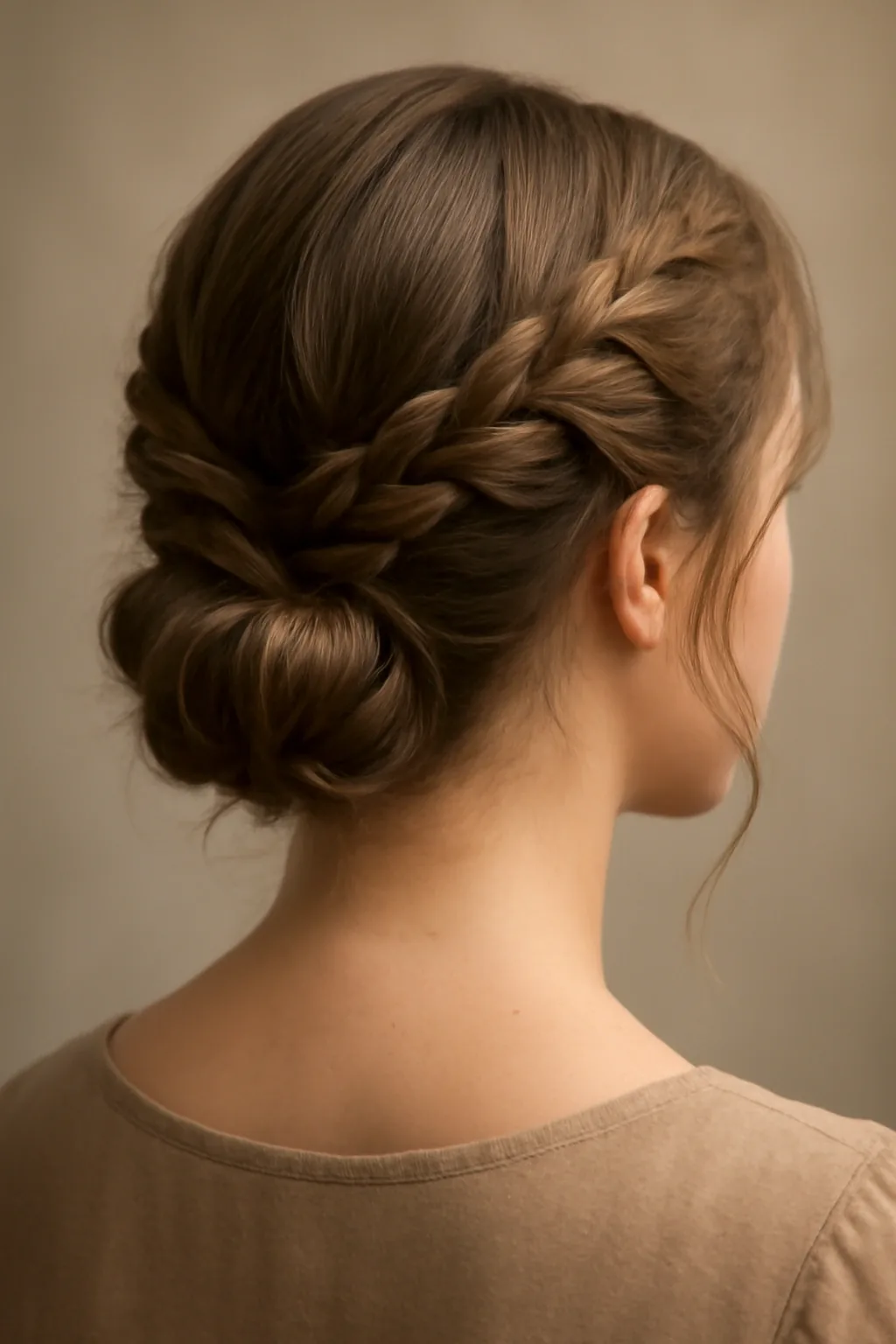
Best for: skaters with medium to long hair who want a romantic, polished look. It suits straight and wavy hair best.
How to style: French-braid from the hairline to the nape, gather the remaining hair into a bun and pin it. Loosen the braid slightly for softness if you like.
Time and cost: 10 to 15 minutes, plus a small elastic and bobby pins.
Double Dutch Braids
Double Dutch braids are the most locked-down style a skater can wear. Two braids run from the hairline to the nape, lying flat against the head, and they cannot swing, slip or fall into the eyes. They work under any costume and survive the longest, hardest programmes.
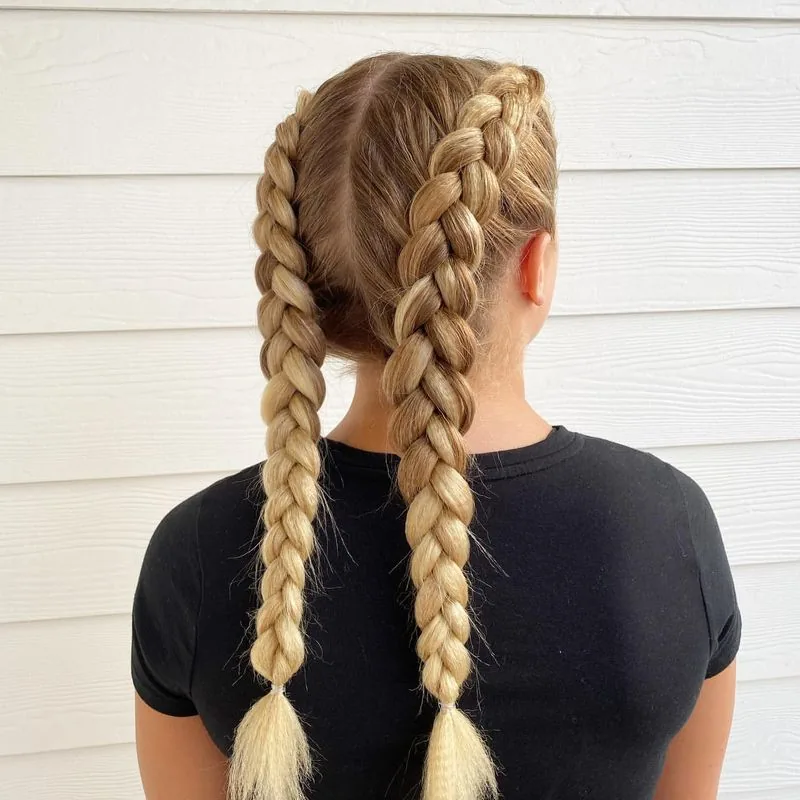
Best for: competition skaters, practice sessions and anyone with thick or heavy hair. They are the best choice for a programme full of spins.
How to style: part the hair down the middle, Dutch-braid each side from the hairline to the nape, and secure the ends with small elastics. Tuck the ends under and pin them.
Time and cost: 15 minutes, plus two small elastics and pins.
Slicked-Back High Ponytail
A slicked-back high ponytail is the dramatic skating look: the hair is pulled tight and high, the ponytail swings with the music, and the clean hairline frames the face under the lights. It suits powerful, fast programmes where the hair becomes part of the movement.
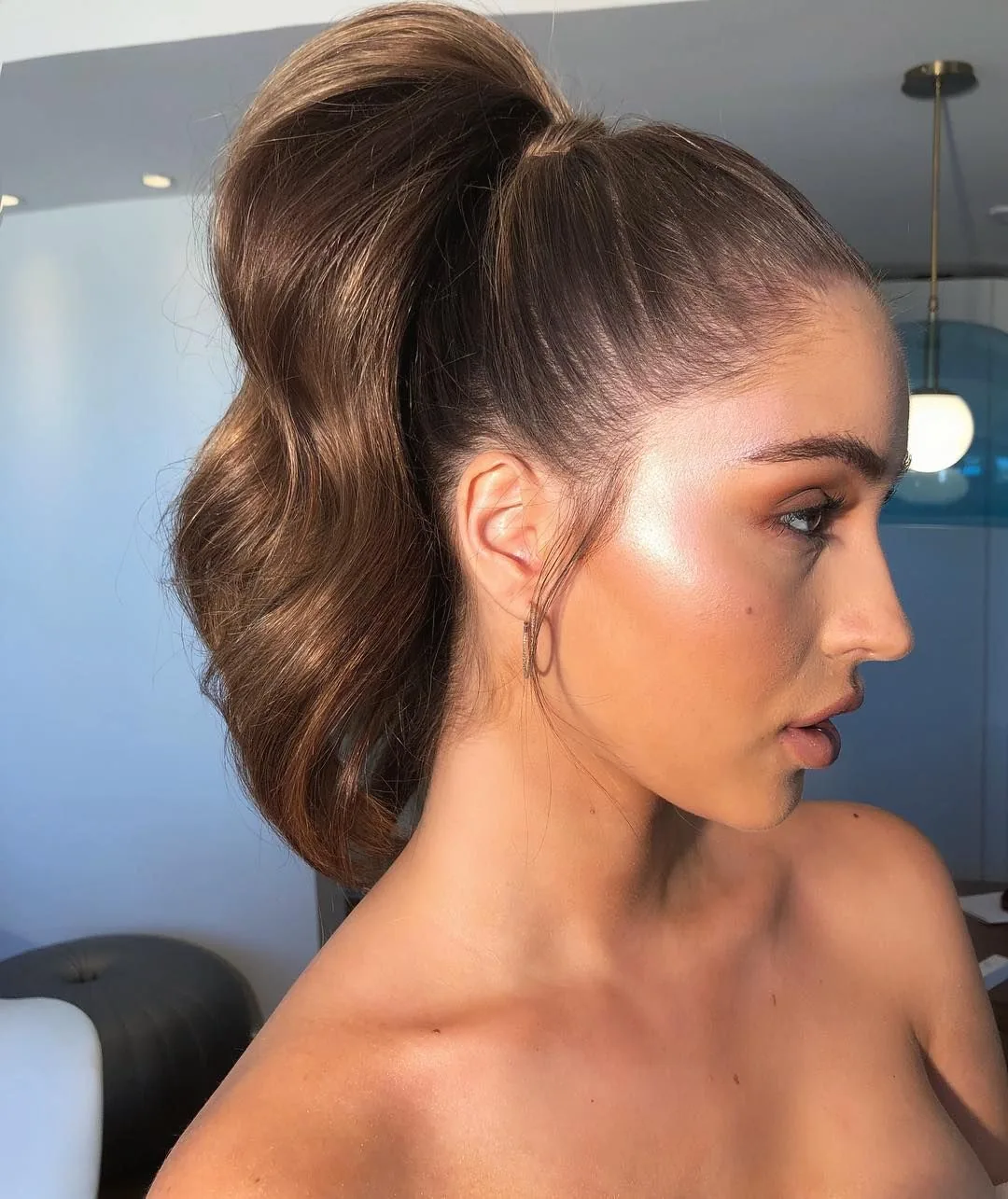
Best for: skaters with long, strong hair and a bold, fast programme. It suits straight and wavy hair best.
How to style: smooth gel through the hair, brush it high and secure it tightly. Wrap a strand of hair around the elastic to hide it and spray the hairline smooth.
Time and cost: 5 minutes, plus gel, a strong elastic and hairspray.
Low Sleek Ponytail
A low sleek ponytail is the quiet, elegant cousin of the high ponytail. It sits at the nape, stays out of the way through spins and jumps, and looks polished without trying too hard. It is the style to choose when the costume is the star and the hair should simply behave.
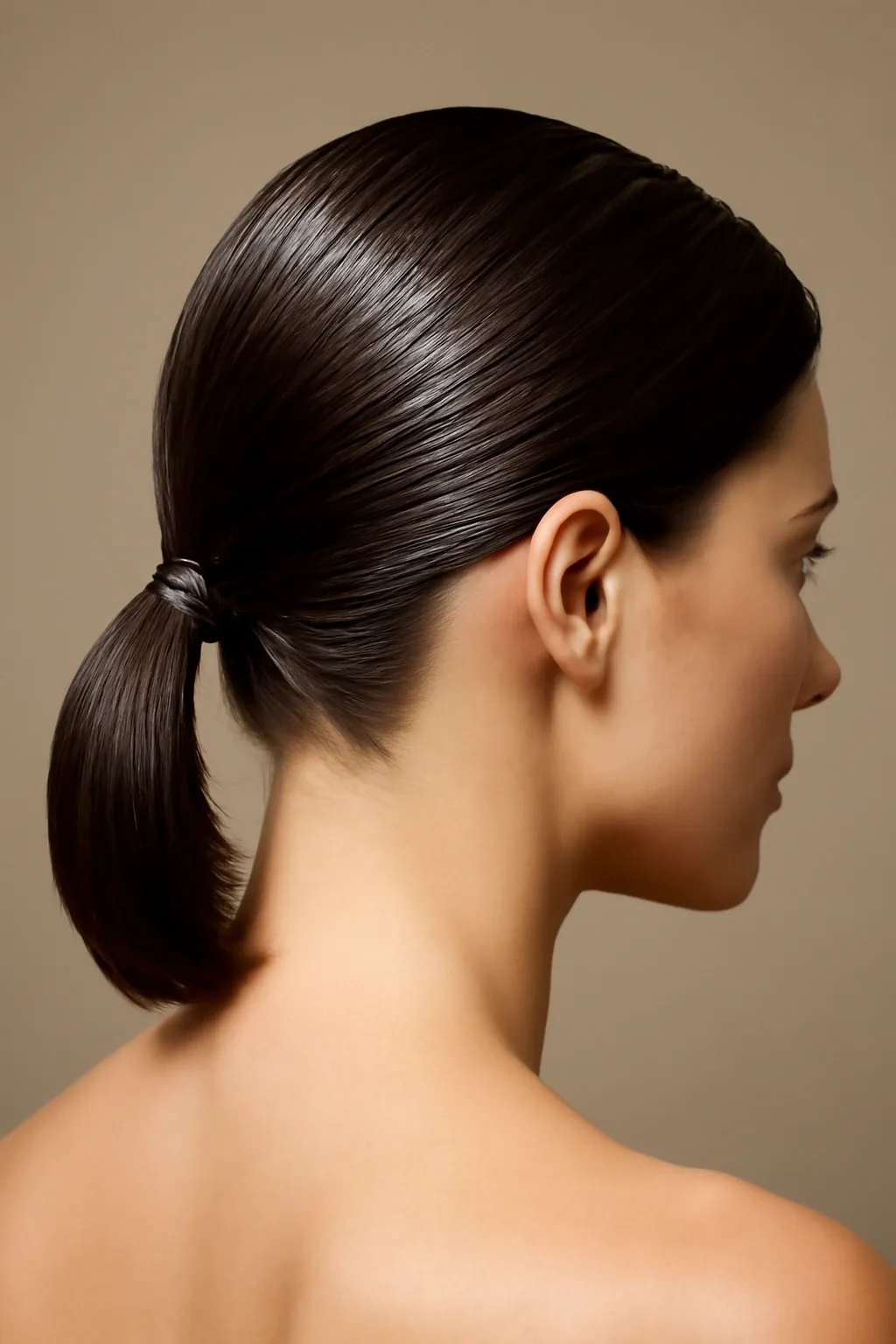
Best for: skaters who want a simple, elegant look, and anyone with medium to long hair. It suits every costume.
How to style: brush the hair back smoothly, gather it low at the nape and secure it. Smooth the hairline with gel and wrap a strand around the elastic.
Time and cost: 3 minutes, plus gel and a strong elastic.
Braided Crown
A braided crown wraps a braid around the head like a halo, keeping every strand off the face while showing off the braid itself. It is romantic, secure and completely spin-proof, and it looks lovely under the lights with a sparkly costume.
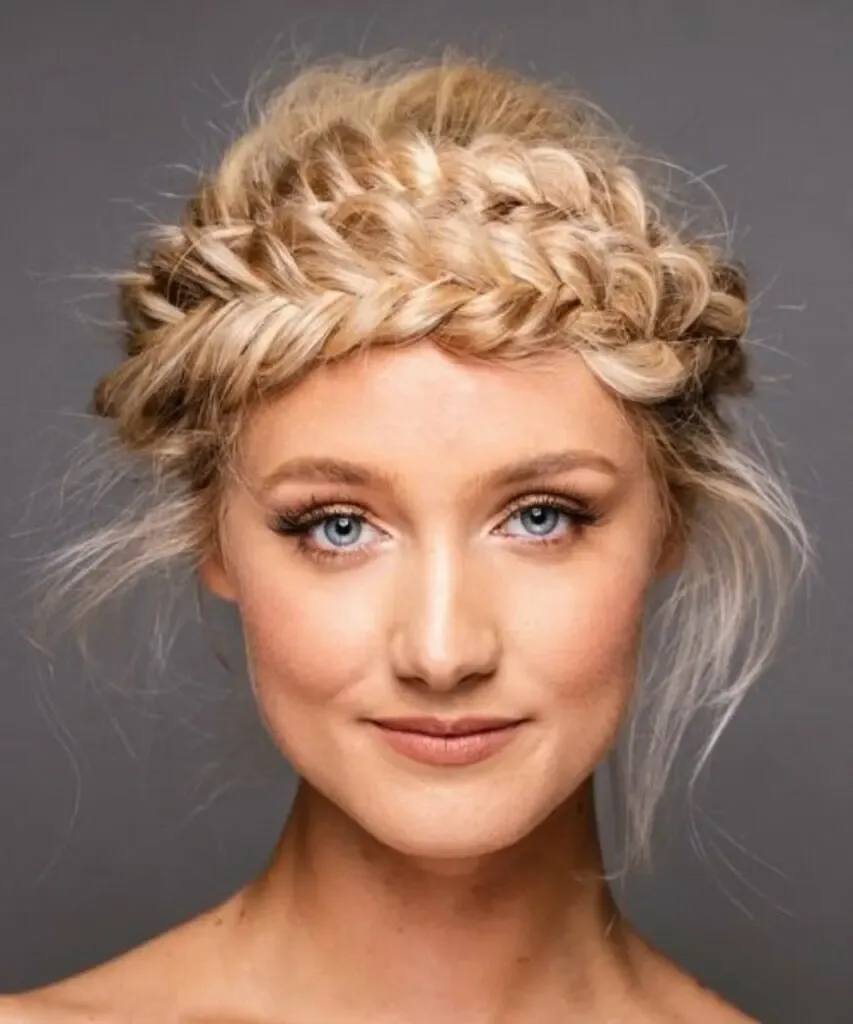
Best for: skaters with medium to long hair who want a romantic look, and anyone skating a lyrical or classical programme.
How to style: braid two sections from behind each ear, cross them over the crown and pin them in place. Smooth the hairline and finish with spray.
Time and cost: 15 minutes, plus bobby pins and hairspray.
Half-Up Twist
A half-up twist takes the top section of the hair, twists it back and pins it, while the rest falls loose. It keeps the front out of the eyes, shows off the twist detail, and still gives you the movement of loose hair, which makes it a lovely choice for a soft, lyrical programme.
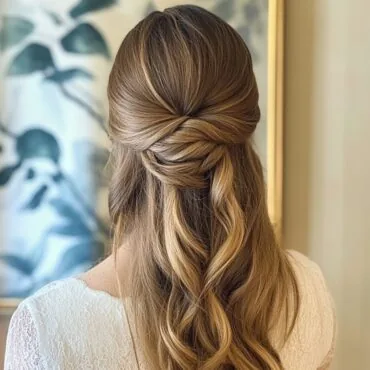
Best for: skaters with medium to long hair who want a softer look, and anyone skating a showcase rather than a competition. It suits wavy hair best.
How to style: take the top section from the hairline, twist it back and pin it at the crown. Leave the rest down and smooth the hairline.
Time and cost: 5 minutes, plus two bobby pins and a little spray.
Bubble Braid Ponytail
A bubble braid ponytail turns a plain ponytail into a statement. Elastics spaced down the length puff the hair into bubbles, which catch the light as you skate and hold their shape through spins. It is playful, modern and surprisingly secure.
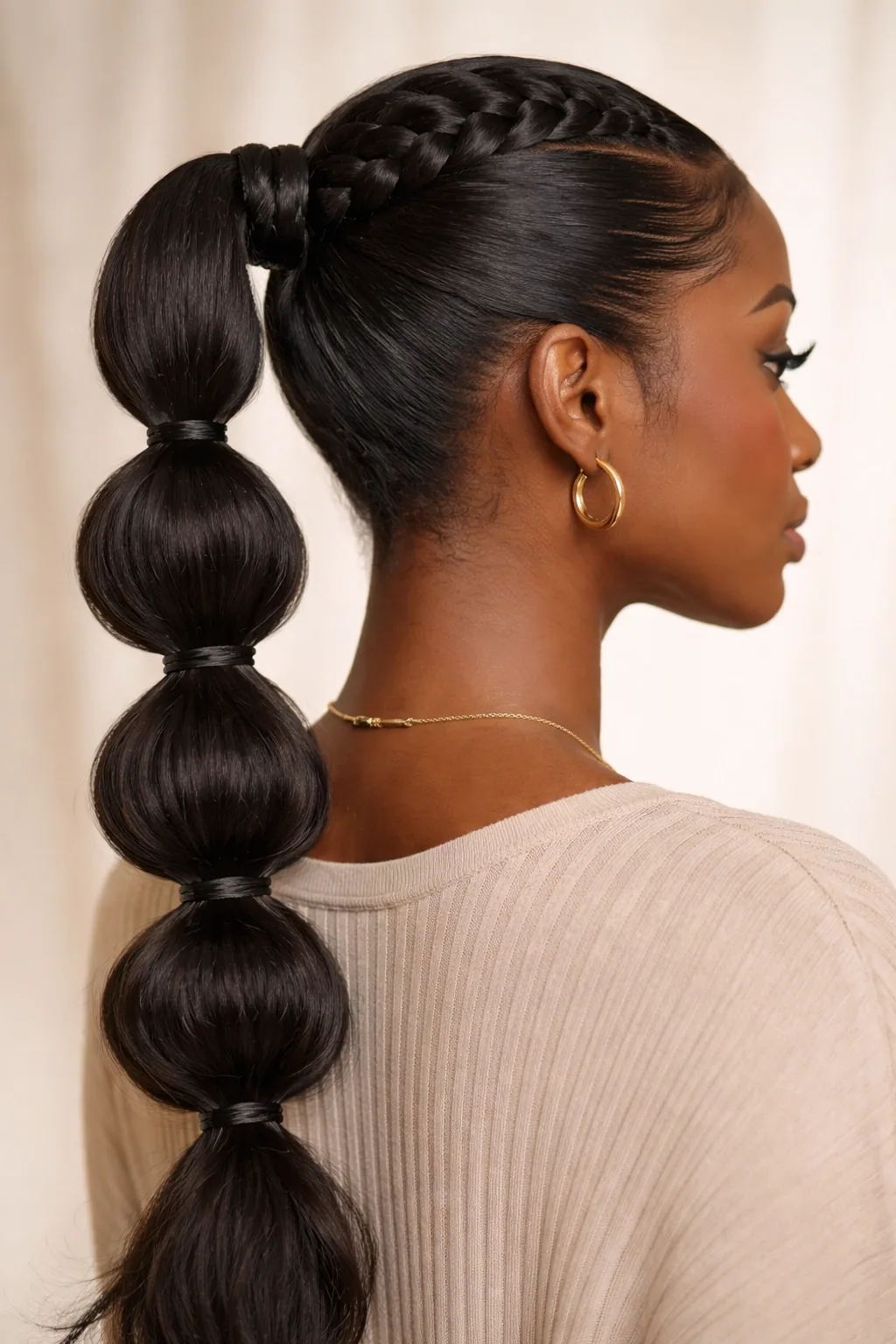
Best for: skaters with long hair who want a fun, modern look, and anyone skating a lively, upbeat programme.
How to style: tie a high or low ponytail, add elastics every few inches down the length, and gently pull each section out to form bubbles. Secure the ends.
Time and cost: 10 minutes, plus several small elastics.
Fishtail Braid
A fishtail braid is finer and more detailed than a classic braid, and it lies beautifully flat down the back. It keeps long hair completely contained through a programme while showing off a delicate, intricate texture that reads beautifully from the stands.
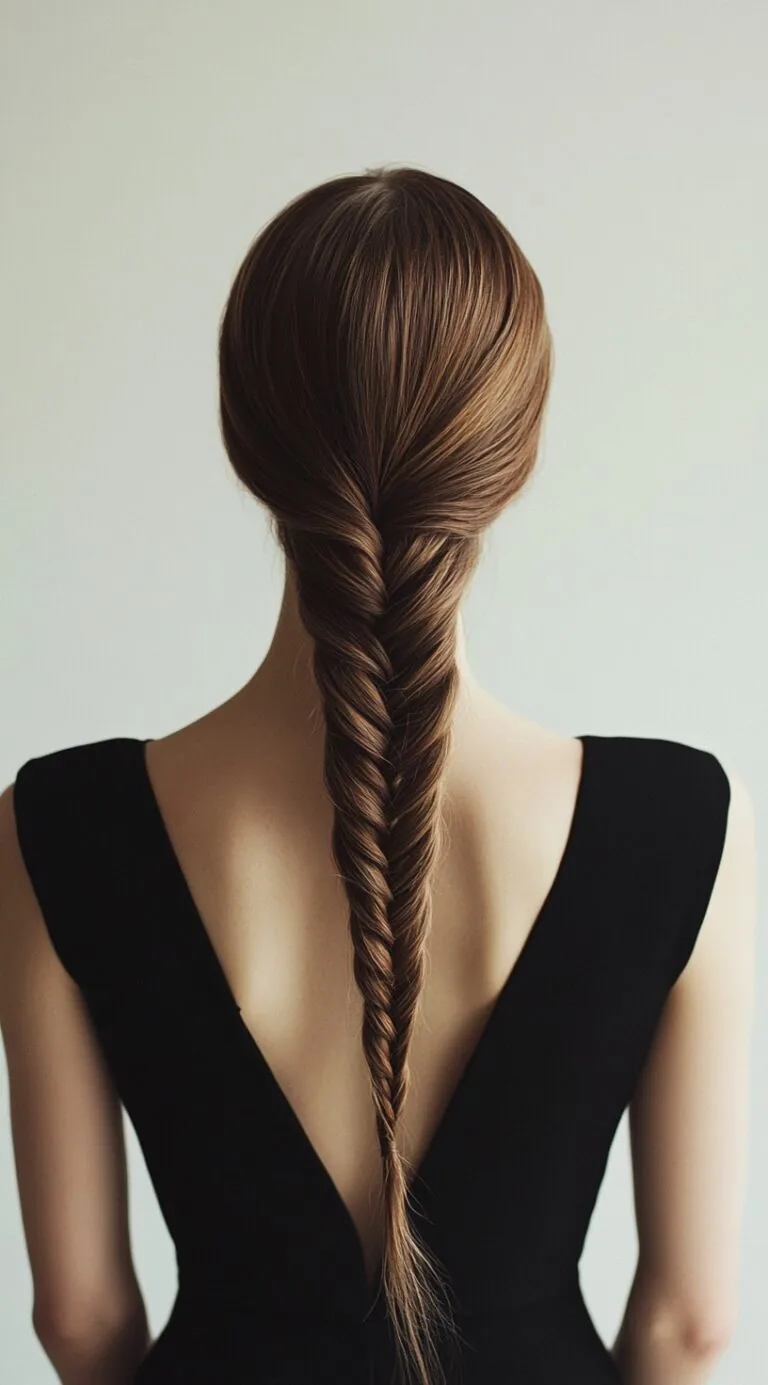
Best for: skaters with long hair who want an intricate, elegant look. It suits straight and slightly wavy hair best.
How to style: split the ponytail into two sections and cross small pieces from each side to the other, working down the length. Secure the end and loosen it slightly.
Time and cost: 15 minutes, plus a small elastic and a little patience.
Twisted Chignon
A twisted chignon is the most grown-up style in this guide. The hair is twisted into a low, sculpted knot at the nape, smooth and sculptural, with not a strand out of place. It is the style for a classical programme, a test or a formal showcase.
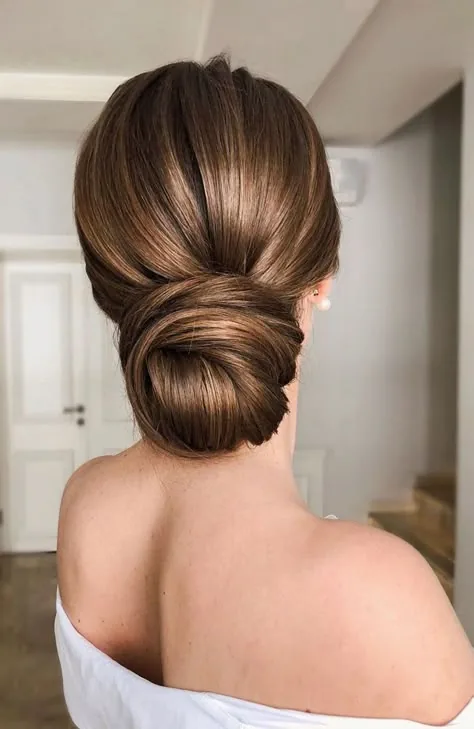
Best for: skaters who want a formal, elegant finish, and anyone with medium to long hair. It suits a classical or dramatic programme best.
How to style: brush the hair back, twist it into a low knot at the nape and pin it securely. Smooth the hairline with gel and finish with spray.
Time and cost: 10 minutes, plus bobby pins, gel and hairspray.
Rope Braid Ponytail
A rope braid ponytail twists two sections of hair around each other into a rope that hangs neatly down the back. It is quicker than a classic braid, holds its shape through spins, and looks sleek and modern under the lights.
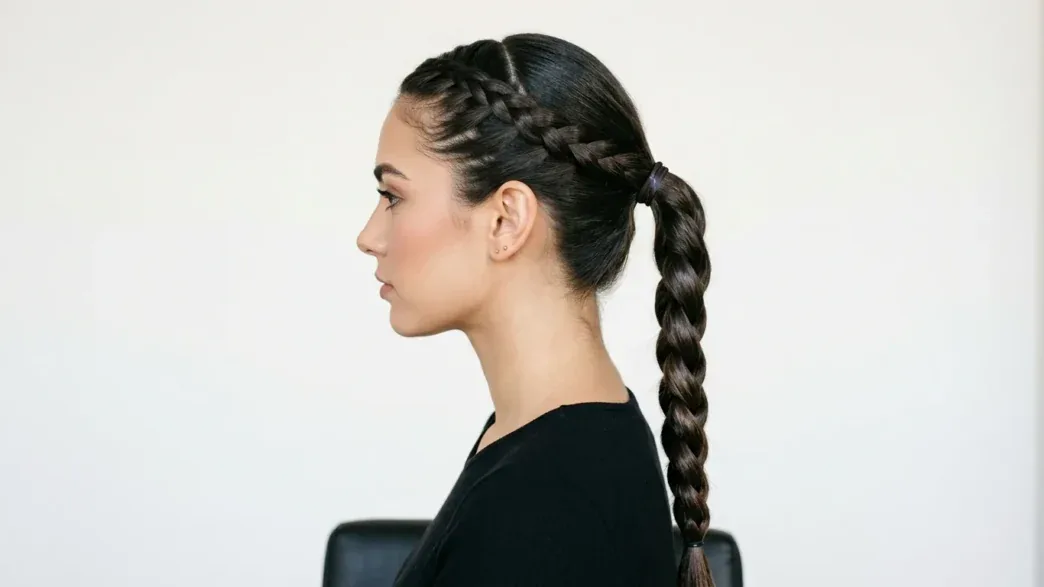
Best for: skaters with long hair who want a quick, secure braid. It suits thick hair especially well.
How to style: tie a ponytail, split it into two sections, twist each section the same way, then twist them around each other in the opposite direction. Secure the end.
Time and cost: 5 minutes, plus a strong elastic.
Side Braid Over the Shoulder
A side braid over the shoulder is the relaxed skating look: the braid sits over one shoulder, clear of the collar and the costume straps, and it moves gently with the music. It is soft, easy and flattering, and it works beautifully for practice and showcases.
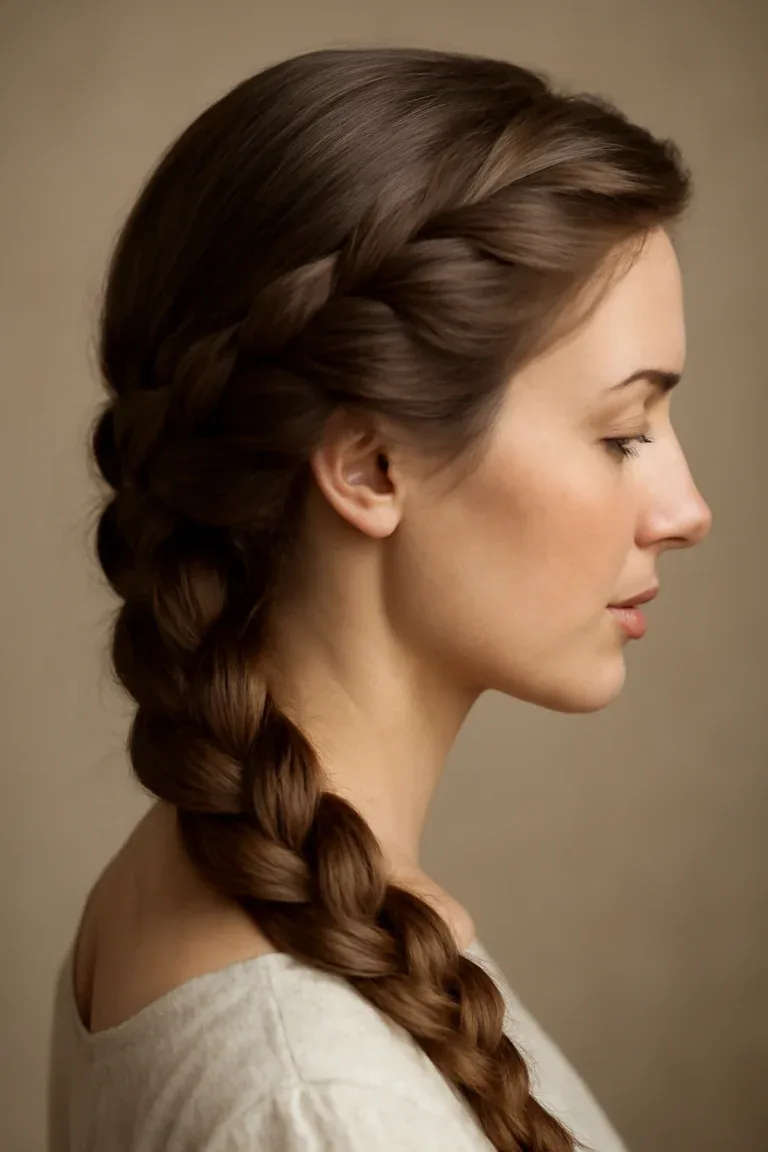
Best for: skaters who want a soft, relaxed look, and medium to long hair. It is a good choice for practice and for lyrical programmes.
How to style: gather the hair low to one side, braid it loosely and secure the end. Loosen a few pieces around the face for softness.
Time and cost: 5 minutes, plus a small elastic.
Double Braided Pigtails
Double braided pigtails are playful, secure and completely spin-proof. Two braids sit low on either side of the head, keeping the hair flat and the face clear, and they suit a fun, character-driven programme better than almost any other style.
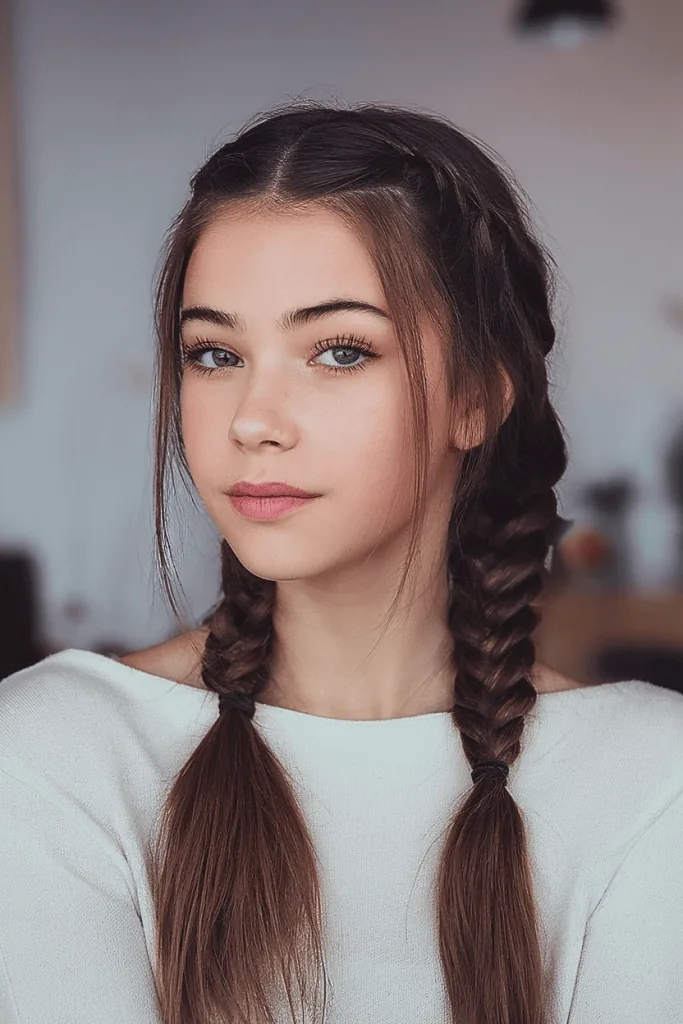
Best for: younger skaters and anyone skating a fun or character programme. They suit medium to long hair.
How to style: part the hair down the middle, braid each side from the hairline to the nape, and secure the ends. Keep the braids low and flat.
Time and cost: 10 minutes, plus two small elastics.
Low Braided Bun
A low braided bun coils a braid into a neat bun at the nape, so the style is anchored twice: once by the braid and once by the bun. It sits flat, never moves, and looks polished from the back, where the braid detail shows.
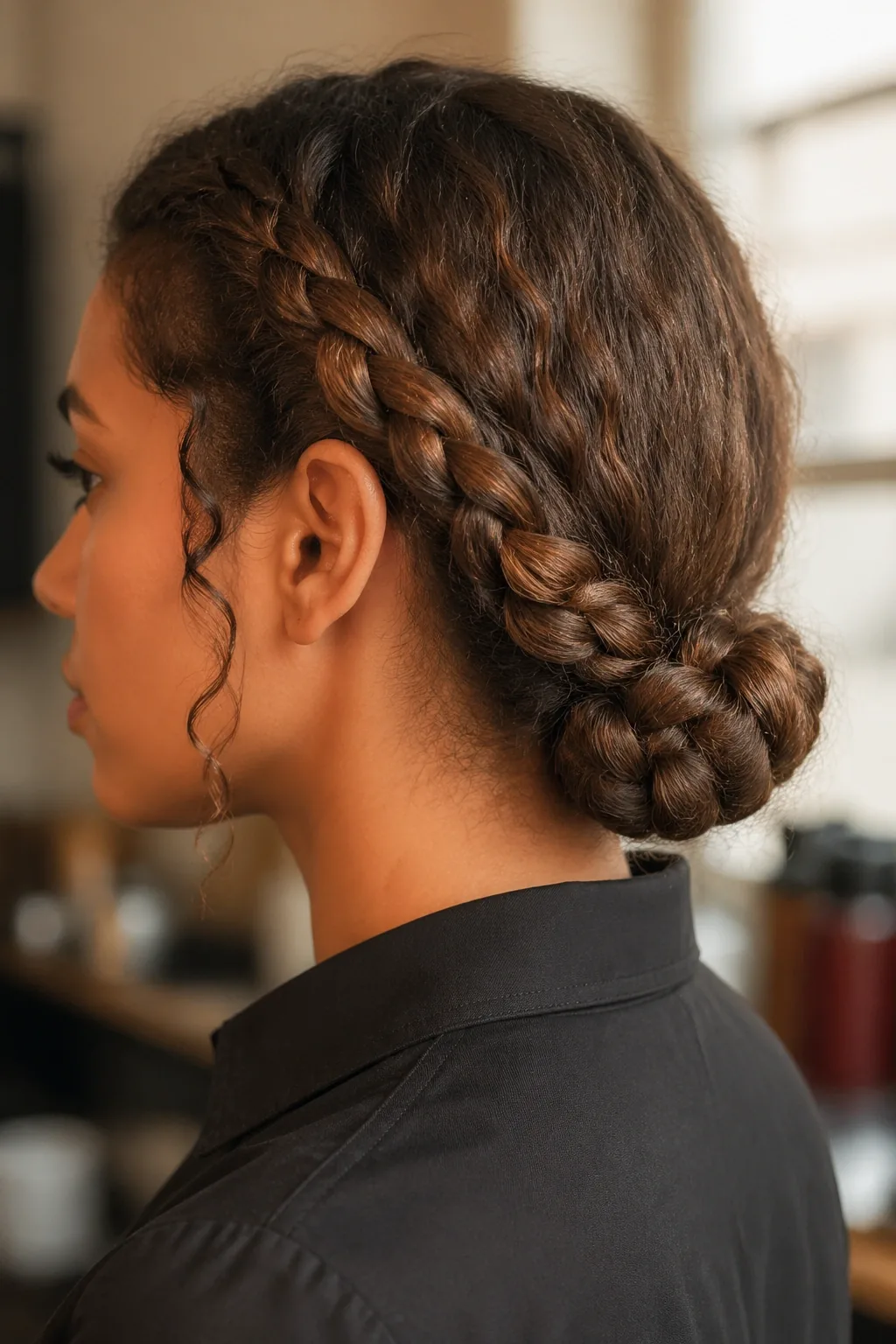
Best for: competition skaters with long hair, and anyone whose bun usually slips. It is one of the most secure styles in this guide.
How to style: braid the hair to the nape, coil the braid into a bun and pin it flat. Smooth the hairline with gel.
Time and cost: 10 minutes, plus elastics, pins and gel.
High Ballerina Bun
A high ballerina bun sits right on top of the crown, neat, round and perfectly centred. It is the most classic bun of all, borrowed from ballet, and it gives a skater a long, elegant line from the top of the head to the tips of the skates.
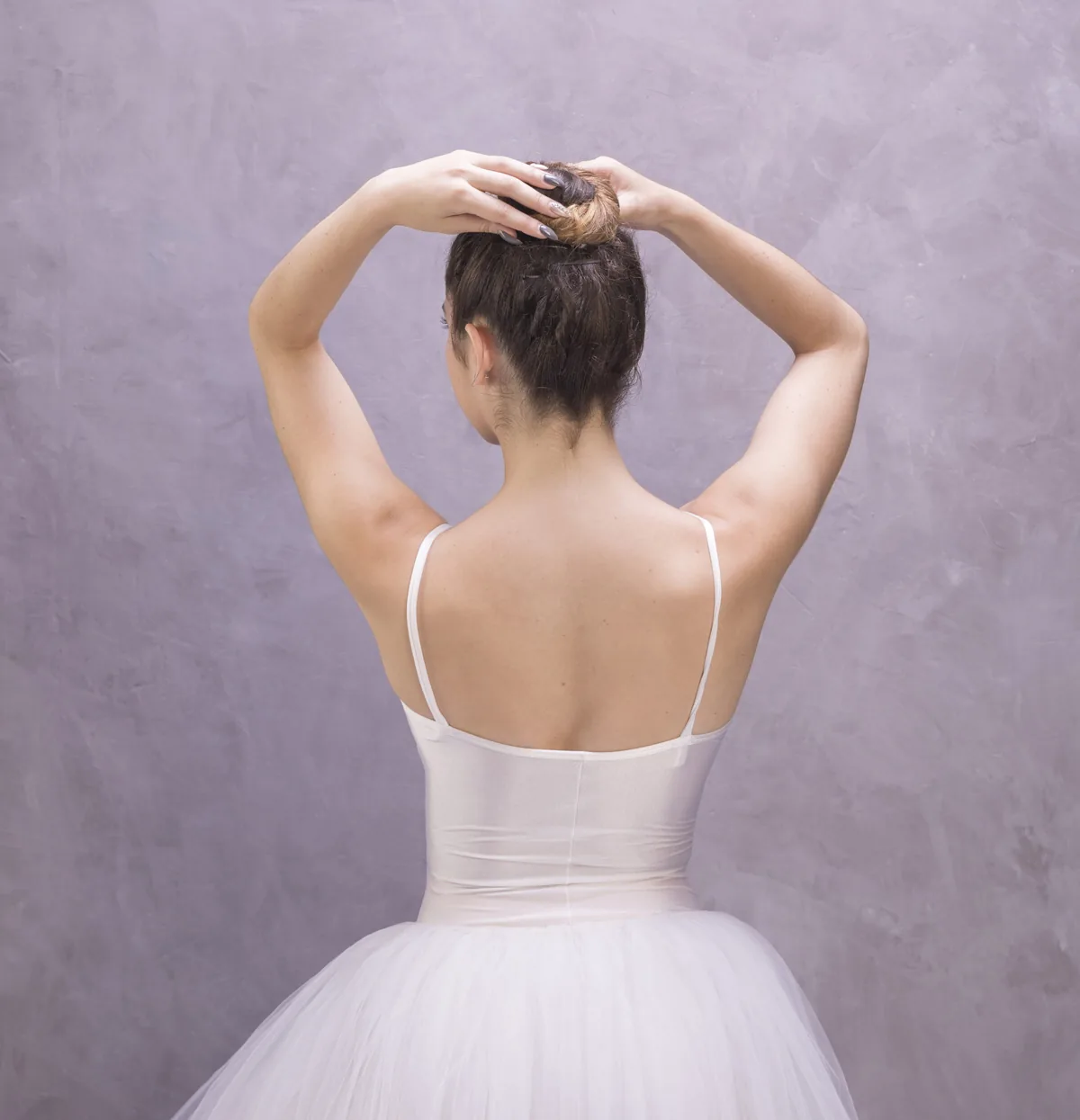
Best for: skaters who want a classic, elegant silhouette, and anyone with medium to long hair. It suits a classical programme best.
How to style: gather the hair high, twist it into a bun and pin it from four sides. Use a hair donut for extra roundness if you like.
Time and cost: 5 minutes, plus pins and a hair donut if desired.
Soft Messy Competition Bun
A soft messy competition bun keeps the security of a bun with a little softness around the face. A few loose pieces frame the cheeks, the bun itself is pinned firmly, and the overall effect is romantic rather than severe, which suits a lyrical programme beautifully.
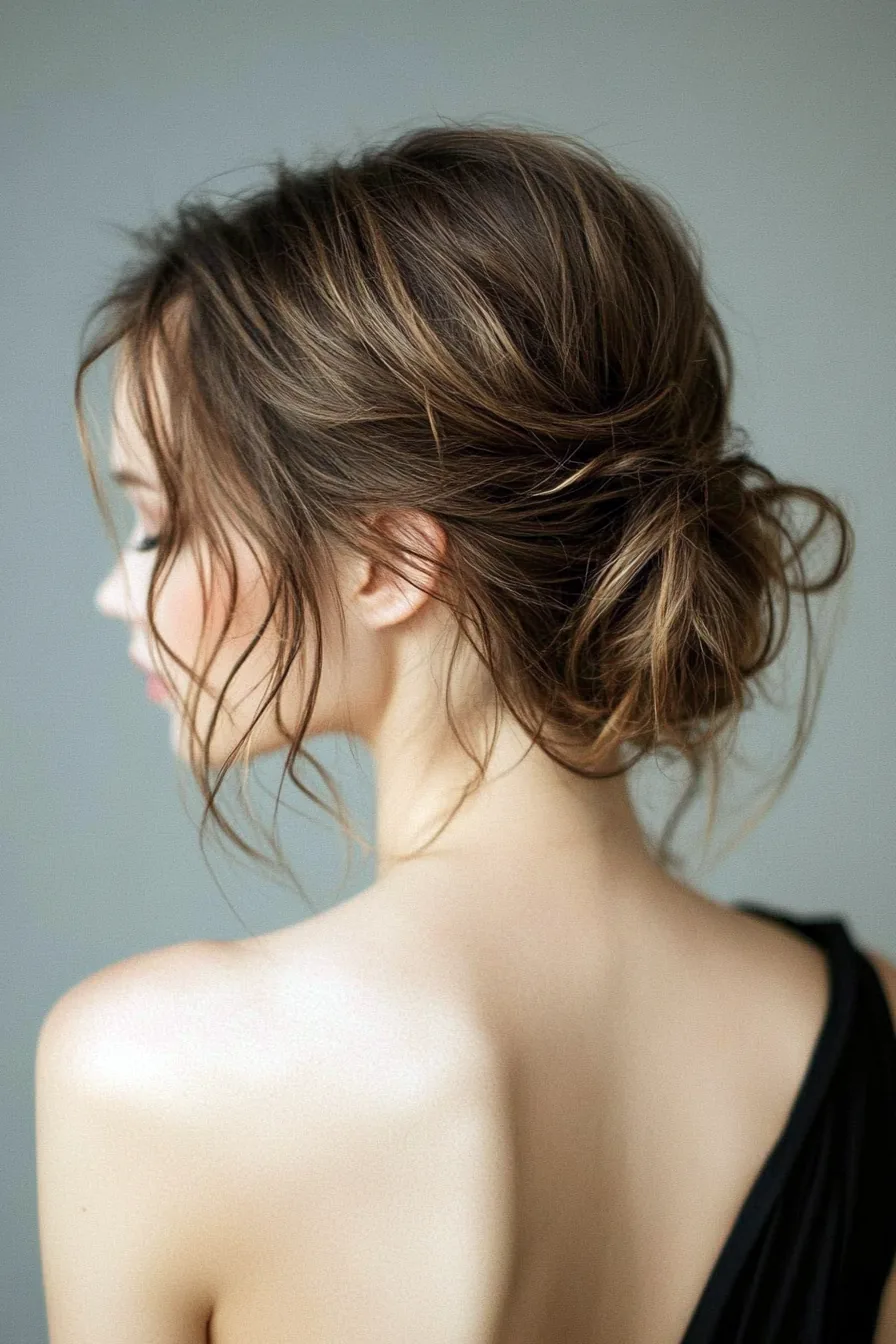
Best for: skaters who want a softer, romantic look without losing hold. It suits wavy and curly hair best.
How to style: leave a few face-framing pieces out, gather the rest into a low bun and pin it firmly. Curl the loose pieces lightly and spray them in place.
Time and cost: 10 minutes, plus pins, a curling iron and spray.
Curly High Ponytail
A curly high ponytail lets natural curls do the talking. The hair is gathered high, the curls fall in a full, bouncy shape, and the volume catches the light as you skate. With the hairline smoothed and the ponytail secured tightly, it holds beautifully through a programme.
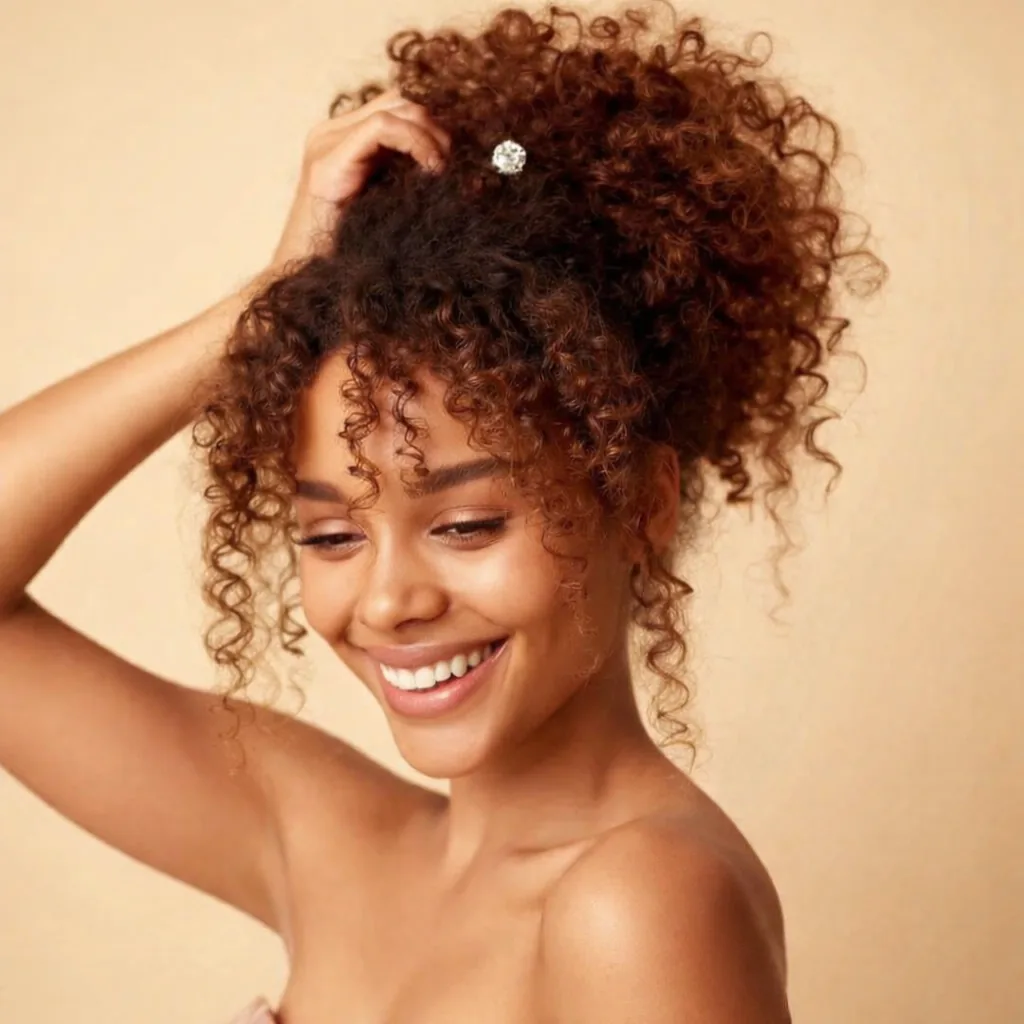
Best for: skaters with natural curls who want to show off their texture. It suits medium to long curly hair.
How to style: gather the curls high and secure them with a strong elastic, smoothing the hairline with gel. Fluff the ponytail gently for volume.
Time and cost: 5 minutes, plus gel and a strong elastic.
Short Hair Slicked Back
Short hair slicked back is the simplest competition look of all. Gel smooths every strand back from the face, the style cannot move in a spin, and it frames the face beautifully under the lights. It is proof that short hair needs no extra work to look competition-ready.
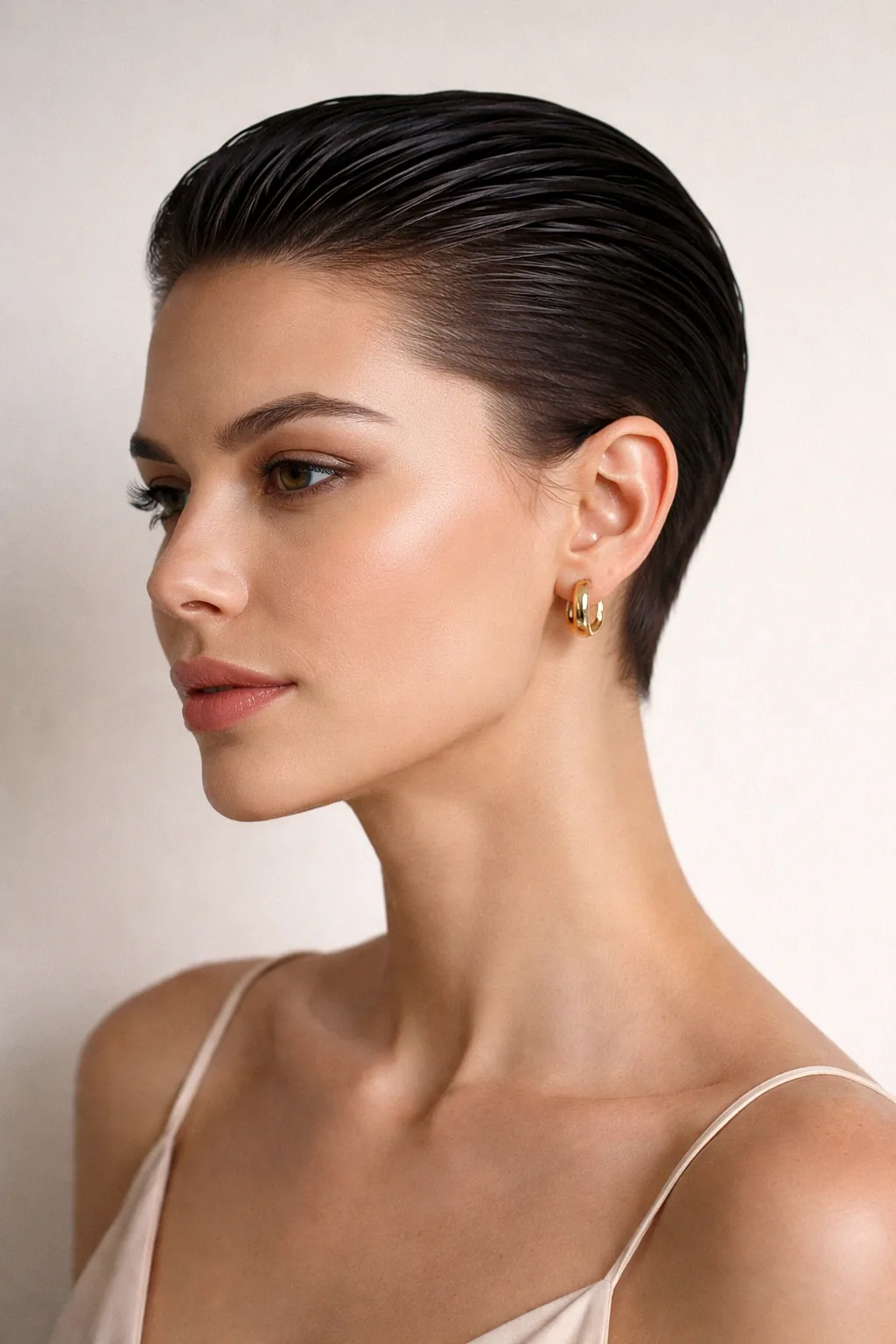
Best for: skaters with short hair, pixies and bobs, and anyone who wants a zero-fuss competition style.
How to style: smooth gel through damp hair, comb it back and let it set. Add a little spray to hold the hairline.
Time and cost: 2 minutes, plus gel and a comb.
Pixie With a Headband
A pixie with a headband is the easy, charming skating look for short hair. The headband holds the front back, adds a touch of sparkle or colour to match the costume, and the pixie itself needs almost nothing else. It is quick, comfortable and completely spin-proof.
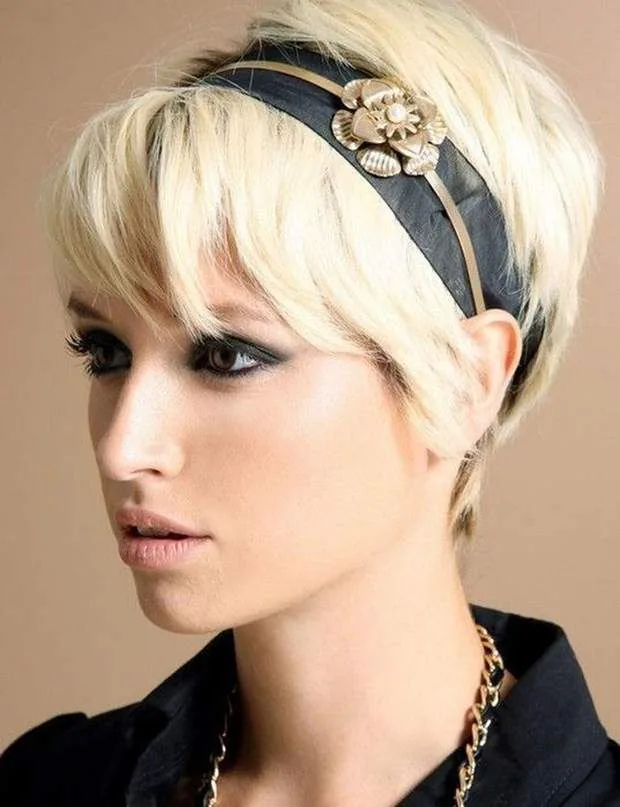
Best for: skaters with pixie cuts and very short hair, and anyone who wants a quick, pretty competition look.
How to style: slide a headband on to hold the front back, smooth the sides with a little gel, and add texture spray for grip.
Time and cost: 2 minutes, plus a headband and a little gel.
Braided Headband With a Low Ponytail
A braided headband with a low ponytail braids a small section across the hairline like a headband, then gathers the rest into a low ponytail. It keeps the front perfectly flat, adds a pretty detail, and the ponytail stays out of the way through the whole programme.
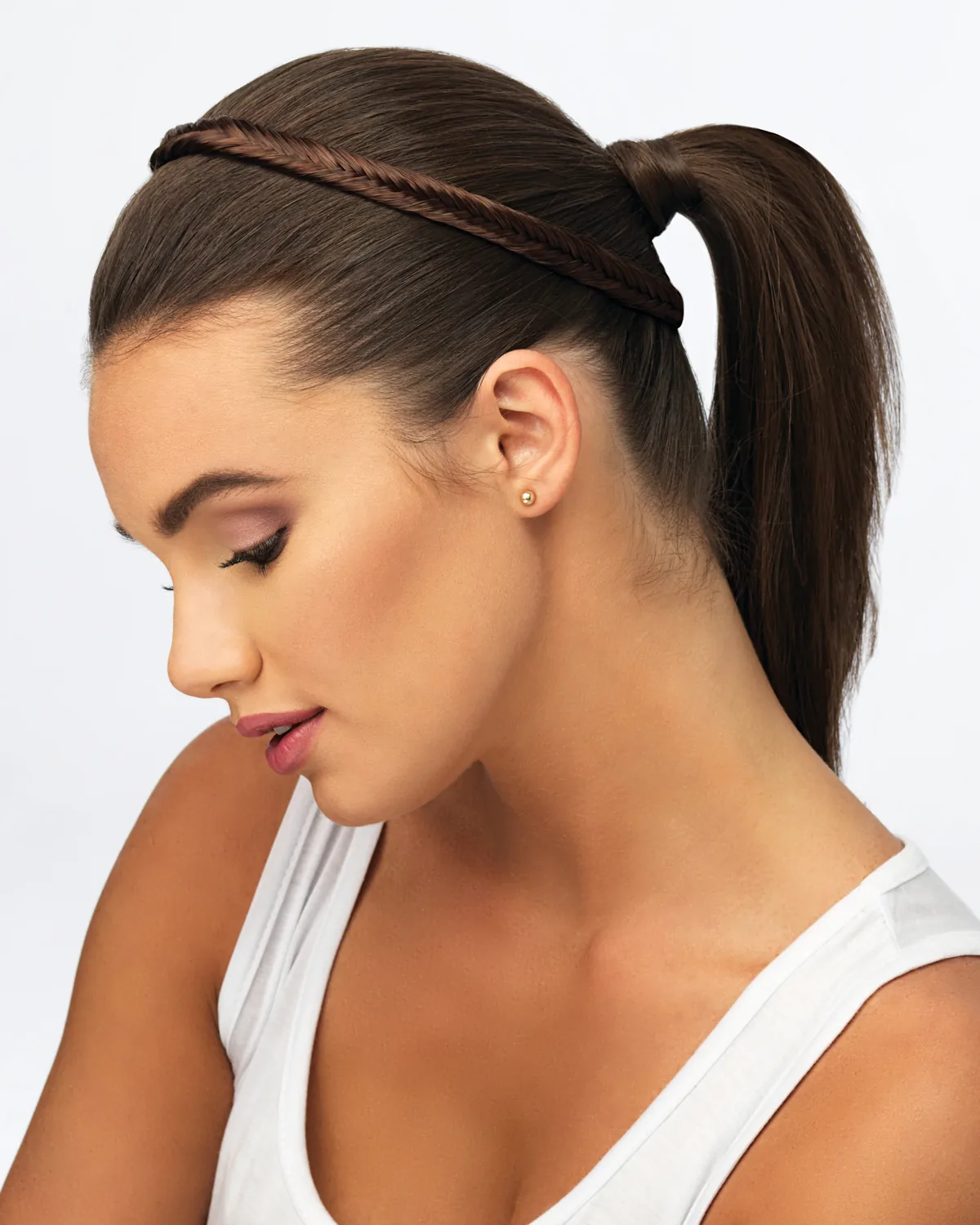
Best for: skaters with medium to long hair who want a pretty detail without a real headband. It suits straight and wavy hair.
How to style: braid a small section from behind one ear across the hairline to the other side and pin it. Gather the rest into a low ponytail.
Time and cost: 10 minutes, plus pins and an elastic.
Two-Strand Twists
Two-strand twists are a beautiful protective style for natural hair on the ice. The twists lie flat, hold their shape through spins and jumps, and can be gathered into a bun or ponytail for competition. They are secure, elegant and kind to the hair.
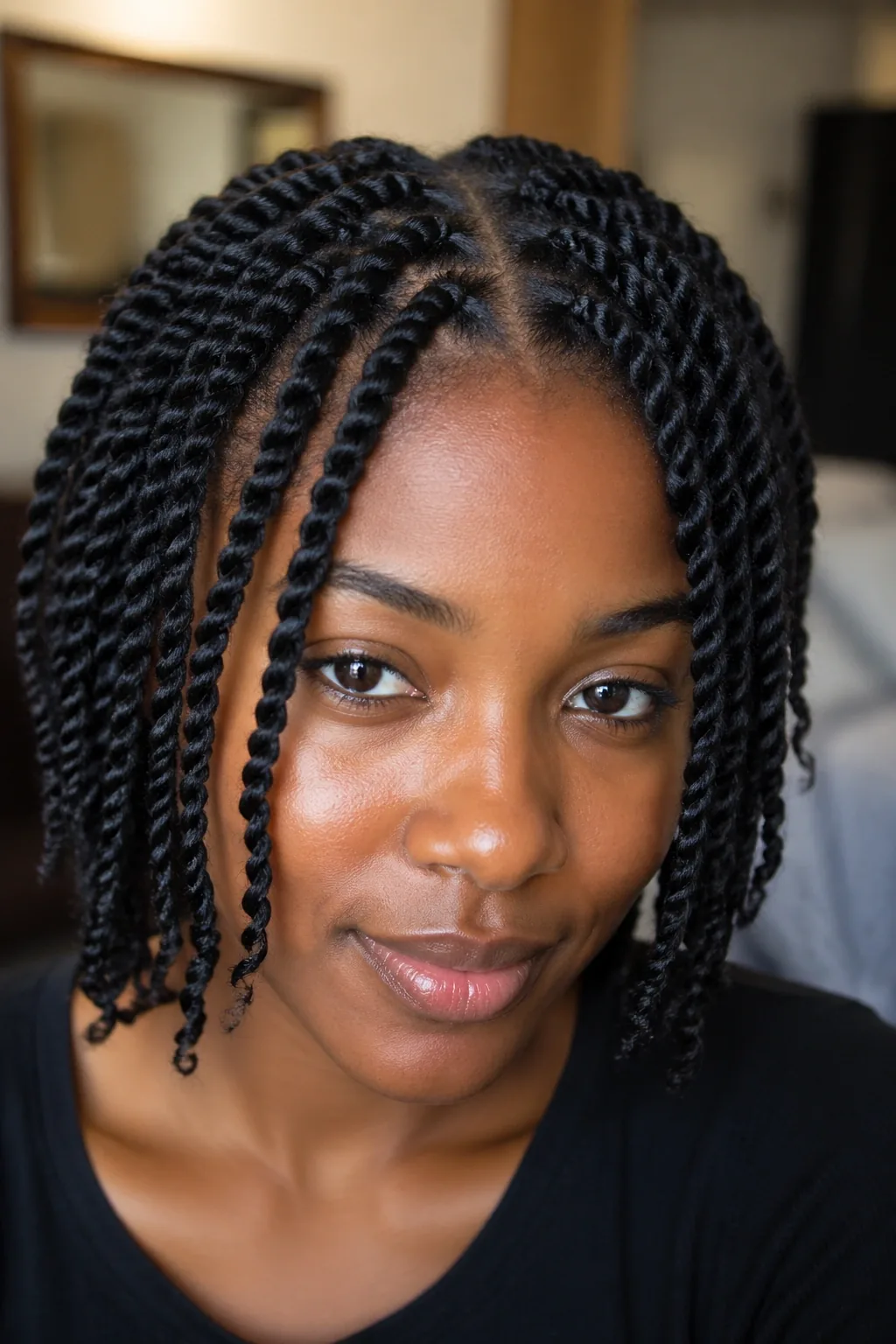
Best for: skaters with natural hair who want a protective, secure style. They suit medium to long hair.
How to style: part the hair into sections, twist two strands around each other in each section, and gather the twists into a bun or ponytail.
Time and cost: 20 to 30 minutes, plus a little styling cream.
Space Buns
Space buns are the fun, bold skating look: two buns sit high on either side of the head, keeping the hair completely contained while adding a playful shape that reads beautifully from the stands. They suit a character programme or a showcase better than a classical competition.
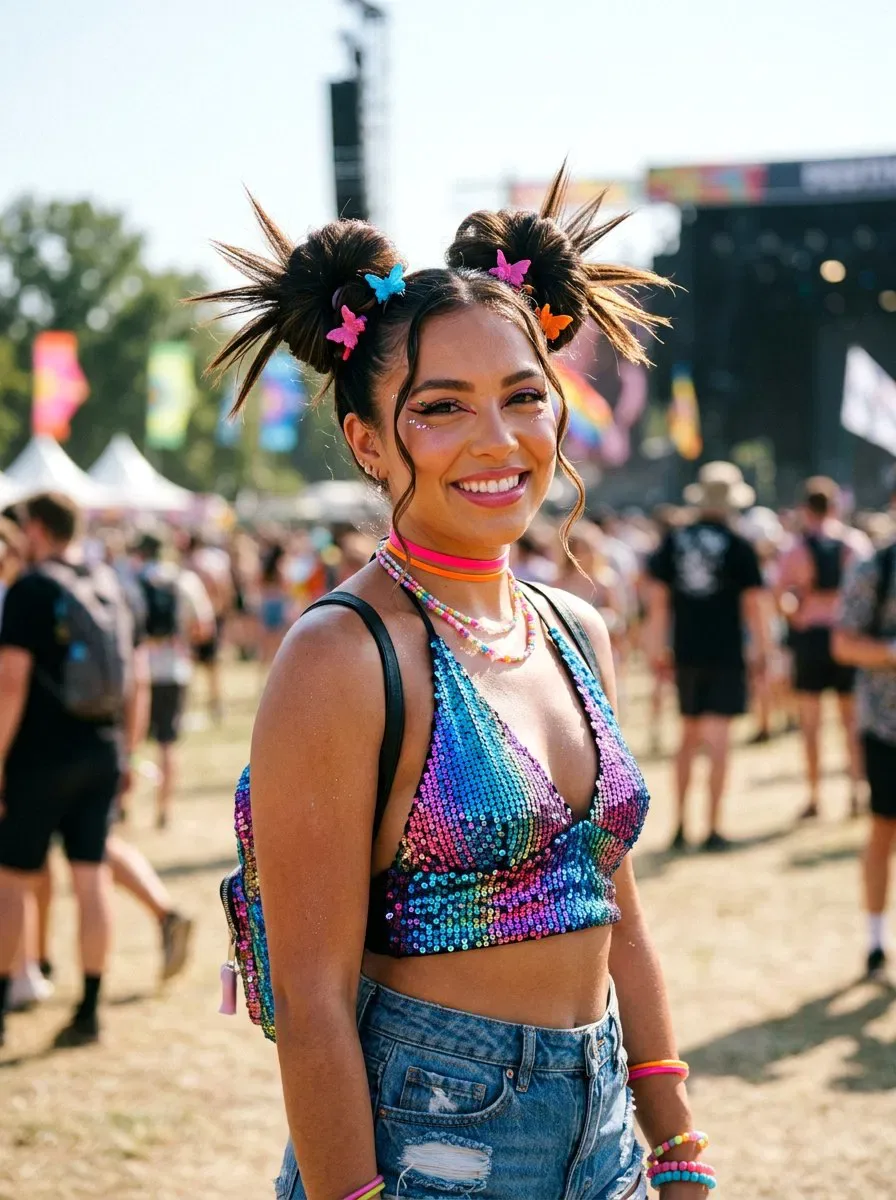
Best for: skaters who want a playful, bold look, and anyone skating a fun programme or a showcase. They suit medium to long hair.
How to style: part the hair down the middle, gather each side into a high bun and pin it. Smooth the hairline with gel.
Time and cost: 10 minutes, plus elastics and pins.
Low Side Bun
A low side bun sits just behind one ear, soft, elegant and slightly off-centre. It is a graceful choice for a lyrical programme, keeps the hair clear of the costume neckline, and looks lovely in photos from the side of the rink.
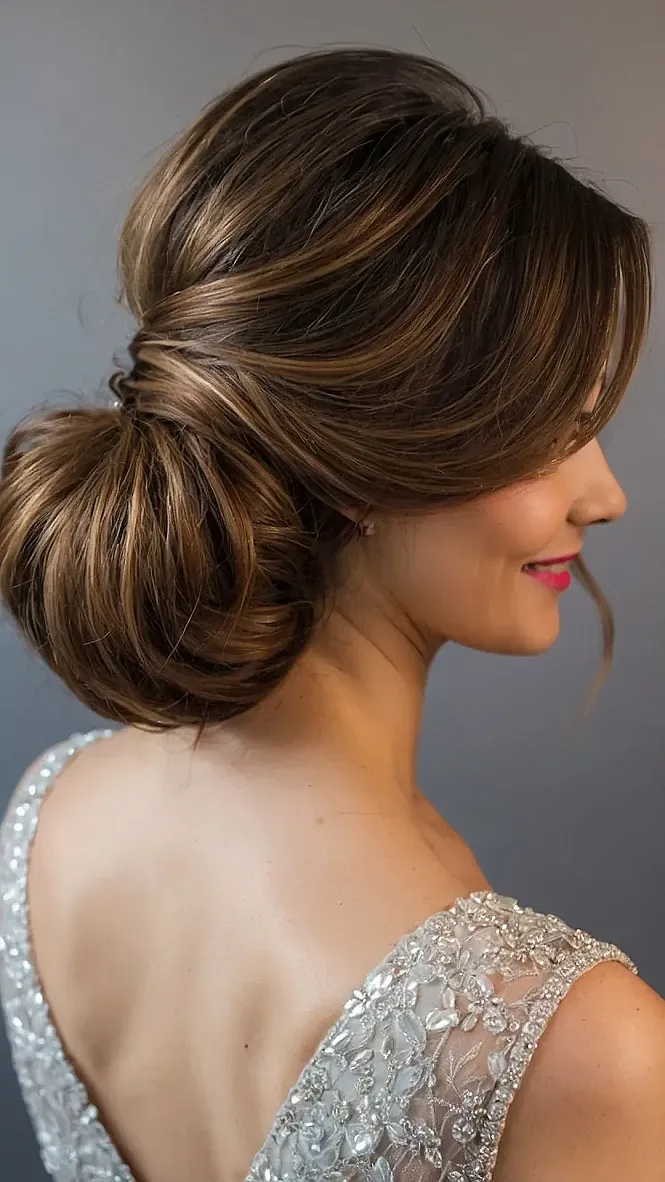
Best for: skaters who want an elegant, slightly asymmetric look, and anyone with medium to long hair. It suits a romantic programme best.
How to style: gather the hair low to one side, twist it into a bun behind the ear and pin it. Loosen a few pieces around the face.
Time and cost: 5 minutes, plus bobby pins.
Braided Topknot
A braided topknot combines a braid and a top bun into one secure, sculptural style. The braid runs up from the nape into a bun on top of the crown, so the style is anchored along its whole length and cannot slip, however fast the spin.
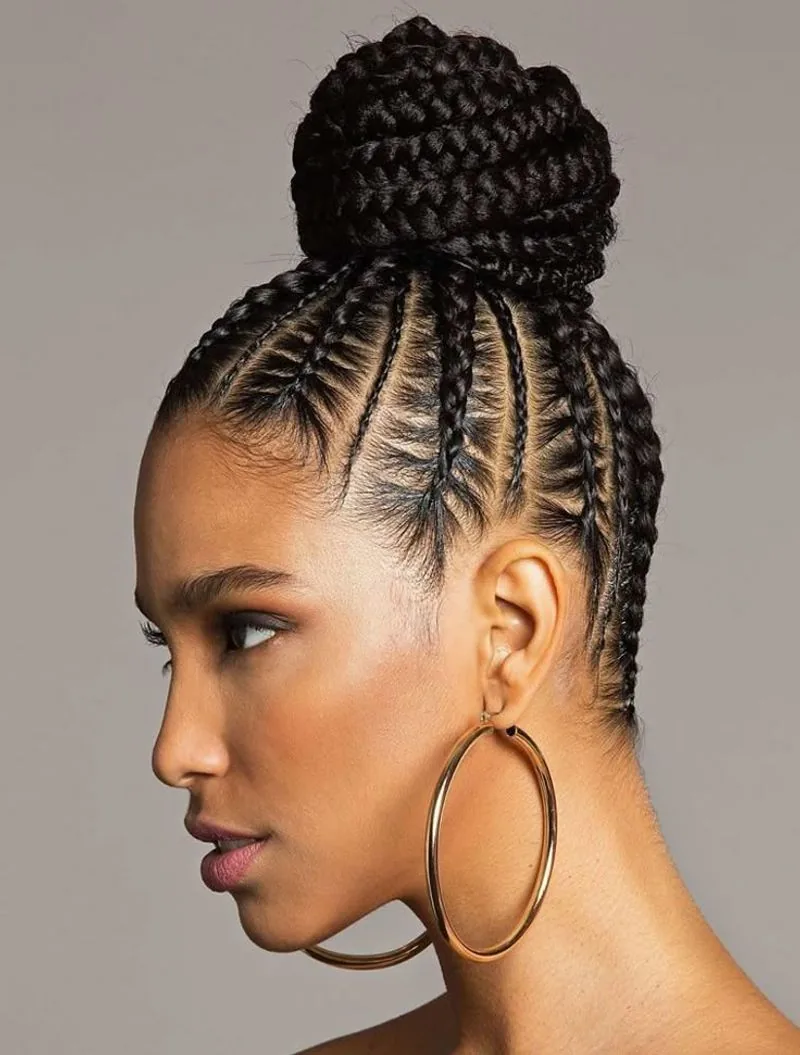
Best for: competition skaters with long hair who want maximum hold with a modern shape. It suits thick hair especially well.
How to style: braid the hair from the nape upward, gather it into a topknot and pin it. Smooth the hairline with gel.
Time and cost: 10 to 15 minutes, plus elastics and pins.
Sleek Middle-Part Low Bun
A sleek middle-part low bun is the cleanest, most architectural style in this guide. The hair is parted exactly in the middle, smoothed flat on both sides, and gathered into a low bun at the nape. From the stands it reads as pure control, which is exactly what a judge wants to see.
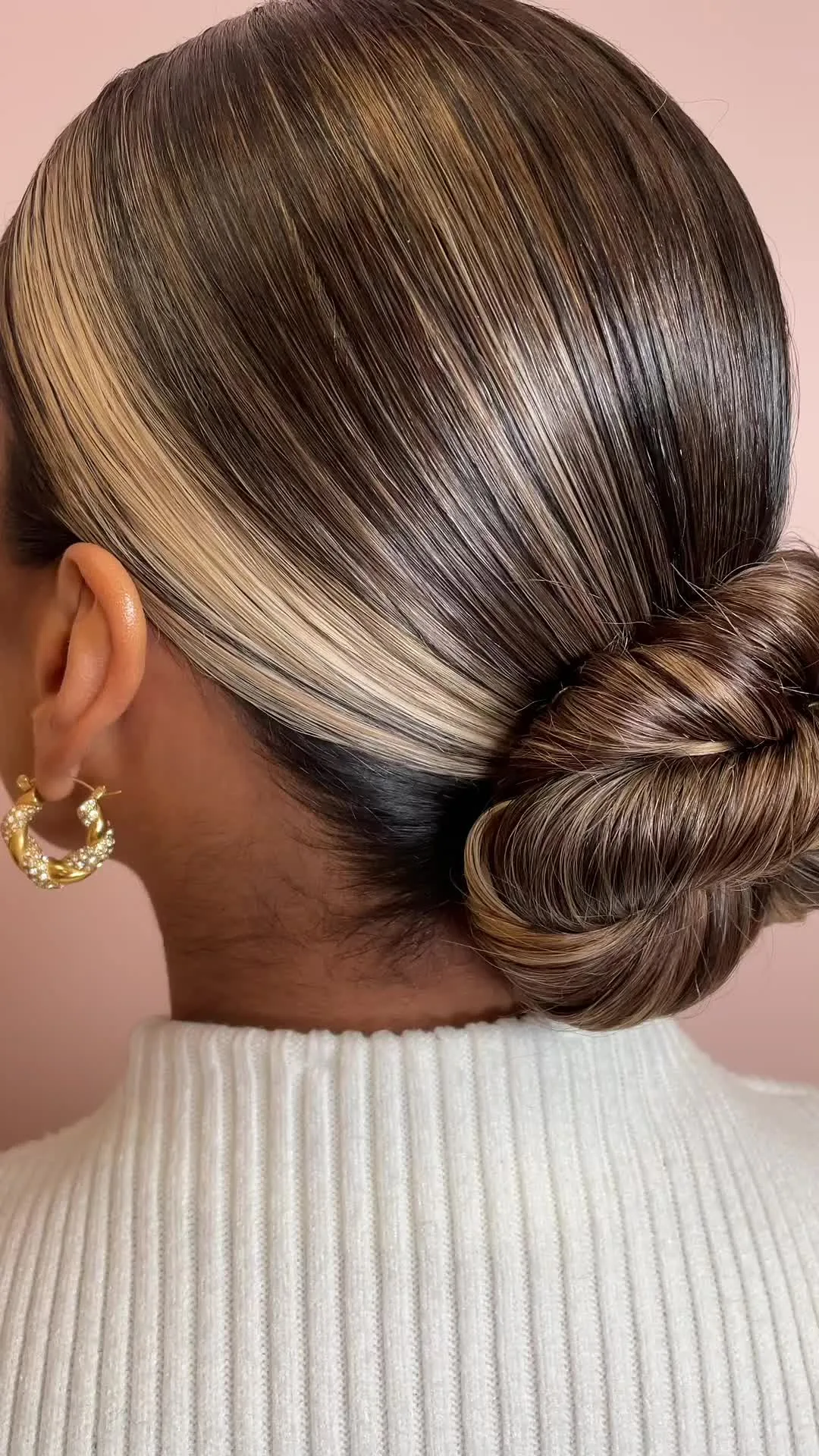
Best for: competition skaters who want a sharp, polished finish, and anyone with straight or slightly wavy hair.
How to style: part the hair down the middle, smooth both sides back with gel, and gather it into a low bun. Pin it flat and spray the hairline.
Time and cost: 5 minutes, plus gel, pins and spray.
Waterfall Braid Half-Up
A waterfall braid half-up lets strands fall through the braid like water, creating a soft, romantic cascade while the top section stays pinned back. It keeps the front clear and shows off long hair beautifully, which makes it a lovely choice for a showcase or an exhibition skate.
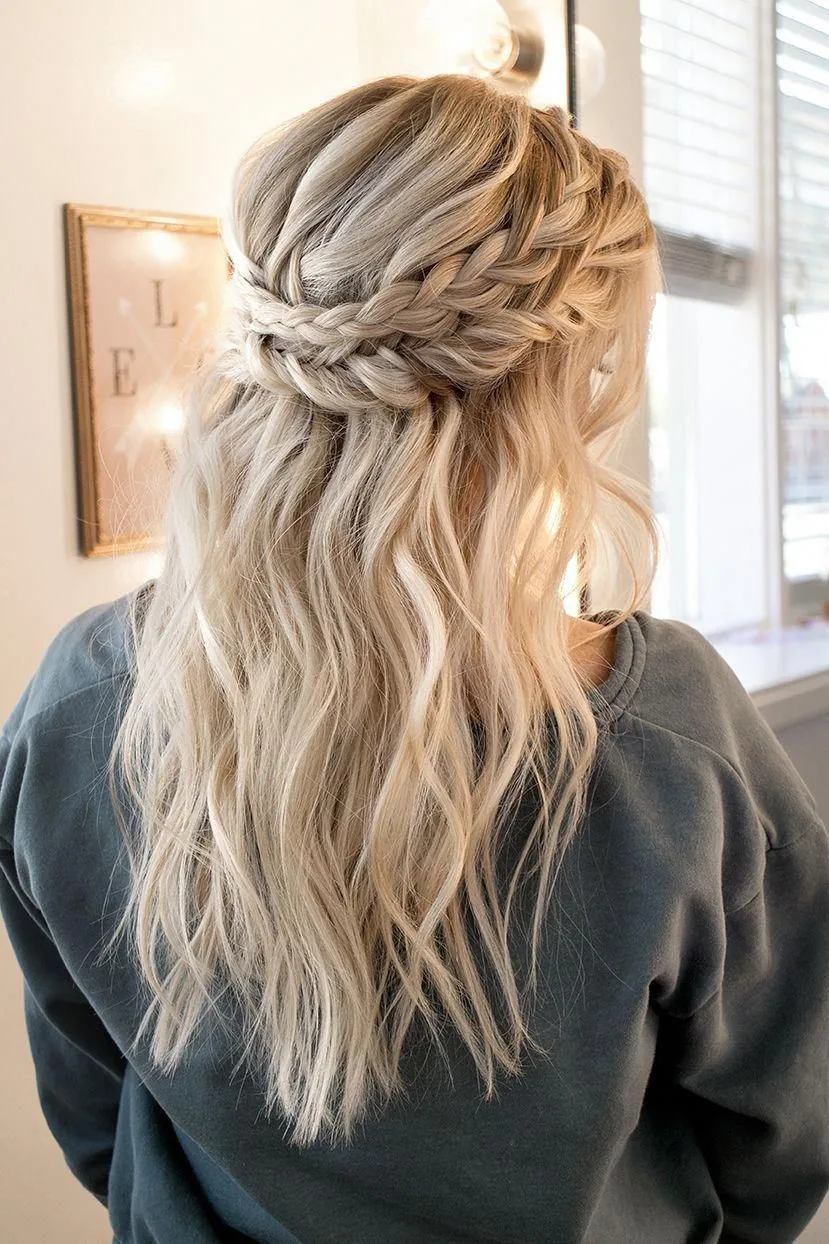
Best for: skaters with long hair who want a romantic, flowing look, and anyone skating an exhibition rather than a competition. It suits wavy hair best.
How to style: braid across the back of the head, dropping the bottom strand each time and picking up a new one. Pin the braid at the side and leave the rest down.
Time and cost: 15 minutes, plus bobby pins.
Spiral Curls Ponytail
A spiral curls ponytail gathers tight, defined curls into a high ponytail that bounces and shines as you skate. The curls give the style drama and movement, while the tight elastic and smooth hairline keep it secure through jumps and spins.
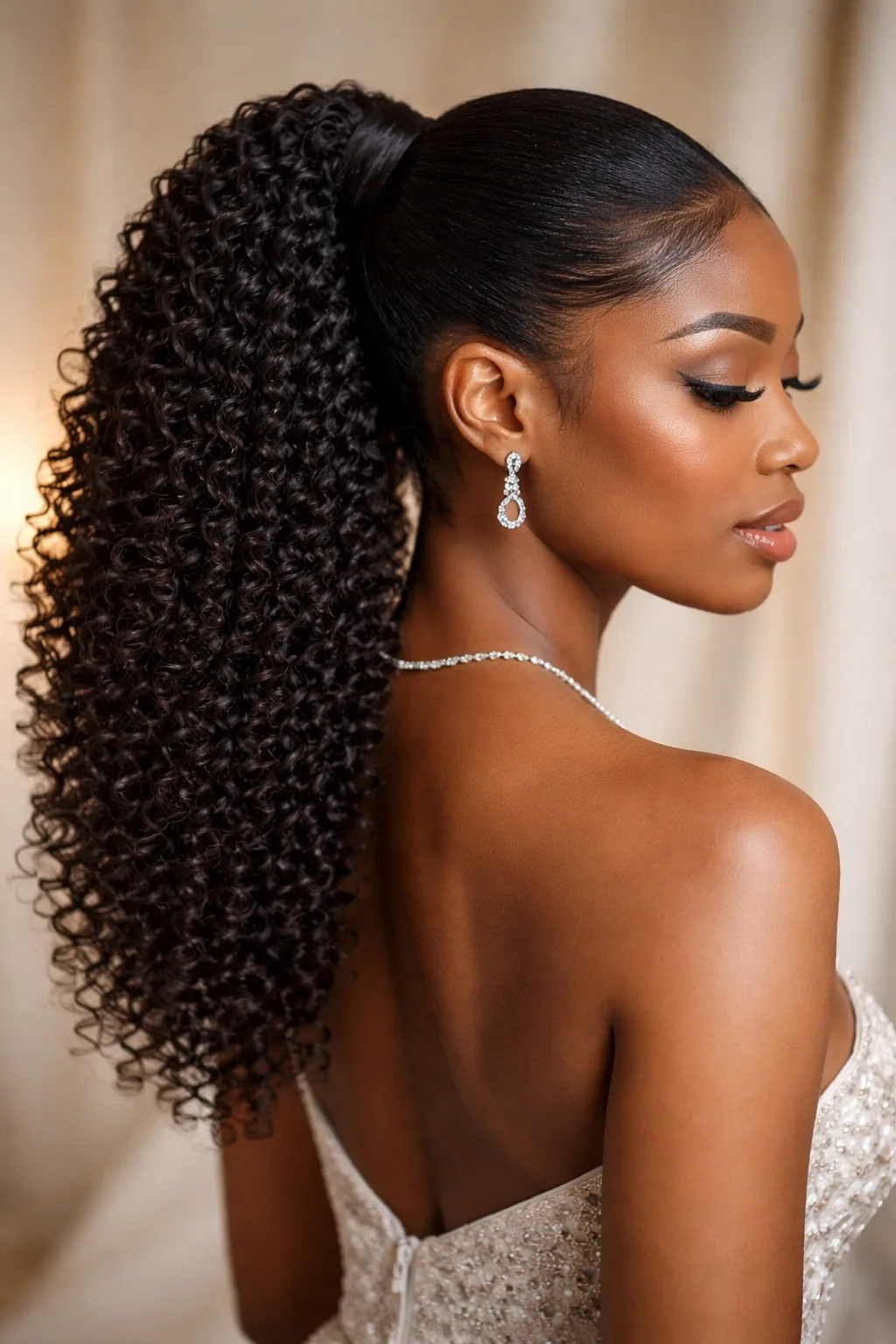
Best for: skaters with naturally curly hair, or anyone who curls their hair for a dramatic programme. It suits long hair best.
How to style: curl the hair into tight spirals, gather it high and secure it tightly. Smooth the hairline with gel and let the curls fall.
Time and cost: 20 minutes, plus a curling iron, gel and a strong elastic.
Ribbon-Tied Ponytail to Match the Costume
A ribbon-tied ponytail is the simplest way to tie your hair to your costume. A ribbon in the costume’s colour wraps around the base of the ponytail, the ends fall with the hair, and the whole look comes together. It is cheap, fast and unmistakable under the lights.
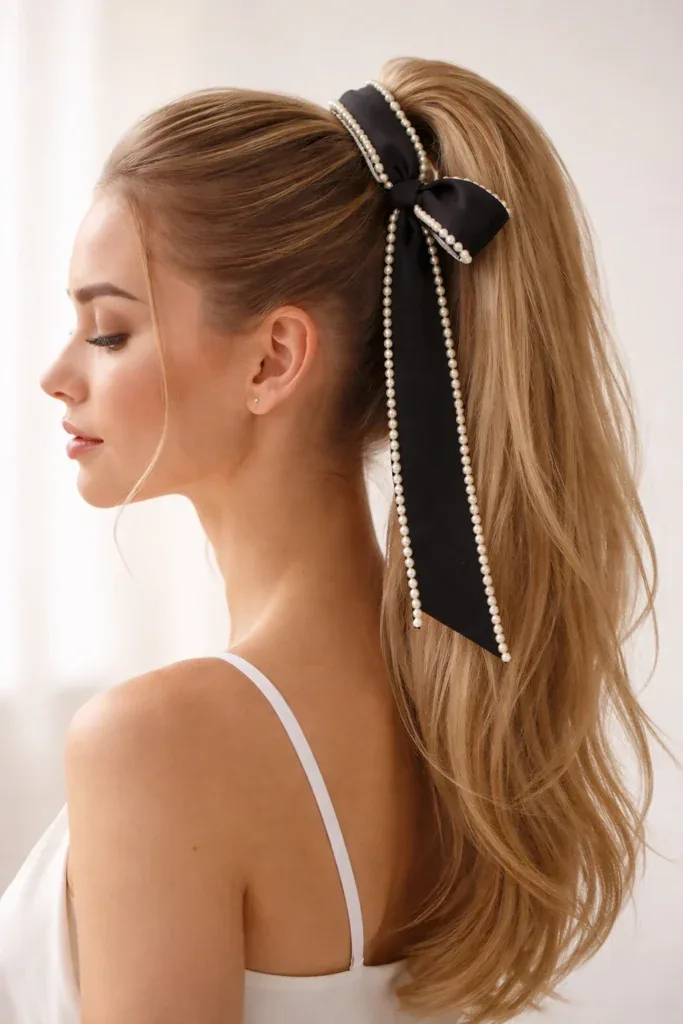
Best for: skaters who want their hair to match their costume, and anyone with medium to long hair. It is the easiest style in this guide to colour-match.
How to style: tie a high or low ponytail, then tie a ribbon in your costume’s colour around the base in a bow. Leave the ribbon ends long so they move with the ponytail.
Time and cost: 5 minutes, plus a ribbon in your costume colour.
Jewelled Hairpiece Bun
A jewelled hairpiece bun takes a classic bun and finishes it with crystals, pearls or a sparkling comb that catches the rink lights. The bun does the holding, the hairpiece does the shining, and together they turn a simple style into a competition showpiece.
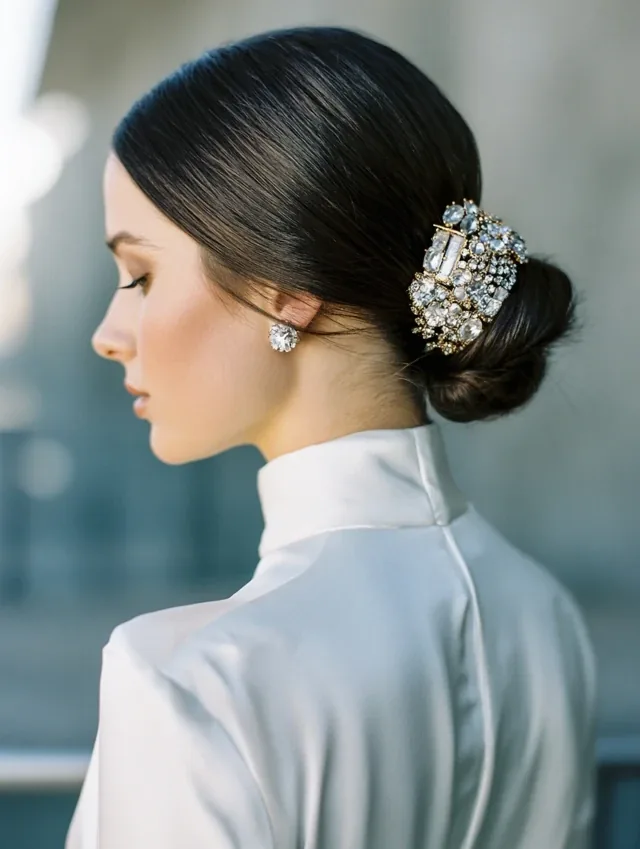
Best for: competition skaters who want extra sparkle, and anyone whose costume has crystals to match. It suits a formal programme best.
How to style: build a classic bun and pin it firmly, then pin the hairpiece into the bun itself, never just onto loose hair. Test it with a few jumps at home.
Time and cost: 10 minutes, plus a hairpiece and plenty of pins.
Classic Low Bun With a Centre Part
A classic low bun with a centre part is the quietest, most timeless style in this guide. The hair is parted in the middle, smoothed back on both sides, and gathered into a low bun that sits exactly at the nape. It is the style for a skater who wants the judges to see the skating, not the hair.
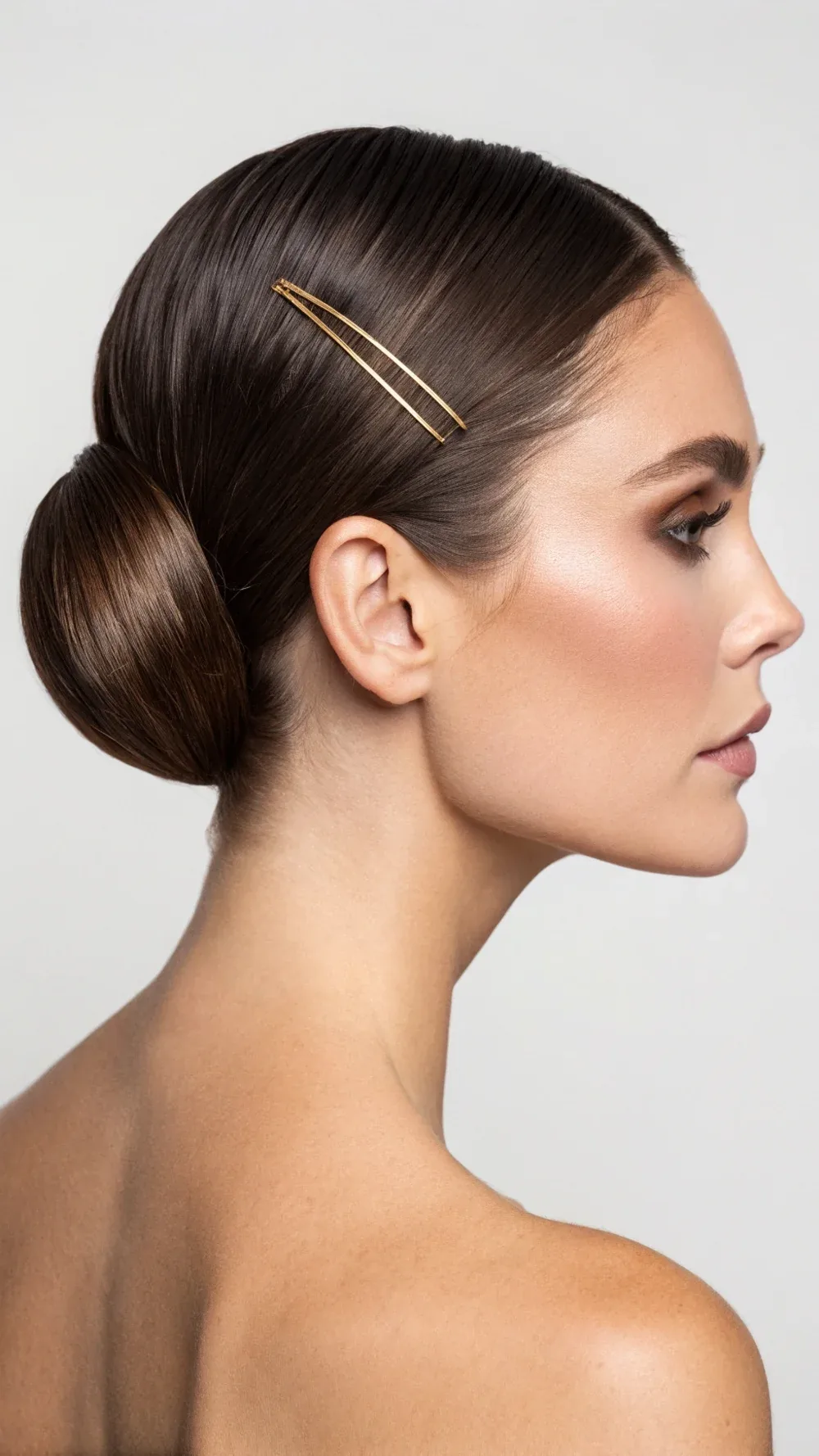
Best for: competition skaters who want a timeless, understated finish. It suits straight hair best.
How to style: part the hair down the middle, smooth both sides back, and gather it into a low bun. Pin it flat and finish with a light spray.
Time and cost: 5 minutes, plus pins and a little gel.
Braided Ponytail With Curls
A braided ponytail with curls braids the top of the hair for hold, then lets the ponytail fall in soft curls. It gives you the security of a braid and the movement of loose hair in one style, which makes it perfect for a lyrical programme where the hair should flow with the music.
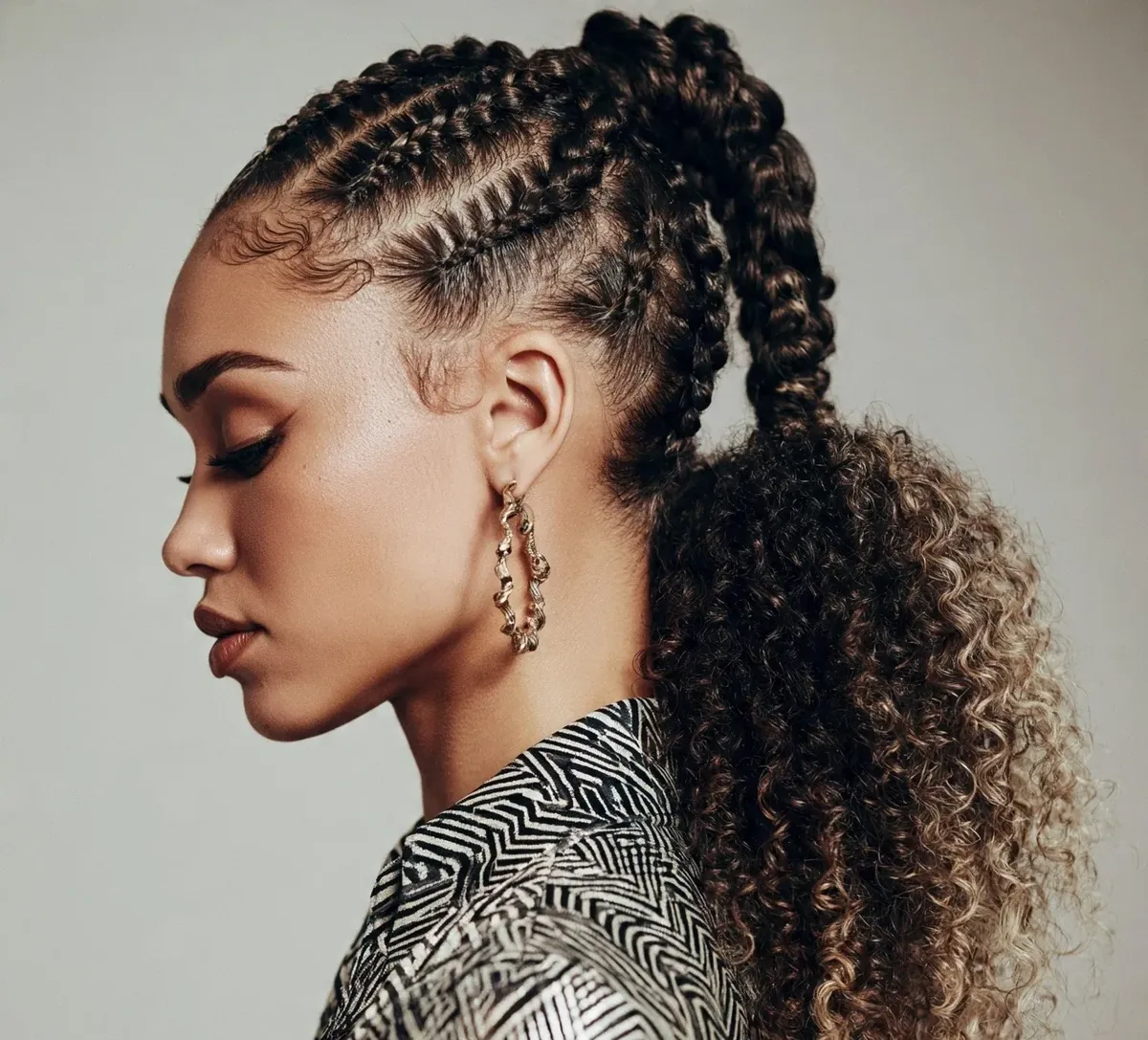
Best for: skaters with long hair who want hold and movement together. It suits wavy and curly hair best.
How to style: braid the top section from the hairline to the crown, gather it into a ponytail and curl the ends. Smooth the hairline with gel.
Time and cost: 15 minutes, plus a curling iron, elastic and pins.
Soft Waves With a Velvet Headband
Soft waves with a velvet headband are the relaxed, romantic skating look: the waves give you movement and softness, while the headband keeps the front layers back and adds warmth and a touch of luxury. It is the best choice when you want to look like you, not like a competitor, and still skate beautifully.
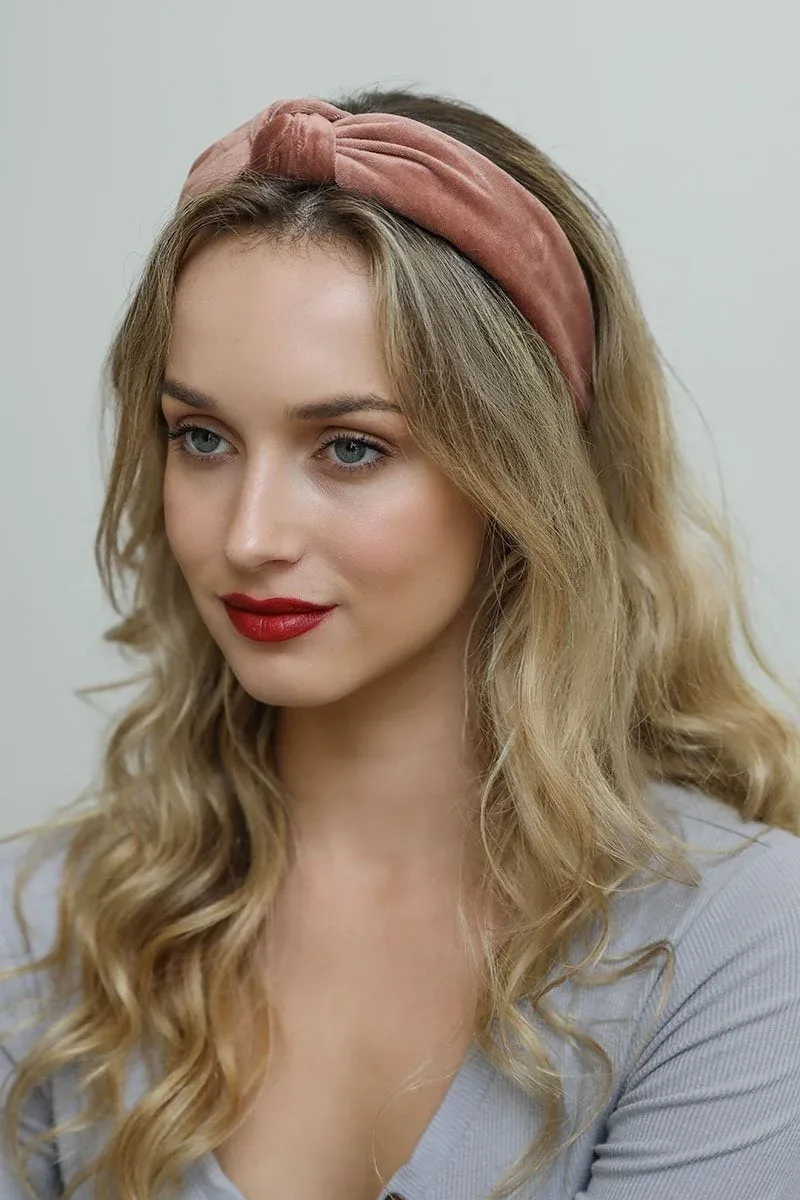
Best for: skaters who want a soft, natural look, and medium to long wavy or straight hair. It suits a showcase or a casual skate best.
How to style: add soft waves with a curling iron or a braid left in overnight, then slide a velvet headband on to hold the front back. Smooth flyaways with a little cream.
Time and cost: 10 minutes, plus a curling iron and a velvet headband.
What is the best hairstyle for figure skating?
A low bun or a braided bun is the best hairstyle for figure skating, because it locks the hair flat against the head, cannot come loose in a spin, and keeps the front clear of the eyes. Double Dutch braids are the next best choice if you prefer your hair fully braided.
Can I wear a ponytail for figure skating?
Yes, you can wear a ponytail for figure skating, but it should be secured tightly and ideally have a braid running into it, so it cannot swing across your face in a spin. A low ponytail is safer than a high one for jumps, while a high ponytail suits a fast, dramatic programme.
How do I keep my hair from coming loose during spins?
Start the style tight at the hairline, anchor it at several points with a braid or pins crossed in an X, and test it with a few fast turns at home. A firm-hold hairspray at the hairline and a quick tug test before you skate will tell you whether the style will hold.
What hairstyle works best for a figure skating competition?
A classic low bun, a braided bun or double Dutch braids work best for a figure skating competition, because they are secure, polished and judge-ready. The style should be one you have already tested through the whole programme, with the costume and hairpiece you will actually wear.
Can short hair work for figure skating?
Yes, short hair works very well for figure skating: it cannot fall into your eyes, needs almost no styling, and fits any costume. Add a headband or a little gel to hold the front back, and a touch of texture spray for grip, and you are done.
How do I match my hairstyle to my skating costume?
Choose the hairstyle after the costume, not before, and pick one accessory in the costume’s colour or crystal shade. A clean bun lets a sparkly costume shine, while a softer style suits a romantic dress. Always pin accessories into the bun or braid itself, never just onto loose hair.
Will cold rink air damage my hair?
Cold, dry rink air will not damage healthy hair in one session, but it can make hair feel dry and full of static. A little leave-in conditioner or hair oil before you skate protects the lengths, and wearing your hair braided or in a bun limits how much of it the cold air reaches.
What should I wear in my hair for figure skating practice?
For practice, wear a style that is quick, comfortable and easy to redo: a low ponytail, a simple braid or a messy bun. Keep spare elastics and bobby pins in your skate bag so you can fix the style between run-throughs without leaving the rink.
How do I stop flyaways under bright rink lights?
Smooth gel along the hairline with a toothbrush or a small brush, and finish with a light mist of hairspray held a handspan away from the head. Braids and buns also help, because contained hair shows fewer flyaways than loose hair does under bright lights.
How do I fix my hair between programmes at a competition?
Re-tighten the bun or ponytail at the base, smooth the hairline with a little cream, and re-pin any loose strands. Keep a small kit in your skate bag with spare elastics, bobby pins and a travel-size smoothing cream so the fix takes less than a minute.
Final Bow: Pick Your Skating Style and Enjoy the Ice
The best hairstyles for figure skating are the ones you forget about once the music starts. Whether you choose a classic competition bun, double Dutch braids for a programme full of spins, or a ribbon-tied ponytail that matches your costume, the rule is the same: anchor the hair, keep the front out of your eyes, and pick a style that finishes your costume instead of fighting it.
Try your style once at home before competition day, with the costume and hairpiece you will actually wear. Spin, jump and land a few times. If nothing moves, you have found your skating style. Then all that is left is the ice itself: the cold air, the rink lights, the hush before the music, and a programme where your hair looks as good as your skating feels.