Look Like You on Your Best Day: Polished Hairstyles for a Job Interview That Build Confidence
You have about 30 seconds to make a first impression in a job interview, and your hair is part of that impression long before you answer a single question. Not because interviewers are judging your hair, but because neat, intentional hair quietly says you prepared, you care, and you are ready. The goal is not a costume or a style that does not feel like you. It is hair that looks deliberate, stays out of your face, and lets the interviewer focus on what you are actually saying.
This guide brings together 31 hairstyles for a job interview, for short, medium and long hair, straight, wavy, curly and coily textures, across corporate, creative, healthcare and remote-video settings. For each style you will find the impression it gives, how long it takes, which industry or setting it suits best, and a quick verdict, so you can pick one that fits both the job and your real morning routine.
What Interviewers Actually Notice About Hair
Interviewers rarely notice a specific haircut. What they notice is whether your hair looks intentional: clean, brushed or defined, with no hair falling across your eyes while you talk. They notice flyaways only when they distract, and they notice a style that keeps moving, because you keep touching it to push it back.
That is good news. You do not need a salon-perfect style. You need a style that holds its shape, keeps your face visible, and does not need fixing every few minutes. If you can sit, talk, nod and lean forward without your hair changing, your hair has done its job.
Matching Your Style to the Industry

Corporate, finance and law interviews usually reward the most polished end of the scale: sleek buns, smooth blowouts, neat bobs and low ponytails. The style should look tidy from every angle, because you may be met in a lobby, a corridor and a meeting room before you ever sit down.
Creative, tech and media interviews give you more room for personality: texture, waves, a modern crop or a soft colour can all work, as long as the style still looks finished. Healthcare, education and hands-on roles add a practical rule: hair should be secured away from the face and shoulders, so it never gets in the way of the work.
Styles That Survive a Long Interview Day
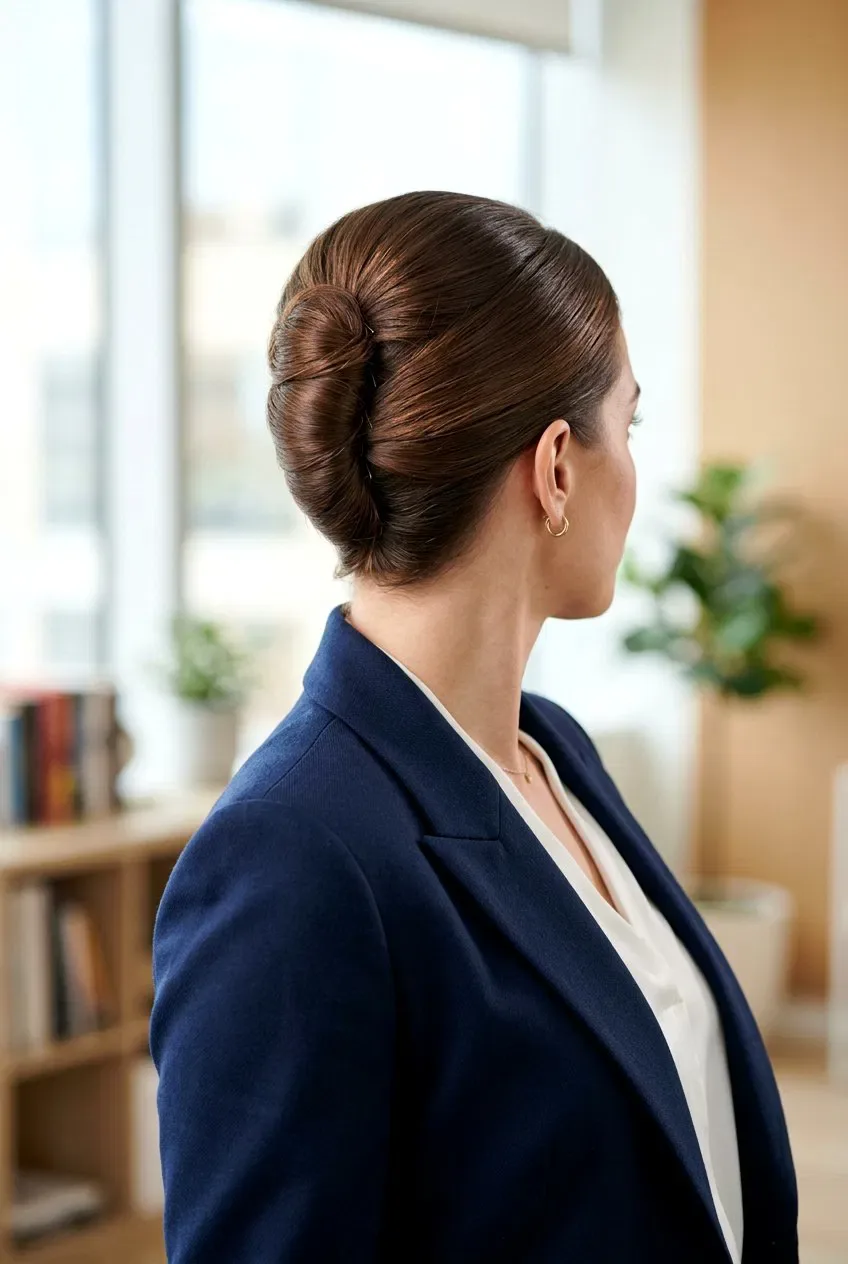
Some interviews last an hour. Others are a full day of panels, tours and lunch. The styles that survive are the ones anchored well: a low bun pinned in several places, a ponytail secured with two bands, a blowout set with a light hold spray, or curls defined the night before rather than freshly washed and fragile.
Test your style before the day. Wear it for a few hours at home, walk around, sit and stand, and check it in a mirror afterwards. If it loosens, slips or frizzes, change the anchor, not the whole style: stronger pins, a little more product, or a looser, more forgiving finish.
Hair Off the Face Without Looking Severe
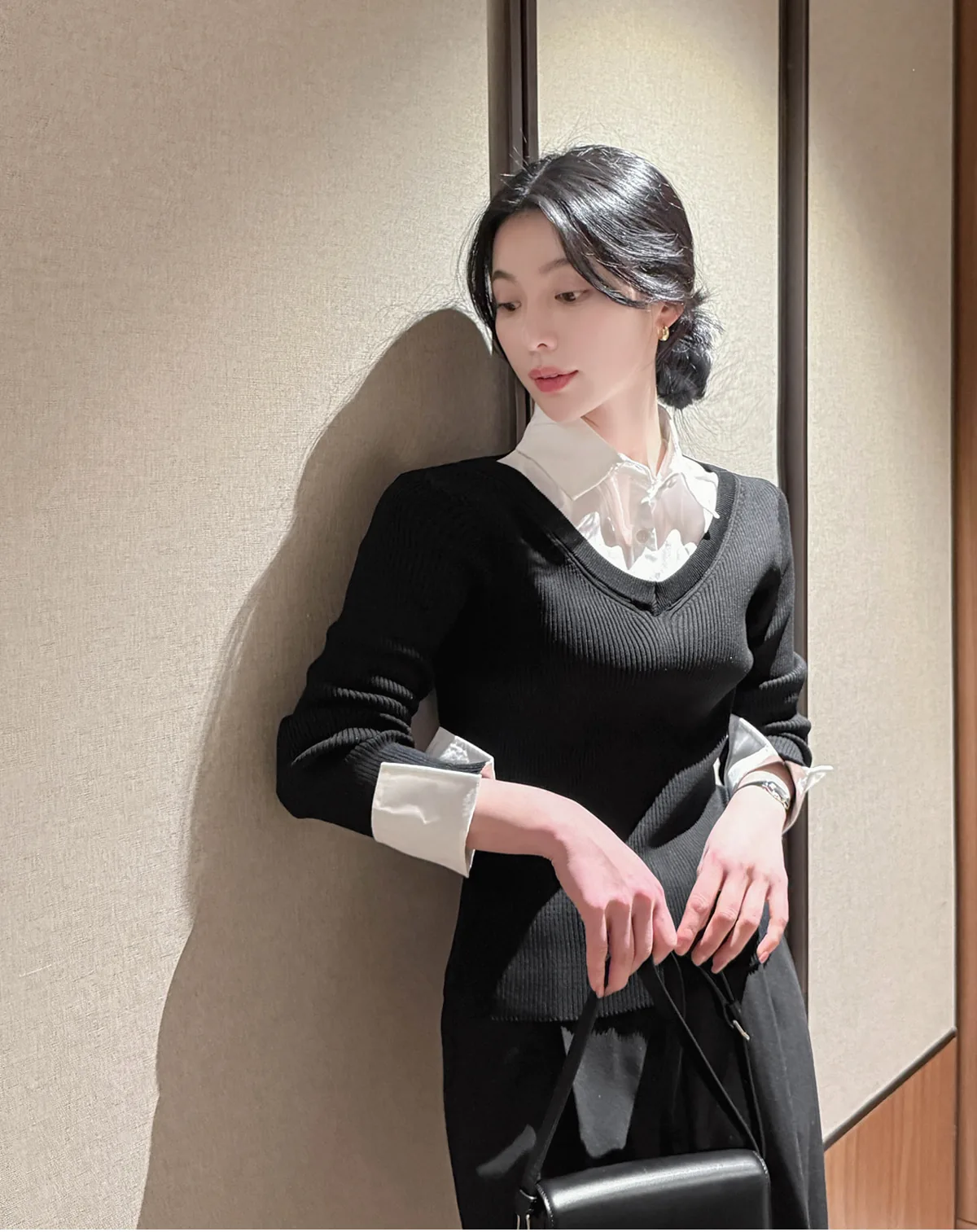
Keeping hair off your face does not mean pulling it back so tightly that you look severe or uncomfortable. Softness is the difference. Leave two short face-framing pieces out, keep a little lift at the crown, or choose a side part so the style has a gentle line instead of a hard scrape.
If you love a sleek look, keep the sleekness at the sides and add softness at the front: a centre part with soft pieces, a low bun with a slightly loosened top, or a ponytail that sits low rather than pulled high and tight. You still look polished, but you still look like yourself.
1. The Sleek Low Bun
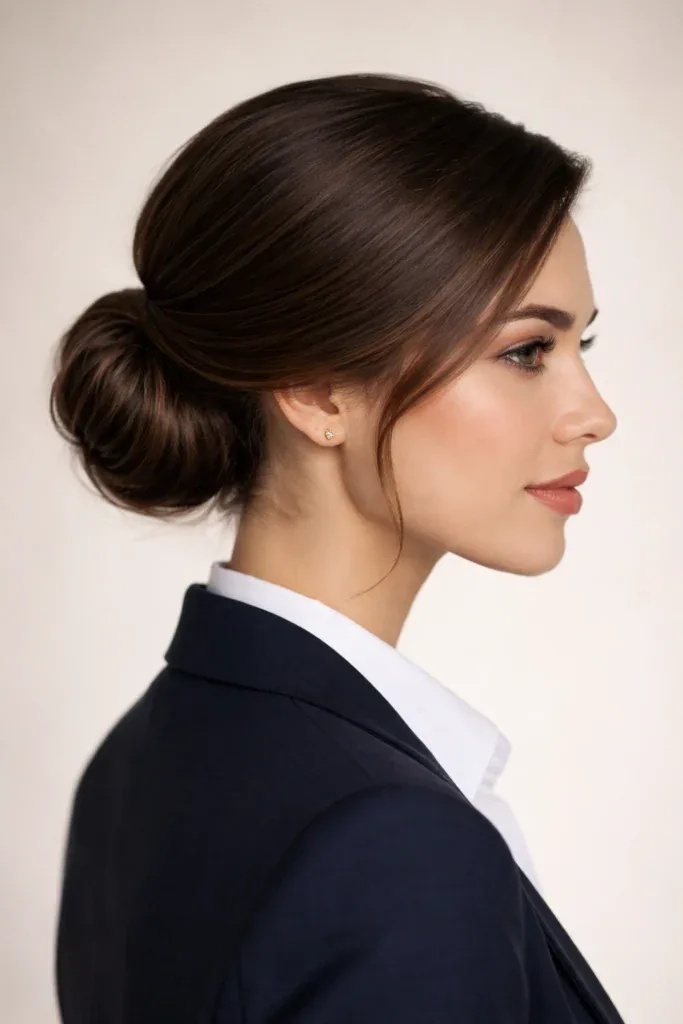
The sleek low bun is the classic interview updo for a reason. Hair is smoothed back, twisted or coiled at the nape, and pinned securely, giving a clean neckline and a fully visible face. It works on medium and long hair and photographs beautifully from every angle.
The impression it gives: Calm, organised and completely in control.
Time to style: 10 to 15 minutes.
Best for (industry/setting): Corporate, finance, law and formal panel interviews.
Quick verdict: The safest, most polished choice when you want zero distractions.
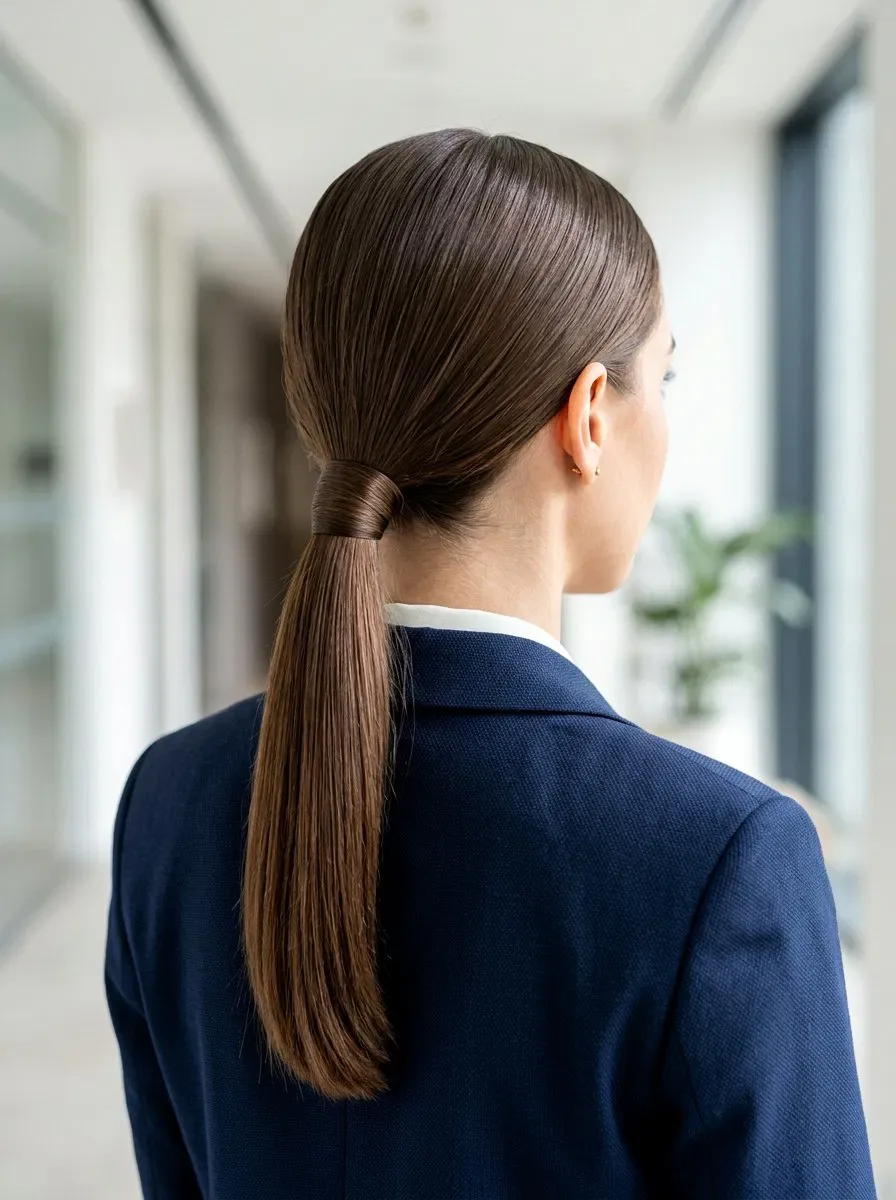
2. The Polished Low Ponytail
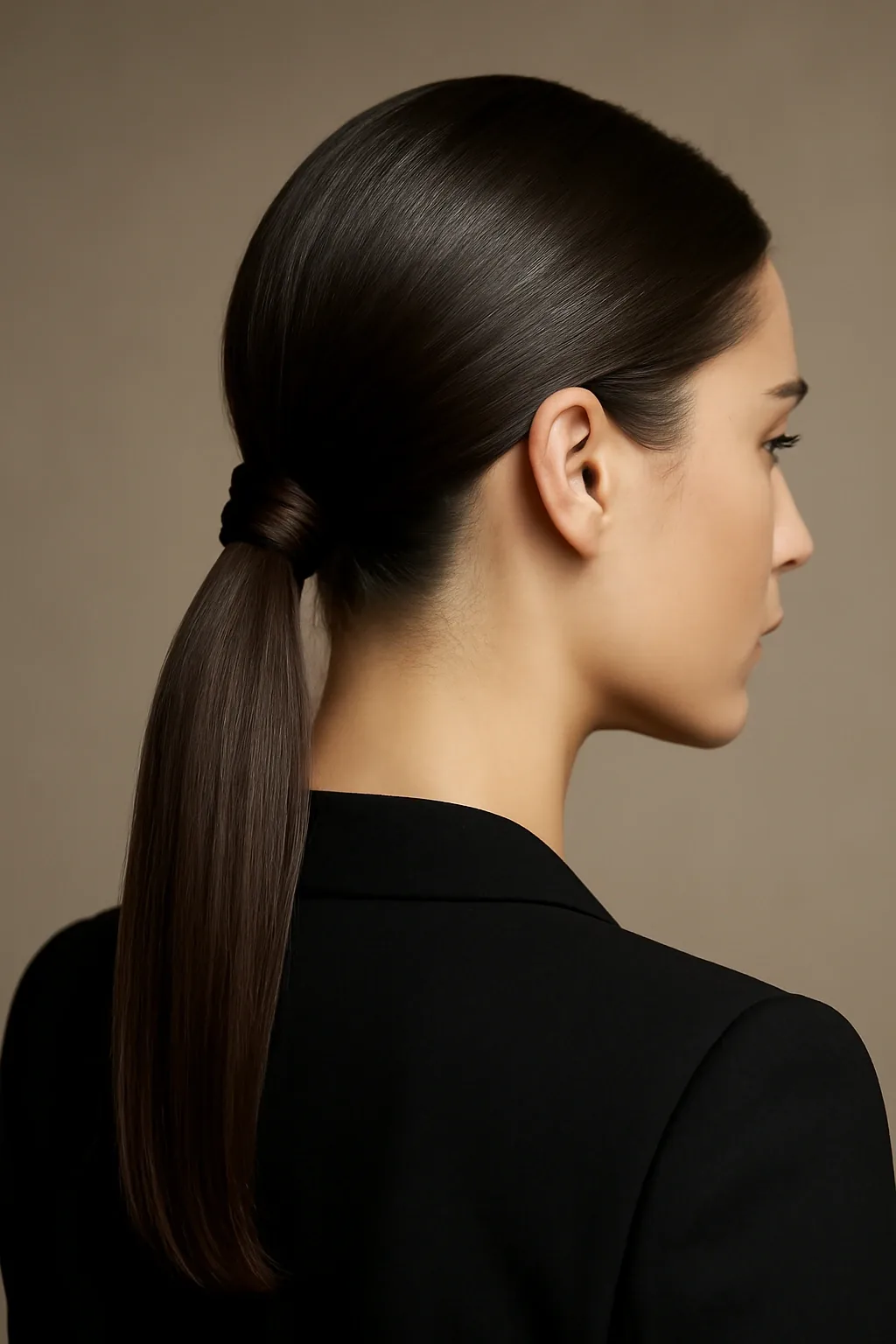
A low ponytail, smoothed at the crown and secured at the nape, is polished without feeling stiff. Wrap a small section of hair around the band for a finished look, and keep the length smooth or softly waved rather than messy.
The impression it gives: Smart, approachable and ready to work.
Time to style: 5 to 10 minutes.
Best for (industry/setting): Corporate, office, healthcare and education interviews.
Quick verdict: Easy, reliable and flattering on almost everyone.
3. The Classic French Twist
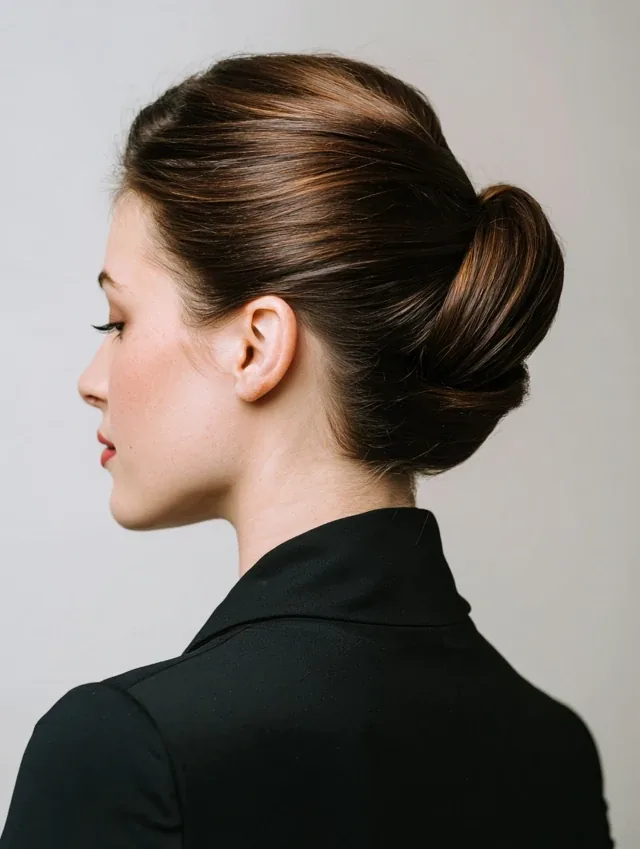
The French twist rolls hair up the back of the head into a vertical, elegant shape. It is more formal than a bun, suits medium to long hair, and keeps every strand off the face and shoulders for the whole interview.
The impression it gives: Elegant, experienced and quietly confident.
Time to style: 15 to 20 minutes, or a salon updo for a big occasion.
Best for (industry/setting): Law, executive, formal corporate and hospitality interviews.
Quick verdict: Beautiful for formal roles; practise it once before the day.
4. The Neat Chignon
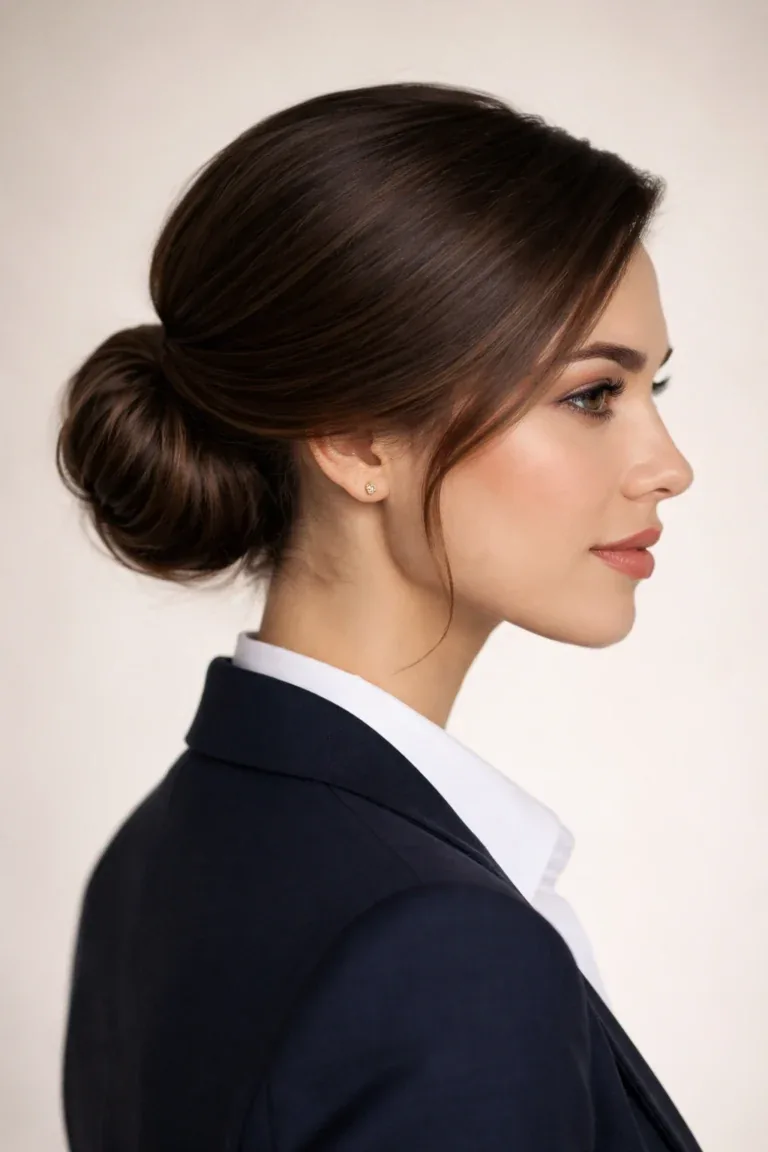
A chignon is a low, tidy knot at the nape, softer than a tight bun and neater than a loose one. It suits straight and wavy hair, works with a centre or side part, and pairs well with a blazer or suit.
The impression it gives: Refined, composed and professional.
Time to style: 10 minutes.
Best for (industry/setting): Corporate, consulting and client-facing roles.
Quick verdict: A gentle step up from a ponytail, without extra effort.
5. The Smooth Shoulder-Length Blowout
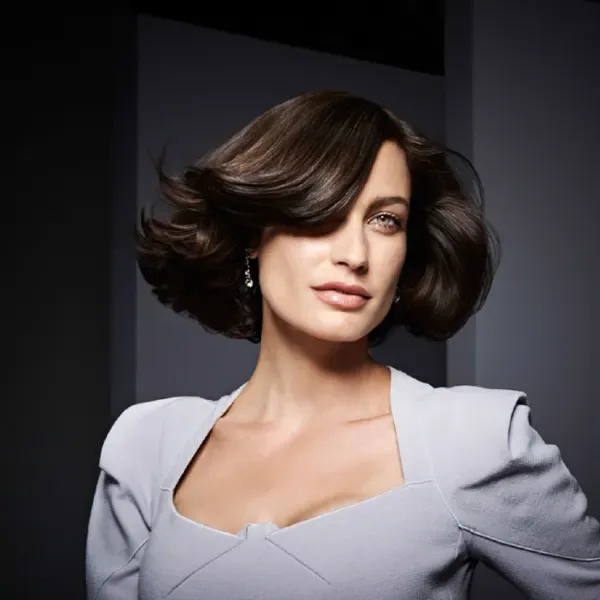
A smooth blowout on shoulder-length hair gives movement, shine and shape while keeping the face open. Blow-dry with a round brush, bend the ends slightly under, and finish with a light serum for a finish that holds for hours.
The impression it gives: Polished, friendly and put-together.
Time to style: 20 to 30 minutes, or a salon blow-dry.
Best for (industry/setting): Corporate, sales, marketing and office interviews.
Quick verdict: Ideal if you prefer wearing your hair down but still want polish.
6. Sleek Straight Long Hair With a Centre Part
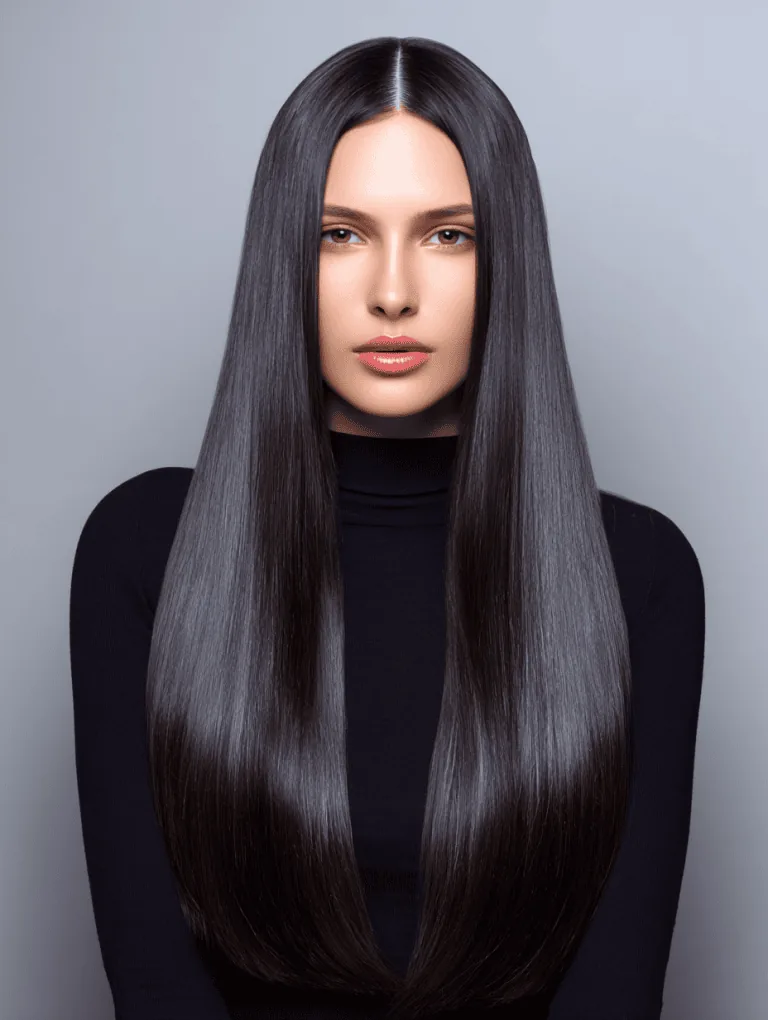
Long, sleek, straight hair with a centre part looks intentional when it is truly smooth: no frizz, no straggly ends, and a clean parting. Keep it behind the shoulders so it does not fall forward while you talk.
The impression it gives: Calm, neat and self-assured.
Time to style: 15 to 20 minutes with a straightener.
Best for (industry/setting): Corporate, creative and remote video interviews.
Quick verdict: Works best on healthy, freshly trimmed ends.
7. Soft Waves on Shoulder-Length Hair
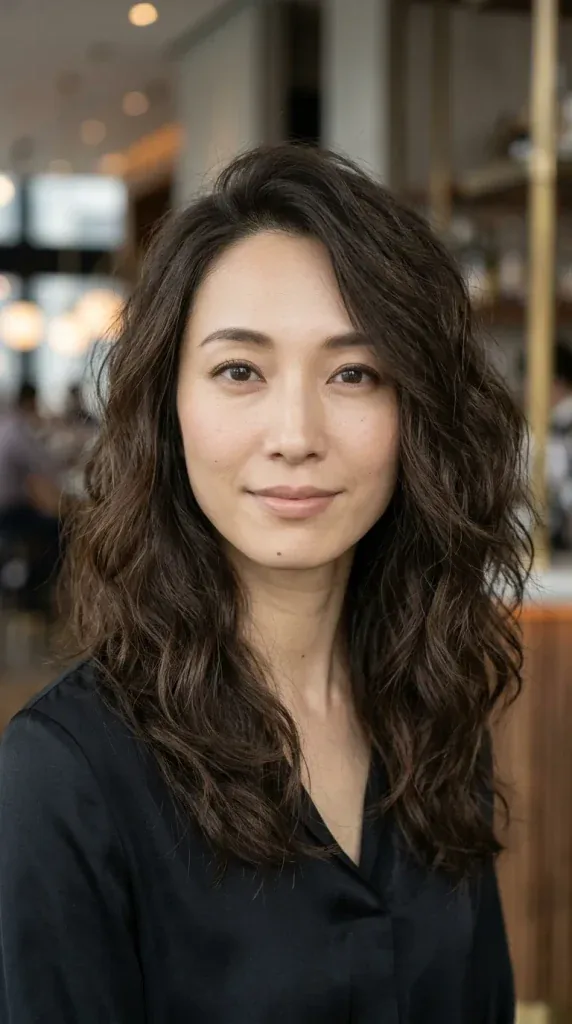
Soft, brushed-out waves on shoulder-length hair give warmth and movement without looking casual. The key is definition: waves should be even and smooth, not beachy or undone, and the face should stay clear.
The impression it gives: Warm, confident and approachable.
Time to style: 20 minutes with a curling wand or rollers.
Best for (industry/setting): Marketing, media, education and creative roles.
Quick verdict: A friendly polish that still feels like you.
8. The Low Side Bun
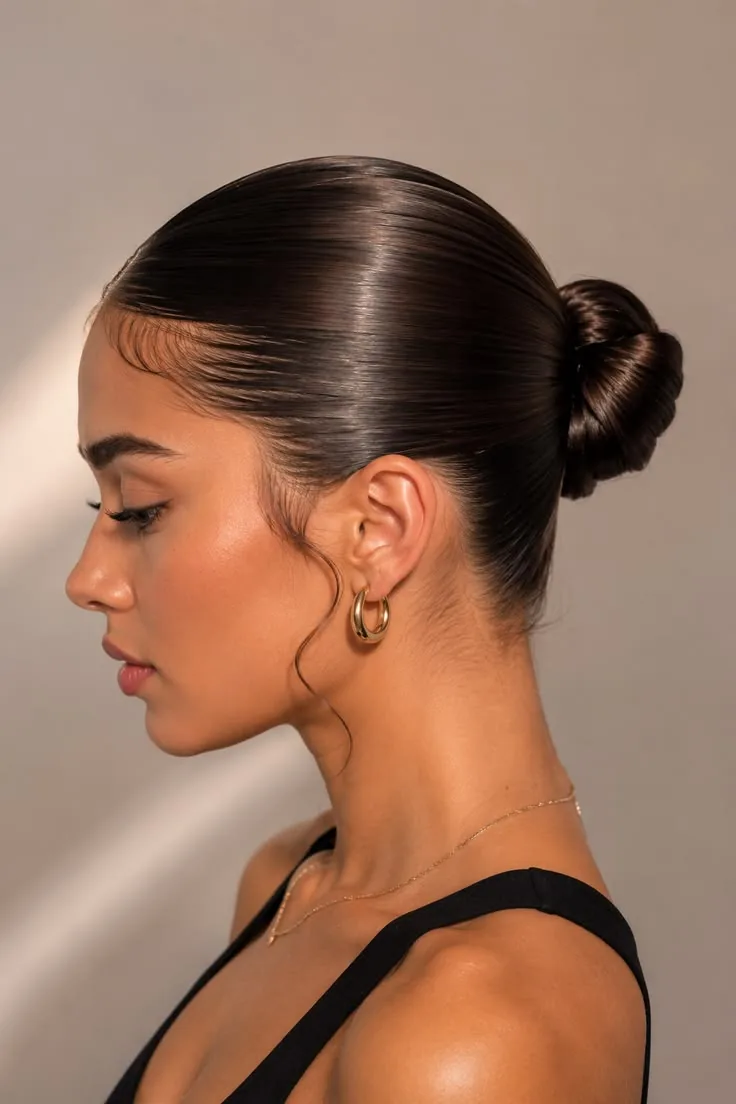
A low side bun sits just behind one ear, giving a softer, slightly more distinctive take on the classic bun. It suits wavy and straight hair, photographs well, and keeps hair completely off the face.
The impression it gives: Graceful, thoughtful and distinctive.
Time to style: 10 to 15 minutes.
Best for (industry/setting): Creative, hospitality and client-facing interviews.
Quick verdict: A good choice if a centre bun feels too severe.
9. The Half-Up Twist
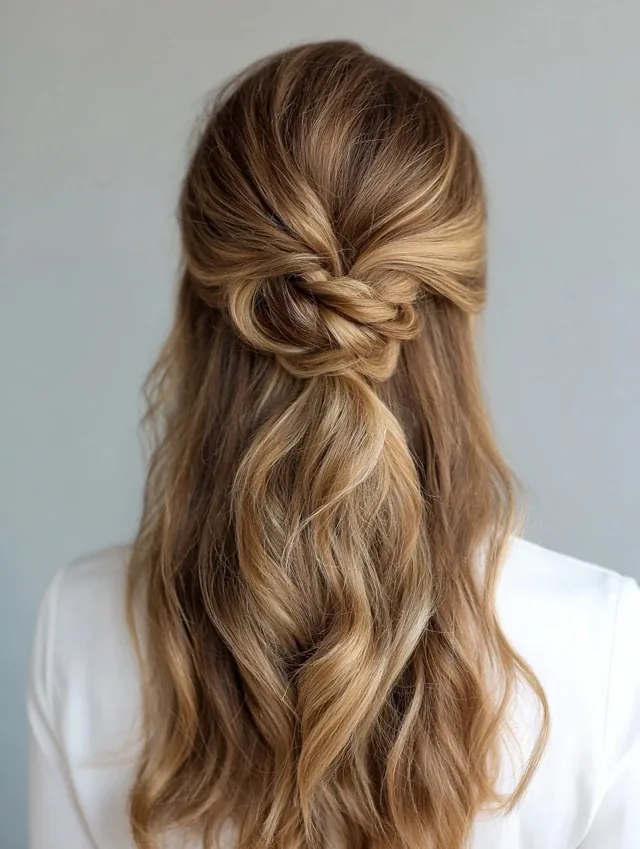
The half-up twist pulls the top section back and twists it into place, leaving the lengths down. It keeps hair out of your eyes while showing off length and texture, and it works on medium and long hair.
The impression it gives: Friendly, neat and easy to talk to.
Time to style: 5 to 10 minutes.
Best for (industry/setting): Education, creative, tech and informal office interviews.
Quick verdict: Perfect when you want hair down but not in your face.
10. The Classic Bob, Neatly Styled
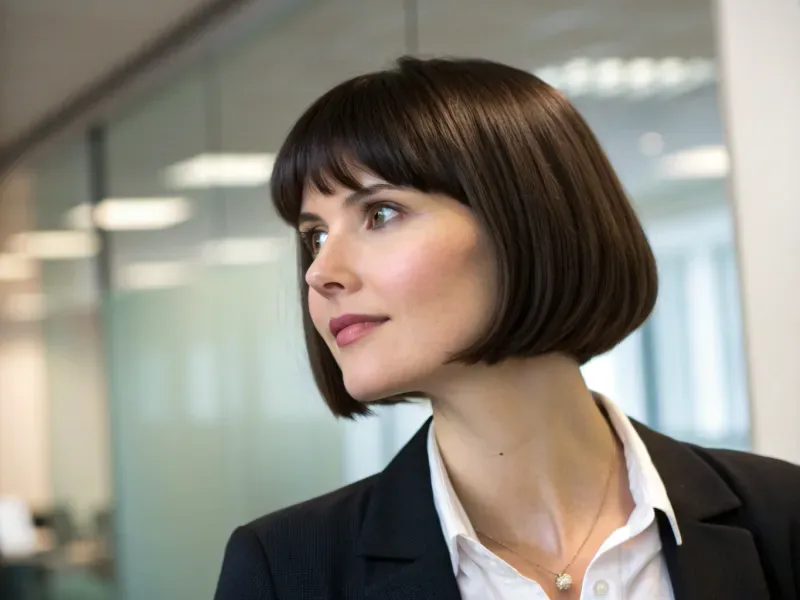
A classic bob, blow-dried smooth with the ends tucked under, is one of the most professional short styles. It frames the face, needs no pins, and looks finished the moment you walk in.
The impression it gives: Sharp, capable and modern.
Time to style: 10 to 15 minutes.
Best for (industry/setting): Corporate, finance, law and office roles.
Quick verdict: Low maintenance on the day, high impact in the room.
11. The Polished Long Bob (Lob)
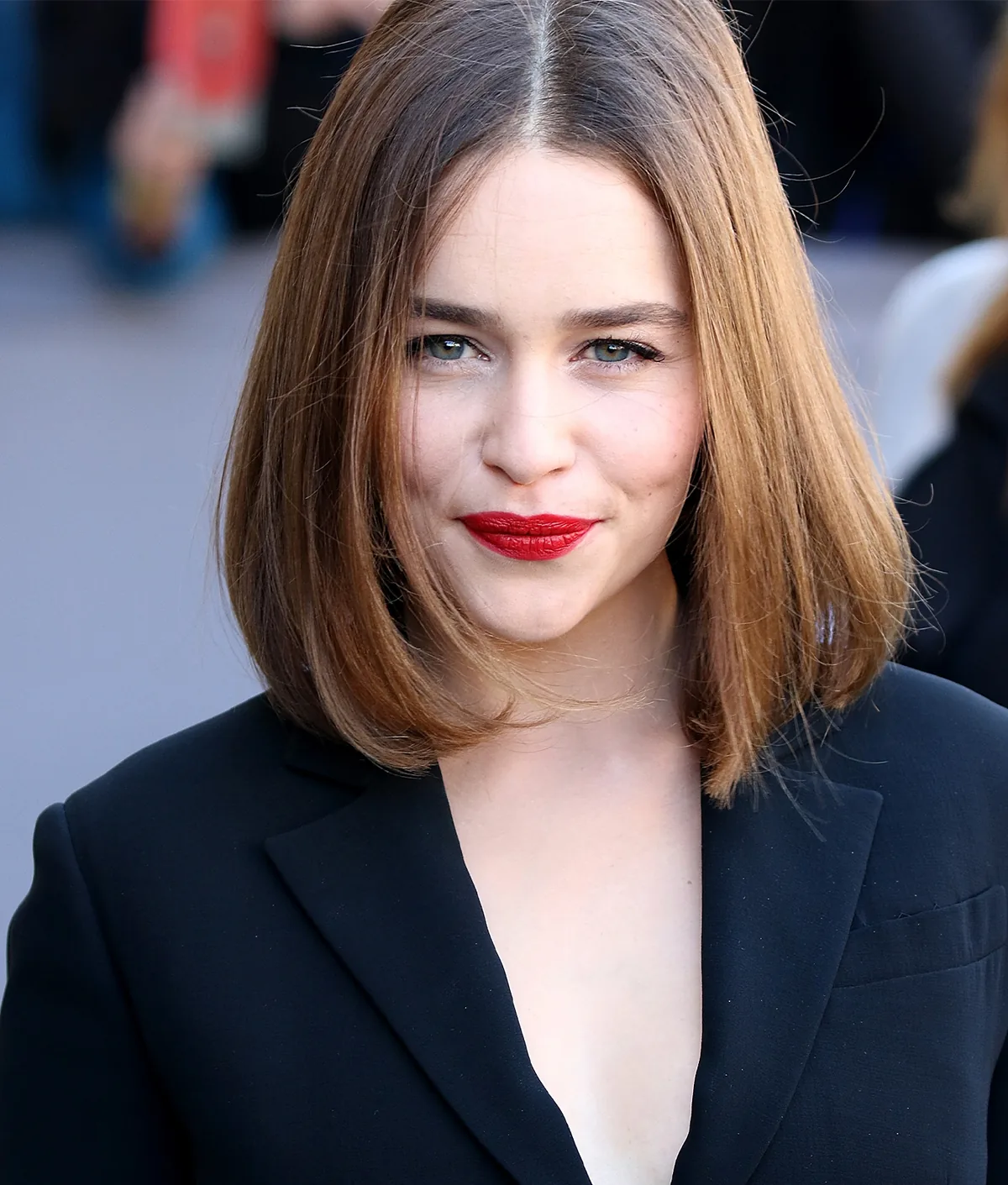
A lob that falls just above or at the shoulders, blow-dried smooth with a side part, is polished and versatile. It is long enough to tuck behind the ears and short enough never to fall across your face.
The impression it gives: Smart, current and versatile.
Time to style: 15 minutes.
Best for (industry/setting): Almost every industry, including corporate and creative.
Quick verdict: The best all-rounder if you are unsure what to choose.
12. The Neat Pixie With a Side Sweep
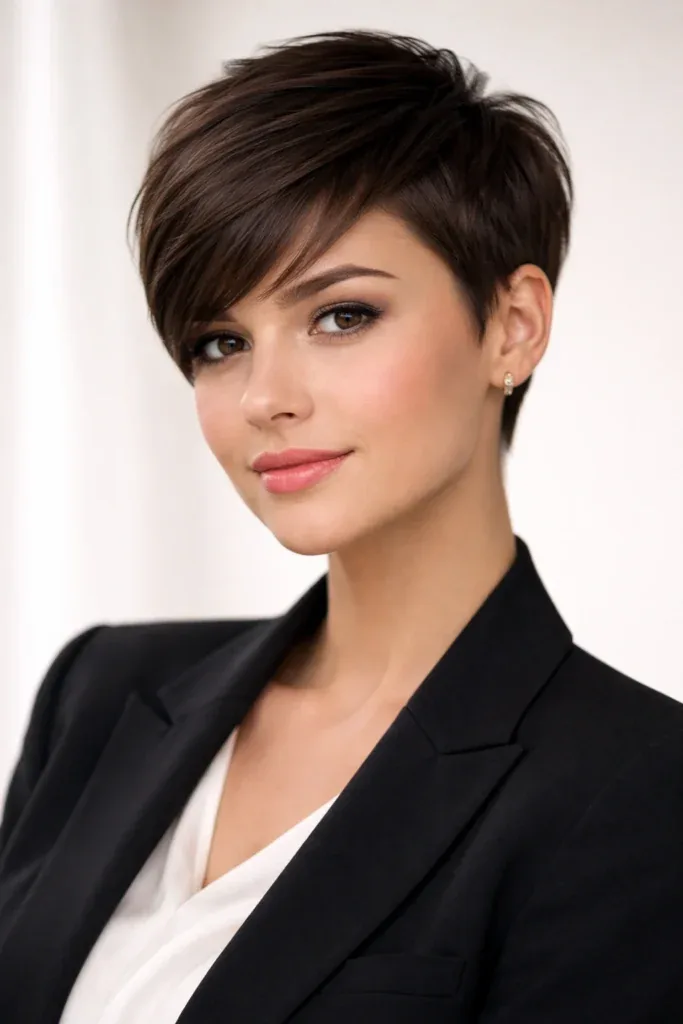
A neat pixie with a side-swept top looks intentional and confident. Keep the sides smooth, the top swept to one side, and the fringe clear of your eyes, and the style needs almost no attention during the interview.
The impression it gives: Bold, confident and effortlessly professional.
Time to style: 5 minutes.
Best for (industry/setting): Creative, tech, design and modern corporate roles.
Quick verdict: Proof that short hair can be the most polished choice in the room.
13. Defined Curls, Shaped and Professional
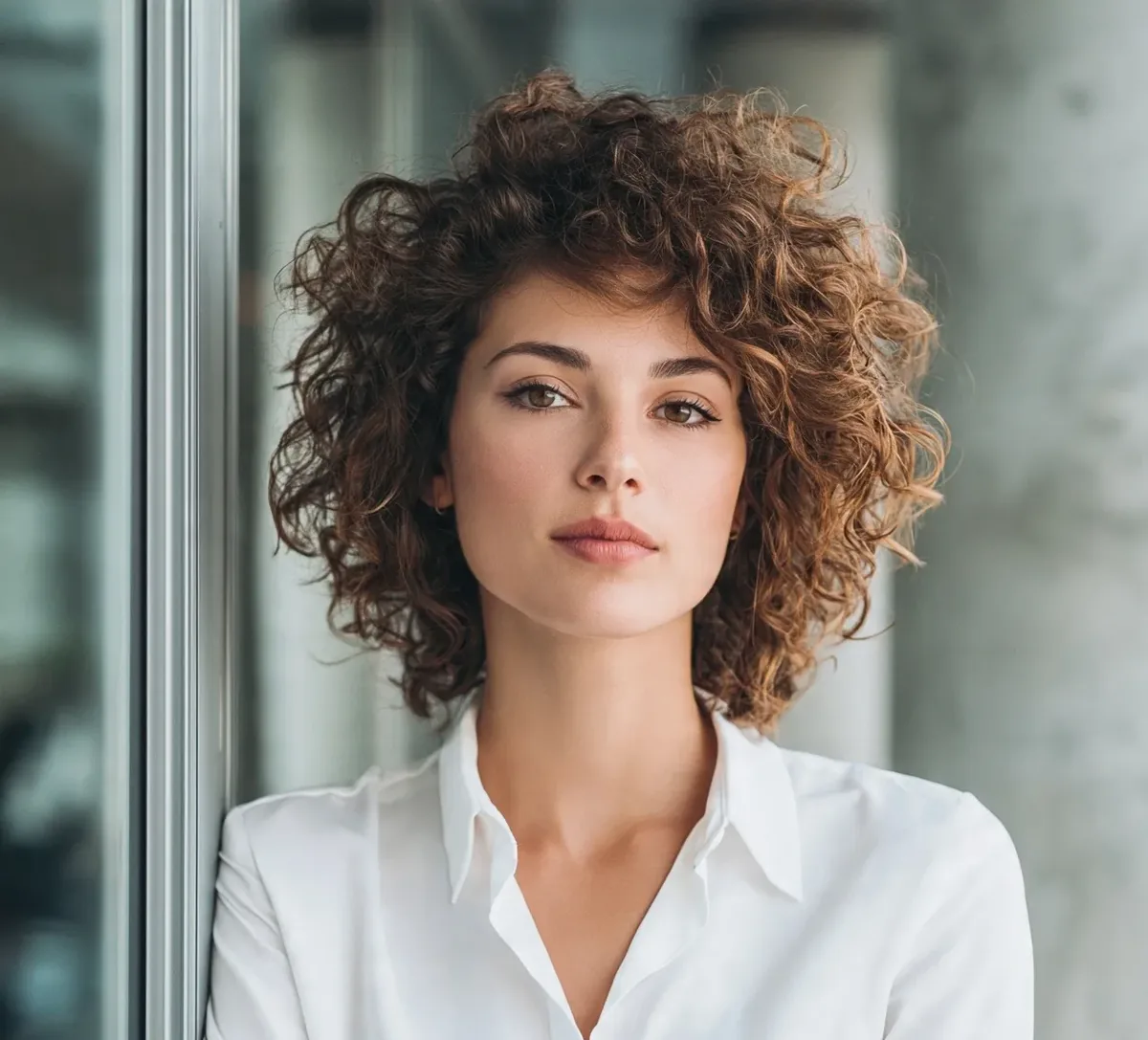
Defined curls, shaped with curl cream and diffused or air-dried, look professional when they are moisturised, defined and kept out of the eyes. A side part or a few front curls pinned back keeps the face open.
The impression it gives: Confident, natural and polished.
Time to style: 20 to 30 minutes, often best styled the night before.
Best for (industry/setting): Every industry, including corporate and healthcare.
Quick verdict: Wear your natural texture proudly; definition is the polish.
14. A Shaped Natural Afro, Neatly Defined
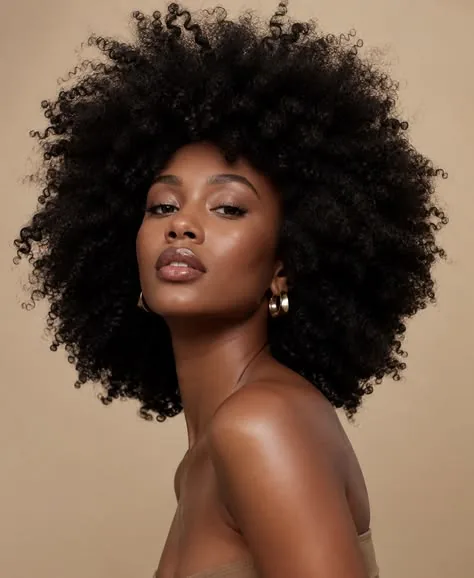
A shaped, well-defined afro, picked out evenly and moisturised for shine, is a striking professional style. Keep the shape balanced, the hairline neat, and the face clear, and it reads as deliberate and confident.
The impression it gives: Proud, polished and memorable.
Time to style: 20 to 30 minutes, including shaping and moisturising.
Best for (industry/setting): Creative, corporate, education and media roles.
Quick verdict: A strong, professional choice that needs no straightening to qualify.
15. The Braided Low Bun
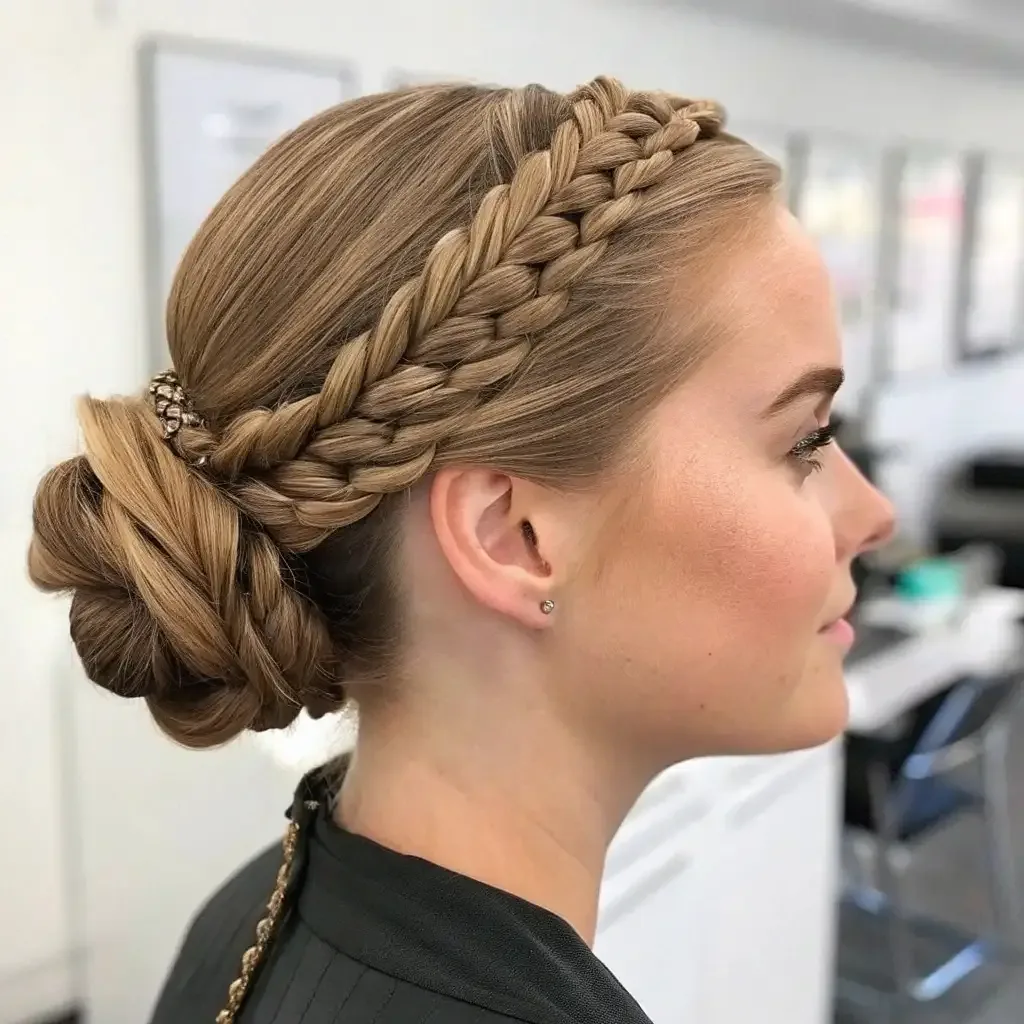
A braided low bun combines a neat braid with a low, secure bun, making it one of the longest-lasting interview styles. It suits long and thick hair, survives a full day, and looks intricate without being distracting.
The impression it gives: Tidy, dependable and beautifully finished.
Time to style: 15 to 20 minutes.
Best for (industry/setting): Healthcare, education, corporate and long interview days.
Quick verdict: Excellent if your interview day is long or active.
16. The Sleek High Ponytail, Polished Version
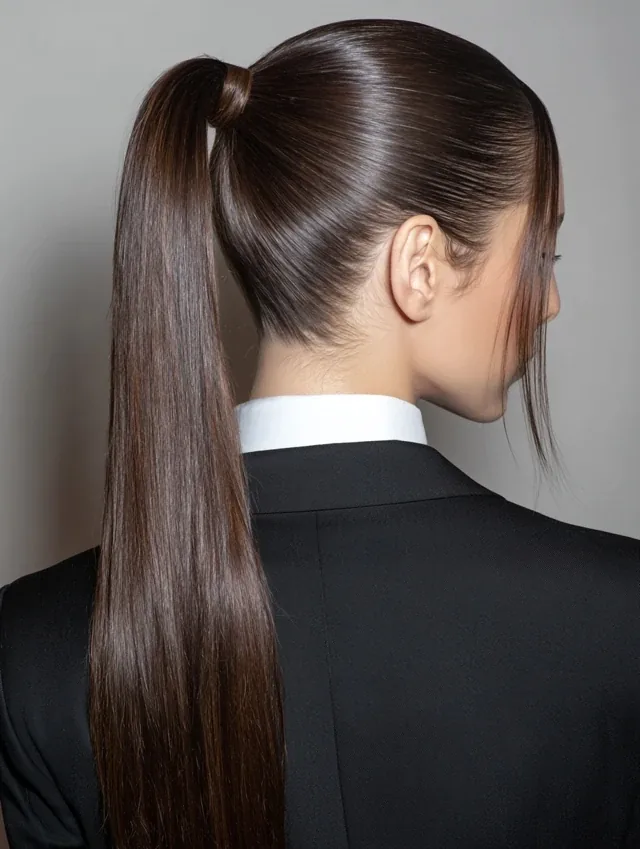
A high ponytail can look professional when it is sleek, smooth and secure, with no bumps at the crown and the length kept neat. Keep it slightly lower than a gym ponytail and wrap the band for a finished look.
The impression it gives: Energetic, sharp and put-together.
Time to style: 10 minutes.
Best for (industry/setting): Creative, tech, retail and media interviews.
Quick verdict: Keep it smooth and secure, not tight or severe.
17. The Side-Part Sleek Bob
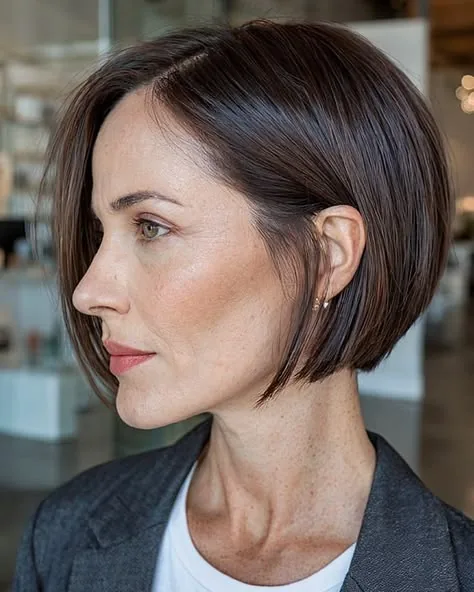
A bob with a deep side part and a sleek finish adds a touch of glamour while staying completely professional. The side part gives the style direction, and the sleek finish keeps it tidy all day.
The impression it gives: Sophisticated, assured and polished.
Time to style: 10 to 15 minutes.
Best for (industry/setting): Corporate, sales, media and client-facing roles.
Quick verdict: A classic with just enough personality.
18. The Low Ponytail With Soft Volume
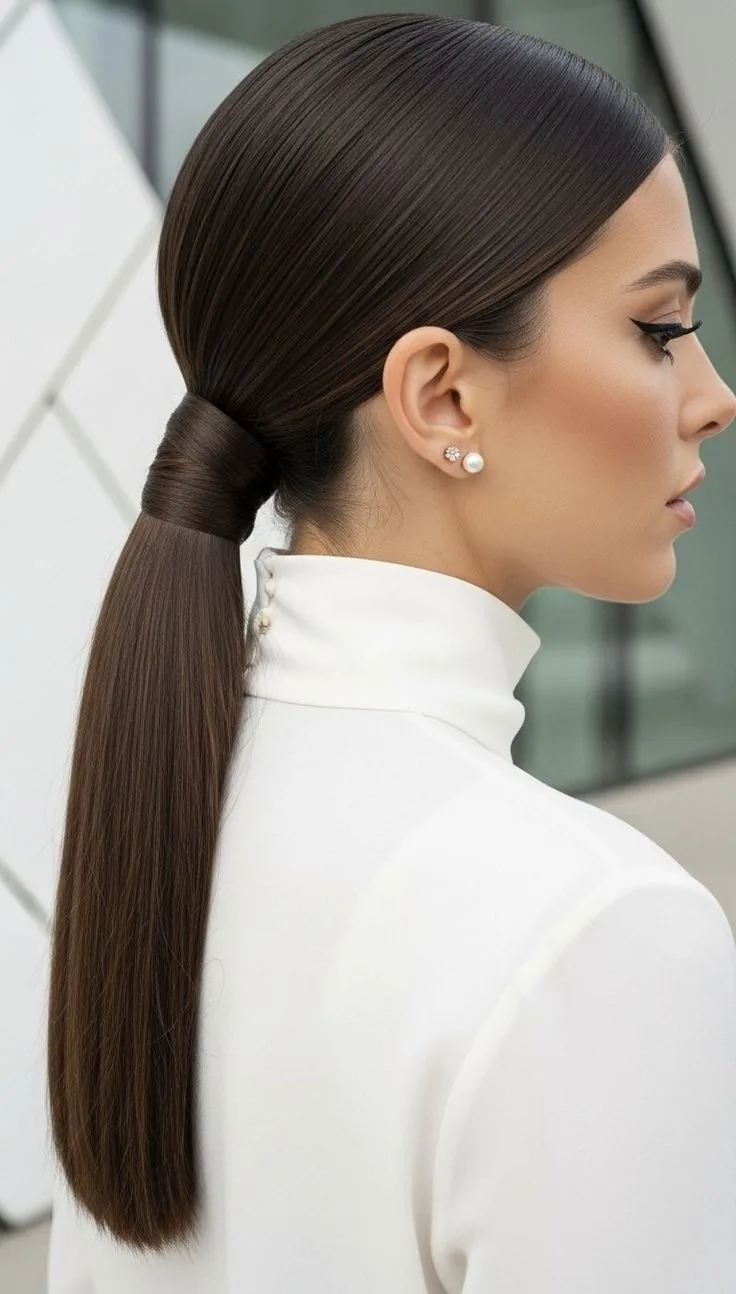
This low ponytail adds gentle volume at the crown before smoothing the sides, so it never looks flat or pulled-back. It suits fine and medium hair especially well and softens a formal outfit.
The impression it gives: Soft, professional and approachable.
Time to style: 10 minutes.
Best for (industry/setting): Office, education, healthcare and creative roles.
Quick verdict: The kinder, softer version of the sleek ponytail.
19. The Tucked-Behind-the-Ears Lob
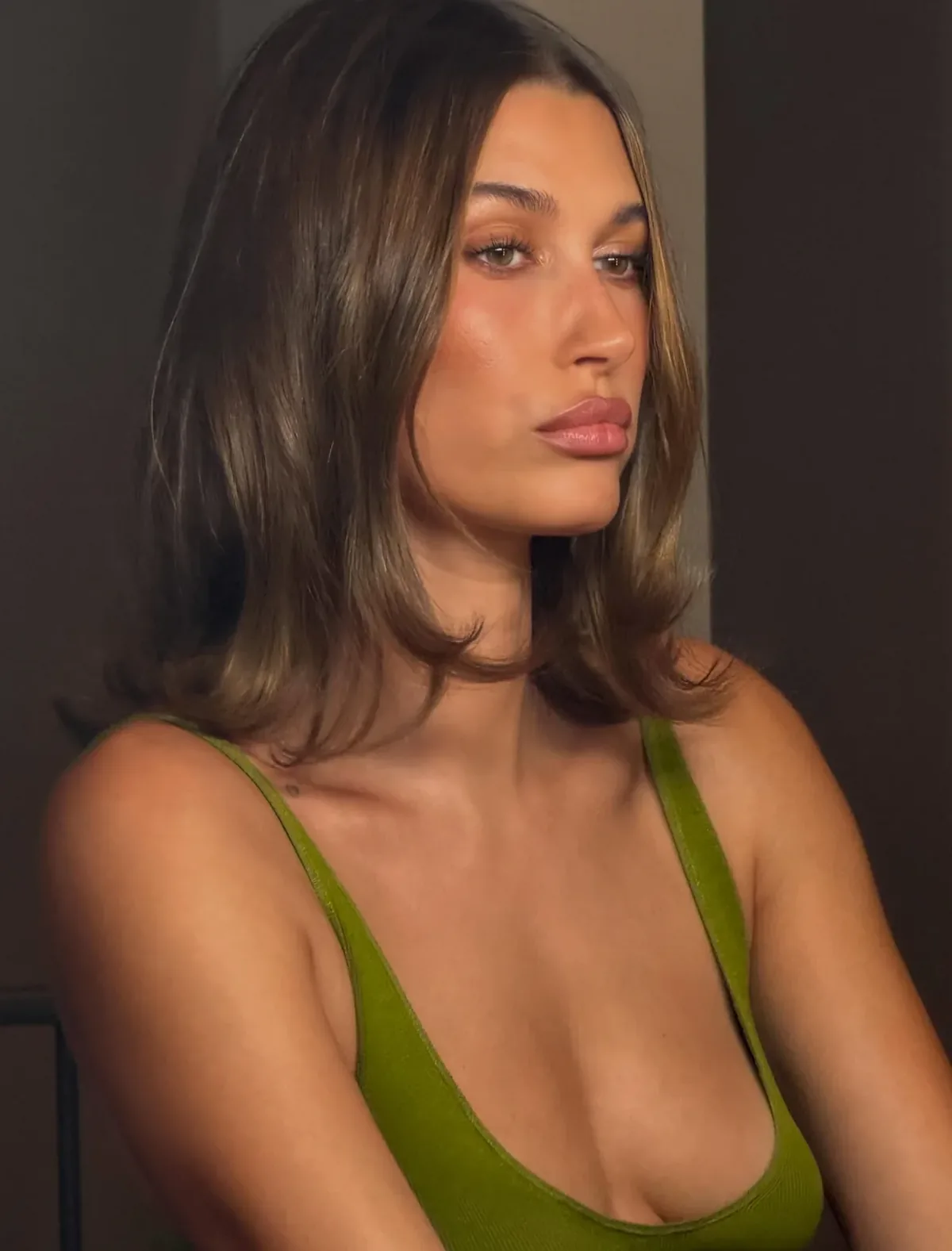
A lob tucked neatly behind the ears, with a clean parting and smooth lengths, is simple and extremely effective on video and in person. It keeps the face fully visible and needs no pins at all.
The impression it gives: Clear, focused and ready.
Time to style: 5 minutes.
Best for (industry/setting): Remote video interviews, corporate and office roles.
Quick verdict: The easiest video-interview style there is.
20. The Low French Braid
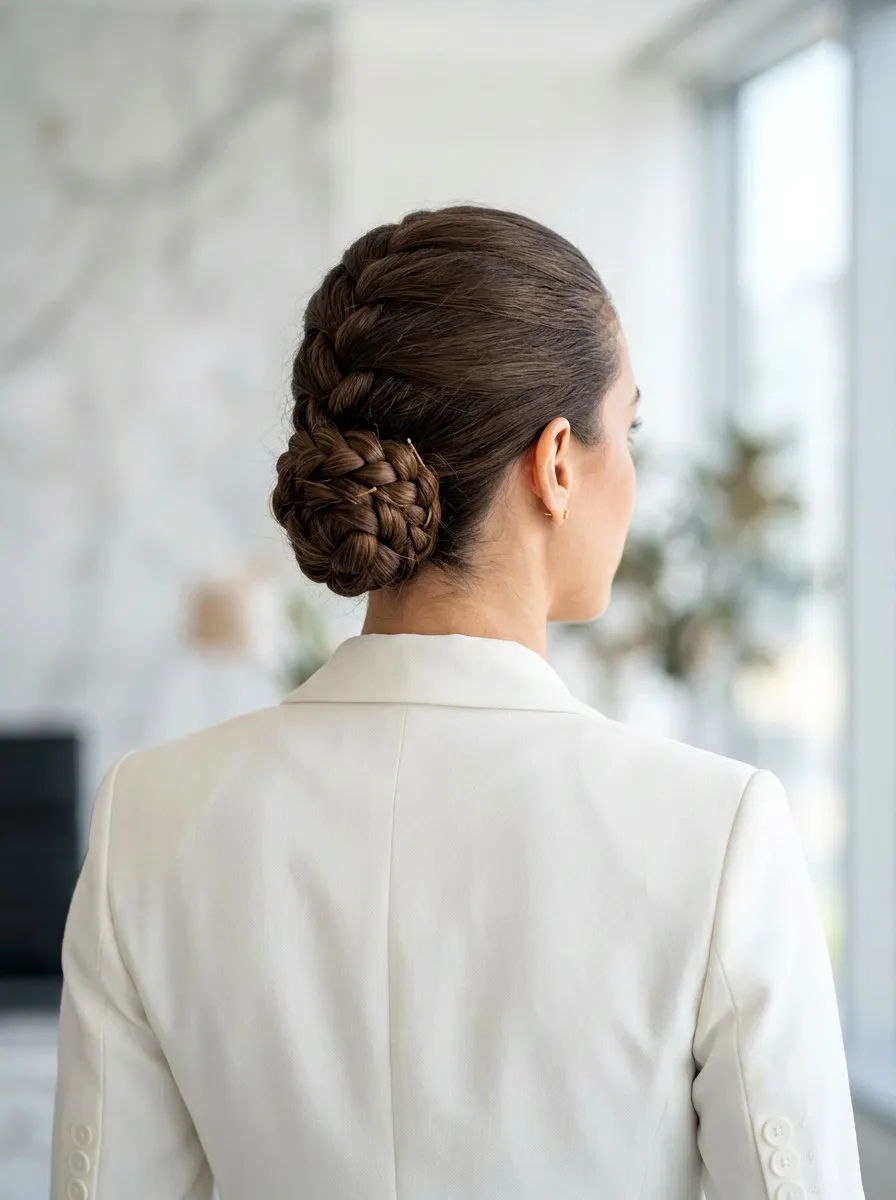
A low French braid, starting at the crown and finishing at the nape, keeps long hair completely controlled. It is neat, practical and long-lasting, and it works beautifully under a blazer.
The impression it gives: Practical, tidy and reliable.
Time to style: 10 to 15 minutes.
Best for (industry/setting): Healthcare, education, hands-on and active roles.
Quick verdict: Ideal when the job itself needs hair secured.
21. The Short Textured Crop, Neatly Finished
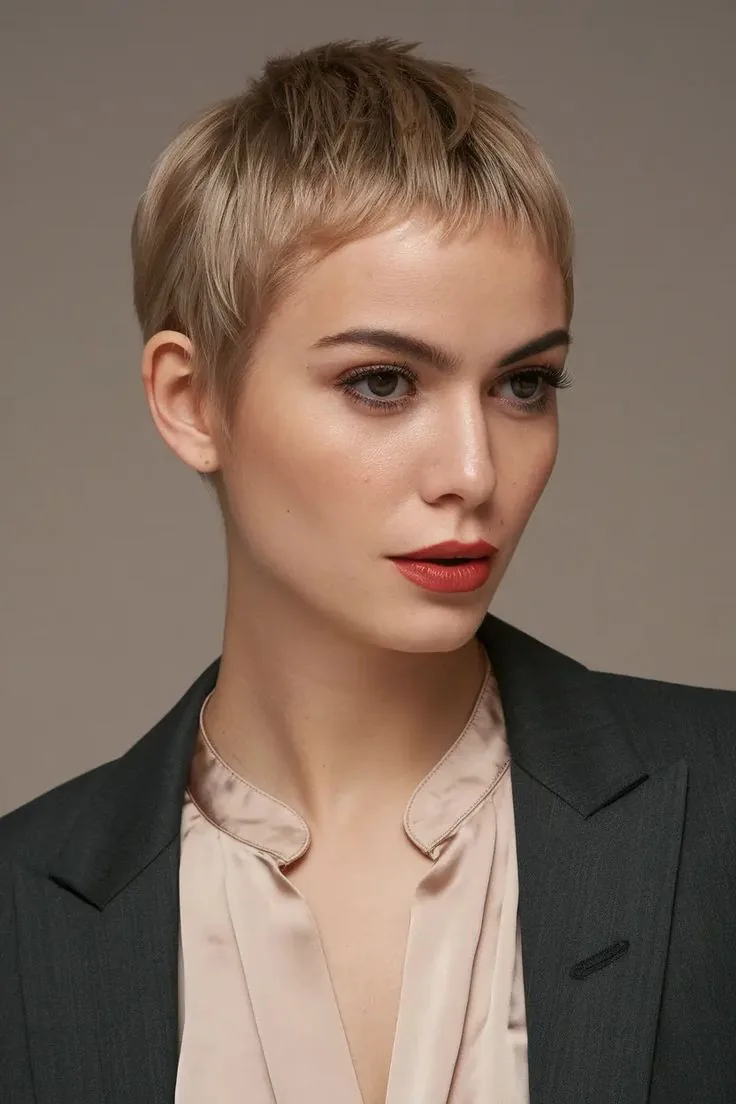
A short textured crop, styled with a little wax or cream for definition, looks modern and deliberate. Keep the texture even, the neckline clean, and the fringe off the forehead.
The impression it gives: Modern, confident and sharp.
Time to style: 5 minutes.
Best for (industry/setting): Creative, tech, design and retail roles.
Quick verdict: Short, smart and almost zero maintenance on the day.
22. The Polished Wavy Lob
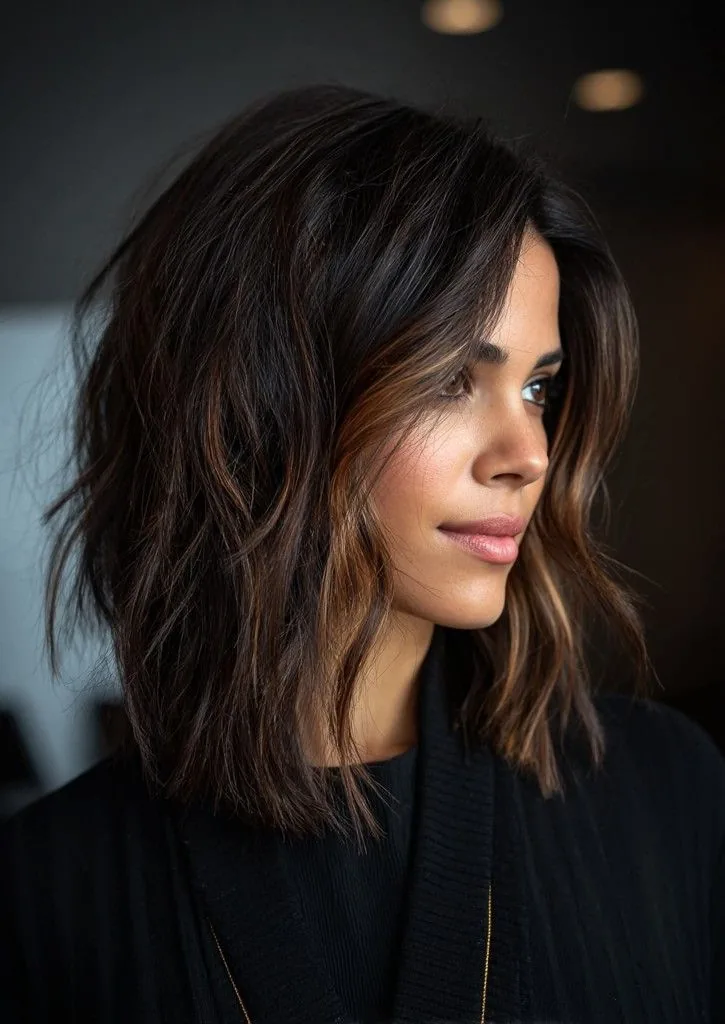
A wavy lob, with waves smoothed and brushed out for a polished finish rather than a beachy one, gives movement and warmth. Set the waves away from the face so your expressions stay visible.
The impression it gives: Warm, polished and personable.
Time to style: 20 minutes.
Best for (industry/setting): Marketing, media, education and creative roles.
Quick verdict: Great for roles where warmth matters as much as polish.
23. Straight Midi Hair With a Side Part
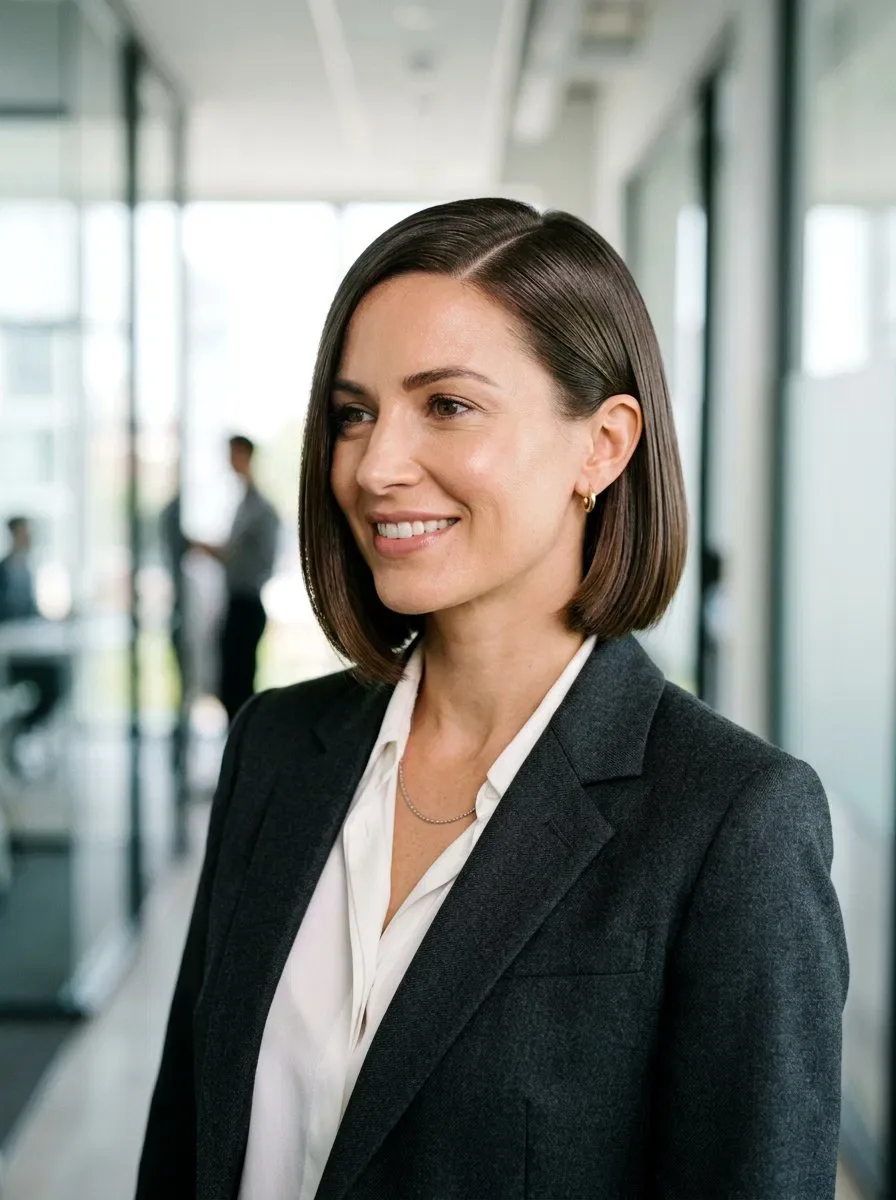
Straight midi hair with a side part and ends curved slightly under is neat, classic and easy to maintain. The side part adds shape, and the midi length never falls across the face.
The impression it gives: Classic, tidy and dependable.
Time to style: 15 minutes.
Best for (industry/setting): Corporate, office, finance and law interviews.
Quick verdict: A timeless choice that suits most face shapes.
24. The Soft Updo With Face-Framing Pieces
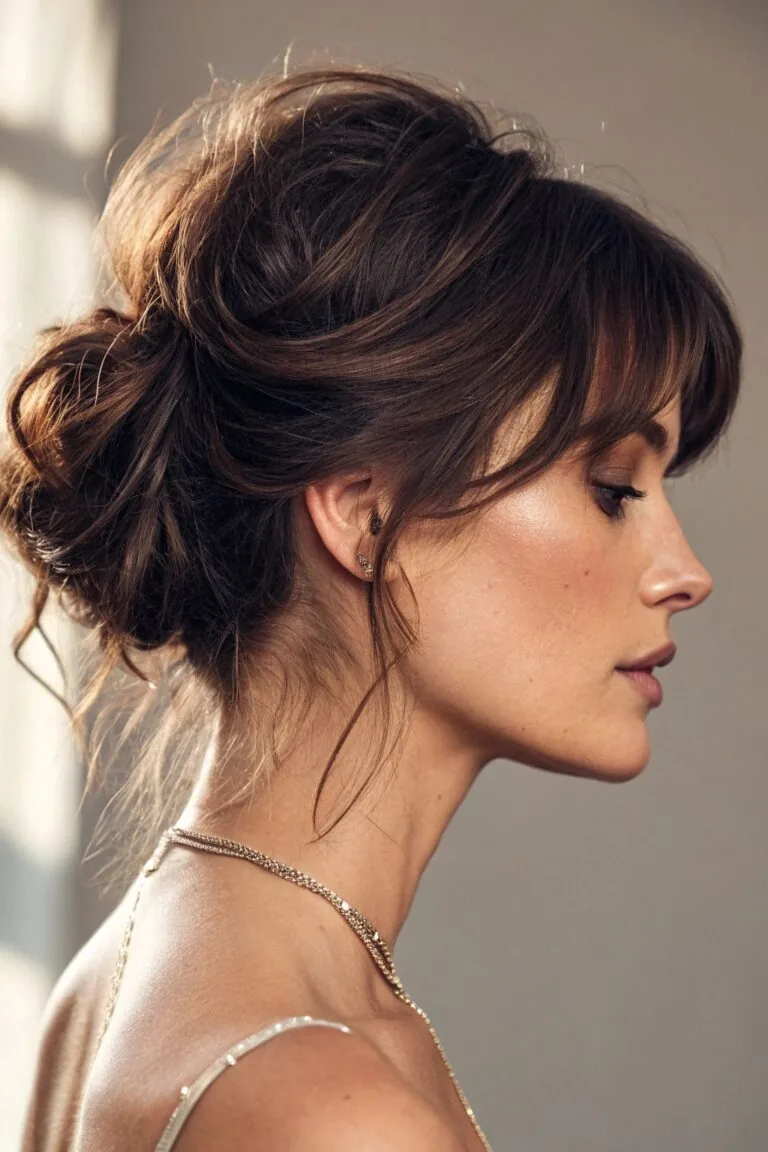
A soft updo, gathered loosely with two face-framing pieces left out, is polished without looking severe. It suits formal and creative interviews alike and softens a tailored outfit.
The impression it gives: Elegant, warm and approachable.
Time to style: 15 minutes.
Best for (industry/setting): Creative, hospitality, wedding-industry and client roles.
Quick verdict: The best updo if a sleek bun feels too strict.
25. The Low Bun With a Middle Part
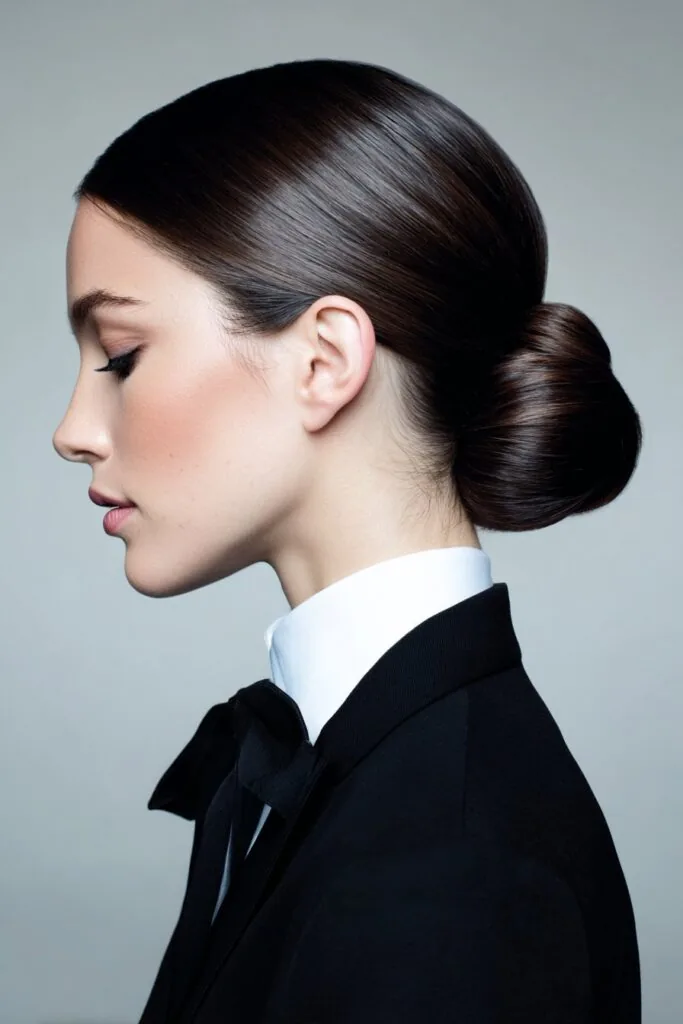
A low bun with a clean middle part is symmetrical, calm and extremely tidy. It suits straight and wavy hair, works on video, and gives a very composed first impression.
The impression it gives: Composed, precise and professional.
Time to style: 10 minutes.
Best for (industry/setting): Corporate, law, finance and video interviews.
Quick verdict: Symmetry makes this one read as especially intentional.
26. The Slicked-Back Low Bun for Creative Roles
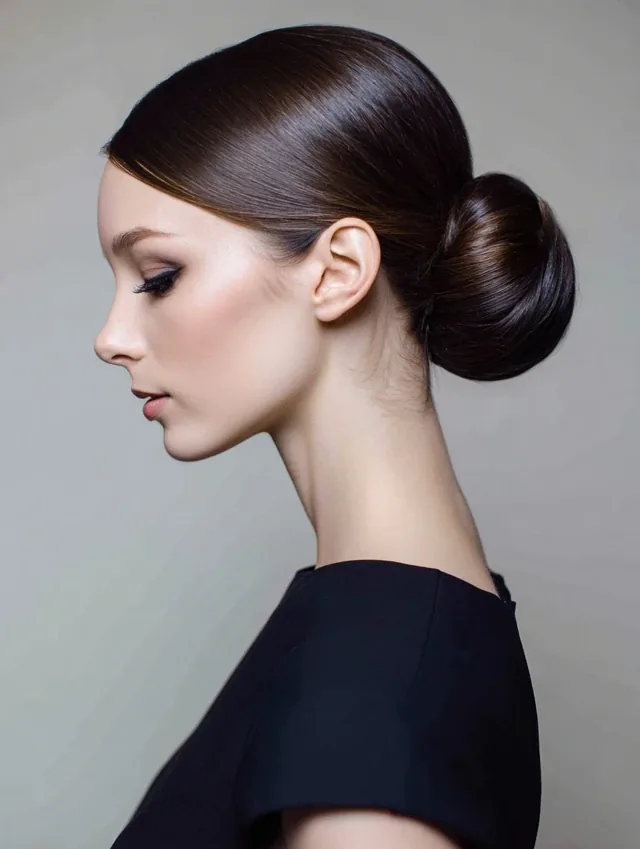
A slicked-back low bun, smoothed with gel or cream and finished with shine, is a fashion-forward professional style. It suits creative and media interviews where a strong, deliberate look is welcome.
The impression it gives: Bold, editorial and confident.
Time to style: 10 minutes.
Best for (industry/setting): Fashion, media, design and creative interviews.
Quick verdict: Save the glossiest version for creative settings.
27. The Half-Up Bun, Polished
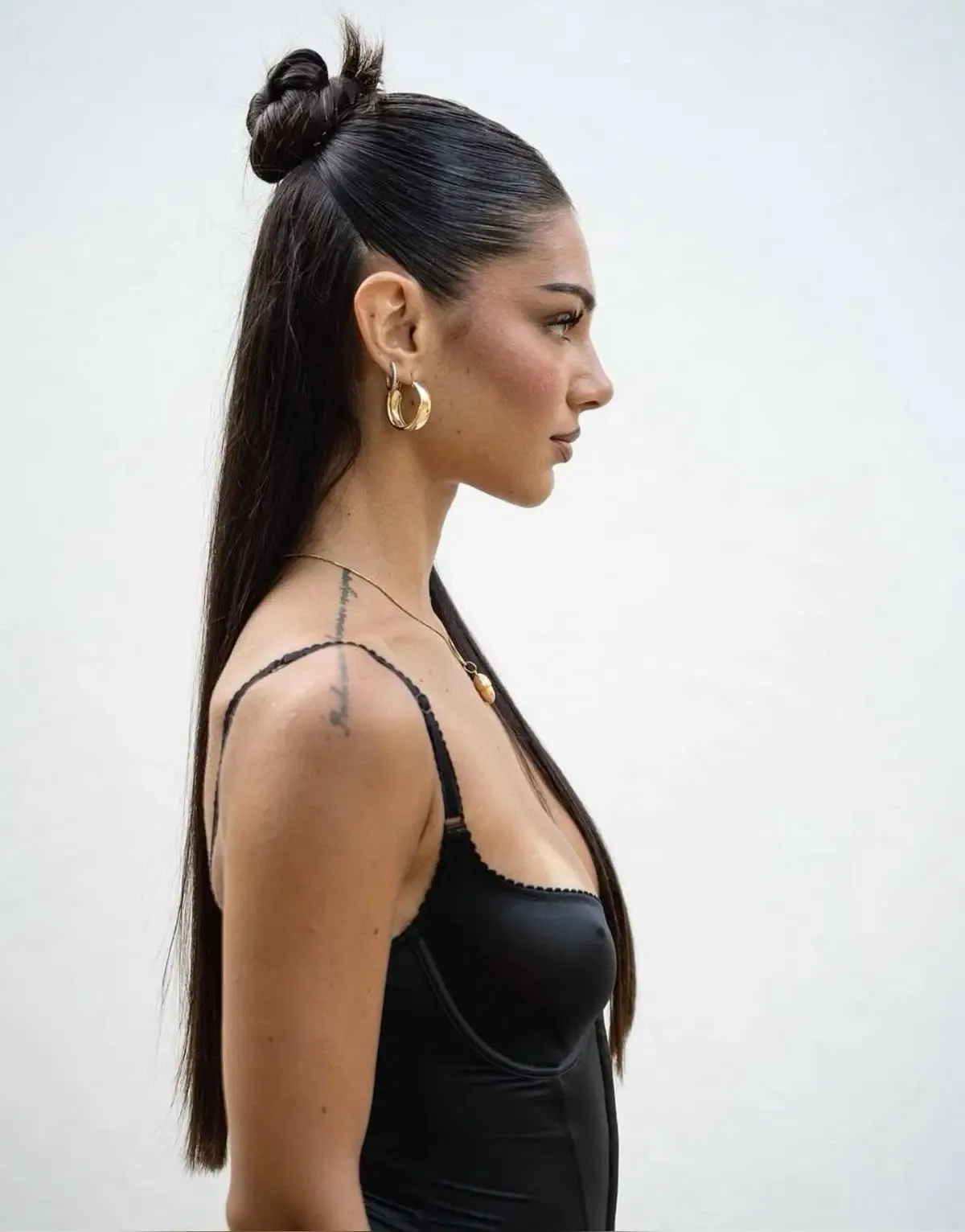
A half-up bun, with the top section twisted into a small neat bun and the lengths smooth, keeps hair off the face while staying relaxed. Keep the bun small and tidy, not messy.
The impression it gives: Neat, modern and friendly.
Time to style: 10 minutes.
Best for (industry/setting): Tech, creative, startup and informal office interviews.
Quick verdict: Modern without looking casual.
28. The Pin-Straight Bob
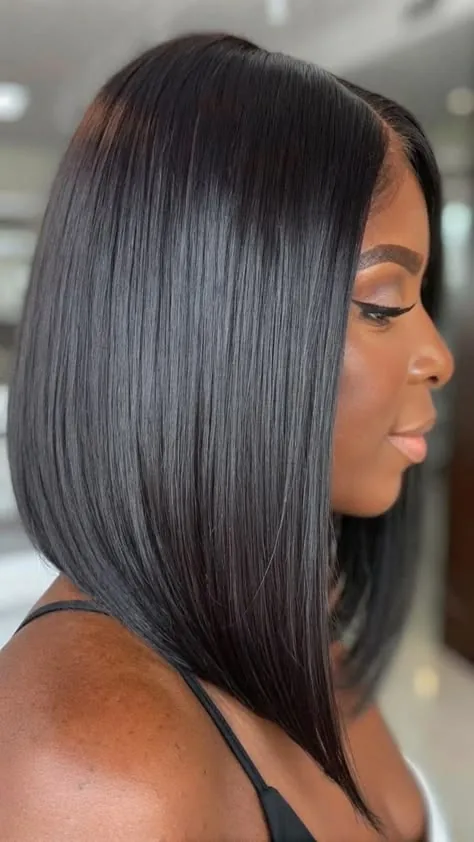
A pin-straight bob, flat-ironed smooth with a clean parting, is sharp and contemporary. It needs healthy ends and a little serum to stay sleek, but it holds its shape all day.
The impression it gives: Sharp, modern and decisive.
Time to style: 15 minutes.
Best for (industry/setting): Corporate, tech, media and design roles.
Quick verdict: A strong choice for a modern, minimal look.
29. The Layered Blowout on Long Hair
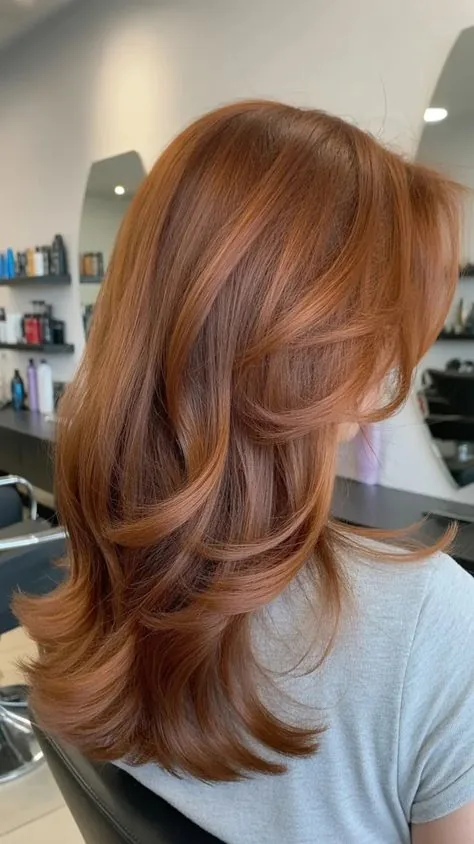
A layered blowout on long hair gives bounce, shape and movement while keeping the face open. Layers prevent the hair looking heavy, and the blowout finish keeps it smooth rather than flat.
The impression it gives: Polished, lively and confident.
Time to style: 25 to 35 minutes, or a salon blow-dry.
Best for (industry/setting): Sales, marketing, media and client-facing roles.
Quick verdict: Worth the time if you love wearing long hair down.
30. Side-Swept Waves on Long Hair
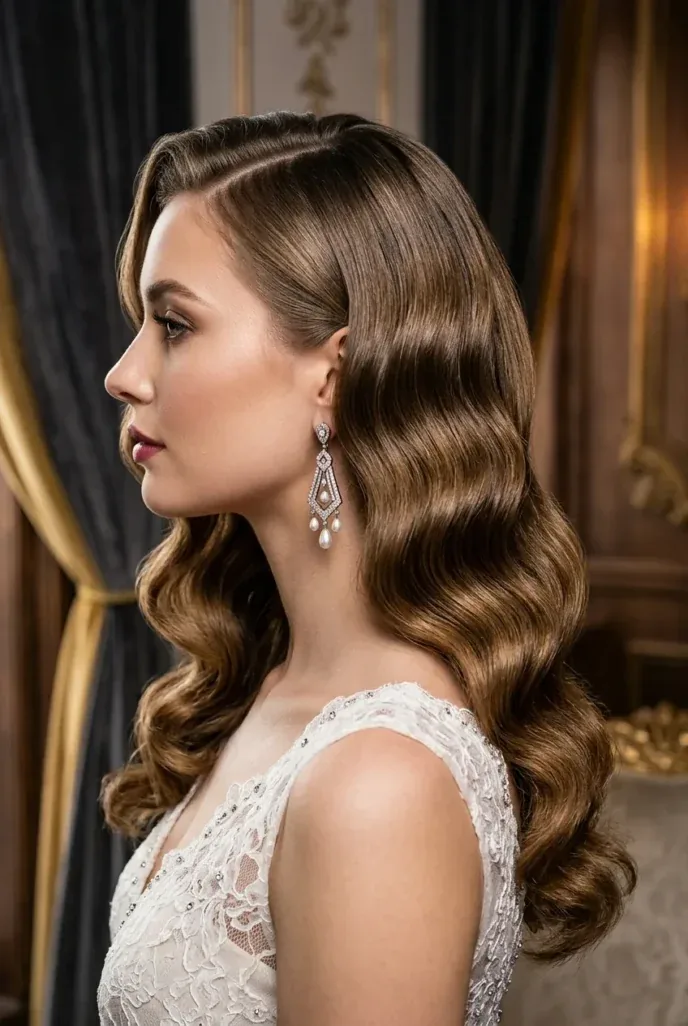
Side-swept waves, brushed to one side with a deep part, give long hair direction and glamour while keeping the face clear. Keep the waves smooth and the sweep secure with pins.
The impression it gives: Graceful, confident and memorable.
Time to style: 20 to 25 minutes.
Best for (industry/setting): Creative, media, hospitality and evening interviews.
Quick verdict: A beautiful choice when you want to stand out gently.
31. The Twisted Low Ponytail
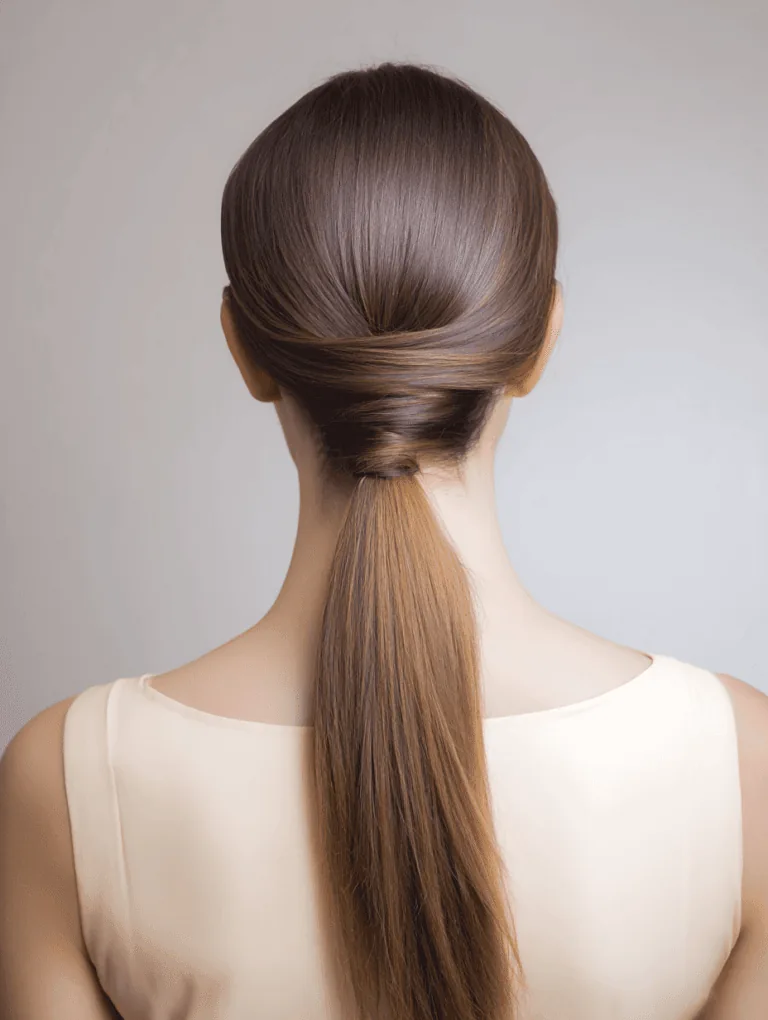
A twisted low ponytail takes two sections, twists them together and secures them at the nape, giving a ponytail with extra texture and hold. It lasts longer than a plain ponytail and looks more finished.
The impression it gives: Neat, interesting and dependable.
Time to style: 10 minutes.
Best for (industry/setting): Office, education, healthcare and creative roles.
Quick verdict: A small twist that makes a simple ponytail feel special.
Video-Interview Framing and Lighting

On video, your hair is framed much more tightly than in person, so the top of your head, your parting and your face-framing layers matter more. Sit with light facing you, not behind you, keep your head and shoulders in frame, and choose a style that reads clearly on a small screen: defined shape, visible face, no hair shadow across your eyes.
Avoid very dark, flat styles that blend into a dark background, and avoid tall styles that push you out of frame. A low bun, a neat bob, a smooth blowout or defined curls all film beautifully. Do a test call the day before and check the recording, not just the live preview.
Last-Minute Fixes and Flyaways
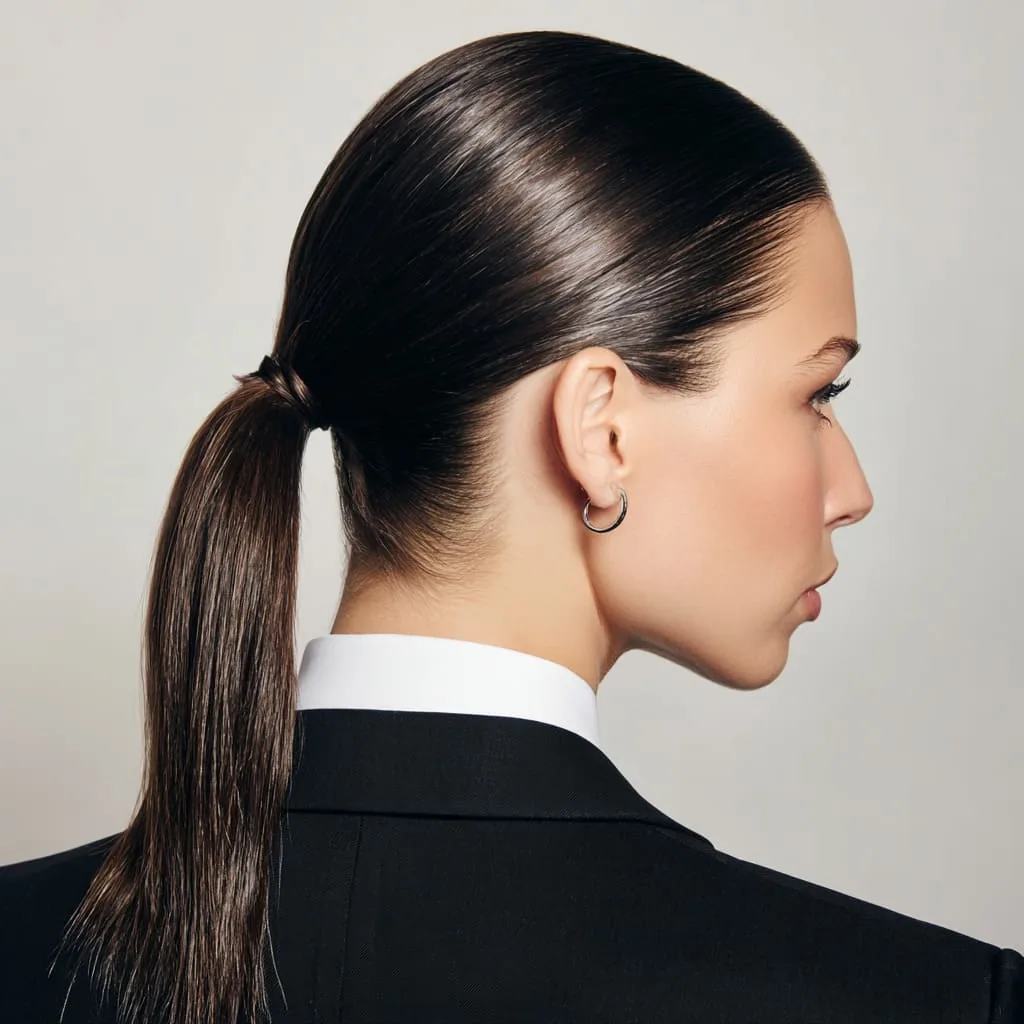
Flyaways are normal, and they are easy to tame. A tiny amount of smoothing cream or hair oil on your palms, pressed lightly over the surface, beats a heavy spray. For stubborn baby hairs, spray a clean toothbrush or spoolie with hairspray and brush them gently into place.
Pack a small kit: two bobby pins, one spare hair band, a mini comb and a travel-size spray. Fix your hair once, in the restroom or car, then leave it alone. Touching and re-fixing during the interview draws more attention than the flyaway ever did.
What to Avoid, Kindly and Without Shaming

Nothing here is a rule about how you should look, and no hairstyle makes anyone unprofessional. The styles to be careful with for an interview are simply the ones that distract or need constant attention: wet-look hair that is still damp, a style that falls across your eyes, an elaborate updo you cannot sit comfortably in, or a brand-new cut or colour you have never worn before.
If you love a bold style, you do not have to abandon it. Just make the interview version its tidiest, most secure form: defined rather than messy, pinned rather than loose, and tried at home first. Interview day is not the day to experiment.
The Night-Before and Morning-Of Checklist
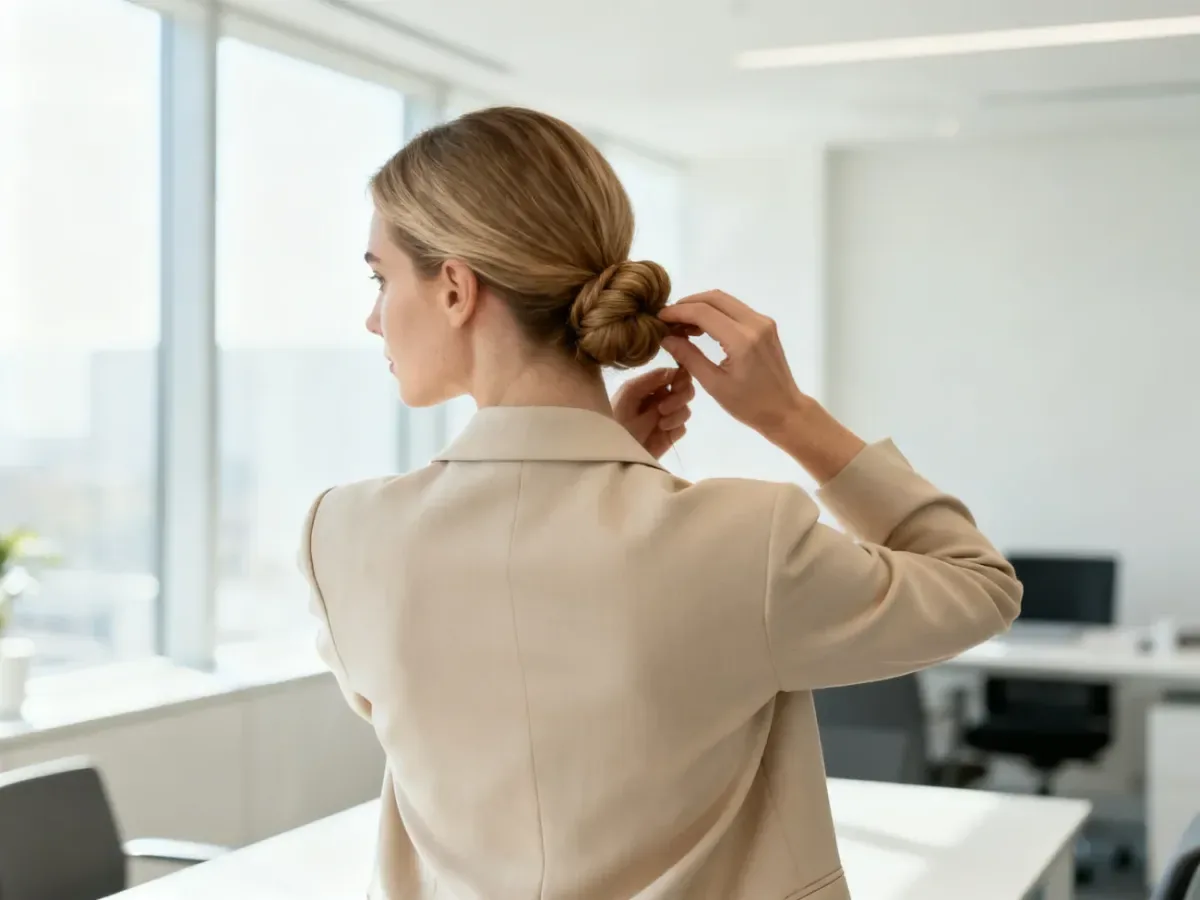
The night before, wash or refresh your hair if needed, define curls or set waves, and lay out pins, bands and product. Try the full style once, including the outfit you will wear, and check it from the front, side and back. Sleep on a silk or satin pillowcase if you have one, to reduce frizz overnight.
On the morning, give yourself more time than you think you need, style in good light, and finish with a light hold. Then do a final check: face visible, style secure, no pins showing, and nothing you will need to touch. Arrive early, fix once if needed, and then forget about your hair and focus on the conversation.
What is the best hairstyle for a job interview?
The best hairstyle for a job interview is one that looks intentional, keeps your face visible, and stays in place without fixing. A sleek low bun, a polished low ponytail, a neat bob or a smooth blowout all meet that test, so choose the one that feels most like you.
Should I wear my hair up or down for an interview?
Both work, as long as the style is tidy and stays out of your face. Wear it up if you want zero distractions or a long interview day, and wear it down if a blowout, bob or defined curls feel more like you and hold their shape.
What hairstyle is best for a corporate interview?
For a corporate interview, choose the most polished end of the scale: a sleek low bun, a neat chignon, a smooth blowout or a classic bob. These styles look tidy from every angle and suit formal dress codes.
What hairstyle is best for a creative interview?
For a creative interview, you have more room for personality: a polished wavy lob, a neat pixie, a slicked low bun or soft waves all work, as long as the style still looks finished and your face stays visible.
What hairstyle is best for a video interview?
For a video interview, choose a style with a clear shape and a visible face: a low bun, a tucked lob, a neat bob or defined curls. Sit with light facing you, keep your head and shoulders in frame, and test the style on a practice call first.
Should I get a new haircut before an interview?
It is safer not to try a brand-new cut or colour just before an interview. If you need a trim, get it a week or two beforehand, so the style settles and you know exactly how it behaves on the day.
How do I keep my hair from falling in my face during an interview?
Choose a style that is anchored well, such as a low bun, a low ponytail or a half-up twist, and test it for a few hours at home first. Pins, a second band or a little hold spray will keep it secure without looking stiff.
What should I do about flyaways before an interview?
Smooth a tiny amount of cream or oil over the surface with your palms, or use a spoolie sprayed with hairspray for stubborn baby hairs. Fix once before the interview, then leave your hair alone during it.
Can I wear curly or natural hair to a job interview?
Yes, absolutely. Defined curls, a shaped natural afro, braids and twists are all professional interview styles. The polish comes from definition, moisture and a neat shape, not from straightening your hair.
What hairstyle should I avoid for a job interview?
Avoid styles that distract or need constant attention: hair that is still wet, a style that falls across your eyes, an elaborate updo you cannot sit comfortably in, or a brand-new style you have never worn before. If you love a bold style, wear its tidiest, most secure version.
Conclusion
The best interview hairstyle is not the fanciest one. It is the one that looks intentional, keeps your face visible, and lets you forget about your hair the moment the conversation starts. Pick a style you have worn before, test it for a few hours, match its polish to the industry, and finish with a light hold.
Then trust it. Walk in with hair that looks like you on your best day, neat, confident and ready, and let the interviewer remember what you said, not how many times you pushed your hair back. Good luck: you have prepared for this, and it shows.