Double the Fun: 36 Space Bun Hairstyles, From Festival-Ready to Office-Cute
Space buns grew up. They started as 90s nostalgia and a festival staple — the hairstyle you wore to a music weekend with glitter on your cheeks and not a care in the world — and somewhere along the way they became a genuinely versatile style. The same two buns that look playful at a festival can look polished at the office when they are sleek and small, practical at the gym when they are pinned tight, and surprisingly romantic on a night out when the ends are curled and the front is soft. Space buns are no longer a costume. They are a tool, and like any good tool, they work in more situations than you expect.
This guide brings together 36 space bun hairstyles for women, grouped by vibe so you can shop by mood: classic doubles that never miss, messy and boho versions for weekends and holidays, sleek styles that pass at work, braided buns with real staying power, half-up versions for girls who still want their length down, short-hair and curly-hair adaptations that actually work, and dressed-up buns for parties and occasions. Eight guides answer the questions people really ask: how to get both buns even, whether short hair can do space buns at all, how to make them last a whole festival day, and how to take them out without a tangle. Every style notes the time, the tools and the moment it suits best — so you can pick the bun for the day you are actually having.
Getting Both Buns Even — the Symmetry Trick

The one thing that makes space buns look polished instead of lopsided is symmetry, and symmetry is a measuring problem, not a talent problem. Start by parting the hair straight down the middle, from the forehead to the nape, and check the part in two mirrors — the back of the part is where most uneven buns are born, because nobody can see it. Then place each bun by feel: find the same landmark on each side, such as the top of the ear or the corner of the eyebrow extended upward, and gather the hair at that point on both sides before you twist anything. If you gather one side first and twist it fully before starting the other, the first bun will always end up bigger, because you were guessing at the amount of hair.
The trick that actually works is to do both buns in stages, side by side. Tie both pigtails first and check them in the mirror — height, distance from the part, and how much hair each one holds. Then twist each one loosely and pin it in place without finishing either, and check again before you tuck the ends and spray. A phone photo taken from above is brutally honest about uneven buns in a way a mirror is not, so take one and adjust. And if they are still slightly different, remember that hair is not architecture: a millimetre of difference disappears the moment you move, and nobody at a festival is measuring your buns with a ruler.
Space Buns for Short Hair (Yes, It Works)
Short hair can absolutely do space buns — the buns are just smaller, and smaller is part of the charm. On a bob or a lob, the buns sit like two neat knots on top of the head, and because there is less hair to manage, they go up in minutes and they stay put. The mistake is trying to make short-hair buns look like long-hair buns: a tiny, tight ball on a pixie grow-out is not a failure, it is a mini space bun, and it looks deliberate and cute precisely because it is small. Work with the length you have. If the hair is too short to twist into a full bun, a twisted knot held with two pins reads as a space bun from any normal distance.
Three things make short-hair space buns work. First, texture: a little dry shampoo or texturising spray gives short hair the grip it needs, because clean, slippery short hair slides out of pins. Second, placement: keep the buns a little higher and a little closer together on short hair, because low, wide buns need length to look balanced. Third, accessories: a small scrunchie, a pair of mini claw clips or a coloured elastic turns a small bun into a statement, and it hides the pins at the same time. If the ends poke out, let them — a few spiky ends on a short-hair space bun look playful, not messy, and they are the reason the style photographs so well.
Space Buns for Curly and Textured Hair
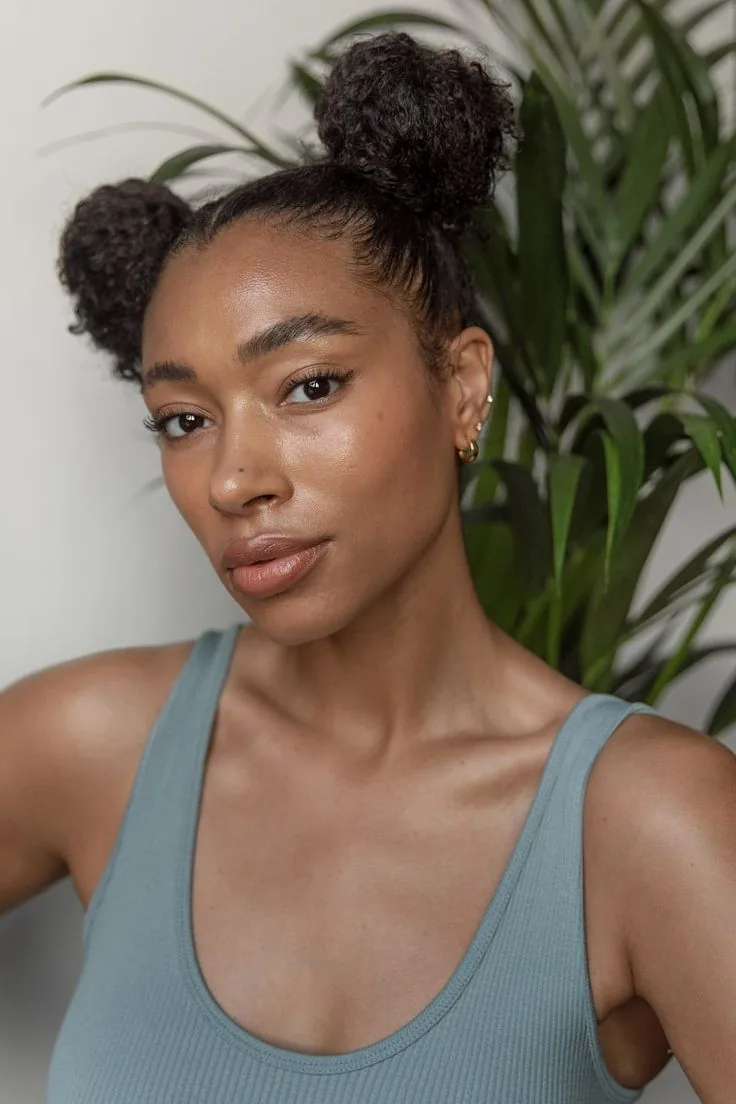
Curly and textured hair might be the best hair of all for space buns, because the curls do half the work. A bun made from curls is naturally full, naturally textured, and naturally secure — the curls grip each other, so the bun holds its shape without a forest of pins, and it looks bigger and softer than the same amount of straight hair ever would. The volume that curly-haired girls sometimes fight against becomes the whole point of the style. Two curly buns frame the face, show off the curl pattern, and keep the hair completely off the neck on a hot day, which is a gift in summer.
The key is to work with the curls, not against them. Style the buns on hair that is already moisturised and defined — a little leave-in conditioner or curl cream through the lengths before you gather the hair stops frizz and keeps the curls clumped together. Gather each side gently, without brushing the curls out, because brushing turns definition into a halo of frizz. Twist loosely and let the curls fall where they want; a curly space bun should look soft and cloud-like, not tight and sculpted. If a few curls escape around the face, leave them — they are the frame that makes the whole style look effortless.
Half-Up Space Buns vs Full Space Buns
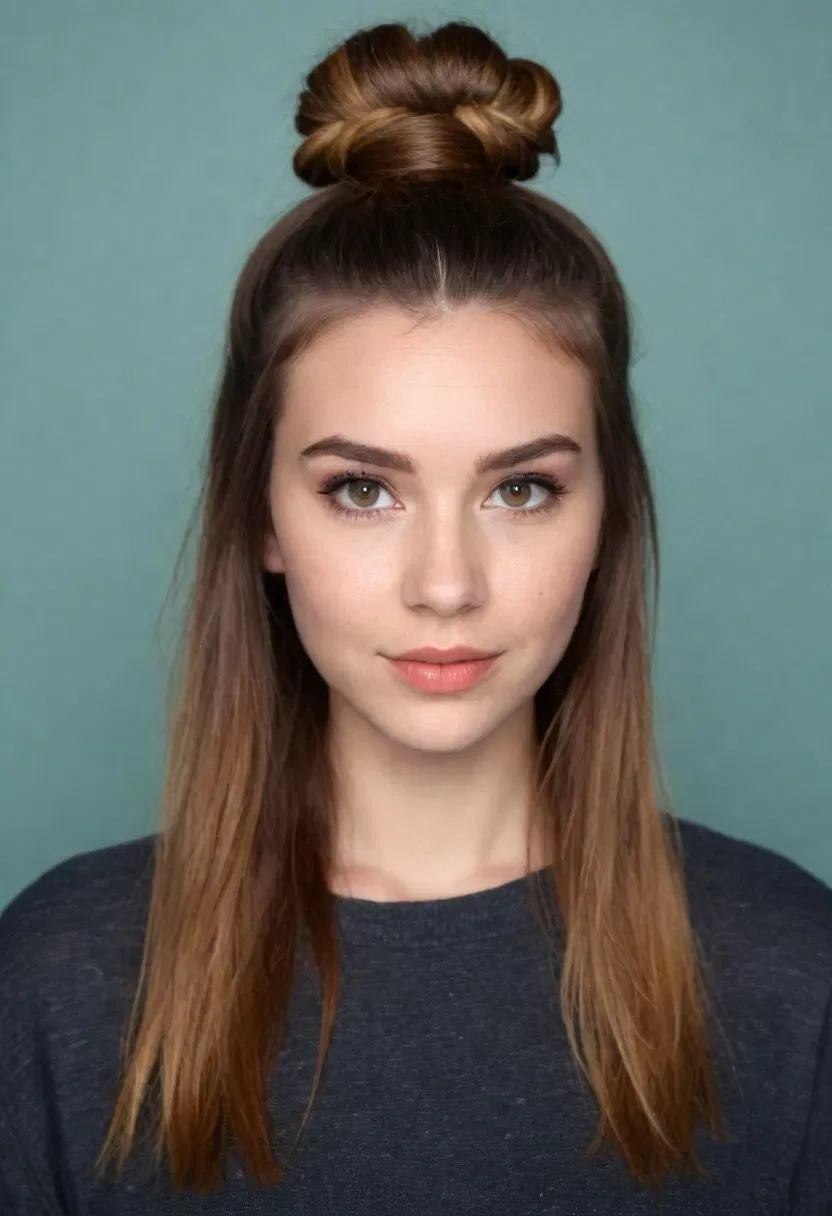
The choice between half-up and full space buns is really a choice about how much hair you want to show off. Full space buns put all the hair up: two buns, nothing left down, and a clean, bold silhouette that reads playful and practical at once. Half-up space buns keep the buns on top and leave the rest of the hair down — the buns become an accent rather than the whole style, and the loose lengths give you movement, softness and the option to show off a colour or a wave. Neither is better. They are different tools for different days, and knowing which one fits the moment is the whole skill.
Choose full space buns when the day is active or hot: festivals, workouts, beach days, and any day when hair in your face would drive you mad. They are cooler, they stay put, and they survive dancing and sweating in a way loose hair never will. Choose half-up space buns when you want the fun of the buns without giving up your length: a casual lunch, a date, a day when your hair looks too good to hide, or a first attempt at the style, because half-up is more forgiving — if one bun is slightly uneven, the loose hair distracts from it. And if you cannot decide, start half-up: you can always gather the rest of the hair into the buns later in the day, and nobody will know you changed your mind.
Making Space Buns Last Through a Festival Day

A festival day is the hardest test a hairstyle can face: heat, sweat, dancing, dust, and twelve hours between the first photo and the last song. Space buns pass that test better than almost any other style, because the hair is anchored in two places instead of one, and a bun that is pinned in sections will hold even if one pin works loose. The secret is building the buns like a structure, not a decoration. Start with day-old hair, which has more grip than freshly washed hair, and work a texturising spray or dry shampoo through the roots before you do anything else — grip is what keeps pins in, and silky hair is what lets them slide out.
Build each bun in layers: tie the pigtail, twist the hair around the base, and pin each fold as you go, so every section is anchored to the one beneath it. Use pins that match your hair colour, slide them in with the wavy side down, and push them against the scalp so they weave through two layers of hair. Set each bun with a flexible-hold spray as you finish it, not just a blast at the end. Pack a tiny kit for the day: four spare pins, one spare elastic, and a travel-size dry shampoo for a mid-afternoon refresh at the roots. And do the jump test before you leave your tent or hotel room — jump ten times, shake your head, and pin anything that moves now, because it will move a lot more by the third set.
Colour, Glitter and Accessories — How Much Is Too Much
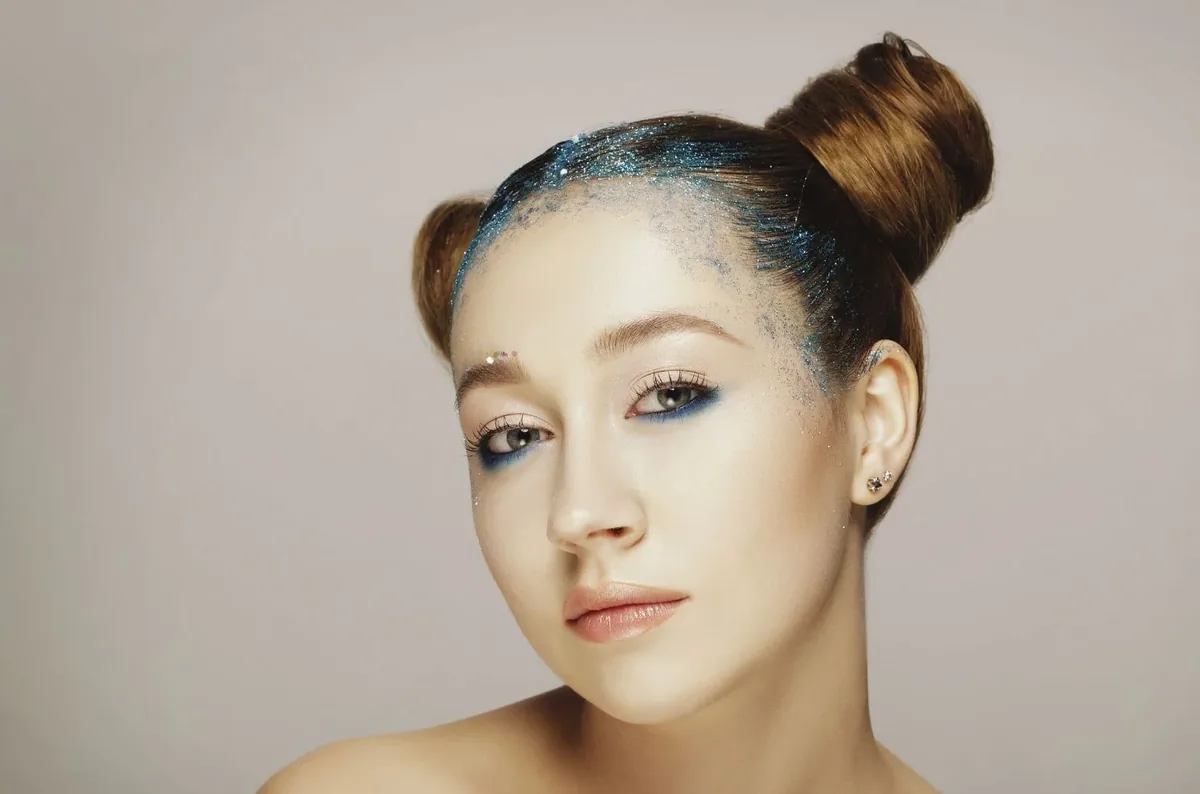
Space buns invite decoration — that is half their charm — but there is a line between festive and cluttered, and it is easier to cross than you think. The rule is one hero, one supporting act. If the buns have glitter roots, skip the giant flower clips. If the buns are wrapped in coloured ribbon, skip the glitter. If the hair is a vivid colour already, let the colour do the talking and keep the accessories small. A single bold choice photographs beautifully; three bold choices compete with each other, and the photos look busy instead of fun.
Match the decoration to the occasion. Festival glitter — a little hair gel and cosmetic glitter along the parting — is perfect for a music weekend and too much for a Monday meeting. Scrunchies in a colour that picks up your outfit are the safest accessory there is: they hold the bun, they hide the elastic, and they add a pop of colour without any effort. Small clips, pearls and star pins work for parties and nights out, especially when they are clustered on one side rather than scattered everywhere. And remember that accessories add weight: a heavy clip on a small bun will drag it down by the afternoon, so pin the accessory to the hair underneath the bun, not just to the bun itself, and check it after an hour of dancing.
Space Buns for Work — the Toned-Down Version
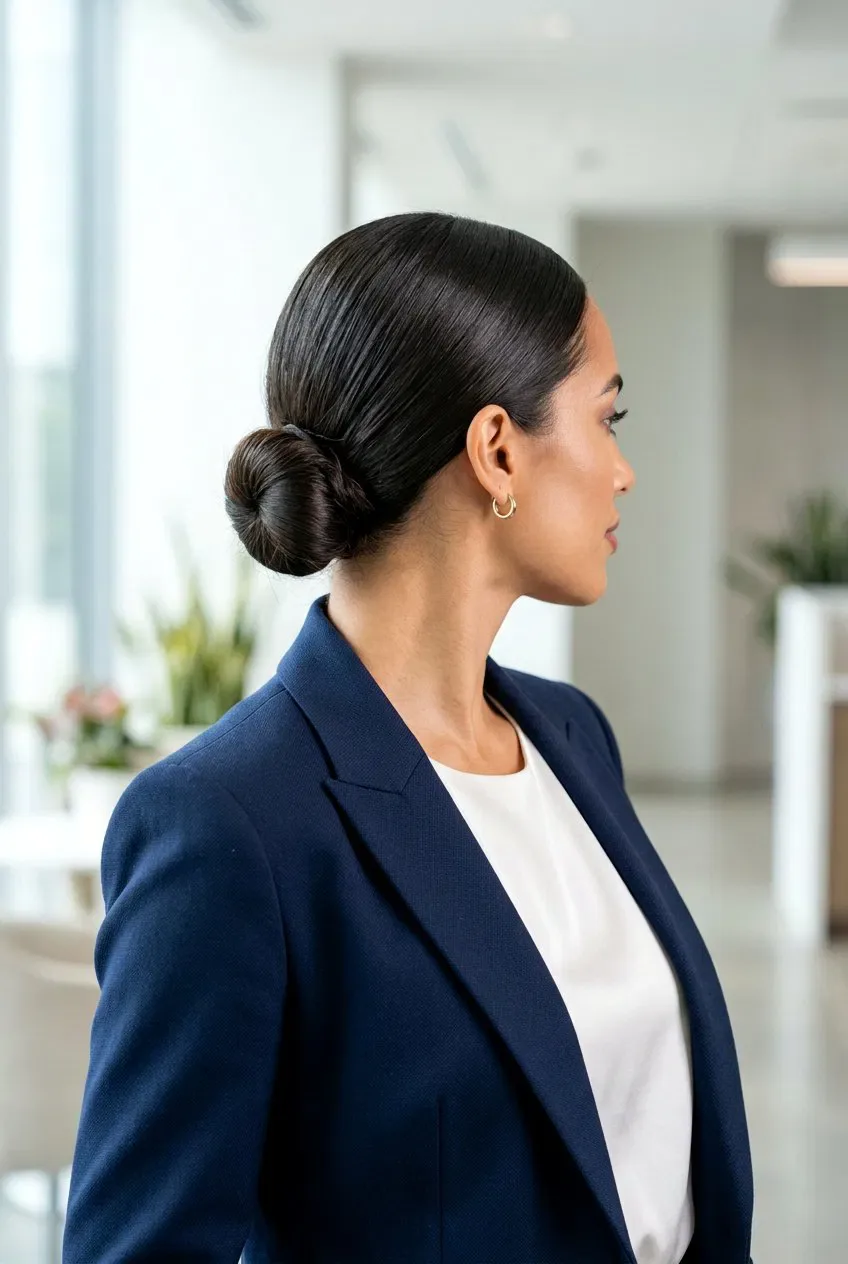
Space buns at work are entirely possible, as long as you leave the festival version at home. The work version is smaller, sleeker, and lower: two neat, compact buns sitting close to the head, with no glitter, no bright scrunchies, and no loose strands flying around. The trick is treating them like any other polished updo. Smooth the hair back with a little pomade or smoothing cream, keep the parting clean, and make the buns tight and tidy rather than big and fluffy. Done this way, space buns read as a modern, confident updo — closer to a double chignon than to a costume — and most colleagues will simply think you have good hair.
Placement matters more than anything. Keep the buns at or just above ear level rather than high on top of the head, because high buns read playful and low buns read professional. Keep them small: a bun the size of a golf ball is office-safe, a bun the size of an orange is not. Use plain elastics that match your hair colour and skip the scrunchie, or use a scrunchie in a neutral shade like black, navy or tortoiseshell. And consider the dress code: space buns suit a creative office, a studio, a classroom or a remote-work video call far more than a formal client meeting. When in doubt, wear them on a Friday first, and see how they land.
Taking Them Out Without Tangles
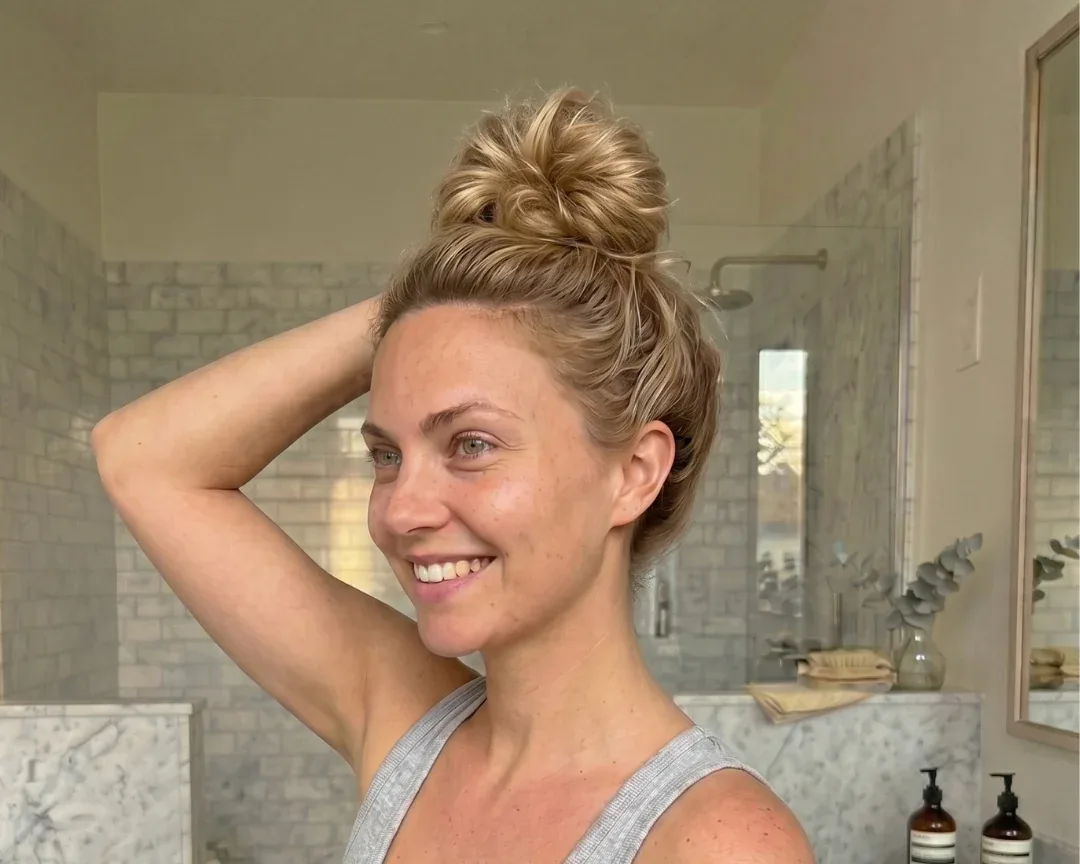
Taking space buns out badly is how a great hair day becomes a tangled evening, because a bun that has been twisted, pinned and sprayed all day has layers of hair wrapped around each other, and yanking the pins out pulls those layers against each other. The fix is to reverse the process slowly. Take the pins out first, one by one, and set them aside — never pull a pin through twisted hair, because it drags strands with it. Then unwrap the bun in the opposite direction from the way you twisted it, letting the hair fall loose in sections instead of pulling the whole thing apart at once.
Once the buns are down, do not brush immediately. Run your fingers through the hair first to separate the biggest tangles gently, starting from the ends and working upward, the way you would detangle wet hair. A little leave-in conditioner or a drop of hair oil on the ends makes this much easier and leaves the hair soft rather than frizzy. If you wore a lot of hairspray, wash the hair that evening rather than sleeping on it — hairspray left in overnight dries the hair out and makes the morning tangle worse. And give your scalp a break: space buns pull the hair in two directions all day, so a gentle scalp massage when you take them out is not a luxury, it is the reason your head stops aching.
1. Classic Double Space Buns
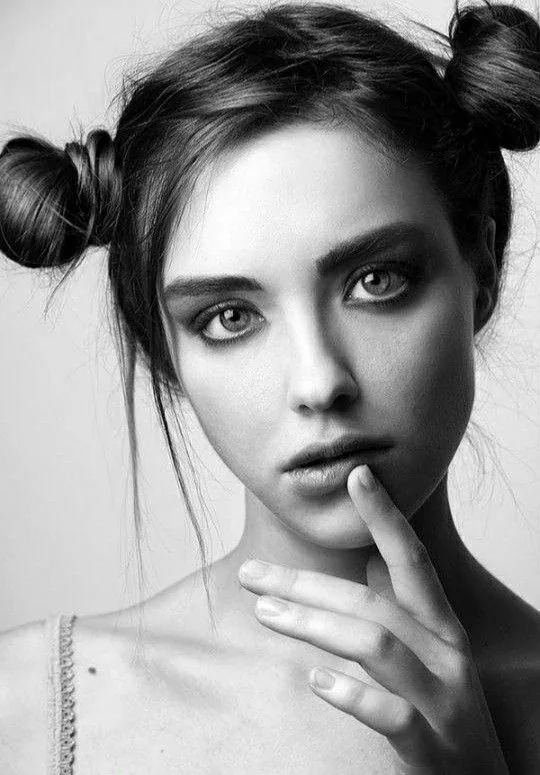
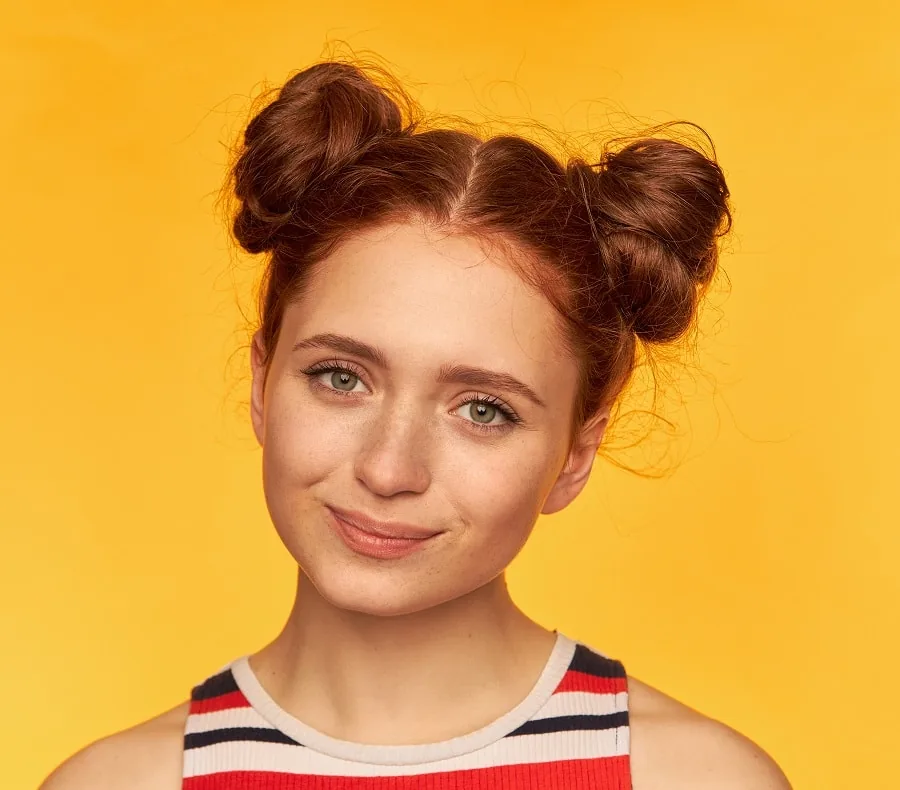
Classic double space buns are the original, and they are still the one to learn first: the hair parted down the middle, gathered into two high pigtails, and each one twisted into a neat, round bun. There is nothing fancy about them, which is exactly why they work. The symmetry of two equal buns frames the face, lifts the whole look, and reads as fun from across a room without needing a single accessory. This is the space bun to choose when you want the style to speak for itself — a festival, a holiday, a day out with friends, or any moment when playful is the right energy.
Best for: festivals, holidays, casual days out, and anyone trying space buns for the first time. How to style: part the hair centrally, tie two high pigtails at the same height, twist each one around its base and pin the ends underneath. What to ask a stylist: nothing, honestly — this is a five-minute at-home style, and a stylist would only be needed if you want the buns set for a whole event. Quick verdict: the easiest, most recognisable space bun there is, and the baseline every other version on this list is measured against.
2. Sleek High Space Buns
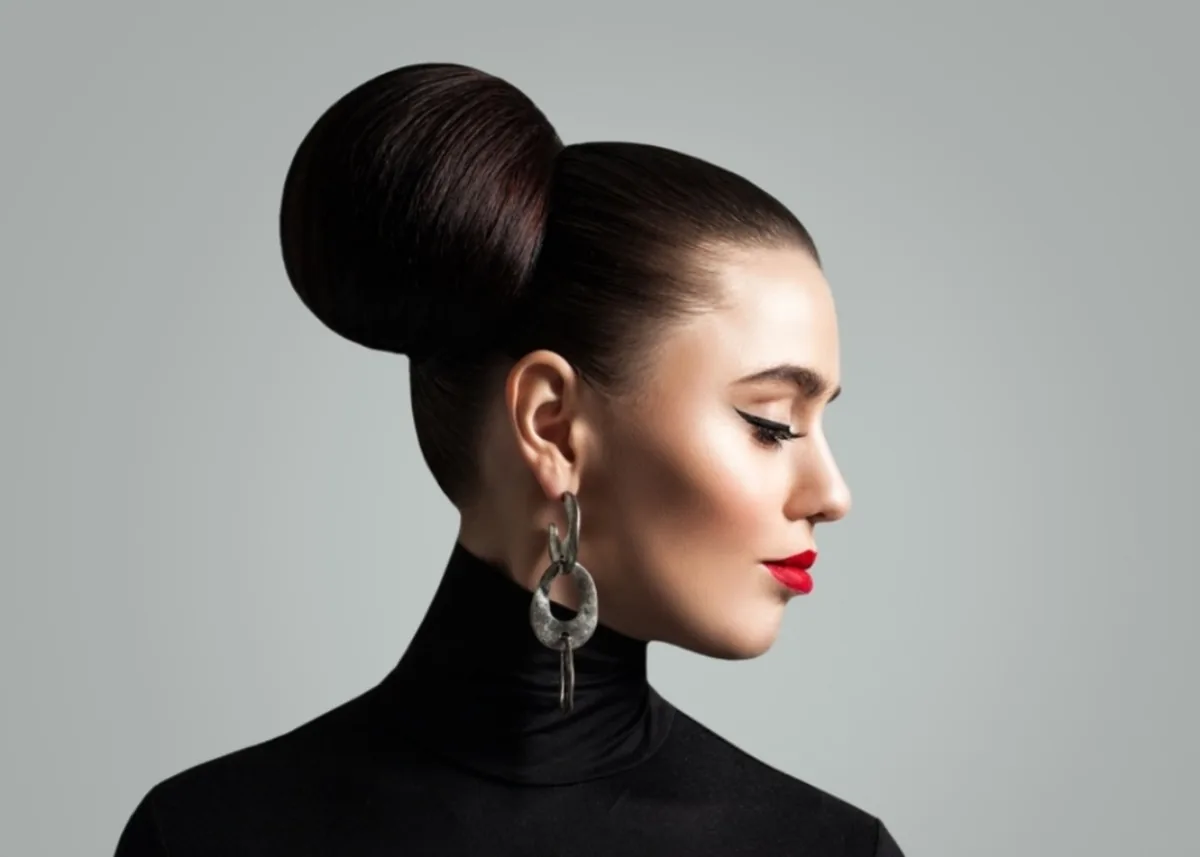
Sleek high space buns take the classic double bun and press it flat: every strand smoothed back, no flyaways, no softness at the front, and two tight, glossy buns sitting high on the head. The effect is sharper and more modern than the classic version — less festival, more fashion editorial. The sleekness is what makes them work for a night out or a smart-casual event, because the clean lines make the whole look feel intentional rather than thrown together. They also photograph beautifully, because the smooth surface catches the light and the silhouette is so clean.
The pros: they stay put for hours, they look expensive with almost no effort, and they suit straight or wavy hair brilliantly. The cons: they take more time than messy buns, they show every uneven bit of the parting, and they can feel tight if you pull the hair too hard. The common mistake is skipping the smoothing step — gather the hair first and smooth it afterwards, and the top will always look bumpy. Smooth each side with pomade before you tie it, and the bun will sit flat. Time and cost: about 15 minutes at home, nothing to buy beyond a smoothing cream and matching elastics.
3. Low Space Buns
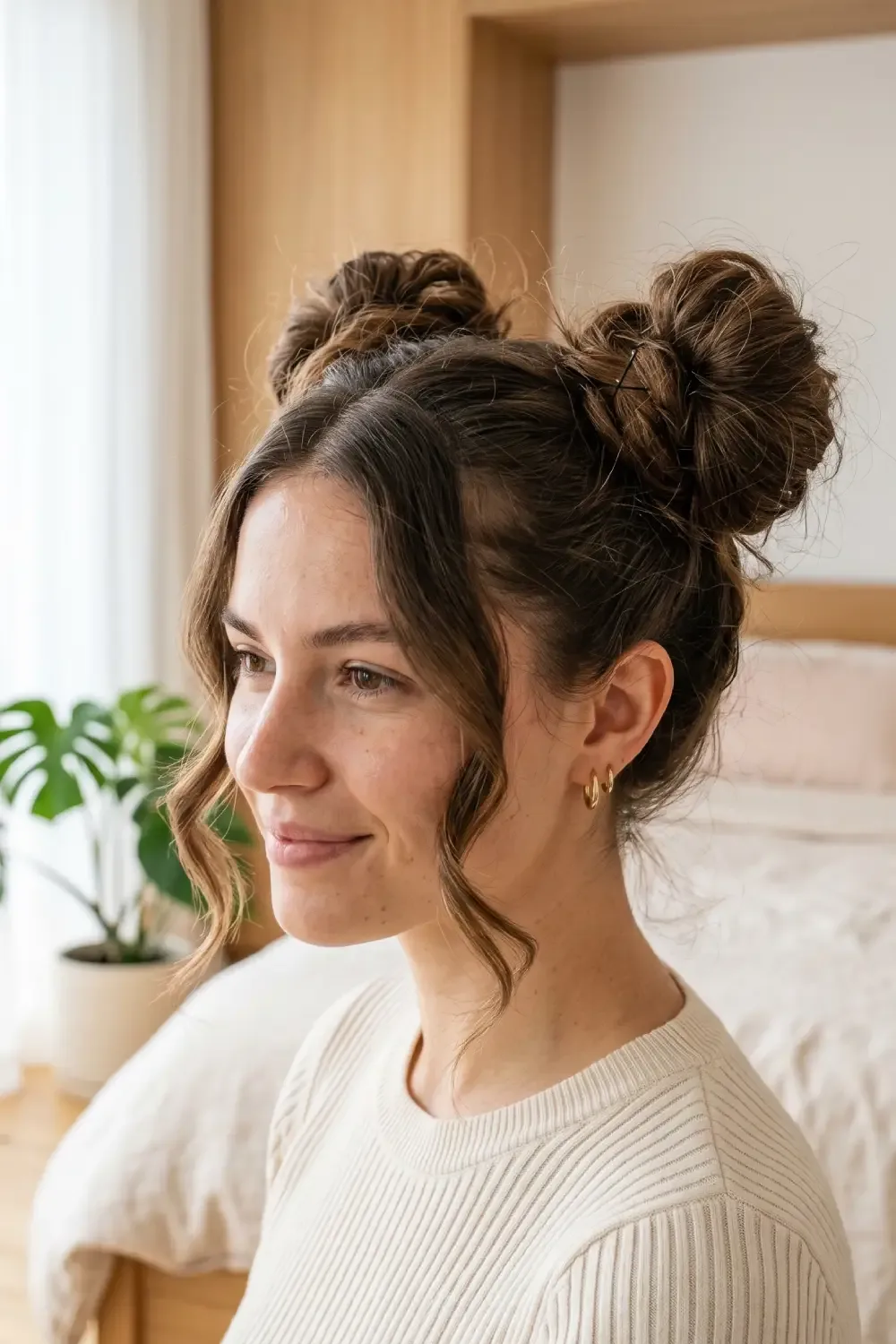
Low space buns sit at the nape instead of the crown, and that one change makes them a completely different style: softer, calmer, and far easier to wear. Where high buns shout, low buns murmur. They suit girls who like the idea of space buns but find the high version too playful for their taste, and they work beautifully with a middle part and a few soft strands left around the face. Low buns are also the most comfortable space bun to wear all day, because the weight of the hair sits low on the head and pulls far less on the scalp.
Best for: long days, office-adjacent occasions, girls with thick or heavy hair, and anyone who gets a headache from high styles. How to style: part centrally, gather each side low behind the ear, twist loosely and pin the bun flat against the head rather than letting it stick out. What to ask a stylist: ask for the buns to be pinned in sections rather than wound tight, so they sit soft and do not pull. Quick verdict: the grown-up space bun — the one you wear when you want the fun without the fuss.
4. Space Buns with Face-Framing Tendrils
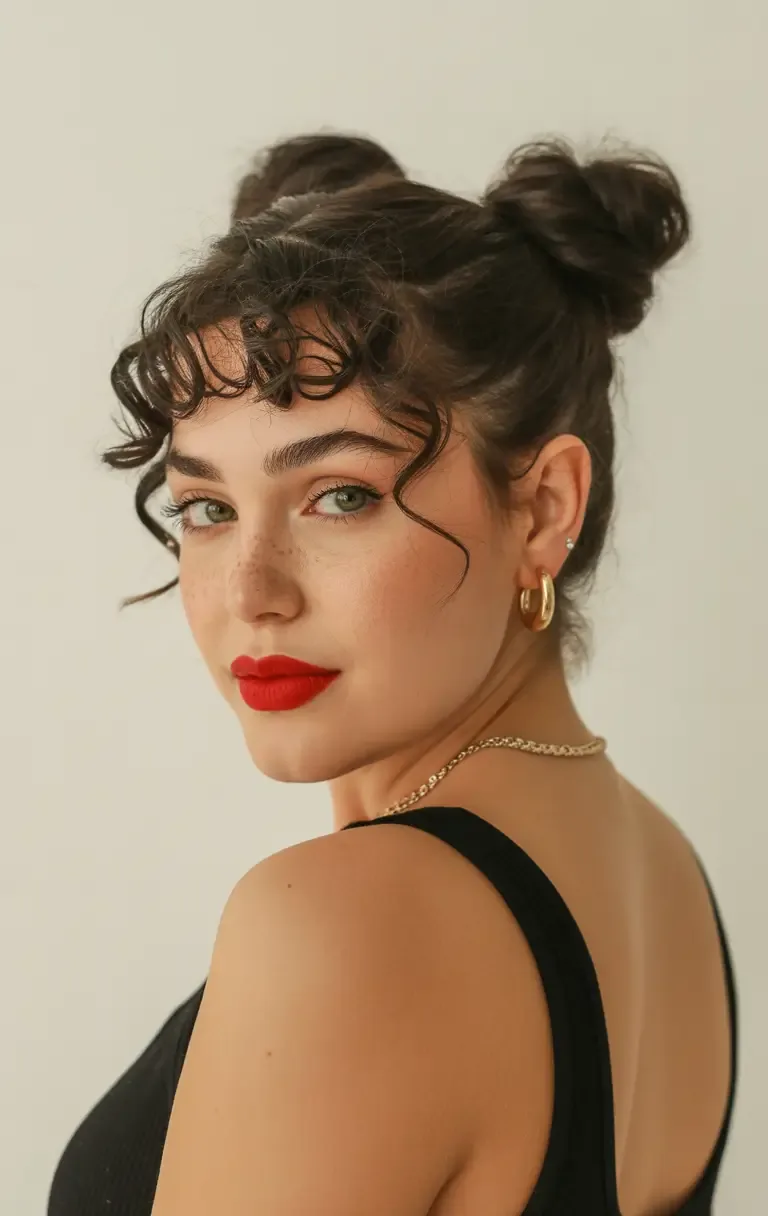
Space buns with face-framing tendrils are the softest version of the style: two buns on top, and two loose strands left out at the front to fall past the cheeks and soften the face. The tendrils are what turn a bold, graphic hairstyle into something romantic — without them, space buns can look severe on some face shapes, but with them, the whole look opens up and the face becomes the focus rather than the buns. They are also the most flattering version for round and square faces, because the vertical lines of the tendrils lengthen the face and break up its width.
The pros: instantly softer, suits almost every face shape, and hides a slightly uneven parting. The cons: the tendrils need attention — they fall flat in humidity and frizz in heat, so they are the first thing to go on a sweaty day. The common mistake is pulling the tendrils out after the buns are finished, which tugs the buns loose; pull them out before you twist the buns, and shape them with a curling iron while the rest of the hair is still down. Maintenance: a quick curl refresh with a wand mid-afternoon brings the tendrils back to life in two minutes.
5. Mini Space Buns
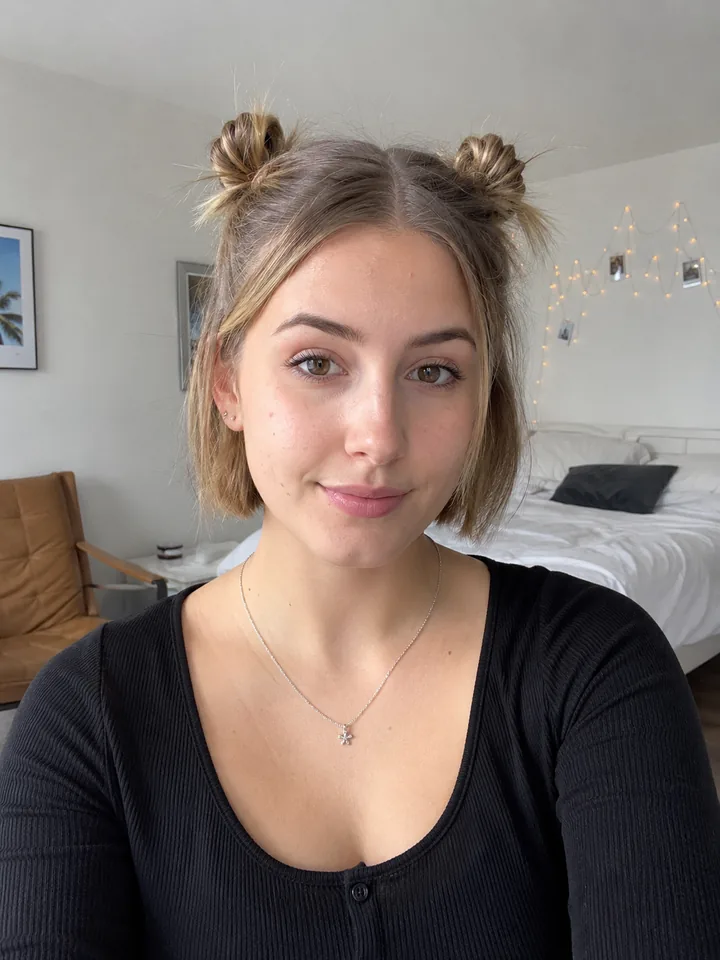
Mini space buns are exactly what they sound like: two small, neat knots, barely bigger than a coin, sitting high on the head like punctuation marks. They are the cutest version of the style and the easiest to wear, because small buns are light, they do not pull, and they suit short hair, fine hair and anyone who finds full-size buns too much. On long hair they read as a playful accent; on short hair they are often the only space bun that is physically possible, and they look deliberate rather than like a compromise.
Best for: short hair, fine hair, first attempts, and days when you want the idea of space buns without the drama. How to style: gather small sections at the crown, twist them into tight knots, and pin with two bobby pins each — a mini bun held by one pin will unravel by lunch. What to ask a stylist: nothing; this is a two-minute style, and the only tool that matters is a pin that matches your hair colour. Quick verdict: tiny, light, and surprisingly versatile — the space bun for people who think space buns are not for them.
6. Messy Space Buns
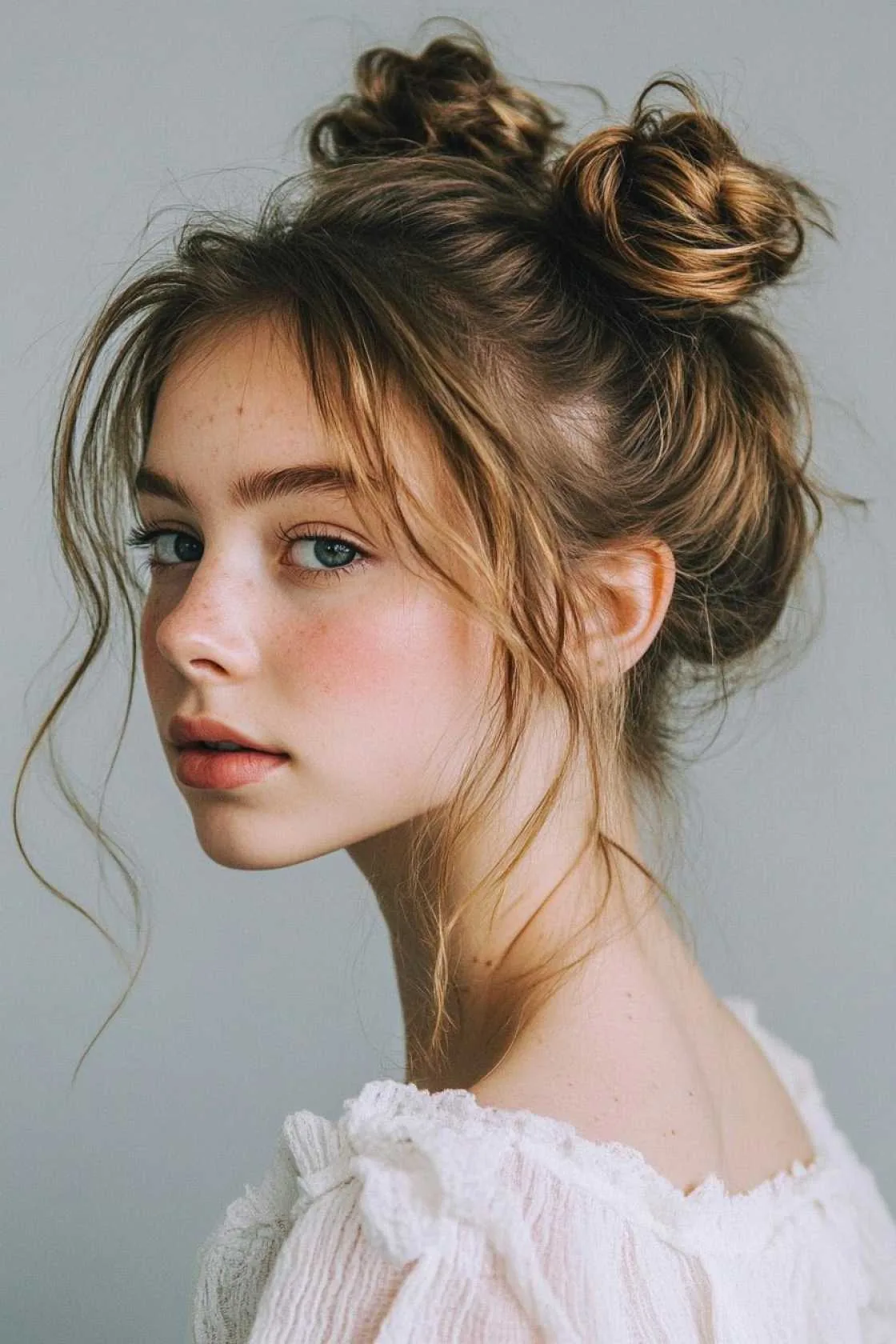
Messy space buns are the relaxed, lived-in version of the classic: the buns are loose, a few strands escape, the parting is not quite perfect, and the whole thing looks like it happened naturally rather than being constructed in front of a mirror. That imperfection is the point. Messy buns are the space bun for weekends, for holidays, for days when you want to look good without looking like you tried, and they are the most forgiving version to do yourself — an uneven bun just looks messier, which is the style. They also survive a long day better than sleek buns, because there is no perfect surface to ruin.
The pros: fast, forgiving, comfortable, and they look better as the day goes on. The cons: they can tip into genuinely messy if the buns are too loose, and they do not suit formal occasions. The common mistake is making them too neat and then trying to mess them up afterwards — it never looks natural. Build them messy from the start: twist loosely, pin loosely, and pull a few pieces out on purpose. Time and cost: ten minutes, a texturising spray, and no stylist needed. Quick verdict: the everyday space bun, and the one most girls actually wear most often.
7. Boho Space Buns with Loose Waves
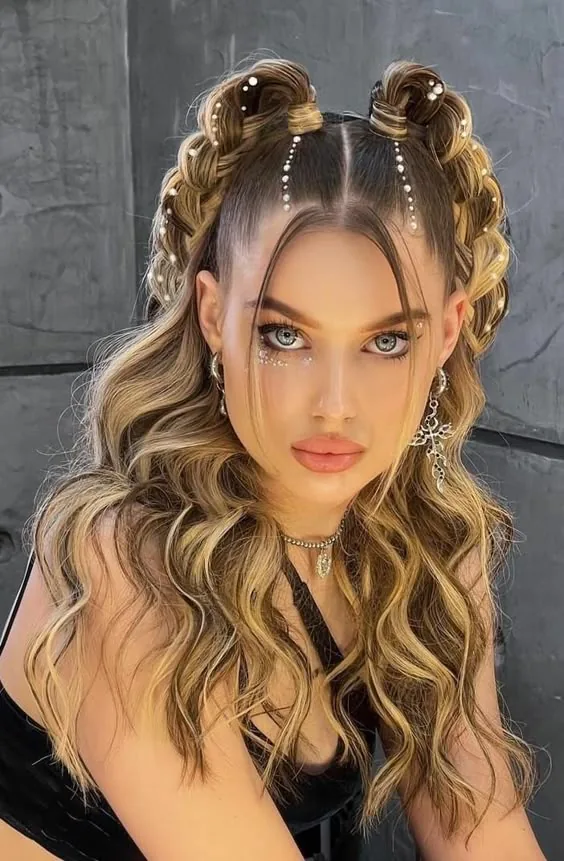
Boho space buns with loose waves combine the structure of the buns with the softness of wavy hair worn down around them — usually as a half-up style, with the waves falling past the shoulders. The waves are the whole mood: loose, tousled, a little bit undone, and they turn a graphic hairstyle into something that feels like a summer holiday. This is the space bun for garden parties, beach days and festivals where you want to look like you belong in a field of wildflowers rather than a salon chair. The buns give the style its shape; the waves give it its soul.
Best for: festivals, beach holidays, garden parties, and wavy or naturally textured hair. How to style: wave the hair first with a large-barrel iron, leaving the ends straight, then gather the top sections into two loose buns and leave the rest down. What to ask a stylist: ask for soft, lived-in waves rather than tight curls, because tight curls fight the boho mood. Quick verdict: the dreamiest space bun on this list — relaxed, romantic, and made for long summer days.
8. Space Buns with a Middle Part
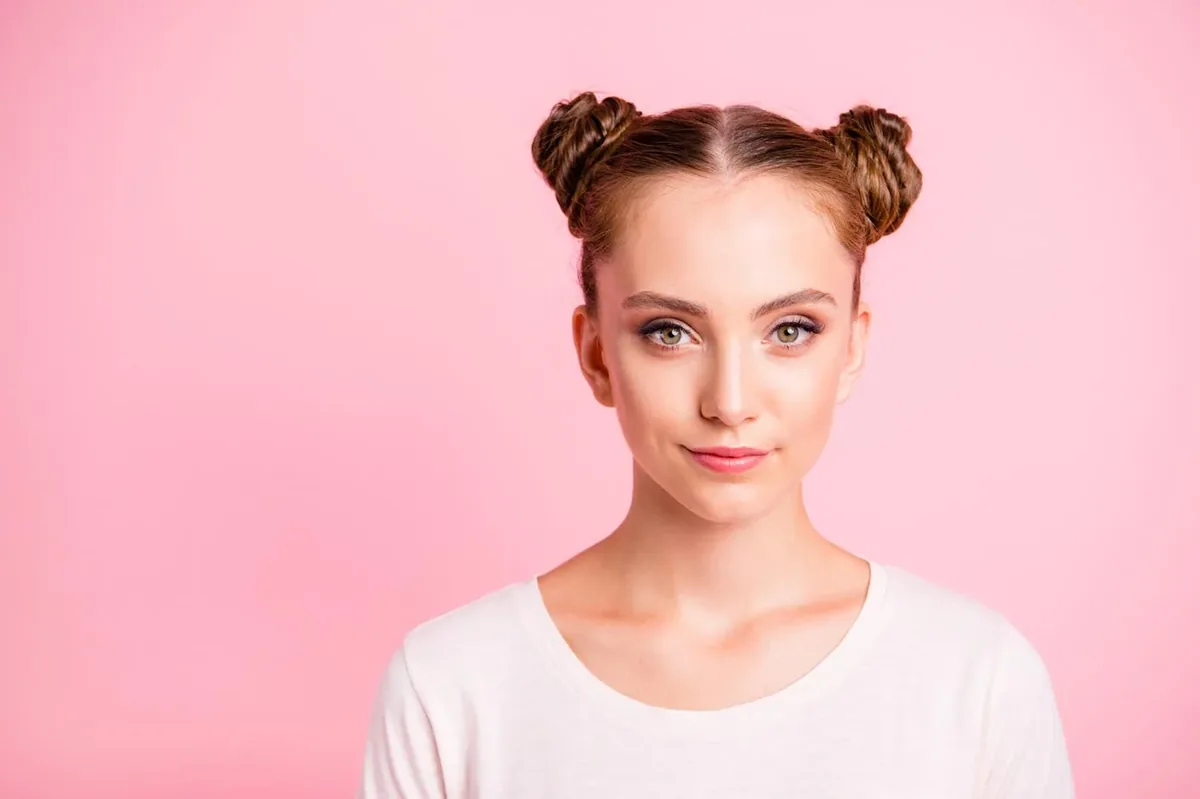
Space buns with a middle part are the most symmetrical version of the style, and symmetry is what makes them look clean and intentional. The part runs straight down the centre of the head, the buns sit at equal distances from it, and the whole look is balanced in a way that a side part can never be. A middle part also frames the face evenly, which suits oval and heart-shaped faces particularly well, and it makes the buns look like they belong exactly where they are. This is the version to choose when you want the classic space bun look at its most polished and most photogenic.
The pros: perfectly balanced, photographs beautifully from the front, and suits the classic festival look. The cons: a middle part shows every bit of root growth and every stray hair, and it does not suit everyone — some face shapes look better with a side part. The common mistake is parting the hair while it is dry; a part made on damp hair stays put, while a part made on dry hair drifts back to the middle within the hour. Maintenance: a quick check in a mirror after a few hours, and a dab of pomade on any flyaways along the part.
9. Festival Space Buns with Glitter Roots

Festival space buns with glitter roots are the full celebration version: the buns themselves are the base, and the glitter runs along the parting and around the base of each bun, catching the light every time you move. The glitter is what makes this style unmistakably festival — it is joyful, it photographs like a dream, and it turns a simple hairstyle into the centrepiece of an outfit. Done well, it looks like stardust; done badly, it looks like a craft accident. The difference is restraint: glitter along the part and around the buns, not glitter everywhere.
Best for: music festivals, pride events, parties, and any day that deserves sparkle. How to style: do the buns first, then apply hair gel along the parting with a small brush and press cosmetic-grade glitter over it — never use craft glitter near your eyes or scalp. What to ask a stylist: nothing, unless you want a professional glitter application; this is a DIY job. Quick verdict: the most fun space bun there is, and the one that gets the most compliments in photos. Just remember that glitter gets everywhere, and you will be finding it in your hair for days.
10. Space Buns with Baby Braids
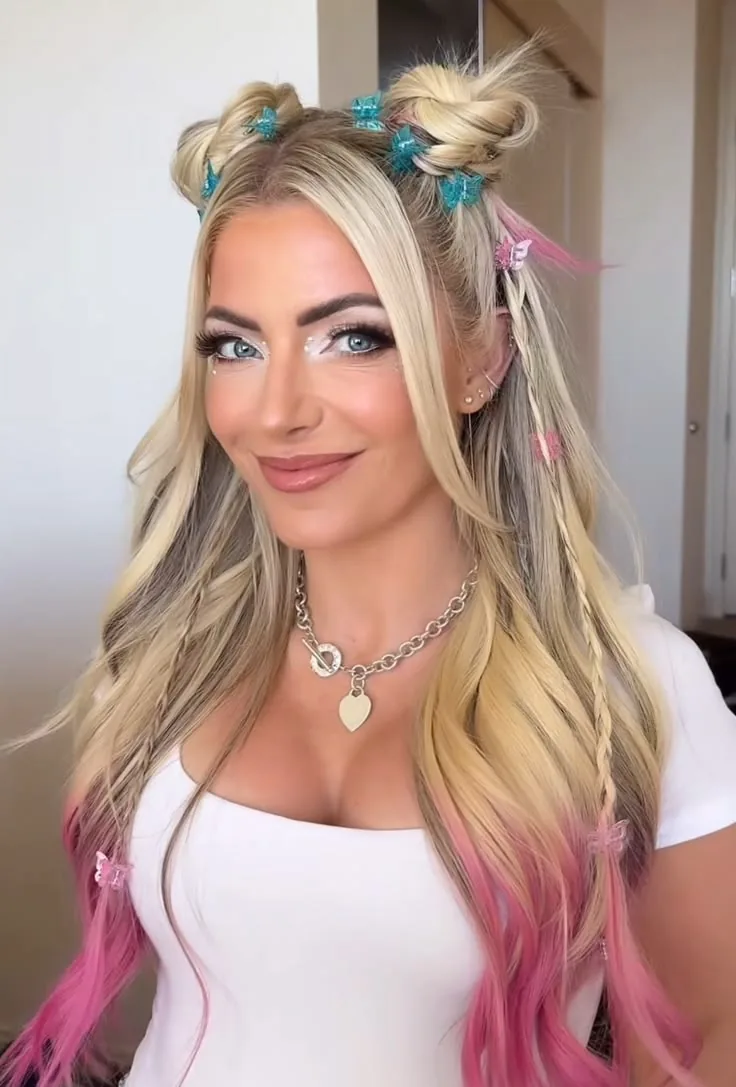
Space buns with baby braids are the 90s revival done properly: two buns on top, and two or three tiny braids hanging down at the front, framing the face like the braids everyone wore in 1999. The baby braids are the detail that makes the style feel nostalgic rather than generic — they add texture, they add movement, and they give the front of the style something to look at besides the buns. This is the space bun for girls who love the Y2K revival, who want a style with a bit of personality, and who are happy to spend an extra ten minutes on the details.
The pros: instantly nostalgic, adds texture and movement, and the braids keep the front hair out of your face. The cons: the braids take time, and they fall out if they are not tied tightly. The common mistake is braiding the front pieces too thickly — baby braids should be thin, no wider than a pencil, or they stop looking like baby braids and start looking like ordinary plaits. Time and cost: 20 minutes at home, two tiny clear elastics, and a little patience. Quick verdict: the most characterful space bun on this list — small details, big personality.
11. Slicked-Back Space Buns
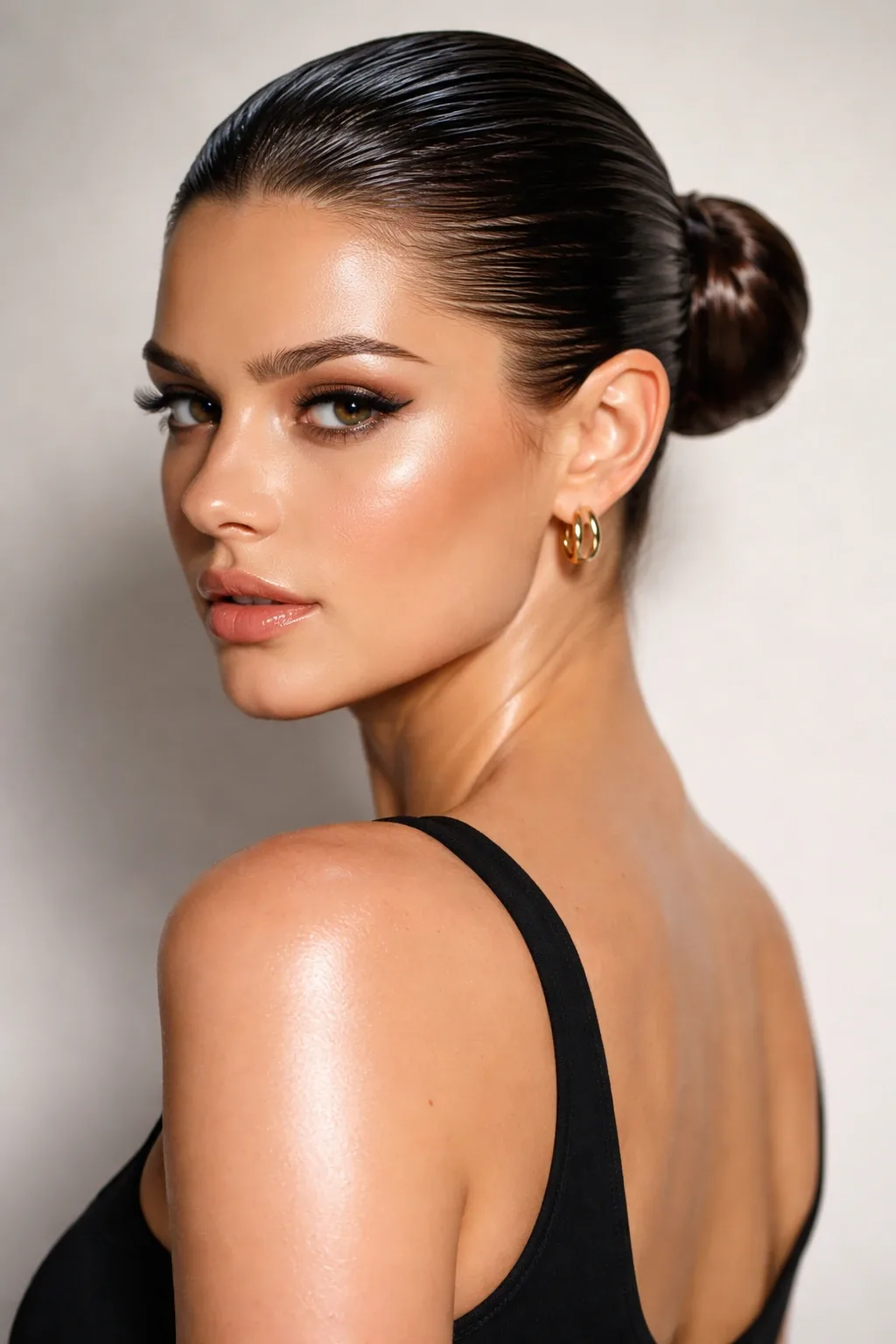
Slicked-back space buns are the fashion-forward version: the hair pulled back tight and smooth, not a strand out of place, and two compact buns sitting high and glossy. The slicked-back front is what makes them look expensive — it is the same technique as a slicked-back ponytail, just doubled — and it suits a night out, a party, or any moment when you want to look sharp rather than soft. They are also one of the best styles for hot weather, because the hair is completely off the face and neck, and a slicked-back bun does not frizz the way loose hair does.
Best for: nights out, parties, hot weather, and straight or wavy hair that smooths easily. How to style: apply a smoothing gel to damp hair, brush it back with a boar-bristle brush, tie two high pigtails, and twist each into a tight bun. What to ask a stylist: ask for a gel that holds without flaking, because a flaky gel ruins the whole look by mid-evening. Quick verdict: the sharpest space bun on this list — bold, clean, and impossible to ignore.
12. Space Buns with a Deep Side Part
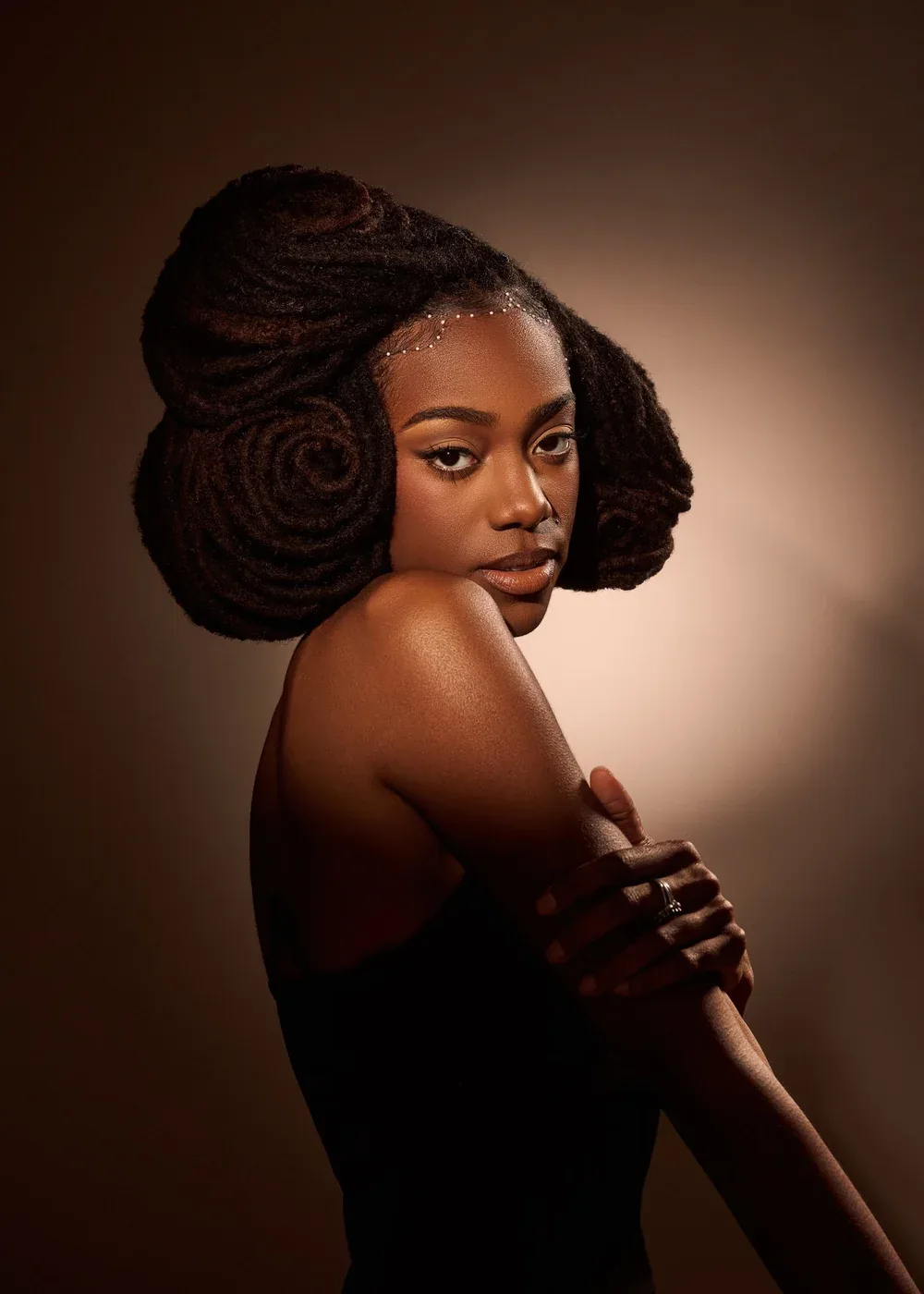
Space buns with a deep side part break the symmetry rule on purpose, and the result is surprisingly elegant. The part sits far to one side, so one bun ends up slightly higher and more forward than the other, and the heavy sweep of hair across the forehead gives the whole style a vintage, old-Hollywood feel. It is the space bun for girls who find the classic symmetrical version a little too cute and want something with more edge. The asymmetry also suits round faces well, because the diagonal line of the part lengthens the face.
The pros: more elegant than the classic, suits round faces, and looks deliberate rather than accidental. The cons: it is harder to get the buns even, because the part is uneven by design, and the heavy side can feel unbalanced. The common mistake is parting the hair too far to the side, which makes one bun tiny and the other huge — keep the part deep but not extreme. Maintenance: a bobby pin hidden under the heavy side keeps the sweep in place all day. Quick verdict: the grown-up, slightly rebellious space bun.
13. Polished Space Buns for a Night Out
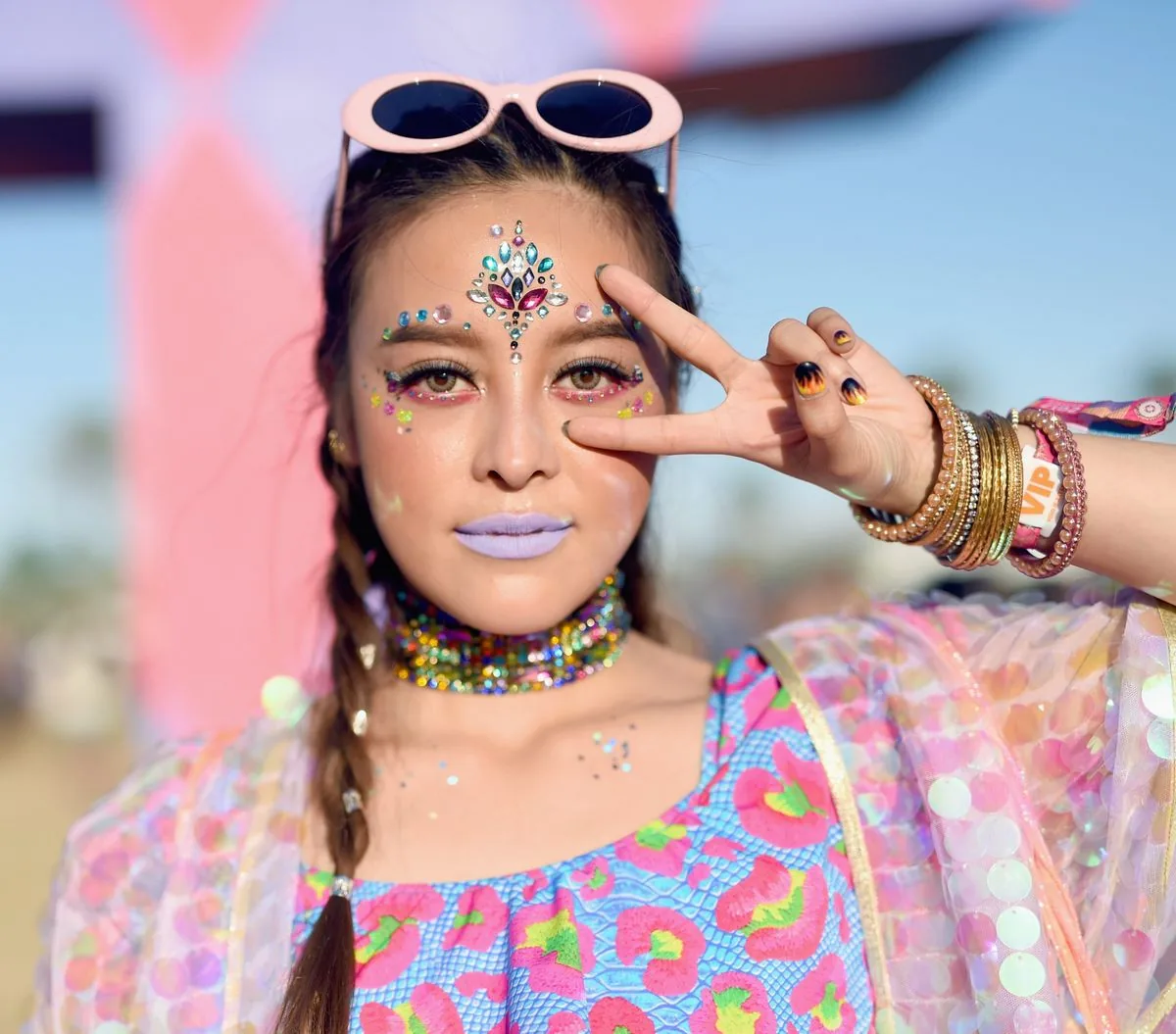
Polished space buns for a night out are the dressed-up cousin of the classic: the buns are smooth, compact and glossy, the front is sleek, and the whole style is finished with a shine spray so it catches the light in a dark room. The difference from a festival bun is control — no flyaways, no loose strands, no glitter — just two perfect buns and a clean silhouette that works with a dress and heels. This is the space bun for a birthday, a club night, a dinner with friends, or any evening when you want to look fun and put-together at the same time.
Best for: nights out, birthdays, parties, and anyone who wants space buns without the festival vibe. How to style: smooth the hair with a serum, tie the buns high and tight, wrap a small section of hair around each elastic to hide it, and finish with shine spray. What to ask a stylist: ask for the buns to be set with a flexible-hold spray rather than a hard one, so they move a little without cracking. Quick verdict: proof that space buns can be glamorous — the same two buns, a completely different energy.
14. Space Buns with Straight Shine
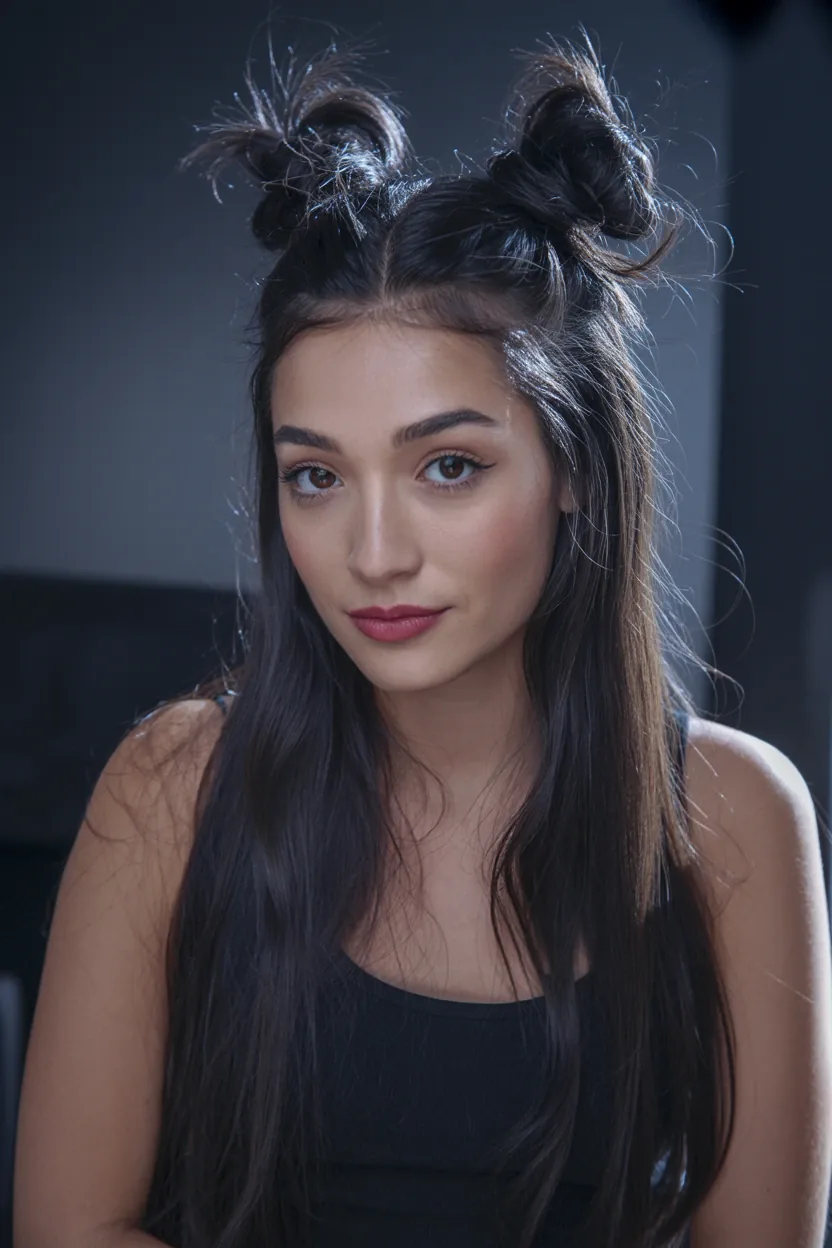
Space buns with straight shine are the minimalist version: the hair is flat-ironed dead straight and glossy before the buns go up, so the buns themselves are smooth and sleek and the few strands left out fall in perfect, straight lines. The shine is the whole look — there are no curls, no waves and no texture to distract from the clean, glassy surface of the hair. This style suits girls with naturally straight hair best, because it enhances what the hair already does, and it pairs beautifully with a bold outfit, because the hair stays quiet and lets the clothes shine.
The pros: sleek, modern, and the buns hold their shape perfectly. The cons: straight hair shows every split end and every dull patch, so the hair has to be healthy and well-trimmed. The common mistake is flat-ironing after the buns are up, which flattens the buns themselves — iron the hair first, then build the buns. Time and cost: 25 minutes at home, a flat iron, a heat protectant and a shine serum. Quick verdict: the quietest space bun on this list, and one of the most striking.
15. Braided Space Buns
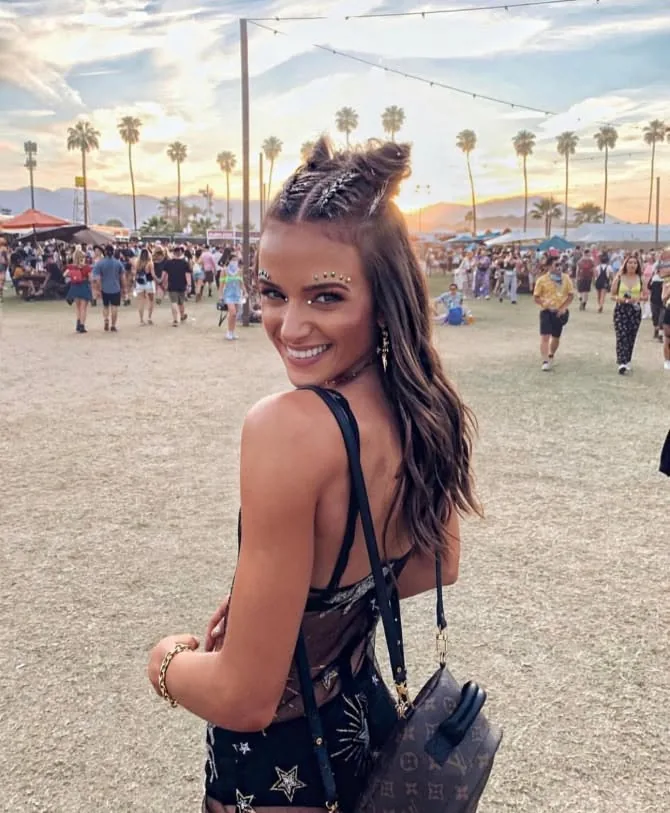
Braided space buns are the most secure space bun there is, because the braid does the holding: each side is braided first, then the braid is coiled into a bun, so the hair is locked in place section by section instead of relying on pins alone. The texture of the braid shows on the outside of the bun, which gives it a beautiful, woven look that plain twisted buns never have. This is the space bun for long days, for dancing, for festivals, and for anyone whose buns usually fall out by lunch — a braided bun simply does not fall out.
Best for: festivals, dancing, long days, and thick or long hair. How to style: braid each pigtail loosely, pull the braid apart gently to make it fuller, then coil it around its base and pin. What to ask a stylist: ask for the braids to be pancaked before coiling, because a flat, wide braid makes a much prettier bun than a skinny one. Quick verdict: the hardest-working space bun on this list — beautiful and practically indestructible.
16. Dutch Braid Space Buns
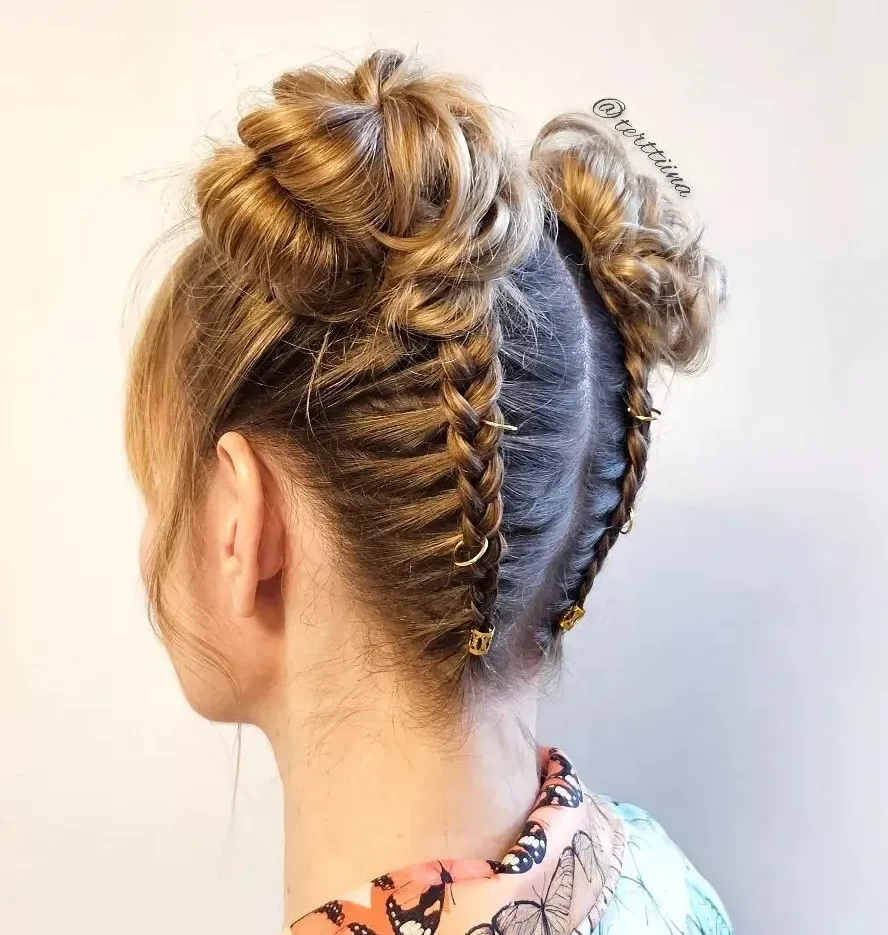
Dutch braid space buns start with a Dutch braid — the inside-out braid that sits on top of the hair — running from the forehead back to the crown on each side, and then the remaining hair is coiled into a bun. The Dutch braid is the star: it creates two raised, rope-like braids that frame the top of the head and lead the eye straight to the buns, and it anchors the whole style so firmly that it survives anything. This is the space bun for girls who love braids, who want a style with real detail, and who need their hair to stay put through a whole day of activity.
The pros: incredibly secure, beautifully detailed, and the braids add height and interest. The cons: Dutch braids take practice, and they are hard to do on yourself the first few times. The common mistake is braiding too tightly at the front, which pulls the scalp and causes a headache by midday — keep the front sections loose and let them soften. Time and cost: 30 to 40 minutes at home, or a salon visit if you are new to Dutch braiding. Quick verdict: the most impressive space bun on this list, and worth learning the braid for.
17. Space Buns with Braided Pigtails
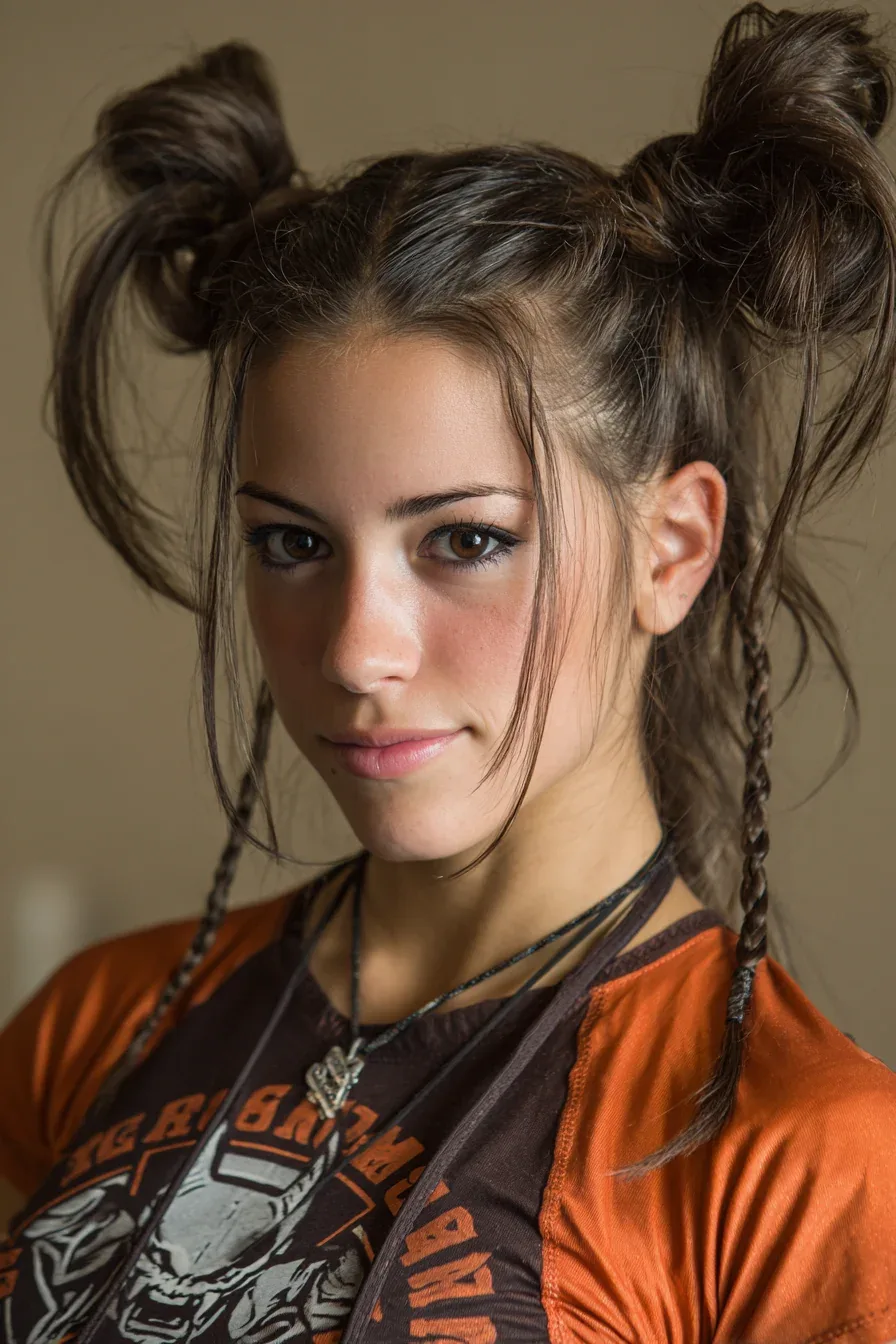
Space buns with braided pigtails are the playful hybrid: the buns sit on top, and instead of loose hair underneath, two braided pigtails hang down from behind each bun. The braids give the style a youthful, 90s energy and they keep the hair completely controlled, which makes this version brilliant for workouts, for kids’ parties, or for any day when you want the buns and the length at the same time. It is also the space bun that photographs best from behind, because the braids give the back of the head something to look at.
Best for: workouts, active days, 90s-themed parties, and long hair. How to style: tie two high pigtails, braid each one, tie the ends, then coil the top half of each braid into a bun and leave the rest hanging. What to ask a stylist: nothing — this is a straightforward at-home style, and the only skill it needs is a basic three-strand braid. Quick verdict: fun, practical, and full of personality — the space bun that does the most with the least effort.
18. Fishtail Space Buns
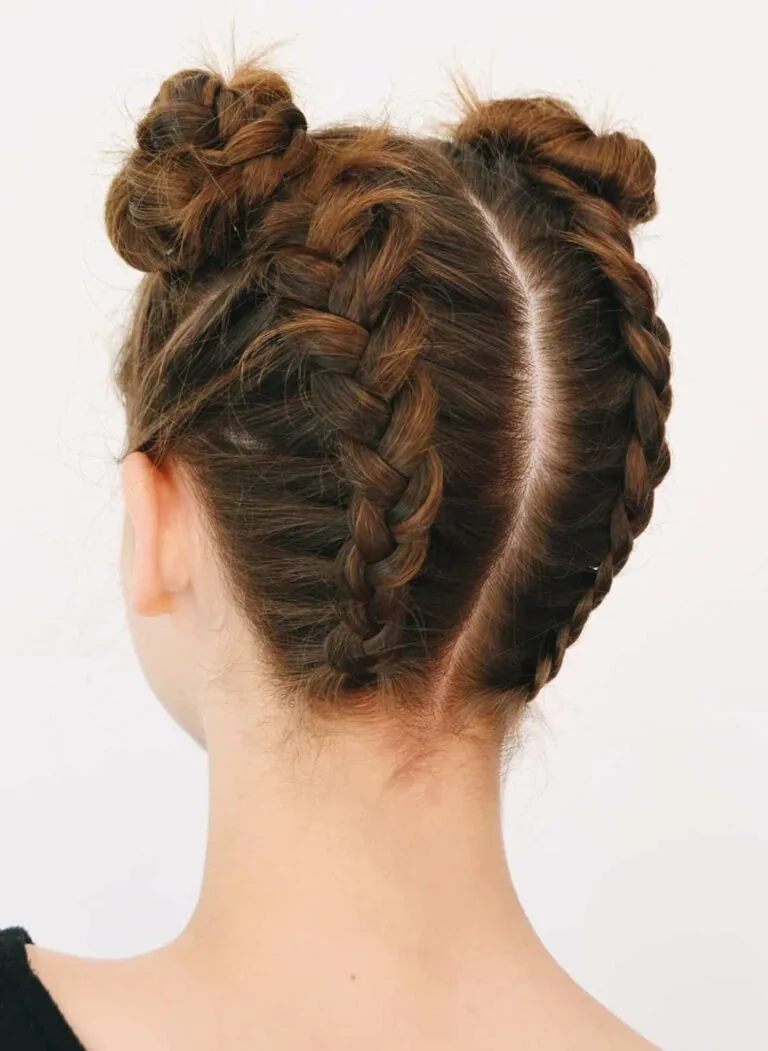
Fishtail space buns use a fishtail braid — woven from two sections instead of three — to create a finer, more delicate texture than an ordinary braid. The fishtail is coiled into the bun, and the fine weave shows on the surface like a piece of jewellery, which makes this the most detailed and most elegant braided space bun on the list. It looks far more complicated than it is, and once you have practised a fishtail twice, it takes about ten minutes a side. This is the space bun for girls who love intricate hair and want a style that gets noticed up close.
The pros: exquisitely detailed, very secure, and the fine weave looks expensive. The cons: fishtails take longer than ordinary braids, and they loosen faster if the hair is very fine. The common mistake is pulling the fishtail apart too aggressively — a gentle pancake makes it full, but a hard pull unravels the weave. Maintenance: a light spray after coiling, and a spare pin in your bag for the evening. Quick verdict: the prettiest braided space bun here — delicate, detailed, and worth the extra ten minutes.
19. Space Buns with a Braided Crown
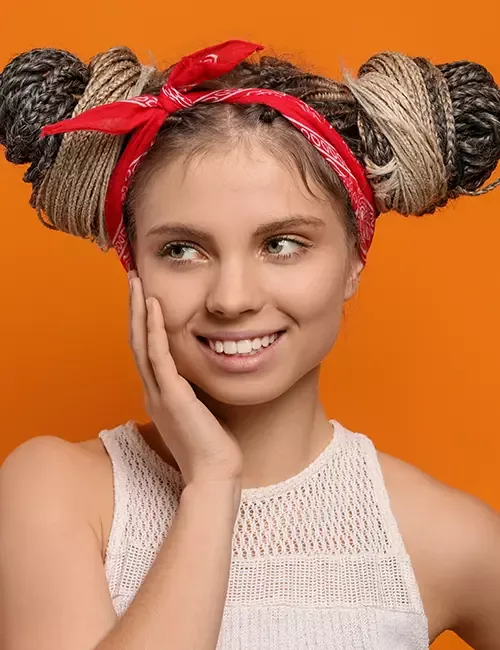
Space buns with a braided crown combine two romantic ideas at once: a braid worked across the front of the head like a halo, and two buns sitting behind it. The crown braid frames the face and gives the style a soft, fairytale quality, while the buns keep the whole thing playful rather than formal. This is the space bun for weddings, for garden parties, for photoshoots, and for anyone who wants the style to feel special rather than everyday. It is also one of the most flattering versions, because the crown braid draws the eye upward and the buns balance the silhouette.
Best for: weddings, garden parties, photoshoots, and romantic occasions. How to style: braid a crown from one side of the head to the other and pin it in place, then gather the remaining hair into two buns behind the braid. What to ask a stylist: ask for the crown braid to be kept loose and soft, because a tight crown looks severe next to the playful buns. Quick verdict: the most romantic space bun on this list — a halo and two buns, and a style that looks like it belongs in a storybook.
20. Half-Up Space Buns
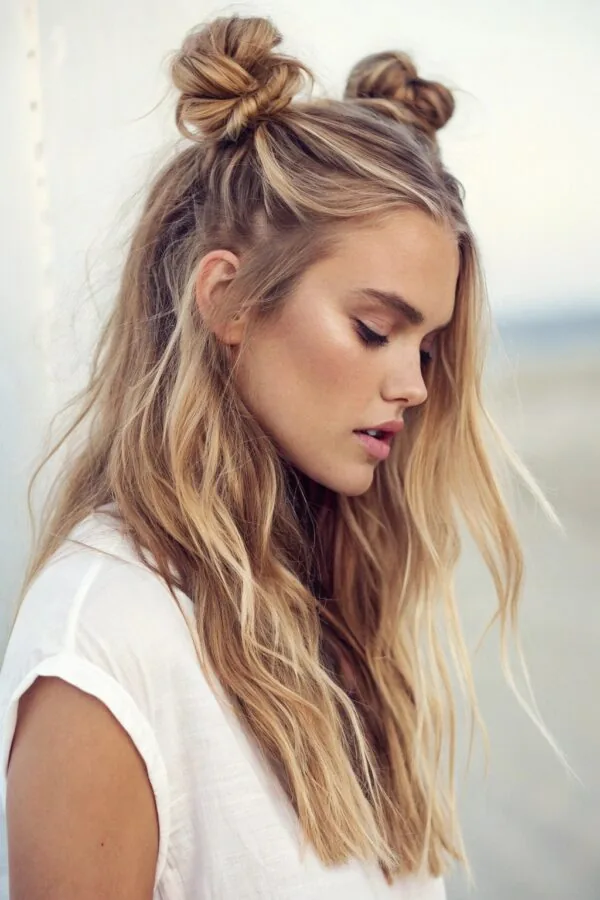
Half-up space buns are the compromise that turns out to be better than either extreme: the buns sit on top of the head, and the rest of the hair stays down, so you get the playfulness of the buns and the beauty of your length at the same time. They are the most popular space bun of all, because they are the most forgiving — if one bun is slightly uneven, the loose hair distracts from it, and if the buns are small, the loose hair makes the whole style look balanced. This is the space bun to try first if you are nervous, and the one to wear when your hair looks too good to hide.
The pros: forgiving, flattering, and you keep your length. The cons: the loose hair can fall in your face on a windy day, and the style is less practical for workouts. The common mistake is taking too much hair into the buns, which leaves the loose section thin and straggly — take only the top third, and the balance will look right. Time and cost: ten minutes, two elastics, and no stylist. Quick verdict: the friendliest space bun on this list, and the best place to start.
21. Half-Up Space Buns with Loose Curls
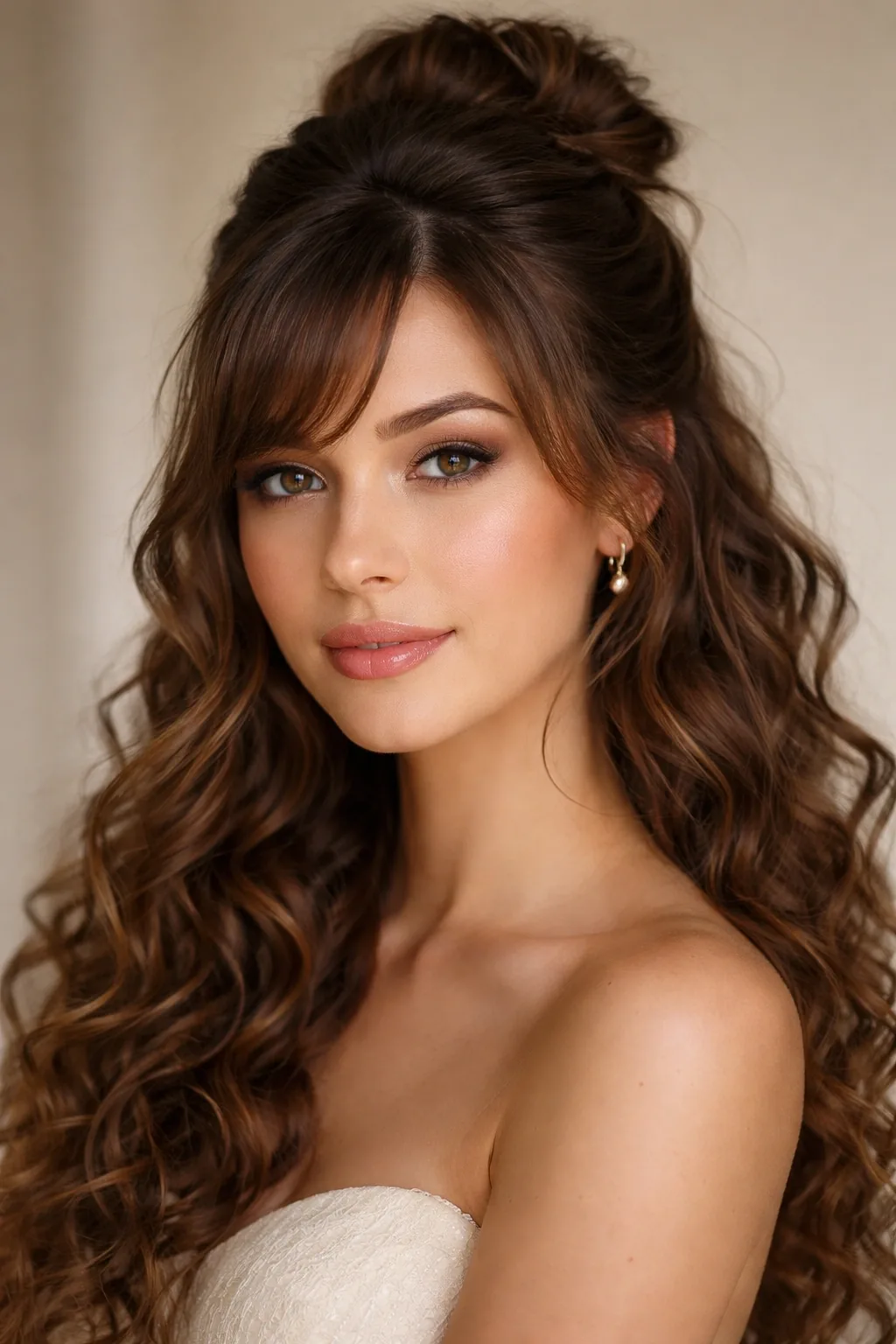
Half-up space buns with loose curls are the romantic version of the half-up style: the buns are neat and small on top, and the hair left down falls in soft, brushed-out curls past the shoulders. The contrast is what makes it work — the structured buns against the soft curls — and the whole look feels like a party hairstyle rather than a gym hairstyle. This is the space bun for date nights, for dinners out, for any evening when you want to look like you made an effort without spending an hour on your hair. The curls do the glamour; the buns do the fun.
Best for: date nights, dinners, parties, and medium to long hair. How to style: curl the hair first with a large-barrel iron, let the curls cool, then gather the top sections into two small buns and leave the curls down. What to ask a stylist: ask for soft, brushed-out curls rather than tight ringlets, because tight curls fight the relaxed mood of the buns. Quick verdict: the most romantic half-up space bun here — soft, pretty, and made for evenings.
22. Half-Up Space Buns with Waves
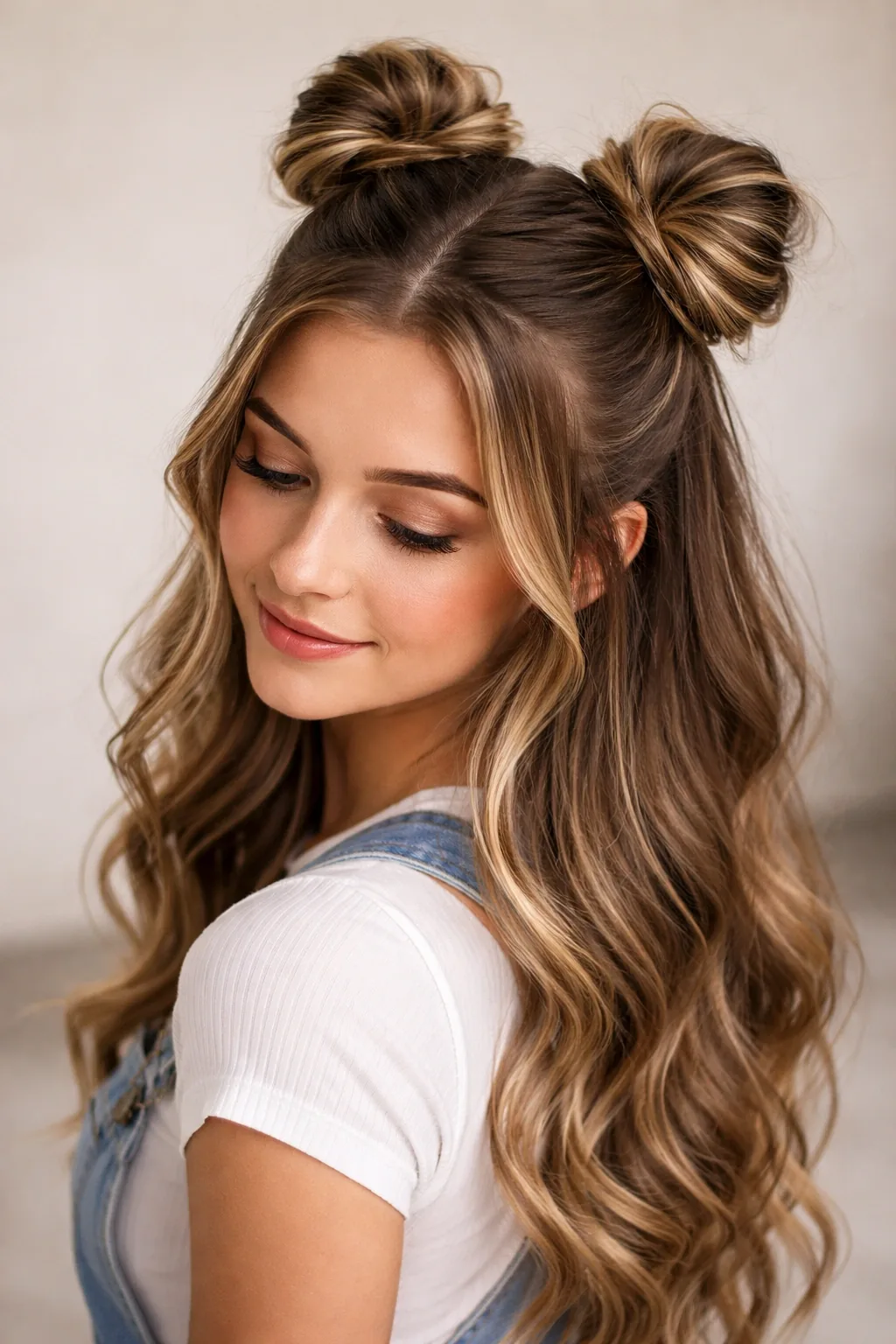
Half-up space buns with waves are the relaxed, beachy cousin of the curled version: the buns are loose and a little messy, and the hair left down falls in soft, undone waves that look like they happened at the seaside rather than in a bathroom. The waves are deliberately imperfect — some pieces bend one way, some the other — which is exactly what makes them look effortless. This is the space bun for holidays, for beach days, for weekends, and for anyone who hates the feeling of hairspray and wants a style that looks better as the day goes on.
The pros: relaxed, low-effort, and the waves hide any unevenness in the buns. The cons: waves fall flat in humidity, so this is a dry-weather style. The common mistake is curling the waves too tightly — bend the hair with a flat iron instead, leaving the ends straight, and the waves will look beachy rather than formal. Maintenance: a scrunch of sea-salt spray mid-afternoon brings the waves back to life. Quick verdict: the easiest holiday space bun — sun, salt, and two little buns.
23. Half-Up Space Buns with a Scarf
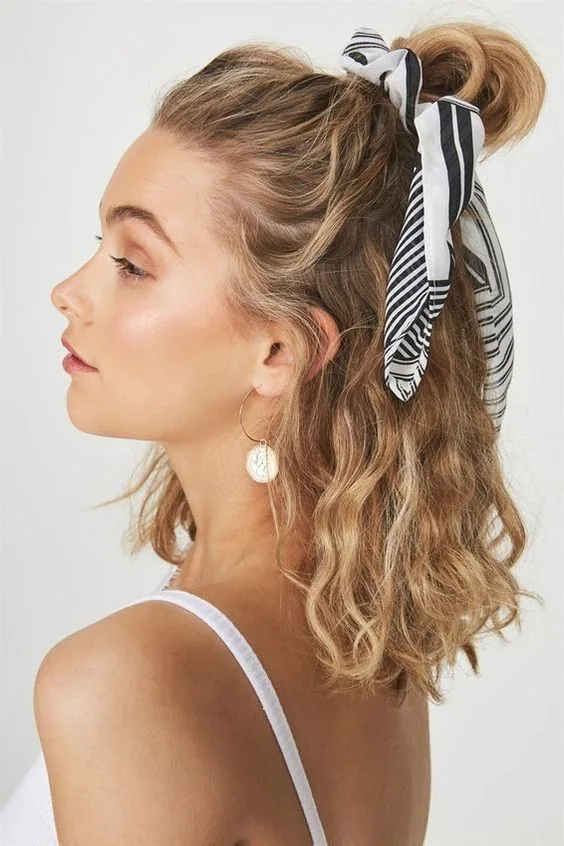
Best for: holidays, festivals, and anyone who loves a statement accessory. How to style: do the buns first, then wrap a thin silk scarf around the base of each bun and tie it in a small bow, leaving the ends to flutter. What to ask a stylist: nothing — the scarf is a DIY job, and the only rule is to use a light silk scarf, because a heavy one will drag the buns down. Quick verdict: the most colourful space bun on this list — one scarf, and the whole look changes.
24. Space Buns for a Bob
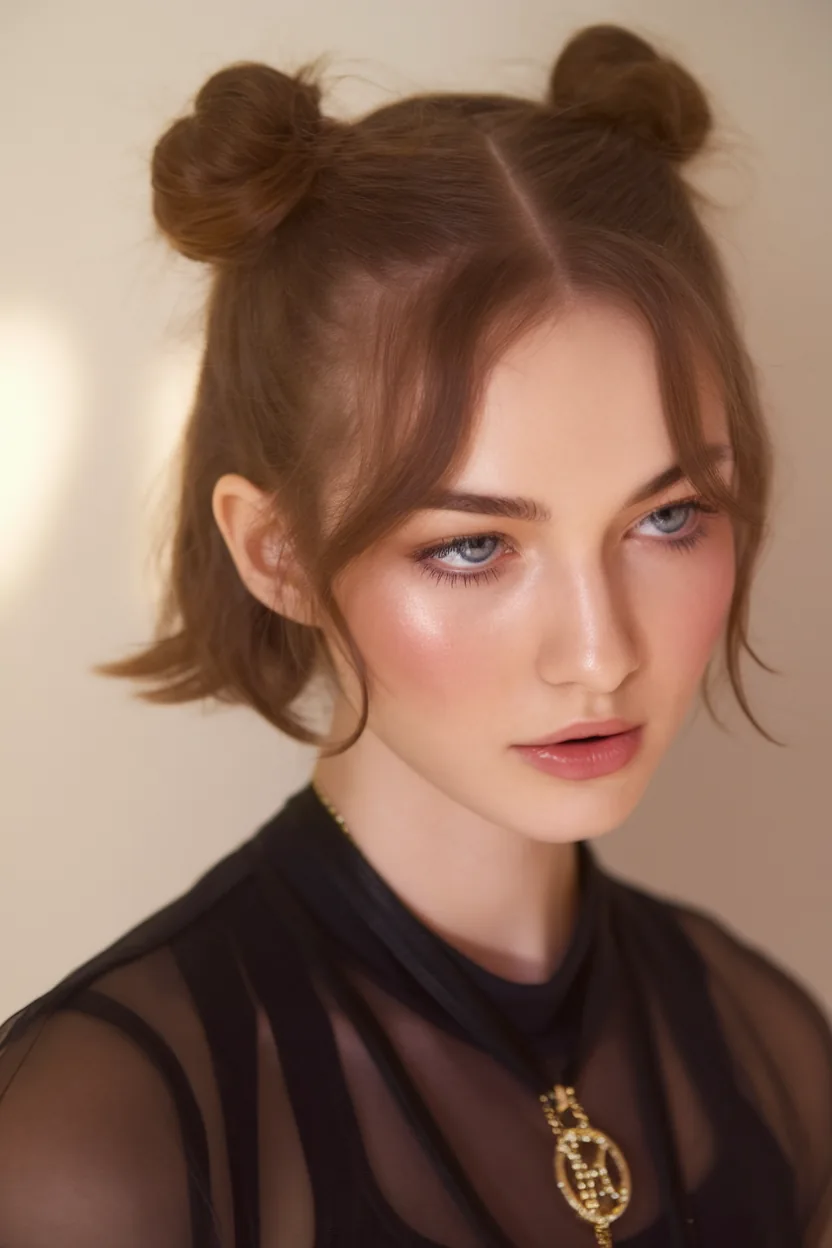
Space buns for a bob are the proof that you do not need long hair to wear this style: a chin-length or jaw-length bob gathers into two neat, compact buns that sit high on the head and look completely deliberate. The buns are small, which is part of their charm — they read as cute and modern rather than as a failed attempt at a big bun — and because a bob has less hair to manage, they go up in minutes and they stay put. This is the space bun for bob girls who have always assumed the style was not for them.
The pros: quick, light, and the buns stay put because there is less weight pulling them down. The cons: the buns are small, so they need a little texture to look full, and very short bobs may not gather at all. The common mistake is trying to gather all the hair into the buns; on a bob, leave the bottom layer down or pin it under, and the buns will look fuller. Time and cost: ten minutes, a texturising spray, and no stylist. Quick verdict: small buns, big charm — the bob version is one of the best on this list.
25. Space Buns for a Pixie Grow-Out
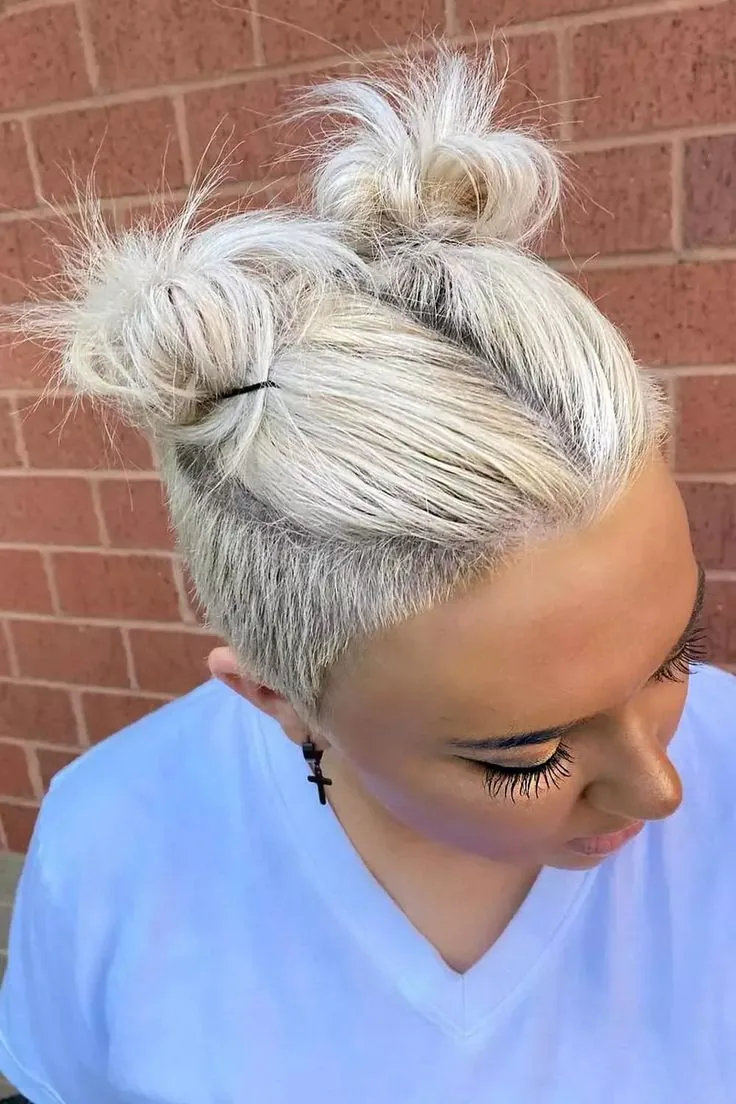
Space buns for a pixie grow-out are the style for the awkward in-between stage: the hair is too long to be a pixie and too short to be a bob, and it will not do anything you ask it to. Two tiny buns solve the problem completely — they gather the longest pieces, they hide the uneven lengths, and they turn a frustrating grow-out into a deliberate, cute style. The buns will be small, the ends will poke out, and that is exactly right. This is the space bun for anyone growing out a short cut who needs a style that works with the hair they have today, not the hair they will have in six months.
Best for: pixie grow-outs, awkward lengths, and anyone who needs a style that hides uneven layers. How to style: gather the longest sections at the crown, twist them into small knots, and pin with two bobby pins each — the pins are doing the real work here, not the elastic. What to ask a stylist: ask which pieces to leave out and which to pin, because a grow-out has layers at different lengths and a stylist can see the back. Quick verdict: the grow-out rescue — two tiny buns, and the awkward stage disappears.
26. Mini Space Buns for Short Hair
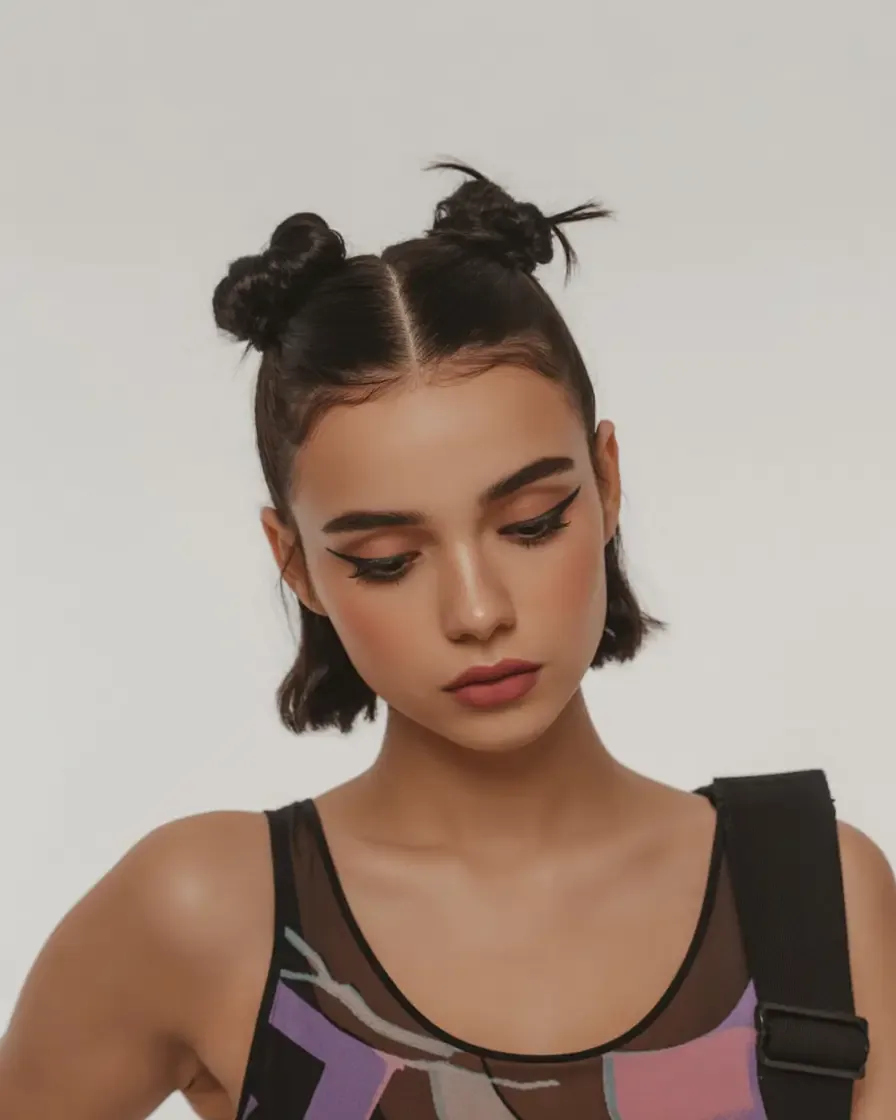
Mini space buns for short hair are the tiniest version of the style, and they might be the cutest: two knots no bigger than a coin, sitting high on the head, with a few spiky ends poking out. They are the space bun for very short hair, for fine hair, and for anyone who wants the idea of the style without the weight of it. Because the buns are so small, they are light, they do not pull, and they last all day without a single pin working loose. They also suit a surprising range of occasions, from a festival to a casual lunch, because small buns read as a detail rather than a statement.
The pros: feather-light, no pulling, and they suit the shortest hair. The cons: they are small, so they need a pin or two to stay put, and they do not suit formal occasions. The common mistake is using an elastic that is too big — a mini bun needs a tiny clear elastic or a bobby pin, not a full-size hair tie. Maintenance: none, really; a mini bun either holds or it does not, and if it does not, two pins fix it in ten seconds. Quick verdict: proof that a space bun does not need to be big to be brilliant.
27. Space Buns for Shoulder-Length Hair
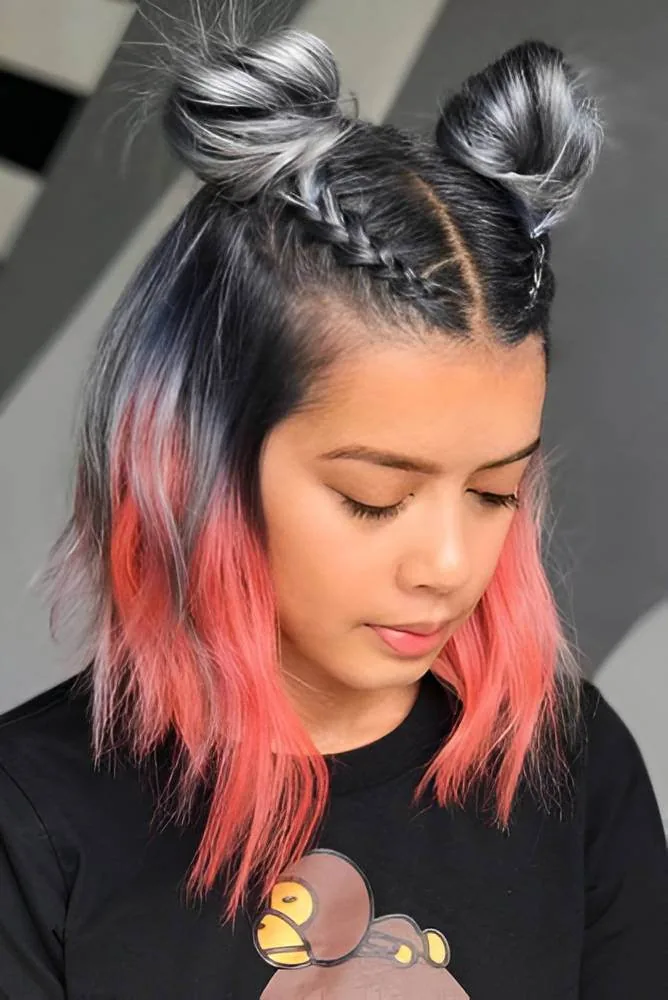
Space buns for shoulder-length hair are the sweet spot: the hair is long enough to make a proper bun, but short enough that the buns stay light and bouncy. Shoulder-length hair is the easiest length for space buns, because the buns form naturally, they do not need padding or extra pins, and they sit at a flattering height without any effort. This is the space bun for the vast majority of girls — the length most of us actually have — and it works in every version on this list, from classic to braided to half-up.
Best for: shoulder-length hair, everyday wear, and anyone trying space buns for the first time. How to style: part centrally, gather each side at the crown, twist and pin — the buns will form almost by themselves. What to ask a stylist: ask for a cut with soft layers at the front, because face-framing layers make shoulder-length space buns look softer. Quick verdict: the easiest length, the easiest bun — if your hair reaches your shoulders, space buns were made for you.
28. Curly Space Buns
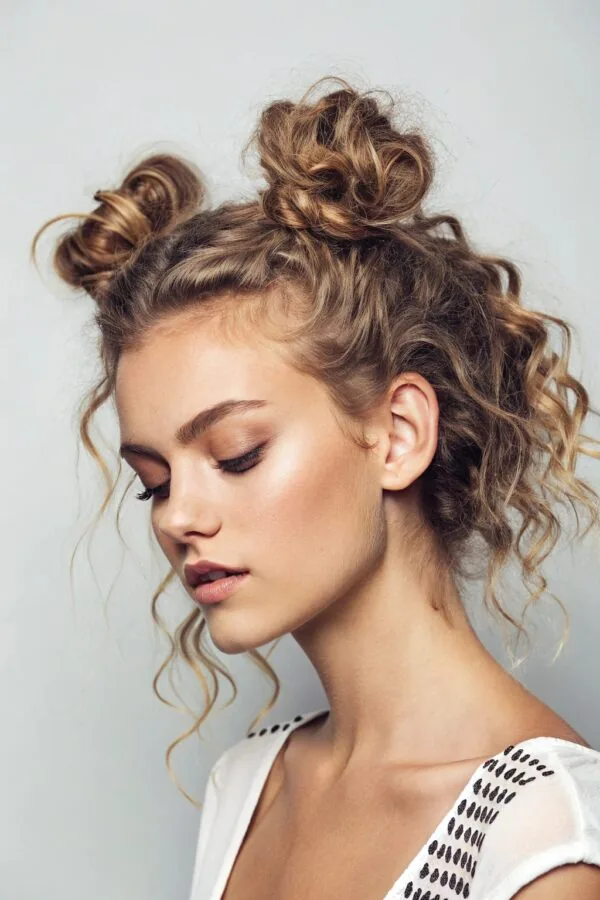
Curly space buns are the fullest, softest version of the style: the curls make each bun naturally big and cloud-like, with a texture that straight hair can only dream of. A curly bun does not need padding, backcombing or a doughnut — the curls are the volume — and the bun holds its shape because the curls grip each other. This is the space bun for girls with natural curls who have spent years fighting their volume, and it is the style that finally lets the volume win. Two curly buns frame the face, show off the curl pattern, and keep the hair off the neck on a hot day.
The pros: naturally full, naturally secure, and no padding needed. The cons: curly buns can frizz in humidity, and they take a little longer to gather gently. The common mistake is brushing the curls out before gathering them, which turns definition into a halo of frizz — gather the hair with your fingers, not a brush. Time and cost: 15 minutes at home, a leave-in conditioner, and a curl cream. Quick verdict: the best hair for space buns, full stop — curls were made for this style.
29. Space Buns for Natural Curls
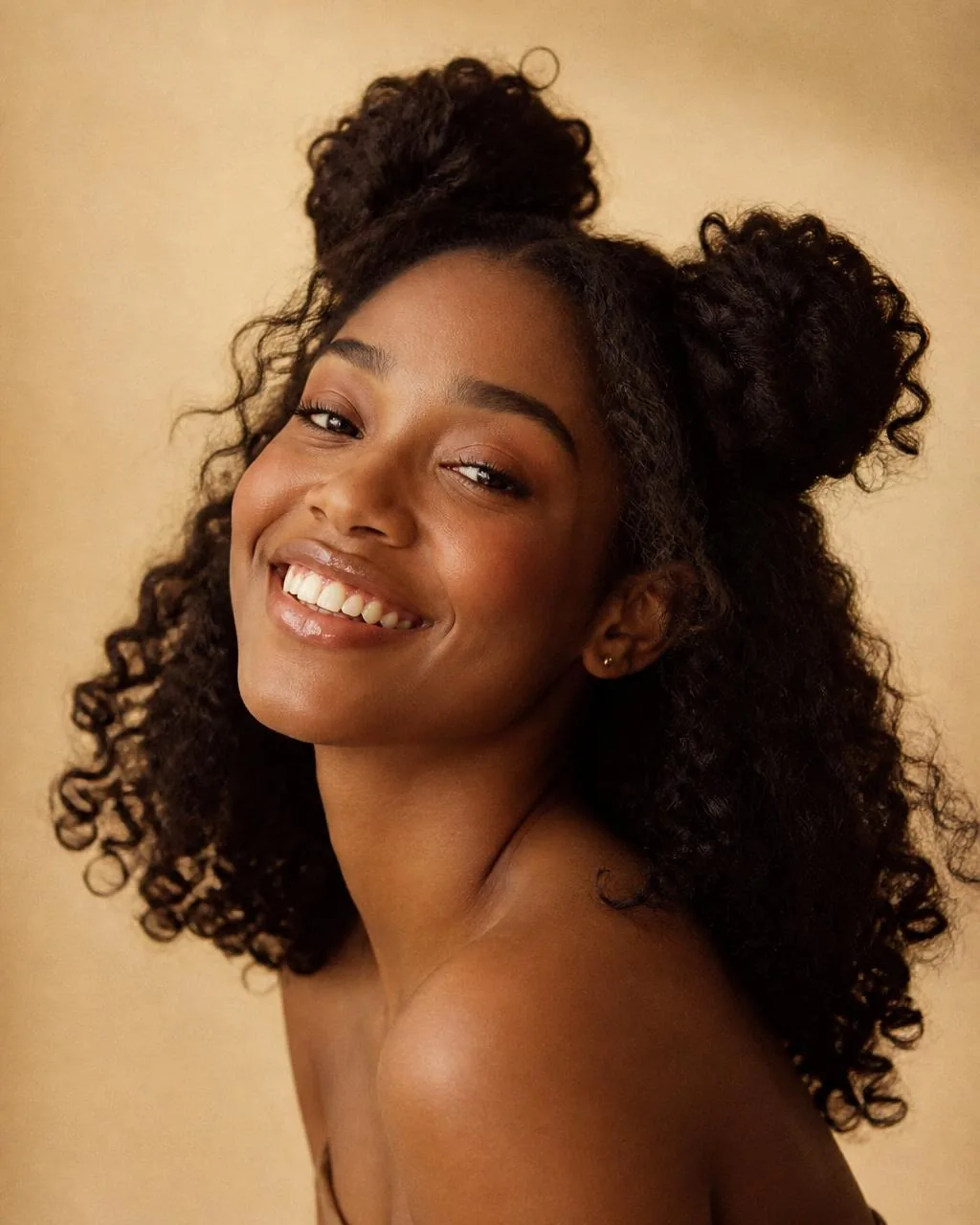
Space buns for natural curls celebrate the curl pattern instead of hiding it: the hair is gathered gently into two buns, and the curls are allowed to fall where they want, so each bun looks soft, full and completely individual. No two curly buns ever look the same, and that is the beauty of them — the style is yours in a way a straight-hair bun can never be. This is the space bun for girls with 3A to 3C curls, for anyone who wants a protective style that still shows off their texture, and for days when you want your hair up but you do not want to lose your curls.
Best for: natural curls, protective styling, and hot weather. How to style: moisturise the hair first, gather each side gently with your fingers, twist loosely, and pin — never brush. What to ask a stylist: ask for a curl-by-curl approach to the buns, because a stylist who understands curls will not try to smooth them away. Quick verdict: the most personal space bun on this list — your curls, your buns, your style.
30. Space Buns for Coily Hair

Space buns for coily hair are the most striking version of the style: the coils make each bun a perfect, sculpted puff, dense and round and full of texture, and the silhouette is bold and beautiful in a way no other hair type can match. Coily buns hold their shape better than any other version, because the coils lock together and support each other, and they need almost no pins at all. This is the space bun for 4A to 4C hair, for girls who want a style that shows off their texture, and for anyone who loves a bold, graphic silhouette.
The pros: sculptural, incredibly secure, and almost no pins needed. The cons: coily hair needs moisture before styling, or the buns can look dry by the end of the day. The common mistake is gathering the hair too tightly, which pulls the scalp and causes breakage at the edges — gather gently, and use a soft elastic rather than a tight one. Maintenance: a little oil on the edges in the morning, and the buns will stay fresh all day. Quick verdict: the boldest space bun on this list — a puff, a statement, and a style that turns heads.
31. Space Buns with a Wash-and-Go Finish
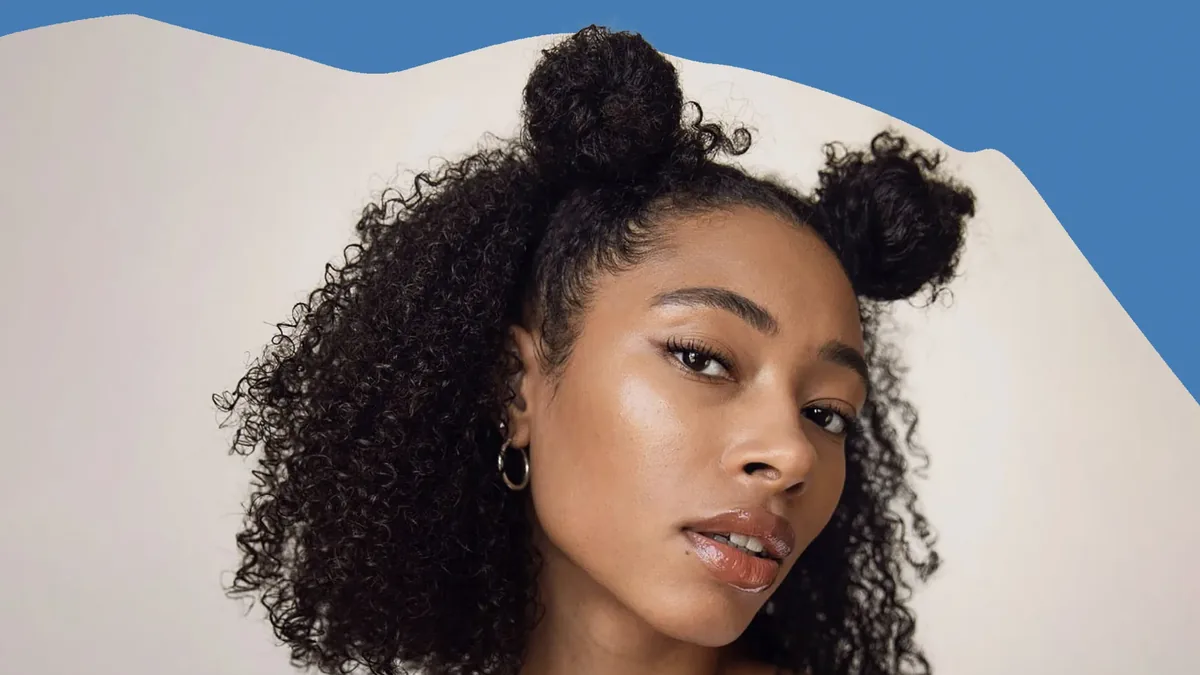
Space buns with a wash-and-go finish are the low-effort curly version: the hair is washed, conditioned and defined with a curl cream, and then gathered into two buns while the curls are still in their natural, freshly defined state. The buns themselves are soft and a little loose, and the curls around them are at their best — defined, shiny, and full of life. This is the space bun for wash-day girls, for anyone who wants a style that works with their routine rather than against it, and for days when you want to look great without spending an hour in front of a mirror.
Best for: wash days, curly routines, and low-effort styling. How to style: apply curl cream to wet hair, scrunch to define, gather each side loosely into a bun, and let the hair air-dry. What to ask a stylist: ask for a cut that works with your curl pattern when the hair is gathered up, because some layers fall out of buns and some do not. Quick verdict: the easiest curly space bun — wash, cream, bun, done.
32. Space Buns for a Wedding Guest
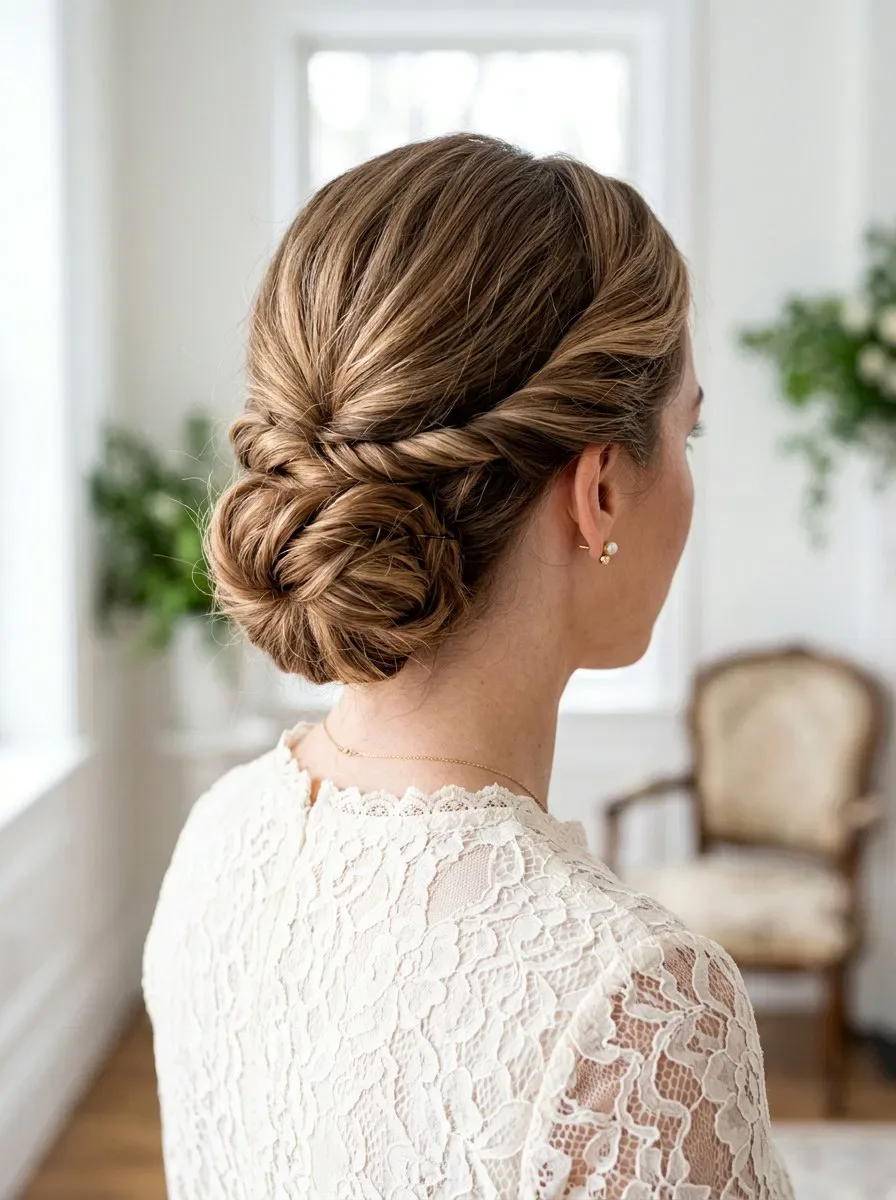
Space buns for a wedding guest are the toned-down, dressed-up version: the buns are small, sleek and neat, the front is smooth, and the whole style is finished with a subtle accessory — a pearl pin, a small crystal clip — rather than glitter or a bright scrunchie. The rule for a wedding is simple: the bride is the star, and your hair should be pretty without being distracting. Small, polished space buns pass that test beautifully, because they are elegant, they stay put through a long day of ceremony and dancing, and they photograph well without stealing the show.
The pros: elegant, secure, and they last from the ceremony to the last dance. The cons: they need to be smaller and sleeker than the festival version, which takes more time. The common mistake is going too big or too glittery — at a wedding, a bun the size of a golf ball and a single pearl pin is right, and a bun the size of an orange with glitter is not. Time and cost: 20 minutes at home, a pearl pin, and a flexible-hold spray. Quick verdict: the wedding-safe space bun — pretty, polite, and built to last.
33. Space Buns for a Date Night
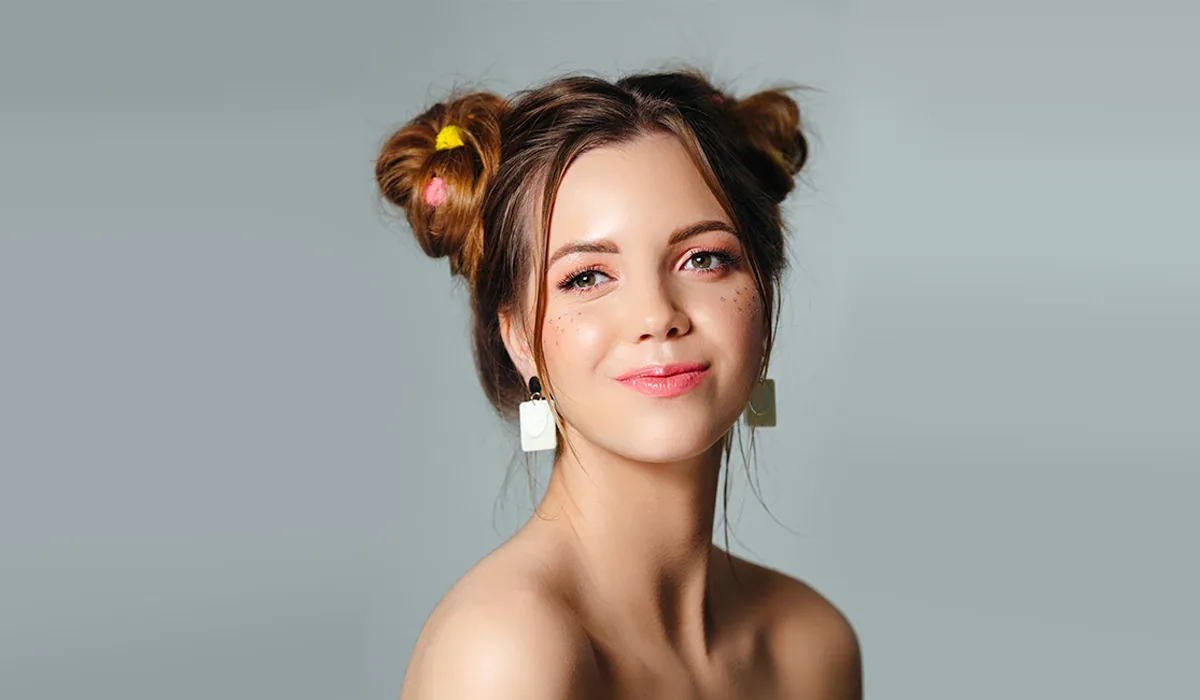
Space buns for a date night are the flirty version: the buns are soft and a little loose, the front has tendrils, and the hair left down — if you go half-up — falls in soft curls. The whole point is to look like you made an effort without looking like you spent three hours on it, and space buns do that perfectly, because they are playful and romantic at the same time. They also show confidence — a girl who wears space buns on a date is a girl who knows what she likes, and that is attractive in itself. This is the space bun for a first date, a anniversary dinner, or any evening when you want to look like yourself, only better.
Best for: date nights, anniversaries, and evenings out. How to style: keep the buns soft and slightly messy, pull out two tendrils at the front, and curl them gently. What to ask a stylist: ask for a soft, romantic finish rather than a sleek one, because the softness is what makes this version feel like a date-night style. Quick verdict: playful and romantic at once — the space bun that says you are fun to be around.
34. Space Buns for a Party
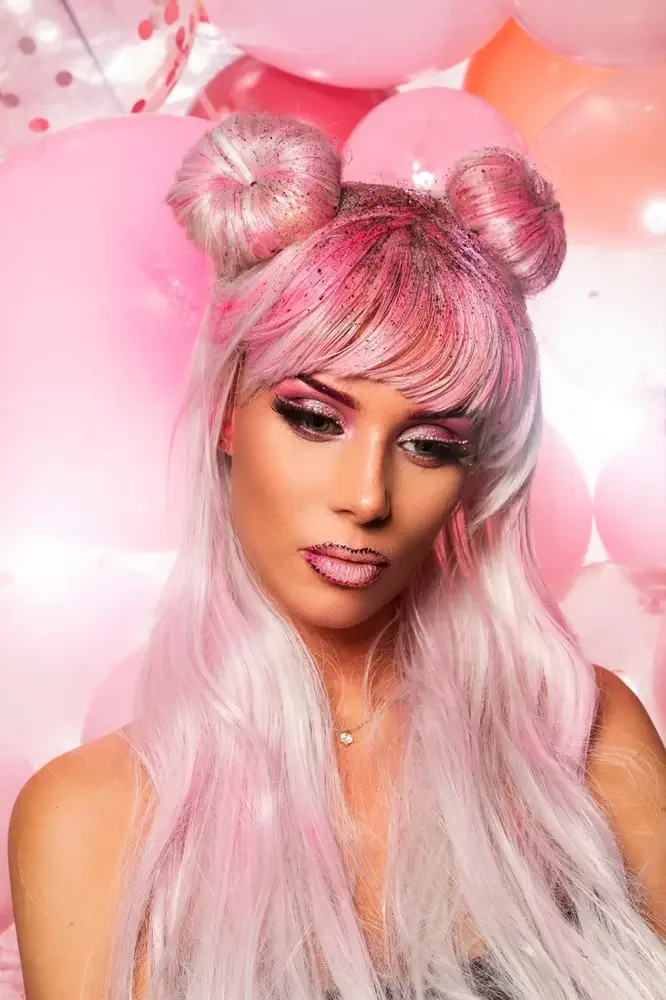
Space buns for a party are the full celebration version: the buns are big, the accessories are bold, and the whole style is designed to be seen from across a crowded room. A coloured scrunchie, a few star clips, a little glitter along the parting — a party is the one occasion where you can use all of them at once, because the energy of the room matches the energy of the hair. This is the space bun for birthdays, for house parties, for nights out with friends, and for any occasion where the dress code is fun and the photos are going to be silly. The buns will survive the dancing, and they will look just as good in the last photo as they did in the first.
The pros: bold, fun, and practically indestructible on the dance floor. The cons: the accessories add weight, so the buns need extra pins. The common mistake is using too many accessories at once — even at a party, one hero and one supporting act is the rule. Time and cost: 15 minutes plus accessories, and the only thing to buy is the scrunchie or the clips. Quick verdict: the loudest space bun on this list — and the one that has the most fun.
35. Space Buns with Pearls
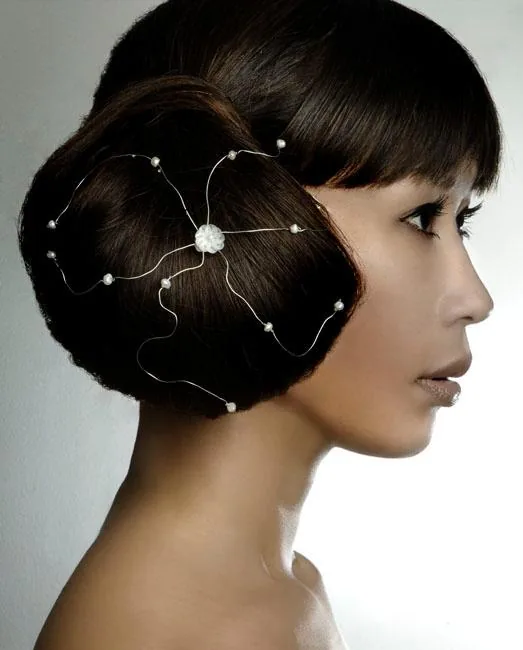
Space buns with pearls are the elegant, jewellery-like version: small pearl pins scattered through the buns and along the parting, catching the light like a necklace for your hair. The pearls turn a playful hairstyle into something refined — they echo classic jewellery, they suit a soft dress, and they make the whole look feel expensive without any extra styling. This is the space bun for a formal occasion, for a wedding guest, for a photoshoot, and for anyone who loves the idea of space buns but wants them to feel grown-up. The pearls are the difference between a festival bun and a ball bun.
Best for: formal occasions, weddings, photoshoots, and elegant evenings. How to style: do the buns first and keep them smooth, then place the pearl pins after the hairspray, so they sit on top of the finished style and catch the light. What to ask a stylist: ask for the pearls to be pinned in as well as clipped, because a pearl pin that is only clipped will slip on smooth hair. Quick verdict: the most elegant space bun on this list — two buns, a few pearls, and a whole different mood.
36. Space Buns for a Photoshoot
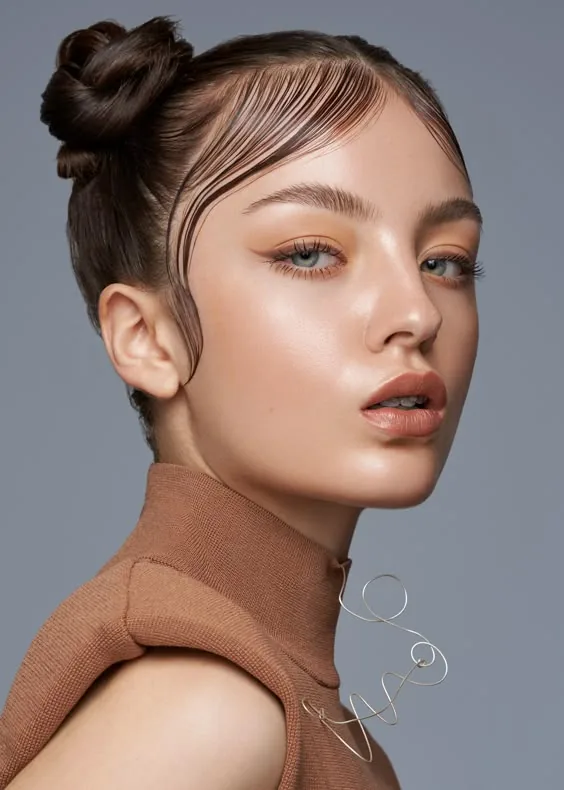
Space buns for a photoshoot are the editorial version: the buns are sculpted, symmetrical and perfectly placed, the hair is smooth, and the whole style is built to look good from every angle the camera can find. A photoshoot bun has to survive a wind machine, a change of outfit, and an hour of posing, so it is built like a structure — pinned in sections, set with spray as you go, and checked from the front, the side and the back before the first shot. This is the space bun for content creators, for models, for anyone who needs their hair to look perfect in a still image, and for girls who want to try the most polished version of the style just once.
The pros: flawless from every angle, and it holds through outfit changes. The cons: it takes the longest of any version here, and it needs a second pair of eyes to check the back. The common mistake is building the buns for the mirror and forgetting the camera — a bun that looks perfect head-on can look flat from the side, so check the profile before you call it done. Time and cost: 30 to 40 minutes, or a salon visit for a truly editorial finish. Quick verdict: the most polished space bun on this list — built for the camera, and it shows.
Are space buns suitable for short hair?
Yes, space buns work on short hair — the buns are just smaller. A bob or a lob gathers into two neat, compact buns, and a pixie grow-out can make two mini buns with a couple of bobby pins. Use a texturising spray for grip, keep the buns high and close together, and let a few ends poke out — small buns with spiky ends look deliberate and cute, not like a failed attempt at a big bun.
How do I get my space buns even?
To get space buns even, part the hair straight down the middle and check the back of the part in two mirrors, then gather both pigtails before twisting either one. Build both buns in stages, side by side, and check them in the mirror after each stage. A phone photo taken from above is the most honest check — it shows unevenness a mirror hides. And remember that a millimetre of difference disappears the moment you move.
Can I wear space buns to work?
Yes, you can wear space buns to work if you keep them toned down: small, sleek and low, with no glitter, no bright scrunchies and no loose strands. Smooth the hair back with pomade, keep the parting clean, and use plain elastics that match your hair colour. They suit a creative office, a studio or a video call far more than a formal client meeting — when in doubt, try them on a Friday first.
How long do space buns last?
Space buns last all day when they are built properly — usually 10 to 12 hours, including a festival day of dancing. Start with day-old hair for grip, build each bun in layers and pin each fold as you go, and set each bun with spray as you finish it. Braided space buns last longest of all, because the braid locks the hair in place section by section. Carry a few spare pins for the evening.
Are space buns bad for your hair?
Space buns are not bad for your hair if you wear them gently. The risk comes from pulling the hair too tight, which strains the hairline, and from yanking the pins out at the end of the day, which breaks strands. Gather the hair firmly but not painfully, vary the position of the buns from day to day so the same spot is not always pulled, and take the pins out one by one before unwrapping the buns in the opposite direction from the twist.
What is the difference between space buns and double buns?
Space buns and double buns are the same style — two buns worn on either side of the head. Space buns is the more common name, especially for the high, playful version associated with festivals and the 90s, while double buns is sometimes used for the lower, more polished version. The name does not change the technique: part the hair down the middle, gather two sections, and twist each into a bun.
Can I do space buns with curly hair?
Yes, curly hair is one of the best hair types for space buns, because the curls make each bun naturally full and naturally secure. Work with the curls, not against them: moisturise and define the hair first, gather each side gently with your fingers rather than a brush, and twist loosely so the curls keep their shape. A few curls escaping around the face are part of the look, not a mistake.
How do I make space buns look less childish?
To make space buns look less childish, keep them small, sleek and low rather than big, fluffy and high. Smooth the hair back, keep the parting clean, skip the glitter and the bright scrunchies, and pair the buns with a polished outfit — a blazer, a silk dress, or simple jewellery changes the whole reading of the style. Low, compact buns with a pearl pin read as a modern updo, not a costume.
What should I wear with space buns?
Wear space buns with anything that matches their energy: a festival outfit with glitter and colour, a casual outfit with jeans and a T-shirt, a gym outfit for a workout, or a sleek dress for a night out. The buns are versatile — the same two buns look playful with a sundress, sporty with leggings, and polished with a blazer. The only rule is to match the finish of the buns to the finish of the outfit: messy buns with casual clothes, sleek buns with smart clothes.
How do I take space buns out without tangles?
To take space buns out without tangles, take the pins out first, one by one, and then unwrap each bun in the opposite direction from the way you twisted it, letting the hair fall loose in sections. Do not brush immediately — run your fingers through the hair first, starting from the ends and working upward, with a little leave-in conditioner or hair oil on the ends. If you wore a lot of hairspray, wash the hair that evening rather than sleeping on it.
Conclusion
Space buns grew up, and so did the girls who wear them. The same two buns that once meant a festival weekend now mean a dozen different things: a gym session, a work call, a wedding, a date, a photoshoot, a bad-hair day rescued in ten minutes. The style works because it is simple at its core — two buns, one parting — and endlessly adaptable around that core. Sleek or messy, braided or curled, high or low, glittered or pearl-pinned, there is a version of the space bun for every hair length, every texture, and every day you are actually having.
Start with the classic double bun, and learn the symmetry trick before anything else, because even buns are the foundation every other version is built on. Then try the version that fits your day: half-up for a first attempt, braided for a long one, sleek for a smart one, and glitter for a festival. Pack the pins, keep the buns small when the occasion is formal, and take them out gently at the end of the day. The best space bun is not the biggest or the sparkliest. It is the one that suits your hair, your day, and you.