
The Truth About Biotin Supplements and Whether They Actually Regrow Hair
Hey friend, let’s talk about biotin. I know everyone keeps piling it on you as the magic pill for hair regrowth. But here’s the thing – I’ve tried it, my sister has tried it, and we both found out the hard way that biotin is not the miracle solution it seems to be.
In this post, I’m sharing the real truth about biotin supplements, what they can actually do, and what they can’t. We’ll also chat about trending hairstyles for 2026 that make your hair look amazing no matter where your growth is at.
So grab a cup of coffee, take a breath, and let’s get real about hair. You deserve honest answers without the hype.
What I Used to Think About Biotin

Okay, I’ll admit it. A few years ago, I bought the biggest bottle of biotin I could find. I believed the hype. I thought taking five thousand micrograms a day would give me mermaid hair overnight. Spoiler alert: it didn’t.
I saw lots of influencers raving about it, and even some hairstylists recommended it. But after three months of religiously popping that pill, my hair was exactly the same. My nails seemed a bit harder, but my mane? No major difference. That’s when I started digging into actual science and stopped relying on hearsay.
Let me save you the time and the money. Here’s exactly what biotin can and cannot do for your hair, plus the cute 2026 hairstyles that will make you feel better right now.
The Real Job of Biotin in Your Body
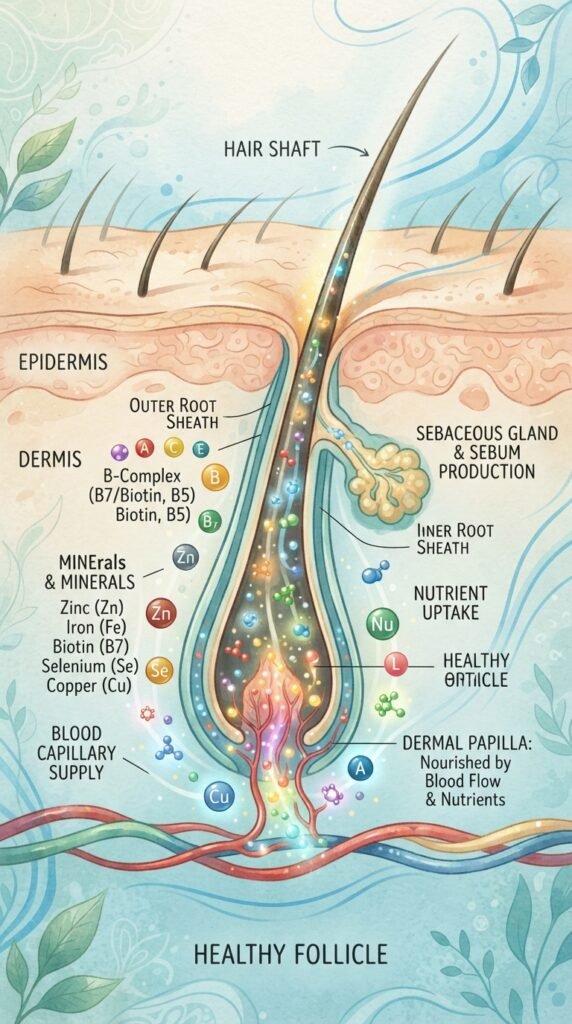
Biotin is a B vitamin that helps your body turn food into energy. It also supports the production of keratin, the protein that makes up your hair, skin, and nails. So yes, it’s involved in hair health, but here’s the catch.
Your body only needs a tiny amount of biotin, and most people get plenty from their diet. If you’re eating regularly, you’re probably already covered.
- Eggs are a huge source
- Almonds and walnuts have a good amount
- Even avocado can help
So if you’re not truly deficient, extra biotin just passes through your urine. It’s not stored, and more doesn’t magically create more hair.
Can Biotin Actually Regrow Hair? The Honest Answer

Let’s be straightforward: for most people, biotin won’t regrow hair. Studies show that biotin supplements only help if you have a confirmed biotin deficiency, which is super rare.
If you’re already healthy, adding biotin won’t change your hairline or fill in thinning spots. It’s not like we’re working with a magic bean.
- No solid evidence for hair growth in healthy people
- No proof it strengthens hair either
- No reason to expect visible regrowth
That’s the honest truth. I know it’s not what the supplement industry wants to hear, but you deserve better than false promises.
What the Science Says (and Doesn’t Say)

I’ve read through the research, and here’s what I found: there are very few high-quality studies on biotin for hair growth. Most are small, outdated, or done on people with underlying health issues.
One famous study showed improvement in people with brittle nail syndrome, not hair loss. So people connected the dots and assumed it must work for hair too. Not exactly a solid leap.
- No large randomized controlled trials
- No consistent results for healthy adults
- No FDA approval for hair loss claims
Scientists do know that biotin helps metabolize amino acids for keratin, but that doesn’t mean popping pills changes your hair density. Science is honest, even when it’s frustrating.
Why You Might See a Difference (or Not)
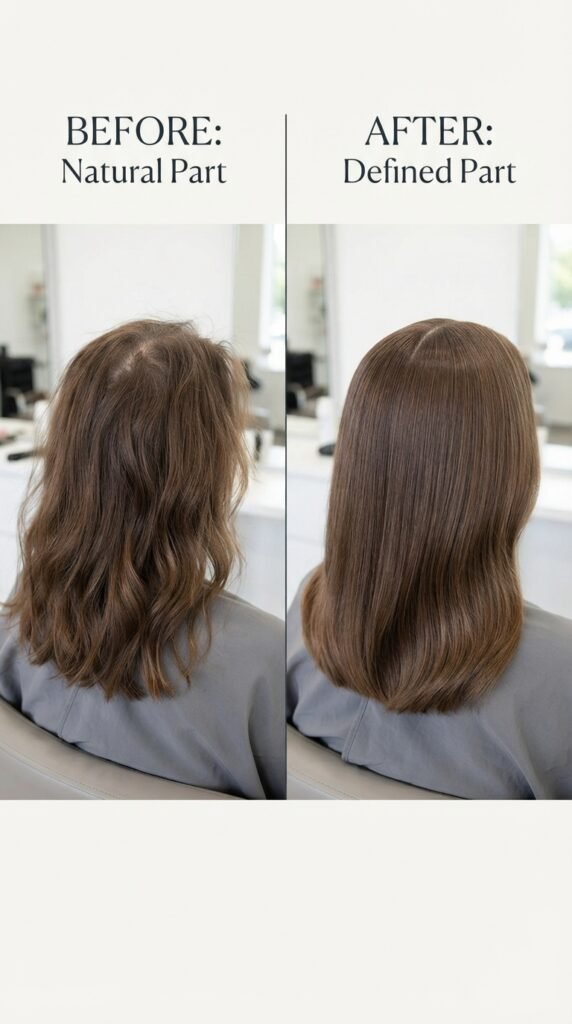
If you are one of the very few people with a genuine biotin deficiency, then yes, you might see a difference. Common deficiency signs include hair thinning, brittle nails, and red, scaly skin.
But for the rest of us, any improvement we notice is probably from something else. Maybe you started eating better. Maybe you changed your shampoo. Or maybe you just paid more attention to your hair.
- Look for other changes in your routine
- Time can make hair grow on its own
- Placebo effect is real in hair care
So don’t give credit to the tiny pill when your healthy habits deserve the praise. Let’s be fair to ourselves and our routines.
The “More Is Better” Trap: Biotin Overdose
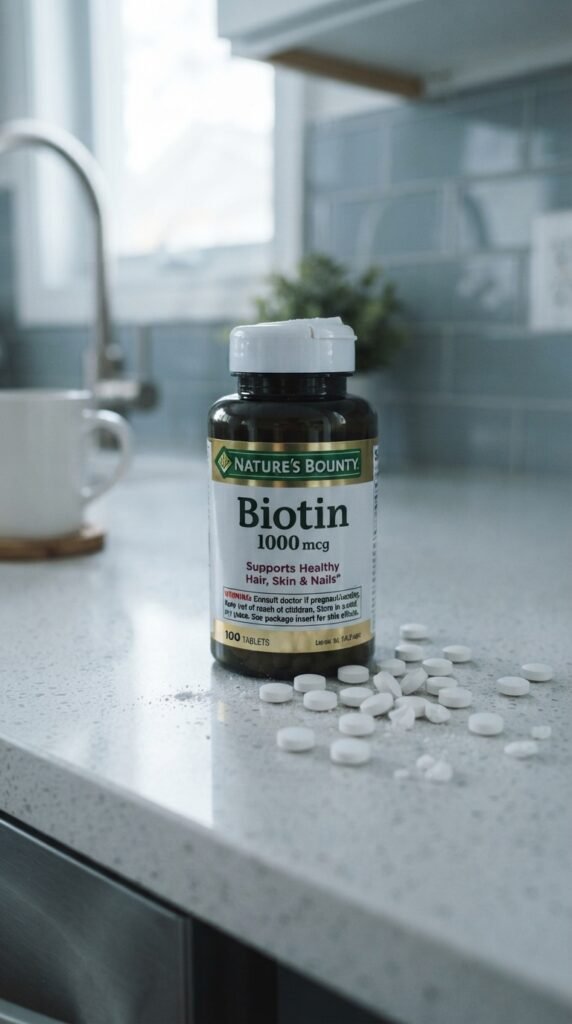
I know it’s tempting to think that taking extra biotin will speed things up. But that’s not how vitamins work. Your body only absorbs what it needs and flushes the rest.
And high doses can actually cause problems. Very high amounts might interfere with lab tests, leading to false thyroid or heart results. That’s scary because it can mess with real medical decisions.
- Stick to around 30-100 mcg daily for general health
- Doctors sometimes recommend higher for deficiencies, but only then
- Always tell your doctor about supplements
More is not better when it comes to biotin. Trust me, you want accurate health readings more than extra pee.
Are You Actually Deficient? Common Signs

Biotin deficiency is rare, but it does happen. People with certain genetic conditions, digestive disorders, or those who eat raw eggs excessively are at higher risk.
If your hair is falling out in clumps, seeing a doctor is way smarter than guessing. But for a quick checklist, here are a few classic signs:
- Brittle, thinning hair that breaks easily
- Dry, scaly skin around eyes, nose, or mouth
- Weak, splitting nails
- Constant fatigue or low mood
If this sounds like you, please get a blood test. Self-diagnosing can lead to wasted money and missing the real cause, like low iron or thyroid issues.
Biotin vs. Other Hair Growth Supplements
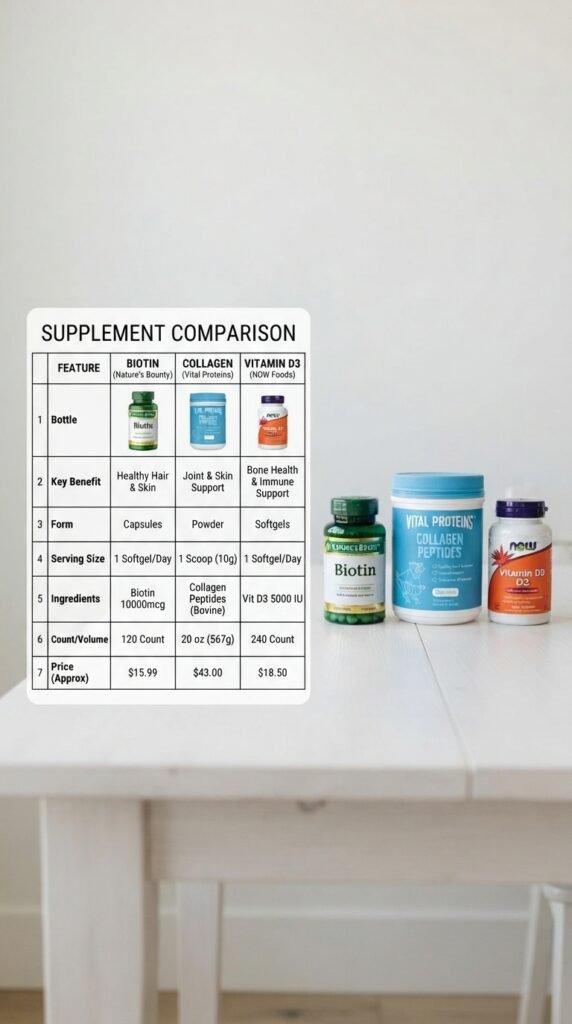
When you look at the supplement aisle, biotin is just one name. There’s also collagen, vitamin D, iron, and omega-3s. Each one plays a different role in hair health.
Collagen provides amino acids that your body can use to build keratin. Vitamin D supports new hair follicle growth. Iron carries oxygen to your roots, which is super important. Biotin is just a small helper, not the main event.
- Collagen: building blocks for hair
- Vitamin D: follicle cycling and growth
- Iron: oxygen and nutrient delivery
- Biotin: metabolism support
If you’re low on iron or vitamin D, fixing that could change your hair way more than biotin. Test before you guess.
The B Vitamin Family: Why They Work Together
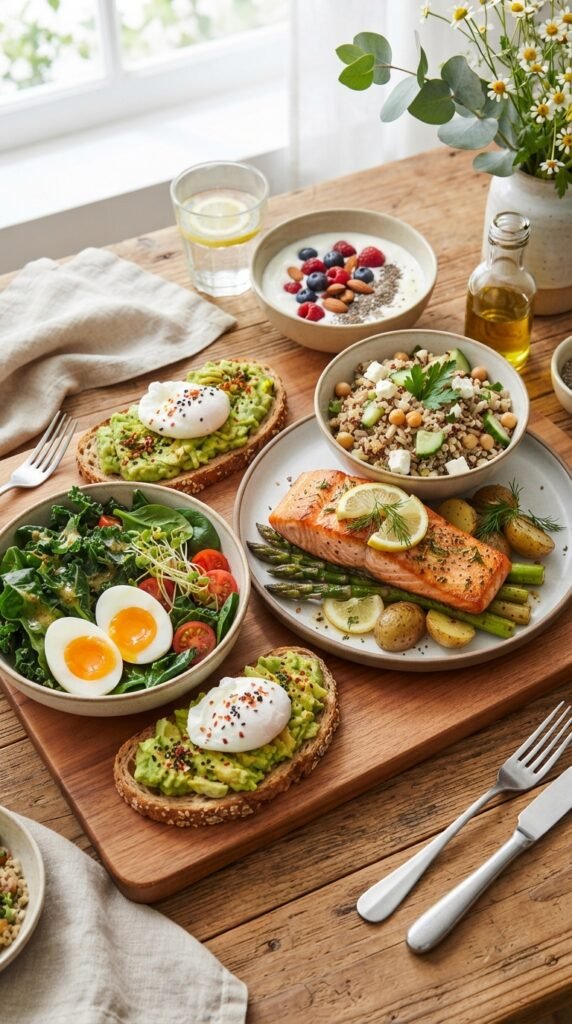
Biotin is just one of eight B vitamins, and they all work as a team. B12 helps create red blood cells, B6 supports protein metabolism, and folate is involved in cell division. They all contribute to your hair’s health.
So if you’re only taking biotin but ignoring the rest, you’re not giving your body the full support it needs. A balanced diet with varied B vitamins beats a single supplement.
- Leafy greens give you folate
- Salmon provides B6 and B12
- Legumes are packed with thiamin and biotin
- Whole grains round out the family
Think of it like a band: biotin is the drummer, but without the others, the music is off. Eat well and let your body do its thing.
How Long Should You Try Biotin? (Realistic Timeline)
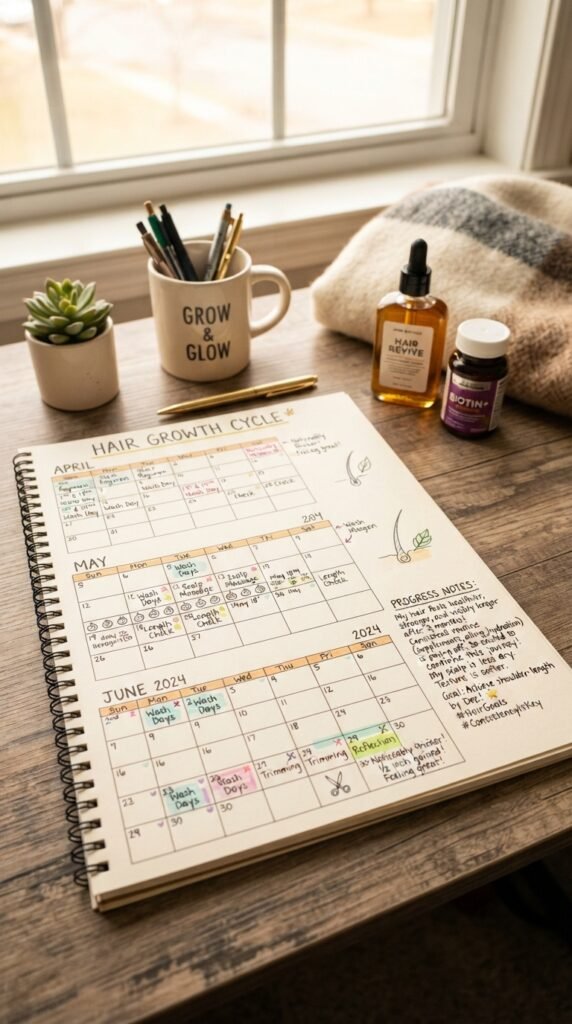
If you do decide to try biotin, know that hair grows slowly. On average, about half an inch per month. So you won’t see anything dramatic in a week.
Experts say to give a supplement at least three to six months before judging results. But remember, that’s the same timeline for natural hair growth. You might just be seeing a normal cycle.
- Month one: no visible change
- Month two: maybe new baby hairs, maybe not
- Month three: evaluate and be honest
Don’t waste half a year on something that isn’t working. Set a clear date to check back in with yourself and decide.
What to Eat First: Biotin-Rich Foods
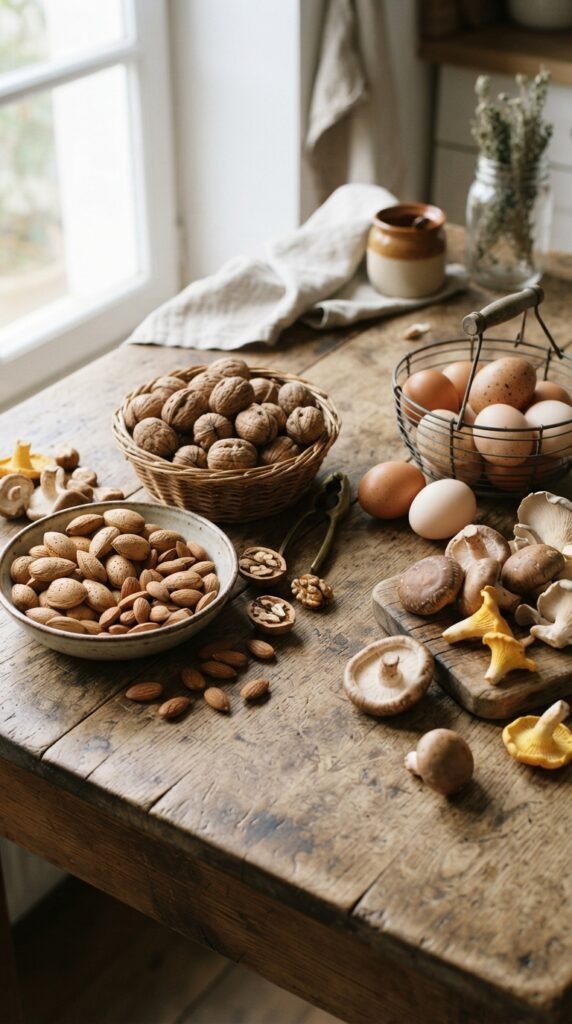
Before you buys another supplement bottle, start with your grocery list. Whole foods give you biotin along with all the other nutrients your hair loves. Plus, they taste great.
Here are my top picks to sprinkle into your meals:
- Eggs, especially the yolks
- Mushrooms, super easy to add to pasta
- Spinach, great in smoothies or salads
- Almonds and walnuts as snacks
Just one cup of cooked mushrooms has a good chunk of your daily biotin need. See? You probably already have what you need in your fridge.
Why Your Hair Might Be Thinning (Other Causes)

Biotin gets all the blame and credit, but hair thinning is usually more complex. Hormonal changes, stress, and nutrient deficiencies are bigger players than you might think.
Low iron is super common in women, and it’s a leading cause of hair shedding. Thyroid issues and menopause also show up as hair changes. And sometimes, it’s simply genetics.
- Iron deficiency anemia
- Hypothyroidism or hyperthyroidism
- Postpartum hair shedding
- Polycystic ovary syndrome (PCOS)
So before you fixate on biotin, ask your doctor for a full blood panel. That’s the only way to know what’s really going on.
Stress and Your Hair: The Cortisol Connection

Stress does a number on your hair. High cortisol levels can push hair follicles into a resting phase, which means more shedding a few months later. I’ve been there, and it’s so frustrating.
The thing is, taking extra biotin won’t lower your stress. What actually helps is managing your cortisol. Simple things like walking, stretching, or just saying no to overcommitment make a real difference.
- Get seven to nine hours of sleep
- Move your body in a way that feels good
- Try a short breathing break midday
Your hair responds to your nervous system. Softer days might just be the best hair supplement of all.
Haircuts That Make Hair Look Thicker Instantly

While you’re figuring out your nutrient game, a smart haircut can work magic. The right style creates the illusion of fullness, no pills required. And honestly, 2026 hairstyles are all about that effortless confidence.
The quiet luxury bob is a standout. It frames your face without being too heavy, and the blunt lines make hair look denser. Another favorite is the asymmetrical lob, which adds movement and dimension around the jawline.
- Quiet luxury bob: sleek and polished
- Asymmetrical lob: modern with a soft edge
- Layered cuts for natural volume
I love how these styles make my hair feel fresh even on days when I’m frustrated with growth. A good stylist is worth their weight in gold.
Trending Styles That Don’t Need Supplements
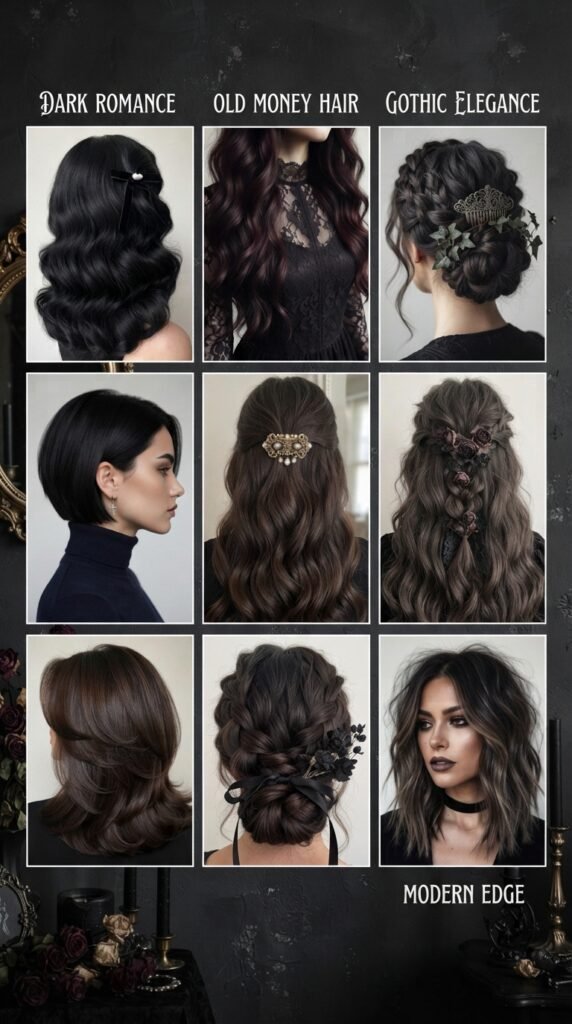
A few of the coolest hair trends for 2026 are actually about styling, not growth. Old money hair gives that clean, expensive look with soft waves and a healthy sheen. It’s all about brushing and light styling.
And romantic goth hairstyles are having a huge moment. Think dark, wavy textures with a subtle edge. The best part? You can fake volume and drama with a good curling iron and some texturizing spray.
- Old money hair: low-effort, high-polish
- Romantic goth: moody waves and depth
- Accessorize with ribbons or clips
These styles don’t need a perfect hairline. They celebrate what you have, right now, and that’s a beautiful thing.
The Role of Hair Care Routines

Yes, biotin is a tiny piece of the puzzle, but your hair care routine does way more. How you wash, dry, and style has an immediate impact on appearance and long-term health.
Glitchy glam hair is trending, which is all about playful, futuristic shine. That look comes from gel glosses and good products, not vitamins. Same with the vampire haircut, which relies on sharp layers and styling precision. And the hime cut is a classic Japanese style that doesn’t care about thickness because the bold lines do the work.
- Use heat protectant every time
- Don’t dry brush wet hair
- Sleep on a silk pillowcase
Your hands and tools make a massive difference. Give them all the credit they deserve.
Biotin in Shampoos: Worth It or Just Marketing?
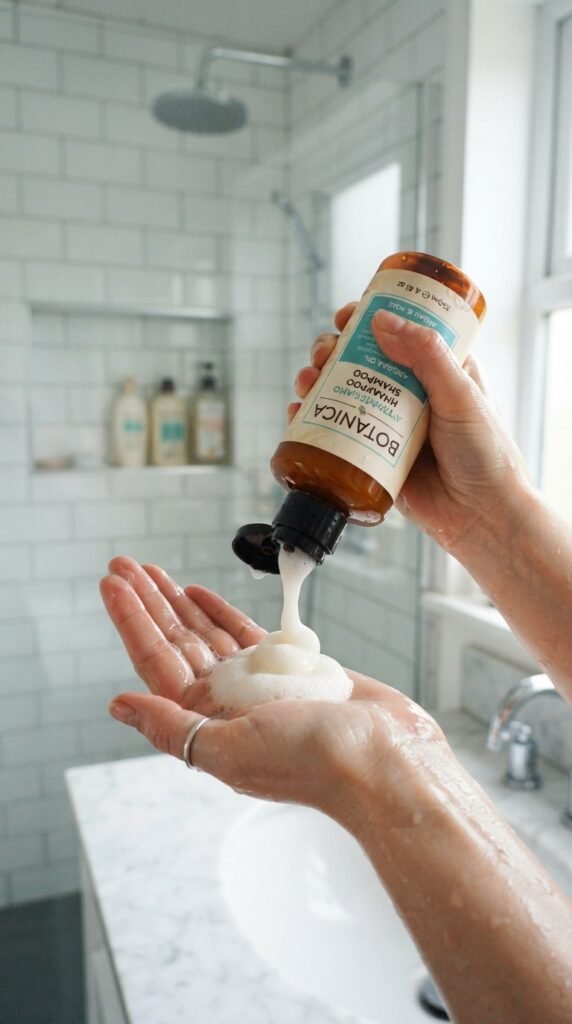
Walk down any hair product aisle and you’ll see biotin on every other label. But here’s the thing: biotin in shampoo probably does very little. It’s not absorbed well through the scalp.
Shampoos are meant to cleanse, not deliver vitamins deep into the follicle. The ingredient may sit on the surface and rinse away, but that doesn’t mean it’s worthless.
- Still a gentle cleanser usually
- Feels nice and luxurious
- Might encourage you to care for your hair
If you love how a biotin shampoo makes your hair feel, use it. Just don’t expect clinical results. Your scalp is not a sandwich.
How to Choose a Quality Biotin Supplement
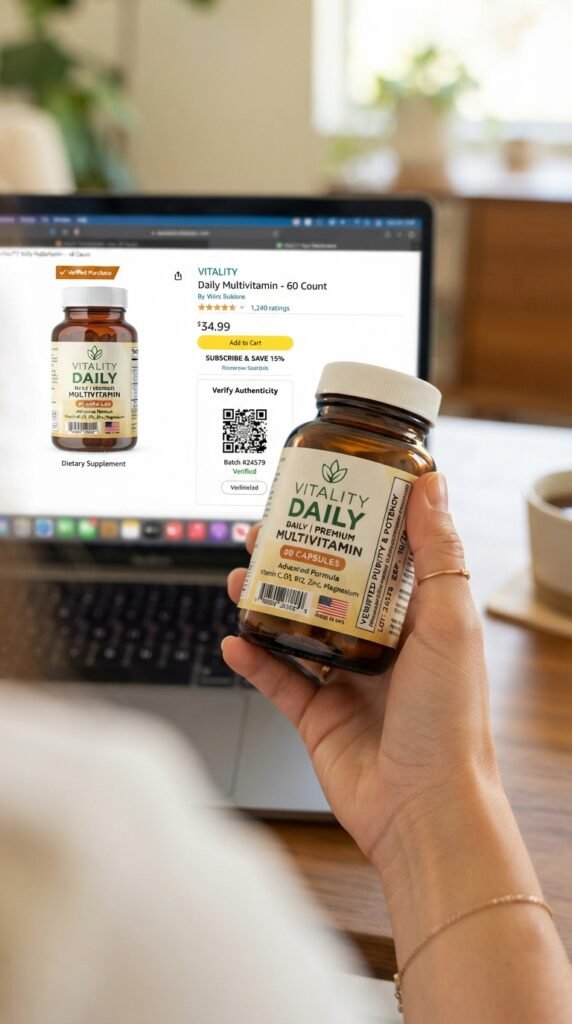
If you’re still thinking about adding biotin, at least pick a smart product. Not all supplements are created equal, and some are just expensive placebos.
Here’s what I look for because I’m a skeptic with a budget:
- Third-party tested or clearly labeled
- A dose between 2,500 and 5,000 mcg is fine
- Capsules or tablets with minimal fillers
- No mystery blends, just biotin
Also, check if the brand has a certificate of analysis available. A company that hides the basics probably has something to hide. Spend your money on honest brands.
My Personal Routine (What I Actually Do)

Okay, here’s the truth from my kitchen table. I don’t take biotin every day anymore. Instead, I focus on a hearty breakfast with eggs and avocado, plus a daily vitamin D supplement when the sun is scarce.
I also eat a lot of leafy greens and salmon. That gives me the B vitamins, iron, and omega-3s my hair needs. And I try to be gentle with my hair, using low heat and protective styles on busy days.
- Eggs for biotin and protein
- Vitamin D based on my bloodwork
- Silk pillowcase and gentle brushing
It’s not glamorous, but it works for me. You don’t need a shelf of bottles when a solid plate does more. Plus, the food tastes better.
The Bottom Line on Biotin
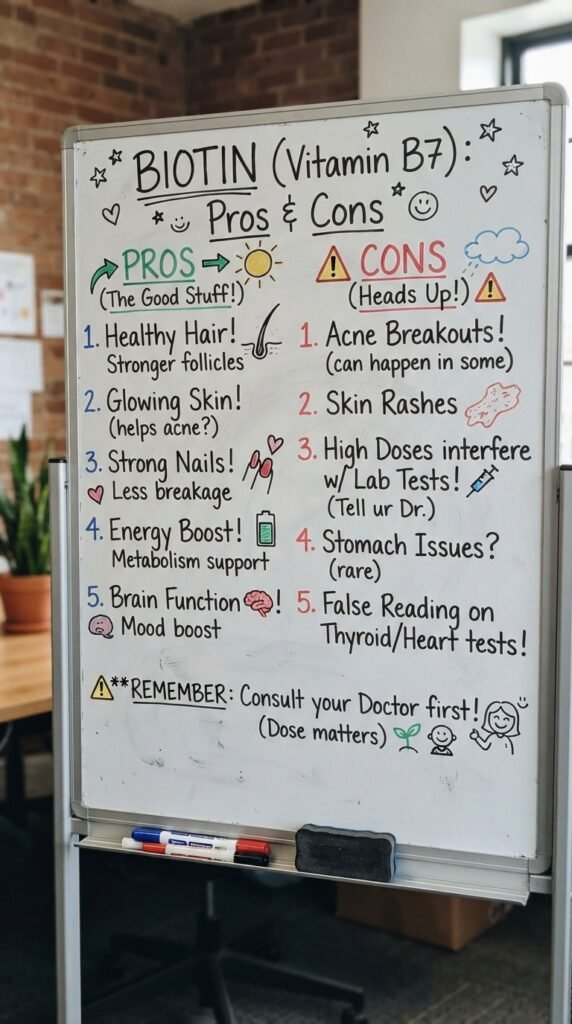
So, here we are. Biotin is not the hair regrowth miracle that marketing tells you it is. It’s a helpful vitamin, but only in specific cases where you’re lacking it.
If you’re healthy and eating a balanced diet, extra biotin won’t change your hair. But if you’re deficient, fixing that can make a real difference. The key is knowing which group you’re in.
- Pros: supports normal metabolism and keratin
- Cons: no proven regrowth in healthy people
- Verdict: eat your food first
I’m not saying biotin is evil, just that it’s not a magic wand. Please don’t rely on it while ignoring the bigger picture.
When to See a Doctor (Red Flags)
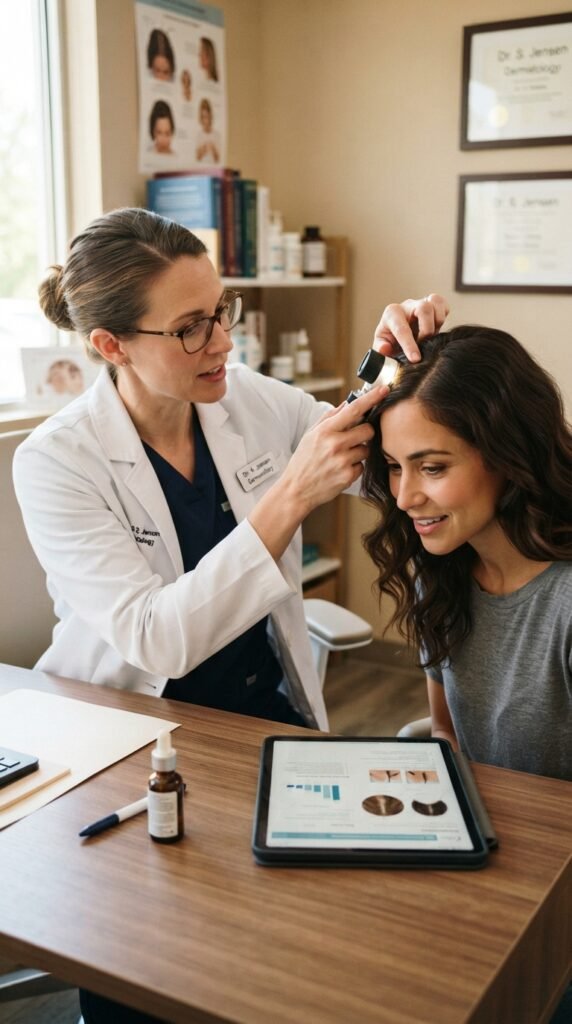
If your hair loss is sudden, patchy, or accompanied by other symptoms, please see a doctor. Don’t wait months for a supplement to do something it likely won’t.
You deserve a proper diagnosis, not guesswork at the vitamin aisle. A dermatologist can check your scalp, order blood tests, and give you a real plan.
- Hair loss that leaves bald patches
- Shedding more than usual for over two weeks
- Itchy, painful, or scaly scalp
- Changes in nails or overall health
Early help beats long-term regret. Your health matters more than any bottle.
Final Thoughts: Healthy Hair From the Inside Out
Real hair health starts with a whole-body approach. Good food, steady sleep, gentle hair care, and a little patience. That’s the honest recipe I trust. And while I love a good trend, I love healthy habits more.
The quieter your mind and body, the better your hair tends to respond. So don’t stress about perfection. Learn what your hair needs, and give it grace.
You’ve got this, and I’m right here with you on the journey.
Let’s wrap this up with a little love. I know you were hoping for an easy fix, and I’m sorry biotin isn’t it. But now you’re armed with real answers, and that’s worth more than a thousand miracle bottles. Your hair already has so much going for it.
Save this post to Pinterest so you can find it later when you’re feeling overwhelmed by all the hair advice out there.
Have you tried biotin before? What happened for you? Drop a comment below, I read every single one and I’d love to know what actually worked for your hair.