Snow, Candlelight and ‘I Do’: 36 Winter Wedding Hairstyles That Stay Beautiful in the Cold
A winter wedding has a light that no other season can offer: low golden sun on fresh snow, candles glowing against dark windows, and a bride whose hair has to look just as beautiful stepping out of a cold wind as it does under the reception lights. The best winter wedding hairstyles are built for both worlds — romantic enough for the photographs, strong enough for the weather, and comfortable enough to last from the first look to the last dance.
Cold air changes the rules. Loose hair that would be effortless in June gets blown across your face in December, static lifts fine strands in every indoor photograph, and a veil can catch on a coat, a fur stole or a gust of wind. That is why so many winter brides, bridesmaids and guests choose styles with a real anchor: a low chignon, a braided crown, a half-up twist, or waves that are pinned and set rather than left to chance.
Below you will find the thinking first — how to beat the wind, the static and the long evening — and then 36 winter wedding hairstyles for brides, bridesmaids and guests, for short, medium and long hair. Pick the style that suits your dress, your veil and your day, try it once in real cold air, and then forget about it completely. The snow is falling, the candles are lit, and it is time to say I do.
Hair That Survives Snow, Wind and a Winter Walk
Winter weddings ask more of a hairstyle than a summer ceremony ever does. Snow settles on your shoulders, a sharp wind catches every loose strand, and the walk from the car to the venue can undo a soft style in seconds. The hairstyles that survive are the ones with a real anchor — a pinned bun, a braid, a twist — rather than hair left entirely to the weather.
Talk to your stylist about wind before you talk about romance. A style that looks dreamy in a still salon can unravel on a snowy church step, so ask for extra pins at the base, a strong-hold spray that still brushes out, and a finish that can be repaired in thirty seconds with one hand. A small emergency kit — pins, a travel spray, a clear elastic — belongs in the bridal suite, not at home.
Common mistake: choosing a style that only works indoors and discovering the problem during outdoor photos. Test the style outside, in real cold air, at your trial. If it holds on a windy December afternoon, it will hold on the day.
Veils, Headpieces and Winter Accessories
A veil behaves differently in winter. Cold air makes tulle stiffer, a fur-trimmed cape or a heavy coat can catch a long veil, and a cathedral veil plus a gust of wind is a recipe for a wrestling match on the steps. Shorter veils, a fingertip length or a blusher, are far easier to manage in snow, and a mantilla or a birdcage veil can look wonderfully seasonal.
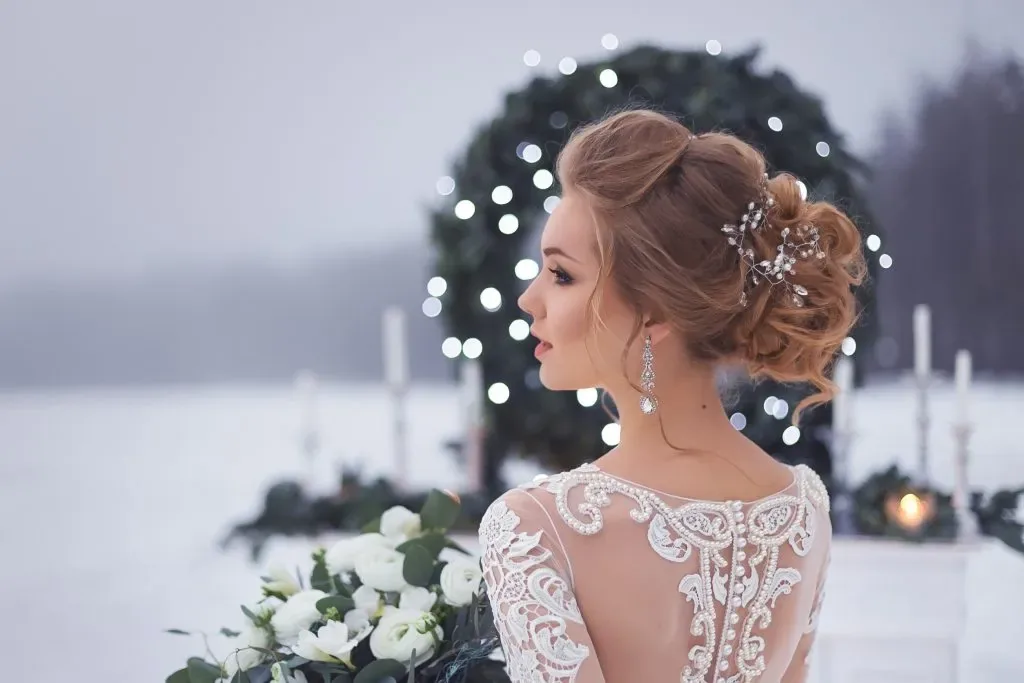
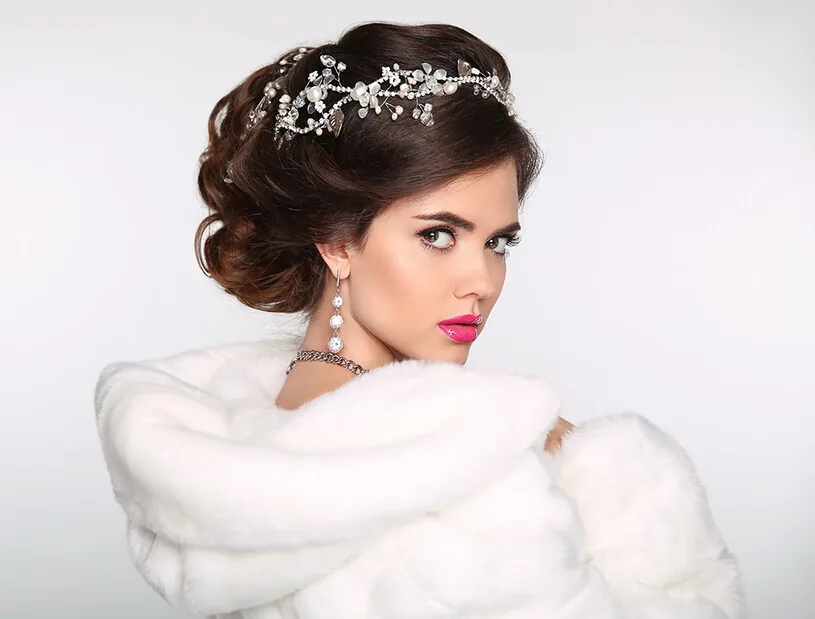
Winter is also the season when hair accessories earn their place. Pearl pins, crystal combs, a delicate hair vine or a velvet bow add the sparkle that summer brides get from flowers, and they hold up beautifully under indoor candlelight. Choose one statement piece and let the hairstyle support it, rather than crowding the hair with several competing details.
Best for: brides who want drama without fuss. A single pearl comb or a crystal vine over a low bun gives you the winter sparkle in photographs and stays put from the ceremony to the last dance.
Indoor Candlelight or Outdoor Snow: Hair for Both
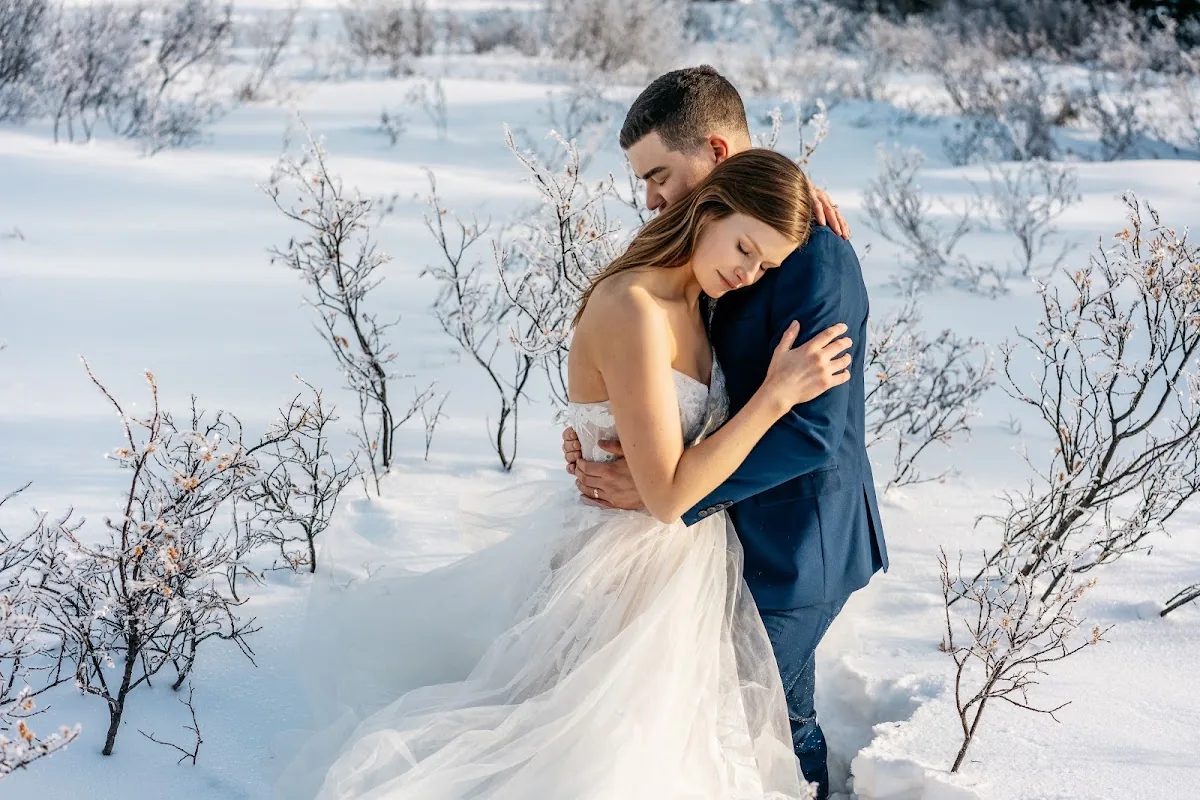
Most winter weddings live in two worlds: bright snow outside and warm candlelight inside. Hair that looks soft and glowing in golden indoor light can look flat and pale against white snow, so the style needs enough shape and texture to read in both. Volume at the crown, defined waves or a structured updo all photograph well in either setting.
Plan the photo order with your photographer. Outdoor portraits first, while hair and makeup are freshest, then move inside before the cold starts to bite. A stylist or a bridesmaid with a brush and a can of spray should be nearby for the switch — five minutes of repair between locations makes the evening portraits look as good as the snowy ones.
Quick verdict: pick a style with visible shape — a bun, a braid, a defined wave — rather than hair that relies on fine detail nobody can see in snow light. Shape survives the move indoors; wispy detail does not.
Static, Dry Air and Winter Frizz
Heated venues and cold dry air are the perfect recipe for static. Hair lifts, flyaways stand on end, and a veil can cling to your face in photographs. The fix starts the night before, not on the day: a deep conditioning treatment, a silk pillowcase, and no over-washing, so your hair keeps its natural oils.
On the day, a light leave-in cream on the mid-lengths and ends tames static without weighing hair down, and a tiny amount of hair oil smoothed over the surface with your palms settles flyaways instantly. Keep a travel-size anti-static spray or a dryer sheet in your touch-up kit — dabbed, never sprayed directly onto the style, it calms the halo without disturbing the shape.
How to style for it: avoid over-brushing dry hair on the day, which builds static. Brush before styling, then leave the finished style alone, and let your stylist use a light-hold spray rather than a heavy one that dries the hair out further.
Winter Wedding Hair by Length and Texture
Short hair has a quiet advantage in winter: it cannot be blown across your face, it fits neatly under a veil or a fur stole, and a textured pixie or a sleek bob looks finished with very little effort. Add a crystal clip or a pearl pin and a short style becomes unmistakably bridal.
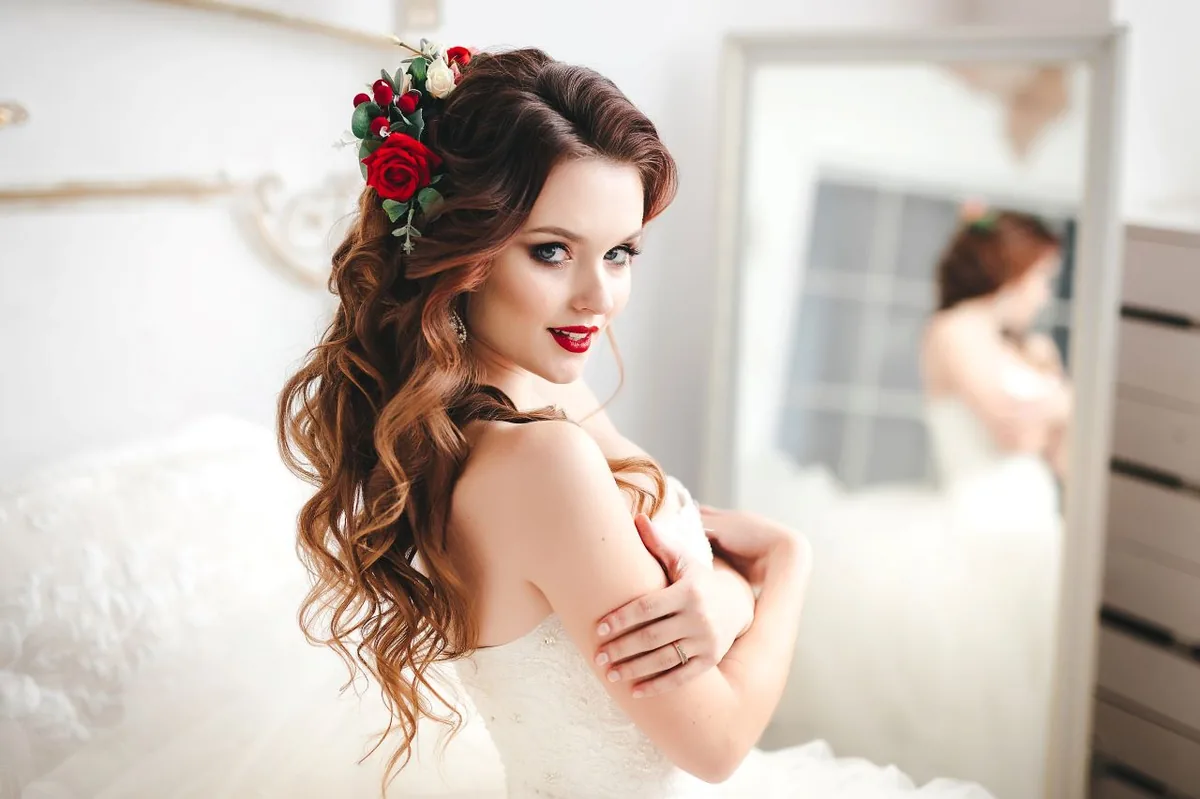
Medium hair is the most versatile length for a winter wedding. It is long enough for a low bun, a braid or soft waves, and short enough to stay manageable in wind and snow. Long hair needs a plan — loose long hair looks beautiful in photographs but catches the wind, the veil and the coat, so most long-haired brides choose an updo or a half-up style with the length secured.
Cost and time: a trial run costs roughly what a blowout costs and takes about an hour, and it is the best money a winter bride spends. Curly and coily hair holds an updo beautifully in cold air, while fine hair benefits from padding or a texturising spray so the style does not collapse under a veil.
The Trial Run, the Rehearsal and the Day Itself
A winter wedding trial is not a luxury; it is where the weather test happens. Book it for a cold day if you can, wear a coat with a collar similar to your wedding coat, and bring your veil and headpiece so the stylist can see how everything sits together. Photograph the style from every angle, including the back, because that is what your guests will see during the ceremony.
At the rehearsal, check the practical details: does the veil catch on your coat, does the headpiece stay put when you turn your head, can you sit comfortably in the car with the style? Small problems found at the rehearsal are a five-minute fix; the same problems on the day are a crisis.
Who should avoid skipping the trial: everyone, but especially brides with a new stylist, a new veil length, or a style they have never worn before. Winter adds variables — wind, static, a heavy coat — that only a real test can reveal.
Touch-Ups Through a Long Winter Evening
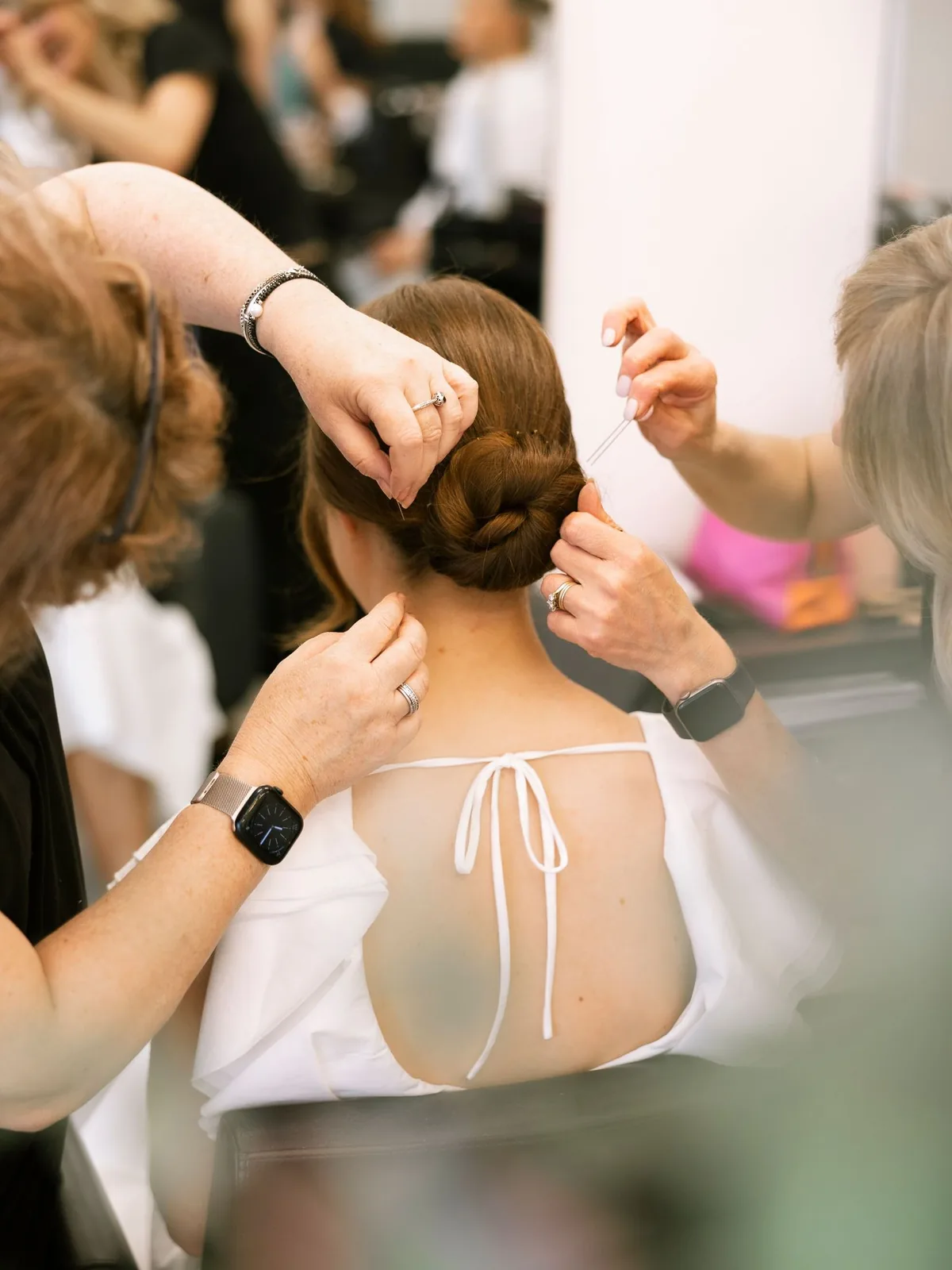
A winter wedding is a long day: photos in the snow, a ceremony, dinner, speeches and dancing, often in a warm, crowded room. Hair that looked perfect at noon can be tired by nine, so plan for the evening as a second act. A quick refresh — a few pins tightened, the front pieces re-curled, a fresh mist of spray — takes five minutes and makes the first-dance photographs look as good as the ceremony ones.
Ask your stylist whether they stay for touch-ups or whether a bridesmaid should be taught the repair. The most useful lesson is a two-minute one: how to re-pin the base, how to smooth a flyaway, and how to loosen the style slightly for dancing without taking it down. Some brides plan a deliberate second look for the reception — the same updo loosened, or the veil removed and a sparkly clip added.
Maintenance: pack a small kit and hand it to one person: bobby pins in your hair colour, a clear elastic, a travel hairspray, a few tissues for the veil, and a small brush. Check the kit the night before, not on the morning of the wedding.
What to Ask Your Stylist Before a Winter Wedding
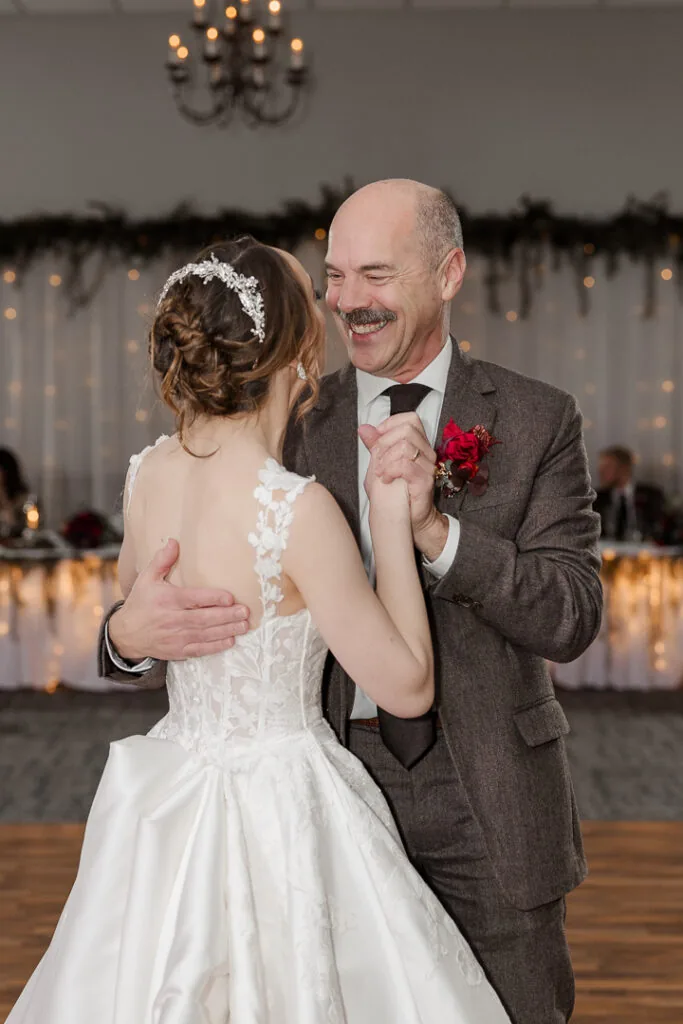
The consultation is where a good winter wedding hairstyle is really made. Bring photographs of styles you love, but also bring honest information: how long your hair is now, whether it holds a curl, how much time you have on the morning, and whether the ceremony and reception are indoors or out. A stylist who knows the venues can plan for the wind on the steps and the heat of the reception room.
Ask directly about durability. How long will this style hold in cold air? What happens if it snows during photos? Will the veil pull the style loose? Can the style be repaired without a full redo? The answers tell you whether the style is a safe choice or a beautiful risk, and they tell your stylist how much hold to build in from the start.
Pros and cons to weigh: an elaborate updo photographs beautifully but takes longer and costs more; a simpler style is quicker, cheaper and easier to repair, but may feel too plain for a formal winter wedding. The right answer is the one that matches your day, your hair and your patience on the morning.
1. The Classic Low Chignon
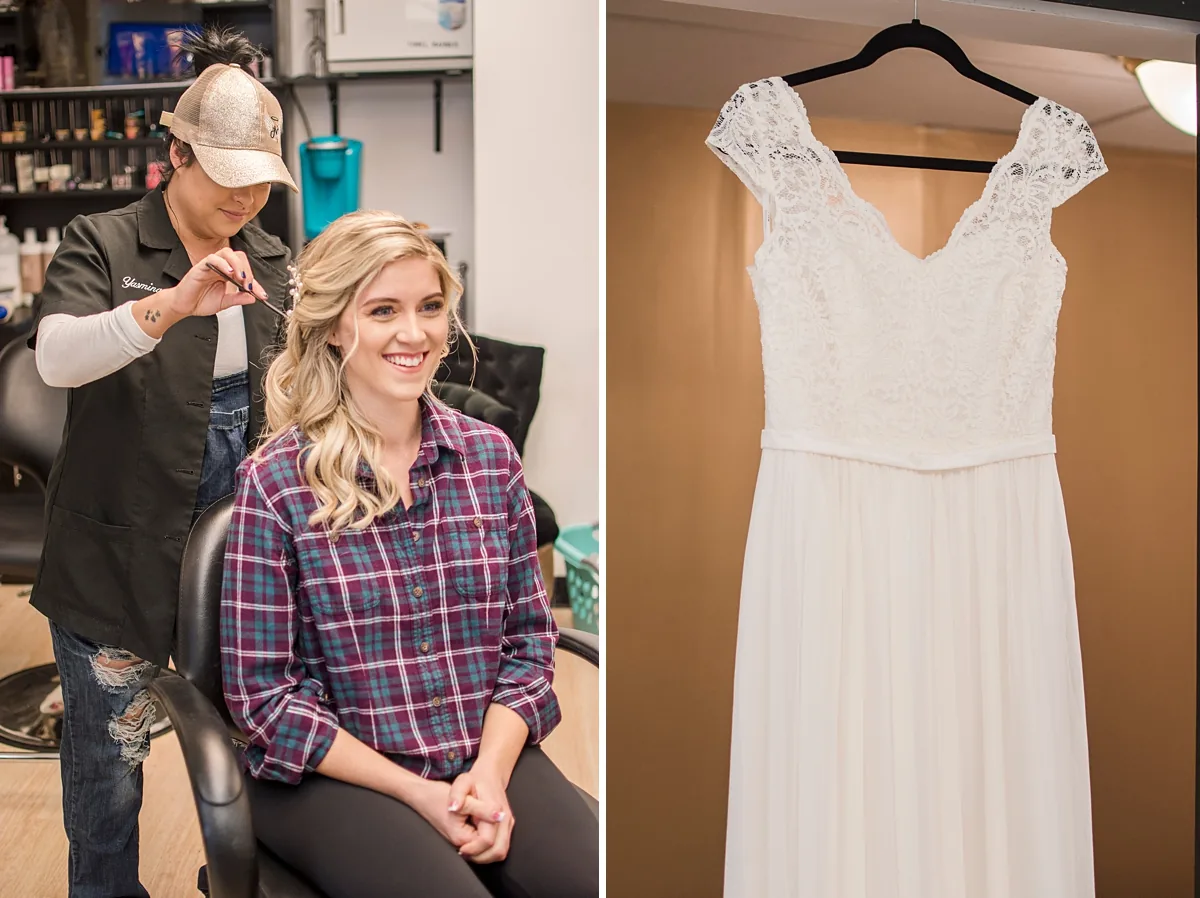
The classic low chignon is the winter bride’s most reliable friend: hair swept smoothly back and rolled into a neat bun at the nape, sitting just above the coat collar and well clear of a fur stole. It looks equally at home in a snowy chapel and a candlelit ballroom, and it photographs beautifully from the back — the angle your guests see most during the ceremony.
How to style: build it on second-day hair for grip, smooth the top with a brush and a little serum, roll the hair up at the nape and pin it in at least four places. Leave a few soft tendrils at the front so the style reads romantic rather than severe, and set it with a strong-hold spray.
Best for: brides, bridesmaids and guests who want a style that survives the whole day. A crystal pin or a sprig of winter greenery tucked into the roll turns the classic into something unforgettable, and the style repairs in seconds if a pin works loose.
2. The Snow-Kissed Half-Up Twist
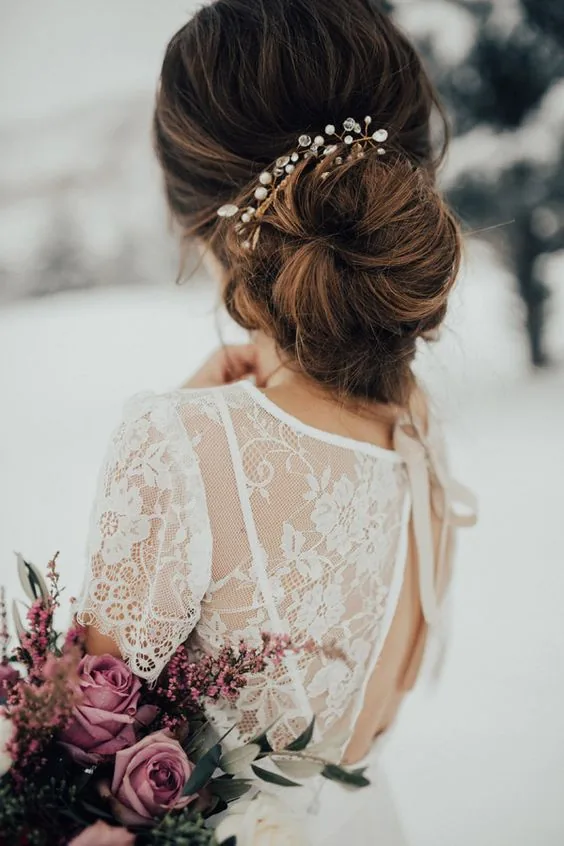
The half-up twist is the perfect compromise for a winter wedding: the top half is pinned up and away from the coat collar, while the rest falls in soft waves below. Pearl pins scattered through the twist catch the light like frost, and the style works with a veil, a cape or a fur stole without any of them fighting each other.
Twist the top sections back from each temple, cross them at the back and pin them firmly, then place three to five pearl pins along the twist. The waves below should be set with a strong-hold spray so they survive the move from cold air to a warm reception room.
What to ask a stylist: ask for the twist to be anchored with two crossed pins, not one, so it survives the outdoor photos. Cost and time: about twenty-five minutes, plus a set of pearl pins. Check the twist in a mirror after taking your coat off, as a hood can shift it.
3. The Braided Crown Under a Veil
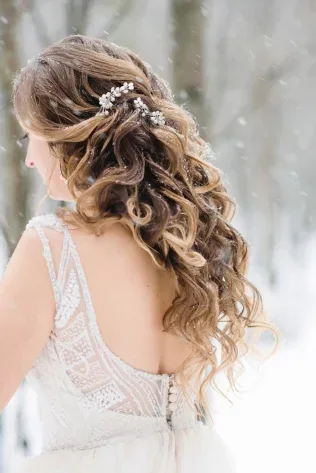
A braided crown circles the head like a halo, and in winter it is one of the most practical bridal styles: it keeps every strand off the face, survives wind and snow, and looks stunning with a veil pinned underneath or a crystal headband worn on top. A few sprigs of baby’s breath woven into the braid make it look made for the season.
Braid from one side around the head, pin the end under the start, and pull the edges gently for fullness. The veil anchors best when its comb slides into the braid itself, so bring the veil to the trial and let your stylist find the exact spot where it grips without pulling.
Common mistake: braiding too tightly, which causes a headache by the reception. Keep it firm but comfortable. Best for: outdoor winter ceremonies, boho brides and anyone who hates hair in their face.
4. Vintage Hollywood Waves
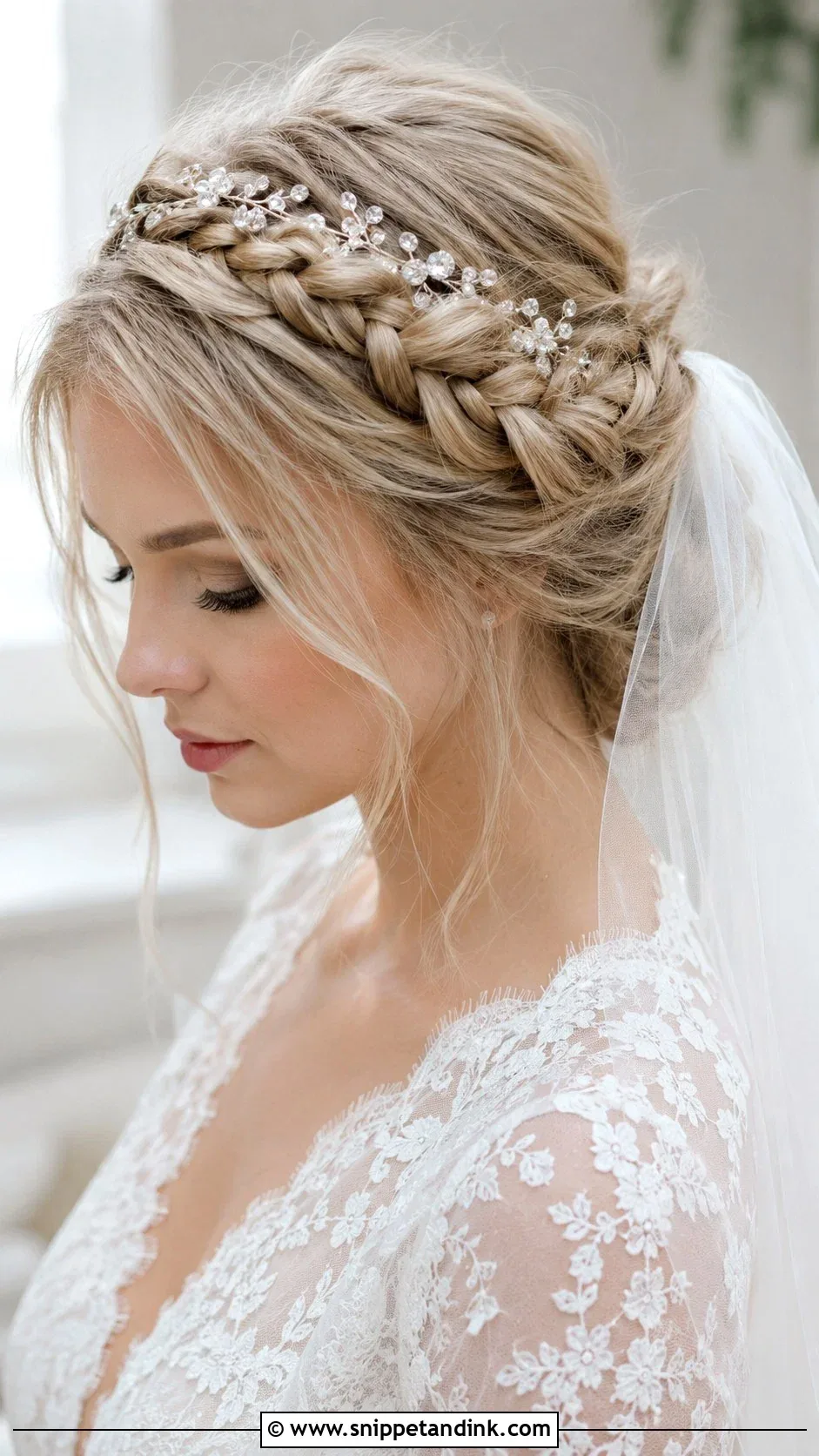
Old Hollywood waves never go out of fashion, and in winter they look even better: the deep, glossy waves catch candlelight like nothing else, and a velvet ribbon tied at the nape adds the season’s signature texture. The trick is setting the waves firmly — curl each section, pin it to cool, then brush it out into soft, sculpted waves that look loose but are built on a strong foundation.
Use a large-barrel curling iron, set with strong-hold spray, and finish with a shine serum on the ends only. The velvet ribbon does double duty, hiding the pins and adding a rich winter colour that photographs beautifully against snow and candlelight alike.
Who should avoid it: anyone spending a long time in falling snow, because damp air will loosen even the firmest waves. Maintenance: carry a travel spray and re-pin one or two sections after the outdoor photos. Best for mostly indoor winter weddings.
5. The Sleek Low Bun with a Centre Part
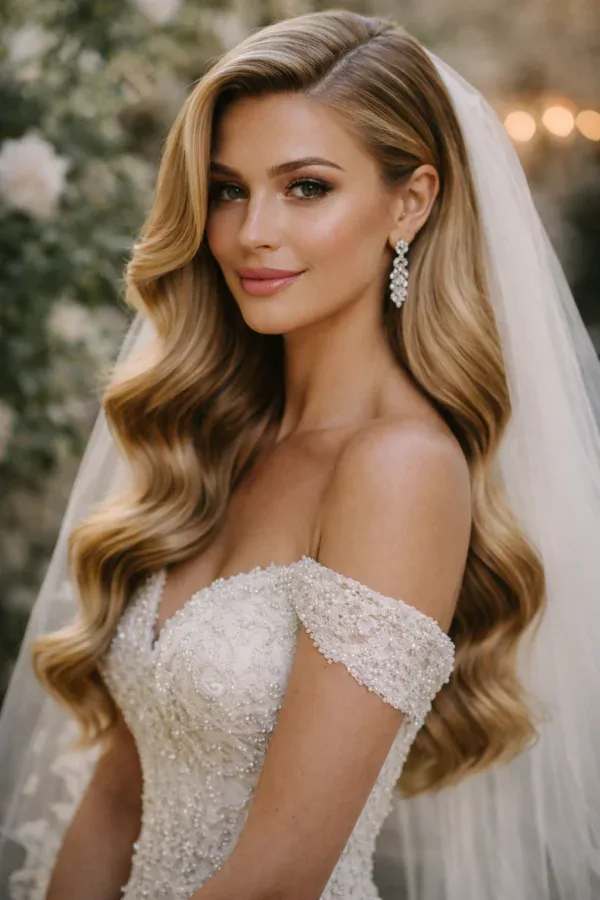
A sleek low bun with a centre part is clean, symmetrical and quietly regal. Hair is brushed perfectly smooth, parted dead centre, gathered low at the nape and twisted into a polished bun that wind, snow and a coat hood simply cannot disturb. It is the most weatherproof wedding hairstyle there is, and it looks striking with a high-necked winter dress or a dramatic veil.
Smooth with a boar-bristle brush and a little gel, secure with a strong elastic, and pin the bun in a circle so it cannot shift. A centre part keeps the look modern; a tiara placed at the crown turns it into the royal winter bridal look.
Cost and time: about twenty minutes, one elastic and a handful of pins. Pros: nothing holds better in bad weather. Cons: the sleekness shows every flyaway, so a little anti-static serum is essential before you step outside.
6. The Romantic Textured Updo
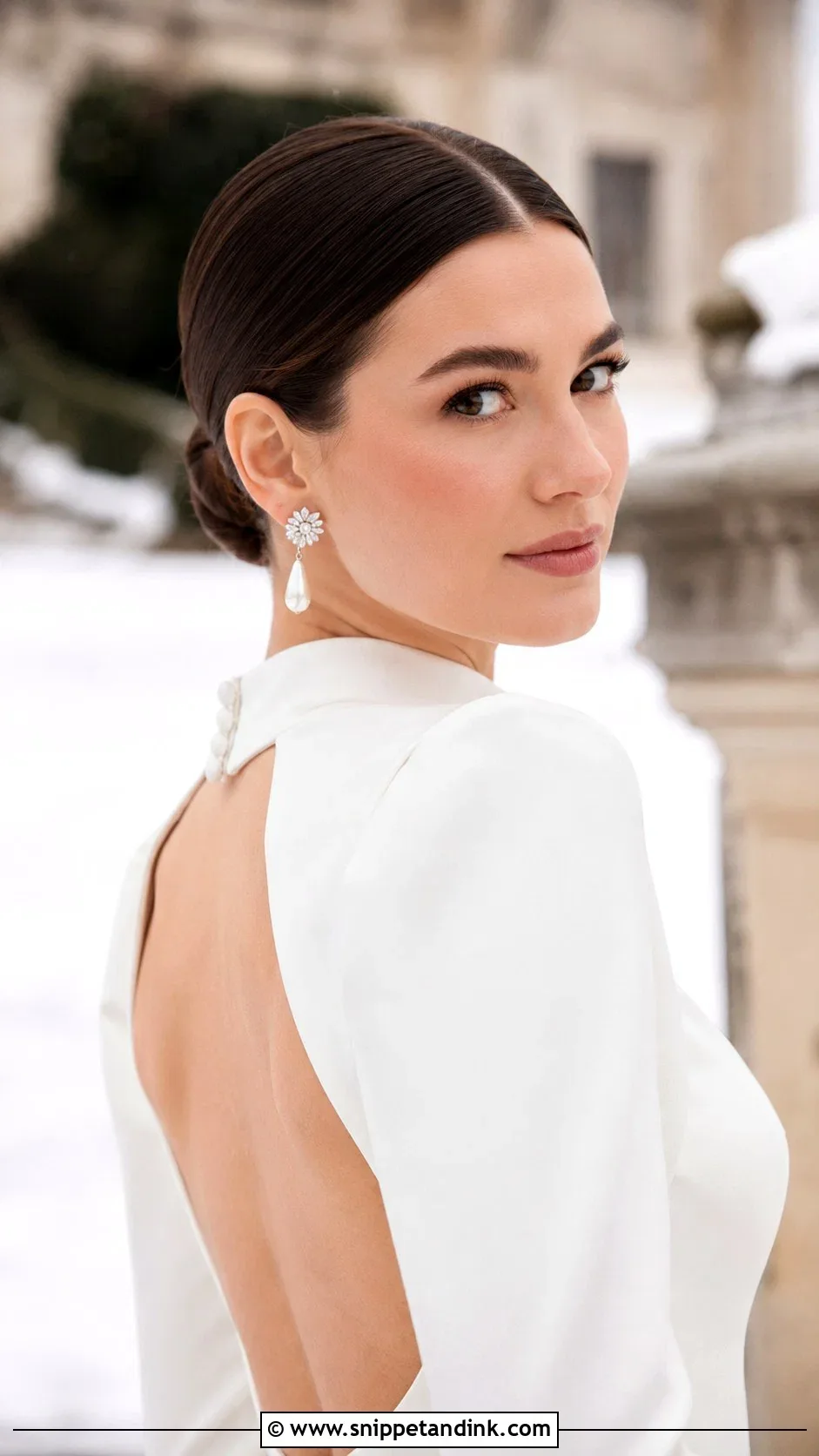
The romantic textured updo is the style that looks like it took five minutes and actually took forty: hair loosely pinned up with soft tendrils escaping around the face and at the nape. In winter it works beautifully, because the looseness hides any flattening from a coat or a hat, and the tendrils soften the whole look in candlelight.
Curl the hair first, then pin it up loosely, pulling out tendrils around the face and leaving the shape soft rather than scraped back. The tendrils should be curled and set, not left straight, so they do not go limp in the cold air.
What to ask a stylist: ask for the tendrils to be set with a light-hold spray so they keep their curl without going stiff. Best for: brides who hate the scraped-back look, and relaxed winter weddings where romance matters more than perfection.
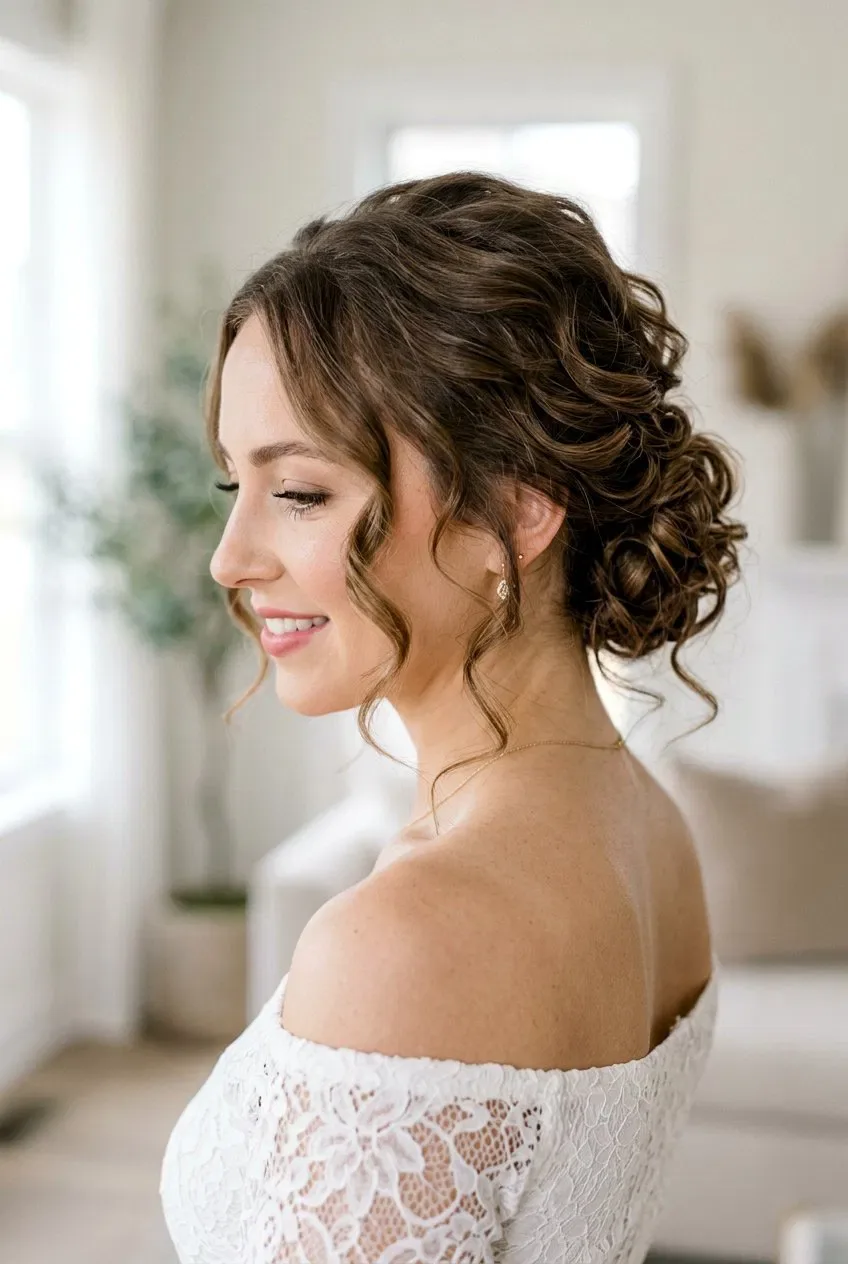
7. The Dutch Braid into a Low Bun
A Dutch braid that flows into a low bun gives you the best of two worlds: the braid keeps the front and crown completely secure against wind, while the bun gives the style its elegant, bridal finish. It is one of the most secure winter wedding styles, and it looks intricate and impressive in photographs without needing a single fussy detail.
Dutch-braid from the hairline back over the crown, gathering hair as you go, then gather the braid and the remaining hair into a low bun at the nape. Pin the bun firmly and pull the braid edges gently for fullness so the style reads soft rather than severe.
Maintenance: almost none — this is one of the few styles that looks the same at midnight as it did at noon. Best for: brides with medium to long hair who want a style that will not move through snow, wind or a night of dancing.
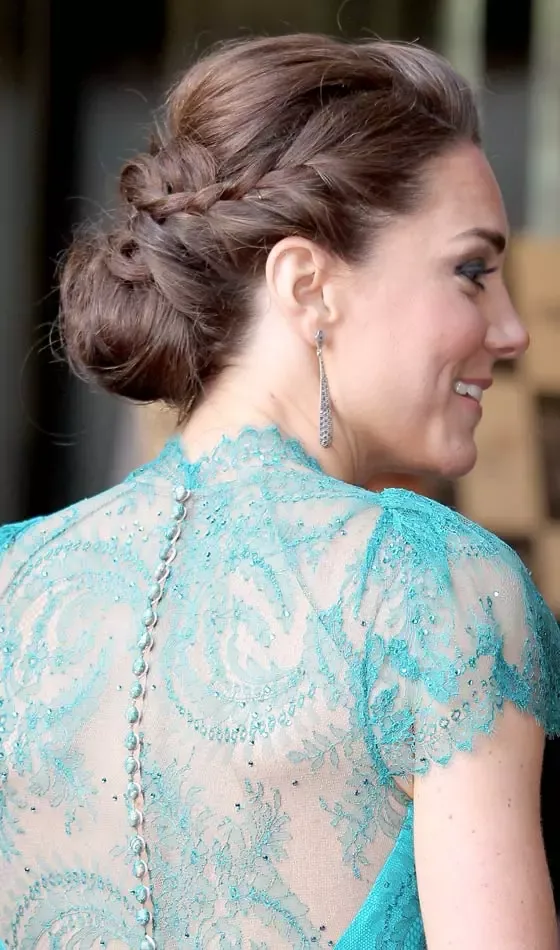
8. The Soft Side-Swept Curls
Sweeping soft curls to one side is one of the most flattering winter wedding moves: it keeps the hair off the coat collar on one side, shows off an earring, and creates a beautiful diagonal line in photos. The curls themselves should be soft and brushed out, not tight ringlets, so the whole shape reads romantic rather than fussy.
Create loose curls with a large-barrel iron, brush them out gently, sweep them all to one side and secure them behind the ear with two hidden pins plus a crystal clip. The hidden pins do the real work; the clip is the decoration.
Common mistake: sweeping the hair so far that it covers the face in photos. Keep the face clear and the sweep behind the shoulder. Best for: brides and guests with medium to long hair, and anyone wearing statement earrings.
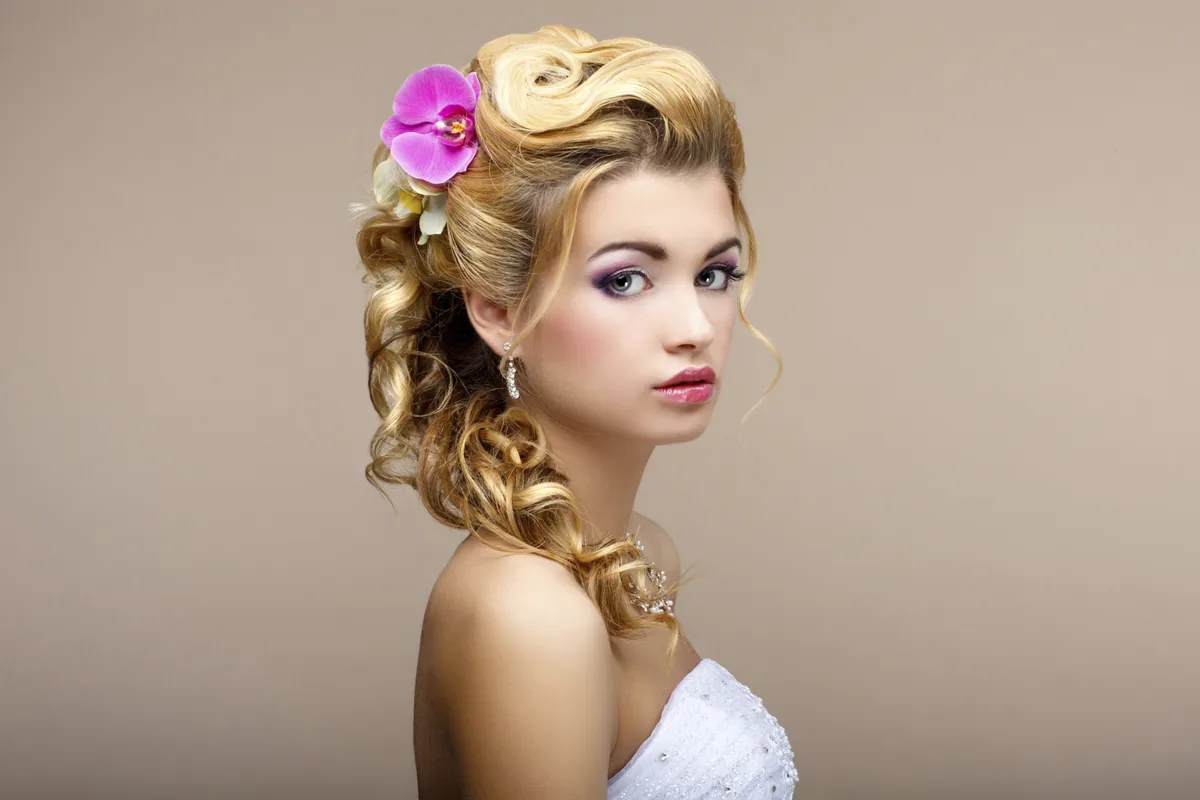
9. The High Ballerina Bun
The ballerina bun is the cleanest, most classic updo of all: hair swept smoothly up into a neat, round bun at the crown. The winter edition adds a velvet ribbon around the base or a crystal pin, and a little more softness at the front so it does not look severe in candlelight. It is the style for brides who love ballet, minimalism, or simply want a style that will never, ever move.
Smooth the hair back with a brush and gel, secure a high ponytail, twist it into a bun and pin it in a circle. If your hair is fine, ask for a doughnut form inside the bun — it gives a perfect round shape with very little effort.
Maintenance: none at all — this is the lowest-maintenance style in this list. Cost and time: about twenty-five minutes. Keep the bun at the crown, not the very top, or it can look harsh in photographs.
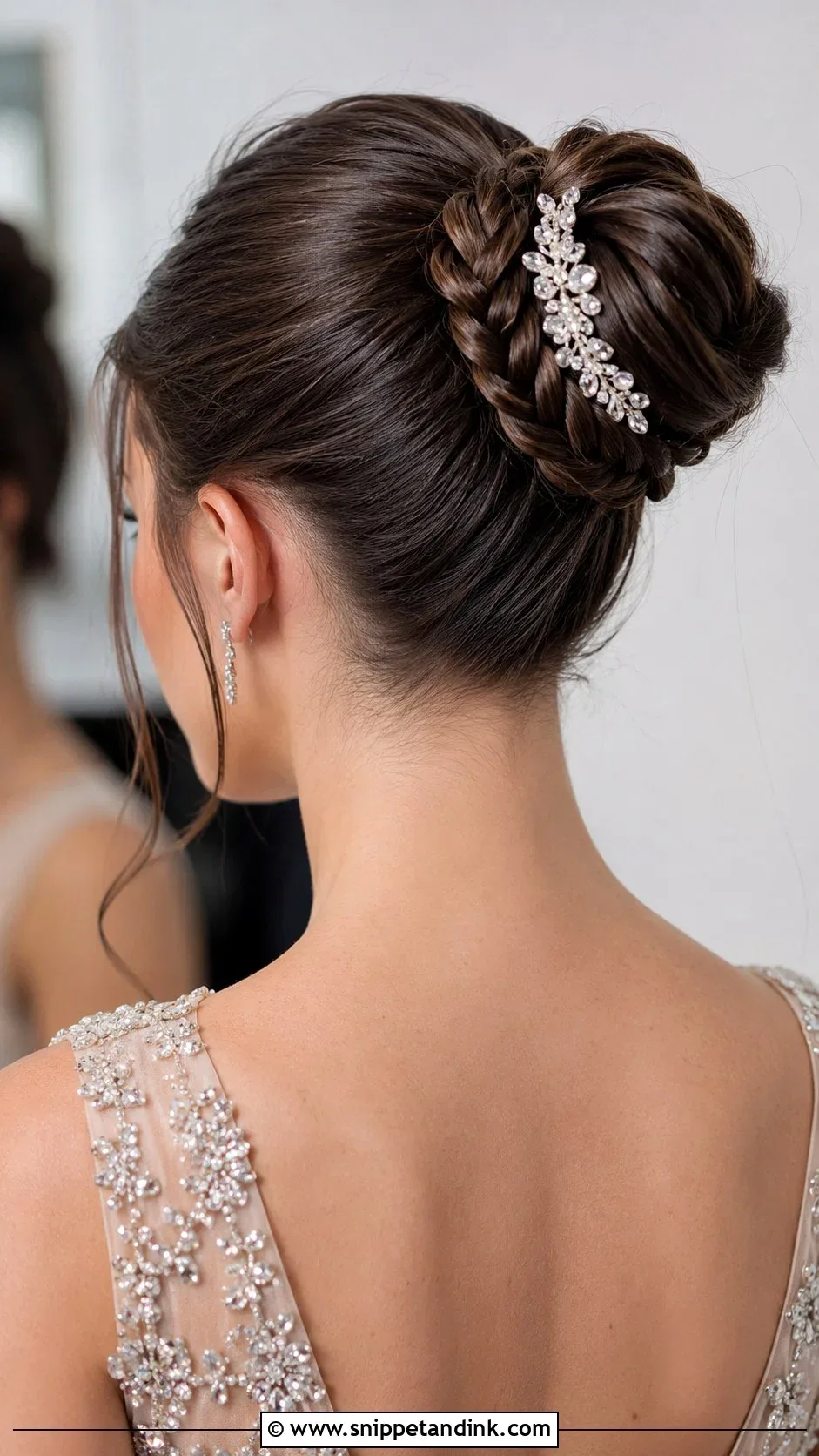
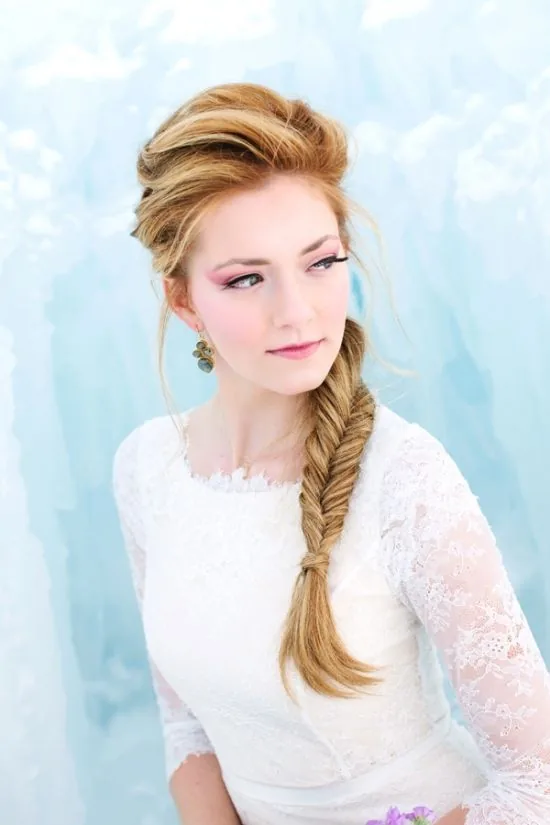
10. The Fishtail Braid Over One Shoulder
A fishtail braid draped over one shoulder is soft, romantic and surprisingly winter-proof: the braid keeps the hair contained and out of the coat collar, while the loose, pulled-apart texture looks effortless in photos. Add a velvet ribbon at the end or a few pearl pins along the braid and it becomes a bridal style rather than an everyday one.
Divide the hair into two sections and cross small pieces from the outside of each section to the inside of the other, working down over the shoulder. Keep the pieces small for a fine, detailed braid, then gently pull the edges out for fullness and tie the end with a ribbon.
Common mistake: braiding too tightly, which makes a fishtail look severe. Keep it loose and soft. Best for: brides and bridesmaids with long hair, and boho winter weddings where the braid is the statement.
11. The French Twist with a Winter Pearl Pin
The French twist is pure elegance — hair swept up and tucked into a vertical roll at the back of the head — and in winter it earns its place with a dusting of crystal pins or a single pearl pin along the roll. It lifts the neck, flatters a high collar or a fur stole, and stays completely clear of coats and veils.
Backcomb the crown lightly for height, sweep the hair to one side, roll it up and pin along the seam, keeping the front soft with a side part. Smooth any flyaways with a light-hold spray, then place the pearl pin where the roll meets the crown.
What to ask a stylist: ask for a twist that works with your hair’s thickness — fine hair may need a little padding or texture spray first. Cost and time: about thirty minutes with a stylist, and no tools beyond pins and a comb.
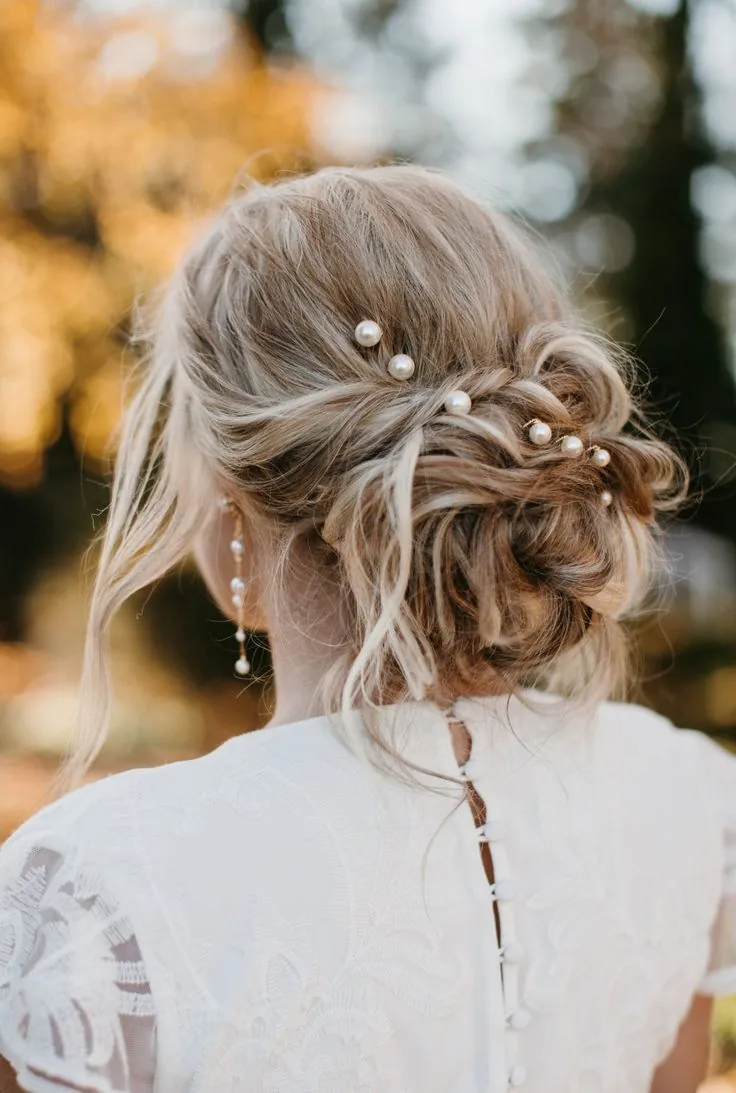
12. The Voluminous Blowout with Soft Curls
A voluminous blowout with soft curls brings a little glamour to a winter wedding without crossing into formal territory. The volume and movement make it look fantastic in photos, and the soft curls only get better as the evening goes on, relaxing into waves by the first dance.
Blow-dry with a round brush, lifting at the roots, and curl the ends with a large-barrel iron for a soft, bouncy finish. Let the curls cool before you touch them — that is what locks in the shape for the rest of the evening — then brush through very gently with your fingers.
Cost and time: about forty minutes with a dryer, or the price of a salon blowout. Who should avoid it: brides with very fine hair in a snowy outdoor ceremony, because fine curls drop fastest in damp air. Best on freshly washed hair with volumising mousse at the roots.
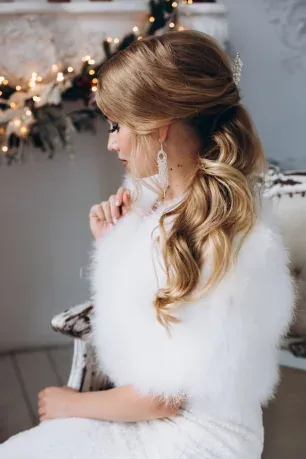
13. The Waterfall Braid with Winter Blooms
The waterfall braid is the prettiest half-up style: a braid that runs across the back of the head, letting strands fall through it like water. In winter it looks magical in candlelight, because the falling strands catch the light as they move, and a few small winter blooms tucked into the braid make it unmistakably seasonal.
Braid from one temple to the other, dropping a strand at each twist and picking up a new one, then pin the end behind the ear. Tuck small sprigs of baby’s breath or winter greenery into the braid where the strands fall, and set the whole shape with a light-hold spray.
Pros: beautiful and unique, and it keeps the front hair out of the face while leaving the lengths free. Cons: it is a technical braid — practise it before the day or book a stylist. Best for: romantic winter weddings and brides with medium to long hair.
14. The Low Ponytail with Wrapped Hair
The low ponytail is the quiet achiever of winter wedding hair: textured, slightly tousled, tied low at the nape and finished by wrapping a strand of hair around the elastic so no band ever shows. It looks effortless, survives a coat and a car journey, and suits bridesmaids and guests just as well as brides.
Add texture spray, gather the hair low, secure it with an elastic, then wrap a thin strand around the base and pin it underneath. Leave the ponytail soft and slightly wavy rather than pin-straight for a relaxed, lived-in feel that still reads bridal.
Cost and time: about fifteen minutes, one elastic and a few pins. Common mistake: tying the ponytail too high, which makes it look sporty rather than elegant. Keep it low, keep it soft, and let the wrapped base do the talking.
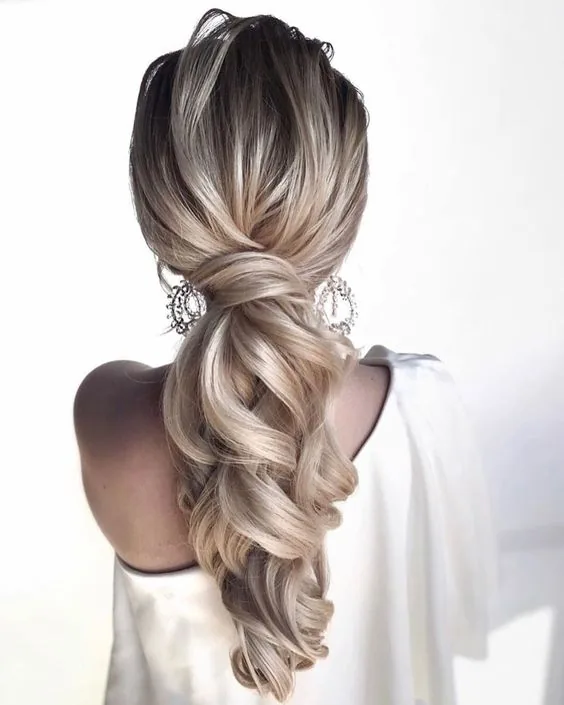
15. The Twisted Half-Up Crown
The twisted half-up crown is pretty, practical and a little bit special. Two twists meet at the back, holding the front sections away from your face while the rest of your hair stays loose — the perfect shape for a winter wedding, where the front must stay clear of the veil and the coat.
Twist a section from each side of your head, bring them together at the back and secure them with a small elastic or a decorative clip, then gently pull at the twists to soften them. A pearl pin where the twists meet adds the winter sparkle.
Best for: bridesmaids and guests as well as brides, and anyone who loves wearing their hair down. Quick verdict: it keeps hair out of your face without losing the length, and it looks far more complicated than it is.
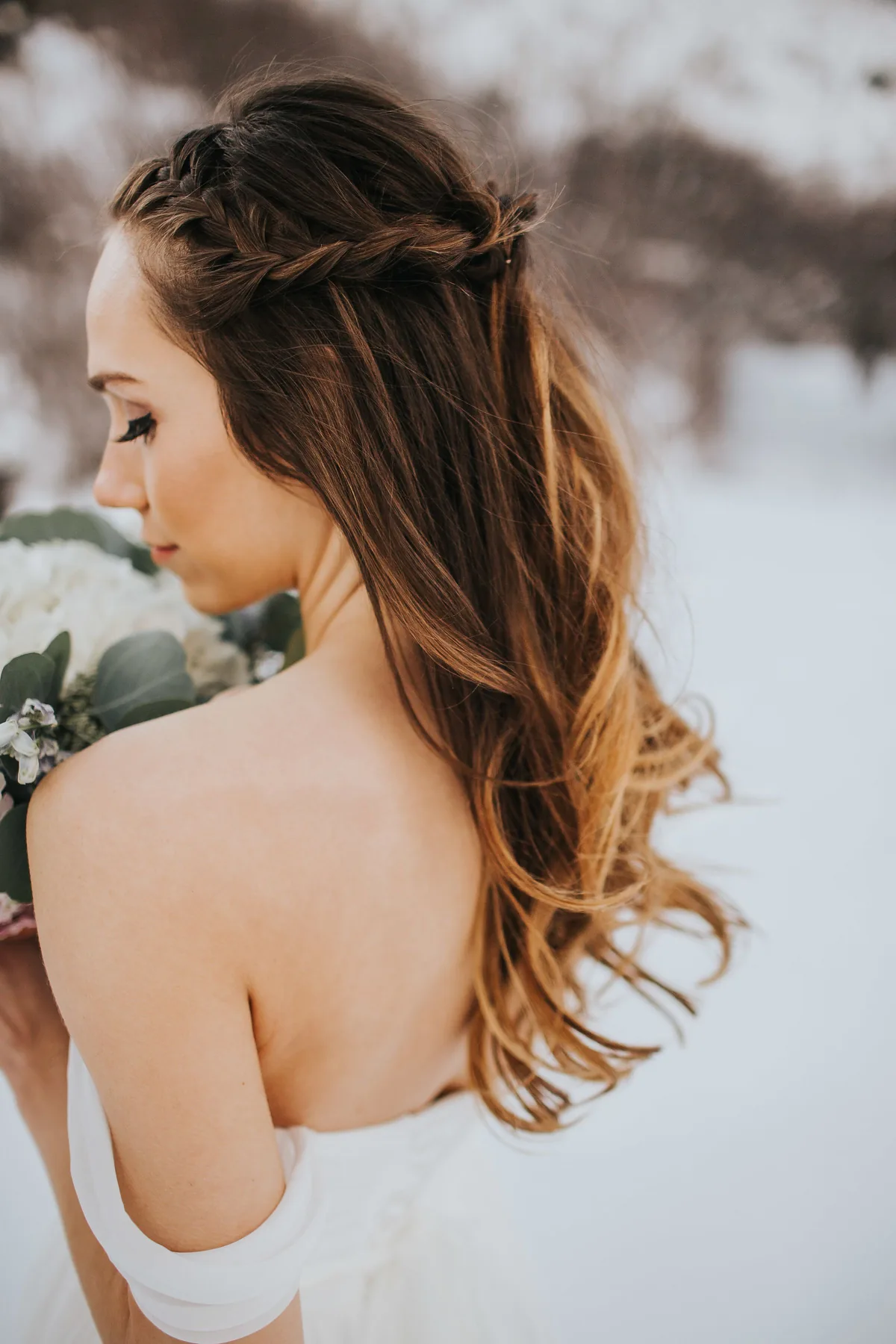
16. The Glossy Straight Hair with a Veil
Sometimes the simplest style is the most striking: glossy, perfectly straight hair worn under a veil. In winter it works because the veil protects the hair from the cold and the damp, and the sleek, shiny finish looks incredible in candlelight and flash photography.
Blow-dry smooth with a round brush, flat-iron in sections, and finish with a shine serum on the ends only. Ask your stylist to pin the veil in a way that lifts, not flattens, the crown — a veil comb placed too low will press the top flat within minutes.
Common mistake: over-conditioning on the day, which makes straight hair look limp. Use a light serum, not a heavy oil. Maintenance: a small comb and a travel spray for the part. Best for indoor winter weddings and brides who love sleek, modern hair.
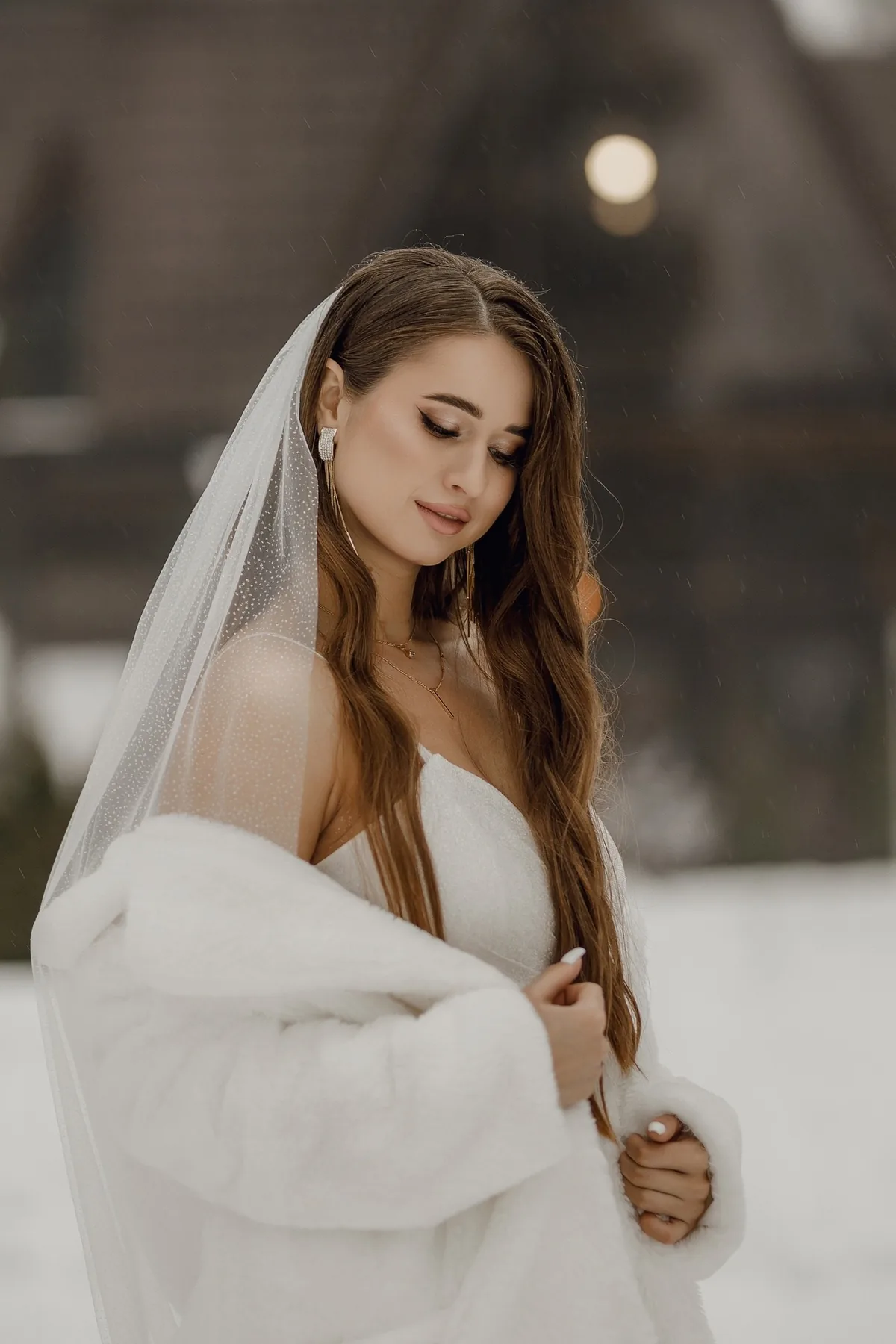
17. The Braided Low Ponytail with a Velvet Bow
The braided low ponytail combines the neatness of a ponytail with the staying power of a braid, and a velvet bow at the base makes it unmistakably winter. It looks polished, it holds for hours, and it keeps your hair completely out of the way of coats, scarves and chair backs.
Tie a low ponytail, braid the tail and secure the end with a small elastic, then gently pull at the braid to widen it. Wrap a strand of hair around the top elastic for a finished look, and tie the velvet bow over the wrap.
Best for: long hair, and anyone who finds a plain ponytail a little boring. Pros: one of the best styles for a warm reception room, since it keeps your neck completely clear. Cost and time: about twenty minutes.
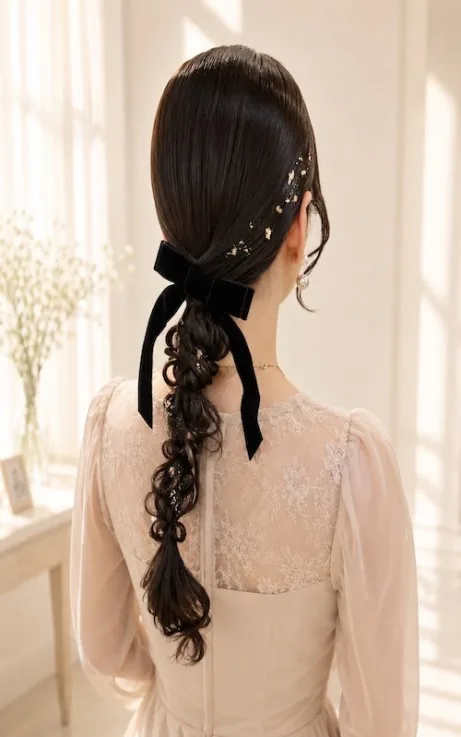
18. The Curly Updo with Pinned Curls
Curly hair makes the most beautiful winter updos, because the curls themselves provide the texture and volume that straight hair has to fake. Gather the curls loosely into a low or mid-height updo, pin them in soft clusters, and add gold hair pins that catch the candlelight like tiny stars.
Define the curls with a curl cream, gather them loosely, and pin them in clusters rather than one tight bun, so the shape stays soft and full. Place the gold pins along the shape, and warm gold against a white or ivory dress for a glow no crystal can copy.
Maintenance: a little curl cream on your fingertips for any frizz, and a leave-in cream before styling, because curly hair needs moisture in winter. Best for: brides with naturally curly or coily hair — this style is made for them.
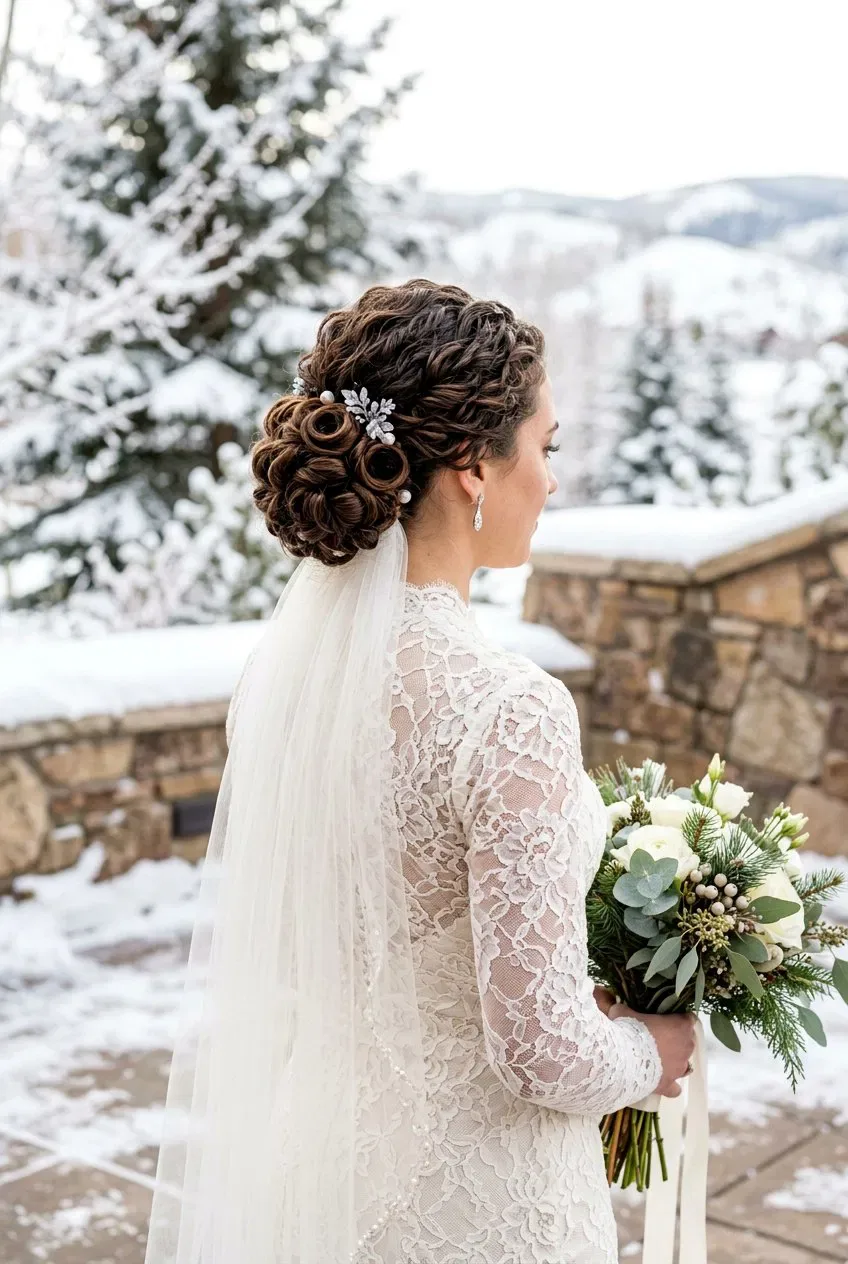
19. The Side Chignon with a Hair Vine
A side chignon is the asymmetric answer to the classic low bun: hair swept to one side and pinned into a soft, full bun at the nape, leaving the other side of the neck bare for earrings and a bare shoulder. A crystal hair vine wound through the bun makes it a statement.
Sweep the hair to one side, gather it at the nape, twist it into a bun and pin it firmly, then wind the hair vine through the bun and secure its ends. Leave a few face-framing pieces loose so the style reads romantic rather than severe.
What to ask a stylist: ask for the bun to be pinned in at least four places, because a side bun is heavier on one side. Common mistake: placing the bun too high, which makes it look like a side ponytail. Best for brides who love asymmetry.
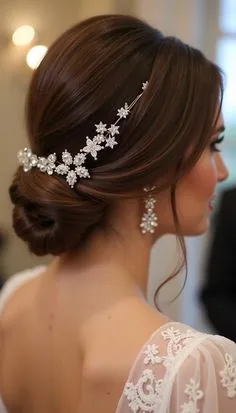
20. The Soft Textured Bun with Loose Pieces
Every winter bride knows the hat-line problem: you arrive in a hat or a hood, take it off, and there is a dent across your crown. The soft textured bun solves it by design — the hair is pinned up in soft, tousled sections with volume built in, so any flattening just blends into the texture.
Add texture spray, curl loosely, then pin the hair up in soft sections, leaving the crown deliberately tousled and a few loose pieces around the face. The texture is the whole point, so resist the urge to smooth it into a neat ball.
Pros: the most forgiving style in this list, and it repairs in seconds. Cons: it needs a stylist who understands texture — a too-neat version defeats the purpose. Best for: outdoor winter weddings and brides travelling between venues.
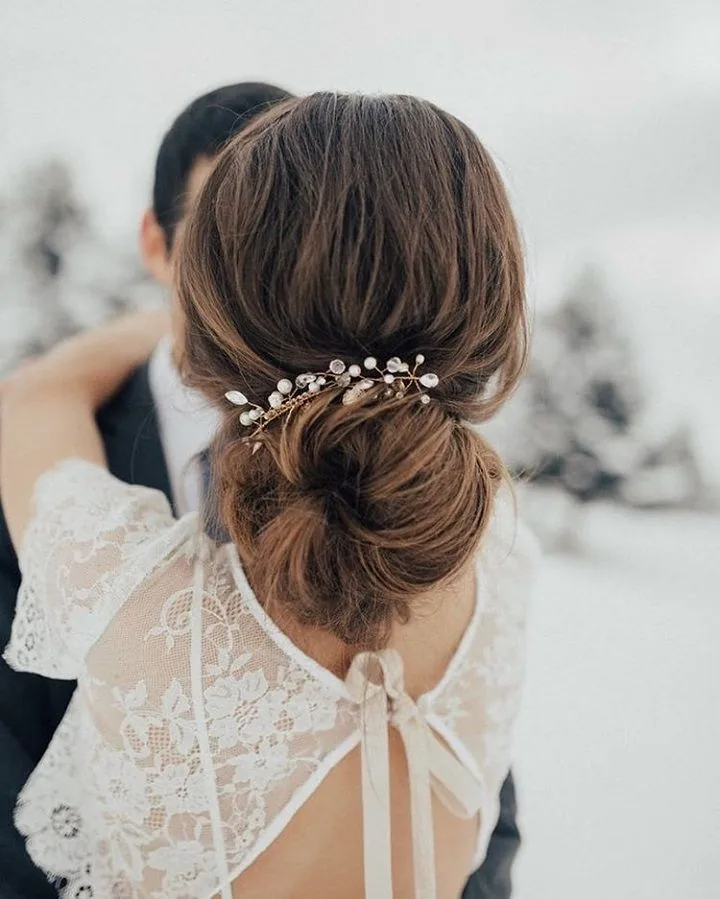
21. The Elegant High Chignon
A high chignon lifts the whole face and shows off the neckline of a winter dress, and a crystal hair vine wrapped around its base catches the light like frost on a window. It is the style for brides who want drama and height, and it works beautifully with a veil pinned below the bun or a tiara above it.
Smooth the hair into a high ponytail, twist it into a chignon, pin it in a circle, then wind the vine around the base and secure the ends. The bun itself is secure and simple; the vine does the talking.
What to ask a stylist: ask for the chignon to be pinned in at least six places — a high bun is heavy and gravity is not your friend. Who should avoid it: anyone with a very long face, as height on top can lengthen it further.
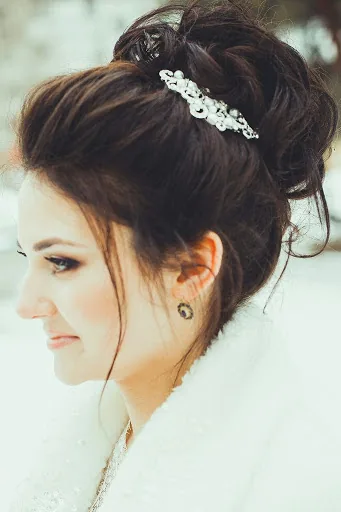
22. The Rope Braid Updo
A rope braid updo is two strands twisted around each other and coiled into a sculpted bun — simpler than a French braid, more unusual than a plain bun, and wonderfully secure in winter wind. The twisted rope texture catches candlelight in a way a smooth bun never does, and it holds its shape for hours without a single pin working loose.
Divide the hair into two sections, twist each section in the same direction, then twist them around each other in the opposite direction and coil the rope into a bun at the nape or crown. Pin the coil firmly and tug the rope edges gently for fullness.
Cost and time: about twenty-five minutes, and no tools beyond pins and an elastic. Best for: brides who want an updo with visible texture, and anyone whose hair slips out of ordinary braids — the rope twist grips better than most.
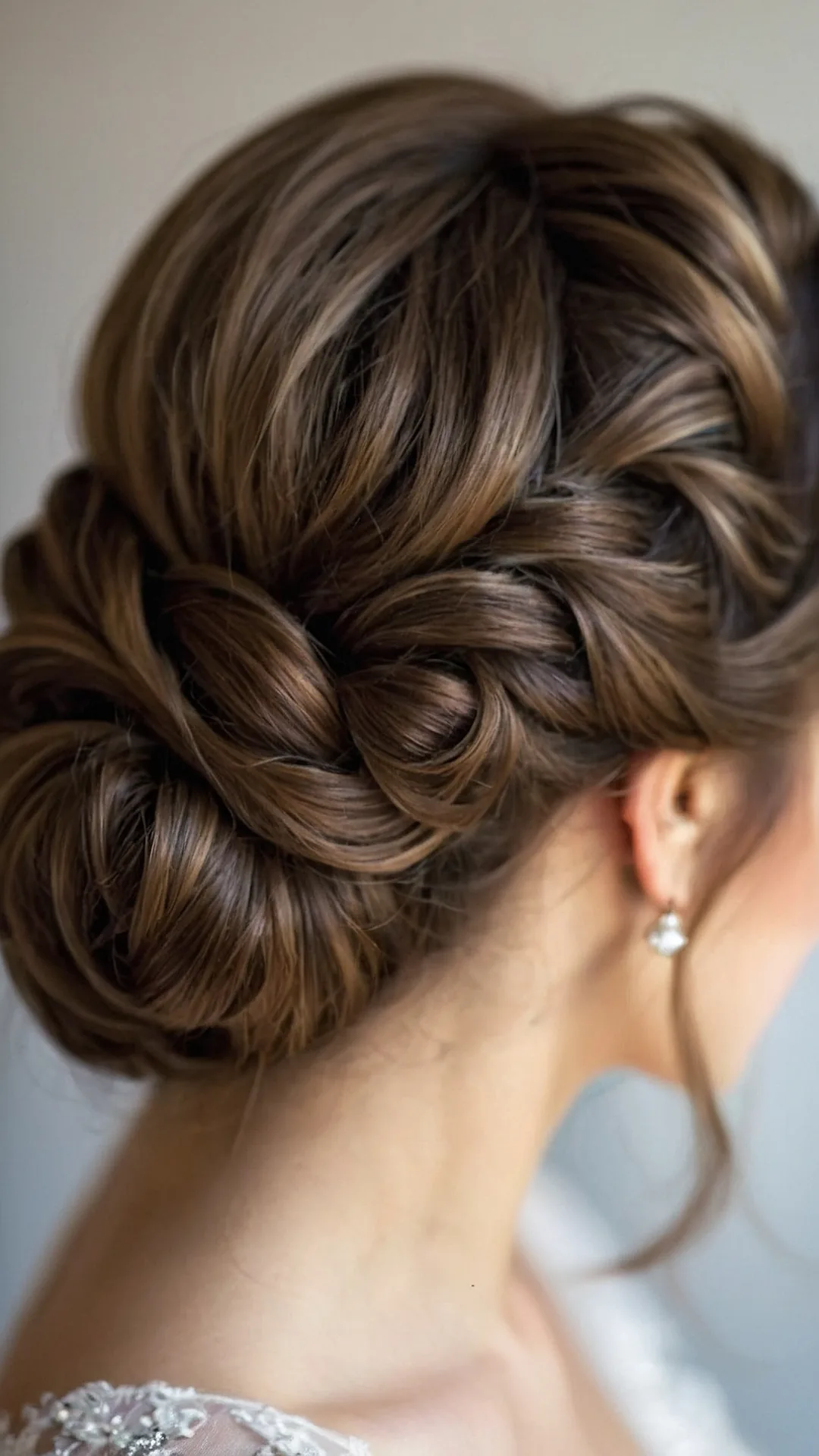
23. The Wavy Lob with a Deep Side Part
A wavy lob with a deep side part is playful, flattering and very winter-wedding friendly. It frames the face, moves when you laugh, and never needs adjusting — the waves do all the work. The deep part adds instant volume at the crown, which helps counter the flattening effect of hats and hoods.
Scrunch a little mousse through damp hair and let it air-dry, or use a large-barrel wand for a few loose waves. Finger-comb the waves rather than brushing them, so they stay soft and piecey, and sweep the deep part across for a little drama.
Best for: short to medium hair, and bridesmaids and guests who want a style that looks finished with almost no effort. Quick verdict: it looks even better by the second hour, once the waves have relaxed a touch.
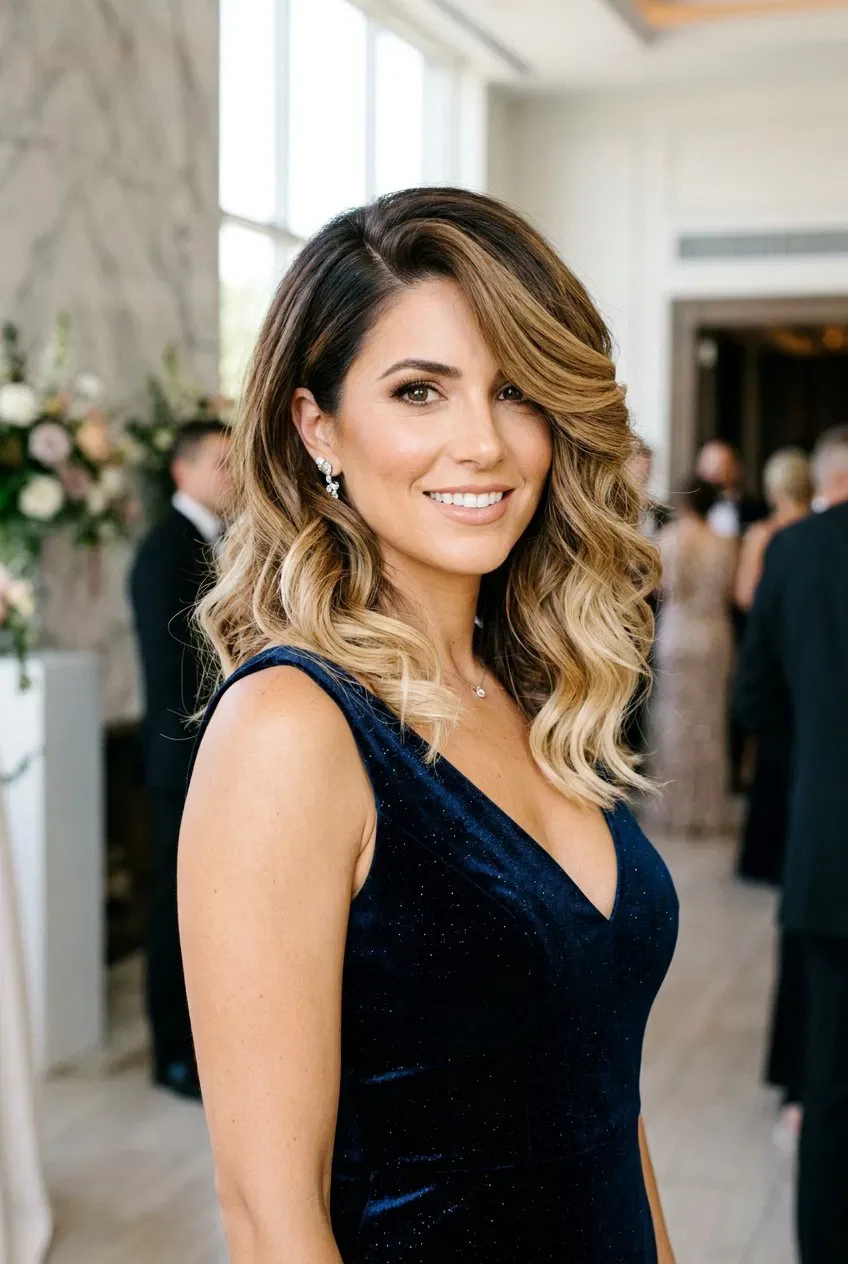
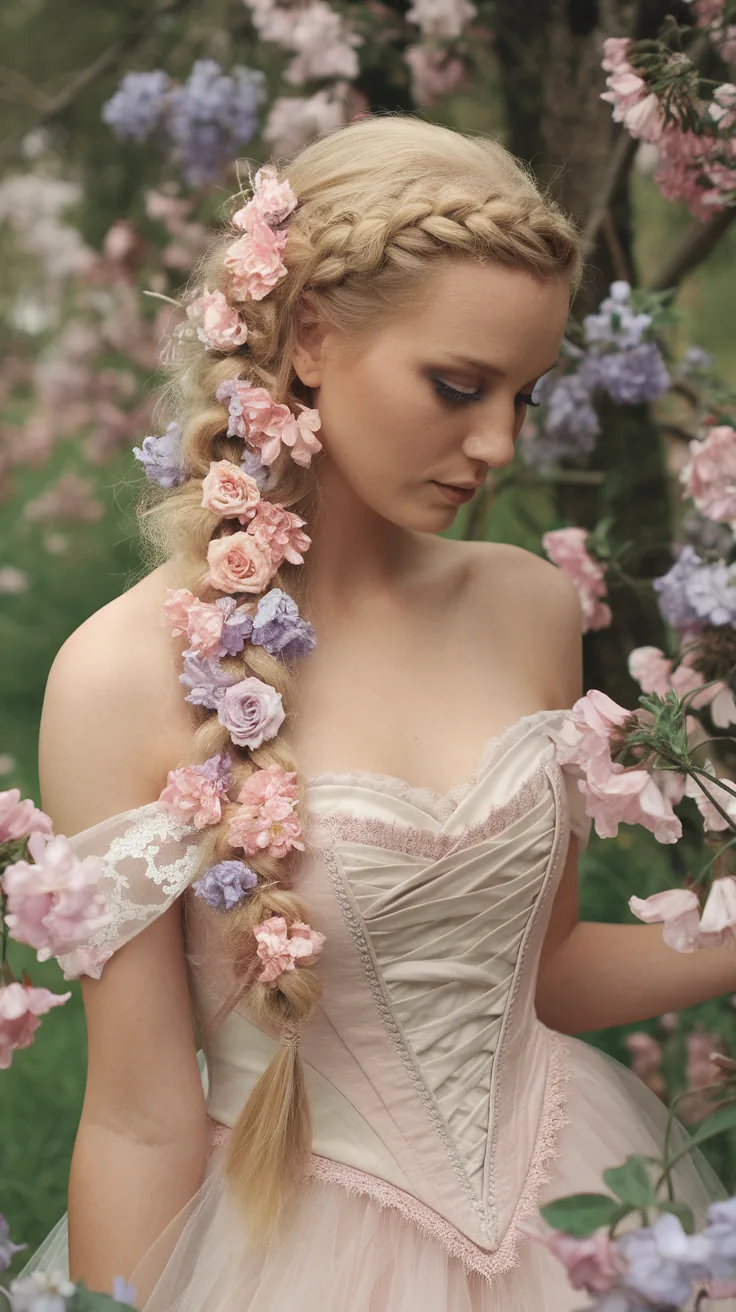
24. The Floral-Accented Loose Braid
A loose braid with winter flowers woven through it is the winter version of a classic romantic braid: the braid keeps the hair contained and out of the coat collar, while the flowers add scent, texture and a natural colour that no crystal can copy. It is a favourite for rustic, woodland and garden winter weddings.
Braid loosely over one shoulder, pull the edges out gently for fullness, then tuck small sprigs of baby’s breath, eucalyptus or pine into the braid. Ask your florist for hardy sprigs, and keep spares, because fresh greenery wilts after a few hours in a warm room.
Maintenance: check the flowers after the outdoor photos and replace any wilted sprigs. Cost and time: about twenty minutes plus a few sprigs from the florist. Best for boho brides and anyone who loves natural details.
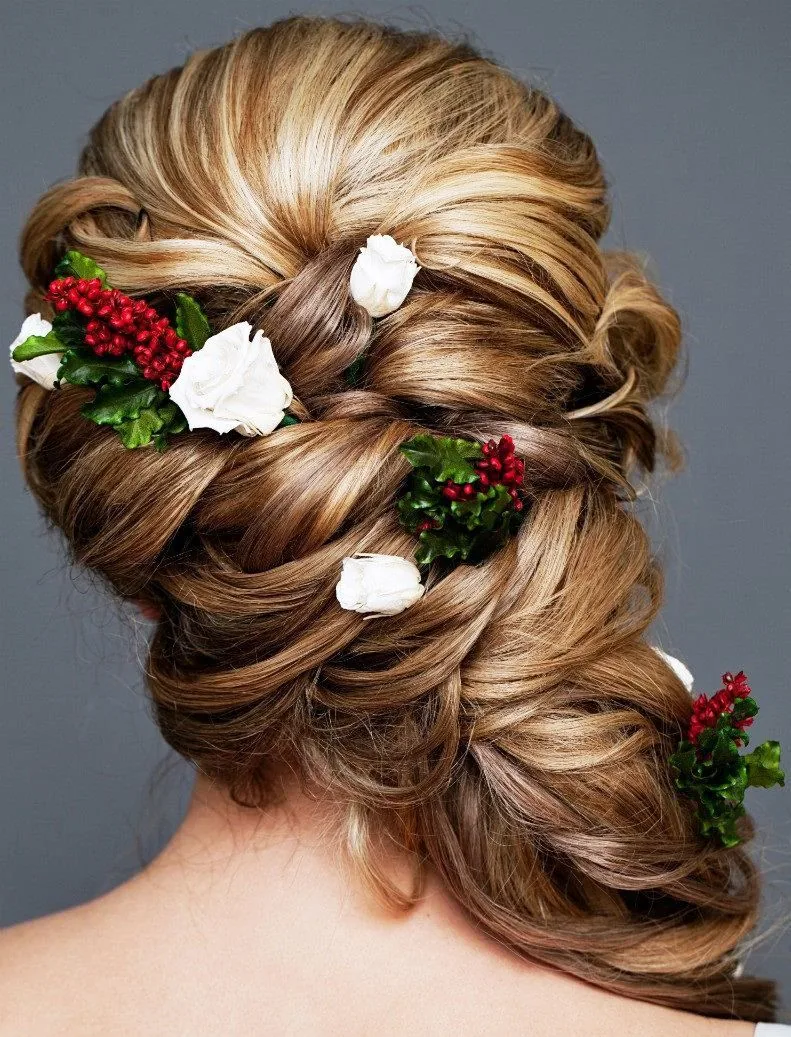
25. The Classic French Braid into a Bun
The French braid is the hardest-working style on this list, and flowing it into a bun makes it bridal. Once it is in, it does not move — not when you lean forward, not when you laugh, not when the ceremony runs long and the dancing starts. The braid keeps the crown secure against wind; the bun gives the finish.
Start at the crown and braid downwards, adding hair as you go, and keep the tension even so it sits neatly against your head. Gather the braid and the remaining hair into a low bun at the nape, pin it firmly, and pull gently at the edges of the braid to make it look fuller and softer.
Best for: long and medium hair, and anyone who hates re-doing their hair mid-evening. Pros: it keeps your hair completely clear of food, drinks and coat collars. A crystal pin at the base of the bun is all the decoration it needs.
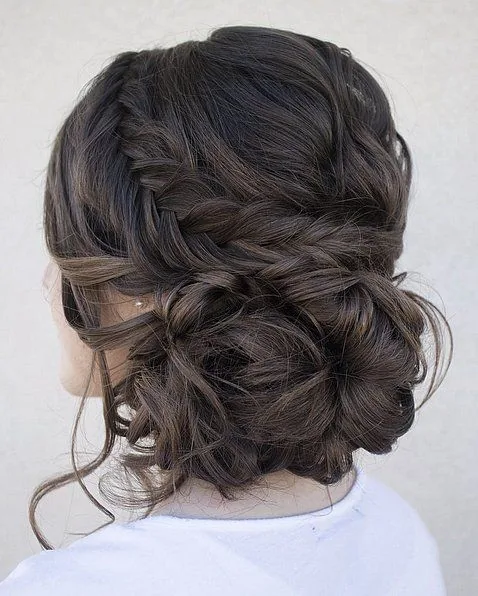
26. The Pinned-Back Hollywood Curls
Pinned-back Hollywood curls give you the glamour of loose waves with the security of an updo: the curls fall freely down your back, but the front sections are pinned back so nothing falls into your face during the vows or the photographs. It is the compromise that winter brides reach for again and again.
Create defined curls with a medium-barrel iron, pin each one to cool, then brush them out into soft waves. Pin the two front sections back with small clips or crossed bobby pins, and let the rest fall naturally over your shoulders and clear of the coat collar.
Pros: gorgeous natural volume, minimal effort, and no heat needed after the initial set. Cons: humidity from a warm, crowded reception room can loosen the curls — a little curl cream at the start helps them hold through the evening.
27. The Low Knot with a Satin Ribbon
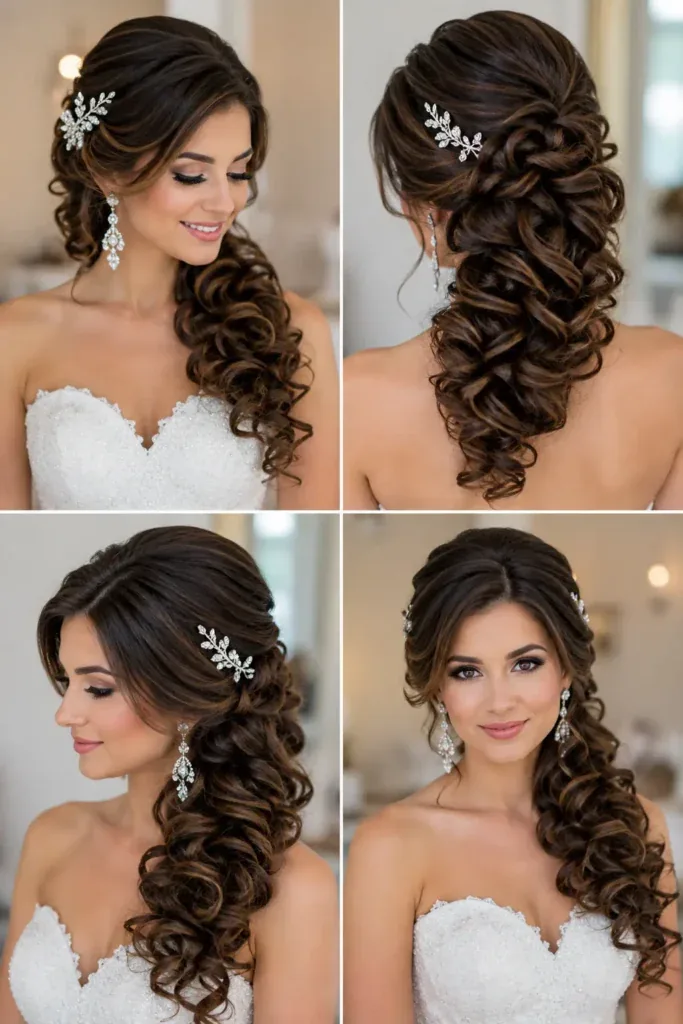
A low knot tied with a satin ribbon is sweet, a little bit retro, and perfect for a winter wedding. The knot keeps the hair neat and secure at the nape, while the ribbon adds a touch of personality — and a rich, seasonal texture — without any extra effort or weight.
Gather the hair low, twist it into a soft knot and pin it, then tie a satin ribbon around its base in a neat bow. Choose a ribbon in a colour that matches your dress or your bouquet — deep red, forest green or classic ivory all work beautifully against winter light.
Best for: medium to long hair, and bridesmaids as well as brides. Cost and time: about fifteen minutes, one ribbon and a few pins. Keep the bow neat and the knot soft, and the style reads elegant rather than casual.
28. The Bohemian Braided Half-Up
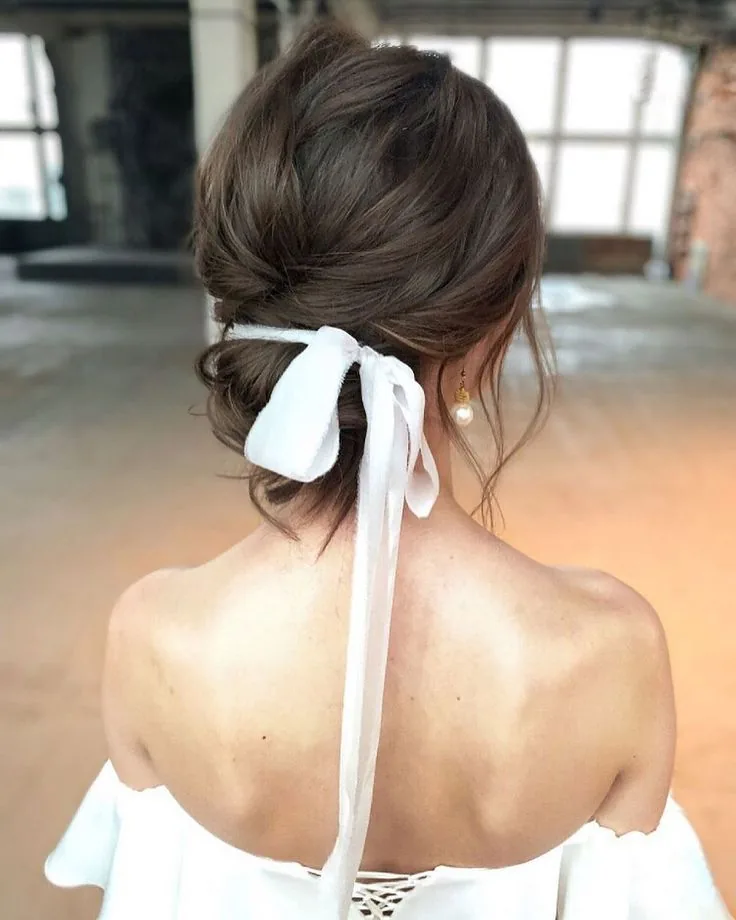
The bohemian braided half-up is the free-spirited winter wedding style: two small braids meet at the back, holding the front sections away from your face while the rest of your hair stays loose and wavy. It looks like a woodland fairytale, and it photographs beautifully against snow.
Braid a small section from each side of your head, bring them together at the back and secure them with a small elastic or a decorative clip, then gently pull at the braids to soften them. A few tiny winter flowers tucked into the braids complete the boho look.
Pros: it keeps hair out of your face without losing the length, and it looks far more complicated than it is. Cons: very short hair may not have enough length for the braids to meet at the back. Best for relaxed, outdoor winter ceremonies.
29. The Sculpted Finger Waves
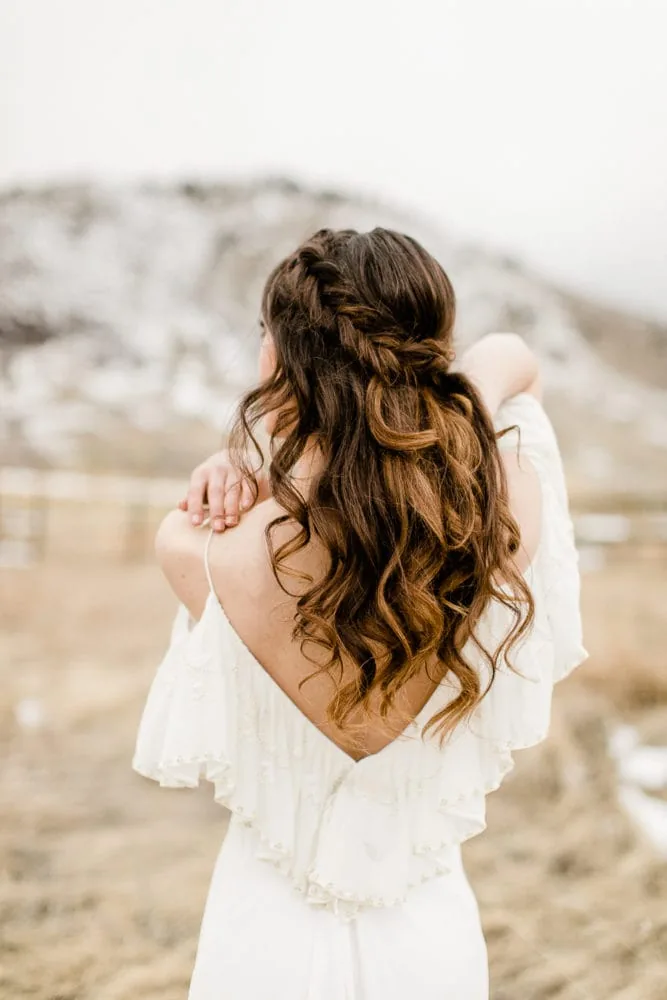
Finger waves are pure 1920s glamour, and a short bob set in sculpted waves is one of the most striking winter wedding looks — especially under a crystal headband or a birdcage veil. The waves sit close to the head, so a coat, a hood or a fur collar cannot disturb them, and they look exquisite in candlelight.
Set the waves with a fine-tooth comb, gel and clips, then let them dry fully before removing the clips. The waves should be smooth, sculpted and glossy, with a deep side part that frames the face and shows off one earring.
Cost and time: forty-five to sixty minutes with a stylist — finger waves cannot be rushed. Who should avoid it: anyone who wants a low-effort morning. Best for: short to medium hair and vintage-themed winter weddings.
30. The Romantic Milkmaid Braid
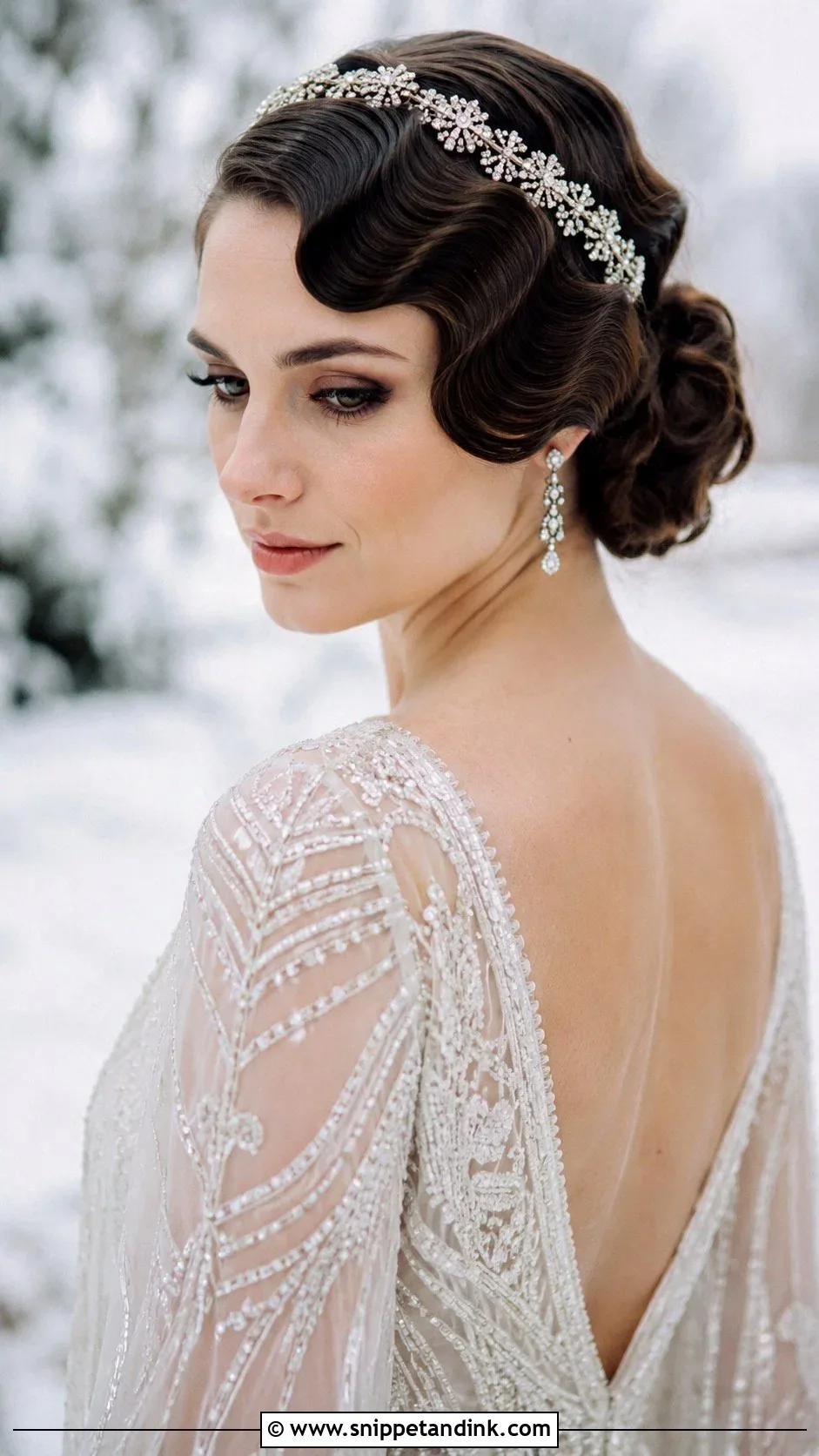
The milkmaid braid wraps across the top of the head like a crown, and in winter it is one of the most practical bridal styles: it keeps every strand off the face, survives wind and snow, and looks stunning with a veil pinned underneath or a few winter flowers tucked into the braid.
Braid two sections from either side of your head, cross them over the crown and pin them in place, tucking the ends underneath. Pull gently at the braids to soften them and add a little volume, so the style reads romantic rather than severe.
Common mistake: making the braids too tight, which pulls at your scalp and gives you a headache by the first dance. Keep the tension gentle. Best for: medium to long hair and outdoor winter ceremonies.
31. The Sleek High Ponytail with Curls
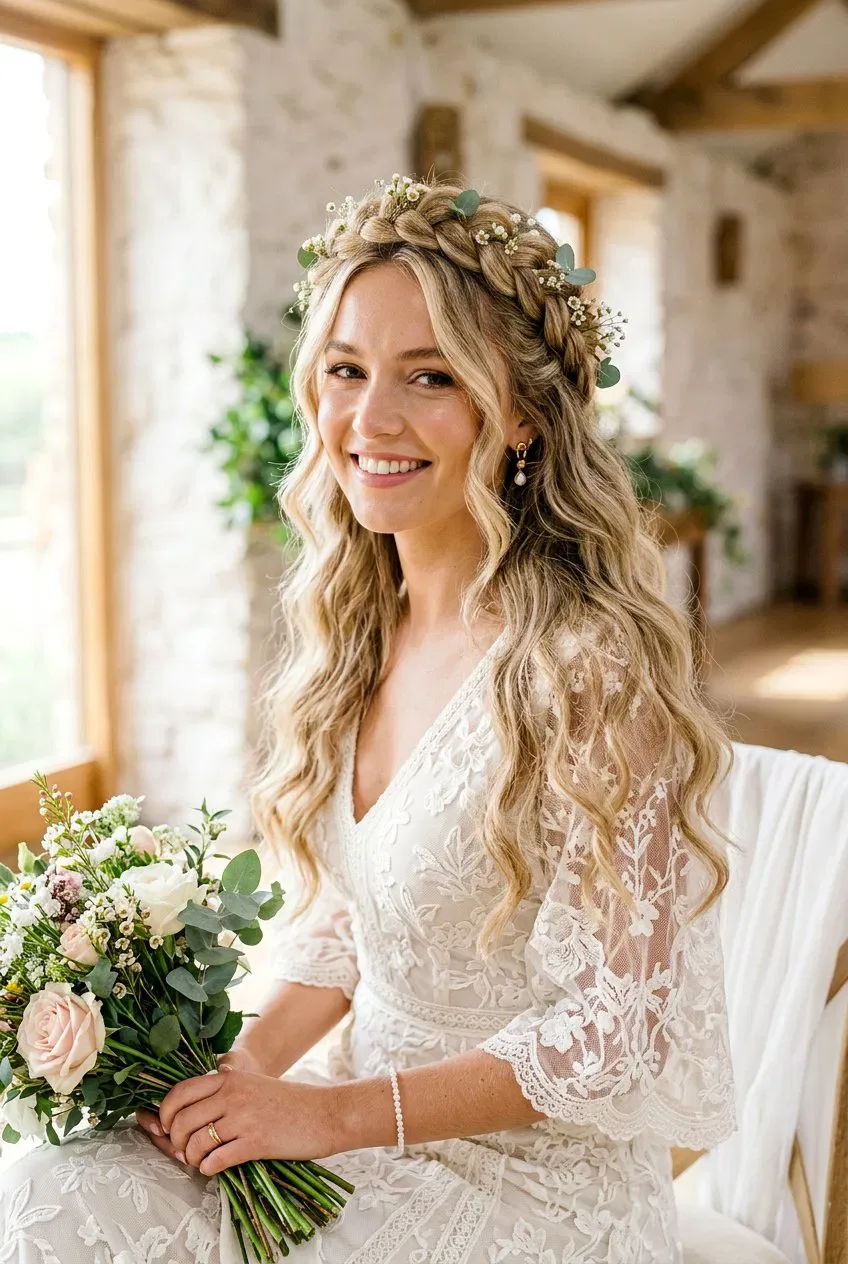
A sleek high ponytail with curled ends is bold, modern and surprisingly bridal. It lifts the face, shows off the shoulders and neckline, and stays completely clear of a coat or a fur stole. The curled ends soften the shape, so the style reads elegant rather than sporty.
Smooth the hair back with gel and a brush, secure it high at the crown, then curl the tail in large sections and wrap a thin strand around the base to hide the elastic. Add a little volume at the crown by gently pulling the hair above the tie.
Maintenance: a high ponytail can pull if it is too tight, so keep the base secure but not severe. Who should avoid it: anyone with very fine hair, which may not hold the height. Best for modern winter weddings and brides with long, thick hair.
32. The Textured Low Ponytail with Waves
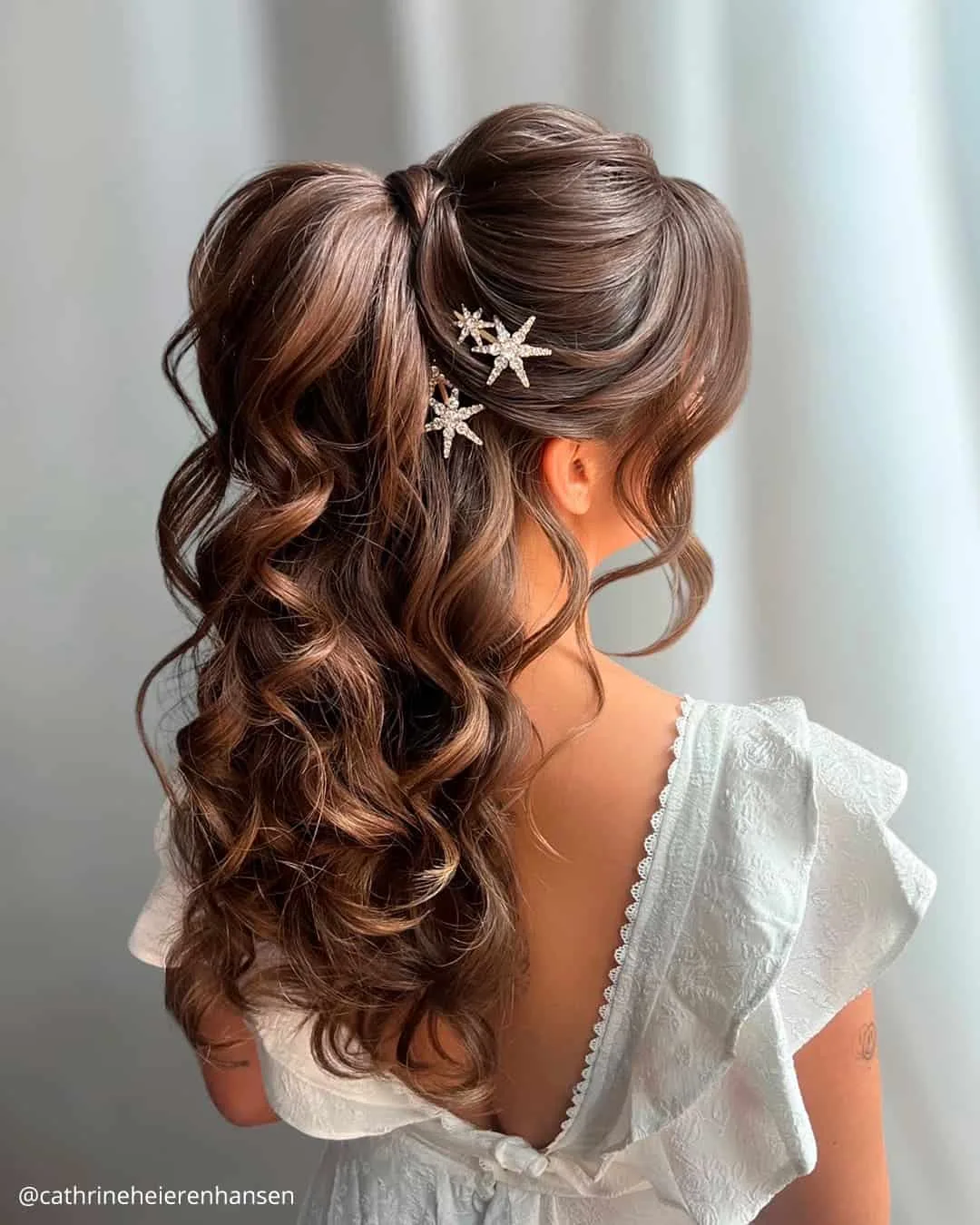
The textured low ponytail with waves is the relaxed winter wedding style for brides who want their hair down but need it to behave. The texture gives the ponytail body and grip, the waves give it movement, and the low placement keeps it clear of the coat collar and the car headrest.
Add texture spray and create loose waves through the lengths, then gather the hair low at the nape and secure it with an elastic. Wrap a strand around the base, and pull a few face-framing pieces loose so the style stays soft around the face.
Pros: quick, comfortable and very forgiving — if it loosens, re-tie it in seconds. Cons: it can look too casual for a very formal ceremony, so keep the waves defined and the wrap neat. Best for: bridesmaids, guests and relaxed winter weddings.
33. The Vintage Beehive with a Twist
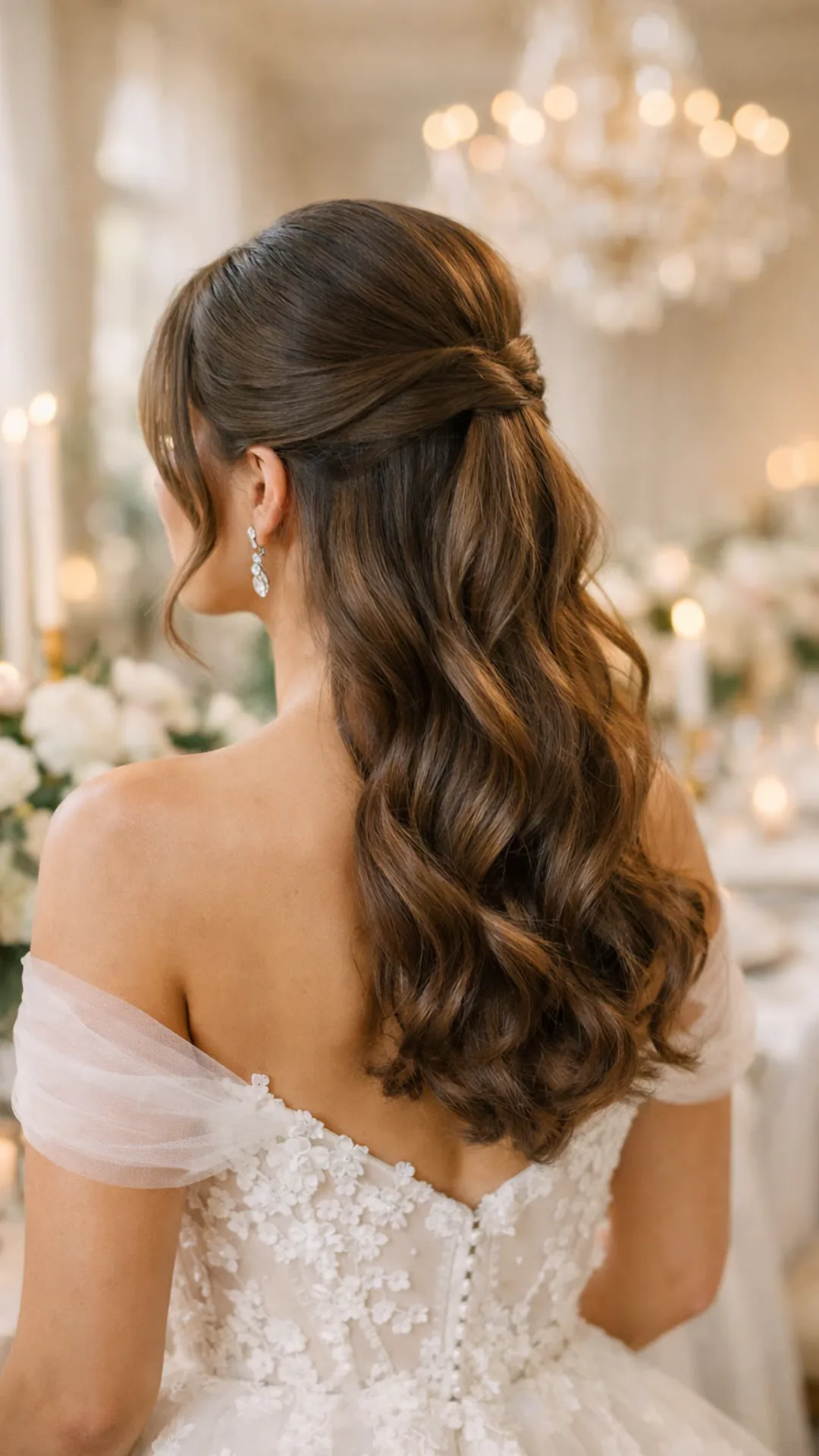
The beehive is the most dramatic vintage winter wedding style: hair piled high in a soft, sculpted tower, with a twist of hair wrapped around its base and a crystal clip for sparkle. It is pure 1960s glamour, and it looks spectacular with a high-necked dress, a fur stole and a red lip.
Backcomb the crown in sections, smooth the top layer over the padding, and pin the shape firmly, then wrap a twist of hair around the base to hide the pins. The shape should be soft and rounded, not stiff — a beehive that looks like a helmet has been overdone.
Cost and time: about forty-five minutes with a stylist, and plenty of pins. Who should avoid it: brides who dislike height on top, or anyone who will wear a hat — a beehive and a hat do not mix. Best for vintage-themed winter weddings.
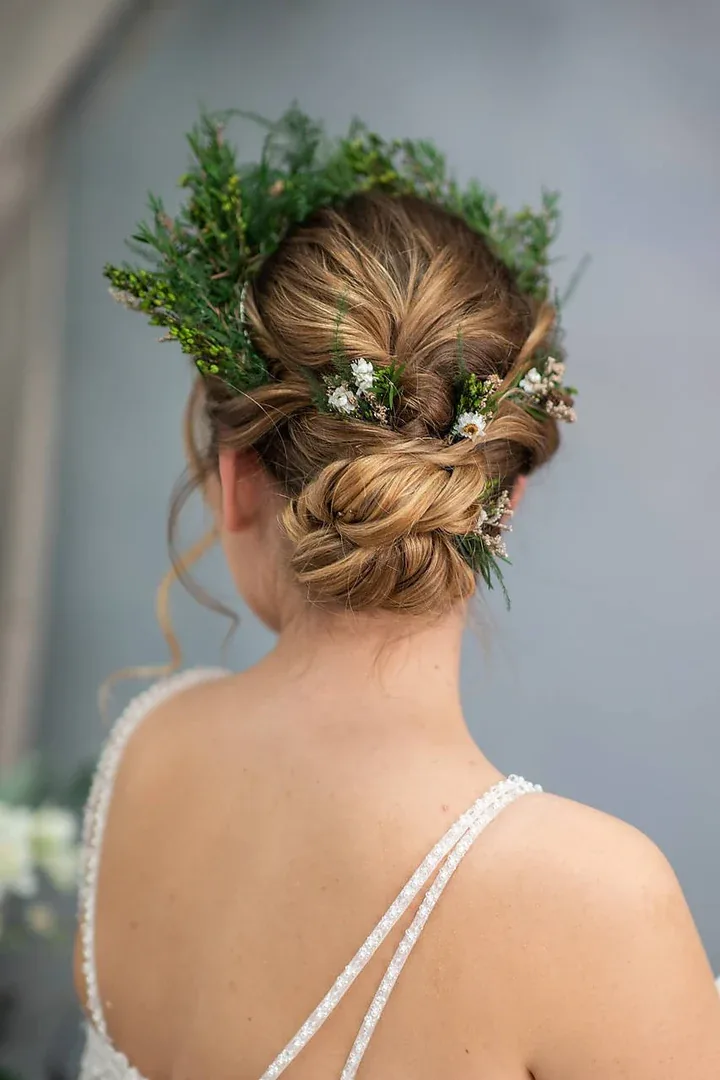
34. The Soft Updo with Winter Greenery Pins
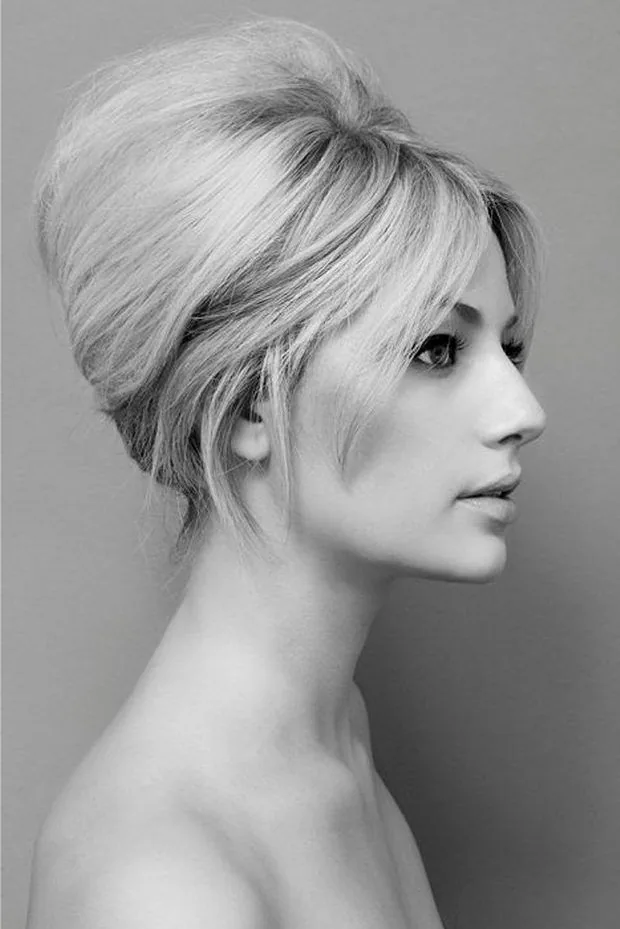
A soft updo with winter greenery pins is the most seasonal hairstyle in this list: hair loosely pinned up in a soft, romantic shape, with small sprigs of eucalyptus, rosemary or pine tucked into the pins. The greenery adds scent, texture and a natural colour that ties the hairstyle to the season’s decorations.
Build a soft low or mid-height updo, pinning the hair in loose sections, then tuck small sprigs of greenery into the pins where they will show in photographs. Ask your florist for hardy sprigs, and keep spares in the bridal suite for a quick replacement.
Maintenance: check the greenery after the outdoor photos and replace any wilted sprigs. Best for: rustic and woodland winter weddings, and brides who love natural details over crystals and pearls.
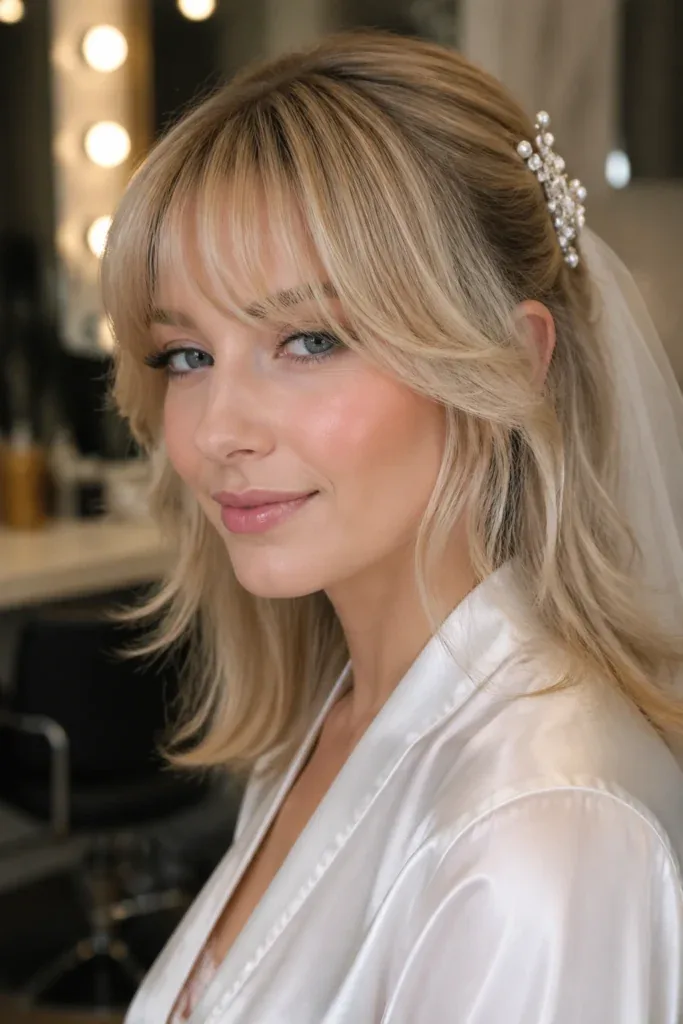
35. The Layered Blowout with Curtain Bangs
A layered blowout with curtain bangs is the winter wedding look for brides who want their hair down but still want it to behave. The layers give movement, the blowout gives shine, and the curtain bangs frame the face while staying clear of the eyes — even in a gust of wind.
Blow-dry with a large round brush, flicking the ends out slightly, and part the bangs in the middle so they fall naturally on either side of the face. A light mist of flexible-hold spray keeps the bangs in place without making them stiff.
What to ask a stylist: for curtain bangs cut to cheekbone length, so they frame your face without falling into your eyes during the vows. Pros: gorgeous and natural-looking. Cons: the most vulnerable style to winter weather — save it for mostly indoor days.
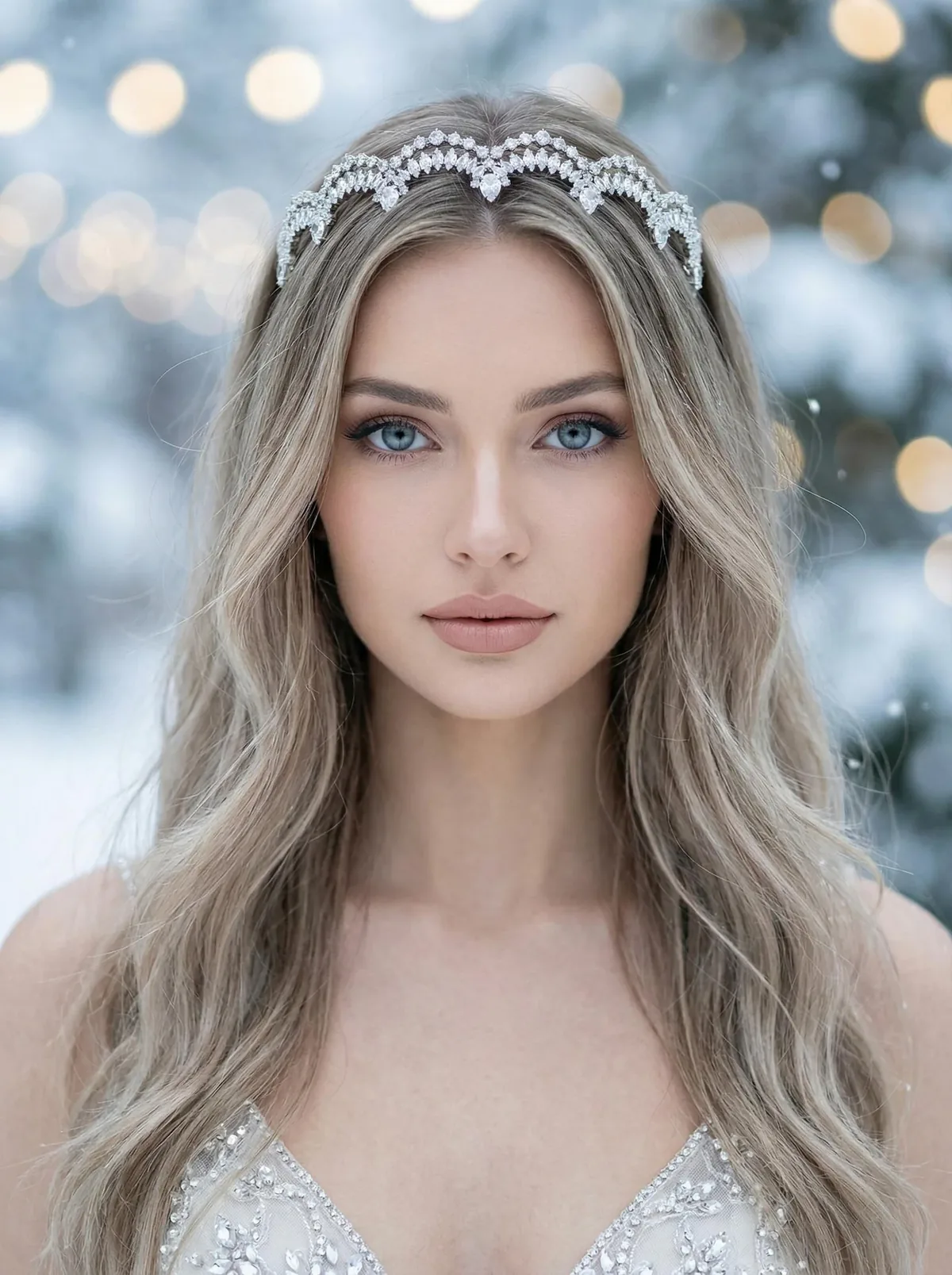
36. The Cascading Curls with a Tiara
Cascading curls with a tiara are the fairytale finish to this list: long, flowing curls falling past the shoulders, crowned with a delicate tiara that catches the light like frost. It is the style for a bride who has dreamed of this day since she was small, and it photographs like a storybook.
Curl in large sections with a medium-barrel iron, pin each curl to cool, then brush through gently with your fingers so the curls fall into one soft, flowing shape. Place the tiara at the crown, just behind the hairline, and secure it with two hidden pins.
Cost and time: about an hour for a full curl set, plus the tiara. Best for: brides with long hair and formal winter weddings. Keep a travel spray handy, and remember: the tiara is the crown, so keep the rest of the styling simple.
How do I keep my winter wedding hairstyle from falling flat in the cold?
Build the style on hair with grip — wash the night before, not the morning of — and use a texture spray at the roots, a strong-hold hairspray, and plenty of pins. Updos hold far better than loose hair in the cold, and a quick touch-up kit with travel spray and pins will save the style after the outdoor photos.
Should I wear my hair up or down for a winter wedding?
Up is the safer choice in winter: an updo sits above the coat collar, survives hats and hoods, and does not get weighed down by damp snow. Half-up styles give you the best of both worlds. Hair down works best when the ceremony and photos are mostly indoors.
How do I stop static in my hair at a winter wedding?
Static comes from dry winter air, so start with a moisturising treatment in the weeks before the wedding, use a leave-in conditioner on the day, and carry a small anti-static spray or a dryer sheet in your clutch — running a dryer sheet lightly over the hair tames flyaways instantly. Avoid wool hats directly on finished hair.
Can I wear a veil with an updo in winter?
Yes — updos are actually the best base for a veil, because the bun or twist gives the veil comb something solid to grip. A low chignon or a French twist works best with a long veil, and a high bun suits a shorter veil or a birdcage veil. Always try the veil on with the finished style at your trial.
What hairstyles work best under a faux-fur stole or cape?
Styles that sit above the shoulders work best: a low chignon, a sleek bun, a half-up twist or a high bun all stay visible above a stole. Avoid very long, loose hair under a stole, because the fur will crush it and tangle it. A crystal hair vine or a velvet ribbon also shows up beautifully above fur.
How far in advance should I book a winter wedding hair trial?
Book the trial six to eight weeks before the wedding, and do it on a cold day if possible, so you can see how the style behaves in real winter air. Bring your veil, your coat and a top with a similar neckline to your dress, and take photos from every angle, including the back.
Will snow ruin my wedding hairstyle?
Light snow for a few minutes is fine for most styles, especially updos — just shake it off gently and do a quick touch-up indoors. Heavy, wet snow is harder on loose curls and waves, which is why updos and firmly set styles are the safest choice for outdoor winter photos. Keep outdoor portraits short and do them early, while the hair is fresh.
What hair accessories suit a winter wedding?
Velvet ribbons and bows, crystal hair vines and combs, pearl pins, faux-fur headbands, and crowns of winter berries or frosted baby’s breath all suit the season. Gold pins warm up candlelit photos, while silver and crystal echo snow and ice. Choose one statement accessory rather than several, so the style is not crowded.
How do I keep curls from dropping in cold, damp air?
Curl in small sections, pin each curl to cool completely before brushing it out, and set with a strong-hold spray. A volumising mousse at the roots helps, and a little texture spray gives the curls grip. Avoid heavy oils on the day, because they weigh curls down — and carry a travel spray for a quick refresh indoors.
Do winter wedding hairstyles work for short hair?
Yes — short hair is actually the easiest winter wedding length, because it sits above the coat collar and never gets flattened by a hood. A pixie with a crystal headband, a finger wave bob, or a short bob with soft waves all look stunning, and a velvet bow or a crystal clip adds the bridal finishing touch.
Conclusion
Winter is the most romantic season to get married in — snow outside, candlelight inside, velvet and fur and sparkle everywhere — and your hair should be part of that magic, not a worry. The 36 winter wedding hairstyles in this guide prove that winter wedding hair does not have to be a compromise: snow-proof chignons, candlelit waves, braided crowns, velvet bows and crystal vines all look beautiful in the cold, as long as the style is chosen for the season and not against it.
Start with the guides: wash the night before, trial your style in real winter air, pack the anti-static spray, and bring your veil and your coat to the trial. Then pick the style that fits your dress, your venue and your weather — a low chignon for snow, Hollywood waves for candlelight, a braided crown for the garden, a pixie with crystals for pure ease. Whatever you choose, remember the winter bride’s rule: anchor it, pin it, and check the back in the mirror before you walk down the aisle. The snow will fall, the candles will glow, and your hair will still look beautiful at midnight.