Mother of the Bride Hairstyles: 41 Elegant Looks for the Woman Who Raised the Bride
On the wedding day, the mother of the bride is in almost every photograph. She walks down the aisle, she stands beside her daughter for the family portraits, she greets guests, she gives a speech, and she is usually one of the last people still dancing when the band plays its final song. Her hairstyle has to do a lot of quiet work: look elegant in the morning light and in the evening flash, stay comfortable through hours of hugging and laughing and dancing, and feel like her — not a stranger in a mirror. That is the real test of a mother of the bride hairstyle. It should photograph beautifully from every angle and still feel easy to wear at midnight.
This guide gathers 41 mother of the bride hairstyles, from the classic chignon and the French twist to soft half-up waves, polished bobs, silver styles and romantic low buns. Eight guides cover how to choose a style for the dress and the venue, how to coordinate with the bride without matching her, the updo-versus-half-up decision, styles for short, medium and long hair, glasses and fascinators, colour and grey blending, the trial run, and how to make the style last from the ceremony to the last dance. Each look explains why it suits the mother-of-the-bride role, its honest pros and cons, how long it takes and how long it holds, and how to keep it looking fresh through a very long day.
How to Choose a Mother of the Bride Style — Dress, Venue and Formality
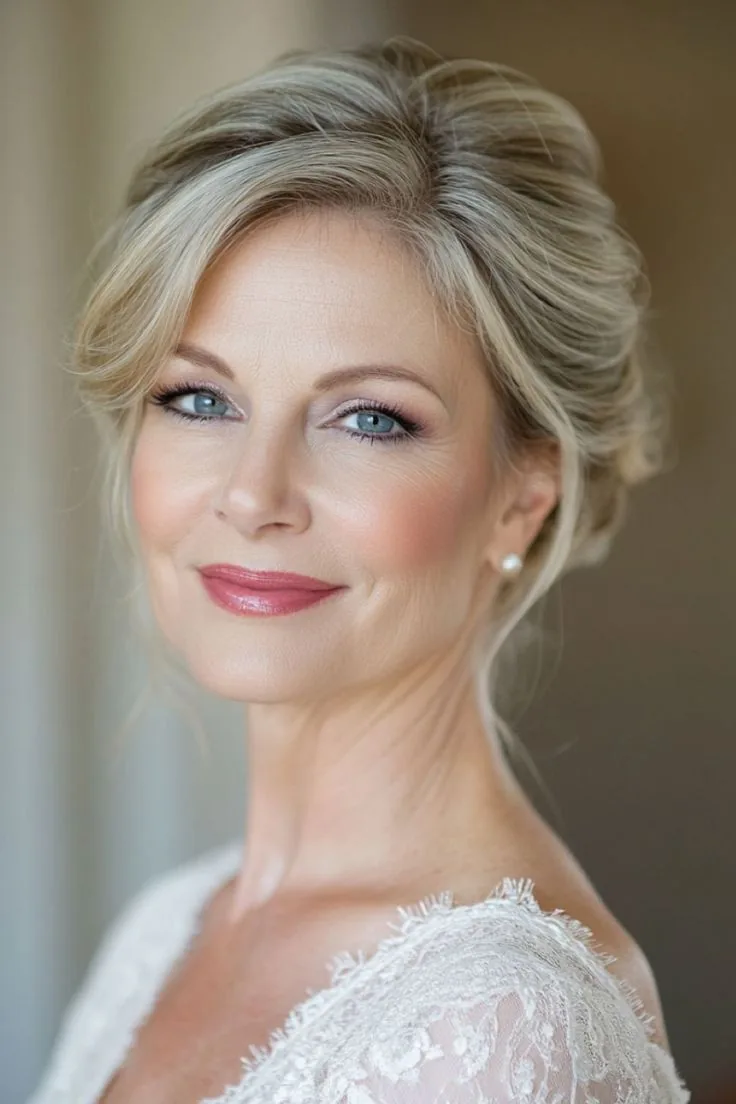
Start with the dress, because the hairstyle has to sit happily with it for ten hours. A high neckline or a detailed bodice pairs beautifully with hair swept up, which shows off the dress instead of hiding it; a strapless or sweetheart neckline gives you more freedom, and soft hair down or half-up can balance the bare shoulders. Then look at the venue and the formality. A ballroom or a formal evening wedding calls for a polished updo, a chignon or a French twist, while a garden, beach or barn wedding suits looser hair — soft waves, a relaxed low bun, a half-up style that moves in the breeze. A daytime wedding is usually a little softer than an evening one, and a black-tie reception is the one occasion where maximum polish is genuinely worth the effort.
Comfort matters as much as elegance, and this is where many mothers go wrong by choosing the most formal style they can find. Ask yourself three honest questions: can I wear this for ten hours without a headache, will it survive hugging a hundred guests and dancing, and will I still like it in the photographs in ten years? A style that pulls, pinches or needs constant checking will show on your face in the pictures. If you are unsure, choose the simpler version of the elegant style you love — a soft chignon instead of a sculpted one, loose waves instead of a tight set — and spend the saved effort on a good trial run. The best mother of the bride hairstyle is the one you forget you are wearing.
Coordinating with the Bride Without Matching Her
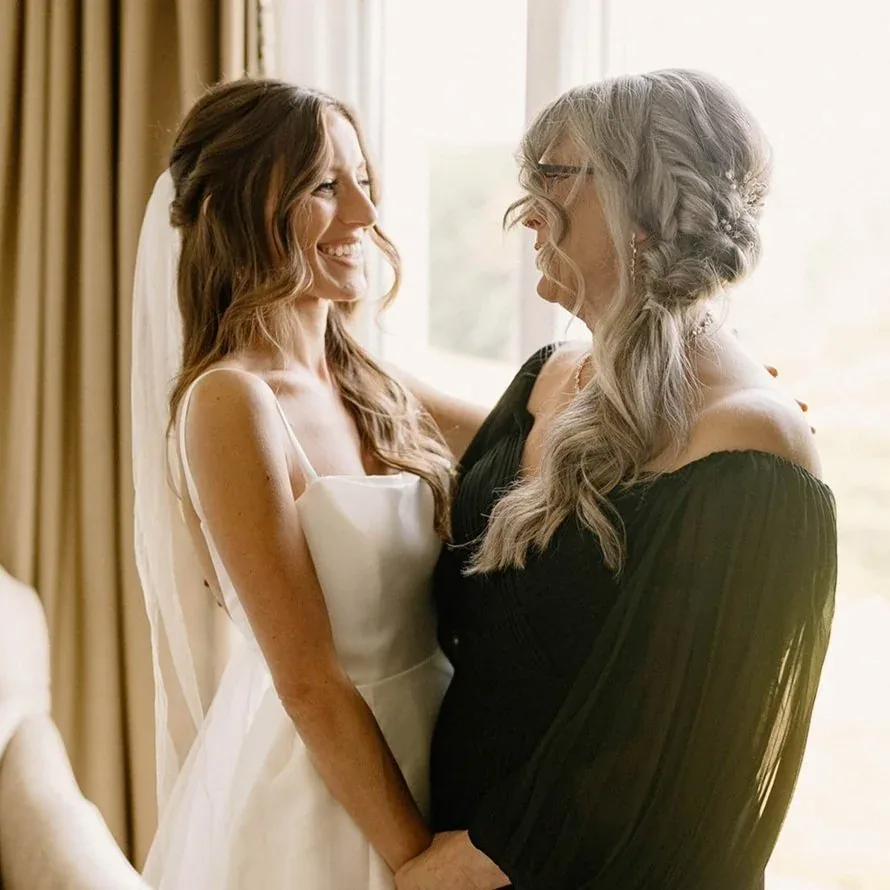
The mother of the bride should look like she belongs in the same wedding as her daughter, not like she is wearing a smaller copy of the bridal look. The simplest rule is to share a mood, not a style: if the bride is wearing a romantic low bun with soft tendrils, the mother might choose a polished low chignon or soft half-up waves in the same relaxed spirit, rather than the identical bun. If the bride has chosen a sleek, modern updo, the mother can echo the polish with a smooth twist or a sleek bob, while keeping her own shape. Talk about it together before the trial — a quick look at each other’s inspiration pictures avoids the awkward moment of turning up with matching hair.
Accessories are where coordination is easiest and safest. A mother who wears a small fascinator, a pearl pin or a simple comb while the bride wears a veil and a tiara will look connected to the wedding without competing with it. Avoid anything that reads bridal on its own: a full flower crown, a veil-like headpiece, or a tiara. Colour helps too — if the bride’s flowers are blush and cream, a blush-toned accessory or a soft neutral in the mother’s hair ties the two looks together without a word. And remember that the photographs will place you side by side all day, so the goal is harmony, not sameness. Two different, elegant styles that share a mood will always look better than two versions of the same one.
Updos vs Half-Up vs Down for Mothers of the Bride
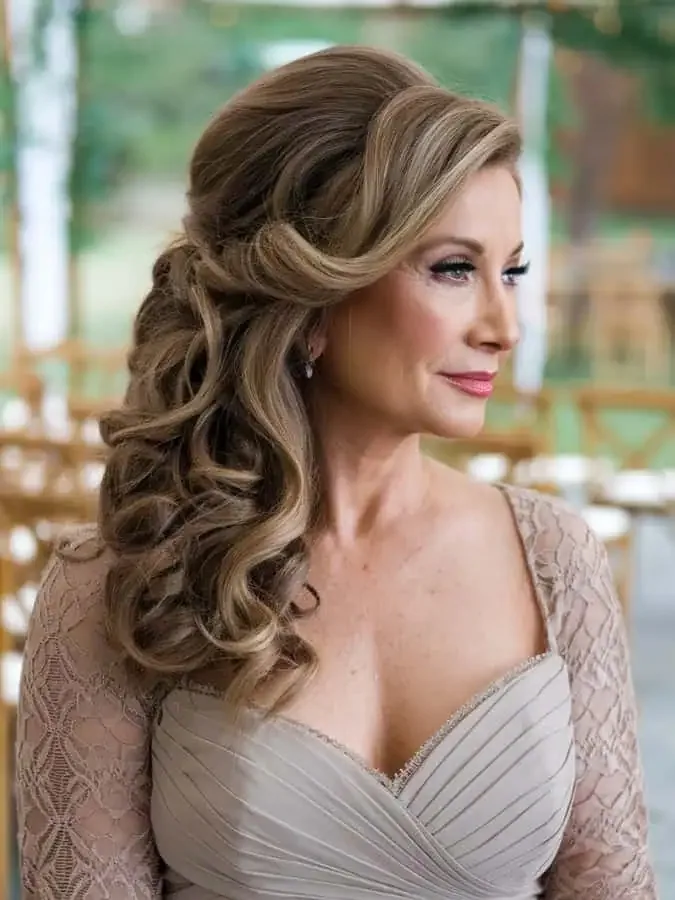
The updo is the classic mother of the bride choice, and for good reason: it stays put, it photographs cleanly from every angle, it shows off the dress and the jewellery, and it will not wilt in heat or humidity the way loose hair can. A chignon, a French twist or a low bun will still look the same at the last dance as it did at the ceremony, which is exactly what a mother needs on a day when she has no time to check a mirror. The trade-off is that a full updo can feel formal or severe if it is pulled too tight, so the best mother-of-the-bride updos are softened with a little texture, a few face-framing pieces, or a looser finish.
Half-up styles are the middle ground, and for many mothers they are the sweet spot: the top is pinned back, so the hair stays out of the face for photographs and speeches, while the lengths fall softly over the shoulders. They suit mothers who feel unlike themselves with all their hair up, and they work beautifully with medium and long hair. Hair worn fully down is the most relaxed option, and it can look wonderful — long soft waves or a polished blowout — but it is the hardest to keep looking fresh for ten hours, especially outdoors or in summer. If your heart is set on wearing it down, ask your stylist for a style with structure underneath, a strong set, and a plan for a mid-evening refresh. For most mothers, half-up or a soft updo is the safest way to look like yourself, only more polished.
Mother of the Bride Styles for Short, Medium and Long Hair
Short hair is a gift on a wedding day, not a limitation. A polished pixie, a classic bob or a short curly crop needs almost no pinning, it will not fall down or go flat, and it photographs with crisp, clean lines. The styling is in the finish: volume at the crown, a smooth or softly waved texture, and one elegant accessory — a pearl pin, a small comb, a fascinator — to mark the occasion. Short hair also leaves the neckline and the jewellery fully visible, which suits the mother-of-the-bride dresses that so often have beautiful detailing at the shoulder and neck.
Medium hair is the most versatile length of all for a mother of the bride, long enough for a chignon, a low bun or a half-up style, and short enough to hold a blowout all day without the weight pulling it flat. Long hair offers the widest choice — romantic waves, a full updo, a braided crown — but it needs the most anchoring, because its weight works against it over a long day. Whatever your length, the rule is the same: choose the style your length does best, rather than fighting it into a style built for another length. A beautiful bob worn with confidence will always outshine a long-hair updo that has been forced onto hair that is too short to hold it.
Glasses, Hats and Fascinators with a Mother of the Bride Style
Many mothers of the bride wear glasses, and the hairstyle should be chosen with them in mind. A style with soft face-framing pieces works beautifully with glasses, because the pieces sit in front of the frames rather than competing with them, while a very tight, scraped-back updo can make glasses look severe. Keep the sides soft, avoid a heavy fringe that fights the top of the frames, and try the style on with the glasses you will actually wear on the day — not your reading pair, and not none at all. If you wear contact lenses for the photographs, decide that before the trial, not on the morning of the wedding.
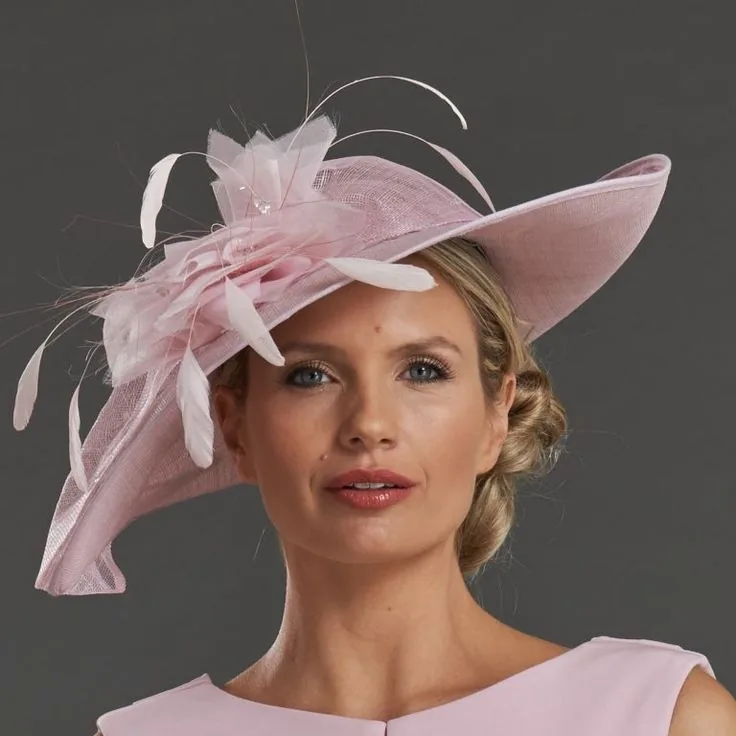
Fascinators and hats are the classic mother-of-the-bride finishing touch, and they change the hairstyle underneath them. A fascinator sits best on a smooth, fairly flat section of hair — a sleek side part, a low chignon, a polished bob — because it needs a stable base to pin into, and a very voluminous or curly style can make it sit crookedly. Bring the fascinator or hat to the trial, and wear it for the whole trial session, so you can feel whether it pulls, slips or gives you a headache. A small, light fascinator is almost always easier to wear all day than a large hat, and it photographs just as elegantly. Whatever you choose, the hairstyle and the headpiece should be fitted together, as one look, not as two separate decisions.
Hair Colour and Grey Blending for the Wedding Day
The wedding is not the moment for a dramatic colour change. If you colour your hair, book your usual colour a week to ten days before the wedding, so the colour has settled, any brassiness has calmed, and there is time to correct anything that looks off. A root touch-up two or three days before the day is usually too late to fix if something goes wrong, and a brand-new shade on the morning of the wedding is a gamble no one needs. If you are thinking of going lighter or trying a new tone, test it at least two months before, so you can live with it and adjust it calmly.
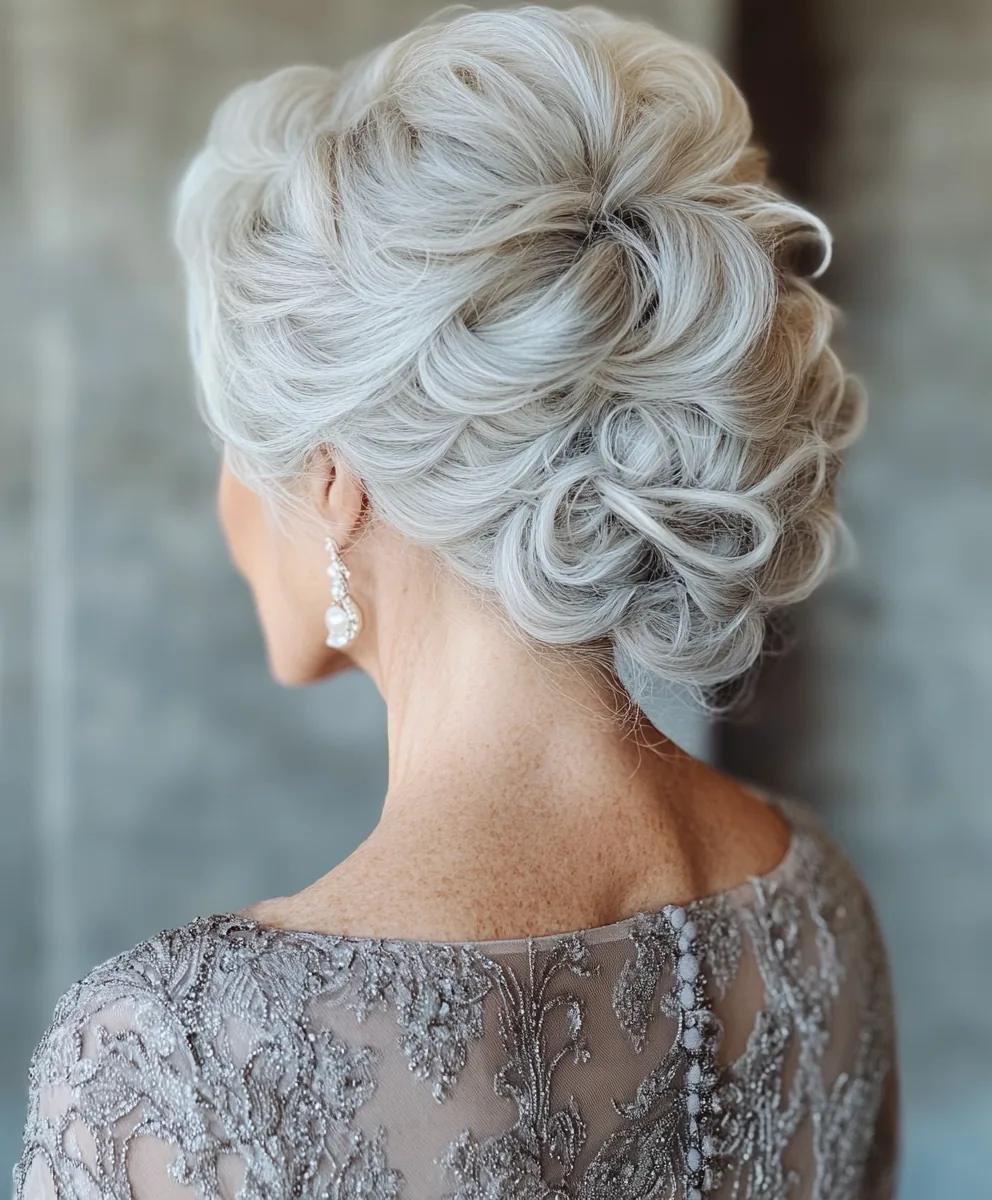
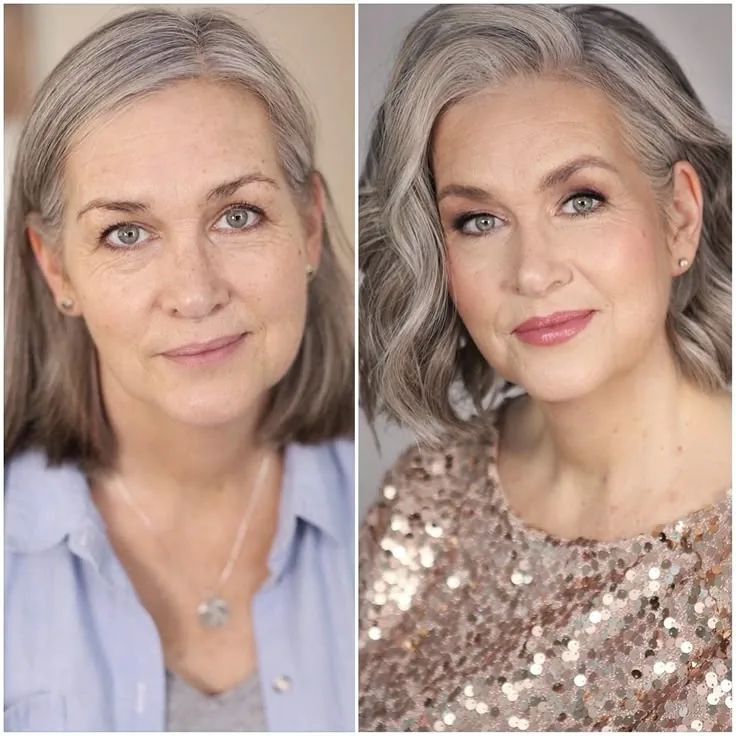
Grey hair, whether fully silver or just blended through, looks wonderful at a wedding — and it photographs beautifully, catching the light in a way that coloured hair often does not. If you are growing out your grey, ask your colourist about blending: soft lowlights or a gloss can ease the line between the coloured lengths and the natural grey, without committing you to full colour again. A clear gloss or a shine treatment a few days before the wedding will make silver hair gleam in the photographs. The point is not to hide your age or your grey, but to make the hair you have look its healthiest and most polished on the day. Confidence photographs better than any colour ever will.
The Trial Run — What to Test and When
Book the trial four to six weeks before the wedding, and treat it as a rehearsal, not a consultation. Bring the dress or a photograph of it, the shoes you will wear, the fascinator or hat, the jewellery, and the glasses you will wear on the day. Wear a top with a similar neckline to the dress, so you can see how the hair sits with it. Take photographs from the front, the side and the back, in daylight and with a flash, because the style that looks lovely in the salon mirror can look very different in a photograph — and photographs are where this style will live longest.
At the trial, test the things that go wrong on the day itself. Wear the style for at least four hours afterwards — go shopping, have lunch, sit in a car — and notice whether it pulls, slips, flattens or gives you a headache. Ask the stylist to show you how to fix it yourself: which pin to push back in, how to smooth a flyaway, what to do if a tendril falls. Take notes, or better, ask the stylist to write down the products and the pin placement. If you hate the style at the trial, say so kindly and try another one; the trial is the one moment when changing your mind costs nothing. A second trial is far cheaper than a day of regretting your hair.
Making It Last from the Ceremony to the Last Dance
A mother of the bride hairstyle has to survive about twelve hours, and the secret is in the preparation, not in the hairspray. Start with hair that is not freshly washed — day-old hair has grip, while squeaky-clean hair slips out of pins. A little dry shampoo at the roots and a light texturising spray through the lengths will give the stylist something to work with, and a blowout the day before, rather than the morning of, often holds better. Ask for the style to be pinned at intervals along its length, not just at the ends, because a style anchored in several places will not collapse if one pin works loose.
Pack a small emergency kit and hand it to someone you trust: three or four bobby pins in your hair colour, a travel-size hairspray, a small comb, and a couple of hair grips. Check the style once, midway through the reception, in a proper mirror — not in a phone camera — and fix only what needs fixing. Resist the urge to keep touching it; hands are the enemy of a good updo. And if a piece does fall out during the dancing, let it. A soft tendril at the cheek looks romantic and joyful in the photographs, and it tells the truth about the day: you were dancing, not posing. The style served its purpose if it looked elegant at the ceremony and still looked like you at midnight.
1. The Classic Chignon
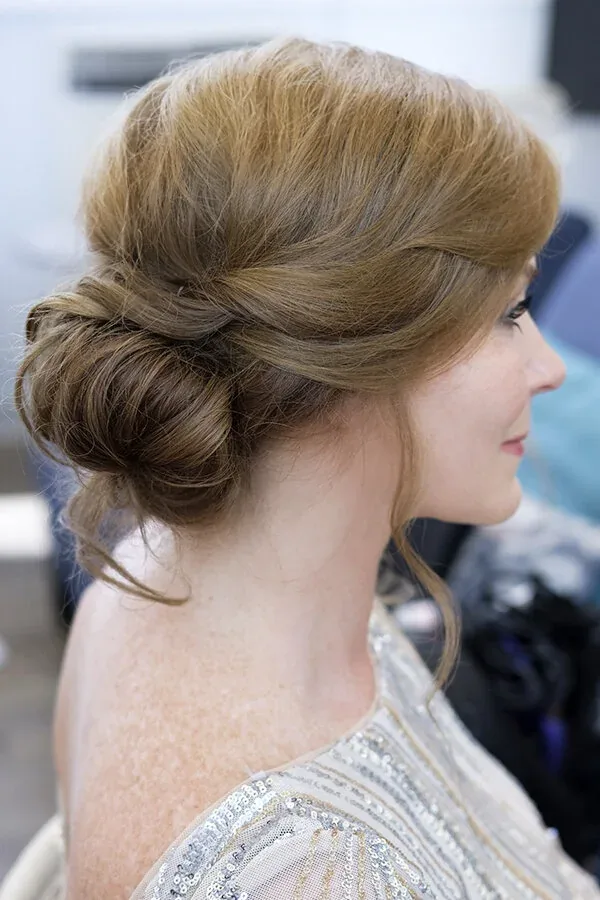
The classic chignon is the mother of the bride style against which all others are measured: hair swept back and coiled into a low, neat knot at the nape, smooth on top and softly rounded at the back. It is the style that suits a formal church wedding, a ballroom reception and a tailored dress equally well, because it never fights the outfit — it frames it. A chignon shows off the neckline, the earrings and the shoulders, and it photographs with a clean, timeless silhouette that will still look right in the wedding album in twenty years.
The honest trade-offs are few but real. A very smooth chignon can feel severe if it is pulled too tight, so ask for a little softness at the front — a gentle lift at the crown, or two short pieces left out at the temples. It takes a stylist about 30 to 40 minutes, and once it is pinned it will hold for the whole day with almost no attention, which is exactly what a mother needs when she is greeting guests and giving a speech. Keep a couple of spare pins in your bag and a light mist of spray for the evening, and the chignon will look as neat at the last dance as it did walking down the aisle.
2. The Low Chignon with Soft Curls
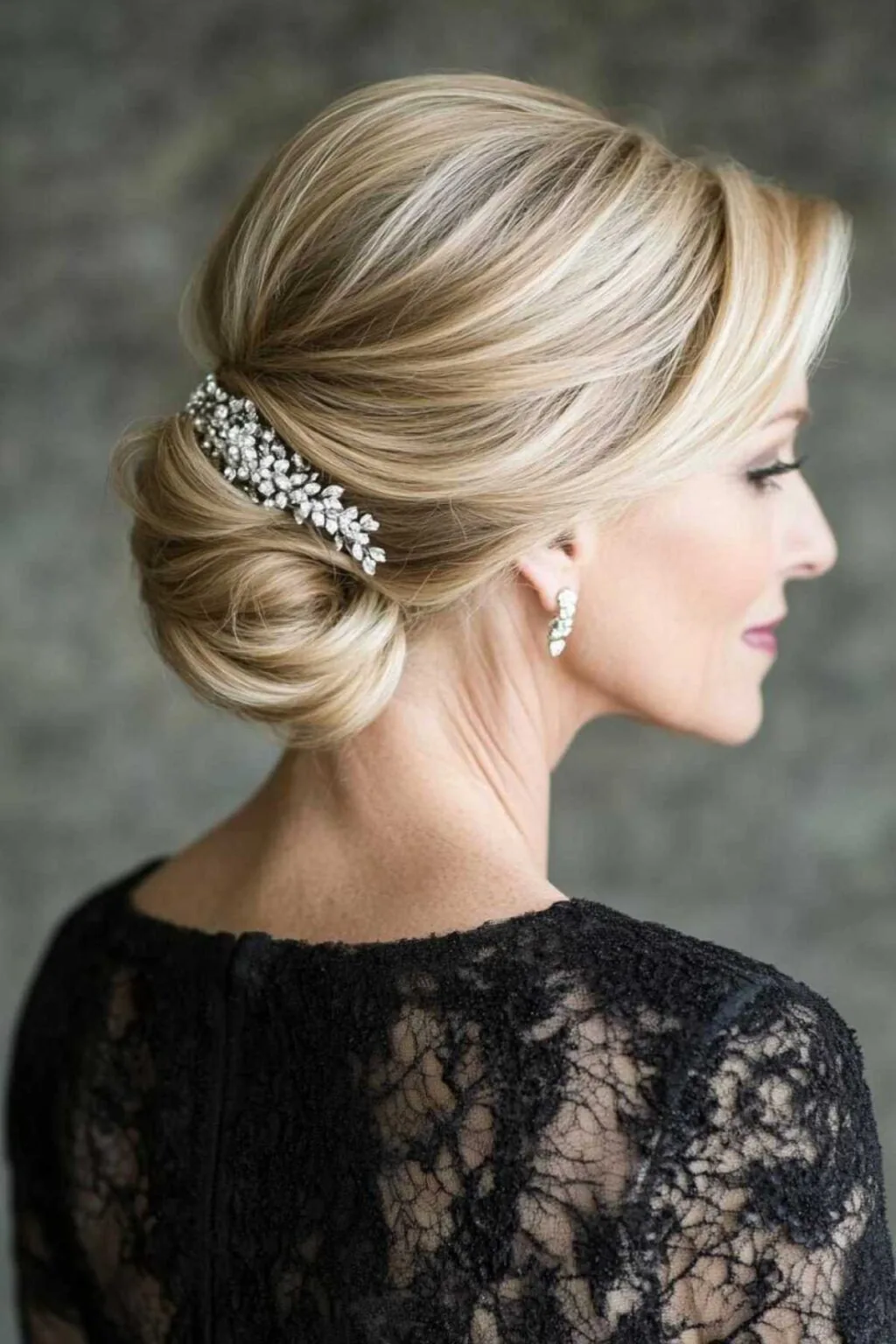
This is the classic chignon with its shoulders relaxed: the same low knot at the nape, but the hair is curled first, so the bun has a soft, textured surface and a few curls escape gently around the face. It keeps all the elegance of the chignon while losing the stiffness, which makes it the right choice for a mother who loves an updo but does not want to look sculpted. It suits garden weddings, afternoon ceremonies and romantic dresses beautifully, and it is forgiving in photographs — the softness reads as warmth, not mess.
It takes a little longer than a smooth chignon, around 40 to 50 minutes with a stylist, because the curls have to be set and cooled before the bun is formed. The curls will relax over the evening, which is not a failure — the style simply becomes a little looser and more romantic as the night goes on. The one thing to watch is humidity: in a hot or damp venue, ask for a stronger set and a little extra pinning at the nape. Through the day it needs almost no maintenance, just a single check before the evening photographs, and it is comfortable enough to wear from the first photograph to the last dance.
3. The French Twist
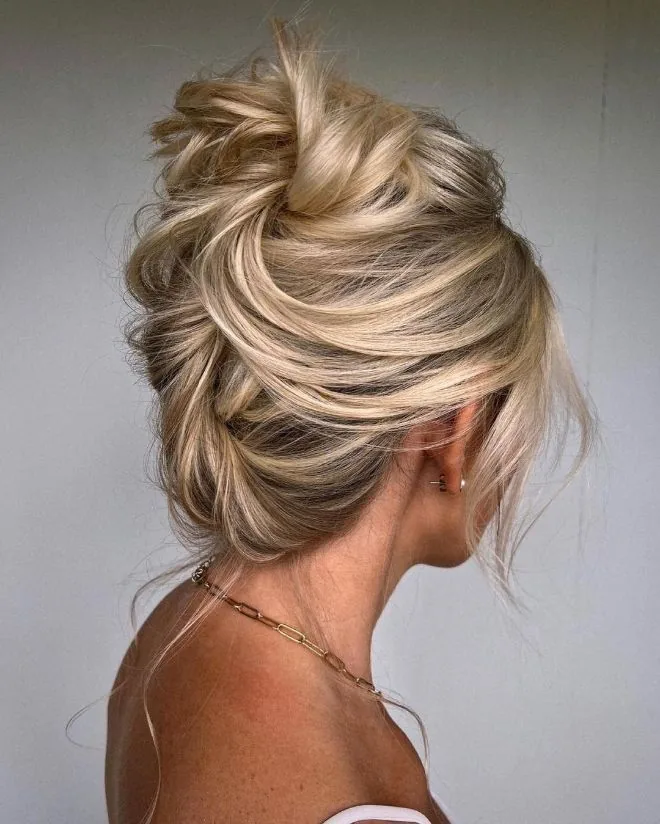
The French twist is the most grown-up updo in this guide, and it earns that reputation honestly. The hair is swept up and folded into a tall, vertical roll at the back of the head, smooth and sculpted, with a silhouette that lengthens the neck and adds quiet height. It is the style for a formal evening wedding, a black-tie reception, or a mother who wants to look unmistakably elegant without a single loose piece. With a pair of pearl earrings and a tailored dress, a French twist is close to perfection — and it is one of the few styles that looks even better in profile than it does from the front.
Its strength is also its weakness: the twist is a structured style, and it needs a skilled hand. Expect 40 to 50 minutes with a stylist, and do not attempt it for the first time on the wedding morning — this is a trial-run essential. Once it is in, it holds superbly, but it can feel tight if it is pinned too firmly, so tell your stylist at the trial if it pulls. A softer, modern French twist, with a little volume at the crown and one tendril at the face, is often the better choice for a mother who wants the elegance without the severity. Carry spare pins, and you will not need them.
4. The Soft Romantic Updo
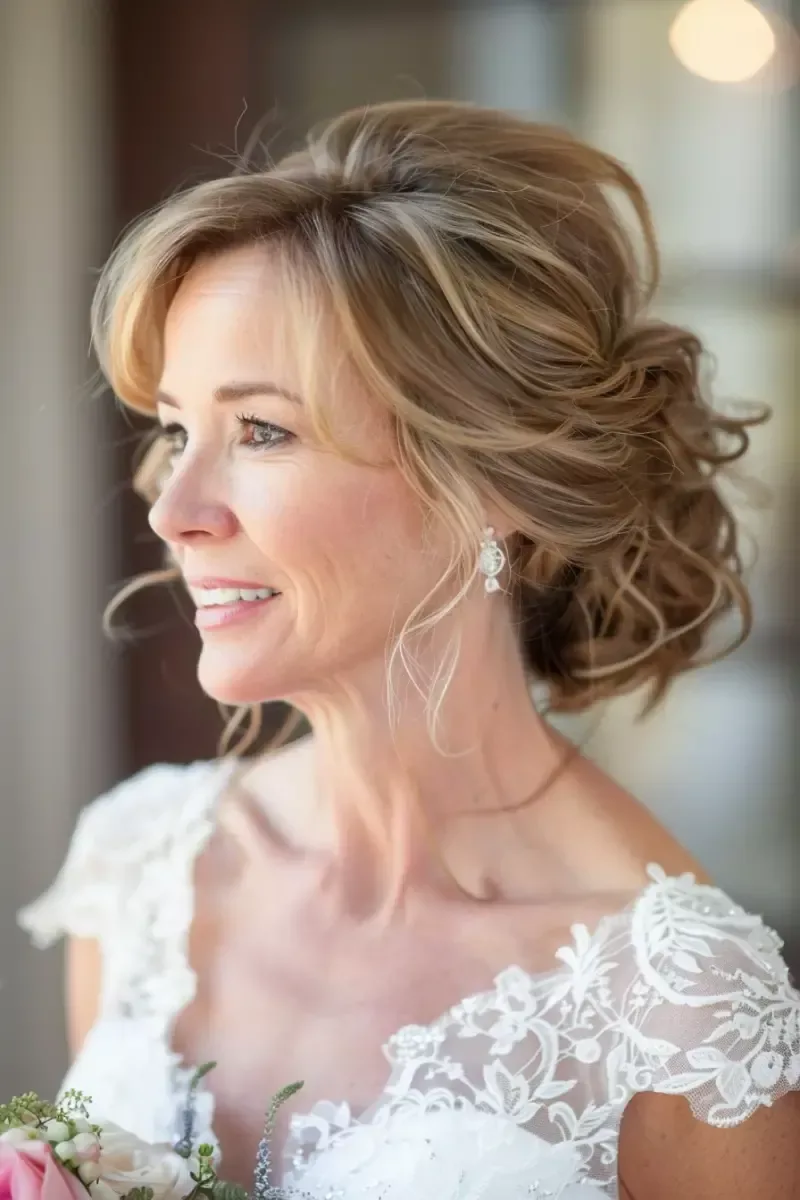
The soft romantic updo is the middle of the road that most mothers actually want: hair gathered up loosely, with volume at the crown, a few pieces falling softly around the face, and a finish that looks touched rather than constructed. It is less formal than a chignon and less structured than a French twist, which makes it ideal for a mother who wants to look special without feeling dressed up as someone else. It suits almost every dress, every venue and every age, and it is the style that photographs most warmly — the softness around the face is flattering in every light.
It takes about 35 to 45 minutes, and it is one of the easier updos to live with all day: if a piece falls out, it simply joins the soft pieces that were already there. The main risk is that a very loose updo can flatten by the evening, especially on fine hair, so ask your stylist to build in volume at the crown and to pin the style at several points rather than relying on a single anchor. A light hairspray, reapplied once in the evening, is all the maintenance it needs. This is the safest first choice for any mother who is unsure what she wants — it is hard to get wrong, and easy to love in the photographs.
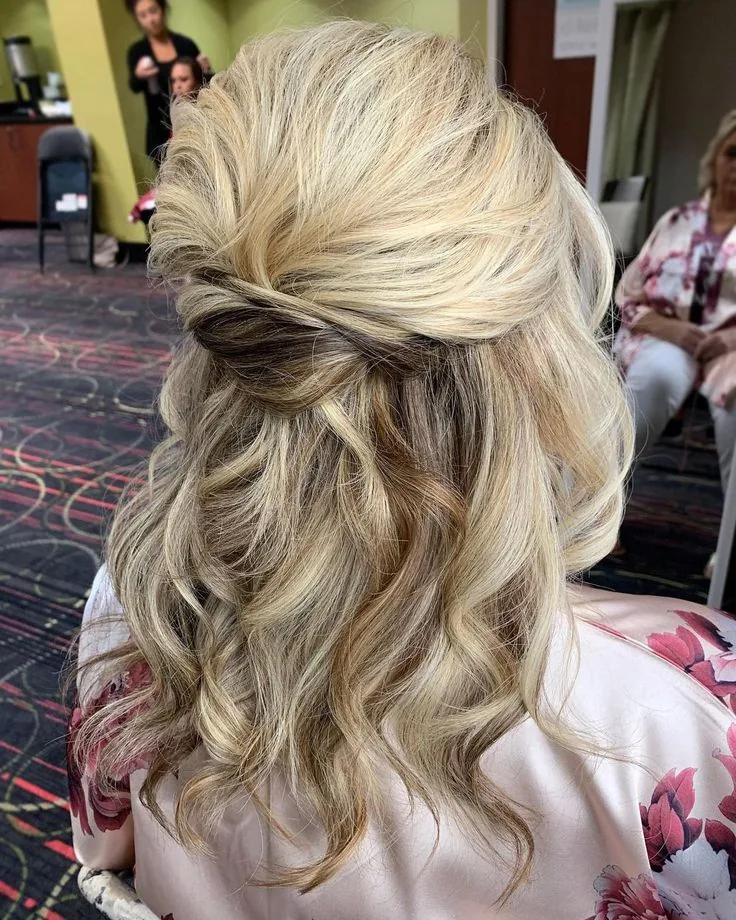
5. Half-Up with Loose Waves
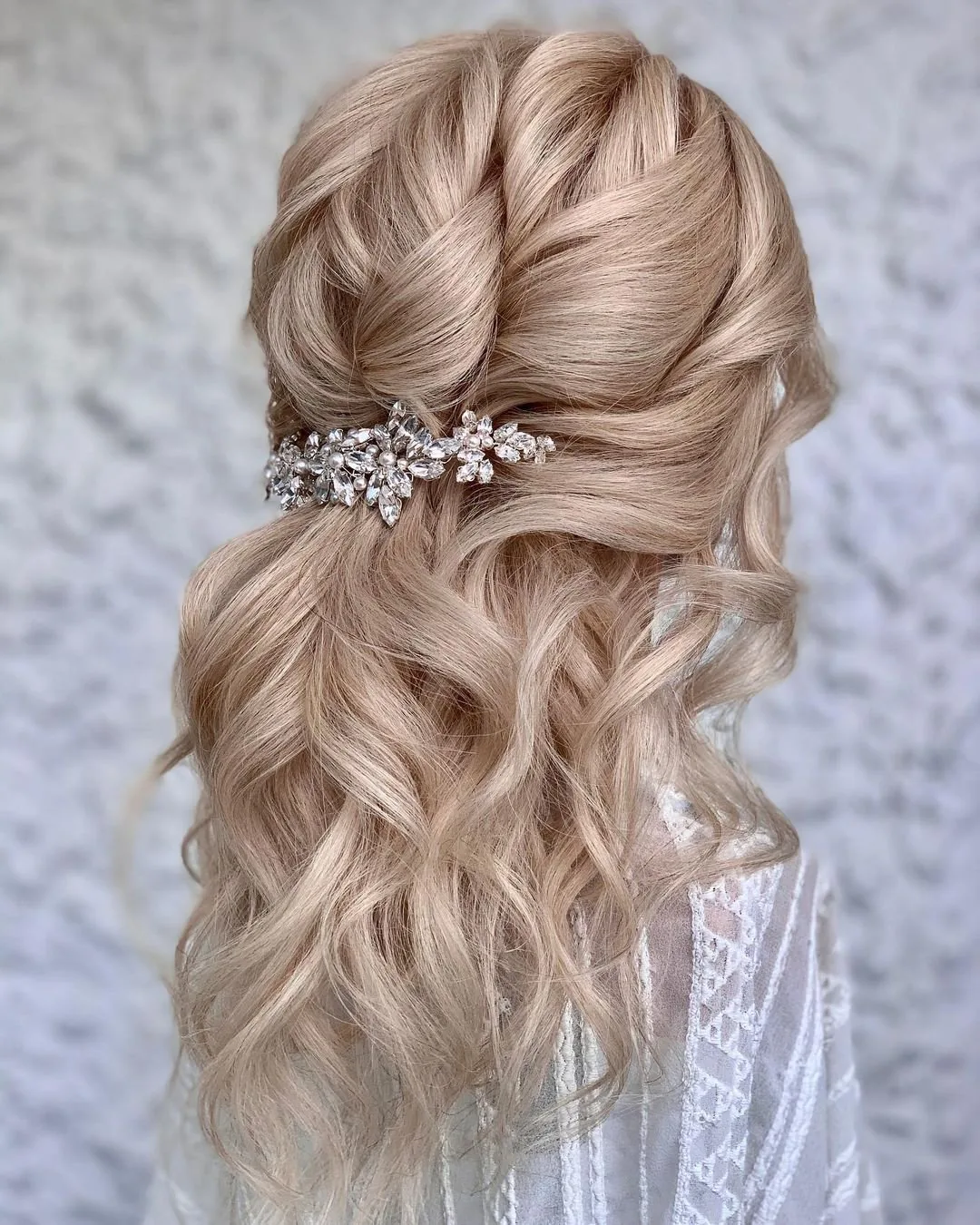
Half-up with loose waves is the style for a mother who wants to wear her hair down but still look finished. The top section is swept back and pinned at the crown, which keeps the hair out of the face for the ceremony and the speeches, while the rest falls in soft waves over the shoulders. It is romantic without being bridal, relaxed without being casual, and it suits a garden wedding, a beach wedding or a daytime celebration particularly well. It also shows off long hair to its best advantage — the waves catch the light in the photographs in a way an updo never can.
The practical question is how long the waves will last. On a hot day or in humidity, waves drop, so ask for a strong set — hot rollers or a curling iron with the curls pinned to cool — and a flexible-hold spray rather than a stiff one, so the waves move naturally. Budget 30 to 40 minutes. Through the day, the pinned top section will hold, and the waves may need one refresh before the evening: a quick brush-through and a light mist of spray, or a few curls re-done by the stylist if she is staying on. If your hair does not hold a curl well, this is a style to test honestly at the trial, not to discover on the day.
6. The Half-Up Twist
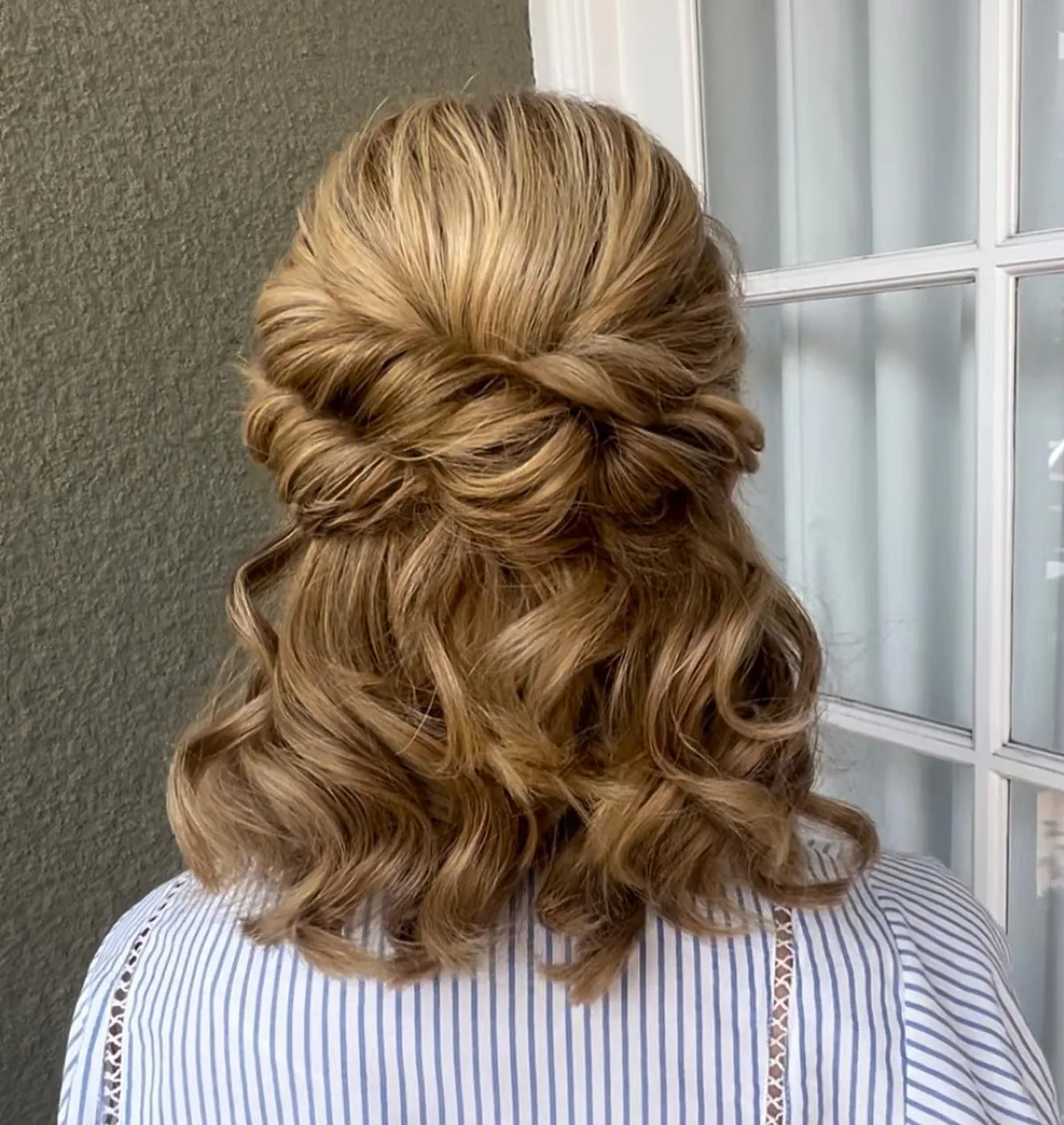
The half-up twist takes the top sections of hair from each side, twists them gently towards the back, and pins them together at the crown, leaving the rest of the hair loose underneath. It is a little more structured than a plain half-up style, which gives it a polished, finished feeling, but it is still soft and easy to wear. It suits medium and long hair, it works with waves or with straight hair, and it is a lovely choice for a mother who wants something a touch more special than simply pinning the front back — the twist itself is the detail.
It is quick, around 20 to 30 minutes, and it is one of the most comfortable styles in this guide, because nothing is pulled tight and the weight of the hair is distributed evenly. The twist will hold all day if it is pinned with two crossed pins at the centre, and if a piece loosens, it is a two-second fix. The one limitation is that it needs enough length for the twist to show — on shoulder-length hair it can look a little small, so ask your stylist to add a little volume at the crown first. A pearl pin or a small comb at the twist makes it feel like a wedding style rather than an everyday one.
7. The Classic Bob
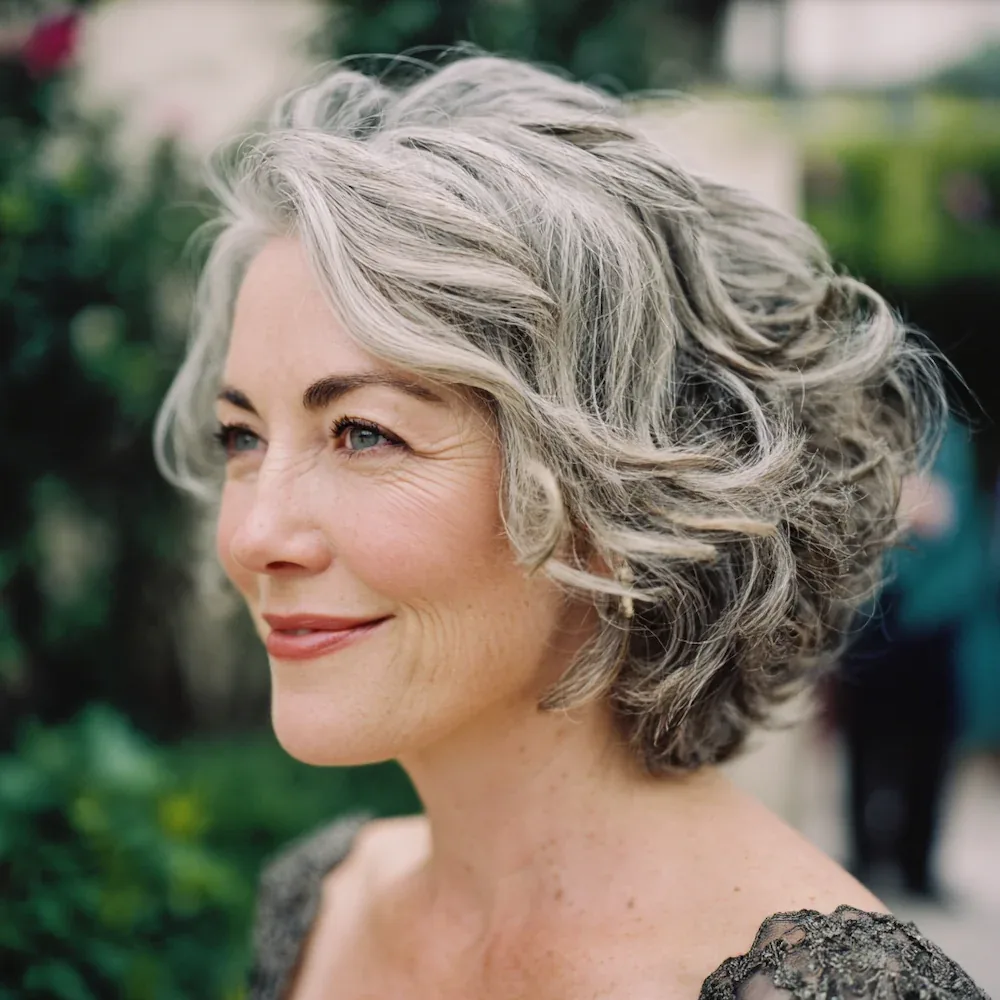
The classic bob — chin-length, smooth, with a clean line and a gentle curve under at the ends — is one of the most flattering mother of the bride styles there is, and it asks for almost nothing from its wearer. It needs no pins, it cannot fall down, it frames the face beautifully, and it photographs with crisp, confident lines. For a mother with a bob, the wedding-day work is in the finish: a fresh trim a week before, a smooth blow-dry with volume at the roots, and one elegant accessory to mark the day. It is the style for a mother who wants to look like the best version of herself, not like a different person.
A bob is also the most comfortable style in this guide for a twelve-hour day — there is nothing to pull, nothing to slip, and nothing to check. The only maintenance is a quick smooth-down if the weather is humid, and a comb in your bag for the evening. The trade-off is that a bob offers less drama than an updo, so if you want the occasion to feel special, invest in the details: a beautiful pair of earrings, a fascinator that sits well on the smooth hair, or a shine treatment a few days before. A classic bob, well cut and well finished, is never a compromise — it is a choice, and a very good one.
8. The Sleek Bob
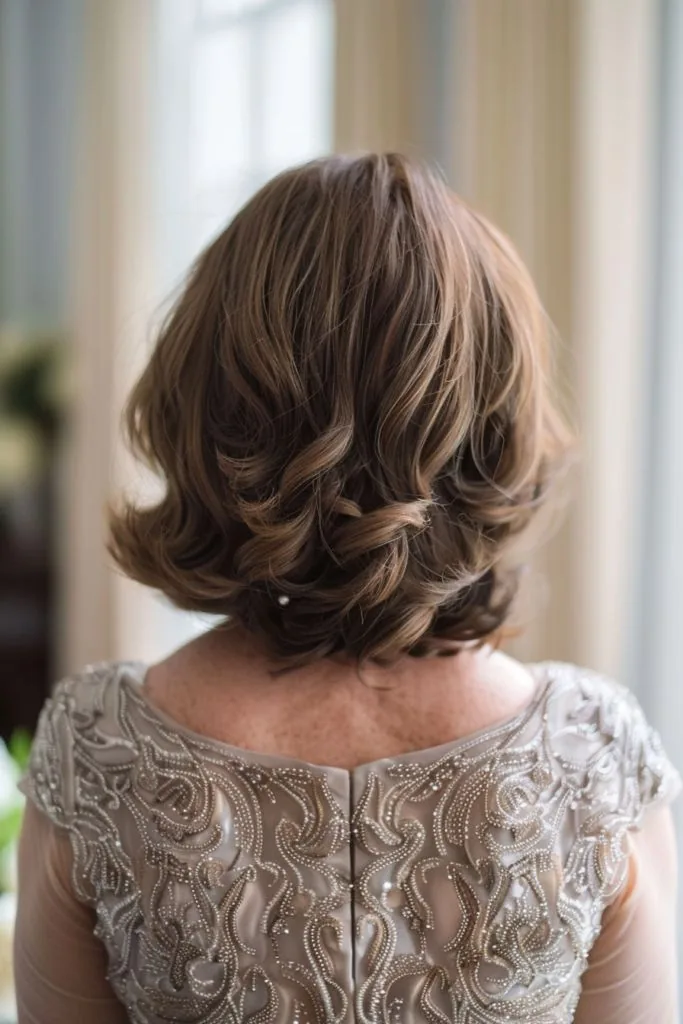
The sleek bob is the classic bob turned up for the evening: pin-straight, glossy, with a sharp centre or side part and a mirror-like finish. It is modern, confident and quietly dramatic, and it suits a contemporary wedding, a city venue, or a mother whose style is already polished and minimal. The sleek finish shows off healthy hair better than any other style in this guide — shine is the whole point — so it rewards a gloss treatment or a shine serum in the days before the wedding, and a fresh trim so the ends look deliberate rather than tired.
The challenge is keeping it sleek. Humidity is the enemy, so this is a style for an indoor or cool-weather wedding rather than a summer garden, unless your stylist uses a strong smoothing treatment. It takes about 30 minutes to blow-dry and flat-iron into place, and it needs very little maintenance — a small brush and a drop of serum will deal with any flyaways. The one thing to avoid is touching it: hands add frizz and break the smooth surface. If your hair is naturally curly or wavy, be honest at the trial about how much heat and product it takes to keep it straight for ten hours, and consider the soft bob below if the answer is a lot.
9. The Layered Bob with Volume
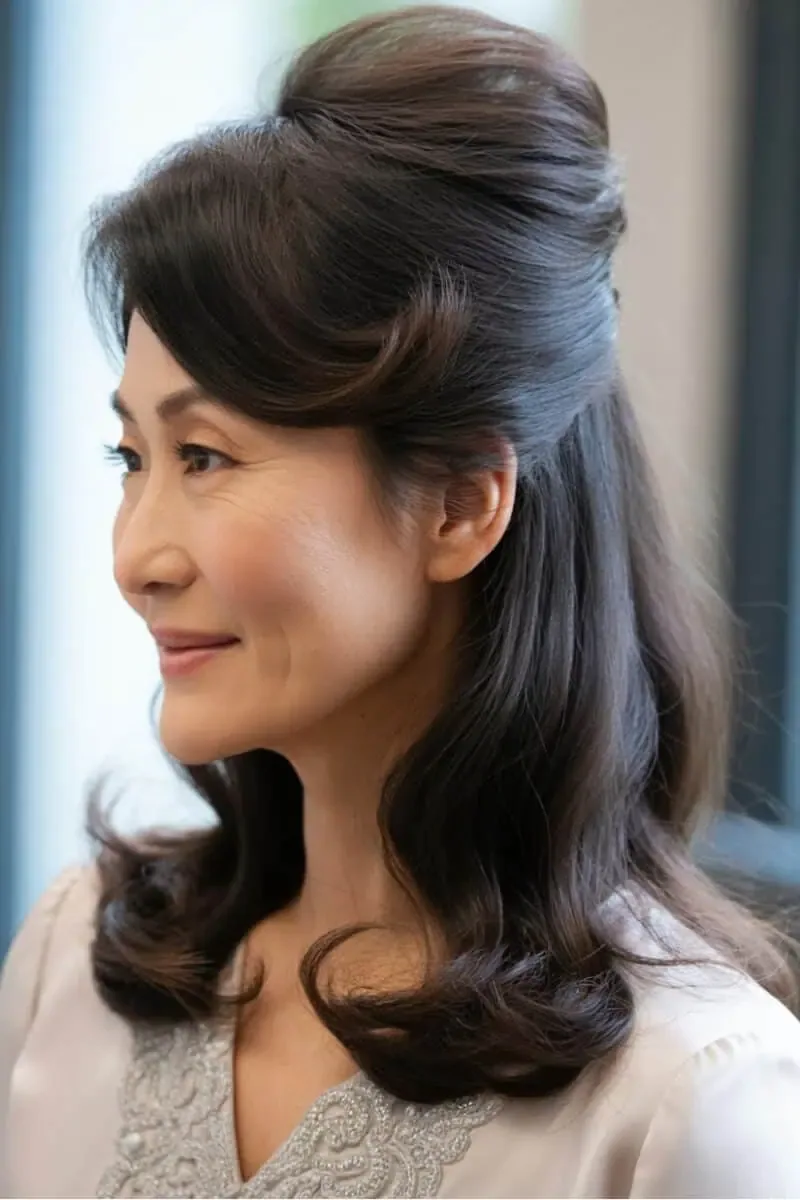
A layered bob with volume is the bob for a mother who wants movement rather than a sharp line. The layers are cut to lift and turn, the crown is given height with a round brush, and the ends flick out softly instead of tucking under. It is lively, youthful and flattering, and it suits a mother who feels that a sleek bob looks too severe on her. The volume also photographs well — it gives the hair presence in the group photographs, where a flat style can disappear. It is a particularly good choice for fine hair, because the layers and the lift create fullness that a one-length bob cannot.
It takes around 30 minutes to style, and the volume will settle over the day, which is normal — it simply becomes a softer version of itself by the evening. A volumising mousse at the roots and a light spray will extend the lift, and a quick backcomb at the crown before the evening photographs will restore it in seconds. The style is comfortable and needs no pins, and it works with or without a fascinator. Its only real weakness is wind: an outdoor ceremony can flatten the volume, so ask your stylist for a slightly stronger set if the wedding is outside, and keep a small comb handy for a quick lift between photographs.
10. The Elegant Pixie Cut
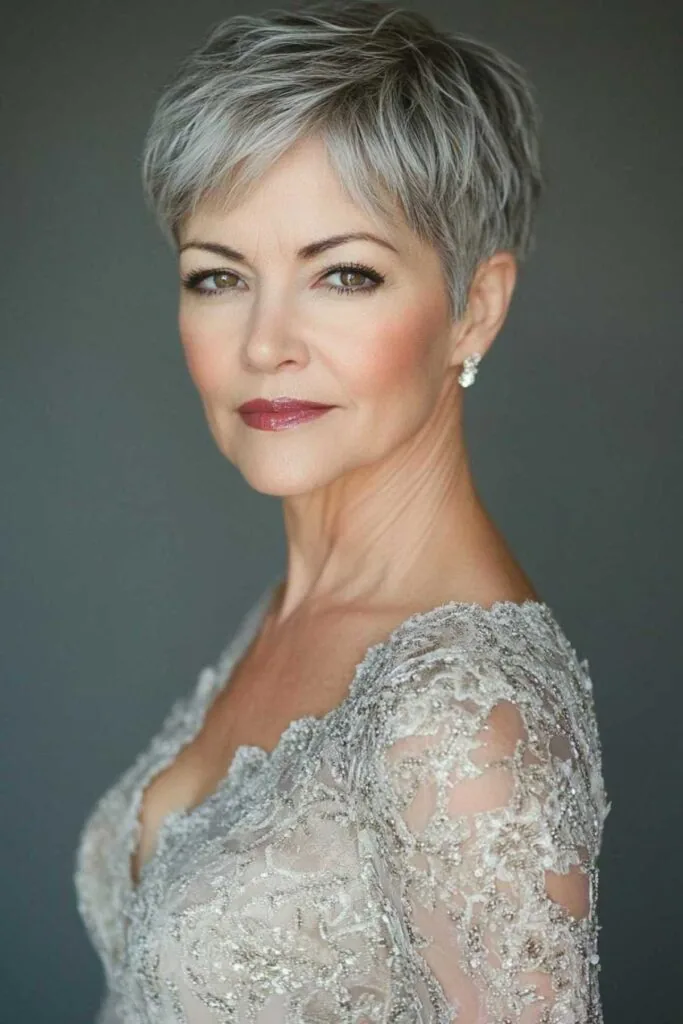
An elegant pixie is the boldest short style in this guide, and for the right mother it is also the most striking. The cut is short at the back and sides, with length on top that can be swept, textured or smoothed, and it shows off the face, the cheekbones and the earrings completely. It is the style for a confident mother who already wears a pixie well — the wedding day is not the time to cut one for the first time — and it photographs with a modern, sculptural quality that a longer style cannot match. A pixie says that the mother of the bride is a woman with her own style, and that is exactly the right message.
Wedding-day styling for a pixie is quick, about 15 to 20 minutes, and the work is in the texture: a little wax or pomade to define the pieces on top, volume at the crown, and a clean finish at the nape. It will hold all day with almost no attention, which is a genuine advantage when the day is long. The one decision is the accessory — a pixie leaves little hair to pin a fascinator into, so a small comb, a delicate headband or a pair of statement earrings usually works better than a hat. Book a trim three or four days before the wedding, not the day before, so the cut has settled into its natural shape.
11. Short Curly Crop
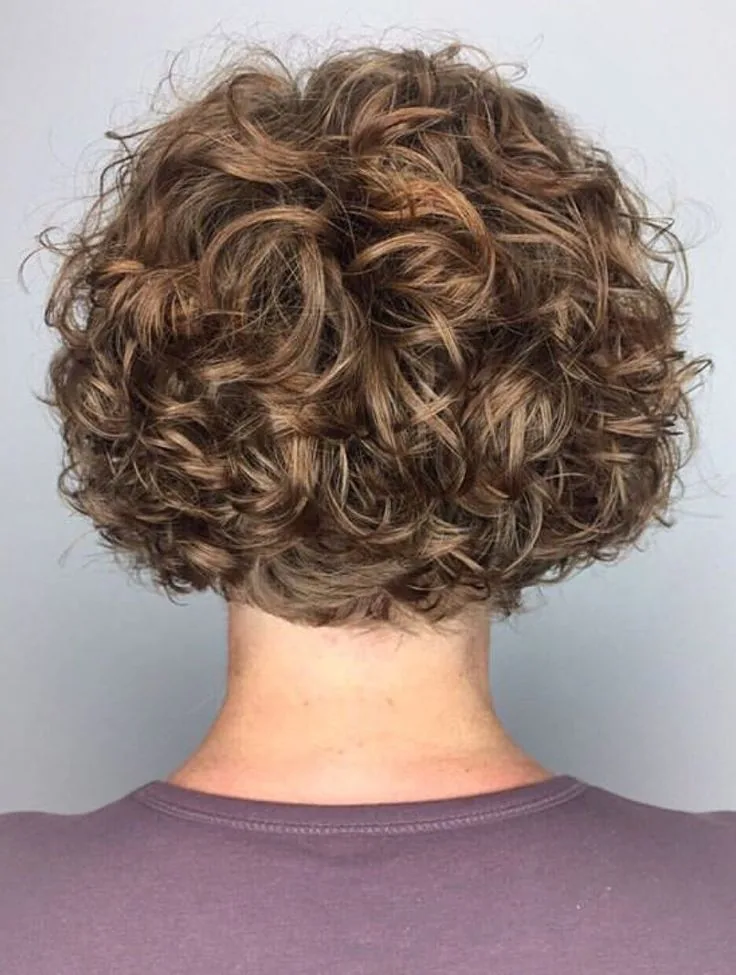
A short curly crop lets natural curls do the work, and on a wedding day that is a real advantage. The curls give the style texture, volume and movement without any heat styling, and the shape — short at the back, fuller on top — frames the face beautifully. It is the style for a mother with naturally curly hair who has spent years fighting it straight and is ready to let it be itself on the most photographed day of her daughter’s life. A curl cream and a diffuser are all it needs to look deliberate rather than accidental, and the result is joyful, relaxed and completely her.
It takes very little time, about 20 minutes, and it holds well through the day because curls have natural grip and bounce. The main job is frizz control: a smoothing cream on damp hair, and a light oil on the surface once it is dry, will keep the curls defined in photographs. In humidity, ask your stylist about a curl-defining product with a little hold, and carry a small bottle of curl refresh spray for the evening. The style needs no pins and no checking, and it dances well — which matters, because a mother with a curly crop is usually one of the first on the dance floor.
12. The Shoulder-Length Blowout
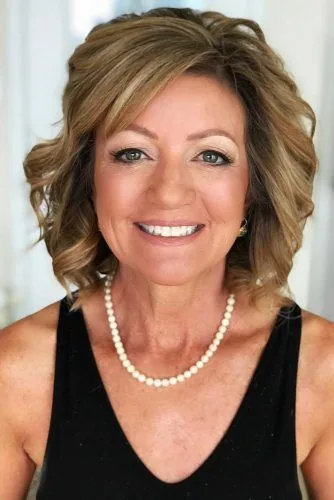
The shoulder-length blowout is the quiet luxury of mother of the bride hairstyles: hair blow-dried smooth with a round brush, ends turning softly under, volume at the roots, and a finish that looks expensive without looking done. It suits a mother who wants to wear her hair down but still look polished, and it works with almost every dress and every venue. It is also the style that most resembles how a mother wears her hair on a good ordinary day, which is its secret strength — she will look like herself, only better, and she will feel comfortable all day because nothing about the style is unfamiliar.
It takes 30 to 40 minutes, and its lifespan depends on the hair: on hair that holds a blowout well, it will last the whole day; on hair that drops quickly, it may need a refresh before the evening. A blowout the morning of the wedding, with a volumising mousse at the roots and a light spray, gives the best result. Through the day it needs only a brush and a quick smooth-down, and it is one of the most comfortable styles to dance in. The honest limitation is weather — rain or strong humidity will undo a blowout faster than any other style here — so have a back-up plan, a few pins and a low bun option, if the forecast is uncertain.
13. Long Soft Waves
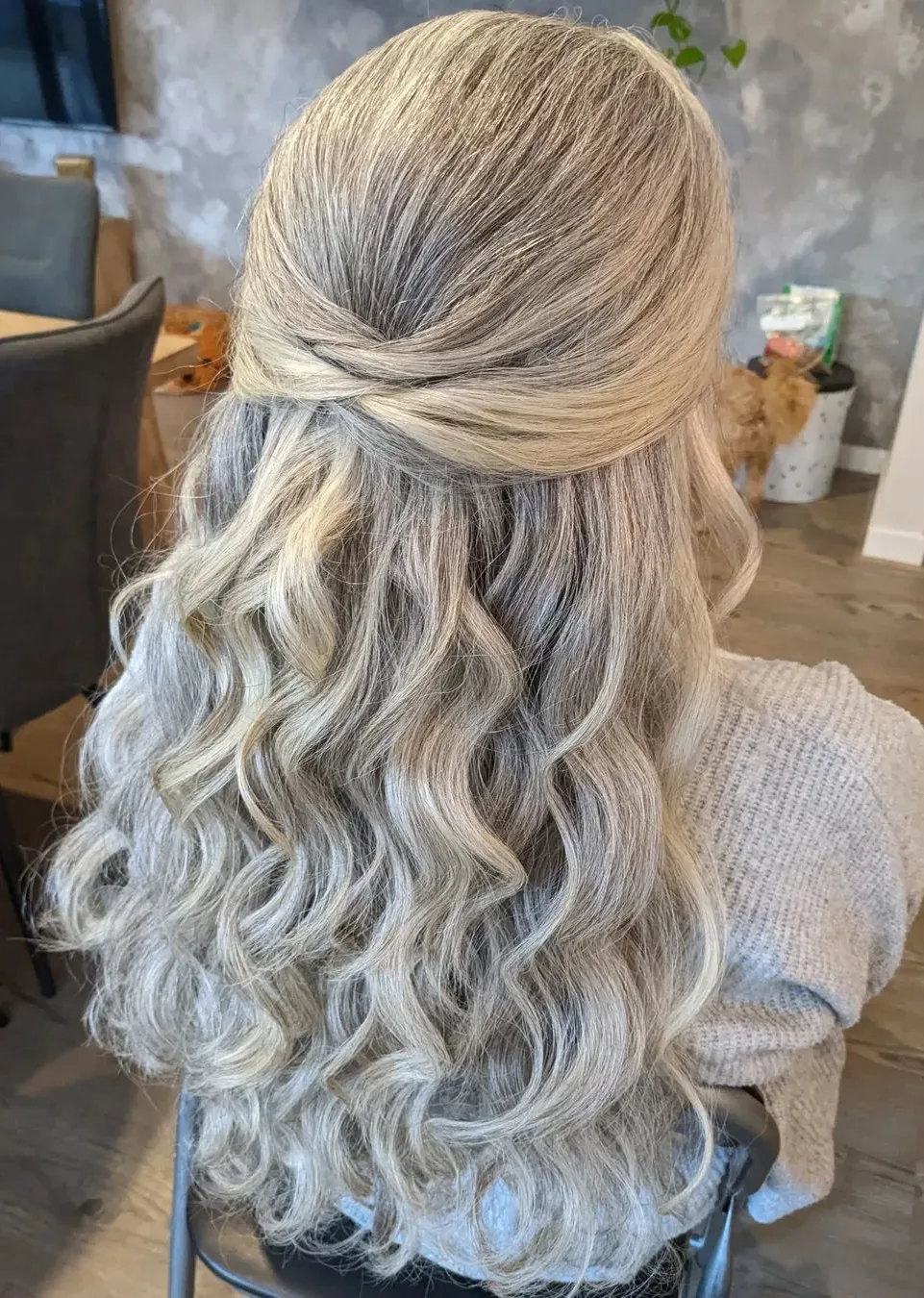
Long soft waves are the romantic choice for a mother with long hair: the lengths are curled in large sections, brushed out into flowing waves, and left to fall over the shoulders and down the back. It is the style that looks most like a celebration — soft, feminine, full of movement — and it suits a garden wedding, a beach wedding or a romantic ballroom equally well. In the photographs it gives the mother a beautiful, flowing silhouette, and it pairs wonderfully with a dress that has an open back or a soft, draped fabric. For a mother who has always worn her hair long, this is the style that honours that.
The cost is time and upkeep. Expect 45 to 60 minutes of styling, and accept that the waves will relax over the evening — they will still look lovely, just softer. A strong set, with the curls pinned to cool, is essential, and a flexible-hold spray will help without making the hair stiff. The style is at its most vulnerable outdoors, where wind can tangle the lengths, so a light serum on the ends helps. Carry a brush and a travel spray, and plan one refresh before the evening photographs. If your hair is very fine and drops a curl within an hour, test this honestly at the trial — a half-up version may hold better for you.
14. Side-Swept Waves
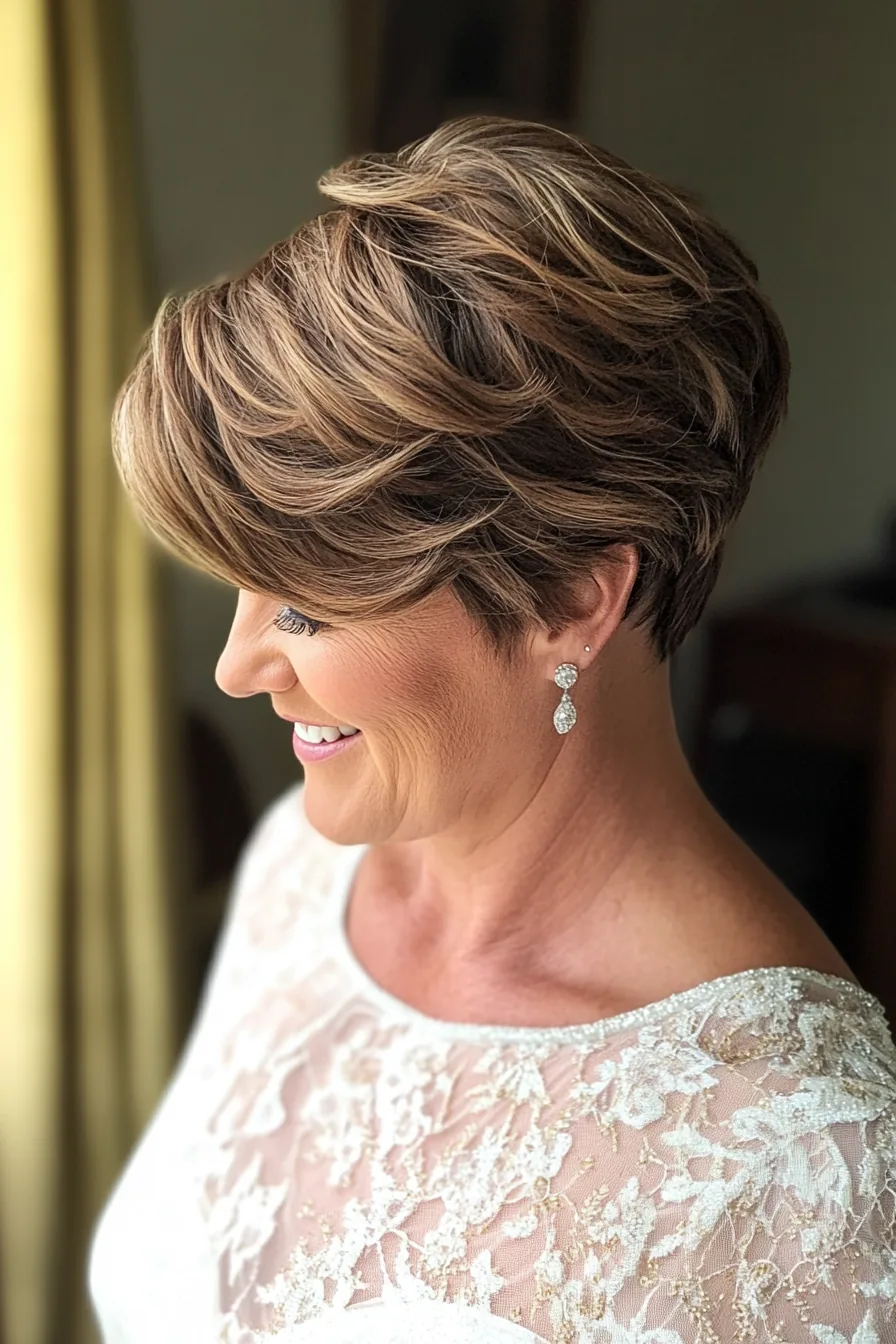
Side-swept waves take long or medium hair, part it deeply on one side, and sweep the whole mass over the opposite shoulder in a cascade of waves. It is glamorous in an old-Hollywood way, it shows off one earring beautifully, and it gives the mother a dramatic, asymmetric silhouette that photographs wonderfully. It suits a formal evening wedding, a long gown, and a mother who wants a little drama without an updo. The deep side part also flatters most face shapes, because the diagonal sweep softens the symmetry of the face and draws the eye across it.
It takes 40 to 50 minutes, and the key is anchoring: the swept side must be pinned securely behind the ear, or the whole mass will slide back across the face within an hour. Two or three hidden pins and a strong-hold spray on the swept section will hold it. Through the day it needs a single check — usually after the first dance — to push the sweep back into place. The style is less practical outdoors, where wind will fight the sweep, so it is best for an indoor or sheltered wedding. Its great advantage is that it looks intentional and finished from the front, the side and the back, which is exactly what a mother needs in a day of photographs from every angle.
15. The Braided Crown Updo
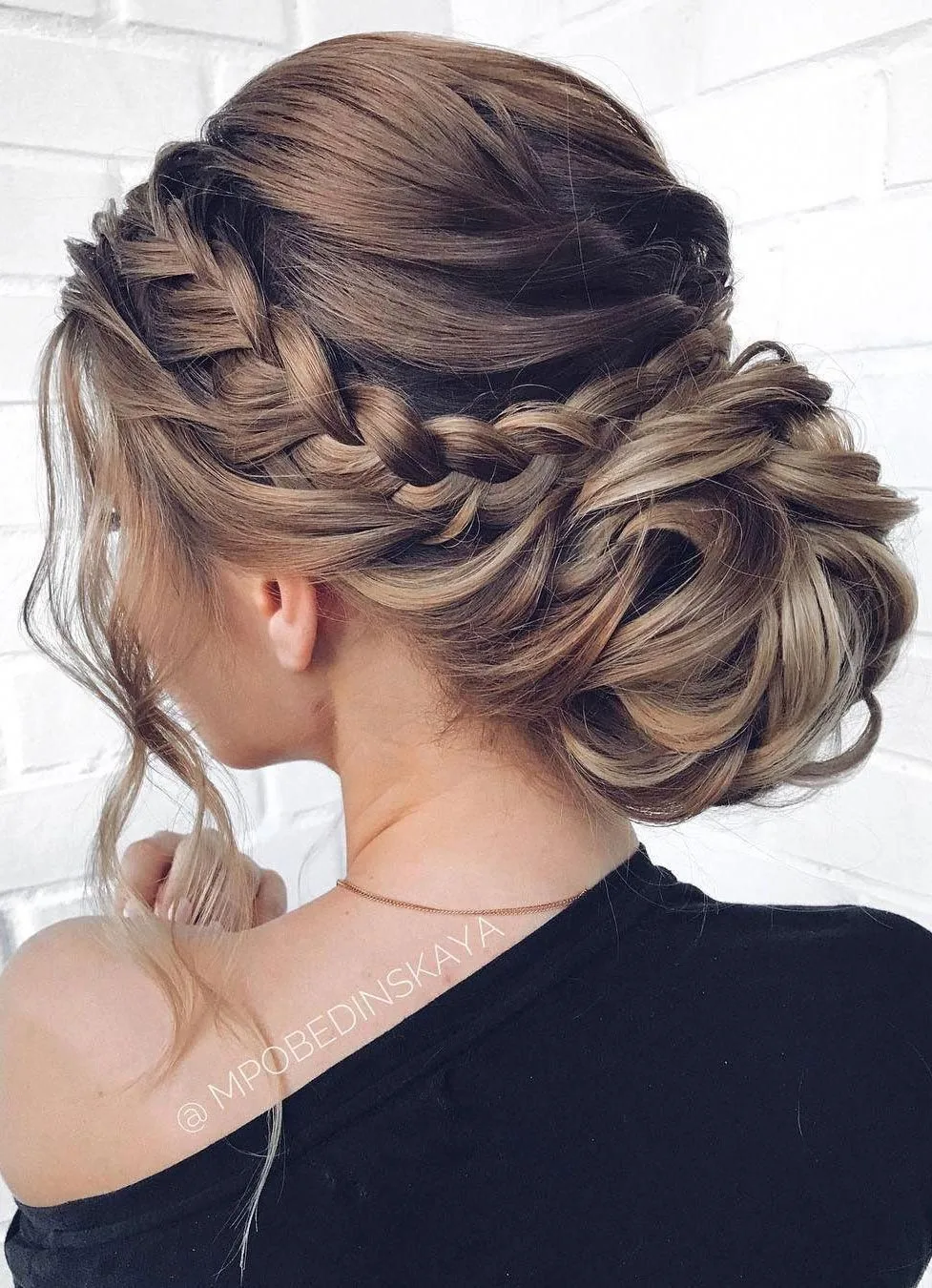
The braided crown updo wraps a braid around the head like a halo and gathers the rest of the hair into a low bun at the nape. It is romantic, a little bit regal, and a lovely choice for a mother who wants an updo with a detail that makes it feel special. The braid gives the style structure and interest from the front, while the bun keeps it elegant from the back, and the combination photographs beautifully — there is something to look at from every angle. It suits a garden wedding, a romantic ballroom, or a mother whose daughter is wearing a braided style of her own, in a softer, simpler form.
It takes 45 to 55 minutes with a stylist, and it is not a style to attempt without a trial — the braid has to be even, and the bun has to sit in the right place. Once it is pinned, it holds very well, because the braid itself acts as an anchor for the rest of the style. The main risk is that a braid can look young if it is too neat or too tight, so ask for a slightly loosened braid, pulled apart gently for softness, and a few pieces at the face. Through the day it needs almost nothing — a spare pin or two in your bag is enough — and it will still look complete at the last dance.
16. The Braided Low Bun
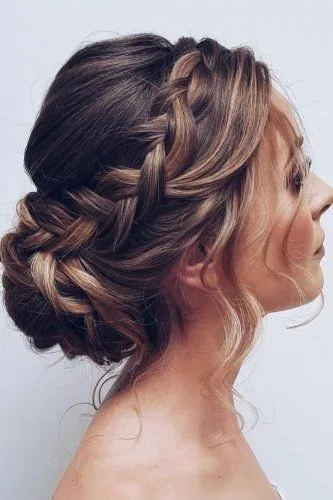
The braided low bun is a quieter version of the braided crown: a single braid, usually along one side or across the back, that flows into a low bun at the nape. It has the texture and interest of a braid without the full crown, which makes it feel more grown-up and less like a bridesmaid style. It suits medium and long hair, it works with a veil-free mother of the bride look, and it pairs beautifully with a dress that has a detailed back — the bun sits low enough not to hide it. It is the style for a mother who loves braids but wants them as an accent, not the main event.
It takes about 40 minutes, and it holds well because the braid gives the bun something to grip. The braid will loosen slightly over the evening, which only makes it look softer. The one thing to watch is the parting: a centre part with a braid on each side can look symmetrical and severe, while a side part with a single braid looks softer and more modern. Ask your stylist which suits your face. Maintenance is minimal — a quick check of the pins at the nape before the evening — and the style is comfortable enough to wear for twelve hours without a headache.
17. The Textured Low Bun
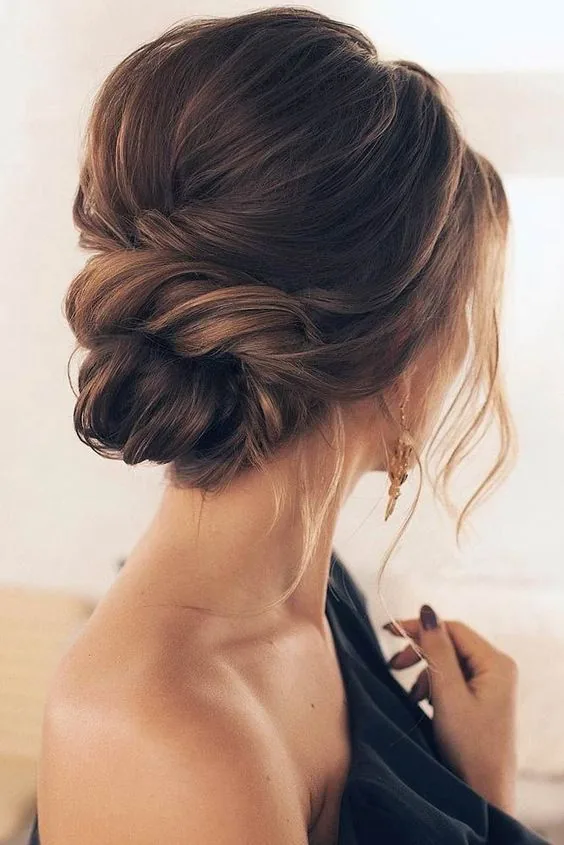
The textured low bun is the modern answer to the classic chignon: the hair is given texture first — a little backcombing, a few loose waves, a texturising spray — and then gathered into a low bun that is deliberately soft and a little undone. It has volume, movement and a relaxed elegance that a smooth chignon cannot offer, and it suits a mother who wants an updo but finds a polished bun too formal. It works beautifully with a romantic or bohemian wedding, and it is forgiving in photographs, because the texture reads as softness rather than mess.
It takes 35 to 45 minutes, and it is one of the most comfortable updos in this guide, because nothing is pulled tight. The texture gives the pins grip, so it holds well, and if a piece falls out it simply adds to the relaxed feeling. The risk is overdoing the texture: too much backcombing and the bun looks messy rather than soft, so ask your stylist for a light hand. A single pearl pin or a small comb finishes it. Through the day it needs one check, before the evening photographs, and a light mist of spray. This is a good choice for fine hair, because the texture creates fullness where a smooth bun would look flat.
18. The Polished High Bun
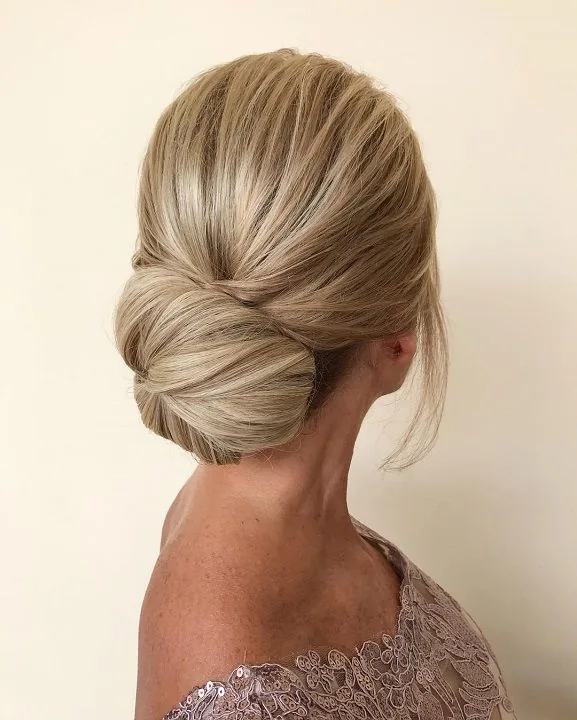
The polished high bun sits at the crown, smooth and sculpted, and it is the most formal updo in this guide after the French twist. It lengthens the neck, shows off the shoulders and the earrings, and gives the mother a tall, elegant silhouette that stands out in the group photographs. It suits a black-tie wedding, a ballroom, or a mother who loves a clean, architectural look. It also has a practical advantage: a high bun is completely off the neck, so it is the coolest style on a hot day, and it will not wilt or stick to the skin the way loose hair can.
The trade-off is comfort. A high bun pulls, and if it is pinned too tightly it can give you a headache by the afternoon, so the trial is essential — wear it for several hours and be honest about how it feels. It takes 30 to 40 minutes, and it holds superbly once it is in. The finish matters: the surface should be smooth, with no bumps, and the bun itself should be neat and rounded. A high bun suits a mother with a long neck and a strong jawline best, and it is less flattering if you prefer softness around the face — in that case, ask for a few face-framing pieces to soften it, or choose a low bun instead.
19. The Polished Low Ponytail
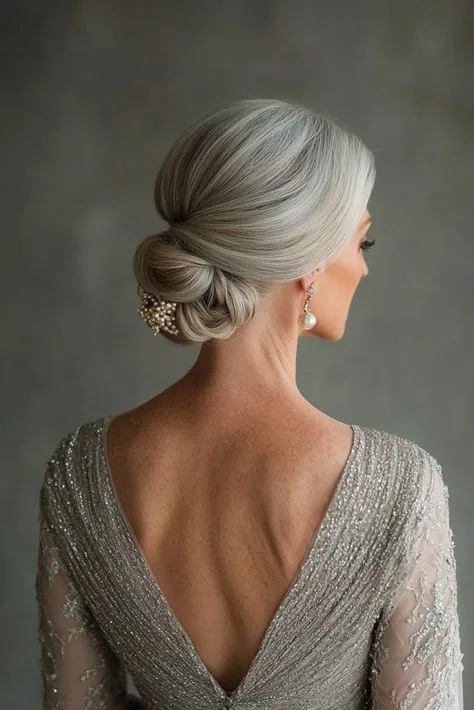
The polished low ponytail is the most modern style in this guide, and it is far more elegant than it sounds. The hair is smoothed back, gathered low at the nape, and wrapped with a section of hair to hide the elastic, so the ponytail falls in a sleek, glossy curtain down the back. It is the style for a contemporary wedding, a city venue, or a mother whose dress has a beautiful back that she does not want to hide under a bun. It moves when she moves, which photographs beautifully, and it feels young and fresh without trying too hard.
It takes about 25 to 30 minutes, and it is comfortable — nothing is pinned tightly, and the weight hangs naturally. The challenge is keeping it polished: a ponytail shows every flyaway, so a smoothing serum and a strong-hold spray are essential, and the hair must be in good condition, because the sleek finish shows the ends. In humidity, it can frizz, so this is a style for an indoor or cool-weather wedding. Through the day it needs a quick smooth-down now and then, and a spare elastic in your bag. It is not the best choice for very fine hair, which can look thin in a ponytail — a little backcombing at the crown helps, or choose a low bun instead.
20. Voluminous Curls
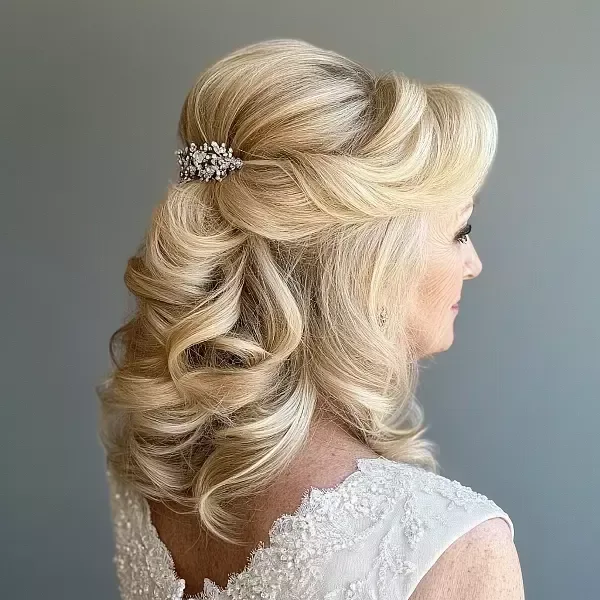
Voluminous curls are the celebration style: big, bouncy curls, full of body, falling over the shoulders and framing the face. They suit a mother with naturally curly hair, or a mother whose hair holds a curl well, and they bring a joyful, generous feeling to the photographs — the hair itself looks like it is celebrating. They work with medium and long hair, they suit a romantic or glamorous wedding, and they pair beautifully with a dress that has a soft, flowing fabric. If the mother of the bride is a woman who laughs a lot, voluminous curls suit her.
They take 45 to 55 minutes, with the curls set in large sections and brushed out for volume rather than left as tight ringlets. The curls will drop over the evening, becoming softer waves, which is a graceful way for a style to age. The main risk is frizz, especially in humidity, so a smoothing cream and a flexible-hold spray are important, and a curl refresh spray in your bag will revive them before the evening. The style needs no pins, and it is comfortable. Its only real weakness is wind — an outdoor ceremony can tangle big curls — so a light serum on the ends and a quick brush-through after the ceremony will keep them looking their best.
21. Hollywood Waves
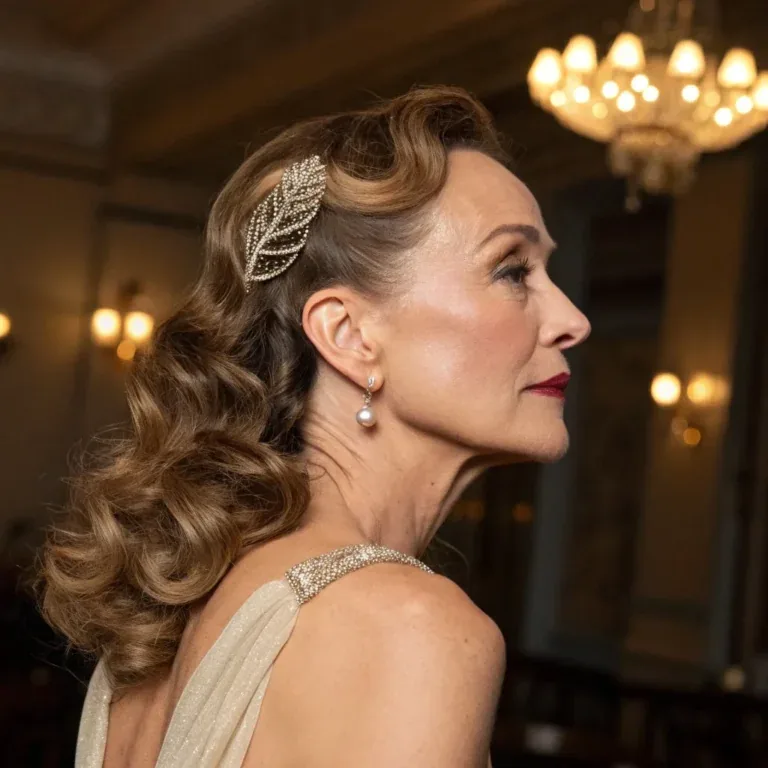
Hollywood waves are the most glamorous style in this guide: deep, uniform, glossy waves, all falling in the same direction, with a deep side part and a sculpted, old-Hollywood finish. They are the waves of a film star, and they suit a formal evening wedding, a black-tie reception, or a mother who wants to look truly glamorous. The waves catch the light in the photographs in a way no other style does — each wave is a highlight — and they pair perfectly with a long gown, red lipstick and statement earrings. If the wedding is the most formal event of the year, Hollywood waves are a worthy choice.
They take 50 to 60 minutes, and they need a stylist who knows the technique: the curls are set in the same direction, pinned to cool, and then brushed out into smooth, continuous waves. They hold well indoors, but they are vulnerable to wind and humidity, so they are best for an indoor wedding. Through the day they need almost no maintenance — just a light spray and a refusal to touch them, because hands break the waves apart. The style suits medium and long hair, and it needs enough length for the waves to show. It is not a casual style, and it should not be attempted without a trial, but when it works, it is unforgettable.
22. The Side-Parted Sleek Updo
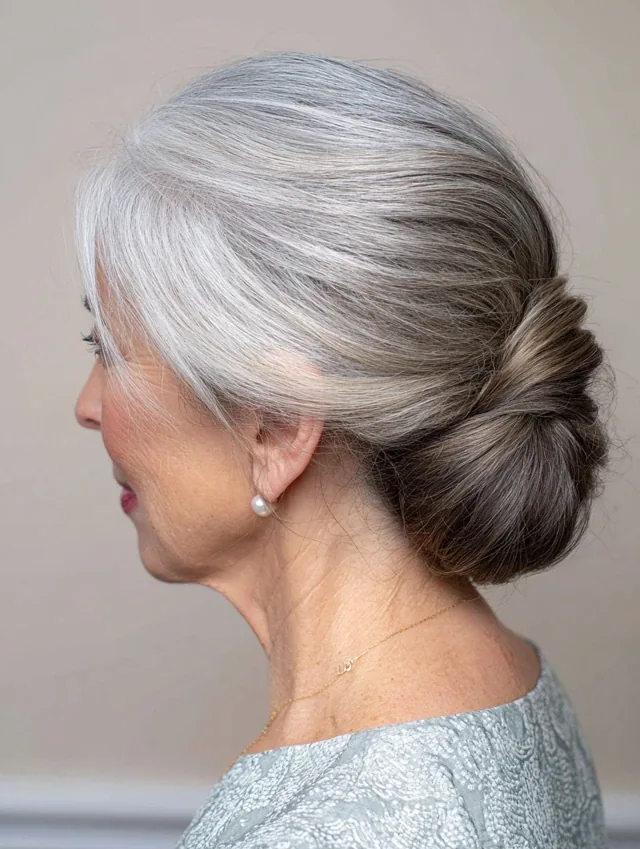
The side-parted sleek updo is a smooth, polished updo with a deep side part that gives it a sweeping, elegant line across the forehead. The hair is smoothed back from the part, gathered low, and pinned into a neat bun or twist, with the side sweep as the feature. It is a style that flatters most faces, because the diagonal line of the part softens the symmetry of the face, and it suits a mother who wants polish without severity. It works with a formal dress, a tailored suit, or a mother-of-the-bride outfit with a strong shoulder line.
It takes 35 to 45 minutes, and it holds very well, because the smooth finish and the pinning work together. The side sweep needs to be set with a clip while it cools, or it will fall flat, so ask your stylist to pin it in place during the styling. Through the day it needs one check, to make sure the sweep has not dropped, and a light spray. The style is comfortable, and it photographs beautifully from the front and the side. Its limitation is that it needs hair that can be smoothed — very curly hair will need more heat and product to achieve the sleek finish, so be honest at the trial about what it takes to keep it smooth for ten hours.
23. Vintage Finger Waves
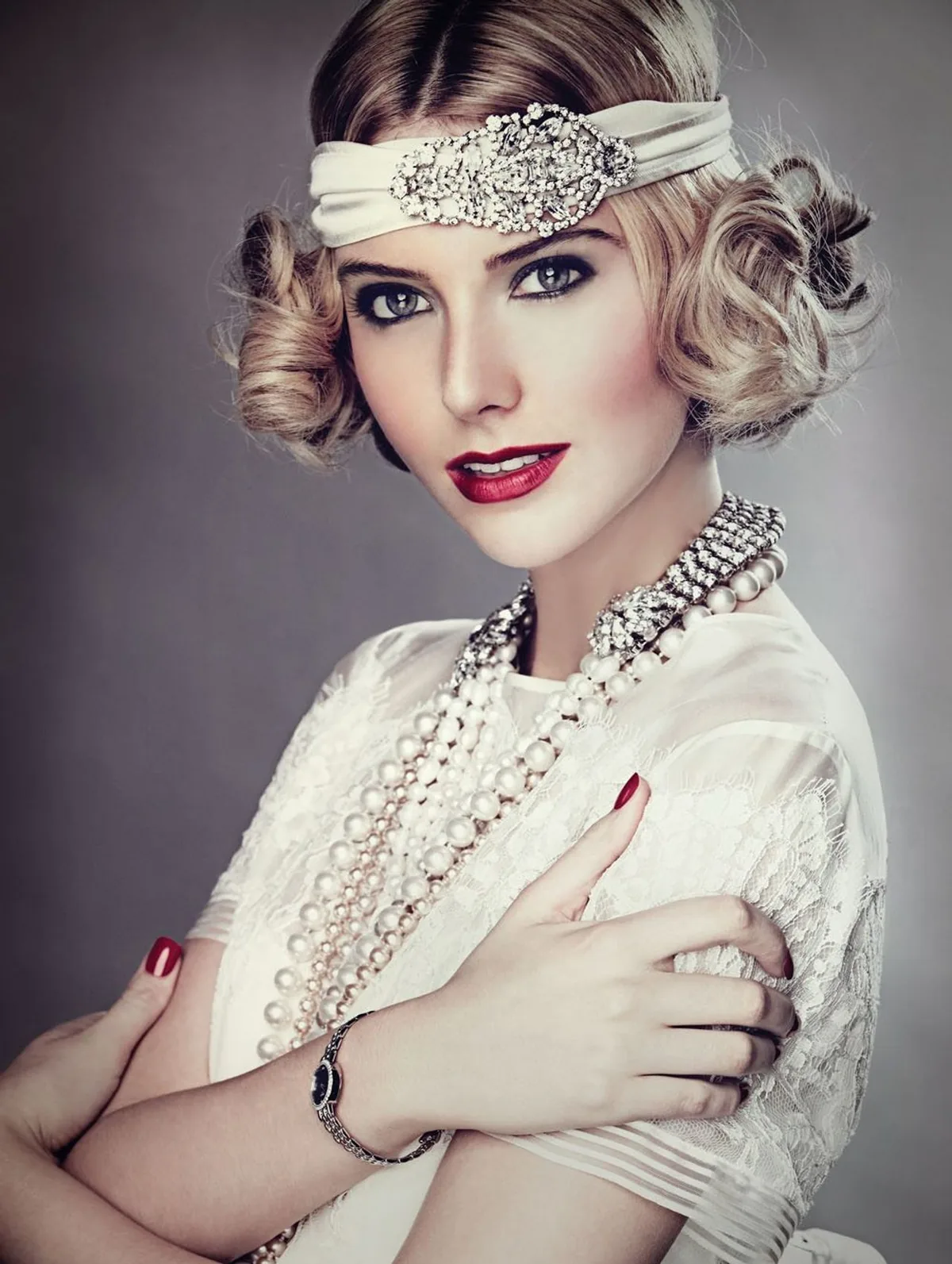
Vintage finger waves are the most romantic throwback in this guide: soft, sculpted S-shaped waves, moulded close to the head, with a 1920s elegance that suits a vintage-themed wedding perfectly. They frame the face in a beautiful, sculptural way, they show off the cheekbones, and they pair wonderfully with a vintage dress, a birdcage veil or art-deco jewellery. For a mother who loves the glamour of another era, finger waves are a style with real character — they are not a generic wedding look, they are a statement, and they will be remembered in the photographs.
They take 50 to 60 minutes, and they need a stylist who is genuinely skilled in the technique — finger waves are moulded with the fingers and a comb, not curled with an iron, and they take practice. They hold well once they are set, because the waves are shaped into the hair rather than curled on top of it. The style suits short and medium hair best, and it needs a strong-hold gel or mousse to set the waves. Through the day it needs almost nothing, just a light spray. The honest warning is that finger waves are a commitment: they are a very specific look, and if the wedding is not vintage-themed, they can feel out of place. Try them at the trial, look at the photographs, and decide with your daughter.
24. The Gibson Tuck
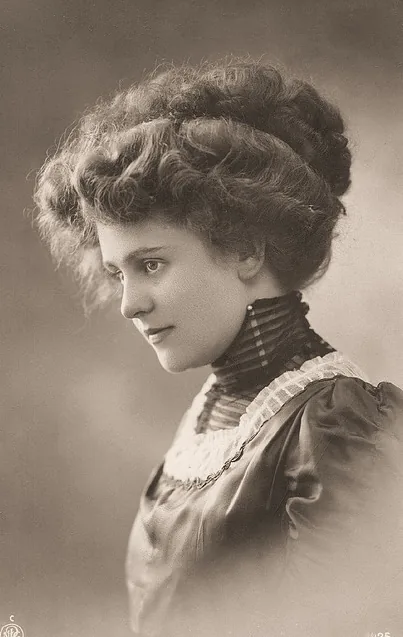
The Gibson tuck is a vintage style with a modern following: the hair is gathered into a low roll at the nape, tucked into itself, and pinned, so the back of the head has a soft, rounded, elegant shape. It is the style of the Edwardian era, and it has a gentle, ladylike quality that suits a mother of the bride beautifully — it is formal without being stiff, and romantic without being fussy. It works with medium and long hair, it shows off the neck and the earrings, and it pairs wonderfully with a dress that has a high neckline or a detailed collar.
It takes 30 to 40 minutes, and it is one of the most comfortable updos in this guide, because the tuck distributes the weight evenly and nothing pulls. It holds well, and it is easy to fix — if a piece comes loose, it tucks back in with a single pin. The style is at its best when it is soft, so ask for a little volume at the crown and a few pieces at the face, rather than a tight, scraped-back version. Its only weakness is that it can look a little plain in photographs if it is too neat, so a pearl pin or a small comb at the side gives it the finishing detail it needs. It is a lovely, underused choice for a mother who wants something classic but not obvious.
25. The Twisted Updo
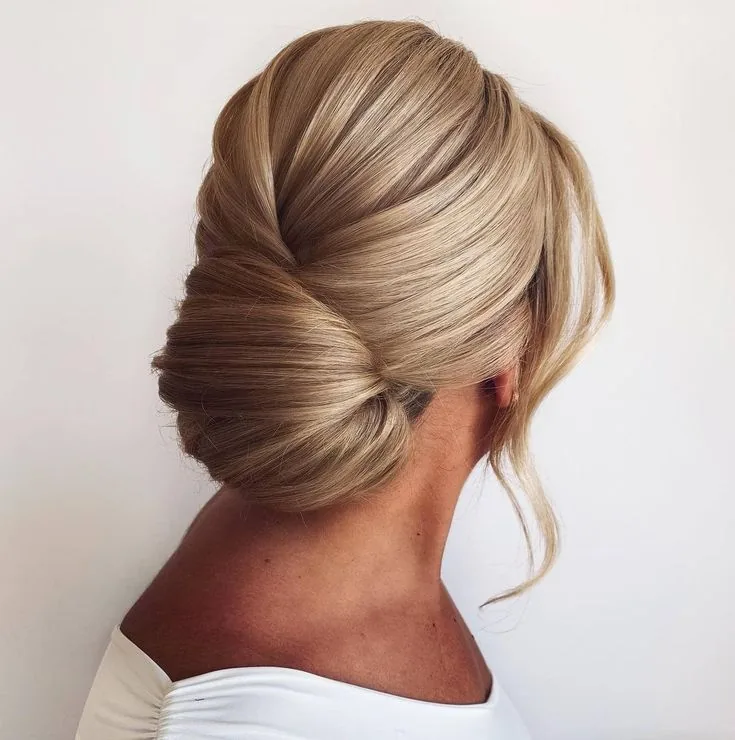
The twisted updo is built from twists rather than braids: sections of hair are twisted and pinned into a low, sculpted shape at the back of the head, with a soft, rope-like texture that photographs beautifully. It is a little less formal than a chignon and a little more interesting than a plain bun, which makes it a good choice for a mother who wants an updo with a visible detail. It suits medium and long hair, it works with a romantic or a modern wedding, and it is forgiving to style — the twists hide unevenness, and the finished shape is soft rather than architectural.
It takes 35 to 45 minutes, and it holds well because each twist is pinned separately, so the style is anchored in several places. If one twist loosens, the others hold, which is a real advantage on a long day. The style is comfortable, and it needs almost no maintenance — a spare pin or two is enough. The one thing to watch is the direction of the twists: they should all twist the same way, or the style will look uneven. Ask your stylist to show you the twists at the trial, from the back, so you can see the texture. A twisted updo with a small comb or a pearl pin is a complete, elegant mother of the bride look.
26. The Soft Messy Low Bun
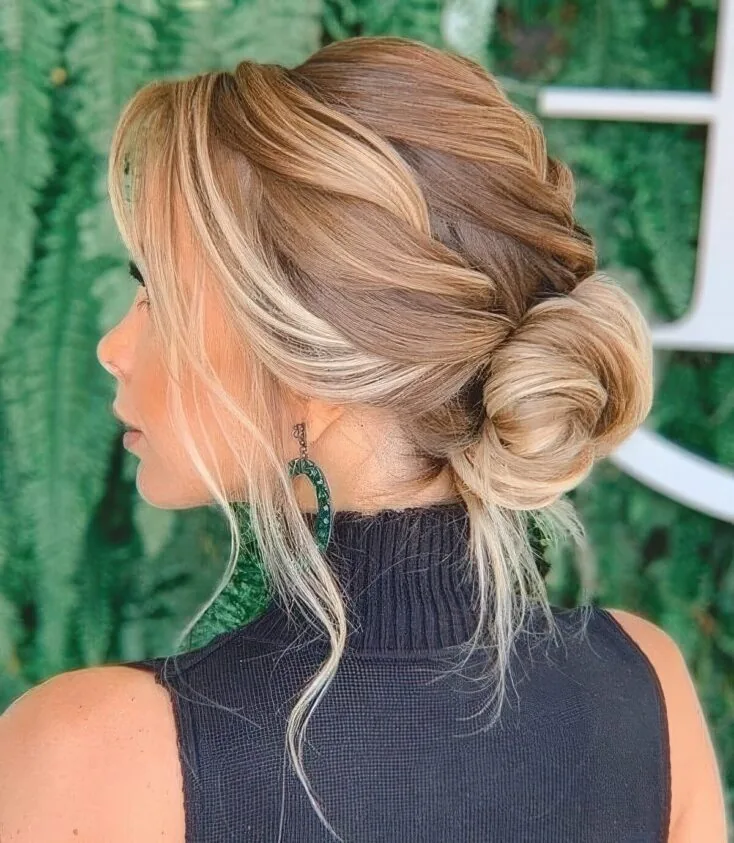
The soft messy low bun is the relaxed cousin of the chignon: the hair is gathered low, twisted loosely, and pinned with a few pieces left out around the face and at the nape. It looks effortless, which is its charm, and it suits a mother who wants an updo but does not want to look like she spent an hour in a chair. It is the right choice for a garden wedding, a barn wedding, or a celebration where the mood is warm and informal. It also suits a mother who is a little nervous about an updo — the looseness means there is no single thing that can go wrong, because the style is supposed to look a little undone.
It takes 25 to 35 minutes, and it is the most comfortable updo in this guide, because nothing is pulled tight. It will loosen further over the evening, which is not a problem — it simply becomes softer. The risk is that it can look too casual for a formal wedding, so judge it against the venue: if the wedding is black-tie, choose a more polished bun. For a daytime or outdoor wedding, it is perfect. Maintenance is a single check before the evening photographs, and a light mist of spray. This is the updo for a mother who wants to dance without thinking about her hair, and that is a very good reason to choose it.
27. The Curly Updo
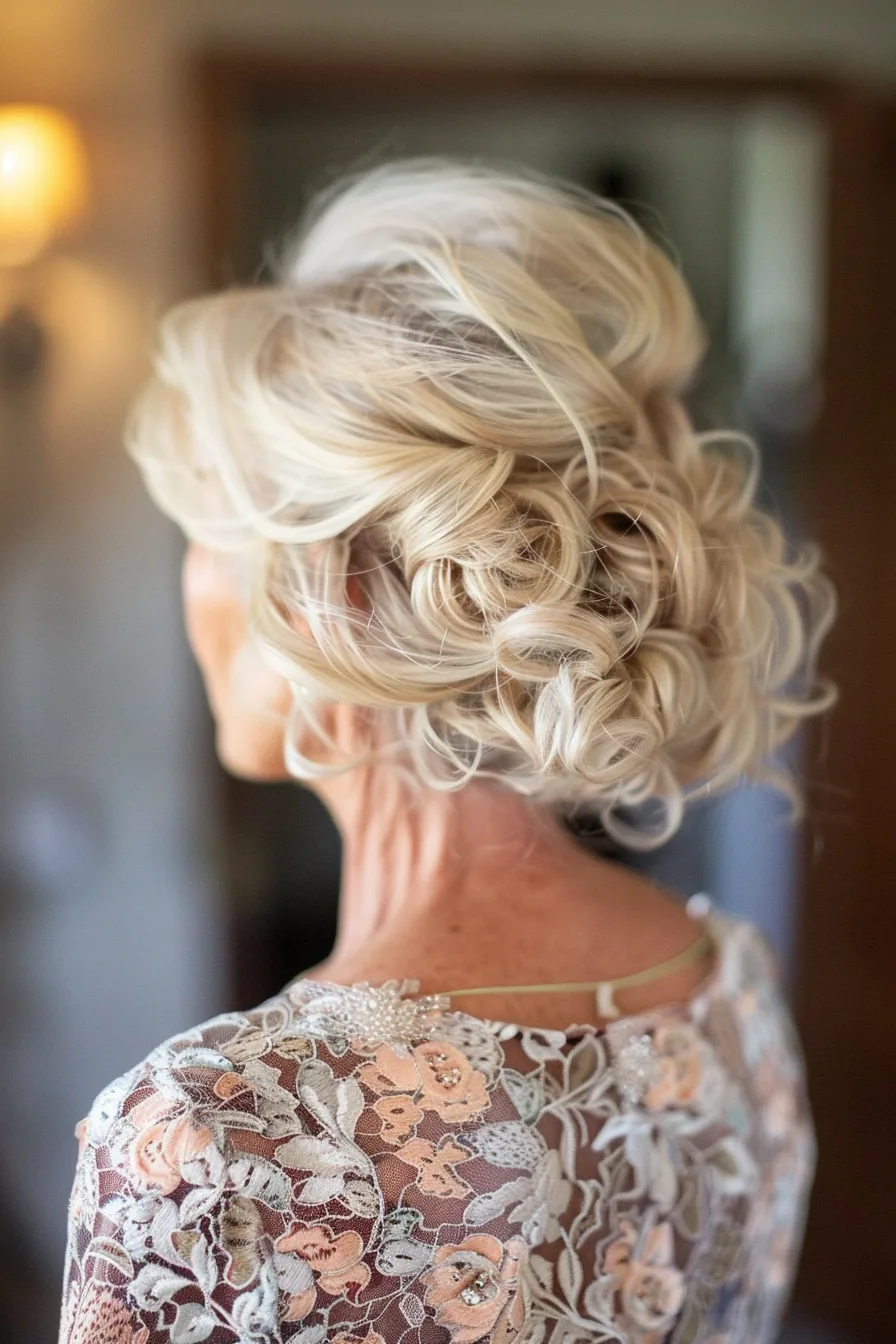
The curly updo gathers natural curls into a soft, voluminous shape at the back of the head, with the curls themselves providing the texture and the fullness. It is the style for a mother with naturally curly hair who wants an updo that works with her curls rather than fighting them. The curls give the updo a softness and a presence that straight hair has to fake with backcombing, and the finished style looks joyful and relaxed. It suits a romantic wedding, a garden wedding, or any celebration where the mother wants to feel like herself, only more polished.
It takes 30 to 40 minutes, and the key is to work with the curls: a leave-in conditioner or a curl cream first, sectioning carefully, and pinning the curls into place rather than pulling them smooth. The updo holds well because curls have natural grip, and it needs almost no maintenance through the day. The main job is frizz control, especially in humidity, so a smoothing cream and a light oil on the surface will keep the curls defined in the photographs. Carry a curl refresh spray for the evening. The style is comfortable, it dances well, and it is one of the few updos that actually looks better as the day goes on and the curls relax a little.
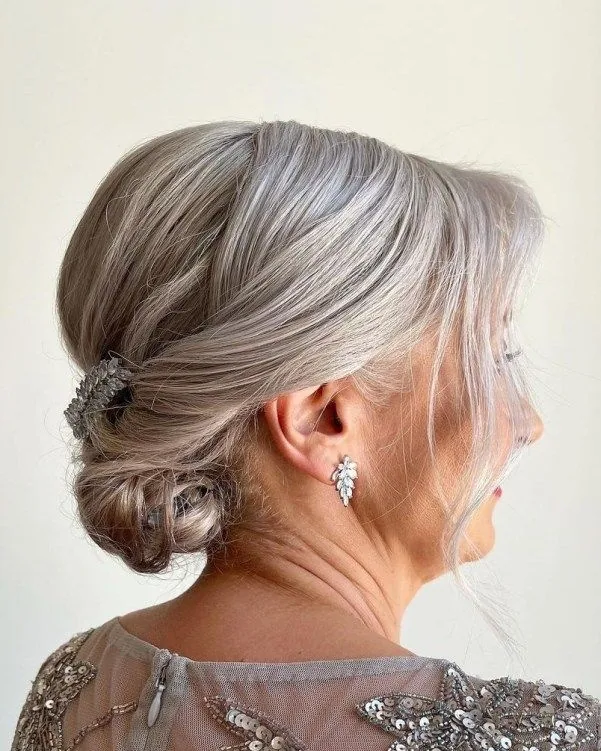
28. Natural Silver Updo
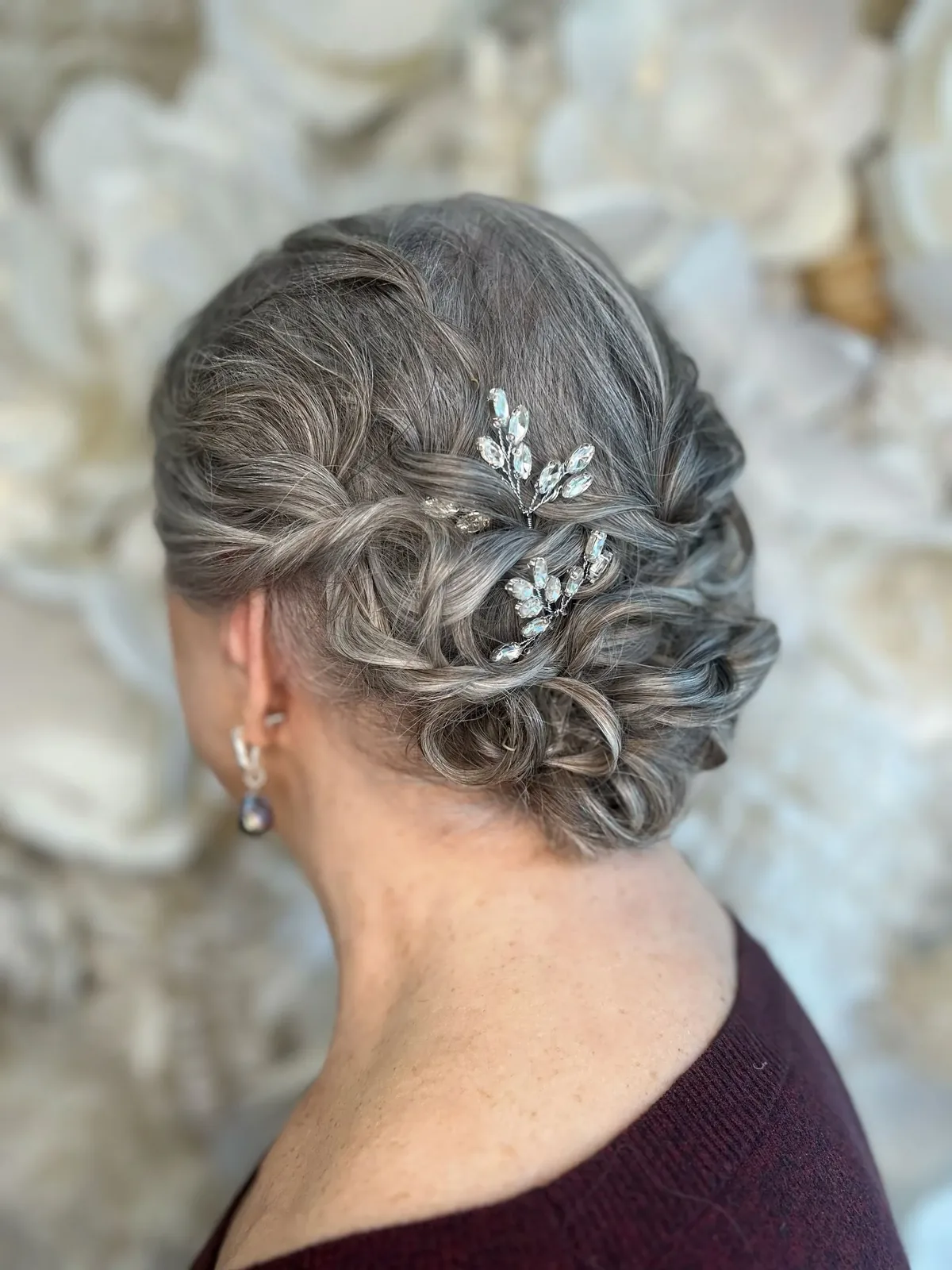
A natural silver updo is one of the most beautiful sights at a wedding: silver hair, swept up into a soft chignon or a low bun, catching the light and glowing in the photographs. Silver hair has a luminosity that coloured hair does not, and an updo shows it off to its best advantage, because the twists and folds of the bun catch the light from every angle. It is the style for a mother who has embraced her grey, and it sends a message of confidence that no colour can match. It suits every venue, every dress, and every age — silver is not an age, it is a colour, and it is a beautiful one.
It takes 30 to 40 minutes, and the preparation matters more than the styling: a shine treatment or a clear gloss a few days before the wedding will make the silver gleam, and a purple-toned shampoo in the week before will keep any yellowing at bay. The updo itself is usually a soft chignon or a low bun, with a little volume at the crown and a few pieces at the face. It holds well, and it needs almost no maintenance. The one thing to avoid is a heavy, matte product, which can dull silver hair — ask for a light shine spray instead. This is a style that photographs so well that the photographer will thank you for it.
29. The Silver Bob
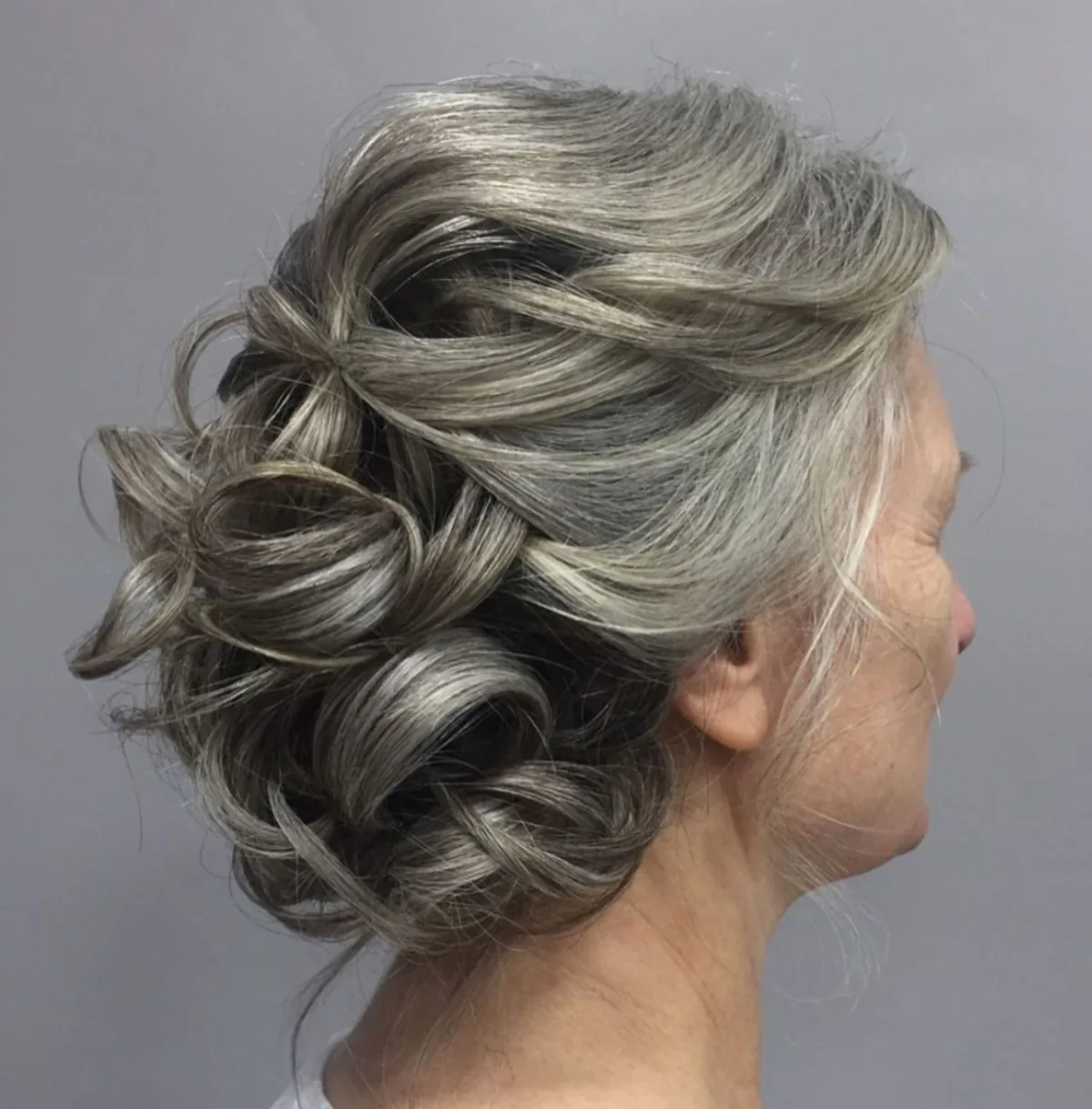
The silver bob is the short silver style at its best: chin-length, smooth or softly waved, with the silver catching the light and giving the whole look a luminous quality. It is modern, confident and elegant, and it suits a mother who has gone grey and wants to show it off rather than hide it. The bob frames the face, it needs no pins, and it photographs with crisp, clean lines. It is the style for a mother who is proud of her silver — and she should be, because a well-kept silver bob is one of the most striking looks in this guide.
It takes about 25 minutes to style, and the work is in the colour care: a purple shampoo in the week before the wedding to keep the silver bright, and a shine treatment a few days before to make it gleam. The bob itself needs only a smooth blow-dry with volume at the roots, and a light serum for shine. It will hold all day with no attention, and it is comfortable. The one decision is the accessory — a silver bob pairs beautifully with pearl earrings and a small fascinator, but it needs no decoration at all. A fresh trim a week before the wedding will keep the line sharp, and the photographs will do the rest.
30. Short Hair with a Side Sweep
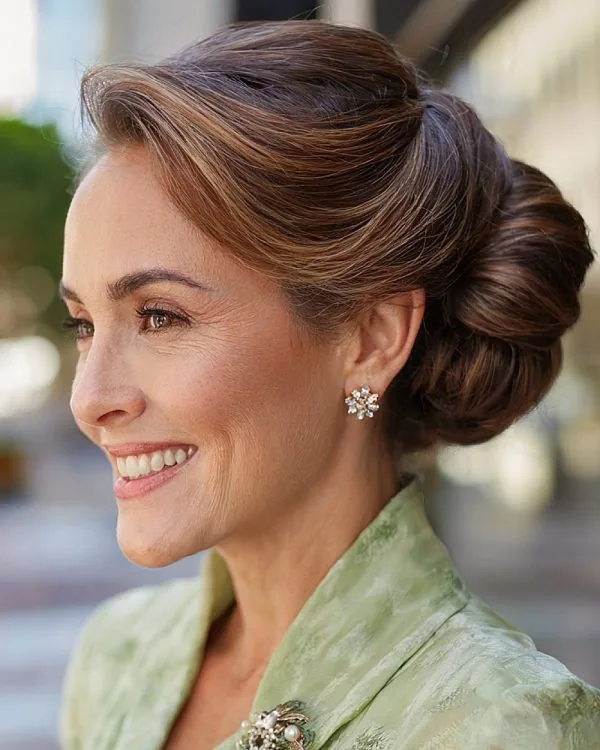
Short hair with a side sweep takes a bob or a pixie and sweeps the top section across the forehead in a soft, diagonal line. It is a small change that makes a big difference: the sweep adds movement, softens the face, and gives a short style a feeling of occasion. It suits a mother with short hair who wants her wedding-day style to feel different from her everyday style, without growing her hair out or wearing an updo. It works with glasses, it works with a fascinator, and it photographs beautifully from the front, where the sweep is the feature.
It takes 15 to 20 minutes, and it is held in place with a light wax or a styling cream, plus a single hidden pin if needed. The sweep will need one check during the day, to push it back into place, and a small comb in your bag is enough for that. The style is comfortable and needs no other maintenance. Its limitation is that it needs enough length on top to sweep — a very short pixie may not have it, in which case a textured finish is the better choice. For a mother with a bob or a longer pixie, the side sweep is the easiest way to make short hair feel like a wedding style.
31. Soft Layered Medium Cut
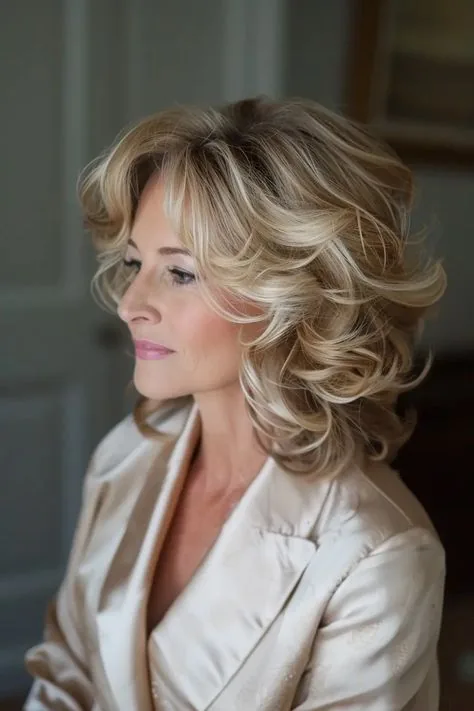
The soft layered medium cut is shoulder-length hair with gentle layers that move, turn and fall softly around the face. It is the style for a mother who wants to wear her hair down but still look finished, and it suits almost every face shape, because the layers can be cut to flatter the cheekbones and the jawline. It is lively without being fussy, and it photographs with movement — the layers catch the light and give the hair a soft, dimensional quality. It is a particularly good choice for a mother whose hair is starting to thin, because the layers create the illusion of fullness.
It takes 30 minutes to blow-dry into shape, with a round brush to lift the roots and turn the ends. The style will settle over the day, becoming a little softer, which is fine — it is not a style that needs to stay perfect. A volumising mousse at the roots will extend the lift, and a quick brush-through before the evening photographs will restore it. The cut itself matters most: a fresh trim a week before the wedding, with the layers shaped to your face, will do more than any styling product. It is comfortable, it needs no pins, and it is one of the easiest styles in this guide to live with for twelve hours.
32. The Beehive-Inspired Volume Updo
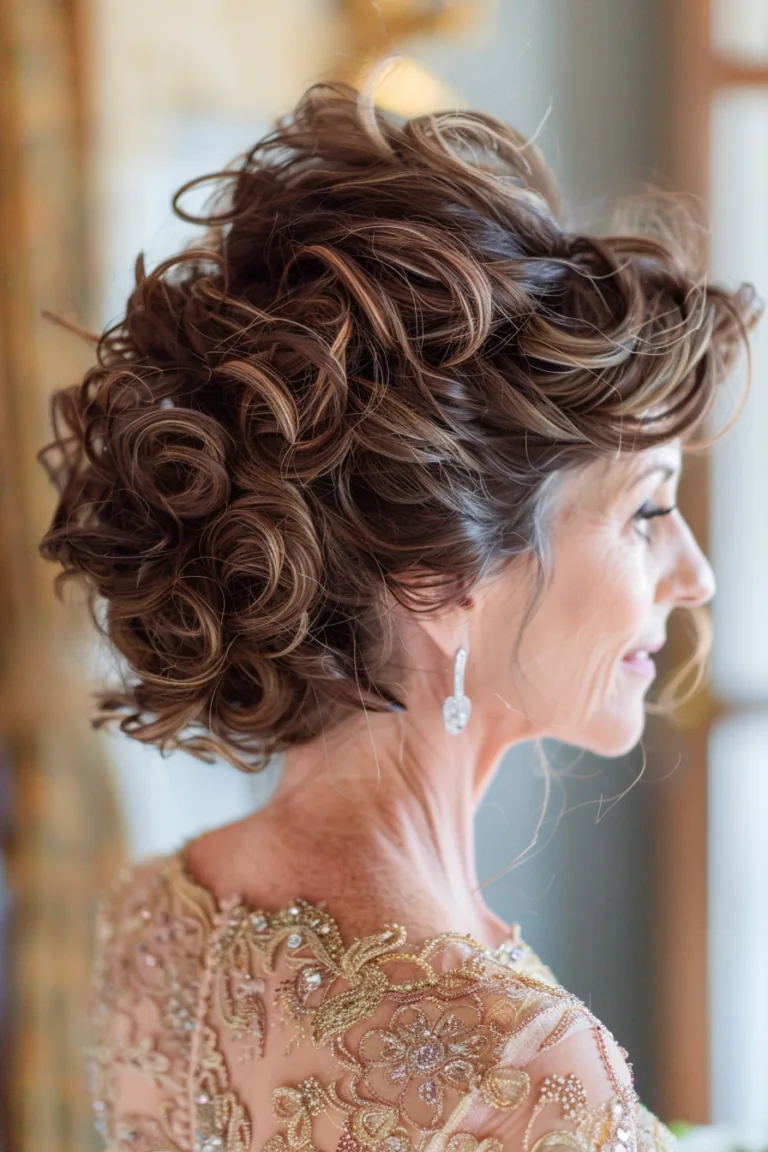
The beehive-inspired volume updo takes the height of the classic beehive and softens it into a modern, wearable shape: volume at the crown, hair swept up and pinned into a smooth, rounded updo, with a silhouette that adds height and elegance. It is a retro style with a contemporary finish, and it suits a mother who loves vintage glamour but wants it to feel current rather than costumey. It photographs beautifully, because the height gives the mother presence in the group photographs, and it pairs wonderfully with a dress that has a high neckline or a strong shoulder.
It takes 40 to 50 minutes, and it needs a stylist who can build volume without making it look stiff — the modern beehive is soft, not sculpted. Backcombing at the crown, smoothed over with a brush, gives the height, and a light spray holds it. The style will settle a little over the evening, which is normal. The honest warning is that a beehive is a bold choice: it is a very specific silhouette, and it suits a mother with a long neck and a confident style best. Try it at the trial, look at the photographs from the side, and decide whether the height feels like you. If it does, it is a show-stopper.
33. The Romantic Loose Bun with Tendrils
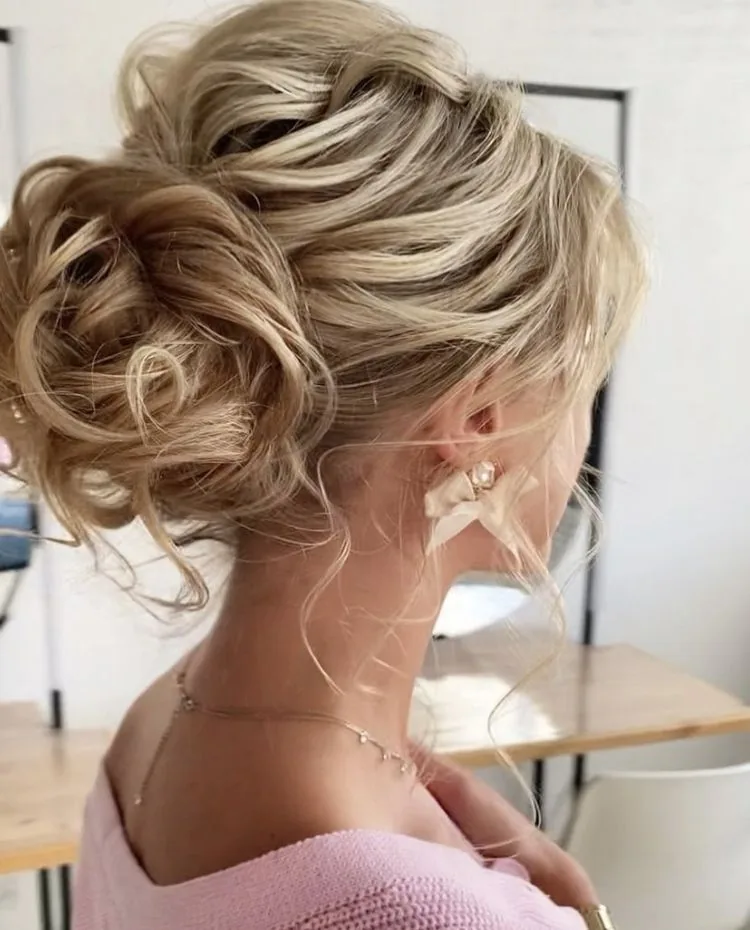
The romantic loose bun with tendrils is the softest updo in this guide: a low bun, loosely pinned, with two or three long tendrils left out to curl gently around the face and the neck. It is the style that looks like a painting — soft, romantic, a little bit dreamy — and it suits a garden wedding, a romantic ballroom, or a mother who wants an updo that still feels feminine and gentle. The tendrils are the whole point: they frame the face, they move when she moves, and they give the photographs a softness that a tight bun never has.
It takes 35 to 45 minutes, and the tendrils need to be curled and set, so they hold their shape rather than falling straight. The bun itself is pinned loosely, so it will relax over the evening — again, that is part of the style. The main risk is that the tendrils can look messy rather than romantic if they are too long or too many, so ask for two or three, starting at the temple and falling to the cheekbone. Through the day it needs one check, to re-curl a tendril if it has dropped, and a light spray. It is comfortable, it dances well, and it is the updo most likely to make a mother feel beautiful rather than merely tidy.
34. The Elegant Braided Side Bun
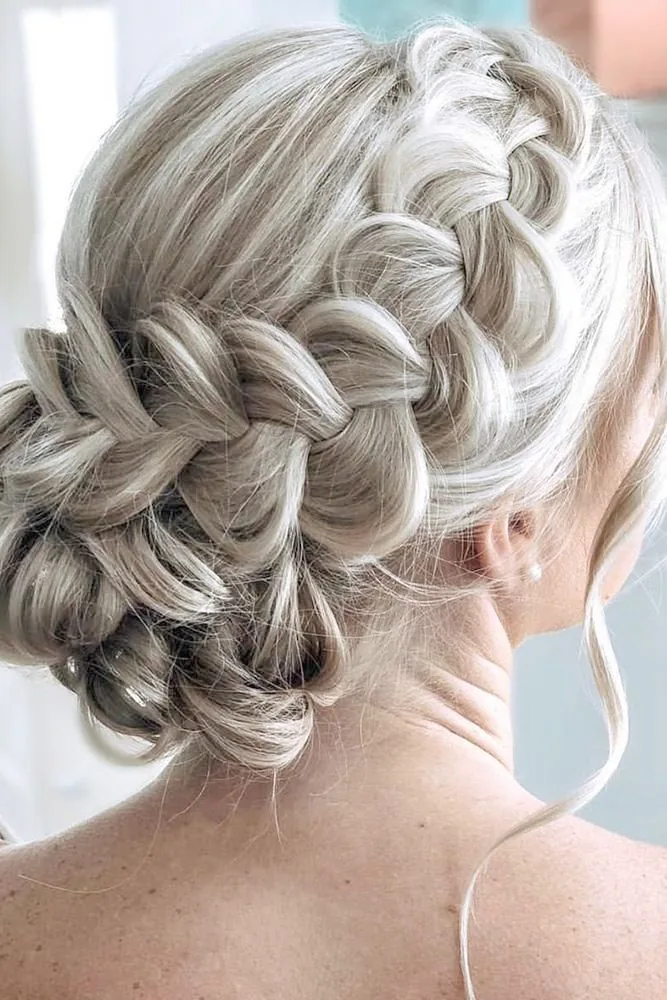
The elegant braided side bun takes a braid from one side of the head and sweeps it into a low bun that sits to one side of the nape, rather than in the centre. The asymmetry is the detail: it gives the style a modern, sculptural quality, and it shows off one earring beautifully. It suits a mother who wants a braided style but finds a full crown too young, and it works with a dress that has a one-shoulder neckline or an asymmetric detail. It is a style with a point of view, and it photographs wonderfully from the side where the bun sits.
It takes 40 to 50 minutes, and it needs a trial — the bun has to sit in exactly the right place, or the asymmetry looks like a mistake rather than a choice. Once it is pinned, it holds very well, because the braid anchors the bun. The style is comfortable, and it needs almost no maintenance. The one thing to watch is the parting: a deep side part works best, because it gives the braid a natural starting point. A pearl pin or a small comb at the bun finishes it. This is a good choice for a mother with long or medium hair who wants something a little different, but still unmistakably elegant.
35. The Braided Half-Up
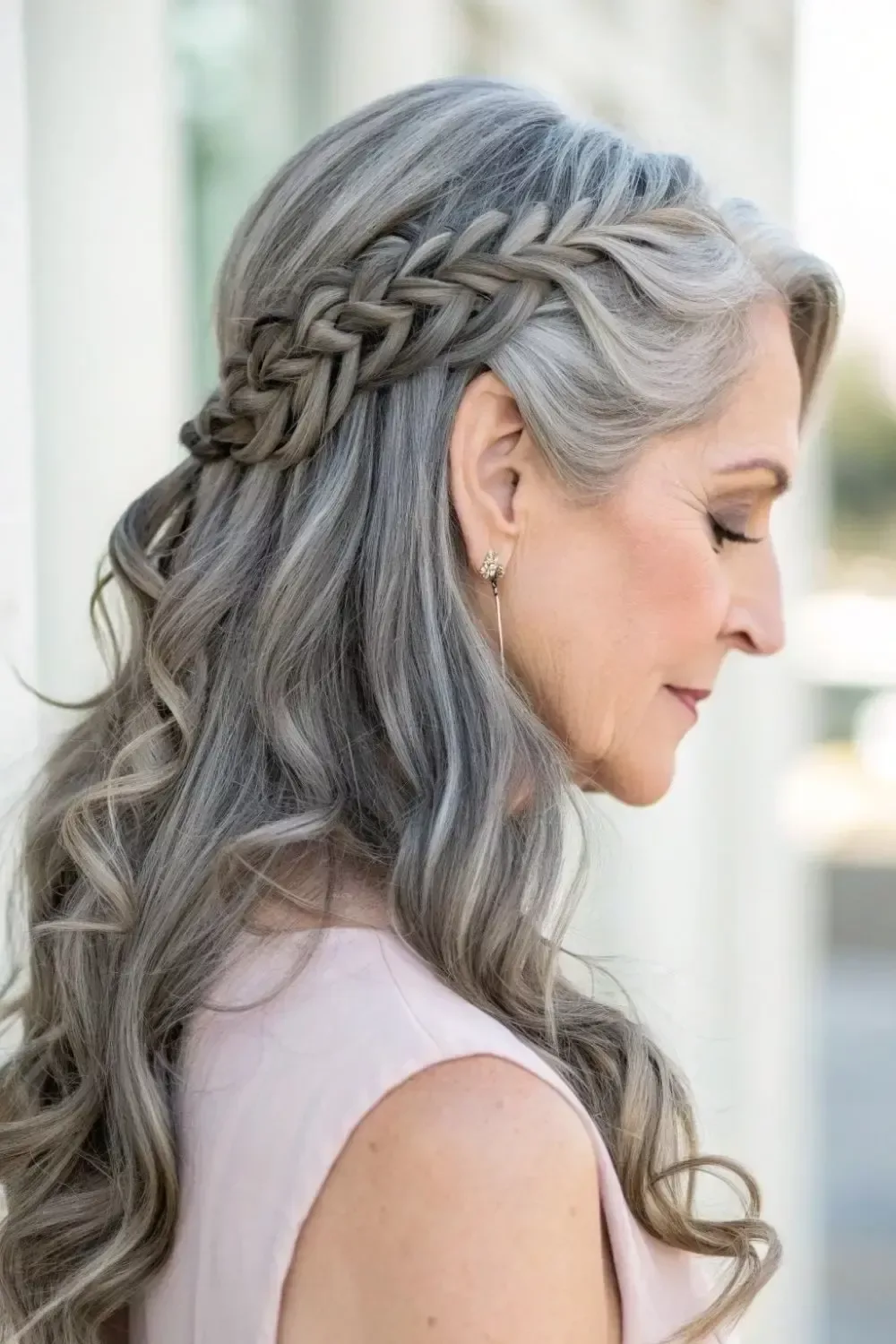
The braided half-up takes two small braids from the front, one on each side, and pins them together at the back of the crown, leaving the rest of the hair loose underneath. It is a gentle, romantic style that suits a mother who loves braids but does not want a full updo. The braids give the style a detail and a structure that a plain half-up lacks, and they keep the front sections out of the face for the ceremony and the photographs. It works with medium and long hair, with waves or with straight hair, and it is a lovely choice for a daytime or garden wedding.
It takes 25 to 35 minutes, and it is one of the most comfortable styles in this guide — nothing pulls, and the weight of the hair hangs naturally. The braids will hold all day with two crossed pins at the centre, and if one loosens it is a two-second fix. The style is at its best when the braids are loosened slightly, pulled apart for softness, rather than braided tight. A small flower or a pearl pin at the join makes it feel like a wedding style. Its limitation is length: it needs enough hair for the braids to show, so on shoulder-length hair ask your stylist to add a little volume at the crown first, so the braids do not disappear.
36. Sleek Straight Shoulder Length
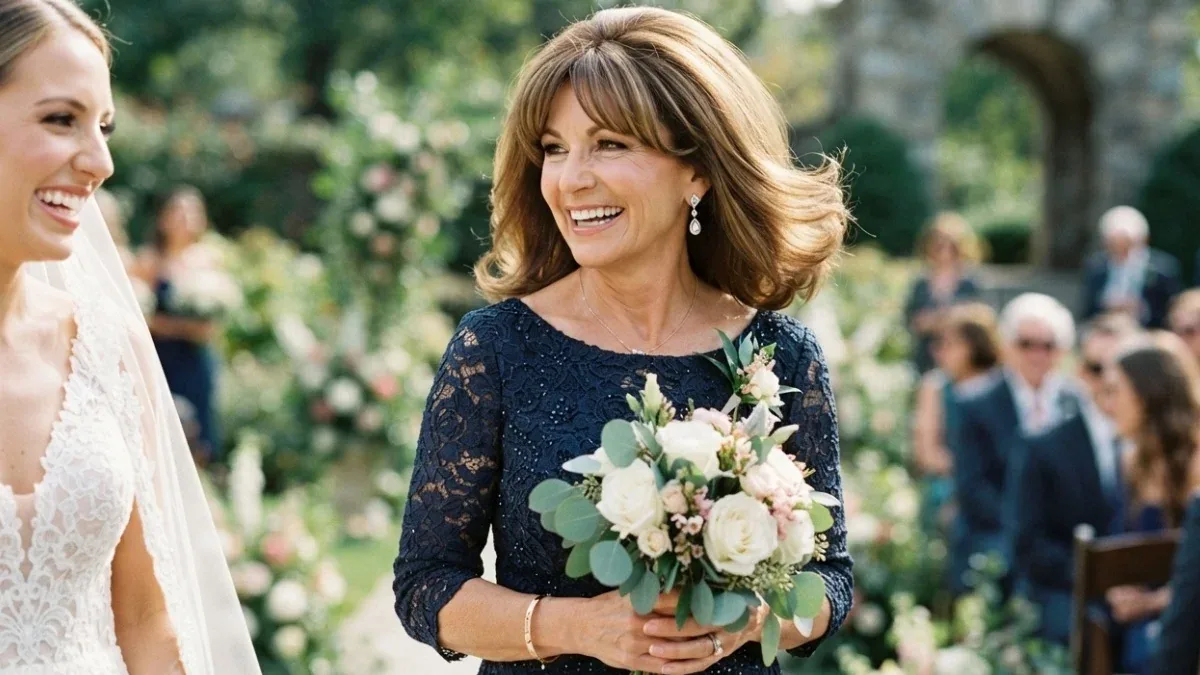
Sleek straight shoulder-length hair is the minimalist choice: hair blow-dried pin-straight, with a centre or side part, a glossy finish, and ends that fall in a clean, even line at the shoulders. It is modern, confident and quietly luxurious, and it suits a contemporary wedding, a city venue, or a mother whose style is already sleek and simple. The finish is the whole style — the shine, the smoothness, the precision of the cut — so it rewards healthy hair and a fresh trim, and it photographs with a clean, editorial quality that a more textured style cannot match.
It takes 30 to 40 minutes, and its enemy is humidity, so it is best for an indoor or cool-weather wedding. A smoothing serum and a flat iron will get the finish, and a light shine spray will keep it looking polished. Through the day it needs only a brush and a quick smooth-down, and it is comfortable. The honest limitation is that straight hair shows every flaw — split ends, uneven colour, a cut that has grown out — so book the trim a week before and a conditioning treatment a few days before. If your hair is naturally curly, be honest at the trial about how much heat it takes to keep it straight for ten hours.
37. The Wavy Lob
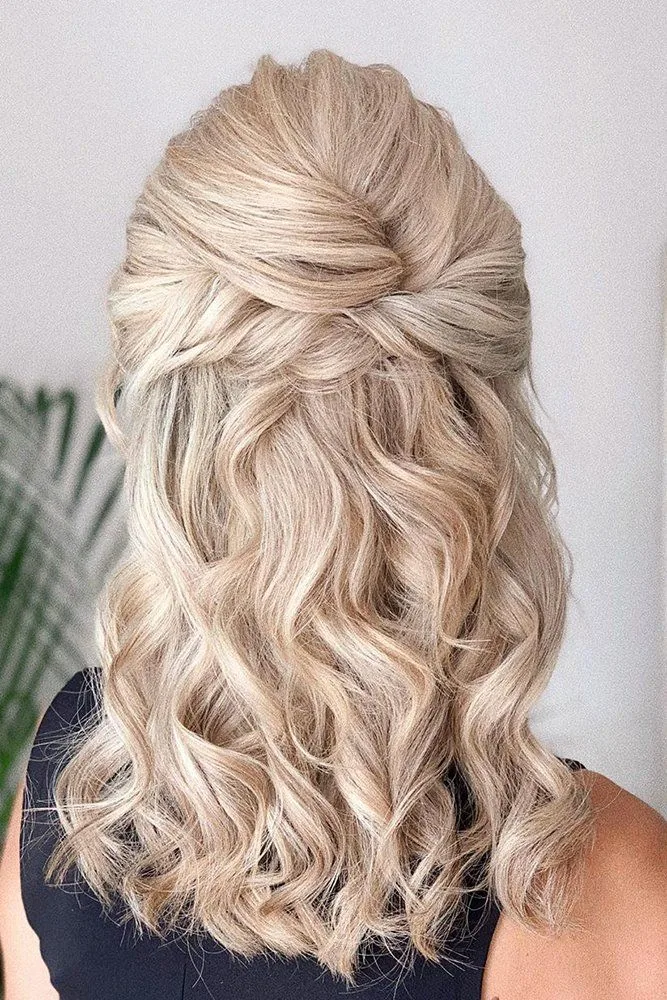
The wavy lob — a long bob, cut to the collarbone, with soft waves through the lengths — is one of the most flattering styles in this guide, and one of the most popular for mothers of the bride. It is long enough to feel like long hair, short enough to hold its shape all day, and the waves give it movement and softness that a straight lob lacks. It frames the face, it shows off the shoulders, and it suits almost every dress and every venue. It is the style for a mother who wants to look modern and relaxed, without committing to an updo or to very long hair.
It takes 30 to 40 minutes, with the waves created by a large-barrel iron or a round brush, and brushed out for softness. The waves will relax over the evening, becoming a softer version of themselves, which is fine. A texturising spray will help the waves hold, and a quick refresh with the iron before the evening — if your stylist is staying on — will restore them. The style needs no pins, it is comfortable, and it works with a fascinator or a small comb. Its only weakness is wind, which can tangle the waves outdoors, so a light serum on the ends helps. For many mothers, the wavy lob is the easiest decision in this guide.
38. The Curly Lob
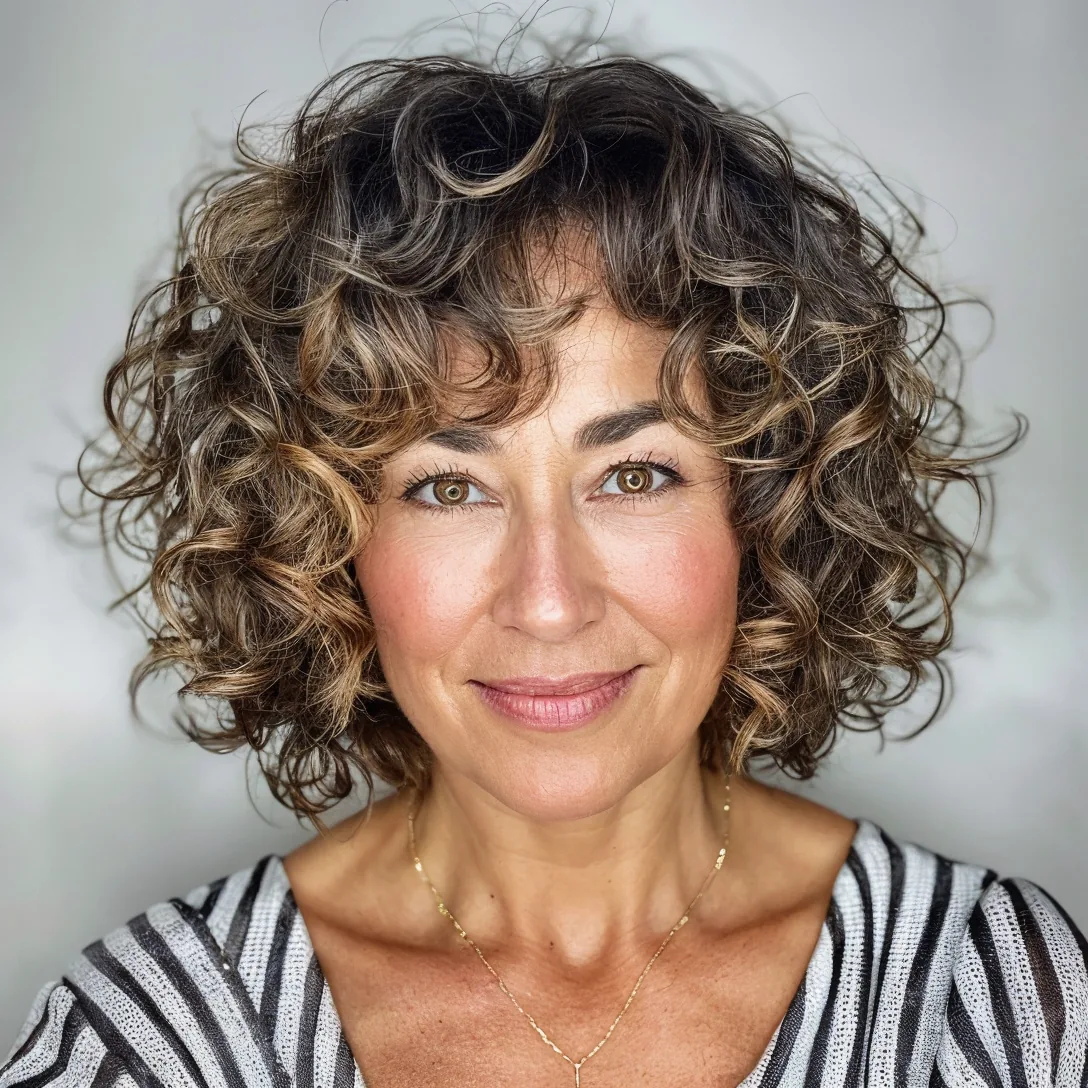
The curly lob is a long bob worn with natural curls, and it is a joyful, confident style for a mother with curly hair. The curls give the lob volume, texture and movement, and the length — just past the chin, to the collarbone — keeps the curls from becoming too heavy or too wide. It frames the face beautifully, it needs no heat styling, and it photographs with a lively, natural quality. It is the style for a mother who has embraced her curls and wants them to be the feature, not something to be smoothed away for the occasion.
It takes about 20 to 25 minutes, with a curl cream on damp hair and a diffuser to define the curls. The style holds well through the day, because curls have natural grip, and it needs almost no maintenance — a curl refresh spray for the evening is enough. The main job is frizz control, especially in humidity, so a smoothing cream and a light oil on the surface will keep the curls defined. A fresh trim a week before, with the layers shaped to the curl pattern, will make all the difference. It is comfortable, it dances well, and it is one of the most honest styles in this guide — it looks like the woman wearing it, only more polished.
39. The Fascinator-Friendly Updo
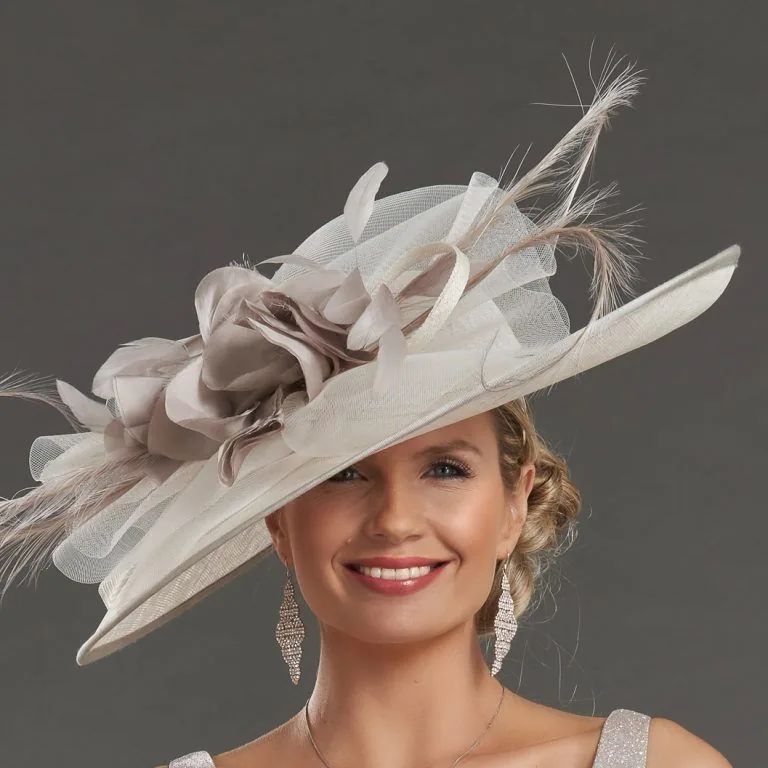
The fascinator-friendly updo is designed around the headpiece: a smooth, low updo with a flat, stable section at the side where the fascinator pins in securely, and a clean silhouette that lets the fascinator be the feature. It is usually a low chignon or a smooth twist, with the hair on the fascinator side kept sleek and flat, so the headpiece sits straight and does not slip. It is the practical choice for a mother who has fallen in love with a fascinator and wants to be sure it will stay put from the ceremony to the last dance — and it will, because the style was built for it.
It takes 35 to 45 minutes, and the trial is non-negotiable: bring the fascinator, wear it for the whole trial, and check it in the mirror from every angle, including from above. The updo itself holds well, and it needs almost no maintenance. The one thing to watch is weight — a heavy fascinator will pull, so choose a light one, and ask your stylist to pin it through the hair, not just onto it, with two pins crossed for security. If the fascinator is large, keep the updo simple, so the two do not compete. This is a style where the planning pays off: a fascinator that sits perfectly all day is worth every minute of the trial.
40. The Elegant French Roll
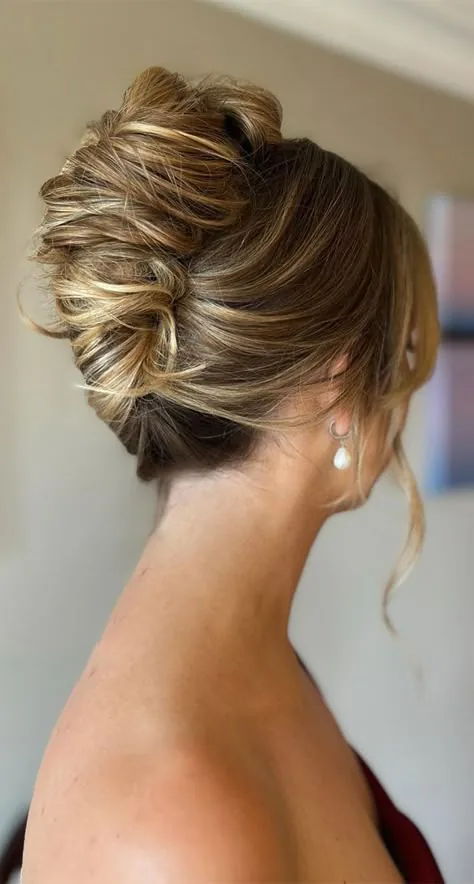
The elegant French roll is the French twist’s softer sister: the hair is rolled up the back of the head into a smooth, vertical shape, but the finish is a little looser, a little more textured, and a little less sculpted than a classic twist. It has the same lengthening, elegant silhouette, but it feels more modern and more wearable. It suits a formal wedding, a mother who loves vintage style, and a dress with a high neckline or a detailed back. It is a style with history — it has been worn to weddings for generations — and it still looks right, because its lines are timeless.
It takes 40 to 50 minutes, and it needs a skilled hand and a trial, like the French twist. Once it is in, it holds superbly, but it can feel tight if it is pinned too firmly, so speak up at the trial if it pulls. A softer roll, with a little volume at the crown and one tendril at the face, is often the better choice for a mother who wants the elegance without the severity. Carry spare pins, and you will probably not need them. The French roll is a style for a mother who wants to look like the most elegant woman in the room, without looking like she tried too hard — and that is a very good description of the mother of the bride.
41. The Classic Updo with Pearl Pins
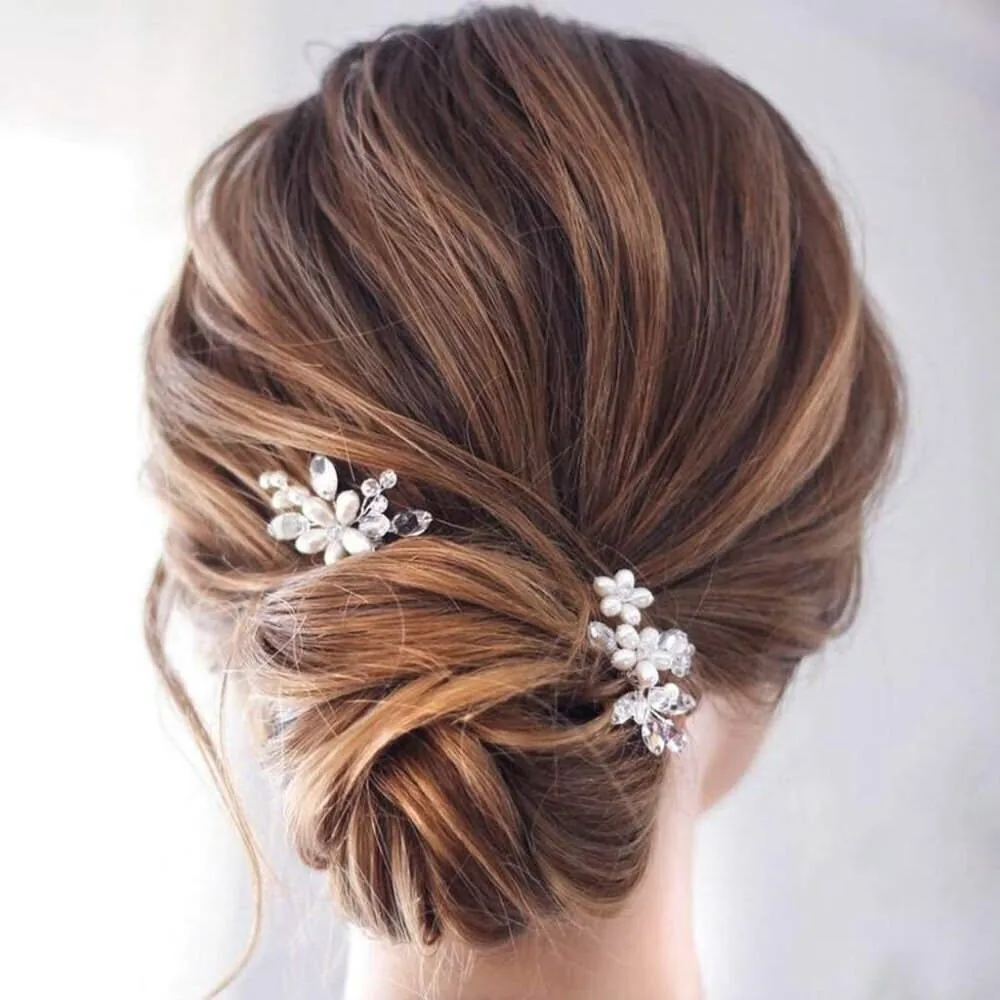
The classic updo with pearl pins is the final style in this guide, and it is the simplest idea here: a beautiful updo — a chignon, a low bun, a soft twist — finished with a few small pearl pins scattered through it. The pearls catch the light as the mother moves, they give the updo a bridal, almost regal feeling without ever looking bridal, and they work on every hair colour. They glow against dark hair, they shimmer against blonde, and they look exquisite against silver. It is the finishing touch that turns a good updo into a wedding updo, and it takes about a minute to do.
The updo itself takes 30 to 40 minutes, and the pearls take a minute more — which is the point. The trick is restraint: five or six small pins, spaced out along the updo, look expensive; a whole string of them looks like a costume. Pin them through the hair, not just on top of it, so they stay put through the dancing. The style holds all day, and it needs almost no maintenance — a single check of the pins before the evening is enough. If you choose only one accessory for the wedding day, make it pearl pins. They are the mother of the bride’s best friend: simple, elegant, and impossible to get wrong.
What hairstyle is best for the mother of the bride?
The best mother of the bride hairstyle is an elegant updo, a soft half-up style, or a polished bob — whichever suits your hair length, your dress and your comfort. A classic chignon or a soft romantic updo suits most mothers and most weddings, because it holds all day, photographs beautifully from every angle, and shows off the dress and the jewellery. Choose the style you feel most like yourself in, and test it at a trial run four to six weeks before the wedding.
Should the mother of the bride wear her hair up or down?
Most mothers of the bride wear their hair up or half-up, because an updo holds for twelve hours, stays out of the face for photographs and speeches, and will not wilt in heat or humidity. Hair worn fully down can look wonderful — long soft waves or a polished blowout — but it is harder to keep fresh all day, especially outdoors. If you love wearing your hair down, choose a half-up style as a compromise, or ask your stylist for a strong set and a plan for a mid-evening refresh.
What is a good mother of the bride hairstyle for short hair?
A classic bob, a sleek bob, a layered bob with volume, an elegant pixie, or a short curly crop are all excellent mother of the bride hairstyles for short hair. Short hair needs almost no pinning, it cannot fall down, and it photographs with crisp, clean lines. Finish it with a fresh trim a week before the wedding, a smooth blow-dry with volume at the roots, and one elegant accessory — a pearl pin, a small comb or a fascinator.
What is a good mother of the bride hairstyle over 50?
A classic chignon, a French twist, a soft romantic updo, a polished bob, or a natural silver updo are all beautiful mother of the bride hairstyles over 50. The key is softness around the face — a little volume at the crown, a few face-framing pieces, and a finish that is polished rather than severe. Silver hair photographs beautifully, so a shine treatment a few days before the wedding will make it gleam. Choose the style that feels like you, not the style you think your age requires.
Should the mother of the bride match the bride’s hairstyle?
No, the mother of the bride should not match the bride’s hairstyle. Share a mood, not a style: if the bride wears a romantic low bun, the mother might choose a polished chignon or soft half-up waves in the same relaxed spirit, rather than the identical bun. Talk about it together before the trial, and coordinate through accessories — a pearl pin or a small fascinator while the bride wears a veil — so the two looks feel connected without competing.
How do I make my mother of the bride hairstyle last all day?
To make a mother of the bride hairstyle last all day, start with day-old hair, add dry shampoo at the roots and texturising spray through the lengths, and ask your stylist to pin the style at intervals along its length, not just at the ends. Pack a small kit with bobby pins in your hair colour, a travel-size hairspray and a small comb, check the style once midway through the reception, and resist touching it — hands are the enemy of a good updo.
When should the mother of the bride have a hair trial?
The mother of the bride should have a hair trial four to six weeks before the wedding. Bring the dress or a photograph of it, the shoes, the fascinator or hat, the jewellery and the glasses you will wear on the day. Wear the style for at least four hours afterwards to test whether it pulls, slips or gives you a headache, and take photographs from the front, the side and the back in daylight and with a flash.
Can the mother of the bride wear a fascinator?
Yes, the mother of the bride can wear a fascinator — it is the classic mother-of-the-bride finishing touch. Choose a small, light fascinator rather than a large hat, bring it to the trial, and wear it for the whole trial session so you can feel whether it pulls or slips. A fascinator sits best on a smooth, fairly flat section of hair, such as a sleek side part, a low chignon or a polished bob, because it needs a stable base to pin into.
What hairstyle suits the mother of the bride with glasses?
A mother of the bride with glasses suits a style with soft face-framing pieces, because the pieces sit in front of the frames rather than competing with them. Keep the sides soft, avoid a heavy fringe that fights the top of the frames, and try the style on with the glasses you will actually wear on the day. A very tight, scraped-back updo can make glasses look severe, so ask for a little softness at the front.
What should the mother of the bride avoid in her hairstyle?
The mother of the bride should avoid a brand-new hair colour or a dramatic cut in the weeks before the wedding, a style she has never tried before without a trial run, and anything that reads bridal on its own — a full flower crown, a veil-like headpiece or a tiara. She should also avoid a style that pulls, pinches or needs constant checking, because discomfort shows in the photographs. Choose the simpler version of the elegant style you love, and test it at the trial.
Conclusion
The mother of the bride’s hairstyle is not the star of the wedding — her daughter is — but it is in almost every photograph, and it deserves the same care as the dress. The best styles in this guide share three things: they are elegant without being severe, they are comfortable enough to wear for twelve hours, and they look like the woman wearing them. Whether that is a classic chignon, a soft romantic updo, a polished bob, a silver updo or long soft waves, the right choice is the one that lets a mother walk down the aisle, greet a hundred guests, give a speech and dance until midnight without once worrying about her hair.
Start with the dress and the venue, talk to your daughter about the mood you want to share, and book a trial four to six weeks before the day. Wear the style for a full afternoon, look at the photographs, and trust what you see. The mother of the bride has spent years making her daughter feel beautiful — on the wedding day, she deserves to feel beautiful herself. Choose the style that does that, and then forget about your hair entirely. The day is for dancing.