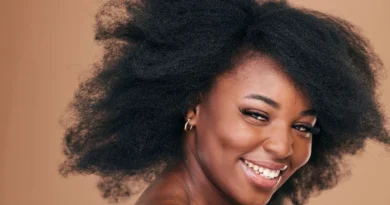
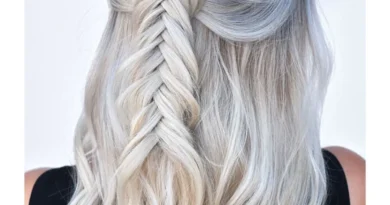
Taming the Cowlick: 33 Hairstyles for Women With a Cowlick That Work With the Swirl, Not Against It
A cowlick is not a flaw in your hair — it is a growth pattern, a small patch where the hair grows in a different direction from the rest, usually in a swirl or a stubborn tuft that sticks up no matter how carefully you brush it down. Almost everyone has at least one, most commonly at the front hairline, the crown, the nape, or right where the parting sits, and it has been there since birth: the direction your hair grows is decided by the follicles under the skin, not by anything you did wrong with a brush or a hairdryer. The frustration is real, though. A cowlick can split a fringe in two, lift a section of hair into a little peak, or make a smooth blowout fall apart within an hour — and the usual response, flattening it harder, almost never works, because the hair simply springs back to the direction it grows.
This guide takes the opposite approach: 33 hairstyles for women with a cowlick that work with the swirl instead of fighting it. Some cuts hide the cowlick completely, some styles redirect it so it becomes volume or texture, and some tricks — the wet-hair reset, the right product, a well-placed parting — tame it in minutes. Eight guides explain what a cowlick is, how each cowlick spot behaves, when to cut around it and when to style around it, and which products genuinely help. Every style explains the cowlick fix it uses, who it suits best, and the common mistake to avoid, so you can stop battling your hair every morning and start using the swirl to your advantage.
What a Cowlick Is — and Why It Happens
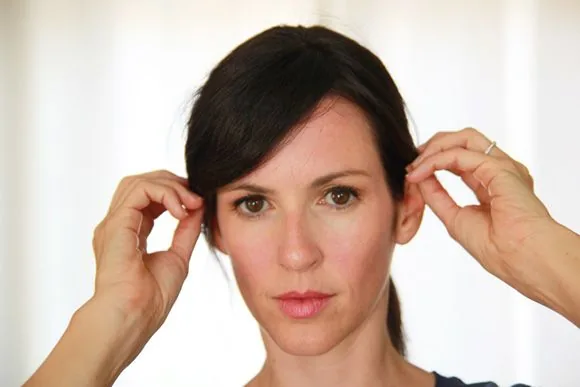
A cowlick is a section of hair that grows in a different direction from the surrounding hair, forming a swirl, a tuft, or a ridge where two growth directions meet. It is caused by the angle of the hair follicles beneath the scalp: most follicles point in one direction, but in a cowlick patch they point another way, so the hair emerges already leaning, twisting or standing up. Cowlicks are completely normal and very common — most people have one or two, and they are present from birth, which is why the same stubborn tuft has probably followed you since childhood photographs. They are not caused by brushing, sleeping on wet hair, or wearing a ponytail too tightly, though all of those things can make an existing cowlick look worse on a given day.
The reason a cowlick is so hard to flatten is that the hair is not misbehaving — it is growing exactly as its follicle directs. Brushing it flat only bends the hair shaft temporarily; as soon as the hair dries, cools, or gets a little humidity, it springs back toward its natural direction. That is why the most reliable cowlick fixes work with the growth direction rather than against it: cutting the hair so the swirl falls into the shape of the cut, training it while wet when the hair is most pliable, or using enough weight, texture or product to redirect it. Once you know where your cowlick sits and which direction it grows, you can choose a style that makes the swirl invisible — or even turns it into volume. The rest of this guide is about doing exactly that, spot by spot.
Cowlick Spots: Hairline, Crown, Nape and Parting — What Each One Needs
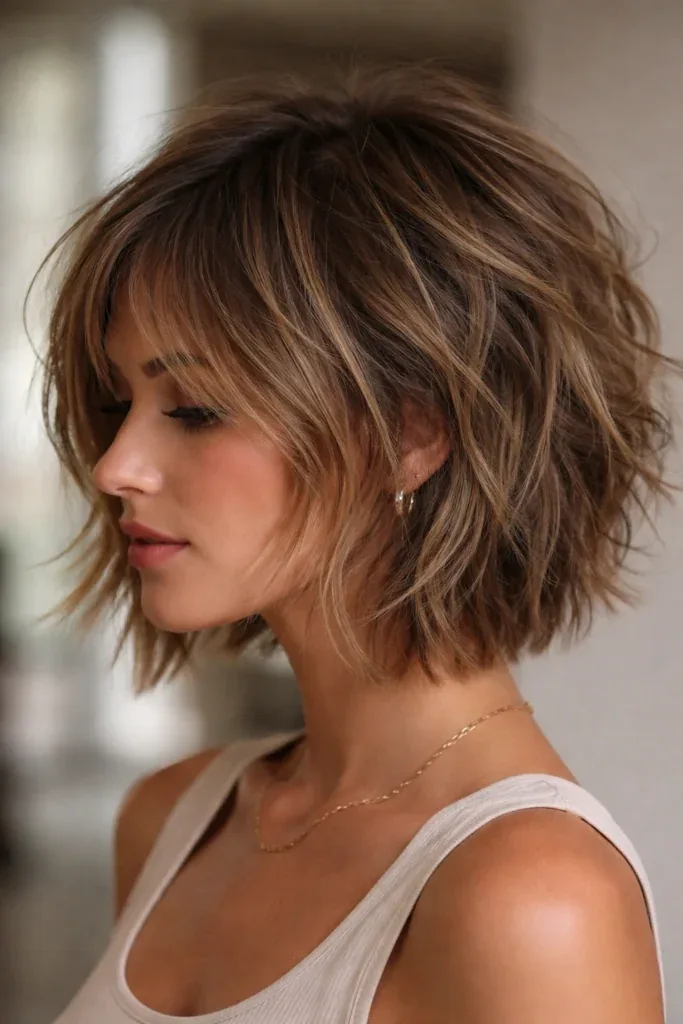
Not all cowlicks behave the same way, because where the swirl sits decides what it does to your style. A cowlick at the front hairline is the most visible: it splits a fringe, pushes a section of hair forward into a peak, or makes one side of a fringe fall differently from the other. A cowlick at the crown is the one that creates the little tuft at the back of the head, the section that sticks straight up in photographs and refuses to lie flat under a hat. A cowlick at the nape shows up as a flip or a kink at the bottom of the hair, especially in short cuts and bobs. And a cowlick at the parting makes the hair part itself in a place you did not choose, splitting open wherever the swirl dictates.
Each spot needs a different fix, which is why a single trick rarely solves every cowlick. A hairline cowlick is best handled with a fringe that is cut to fall over it, or a side part that moves the parting away from the swirl. A crown cowlick responds best to length and weight, or to layers that blend the tuft into the rest of the hair, and to the wet-hair trick while the hair is still damp. A nape cowlick is often easiest to hide with a style that has texture or movement at the ends, so the flip reads as deliberate. And a parting cowlick is usually solved by moving the parting itself — a deep side part that follows the swirl’s direction will look natural, while a centre part that fights it will split open all day. Before choosing a style from this guide, find your cowlick, note its spot and its direction, and then pick the sections written for that spot.
Cutting a Cowlick vs Styling Around It
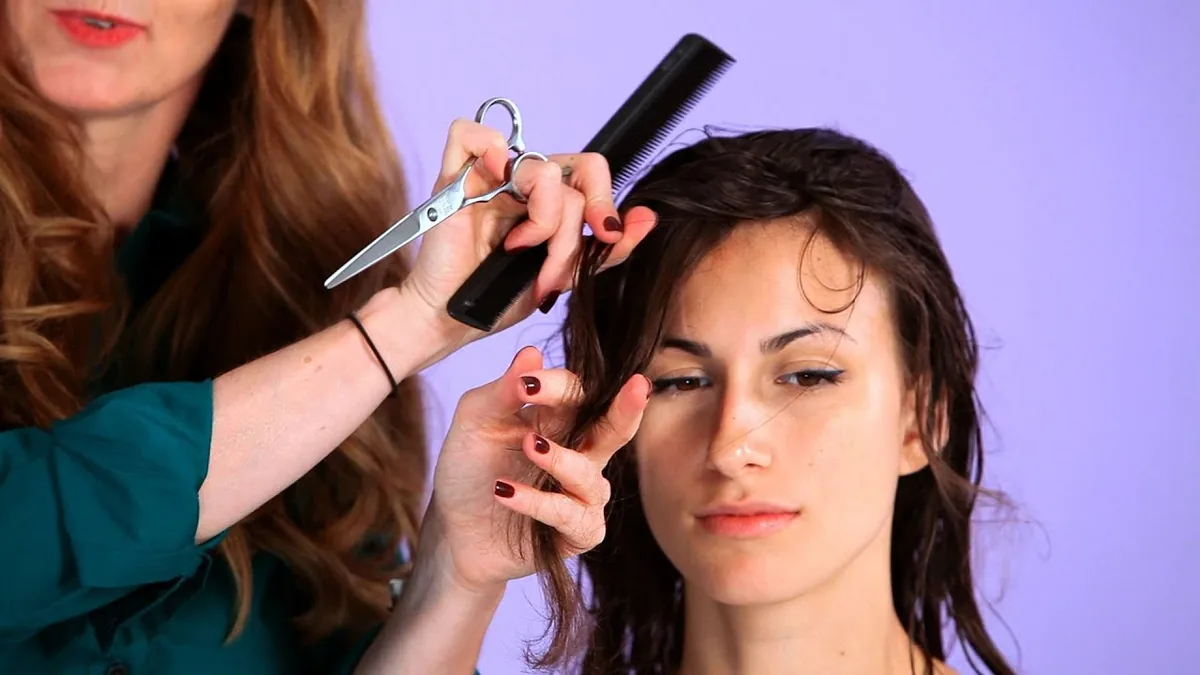
There are two ways to deal with a cowlick, and the best results usually combine both: cut around it, or style around it. Cutting around a cowlick means the stylist shapes the cut so the swirl falls naturally into the silhouette — a fringe cut long enough to weigh the swirl down, layers cut so the tuft blends into the surrounding hair, or a shorter section that removes the weight that makes the cowlick flip. This is the long-term fix, because a good cut works every day without effort, but it requires a stylist who can see the cowlick, map its direction while the hair is dry, and cut with the growth pattern rather than against it. Always show your stylist the cowlick on dry, unstyled hair, because a wet cowlick disappears and a cut planned on wet hair will behave differently once it dries.
Styling around a cowlick is the daily fix: the wet-hair reset, a round brush, the right product, or a parting that follows the swirl. Styling is faster and cheaper than a new cut, and it lets you change your mind, but it has to be repeated every wash, and it fails on humid days or after a workout. The smart approach is to use the cut for the heavy lifting and styling for the finishing touches — a cut that accommodates the swirl, plus a two-minute wet-hair routine in the morning. If you are choosing between the two, start with the cut: no amount of styling can rescue a fringe that is cut too short over a strong hairline cowlick, while a well-planned cut can make the cowlick nearly invisible before you even pick up a brush.
The Wet-Hair Trick That Resets a Cowlick
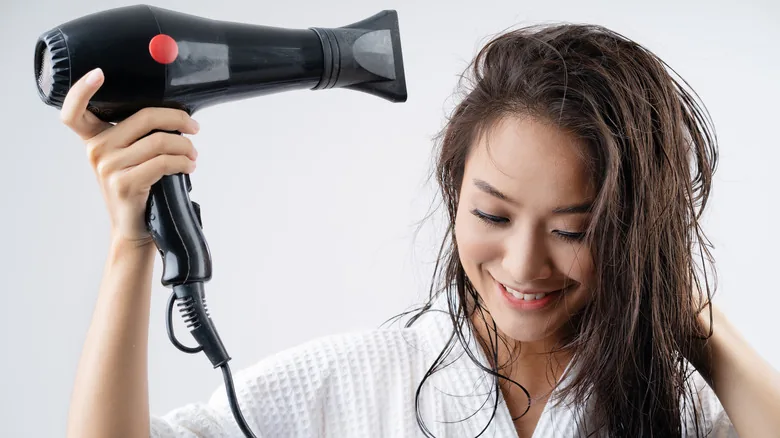
The wet-hair trick is the single most effective cowlick fix, and it costs nothing: hair is at its most pliable when it is wet, because water temporarily breaks the hydrogen bonds that hold the hair’s shape, so a cowlick trained while wet will hold its new direction far better than one forced dry. Start by wetting the cowlick patch thoroughly — not just misting the surface, but soaking the roots until the hair is properly damp — then comb the hair in the direction you want it to go, pressing it flat against the scalp with your fingers or a fine-tooth comb. Hold it there for a few seconds, then blow-dry the patch on a low heat setting while holding it flat, moving the dryer nozzle in the direction you want the hair to lie. The heat sets the new direction as the hair dries, which is exactly what brushing alone cannot do.
The mistake most people make is using too little water and too much heat, or drying the cowlick in the wrong direction and hoping it will stay. Wet the roots properly, use a medium heat and a concentrator nozzle, and keep the hair pressed flat until it is completely dry — a half-dry cowlick will spring back the moment you stop. For a stubborn swirl, add a small amount of styling cream or gel to the damp patch before drying, and finish with a cool shot from the dryer to lock the shape. Some women set the patch overnight with a bobby pin or a small clip while it dries, which works well for a strong crown cowlick. Done properly, the wet-hair reset holds until the next wash — and it takes about two minutes, which is less time than most people spend fighting the same tuft with a brush every morning.
Products That Actually Hold a Cowlick Down
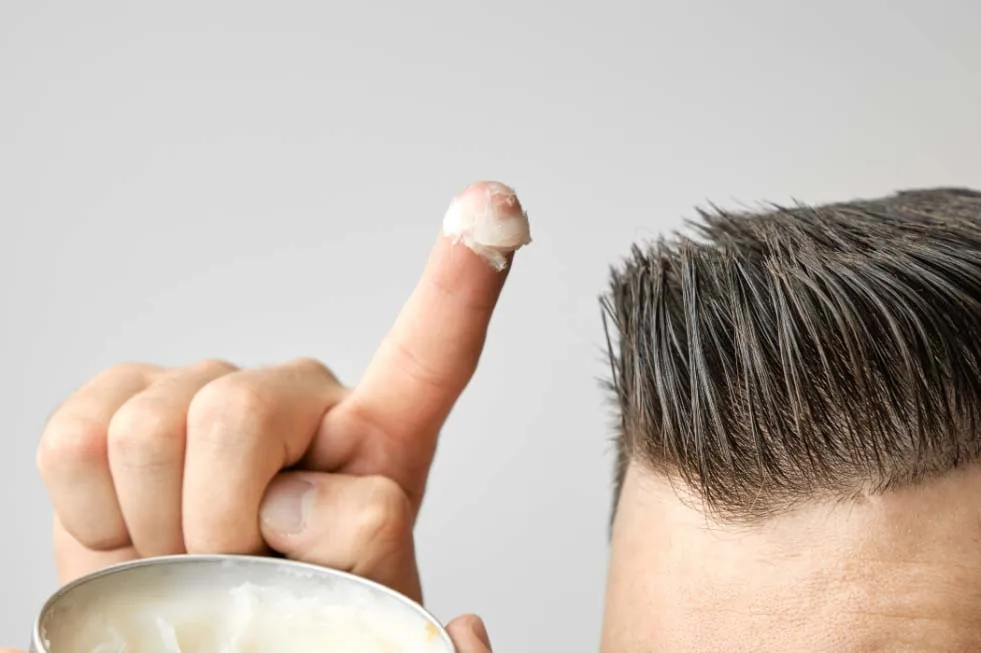
The right product can make the difference between a cowlick that stays put and one that pops back up by lunchtime, but the wrong product makes things worse — heavy wax on fine hair, or a light spray on a strong swirl, will both fail. For most cowlicks, a styling cream or a light pomade is the best starting point: it adds weight and control without stiffness, and it can be worked into the damp cowlick patch before blow-drying so the product sets with the hair. A stronger hold is needed for a thick or wiry cowlick — a matte paste or a firm-hold pomade, applied to the roots of the patch only, will anchor the swirl without making the rest of the hair greasy. And a flexible-hold hairspray, misted lightly over the finished style, locks the patch in place while still letting the hair move naturally.
What to avoid is just as important. Avoid heavy oils and silicone serums on the cowlick itself, because they make the hair slippery and the swirl slides back to its natural direction. Avoid applying product to dry hair and expecting it to retrain the cowlick — product works best on damp hair, before the hair sets. And avoid overloading: a pea-sized amount worked into the roots is enough, and more product usually means a greasy patch rather than a flatter one. For fine hair, a volumising mousse applied at the roots gives the patch lift and direction at the same time, while for thick hair, a smoothing cream tames the flyaways around the swirl so it reads as texture rather than chaos. The product is not the fix on its own — it is the finishing layer on top of the wet-hair reset and a cut that works with the swirl.
Cowlicks on Short Hair vs Long Hair
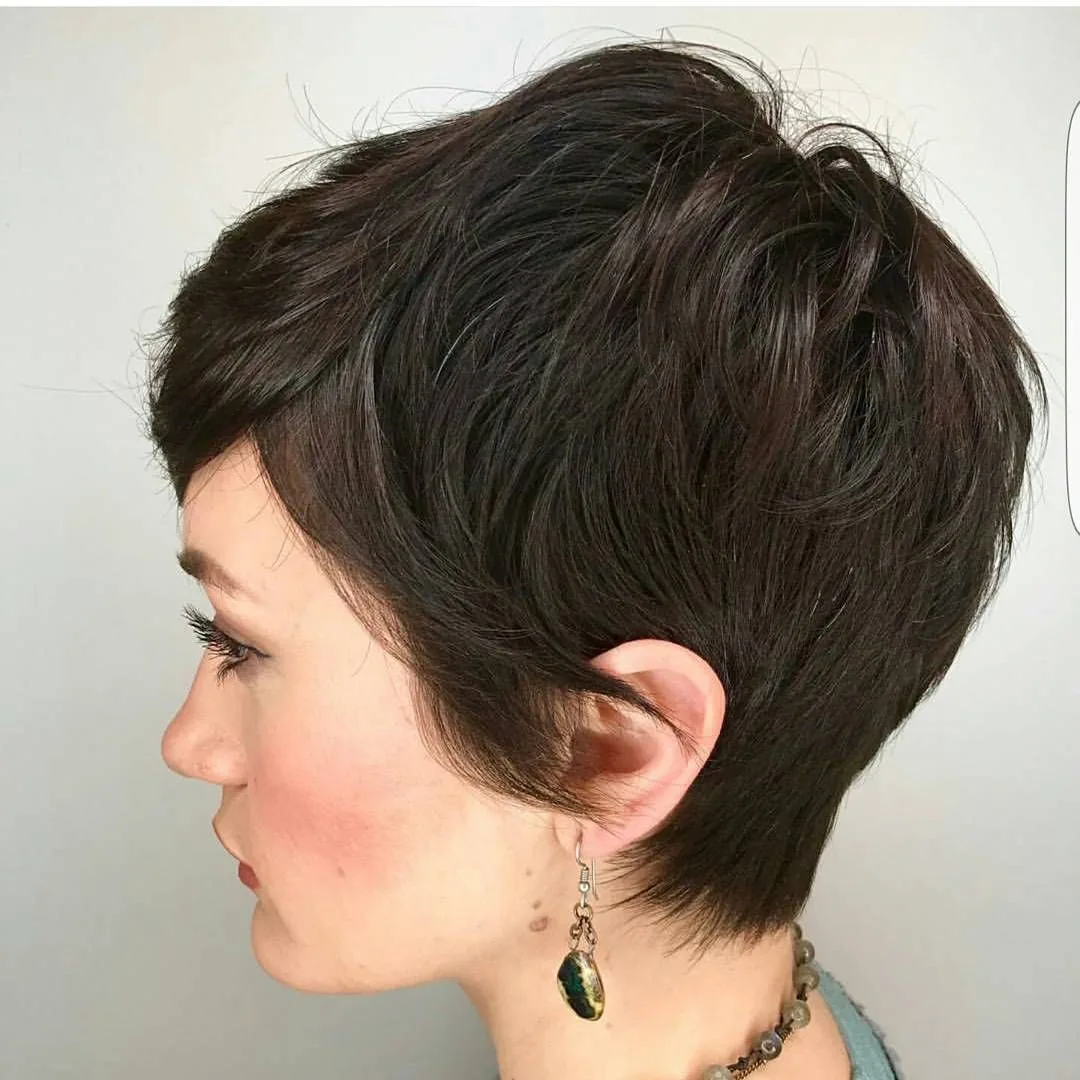
Short hair makes a cowlick more visible, because there is less length and weight to pull the swirl down, and a tuft that would disappear into long layers will stick straight up from a pixie or a short bob. That does not mean short hair and cowlicks are incompatible — it means the cut has to be planned around the swirl. A textured pixie works beautifully, because the choppy layers turn the cowlick into deliberate texture and volume, and the stylist can cut the swirl shorter so it blends into the crop. A short bob with a side part is another good option, because the parting moves away from the swirl and the weight of the bob’s ends pulls the hair down. What fails on short hair is a cut that ignores the cowlick: a blunt fringe cut straight across a strong hairline swirl will split in two within an hour, and a slicked-back short cut will lift at the crown where the cowlick lives.
Long hair is more forgiving, because length and weight naturally pull a cowlick down, and the swirl can be hidden inside layers, waves, or a fringe. A crown cowlick disappears into long layers, a hairline cowlick hides under a long side-swept fringe, and a nape cowlick is invisible in a long ponytail or a low bun. The trade-off is that long hair needs more effort to train the cowlick in the morning — more hair to wet, more to dry — and a long fringe over a cowlick needs regular trims or it grows out and starts flipping. Medium hair sits in the middle: long enough for the weight to help, short enough to style quickly, and the most versatile length for cowlick-friendly cuts. Whatever your length, the rule is the same — the cut should follow the swirl, and the styling should finish what the cut started.
Cowlicks on Curly and Wavy Hair
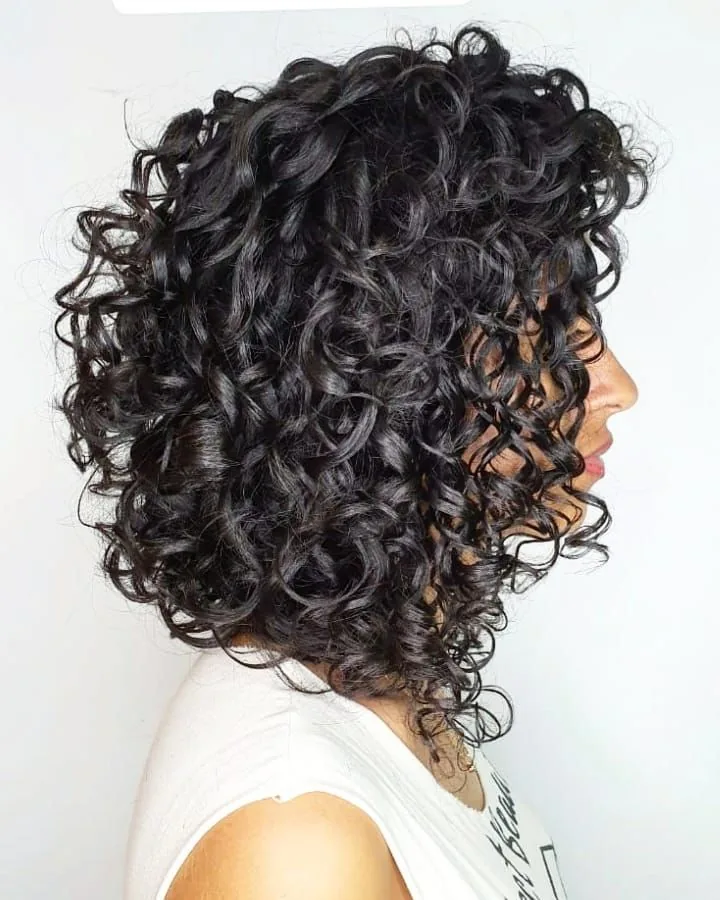
Curly and wavy hair has a complicated relationship with cowlicks: the natural texture hides a swirl far better than straight hair does, because a cowlick in a head of curls just looks like another curl, but the swirl can also disrupt the curl pattern, creating a section that curls in a different direction or sticks out at an odd angle. The good news is that curly hair rarely needs a cowlick to be flattened — it needs the cowlick to be blended. A curly bob with layers cut to follow the curl pattern lets the swirl join the surrounding curls, and a long curly cut with face-framing layers turns a hairline cowlick into a natural, face-framing curl. The key is to cut curly hair dry, curl by curl, so the stylist can see exactly where the swirl sits and how each curl falls.
Styling a cowlick on curly hair is mostly about not fighting the texture. Wet the patch, apply curl cream or gel, and scrunch the cowlick in the same direction as the surrounding curls, then let it air-dry or diffuse on a low setting — forcing a curly cowlick flat with a brush will only create frizz and a halo of flyaways. Avoid brushing curly hair dry, because it breaks up the curl pattern and makes the cowlick stand out as a fuzzy tuft. If one section keeps sticking out, a single bobby pin tucked into the curl while it dries will train it without flattening the rest of the hair. And remember that a cowlick on wavy hair can be an advantage: the swirl adds natural lift at the crown, which is exactly the volume most women with straight hair try to create with a round brush.
When to Ask a Stylist to Cut Around Your Cowlick
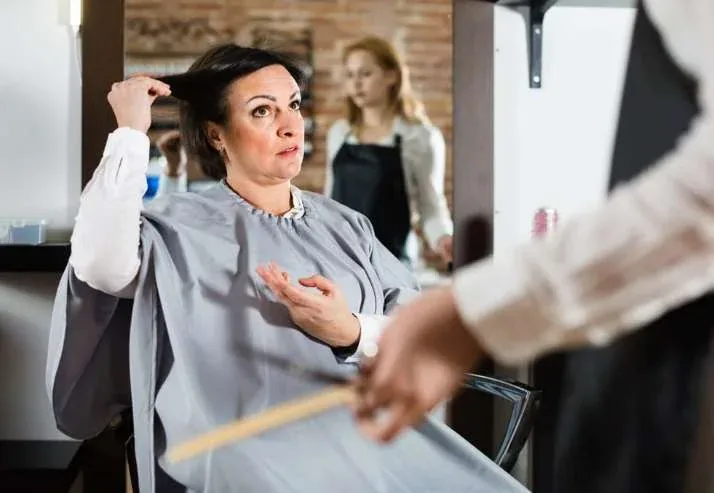
You should ask a stylist to cut around your cowlick when the swirl keeps defeating your styling routine — when the fringe splits every day, the crown tuft pops up in every photograph, or you have stopped wearing a style you love because of one stubborn patch. A good stylist will start by looking at your hair dry and unstyled, finding the cowlick, and mapping its direction with their fingers before they pick up the scissors. Bring photographs of the styles you want, but also be honest about how much time you spend styling in the morning, because a cut that needs twenty minutes of blow-drying every day is not a solution for someone with five minutes. Ask the stylist to show you how the cut works with the cowlick, and to teach you the two-minute wet-hair reset for your specific spot.
There are a few phrases that help in the chair. Tell the stylist where the cowlick is and which direction it grows, ask them to cut the fringe longer over a hairline cowlick so it has weight, and ask for layers that blend a crown cowlick rather than a blunt line that exposes it. If you want a fringe, ask whether a side-swept or curtain fringe suits your swirl better than a straight one — for most hairline cowlicks, it does. And if a stylist dismisses the cowlick or says it will be fine once the hair is styled, consider that a warning sign: a stylist who cannot see the growth pattern on dry hair is likely to cut against it. The right stylist treats the cowlick as part of the haircut, not as an afterthought, and the result is a cut that works on a bad hair day, not just on the day you leave the salon.
1. The Side-Swept Fringe That Covers a Front Cowlick
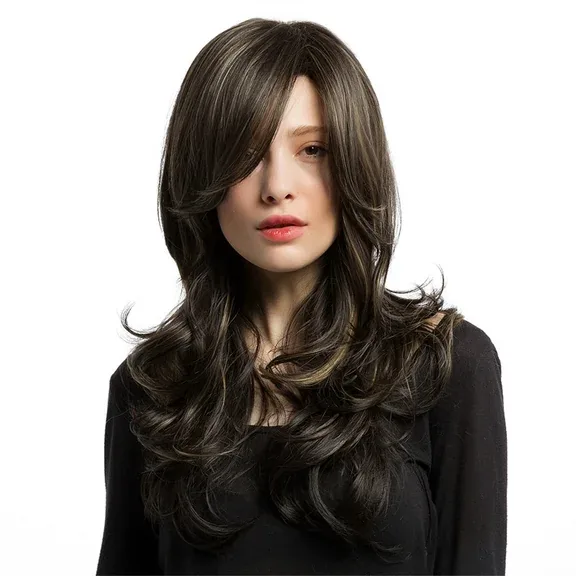
The side-swept fringe is the classic fix for a front hairline cowlick, and it works because it never asks the swirl to do something it cannot do. Instead of cutting a straight fringe that the cowlick will split in two, the fringe is cut long — falling to the cheekbone or the jaw — and swept to one side, so the cowlick sits underneath the weight of the fringe and the sweep follows the swirl’s own direction. The hair over the cowlick is long enough to lie flat under its own weight, and the diagonal line of the sweep looks deliberate and flattering, softening the forehead and drawing the eye across the face rather than to the spot where the swirl lives.
The cowlick fix here is weight plus direction: ask for the fringe to be cut on the side the cowlick already leans toward, so you are sweeping with the growth, not against it. This suits almost everyone, and it is especially good for women with a strong front cowlick who still want a fringe. The common mistake is cutting the fringe too short — a short side fringe has no weight, so the cowlick lifts it within an hour. Keep it long enough to tuck behind the ear, train it with the wet-hair trick while it is damp, and it will hold all day. If the cowlick is very strong, a slightly deeper side part will help the sweep stay put.
2. Curtain Bangs That Work With a Hairline Swirl
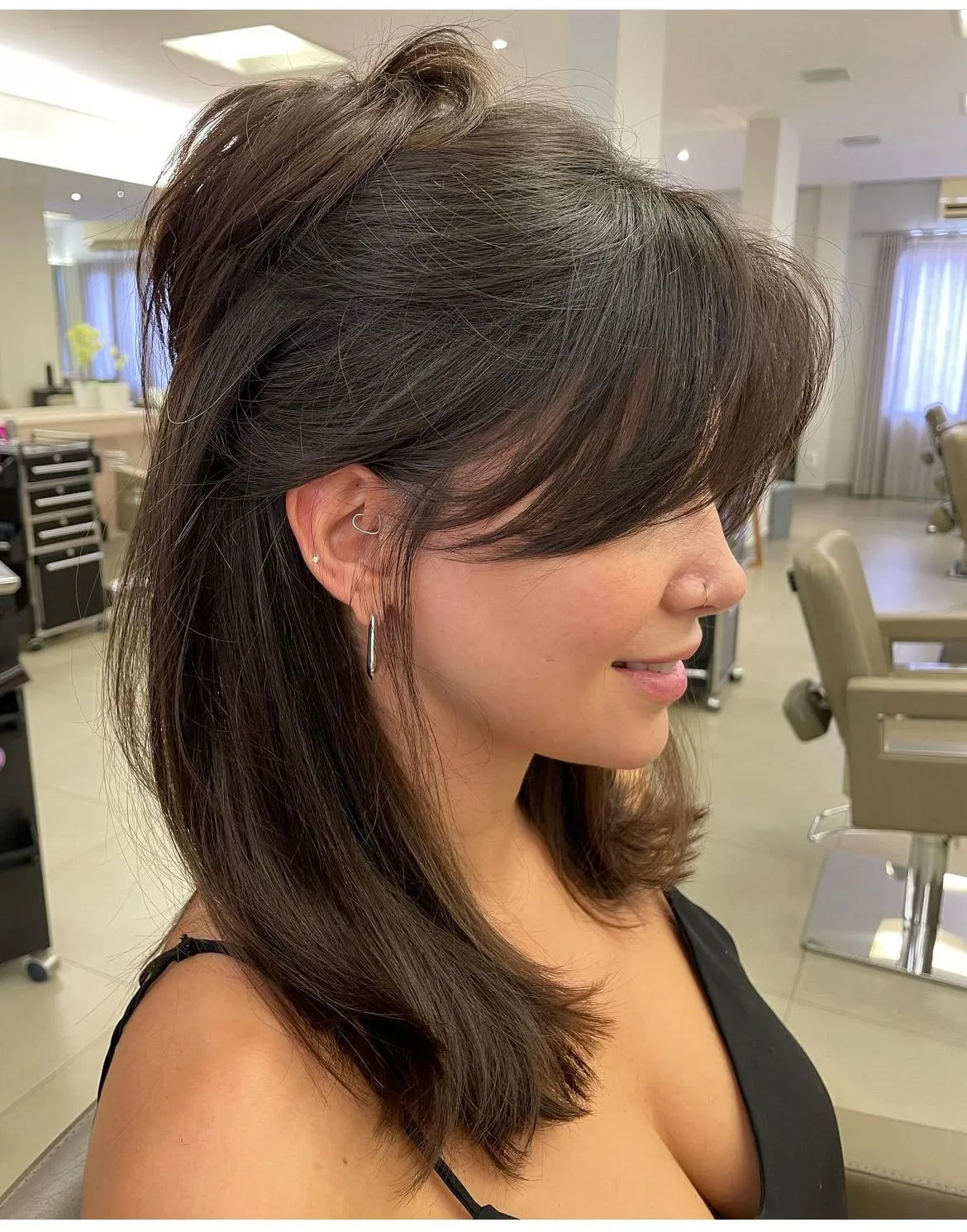
Curtain bangs are a natural ally for a hairline cowlick, because they are already designed to split in the middle and fall to either side — which is exactly what a front cowlick wants to do anyway. Rather than fighting the split, curtain bangs turn it into the style: the fringe is cut longer at the sides and shorter in the centre, parted in the middle, and the two wings frame the face while the cowlick hides in the centre parting where the split is supposed to be. It is one of the few fringes that actually looks better because of a cowlick, not in spite of it, and it suits round, square and heart-shaped faces particularly well.
The fix works best when the centre of the curtain fringe is kept a little longer than usual, so the cowlick has enough length to fall to one side instead of standing up. This style suits women with medium to long hair who want a soft, face-framing fringe without the daily battle of a straight fringe. The mistake to avoid is cutting the centre too short and too blunt — a short, blunt centre will expose the swirl instead of hiding it. Blow-dry the bangs forward and then split them with your fingers while they are still warm, and finish with a light mist of flexible-hold spray. If your cowlick sits off-centre rather than in the middle, shift the parting slightly to match it and the curtain will still fall naturally.
3. The Deep Side Part That Redirects the Swirl
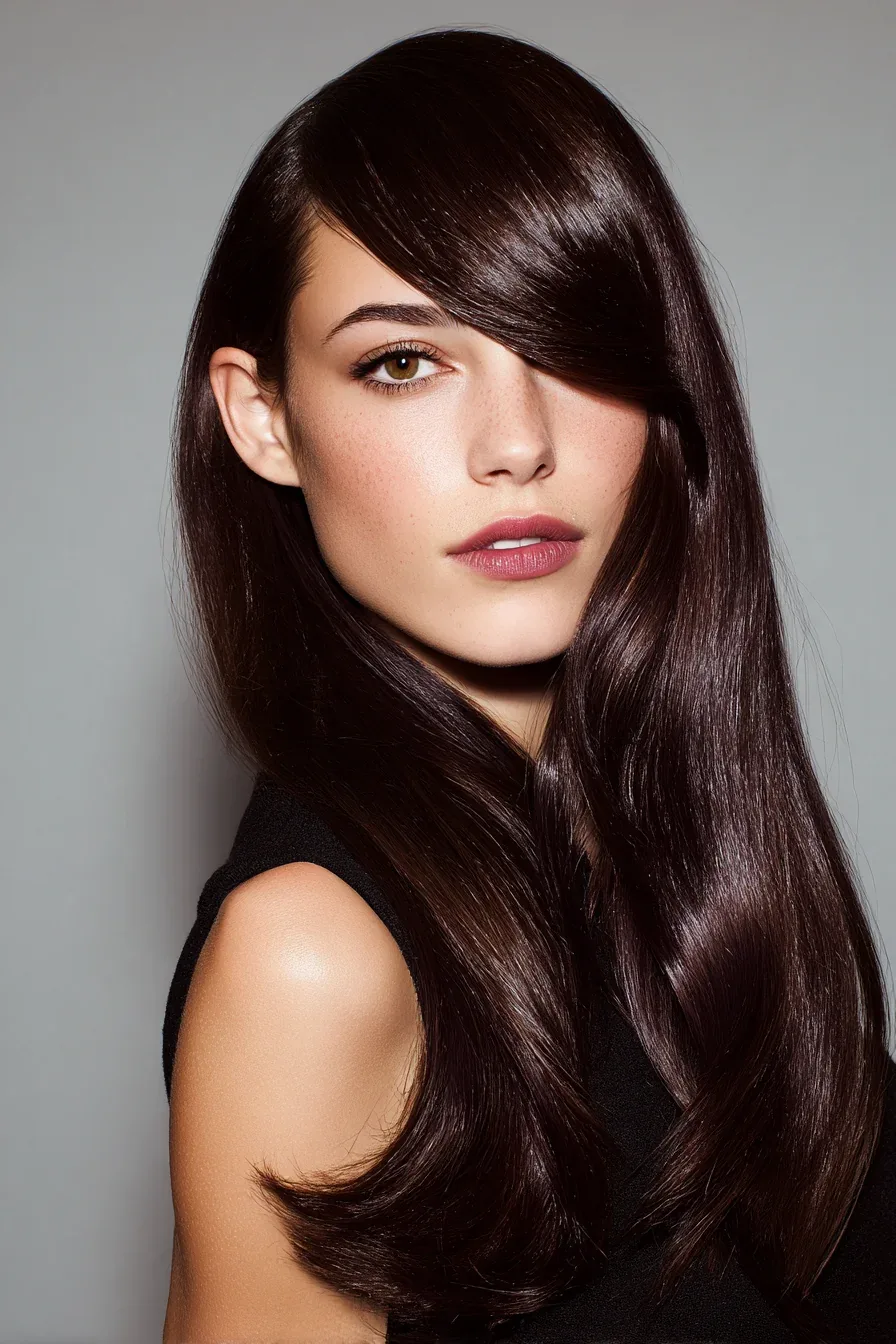
Sometimes the simplest cowlick fix is not a cut at all — it is moving the parting. A deep side part redirects the hair so it flows across the cowlick instead of splitting at it, and because the parting follows the swirl’s direction rather than crossing it, the hair lies flat instead of fighting. Part the hair deeply on the side opposite the cowlick, sweep the heavy side across the forehead, and the cowlick disappears under the weight of the swept hair. The deep part also adds instant volume at the roots, which is a welcome bonus for fine hair, and it gives any style — a bob, long layers, a ponytail — a polished, almost old-Hollywood finish.
This fix suits women whose cowlick sits at or near the parting, and it works on every hair length, from a bob to long hair. The key is to find the parting while the hair is wet: comb the hair back, let it fall where it wants to, and the cowlick will show you where the natural parting sits. The common mistake is forcing a centre part over a parting cowlick — it will split open within the hour, and no amount of spray will hold it. Train the new parting with the wet-hair trick for a few days, and the hair will start to follow it on its own. A deep side part is also the fastest cowlick fix there is: no cut, no product, just a comb and two minutes.
4. A Textured Pixie That Turns the Cowlick Into Volume
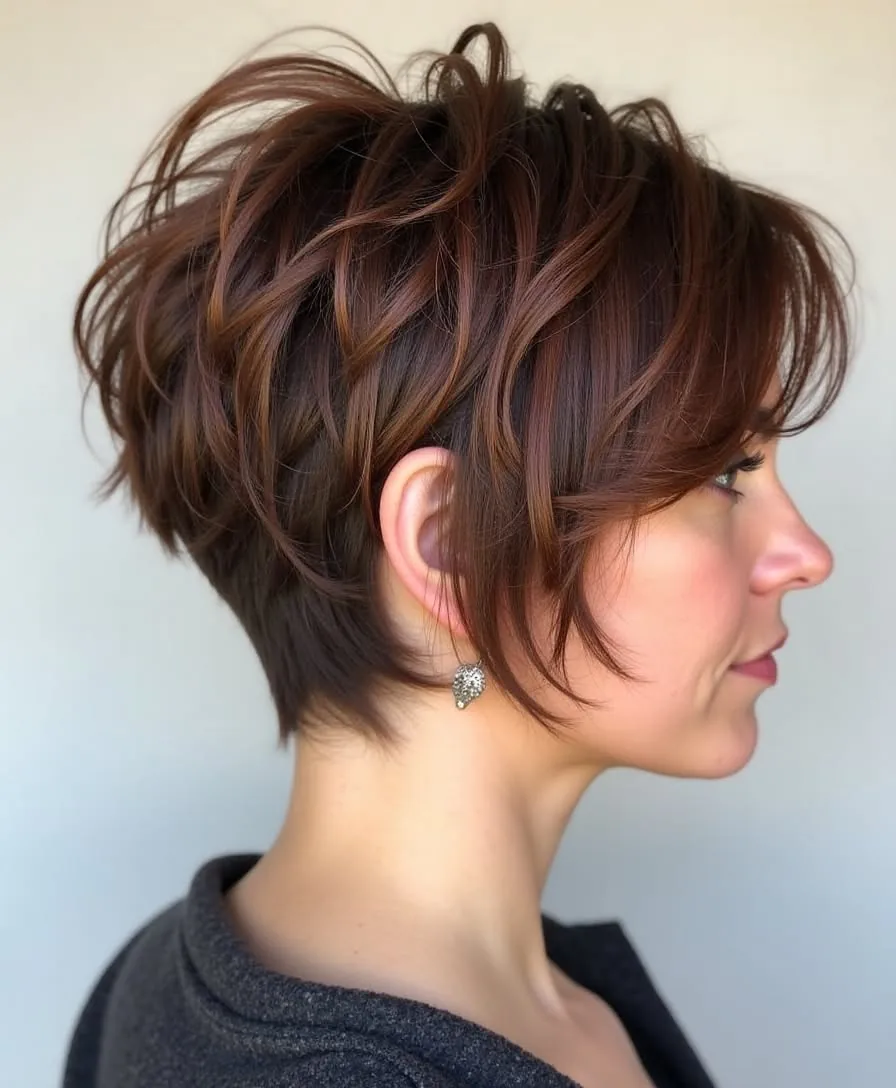
A textured pixie is the short cut that makes a cowlick an asset instead of a problem. The pixie is cut with choppy, piecey layers, so the cowlick’s natural lift reads as deliberate texture and volume at the crown or the front — the exact spot where most pixies need lift anyway. Instead of a smooth, sleek pixie that would expose every swirl, the textured version embraces unevenness: the cowlick becomes one more piece of texture in a cut that is supposed to look a little undone. The stylist can also cut the swirl slightly shorter than the surrounding hair, so it blends into the crop instead of standing above it.
This suits women who like short hair and want a low-maintenance cut — a pixie with a cowlick actually needs less styling than a pixie without one, because the lift is built in. The mistake to avoid is asking for a sleek, flat pixie over a strong cowlick; the two are incompatible, and the swirl will win every morning. Work a pea-sized amount of matte paste through the damp hair, push the crown pieces in the direction you want, and let it air-dry or blow-dry with your fingers. The cowlick gives the pixie its height, the texture hides the swirl, and the whole cut takes five minutes to style. For a double cowlick, a textured pixie is often the best short cut of all, because both swirls become texture.
5. The Layered Bob That Blends a Crown Cowlick
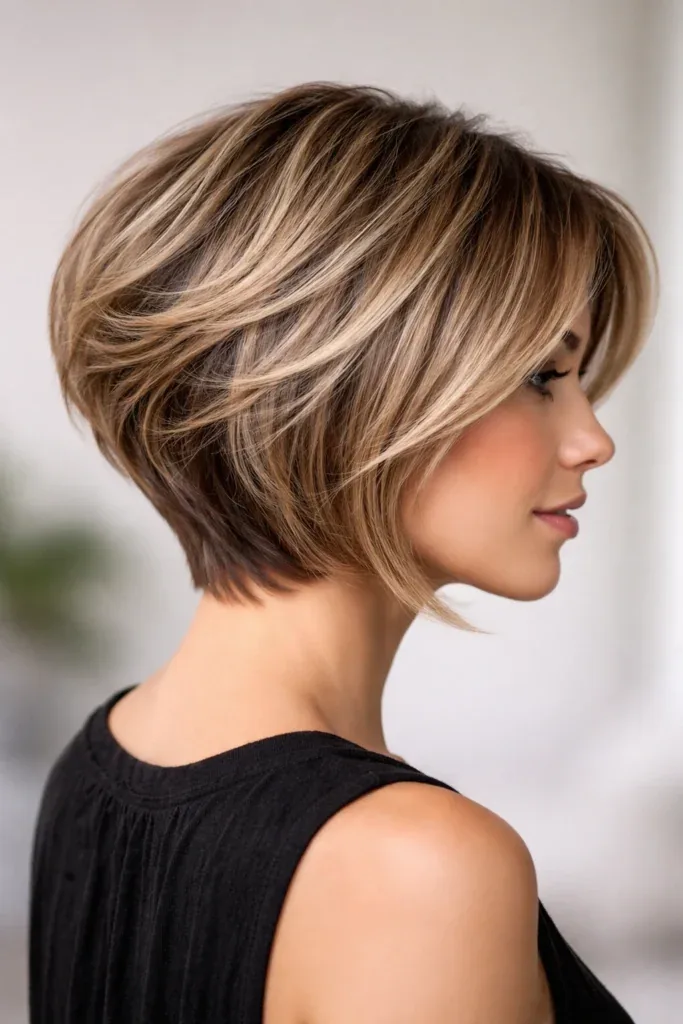
A layered bob is one of the most reliable cuts for a crown cowlick, because the layers do the hiding work for you. The bob is cut with internal layers through the back and crown, so the cowlick tuft falls into a layer instead of sitting on top of a blunt line — the swirl becomes one layer among many, and the eye cannot pick it out. The bob’s weight at the ends also helps: a bob that falls to the jaw or the chin has enough length to pull the crown hair down, while the layers keep the shape light and moving. Ask for the layers to be cut slightly longer around the cowlick itself, so the swirl has neighbours to blend into rather than a sharp step.
This cut suits women with straight or slightly wavy hair and a cowlick at the crown or the back of the head, and it is a good choice if you want a polished cut that still moves. The common mistake is a blunt, one-length bob with no layers: a blunt line across the back will expose a crown cowlick as a visible kink in the silhouette. Blow-dry the crown with a round brush, lifting the roots and directing the cowlick patch forward or to the side, and the layers will fall into place around it. A layered bob also grows out gracefully — as the layers lengthen, the cowlick stays hidden, which means fewer emergency salon visits.
6. Long Layers With a Cowlick at the Crown
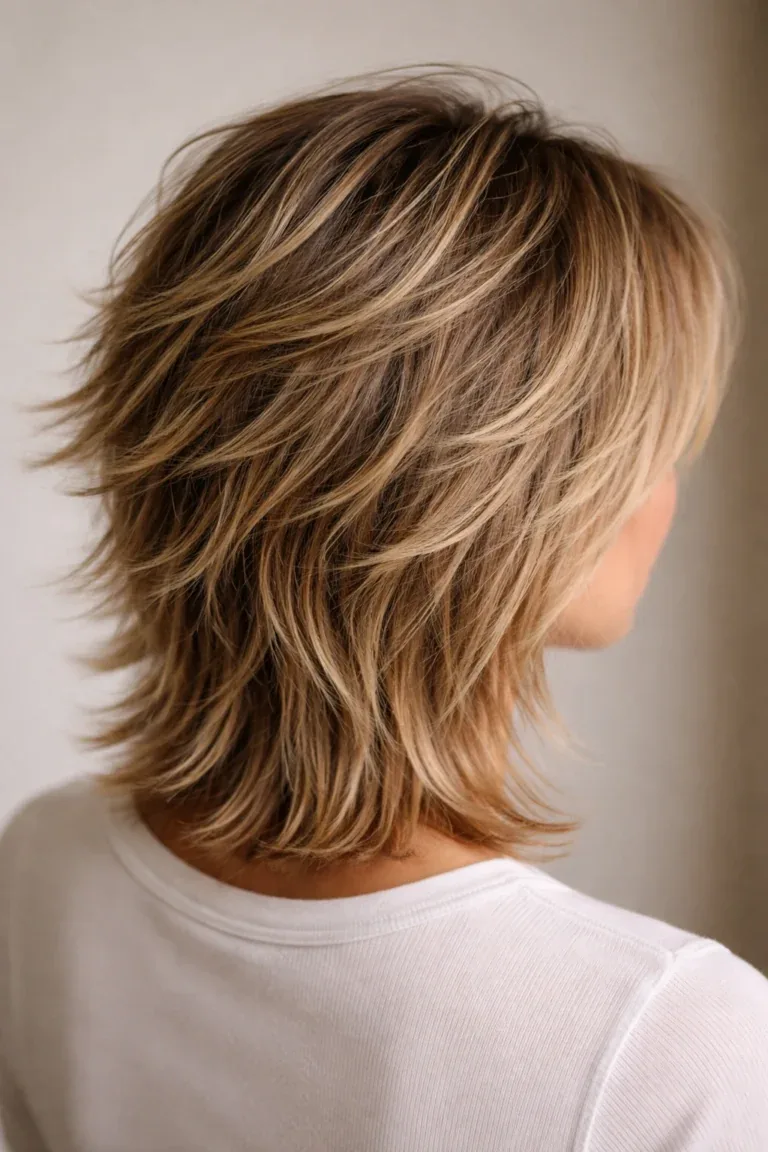
Long layers are the easiest long-hair answer to a crown cowlick, because length and weight are already on your side and the layers finish the job. The hair is cut with long, soft layers starting at the chin or the collarbone, so the crown cowlick sits inside the layering rather than on top of it — the tuft falls between two layers and reads as movement, not as a mistake. The weight of the long hair pulls the swirl down, the layers keep the shape from looking heavy, and the finished style has the soft, flowing silhouette that long hair is loved for. It is also the most forgiving long cut for a cowlick, because even if the swirl pops up on a humid day, it disappears into the layers.
This suits women with medium to long hair who do not want to cut their length to fix a cowlick, and it works on straight, wavy and lightly curly hair alike. The mistake to avoid is cutting the top layers too short: short layers at the crown will spring up with the cowlick and make the tuft worse, not better. Keep the shortest layer at chin length or below, train the crown patch with the wet-hair trick, and use a round brush to direct the roots forward while drying. If the cowlick is very strong, a few hidden, shorter pieces directly over the swirl — cut by a stylist who can see the growth pattern — will weigh it down without changing the overall length.
7. The Shaggy Lob That Hides Every Swirl
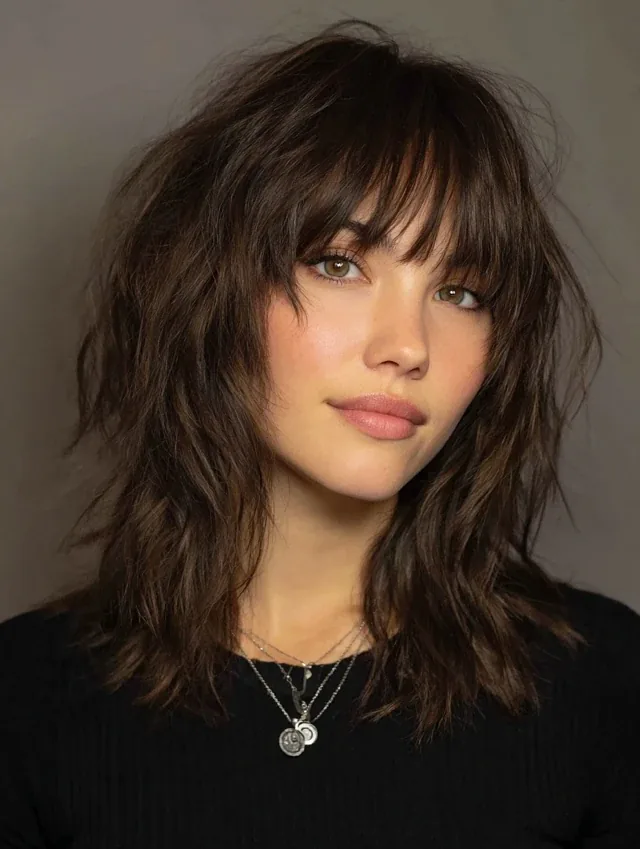
The shaggy lob — a long bob with choppy layers and lots of texture — is the cut that hides a cowlick by making the whole head look intentionally uneven. With layers of different lengths, feathered ends and a slightly messy finish, a cowlick has nowhere to stand out: every section of hair is doing something slightly different, so a swirl at the crown or the hairline simply joins the texture. The lob length, falling between the chin and the collarbone, gives the style enough weight to keep the cowlick down, while the shaggy layers keep it from looking heavy or severe. It is the most forgiving cut in this guide, and the one that needs the least daily effort once it is cut well.
This suits women who like a relaxed, modern cut and do not want to spend twenty minutes styling every morning — a shaggy lob with a cowlick can be scrunched with a little mousse and left to air-dry. The common mistake is over-styling it: blow-drying a shaggy lob smooth defeats the purpose, and the cowlick will show through the smoothness. Let the texture do the work, and use a texturising spray rather than a smoothing serum. The shaggy lob is also a good grow-out cut — as it lengthens, the layers keep the cowlick hidden, so you can go longer between trims without the swirl taking over.
8. Wispy Bangs for a Small Front Cowlick
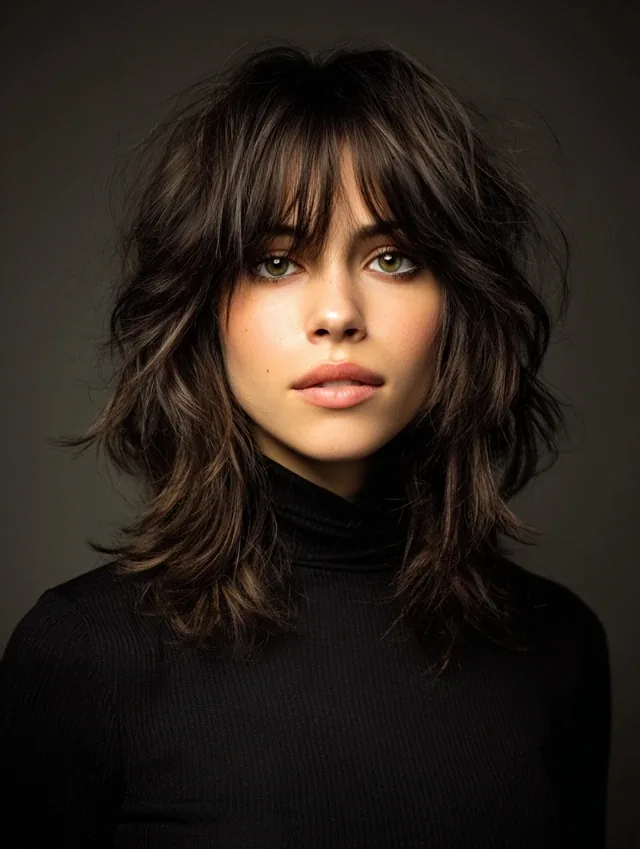
Wispy bangs are the gentle answer to a small front cowlick: a light, feathery fringe that is cut thin enough to fall softly over the swirl without fighting it. Because the bangs are wispy rather than blunt, the cowlick can push one or two strands aside without splitting the whole fringe — the fringe is already made of separate, airy pieces, so a strand that falls differently just looks like part of the design. The bangs are cut to brow length or a little longer, feathered at the ends, and they soften the forehead while hiding the spot where the swirl meets the hairline. It is a pretty, low-commitment fringe for women who want the look of bangs without the daily battle.
This suits women with a mild front cowlick and fine to medium hair, and it works especially well with a bob or long layers. The mistake to avoid is cutting wispy bangs too thick or too short — thick bangs will split like a blunt fringe, and short ones have no weight to hold the swirl down. Keep the bangs light, keep them long enough to reach the brows, and train them with a quick wet-hair press in the morning. A round brush and a low dryer setting will curve the wispy ends under, and a single bobby pin tucked behind the ear on the cowlick side will hold the fringe in place on a windy day.
9. A Blunt Bob With a Hidden Cowlick Fix
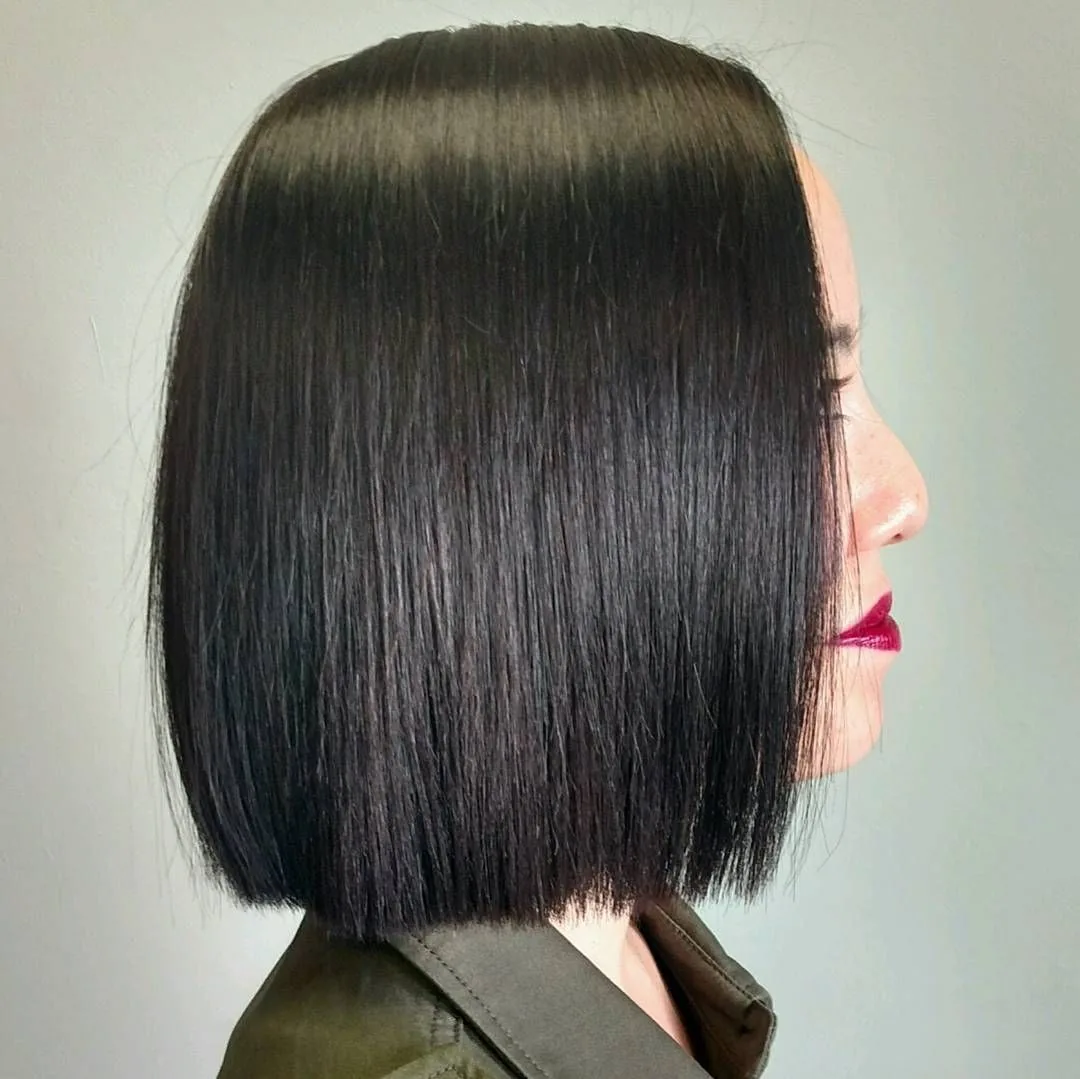
A blunt bob seems like the worst cut for a cowlick — a sharp, clean line that would expose any swirl — but with one hidden adjustment it can work beautifully. The trick is in the undercut: the stylist removes a small amount of weight from the underside of the bob, directly beneath the cowlick, so the swirl has room to sit inside the shape instead of pushing the outer line out of shape. The visible silhouette stays blunt and sleek, but the cowlick is accommodated underneath, like a dart in a tailored jacket. The bob is cut to chin or jaw length, the ends are kept heavy, and the weight of the ends pulls the hair down over the hidden fix.
This suits women who love the polished, graphic look of a blunt bob and refuse to give it up because of a cowlick — and it is worth finding a stylist who understands the undercut, because the fix is invisible and the result looks effortless. The common mistake is a blunt bob cut with no accommodation at all: the cowlick will flip one section of the bob outward, and the clean line will be broken every day. Blow-dry the bob smooth with a round brush, directing the cowlick patch down and under, and finish with a smoothing cream on the ends only. If the cowlick is at the crown rather than the hairline, the same principle applies — a little hidden weight removal at the crown lets the blunt line stay clean.
10. The Slicked-Back Style That Tames a Stubborn Swirl
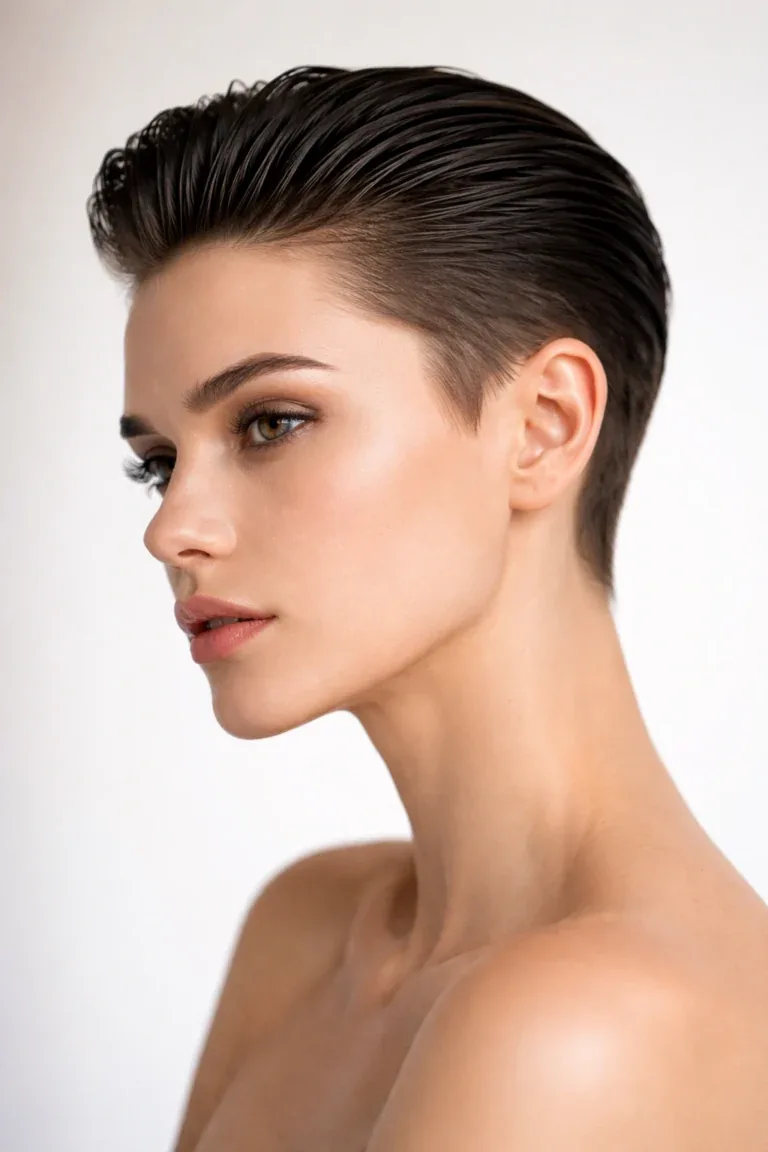
When a cowlick refuses to be hidden, sometimes the best answer is to slick everything back and make the swirl part of a deliberate, polished style. The slicked-back look works because it uses the cowlick’s own direction: the hair is combed back from the forehead, the cowlick is pressed flat with gel or pomade while the hair is damp, and the whole style is set with a strong-hold product so the swirl stays down. The result is sleek, confident and modern — the kind of style that looks intentional at an evening event or a formal occasion, and it turns a cowlick from a problem into a feature of a high-shine, sculpted look.
This suits women with medium to long hair and a strong front or crown cowlick, and it is a good choice for evenings, weddings, or any occasion when you want a dramatic, polished finish. The mistake to avoid is slicking the hair back dry — dry hair will spring back, and the style will fall apart within an hour. Always start with damp hair, work a strong-hold gel or pomade through the roots, comb the hair back in the direction you want, and blow-dry it flat with a concentrator nozzle before setting it with hairspray. For fine hair, a lighter gel and a fine-tooth comb will give the same sleek finish without weighing the hair down. And if the cowlick is very strong, a single hidden bobby pin at the crown will anchor the slicked-back section all evening.
11. Soft Curls That Camouflage a Cowlick
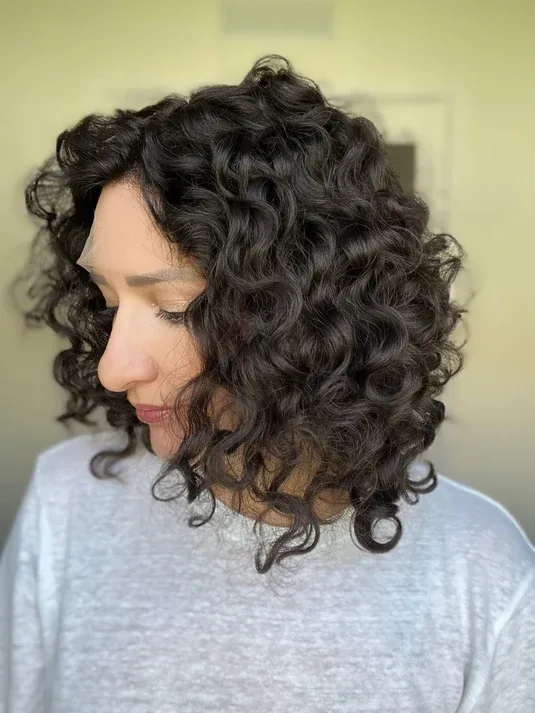
Soft curls are one of the kindest cowlick fixes, because curls hide a swirl the way a crowd hides one person: the cowlick becomes one curl among many, and nobody can tell which one grew in a different direction. The hair is curled in large, loose sections with a wide-barrel iron or rollers, the curls are brushed out gently so they fall into soft waves, and the cowlick — at the crown, the hairline, or the parting — disappears into the movement. The curls also add weight and texture, which helps keep the swirl down, and the finished style looks romantic and effortless, the opposite of the stiff, over-controlled look that cowlick styling can sometimes produce.
This suits women with medium to long hair who already like curls, and it is a good choice for weddings, date nights, or any occasion when you want a soft, feminine finish. The common mistake is curling the cowlick section in the opposite direction from the rest of the hair — match the curl direction to the surrounding hair, so the swirl blends in rather than standing out. Curl the cowlick patch last, after the surrounding hair is done, and let it cool completely before touching it. A light-hold spray will keep the curls soft without making them crunchy, and if one curl keeps popping up, a single pin hidden inside the curl while it cools will train it. For naturally wavy hair, the same principle applies with even less effort — enhance the wave you already have, and the cowlick will hide inside it.
12. The Half-Up Twist That Pins the Swirl Down
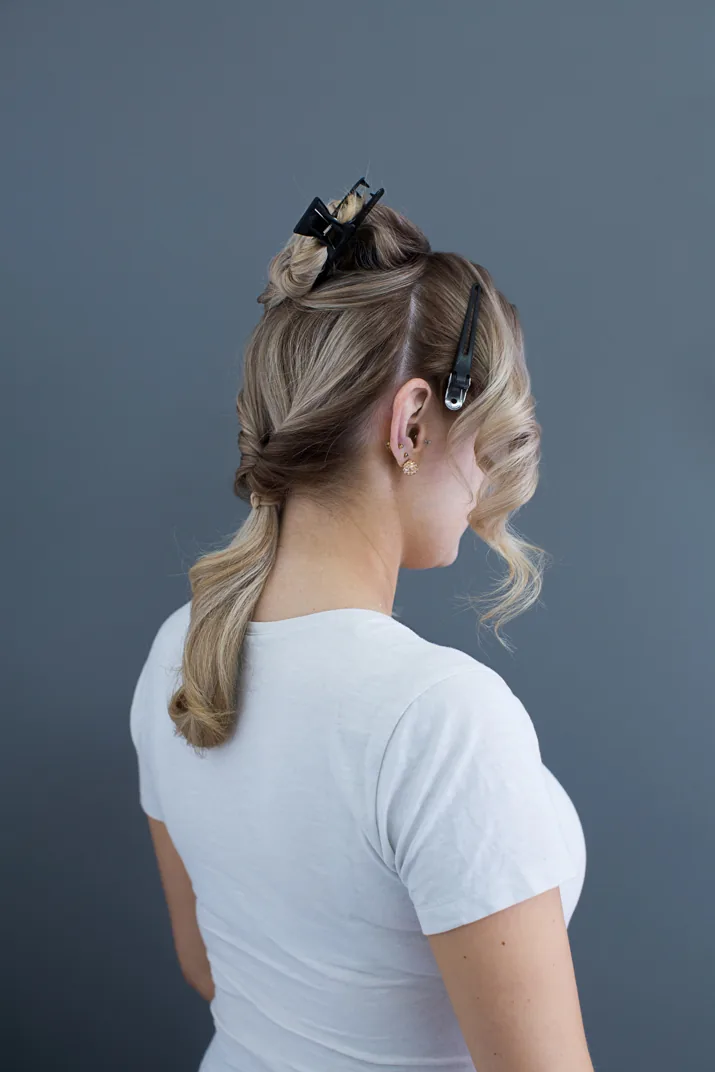
A half-up twist is a practical cowlick fix disguised as a pretty style: the top section of hair is twisted back from the face and pinned at the crown, and the twist sits directly over the cowlick, holding it flat with the weight and tension of the twist itself. The cowlick is not hidden by camouflage — it is physically pinned down by the style, which means it stays down all day, even in humidity. The rest of the hair falls loose underneath, so the style looks romantic rather than severe, and a few soft pieces left out at the face keep it from looking too neat. It is the cowlick fix for women who want a guaranteed result, not a hope.
This suits women with medium to long hair and a cowlick at the crown or the front hairline, and it works for weddings, work, or a day out. The fix is in the placement: twist the section that covers the cowlick, not the section beside it, and pin the twist with two crossed bobby pins so it locks against itself. The common mistake is twisting too loosely — a loose twist will not hold the swirl, and the cowlick will push through it by midday. Twist firmly, pin generously, and use a light spray over the twist. For a stronger cowlick, a small braid instead of a twist will hold even better, and the same principle applies: the style itself is the anchor.
13. A Low Ponytail That Works Around a Nape Cowlick
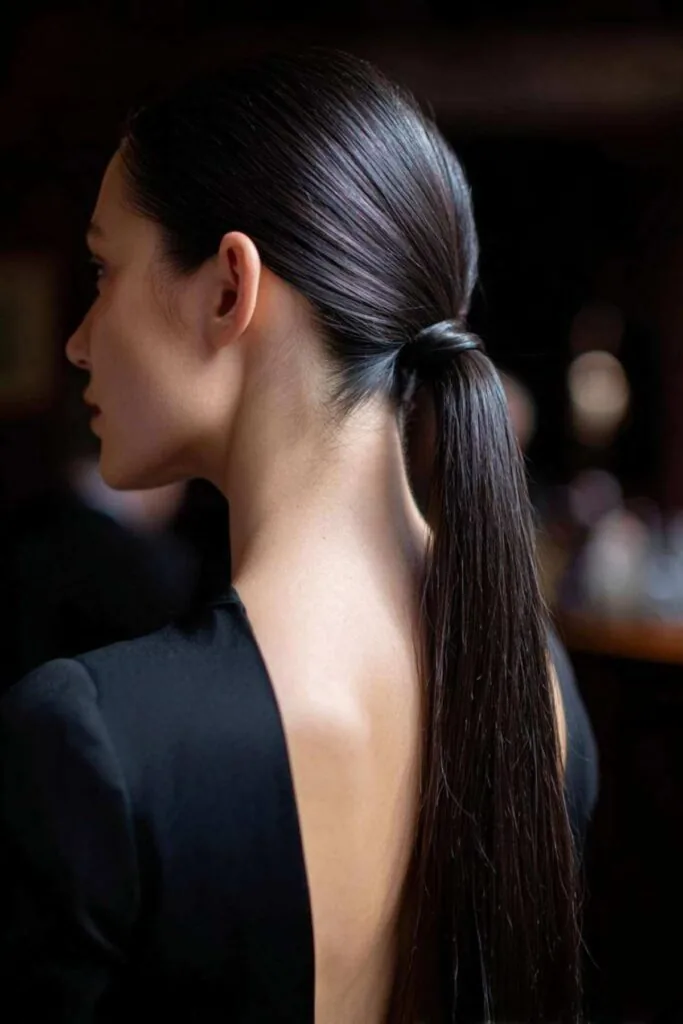
A nape cowlick is the one that flips the ends of the hair outward at the bottom, and a low ponytail handles it by gathering the hair exactly where the swirl lives. The hair is brushed back and gathered low at the nape, the cowlick is smoothed into the ponytail as it is gathered, and the elastic holds the swirl in place — the flip that would show at the ends of loose hair disappears inside the ponytail. A low ponytail also looks polished and modern, especially with a deep side part or a sleek, smooth finish, and it is the easiest updo for a cowlick because it needs no pins and no product beyond a little smoothing cream.
This suits women with medium to long hair and a cowlick at the nape or the back of the head, and it is ideal for work, the gym, or a day when you want your hair out of the way. The mistake to avoid is gathering the ponytail too high: a high ponytail pulls the nape hair upward and exposes the cowlick as a kink at the base, while a low ponytail smooths over it. Gather the hair while it is slightly damp, smooth the nape with a brush, and wrap a small strand of hair around the elastic to hide it. If the cowlick is strong, a little styling cream on the nape before gathering will keep the swirl flat all day.
14. The Messy Bun That Uses the Cowlick as Lift
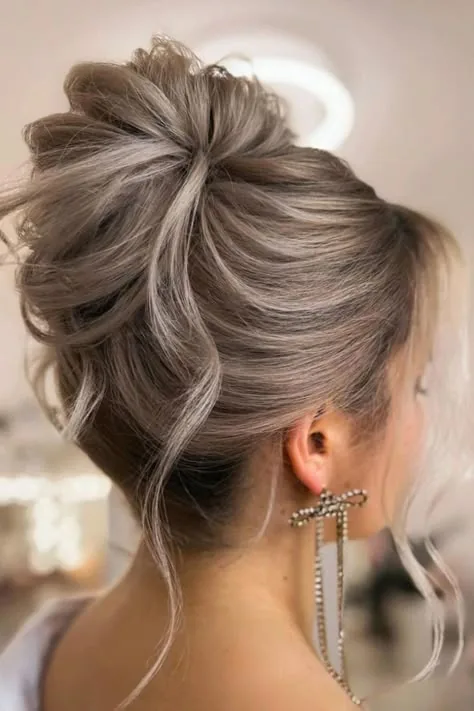
A messy bun is the style that turns a crown cowlick into an advantage: the cowlick’s natural lift becomes the volume at the top of the bun, the texture of the bun hides the swirl, and the whole style is supposed to look a little undone — so a tuft that sticks up reads as deliberate. Gather the hair high, twist it loosely, pin it into a soft bun, and pull out a few pieces around the face and at the nape. The crown cowlick sits underneath the bun, pushing it up slightly and giving it height that a bun without a cowlick has to fake with backcombing. It is the fastest cowlick fix in this guide, and the one that requires the least precision.
This suits everyone with medium to long hair, and it is perfect for busy mornings, weekends, and days when the cowlick is winning. The common mistake is making the bun too tight and too neat — a tight bun will expose the cowlick as a bump, while a loose, textured bun absorbs it. Keep the bun soft, pin it with U-shaped pins rather than pulling it taut, and do not worry about perfection. For a front cowlick, pull the bun slightly back so the front hair is swept up and over the swirl. A messy bun with a cowlick is one of those rare styles where the flaw is the feature — the swirl is doing the volumising for you.
15. Beach Waves That Make the Cowlick Disappear
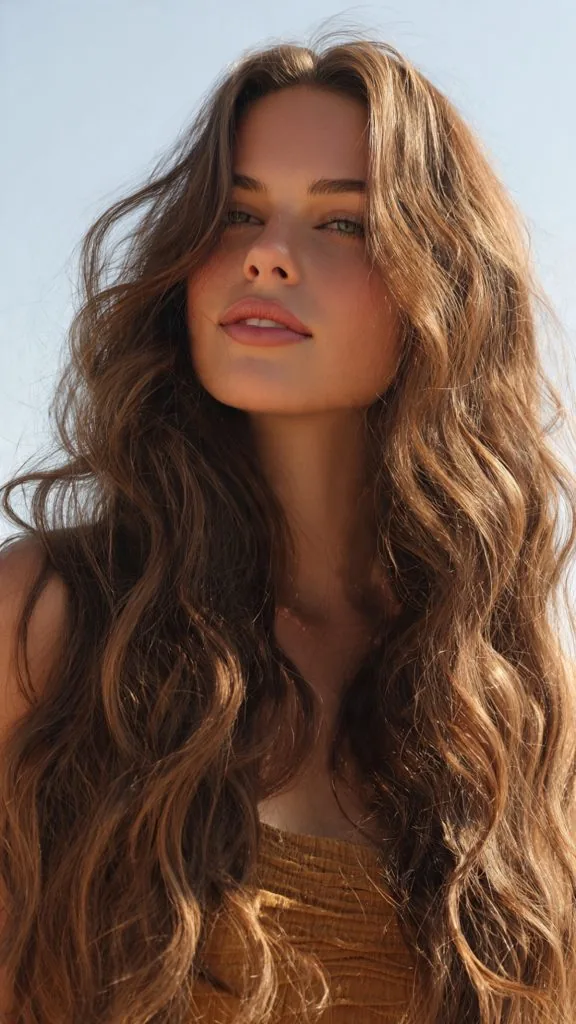
Beach waves are the cowlick camouflage that works on almost every hair type, because the waves give the hair so much movement and texture that a swirl simply cannot be picked out. The hair is waved in loose, uneven sections with a curling wand or a flat iron, the waves are tousled with the fingers, and a texturising spray adds grit and separation. The cowlick — whether it sits at the crown, the hairline, or the parting — disappears into the waves, because every section of hair is bending in a slightly different direction already. It is the most relaxed fix in this guide, and the one that looks best on a day when you do not want to think about your hair at all.
This suits women with medium to long hair and any cowlick spot, and it is ideal for holidays, weekends, and casual days. The mistake to avoid is making the waves too uniform: perfectly even waves will expose the one section that does not match, while uneven, tousled waves hide everything. Wave the cowlick section in the same direction as its neighbours, scrunch the waves with your fingers while they cool, and do not brush them out. A sea-salt spray will add the texture that keeps the waves separated all day, and a little dry shampoo at the roots will keep the crown from falling flat. Beach waves are also a good second-day style — the natural texture of unwashed hair helps the waves hold.
16. A Chin-Length Bob for a Cowlick at the Parting
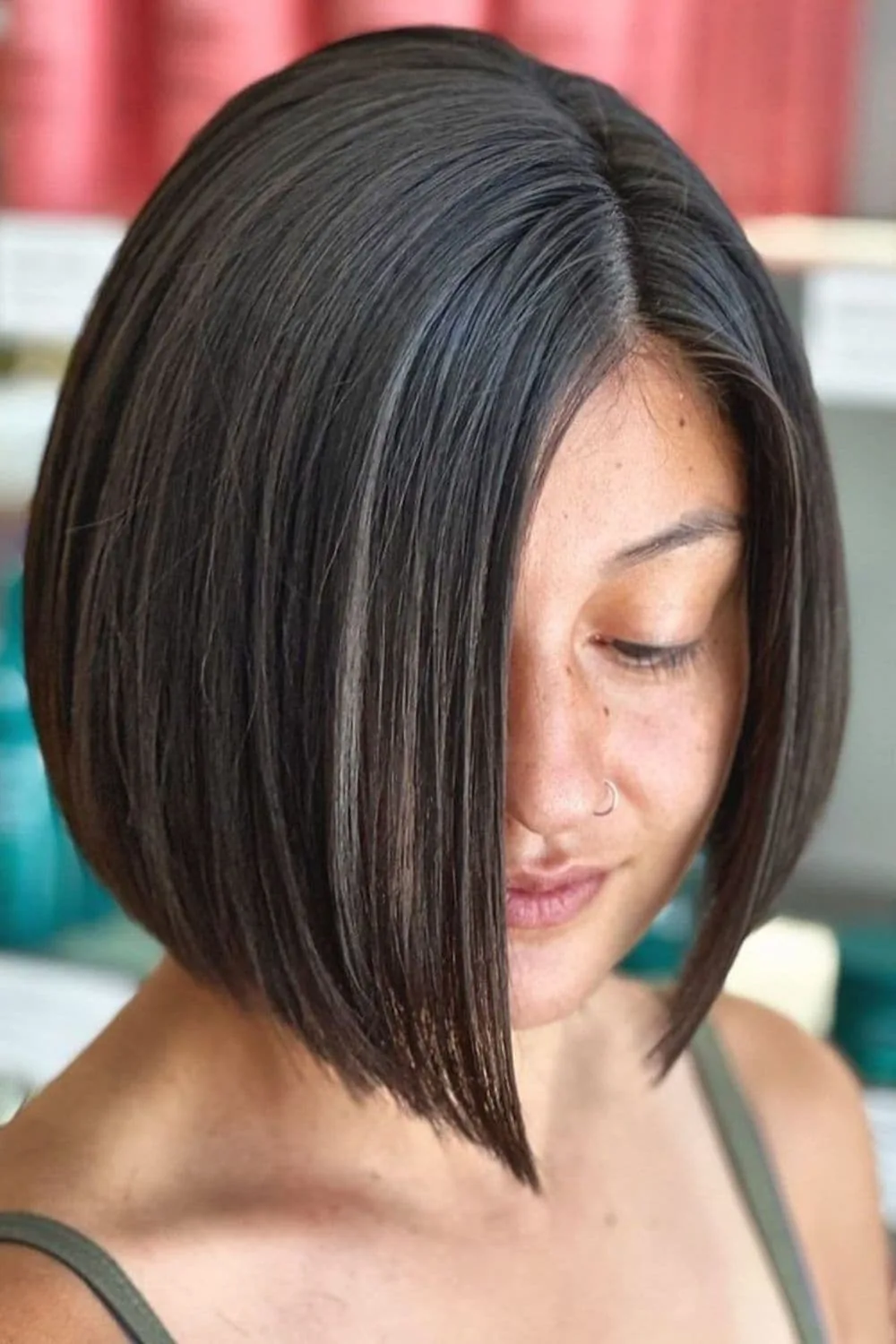
A chin-length bob is a smart answer to a cowlick at the parting, because the bob’s short length and clean shape make the parting a design choice rather than an accident. The bob is cut to chin length with a deep side part that follows the swirl, so the hair falls naturally to one side and the parting cowlick sits exactly where the parting is supposed to be. The weight of the bob’s ends pulls the hair down, the short length means the cowlick has less hair to lift, and the finished style looks chic and deliberate — the kind of bob that turns heads for its shape, not for a tuft at the parting. It is a particularly good choice for women who have always wanted a bob but were told a cowlick would ruin it.
This suits women with straight or slightly wavy hair and a cowlick at the parting or the front hairline, and it works well for work and formal occasions. The common mistake is a centre-parted chin bob over a parting cowlick — the parting will split open and the bob will look lopsided. Commit to the side part, cut it while the hair is dry so the stylist can see where the swirl sits, and train the parting with the wet-hair trick for the first week. Blow-dry the bob under with a round brush, and the parting will hold. A chin-length bob also frames the face beautifully, which draws the eye to the cheekbones and away from the crown.
17. The Voluminous Blowout That Overpowers the Swirl
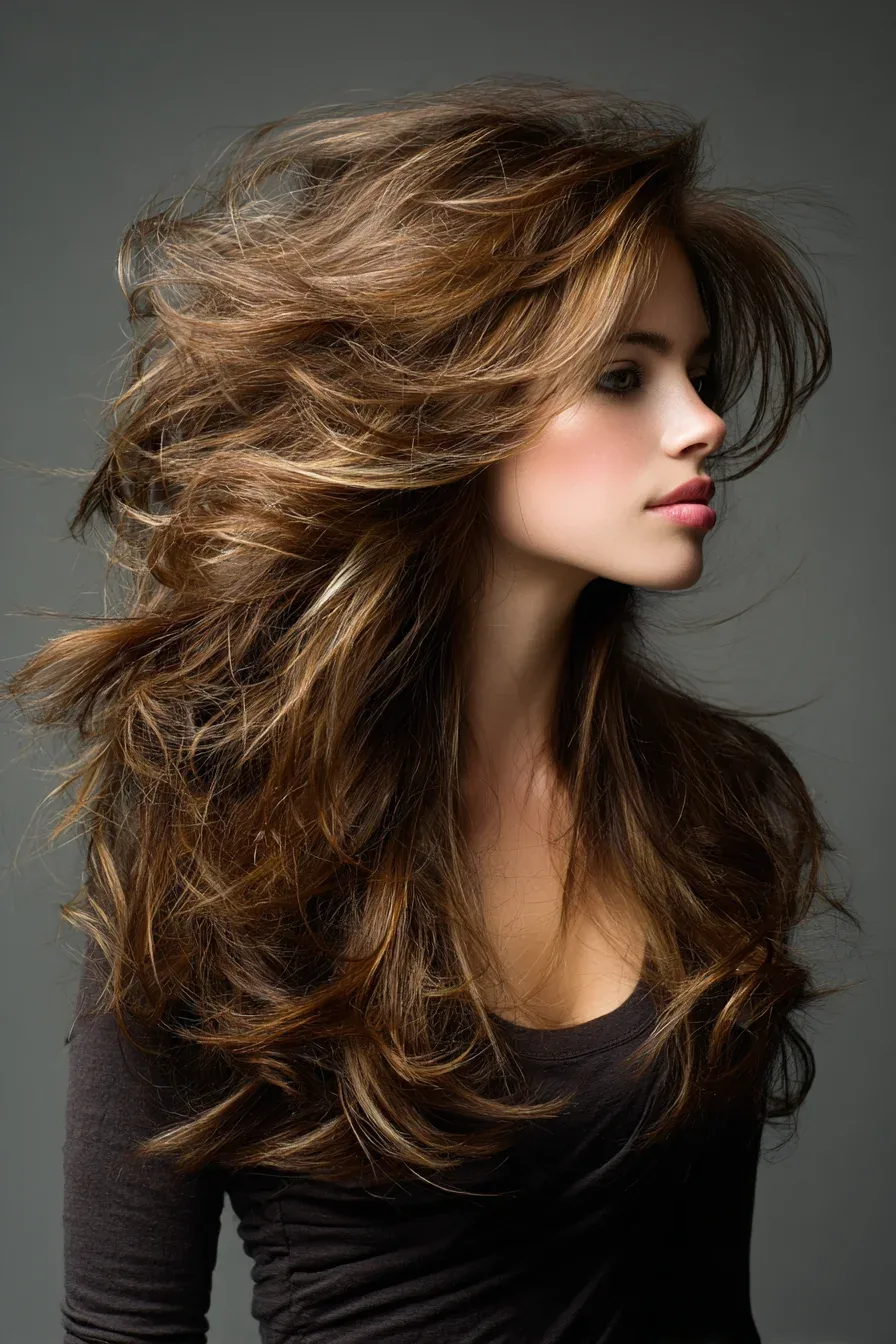
A voluminous blowout overpowers a cowlick the honest way: with lift, direction and heat, so the whole head of hair has so much volume that one swirl cannot dominate it. The hair is blow-dried section by section with a large round brush, lifting the roots and directing the hair away from the face, and the cowlick patch is dried last, with the brush pulling it in the direction of the surrounding hair. The result is a smooth, bouncy, salon-finished style with movement at the ends and lift at the crown — and the cowlick, dried flat under all that volume, simply disappears. It is the most glamorous fix in this guide, and the one that looks best for an evening out or a special occasion.
This suits women with medium to long hair who already like a blowout, and it works best on a cowlick at the crown or the front hairline. The mistake to avoid is blow-drying the cowlick patch first, while the rest of the hair is still wet — the patch will set in the wrong direction and the rest of the blowout will fight it. Dry the surrounding hair first, then the cowlick, and always finish with a cool shot from the dryer to lock the shape. A volumising mousse at the roots will give the blowout its lift, and a light-hold spray will keep it in place without stiffness. A blowout takes twenty to thirty minutes, so it is not an everyday fix — but for the days that matter, it is one of the most reliable.
18. Finger Waves for a Vintage Cowlick Cover
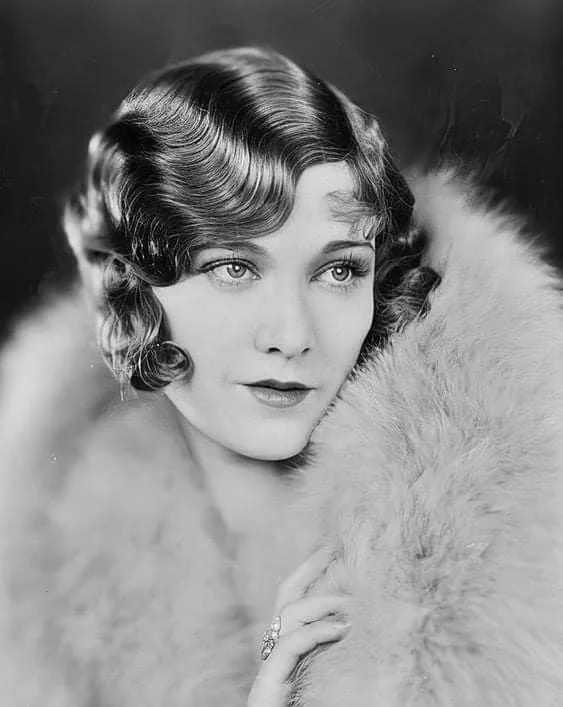
Finger waves are the vintage solution to a cowlick, and they work because they are built on the same principle as the cowlick itself: hair moulded into a wave while wet, then set in place. The hair is combed into deep, sculpted S-shaped waves with a fine-tooth comb and setting lotion, the waves are pinned or clipped while they dry, and the finished style has a glossy, sculpted surface in which a cowlick simply cannot be seen — the wave pattern covers the whole head, and the swirl becomes one more curve in the design. It is a dramatic, elegant style, perfect for a themed party, a wedding, or any occasion when you want to look like you stepped out of another era.
This suits women with medium to long hair and a cowlick at the hairline or the crown, and it is worth learning the technique because the result is so striking. The common mistake is trying finger waves on dry hair — they must be set wet, with setting lotion, and allowed to dry completely before the pins come out. Work section by section, mould each wave with your fingers and a comb, and clip it in place. The waves will hold all day once set, and the cowlick will be invisible under the sculpted surface. For a modern take, finger waves just at the front, with the rest of the hair in soft curls or a low bun, give the same cowlick cover with less effort.
19. The Braided Crown That Anchors a Front Cowlick
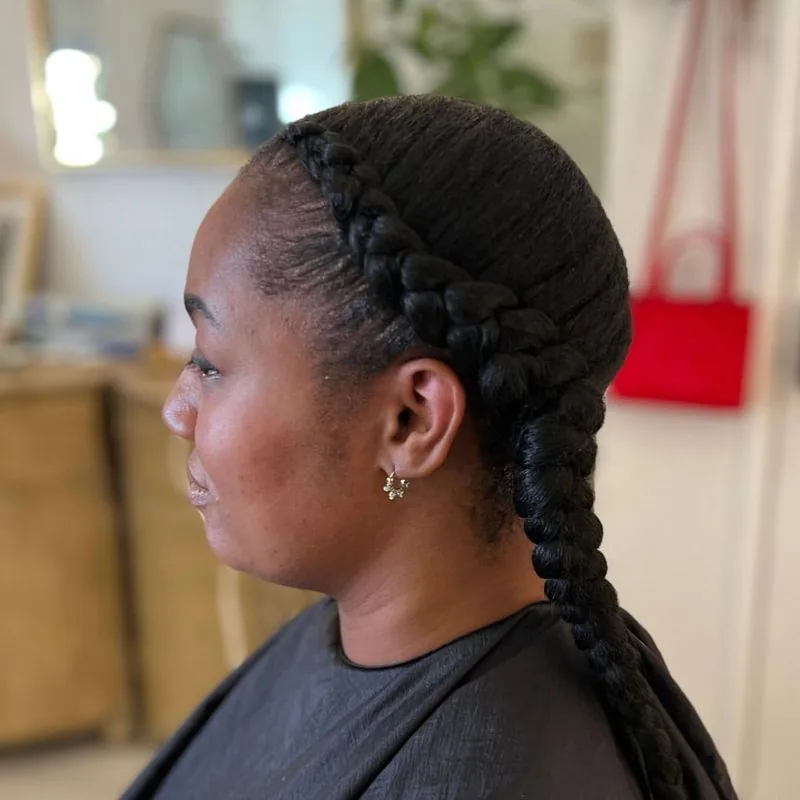
A braided crown anchors a front cowlick the way a half-up twist does, but more securely: a braid is woven across the front of the head, directly over the cowlick, and the braid’s tension and pins hold the swirl flat all day. The braid can be a simple three-strand braid, a Dutch braid for more presence, or a small French braid that starts at one temple and travels across the forehead to the other side. The cowlick sits underneath the braid, pressed flat by the weave, and the finished style looks romantic and deliberate — a crown of braid across the forehead, with the rest of the hair loose or gathered. It is the cowlick fix for women who love braids and want a style that will not budge.
This suits women with medium to long hair and a strong front cowlick, and it is ideal for festivals, weddings, or a long day when you need the style to hold. The mistake to avoid is braiding too loosely over the cowlick — a loose braid will let the swirl push through, while a firm braid will hold it flat. Braid on slightly damp hair for grip, keep the tension even, and pin the ends of the braid securely behind the ear. For a softer look, pull the braid apart gently once it is pinned, and leave a few loose pieces at the face. A braided crown also works well with a cowlick at the crown: braid the crown section itself, and the swirl becomes part of the braid.
20. A Sleek Middle Part That Splits the Difference
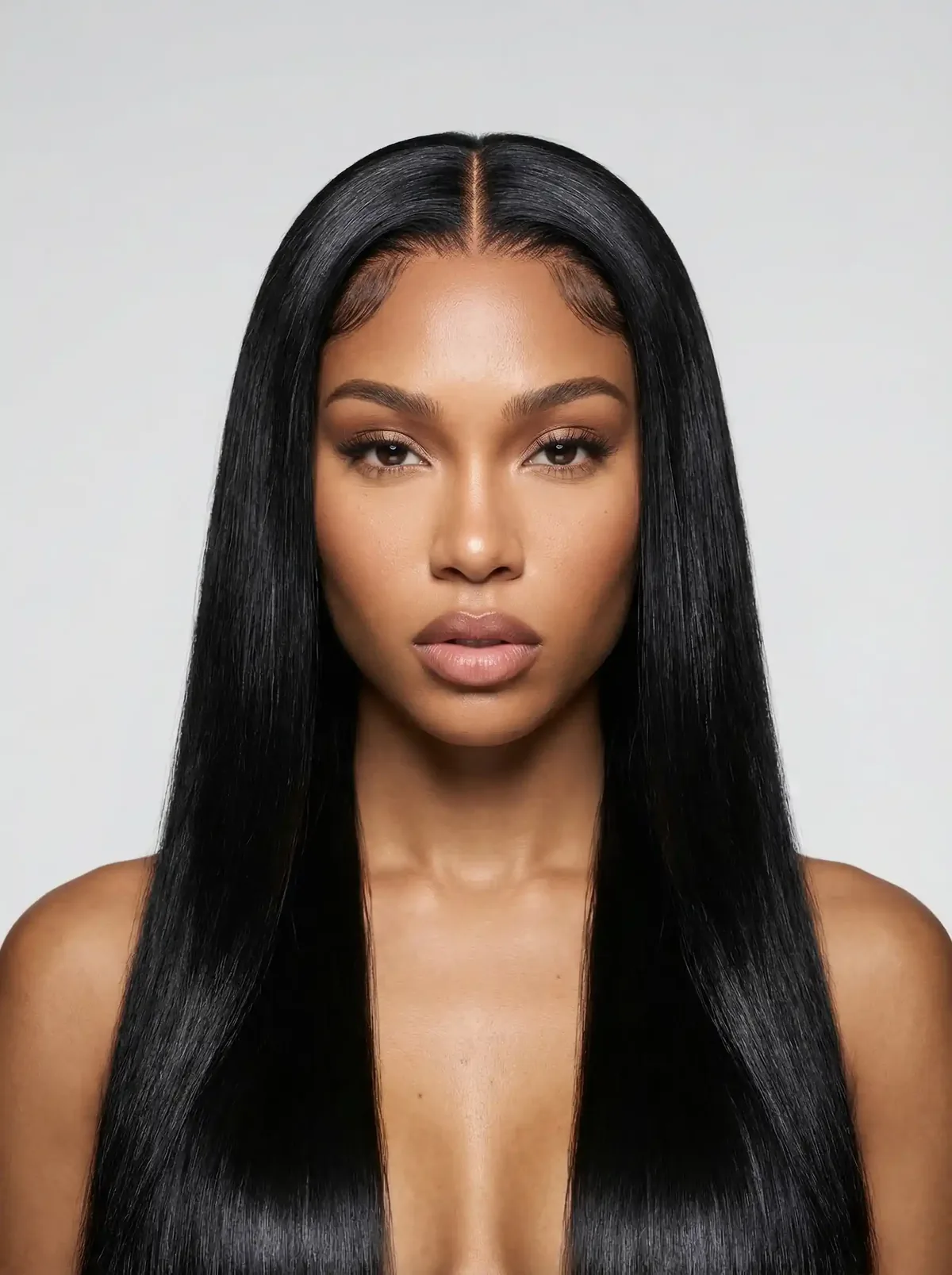
A sleek middle part sounds like the worst idea for a cowlick at the parting — but when it is done deliberately, with the parting placed exactly where the cowlick wants it, it can work. The trick is to let the cowlick choose the parting: comb the hair back while it is wet, let it fall where the swirl dictates, and that is your middle part — usually a little off-centre, which looks natural and modern. The hair is then smoothed flat on both sides with a straightener or a blow-dry, the cowlick is pressed flat while damp, and the finished style is sleek, symmetrical and polished. The cowlick is not hidden; it is accommodated, and the sleekness of the rest of the hair makes the parting look intentional.
This suits women with straight hair and a mild parting cowlick, and it is a good choice for work or a formal occasion. The common mistake is forcing a dead-centre part over a cowlick that sits off-centre — the hair will split open and the style will look wrong within the hour. Find the natural parting first, then build the sleek style around it. Use a fine-tooth comb, a smoothing cream, and a flat iron on a low setting, and finish with a light-hold spray. If the cowlick is strong, a middle part is not the best choice — a deep side part will serve you better — but for a mild swirl, a sleek middle part that follows the hair’s own direction is elegant and easy.
21. The Textured Crop for a Double Cowlick
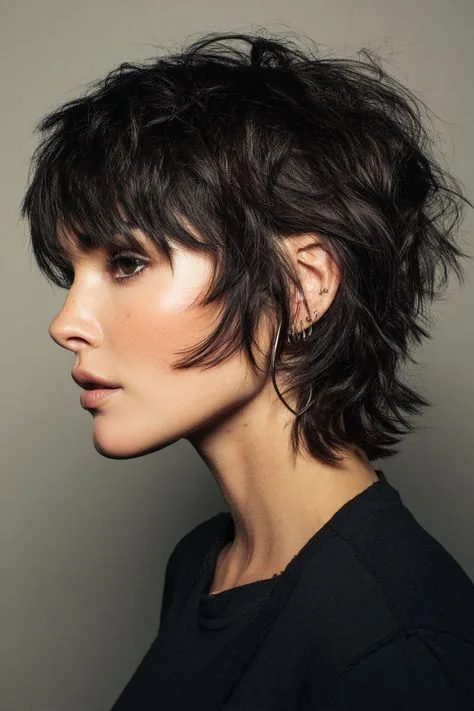
A double cowlick — two swirls, usually at the crown or the front hairline — is the hardest cowlick to hide, and the textured crop is the short cut built for it. The crop is cut with short, choppy layers all over, so both swirls become texture rather than tufts: each cowlick is one more piece of lift in a cut that is supposed to look piecey and uneven. The stylist can cut each swirl slightly shorter than its neighbours, so neither one stands above the rest, and the finished crop has a modern, edgy shape that looks deliberate from every angle. It is the cut for women who have tried to grow their hair out to hide a double cowlick and discovered that length only gives the swirls more hair to lift.
This suits women who like short, modern hair and want a cut that works with two cowlicks instead of against them. The mistake to avoid is a smooth, uniform crop — without texture, both cowlicks will show as bumps in the silhouette. Ask for choppy layers, point-cut ends, and a little extra texture at the crown. Style it with a pea-sized amount of matte paste, pushing the pieces in different directions with your fingers, and let it air-dry. The double cowlick gives the crop its height and its character, and the styling takes about three minutes. For women with a double cowlick who do not want short hair, a shaggy lob with the same choppy layering is the longer equivalent.
22. Long Hair With Face-Framing Layers Around a Cowlick
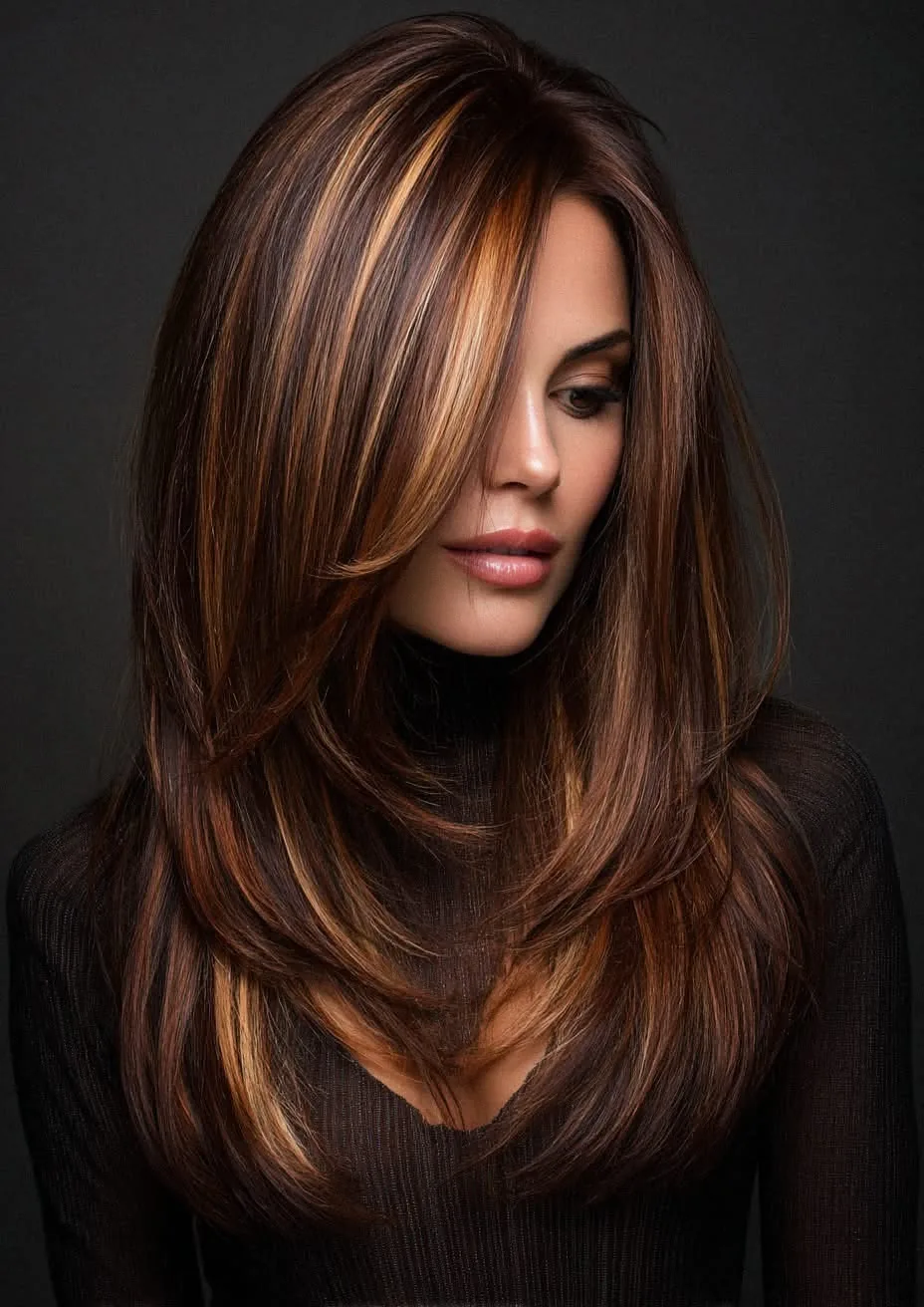
Face-framing layers are the long-hair fix for a hairline cowlick, because they give the swirl somewhere to go. The layers are cut to fall along the face, starting at the cheekbone or the jaw, and the cowlick sits at the top of the layers — so instead of splitting a blunt fringe or lifting a flat section of hair, the swirl falls into the first layer and becomes a soft, face-framing piece. The layers also break up the weight of the long hair, so the style moves naturally, and the finished look is soft and flattering, with the face framed by layers that draw the eye to the cheekbones and away from the hairline. It is the most natural-looking fix in this guide, because nothing about it looks like a fix at all.
This suits women with long hair and a cowlick at the front hairline or the parting, and it works on straight, wavy and lightly curly hair. The common mistake is cutting the face-framing layers too short — short layers will spring up with the cowlick and make the swirl more visible, while longer layers have the weight to fall properly. Keep the shortest layer at cheekbone length or below, train the cowlick patch with the wet-hair trick, and blow-dry the layers forward and under with a round brush. For a stronger cowlick, ask the stylist to cut the layer over the swirl slightly longer than the others, so it has extra weight. Long hair with face-framing layers is also a good grow-out style — as the layers lengthen, the cowlick stays hidden.
23. The Curly Bob That Lets the Cowlick Join the Curls
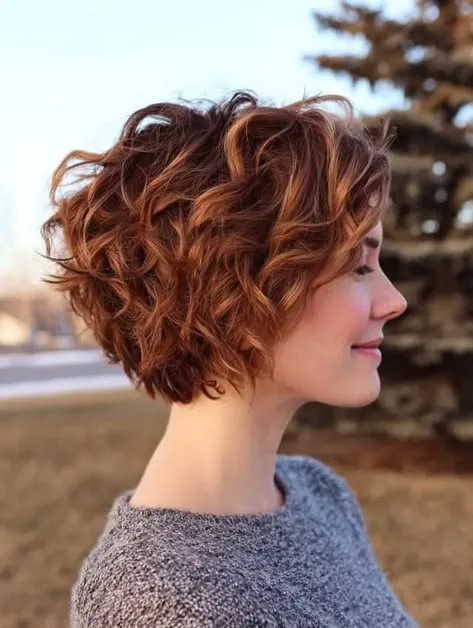
A curly bob is the cut that lets a cowlick stop being a problem and start being a curl. The bob is cut to chin or jaw length with layers that follow the curl pattern, and the cowlick — which in curly hair usually just looks like a curl that goes its own way — joins the surrounding curls and disappears. The stylist should cut the bob dry, curl by curl, so they can see exactly where the swirl sits and how each curl falls, and the layers should be cut to let the cowlick curl in its own direction without fighting the rest of the hair. The finished bob is full, bouncy and full of character, and the cowlick is invisible inside the curl pattern.
This suits women with naturally curly or wavy hair and a cowlick anywhere on the head, and it is a good choice if you have been straightening your hair to hide the swirl — the curly bob lets you stop. The mistake to avoid is cutting a curly bob wet and blunt: wet curls shrink as they dry, and a blunt line will expose the cowlick as a curl that sticks out. Cut it dry, keep the layers soft, and style it with curl cream scrunched into damp hair, letting it air-dry or diffusing on a low setting. Do not brush the bob dry — brushing breaks up the curls and makes the cowlick stand out as frizz. A curly bob with a cowlick is one of the best examples of working with your hair instead of against it.
24. A Top Knot That Hides a Crown Cowlick Completely
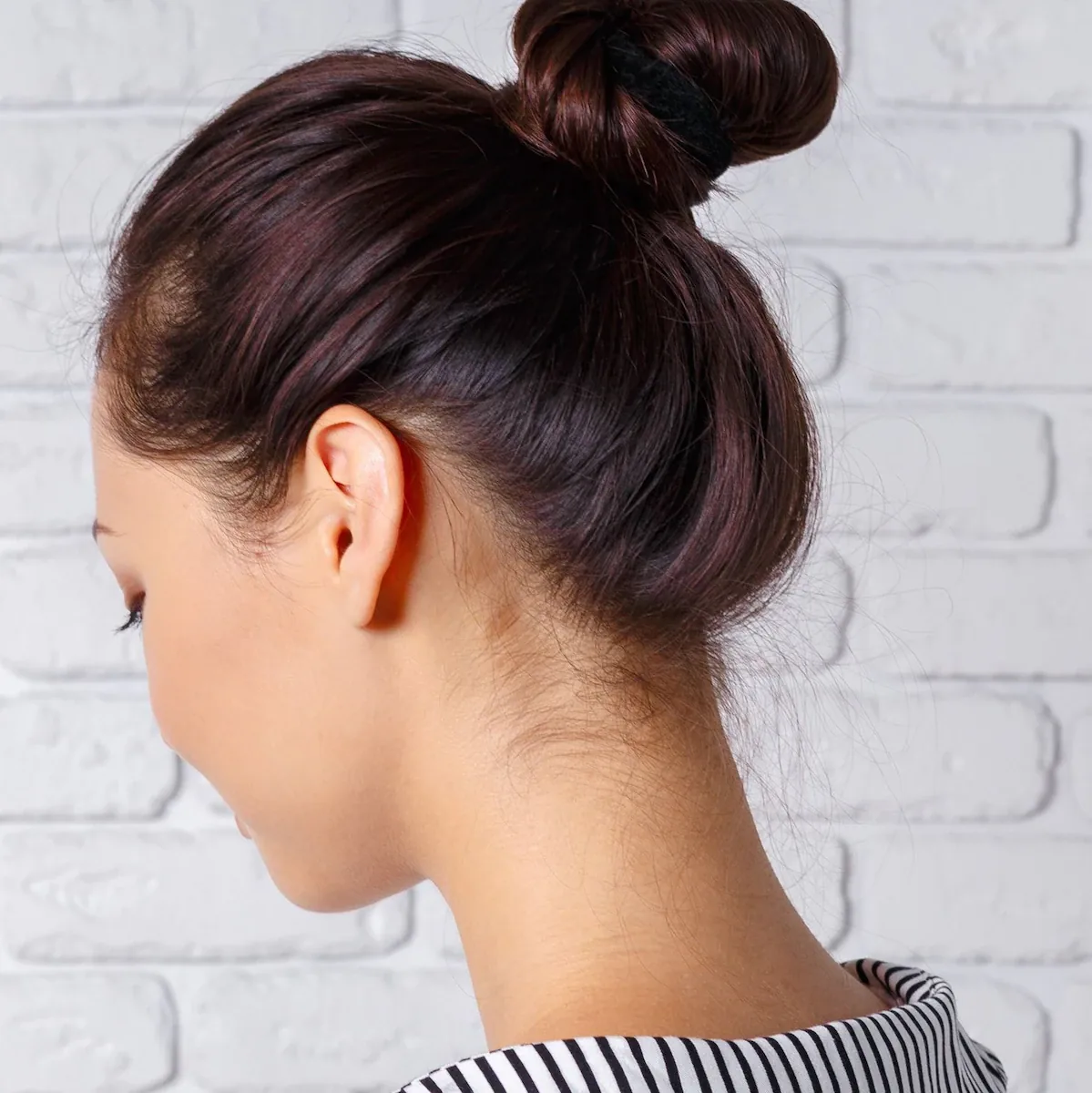
A top knot hides a crown cowlick completely, because the cowlick sits exactly where the knot is gathered. The hair is swept up to the crown, the cowlick is smoothed into the gathered hair, and the knot is twisted and pinned on top of it — the swirl is inside the knot, invisible, and the tension of the gathered hair holds it flat. A top knot is also one of the most versatile styles in this guide: it can be sleek and polished for work, or loose and textured for a casual day, and it works with a deep side part, a centre part, or no parting at all. The cowlick, which is usually the enemy of a smooth updo, becomes the reason the top knot has a little extra height.
This suits women with medium to long hair and a cowlick at the crown, and it is ideal for work, the gym, or a hot day. The common mistake is gathering the knot too far forward or too far back — the knot should sit directly over the cowlick, so the swirl is inside it. Gather the hair while it is slightly damp, smooth the crown with a brush, and secure the knot with a hair tie and a few U-shaped pins. For a sleek top knot, use a smoothing cream and a fine-tooth comb; for a relaxed one, pull out a few pieces at the face and the nape. If the cowlick is very strong, a little styling cream on the crown before gathering will keep the swirl flat inside the knot all day.
25. The Side Braid That Pulls the Swirl Into the Style
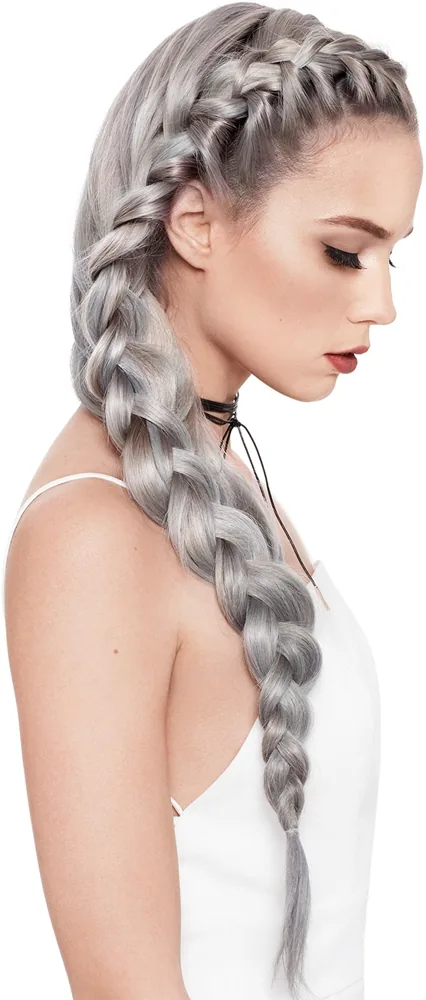
A side braid pulls a cowlick into the style instead of leaving it outside it: the braid starts at the cowlick itself, gathering the swirl into the first few stitches of the braid, and then travels down over one shoulder. The cowlick is not hidden — it is braided in, and the tension of the braid holds it flat while the braid itself becomes the feature of the style. A side braid is also one of the most forgiving braids, because it does not have to be neat: a loose, slightly messy side braid looks romantic and effortless, and a few pieces pulled out around the face soften the whole look. It is the cowlick fix for women who like braids and want a style that works on the first try.
This suits women with medium to long hair and a cowlick at the front hairline, the crown, or the parting, and it is good for casual days, festivals, and holidays. The mistake to avoid is starting the braid beside the cowlick and leaving the swirl outside it — the cowlick will stick up next to the braid and look like a mistake. Start the braid at the swirl, gather it in, and keep the tension firm for the first few stitches. A Dutch braid will give the side braid more presence, while a French braid will lie flatter. For a softer finish, pancake the braid gently once it is secured, and leave two soft pieces out at the face. A side braid is also a good second-day style, because day-old hair has the grip a braid needs.
26. Feathered Layers for Fine Hair With a Cowlick
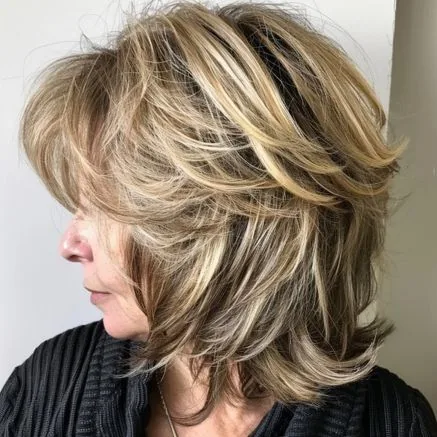
Fine hair with a cowlick is a double challenge: the hair is slippery, so the swirl springs back easily, and it is light, so there is little weight to hold the cowlick down. Feathered layers solve both problems at once. The layers are cut with a feathered, tapered edge, so the hair falls in soft, overlapping pieces, and the cowlick sits inside the feathering — the swirl becomes one feathered piece among many, and the eye cannot pick it out. The feathered ends also add movement and the illusion of volume, which fine hair needs, and the cut is light enough that the hair does not look flat or limp. It is the most flattering cut for fine hair with a cowlick, and the one that needs the least product to hold.
This suits women with fine or thin hair and a cowlick at the crown or the hairline, and it works best at shoulder length or longer. The common mistake is cutting fine hair blunt to make it look thicker — a blunt line will expose the cowlick as a kink, while feathered layers hide it. Ask for soft, feathered layers through the lengths, keep the shortest layer at chin length, and use a volumising mousse at the roots before blow-drying. Blow-dry the cowlick patch with a round brush, directing it forward, and finish with a light-hold spray. Avoid heavy creams and oils on fine hair — they will weigh the feathered layers down and let the cowlick pop back up.
27. The Asymmetrical Bob That Outsmarts the Swirl
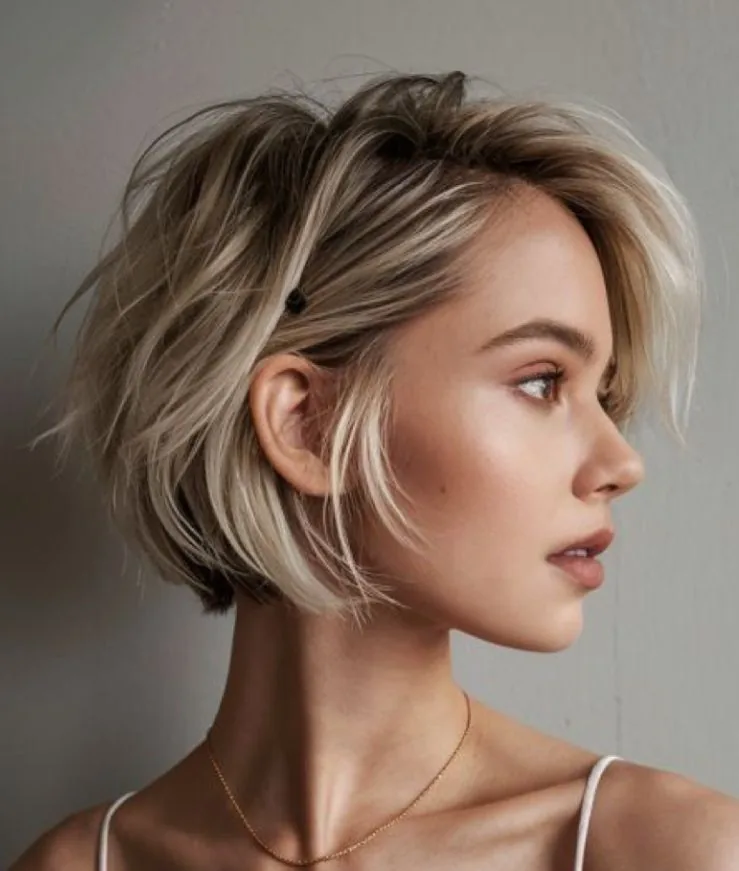
An asymmetrical bob outsmarts a cowlick by making asymmetry the whole point of the cut. One side of the bob is cut longer than the other — usually by an inch or two — so the hair falls in a diagonal line, and the cowlick, which always makes one side of the hair behave differently from the other, simply becomes part of the asymmetry. The longer side is cut on the side of the cowlick, so the swirl has extra length and weight to fall properly, while the shorter side keeps the cut modern and edgy. The finished bob looks deliberate, fashionable and confident, and nobody looking at it would guess that the asymmetry started as a cowlick fix.
This suits women who like a modern, edgy cut and have a cowlick at the front hairline or the parting, and it works on straight and slightly wavy hair. The mistake to avoid is making the asymmetry too subtle — a quarter-inch difference will just look like a mistake, while a clear, deliberate difference looks like a design choice. Ask for at least an inch of difference between the sides, and for the longer side to sit on the cowlick side. Blow-dry the bob smooth with a round brush, directing the cowlick patch down and under, and the diagonal line will do the rest. An asymmetrical bob also grows out well: as the shorter side lengthens, the asymmetry softens gradually rather than suddenly.
28. A Wavy Shag for Thick Hair With a Cowlick
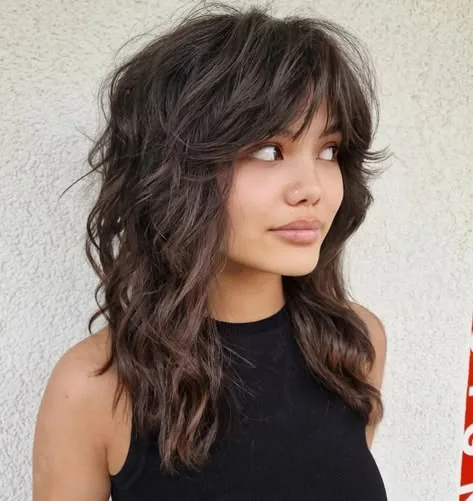
Thick hair with a cowlick can feel like a lot of hair fighting in different directions, and a wavy shag brings order to it by cutting the hair into layers that all move the same way. The shag is cut with short layers at the crown, longer layers through the lengths, and a feathered fringe, so the cowlick sits inside the layering and the thick hair is thinned just enough to move freely. The waves — natural or added with a curling wand — give the shag its texture, and the cowlick disappears into the waves the way it does into beach waves, but with a cut that is designed for thick hair rather than fighting it. It is the most characterful cut in this guide, and the one that suits thick hair best.
This suits women with thick, wavy hair and a cowlick at the crown or the hairline, and it is a good choice if your hair feels heavy and unmanageable. The common mistake is cutting thick hair blunt and heavy — the weight will pull the cowlick into a flip, and the style will look bulky rather than textured. Ask for internal layers that remove weight without shortening the length, and for a shaggy fringe that works with the swirl. Style it with a little mousse scrunched into damp hair, let it air-dry or diffuse, and do not over-brush it. The wavy shag is also a good low-maintenance cut — the layers and the waves do the work, and the cowlick is just part of the texture.
29. The Low Chignon That Smooths a Nape Cowlick
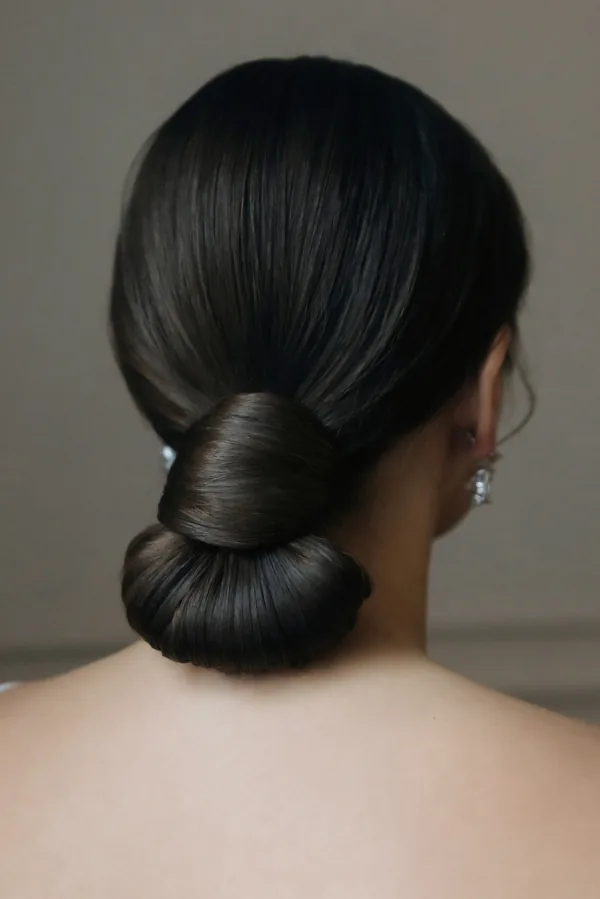
A low chignon is the elegant answer to a nape cowlick, because the chignon sits exactly where the swirl lives. The hair is gathered low at the nape, twisted or rolled into a soft knot, and pinned in place — and the nape cowlick, which would flip the ends of loose hair outward, is smoothed into the chignon as the hair is gathered. The finished style is classic and polished, the kind of updo that suits a wedding, a formal dinner, or a job interview, and it keeps the hair completely off the neck and the face. A few soft pieces left out at the front keep the chignon from looking severe, and a single decorative pin gives it a finished touch.
This suits women with medium to long hair and a cowlick at the nape, and it is ideal for formal occasions. The mistake to avoid is gathering the chignon too high — a high chignon will expose the nape cowlick as a kink at the base, while a low chignon covers it. Gather the hair while it is slightly damp, smooth the nape with a brush and a little styling cream, and pin the chignon with U-shaped pins rather than bobby pins, which hold a heavy knot better. For a softer chignon, twist the hair loosely and pin it in a relaxed roll; for a sleeker one, smooth the hair with a fine-tooth comb before gathering. A low chignon with a nape cowlick is one of those styles where the problem spot becomes the anchor of the style.
30. Short Layers With a Cowlick at the Hairline
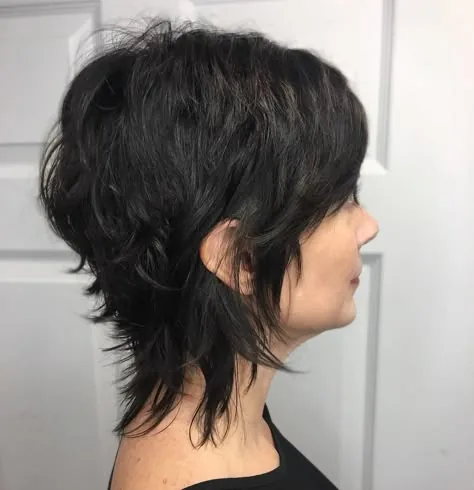
Short layers are the answer for a woman with a cowlick at the hairline who does not want a fringe: instead of covering the swirl with bangs, the cut layers the hair around it so the swirl becomes the shortest layer. The hair is cut with short, textured layers at the front, blending into longer layers at the back, and the cowlick falls into the front layer — it is the layer, not a tuft sticking out of a smooth style. The short front layers also add volume and movement around the face, which flatters most face shapes, and the cut is easy to style: a little mousse, a quick blow-dry with the fingers, and the layers fall into place. It is the no-fringe fix for a front cowlick, and it works on hair from chin length to shoulder length.
This suits women who do not want bangs but have a strong front cowlick, and it works on straight and wavy hair. The common mistake is cutting the front layers too long and too blunt — long, blunt front layers will split at the cowlick, while short, textured layers absorb it. Ask for textured, point-cut layers at the front, and for the layer over the cowlick to be cut slightly shorter than its neighbours. Train the front layers with the wet-hair trick, directing them forward and to the side, and finish with a light-hold spray. Short layers with a hairline cowlick are also a good cut for women growing out a fringe — the layers bridge the awkward stage while the fringe lengthens.
31. The Wet-Look Finish for a Cowlick That Won’t Lie Flat
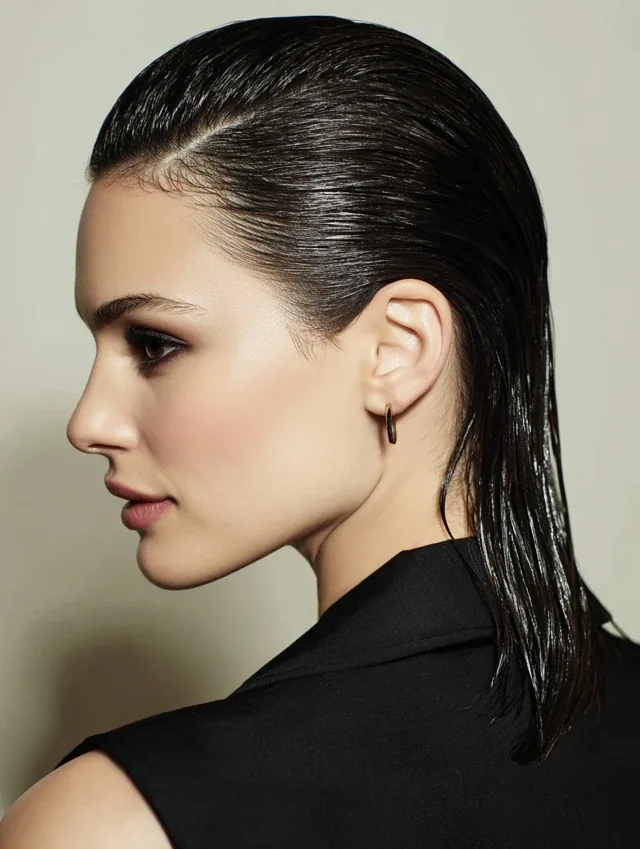
The wet-look finish is the bold answer to a cowlick that will not lie flat: instead of fighting the swirl, you coat the whole head in a glossy, wet-look product and make the sleekness the style. The hair is combed back or to the side while damp, a generous amount of gel or wet-look cream is worked through from roots to ends, and the hair is left to dry in place — the product holds the cowlick flat because it holds everything flat, and the glossy finish makes the whole style look deliberate and high-fashion. It is the cowlick fix for an evening out, a photoshoot, or any occasion when you want a dramatic, editorial look, and it works on every hair length from a pixie to long hair.
This suits women with a very strong cowlick who are tired of fighting it, and it is a good choice for evenings and special occasions rather than everyday wear. The mistake to avoid is using too little product — a wet look needs enough gel to hold the hair in place as it dries, and a thin layer will dry patchy and let the cowlick pop back up. Work the product through damp hair, comb it into place, and do not touch it while it dries. For fine hair, a lighter gel will give the same glossy finish without weighing the hair down; for thick hair, a stronger gel will hold the swirl flat. The wet look is not a subtle fix — it is a statement, and the cowlick is part of it.
32. A Headband Style That Holds the Cowlick Down in Style
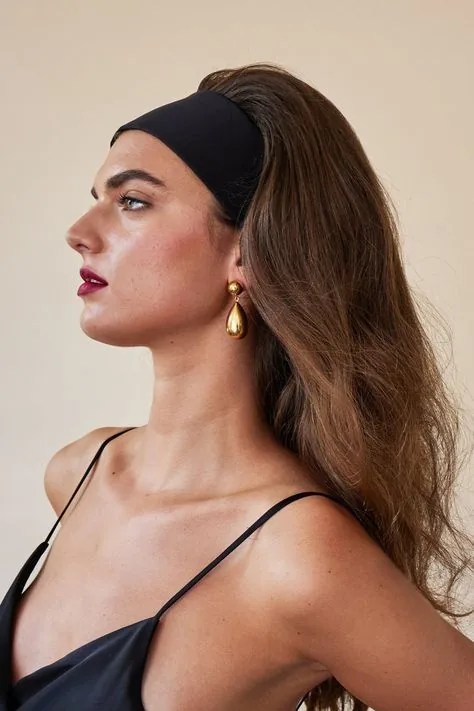
A headband is the simplest cowlick tool there is, and when it is worn as a style rather than a cover-up, it is also one of the prettiest. A wide fabric headband, a padded velvet band, or a thin metal band worn across the front of the head presses the cowlick flat and holds it there all day — no product, no heat, no pinning required. The headband sits just behind the hairline, over the cowlick patch, and the hair in front of it falls softly over the forehead while the hair behind it stays in place. It is the cowlick fix for a bad hair day, a rushed morning, or a day when you simply do not want to style your hair at all, and it works on every hair length and type.
This suits everyone, and it is especially useful for women with a front hairline cowlick who want a quick, reliable fix. The common mistake is wearing the headband too far back — it needs to sit over the cowlick itself, not behind it, or the swirl will pop up in front of the band. Place the band so it covers the patch, push the front hair forward over it slightly so the band looks like an accessory rather than a clamp, and choose a band that suits the occasion: a velvet band for an evening, a fabric band for a casual day, a thin metal band for work. A headband also works well with a low ponytail or a messy bun, holding the front hair in place while the rest of the style does its own thing. It is not a permanent fix, but it is the fastest one in this guide.
33. The Grow-Out Plan: Living With a Cowlick While It Grows

The grow-out plan is the long game for a cowlick: instead of cutting the swirl away or hiding it every day, you grow the hair through the awkward stage and let length and weight do the work. A cowlick is at its worst at short and medium lengths, when the hair is long enough to flip but too short to weigh itself down — and it is at its best at long lengths, when the weight of the hair pulls the swirl flat and the layers hide it completely. The plan is simple: keep the hair trimmed regularly so the ends stay healthy, ask the stylist to cut the layers around the cowlick rather than against it, and use the styles in this guide — the side part, the half-up twist, the messy bun — to get through the awkward middle stage without cutting the length you are growing.
This suits women who want long hair and are willing to be patient, and it is the most honest advice in this guide: a cowlick does not go away, but it does get easier with length. The mistake to avoid is cutting the hair short in frustration during the awkward stage — a short cut will make the cowlick more visible, not less, and you will have to grow through the awkward stage all over again. Train the cowlick with the wet-hair trick every morning, use a little styling cream on the patch, and let the length do the rest. After six to twelve months of growth, most women find the cowlick is barely noticeable — hidden in the layers, weighed down by the length, and managed by a two-minute routine. The swirl is still there, but it has stopped being the story of your hair.
What is a cowlick?
A cowlick is a patch of hair that grows in a different direction from the surrounding hair, forming a swirl or tuft, most commonly at the front hairline, the crown, the nape, or the parting. It is caused by the angle of the hair follicles under the scalp and is present from birth. Almost everyone has at least one cowlick, and it is completely normal.
Can you get rid of a cowlick permanently?
No, you cannot permanently get rid of a cowlick, because it is caused by the direction your hair follicles grow, and no haircut, product or treatment changes the follicles. You can, however, make a cowlick invisible with the right cut, train it with the wet-hair trick, or hide it with a style that works with the swirl. A good cut plus a two-minute morning routine is the closest thing to a permanent fix.
How do I hide a cowlick at the front hairline?
To hide a cowlick at the front hairline, cut a long side-swept fringe or curtain bangs that fall over the swirl, or move your parting to a deep side part that follows the cowlick’s direction. Wet the patch thoroughly, comb it in the direction you want it to go, and blow-dry it flat while holding it down. A fringe cut long enough to have weight is the key — a short fringe has nothing to hold the swirl down.
How do I flatten a cowlick at the crown?
To flatten a cowlick at the crown, wet the patch thoroughly, apply a small amount of styling cream or pomade, comb the hair flat in the direction you want it to lie, and blow-dry it on a medium heat while holding it down until it is completely dry. Longer hair and layers help, because the weight pulls the swirl down. For a stubborn crown cowlick, pin the patch flat with a bobby pin while it dries, or gather the hair into a top knot or a half-up twist that sits over the swirl.
Why does my cowlick stick up after washing?
Your cowlick sticks up after washing because wet hair is at its most pliable, and as it dries it returns to the direction its follicles dictate — which, for a cowlick, is up or sideways rather than flat. The fix is to train the cowlick while it is still wet: comb it in the direction you want, hold it flat, and blow-dry it in that direction until it is completely dry. If you let a cowlick air-dry without directing it, it will spring back to its natural direction every time.
What is the best haircut for a cowlick?
The best haircut for a cowlick depends on where the swirl sits. For a front hairline cowlick, a long side-swept fringe or curtain bangs work best. For a crown cowlick, long layers or a layered bob blend the tuft away. For a double cowlick, a textured pixie or crop turns both swirls into texture. And for a nape cowlick, a low ponytail or a low chignon covers it. In every case, the cut should be planned on dry hair, with the stylist mapping the cowlick’s direction before cutting.
Can bangs hide a cowlick?
Yes, bangs can hide a cowlick, but only if they are the right kind. A long side-swept fringe, curtain bangs, or wispy bangs will cover a front cowlick, because they have enough length and weight to lie over the swirl. A short, blunt fringe will not — the cowlick will split it in two within an hour. If you want bangs over a strong cowlick, keep them long, cut them on the side the cowlick leans toward, and train them with the wet-hair trick each morning.
How do I style a cowlick on curly hair?
To style a cowlick on curly hair, wet the patch, apply curl cream or gel, and scrunch the cowlick in the same direction as the surrounding curls, then let it air-dry or diffuse on a low setting. Do not brush curly hair dry, because it breaks up the curl pattern and makes the cowlick stand out as frizz. A curly bob with layers cut dry, curl by curl, lets the swirl join the surrounding curls and disappear.
What products work best for a cowlick?
The best products for a cowlick are a styling cream or light pomade for most swirls, a matte paste or firm-hold pomade for a thick or wiry cowlick, and a flexible-hold hairspray to finish. Apply the product to damp hair, before blow-drying, so it sets with the hair. Avoid heavy oils and silicone serums on the cowlick itself, because they make the hair slippery and the swirl slides back. A pea-sized amount at the roots is enough — more product usually means a greasy patch, not a flatter one.
Will my cowlick ever go away as my hair grows?
A cowlick never goes away, because the follicles that cause it do not change direction — but it does get much easier to manage as your hair grows longer. Length and weight pull the swirl down, layers hide it, and long hair gives you more styles that cover it. Most women find that after six to twelve months of growth, a cowlick that was obvious at short lengths is barely noticeable. The swirl is still there, but length, layers and a two-minute morning routine keep it under control.
Conclusion
A cowlick is not a problem to be solved once and forgotten — it is a growth pattern you learn to work with, and the styles in this guide are the proof that working with it is easier, and prettier, than fighting it. A side-swept fringe, a layered bob, a textured pixie, a half-up twist, a messy bun, a deep side part: every one of these styles treats the swirl as part of the haircut, not as an enemy of it. The cowlick gives a pixie its lift, a bun its height, a fringe its sweep, and a shag its texture — and once you stop trying to flatten it into submission, you start to see what it can do for you.
Start by finding your cowlick, noting its spot and its direction, and then pick the style in this guide that was written for that spot. Show your stylist the swirl on dry hair, ask for a cut that follows it, and learn the two-minute wet-hair reset for your mornings. The cowlick will still be there tomorrow — it always will be — but it will be sitting inside a style that was built around it, and nobody looking at your hair will ever know it was there. That is the whole secret of taming a cowlick: you do not beat the swirl. You build around it.