How to Choose Layers That Actually Complement a Heart Face
Ever catch yourself in a photo and notice all your width sits right at your cheekbones and jaw? That is a heart face shape, and honestly, it is one of the prettiest shapes to style. You just need layers that know what they are doing.
Here is the good news: you do not need a whole new haircut. You need the right placement. A few well-placed pieces can soften your cheekbones, balance your chin, and make your whole face look lifted.
In this post I am walking you through exactly how to choose layers for a heart face, from the quiet luxury bob to the asymmetrical lob, plus the 2026 hairstyles worth trying.
By the end you will know what to ask for, what to skip, and how to walk out of the salon feeling like the best version of you.
What a Heart Face Shape Actually Means
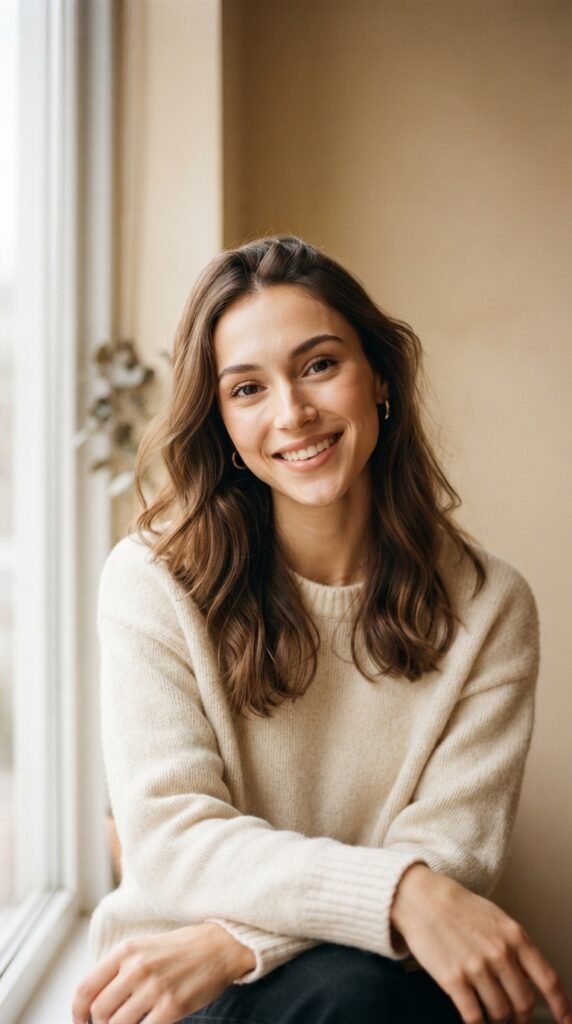
A heart face is wider at the forehead and cheekbones, then tapers down to a narrower chin. Think of a soft triangle pointing down. That is it. It is not about weight or size, it is about where your width lives.
Most heart faces also have a slightly wider forehead and a chin that comes to a gentle point. Some have a widow’s peak, some do not. Both are normal.
Why this matters: layers that add bulk at your cheekbones will make your face look wider up top. Layers that add a little softness near your chin balance everything out.
The Golden Rule: Soften the Top, Fill the Bottom
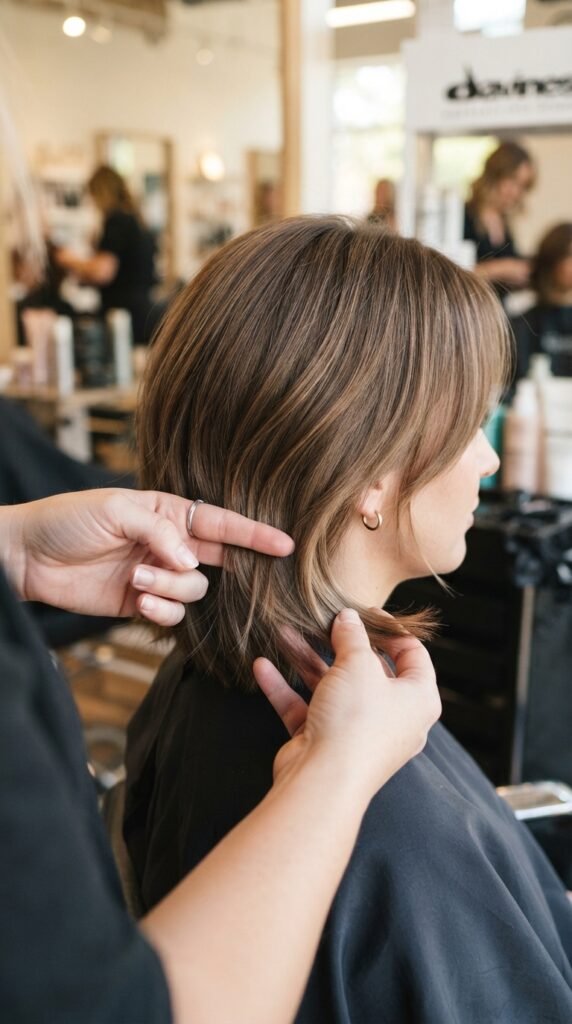
If you remember one thing from this whole post, make it this: keep the crown smooth and let the ends do the talking.
- Add volume below the cheekbones, not above them
- Keep the top layers light and blended, never chunky
- Let your longest layers fall near your chin, collarbone, or chest
- Avoid a heavy block of hair sitting right at your jaw corners
That single shift changes how your entire face reads. It is the difference between layers that fight your shape and layers that quietly flatter it.
Why Layers Work So Well on Heart Faces
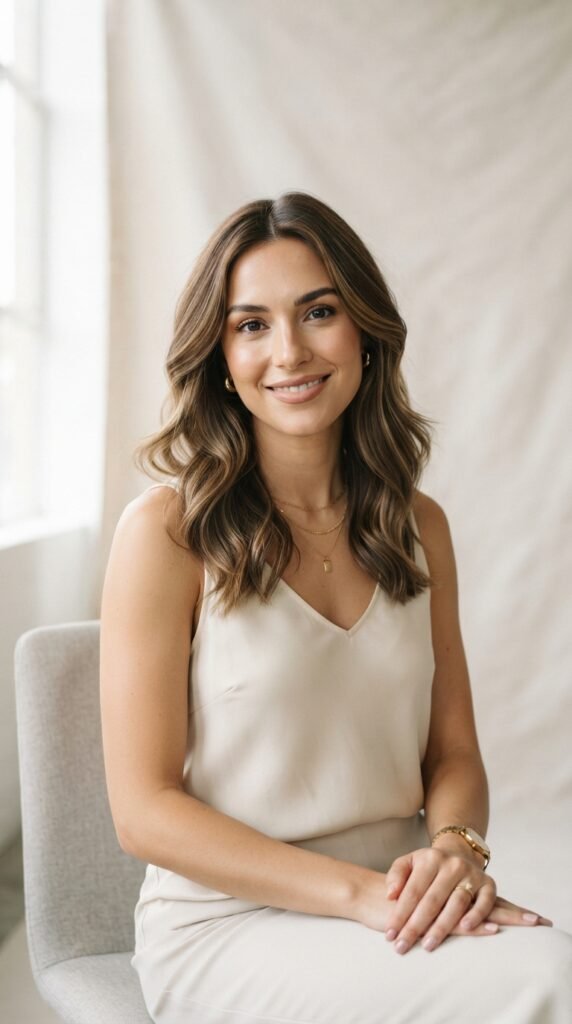
Layers are basically a balancing act. They move weight around without you having to cut much length off.
On a heart face, the right layers create a little softness near your jaw and chin, so the point does not feel too sharp. They also break up the straight line of long hair, which can make your face look longer than it is.
Bonus: layers add movement, and movement reads as healthy hair. That is why layered cuts always look a bit more expensive than one-length hair, even when they cost the same.
Layer Lengths That Flatter Most
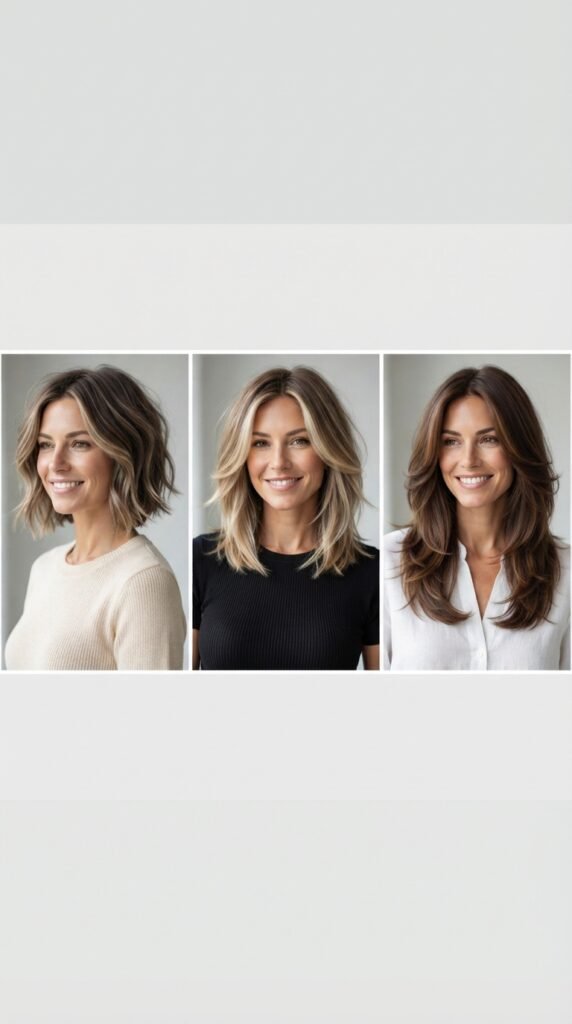
Not all lengths behave the same on a heart face. Here is the quick version.
- Chin length: adds width right where you want it, near the jaw. Great if your chin feels narrow.
- Collarbone length: the sweet spot. It elongates and balances without dragging you down.
- Chest length and beyond: beautiful, but keep the ends tapered so it does not look heavy.
If you are torn, go collarbone. It works on almost every heart face and grows out gracefully.
The Quiet Luxury Bob for Heart Faces

The quiet luxury bob is everywhere right now, and it happens to love a heart face. The trick is the shape.
Ask for a chin-to-jaw grazing bob with a slightly angled front and soft invisible layers through the ends. Skip the super blunt, heavy version, because that adds a hard line right at your widest point.
This is classic old money hair: smooth, shiny, effortless, and it never looks like you tried too hard. Wear it with a middle part for symmetry or a deep side part for drama. Both work.
The Asymmetrical Lob Is Your Secret Weapon
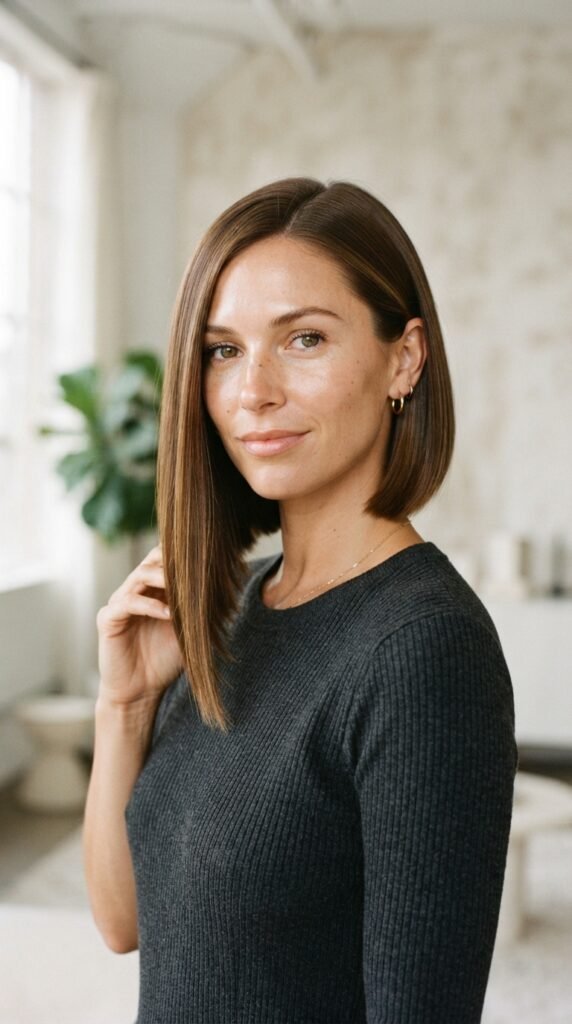
If you have a heart face, the asymmetrical lob might be the single most flattering cut you can get. Here is why.
Heart faces are symmetrical by nature, which means a little intentional imbalance goes a long way. An asymmetrical lob puts more length on one side, which visually offsets your cheekbones and draws the eye down and across.
Ask for: a deep side part, one side hitting just above the shoulder, the other grazing it. Keep the ends soft, not blunt. It grows out beautifully too, which honestly matters more than we admit.
Curtain Bangs: The Easiest Win

Curtain bangs were basically made for heart faces. They start at the center part, sweep outward, and end around your cheekbones instead of covering them.
That outward sweep softens your forehead width and frames your eyes without adding bulk. It is the lowest-risk bang you can try.
Tell your stylist: “I want curtain bangs that start at my cheekbones and blend into my layers, nothing too heavy in the middle.” That one sentence saves a lot of regret.
Skip the Heavy Blunt Fringe (And What to Do Instead)
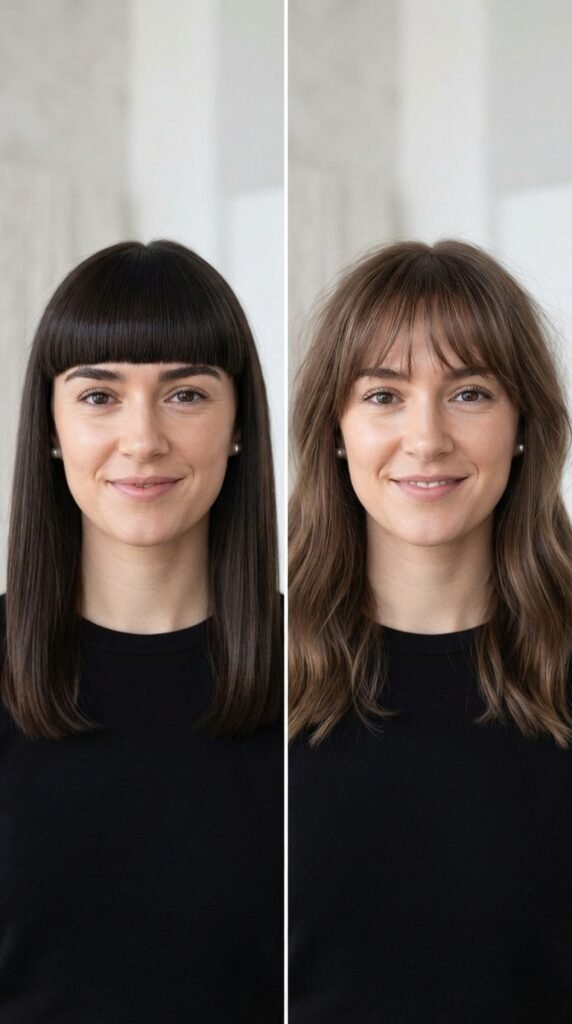
I know the blunt fringe photos on Pinterest are gorgeous. On a heart face, they are risky.
A heavy, straight-across fringe adds a horizontal line at your forehead, which makes your widest area look wider. It also hides the vertical length that balances your chin.
Instead, try:
- Wispy or piecey bangs with visible gaps
- Curtain bangs that sweep to the sides
- Brow-skimming bangs with soft, uneven ends
Same vibe, way better balance. Your cheekbones will thank you.
Long Layers With Soft, Tapered Ends

If you love your length and refuse to cut much, this is your move. Long layers with tapered ends give you movement without sacrificing inches.
Ask for the shortest layer to start around your chin or just below, then blend everything down. That keeps weight near your ends and away from your cheekbones.
Avoid the “long layers” that are really just two chopped sections. You want a smooth gradient, not steps.
This cut also works with basically every 2026 hairstyles trend, which means you are not committing to anything you will regret in six months.
2026 Hairstyles That Love a Heart Face
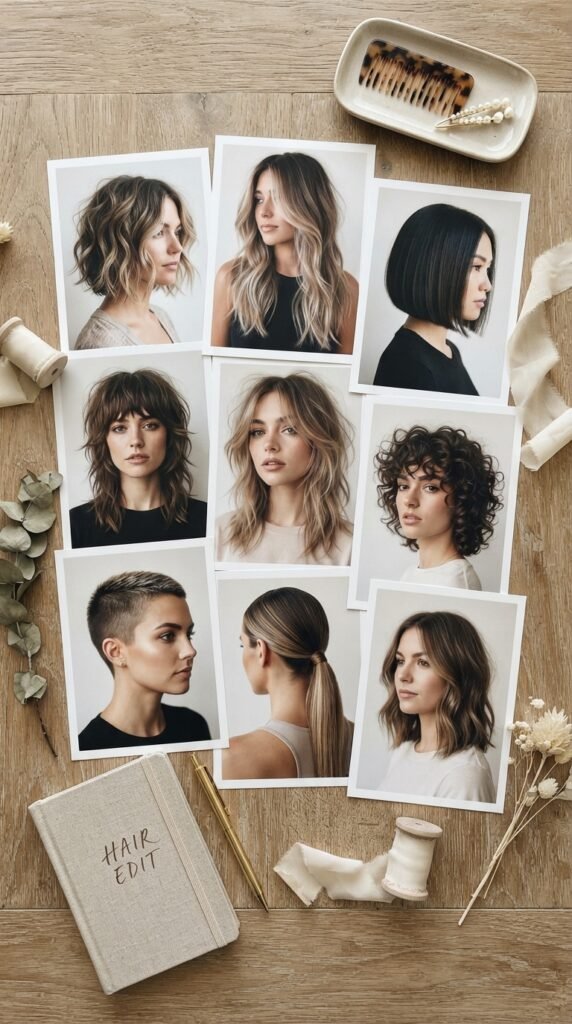
Here is what is actually trending in 2026 that plays nicely with a heart face.
- Quiet luxury bob: smooth, chin length, barely-there layers
- Asymmetrical lob: side parted, one side longer
- Old money hair: glossy, brushed, collarbone length
- Romantic goth hairstyles: soft black layers with face-framing pieces
- Glitchy glam hair: chunky, disconnected layers, kept below the cheekbone
- Vampire haircut: sleek mid-length with sharp, dramatic layers
Pick the one that matches your everyday energy, not just the trend.
Old Money Hair: Polished Layers That Never Expire
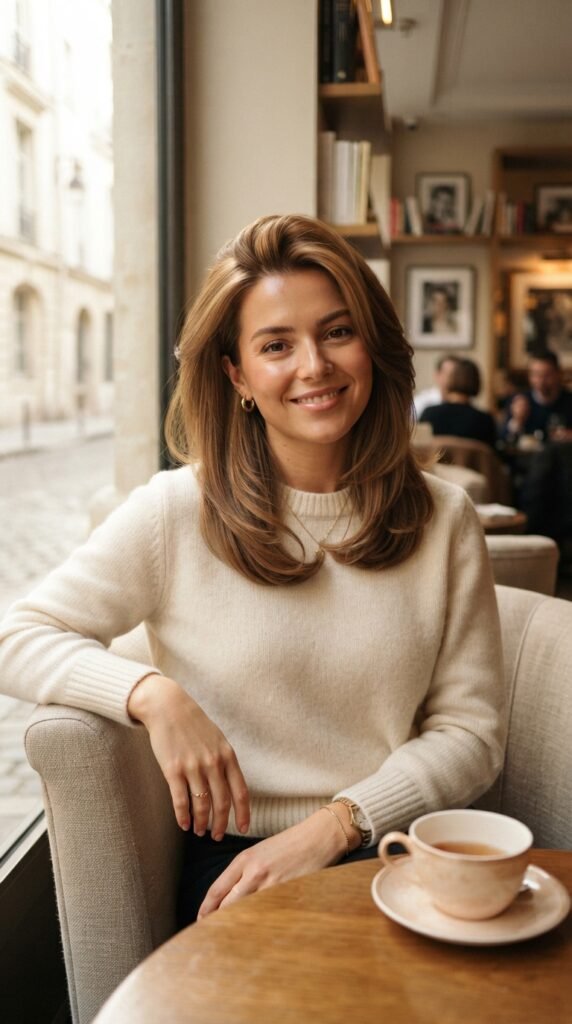
Old money hair is less about the cut and more about the finish. It is smooth, healthy, and just short layers that add a little swing at the ends.
For a heart face, ask for minimal layers concentrated in the last three or four inches. Keep the top smooth and shiny. The goal is one clean line of movement.
Style it with a round brush and a light oil on the ends. That is it. No teasing, no texture spray, no fuss.
This is the cut that looks good in every photo, at every age, forever.
Romantic Goth Hairstyles With Face-Framing Layers
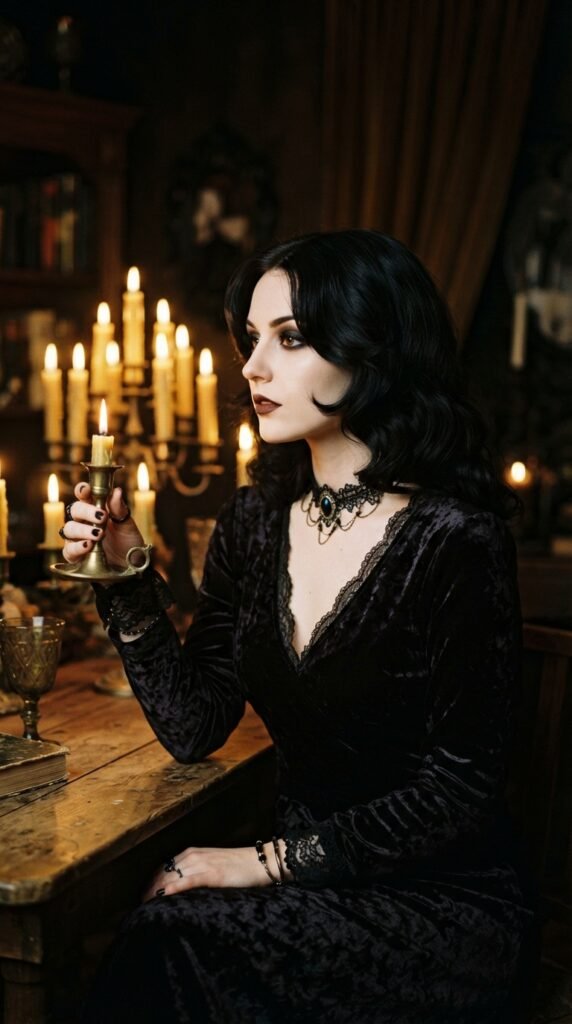
Romantic goth hairstyles are having a moment, and they suit a heart face beautifully when the layers are done right.
The key is face-framing pieces that start near your jaw, not your cheekbone. Dark hair already reads dramatic, so you do not need extra width up top.
Ask for soft, wispy framing pieces and long layers through the back. Think soft waves, deep side parts, and a little volume at the ends.
Deep plum or black cherry color makes this even better. It adds depth without changing the cut at all.
Glitchy Glam Hair: Edgy Layers, Balanced Shape
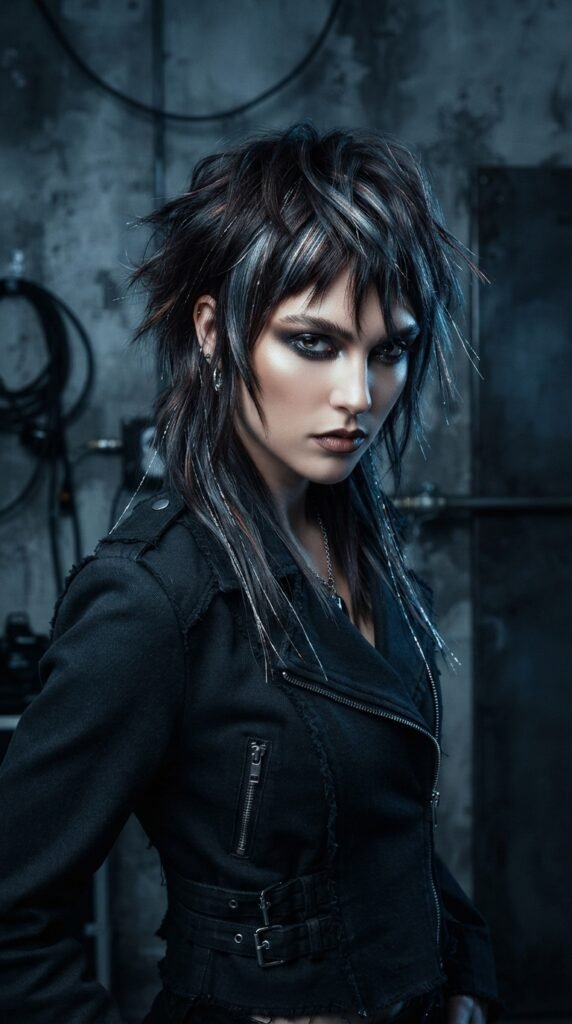
Glitchy glam hair is all about intentional unevenness: sharp layers, mixed textures, a little chaos on purpose. It can totally work on a heart face if you keep the shape balanced.
Rule of thumb: let the chaos live below your cheekbones. Above that, keep things smooth and blended.
Ask for:
- Disconnected layers starting at jaw level
- Blunt pieces mixed with soft ones, both below the cheekbone
- A strong side part to break the symmetry
It is fun, modern, and surprisingly wearable once you learn to style it.
The Vampire Haircut and Your Heart Face
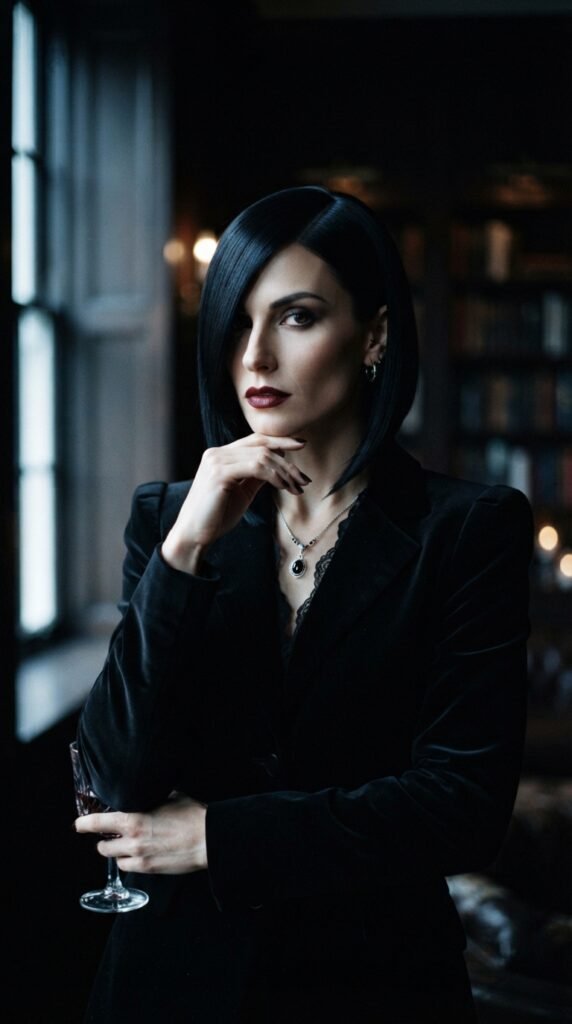
The vampire haircut is sleek, dark, and a little severe, with sharp layers and a strong side part. On a heart face, it is actually a great fit.
That dramatic side part breaks the symmetry that makes heart faces feel wide. The sharp layers near the chin add softness where you need it.
Keep the ends pointed and angled rather than blunt, and let the shortest layer land somewhere around your jaw. Pair it with a deep side part and a glossy finish.
It is bold, but it is flattering. Trust me on this one.
The Hime Cut: Can a Heart Face Pull It Off?
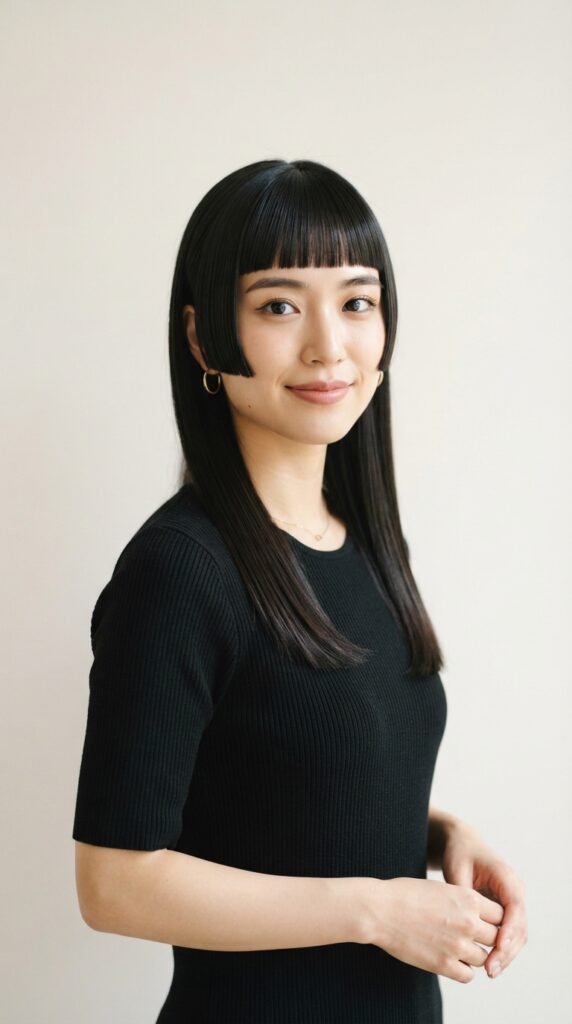
The hime cut is that striking Japanese style with blunt cheek-length side locks and longer hair behind. It is dramatic and beautiful, but it is tricky on a heart face.
The problem: those blunt sidelocks sit right at cheekbone level, which is exactly where a heart face is widest.
How to make it work anyway:
- Ask for sidelocks that angle slightly forward instead of straight across
- Have them end just below your cheekbone, near your jaw
- Keep the back long and smooth for balance
Done right, it is stunning. Done blunt and high, it can box you in.
Where Your Shortest Layer Should Start
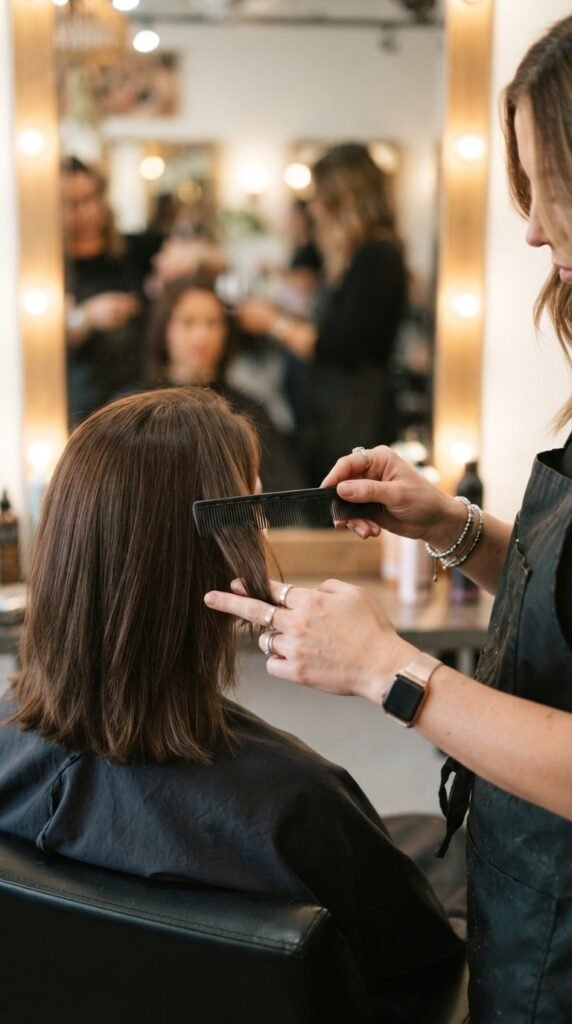
This is the question that decides whether your cut works or not.
For most heart faces, your shortest layer should start at your jaw or just below it. That puts softness exactly where your face narrows.
If the shortest layer starts at your cheekbone, you are adding width to your widest point. That is the opposite of what you want.
If it starts too low, near your collarbone, you get almost no shape. Fine, but flat.
Jaw level. Remember that one number and you will get a good cut almost every time.
How to Talk to Your Stylist (Word-for-Word Script)
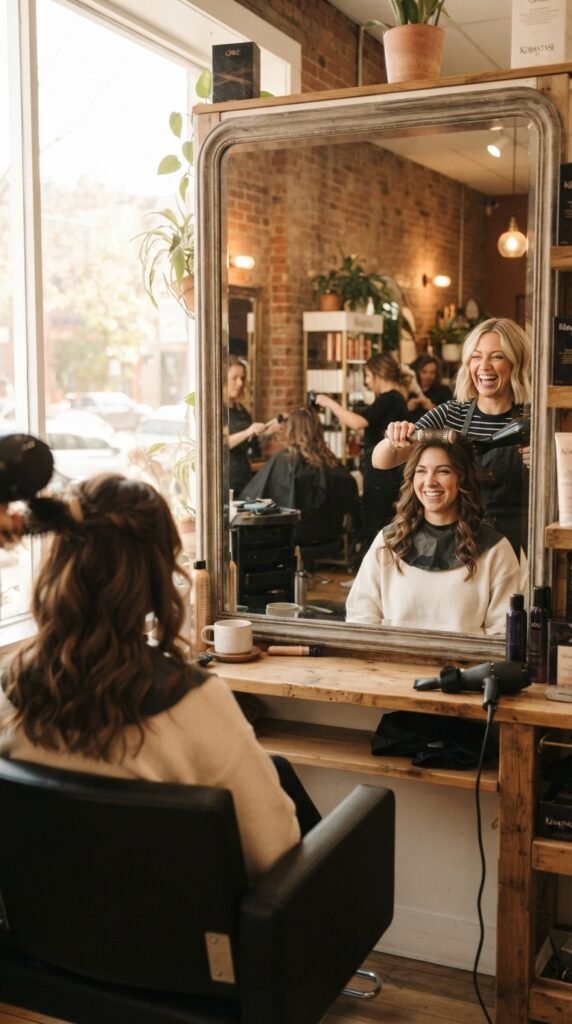
Stylists are not mind readers, and vague requests get vague results. Here is a script you can literally read out loud.
- “I have a heart face, so I want softness near my jaw and nothing heavy at my cheekbones.”
- “My shortest layer should start around my chin or jaw.”
- “I want the crown smooth and blended, not chunky.”
- “Please keep the ends tapered instead of blunt.”
- “Face-framing pieces that sweep outward, not straight down.”
Bring two photos too. One of the cut you want, one of what you do not want. It saves everyone time.
Volume Placement: Where to Add It and Where to Skip It
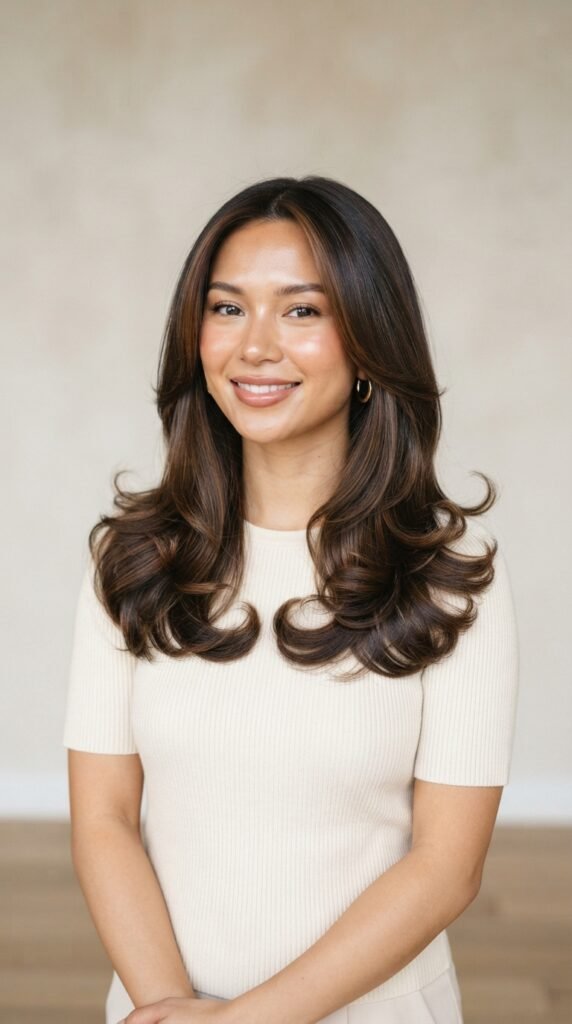
Volume is not the enemy. Volume in the wrong place is.
Skip it at the temples and crown. Skip it at your cheekbones. That is where a heart face already has natural width, and adding more makes your face look wider than it is.
Add it at the ends and near the jaw. A little bend or wave in the bottom third of your hair creates the illusion of a fuller, more balanced lower face.
Quick tip: dry your roots flat and your ends with a round brush. It sounds backwards, but it works.
Bangs Checklist for Heart Faces

Thinking about bangs? Run through this list first.
- Yes: curtain bangs, side-swept bangs, wispy bangs, brow-skimming bangs
- Maybe: long bangs you can tuck or pin up on lazy days
- Careful: blunt full fringe, baby bangs, anything thick and straight across
Whatever you choose, make sure the bangs connect to your face-framing layers. Floating bangs with no blending look out of place on any face shape.
And if you are nervous, start longer. You can always take more off.
Texture Talk: Wavy, Straight, and Curly Layers
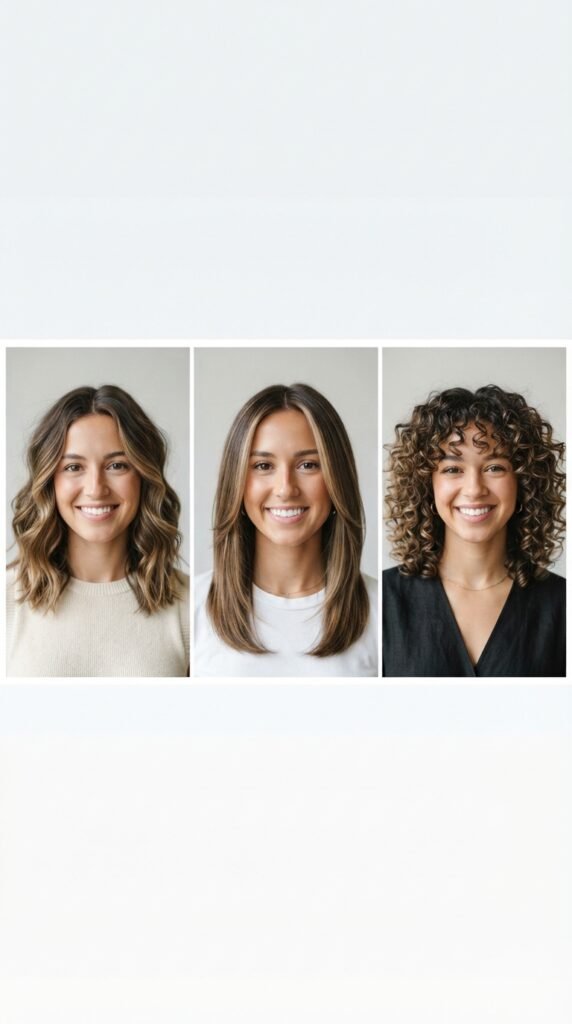
Your natural texture changes how layers behave. Here is the short version.
- Straight hair: layers show more, so keep them soft. Blunt steps look severe.
- Wavy hair: the easiest texture for heart faces. Layers add shape and the wave does the work.
- Curly hair: get layers cut dry and ask for round, blended shapes rather than sharp lines.
Whatever your texture, the jaw-level rule still applies. That starting point does not change.
Half-Up and Updo Styles That Show Off Your Layers
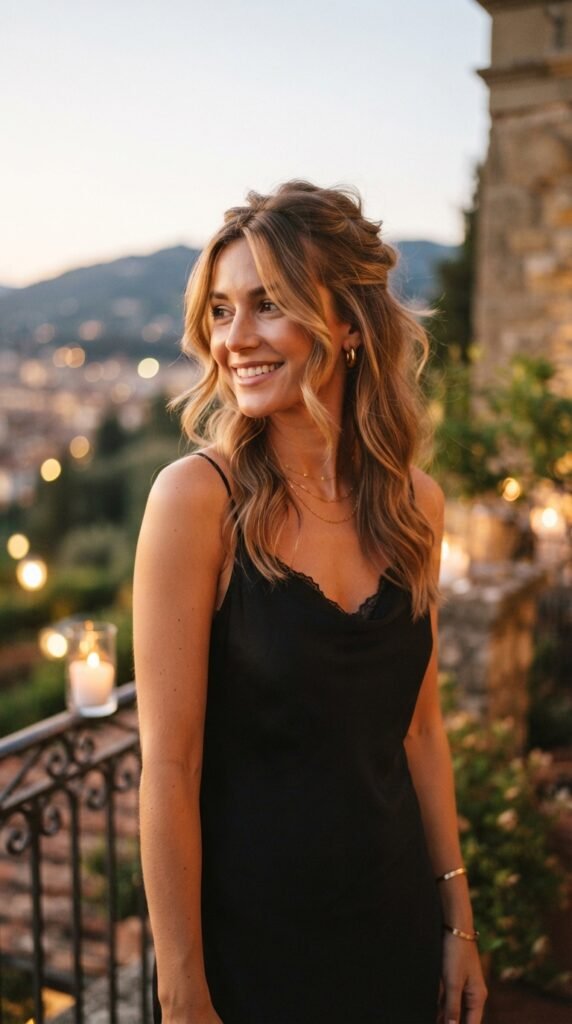
Layers are not just for wearing your hair down. They make updos look better too.
A half-up style with two loose face-framing pieces near your jaw is basically a heart face cheat code. It softens the shape while keeping your hair out of your face.
For a full updo, pull everything back but leave those two pieces out. Curl them slightly away from your face.
Low buns, messy twists, and loose ponytails all work here. Keep the crown flat and the face-framing pieces soft.
How to Style Your Layers in Five Minutes
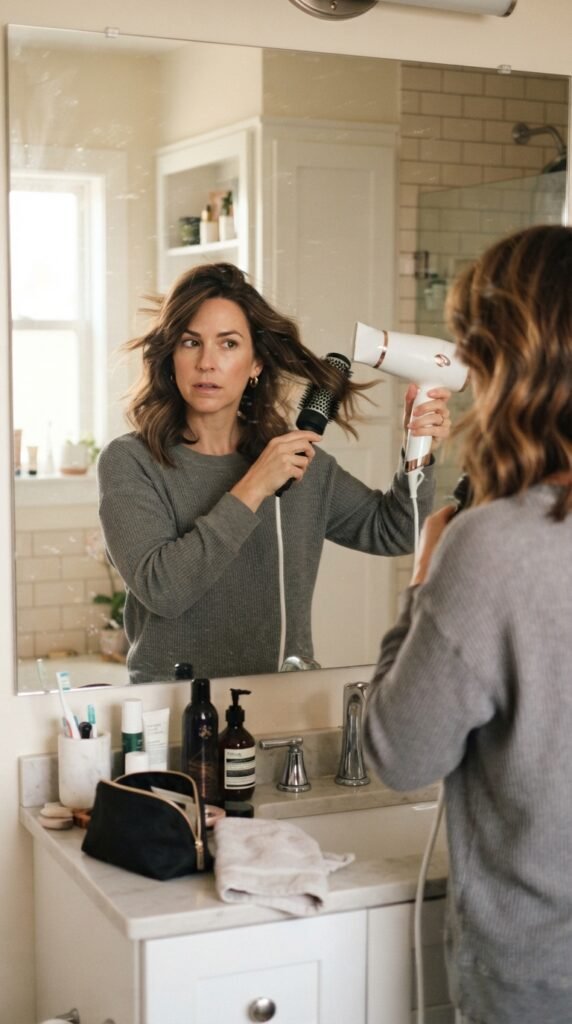
Nobody has forty minutes on a Tuesday. Here is the fast version.
- Spray a heat protectant and rough dry your roots flat.
- Wrap the bottom third of your hair around a round brush and pull down and slightly out.
- Twist the two face-framing pieces away from your face and let them cool.
- Add one drop of oil to the ends only.
That is it. Five minutes, and your layers look intentional instead of accidental.
How Often to Trim Layers (And Why It Matters)
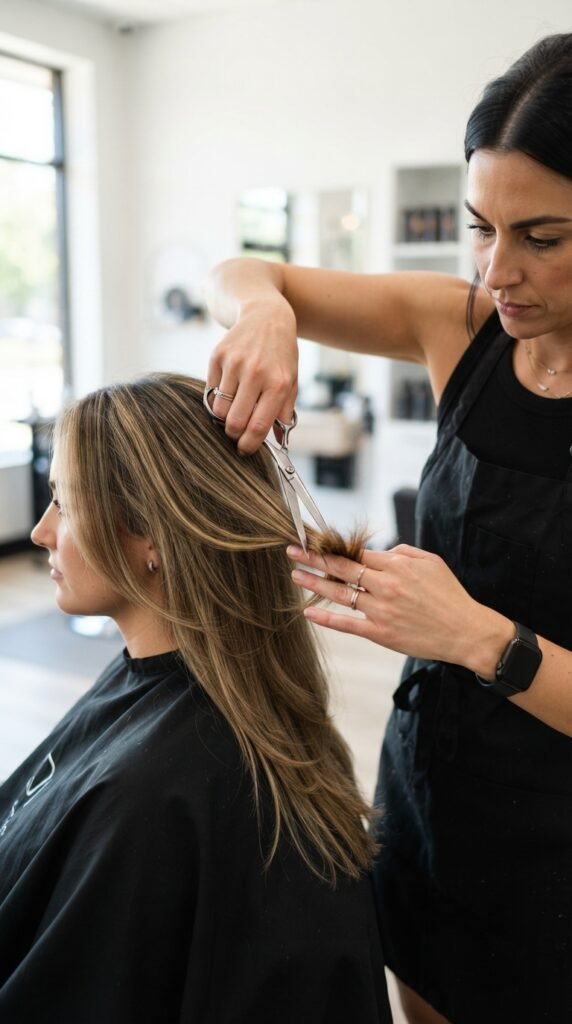
Layers lose their shape as they grow out. Fast.
For most people, every eight to twelve weeks keeps things looking sharp. If you have fine hair, lean closer to eight. Thick or curly hair can usually stretch a bit longer.
Here is the honest part: when layers grow out unevenly, they stop balancing your face and start adding weight where you do not want it. That is usually when people decide they “hate layers.” They do not hate layers, they just needed a trim two months ago.
Book your next appointment before you leave the salon. Seriously.
Five Layer Mistakes to Avoid With a Heart Face
Learn from the rest of us. Skip these.
- Shortest layer at the cheekbone: adds width to your widest point
- Blunt, heavy fringe: creates a hard horizontal line
- Too much crown volume: makes your forehead look wider
- Choppy, disconnected layers up top: looks patchy and grows out badly
- All-one-length hair with no shape: drags your face down
Any one of these can make a great cut look off. Avoid all five and you are golden.
Before You Book That Chair
Choosing layers for a heart face really comes down to one idea: soften the top, fill the bottom. Keep your crown smooth, start your shortest layer around your jaw, and let the ends carry the shape. That is the whole formula.
Everything else, the quiet luxury bob, the asymmetrical lob, romantic goth hairstyles, the vampire haircut, is just a matter of how you want to express it. Pick the version that fits your real life, not just your saved folder.
And remember, hair grows. If a cut is not perfect, it is a few months, not forever. That takes a lot of pressure off.
Save this post to Pinterest so you have it ready before your next salon appointment. And tell me in the comments: do you know your face shape, or are you still figuring it out? I read every single one, and I love helping you narrow it down.