Chalk, Flips and a Perfect Bun: 39 Hairstyles for a Gymnastics Meet That Stay Put on Every Apparatus
A gymnastics meet is the hardest test a hairstyle can face. One routine asks for a vault run, a swing on the bars, a turn on a four-inch beam and a tumbling pass on the floor, and the hair has to survive all four without a single strand falling into the eyes. That is why hairstyles for a gymnastics meet are chosen for grip and balance first and looks second: a style that slips on the beam is not just untidy, it can cost points and break a gymnast’s focus at the worst moment.
A good meet-day style does three things at once. It locks the hair flat against the head so nothing moves through flips and twists, it keeps the front completely clear of the face for spotting landings, and it sits neatly with a leotard, with no bulk at the neck or crown to catch on grips, chalk or the beam. Braids, low buns and slicked ponytails do this best, because they anchor the hair at several points and cannot swing loose the way free hair does.
This guide starts with the meet-day thinking: the hair rules judges and coaches expect, how to pick one style for all four apparatus, which products survive chalk and sweat, and what works for each hair length. Then it gives you 39 styles for gymnasts of every level, from a first local meet to a big competition weekend, for short, medium and long hair and every texture. Pick one, practise it at training first, and walk into the meet knowing your hair is already sorted.
Meet-Day Hair Rules: What Judges and Coaches Expect
Most gymnastics meets expect hair to be neat, secure and completely out of the face, and many clubs and judges will ask a gymnast to re-do hair that hangs loose or falls forward. Long hair must be tied back, and most coaches ban loose ribbons, dangling beads and anything that could fall onto the apparatus or distract a judge. Knowing the rule before meet day saves a stressful last-minute restyle at the venue.
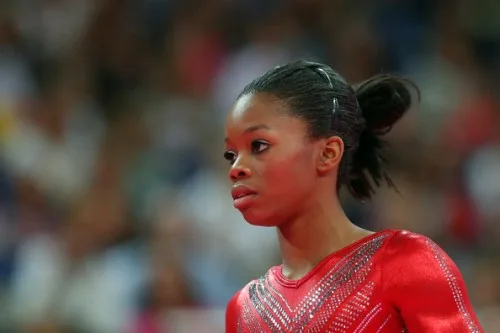
Best for: every gymnast heading to a competition, especially younger gymnasts at their first meet, and anyone whose club has a written hair policy. If your coach has ever sent a gymnast back to tie her hair up, this is your starting point.
How to style: check your club’s hair rules a week before the meet, and practise the exact style you will wear at training. Pack spare elastics, bobby pins and a small brush in your kit bag, and do the hair before the leotard goes on so you can check the back properly.
What to ask: ask your coach whether ribbons, scrunchies or hair jewellery are allowed at your level, and whether there is a rule about hair touching the leotard collar, so nothing in your style breaks a rule on the day.
Vault, Bars, Beam and Floor: One Style for Four Apparatus
A meet-day style has to work on all four pieces of apparatus, and each one pulls at the hair differently. The vault run shakes everything loose, the bars swing the head upside down, the beam punishes any hair that falls forward, and the floor asks for tumbling passes where a swinging ponytail can hit the face. The styles that survive all four are the ones that sit flat and tight to the head.
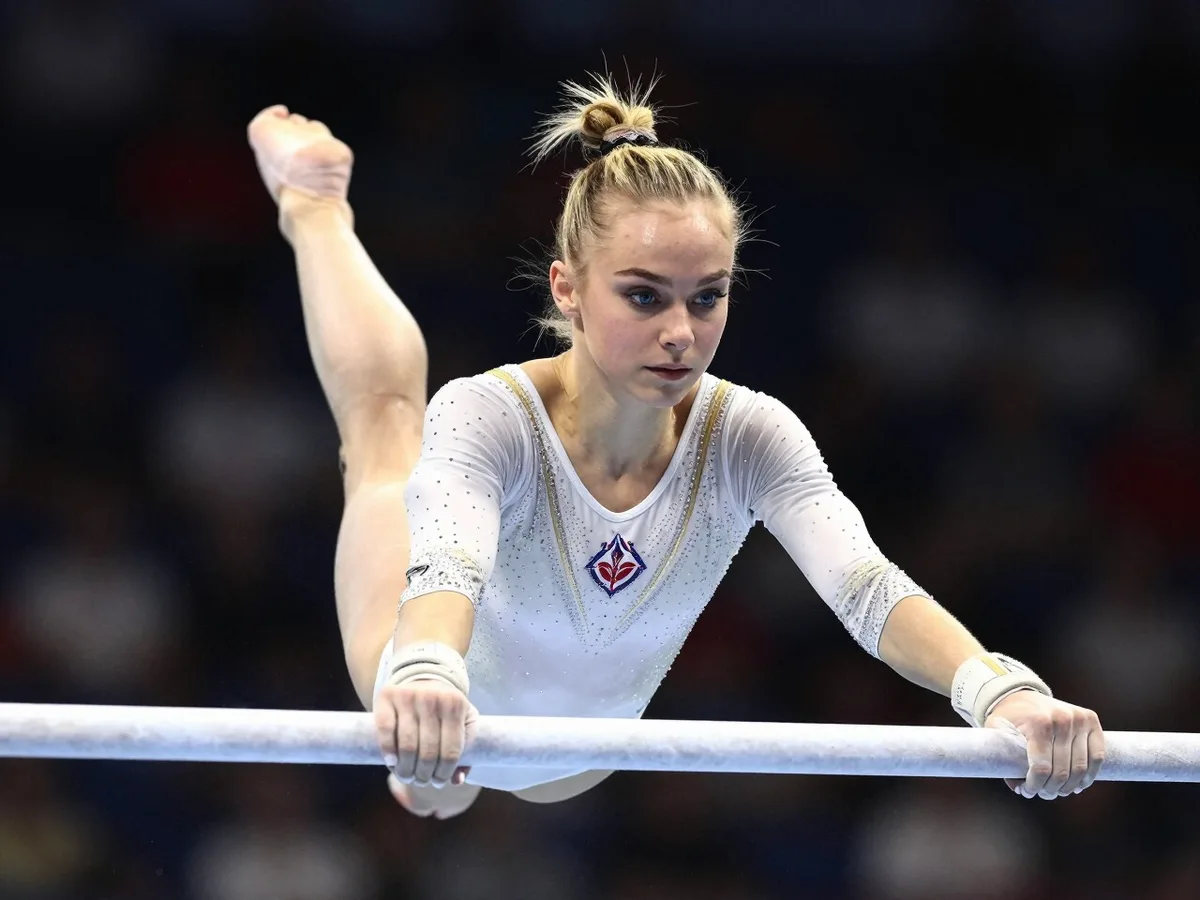
Best for: gymnasts competing on all four apparatus, especially all-rounders, and anyone who does not want to restyle between rotations. If you have ever had to re-pin your hair after the bars, this is the fix.
How to style: choose a style that is anchored at the hairline and at the nape, such as a braid into a bun or a slicked ponytail, and test it with a full run-through at training: a vault run, a bar swing, a beam turn and a tumbling pass.
What to ask: ask your coach to watch your hair during a full practice routine and tell you where it moves, so you can add a pin or change the anchor before the meet rather than after a wobble.
Chalk, Sweat and Hairspray: Products That Hold Through Flips
Chalk dust and sweat are the two enemies of meet-day hair. Chalk from the bars and beam settles on the hairline and dries the hair out, while sweat under the lights loosens elastics and softens gel. The products that work are the ones that hold without stiffness: a strong-hold gel for the hairline, a light pomade for flyaways, and a flexible hairspray to finish, all applied before the warm-up.
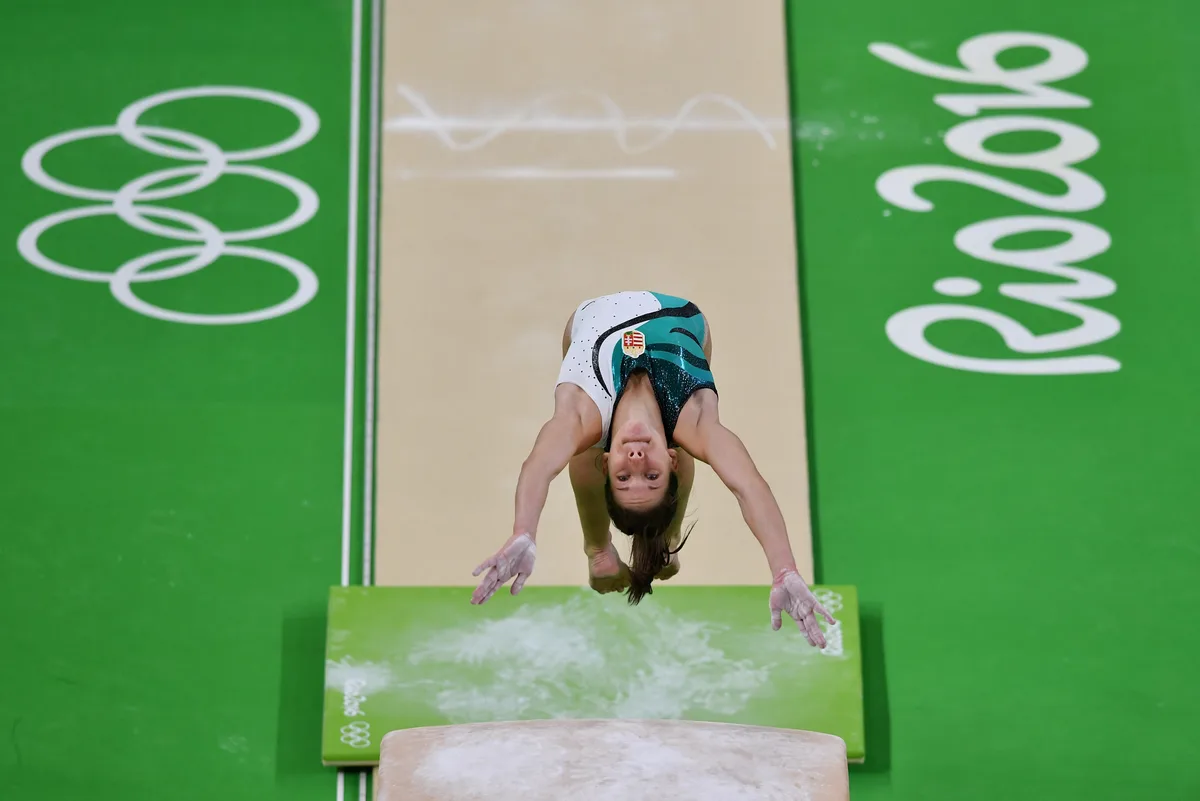
Best for: gymnasts who compete under hot arena lights, and anyone whose hair goes soft or frizzy by the third rotation. A pea-sized amount of gel is usually enough; more product just makes the hair sticky and chalky.
How to style: smooth gel along the hairline with a toothbrush or a small brush, add a drop of oil to the ends to fight chalk dryness, and finish with a light mist of hairspray held a handspan away from the head. Keep a travel-size spray in your kit bag.
What to ask: ask your stylist for a gel that holds through sweat but brushes out easily, so you are not fighting residue and chalk the morning after the meet.
Hair by Length: Short, Medium and Long on Meet Day
Hair length decides what a meet will do to your style. Short hair is the easiest: it fits under nothing, needs almost no anchoring, and a headband is usually all it takes. Medium hair needs a low ponytail or a braid to stop the ends flipping out during tumbling. Long hair needs the most anchoring, because it swings, catches on grips and gets in the way on the beam.
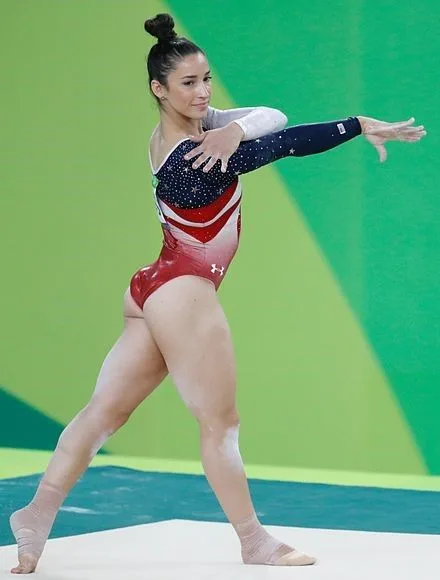
Best for: short hair, which suits a headband and a little texture spray; medium hair, which suits low ponytails and braids; and long hair, which suits braids and buns that keep every length contained and flat.
How to style: short hair: add a headband and smooth the sides. Medium hair: gather it low and pin the ends. Long hair: braid it first, then bun or ponytail the braid so nothing swings free through a flip.
What to ask: ask your stylist for a length-appropriate plan: a headband trick for a pixie cut, a low braid for a lob, or a full braid-and-bun for long hair that has to survive four rotations.
Braids vs Buns vs Ponytails for Gymnastics
Braids, buns and ponytails each solve a different meet-day problem. Braids are the most secure: they lock the hair flat and cannot swing loose through a twist. Buns are the neatest with a leotard, because they sit low and flat and never touch the apparatus. Ponytails are the fastest, but they swing, so they work best when they sit low or when a braid runs into them.
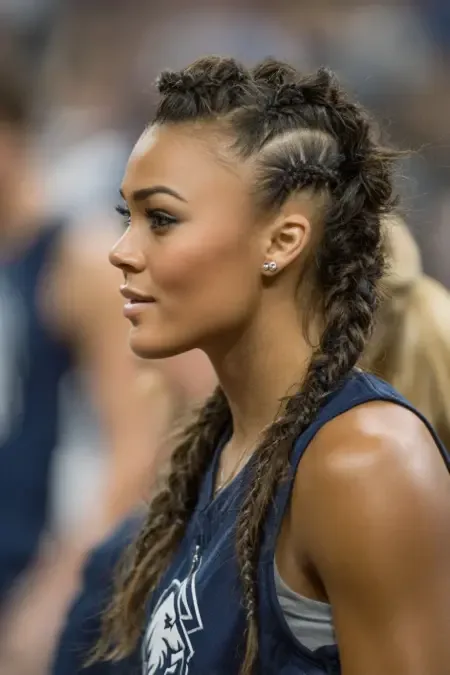
Best for: braids for gymnasts and long meets, buns for a polished look with a leotard, and ponytails for training days and quick meet-day styling. Many of the best meet styles combine two of them.
How to style: choose a braid if you need all-day hold, a bun if you need a flat fit with no swing, and a ponytail if you need speed. For the best of both, braid into a ponytail or a bun.
What to ask: ask your stylist which anchor suits your hair type: braids for thick hair that slips out of elastics, buns for fine hair that needs pinning, ponytails for a fast, sporty look that still holds.
Leotard Lines and Hair Placement: Keeping It Neat
A leotard shows everything about a hairstyle, including the parts you cannot see yourself. Hair that sits high on the neck or bunches at the collar breaks the clean line judges look for, and a bun that is too big throws off the silhouette in a handstand. The neatest meet styles sit low at the nape or flat against the crown, following the line of the leotard instead of fighting it.
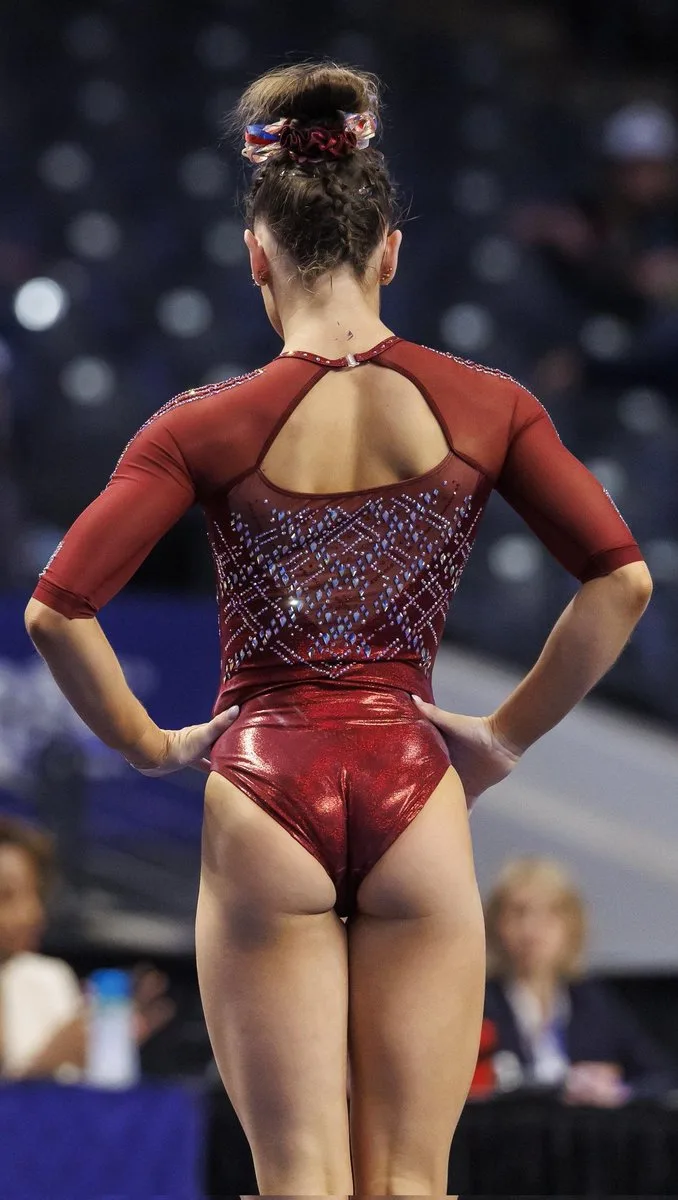
Best for: every gymnast who wants a clean, polished presentation, and anyone competing in front of judges who score artistry and form. A tidy hairline reads as confidence on every apparatus.
How to style: check your style from the side and the back in your leotard before the meet, and move the bun or ponytail lower if it touches the collar. Smooth the hairline with gel so the neckline looks clean from every angle.
What to ask: ask your coach to check your hairline and bun placement while you wear your competition leotard, so the style suits the cut of the leotard and not just your everyday clothes.
Team Colours, Ribbons and Meet-Day Accessories
A gymnastics meet is one of the few places where team colours in your hair are welcome. A ribbon, a scrunchie or a headband in your team’s colours turns a plain bun into a team look, and it costs nothing. The trick is to keep it small and secure: one colour accent, pinned flat, so nothing can come loose on the beam or fall onto the floor.
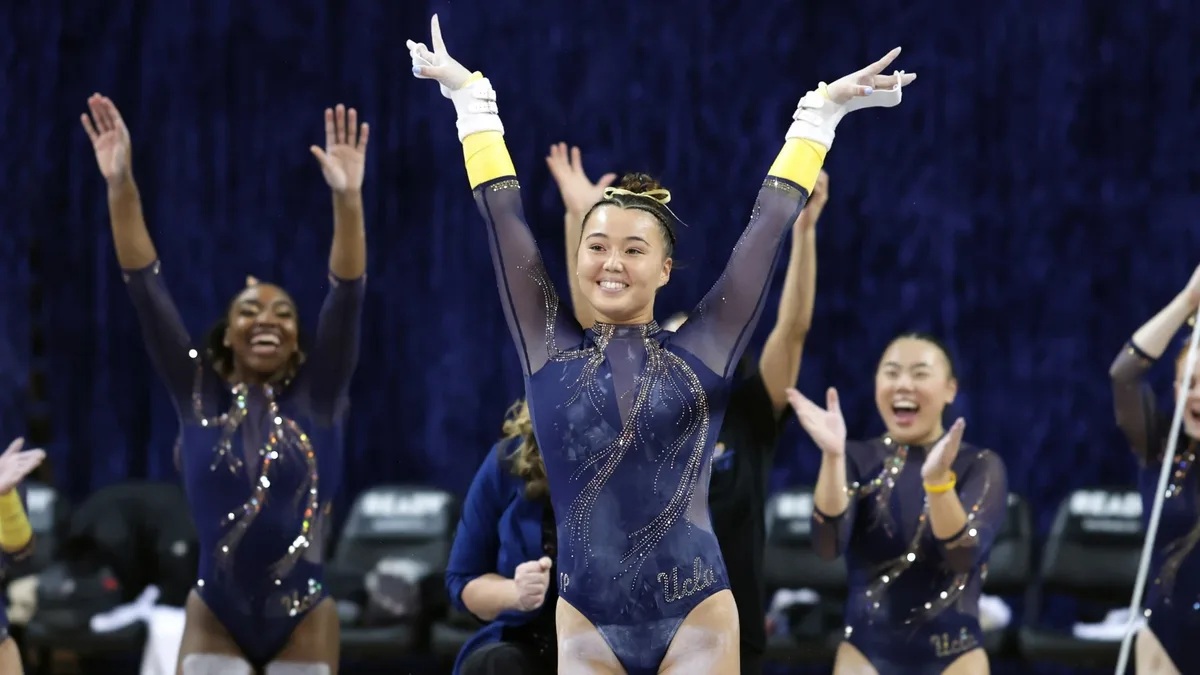
Best for: gymnasts who want to show team spirit, and anyone heading to a team final or a club competition. A coloured scrunchie also doubles as a spare elastic in your kit bag.
How to style: tie a team-coloured ribbon around a bun or ponytail base, swap a plain elastic for a scrunchie in team colours, or add a thin headband that matches your leotard. Pin every accessory twice.
What to ask: ask your coach whether ribbons and hair jewellery are allowed at your competition level, and choose accessories that sit flat and cannot slip out during a flip or a dismount.
Between Rotations: Quick Fixes and the Post-Meet Refresh
You get only a few minutes between rotations, and that is all the time you need to rescue your hair. The most common problems are a loosened ponytail, flyaways from chalk and sweat, and a bun that has shifted after the bars. A small kit in your bag fixes all three: two spare elastics, three bobby pins and a travel-size smoothing cream.
Best for: every gymnast at a live meet, especially all-rounders competing on four apparatus. Keep the kit in your bag by the floor, not in the changing room, so you can reach it between rotations.
How to style: between rotations, re-tighten the ponytail or bun at the base, smooth the hairline with a little cream, and re-pin any loose strands. After the meet, shake the hair out at the roots, add a little dry shampoo, and let it fall naturally.
What to ask: ask your coach for a style that survives a quick re-tighten, with no pins hidden where they will dig in during a handstand or a bar routine.
1. Classic Gymnast Bun
The classic gymnast bun is the style every gymnast learns first, and it is still the gold standard on meet day. Hair is brushed smooth, gathered high or at the crown, twisted and pinned into a tight, round bun that cannot move. It keeps the neckline clean, the hairline smooth and the silhouette tidy, and it looks the same on the beam as it does on the floor.
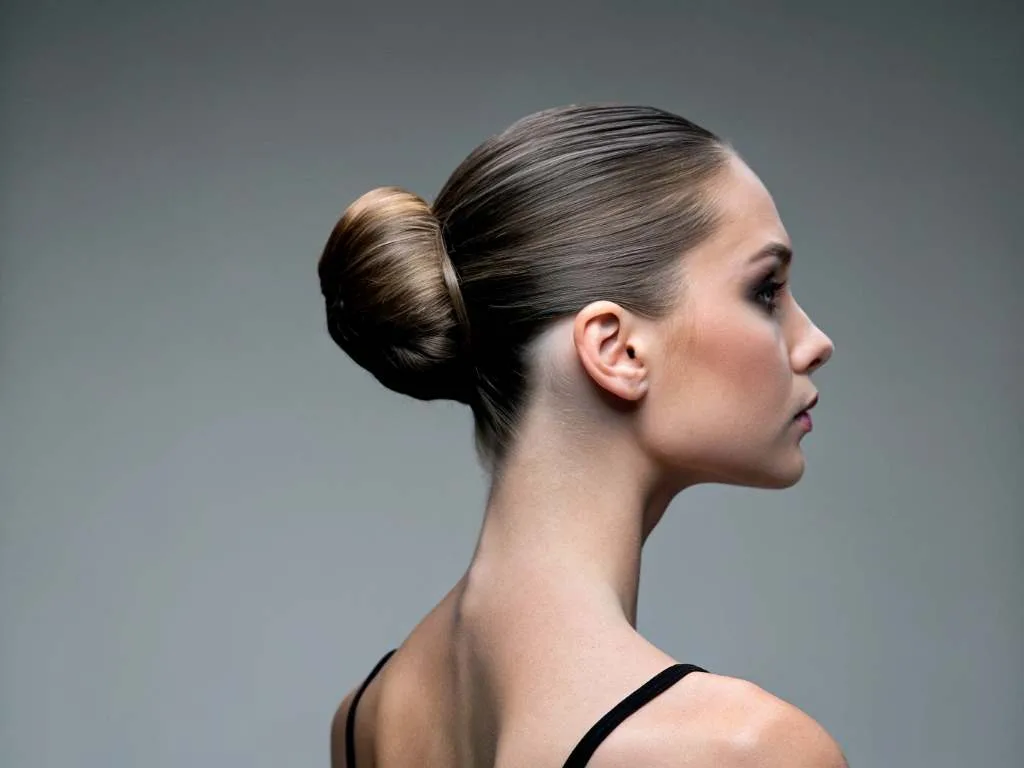
Pros: The most secure and the most accepted style at any meet; sits flat with a leotard; photographs beautifully from every angle.
Cons: Can feel tight and give a headache if pinned too firmly; needs plenty of pins on thick hair; takes practice to make perfectly round.
Maintenance: Re-pin any loose strands between rotations and smooth the hairline with gel. A hairnet over the bun keeps it neat all day.
Who should avoid it: Gymnasts with very short hair that cannot gather into a bun, and anyone with a sensitive scalp who finds a tight bun painful.
2. Double Dutch Braids
Double Dutch braids are the most secure style a gymnast can wear. The braids lock the hair flat from the hairline to the ends, so nothing moves through a vault run, a bar swing or a tumbling pass. They sit flat against the head, slide easily under nothing at all, and still look sharp in the team photo afterwards.
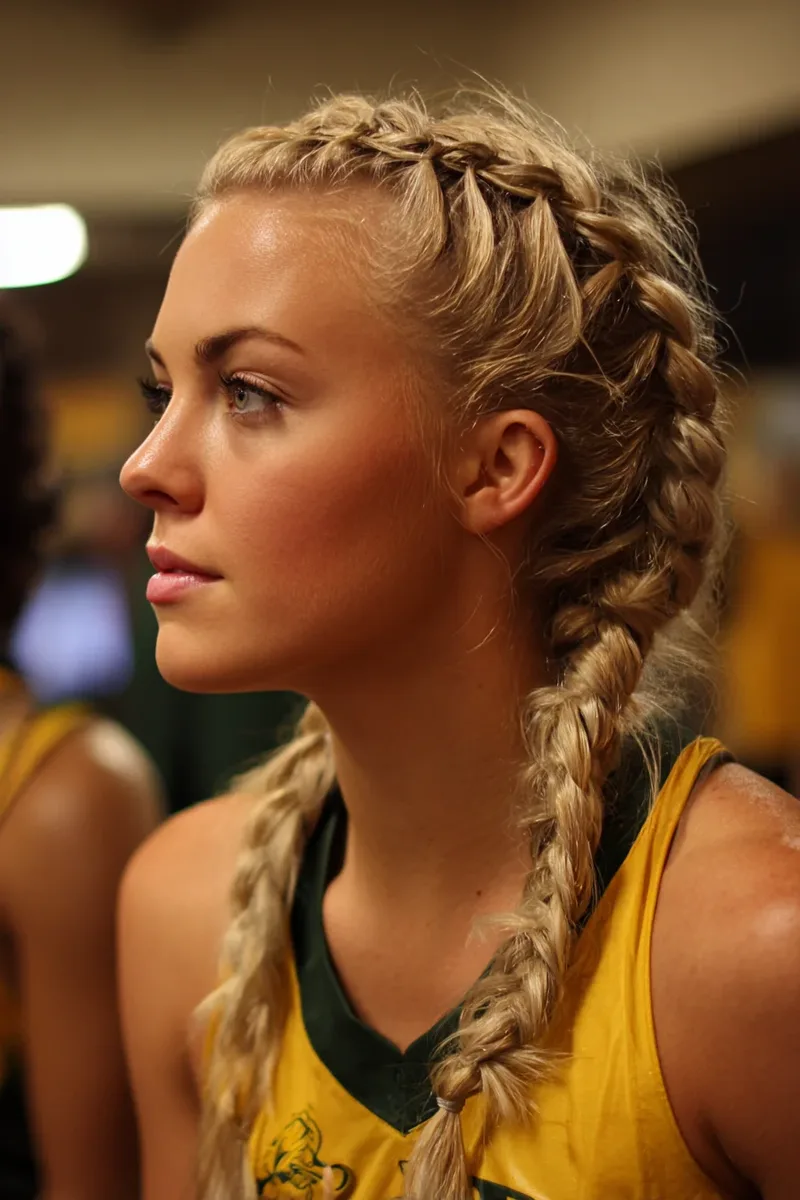
Pros: Maximum hold through flips and twists; lasts the whole meet and beyond; keeps every strand out of the face.
Cons: Takes time to braid well; can pull at the hairline if braided too tightly; hard to fix quickly between rotations.
Maintenance: Braid the night before or early on meet morning, and secure the ends with small elastics. A light mist of hairspray at the hairline keeps flyaways down.
Who should avoid it: Gymnasts with very short hair that cannot be braided, and anyone who finds tight braids uncomfortable during a long competition day.
3. French Braid Into a Low Bun
A French braid into a low bun is the hybrid every gymnast should learn. The braid locks the front and crown flat, the bun gets the ends completely out of the way, and the whole style sits low enough that nothing touches the neck or the leotard collar. It survives the vault, the bars and the beam, and it looks polished enough for the awards ceremony.
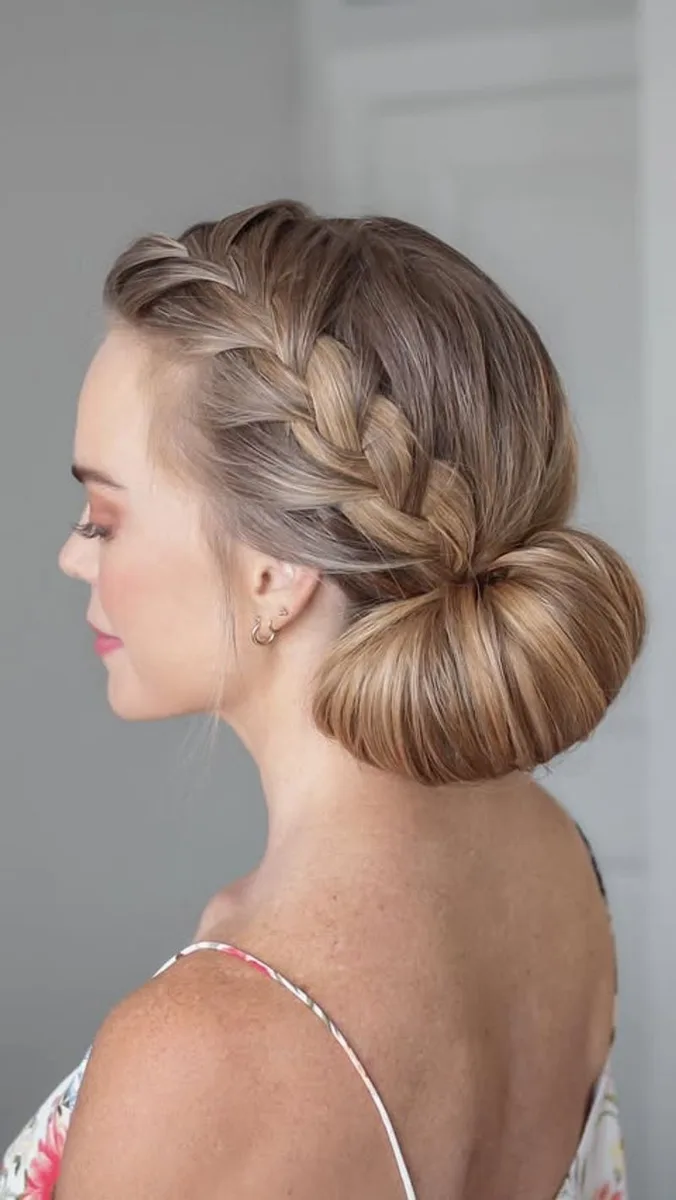
Pros: Combines the hold of a braid with the neatness of a bun; sits low and flat; lasts from warm-up to medals.
Cons: Needs a steady hand to braid neatly; the bun can loosen if the braid is not anchored well at the nape.
Maintenance: Pin the bun flat at the nape and check it after the bars, where swings pull hardest. Keep spare pins in your kit bag.
Who should avoid it: Gymnasts with short layers that slip out of a braid, and anyone who prefers a high bun silhouette for floor routines.
4. High Braided Ponytail
The high braided ponytail is the energetic meet-day choice. A braid runs from the hairline into a high ponytail, so the front stays locked flat while the lengths swing free behind the shoulders. It looks powerful on the floor exercise, where the ponytail moves with the music, and it holds far better than a plain ponytail because the braid anchors it.
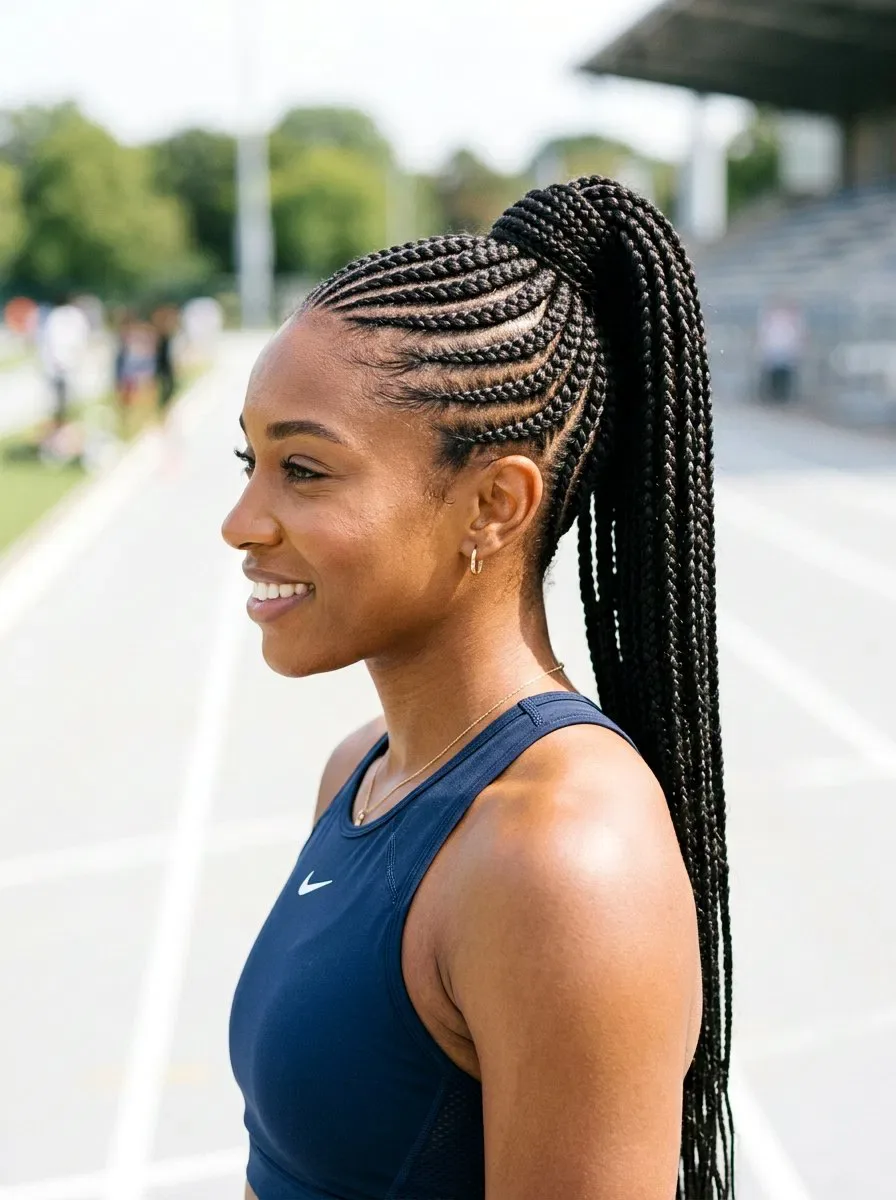
Pros: Strong hold at the front with lively movement at the back; suits floor routines; quick to do once the braid is learned.
Cons: The ponytail can swing into the face on a fast twist; not the best choice for the beam, where stillness matters.
Maintenance: Braid tightly at the hairline and secure the ponytail with two elastics. Tie the ends with a ribbon in team colours for extra grip.
Who should avoid it: Beam specialists who need total stillness, and gymnasts with fine hair whose ponytail slips out of elastics easily.
5. Slicked-Back Low Ponytail
The slicked-back low ponytail is the cleanest look in meet hair. Gel smooths every strand back from the face, the ponytail sits low at the nape, and nothing moves: no flyaways, no fringe in the eyes, no swinging ends. It slides neatly with a leotard, looks sharp under arena lights, and lets the judges see every expression.
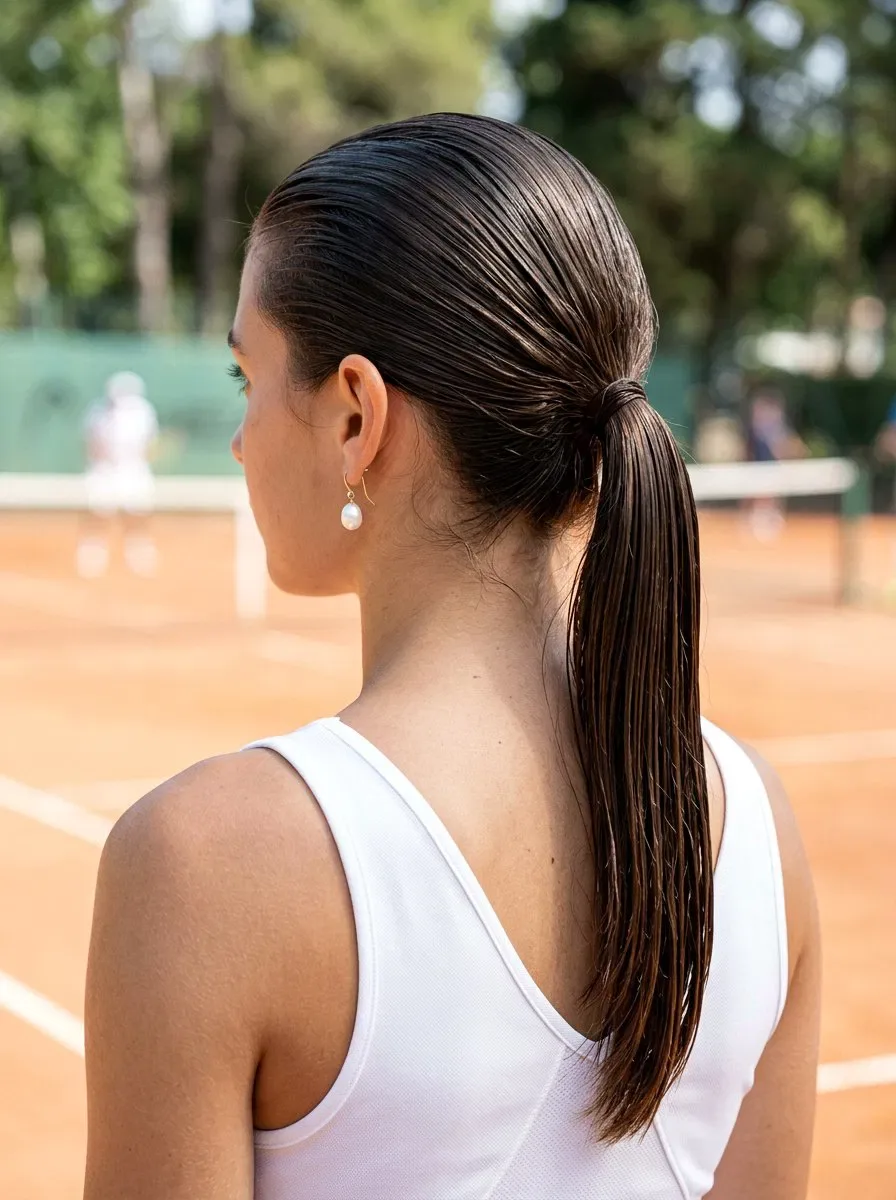
Pros: Extremely neat and professional; keeps the face completely clear; easy to re-tighten between rotations.
Cons: Can look severe on younger gymnasts; gel and chalk together can feel sticky; needs re-smoothing after sweating.
Maintenance: Apply gel to the roots and hairline before the warm-up, and carry a small brush to smooth the hairline again between rotations.
Who should avoid it: Gymnasts who want a softer look for floor, and anyone with a very sensitive hairline who dislikes gel.
6. Cornrows Into a Low Bun
Cornrows are the ultimate lockdown style for a gymnastics meet. Braided tight to the scalp in neat rows, they cannot come loose, cannot be pulled out by a grip, and cannot fall into the eyes, no matter how hard the tumbling pass or how much chalk is in the air. Gathered into a low bun, they last for days, so one session covers a whole competition weekend.
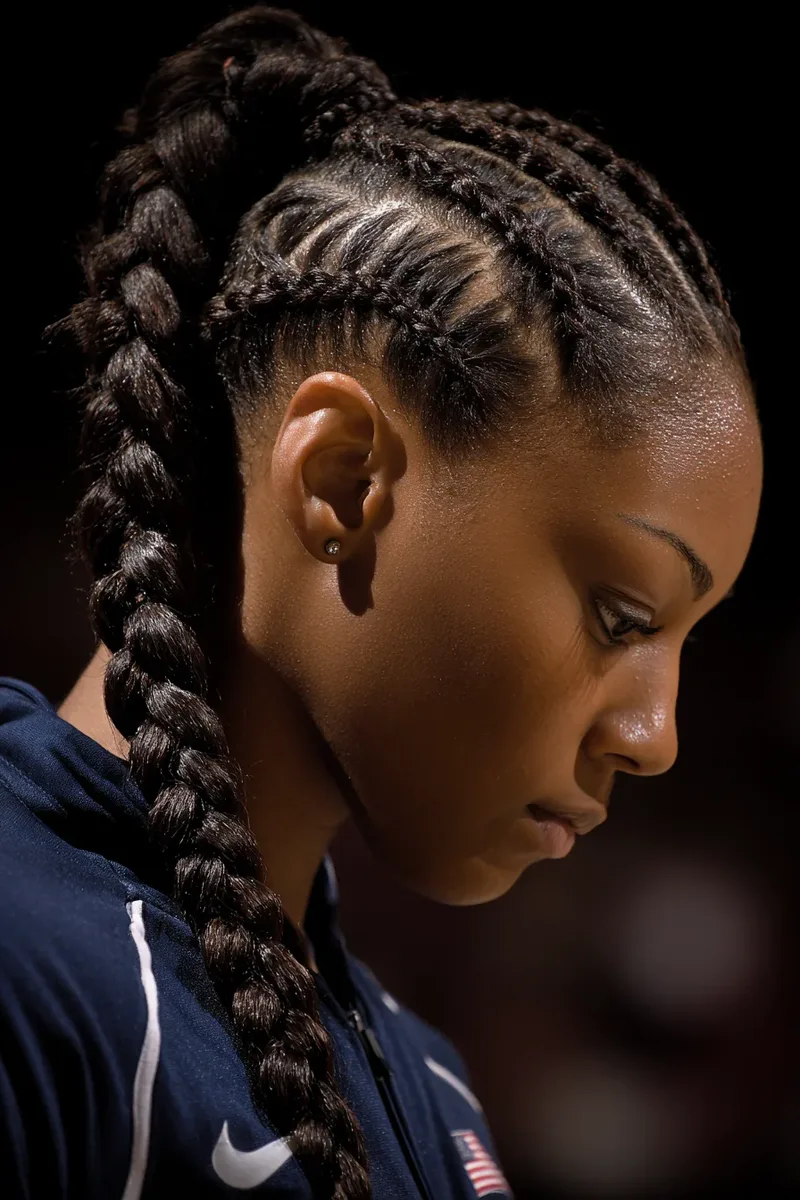
Pros: The most durable style in this guide; perfect for multi-day meets; keeps textured hair fully protected and contained.
Cons: Needs a skilled braider and a long session; too-tight rows can hurt; not a quick morning-of-the-meet option.
Maintenance: Oil the scalp lightly before braiding and keep the bun pinned flat. Refresh the hairline with a little edge gel each morning.
Who should avoid it: Gymnasts who need a style done the same morning, and anyone who finds tight cornrows uncomfortable under a handstand.
7. Bubble Braid Ponytail
The bubble braid ponytail is the fun one: a high ponytail divided into puffs with elastics, giving a bold, sporty look that still holds up at a meet. The elastics along the length stop the ponytail swinging and whipping the way a plain ponytail does, so it is far more practical than it looks, and it photographs brilliantly on the floor.
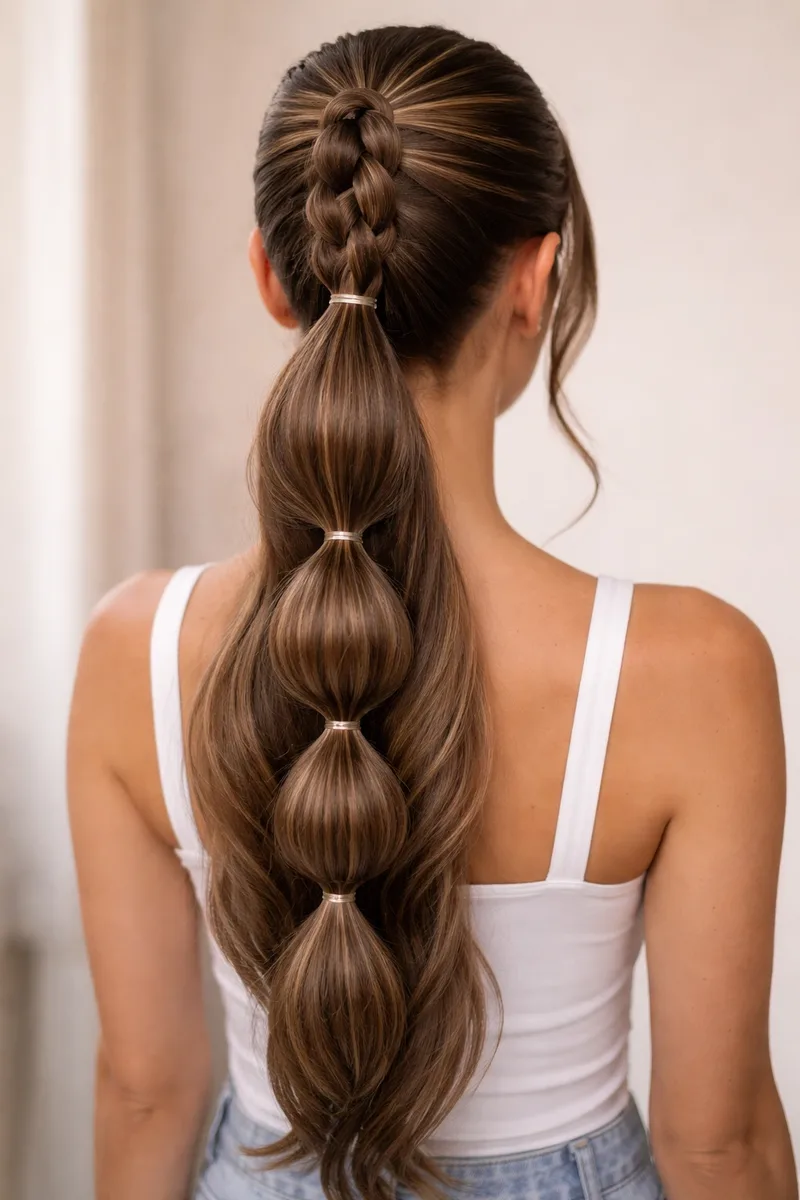
Pros: Bold and eye-catching; the elastics stop the ponytail swinging; easy to refresh by re-puffing a section.
Cons: The bubbles can flatten after tumbling; uses a lot of elastics; not the tidiest choice for the beam.
Maintenance: Space the elastics evenly and secure them tightly. Re-puff each bubble gently between rotations and finish with hairspray.
Who should avoid it: Beam specialists and gymnasts who need the neatest possible silhouette, and anyone with very fine hair that will not hold a bubble.
8. Braided Crown
The braided crown wraps a braid around the head like a headband, keeping every strand pinned flat and the face completely clear. It is elegant enough for a rhythmic routine and secure enough for a tumbling pass, and it works beautifully with a leotard because there is no bulk at the back to catch on anything.
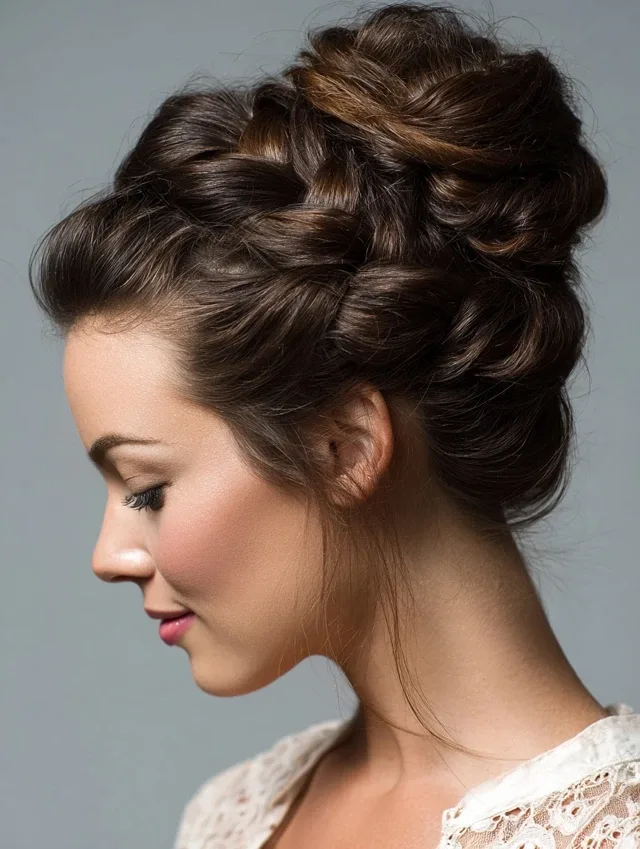
Pros: Elegant and secure; keeps the hairline tidy from every angle; no loose ends at all.
Cons: Takes skill to braid evenly around the head; can loosen at the nape during bar swings if not pinned well.
Maintenance: Pin the braid at several points, especially behind the ears and at the nape, and mist with hairspray before the first rotation.
Who should avoid it: Gymnasts with very thick hair that makes the crown bulky, and beginners who cannot yet braid around their own head.
9. Low Twisted Bun
A low twisted bun is the quiet, professional meet choice. It sits at the nape, so it never bounces when you tumble, never catches on a grip, and keeps the leotard line clean. Gel keeps the hairline smooth through the chalk and the lights, and the style looks polished from the first vault to the last floor pass.
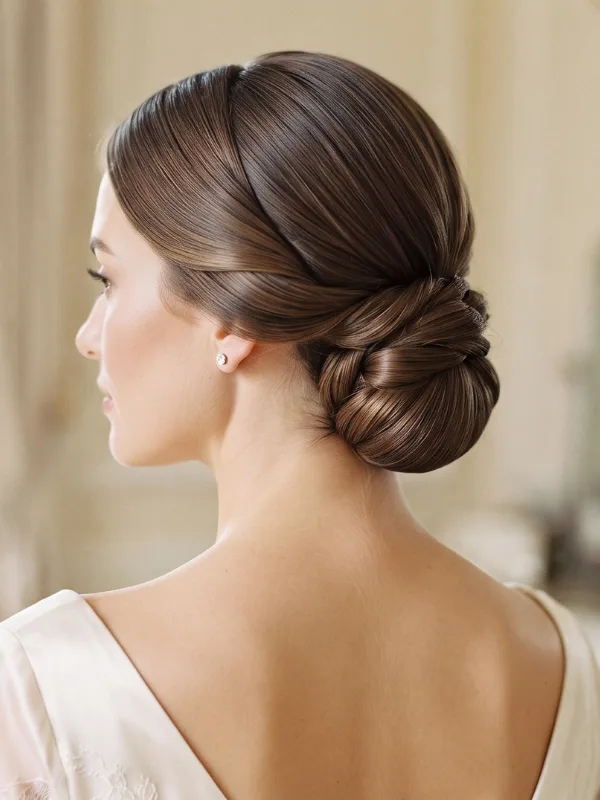
Pros: Neat, low and completely still; suits every apparatus; easy to pin flat and forget about.
Cons: Can look plain next to braided styles; the twist can unwind if it is not pinned at several points.
Maintenance: Twist the hair tightly and pin it in at least four places. Smooth the hairline with gel before each rotation if needed.
Who should avoid it: Gymnasts who want a statement style for floor, and anyone whose hair is too short to twist into a secure bun.
10. Fishtail Braid
The fishtail braid is the pretty one that still works hard. Two small sections cross over each other down the length of the hair, making a fine, detailed braid that lies flat against the back and cannot swing loose. It looks delicate on the beam and strong on the floor, and it holds its shape through a whole meet.
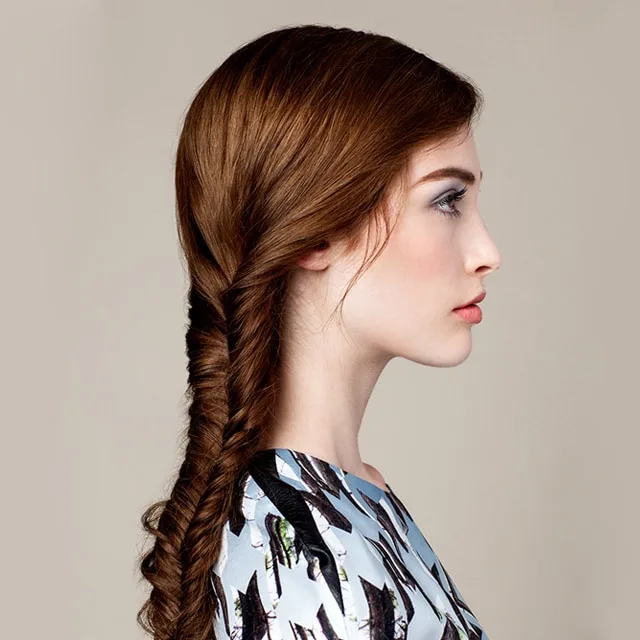
Pros: Beautiful detailed finish; lies flat and secure; works well on medium to long hair.
Cons: Takes longer to braid than a regular braid; can look messy if the sections are uneven; needs a firm elastic at the end.
Maintenance: Braid it tightly from the nape and secure the end with a small elastic. A light mist of hairspray keeps the fine strands in place.
Who should avoid it: Gymnasts in a rush on meet morning, and anyone with very short hair that cannot hold a fishtail.
11. Double French Braids Into Low Buns
Double French braids into low buns combine the best of braids and buns in one style. The braids lock the front flat, the buns keep the ends away, and everything sits low enough for a clean leotard line. It is the style to choose when the meet might run long, with four rotations and a long wait for scores.
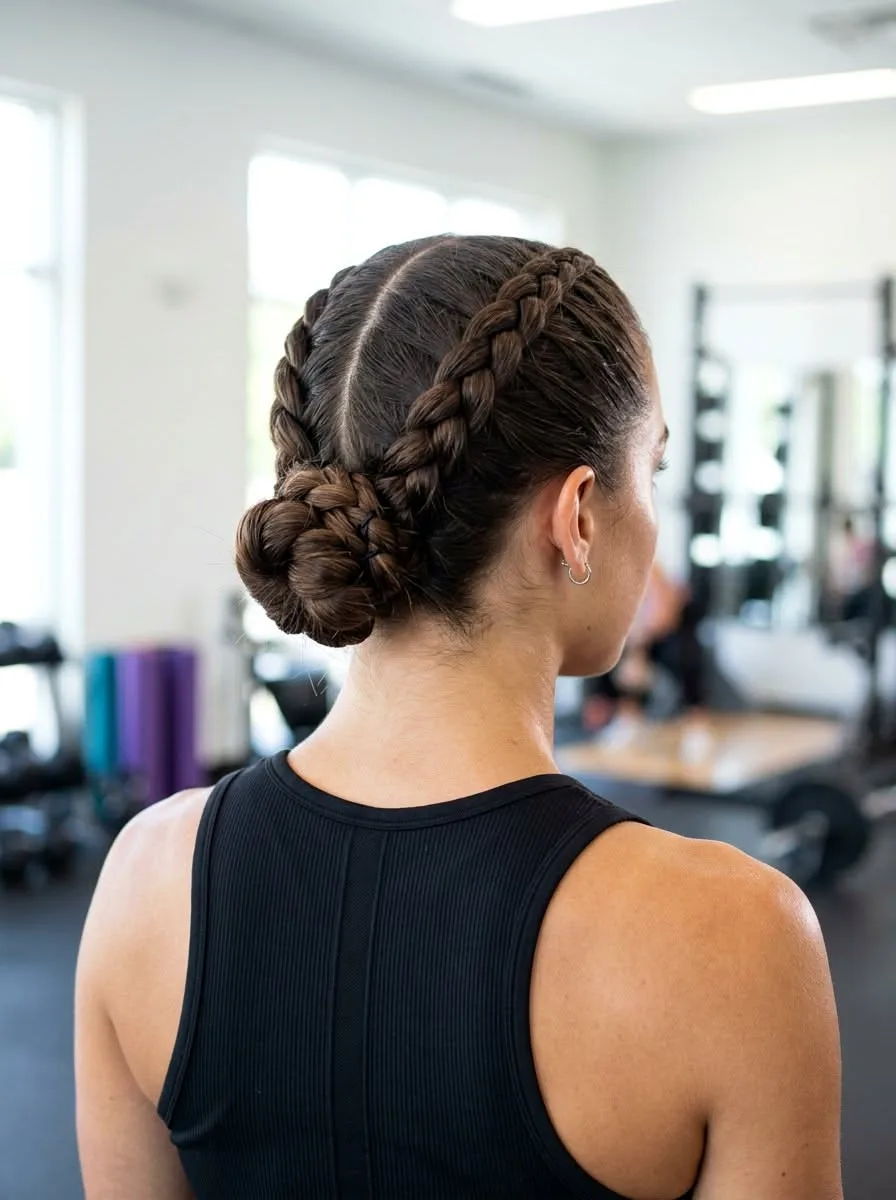
Pros: One of the most secure styles in this guide; lasts all day; symmetrical and tidy from every angle.
Cons: Takes the longest to do; needs two braids to match; hard to fix if one side loosens mid-meet.
Maintenance: Braid each side tightly from the hairline and coil each braid into a small bun at the nape. Pin both buns flat and check them after the bars.
Who should avoid it: Gymnasts with short hair, and anyone who needs a five-minute style on a busy meet morning.
12. Rope Braid Ponytail
The rope braid ponytail twists two sections of hair around each other into a tight rope, then ties it off as a ponytail. The twist grips the hair far better than a plain ponytail, so it cannot slip or unravel through flips, and it looks sleek and sporty under the arena lights.
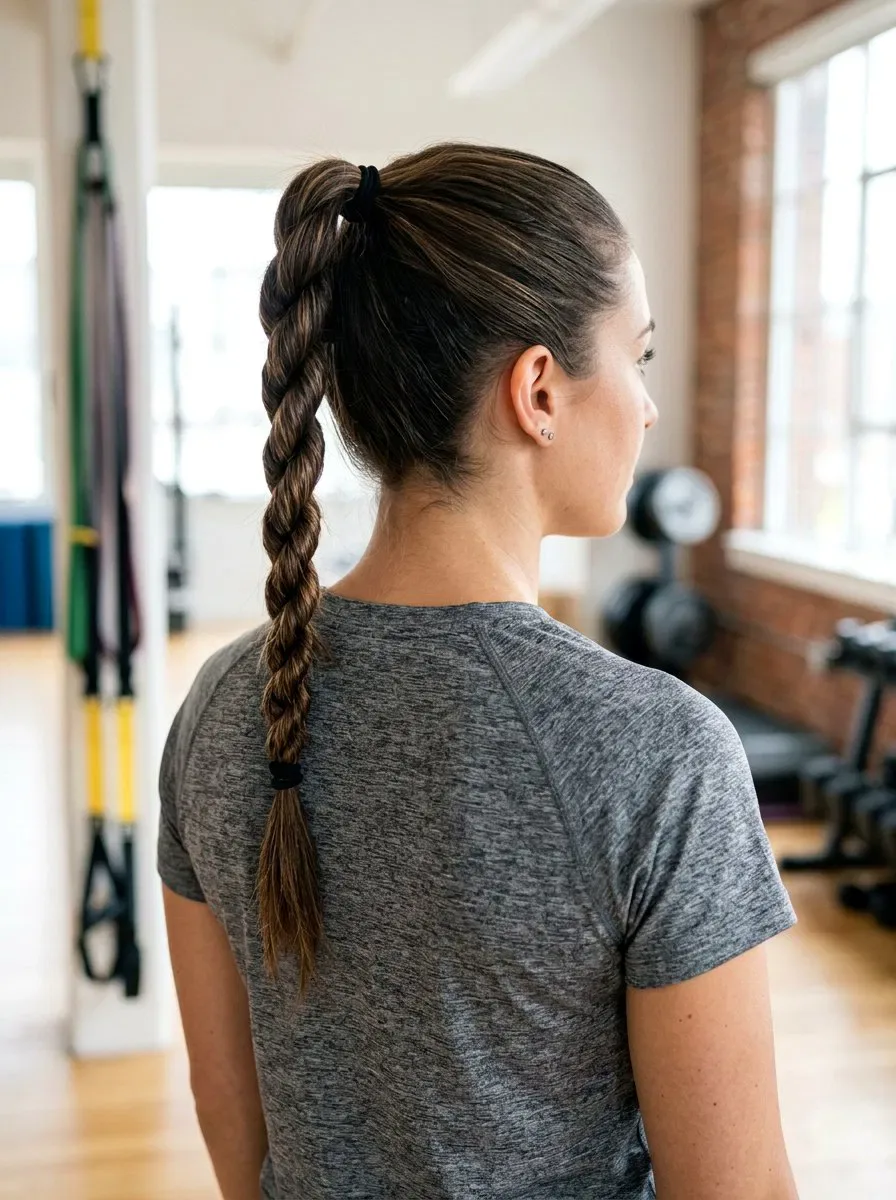
Pros: Strong grip that resists slipping; quick to do; looks polished and athletic.
Cons: Can unwind at the ends if not secured well; the twist can look uneven on very thick hair.
Maintenance: Twist both sections in the same direction, then wrap them around each other the opposite way. Secure with two elastics and a ribbon.
Who should avoid it: Gymnasts with very fine, slippery hair that will not hold a twist, and beam specialists who prefer a bun.
13. Half-Up Top Knot
The half-up top knot takes the top half of the hair up and out of the face while leaving the rest down, which makes it a good compromise for training days and for gymnasts who are only competing on floor. It keeps the front layers out of the eyes while you tumble, and it looks relaxed and confident with a leotard.
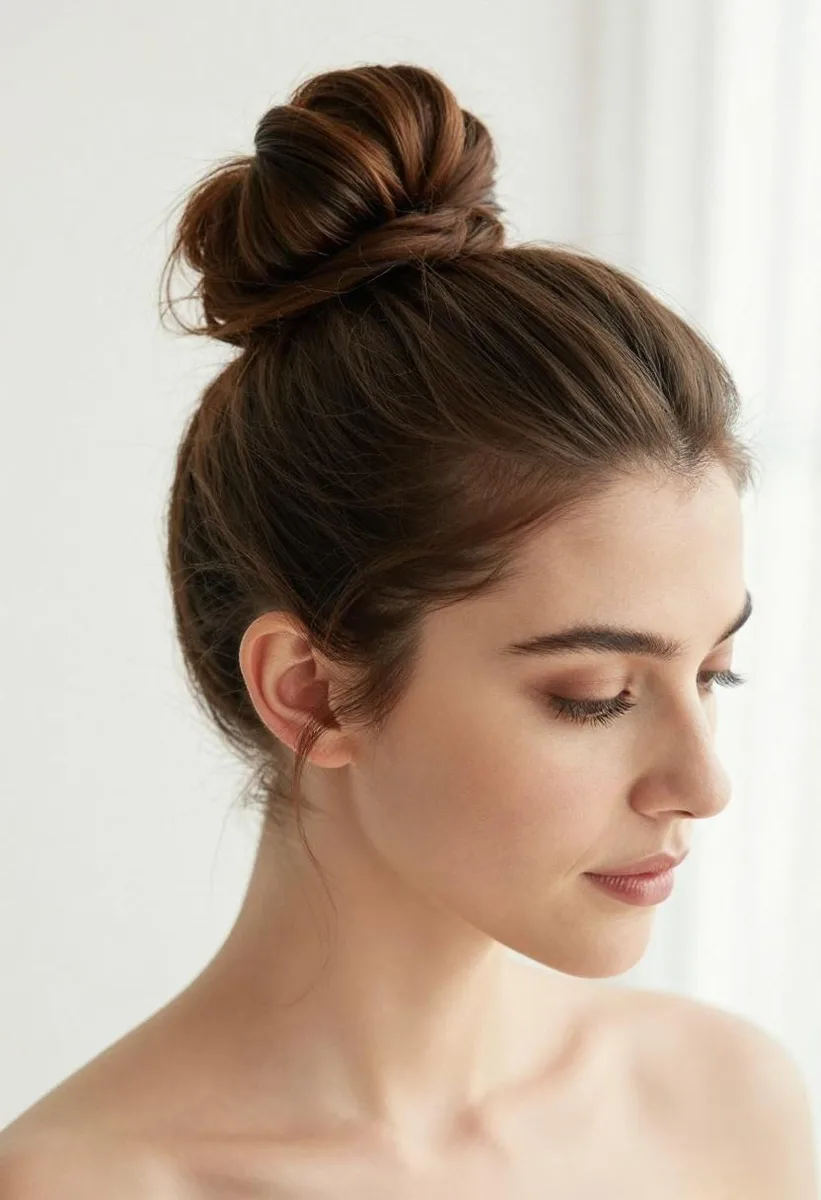
Pros: Keeps the front clear while the lengths keep their movement; quick to do; suits a floor routine.
Cons: The loose lengths can swing into the face on the beam or bars, so it is not a full-meet style.
Maintenance: Pin the top knot high on the crown and smooth the sides. Use it for floor or training, and switch to a full updo for beam and bars.
Who should avoid it: All-rounders competing on all four apparatus, and gymnasts with very long hair that swings freely.
14. Braided Pigtails
Braided pigtails are the cheerful meet-day choice, and they are more practical than they look. Two braids, one on each side, keep the hair flat and balanced, so nothing pulls to one side during a twist. They suit younger gymnasts best, and they look wonderful in team photos with matching ribbons.
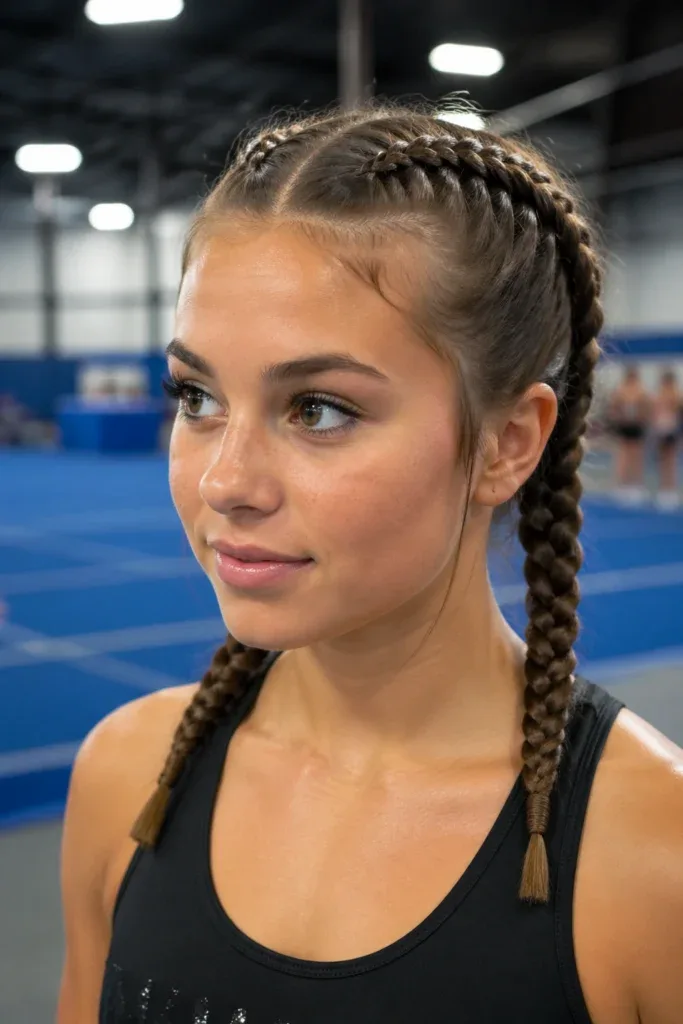
Pros: Balanced and secure on both sides; fun and youthful; easy for a parent or coach to braid.
Cons: Less formal than a bun for senior competitions; the ends can bounce during tumbling if left loose.
Maintenance: Braid both sides tightly from the hairline and tie the ends with team-colour ribbons. Pin the ends up for beam and bars.
Who should avoid it: Senior gymnasts at formal competitions, and anyone who wants the most polished, adult silhouette for judging.
15. Slicked High Bun
The slicked high bun is the classic competition bun worn high on the crown, where it lifts the whole silhouette and looks powerful in a handstand. Gel keeps every strand smooth, the bun sits tight and round, and nothing can fall forward, even upside down on the bars.
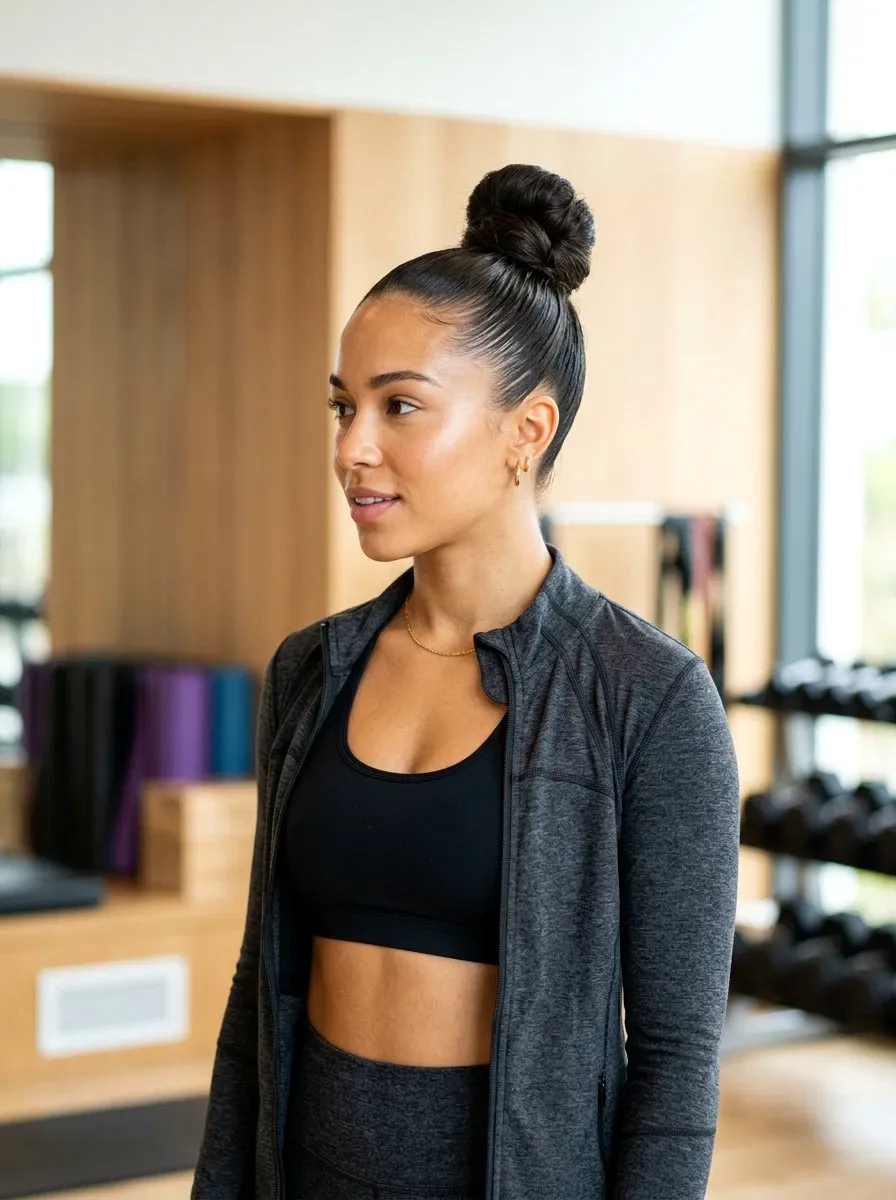
Pros: The most dramatic and polished bun; perfect for handstands and bar routines; keeps the neck completely clear.
Cons: Can pull at the hairline if tied too tightly; the height can feel heavy during a long meet.
Maintenance: Smooth the hair with gel, secure the ponytail high, and twist it into a tight bun pinned at several points. Check the pins after the bars.
Who should avoid it: Gymnasts with a sensitive hairline or headaches from tight styles, and anyone with very short hair.
16. Side Braid
The side braid sweeps all the hair over one shoulder into a single braid, keeping the face clear and the neck cool. It looks soft and elegant on the floor exercise, where it moves gently with the music, and it is one of the easiest meet styles to do well on a busy morning.
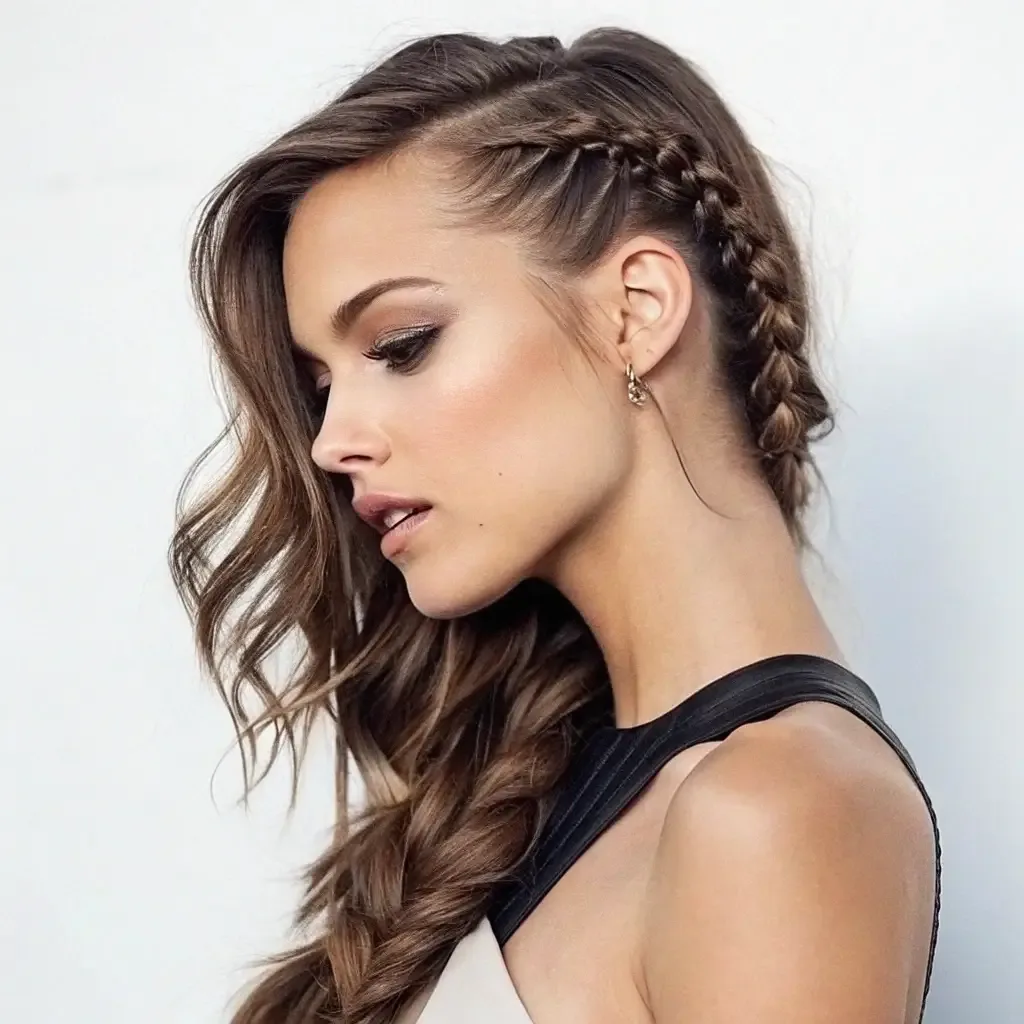
Pros: Quick and easy; elegant on floor; keeps the hair off the neck.
Cons: The braid can swing forward on the beam or during a vault run, so it is not ideal for every apparatus.
Maintenance: Braid it tightly and pin the end over the shoulder, or tuck it into the leotard strap for beam and bars. Secure with a strong elastic.
Who should avoid it: Beam and bars specialists, and gymnasts who need a style that stays put from every angle.
17. Chunky Single Braid
The chunky single braid is the simplest secure style there is: all the hair gathered into one thick braid down the back. It cannot come loose in pieces, it lies flat against the leotard, and it survives every apparatus, from the vault run to the final floor pass, with almost no maintenance.
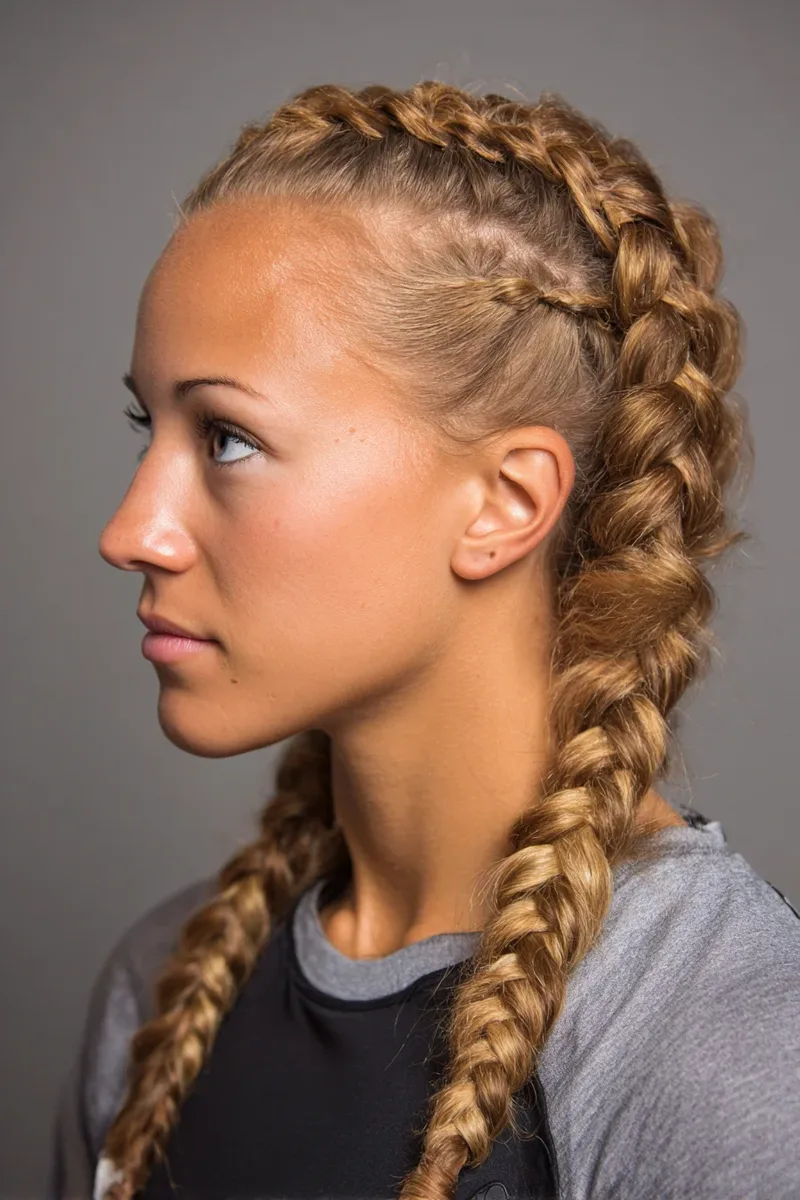
Pros: The simplest truly secure style; one braid, no pins needed; suits thick hair beautifully.
Cons: Can swing during fast tumbling; the end can hit the back on a flip if left long.
Maintenance: Braid from the nape and secure the end tightly. Tuck the end up and pin it for beam and bars to stop it swinging.
Who should avoid it: Gymnasts with very fine hair that will not hold a thick braid, and anyone who dislikes the feeling of a braid on the back.
18. Low Braided Ponytail
The low braided ponytail starts as a braid at the crown and finishes as a ponytail at the nape, giving you the hold of a braid with the simplicity of a ponytail. It sits low and flat, so it never catches on a grip or a leotard strap, and it is easy to re-tighten between rotations.
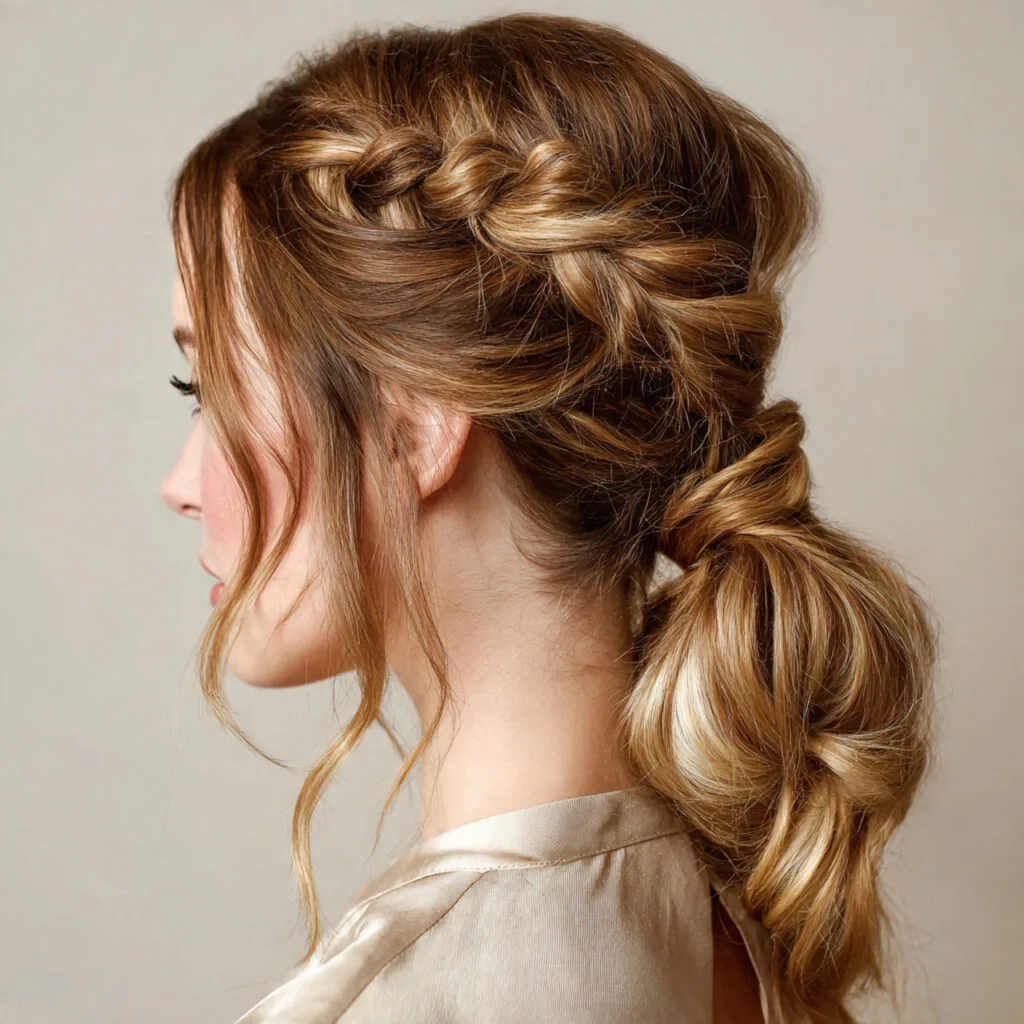
Pros: Secure at the front, simple at the back; sits low and flat; easy to refresh mid-meet.
Cons: The ponytail end can still swing a little on fast tumbling passes.
Maintenance: Braid from the hairline to the nape, then tie off as a ponytail with two elastics. Smooth the hairline with gel before each rotation.
Who should avoid it: Gymnasts who need zero movement at all, who should choose a full bun instead.
19. Space Buns
Space buns are the playful meet-day style: two small buns, one on each side of the head, that keep the hair completely contained and balanced. They look fantastic in team photos and on the floor, where the symmetry reads beautifully from the judges’ table, and they are surprisingly secure.
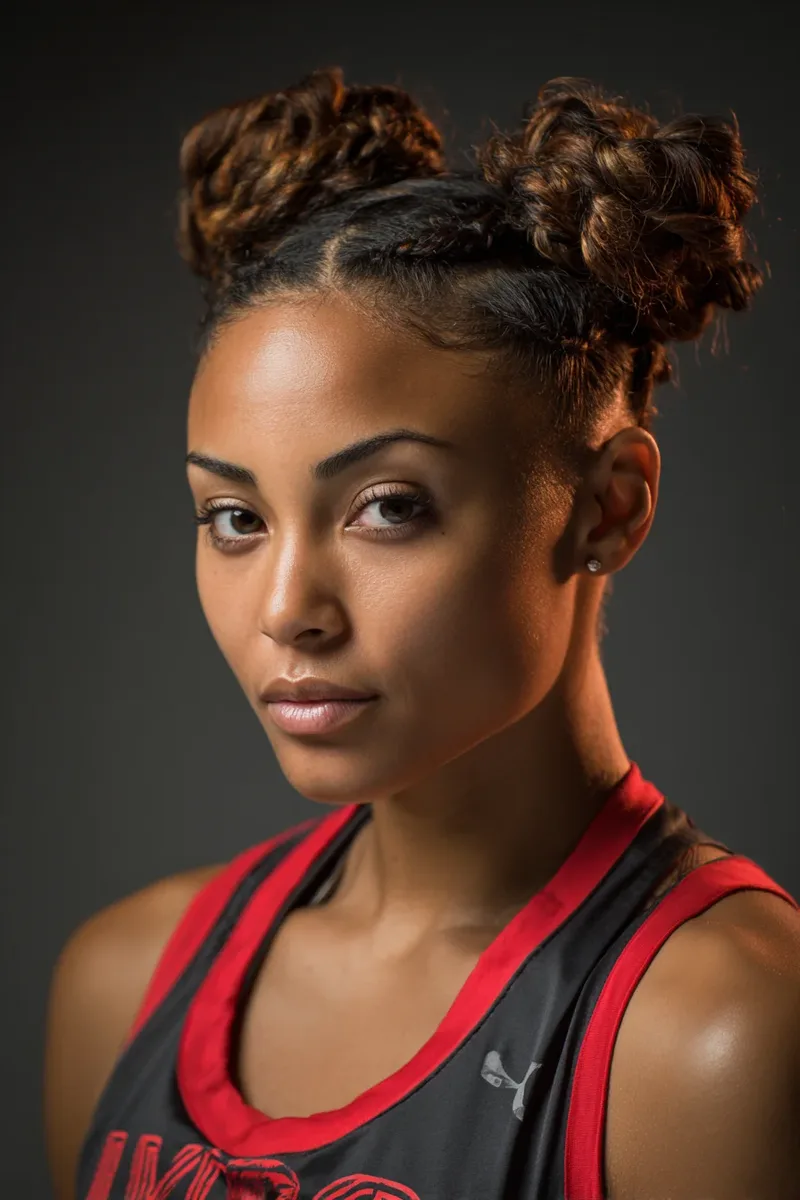
Pros: Fun and symmetrical; fully contained; great for team events and floor routines.
Cons: Less formal for senior competitions; two buns take longer to match than one.
Maintenance: Make the parting straight down the middle and twist each side into a tight bun. Pin both well and smooth the hairline with gel.
Who should avoid it: Senior gymnasts at formal judged events, and anyone who wants the most classic, understated meet look.
20. Curly Pineapple Updo
The curly pineapple updo gathers curls high on the head into a loose, high puff that keeps the curls out of the face while letting them keep their shape. It is the best meet-day choice for curly hair, because it protects the curl pattern instead of fighting it, and it looks joyful and confident on the floor.
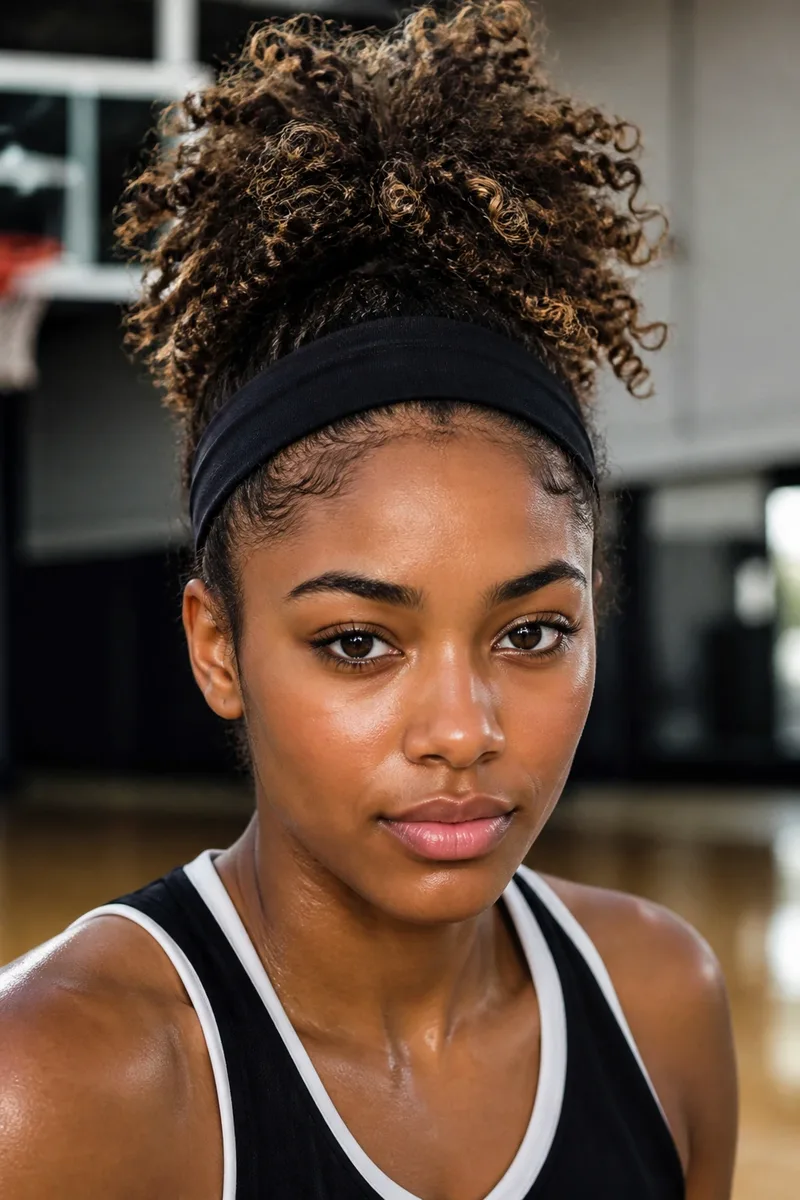
Pros: Protects natural curls; keeps the face clear; quick to do and comfortable all day.
Cons: The curls can bounce during tumbling; needs a strong elastic and pins to stop it shifting.
Maintenance: Gather the curls high with a soft scrunchie and pin the sides flat. Smooth the hairline with a little gel and mist with spray.
Who should avoid it: Beam specialists who need total stillness, and gymnasts whose curls are too short to gather high.
21. High Puff
The high puff gathers natural hair into a full, rounded puff on top of the head, keeping the face clear and the hair completely contained. It is comfortable, quick and confident, and it looks wonderful under arena lights, where the shape reads beautifully from the judges’ table.
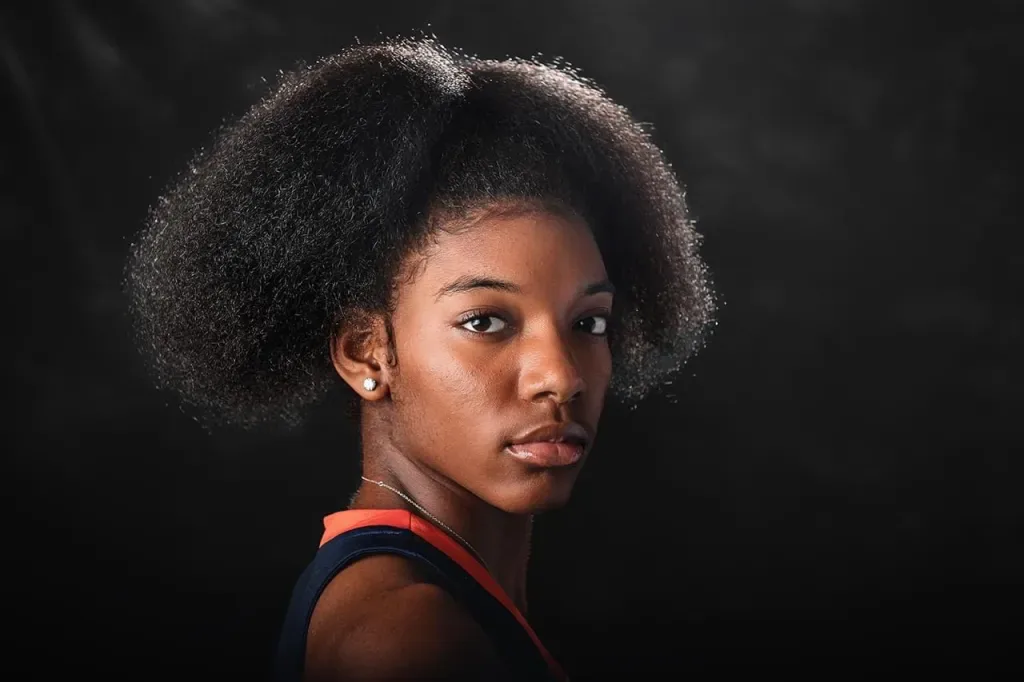
Pros: Quick and comfortable; keeps textured hair contained; strong, confident silhouette.
Cons: Can shift during bar swings if not pinned well; needs a strong band and edge control.
Maintenance: Secure the puff with a strong elastic, smooth the edges with gel, and pin the sides flat. Check the pins after the bars.
Who should avoid it: Gymnasts with straight or fine hair that will not hold a puff, and beam specialists who need the flattest possible style.
22. Two-Strand Twists Into a Bun
Two-strand twists are a gentle protective style: two sections of hair twisted around each other, then gathered into a low bun. They hold textured hair securely without the tension of tight braids, and the bun keeps everything contained through flips, swings and landings.
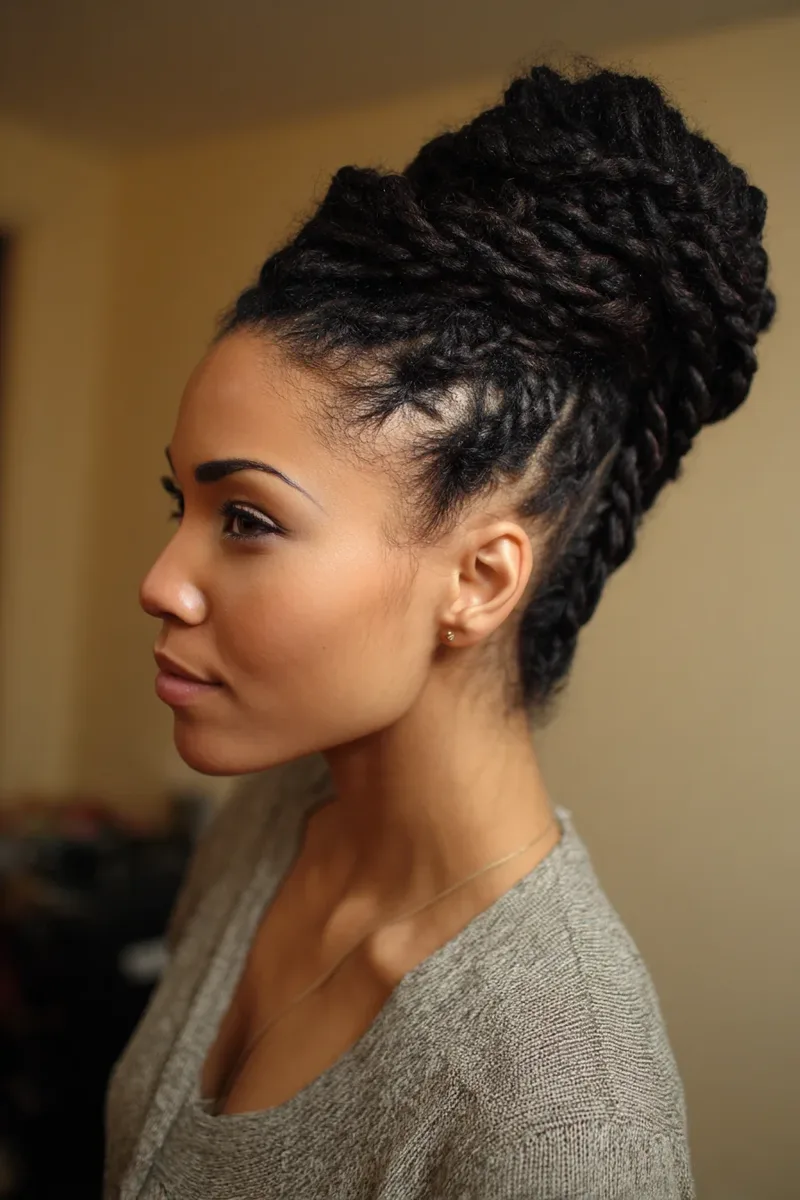
Pros: Gentle on the scalp; protective for textured hair; secure when gathered into a bun.
Cons: Takes time to twist evenly; can loosen at the ends if not sealed well.
Maintenance: Twist each section evenly and gather them into a low bun pinned flat. Refresh the hairline with a little gel on meet morning.
Who should avoid it: Gymnasts who need a same-morning style, and anyone with very short hair that cannot be twisted.
23. Braided Headband With Low Ponytail
The braided headband uses a small braid across the front of the head as a built-in headband, keeping the fringe and front layers back, while the rest of the hair sits in a low ponytail. It is pretty, practical and secure, and it works beautifully with a leotard.
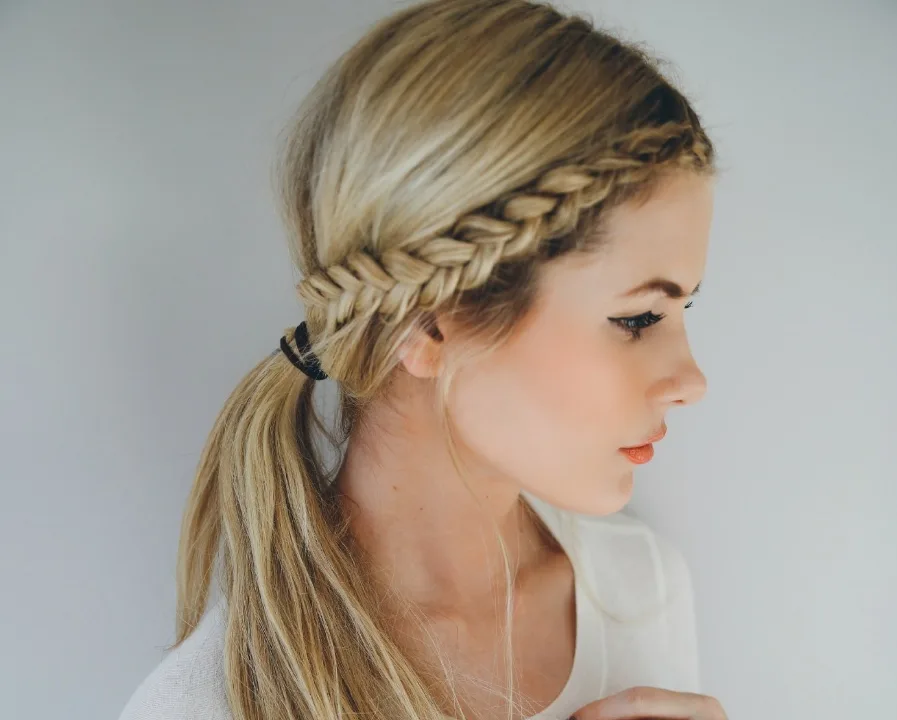
Pros: Keeps the front layers back without a separate headband; pretty and secure; suits medium hair.
Cons: The headband braid can loosen during tumbling if not pinned at both ends.
Maintenance: Braid from one ear across the forehead to the other, pin both ends behind the ears, and gather the rest into a low ponytail.
Who should avoid it: Gymnasts with very short front layers that cannot be braided, and anyone who prefers a completely slicked-back look.
24. Sleek Middle-Part Low Bun
The sleek middle-part low bun is the most polished style in this guide. A clean centre part, gel-smooth sides and a low bun at the nape give a symmetrical, professional finish that judges love, and nothing moves at all, on any apparatus.
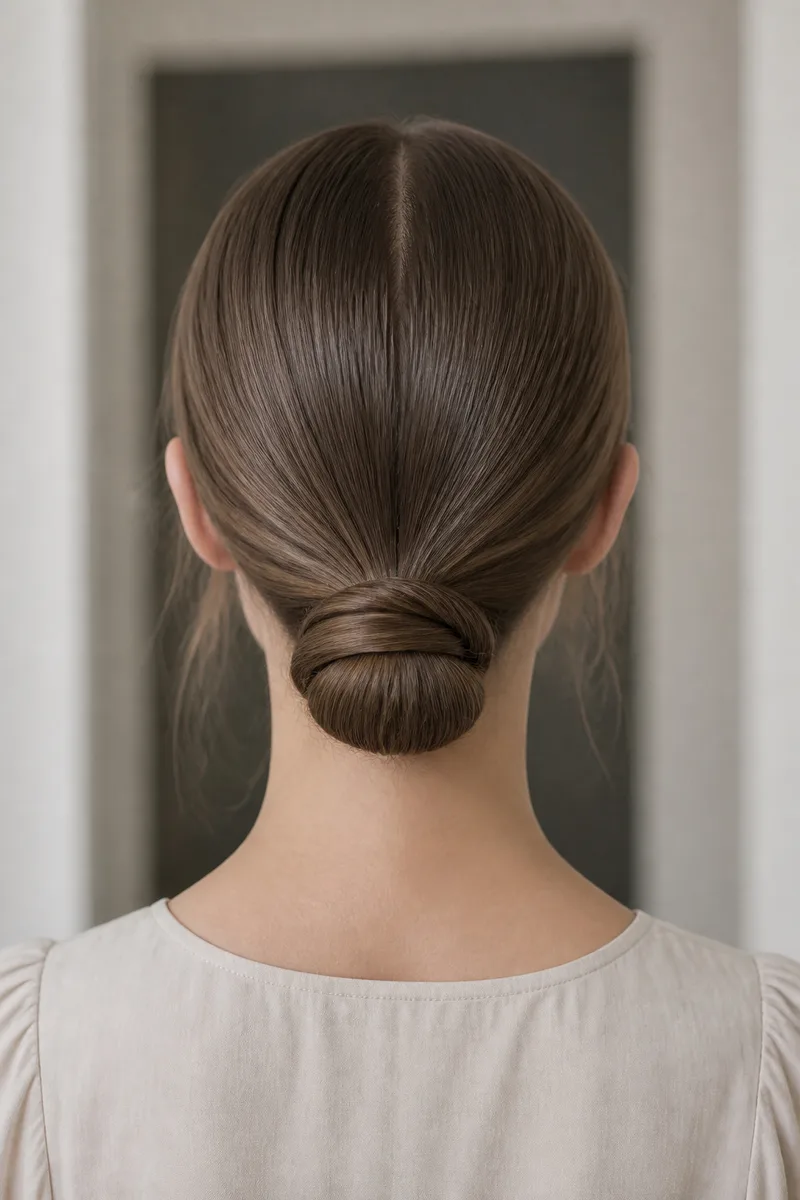
Pros: The neatest, most symmetrical finish; completely still; photographs beautifully.
Cons: Shows every flyaway, so the hairline must be perfect; the centre part must be dead straight.
Maintenance: Part the hair exactly down the middle, smooth both sides with gel, and pin the bun flat at the nape. Carry a small brush for touch-ups.
Who should avoid it: Gymnasts who want a softer or more playful look, and anyone whose hair parts naturally to one side and fights a centre part.
25. Wrapped Low Ponytail
The wrapped low ponytail hides the elastic by wrapping a strand of hair around the base, turning a simple ponytail into a polished meet style. It sits low at the nape, stays flat with a leotard, and looks far more finished than a plain ponytail, with almost no extra effort.
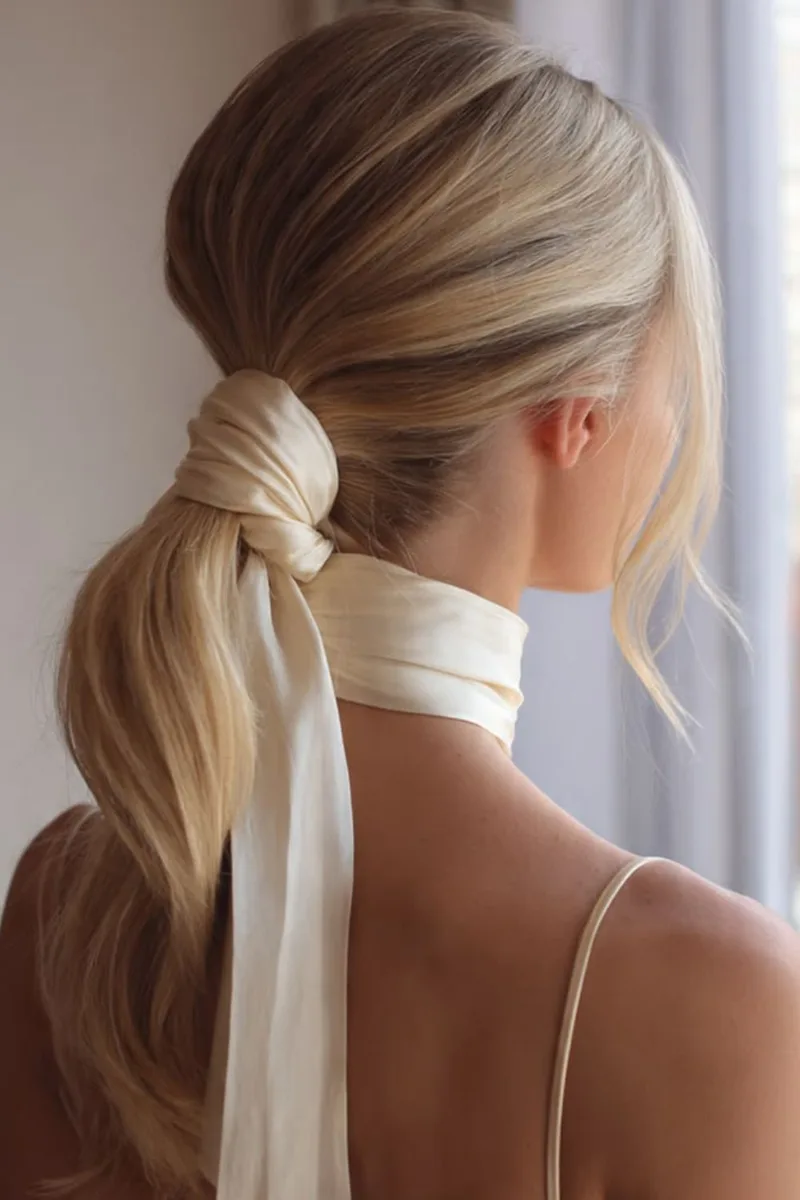
Pros: Polished finish with minimal effort; sits low and flat; easy to re-tighten.
Cons: The wrap can come loose during tumbling; needs a pin to hold it in place.
Maintenance: Wrap a strand around the base and pin it underneath with a bobby pin. Secure the ponytail with two elastics first.
Who should avoid it: Gymnasts who need maximum hold for bars and beam, who should choose a braid or bun instead.
26. Dutch Braid Into a Ponytail
The Dutch braid into a ponytail starts as a raised braid along the crown and finishes as a ponytail, giving a bold, three-dimensional braid that locks the front flat. It is one of the most popular meet styles because it looks impressive and holds through every apparatus.
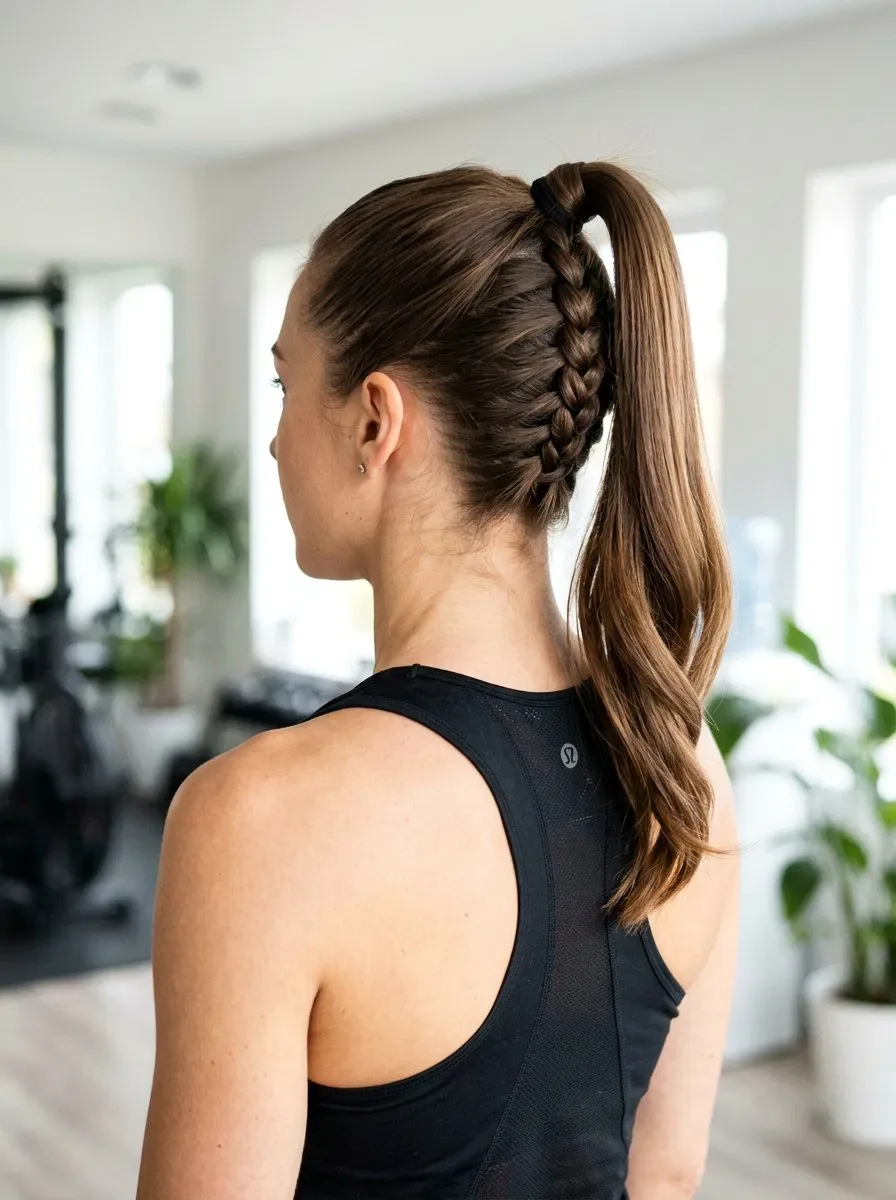
Pros: Bold, raised braid with strong hold; popular and photogenic; keeps the crown flat.
Cons: The raised braid can press against the head during handstands if braided too tightly.
Maintenance: Braid underhand from the hairline to the crown, then gather into a ponytail. Keep the braid snug but not painfully tight.
Who should avoid it: Gymnasts with a sensitive scalp, and anyone with very short hair that cannot hold a Dutch braid.
27. Messy Bun for Warm-Ups
The messy bun is the warm-up style: quick, relaxed and comfortable while you stretch and practise, before the real meet style goes in. It keeps the hair out of the face without the tension of a competition bun, and it takes less than a minute to do.
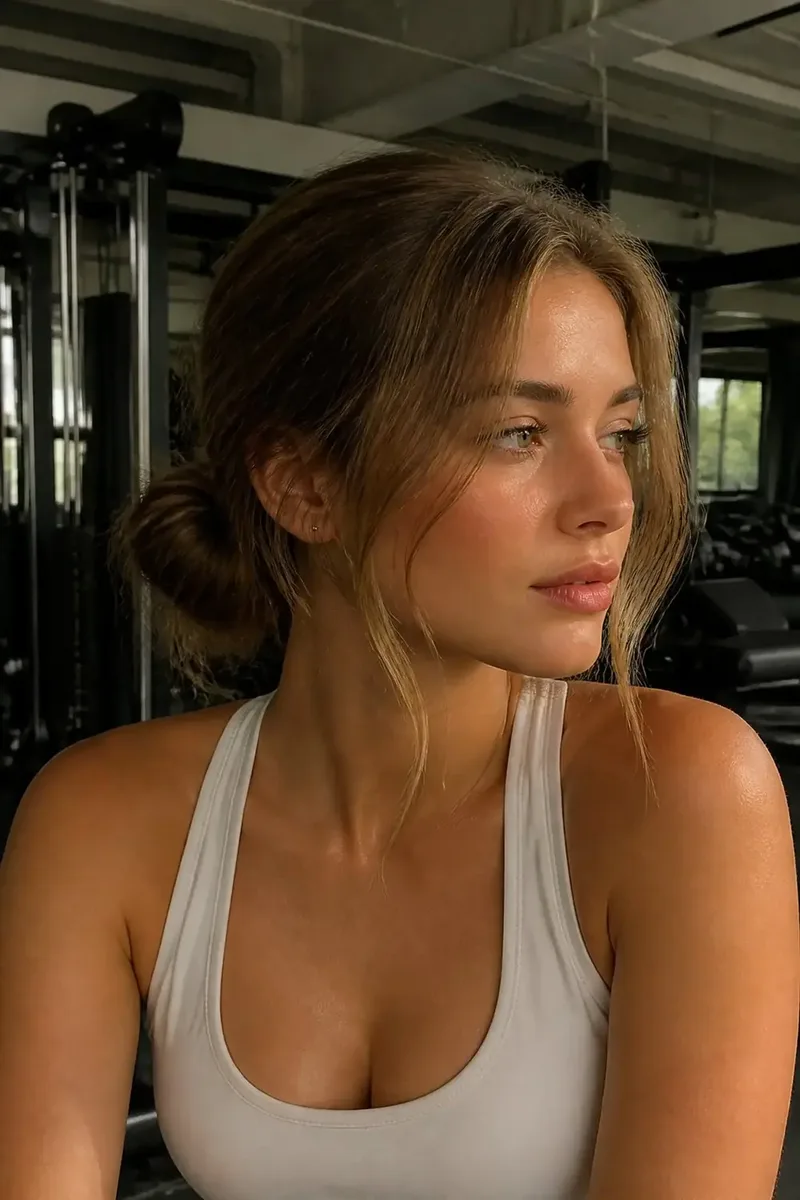
Pros: The fastest updo there is; comfortable for warm-ups; no pins or gel needed.
Cons: Too loose for competition; will not survive a vault run or a bar routine.
Maintenance: Twist the hair up loosely and secure it with a scrunchie. Re-do it properly into a tight competition bun before the first rotation.
Who should avoid it: Anyone competing, who should never wear a messy bun on the apparatus; save it for warm-ups and the journey home.
28. Low Side Ponytail With Ribbon
The low side ponytail with a ribbon sweeps the hair to one side at the nape and ties it with a ribbon in team colours. It is soft and pretty, it keeps the neck cool, and the ribbon adds a touch of team spirit without anything dangling near the apparatus.
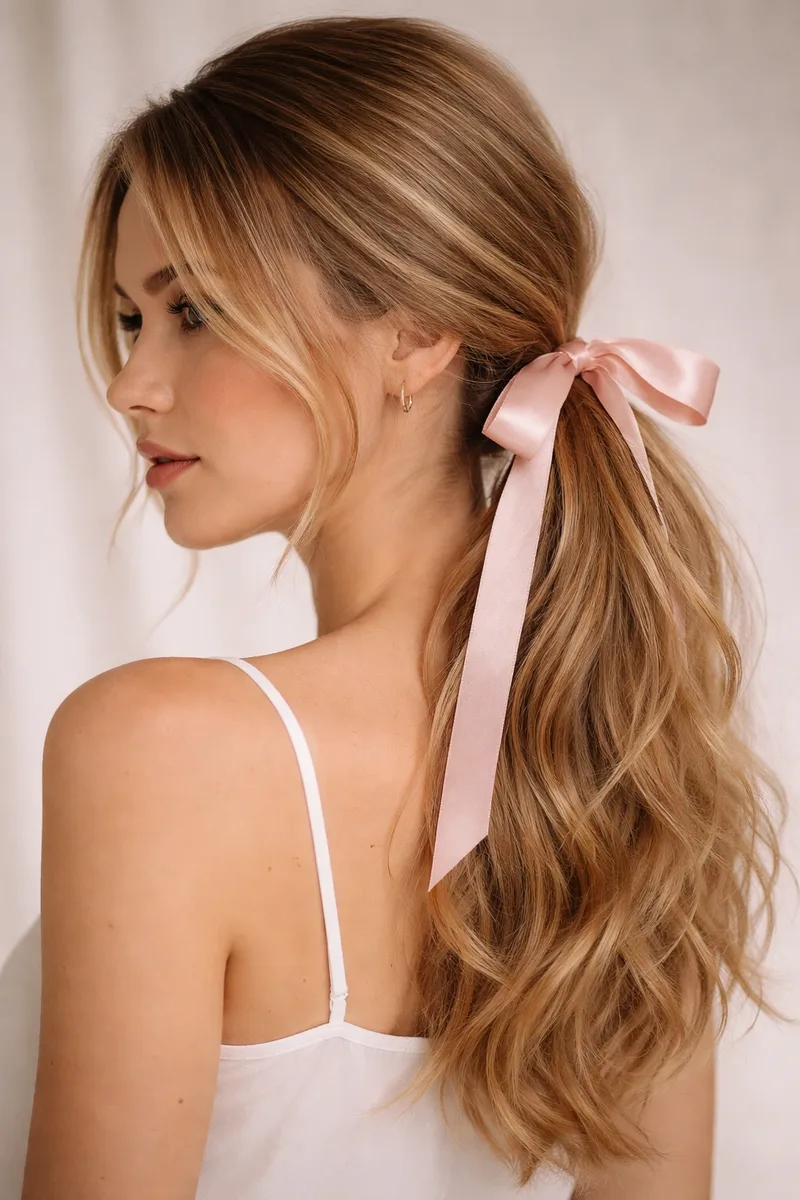
Pros: Pretty and soft; team colours add spirit; keeps the hair off the neck.
Cons: The ponytail can swing forward during a vault run or a beam routine.
Maintenance: Tie the ponytail low at one side and secure the ribbon with a knot and a pin. Tuck the end into the leotard strap for beam.
Who should avoid it: Beam and vault specialists who need total stillness, and gymnasts competing at the highest levels where buns are expected.
29. Team-Colour Ribbon Ponytail
The team-colour ribbon ponytail is the classic team-event style: a high or mid ponytail tied with a wide ribbon in your club’s colours. It turns a simple ponytail into a team uniform, it looks wonderful in group photos, and the ribbon doubles as a spare elastic if one snaps mid-meet.
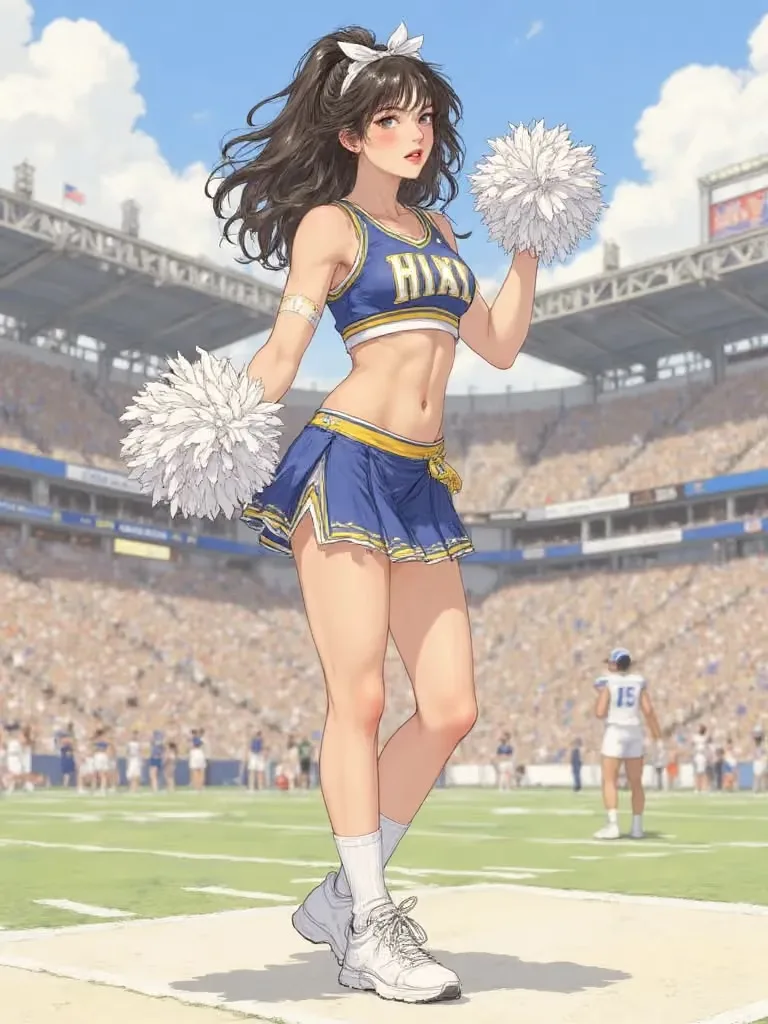
Pros: Shows team spirit; simple and quick; the ribbon adds grip and a spare elastic.
Cons: A plain ponytail still swings, so it is better for floor and team events than for beam.
Maintenance: Tie the ponytail firmly with two elastics, then knot the ribbon over the base and pin it. Keep the ribbon short so it cannot flap.
Who should avoid it: Beam specialists and gymnasts who need a fully contained style for all four apparatus.
30. Faux Hawk Braid
The faux hawk braid runs a single braid down the centre of the head, from the hairline to the nape, giving a bold, edgy look that still keeps every strand locked flat. It is the statement style for floor routines, where the raised braid reads beautifully from the judges’ table.
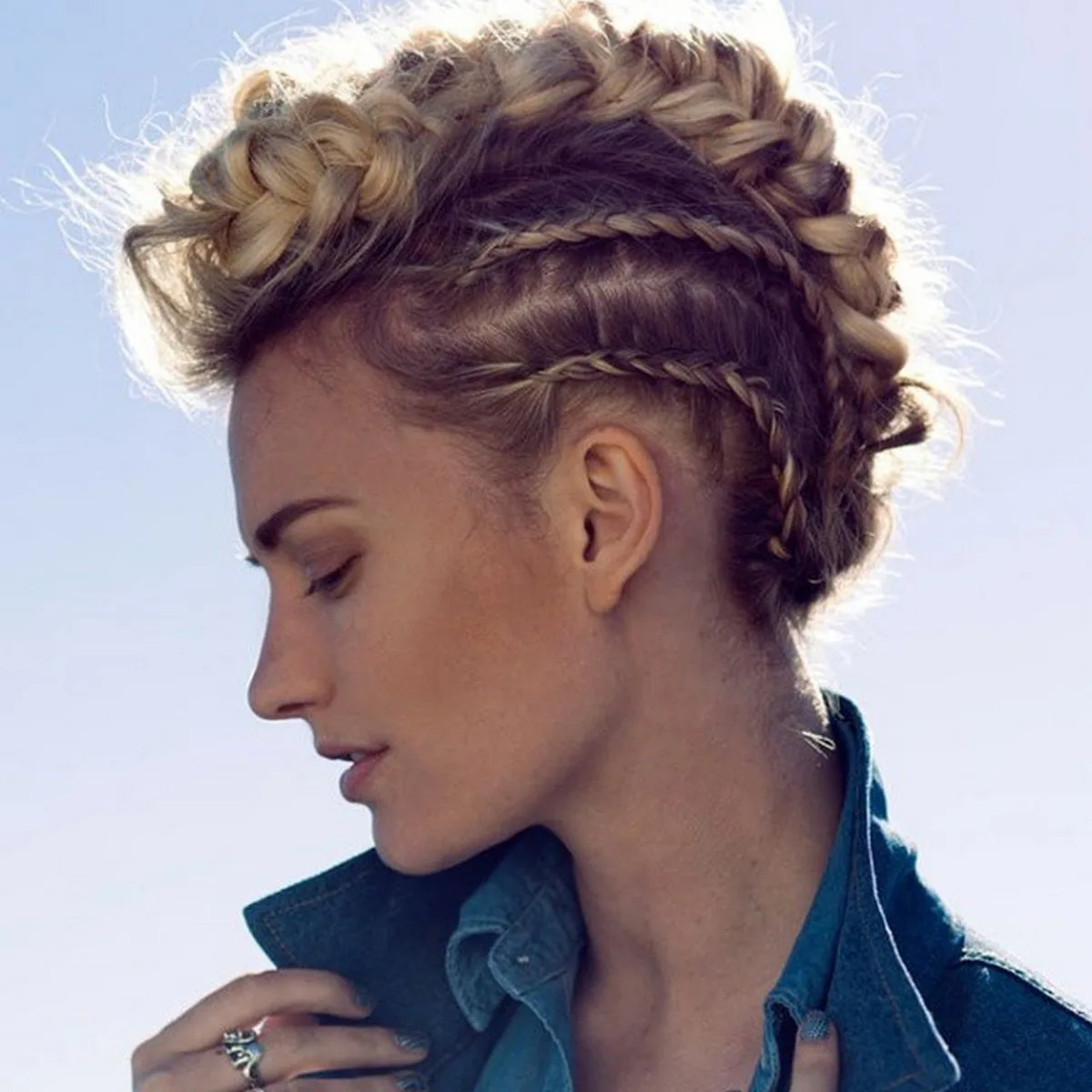
Pros: Bold and eye-catching; locks the crown flat; great for floor routines.
Cons: Less traditional for judged events; the raised braid can feel tight on the crown.
Maintenance: Braid down the centre of the head, keeping the sides smooth with gel. Pin the end flat at the nape and mist with hairspray.
Who should avoid it: Gymnasts at very formal competitions, and anyone who prefers the classic bun silhouette judges expect.
31. Double Low Buns
Double low buns sit one on each side of the nape, keeping the hair balanced, contained and completely still. They are neat, symmetrical and surprisingly secure, and they look charming in team photos with matching ribbons on each bun.
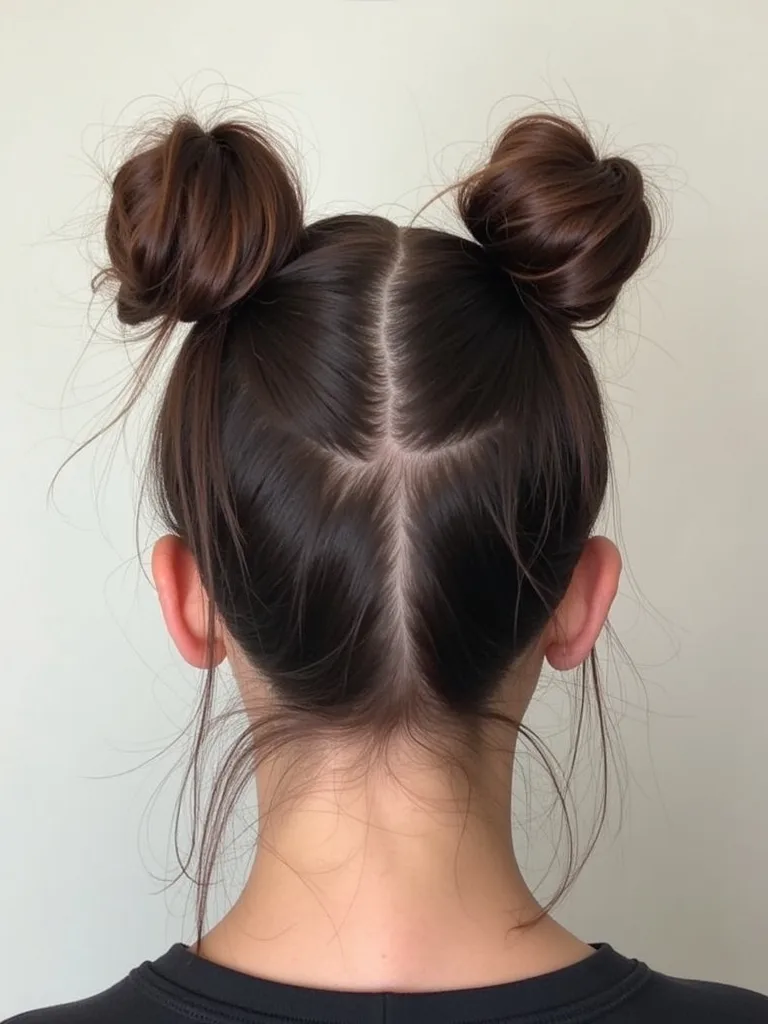
Pros: Balanced and fully contained; symmetrical; secure on every apparatus.
Cons: Takes longer to match than a single bun; two buns can feel heavy on fine hair.
Maintenance: Part the hair straight down the middle and twist each side into a small bun at the nape. Pin both flat and smooth the hairline.
Who should avoid it: Gymnasts with very thick hair that makes two buns bulky, and anyone who needs a five-minute style.
32. Half-Up Braided Ponytail
The half-up braided ponytail braids the top section of the hair and gathers it into a ponytail, while the rest stays down. It keeps the front clear for spotting landings while the lengths keep their movement, which makes it a lovely choice for floor routines and training days.
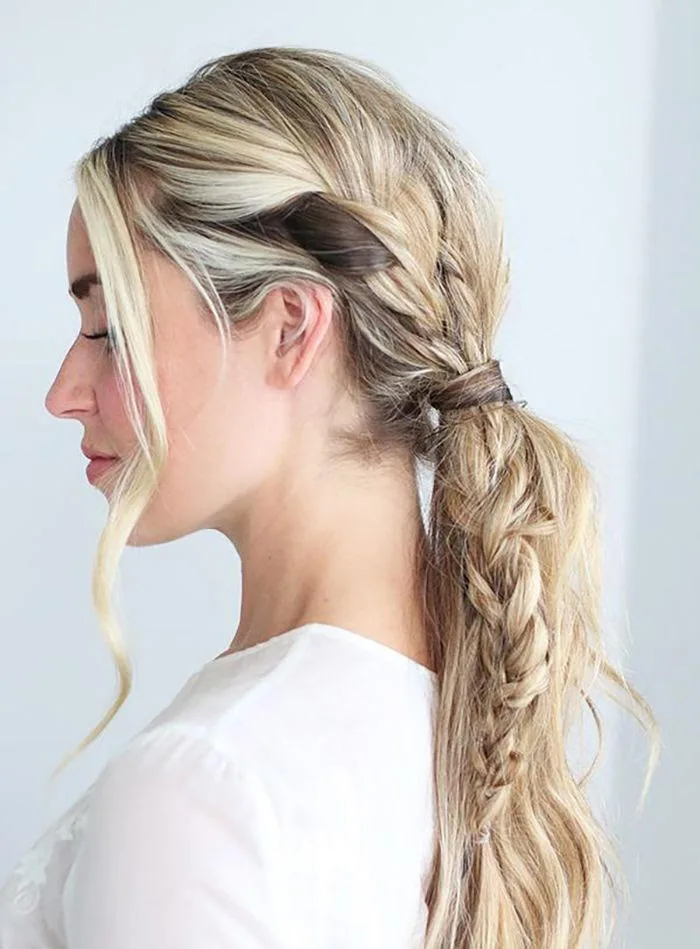
Pros: Keeps the front clear with movement at the back; pretty and practical for floor.
Cons: The loose lengths can swing into the face on beam or bars, so it is not a full-meet style.
Maintenance: Braid the top section from the hairline and tie it into a ponytail at the crown. Smooth the sides with gel and pin any loose strands.
Who should avoid it: All-rounders competing on all four apparatus, and gymnasts with very long hair that swings freely.
33. Short Hair With a Headband
Short hair is the easiest meet-day hair there is, and a headband is all it needs. A slim, grippy headband holds the front back, the short lengths cannot fall into the eyes, and there is nothing to come loose, swing or catch on a grip. It is the lowest-maintenance style in this guide.
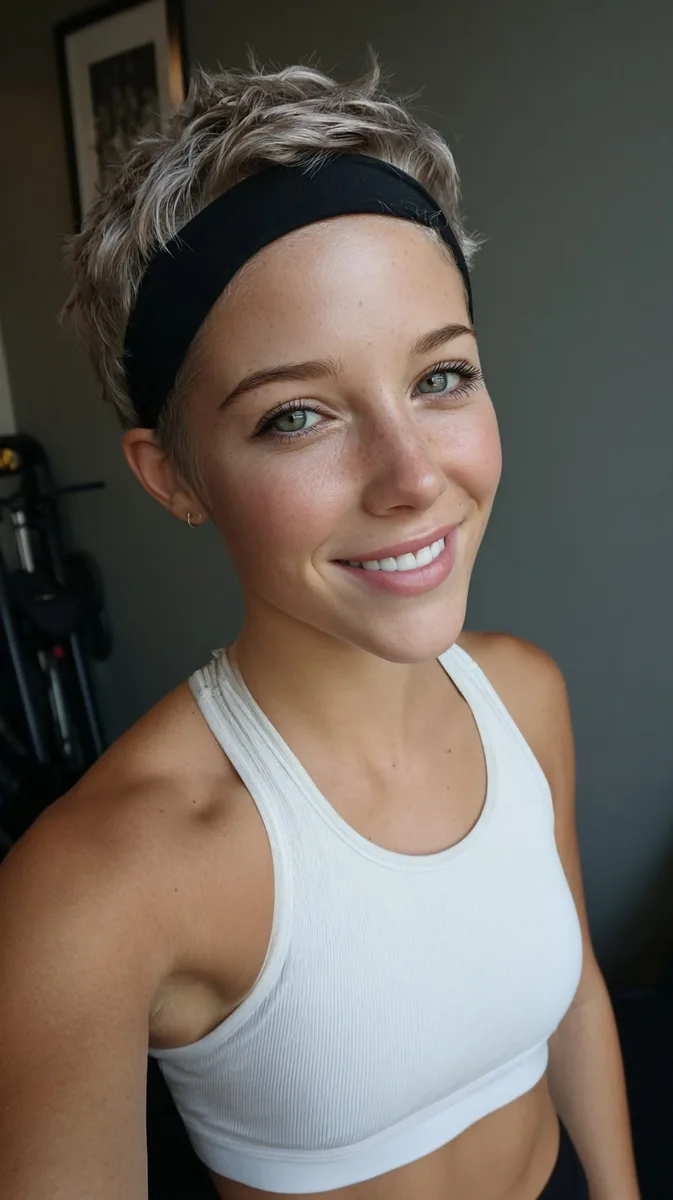
Pros: The simplest meet style of all; nothing can come loose; comfortable through every apparatus.
Cons: Offers little styling variety; a headband can slip during a handstand if it is too loose.
Maintenance: Choose a headband with silicone grip and pin it behind the ears. Add a little texture spray so the short layers stay in place.
Who should avoid it: Gymnasts with medium or long hair, who need a braid or bun to contain their lengths.
34. Curly High Ponytail With Headband
The curly high ponytail with a headband gathers curls high and holds the front back with a headband, so the curls bounce freely behind while the face stays completely clear. It is joyful, confident and practical, and it protects the curl pattern instead of straightening it away.
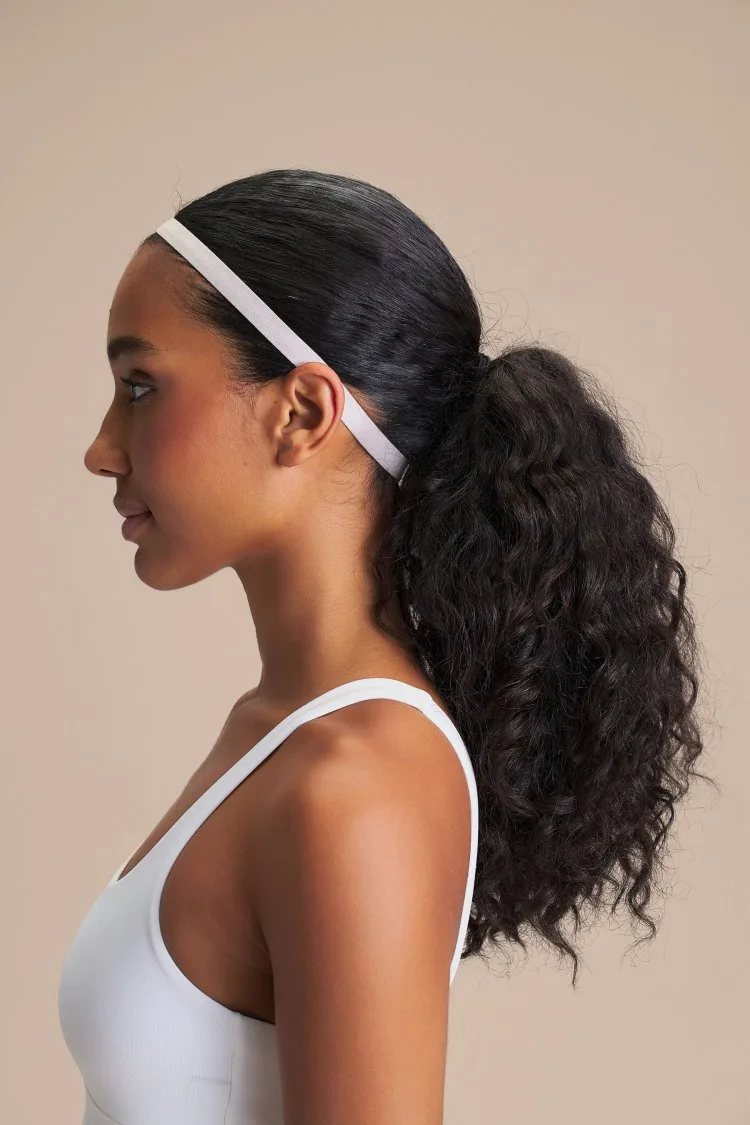
Pros: Protects curls; keeps the face clear; lively and confident on the floor.
Cons: The curls can bounce into the face on the beam; the headband can slip during tumbling.
Maintenance: Secure the ponytail high with a strong elastic and pin the headband behind the ears. Smooth the hairline with gel.
Who should avoid it: Beam specialists who need total stillness, and gymnasts whose curls are too short to gather high.
35. Low Twisted Ponytail
The low twisted ponytail twists two sections of hair together at the nape and ties them off, giving a ponytail that grips far better than a plain one. It sits low and flat with a leotard, looks elegant from behind, and is easy to re-tighten between rotations.
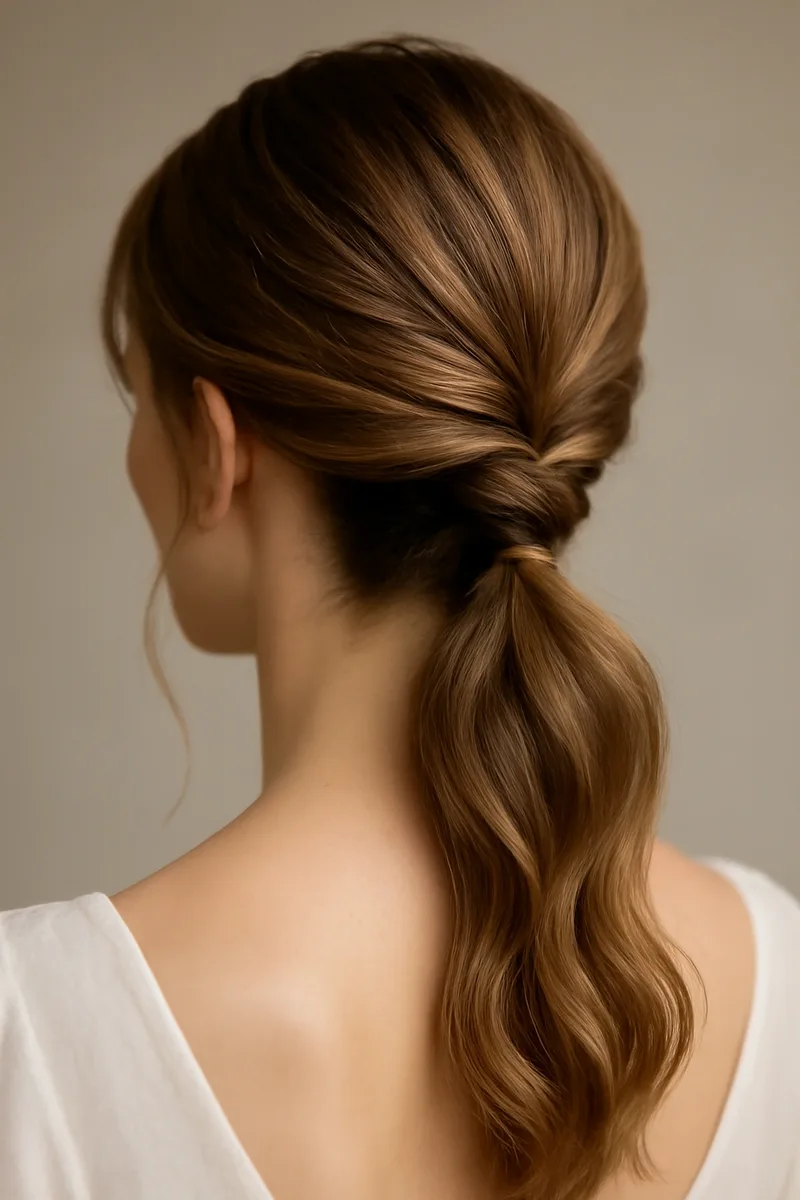
Pros: Better grip than a plain ponytail; elegant and low; easy to refresh mid-meet.
Cons: The twist can unwind at the ends if not secured with two elastics.
Maintenance: Twist both sections the same way, wrap them together, and secure with two elastics. Pin the ends flat for beam.
Who should avoid it: Gymnasts who need zero movement at all, who should choose a bun or a braid instead.
36. Braided Bun With Ribbon
The braided bun with a ribbon wraps a braid around the base of a bun and finishes it with a team-colour ribbon, giving a polished competition bun with a touch of personality. It is the style for medal ceremonies and team finals, where the hair should look as finished as the routine.
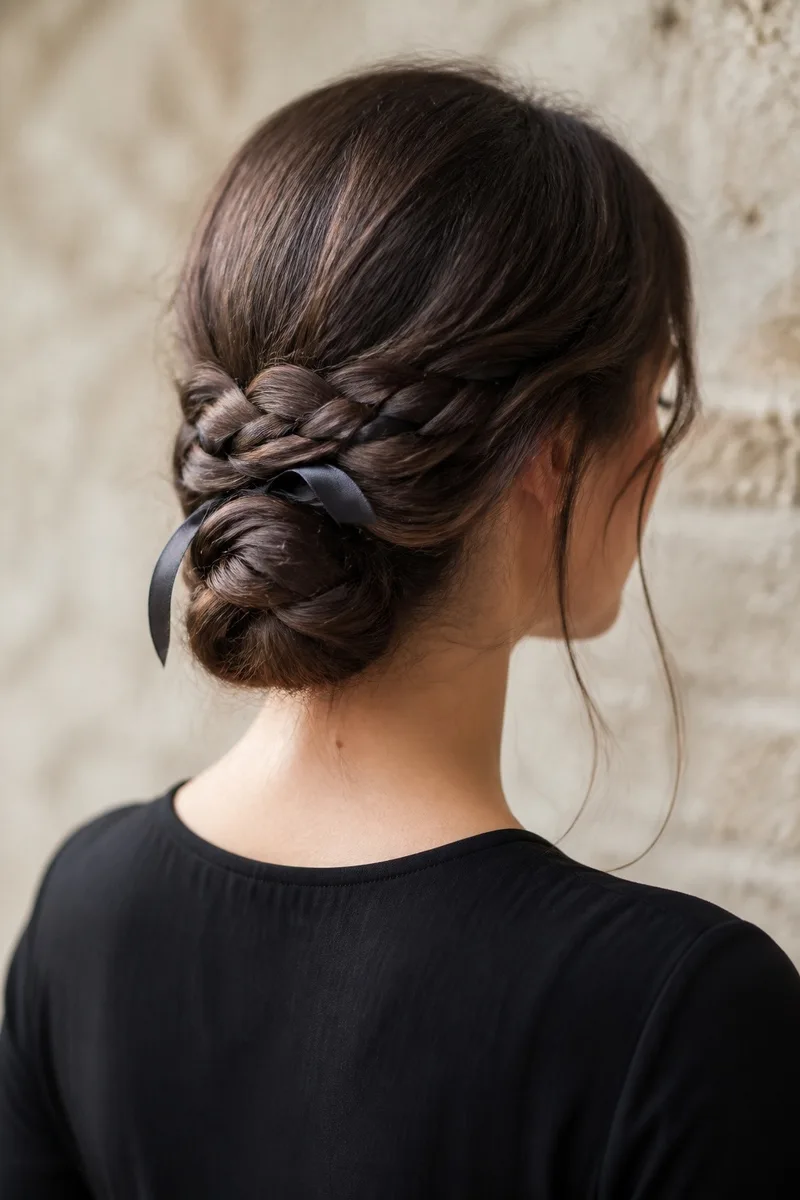
Pros: The most polished bun in this guide; the ribbon adds team colour; fully contained and secure.
Cons: Takes the longest of the bun styles; the ribbon must be pinned well or it can slip.
Maintenance: Braid a small section, wrap it around the bun base and pin it, then knot the ribbon over the braid and pin it flat.
Who should avoid it: Gymnasts in a rush on meet morning, and anyone competing where ribbons are not allowed.
37. Sleek Low Bun With Centre Part
The sleek low bun with a centre part is the quiet showstopper: a dead-straight part, gel-smooth sides and a low bun at the nape. It is symmetrical, professional and completely still, and it lets the judges see the gymnast, not the hair, on every apparatus.
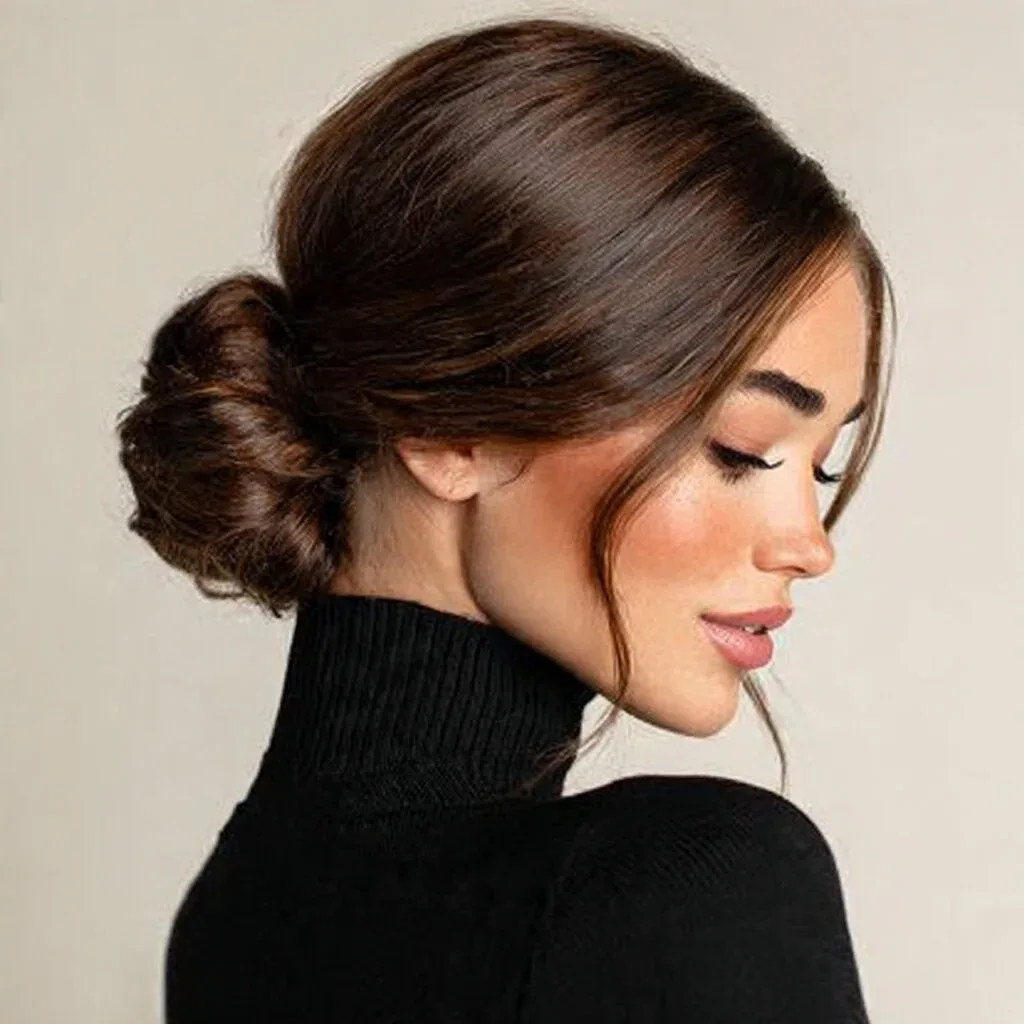
Pros: The most symmetrical and professional finish; completely still; suits every leotard.
Cons: Demands a perfect part and hairline; shows every flyaway and every pin.
Maintenance: Part the hair exactly down the middle, smooth both sides with gel, and pin the bun flat. Check the part in a mirror before the meet.
Who should avoid it: Gymnasts who want a softer, more relaxed look, and anyone whose hair will not hold a centre part.
38. Loose Waves With a Headband
Loose waves with a headband are the relaxed spectator and floor-warm-up look: the waves give movement and softness, while the headband keeps the front layers back. It is the best choice for supporters, coaches and gymnasts between sessions, when the hair can be down and the focus is on watching, not competing.
Pros: Soft and natural; comfortable for spectating; the headband keeps the front back.
Cons: Not a competition style: loose waves will fall into the face on the beam or bars.
Maintenance: Add loose waves with a curling iron or an overnight braid, then slide a headband on. Smooth flyaways with a little cream.
Who should avoid it: Any gymnast competing on the apparatus, who needs a braid, bun or ponytail instead.
39. Rhythmic Ribbon Braid Ponytail
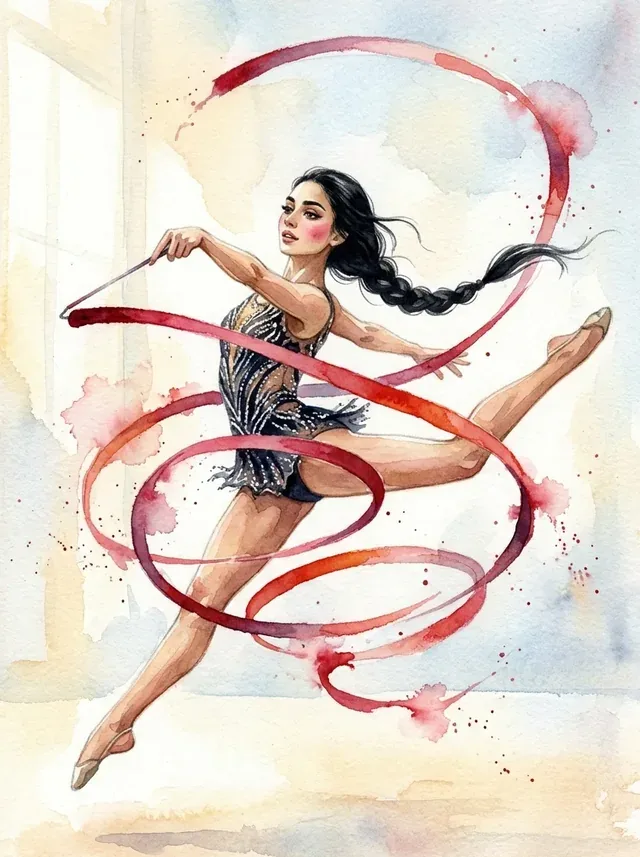
The rhythmic ribbon braid ponytail is made for rhythmic gymnastics: a tight braid into a high ponytail, finished with a ribbon that echoes the ribbon apparatus itself. It keeps the hair locked flat through leaps and turns, and it looks beautiful with a rhythmic leotard, where the ribbon in the hair matches the flow of the routine.
Pros: Made for rhythmic routines; secure through leaps and turns; the ribbon echoes the apparatus.
Cons: The high ponytail can swing during fast turns; not the best choice for artistic beam work.
Maintenance: Braid tightly from the hairline into a high ponytail and tie the ribbon at the base. Pin the ribbon flat so it cannot flap into the face.
Who should avoid it: Artistic beam specialists who need total stillness, and gymnasts whose club does not allow ribbons in the hair.
What is the best hairstyle for a gymnastics meet?
A classic gymnast bun or double Dutch braids are the best hairstyles for a gymnastics meet, because they lock the hair flat against the head, keep the face completely clear, and cannot come loose through flips, bar swings or beam routines. A low braided bun is the next best choice if you prefer your hair fully contained.
Can I wear a ponytail to a gymnastics meet?
Yes, you can wear a ponytail to a gymnastics meet, but it should be braided into a ponytail or sit low at the nape so it does not swing into your face. A high plain ponytail can whip around during tumbling, while a braided ponytail or a low ponytail stays put.
How do I keep my hair from falling out during a gymnastics routine?
Start the braid or bun tightly at the hairline, use two elastics instead of one, and pin the style at several points, especially behind the ears and at the nape. A light mist of hairspray and a quick tug test at training will tell you whether the style will hold.
Are ribbons allowed in gymnastics meet hairstyles?
Ribbons are allowed at most club and school meets, but the rules vary by level and competition, so check with your coach first. Keep ribbons short, pinned flat and in team colours, and never wear anything that could fall onto the apparatus.
What hairstyle works best for the balance beam?
A low bun, a slicked-back ponytail or a French braid into a bun works best for the balance beam, because nothing can fall forward into your eyes or swing when you turn. Avoid loose hair, side braids and high ponytails on the beam.
How do I stop chalk from drying out my hair at a meet?
Smooth a drop of hair oil or leave-in conditioner through the lengths before you style, and keep a little smoothing cream in your kit bag for the hairline. Braids and buns also help, because contained hair touches less chalk dust than loose hair does.
Can short hair work for a gymnastics meet?
Yes, short hair works very well for a gymnastics meet: it cannot fall into your eyes, needs almost no styling, and a slim headband is usually all it takes. Add a little texture spray for grip and pin the headband behind your ears.
What is the quickest hairstyle for a gymnastics meet?
A slicked-back low ponytail or a classic bun is the quickest hairstyle for a gymnastics meet, and both take about two minutes. For a little more hold, braid the hair first and then gather it into a ponytail, which takes three minutes and lasts the whole meet.
Should I practise my meet hairstyle before the competition?
Yes, always practise your meet hairstyle at training first, with a full run-through on all four apparatus. Jump, flip and turn your head: if nothing moves, the style is meet-ready. Never try a brand-new style on the morning of a competition.
How do I fix my hair between rotations at a meet?
Keep two spare elastics, three bobby pins and a travel-size smoothing cream in your kit bag. Between rotations, re-tighten the bun or ponytail at the base, smooth the hairline with a little cream, and re-pin any loose strands before your next apparatus.
Final Salute: Pick Your Meet Style and Enjoy the Competition
The best hairstyles for a gymnastics meet are the ones you forget about once the music starts. Whether you choose double Dutch braids for the bars, a classic bun for the beam, or a team-colour ribbon ponytail for the floor, the rule is the same: anchor the hair, keep the front out of your eyes, and pick a style that survives all four apparatus.
Try your style once at training before meet day, with the leotard you will actually wear. Vault, swing, turn and tumble. If nothing moves, you have found your meet style. Then all that is left is the competition itself: the chalk, the crowd, the salute to the judges, and a photo from the podium where your hair looks as good as the routine felt.