Hair That Travels Well: Hairstyles for a Destination Wedding That Survive Sun, Sea and Dancing
A wedding at home gives you a safety net: your usual salon is twenty minutes away, your stylist knows your hair, and if a curl drops or a pin slips, someone can fix it before the photographer notices. A destination wedding takes all of that away. You are getting married — or standing beside someone who is — in a place you flew to, in weather you cannot control, with a suitcase of products instead of a salon shelf, and a photographer who will be shooting in midday sun, sea wind, and candlelight, all on the same day.
That is why destination wedding hair is a different job from ordinary wedding hair. The prettiest style on a Pinterest board is worthless if it melts in Caribbean humidity, blows apart on a clifftop, or wilts before the first dance. This guide gathers 34 hairstyles for a destination wedding that were chosen for the trip as much as for the photos: updos that hold through heat and dancing, braids that laugh at wind, half-up styles that survive a beach ceremony, and short-hair looks that need nothing more than a few pins. Eight guides first cover the practical side — packing a hair kit, humidity-proofing, choosing for your venue, trialling before you fly, and working with a stylist you have never met. Whether you are the bride, a bridesmaid, or a guest with a boarding pass and a plus-one, there is a style here that will still look like you at midnight.
Pack a Travel Hair Kit: The Small Bag That Saves the Whole Day
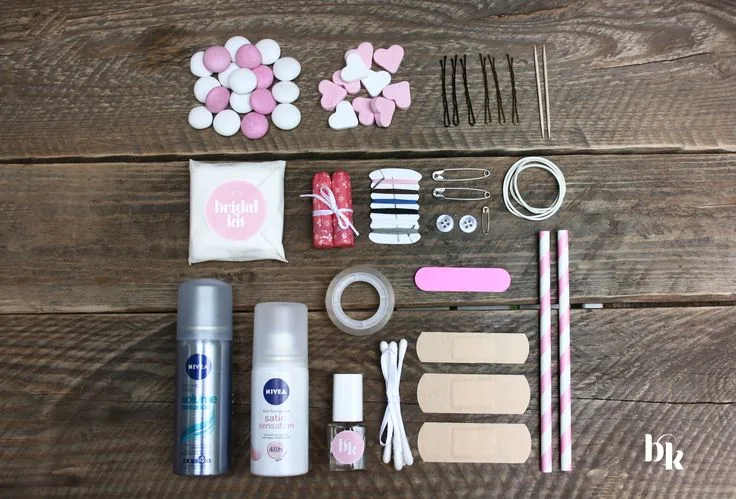
Everything about destination wedding hair starts with what fits in your bag. There is no running back to your bathroom, no borrowing from a salon shelf, and no guarantee the resort shop sells anything but sunscreen. A travel hair kit is a small zip pouch with bobby pins in your hair colour, two strong hair ties, a mini hairspray, a travel dry shampoo, a folding brush or wide-tooth comb, a few clear elastics, and one smoothing serum. That is the whole kit, and it weighs almost nothing.
Pack it in your hand luggage, not your checked suitcase, so a delayed bag cannot take your hair down with it. Keep the pins in a tiny tin or a pill box so they do not scatter, and wrap the hairspray in a plastic bag in case the cabin pressure makes it leak. Best for: everyone travelling to a wedding, bride or guest. Common mistake: packing full-size products and leaving the pins at home. Quick verdict: if it fits in a sandwich bag and fixes a fallen curl in thirty seconds, it belongs in the kit.
Heat and Humidity-Proofing: Hair That Refuses to Frizz
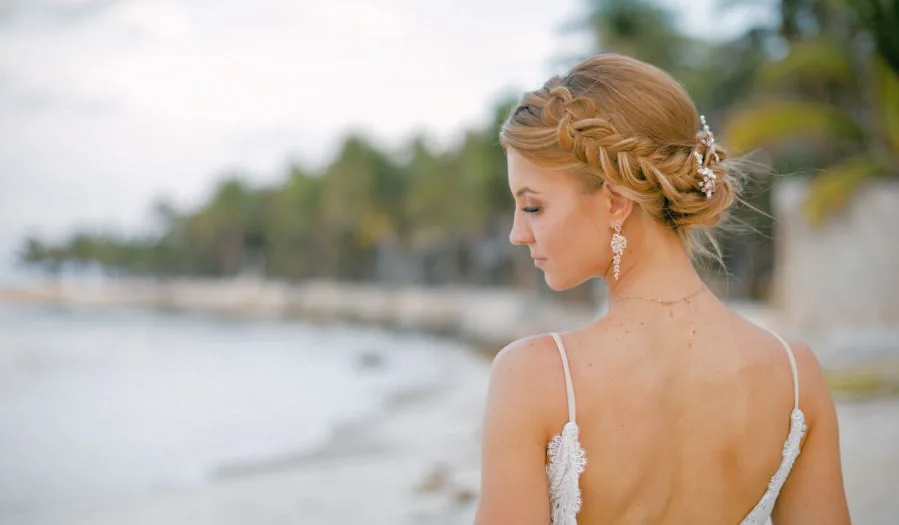
Humidity is the enemy of destination wedding hair. It swells the hair shaft, loosens curls, turns a sleek finish into a halo of frizz, and does it within an hour of stepping outside. The defence is layered: start with an anti-humidity cream or serum on damp hair, blow-dry smooth if you are going sleek, and finish with a strong-hold but flexible hairspray. Styles built on braids, twists and pins hold far better in damp air than styles that rely on heat alone, because the structure is doing the work instead of the spray.
Pros: the right products make even fine hair survive a tropical afternoon. Cons: too much product weighs hair down and photographs greasy in bright sun, so layer lightly. What to ask your stylist: for a humidity-proof finish and a product they have actually used in that climate. Best for: beach, island, and summer garden weddings. Quick verdict: if your hair frizzes on a humid day at home, assume the destination will be worse and plan for it.
Wind-Proofing Your Style: What Works When the Sea Breeze Picks Up
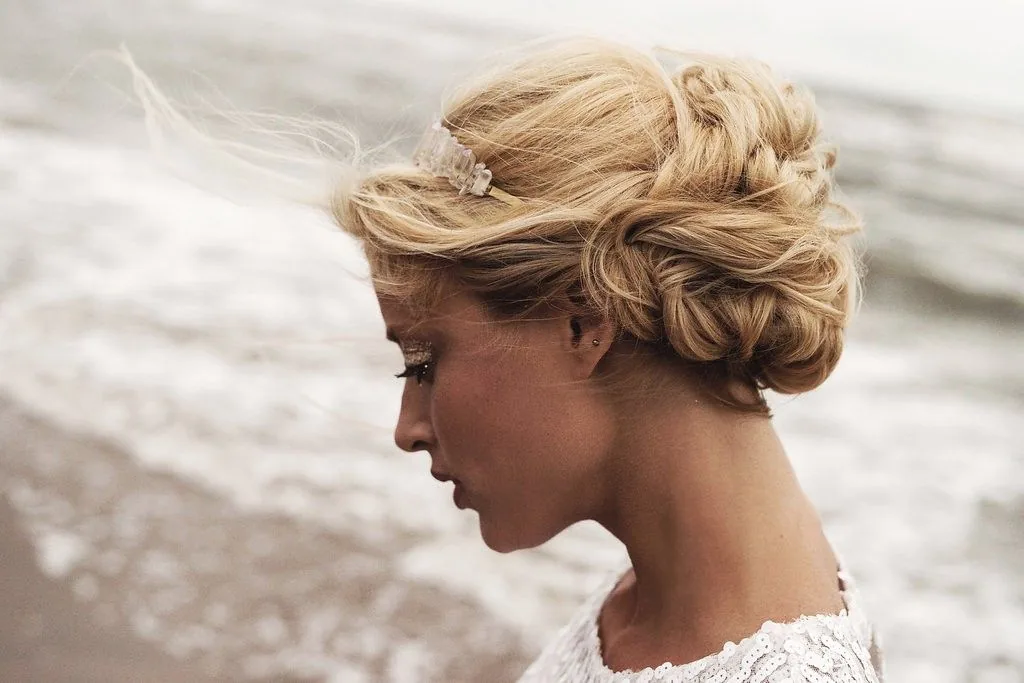
A beach ceremony looks effortless in photos and feels like a wind tunnel in person. Loose hair down is the first casualty: it blows across the face, into lipstick, and across the photographer’s lens at exactly the wrong moment. Wind-proofing means anchoring the style — buns pinned in several places, braids tied off properly, half-up styles with the front sections secured — and choosing a finish that looks good slightly undone, so a gust improves the photo instead of ruining it.
How to test it: style your hair, stand in front of a fan or an open car window, and see what moves. Anything that flies into your face in thirty seconds will do the same on the beach. Maintenance: one extra pin at each anchor point and a light spray on the front sections. Who should avoid loose styles: anyone marrying on a beach, a clifftop, or a rooftop. Quick verdict: the best windy-day hair is hair that was never going to move in the first place.
Match the Style to the Venue: Beach, Garden, Mountain and Ballroom
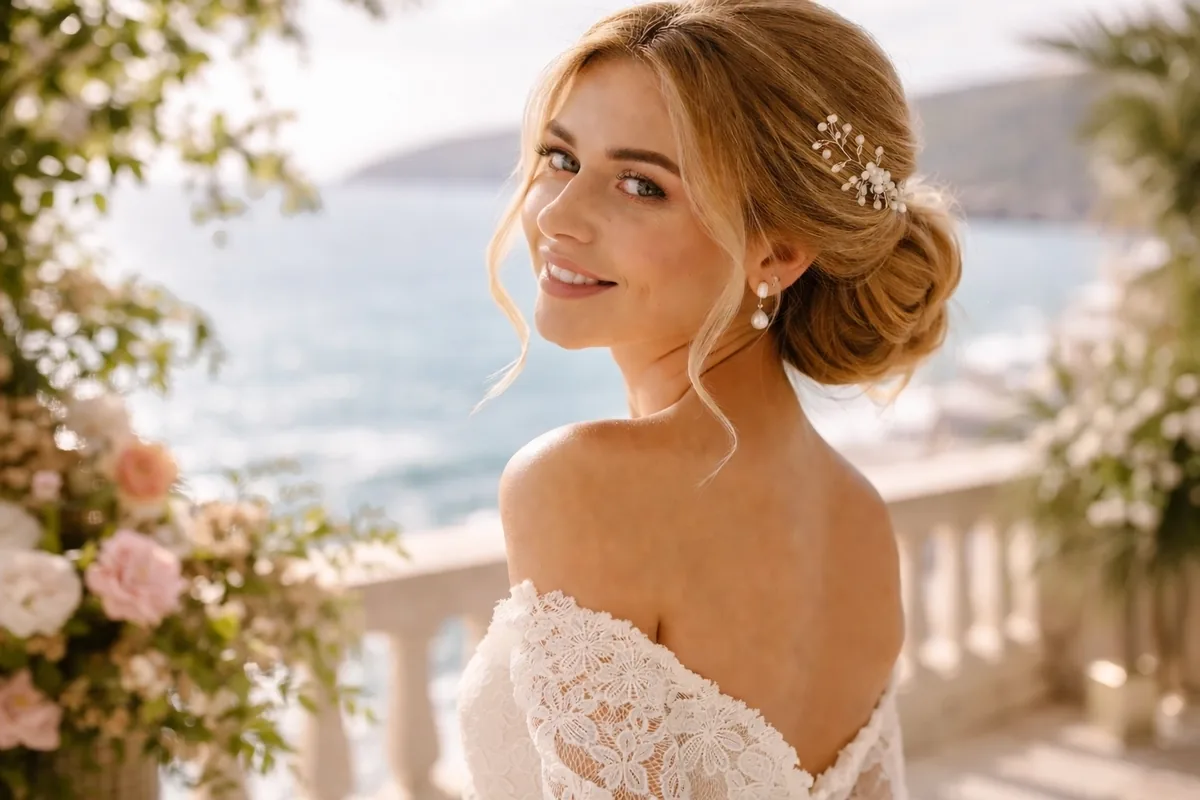
There is no single destination wedding hairstyle, because there is no single destination. A beach wedding wants relaxed waves, braids, and updos that can handle sand and salt air. A garden wedding wants soft, romantic styles with room for fresh flowers. A mountain wedding wants secure updos that survive altitude, wind, and a long walk between ceremony and reception. A resort ballroom wants the polished, formal looks a home wedding would — the travel is the only difference.
Best for: anyone choosing between two styles they love — let the venue decide. How to choose: picture the ceremony spot at the hottest, windiest moment of the day, and pick the style that still works there. Common mistake: choosing a ballroom updo for a beach ceremony, then spending the day fighting it. Quick verdict: the venue is not a backdrop, it is a weather forecast — style for it.
Do a Hair Trial Before You Travel: The Rehearsal That Prevents a Disaster
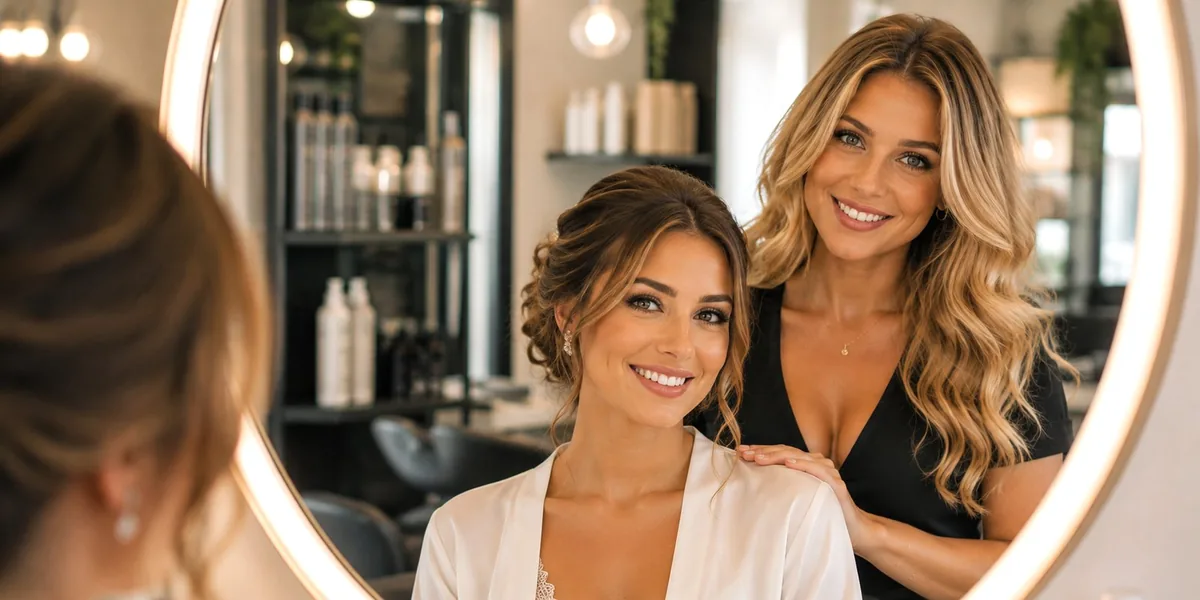
A hair trial is important for any wedding, and it is essential for a destination one. You need to know, before you fly, that the style suits your face, holds for eight hours, survives heat, and works with your veil or headpiece. Book the trial with your usual stylist a month or two before the wedding, wear the style for a full day, photograph it in daylight and at night, and note what loosens first. That is the information your destination stylist needs — and the warning you need if the style is wrong.
Take photos from every angle and a short video of the back, and bring them with you. Pros: you arrive knowing the style works, instead of discovering at the resort that it does not. Cons: a trial costs time and money, and you may need two — one at home and one with the local stylist. What to ask your stylist: how the style behaves in humidity and how long it honestly lasts. Quick verdict: never wear an untested style to a wedding you flew to attend.
Working With a Local Stylist You Have Never Met
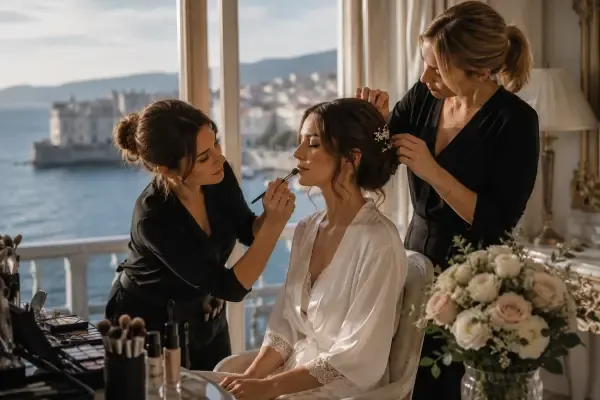
Most destination weddings mean a stylist you have never met, in a salon you have never seen, working with products you do not know. The way to make that work is preparation: send photos of your trial, your dress, your veil, and your hair from the front, side and back, and ask what products they use and whether they have worked with your hair type before. Arrive with clean, dry hair unless they tell you otherwise, and bring your own pins, veil, and any accessories — do not assume they will have them.
Book a short trial or a consultation the day before the wedding if you can, even just fifteen minutes to talk through the plan. Best for: every bride using a resort or local salon. Common mistake: showing the stylist one photo and hoping for the best. Quick verdict: the more they see before the morning, the less can go wrong on it.
Photos in Harsh Sunlight: Hair That Looks Good at Midday, Not Just at Sunset
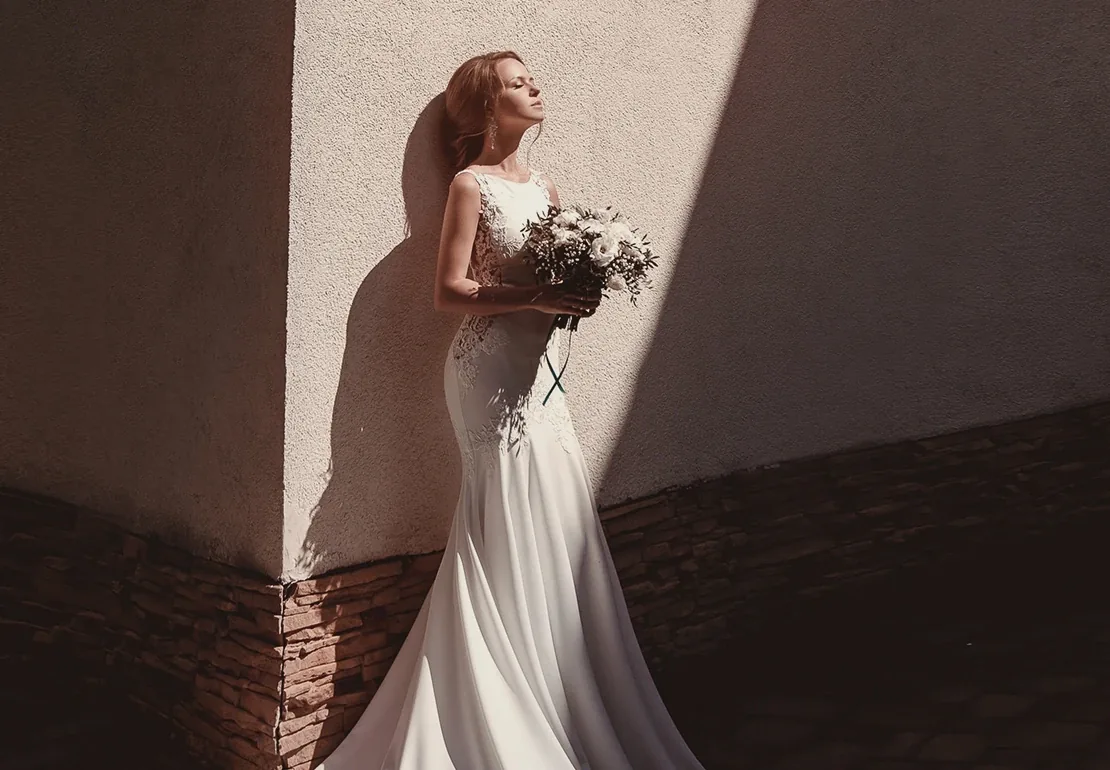
Destination wedding photos are often taken in the harshest light of the day — a beach ceremony at noon, portraits on white sand, a garden under a cloudless sky. In that light, flyaways become visible, shiny product looks greasy, and flat, dark hair can lose all detail. Styles with texture — soft waves, braids, twists, and pieces that catch the light — photograph far better than a flat, slick finish, and a light, matte hold beats a glossy spray in direct sun.
How to prepare: photograph your trial style outdoors at midday, not just indoors. If the front looks frizzy or the shine looks wet, adjust the products before you travel. Pros: textured styles are forgiving in every kind of light. Cons: very dark, very sleek hair can look like a solid block in harsh sun. What to ask your photographer: which angles and times of day they plan to shoot, so your stylist can plan the front accordingly. Quick verdict: if it looks good at noon, it will look beautiful at golden hour.
Touch-Ups Without a Salon: Fixing Your Hair Between Ceremony and Dancing
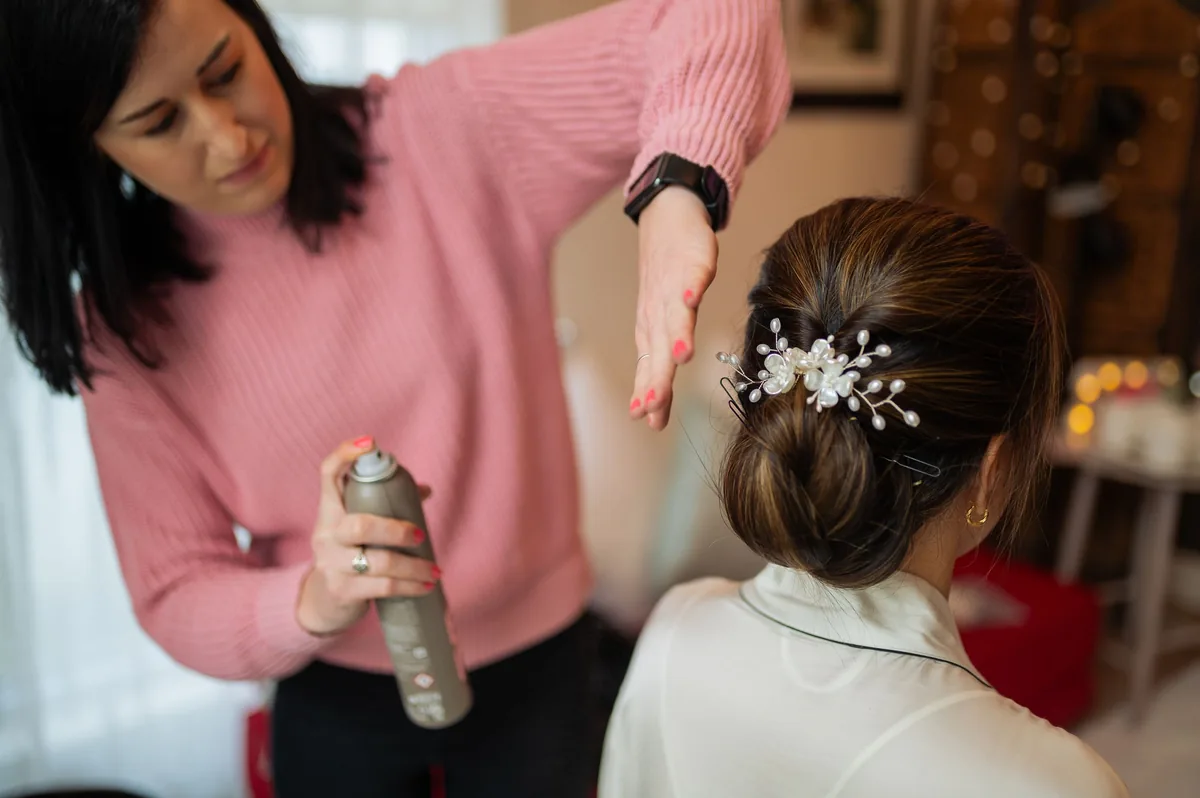
Between the ceremony and the first dance there is no salon, no stylist, and usually no proper mirror — just a bathroom, a phone camera, and five minutes. The touch-up routine is simple: smooth the hairline with your palms and a drop of serum, re-pin anything that has slipped, shake out the ends with your fingers, and mist lightly with hairspray from arm’s length. For waves, finger-comb, never brush — a brush turns beach waves into frizz in one pass.
Best for: brides, bridesmaids, and guests alike. Maintenance: check the back with your phone’s front camera before the reception entrance. Common mistake: re-curling with a hot tool in a humid bathroom, which adds frizz instead of fixing it. Quick verdict: a style that can be fixed with fingers and three pins is the right style for a destination wedding.
1. Classic Low Chignon
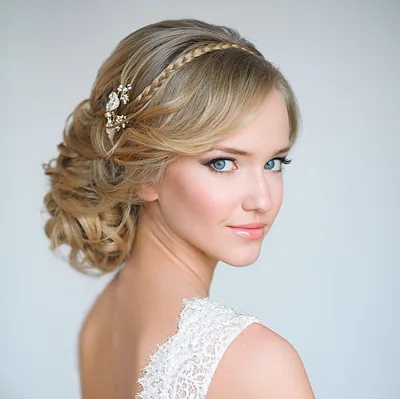
The classic low chignon is the safest bet in destination wedding hair, and the most elegant. The hair is swept low at the nape and rolled into a neat, smooth knot that sits below the collar, clear of the neck in the heat and perfectly placed under a veil. It does not move in wind, it does not frizz at the front, and it looks as good in a beach photograph as it does in a ballroom.
Best for: brides who want timeless over trendy, and anyone with medium to long hair. How to style it: smooth the hair back with a serum, twist it low, pin in several places, and leave two soft pieces at the front if you want it less severe. Time and cost: about thirty minutes with a stylist, and it is one of the more affordable updos. Quick verdict: if you only trust one style to survive the whole day, trust this one.
2. Beachy Loose Waves
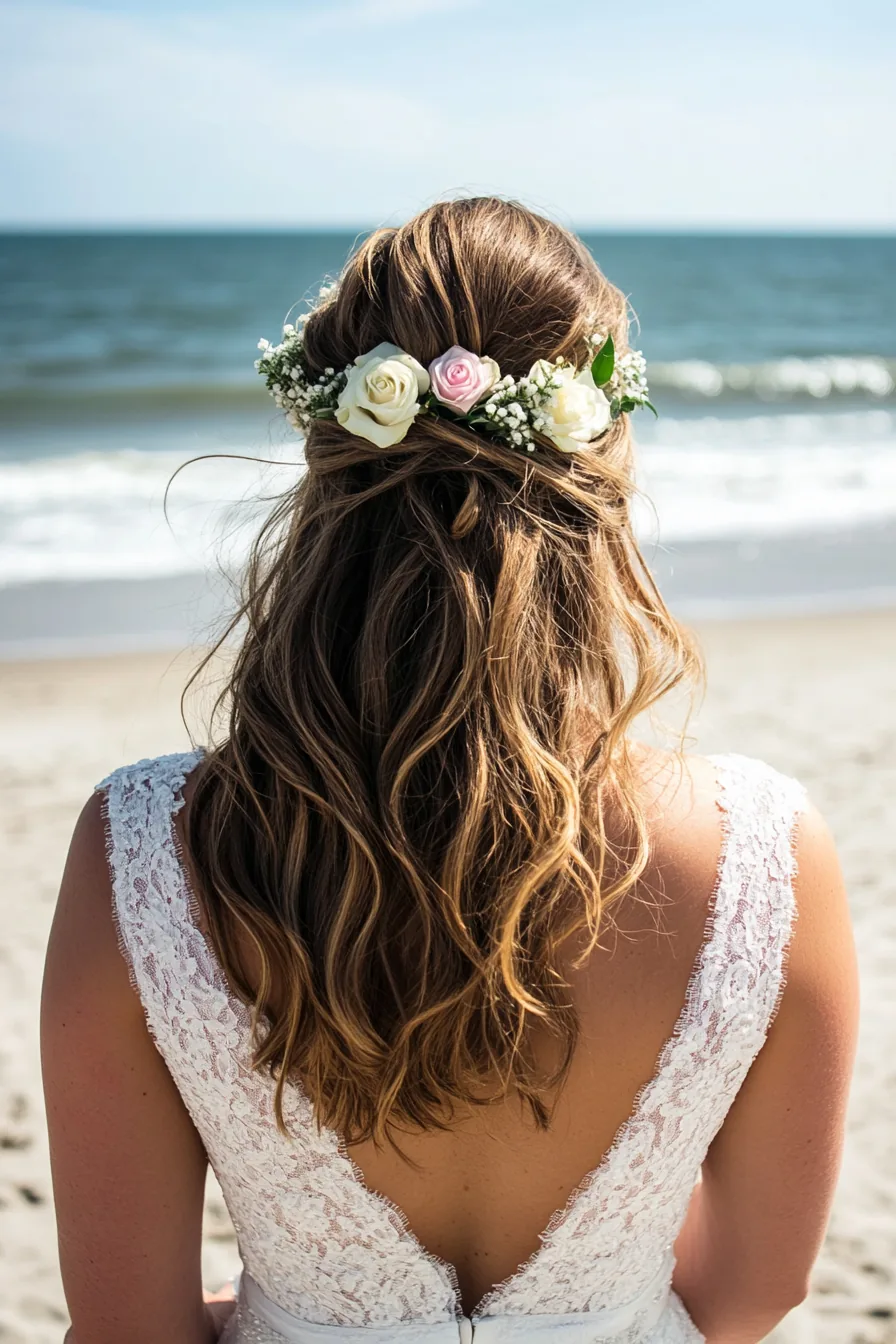
Beachy loose waves are the look most people picture when they think of a destination wedding: soft, sun-kissed waves that move with the sea air instead of fighting it. The waves are brushed out loose, parted in the middle or to the side, and finished with a salt spray so the texture looks natural rather than styled. On a beach, the wind becomes part of the style.
Pros: romantic, effortless, and it photographs beautifully in sunlight. Cons: the least durable style on this list — waves relax in humidity and a strong gust will rearrange them. Common mistake: curling the waves too tight, so they drop into limp strands by the ceremony. Who should avoid it: anyone whose hair refuses to hold a curl, or a windy clifftop ceremony. Quick verdict: perfect for a calm beach or garden, risky for a windy one.
3. Romantic Braided Crown
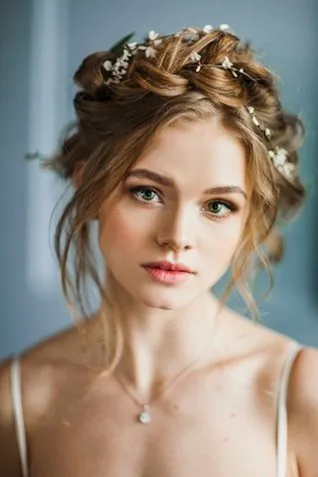
A romantic braided crown wraps a soft braid around the head like a halo, with the rest of the hair falling in loose waves beneath it. It is bohemian without being messy, and it is one of the most practical destination styles: the braid pins the front hair away from the face, the waves can move in the wind, and the whole look only gets better as it loosens through the day.
How to style it: braid two sections from behind each ear, cross them over the top, and pin them in place, then curl the remaining hair loosely. Best for: long hair, garden and beach weddings, and brides who want flowers tucked into the braid. Maintenance: almost none — a loosened braid still looks intentional. Quick verdict: beautiful, secure, and made for outdoor ceremonies.
4. Sleek High Bun
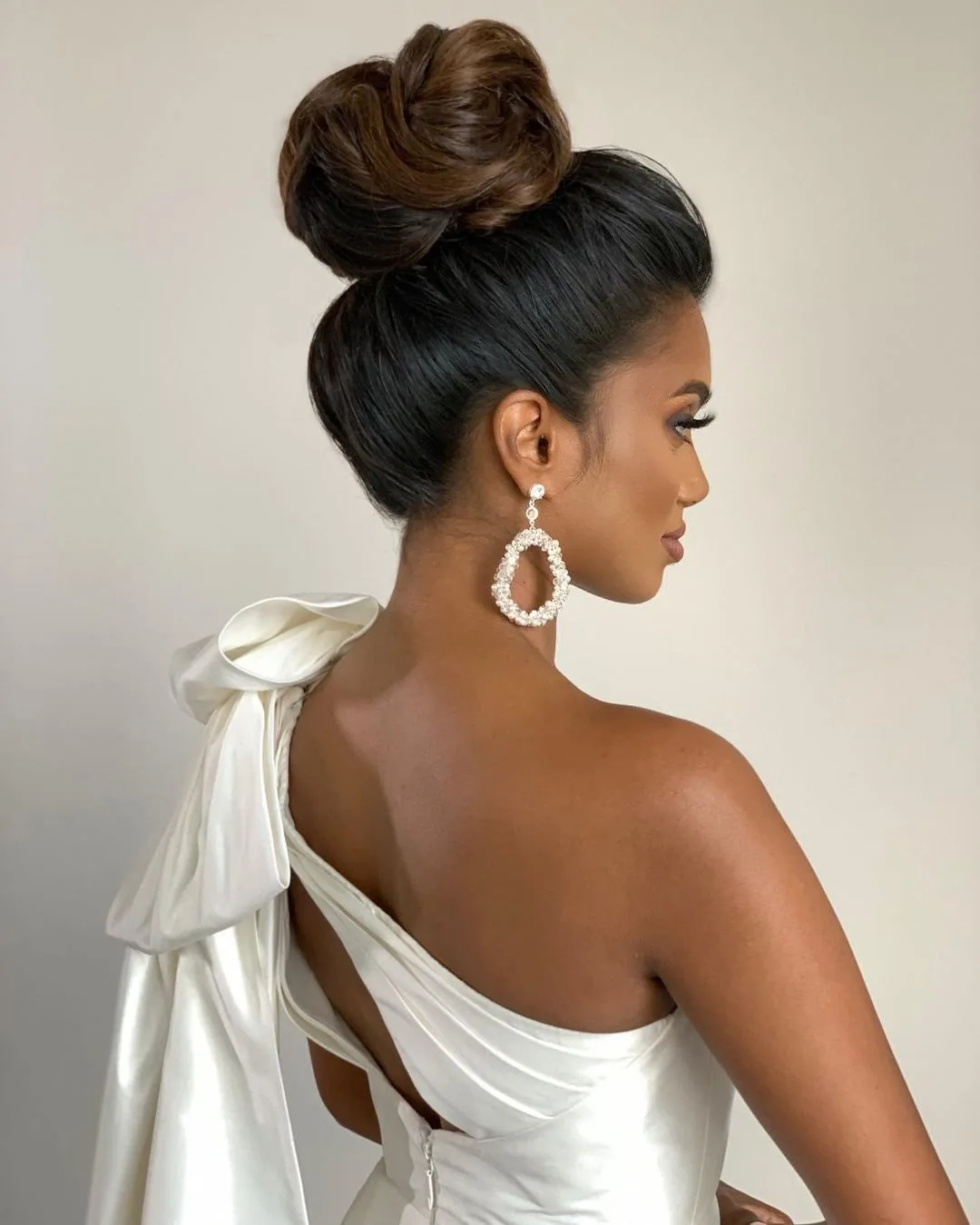
A sleek high bun is the most polished style you can wear to a destination wedding, and the coolest in hot weather — every strand is off the neck, off the face, and pinned into place. It suits a formal resort wedding, a ballroom reception, and a bride who wants drama without a single hair out of place. It also survives humidity better than almost any style worn down, because there is nothing loose for the damp air to attack.
Pros: cool, formal, and completely secure. Cons: it can feel severe on a beach, and it needs a strong hold product to stay sleek. What to ask your stylist: for a bun anchored with pins, not just an elastic, and a smooth finish at the hairline. Who should avoid it: anyone who finds high buns uncomfortable after several hours. Quick verdict: maximum polish, minimum worry.
5. Half-Up Twisted Halo
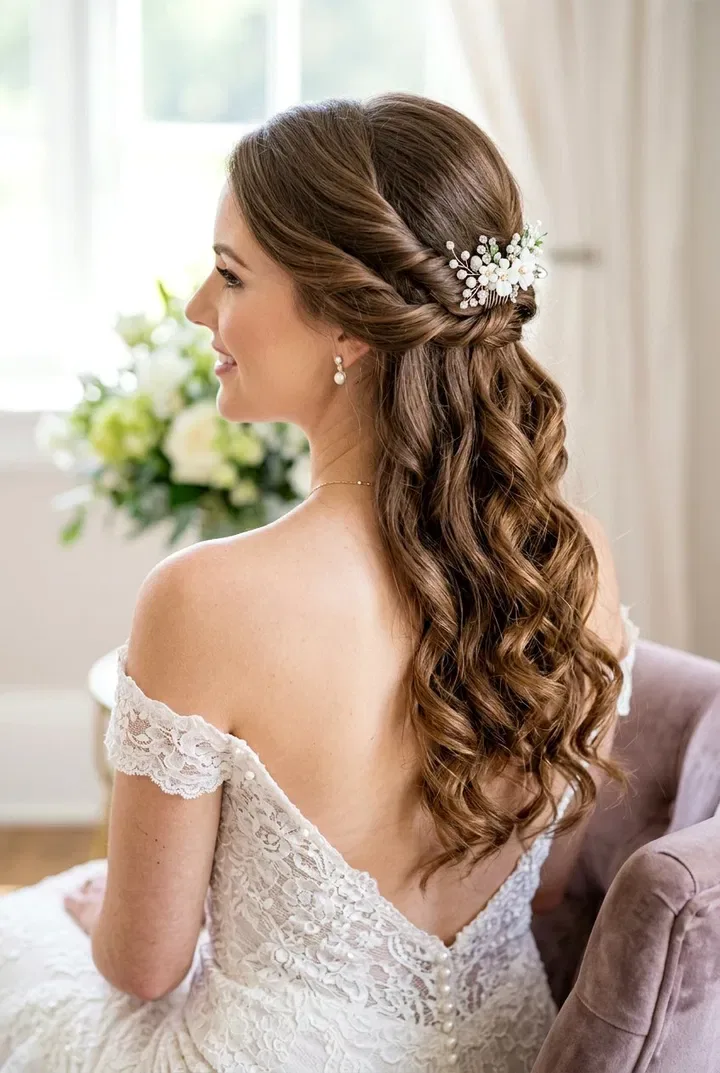
The half-up twisted halo takes two sections from the front, twists them back, and pins them together at the crown, leaving the rest of the hair flowing. It is the middle ground every destination wedding needs: the front is controlled and out of the face, the length is free to move, and the twist adds a detail that photographs beautifully from behind.
Best for: medium to long hair, and bridesmaids who want a romantic look without a full updo. How to style it: twist each front section loosely, cross them at the back of the head, and secure with pins hidden under the twist. Time and cost: about twenty minutes, and easy to do yourself with a mirror. Quick verdict: the easiest pretty style on this list, and one of the most forgiving.
6. Low Ponytail With a Wrapped Base
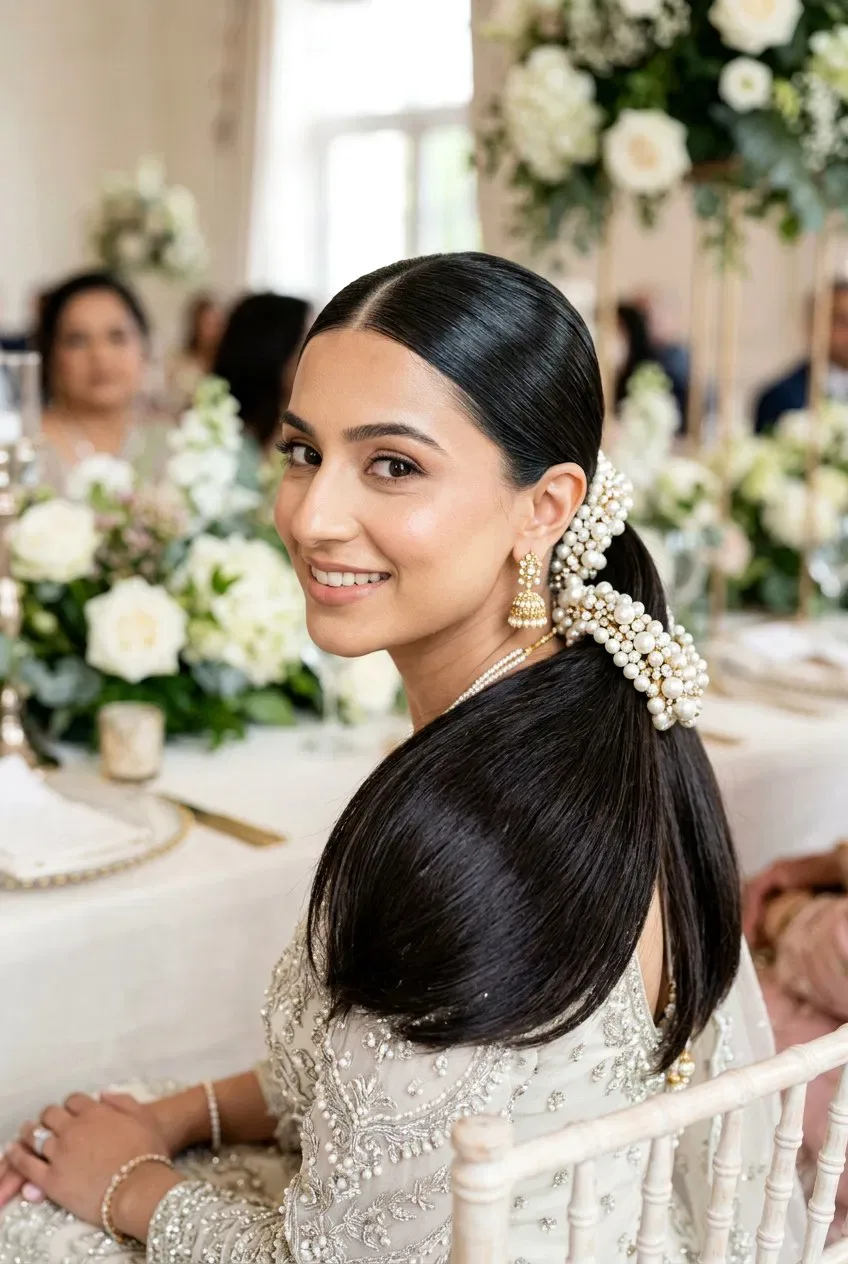
A low ponytail sounds too simple for a wedding until you see it done properly: smooth sides, a centre or side part, the base wrapped with a strand of hair to hide the elastic, and the length curled into soft waves. It is cool in the heat, secure in the wind, and it keeps hair off the back of a dress — which matters when the dress is backless and the day is long.
Pros: comfortable, quick, and it survives dancing better than most styles worn down. Cons: it can look plain without the wrapped base and a good finish. Common mistake: pulling it too tight, which causes a headache by the reception. Who should avoid it: nobody — it suits every face shape with the right parting. Quick verdict: simple, elegant, and far smarter than it sounds.
7. Fishtail Braid Over One Shoulder
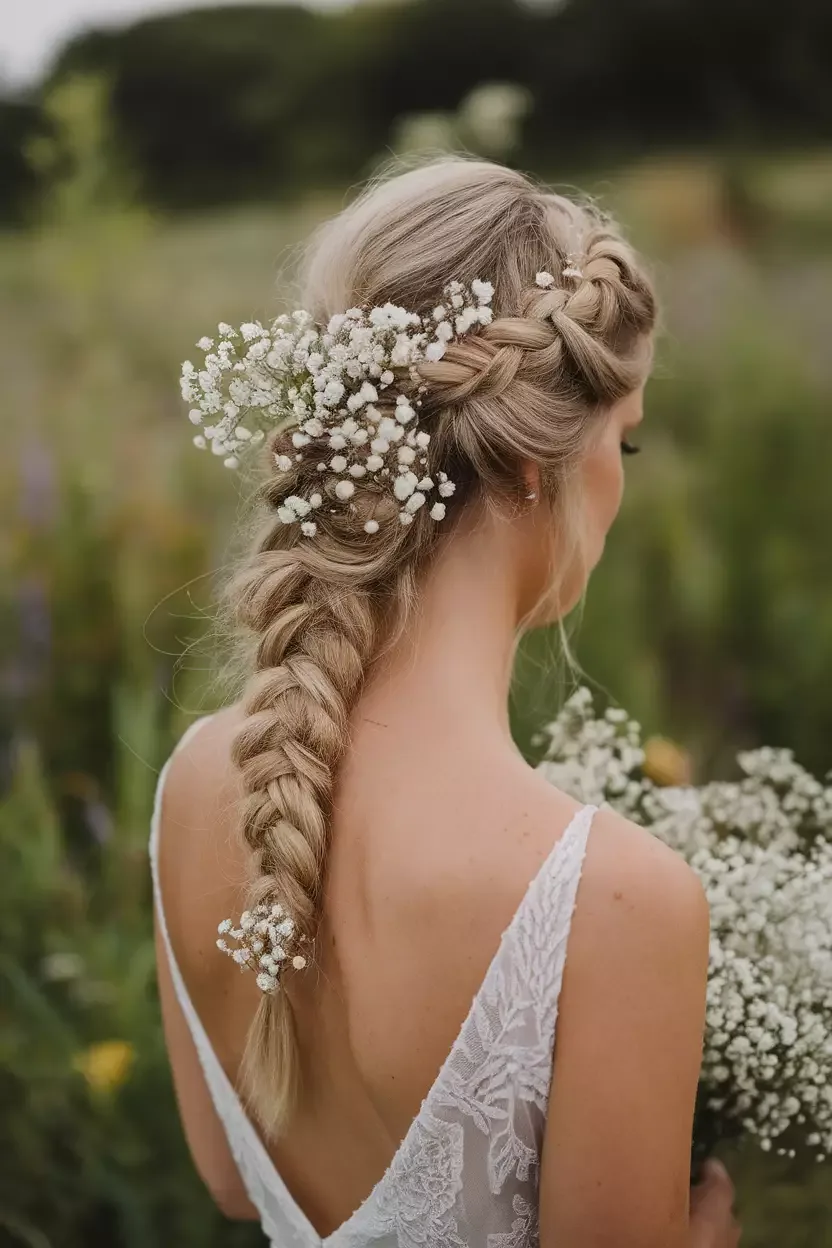
A fishtail braid draped over one shoulder is bohemian, romantic, and almost impossible for wind to ruin — which is exactly why it belongs at a beach wedding. The braid is pulled slightly loose for softness, the front pieces frame the face, and the whole style moves with you instead of against you. It photographs beautifully from the side, which is where most ceremony photos are taken.
How to style it: gather the hair to one side, fishtail-braid loosely, tie it off with a clear elastic, and gently pull the braid wider for fullness. Best for: long hair, beach and garden weddings, and brides who want a relaxed look. Maintenance: none — a loosened fishtail still looks deliberate. Quick verdict: the wind-proof braid that looks like you tried very hard, even though you did not.
8. Textured Messy Bun
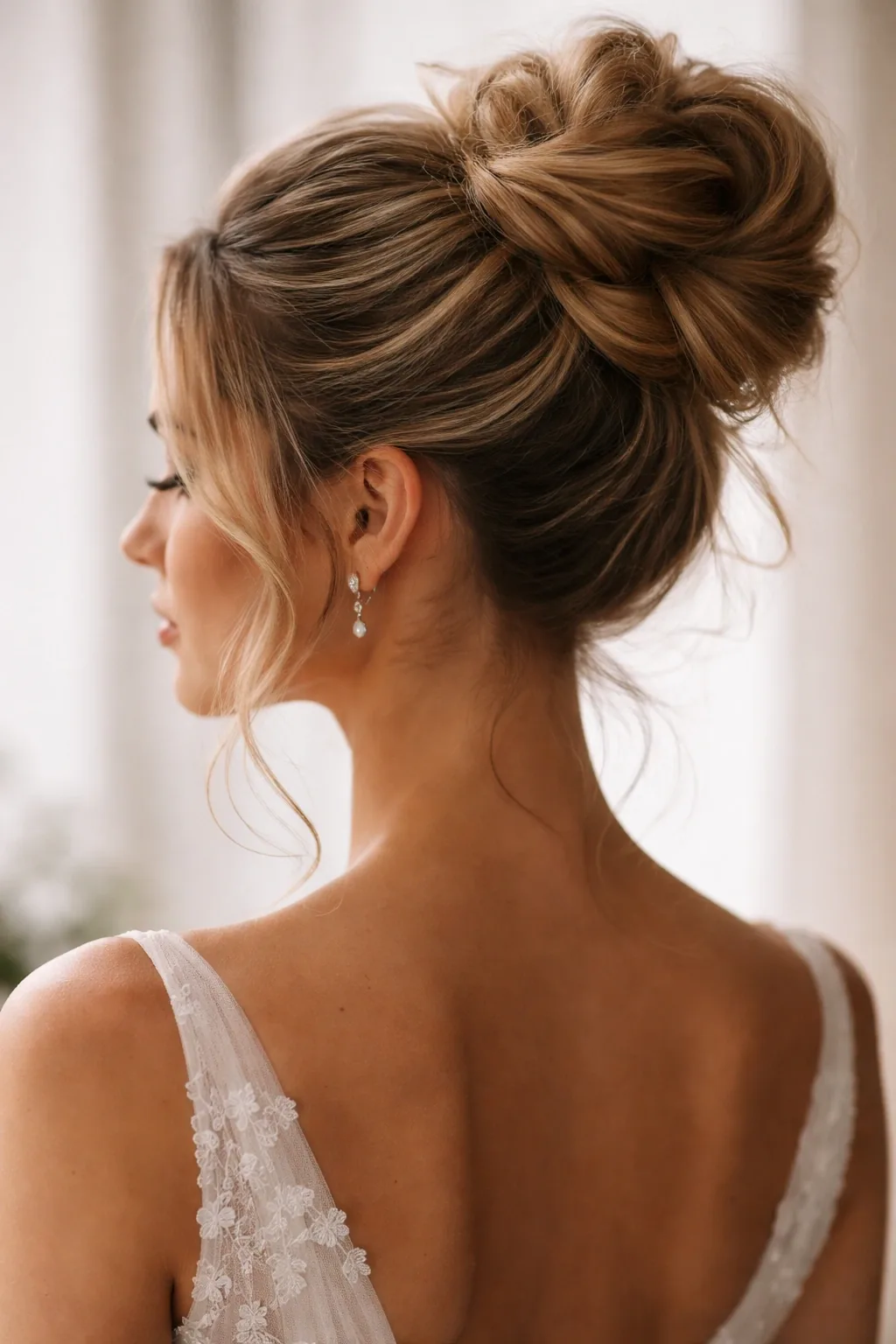
A textured messy bun is the relaxed cousin of the classic chignon: the hair is gathered loosely, pinned with soft volume, and finished with pieces pulled out at the front and nape. It suits a beach or garden wedding perfectly, because the style is supposed to look undone — so humidity, wind, and a long day of dancing only make it look more natural.
Pros: forgiving, comfortable, and quick to fix. Cons: it can tip into genuinely messy if the pins are not secure. What to ask your stylist: for a bun that is loose on top but anchored underneath, so it cannot slip. Who should avoid it: a very formal ballroom wedding, where a sleeker finish fits better. Quick verdict: the style that gets better as the day gets longer.
9. Hollywood Waves, Side-Swept
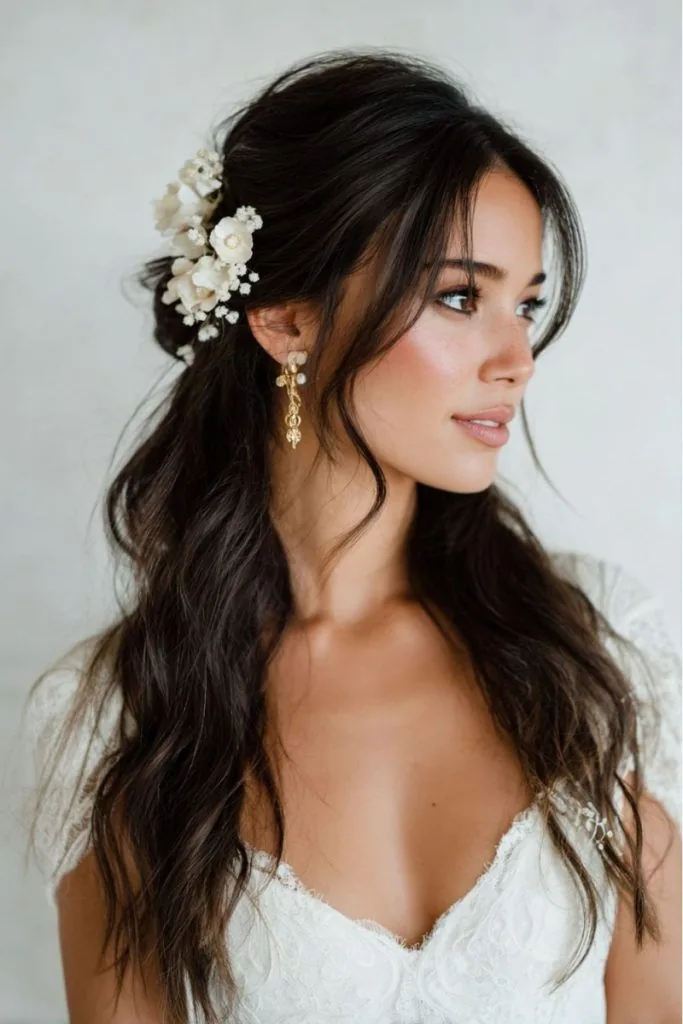
Hollywood waves swept to one side are old-school glamour, and they suit a destination wedding with a formal evening reception — think a resort ballroom, a villa terrace at sunset, a black-tie beach dinner. The waves are set in one direction, brushed out soft, and pinned behind one ear so the whole sweep falls over a bare shoulder. It is the most photographed style on this list, and the most dramatic in golden-hour light.
Best for: medium to long hair with natural body, and brides who want glamour over boho. How to style it: curl in one direction with a large barrel, pin each curl to cool, brush through gently, and sweep to one side. Time and cost: about forty-five minutes with a stylist — the longest style here. Quick verdict: stunning for the evening, but save it for a calm, indoor or sheltered venue.
10. Modern French Twist
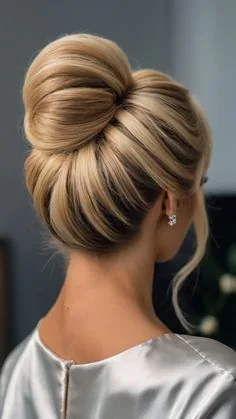
The modern French twist keeps the elegance of the classic twist but softens it: the roll is looser, the front has soft pieces, and the finish is textured rather than shellacked. It is a beautiful choice for a bride who wants a formal updo that does not feel stiff, and it holds up brilliantly in heat because everything is pinned up and away from the neck.
Pros: elegant, secure, and it works with a veil clipped underneath. Cons: it needs a skilled stylist — a bad twist unravels fast. Common mistake: making it too tight, which looks dated and feels uncomfortable. What to ask your stylist: for a soft, modern twist with face-framing pieces, not the severe version. Quick verdict: old Hollywood, updated for a beach.
11. Boho Waterfall Braid
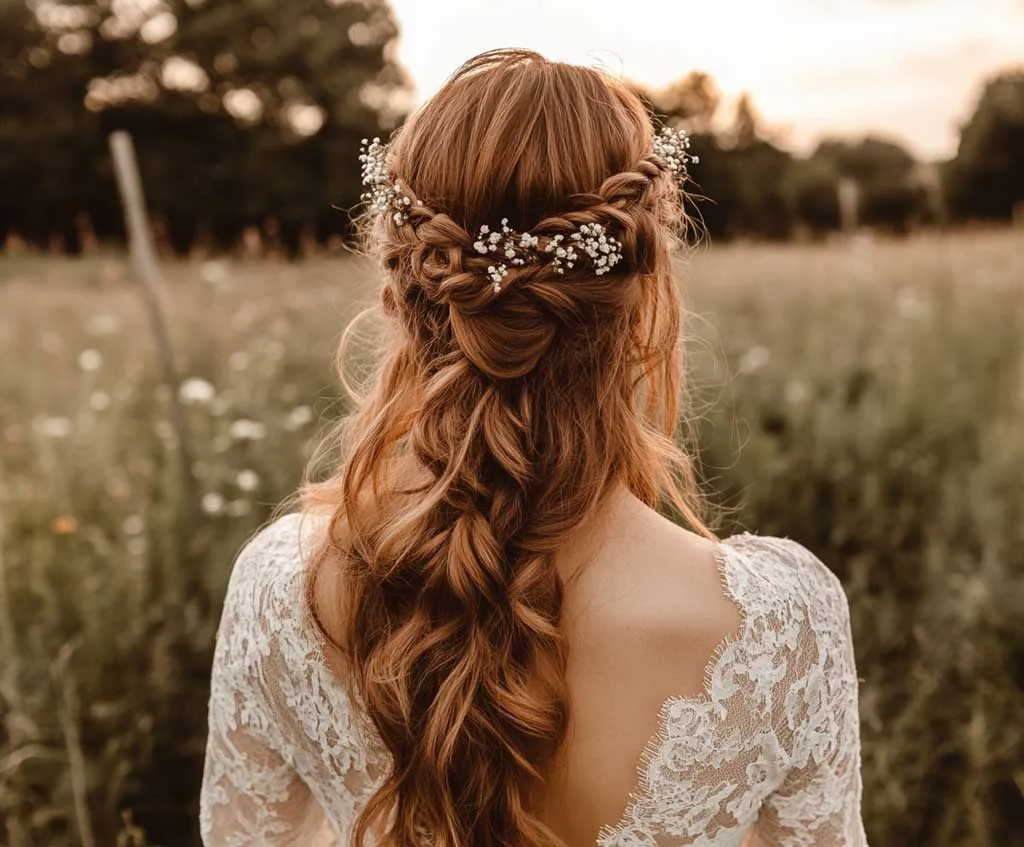
A waterfall braid lets strands fall through the braid as it travels across the head, creating a cascade effect that looks intricate and romantic. It is a half-up style, so the length flows free beneath it, and it is ideal for a garden or beach wedding where the mood is soft and unstructured. Small flowers or greenery woven into the braid finish it perfectly.
How to style it: start a braid at one temple, dropping the bottom strand each time and picking up a new one, and work across to the other side. Best for: long, wavy hair — the effect needs length to show. Maintenance: a few pins and a light spray keep it in place all day. Quick verdict: the prettiest half-up style here, and surprisingly secure.
12. Low Side Bun With Face-Framing Tendrils
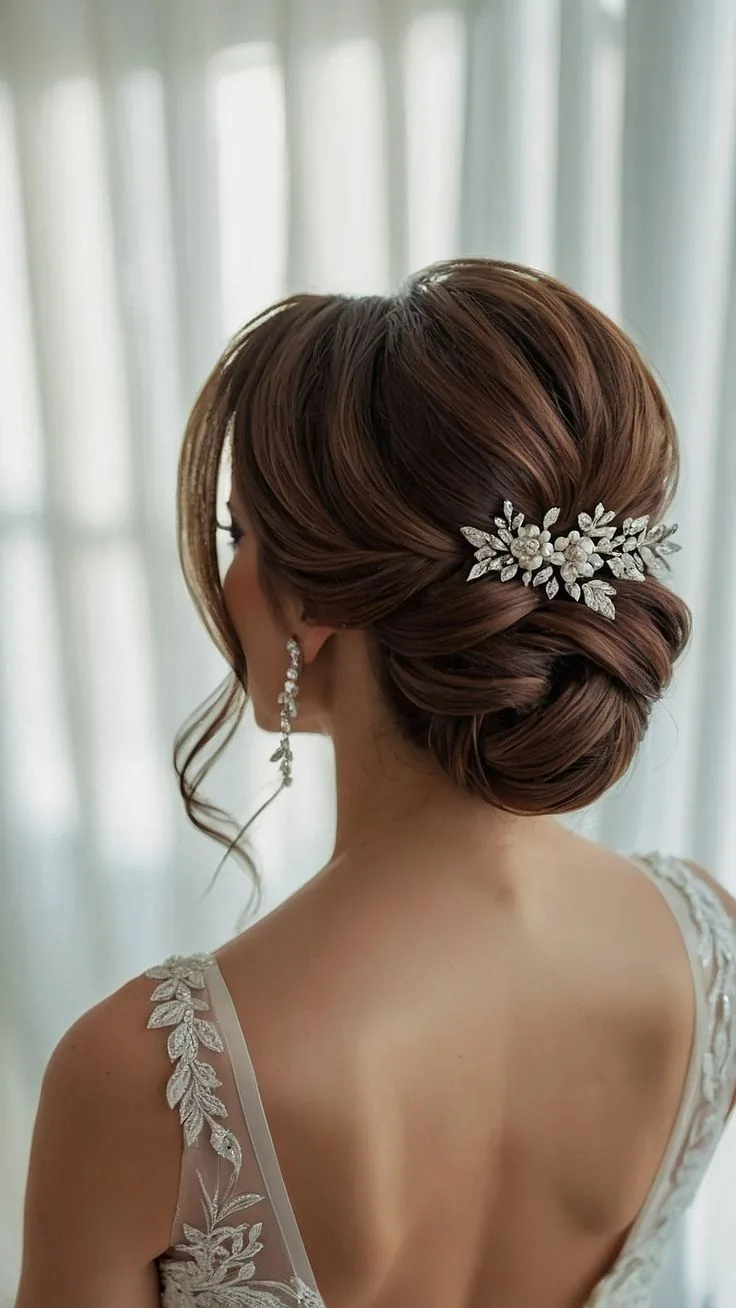
A low side bun sits just behind one ear, with soft tendrils left loose at the front to frame the face. It is romantic, slightly asymmetric, and it photographs beautifully from the front — the tendrils catch the light and soften the whole look. Because the bun is low and pinned, it is also one of the most secure styles for a windy ceremony.
Best for: brides who want an updo that still feels soft, and anyone with a dress that has an interesting neckline on one side. How to style it: sweep the hair to one side, twist it into a low bun, pin firmly, and curl two front pieces loosely. Time and cost: about thirty minutes. Quick verdict: soft, secure, and flattering from every angle.
13. Elegant Top Knot
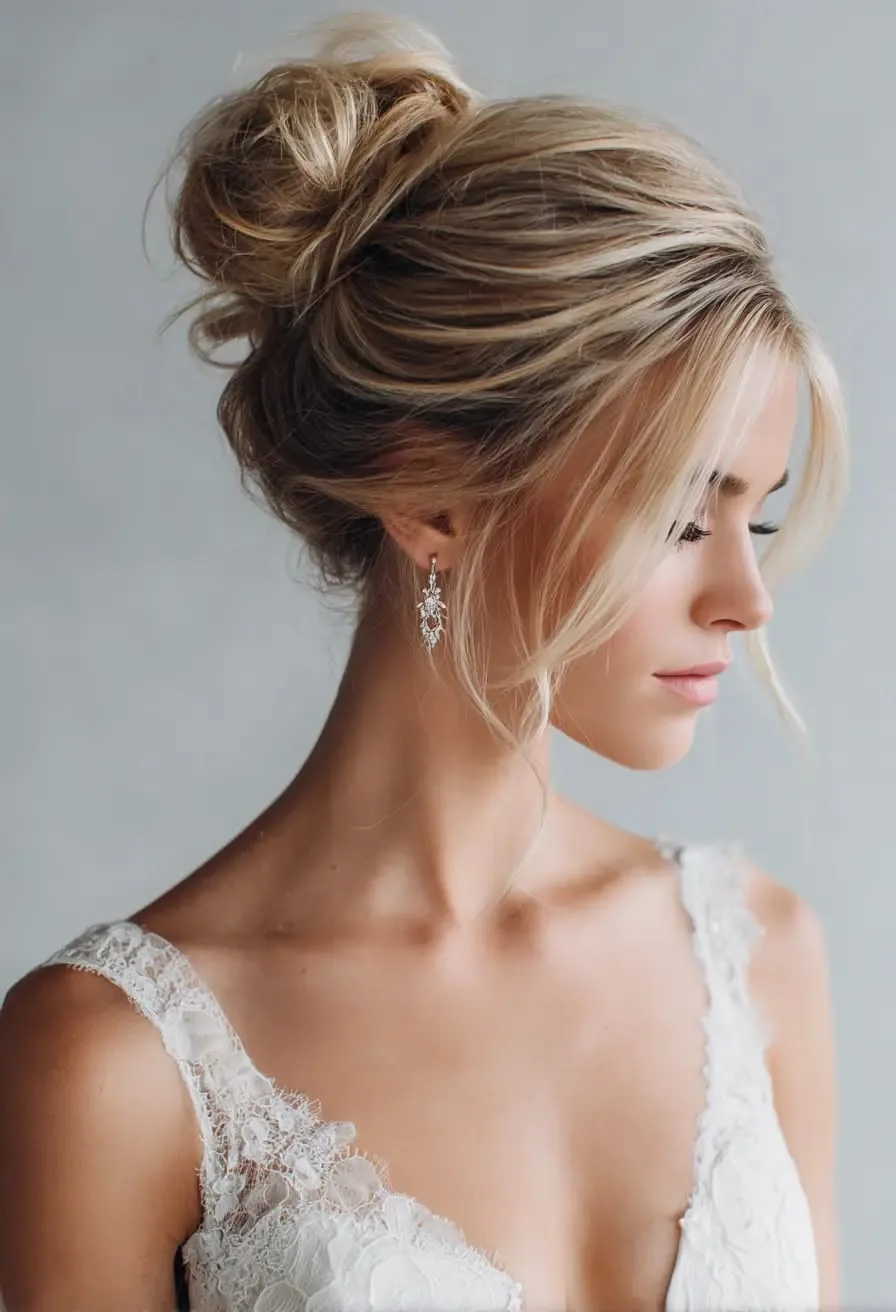
An elegant top knot is a high, smooth bun worn at the crown, and it is the coolest style you can wear in tropical heat — nothing touches the neck or the shoulders, and the whole look stays crisp from ceremony to last dance. It suits a modern bride, a minimalist dress, and a statement earring, because the neck and shoulders are completely clear.
Pros: cool, dramatic, and completely wind-proof. Cons: it can feel heavy by the end of a long day, and it needs a lot of pins to stay put. Common mistake: placing it too far back, which makes it look like a regular bun instead of a top knot. Who should avoid it: anyone with very fine hair, unless the stylist adds volume with padding. Quick verdict: bold, cool, and made for hot weather.
14. Braided Low Bun
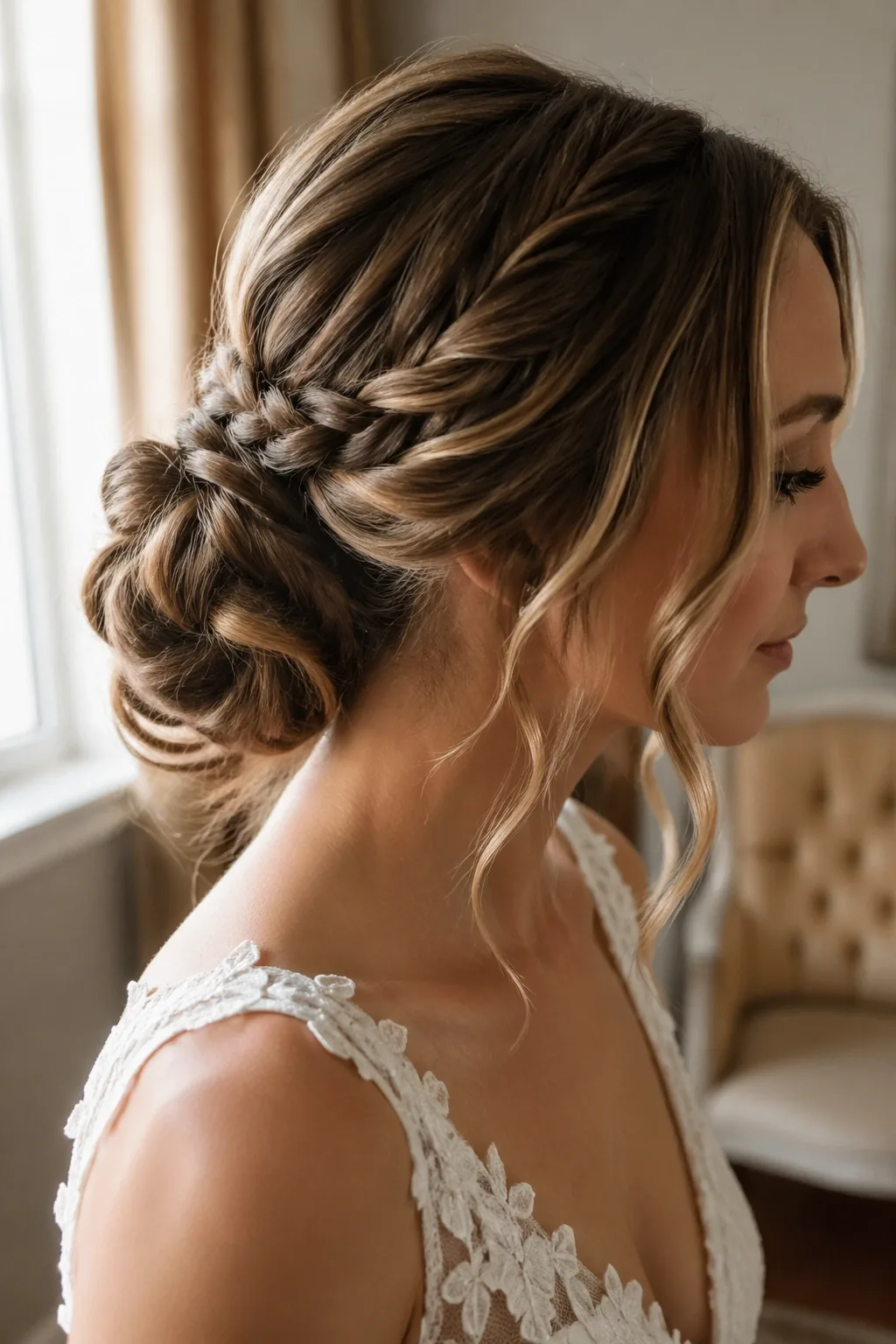
A braided low bun combines two of the most reliable destination styles: a braid for texture and security, and a low bun for elegance. The hair is braided — a single braid, two braids, or a crown braid — and then coiled into a low bun at the nape. The result looks detailed and expensive, but it is one of the hardest styles to ruin: braids do not frizz the way loose hair does, and a bun cannot blow away.
How to style it: braid the hair loosely from the crown, coil the braid into a bun, and pin it in several places. Best for: thick hair, which holds a braid beautifully, and beach or garden weddings. Maintenance: almost none. Quick verdict: the hardest-working updo on this list.
15. Soft Curls Pinned Back
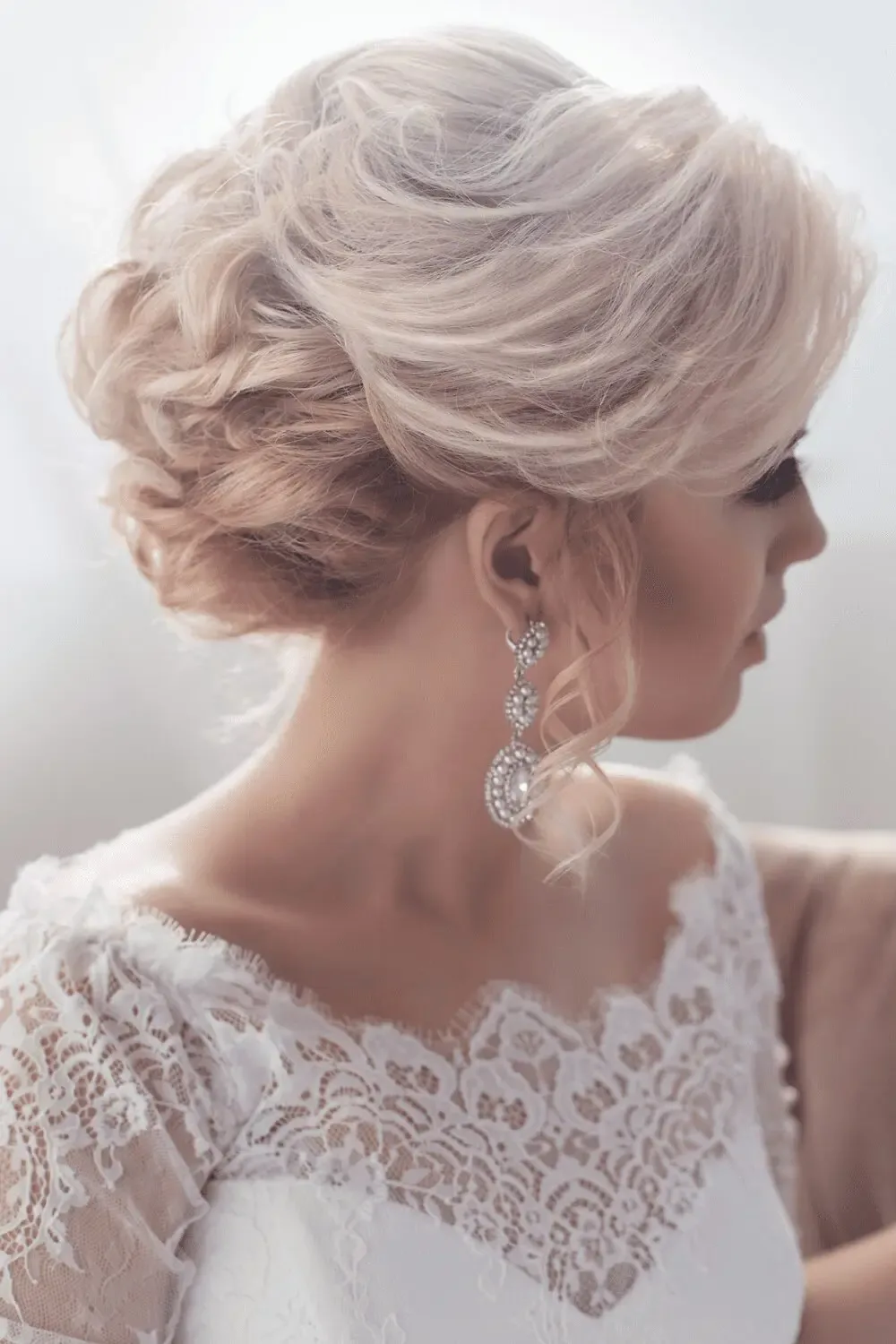
Soft curls pinned back at the sides are the simplest way to wear your hair down at a destination wedding and still keep it under control. The curls fall over the shoulders, but the front sections are pinned back, so nothing blows into your face during the vows and nothing sticks to lipstick in the heat. It is a beautiful choice for bridesmaids, who often want their hair down but need it to last.
Best for: medium to long hair with natural wave or curl. How to style it: curl the hair in large sections, brush through gently, and pin the front sections back with pins that match your hair colour. Time and cost: about twenty-five minutes. Quick verdict: hair down, but on your terms.
16. Dutch Braid Into a Low Bun
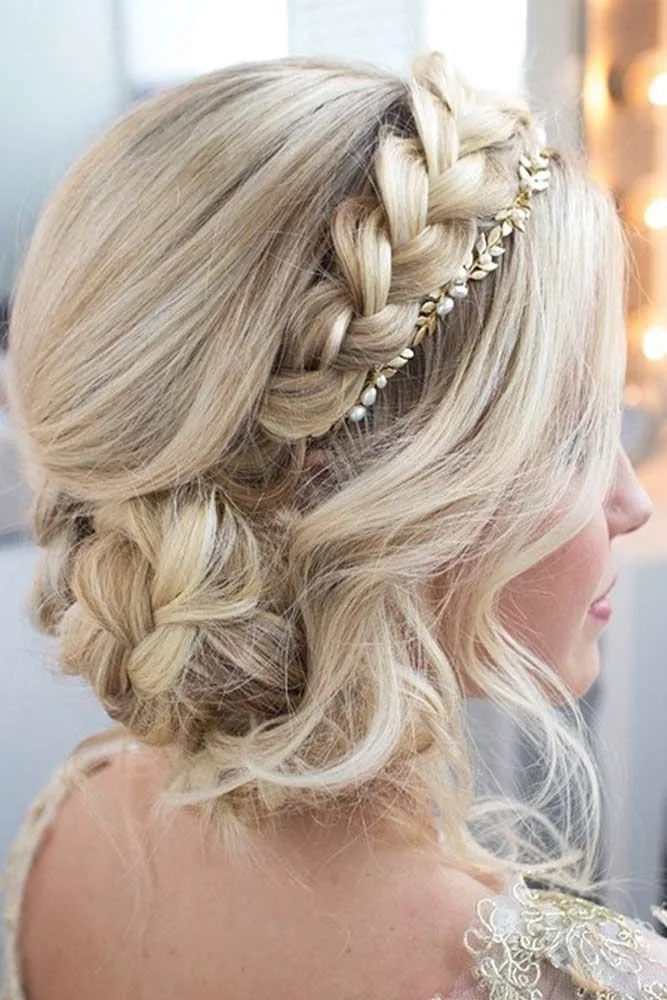
A Dutch braid running from the crown into a low bun is the most secure style in this guide. The braid — plaited under, so it sits on top of the hair — anchors everything from the hairline to the nape, and the bun finishes it neatly. It will survive a beach ceremony, a boat ride, a hike to a viewpoint for photos, and a night of dancing without a single pin needing attention.
Pros: the most wind-proof and dance-proof style here. Cons: it is a bold, textured look, so it suits a relaxed or boho wedding better than a formal one. What to ask your stylist: for the braid to be pulled slightly loose for softness, so it does not look severe. Who should avoid it: anyone who wants a soft, romantic finish — this one is structured. Quick verdict: if your wedding involves a boat, choose this.
17. Short Bob With Soft Waves
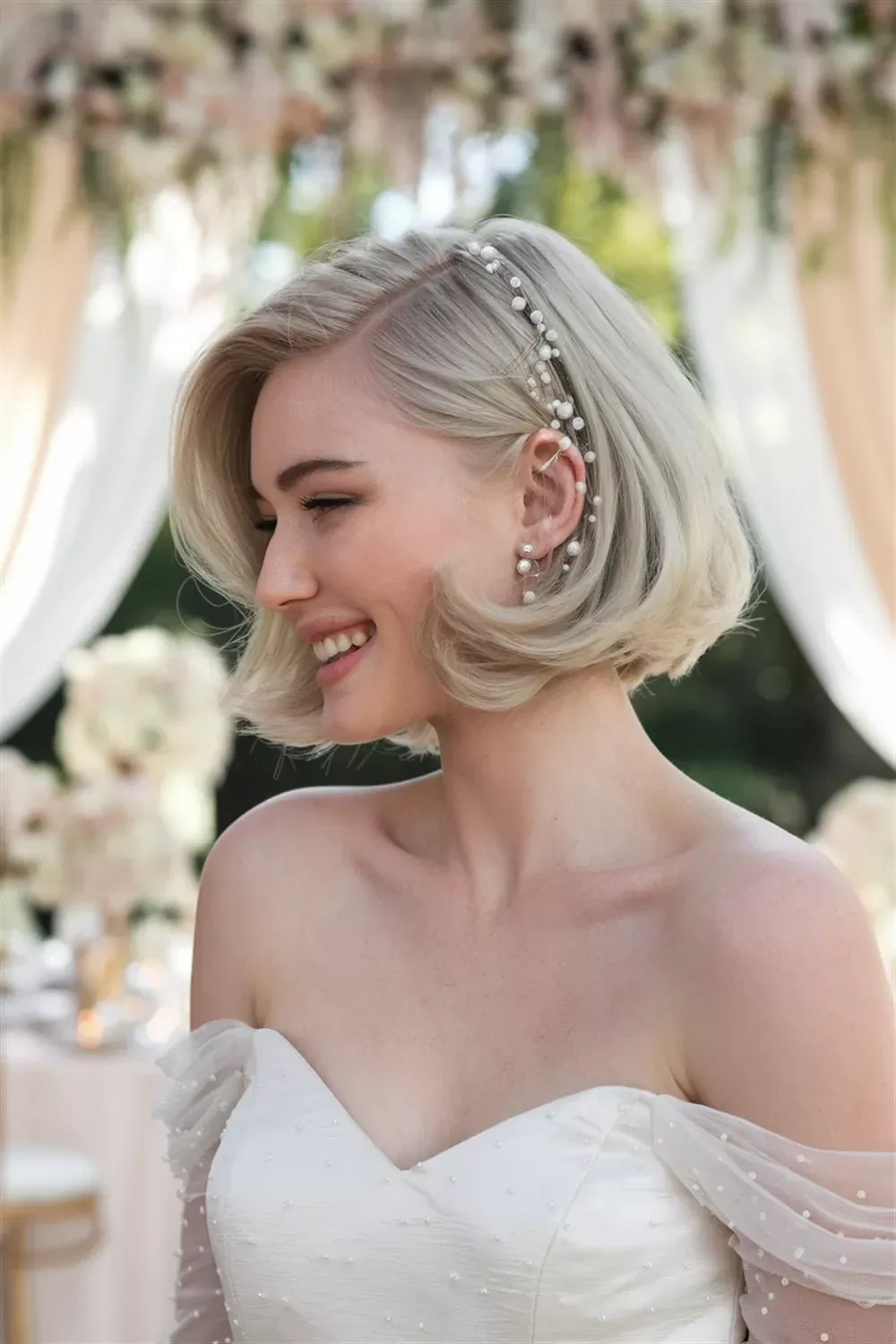
A short bob with soft waves is proof that destination wedding hair does not need length. The waves add movement and romance, the short length means nothing can blow into your face, and the whole style takes minutes to refresh — a quick finger-comb and a mist of spray, and it is done. It suits a beach wedding, a city wedding, and a bride who wants to look like herself, only better.
Best for: chin- to shoulder-length hair, and guests who want a polished look without an updo. How to style it: curl the ends loosely with a flat iron or a small barrel, brush through for softness, and tuck one side behind the ear. Maintenance: almost none. Quick verdict: short hair, zero fuss, all the romance.
18. Pixie With Textured Volume
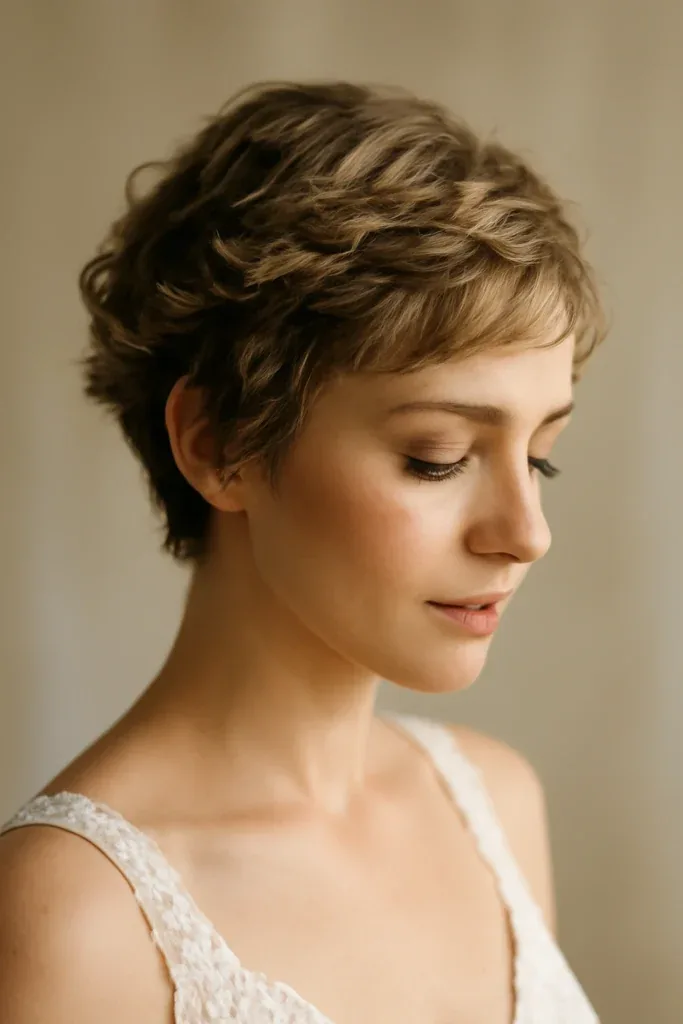
A pixie cut with textured volume is the lowest-maintenance style at a destination wedding, and one of the most striking. A little texture paste, a quick tousle, and the style is done — and it stays done, because there is nothing long enough to frizz, blow, or fall out of place. Add a delicate hair vine, a small clip, or a statement earring, and the look is complete.
Pros: completely weather-proof, cool in the heat, and it photographs with beautiful definition. Cons: there is nowhere to hide a bad cut, so the cut itself has to be right. Common mistake: overloading short hair with product, which makes it look greasy in sunlight. Who should avoid it: nobody — it is a cut, not a style, so it suits anyone who already wears it. Quick verdict: the easiest hair on this list, and the boldest.
19. Half-Up Braided Ponytail
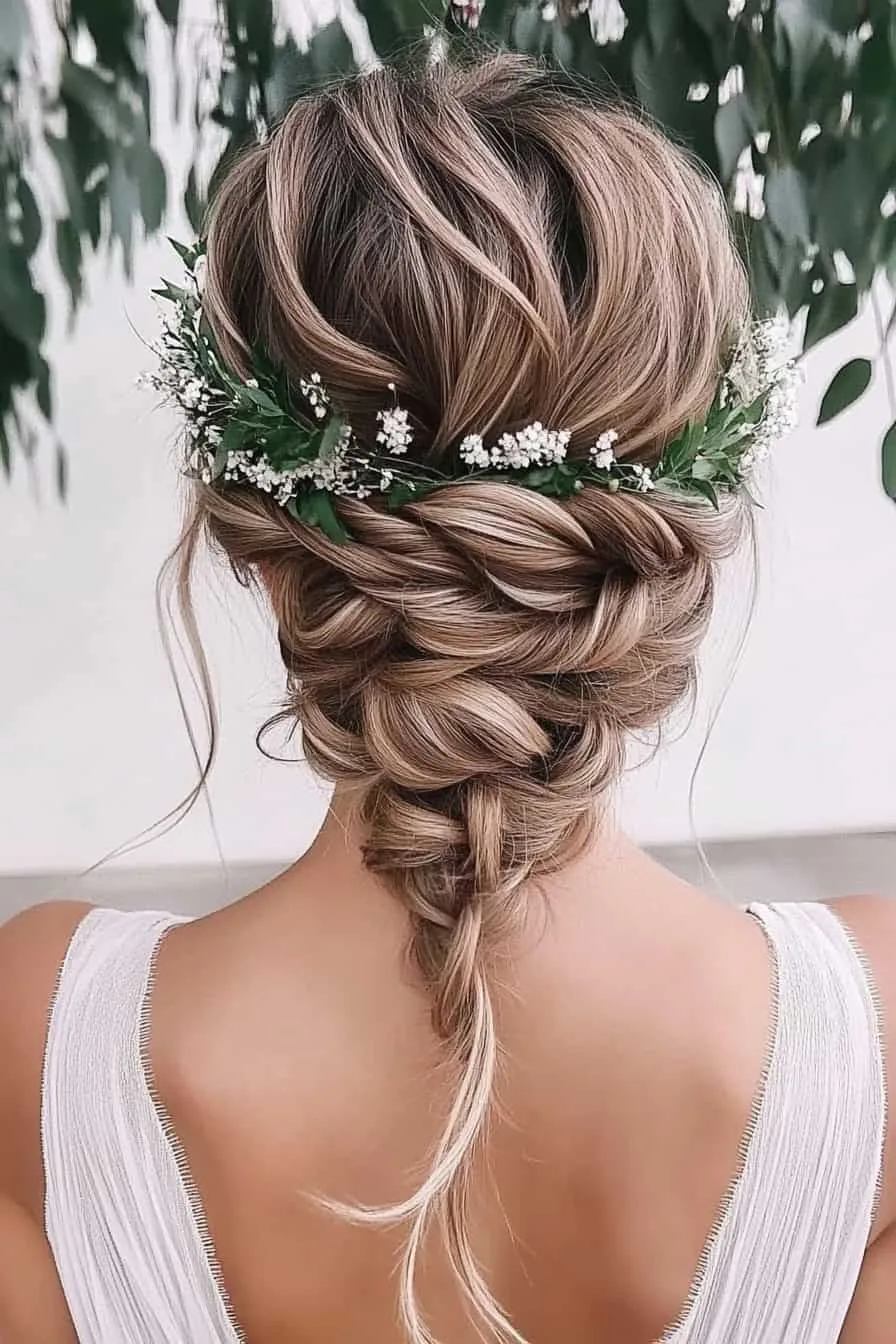
A half-up braided ponytail takes the top half of the hair, braids it or twists it back, and gathers it into a ponytail while the rest flows free. It is youthful, romantic, and practical: the braid keeps the front secure, the ponytail keeps the crown tidy, and the loose length moves beautifully in photos. It is a favourite for bridesmaids, who often want something pretty that they can also dance in.
How to style it: braid two front sections back, join them into a ponytail at the crown, and wrap the base with a strand of hair. Best for: long hair and outdoor ceremonies. Time and cost: about twenty minutes, and easy to do yourself. Quick verdict: pretty, practical, and made for dancing.
20. Romantic Loose Updo
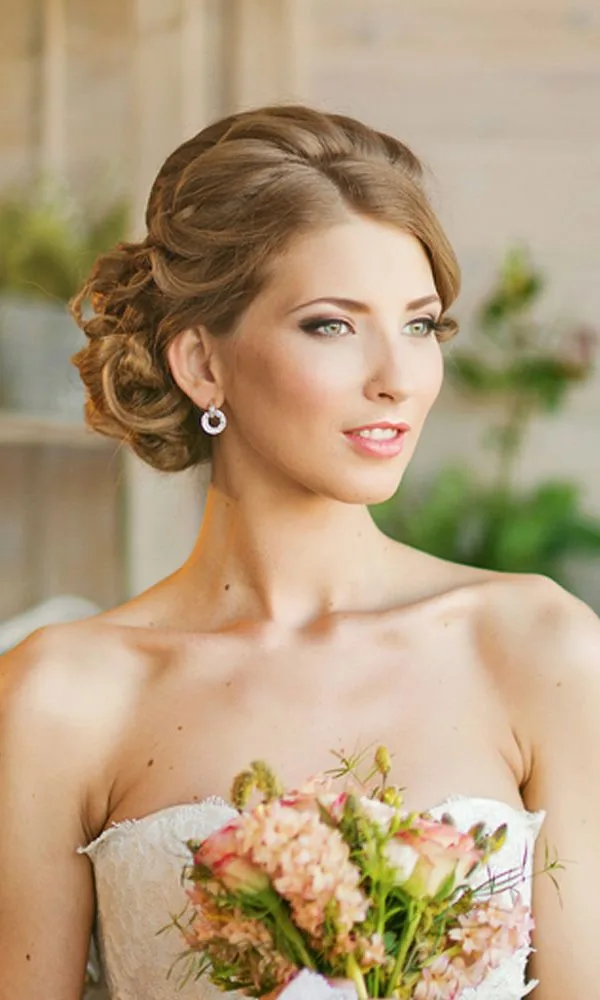
A romantic loose updo is the middle of the road between a polished bun and hair worn down: the hair is gathered up loosely, pinned with soft volume, and finished with tendrils at the front and nape. It looks effortless and soft in photos, it keeps hair off the neck in the heat, and it is forgiving — as it loosens through the day, it only looks more romantic.
Best for: brides who want an updo without the formality, and anyone with medium to long hair. Pros: comfortable, flattering, and it improves as it loosens. Cons: it needs enough pins to stay up through dancing. What to ask your stylist: for the updo to be anchored underneath, even though the top looks loose. Quick verdict: the updo for brides who hate updos.
21. Sleek Straight Centre Part
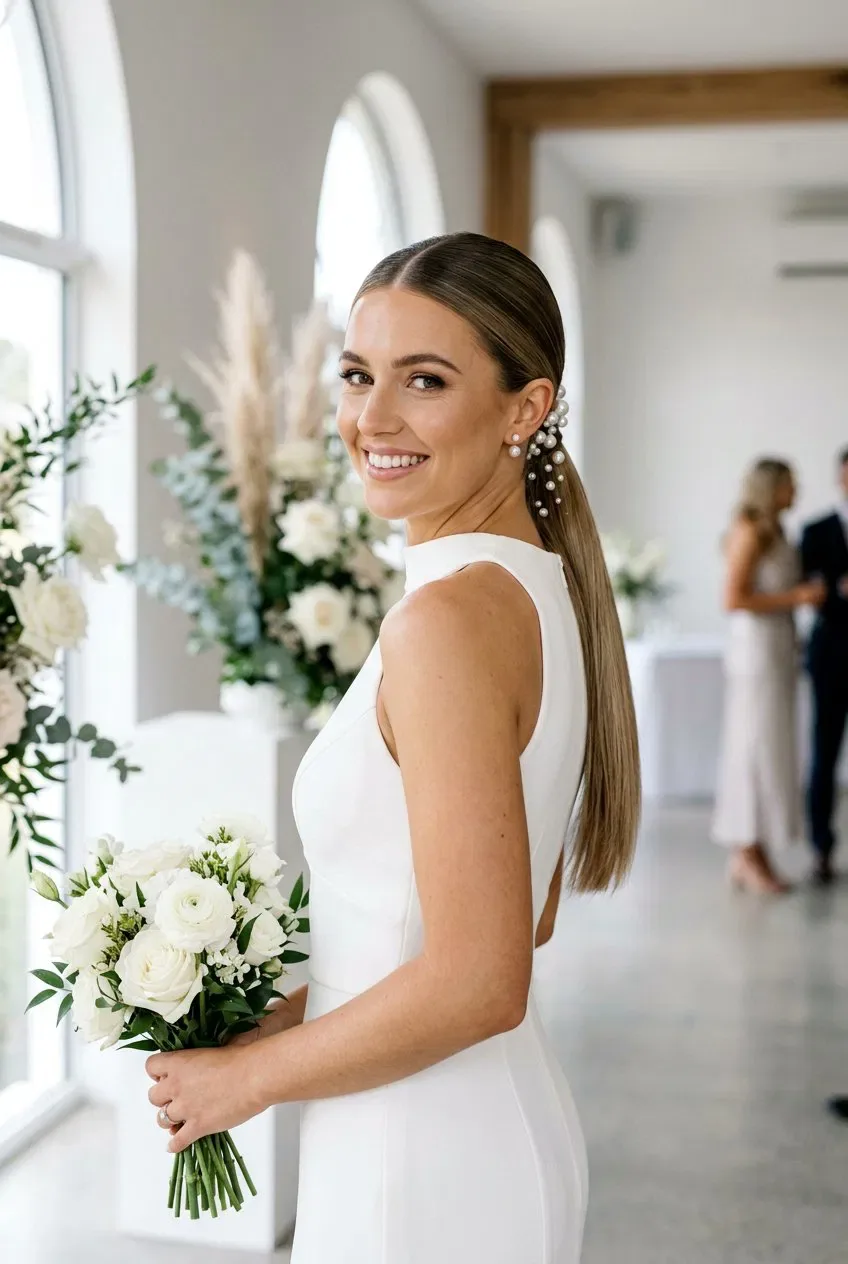
A sleek straight centre part is minimalism at its best: long, smooth, glossy hair parted in the middle and falling straight over the shoulders. It suits a modern bride, a minimalist dress, and a venue with clean lines — a white villa, a modern resort, a city rooftop. It is also the simplest style to maintain on the day, because there is nothing to come undone.
Pros: modern, elegant, and it shows off healthy, shiny hair. Cons: humidity is its enemy — a sleek finish frizzes fast in damp air, so it needs a strong anti-humidity product. Common mistake: skipping the serum, which leaves the ends looking dry in bright light. Who should avoid it: anyone marrying in tropical humidity, unless the ceremony is indoors. Quick verdict: stunning in dry heat, risky in damp heat.
22. Bubble Braid Ponytail
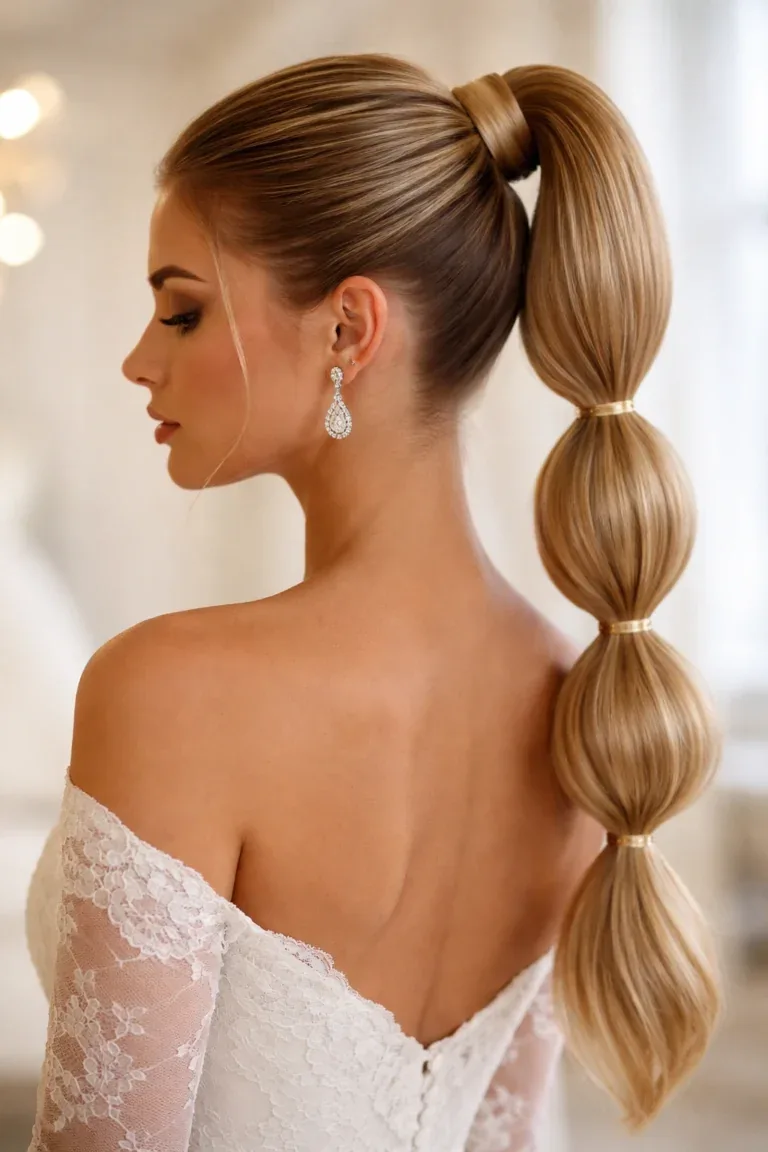
A bubble braid ponytail is the fun one: the hair is gathered into a high or low ponytail, then tied at intervals down its length, with each section pulled out into a soft bubble. It is playful, modern, and surprisingly practical — the ties anchor the hair so it cannot blow around, and the bubbles hold their shape all day. It suits a relaxed beach wedding, a festival-style celebration, and a bride who wants something nobody else will be wearing.
How to style it: secure a ponytail, add clear elastics every few inches, and gently pull each section wider. Best for: long, thick hair. Time and cost: about fifteen minutes, and you can do it yourself. Quick verdict: the most fun style here, and one of the most secure.
23. Low Bun With Fresh Flowers
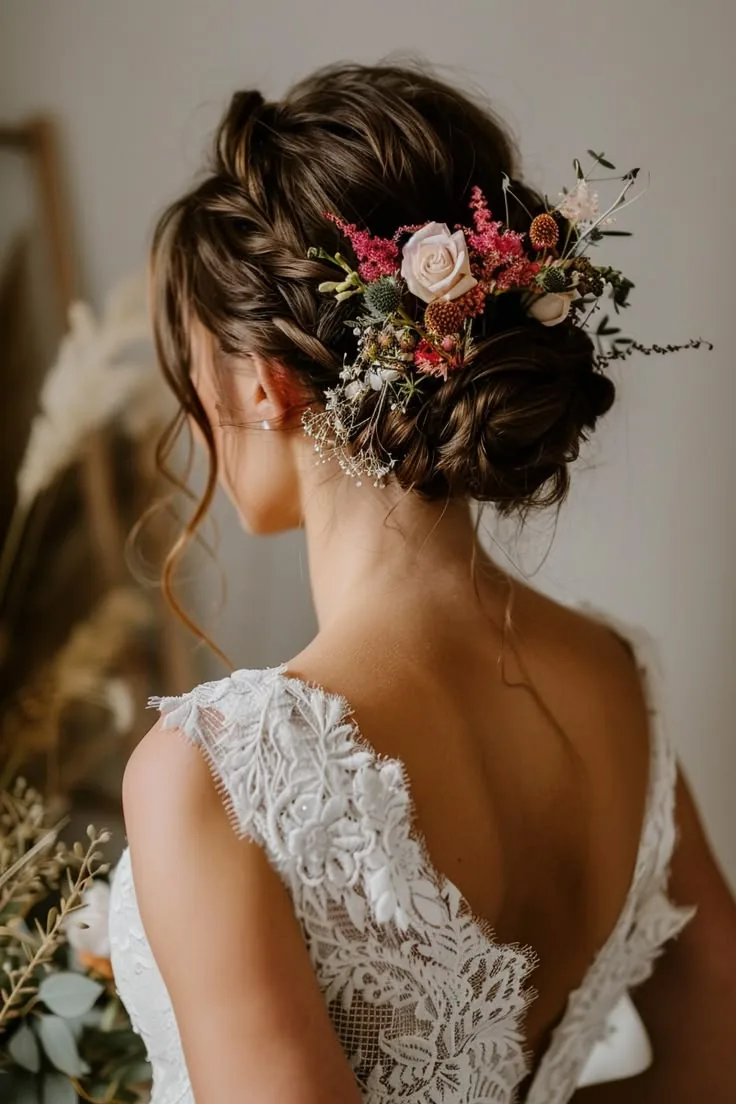
A low bun with fresh flowers is the classic garden wedding look, and it travels beautifully to a destination garden, a vineyard, or a tropical resort. The bun itself is simple and secure — low, smooth, pinned firmly — and the flowers do the decorating: a sprig of jasmine, a small rose, a few sprigs of greenery tucked into the bun. Choose flowers that survive heat, and ask the florist to wire them so they do not wilt by the ceremony.
Best for: garden, vineyard, and tropical weddings. How to style it: build a smooth low bun, then pin in wired flowers or a small floral comb. Common mistake: using delicate flowers that wilt in an hour — ask your florist for heat-hardy blooms. Quick verdict: the bun does the work, the flowers do the talking.
24. Wavy Lob With a Side Part
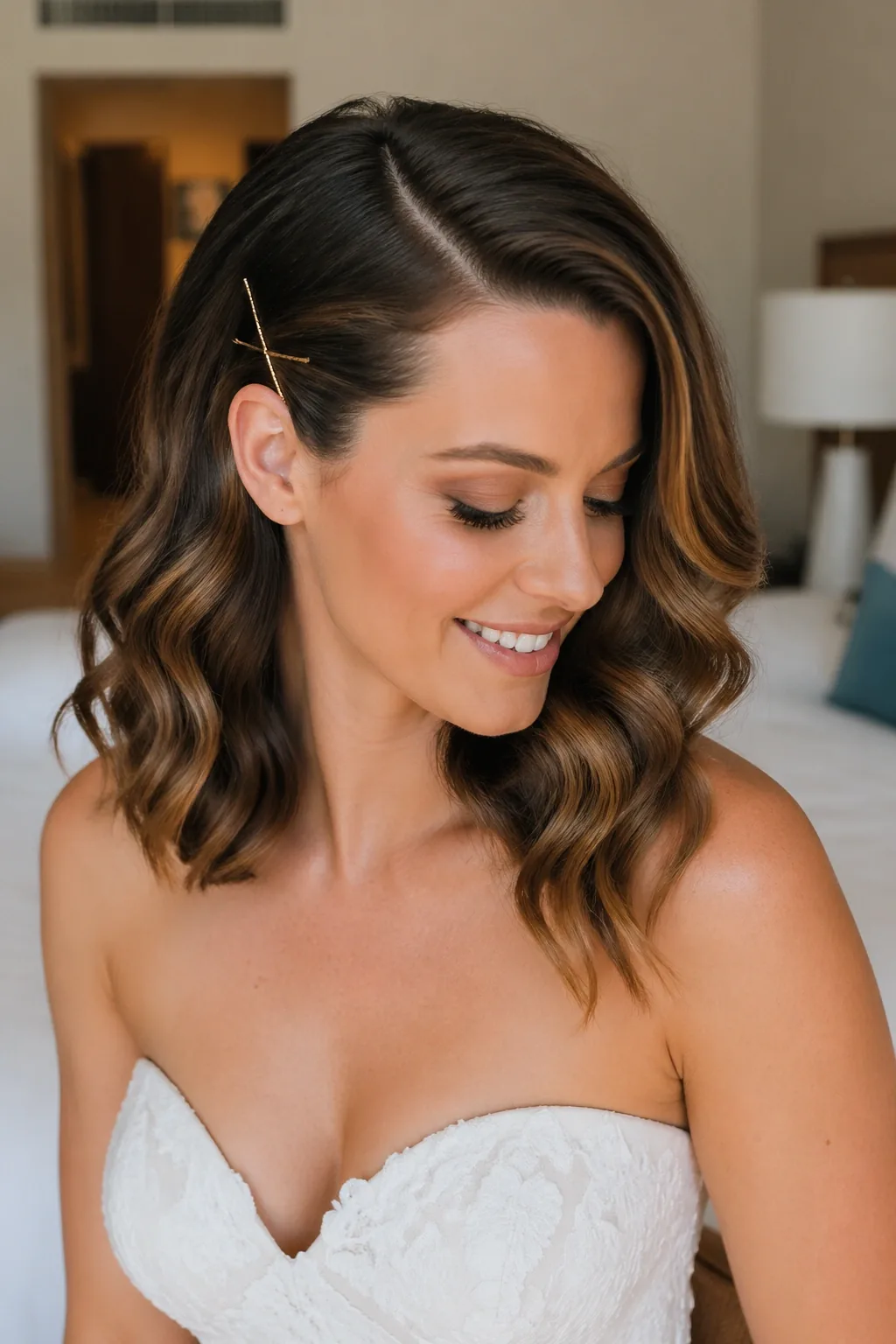
A wavy lob — a long bob — with a side part is the perfect shoulder-length destination style. The waves add softness and movement, the side part gives it a polished finish, and the length is short enough to stay out of the way in wind and heat but long enough to feel bridal. It is a beautiful choice for bridesmaids and guests, who often have this length and want a style that feels special without an updo.
Pros: flattering, easy to refresh, and it suits almost every face shape. Cons: the waves relax in humidity, so a light spray and a quick finger-comb are needed later in the day. How to style it: curl the hair in large sections, brush through, and part deeply to one side. Quick verdict: the shoulder-length sweet spot.
25. Crown Braid With Loose Waves
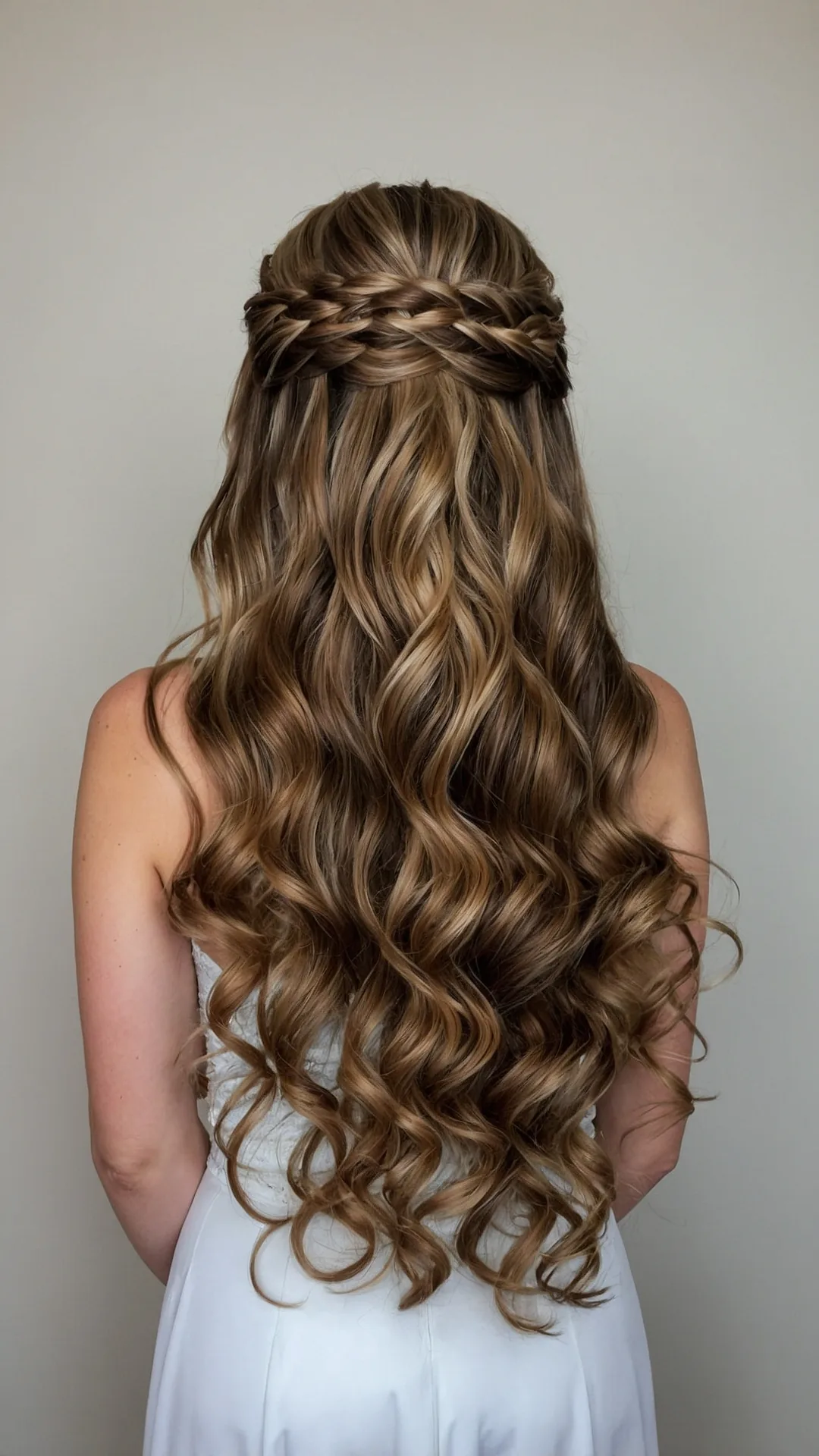
A crown braid with loose waves is the fuller sister of the braided crown: a thick braid wraps around the head, and the rest of the hair falls in soft waves beneath it. It is bohemian, romantic, and wonderfully practical — the braid holds the front, the waves move freely, and the whole style looks better as it loosens. It is a favourite for beach and festival-style destination weddings.
Best for: long, thick hair. How to style it: braid a thick section from one side around the head, pin it in place, and curl the remaining hair loosely. Maintenance: almost none — a loosened crown braid still looks intentional. Who should avoid it: very fine hair, where a thick braid can look thin. Quick verdict: a halo of braid, a fall of waves, and nothing to worry about.
26. Twisted Side Ponytail
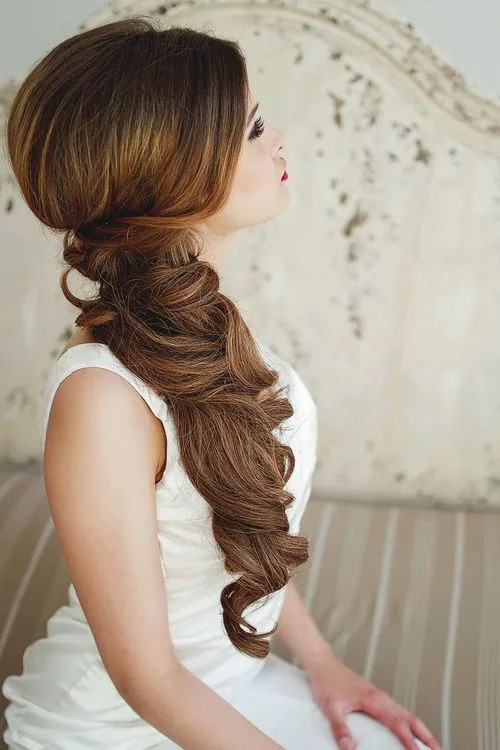
A twisted side ponytail takes the hair to one side, twists it loosely, and gathers it into a low ponytail over one shoulder. It is soft, romantic, and a little bit vintage, and it suits a bride who wants her hair visible in photos — the twist and the ponytail both show from the front, which is where most of the photographs are taken. It is also secure: the twist anchors the style, and the ponytail cannot blow away.
Pros: romantic, photogenic, and secure. Cons: it can look flat without texture, so add waves before you twist. Common mistake: twisting too tightly, which makes the style look stiff. What to ask your stylist: for a loose twist with soft volume at the crown. Quick verdict: the side ponytail, grown up.
27. Vintage Finger Waves
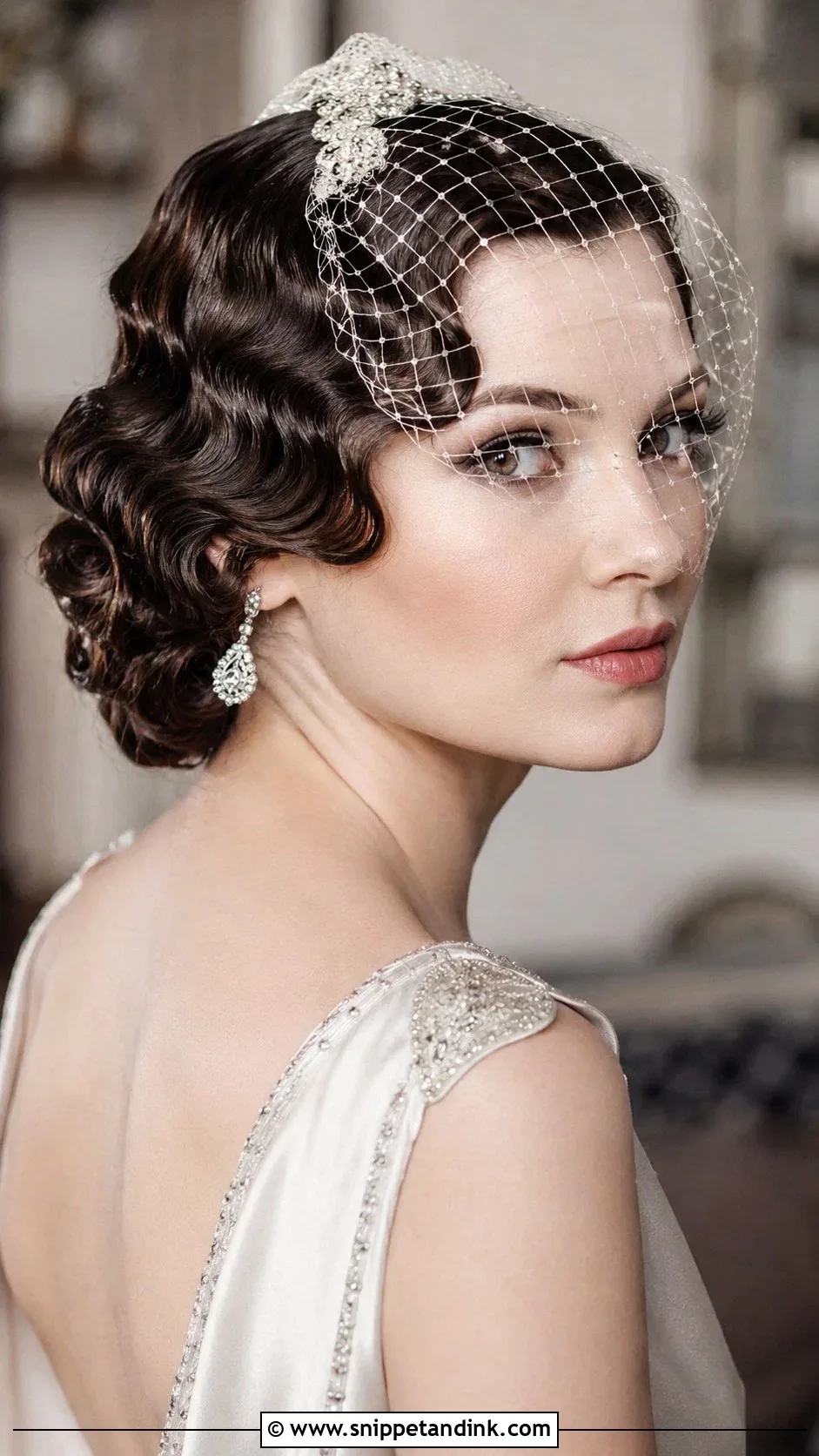
Vintage finger waves are sculpted, glossy waves pressed close to the head in a perfect S-pattern — pure 1920s glamour, and a stunning choice for a bride who wants a themed or old-Hollywood destination wedding. The waves are set with gel and clips, so they hold their shape for hours, and they look extraordinary in photographs, where the sculpted pattern catches the light.
Best for: short to medium hair, and brides with a vintage or art-deco theme. How to style it: this is a stylist job — the waves are shaped with a comb and set with clips, then finished with a shine spray. Time and cost: about an hour, and one of the more expensive styles here. Quick verdict: the most glamorous style on this list, and the most skilled.
28. Defined Curly Updo
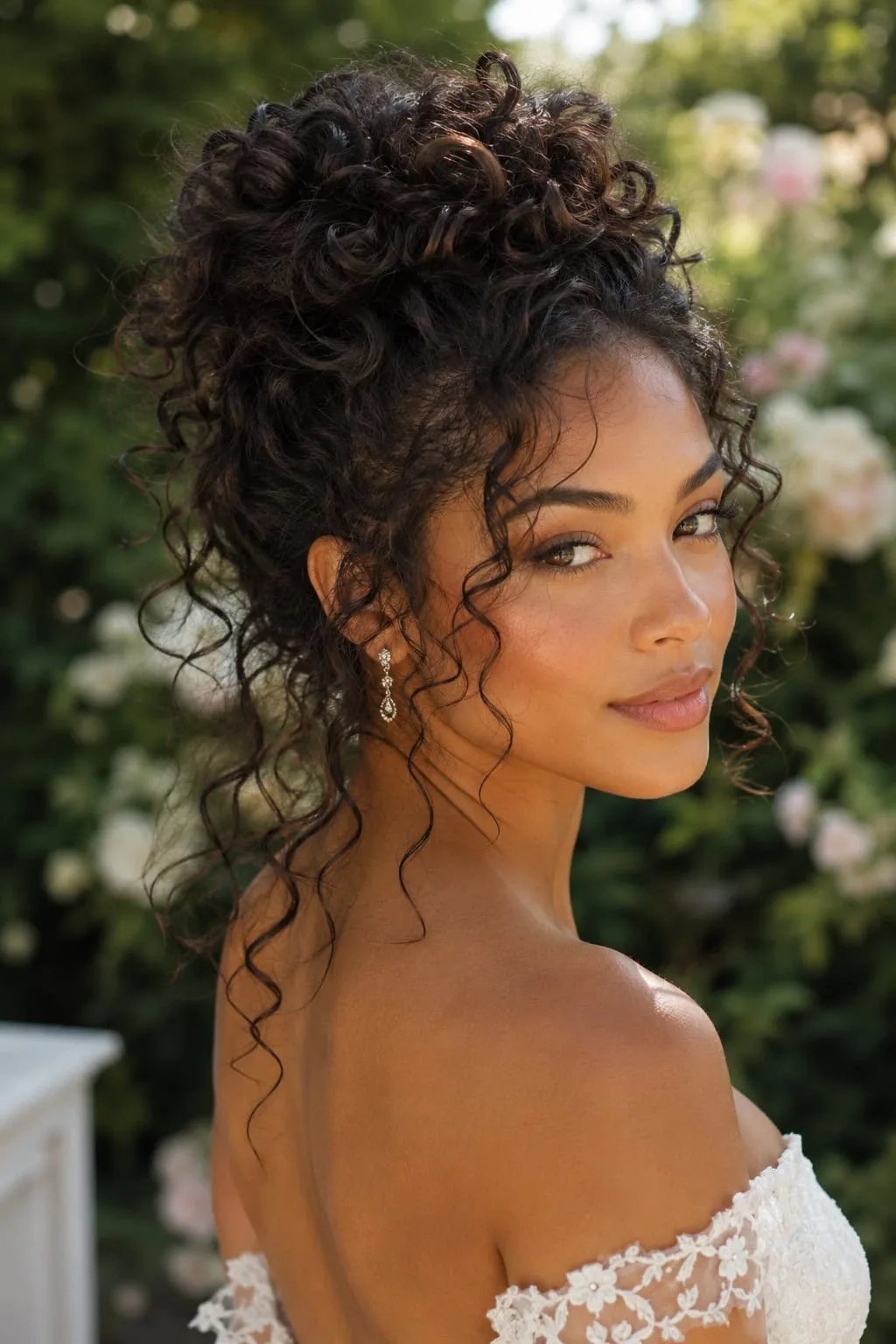
A defined curly updo lets natural curls be the star: the curls are defined with cream, gathered loosely at the crown or nape, and pinned so the shape holds while the texture shows. It is the best choice for a bride with curly hair who does not want to straighten it for her wedding — and at a humid destination, working with your curls instead of against them is the smartest thing you can do.
Pros: humidity-proof by nature, and it shows off your real hair. Cons: it needs a stylist who understands curly hair — ask before you book. What to ask your stylist: for curl definition, not a blowout, and for pins that match your hair colour. Who should avoid it: nobody with curls — this is your hair, styled, not changed. Quick verdict: the curls are the decoration.
29. Slicked-Back Low Bun
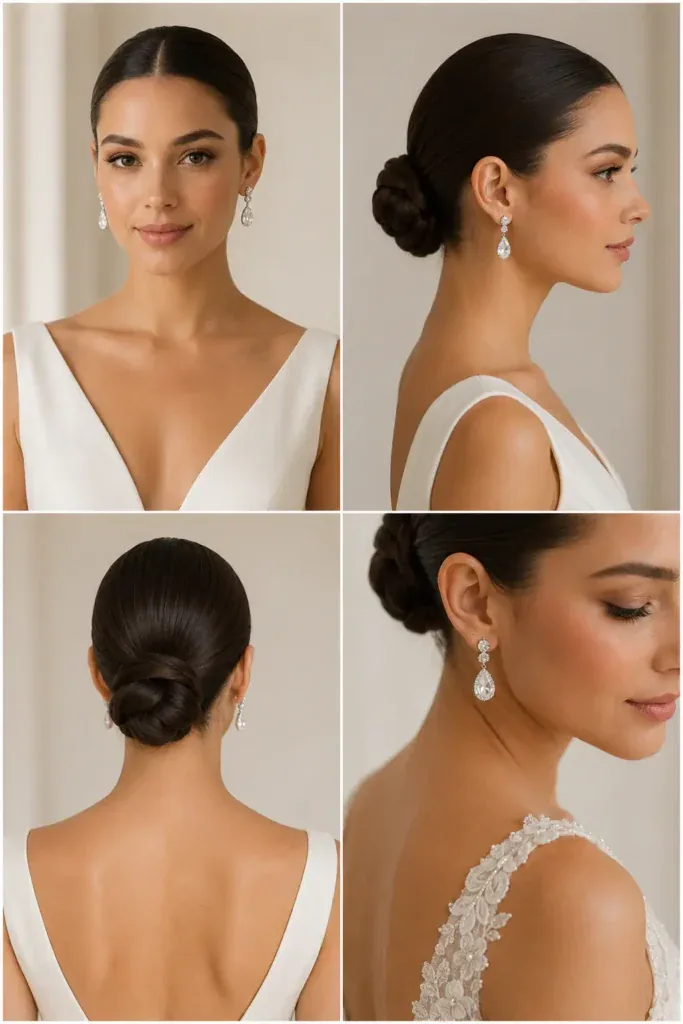
A slicked-back low bun is modern minimalism: the hair is brushed back smooth from the face, with not a strand out of place, and gathered into a neat low bun. It suits a contemporary bride, a sleek dress, and a venue with clean architecture — a modern villa, a whitewashed chapel, a minimalist resort. It is also one of the most secure styles for a windy day, because there is nothing loose to blow.
Best for: brides who love a clean, editorial look. How to style it: smooth the hair back with a strong-hold gel or pomade, gather it low, and pin it firmly. Common mistake: using too much product, which looks wet and greasy in sunlight — less is more. Quick verdict: the cleanest line in wedding hair.
30. Half-Up Knot With Beach Texture
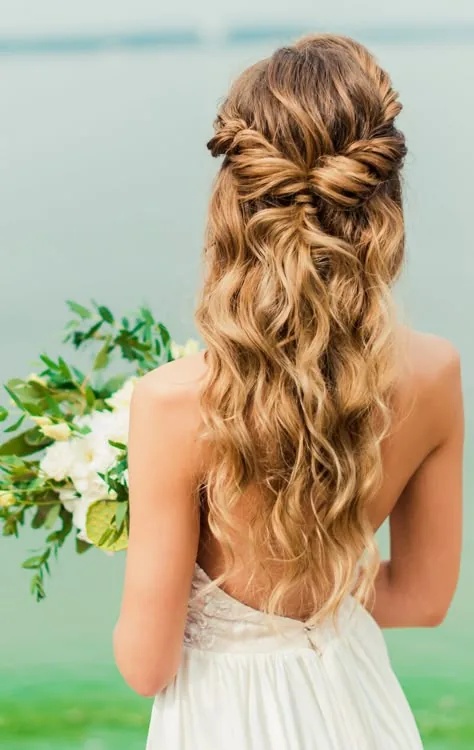
A half-up knot with beach texture is the most relaxed style on this list: the top half of the hair is twisted into a small knot at the crown, and the rest falls in textured, salty waves. It is the look of a bride who got married on a beach and then went swimming — in the best possible way. It takes five minutes, it needs no stylist, and it looks better slightly undone.
Pros: the easiest style here, and completely wind-proof. Cons: it is very casual, so it suits a beach wedding better than a formal one. How to style it: add salt spray, twist the top section into a knot, and pin it. Who should avoid it: a formal ballroom wedding. Quick verdict: five minutes, one knot, done.
31. Long Layers With Soft Curls
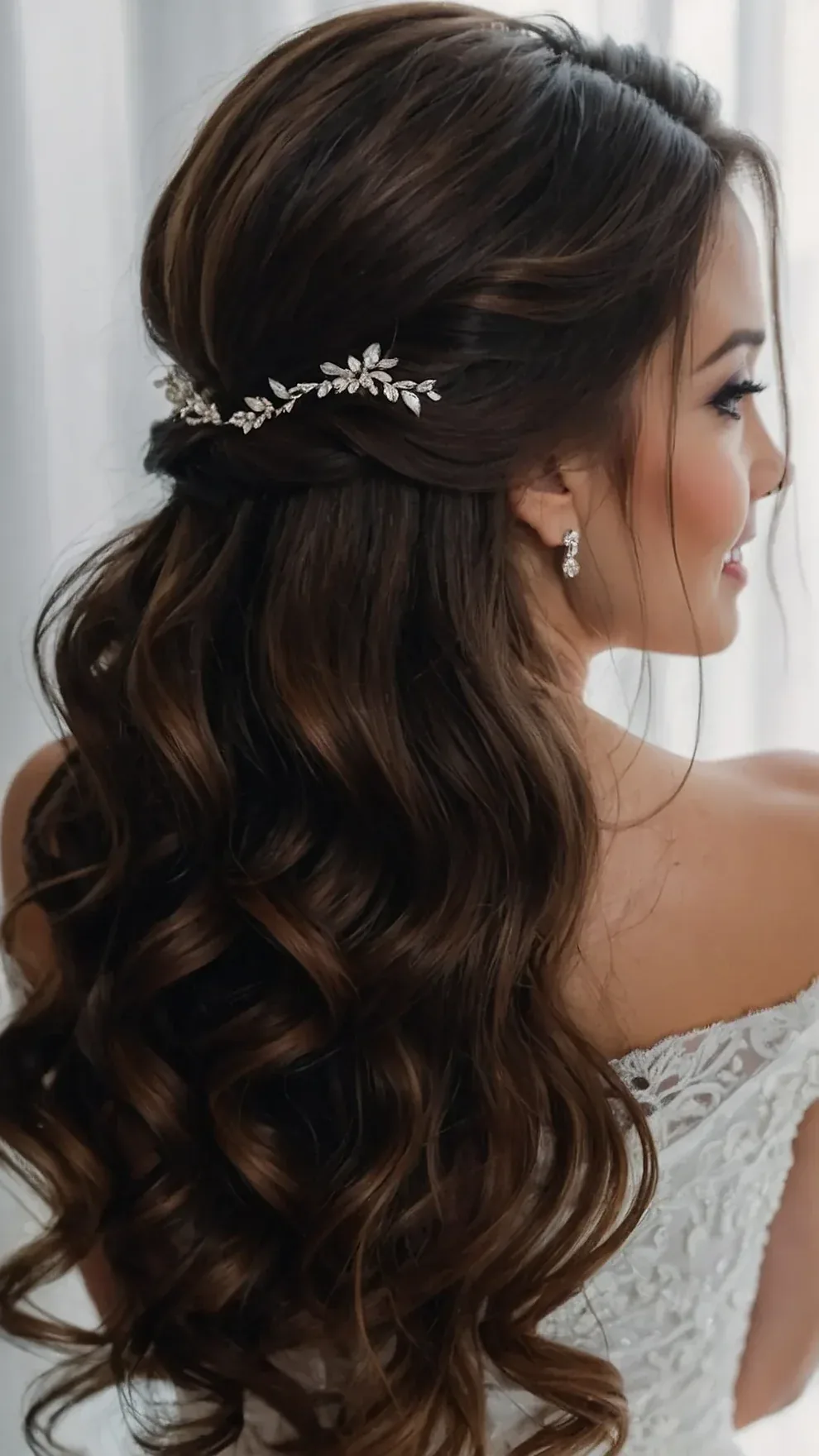
Long layers with soft curls are the classic bridal look, and they work at a destination wedding if the front is controlled. The layers give the curls movement and shape, the curls add romance, and a few pins at the sides keep the front out of the face. It is the style most brides picture when they imagine themselves walking down the aisle — and at a destination, it just needs a little more hold than it would at home.
Best for: long hair, and brides who want their hair down. Pros: romantic, timeless, and it photographs beautifully. Cons: the most vulnerable style to humidity and wind — the curls relax and the front blows. What to ask your stylist: for a strong-hold finish and pins at the sides. Quick verdict: the classic, with a destination-proof upgrade.
32. Braided Headband With Loose Hair
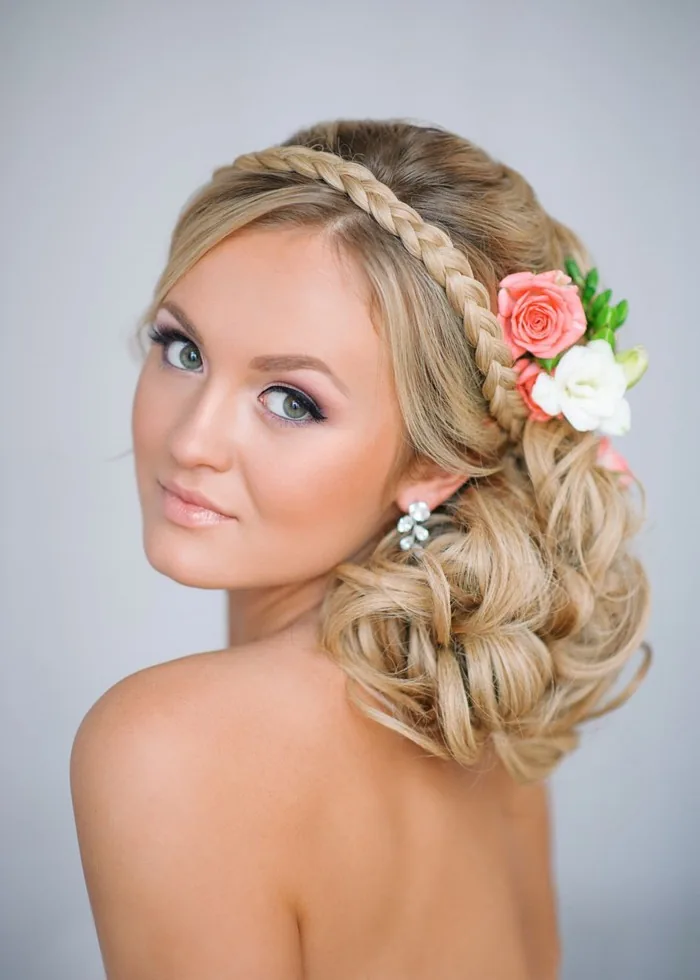
A braided headband is a thin braid worn across the front of the head like a band, with the rest of the hair left loose. It is pretty, simple, and practical: the braid keeps the front hair out of the face, it adds a detail that photographs beautifully, and it works on almost any hair length. It is a lovely choice for bridesmaids and flower girls, who often want something special that is also comfortable.
How to style it: braid a small section from behind one ear, bring it across the front, and pin it behind the other ear. Best for: medium to long hair, and younger bridesmaids. Maintenance: none — if the braid loosens, it still looks like a headband. Quick verdict: the smallest braid with the biggest effect.
33. Veil-Friendly Chignon
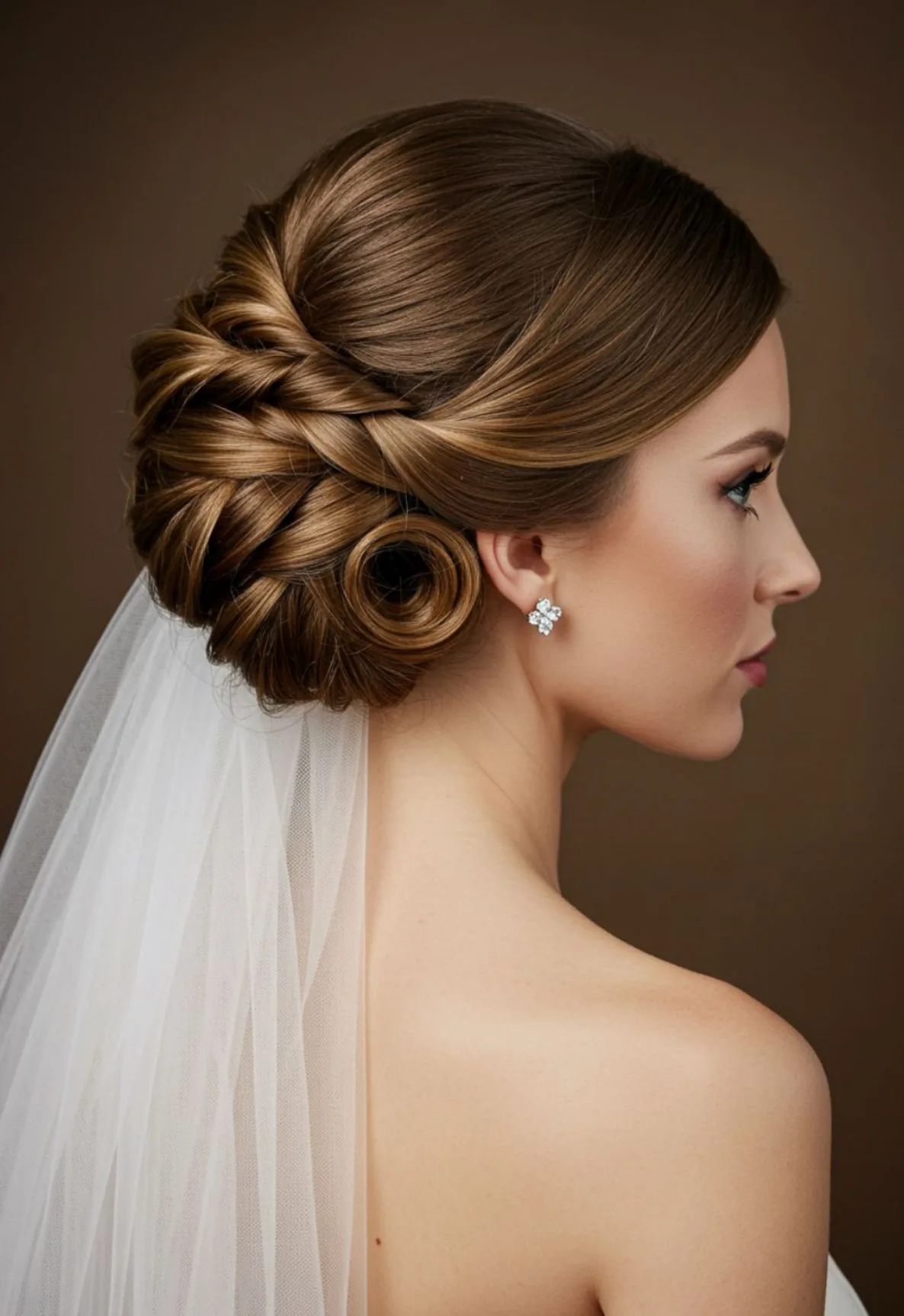
A veil-friendly chignon is built with the veil in mind from the start: the bun sits low and flat at the nape, with a secure base where the veil comb can anchor without slipping or pulling the style apart. That matters at a destination wedding, where the veil has to survive wind, walking, and a long day — a veil that slips is a veil that ends up in the photographer’s hands instead of on your head.
Best for: any bride wearing a veil. How to style it: build a low, firm chignon, test the veil comb in it during the trial, and bring extra pins for the day. Time and cost: about thirty-five minutes with a stylist. Common mistake: choosing a high or loose bun and hoping the veil will stay. Quick verdict: the veil stays put, and so does the style.
34. Boho Long Braids
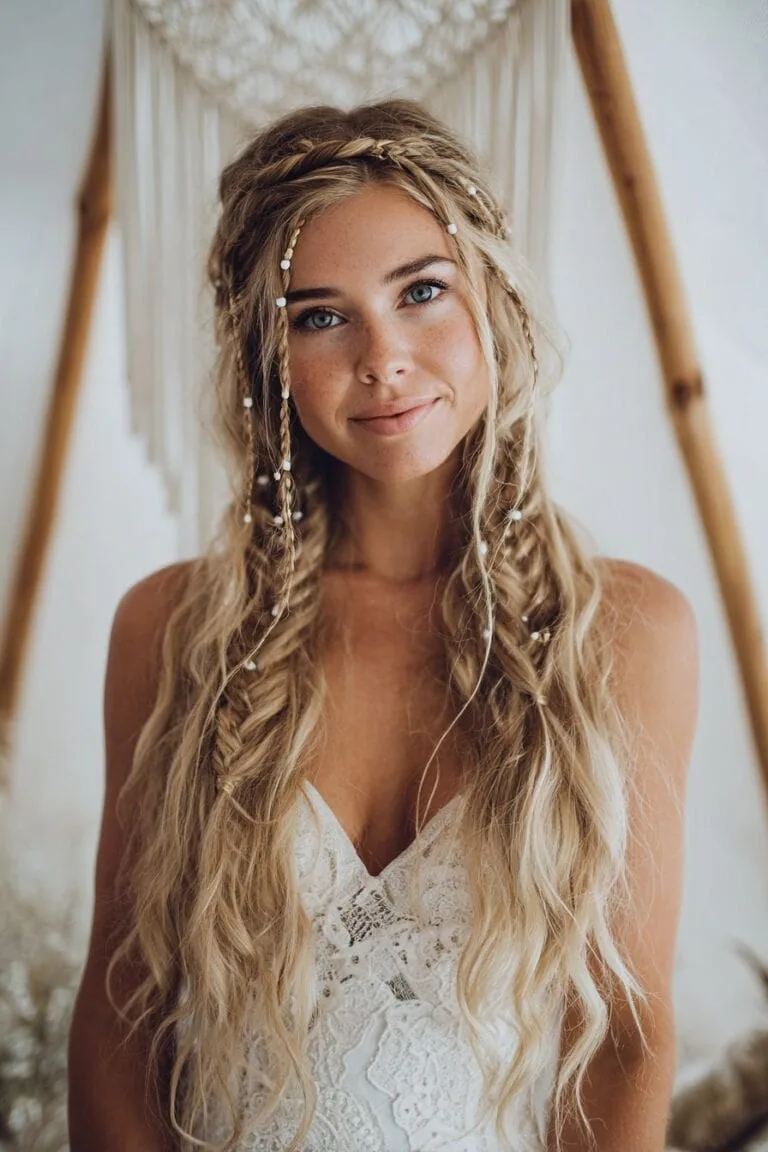
Boho long braids — one or two long, loose braids, sometimes with small braids woven through them, beads, or ribbons — are the free-spirited finale to this list. They suit a festival-style destination wedding, a desert ceremony, or a beach party that goes on until dawn. They are the most durable style here: braids do not frizz, they do not blow apart, and they look better the longer the day goes on.
Pros: the most weather-proof style on this list, and the most individual. Cons: it is a bold, casual look, so it suits a relaxed wedding better than a formal one. How to style it: braid loosely, pull the braids slightly wider for fullness, and add beads or ribbons if you like. Who should avoid it: a very formal wedding. Quick verdict: braids, beads, and a whole day of dancing.
What is the best hairstyle for a destination wedding?
A style built on structure — a low chignon, a braided bun, or a secure braid — is best, because it holds through heat, humidity, wind, and dancing. Choose the style for your venue and weather, not just for the photos, and always trial it before you travel.
Should I wear my hair up or down for a beach wedding?
Hair up is safer on a beach, because loose hair blows across your face in the wind. If you love your hair down, choose a half-up style with the front pinned back, or soft waves with the sides secured — never completely loose on a windy beach.
How do I stop my hair frizzing at a tropical destination wedding?
Layer anti-humidity products: a serum or cream on damp hair, a light spray to finish, and a style built on braids or pins rather than heat alone. Avoid over-brushing, which creates frizz, and carry a smoothing serum in your travel hair kit for touch-ups.
Do I need a hair trial before a destination wedding?
Yes. A trial tells you whether the style suits your face, holds for eight hours, and survives humidity — before you have flown thousands of miles. Take photos from every angle and bring them to your destination stylist.
Can I use a local hairstylist at my destination?
Yes, and most destination weddings do. Send photos of your trial, your dress, and your veil in advance, ask about their experience with your hair type, and book a short consultation the day before the wedding if you can.
What should I pack in a travel hair kit?
Bobby pins in your hair colour, two strong hair ties, a mini hairspray, travel dry shampoo, a folding brush or wide-tooth comb, clear elastics, and a smoothing serum. Pack it in your hand luggage so a delayed suitcase cannot take your hair down with it.
How do I keep my hairstyle in place while dancing?
Choose a style anchored with pins, not just hairspray — a bun, a braid, or a half-up style. Pin it in several places, carry three spare pins, and do a quick check in a bathroom mirror between the ceremony and the reception.
What hairstyle works best in the wind at a beach wedding?
Braids, buns, and twists work best, because they are anchored and cannot blow into your face. A fishtail braid over one shoulder, a Dutch braid into a low bun, or a braided low bun will all survive a sea breeze that would ruin loose hair.
Can bridesmaids wear the same hairstyle as the bride?
They can, but it usually looks better if the bridesmaids wear a simpler version of the bride’s style — the same family of looks, but less elaborate. That keeps the bride distinct in photos while the whole party looks coordinated.
What hairstyle should a wedding guest choose for a destination wedding?
Choose something comfortable, secure, and appropriate to the venue: a low ponytail with a wrapped base, a wavy lob, soft curls pinned back, or a half-up twist. Avoid anything that needs constant fixing, and do not outshine the bride.
Conclusion
A destination wedding asks more of your hair than a wedding at home: it has to survive a flight, a new climate, a stylist you have never met, and a day that runs from midday sun to midnight dancing. The styles in this guide were chosen for that reality — updos that hold, braids that laugh at wind, half-up looks that keep the front under control, and short styles that need nothing more than a few pins and a quick finger-comb.
Pick a style for your venue and your weather, trial it before you travel, pack the small hair kit, and send your photos to your local stylist in advance. Do those four things, and your hair will still look like you when the last dance ends — in the photographs, and in the memory of a day that was worth travelling for.