Dinks, Serves and Rallies: 33 Hairstyles for a Pickleball Game That Stay Put From First Serve to Match Point
Pickleball looks gentle from the sidelines, but anyone who has played a long rally knows better. You are sprinting to the kitchen line, lunging for a dink, spinning for a lob and sweating under the sun — and every loose strand ends up stuck to your forehead or across your eyes right when you need to track the ball. That is why hairstyles for a pickleball game are not just about looking good in the team photo; they are about keeping your vision clear and your hair locked down from the first serve to match point.
A good pickleball hairstyle does three things at once. It keeps every strand away from your face and neck, it survives sweat, sun and quick changes of direction without sliding loose, and it sits flat enough to work with a visor, a cap or a wide headband. Braids, tight buns and high ponytails do this best, because they anchor the hair at several points instead of asking one elastic to hold everything through a whole match.
This guide starts with the thinking — why pickleball hair must stay put, how to handle sweat and sun on outdoor courts, which styles work under a visor, and how to fix your hair fast between games — and then gives you 33 styles to choose from, for short, medium and long hair, straight, wavy and curly textures, and every kind of court day, from a competitive doubles match to a relaxed social game with friends. Pick one, practise it once at home, and walk onto the court knowing your hair is already sorted.
Why Pickleball Hair Must Stay Put
Pickleball rallies are short, fast and full of sudden stops. You lunge forward for a dink, backpedal for a lob, then sprint sideways to cover the middle, and your hair swings with every change of direction. A strand across your eyes blocks your vision for the split second you need to read the ball, and hair falling onto a sweaty neck traps heat and makes you hotter with every rally. When you are moving in every direction, the style has to anchor the hair at several points, not just one.
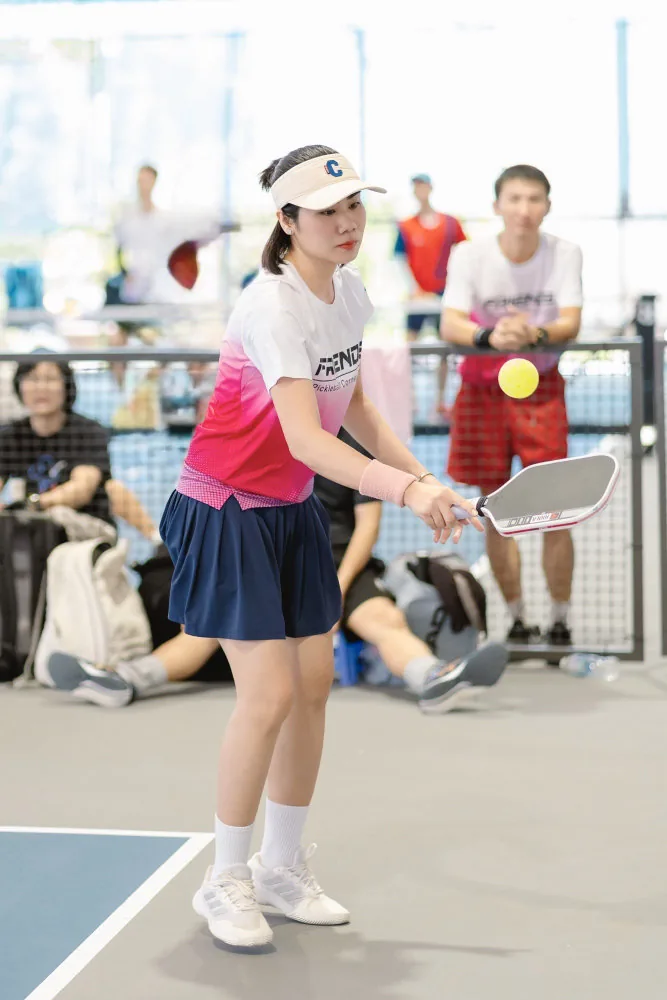
The fix is simple: lock the hair down before you step on court. A braid, a tight bun or a high ponytail with a headband keeps everything out of your face, and a quick tug test before the game tells you in two seconds whether it will hold. Pull gently at the base of the braid or bun — if it shifts, re-pin it now rather than between games.
Spectators feel it too, even from the sidelines. Outdoor courts are sunny, the benches are warm, and you will be jumping up for every long rally, so a style that survives cheering, shade-hopping and the walk back to the car matters just as much. The same rules apply: anchor the hair, keep the front layers back, and choose something you will not have to touch every five minutes.
Quick verdict: if your hair survives a round of fast dinks and a sprint to the kitchen line without you touching it once, it is ready for match day. If you reach up to push it back even once, pick a tighter style.
Sweat and Sun: Playing on Outdoor Courts
Most pickleball is played outdoors, which means your hair faces two enemies at once: sweat and sun. Sweat loosens elastics, flattens volume and makes fine hair stick to the neck, while strong sun dries out the ends and fades colour, especially on highlighted or blonde hair. A style that looks perfect indoors can unravel in twenty minutes on a sunny court.
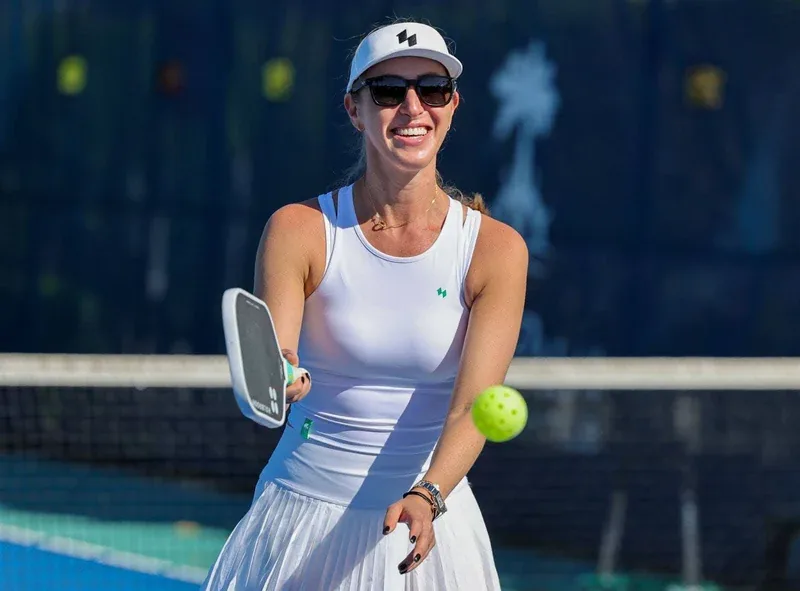
Start with the right base: wash with a lightweight shampoo the night before, skip heavy conditioner at the roots, and work a pea-sized amount of sweat-proof gel or styling cream through damp hair before you style it. The product grips the hair and keeps flyaways down even as you sweat, and a wide sweat-wicking headband catches moisture before it reaches your hairline.
Sun protection matters too. A visor or cap shades the parting and the crown, where the sun hits hardest, and a leave-in spray with UV protection helps the lengths. If you play several times a week, a weekly deep-conditioning mask keeps the ends from turning dry and brittle.
Quick verdict: sweat-proof product plus a headband plus a visor is the outdoor-court trio. Skip any one of them on a hot day and you will feel the difference by the second game.
Visor and Cap-Friendly Styles
A visor is the classic pickleball accessory, but it only works if your hairstyle leaves room for it. High buns that sit exactly where the visor strap goes will push the visor forward, and thick braids at the crown can make a cap sit crooked. The trick is to place the bulk of the style low or to the side, so the visor or cap sits flat and comfortable.
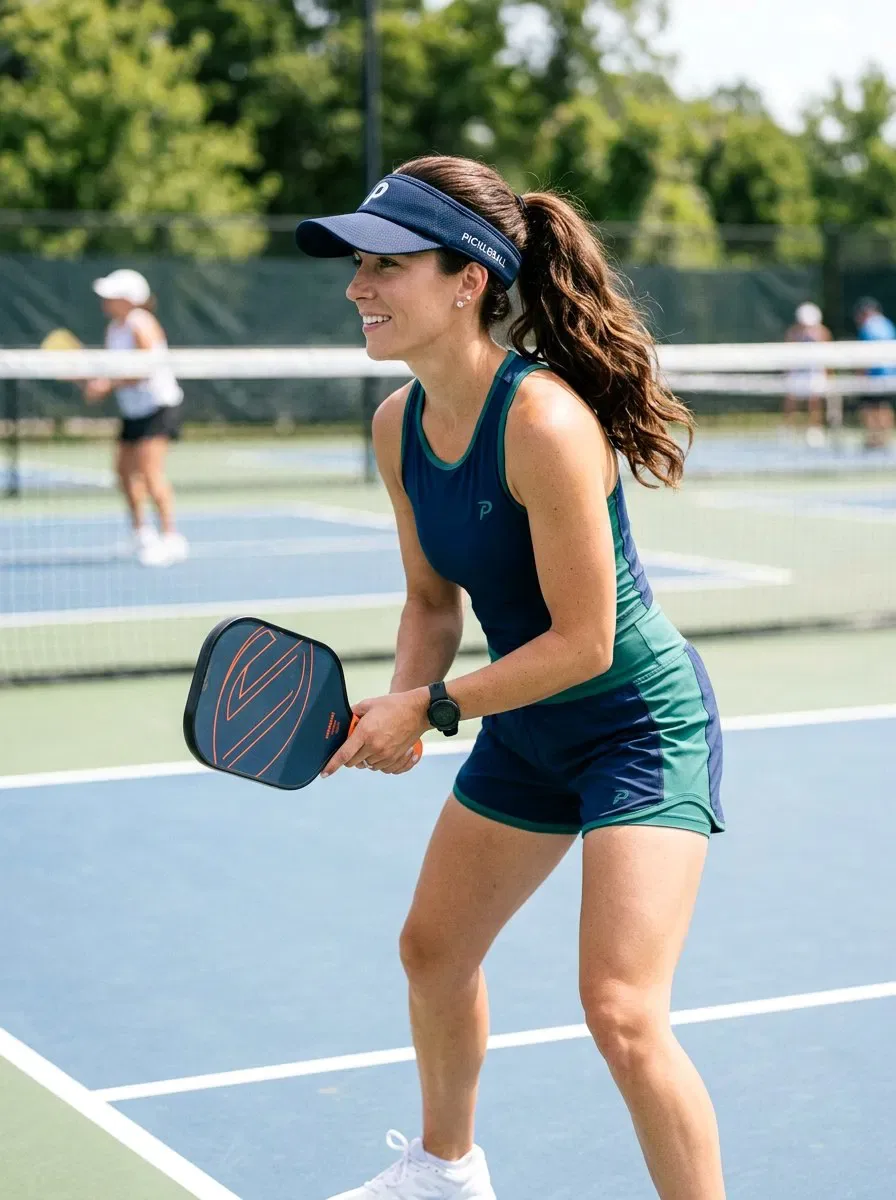
Low ponytails, low buns, side braids and braids that start below the crown are the safest choices under a visor. A low ponytail threaded through the back of a cap stays neat and keeps the cap from sliding, while a side braid leaves the whole crown free for the visor strap. If you love a high ponytail, wear the visor slightly further back and choose a ponytail with a soft, flexible base.
Fit matters more than fashion here. Try the visor on with the finished style before you leave home, and jump in place a few times to check nothing slides. If the visor creeps up, loosen the style slightly at the crown or switch to a wider headband underneath for grip.
Quick verdict: build the style around the visor, not the other way round. Low and to the side beats high and bulky every time under a cap.
Hair by Length: Short, Medium and Long
The best pickleball style depends first on your length, and each length has its own easy win. Short hair needs a headband or a few well-placed pins to keep the front layers out of the eyes. Medium hair has the most options: a low ponytail, a half-up style or a single braid all work well. Long hair needs real anchoring, because its weight pulls elastics loose during a long match.
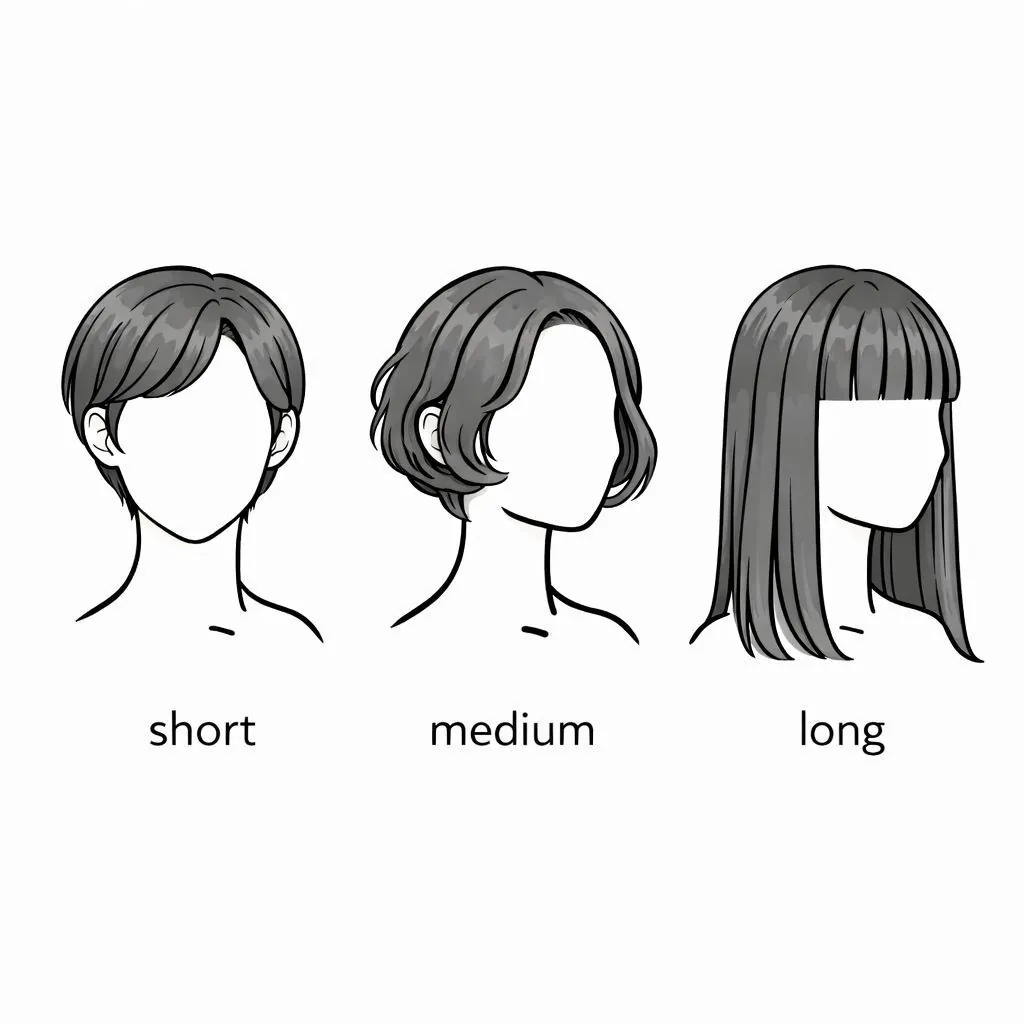
For short hair, a wide fabric headband or a pair of flat clips at the temples does most of the work, and a little texture spray keeps the ends from flopping forward. For medium hair, a low bun or a French braid holds through rallies without the weight of a high ponytail pulling at the scalp.
For long hair, braid first and then decide: a braid into a bun, a braided ponytail or double Dutch braids all spread the weight across the head instead of hanging it from one point. Use two elastics at the base for extra security, and carry a spare in your bag.
Quick verdict: match the anchor to the length. Short hair needs a headband, medium hair needs one solid anchor, and long hair needs a braid plus a bun or ponytail.
Braids vs Buns vs Ponytails
Braids, buns and ponytails are the three big pickleball families, and each one wins in a different situation. Braids lock the hair flat against the head and cannot unravel in one go, so they are the most secure choice for a long, sweaty match. Buns keep everything completely off the neck and away from the collar, which feels cooler on hot days. Ponytails are the fastest to do and the easiest to redo between games.
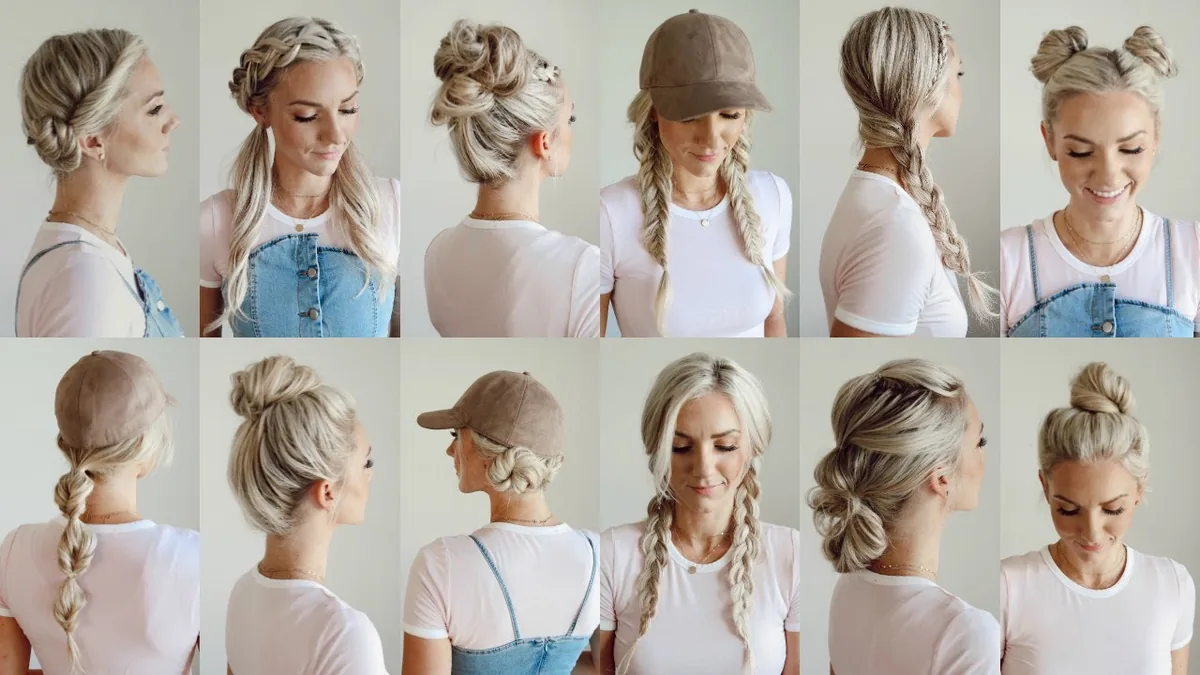
Choose braids when you want maximum hold and zero mid-game fixes: double Dutch braids, cornrows or a single French braid will survive a whole morning of games. Choose a bun when the sun is strong and you want the neck free, or when you are playing under a visor and need the crown flat.
Choose a ponytail when you are short on time or playing a casual social game. A high ponytail with a headband is quick and comfortable, but add a small braid at the front or a second elastic at the base if you are playing competitively, so it does not loosen as you sweat.
Quick verdict: braids for tournaments, buns for hot days, ponytails for quick social games. When in doubt, braid it — it is the only style that never needs a mid-match rescue.
Quick Fixes Between Games
Pickleball is played in short games with quick turnarounds, so you rarely get more than a couple of minutes between matches. The players who look fresh all morning are the ones with a tiny bench kit and a two-minute fix routine, not the ones who restyle from scratch. Pack two elastics, four bobby pins, a small brush and a travel-size dry shampoo, and keep them in your paddle bag.
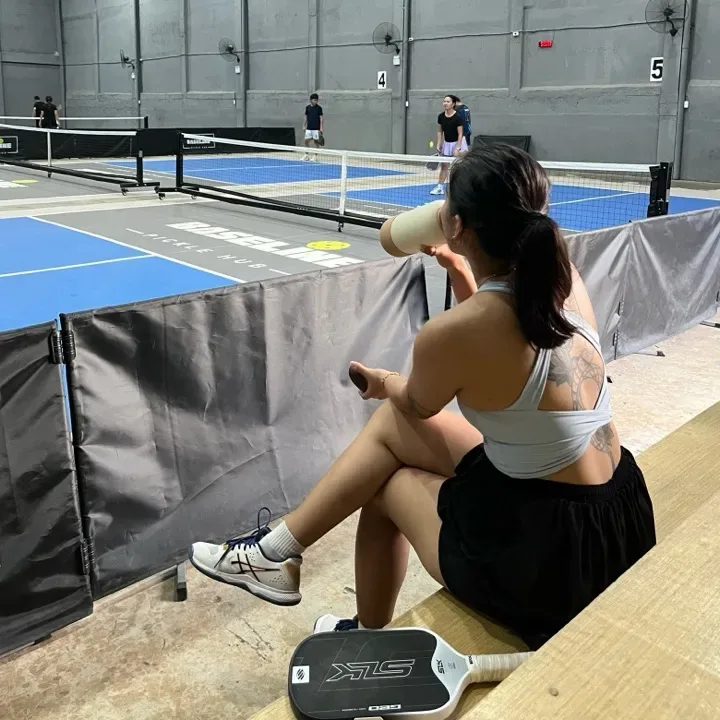
The fastest fix is the re-tighten: pull the ponytail or bun out, brush the hairline smooth, and re-secure it a little tighter, adding a pin at each side. If the front has gone fuzzy, smooth it with a dab of gel or a wet wipe, then press it flat with your palm. Dry shampoo at the roots lifts sweat-flattened hair in seconds.
If a braid has loosened, do not undo it. Pin the loose section flat with a bobby pin crossed over another pin, which holds far better than a single pin, and tuck the ends into the elastic. For a bun that has slipped, twist it tighter and re-pin at the base rather than rebuilding it.
Quick verdict: two minutes, four tools, one re-tighten. Fix the base, smooth the hairline, and you are ready for the next game.
From Court to Lunch: The Transition
One of the best things about pickleball is the lunch after the game, and the best court hairstyles are the ones that still look good at the table. The trick is choosing a style with a soft finish that can be loosened in seconds: a braid you can pull apart gently, a low bun you can drop into a ponytail, or a ponytail you can soften with a few face-framing pieces.
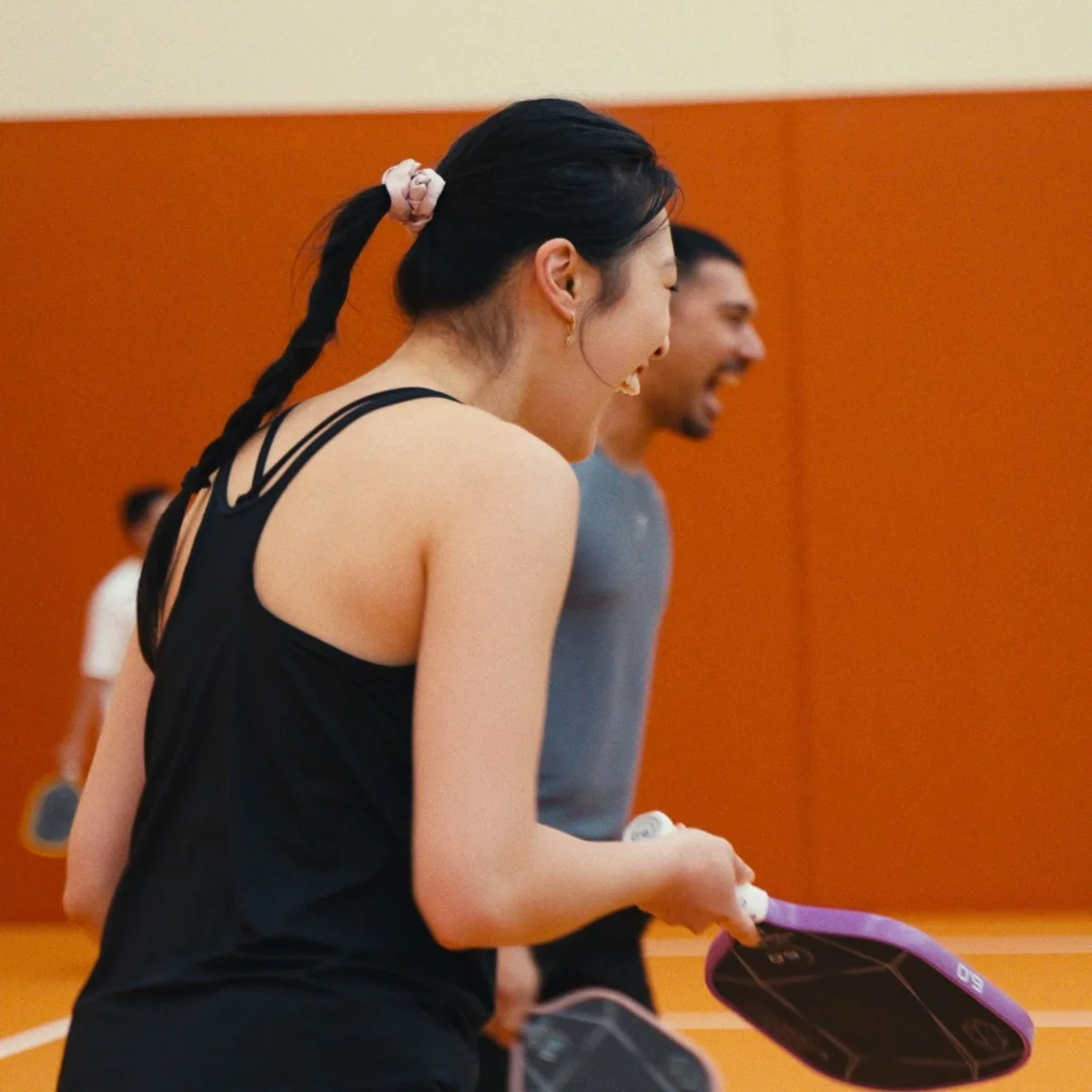
Before you leave the court, take out the headband, shake the style loose at the crown, and pull out two soft pieces at the front. A quick brush-through with your fingers and a spritz of dry shampoo turns a tight match style into a relaxed lunch style without a full restyle.
Carry one small extra in your bag for the transition: a silk scrunchie, a pretty clip or a ribbon. Swapping a sport elastic for a silk scrunchie instantly softens a ponytail, and a tortoiseshell clip turns a messy bun into a deliberate, polished look.
Quick verdict: pick a style that loosens well, not one that only looks good tight. The best court-to-lunch styles are braids and low buns that soften gracefully.
Post-Game Hair Care
After a sweaty morning on the court, your hair needs a proper reset, not just a brush-through. Sweat, sunscreen and dust build up at the roots, and if you leave them there the hair goes limp and the scalp gets itchy. Wash with a gentle clarifying shampoo once or twice a week, and use a regular moisturising shampoo for the other washes.
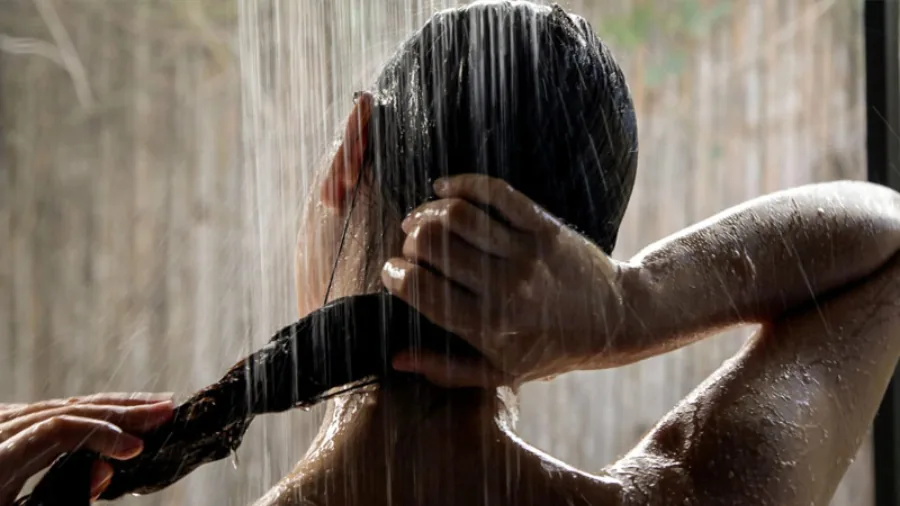
Condition the lengths, not the roots, and rinse with cool water to close the cuticle and add shine. If you play several times a week, a weekly hair mask keeps the ends soft, and a leave-in conditioner protects the hair from sun and chlorine if you swim after the game.
Let the hair air-dry when you can, and keep the post-game style loose: a low, soft braid or a loose bun while the hair dries prevents breakage and keeps the waves soft. Avoid tight elastics on wet hair, which is at its most fragile.
Quick verdict: wash the sweat out, condition the ends, and let it dry loose. Your hair will be ready for the next match, and the next one after that.
1. The High Ponytail That Holds Through Rallies
The high ponytail is the classic pickleball hairstyle for a reason: it gets every strand off your neck in thirty seconds and keeps it there through long rallies, quick dinks and sudden sprints to the kitchen line. It is the fastest court style there is, and when it is secured properly it will not budge, no matter how many games you play.
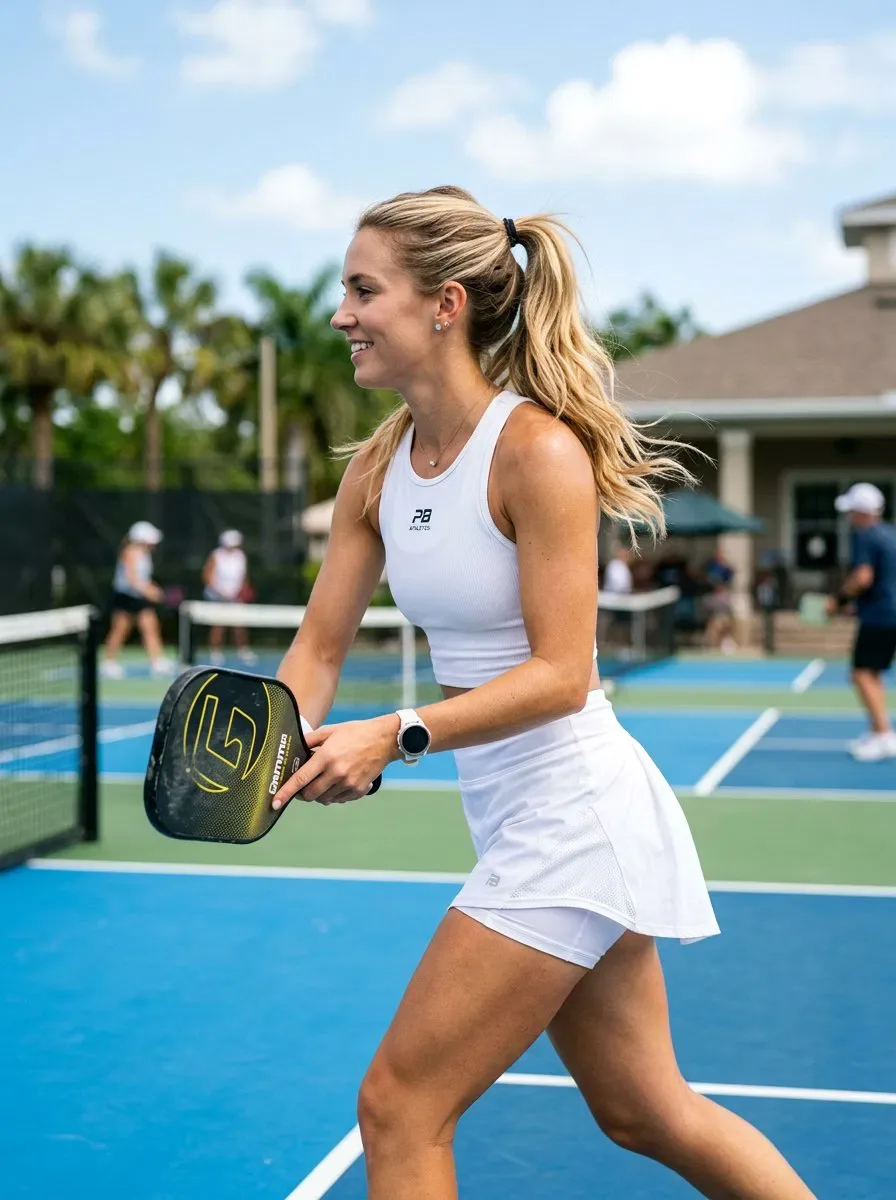
Best for: players with medium to long hair who want a fast, reliable style for a full morning of games, and spectators who want a neat, sporty look that survives cheering and sunshine.
How to style: brush the hair up to the crown, smooth the hairline with a little gel, and secure with a thick elastic. Wrap a small strand around the base and pin it underneath, then add a second elastic a few centimetres down for extra hold.
What to ask: ask your stylist for a ponytail set high enough that it clears your collar, with the front layers blended so nothing falls loose around the face during a rally.
2. Double Dutch Braids for All-Day Matches
Double Dutch braids are the most secure style in this whole guide. Two braids running from the hairline to the nape lock every layer flat against the head, so nothing can swing into your eyes during a fast rally, and the style looks just as neat in the fourth game as it did in the first.
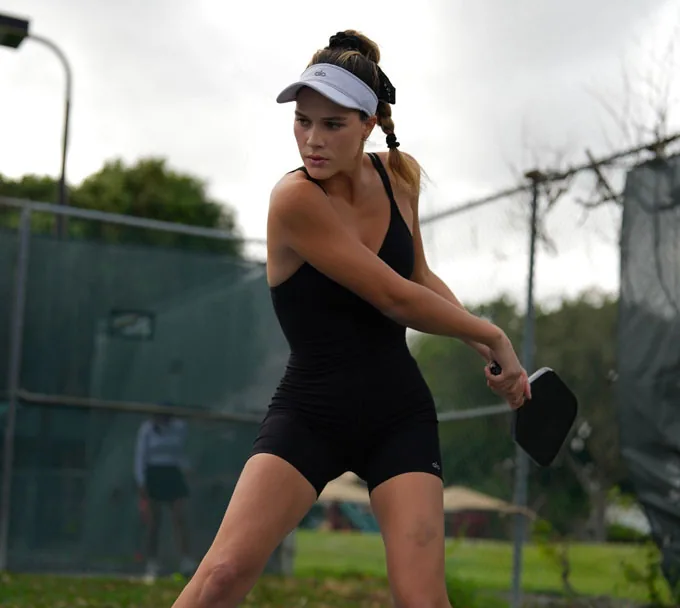
Best for: players with long or thick hair, tournament days with back-to-back games, and anyone who hates stopping to fix their hair between matches.
How to style: part the hair down the middle, then Dutch-braid each side by crossing the strands under instead of over, adding hair as you go. Secure each braid with a small elastic and tuck the ends under each other at the nape.
What to ask: ask your stylist for tight Dutch braids that start right at the hairline, so the front layers are locked in and the braids sit flat under a visor.
3. The Low Sleek Bun
The low sleek bun is the most polished pickleball style you can wear, and it is also one of the most practical. It sits at the nape, so it never interferes with a visor or a cap, it keeps the neck completely free on hot days, and it stays smooth through sweat, sun and long rallies.
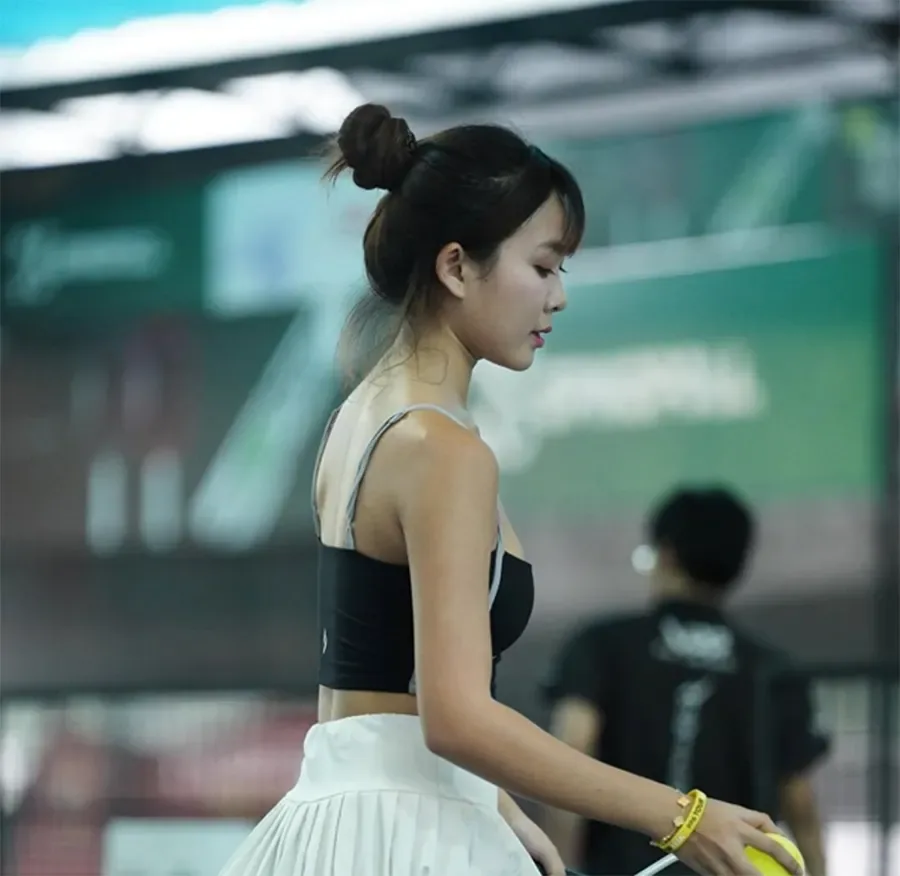
Best for: players who wear a visor or cap, anyone with fine hair that slips out of ponytails, and spectators who want a clean, elegant look for the whole day.
How to style: brush the hair back into a low ponytail at the nape, smooth the hairline with gel, then twist the ponytail into a bun and pin it flat. Finish with a light mist of hairspray and two crossed bobby pins at the base.
What to ask: ask your stylist for a low bun that sits flat against the head, with no bulk at the crown, so a visor sits comfortably over it.
4. The Bubble Braid Ponytail
The bubble braid ponytail is the fun one: a high ponytail divided into soft, rounded sections that look playful and stay put. The elastics along the length act as extra anchors, so the style holds its shape through rallies, and it photographs beautifully from the sidelines.
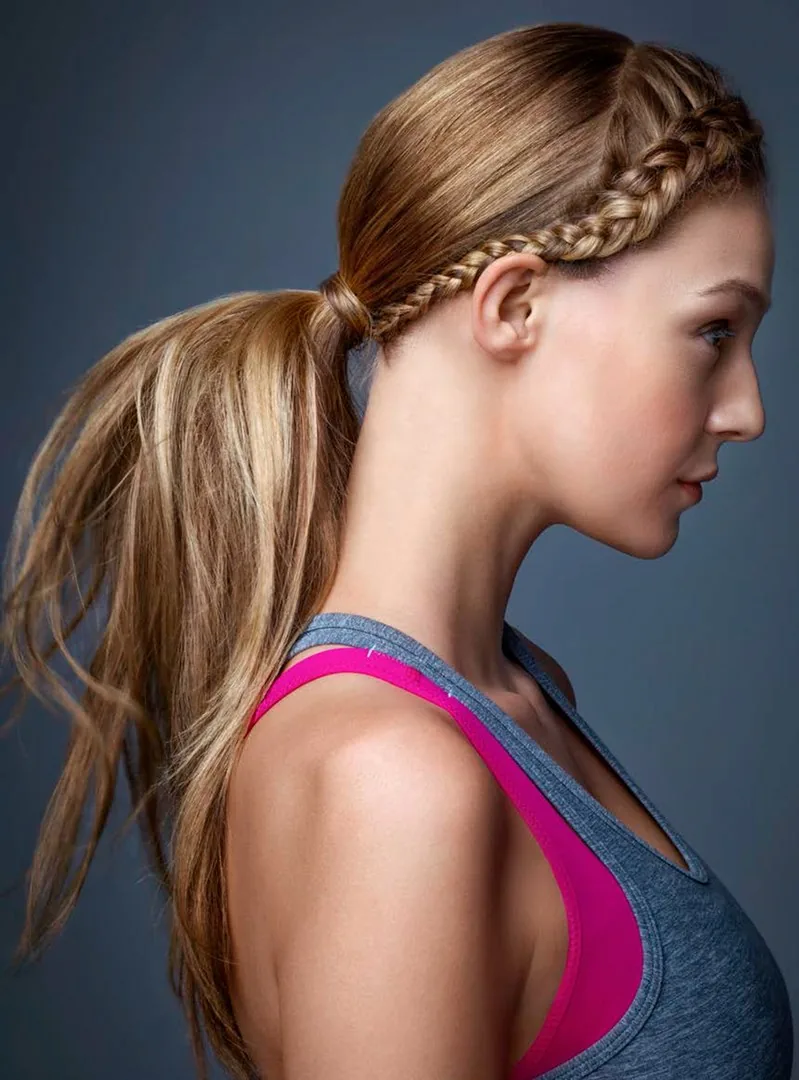
Best for: players with long hair who want a style with personality, social games, and anyone who finds a plain ponytail a little boring.
How to style: make a high ponytail, then add small elastics every five centimetres down the length, gently pulling each section wider to form a bubble. Keep the bubbles even and secure the ends with a final elastic.
What to ask: ask your stylist to show you the bubble spacing for your hair length, and to use clear or matching elastics so the bubbles, not the bands, are the focus.
5. The French Braid Into a High Bun
A French braid that runs up the back of the head and finishes in a high bun is one of the most secure styles you can wear on court. The braid locks the nape and sides flat, the bun keeps the length off the neck, and nothing swings, slips or needs touching for the whole match.
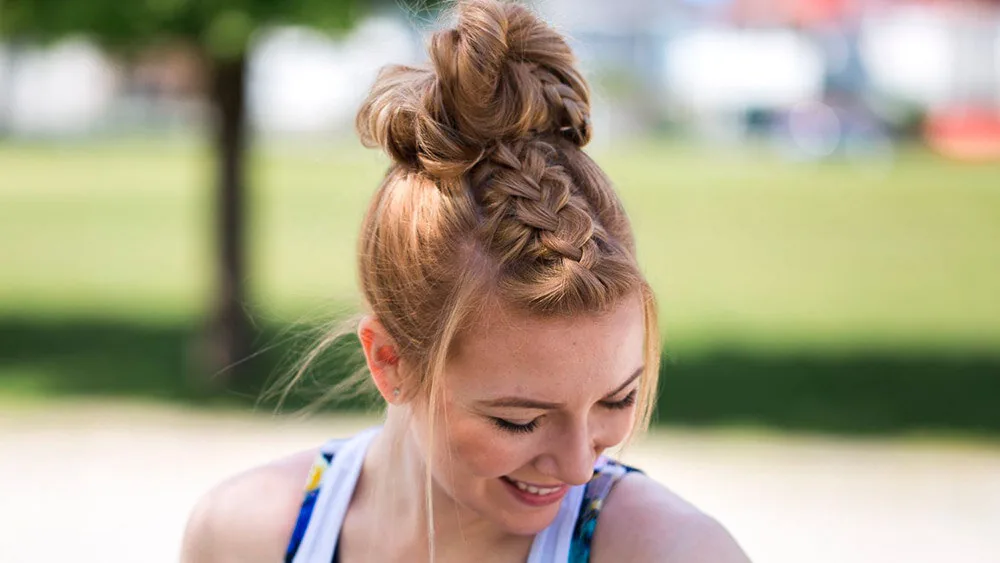
Best for: players with long hair in hot weather, competitive doubles matches, and anyone who wants a style that looks polished from every angle.
How to style: flip the head forward and French-braid from the nape up to the crown, then gather the remaining hair into a high ponytail and twist it into a bun. Pin the bun firmly and smooth the edges with gel.
What to ask: ask your stylist for an inverted French braid that starts at the nape, with the bun placed high enough to clear the collar but low enough to sit under a cap.
6. The Slicked-Back Low Ponytail
The slicked-back low ponytail is clean, fast and completely out of the way. Every strand is brushed back from the face and secured at the nape, so there is nothing to fall forward during a dink or a lunge, and the style works beautifully under a visor or a cap.
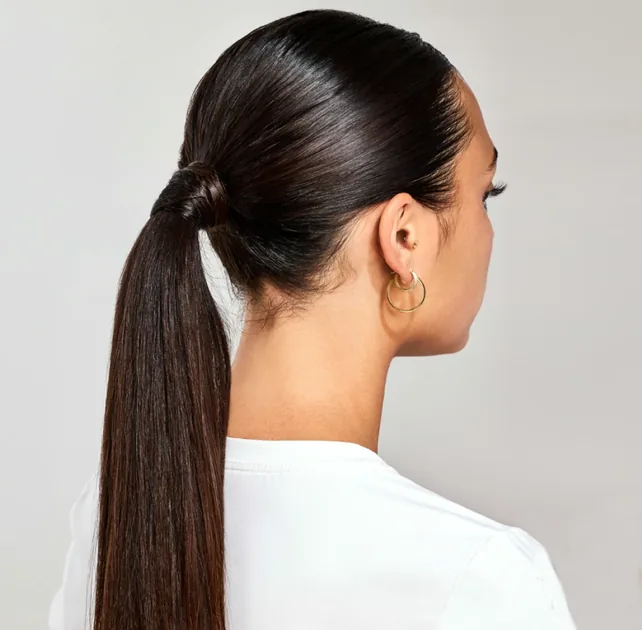
Best for: players with straight or fine hair, hot and humid days, and anyone who wants a sharp, minimal look with almost no styling time.
How to style: apply gel to damp hair and brush it straight back into a low ponytail at the nape. Secure with a strong elastic, wrap a strand around the base, and smooth any flyaways with a toothbrush and a little extra gel.
What to ask: ask your stylist for a gel that holds without flaking, and for the ponytail to sit low enough that a cap brim clears it completely.
7. Cornrows That Last All Week
Cornrows are the ultimate low-maintenance pickleball style. The braids sit tight against the scalp, so they cannot come loose during a rally, they keep the hair completely out of the face, and they last for days, which means you can play all week without restyling.
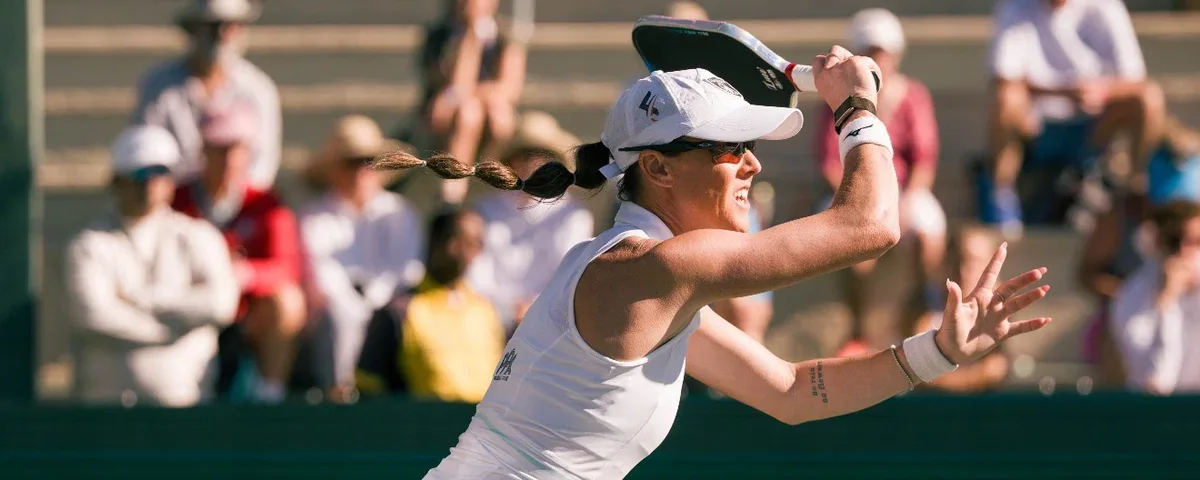
Best for: players who play several times a week, anyone with textured or coily hair, and tournament weekends with multiple matches a day.
How to style: part the hair into neat rows and braid each row close to the scalp, adding hair as you go. Gather the ends into a low ponytail or a small bun, and smooth the edges with edge control.
What to ask: ask your stylist for cornrows that are firm but not painfully tight, with the parts straight and even so the style lasts and the scalp stays comfortable.
8. The Half-Up Top Knot
The half-up top knot gives you the best of both worlds: the top half of the hair is lifted and locked away from the face, while the rest stays down and moves naturally. It is quick, comfortable and a little softer than a full updo, which makes it perfect for social games and spectators.
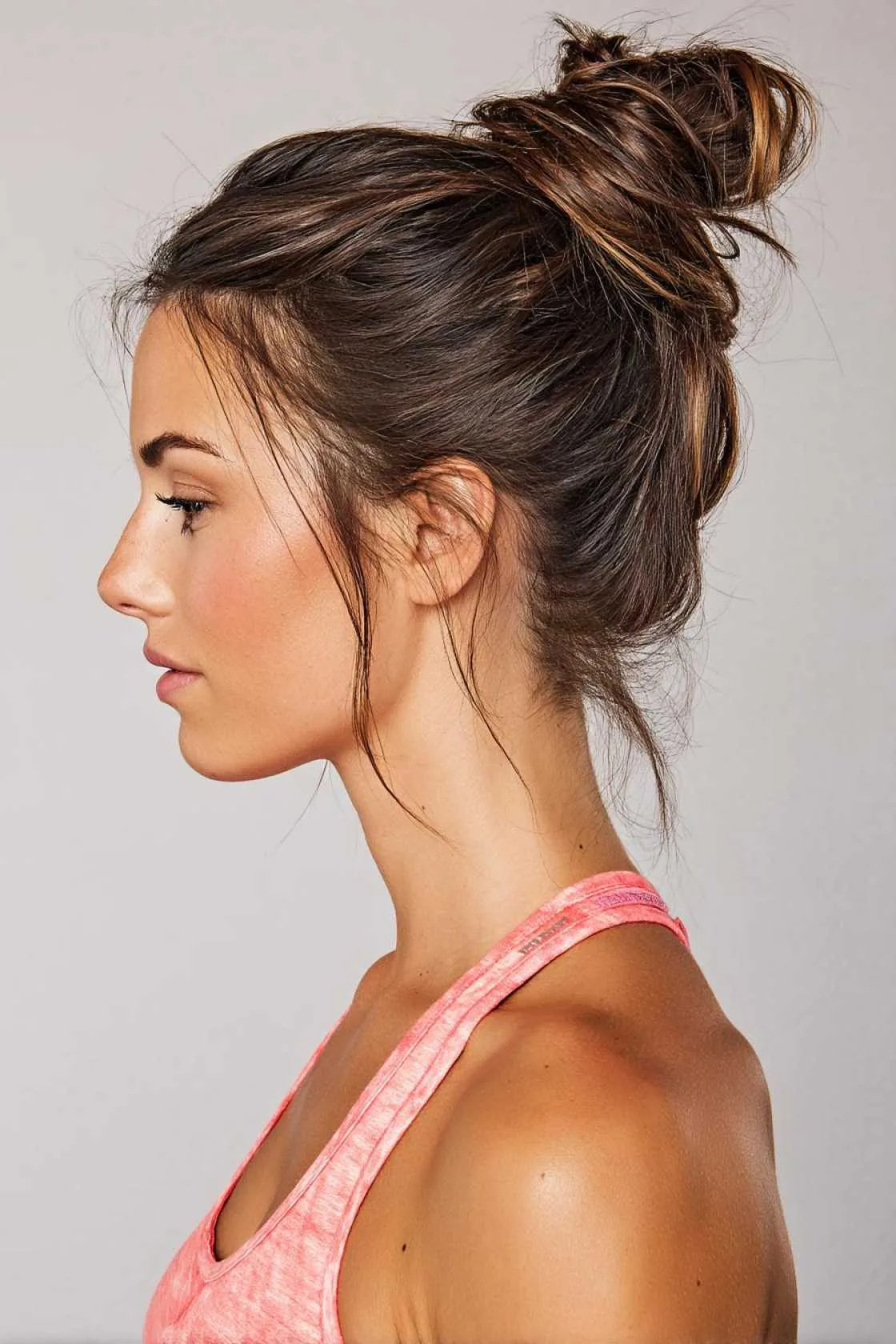
Best for: medium-length hair, social pickleball mornings, and spectators who want to look put-together without a full updo.
How to style: gather the top half of the hair at the crown, twist it into a small bun and pin it in place. Leave the bottom half loose, smooth the hairline, and pull out two soft pieces at the front if you like.
What to ask: ask your stylist for a top knot placed at the crown, not too far forward, so it clears the face without pulling at the hairline.
9. Double French Braids Into Low Buns
Double French braids that finish in two low buns are secure, symmetrical and completely swing-free. Each braid locks one side of the head, the buns sit low at the nape where they never interfere with a visor, and the style holds through the longest, sweatiest matches.
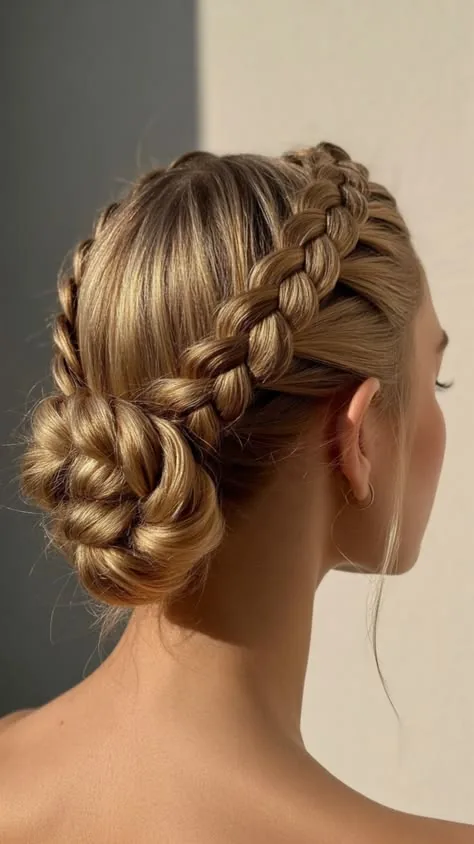
Best for: players with long or thick hair, hot outdoor courts, and anyone who finds a single bun too heavy or too hot.
How to style: part the hair down the middle and French-braid each side down to the nape, then twist each tail into a small bun and pin it flat. Keep the buns even and close to the head.
What to ask: ask your stylist for braids that start at the hairline and buns that sit at the nape, so the whole style stays low, flat and visor-friendly.
10. The Braided Crown
The braided crown wraps a braid around the head like a headband, keeping every front layer pinned back and out of the eyes. It looks soft and pretty, but it is genuinely practical too, because the braid acts as a built-in headband that never slips during a rally.
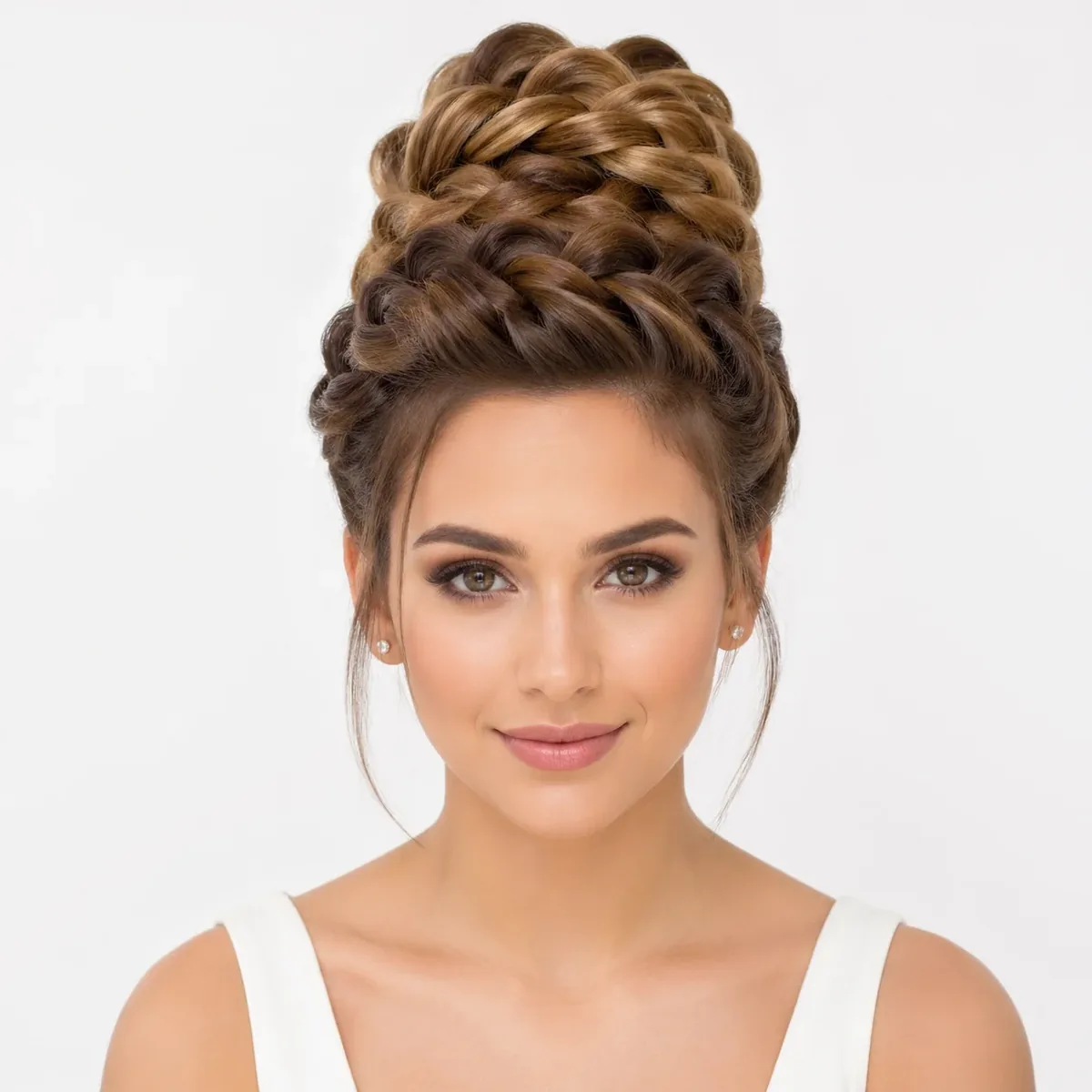
Best for: players with medium to long hair who want a feminine court style, spectators, and anyone whose front layers always escape a ponytail.
How to style: braid a section from one side of the head, working across the front hairline to the other side, and pin the end underneath. Tuck any loose pieces in with bobby pins and finish with a light spray.
What to ask: ask your stylist for a crown braid that follows the hairline closely, with the ends hidden under the hair at the back.
11. The Fishtail Braid
The fishtail braid looks intricate, but it is really just two sections woven together, and the result is a flat, secure braid that holds beautifully through a match. It keeps long hair in one neat rope that never swings across the face, and it loosens gracefully into a softer look after the game.
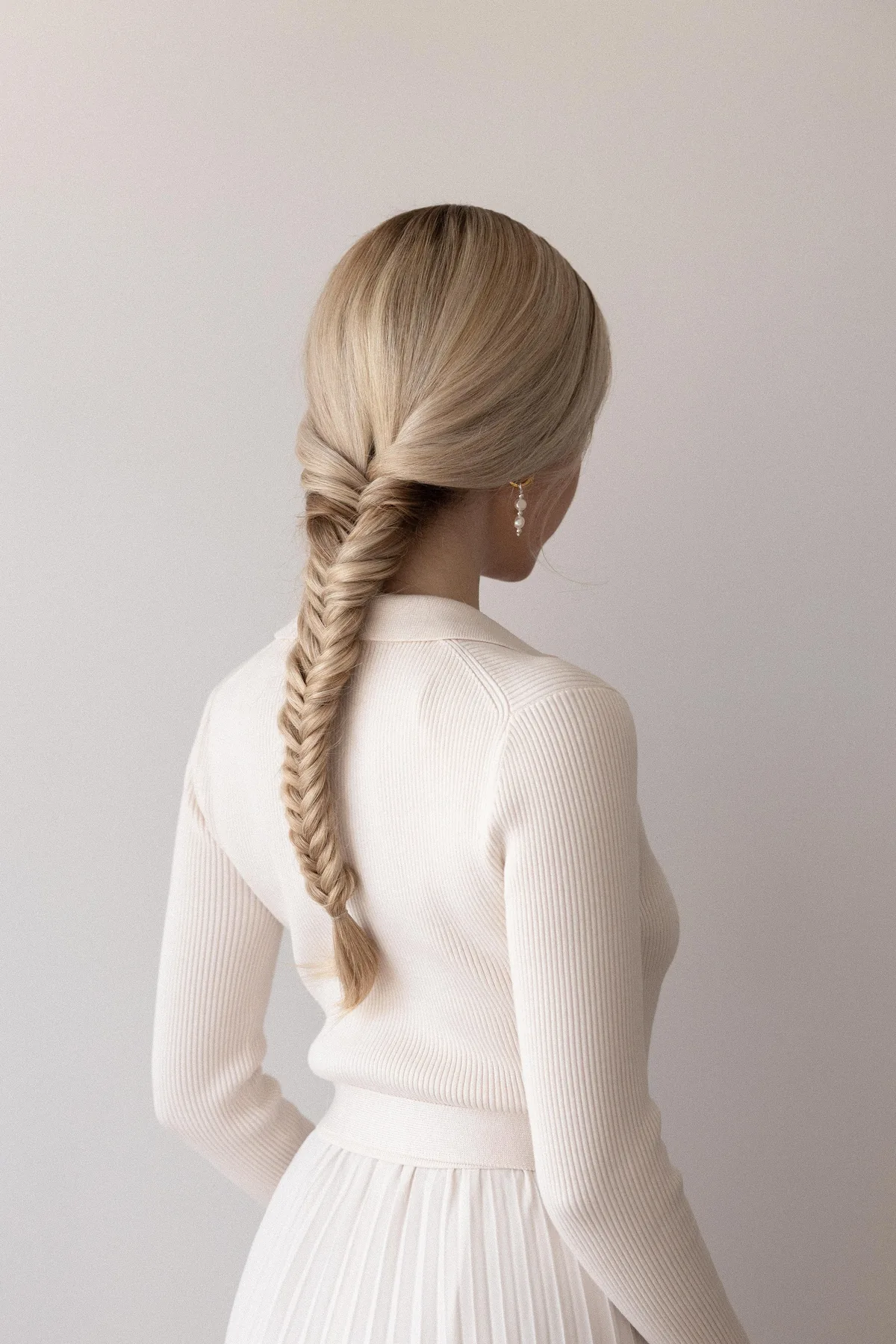
Best for: players with long, straight or wavy hair, and anyone who wants a braid that looks special without taking long to do.
How to style: gather the hair into a low ponytail, split it into two sections, and pass a small piece from the outside of each section to the inside of the other, repeating all the way down. Secure the end and gently pull the braid wider.
What to ask: ask your stylist to show you the fishtail rhythm once, and to keep the braid tight at the top so it does not loosen during play.
12. The High Top Knot
The high top knot is the quickest way to get long hair completely off the neck and out of the way. It sits on top of the head, so nothing touches the collar or the shoulders, and it stays put through rallies, sprints and the sunniest outdoor games.
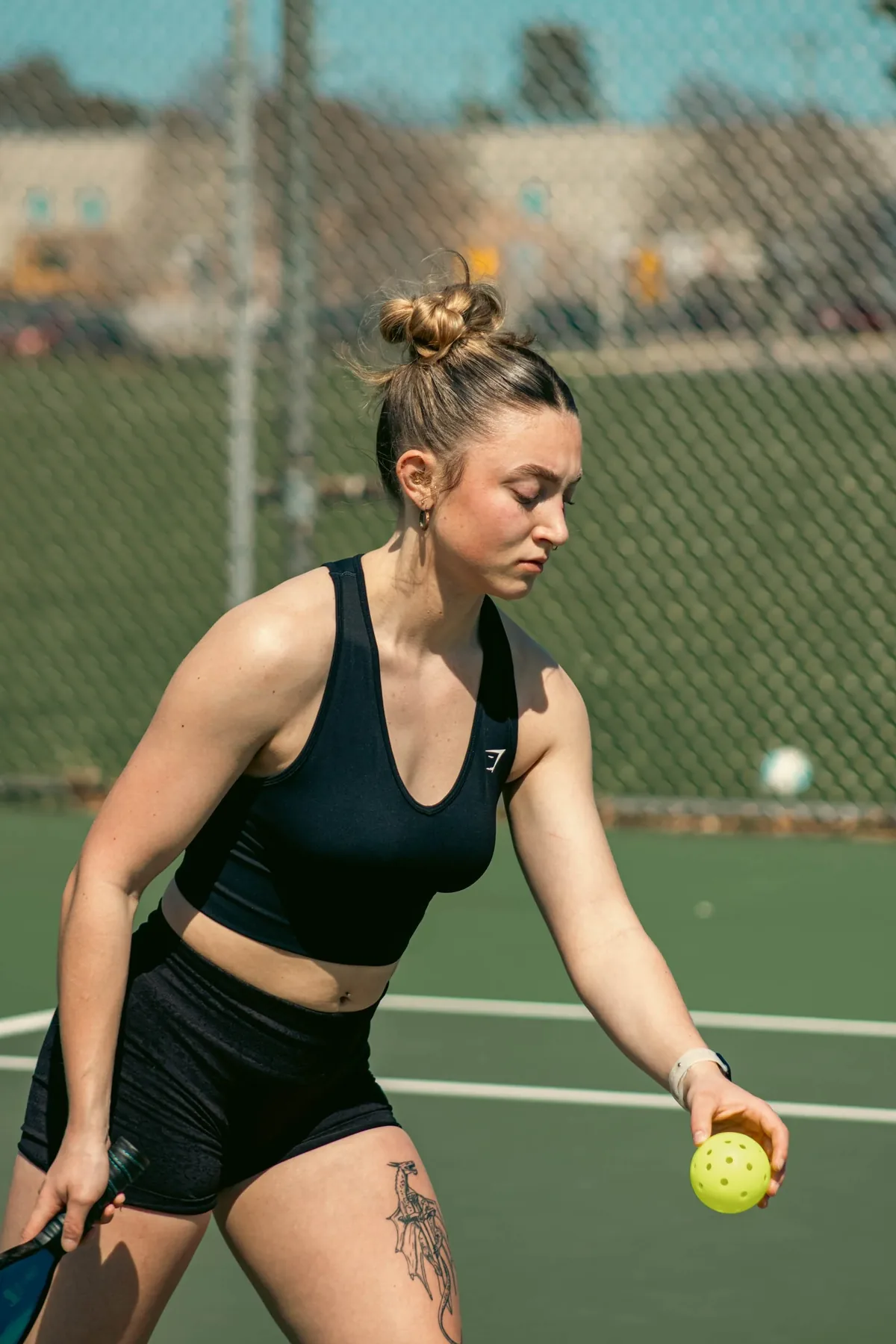
Best for: players with long hair on hot days, quick social games, and anyone who wants a five-minute style that actually holds.
How to style: gather the hair into a high ponytail at the crown, twist the length around the base and pin it into a bun. Use two pins crossed at the base and smooth the edges with gel for a clean finish.
What to ask: ask your stylist for a top knot that sits at the crown and feels balanced, not too far forward, so it does not pull or wobble during play.
13. Space Buns for a Playful Match
Space buns are the most playful style on the court: two small buns, one on each side, that keep the hair completely off the neck and out of the face. They spread the weight evenly across the head, so they feel light even through a long morning of games.
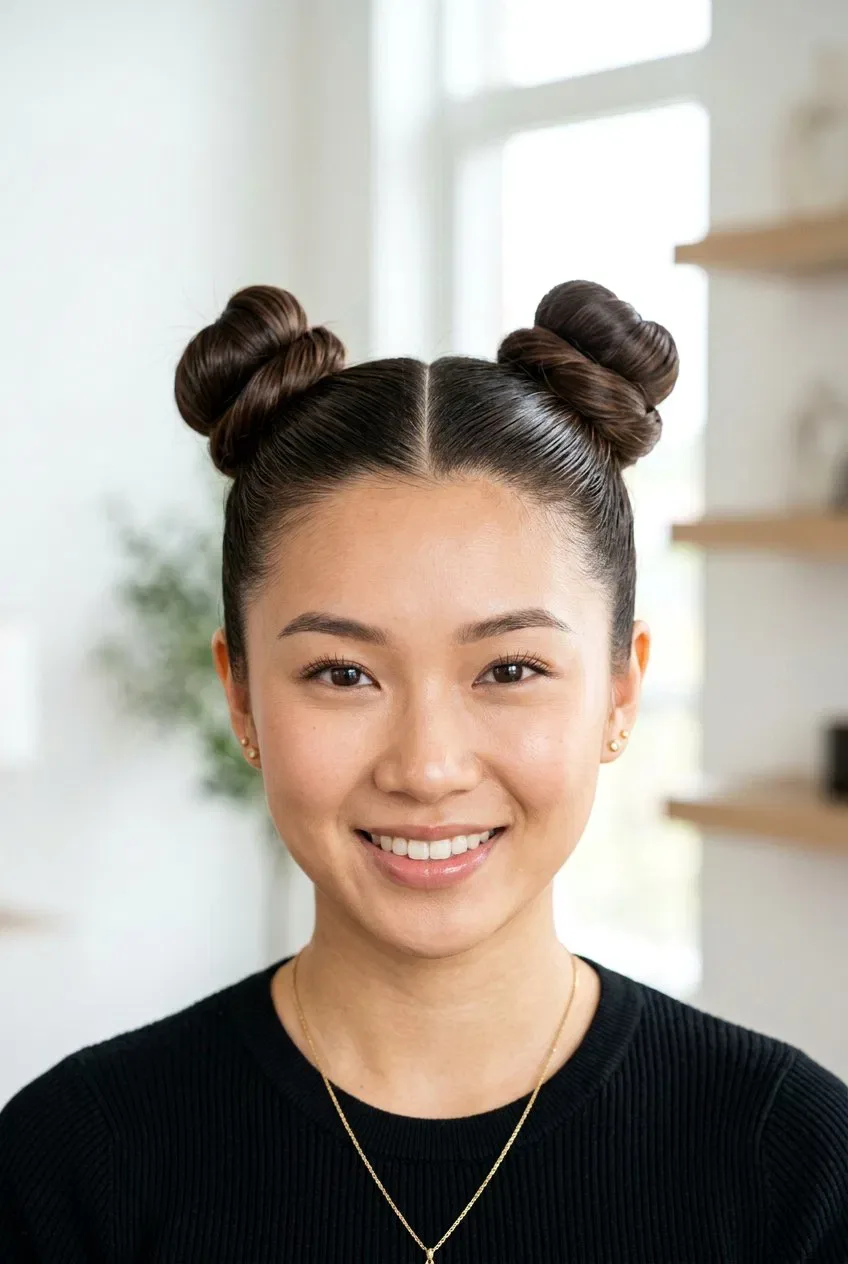
Best for: social games, younger players, and anyone who wants a fun, cheerful look that still holds through rallies.
How to style: part the hair down the middle, make a high ponytail on each side, and twist each one into a small bun. Pin both buns firmly and keep them even, then smooth the hairline with gel.
What to ask: ask your stylist for space buns placed high enough to clear the collar, with even parting so the two sides match.
14. The Side Braid
The side braid is a simple, elegant solution for long hair: one braid draped over a shoulder, keeping the hair in a single neat rope that never swings across the face. It is easy to redo between games and looks just as good at lunch afterwards.
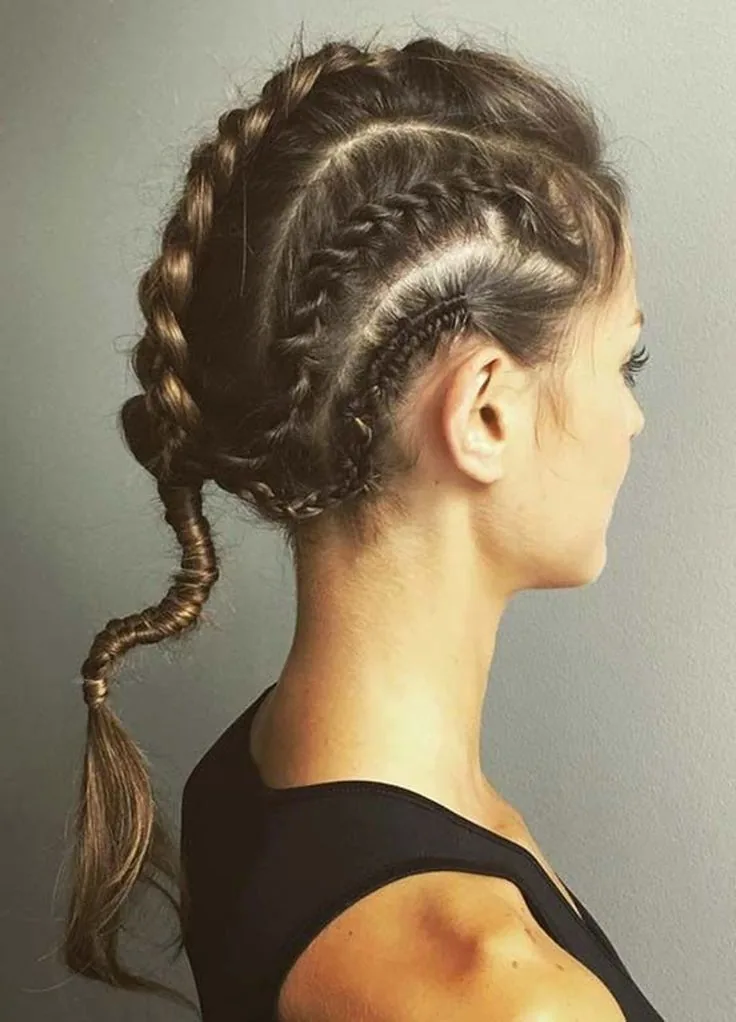
Best for: players with long hair who prefer a softer style, spectators, and anyone who finds a tight updo uncomfortable.
How to style: sweep all the hair to one side and braid it loosely from behind the ear down to the ends. Secure with an elastic and gently pull the braid wider for a fuller, softer look.
What to ask: ask your stylist for a side braid that starts behind the ear, so the front layers are pulled back and the braid sits comfortably over one shoulder.
15. The Rope Braid Ponytail
The rope braid ponytail twists two sections of hair around each other into a strong, rope-like tail that never unravels mid-rally. It is faster than a French braid, holds just as well, and looks sleek and sporty from every angle.
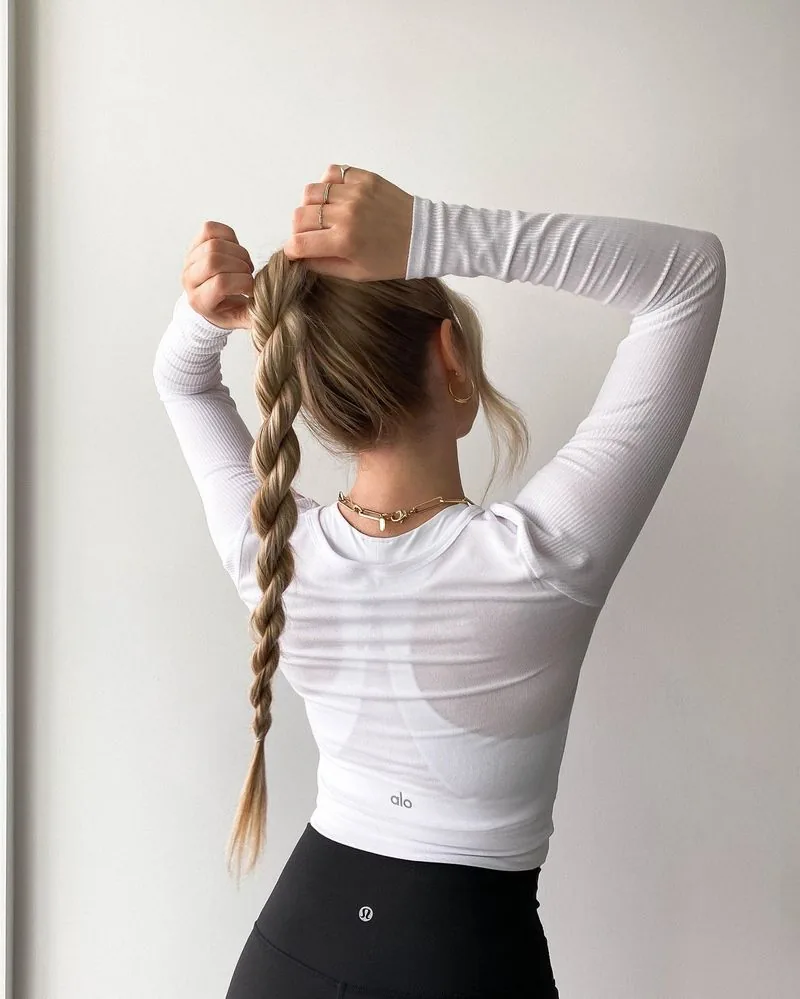
Best for: players with medium to long hair who want a quick, secure braid, and anyone who struggles with a three-strand braid.
How to style: make a high ponytail, split it into two sections, twist each section in the same direction, then twist the two sections around each other in the opposite direction. Secure the end firmly.
What to ask: ask your stylist to show you the twist direction once, since twisting both sections the same way first is what keeps the rope from unravelling.
16. The Curly Pineapple Updo
The pineapple updo gathers curly hair into a loose, high pile at the crown, keeping the curls off the neck while protecting their shape. It is the easiest way to play pickleball with curly hair without flattening the curls or fighting frizz.
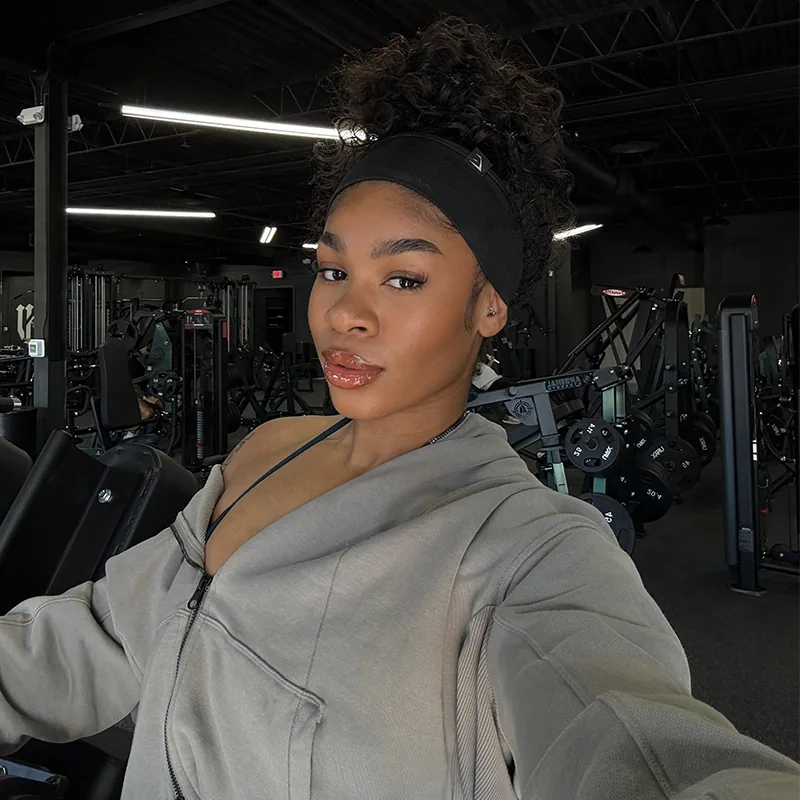
Best for: players with curly or coily hair, anyone who wants to protect their curl pattern, and hot days when the neck needs to stay free.
How to style: flip the head forward, gather the curls loosely at the crown and secure with a silk scrunchie. Leave the curls soft and full, and smooth the hairline with a little gel.
What to ask: ask your stylist for a pineapple that sits high enough to keep the curls off the neck, using a silk scrunchie to avoid dents and breakage.
17. Short Hair With a Headband
Short hair is already light and cool on court, and all it needs is a headband to keep the front layers out of the eyes. A wide fabric headband grips the hair, soaks up sweat and adds a pop of colour, and the whole style takes less than a minute.
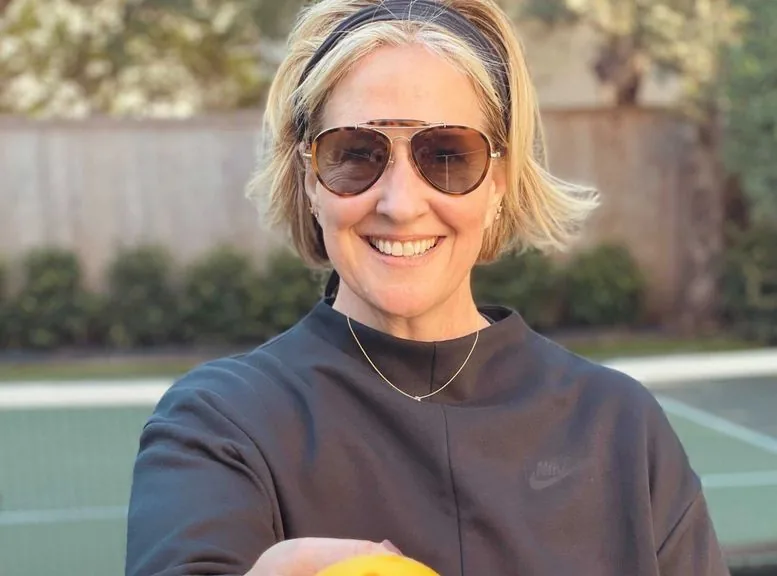
Best for: players with pixie cuts, bobs and short layers, and anyone who wants the fastest possible court style.
How to style: apply a little texture spray, push the front layers back, and slide a wide headband on so it sits just behind the hairline. Tuck any loose pieces behind the ears and pin them flat.
What to ask: ask your stylist for a headband that grips without sliding, and for the front layers to be cut long enough to tuck behind the ears.
18. The Low Twisted Ponytail
The low twisted ponytail adds a gentle twist to a classic low ponytail, which keeps it secure and gives it a more polished look. The twist anchors the hair at the nape, so it does not loosen as you sweat, and it sits flat under a visor or cap.
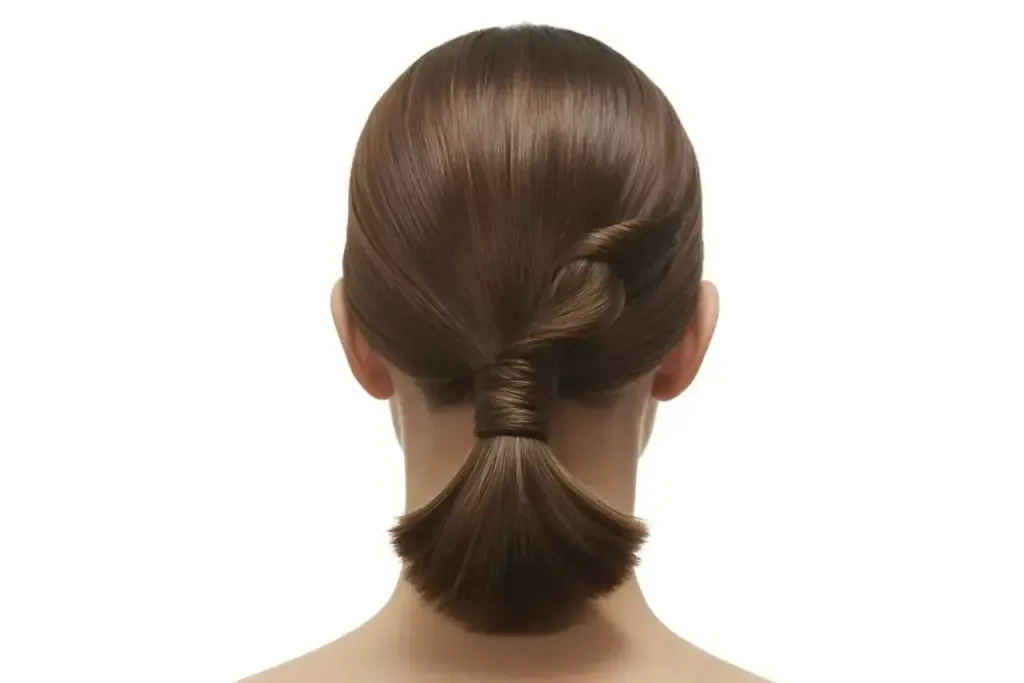
Best for: players with medium-length hair, spectators, and anyone who wants a low, elegant style that works under a cap.
How to style: split the hair into two sections, twist each one toward the centre, then twist the two sections together and secure at the nape. Wrap a strand around the elastic for a clean finish.
What to ask: ask your stylist for a twist that starts at the ears, so the hairline stays smooth and the ponytail sits low and flat.
19. The Chunky Single Braid
The chunky single braid is one thick braid down the back, and it is one of the most reliable court styles there is. It keeps long hair in a single rope that cannot swing into the face, it survives sweat and sun, and it takes only a few minutes to do.
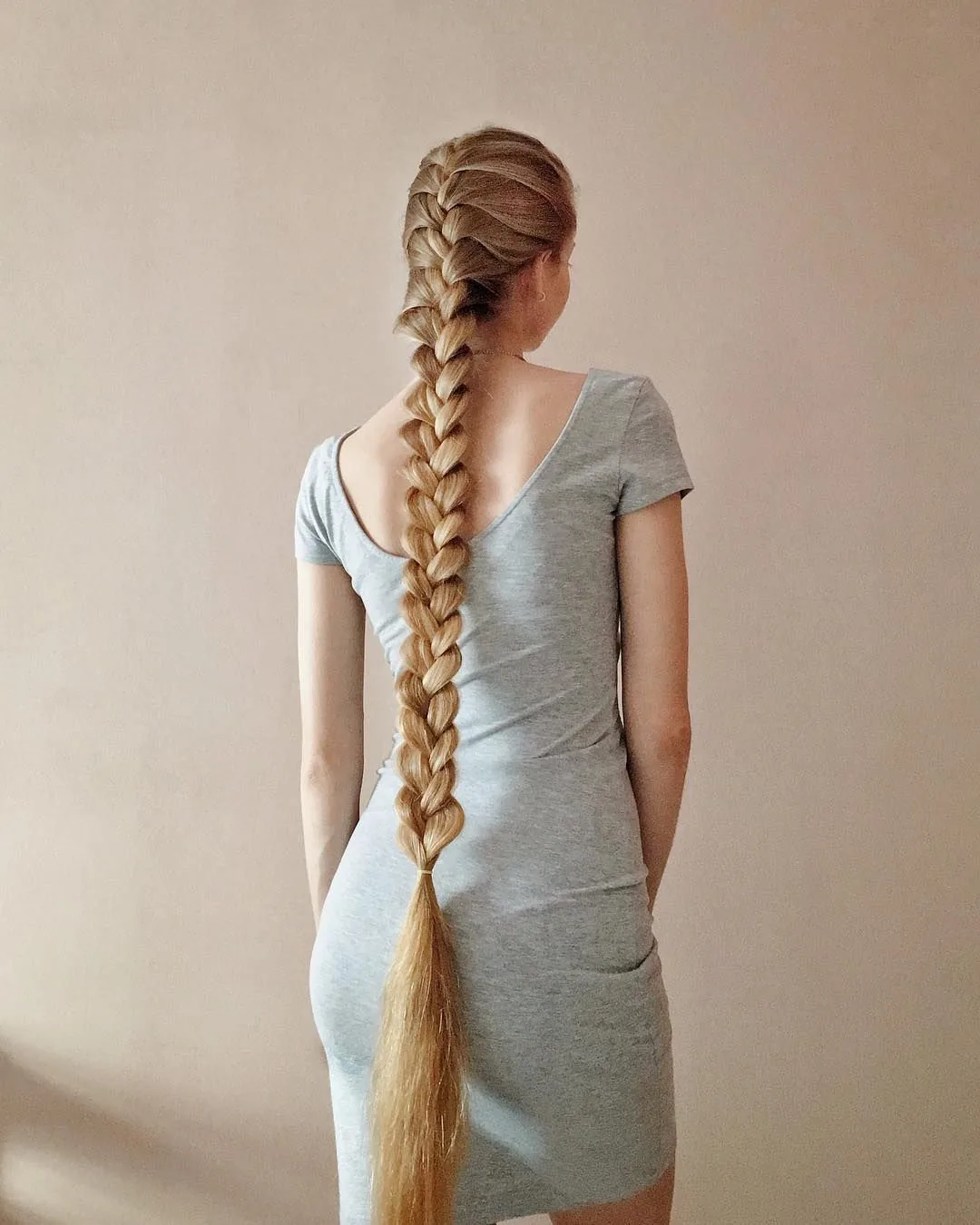
Best for: players with long or thick hair, long match days, and anyone who wants a braid they can do themselves in minutes.
How to style: brush the hair back, gather it at the nape and braid it in three thick sections all the way to the ends. Secure with a strong elastic and gently pull the braid wider for a fuller look.
What to ask: ask your stylist for a braid that starts low at the nape, with even sections so the braid stays thick and balanced all the way down.
20. The Braided Headband Low Ponytail
A small braid worn across the front like a headband, finished with a low ponytail, solves the most common court problem: front layers escaping. The braid pins the hairline back, the ponytail keeps the length tidy, and the whole style stays neat through rallies.
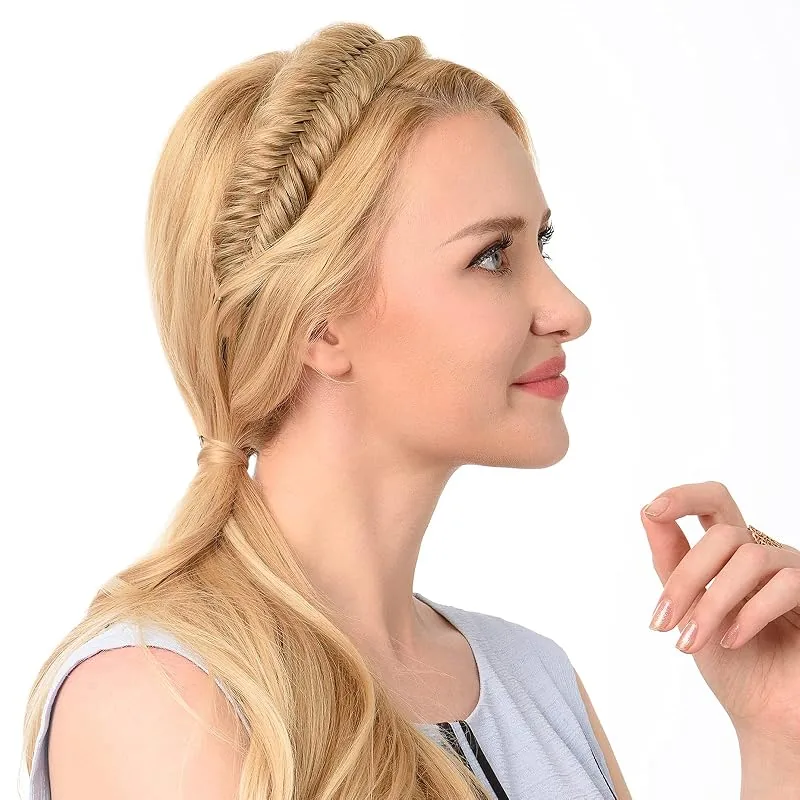
Best for: players with face-framing layers, anyone whose fringe always falls forward, and spectators who want a pretty, practical style.
How to style: braid a section from one temple across the hairline to the other side and pin it under the hair. Gather the rest into a low ponytail and smooth the edges with gel.
What to ask: ask your stylist for a braided headband that follows the hairline and is pinned flat, so it does not lift or slip during play.
21. Double Buns With a Middle Part
Double buns with a middle part are neat, symmetrical and completely out of the way. The centre part keeps the front smooth, the two low buns spread the weight evenly, and the style sits flat enough to work under a visor or a wide headband.
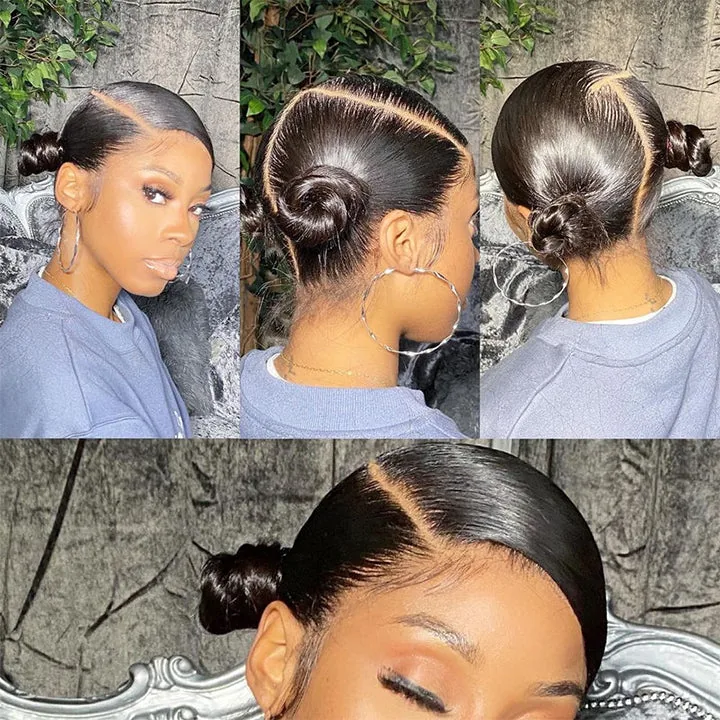
Best for: players with medium to long hair, hot days, and anyone who wants a balanced style that never pulls to one side.
How to style: part the hair down the middle, make a low ponytail on each side, and twist each one into a small bun at the nape. Pin both buns flat and smooth the part with gel.
What to ask: ask your stylist for a clean centre part and buns placed at the nape, so the style stays low and visor-friendly.
22. The Wrapped Low Ponytail
The wrapped low ponytail hides the elastic under a strand of hair, which makes a simple ponytail look finished and polished. It is quick, secure and completely practical, and it works beautifully under a cap or visor.
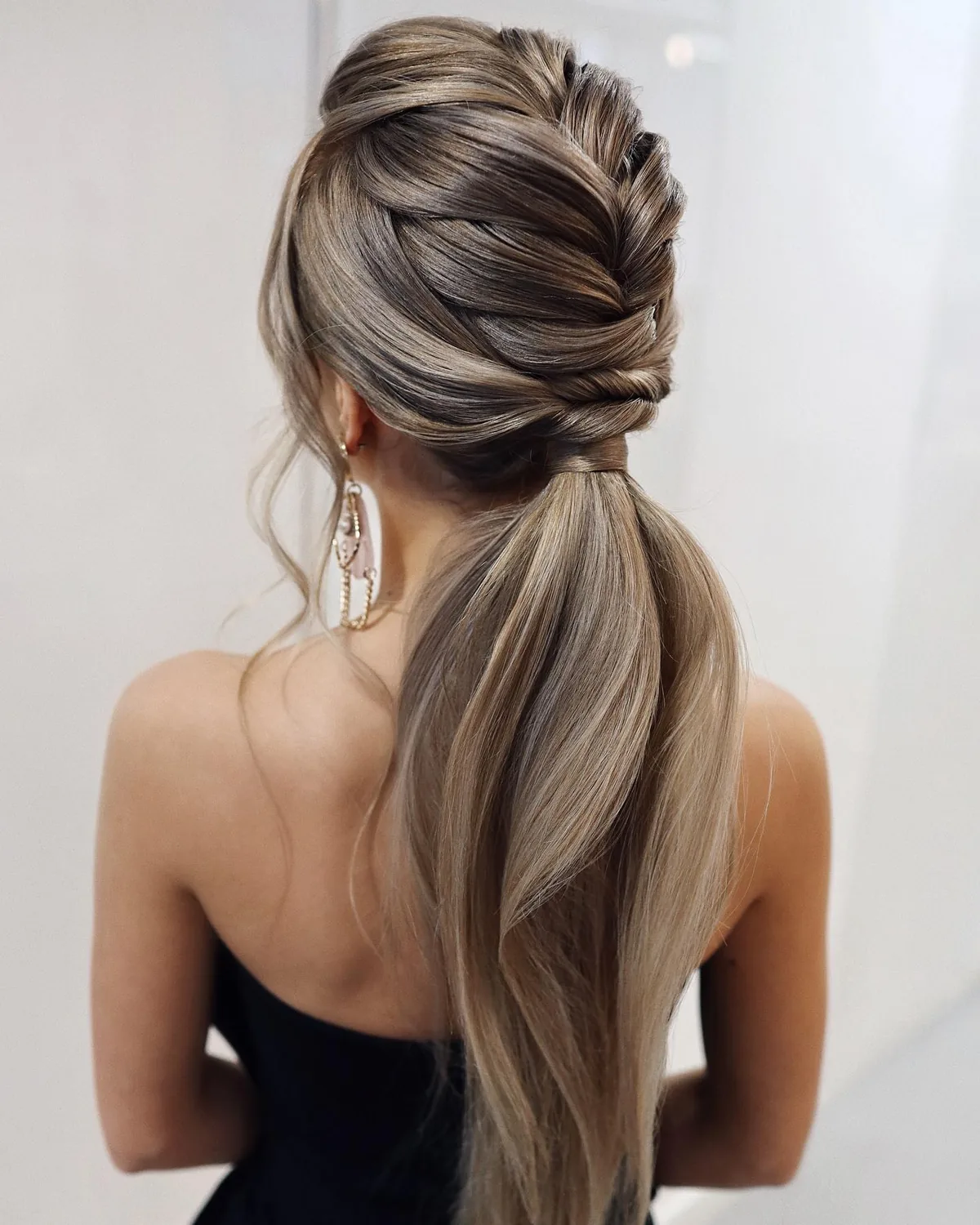
Best for: players who want a clean, minimal look, spectators, and anyone who likes a ponytail that looks deliberate rather than rushed.
How to style: make a low ponytail at the nape, take a small strand from underneath, wrap it around the elastic and pin it underneath. Smooth the hairline with gel and finish with a light spray.
What to ask: ask your stylist for a wrap that covers the elastic completely, with the pin hidden underneath so nothing catches on a cap.
23. Two-Strand Twists
Two-strand twists are a gentle, protective style that keeps textured hair neatly sectioned and completely out of the face. Each twist is simple to do, the style lasts for days, and it holds up beautifully through sweat, sun and long rallies.
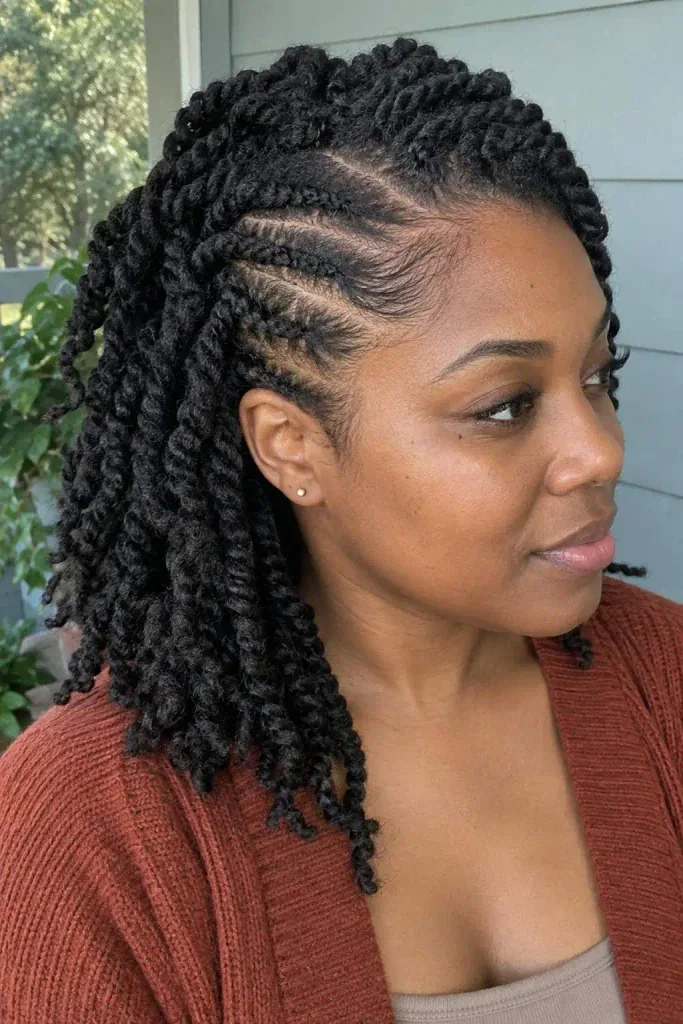
Best for: players with natural or textured hair, anyone who wants a protective style that lasts all week, and hot, humid court days.
How to style: part the hair into sections, split each section into two strands and twist them around each other from root to tip. Gather the twists into a low ponytail or bun and secure with a scrunchie.
What to ask: ask your stylist for twists that are even and not too tight at the roots, with a moisturising cream worked through first so the hair stays soft.
24. The Messy Bun That Actually Holds
A messy bun looks effortless, but the ones that survive a pickleball match are built on a solid base. The trick is to anchor it properly first, then loosen it just enough to look relaxed, so you get the casual look without the mid-game collapse.
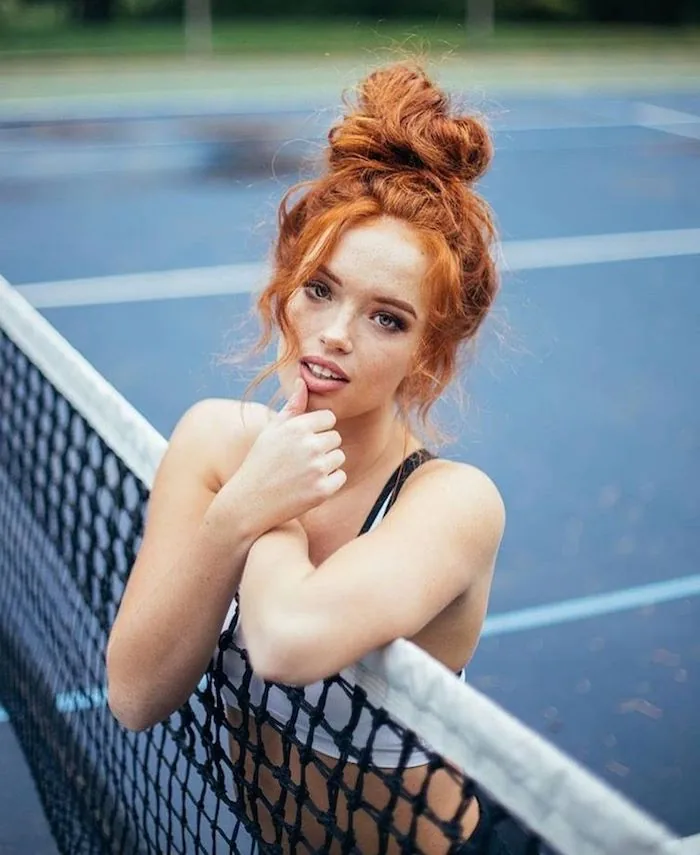
Best for: casual social games, players with medium-length hair, and anyone who wants a relaxed style that still stays put.
How to style: make a high ponytail, twist the length loosely into a bun and pin it with crossed bobby pins at the base. Gently pull a few pieces loose at the crown and smooth the hairline with your fingers.
What to ask: ask your stylist for a bun anchored with crossed pins at the base, so the messy finish is on top while the hold underneath is solid.
25. The High Puff
The high puff gathers natural hair into a full, round shape at the crown, keeping the curls off the neck while showing off their volume. It is quick, comfortable and joyful, and it holds through rallies when it is secured with the right band.
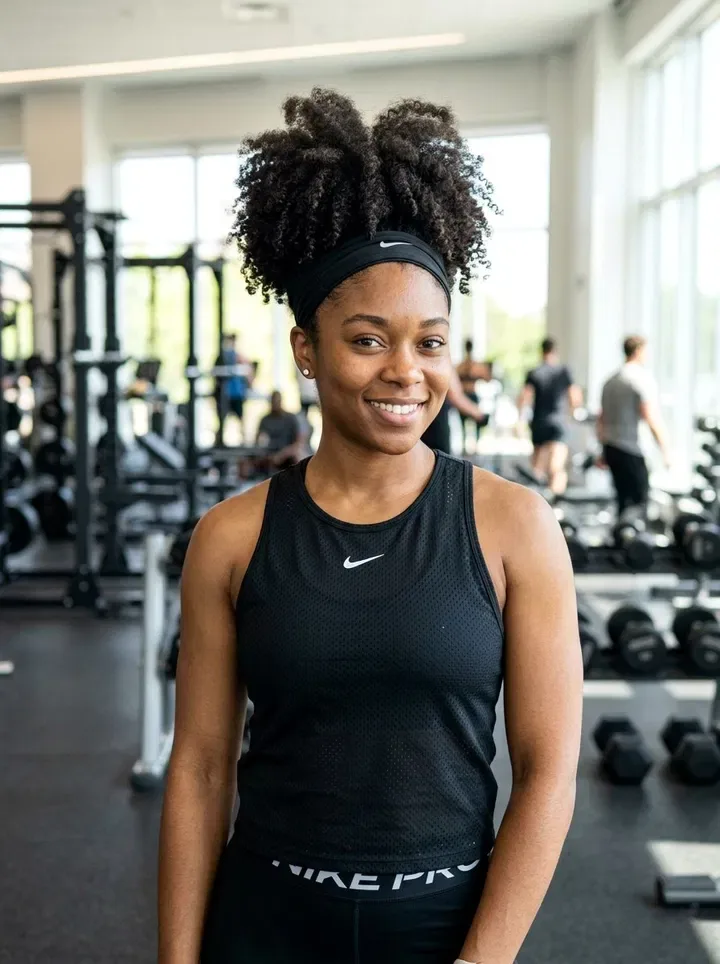
Best for: players with coily or curly hair, anyone who wants a fast updo that protects the curl pattern, and hot days.
How to style: gather the hair at the crown with a wide, soft band, leaving the puff full and round. Smooth the edges with gel and a soft brush, and shape the puff with your fingers.
What to ask: ask your stylist for a puff band that grips without pulling, and for the edges to be smoothed with a product that holds without flaking.
26. The Dutch Braid Into a Ponytail
A Dutch braid that runs from the hairline to the crown and finishes in a ponytail is one of the best court styles for long hair. The braid locks the front flat, the ponytail keeps the length moving freely without hitting the face, and the whole style survives a full morning of games.
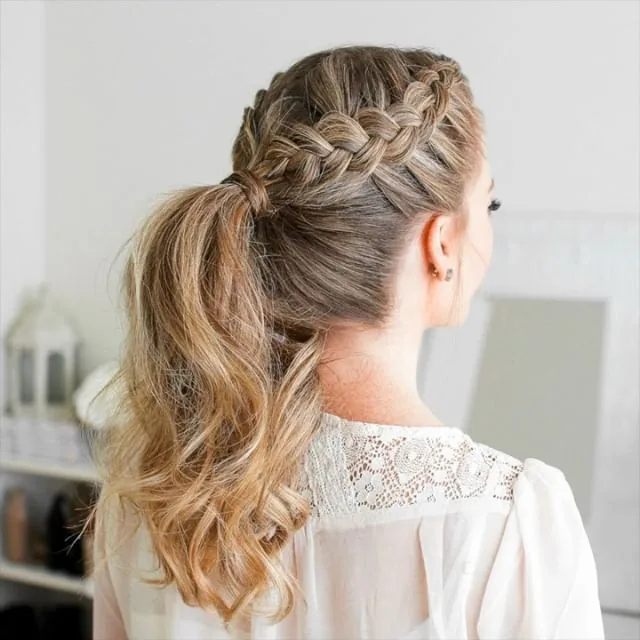
Best for: players with long hair, competitive matches, and anyone who wants a braid that still swings a little without getting in the way.
How to style: Dutch-braid from the hairline back to the crown, adding hair as you go, then gather the remaining hair into a high ponytail. Secure firmly and wrap a strand around the base.
What to ask: ask your stylist for a Dutch braid that starts right at the hairline, so the front layers are locked in from the first centimetre.
27. The Sleek Middle-Part Low Bun
The sleek middle-part low bun is the most elegant style in this guide, and it is also one of the most secure. The centre part keeps the hairline smooth, the gel holds every strand flat, and the low bun sits neatly at the nape, clear of any visor or cap.
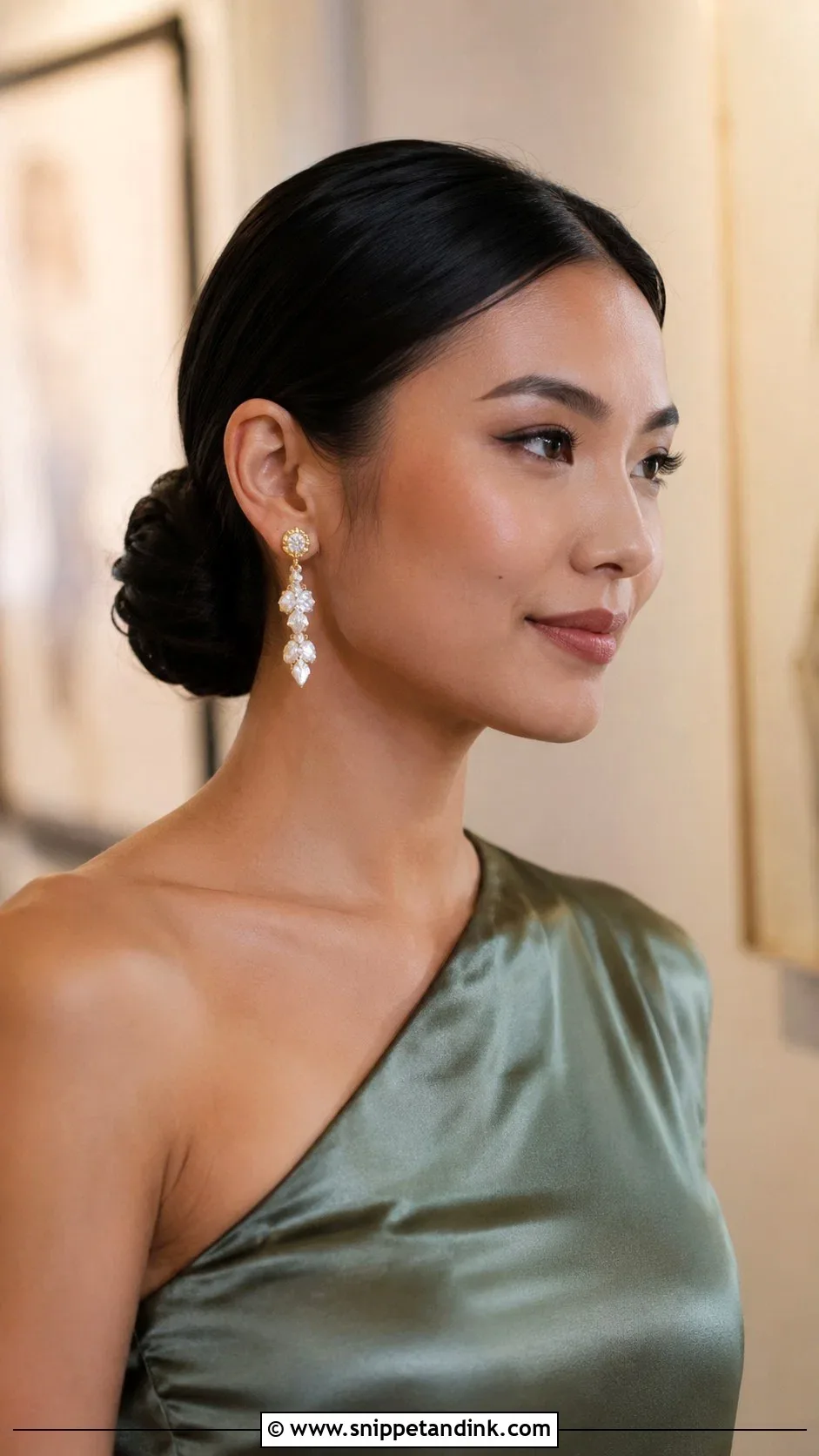
Best for: players who want a polished look, spectators, and anyone with straight hair that slips out of looser styles.
How to style: part the hair down the middle, apply gel and brush it smooth into a low ponytail at the nape. Twist the ponytail into a bun, pin it flat and finish with a light mist of hairspray.
What to ask: ask your stylist for a clean centre part and a bun that sits flat at the nape, with no volume at the crown that would lift a visor.
28. Braided Pigtails
Braided pigtails split the hair into two neat braids, one on each side, so the weight is balanced and nothing can swing across the face. They are secure, cheerful and easy to redo between games, and they work for players and spectators alike.
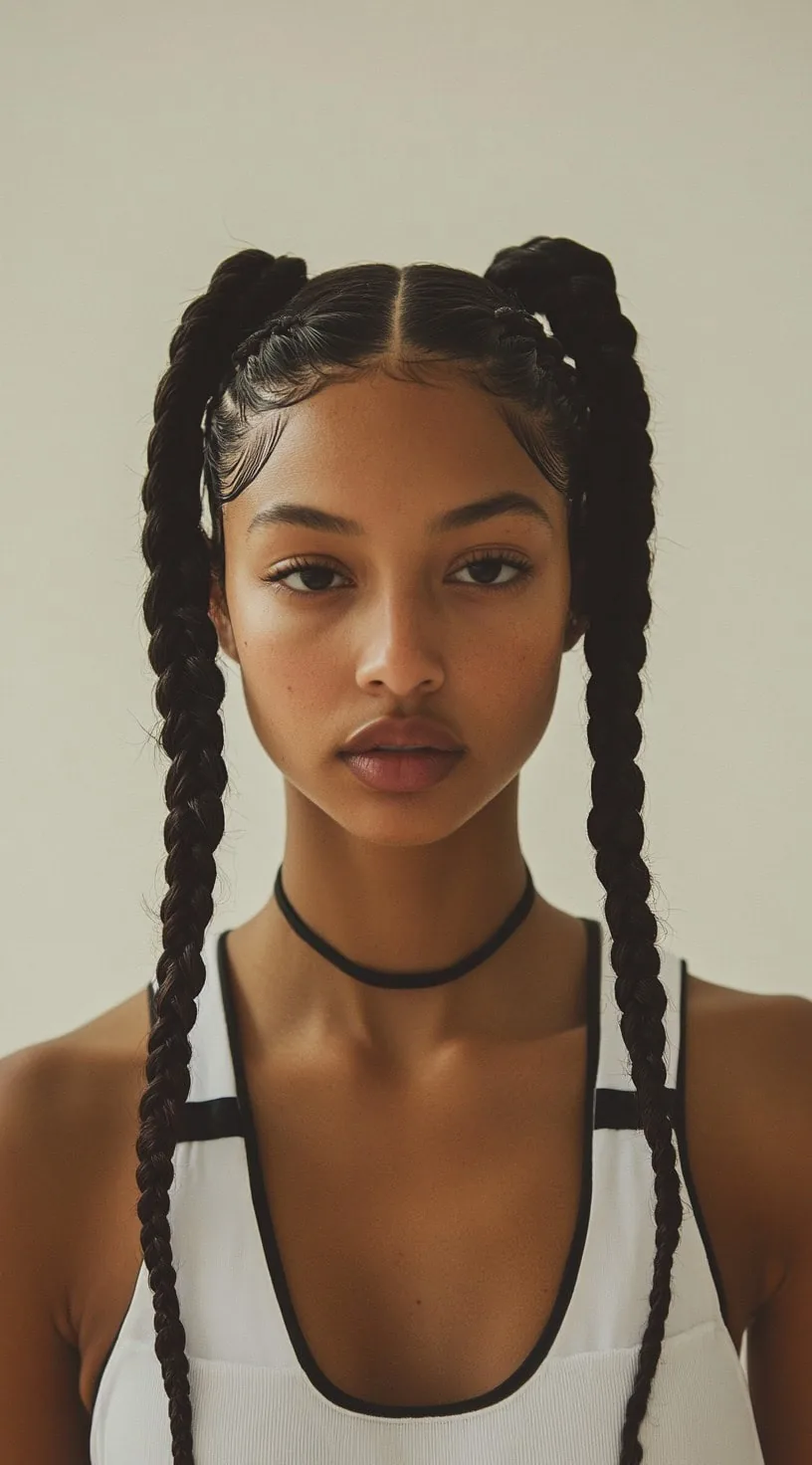
Best for: players with long hair, social games, and anyone who wants a fun, youthful style that holds through rallies.
How to style: part the hair down the middle and braid each side from behind the ear down to the ends. Secure both braids with small elastics and keep them even.
What to ask: ask your stylist for braids that start behind the ears, so the front layers are pulled back and the pigtails sit evenly on both sides.
29. The Twisted Low Bun
The twisted low bun is a soft, elegant alternative to a plain bun: the hair is twisted rather than braided, which gives it a smooth, rope-like texture that holds well and looks more finished. It sits at the nape, stays flat under a visor, and keeps the neck free on hot days.
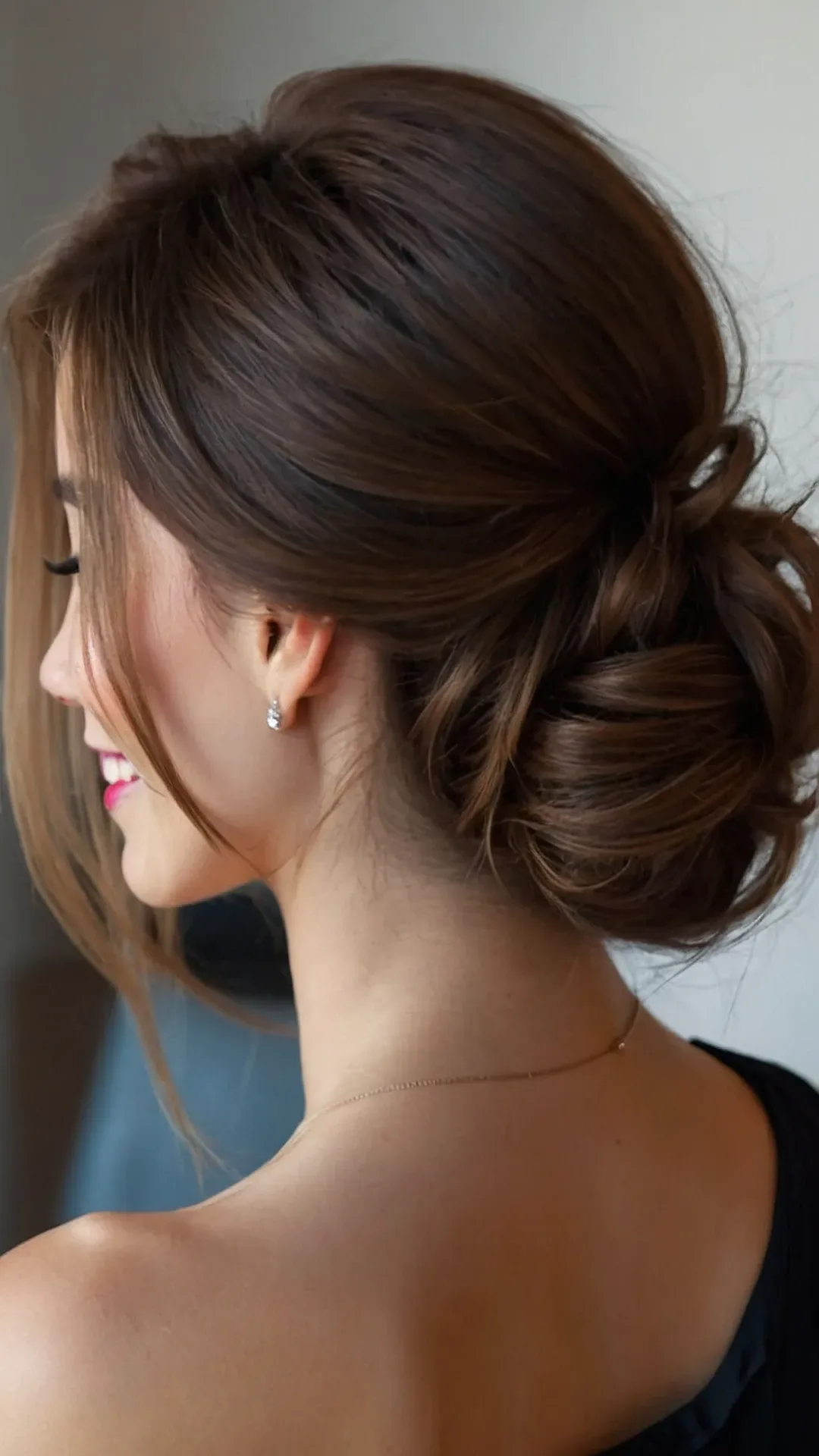
Best for: players with medium to long hair, spectators, and anyone who wants a low bun with a little more texture.
How to style: gather the hair into a low ponytail, split it into two sections, twist each one and then twist them together. Coil the twist into a bun at the nape and pin it firmly.
What to ask: ask your stylist for a twist that is firm at the base, so the bun does not loosen as you sweat during a long match.
30. The Curly High Ponytail With a Headband
A curly high ponytail with a wide headband is the easiest way to play pickleball with curly hair and keep the curls looking their best. The headband holds the hairline back, the ponytail keeps the curls off the neck, and the curls themselves stay soft and full.
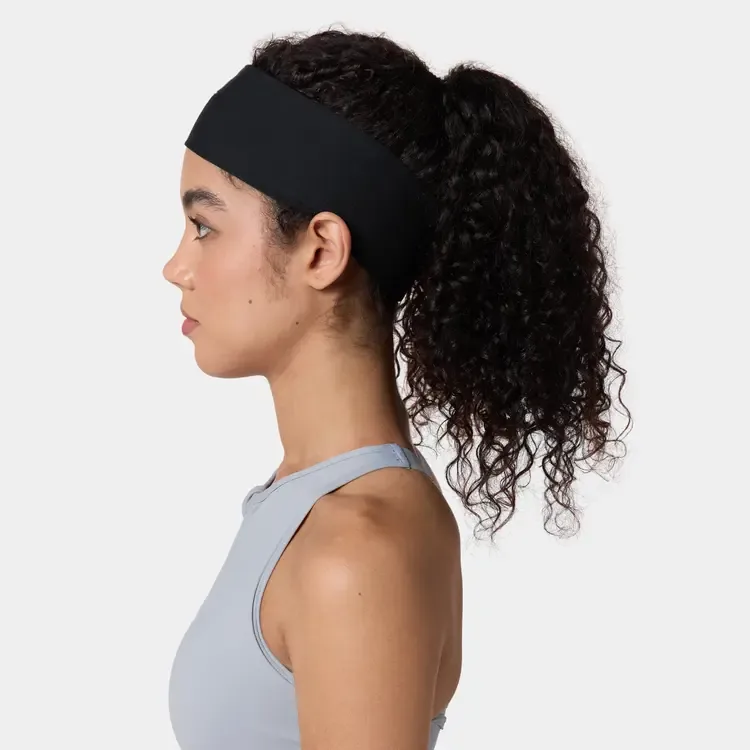
Best for: players with curly hair, anyone who wants to protect their curl pattern, and hot days when the neck needs to stay free.
How to style: gather the curls into a high ponytail with a silk scrunchie, then slide a wide headband on to hold the hairline back. Leave the curls loose and full, and smooth the edges with a little gel.
What to ask: ask your stylist for a headband wide enough to grip the hairline, and a scrunchie that holds the curls without denting them.
31. The Faux-Hawk Braid
The faux-hawk braid runs a single braid down the centre of the head, pulling the sides back and creating a bold, sporty line that looks striking and stays completely secure. It keeps every layer off the face and holds through the fastest rallies.
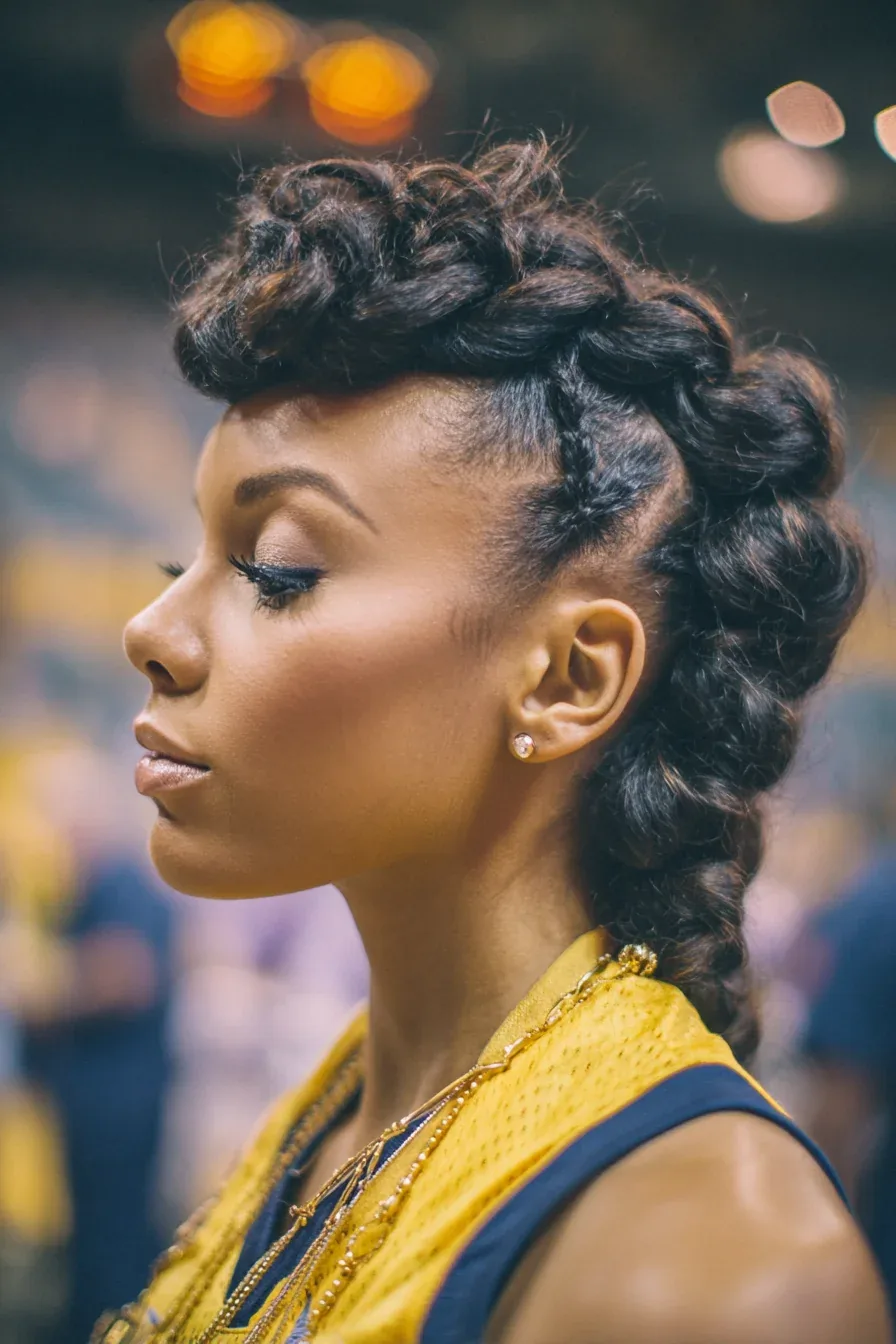
Best for: players who want a bold court style, anyone with medium to long hair, and spectators who like a look with attitude.
How to style: French-braid down the centre of the head from the hairline to the nape, keeping the braid tight and central. Secure the end, gently pull the braid wider for volume, and pin the sides flat.
What to ask: ask your stylist for a centre braid that stays tight at the hairline, with the sides smoothed back so nothing escapes during play.
32. The Low Braided Bun
The low braided bun combines the security of a braid with the neatness of a bun: the hair is braided first, then coiled into a bun at the nape, so it cannot loosen, unravel or slip. It is one of the most reliable styles for a long day on the court.
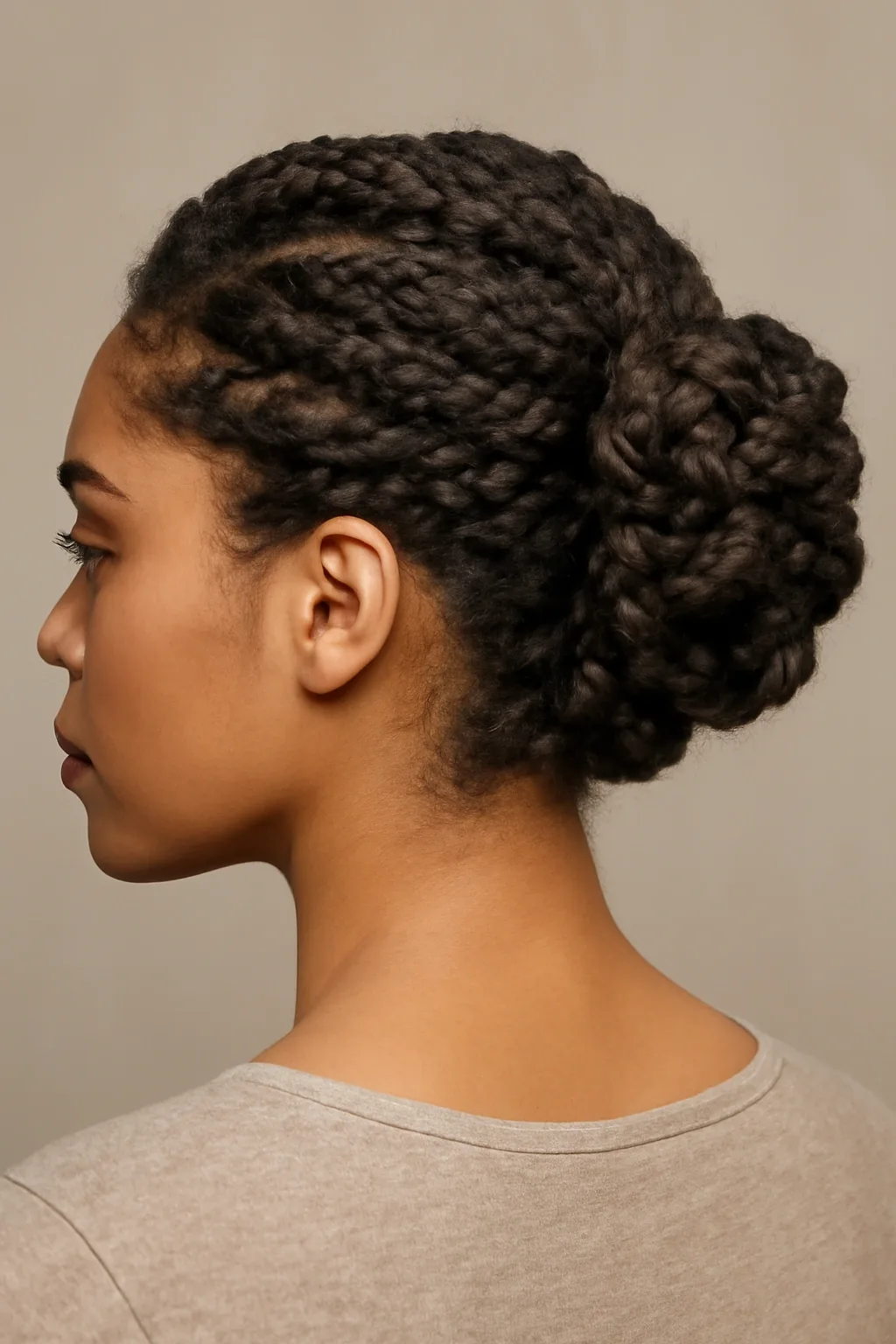
Best for: players with long hair, tournament days, and anyone who wants a bun that will not budge no matter how many games they play.
How to style: braid the hair into a single low braid, then coil the braid into a bun at the nape and pin it firmly in several places. Smooth the hairline with gel for a clean finish.
What to ask: ask your stylist for a bun pinned at three points around the base, so the braid stays coiled and flat through the whole match.
33. The Half-Up Braided Ponytail
The half-up braided ponytail braids the top half of the hair back into a ponytail, leaving the rest down and free. It keeps the face clear and the hairline tidy, while the loose length underneath keeps the look soft, which makes it perfect for social games and spectators.
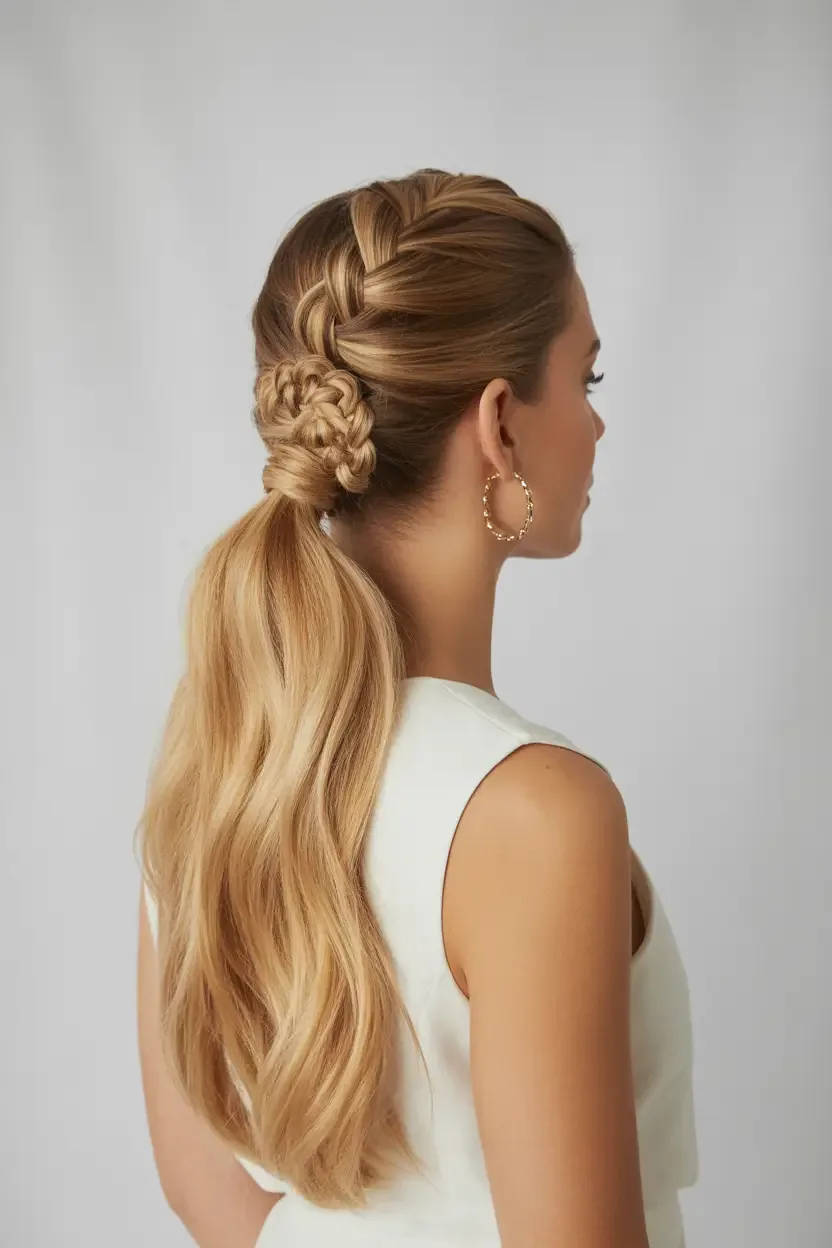
Best for: medium to long hair, social pickleball mornings, and anyone who wants the face clear without a full updo.
How to style: braid the top section back from the hairline and secure it into a small ponytail at the crown, leaving the bottom half loose. Smooth the hairline and pull out two soft pieces at the front if you like.
What to ask: ask your stylist for a braid that starts at the hairline and joins the ponytail at the crown, so the top half stays locked back all game.
What is the best hairstyle for playing pickleball?
Double Dutch braids or cornrows are the best hairstyles for playing pickleball, because they lock the hair flat against the head and cannot come loose during fast rallies, dinks or sudden sprints to the kitchen line. A braided bun or a high ponytail with a headband is the next best option if you do not have time to braid.
Can I wear a visor with a high ponytail?
Yes, you can wear a visor with a high ponytail, but the ponytail should sit high enough that the visor strap clears it, or wear the visor slightly further back on the head. A low ponytail or low bun is easier under a visor, because the crown stays completely flat.
How do I stop my hair from getting sweaty during pickleball?
Use a sweat-wicking headband, apply a little sweat-proof gel before you style your hair, and choose a braid or bun that keeps the hair off your neck. Dry shampoo at the roots between games absorbs sweat fast, and a quick re-tighten of the style takes only two minutes.
What hairstyle works best for short hair on the court?
A wide fabric headband is the best option for short hair on the pickleball court, because it keeps the front layers out of the eyes and soaks up sweat. Flat clips at the temples and a little texture spray keep the rest in place without any updo at all.
Should I braid my hair before playing pickleball?
Yes, braiding your hair before playing pickleball is one of the best things you can do. Braids lock every layer flat, survive sweat and sun, and do not need fixing between games, which is why most competitive players choose a braid over a loose ponytail.
How do I keep curly hair under control during a pickleball game?
Gather curly hair into a pineapple updo, a high puff or a curly high ponytail with a headband, using a silk scrunchie to protect the curl pattern. Smooth the hairline with a little gel, and avoid brushing the curls dry, which creates frizz.
What should I pack in my pickleball hair kit?
Pack two elastics, four bobby pins, a small brush, a travel-size dry shampoo and a wide headband. That tiny kit covers a re-tighten between games, a loose braid fix, a sweaty hairline and a broken elastic, all in under two minutes.
Can I wear my hair down to play pickleball?
You can wear your hair down for a very casual social game, but it is not practical for competitive play. Loose hair falls across the face during rallies, sticks to a sweaty neck and needs constant pushing back, so a half-up style is the minimum that keeps your vision clear.
How do I transition my pickleball hairstyle to lunch afterwards?
Take out the headband, shake the style loose at the crown and pull out two soft pieces at the front. A quick spritz of dry shampoo and swapping a sport elastic for a silk scrunchie turns a tight match style into a relaxed lunch look in under a minute.
How often should I wash my hair if I play pickleball every day?
Wash your hair after every sweaty session if you play daily, using a gentle shampoo, and use a clarifying shampoo once or twice a week to remove sweat, sunscreen and product build-up. Condition only the lengths, and let the hair air-dry loose when you can.
Conclusion
Whether you are playing competitive doubles, joining a social game or cheering from the sidelines, the right hairstyle makes the whole pickleball morning better. Braids lock everything down, buns keep the neck cool, and ponytails get you onto the court in minutes — and the best hairstyles for a pickleball game are the ones you never have to think about once the first serve is in the air.
Pick one style from this guide, practise it once before game day, and pack your bench kit: two elastics, four bobby pins and a spare headband. Then go and enjoy the rallies, the dinks and the lunch afterwards, knowing your hair is already sorted.