Hairstyles for a Triangle Face Shape: 40 Cuts That Add Width at the Crown and Soften a Strong Jawline
A triangle face shape — often called a pear shape — is wider at the jaw than it is at the forehead, with a narrower forehead, cheekbones that sit fairly close together, and a jawline that carries the most width in the face. It is a striking, strong-boned shape, and the right haircut makes it look balanced and soft instead of bottom-heavy. That is exactly what hairstyles for a triangle face shape are designed to do: add width and movement around the crown and temples while keeping the jawline soft and uncluttered.
The balancing principle is simple once you see it. Anything that adds volume, texture or width at the top of the head — layers at the crown, a side-swept fringe, a deep side part, a voluminous blowout — makes the forehead look wider and brings the face into proportion. Anything that adds bulk at jaw level, like a blunt bob that ends exactly at the chin or heavy layers that puff out beside the jaw, does the opposite and makes the jaw look even wider.
This guide starts with the thinking — how to tell whether you really have a triangle face, the balancing rule in practice, the partings and bang styles that work hardest, and the lengths that flatter — and then gives you 40 styles to choose from, from bobs and lobs to pixies, long layers, curls and updos, across straight, wavy and curly textures and every age. Pick one, show the pictures to your stylist, and walk out with a cut that works with your bone structure instead of against it.
How to Tell You Have a Triangle Face Shape
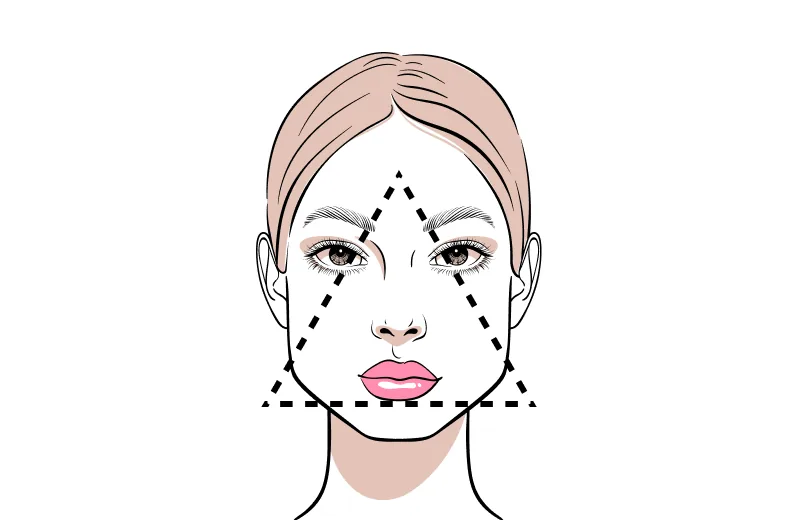
Stand in front of a mirror with your hair pulled right back and look at the outline of your face. A triangle face is widest at the jaw, narrower through the cheekbones, and narrowest at the forehead — the shape widens steadily as your eye travels down, like a pear turned upside down. Your chin may be slightly pointed or softly rounded, and your jawline is usually the most defined feature of your face.
Measure if you are not sure. Compare the width across your jaw with the width across your forehead, just above the eyebrows. If the jaw measures clearly wider than the forehead, and your cheekbones fall somewhere in between, you have a triangle shape. Photographing yourself straight-on helps too, because a photo flattens the face and makes the outline easier to judge than a mirror does.
Do not confuse a triangle face with a heart face, which is the opposite — wide at the forehead and narrow at the chin. If your forehead is the widest part of your face, you are looking at heart-shape advice, and the triangle rules in this guide will not fit. A square face, meanwhile, is roughly the same width at the forehead and the jaw, with a strong, angular jawline on both sides.
Once you know your shape, the rest of this guide makes sense. Every cut here is chosen to do the same job: build width and softness at the top of the head and keep the jawline light. If a style in this list does not suit your hair texture or your lifestyle, the guides below will help you adapt it — the principle stays the same whatever the cut.
The Balancing Rule: Width on Top, Softness at the Jaw
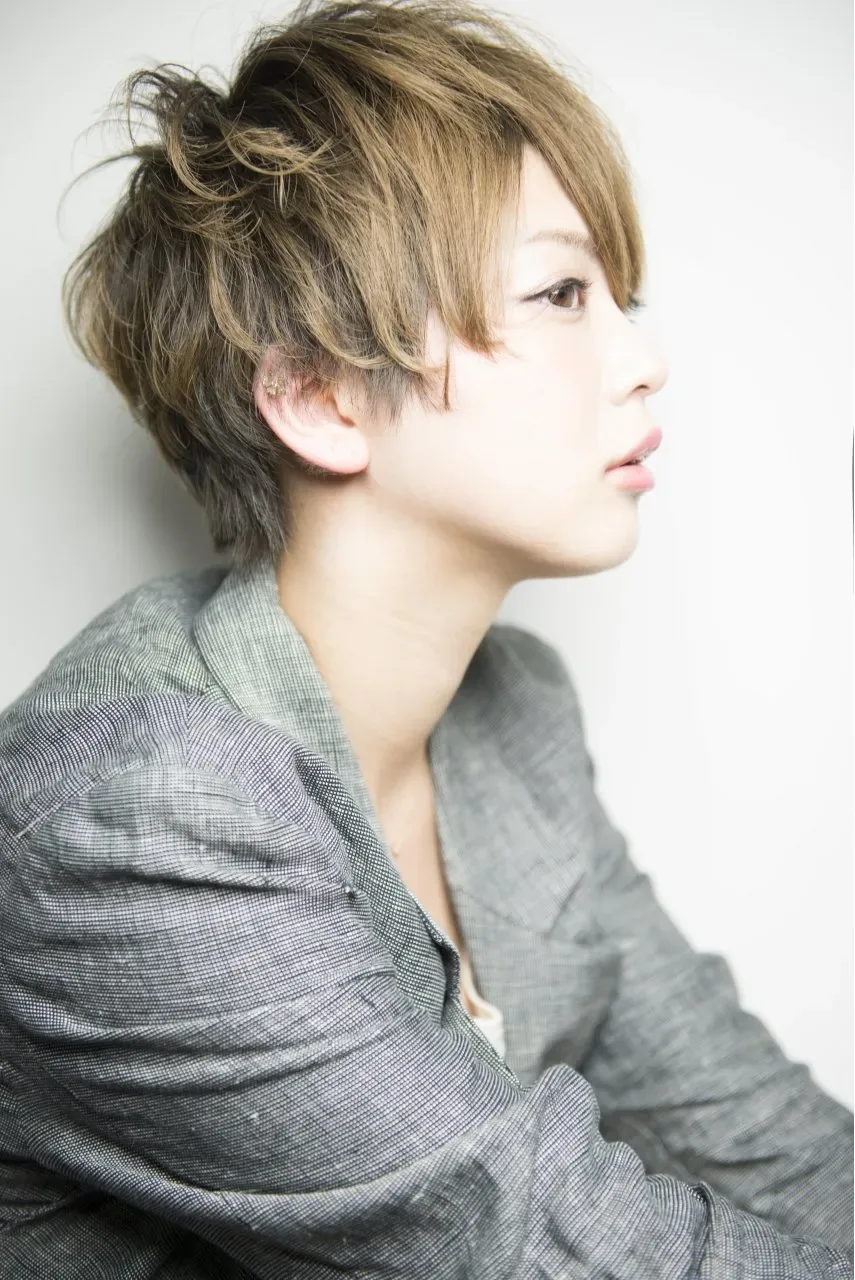
Every flattering cut for a triangle face follows one rule: add width at the top, soften the jaw. Volume at the crown and temples widens the upper half of the face, so the jaw no longer looks like the widest point. Layers that start at the cheekbones and sweep outward, a side part that pushes hair across the forehead, and a fringe that covers the narrow forehead all do this job.
Softness at the jaw matters just as much. Wispy ends, face-framing layers that curve inward at the chin, and curls that fall below the jawline all blur the hard edge of the jaw without adding bulk beside it. The goal is never to hide the jaw completely — a defined jaw is a beautiful feature — but to stop the eye from landing on it first.
The opposite choices are the ones to watch for. A blunt cut that ends right at the jawline draws a hard horizontal line exactly where the face is widest. Heavy, boxy layers at chin level do the same thing in a softer way. And slicking all the hair flat back from the face exposes the narrow forehead and makes the jaw look even broader by comparison.
Use this rule as a test for any cut you are considering, including styles that are not in this guide. Ask two questions: does it add something at the crown or temples, and does it keep the jawline light? If the answer to both is yes, it will almost certainly flatter a triangle face.
Best Partings for a Triangle Face
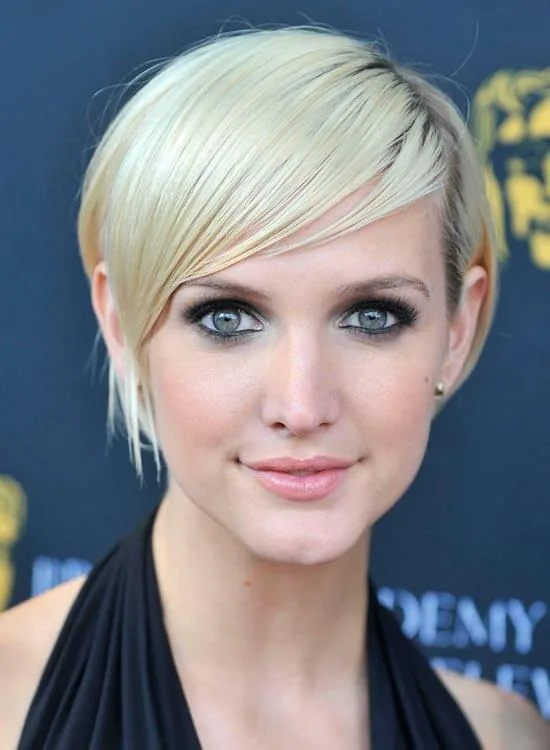
A deep side part is the single easiest win for a triangle face. Sweeping most of the hair across the forehead from one side creates instant width at the temples, covers the narrowest part of the face, and breaks up the symmetry that makes a wide jaw so noticeable. It works on short hair, long hair, straight hair and curls, and it costs nothing to try before you commit to a cut.
A centre part can work too, but only with the right cut. Curtain bangs or face-framing layers that open from a centre part add width at the cheekbones and soften the forehead, so the part itself stops being a problem. A bare centre part with flat, straight hair pulled tight is the version to avoid, because it exposes the narrow forehead and leaves the jaw as the widest thing on show.
A zigzag part is a useful trick for fine hair. It lifts the roots at the crown, adds a little volume exactly where a triangle face needs it, and stops the hair from falling flat in a hard line. A side part with a little root lift — a quick blast with the dryer, a touch of volumising powder — does the same job and looks more polished.
Whichever parting you choose, keep it slightly imperfect. A hard, ruler-straight part emphasises symmetry and structure, and a triangle face already has plenty of structure at the jaw. A soft, lived-in part keeps the eye moving and lets the volume at the crown do the balancing work.
Volume at the Crown vs Width at the Jaw
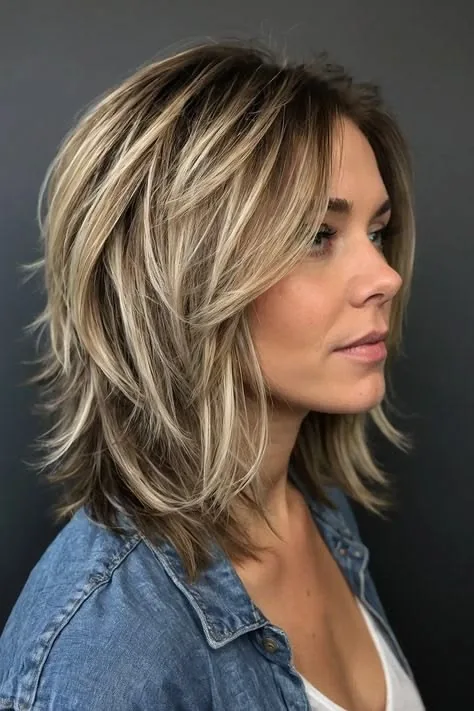
Volume is not one thing, and where you put it changes everything for a triangle face. Volume at the crown — lift at the roots, layers that start high, a blowout that arcs away from the head — widens the upper face and is always your friend. Volume at the jaw — curls that puff out at chin level, a bob that flicks out beside the jaw, thick layers that end at the jawline — widens the lower face and works against you.
The easiest way to get crown volume is at the roots. Blow-dry the top sections upward with a round brush, flip the part to the opposite side while the hair is still warm, and finish with a light volumising spray or a pinch of root powder. Backcombing a small section at the crown under the top layer gives instant lift that lasts all day without looking teased.
Keep the jaw area light by choosing where layers end. Layers that finish above the jaw or below it are both fine; layers that finish exactly at the jaw are the problem, because they create a shelf of width right where you do not want it. If your hair naturally flips out at the ends, ask your stylist to thin the ends slightly or to layer them so they fall inward.
Think of it as a seesaw. Every bit of width you add at the top lets you take width away at the bottom, and the face starts to look oval — the shape every cut is quietly aiming for. A high bun with a little lift at the front, a half-up style with volume on top, and a layered cut with movement at the temples all work on exactly this principle.
Bangs That Work for a Triangle Face
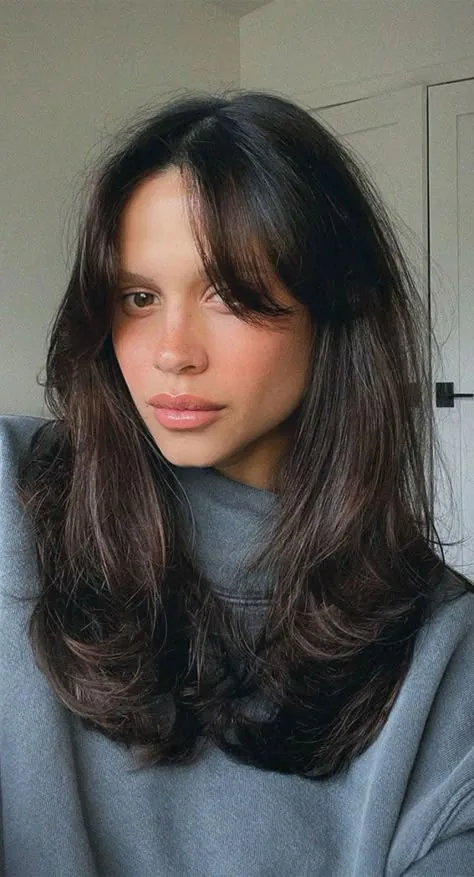
Bangs are one of the best tools for a triangle face, because they add width and texture exactly where the face is narrowest. Curtain bangs are the safest choice: they part in the middle, sweep out to each side, and create width at the temples and cheekbones while softening the forehead. They grow out gracefully too, which makes them a low-commitment way to test a fringe.
Side-swept bangs work just as well and suit more lengths. A long side-swept fringe that falls across the forehead and blends into the layers adds diagonal movement, breaks up the straight lines of the face, and draws the eye upward. Keep them long enough to tuck behind the ear on one side — that versatility is what makes them so easy to live with.
Wispy, textured bangs are a good option if you want a fringe without the weight. They soften the forehead without covering it completely, and they suit fine hair because they do not need much density to look intentional. Ask for them cut with a razor or point-cut so the ends stay light and feathered rather than blunt.
The one style to be careful with is a short, straight-across blunt fringe. It draws a hard line across the narrowest part of the face and can make the forehead look even smaller, which throws the balance the wrong way. If you love a blunt fringe, pair it with layers at the temples and volume at the crown so the top of the head still carries some width.
Lengths That Flatter a Triangle Face
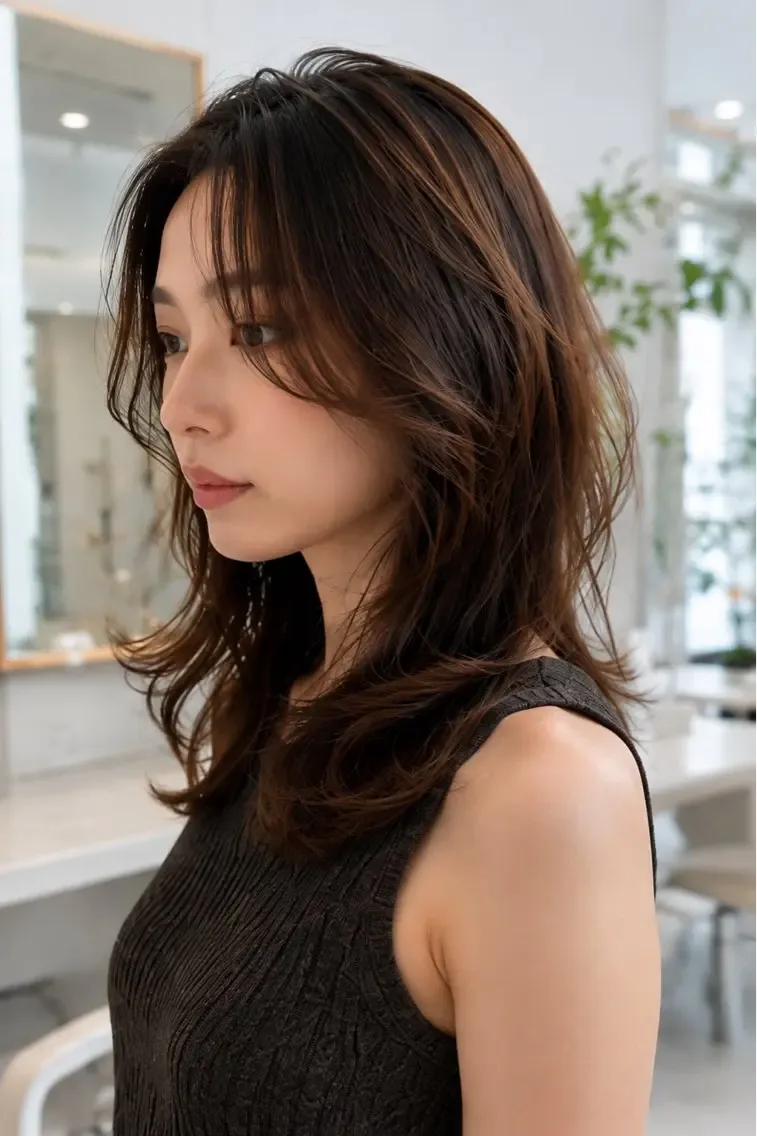
The most flattering lengths for a triangle face are the ones that let you put volume where it counts. A lob that ends between the chin and the collarbone is the sweet spot for most people: it is long enough to layer at the crown and frame the face, and short enough that the ends do not drag the eye down to the jaw. A shoulder-length cut with layers is the most versatile version of this.
Long hair works beautifully too, as long as the layers start high. Long layers that begin at the cheekbones and sweep outward add width at the temples, and the length below the jaw draws the eye downward in a soft line rather than a hard stop. Long hair that is all one length with no layers is the version to avoid, because it hangs flat at the top and adds weight exactly where you do not want it.
Short hair can absolutely suit a triangle face — a pixie with height on top and a long side-swept fringe is one of the most flattering short cuts there is. The key is texture and lift at the crown. A flat, close-cropped pixie with no volume on top exposes the narrow forehead, so always ask for length and texture left on top.
Whatever length you choose, the ends matter. Ends that curve inward at the jaw soften it; ends that flick outward widen it. Ask your stylist to finish the cut with the ends bevelled inward, or to show you how to turn them under with a round brush at home — a thirty-second habit that makes a real difference.
What to Ask Your Stylist
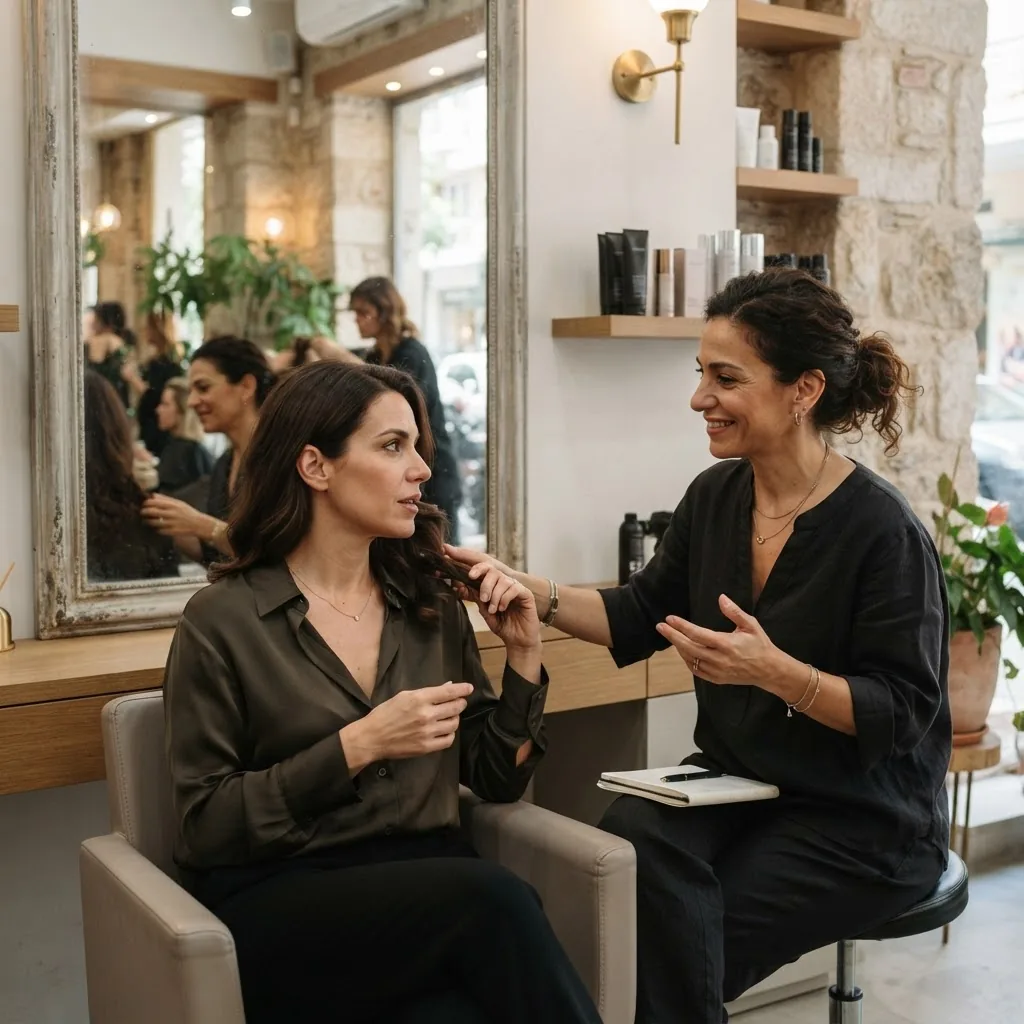
Bring pictures, and bring more than one. A photo of the cut you want is worth a thousand words, but bring a second photo of the same cut from a different angle, and a photo of a cut you do not want. Stylists read pictures faster than descriptions, and showing what you dislike is just as useful as showing what you like.
Say the words that matter: width at the crown, softness at the jaw, layers that start at the cheekbones. Tell your stylist you have a triangle face shape and that you want the top to look wider and the jawline to look softer. A good stylist will translate that into layer placement, parting and finishing in a way that suits your hair texture and density.
Ask about the grow-out before you agree to the cut. How will the layers look in six weeks, will the fringe need trimming every three weeks, and can the cut be tied back easily? A cut that looks wonderful on day one and awkward by week four is not a good cut for your life, however flattering the shape is.
Finally, ask your stylist to show you the styling. Watch how they lift the roots, where they place the part, and how they finish the ends — then try it yourself in the chair before you leave. A cut you can recreate at home in five minutes is worth far more than a cut that only looks right when a professional has just finished it.
Styles to Avoid with a Triangle Face

A few styles work against a triangle face so reliably that it is worth knowing them by name. The first is the blunt chin-length bob with no layers: it ends exactly at the jawline, draws a hard horizontal line at the widest part of the face, and adds a shelf of hair beside the jaw. If you love a bob, add layers, a side part, or a fringe — any of those breaks the line.
The second is the slicked-back look with no volume on top. Pulling all the hair flat back from the face exposes the narrow forehead and leaves the jaw as the only width in the face. A slicked style can work for an evening updo if you add height at the front first, but as an everyday style it is the least flattering option for this shape.
The third is heavy, one-length hair with no layers at all. It hangs flat at the crown, where you need lift, and adds weight at the ends, where you need lightness. It also makes the face look longer and narrower at the top, which is the opposite of the balance you want. Layers, even long and subtle ones, fix this in a single cut.
None of these is a hard ban — a great stylist can make almost anything work by adding a fringe, a parting change, or a little texture. But if you are choosing a new cut and you want the safest possible bet, steer clear of hard lines at the jaw, flat roots, and one-length ends, and pick any style in this guide instead.
Layered Lob with Volume at the Crown
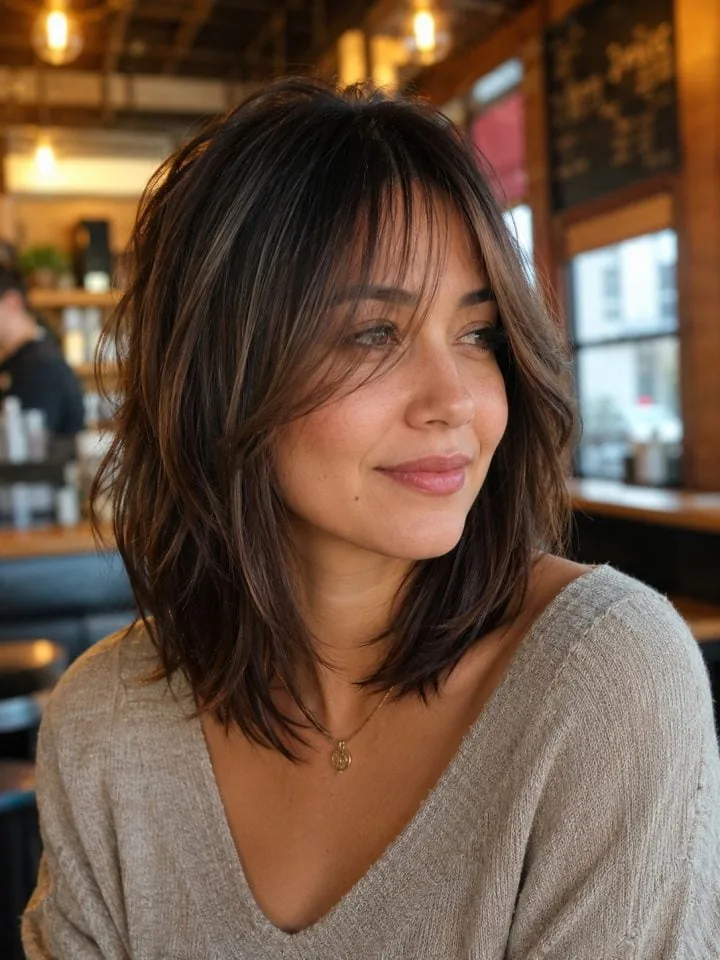
Pros: A layered lob is the most reliable cut for a triangle face, and this version is built around the balancing rule. Layers cut into the crown give instant lift and width at the top of the head, while the length — just below the chin — keeps the ends clear of the widest part of the jaw. It is easy to style, grows out well, and suits straight, wavy and lightly curly hair.
Cons: The layers need a little daily styling to hold their lift; left to air-dry, fine hair can fall flat at the crown and the whole effect disappears. The cut also needs a trim every six to eight weeks to keep the layers from blending into one heavy length, and very thick hair may need thinning at the ends so it does not puff out beside the jaw.
Who it suits: Almost everyone with a triangle face, especially women with fine to medium hair who want a cut that looks polished with minimal effort. It suits office wear, weekend wear and evening looks equally, and it is a great first step if you are moving from long hair to something shorter without going drastic.
Style it by blow-drying the crown sections upward with a round brush, then flipping the part to the opposite side while the hair is warm. A pinch of root powder at the crown holds the lift all day, and turning the ends slightly under with the brush keeps the jawline soft rather than flared.
Textured Bob with Side-Swept Bangs
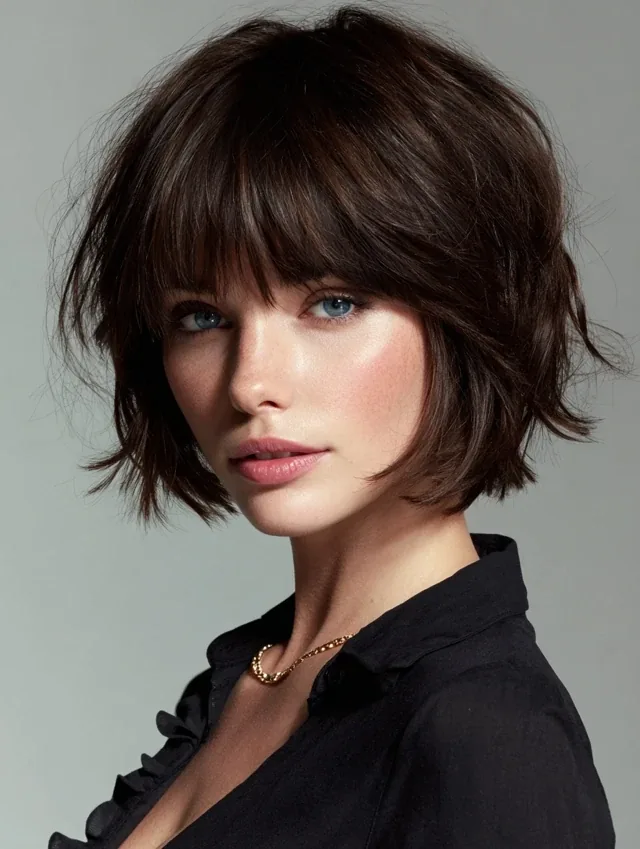
Pros: A textured bob with side-swept bangs does two balancing jobs at once. The side-swept fringe sweeps across the forehead and adds width at the temples, while the textured, choppy ends break up the hard line a blunt bob would draw at the jaw. The result is a cut that looks modern, moves naturally, and flatters the face from every angle.
Cons: The fringe needs trimming every three to four weeks or it starts falling into the eyes, and the texture relies on a little styling product — a texturising spray or a dab of styling cream — to look intentional rather than messy. In very humid weather the fringe can separate and lose its sweep.
Who it suits: Women with straight or wavy hair who like a shorter cut but want softness around the face. It is particularly good for anyone with a strong jaw who wants to soften it without hiding it, and it works well for women over forty who want a fresh, current cut that is not trying too hard.
Ask your stylist to point-cut the ends for texture rather than cutting them blunt, and to keep the fringe long enough to tuck behind one ear. Style with a small amount of texturising spray scrunched through the ends, and sweep the fringe across the forehead with a round brush while it is still damp.
Long Layers with Face-Framing Pieces
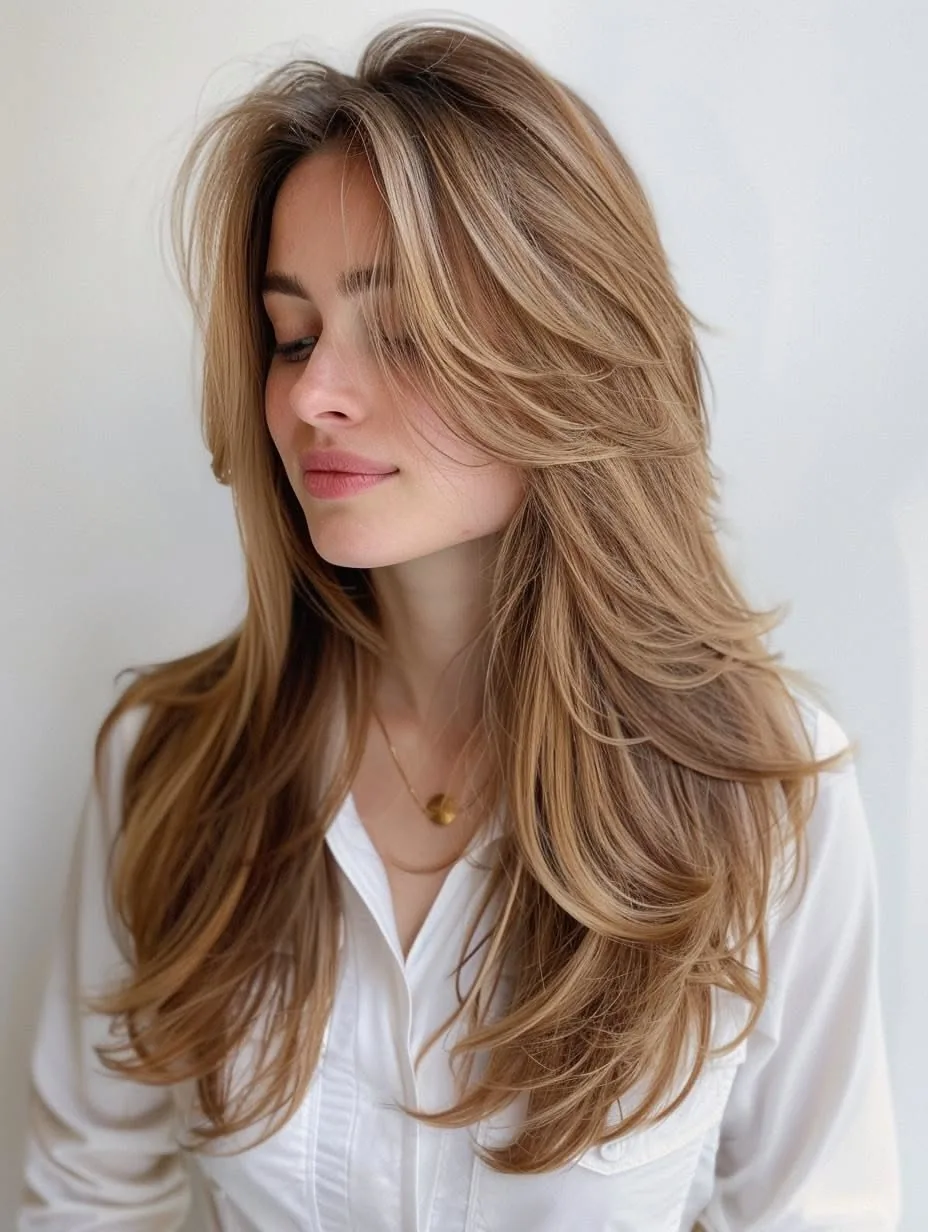
Pros: Long layers with face-framing pieces are the easiest way to balance a triangle face without losing length. The shortest layers start at the cheekbones and sweep outward, adding width at the temples, while the long length below the jaw draws the eye down in a soft line. You keep your long hair and get the balancing effect for free.
Cons: The face-framing pieces need regular trims or they grow past the chin and lose their effect, and very fine hair can look stringy if the layers are cut too thin. Long hair also takes longer to blow-dry with the volume this cut needs at the crown, so it is not the lowest-maintenance option.
Who it suits: Women who love long hair and do not want to cut it short to flatter their face shape. It suits straight and wavy hair best, and it is a lovely option for anyone growing out a shorter cut, because the face-framing layers give the grow-out shape and purpose.
Blow-dry the face-framing pieces away from the face with a round brush so they arc outward at the cheekbones, and add a little root lift at the crown with volumising spray. A soft wave through the lengths with a large-barrel curling iron keeps the ends moving instead of hanging flat.
Curly Lob with Temple Volume
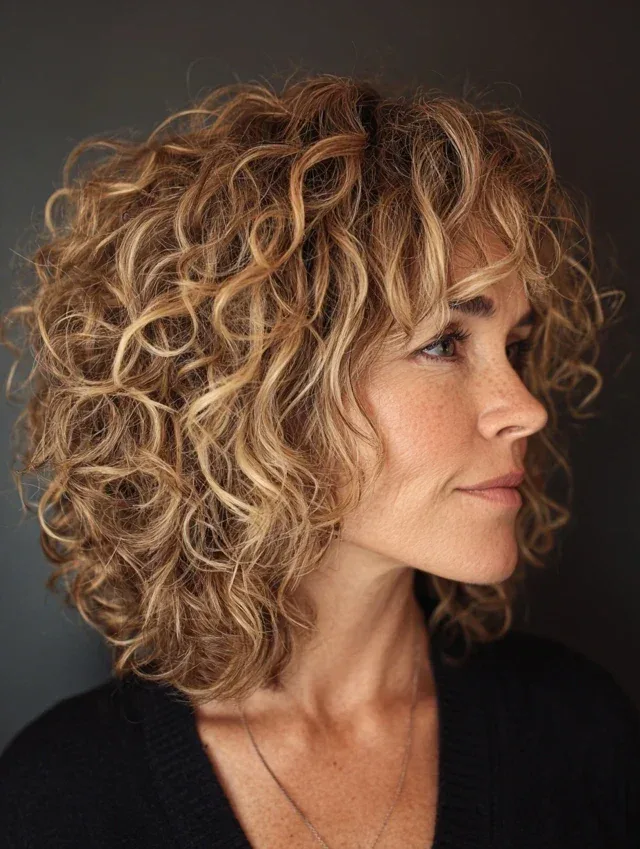
Pros: Natural curls are a gift for a triangle face, because curl volume sits exactly where you need it — at the crown and temples. A curly lob cut with layers through the top lets the curls spring up and outward, widening the upper face, while the length keeps the curls from bunching at the jaw. It is a cut that works with your texture instead of fighting it.
Cons: Curls shrink as they dry, so the cut can end up shorter than expected if it is cut wet — always ask for a dry cut or a cut with plenty of length left in. The shape also needs regular shaping trims, and without a good curl cream the top can go frizzy while the ends stay defined.
Who it suits: Women with naturally curly or wavy hair who want a shorter cut that still shows off their curls. It suits every age and works especially well for anyone whose curls are tightest at the ends, because the layers redistribute the volume upward.
Apply curl cream to soaking-wet hair, scrunch upward, and either diffuse on low heat or let it air-dry without touching it. Once dry, lift the roots at the crown gently with your fingertips — never a brush — to add width at the top without disturbing the curl pattern.
Wispy Curtain Bangs with a Lob
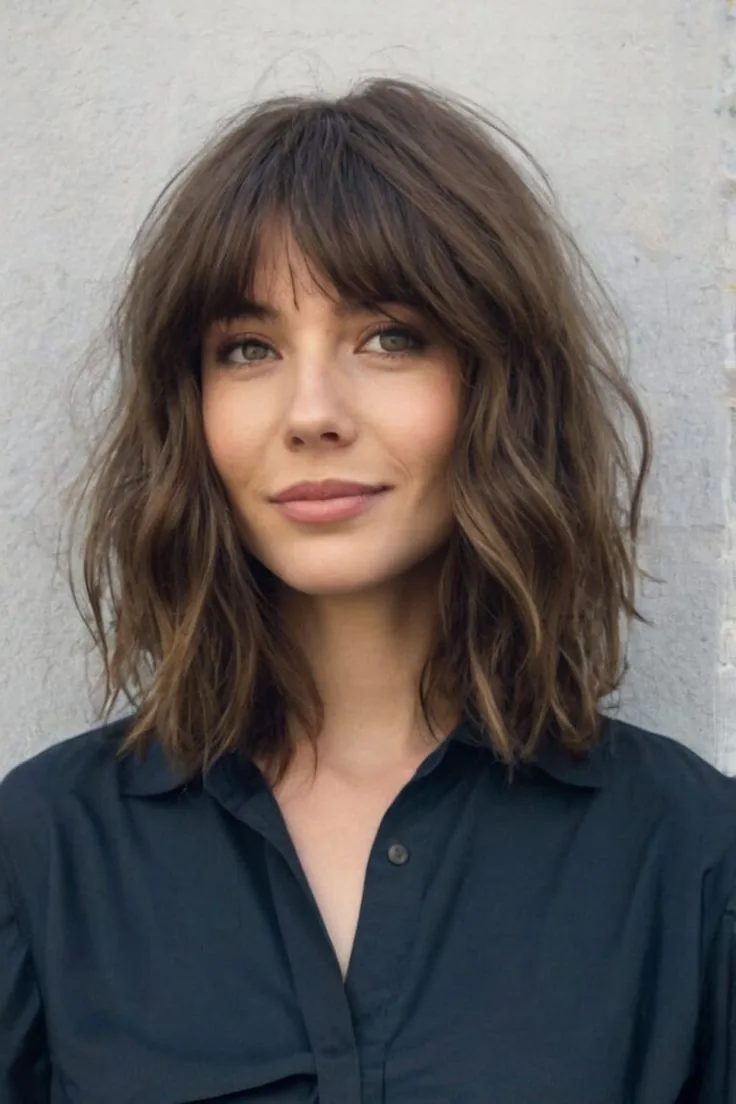
Pros: Wispy curtain bangs are the gentlest way to add width to a narrow forehead. They part in the middle and sweep out to each side, creating soft width at the temples and cheekbones, and they pair perfectly with a lob because the bang length blends straight into the layers. They are low-commitment, grow out beautifully, and suit almost every hair type.
Cons: Curtain bangs need a quick daily style — a round brush or a straightener flick — or they can fall flat and look like a grown-out fringe. They also need trimming every four to five weeks, and in very fine hair they can look thin if they are cut too wispy.
Who it suits: Anyone trying bangs for the first time, and women who want the balancing effect of a fringe without the maintenance of a blunt bang. They are especially good for longer faces and for anyone who wears their hair up often, since the bangs soften the face when the rest is tied back.
Style them by blow-drying the bangs forward and then sweeping each side outward with a round brush, or by wrapping them around a large roller while you do your makeup. A light mist of flexible hairspray holds the sweep without stiffness, and they look best when the rest of the lob has a little wave through it.
Shaggy Pixie with Crown Height
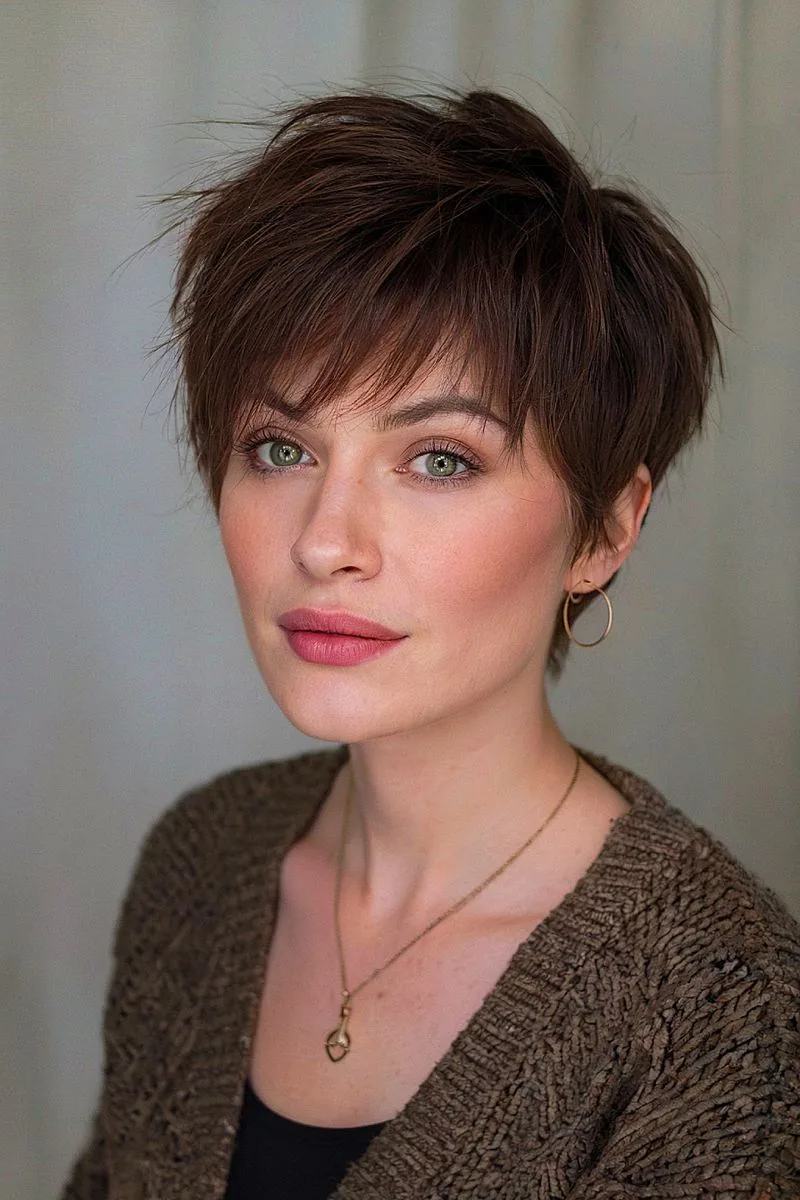
Pros: A shaggy pixie with height on top is one of the most flattering short cuts for a triangle face. The textured length left on the crown gives real width and lift at the top of the head, while the tapered sides and nape keep the lower face light and open. It is bold, modern, and surprisingly easy to style once the cut is right.
Cons: It needs a trim every four to five weeks to keep its shape, and it is not a wash-and-go cut — the crown needs a little styling product and a quick tousle to hold its height. Growing it out takes patience, since the awkward stage between pixie and bob is hard to avoid.
Who it suits: Confident women who like short hair and want a cut with personality. It suits straight and wavy hair best, and it is a wonderful option for women over fifty who want a fresh, low-weight cut that still has shape and movement at the top.
Work a pea-sized amount of texturising paste through the top sections and push them upward and slightly to one side with your fingers. A deep side part adds extra width at the temples, and a long piece left in front of one ear softens the jawline from the side.
Chin-Length Bob with Flipped Ends

Pros: A chin-length bob with flipped ends turns the usual bob problem into a feature. Instead of the ends sitting flat against the jaw, they flick outward with a soft curve that adds movement and breaks the hard horizontal line at the jaw. With a side part and a little crown volume, it becomes a genuinely flattering short cut for a triangle face.
Cons: The flip needs daily styling with a round brush or straightener, and it can drop out in humidity or rain. The length is also unforgiving if the cut is even slightly uneven, so it needs a skilled stylist and regular trims to keep the flip sitting evenly on both sides.
Who it suits: Women with straight or slightly wavy hair who like a retro, polished look. It suits anyone who enjoys styling their hair each morning and wants a bob with more personality than a straight blunt cut, and it photographs beautifully from the side.
Blow-dry the ends outward with a medium round brush, rolling the brush away from the face as you dry. A small amount of smoothing cream on the ends keeps the flip defined without stiffness, and a side part with a little root lift at the crown balances the width at the bottom.
Side-Parted Long Waves
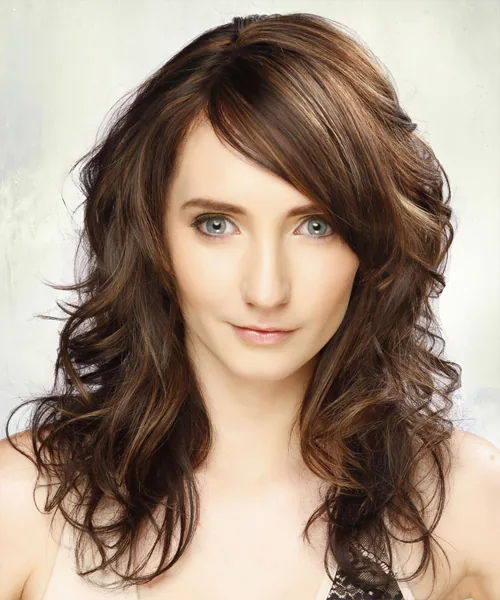
Pros: Side-parted long waves are a classic for a reason: the deep side part sweeps hair across the forehead and creates instant width at the temples, while the waves add soft volume through the lengths without bulking up at the jaw. It is romantic, versatile, and works for everything from a wedding to a workday.
Cons: The waves need either natural texture or heat styling, and a deep side part can feel heavy on one side if the hair is very thick. Long waves also take time to style properly, and the part can slip back to the centre during the day if it is not set with a little product.
Who it suits: Women with naturally wavy hair or hair that holds a curl well, and anyone who wants a glamorous, low-drama style. It suits oval and triangle faces equally, and it is a lovely choice for special occasions because it photographs so well.
Create the waves with a large-barrel curling iron, curling away from the face in wide sections, then brush through gently for a soft finish. Set the deep part with a little volumising spray at the roots, and finish with a flexible-hold hairspray so the waves move naturally.
Voluminous Blowout with Crown Lift
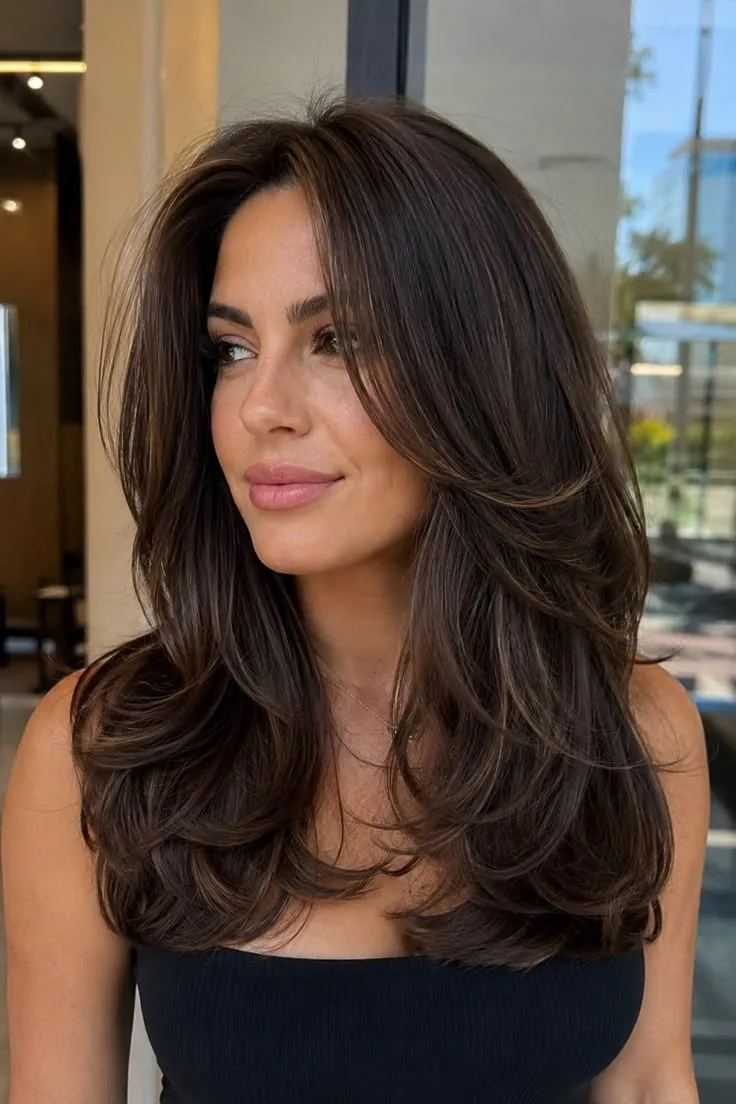
Pros: A voluminous blowout is the fastest way to get the balancing effect without changing your cut at all. Lifting the roots at the crown and curving the lengths away from the face adds width at the top and softness around the jaw in a single styling session, and it works on almost any layered cut. It is the best party trick in this whole guide.
Cons: A blowout takes twenty to thirty minutes to do well, and it drops in humidity or rain. It also needs a round brush, a good dryer, and a little practice — the first few attempts are usually messier than the salon version, and very fine hair may need root powder to hold the lift.
Who it suits: Anyone with a layered cut who wants maximum impact for a special occasion, and women who enjoy styling their hair. It suits medium to long hair best, and it is a great option for anyone deciding whether to commit to a shorter cut, since it previews the balancing effect.
Blow-dry the crown sections upward with a large round brush, rolling the brush back from the face. Clip the top sections up while they cool so the lift sets, then release and brush through lightly. A mist of volumising spray at the roots and a light hairspray over the top holds the shape for hours.
French Bob with Soft Bangs
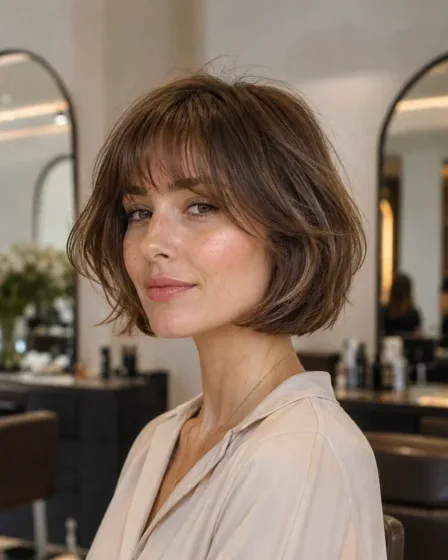
Pros: A French bob with soft bangs is chic, short, and surprisingly kind to a triangle face. The soft, textured fringe adds width across the forehead, the bob sits above the jaw so it never draws a line at the widest point, and the slightly tousled finish keeps the whole look light and effortless rather than severe.
Cons: It is a high-maintenance cut: the length needs trimming every four weeks to stay above the jaw, and the bangs need regular attention. It also suits straight or slightly wavy hair best — very curly hair will need daily smoothing to hold the shape.
Who it suits: Women who love Parisian style and want a short cut with real polish. It suits fine to medium hair, smaller features, and anyone who likes a cut that looks intentional with minimal styling — a little texture spray and it is done.
Ask your stylist to cut the bangs soft and slightly longer at the sides so they blend into the bob, and to keep the back a touch shorter than the front for movement. Style with a small amount of texturising spray and a quick tousle with your fingers, and let the ends sit naturally rather than forcing them straight.
Deep Side Part with Long Layers
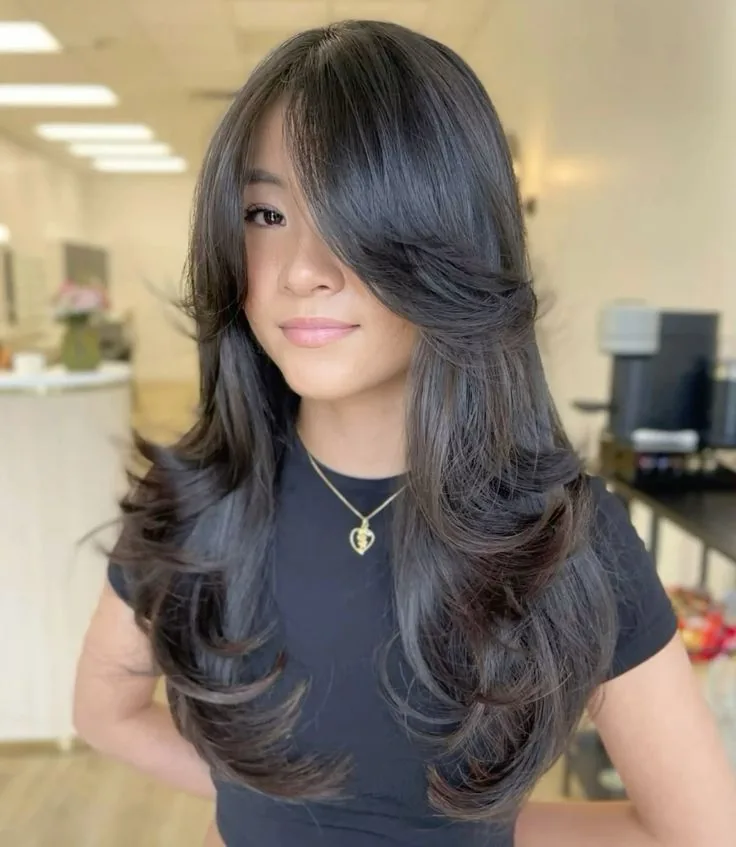
Pros: A deep side part with long layers is one of the simplest balancing styles there is. The part alone pushes a sweep of hair across the forehead, widening the upper face, and the long layers add movement that keeps the eye travelling downward instead of stopping at the jaw. It needs no new cut if you already have layers — just a change of parting.
Cons: The part can drift back to the centre during the day, especially in fine or very straight hair, and the heavy side can feel unbalanced if the hair is extremely thick. It also shows regrowth and root colour more obviously than a centre part, since the part line is more exposed.
Who it suits: Anyone with medium to long hair who wants an instant, no-commitment change. It suits straight, wavy and curly hair, and it is a perfect first step for anyone who suspects they have a triangle face but is not ready to book a restyle yet.
Find your deep part by lining it up with the arch of one eyebrow, then blow-dry the roots in the opposite direction first so they lift away from the part. A little volumising powder at the roots on the heavy side keeps the sweep in place all day.
Wavy Shoulder-Length Cut with Layers
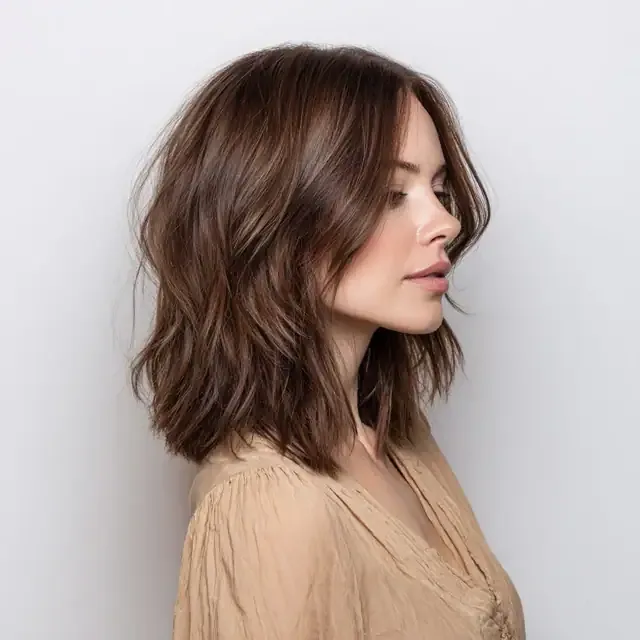
Pros: A wavy shoulder-length cut with layers is the easy, everyday answer for a triangle face. The natural wave adds width at the crown and temples without any heat styling, the layers keep the shape light around the jaw, and the length is short enough to be practical and long enough to tie back. It is the cut most women in this guide will actually live in.
Cons: The waves need a little encouragement — a curl cream or sea-salt spray — or they can fall flat by midday. The layers also need a trim every eight weeks to keep their shape, and very straight hair will need heat to create the wave this cut relies on.
Who it suits: Women with naturally wavy hair, busy schedules, and a preference for low-maintenance styles. It suits every age and works well for fine hair too, because the layers and wave together create the illusion of thickness at the top.
Scrunch a little curl cream through damp hair and let it air-dry, or diffuse on low heat for more definition. Once dry, shake the roots at the crown with your fingertips to add width at the top, and leave the ends natural rather than curling them under.
Pixie with Long Side-Swept Fringe
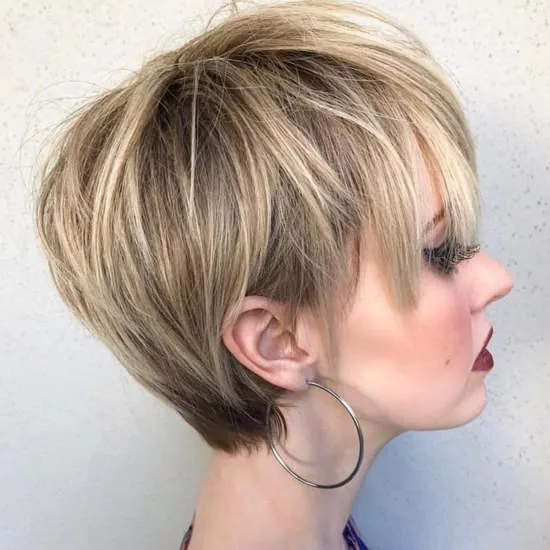
Pros: A pixie with a long side-swept fringe is proof that short hair can flatter a triangle face beautifully. The fringe sweeps across the forehead and adds diagonal width at the temples, the textured top gives height at the crown, and the short sides keep the jawline open and light. It is striking, modern, and far softer than a severe short cut.
Cons: It needs a trim every three to four weeks to keep the fringe from falling into the eyes, and it relies on daily styling — a little product and a quick finger-style — to hold its shape. It is also a bold change if you are used to long hair, and growing it out takes months.
Who it suits: Women who want short hair with softness, and anyone with strong features who wants a cut that frames rather than hides them. It suits straight and wavy hair best, and it is a wonderful choice for women who like a polished look that takes five minutes in the morning.
Blow-dry the fringe across the forehead with a small round brush, then finish with a dab of styling cream to define the texture on top. Keep the fringe long enough to tuck behind one ear for variety, and ask your stylist to keep weight at the crown rather than the sides.
Bouncy Curls with Layers at the Cheeks
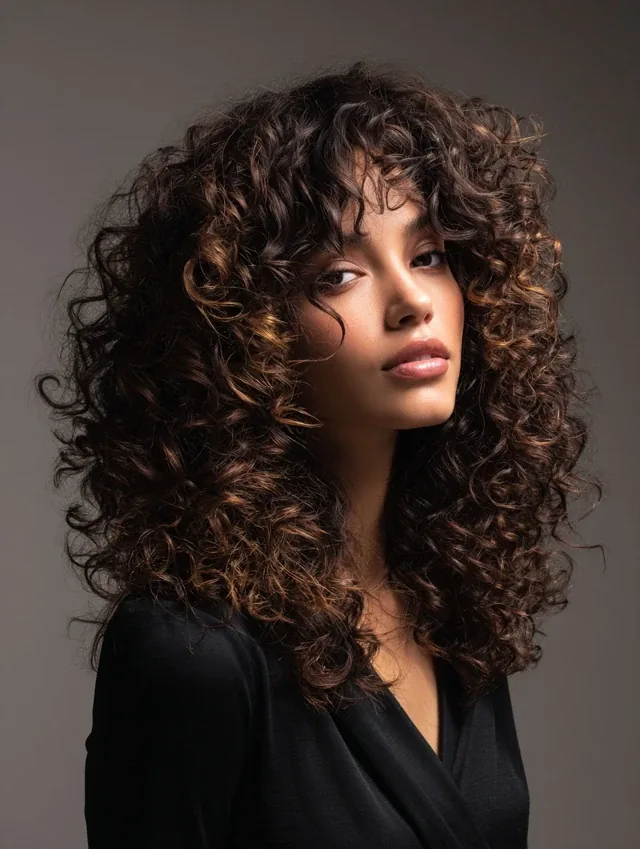
Pros: Bouncy curls with layers cut at the cheekbones put volume exactly where a triangle face needs it most. The curls spring outward at the temples and cheeks, widening the upper face, while the layers stop the curls from piling up beside the jaw. It is joyful, full of movement, and one of the most flattering curly styles in this guide.
Cons: Curls need moisture and the right products, or the top goes frizzy while the ends stay defined. The cut also needs a stylist who understands curly hair — cut dry, curl by curl — and it can take time to find the routine that makes your curls behave.
Who it suits: Women with naturally curly hair who want their curls to work for their face shape rather than against it. It suits medium to long curls best, and it is a great option for anyone whose curls are heaviest at the ends and need lifting upward.
Apply curl cream to wet hair in sections, then diffuse with the head tipped upside down so the roots lift at the crown. Once dry, separate a few curls at the temples with your fingers to widen the upper face, and avoid brushing, which breaks the curl pattern and creates frizz.
Blunt Lob with Curtain Bangs
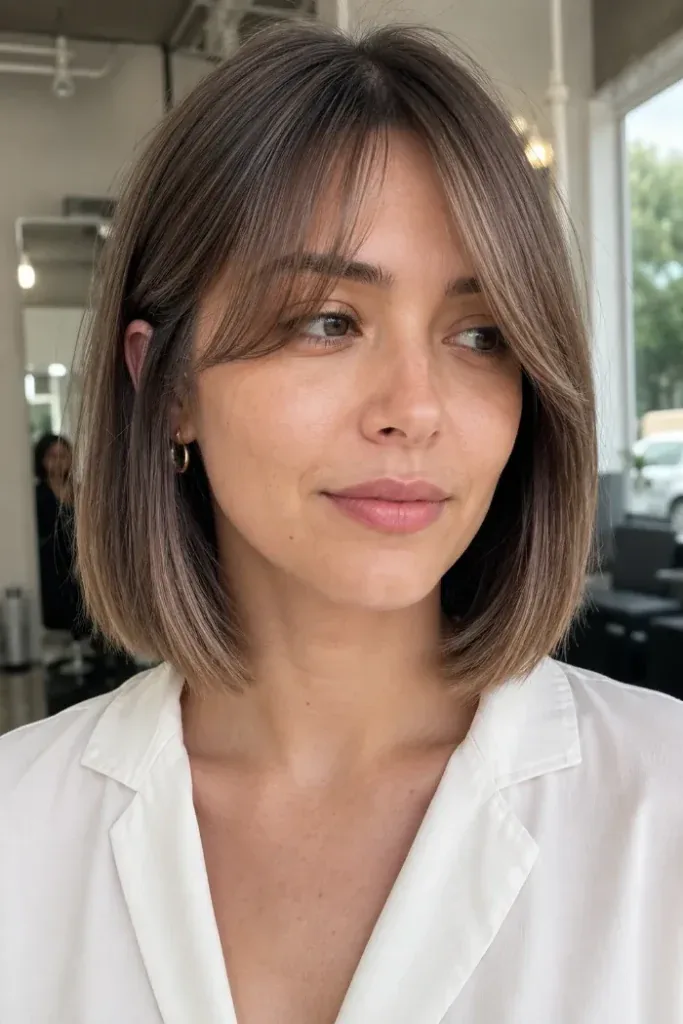
Pros: A blunt lob with curtain bangs gets the polish of a blunt cut without its main drawback for a triangle face. The blunt ends give the lob weight and shine, while the curtain bangs add width at the temples and break up the straight lines. It is sleek, modern, and very easy to style straight or with a soft wave.
Cons: Blunt ends can still sit heavily at the jaw if the lob is cut too short, so the length matters — keep it at or below the collarbone. The bangs need regular trims, and the blunt edge shows damage and split ends more quickly than a layered cut, so it needs more frequent trims overall.
Who it suits: Women with straight, healthy hair who like a clean, polished look. It suits fine hair especially well, because the blunt ends make the hair look thicker, and it is a strong choice for anyone who wants a fashionable cut that still flatters their face shape.
Keep the lob at collarbone length or just below, and style the curtain bangs by blow-drying them forward and sweeping each side out with a round brush. A flat iron through the lengths gives a sleek finish, or add a soft bend at the ends for movement.
Half-Up Hairstyle with Crown Volume
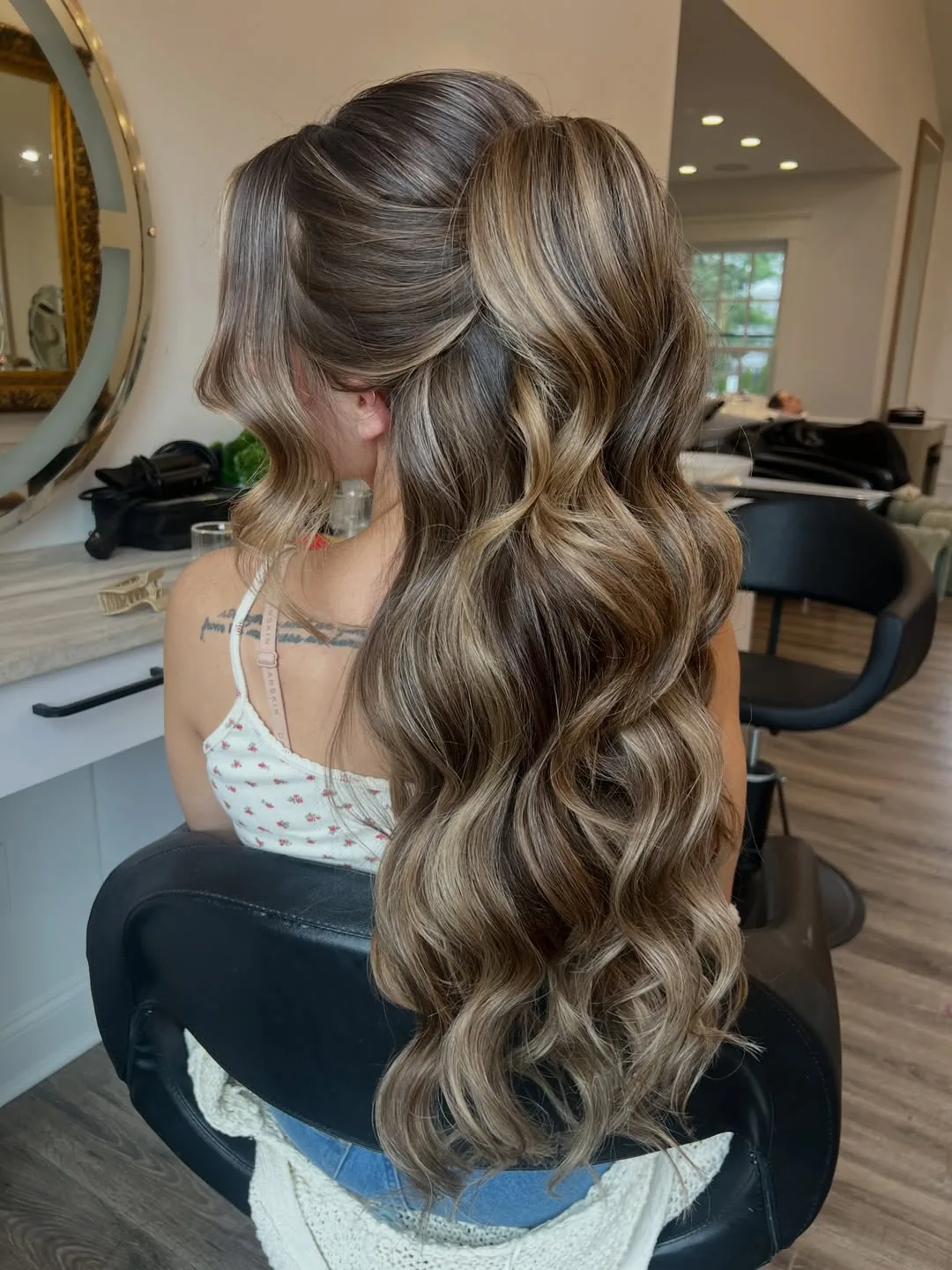
Pros: A half-up style with volume at the crown is the perfect updo for a triangle face, because it does the balancing work while leaving the length down. Teasing or lifting the top section adds width and height exactly where the face is narrowest, while the hair left down softens the jawline from both sides. It is romantic, practical, and works for weddings and workdays alike.
Cons: The crown volume can drop during the day, especially in fine or very straight hair, and the style needs a few pins and a little hairspray to hold. It can also look messy by evening if the top section was not secured well, so it is worth practising before a big event.
Who it suits: Anyone with medium to long hair who wants their hair partly up without losing the softening effect of hair around the face. It suits wavy and curly hair beautifully, and it is a lovely choice for bridesmaids, parties, and anyone who wants an elegant look that still feels relaxed.
Backcomb a small section at the crown, smooth the top layer over it, and secure with pins crossed in an X. Leave two soft pieces out at the front to frame the face and soften the jaw, and finish with a flexible-hold hairspray.
Loose Low Ponytail with Face-Framing Strands
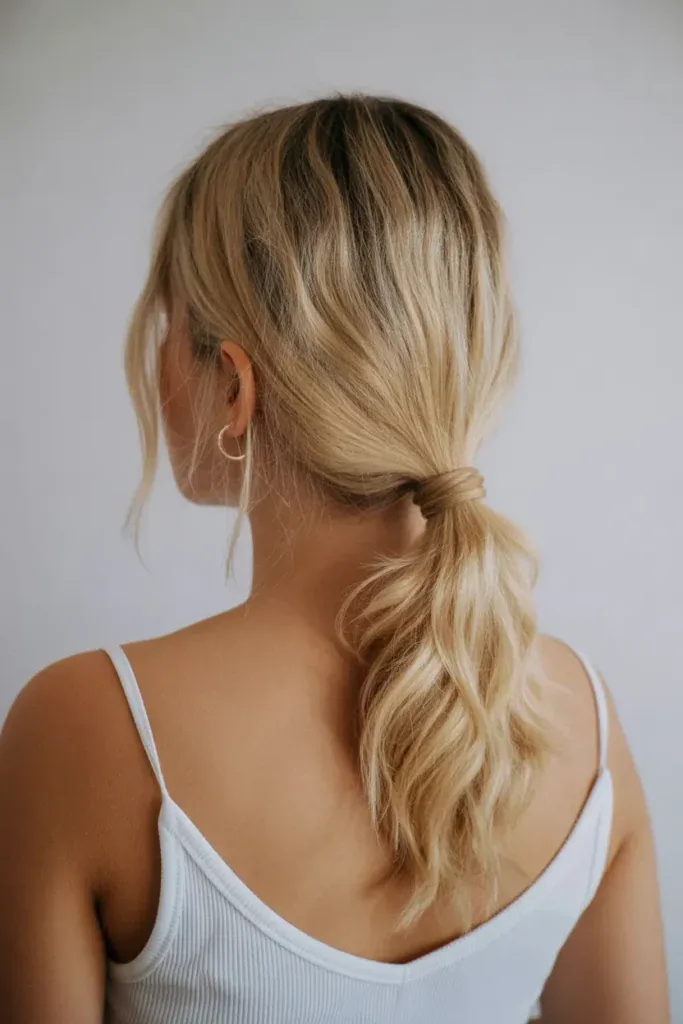
Pros: A loose low ponytail with face-framing strands is the relaxed, everyday version of the balancing rule. The strands left out at the front soften the jawline and add width at the cheeks, while the low, loose ponytail keeps the overall look soft instead of severe. It takes two minutes and suits almost every occasion.
Cons: It can look too casual for formal events, and the face-framing strands need a little curl or wave or they hang straight and flat. In very thick hair the ponytail can feel heavy at the nape, and the strands can fall into the face during the day if they are not set with a little product.
Who it suits: Anyone with medium to long hair who wants a quick, flattering everyday style. It suits straight and wavy hair, and it is a great option for the gym, the school run, or a relaxed weekend — anywhere you want your hair back but your face still soft.
Gather the hair loosely at the nape and secure with a soft elastic, then gently pull a few pieces out at the front and curl them away from the face with a straightener. Add a little volume at the crown by loosening the hair above the elastic, and the whole style looks intentional rather than rushed.
Messy Bun with Volume on Top
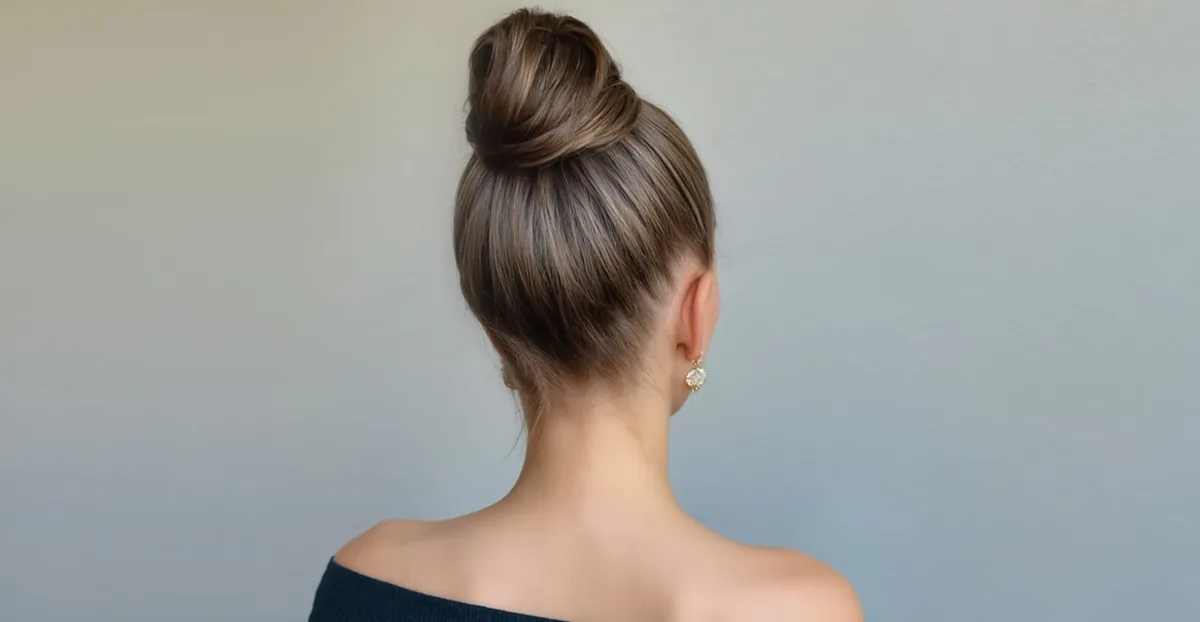
Pros: A messy bun with volume on top is the casual updo that actually flatters a triangle face. The height at the crown widens the upper face, the loose, textured bun keeps the look soft, and a few wispy pieces left out around the face blur the jawline. It is the five-minute style that looks like you tried much harder than you did.
Cons: A messy bun can slip during the day, especially in fine or slippery hair, and it needs a few pins to stay secure. It can also look untidy rather than artfully messy if the volume at the crown is missing — the lift is what makes this style work, so skipping it defeats the purpose.
Who it suits: Anyone with medium to long hair who wants a quick updo that still flatters their face shape. It suits wavy and curly hair best, since the texture does half the work, and it is perfect for weekends, holidays, and days when you want your hair up and out of the way.
Tease the crown lightly, gather the hair into a high, loose bun, and secure with pins rather than a tight elastic. Pull a few strands out at the front and at the nape, and loosen the hair above the bun slightly so the crown keeps its height.
Side-Swept Bangs with Medium Layers
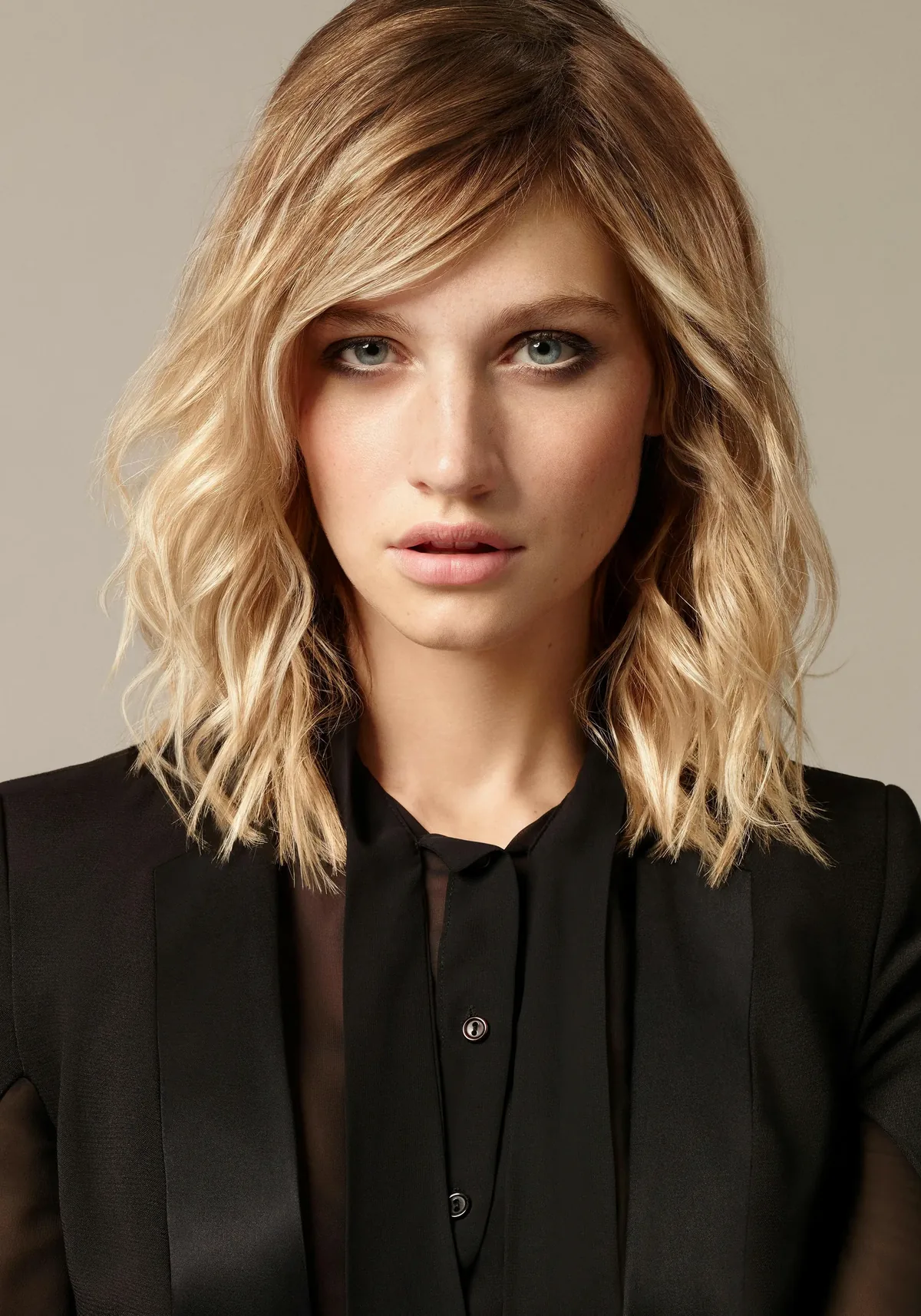
Pros: Side-swept bangs with medium layers are a timeless combination for a triangle face. The bangs sweep diagonally across the forehead, adding width and movement at the temples, while the medium layers keep the shape light and full of motion. It is a cut that looks good straight, wavy, or with a soft curl, and it grows out gracefully.
Cons: The bangs need trimming every four weeks and a quick daily style, or they lose their sweep and fall into the eyes. Medium layers can also look flat in very fine hair without a little root lift, so this cut works best with at least a quick blow-dry at the crown.
Who it suits: Women with straight or wavy hair who want a versatile, classic cut. It suits every age, from teenagers to women in their seventies, and it is a particularly good choice for anyone who likes to change their parting or wear their hair up, since the bangs always soften the face.
Blow-dry the bangs across the forehead with a medium round brush, directing them to one side while they are still damp. Layer the medium lengths with a little texturising spray for movement, and keep the part soft rather than razor-straight.
Textured A-Line Bob
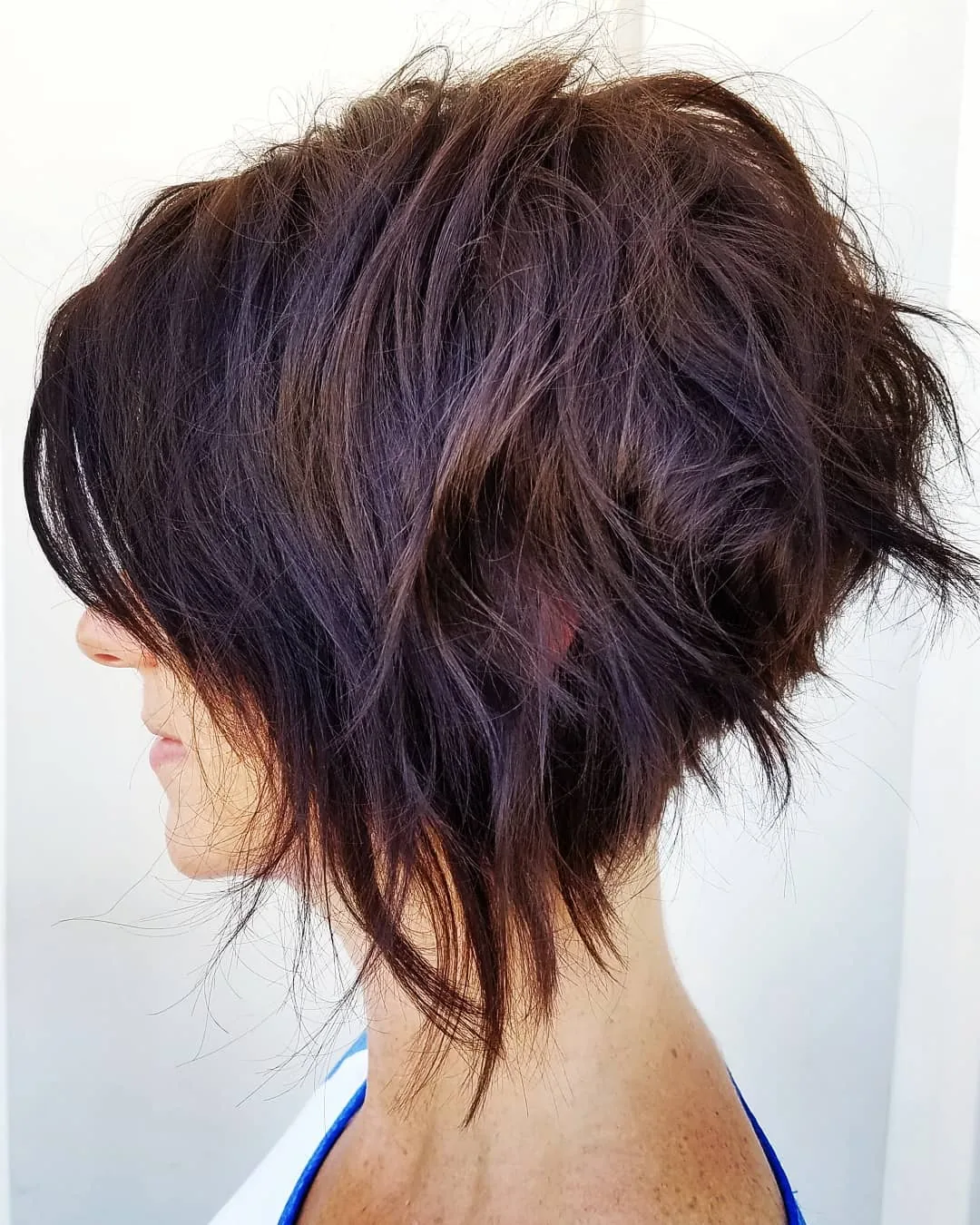
Pros: A textured A-line bob is longer at the front than at the back, which gives a triangle face two advantages at once: the longer front pieces draw the eye downward past the jaw in a soft diagonal, and the shorter, stacked back adds volume and lift at the crown. The textured ends keep the whole cut light and modern.
Cons: The A-line shape needs a skilled stylist to get the angle right, and it needs regular trims to keep the graduation from growing out unevenly. The front pieces can also swing forward and cover the jaw if they are cut too long, so the length needs to be judged carefully.
Who it suits: Women with straight or slightly wavy hair who want a bob with more shape than a classic cut. It suits fine to medium hair, and it is a strong choice for anyone who likes a polished, geometric look that still follows the balancing rule.
Style it by blow-drying the front pieces forward and under with a round brush, and adding a little root lift at the crown. A texturising spray through the ends emphasises the texture, and a deep side part adds extra width at the temples.
Long Straight Hair with Layers at the Crown
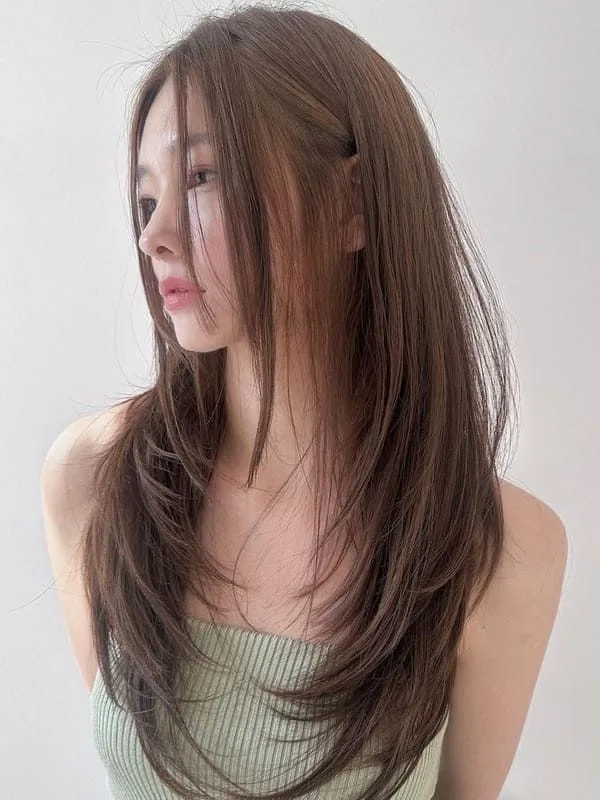
Pros: Long straight hair with layers at the crown proves that straight hair can flatter a triangle face — the layers just have to start high. Short layers at the crown create lift and width at the top, while the long, sleek lengths below keep the look elegant and draw the eye downward. It is simple, polished, and very easy to maintain between cuts.
Cons: Straight hair shows flat roots more than any other texture, so the crown layers need daily styling or they fall limp. The ends also need regular trims, because straight hair shows split ends clearly, and the style can look severe if the layers are cut too short at the front.
Who it suits: Women with naturally straight hair who love long hair and want a low-fuss cut. It suits fine to medium hair best, and it is a lovely option for anyone who prefers a sleek, minimal look over curls and waves.
Blow-dry the crown layers upward with a round brush and finish with a light volumising spray at the roots. Keep the ends sleek with a flat iron if needed, and ask your stylist to keep the shortest layer no shorter than cheekbone length so it frames the face rather than sticking out.
Soft Curls with a Middle Part
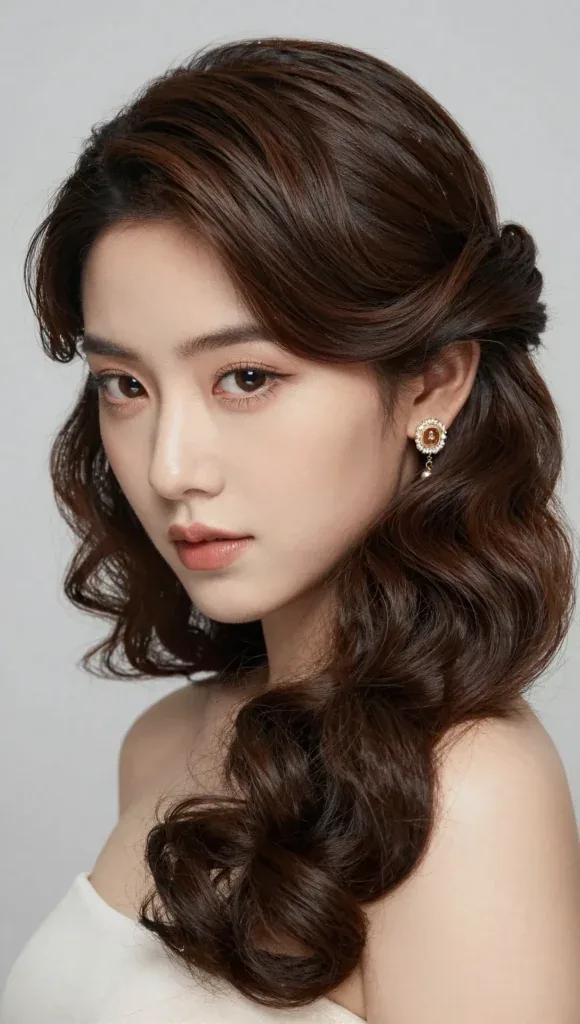
Pros: Soft curls with a middle part work for a triangle face when the curls start high enough. Curls that begin at the cheekbones and temples add width across the upper face, and the middle part keeps the look symmetrical and balanced. It is a soft, romantic style that suits special occasions and everyday wear alike.
Cons: A middle part with flat roots is the one version to avoid, so the crown needs lift — a little backcombing or root spray — or the balance is lost. The curls also need regular care to stay soft rather than frizzy, and the style takes time to create with heat tools.
Who it suits: Women with naturally wavy or curly hair, and anyone whose hair holds a curl well. It suits medium to long hair best, and it is a beautiful choice for weddings, parties, and photographs, where the soft curls frame the face from every angle.
Curl the hair in wide sections away from the face, starting at cheekbone height rather than at the ends, and brush through gently for softness. Lift the roots at the crown with a little volumising powder before you start, so the middle part does not sit flat.
Asymmetrical Bob
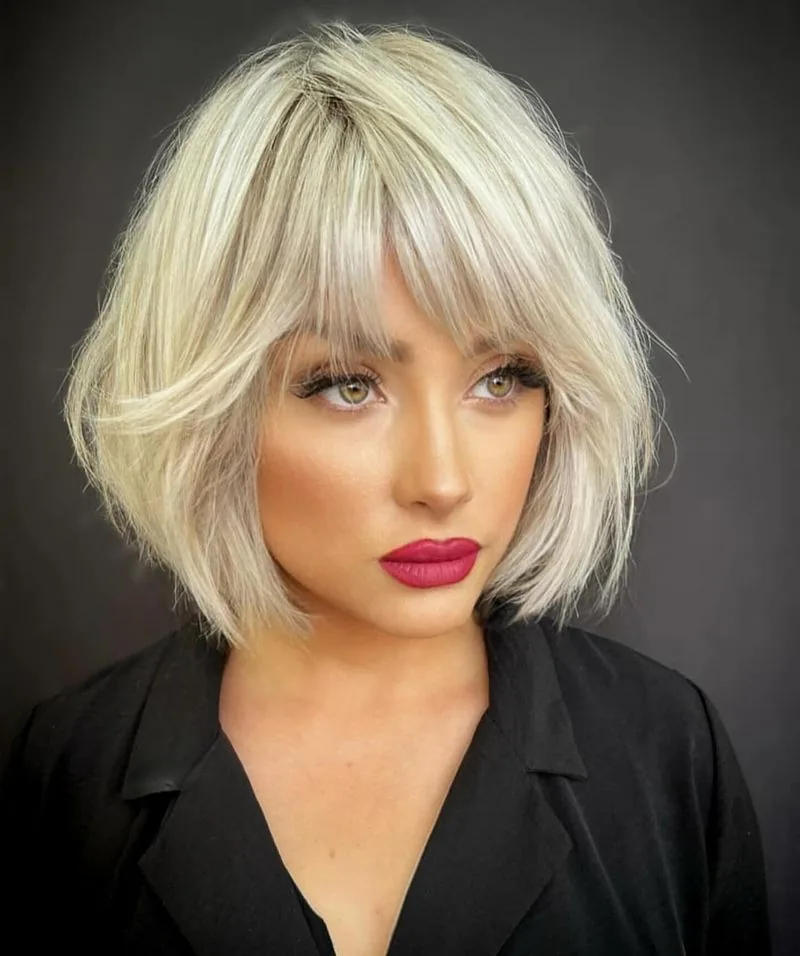
Pros: An asymmetrical bob — longer on one side than the other — is a clever trick for a triangle face, because the diagonal line it creates breaks up the symmetry that makes a wide jaw so noticeable. The longer side draws the eye downward past the jaw, while the shorter side keeps the cut light and modern. It is bold, fashionable, and genuinely flattering.
Cons: It is a high-maintenance cut that needs trimming every four to five weeks to keep the asymmetry crisp, and it can look lopsided rather than intentional if it grows out. It also suits straight hair best — very curly hair will hide the asymmetry altogether.
Who it suits: Confident women who like a fashion-forward cut and do not mind regular salon visits. It suits straight and slightly wavy hair, and it is a great choice for anyone who wants a short cut that still feels dramatic and different.
Style it sleek and straight to show off the diagonal line, using a flat iron and a shine serum. A deep side part on the longer side adds extra width at the temples, and a little root lift at the crown keeps the balance right.
Layered Cut with Wispy Ends
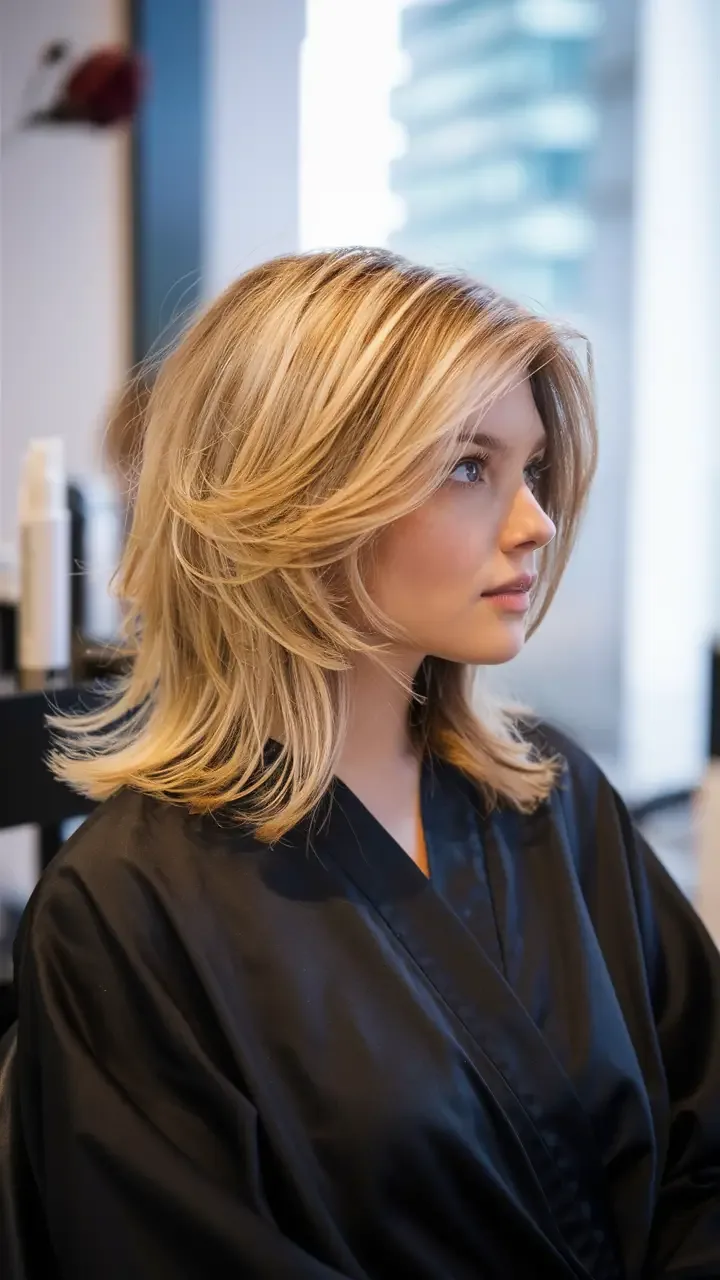
Pros: A layered cut with wispy ends is light, airy, and very kind to a triangle face. The layers add movement and width at the crown and temples, while the wispy, feathered ends keep the jawline soft instead of heavy. It is a cut that looks effortless and works on almost every hair type.
Cons: Wispy ends can look thin if the hair is very fine, and they need regular trims to stay feathered rather than straggly. The cut also relies on a little styling — a round brush or a light wave — to show off the layers, and left completely natural it can look shapeless.
Who it suits: Women with medium to thick hair who want lightness and movement without losing length. It suits straight and wavy hair, and it is a good choice for anyone growing out a shorter cut, since the layers give the grow-out a shape.
Ask your stylist to point-cut or razor the ends for a feathered finish, and to keep the layers longest at the back. Style with a round brush, turning the ends under lightly, and finish with a texturising spray for definition.
High Ponytail with Volume at the Crown
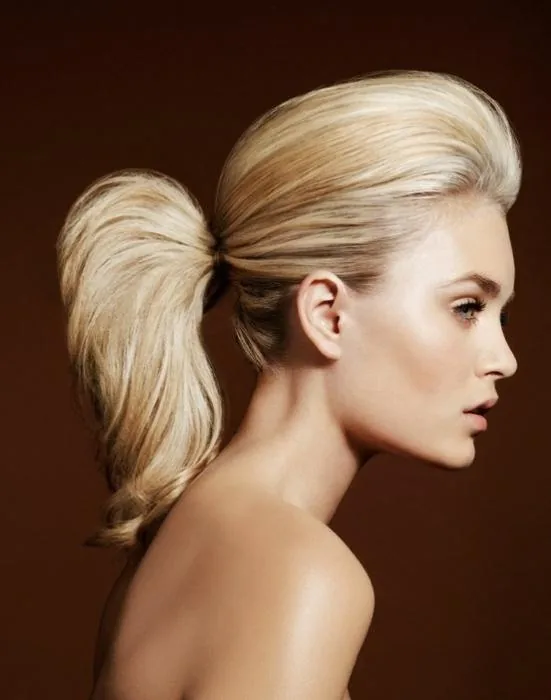
Pros: A high ponytail with volume at the crown is the updo that follows the balancing rule perfectly. The height at the front widens the upper face, the ponytail itself draws the eye upward, and the face is left open and bright. It is energetic, youthful, and works for the gym, a night out, or a formal event with the right finish.
Cons: A high ponytail can pull at the hairline if it is tied too tightly, and it exposes the whole face, so it needs the crown volume to work — without it, the narrow forehead is on full show. Very heavy hair can also slip down during the day.
Who it suits: Anyone with medium to long hair who wants an updo with lift and energy. It suits straight and wavy hair, and it is a great choice for special occasions when you want your hair completely off your neck but your face still balanced.
Tease the crown before gathering the hair, and secure the ponytail high at the crown rather than at the back of the head. Wrap a small section of hair around the elastic to hide it, and leave two soft pieces out at the front to soften the jawline.
Braided Crown with Loose Waves
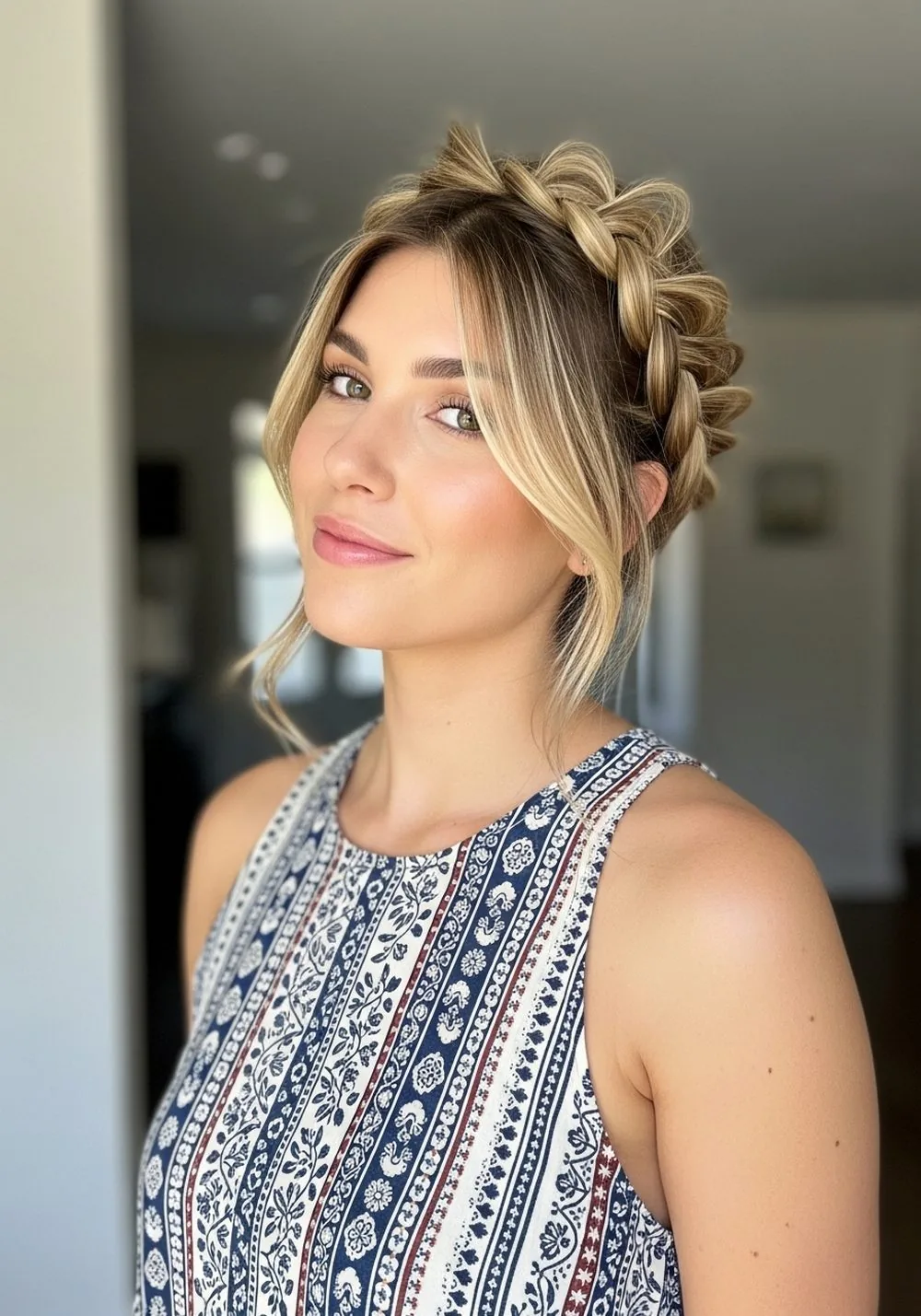
Pros: A braided crown with loose waves adds width and texture across the top of the head, exactly where a triangle face needs it. The braid itself creates a horizontal line at the temples that widens the upper face, while the loose waves below soften the jawline. It is romantic, feminine, and perfect for weddings, festivals, and summer evenings.
Cons: It takes practice to braid neatly around the head, and it needs several pins to stay secure all day. The waves also need heat styling or natural texture, and the style can look messy rather than romantic if the braid is too loose or the waves are uneven.
Who it suits: Women with medium to long hair who love romantic, bohemian styles. It suits wavy and curly hair best, and it is a beautiful choice for brides, bridesmaids, and anyone attending a summer wedding or garden party.
Braid two sections from either side of the part and pin them across the crown, tucking the ends underneath. Curl the remaining hair in loose waves away from the face, and gently pull the braid apart slightly with your fingers to widen it at the temples.
Shoulder-Length Shag with Bangs
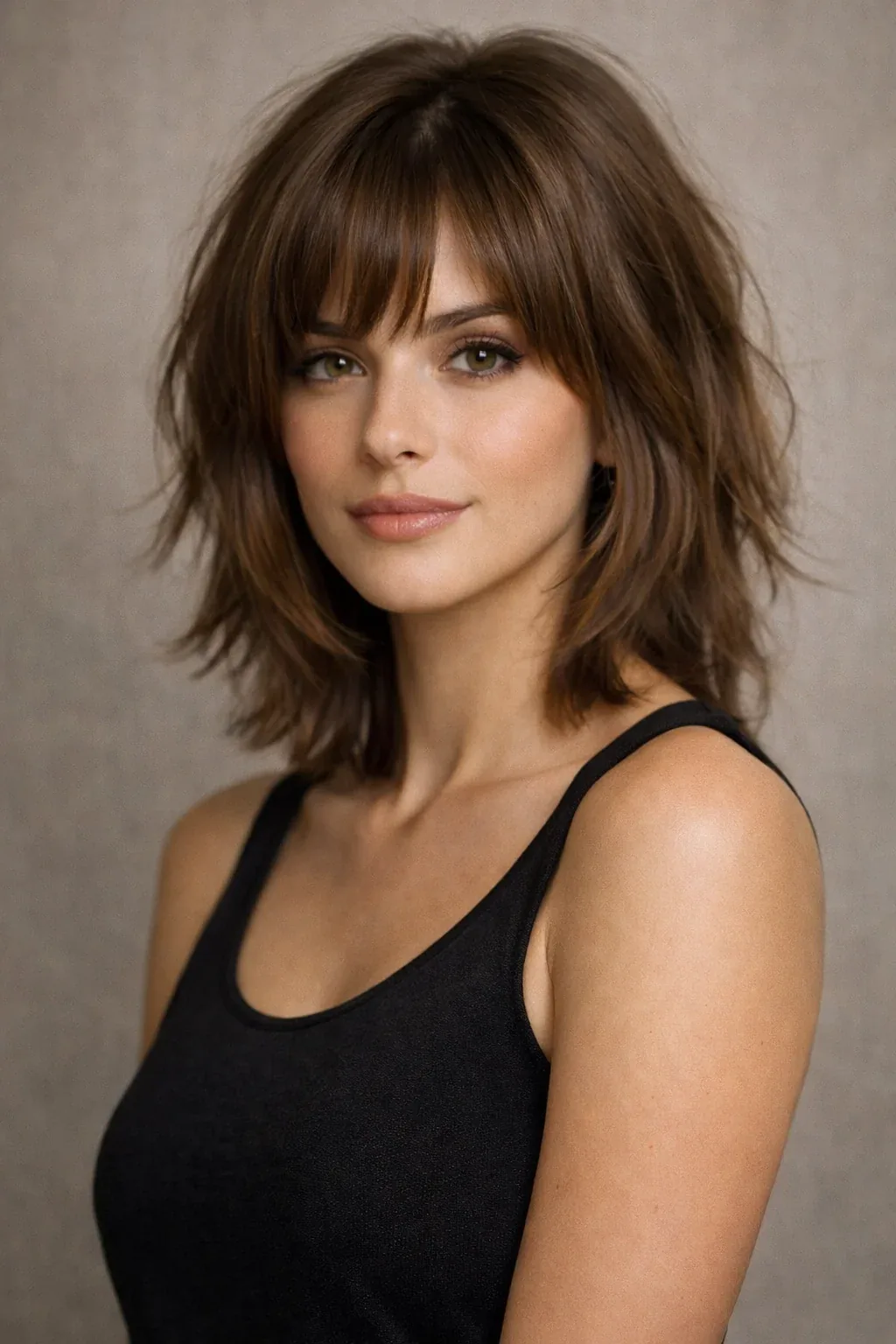
Pros: A shoulder-length shag with bangs is one of the most flattering cuts in this whole guide. The choppy layers add volume at the crown and temples, the bangs widen the forehead, and the textured ends keep the jawline light. It is modern, low-maintenance, and full of movement — the rare cut that looks better slightly messy.
Cons: The shag needs a stylist who understands the cut, because badly placed layers can add bulk at the jaw instead of the crown. It also needs regular trims to keep the shape, and very fine hair may need texturising spray to hold the piecey texture.
Who it suits: Women with wavy or straight hair who want a modern, effortless cut. It suits every age and is a wonderful option for anyone who likes a little edge in their style without going fully short.
Style it with a little texturising spray scrunched through damp hair, then let it air-dry or diffuse on low heat. Shake the roots at the crown for lift, and let the bangs fall naturally — the shag looks best when it is not over-styled.
Voluminous Afro with Tapered Sides
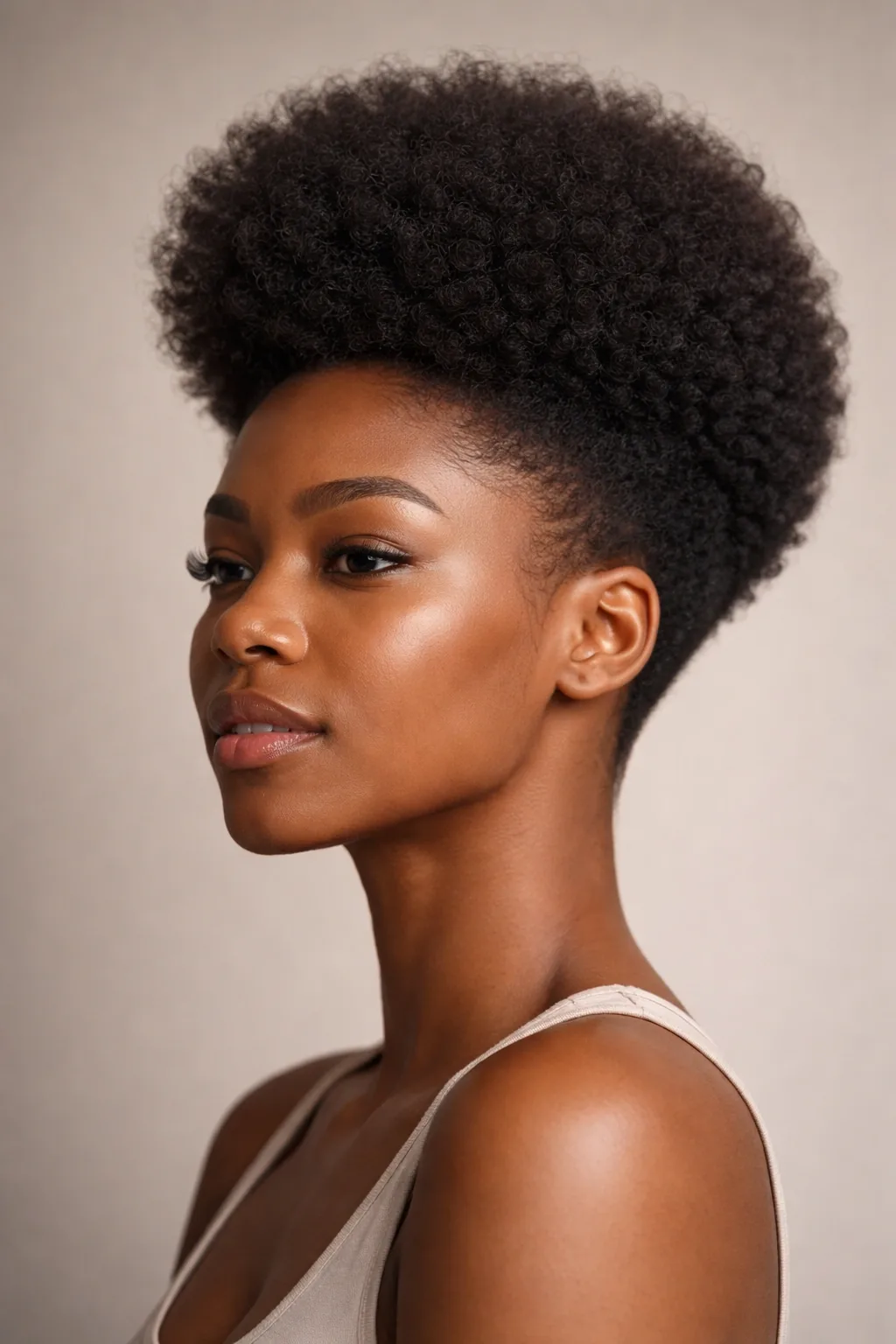
Pros: A voluminous afro with tapered sides is a stunning fit for a triangle face. The fullness on top adds real width at the crown and temples, while the tapered sides keep the lower face open and light. It celebrates natural texture, frames the face beautifully, and makes a bold, confident statement.
Cons: It needs regular shaping to keep the taper neat, and the volume on top needs moisture and the right products or it can go dry and lose definition. It is also a cut that needs a stylist experienced with afro hair to get the shape right.
Who it suits: Women with naturally coily or afro-textured hair who want a shape that works with their face. It suits every age and is a wonderful choice for anyone who wants their natural volume to do the balancing work.
Keep the hair moisturised with a leave-in conditioner and a light oil, and pick the roots at the crown gently to add width at the top. Ask your stylist to keep the taper soft rather than severe, so the transition from full top to neat sides stays flattering.
Wavy Bob with Deep Side Part
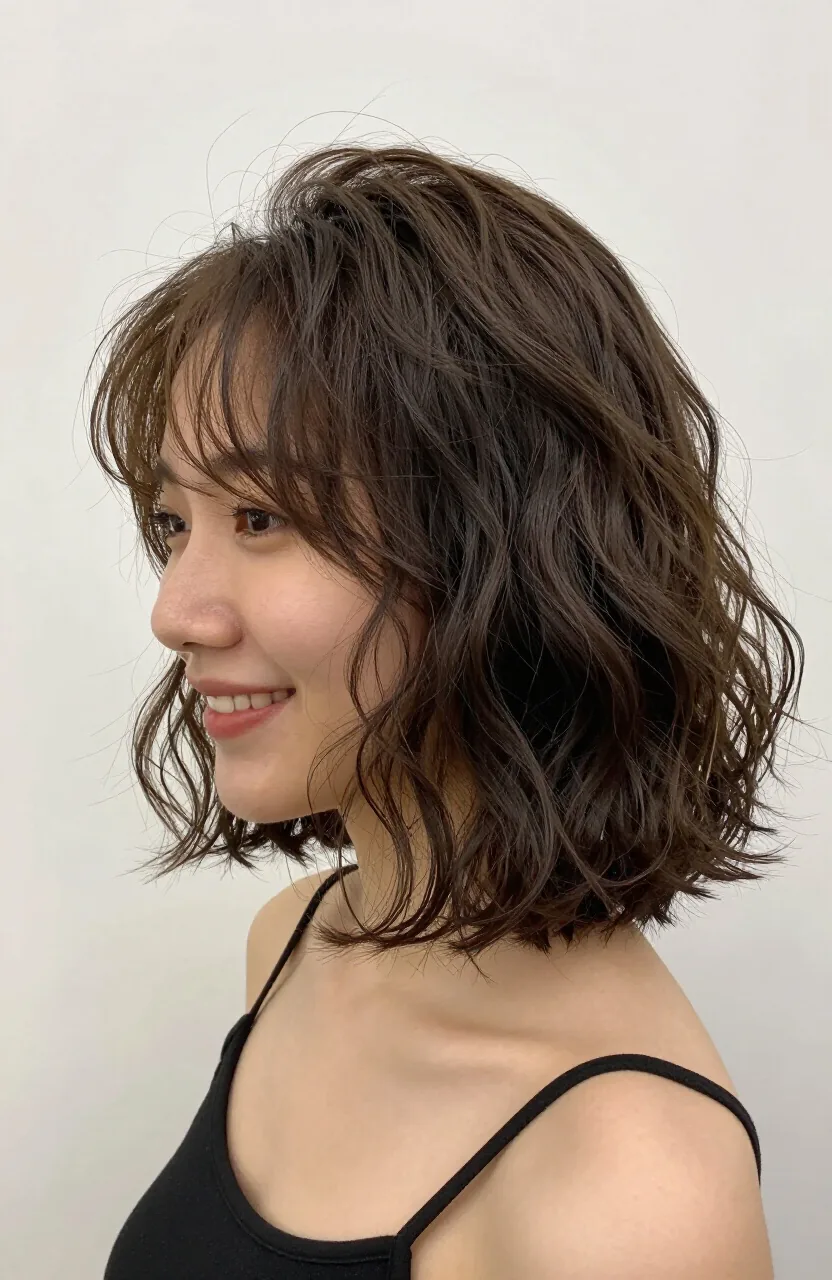
Pros: A wavy bob with a deep side part combines two balancing tricks in one cut. The deep part sweeps hair across the forehead and widens the temples, while the waves add soft volume through the lengths without bulking at the jaw. It is chic, easy to wear, and suits almost every occasion.
Cons: The waves need a little styling — a curl cream or a quick pass with a curling iron — or the bob can fall flat. The deep part can also drift during the day, and the cut needs a trim every six weeks to keep the bob sitting at the right length.
Who it suits: Women with naturally wavy hair who want a bob with softness and movement. It suits fine to medium hair, and it is a great choice for anyone who finds a straight bob too severe but still wants a shorter cut.
Scrunch curl cream through damp hair and diffuse on low heat, or create loose waves with a large-barrel curling iron. Set the deep part with a little volumising spray at the roots, and finish by shaking the roots at the crown for lift.
Long Layers with Curtain Bangs
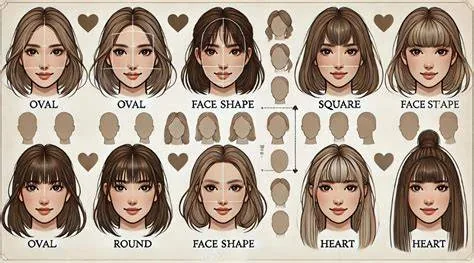
Pros: Long layers with curtain bangs are the most popular combination in this guide for good reason. The curtain bangs widen the forehead and temples, the long layers add movement and softness, and the length keeps the whole look feminine and versatile. It is the cut that suits the widest range of women with a triangle face.
Cons: The bangs need trimming every four to five weeks and a quick daily style, and long layers need regular trims to keep the ends healthy. Very fine hair can look thin at the ends if the layers are cut too aggressively, so the layering needs a light hand.
Who it suits: Almost everyone with medium to long hair. It suits straight, wavy and curly hair, every age, and it is the safest possible choice if you are unsure which cut to pick — it flatters a triangle face while keeping all your styling options open.
Blow-dry the curtain bangs forward and sweep each side outward with a round brush, then add soft waves through the lengths with a large-barrel curling iron. A little root lift at the crown finishes the balancing effect.
Tousled Pixie with Textured Top
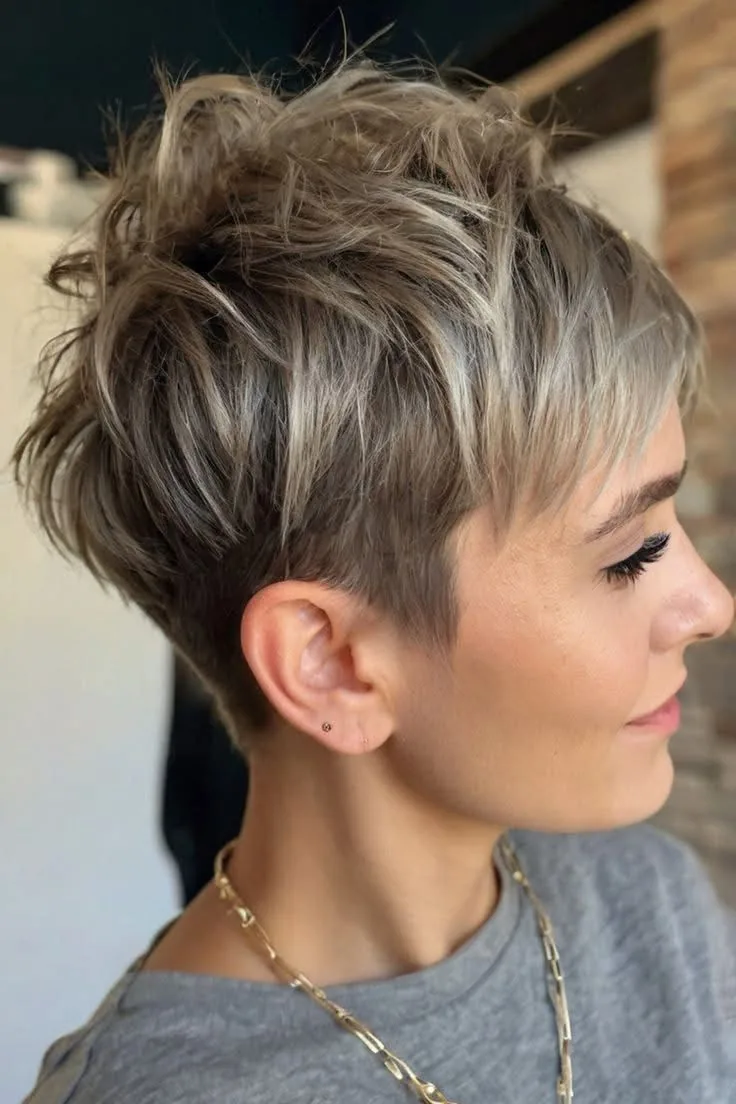
Pros: A tousled pixie with a textured top is short, playful, and very flattering for a triangle face. The tousled texture on top creates width and height at the crown, the longer pieces at the front soften the forehead, and the short sides keep the jawline open. It is a cut with real personality that takes minutes to style.
Cons: It needs a trim every three to four weeks to keep the texture from growing into a shapeless mop, and it relies on styling product to hold the tousled look. Growing it out is a slow process, and it is a bold change for anyone used to longer hair.
Who it suits: Women who love short hair and want a cut that feels modern and effortless. It suits straight and wavy hair, and it is a lovely option for women over sixty who want a fresh, youthful cut that is easy to manage.
Work a small amount of texturising paste through the top with your fingers, pushing the hair upward and to one side. A deep side part adds width at the temples, and a long piece left in front of one ear softens the face from the side.
Side Braid with Face-Framing Layers
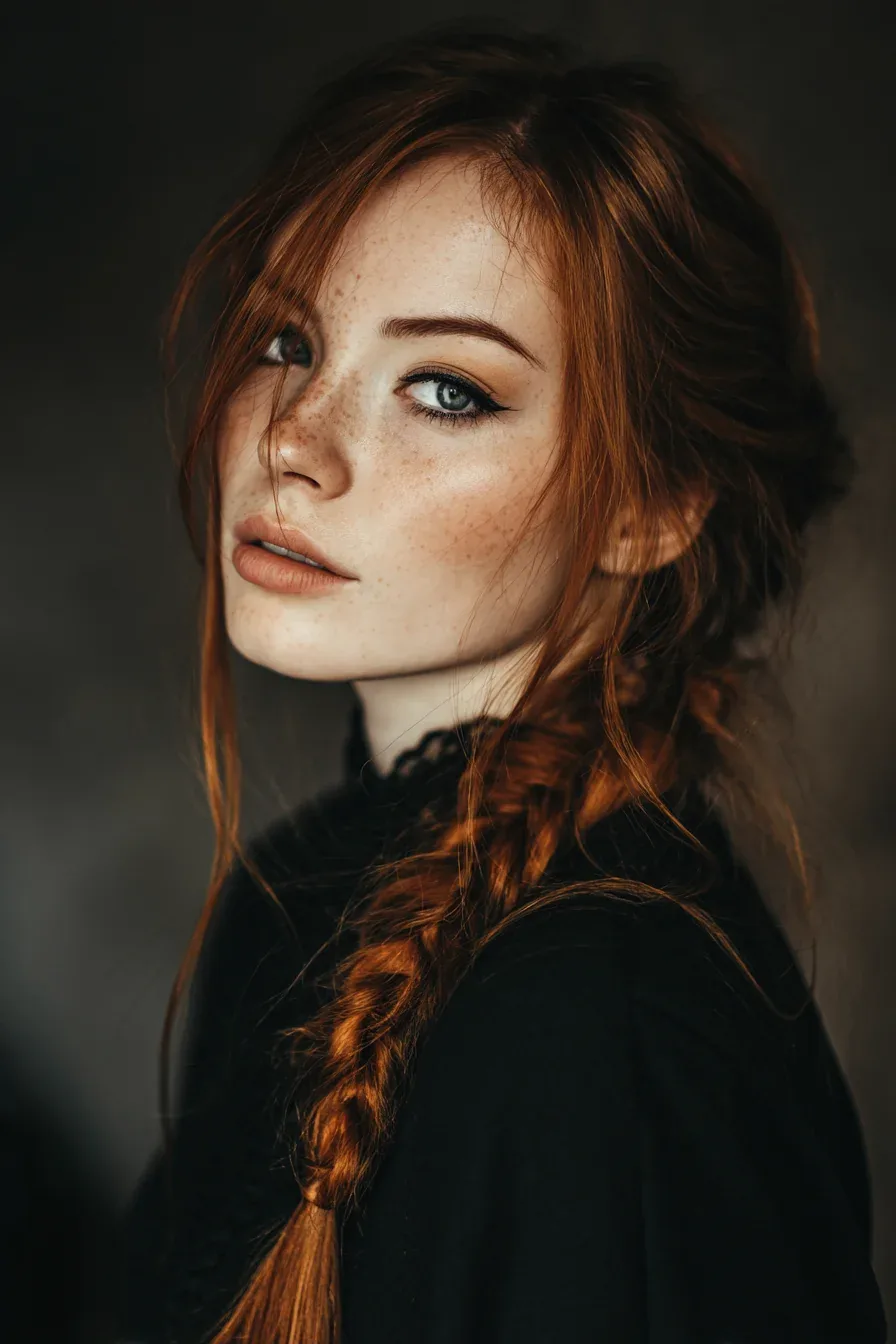
Pros: A side braid with face-framing layers is a soft, romantic style that follows the balancing rule without trying. The braid pulls the hair to one side, creating a diagonal line across the face, while the loose layers left out at the front soften the jaw and add width at the cheeks. It is easy, pretty, and works for casual days and special occasions.
Cons: The braid can loosen during the day, especially in fine or slippery hair, and it needs a few pins or a clear elastic to stay put. The face-framing layers also need a little curl or they hang straight, and the style is not the best choice for very short hair.
Who it suits: Anyone with medium to long hair who likes braids but wants a softer look than a tight plait. It suits wavy and straight hair, and it is a lovely choice for weddings, festivals, and relaxed weekends.
Braid the hair loosely over one shoulder, then gently pull the braid apart slightly to widen it. Leave two soft pieces out at the front and curl them away from the face, and finish with a light hairspray so the style holds without stiffness.
Sleek Lob with Root Volume
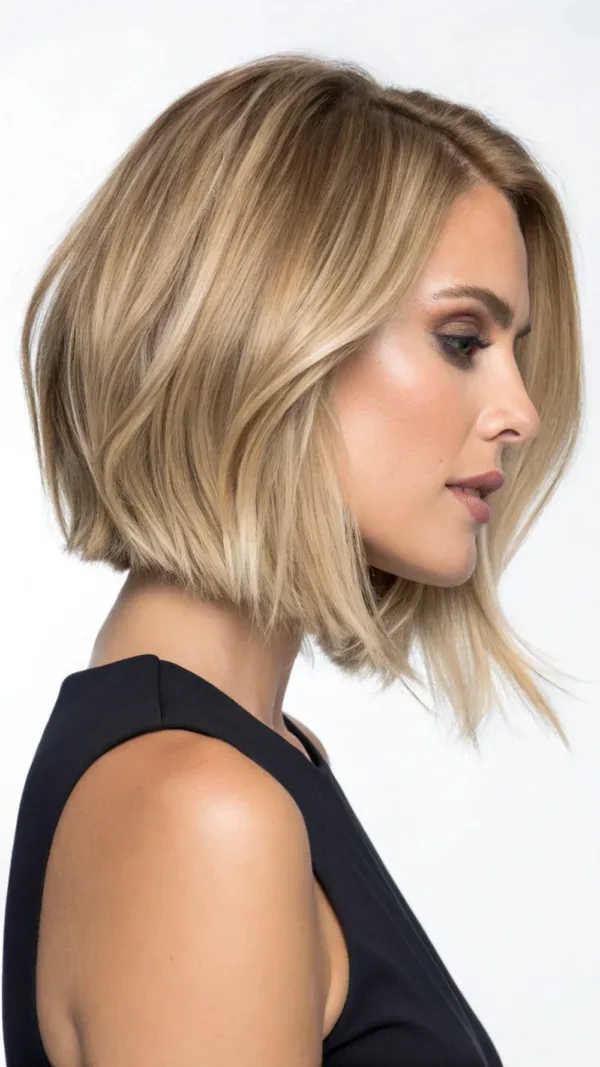
Pros: A sleek lob with root volume gives you the polish of a straight cut and the balancing effect of a layered one. The roots are lifted at the crown to widen the upper face, while the lengths stay smooth and sleek, drawing a clean line past the jaw. It is sophisticated, modern, and very easy to wear to work.
Cons: The root volume needs daily styling — a round brush or root powder — or the lob falls flat and the balancing effect disappears. Sleek hair also shows damage and split ends clearly, so it needs regular trims and a little extra care with heat protection.
Who it suits: Women with straight hair who like a polished, professional look. It suits fine to medium hair, and it is a strong choice for anyone who wants a fashionable cut that works in an office and still flatters their face shape.
Blow-dry the roots upward with a round brush, then run a flat iron through the lengths for a sleek finish. A pinch of volumising powder at the crown holds the lift, and a drop of shine serum on the ends keeps the lob looking healthy.
Curly Pixie with Volume on Top
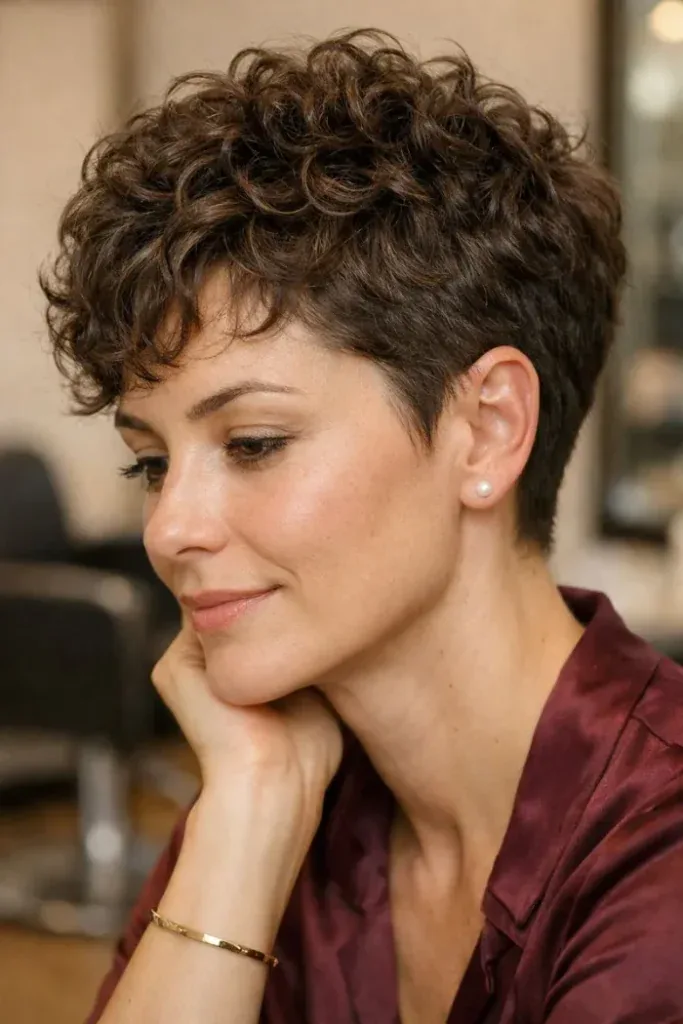
Pros: A curly pixie with volume on top lets natural curls do the balancing work. The curls spring up and outward at the crown, adding real width where the face is narrowest, while the short sides keep the jawline light and open. It is joyful, low-maintenance once the cut is right, and full of personality.
Cons: Curls shrink as they dry, so the cut needs to be done with plenty of length left in, and it needs a stylist who understands curly hair. The shape also needs regular trims, and without curl cream the top can go frizzy while the sides stay neat.
Who it suits: Women with naturally curly hair who want a short cut that celebrates their texture. It suits every age and is a wonderful option for anyone who is tired of fighting their curls and wants a cut that works with them.
Apply curl cream to wet hair and scrunch upward, then diffuse on low heat or let it air-dry. Once dry, lift the roots at the crown gently with your fingers to add width at the top, and avoid brushing, which breaks the curl pattern.
Layered Haircut with Feathered Bangs
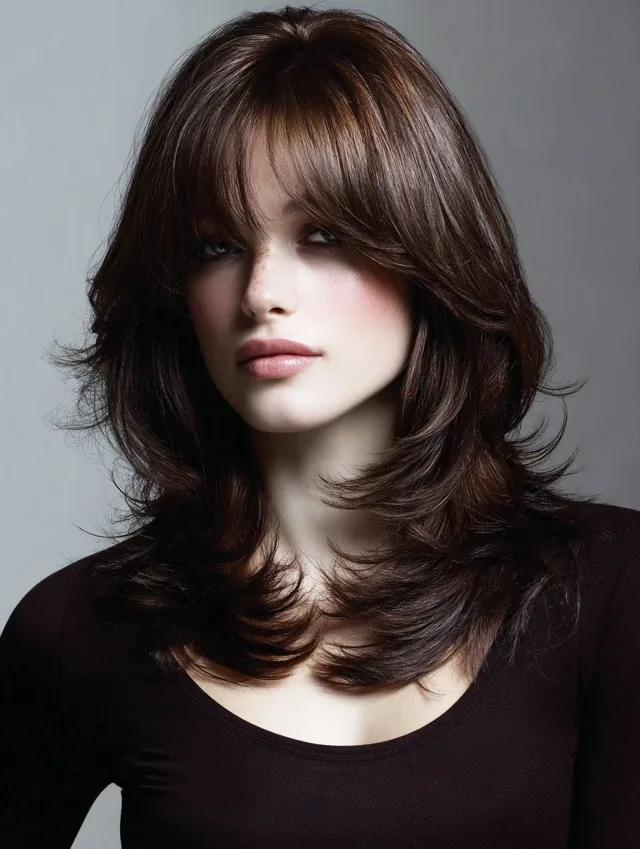
Pros: Feathered bangs with a layered haircut are a soft, classic combination for a triangle face. The feathered fringe adds light, airy width across the forehead, the layers add movement at the crown and temples, and the whole cut has a gentle, romantic feel. It is a style that has stayed popular for decades because it simply works.
Cons: Feathered bangs need regular trims to keep their shape, and they need a quick blow-dry each morning or they can look flat. The layers also need a little styling to show their movement, and very thick hair may need thinning so the feathered effect does not turn bulky.
Who it suits: Women with straight or wavy hair who like a soft, feminine cut. It suits every age, and it is a particularly good choice for anyone who wants a fringe that is lighter and easier to grow out than a blunt bang.
Blow-dry the feathered bangs forward with a round brush, flicking the ends slightly outward. Style the layers with a little texturising spray for movement, and keep the part soft so the bangs blend naturally into the layers.
Low Chignon with Soft Tendrils
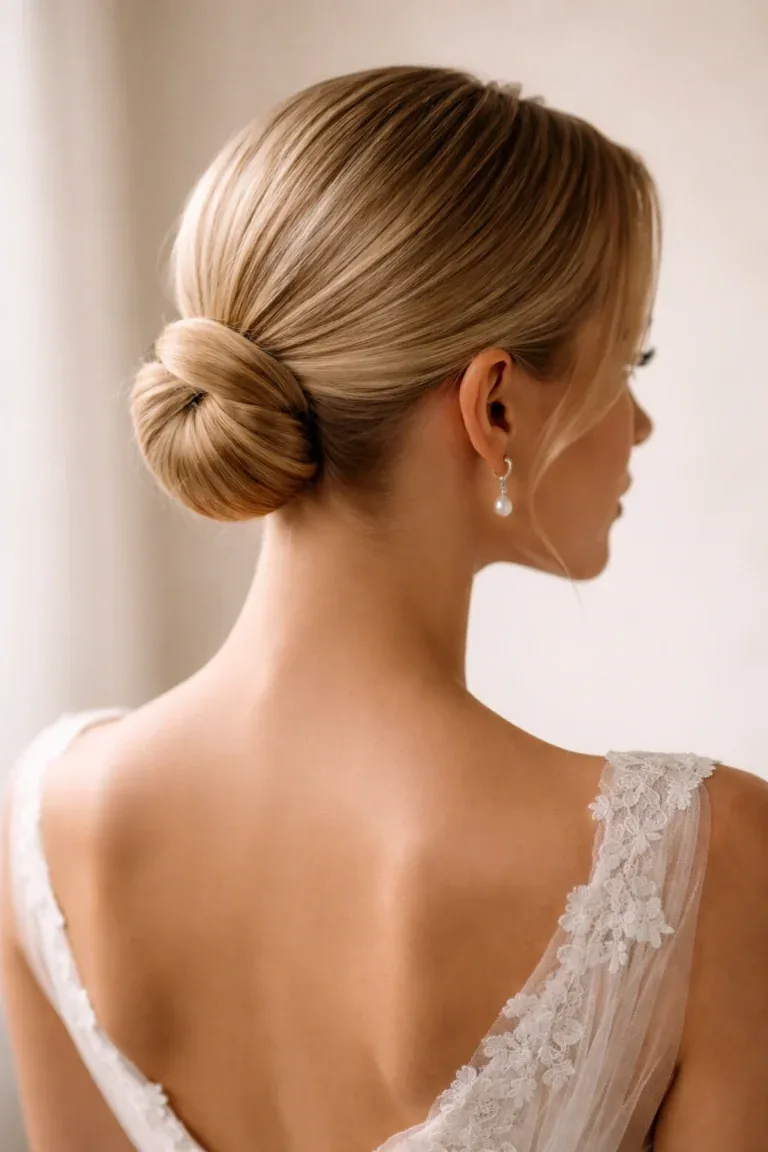
Pros: A low chignon with soft tendrils is the elegant updo that still flatters a triangle face. The tendrils left out at the front soften the jawline, the low bun keeps the look graceful rather than severe, and a little height at the crown — even a small amount — balances the upper face. It is perfect for weddings, formal dinners, and any occasion that calls for polish.
Cons: It takes time and pins to create, and it can loosen during a long evening. The tendrils need a little curl to look intentional, and the style relies on the crown lift to work — a completely flat chignon can expose the narrow forehead.
Who it suits: Anyone with medium to long hair attending a formal event. It suits straight and wavy hair, and it is a beautiful choice for brides, mothers of the bride, and anyone who wants an updo that photographs elegantly from every angle.
Tease the crown lightly before gathering the hair into a low bun at the nape, and secure with pins. Leave two soft tendrils out at the front and curl them gently away from the face, then finish with a flexible-hold hairspray.
Beach Waves with Layers at the Temples
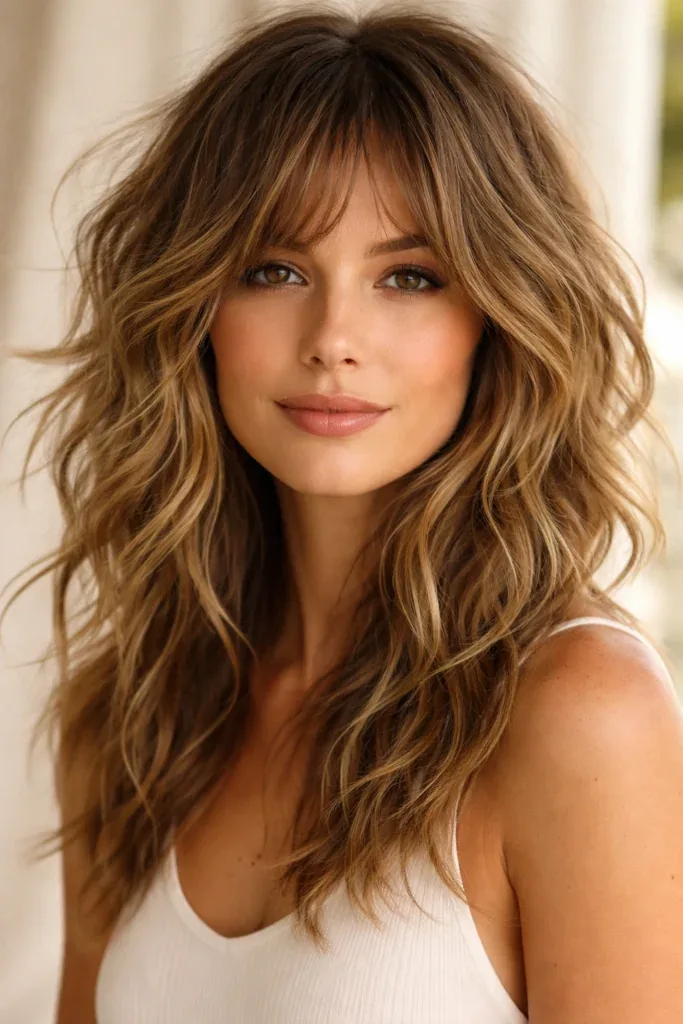
Pros: Beach waves with layers at the temples are relaxed, modern, and very kind to a triangle face. The waves add width and texture around the upper face, the layers at the temples widen the cheekbones, and the undone finish keeps the jawline soft. It is the holiday hairstyle that works just as well at home.
Cons: Beach waves need either natural texture or heat styling, and they can drop out in humidity or after a few hours. The look also relies on a texturising product, and very straight hair may need a curling iron to hold the wave at all.
Who it suits: Women with naturally wavy hair, and anyone who likes a relaxed, lived-in look. It suits medium to long hair, every age, and it is a great choice for summer, holidays, and casual weekends.
Spray sea-salt spray through damp hair and scrunch upward, then let it air-dry or diffuse on low heat. For extra definition, wrap a few sections around a large-barrel curling iron, leaving the ends straight, and finish by shaking the roots at the crown.
Chin-Length Curly Bob
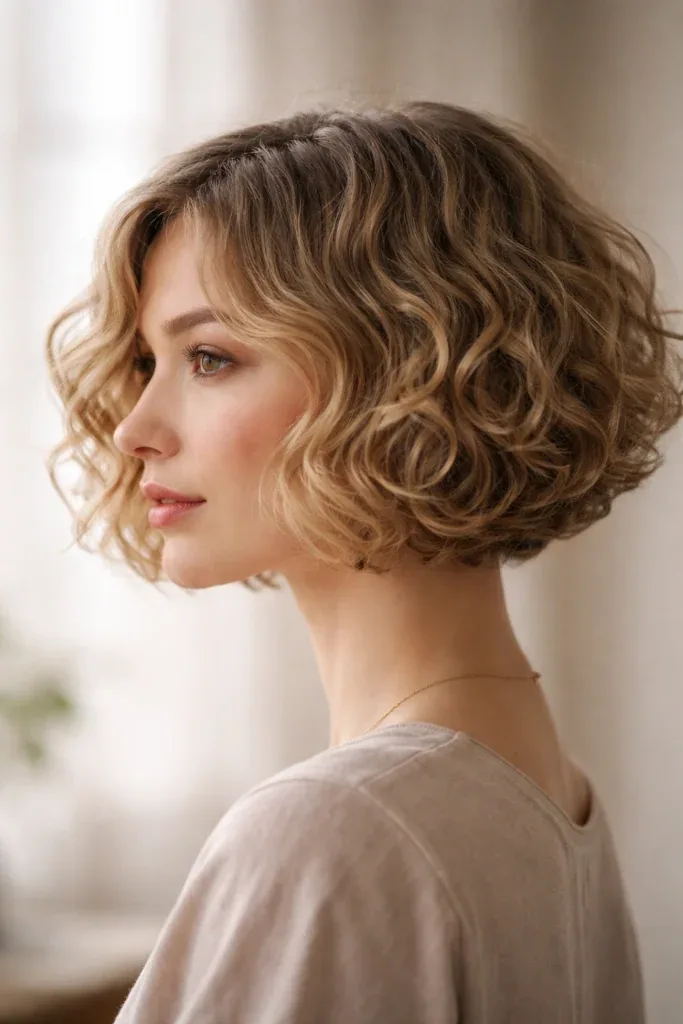
Pros: A chin-length curly bob works for a triangle face when the curls are layered to add volume at the top. The curls spring outward at the temples and cheeks, widening the upper face, while the short length keeps the style light and bouncy. It is a joyful, youthful cut that celebrates natural texture.
Cons: Curls at chin length can bunch up beside the jaw if the layers are not placed well, so the cut needs a stylist who understands curly hair. It also needs regular shaping trims, and without the right products the curls can go frizzy at the top while staying defined at the ends.
Who it suits: Women with naturally curly hair who want a short, fun cut. It suits every age and is a wonderful option for anyone whose curls are tight and springy, since the short length lets them bounce freely.
Ask for the cut to be done dry, curl by curl, with layers through the crown to lift the volume upward. Apply curl cream to wet hair, diffuse on low heat, and lift the roots at the crown with your fingers once the hair is dry.
Long Hair with Face-Framing Layers and Highlights
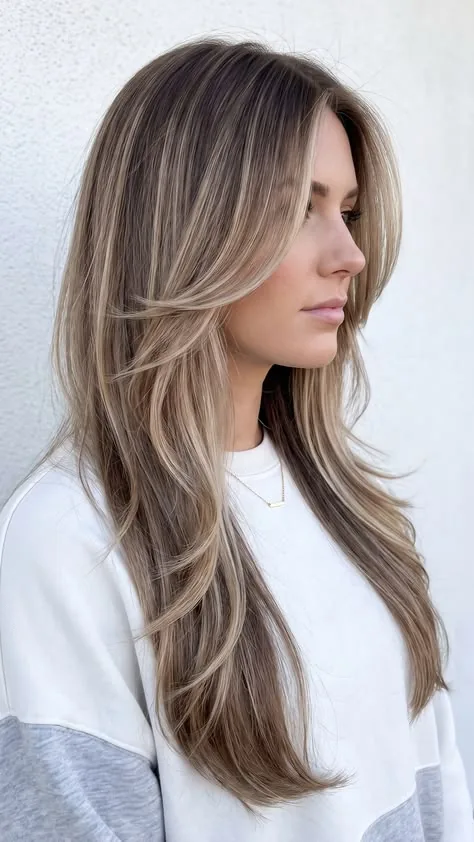
Pros: Highlights placed around the face-framing layers add a second balancing trick on top of the cut itself. The lighter pieces catch the light at the temples and cheekbones, drawing the eye to the upper face, while the long layers add movement and softness. It is a subtle, sophisticated way to make the balancing effect even stronger.
Cons: Highlights need maintenance — a touch-up every eight to twelve weeks — and they can dry the hair out if it is not cared for properly. The effect also depends on the colourist placing the highlights in the right spots, so it needs a skilled hand.
Who it suits: Women with long hair who want a little extra dimension and are happy with colour maintenance. It suits every hair colour, and it is a lovely choice for anyone who wants their cut to look even more flattering without changing the length.
Ask your colourist for face-framing highlights that start at the temples and blend into the layers, rather than a full head of highlights. Keep the colour close to your natural shade for a soft effect, and use a colour-safe shampoo and regular conditioning treatments.
Updo with Height and Soft Pieces Around the Face
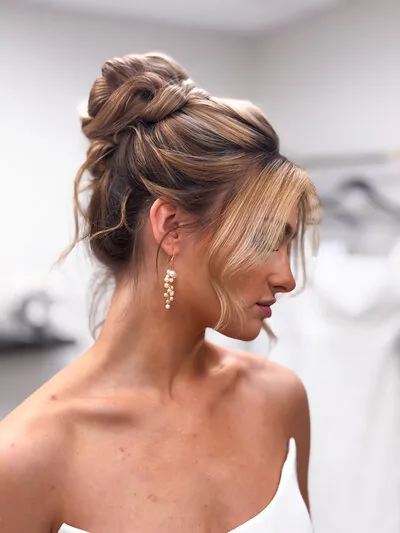
Pros: An updo with height and soft pieces around the face is the formal style that follows the balancing rule to the letter. The height at the crown widens the upper face, the soft pieces left out blur the jawline, and the updo itself keeps the look elegant and polished. It is the best choice in this guide for a wedding, a gala, or any black-tie event.
Cons: It needs time, pins, and usually a professional to create well, and it can loosen over a long evening. The soft pieces need curling to look intentional, and the style relies on the crown height — without it, the updo can look flat and severe.
Who it suits: Anyone with medium to long hair attending a formal occasion. It suits straight, wavy and curly hair, and it is a beautiful choice for brides, bridesmaids, and anyone who wants to look polished without losing the softness around their face.
Backcomb the crown, smooth the top layer over it, and gather the hair into a soft updo, securing with pins. Leave two pieces out at the front and curl them gently, then finish with a flexible-hold hairspray and a light shine spray over the top.
How do I know if I have a triangle face shape?
Your face is a triangle shape if your jaw is clearly wider than your forehead, with your cheekbones falling somewhere in between. Stand in front of a mirror with your hair pulled back and compare the width across your jaw with the width across your forehead — if the jaw is wider, you have a triangle face, also called a pear shape.
What is the best haircut for a triangle face shape?
The best haircut is one that adds volume at the crown and temples while keeping the jawline soft. A layered lob, a shoulder-length shag with bangs, or long layers with curtain bangs are the safest choices, because they all follow the balancing rule and suit most hair types.
Do bangs suit a triangle face?
Yes — bangs are one of the best tools for a triangle face, because they add width where the face is narrowest. Curtain bangs and side-swept bangs work best, since they widen the temples and cheekbones. Avoid a short, straight-across blunt fringe, which can make the forehead look even narrower.
What parting is best for a triangle face?
A deep side part is the best choice, because it sweeps hair across the forehead and creates instant width at the temples. A centre part can work too, but only with curtain bangs or face-framing layers that add width at the cheekbones — a bare centre part with flat hair is best avoided.
Can I wear short hair with a triangle face?
Yes, short hair can flatter a triangle face beautifully, as long as the cut has height and texture on top. A pixie with a long side-swept fringe, a shaggy pixie with crown height, or a textured bob with side-swept bangs all work well. Avoid flat, close-cropped cuts with no volume on top.
Does long hair suit a triangle face?
Yes, long hair suits a triangle face when the layers start high. Long layers that begin at the cheekbones add width at the temples, and the length below the jaw draws the eye down in a soft line. Avoid one-length long hair with no layers, which hangs flat at the crown and adds weight at the ends.
What hairstyles should I avoid with a triangle face?
Avoid a blunt chin-length bob with no layers, which draws a hard line at the widest part of the face; slicked-back styles with no volume on top, which expose the narrow forehead; and heavy one-length hair with no layers at all. All three work against the balancing rule.
Does curly hair work for a triangle face?
Curly hair works wonderfully for a triangle face, because curl volume naturally sits at the crown and temples. The key is layering: layers through the top lift the volume upward, while layers that end at the jaw can add bulk where you do not want it. Ask for a dry cut from a stylist who understands curly hair.
What is the best updo for a triangle face?
The best updo adds height at the crown and leaves soft pieces around the face. A high ponytail with crown volume, a half-up style with lift on top, or a low chignon with soft tendrils all follow the balancing rule. Avoid a tight, flat updo with no height at the front.
How often should I trim a haircut for a triangle face?
It depends on the cut. Short pixies and bobs need a trim every four to six weeks to keep their shape, while layered lobs and long layers can go eight to ten weeks. Bangs need trimming every three to five weeks, whatever the cut. Regular trims keep the layers — and the balancing effect — working as they should.
Conclusion
The best hairstyles for a triangle face shape all do the same quiet job: they add width and movement at the crown and temples, and they keep the jawline soft and uncluttered. Whether you choose a layered lob, a shaggy pixie, long layers with curtain bangs, or a curly bob with volume on top, the principle never changes — width on top, softness at the jaw. Once you know that rule, you can judge any cut, any parting, and any updo for yourself.
Start with the easiest wins. Try a deep side part tomorrow, add a little root lift at the crown, and see how much difference those two small changes make before you book a cut. Then bring two or three photos from this guide to your stylist, talk through the balancing rule together, and choose the style that fits your hair texture, your lifestyle, and your confidence. Your jawline is a strong, beautiful feature — the right haircut does not hide it, it simply lets the rest of your face share the attention.