How to Balance Layers on Fine Hair Without Losing Length
If you have fine hair, you already know the fear. You ask for layers, and three inches later you are staring at a shorter, thinner version of yourself. I have been there more times than I want to admit.
My hair is fine but there is a lot of it, and for years I avoided layers completely because every cut felt like a loss. Then I learned that the problem was never layers. It was how they were cut and where they were placed.
Here is the good news. Layers and length can absolutely live together. You just have to cut smarter, not shorter.
In this post I am sharing exactly how to balance layers on fine hair so you keep your length, gain movement, and still get those 2026 hairstyles you keep saving. From the quiet luxury bob to the vampire haircut, there is a version of every trend that works for fine strands. Let’s get into it.
Why Fine Hair and Layers Have a Love-Hate Relationship
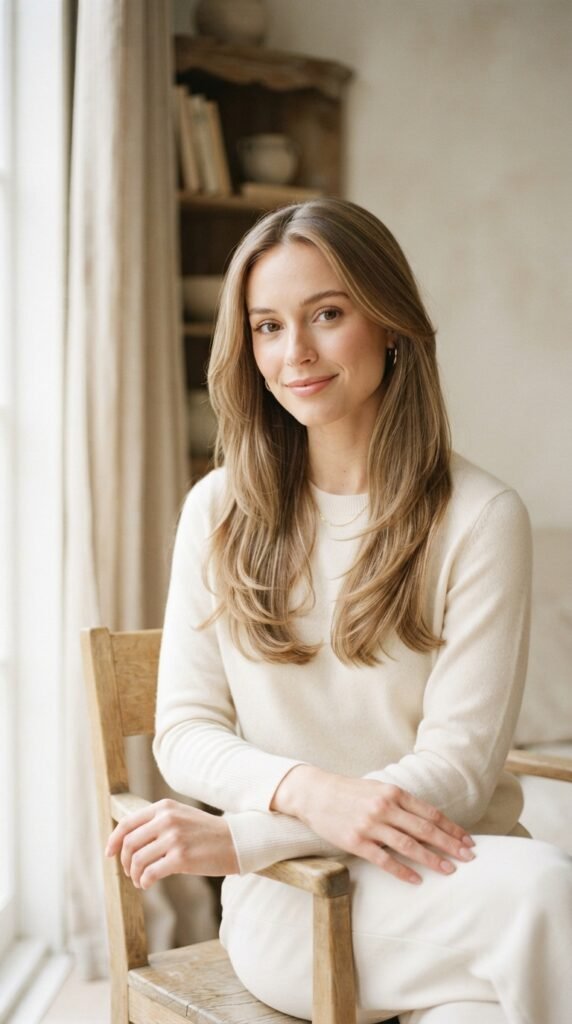
Layers are supposed to add movement, not take away hair. But on fine strands, a regular layered cut can do the opposite. It removes weight in the exact places that were holding your shape together.
The problem usually is not layers. It is how much hair got cut and where it landed.
- Too many layers means see-through ends
- Short layers mean instant loss of length
- Aggressive texturizing means a thinner silhouette
The fix is a more deliberate approach. Fewer layers, placed lower, blended gently. That is how you get movement and keep the length you spent years growing.
Density vs. Texture: Know What You Are Working With
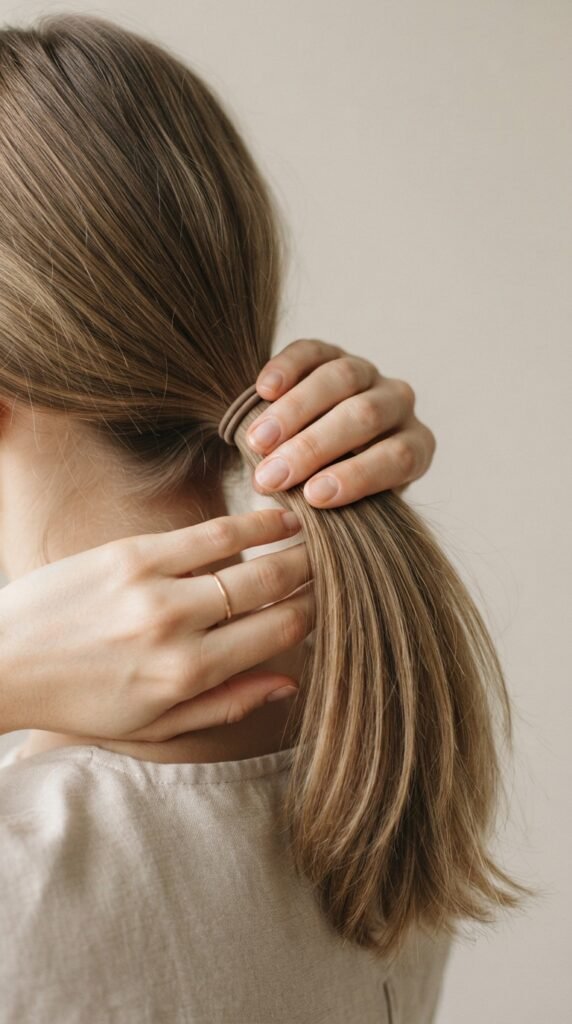
Before your next appointment, figure out which one you actually have. They need different plans.
- Texture is the thickness of each individual strand. Fine strands are thin and delicate.
- Density is how many strands sit on your head. You can be fine-haired and still have tons of hair.
Here is why it matters. Fine plus high density can handle a few more layers than you think. Fine plus low density should go minimal and keep most of the length in one piece.
Run your fingers through your ponytail and feel the bulk of the whole thing, not one strand. That tells you your density. Knowing this one thing changes the whole conversation with your stylist.
The Golden Rule of Layering Fine Hair
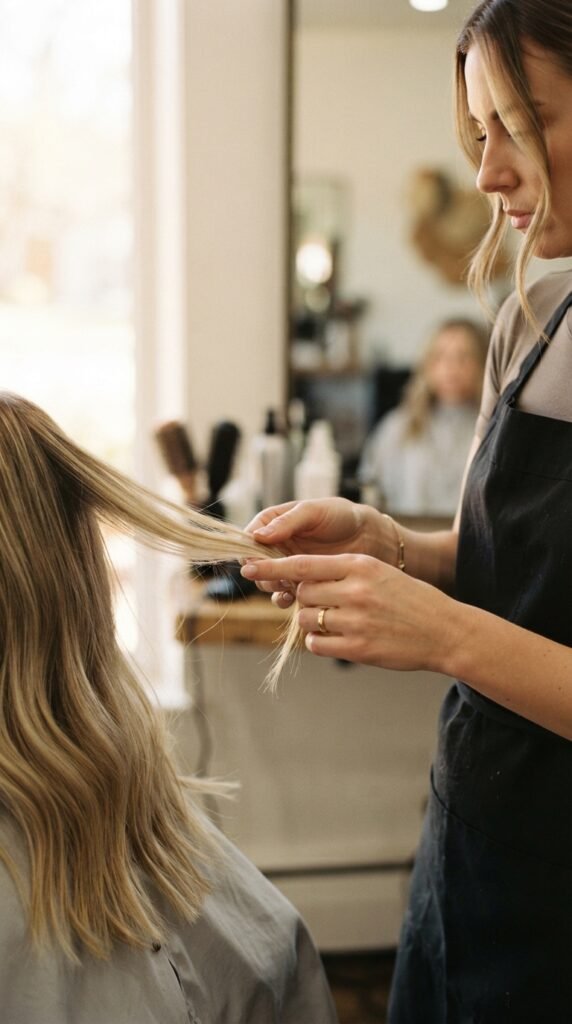
If you only remember one thing, remember this. On fine hair, every layer has to earn its place.
That means asking for fewer layers overall, cut longer, blended soft. A simple shape with two or three well-placed layers reads fuller than eight choppy ones.
- Keep your shortest layer below the chin for long hair
- Never layer the last two inches of your ends
- Let the perimeter stay blunt so it looks thick
Blunt ends are not boring. On fine hair they are a foundation. The layers sit on top and create movement while the outline stays solid and full. That is the whole balance right there.
Long Layers Are Your Safest Bet
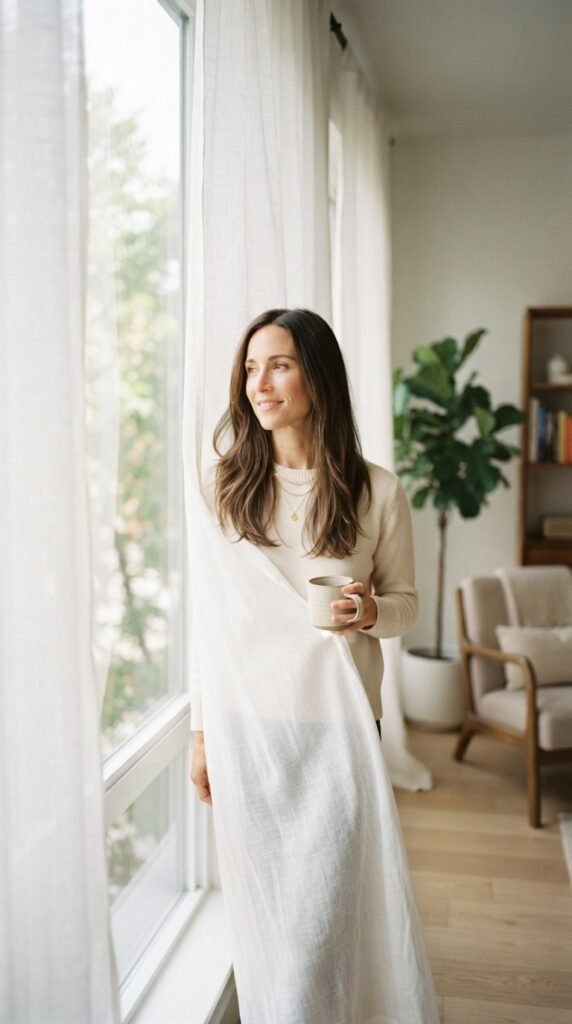
Long layers are the safest way to add shape without losing length. They start lower, usually around your collarbone or below, and blend gently into the ends.
Ask for:
- Layers that start at least four to six inches below your crown
- A soft gradient with no hard steps
- The very ends left mostly alone
You will get swing and a bit of lift at the roots, but your overall length stays exactly where it is. This is also the base shape behind so many 2026 hairstyles, including the asymmetrical lob and soft old money hair.
If you are nervous, this is the cut I would start with every single time.
Ask for Invisible Layers
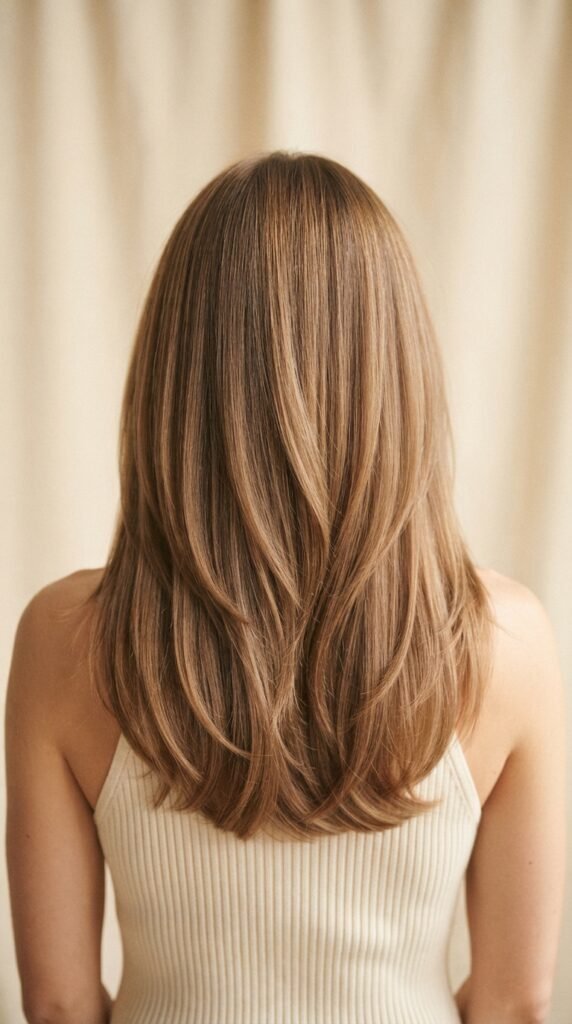
Invisible layers are exactly what they sound like. You cannot really see them, but you can feel them when your hair moves.
Instead of visible steps, your stylist blends everything so the transition is seamless. Nothing looks choppy. Nothing looks thin. Your hair just moves better.
How to ask:
- “I want invisible layers, blended so there is no visible line”
- “I want to keep my full perimeter”
- “Can we keep the layers mostly in the top half?”
These are perfect for fine hair because they add lift near the crown without thinning the ends. If you love the quiet luxury bob but want to grow it out, invisible layers keep it soft while you do.
Point Cutting vs. Blunt Cutting
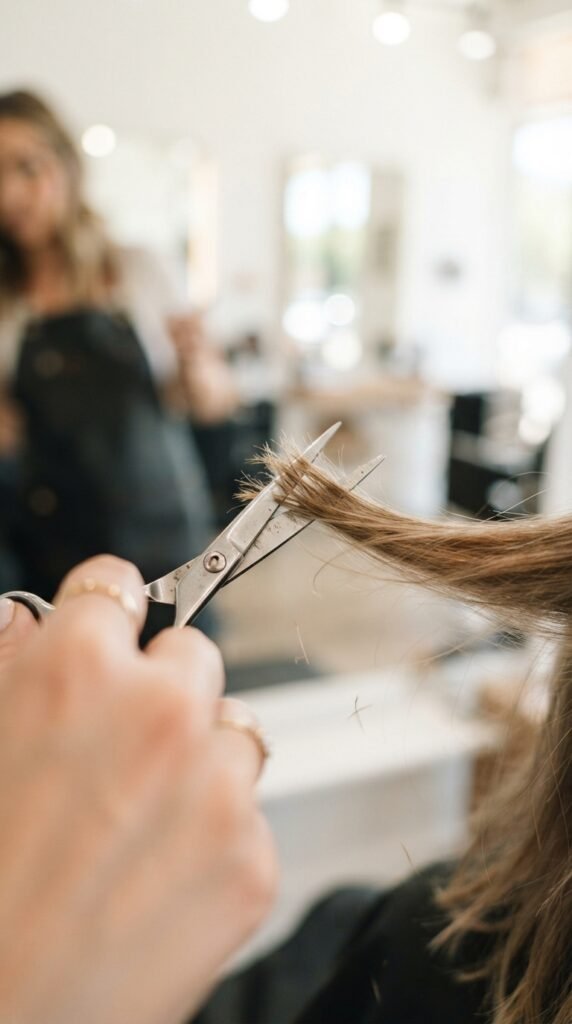
Two cutting techniques, two very different results on fine hair.
- Blunt cutting means scissors cut straight across. It creates a solid, thicker-looking edge.
- Point cutting means scissors cut into the ends at an angle. It softens the line and removes weight.
For fine hair, use both, but carefully. Your perimeter should be blunt because that is what makes your ends look full. Your interior layers can be point cut so they blend without hard lines.
What to avoid is heavy point cutting all over. It feels light at first, then your ends go see-through. A few snips at the tips of layers is plenty. Less is more here, always.
Why to Skip the Razor
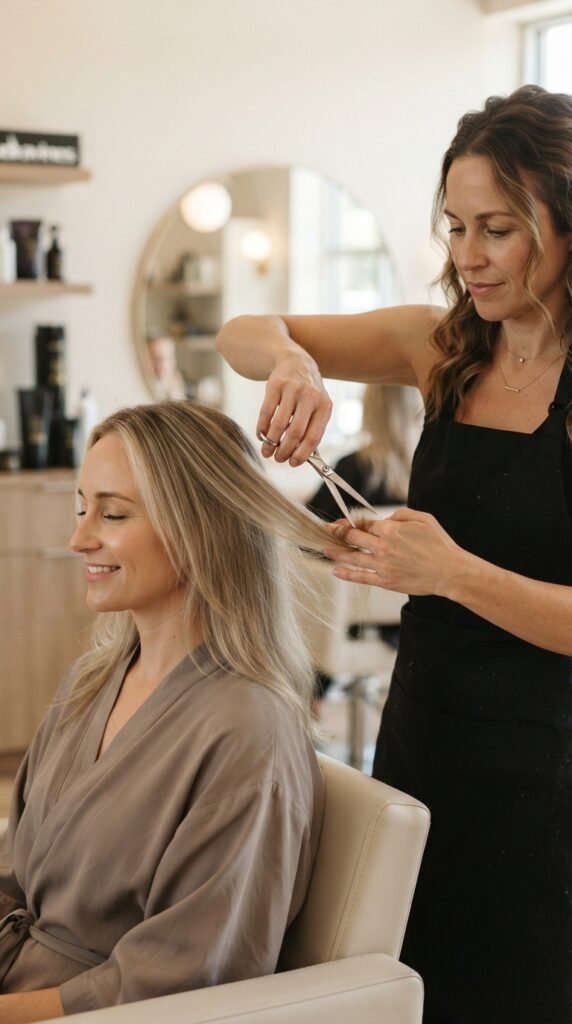
Razor cutting looks amazing on thick, wavy hair. On fine hair, it is usually a gamble.
A razor slices hair at an angle, which creates a tapered, wispy end. On thick hair that is texture. On fine hair, it can make your ends look thinner than they already do.
If your stylist reaches for a razor, it is completely okay to say no. Try this instead:
- Slide cutting with shears for softness
- A tiny amount of point cutting
- Thinning shears used sparingly, mid-shaft only
You can always remove more hair later. You cannot put it back. That is the rule I live by with fine hair, and it has saved me from plenty of bad haircuts.
Where to Place Your Shortest Layer
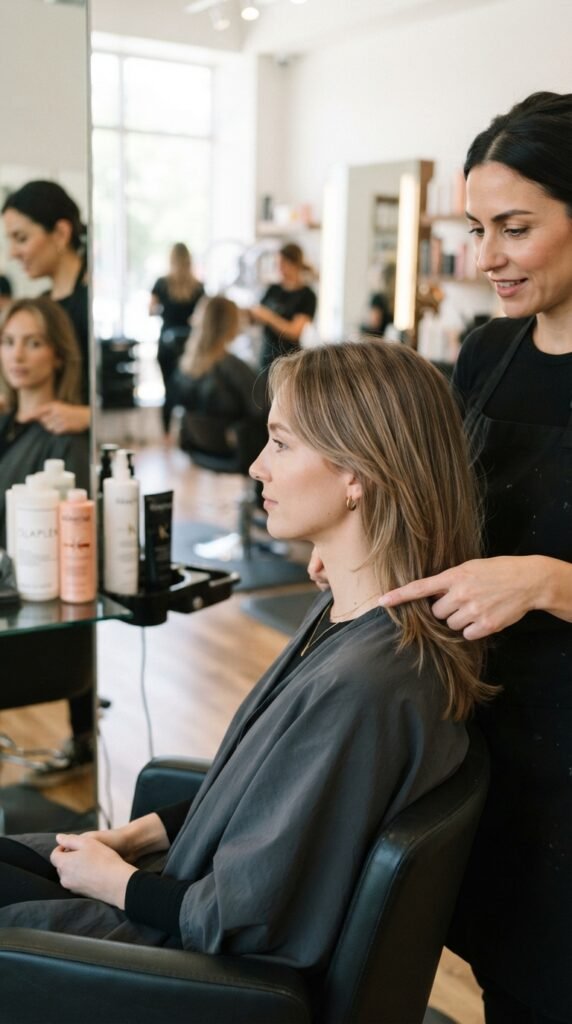
Placement is everything. Too high and you lose length and get that shelf look. Too low and nothing moves.
The sweet spot for fine hair:
- Long hair: shortest layer at the collarbone or below
- Medium hair: shortest layer at the jawline or below
- Short hair: one length with soft edges
One more tip. Avoid a layer that ends right at your cheekbone or jaw, since that is where fine hair looks thinnest. Keep the shortest layer just below the feature you want to highlight, never directly on it.
Ask your stylist to show you where that shortest layer will land before they make the first cut.
Face-Framing Pieces That Flatter Fine Hair

Face-framing pieces are the layers everyone notices, so they matter more than the rest.
On fine hair, keep them:
- Long and blended, starting below the chin
- Soft and point cut at the tips
- Thin enough to move, not so thin they look stringy
What to skip is short, blunt, cheekbone-length pieces. They can look sparse fast.
If you want that quiet luxury bob feeling without cutting it all off, ask for long face-framing pieces that start at your collarbone and sweep forward. It gives you the same polished look while your length stays put. Style them forward with a round brush and you are done.
How to Talk to Your Stylist: A Word-for-Word Script
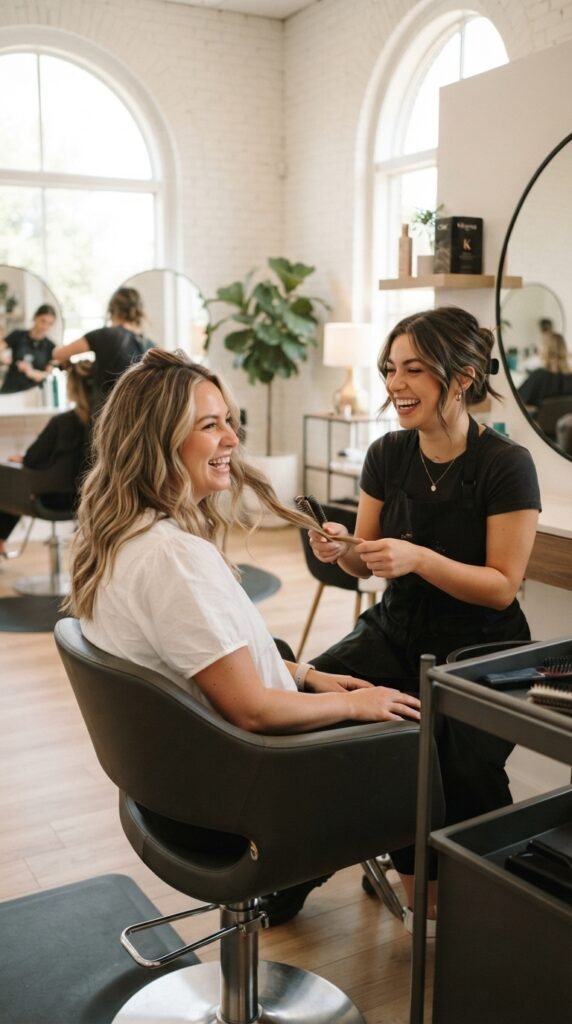
Nervous about explaining all of this? Just read it out loud.
“I have fine hair and I want to keep my length. Can we do long, invisible layers that start around my collarbone? I would like the perimeter kept blunt so my ends look full. Please go easy on texturizing.”
Then add a few of these:
- “Can you show me how much you are taking off before you cut?”
- “Let’s start conservative. I would rather come back for more.”
- “Please do not thin my ends.”
Stylists want you to be happy. Specific requests make their job easier, not harder. Speak up early and you both win.
The Right Photos to Bring to Your Appointment

Photos help, but only the right ones.
Skip the inspo pics of thick, wavy hair with seven layers. You will get a cut designed for someone else’s density.
Look for:
- Fine-haired creators with your texture
- Cuts with a visible, solid perimeter
- Long layers that start low
- Styles where the ends still look full
Save three photos max and mention what you like about each. “I like how full her ends look” is more useful than “I want this exact cut.”
Also bring one photo of your hair air dried on a normal day. That honest starting point helps your stylist see what they are actually working with.
The Asymmetrical Lob Without Losing Length
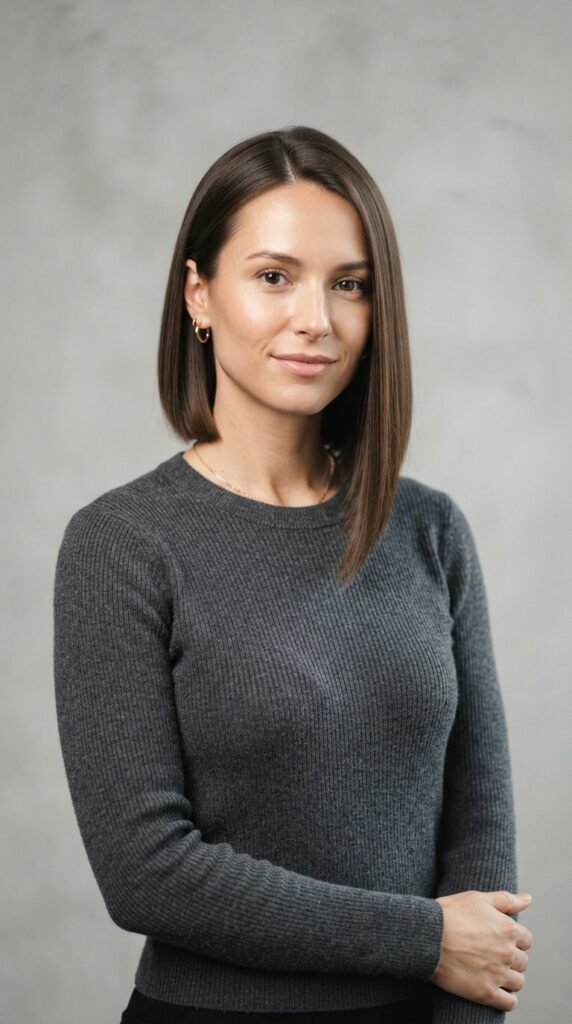
An asymmetrical lob is one of the best shapes for fine hair, and it is everywhere in 2026 hairstyles.
Why it works:
- The diagonal line creates visual interest without layers
- The longer side keeps your length feeling substantial
- One length means no thin ends
- It grows out beautifully
Ask for a lob that hits the collarbone on one side and the jaw or chin on the other, with a blunt or softly textured edge. Add just one long face-framing piece if you want movement.
Skip heavy interior layers here. The asymmetry does all the work, so you do not need them.
Quiet Luxury Bob on Fine Hair
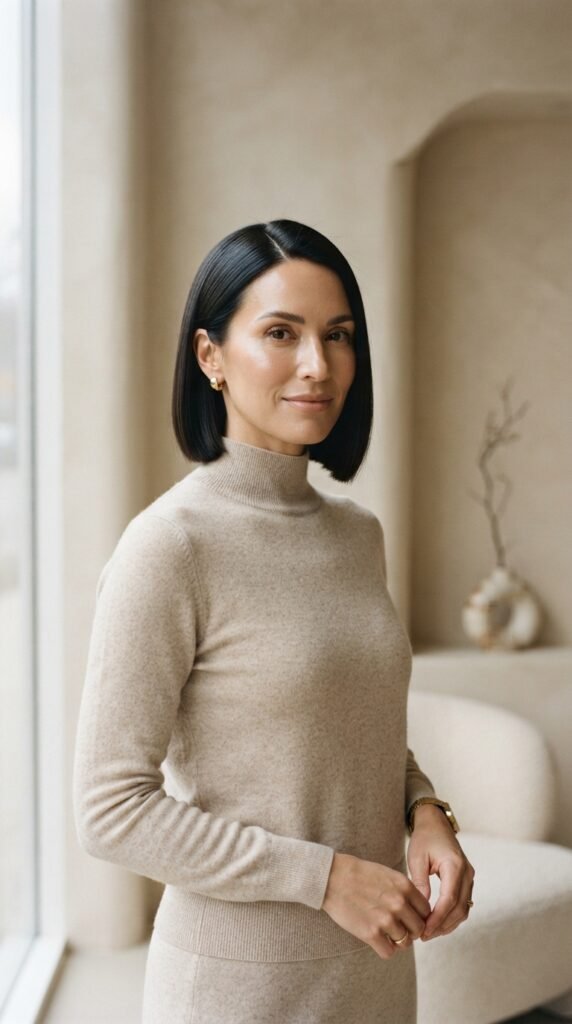
The quiet luxury bob is sleek, smooth, and slightly blunt, which makes it a dream for fine hair.
Fine strands naturally look polished when they are cut in a clean line. You do not need layers to fake volume. You need a shape that reflects light evenly.
Ask for:
- A blunt or softly rounded bob between chin and collarbone
- Minimal or no interior layers
- A slightly deeper point at the front
If you want to keep more length, ask for a long bob with invisible layers just at the crown. You get lift at the roots and a smooth, expensive finish everywhere else. Add a shine serum and it looks like you spent way more than you did.
Old Money Hair for Fine Strands
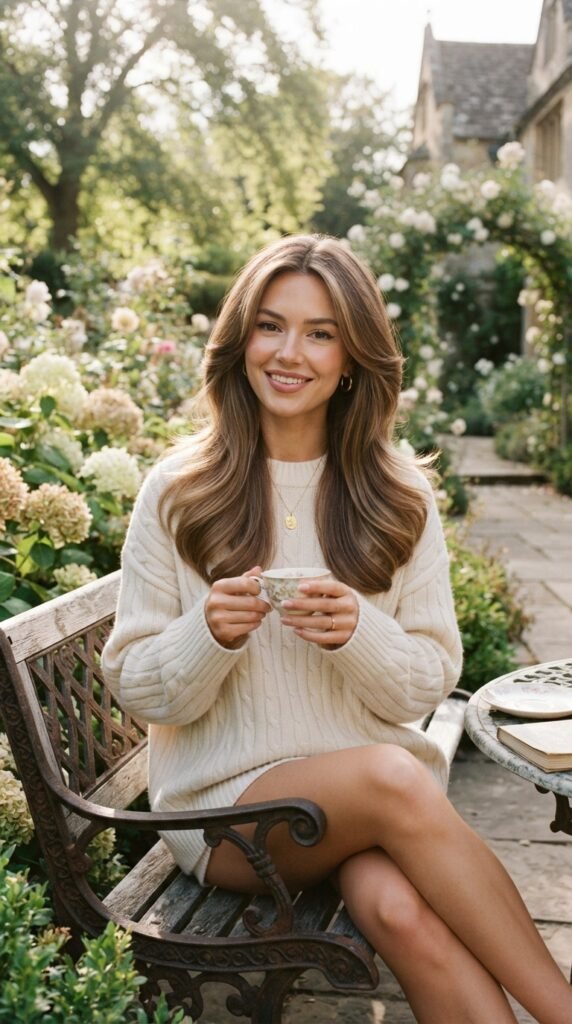
Old money hair is about health, shine, and a soft lived-in shape. Not volume tricks.
For fine hair, that means:
- Long, low layers for gentle movement
- A full, blunt perimeter
- Smooth blowouts with a bend, not a curl
- Flipped ends for a little polish
The key here is restraint. No choppy layers, no heavy styling. Think polished but relaxed, like you just happen to have good hair.
Start with a long-layer cut, then invest in a solid blow-dry routine. A round brush and a lightweight leave-in will do more for this look than any amount of layering. Fewer layers actually make it read more expensive.
The Hime Cut: Can Fine Hair Pull It Off?
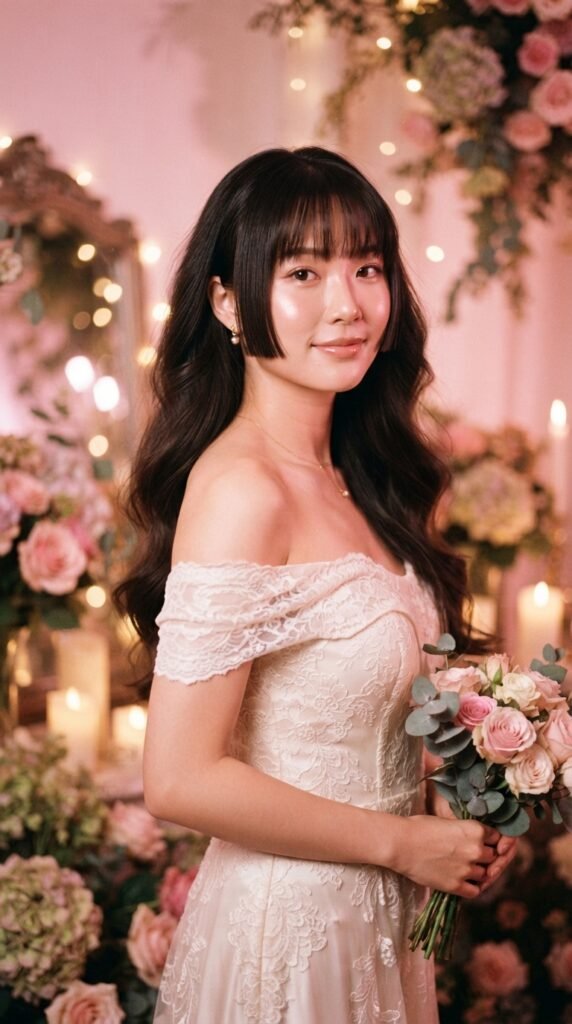
Yes, fine hair can absolutely wear a hime cut. You just have to adjust the proportions.
A classic hime cut is blunt, chin-to-cheek side pieces with the rest left long and straight. The risk on fine hair is that those side pieces look thin or disconnected.
What works instead:
- Make the side pieces longer, around the jaw or below
- Keep them thin but not sparse
- Blend the back slightly so there is no hard gap
- Keep the length behind it full and blunt
The result is a soft, romantic version of the trend that keeps all of your length. It is one of the prettiest ways to try a bold look without committing to a big chop.
The Vampire Haircut for Long Fine Hair
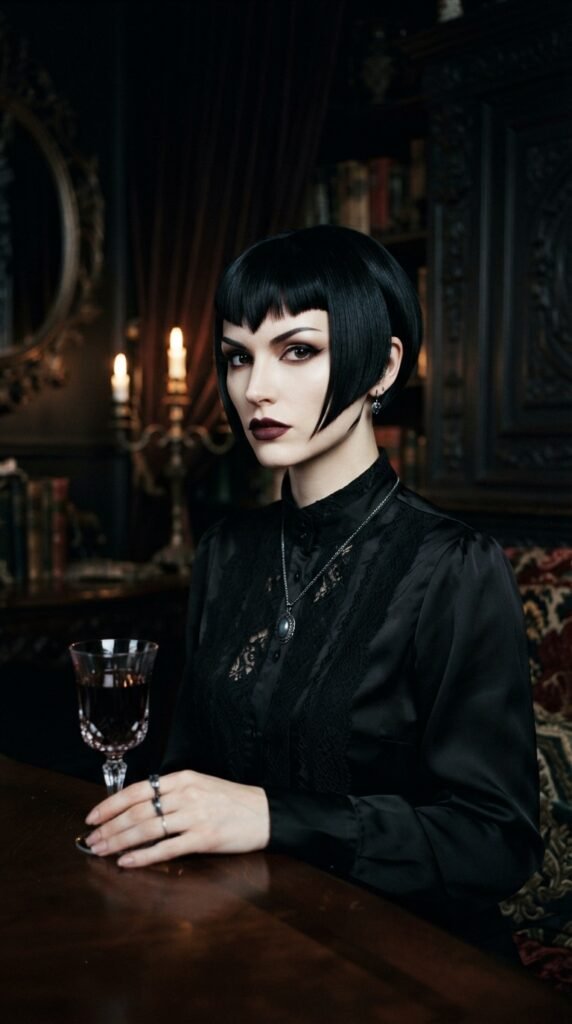
The vampire haircut is sharp, dramatic, and a little moody. It can work on fine hair if you keep the outline strong.
The look usually means long face-framing layers angled sharply downward, plus a solid length underneath. Here is how to fine-tune it:
- Keep the longest layer blunt and full
- Make face-framing pieces start below the chin
- Angle them, but blend the ends so they do not look stringy
- Avoid heavy thinning throughout
You get the drama at the front and the fullness at the back. Style with a middle part and a bit of texture spray at the roots. It is moody, it is modern, and your length stays exactly where it is.
Romantic Goth Hairstyles That Add Softness
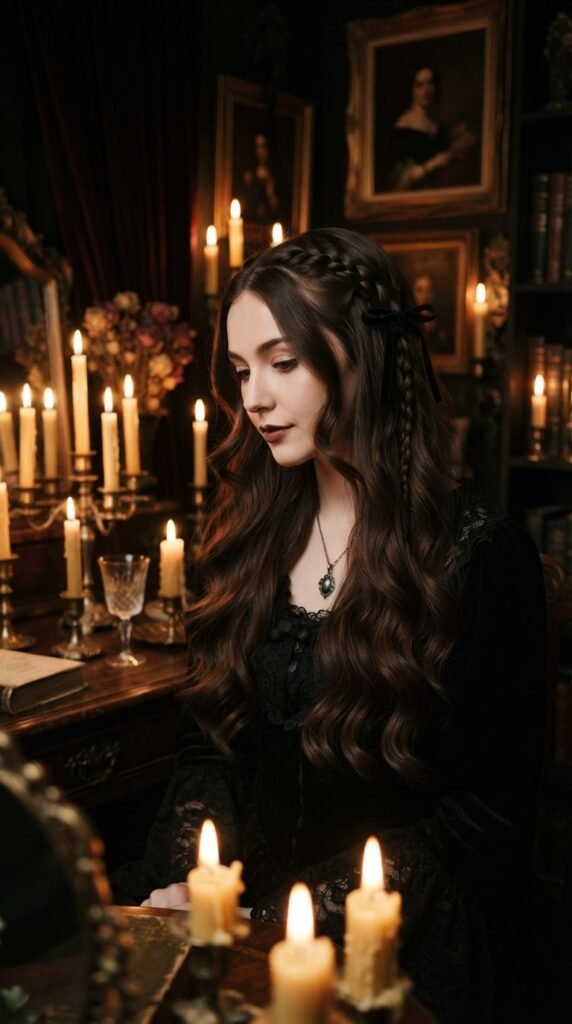
Romantic goth hairstyles are soft, dark, and full of movement, which actually suits fine hair really well.
The trick is texture without thinning. You want soft waves and a little mess, not wispy ends.
- Long, low layers for gentle movement
- Soft bends set with a curling iron on low heat
- A middle part with two face-framing pieces
- Lace or ribbon accents that add visual weight
Braids are your secret weapon here. A small braid on each side pulls hair forward and makes the whole shape look fuller. Loose romantic braids also hide thin ends beautifully. Add a little texture spray at the roots and you are set.
Glitchy Glam Hair Without the Weight
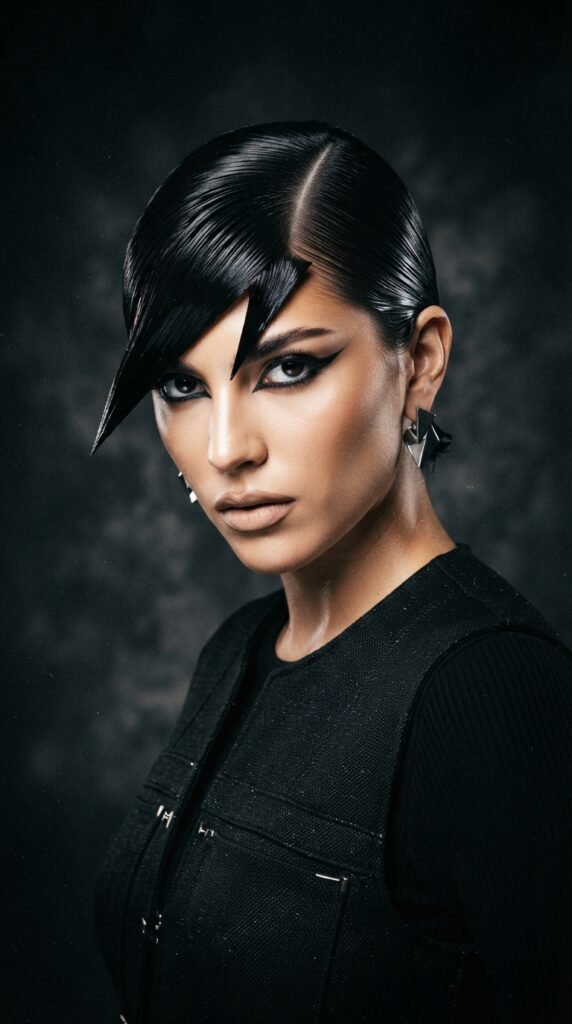
Glitchy glam hair is all about contrast. Sharp edges, unexpected angles, a little undone on purpose.
On fine hair, you can borrow the vibe without losing length:
- Keep the base cut long with a solid perimeter
- Add one sharp angled face-framing piece
- Use a deep side part for asymmetry
- Finish with a glossy, slightly wet look
The gloss matters. Shine makes fine hair look denser because light reflects off a fuller surface. Skip dry matte textures that make strands look separated.
Stick to one bold detail and keep everything else clean. That is how the trend reads intentional instead of chaotic, and it protects your length.
2026 Hairstyles That Actually Flatter Fine Hair
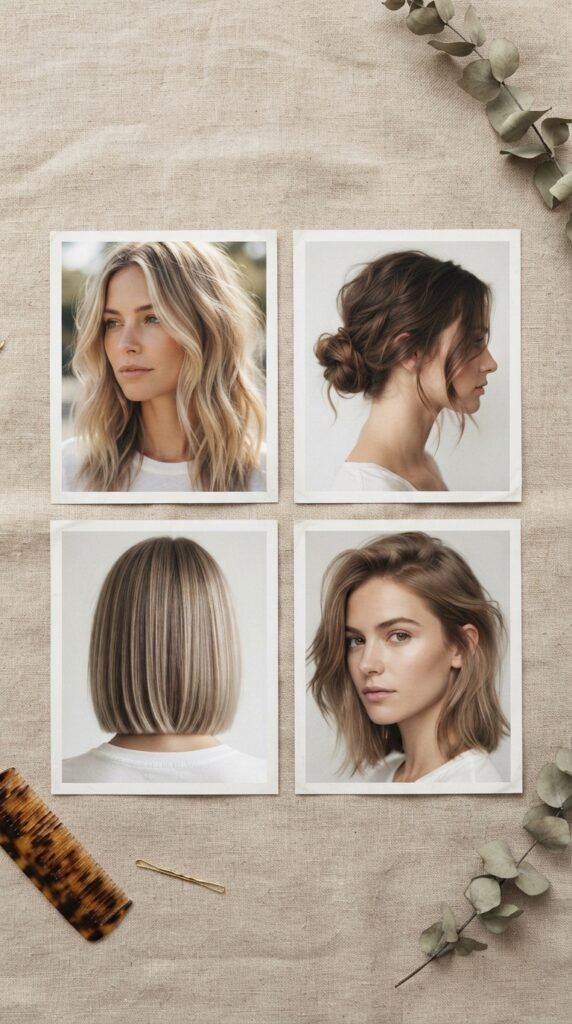
Here is the good news. 2026 hairstyles are trending toward soft, wearable shapes, and most of them are fine-hair friendly.
The ones worth trying:
- Quiet luxury bob: blunt, shiny, minimal layers
- Asymmetrical lob: one length, diagonal line
- Old money hair: long low layers, polished blowout
- Soft hime cut: longer side pieces, full back
- Modern vampire cut: angled front, solid ends
Notice a pattern? Almost all of them avoid heavy layering. That is perfect for fine hair.
Pick one that speaks to you, then ask your stylist to adapt it to your density. Trends are a starting point, not a rulebook. The best version of any trend is the one that fits your hair.
Products That Make Layers Look Fuller
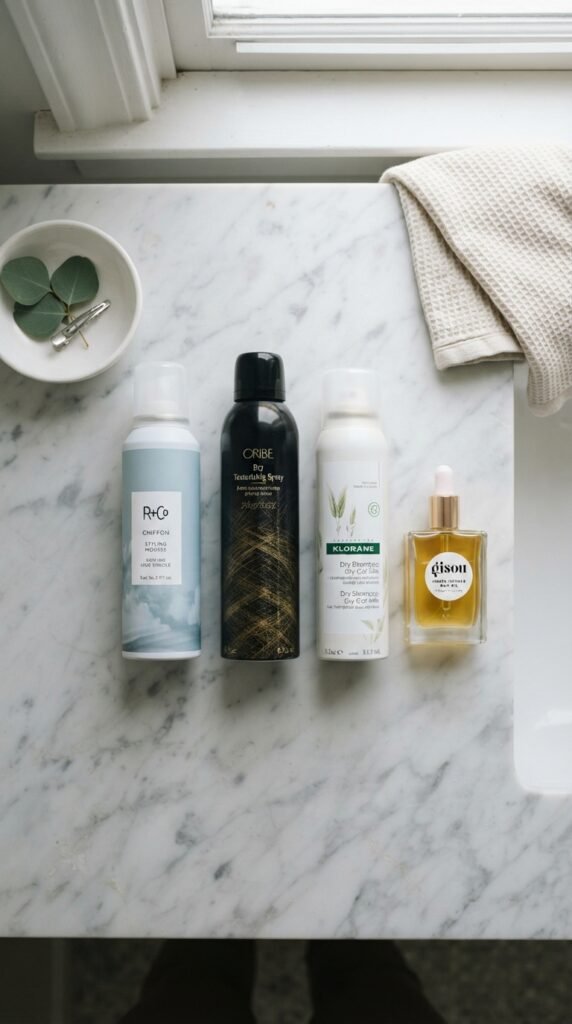
Product choice matters as much as the cut.
Reach for:
- Lightweight volumizing mousse at the roots
- Texture spray for the mid-lengths
- Dry shampoo for grip, even on clean hair
- A lightweight serum only on the ends
Skip heavy oils near the roots, thick creams that flatten layers, and anything that makes strands clump together.
Apply mousse to damp roots, then blow dry upside down for a minute. Spray texture spray on your layers once they are dry to break up any separation. Keep conditioner mid-length to ends only. Fine hair plus heavy product equals flat hair, every single time.
Blow-Dry and Root Tricks for Layered Fine Hair

You do not need more hair. You need better airflow.
- Towel dry gently, no rubbing
- Add mousse to the roots
- Blow dry upside down for 60 seconds
- Flip over and use a round brush on the layers
- Finish with cool air to set everything
The cool shot is the step most people skip, and it is the one that makes volume last.
For extra lift, clip your roots up while you finish your makeup, then release. And resist the urge to over-style. Fine hair loses volume when you keep touching it. A little bend in the layers is all you need.
Heatless Styling and Half-Up Ideas

Saving your hair from heat keeps it strong, and strong hair looks fuller.
Easy heatless options:
- Overnight braids for soft waves
- Foam rollers on the top section for root lift
- A claw clip twist that shows off your layers
- Half-up styles with a small clip or ribbon
Half-up is underrated for fine hair. Pulling the top section back shows off your layers and makes the whole shape look bigger while the length stays down and visible.
Sleep on a silk pillowcase too. Less friction means fewer broken strands, and fine hair cannot afford breakage. Small habits, big difference over a year.
How to Grow Out a Layer You Regret
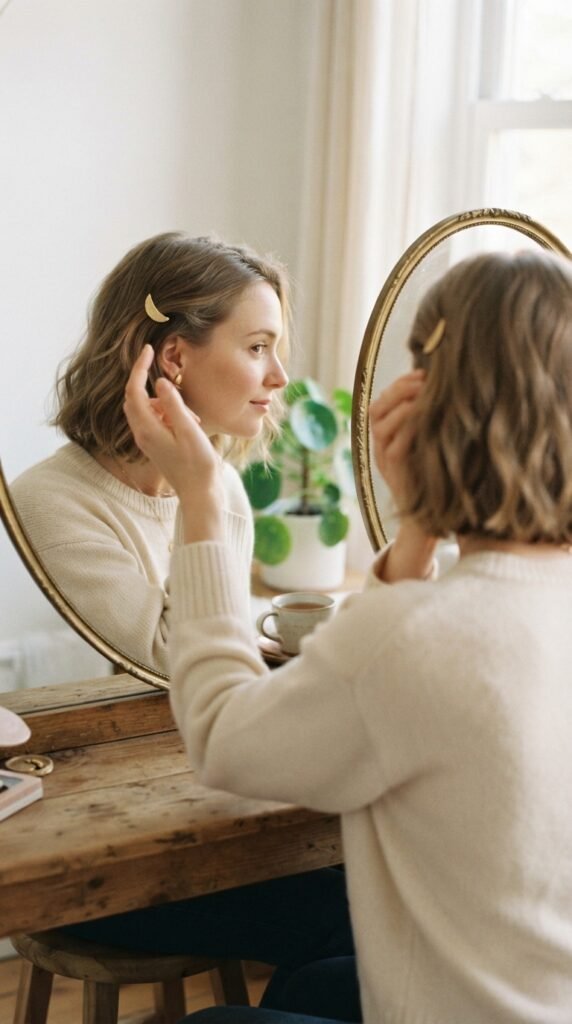
Been there. Here is how to handle it without another chop.
- Do not add more layers to fix it
- Trim only the longest layer’s ends every 10 to 12 weeks
- Use clips and pins to hide the short pieces
- Style with waves, since they camouflage uneven layers best
- Let the short layer become your face-framing piece
Also, be honest with your stylist next time. Say, “The shortest layer was too short. Let’s keep it lower this time.”
Growth is slow but it happens. Most people gain about half an inch a month, so six months makes a real difference. Be patient and protect your ends.
Your Pre-Salon Checklist

Read this in the car before your appointment.
- Your density and texture: fine, medium, or thick?
- Your goal: keep length, add movement
- Your ask: long invisible layers, low placement
- Your perimeter: blunt, please
- Your no-list: no razor, no heavy thinning
- Your photos: two or three, fine-haired only
- Your reminder: “Let’s start conservative”
Say it out loud once. It is much easier to speak up when you have already practiced.
And if a stylist pushes back on what you want, that is information too. Find someone who listens. The right stylist will get excited about working with your fine hair, not trying to change it.
A Warm Send-Off
That is it, friend. Layers and length are not enemies. You just have to be specific about what you ask for.
Keep the layering low, keep the perimeter full, and let your hair do the moving. Fine hair gets a bad reputation, but honestly, it is the easiest hair to make look expensive. You just need a cut that respects it.
You have got this. Bring your script, bring your photos, and walk in knowing exactly what you want.
Save this post to Pinterest so your stylist script is ready the next time you book an appointment. And tell me in the comments: have you ever gotten a layered cut that took off way too much length? What did you ask for, and what would you change? I read every single one, and your story might help someone else walk into their appointment with confidence.
Talk soon,
Hailey