Stacked and Sculpted: 36 Stacked Bob Haircuts for Women with Volume, Shape and Salon Polish
A stacked bob is one of the smartest cuts a salon can offer: short, graduated layers piled up at the back of the head, tapering down to a longer front, so the hair looks full, lifted and deliberately shaped instead of simply short. That is exactly why stacked bob haircuts for women have stayed popular for years — the cut does the styling work for you, giving flat hair instant volume and thick hair a clean, controlled silhouette.
The secret is the graduation. Your stylist cuts the back in short, stacked layers that sit on top of each other, building a rounded shape at the crown and nape, while the front stays longer and frames the face. The result is a bob with real architecture: height where you want it, movement at the ends, and a neckline that looks neat from every angle.
This guide starts with the thinking — what makes a bob truly stacked, how it differs from a blunt or A-line bob, which face shapes and textures it flatters most, and what to ask for in the chair — and then gives you 36 versions to choose from, from chin-length classics to shoulder-grazing stacks, with and without bangs, in every texture and colour. Find the one that fits your hair, and take the photo to your next appointment.
What Makes a Bob “Stacked”
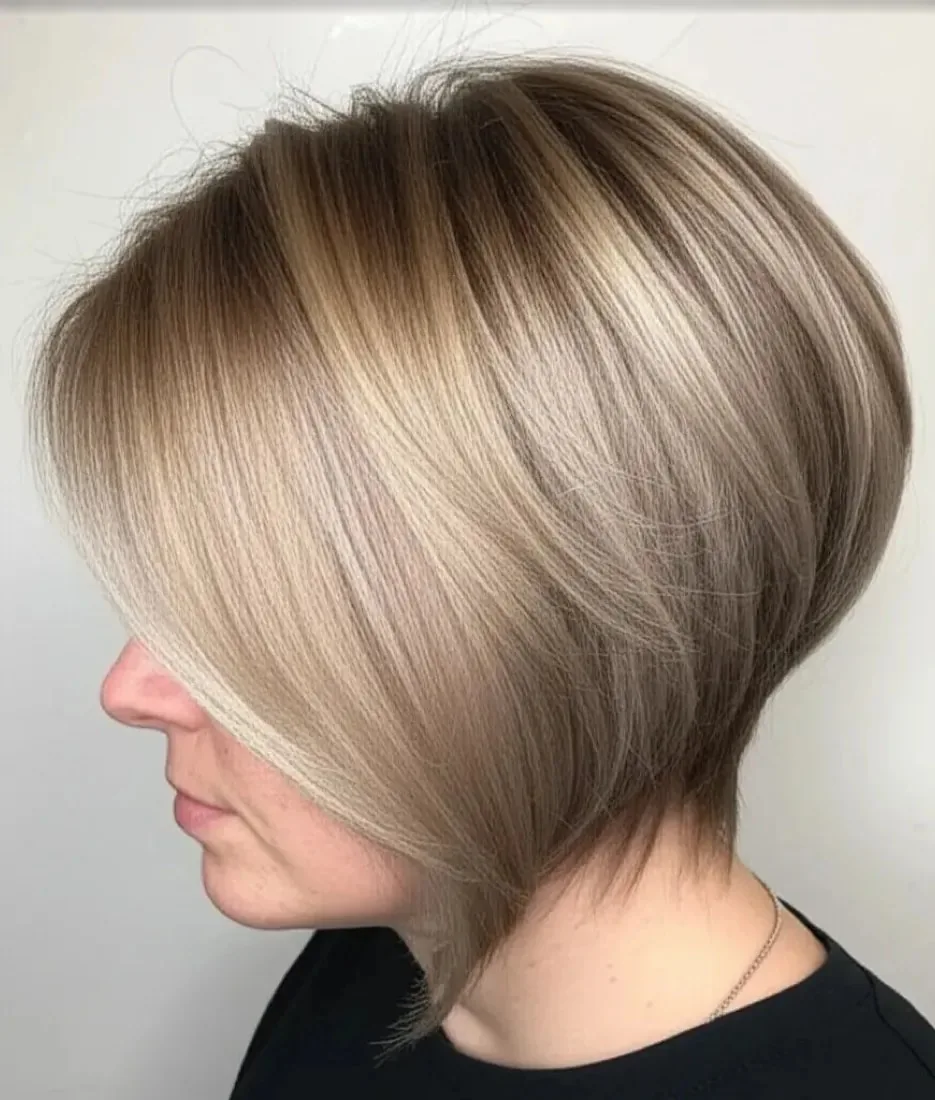
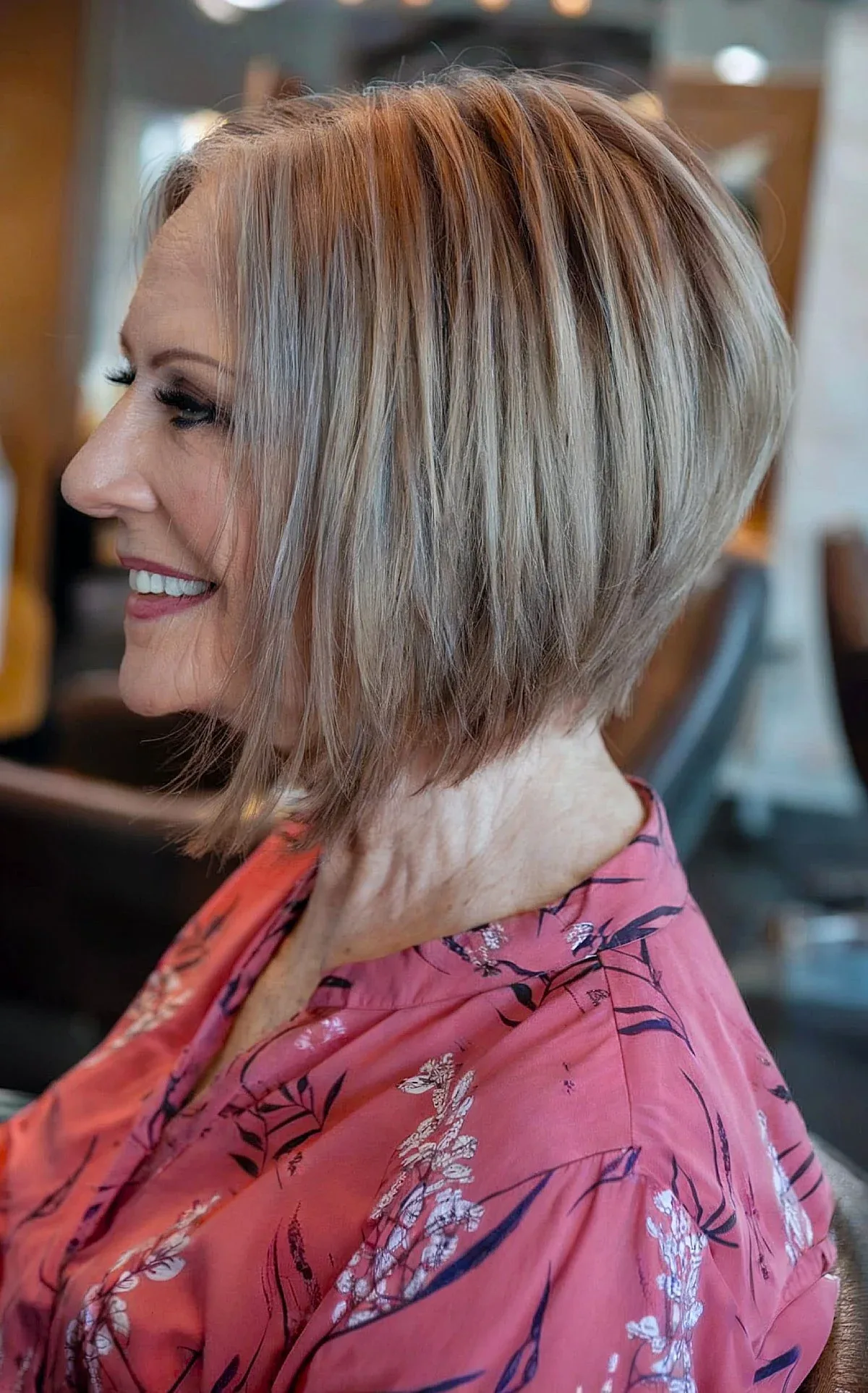
A bob becomes stacked when the hair at the back is cut in short, graduated layers that build on top of each other like steps. Each layer is slightly shorter than the one below it, so the hair at the nape sits close to the head while the crown lifts into a rounded, full shape. That built-up back is the whole point of the cut, and it is what separates a stacked bob from a bob that is simply short.
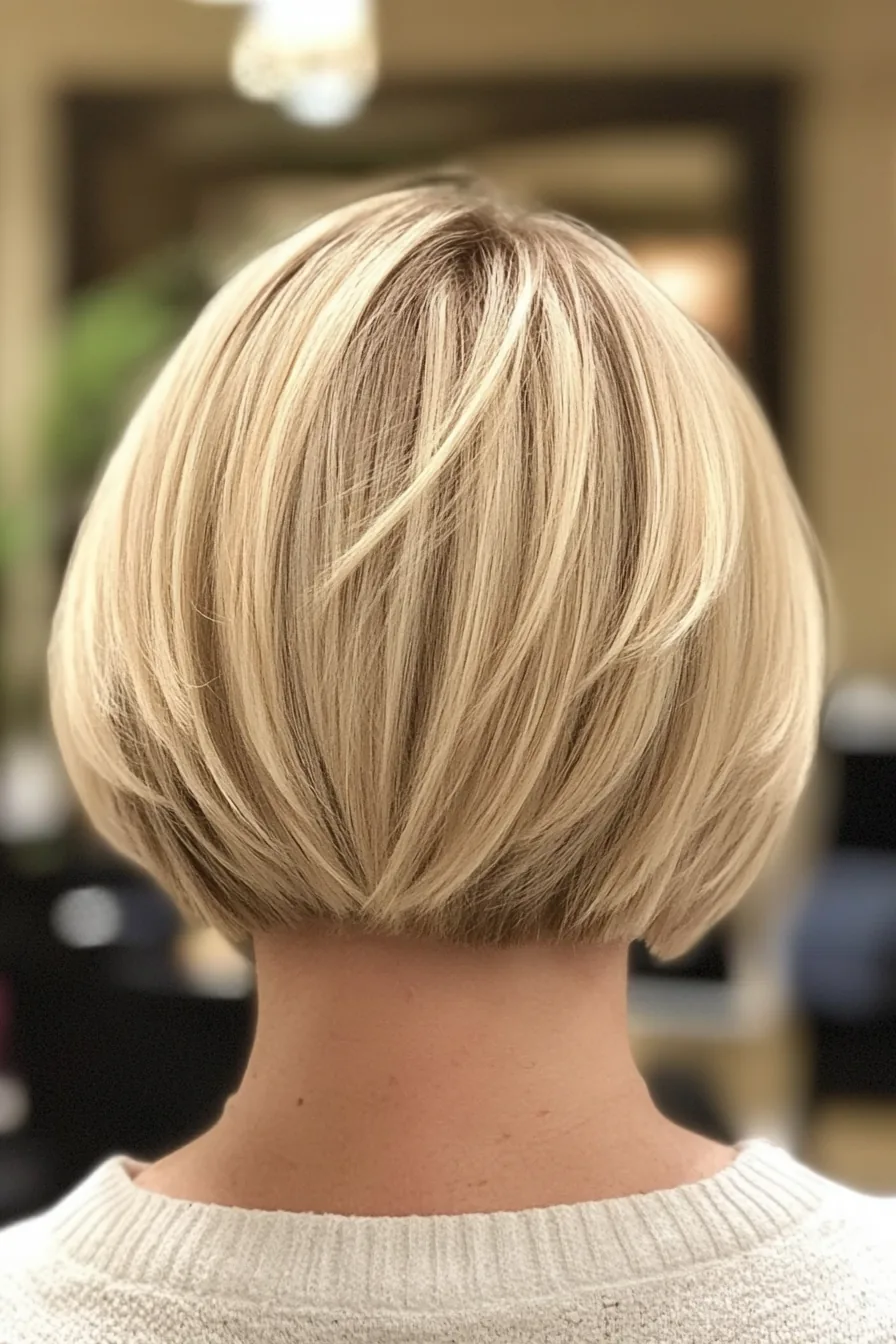
The graduation also controls weight. Without it, a bob can hang heavy and flat at the back, or puff out into a triangle. Stacked layers remove bulk from underneath while keeping length on top, so the silhouette stays narrow at the nape and full at the crown. On fine hair this creates volume that was never there; on thick hair it stops the dreaded pyramid shape.
A true stack should look smooth from the side, with no visible steps or ledges. Run your eyes along the back of a good stacked bob and you will see one continuous curve from crown to nape, not a shelf. If you can see harsh lines where one layer ends, the graduation was cut too steeply, and a good stylist will soften it with point cutting.
The front of a stacked bob is usually left longer than the back, which is what gives the cut its flattering face-framing line. How much longer is up to you: a gentle difference looks classic and soft, while a dramatic difference gives you the sharp, angled finish that makes the stacked bob so recognisable.
Stacked vs Blunt vs A-Line vs Graduated Bob
These four bobs look similar in a photo, but they behave very differently on real hair, so it helps to know which one you are actually asking for. A stacked bob builds volume at the back with short graduated layers. A blunt bob is cut to one even length all round, with no layers, so it looks sharp and heavy. An A-line bob is longer at the front than the back, with a clean diagonal line and little layering. A graduated bob is the umbrella term for any bob cut shorter at the back, and a stacked bob is simply its most layered version.
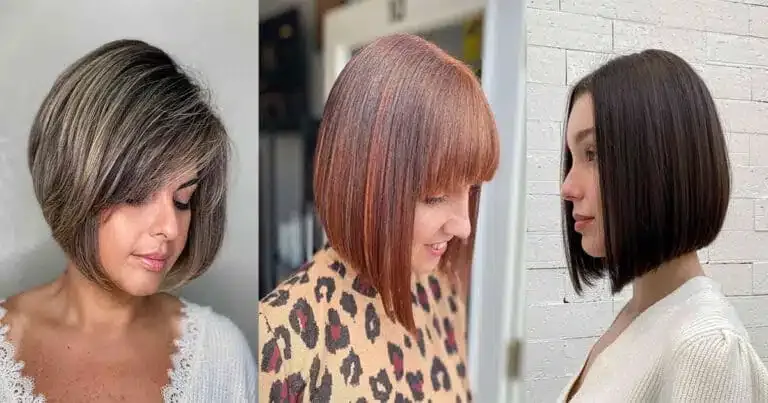
Choose a stacked bob when you want volume and shape without much daily styling. The layers do the lifting, so the cut looks finished even when you just blow-dry it roughly. Choose a blunt bob when you want a sleek, graphic line and your hair is naturally straight and thick enough to hold it. Choose an A-line when you love the angled front but want a smoother, less voluminous back.
The common mistake is asking for a stacked bob and getting a blunt one, or the other way round. Show your stylist a photo and point at the back of the head, not just the front — that is where the difference lives. Say the words out loud too: stacked means layers at the back, blunt means one length, A-line means angled with no stacking.
In practice, many great cuts borrow from all four. A stacked bob with a blunt front edge, for example, gives you volume at the back and a sharp line at the face. Tell your stylist which feature matters most to you — the lift, the angle, or the clean edge — and let them blend the rest around it.
Best Face Shapes for a Stacked Bob
The stacked bob is unusually forgiving, because its volume sits at the back and crown rather than at the sides, so it rarely widens the face the way a blunt bob can. That makes it a strong choice for round faces, where the lift at the crown lengthens the look of the face and the longer front pieces slim the cheeks. Ask for the front to fall at or below the jawline for the most slimming effect.
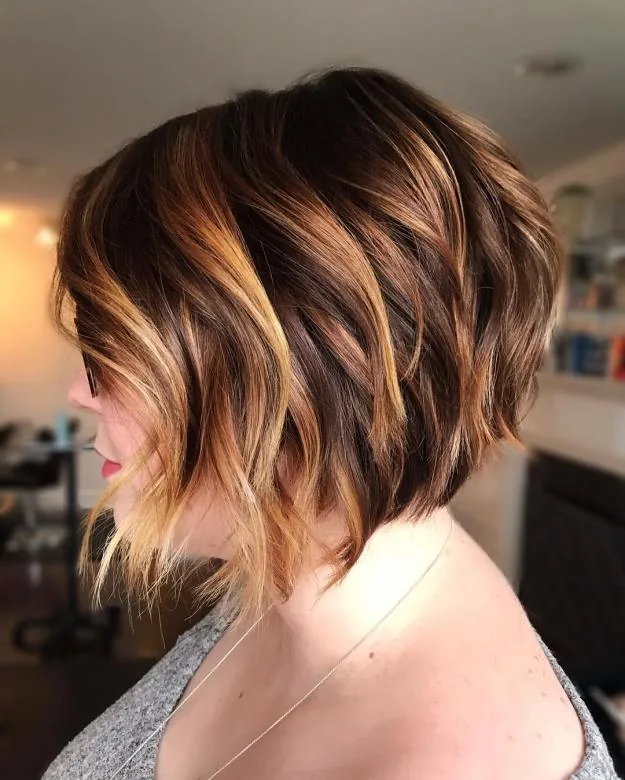
Oval faces can wear almost any version, from a short chin-length stack to a longer shoulder-grazing one, because the proportions are already balanced. This is the face shape to experiment with: try bangs, a deep side part, or an asymmetrical front, and the cut will still sit well. Square faces benefit from softness, so ask for textured ends and a side part to break up a strong jawline.
Heart-shaped faces, with a wider forehead and narrower chin, suit a stacked bob with volume at the sides near the jaw, which balances the narrower lower face. A few face-framing layers or soft waves at the ends do this better than a severe straight finish. Long faces should keep the stack a little shorter and fuller at the sides, and consider bangs, which shorten the appearance of the face.
The honest test is the mirror, not a chart. Face-shape guides are a starting point, but your hair texture, neck length and personal style matter just as much. Bring photos of women whose faces look like yours, and ask your stylist which version of the stack would flatter you rather than which one is trending.
Best Hair Textures for a Stacked Bob
Fine hair is where the stacked bob earns its reputation. The short layers at the back create lift that fine hair cannot manage on its own, and because the cut removes weight, the hair stops collapsing flat against the head. Keep the stack fairly short and ask for light texturising rather than heavy thinning, which can make fine ends look wispy.
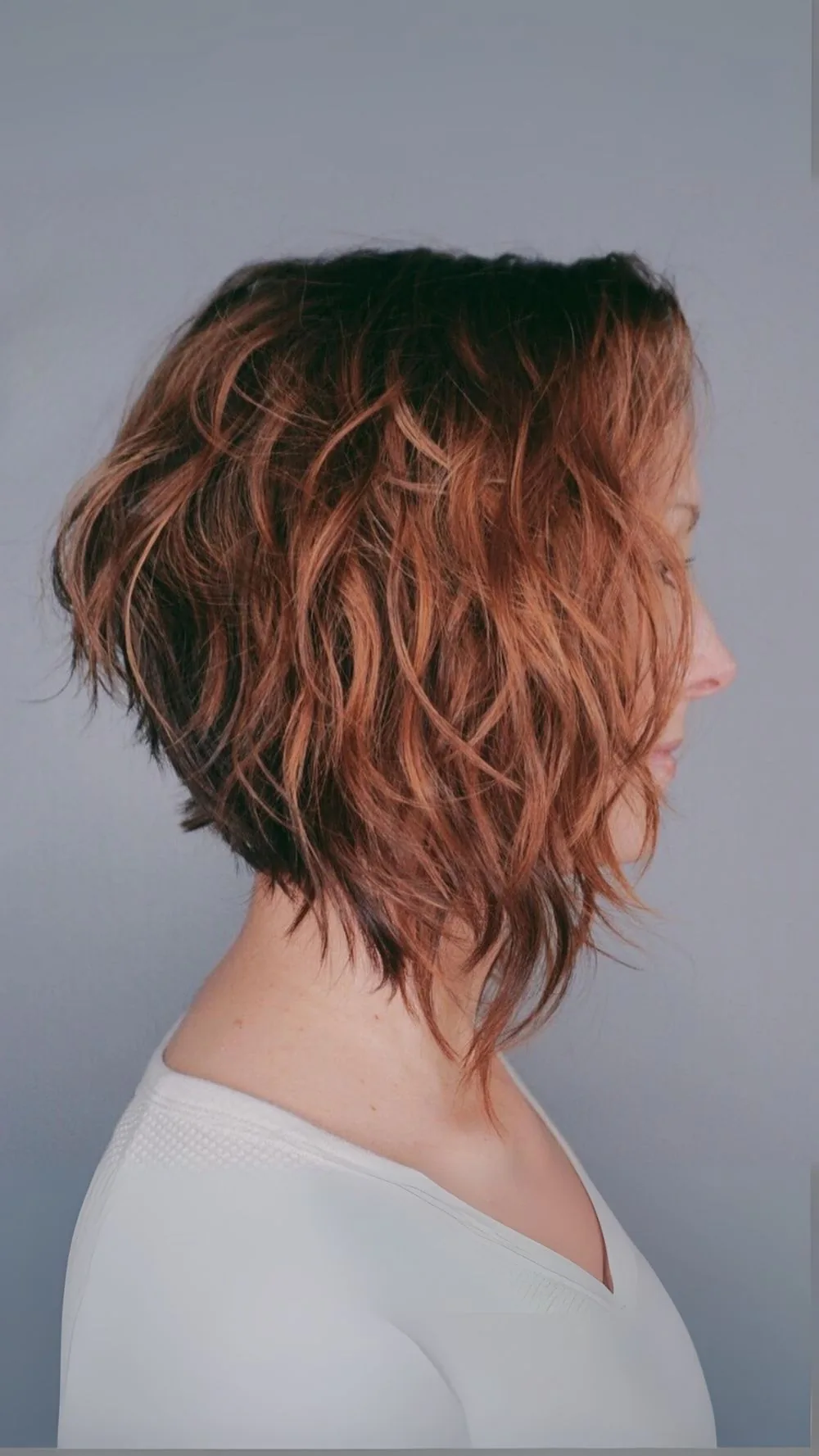
Thick hair loves a stack too, but for the opposite reason: the graduation removes bulk from underneath, so a thick bob stops flaring out at the ends and starts sitting in a neat, rounded shape. Ask your stylist to thin the interior layers rather than the ends, so the outline stays full while the weight disappears. A stack that is too short on very thick hair can puff up, so keep some length.
Wavy hair gives a stacked bob natural movement, and the layers encourage the wave to form instead of fighting it. A light mousse scrunched into damp hair is often all the styling it needs. Curly hair can wear a stack beautifully, but the cut must be done dry or with the curl pattern in mind, because curls spring up shorter than they look when wet — a stack cut too short on curls can turn into a round ball.
Straight hair shows the architecture of a stacked bob best, with every layer visible in a clean curve. It also shows mistakes most clearly, so a precise cut matters. Whatever your texture, the rule is the same: the stack should work with how your hair naturally falls, not against it.
How to Ask Your Stylist for a Stacked Bob
The single most useful thing you can do before your appointment is save two or three photos of the exact cut you want, including at least one back view. The stack lives at the back of the head, and a front-only photo leaves your stylist guessing about the graduation. Show the photos, point at the nape, and say how stacked you want it — subtle or dramatic.
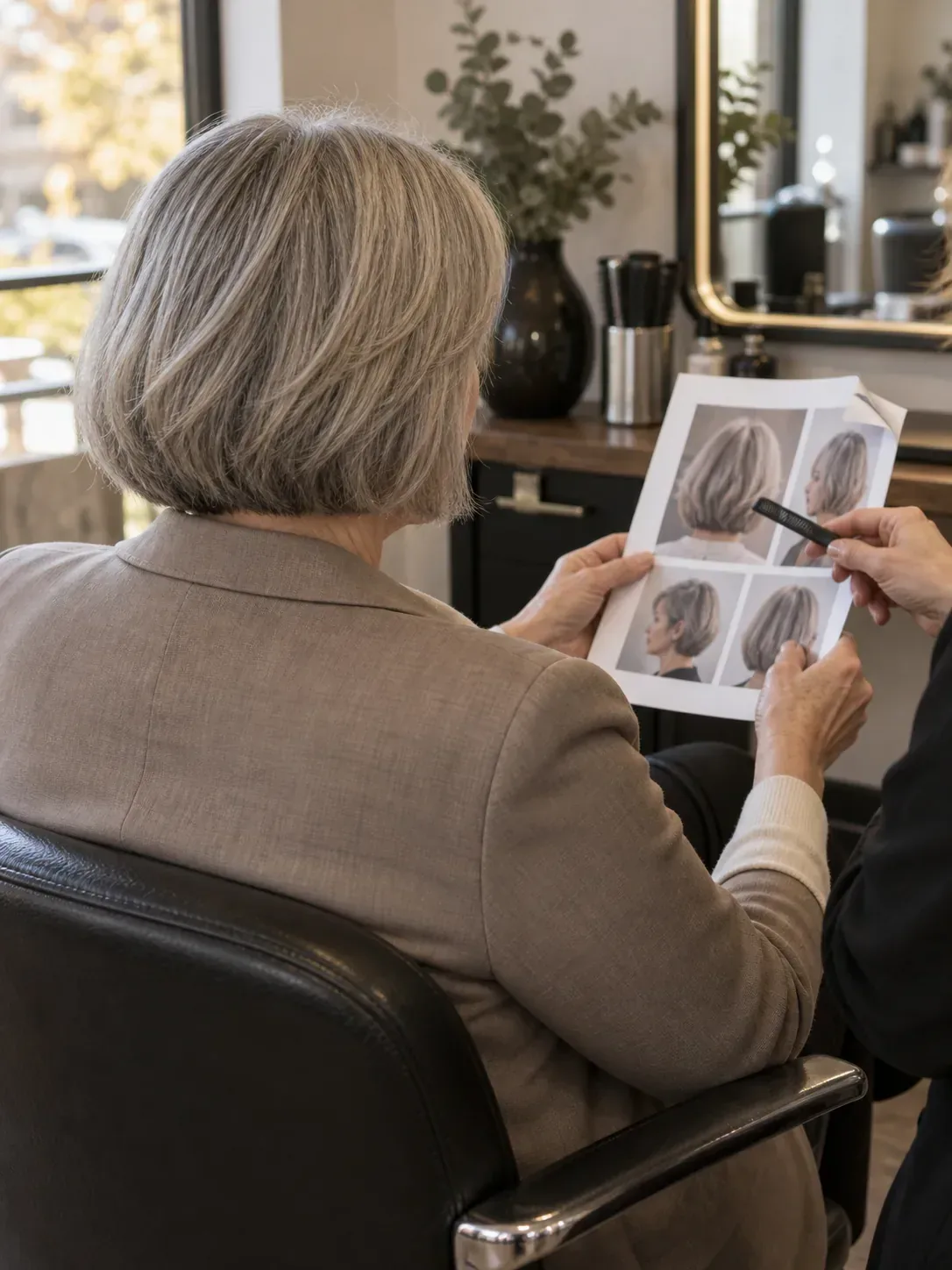
Use the right words. Say stacked, not just bob, and say graduated layers at the back. Tell your stylist how long you want the front to be — chin, jaw or shoulder — and whether you want bangs, a side part or a middle part. Mention your daily routine too: if you never use a round brush, say so, because the cut should look good with the styling you actually do.
Ask questions before the scissors come out. How short will the nape be? How much volume should I expect at the crown? How often will I need a trim to keep the shape? A good stylist will answer happily and may adjust the plan once they feel your hair. If they seem unsure what a stacked bob is, that is your cue to reconsider, not to hope for the best.
Bring a photo of a cut you do not want as well, if you have one. Knowing what to avoid — too short at the nape, too much volume, a shelf-like step — is often clearer than describing what you like. And take a photo of your own cut from the back before you leave, so your next stylist can see exactly what worked.
Styling a Stacked Bob at Home
A stacked bob is one of the lowest-effort cuts to style, because the shape is already built in. Start with damp hair and a golf-ball-sized amount of volumising mousse worked through the roots at the back. Blow-dry with your head tipped forward, directing the air at the roots, which lifts the crown and sets the stack’s shape before you even pick up a brush.

For a polished finish, use a medium round brush on the top layers only, rolling the brush under at the ends to tuck them in. The back needs very little work — the layers already curve inward. A flat iron can smooth the front pieces, but run it through once and leave the ends slightly bent, or the cut loses its softness and looks stiff.
On lazy days, let the cut do everything. A little texturising spray scrunched into the ends gives a lived-in texture in under a minute, and a stacked bob air-dries better than most cuts because the layers keep it from going flat. The most common styling mistake is overworking it: too much product weighs the stack down and flattens exactly the volume the cut created.
Sleep on it without worry. A stacked bob holds its shape overnight better than a long cut, and a quick blast of dry shampoo at the roots in the morning revives the lift. If one side flips out while you sleep, a damp hand and thirty seconds with the dryer will put it back.
Growing Out a Stacked Bob
Growing out a stacked bob takes patience, because the back is much shorter than the front and the two lengths have to meet. Expect the awkward stage to arrive around three to four months in, when the nape starts to flip out and the crown loses its stacked shape. This is normal, and it is the stage where most people give up — do not.
The trick is to keep trimming the front while the back catches up. Your stylist can tidy the nape and blend the layers without taking length off the front, which keeps the shape wearable while the back grows. A few longer layers cut into the crown can also smooth the transition so the stack grows out into a lob rather than a mullet shape.
Styling helps more than cutting during the grow-out. A deep side part disguises uneven lengths, and soft waves hide a multitude of sins. Tuck the shorter back pieces behind your ears or pin them with a clip while they grow, and use a little pomade on the ends to stop them flipping outward.
Set a realistic timeline: growing a stacked bob to shoulder length usually takes six to nine months, depending on how fast your hair grows. Book a trim every eight weeks, not to lose length but to keep the shape intentional. A grown-out stack that is maintained looks like a deliberate lob; one that is ignored looks like a cut you forgot about.
Maintenance and Trims: Keeping the Shape
A stacked bob is a precision cut, and its shape depends on the graduation staying sharp. Plan on a trim every four to six weeks if you want it to look its best, and no longer than eight weeks. After that, the nape grows out, the crown drops, and the clean curve at the back turns into a heavy ledge that no amount of styling can fix.
Between appointments, the most useful habit is a good blow-dry technique rather than more product. Keep the roots lifted at the back, tuck the ends under, and resist the urge to flat-iron the whole cut every day, which flattens the stack and dries out the ends. A weekly deep-conditioning mask keeps the ends smooth so the layers sit cleanly.
Watch for the warning signs that a trim is due: the nape starts to curl outward instead of sitting flat, the front pieces look longer than the back by too much, or the crown feels heavy and flat no matter what you do. Any one of these means the graduation has grown out, and a fifteen-minute tidy-up will restore the shape.
Budget for it honestly. A stacked bob costs more in salon visits than a long cut, but less in daily styling time, and that trade-off suits most people well. If salon visits every month are too much, ask your stylist for a slightly longer, softer stack, which grows out more gracefully and buys you an extra two weeks between trims.
1. Classic Chin-Length Stacked Bob
The classic chin-length stacked bob is the version most people picture when they hear the name: short graduated layers piled at the back, a smooth rounded crown, and front pieces that end right at the chin. It is the purest form of the cut, with nothing extra competing for attention, and it suits almost everyone because the proportions are so balanced.
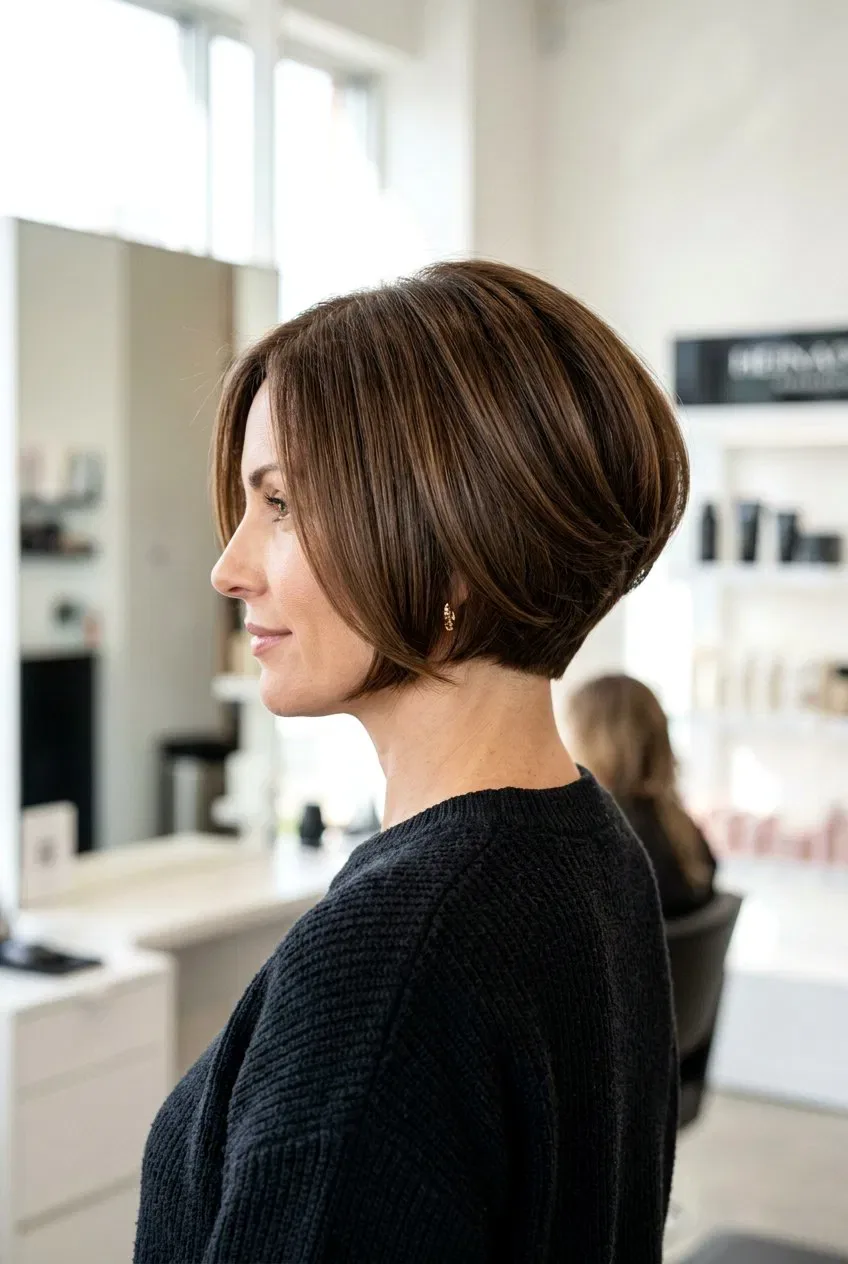
The common mistake is cutting the front too short in pursuit of a sharper look. Once the front creeps above the chin, the bob loses its face-framing line and starts to look like a pixie from the front. Ask your stylist to cut the front a touch longer than you think you want — hair always springs up a little once it is dry.
Maintenance is straightforward: a trim every five weeks keeps the nape neat and the crown lifted. At home, blow-dry the back with a round brush and tuck the front ends under with a flat iron for a polished finish. A pea-sized amount of smoothing cream on the ends stops flyaways without weighing the stack down.
Quick verdict: if you want one stacked bob to try first, make it this one. It is timeless, low-effort and flattering on most face shapes, and it gives you the full stacked effect — volume, shape and a clean neckline — in its simplest form.
2. Jaw-Length Stacked Bob with Volume
A jaw-length stacked bob sits just at the jawline, a little longer than the chin-length classic, and it is the best choice when you want noticeable volume without going very short. The extra length in front gives the cut more swing, while the stacked back still builds the height that makes the style look expensive and deliberate.
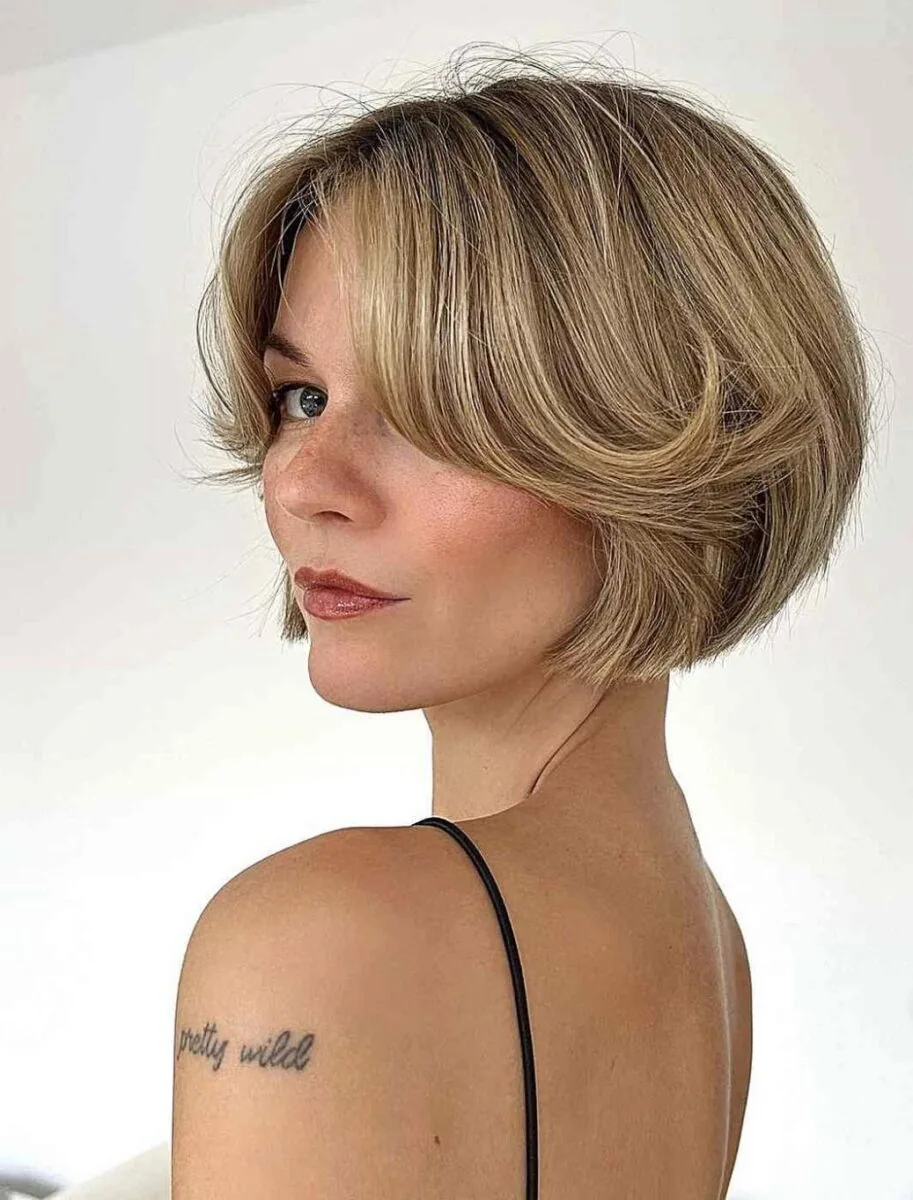
The common mistake is asking for volume and getting bulk instead. Volume comes from short layers at the crown, not from leaving the hair thick all over. If your stylist thins the ends rather than layering the interior, the bob will flare out at the jaw instead of lifting at the back, so ask specifically for graduation at the crown.
Maintenance means a trim every five to six weeks and a volumising mousse at the roots when you blow-dry. Dry the crown first, with your head tipped forward, and the lift will set before the rest of the hair is dry. A root-lifting spray on second-day hair brings the volume back without a full wash.
Quick verdict: the jaw-length stack is the sweet spot between short and wearable. It flatters round and square faces especially well, gives fine hair real body, and still feels long enough to tuck behind an ear.
3. Shoulder-Length Stacked Bob
A shoulder-length stacked bob, sometimes called a stacked lob, keeps the graduated back of a classic stack but lets the front fall to the shoulders. It is the gentlest way into the style, and it suits anyone who likes the volume of a stack but is not ready to go short. The longer front also makes it the easiest stacked bob to tie back.
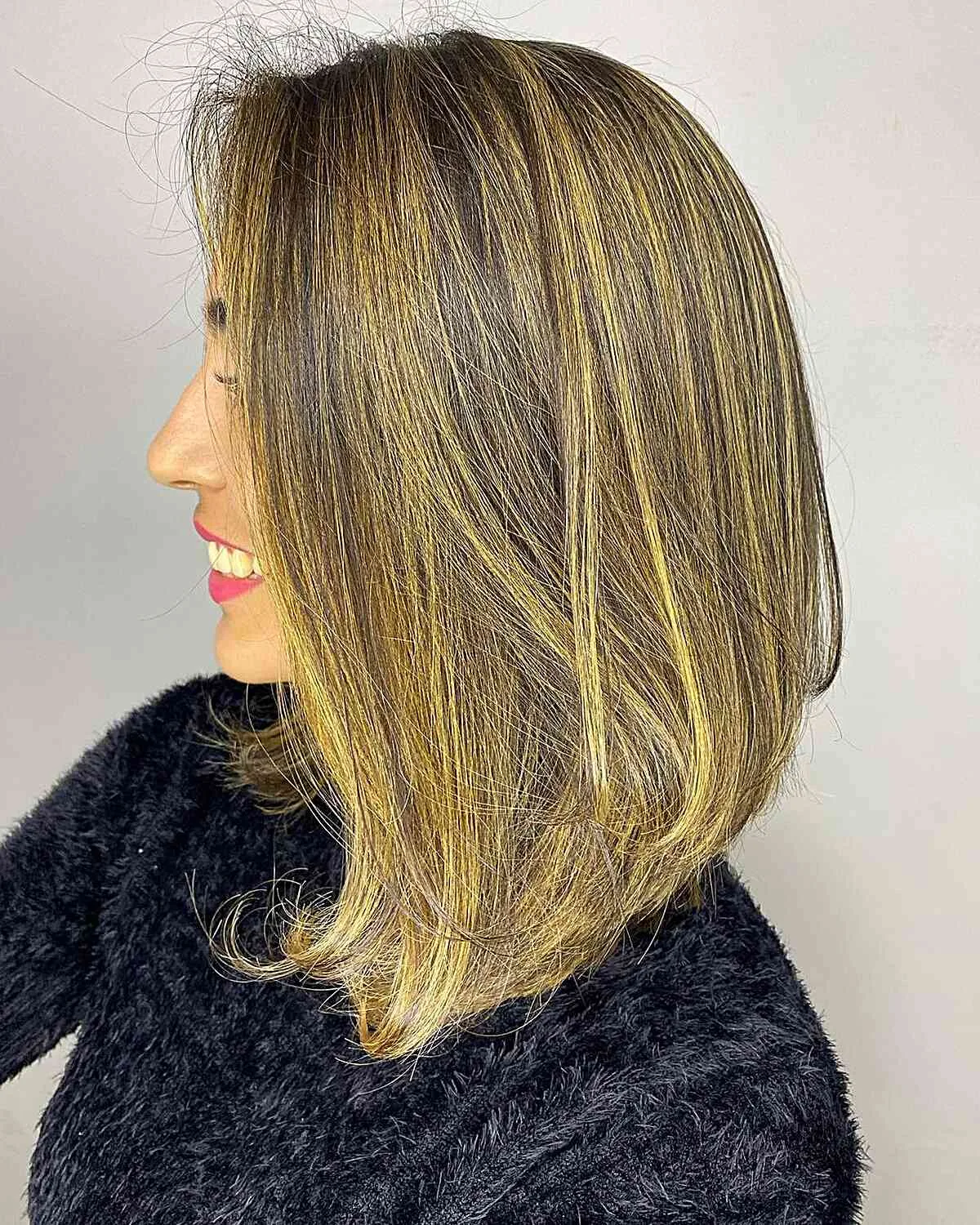
The common mistake is cutting the back too long, which kills the stack entirely. If the nape layers are not noticeably shorter than the front, you have a lob with a few layers, not a stacked bob. Ask your stylist to show you the graduation from the side before they finish — the back should clearly step upward.
Maintenance is forgiving, with trims every six to eight weeks instead of every month. The longer length hides grow-out well, and the cut air-dries nicely with a little texturising spray. When the ends start to look straggly, a dusting trim of the front pieces is usually all it needs.
Quick verdict: choose the shoulder-length stack if you want volume without commitment. It is the most versatile version in this guide, easy to grow out, easy to style, and flattering on nearly every face shape.
4. Stacked Bob with Side-Swept Bangs
Side-swept bangs soften a stacked bob beautifully, breaking up the strong shape at the back with a gentle diagonal line across the forehead. The bangs blend into the longer front pieces, so the whole cut flows from one side to the other, and the asymmetry draws the eye across the face rather than straight down it.
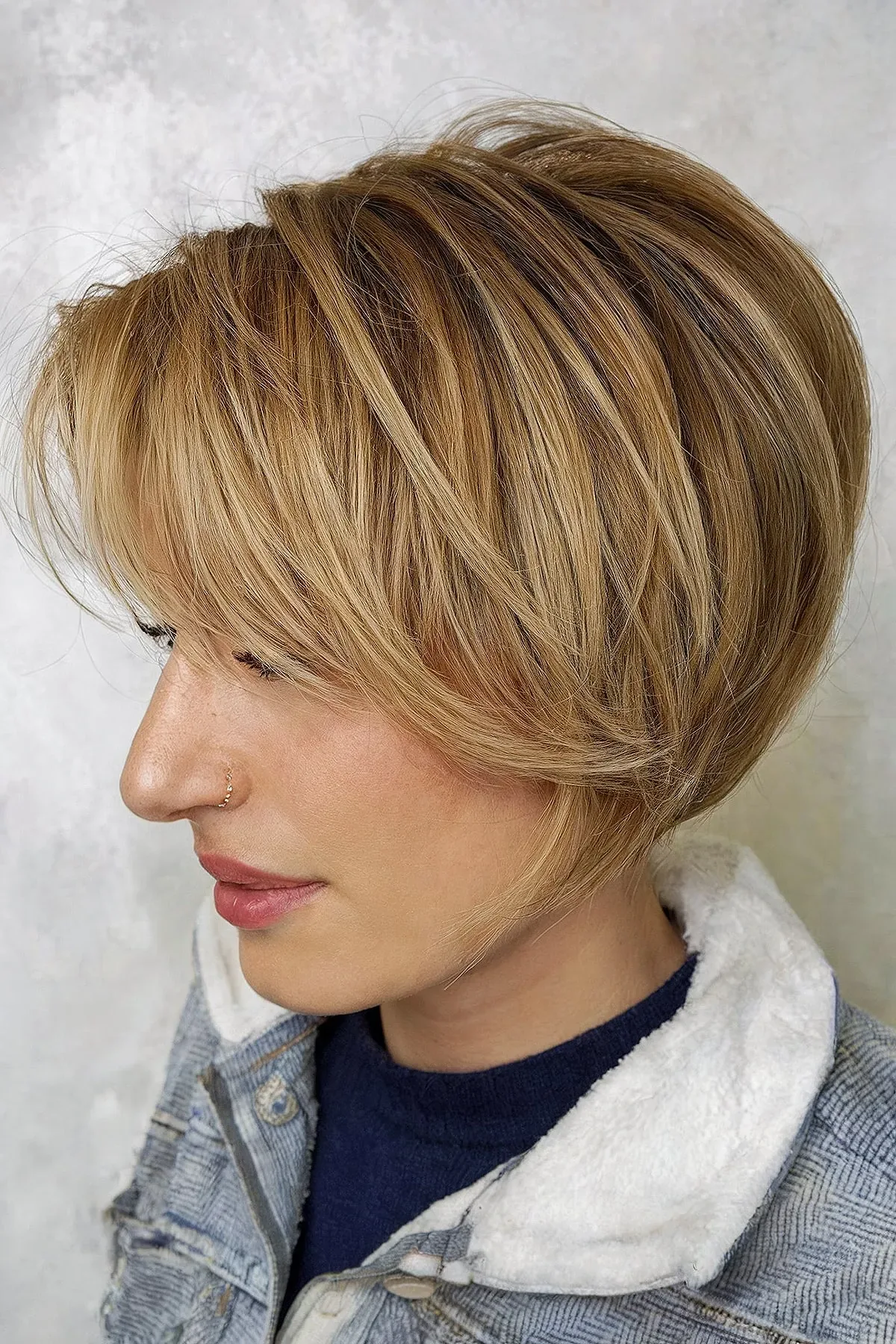
The common mistake is cutting the bangs too short or too blunt, which creates a hard horizontal line that fights the soft curve of the stack. Side-swept bangs should be long enough to tuck behind the ear and should be cut on a diagonal, so they melt into the front layers instead of sitting apart from them.
Maintenance means trimming the bangs every three to four weeks, even if the rest of the cut can wait longer. Blow-dry them to the side with a small round brush while they are still damp, and never let them dry flat against your forehead first, or they will set in the wrong direction for the whole day.
Quick verdict: side-swept bangs are the easiest way to make a stacked bob feel softer and more feminine. They suit square and heart-shaped faces particularly well, and they are the best bang option if you are not sure you want bangs at all.
5. Stacked Bob with Curtain Bangs
Curtain bangs part in the middle and sweep to either side, framing the face like a curtain, and they pair naturally with a stacked bob because both are built around face-framing length. The bangs soften the forehead, the longer front pieces slim the cheeks, and the stacked back keeps the whole shape from looking heavy.
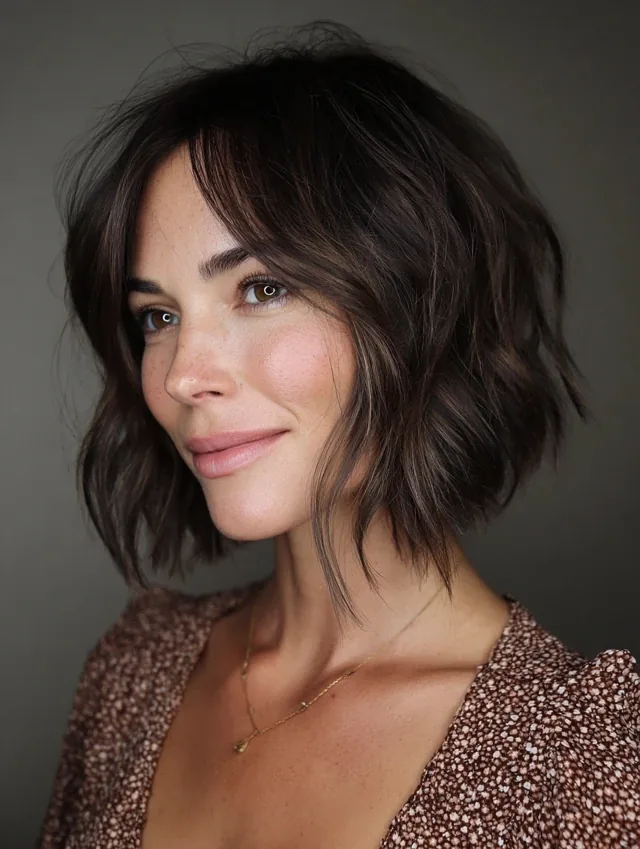
The common mistake is making the curtain bangs too short, so they stick up or curl away from the face instead of draping. Curtain bangs should start at about cheekbone length and blend into the front layers. If they are cut above the eyebrow, they stop being curtain bangs and become a fringe that needs constant styling.
Maintenance is light: curtain bangs grow out gracefully because they are already long, so you can stretch bang trims to six weeks. Style them with a round brush, rolling each side away from the face, and let them fall naturally rather than forcing them flat. A little dry shampoo at the roots keeps them from separating.
Quick verdict: curtain bangs are the lowest-commitment bangs you can pair with a stacked bob. They flatter almost every face shape, grow out without an awkward stage, and give the cut a soft, modern finish.
6. Stacked Bob with Blunt Fringe
A blunt fringe turns a stacked bob into a statement cut: a straight, sharp line across the forehead above, a rounded stack of layers behind. The contrast is the whole point — soft volume at the back, graphic precision at the front — and on straight hair the effect is striking, almost architectural.
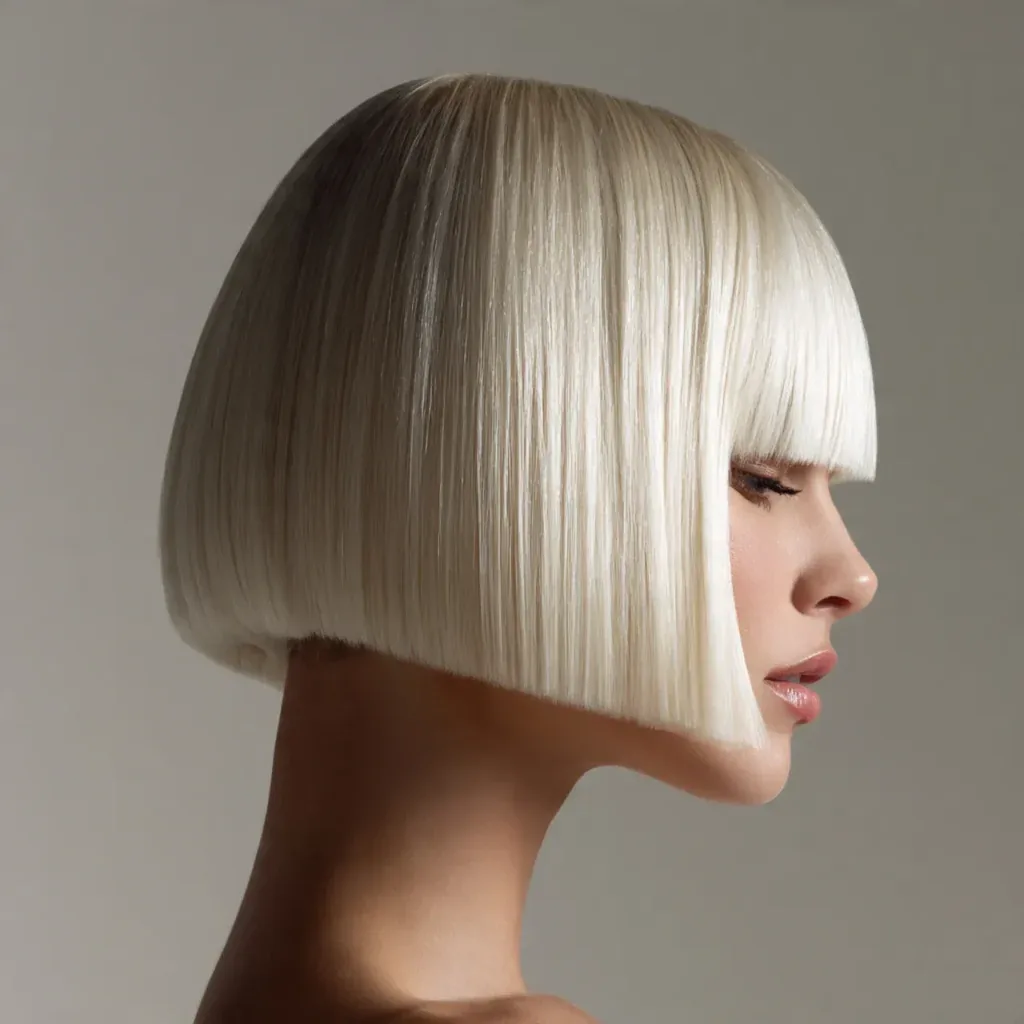
The common mistake is a fringe cut too heavy, which hides the eyes and makes the whole cut look top-heavy. A blunt fringe should be thick enough to read as a line, but light enough that you can still see the eyebrows when it moves. Ask your stylist to point-cut the very ends so the line is clean without looking like a helmet.
Maintenance is the most demanding of any bang style: a fringe trim every two to three weeks, and daily styling with a round brush or flat iron to keep it straight. It also shows grease faster than the rest of the cut, so keep dry shampoo handy and avoid touching it with your hands during the day.
Quick verdict: a blunt fringe suits oval and long faces best and rewards people who enjoy styling their hair. If you want drama and you are willing to maintain it, this is the boldest version of the stacked bob.
7. Straight Stacked Bob
On straight hair, a stacked bob shows off its architecture better than on any other texture. Every graduated layer is visible in a clean curve from crown to nape, and the smooth surface catches the light, so the shape reads clearly from across the room. It is the most polished version of the cut.
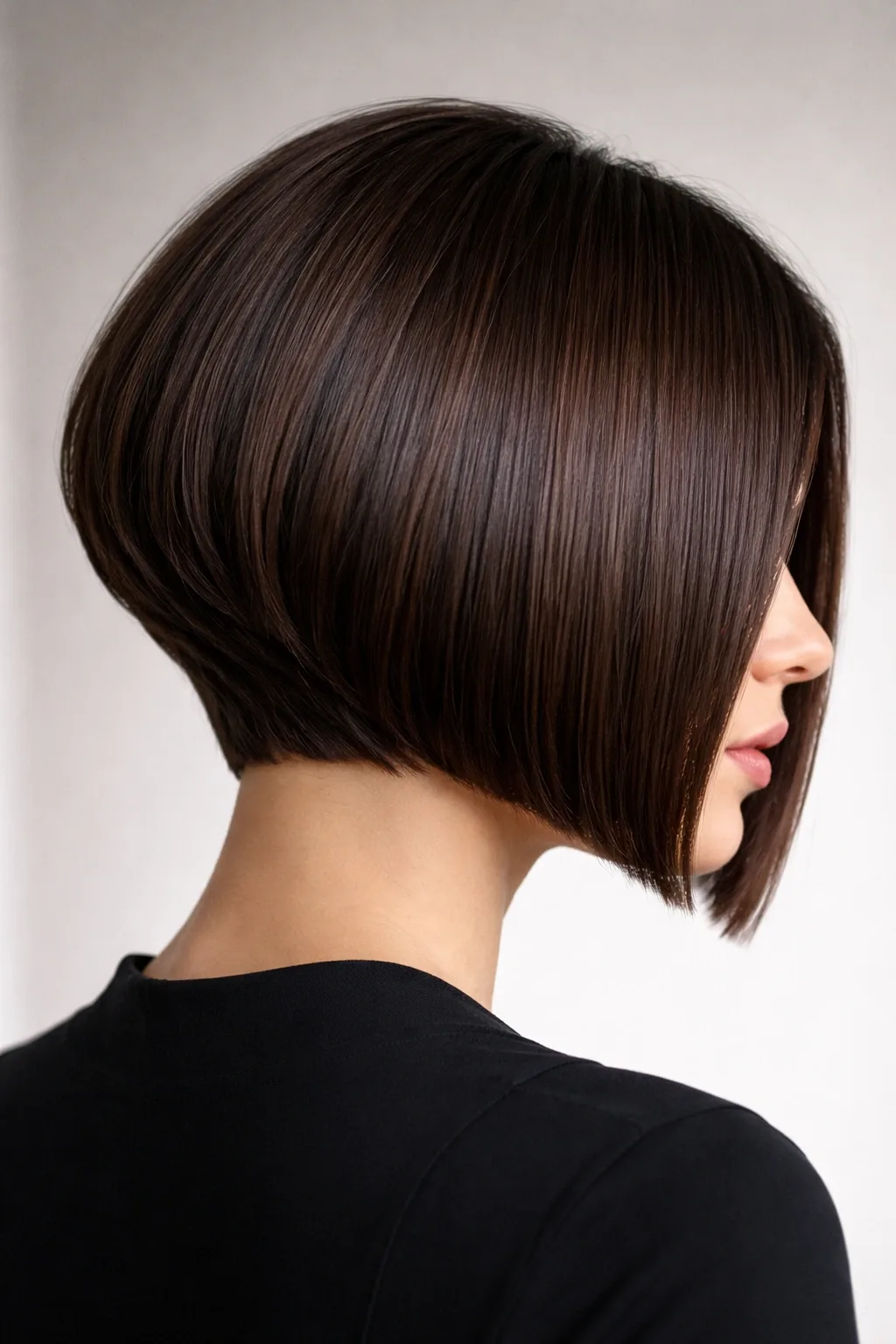
The common mistake is a cut that is too precise. A stacked bob on straight hair needs a little softness at the ends, or it can look severe and almost helmet-like. Ask your stylist to point-cut the bottom layer so the edge has movement, and keep the front pieces slightly textured rather than razor sharp.
Maintenance means regular trims every four to five weeks, because straight hair shows grow-out immediately — one uneven layer is obvious. A flat iron on the front pieces and a smoothing serum on the ends keep it sleek, but use heat protectant every time, since straight hair shows heat damage quickly.
Quick verdict: if your hair is naturally straight, this is the version that will look most like the salon photo. It is sleek, sophisticated and low-effort to style, as long as you keep the trims on schedule.
8. Wavy Stacked Bob
A wavy stacked bob is the most relaxed version of the cut. The layers encourage the natural wave to form, the stack gives the crown lift, and the ends kick out just enough to look effortless. It is the stacked bob for people who want to look styled without actually styling very much.
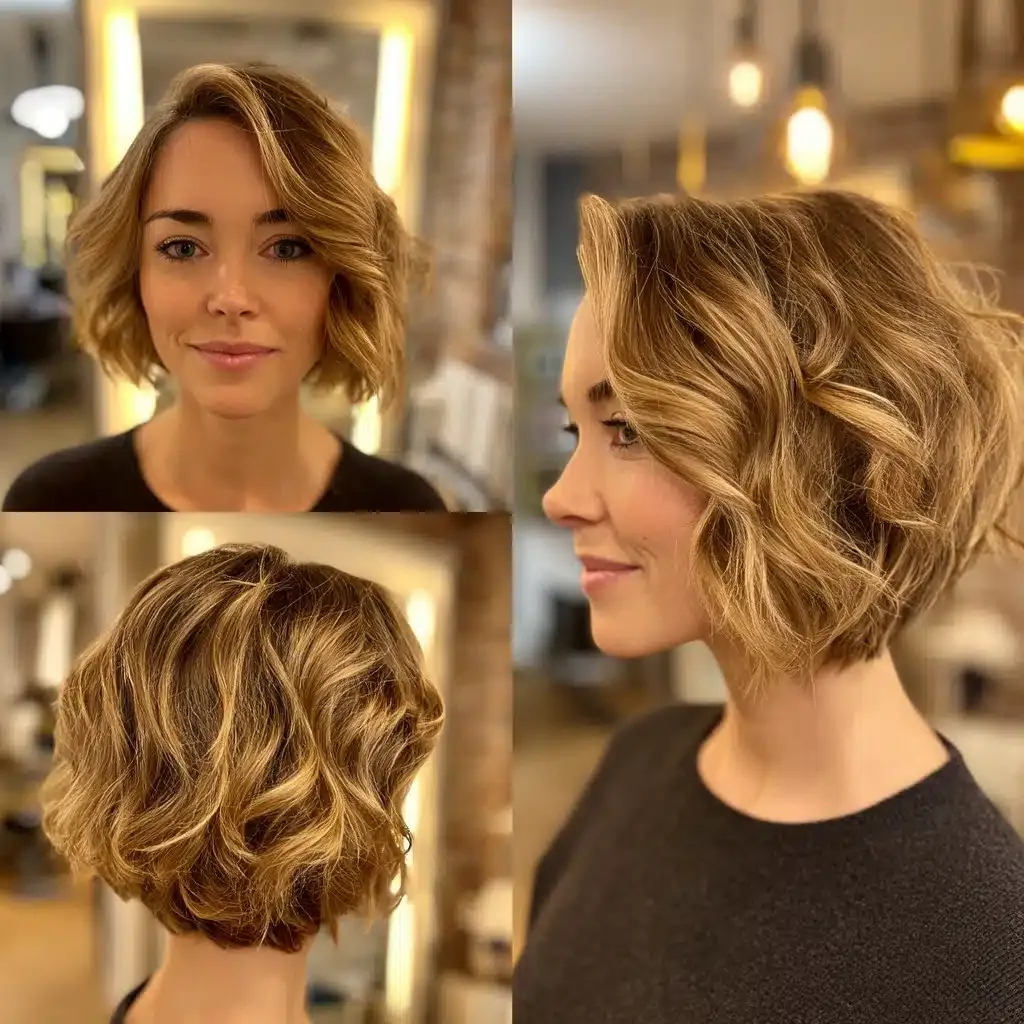
The common mistake is cutting it too short at the back, which makes waves spring up into a puff instead of a curve. Wavy hair shrinks as it dries, so your stylist should cut the stack slightly longer than the finished length you want, and check the shape once it is dry, not just when it is wet.
Maintenance is easy: trims every six weeks, and styling with a salt spray or light mousse scrunched into damp hair. Let it air-dry most of the way, then diffuse the roots for lift. Avoid brushing it dry, which turns waves into frizz — use your fingers or a wide-tooth comb instead.
Quick verdict: the wavy stack is the best choice for low-maintenance volume. It suits oval and round faces, looks great with minimal product, and is the most forgiving version when you skip a trim.
9. Curly Stacked Bob
A curly stacked bob can be spectacular, because the graduation shapes the curls into a rounded silhouette instead of letting them spread into a triangle. The layers at the back lift the crown, the curls at the front frame the face, and the whole cut moves when you do. It is a bold, joyful version of the style.
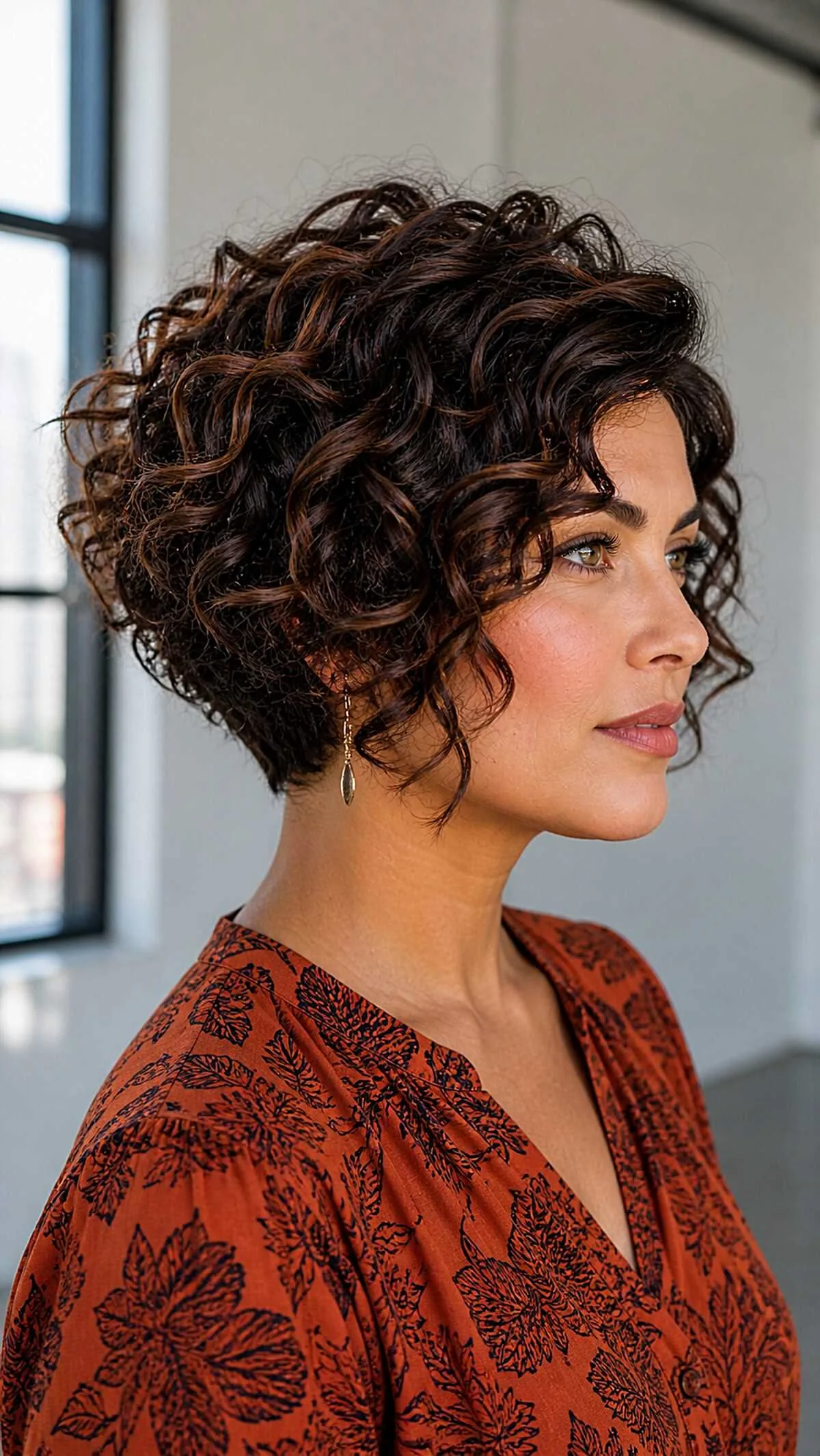
The common mistake is cutting curly hair wet and straight, which is how stacks end up far too short. Curls spring up as they dry, sometimes by several centimetres, so the cut must be done with the curl pattern in mind — ideally cut dry, curl by curl, by a stylist who works with curly hair regularly.
Maintenance means trims every six to eight weeks and a curl cream applied to soaking wet hair, scrunched upward to encourage the curl. Diffuse on low heat or air-dry, and refresh second-day curls with a little water and cream rather than re-wetting the whole head. Never brush curly hair dry.
Quick verdict: a curly stacked bob rewards the right stylist and the right routine. Find someone who cuts curls dry, commit to a simple curl routine, and this becomes one of the most flattering cuts in the whole guide.
10. Stacked Bob for Fine Hair
Fine hair is the stacked bob’s best friend. The short layers at the back create lift that fine hair cannot produce on its own, and because the cut removes weight from underneath, the hair stops collapsing flat against the scalp. A chin-length stack can make fine hair look twice as thick as it is.
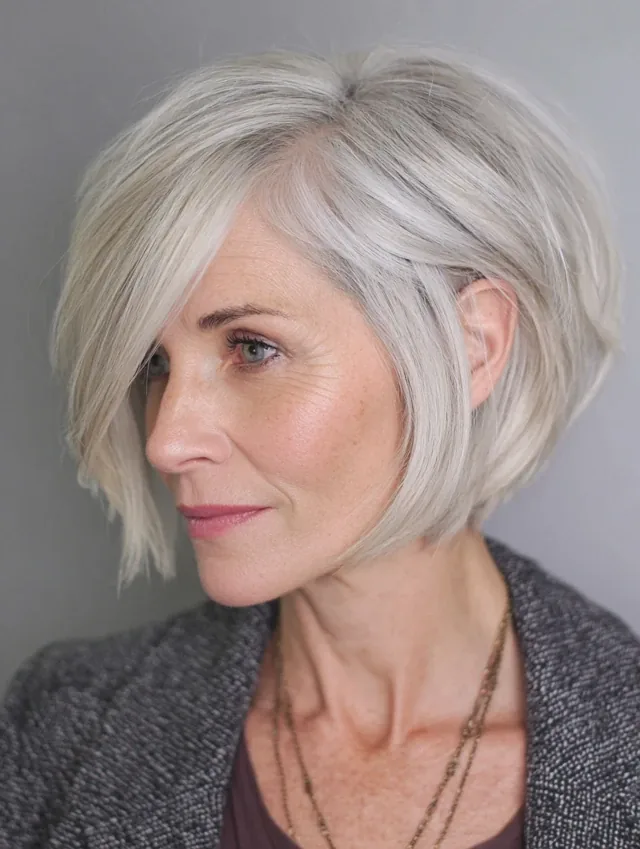
The common mistake is over-thinning. Fine hair does not need thinning shears — it needs graduation. If your stylist thins the ends, they will look wispy and sparse, and the bob will lose the full edge that makes it look thick. Ask for clean, blunt ends on the front pieces and layers only at the back.
Maintenance is light: a trim every five weeks, volumising mousse at the roots, and a blow-dry with the head tipped forward. Avoid heavy conditioners and oils, which weigh fine hair down, and use dry shampoo between washes to keep the roots lifted rather than washing every day.
Quick verdict: if your hair is fine, a stacked bob is one of the best cuts you can choose. It creates volume structurally, so you stop fighting your hair every morning and start letting the cut do the work.
11. Stacked Bob for Thick Hair
Thick hair can make a bob look enormous if it is cut without graduation, which is exactly the problem a stack solves. The short layers at the back remove bulk from underneath while keeping the outline full, so a thick bob sits in a neat rounded shape instead of flaring out into a triangle.
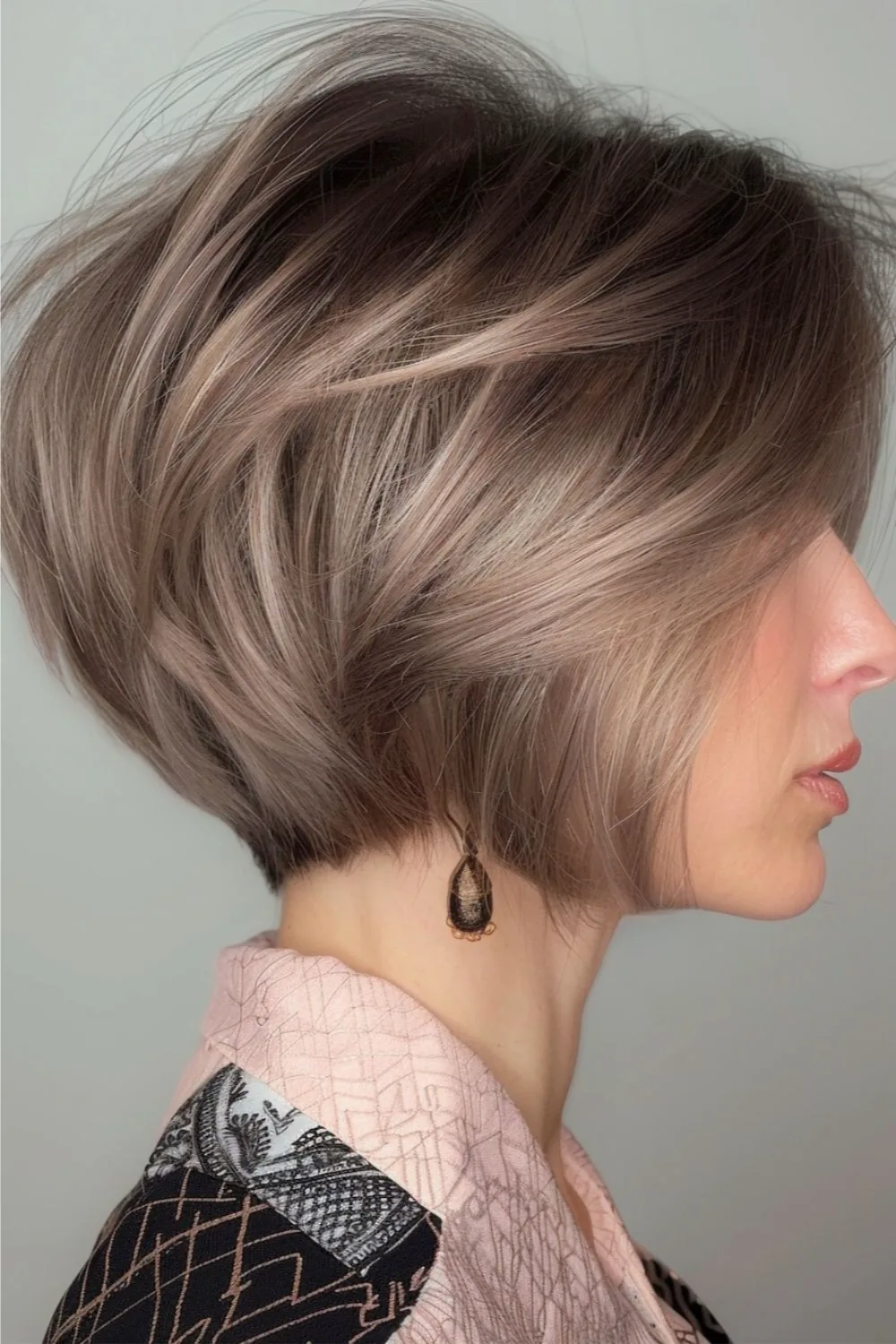
The common mistake is cutting the stack too short on very thick hair, which makes it puff up like a cloud. Thick hair needs enough length to weigh itself down a little, so keep the stack at jaw length or longer, and ask your stylist to thin the interior layers — never the ends — so the shape stays controlled.
Maintenance means trims every five to six weeks and a smoothing cream or light oil on the ends to keep them from frizzing outward. Blow-dry with a round brush, directing the ends under, and let the cut air-dry on days when you want a softer finish. A weekly mask keeps thick ends smooth.
Quick verdict: a stacked bob is the best way to wear thick hair short. It tames the bulk, keeps the shape, and turns hair that fights every other cut into a style that looks deliberate and polished.
12. Stacked Bob for Thin Hair
Thin hair needs a cut that creates the illusion of density, and a stacked bob does that better than almost any other style. The graduated back builds a solid shape at the crown, the front pieces fall in a clean line, and because the hair is short, it does not get weighed down by its own length the way long thin hair does.
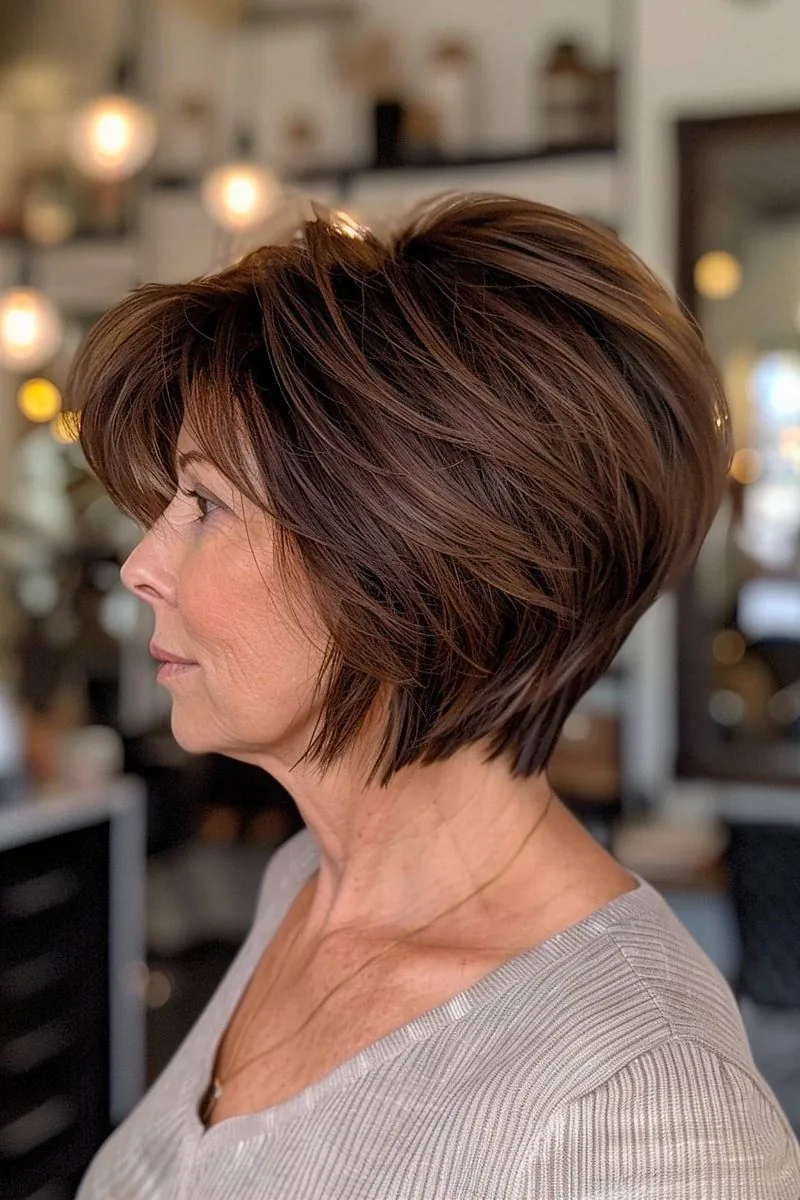
The common mistake is asking for layers everywhere. On thin hair, layers in the front pieces make the ends look sparse and see-through. Keep the layering concentrated at the back, where it builds volume, and leave the front as one clean, full edge. A slightly blunt finish at the front makes thin hair look thicker instantly.
Maintenance is simple: trims every five weeks to keep the ends looking full, and a root-lifting spray rather than heavy styling products. Wash with a volumising shampoo, condition only the ends, and avoid oils near the roots, which make thin hair look greasy and flat by midday.
Quick verdict: for thin hair, the stacked bob is a confidence cut. It adds visible body, frames the face, and makes the hair you have look like more than it is — which is exactly what a good cut should do.
13. Stacked Bob with Undercut Nape
An undercut nape takes the stacked bob to its boldest extreme: the hair at the very back of the neck is clipped short or shaved, while the stacked layers above it fall over the top. The result is a bob that looks classic from the front and edgy from behind, with a neckline that stays cool and clean in hot weather.
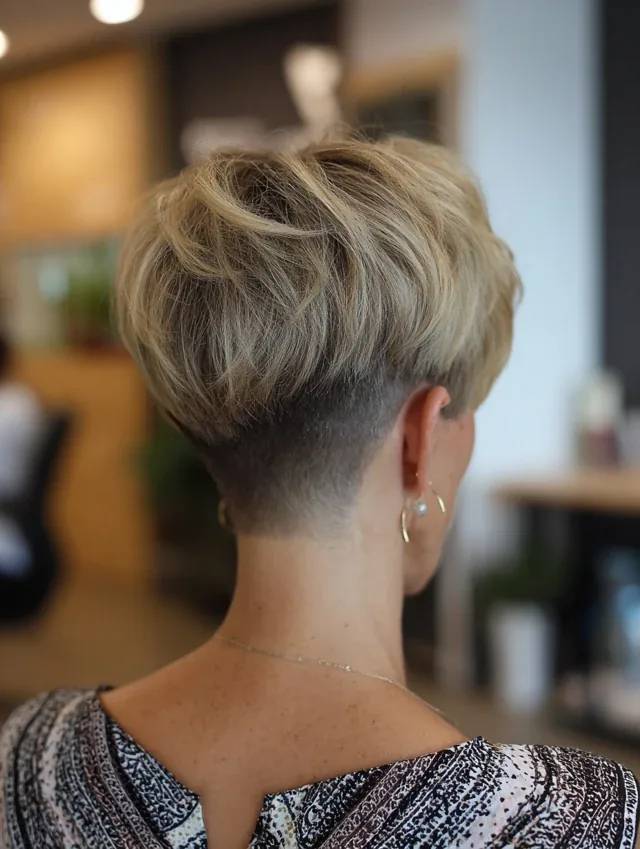
The common mistake is an undercut that is too high or too wide, so it shows from the side when the hair moves. The undercut should sit low, hidden beneath the stacked layers, and only reveal itself when the hair is lifted or tucked up. Ask your stylist to keep it narrow and low for a subtle effect.
Maintenance is more frequent than a standard stack, because a shaved nape grows out visibly in two to three weeks. You will need a quick nape tidy between full cuts, which many salons do free or cheaply. At home, the rest of the cut styles exactly like a normal stacked bob.
Quick verdict: the undercut nape is for anyone who loves the stacked bob but wants an edge. It suits thick hair especially well, keeps you cool in summer, and turns a classic cut into a conversation piece.
14. Stacked Bob with Graduated Layers
This is the stacked bob in its most layered form, with the graduation made visible as a series of soft steps from the nape up to the crown. The layers are the feature here, not a hidden support: they create movement, texture and a shape that looks interesting from every angle, especially from behind.
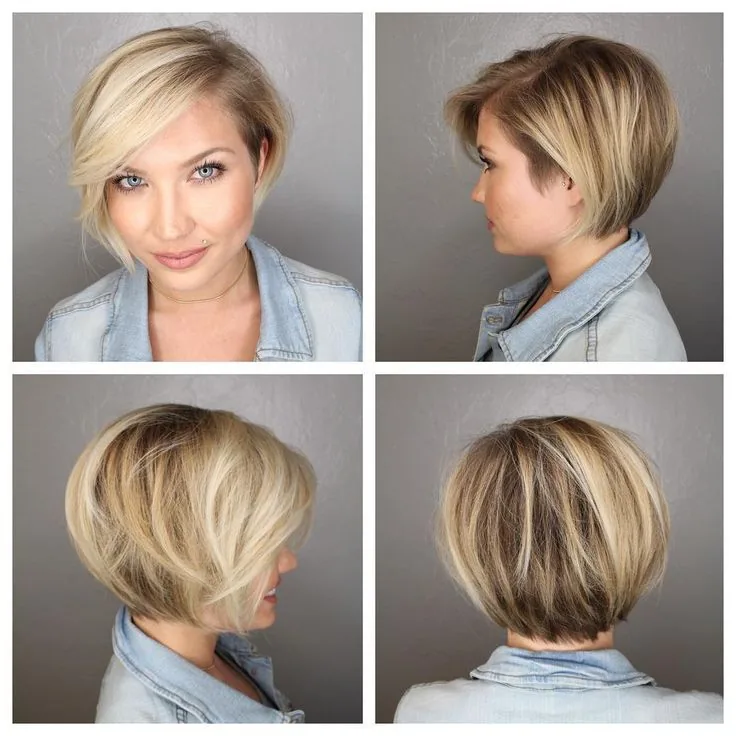
The common mistake is graduation cut too steeply, which leaves a visible shelf or ledge at the back instead of a smooth curve. The layers should blend into each other, with each one only slightly shorter than the one below. If you can see a hard line where one layer ends, ask your stylist to soften it with point cutting.
Maintenance means trims every four to five weeks, because layered graduation grows out faster than a simple shape. Blow-dry with a round brush to emphasise the curve of each layer, and use a light texturising spray to separate the layers slightly so the graduation shows.
Quick verdict: choose the graduated-layer stack when you want the layering itself to be the star. It is the most dynamic version of the cut, full of movement, and it photographs beautifully from the back.
15. Stacked Bob with Textured Ends
Textured ends soften a stacked bob, breaking up the clean edge with a little piecey movement so the cut looks modern rather than severe. The stack still gives the shape and volume, but the ends feel light and lived-in, which suits anyone who finds a blunt bob too formal.
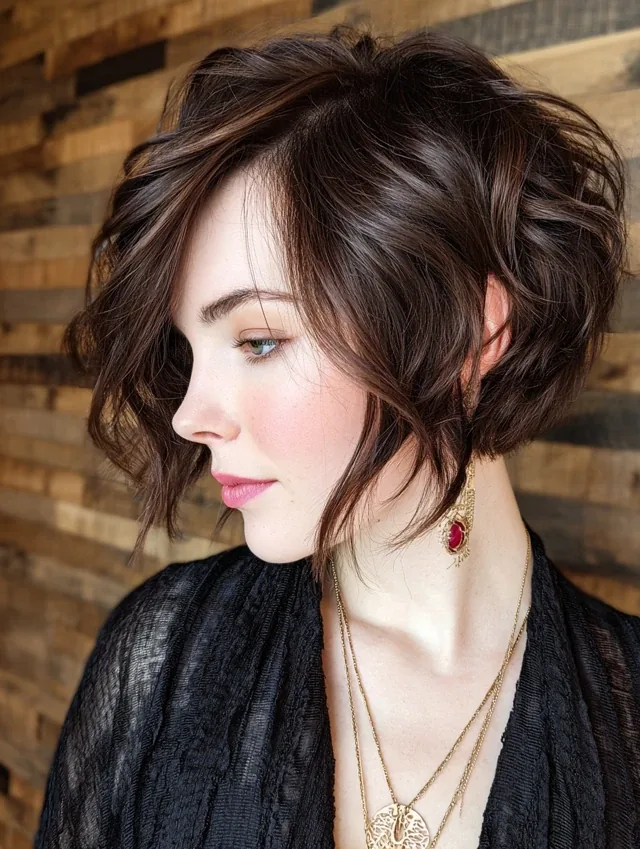
The common mistake is over-texturising, which thins the ends until they look ragged instead of piecey. Texture should be subtle — a few snips with thinning shears or a razor on the very ends, not a deep cut into the length. The front pieces should still read as a solid line from a distance.
Maintenance is forgiving, with trims every six weeks. Style with a texturising spray scrunched into the ends, or a flat iron bent slightly at the tips to create separation. Avoid heavy serums, which glue textured ends together and undo the effect.
Quick verdict: textured ends are the easiest way to modernise a stacked bob. They add movement, soften the outline, and make the cut look good even on days when you do almost nothing to it.
16. Stacked Bob with Highlights
Highlights and a stacked bob were made for each other. The graduated layers catch the light at different levels, so a few well-placed highlights make the stack look deeper, more dimensional and more expensive. Face-framing highlights brighten the front, while lighter pieces through the crown show off the graduation.
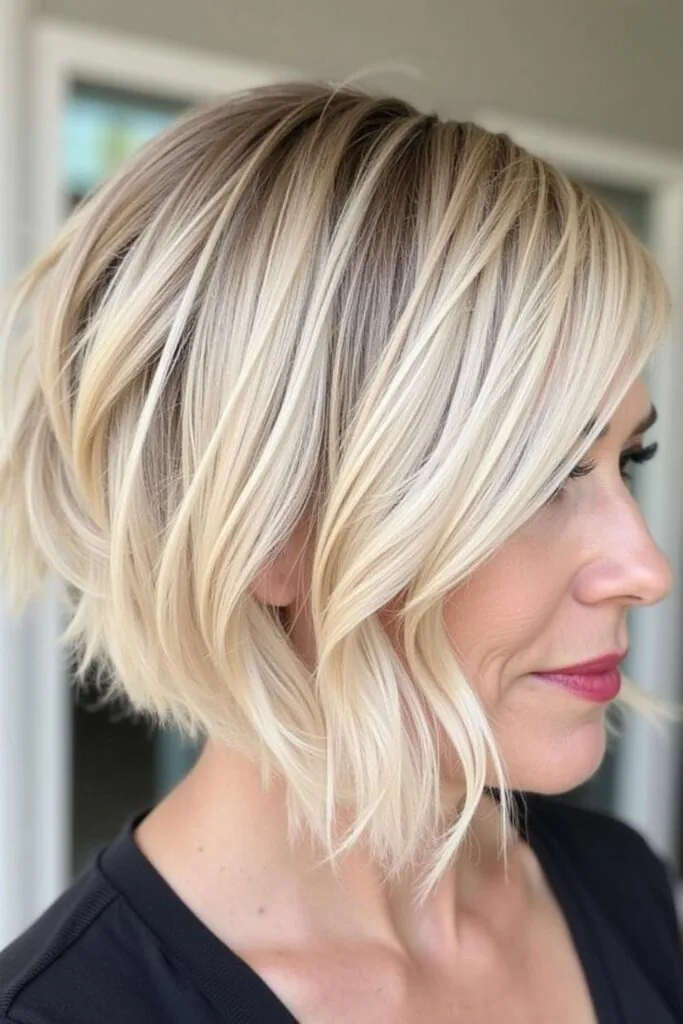
The common mistake is highlighting too evenly, which flattens the dimension the cut creates. Highlights should follow the layers: lighter at the crown and around the face, deeper underneath, so the stack reads as a shape rather than a solid block of colour. Ask for a balayage or foilayage technique rather than uniform foils.
Maintenance means a colour refresh every eight to ten weeks and a purple shampoo if the highlights are blonde, to keep them from turning brassy. The cut itself needs its usual five-week trim, and your colourist can refresh the face-framing pieces at the same visit.
Quick verdict: highlights turn a good stacked bob into a great one. They cost more in upkeep, but the dimension they add to the layered back is worth it, especially on straight or wavy hair.
17. Stacked Bob with Balayage
Balayage on a stacked bob gives a soft, sun-kissed blend that grows out gracefully, with lighter ends and a deeper root. Because the hair is short, the colour sits close to the face, so it brightens the complexion instantly, and the layered back shows off the gradient beautifully.
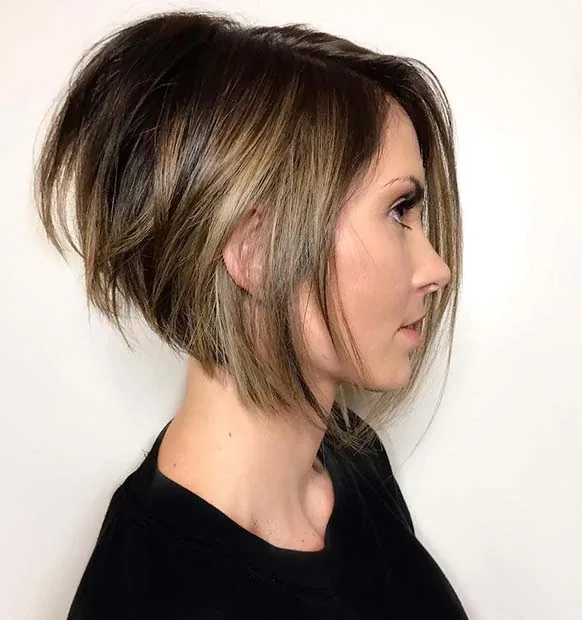
The common mistake is balayage painted too high, which creates a harsh line as it grows out. On a short cut, the blend needs to start lower and softer than on long hair, with plenty of feathering at the transition. Ask your colourist to keep the root area deep and let the lightness build gradually toward the ends.
Maintenance is lower than with foils: a balayage refresh every ten to twelve weeks is usually enough, with a gloss or toner in between to keep the tone fresh. The cut still needs its five-week trim, but the colour will not show obvious regrowth the way a solid colour does.
Quick verdict: balayage is the lowest-maintenance colour option for a stacked bob, and one of the prettiest. It adds warmth and dimension without the constant upkeep of highlights, and it suits every texture in this guide.
18. Stacked Bob with Bold Colour
A stacked bob is the perfect canvas for bold colour — copper, auburn, plum, silver or even a vivid fashion shade — because the short length means the colour reads clearly and the shape keeps it looking chic rather than costume-like. The graduation gives the colour depth, with darker roots and brighter ends in a single cut.
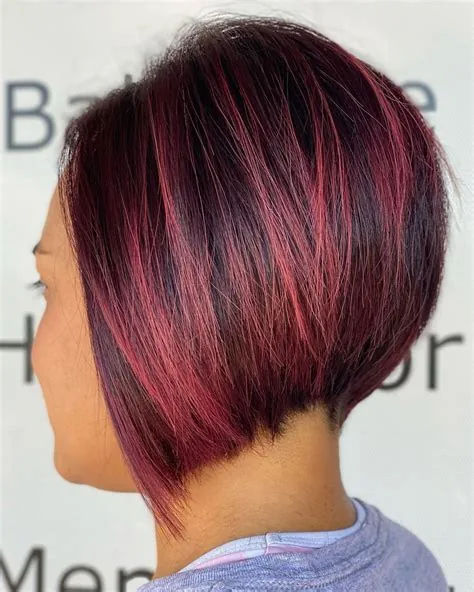
The common mistake is choosing a shade that fights your skin tone. Cool colours like silver and ash suit cool skin, while warm coppers and reds flatter warm skin. If you are unsure, ask your colourist for a strand test and look at the colour in daylight, not just under salon lights, before committing.
Maintenance is the highest of any version here: bold colour fades fast on short hair, so expect a refresh every four to six weeks, plus colour-safe shampoo, cool water and minimal heat styling. A gloss treatment between appointments keeps the shade vivid without a full recolour.
Quick verdict: bold colour turns the stacked bob into a signature look. It takes commitment and upkeep, but if you want a cut that people remember, this is the one to choose.
19. Stacked Bob for Round Faces
A round face needs length and lift, and a stacked bob delivers both. The volume at the crown lengthens the face, the longer front pieces slim the cheeks, and the graduation keeps the sides from widening the silhouette the way a blunt bob can. It is one of the most flattering cuts for a round face.
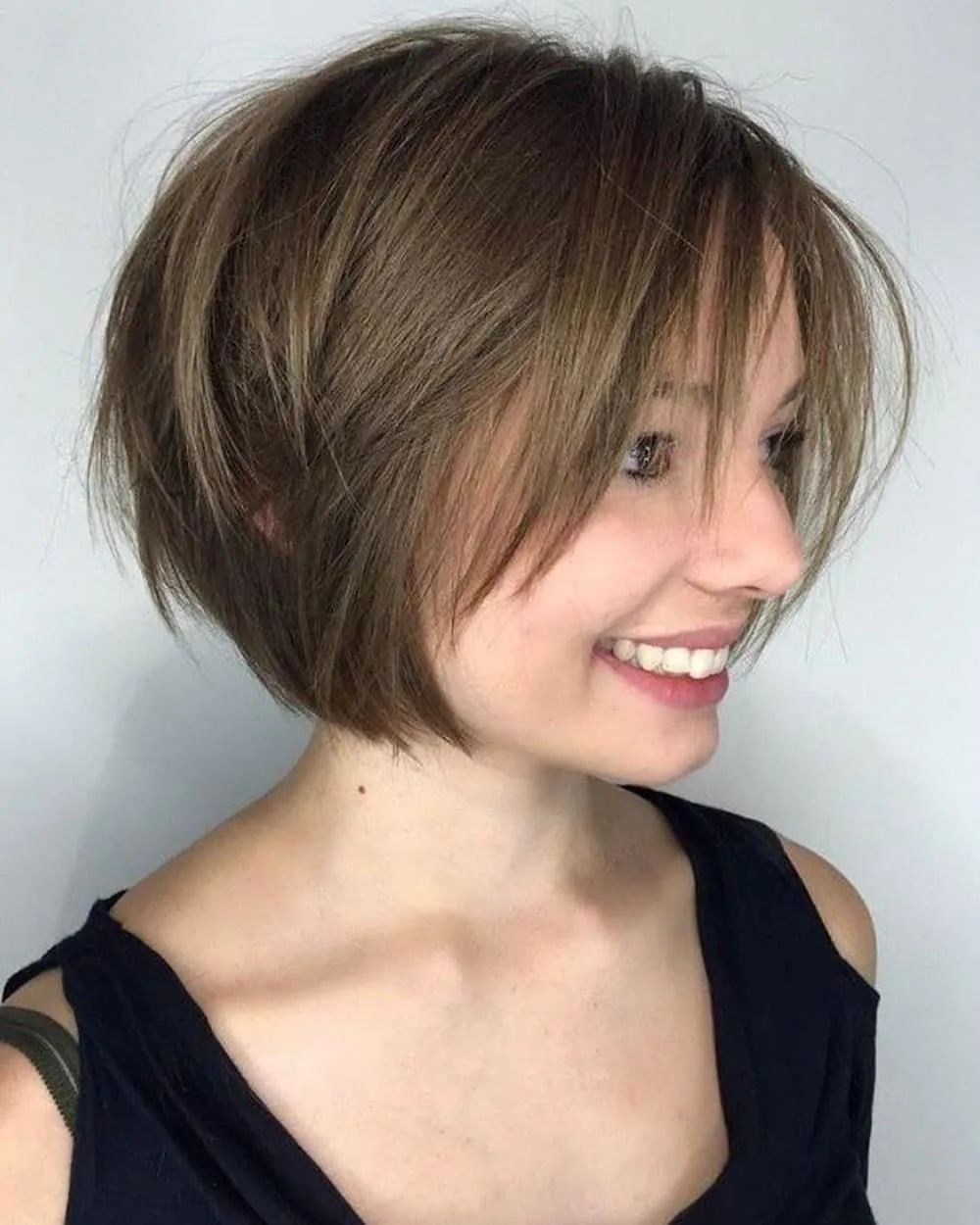
The common mistake is a stack that is too short or too round, which mirrors the shape of the face instead of balancing it. Keep the front at jaw length or below, ask for a side part rather than a middle part, and keep the volume at the crown, not at the sides near the cheeks.
Maintenance is standard: trims every five weeks and a blow-dry that lifts the roots at the crown. A deep side part is your best styling trick — it breaks up the symmetry of a round face and makes the whole cut look longer and leaner.
Quick verdict: for a round face, the stacked bob is a genuinely slimming cut, not just a pretty one. Keep the front long, the crown high and the part on the side, and the shape works hard for you.
20. Stacked Bob for Oval Faces
Oval faces are the lucky ones: the proportions are already balanced, so almost every version of the stacked bob works. Chin-length, jaw-length, with bangs or without, straight or wavy — the cut sits well because there is nothing to correct, only style to add.
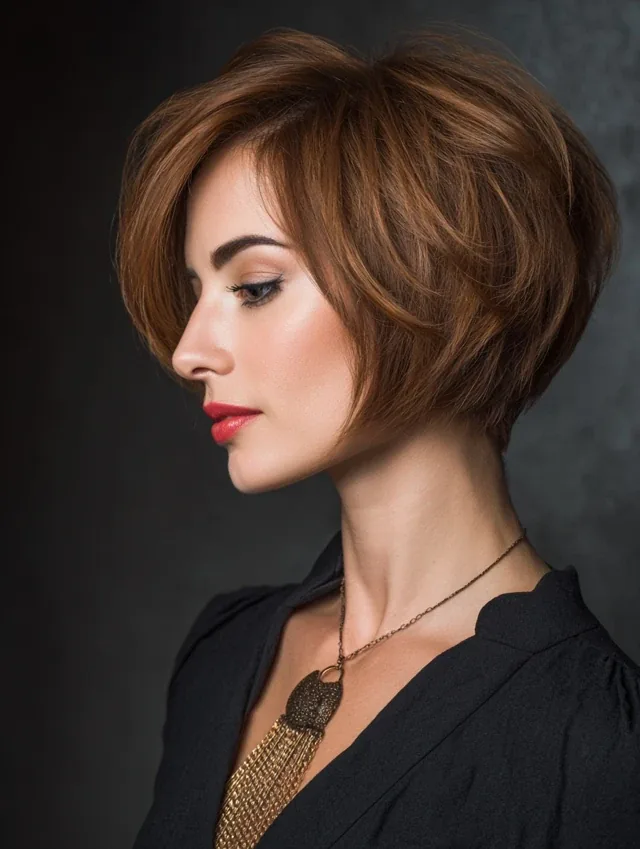
The common mistake is playing it too safe. With an oval face you can afford the most dramatic versions — a very short stack, a blunt fringe, an asymmetrical front — and they will still look balanced. If you always choose the middle-of-the-road version, you miss the chance to wear the cut at its best.
Maintenance depends on the version you choose, but the shape itself is forgiving: trims every five to six weeks and minimal styling. Try a middle part for a clean, symmetrical look, or a deep side part when you want something softer and more glamorous.
Quick verdict: an oval face can wear any stacked bob in this guide, so choose by personality, not by rules. Pick the version that excites you, and the face shape will take care of itself.
21. Stacked Bob for Square Faces
A square face has a strong jawline, and a stacked bob softens it beautifully — provided the cut is soft too. Textured ends, a side part and a few face-framing layers break up the angles, while the volume at the crown draws the eye upward instead of to the jaw.
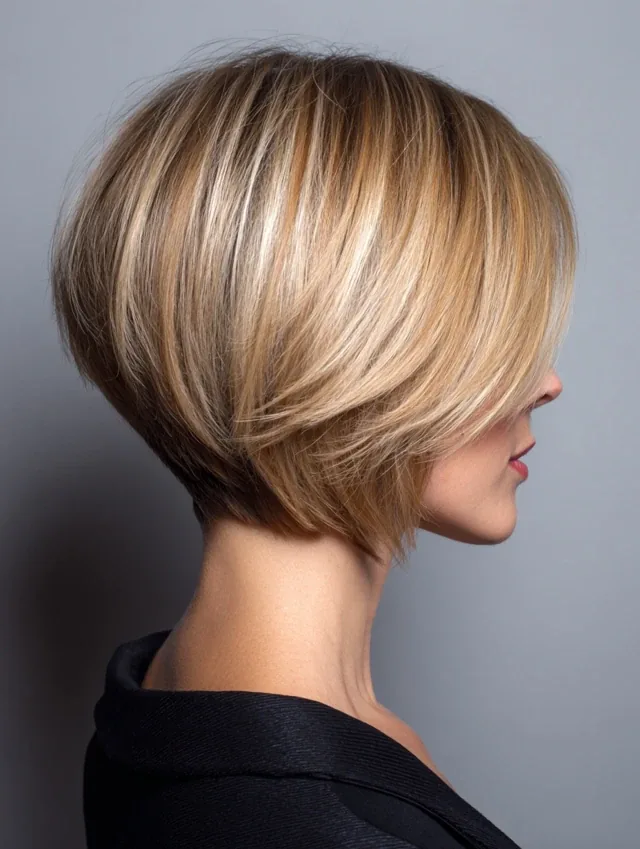
The common mistake is a severe, blunt finish that echoes the jawline instead of softening it. A razor-sharp front edge and a middle part together can make a square face look harder, not softer. Ask for softness: textured ends, a side sweep, and layers that curve inward at the jaw.
Maintenance is standard, with trims every five weeks. Style with a round brush, rolling the front pieces under at the jaw to create a curve, and add a soft wave on days when you want extra softness. A little volume at the crown helps balance the lower face.
Quick verdict: the stacked bob suits square faces well when it is cut soft. Keep the edges textured, the part on the side, and let the crown do the lifting — the jawline will look defined, not harsh.
22. Stacked Bob for Heart-Shaped Faces
A heart-shaped face is wider at the forehead and narrower at the chin, and a stacked bob balances it by adding fullness near the jaw. The longer front pieces and a little volume at the sides fill out the narrower lower face, while the stacked back keeps the overall shape neat and controlled.
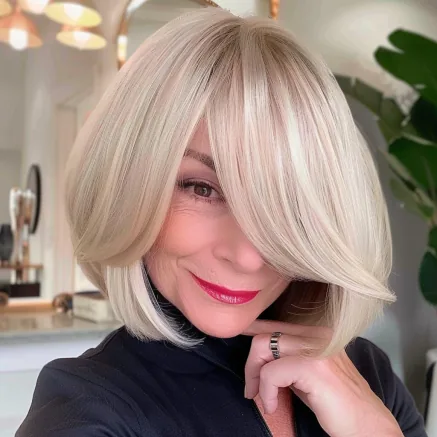
The common mistake is too much volume at the crown, which emphasises the wider forehead and makes the chin look even narrower. Keep the crown lift moderate and put the fullness lower, around the jaw and cheeks, with soft waves or a slight outward flick at the ends.
Maintenance is straightforward: trims every five weeks and styling that adds movement at the ends rather than height at the top. Curtain bangs are a particularly good partner here, since they soften the forehead while the jaw-length front balances the chin.
Quick verdict: for a heart-shaped face, the stacked bob is a balancing act done well. Volume at the jaw, softness at the forehead, and the cut does the rest.
23. Stacked Bob for Women Over 50
The stacked bob is one of the best cuts for women over 50, because it lifts the face, adds volume to hair that may have thinned, and looks polished without demanding an hour of styling. The graduated back gives instant lift, and the clean neckline keeps the whole look fresh and modern.
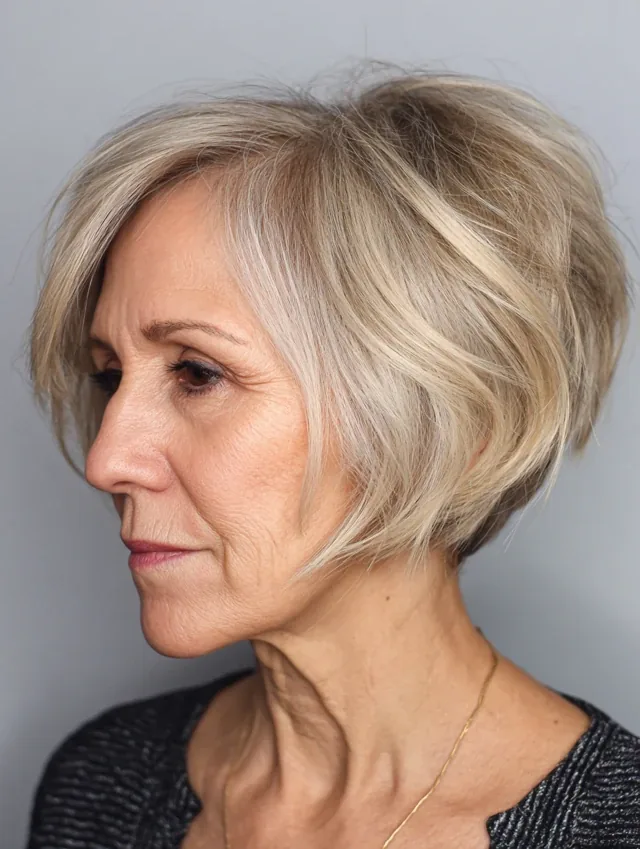
The common mistake is going too short too fast. A chin-length stack is flattering, but a very short, severe stack can look harsh and age the face rather than refreshing it. Keep the front at jaw length, soften the ends, and let the volume do the lifting instead of the scissors.
Maintenance means trims every five weeks and a good blow-dry routine — the cut rewards ten minutes with a round brush. A soft colour, whether highlights or a gentle balayage, adds dimension and warmth, and a volumising mousse at the roots keeps the crown lifted all day.
Quick verdict: this is the classic age-defying cut for a reason. It is elegant, easy and flattering, and it makes hair look fuller and the face look lifted with very little effort.
24. Stacked Bob for Women Over 60
For women over 60, a stacked bob offers structure without fuss. The short layers give natural volume to hair that has thinned with age, the shape frames the face, and the cut is short enough to be practical while still looking unmistakably stylish — especially in silver or grey.
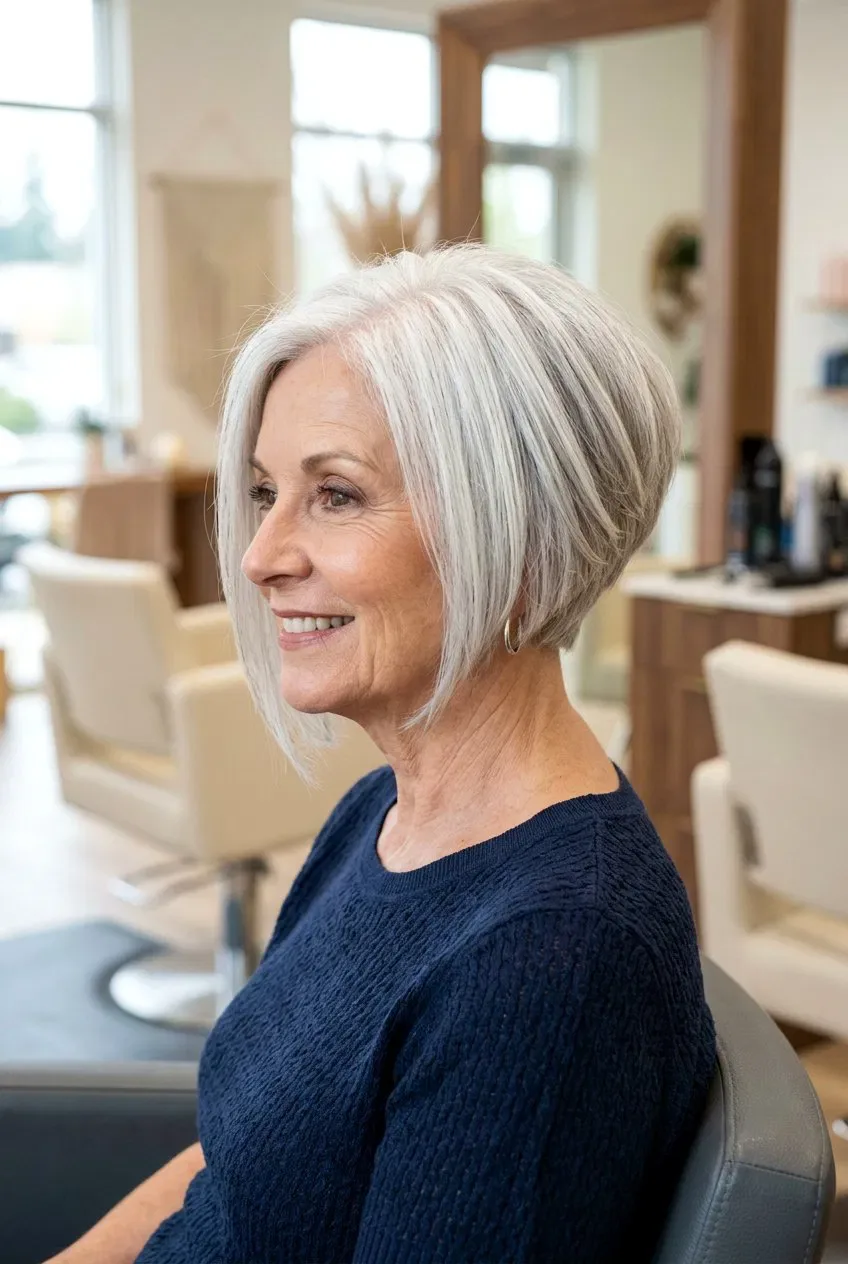
The common mistake is a cut that is too severe or too short at the nape, which can look stark against softer skin. Ask for a gentle graduation, soft textured ends, and a front that falls at the jaw, which is the most flattering length at this age. A side part adds softness and movement.
Maintenance is light: trims every five to six weeks, a purple shampoo if the hair is silver or grey, and a lightweight mousse for volume. The cut air-dries well, so a full blow-dry is only needed when you want a polished finish for an occasion.
Quick verdict: a stacked bob at 60-plus is confident, chic and low-maintenance. It works with grey hair beautifully, needs little daily effort, and looks intentional rather than merely short.
25. Stacked Bob for a Professional Look
In a professional setting, a stacked bob reads as polished, confident and put-together. The clean neckline looks neat under a blazer, the shape holds all day without restyling, and the cut is short enough to stay out of the way while still looking deliberately styled rather than merely convenient.

The common mistake is a stack that is too dramatic or too textured for the office. Keep the graduation smooth, the ends tucked under, and the colour natural, and the cut will look boardroom-ready. Save the undercut nape and bold colour for the weekend versions in this guide.
Maintenance means a trim every four to five weeks, because a professional cut shows grow-out quickly, and a quick morning blow-dry with a round brush. A smoothing serum on the ends keeps flyaways down through a long day, and a small flat iron can rescue the front pieces between washes.
Quick verdict: if you want a cut that looks like you mean business, this is it. The professional stacked bob is neat, reliable and quietly confident — the hairstyle equivalent of a well-tailored jacket.
26. Stacked Bob with a Deep Side Part
A deep side part transforms a stacked bob from neat to glamorous in one move. Sweeping the hair across the forehead creates instant volume on one side, a long diagonal line across the face, and a softness that a middle part cannot match. It is the styling choice that makes the cut look red-carpet ready.
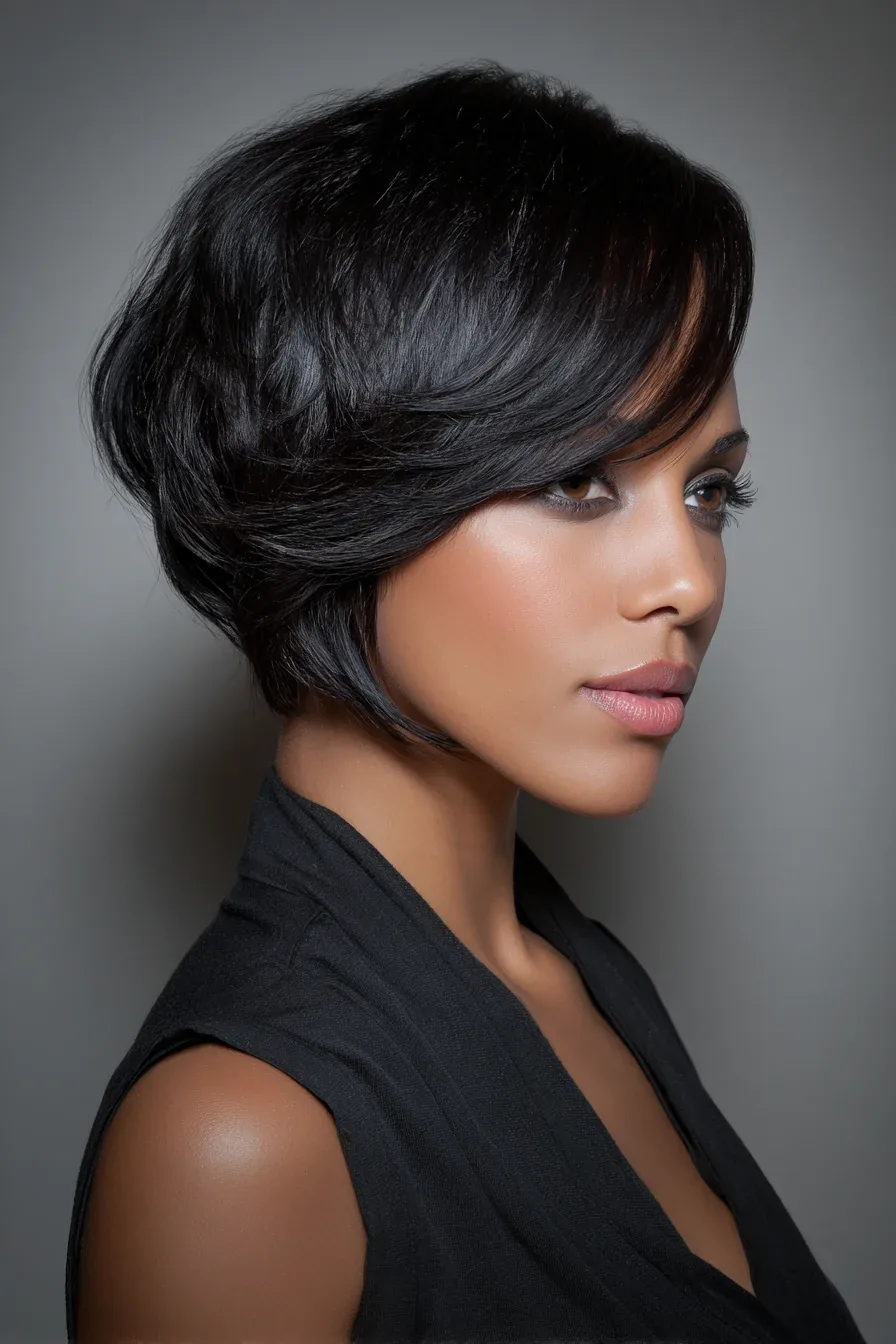
The common mistake is parting the hair too deep, so one side looks thin and flat while the other carries all the weight. The part should sit just past the arch of the eyebrow, not at the temple. If the thin side keeps falling forward, a single bobby pin hidden behind the ear solves it.
Maintenance is mostly styling, not cutting: the cut needs its usual five-week trim, but the part needs to be set while the hair is damp, with a comb and a blast of dryer heat at the roots. Once set, it holds all day, and a little texturising spray at the roots keeps the volume from dropping.
Quick verdict: a deep side part is the fastest way to dress up a stacked bob. It suits round and square faces especially well, adds instant glamour, and costs nothing but a comb.
27. Stacked Bob with a Middle Part
A middle part gives a stacked bob a clean, symmetrical, modern look. The hair falls evenly on both sides, the face is framed in a balanced way, and the stack at the back reads as a perfect curve. It is the most architectural way to wear the cut, and it suits straight hair particularly well.
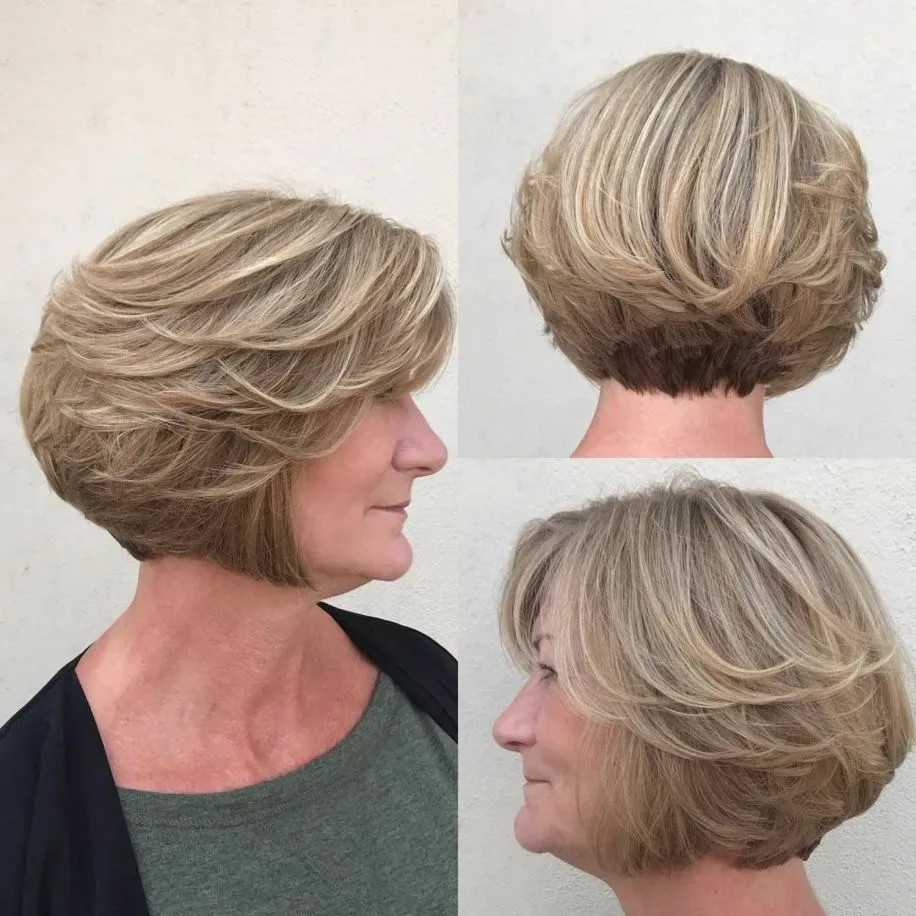
The common mistake is a middle part on a cut that is too round at the sides, which can make the face look wider. A middle part works best when the front pieces are long enough to slim the cheeks and the sides sit close to the head. If your face is round, a slightly off-centre part is usually more flattering.
Maintenance is simple: trims every five weeks, and a straight blow-dry or flat iron to keep the symmetry clean. A middle part shows uneven growth more than a side part, so do not stretch the trim interval, and keep the ends tucked under for the polished finish.
Quick verdict: the middle part is the minimalist’s stacked bob — clean, balanced and modern. It suits oval and long faces best, and it looks best on hair that is naturally straight or smoothly blow-dried.
28. Asymmetrical Stacked Bob
An asymmetrical stacked bob keeps the graduated back of the classic cut but makes one front side noticeably longer than the other. The imbalance is the point: it creates a sharp diagonal line across the face, adds drama to an otherwise neat cut, and turns heads in a way a symmetrical bob never will.
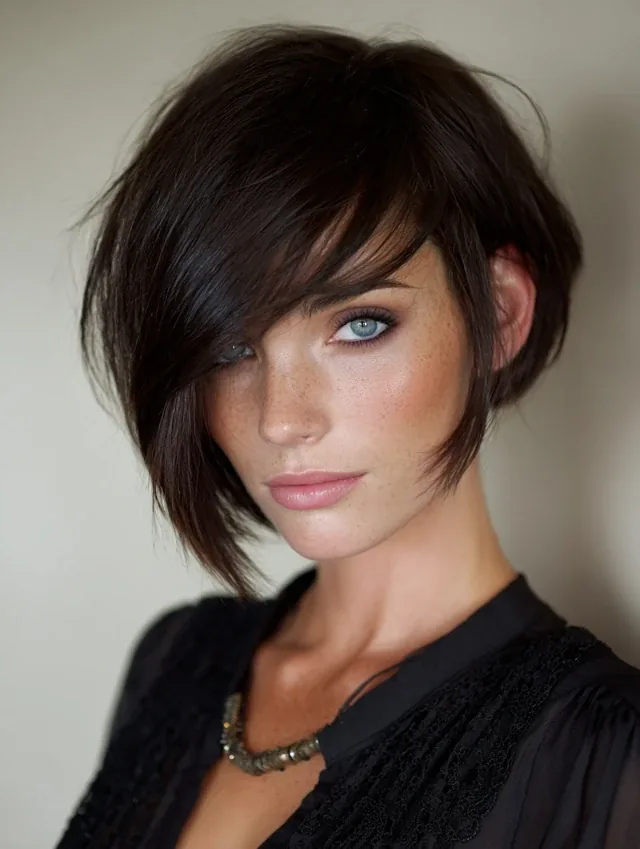
The common mistake is an asymmetry so slight that it looks like a cutting error rather than a choice. The difference between the two sides should be obvious — at least three to four centimetres — so the intent is clear. Ask your stylist to show you both sides in the mirror before they finish.
Maintenance means trims every four weeks, because asymmetry grows out unevenly and quickly looks accidental. Style the longer side smooth and sleek so the line reads clearly, and keep the shorter side tucked behind the ear to emphasise the contrast.
Quick verdict: the asymmetrical stack is the fashion-forward version of the cut. It suits confident wearers and oval faces best, and it is the one to choose when you want your haircut to make a statement.
29. Stacked Bob with Choppy Layers
Choppy layers give a stacked bob an edgy, textured finish, with visible separation between the layers instead of a smooth blend. The cut looks modern and a little rebellious, and the choppiness adds movement that a smooth stack does not have. It is the stacked bob for people who like their hair to look lived-in.
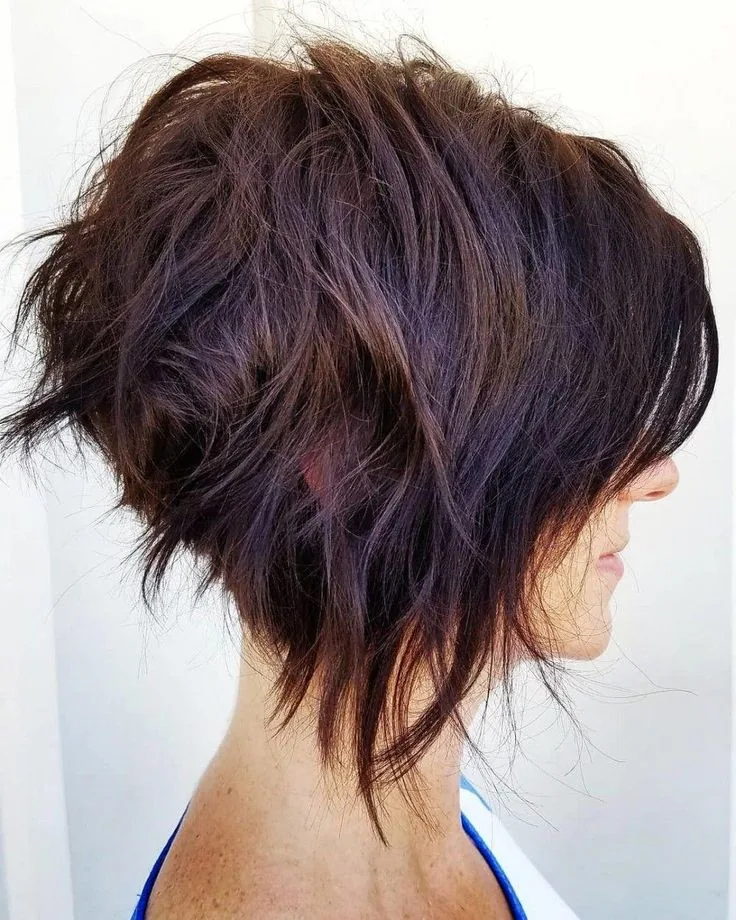
The common mistake is choppy layers cut too deep, which leaves the ends looking thin and ragged. Choppiness should live in the interior layers, not at the outline — the front edge should still read as a solid line, with the texture showing in the movement rather than in a frayed hem.
Maintenance is forgiving, with trims every six weeks, and styling is minimal: a texturising spray or a little pomade worked through the ends is enough. The cut is designed to look slightly undone, so do not over-style it — a perfect blow-dry defeats the purpose.
Quick verdict: choppy layers are the cool-girl version of the stacked bob. They add edge and movement, suit wavy and straight hair equally, and look best when you embrace the messiness.
30. Stacked Bob with Sleek Finish
A sleek stacked bob is all about shine and precision: smooth surfaces, tucked-under ends, and a silhouette so clean it looks sculpted. The graduation is still there, doing its quiet work at the back, but the finish is pure polish — the version of the cut you choose for weddings, interviews and occasions.
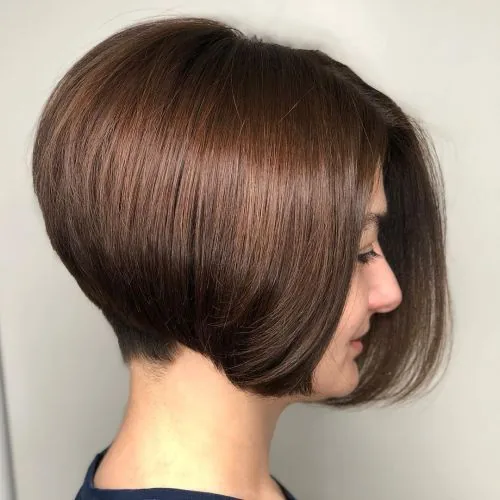
The common mistake is using too much product in pursuit of sleekness. Heavy serums and oils flatten the stack and make the hair look greasy rather than glossy. One drop of smoothing serum on the ends is enough; the sleekness should come from the blow-dry and the flat iron, not from the bottle.
Maintenance means trims every four weeks, because a sleek finish shows every millimetre of grow-out, and a proper blow-dry with a round brush followed by a single pass of the flat iron. Always use heat protectant, and finish with a light-hold hairspray to keep flyaways down without stiffness.
Quick verdict: the sleek finish is the most polished version of the stacked bob. It takes more styling time than the tousled versions, but for occasions when you need to look immaculate, nothing in this guide beats it.
31. Stacked Bob with Tousled Texture
A tousled stacked bob is the relaxed cousin of the sleek finish: same graduated shape, but with soft, piecey texture instead of smooth polish. The layers are encouraged to separate and move, the ends flick out a little, and the whole cut looks like you just came back from the beach — even if you only came back from the office.
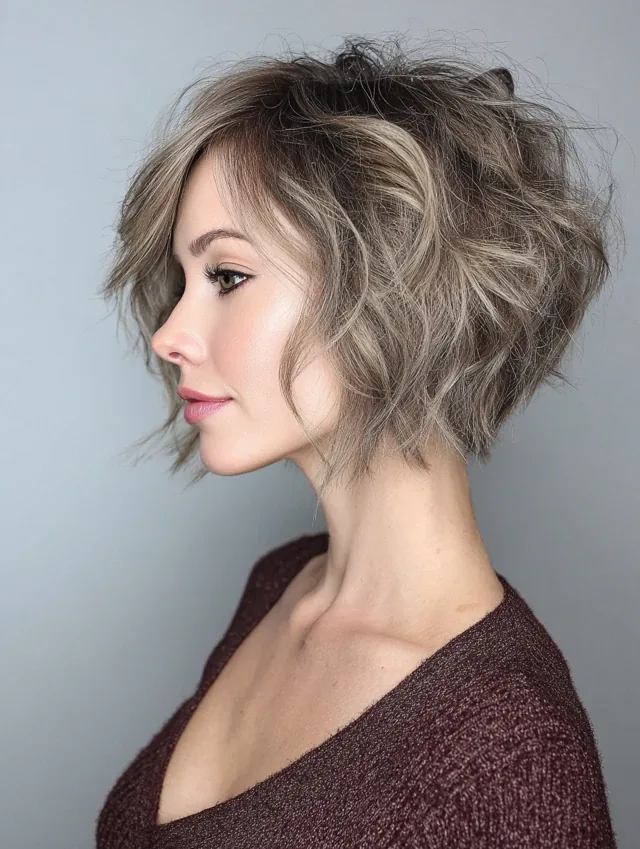
The common mistake is confusing tousled with messy. Tousled texture needs intention: the shape underneath must still be a clean stack, with the mess confined to the surface. If the cut itself is uneven, no amount of texturising spray will save it, so get the shape right first and add the texture second.
Maintenance is the easiest in this guide: trims every six weeks, and styling with a salt spray or texturising spray scrunched into damp hair. Let it air-dry, shake it out, and go. Second-day hair often looks even better than first-day hair with this version.
Quick verdict: the tousled stack is the weekend version of the cut. It is effortless, modern and flattering on almost everyone, and it is the best choice if you hate spending time on your hair.
32. Stacked Bob for Short Hair Lovers
This is the shortest stacked bob in the guide, sitting high on the nape with a tight graduation and front pieces that barely reach the cheekbone. It is almost a pixie-bob hybrid, and it suits anyone who loves short hair and wants the boldest, most sculptural version of the stack.
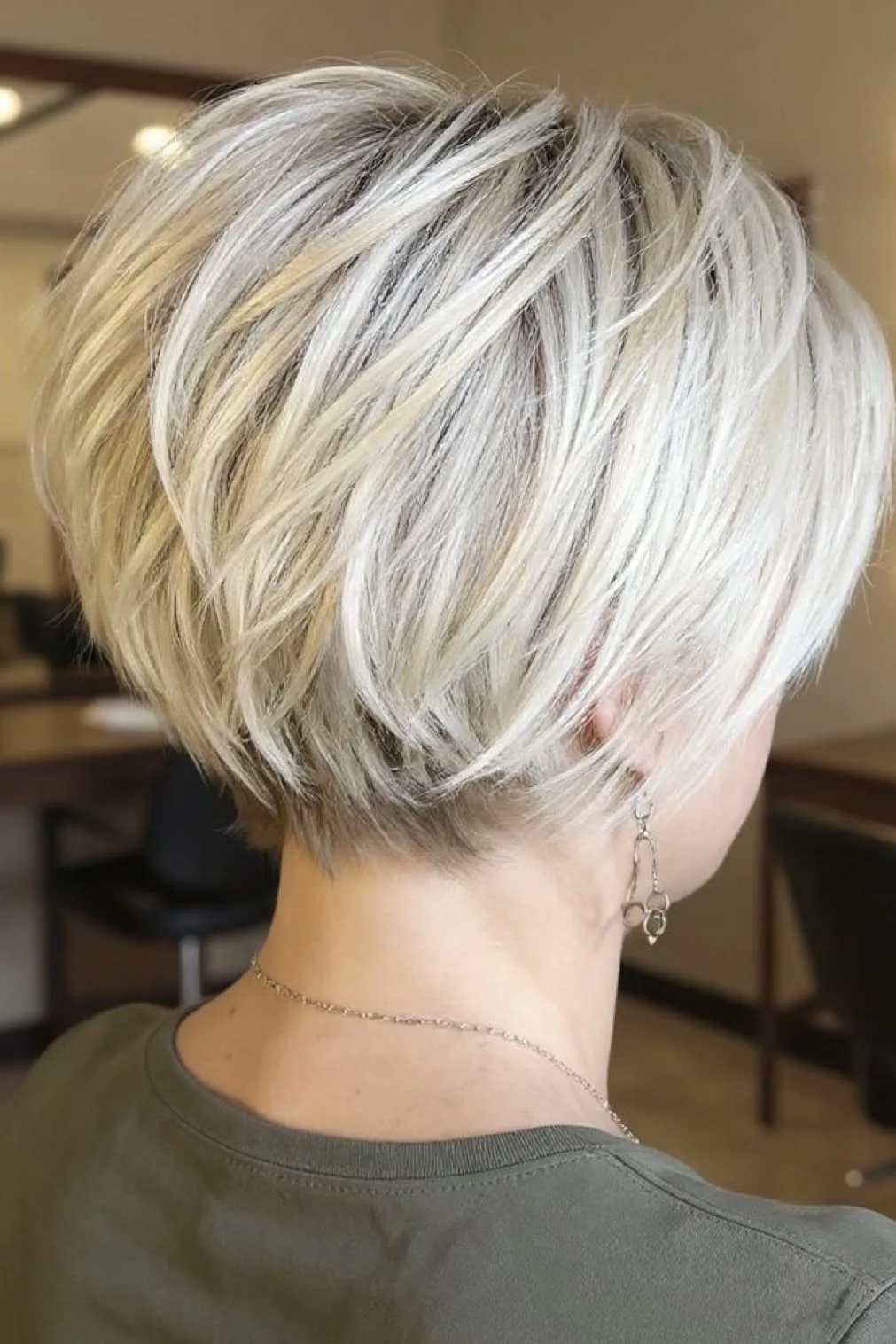
The common mistake is cutting the front too short along with the back, which turns the bob into a pixie and loses the face-framing line entirely. Even in the shortest stack, the front should stay long enough to frame the cheek — that contrast between short back and longer front is what makes it a bob.
Maintenance is frequent, with trims every three to four weeks, because a very short stack grows out fast and loses its shape quickly. Styling is minimal, though: a little pomade on the ends and a quick finger-style is usually all it takes, and the cut dries in minutes.
Quick verdict: the very short stack is for committed short-hair lovers. It is bold, chic and incredibly easy to live with day to day, as long as you accept the frequent trims it demands.
33. Stacked Bob with Long Front Pieces
Long front pieces give a stacked bob its most dramatic silhouette: a short, lifted back and front sections that fall well past the chin, sometimes to the collarbone. The contrast is striking, the face is framed by a long, slimming line, and the cut looks sharp from every angle.
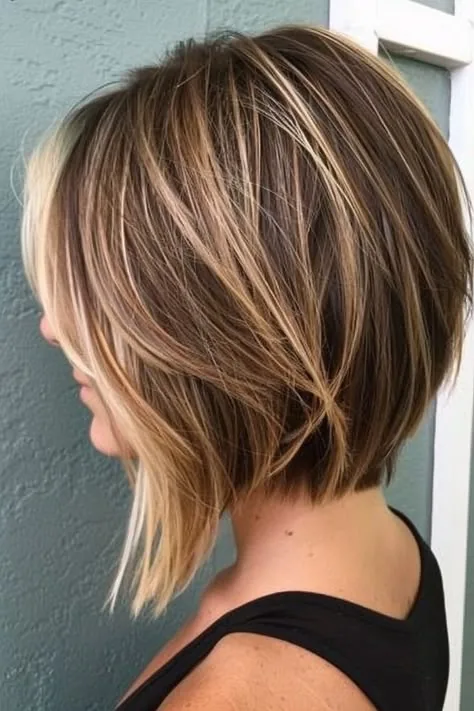
The common mistake is front pieces that are too thin, which makes them look straggly next to the full stacked back. The front should carry enough weight to read as a deliberate panel of hair, not a wisp. Ask your stylist to keep the front sections thick and blunt at the ends.
Maintenance means trims every five weeks, with attention to the front pieces — they show split ends faster than the rest of the cut. Style them smooth with a flat iron, tucking the ends under slightly, and keep the back lifted with a round brush so the contrast between back and front stays clear.
Quick verdict: long front pieces are the most dramatic version of the stacked bob. They suit oval and round faces, add instant glamour, and give you the longest-looking version of a short cut.
34. Stacked Bob for Natural Grey Hair
Natural grey hair and a stacked bob are a beautiful combination. The short layers show off the silver tones, the graduation gives the hair shape and volume, and the cut looks modern and intentional rather than like a compromise. Grey hair has never looked chicer than in a well-cut stack.
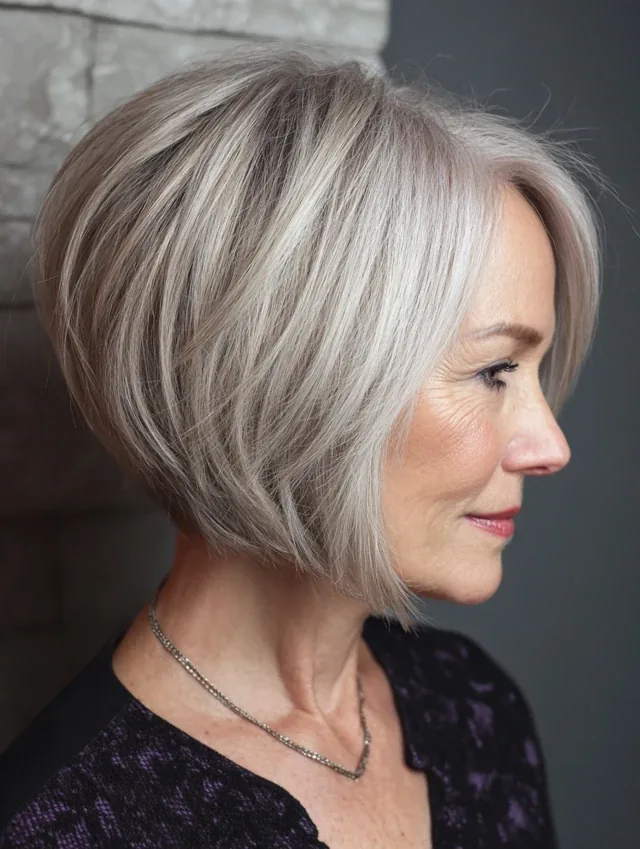
The common mistake is letting grey hair go yellow, which dulls the whole cut. A purple shampoo once a week keeps silver bright, and a gloss treatment at the salon every couple of months adds shine that grey hair can lack. The cut itself should stay soft, with textured ends rather than a hard edge.
Maintenance is light: trims every five to six weeks, purple shampoo weekly, and a lightweight moisturising mask, since grey hair tends to be coarser and drier. The cut air-dries well, and a little smoothing cream on the ends keeps it polished without weighing it down.
Quick verdict: if you are embracing your grey, a stacked bob is the cut to do it in. It is stylish, flattering and low-effort, and it turns grey hair into a feature rather than something to hide.
35. Stacked Bob with Layers for Movement
Some stacked bobs are about shape; this one is about movement. Extra layers through the mid-lengths let the hair swing and bounce as you move, so the cut looks alive rather than sculpted. It is the version to choose if you love hair that moves when you turn your head.
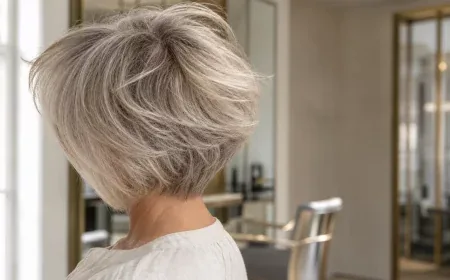
The common mistake is too many layers, which can make the ends look thin and the shape fall apart. Movement comes from a few well-placed layers, not from layering every section. Ask your stylist to keep the outline full and put the movement layers in the interior, where they show when the hair swings.
Maintenance means trims every five weeks and styling that encourages movement: blow-dry with a round brush, flick the ends out slightly, and use a light-hold spray rather than a heavy one. The cut should bounce, not stick, so avoid products that glue the layers together.
Quick verdict: the movement stack is the liveliest version of the cut. It suits wavy and straight hair, flatters most face shapes, and looks fantastic in motion — which is, after all, how people actually see your hair.
36. Stacked Bob with Soft Curls at the Ends
Soft curls at the ends give a stacked bob a romantic, feminine finish. The stack provides the shape and lift, and the curled ends add softness and bounce, turning a structured cut into something gentle and pretty. It is the version to choose for weddings, dates and occasions.
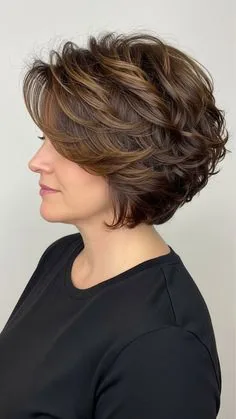
The common mistake is curling the whole length, which fights the stack and turns the cut into a curly bob with no graduation. The curls should live only at the ends — the crown and mid-lengths stay smooth, so the shape of the stack is still visible and the curls read as a finish, not a texture.
Maintenance is standard for the cut, with trims every five weeks, plus a curling iron or hot rollers for the ends when you want the look. Curl away from the face, let the curls cool before touching them, and finish with a light-hold spray so they hold without going stiff.
Quick verdict: soft curls at the ends are the prettiest finish in this guide. They soften the structure of the stack, suit every face shape, and take only ten minutes with a curling iron — a small effort for a big effect.
What is a stacked bob haircut?
A stacked bob is a short bob cut with short, graduated layers stacked at the back of the head, building volume at the crown and a rounded shape at the nape, while the front stays longer to frame the face. The stacking is what gives the cut its lift and its clean, sculpted silhouette.
How is a stacked bob different from a regular bob?
A regular bob is usually cut to one length or with light layering, while a stacked bob has deliberate short layers at the back that build volume and shape. The stacked version looks fuller at the crown and neater at the nape, and it holds its shape with less styling than a regular bob.
Does a stacked bob suit fine hair?
Yes — a stacked bob is one of the best cuts for fine hair. The graduated layers at the back create lift that fine hair cannot manage on its own, and removing weight from underneath stops the hair from collapsing flat. Keep the ends blunt and avoid over-thinning for the fullest look.
How often does a stacked bob need trimming?
Most stacked bobs need a trim every four to six weeks to keep the graduation sharp. After about eight weeks the nape grows out, the crown drops, and the clean curve at the back turns into a heavy ledge. A softer, longer stack can stretch to eight weeks between trims.
Can you wear a stacked bob with curly hair?
Yes, but the cut must respect the curl pattern. Curly hair should be cut dry or with the curls in mind, because curls spring up shorter as they dry. A stack cut too short on curls can become round and puffy, so find a stylist experienced with curly hair and keep the stack a little longer.
What face shape suits a stacked bob best?
The stacked bob suits almost every face shape, because its volume sits at the back and crown rather than at the sides. Round faces benefit most from the crown lift and longer front pieces, oval faces can wear any version, square faces should ask for soft textured ends, and heart-shaped faces suit volume near the jaw.
How do I ask my stylist for a stacked bob?
Bring two or three photos including a back view, say the words stacked and graduated layers at the back, and state how long you want the front — chin, jaw or shoulder. Mention whether you want bangs and how much daily styling you actually do, so the cut is designed for your real routine.
Is a stacked bob hard to style at home?
No — it is one of the easiest cuts to style, because the shape is already built in. Blow-dry the roots at the back with your head tipped forward for lift, tuck the front ends under with a round brush or flat iron, and finish with a little texturising spray. Most people can style it in under ten minutes.
Can a stacked bob be grown out easily?
It takes six to nine months to grow a stacked bob to shoulder length, with an awkward stage around three to four months when the nape flips out. Keep trimming the front while the back catches up, use a deep side part to disguise uneven lengths, and book a tidy-up every eight weeks to keep the shape intentional.
What is the difference between a stacked bob and an A-line bob?
An A-line bob is longer at the front than the back with a clean diagonal line and little layering, while a stacked bob has short graduated layers piled at the back to build volume. An A-line is smooth and angled; a stacked bob is layered and full at the crown. Many cuts combine both, with a stacked back and an angled front.
Conclusion
Stacked bob haircuts for women work because the cut itself does the heavy lifting: the graduated layers build volume where fine hair needs it, remove bulk where thick hair needs it, and hold a clean, sculpted shape that survives a busy day with very little styling. Whether you choose the classic chin-length version, a soft wavy stack, a bold colour or a silver-grey finish, the principle is the same — shape first, styling second.
Before your appointment, save the photos from this guide that match your hair and your face, note the length you want at the front, and tell your stylist honestly how much time you spend on your hair each morning. The best stacked bob is not the most dramatic one; it is the one that fits your texture, your routine and your life. Book the trim every five weeks, keep the roots lifted, and enjoy a cut that looks like you tried — even on the mornings you did not.