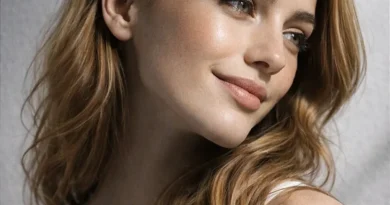
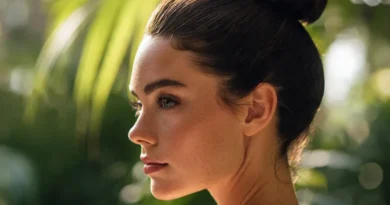
First Impressions, Hired Looks: 36 Job Fair Hairstyles That Say Capable Before You Say a Word
A job fair is not a job interview, and your hair should know the difference. An interview is one conversation, sitting down, in one room. A job fair is a whole working day on your feet: you walk from booth to booth, shake dozens of hands, wait in queues, lean over tables to read name badges, and introduce yourself to a new recruiter every five minutes. Your hair has to look polished at 9 in the morning and still look polished at 4 in the afternoon, with no mirror, no flat iron, and no second chance at a first impression in between.
This guide brings together 36 hairstyles for a job fair, chosen for exactly that day: neat, professional looks that stay in place through hours of walking, talking and standing, that frame your face so recruiters remember you, and that work across industries, from corporate finance to creative studios, healthcare to tech. Eight guides first walk you through what actually matters at a fair — how fast a first impression forms, how to match your hair to the industry you are targeting, and how to build a style that survives a long day without a touch-up. Whether your hair is long, short, curly or straight, there is a style here that lets you focus on the conversation instead of your hair.
What a Job Fair Really Is: Hair for a Long Day on Your Feet, Not a Single Interview
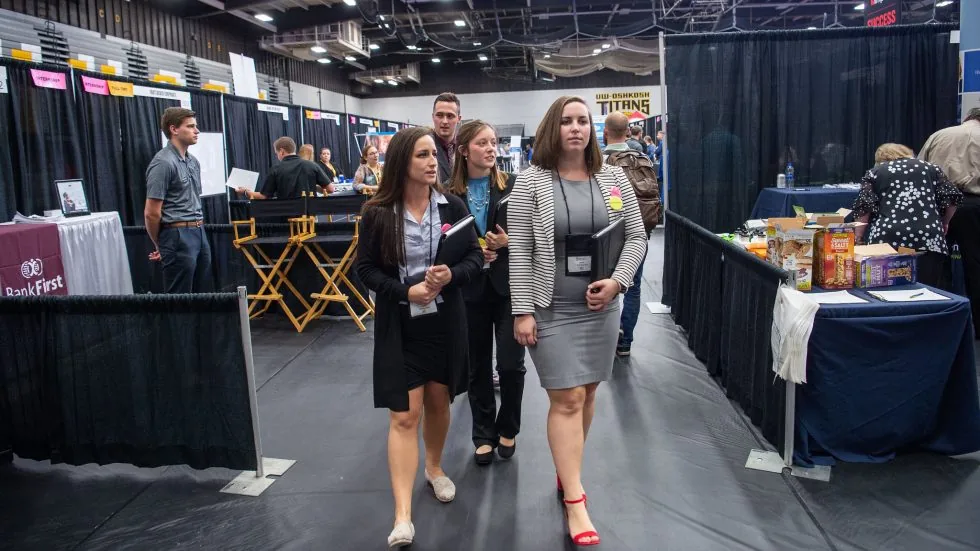
A job fair is a marathon of first impressions. You will talk to twenty or thirty recruiters in a single day, and each one forms an opinion in the first few seconds, before you have said a word about your skills. Between conversations you are walking, standing in line, carrying a folder or a bag, and leaning across a table to hand over a resume. A style that needs constant checking simply does not fit this day. The styles that work are the ones you can set in the morning and forget about until you get home.
Best for: every job seeker, whatever the industry. How to plan it: style your hair the way you would for a full working day, then add one layer of hold — a few extra pins, a light spray, a secure elastic. Common mistake: choosing a style that looks perfect sitting still at home and falls apart the first time you walk across a crowded hall. Quick verdict: if the style survives a brisk walk and a handshake without needing a fix, it is job-fair ready.
First Impressions in Seconds: Hair That Reads Capable Before You Speak

Recruiters at a job fair meet hundreds of people, and the ones they remember are the ones who looked put together. That does not mean dramatic or trendy — it means neat, intentional and clean. Hair that is brushed, controlled and clearly styled says organised and reliable; hair that is falling into your face or frizzing out at the edges says distracted, even when you are anything but. The goal is for your hair to support your introduction, not compete with it.
Pros: a neat style makes your face the focus, so your smile and eye contact do the work. Cons: an over-styled, fussy look can read as trying too hard for a first meeting. What to ask your stylist: for a clean, professional finish that photographs well and frames the face without hiding it. Best for: anyone who wants to be remembered for what they said, not for a stray strand of hair.
Matching Your Hair to the Industry: Corporate, Creative, Healthcare and Tech

Not every booth at a job fair wants the same look. A bank or law firm expects a sleek bun or a polished bob; a design studio or media company is happy with soft waves or a textured cut; a hospital recruiter wants hair fully off the face and out of the way; a tech company barely cares, as long as you look tidy. The smart move is to aim one notch above the most conservative booth you plan to visit, so you never look underdressed at any table.
How to choose: if you are targeting mixed industries, pick a classic style — a low bun, a sleek lob, a neat ponytail — and let your outfit add the personality. Who should avoid it: nobody needs to change their whole identity for a fair, but save the most experimental styles for the creative booths. Quick verdict: classic hair, confident introduction, and you fit in everywhere.
All-Day Hold: Hairstyles That Survive Eight Hours Without a Mirror Check
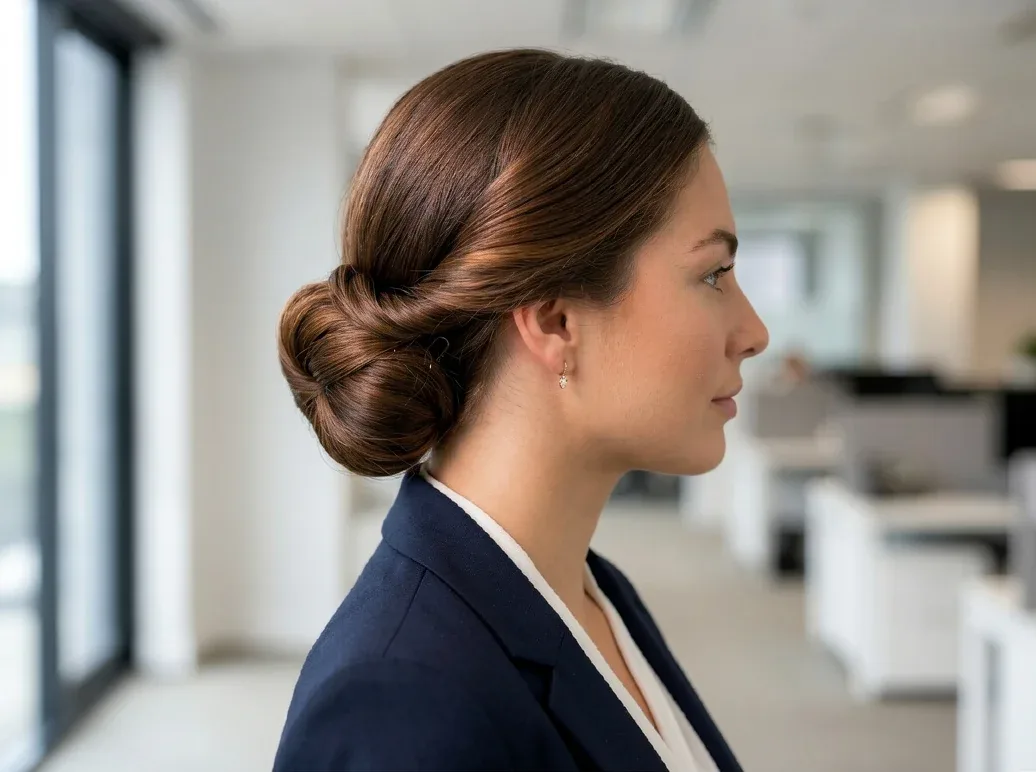
The defining test of a job fair hairstyle is time. You style it at 8 in the morning, you walk into a hall full of people, and you do not get a proper mirror until you are home. Heat, walking, the strap of a bag on your shoulder, and leaning forward to talk all work against loose styles. The ones that last are built on structure: pinned updos, braids tied off properly, ponytails anchored high, and buns secured with more than one pin. Hairspray helps, but pins and plaits do the real work.
Maintenance: do a ten-second check in a phone camera at lunchtime — smooth the front, re-pin anything loose, and you are done. Best for: anyone attending a full-day fair rather than a one-hour session. Common mistake: trusting a single elastic and a cloud of hairspray to hold for eight hours. Quick verdict: pick a style that still looks good slightly undone, and the day cannot beat it.
The 30-Second Touch-Up Kit: What to Carry in Your Bag Between Booths
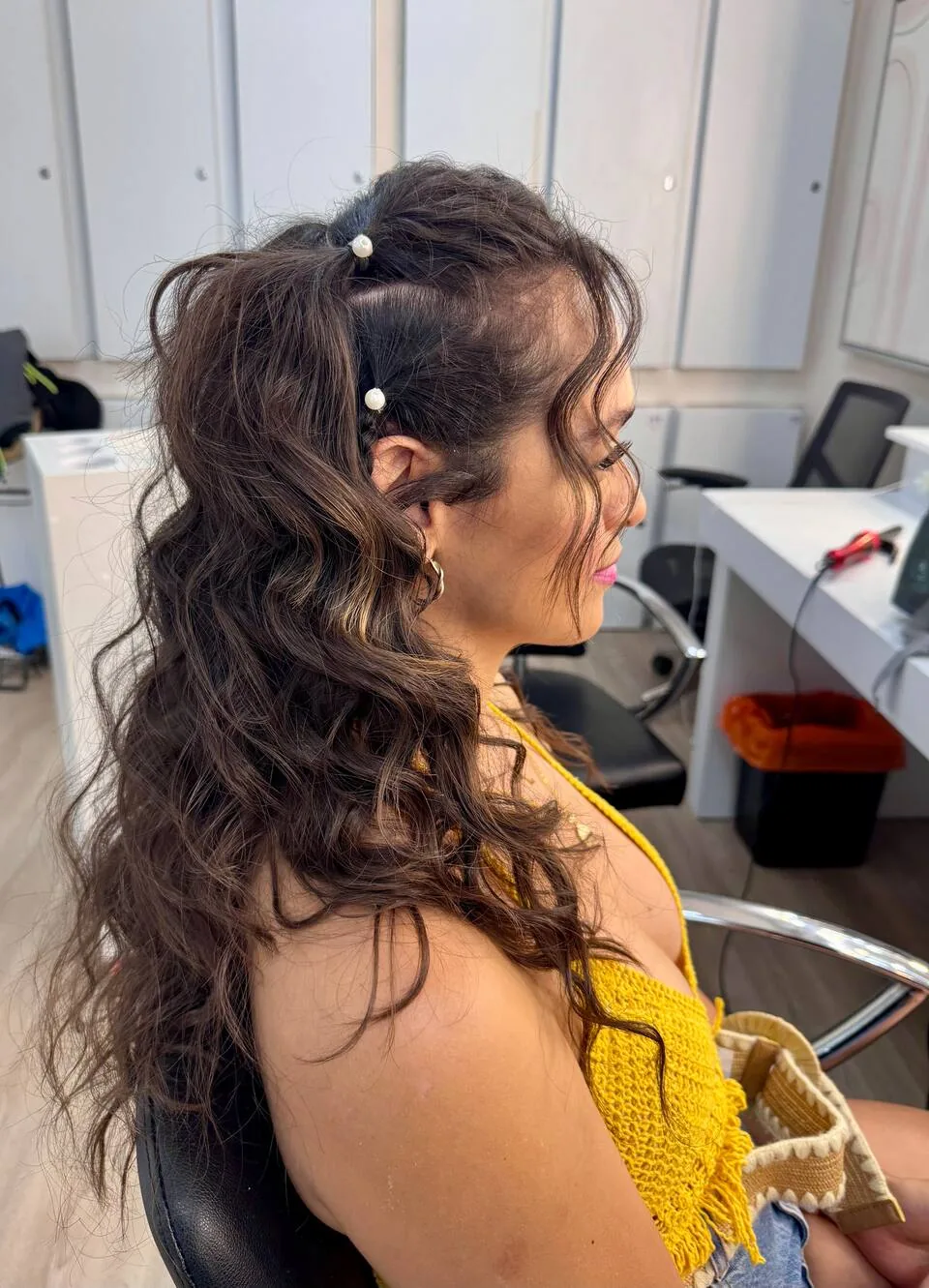
Between conversations you get thirty seconds, not thirty minutes, so your touch-up kit has to be tiny and fast. Three bobby pins, one spare hair tie, a travel-size hairspray, and a small comb or brush will fix almost anything a job fair can do to your hair. A mini shine serum or a single smoothing wipe handles flyaways at the front. That is the whole kit, and it fits in the smallest pocket of your bag.
How to use it: smooth the hairline with your palms, re-pin the back with your fingers, and give the ends a quick shake — fingers, not a brush, are the touch-up tool for waves. Best for: anyone whose hair frizzes, slips, or loses shape by midday. Common mistake: over-brushing windblown or humid hair, which turns waves into frizz. Quick verdict: a tiny kit and thirty seconds beats a perfect style you cannot fix.
Face-Framing and Eye Contact: Hair That Lets Recruiters See You

At a job fair you are talking face to face, often standing close, and your hair is part of that conversation. Hair that falls across your eyes makes you look down or push it back constantly, and hair that hides half your face makes you harder to remember. The best job fair styles keep the front of your hair controlled — tucked behind the ears, swept to the side, or pinned back — so your eyes, your smile, and your name badge are all visible at once.
Best for: everyone, but especially anyone with long layers or a fringe. How to style it: before you leave, shake your head and talk for a minute — if any hair falls into your eyes, pin it back now. Common mistake: a style that looks perfect in a photo and falls into your face the moment you start talking. Quick verdict: if a recruiter can see your whole face while you speak, the style is doing its job.
Weather, Venue and Walking: Planning Hair for the Hall, the Queue and the Walk In

Job fairs happen in big halls, exhibition centres, and university gyms, and getting there means walking outside, sometimes in wind, rain, or summer heat. A style that is perfect indoors can be ruined in the ten-minute walk from the car park. Plan for the journey, not just the hall: choose a style that survives weather, carry a light scarf or umbrella if rain is forecast, and arrive five minutes early so you can smooth everything down before your first introduction.
Pros: a weather-proof style means you walk in looking as good as you left home. Cons: a very sleek, straight finish needs a dry day and a lot of product to survive humidity. What to ask your stylist: for a style with a little grip and texture, so it holds even if the weather does not cooperate. Best for: anyone travelling far or attending an outdoor or partly outdoor fair.
What to Avoid at a Job Fair: Styles That Distract, Slip, or Need Constant Fixing
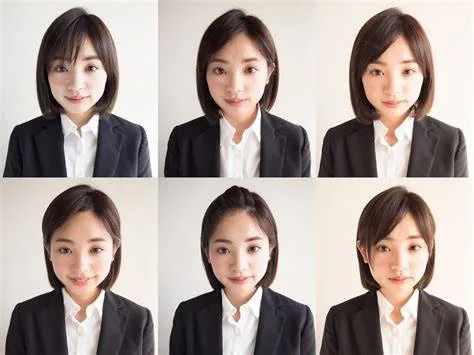
Some styles are beautiful and completely wrong for a job fair. Hair that needs touching every ten minutes, a fringe that falls into your eyes, a loose bun that unravels when you lean forward, glitter or oversized accessories that catch the light at every booth — all of them pull attention away from what you are saying. The rule is simple: if a style needs you, it is the wrong style for the day. Your hair should need nothing from you between 9 and 4.
Who should avoid it: anyone tempted by a brand-new, untested style on the morning of the fair — try it a week earlier first. Common mistake: a dramatic new cut or colour the night before, with no time to fix it if it does not suit you. Quick verdict: on fair day, wear a style you have already worn comfortably for a full day, and save the experiments for the weekend.
1. Polished Low Ponytail
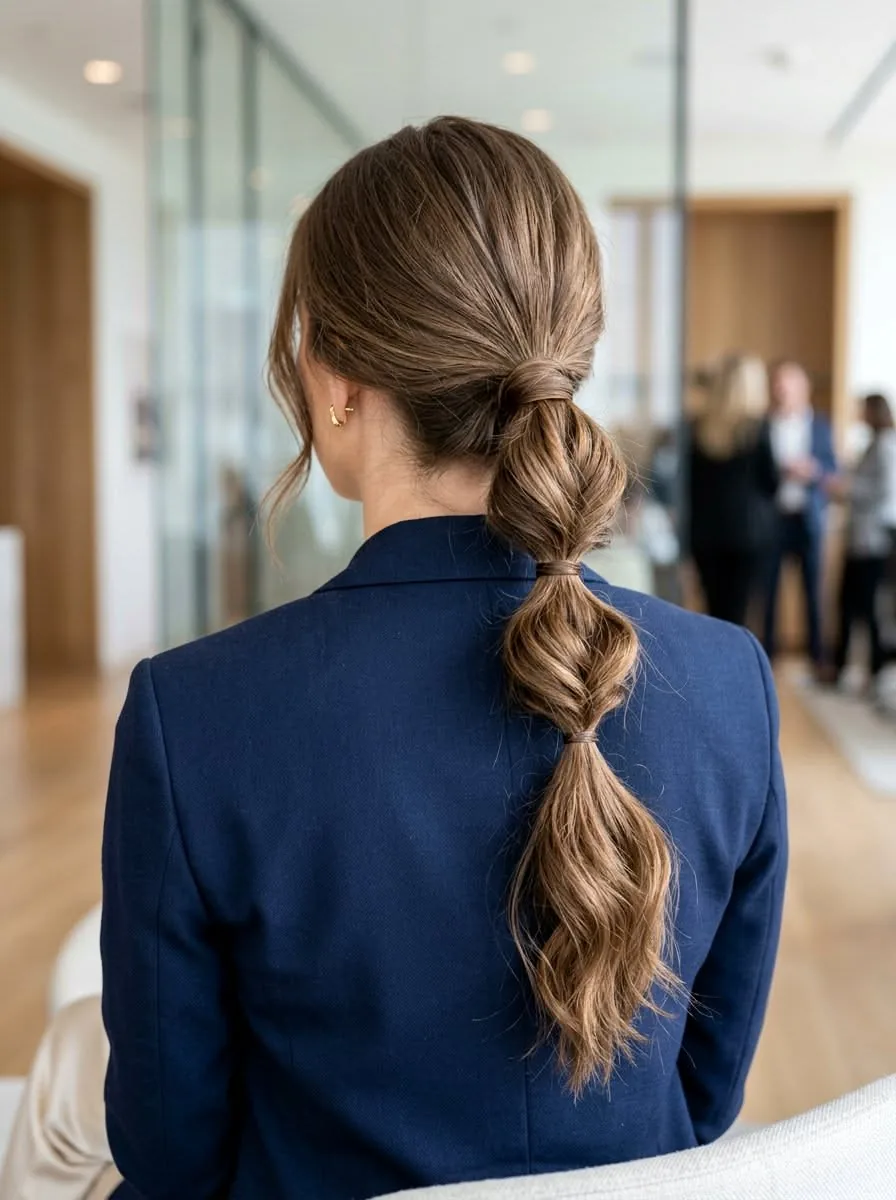
A polished low ponytail is the job fair workhorse: neat, quick, and impossible to get wrong. It keeps every strand off your face and behind your shoulders, so nothing distracts a recruiter while you talk, and it survives hours of walking between booths without loosening. The polish is what makes it professional — smooth sides, a clean part, and no flyaways — rather than the ponytail itself.
Best for: long to medium hair, and anyone who wants a safe, classic look. How to style it: brush the hair smooth, gather it low at the nape, secure with a strong elastic, then wrap a strand around the base and pin it underneath for a finished look. Common mistake: a ponytail that is too loose at the sides, which reads as unfinished rather than relaxed.
Pros: takes five minutes, holds all day, and suits every industry. Cons: a very tight ponytail can give you a headache by the afternoon, so do not pull it drum-tight. What to ask your stylist: for a low ponytail with a wrapped base and a smooth, flyaway-free finish.
Maintenance: carry one spare elastic and two bobby pins; if the base loosens, re-wrap and pin in seconds. Who should avoid it: anyone with very fine hair that slips out of elastics — use a textured base or a smaller section instead. Quick verdict: the most reliable job fair style there is.
2. Sleek Low Bun
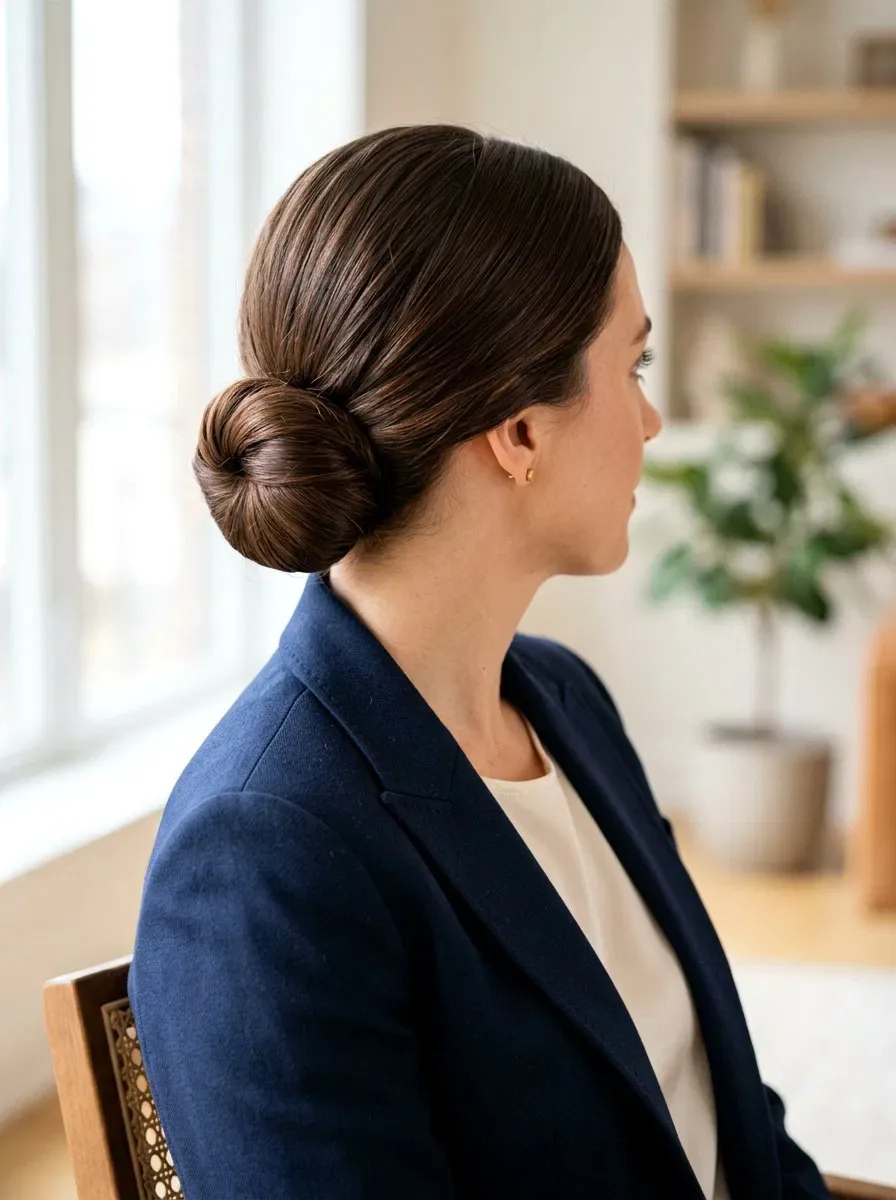
A sleek low bun is the single most professional hairstyle you can wear to a job fair. It sits low at the nape, stays put through a full day of handshakes and queues, and reads as organised and serious at every booth, from a bank to a hospital. It also keeps your hair completely out of the way when you lean over a table to sign in or hand over a resume.
How to style it: smooth the hair back with a bristle brush and a little serum, twist it into a low bun, and pin it with four or five bobby pins in a criss-cross pattern. Best for: medium to long hair, and anyone targeting corporate, legal, or healthcare roles. What to ask your stylist: for a bun anchored with pins, not just hairspray.
Pros: holds for hours, looks expensive, and suits almost every face shape. Cons: it can look severe if it is pulled too tight, so keep the front soft with a side part. Common mistake: using too few pins and trusting hairspray to do the structural work.
Maintenance: almost none — check the pins once at lunchtime. Who should avoid it: very short hair, which cannot form a proper bun. Quick verdict: the safest professional choice on the list.
3. Classic French Twist
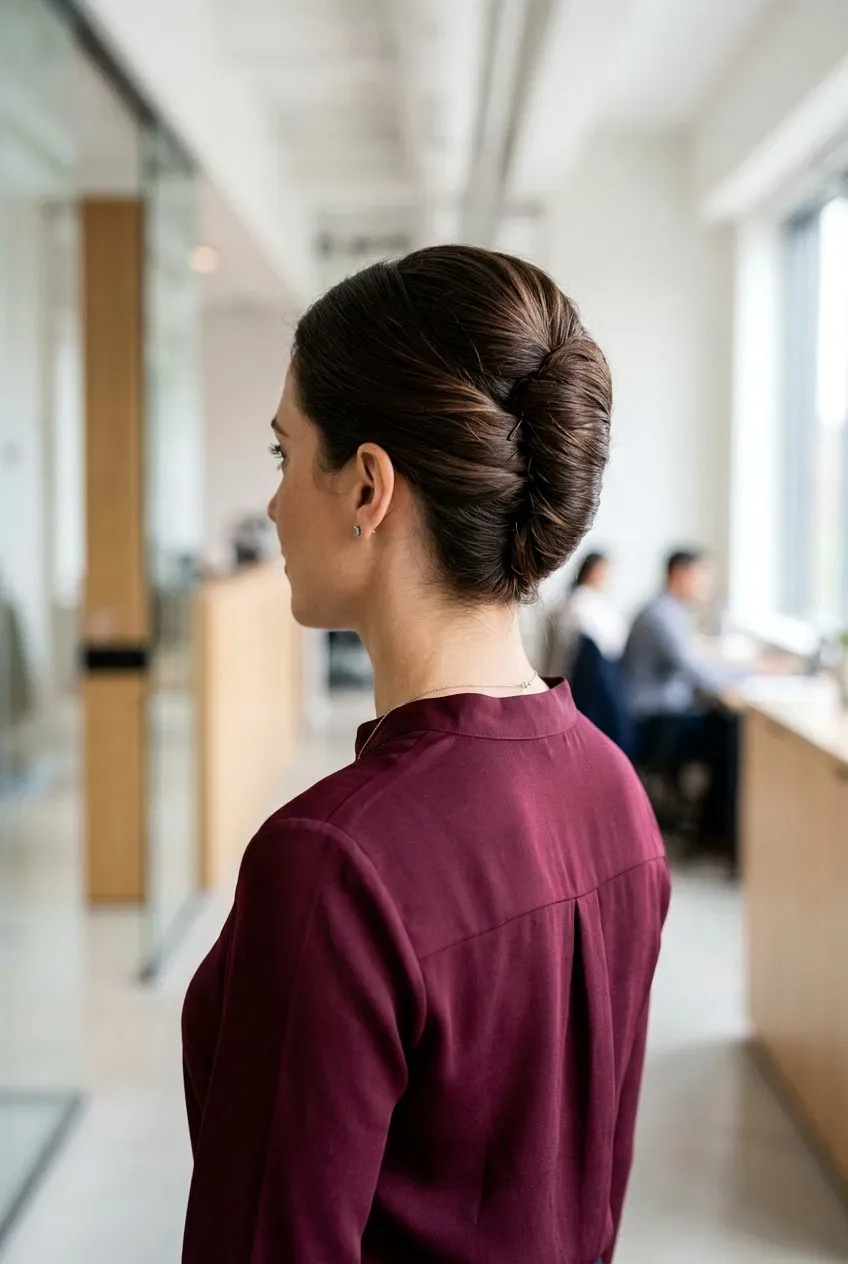
The French twist is the quiet power move of job fair hair. It is elegant without being fussy, it keeps every strand pinned up and off your neck, and it looks intentional from every angle — including from behind, which matters when you are standing in a queue. Recruiters see a person who took care with their appearance, and that first impression carries into the conversation.
Best for: medium to long hair, and anyone who wants an updo that feels more special than a bun. How to style it: sweep the hair to one side, twist it upward, tuck the ends in, and secure with long pins along the fold. A light spray finishes it. Common mistake: leaving the twist too loose, so it sags by midday.
Pros: all-day hold, no hair in your face, and it pairs beautifully with a blazer. Cons: it takes practice, so try it a few days before the fair, not on the morning. Cost and time: about ten minutes once you know the technique, and no special tools beyond pins.
Who should avoid it: very layered hair, which can poke out of the twist — smooth the layers with serum first. Quick verdict: elegant, durable, and memorable for the right reasons.
4. Soft Blowout with Curtain Bangs
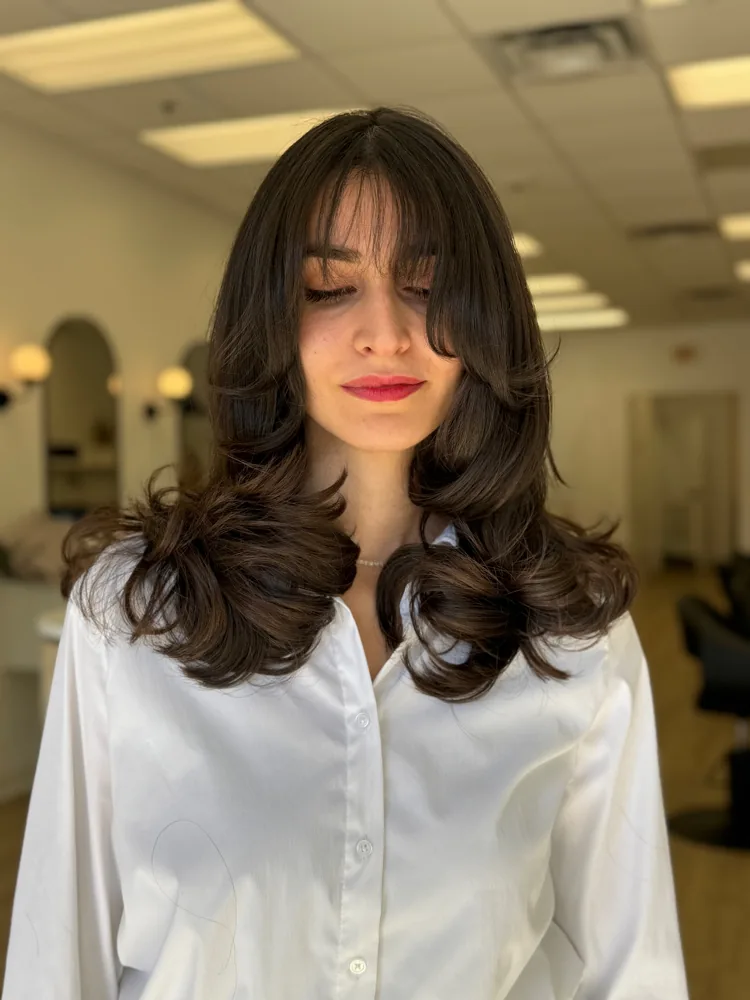
A soft blowout with curtain bangs is friendly and polished at the same time, which is exactly the tone you want when you are introducing yourself fifty times a day. The bangs frame the face and soften the look, while the blowout gives the hair movement and shine without looking overdone. It is the style to choose when you want to look approachable and professional in equal measure.
Best for: medium to long hair with a little natural body. How to style it: blow-dry with a round brush, curving the ends under, and style the curtain bangs away from the face so they frame rather than cover it. A flexible-hold spray keeps the shape without stiffness. Pros: warm, approachable, and it photographs beautifully.
Cons: the least wind-proof of the loose styles — a strong gust on the walk in will loosen it. Common mistake: bangs that fall into the eyes, which means you keep pushing them back while talking. Maintenance: carry a small comb and a travel spray; a quick finger-comb revives the shape.
Who should avoid it: anyone with very fine hair on a humid day — choose a pinned-up version instead. Quick verdict: maximum warmth, but only if the bangs stay out of your eyes.
5. Half-Up Twist
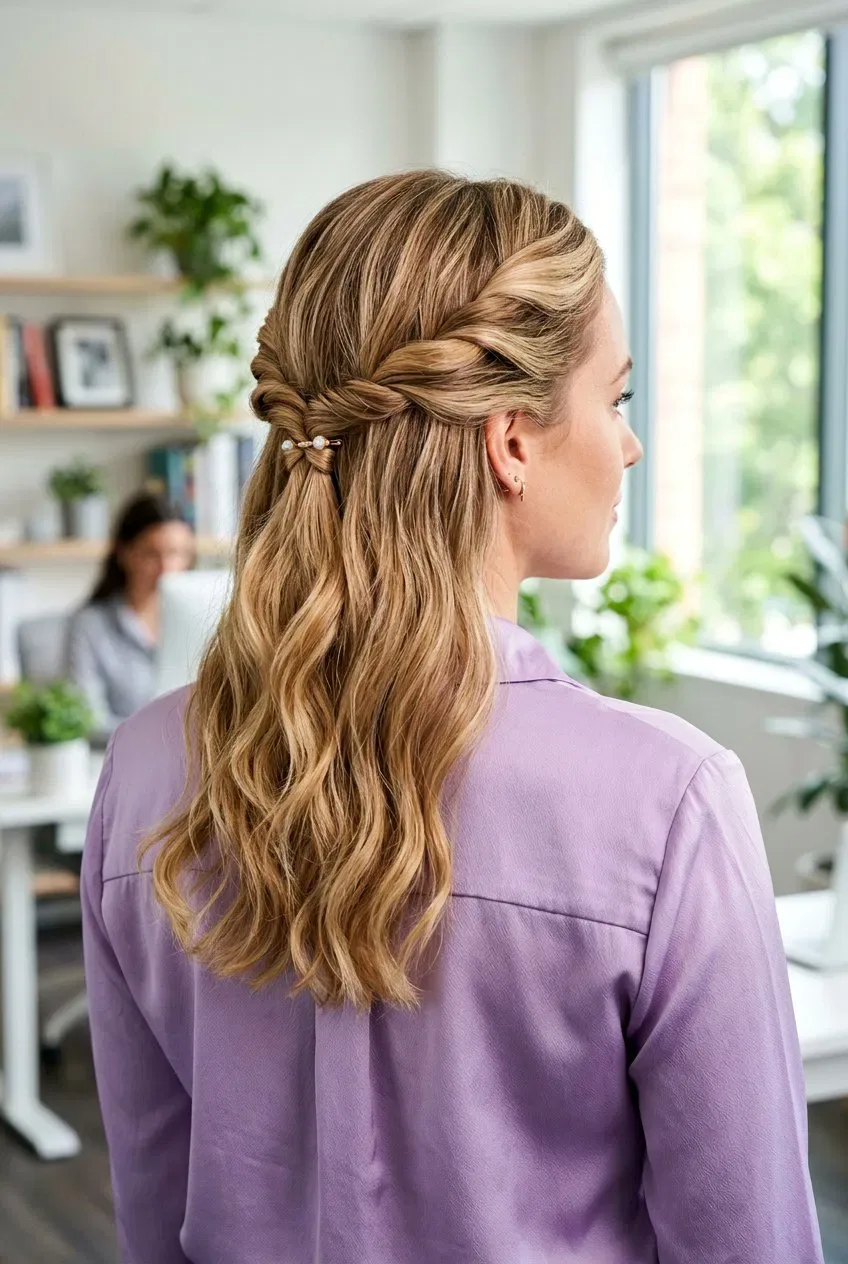
A half-up twist takes the best of both worlds: the front of your hair is controlled and out of your face, while the length at the back keeps the look soft and natural. It is a good middle ground if a full updo feels too formal and loose hair feels too casual, and it holds up well through a long day because the twisted section is pinned, not just clipped.
How to style it: take a section from each side, twist them toward the back, and pin them together at the crown. Leave the rest of the hair smooth or lightly waved. Best for: long to medium hair, and anyone who wants their face fully visible without going fully up.
Pros: comfortable, flattering, and it keeps hair out of your eyes all day. Cons: the back can frizz by the afternoon if your hair is prone to it. What to ask your stylist: for a half-up twist with a secure pin, not a decorative clip that slides out.
Maintenance: one spare pin is all you need. Quick verdict: neat at the front, relaxed at the back, and professional from every angle.
6. Low Chignon with Face-Framing Layers
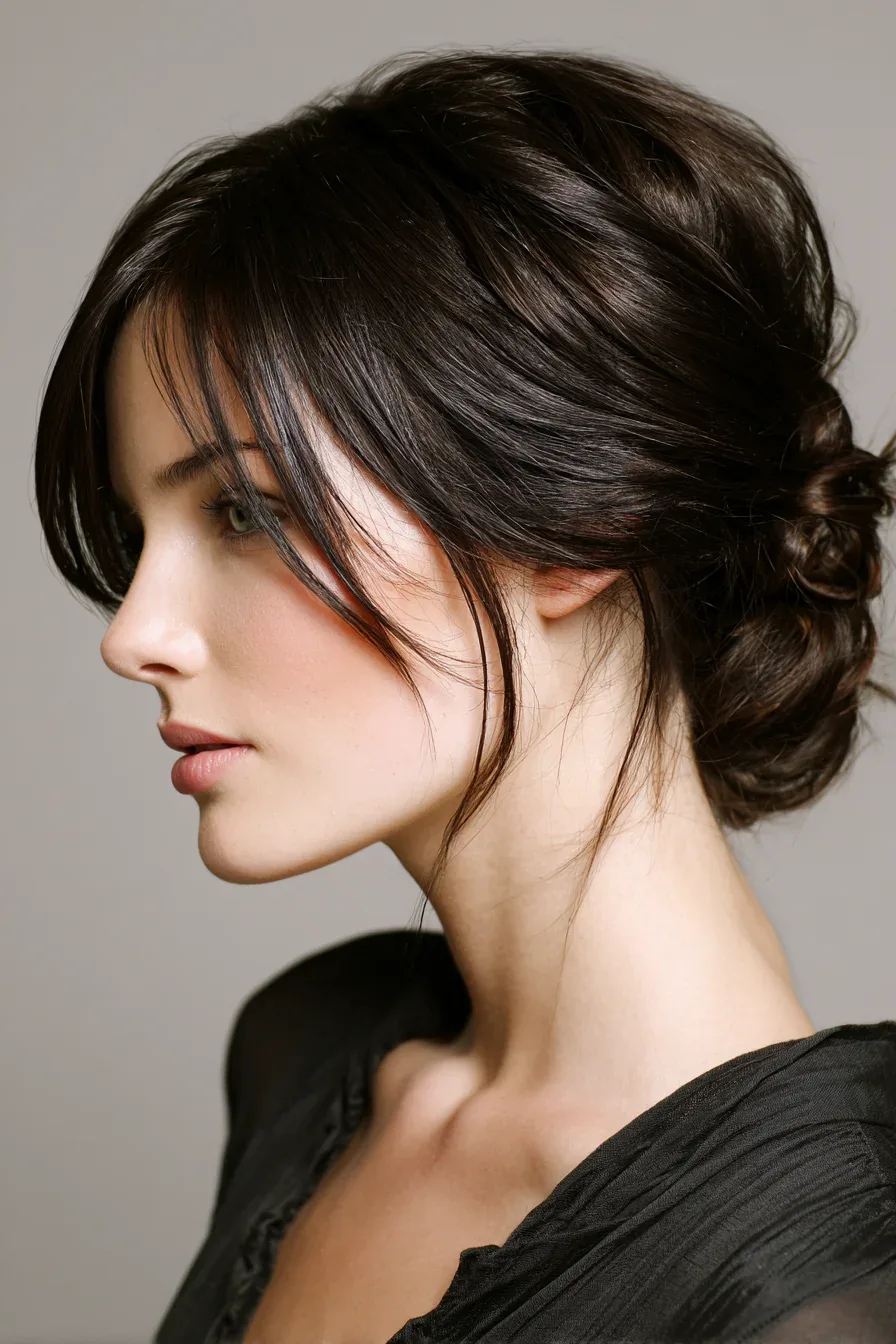
A low chignon with face-framing layers is the softer sister of the sleek bun: same all-day structure, but with gentle layers at the front that keep the look warm instead of severe. It is the style to choose when you want to look polished but approachable, and it works beautifully with a suit or a smart dress.
How to style it: twist the hair into a low roll at the nape, pin it securely, then free two soft layers at the front and curve them slightly away from the face. Best for: medium to long hair, and anyone whose face suits a little softness around the edges.
Common mistake: pulling the front layers too far forward, so they fall into your eyes while you talk. Pros: comfortable, flattering, and it improves as it loosens slightly through the day. Cons: very straight, slippery hair may need extra pins.
Maintenance: almost none beyond a quick pin check at lunch. Who should avoid it: no one, really — this is one of the most universal styles on the list. Quick verdict: elegant without trying too hard, and it survives the whole day.
7. Sleek Straight Lob
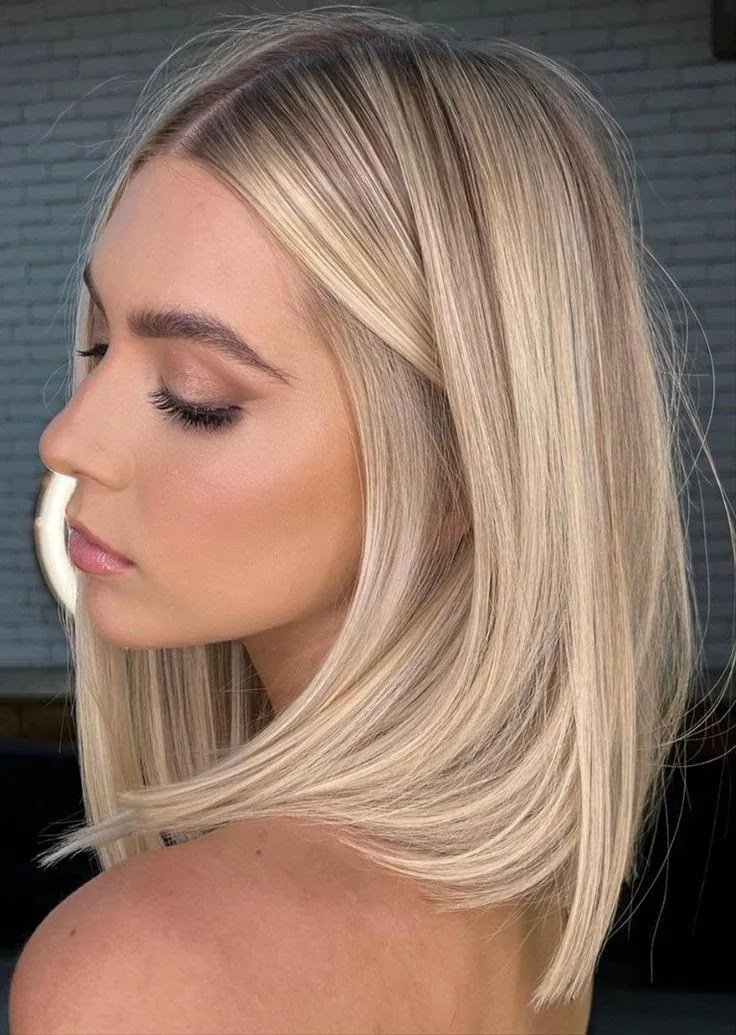
A sleek straight lob is the short-hair answer to job fair polish. It sits at the shoulders, frames the face cleanly, and looks deliberate without needing an updo. Because the length is short, there is nothing to fall out of place, nothing to tuck behind your ears all day, and nothing for a bag strap to catch on — which is more of a relief than it sounds by hour six.
Best for: straight or slightly wavy hair at shoulder length. How to style it: blow-dry smooth with a paddle brush, run a flat iron over the ends if needed, and finish with a pea-sized amount of serum for shine. A side part adds a little structure and keeps the front out of your eyes.
Pros: low maintenance, modern, and it looks sharp with a blazer. Cons: humidity can undo the sleek finish, so a dry day or an anti-humidity spray helps. Common mistake: skipping the serum, which leaves the ends looking dry in bright hall lighting.
Who should avoid it: very curly hair, unless you are happy to straighten it properly first. Quick verdict: clean, confident, and zero fuss for the whole day.
8. Textured Bob
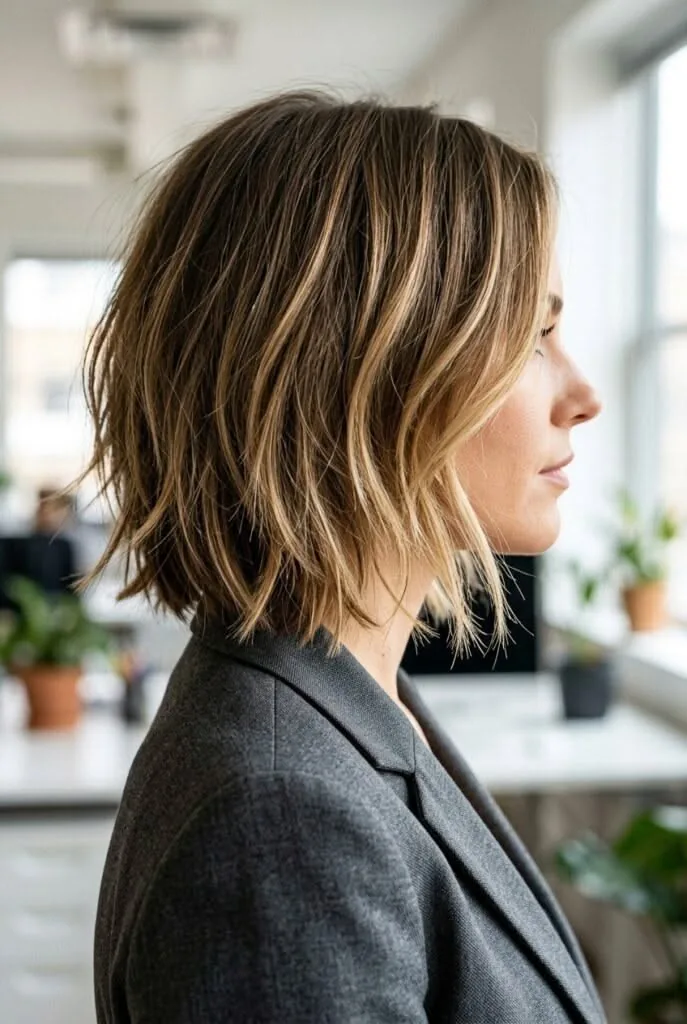
A textured bob is professional without being stiff, which suits job fairs perfectly. The texture gives the cut movement and personality, while the length keeps it tidy and easy to manage. It is a good choice for creative industries, tech, and media booths, where a little individuality is welcome, and it still looks perfectly respectable at a corporate table.
How to style it: add a little texture spray to damp hair, blow-dry with your fingers for movement, and finish by smoothing the front sections so they frame the face. Best for: short to medium hair with some natural wave or body.
Pros: quick to style, holds its shape all day, and looks good from every angle. Cons: very fine hair can fall flat by the afternoon — a root lift spray in the morning helps. What to ask your stylist: for a bob with texture through the ends, not a blunt, heavy line.
Maintenance: a quick shake and a finger-comb is all it needs. Quick verdict: modern, easy, and professional without feeling corporate.
9. Side-Parted Waves
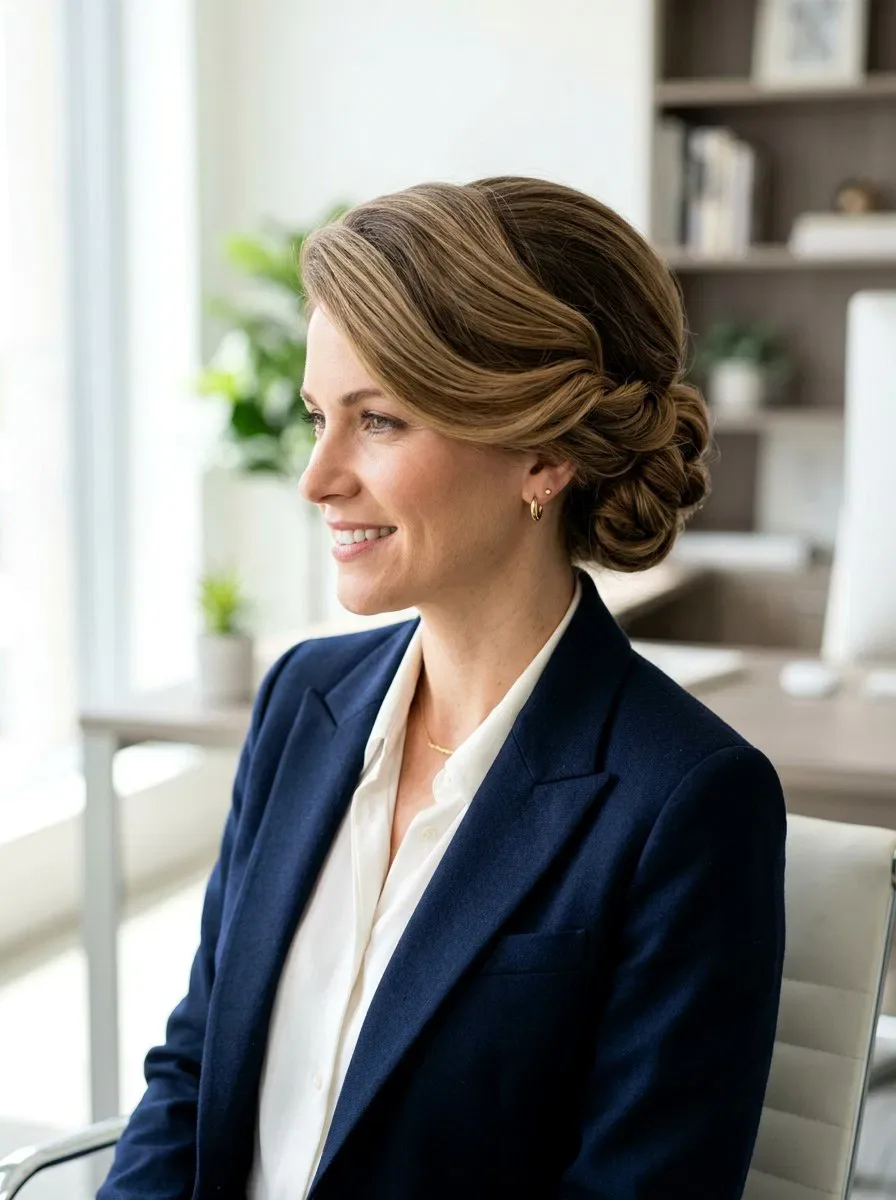
Side-parted waves are warm, confident, and easy to wear for a full day. The deep side part gives the style structure and keeps the hair swept away from the face on one side, while the waves add softness and movement. It is a natural choice if you want to look polished without looking like you spent two hours getting ready.
Best for: medium to long hair with natural wave or a curling iron. How to style it: create a deep side part, curl the hair in large sections away from the face, then brush through gently for soft waves and finish with a flexible-hold spray.
Common mistake: waves that are too tight, which look like a party style rather than a professional one. Pros: flattering on almost every face shape, and it photographs well. Cons: the waves will relax through the day, so start them a little tighter than you want them to end up.
Maintenance: a quick finger-comb at lunch brings the shape back. Who should avoid it: anyone in a very humid venue — choose a pinned style instead. Quick verdict: friendly, polished, and made for long conversations.
10. Subtle Braided Crown
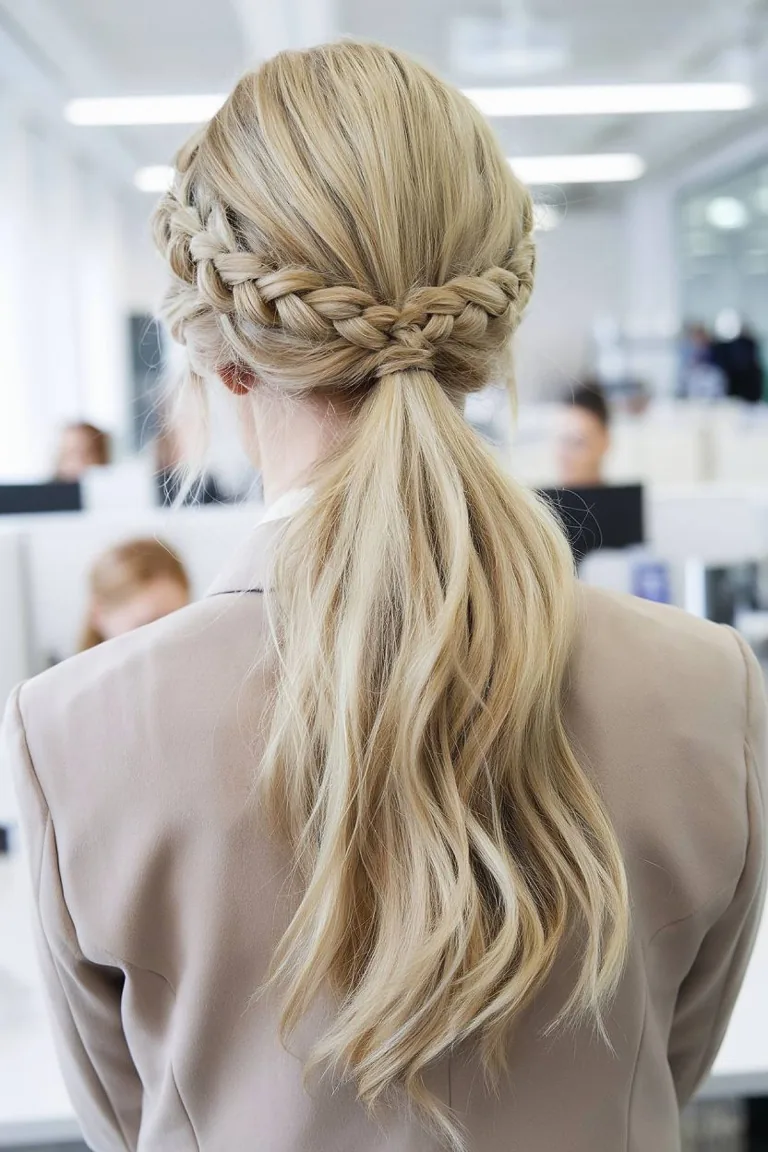
A subtle braided crown is a clever job fair style: the braid acts like a built-in headband, keeping every front strand out of your face for the whole day, while the rest of the hair stays down and natural. It looks thoughtful and tidy without looking overdone, and it holds through hours of walking and talking because the braid is anchored, not clipped.
How to style it: braid a small section from one side across the front hairline, pin it behind the opposite ear, and leave the rest of the hair smooth or lightly waved. Best for: long to medium hair, and anyone whose front layers keep falling forward.
Pros: all-day face control with no pins visible, and it works on second-day hair too. Cons: it takes a little practice to braid neatly on yourself. Cost and time: about ten minutes, and no special tools beyond pins.
Who should avoid it: very short hair, which cannot form a proper braid. Quick verdict: the most practical pretty style on this list.
11. Neat High Bun

A neat high bun is bold, clean, and impossible to ignore — in a good way. It lifts the face, shows off your features, and keeps every strand completely out of the way, which is ideal when you are leaning over tables, shaking hands, and talking to people all day. It is also the most weather-proof style on this list: wind and rain barely touch it.
How to style it: gather the hair high at the crown, smooth the sides with a brush and a little serum, twist into a bun, and pin it firmly. A hair donut can help if your hair is fine. Best for: long to medium hair, and anyone who wants a strong, confident silhouette.
Pros: wind-proof, heat-proof, and it takes five minutes. Cons: a very tight bun can give you a headache by the afternoon, so keep it firm but not painful. Common mistake: placing the bun too far back, which loses the lift that makes this style work.
Maintenance: carry two spare pins. Quick verdict: maximum polish, minimum fuss, and it survives anything the day throws at it.
12. Voluminous Blowout
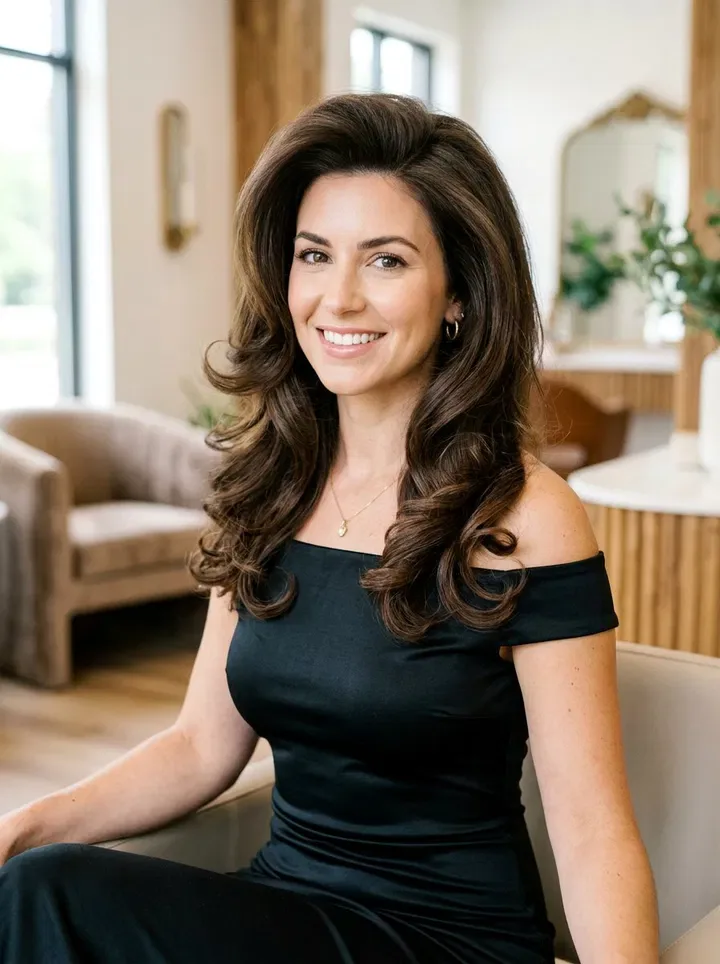
A voluminous blowout says confidence the moment you walk up to a booth. The volume gives your hair presence, the smooth finish looks expensive, and the movement makes the whole look feel alive rather than stiff. It is the style to choose when you want to feel your best and look it, and when the fair is indoors, where wind and humidity cannot undo the work.
Best for: medium to long hair with some natural body. How to style it: blow-dry in sections with a large round brush, lifting at the roots for volume, and finish with a cool shot from the dryer to set the shape. A light spray holds it without stiffness.
Pros: the most glamorous professional option on this list. Cons: the least durable — volume drops through a long day, especially in heat. What to ask your stylist: for root lift and a set that holds, not just a quick blow-dry.
Maintenance: a quick flip of the head and a finger-comb at lunch revives the volume. Who should avoid it: anyone attending an outdoor fair or a very humid hall. Quick verdict: high impact, best saved for indoor fairs.
13. Shoulder-Length Layers

Shoulder-length layers are the most versatile job fair length: long enough to tie back if you need to, short enough to stay neat on their own. The layers add movement and shape, so the style looks intentional even with minimal styling, and the length sits comfortably above a bag strap and a blazer collar.
Best for: almost every hair type, and anyone who wants options. How to style it: blow-dry with a round brush, turning the ends under, and add a little texture spray for definition. The layers do most of the work themselves.
Pros: easy to style, easy to wear, and it suits every industry. Cons: the ends can flip out by the afternoon if your hair is very straight — a quick pass with a flat iron in the morning fixes it. Common mistake: skipping the blow-dry, which leaves layers looking flat and unfinished.
Maintenance: none beyond a finger-comb. Quick verdict: the safe, smart, do-everything length.
14. Side-Swept Pixie
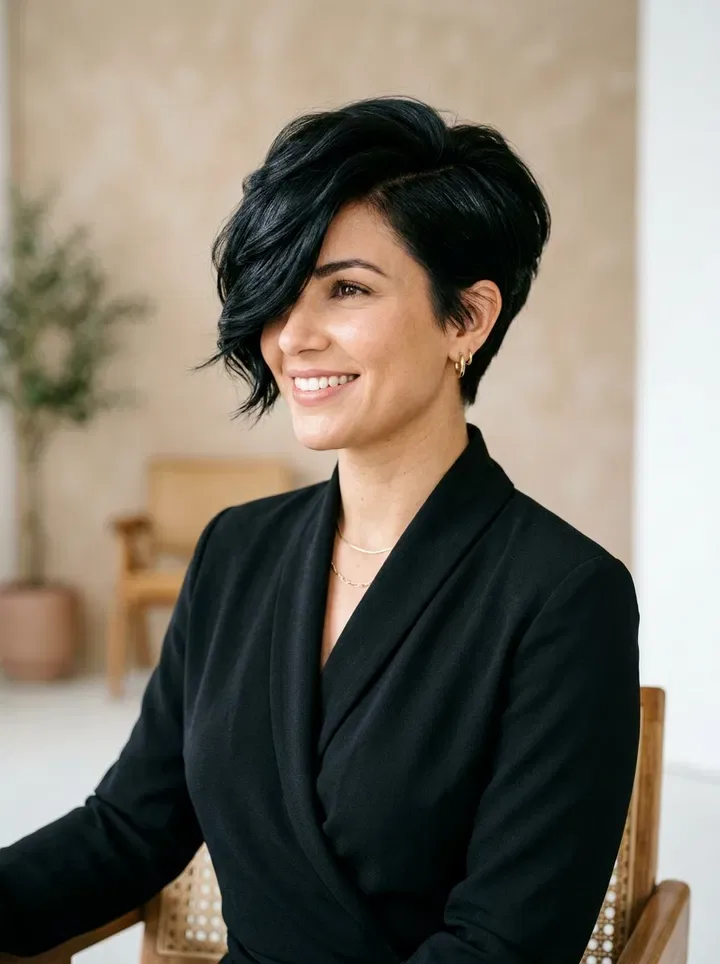
A side-swept pixie is short, sharp, and full of confidence — and it is one of the easiest job fair styles to wear, because there is almost nothing that can go wrong with it. The side sweep keeps the front out of your eyes, the short length means no frizz at the ends and no hair on your collar, and the cut itself does the talking.
How to style it: blow-dry the top forward and to the side, add a pea-sized amount of pomade for definition, and smooth the sides. Best for: short hair, and anyone who wants a bold, modern look that needs no maintenance.
Pros: zero fuss, holds all day, and it stands out in a crowd of long hair. Cons: it needs a fresh cut to look its best, so book the trim a few days before the fair. What to ask your stylist: for a pixie with a longer, side-swept top that frames the face.
Who should avoid it: anyone growing their hair out and unhappy with the length. Quick verdict: short hair, big confidence, no touch-ups needed.
15. Classic Bob

The classic bob is the definition of professional: clean lines, a clear shape, and a finish that looks deliberate from every angle. It frames the face beautifully, sits neatly above the shoulders, and never needs tucking, pinning, or fixing. For a job fair, that reliability is worth more than any dramatic style.
How to style it: blow-dry smooth with a paddle brush, turn the ends under slightly, and finish with a shine serum. A side part adds a little softness. Best for: straight to slightly wavy hair, and anyone targeting corporate or formal industries.
Pros: holds its shape all day, looks sharp with a blazer, and suits most face shapes. Cons: a blunt bob can feel severe on some faces — ask for a slightly softened edge if that worries you. Common mistake: letting the ends flip out, which reads as unfinished.
Maintenance: a quick brush at lunch is all it needs. Quick verdict: timeless, tidy, and always appropriate.
16. Fishtail Braid over One Shoulder
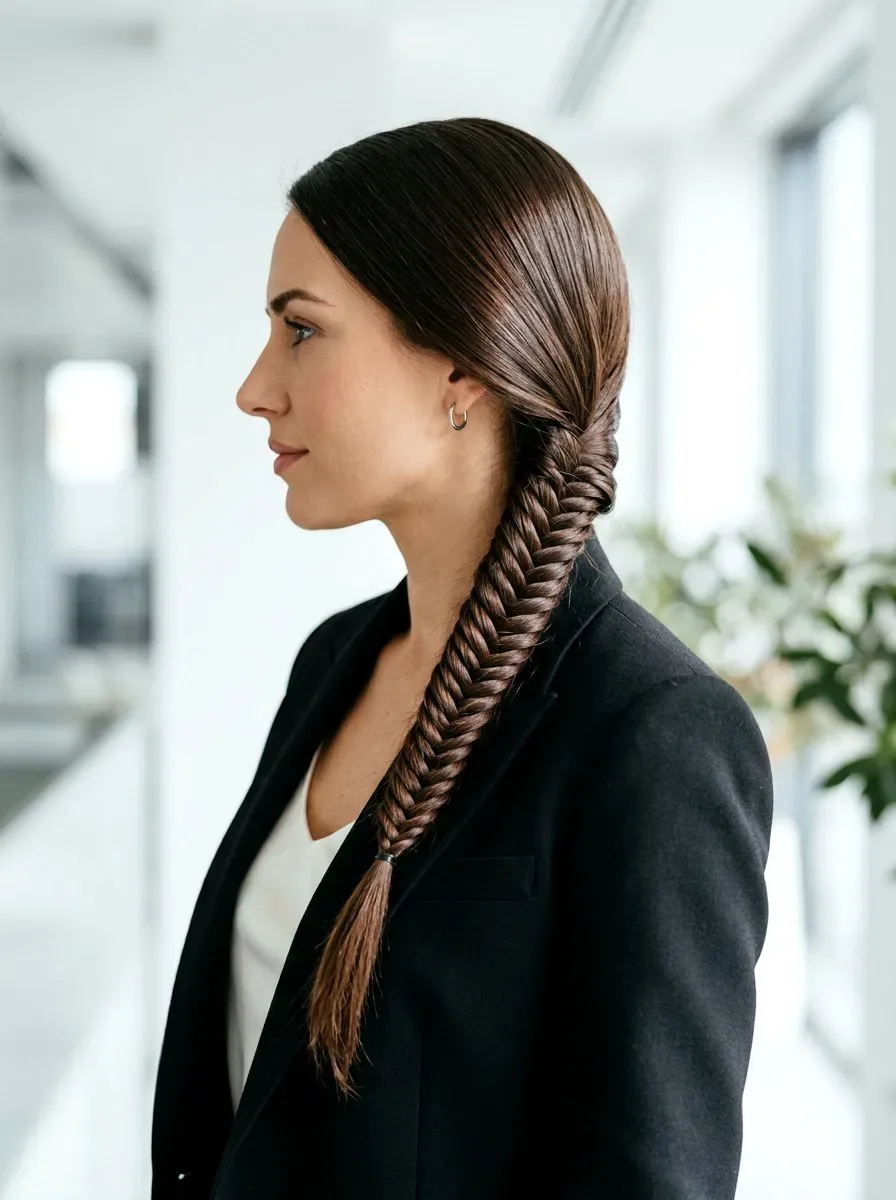
A fishtail braid over one shoulder is neat, pretty, and surprisingly practical for a job fair. The braid keeps the hair contained and out of the way, it survives hours of walking without loosening, and it gives a photo something interesting to look at. Draped over one shoulder, it also keeps the hair off your back and away from a bag strap.
How to style it: sweep the hair to one side, divide it into two sections, and weave small pieces across until you reach the ends. Secure with a small elastic and gently pull the braid apart for fullness. Best for: long hair, and anyone who wants a style that holds without pins.
Pros: all-day hold, no hair in your face, and it looks more intricate than it is. Cons: it takes practice, so try it before the fair. Cost and time: about ten minutes once you know the technique.
Who should avoid it: very layered hair, which can poke out of the braid. Quick verdict: practical, pretty, and built to last the day.
17. Low Twisted Bun
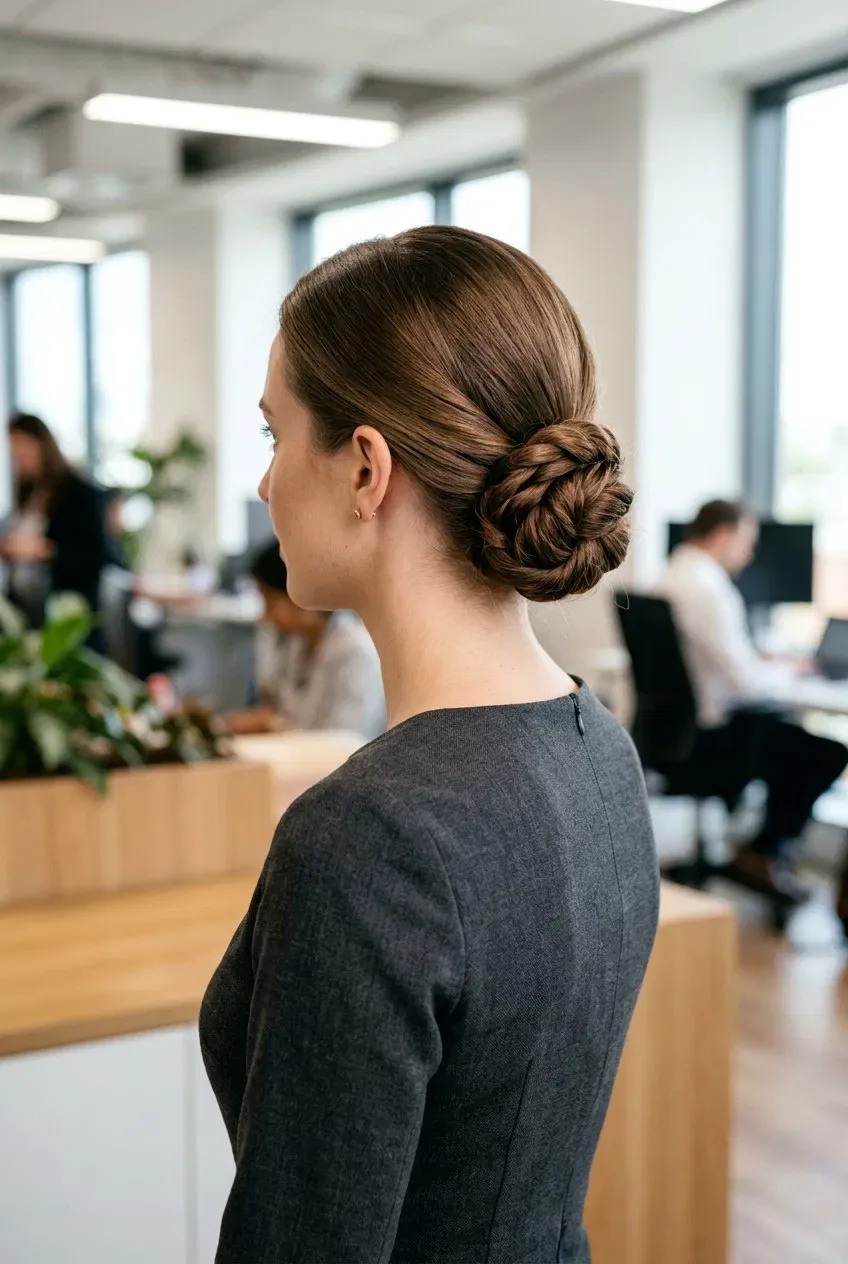
A low twisted bun is the relaxed, wearable version of the classic chignon: the hair is twisted rather than rolled, which gives it a softer, more textured finish while keeping the same all-day hold. It is a good choice if a sleek bun feels too severe but you still want your hair fully up and out of the way.
How to style it: gather the hair low, twist it into a loose rope, coil it into a bun, and pin it in several places. Gently pull at the bun for fullness. Best for: medium to long hair, and anyone who likes a softer, less formal updo.
Common mistake: twisting too tightly, which turns the bun into a hard knot. Pros: comfortable, flattering, and it improves as it loosens slightly. Cons: very straight, slippery hair may need extra pins and a little texture spray first.
Maintenance: one spare pin in your bag is enough. Quick verdict: soft, secure, and professional without being stiff.
18. Straight Hair with a Centre Part
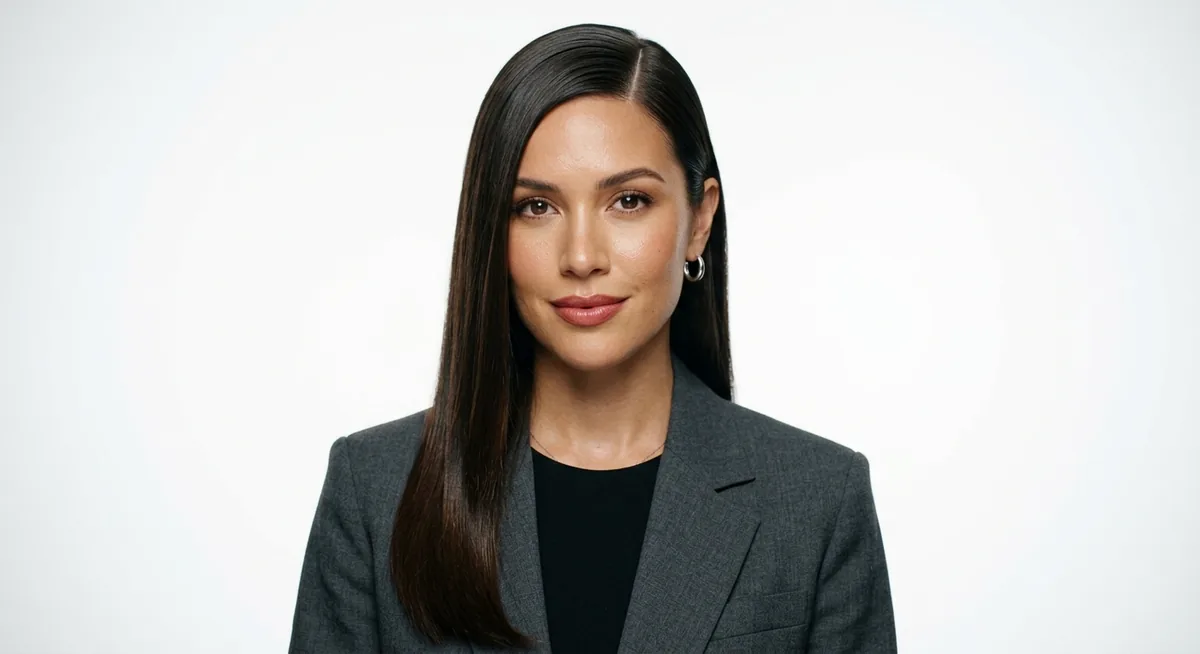
Straight hair with a centre part is the most minimal job fair style on this list, and that is its strength. It is clean, symmetrical, and completely un-distracting, so a recruiter’s attention goes straight to your face and your words. It works best on hair that is naturally straight or well straightened, with a smooth, shiny finish.
Best for: straight hair at any length from bob to long. How to style it: part the hair in the centre, blow-dry or flat-iron it smooth, and finish with a shine serum. Tuck the front sections behind the ears if they fall forward.
Pros: quick, clean, and it looks sharp with any outfit. Cons: a centre part can emphasise asymmetry, so check it in a mirror before you leave. Common mistake: skipping the serum, which leaves the hair looking dull under bright hall lights.
Who should avoid it: anyone with very curly or wavy hair who would need a lot of heat to get it straight. Quick verdict: simple, sleek, and quietly confident.
19. Loose Curls Pinned Back
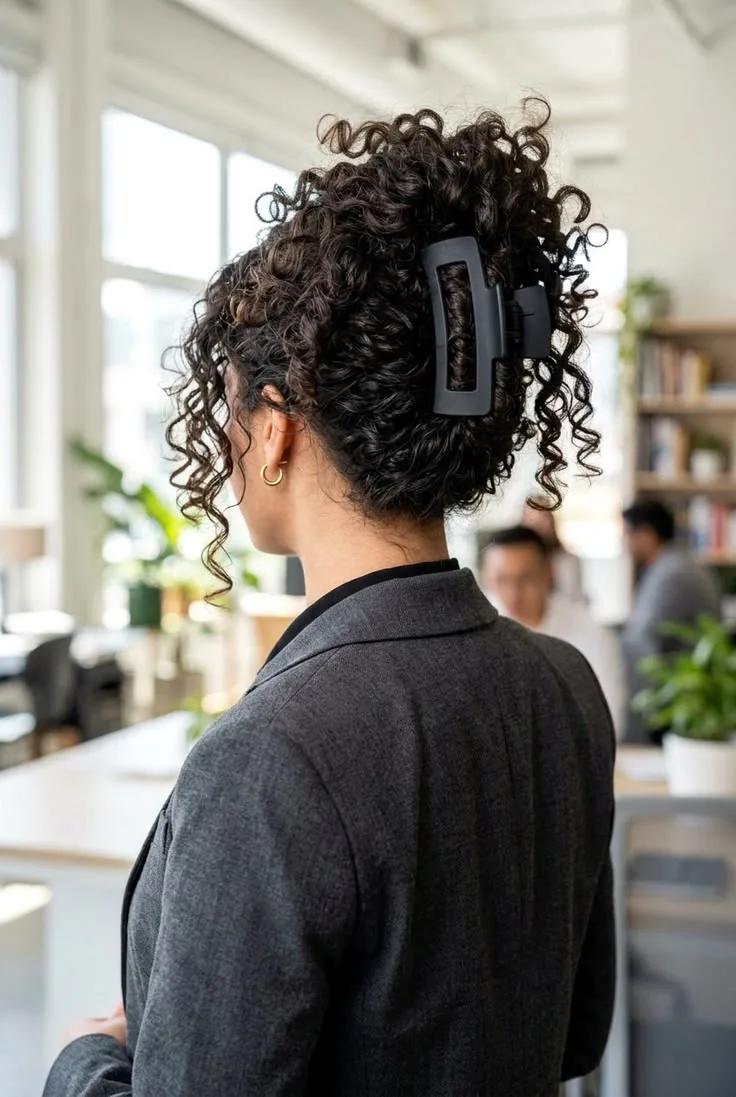
Loose curls pinned back give you the warmth of curls with the control of an updo. The curls stay visible at the back and sides, but the front is pinned away from the face, so you are never pushing hair back while you talk. It is a lovely choice for anyone whose curls are their best feature and who wants to show them off professionally.
How to style it: define the curls with a curl cream, then pin the two front sections back at the crown with bobby pins that match your hair colour. Best for: naturally curly or wavy hair, medium to long.
Pros: shows off your natural texture while keeping the face clear. Cons: curls can expand in humidity, so a little anti-frizz product helps. What to ask your stylist: for a curl cut that shapes the hair, so the curls fall neatly without much styling.
Maintenance: a quick scrunch with your fingers at lunch revives the curls. Quick verdict: your natural hair, made job-fair ready with two pins.
20. Polished Top Knot

A polished top knot is the high bun’s smarter cousin: smooth, neat, and fully off the neck, with a clean finish that looks deliberate rather than rushed. It keeps your hair completely out of the way through a long day of handshakes and queues, and it pairs beautifully with a blazer and a smart outfit.
How to style it: gather the hair high, smooth the sides with a brush and serum, twist into a knot, and pin it firmly. A donut helps if your hair is fine. Best for: long to medium hair, and anyone who wants a strong, tidy silhouette.
Pros: wind-proof, heat-proof, and it takes five minutes. Cons: it can feel formal, so soften it with a side part or a pair of simple earrings. Common mistake: a knot that is too loose, which sags by midday — pin it properly and it will hold.
Maintenance: two spare pins in your bag. Who should avoid it: anyone with very short layers that poke out of the knot. Quick verdict: neat, confident, and built for a long day.
21. Dutch Braid into a Low Ponytail
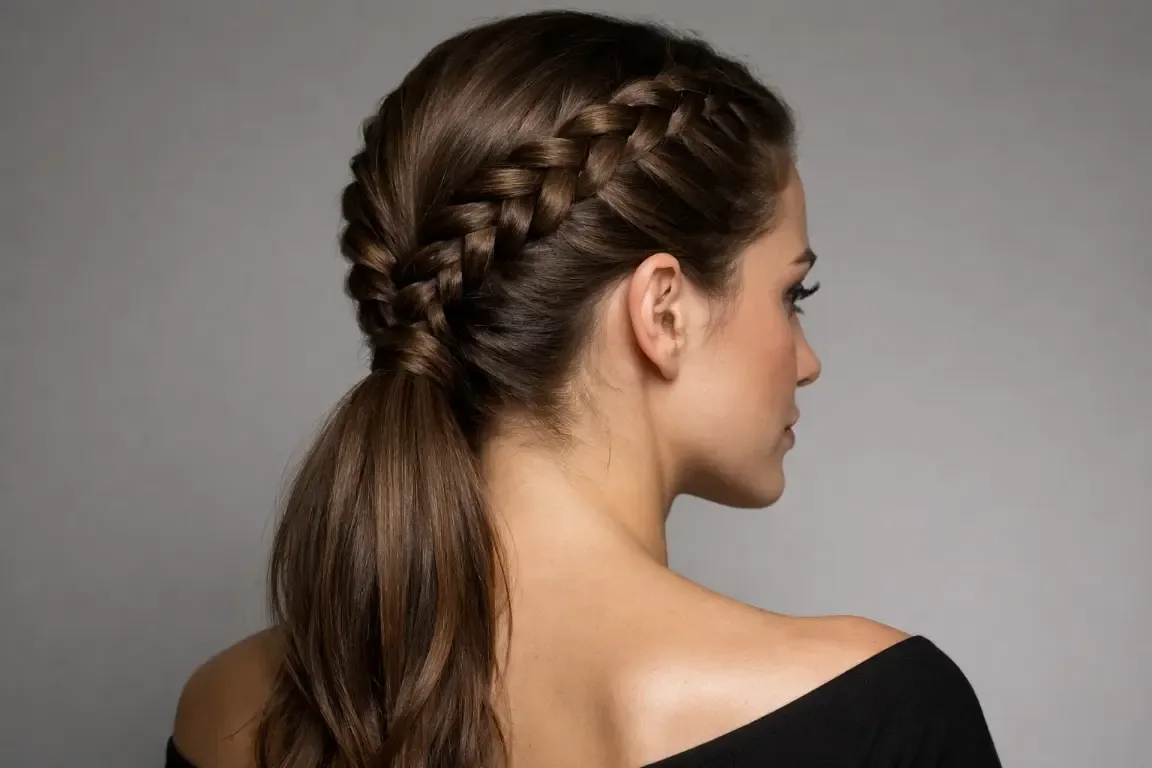
A Dutch braid into a low ponytail is the most secure loose style on this list. The braid anchors the front of the hair, so nothing falls into your face, and the ponytail keeps the length contained and tidy. It holds through hours of walking, leaning, and talking, and it looks far more polished than a plain ponytail.
How to style it: braid a Dutch braid from the front hairline back to the crown, then gather the rest of the hair into a low ponytail and secure it. Best for: long to medium hair, and anyone whose front layers keep escaping.
Pros: all-day hold, no pins needed at the front, and it looks intricate. Cons: it takes practice to braid on yourself. Cost and time: about ten minutes once you know the technique.
Who should avoid it: very short hair, which cannot form a proper braid. Quick verdict: the braid does the work, the ponytail keeps it professional.
22. Wavy Lob
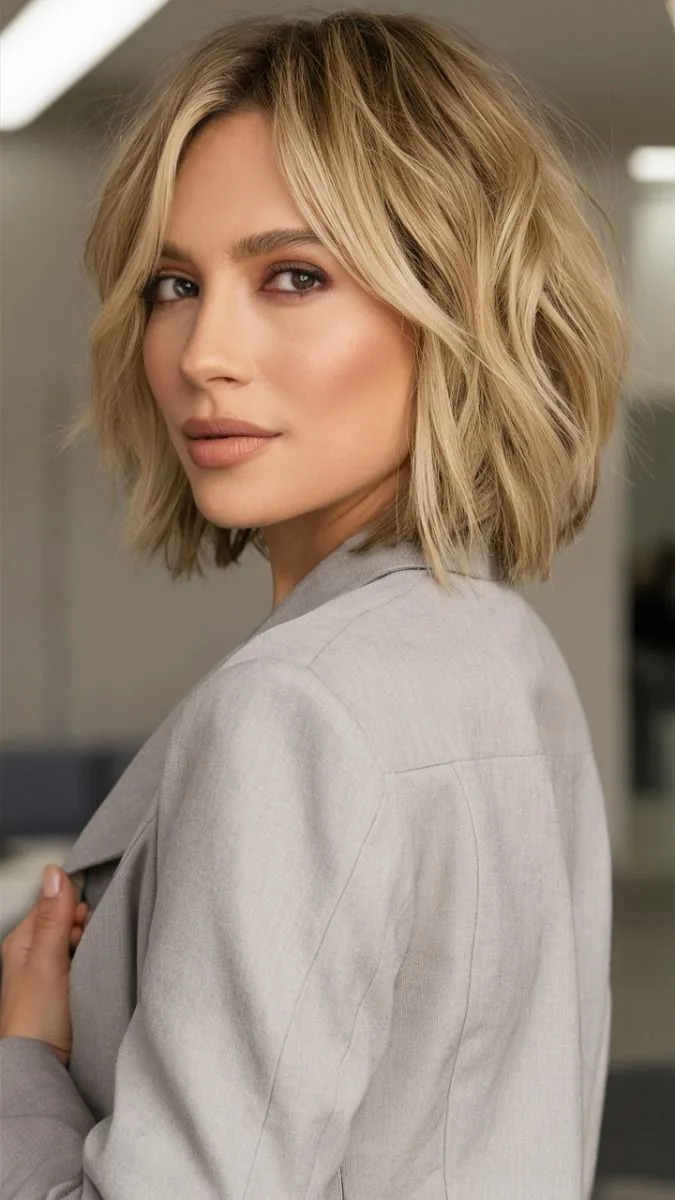
A wavy lob is friendly, modern, and easy to wear for a full day. The waves give the cut movement and life, while the shoulder length keeps it tidy and manageable. It is a natural fit for creative and tech booths, where a little personality is welcome, and it still looks perfectly respectable at a corporate table.
How to style it: add a wave spray to damp hair, blow-dry with a diffuser or a round brush, and finish by smoothing the front sections so they frame the face. Best for: wavy or slightly curly hair at shoulder length.
Pros: quick to style, holds its shape, and looks good from every angle. Cons: the waves can drop by the afternoon — start them a little tighter than you want them to end up. Common mistake: over-brushing the waves, which turns them into frizz.
Maintenance: a quick finger-comb at lunch. Quick verdict: relaxed, polished, and made for long conversations.
23. Elegant Ballerina Bun
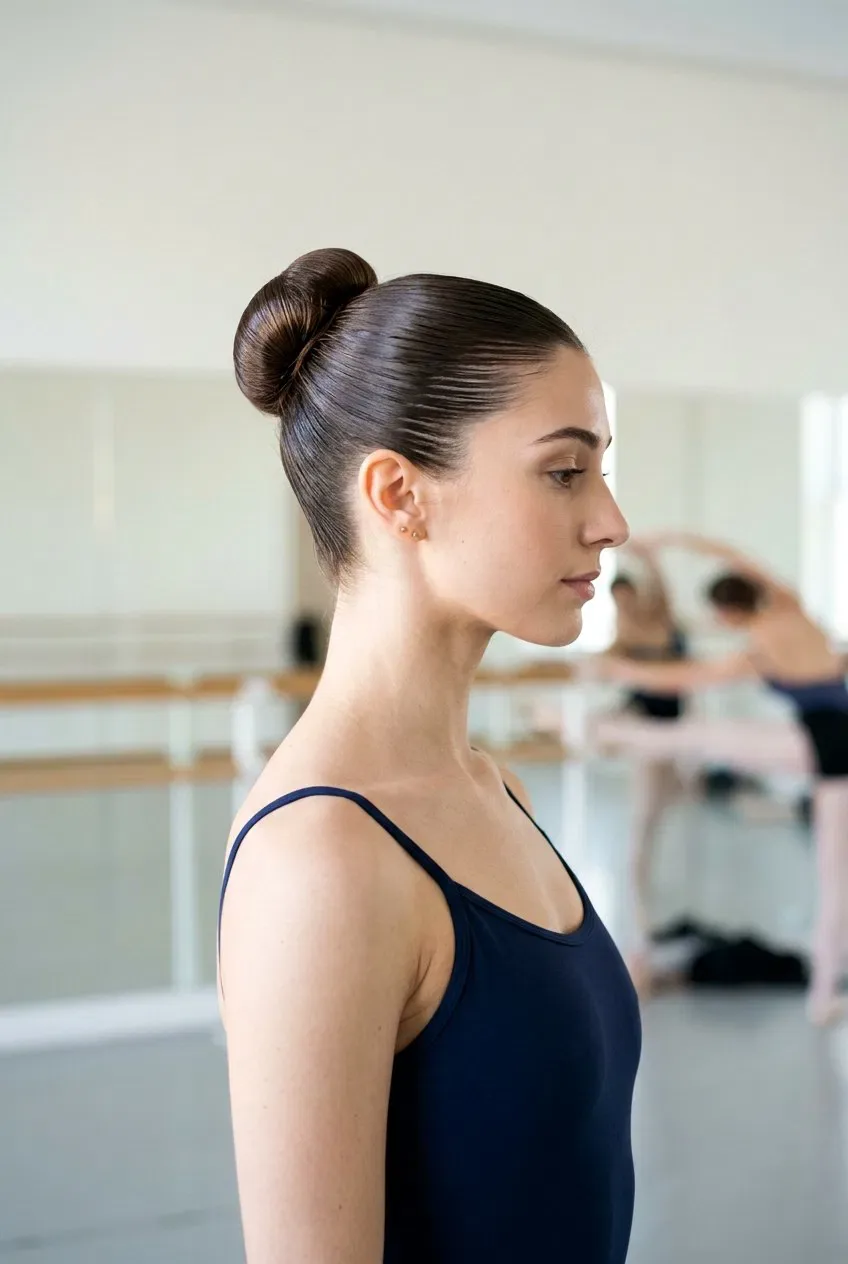
An elegant ballerina bun is the most formal style on this list, and sometimes that is exactly what a job fair calls for. It is perfectly smooth, perfectly centred, and perfectly still — no strands, no frizz, no distractions. It reads as disciplined and detail-oriented, which is a useful first impression when you are targeting law, finance, or healthcare.
How to style it: brush the hair smooth, gather it high at the crown, twist into a tight bun, and pin it firmly. Finish with a light spray and a shine serum. Best for: long to medium hair, and anyone attending a formal or corporate fair.
Pros: the most polished look on this list, and it survives anything. Cons: it can feel severe, so keep the rest of your look soft. What to ask your stylist: for a bun that sits at the crown with a smooth, flyaway-free finish.
Maintenance: almost none. Who should avoid it: anyone who finds a tight bun uncomfortable by the afternoon. Quick verdict: the ultimate professional updo.
24. Side Braid

A side braid is simple, neat, and practical: the hair is gathered to one side, braided, and secured, so it stays off your back, out of your face, and away from your bag strap for the whole day. It is a good choice if you like wearing your hair down but want it controlled, and it works on almost every hair type.
How to style it: sweep the hair to one side, braid it loosely, and secure with a small elastic. Gently pull the braid apart for fullness if you like. Best for: long to medium hair, and anyone who wants a low-effort style that still looks intentional.
Pros: holds all day, keeps hair off your back, and takes five minutes. Cons: it can look casual, so keep the braid neat and the front smooth for a professional finish. Common mistake: a braid that is too loose, which unravels by lunchtime.
Who should avoid it: very layered hair, which can poke out of the braid. Quick verdict: simple, secure, and quietly polished.
25. Defined Curly Hair, Pinned at the Sides
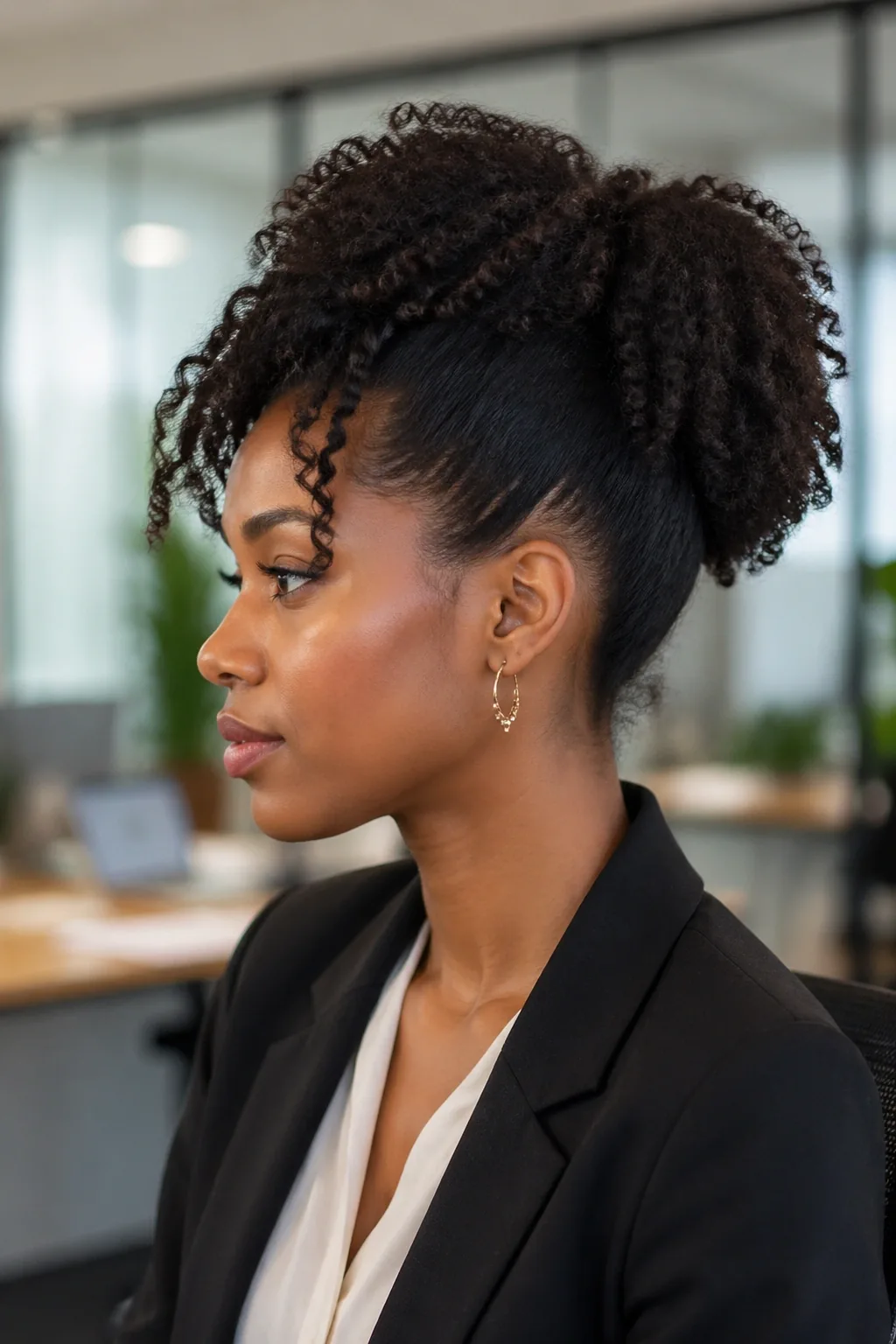
Defined curls, pinned at the sides, let your natural hair shine while keeping the front completely clear. The pins do the professional work — they hold the curls away from your face so a recruiter sees you, not your hair — while the curls themselves add personality and warmth to the look.
How to style it: apply curl cream to damp hair, define the curls with your fingers or a diffuser, then pin the two front sections back with bobby pins that match your hair colour. Best for: naturally curly hair, medium to long.
Pros: your natural texture, made job-fair ready with two pins. Cons: curls can expand in humidity, so a little anti-frizz product helps. Common mistake: brushing dry curls, which turns definition into frizz.
Maintenance: a quick scrunch with your fingers revives the shape. Who should avoid it: nobody — this style works with your hair, not against it. Quick verdict: natural, neat, and memorable.
26. Short Pixie with Volume
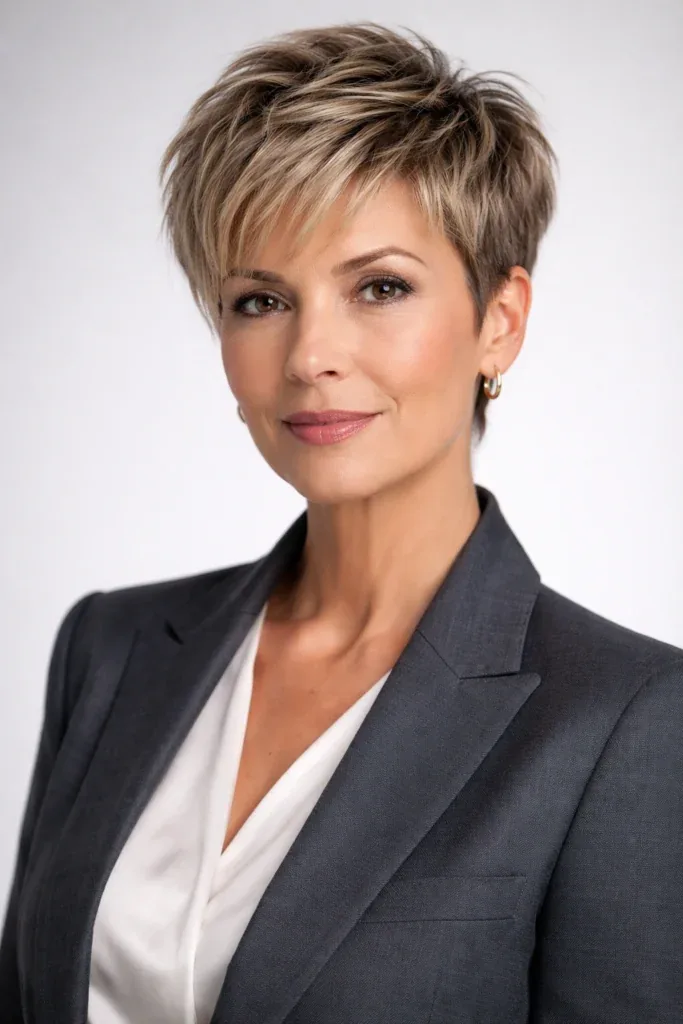
A short pixie with volume is bold and low-maintenance, and it is one of the easiest job fair styles to wear because there is almost nothing that can go wrong with it. The volume on top gives the cut shape and confidence, the short length means no frizz at the ends, and the whole look holds from morning to evening without a single touch-up.
How to style it: blow-dry the top with a small round brush for lift, add a pea-sized amount of pomade for texture, and smooth the sides. Best for: short hair, and anyone who wants a modern, confident look.
Pros: zero fuss, holds all day, and it stands out in a crowd. Cons: it needs a fresh cut to look its best, so book the trim a few days before the fair. What to ask your stylist: for a pixie with volume on top and clean, tapered sides.
Who should avoid it: anyone growing their hair out. Quick verdict: short hair, big presence, no maintenance.
27. Long Layers with Face Framing
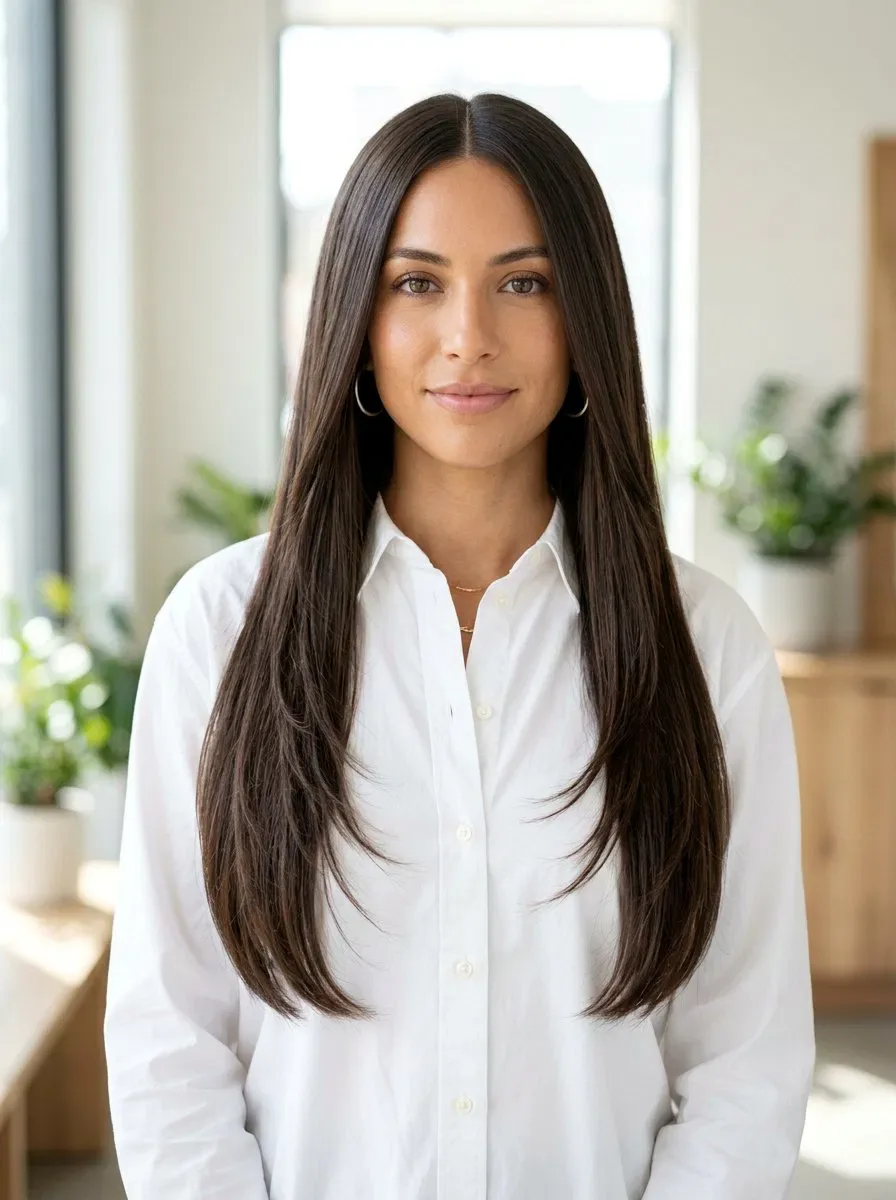
Long layers with face framing are the classic professional long-hair look: the layers add shape and movement, the face-framing pieces soften the look, and the length gives you the option to tie it back if the day gets hot. It is a good choice if you love your long hair and do not want to hide it in an updo.
Best for: long hair with some natural body. How to style it: blow-dry with a round brush, curving the face-framing layers away from the face, and finish with a light spray. Keep the front layers tucked behind the ears if they fall forward.
Pros: flattering, versatile, and it looks great in photos. Cons: the front layers can fall into your eyes while you talk — pin them back if they do. Common mistake: layers that are too short at the front, which refuse to stay tucked.
Maintenance: a quick finger-comb at lunch. Quick verdict: long hair, kept professional with a little structure.
28. Half-Up Ponytail

A half-up ponytail is the neat, practical middle ground between wearing your hair up and wearing it down. The top section is pulled back and secured, so your face is clear and your hair stays out of your eyes, while the length at the back keeps the look soft and natural. It holds well because the ponytail is anchored, not just clipped.
How to style it: take the top section from ear to ear, gather it at the crown, and secure with a strong elastic. Smooth the sides and leave the rest of the hair straight or lightly waved. Best for: long to medium hair, and anyone who wants their face fully visible without going fully up.
Pros: comfortable, flattering, and it keeps hair out of your eyes all day. Cons: the back can frizz by the afternoon if your hair is prone to it. What to ask your stylist: for a half-up ponytail with a secure elastic and a smooth, flyaway-free finish.
Maintenance: one spare elastic is all you need. Quick verdict: neat at the front, relaxed at the back.
29. Sleek Side Part
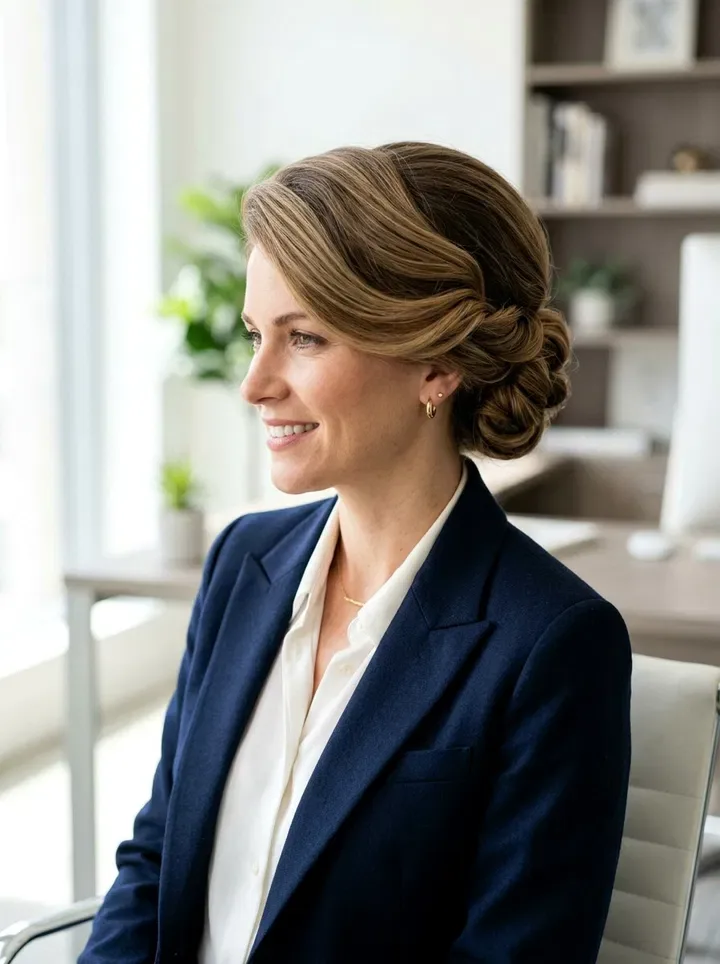
A sleek side part is quiet confidence in hairstyle form. The deep part gives the style structure, the sleek finish looks expensive, and the swept front keeps the hair out of your eyes for the whole day. It works at any length, from a bob to long hair, and it suits every industry on the fair floor.
How to style it: create a deep side part, blow-dry smooth with a paddle brush, and finish with a shine serum. Tuck the shorter side behind the ear for a clean line. Best for: straight to slightly wavy hair.
Pros: quick, clean, and it looks sharp with a blazer. Cons: a very sleek finish needs a dry day or an anti-humidity spray. Common mistake: a part that drifts through the day — set it with a little spray in the morning.
Who should avoid it: anyone with very curly hair who would need a lot of heat to get it sleek. Quick verdict: simple, structured, and always appropriate.
30. Soft Updo with Loose Tendrils
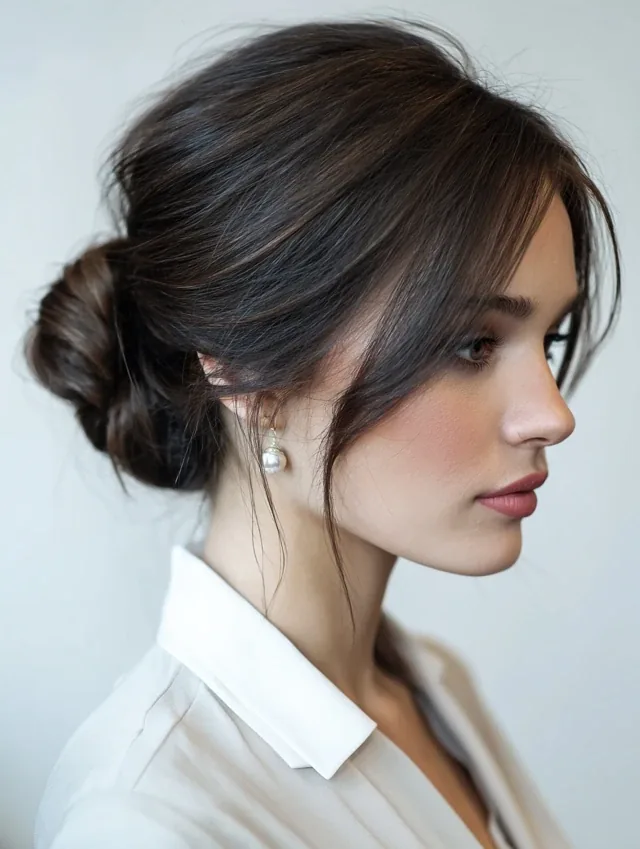
A soft updo with loose tendrils is the warm, approachable updo: the hair is pinned up and out of the way, but a few soft pieces at the front keep the look friendly rather than severe. It is a good choice if a sleek bun feels too formal, and it survives a long day because the updo is pinned, not just sprayed.
How to style it: gather the hair into a low updo, pin it securely, then free two soft tendrils at the front and curve them slightly away from the face. Best for: medium to long hair, and anyone who wants an updo with warmth.
Common mistake: tendrils that are too long, so they fall into your eyes while you talk. Pros: comfortable, flattering, and it improves as it loosens slightly. Cons: very straight hair may need texture spray to hold the tendrils’ curl.
Maintenance: one spare pin in your bag. Quick verdict: polished, but with a human touch.
31. Bob with a Side Sweep
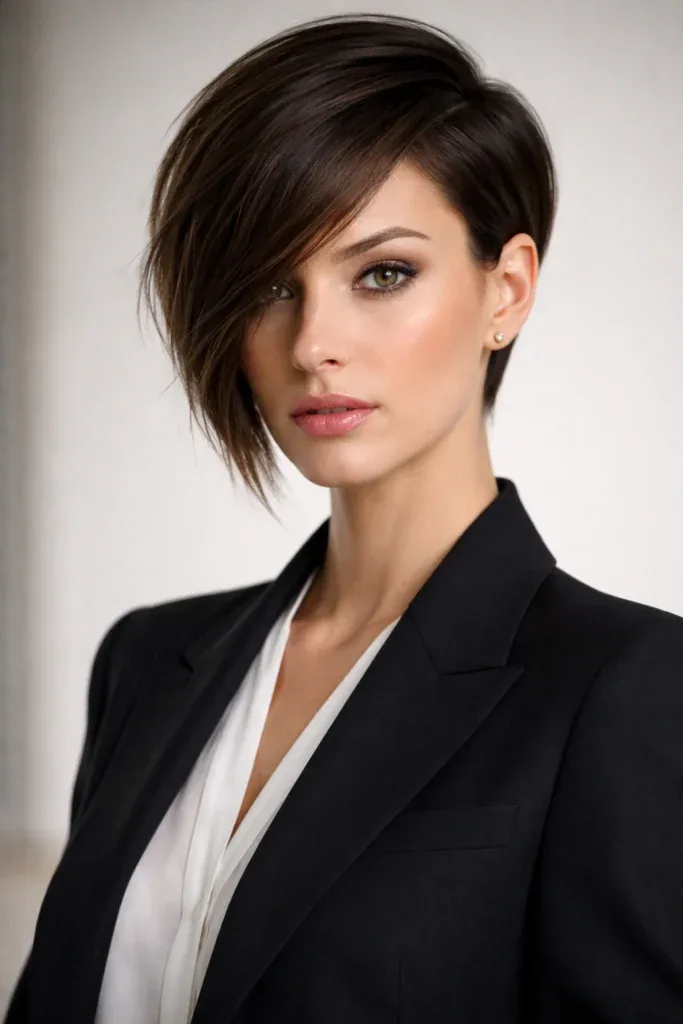
A bob with a side sweep is the classic bob with a little more personality: the sweep across the forehead softens the look and keeps the front out of your eyes, while the bob itself stays neat and tidy all day. It is a good choice if a straight bob feels too severe but you still want a short, professional cut.
How to style it: blow-dry the bob smooth, then sweep the front section to the side and set it with a light spray. Best for: short to medium hair, straight to slightly wavy.
Pros: holds its shape all day, looks sharp with a blazer, and suits most face shapes. Cons: the sweep can fall forward if it is not set properly — a bobby pin hidden underneath fixes it. What to ask your stylist: for a bob with a longer front that sweeps easily to the side.
Maintenance: a quick brush at lunch. Quick verdict: classic, with just enough softness.
32. Low Ponytail with Volume
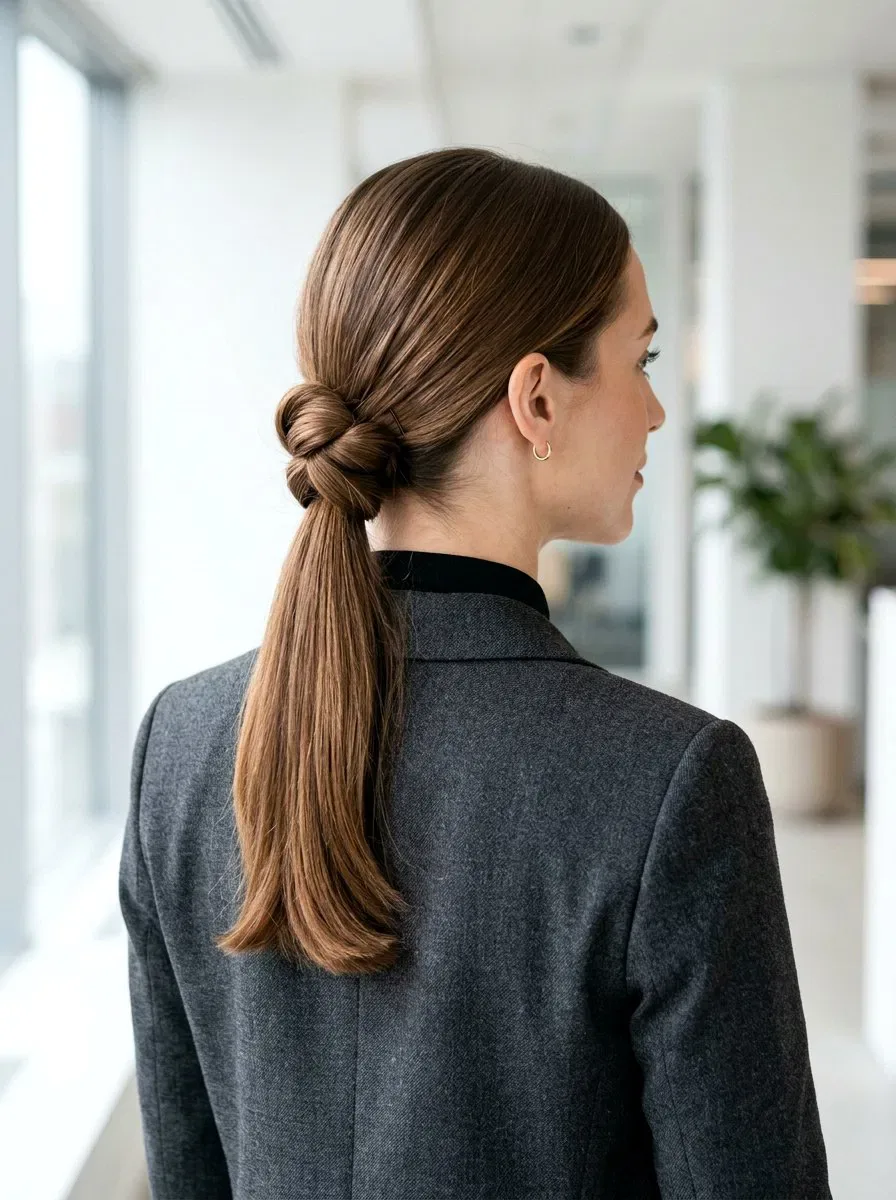
A low ponytail with volume is the polished ponytail’s more confident sister: the crown is lifted, the ponytail has body, and the whole look feels intentional rather than thrown together. It keeps your hair off your face and behind your shoulders for the whole day, and it survives hours of walking without loosening.
How to style it: backcomb the crown lightly for volume, smooth the top layer over it, gather the hair low at the nape, and secure with a strong elastic. Wrap a strand around the base for a finished look. Best for: long to medium hair with some natural body.
Pros: takes ten minutes, holds all day, and suits every industry. Cons: the volume can drop by the afternoon — a little spray at the roots in the morning helps. Common mistake: backcombing too hard, which is difficult to smooth out.
Maintenance: one spare elastic and two pins. Quick verdict: a ponytail that looks like you meant it.
33. Braided Low Bun
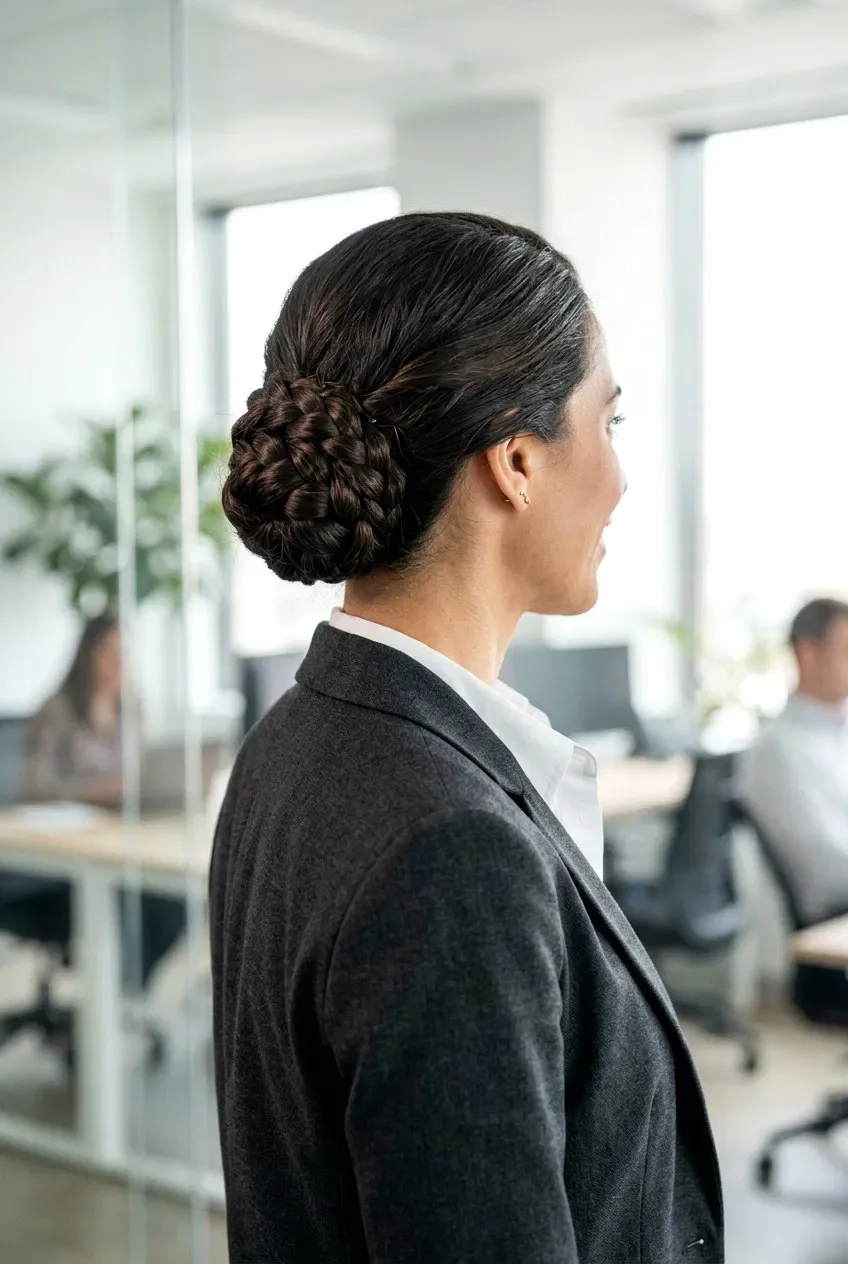
A braided low bun combines two of the most reliable job fair techniques: a braid for grip and a bun for polish. The braid anchors the hair, so nothing slips, and the bun keeps it neat and professional. It holds through a full day of walking, leaning, and talking, and it looks intricate without taking long to do.
How to style it: braid the hair into one or two plaits, coil them into a low bun, and pin it firmly. Best for: long to medium hair, and anyone whose hair slips out of plain buns.
Pros: the most secure bun on this list, and it looks more detailed than it is. Cons: it takes a little longer than a plain bun — about fifteen minutes. Cost and time: no special tools, just pins and an elastic.
Who should avoid it: very short hair, which cannot form a proper braid. Quick verdict: the bun that will not budge, all day long.
34. Straight Sleek Bob
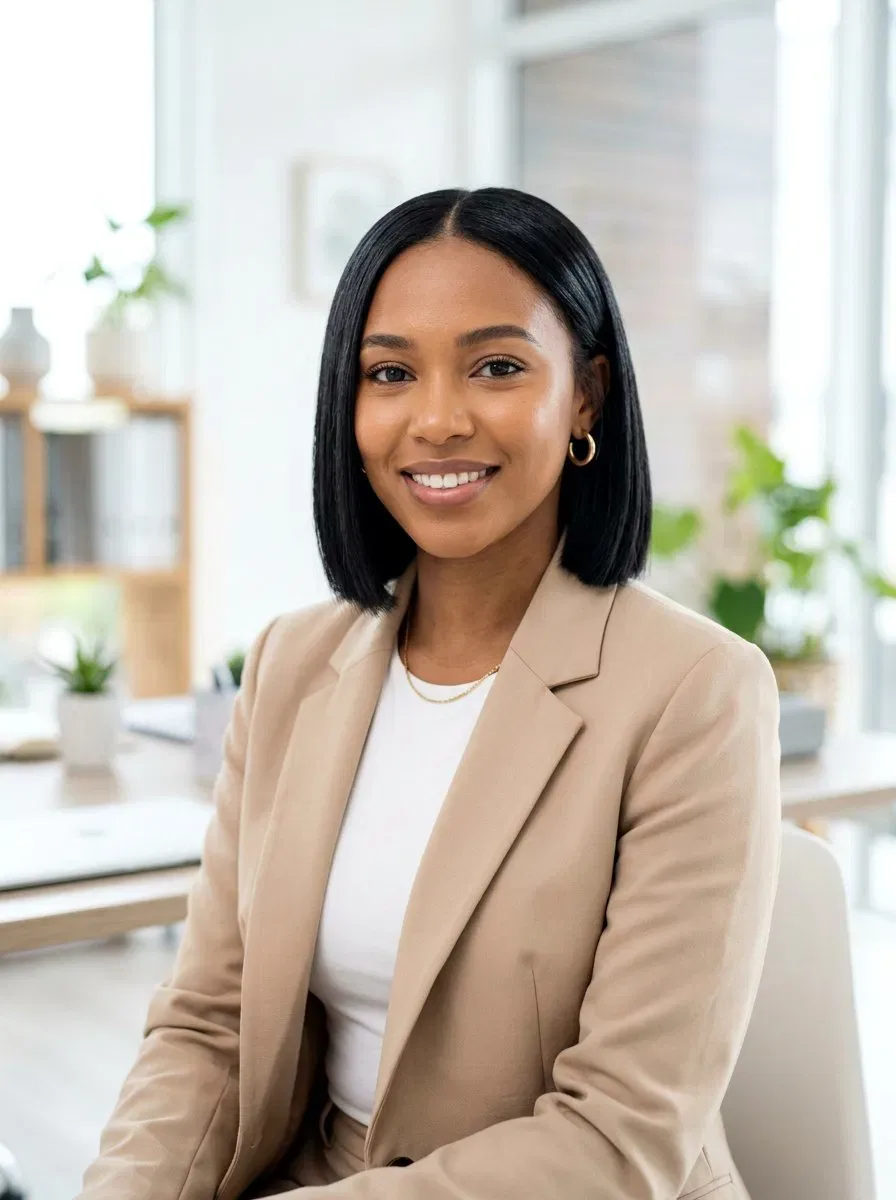
A straight sleek bob is sharp, modern, and completely reliable. The clean lines frame the face, the sleek finish looks expensive, and the short length means nothing can fall out of place. It is the style to choose when you want to look precise and put-together, and when you know the fair is indoors, where humidity cannot undo the finish.
How to style it: blow-dry smooth with a paddle brush, run a flat iron over the ends, and finish with a shine serum. Best for: straight hair at chin to shoulder length.
Pros: low maintenance, modern, and it looks sharp with any outfit. Cons: humidity can undo the sleek finish, so a dry day or an anti-humidity spray helps. Common mistake: skipping the serum, which leaves the ends looking dry in bright hall lighting.
Who should avoid it: very curly hair, unless you are happy to straighten it properly first. Quick verdict: clean, confident, and zero fuss.
35. Romantic Low Bun
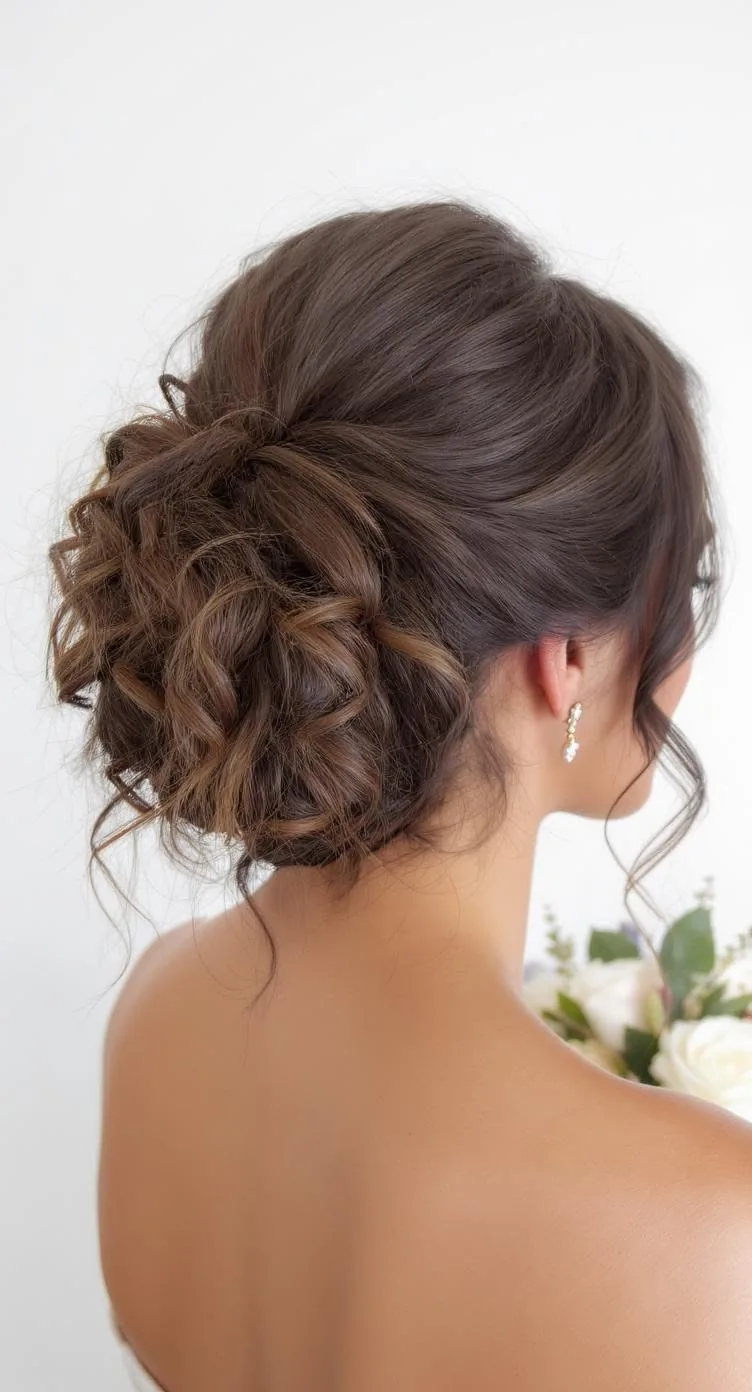
A romantic low bun is the softest updo on this list: the hair is gathered low and pinned loosely, with gentle waves and a few soft pieces at the front. It looks warm and approachable, which suits a job fair perfectly — you want recruiters to feel comfortable talking to you, and a soft style helps with that.
How to style it: curl the hair lightly first, then gather it into a loose low bun and pin it in several places. Free two soft pieces at the front. Best for: medium to long hair, and anyone who wants an updo that does not feel formal.
Pros: comfortable, flattering, and it improves as it loosens slightly. Cons: it is the least secure bun on this list, so pin it properly and carry spare pins. Common mistake: making the bun too loose, so it sags by midday.
Maintenance: a quick pin check at lunch. Quick verdict: soft, warm, and still professional.
36. Professional Hollywood Waves

Professional Hollywood waves are the most glamorous style on this list, kept on the right side of the line for a job fair. The waves are big, glossy, and uniform, but they are brushed out soft and kept away from the face, so the look reads as polished rather than party-ready. It is the style to choose when you want to feel your best at an indoor fair.
Best for: medium to long hair with some natural body. How to style it: curl all the hair in the same direction with a large-barrel iron, pin each curl to cool, then brush through gently and finish with a flexible-hold spray. Keep the front swept to the side.
Pros: the most striking option on this list, and it photographs beautifully. Cons: the least durable — waves relax through a long day, and a strong gust will loosen them. What to ask your stylist: for set waves with a cool-down pin, not just a quick curl.
Maintenance: a quick finger-comb and a light mist at lunch revives the shape. Who should avoid it: anyone attending an outdoor fair. Quick verdict: maximum polish, best saved for indoor fairs.
What hairstyle is best for a job fair?
A neat, controlled style that stays in place all day is best — a sleek low bun, a polished low ponytail, or a classic bob. Choose a style that keeps your hair out of your face, survives hours of walking and talking, and matches the industry you are targeting.
Should I wear my hair up or down to a job fair?
Either works, as long as the front is controlled. Hair up is safer for a long day because it cannot fall into your face or frizz, but neat hair down — a sleek lob, soft waves pinned back, or a polished blowout — is perfectly professional if it stays tidy.
How do I keep my hair neat for a whole day at a job fair?
Build the style on structure, not just hairspray: use pins, braids, or a secure elastic, and finish with a light spray. Carry three bobby pins, a spare hair tie, and a travel hairspray, and do a ten-second check in your phone camera at lunchtime.
What hairstyles should I avoid at a job fair?
Avoid styles that need constant fixing, a fringe that falls into your eyes, loose buns that unravel, and anything with glitter or oversized accessories. Also avoid trying a brand-new style for the first time on the morning of the fair.
Is a ponytail professional enough for a job fair?
Yes, if it is polished. A low ponytail with smooth sides, a wrapped base, and no flyaways looks neat and professional at every booth. A loose, messy ponytail does not — the finish is what makes it professional.
What is the best hairstyle for a job fair if I have curly hair?
Defined curls pinned back at the sides are ideal: they show off your natural texture while keeping your face clear. Use a curl cream and an anti-frizz product, and pin the front sections back with bobby pins that match your hair colour.
Should my hairstyle match the industry I am applying to?
It helps. Corporate, legal, and healthcare booths expect a sleek bun or a polished bob, while creative and tech booths are happy with soft waves or a textured cut. When in doubt, aim one notch above the most conservative booth you plan to visit.
How early should I style my hair before a job fair?
Style your hair in the morning, allowing an extra fifteen minutes beyond your usual routine so you are not rushed. Choose a style you have already worn comfortably for a full day, and test any new style a week before the fair, not on the day.
Can I wear my hair down if it is very long?
Yes, but keep the front controlled. Pin the front sections back, tuck the hair behind your ears, or choose a half-up style so the hair does not fall into your face while you talk. A braid or a low ponytail is a safer choice for a very long day.
What should I pack for hair touch-ups at a job fair?
Three bobby pins, one spare hair tie, a travel-size hairspray, and a small comb. A mini shine serum or a single smoothing wipe handles flyaways. That is the whole kit, and it fits in the smallest pocket of your bag.
Conclusion
A job fair is a day of first impressions, and your hair is part of the first one. The styles in this guide were chosen for the reality of that day: hours on your feet, dozens of short conversations, no mirror, and no second chance at an introduction. Whether you choose a sleek low bun, a polished ponytail, a classic bob, or soft waves pinned back, the test is the same — does it stay neat, does it keep your face visible, and does it let you forget about your hair and focus on the person in front of you?
Pick a style you have worn before, build it on pins and structure rather than hairspray alone, pack the thirty-second touch-up kit, and walk in knowing you look the part. Your skills and your story are what will get you hired — your hair just has to make sure nothing gets in their way.